Tag Archives: Feathered Friends

Elizabethton Bird Club announces speakers for fall programs

Brayden Paulk will speak to the Elizabethton Bird Club on Sept. 3 on the topic of microfishing.

The Lee and Lois Herndon Chapter of Tennessee Ornithological Society, also known as the Elizabethton Bird Club, will soon begin its schedule of monthly meetings for 2024-25.

The brief business meetings are always accompanied by an informative and entertaining program on birds, birding or other subjects from the natural world.

These programs are a great way to learn more about our feathered friends as well as other related subjects from the natural world. They are free, open to the public and hosted by a welcoming group of people.

Here’s the schedule for Fall 2024:

September

Brayden Paulk, a young naturalist with family ties in Unicoi County, will present the first program on Tuesday, Sept. 3, with a talk on “Microfishing,” which involves anglers focusing on a diverse array of tiny species of fish.

Paulk has also been working as a naturalist with Lamar Alexander Rocky Fork State Park this summer and fall. He gave a program a couple of years ago for the club on “Trash Fishing,” which explored other angling options other than the typical gamefish species. As both fishing and birding are among his interests, he will no doubt find a way to work something into his program about birds.

October

The guest speaker for the meeting on Tuesday, Oct. 1, will be Mark Stevens. A former publisher for The Erwin Record, he will present a program titled “Building a Birding Festival” that will focus on his development of the Hammock Coast Birding Festival in South Carolina. Stevens, who works as tourism director for the Georgetown County Chamber of Commerce, will be giving the program remotely from his home in South Carolina, but the hybrid meeting also offers a chance to attend in-person with other birding enthusiasts. The festival is organized by the South Carolina Hammock Coast, the marketing arm for the Georgetown County Chamber. The third annual Hammock Coast Birding Festival is scheduled for Feb. 6-9, 2025.

November

Vern Maddux, the treasurer for the club, will be the speaker on Tuesday, Nov. 5. Maddux is a world traveler when it comes to seeing birds and will present a program on one of his recent international birding adventures to South Georgia and Falklands. South Georgia is a mountainous barren island in the South Atlantic Ocean, 800 miles east-southeast of the remote South Atlantic archipelago that makes up the Falkland Islands. With rugged terrain and cliff-lined coasts, the hundreds of islands and islets in the Falklands are home to sheep farms and abundant birdlife.

December

In the busy month of December, yours truly will give the program. I will present a powerpoint presentation titled “What’s in a Name?” on North American birds named after people. Among our native birds, we have quail, woodpeckers, sparrows, finches, warblers, hawks and other birds are known by names of historical figures ranging from John James Audubon to William Clark and Meriwether Lewis.

My program will be held on Tuesday, Dec. 3. I will discuss the American Ornithological Society’s decision in 2023 to end what are known as eponyms, in which species names honor people. The renaming of dozens of species will be a gradual process.

The club’s 2025 schedule has not been completed, but will include a program by local naturalist Lewis Tester in the spring on dragonflies.

The public is always welcome to attend these programs. Programs begin at 7 p.m.

The club meets at the Elizabethton campus of Northeast State Community College in Room 135 when the school’s schedule permits. When school is not in session, meetings are held on Zoom or at other announced locations. To receive updates on the club’s schedule, events and activities, email elizabethtonbirtdingclub@gmail.com and ask to be placed on a free mailing list.

The Elizabethton Bird Club holds seasonal birds count in spring, summer, fall and winter. The club also organizes and sponsors regular field trips to destinations through Northeast Tennessee. These activities are also open to interested members of the public.

•••

To share a sighting, make a comment or ask a question, email me at ahoodedwarbler@aol.com.

Seeing Yellow: Visit from an odd cardinal surprises local couple

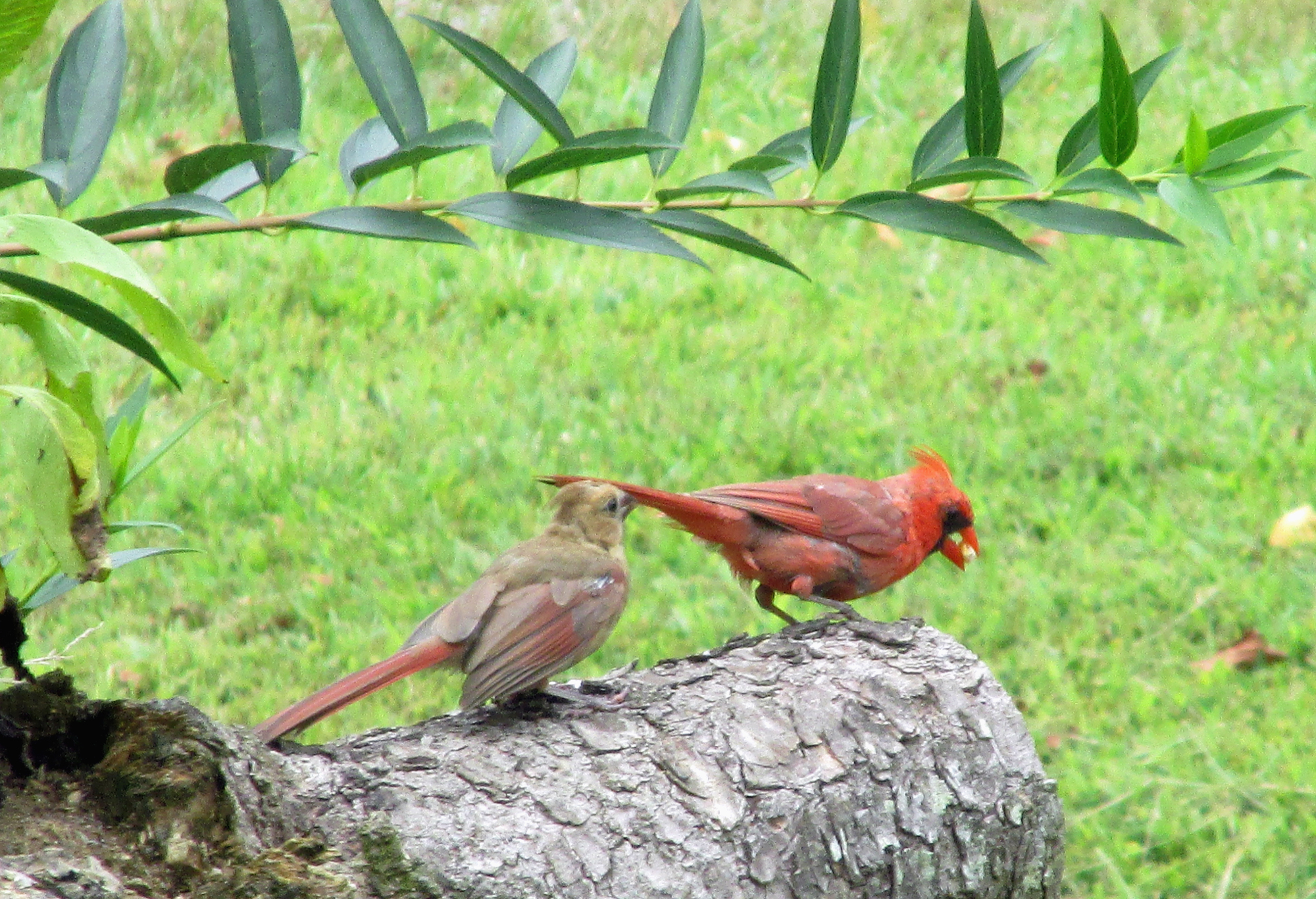
Photo by Bryan Stevens • A male Northern cardinal leads a young cardinal to food sources.

Unicoi resident Bobby Davis called me last week to share news about a sighting of a yellow cardinal. Bobby said that he and his wife, Tressa, have two bird baths and a hummingbird feeder in their yard and are in the habit of watching the comings and goings of their feathered friends. At 1 p.m. on Tuesday, Aug. 8, they noticed a yellow cardinal in the yard near some rhododendrons.

A “yellow” cardinal is simply a Northern cardinal that has inherited a rare genetic condition that causes the bird’s feathers to turn yellow instead of red.

A news item posted to a website for The Wood Thrush Shop in Nashville relates the story of a backyard feeding station in Harriman, Tennessee, in Roane County that was visited by a yellow Northern cardinal on a regular basis.

Yellow Northern cardinals have been seen in at least four different states the last 10 years but remain a rarity.

The article explained that the yellow coloration in affected cardinals is caused by a rare genetic mutation. The colors red, orange and yellow in a bird’s feathers are created with carotenoid pigments derived from the foods they eat. In the male Northern cardinal, yellow pigments from the diet apparently are converted to red by a specific enzyme. In a very rare genetic mutation, probably affecting fewer than one in a million cardinals, that enzyme is lacking, so the conversion to red doesn’t occur and the feathers are bright yellow instead.

Back in May of this year, a yellow cardinal given the name Maize was spotted in Alabama. That sighting took place less than 15 miles from a location that hosted another yellow cardinal in 2018. Was Maize a descendant of that yellow cardinal spotted six years ago?

Perhaps the yellow cardinal will stick around at Bobby and Tressa’s home. Bobby informed me that they have an ordinary pair of red cardinals that resides in their yard, but he noted that the three birds have not interacted.

•••

Interestingly enough, there is a bird with the actual name yellow cardinal, but it is not closely related to the Northern cardinal. This South American bird has the scientific name of Gubernatrix cristata and is a member of the tanager family.

The yellow cardinal was formally described in 1817 by the French ornithologist Louis Pierre Vieillot under the binomial name Coccothraustes cristata. The word “cristata” means crested or plumed.

This yellow cardinal ranges in Argentina, Brazil, Paraguay and Uruguay. Its natural habitats are dry savanna, temperate shrubland, subtropical or tropical moist shrubland and temperate grasslands. The yellow cardinal is threatened by habitat loss and from pet trade trappers for sale as exotic pets. Males are trapped at a higher rate than females, and the yellow cardinal is considered endangered due to the constant entrapment. If recent counts are accurate, only about 1,000 t0 2,000 of these birds still exist.

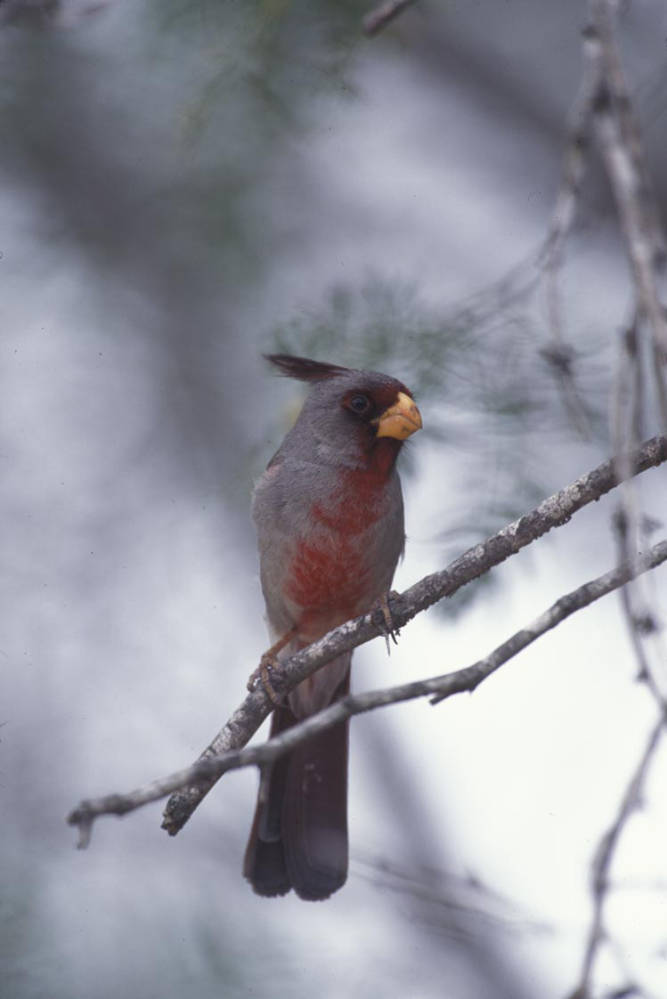
Photo by U.S. Fish & Wildlife Service
Pyrrhuloxia, also known as desert cardinal, is related to the Northern cardinal. 

The Northern Cardinal, on the other hand, is an abundant, beloved songbird. There’s additional evidence to put forward as testimony to the popularity of the Northern cardinal. It’s the official state bird of seven states: Virginia, North Carolina, West Virginia, Ohio, Illinois, Indiana and Kentucky. Only the Northern mockingbird, which represents five states as official state bird, even comes close to the Northern cardinal in this respect.

Cardinals are a widespread species, ranging westward to the Dakotas and south to the Gulf Coast and Texas. The southeastern United States was once the stronghold of the cardinal population. In the past century, however, cardinals have expanded their range into New England and Canada. These birds have even been introduced to Hawaii.

The Northern cardinal has only two close relative in the genus Cardinalis. The pyrrhuloxia, also known as the desert cardinal, ranges throughout Arizona, New Mexico and Texas, as well as in Mexico. The third relative is known as vermilion cardinal and is found in Colombia and Venezuela. This bird suffers some losses to the exotic pet trade, but its numbers have managed to remain fairly stable.

•••

I’ve been an active birder since the early 1990s. To share a sighting, ask a question or make a comment, email me at ahoodedwarbler@aol.com.
Native wading birds wander widely in late summer


Photo by Bryan Stevens • A great egret captures a frog from a pond’s edge in South Carolina.

The fish pond at my home has attracted a stalker. Amid the cattails and beneath the drooping branches of tall bald cypress trees, a lurking great blue heron has patiently been stalking fish, frogs and anything else that comes within striking reach of the bird’s sturdy dagger-shaped beak.

The heron’s visits have prompted me to dig into my archived columns this week. Please enjoy this column, which was previously published in July of 2019, about summer’s wading birds.

•••

North America’s stately wading birds — egrets, herons, bitterns, ibises and their kin — are well-known wanderers in late summer. As with all birds capable of flight, a pair of strong wings cannot be underestimated. Birds can show up in the most likely places.

Take for instance the first confirmed sighting of an American flamingo in Tennessee. This particular flamingo — an almost unthinkable bird for the Volunteer State — showed up along Highway 78 in Lake County on July 13, 2019.

Ruben Stoll and Alan Troyer found the flamingo, backing up their discovery with photographs of the large pink bird associating with great egrets and other wading birds. The flamingo created considerable buzz on rare bird alerts in several nearby states. Many birders rushed to add this exceptional visitor to their state and life lists.

Photo by Bryan Stevens • White ibises occasionally meander away from the coast in late summer. Immature birds will be brown instead of white.

In summers past, other exciting wading birds ranging from little blue herons to wood storks have excited the region’s birders. I recently celebrated my own sighting of one of these wanderers that made a stop at my fish pond on July 10.

I had stepped outside my house and let the door slam a little too loudly behind me, causing a stately great egret near my fish pond to take flight and fly over the roof of my house. I regretted instantly not having a camera with me.

Two days later, I got another chance. The great egret made another appearance. Unfortunately for the tall bird, he attracted the ire of the resident red-winged blackbirds. In a most inhospitable manner, the blackbirds attacked and dived at the egret, which made some awkward attempts to evade the angry blackbirds. Blackbirds are protective of their territory and have swooped at me several times when I’ve ventured too close to their favored cattails.

More prepared on this occasion, I had my camera with me and managed to get a few photographs of the egret.

The next day, only a few miles from my home, Lauri Sneyd Vance took a photograph of a great egret that stopped at her home in Limestone Cove in Unicoi County, Tennessee. Having seen my Facebook post, she notified me that she had also received a visit from an egret. Was it the same bird? Perhaps.

Oddly enough, the bird is actually the second great egret to visit my fish pond. The first one made an unseasonable stop several years ago on a snowy December afternoon — hardly a time of year I might have expected a visit from an egret in the mountains of Northeast Tennessee.

The great egret stands 3.3 feet tall. With an all-white plumage, a long yellow bill and dark legs, this egret is often described as graceful and elegant. Its likeness was incorporated into the logo for the National Audubon Society, an organization formed to protect egrets and other wading birds from a wanton slaughter in the late 1800s when millions of the birds were killed so their feathers could be used in women’s fashions.

During the breeding season, adult great egrets sprout long plumes on their back. These frilly feathers are known as aigrettes, which are used to attract the attention of prospective mates in elaborate mating displays.

According to the All About Birds website, great egrets feed mostly on fish, but they also eat amphibians, reptiles, rodents, songbirds and crustaceans. On visits to the South Carolina coast, I’ve observed great egrets dining on frogs and small fish. In prime habitat, flocks of great egrets will gather to forage together in wetlands or around ponds. More sociable than some herons, great egrets also nest and roost communally.

The other North American egrets include snowy egret, reddish egret and cattle egret. Other egrets found around the world include the intermediate egret, little egret, slaty egret, black egret,dimorphic egret and Chinese egret.

As summer advances, keep your eye on area rivers, lakes and ponds. It’s the best time of year to see egrets, herons and other long-legged wading birds. In the case of the American flamingo, I realize that lightning rarely strikes twice, but if you do happen to see a gangly pink bird, let me know.

•••

Share sightings, ask questions or make comments by emailing me at ahoodedwarbler@aol.com.

Photo by Bryan Stevens
A Great Blue Heron moves stealthily through a wetland.

Summer’s swallows are graceful, aerodynamic birds

Tom Koerner/USFWS • A perched tree swallow surveys its surroundings..

They took their time this year, but the tree swallows are finally putting in appearances almost daily, especially on the string of sunny, hot days the region has experience lately. This pair of swallows has become frequent visitors since the middle of last month.

Based on their behavior, which primarily consists of aerial foraging over fields and a pond at my home, I’m convinced they are feeding young. They don’t, however, appear to be residing in any of my nest boxes. I’m simply glad they are nesting close enough to ensure frequent visits. It probably won’t be long before their young are soaring over the fields with them.

No matter where you live, you probably don’t have to go far to see one of the members of the bird family known as swallows. These graceful, aerodynamic birds are quite familiar to most people. If you spend much time at all outdoors during the summer months, chances are you’ve observed some members of this family.

Vincent Simard from Pixabay. • A tree swallow peeks from a nest box.

It’s usually not too difficult to find five of the six species that are known to make Northeast Tennessee and Southwest Virginia their home from spring to fall. The more commonplace swallows are barn swallow and tree swallows, but during the summer months purple martins, cliff swallows and northern rough-winged swallows also call the region home.

Barn swallow and tree swallow are the two members of the family that are probably best known to people. They have adapted to life in both suburban and rural areas, which brings them into frequent contact with people.

These days, the barn swallow is as apt to nest in a parking garage or on an apartment balcony as inside a barn in the countryside. Once young swallows leave the nest, parents will park them on a perch as they continue to feed the still dependent young. Adults fly over nearby fields, foraging for insects that they catch on the wing and deliver back to the waiting, always hungry, young birds.

A freshly mown field is a magnet for swallows. I don’t know how the word spreads so quickly among these birds, but I’ve observed dozens of these birds descending on fields soon after they have been mowed for hay. At times, the birds arrive while the mowing is still taking place, swooping after insects stirred up in the tractor’s wake.

I haven’t observed any bank swallows in the region this year, but these members of the swallow family are rather hit-or-miss in the region. Because of their specialized nesting needs, bank swallows are localized in their distribution and not as widespread as their kin.

Cliff swallows nest beneath many local bridges. These swallows, which at one time nested primarily on rocky cliffs, hence their name, now frequently nest under man-made structures. These swallows make their jug-shaped nests out of mud and clay. These nesting “jugs” are all located in clusters beneath bridges and other structures. It’s a wonder that the parents flying in with food are able to tell their nests apart from the nearby seemingly identical nests of their neighbors.

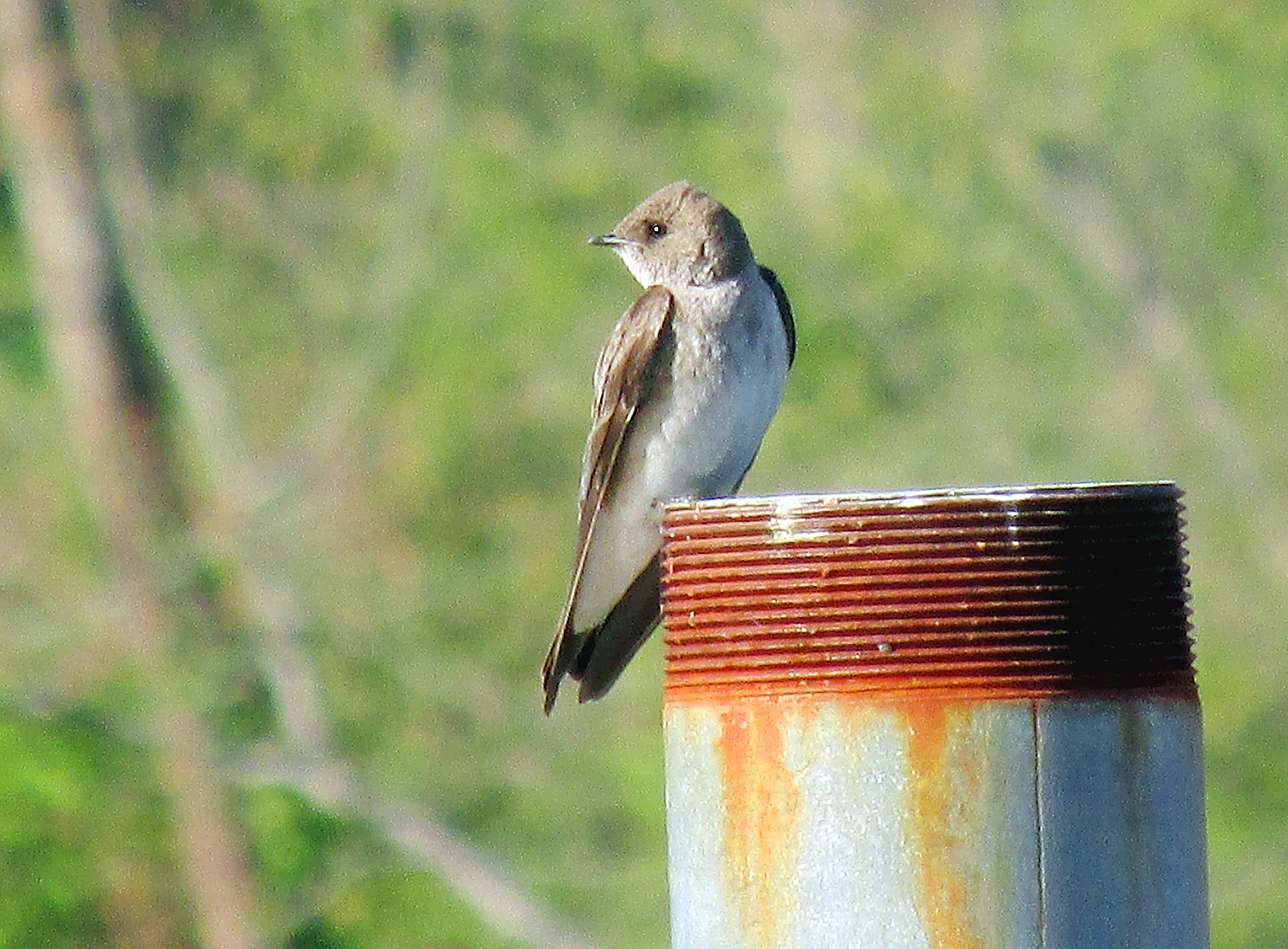
Photo by Bryan Stevens • A Northern rough-winged swallow perches on a rusty pole.

Northern rough-winged swallows are opportunists when it comes to nesting. According to a profile written by Mark Johns with North Carolina Wesleyan College, this small swallow nests near rocky gorges, shale banks, stony road cuts, railroad embankments, gravel pits, eroded margins of streams and other exposed banks of clay, sand or gravel. They will also nest in old kingfisher burrows, protruding drainpipes, crevices in brick or stone structures such as dams, bridges or tunnels, gutters and culverts. Their nests are often built near open water.

The Northern rough-winged swallow ranks as one of the species with the longest common names in North America. It’s name consists of 26 letters and a hyphen, which ranks it one letter below both the Northern beardless-tyrannulet and a recently-created species — the saltmarsh sharp-tailed sparrow — which each have 27 letters and a hyphen. Formerly known as sharp-tailed sparrow, the species was renamed with “salt marsh” added to distinguish it from a relative, Nelson’s sparrow.

Purple martins, which rank as the largest member of the swallow family in North America, are famous for nesting in large colonies. Nesting facilities range from groupings of natural or artificial gourds fashioned into a nesting chamber, as well as large, multi-level condominium dwellings tailored for the specific needs of this communal bird. A colony can consist of several dozen to several hundred pairs of these birds. Only the adult male purple martin shows the iridescent, dark blue-purple plumage that provides the species with its name.

The tree swallow is my favorite, probably because a pair of these birds has nested in my yard for many years. Unlike other swallows, these cavity-nesting birds will readily accept nesting boxes. They compete with Eastern bluebirds for boxes, but the two species usually can work out a truce and settle down to nest in close proximity to each other. The iridescent blue-green male tree swallow, complete with white underparts and a forked tail, is a handsome bird and a welcome addition to the bird population in any yard or garden. Tree swallows enjoy water, so a nearby pond or creek is a boon for attracting these birds.

While only a few swallows range into the United States and Canada, a total of 83 species of swallows can be found worldwide. Some of the common names for these different swallows (and martins) are quite descriptive. A sampling includes white-eyed river martin, square-tailed saw-wing, white-headed saw-wing, grey-rumped swallow, white-backed swallow, banded martin, violet-green swallow, golden swallow, brown-chested martin, brown-bellied swallow, pale-footed swallow, white-bibbed swallow, pearl-breasted swallow, greater striped swallow, mosque swallow, fairy martin and chestnut-collared swallow.

Enjoy swallows while you can. They depart earlier than most of our other summer nesting birds. Once their young are out of the nest, they are soon forming large flocks in preparation for flying south.

•••

To share a sighting, ask a question or make a comment, email me at ahoodedwarbler@aol.com.


Great auk’s story ended 180 years ago this week

Although he never saw the species in person, famous naturalist and artist John James Audubon painted this pair of great auks about the time the species was heading toward extinction.

It’s summer and the birds are busy nesting in the mountains and valleys of the Southern Appalachians. Eighteen decades ago, during a summer nesting season far away in the North Atlantic, the story of an unusual seabird came to a brutal end.
The last pair of great auks was killed on Eldey, off the coast of Iceland, on June 3, 1844. This little-known tragedy ended the last known breeding attempt for the species 180 years ago this week.


The great auk, also known as the great Northern penguin, once inhabited the Atlantic coasts of both North America and Europe. This flightless bird achieved the status of “great” due to its size. Adult great auks reached a height of about 32 inches and could weigh as much as 11 pounds, making them much larger than any of their close relatives. This bird had a black back and a white belly in a two-tone plumage that does indeed resemble the appearance of many penguins. The bird’s black beak was heavy and hooked, with grooves on its surface, excellent for catching fish.


The great auk belonged to the bird family of Alcidae, which also includes such birds as auks, auklets, murres, murrelets, puffins, razorbills and guillemots. The family is not closely related to penguins, which are only found in the Southern Hemisphere. The great auk’s scientific name – Pinguinus impennis – has reinforced the misconception that penguins and the great auk were closely related.

Photo by Kevin/Pixabay • The razorbill, also known as the lesser auk, is probably the member of the Alcidae that most resembles the great auk, albeit on a diminished scale.


Today, one close relative of the great auk still swims in the North Atlantic off the coasts of both North America and Europe. The razorbill (Alca torda) is the sole species in the genus Alca since the extinction of the great auk in the mid-19th century.


Razorbills, as did their larger relative, nest in colonies. Razorbill nesting colonies exist off the coasts of Canada, Iceland, Norway, Wales and the United Kingdom. After the nesting season, razorbills abandon the land and spend the winter months at sea. Razorbills are occasionally spotted as far south as the Carolinas, Georgia and Florida during the winter season.
Razorbills have a body length of almost 17 inches and weigh from one to two pounds, placing them well shy of the size of their extinct relative.


Great auks figured prominently in the cultures of some native sea-going tribes. Although Native Americans did hunt the birds, their efforts had been sustainable.
The coming of European explorers and settlers threw the balance out of whack for this species, which nested in large colonies. Explorers in North America plundered the great auks as a food source and also used the flesh of the birds as fish bait. In Europe, a demand developed for the great auk’s down, those dense, insulating feathers that provided a warm, protective layer against the chill of North Atlantic waters.


These factors quickly led to a steep decline in numbers as early as the 1700s. Sadly, museums and private collectors began to clamor for specimens as the great auk became more rare. The collecting of the birds, as well as their eggs, for this purpose is blamed by some experts with the ultimate extinction of the species.


Pairs of great auk, which mated for life, focused their nesting efforts on raising one chick at a time, which made the species even more vulnerable. A report of a single great auk in 1852 off the Grand Banks of Newfoundland is accepted by some experts, which means this bird was the last known individual of its kind.


The bird’s legacy has lived on, especially with naturalists and birders. The scientific journal of the American Ornithological Society was titled “The Auk” in honor of the species until 2021 when the name of the publication changed to simply “Ornithology.”
The presence of skins and bones in museums around the world have encouraged speculation that modern technological advances in genetics and cloning could possibly revive the great auk from preserved DNA.


Such scenarios seem a little too Hollywood and reminiscent of the “Jurassic Park” and “Jurassic World” films. The reality is that the great auk is part of a lamentable extinction club with such members as Labrador duck, passenger pigeon, Carolina parakeet, Bachman’s warbler and many others, dating back to birds like the moas and the dodos.


It would be nice, especially for birders, if cruises in the North Atlantic could still offer the opportunity to view these fantastic birds swimming in the cold waters. It is still possible to view nesting colonies of birds like the Atlantic puffin, black guillemot and razorbill. If I do get the chance to view these sea-going birds some day, I’ll be thinking of the great auk when I do so.


•••


To share a sighting, make a comment or ask a question, please email me at ahoodedwarbler@aol.com.

Hooded warbler easily wins fans among birders

Photo by Jean Potter • A male hooded warbler flits through the foliage of a rhododendron thicket.

The woods surrounding my home have been alive with birdsong. We’re almost ready to turn the calendar to June, but there’s been no diminishment in the fervor of the daily chorus.

The main members of the feathered choir are warblers. I’ve heard yellow-throated warbler, black-throated green warbler, black-and-white warbler, Northern parula, ovenbird, common yellowthroat and, my favorite, hooded warbler, morning and evening.

During the winter months when the hooded warbler absents itself from Northeast Tennessee, the species resides in the forests of Mexico, as well as in Belize, Costa Rica and other Central American nations.

Like many of the ruby-throated hummingbirds that make their home in the United States for the summer, the hooded warbler’s seasonal migrations take it across the vast open waters of the Gulf of Mexico. After that amazing crossing, these small songbirds disperse throughout the southeastern United States.

That birds as small as hummingbirds and warblers make this incredible migration twice yearly is one of nature’s most phenomenal feats of endurance. In a presentation by Kenn and Kimberly Kaufman that I attended six years ago, I learned that these tiny birds put on incredible fat reserves to help fuel their valiant Gulf crossings.

The warblers, also known as wood-warblers, are an exclusively New World family, numbering approximately 116 species. About 50 of these species make their home in the eastern United States and Canada for the spring and summer, departing in the fall and returning to tropical wintering grounds. Some are extremely bright and colorful birds. The hooded warbler is somewhere in the middle in a sliding scale that goes from dull to wow.

Other colorful warblers that share similar tastes in range and habitat with the hooded warbler include the American redstart, black-throated blue warbler and black-throated green warbler.

Readers who make it to the end of this weekly column will know that even my email address is a testament to my enthusiasm for the hooded warbler.

Hooded warblers nest in the woodlands around my home. So, from the time my favorite warbler returns in April until the last individual departs in October, I enjoy regular glimpses of this colorful and interesting bird. Like all warblers, the hooded warbler is quite energetic, dashing after tiny insects in the branches of shrubs and trees. Hooded warblers often forage close to the ground, which makes observing them easier.

Of course, birds are free to break the rules. One of my most memorable sightings of a hooded warbler involved a male singing from the upper branches of a dead pine tree. I’d estimate that the bird was at least 40 feet off the ground, singing his little heart out to attract a mate. I was standing on an elevated rise of land while the tree providing the warbler its perch was lower in a gully that actually placed bird and observer on a roughly level playing field.

The bird sang for many moments, which is not always the case with warblers. These birds tend to dash for cover at the slightest disturbance, but this enthusiastic male didn’t seem to pay and heed to the fact that most of its kin prefer to skulk in shrubs and dense rhododendron thickets no more than a few feet off the ground.

Back in the late 1990s, when I had just started out in birding, I observed two adult hooded warblers feeding a couple of young birds only recently out of the nest.

I was enjoying observing the sweet scene as the parent birds carried foods to the young birds, which begged incessantly and loudly when, unexpectedly, a song sparrow wandered into the scene.

The sparrow was brutally beset by the parent warblers, which attacked the intruder from all sides. The poor sparrow, having no clue to the reason for their ire, beat a hasty retreat. Sparrows are no threat, but that didn’t matter to these zealous parents.

When I first began birding, I was only dimly aware there was a family of birds known as warblers, which are now hands-down my overall favorite birds. The hooded warbler was one of the first birds I managed to identify on my own.

It’s one bird unlikely to be mistaken for any other. Every time I behold a hooded warbler, I marvel at the bird’s exquisite appearance. The gold and green feathers seem to glow brightly in the dim light of the shadowy thickets of rhododendron they prefer to inhabit. The black hood and bib surrounding the male’s yellow face stands out by virtue of its stark contrast from the brighter feathers. Large coal-black eyes complete the effect. The appearance of the male bird provides this species with its common name. The female has an identical yellow-green coloration as the male, although she is slightly more drab. She lacks the black hood and bib, although older females may acquire some dark plumage on the head and around the face. Both sexes also show white tail feathers that they constantly fan and flick as they move about in thick vegetation and shrubbery.

The warblers are, in short, an incredible family of birds. I’ve seen all but a handful of the species that reside for part of the year in the eastern United States. I still want to see a Connecticut warbler and cerulean warbler, as well as the endangered Kirtland’s warbler of Michigan and the golden-cheeked warbler of Texas.

I’ve come to think of the hooded warblers at my home as “my warblers.” There may be a kernel of truth to my belief. The website All About Birds in a profile on the species notes that a seven-year study conducted in Pennsylvania gave evidence that male hooded warblers are faithful to nesting territories from previous years. Approximately 50% of banded males were shown to return to the same area to breed again year after year.

So, some of those hooded warblers singing from the rhododendron thickets at my home are probably birds returning for consecutive spring seasons. Some of the warblers that returned back in April could be great-great-great grandchildren of those warblers that attacked the unfortunate song sparrow. At the least, it gives me pleasure to think so.

•••

To share a sighting, ask a question or make a comment, email me at ahoodedwarbler@aol.com, an address that shows my profound fascination for this particular bird.

Photo by Bryan Stevens • A male hooded warbler peers from a tangle of branches.

Male rose-breasted grosbeaks are always a stunning sight

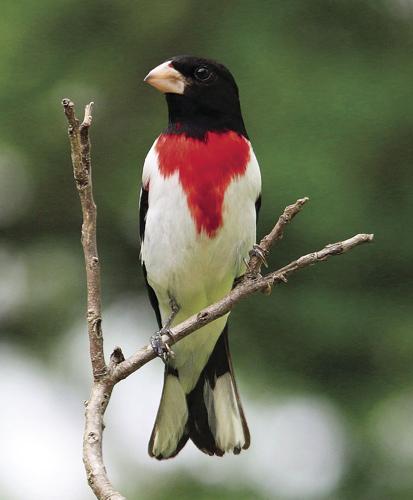
Photo by Edbo23/Pixabay • A male rose-breasted grosbeak is arguably one of the most impressive of the migrating birds making spring stops at lucky households offering feeders stocked with an ample supply of sunflower and other seeds.

Susan Westall emailed me on Sunday, April 21, for help identifying a new bird at her feeders.

Susan wrote, “We spotted this bird today (April 21) around 2:45 p.m. This bird has never been to visit that we’re aware of. We didn’t find the identity.”

Susan, who noted that she resides in Marion, North Carolina, asked if I could help identify the bird. She helpfully enclosed three photographs.

Photo provided by Susan Westall • A male rose-breasted grosbeak at a feeder at the Westall home.

One glimpse at her snapshots of the feathered visitor showed me that her mystery bird was none other than a rose-breasted grosbeak, one of the many splashy and impressive migrants that travel through Northeast Tennessee, Southwestern Virginia and Western North Carolina every spring.

Other than ruby-throated hummingbirds, the one bird whose return in the spring is guaranteed to generate excitement is the rose-breasted grosbeak. Every spring, I get phone calls and emails from people wanting to share the thrill of seeing these vibrant birds in their back yards.

A few people, like Susan, are completely stumped that such a flamboyant feathered visitor has landed in their own yard like an out-of-place inhabitant of a tropical jungle.

For most of us, these spring visits by rose-breasted grosbeaks is a fleeting and temporary stay. After finding the local arrangements, which can consist of well-stocked feeders and perhaps a convenient water source, to their liking, these migrants may linger for several days.

However, rose-treated grosbeaks nest at higher elevations and are usually impatient to continue the journey to where they will spend the summer months tending to their young.

Single birds are occasionally the first to arrive, but rose-breasted grosbeaks do form flocks when migrating. Even if a scout shows up alone at your feeders, he will often soon be joined by other grosbeaks.

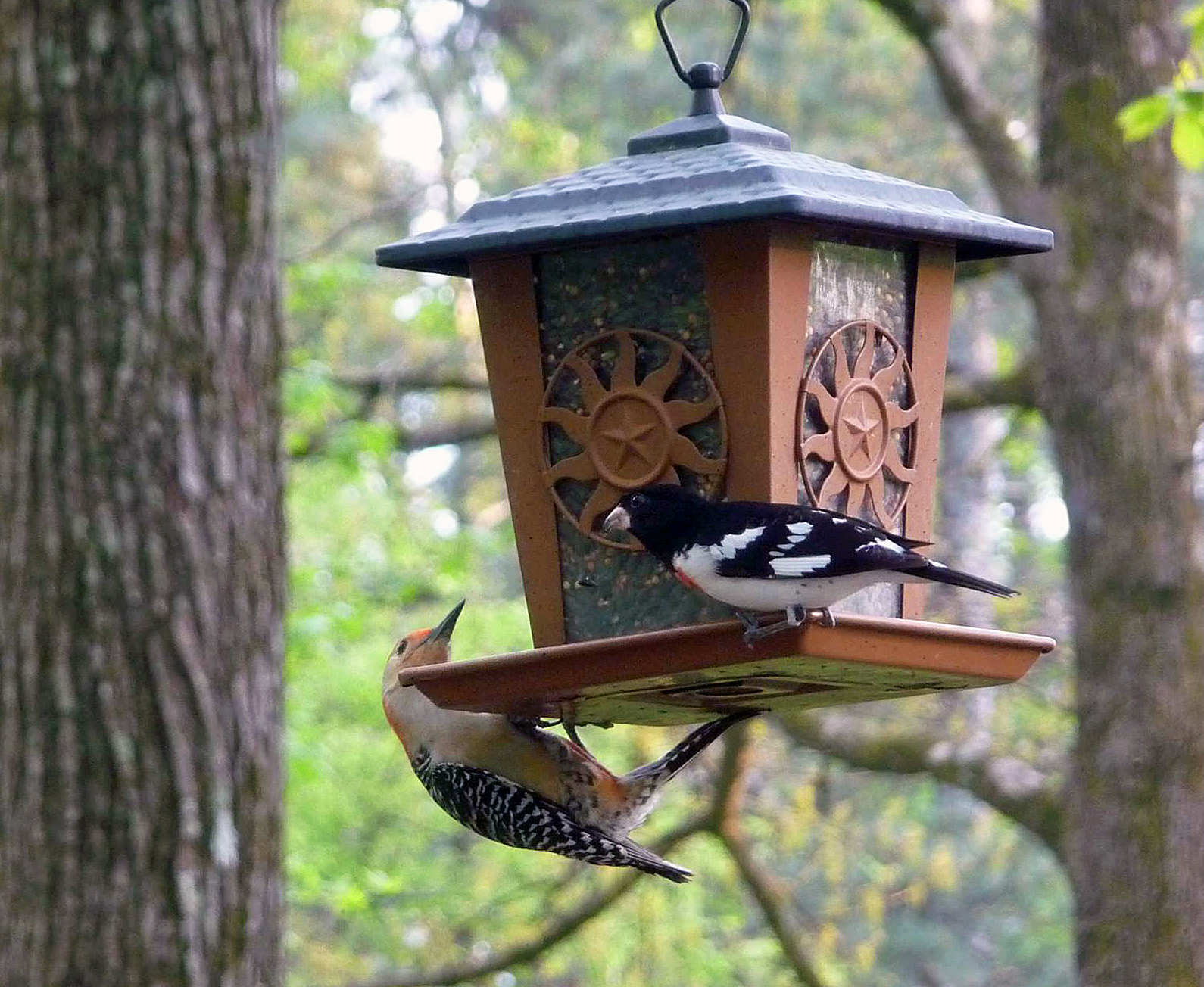
Photo provided by Byron Tucker • A male rose-breasted grosbeak has a showdown with a red-bellied woodpecker for access to a feeder.

Plenty of rose-breasted grosbeaks pass through the area, and a few even decide to make the region’s mountains their summer home. Rose-breasted grosbeaks spread out widely across the eastern half of the North American continent, ranging from northeastern British Columbia to Quebec and Nova Scotia in Canada. They also range south from New Jersey to Georgia. The rose-breasted grosbeak also reaches Colorado, Oklahoma and Kansas.

Farther west, the rose-breasted grosbeak is replaced by the closely related black-headed grosbeak. I saw black-headed grosbeaks on a trip to Salt Lake City, Utah, in 2006.

In many bird species males and females differ considerably. This is certainly true of male and female rose-breasted grosbeaks. The genders in this species are considered dimorphic, which is a scientific term which means that certain male and female birds of the same species may vary widely in size, plumage coloration, song or other secondary sexual traits.

They also have some things in common. Both sexes have a massive bill, which they use to hull sunflower seeds at feeders or glean insects from leaves and branches. It’s the heavy, blunt bill for which the term “grosbeak” is derived. “Gros” is a German term for large or big, so grosbeak simply means a large-beaked bird.

People who band birds to further the study of them will tell you that rose-breasted grosbeaks have a wicked bite and are capable of delivering quite a nip. Bird banders frequently encounter rose-breasted grosbeaks in their mist nets — and bear the scars to prove it.

Only the male rose-breasted grosbeak displays the namesake splash of rosy-red feathers across a white breast. The rest of the male’s plumage consists of a dramatic contrast of black and white feathers. The female grosbeak, however, doesn’t stand out in the same way. She is much less colorful than the male. With her brown and white plumage, she is often mistaken for a large sparrow or finch.

At our feeders, this bird’s extremely fond of sunflower seeds. Away from our feeders, grosbeaks feed on insects, seeds, fruit and even some leaf buds and flowers. I’ve seen these birds satisfying a sweet tooth — or should that be sweet beak? — by feeding on jewelweed flowers and apple blossoms. If sugar’s good for hummingbirds, I am sure it is a valuable energy source for rose-breasted grosbeaks, too.

The rose-breasted grosbeak is a cherished spring visitor that never fails to impress by bringing a hint of the tropics to the mountains of Northeast Tennessee. If you are disappointed in hopes of seeing the species this spring, take heart. The rose-breasted grosbeak migrates through the region again in the fall, often from mid-September to late October. The males sometimes look less vibrant by autumn, but it’s always a treat to see this bird.

I’m hoping many readers are also enjoying their own opportunities for hosting this delightful songbird.

Photo by Bryan Stevens • A male rose-breasted grosbeak perched in a tree on Holston Mountain in Tennessee.

Other songbirds are also on the move. Warblers, vireos, tanager, flycatchers, orioles and more are migrating through the region. Some will stay and make a home in the region for the summer. Others will push on beyond the Southern Appalachians. Keep your eyes open for what may show up next.

•••

Mark this on your schedule: Bristol Bird Club will host a presentation by Kera and George Brewster of Wild Birds Unlimited in Johnson City on Tuesday, May 21.

They couple had been scheduled to give a program at the club’s January meeting, but a snowstorm prevented it.

The club meeting will take place at 7 p.m. at The Summit at 1227 Volunteer Parkway in Bristol, Tennessee. Attendees can also join the meeting and view the program on Zoom. For a Zoom invite, email Larry McDaniel at bristolbirdclub2022@gmail.com.

•••

Share a sighting, ask a question or make a comment by emailing me at ahoodedwarbler@aol.com.

Photo by Pixabay.com • A well-stocked feeder is a first step toward attracting more birds to your yard.

Ruby-throated hummingbirds mark their spring return

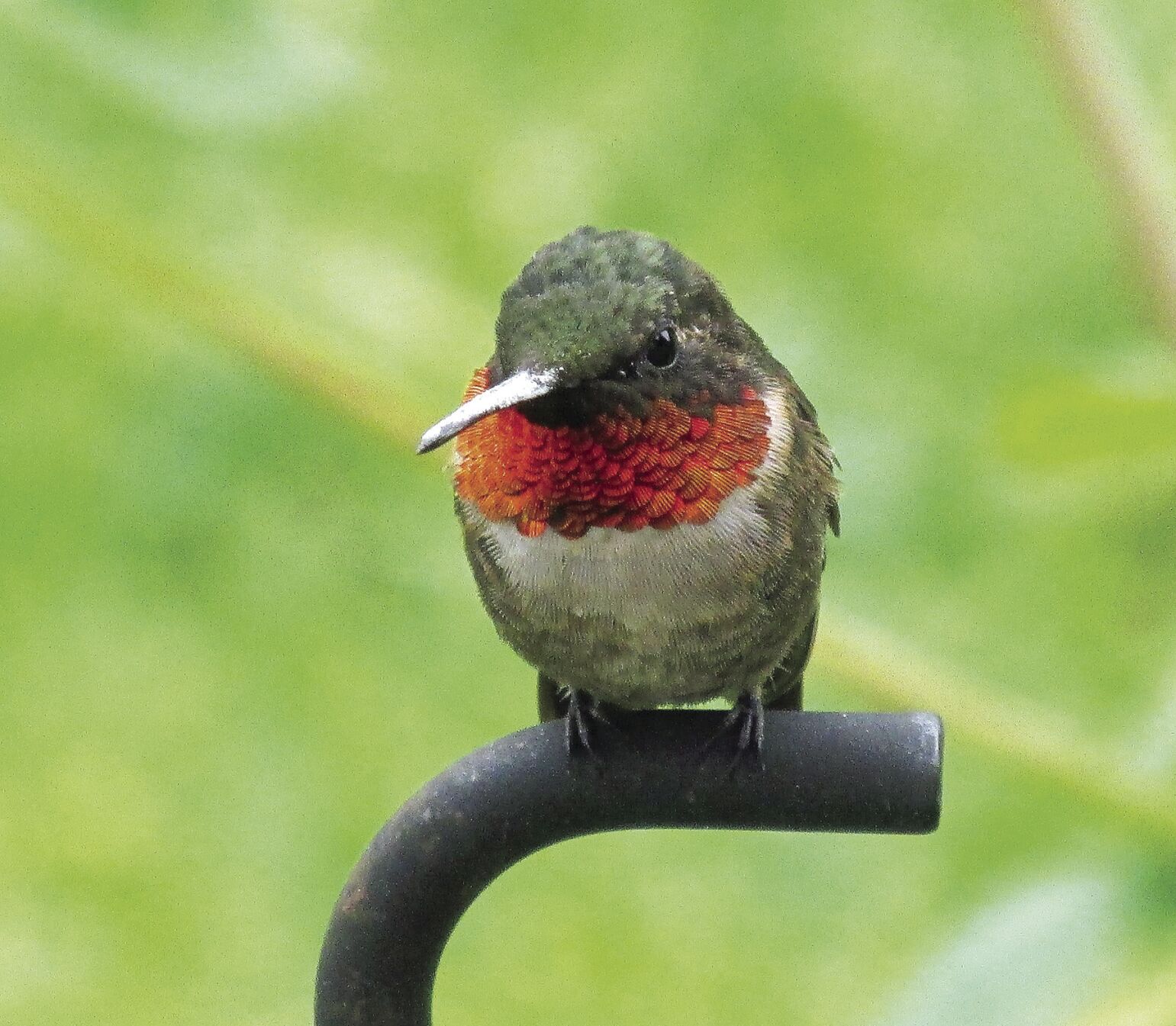
Photo by Bryan Stevens • A male ruby-throated hummingbird surveys his surroundings.

I am still waiting (at the time this post was written) for the first ruby-throated hummingbird of spring. Every year I hope they will make an early appearance, but I am almost always disappointed. These tiny birds always arrive in their own good time and my home is apparently not located within their primary migratory path.

As a consolation prize, however, I have welcomed the first of the spring warblers. I had two black-and-white warblers singing at home on April 9. The black-and-white warbler sings a repetitive song that has been described as a “squeaky wheel” based on the rising pattern of the song’s notes.

Other recent arrivals have included brown thrasher and tree swallow.

Photo by Ken Thomas
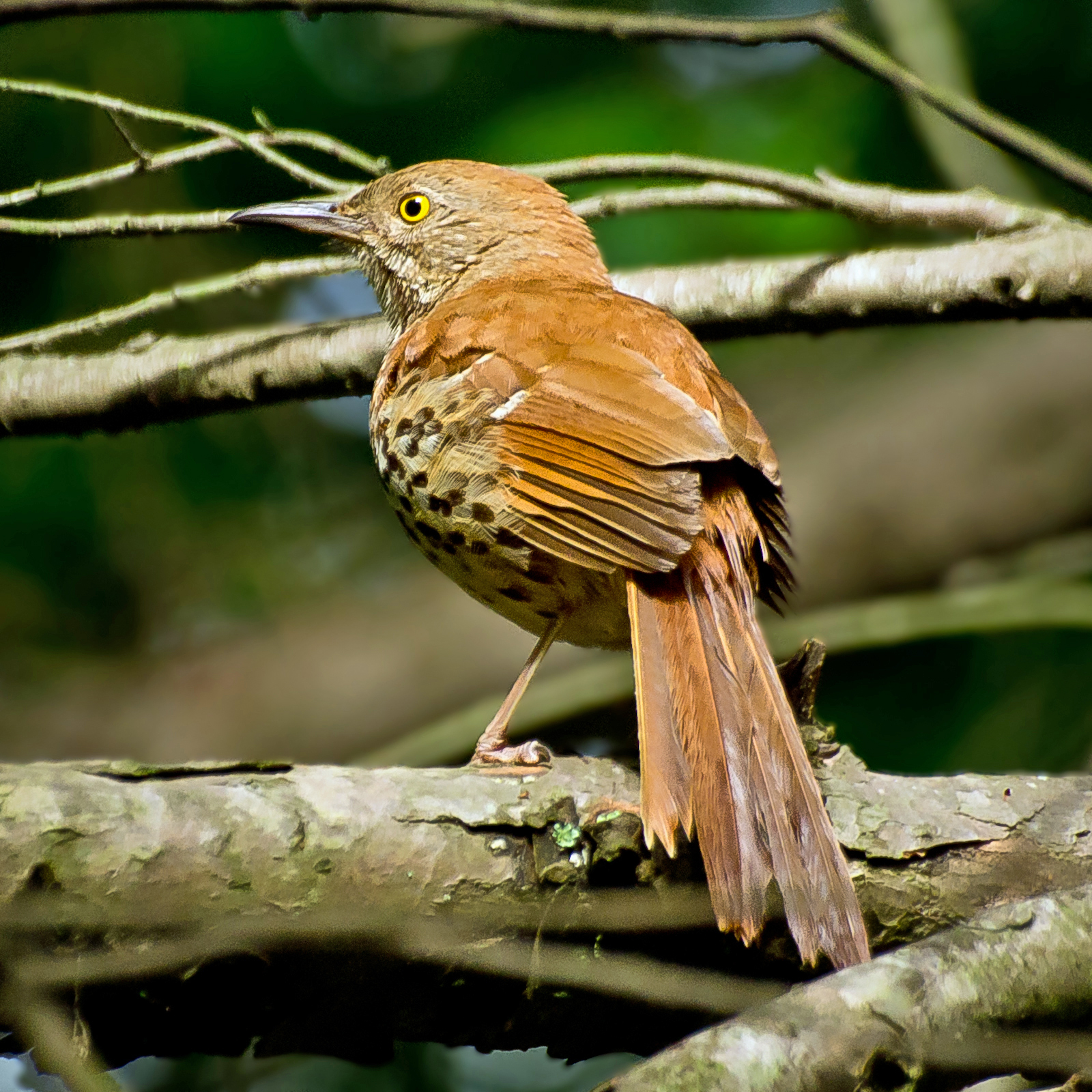
The Brown Thrasher is an alert, sharp-eyed observer of its surroundings.

While I cannot claim to have seen my first spring hummingbird – yet – I can report that hummingbirds are officially back. Some of my Facebook friends have reported their first sightings. Other readers have emailed me to share their sightings.

Nancy Light welcomed back a ruby-throated hummingbird on Sunday, April 7. “I have my sugar water feeders hanging off my fruit trees in the front yard,” Nancy wrote in an email. “I live in Kingsport, but this sighting was at my farm in Duffield, Virginia, in the Fairview community.”

•••

Patricia Faye Wagers in Kingsport saw her first hummingbird of spring on April 8.

“With one, I know more are on the way,” she wrote in a Facebook post announcing her sighting.

•••

Dianne Draper in Jonesborough reported her first hummingbird sighting of spring on April 9 in a Facebook post.

“Never did get a picture of the bird,” she wrote. “Also saw the first broad-winged hawk in the yard,” she added.

Broad-winged hawks, like ruby-throated hummingbirds, are migratory and return to the region in late March and early April.

•••

It’s in Central and South America where the world’s more than 300 species of hummingbirds reach their greatest diversity. In Eastern North America, the only hummingbird known to nest is the ruby-throated hummingbird.

The western half of the United States and Canada can claim about a dozen nesting species, including rufous hummingbird, Allen’s hummingbird, Anna’s hummingbird, broad-tailed hummingbird, black-chinned hummingbird, calliope hummingbird, buff-bellied hummingbird, broad-billed hummingbird and violet-crowned hummingbird.

Hummingbirds, regardless of species, occupy a tough spot in the food chain. A bird not much bigger than many large insects is going to be a target for opportunistic predators that will attempt to kill and consume anything small enough for them to make the effort.

To make matters worse for ruby-throated hummingbirds, some large spiders and mantids, as well as bigger dragonflies, have also been documented as hummingbird predators. When ruby-throated hummingbirds retreat to Central America for the winter months, they also face threats from lizards and snakes.

The list of predators that have been known to eat ruby-throated hummingbirds extends to bullfrogs, as well as many raptors, including kestrels, merlins and sharp-shinned hawks. Blue jays and other birds will raid hummingbird nests for eggs or young. Squirrels and chipmunks are also nest predators.

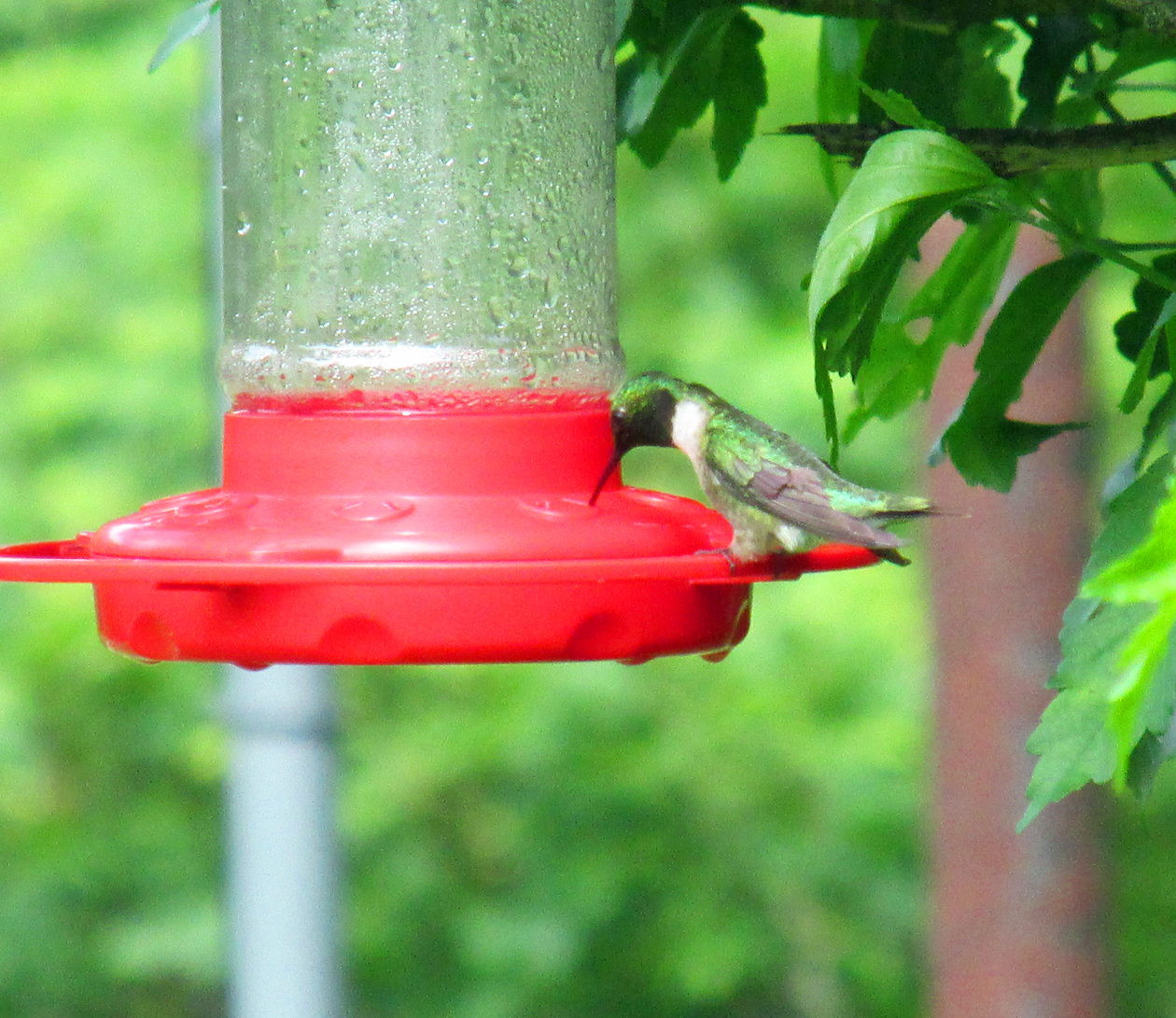
Photo by Bryan Stevens • Every hummingbird that arrives at your feeder is a survivor.

In essence, every hummingbird visiting your feeders and gardens is a survivor.

And evading an assortment of predators is not their only obstacle. These tiny birds make an awesome yet grueling migratory flight – twice a year – across the Gulf of Mexico. This achievement is a grueling finale for such a tiny creature’s migration. This direct flight alone can take 18 to 22 hours of non-stop flying before reaching land on the other side of the Gulf in states like Mississippi and Texas.

Hummingbirds have fascinated for centuries. Early European explorers sent back reports of amazing little birds that seemed halfway between birds and insects.

In the 1550s, French explorer Jean de Léry published a journal of his travels in Brazil. His account provided the first written description of hummingbirds to reach readers back in the Old World.

This painting, “The Inspiration of Christopher Columbus” by José María Obregón, was painted in 1856 well after the explorer sailed the ocean blue. It’s a reminder that from the moment that European explorers arrived, they were amazed at many discoveries in the New World, including tiny birds that buzzed and hummed around their heads like insects.

Of course, the natives of North America also knew about hummingbirds. In fact, many native tribes held hummingbirds in high regard. Some regarded them as healers. An Aztec deity by the name of Huitzilopochtli had a physical form supposedly comprised of hummingbird feathers that fell from the sky. The Aztecs also believed that fallen warriors were reincarnated as hummingbirds, no doubt because of the feisty and often downright militant attitudes of these tiny birds. Anyone who has ever witnessed hummingbirds dueling at their feeders will know what I mean.

It won’t be long before we have these tiny flying jewels back with us. Once they return, their antics will entertain us for several months before it’s time for them to head south again this fall.

•••

Feel free to continue to share hummingbird sightings with me. Provide the time and date of their arrival. Email me at ahoodedwarbler@aol.com to share a sighting, ask a question or make a comment.

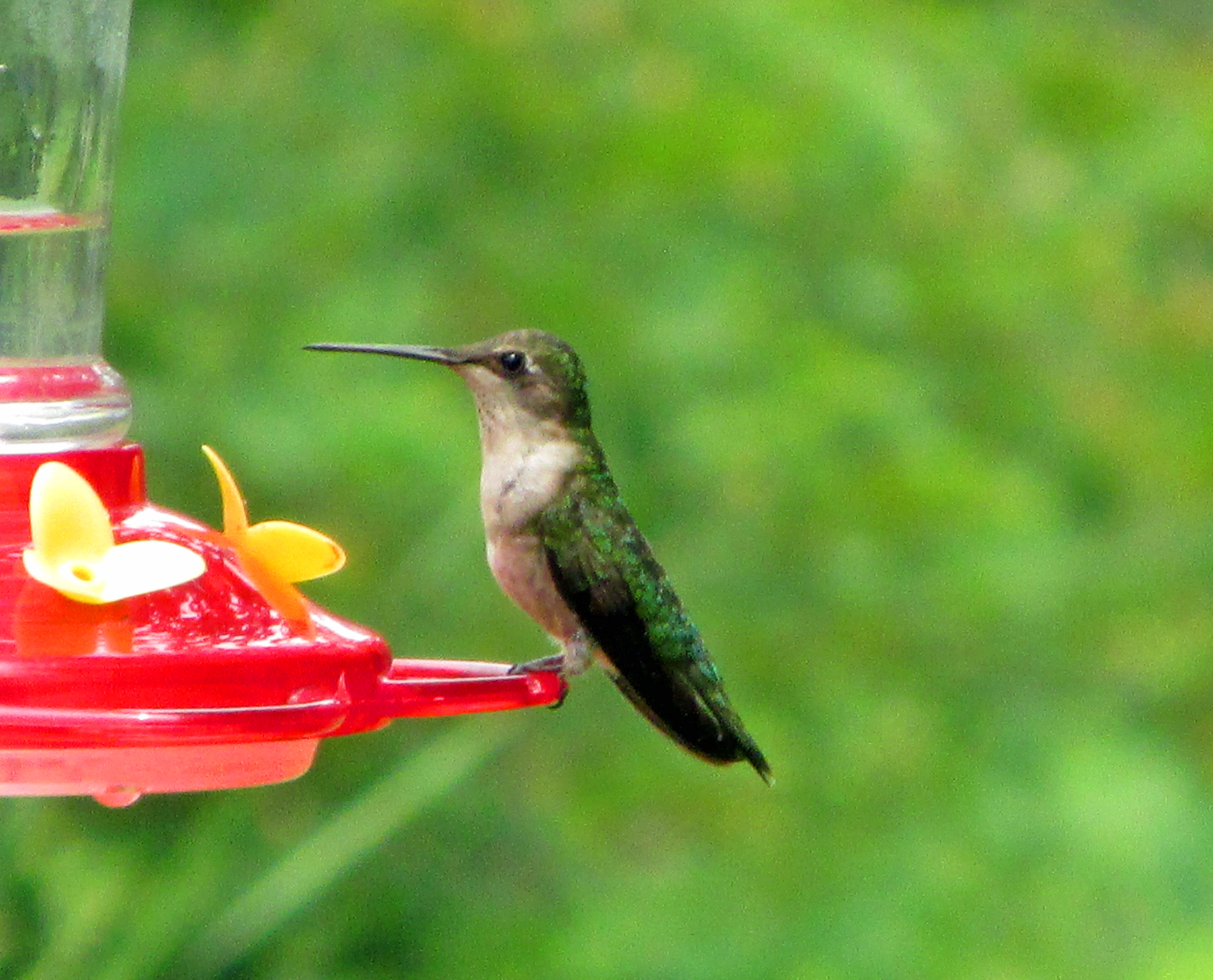
Photo by Bryan Stevens • A ruby-throated hummingbird sips from a sugar water feeder.


Tiny kinglets, gnatcatchers lead the charge among spring’s returning birds

Photo by Pixabay • The blue-gray gnatcatcher’s diminutive size belies its defiant attitude. These birds are intensely territorial and brooks no intruders.

The ruby-crowned kinglets, which passed through last fall in October and November, have returned, retracing their migratory path for the spring season and making their presence felt at my home with their jittery call notes and songs.

Most of the more recent returning birds have been on the smaller side. In addition to ruby-crowned kinglets, which arrived on April 1, I saw and heard a tiny blue-grey gnatcatcher on March 31.

As their name suggests, kinglets are tiny birds. In fact, about the only North American birds smaller than kinglets are some of the hummingbirds. The kinglets, known outside North America as “flamecrests” or “firecrests,” belong to the family, Regulidae, and the genus, Regulus. The family and genus names are derived from a Latin word, regulus, which means “rex,” or “king.” The name was apparently inspired by the colorful crown patches, often red, orange or gold, that resemble the royal “crowns” of kings. In addition to the two North American species, four other species of kinglets can be found in North Africa, Europe and Asia.

The gnatcatcher is also one of our smaller birds. I’ve always though that blue-gray gnatcatchers resemble a shrunken mockingbird. Like quarrelsome mockingbirds, gnatcatchers are noisy, scolding songbirds.

They are also determined to protect their nesting territories at all costs and will attack much larger birds. In North America, the gnatcatcher ranks in size with birds like kinglets and hummingbirds. Despite its diminutive status, the gnatcatcher acknowledges no superiors. According to the All About Birds website, blue-gray gnatcatchers are “fiercely territorial” and use vocal displays and postures to in intimidate other birds. They may chase a rival as far as 70 feet. If all this fails to deter an intruder, a gnatcatcher will escalate to midair confrontations.

Gnatcatchers don’t hesitate to call for reinforcements when warranted. With persistent squeaking they will drum up a brigade of feisty, feathered fighters to repel intrusions by potential predators too large for a gnatcatcher and its mate to handle on their own.

Ruby-crowned Kinglet

There are two species of kinglets in North America.

Although similar in size and overall coloration, the ruby-crowned and golden-crowned kinglets are easily distinguished from each other. Side by side, the two North American kinglets are easy to identify. The golden-crowned kinglet has a striped facial pattern formed by bold black and white stripes. The ruby-crowned kinglet, on the other hand, has a bold white eye ring but no striping. The golden-crowned kinglet has an orange crown patch, while the ruby-crowned kinglet has a red crown patch that is, more often than not, kept concealed. Both sexes of the golden-crowned kinglet possess a yellow crown patch, but only the male ruby-crowned kinglet boasts a scarlet patch of feathers atop the head. Observers can expend a lot of energy trying to get a look at the crown patches, which are typically only displayed when the bird is agitated.

There are 17 species of gnatcatchers. Most of these species reside in Central and South America. Some of the other species found in North America include California gnatcatcher and black-capped gnatcatcher.

Kinglets are very active birds. If warblers can be described as energetic, the kinglets are downright frenetic in their activities. The kinglets almost never pause for long, flitting from branch to branch in trees and shrubs as they constantly flick their wings over their backs. These bursts of hyperactivity can make them difficult to observe. Although small in size, these birds more than compensate for it with a feisty spirit that does them well through the harsh winter months.

Gnatcatchers are also constantly on the move, flicking their tails and darting through the branches of trees just starting to put out new green leaves. They glean caterpillars and small insects from the undersides of leaves to help fuel their demanding metabolism.

Kinglets and gnatcatchers often join mixed flocks comprised of other species of birds, some of which are regular feeder visitors. Perhaps by observing their flock counterparts, some kinglets have learned to accept feeder fare such as suet, meal worms and chopped nuts. Away from feeders, kinglets mostly feed on a range of small insects and arachnids. Gnatcatchers are strictly eaters of insects, but while a feeder holds no attraction for them, their curious nature often makes these tiny bird quite approachable.

Normally, kinglets have a rather fleeting lifespan. These tiny birds can be considered old if they live three or four years. There are always exceptions. The oldest golden-crowned kinglet on record was six years and four months old. That individual, a male, was documented by a bird bander in 1976, according to the website All About Birds.

Likewise, gnatcatchers live brief lives. The oldest known blue-gray gnatcatcher was a male, and at least four years, two months old, when it was recaught at a banding station in Pennsylvania and rereleased, according to the All About Birds website.

•••

I’m still waiting for the smallest of the small to make its spring appearance. Ruby-throated hummingbirds are back, although I haven’t seen one yet. To share your first hummingbird sighting of spring, email me at ahoodedwarbler@aol.com.


Sounds of spring remain one of the season’s pleasures

Photo by Bryan Stevens • Blue-headed vireos, such as this bird, are high-elevation summer residents in the region. In the fall, they are also common migrants.

In modern life, it can seem like we’re always looking for ways to relax and de-stress. For me, nothing works quite so well as letting nature’s sounds, as well as sights, provide some measure of relief from stressful situations and anxious thoughts.

I instantly notice when a new vocalization is added to the usual mix. Such occurred on March 26 when I heard the syllabic song of a blue-headed vireo from the upper reaches of a large tree near the fish pond.

The blue-headed vireo’s song has been described as “Hear me! See me! Here I am!” It’s similar to the song of the related red-eyed vireo, but it’s slower and the paired syllables are separated by a brief pause.

În a couple more weeks, the songs of blue-headed vireos will ring out all over the high-elevation forested slopes of many of our local mountains, but these are just starting to get back to the region after an absence during the colder months. Many other feathered singers will be arriving in their wake, including warblers, tanagers and grosbeaks.

Photo by Bryan Stevens • The tufted titmouse is a backyard bird with an impish personality and a loud song.

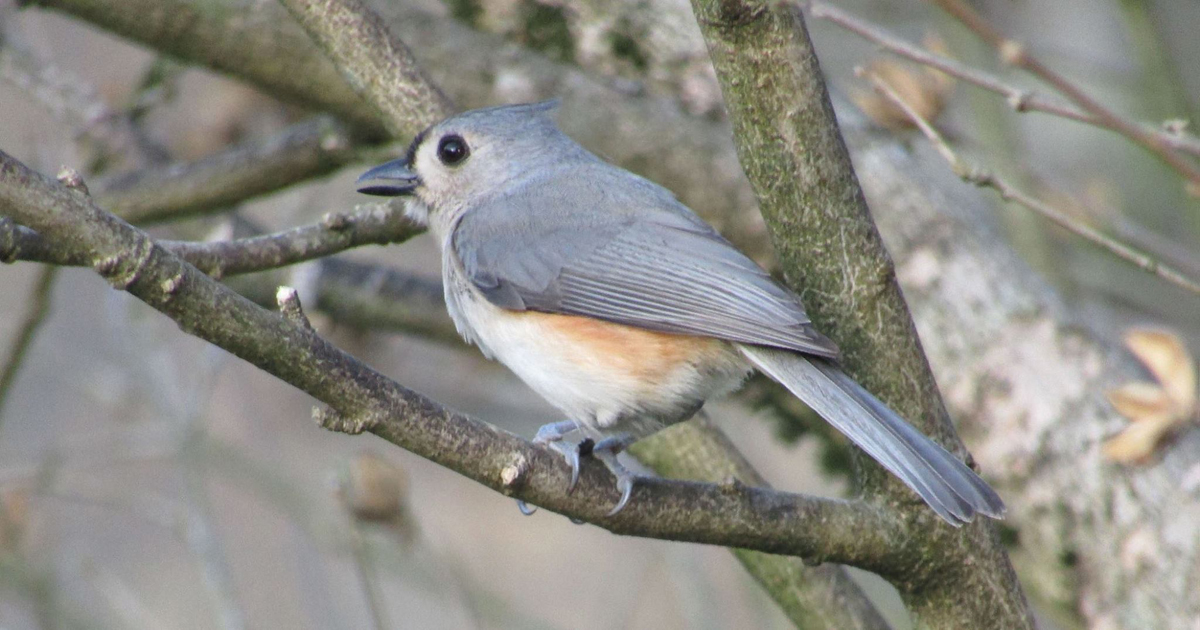
The mornings around my home often begin with a loud, insistent “Peter! Peter! Peter!” uttered from the woods or even from shrubbery just outside my bedroom window. Male tufted titmice, little gray relatives of chickadees with a distinctive crest and large, dark eyes, sing their urgent “Peter! Peter! Peter!” as a constant refrain in their efforts to attract mates now that they feel spring in their blood.

A series of rat-a-tat-tats echoes from deeper in the woods as woodpeckers tap their sturdy bills against the trunks of trees. The three most common woodpeckers at my home are red-bellied, downy, and pileated, and they all have their own unique vocalizations, as well.

The pileated woodpecker produces clear, far-carrying resonant piping sounds that can last for a few seconds each blast. The much smaller downy woodpecker produces a whinny of high-pitched notes that descend in pitch toward their conclusion. The red-bellied call is probably the one that stands out the most. The call’s a harsh, rolling “Churr, churr, churr” given almost like an expression of exasperation as they circle tree trunks and explore branches.

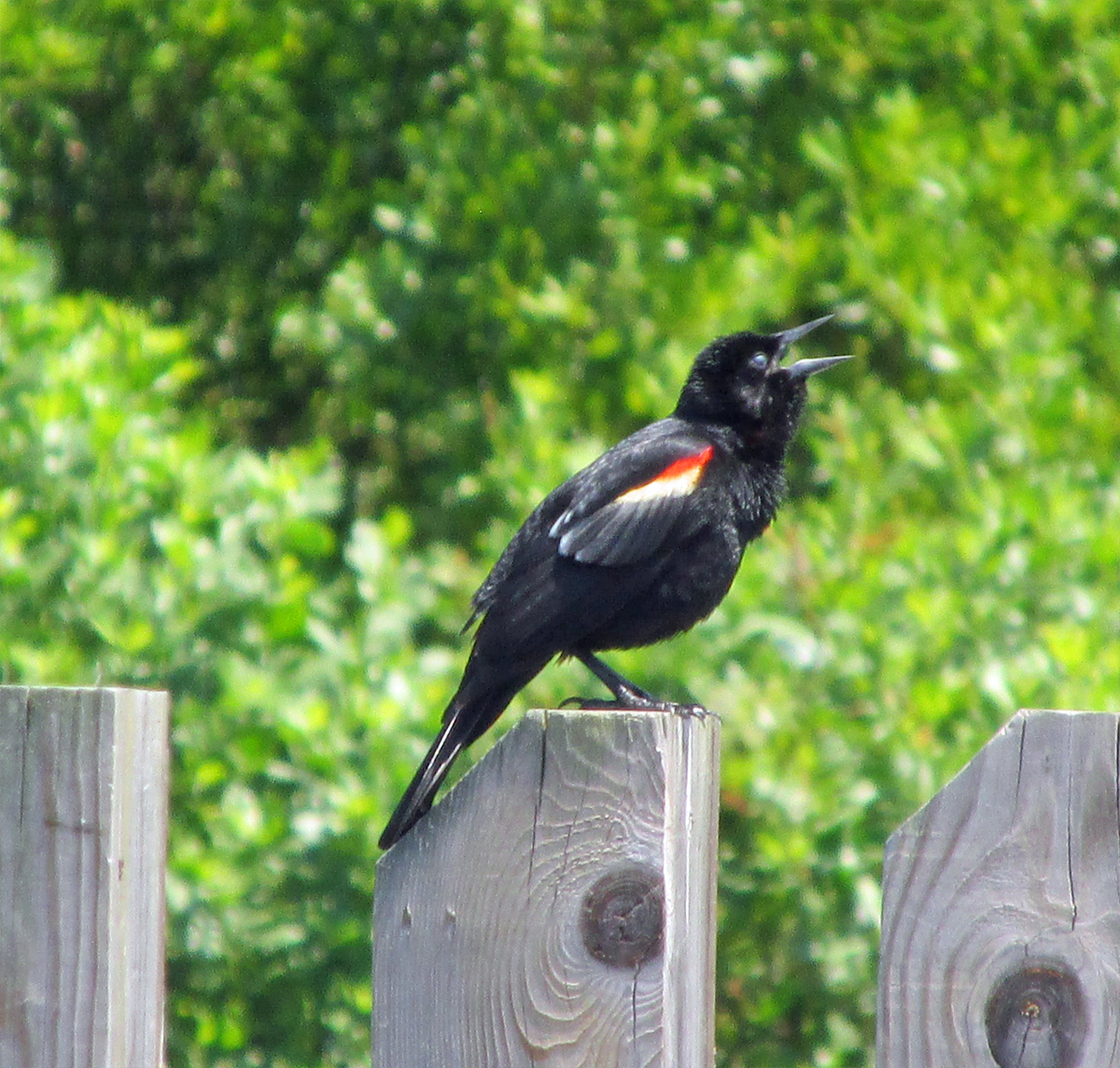
Since their return earlier this month, the resident red-winged blackbirds are often some of the earliest singers these days. According to the website All About Birds, the male red-winged blackbird’s “conk-la-ree!” is a classic sound of wetlands across the continent of North America. According to the website, the one-second song starts with an abrupt note that transforms quickly into a musical trill.

Photo by Bryan Stevens • A male red-winged blackbird sings to attract mates and ward off rivals.

Some birds helpfully introduce themselves with a song that repeats their name. One such common bird is the Eastern phoebe. In recent weeks, a pair has been checking out possible nesting sites. In past years, they have made use of the rafters of my garage and blades on a porch ceiling fan for potential nest sites. The male spends much of the day producing his strident “fee-bee” call, which is a perfect phonetic rendition of the bird’s common name.

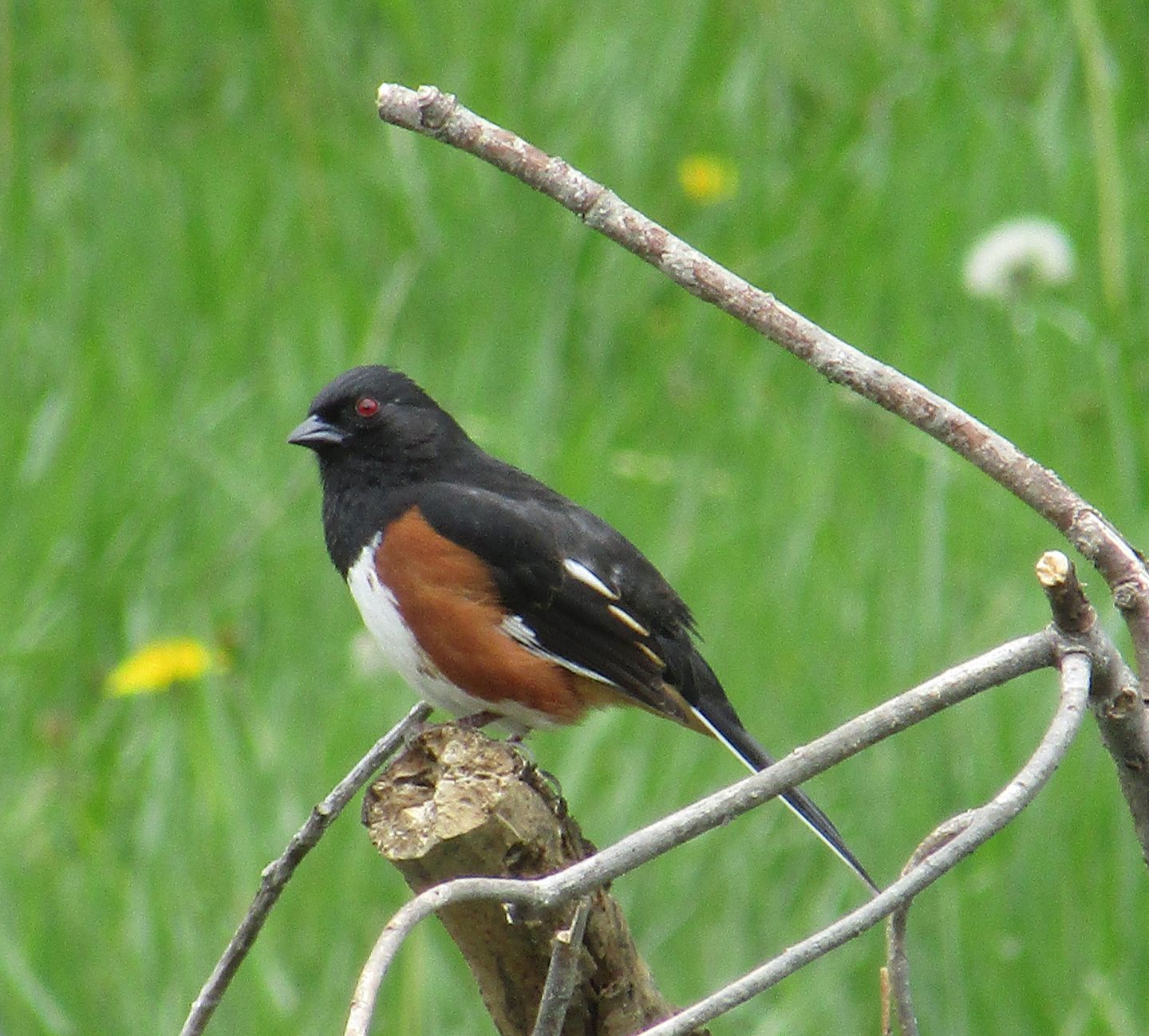
Then there’s one of my favorite songs of spring, which is produced by the Eastern towhee, also known by such common names as “ground robin” and “swamp robin.” These birds, which are actually a species of sparrow, also have some instantly recognizable vocalizations. With the arrival of spring, the males seek elevated perches for extensive singing bouts to attract mates and establish territories. Their song has been interpreted, quite accurately, as “drink your tea!” They also have some alarm notes, such as “€œChew-ink”€ and “€œToe-Hee,” of which the latter provides the basis for this bird’s common name.

Photo by Bryan Stevens • Male Eastern towhees are persistent singers once they establish  a spring territory.

Towhees occasionally spend the winter, but I’ve not noticed any during the winter of 2023-24. They are back now, and have been keeping a high profile for the past couple of weeks.

Of course, other wildlife is keen to join the springtime chorus. I have so many spring peepers at the fish pond and in the wet fields around my house that the noise from these tiny amphibians can reach deafening levels. The chorus is bound to grow more diverse and louder as spring advances. Take some time to enjoy the sounds of nature at your own home.

••••••

To share your own sighting, make a comment or ask a question, send email to ahoodedwarbler@aol.com. I’m also on Facebook.