Tag Archives: Feathered Friends

Diminutive green heron flies beneath the radar but is not uncommon

Photo by Bryan Stevens • A green heron captures a tadpole at a pond’s edge.

Retrieving the mail from my mailbox requires a slight trek, but there’s always something to see in the few minutes it takes to complete this task six out of seven days every week.

On a recent stroll to fetch the mail I startled a green heron from the vegetation surrounding the fish pond. The heron made a startled cry and flew to a horizontal branch in a tree adjacent to the pond.

It’s been so long since I’ve seen this small wading bird up close that I’d forgotten its diminutive nature. Although the official name is green heron, I’ve almost always referred to this species as “little green heron” or simply “little green.” It’s not completely uncalled for. After all, there’s a little blue heron. As far as my research tells me, however, there is no great green heron.

Photo by Bryan Stevens • Upcoming programs in the region will focus on topics such as songbirds, raptors and the basics of beginning birdwatching. Plan to attend one or more of the programs to learn more about birds, such as this green heron.

Green herons are not restricted to coastal areas, but it was still somewhat unexpected. I’m hoping I didn’t frighten the bird too badly and it will continue to haunt the edges of the fish pond. The vegetation around the pond makes it easy for this heron to conceal itself. The pond is also a great place for the heron to forage. There’s an abundance of some of its favorite prey, including tadpoles and dragonflies.

Green herons and other wading birds are usually quite abundant in wetlands across the country in late summer. The scientific name — Butorides virescens – of this bird comes from a mix of Middle English and Ancient Greek and roughly translates as “greenish bittern.”

There are only two other species in the genus Butorides — the lava heron, which occurs on some of the Galapagos Islands of Ecuador, and the striated heron, which is found in wetlands throughout the Old World tropics from West Africa to Japan and Australia. This heron, which is also known as the mangrove heron, also occurs in South America.

The green in the bird’s plumage appears as a dark green cap, as well as a greenish back and wings. Adult birds also have chestnut-colored neck feathers and a line of white feathers along the throat and belly. These herons often assume a hunched position, making them look smaller than they actually are.

It’s been a good summer for wading birds. In addition to the green heron, a great blue heron has been lurking in the creekand at the fish pond. Much larger than the green heron, it’s not as easy for the great blue heron to escape notice.

Other locations to look for both these herons are at the pond at Erwin Fishery Park. You’ll also want to keep alert when walking along the linear trail in Erwin. This is the time of year when interesting herons or egrets are not all that scarce.

Farm ponds in the countryside around Jonesborough, as well as wetland habitat around the town’s Persimmon Ridge Park, are also good places to look for green herons. The wetlands at Sugar Hollow Park in Bristol, Virginia, is another dependable location for seeing this small heron. Most green herons will depart in late September and early October. This small heron retreats from the United States during the winter season but returns each spring in April and May.
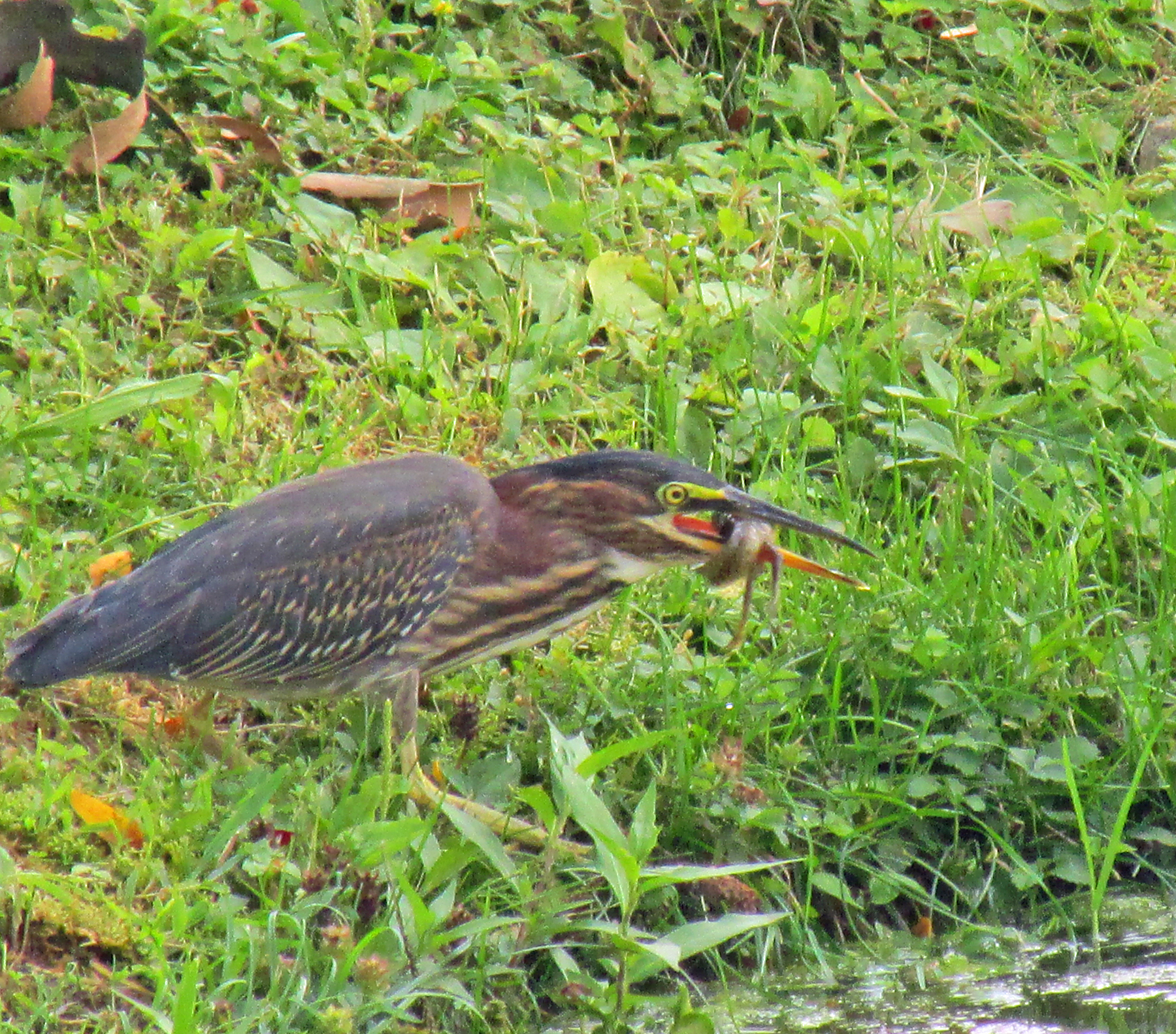
Photo by Bryan Stevens • A green heron finesses a captured tadpole in its bill.

The green heron’s range during the nesting season includes Canada and much of the United States. Green herons will sometimes form loose nesting colonies, but at other times a pair will choose a secluded location as a nest site. The female will usually lay from three to five eggs. Snakes, raccoons and other birds such as crows and grackles are potential threats to eggs.

For the most part, the population migrates to Central and South America for the winter months. A few herons — great blue heron and black-crowned night heron — remain in the region throughout the year, even enduring the cold winter months in Northeast Tennessee, Southwest Virginia and Western North Carolina.

Green herons are probably more common than we realize. They are skilled at blending with their surroundings, but sharp eyes can find these herons around almost any body of water, whether it is pond, marsh, river, creek or lake.

Keep looking for green herons and their larger kin for the next few months. To share a sighting, ask a question or make a comment, send me an email at ahoodedwarbler@aol.com.

•••

Bryan Stevens is the managing editor of The Erwin Record. He has written about birds, birding and birders since 1995.

Photo by Bryan Stevens • A green heron hunches next to a pond.
 

Birds boast phenomenal knack for long-distance travel

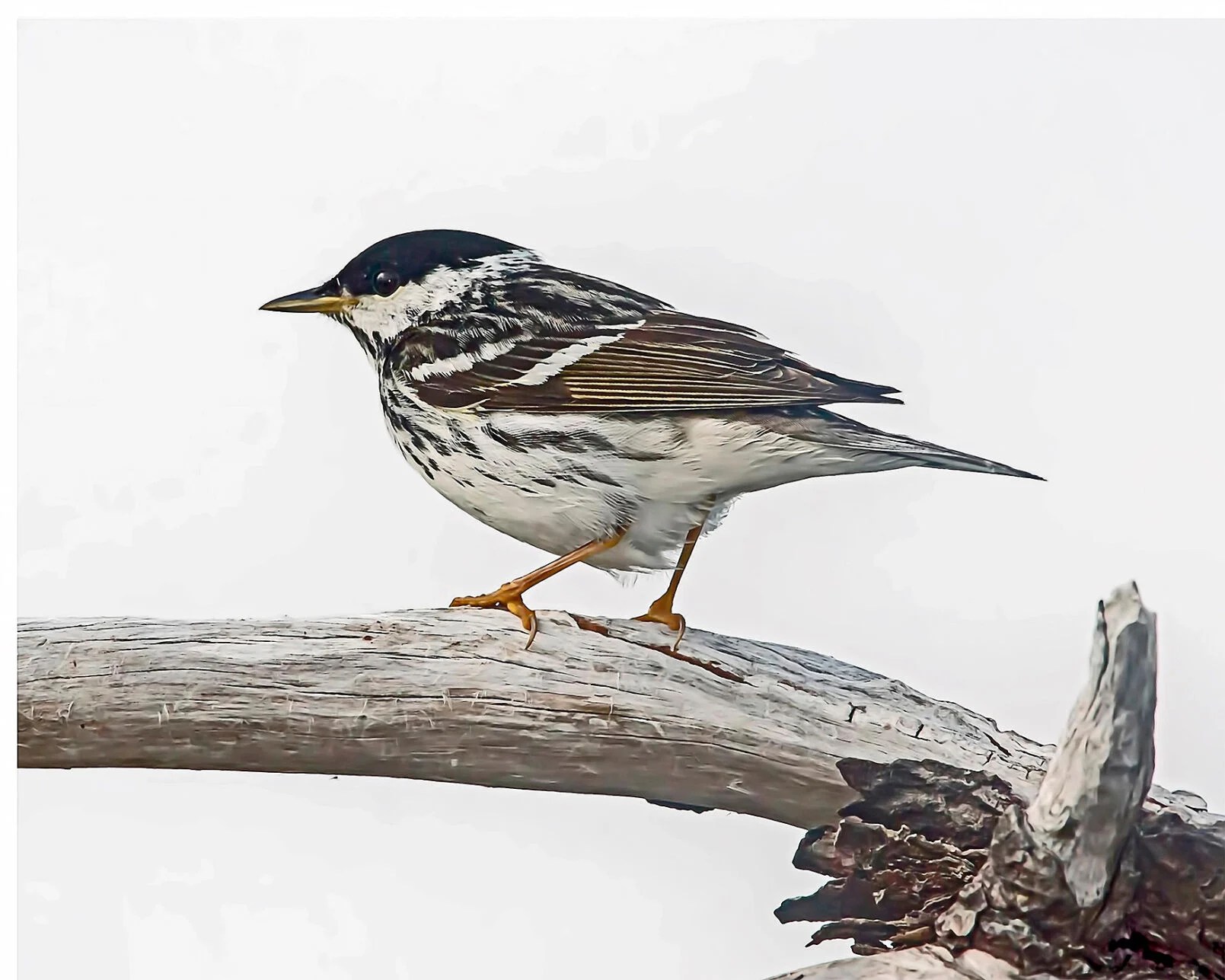
Hans Toom/Pixabay • The blackpoll warbler has one of the more difficult and lengthy migrations of the family of warblers.

The phenomenon of migration isn’t exclusive to the neotropical migrants of the New World. Birds in other parts of the world migrate, too. Waterfowl, shorebirds and raptors are among some of the families of birds that stage impressive migrations.

Of course, I spent most of my birding within Tennessee, particularly in the Northeast Tennessee region. Since the Volunteer State has no access to the sea, it is sometimes amazing how many birds affiliated with coastal areas can be found if you know when and where to look. Fall’s a good time to scan lakeshores, river banks and the edges of farm ponds for migrating shorebirds and wading birds.

I discussed last week some of the species I hope to see this fall. Every time I see some of these migrants I am impressed by what a phenomenal feat each and every single one of these birds represents. As my mother is fond of asking: “How do they do it?”

For such relatively small creatures, many if our birds are world-class travelers. Here are a few profiles of some of these incredible migrants.

Photo by U.S. Fish & Wildlife Service/Kirk Rogers • The Arctic tern is a world champion among migrating birds.


One good tern deserves another

The Arctic tern, for example, truly takes migration to extremes. This small seabird travels each year from its Arctic nesting grounds to the Antarctic region, where it spends the winter months. Put into terms of mileage, the Arctic tern can travel about 50,000 miles in a single year. For a bird with a body length of about 15 inches and a wingspan of about 28 inches, this incredible migration is an astonishing feat. These statistics permit the Arctic tern to easily lay claim to the title of champion migrant among our feathered friends. According to the website for National Geographic, Arctic terns face a serious threat from climate change. In a profile on the tern at its website, National Geographic warns that Arctic terns are projected to lose 20 to 50 percent of their habitat due to the temperature changes linked to climate change. They also face loss of habitat due to encroachment by human activities such as oil drilling.

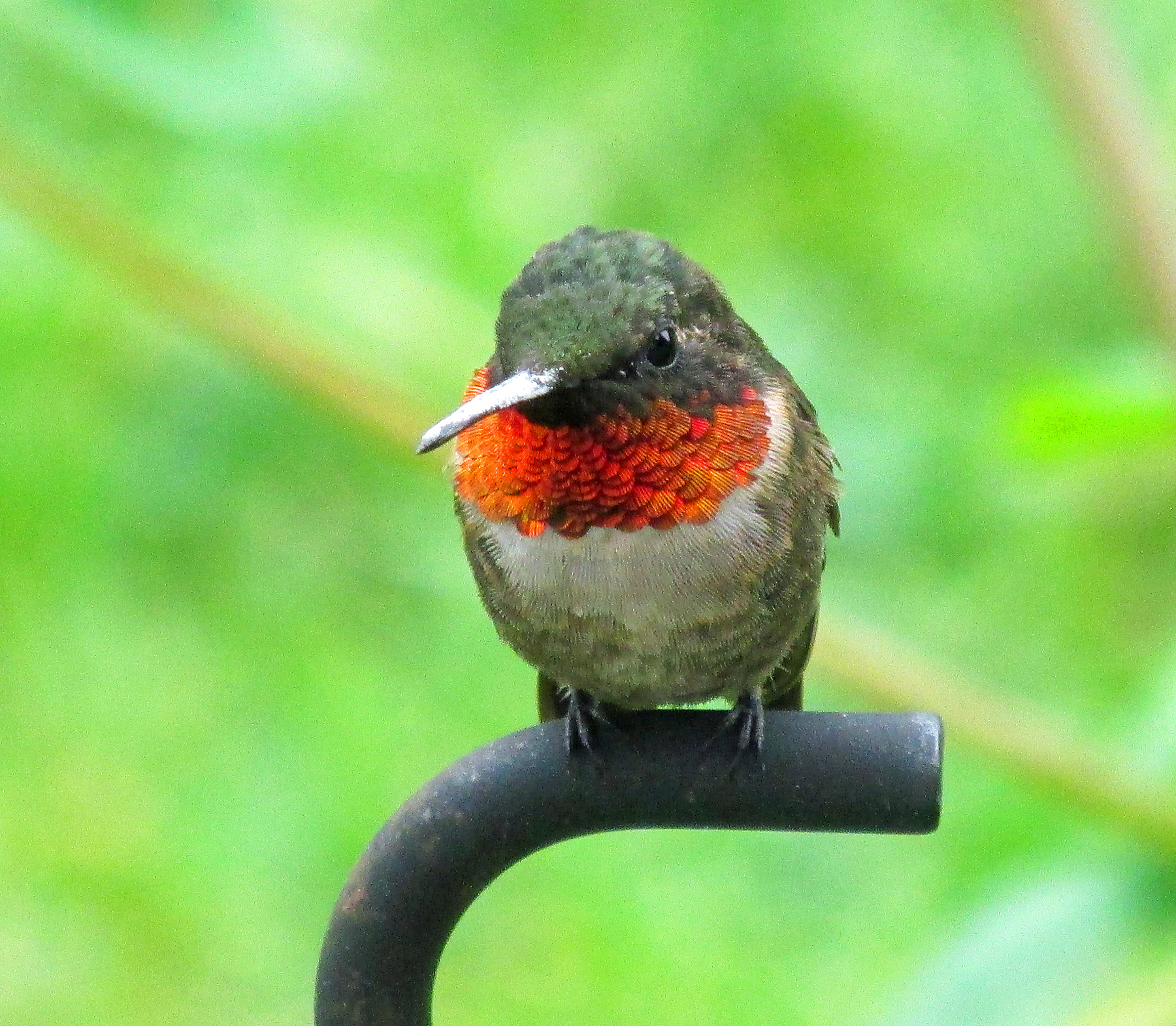
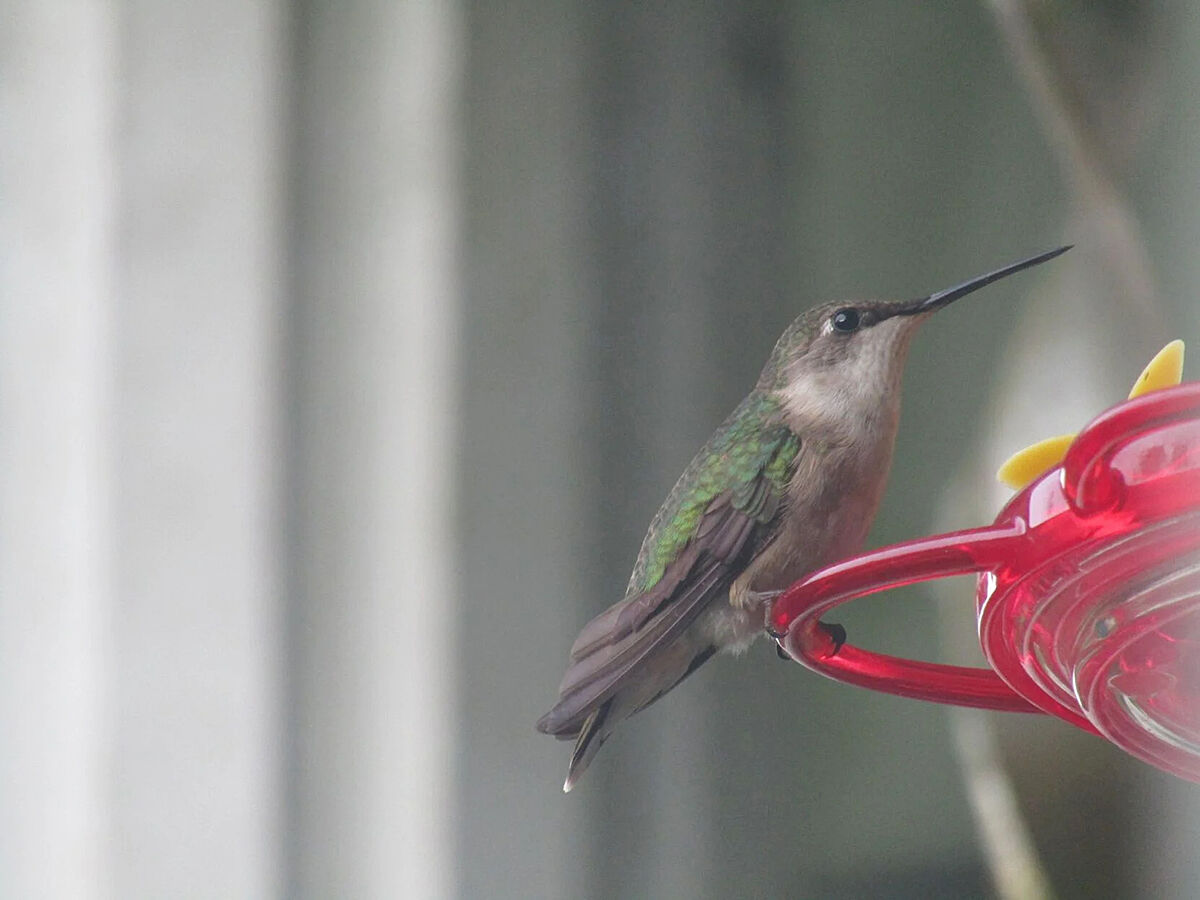
Photo by Bryan Stevens • Despite a perceived disadvantage of size, ruby-throated hummingbirds are quite capable of thriving in a giant world.

Size matters less than we think

The ruby-throated hummingbird makes an impressive migration each year. It’s even more awesome when one considers the diminutive size of these small travelers. Just to reach the United States, these tiny birds undertake a strenuous journey. They leave their wintering grounds in Central America to return to the United States and Canada for the nesting season. Most of these tiny birds, which are barely four inches long, make a non-stop flight of more than 500 miles across the Gulf of Mexico. The journey can take almost an entire day. With the end of summer, the entire population of ruby-throated hummingbirds, increased by a new generation of young birds, makes the Gulf crossing for a second time in a year to return to the American tropics for the winter months.

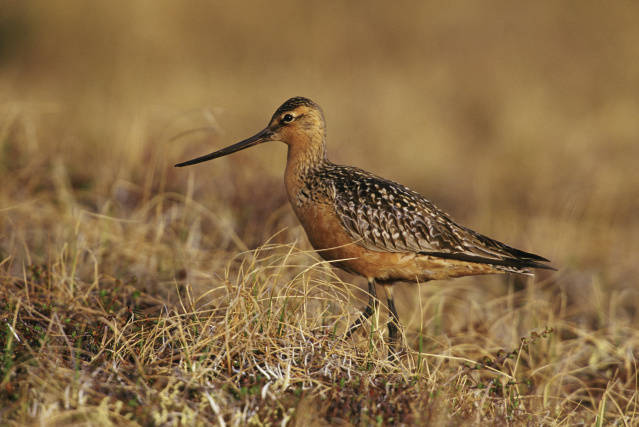
Photo by U.S. Fish & Wildlife Service/Steve Maslowski The bar-tailed godwit stages migrations that can take nine days of non-stop flight spanning nearly 6,000 miles.


Godwits, by Jove!

Shorebirds, which in North America can consist of birds ranging from turnstones and sandpipers to willets and avocets, are champion migrants. For instance, the bar-tailed godwit makes an impressive non-stop migratory flight. This shorebird nests in the United States only in parts of remote Alaska, but this godwit also ranges into Scandinavia and northern Asia. Some of these godwits make a nine-day, non-stop migratory flight that takes them from New Zealand to the Yellow Sea of China and beyond, a distance of almost 6,000 miles each way. Needless to say, since the godwits make no stops along the way, they must also go without food for the duration of their journey. The female godwit is larger than the male, but she still weighs only 12 ounces. The long-billed, long-legged bird is about 17 inches in length from the tip of the bill to its tail. That a creature so small can make such a distant, arduous trip and be the none the worse for wear is truly inspiring.

Bryan Stevens • A broad-winged hawk perches in a woodland in the Southern Appalachians.

A fine kettle of hawks

Many North American raptors migrate, but the broad-winged hawk dislikes the lonely aspects of solitary travel. Instead, these hawks form large flocks, known as kettles, during migration. In autumn the majority of these raptors travel past human-staffed hawk migration observation points, which are dubbed “hawk watches,” during a brief and concentrated period of only a few weeks. Observing the phenomenon locally is possible at the Mendota Fire Tower Hawk Watch site atop Clinch Mountain at an abandoned fire tower near Mendota, Virginia. Broad-winged hawks are part of the family Accipitridae, which includes 224 species of hawks, eagles, vultures and other birds of prey. Broad-winged hawks are truly long-distance migrants. Many hawks passing over Mendota may end their migration as far south as Brazil. These hawks travel in flocks that can consist of hundreds or thousands of individuals. The birds conserve energy by soaring on thermals and mountain updrafts.

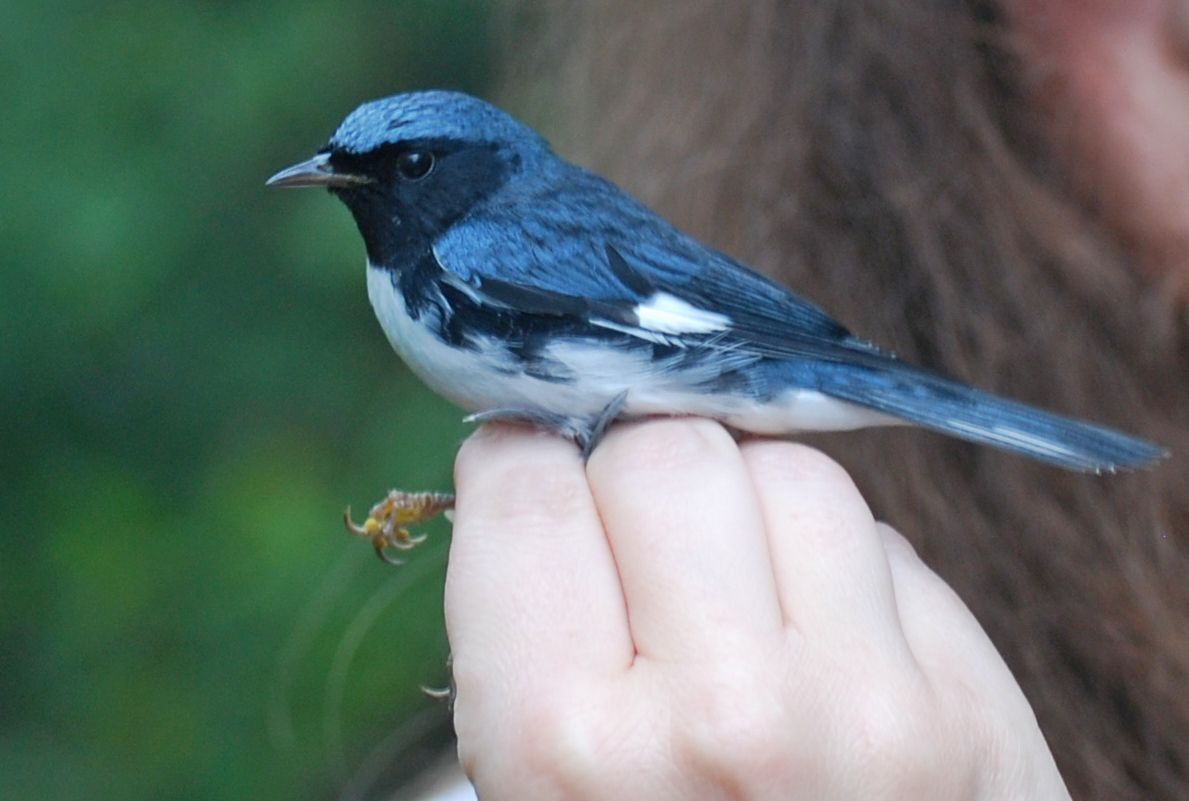
Jean Potter • Warblers, such as this male black-throated blue warbler, migrate into North America each spring to nest and retreat each fall for conditions farther south during the winter.

Traveling in stages

Most of the warblers that nest in North America retreat to Central and South America during the winter months. Few warblers, however, make as great a journey as the blackpoll warbler. Instead of migrating over land, this five-inch-long warbler undertakes a two-stage migration. The first half of the migration is a non-stop flight of about 1,500 miles. Every fall, these tiny birds fly over the ocean during this part of their migration, departing from Canada or the northern United States and not stopping until they reach various locations in the Caribbean. There they will spend some time recovering from the exhausting first half of their journey before they continue their way to such South American countries as Colombia and Venezuela.

•••

Bryan Stevens has written about birds since 1995. To share a sighting, ask a question or make a comment, email him at ahoodedwarbler@aol.com.

Looking for fall migrating birds already underway

A male Wilson’s warbler perches in some branches. Many species of warbler migrate through the region each fall.

Summer’s waning. Just look at the calendar. We’re already approaching the midway point in August.

Birders track the transitions as one season merges into another, knowing that these are some of the best times to seek out birds. Fall migration doesn’t wait for a page to turn on a calendar. In fact, some birds are already on the move. I thought I’d devote this week’s column to some of the birds I hope to observe this fall as a mass migration draws many of our summer residents south toward warmer wintering grounds. In no particular order, here are some of the birds I’m hoping to see this autumn.

COMMON NIGHTHAWKS

The name common nighthawk is a misnomer. The species is not strictly nocturnal and it is certainly not a hawk. It’s actually a member of the nightjar family, which includes such birds as chuck-will’s-widow and whip-poor-will. The nighthawk doesn’t offer a serenade like these relatives, but it does produce a “pent” call that sounds much like an electric buzzer. It’s often the first indication of one of these birds swooping overhead. Nighthawks form impressive flocks, often numbering in the dozens or even hundreds. They are often active in evening hours, but I’ve seen large flocks of these migrating birds in mid-afternoon. August and September are the best time to look skyward to enjoy the spectacle of a large flock of swooping nighthawks as they pass overhead.

Photo by U.S. Fish and Wildlife Service
A Common Nighthawk finds a perch for a brief rest.


I didn’t host any of these colorful birds this spring, so I hope to get another opportunity this fall. The males in their vibrant black-and-white plumage and namesake breast patch of rosy-red feathers are slightly less colorful in the fall. I’ve actually had better luck in autumn hosting these birds at feeders. They love sunflower seeds, so keep your feeders stocked with their favorite foods to increase your chances. Females and young birds look different than adult males, but the heavy beak (the word “gros” is German for large) is a good indicator of their identity. Bird banders netting this species to document information for science can testify that these birds are also capable of a nasty nip at careless fingers with that stout bill.

Bryan Stevens • A pine warbler visits a suet feeder.

WARBLERS

These birds are undeniably at their most gorgeous during spring migration, but many species of warbler retain colorful plumage into the fall season. Young birds, often in a plumage entirely different than adult birds, are responsible for the term “confusing fall warblers.” I’ll be looking for the species that are harder to locate in the spring, including bay-breasted warbler, Cape May warbler, Blackburnian warbler and Tennessee warbler. I’ll also be hoping for a rarity such as cerulean warbler or mourning warbler. I will be sad when the parade of warblers produces a palm warbler or a yellow-romped warbler. These last two species are a sure sign that fall migration’s coming to a close for another season.

Photo by Bryan Stevens
A Great Egret resting on a spit of land in a lake at Murphy Candler Park in Brookhaven, Ga.

WADING BIRDS

Late summer and early fall can also be a fantastic time for scanning rivers, lakes and farm ponds for wading birds. Hurricanes in recent years have even forcibly relocated American flamingos to Tennessee and other unlikely locations. It’s slightly more reasonable to hope for something unexpected like a wood stork or roseate spoonbill. The more likely candidates for observing in the region are great egrets, tri-colored herons and snowy egrets. It’s also a last chance to view green herons before this small species retreats to warmer locations for the coming winter.

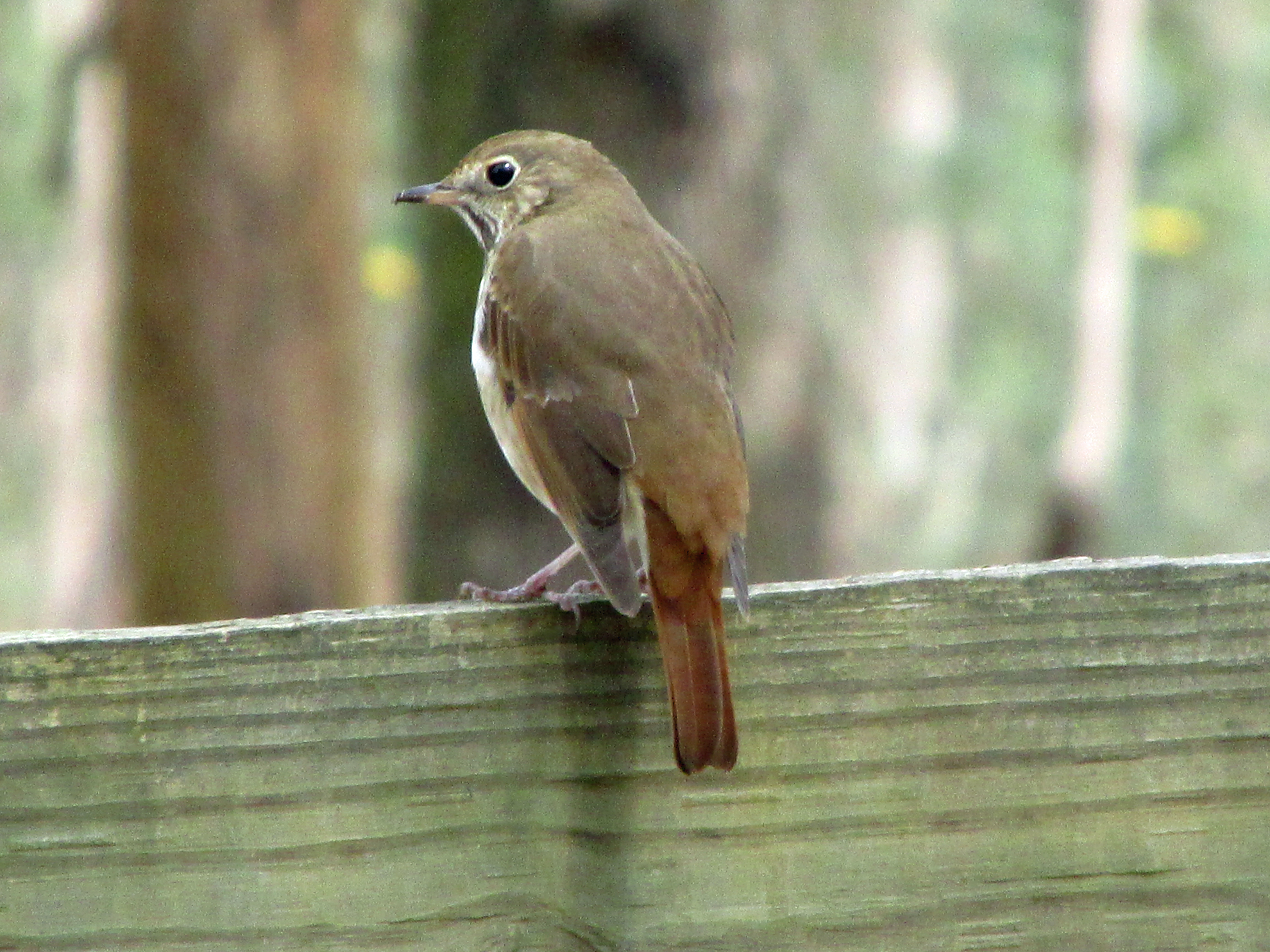
Bryan Stevens • A hermit thrush perches on a fence.

THRUSHES

These medium-sized songbirds are typically brown in plumage, often with spotted white breasts. They’re beautiful singers in spring and summer, but they’ve often cut back on their singing by fall. Nevertheless, they form large migrating flocks that will roam autumn woodlands to rest and refuel during short breaks from migrating. Swainson’s thrush is not difficult to find in the fall. This species is named in honor of 19th century artist and ornithologist William Swainson. Like most birders, I will be hoping for the more difficult species like Bicknell’s thrush and gray-cheeked thrush. Knowing their call notes can help alert you to their presence.

There will be a dazzling diversity of our feathered friends on the move this month. The seasonal phenomenon of migration extends into September and October. Pay attention to the visitors in your yards and gardens.

•••

Share sightings, ask questions or make comments by emailing me at ahoodedwarbler @aol.com.

Photo by Bryan Stevens • This migrating rose-breasted grosbeaks struck a window and spent some time recovering. Later, the bird flew safely back to a row of trees.

Cedar waxwings provide entertainment as they feast on mulberries

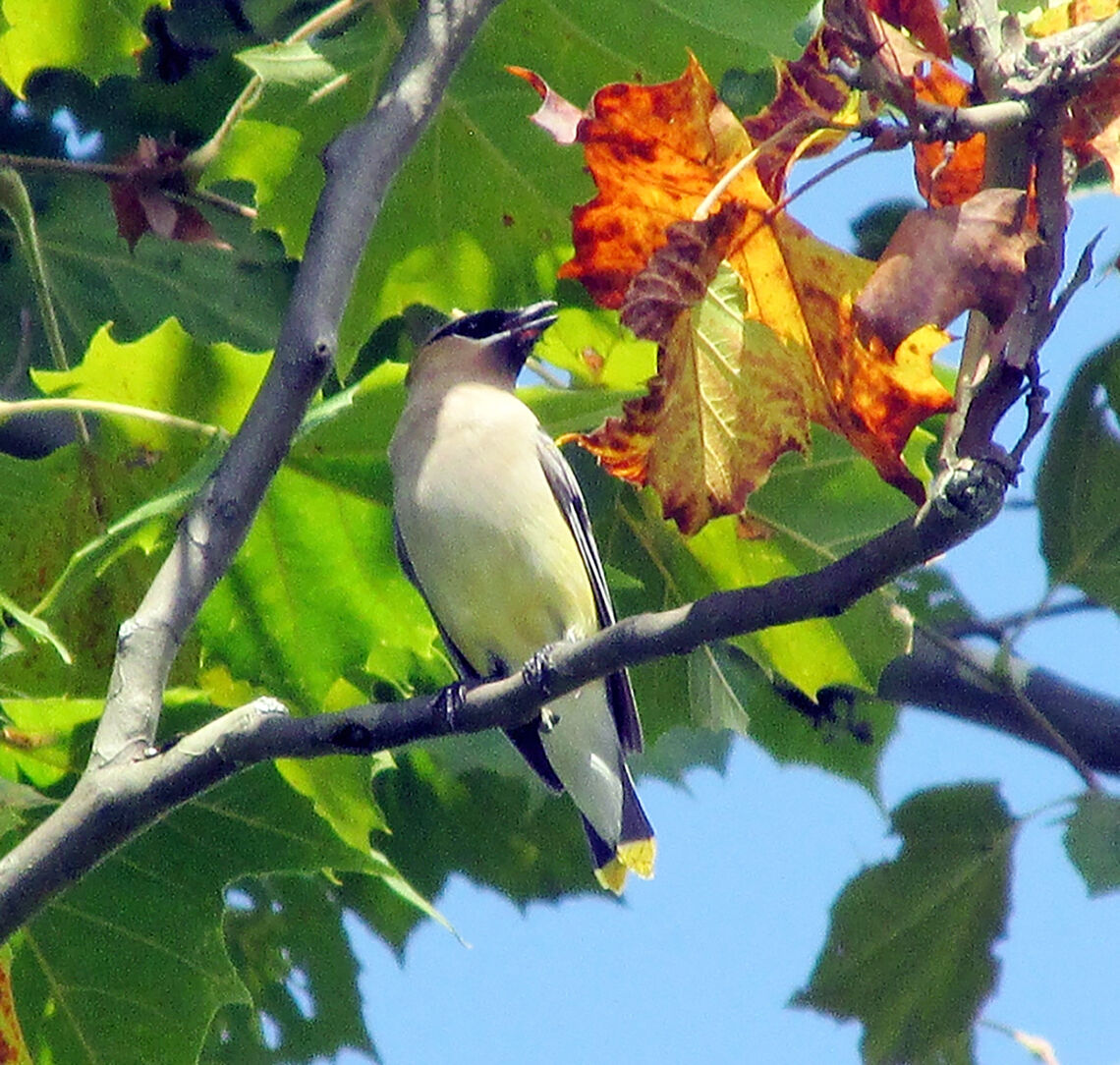
Photo by Jack Bulmer/Pixabay • A cedar waxwings strikes a stately pose on a branch.

Spring turned out to be a rainy season in Northeast Tennessee. As we move into the official summer season as of Friday, June 20, summer’s also looking like it might be wetter than usual.

Rainfall hasn’t stopped the rhythms of the seasons. For instance, two mulberry trees at home have produced a bonanza of ripening berries for our fruit-loving feathered friends.

So far, the main beneficiaries of all this bounty has been the local cedar waxwings. These sleek and distinctive birds have a brown and gray silky plumage, a black mask and a perky crest. Some of the wing feathers show red tips. The similarity of these wing tips to melted drops of wax gives these birds the common name of waxwing.

There’s no absolute explanation of the purpose for these waxy tips. Experts have theorized that the colorful wingtips might help attract mates.

Other birds have competed for access to the berries, including American robins, gray catbirds and at least one scarlet tanager.

Cedar waxwings love their fruit. They’re not quite a frugivore, which is a scientific term for animals that depend mostly on raw fruits for sustenance. The website All About Bird recommends planting native trees and shrubs that bear small fruits, including such species as mulberry, dogwood, serviceberry, cedar, juniper, hawthorn and winterberry, to attract cedar waxwings.

Photo by Bryan Stevens • A cedar waxwing perches in the upper branches of a tree.

The cedar waxwing has few relatives. Worldwide, there are only two other species: the Bohemian waxwing, of the northern forests of Eurasia and North America; and the Japanese waxwing, found in such northeast Asian countries as Japan, Korea and China.

Although it’s classified as a songbird, the cedar waxwing does’t truly produce a vocalization that anyone would contend qualifies as a song. They are, however, very vocal birds, producing shrill, high-pitched notes as they pass through the upper branches of tall trees.

Early American naturalist and artist John James Audubon painted this pair of cedar waxwings.

As much as the waxwing has a fondness for fruit, it’s also a bird that would have made an excellent flycatcher. Flocks of these birds will often congregate in trees near the edge of a pond, garden or yard — anywhere winged insects might be found in good numbers — in order to hawk insects on the wing. A waxwing will sally forth from a branch, snatch its prey in mid-air, and return to its perch for a quick snack. Dragonflies often feed on mayflies and dragonflies but they will also forage on a wide array of other winged insects.

Waxwings are rather nomadic, coming and going with a maddening unpredictability. They often follow the available sources of food, whether that’s the multitude of flying insects attracted by pond and rivers or a particularly bountiful crop of fruit.

They can form large flocks. I once observed a flock that probably consisted of 100 individuals as they stripped berries in early winter from a holly tree. Adding some comic relief to the scene were two Northern mockingbirds making a futile attempt to disperse the waxwings and thus claim all the berries for themselves. The mockingbirds would chase off a dozen or so birds only for twice that number to descend on the vacated spot in the tree’s branches. It was a losing battle, but I am confident that once they settled down, the mockingbirds managed to enjoy the supply of berries alongside the overwhelming numbers of waxwings.

I’ve enjoyed the friendly flock of waxwings as they’ve feasted on mulberries. The only drawback has been that I am usually observing their antics in late evening when the sun is behind these birds. Fortunately, even a waxwing’s sleek silhouette is still a sight to behold and enjoy.

•••

To share a sighting, ask a question or make a comment, send me an email to ahoodedwarbler@aol.com.

Photo by Bryan Stevens • A pair of cedar waxwings hawk for insects near a pond.

Regional spring bird count finds 148 species

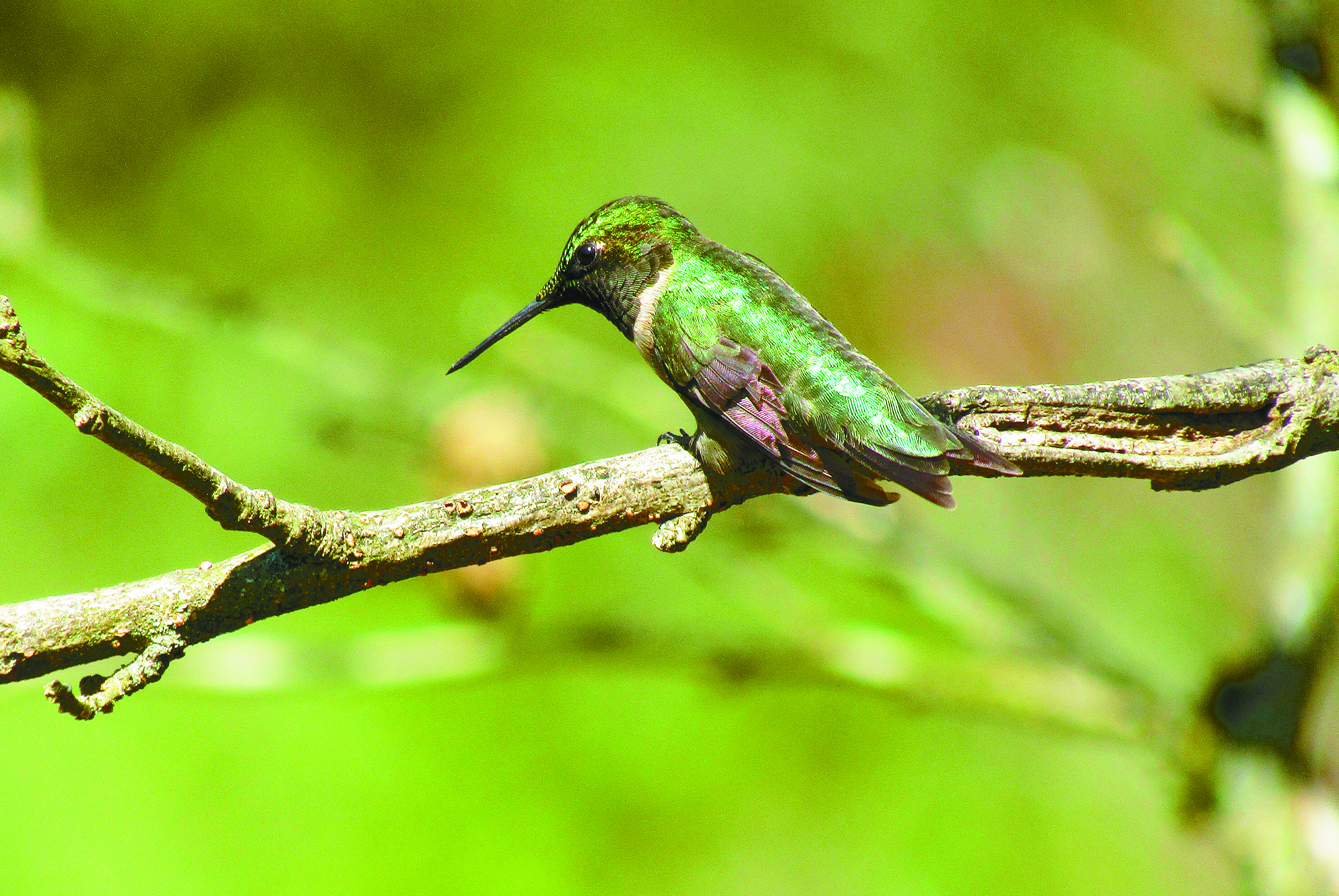
Photo by Bryan Stevens • Ruby-throated hummingbirds have settled into a comfortable summer routine throughout the Northeast Tennessee region.

The 82nd consecutive spring bird count was held Saturday, May 3, with 44 observers in 15 parties. The survey tallied 148 species, which is slightly below the recent 30 year average of 150 species. The count is conducted by the Elizabehton Bird Club, which will also conduct two summer counts this month. One of these counts is held in Carter County and the other in Unicoi County.

The spring count is a regional survey that includes all Northeast Tennessee counties: Carter, Johnson, Sullivan, Unicoi and Washington.

Compiler Rick Knight shared some observations. Noteworthy sightings included common merganser, black-billed cuckoo, willow flycatcher, vesper sparrow and bobolink, as well as prothonotary and cerulean warblers. A total of 31 species of warblers made this year’s count. A record number (24) for Swainson’s warbler provided an indication that this species is locally abundant during the nesting season.

The 17 fish crows reported by six parties provided a good example of the local expansion of this species. The 17 common ravens, once not so common in the region, were reported by eight of the count parties.

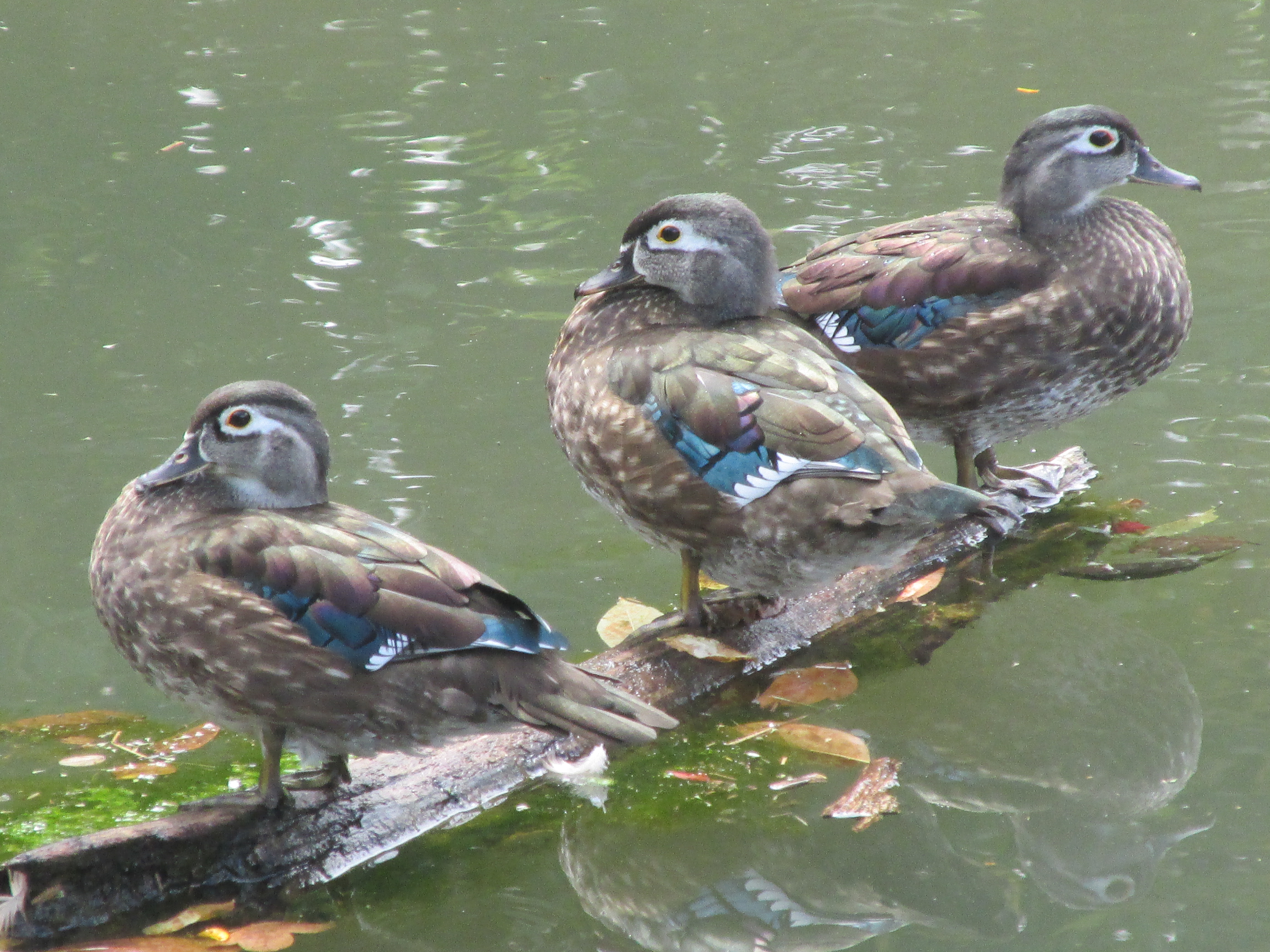
Photo by Bryan Stevens • Young wood ducks share a perch on a submerged log.

The list:

Canada goose, 208; wood duck, 31; blue-winged teal, 2; mallard, 86; and common merganser, 7.

Wild turkey, 16; ruffed grouse, 1; rock pigeon, 92; Eurasian collared-dove, 1; mourning dove, 176; yellow-billed cuckoo, 3; and black-billed cuckoo, 2.

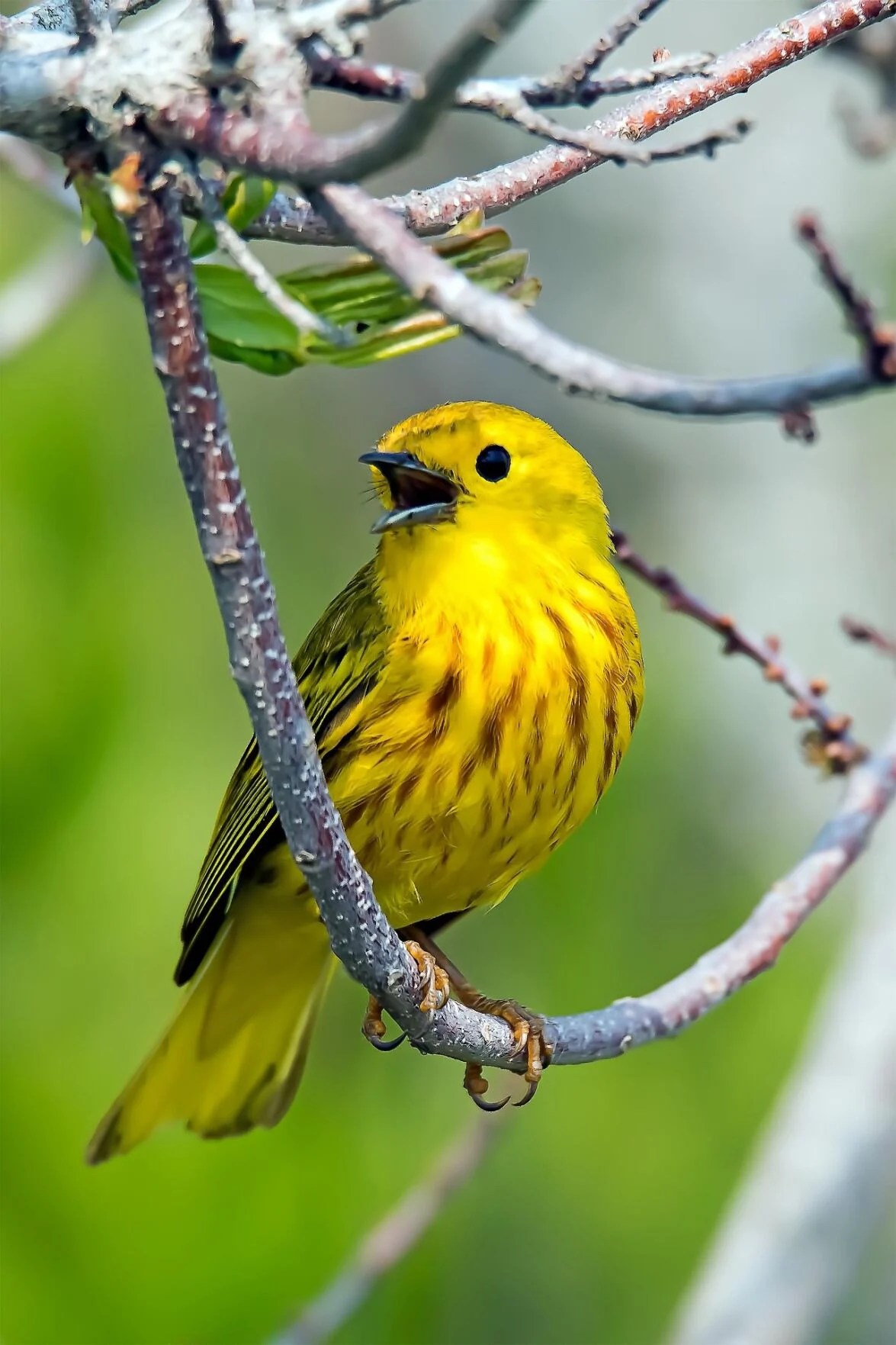
Photo by Hans Toom/Pixabay • A male yellow warbler is aptly named.

Chuck-will’s-widow, 9; Eastern whip-poor-will, 32; Chimney swift, 149; ruby-throated hummingbird, 18.

Killdeer, 32; least sandpiper, 16; pectoral sandpiper; 1; spotted sandpiper, 42; solitary sandpiper, 39; and lesser yellowlegs, 6.


Double-crested cormorant 28; green heron 8; great egret, 1; and great blue heron, 50.

Black vulture, 38; turkey vulture, 96; osprey, 4; Cooper’s hawk, 6; bald eagle, 1; red-shouldered hawk, 4; broad-winged hawk, 7; red-tailed hawk, 14; Eastern screech owl, 15; great horned owl, 2; and barred owl, 4;

Belted kingfisher, 15; red-headed woodpecker, 2; red-bellied woodpecker, 68; yellow-bellied sapsucker, 7; downy woodpecker, 33; hairy woodpecker, 6; Northern flicker, 37; and pileated woodpecker, 36.

Photo by Bryan Stevens • Downy woodpeckers will visit feeders in any season.

American kestrel, 5; great crested flycatcher, 28; Eastern kingbird, 42; Eastern wood-pewee, 16; Acadian flycatcher, 27; willow flycatcher, 1; least flycatcher, 10; and Eastern phoebe, 64.

White-eyed vireo, 19; yellow-throated vireo, 12; blue-headed vireo, 42; warbling vireo, 10; and red-eyed vireo, 364.

Blue jay, 175; American crow, 218; fish crow, 17; and common raven,17.

Tree swallow, 107; Northern rough-winged swallow, 81; purple martin, 29; barn swallow, 144; and cliff swallow, 482.

Carolina chickadee, 144; tufted titmouse, 189; ruby-crowned kinglet, 1; golden-crowned kinglet, 2; red-breasted nuthatch, 9; and white-breasted nuthatch, 26.

Brown creeper, 6; blue-gray gnatcatcher, 62; Carolina wren, 159; house wren, 39; and winter wren, 1.

Gray catbird, 68; brown thrasher, 43; Northern mockingbird, 97; cedar waxwing, 122; Eurasian starling, 539; Eastern bluebird, 97; veery, 15; Swainson’s thrush, 8; wood thrush, 116; and American robin, 654.

House sparrow, 55; house finch, 78; pine siskin, 7; and American goldfinch, 252.

Chipping sparrow, 139; field sparrow, 34; dark-eyed junco, 48; white-crowned sparrow, 3; white-throated sparrow, 4; vesper sparrow, 1; Savannah sparrow, 4; song sparrow, 287; swamp sparrow, 1; and Eastern towhee, 203.

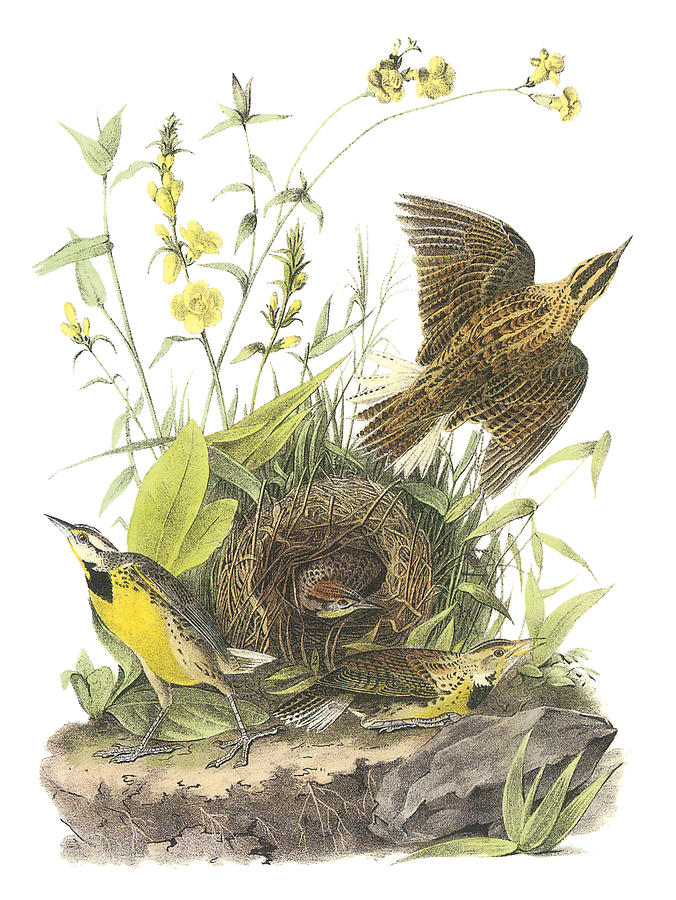
Early American naturalist and painter John James Audubon painting this scene depicting nesting meadowlarks.

Yellow-breasted chat, 9; bobolink, 6; Eastern meadowlark, 108; orchard oriole, 28; Baltimore oriole, 26; red-winged blackbird, 211; brown-headed cowbird, 65; and common grackle, 195.

Ovenbird, 169; worm-eating warbler, 42; Louisiana waterthrush, 45; Northern waterthrush, 4; golden-winged warbler, 2; blue-winged warbler, 1; black-and-white warbler, 104; prothonotary warbler, 1; Swainson’s warbler, 24; Tennessee warbler, 13; Kentucky warbler, 4; common yellowthroat, 25; hooded warbler, 234; American Redstart 27; Cape May warbler, 14; cerulean warbler, 2; Northern parula, 88; magnolia warbler, 4; bay-breasted warbler, 6; Blackburnian warbler, 16; yellow warbler, 10; chestnut-sided warbler, 32; blackpoll warbler, 6; black-throated blue warbler, 97; palm warbler, 5; pine warbler, 7; yellow-rumped warbler, 17; yellow-throated warbler, 52; prairie warbler, 1; black-throated green warbler, 100; and Canada warbler, 50.

Summer tanager, 2; scarlet tanager, 92; Northern cardinal, 284; Rose-breasted grosbeak, 30; blue grosbeak, 11; indigo bunting, 164; and dickcissel, 1.

I counted with Chris Soto and Brookie and Jean Potter around Sycamore Shoals State Historic Park, on the greenbelt along the Watauga River and on Holston Mountain.

•••

To share a sighting, make a comment or ask a question, email me at ahoodedwarbler@aol.com.

Photo by Hans Toom/Pixabay • A male Blackburnian warbler looks splendid in the dappled sunlight that appears to make his orange throat patch almost glow.

Yellow-breasted chat is a songbird that stands apart


Photo by Bryan Stevens • A yellow-breasted chat sings from the top of a tree.

I’ve always been a warbler fan, celebrating every opportunity that comes my way for seeing these colorful, energetic feathered sprites.

On May 9, the first indigo bunting (a male) showed up on at my home. A day later, I hosted a Baltimore oriole (a rare visitor at my home) and an even rarer visitor with a singing (more like caterwauling) male yellow-breasted chat.

I’ve had only one of these birds in the yard since I began birding in the mid-1990s. That one was a passing fall migrant that showed up in 2000 and then disappeared as soon as it came.

I had hopes that the persistently singing yellow-breasted chat that showed up May 10 might stay longer, and it did. For five days, he sang from dawn to dusk. Then the daily serendades ended. I assume he moved on, but it was fun hosting this bird, even for such a brief span.

Hans Toom/Pixabay • Yellow-breasted chats spend a great deal of their time skulking in thick tangles of vegetation.

According to the website All About Birds, male chats give display flights in the presence of females, other males or human intruders. According to the website, this behaviour entails descending from a high perch while singing, often with exaggerated wingbeats and a drooping tail. At the end of the flight they make a thumping sound, presumably with their wings.

While the yellow-breasted chat is no longer considered a member of the warbler family, my sentimental attachment to this oddball bird will always recall when this species was considered the largest member of the warbler family.

The chat’s declassification as a warbler took place back in 2017. I’ve always been a warbler fan, celebrating every opportunity that comes my way for seeking out these colorful, energetic feathered sprites.

The yellow-breasted chat, although no longer considered closely related to the New World wood-warblers, is still a bit of an oddity. Many experts always harbored doubts about whether chat is truly a warbler. Personally, I felt some disappointment at the reclassification. After all, what family doesn’t need its big, goofy oddball? If nothing else, the yellow-breasted chat is truly an the odd bird out among the little birds known as warblers that spend most of their time constantly on the move, flitting from branch to branch in hyperactive bursts of activity.

Yellow-breasted chats aren’t more sedate than other warblers, but they don’t dart about in the treetops in the same way as might a Northern parula or blackpoll warbler. During the spring ritual of attracting a mate, the males are obsessed with constant singing and performing. The performance portion of the program consists of awkward, drooping flights into the open before plunging back into thick cover. Males will also select an elevated perch in the open to proclaim their availability through song for any listening females.

There are many other ways they stand out on from other birds. For instance, yellow-breasted chats are bigger than all other warblers, as well as many of our songbirds. The chat reaches a length of 7.5 inches with a wingspan of almost 10 inches. The two sexes look alike, which is something else that separates them from many, but not all, warblers, which are generally known for the differences in appearance between males and females. The yellow-breasted chat has olive-green upperparts with white bellies and bright yellow throats and breasts. These chats also have long tails and heavy bills. A prominent characteristic is a spectacle-shaped white eye-ring.

Although only two have visited my home over the years, I have observed yellow-breasted chats in many locations in the region, but during my early years birding this was a very elusive bird for me. It took me a couple of years to get my first satisfactory look at this interesting bird in a tangle of vegetation along a walking trail at Persimmon Ridge Park in Jonesborough. I have also found chats in Unicoi County in the Sciota community. Some fields that comprise a part of Sycamore Shoals State Historic Park in Elizabethton have also been a reliable location for observing this species.

Chats prefer habitats such as dense thickets and other underbrush, which offers remarkable concealment from prying eyes. Chats are loud birds at most times, producing a variety of odd vocalizations, which means they are often heard before they are seen. The online Audubon Guide to North American Birds describes these sounds as “a bizarre series of hoots, whistles and clucks, coming from the briar tangles” and labels them a reliable means for determining the presence of a yellow-breasted chat. By learning these vocalizations, you’ll increase the chances of finding one of these birds during time spent outdoors.

The chat’s habitat preferences and its repertoire of vocalizations makes it easy to associate these birds with others that share the same dense, brushy habitats and a penchant for making unusual vocalizations. Birds often found in proximity to chats include brown thrashers, gray catbirds, white-eyed vireos and Eastern towhees.

Habitat loss has resulted in a steady decline of yellow-breasted chats in some parts of their range. It is a widely distributed bird, spending the nesting season from southern Canada to Mexico. Most chats retreat to Mexico and Central America for the winter months. This chat mostly feeds on insects, supplementing its diet with berries that ripen during the summer months.

Female chats usually lay three to four eggs, but both parents care for the young. Young chats are usually ready to leave the nest only eight days after hatching, but they will remain dependent on their parents for food for a couple of weeks. Chats usually nest twice each during the nesting season.

The yellow-breasted chat is usually a bird that I have to make a special effort to find. It’s worth the effort to gain a good look at this big, brash songbird.

Three other chats, all birds of tropical regions, were moved out of the warbler clan in 2009 by the American Ornithologists’ Union. Experts now believe that the rose-breasted chat of South America, the gray-throated chat of Mexico, Guatemala and Belize and the red-breasted chat of the Pacific slope of Mexico are more closely related to cardinals and tanagers than warblers. The yellow-breasted chat has been stuck in its own family, Icteriidae, not to be confused with New World blackbirds in the family Icteridae.

Even if we can no longer consider the yellow-breasted chat a warbler, the bird still remains unique enough to warrant its own family.

•••

To share a sighting, make a comment or ask a question, email me at ahoodedwarbler@aol.com.


Tiny songbird’s collision with window leaves gap in spring soundscape


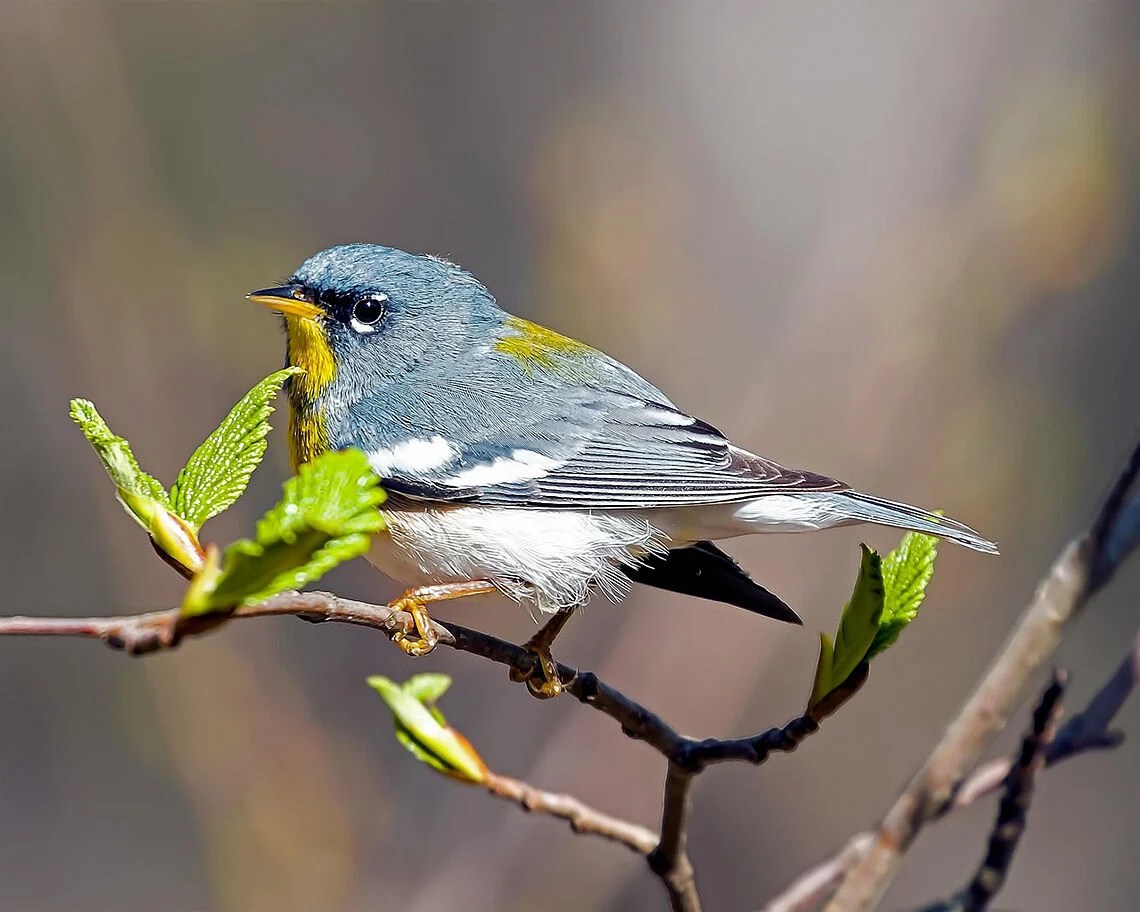
Hans Toom/Pixabay • Male Northern paroles are a member of the warbler family. They are amazing vocalists producing an easily recognised trill of a song.

The male Northern parula is a persistent songster once arriving on its nesting territory each spring.

Since arriving in early April, a male Northern parula had been a tireless singer. I often heard the bird as I departed for work each weekday morning and was welcomed home in early evening by the bird’s song.

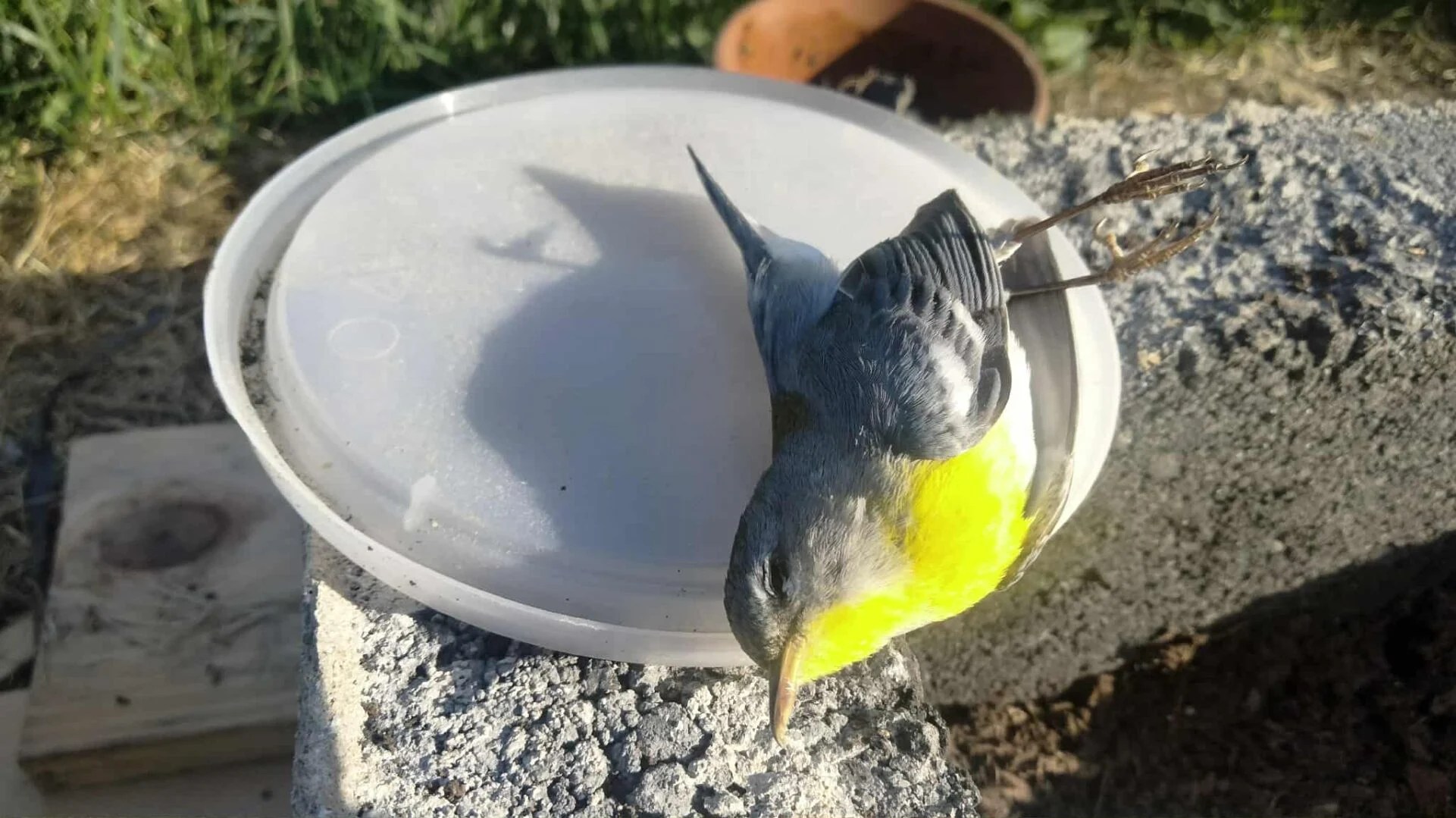
On April 29, I returned home. I followed my usual routine and dropped off my mother’s newspaper and mail at her home. Unfortunately, on her porch was the lifeless form of the Northern parula. I know it was “my” parula because the bird had been so faithful in its singing. I have not heard the song of a Northern parula in the days following the sad discovery.

Northern parulas sing two different types of songs, according to the website All About Birds. The most common is a rising buzzy trill with a final sharp note. This song rises up and pinches off sharply at the end. The second song has distinct pauses in between bouts of the rising buzzy trill. My parula had mostly sang the song best described as a rising buzzy trill, but it had also practiced at the second version, as well.

The tragic end for this little songster has really put a damper on my enjoyment of the spring season. Unlike many of our birds, this species of warbler has been thriving. Northern parulas are common, and their populations have actually increased by over 1% per year from 1966 to 2019 for a cumulative increase of about 47% according to the North American Breeding Bird Survey.

Bryan Stevens • This Northern parula died after a collision with a glass window.

But the incident is a reminder of the perils that our feathered friends face daily. An article titled “Getting Clear on Birds and Glass,” first published January 14, 2023, by Christine Sheppard and Bryan Lenz brings the detrimental impact glass has had on birds into focus.

The article noted that Smithsonian researches in 2014 attempted to determined how many birds are killed annually due to hitting windows. The study estimated, conservatively, that collisions with glass likely kill between 365 million and 1 billion birds annually in the United States. The authors of the article emphasized that they believe the number is closer to a billion birds, if not more, that die each year from hitting windows and other glass surfaces.

That’s a scary number, but also a testament to the resilience of birds. Of course, all living things have their limits, and we should try to do something to bring down this gruesome toll.

The little parula had struck a large picture window. We have placed decals in the window in an effort to break up the reflection, but the sun has bleached these over the years, and now it is evident they should be replaced. Clouds, sky or vegetation reflected in a window are perceived by birds as the real deal. A screen over a window or hanging strips or other items to break up the reflection will help birds avoid collision.

To examine a database with various possible solutions, please visit https://abcbirds.org/glass-collisions/products-database/

I am hopeful that another Northern parula will visit and find my yard to its liking. I’ve had Northern parulas residing consistently around my home from April to September for many years. The absence of this bird’s song from the daily soundscape has been distressing.

•••

Readers have continued to share their spring hummingbird sightings.

•••

Joe McGuiness in Erwin saw his first hummingbird back on April 9 at 5:45 p.m. Joe texted me that the bird came back to feed again around 7 p.m.

•••

Charlotte Carter, who resides in the Bloomingdale community in Kingsport, emailed me on Friday, April 25. “First hummingbird sighted at my home today at 12:45,” she wrote.

•••

Mack Hayes sent me a message on Facebook to report his first hummingbird arrived on Friday, April 25. “Saw first hummingbird this morning,” he wrote. He noted that he lives on the corner of Oakland Road and Bowmantown Road in Washington County.

•••

Hummingbirds are now back throughout the region. In the past couple of weeks the numbers have increased at my home. I have now seen as many as four hummingbirds at one time, and they duel all day long with each other, chasing each other from one corner of the yard to another. It’s good to have them back.

•••

Share sightings, ask questions or make comments by emailing me at ahoodedwarbler@aol.com.

Birder with ties to Northeast Tennessee plans Global Big Day

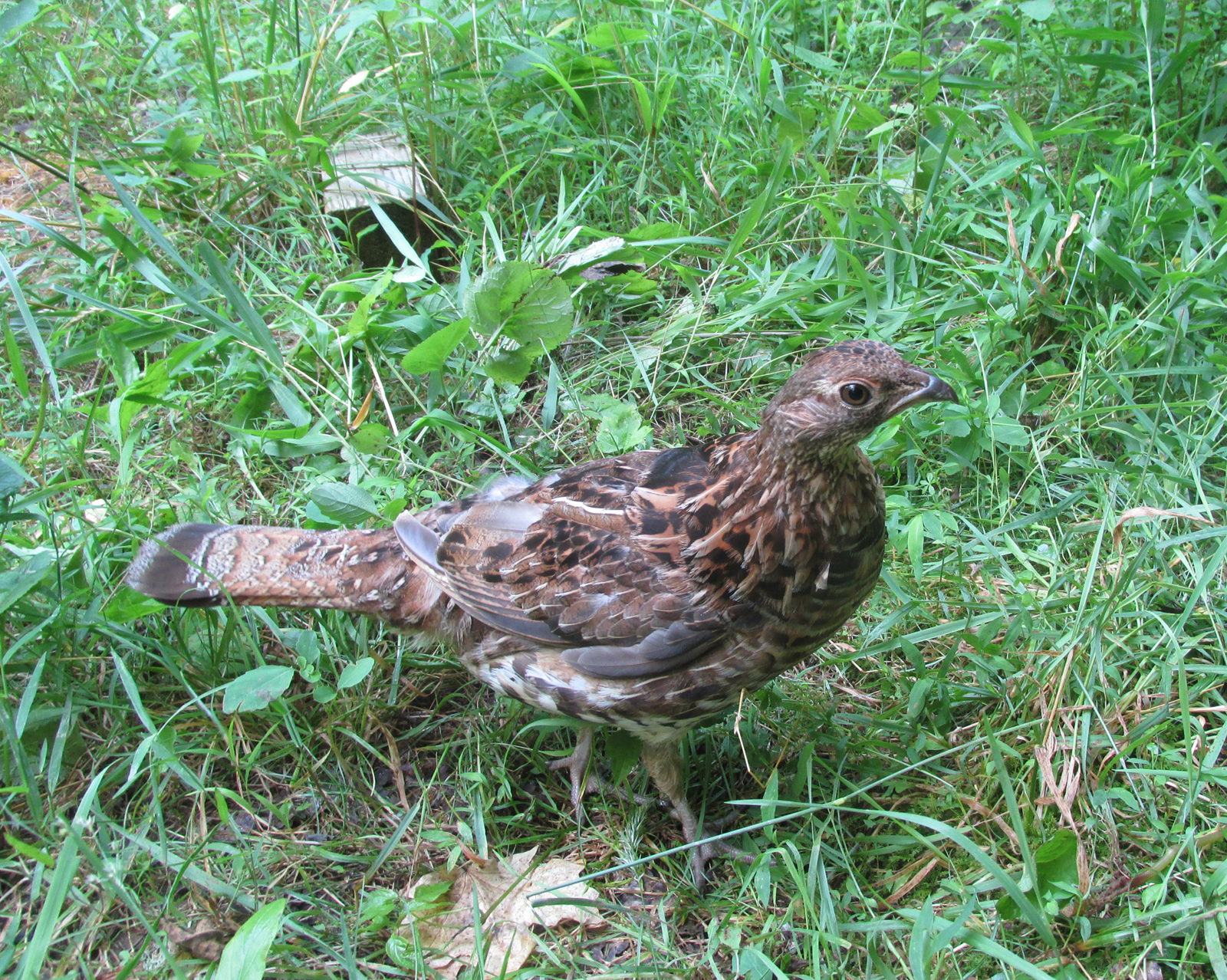
Photo by Bryan Stevens • Brayden Paulk introduces Rufous, a surprisingly tame ruffed grouse that lived on his grandfather’s farm for several years.

Brayden Paulk recently sent me an email to share some recent bird sightings he has made in Georgia.

As background, I’ve known Brayden since the summer of 2016. At the time, he was 17 years old and visiting with his grandparents in Flag Pond for the summer. We got acquainted thanks to an amazing ruffed grouse hanging out at a barn.

Brayden named the grouse Rufous who, as it turned out, was a remarkable bird. Ruffed grouse are, as a rule, shy and retiring birds. Not Rufous. He was an in-your-face sort of grouse. Getting to meet and observe this amazing bird was a privilege.

After we met so that I could make acquaintance with Rufous, Brayden and I did some birding at Rock Creek Recreation Area and then some stops on U.S. Forest Service lands along Highway 107 between Limestone Cove and the North Carolina line. Brayden wanted very much to add a black-throated blue warbler to his life list, and I very much wanted to help him find it.

We did manage to locate a singing veery, a scarlet tanager and a dark-eyed junco. We also found several warblers, including black-and-white warbler, worm-eating warbler and black-throated green warbler, but I began to fear we wouldn’t manage to locate his target bird.

But I am happy to report that we managed to find a male black-throated blue warbler. So, that productive morning back in 2016 resulted in my meeting with a grouse with a lot of personality and Brayden getting a new species for his life list of birds.

When we first met, Brayden was living with his family in Oxford, Alabama. During our first in-person meeting he made a point to tell me that his grandparents, Leon and Janice Rhodes, mailed him every one of my bird columns.

Photo by Bryan Stevens • The late Leon Rhodes teases Rufous the ruffed grouse.

These days he is living in Georgia, which is also providing the focus for most of his birding. He returns often to Tennessee. In fact, he has given a couple of talks to the Elizabethton Bird Club over the years, impressing his audience with his enthusiasm and engaging way of presenting information.

His talk were, surprisingly, not about birds. He spoke about his other passion, fishing, but still managed to make a few mentions of birds in the process.

Brayden has also worked for a couple of summers at Lamar Alexander Rocky Fork State Park in Flag Pond as a seasonal interpretive ranger.

Anyway, enough with the background and back to his recent email.

“I hope everything is going well with you and the bird club,” he wrote. “I wanted to contact you about some interesting recent sightings I have had that I thought you would be interested in. I have been able to put a lot of effort into birding so far this spring and it has turned up some fantastic finds.”

Photo by Bryan Stevens • Rufous, a rather tame ruffed grouse, who made his home in Unicoi County for several years.

His finds have even established some records in Laurens County in Georgia where he now lives.

His local birding loop in his home county has been very productive.

On April 7, his observations of common loons resulted in a county high count for the species. He found 14 loons on one lake and six on another nearby lake. The next highest count before his sighting had stood at two birds.

“That loop has also been very productive for shorebirds, as there are some flooded areas in nearby fields where I have seen lots of greater and lesser yellowlegs and snipe,” he wrote.

“I also got excellent views of a Swainson’s warbler within feet of me at an area on the loop with some swamp and cane thicket habitat,” Brayden added.

On April 7 while running his llocal birding loop in Laurens County, Georgia, Brayden Paulk saw the county high count for common loons with 14 on one lake and 6 on another nearby.

That sighting alone is something that would make many birders envious. I have been birding since 1993 and I can count on one hand the number of looks I’ve had of Swainson’s warbler. The species is often localized, meaning it takes some effort to locate. It’s easy to hear them. The Swainson’s warbler has a loud, ringing song similar to a Louisiana waterthrush. I’ve heard Swainson’s warblers much more frequently than I have seen them.

Brayden also shared his excitement about seeing his first first Horned Lark in the county. He saw the lark, a bird of open fields, at a different location. “It seems to be one of those birds you have to try to find by going to a sod farm or open country,” he noted.

“The Laurens County Loop has also been great for me in the past, and one particular pond turned up the first eBird county records for American avocet, white-rumped sandpiper and long billed dowitcher,” he wrote. “I have also found breeding painted buntings on the loop as well and had an excellent view of them with my dad.”

Brayden also wanted to share some more exciting news.

“I will be moving to Gulf Shores in coastal Alabama in a few weeks, which is one of my favorite places to go birding,” he wrote. “I plan on going to Dauphin Island on the Global Big Day because it is an incredible place to see migrants, and my goal is to find 150 species on that day.”

This year’s Global Big Day is scheduled for Saturday, May 10. Global Big Day is an annual birdwatching event hosted by eBird and Cornell Lab of Ornithology to celebrate and document bird migration. The event was created as a fun and engaging way for bird enthusiasts of all levels to contribute to science and conservation by reporting their bird sightings.

Brayden also hopes to visit Unicoi County again soon to do some birding there and look for some of the species he missed last Summer.

“Thank you for writing your bird articles,” he wrote at the conclusion of his email. “They have inspired me since I was young!”

It’s not easy to put into words how much that unexpected praise made me feel. I am incredibly gratified that I could have provide some inspiration to get such a gifted young man into the field looking for birds.

Readers may recall that I’ve had some deterioration of vision in recent years. With a pair of binoculars, I can still bring birds close enough to enjoy and appreciate their beauty and vivacity. Spotting birds, which is a skill that takes some practice to achieve, is no longer easy for me. Ah, the things we take for granted…

My hearing remains unimpaired. I have enjoyed making note of returning warblers and other birds simply by hearing their familiar songs ringing through the woodlands at my home for yet another spring.

For the past couple of weeks I’ve also had the pleasure of watching daily as a feisty male ruby-throated hummingbird visits the feeders arranged around my front porch.

In closing, I invite everyone to wish Brayden luck with his upcoming Global Big Day. I hope to update everyone with how he does.

•••

To share a sighting, ask a question or make a comment, email me at ahoodedwarbler@aol.com.

Ruby-throated hummingbirds stage their spring return to region

Bryan Stevens • A male ruby-throated hummingbird perches on a sugar water feeder.

In an article posted on March 27, Journey North, an organization and website that tracks migrating hummingbirds, announced that so far this spring, bird-watchers in 12 states had reported ruby-throated hummingbirds, but it’s still early in the season.

“So far, we have one sighting each in Kentucky and Tennessee and two in Arkansas, but we’re expecting more in the coming weeks,” noted the blog post by Journey North.

One week later, hummingbirds arrived in locations in Unicoi County, Carter County and Washington County in Northeast Tennessee.

Journey North is a citizen science project that engages citizen scientists in a global study of wildlife migration and seasonal change. It’s a fun way to track the migration of everything from hummingbirds to butterflies like monarchs.

•••

“Hummingbirds are here!” Beverly King, a resident on Marbleton Road in Unicoi, wrote in an email. “We saw our first hummingbird today, Saturday, April 5.”

Beverly noted that she was excited to see hummingbirds slightly early this year.

“We usually see them about the 15th of the month,” she added. “Well, my feeders are now up. We could not tell if it was a female or a male.”

Bryan Stevens • A female ruby-throated hummingbird perches on a feeder.


•••

Erwin resident Amy Tipton sent me a Facebook message announcing that her parents had enjoyed a visit from a returning hummingbird.

“My parents, Edison and Emma Jean Wallin, had their first hummingbird of the season visit today, Saturday, April 5 at 4:30,” Amy wrote. “They live about a mile up Limestone Cove in Unicoi.”

•••

Dianne Draper in Jonesborough shared on my Facebook page about her first hummingbirds of the season.

“Our first ones showed up on April 5,” she noted. “We had two.”

•••

I’ve already seen my first hummingbird, as well. I have a bed of tulips blooming at my home. I planted them last fall and have been thrilled with their performance. I was outdoors admiring the tulips when I heard a brief but tantalizing buzzing noise. Although I scanned all around me, I failed to confirm that I’d heard a hummingbird.

A half hour later, however, while reading on my front porch, I saw my first hummingbird of 2025 when a male zipped up to one of my sugar water feeders. He returned twice while I stayed outdoors reading on a misty afternoon. He arrived at 4:14 p.m. on Sunday, April 6.

In 2024, I saw my first hummingbird on April 17 at 7:15 p.m. This year’s bird is certainly arriving earlier than is typical, but I was thrilled to see him.

•••

Gayle Riddervold, who lives only a few miles from my home on Simerly Creek Road in Hampton, reported that she and Becky Kinder saw their first spring hummingbird on April 8.

“We just saw our first hummingbird today,” Gayle wrote in a Facebook message. “Yesterday we saw a belted kingfisher on our road.”

•••

Brookie and Jean Potter, residents at Wilbur Lake in Elizabethton, sent me a text about the arrival of their first spring hummingbird on Wednesday, April 9, at 5:45 p.m.

They added, “It came back to feed again around 7 p.m.”

•••

Technically, TD, a follower of my “Our Fine Feathered Friends” blog, provided the earliest report of a hummingbird this spring. Of course, TD has the benefit of living in Texas, close to the Gulf of Mexico that these tiny birds must cross to return to the United States each spring.

The bird TD spotted arrived on Wednesday March 26, at 2:34 p.m. central time.

“A ruby-throated hummingbird male stopped at my feeder on my front porch a mile from Corpus Christi Bay after an hour of a rain shower,” TD wrote in a comment.

TD also reported that Corpus Christi has been in a drought so severe that residents have not been allowed to water outside since last fall.

TD’s hummingbird arrived with the first rainfall in more than two months.

“So I was watching the lovely rain when this hummingbird perched onto my hummingbird feeder,” TD wrote. “I have a very large window and hang four hummingbird feeders along the front porch.”

TD noted that the male’s iridescent ruby red around his neck resembled a scarf. “I named him Texas Tuxedo,” TD shared.

TD also saw a female hummingbird on Wednesday, April 2, at 7:15 a.m.

TD said the female hummer acted shy and fluttered around the feeder before feeling safe to perch for feeding.

It’s usually the case that females lag behind males in their annual migration back to the United States.

•••

Photo by Bryan Stevens • A male ruby-throated hummingbird perches at a feeder for a sip of sugar water.

The hummingbirds are an amazing family of birds. There are an estimated 330 species of hummingbirds, all of which are found in the New World. Consider that these dazzling little birds have been given vividly descriptive names, such as cinnamon-throated hermit, red-tailed comet, blue-chinned sapphire, lazuline sabrewing, sparkling violetear, fiery topaz, green-tailed goldenthroat, bronze-tailed plumeleteer, amethyst-throated mountain-gem, peacock coquette, red-billed emerald, empress brilliant, purple-backed sunbeam, green-backed hillstar, orange-throated sunangel, black metaltail, marvelous spatuletail and blue-tufted starthroat.

The only hummingbird species to inhabit the eastern United States from spring to fall each year is the ruby-throated hummingbird, which is currently arriving at various points from Florida to Maine and westward to states like Illinois, Minnesota and Oklahoma and north into Canada.

To return each year, ruby-throated hummingbirds make an awe-inspiring and non-stop crossing of the Gulf of Mexico. Even more incredible, they make the trip again in the fall when they return to warmer locations in Central America to spend the winter months.

Ruby-throated hummingbirds lead relatively brief lives. The oldest known ruby-throated hummingbird was a female, according to the website All About Birds. She was at least 9 years, 2 months old when she was recaptured and rereleased in 2014 during banding operations in West Virginia.

•••

These shared sightings represent some of the “early bird” sightings of hummingbirds. I welcome more reports as other people continue to observe returning hummingbirds. Email me at ahoodedwarbler@aol.com or find me on Facebook to share your sightings. Provide a date and time, if possible. Good luck with the hummingbird watching.

Here are a few birds to look for this spring

Photo by Bryan Stevens • A male hooded warbler perches in a cluster of branches.

Has it been a slow spring? I have felt that it’s been one step forward, two steps back. But April has finally arrived. Although we’re now two days into the month, I’m still waiting on some of my first arrivals among our fine feathered friends.

That’s not an unusual situation. I think the birds like to drag out their springtime arrivals. They know that being tardy is sure to aggravate me as I’m not known for patience.

The first male red-winged blackbird returned to the fish pond in mid-March and has been singing persistently from the tops of the bald cypress trees bordering the pond. I haven’t seen a female red-winged blackbird yet, but they tend to arrive later than males.

Of course, and I don’t think I’m alone in this hope, I’m also eager to welcome back ruby-throated hummingbirds. These tiny flying gems should be back any day now. My sugar water feeders are waiting for them.

I hope readers will once again share the first arrival dates of hummingbirds at their own feeders. Jot down the date and time, as well as any other details you’d like to share, and email me at ahoodedwarbler@aol.com or message me on Facebook at http://www.facebook.com/ahoodedwarbler/

With those preliminary thoughts shared, what else will I look for as the spring advances? Longtime readers will know of my enthusiasm for warblers, also known as New World warblers or wood-warblers.

They’re a group of small, often colorful, passerine birds that make up the family Parulidae. The family, which occurs only in the New World, contains 120 species. They are not closely related to Old World warblers or Australian warblers.

About half of the 120 species reside in Central and South America, but the others migrate north each spring to nest in the United States and Canada. In Northeast Tennessee, we have about two dozen nesting species that make their home with us from April to October.

The warbler I look forward most to seeing is the hooded warbler, partly due to individuals belonging to this species nesting in the woodlands around my home.

Photo by USFWS/A female hooded warbler stays put on her nest.

So, from the time my favorite warbler returns in April until the last individual departs in October, I enjoy regular glimpses of this colorful and interesting bird. Like all warblers, the hooded warbler is quite energetic, dashing after tiny insects in the branches of shrubs and trees. Hooded warblers often forage close to the ground, which makes observing them easier.

Of course, birds are free to break the rules. One of my most memorable sightings of a hooded warbler involved a male singing from the upper branches of a dead pine tree. I’d estimate that the bird was at least 40 feet off the ground, singing his little heart out to attract a mate. I was standing on an elevated rise of land while the tree providing the warbler its perch was lower in a gully that actually placed bird and observer on a roughly level playing field.

That sighting took place 25 years ago, but the image of that male hooded warbler singing so enthusiastically has remained emblazoned in my memory.

This particular bird sang for several moments, which is not always the case with warblers. These birds tend to dash for cover at the slightest disturbance, but this enthusiastic male didn’t seem to pay any heed to the fact that most of its kin prefer to skulk in shrubs and dense rhododendron thickets no more than a few feet off the ground.
It’s one bird unlikely to be mistaken for any other. Every time I behold a hooded warbler, I marvel at the bird’s exquisite appearance. The gold and green feathers seem to glow brightly in the dim light of the shadowy thickets of rhododendron they prefer to inhabit. The black hood and bib surrounding the male’s yellow face stands out by virtue of its stark contrast from the brighter feathers. Large coal-black eyes complete the effect. The appearance of the male bird provides this species with its common name.

The female hooded warbler has an identical yellow-green coloration as the male, although she is slightly more drab. She lacks the black hood and bib, although older females may acquire some dark plumage on the head and around the face. Both sexes also show white tail feathers that they constantly fan and flick as they move about in thick vegetation and shrubbery.

Photo Courtesy of Jean Potter
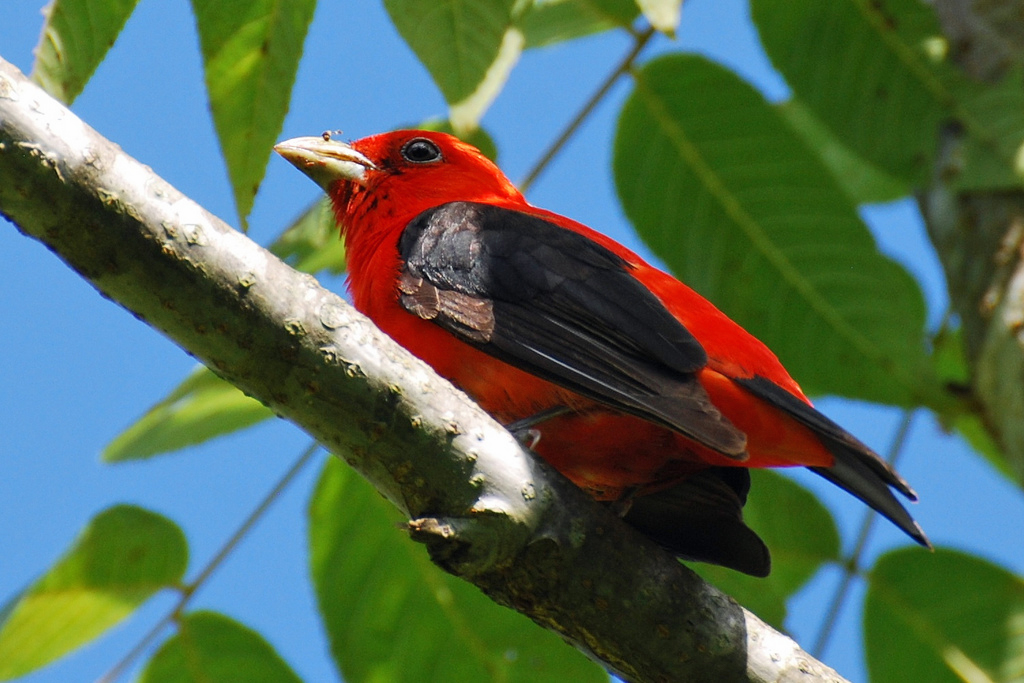
A male scarlet tanager brightens shadowy woodlands with a flash of tropical colors yet remains mostly inconspicuous in the forest canopy.

In addition to warblers, I also look forward to the return of scarlet tanagers. Males are unmistakable in their bright red plumage accented by black wings. This is one bird that is truly breathtaking when lured into the open for an observation through a pair of binoculars.

During their summer stay in the region, scarlet tanagers largely prey on insects. Although renowned as a fruit-eating bird, the scarlet tanager primarily feeds on fruit during its migration flights and on its wintering range in the tropics. This tanager breeds in deciduous and mixed deciduous-evergreen woodlands across the eastern half of North America. It’s my understanding that oaks are a favorite tree for this woodland dweller.

It’s unlikely that you’ll run across the nest of a scarlet tanager. These birds nest high in trees, often locating their nests 50 feet or more above the ground. After building a nest, a female tanager will incubate her three to five eggs for about two weeks. It’s during this time that her inconspicuous appearance is a plus, helping her blend well with her surroundings.

So, as I wait for warblers, hummingbirds and tanagers, I’ll just have to be a little more patient. I’m also hopeful that the fish pond will attract some nesting birds such as tree swallows and wood ducks. Fingers crossed!

•••

Remember to let me know about your first hummingbird sightings. Email me at ahoodedwarbler@aol.com to notify me of a sighting, ask a question or share a comment.