Tag Archives: North Carolina

Sightings signal that migration has started

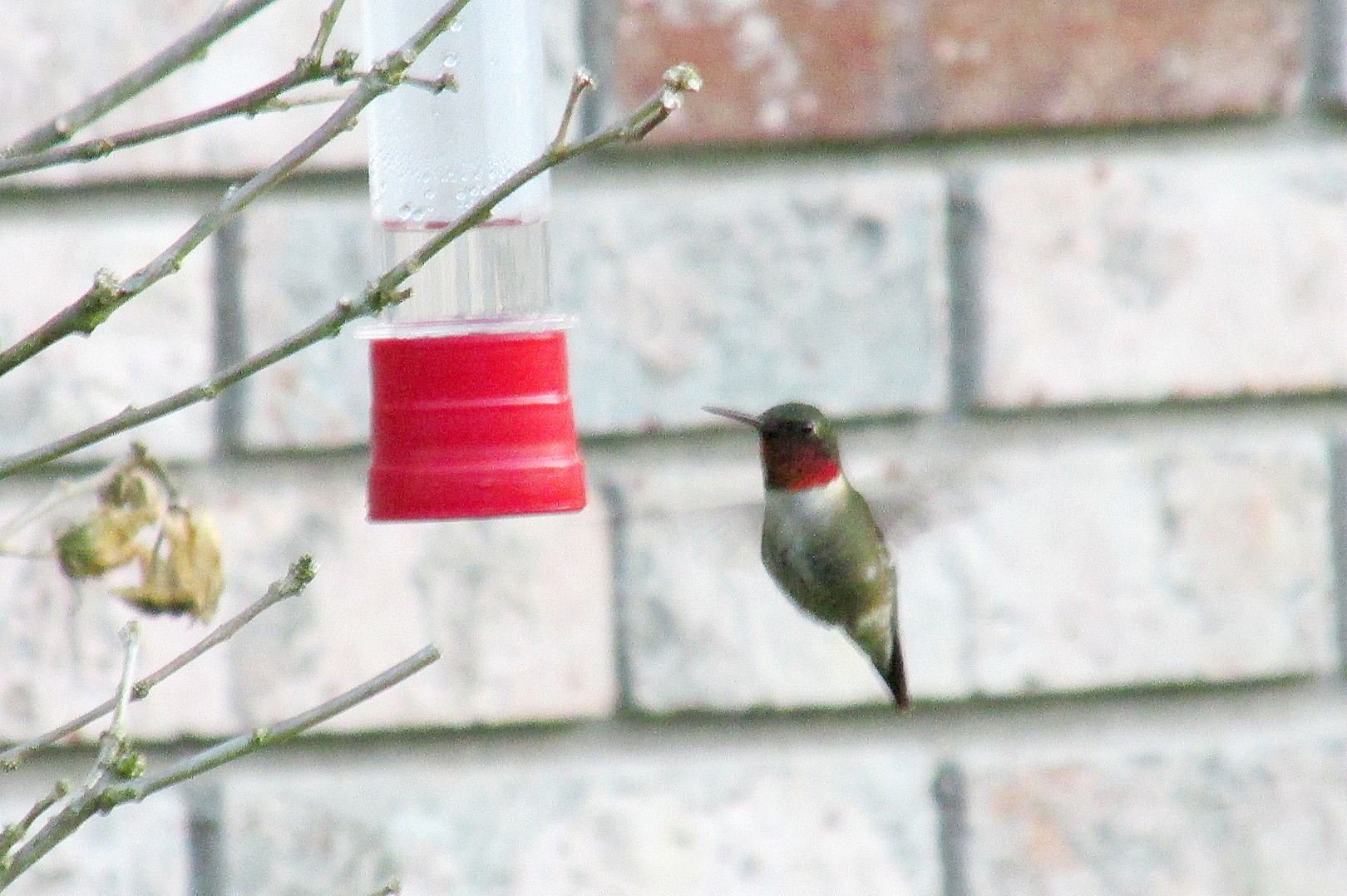
Photo by Bryan Stevens • Ruby-throated Hummingbirds make a non-stop crossing of the Gulf of Mexico. A hurricane in the Gulf during migration could have serious consequences for this small bird.

Mack Hayes, a resident of Telford, posted on my Facebook page recently about hummingbird experiences. 

“I have two hummingbird feeders out, and boy are they really working them,” Mack wrote. “I see several of them, and of course they fight each other. Males and females both. Guess they are getting ready for their long flight  ahead of them.”

Mack’s post reminded me that many of our favored summer visitors will soon make their return migrations to regions more hospitable for the duration of the winter season.

I replied to his post with my own comment.

“I am sure they are getting ready, but I still hope they don’t get in too great a hurry. I would like to keep them with us as long as possible.”

At home, I have enjoyed some fun bird observations. It was a veritable feeding frenzy in a corner of my yard for about an hour on Tuesday, Aug. 10. Everything kicked off with a Red-eyed Vireo enjoying some elderberries. I was reminded that, with a really good look, the Red-eyed Vireo should never be mistaken for a warbler. That bill is so much bigger than a warbler bill! I was watching the vireo in binoculars when he coughed and popped up an elderberry. He immediately swallowed it again! Waste not, want not, I suppose. 

I am counting this burst of bird activity as the official kickoff for my fall migration watching.

I watched the vireo a long time before I realized there was a Gray Catbird perched lower in the shrub and also enjoying the elderberries. Then, in rapid succession, three warblers: Black-throated Green Warbler, Northern Parula and Worm-eating Warbler. On the fringes of all this activity I noticed a Brown Thrasher, Downy Woodpecker, a couple of Mourning Doves, and the resident Carolina Chickadees, Tufted Titmice and Carolina Wrens. 

I also saw some parents hard-pressed to satisfy their young, including a Blue-gray Gnatcatcher being followed and pestered by a couple of young gnatcatchers, and a male Eastern Towhee leading a youngster around on the ground as they foraged beneath the forsythia tangle. 

Photo Courtesy of Jean Potter
A red-eyed vireo sits on its basket-shaped nest.

At the feeders I saw American Goldfinches, Northern Cardinals, and several Ruby-throated Hummingbirds, which don’t know the meaning of the word “share” as they dived and attacked any of their fellow hummers that came too close to “their” feeder. All in all, a fun Tuesday evening.

The start of migration appears to be more of a crawl than a sprint this fall, but I have picked up a few additional signs. For instance, I’ve been hearing the scolding sounds of red-eyed vireos from woodland edges for the past few weeks even before I observed the vireo feeding on the elderberries. A dedicated singer at most times, this vireo seems more likely to produce a harsh, scolding cry at this time of the year. Other hints of the steady advance of fall migration include flocks of chimney swifts congregating in the skies over my home and the unmistakable croaking of common ravens from nearby ridges.

So far, I’ve seen only a few warblers. At a glance, vireos would appear related to the wood warblers. Research into DNA, however, has led many experts to contend that vireos are more closely related to crows and shrikes. Like the flycatcher and hummingbird families, the vireo family is exclusive to the New World. With a mere 50 species, vireos and their kin are vastly outnumbered by flycatchers and hummingbirds. The majority of vireos resides in the tropics, but about a dozen species nest in the United States.

In East Tennessee Southwest Virginia and Western North Carolina, vireos resident during the summer months include red-eyed vireo, white-eyed vireo, blue-headed vireo, yellow-throated vireo and warbling vireo. Most people are likely unaware of vireos. Although not uncommon, these birds are more frequently heard than seen. They spend much of their time in the forest canopy or in dense brush. When singing, they can remain at a perch, unmoving, for long periods of time.

Photo by Bryan Stevens • Blue-headed vireos, such as this bird, are high-elevation summer residents in the region. In the fall, they are also common migrants.

The loud scolding calls of red-eyed vireos often heard this time of year are given apparently when the vireo is alarmed or irritated. This scolding vocalization is quite unlike the usual ones produced by this bird. First and foremost, the call is louder than one would think could be produced by a bird that is only about six inches long. During the summer season, the red-eyed vireo is also one of the most persistent of singing songbirds. Another common name for the red-eyed vireo is “preacher bird,” so called because of its tendency to unceasingly deliver its song.

The red-eyed vireo is still considered one of eastern North America’s most common summer breeding birds. At one time, the red-eyed vireo was probably the most common breeding bird in eastern woodlands. That, sadly, is no longer the case. Red-eyed vireos are olive-green above and clean white below. These birds show a distinctive head pattern consisting of a gray crown and white eyebrow stripe bordered above and below by black lines. Adults also have the red eyes that give this particular vireo its common name. The term “vireo,” originating in Latin, can be translated into English as “green bird.” It’s an apt description, as many of these small birds are primarily dull green in coloration. Consider the vireos the “Plain Janes” of songbirds.

Some of the more colorful common names for vireos include the dwarf vireo, golden vireo and yellow-winged vireo.  In Central and South America, the vireo family expands to include many birds with common names such as shrike-vireo, greenlet and peppershrike. Some of the varied species include lemon-chested greenlet, green shrike-vireo and the black-bellied peppershrike.

I still focus most of my birding efforts on warblers in the autumn, but vireos are always a pleasant diversion when the colorful warblers make themselves scarce.

Keep your eyes open for new visitors. Those hummingbirds that scorned you this spring may give your home a second glance as they pass through this fall. In addition, the skies are filled with migrating raptors, flycatchers, thrushes, nighthawks and many other birds. 

Share sightings, ask questions or make comments by emailing me at ahoodedwarbler@aol.com. 
Wandering birds provide some surprising moments for birders

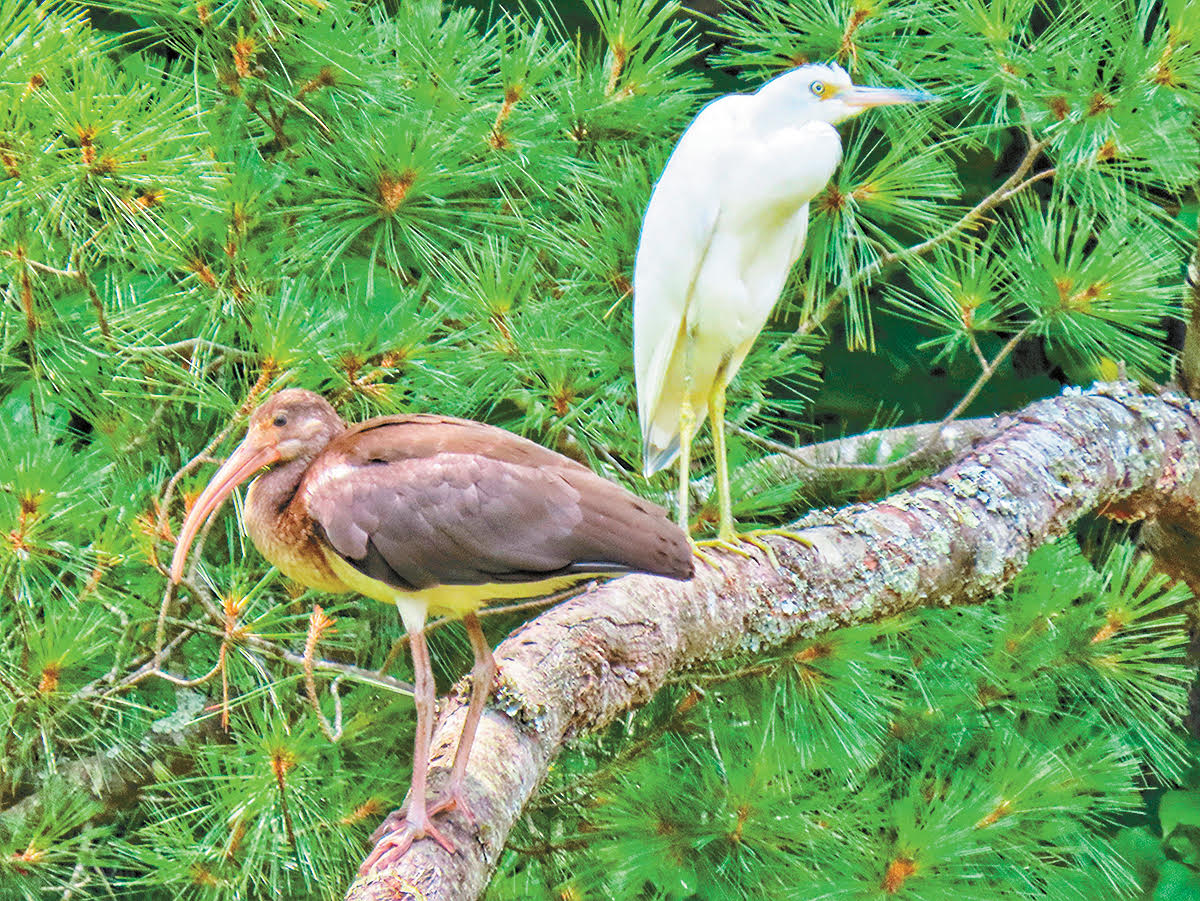
Photo by Roger Mullins • A little blue heron, right, shares a perch with a white ibis at the Buffalo Valley Golf Course in Unicoi. These wading birds are usually found near the coast, but individuals tend to disperse and wander widely after the summer nesting season comes to an end.

Late summer has a sort of lazy feel. Most birds are finishing up their nesting season. Hungry fledglings appear at feeders in the company of adults. In recent weeks, I’m starting to notice a slight uptick in the number of hummingbirds visiting my feeders and garden flowers. It helps that I’ve got dense stands of naturalized bee balm at the edge of my woods. The cedar waxwings have finished off the mulberries, but I suspect they will stick around for the wild cherries. I’ve also noticed the vanguard of migrant birds that are starting to make appearances as fall migration approaches. It’s not just songbirds, however, that are on the move. Some large and rather conspicuous birds have been attracting attention in recent weeks, including a variety of wading birds.

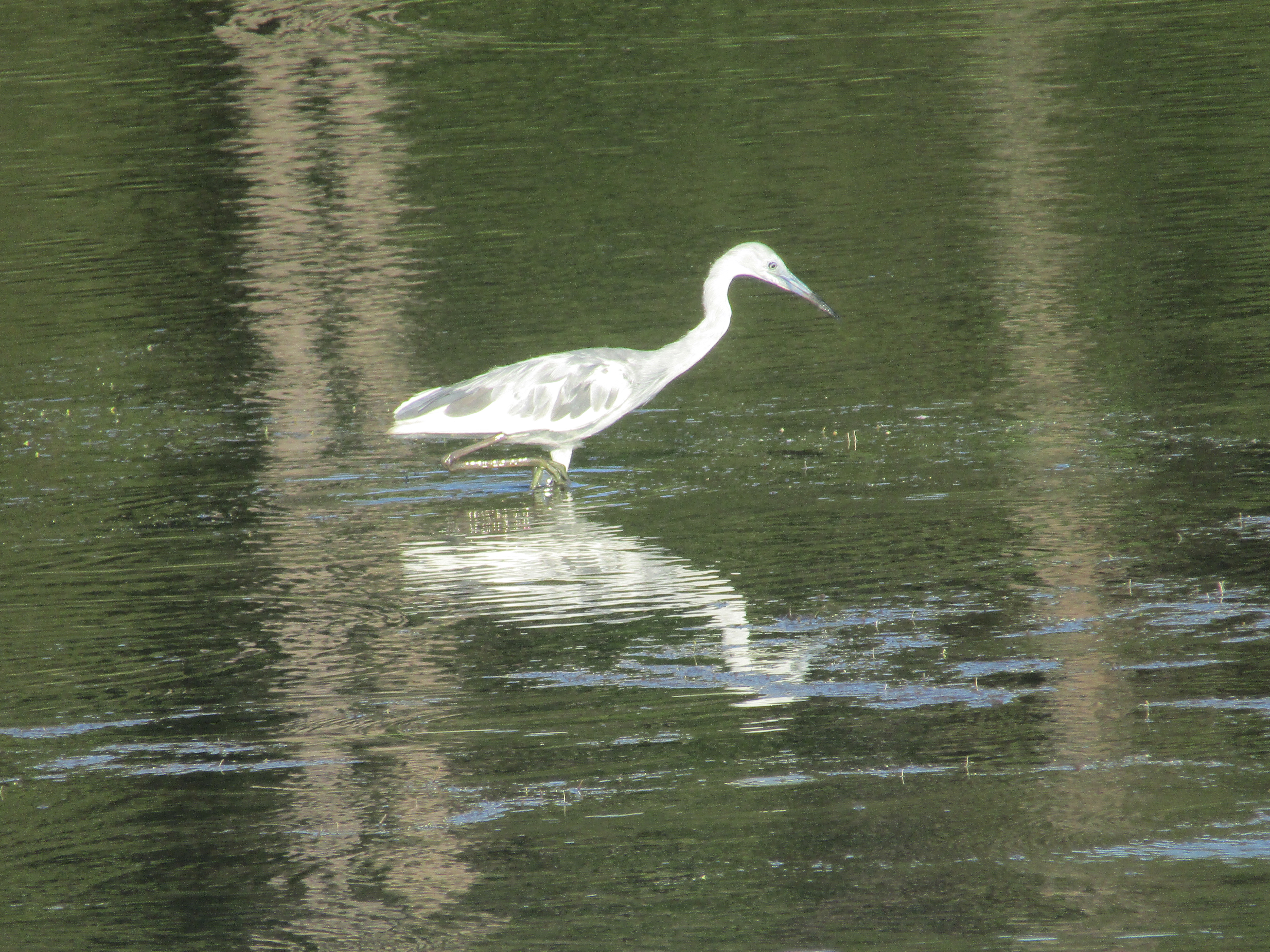
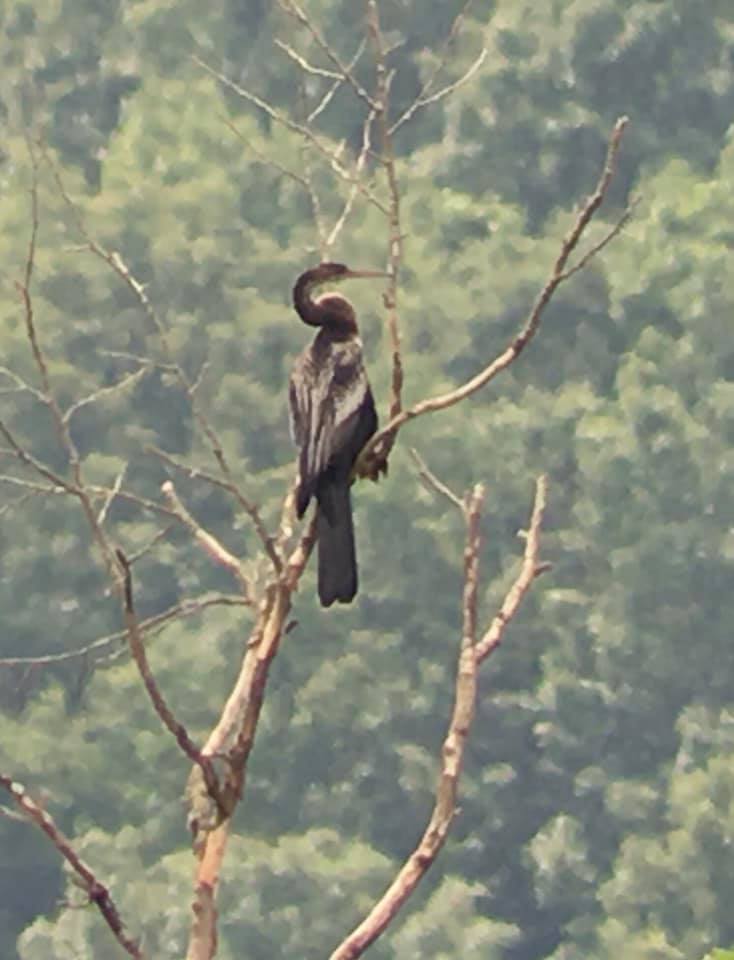
Sightings this summer of long-legged wading birds in Northeast Tennessee that are outside of their usual range have included little blue herons, white ibis and great egrets. The little blue heron and ibis have been recent visitors to Unicoi County. To toss another species into the mix, Tom and Cathy McNeil recently found an American anhinga near Austin Springs at Boone Lake in Washington County. Their anhinga sighting followed their discovery of seven or eight little blue herons and 14 great egrets at this well-known birding hot spot.

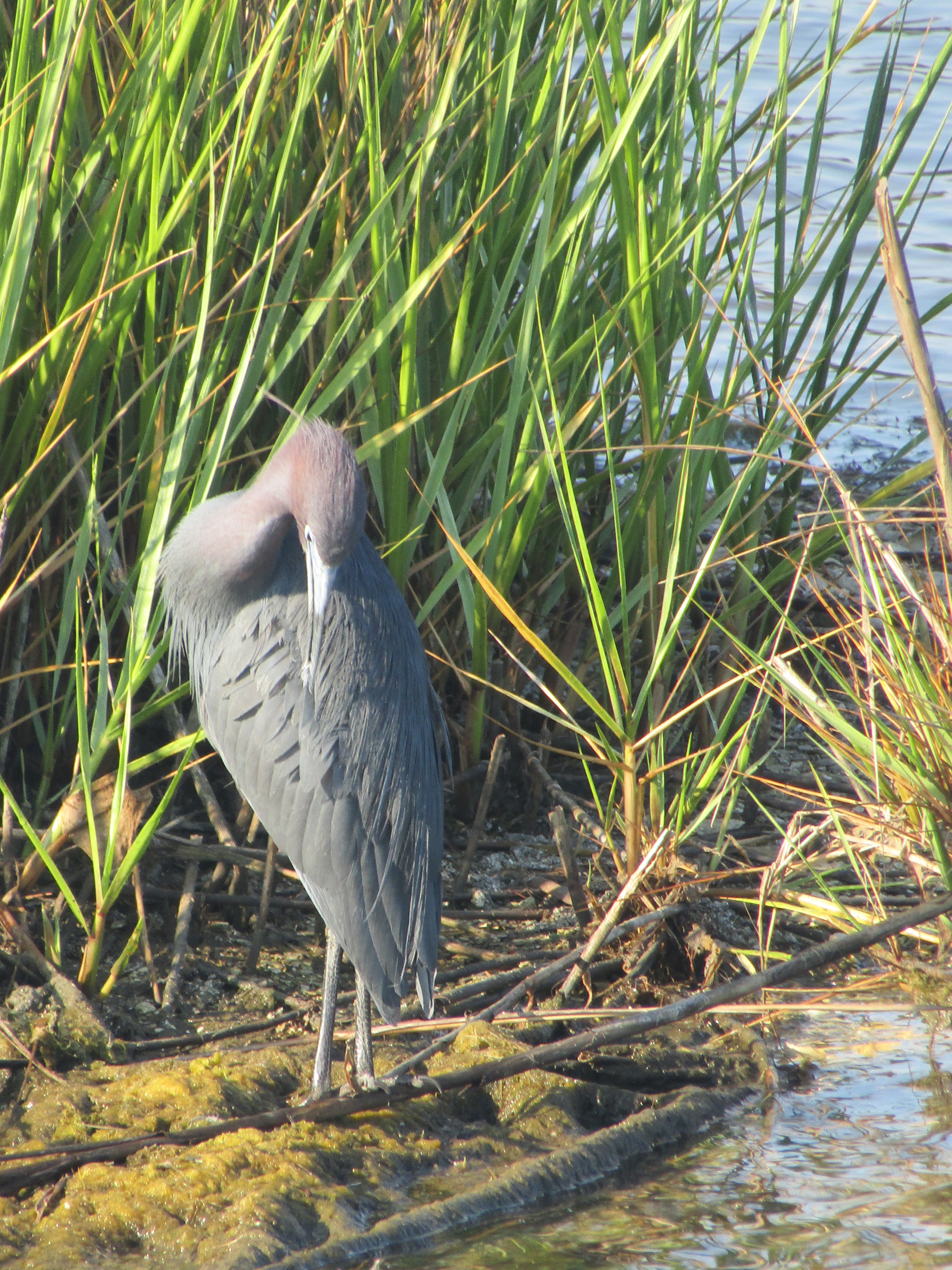
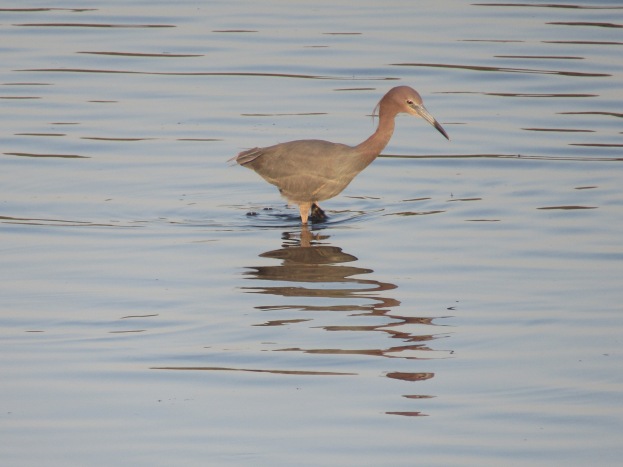
Photo by Bryan Stevens • Adult little blue herons, like this adult preening at Huntington Beach State Park, South Carolina, have a mix of blue and purple feathers.

Roger Mullins discovered both an immature little blue heron and an immature white ibis during one of his regular visits to scan the ponds along the former Buffalo Valley Golf Course in Unicoi.

“I first spotted the little blue on July 5, and then on July 10 I saw the white ibis standing just a few feet away on the same limb.

“Within minutes they were standing next to each other,” he continued. “They were even following each other from place to place, almost like they were siblings.”

Roger noted that the little blue heron gradually learned to trust him, but he could only get so close without making the bird feel uncomfortable.

“Being extremely patient, taking it slow and easy, is pretty much how I approach all wildlife, and it usually pays off well,” Roger shared.

“I first started visiting the golf course ponds back in the winter when someone told me about seeing a male hooded merganser there,” he noted. “There is not always an abundance of wildlife present, but I always check it out just in case. The best thing about these ponds is the consistent peace and tranquility, since people don’t usually go there for family recreation or to walk their dogs.”

Roger added that he doubted that the little blue heron would have lingered at a public park with more activity.

Most of my own observations of little blue herons have taken place in SouthCarolina, Georgia and Florida, although I have seen this species a couple of times in Tennessee. I have also found little blue herons more skittish than some herons and egrets.

Photo by Bryan Stevens • This photo of a little blue heron at Huntington Beach State Park, South Carolina, shows the intermediate phase of plumage that makes identification even more of a challenge.

While diverting storms can’t be ruled out for causing some unexpected birds to detour into the region, it’s also normal behavior for young wading birds to disperse far and wide after leaving the nest. North American waders, or wading birds, include such long-legged species as herons, egrets, bitterns, ibises, storks and spoonbills. Most species are associated with wetlands or coastal areas.

Late summer birding is usually a period of doldrums as heat and humidity can discourage birders as well as diminish bird activity. However, it’s also the time of year when birders can make some unexpected surprises as wandering waders explore uncharted territory.

The great egret – a larger relative of the little blue heron – became a motivational symbol for conservation with the foundation of the National Audubon Society in 1905. Today, the organization has nearly 500 local chapters, each of which is an independent non-profit organization voluntarily affiliated with the National Audubon Society. These chapters often organize birdwatching field trips and conservation-related activities. The National Audubon Society spearheaded efforts to end the mass slaughter of various bird species. Some birds were killed for food, but millions were also killed for their showy feathers that were destined to decorate stylish attire worn as a symbol of high fashion. As early as 1910, some states began passing legislation to abolish trade in bird plumes. The federal government also came to the assistance of birds with the Migratory Bird Treaty Act, which was a law first enacted in 1916 to implement measures to protect and conserve migratory birds.

Photo by Tom McNeil • An American anhinga at Boone Lake found by Tom and Cathy McNeil represents an unusual find for the region. Even more unusual, Tom McNeil found another anhinga in Johnson County, Tennessee, a few days later.

Scientifically speaking, the little blue heron would be more accurately described as an egret. With the scientific name of Egretta caerulea, the little blue heron’s closest relatives are other members of the genus Egretta, which includes such other North American wading birds as snowy egret, reddish egret and tricolored heron. Other members of the genus found in other global localities include little egret, slaty egret and Chinese egret. I’m not sure why the tricolored heron and little blue heron were not named tricolored egret and little blue egret, but there are some Egretta species that also bear the name heron, including black heron, white-faced heron, Pacific reef heron and Western reef heron. It’s probably important to note that there are no real physical differences between herons and egrets. They are all classified together in the family Ardeidae.

I’m fairly confident that Roger’s sighting of a little blue heron is the first documented occurrence of the species in Unicoi County. His white ibis is unexpected but not unprecedented. An immature white ibis spent several days in July of 2011 at the ponds and fields at the home and farm of former Unicoi mayor Johnny Lynch.

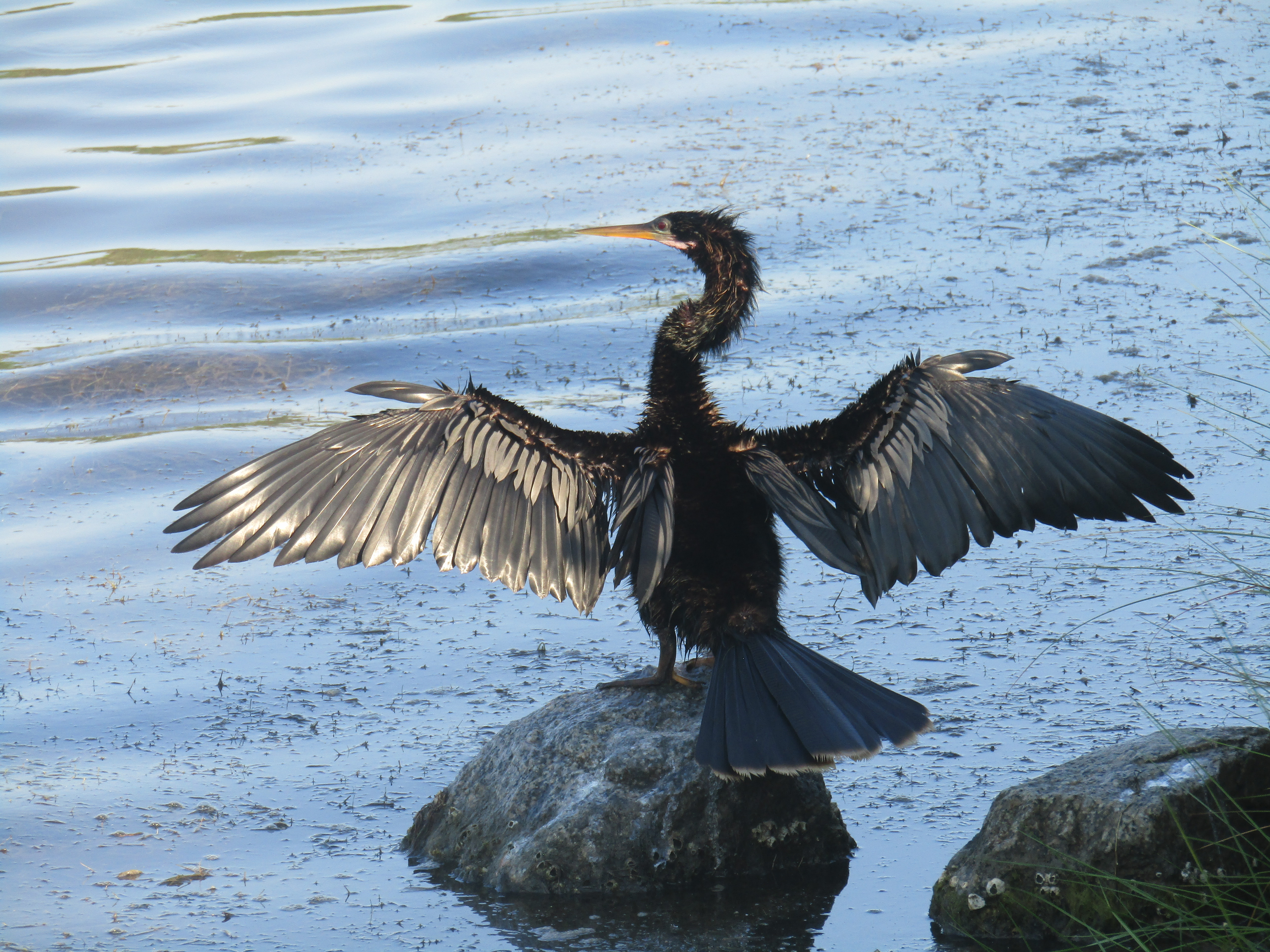
Photo by Bryan Stevens • An American Anhinga dries off feathers after a swim at Huntington Beach State Park in South Carolina.

As for the anhinga spotted by the McNeils, this rare visitor was found the following day by several area birders, including Michelle Sparks who relocated the anhinga from her kayak. The anhinga is a large waterbird with a slender neck and a dagger-shaped bill reminiscent of a heron’s bill. These birds spend much of their time swimming beneath the water, often with only their neck and bill above the surface. Apparently the term “anhinga” comes from a native tribe in Brazil. Anhingas prefer fresh water, but they are often found in coastal areas. Most reports from Tennessee come from near Reelfoot Lake in the western portion of the state. Other common names for the anhinga include “water turkey,” “snake bird,” “American darter” and “devil bird.” Worldwide, there are only four species of anhingas, or darters as they are called in other parts of the world. The other three are the Indian darter, the African darter and the Australian darter.

Tom shared an amusing anecdote on Facebook about their sighting of the anhinga.

“Cathy and I found this bird (the anhinga) yesterday evening out of absolute luck,” he wrote. “We had already birded the area and had some great fun observing the little blue herons and great egrets.  We stopped at the Austin Springs bridge for a few moments and saw four river otters playing under the bridge and then just decided to drive back the way we came.”

On their way back, Cathy had Tom stop so she could look at the “white birds” in the top of the trees across the water.

“We both pulled up our binoculars to look at them, but it was the bird perched below them that was the star of the show,” he reported. “We shouted ‘anhinga’  at the exact same time!”

That’s the beauty of birding – those “anhinga” moments. I’m hoping readers are enjoying some fun birds this summer. Share sightings, ask questions or make comments by emailing me at ahoodedwarbler@aol.com.


Long-running count tallies summer’s nesting bird species

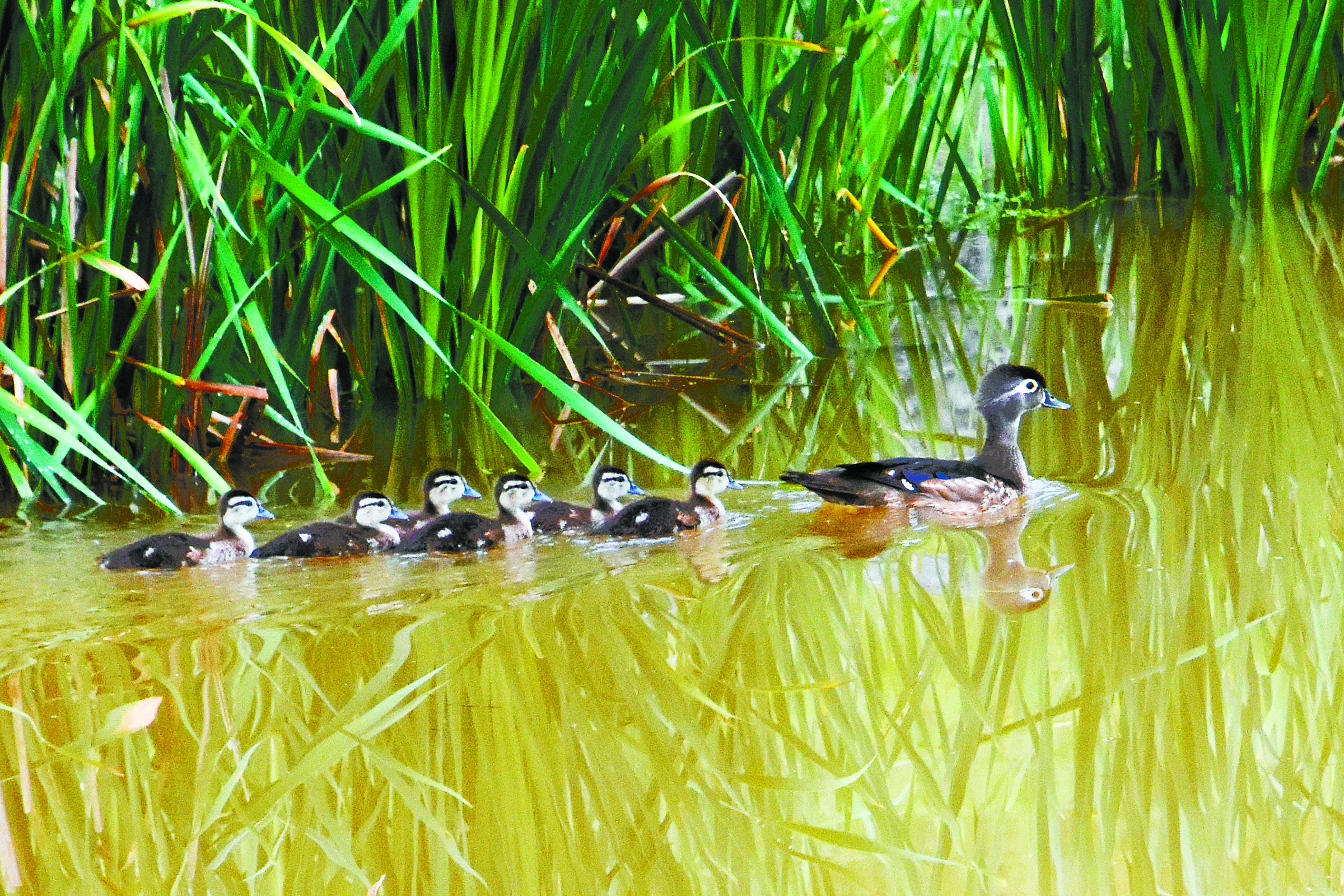
Photo by Jean Potter • Counters found 116 species on the recent Carter County Summer Bird Count, including this female wood duck and ducklings photographed on the Watauga River in Elizabethton, Tennessee. A total of 13 wood ducks were found on the day of the count.

The 28th Carter County Summer Bird Count was held Saturday, June 12, with 28 observers taking part.

The weather, which was less than optimal, challenged observers. Rain held steady for much of the day. The rain, along with dense fog on Roan Mountain and other high elevations, resulted in reduced birdsong in many areas. Thus, numbers of individuals were low for many species, especially songbirds.

Despite these hurdles, the count tallied 116 species, which is just one species shy of the recent 10-year average and actually two above the average of the previous 27 years, so, it was not bad considering the weather.

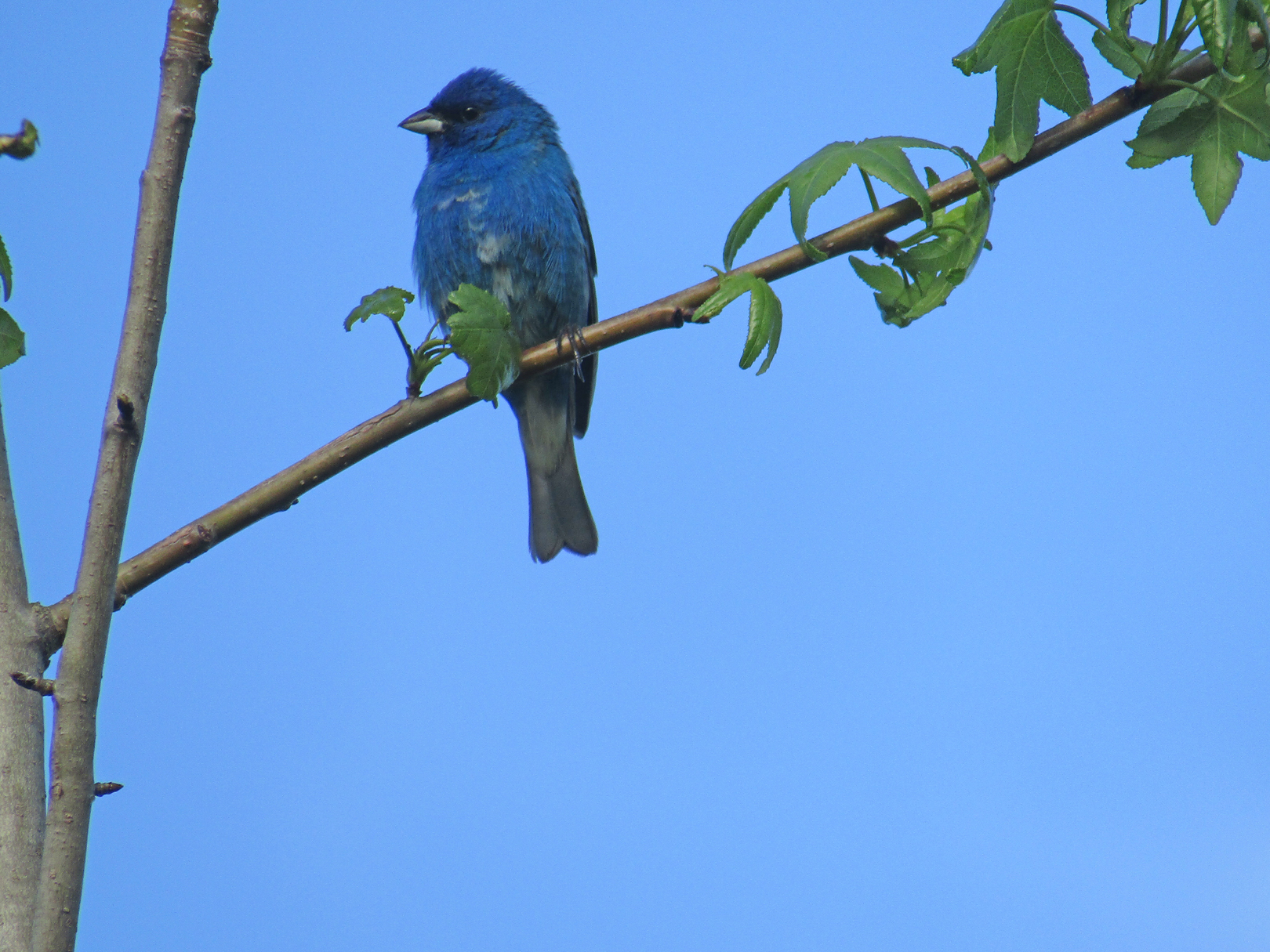
Photo by Bryan Stevens • Nesting neotropical migrants, such as this Indigo Bunting, increased the total number of species for the annual summer count.

Participants included Fred Alsop, Rob Biller, Catherine Cummins, Dianne Draper, Dave Gardner, Tammy Griffey, Don Holt, David Kirschke, Rick Knight (compiler), Roy Knispel, Richard Lewis, Dianna Lynn, Vern Maddux, Larry McDaniel, Joe McGuiness, Tom and Cathy McNeil, Brookie and Jean Potter, Judith Reid, Brenda Richards, Judi Sawyer, Michele Sparks, Bryan Stevens, Kim Stroud, Scott Turner, Charles Warden and John Whinery.

Some species were missed, including yellow-crowned night-heron, great horned owl, chuck-will’s-widow, willow flycatcher, brown creeper, hermit thrush, Kentucky warbler and magnolia warbler. These species are often, but not always, found on this count, according to long-time count compiler Rick Knight.

See if one of your favorite birds was hit or miss, common or uncommon, by scanning over the listing of the total.

The tally follows:
Canada goose, 218; wood duck, 13; mallard, 92; ruffed grouse, 1; wild turkey, 40; double-crested cormorant, 16; great blue heron, 23; and green heron, 2.
Black vulture, 7; turkey vulture, 25; osprey, 1; Cooper’s hawk, 3; bald eagle, 2; red-shouldered hawk, 4; broad-winged hawk, 7; and red-tailed hawk, 10.
Killdeer, 8; American woodcock, 1; rock pigeon, 101; Eurasian collared-dove, 2; mourning dove, 177; yellow-billed cuckoo, 5; Eastern screech-owl, 5; barred owl, 2; common nighthawk, 2; and Eastern whip-poor-will, 7.
Chimney swift, 99; ruby-throated hummingbird, 28; belted kingfisher, 11; red-bellied woodpecker, 24; yellow-bellied sapsucker, 2; downy woodpecker, 19; hairy woodpecker, 3; Northern flicker, 36; pileated woodpecker, 15; and American kestrel, 1.
Eastern wood-pewee, 24; Acadian flycatcher, 9; alder flycatcher, 2; least flycatcher, 13; Eastern phoebe, 48; great crested flycatcher, 7; and Eastern kingbird, 21.
White-eyed vireo, 5; yellow-throated vireo, 2; blue-headed vireo, 38; warbling vireo, 1; red-eyed vireo, 117; blue jay, 77; American crow, 185; fish crow, 4; and common raven, 5.
Purple martin, 38; Northern rough-winged swallow, 34; tree swallow, 109; barn swallow, 154; and cliff swallow, 137.
Carolina chickadee, 32; tufted titmouse, 65; red-breasted nuthatch, 3; white-breasted nuthatch, 10; house wren, 60; winter wren, 3; Carolina wren, 84; blue-gray gnatcatcher, 8; and golden-crowned kinglet, 2.
Eastern bluebird, 113; veery, 23; wood thrush, 35; American robin, 510; gray catbird, 42; brown thrasher, 38; Northern mockingbird, 62; European starling, 1,203; and cedar waxwing, 45.
Ovenbird, 50; worm-eating warbler, 4; Louisiana waterthrush, 10; golden-winged warbler 1; black-and-white warbler 27; Swainson’s warbler, 2; common yellowthroat, 12; hooded warbler, 67; American redstart, 8; Northern parula, 30; Blackburnian warbler, 4; yellow warbler, 1; chestnut-sided warbler, 12; black-throated blue warbler, 20; pine warbler, 2; yellow-throated warbler, 9; prairie warbler, 3; black-throated green warbler, 14; Canada warbler; 5; and yellow-breasted chat, 9.
Eastern towhee; 112; chipping sparrow, 61; field sparrow, 58; savannah sparrow, 1; song sparrow, 253; dark-eyed junco, 46; scarlet tanager, 25; Northern cardinal, 157; rose-breasted grosbeak, 5; blue grosbeak, 5; and indigo bunting, 102.
Red-winged blackbird, 109; Eastern meadowlark, 15; common grackle, 67; brown-headed cowbird, 43; orchard oriole, 4; and Baltimore oriole, 2.
House finch, 132; pine siskin, 1; American goldfinch, 97; and house sparrow, 44.

•••••


I received a phone call from Marian Swanson of Aldie, Virginia, this past week. Marian was looking for advice on feeders for attracting indigo buntings, which she had observed near her home. She was specifically seeking a feeder that would prevent the seed from getting wet during rainstorms.

At her request, I provided Marian with some links to websites offering a variety of feeders for sale.

It’s always great to hear from readers. If you have a bird-related question, email me at bstevens@erwinrecord.net or ahoodedwarbler@aol.com. I also enjoy hearing about bird observations or general comments from readers.

78th annual Spring Bird Count for NE Tennessee finds 153 species

Photo by Ray Miller/Pixabay • One of my more exciting finds during the recent Spring Bird Count was a male red-breasted merganser from the TVA Overlook at Watauga Lake. Other count participants managed to locate another four red-breasted mergansers in the count area.

The 78th consecutive Elizabethton Spring Bird Count was held Saturday, May 1, covering Carter County plus parts of the adjacent counties of Johnson, Sullivan, Unicoi and Washington.

With 40 observers in 13 parties, plus four feeder watchers, coverage of the count areas was extensive. Participants enjoyed a beautiful sunny day, although most areas had temperatures that had dipped into the upper 30s at sunrise. The day gradually warmed and got into the 70s.

Participants tallied 153 species, which is slightly above the recent 30 year average of 150 species. The all-time high on this count was 166 species and was set in 2016.

Some exceptional finds in Unicoi County included a red-headed woodpecker along the section of the linear trail near the McDonald’s. Each of the five counties in the region produced some good birds for this long-running survey.

Count participants included Fred Alsop, Rob Armistead, Betty Bailey, Gary Bailey, Jerry Bevins, Rob Biller, Ron Carrico, Catherine Cummins, Todd Eastin, Glen Eller, Harry Lee Farthing, Bambi Fincher, Dave Gardner, Tammy Griffey, Jean Henson, Neal Henson, Jacki Hinshaw, Lance Jessee, Jennifer Kennedy, David Kirschke, Rick Knight, Roy Knispel, Richard Lewis, Dianna Lynne, Vern Maddux, Frank McCollum, Larry McDaniel, Joe McGuiness, Cathy McNeil, Tom McNeil, Harry Norman, Susan Peters, Brookie Potter, Jean Potter, Sherrie Quillen, Pete Range, Judi Sawyer, Chris Soto, Michele Sparks, Bryan Stevens, Peggy Stevens, Kim Stroud, Charles Warden and Rex Whitfield.

Rick Knight, the long-time compiler for the count, made note of some of the misses, which included pied-billed grebe, common nighthawk, Acadian flycatcher (just the seventh miss in last 50 years), loggerhead shrike, horned lark, summer tanager and bobolink.

He also made some observations about other count finds.

• One species – brown-headed nuthatch – made its official count debut. Another – evening grosbeak – returned to the count after being absent since the spring of 2000.

• The American robin edged out the European starling for most common bird. Counters tallied 801 robins compared to 618 starlings.

• For only the sixth time in the last 18 years, Northern bobwhite made it onto the count. A single ruddy duck became only the second record for this waterfowl on the spring count. Also making only its second appearance on the spring count was willet, a species of shorebird that only migrates through the region.

• Some species appear to have moved into the region for good. Fish crows have been found the last five of the past six years, and Eurasian collared-doves have been found every year for the past 15 years.

• An amazing 29 species of New World warblers were found this year, including prothonotary warbler for only the third time in the last 15 years.

The total follows:

Canada goose, 412; wood duck, 31; mallard, 89; blue-winged teal, 13; bufflehead, 6; hooded merganser, 1; red-breasted merganser, 5; and ruddy duck; 1.

Ruffed grouse, 4; wild turkey, 28; common loon, 2; double-crested cormorant, 48; great blue heron, 69; green heron, 17; black-crowned night-heron, 2; and yellow-crowned night-heron, 5.

Black vulture, 60; turkey vulture, 128; osprey, 10; sharp-shinned hawk, 1; Cooper’s hawk, 6; bald eagle, 11; broad-winged hawk, 11; and red-tailed hawk, 21.

Virginia rail, 2; sora, 2; killdeer, 32; spotted sandpiper, 32; solitary sandpiper, 31; greater yellowlegs, 3; willet, 10; lesser yellowlegs, 2; and Wilson’s snipe, 1.

Bonaparte’s gull, 9; ring-billed gull, 6; rock pigeon, 106; Eurasian collared-dove, 6; mourning dove, 284; and yellow-billed cuckoo, 4.

Eastern screech owl, 13; great horned owl, 1; barred owl, 2; Whip-poor-will, 27; and chuck-will’s-widow, 16.

Chimney swift, 92; ruby-throated hummingbird, 34; belted kingfisher, 14; red-headed woodpecker, 4; red-bellied woodpecker, 125; yellow-bellied sapsucker, 7; downy woodpecker, 44; hairy woodpecker, 9; Northern flicker,41; and pileated woodpecker, 55.

American kestrel, 9; Eastern wood-pewee, 6; least flycatcher, 5; Eastern phoebe 119; great crested flycatcher, 12; and Eastern kingbird, 59.

White-eyed vireo, 15; yellow-throated vireo, 15; blue-headed vireo, 76; warbling vireo, 1; red-eyed vireo, 228; blue jay, 329; American crow, 358; fish crow, 1; and common raven, 20.

Northern rough-winged swallow, 95; purple martin, 71; tree swallow, 235; barn swallow, 218; and cliff swallow, 473.

Carolina chickadee, 139; tufted titmouse, 199; red-breasted nuthatch, 10; white-breasted nuthatch, 43; brown-headed nuthatch, 2; and brown creeper, 5.

House wren, 60; winter wren, 5; marsh wren, 1; Carolina wren, 202; blue-gray gnatcatcher, 75; golden-crowned kinglet, 6; and ruby-crowned kinglet, 4.

Eastern bluebird, 157; veery, 17; hermit thrush, 3; wood thrush, 80; American robin, 801; gray catbird, 80; brown thrasher, 66; Northern mockingbird, 121; European starling, 618; and cedar waxwing, 15.

Photo by Jean Potter • A male hooded warbler flits through the foliage of a rhododendron thicket.

Ovenbird, 157; worm-eating warbler, 35; Louisiana waterthrush, 29; Northern waterthrush, 5; golden-winged warbler, 2; black-and-white warbler, 79; prothonotary warbler, 1; Swainson’s warbler, 7; Nashville warbler, 1; Kentucky Warbler, 2;  common yellowthroat, 20; hooded warbler, 163; American redstart, 11; Cape May warbler, 6; Northern parula, 53; magnolia warbler, 4; bay-breasted warbler, 1; Blackburnian Warbler, 13; yellow warbler, 16;  chestnut-sided warbler, 17; black-throated blue warbler, 77; palm warbler,  5; pine warbler, 15; yellow-rumped warbler, 16; yellow-throated warbler, 25; prairie warbler, 4; black-throated green warbler, 95; Canada warbler, 18; and yellow-breasted chat, 9.

Photo by Bryan Stevens • The male indigo bunting is a resplendent bird.


Eastern towhee, 213; chipping sparrow, 117; field sparrow, 79; Savannah sparrow, 4; grasshopper sparrow, 1; song sparrow, 299; swamp sparrow, 9; white-throated sparrow, 27; white-crowned sparrow, 8; dark-eyed junco, 68; scarlet tanager, 96; Northern cardinal, 359; rose-breasted grosbeak, 36; blue grosbeak, 2; and indigo bunting, 62.

Red-winged blackbird, 550; Eastern meadowlark, 82; common grackle, 324; brown-headed cowbird, 99; orchard oriole, 29; and Baltimore oriole, 18.

House finch, 84; pine siskin, 31; American goldfinch, 283; evening grosbeak, 48; and house sparrow, 70.

Tree swallows are the latest spring arrivals

Photo by Bryan Stevens • A tree swallow checks out a nesting box soon after returning in the spring.

Waiting for spring? Join the club. Between alternating bouts of unseasonably warm temperatures and frigid blasts, the weather cannot seem to decide if winter’s hanging in there a little longer or if it’s time to proceed with spring’s arrival.

I’m hopeful it’s the latter. I enjoyed a stroll in the spring sunshine on March 30 along the section of the trail near the industrial park. From the boardwalk over the water I saw my first spring swallows (a purple martin and a couple of Northern rough-winged swallows) as well as a belted kingfisher and several American robins. I also saw my first dragonflies and butterflies of spring, as well as one muskrat enjoying a leisurely swim.

Early Birds

One might think that the wild swings in weather would translate into a messy arrival timetable for some of our returning birds, but so far my own personal observations indicate a different story. At home, the usual spring “early birds,” including wood duck, red-winged blackbird, blue-headed vireo, ruby-crowned kinglet and brown thrasher, have been their usual punctual selves.

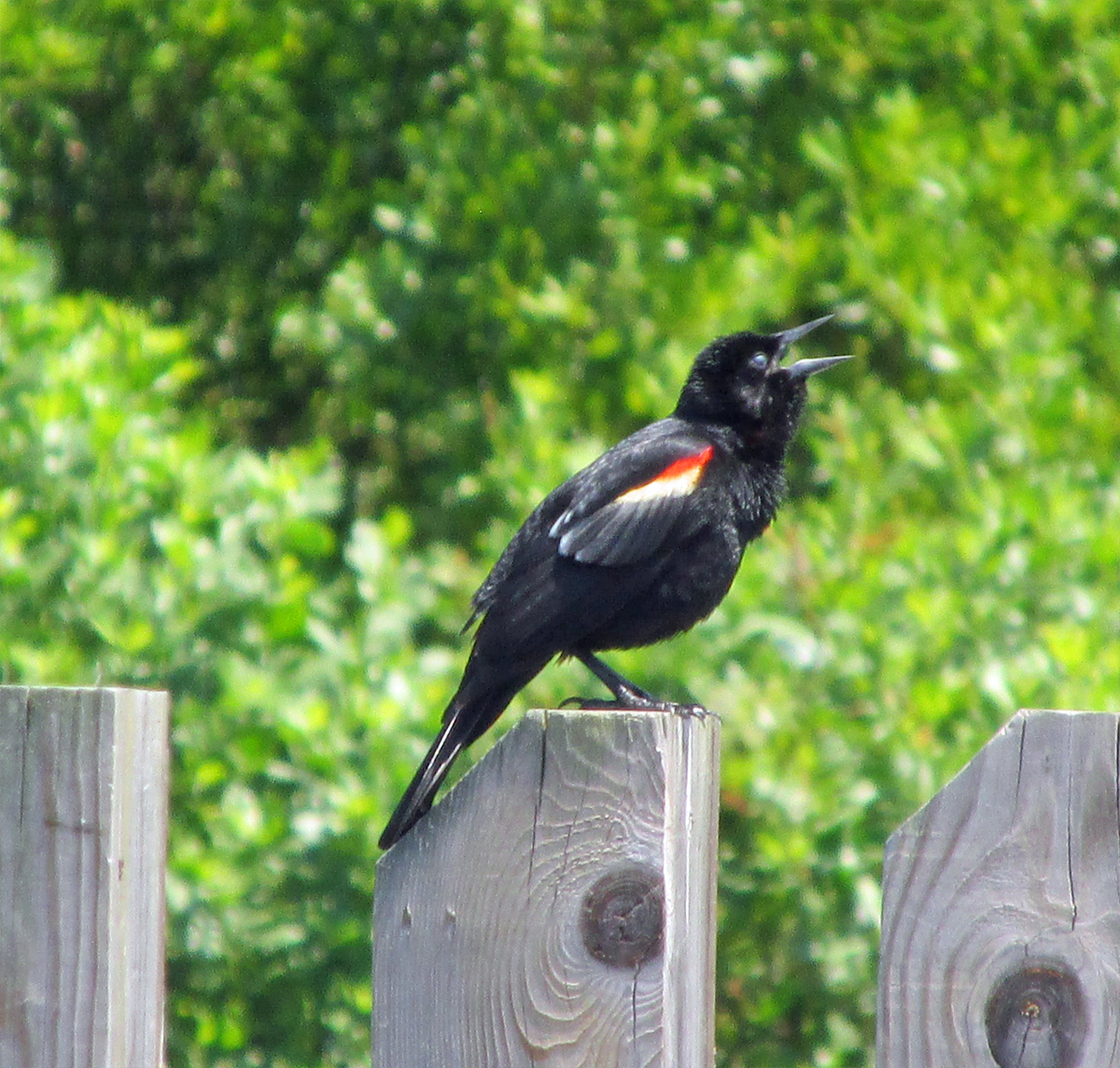
Photo by Bryan Stevens • A male red-winged blackbird sings to attract mates and ward off rivals.

The swallows I saw during my Erwin stroll, however, reminded me that one bird hasn’t returned at my home. The early American naturalist and artist John James Audubon knew this particular bird as “white-bellied swallow,” which is a descriptive name, but today the species is known simply as tree swallow.

Tree swallows have been back in the region for weeks, but they sometimes take their time finding their way to the waiting birdhouses at my fish pond. Their return dates in years past have ranged from early March to the middle of April.

Insect-heavy Diet

Swallows are insectivores, so those that return early in the spring must deal with temperature fluctuations. In prolonged cold spells, these insect-eating birds can be hard pressed to locate their usual prey. At such times, they are often forced to retreat to the area’s lakes and larger rivers, where they can swoop over the water and have an easier time plucking cold-numbed flying insects out of the air.

Once milder spring temperatures prevail, the flocks of swallows forced into these necessary habitats will disperse as pairs begin seeking nesting sites. Tree swallows are cavity-nesting birds, which often puts them into competition with Eastern bluebirds. The two species usually manage to work out a truce and settle down to nest in close proximity to each other.

The iridescent blue-green male tree swallow, complete with white underparts and a forked tail, is a handsome bird and a welcome addition to the bird population in any yard or garden. Tree swallows enjoy water, so a nearby pond or creek is a boon for attracting these birds.

Tree swallows haven’t always nested in Northeast Tennessee. Only in the last 40 years have these birds become regular nesting birds in the region. The first nesting record took place in the early 1980s at Austin Springs on Boone Lake in Washington County, Tennessee, according to The Birds of Northeast Tennessee by Rick Knight. Tree swallows soon became regular nesting birds every summer in all five counties that comprise Northeast Tennessee.

Other Swallows

It’s usually not too difficult to find five of the six species of swallows that are known to make Northeast Tennessee and Western North Carolina their home from spring to fall. In addition to tree swallow, the region’s other swallow species include: barn swallow, purple martin, cliff swallow and northern rough-winged swallow. These are all fairly common summer birds in the region. The sixth species, the bank swallow, is a bit of a specialist when it comes to nesting and occurs only sporadically in the region.

While only a handful of swallows range into the United States and Canada, a total of 83 species of swallows can be found worldwide. Some of the common names for these different swallows (also called martins in other parts of the world) are quite descriptive. A sampling includes white-eyed river martin, grey-rumped swallow, white-backed swallow, banded martin, blue swallow, violet-green swallow, golden swallow, brown-throated martin, brown-bellied swallow, pale-footed swallow, white-bibbed swallow, pearl-breasted swallow, red-breasted swallow, mosque swallow, fairy martin, pale martin, tawny-headed swallow and streak-throated swallow.

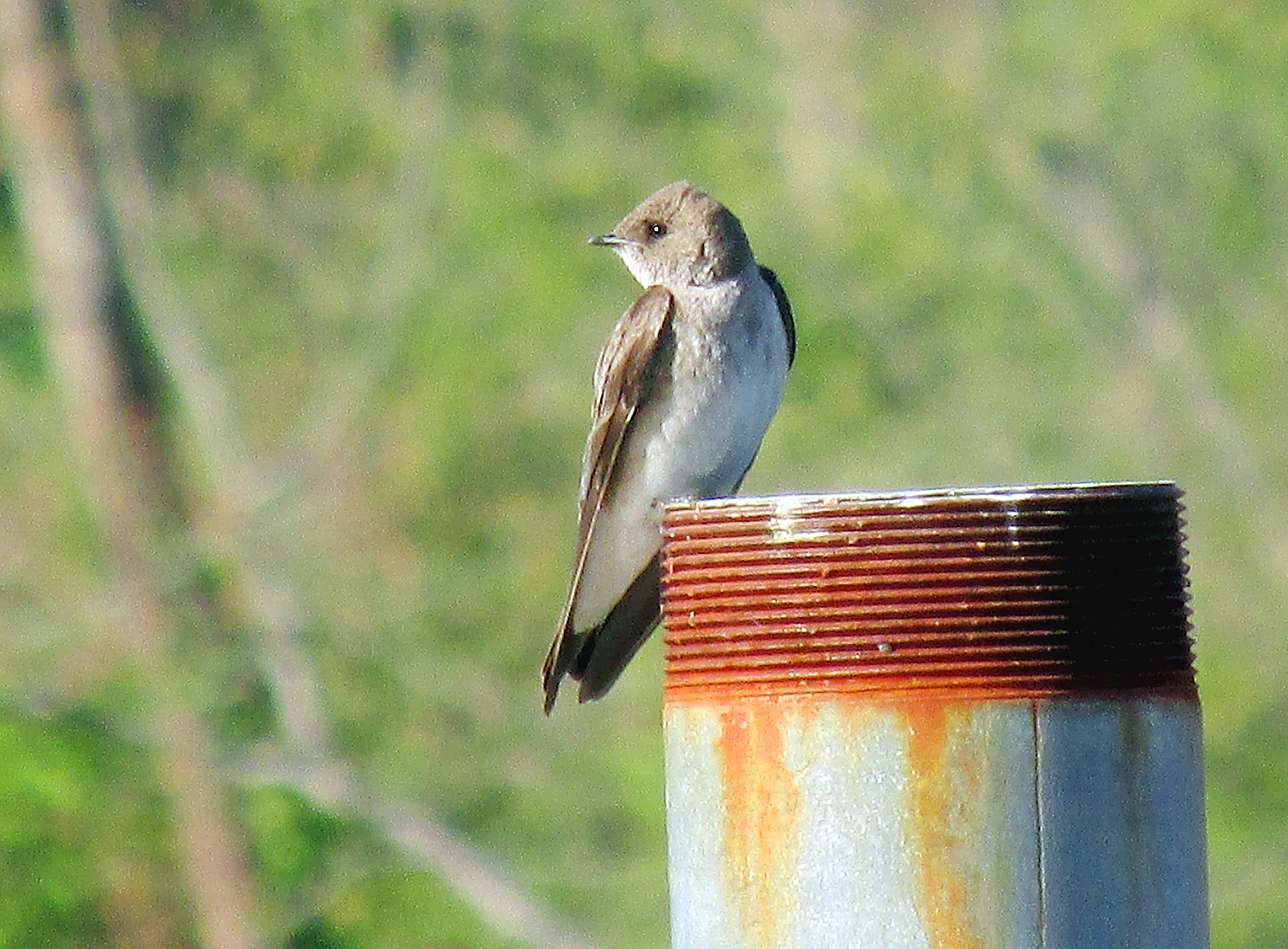
Photo by Bryan Stevens • A Northern rough-winged swallows perches on a metal pipe.

While many swallows and martins have proven highly adaptive when faced with human disturbances to their habitat, a few species have experienced declines. One species — the white-eyed river martin — was last seen in Thailand in the 1980s and very well may be extinct. Closer to home, the golden swallow is now found only on the island of Hispaniola after disappearing from Jamaica in the 1980s. The Bahama swallow, which nests on only four islands in the Bahamas, is also vulnerable. Incidentally, both these swallows are closely related to the tree swallow, with all of them belonging to the genus Tachycineta. Translated from Greek, the genus name means “fast mover,” a quite accurate description of these graceful and agile flyers.

Good 

Neighbors

With their enthusiastic twittering to each other, tree swallows make for friendly neighbors. The local bluebirds may disagree, at first, but they’ll get their feathers unruffled eventually. It’s also a pleasant diversion to watch them swoop over fields and ponds as they help control the insect population.

To increase your chances of hosting your own tree swallows, offer a bird box placed in an open area. Right now is the time to attract their attention with some prime real estate. Plans are available online to help construct your own or pick up one at a gardening center, hardware store or farm supply outlet.

Photo by Bryan Stevens • A male Eastern Bluebird perched on playground equipment at Winged Deer Park in Johnson City.

Many would-be hosts for Eastern bluebirds express disappointment when a pair of tree swallows become tenants instead. The remedy to the disappointment is simple: provide an additional nesting box.  Although there will be some initial squabbles, tree swallows and Eastern bluebirds will co-exist if they don’t have to compete for the same nesting box.

There’s one last selling point I want to mention on behalf of tree swallows. While not exactly songsters, they do produce an energetic, chirpy trill that they vocalize persistently when in the company of their fellow tree swallows. It’s hard not to be cheerful when hearing such a jubilant noise issuing from one of our feathered friends.

Hummingbird Observations

While tree swallows and their kin are great to have back, one of the most anticipated returns each year is the ruby-throated hummingbird. As I’ve done in years past, I want to hear from readers when they see their first hummingbird of spring. Email me your observations at ahoodedwarbler@aol.com or post them on my Facebook page. Please include the date and the approximate time of your sighting. Email me at ahoodedwarbler@aol.com or post on my Facebook to share your first sightings. You can also leave a comment here on the blog.

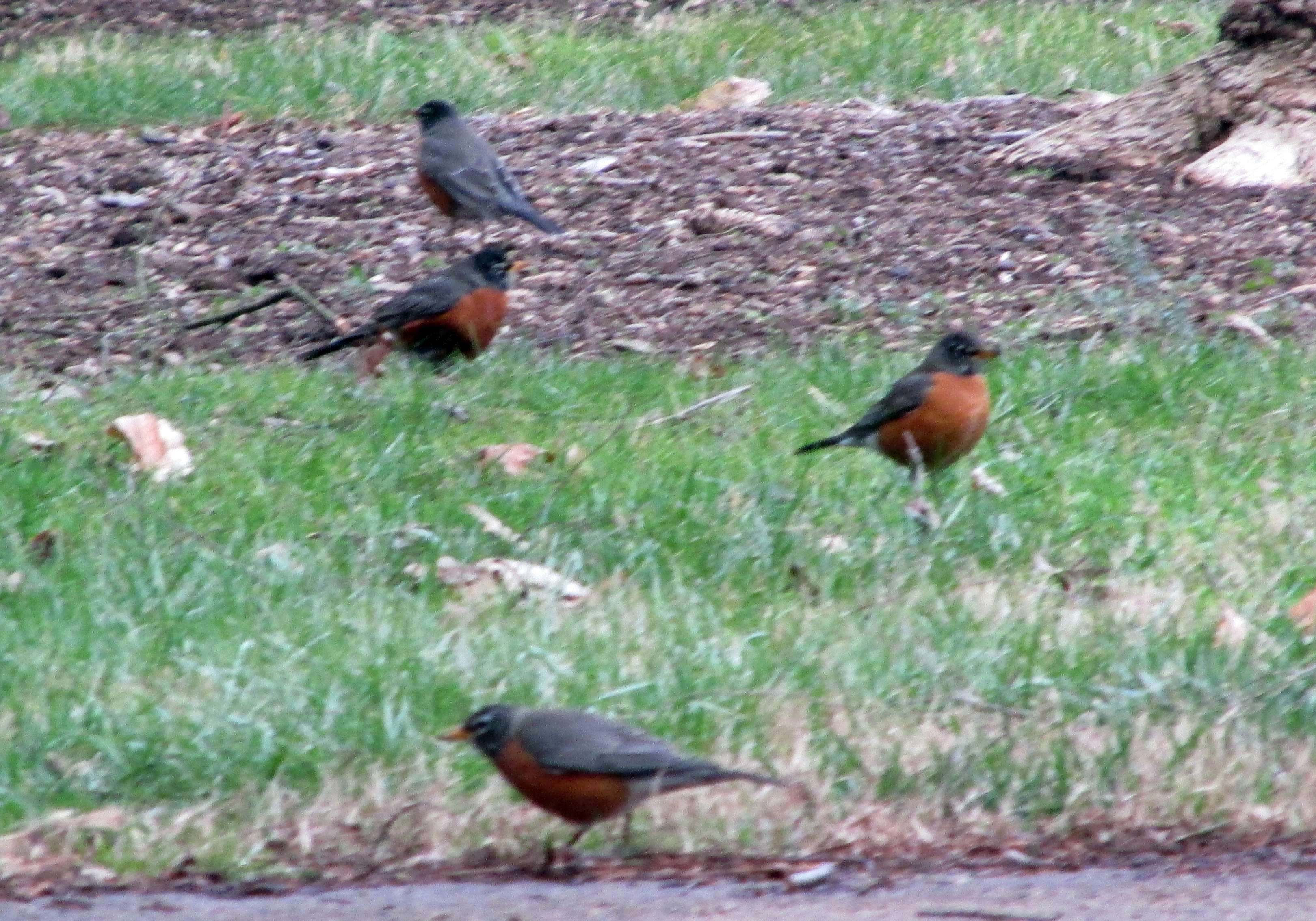
Restless robin flocks signal spring’s approach

When I posted Jan. 29 on Facebook about seeing my first flock of American robins in 2021, I didn’t anticipate the avalanche from other observant bird enthusiasts.

Priscilla Gutierrez commented on seeing about 30 robins in a field along Limestone Cove Road in Unicoi.

“They don’t come to the feeders,” Priscilla noted. “It was wonderful to see them.”

Alice Torbett in Knoxville shared that she saw her first flock of robins about two weeks ago when they swooped in to harvest berries from the holly tees at her Knoxville home. “They were very considerate to wait until after Christmas,” Alice wrote.

Erwin resident Brenda Marie Crowder commented that “tons of Robins are eating my holly berries right now. With snow dropping and all.”

Jonesborough resident Nan Hidalgo reported that she had five robins in her yard on a recent Friday afternoon.

Christine M. Schwarz in Alexandria, Virginia, shared her own sightings.

Photo by Bryan Stevens • An American robin grasps a perch and keeps an eye on its surroundings.

“Three weeks ago there was a large flock at Mount Vernon,” Christine wrote in a comment to my post. “I have seen a smaller group over here by Fort Belvoir, too. I can’t believe they’re migrating now — more like wintering over.”

Byron Tucker, who lives in Atlanta, commented, “The other day, I saw a flock of robins and blackbirds mixed together.”

Dee Obrien, formerly of Elizabethton, Tennessee, but now living in Florida, lamented the timing of the robins. “They always seem to come back to soon, poor little things,” she wrote. “It is too cold.”

Becky Boyd shared her own experience with robins. “I’ve had dozens here in Knoxville,” she said. “They all recently left, except one loner who is terrorizing the bluebirds and attacks them at the feeders.”

Erwin resident Donna Rea, and a former co-worker at The Erwin Record, posted a question to my Facebook robin discussion.

“What do robins eat this time of year?” Donna asked. “Will they eat out of our feeders if the ground is frozen and they can’t find a hibernating worm?”

Photo by Jack Bulmner/Pixabaycom • An American robin plucks a berry from a branch.

I suggested in my reply that robins might eat suet at feeders, as well as fruit. More likely, the restless robins in the region are probably scouring the countryside for holly trees with berries. Of course, robins are omnivorous in their appetite and would gladly take an earthworm if they could coax one out of the chilly ground.

South Carolina resident Catherine Romaine Henderson simply posted an optimistic comment on my robin post. “Please tell me spring is coming!”

The American robin is indeed widely held to be a harbinger of spring. Furthermore, the robin is a popular American bird. In fact, this bird has been designated the official state bird by Wisconsin and Michigan.

In truth, many robins forego migration to endure a few months of cold weather. Their ability to shift their diet from earthworms and insects to fruit and feeder fare helps robins eke out a living. Robins remain an abundant bird but their fondness for co-existing with humans can leave them vulnerable to pesticides applied to lawns and gardens.

According to the website, “All About Birds,” the American robin nests three times a year. On average, however, only 40 percent of robin nests succeed at fledging young. Even once out of the nest, young robins are vulnerable. The website estimates that only 25 percent of each year’s fledged robins will reach November. So, the young robins that join some of the large flocks people are seeing in the region are birds that have beaten the odds.

Photo by Bryan Stevens • Returning American robins, prominent in lawns and gardens during their annual spring migration, will soon turn their attention to nesting duties.

Even the robins that do depart the region each fall don’t migrate far. Many robins that spend the summer in Canada or the United States only migrate as far as the Gulf States, southern Florida, southern California, Baja California and Mexico.

The American robin is a large bird in the thrush family, which in North America also includes such birds as Eastern bluebird, wood thrush, and Townsend’s solitaire.

In the British Isles, the European robin is simply known as “robin” or “robin redbreast.” When the first English colonists arrived in New England and other parts of colonial-era North America, they took pleasure in finding that some of the birdlife in the New World resembled familiar birds from their homeland. The red-breasted American robin looked like the bird they knew in the Old World as “robin,” which motivated them to name the New World bird “robin,” as well.

Other than the red breast, however, the two robins are not all that similar. The American robin is the larger of the two birds. Further separating these two birds is the fact that the European robin is not a thrush but rather a member of the family of Old World flycatchers.

Photo by Bryan Stevens • While American robins like fruit when its available, they also spend a lot of time feeding on earthworms and insects.

In some ways, the two robins are similar. Both are fond of earthworms, spending a great deal of their time on the ground foraging for worms. They will also follow human gardeners at their work, waiting patiently for the followed person to disturb the soil with a spade or hoe and expose earthworms for the waiting bird. They are also rather tolerant of humans and have learned to make their own homes close to human dwellings.

Some of the British transplants to North America must have felt homesick for familiar things because several unsuccessful attempts were made to introduce the European robin to the United States and Canada. European robins introduced in New York and Oregon failed to gain a foothold, unlike the introduction of such alien birds as the house sparrow and European starling.

On a few occasions, our American robins have overflown their destinations and ended up in the United Kingdom. For instance, an American robin became a first for London birdwatchers when one was found in that nation’s capital city in March of 2006. Whether of the European or American persuasion, robins have long been a favorite of birdwatchers and nature enthusiasts.

They have even adapted to take food at feeders. If you’d like to try your luck at attracting robins to feeders, know that they like their sunflower seeds hulled. They will also eat mealworms, fruit, peanut hearts and suet. Robins prefer to feed on the ground or on an open platform feeder.

Robins are such friendly and engaging birds. If we can have them near us for 12 months of the year, who’s going to complain?


Hermit thrushes brave East Tennessee winters

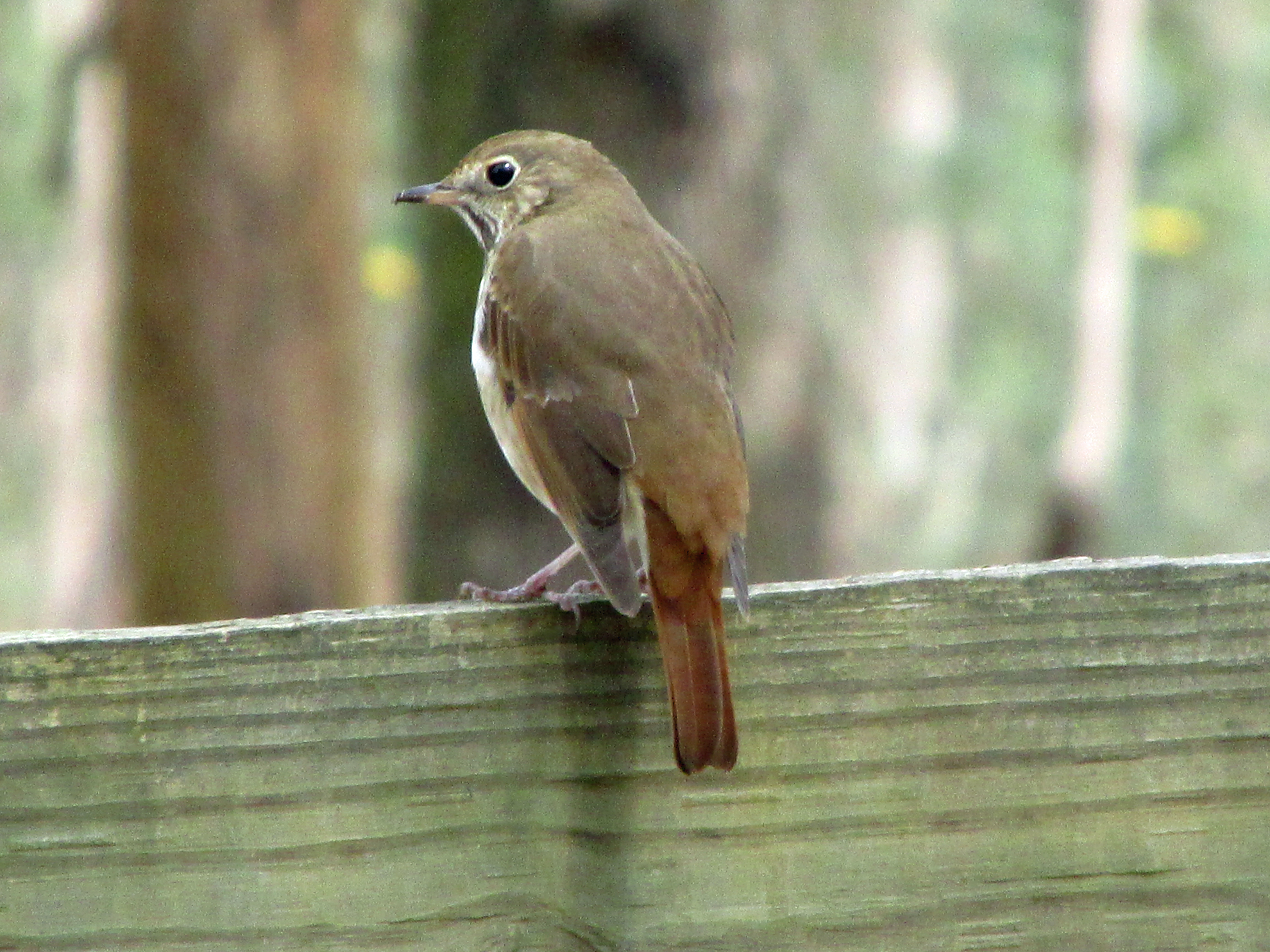
Photo by Bryan Stevens • A hermit thrush perched on a fence rail shows the reddish tail, a reliable field mark to separate this species from close relatives. The tail contrasts from the rest of the bird’s plumage.

Karen Miller sent me an email about a winter visitor in her yard at her home in Parrottsville, Tennessee. “I have seen a hermit thrush eating holly berries for 10 days,” Karen wrote. “Is he migrating or is he perhaps a winter visitor here in Parrottsville?”

To answer her question, I replied and informed her that the thrush is a winter visitor. The hermit thrush takes up residence after its kin have already departed the region in the fall, making it one of the few thrushes to remain in Northeast Tennessee during the winter months. I’ve always thought a good nickname for this bird would be the “winter thrush” because of its presence during the colder months of the year. Of course, for those who know where to look, a few hermit thrushes spend the summer nesting season at high elevation peaks such as Roan Mountain on the Tennessee and North Carolina border.

The hermit thrush is one of the larger brown thrushes, which also includes such related birds as Swainson’s thrush, veery, gray-cheeked thrush and wood thrush. Other less closely related members of the thrush family include the American robin, Eastern bluebird and Townsend’s solitaire.

USFWS • Hermit thrushes like to keep to the shadows.

The poet Walt Whitman employed a hermit thrush as a symbol in his poem, “When Lilacs Last in the Dooryard Bloom’d,” a moving pastoral elegy in honor of the assassinated President Abraham Lincoln. Whitman evidently knew his birds, and it’s not difficult for naturalists and bird enthusiasts to identify that he referred to the hermit thrush when he wove this songbird as a symbol into his stanzas honoring Lincoln. “Sing on there in the swamp,” Whitman wrote in his poem. “O singer bashful and tender, I hear your notes, I hear your call. I hear, I come presently, I understand you…”

Whitman evidently knew of this bird’s bashful, retiring habits, and he had obviously enjoyed the flute-like notes of the hermit thrush’s call. Whitman and many other Americans have been made fans of this gifted songbird. In fact, the citizens of Vermont even proclaimed the hermit thrush as their official state bird. The hermit thrush is well known for its song — a series of clear, musical notes, each on a different pitch, consisting of a piping introductory note and a reedy tremolo. The song had often been described as melancholy by various bird experts. The birds don’t usually sing in winter, but they do produce a call note when disturbed or alarmed that is described as a low “chuck.”

The visiting hermit thrush at her home has allowed Karen Miller to get to know this somewhat reclusive bird better. “He sits on the ground, cocks his head, spies a berry and then jumps up and gets it,” she wrote. She noted that her visitor has a good appetite. “He eats four or five at a time,” she said. “I’m so glad to see him.”

Photo by USFWS • Like many thrushes, the hermit thrush is fond of fruit and berries, especially during the winter.

According to the Smoky Mountains Visitors Guide website, the hermit thrush forages for most of its food from the ground. This bird’s diet includes insects, spiders, snails, and earthworms, plus considerable amounts of wild fruits during the fall and winter. Hermit thrushes may join up with mixed flocks of birds during the winter, often associating with such songbirds as kinglets, brown creepers, chickadees and titmice. For those not fortunate enough to host a wintering hermit thrush, this bird can be found during the summer months atop some high-elevation peaks. Close to home, look for this thrush in the Roan Mountain Rhododendron Gardens. The hermit thrush is also found at some locations in the Great Smoky Mountain National Park.

Female hermit thrushes collect nesting materials and construct the nest, within which she will lay three to six eggs. These thrushes nest once or twice a season. According to the website All About Birds, nesting habits differ between hermit thrushes in the western North America and their counterparts in the eastern half of the continent. Eastern thrushes tend to nest on the ground, but those in the west often place their nests in shrubs or tree branches.

At home on Simerly Creek Road, my first hermit thrush of the winter arrived in early November of last year. During a woodland stroll with neighbor Beth McPherson, the resident thrush put on an impressive show, hopping and scraping on the woodland floor beneath a rhododendron thicket bordering a mountain spring. In such surroundings, it’s not difficult to fathom why this bird has developed such a subtle plumage of muted browns and grays. Even when foraging actively, the bird blended remarkably with the background of fallen leaves and other woodland debris.

The hermit thrush is known by the scientific name, Catharus guttatus. The term guttatus is Latin for “spotted,” which seems appropriate. Surprisingly, the hermit thrush is not closely related to the other North American migrant species of Catharus thrushes. Instead, the hermit thrush is more closely related to the russet nightingale-thrush, a Mexican songbird. The hermit thrush could accurately be called the “red-tailed thrush” for the fact that this species has a rusty-red tail that stands apart from the warm brown-gray tones of the rest of its plumage. A white eye ring, pink legs and a heavily spotted breast complete the rest of this bird’s understated appearance.

Photo by Bryan Stevens • A hermit thrush perches on a branch in a winter woodland.

The wintering hermit thrushes in the region will likely stay put for the next couple of months, but they will mostly depart the area in April or early May. If you want to look for them, now’s the time.

••••• Bryan Stevens lives near Roan Mountain, Tennessee. To learn more about birds and other topics from the natural world, friend Stevens on Facebook at https://www.facebook.com/ahoodedwarbler. He is always posting about local birds, wildlife, flowers, insects and much more. If you have a question, wish to make a comment or share a sighting, email ahoodedwarbler@aol.com.


Baffling visitors turn out to be Northern flickers

Photo by NatureLady/Pixabay.com • A Northern flicker grasps a board with its talons. These medium-sized woodpeckers spend much more time on the ground than the other woodpeckers in the region.

Irene and Peter Cannatelli emailed me recently to ask for some help identifying birds in their yard at their home in Jonesborough, Tennessee.

“We have a pair of birds we’ve never seen,” Irene wrote in the email.

They were unable to get a photo of the birds, but Irene provided a detailed description. “They have a red crown, black under neck, like a collar, a long thin beak, and brown speckled bodies,” she wrote. In addition, she noted that the birds showed white down the middle of their backs when flying off.

“They are ground feeders,” she added.

Once I studied her description of the birds in question, I felt confident that the visitors were Northern flickers, a member of the woodpeckers family, albeit a less than typical member of the extensive clan. Most of the region’s woodpeckers are black and white birds. The Northern flicker, on the other hand, shows considerable color— for a woodpecker. Irene’s description left me in no doubt of my identification.

After I responded to the email, Irene googled Northern flicker and confirmed my identification. “That is what they looked like,” she agreed.

She also shared more about her enthusiasm for local birds. “We have five bird feeders in our little bird garden,” Irene wrote.

“We made suet for the first time this past week using Crisco, oatmeal, peanut butter, sunflower seeds, cornmeal and raisins,” Irene added. “We made four blocks. When we put the first one out it was gone in one day.”

Many birds appreciate both homemade and store-bought suet cakes, which provide a needed protein boost in the winter season when insects are scarce.

Irene noted that some of the clientele at her feeders include cardinals, finches, lots of doves and blue jays. Now the couple can add flickers to that growing list.

While flickers can be found during all seasons in the region, this woodpecker is one of the migratory ones. I see the most Northern flickers during fall migration. This woodpecker is one of the few of its kind that usually migrates to warmer climates during the colder months, although the species is not completely absent from the region in the winter season.

As mentioned earlier, this is a woodpecker with many other common names, including yellow-hammer — a popular name in the Deep South — and harry-wicket, heigh-ho and gawker bird. The Northern flicker is also the only woodpecker to serve a state — Alabama — as an official bird. The flicker earned this distinction back in 1927. Soldiers from Alabama who fought for the Confederacy were nicknamed “yellowhammers” because of their grey-and-yellow uniforms, which matched the colors of the bird. Incidentally, Alabama was one of the first states to ever name an official state bird.

Photo by Dave Menke/USFWS • A Northern flicker peers from a tree cavity.

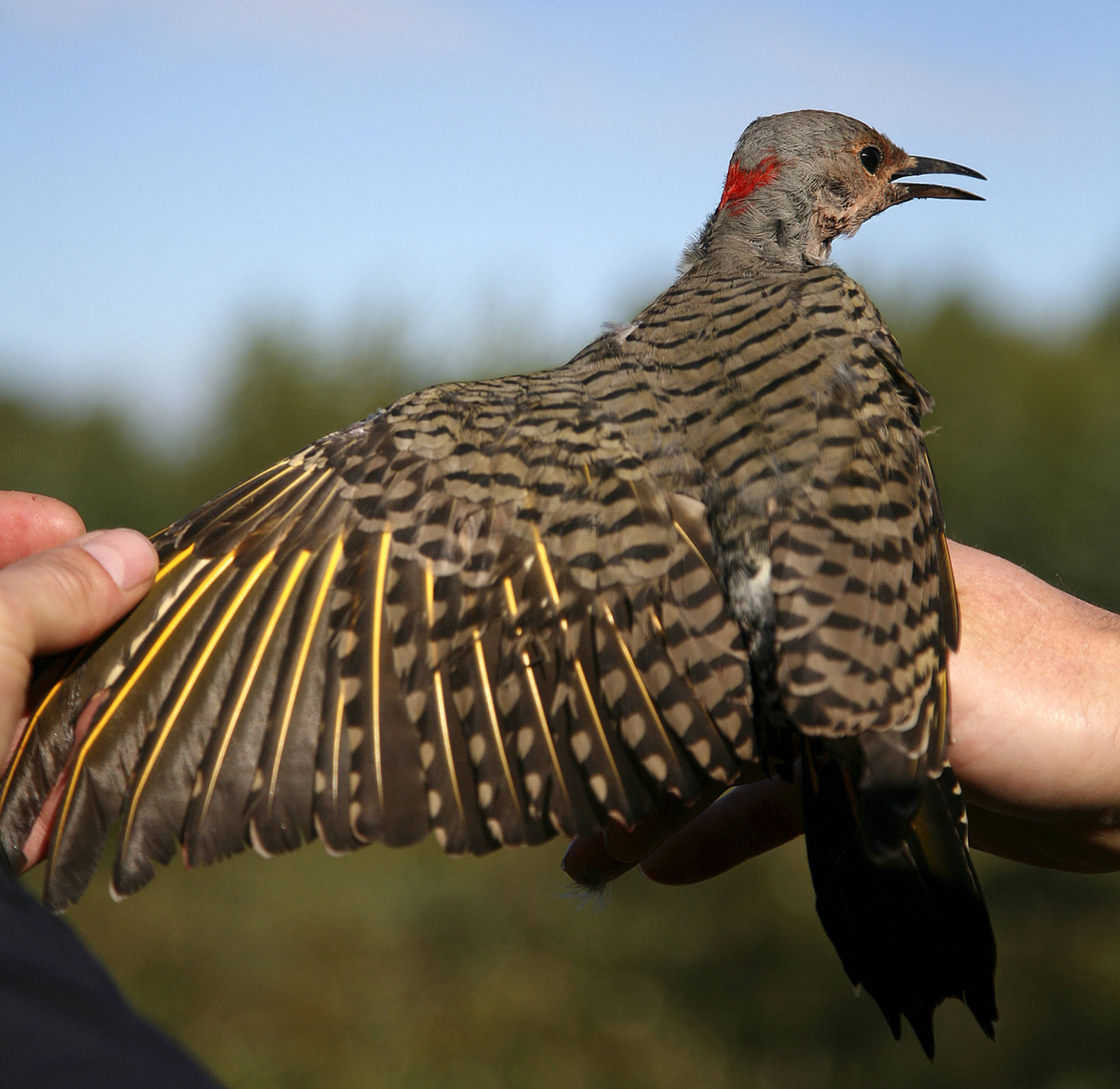
There are two races of Northern flicker — yellow-shafted and red-shafted — found in the United States. Eastern flickers show yellow feather shafts beneath the wings while western counterparts show red beneath the wings. A trip to Utah several years ago gave me a chance to also see the red-shafted race of this bird.

The Northern flicker is also not the only flicker in the United States. The gilded flicker inhabits many of the deserts — Sonoran, Yuma and Colorado — in the United States. Of course, trees are scarce in deserts, but that hasn’t proven an obstacle for this woodpecker. The bird is closely associated with saguaro cactus. Other desert dwellers depend on this woodpecker. Once the flickers are no longer making use of their nest and roost holes in the multi-armed cacti, other wildlife moved into the chambers.

The Northern flicker is an enthusiastic drummer, pounding loudly on the sides of trees with its stout bill. The purpose of the drumming is to communicate with mates and signal potential rivals that they’re intruding. Toward that objective, flickers sometimes substitute metal utility poles or the sides of buildings for the trunks of trees. In addition to drumming, the flicker also employs a variety of loud vocalizations that are fairly distinctive. A loud, repeated vocalization, often translated as “wicka-wicka-wicka,” is similar to the cluck-like call of the larger pileated woodpecker. The flicker is also known for emitting a sharp, loud “kleeer” call that can be heard from a considerable distance. Flickers are probably most vocal during the spring months.

When searching for flickers, however, don’t concentrate on scanning tree trunks. Flickers spend a lot of time in fields or on lawns in search of insect prey, which mostly consists of ants and beetles. This non-typical behavior by this particular bird is what threw off the Cannatellis’ attempt to identify their visitors. Flickers also eat seeds and fruit, and these woodpeckers will also visit feeders for peanuts, sunflower seed and suet.

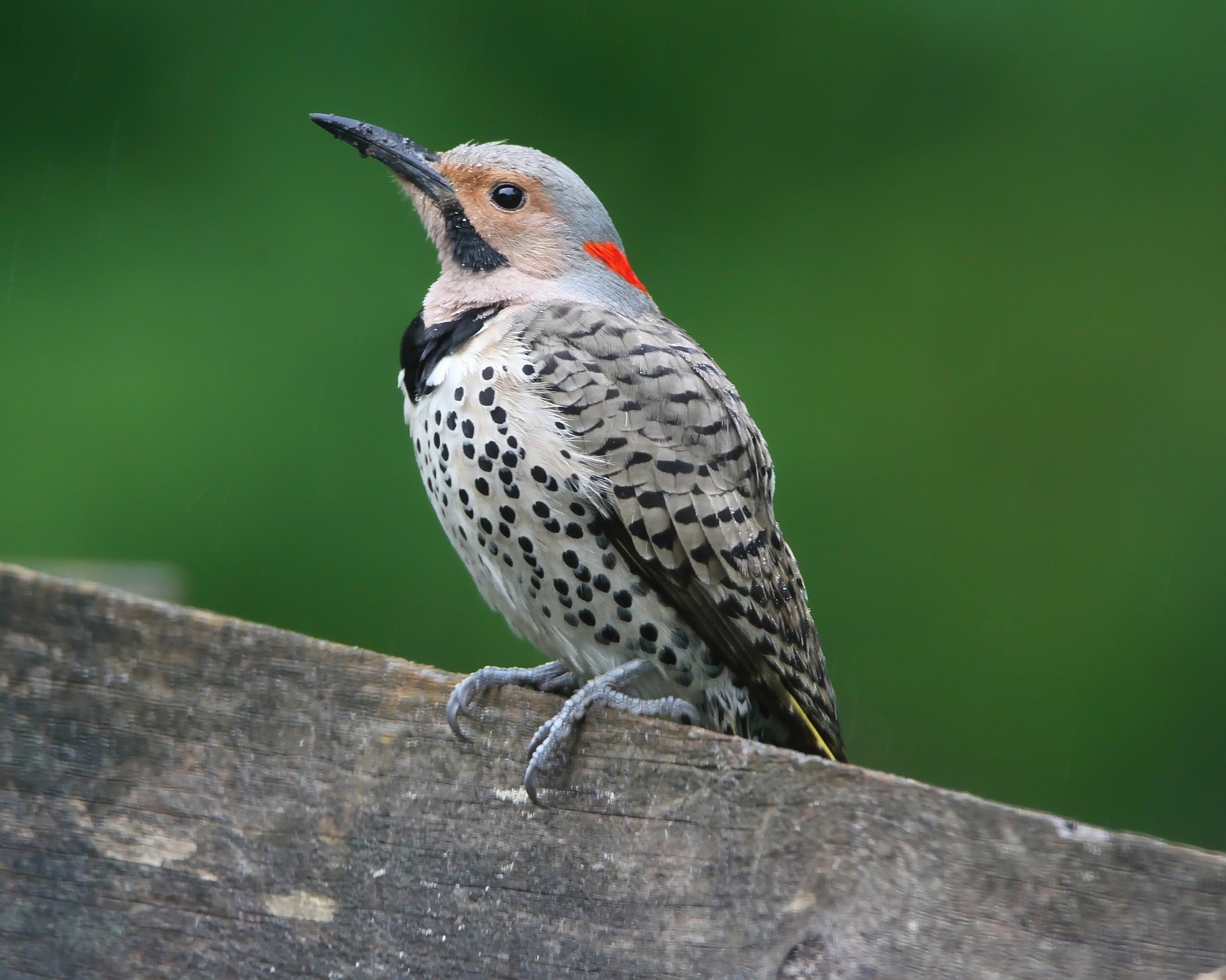
The adult flicker is a brown bird with black bars on the back and wings. A distinctive black patch occupies the upper breast, while the lower breast and belly are beige with black spots. Males can be identified by a black or red mustache stripe at the base of the beak. They also have a red stripe on the back of their gray heads. The flicker’s dark tail is set apart by a white rump patch that is conspicuous when the bird takes flight.

Photo by USFWS • A researcher extends a flicker’s wing to show the yellow feather shafts.

The Northern flicker, as either the red- or yellow-shafted reach, ranges across the United States and Canada. The flicker also ranges to Central America, Cuba and the Cayman Islands. Known scientifically as Colaptes auratus, which can be roughly translated as the “golden woodpecker,” there are about a dozen species of flickers in North, Central and South America, as well as the Caribbean.

Look for Northern flickers in fields, orchards, city parks and well-planted suburban yards. These woodpeckers are usually not too shy around human observers and will sometimes allow for extended observation. If you’re even more fortunate, you could find one visiting your yard or garden. Just remember to scan the ground. This is one woodpecker that’s not a consistent tree-hugger like many of its kin.


Tennessee and neighboring states hosting exceptional rare birds this winter

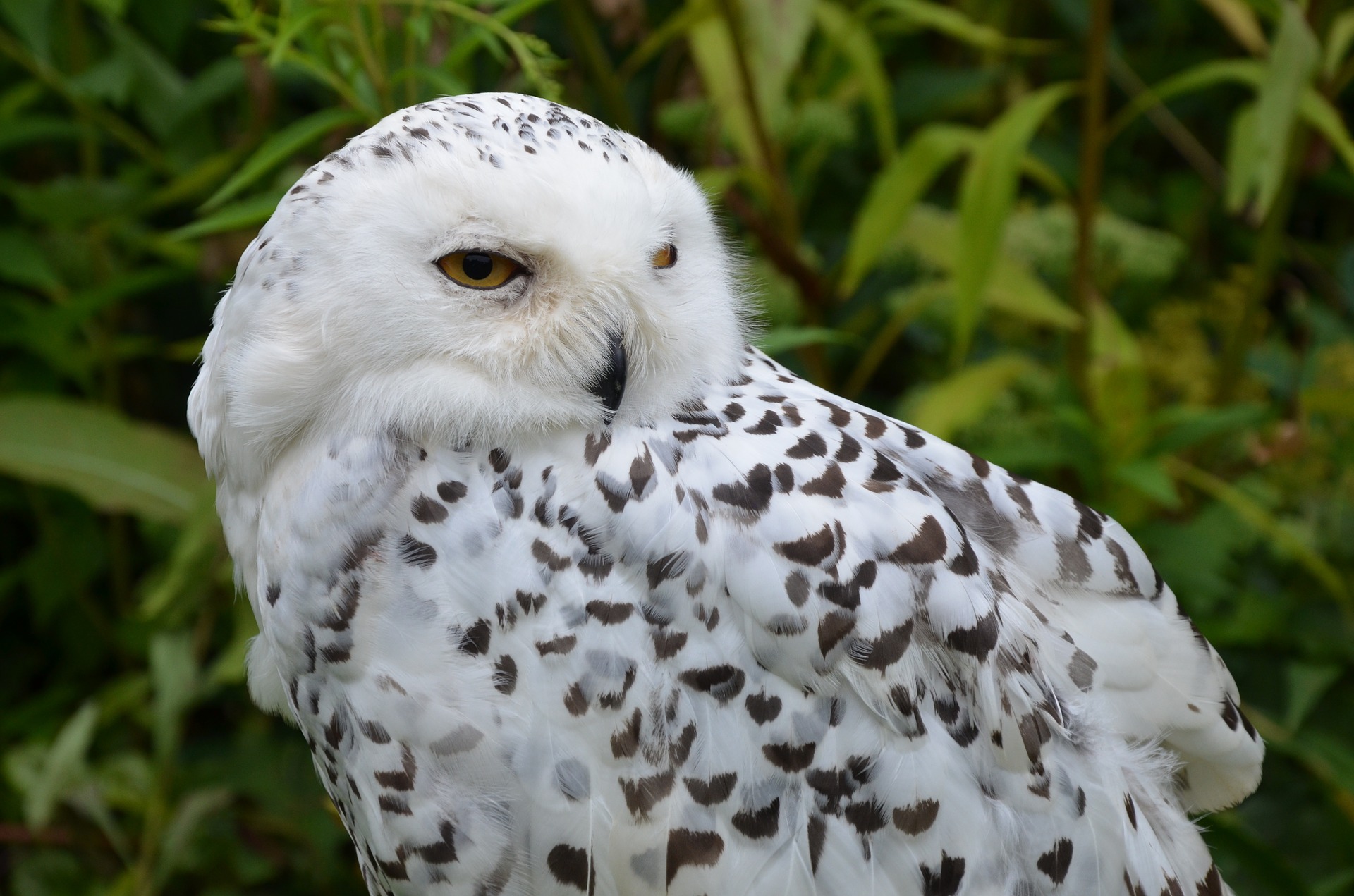
Photo by LoneWombatMedia from Pixabay • Among the unusual avian visitors to the Volunteer State this winter has been a snowy owl that has delighted observers in Chattanooga. Snowy owls, such as the individual pictured, are more commonly found on the tundra regions of the Arctic.

Birds have wings. Birds can fly. Birds confound our expectations.

Perhaps the mobility of birds is part of the human fascination with them. An unexpected bird can pop up at any time at almost any place. In fact, with 2021 less than a month old, the Volunteer State has already hosted some absolutely incredible birds.

For example, birder Evan Kidd found a Pacific Slope Flycatcher in Maryville on Jan. 7. 

A couple of weeks later, a snowy owl, which is a bird most people have only become acquainted with in the pages of J.K. Rowlings Harry Potter novels, made an appearance on Zephyr Lane near Lake Chickamauga in Chattanooga. 

Chattanoogas been a real hot spot so far this year. In addition to the snowy owl, Chattanoogas hosted such unlikely visitors as white-throated swift and Bullocks oriole. 

All of these birds quickly achieved celebrity status and attracted birders from near and far hoping for a glimpse of these rarities to Tennessee. 

Birder Michael Todd posted on Facebook on Jan. 13 about his own observation of the white-throated swift. This particular sighting came with a bit of an unnerving twist for all the people who had flocked to see the swift.

Luckily, the swift narrowly avoided being a snack for a marauding merlin that tried its best to have some swift for lunch today, Todd revealed in his Facebook post. 

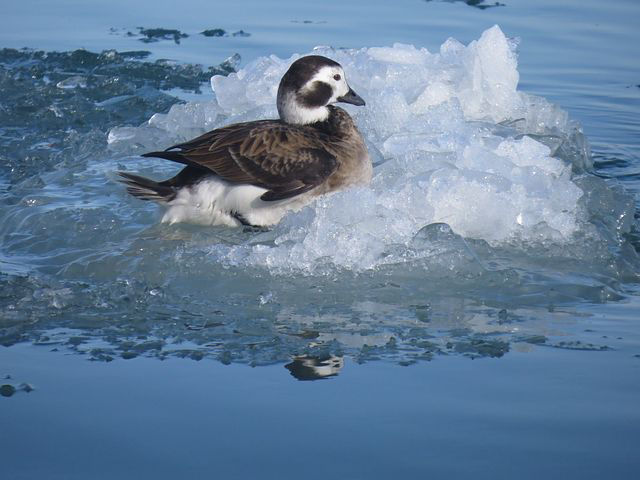
Closer to home, a long-tailed duck has been hanging out with buffleheads and other ducks at the weir dam at Osceola Recreation Area in Bristol. 

Ray Miller from Pixabay • Long-tailed ducks, such as this individual, favor colder waters, but they occasionally venture into Tennessee.

The winter invasion of evening grosbeaks, a finch that usually inhabits the forests of Canada and the northern United States, continued into 2021 as well.

What brings birds to locations far beyond their typical range? Obviously, their wings and the associated power of flight makes it possible for birds to travel surprising distances.

But on a more down-to-earth level, some of these birds such as the snowy owl and evening grosbeaks have ventured far south of their normal ranges because their usual food sources are scarce. Climate change may be exacerbating those scarcities. On occasion, a major weather phenomenon like hurricanes or other strong storms will force birds into unfamiliar territory. And whos to say that an occasional bird doesnt succumb to the temptation of wanderlust and decide to explore greener pastures? Or maybe some of these birds are simply stubborn, lost, and reluctant to ask for directions.

The reasons an unexpected bird might grace any given location are myriad. Whats easily explained is the excitement that they can generate. Back in the winter of 2009 I traveled with some friends to Spring Hill, Tennessee, in the hope of getting a look at a snowy owl. After several hours staking out some large fields with dozens of other birders on property owned by General Motors at the time, we got our owl. Incidentally, that particular owl got the nickname Chevy due to its association with the GM production facilities in Spring Hill. The moment that owl unfurled its wing and made a short but majestic flight over the field remains a birding thrill of a lifetime. 

Making the moment even more memorable was the fact that I got to see my first (and so far only) snowy owl in my home state of Tennessee instead of traveling to the edge of the Arctic tundra during the summer to look for this awesome owl on its native turf. Its not that I would say no to a tundra tour, but it hasnt been in the cards yet.

I have a short list of some other exceptional birds that have made their way to Tennessee rather than forcing me to venture across the country and around the globe to see. I observed monk parakeets and a green-breasted mango hummingbird in North Carolina, as well as a harlequin duck and Virginias warbler along Netherland Inn Drive in Kingsport from the greenbelt that meanders along the Holston River. Earlier this year while birding alone, I felt a moment of thats different when a raptor took flight over the parking lot at Sycamore Shoals State Historic Park in Elizabethton and materialized as a Mississippi kite once I got my binoculars on it. 

I think its part of the reason some birders are addicted to the chase. Theres nothing wrong with the cardinals and sparrows in the backyard, but a rare bird can truly generate a powerful jolt of excitement. 

Photo by Edbo23/Pixabay.com • During the winter months, a yellow-rumped warbler is a dull bird in mostly brown and gray plumage except for the rump patch of bright yellow feathers that provides the bird its common name. Although not a rare bird, these common resident make winter days more lively for observers.

Technology, including social media and GPS, has helped pinpoint these rarities when they stray into unfamiliar terrain. For instance, the snowy owl near Chattanooga is hardly the only one of its kind straying south of the Arctic this winter. These owls have made a major push south with individuals spotted in Lee, Illinois; Cumberland, Pennsylvania; Wood, Ohio; and Clinton, Iowa. A snowy owl has even been spending the winter on Ocracoke Island along the Outer Banks of North Carolina. Theres even dramatic photographs online of the owl against the backdrop of the famous Cape Hatteras Lighthouse. 

Whats the best way to spot a rare bird? Keep your eyes open and learn to recognize the birds that arent part of the familiar local flocks. One word of warning: Looking for those rarities can become addictive.

Sapsucker an odd bird out among woodpeckers

Photo by Jean Potter • A yellow-bellied sapsucker visits a suet feeder.

I heard the whiny “mews” coming from a nearby tree and scanned with binoculars until I located a calling yellow-bellied sapsucker. I always think sapsuckers sound whiny, but I still celebrated seeing one from my front porch on the afternoon of Jan. 11. The new year is still young, which makes me eager to see what other birding surprises may arrive.

I’ve kept track of the birds in my yard since the winter of 1992-1993, and my recent observation is only the second sapsucker I have seen at home. I’ve found the evidence of their presence in sapsucker rings drilled in bands of holes around tree trunks and branches, but the actual flesh and feather sapsuckers have been extremely evasive.

Photo by Bryan Stevens • A yellow-bellied sapsucker hitches its way up a tree trunk.

The aforementioned rings or bands are the visible evidence of a sapsucker’s penchant for drilling evenly spaced holes, or wells, into the trunk of a sap-bearing tree. These holes even form patterns completely encircling a tree’s trunk. The sticky wells trap insects. When sapsuckers return to the scene of the crime, they enjoy a sweet treat of oozing sap and a protein snack from the mired bugs.

I don’t think my lack of success with sapsuckers at home is for lack of effort. I heard the sapsucker the moment I stepped outside to fill up the feeders. The sapsucker blended almost perfectly into its surroundings, becoming almost invisible against the bark until making little hitching movements up the trunk. I wish I could report that I see yellow-bellied sapsuckers on a regular basis. I think they would be fascinating to observe in the same way I watch downy woodpeckers and red-bellied woodpeckers.


Worldwide, there are almost 10,000 species of birds. After awhile, one may begin to wonder if thinking of unique names for each of these species began to deplete creative reserves.

Then again, some of the names given to birds suggest someone really wanted just to have fun at the expense of birders and nature enthusiasts. After all, you have to be careful about shouting out bird names like blue-footed booby, great bustard and hoary redpoll in mixed company.

There are also bird names that just don’t make a lot of sense — dickcissel and phainopepla, for example — even to birders. Then there are names that are oxymoronic, including greater pewee and giant hummingbird.

There are some bird names that sound like fighting words that bring into question concepts like courage and honor. Indeed, I sometimes think people are waiting for a punchline when I inform them there truly is a species of bird known as the yellow-bellied sapsucker. This bird’s humorous name is only one of the ways the yellow-bellied sapsucker stands out as an oddball among the region’s clan of woodpeckers.

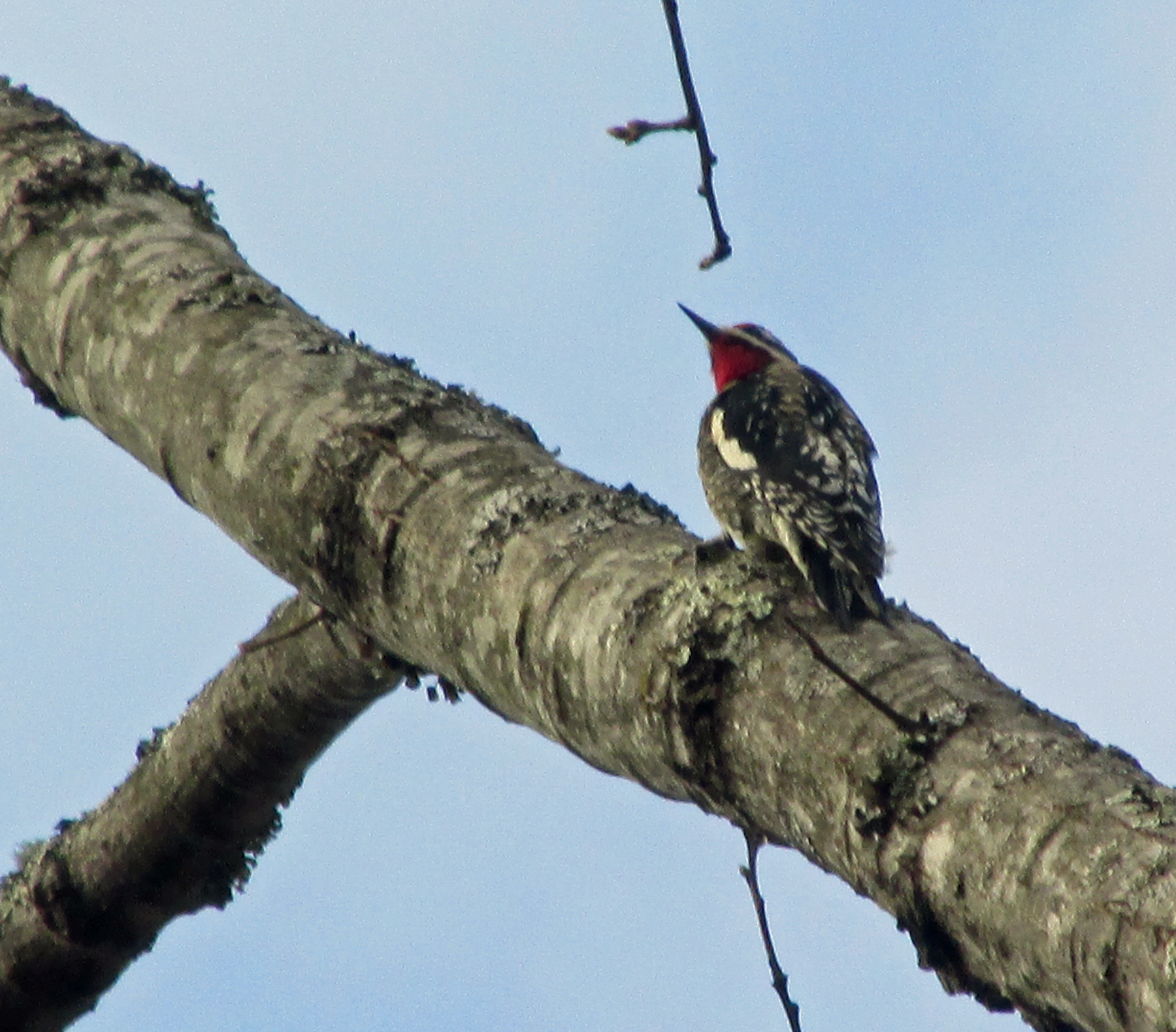
In profile clinging to the trunk of a tree, the yellow-bellied sapsucker is a rather pudgy, especially for a woodpecker. The sapsucker has black and white plumage enhanced by red foreheads in both sexes. Male sapsuckers also have a bright red throat patch. Both sexes also show a large white stripe on their black wings. And yes, there is enough of a pale yellow wash on the stomach of this odd woodpecker to justify the descriptive “yellow-bellied” as part of its common name.

As mentioned, sapsuckers harvest sap by using their bills to drill various sorts of holes into the bark of a tree. Some of the more shallow holes, which are usually made in a rectangular fashion, must be maintained on a frequent basis for the bird to continue to derive sap from the tree. These sap wells not only provide nourishment to the sapsucker but to other birds, including hummingbirds, that appreciate a quick sugar fix.

In the early 1800s, early naturalist and artist John James Audubon painted the yellow-bellied sapsucker, known during his time as the yellow-bellied woodpecker. Although they tend to prefer trees like maple and birch, sapsuckers are known to feed on more than 250 different varieties of trees. Indeed, they actually do feed on the trees. Not only do these birds subsist largely on sap, they also feed on the cambium layer in the bark of a tree. The sapsucker also supplements its diet with insects, fruits and seeds. Unlike other members of the woodpecker clan, sapsuckers do not visit feeders all that frequently. When a sapsucker does visit a feeder, it is often lured there by the promise of suet.


While most woodpeckers attempt to tough out the winter season in the same region where they spent the summer, the yellow-bellied sapsucker is migratory. Ahead of the coldest months of the year, sapsuckers migrate to the southeastern United States, as well as the West Indies and Central America. During the summer months, most sapsuckers nest in forests across Canada, Alaska and the northeastern U.S. states. There is also a small population of breeding sapsuckers in the Appalachian Mountains of Virginia, Tennessee and North Carolina.

The yellow-bellied sapsucker has a call that sounds amazingly like the meow of a cat. I know about this call from personal experience. While birding in South Carolina a few years ago, I searched diligently for the source of such a call. It sounded somewhat like a gray catbird — another mimic of the common household feline — but not quite. Now I know that when I hear this unusual call I can train my binoculars on the branches and trunks of nearby trees to scan for a sapsucker.

There are actually another three sapsucker species — Williamson’s, red-breasted and red-naped — in North America, but they are all birds of the western half of the continent.

It is true of many species of birds that males and females look different. In the case of the Williamson’s sapsucker, males and females look so different that early naturalists mistakenly believed the male and female were entirely different species! Only two decades after the initial discovery of this bird did scientists finally realize that both male and female Williamson’s sapsuckers were the same species. This particular sapsucker was named in honor of Lt. Robert Stockton Williamson, who led a surveying expedition that collected the first male. The intent of the expedition wasn’t focused on collecting birds. Williamson and his men had actually been assigned the job of identifying the best route west for a railway to the Pacific Ocean.

Although I haven’t been too lucky with this bird at my home, it isn’t too difficult to find this bird during fall migration and in the winter months at city and state parks in the region. If you observe a yellow-bellied sapsucker in your own yard, consider yourself lucky to get a glimpse of this oddball woodpecker.