Tag Archives: Tennessee

Annual spring bird count finds 151 species


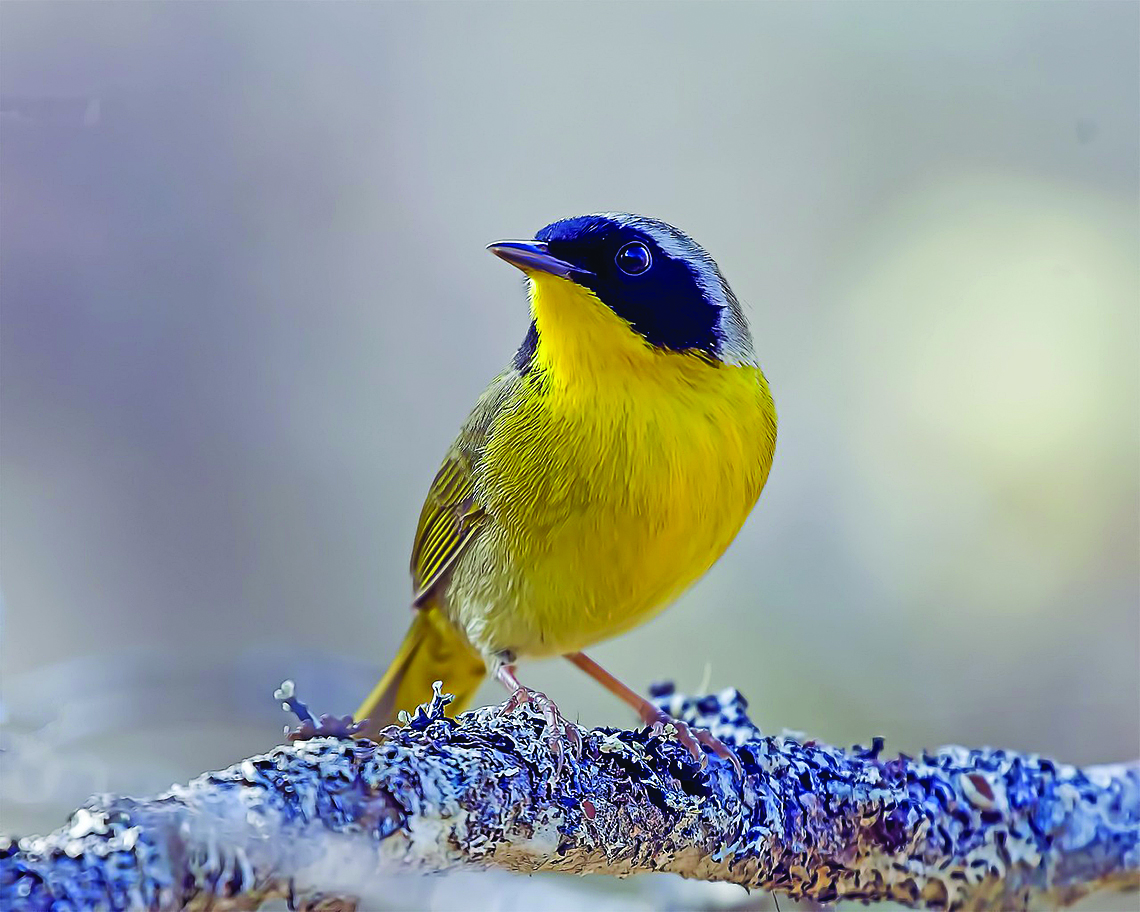
Photo by Hans Toom/Pixabay • A male common yellowthroat, a species of warbler, is resident in the region spring through fall. The black mask of the males makes this bird quite distinctive.

The 81st consecutive Elizabethton Spring Bird Count was held on Saturday, May 4, with 40 observers in 16 parties.

Participants covered Carter County plus parts of adjacent Johnson, Sullivan, Unicoi and Washington counties. Temperatures were mild with little wind;

however, light rain just before sunrise and light to moderate rain during much of the afternoon hampered birding to some degree. Despite these conditions, good numbers were counted.

This year’s count tallied 151 species, including 28 species of warblers. The average number of

species over the last 20 years was 153 species. The all-time high was 166 species in 2016.

These yearly spring counts provide an amazing snapshot of the birds that can be found living in or migrating through the region. Some exceptional finds for this year’s count included Virginia rail, green-winged teal, grasshopper sparrow, golden-winged warbler and dickcissel.

The most abundant birds included cliff swallow (790), American robisparrown (742), European starling (500), Canada goose (391), red-eyed vireo (343), song sparrow (338), Northern Cardinal (321), Common Grackle (315), Red-winged Blackbird (282), American Crow (280), American Goldfinch (279), Hooded warbler (231) and Mourning Dove (223).

The list:

Canada goose, 391; wood duck, 35; blue-winged teal, 4; mallard, 96; green-winged teal,1; and common merganser, 2. 

https://www.youtube.com/watch?v=hp-CrM–HSU

Wild turkey, 23; ruffed grouse, 1; pied-billed grebe, 1; rock pigeon, 117; Eurasian collared-dove, 1; mourning dove, 223; yellow-billed cuckoo, 4; chuck-will’s-widow, 8; Eastern whip-poor-will, 28; chimney swift, 168; and ruby-throated hummingbird, 9.

Virginia rail, 1; killdeer, 29; least sandpiper, 27; pectoral sandpiper, 2; semipalmated sandpiper, 3; spotted sandpiper, 49; solitary sandpiper, 27; lesser yellowlegs 5; and greater yellowlegs, 1.

Double-crested cormorant, 80; great blue heron, 76; great egret, 2; green heron, 21; and yellow-crowned night-heron, 4.

Black vulture, 111; turkey vulture, 96; osprey, 13;

Cooper’s hawk, 3; bald eagle, 7; red-shouldered hawk, 6; broad-winged hawk, 8; red-tailed hawk, 14; Eastern screech-owl, 11; great horned owl,1; and barred owl, 8.

Belted kingfisher, 25; red-headed woodpecker, 16; red-bellied woodpecker, 87; yellow-bellied sapsucker, 9; downy woodpecker, 31; hairy woodpecker, 8; Northern flicker, 52; and pileated woodpecker, 46.

American kestrel, 9; great crested flycatcher, 30; Eastern kingbird, 66; Eastern wood-pewee, 31; Acadian flycatcher, 16; least flycatcher, 15; and Eastern phoebe, 96.

White-eyed vireo, 18; yellow-throated vireo, 12; blue-headed vireo, 49; warbling vireo, 15; and red-eyed vireo, 343.

Blue jay, 151; American crow, 280; fish crow, 12;  common raven, 13. Carolina chickadee, 143; tufted titmouse, 158; tree swallow, 154; Northern rough-winged swallow, 49; purple martin, 68; barn swallow, 213; and cliff swallow, 780.

Ruby-crowned kinglet, 3; golden-crowned kinglet, 2; cedar waxwing, 64; red-breasted nuthatch, 8; white-breasted nuthatch, 27; brown creeper, 2; blue-gray gnatcatcher, 77; Carolina wren, 203; house wren, 50; winter wren, 5; and marsh wren, 1.

Gray catbird, 54; brown thrasher, 64; Northern nockingbird, 94; European starling, 500; Eastern bluebird, 134; veery, 14; gray-cheeked thrush, 2; Swainson’s thrush, 9; Hermit thrush, 1; Wood thrush, 118; and American robin, 742.

House sparrow 30; house finch, 79; pine siskin, 1; American goldfinch, 279; grasshopper sparrow, 1; chipping sparrow, 123; field sparrow, 43;

dark-eyed junco, 48; white-crowned sparrow, 1;

White-throated sparrow, 5; Savannah sparrow, 6; song sparrow, 338; swamp sparrow, 1; and Eastern towhee, 179.

Yellow-breasted chat, 11; Eastern meadowlark, 81; orchard oriole, 24; Baltimore oriole, 18; red-winged blackbird, 282; brown-headed cowbird, 61; and common grackle, 315.

Ovenbird, 162; worm-eating warbler, 28; Louisiana waterthrush, 34; Northern waterthrush, 4; golden-winged warbler, 1; black-and-white warbler, 103; Swainson’s warbler,15; Tennessee warbler, 15; Kentucky warbler, 7; common yellowthroat, 48; hooded warbler, 231; American redstart, 33; Cape May warbler, 9; Northern parula, 89; magnolia warbler, 4; bay-breasted warbler, 7; Blackburnian warbler, 24; yellow warbler, 15; chestnut-sided warbler, 30; blackpoll warbler, 8; black-throated blue warbler, 89; palm warbler, 3; pine warbler, 8; yellow-rumped warbler, 21; yellow-throated warbler, 54; prairie warbler, 1; black-throated green warbler, 81; and Canada warbler, 37.

Summer tanager, 1; scarlet tanager, 97; Northern cardinal, 321; rose-breasted grosbeak, 30; blue grosbeak, 10; indigo bunting, 184; and dickcissel, 1.

https://www.youtube.com/watch?v=EI3pZ3t2i4E

•••

To share a sighting, ask a question or make a comment, email me at ahoodedwarbler@aol.com. 

More readers share their hummingbird arrival stories

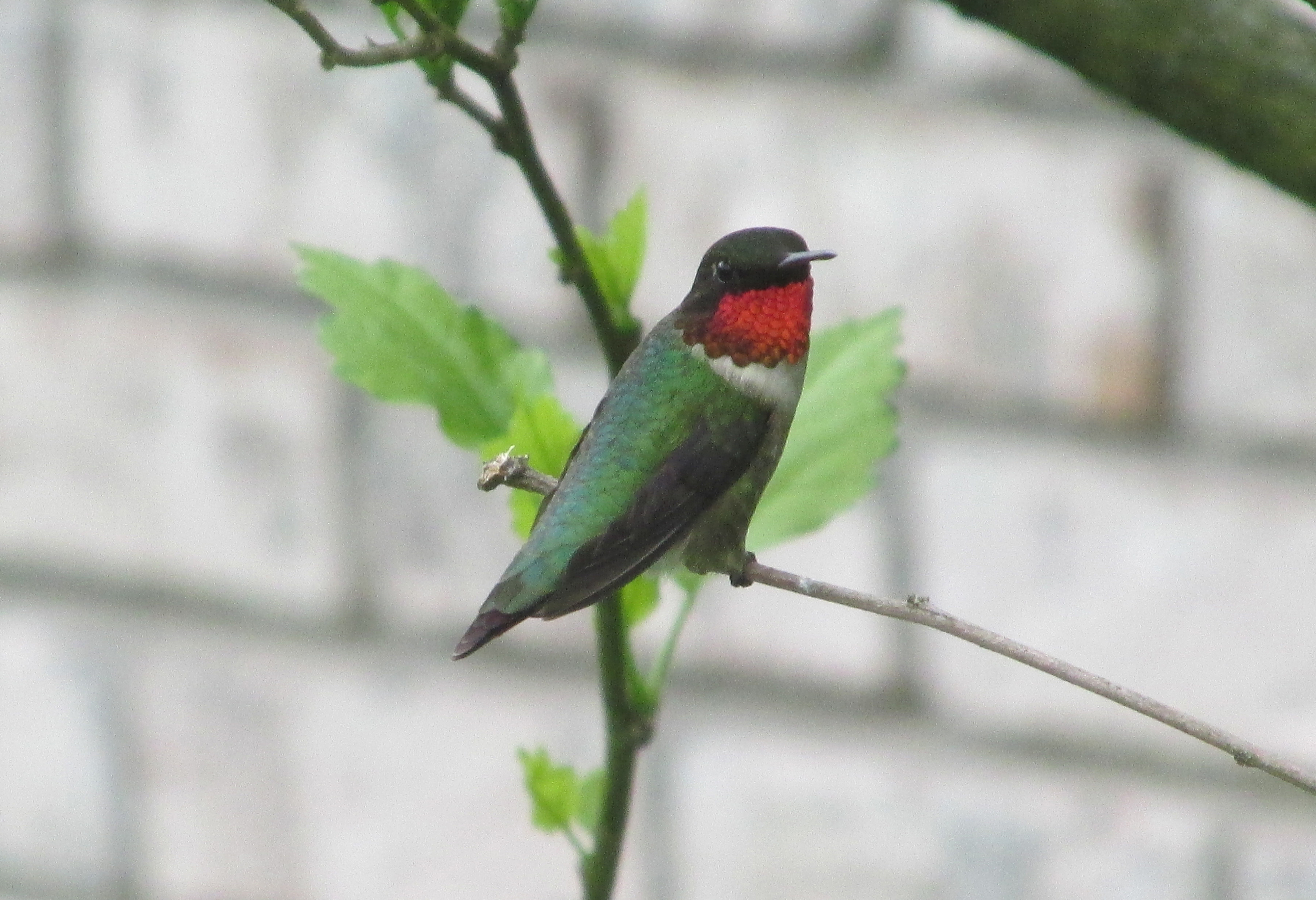
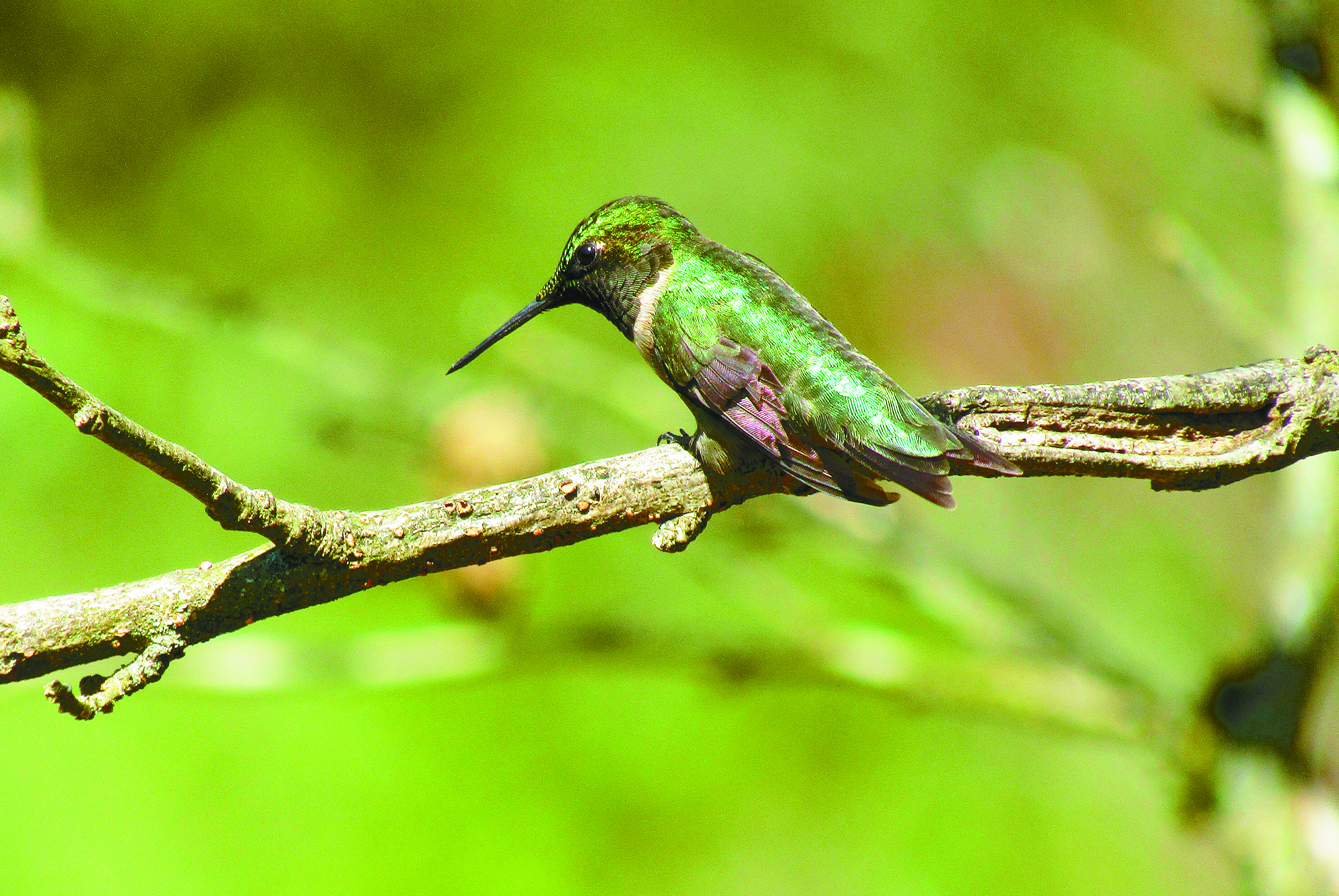
Photo by Bryan Stevens • A male ruby-throated hummingbird perches on a branch. These tiny birds returned to the region earlier this month.

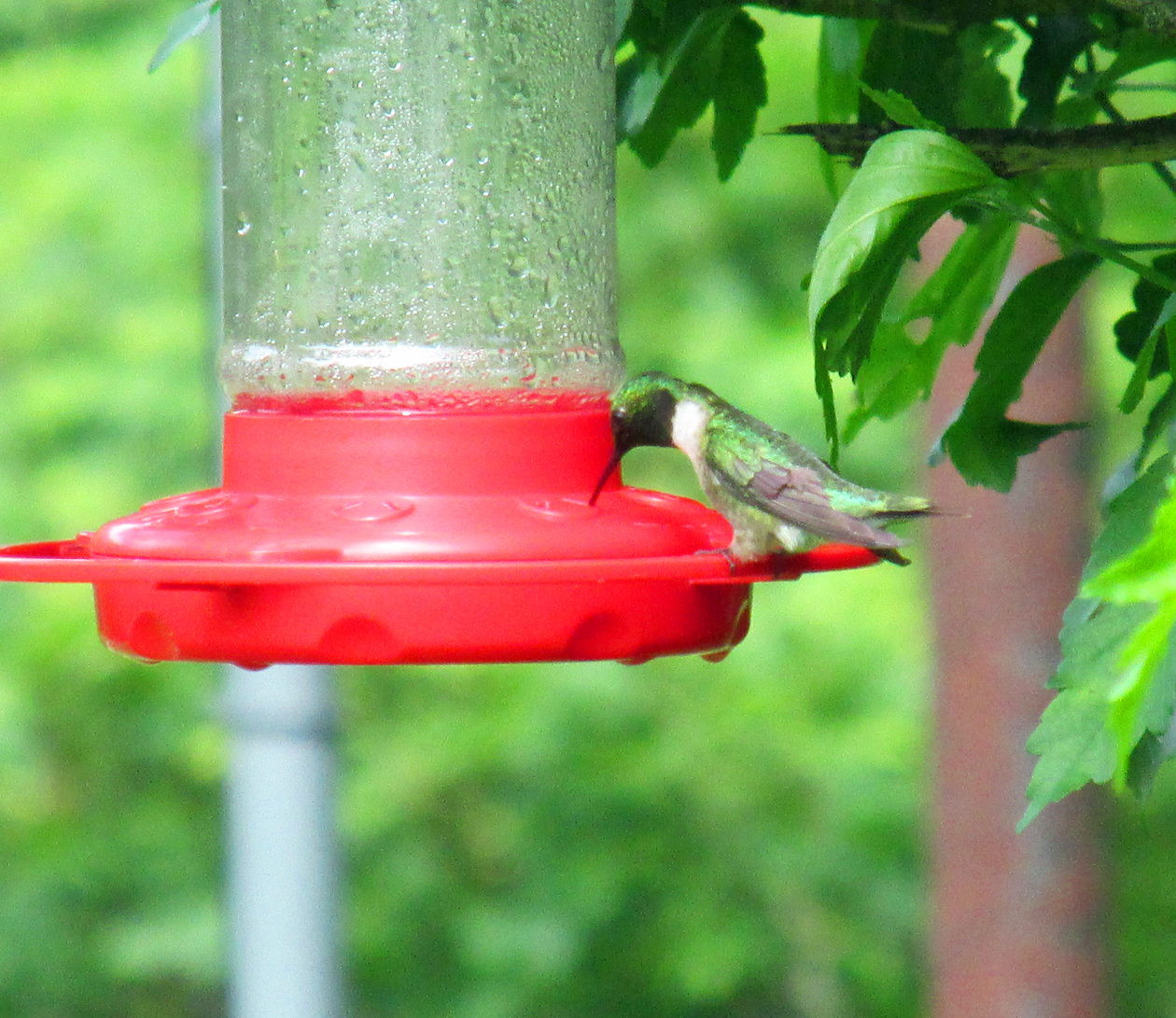
Ruby-throated hummingbirds are back in the region for another season. This male takes a sip of nectar from the blooms of a potted plant.

I reported last week on a handful of people who saw the “early bird” ruby-throated hummingbirds making their return to local yards and gardens. Many more readers have contacted me this past week to share more hummingbird sightings.

For those who haven’t seen a hummingbird yet, just remain patient. They’re definitely arriving for another season with us. 

•••

Gina Kinney emailed me on behalf of her mom, Ginger Brackins, as she has done for several years, to share news of her mom’s hummingbird sighting.

“She said she saw her first hummingbird on Saturday, April 13, at around 5:30 p.m. in Erwin,” Ginger wrote.

•••

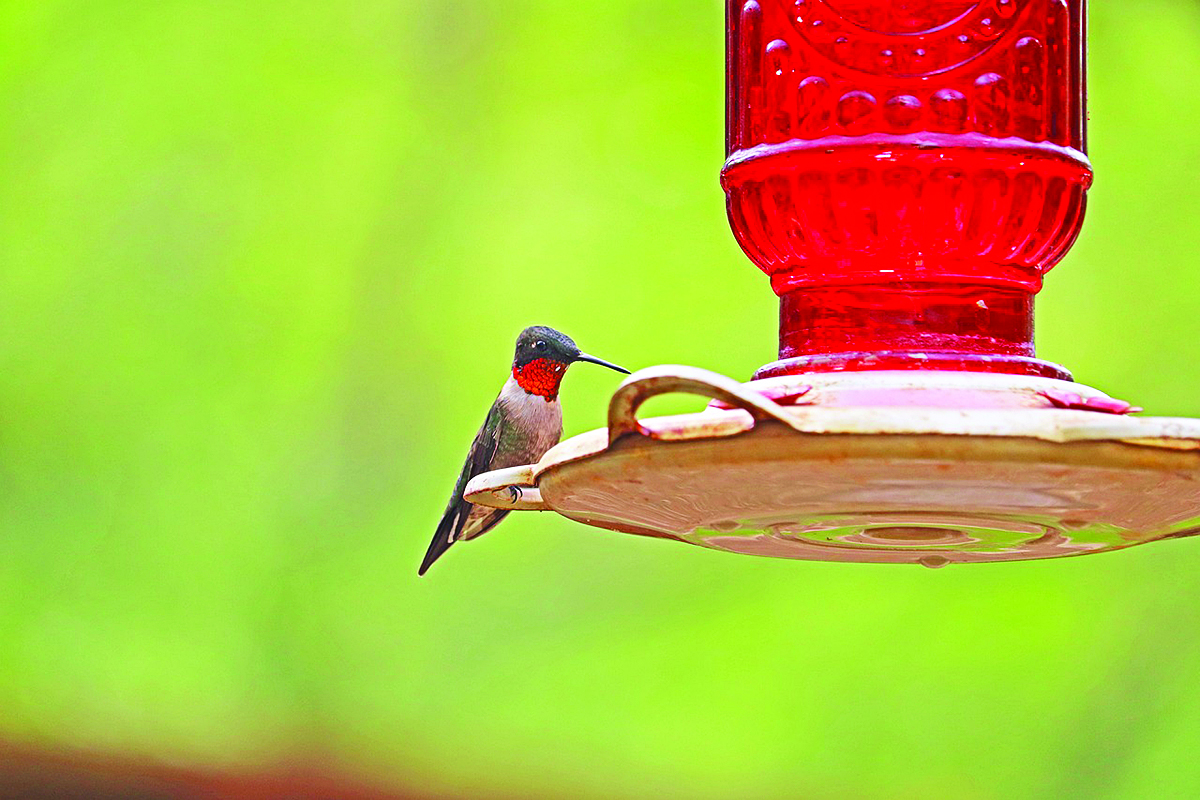
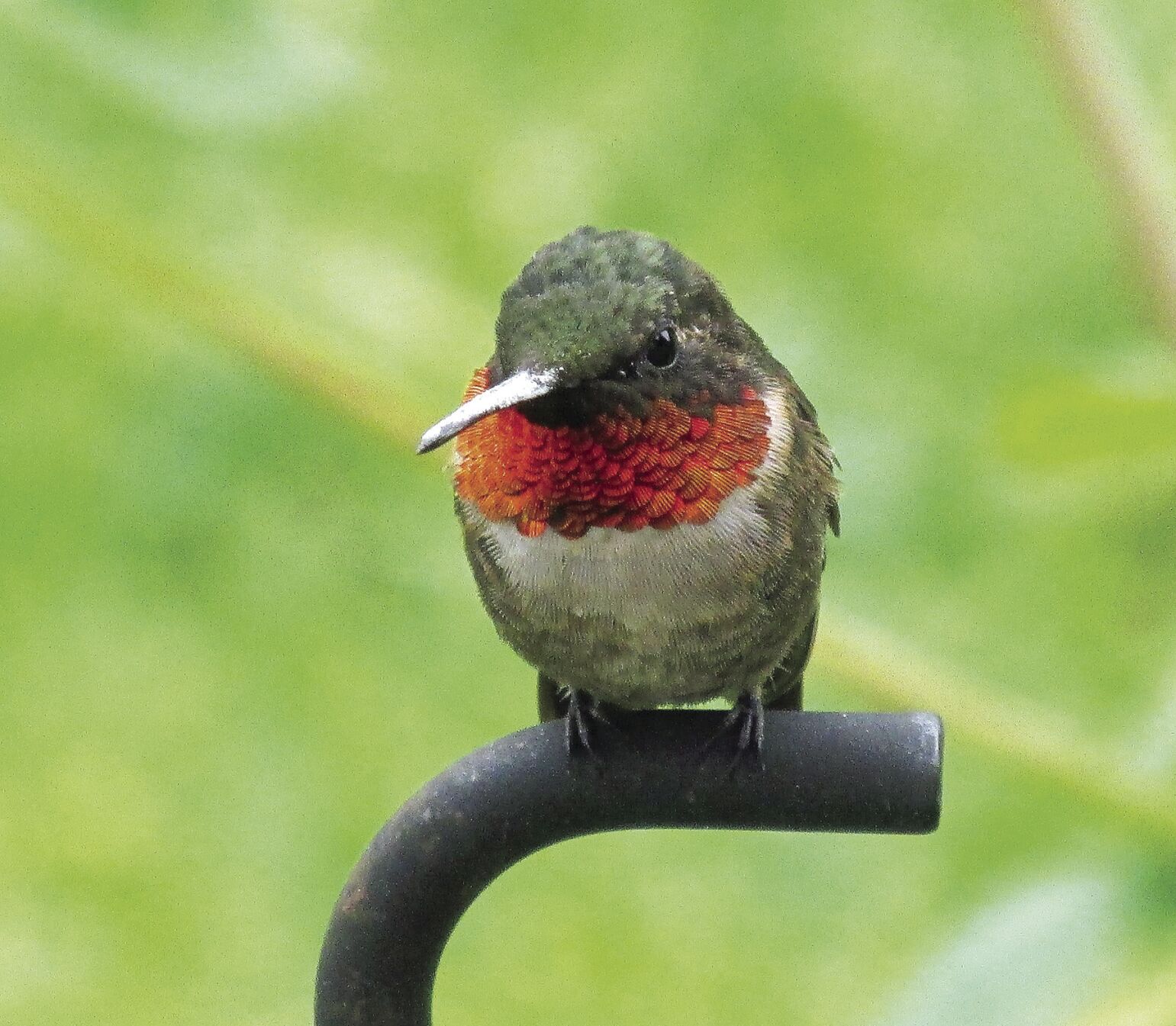
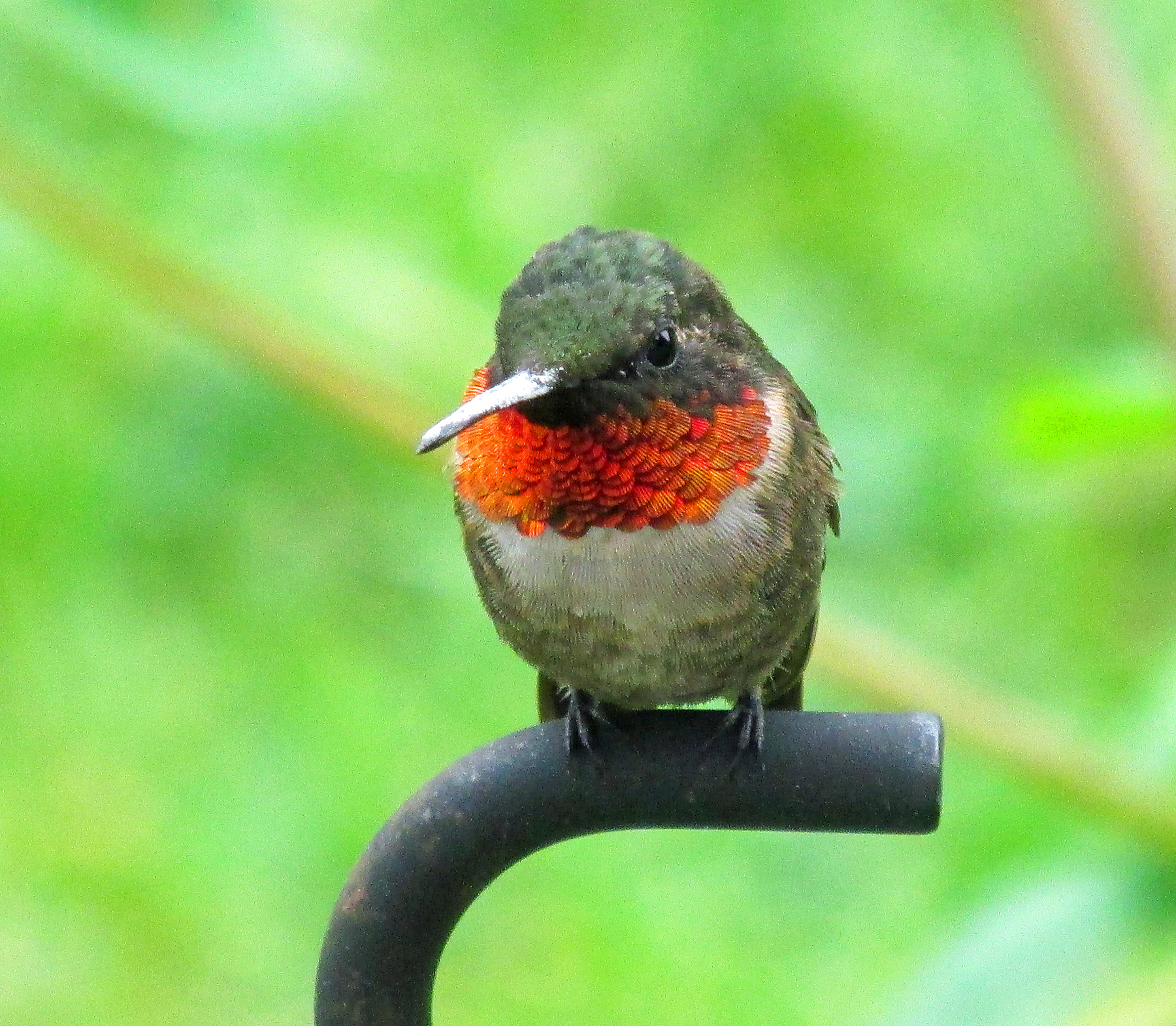
Only the male ruby-throated hummingbird shows the bright red throat patch.

“I put my feeder out on April 1 and took it down this morning (April 14) to clean it and put new feed in it,” wrote Joan Chipokas in an email. “About 30 minutes later, a male hummer came to the feeder. Didn’t see him again today, but I was busy so really wasn’t watching. Hopefully I’ll start seeing him on a regular basis and the female will show up too.”

Joan wrote that she lives on Suncrest Village Lane in Gray.

•••

Kingsport resident Ray Chandler reported a sighting of a first spring hummingbird on April 14 . “They are regular visitors to the feeders now,” he shared in an email.

•••

Lonnie Hale reported a first of spring hummingbird sighting in an email to me.

“We saw our first hummingbird yesterday (April 14),” Lonnie wrote. “I put the feeders out in the morning, bought four hanging baskets of flowers and BAM.”

Lonnie lives near Big Stone Gap, Virginia. “Love these little guys,” Lonnie added.

•••

April Fain in Unicoi also saw her first ruby-throated hummingbird of the season on April 14. “We had our first hummingbird this morning,” April wrote in a Facebook message to me. “I saw him three times.”

•••

Photo by Bryan Stevens • Despite a perceived disadvantage of size, ruby-throated hummingbirds are quite capable of thriving in a giant world.

Amy Tipton sent me a message on Facebook to report that her parents had observed their first spring hummingbird.

“The hummingbirds are back in Unicoi County,” she wrote. “My parents, Edison and Emma Jean Wallin, spotted their first one of the season this evening (April 14) at 6:30 at the feeder on their front porch in Limestone Cove. Mama just put her feeder out today.”

•••

“My first hummer just came in,” Karen and Bobby Andis of Kingsport reported via Facebook Messenger on April 14. “A small female…very hungry.”

I got a followup message the following day. “A male showed this morning,” they wrote.

•••

Erwin resident Donna Barnes Kilday shared a post on my Facebook page to report the arrival of her first hummingbird. “Saw my first hummingbird today,” she wrote on April 15.

•••

Priscilla Gutierrez shared in a Facebook comment that she saw her first hummingbird of spring on April 16.

•••

“I’ve had my feeder out for 2 weeks,” Virginia Martin commented on a Facebook post. Virginia, who resides in East Carters Valley in Scott County, added that she saw her first ruby-throated hummingbird on April 13 at 3:15 p.m.

“I believe they are a couple of days behind schedule for my area, possibly weather-related since we’ve had a spell of cooler temperatures and a few very windy storms recently,” she added.

Virginia noted that she has fed hummers for years, and use only the homemade sugar water in a common inexpensive feeder.

“It’s located just outside my dining area window, so I have literally a ‘bird’s eye’ view,” she wrote. “There’s a dogwood tree close by, and other good perching places for them to monitor and protect their territory.”

•••

Jan Bostrom sent me an email to share her first spring hummingbird sighting. She wrote, “I saw my first hummingbird yesterday (April 17) around 6 p.m.” Jan wrote that she been on the lookout because her neighbor saw her first hummingbird on April 15.

“I’m thrilled to be retired and to have time to enjoy God’s beauty around me,” Jan shared.

•••

I’ve finally joined the ranks of those who have welcomed hummingbirds back for another season.

The hummingbirds returned to my own home on April 17 at 7:15 p.m. I heard the telltale buzz of the bird’s wings before I spotted him. I stayed still and he zipped to my feeders for a quick sip. He returned a few times before dusk. When I posted my success on Facebook, several other people commented to let me know that hummingbirds had returned at their homes on April 17.

The following day I enjoyed watching two male ruby-throated hummingbirds in a prickly standoff about control of the front porch feeders.

•••

Vivian C. Tester in Bristol, Tennessee, posted a comment on one of my Facebook posts to let me know of her first spring sighting.

“Just saw my first hummingbird of spring,” she wrote on April 17.

•••

Rosalie Sisson in Jackson, Tennessee, commented on my Facebook page that she saw her first hummingbird of the season at about 6 Central time on April 17.

•••

Lauri Sneyd Garland in Unicoi, also on April 17, noted in a comment on my Facebook page she has been seeing hummingbirds for the last couple of days.

•••

Tina Jefferson Reese in Bristol, Tennessee, reported via a comment on my Facebook page that she also saw her first hummingbird on April 17.

•••

Linda C. Robinette wrote, “Ours fluttered in around 11:30 this morning (April 17),” in a comment on my Facebook page.

•••

Kaylynn Sanford Wilster at Boone Lake saw her first spring hummingbird on April 18. “Saw my first one yesterday,” she wrote on April 19 in a Facebook comment on a post of mine.

•••

Spring migration is in full swing. At least six different species of warblers have returned to the woodlands around my home. A broad-winged hawk has also returned to a favorite field less than a quarter of a mile from my home. Keep your eyes open for new arrivals. Chimney swifts have been zipping over the rooftops of downtown Erwin since April 17.

To share a sighting, make a comment or ask a question, email me at ahoodedwarbler@aol.com.


Ruby-throated hummingbirds mark their spring return

Photo by Bryan Stevens • A male ruby-throated hummingbird surveys his surroundings.

I am still waiting (at the time this post was written) for the first ruby-throated hummingbird of spring. Every year I hope they will make an early appearance, but I am almost always disappointed. These tiny birds always arrive in their own good time and my home is apparently not located within their primary migratory path.

As a consolation prize, however, I have welcomed the first of the spring warblers. I had two black-and-white warblers singing at home on April 9. The black-and-white warbler sings a repetitive song that has been described as a “squeaky wheel” based on the rising pattern of the song’s notes.

Other recent arrivals have included brown thrasher and tree swallow.

Photo by Ken Thomas
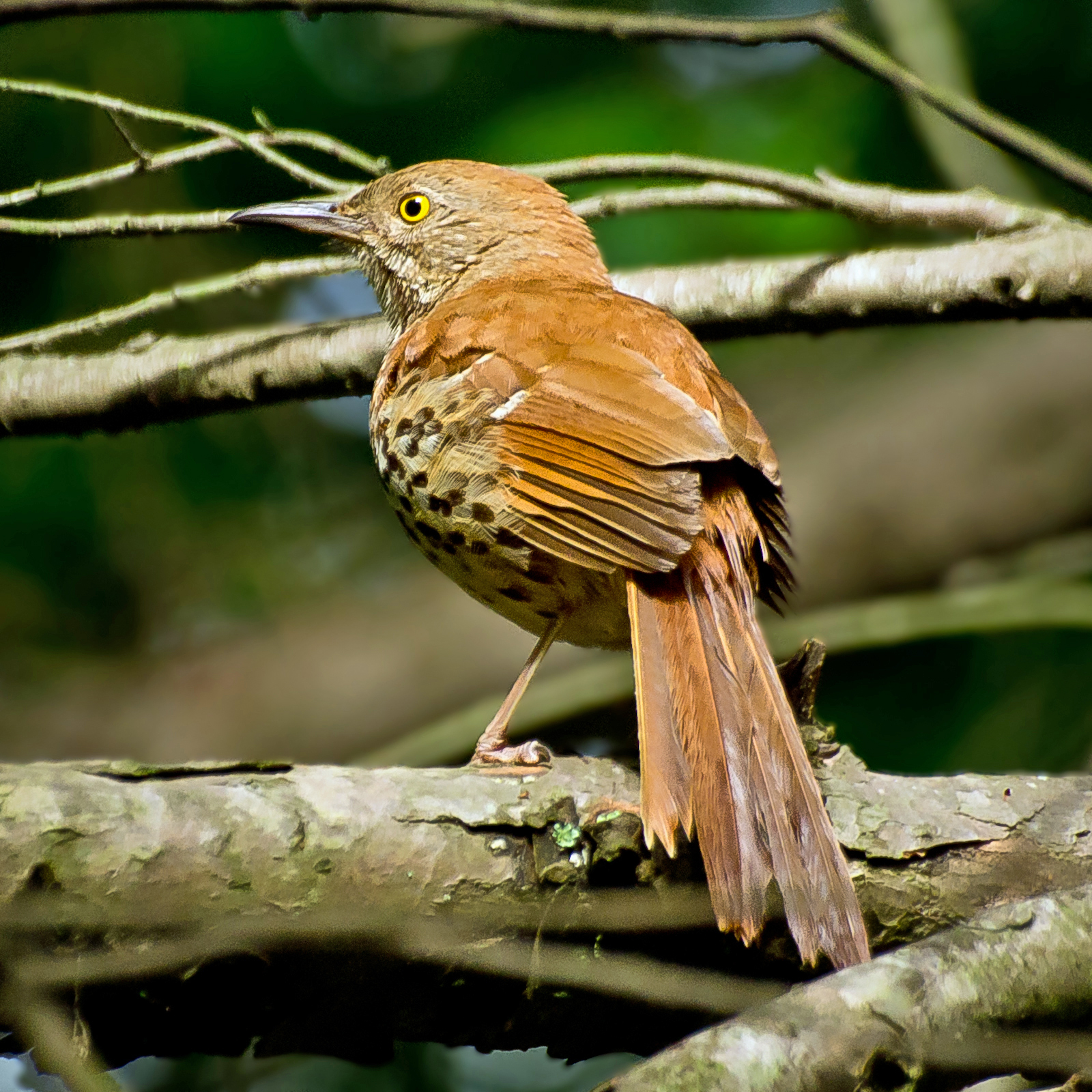
The Brown Thrasher is an alert, sharp-eyed observer of its surroundings.

While I cannot claim to have seen my first spring hummingbird – yet – I can report that hummingbirds are officially back. Some of my Facebook friends have reported their first sightings. Other readers have emailed me to share their sightings.

Nancy Light welcomed back a ruby-throated hummingbird on Sunday, April 7. “I have my sugar water feeders hanging off my fruit trees in the front yard,” Nancy wrote in an email. “I live in Kingsport, but this sighting was at my farm in Duffield, Virginia, in the Fairview community.”

•••

Patricia Faye Wagers in Kingsport saw her first hummingbird of spring on April 8.

“With one, I know more are on the way,” she wrote in a Facebook post announcing her sighting.

•••

Dianne Draper in Jonesborough reported her first hummingbird sighting of spring on April 9 in a Facebook post.

“Never did get a picture of the bird,” she wrote. “Also saw the first broad-winged hawk in the yard,” she added.

Broad-winged hawks, like ruby-throated hummingbirds, are migratory and return to the region in late March and early April.

•••

It’s in Central and South America where the world’s more than 300 species of hummingbirds reach their greatest diversity. In Eastern North America, the only hummingbird known to nest is the ruby-throated hummingbird.

The western half of the United States and Canada can claim about a dozen nesting species, including rufous hummingbird, Allen’s hummingbird, Anna’s hummingbird, broad-tailed hummingbird, black-chinned hummingbird, calliope hummingbird, buff-bellied hummingbird, broad-billed hummingbird and violet-crowned hummingbird.

Hummingbirds, regardless of species, occupy a tough spot in the food chain. A bird not much bigger than many large insects is going to be a target for opportunistic predators that will attempt to kill and consume anything small enough for them to make the effort.

To make matters worse for ruby-throated hummingbirds, some large spiders and mantids, as well as bigger dragonflies, have also been documented as hummingbird predators. When ruby-throated hummingbirds retreat to Central America for the winter months, they also face threats from lizards and snakes.

The list of predators that have been known to eat ruby-throated hummingbirds extends to bullfrogs, as well as many raptors, including kestrels, merlins and sharp-shinned hawks. Blue jays and other birds will raid hummingbird nests for eggs or young. Squirrels and chipmunks are also nest predators.

Photo by Bryan Stevens • Every hummingbird that arrives at your feeder is a survivor.

In essence, every hummingbird visiting your feeders and gardens is a survivor.

And evading an assortment of predators is not their only obstacle. These tiny birds make an awesome yet grueling migratory flight – twice a year – across the Gulf of Mexico. This achievement is a grueling finale for such a tiny creature’s migration. This direct flight alone can take 18 to 22 hours of non-stop flying before reaching land on the other side of the Gulf in states like Mississippi and Texas.

Hummingbirds have fascinated for centuries. Early European explorers sent back reports of amazing little birds that seemed halfway between birds and insects.

In the 1550s, French explorer Jean de Léry published a journal of his travels in Brazil. His account provided the first written description of hummingbirds to reach readers back in the Old World.

This painting, “The Inspiration of Christopher Columbus” by José María Obregón, was painted in 1856 well after the explorer sailed the ocean blue. It’s a reminder that from the moment that European explorers arrived, they were amazed at many discoveries in the New World, including tiny birds that buzzed and hummed around their heads like insects.

Of course, the natives of North America also knew about hummingbirds. In fact, many native tribes held hummingbirds in high regard. Some regarded them as healers. An Aztec deity by the name of Huitzilopochtli had a physical form supposedly comprised of hummingbird feathers that fell from the sky. The Aztecs also believed that fallen warriors were reincarnated as hummingbirds, no doubt because of the feisty and often downright militant attitudes of these tiny birds. Anyone who has ever witnessed hummingbirds dueling at their feeders will know what I mean.

It won’t be long before we have these tiny flying jewels back with us. Once they return, their antics will entertain us for several months before it’s time for them to head south again this fall.

•••

Feel free to continue to share hummingbird sightings with me. Provide the time and date of their arrival. Email me at ahoodedwarbler@aol.com to share a sighting, ask a question or make a comment.

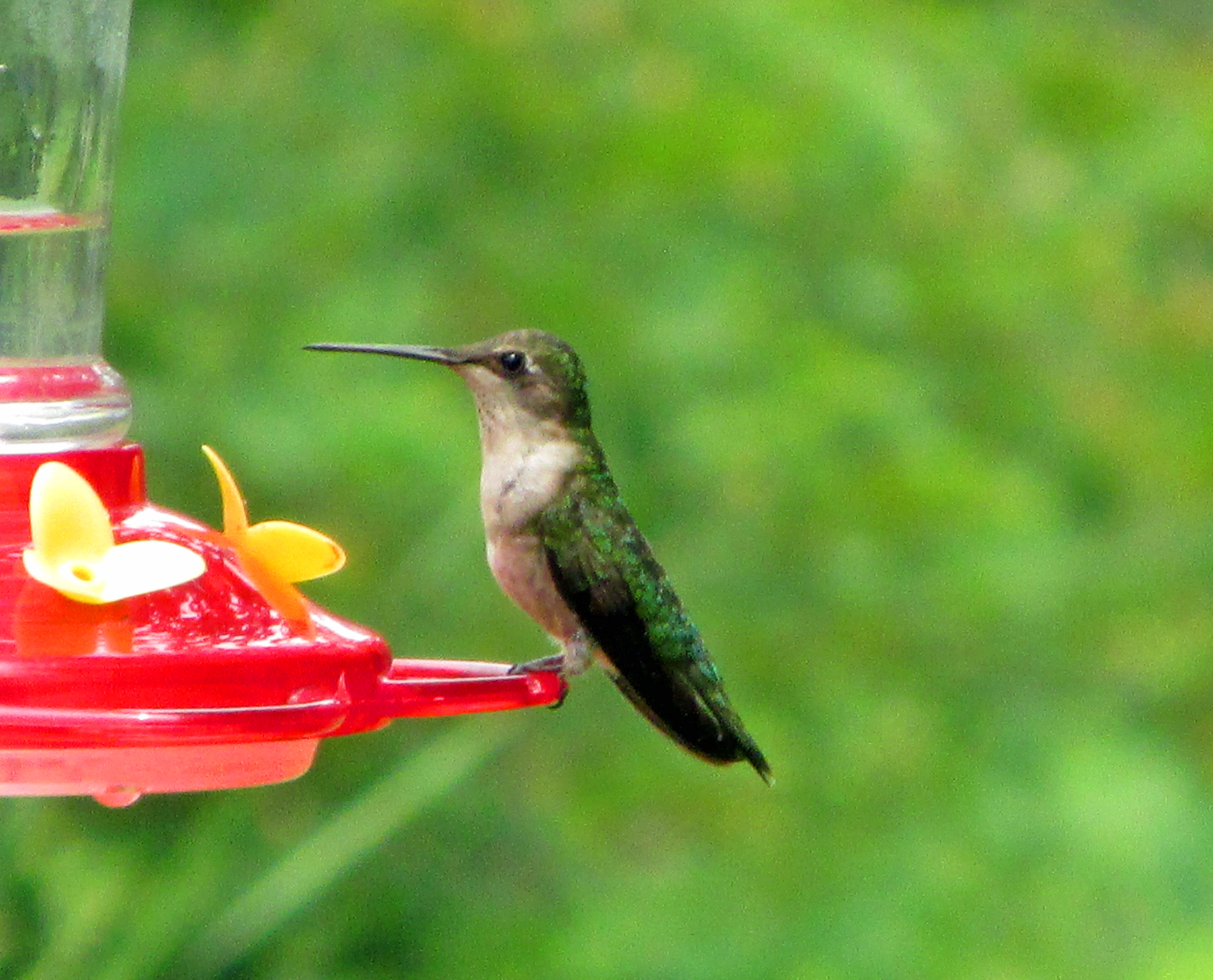
Photo by Bryan Stevens • A ruby-throated hummingbird sips from a sugar water feeder.


Sounds of spring remain one of the season’s pleasures

Photo by Bryan Stevens • Blue-headed vireos, such as this bird, are high-elevation summer residents in the region. In the fall, they are also common migrants.

In modern life, it can seem like we’re always looking for ways to relax and de-stress. For me, nothing works quite so well as letting nature’s sounds, as well as sights, provide some measure of relief from stressful situations and anxious thoughts.

I instantly notice when a new vocalization is added to the usual mix. Such occurred on March 26 when I heard the syllabic song of a blue-headed vireo from the upper reaches of a large tree near the fish pond.

The blue-headed vireo’s song has been described as “Hear me! See me! Here I am!” It’s similar to the song of the related red-eyed vireo, but it’s slower and the paired syllables are separated by a brief pause.

În a couple more weeks, the songs of blue-headed vireos will ring out all over the high-elevation forested slopes of many of our local mountains, but these are just starting to get back to the region after an absence during the colder months. Many other feathered singers will be arriving in their wake, including warblers, tanagers and grosbeaks.

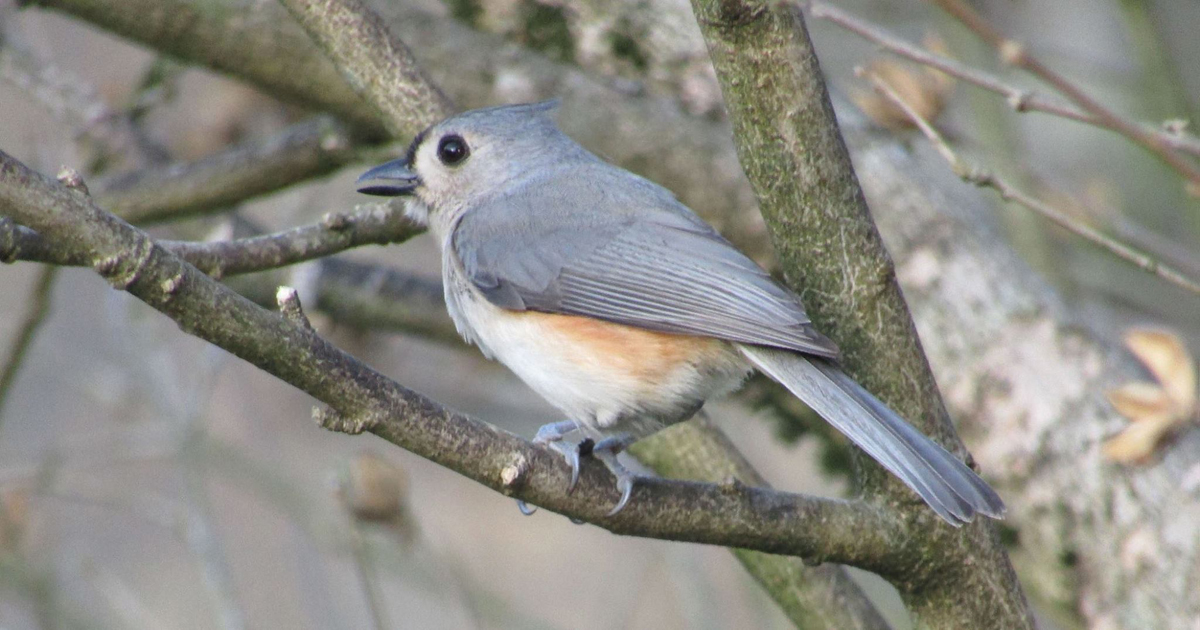
Photo by Bryan Stevens • The tufted titmouse is a backyard bird with an impish personality and a loud song.

The mornings around my home often begin with a loud, insistent “Peter! Peter! Peter!” uttered from the woods or even from shrubbery just outside my bedroom window. Male tufted titmice, little gray relatives of chickadees with a distinctive crest and large, dark eyes, sing their urgent “Peter! Peter! Peter!” as a constant refrain in their efforts to attract mates now that they feel spring in their blood.

A series of rat-a-tat-tats echoes from deeper in the woods as woodpeckers tap their sturdy bills against the trunks of trees. The three most common woodpeckers at my home are red-bellied, downy, and pileated, and they all have their own unique vocalizations, as well.

The pileated woodpecker produces clear, far-carrying resonant piping sounds that can last for a few seconds each blast. The much smaller downy woodpecker produces a whinny of high-pitched notes that descend in pitch toward their conclusion. The red-bellied call is probably the one that stands out the most. The call’s a harsh, rolling “Churr, churr, churr” given almost like an expression of exasperation as they circle tree trunks and explore branches.

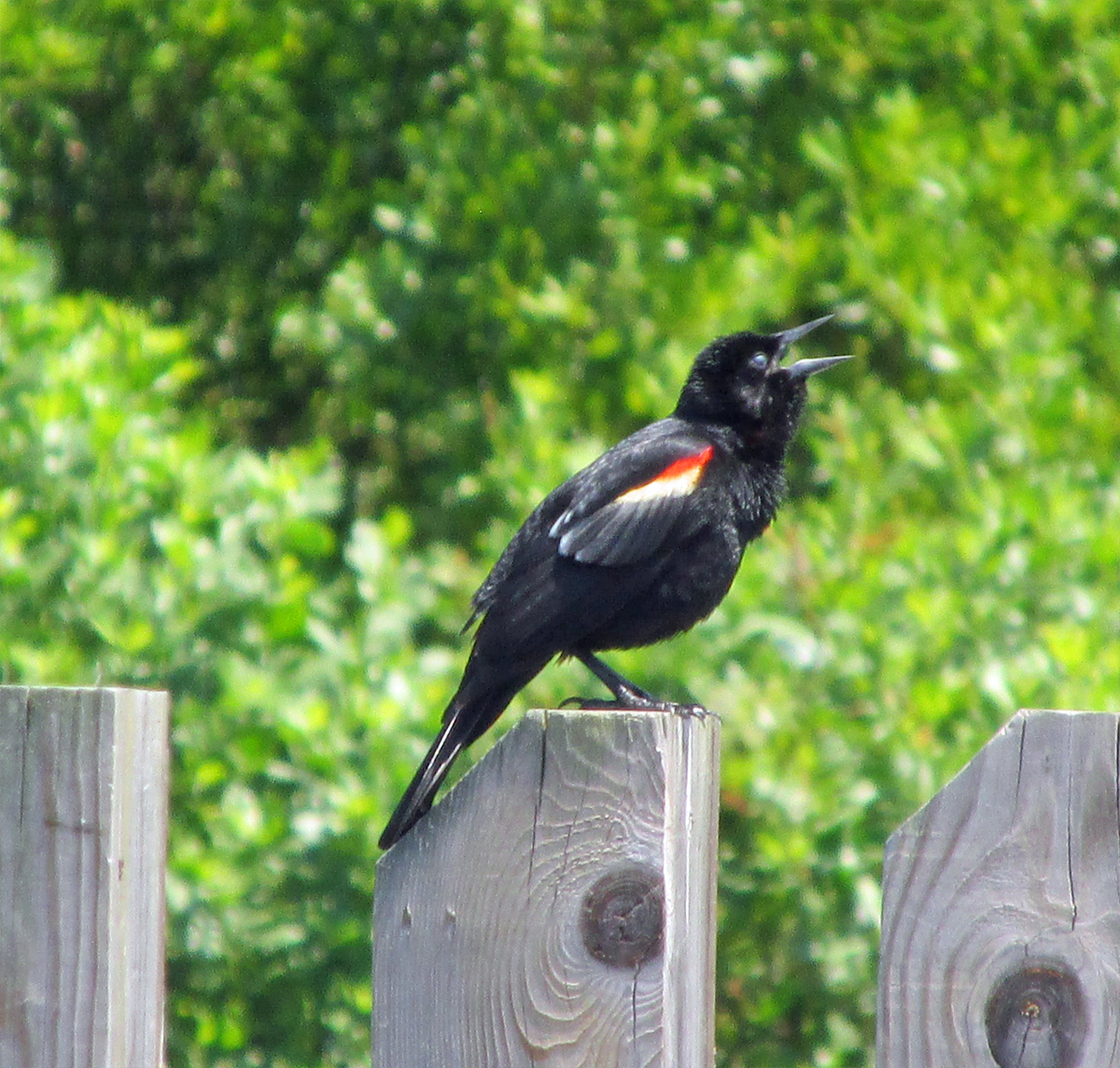
Since their return earlier this month, the resident red-winged blackbirds are often some of the earliest singers these days. According to the website All About Birds, the male red-winged blackbird’s “conk-la-ree!” is a classic sound of wetlands across the continent of North America. According to the website, the one-second song starts with an abrupt note that transforms quickly into a musical trill.

Photo by Bryan Stevens • A male red-winged blackbird sings to attract mates and ward off rivals.

Some birds helpfully introduce themselves with a song that repeats their name. One such common bird is the Eastern phoebe. In recent weeks, a pair has been checking out possible nesting sites. In past years, they have made use of the rafters of my garage and blades on a porch ceiling fan for potential nest sites. The male spends much of the day producing his strident “fee-bee” call, which is a perfect phonetic rendition of the bird’s common name.

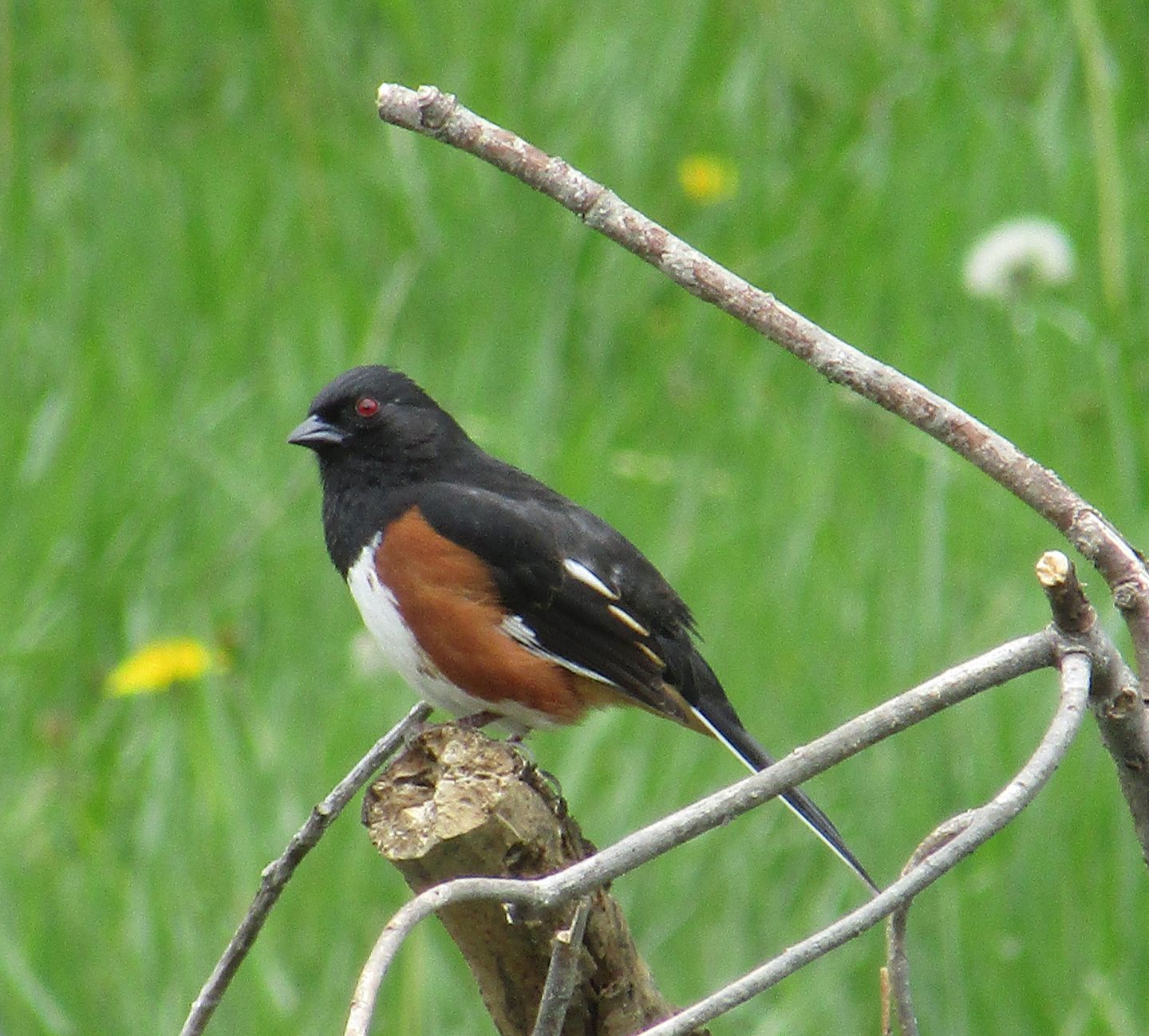
Then there’s one of my favorite songs of spring, which is produced by the Eastern towhee, also known by such common names as “ground robin” and “swamp robin.” These birds, which are actually a species of sparrow, also have some instantly recognizable vocalizations. With the arrival of spring, the males seek elevated perches for extensive singing bouts to attract mates and establish territories. Their song has been interpreted, quite accurately, as “drink your tea!” They also have some alarm notes, such as “€œChew-ink”€ and “€œToe-Hee,” of which the latter provides the basis for this bird’s common name.

Photo by Bryan Stevens • Male Eastern towhees are persistent singers once they establish  a spring territory.

Towhees occasionally spend the winter, but I’ve not noticed any during the winter of 2023-24. They are back now, and have been keeping a high profile for the past couple of weeks.

Of course, other wildlife is keen to join the springtime chorus. I have so many spring peepers at the fish pond and in the wet fields around my house that the noise from these tiny amphibians can reach deafening levels. The chorus is bound to grow more diverse and louder as spring advances. Take some time to enjoy the sounds of nature at your own home.

••••••

To share your own sighting, make a comment or ask a question, send email to ahoodedwarbler@aol.com. I’m also on Facebook.

Majestic canvasback among region’s wintering waterfowl

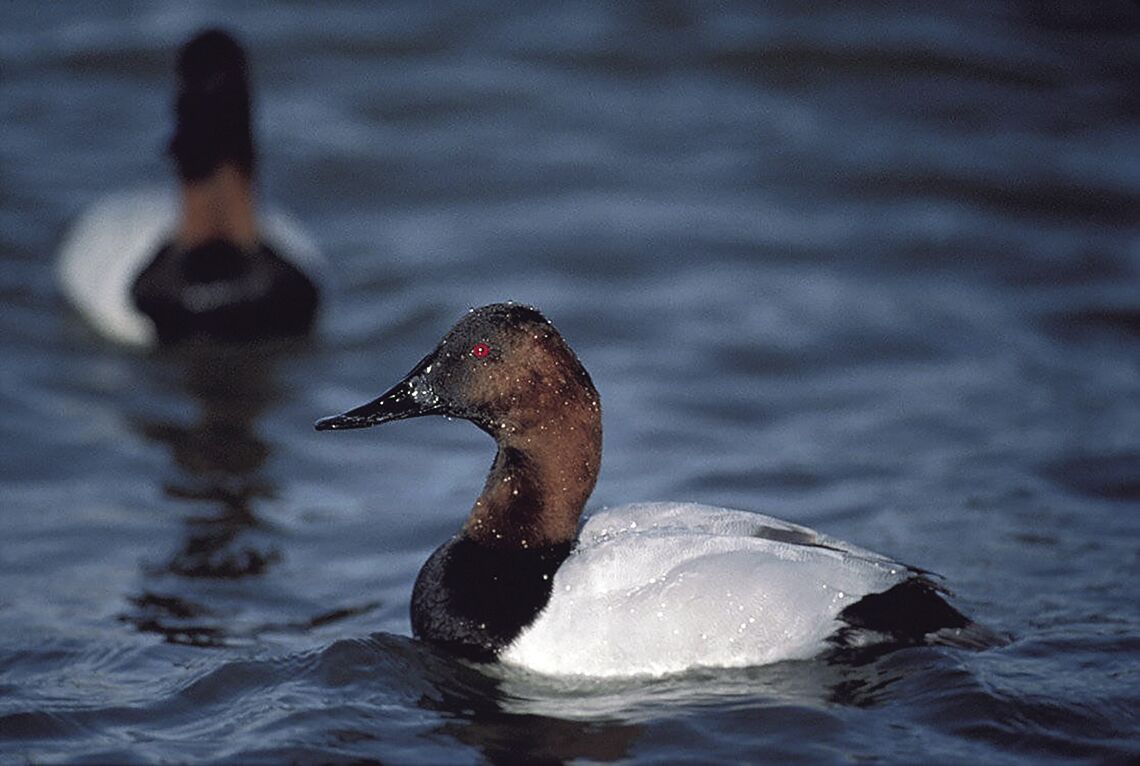
Photo by U.S. Fish & Wildlife/Eugene Hester • The red eye of a male canvasback stands out in as striking a fashion as does the duck’s dark and light plumage.

Erwin resident Joe McGuiness, who is also a fellow member of the Elizabethton Bird Club, alerted me recenntly to the presence of a canvasback drake at a pond along the town’s linear trail.

This duck was with a couple of redheads, also a species of duck, in the pond spanned by a boardwalk in the industrial park on the south side of Erwin. Some birds hold special meaning with me. Although its a natural question for a bird lover to be asked, I have difficulty pinpointing a single bird as my favorite. One of my overall favorite birds is the Northern cardinal. Among the summer-visiting warblers, the hooded warbler has long been my favorite. With shorebirds, the marbled godwit has long been at the top of my rankings. My favorite bird of prey is the American kestrel or, as I first learned of this raptor in the little “Golden Guide to Birds,” the sparrow hawk. Among owls, I have a soft spot for Eastern screech-owls.

I have a favorite duck, too. It’s the canvasback, which is a species of waterfowl that I don’t see very often, which makes observations even more special. I saw my first canvasback in the mid 1990s during a winter visit with my parents to Wilbur Lake near Elizabethton, Tennessee. We always liked visiting this small reservoir during the colder months to view the buffleheads and any other ducks that happened to visit this small mountain lake. On this particular occasion, a flock of redheads had also arrived. While viewing these ducks, we noticed a member of the flock that looked different from the others. Specifically, it was larger and whiter than the redheads. After a brief consultation with my copy of Roger Tory Peterson’s “A Field Guide to the Birds of Eastern and Central North America,” I identified my very first canvasback.

Since that time, I’ve observed canvasbacks at other locations in northeast Tennessee and southwest Virginia. It’s been awhile, but I have observed these ducks at Osceola Island Recreation Area below Holston Dam and at Musick’s Campground at South Holston Lake. Back in January and February of 2014, some canvasbacks took a liking to the pond at Erwin Fishery Park. I’ve also observed canvasbacks on the Watauga River in Elizabethton and on the Holston River in Kingsport. I saw eight canvasbacks on Feb. 22, 2015, on the Watauga River, not very far from where I saw my very first one back in the 1990s. The flock, which consisted of all males, represented a rather high number for this duck in the region.

Recent winter storms that have plowed through the region have brought some unusual ducks. A few days before he notified me of the canvasback, Joe also informed me about a pair of Northern shovelers at Erwin Fishery Park.

A male canvasback is unmistakably regal with a sloping profile that instantly distinguishes it from other ducks. Males, or drakes, have chestnut-red heads, white bodies, black breasts and rears and bright red eyes. The distinctive bill is also black. Females, like many other ducks, are drab and brown but share the distinctive bill, helping to separate them from such relatives as female redheads.

Photo by Bryan Stevens • Canvasbacks on the Watauga River in Elizabethton.

The canvasback is also a fairly large duck with males reaching a body length of 21 inches. Females are only an inch shorter in body length. Drakes weigh an average of 2.7 pounds while hens can weigh 2.5 pounds.

Canvasback breed in prairie potholes in the western United States and Canada. I got the chance to see many of these ducks in their nesting habitat during a trip to Utah in May of 2006. My visit provided very memorable observations of large flocks of these impressive diving ducks. I found them in temporary ponds in flooded fields. Utah had enjoyed abundant rainfall that spring, which was no doubt welcomed by breeding ducks. The trip also yielded observations of such ducks as cinnamon teal, redhead, red-breasted mergansers, ring-necked ducks and gadwalls, as well as other unique wetland-loving species as white-faced ibis, yellow-headed blackbird and Wilson’s phalarope.

During winter, the canvasback usually prefers large open bodies of water, including lakes, ponds and sheltered bays. These ducks are largely vegetarian, although they do consume some animal matter, including insect larvae, snails and other mollusks. This duck’s scientific name, Aythya valisineria, which refers to a species of plant that canvasbacks consume in great quantities. Vallisneria americana, which is often called wild celery or water-celery, doesn’t resemble the vegetable known as celery. These wild plants are long, limp and flat, which led to other common names such as “tape grass” and “eelgrass.”

The canvasback is member of the genus, Aythya, which is comprised of a dozen species of diving ducks. The other members of the genus in North America include greater scaup, lesser scaup, redhead and ring-necked duck. The related tufted duck is a rare visitor to the United States. They’re described diving ducks because they dive under the surface to search for food, rather than dabble around pond edges and shorelines like the ducks known as “dabblers.”

Two members of the genus — Madagascan pochard and Baer’s pochard — are endangered species. In March of 2013, a survey found the population of the Madagascan pochard was about 80 individuals. When surveys found a worldwide population of perhaps fewer than 1,000 individuals, Baer’s pochard was reclassified as “critically endangered” in 2012. The canvasback has never declined to the low levels of these relatives, but it has been a bird that has required some protective oversight from the federal government. At times, this has included exemptions from duck hunting seasons.

Canvasback populations are stronger these days but haven’t been robust for quite some time. According to the Duck Unlimited website, the population of this stately duck has seen some improvement. In 2009, a population survey by the U.S. Department of Fish and Wildlife showed an increase in canvasbacks from 488,000 to 662,000 individuals. According to the Ducks Unlimited website, this population spike took place in the wake of a hunting ban on canvasbacks during the 2008-09 waterfowl season.

•••

To share a sighting, ask a question or make a comment, email me at ahoodedwarbler@aol.com.
 

Spring signs less clear than in seasons past

Photo by Bryan Stevens * A male mallard lounges by the edge of a fish pond in a previous spring season.

Signs of spring are, as the old saying goes, popping up all over. Daffodils and crocuses unfurling their blooms, a pair of mallards paying a visit to my fish pond and the blue skies overhead on sunny days have signaled the transition toward spring as surely as the turning of the calendar page to March.

Some of these familiar sights have been hazy for me during this season of transition. In early February I lost vision in my right eye. After visits to various medical experts, an MRI, blood tests and other procedures, I got a diagnosis of optic papillitis, a form of optic neuritis. In simpler terms, I suffered a stroke of the eye that aggravated and inflamed the optic nerve.

The good news, as I see it, tests have not found any evidence of underlying conditions like cancer or a brain tumor. The bad news, also as I see it, is that recovery is not guaranteed and can take time. The process is usually measured in weeks and months, not days.

It’s been unsettling, to describe it mildly. Reading requires the assistance of a magnifying glass. Too much time focused on a bright screen brings discomfort.

I’m carrying on with birding as best I can. Binoculars, as birders know, are made for use by two eyes. I have feeders to lure the birds in close, but my favorite cardinals, chickadees and wrens are a bit blurry.

I’ve always tried to stay optimistic. I’m hopeful that by the time the ruby-throated hummingbirds return for a sip of sugar water at my feeders in April, my sight will be good enough to enjoy the beauty of their green and white plumage and the brilliant red throat if the visiting hummer is a male.

Photo by Bryan Stevens • Male ruby-throated hummingbird show the namesake red throat. The feathers on a male’s throat are iridescent, which means they can change when seen from different angles. In poor light, the ruby-red throat can look almost black.

If spring’s too soon, I’ll push the goal farther along in the 2023 calendar and hope to be ready to identify the annual fall parade of warblers.

As I wait, nothing’s stopping me from enjoying the sounds of spring. On rainy days, the chorus of spring peepers produce their amphibious cacophany at dusk and throughout the night. Many of the birds are also singing their hearts out. Eastern phoebes, tufted titmice, Carolina chickadees and Northern cardinals all make their presence with their loud, persistent songs.

On Monday, Feb. 20, I watched as the fuzzy shapes of two dozen red-winged blackbirds dropped down into the cattails in the marshy area near the fish pond. It’s not February for me until I’ve seen a migrating flock of blackbirds benefitting from an overnight stay in the cattails.

Photo by Bryan Stevens * A mallard drake looks vibrant with his green, glossy head.

On Sunday, Feb. 26, a mallard pair visited the fish pond. They were the first mallards that I’ve observed at my fish pond for many years. In full disclosure, my mom spotted them and informed me of their arrival. Mallards are big enough that I saw the male of the pair easily enough. His green head and chestnut breast stood out from the brown cattails and other vegetation bordering the pond. The female mallard blended nicely with the background and evaded my gaze. Regardless, I was thrilled to welcome mallards back to the pond. They only lingered for a single day, but they have me hoping that other ducks, such as blue-winged teal or wood ducks, will make similar visits as the season progresses.

On March 1, I saw my first spring butterfly. The seasonal first was a spring azure, a tiny, delicate butterfly. The sighting reminded me that nature will provide plenty of incentive to work on regaining my full vision. I still have more butterflies, as well as dragonflies, damselflies, moths and June bugs to look forward to seeing as we progress through spring and summer.

I’ve always believed that nature is a restorative force. Now I am going to test that theory in my goal to have my vision back at or near normal capacity by the time I hear the buzzy whir of hummingbird wings in April.

In the meantime, there will still be plenty of time to focus on our myriad feathered friends. I have someone who has been great at taking down my dictated words for my weekly column.

As always, make a comment, share an observation or ask a question by emailing me at ahoodedwarbler@aol.com.


Sandpiper a surprise addition for summer bird count

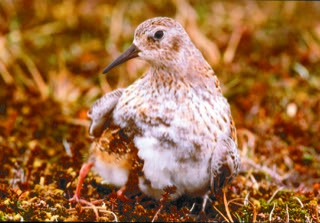
Photo by USFWS • A baby least sandpiper shelters beneath its dutiful mother. The aptly named least sandpiper is the smallest species of shorebird.

It’s not too often I get a chance to make a historic bird sighting, but that’s what happened on a recent Saturday while seated on a bench with Rob Armistead having a breakfast break while taking part in a seasonal bird survey in Elizabethton along the Watauga River.

I chose the location for the break because I knew that it has traditionally been a good spot to observe some unexpected species. Past good birds that I’ve observed along this section of the Watauga River have included orange-crowned warbler, yellow-throated vireo, sora, Baltimore oriole and red-headed woodpecker.

On this occasion, a tiny shorebird made an appearance, settling on some exposed rock formations. In April and May, these same rocks are great locations to find migrating spotted sandpipers and solitary sandpipers. 

The bird was smaller than these sandpipers and immediately stood out as a “peep,” a nickname that birders give to a group of small sandpipers that are all similar in appearance.

The one physical trait that help distinguish a least sandpiper from other “peeps” is leg coloration. Least sandpipers have greenish or yellowish legs in contrast to the black legs of other similar “peeps.”

In good light and at close range, Rob and I confirmed that the bird had greenish legs and were thrilled to add a least sandpiper to our own tally of observed birds.

The least sandpiper, as suggested by its name, is the smallest member of the sandpiper family. In fact, this sandpiper, which is not much bigger than a sparrow, is the world’s smallest shorebird. The least sandpiper weighs only a single ounce and is only five to six inches long. 

According to the website All About Birds, the least sandpiper migrates thousands of miles between its Arctic breeding grounds and wintering grounds as far south as Chile and Brazil.

In releasing the count compilation, official compiler Rick Knight made note of the fact that the least sandpiper represents a late migrant and the first-ever June record for the species in the five-county area. 

During the course of the day, Rob and I joined Brookie and Jean Potter for a trip to Holston Mountain, where we added some mid- to high-elevation species such as scarlet tanager, rose-breasted grosbeak, veery, Eastern wood-pewee, dark-eyed junco, ruffed course and chestnut-sided warbler. 

Photo by Bryan Stevens • A male rose-breasted grosbeak perched on a branch on Roan Mountain, Tennessee.

This year’s survey was the 29th annual Carter County Summer Bird Count and was conducted by members and friends of the Elizabethton Bird Club. I’ve been participating on this yearly survey of local birds since the late 1990s.

This year’s count was held Saturday, June 11. A total of 22 observers took part in this year’s count. 

A total of 116 species was tallied, which is right on average for the last decade and slightly above the average of 114 over the previous 28 years, according to Knight.

He noted that the all-time high for this count was 123 species in 2017.

Here’s the total:

 Canada goose, 131; wood duck, 9; mallard, 53; ruffed grouse, 3; and wild turkey, 20.

Rock pigeon, 49; Eurasian collared-dove, 1; mourning dove, 155; yellow-billed cuckoo, 1; Chuck-will’s-widow, 4; Eastern whip-poor-will, 9; chimney swift, 116; and ruby-throated hummingbird, 22.

Killdeer, 18; least sandpiper, 1; double-crested cormorant, 13; great Blue heron, 22; and green heron, 2.

Black vulture, 5; turkey vulture, 65; Cooper’s hawk, 4; bald eagle, 1; red-shouldered hawk, 2; broad-winged hawk, 5; red-tailed hawk, 5; Eastern screech-owl, 6; and barred owl, 3.

Belted kingfisher, 5; red-bellied woodpecker, 32; downy Woodpecker, 23; hairy woodpecker, 4; Northern flicker, 27; and pileated woodpecker, 16.

American kestrel, 1; great crested flycatcher, 2; Eastern kingbird, 27; Eastern wood-pewee, 31; Acadian flycatcher, 20; alder flycatcher, 2; least flycatcher, 12; and Eastern phoebe, 73.

White-eyed vireo, 5; yellow-throated vireo, 1; blue-headed vireo, 54; warbling vireo, 1; and red-eyed vireo, 165.

Blue jay, 110; American crow, 259; fish crow, 2; and common raven, 10.

Tree swallow, 118; Northern rough-winged swallow, 45; purple martin, 22; barn swallow, 173; and cliff swallow, 265.

Carolina chickadee, 73; tufted titmouse, 93; red-breasted nuthatch, 14; white-breasted nuthatch, 23; house wren, 57; winter wren,  4; and Carolina wren,  116.

Blue-gray gnatcatcher,  23; golden-crowned kinglet, 7; Eastern bluebird, 152; veery,  29; hermit thrush, 1; wood thrush, 66; American robin,  581; gray catbird, 60; brown thrasher,  22; and Northern mockingbird, 70

European starling, 411; cedar waxwing, 61; house sparrow, 98; house finch, 51; pine siskin, 10; and American goldfinch, 170.

Grasshopper sparrow, 1; chipping sparrow,  80; field sparrow, 43, dark-eyed junco, 70; song sparrow, 348; Eastern towhee, 150; yellow-breasted chat, 7.

Eastern meadowlark, 13; orchard oriole, 2; Baltimore oriole , 1; red-winged blackbird, 73; brown-headed cowbird, 49; and common grackle,143.

Ovenbird, 77; worm-eating warbler  3; Louisiana waterthrush, 12; golden-winged warbler,  2; black-&-white warbler, 31; Swainson’s warbler, 6; common yellowthroat, 31; hooded warbler,  110; American redstart , 6; Northern parula, 47; magnolia warbler, 1; Blackburnian warbler,  5; yellow warbler, 3; chestnut-sided warbler, 31; black-throated blue warbler, 49; pine warbler,  3; yellow-rumped warbler, 1; yellow-throated warbler, 16; black-throated green warbler, 19; and Canada warbler,  10.

Scarlet tanager, 42; Northern cardinal, 173; rose-breasted grosbeak, 7; blue grosbeak, 4; and indigo bunting, 161.

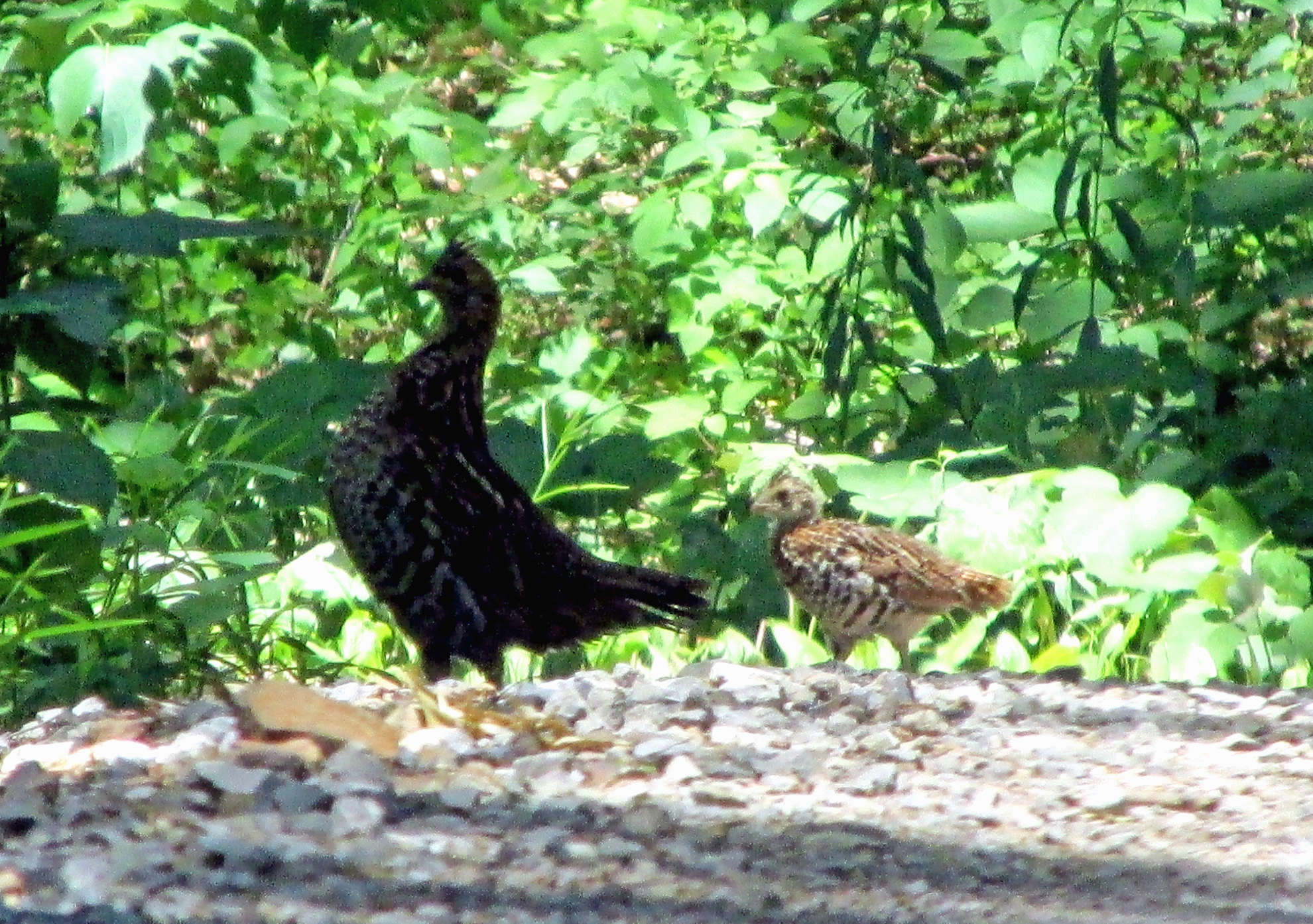
Photo by Bryan Stevens • A young grouse follows its mother into concealment by the edge of a road on Holston Mountain, Tennessee.

My other personal highlight on this count was seeing three young Ruffed Grouse darting  across the road, one at a time, while riding on Panhandle Road to the top of Holston Mountain. Those three young grouse turned out to be the only grouse counted by any participants on the count.

The Unicoi County Summer Bird Count was conducted Saturday, June 18. I’ll provide the results of that count in an upcoming column. 

Tanagers are among world’s most colorful birds

Photo Courtesy of Jean Potter
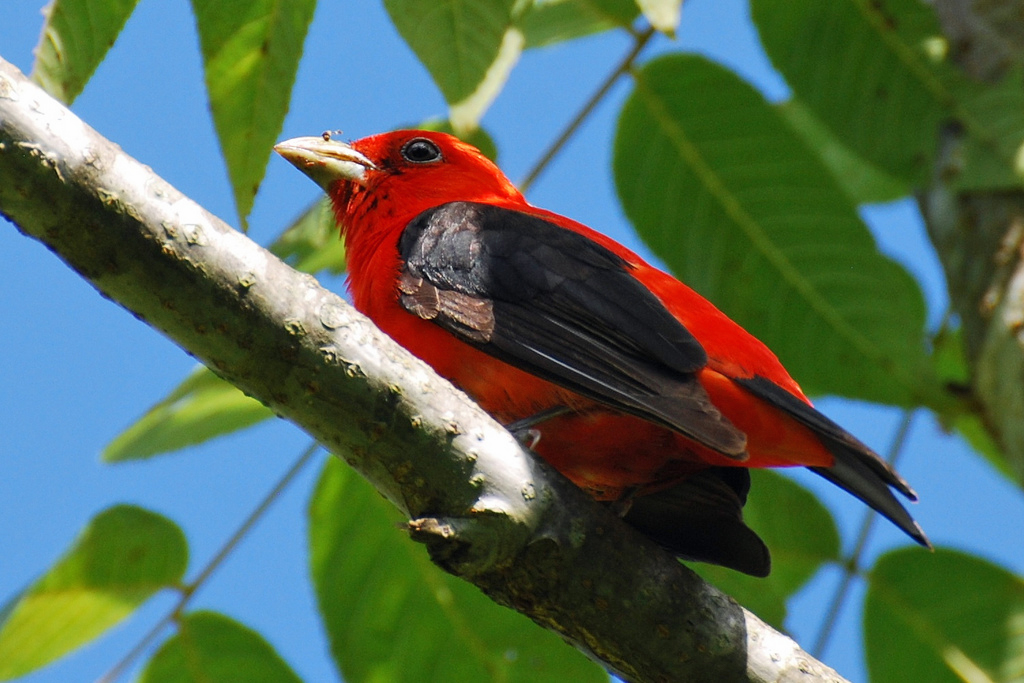
A male scarlet tanager brightens shadowy woodlands with a flash of tropical colors yet remains mostly inconspicuous in the forest canopy.

The daily chorus of songbirds greeting the dawn is usually welcome unless I’m feeling particularly sleepy. Carolina wrens are one of the first birds in residence to sing each day. This time of year they get plenty of accompanists, including American robins, Eastern phoebes, Carolina chickadees, Northern cardinals, Eastern towhees, red-eyed vireos, indigo buntings, hooded warblers, ovenbirds and others.

As June arrived, however, I began to take notice of the absent voice of scarlet tanagers. It wasn’t until June 9 that I heard the first male scarlet tanager of the season singing from the wooded ridge behind my home.

In late April and throughout May, once the oaks, the maples, the poplars and other trees begin spreading out new green leaves to create a concealing woodland canopy, a familiar song can be heard from the treetops. 

Upon first hearing it, listeners might mistake the hidden singer for an American robin. Listen a little closer, however, and the song sounds as if it is being delivered by a robin stricken a bit hoarse with a sore throat.

The producer of the hoarse but melodic song is a scarlet tanager, one of the most showy birds of Eastern woodlands from April to early October. Like the warblers, vireos, flycatchers and other songbirds, the scarlet tanager is migratory. They spend the winter months in the tropical forests of Central and South America. The scarlet tanager is better attired than most birds to provide us a glimpse of what life must be like in the tropical rain forests, which are a riot of color and sound.

It takes only one sighting to sear the vision of these vibrant birds into our retinas, as well as into our memories. The scarlet tanager boasts a brilliant plumage of crimson red paired with black wings and tail. Of course, this is the male. The female scarlet tanager makes no real claim to the common name with her comparatively drab greenish plumage. However, the scientific name, Piranga olivacea, gives a nod to the olive-green plumage of females, young males and even adult males when molting their feathers.

Although once nominated as a candidate for state bird by the school children of Minnesota, the scarlet tanager ultimately failed to gain the designation. Instead, as perhaps is fitting for the “Land of 10,000 Lakes,” the common loon represents Minnesota as official state bird.

The related summer tanager is less widespread in Northeast Tennessee, but males of this species are no less dramatic in appearance than the Scarlet Tanager. Male summer tanagers are a rosy-red over all their body. Females, with a dull greenish plumage, are relegated to the background. She can be distinguished from her counterpart, the scarlet tanager, because of their darker wings and larger bills.

The summer tanager holds the distinction of being the only all-red bird in North America. Birds like Northern cardinals and scarlet tanagers also have some black in their plumage.

I’ve seen summer tanagers at Steele Creek Park in Bristol and Willow Springs Park in Johnson City. Sadly, over the years my sightings of this attractive songbird have been few and far between. My most memorable observation of a male summer tanager took place many years ago during a spring visit to Fripp Island, South Carolina. Most of the summer tanagers I have observed in Northeast Tennessee have been females.

On the other hand, I usually have a few scarlet tanagers in residence around my home during the summer months. If the woodlands at my home fail to attract this bird, I can usually make a visit to higher elevations on Roan Mountain, Unaka Mountain or Holston Mountain to gain an exciting glimpse of this beautiful bird.

Worldwide, there have traditionally been about 240 species of tanagers. Experts have changed some of the ways they classify tanagers, so that figure is no longer set in stone. Tanagers are a New World family of birds, concentrated mainly in the tropics.

In the western United States, the scarlet and summer tanagers are replaced by Western tanagers and hepatic tanagers. During a visit to Salt Lake City in Utah in 2006 I saw several Western tanagers.

Some of the world’s other tanagers are known by extremely descriptive names, including flame-colored tanager, green-headed tanager, golden-chevroned tanager, azure-shouldered tanager, fawn-breasted tanager, saffron-crowned tanager, metallic-green tanager, turquoise tanager, scarlet-bellied mountain tanager and diademed tanager.

A print of Scarlet Tanagers by early North American naturalist and painter John James Audubon.

Scientists have recently given fresh consideration to the relationship of many tanagers to the other birds of the world. As a result, many of the North American tanagers are now closely allied with such birds as Northern cardinal and have been pushed into a tenuous relationship with tropical tanagers.

The scarlet tanager is not typically a feeder visitor, but you can lure these birds with orange slices placed in special feeders or simply spiked onto the branches of backyard trees. As an added bonus, orange slices can also attract birds such as baltimore orioles and gray catbirds.

Fond of fruit, the scarlet tanager incorporates various berries into its diet. Landscape around your home with fruit-bearing trees such as mulberry, serviceberry and wild cherry to make your yard more inviting to these elusive bird.

Yes, the scarlet tanager is more often heard than seen, but it is a bird worth seeking out. A sighting is guaranteed to impress. Seeing a scarlet tanager will almost make observers feel like they’ve been dropped into a tropical jungle instead of standing beneath a woodland canopy in the Southern Appalachians.

I’ll be participating in some summer bird counts over the next few weeks, so I am hopeful that my 2022 drought of scarlet tanager sightings will soon be at an end.

Culprit emerges in ‘murder mystery’

Photo by Tom Ferguson/Pixabay • A sharp-shinned hawk perches at the edge of a bird bath. The raptor’s talons, which are on full display, help explain this bird’s efficiency as a predator. 

Darlene Bloomfield emailed me from her home in Parry Sound, Ontario, in Canada. She wanted my help in solving an avian “whodunnit” type of mystery. 

“We had both a robin and a brown thrasher nesting in our cedar hedge,” Darlene wrote in her email.

“Both seemed to have babies,” she added. “The other morning we found a mound of robin feathers on the ground in front of the hedge along with many tiny feathers.”

She also noted that the robins are no longer around.

“Would a thrasher kill a robin?” Darlene asked. “We have seen them chasing each other.”

She also noted that they didn’t find the bodies of the dead robins.

So, in a case perhaps best filed under NCIS Ontario, I looked at the clues and responded.

Robins and thrashers are about the same size and will skirmish if they have to defend their territory, but sadly the evidence points to another culprit.

The little mound of feathers sounds like what a hawk (likely a sharp-shinned hawk or Cooper’s hawk) would leave behind after grabbing a meal in a yard or garden.

The absence of the bodies is also explained. The predatory hawk likely dined on robin and left only the plucked feathers as evidence. 

I expressed sympathy that the incident happened. I’ve been somewhat light-hearted in my relation of the mystery in this column, but it’s important to note that hawks and other predatory creature are not evil. They are not villains. They are doing what they were designed to do. 

The sharp-shinned hawk and its larger relative, the Cooper’s hawk, are classified as accipiter hawks. The sharp-shinned hawk and Cooper’s hawk are the two raptors most often encountered by people who feed birds. Part of the family of Accipiter hawks, these two species are widespread in woodlands.

The Cooper’s hawk is larger, often described as similar in size to an American crow. The Sharp-shinned, on the other hand, is usually described as the size of a dove. There’s some overlap in size, so it is not the only reliable means of identifying these hawks. For example, female Sharp-shinned hawks are roughly equivalent in size to a male Cooper’s hawk. As with many raptors, the female is larger than the male in both these species.

There are some other things to look for in telling these species apart. For instance, adult Sharp-shinned hawks often look like they have a dark cap or hood. The eyes on a sharp-shinned hawk also look like they are halfway between the front and back of the head. In addition, the head itself looks small in comparison to the overall size of this hawk’s body.

These two species feed heavily on songbirds, which causes some bird-lovers distress. I like to view predation incidents as good examples of how the the natural world is good at keeping things balanced. 

The sharp-shinned is really beautiful, especially for a hawk. Preying on songbirds doesn’t make them “bad” birds. They’re extremely efficient predators, and if you’ve ever witnessed one of these raptors in action, you can’t help but be impressed by both the power and precision deployed by these raptors in capturing prey.

The Accipiter genus of hawks includes about 50 species. In Northeast Tennessee, as well as across much of North America, the two common species are sharp-shinned hawk and Cooper’s hawk. A third species, the Northern goshawk, is a rare visitor to the region.


The Northern goshawk is a large, powerful hawk, and it is also fiercely defensive of its nest. This hawk is known to attack other raptors, mammals and even humans that stray too close to its nesting site.

Goshawk is a term derived from “goose hawk,” referring to the ability of this bird when utilized in falconry to take down such large prey as geese.

Other Accipiter hawks around the world include spot-tailed sparrowhawk, rufous-chested sparrowhawk, grey-headed goshawk, chestnut-flanked sparrowhawk, semi-collared hawk, red-thighed sparrowhawk and tiny hawk, which is one of the world’s smallest raptors. This diminutive hawk is about the size of a European starling and lives in Central and South America.

The sharp-shinned hawk will feed on a variety of birds, ranging in size from sparrows, warblers and thrushes to birds as large as ruffed grouse and mourning dove. This hawk also feeds on small mammals, reptiles and insects.

•••

To share a sighting, make a comment or ask a question, please email me at ahoodedwarbler@aol.com.
Sales of local calendar fund bird-worthy aims


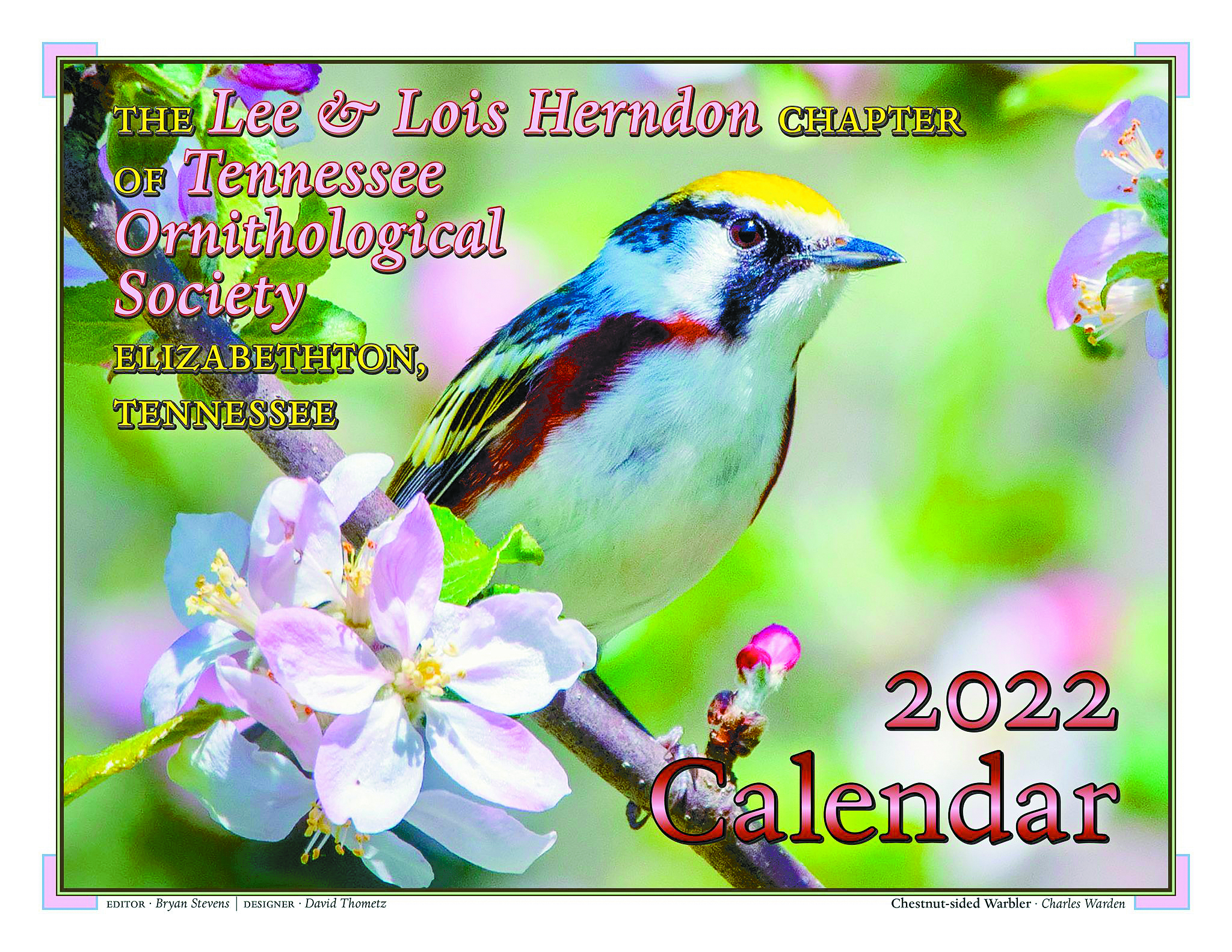
The front cover of the 2022 bird calendar produced by the Elizabethton Bird Club features a photo of a chestnut-sided warbler taken by club member Charles Warden. The calendar is available for purchase for $15, plus $2 for shipping and handling. They make great Christmas gifts for nature and bird enthusiasts. For more information, email ahoodedwarbler@aol.com. 
If you didn’t find all you needed on Black Friday for those on your shopping list, here’s a suggestion. The Lee and Lois Herndon Chapter of Tennessee Ornithological Society, also known as the Elizabethton Bird Club, has produced its annual calendar featuring bird photographs by its members and friends of the organization.

These calendars make wonderful Christmas gifts and stocking stuffers. This year’s front cover features a gorgeous photo of a chestnut-sided warbler taken by club member Charles Warden. This is Warden’s first year contributing photographs to the club’s yearly calendar project. More of his photos are on display through the calendar. He is a resident of Johnson City.

“I took the photo on the Spring Bird Count with Fred Alsop and Judi Sawyer on May 1 of this year at Hampton Creek Cove,” Warden said.

He said that the bird was among the blooms of what he thinks was an apple tree.

“We heard the warbler and chased it down,” he said. “It came out in the open and posed nicely for pictures.”

He has been interested in photography since he took a beginning photography class at East Tennessee State University on a lark in 1977.

“I am lucky enough to be making a living as a photographer for ETSU marketing.”

Bird photography is certainly a challenge, he said, and requires much patience, decent equipment and a lot of luck.

“It’s been a learning curve for sure, and it’s still a tough call when to take the binoculars down and put the camera up as it’s so mesmerizing to watch the birds,” Warden said.

The chestnut-sided warbler is a summer resident in the region and can be found at middle and higher elevations on many of the area’s mountains, including Unaka and Roan. Unlike many warblers, both males and females are brightly colored, with the female being slightly less so. Males during the summer nesting season show a yellow crown, black mask, white cheeks, throat and breast and the namesake chestnut flanking on his sides.

He’s also a cheery and persistent singer when he arrives on his nesting territory. His song is usually transcribed as “Pleased, pleased, pleased to meetcha!” For birders, it’s like a welcoming reintroduction each spring when this particular song is heard from the branches of trees in local woodlands.

For the singing male, there’s a more personal reason for singing his song. The “pleased, pleased, pleased to meetcha” refrain is a way of attracting the attention of potential mates. Males sing an entirely different song once settled into nesting activities with a mate. The song used to attract mates is more heavily accented, according to the website, All About Birds. Some males sing only unaccented songs and thus have a lower success rate at attracting mates.

Chestnut-sided warblers are classified by scientists as birds that favor successional habitats for nesting purposes. These sorts of habitats are usually disturbed by human activities such as logging. However, disturbed habitats can be created by natural occurrences, including fires, flooding and storm damage. During the winter months, this warbler withdraws into Central America with many individuals finding suitable habitat on shade-coffee plantations.

Female chestnut-sided warblers will weave a nest of bark, grass and other components all bound together with gathered spider silk. She will lay three to five eggs. These warblers make the most of the summer season, often nesting a second time after raising their first brood.

Chestnut-sided warblers feed largely on insects, but the birds also incorporate seeds and fruits into their diet. Young are fed by both parents on a diet of small insects, spiders and caterpillars. The chestnut-sided warbler’s scientific name, Setophaga pensylvanica, roughly translates as “eater of moths from Pennsylvania,” which is a nod to the bird’s insect-rich diet.

Other warblers that can be found in the mountains of Northeast Tennessee — and in the pages of the calendar — include black-throated blue warbler, golden-winged warbler, worm-eating warbler, hooded warbler, prairie warbler and common yellowthroat.

Like most small songbirds, the New World warblers, to which the chestnut-sided warbler belongs, don’t have long lifespans. A few individuals, however, defy the odds. According to the website, All About Birds, the longest-lived chestnut-sided warbler documented by scientists was a nearly seven-year-old bird banded in Rhode Island in 1980. The bird had been banded in the same state six years and 11 months earlier in 1973.

Of course, with the exception of the yellow-rumped warbler, most of the warblers don’t spend the winter months in the region. With one of these calendars, however, you can enjoy beautiful photos of some of our most lovely warblers while awaiting their return this spring in mid-April and early May.

The inside pages of the professionally-produced calendar feature dozens more full-color photographs and an informative and educational grid. These calendars sell for $15 plus $2 for shipping. All sales help the club fund birding programs, public park feeders, conservation efforts and other activities in upper Northeast Tennessee.

For more information on how to obtain a calendar, email me at ahoodedwarbler@aol.com.