Category Archives: Carter County Compass

October Saturday Bird Walks at Sycamore Shoals producing interesting sightings

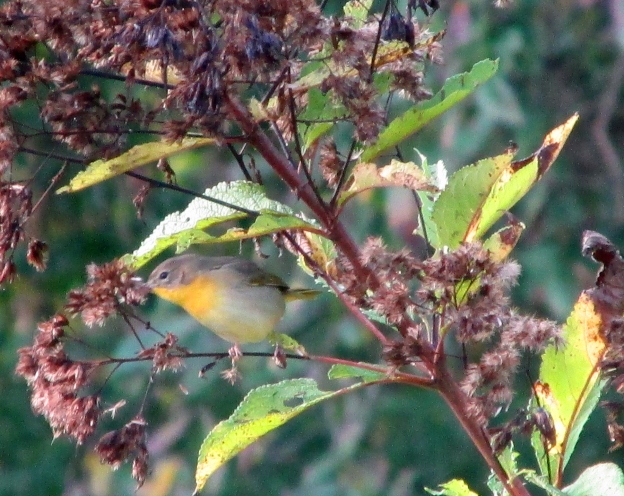
Yellowthroated

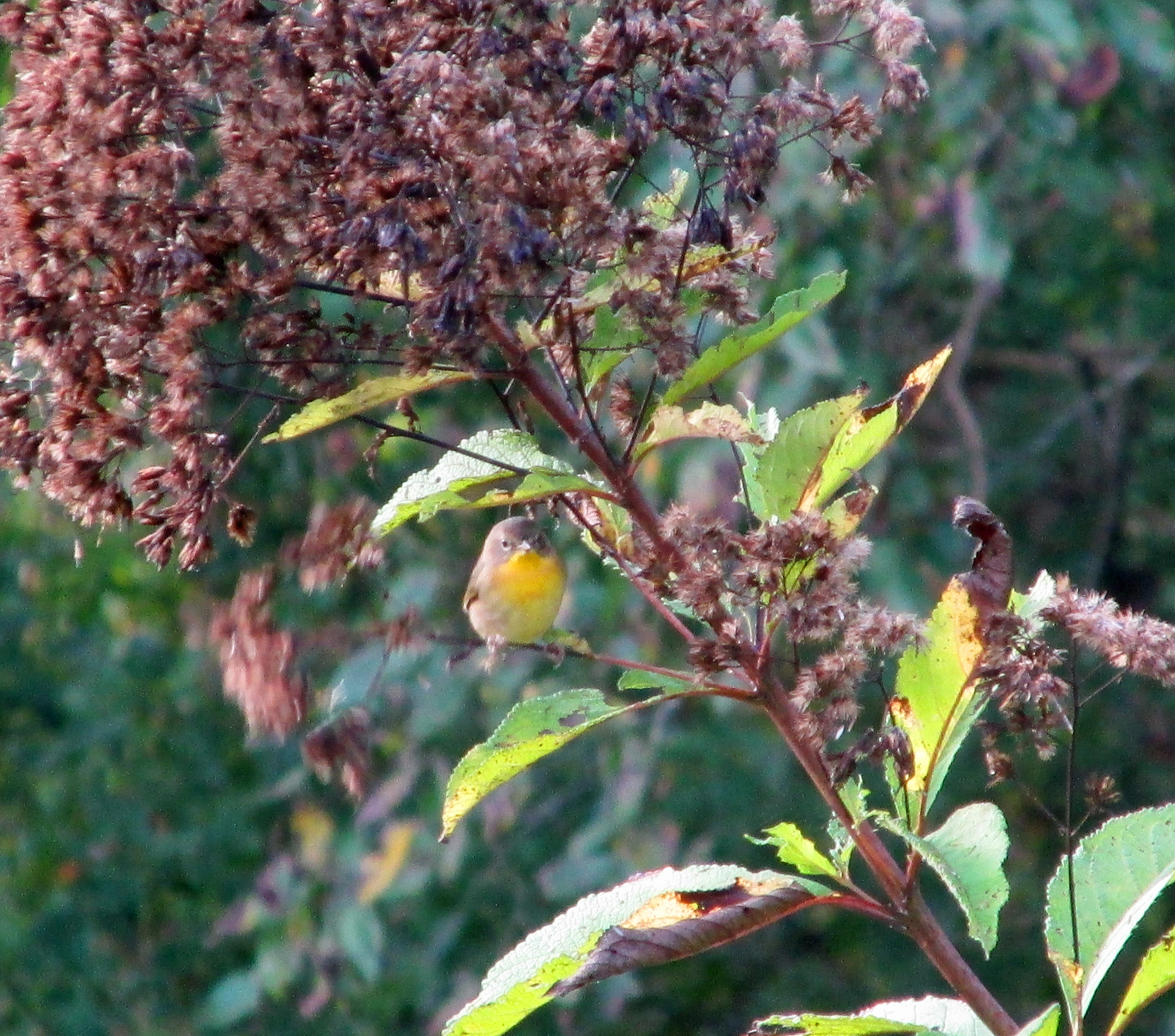
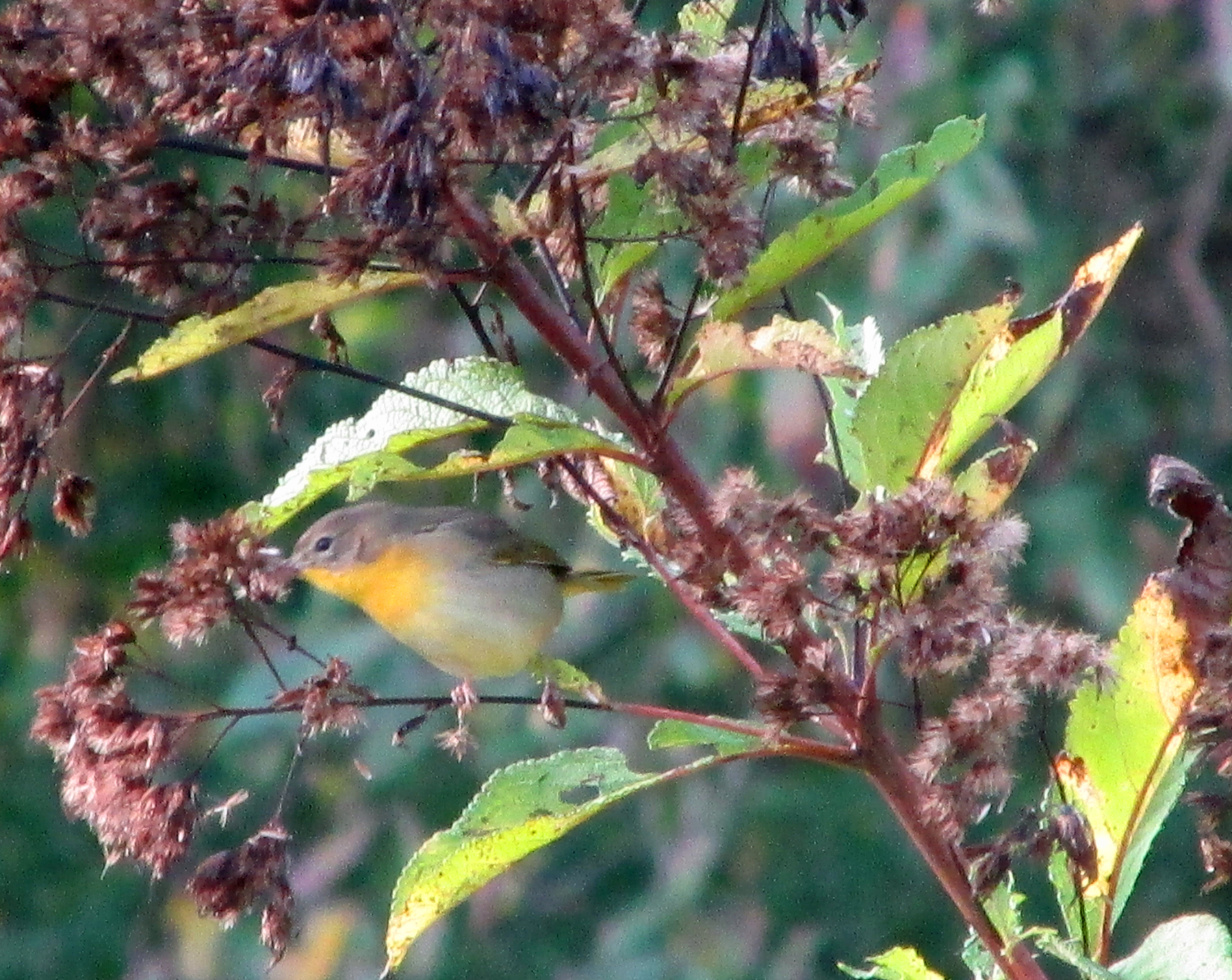
Photo by Bryan Stevens                                                                    A female Common Yellowthroat entertained bird walk attendees as she foraged among Joe-Pye Weed in the butterfly garden at Sycamore Shoals State Historic Park.

It’s funny how you can go most of the year without seeing a certain bird. Then, the drought ends and you enjoy a spike in the numbers of sighting within a short amount of time.

A female Common Yellowthroat became a highlight of the first of this year’s October bird walks at Sycamore Shoals State Historic Park, which was well attended with nine participants. The bird was foraging in the flower heads of Joe-Pye Weed in the butterfly garden at the park.

The Elizabethton Bird Club has offered these hikes for more than a decade at the park. Prior to conducting the walks at Sycamore Shoals, the club also led October hikes at Winged Deer Park in Johnson City and along the linear walking trail in Erwin.

BWteal-Flock

Photo by Bryan Stevens                                                 A portion of the flock of 104 Blue-winged Teal found on the first of this year’s October Saturday Bird Walks.

Tess Cumbie, a former resident of Buladean, N.C., came up with the idea for the walks back in the late 1990s.

The first of this year’s walks at Sycamore Shoals took place on Saturday, Oct. 4. A raft of 104 Blue-winged Teal on the Watauga River ranked as another highlight of that morning’s bird walk. Pied-billed Grebes, Mallards, Wood Ducks and Canada Geese were also present on the river.
1618145_10203999628743449_4835781711182007808_o

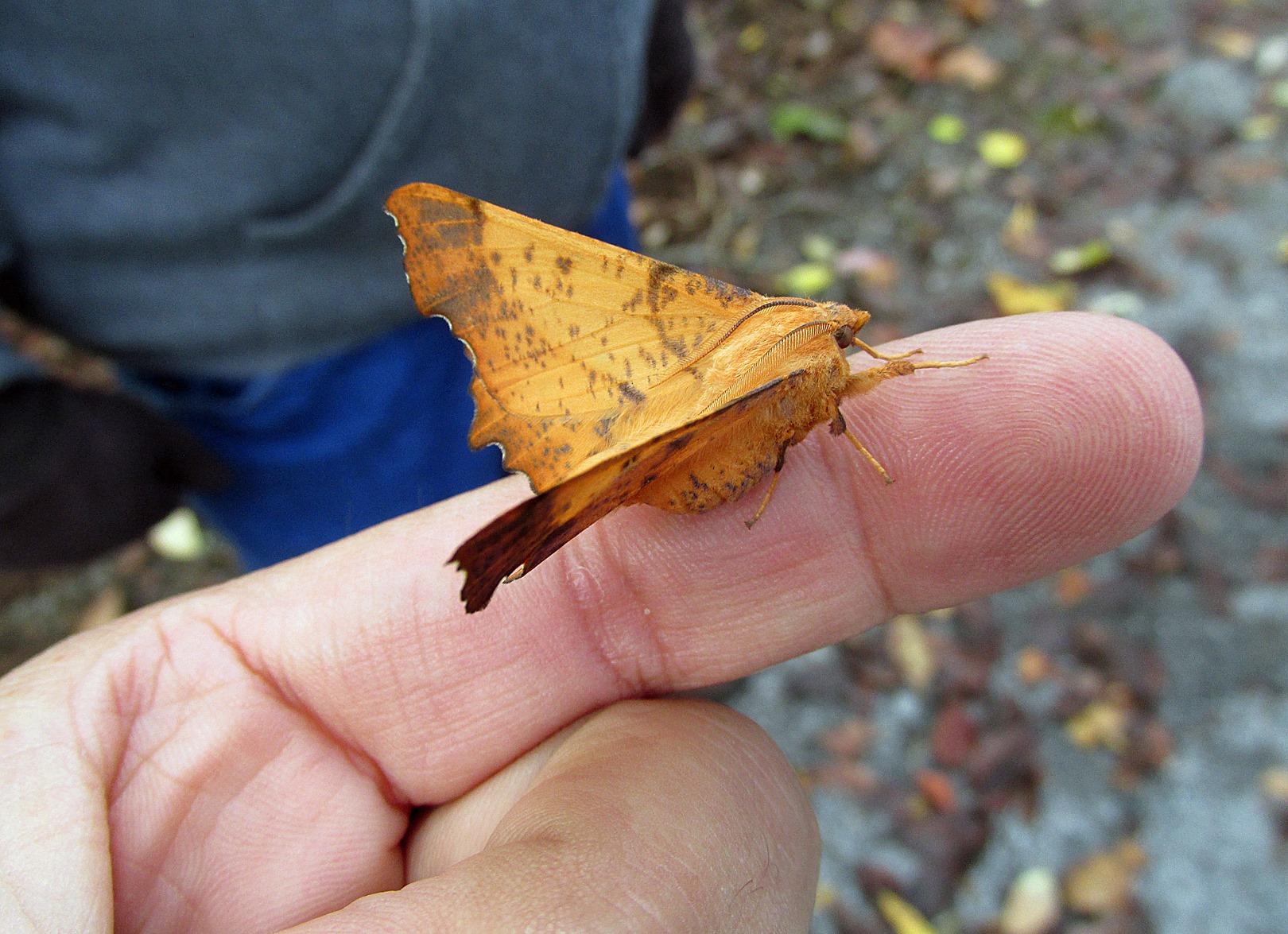
Photo by Bryan Stevens                                     A Maple Spanworm Moth warms itself during the chilly morning bird walk.

Other birds found included  Black Vulture, Turkey Vulture, Chimney Swift, Red-bellied Woodpecker, Yellow-bellied Sapsucker, Downy Woodpecker, Northern Flicker, Eastern Wood-Pewee, Blue Jay, American Crow, Carolina Chickadee, Tufted Titmouse, Carolina Wren, Eastern Bluebird, Swainson’s Thrush, American Robin, Gray Catbird,  European Starling, Cedar Waxwing, Magnolia Warbler,  Song Sparrow, Northern Cardinal, Rose-breasted Grosbeak, Indigo Bunting, Eastern Meadowlark, House Finch and American Goldfinch.

When not looking at birds, participants enjoyed diversions such as the Maple Spanworm Moth blending with the fallen leaves on the gravel walking trails. I had never seen this particular moth, which spent some time warming itself on one of my fingers.

Although well attended by participants from as far as Abingdon, Va., the weather that greeted us was quite frigid. The cold appeared to bother us more than it affected the birds.

••••••

A male Wood Duck landed, briefly, on the fish pond on the morning of Oct. 5. If I hadn’t been outdoors at the time, he might have stayed longer. When I moved, he flew. It’s the first visit here at home from a Wood Duck in several years. Coincidentally, the last visit also took place in early October.
Flower-bed

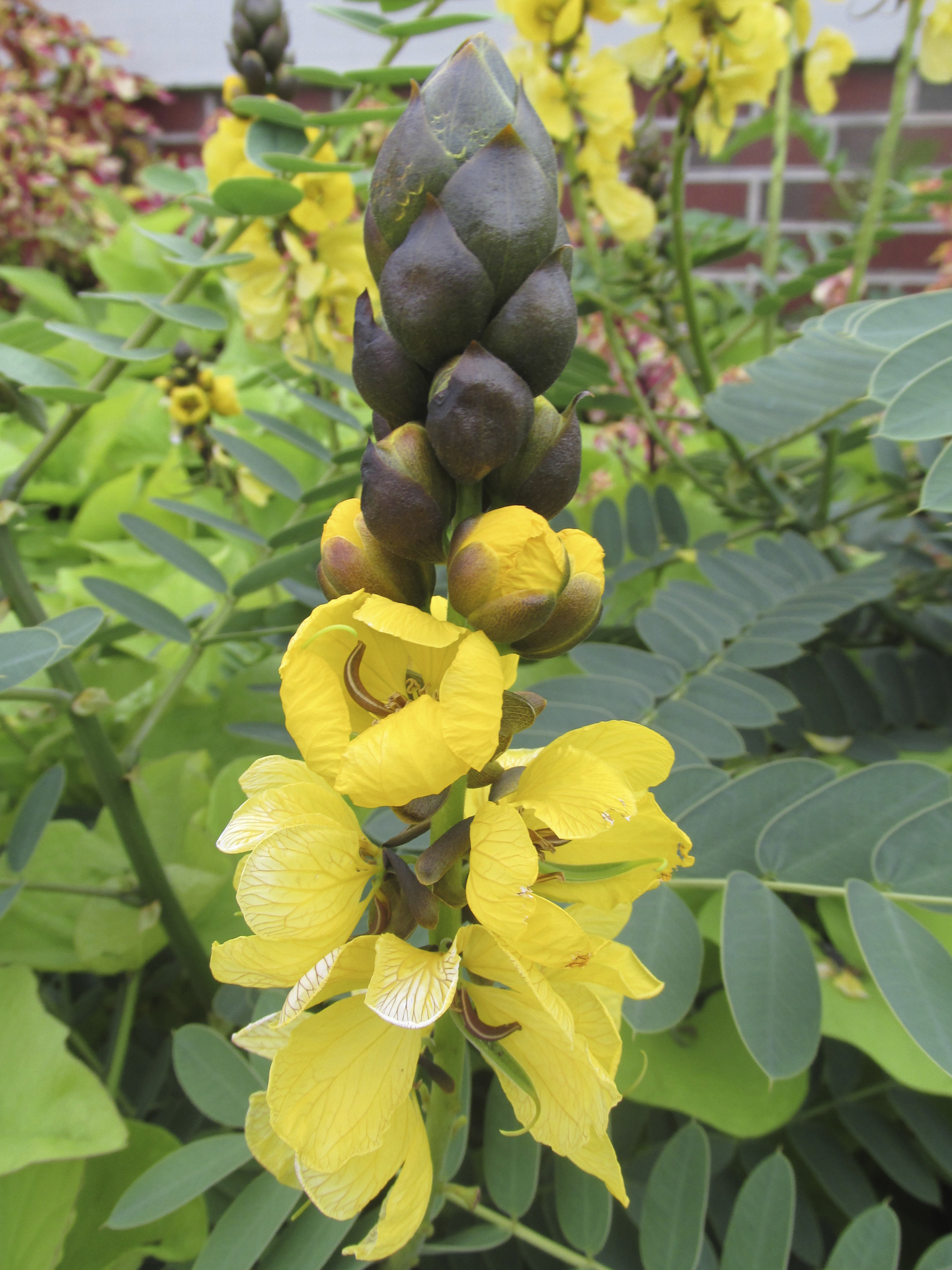
Photo by Bryan Stevens              This densely-planted flower bed on the ETSU campus provided cover for a migrating Common Yellowthroat.

••••••

I am beginning to find that the campus at East Tennessee State University can produce some fun bird sightings. After witnessing a Cooper’s Hawk nearly catch a squirrel from the top branches of a tall tree near Gilbreath Hall, I have been paying closer attention to those feathered friends that visit the campus.

During a Sunday evening stroll on Oct. 6, I found a Common Yellowthroat in a well-planted flower bed. So, I have added my first warbler to my ETSU list. I also saw a Red-bellied Woodpecker flying over the Culp Center during the same walk.

It also got me to thinking about how many Common Yellowthroats I have been seeing this fall.

When I posted about the sighting on Facebook, Cathy Myers commented and informed me that she had recently observed a Rose-breasted Grosbeak on the campus.

•••••••
Catbird

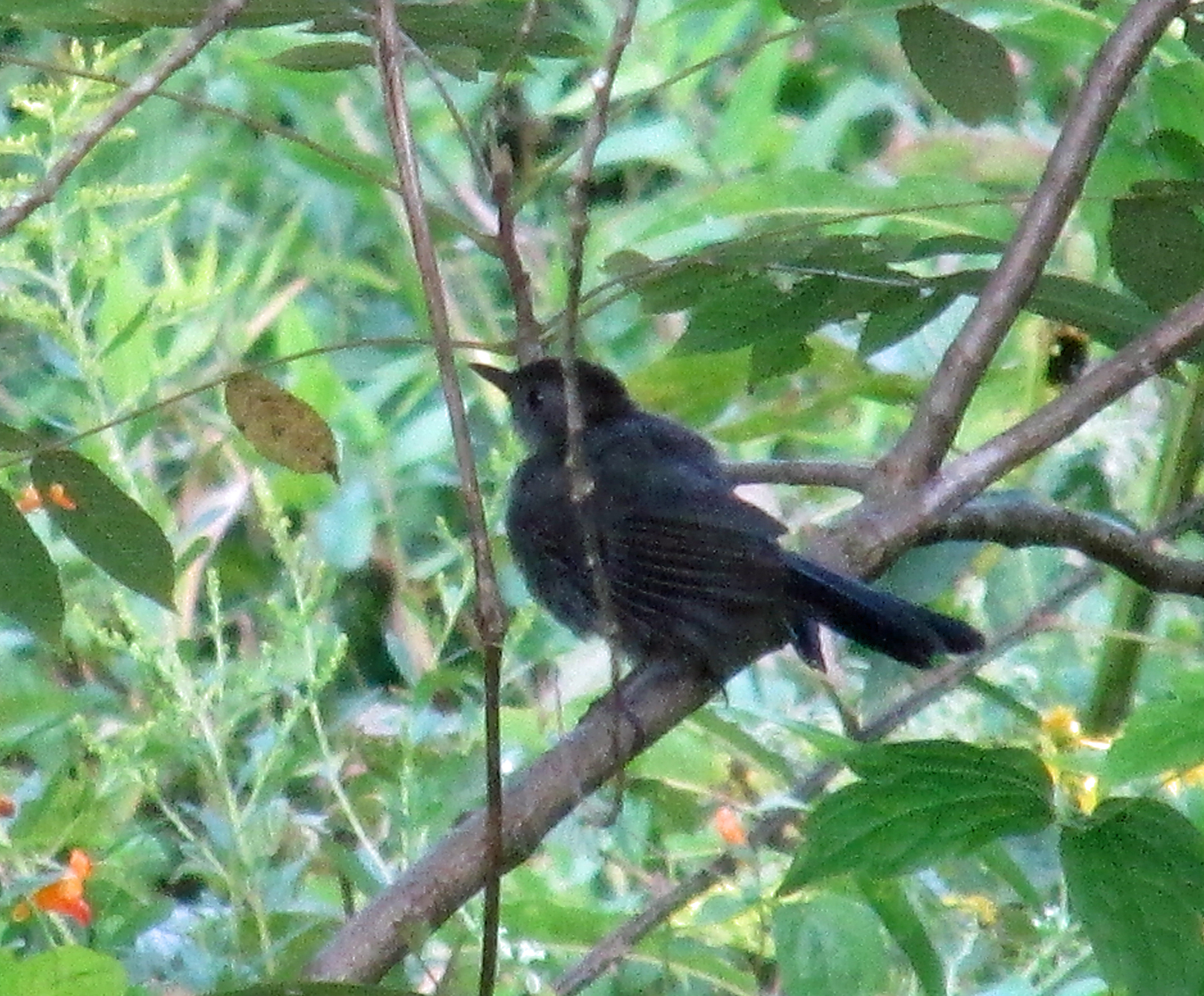
Photo by Bryan Stevens                                          Gray Catbirds, such as this one, have been found on the first of the Saturday Bird Walks this October at Sycamore Shoals.

At the second of the four Saturday Bird Walks scheduled this October, rain threatened to impede the stroll. Fortunately, the showers held off until after the walk on Oct. 11 concluded at about 9:30 a.m.

The second of the October Saturday Bird Walks produced several highlights, including a duel between an Osprey and an adult Bald Eagle over the Watauga River, as well as four species of warblers — Tennessee, Bay-breasted, Palm and Yellow-rumped — and other birds, including Chimney Swift, Mockingbird, Starling, Northern Flicker, Blue Jay, Carolina Wren, Mourning Dove, Eastern Bluebird, Mallard, Carolina Chickadee, Canada Goose, Goldfinch, Red-tailed Hawk, Red-bellied Woodpecker, Crow, Yellow-bellied Sapsucker, American Robin, Northern Cardinal, Song Sparrow and Downy Woodpecker.

Although we had fewer participants on this walk, we enjoyed better observations of the birds. One exciting moment involved the flock of irate Blue Jays gathered to scold a Red-tailed Hawk that had flown too close for comfort.

••••••

Two more Saturday Bird Walks remain during October. They will be held on Oct. 18 and Oct. 25. The public is welcome to these free strolls along the walking trails at Sycamore Shoals State Historic Park. Bring binoculars to increase your viewing enjoyment.

••••••

Common_Yellowthroat (1)

Photo by U.S. Fish & Wildlife Service                                                  A male Common Yellowthroat surveys his surroundings from a prominent perch.

The Common Yellowthroat is a warbler that is quite fond of weedy, damp habitats. Marshes and other wetlands are preferred habitat during the nesting season, although a few of these birds are also present in more dry habitats.

In migration, any weedy corner might attract one of these warblers. In fact, the one I found on the ETSU campus remained elusive in a raised concrete bed containing a thick planting of flowers and shrubs.
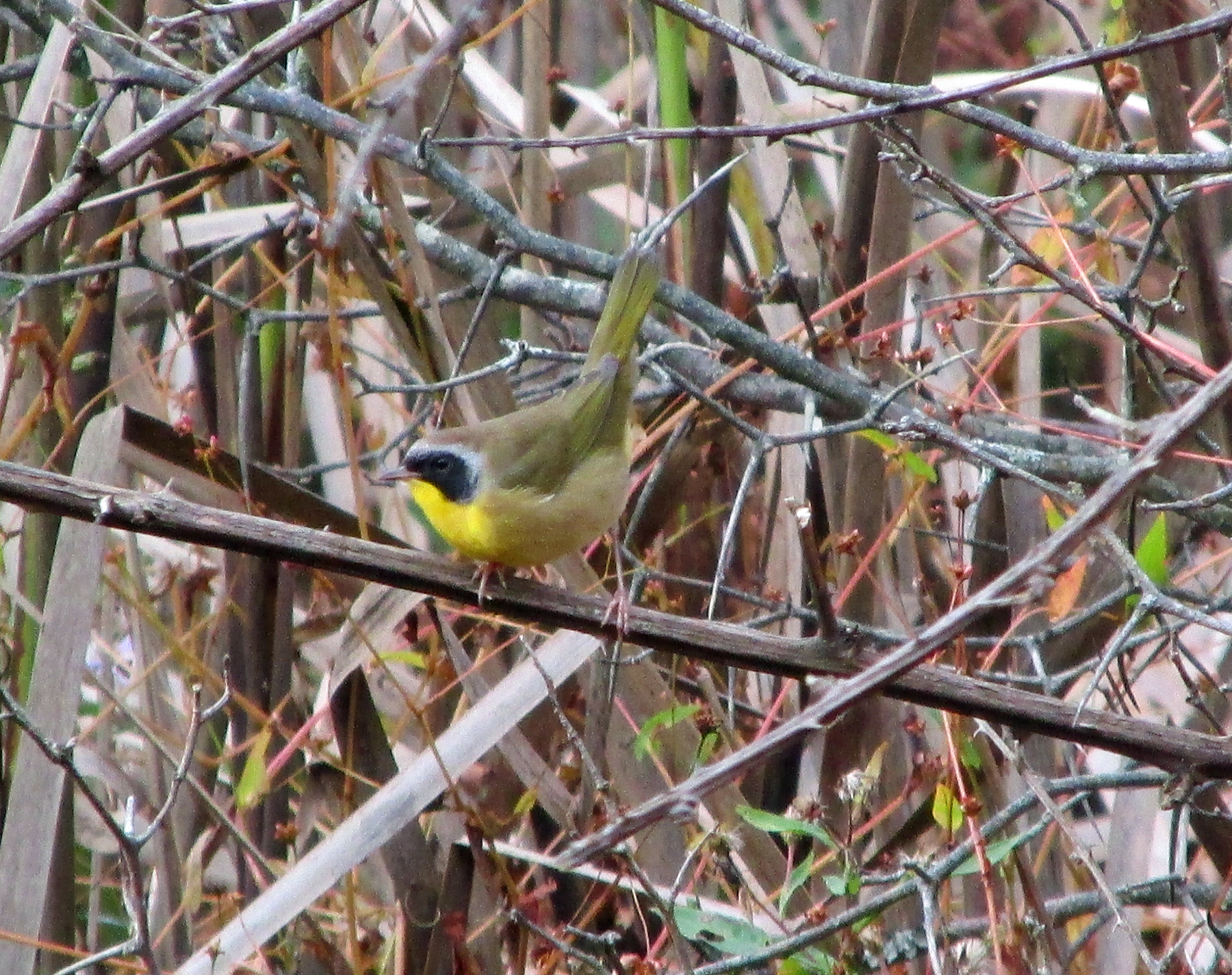
Photo by Bryan Stevens A male Common Yellowthroat visits an overgrown thicket during fall migration. Photo by Bryan Stevens A male Common Yellowthroat visits an overgrown thicket during fall migration.

Photo by Bryan Stevens
A male Common Yellowthroat visits an overgrown thicket during fall migration.

The Common Yellowthroat belongs to the genus of warblers known as Geothlypis, which also includes the related Bahama Yellowthroat, Hooded Yellowthroat, Masked Yellowthroat, Black-polled Yellowthroat and Gray-crowned Yellowthroat. These other species are found in Central and South America, as well as the Caribbean.

Recent classification of the Geothlypis warblers has led to the inclusion of three other warblers — MacGillivray’s, Mourning and Kentucky — being shuffled into this genus.

Although fond of skulking in deep vegetation, most Common Yellowthroats are curious birds and will allow brief glimpses. The males also betray their presence with a loud, easily recognized song that sounds very much like “Witchety, Witchety, Witchety, Witch.”
Yellowthroat-PyeWeeDForage

Photo by Bryan Stevens                                                    The female Common Yellowthroat lacks the male’s black face mask.

Male and female yellowthroats show a bright, yellow throat. Males also sport a black mask bordered with a silvery-white line, and the male’s throat is usually a brighter yellow. Although males will sing in the open during the nesting season, these birds usually prefer to remain hidden from view as they go about their daily routines.

••••••

To learn more about birds and other topics from the natural world, friend Stevens on Facebook at https://www.facebook.com/ahoodedwarbler. He is always posting about local birds, wildlife, flowers, insects and much more. If you have a question, wish to make a comment or share a sighting, email ahoodedwarbler@aol.com.
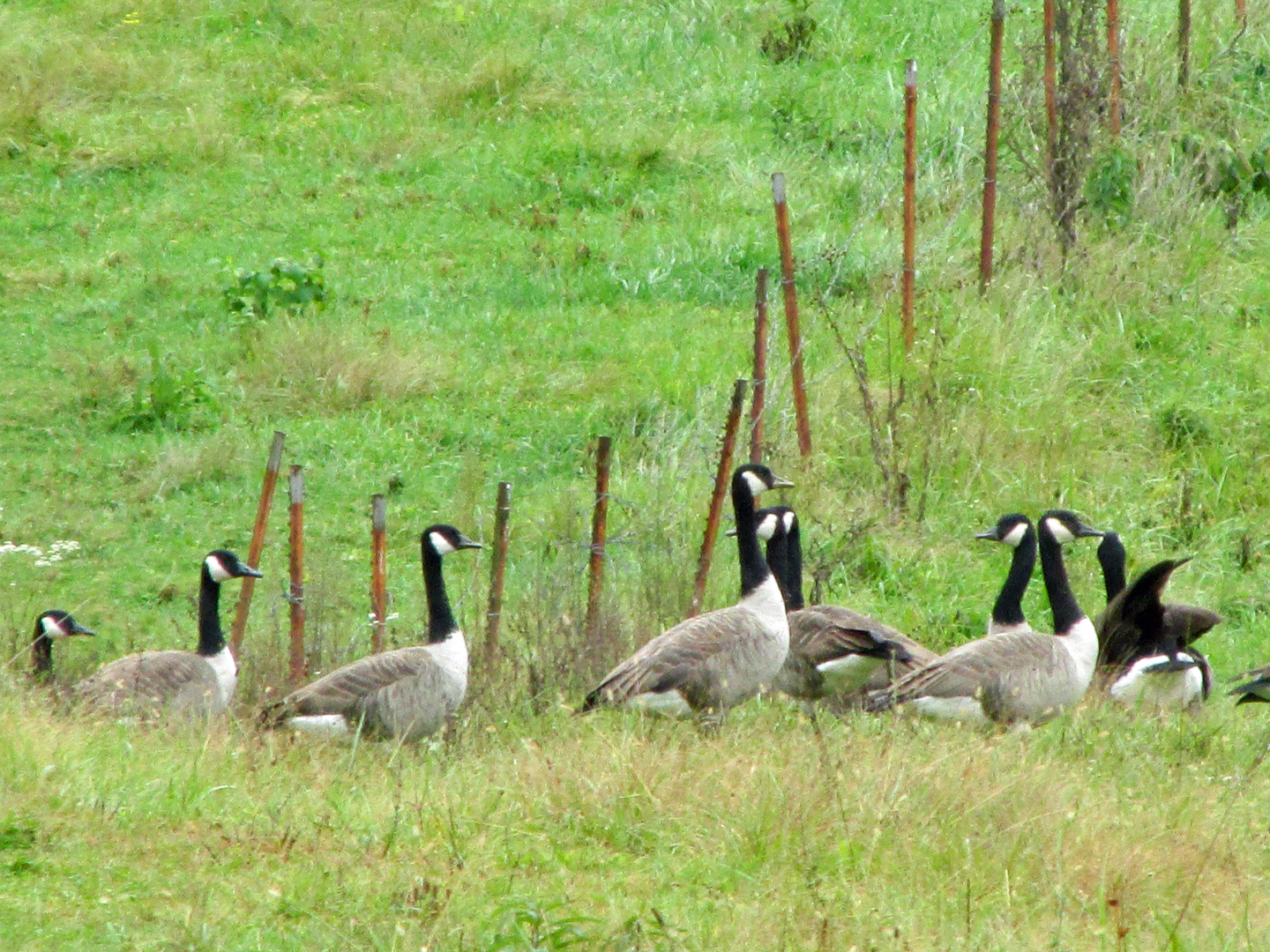
Photo by Bryan Stevens

Photo by Bryan Stevens                                                                                                                            A flock of Canada Geese forage in a field near the Bell Cemetery in the Limestone Cove community of Unicoi County on a recent October afternoon.
Summer is the season of the swallow


No matter where you live, you probably don’t have to go far to see one of the members of the swallow family. These graceful, aerodynamic birds are quite familiar to most people. If you spend much time at all outdoors during the summer months, chances are you’ve observed some members of this family.

Overall, it’s been a good year for swallows. It’s usually not too difficult to find five of the six species that are known to make Northeast Tennessee and Southwest Virginia their home from spring to fall. In addition to barn and tree swallows, I have seen purple martins, cliff swallows and northern rough-winged swallows so far this year.

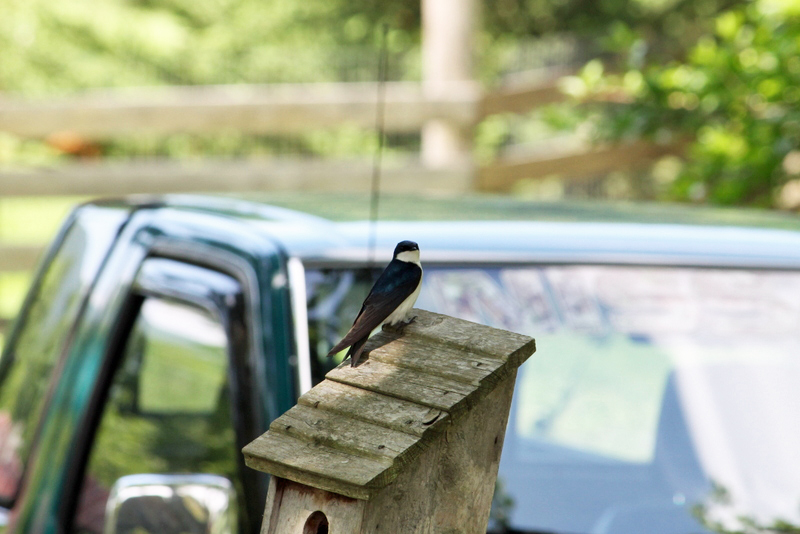
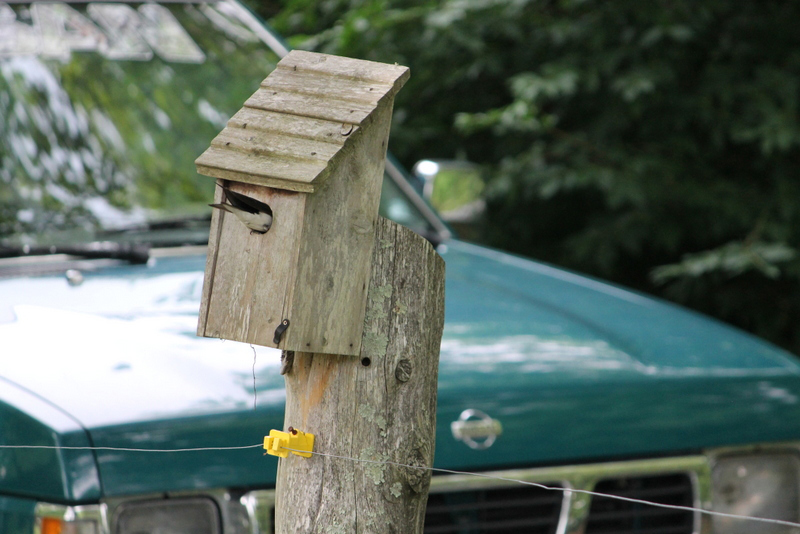
Photo courtesy of Mary Taylor Beierle A tree swallow peeks inside a nest box at the Beierle home.

Photo courtesy of Mary Taylor Beierle
 A tree swallow peeks inside a nest box at the Beierle home.

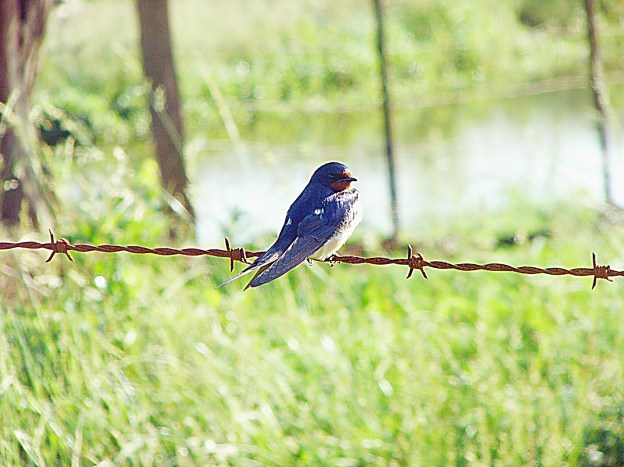
Barn swallow and tree swallow are the two members of the family that are probably best known to people. They have adapted to life in both suburban and rural areas, which brings them into frequent contact with people.

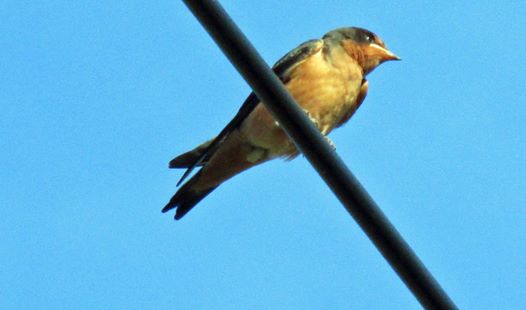
These days, the barn swallow is as apt to nest in a parking garage or on an apartment balcony as inside a barn in the countryside. Once young swallows leave the nest, parents will park them on a perch as they continue to feed the still dependent young. Adults fly over nearby fields, foraging for insects that they catch on the wing and deliver back to the waiting, always hungry, young birds.

A freshly mown field is a magnet for swallows. I don’t know how the word spreads so quickly among these birds, but I’ve observed dozens of these birds descending on fields soon after they have been mowed for hay. At times, the birds arrive while the mowing is still taking place, swooping after insects stirred up in the tractor’s wake.

I haven’t observed any bank swallows in the region this year, but these members of the swallow family are rather hit-or-miss in the region. Because of their specialized nesting needs, bank swallows are localized in their distribution and not as widespread as their kin.

Cliff swallows nest beneath many local bridges. These swallows, which at one time nested primarily on rocky cliffs, hence their name, now frequently nest under man-made structures. These swallows make their jug-shaped nests out of mud and clay. These nesting “jugs” are all located in clusters beneath bridges and other structures. It’s a wonder that the parents flying in with food are able to tell their nests apart from the nearby seemingly identical nests of their neighbors.

NRW-Swallow

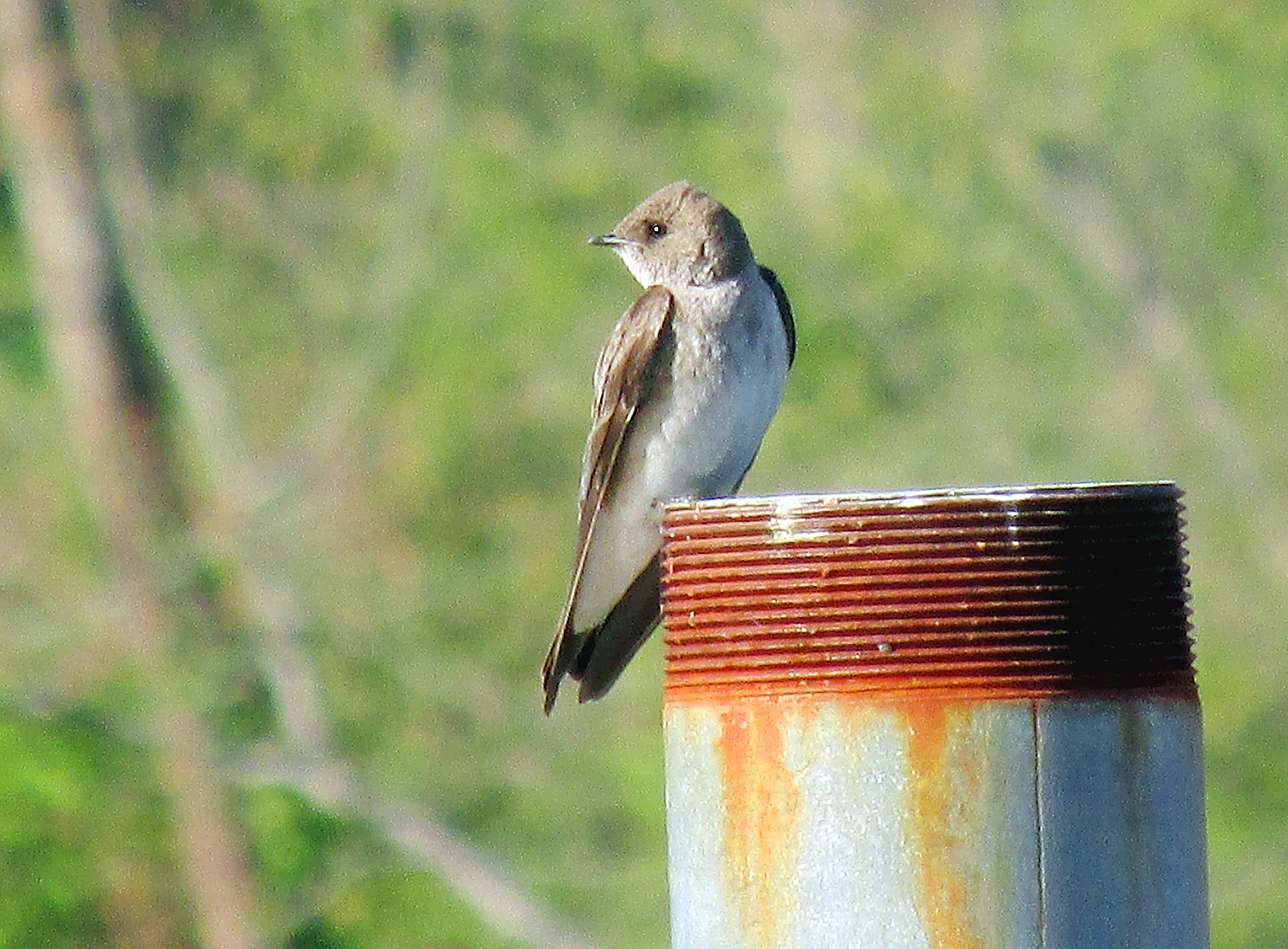
Photo by Bryan Stevens                                  For such a small bird, the Northern rough-winged Swallow has a long name.

Northern rough-winged swallows are opportunists when it comes to nesting. According to a profile written by Mark Johns with North Carolina Wesleyan College, this small swallow nests near rocky gorges, shale banks, stony road cuts, railroad embankments, gravel pits, eroded margins of streams and other exposed banks of clay, sand or gravel. They will also nest in old kingfisher burrows, protruding drainpipes, crevices in brick or stone structures such as dams, bridges or tunnels, gutters and culverts. Their nests are often built near open water.

The Northern rough-winged swallow ranks as one of the species with the longest common names in North America. It’s name consists of 26 letters and a hyphen, which ranks it one letter below both the Northern beardless-tyrannulet and a recently-created species — the saltmarsh sharp-tailed sparrow — which each have 27 letters and a hyphen. Formerly known as sharp-tailed sparrow, the species was renamed with “salt marsh” added to distinguish it from a relative, Nelson’s sparrow.

TreeSwallow-MaryBierlie

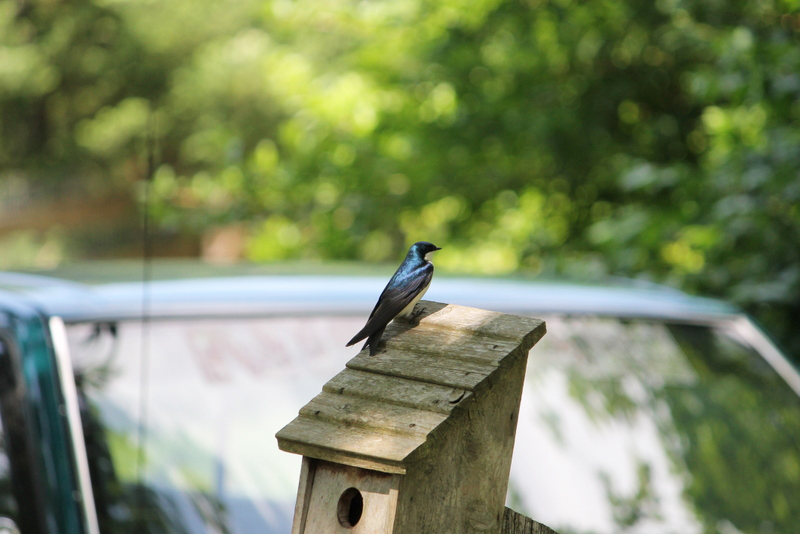
Photo courtesy of Mary Taylor Beierle                                      A male Tree Swallow surveys his territory from atop a nesting box.

Purple martins, which rank as the largest species in the swallow family in North America, are famous for nesting in large colonies. Nesting facilities range from groupings of natural or artificial gourds fashioned into a nesting chamber, as well as large, multi-level condominium dwellings tailored for the specific needs of this communal bird. A colony can consist of several dozen to several hundred pairs of these birds. Only the adult male purple martin shows the iridescent, dark blue-purple plumage that provides the species with its name.

The tree swallow is my favorite, probably because a pair of these birds has nested in my yard for many years. Unlike other swallows, these cavity-nesting birds will readily accept nesting boxes. They compete with Eastern bluebirds for boxes, but the two species usually can work out a truce and settle down to nest in close proximity to each other. The iridescent blue-green male tree swallow, complete with white underparts and a forked tail, is a handsome bird and a welcome addition to the bird population in any yard or garden. Tree swallows enjoy water, so a nearby pond or creek is a boon for attracting these birds.

TreeSwallowPerched-Bierlie

Photo courtesy of Mary Taylor Beierle          Tree swallows readily accept human-provided nesting boxes. They also make delightful neighbors during the summer season.

While only a few swallows range into the United States and Canada, a total of 83 species of swallows can be found worldwide. Some of the common names for these different swallows (and martins) are quite descriptive. A sampling includes white-eyed river martin, square-tailed saw-wing, white-headed saw-wing, grey-rumped swallow, white-backed swallow, banded martin, violet-green swallow, golden swallow, brown-chested martin, brown-bellied swallow, pale-footed swallow, white-bibbed swallow, pearl-breasted swallow, greater striped swallow, mosque swallow, fairy martin and chestnut-collared swallow.

••••••

Several of the photos this week were provided by Mary Taylor Beierle, a resident of Stoney Creek in Carter County. Mary is also the author of the book, “Edmond The Daddy Turkey,” a delightful story about a male turkey who learns how to be a father.

Mary emailed me the photos with a brief note about her visiting swallows.  “I am thrilled to have them here as we had never seen them before,” she said. “Good thing I have several bird books so I could identify them.”

To learn more about Mary’s book, visit http://www.amazon.com/Edmond-Daddy-Turkey-Taylor-Beierle/dp/0985986123

10441231_838490356179548_1093306511537972714_n

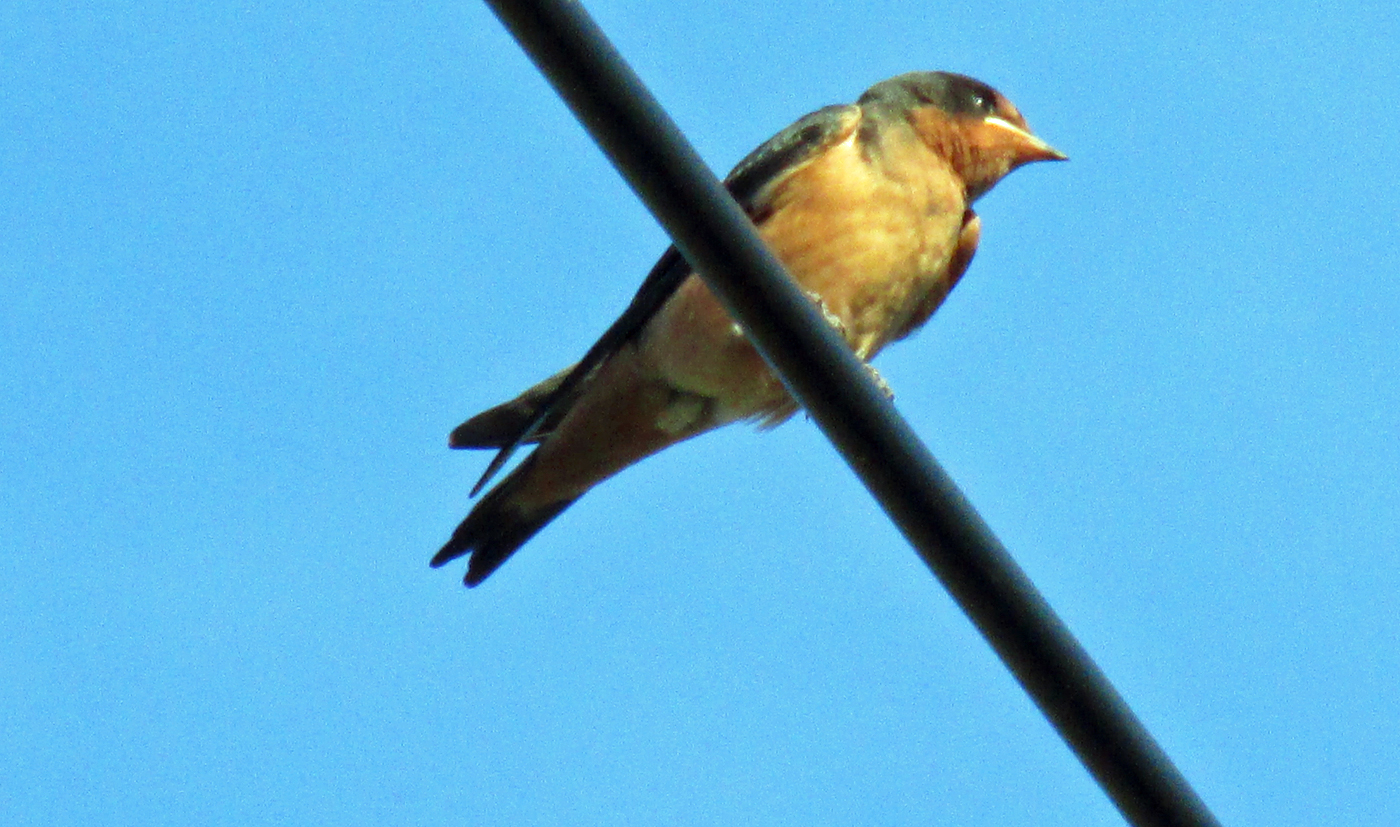
Photo by Bryan Stevens A Barn Swallow perches on a utility wire over a field.

Feeding birds occasionally brings uninvited guests to the table

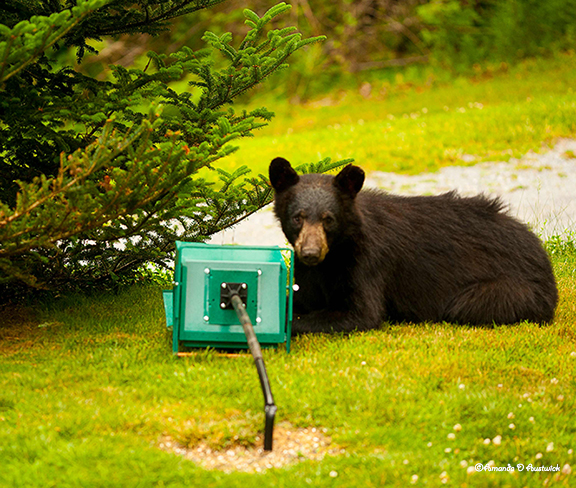
I received a recent email from Flag Pond reader Amanda Austwick with the header, “Bird Feeders Damaged.” I get calls and emails about lots of unusual feeder visitors, but this one sort of stood out from the rest.

In the email, I was asked if I had any idea what would attack a bird feeder in late afternoon in June?

“I’ve heard of bears attacking a feeder in winter,” she wrote. “We do have bears up here, but I haven’t seen any in years.”

The damage to the feeders wasn’t minimal.

“One feeder was completely bent over on the ground,” she wrote.

At the time of the incident, there hadn’t been any rain. As a result, the animal that attacked the feeders left no prints.

I responded to the email with the belief that the animal responsible for the damage was likely a Black Bear.

“It sounds exactly like a bear,” I informed Amanda. “Actually, most of the reports of bears damaging feeders I have heard about have taken place in spring and summer. I suppose if a bear finds your feeder, however, it may be inclined to damage them at any time of the year.”

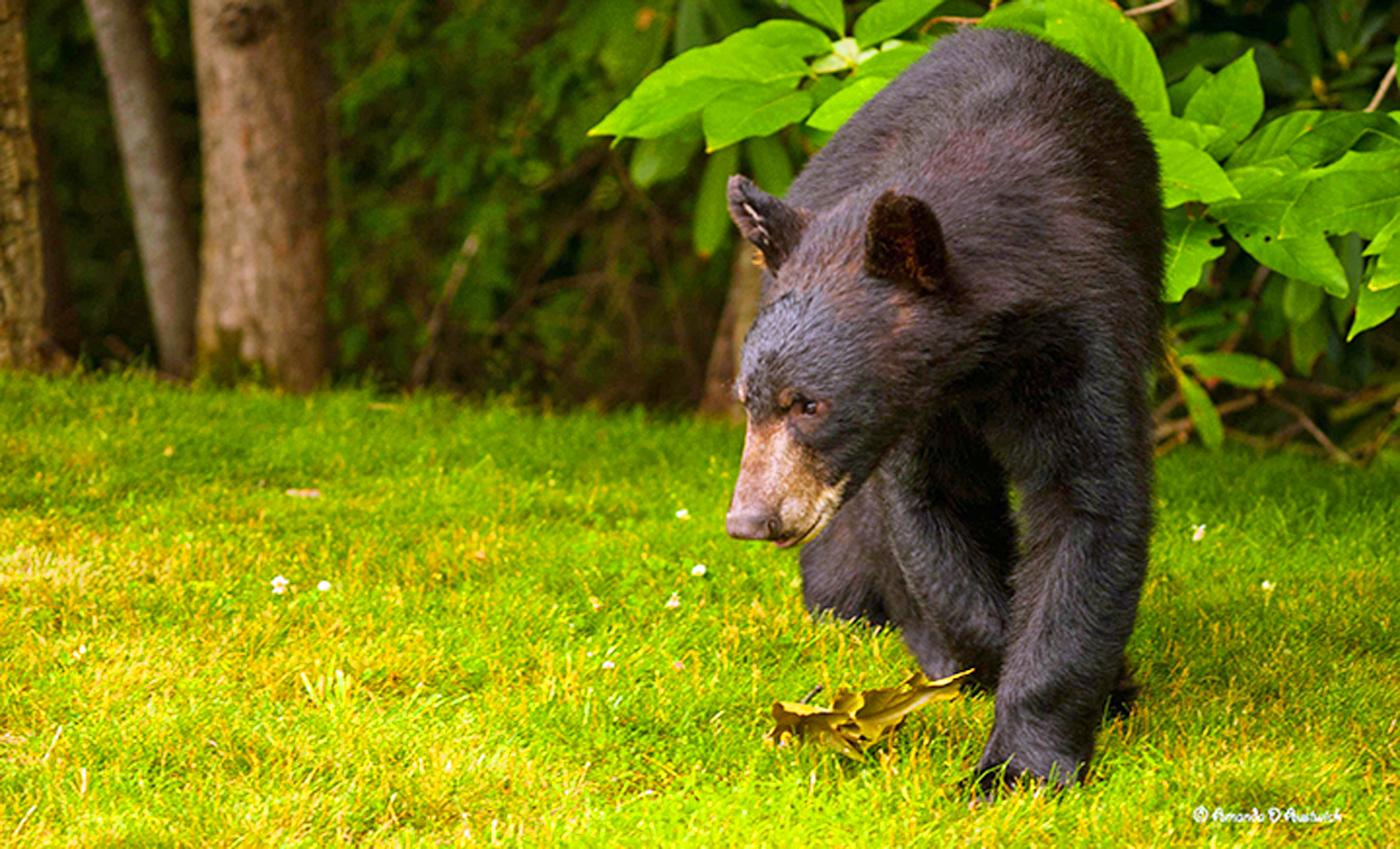
Photo Courtesy of Amanda Austwick This bear caused considerable damage to the Austwick feeders.

Photo Courtesy of Amanda Austwick                       This bear caused considerable damage to the Austwick feeders.

I also pointed out that the bear is actually just feeding on the seed. The damage is a by-product caused by the fact they probably don’t know their own strength.

“I know you will miss your birds, but it would probably be best to stop feeding for a couple of weeks,” I informed Amanda.

I suggested that after the two-week hiatus on feeding the birds that she put the feeders back outdoors but arrange to take them inside during the night.

“I know this first incident took place during the day, but bears are still most often going to visit during the night,” I wrote to her.

Unfortunately, the bear returned before she received my email response. The animal caused even more damage to the feeders, which she was able to document with photographs. A photo that she also emailed to The Erwin Record was even featured on the newspaper’s front page a couple of weeks ago.

Bear-Feeders

Photo Courtesy of Amanda Austwick                                          This Black Bear became a daytime visitor at the Austwick home. There are ways to discourage such visits.

By making the feeders absent for a time and then limiting the availability of the bird seed to daylight hours, perhaps this bear will lose interest and move on. Unfortunately, the attempt to deal with the problem came too late to prevent the bear from causing some property damage.

Residents in Flag Pond and other locations in Unicoi County are certainly not the only people that have to contend with bears.

Every year the Tennessee Wildlife Resources Agency receives hundreds of calls and complaints concerning black bears. According to TWRA’s website, most of the complaints involve bears raiding garbage containers and bird feeders, as well as feeding on pet food left outdoors.

The website also makes clear it is not TWRA policy to routinely trap and move bears causing these types of problems.

“Due to the relatively large home ranges and mobility of bears, there is no place remote enough in Tennessee to relocate bears where they will not have contact with humans,” the website states. “Secondly, by moving bears often all that is accomplished is just the problem has been moved and not solved.”

According to experts with TWRA, the long-term solution to bears raiding garbage containers, bird feeders and pet food left outdoors is to simply remove the food source and bears most often will go elsewhere.

The website even notes that some people even intentionally feed bears. As often happens, even the best of intentions can go awry.

As a result of the improper storage of garbage, easy availability of bird seed and the direct feeding of bears, animals often become habituated to humans and become a nuisance and a threat to human safety.

Sadly, according to TWRA officials, there are no other alternatives but to destroy bears that become a threat to human safety. The agency spent hundreds of man-hours last year addressing bear-human conflicts and some bears had to be destroyed as a result of irresponsible behavior of people directly and indirectly feeding bears.

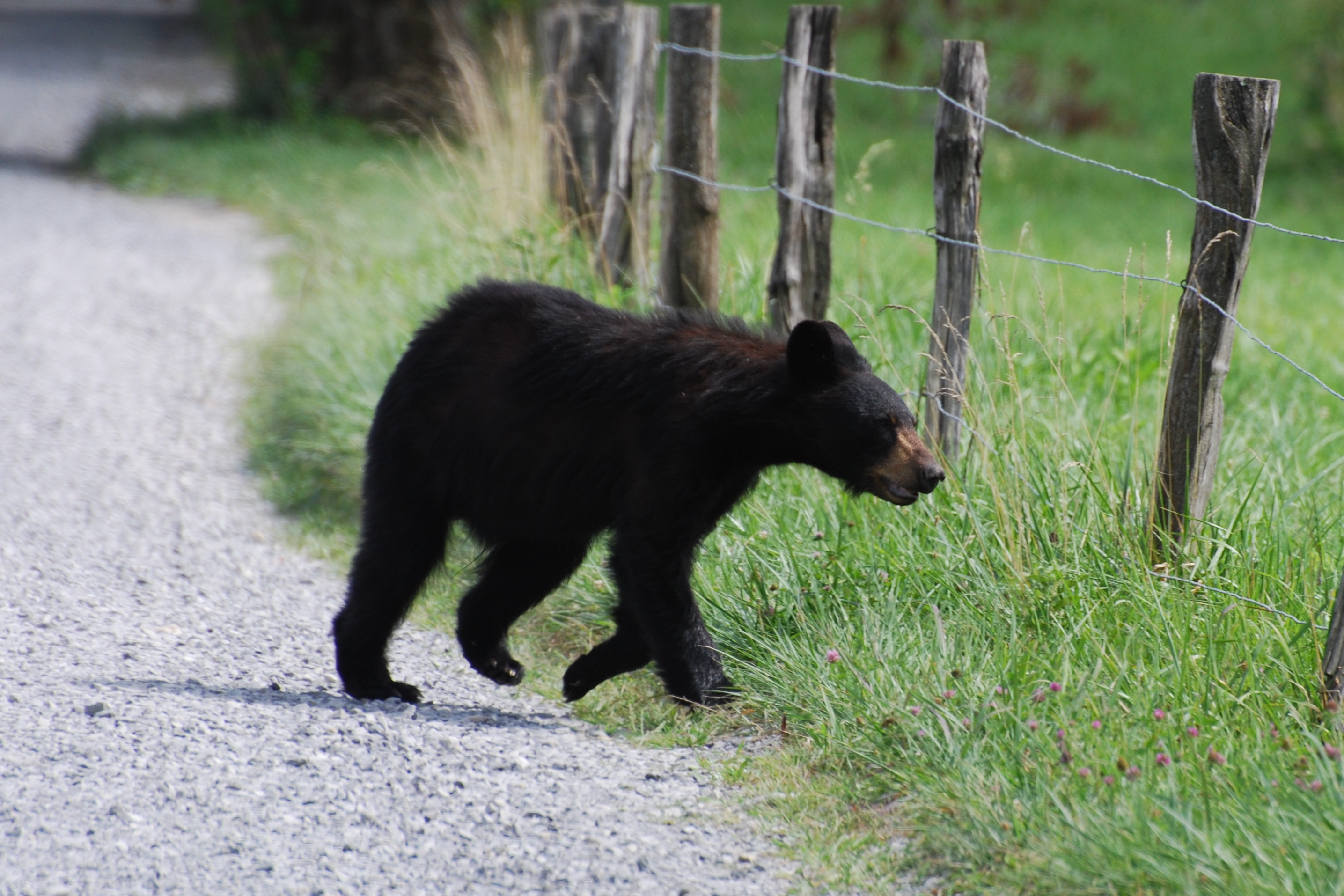
Photo Courtesy of Jean Potter A Black Bear cub photographed at Cades Cove.

Photo Courtesy of Jean Potter
A Black Bear cub photographed at Cades Cove.

TWRA notes that the fact “Garbage Kills Bears” is irrefutable and urges people to remember that a fed bear is a dead bear. TWRA encourages residents to educate themselves by being “bear aware.” The agency asks all Tennesseans to help keep communities safe by preserving the “wild” nature of bears by following these few simple tips:

• Do not feed bears

• Store garbage in bear-proof containers or in a manner that is inaccessible to bears

• Keep pet food indoors and feed pets in the house or garage

• Do not add food to your compost piles

• Keep cooking grills clean and stored indoors when not in use.

• Do not feed birds between April and January when bears are most active.

I don’t agree, however, with this moratorium. Feeders can be bear-proofed, although it requires effort and expense. I also think that feeders can be taken indoors at night to reduce the chance of attracting bears. I will concede that a determined bear willing to visit feeders during the daylight hours may require that all feeding of birds be curtailed, at least until the animal decides to move to greener pastures.

Black Bears (Ursus americanus) are one of Tennessee’s states treasures. Bears mostly inhabit Blount, Carter, Cocke, Greene, Jefferson, Johnson, Monroe, Polk, Sevier, Sullivan, Unicoi and Washington counties along the eastern border of the state. The highest densities of bears reside in the Cherokee National Forest and the Great Smokey National Park.

Since the 1970s, the number of bears has significantly increased in Tennessee, according to TWRA. For example, prior to 1980, the annual harvest in the state was usually less than 20 bears. Today the picture could not be more astounding. Since 2004, Tennessee’s annual bear harvest has exceeded 300 animals! In 2009, a harvest of 571 bears in Tennessee set a new state record.

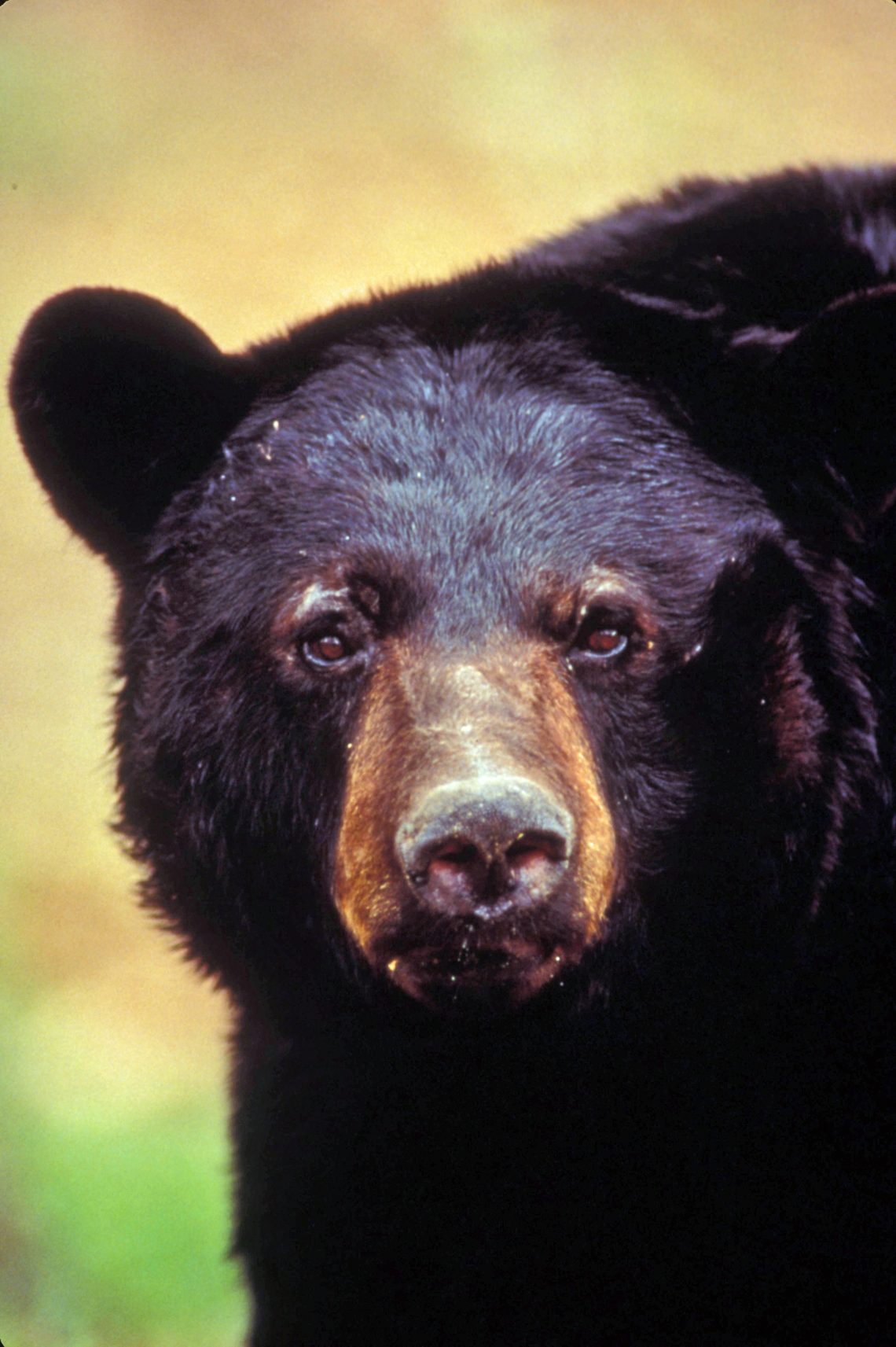
Photo by Waverley Traylor/ U.S. Fish & Wildlife Service American black bear at Great Dismal Swamp National Wildlife Refuge in Virginia.

Photo by Waverley Traylor/ U.S. Fish & Wildlife Service
American black bear at Great Dismal Swamp National Wildlife Refuge in Virginia.

A key first step to rebuilding Tennessee’s bear population was the establishment of national forests and parks that shelter and protect Tennessee’s sparse bear population.

With careful management and enforcement by TWRA and ecological conditions in their favor, bear populations have responded dramatically. Tennessee’s bear population thrives today largely due to the dedication of the TWRA, CNF, GSMNP, the bear research program at University of Tennessee and the support of Tennessee sportsman license dollars.

Today Tennessee’s wildlife, forest and park service agencies confront new and difficult challenges in managing bear-human conflicts. As human and bear populations increase, and more people move near public lands, bear-human interactions have undoubtedly increased creating potentially dangerous situations for the public and for bears.

TWRA maintains that the primary corrective action to this management dilemma is to simply restrict the access bears have to human foods. Tennessee residents and visitors can support bears by taking steps to ensure that wild bears remain “wild,” by carefully managing sources of human food or garbage that might attract bears.

I’ve had neighbors, too, who have observed bears on their property recently. A few of them have even gotten photographs of the bears. I haven’t seen a bear on my property, but many years ago a bear left prints (and damaged some plants) in my grandfather’s tobacco plot. More recently, I’ve found droppings that I am fairly confident were left by a bear.

The bears aren’t going anywhere, so we will probably be encountering them more often.

Photo by Bryan Stevens A young Eastern Towhee visits a feeder in July. The chance to see young birds is a great reason to offer food during the summer, but some precautions should be taken to minimize uninvited guests.

Photo by Bryan Stevens
A young Eastern Towhee visits a feeder in July. The chance to see young birds is a great reason to offer food during the summer, but some precautions should be taken to minimize uninvited guests.


Annual Carter County Summer Bird Count tallies 116 species


Members of the Lee and Lois Herndon Chapter of Tennessee Ornithological Society, known less formally as the Elizabethton Bird Club, conducted the 21st annual Carter County Summer Bird Count on Saturday, June 7.

Photo by Bryan Stevens  A total of 231 Song Sparrows, such as the one pictured here, were found during the recent Summer Bird Count.

Photo by Bryan Stevens
A total of 231 Song Sparrows, such as the one pictured here, were found during the recent Summer Bird Count.

The 19 observers in six parties logged 58 party hours, plus 5.5 nocturnal party hours. The total of 116 species tallied was slightly above the average of 112. The range for this count has varied between 105 and 121 species.

 Observers included Jim Anderson, Rob Armistead, Kevin Brooks, J.G. and Deb Campbell, Harry Lee Farthing, Don Holt, Christy Kendall, Rick Knight, Roy Knispel, Joe McGuiness, Tom McNeil, Cathy Myers, Kathy Noblet, Chris Soto, Bryan Stevens, Kim Stroud, Mary Anna Wheat and John Whinery.

The species list follows:

Canada Goose, 379; Wood Duck, 11; Mallard, 74; Ruffed Grouse,  6; Wild Turkey,  9; Double-crested Cormorant, 1; Great Blue Heron, 25; and Yellow-crowned Night-Heron, 3.

Black Vulture, 4; Turkey Vulture,  60; Sharp-shinned Hawk,  2; Cooper’s Hawk,  1; Broad-winged Hawk, 4; Red-tailed Hawk, 4; and American Kestrel,  6.

Killdeer,  6; American Woodcock, 1; Rock Pigeon, 67; Mourning Dove, 111; and Yellow-billed Cuckoo, 1.

Eastern Screech-Owl, 3; Barred Owl, 3; Common Nighthawk, 1; Chuck-will’s-widow, 2; and Eastern Whip-poor-will, 13.

Chimney Swift,  96; Ruby-throated Hummingbird,  30; Belted Kingfisher,  7; Red-bellied Woodpecker, 15; Yellow-bellied Sapsucker, 1; Downy Woodpecker,  21; Hairy Woodpecker, 6; Northern Flicker, 22; and Pileated Woodpecker, 11.

Photo by Bryan Stevens The Ruby-throated Hummingbird was represented by a total of 30 individuals on the recent Summer Bird Count.

Photo by Bryan Stevens
The Ruby-throated Hummingbird was represented by a total of 30 individuals on the recent Summer Bird Count.

Eastern Wood-Pewee, 26; Acadian Flycatcher, 44; Alder Flycatcher, 4; Least Flycatcher, 9; Eastern Phoebe, 38; Great Crested Flycatcher, 4; and Eastern Kingbird, 17.

White-eyed Vireo, 10; Yellow-throated Vireo, 2; Blue-headed Vireo, 54; Red-eyed Vireo, 166; Blue Jay, 91; American Crow, 130; and Common Raven, 6.

Purple Martin, 21; Tree Swallow, 152; Northern Rough-winged Swallow, 36; Cliff Swallow, 295; and Barn Swallow, 159.

Carolina Chickadee, 71; Tufted Titmouse, 72; Red-breasted Nuthatch, 9; White-breasted Nuthatch, 15; Brown Creeper, 1; Carolina Wren, 86; House Wren, 54; and Winter Wren, 8.

Blue-gray Gnatcatcher, 41; Golden-crowned Kinglet, 10; Eastern Bluebird, 48; Veery, 31; Hermit Thrush, 2; Wood Thrush,  56; American Robin,  356; Gray Catbird,  44; N. Mockingbird,  59; Brown Thrasher, 16; European Starling,  607; and Cedar Waxwing,  94.

Ovenbird, 70; Worm-eating Warbler, 14; Louisiana Waterthrush, 4; Golden-winged Warbler, 3; Black-and-white Warbler,  38; Swainson’s Warbler, 3; Kentucky Warbler, 1; Common Yellowthroat,  27; Hooded Warbler, 88; American Redstart, 9; Northern Parula,  15; Magnolia Warbler, 2; Blackburnian Warbler,  14; Yellow Warbler, 5; Chestnut-sided Warbler, 27; Black-throated Blue Warbler,  35; Pine Warbler, 4; Yellow-rumped Warbler, 1; Yellow-throated Warbler, 13; Black-throated Green Warbler, 34; Canada Warbler, 24; and Yellow-breasted Chat, 10.

Eastern Towhee, 120; Chipping Sparrow, 100; Field Sparrow,  37; Vesper Sparrow,  1; Song Sparrow, 231; Dark-eyed Junco, 89; Scarlet Tanager, 27; Northern Cardinal,  157; Rose-breasted Grosbeak, 17; Blue Grosbeak, 2; and Indigo Bunting, 181.

Red-winged Blackbird, 69; Eastern Meadowlark, 25; Common Grackle,  95; Brown-headed Cowbird, 39; Orchard Oriole, 7; Baltimore Oriole, 4; House Finch,  28; Red Crossbill, 1; American Goldfinch, 166; and House Sparrow, 128.

Photo by Bryan Stevens Although waterfowl can be difficult to find in Carter County during the summer months, a total of 11 Wood Ducks were tallied for the Summer Bird Count.

Photo by Bryan Stevens
Although waterfowl can be difficult to find in Carter County during the summer months, a total of 11 Wood Ducks were tallied for the Summer Bird Count.

All 116 species found on the count are known or suspected to nest in Carter County, except for the Double-crested Cormorant.

•••••

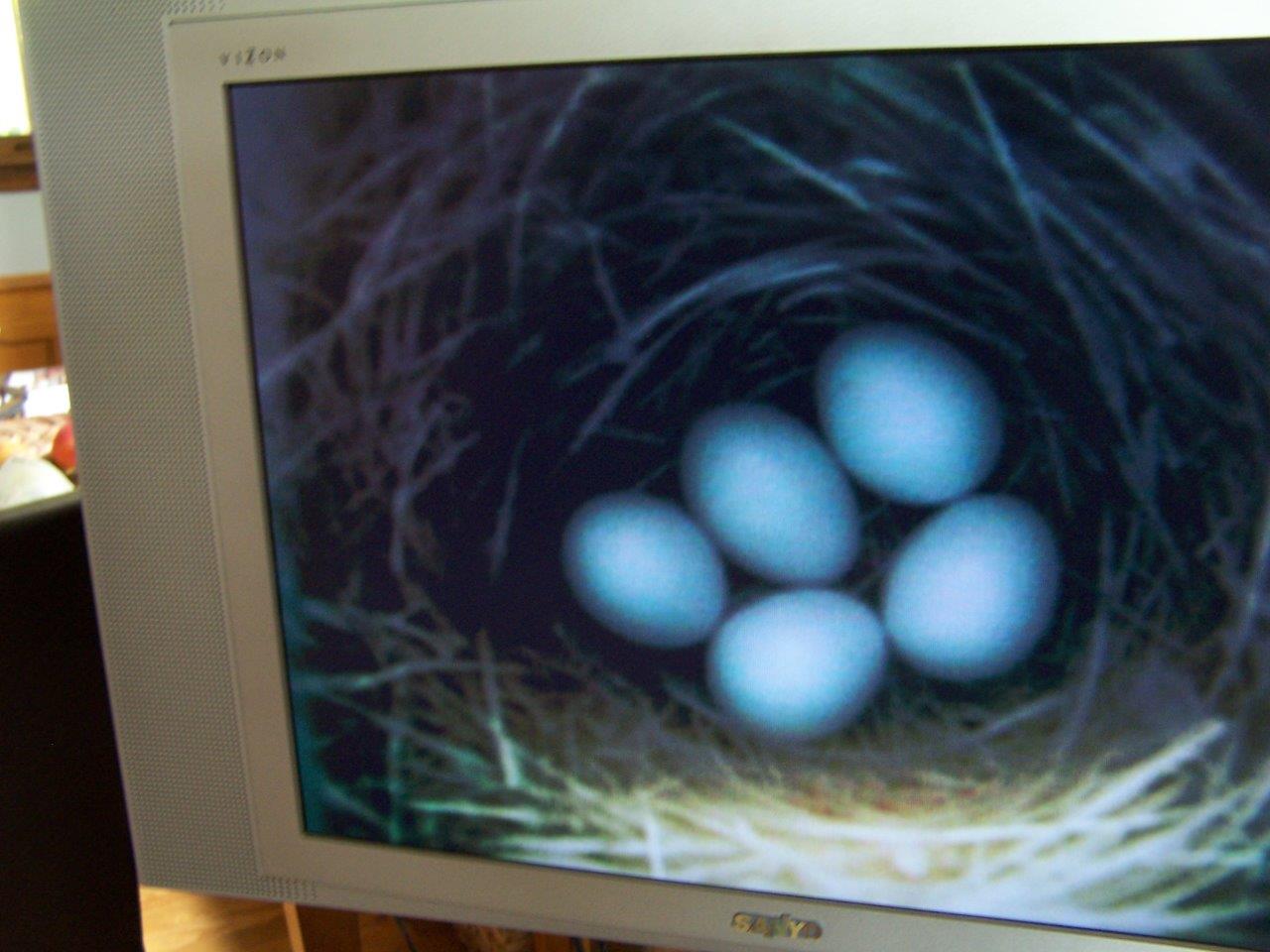
Hampton resident Barbara Lake emailed me to share some photos of a clutch of eggs in one of her bluebird boxes.

Photo Courtesy of Barbara Lake A clutch of five Eastern Bluebird eggs in a box at the home of Barbara and Jerry Lake in Hampton.

Photo Courtesy of Barbara Lake
A clutch of five Eastern Bluebird eggs in a box at the home of Barbara and Jerry Lake in Hampton.

She actually has two pairs of Eastern Bluebirds nesting in boxes at her home. She has named the bird Blossom and Max, as well as Aliy and Allen. The latter are named for Iditarod and Yukon Quest musher friends.

“I wrote to Aliy and told her I named a bluebird after her, and she is happy about it.  So now I have to keep her up to date about what’s going on.”

Some of Barbara’s bluebird boxes are equipped with television cameras, which allows her to monitor activity on a television screen in the comfort of her home.

•••••

Now that it is July, birding sometimes becomes more difficult because of the intense heat, high humidity and other factors. There are still interesting bird observations to make. Many birds are still taking care of young, either in or out of the nest. If you’d like to share an observation, make a comment or ask a question, email me at ahoodedwarbler@aol.com or post a comment here.


Region’s drab vireos more famous for persistent singing than their appearance

In some recent columns, I’ve focused on some of the summer songbirds — scarlet tanager, rose-breasted grosbeak – with flashy, bright plumages.  Not all our summer nesting birds boast such vivid coloration. In fact, one family of songbirds — the vireos — is known for its dull plumage.

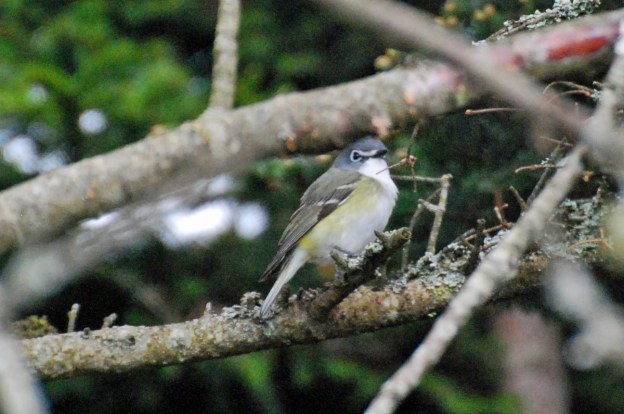
Photo by Bryan Stevens      A blue-headed vireo sings from a woodland perch.

Photo by Bryan Stevens A blue-headed vireo sings from a woodland perch.

I’ve had some interesting encounters with vireos in the past few weeks. From early May through mid-June, a male red-eyed vireo sang daily from the woodland near my home. He would commence signing early in the morning and continue through late afternoon. I never saw him, which is not too surprising. Red-eyed vireos lead almost their entire lives in the forest canopy. If you do manage to observe one, you’ll see an olive green bird with white underpart. The red-eyed vireo, known scientifically as Vireo olivaceus, shows a narrow white eyebrow bordered above with black. It also has a grayish crown and the namesake red eye.
At a glance, the vireos would appear related to the wood warblers. Research into vireo DNA, however, has led many experts to contend that vireos are more closely related to crows and shrikes. Like the flycatcher, warbler and hummingbird families, the vireo family is exclusive to the New World. There are about 50 species of vireos. The majority reside in the tropics, but about a dozen species spend their nesting season within the United States.

JP-RedEyedVireo-Fledgling

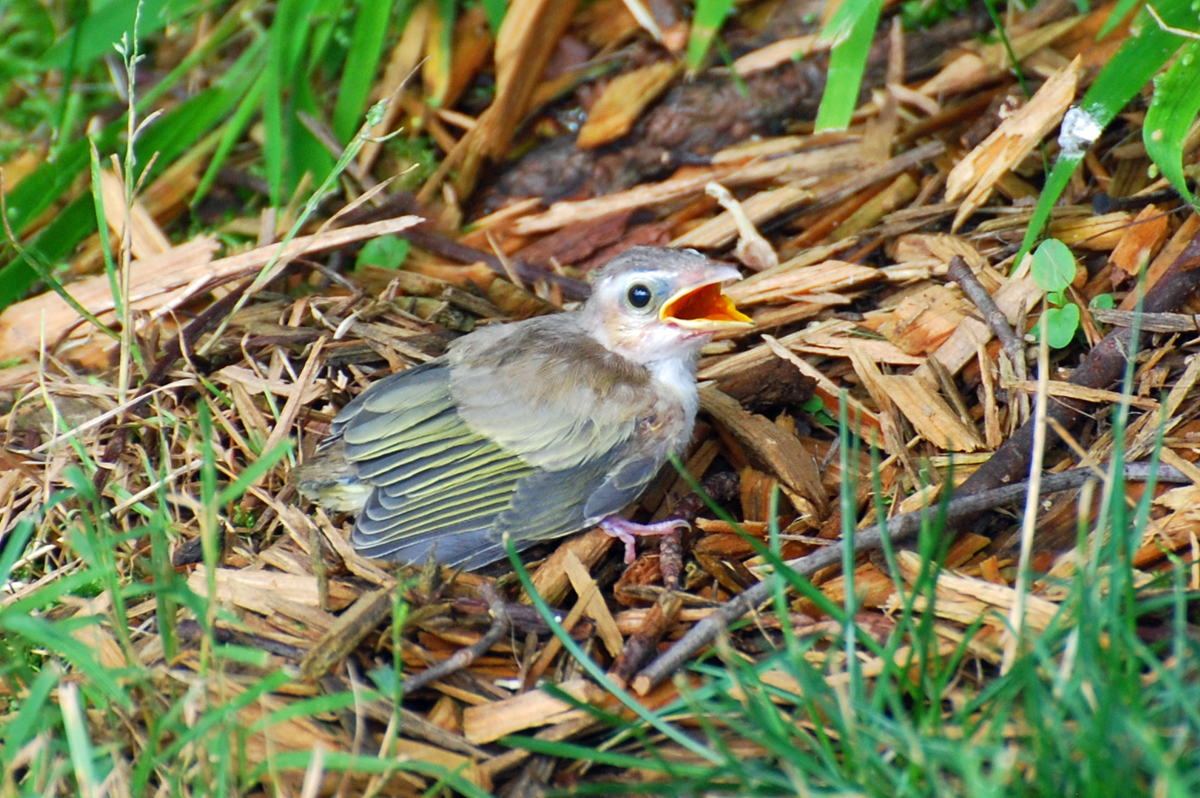
Photo Courtesy of Jean Potter A young red-eyed vireo begs for food, which will bring a prompt response from a nearby parent.

In Southwest Virginia and Northeast Tennessee, vireos resident during the summer months include red-eyed, white-eyed, blue-headed, yellow-throated and warbling.  Most people are likely unaware of vireos. Although not uncommon, these birds are much more frequently heard than seen. They spend much of their time in the forest canopy or in dense brush. When singing, they can remain at a perch, unmoving, for long periods of time. 
On recent woodland walks I have heard the loud scolding calls of red-eyed vireos. This call, given apparently when the vireo is alarmed or irritated, is quite unlike the usual vocalizations produced by this bird. First and foremost, the call is louder than one would think could be produced by a bird that is only about six inches long.
During the summer season, the red-eyed vireo is also one of the most persistent of singing songbirds. Another of its common names is “Preacher Bird,” so called because of its tendency to unceasingly deliver it song. To give you an idea of just how persistently this bird sings, the red-eyed vireo holds the record for singing its song the most times in a single day. Some individuals have been recorded singing the series of emphatic syllables more than 20,000 times in a day. The song is not particularly musical, consisting of whistled phrases, each slightly different and punctuated with brief pauses. 

Photo Courtesy of Jean Potter A red-eyed vireo sits on its basket-shaped nest.

Photo Courtesy of Jean Potter
A red-eyed vireo sits on its basket-shaped nest.

The red-eyed vireo is still considered one of eastern North America’s most common summer breeding birds. At one time, this bird was probably the most common breeding bird in Eastern woodlands. It is still one of the most widespread, ranging from the Eastern United States into the Northwestern United States and across Canada. In fall, they withdraw to spend the winter in South America.
The term “vireo,” originating in Latin, can be translated into English as “green bird.” It’s an apt description, as many of these small birds are primarily dull green in coloration.
There is an endangered vireo, the black-capped vireo, a bird with a limited breeding range in Texas. Black-capped vireos numbers have dwindled to perilous levels due to the loss of low growing woody cover these birds need for breeding purposes. The cause of the loss of habitat varies, but includes the clearance of land for livestock as well as overgrazing by livestock and deer. In the past, fires regularly opened up such habitats. Due to modern fire control practices, such fires are no longer a natural occurrence. Since this species is already endangered, brown-headed cowbirds have also contributed to the problem since the cowbirds slip their own eggs into the nests of black-capped vireos.

Vireo_blackcapped_B07T

Photo by USFWS The black-capped vireo is the only member of the vireo family in the United States classified as endangered.

Two others, Bell’s vireo and gray vireo, are identified as species of concern on the Audubon Watchlist. This listing spotlights species that may bear intense scrutiny to make certain they don’t become endangered.
Other vireos that can be found in the United States, for at least part of the year, include Philadelphia vireo, plumbeous vireo and Cassin’s vireo. A specialty of Florida is the black-whiskered vireo. 
Many species of vireo are also found in the islands of the Caribbean, including Jamaican vireo, Cuban vireo and Puerto Rican vireo. Some of the more colorful common names for vireos include the yellow-green vireo, golden vireo and yellow-winged vireo. 
In Central and South America, the vireo family expands to include many birds with common names such as “Shrike-Vireo,” “Greenlet” and “Peppershrike.” Some of the varied species include the lemon-chested greenlet, green shrike-vireo and the black-bellied peppershrike.

Warbling_Vireo

Photo by Dave Menke/USFWS A warbling vireo is the most drab member of a family known for its drabness. The warbling vireo’s impressive song, however, reminds many listeners of the song of the gaudy painted bunting.

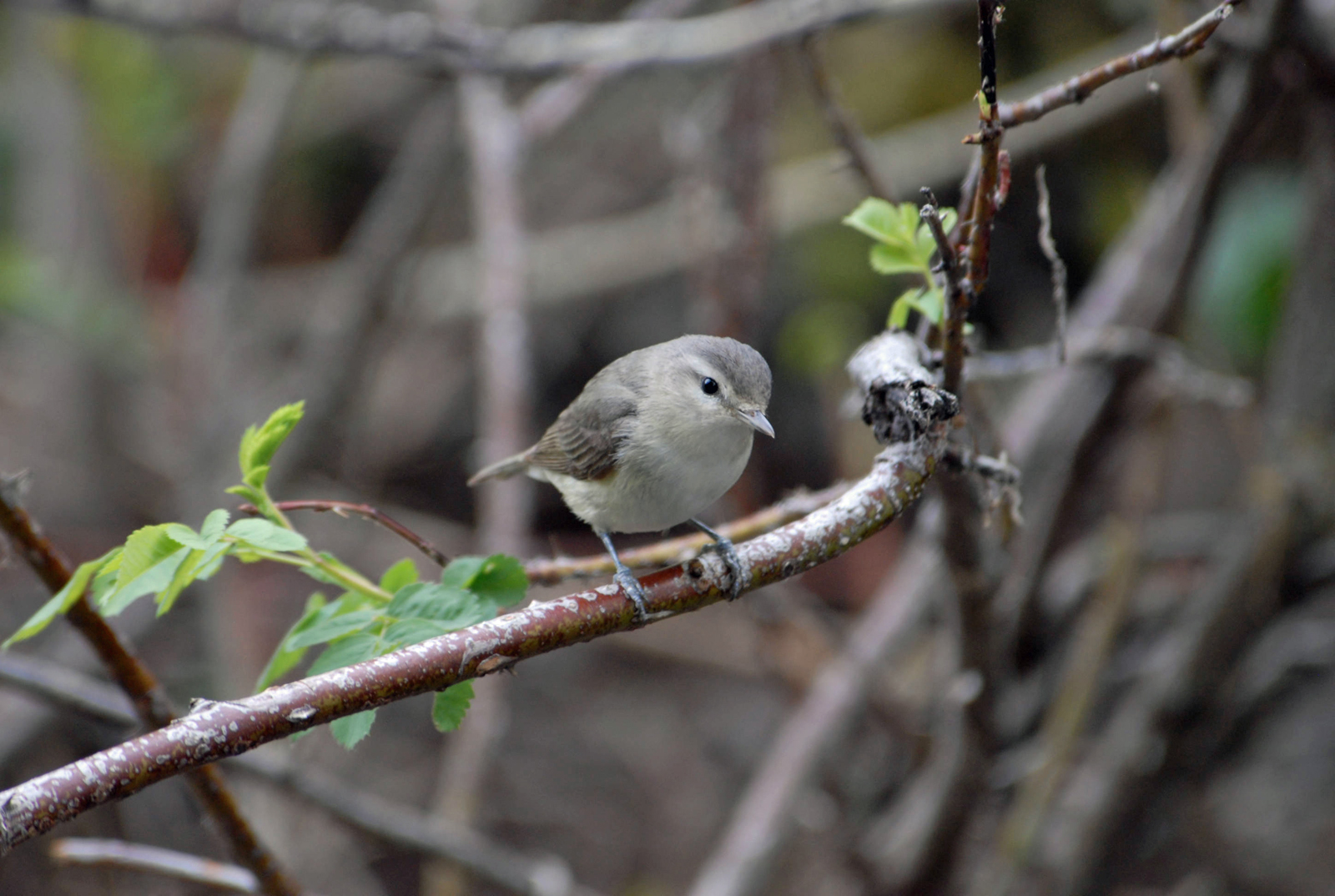
Known by the scientific name, Vireo gilvus, the warbling vireo is another member of this family of songbirds that can be found in the region. It is named for its distinctive, warbling song. Some experts have likened its song to that of the painted bunting. That must be about all the two birds have in common. In contrast with the gaudy painted bunting, the warbling vireo can quite honestly stake a claim as one of our most drab songbirds. Overall, this is a grayish little bird with a white eyeline that is paler than the rest of its plumage. Its legs are blue-gray in color and this species has a bill that is stout like other vireos and unlike the beaks of most warblers. It’s their plainness that is the most distinctive aspect of their appearance.
Many vireos construct deep cup- or basket-shaped nests, often in the higher branches of tall trees. Male and female share incubation duties and work together to feed their young. 
Most vireos feed on in­sects during their summer stay north of the border. However, during migration they often feed on berries and continue to do so on their wintering grounds. Experts have noted that the white-throated vireo is particularly fond of gumbo-limbo seeds. This tropical tree can be found from southern Florida and Mexico, as well as throughout the Caribbean and in South America in Brazil and Venezuela.

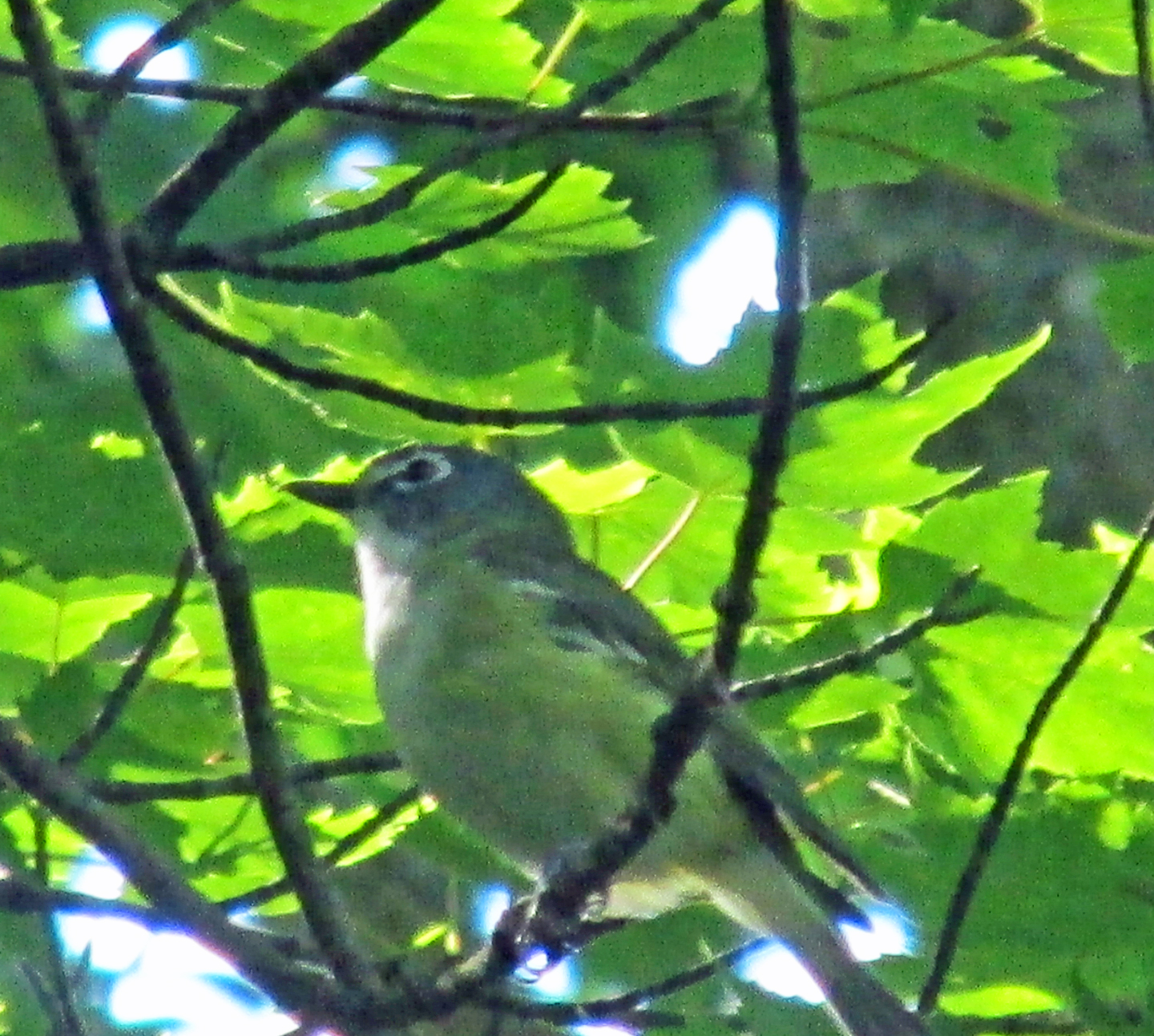
Photo by Jean Potter The Blue-headed Vireo prefers wooded habitats at higher elevations.

Photo by Jean Potter
The Blue-headed Vireo prefers wooded habitats at higher elevations.

At times, it’s important to use our ears, as well as our eyes, when trying to find birds. That’s particularly true of the vireos. The widespread family can be found in rural areas, as well as suburban settings. Tall stands of trees are one of the essential requirements. So, when you next hear some whistled phrases coming from the treetops, be sure to look up. You may get lucky.
To hear a singing red-eyed vireo, visit the link below to view a video of the bird on YouTube:

First-ever Unicoi County Summer Bird Count tallies 111 species

Members of the Lee and Lois Herndon Chapter of Tennessee Ornithological Society conducted the first-ever Unicoi County Summer Bird Count on Saturday, June 14.

Photo by Bryan Stevens A young Eastern Bluebird slowly gains independence after leaving the nest.

Photo by Bryan Stevens
A young Eastern Bluebird slowly gains independence after leaving the nest.

Rick Knight, a long-time compiler for the chapter’s seasonal bird counts, organized and launched the count as a means to collect valuable information about the local distribution of birds in an often overlooked county in the region.

Nineteen observers in five parties logged 53 party hours, plus three nocturnal party hours, searching for birds from Flag Pond to Limestone Cove within Unicoi County.

 A total of 111 species were tallied during the count by the following observers: Jim Anderson, Rob Armistead, Harry Lee Farthing, Don Holt, Rick Knight, Roy Knispel, Richard Lewis, Vern Maddux, Joe McGuiness, Tom McNeil, Charles Moore, Cathy Myers, Kathy Noblet, Brookie and Jean Potter, Bryan Stevens, Kim Stroud, Gary Wallace and John Whinery.

 Species found during the count included:

Canada Goose, 76; Wood Duck, 17; Mallard, 31; Ruffed Grouse,1; Wild Turkey, 29; Great Blue Heron, 12; and Green Heron, 6.

Black Vulture, 3; Turkey Vulture, 28; Bald Eagle, 3 ; Sharp-shinned Hawk, 1; Cooper’s Hawk, 1; Red-shouldered Hawk, 1; Broad-winged Hawk, 3; Red-tailed Hawk, 5; American Kestrel, 2; and Peregrine Falcon, 3.

Killdeer,17; Rock Pigeon,  75; Mourning Dove, 77; Yellow-billed Cuckoo,  3; Eastern Screech-Owl,  2; Great Horned Owl, 1; Chuck-will’s-widow, 6; Eastern Whip-poor-will,  3; Chimney Swift,  44; Ruby-throated Hummingbird, 17; and Belted Kingfisher,  4.

Photo Courtesy of Jean Potter The Yellow-bellied Sapsuckers found during the count indicate that this species is nesting at high-elevation locations in Unicoi County.

Photo Courtesy of Jean Potter
The Yellow-bellied Sapsuckers found during the count indicate that this species is nesting at high-elevation locations in Unicoi County.

Red-bellied Woodpecker,  20; Yellow-bellied Sapsucker  3; Downy Woodpecker  15; Hairy Woodpecker  5; Northern Flicker,  12; Pileated Woodpecker, 16;  Eastern Wood-Pewee  8; Acadian Flycatcher  29; Least Flycatcher  5; Eastern Phoebe,  44; Great Crested Flycatcher,  2; and Eastern Kingbird,  13.

White-eyed Vireo,  1; Yellow-throated Vireo,  1; Blue-headed Vireo,  29; Warbling Vireo,  1; Red-eyed Vireo,  157; Blue Jay, 59; American Crow, 139; Common Raven, 8; Purple Martin, 36; Tree Swallow, 94; Northern Rough-winged Swallow, 68; Cliff Swallow, 64; and Barn Swallow, 139.

Carolina Chickadee,  63; Tufted Titmouse,  47; Red-breasted Nuthatch,  3; White-breasted Nuthatch,  20; Brown Creeper, 1; Carolina Wren, 80; House Wren,  31; Winter Wren,  2; and Blue-gray Gnatcatcher, 27.

Eastern Bluebird, 46; Veery, 35; Wood Thrush, 37; American Robin, 435; Gray Catbird, 37; Northern Mockingbird, 37; Brown Thrasher, 14; European Starling, 464; and Cedar Waxwing,  71.

Ovenbird, 56; Worm-eating Warbler, 9; Louisiana Waterthrush, 5; Golden-winged Warbler, 1; Black-and-white Warbler, 19; Swainson’s Warbler, 6; Kentucky Warbler, 1; Common Yellowthroat,  2; Hooded Warbler, 78; American Redstart,  8; Northern Parula, 13; Magnolia Warbler, 1; Blackburnian Warbler, 2; Yellow Warbler, 1; Chestnut-sided Warbler,  23; Black-throated Blue Warbler, 20; Yellow-throated Warbler, 4; Prairie Warbler, 7; Black-throated Green Warbler,  30; Canada Warbler, 9; and Yellow-breasted Chat, 5.

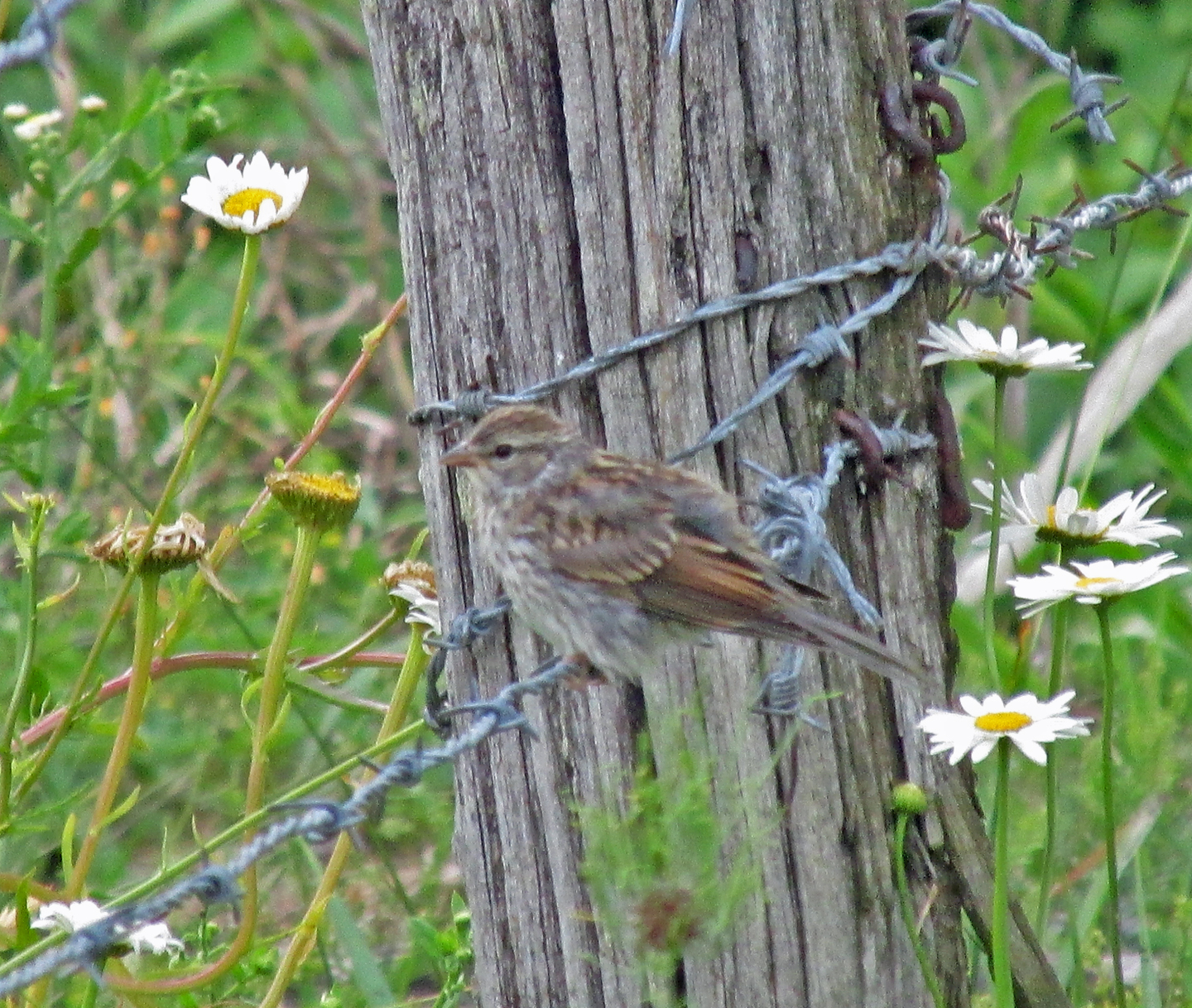
Photo by Bryan Stevens A young Chipping Sparrow perches on a barbed wire fence at the Bell Cemetery in Limestone Cove.

Photo by Bryan Stevens
A young Chipping Sparrow perches on a barbed wire fence at the Bell Cemetery in Limestone Cove.

Eastern Towhee,  70; Chipping Sparrow,  60; Field Sparrow,  12; Song Sparrow,  214; Dark-eyed Junco,  28; Scarlet Tanager,  20; Northern Cardinal,  138; Rose-breasted Grosbeak, 2; Blue Grosbeak, 1; and Indigo Bunting, 197.

Red-winged Blackbird,  101; Eastern Meadowlark,  13; Common Grackle,  94; Brown-headed Cowbird,  34; Orchard Oriole,  1; Baltimore Oriole,  1; House Finch,  8; American Goldfinch,  84; and House Sparrow,  64.

Knight noted that all 111 species found during the count are known or suspected to nest in Unicoi County. For instance, the three Bald Eagles found on the count included an adult bird and two recently fledged young. Eagles have been documented nesting near the Devil’s Looking Glass above the Nolichucky River for the past couple of years.

•••••

During the count, I stayed close to home with the territory of Limestone Cove and the portion of Sciota Road located within Unicoi County. Gary Wallace and John Whinery joined me for several hours of productive birding.

We found some birds I would never have expected to find so close to home, including singing Prairie Warblers and a noisy, scolding Yellow-breasted Chat. On Bean Creek Road near the state line with North Carolina, we also found a male Yellow-bellied Sapsucker while walking a section of the Appalachian Trail. This was my first summer sighting of what is normally a winter bird in the region. In recent years, however, a few sapsuckers have started nesting in some of the local mountains.

We also missed some target birds. We checked out every pond we could view in our territory and failed to find a Green Heron.

Summer is also an extremely busy time of year for birds as they go about the business of bringing up a new generation of birds. Most birds have completed spring migration and have settled into locations they will call home for the next few months. During the recent Summer Bird Count in Unicoi County, we saw numerous young birds, ranging from Chipping Sparrows and Eastern Bluebirds to American Robins and Barn Swallows.

Photo by Bryan Stevens A young Barn Swallow perched on a utility line at the Bell Cemetery in Limestone Cove awaits a delivery of food from its parents.

Photo by Bryan Stevens
A young Barn Swallow perched on a utility line at the Bell Cemetery in Limestone Cove awaits a delivery of food from its parents.

•••••

To ask a question, make a comment or share an observation, email me at ahoodedwarbler@aol.com or leave a remark here at “Our Fine Feathered Friends.”


Northeast Tennessee Spring Bird Count finds 157 species

Members of the Lee and Lois Herndon Chapter of Tennessee Ornithological Society held the annual Spring Bird Count on Saturday, May 3. The count has now been held for several decades and is conducted in the five-county area of Northeast Tennessee that includes the counties of Carter, Johnson, Sullivan, Unicoi and Washington.

10296052_10202842919586443_3829607003488944484_o

Photo by Bryan Stevens The American Robin ranked as the most abundant bird on this year’s Spring Bird Count for Northeast Tennessee.

A total of 40 individuals in nine parties looked for birds on a beautiful May day, which in itself was a slight change from the way the count has been conducted in the past. The count has traditionally been conducted the last weekend in April but was moved back this year so as not to compete with the Roan Mountain Spring Naturalists Rally, which was held a week earlier than its usual date.

Those taking part in the count were Fred and JoAnn Alsop, Jim Anderson, Paul and Emily Bayes, Jerry Bevins, Rob Biller, Kevin and Dallas Brooks, Ron Carrico, Harry Lee Farthing, Paul Haynes, Don Holt, Heather Jones, Caitlyn King, David Kirschke, Rick Knight (compiler), Roy Knispel, Tom Laughlin, Richard Lewis, Vern Maddux, Larry McDaniel, Joe McGuiness, Tom McNeil, Charles Moore, Cathy Myers, Kathy Noblet, Brookie and Jean Potter, Amy and Scott Reys, Chris Soto, Bryan Stevens, Kim Stroud, Byron Tucker, Gary and Brenda Wallace, Mary Anna Wheat, John Whinery and Rex Whitfield.

I know I am always enthusiastic on the day of a spring count, and I suspect the same holds true for other participants. You never know what unexpected bird might make an appearance for this annual survey. Some of my own good finds this year included Yellow-crowned Night-heron, Yellow-breasted Chat, Yellow-billed Cuckoo and Orchard Oriole.

A total of 157 species found fell somewhat short of the all-time record of 161 species, which was established back in 2005. The average number of species for this count is 147.

My friend, Byron Tucker, who was visiting from Atlanta, Ga., got to take part and also make his first visit to Holston Mountain in Carter County. He said he enjoyed the outing. We counted with Elizabethton residents Gary and Brenda Wallace.

My favorite warbler – Hooded Warbler – tied with Ovenbird as the most abundant warbler tallied for this year’s spring count with 173 individuals counted for both these species. A total of 27 warbler species made the count, as well as one Brewster’s Warbler, which is a hybrid between a Blue-winged Warbler and Golden-winged Warbler.

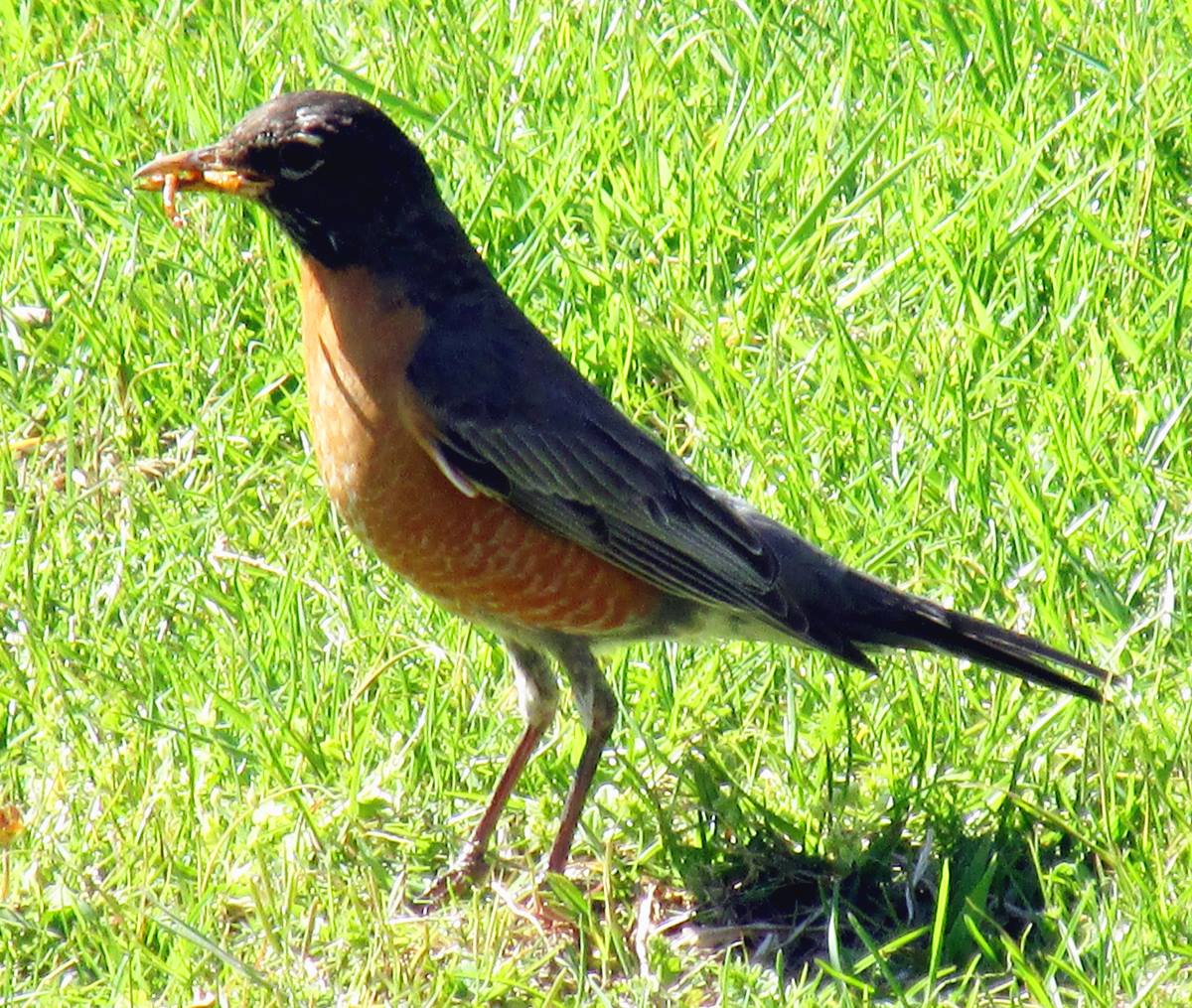
I’m thrilled to report that the most abundant bird on the count wasn’t the European Starling. That honor went to the American Robin with 960 individuals reported by counters. The European Starling came in second with 865 individuals.

Other common species included Cliff Swallow (806), Canada Goose (580), Red-winged Blackbird (469), Common Grackle (401) and American Crow (341).

A Canvasback found on a pond in Washington County established a new late date for this duck in Northeast Tennessee. Other species of interest making the count included Western Sandpiper, Gray-cheeked Thrush, Blackpoll Warbler and Sora.

The total number of species follows:

Canada Goose, 580; Wood Duck, 53; Mallard, 183; Blue-winged Teal, 11; Canvasback, 1; Lesser Scaup, 1; Hooded Merganser, 1; Ruffed Grouse, 4; Wild Turkey, 40; Common Loon, 11; Horned Grebe, 1; and Double-crested Cormorant, 53.

Great Blue Heron, 79; Green Heron, 11; Black-crowned Night-heron, 1; Yellow-crowned Night-heron, 1; Black Vulture, 62; and Turkey Vulture, 214.

Osprey, 11; Sharp-shinned Hawk, 3; Cooper’s Hawk, 10; Bald Eagle, 11; Red-shouldered Hawk, 3; Broad-winged Hawk, 10; Red-tailed Hawk, 41; American Kestrel, 11; and Merlin, 2.

Virginia Rail, 1; Sora, 1; American Coot, 1; Killdeer, 32; Spotted Sandpiper, 68; Solitary Sandpiper, 43; Greater Yellowlegs, 1; Lesser Yellowlegs, 2; Western Sandpiper, 1; Least Sandpiper, 21; White-rumped Sandpiper, 4; and Wilson’s Snipe, 4.

Bonaparte’s Gull, 3; Ring-billed Gull, 54; Rock Pigeon, 182; Eurasian Collared-Dove, 1; Mourning Dove, 204; and Yellow-billed Cuckoo, 2.

Eastern Screech-Owl, 8; Great Horned Owl, 6; Barred Owl, 10; Northern Saw-whet Owl, 2; Common Nighthawk, 4; Chuck-Will’s-Widow, 8; and Whip-Poor-Will, 31.

Chimney Swift, 238; Ruby-throated Hummingbird, 28; Belted Kingfisher, 19; Red-headed Woodpecker, 2; Red-bellied Woodpecker, 82; Yellow-bellied Sapsucker, 5; Downy Woodpecker, 20; Hairy Woodpecker, 10; Northern Flicker, 41; and Pileated Woodpecker, 42.

Eastern Wood-Pewee, 11; Yellow-bellied Flycatcher, 1; Acadian Flycatcher, 27; Willow Flycatcher, 3; Least Flycatcher, 7; Eastern Phoebe, 54; Great Crested Flycatcher, 11; and Eastern Kingbird, 82.

White-eyed Vireo, 17; Yellow-throated Vireo, 10; Blue-headed Vireo, 63; Warbling Vireo, 6; Red-eyed Vireo, 151; Blue Jay, 225; American Crow, 341; and Common Raven, 16.

Horned Lark, 2; Northern Rough-winged Swallow, 223; Purple Martin, 61; Tree Swallow, 271; Barn Swallow, 284; and Cliff Swallow, 806.

Image

Photo by Bryan Stevens
The Northern Rough-winged Swallow was represented on the spring count by 223 individuals.

Carolina Chickadee, 147; Tufted Titmouse, 165; Red-breasted Nuthatch, 7; White-breasted Nuthatch, 25; and Brown Creeper, 7.
House Wren, 45; Winter Wren, 5; Carolina Wren, 134; Blue-gray Gnatcatcher, 84; Golden-crowned Kinglet, 2; and Ruby-crowned Kinglet, 8.

Eastern Bluebird, 151; Veery, 12; Gray-cheeked Thrush, 1; Wood Thrush, 67; American Robin, 960; Gray Catbird, 37; Northern Mockingbird, 128; Brown Thrasher, 43; European Starling, 865; and Cedar Waxwing, 59.

Ovenbird, 173; Worm-eating Warbler, 25; Louisiana Waterthrush, 19; Northern Waterthrush, 2; Golden-winged Warbler, 1; Black-and-white Warbler, 53; Swainson’s Warbler, 6; Kentucky Warbler, 4; Common Yellowthroat, 22; Hooded Warbler, 173; American Redstart, 10; Cape May Warbler, 2; Northern Parula, 28; Magnolia Warbler, 2; Blackburnian Warbler, 12; Yellow Warbler, 10; Chestnut-sided Warbler, 25; Blackpoll Warbler, 1; Black-throated Blue Warbler, 61; Palm Warbler, 3; Pine Warbler, 9; Yellow-rumped Warbler, 42; Yellow-throated Warbler, 34; Prairie Warbler, 3; Black-throated Green Warbler, 97; Canada Warbler, 30; Yellow-breasted Chat, 19; and Brewster’s Warbler, a hybrid of Blue-winged and Golden-winged Warblers, 1.

Eastern Towhee, 179; Chipping Sparrow, 166; Field Sparrow, 55; Savannah Sparrow, 3; Song Sparrow, 259; Swamp Sparrow, 2; White-throated Sparrow, 11; White-crowned Sparrow, 24; and Dark-eyed Junco, 56.

Summer Tanager, 4; Scarlet Tanager, 78; Northern Cardinal, 212; Rose-breasted Grosbeak, 40; and Indigo Bunting, 69.

Bobolink, 1; Red-winged Blackbird, 469; Eastern Meadowlakrk, 100; Common Grackle, 401; Brown-headed Cowbird, 88; Orchard Oriole, 27; and Baltimore Oriole, 27.

House Finch, 38; Pine Siskin, 1; American Goldfinch, 301; and House Sparrow, 93.


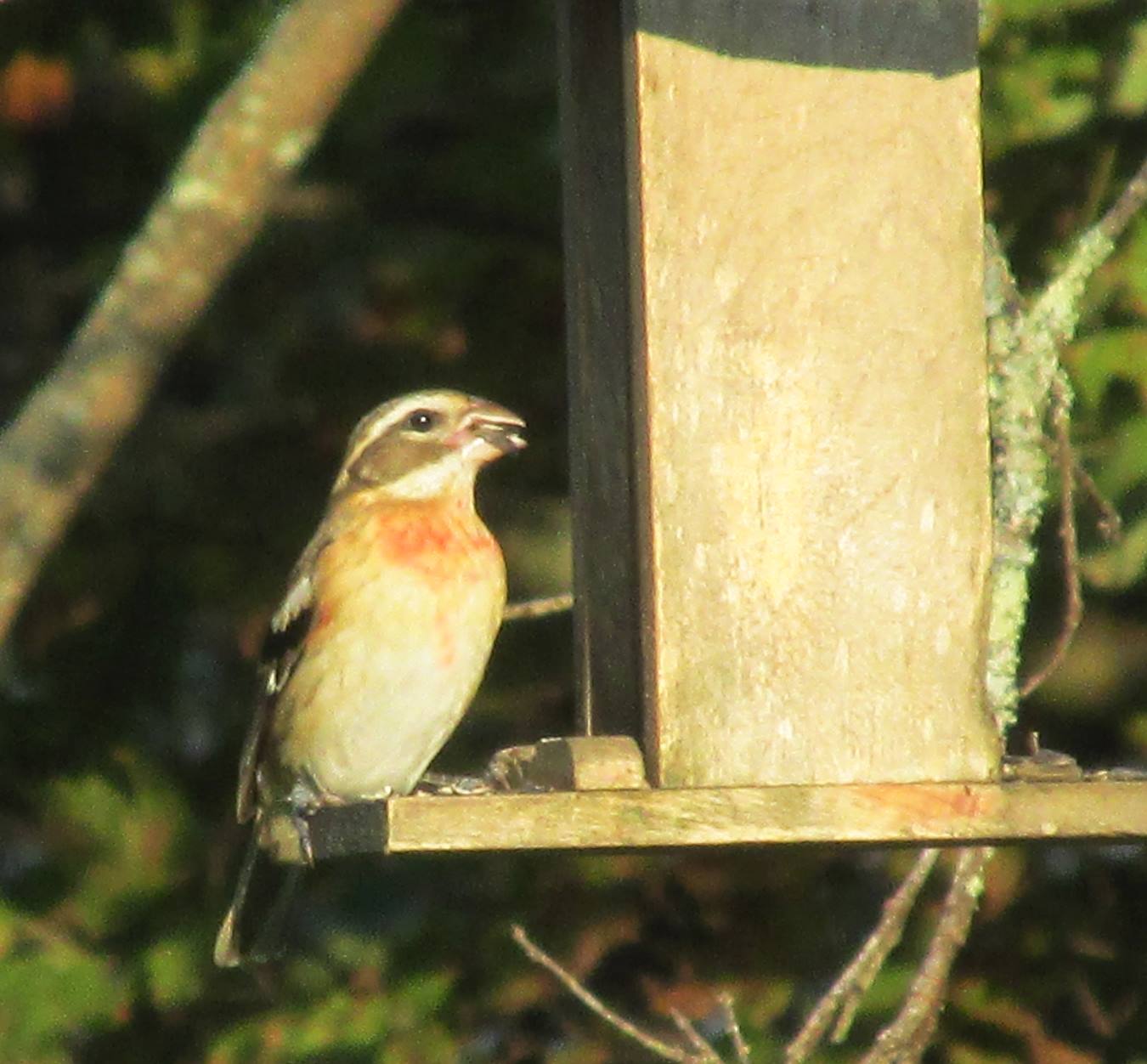
Rose-breasted Grosbeaks provide splash of springtime excitement


Other than Ruby-throated Hummingbirds, the one bird whose return in the spring is guaranteed to generate excitement is the Rose-breasted Grosbeak. Every spring, I get phone calls and emails from people wanting to share the thrill of seeing these vibrant birds in their back yards.

Photo by Bryan Stevens A Rose-breasted Grosbeak finds a meal of sunflower seeds at a feeder.

Photo by Bryan Stevens
A Rose-breasted Grosbeak finds a meal of sunflower seeds at a feeder.

The spring arrival of Rose-breasted Grosbeaks is a temporary visit. Finding the arrangements, which can consist of well-stocked feeders and perhaps a convenient water source, the migrating birds may linger for several days. These birds nest at higher elevations, however, and are usually impatient to continue the journey to where they will spend the summer months tending to their young.

This year, my first Rose-breasted Grosbeak arrived at my home on Simerly Creek Road in Hampton around 3:30 p.m. on Friday, April 25. I saw a glimpse of black and white with a hint of red that lifted my spirits instantly. I had been hoping for about a week that migrating grosbeaks would visit as they often do in the spring. The lone male settled onto a small hanging feeder and began enjoying an offering of black-oil sunflower seeds. He made repeated trips throughout the afternoon and evening, allowing me to take several photos through a window.

Some of my posted photos drew enthusiastic comments from my Facebook friends. Dani Sue Thompson shared that the beautiful Rose-breasted Grosbeak is one of her favorite birds. Her mother, the late Donna Adams, was a huge fan of the related Blue Grosbeak, which is a less common visitor to Northeast Tennessee than the related Rose-breasted Grosbeak. Donna and I share many a grosbeak story over the years.

Byron Tucker, a friend from Atlanta, notified me on Facebook the day before the Rose-breasted Grosbeak arrived at my home that he was hosting them in Georgia. From a single bird to a flock of three males and three females, these visitors were a first for Byron. He was excited to host these colorful birds for several days at his feeders.

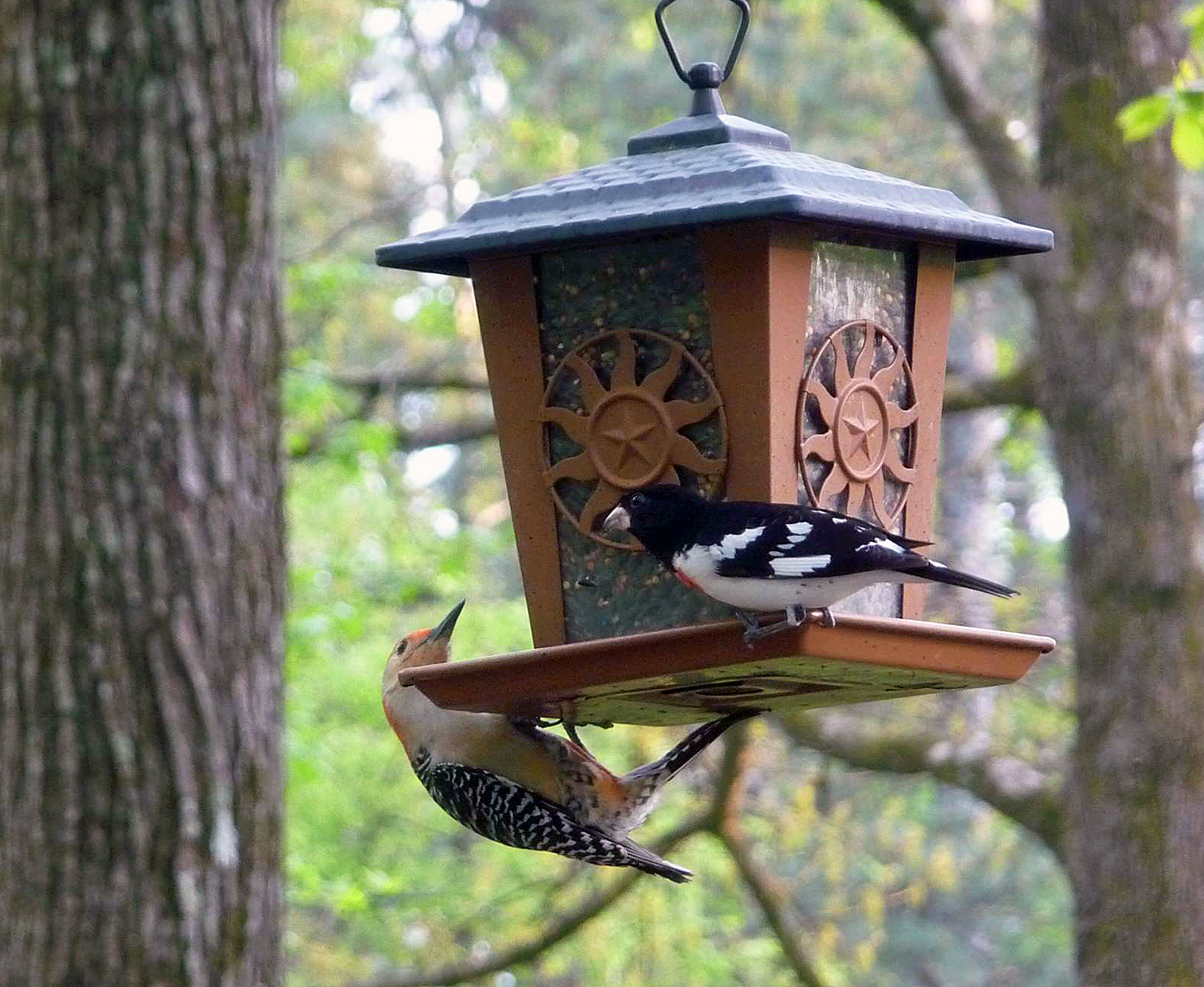
Photo Courtesy of Byron Tucker A Rose-breasted Grosbeak joins a Red-bellied Woodpecker at a feeder in Atlanta.

Photo Courtesy of Byron Tucker
A Rose-breasted Grosbeak joins a Red-bellied Woodpecker at a feeder in Atlanta.

Single birds are occasionally the first to arrive, but Rose-breasted Grosbeaks do form flocks when migrating. Even if a scout shows up alone at your feeders, he will often soon be joined by other grosbeaks. My recent visit by a single male led to two and then three males visiting the feeders. Eventually a female Rose-breasted Grosbeak also made an appearance.

Plenty of Rose-breasted Grosbeaks pass through Northeast Tennessee, and a few even decide to make mountains like Unaka, Holston and Roan their home for the summer. However, these birds spread out widely across the eastern half of the North American continent, ranging from northeastern British Columbia to Quebec and Nova Scotia in Canada. They also range south from New Jersey to Georgia. The Rose-breasted Grosbeak also reaches Colorado, Oklahoma and Kansas.

For the most part, however, the Rose-breasted Grosbeak is replaced in the western United States by the closely related Black-headed Grosbeak.

As fall approaches, the Rose-breasted Grosbeak migrates south to a winter range that spans central Mexico, Central America and northern South America. As they depart, many of these migrating birds will make autumn visits to again partake of offerings of sunflower seeds at backyard feeders. So, if you don’t get to see these showy birds in the spring, you get another chance in September and October.

The male Rose-breasted Grosbeak gives this species it name. Males are the epitome of the birds that make their home for part of the year in the American tropics. The contrasting black and white plumage is emphasized by a triangular slash of rosy-red color on the breast. Put all those elements together and the male Rose-breasted Grosbeak is not a bird that would be mistaken for any other.

The female grosbeak, however, doesn’t quite stand out in the same way. She is much less colorful than the male. With her brown and white plumage, she is often mistaken for a large sparrow or finch.

Photo by Bryan Stevens A young male Rose-breasted Grosbeak visits a feeder in September of 2013. Young males resemble females but show a splash of orange on the breast that will be replaced the following spring by the familiar rosy-red patch.

Photo by Bryan Stevens
A young male Rose-breasted Grosbeak visits a feeder in September of 2013. Young males resemble females but show a splash of orange on the breast that will be replaced the following spring by the familiar rosy-red patch.

Both sexes have a massive bill, which they use to hull sunflower seeds at feeders or glean insects from leaves and branches. It’s the heavy, blunt bill for which the term “grosbeak” is derived. “Gros” is a German term for large or big, so grosbeak simply means a large-beaked bird. People who band birds to further the study of them will tell you that Rose-breasted Grosbeaks have a wicked bite and are capable of delivering quite a nip. In Northeast Tennessee, bird banders frequently encounter Rose-breasted Grosbeaks in their mist nets — and bear the scars to prove it.

With some birds, males play only a minor role in the nesting process. That’s not the case with the Rose-breasted Grosbeak male. The males help with nest-building chores and share responsibility with the female for incubating the eggs.

The female lays three to five eggs in a cup-shaped nest. It’s not easy to locate the nests since the birds usually place them in trees at least 20 feet above the ground. Within two weeks, the eggs have hatched and the parents are kept extremely busy finding enough food to satisfy the voracious nestlings. Well fed by both parents, the young grow quickly and usually are ready to leave the nest within 12 days. Often, when a first brood of young departs the nest, the male will care for the rowdy group of fledglings as the female starts a second nest to capitalize on the long days of summer.

Away from our feeders, Rose-breasted Grosbeaks feed on insects, seeds, fruit and even some leaf buds and flowers. I’ve seen these birds satisfying a sweet tooth — or should that be sweet beak? — by feeding on jewelweed flowers and apple blossoms. If sugar’s good for hummingbirds, I am sure it is a valuable energy source for Rose-breasted Grosbeaks, too.

The Rose-breasted Grosbeak is a cherished spring visitor that never fails to disappoint by bringing a hint of the tropics to the mountains of Northeast Tennessee. I’m hoping many readers are also enjoying their own opportunities for hosting this delightful songbird.

•••••

The bird walk at Tipton-Haynes Historic Site on Saturday, April 26, yielded a good range of birds, including American Robin, House Wren, Cardinal, Song Sparrow, Carolina Chickadee, American Goldfinch, Tufted Titmouse, Crow, Canada Goose, Chimney Swift, Brown Thrasher, Barn Swallow, Eastern Towhee, European Starling, Yellow-rumped Warbler, Chipping Sparrow, Mallard, Red-winged Blackbird, Red-bellied Woodpecker, Turkey Vulture, Black Vulture, Northern Flicker, Grackle, Gray Catbird, Blue Jay, Mourning Dove and Eastern Bluebird.

Photo by Bryan Stevens A pair of Brown Thrashers provided quite a show for attendees at a recent bird walk at Tipton-Haynes Historic Site.

Photo by Bryan Stevens
A pair of Brown Thrashers provided quite a show for attendees at a recent bird walk at Tipton-Haynes Historic Site.

Attending the walk were Heather Jones, Charles Moore, David Thometz and myself. We enjoyed perfect spring weather and also admired the many wildflowers in the gardens and woodlands at the Johnson City historic site.

Members of the Lee and Lois Herndon Chapter of the Tennessee Ornithological Society will also hold a bird walk at 8 a.m. on Saturday, May 10, at Sycamore Shoals State Historic Park in Elizabethton. This walk is held in honor of International Migratory Bird Day and should provide participants with an excellent opportunity for seeing some fine birds.

•••••

I enjoy hearing from readers. Share a sighting, ask a question or make a comment by emailing me at ahoodedwarbler@aol.com or posting to my Facebook page.

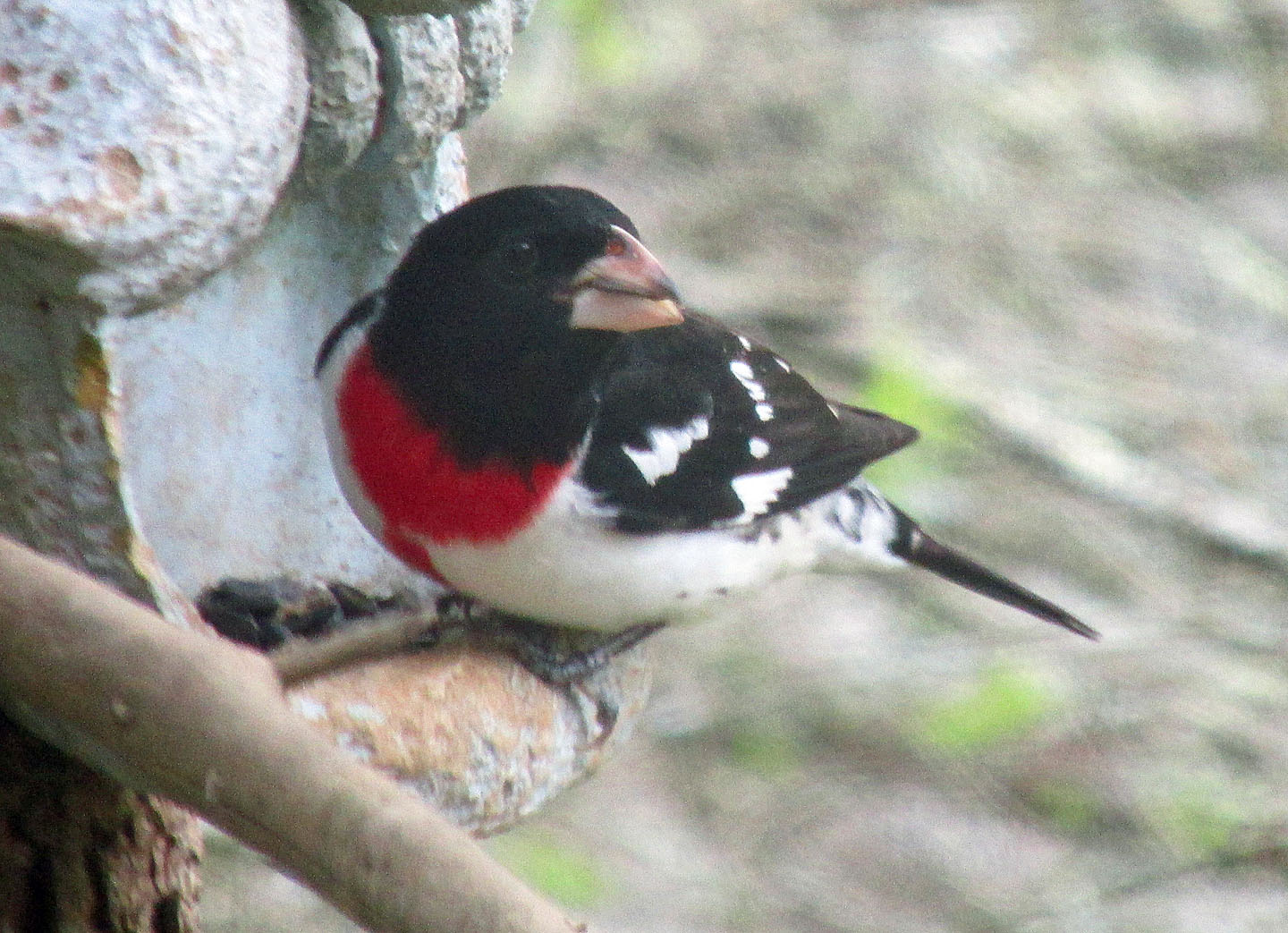
Photo by Bryan Stevens The Rose-breasted Grosbeak never fails to impress.

Photo by Bryan Stevens
The Rose-breasted Grosbeak never fails to impress.