Category Archives: facebook

Brief stay of Virginia’s warbler along Kingsport’s Holston River leaves birders amazed

At times, there’s nothing left to do but scratch your head and wonder. It’s a gesture many birders have been making around the Holston River in Kingsport as walks in the area along Netherland Inn Drive on the greenbelt have produced numerous warbler sightings in recent weeks.

Virginia'sWarbler-TWO

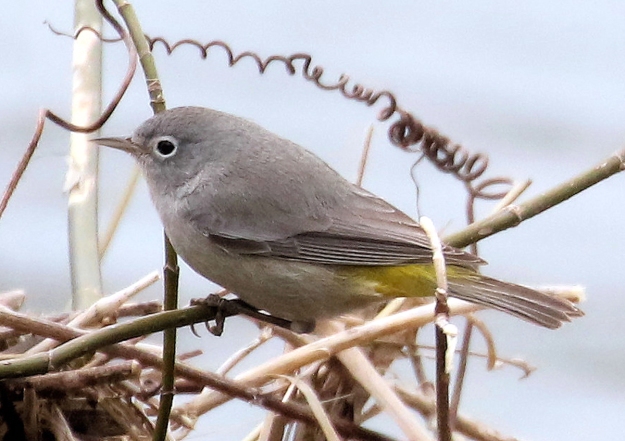
Photo by Sherrie Quillen • The Virginia’s warbler found in January in Kingsport represented the first Tennessee record for the species and one of only a few records east of the Mississippi River.

The list includes expected winter warblers such as orange-crowned, pine, and yellow-rumped, as well as such off-season puzzlers as American redstart, common yellowthroat, Northern parula, Cape May warbler and Nashville warbler; these warblers really should be wintering far to the south in locations around the Caribbean and in Central America. So far this winter, sharp-eyed birders have seen at least 12 different warbler species on the Riverfront Greenbelt. None of them have generated the level of excitement that has been produced by a small plain gray and yellow bird that is doggedly devoted to its daily routine. Birders have rushed from all parts of Tennessee, as well as from as far afield as Virginia and New Jersey, for a chance to see a visiting Virginia’s warbler, a bird that has only been observed on a handful of occasions east of the Mississippi River.

This warbler is not named for the state of Virginia. Spencer F. Baird, who first described the Virginia’s Warbler in 1860, named the species after Virginia Anderson, the wife of Dr. W. W. Anderson, who collected the first specimen in 1858 in New Mexico. Virginia’s warbler is not all that exceptional in appearance. While gray overall the bird shows a white eyering and some yellow highlights to feathers on the chest and under the tail. The bird also wags its tail, a behavior that can be helpful in identifying it.

Virginia's-Warbler_map

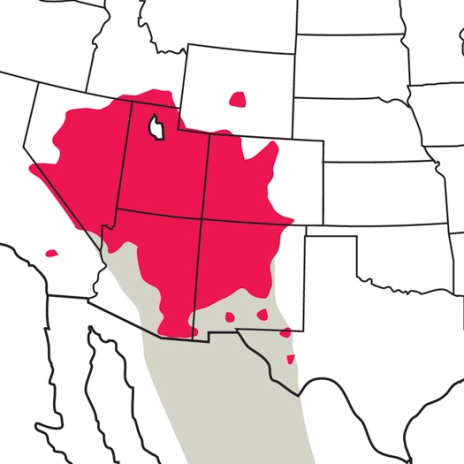
Northeast Tennessee is outside of the expected range in the American southwest of Virginia’s warbler.

The Virginia’s warbler is a species known for showing up in some rather odd locations. Back in 2012, one of these warblers generated birding excitement around New York City when one was found in Alley Pond Park in the New York City borough of Queens. In their usual range, however, Virginia’s warblers nest in arid terrain, including open pinyon-juniper and oak woodlands in the southwestern Rocky Mountain states, which is a far cry from the banks of the Holston River in Kingsport or Queens in New York.

The Kingsport specimen pulled a vanishing act when the weather turned milder in early February. Well-known birder Rick Knight, who lives in Johnson City, Tennessee, addressed the status of the bird in a post he made to the list-serve, “TN-Bird”:

“The Virginia’s Warbler and the other unusual warblers present at Riverfront Park in Kingsport seem to wander some on warm days and then return to the water’s edge on cold days to take advantage of the milder microclimate there.” Knight went on to speculate that the bird may still be in the vicinity and will return to its usual haunts when cold temperatures return. So far, despite a mix of warm days with colder ones, the Virginia’s warbler hasn’t been seen since Feb. 2.

Virginia'sWarbler-ONE

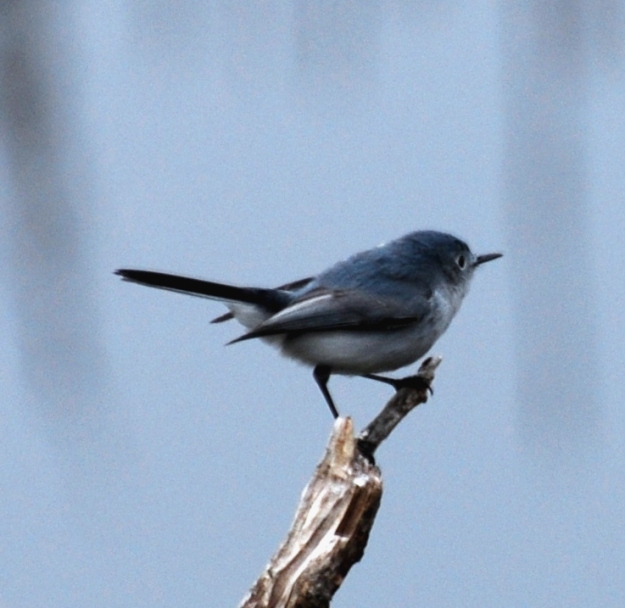
Photo by Sherrie Quillen • The influx of birders to view the Virginia’s warbler led to other unexpected finds along the Kingsport greenbelt, including such out-of-season birds as blue-gray gnatcatchers, Nashville warbler and Northern parula. More than a few birders referred to the famous Patagonian Picnic Table Effect to describe the sightings.

Several birders who found the bird and added it to their life lists commented on the fact that so many other unexpected species were found at the same time in the same location. It wasn’t long before people began evoking the famous birding phenomenon known as the Patagonia Picnic Table Effect, which is a birding phenomenon named for a famous hotspot in southeast Arizona. The lure of a bird called the rose-throated becard at the location attracted a rush of birders to the area. More eyes resulted in more discoveries of other rare birds. In turn, the additional finds continued attracting even more birders and resulted in the discovery of even more rare bird species.

So, who first noticed the presence of the out-of-place warbler? The credit for the discovery goes to two Kingsport residents. On a post to Facebook, the two women who discovered the bird shared details of their exciting find. Bambi “Birdfinder” Fincher posted the notice of the bird’s discovery.

BGGnatcatcher

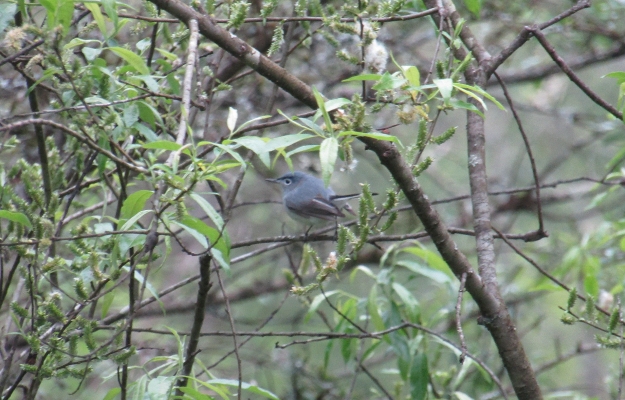
Photo by Bryan Stevens • A couple of blue-gray gnatcatchers, such as this invidiual, represented an unusual find in winter in the region. The gnatcatchers were spotted by sharp-eyed birders in their quest to observe the Virginia’s warbler in Kingsport.

“Yesterday (Saturday, Jan. 19) in the pouring rain, Sherrie Quillen and I found a Virginia’s warbler on Kingsport Birding Trail-Riverfront Greenbelt,” she wrote in a post to the Birding Kingsport Facebook page. “This is the first record of this bird in the state of Tennessee.”

Bambi explained her birding success simply. “I’m always looking! Keeps me birding!”

She also invited other birders to join her some time. “It can be pretty amazing,” she wrote. “No promises of a state record or life bird, but I can promise you that you will learn something about your surroundings and yourself.”

She earned her nickname “birdfinder” about 10 years ago when she first started birding. “I was out birding with Bill Moyle or Bill Grigsby — one of the Bill’s, anyway — and I was really ‘finding’ birds but didn’t know what they were.”

The Bills didn’t let her get discouraged. “They said, ‘That’s OK, you will learn the birds, but you are a birdfinder.’ It stuck.”

I met both Bambi and Sherrie for the first time on the day I traveled to Kingsport to try my luck at observing this warbler. Bambi quickly proved her “birdfinder” talents. Although I had to wait for about an hour for the bird to make an appearance, when it did arrive, it flew right to the spot by the river that Bambi had recommended I keep under observation. The specific spot consisted of a thin stand of privet rooted in the riverbank only a few yards from a bench located near the paved walking path. When the bird arrived, making telltale chip notes, I got my binoculars on it and enjoyed a satisfying but brief look at the bird. Birds are rarely as cooperative as this particular Virginia’s warbler turned out to be. Several other birders waiting with me also got to see the warbler at the same time. As warblers are my favorite family of birds, getting to observe this unexpected visitor has been the highlight of my birding year thus far.

Goldencheeked_Warbler_wood-2

Photo by U.S. Fish & Wildlife Service • The author of the blog hasn’t yet seen a handful of species among the Eastern warblers, including the endangered golden-cheeked warbler, pictured here. The remaining elusive eastern warblers include Connecticut, Kirtland’s and cerulean.

In the Eastern United States, there are only a handful of warblers I haven’t yet observed. I need to see a cerulean warbler and Connecticut warbler, as well as a Kirtland’s warbler and golden-cheeked warbler. The latter two species are considered endangered and highly localized warblers occurring mostly in Michigan and Texas, respectively — two states I’ve not yet visited.

I’ll always remember my first look at a Virginia’s warbler just before noon on Jan. 28, 2019. The bird had already been present for ten days by the time I made the drive to Kingsport to try my luck. In addition, I saw many other interesting birds while waiting for my target bird to arrive. Some of the other observed birds included palm warbler, blue-gray gnatcatcher, ruby-crowned kinglets and golden-crowned kinglets.

PalmWarblerrr

Photo by Bryan Stevens • A palm warbler forages along a chain-link fence. This warbler is often a wintering bird in the region and a few were seen by observers who trekked to the Kingsport greenbelt to view the visiting Virginia’s warbler.

Fall Bird Count finds 127 species

rthawk-one

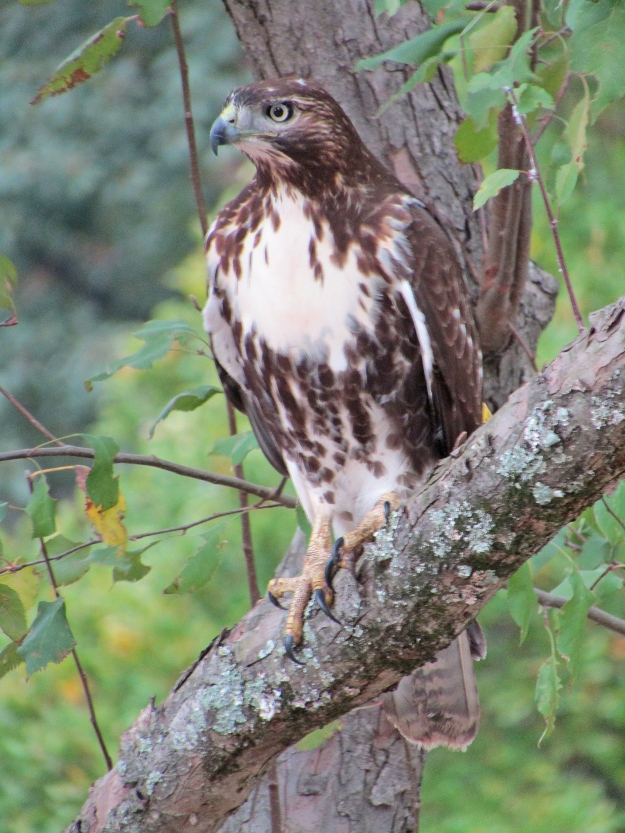
Photo by Bryan Stevens • Raptors, like this Red-tailed Hawk, proved plentiful on count day. Broad-winged Hawk, a relative of the Red-tailed Hawk, even set a new record for most individuals found.

The 49th consecutive Elizabethton Fall Count was held Saturday, Sept. 29, with 50 observers in 13 parties covering parts of five adjacent counties.

According to count compiler Rick Knight, a total of 127 species were tallied (plus Empidonax species), slightly higher than the average of the last 30 years, which was 125. The all-time high was 137 species in 1993.

Two very rare species were found: Purple Gallinule at Meadowview Golf Course in Kingsport and Black-legged Kittiwake on South Holston Lake. The kittiwake had been found Sept. 27 and lingered until count day.

Shorebird habitat was scarce due to high water levels at most sites, thus only one species was found (other than Killdeer).Broad-winged Hawks were numerous, part of a notable late flight likely due to unfavorable weather conditions preceeding the count.
Warblers were generally in low numbers, although 23 species were seen. No migrant sparrows had arrived yet. Blackbirds, too, were scarce. Some regular species were tallied in record high numbers, likely due to the above average number of field parties.

turkey_two

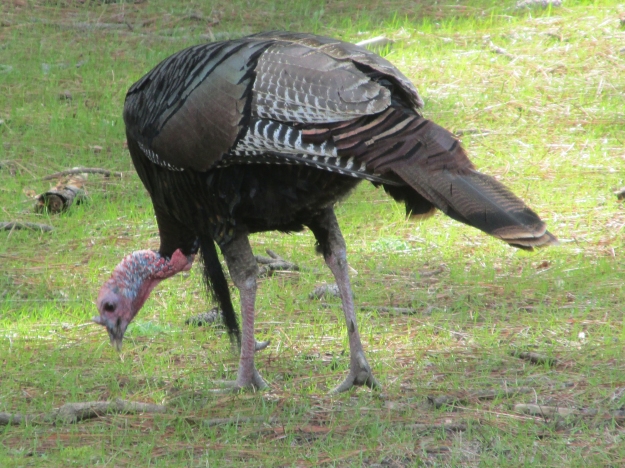
Photo by Bryan Stevens • Wild Turkeys and Ruffed Grouse were found on this year’s count, but participants failed to locate any Northern Bobwhites.

The list of species follows:

Canada Goose, 781; Wood Duck, 79; Mallard, 345; Blue-winged Teal, 110;  Com. Merganser, 2;  Ruffed Grouse, 2; and Wild Turkey, 56.

Pied-billed Grebe 32; Double-crested Cormorant, 78; Great Blue Heron, 49; Great Egret, 2; Green Heron, 2; and Black-crowned Night-Heron, 5.

Wild-NightHeron-Adult

Photo by Bryan Stevens • Several species of herons and egrets were located, including Black-crowned Night Heron.

Black Vulture 71; Turkey Vulture 203; and Osprey, 27. This represented a new record for the number of Osprey found on this count.

 
Bald Eagle 8; Northern Harrier, 1; Sharp-shinned Hawk, 3; Cooper’s Hawk, 9; Red-shouldered Hawk, 6; Broad-winged Hawk, 321; (most ever on this count) and Red-tailed Hawk, 19.

 
Virginia Rail 1; Purple Gallinule, 1; Killdeer, 43; Spotted Sandpiper, 1; Black-legged Kittiwake, 1; Caspian Tern, 1; and Common Tern, 2.


Rock Pigeon, 597; Eurasian Collared-Dove, 2; Mourning Dove, 330; Yellow-billed Cuckoo, 4; E. Screech-Owl, 24; Great Horned Owl, 10; Barred Owl, 5; Northern Saw-whet Owl, 1; and Common Nighthawk, 1.

 
Chimney Swift, 481; Ruby-throated Hummingbird, 31; Belted Kingfisher, 32; Red-headed Woodpecker, 5; Red-bellied Woodpecker, 92; Yellow-bellied Sapsucker, 5; Downy Woodpecker, 59; Hairy Woodpecker, 12; Northern Flicker, 67; Pileated Woodpecker, 54; American Kestrel, 13; and Merlin, 2. The figures for Red-bellied and Pileated Woodpeckers mark new high counts for these two species.

red-bellied-bryan

Photo by Bryan Stevens • A record number of Red-bellied Woodpeckers were found on this year’s Fall Bird Count.

Eastern Wood-Pewee 15; Empidonax species, 2; Eastern Phoebe, 79; Eastern Kingbird, 9; White-eyed Vireo, 1; Yellow-throated Vireo, 2; Blue-headed Vireo, 21; Philadelphia Vireo, 3; Red-eyed Vireo, 4; Blue Jay, 646; American Crow, 364; and Common Raven, 1.
Northern Rough-winged Swallow, 3; Tree Swallow, 465; Barn Swallow, 1; and Cliff Swallow, 3.

Carolina Chickadee, 177; Tufted Titmouse, 133; Red-breasted Nuthatch, 4; White-breasted Nuthatch, 71; Brown Creeper, 1; House Wren, 4; Winter Wren, 1; and Carolina Wren, 218. Both Tufted Titmouse and White-breasted Nuthatch were found in record numbers, as was the Carolina Wren, too

Golden-crowned Kinglet, 8, Eastern Bluebird, 187;  Gray-cheeked, Thrush 12; Swainson’s Thrush, 46;  Wood Thrush, 9; American Robin, 591; Gray Catbird, 64; Brown Thrasher, 23; and Northern Mockingbird, 111; European Starling 1,226;  and Cedar Waxwing, 294. The number of Gray Catbirds set a new record for the species.

Worm-eating Warbler 1; Northern Waterthrush, 1; Black-and-white Warbler, 7; Prothonotary Warbler, 1; Tennessee Warbler, 42; Orange-crowned Warbler, 2; Kentucky Warbler, 2; Common Yellowthroat, 9; Hooded Warbler, 7; American Redstart, 16; Cape May Warbler, 6; Northern Parula, 8; Magnolia Warbler, 18; Bay-breasted Warbler, 15; Blackburnian Warbler, 8; Yellow Warbler, 1; Chestnut-sided Warbler, 1; Black-throated Blue Warbler, 4; Palm Warbler, 63; Pine Warbler, 11; Yellow-throated Warbler, 1; Prairie Warbler, 1; and Black-throated Green Warbler, 7.

Fall-AmRedstart

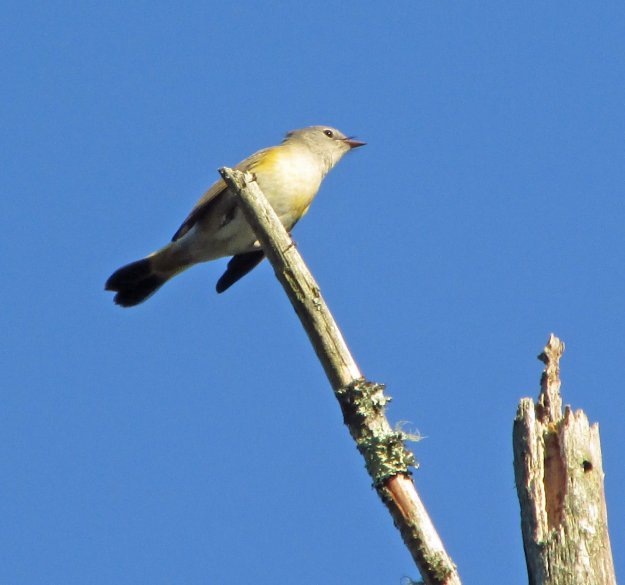
Photo by Bryan Stevens • Participants found a total of 23 different species of warblers, including American Redstarts.

Eastern Towhee, 66; Chipping Sparrow, 94; Field Sparrow, 16; Song Sparrow, 97; and Dark-eyed Junco, 42.

Summer Tanager 2; Scarlet Tanager, 11;  N. Cardinal, 149; Rose-breasted Grosbeak, 125; and Indigo Bunting, 14.

Bobolink, 2; Red-winged Blackbird, 132; Eastern Meadowlark, 7; Common Grackle, 8; Brown-headed Cowbird, 5; House Finch, 41; Pine Siskin, 11; American Goldfinch, 220; and House Sparrow, 69.

Goldfinch 5

Photo by Bryan Stevens • American Goldfinches were among the smaller songbirds found during the annual Fall Bird Count.

Great horned owl reigns as ‘feathered tiger of the night’ among birds


owl-Alexas-Fotos-Pixabay

Photo by Alexas-Fotos/Pixabay • A great horned owl is capable of almost silent flight, which helps the predatory bird take prey by surprise. Many myths and superstitions surround the world’s owls, but the truth about owls is often more fascinating.

I’ve been so focused on migrating warblers and other songbirds of late that I felt some surprise when outside near dark on Oct. 10 when I heard the low hoots of a feathered phantom from the woodlands on the ridge behind my home.

The hooting of a great horned owl is an instantly recognizable sound and always sends shivers traveling along the spine. The after-dark calls of this large predatory bird also got me to thinking about previous encounters with this owl, such as watching one glide silently over wetlands in Shady Valley, Tennessee, many years ago. I had traveled to the bogs in Shady Valley maintained by The Nature Conservancy in the hope of witnessing the mating displays of the American woodcock. Before those avian rituals began, a great horned owl kicked off the evening in style. I still remember the large owl passing like a dark shadow only a couple of feet over my head. The wings did not even appear to flap as the owl’s silent flight propelled the bird out of sight within seconds.

gray owl showing orange and black left eye

Photo by Flickr on Pexels.com

I also remembered another occasion while driving on a wet and stormy night, rounding a curve, and finding an owl, upright in the road, standing over fresh roadkill. The owl’s eyes reflected the beams of my headlights before it seized its meal in powerful talons and flew off into the darkness. I’ve always wondered if the owl had killed something in the road or came along at just the right moment to scavenge a meal after some creature had been killed by a passing car.

Owls have been around for a long time, according to “Owls: The Silent Hunters,” an episode of National Geographic’s series, “Wildlife Wonders.” The narrator for the episode reveals that the first recognizable owls first showed up in the fossil record about 40 million years ago. Since that time, owls have evolved into a fantastic, widespread and diverse group of about 135 different species. North America is home to several species, including the far-ranging great horned owl, which ranks as one of continent’s largest owls. It’s not the largest owl in North America, but it is the most widespread of the continent’s large owls. The snowy owl — popularized in J.K. Rowling’s fiction as Harry Potter’s loyal companion owl, Hedwig — is one of the largest owls in the Northern Hemisphere, bigger than such large owls as great horned owl and barred owl. The aptly named great gray owl is larger in body size than the great horned owl, but the snowy owl is heavier and more massive than either of these two contenders.

Snowy_Owl

Photo by U.S. Fish & Wildlife Service • A captive snowy owl educates the public about owls and some of the perils they face in an environment shared by humans.

Nevertheless, the great horned owl is large enough, ferocious enough, and lethal enough to have been described by many ornithologists as a “feathered tiger of the night.” The great horned owl lives and hunts in the woodlands of northeast Tennessee, southwest Virginia and western North Carolina. They thrive in rural areas, but these adaptable owls have also learned to make their way in the suburbs and even city parks. Not by any stretch of the imagination, however, is this owl confined to the southern Appalachians. These owls also make their home in the wetlands along the southern Atlantic coast, as well as arid deserts of the American southwest.

During a September vacation many years ago to Fripp Island, South Carolina, a solitary great horned owl provided several days of entertainment for my parents and me. We took a golf cart at dusk each evening to park at a spot that offered a good view of the marshes and tidal creeks in the interior of the island. For several consecutive days, the owl flew to a perch on a piece of driftwood as the sun sank below the horizon. We would wait patiently for only a brief interval before the owl entertained us with its low hoots that resonated across the marsh.

animal animal photography avian beak

Photo by Pixabay on Pexels.com

The great horned owl is capable of taking a wide variety of prey, including many rodents ranging in size from mice and voles to rabbits and squirrels. Although various mammals form the most part of its diet, the great horned owl will kill adult birds as large as a Canada goose, wild turkey and great blue heron. This owl also preys on fish, reptiles, amphibians and even insects. The great horned owl is one of the few predators that preys regularly on skunks. Lacking a well-defined sense of smell, owls aren’t bothered in the least by the skunk’s powerful arsenal of stink. That ability to fly and glide using almost completely silent wings has given this nocturnal predator an enormous advantage over many of its prey species.

A wild great horned owl’s longevity peaks at around 13 years of age. Captive owls, however, have been reported reaching ages of more than 30 years old.

Various Native American tribes have held owls in high respect. Dwight G. Smith, author of “Great Horned Owl,” a book in the “Wild Bird Guides” series, noted that members of the Zuni tribe of the southwestern United States often hold owl feathers in their mouths to impart the owl’s ability to hunt silently onto their own hunting abilities.

bird night forest owl

Photo by Pixabay on Pexels.com

The main fascination humans hold for owls rests in their mystery. Owls, being mainly nocturnal creatures, rarely cross paths with humans. These predatory birds have many adaptations that help them stake out their claim on the night hours. Owls possess large eyes with binocular vision and extremely accurate depth perception — which also make them seem more expressive to human observers and perhaps helped establish the reputation of the “wise” owl.

Owls cannot completely rotate their heads, but they come close. Owls are flexible enough, however, to be able to turn their heads in a 270-degree arc, or three-quarters of the way around. Owls have keen hearing to go with their excellent eyesight. In fact, owls don’t even need to see their prey to capture it. Tests with barn owls in total darkness have shown that they are capable of catching mice by hearing alone. An owl’s prominent facial disk directs sounds toward their ears. The “ear tufts” on the great horned owl and some other relatives are ornamental feathers, and not actual ears.

greathornedowl-2

Photo by Bryan Stevens / A great horned owl perches on a post during its part in a wild bird show at Callaway Gardens in Pine Mountain, Georgia.

Around the world, the world’s owls have earned some rather descriptive common names. Examples include pharoah eagle-owl, vermiculated fishing owl, fearful owl, pearl-spotted owlet, chestnut-backed owlet, spectacled owl, black-and-white owl, crested owl, cinereous owl, tawny owl, whiskered screech owl, greater sooty owl and desert owl.

Americans will observe Halloween on Wednesday, Oct. 31, which brings me to one other piece of owl trivia. There’s an ancient Chinese belief that owls snatch the souls of incautious people — just something I thought you might want to know if you find yourself out and about after dark on Halloween night and hear the hoots of a nearby owl.

great_horned_owl_and_chick-2

Photo by George Gentry/U.S. Fish and Wildlife Service • A great horned owl is shown on the nest with one of her chicks.

Common nighthawk flocks form part of fall migration spectacle

Nighthawk

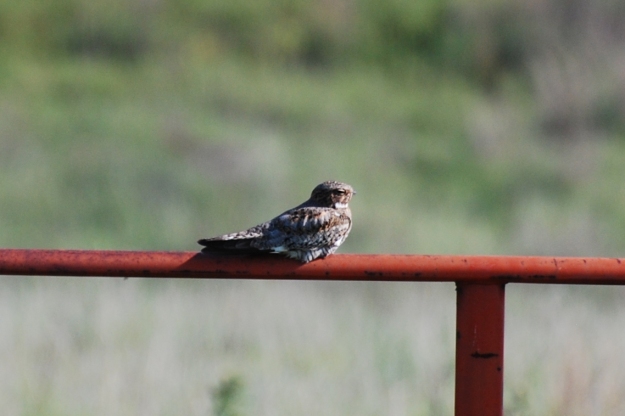
Photo by Jean Potter • A common nighthawk rests on a metal railing.

With September advancing on the calendar, I have been keeping an eye on the skies. For the most part, I focus on the upper branches of trees and feeders during the migration season, but I don’t forget the need to look skyward from time to time.

The reason? Well, that’s the best way to detect soaring raptors or flocks of migrating common nighthawks. The autumn sky is also a popular flyway for other birds, including chimney swifts and swallows.

So, what is a common nighthawk? First, this bird, despite what is implied by its name, is not a hawk. It’s also not strictly nocturnal. Particularly in the fall, nighthawks are active during daylight hours when engaged in catching winged insects. Outside of fall migration, these birds can often be observed over large parking lots or well-lit streets, snatching up insects swarming around the light poles.

The common nighthawk is one of three members of the nightjar family found in the region during the summer months. The other two nightjars are the whip-poor-will and chuck-will’s-widow, birds that produce their namesake vocalizations in the nocturnal hours. Both of these species migrate, but they don’t take the dramatic approach employed by nighthawks. Each fall, common nighthawks form large flocks, ranging in size from dozens to hundreds or even thousands of individuals, as they migrate south for the winter.

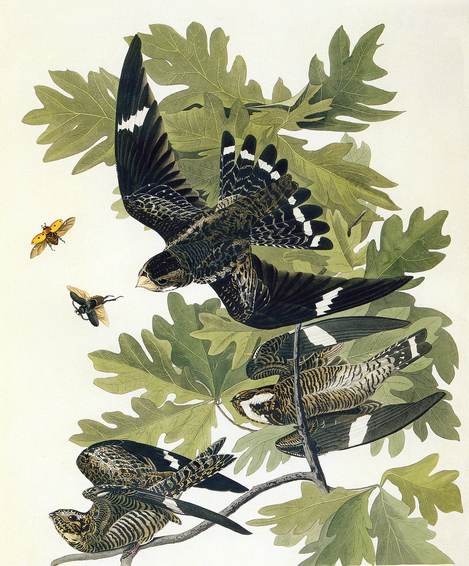
john_james_audubon_common_nighthawk_bird_print

Early American naturalist and artist painted this dynamic scene of common nighthawks.

The whip-poor-will, after the common nighthawk, is the second most widespread member of its family to spend its breeding season in North America. The whip-poor-will ranges from southern Canada to the Gulf states. This bird also occurs in Arizona, New Mexico and southwestern Texas. The whip-poor-will favors habitat consisting of deciduous woodlands and the edges of forests.

All members of the nightjar family feed exclusively on insects that are caught on the wing. In this respect, the nightjars can be considered the nocturnal counterparts of the swallows. The nightjars have comparatively large, gaping mouths they use to scoop up flying insects. They also have large eyes, an adaptation to their nocturnal lifestyle.

Whip-poor-will numbers have been declining in the past few decades. These nocturnal birds frequent woodland edges, but they seem to be rather particular about such habitats. A forest that is too mature seems to hold little interest for them. Disturbed habitats, such as those created by logging, are acceptable to the birds once secondary growth begins. As this new growth matures, however, the whip-poor-will apparently abandons such territory. Because of these requirements, whip-poor-wills can be somewhat localized in their distribution and sometimes difficult to locate.

Nighthawk-PHOTO

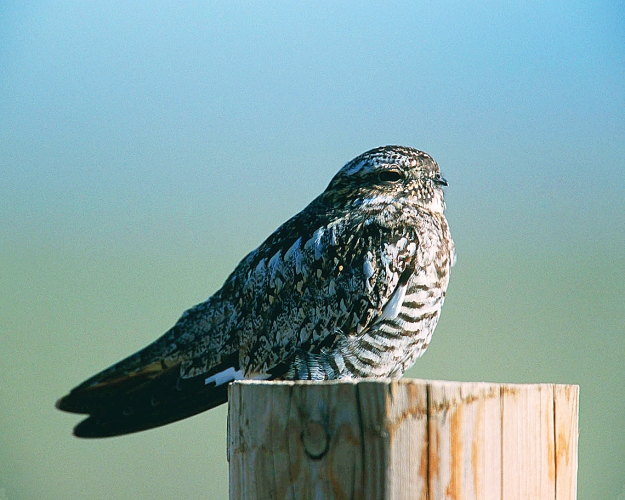
Photo by U.S. Fish and Wildlife Service • A common nighthawk finds a perch for a brief rest.

When I was a kid, one of my favorite summer activities was sitting on the front porch of my grandparents’ home and listening to the whip-poor-wills call after dark. I remember how the plaintive call would be repeated for long intervals before a passing automobile’s headlights might frighten the bird into silence. Then, after a brief pause, the “whip-poor-will” calls would, tentatively at first, begin again and continue throughout the night.

Today, I’m living in my grandparents’ old home, and the whip-poor-wills no longer call. I heard a single individual that called for a single evening back in May of 1997, but that was apparently a migrating bird that did not remain in the surrounding woodlands. The only member of the nightjar family that I dependably encounter at home these days is the common nighthawk, and then only during that narrow window of late summer and early autumn.

Unlike whips and chucks, the common nighthawk isn’t active only after dark, which makes it much easier to observe these birds. They look somewhat like swifts and swallows but are much larger. They are brownish-gray birds with pointed wings and forked tails. They are easily identified by distinctive white patches on the underside of their wings.

The nightjar, or Caprimulgidae, family of birds is also sometimes known as “goatsuckers.” There are almost 80 species of nightjars in the world. Less than 10 occur in North America. The common nighthawk, whip-poor-will and the chuck-will’s widow are neotropical migrants. While they breed in a wide range of territory in North America, they spend their winters in Central and South America. Like all nightjars, nighthawks feed almost exclusively on insects, which they catch on the wing.

Many of the common nighthawk’s relatives have been given descriptive names, such as long-trained nightjar, collared nightjar, spot-tailed nightjar, red-necked nightjar, golden nightjar, fiery-necked nightjar, swamp nightjar, pennant-winged nightjar, lyre-tailed nightjar, little nightjar, sickle-winged nightjar, rufous-bellied nighthawk, short-tailed nighthawk, sand-coloured nighthawk and least nighthawk.

So, keep looking skyward. The next flock of migrating common nighthawks may fly over your home. These flocks are usually on the move throughout September although they begin to appear as early as late August. They can also appear almost magically, as if out of thin air. First, observers may see one of two birds, then several, followed quickly by dozens or sometimes hundreds as they wheel and cavort in the skies overhead with impressive grace and agility. I’ve seen flocks that would easily number more than 500 birds in locations throughout the region, although flocks often number only a couple of dozen birds. The two flocks I’ve observed so far this migration season numbered about thirty and fifty birds, respectively.

41004068_10215014667832542_3336138056443887616_o

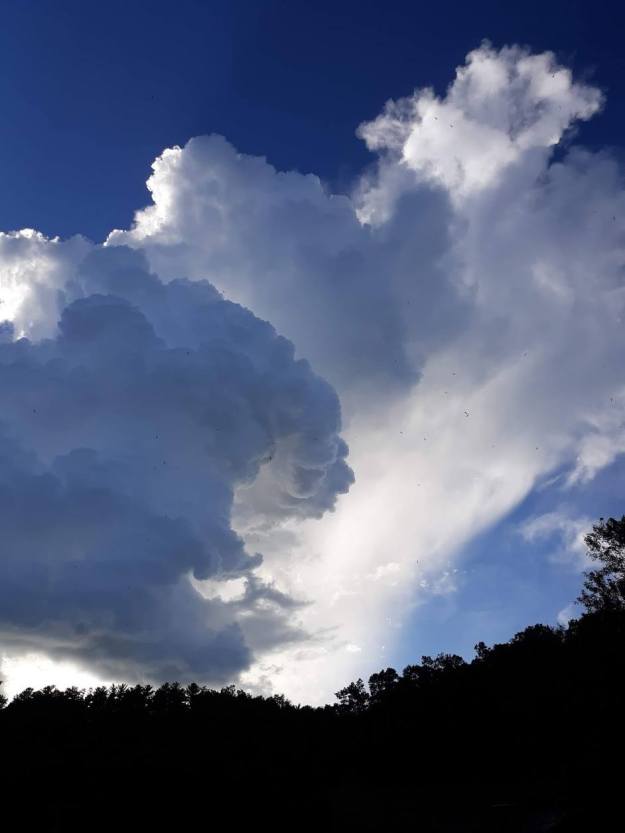
Photo by Bryan Stevens • Rising clouds provide a backdrop for a flock of migrating nighthawks.


Reader’s mystery bird turns out to be Louisiana waterthrush

On occasion, readers seek out my help with identifying birds they encounter. I am always glad to assist. Photographs, a recording of the bird’s song, or even a well-written description are often all that’s necessary to pinpoint the identities of mystery birds.

Lewis and Jeana Chapman, residents of Laurel Bloomery, Tennessee, notified me in an email that they have been enjoying some good birdwatching trips. They also wanted some help with the identity of a bird they observed last summer.

NoWaterthrush

Photo by Bryan Stevens • The Northern waterthrush, pictured, has a beige eye line rather than the white one usually shown by the Louisiana waterthrush.

“My wife and I love to go to the Creeper Trail in Virginia and enjoy the creek,” Lewis wrote in an email. “On these trips in the summer months, we have watched this bird run along the rocks of the shore feeding.”

He also mentioned that he had attached in his email some photos, which proved extremely helpful. “Our closest guess at what type of bird it is was a spotted sandpiper, but its beak/bill seems too short. Any help you can give us would be greatly appreciated.”

A quick scan of the photos the Chapmans sent with their email helped me narrow the options down to two related birds — a Louisiana waterthrush and a Northern waterthrush. I used three criteria — location, season and plumage — to identify the bird in their photos as a Louisiana waterthrush.

Louisiana Waterthrush

Photo by Adobe Stock • Subtle plumage differences, as well as habitat, behavior and seasonal presence, are factors in distinguishing the Louisiana waterthrush, pictured, from the closely related Northern waterthrush. The Louisiana waterthrush nests along fast-moving streams in the area while the Northern waterthrush does not breed in the region.


The Chapmans had good reason to suspect the bird might have been a spotted sandpiper, but for the true identity of the bird in question, it’s necessary to delve into the family of warblers, which includes species such as American redstart, ovenbird, common yellowthroat, Northern parula and black-throated blue warbler.

The two waterthrushes are very similar in appearance. Louisiana Waterthrushes has a heavier bill and a white eye line, while the Northern Waterthrush’s eye line is usually somewhat yellowish-beige. A Louisiana waterthrush typically also has a whiter belly and underparts.

Appearance wasn’t even the most important element of the criteria. Location and season more readily helped confirm the identity. The Louisiana waterthrush has a range concentrated on the southern part of the eastern half of the United States, mostly south of the states of New York, Michigan and Wisconsin. In this region, only the Louisiana waterthrush is known to nest. The Northern waterthrush is strictly a spring and fall migrant, electing to nest near bogs and slow streams in Canada and the northern tier of states in the United States.
The Louisiana waterthrush also attracts attention with its characteristic “teetering” gait. Much like the spotted sandpiper, this waterthrush bobs the rear half of its body up and down as it walks and forages by the sides of streams. In their behavior, this shorebird and this warbler are very much alike. The waterthrush will often turn over wet leaves or other stream debris to search for prey items, such as aquatic insect larvae, crustaceans, snails and even small fish. The Louisiana waterthrush was once known as the water wagtail, which makes reference to the aforementioned teetering gait.

Waterthrush-Painting 2

Early artist and naturalist John James Audubon painted this Louisiana waterthrush.

Many warblers have shown signs of decline in recent years. The Louisiana waterthrush, however, appears to have bucked that trend. According to the website All About Birds, Louisiana waterthrush populations were stable between 1966 and 2015, based on statistics from the North American Breeding Bird Survey. Partners in Flight estimates a global breeding population of 360,000, with almost all of those individuals spending at least part of the year in the United States. About a quarter of the population retreats into Mexico during the winter season. The rest winter in Florida and some of the Gulf Coast states, as well as the islands of the Caribbean.

While most songbirds are fortunate to survive two or three years in the wild, at least one Louisiana waterthrush lived to the age of at least 11 years and 11 months. The bird, a male, was seen in New Jersey in the wild and identified by a band on one of his legs. He had been banded in the same state, according to All About Birds.

The two waterthrushes are the only species in the genus Parkesia, so named to honor American ornithologist Kenneth C. Parkes, who was for many years Curator of Birds at Carnegie Museum of Natural History. The common name of the Louisiana waterthrush is not a very apt one, as this bird does not have any special affinity for the state of Louisiana. Someone collected some of the early specimens of the Louisiana waterthrush in its namesake location, and the name has stuck through the years.

Waterthrush

Photo by Bryan Stevens • Even in migration, both waterthrushes like to stay near water.

Not every bird mystery that comes my way via Facebook or in an email is so easily resolved. This identification, which happened to involve the New World warblers, my favorite family of birds, once again showed me the amazing diversity of this group of birds. From the terrestrial Louisiana waterthrush to the treetop-dwelling cerulean warbler, it’s an amazing group of songbirds I’m always happy to introduce to bird enthusiasts.

No cowbird ever knows its biological parents

While many birds are excellent parents, others lack any maternal or paternal instincts altogether. The common cuckoo, a nesting bird in Europe and Asia, is a well-known brood parasite that would rather slip its eggs into the nest of other bird than raise its own young. In scientific terms, “brood parasite” refers to creatures that rely on others to raise their young. In addition to some birds, this tactic is also employed by some species of insects and fish.

COWBIRD-Female

Photo by Bryan Stevens • Female brown-headed cowbirds stay alert to observe bird leaving or coming to a nest. Once they have located a nest, these birds slip their own eggs into the nests of other birds.
The strategy is effective, if, in the human way of thinking, rather heartless. In biological terms, however, this “foster parenting” allows brood parasites to ensure a new generation without expending much energy on the part of the actual parents. Some recent contacts with readers have reminded me that not all of our feathered friends would qualify for “parent of the year.”

Mike Dickenson of Bristol, Tennessee, contacted me on Facebook about a discovery he made in a nest built under the steps of his house.

Cowbird-Female

Photo by Bryan Stevens • A female brown-headed cowbird visits a feeder.

“I noticed two blue eggs,” he said. “I checked a few days later and noticed two gray eggs also. Did another bird sneak her eggs into the nest?” Mike also informed me that some of the eggs hatched shortly after he discovered them.

James Rowland of Erwin, Tennessee, sent me a message on Facebook asking me to identify a bird in a photograph he had taken. “What is this bird?” James asked. “It’s larger than a sparrow.”

He added that he observed and photographed the bird near the Covered Bridge in Elizabethton, Tennessee. A study of the bird in the photo revealed a very nondescript bird in largely gray plumage. Few of our birds are this plain and gray with almost no standout characteristics.

36043826_277373272833221_1274549914663124992_n

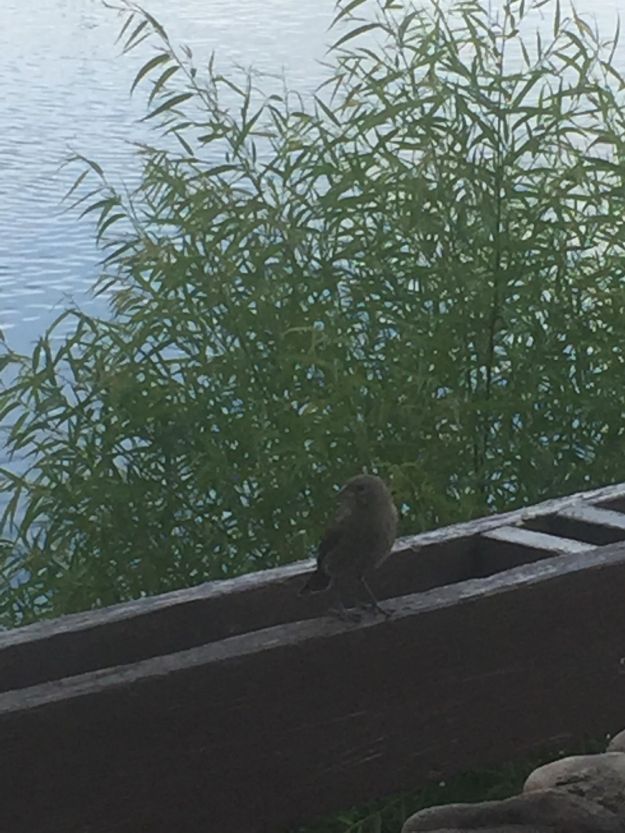
Photo by James Rowland • A brown-headed cowbird, probably a young bird or a female, near the Covered Bridge in Elizabethton, Tennessee.

In both cases, one of North America’s most successful brood parasites was involved. I responded to Mike and told him that is was entirely possible that a female brown-headed cowbird slipped some eggs into the nest beneath his steps. I likewise informed James that the bird in his photo looked like a brown-headed cowbird. I added that the bird was either a female or a young bird, since a male would have the brown head that gives the species its common name.

In North America, one of the best-known feathered brood parasites is the brown-headed cowbird. While many brood parasites are specialists, with females slipping their eggs into the nest of a specific species of host bird, the brown-headed cowbird approaches brood parasitism in a less discriminating manner. Female cowbirds have been known to lay their eggs in the nests of at least 221 different species of birds. No baby brown-headed cowbird ever knows its biological parents.

How did the brown-headed cowbird turn to a life of foisting eggs onto unsuspecting foster parents? The answer is connected with the American bison, also known as buffalo. When the bison roamed the Great Plains of the United States by the millions, flocks of brown-headed cowbirds followed the great herds, feeding on the insects flushed by the hooves of millions of bison. As the herds stayed on the move constantly, the cowbirds also developed a nomadic lifestyle. After the bison herd diminished, the cowbirds survived a potential crisis by simply transferring their bovine affinity from bison to domesticated cattle.

Brown-headedCowbird-Male

Photo by Bryan Stevens • A male brown-headed cowbird displays the brown head that gives this bird its common name.

At times, this random and undiscriminating approach to reproduction fails. Some finches feed their young a diet that consists of a great deal of vegetable matter. Young cowbirds fed this protein deficient diet fail to thrive and ultimately perish.

Other birds blissfully bring a rich assortment of protein snacks — insects, spiders and other small invertebrates — that permits the young foster bird to thrive, at times at the expense of the host bird’s own young. About 20 years ago I observed a willow flycatcher bringing food to a young brown-headed cowbird at least twice the size of the “parent” trying to feed it. I’ve also seen song sparrows, dwarfed by a cowbird changeling, trying to keep their enormous baby bird well fed.

Cowbirds are members of the blackbird family, which includes such relations as orioles, meadowlarks and grackles. All cowbirds are confined to the New World and include species such as the screaming cowbird of Argentina, Bolivia and Brazil, as well as the bronzed cowbird of Central America and the southern United States, especially the states of California, Arizona, New Mexico, Texas, and Louisiana. Other cowbird family members include giant cowbird and the shiny cowbird.

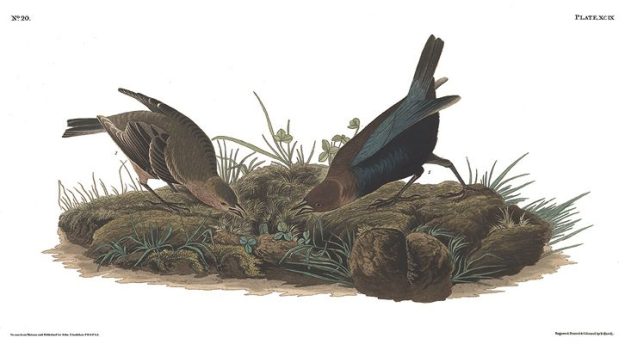
Brown-headed-Cowbird-Audubon-1-726x400

Early naturalist and painter John James Audubon painted this pair of brown-headed cowbirds.

Regional bird count detects population trends

Driveway-Heron

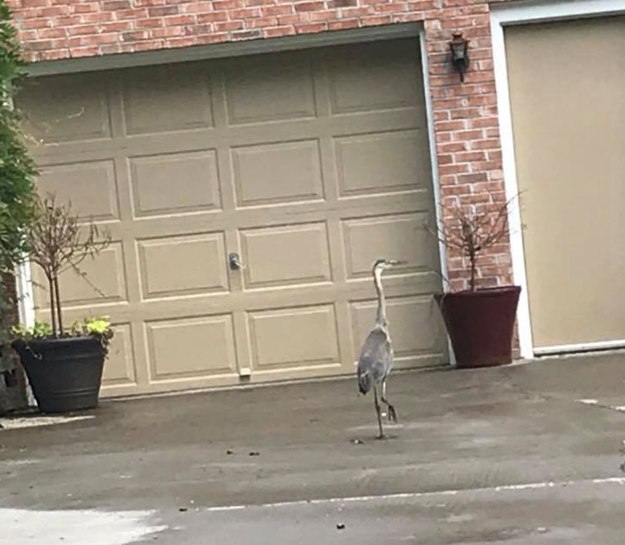
Photo by Pattie Rowland • A Great Blue Heron explores a paved driveway at a home in Erwin, Tennessee. Rookeries, or nesting colonies, in Erwin have expanded the population of this large wading bird locally.

Members of the Elizabethton Bird Club and birding organizations in Kingsport and Bristol fanned out across Northeast Tennessee on Saturday, May 5, for the 75th consecutive Elizabethton Spring Bird Count. A total of 60 observers (a new participation record) looked for birds in Tennessee’s Carter County and parts of the adjacent counties of Johnson, Sullivan, Unicoi and Washington.

Counts like this one, as well as surveys such as the Virginia Breeding Bird Atlas, now in its third season, provide valuable information to assist responsible agencies and organizations with the protection and preservation of the nation’s birds.

This year’s spring count tallied 152 species, slightly better than the overall average of 149 species established over the last 30 years. The most ever species tabulated for this count was 166 species back in 2016.

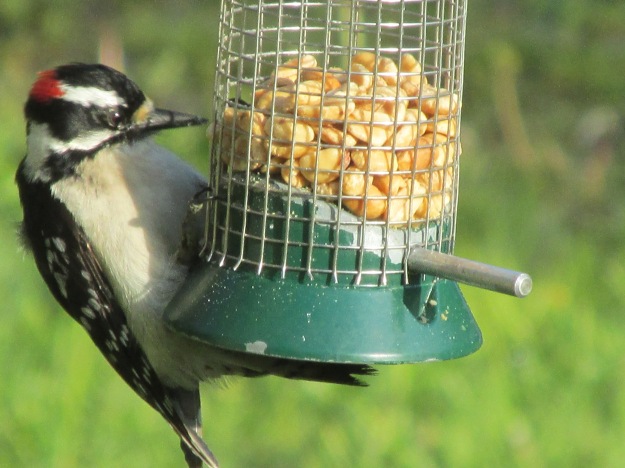
Downy_Peanuts

Photo by Bryan Stevens • Many of the birds found during a survey liked the Spring Bird Count are observed at feeders, such as was the case with this downy woodpecker.

I counted birds along the Watauga River in Elizabethton and on Holston Mountain. Some of the better birds I saw during the daylong outing included Baltimore oriole, Blackburnian warbler, warbling vireo, and yellow-billed cuckoo.

I also saw numerous great blue herons. It’s notable that this large wading bird has become much more common in the region, thanks to recent rookeries, or nesting sites, in Erwin, Elizabethton, Bristol and other locations. In recent years, new rookeries have also been established in southwest Virginia in locations such as Saltville and Damascus. A total of 123 great blue herons were found on this year’s spring count.

So it was with much interest that I read on my Facebook page the story of an encounter Pattie Rowland, a resident of Erwin, Tennessee, had with a rather tame great blue heron. Instead of flying away when Pattie stepped outside, a visiting heron strolled around her yard and down her neighbor’s driveway.

Pattie wondered if the heron could be a fledgling from the rookery in Erwin. While that’s certainly a possibility, the bird could also be an adult nesting in the rookery and wandering a little farther afield than usual in search of food for its young. In addition to fish, great blue herons will also feed on earthworms, amphibians, reptiles and even small rodents. As I mentioned to Pattie, herons are like people. Each bird is an individual; some are shy, others are curious and adventurous, which may find a heron exploring a paved driveway instead of a water lily-choked pond.

Heron-OnNest

Photo by Bryan Stevens • Great blue herons have expanded their nesting range into the region.

This heron has only been known to nest in Unicoi County since 2007. In addition, count participants found 144 double-crested cormorants, another bird affiliated with water that has proliferated as a summer nesting bird in the region.

Despite the increasing numbers of great blue herons and double-crested cormorants, they were far from the most numerous bird found on the spring count. The European starling claimed the distinction of most abundant bird on this year’s count with a total of 921 individuals found. Other abundant birds included cliff swallow (864); American robin (844); Canada goose (648); red-winged blackbird (546); and American crow (377). Although the count produced many good birds, it was also notable for some misses, including Northern bobwhite, sharp-shinned hawk and Kentucky warbler.

RW-Blackbird-Erwin

Photo by Bryan Stevens • A male red-winged blackbird sings to attract mates and ward off rivals.

In the wild, great blue herons can live for 15 years. The great blue heron’s diet is often dictated by opportunity with these large birds known to feed on prey that ranges from fish and crustaceans to small alligators and baby turtles. These herons will also feed on insects, rodents, amphibians, reptiles and even nestling birds. A great blue heron will basically try to eat anything that it can capture and swallow.

The great blue heron is the largest North American heron, as well as the world’s third-largest heron species. Other herons around the world with descriptive common names include Goliath heron, black-headed heron, purple heron, zigzag heron, capped heron and whistling heron.

The great blue heron isn’t the only heron found in the region. Other herons that can be found locally include green heron, yellow-crowned night-heron and black-crowned night-heron, all of which were found on the recent bird count.

If you’re interested in observing great blue herons for yourself, consider visits to the wetlands at Sugar Hollow Park in Bristol, Virginia, or the waterways around Osceola Island Recreation Area near Holston Dam in Bristol, Tennessee. These herons can also often be found stalking fish, frogs and other prey around the edges of ponds or streams.

The official results of the Spring Bird Count by the Elizabethton Bird Club are presented below:

Canada goose, 648; wood duck, 70; mallard, 176; Northern shoveler, 1; greater scaup, 1; bufflehead, 1; and red-breasted merganser; 4.

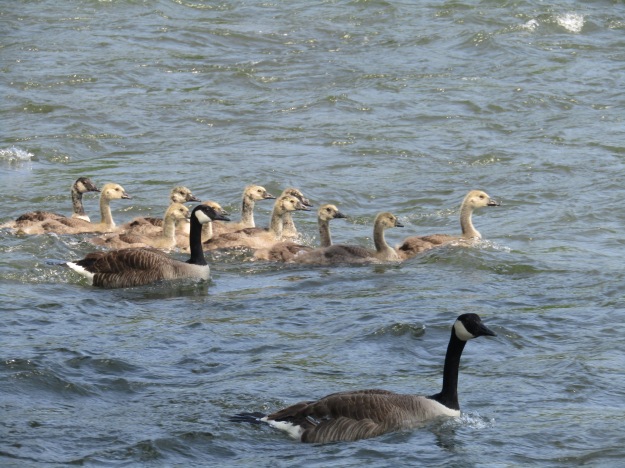
IMG_7687

Photo by Bryan Stevens • A family of Canada geese swims in the Watauga River in Elizabethton, Tennessee.

Ruffed grouse, 4; wild turkey, 45; common loon, 5; double-crested cormorant,144; great blue heron, 123; great egret, 2; green heron, 29; black-crowned night-heron, 2; and yellow-crowned night-heron, 8.


Black vulture, 121; turkey vulture,167; osprey,12; bald eagle, 8; cooper’s hawk, 8; red-shouldered hawk, 2; broad-winged hawk, 8; and red-tailed hawk, 27.


Killdeer, 41; spotted sandpiper, 37; solitary sandpiper, 35; greater yellowlegs, 2; lesser yellowlegs, 8; least sandpiper, 10; white-rumped sandpiper, 1; and ring-billed gull, 2.

gbbc-killdeer

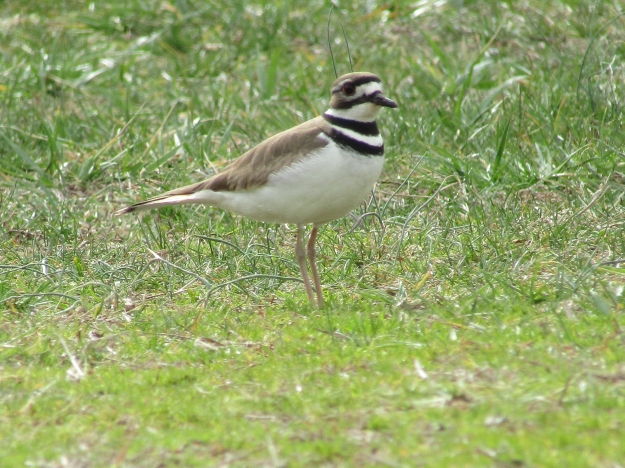
Photo by Bryan Stevens • Killdeer, a species of shorebird in the plover family, is a permanent resident in the region.


Rock pigeon, 217; Eurasian collared-dove,10; mourning dove, 251; yellow-billed cuckoo, 17; black-billed cuckoo, 3; Eastern screech-owl, 8; great horned owl, 2; barred owl, 8; common nighthawk, 5; chuck-will’s-widow, 7; Eastern whip-poor-will, 43; chimney swift, 185; ruby-throated hummingbird, 51; and belted kingfisher, 15.

Red-headed woodpecker,10; red-bellied woodpecker, 129; yellow-bellied sapsucker, 5; downy woodpecker, 55; hairy woodpecker, 6; Northern flicker, 44; and pileated woodpecker, 59.

American kestrel, 19; Eastern wood-pewee, 43; Acadian flycatcher, 32; least flycatcher, 2; Eastern phoebe, 82; great crested flycatcher, 31; Eastern kingbird, 123; and loggerhead shrike, 1.


White-eyed vireo, 21; yellow-throated vireo,10; blue-headed vireo, 86; warbling vireo, 17; red-eyed vireo, 280; blue jay, 231; American crow, 377; fish crow, 2; and common raven, 22.

Purple martin, 82; tree swallow 206; Northern rough-winged swallow, 131; barn swallow, 226; and cliff swallow, 864.

Carolina chickadee, 197; tufted titmouse, 213; red-breasted nuthatch, 11; white-breasted nuthatch, 44; brown creeper, 3; house wren, 53; winter wren, 7; Carolina wren, 225; blue-gray gnatcatcher, 110; golden-crowned kinglet, 5; and ruby-crowned kinglet, 2.

Eastern bluebird,181; veery, 15; gray-cheeked thrush, 1; Swainson’s thrush, 3; wood thrush, 109; American robin, 844; gray catbird, 77; brown thrasher, 72; Northern mockingbird, 138; European starling, 921; and cedar waxwing, 144.

Bluebird-Pool

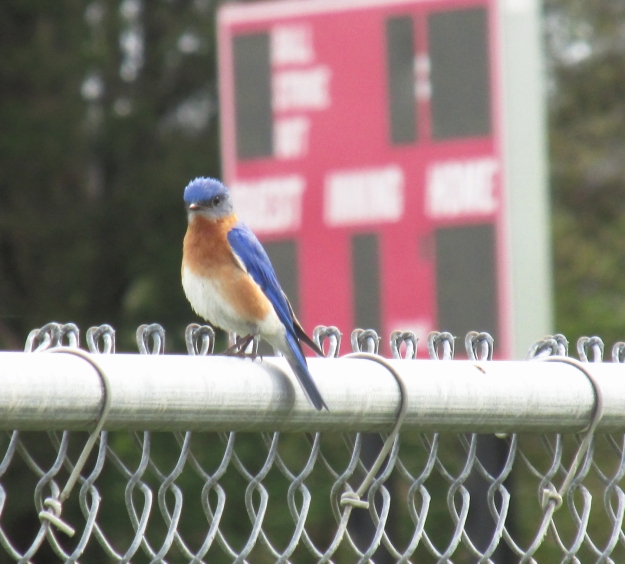
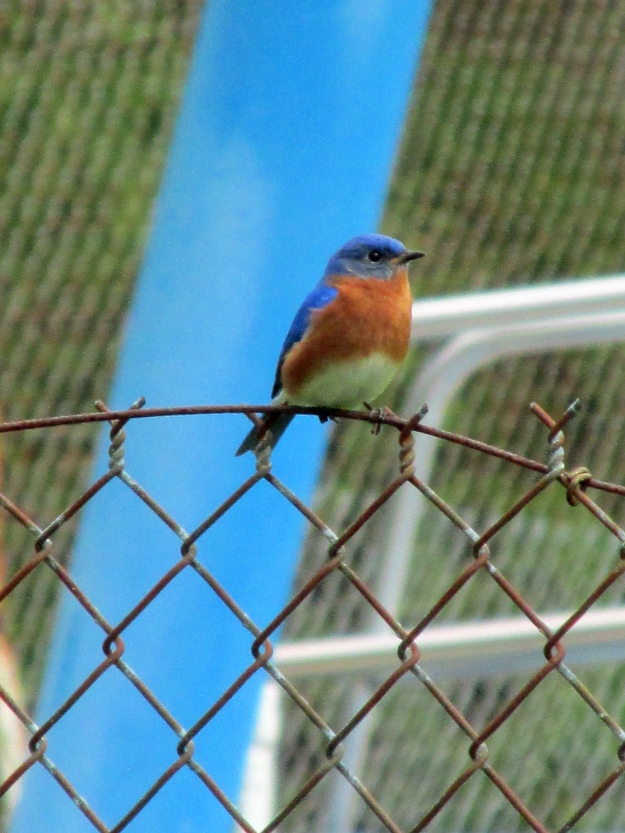
Photo by Bryan Stevens • A handsome male Eastern bluebird perches on a chain-link fence.

Ovenbird, 170; worm-eating warbler, 42; Louisiana waterthrush, 37; Northern waterthrush, 3; golden-winged warbler, 2; black-and-white warbler, 118; Swainson’s warbler, 3; Tennessee warbler, 1; common yellowthroat, 23; hooded warbler, 192; American redstart,12; Cape May warbler, 4; Northern parula, 44; magnolia warbler 7; Blackburnian warbler, 11; yellow warbler, 34; chestnut-sided warbler, 18; blackpoll warbler, 5; black-throated blue warbler, 71; palm warbler, 5; pine warbler, 13; yellow-rumped warbler, 53; yellow-throated warbler, 43; prairie warbler, 14; black-throated green warbler, 97; and Canada warbler, 34.

Eastern towhee, 250; chipping sparrow,137; field sparrow, 74; savannah sparrow, 2; grasshopper sparrow, 4; song sparrow,322; swamp sparrow, 1; white-throated sparrow, 10; white-crowned sparrow, 7; and dark-eyed junco, 74.

Summer tanager, 3; scarlet tanager, 97; Northern cardinal, 376; rose-breasted grosbeak, 37; blue grosbeak, 6; indigo bunting, 148; dickcissel, 2; and yellow-breasted chat, 10.

Bobolink,16; red-winged blackbird, 546; Eastern meadowlark, 144; common grackle, 474; brown-headed cowbird, 144; orchard oriole, 28; Baltimore oriole, 35; house finch, 96; pine siskin, 79; American goldfinch, 382; and house sparrow, 47.

HousieFinch

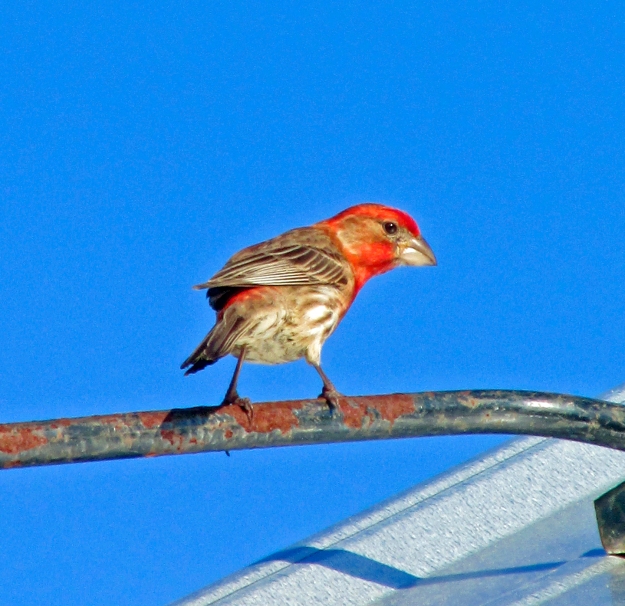
Photo by Bryan Stevens • A male house finch perched on a cable. These finches are native to the western United States but became established in the eastern states thanks to the illicit pet trade.

Hummingbirds are back, and readers share first spring sightings

30425329_10214061548565156_3810521485761143823_o 3

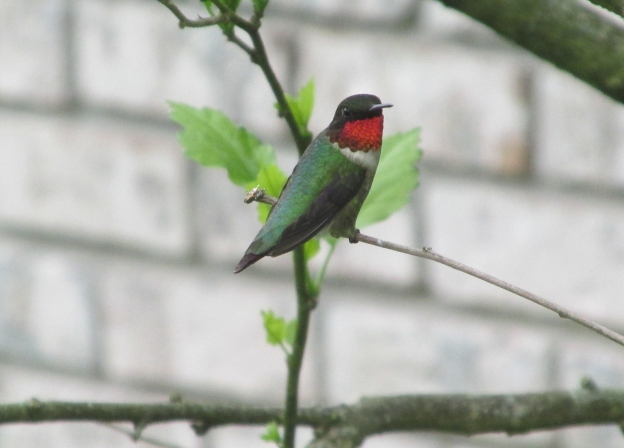
Photo by Bryan Stevens • Ruby-throated hummingbirds returned to the region earlier this month. This male, sipping sugar water from a feeder, shows its namesake red throat patch.

As many readers have already noticed, the ruby-throated hummingbirds are back. These tiny flying gems began returning to the region in the first days of April, but reports of their arrival spiked during the second week of April.

What do the hummingbirds that make their homes in our yards from April to October do during the five months they are absent from the region?

Most ruby-throated hummingbirds retreat to southern Mexico and Central America, some winging their way as far south as extreme western Panama, as well as the West Indies and southern Florida. They utilize a variety of habitats, ranging from citrus groves and forest edges to tropical deciduous forests and the edges of rivers and wetlands.

Those ruby-throated hummingbirds that make it as far south as Panama may find that they must compete with 59 other species of hummingbirds that call the Central America country home. In their winter home, the ruby-throated hummingbirds are definitely just another face in the crowd when its comes to their kin. In Panama, a ruby-throated hummingbird might encounter violet-headed hummingbirds, white-necked jacobins, black-throated mangos and green violet ears.

Ruby-OneSpot

Photo by Bryan Stevens • A young ruby-throated hummingbird shows a hint of the red throat gorget that gives this bird its common name.

It must be nice to live among so many hummingbirds. Closer to home, the ruby-throated hummingbird is the only one of its kind to nest in the eastern United States. Some of the ones arriving at our feeders now will speed their way farther north, but some will settle in our yards and gardens as they bring forth the next generation of ruby-throated hummingbirds.

Dianne Draper reported the earliest observation of which I am aware. A friend on Facebook and a fellow birder, Dianne posted that the first hummingbird of spring arrived at her home in Jonesborough, Tennessee, on the morning of April 4. Her sighting was seven days earlier than any of the others I received.

Harold and Elizabeth Willis in Marion, North Carolina, reported their first hummingbird at 5 p.m. on Wednesday, April 11.

Helen Whited in Richland, Virginia, saw her first hummingbird at 12:40 p.m. on Thursday, April 12.

Judy and Bill Beckman saw their first spring hummer at 7:25 p.m. on April 12 at their home in Unicoi, Tennessee.

Ruby-throatedFemale-EYE

Photo by Bryan Stevens • A female ruby-throated hummingbird settles onto the perch of a sugar water feeder.

Lois Wilhelm, who lives on Little Bald Creek Road on Spivey Mountain in Erwin, Tennessee, saw her first hummingbird of 2018 at 3:30 p.m. on April 12.

Glen Eller in Kingsport, Tennessee, saw his first spring hummingbird around 5 p.m. on April 12. The bird — a male — drank for about four minutes. “I guess he needed a good fill up,” Glen commented.

Nola Martin from Nebo, North Carolina, reported her first hummer arrived just before 11 a.m. on April 12.

“He was a little green bird….not sure which kind or which sex,” she wrote in her email. “It certainly remembered where one of my feeders was last year, though, as it was looking for it in that spot, I didn’t have that one out yet.”

Nola said she now has five of her seven feeders filled and placed out for the returning hummingbirds.

Betty Poole saw her first male hummingbird of spring when the bird arrived at 9:05 a.m. on Friday, April 13, at her home in Bristol, Virginia. Her daughter, Jane P. Arnold, emailed me the information about her mother’s sighting. Jane is still awaiting her own first spring sighting of a hummingbird.

Ruby-WingLift

Photo by Bryan Stevens • A ruby-throated hummingbird lifts its wings to shake water droplets off its back.

Debbie Oliver, while watching Wheel of Fortune on the evening of April 12, got her first glimpse of a spring hummer at her deck feeders in Bristol, Tennessee.

“I couldn’t observe if it was male or female due to the dimming light,” she wrote in an email.

“It was a curious ruby-throated hummingbird just flying around the feeder without taking a sip of nectar,” she added.  Around 9 a.m. the following morning, she spotted a male ruby-throated hummer drinking nectar at the feeder.

She speculated about whether the bird was the same individual that visited the previous evening. “We’ll never know,” she decided.

Joneen Sargent emailed me to let me know that her husband, Dale, saw a ruby-throated hummingbird on April 12 at 7 a.m. The Sargents live off of Booher Drive in Bristol, Tennessee.

Bob Cheers of Bristol, Virginia, saw his first ruby-throated hummingbird at 6:45 a.m. on April 13. Bob keeps a record of the arrival dates for this tiny bird. In 2015, he saw the first hummer on April 9. Last year, he saw his first hummer on April 11. In 2016, the first bird arrived on April 13. In 2014, he had to wait until April 14 to see the first hummer of spring.

RubyRed

Photo by Bryan Stevens • A male ruby-throated hummingbird perches near a feeder that he is ready to defend from all comers.

Mark Hurt, who lives on Glenway Avenue in Bristol near Virginia High School, said that his “little buddy,” the ruby-throated hummingbird, returned about 1 p.m. on April 13.

Sandra Loving reported that her first hummer sighting took place at 6:17 p.m. on April 13 at South Holston Lake in Tennessee.

Peggy Oliver saw her first male ruby-throated hummingbird of spring at 6:15 p.m. on April 13.

Ashley Russ of Abingdon, Virginia, emailed me to share that she spotted her first hummingbird of the season at 7:20 p.m. on April 13.

Terry Fletcher saw her first male ruby-throated hummingbird at her feeder at 6:50 a.m. on April 14 at home in the First Colony subdivision in Bristol, Tennessee. Away from home the previous day, Terry was told by a next-door neighbor that the hummingbirds actually showed up on April 13.

Janice Denton, who lives on Canthook Hill Road in Bristol, Tennessee, emailed me news of her first sighting.

“I’m excited to let you know that I saw my first ruby-throated hummingbird on Friday, April 13,” she wrote. “I have had my feeders out for about two weeks and was sitting on my front porch in the afternoon hoping to see a hummingbird.”

On April 15 around noon, Janice also reported that she saw a male ruby-throated on a feeder outside her kitchen window, and another one came along and chased it off.  “I hope they all stick around for the summer,” she wrote.

Ruby-Spot-Two

Photo by Bryan Stevens • Only adult male ruby-throated hummingbirds show the namesake ruby-red throat patch.

Lynne Reinhard reported via Facebook that she had her first hummingbird sighting at her home on the upper end of South Holston Lake on April 14. She noted that the hummingbird arrived a day earlier than last spring.

Linda Sproles, who lives on Hunter Hills Circle in Bristol, Tennessee, observed the first arrival of a hummingbird at her deck feeder at 10:43 a.m. on April 14. “It was a female, I believe, because it did not have a red throat patch,” she added.

Kathy Maggio, who lives between Benhams and Mendota in Washington County, Virginia, spotted her first hummingbird of spring at 1:15 p.m. on April 14.

Phyllis Moore of Bristol, Virginia, saw her first ruby-throated hummingbird of the spring at 4 p.m. on April 14.

Pat Stakely Cook, who resides in Marion, North Carolina, reported two ruby-throated hummingbirds at her feeders on April 14. The two male hummers stayed busy feeding and chasing each other.

32183fcb801d3cdbd206582ffb25517d 2

Early American naturalist and painter John James Audubon painted this work featuring the ruby-throated hummingbird. From the moment New World explorers arrived in the New World from Europe, they were impressed by the tiny, dazzling hummingbirds, a family of birds unknown in the Old World.

Amy Wallin Tipton, a resident of Erwin, Tennessee, saw her first hummingbird, a male, at 4 p.m. on April 14. She shared her sighting via Facebook.

Judi Sawyer, a resident of Roan Mountain, Tennessee, saw her first spring hummingbird, a male, at her home on the morning of April 14. Some house wrens decided to make their arrival the same day, she reported on Facebook.

Ginger Wertz-Justis in Baileyton, Tennessee, saw a male hummingbird at 6:30 p.m. on April 14.

Richard Trinkle emailed me to report that he saw a male ruby-throated hummingbird at 6:15 p.m. on April 14 at his Bristol home near Friendship Ford.

Robin Small saw the first hummer at 6:15 p.m. on April 14. “As I was looking at the snow falling and the cardinals, woodpeckers and regular visitors to my deck feeders, I saw my first hummingbird of 2018,” Robin wrote in an email. Robin put the feeder out the previous day when temperatures had been in the 80s and added that the hummer visited several times as the snow fell the evening of its arrival.

Janice Humble, who lives near South Holston Lake, put out her feeder on April 14. “It wasn’t 15 minutes until I had a hummingbird,” she wrote in her email.  “I saw two others that same evening.”

Lewis Spicer of Abingdon, Virginia, had both a male and female hummingbird visit his home for the first time this spring on the same day on April 15. He saw the male at 9:35 a.m. The female hummer arrived during afternoon rain at 12:45.

Frank and Myra Renault of Abingdon, Virginia, saw their first hummingbird of spring — a female — at 12:06 p.m. on April 16.

Sheila Myers, who lives on Porter Valley Road in Marion, Virginia, saw her first hummer at noon on April 16.

Rhonda Eller in Chilhowie, Virginia, saw her first spring hummingbird at 4:53 p.m. on April 18.

I am pleased to report that my own first hummingbird sighting for 2018 took place when a feisty male zipped into the yard while I was seated on the front porch. He sipped at four different feeders before he zoomed off. He arrived at 5:40 p.m. on April 14, one day earlier than last year’s first arrival. My feeders had been waiting for the arrival of hummingbirds for about a week when he first appeared.

Ruby-throated-WILLOWS

Photo by Bryan Stevens • Numbers of Ruby-throated Hummingbird in the region tend to fluctuate each year, but people should see a spike in their numbers as the hummingbirds end summer nesting and start migrating south again.


Timely arrival of blue-gray gnatcatcher signals the rush of spring migration

A blue-gray gnatcatchers finally put in a first spring appearance at my home on April 11. Most likely, these tiny birds had already arrived, but my schedule hadn’t yet allowed me a glimpse of this punctual songbird. Back in March, I saw and heard dozens of them during a trip to the South Carolina Low Country.

Gnatcatcher

Photo Courtesy of Jean Potter • Blue-gray Gnatcatchers are tiny, energetic bundles of feathers.


Birds are as dependable as clocks and calendars when it comes to noting the passage of time. I can keep track of the changing seasons based on the composition of the birds in my yard. The gnatcatcher has long been my signal to the start of the frenzied pace of spring migration for many of the birds returning to the region after sojourns much farther south. For example, the first gnatcatcher arrived in my yard in 2014 on April 4. Two days earlier, I had observed my first blue-grey gnatcatcher of the spring while visiting Winged Deer Park in Johnson City, Tennessee. It doesn’t hurt that the arrival of gnatcatchers coincides with the annual blooming of bluebells, a wildflower for which this local park is famous.

Once again, Winged Deer Park provided me with my first spring sighting of this bird when I finally saw one this year on April 6. Over the years I’ve kept track of such matters, blue-gray gnatcatchers reliably return every year in the final days of March and first days of April. A blue-gray gnatcatcher put in its first appearance at my home on April 2 in 2011. In 2009, I also saw my first gnatcatcher on April 2, although in 2008 I had to wait until April 5 for my first spring sighting of a gnatcatcher. In 2007, the blue-gray gnatcatcher was an “April Fool’s” bird, arriving on the first day of April. Arrival dates in March are a little less frequent. For instance, in 2003, a blue-gray gnatcatcher arrived on March 28. I saw my first spring gnatcatcher on March 30 in 1998. In 2006, the arrival date was March 31.

Gnatcatcher 2

The blue-gray gnatcatcher is a tiny, active bird with noisy habits that make it fairly easy to detect in early spring before foliage has grown dense in the branches of trees. This gnatcatcher ranks with the kinglets and hummingbirds as one of the smallest birds to range within the United States. This tiny bird tips the scales at only a fourth of an ounce. A gnatcatcher is an incredible bundle of feathered energy, seemingly always on the move as it snatches small winged insects out of the air or plucks other prey items from leaves or branches. Gnatcatchers are also quite curious birds that, more than once, have given me the distinct impression that I am the one being observed while watching their antics.

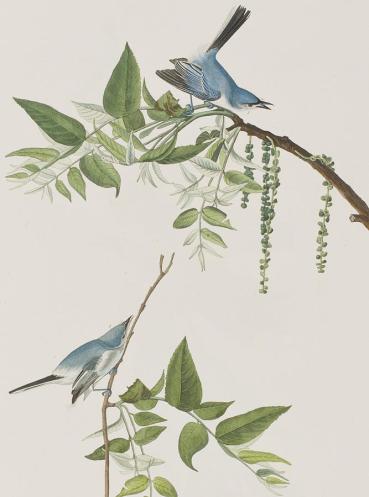
So, as the name suggests, do gnatcatchers truly eat gnats? The website All About Birds contends that, despite its name, the gnatcatcher does not concentrate its feeding efforts on gnats. This tiny bird does, however, prey on a variety of small insects and spiders. Winged insects, such as small flies and gnats, are part of the menu for a gnatcatcher, but this bird is also capable of plucking spiders from their webs or snatching tiny caterpillars from the underside of leaves.1-blue-grey-flycatcher-john-james-audubon

Like the hummingbirds, the gnatcatchers are an exclusively New World family of birds. They lack the diversity of the hummingbirds. Instead of several hundred species, there are only about a dozen species of gnatcatchers worldwide. Of that number, four — blue-gray gnatcatcher, California gnatcatcher, black-tailed gnatcatcher and black-capped gnatcatcher — range within the United States. The blue-gray gnatcatcher is the only member of this family to reside in the eastern United States. Other representatives of this family of small songbirds include the Cuban gnatcatcher, white-lored gnatcatcher, creamy-bellied gnatcatcher, tropical gnatcatcher and masked gnatcatcher.

The blue-gray gnatcatcher builds an exquisite and compact nest using such materials as spider silk and lichens. I have found many nests over the years by listening for the scolding notes of the parents which, even near their nest, have not learned the virtue of silence. The blue-gray gnatcatcher is one of the birds that, in my mind, truly kicks off the arrival season of many of my favorite neotropical migrants. With the arrival of gnatcatchers, I can now expect to enjoy the arrival of birds like hummingbirds, warblers, tanagers, vireos, thrushes, and grosbeaks.

BGGnatcatcher

••••••

Bryan Stevens lives near Roan Mountain, Tennessee. To learn more about birds and other topics from the natural world, friend Stevens on Facebook at https://www.facebook.com/ahoodedwarbler. He is always posting about local birds, wildlife, flowers, insects and much more.

Berry-rich diet makes waxwings profuse water drinkers

Waxwing-Sept11

Photo by Bryan Stevens • A cedar waxwing perches on a branch while taking a break from flycatching insect prey near a community park pond.

Ernie Marburg, a resident of Abingdon, Virginia, shared an interesting observation about a flock of cedar waxwings he observed recently in his yard.

Waxwings have a brown and gray silky plumage, a black mask and a perky crest. Some of the wing feathers show red tips. The similarity of these wing tips to melted drops of wax gives these birds the common name of waxwing.
Waxwing-Audubon

Early American naturalist and artist John James Audubon painted this pair of cedar waxwings.

“The typical flock of waxwings has arrived,” he wrote in his email. He added that the birds exhibited an unusual behavior during their visit.

“From their roosts in the tops of some tall nearby trees, they appeared to be leaving their roosts briefly and returning to the trees as though they were catching flies,” Ernie noted. “There were, however, no flies available.”

The waxwings, he went on to explain, appeared to be going after snowflakes. “Could they have been going after the snowflakes to drink water?” Ernie asked.

While I wasn’t sure that catching snowflakes is an energy-efficient way to relieve thirst, the waxwings might have had a different motivation for their behavior. As I informed Ernie in my reply to his email, waxwings are very social with each other. These birds form large flocks that travel, feed, roost and bathe together. They have also come up with interesting “rituals” to reinforce their social ties with each other.

Waxwing-Erwin

Photo by Bryan Stevens • The waxy tips to the wing feathers are evident in this photograph of a cedar waxwing.

These rituals, or games, they “play” with each other include a flock of perched birds passing a single berry or fruit in a line, one bird to another, without any of the birds eating the item. I speculated that snowflake catching was their idea of a fun game and a way to practice for fly-catching season, which is just around the corner.

Perhaps I should have conducted some research. As it turns out, other people have witnessed this snowflake-catching behavior, which has led those who have studied the birds to determine that the birds do indeed eat snowflakes to ease thirst. Apparently their diet, which is rich in sugar thanks to the various berries that provide a huge percentage of their food, waxwings are often afflicted with intense thirst. In addition to catching snowflakes, they have been observed eating fallen snow. A single Bohemian waxwing — a relative of the cedar waxwing — can gobble down 300 berries in a couple of hours. According to some statistics, one of these birds can eat up to three times its weight in fruit in a single day. The next time I am lucky enough to observe waxwings in a snowstorm, you can bet I will be watching for this snowflake-eating behavior.
The cedar waxwing has few relatives. Worldwide, there are only two other species: the Bohemian waxwing, which is native to the northern forests of Eurasia and North America; and the Japanese waxwing, found in such northeast Asian countries as Japan, Korea and China.

Ruby-throated-WILLOWS

Photo by Bryan Stevens • Numbers of Ruby-throated Hummingbird in the region tend to fluctuate each year, but people should see a spike in their numbers as the hummingbirds end summer nesting and start migrating south again.

Hummingbirds due back soon

Waxwings are rather nomadic, coming and going with a maddening unpredictability. Other birds are more dependable, arriving and departing at roughly the same time year after year. One such bird should soon make its triumphant and welcome return to yards and gardens throughout the region. According to the website Hummingbird Guide, ruby-throated hummingbirds usually return to Tennessee and Virginia the first week of April. These tiny flying jewels arrive earlier in North and South Carolina, typically arriving the third week of March in those states.

The popularity of hummingbirds in general, and the ruby-throated hummingbird specifically, is simple to understand. These tiny birds are perfectly willing to insert themselves into our lives, offering hours of fascinating entertainment as they visit our gardens, duel at our sugar water feeders and occasionally even nest in trees and shrubs in our yards.

Individuals who feed birds know that it can be an expensive undertaking. The cost of providing sunflower seeds and suet cakes for hungry flocks during the winter months can nibble at the monthly budget, but hardly anyone would begrudge the sparrows, finches, wrens and woodpeckers. After all, they return the favor, putting on daily shows just outside our windows.

Rubythroated_Hummingbird

Photo by U.S. Fish & Wildlife Service • A male Ruby-throated Hummingbird hovers in front of the camera as it seeks nectar from tiny flower blossoms.

The same is true of hummingbirds. For a relatively modest investment, people putting out feeders or planting nectar-producing flowers are rewarded with the fun and amusing antics of these pint-sized and hyperactive birds.

Attracting hummingbirds is generally much less expensive than feeding other birds. After all, you need only a mixture of sugar water — four parts water to one part sugar — to fill a feeder and catch the attention of a visiting hummer. A few pounds of sugar will last a lot longer than that bag of sunflower seeds, and it’s much less expensive to purchase at the grocery store.

Do not add red coloring or dyes to your sugar water mixture. Some studies have indicated these substances are harmful to hummingbird health. This means tossing out many of the pre-packaged mixtures sold with sugar water feeders. After all, the entire purpose is to attract hummingbirds. Risking their health is simply not acceptable. If you do want to take extra steps to attract these diminutive, feathered sugar junkies, consider supplementing your landscape with a variety of flowering plants. To explore some of the best choices for flowers to tempt hummingbirds, visit the website of The Hummingbird Society at http://www.hummingbirdsociety.org.

Ruby-throatedFemale-EYE

Photo by Bryan Stevens • A ruby-throated hummingbird visits a feeder for a sip of sugar water.

I always put out my sugar water feeders in early April. I usually end up waiting a couple of weeks before the first hummingbird appears, but it’s worth the wait. I miss these tiny birds during the winter months, which they spend in much warmer surroundings in southern Mexico and Central America. A male with the namesake red throat is usually the first to appear at my feeders. However, female ruby-throated hummingbirds, which lack the dazzling ruby throat patch, are migrating, too. The females usually lag a week or two behind the pace of the migration for the males.

As always, I enjoy hearing from readers about their first spring sighting of a ruby-throated hummingbird. Readers are encouraged to jot down the date and the time of arrival when they observe their first hummingbird of the season. If the sighting’s duration allows you to verify, note whether the hummingbird was a male or female. These reports can be emailed to me at ahoodedwarbler@aol.com. Together, we’ll track the arrival of these tiny birds as they return to the region.