Category Archives: Spring birds

Now that hummingbirds are back, take some simple steps to keep them healthy

IMG_2786

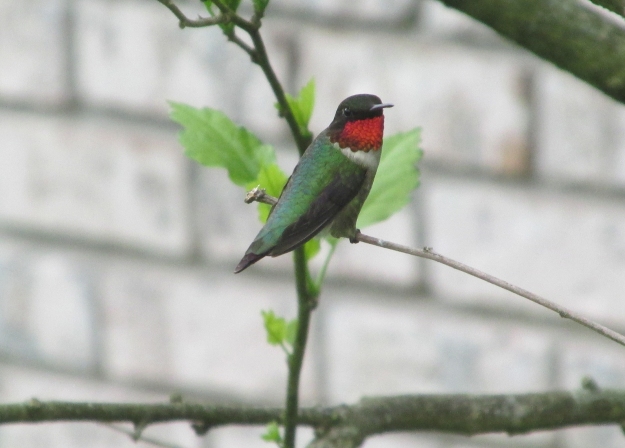
Photo by Bryan Stevens • Welcoming back hummingbirds also involves making sure that they remain healthy and safe while spending the next six months in our yards and gardens.

Bristol residents Don and Donna Morrell saw their first hummingbird of spring at 10:19 a.m. on Monday, April 15. “My wife put the feeder up last week,” wrote Don in an email to me. “We live behind South Houston Dam.”

Gordon Aiton, who lives on Elm Street in Erwin, Tennessee, saw his first hummingbird of spring at 7:04 p.m. on Friday, April 19.

Phyllis Moore saw her first hummingbird — a male — at 7:50 p.m. on Friday, April 19, at her home in Bristol, Virginia.

Lynda Carter emailed me to report her first spring sighting of a male ruby-throated hummingbird at her feeder after lunch on Monday, April 15, and a second male appeared on Friday, April 19, a little after 1 p.m. Lynda said she lives at the end of Embreeville mountain in the Lamar community near Jonesborough, Tennessee.

Susan Okrasinski, a resident of Kingsport, Tennessee, saw her first hummingbird of spring on Easter Sunday, April 21.

“On my way into the kitchen I just saw (be still my heart) the first hummer of the season — whoo hoo!” Susan wrote in a post on her Facebook page. “It was a female, which is unusual as the males come up first and the females follow.  What a nice Easter surprise!”

Joanne Campbell, who lives at Middlebrook Lake in Bristol, Tennessee, posted on my Facebook page about her first spring hummer. “Had our first hummingbird sweep into our courtyard on Tuesday, April 23,” she wrote in her post.

Rubythroated_Hummingbird

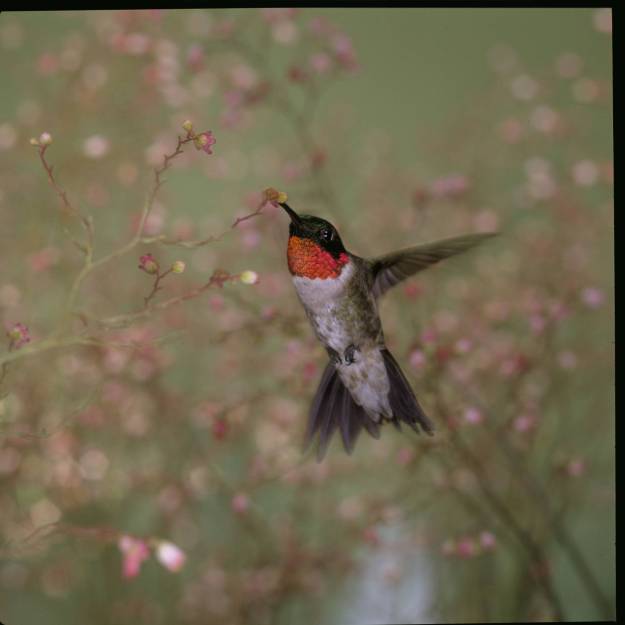
Photo by U.S. Fish & Wildlife Service • A ruby-throated hummingbird seeks nectar from small blooms on a flower.

Every hummingbird’s arrival at our homes after an absence of nearly six months is nothing short of an epic achievement on the part of this tiny bird. According to the website, hummingbird.net, most ruby-throated hummingbirds make a daring journey across the Gulf of Mexico to return to their summer homes in the United States and Canada. They typically depart at dusk for their nonstop Gulf flight of up to 500 miles, which takes 18 to 22 hours, depending on the weather.

Now that we’ve welcomed them back into our yards and gardens after such a harrowing journey, it’s important as good hosts to make sure these tiny wonders are kept safe.

Some ways of ensuring that our hummingbird guests are kept healthy and secure are simply common sense. For instance, don’t use pesticides, herbicides or any other sort of toxin anywhere close to the vicinity of a sugar water feeder or a flower garden. Hummingbirds are such tiny creatures with such intense metabolisms that it only takes a minute amount of any harmful substance to sicken or kill one of these little flying gems.

Feeding hummingbirds is easy, but many people try to complicate the process. Only common, pure cane sugar, mixed to a ratio of four parts water to one part sugar, is a safe choice for these birds.
Hummingbird-Ornament

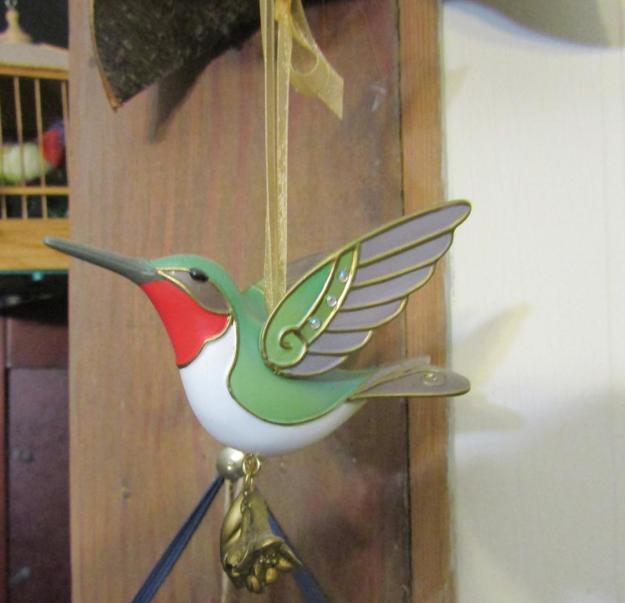
Photo by Bryan Stevens • Hummingbirds have even inspired ornaments and keepsakes in their image, a testament to their popularity and beloved status as yard and garden visitors.

For emphasis, I’ll repeat again that only common, pure cane sugar is safe for hummingbirds. There are no safe substitutes. Do not use organic, raw or brown sugar. Confectioner’s sugar, which contains an anti-caking substance (often corn starch, silicates or stearate salts), is also hazardous to hummingbirds.

There’s also a type of sugar known as turbinado sugar, which is named for the process of spinning the sugar in turbines to crystallize it. The crystals are rich in vitamins and mineral valuable for human health, but they are lethal for hummingbirds. Iron is one of the minerals contained in turbinado sugar. Hummingbird metabolism has a low tolerance for iron, which is present in the molasses added to brown sugar and in agave nectar. These are natural substances, but that doesn’t make them safe for hummingbirds.

The ratio of four parts water to one part sugar utilizing pure cane sugar most closely duplicates the nectar that hummingbirds obtain from some of their favorite flowers. Why try to mess with nature’s perfection?

I cannot imagine why anyone would supplement sugar water for hummingbirds with such human beverages as a sports drink or Kool-aid, but there have been reports of people doing so. Be aware that such additives will only risk the health of these tiny birds.
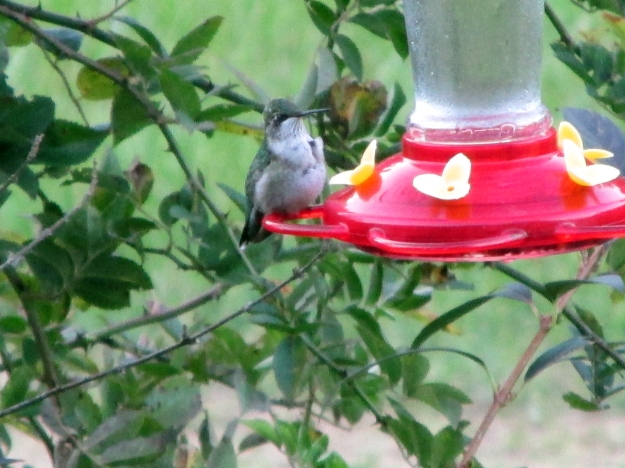
Hummer-Oct17

Photo by Bryan Stevens • Female ruby-throated hummingbirds must face many demands if they are to be successful at nesting and raising young, both tasks being done without assistance from male hummingbirds.

Honey is another substance, although perfectly natural in its origins, that should be avoided. Honey encourages the growth of fungus, which can quickly incapacitate or kill a hummingbird. A packet of artificial sweetener might taste great in your iced tea, but do not add such substances to the solution in your hummingbird feeder. These artificial sugar substitutes offer nothing of nutritional value for a bird with an extreme metabolism with excessive energy demands. In theory, a hummingbird mistakenly feeding on nothing but an artificial sweetener would soon starve to death.

It’s also important to change out your feeders and clean them as often as every one to three days. In extremely hot weather reaching more than 90 degrees, the sugar solution may need to be changed and the feeder cleaned on a daily basis. That’s not as difficult as it sounds. I prepare sugar water and store it in plastic juice containers. Refrigerated, the solution will last longer and can be doled out on a daily basis until a new supply is needed.

honey-2201210_1920

Photo by sapphir1/Pixabay.com • Although a natural substance, honey should not be fed to hummingbirds as it can promote a fungus harmful to hummingbirds.

Don’t use any type of soap or detergent to clean the feeders. The best advice I’ve read is to stick to hot water and vinegar, which will not leave behind a residue that could potentially harm the hummingbirds.

Do not put any sort of red dye or coloring into the sugar water, and do not purchase commercial solutions that incorporate red dyes. Some scientific studies suggest that red dye is a recipe for disaster with hummingbird. Such dyes are thought to lead to kidney failure and certain death for the hummingbird. There’s also plenty of evidence to suggest that banning red dye is an exaggeration of the peril. Taking that into consideration, I still err on the side of caution. Perhaps the red dye will eventually be proven harmless. Until that time, I prefer not to risk the health of my resident hummingbirds.

I’m often asked if the sugar water feeder itself should be red. There is ample evidence that hummingbirds are attracted to red. According to information from the National Audubon Society website, current thinking is that the red dye, as just mentioned, may not be good for them, nor is it necessary to attract hummingbirds. The color on a feeder is enough to attract them. Most feeders incorporate some red parts into their construction. People can mix their own nectar using 1/4 cup sugar to every 1 cup of water.

It’s a lot of work to attract hummingbirds and keep them safe and healthy. I’d like to think the rewards we get from these small birds make the effort worthwhile.
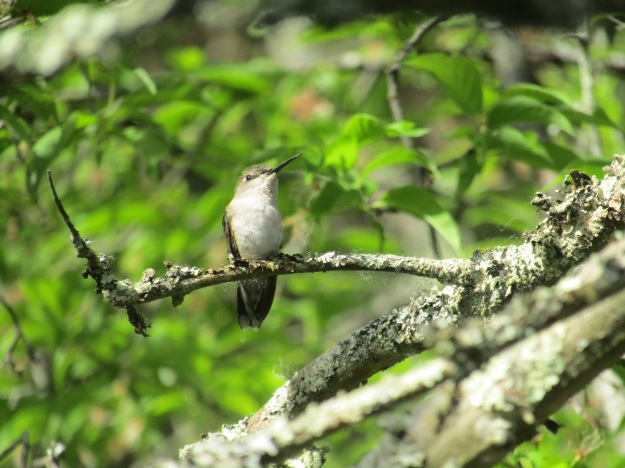
IMG_2859

Photo by Bryan Stevens • A female ruby-throated hummingbird, lacking the bright throat patch of a male, surveys her surroundings from a low perch.


April brings flurry of spring migrants to region

Louisiana Waterthrush

Photo by Adobe Stock • Subtle plumage differences, as well as habitat, behavior and seasonal presence, are factors in distinguishing the Louisiana waterthrush, pictured, from the closely related Northern waterthrush. The Louisiana waterthrush nests along fast-moving streams in the area while the Northern waterthrush does not breed in the region.

I’m always happy for the arrival of April because I know the month hails the arrival of some of my favorite birds. The roughly 50 species of New World warblers that occur in the Eastern United States have captivated me from the time I first picked up a pair of binoculars. The warblers offer color, energy, complex songs and much more for the bird enthusiast to enjoy.

The month started out with my first sighting of a purple finch for the year. The finch must have been a harbinger of birds to come because in quick succession I observed many early migrants, including brown thrasher, blue-headed vireo, blue-gray gnatcatcher and chipping sparrow, as well as several warblers.

PurpleFinches

Photo by Bryan Stevens • A study of the facial pattern of a female purple finch helps contrast her from similar female house finches. Again, the notched tail is also a good indication of the bird’s identity.

The first warbler to arrive in the woods around my home this year was a singing male black-throated green warbler. Three others — black-and-white warbler, yellow-throated warbler and Louisiana waterthrush — followed quickly after my sighting of the black-throated green warbler.

The Louisiana waterthrush stood out among these early observations. This warbler is a specialist of creeks and streams, and my sighting took place near a roaring creek swollen by a rainy spring. This water-loving warbler also has a loud, ringing song that can still be hard to hear because of the fact the bird is usually near the background noise of rushing water.

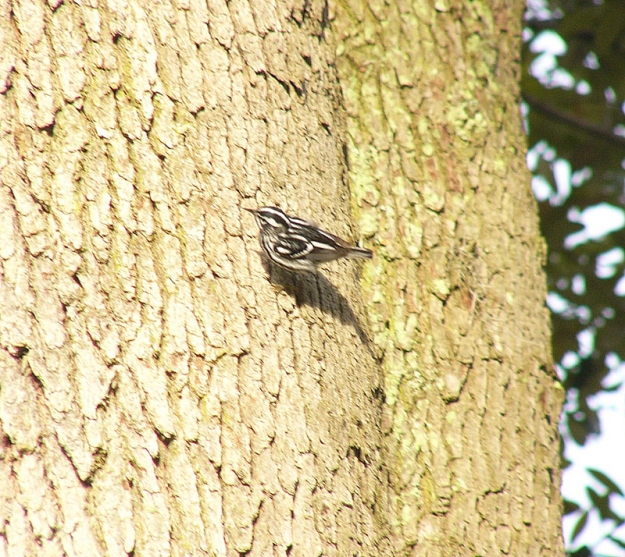
B&WWarbler

Photo by Bryan Stevens • A black-and-white warbler creeps over the bark of a pine in search of insect prey.


While many warblers have shown signs of decline in recent years, the Louisiana waterthrush appears to have bucked that trend. According to the website, “All About Birds,” Louisiana waterthrush populations were stable between 1966 and 2015, based on statistics from the North American Breeding Bird Survey. Partners in Flight, a network of organizations engaged in all aspects of avian conservation, estimates a global breeding population of 360,000, with almost all of those individuals spending at least part of the year in the United States. About a quarter of the population retreats into Mexico during the winter season. The rest winter in Florida and some of the Gulf Coast states, as well as the islands of the Caribbean.

While most songbirds are fortunate to survive two or three years in the wild, at least one Louisiana waterthrush lived to the age of at least 11 years and 11 months. The bird, a male, was seen in New Jersey in the wild and identified by a band on one of his legs. He had been banded in the same state, according to the website, “All About Birds.”

The waterthrushes are the only two species in the genus Parkesia, so named to honor American ornithologist Kenneth C. Parkes, who was for many years curator of birds at Carnegie Museum of Natural History. The common name of the Louisiana waterthrush is not a very apt one, as this bird does not have any special affinity for the state of Louisiana. Someone collected some of the early specimens of the Louisiana waterthrush in its namesake location, and the name has stuck through the years.

The only other warbler in the genus Parkesia is the Northern waterthrush which, unlike its relative, likes to live near quiet, sedate pools, ponds and bogs, not rushing streams.

Hummingbirds getting closer to region

Tommy and Virginia Curtis of Smithville, Tennessee, reported their first ruby-throated hummingbirds of the spring on the email group, “TN-Birds.” The hummingbird arrived on April 7.

“We had two male ruby-throated hummingbirds arrive late Sunday afternoon,” they wrote in their email. “That is a little later than the April 1 arrival times in the past.”

The two visitors had apparently agreed to co-exist.

“So far they are eating peacefully, and neither is attacking or dominating the one feeder,” the couple reported. “We keep wondering when the white-throated sparrows and dark-eyed juncos plan to leave, as we have had many of them all winter.”

white-throated-sparrow-942064_1920 (1)

Photo by Skeeze/Pixabay • A white-throated sparrow perches on a branch to sing its easily recognizable song. Many Americans translate the sparrow’s song as “Ol’ Sam Peabody, Peabody, Peabody.”

The couple also shared that they have been hosting a small flock of purple finches. “They normally don’t show up at our feeders unless there is snow on the ground, but we have enjoyed seeing them daily,” they wrote in their email.

Of course, the Curtises live in DeKalb County in Middle Tennessee. As of press time, I still haven’t received any reports of hummingbirds arriving in East Tennessee or Southwest Virginia. I’m confident these tiny winged gems will arrive soon. I hope to update on hummingbird arrivals in next week’s column.

Remember to share your hummingbird sighting by emailing me the date and time of the sighting to ahoodedwarbler@aol.com. I’m also on Facebook should anyone want to contact me through that social media platform.

RubyRed

Photo by Bryan Stevens • A male ruby-throated hummingbird perches near a feeder that he is ready to defend from all comers.


Regional bird count detects population trends

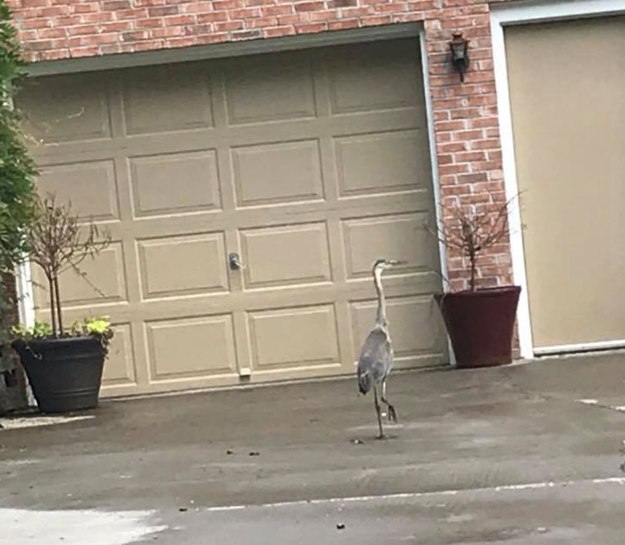
Driveway-Heron

Photo by Pattie Rowland • A Great Blue Heron explores a paved driveway at a home in Erwin, Tennessee. Rookeries, or nesting colonies, in Erwin have expanded the population of this large wading bird locally.

Members of the Elizabethton Bird Club and birding organizations in Kingsport and Bristol fanned out across Northeast Tennessee on Saturday, May 5, for the 75th consecutive Elizabethton Spring Bird Count. A total of 60 observers (a new participation record) looked for birds in Tennessee’s Carter County and parts of the adjacent counties of Johnson, Sullivan, Unicoi and Washington.

Counts like this one, as well as surveys such as the Virginia Breeding Bird Atlas, now in its third season, provide valuable information to assist responsible agencies and organizations with the protection and preservation of the nation’s birds.

This year’s spring count tallied 152 species, slightly better than the overall average of 149 species established over the last 30 years. The most ever species tabulated for this count was 166 species back in 2016.

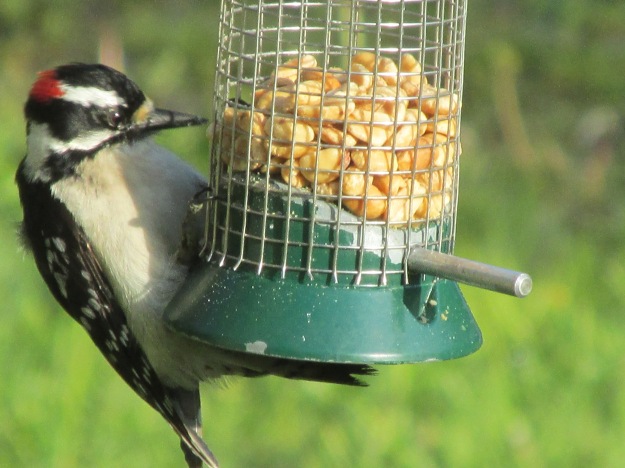
Downy_Peanuts

Photo by Bryan Stevens • Many of the birds found during a survey liked the Spring Bird Count are observed at feeders, such as was the case with this downy woodpecker.

I counted birds along the Watauga River in Elizabethton and on Holston Mountain. Some of the better birds I saw during the daylong outing included Baltimore oriole, Blackburnian warbler, warbling vireo, and yellow-billed cuckoo.

I also saw numerous great blue herons. It’s notable that this large wading bird has become much more common in the region, thanks to recent rookeries, or nesting sites, in Erwin, Elizabethton, Bristol and other locations. In recent years, new rookeries have also been established in southwest Virginia in locations such as Saltville and Damascus. A total of 123 great blue herons were found on this year’s spring count.

So it was with much interest that I read on my Facebook page the story of an encounter Pattie Rowland, a resident of Erwin, Tennessee, had with a rather tame great blue heron. Instead of flying away when Pattie stepped outside, a visiting heron strolled around her yard and down her neighbor’s driveway.

Pattie wondered if the heron could be a fledgling from the rookery in Erwin. While that’s certainly a possibility, the bird could also be an adult nesting in the rookery and wandering a little farther afield than usual in search of food for its young. In addition to fish, great blue herons will also feed on earthworms, amphibians, reptiles and even small rodents. As I mentioned to Pattie, herons are like people. Each bird is an individual; some are shy, others are curious and adventurous, which may find a heron exploring a paved driveway instead of a water lily-choked pond.

Heron-OnNest

Photo by Bryan Stevens • Great blue herons have expanded their nesting range into the region.

This heron has only been known to nest in Unicoi County since 2007. In addition, count participants found 144 double-crested cormorants, another bird affiliated with water that has proliferated as a summer nesting bird in the region.

Despite the increasing numbers of great blue herons and double-crested cormorants, they were far from the most numerous bird found on the spring count. The European starling claimed the distinction of most abundant bird on this year’s count with a total of 921 individuals found. Other abundant birds included cliff swallow (864); American robin (844); Canada goose (648); red-winged blackbird (546); and American crow (377). Although the count produced many good birds, it was also notable for some misses, including Northern bobwhite, sharp-shinned hawk and Kentucky warbler.

RW-Blackbird-Erwin

Photo by Bryan Stevens • A male red-winged blackbird sings to attract mates and ward off rivals.

In the wild, great blue herons can live for 15 years. The great blue heron’s diet is often dictated by opportunity with these large birds known to feed on prey that ranges from fish and crustaceans to small alligators and baby turtles. These herons will also feed on insects, rodents, amphibians, reptiles and even nestling birds. A great blue heron will basically try to eat anything that it can capture and swallow.

The great blue heron is the largest North American heron, as well as the world’s third-largest heron species. Other herons around the world with descriptive common names include Goliath heron, black-headed heron, purple heron, zigzag heron, capped heron and whistling heron.

The great blue heron isn’t the only heron found in the region. Other herons that can be found locally include green heron, yellow-crowned night-heron and black-crowned night-heron, all of which were found on the recent bird count.

If you’re interested in observing great blue herons for yourself, consider visits to the wetlands at Sugar Hollow Park in Bristol, Virginia, or the waterways around Osceola Island Recreation Area near Holston Dam in Bristol, Tennessee. These herons can also often be found stalking fish, frogs and other prey around the edges of ponds or streams.

The official results of the Spring Bird Count by the Elizabethton Bird Club are presented below:

Canada goose, 648; wood duck, 70; mallard, 176; Northern shoveler, 1; greater scaup, 1; bufflehead, 1; and red-breasted merganser; 4.

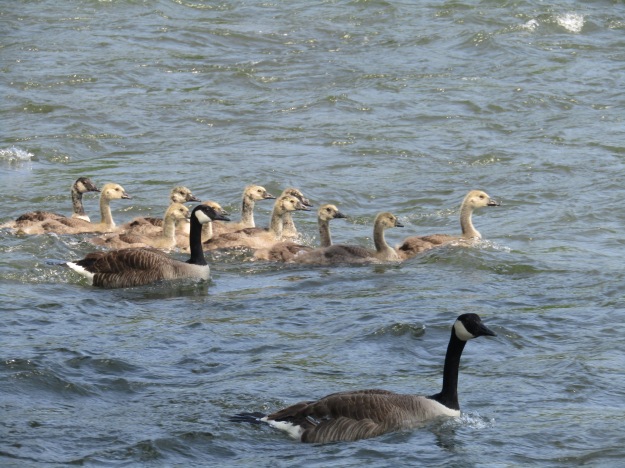
IMG_7687

Photo by Bryan Stevens • A family of Canada geese swims in the Watauga River in Elizabethton, Tennessee.

Ruffed grouse, 4; wild turkey, 45; common loon, 5; double-crested cormorant,144; great blue heron, 123; great egret, 2; green heron, 29; black-crowned night-heron, 2; and yellow-crowned night-heron, 8.


Black vulture, 121; turkey vulture,167; osprey,12; bald eagle, 8; cooper’s hawk, 8; red-shouldered hawk, 2; broad-winged hawk, 8; and red-tailed hawk, 27.


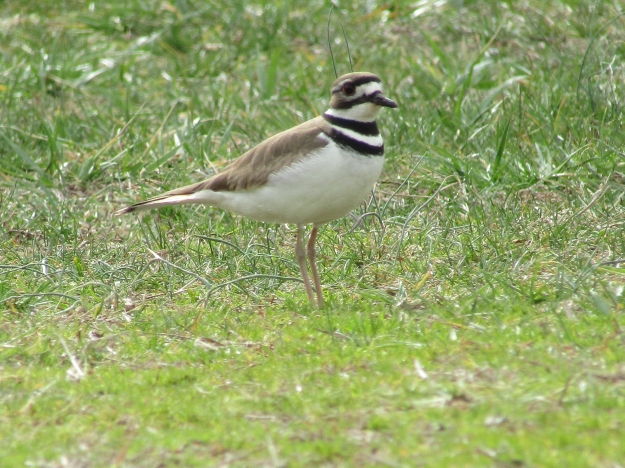
Killdeer, 41; spotted sandpiper, 37; solitary sandpiper, 35; greater yellowlegs, 2; lesser yellowlegs, 8; least sandpiper, 10; white-rumped sandpiper, 1; and ring-billed gull, 2.

gbbc-killdeer

Photo by Bryan Stevens • Killdeer, a species of shorebird in the plover family, is a permanent resident in the region.


Rock pigeon, 217; Eurasian collared-dove,10; mourning dove, 251; yellow-billed cuckoo, 17; black-billed cuckoo, 3; Eastern screech-owl, 8; great horned owl, 2; barred owl, 8; common nighthawk, 5; chuck-will’s-widow, 7; Eastern whip-poor-will, 43; chimney swift, 185; ruby-throated hummingbird, 51; and belted kingfisher, 15.

Red-headed woodpecker,10; red-bellied woodpecker, 129; yellow-bellied sapsucker, 5; downy woodpecker, 55; hairy woodpecker, 6; Northern flicker, 44; and pileated woodpecker, 59.

American kestrel, 19; Eastern wood-pewee, 43; Acadian flycatcher, 32; least flycatcher, 2; Eastern phoebe, 82; great crested flycatcher, 31; Eastern kingbird, 123; and loggerhead shrike, 1.


White-eyed vireo, 21; yellow-throated vireo,10; blue-headed vireo, 86; warbling vireo, 17; red-eyed vireo, 280; blue jay, 231; American crow, 377; fish crow, 2; and common raven, 22.

Purple martin, 82; tree swallow 206; Northern rough-winged swallow, 131; barn swallow, 226; and cliff swallow, 864.

Carolina chickadee, 197; tufted titmouse, 213; red-breasted nuthatch, 11; white-breasted nuthatch, 44; brown creeper, 3; house wren, 53; winter wren, 7; Carolina wren, 225; blue-gray gnatcatcher, 110; golden-crowned kinglet, 5; and ruby-crowned kinglet, 2.

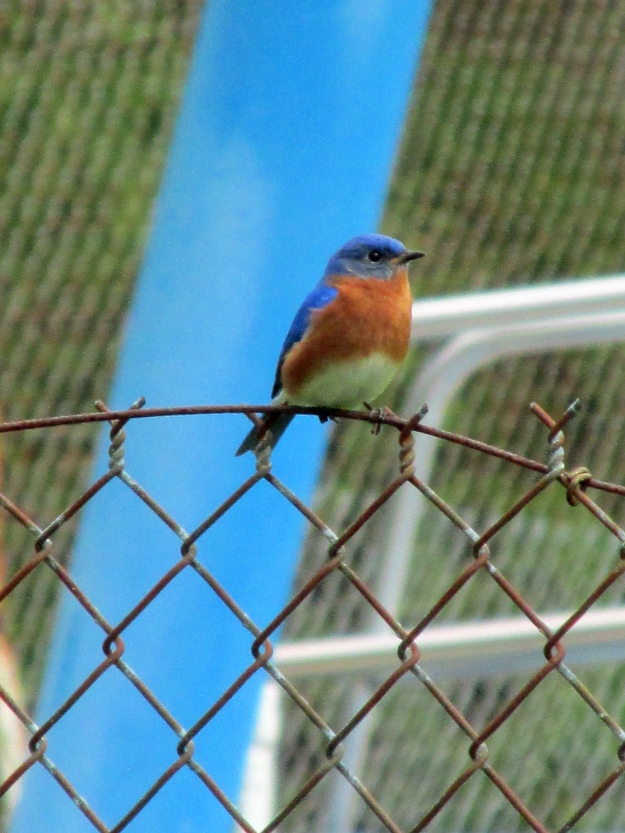
Eastern bluebird,181; veery, 15; gray-cheeked thrush, 1; Swainson’s thrush, 3; wood thrush, 109; American robin, 844; gray catbird, 77; brown thrasher, 72; Northern mockingbird, 138; European starling, 921; and cedar waxwing, 144.

Bluebird-Pool

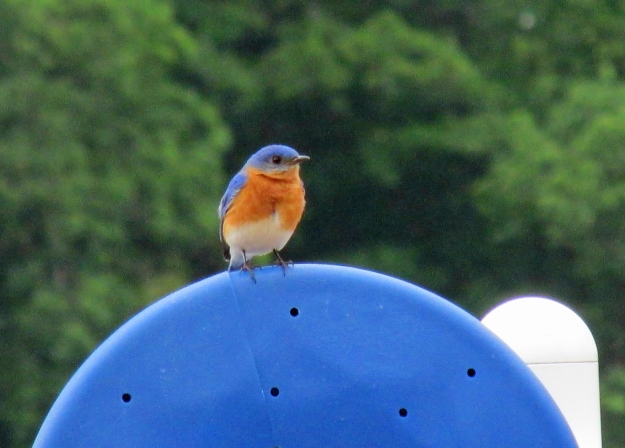
Photo by Bryan Stevens • A handsome male Eastern bluebird perches on a chain-link fence.

Ovenbird, 170; worm-eating warbler, 42; Louisiana waterthrush, 37; Northern waterthrush, 3; golden-winged warbler, 2; black-and-white warbler, 118; Swainson’s warbler, 3; Tennessee warbler, 1; common yellowthroat, 23; hooded warbler, 192; American redstart,12; Cape May warbler, 4; Northern parula, 44; magnolia warbler 7; Blackburnian warbler, 11; yellow warbler, 34; chestnut-sided warbler, 18; blackpoll warbler, 5; black-throated blue warbler, 71; palm warbler, 5; pine warbler, 13; yellow-rumped warbler, 53; yellow-throated warbler, 43; prairie warbler, 14; black-throated green warbler, 97; and Canada warbler, 34.

Eastern towhee, 250; chipping sparrow,137; field sparrow, 74; savannah sparrow, 2; grasshopper sparrow, 4; song sparrow,322; swamp sparrow, 1; white-throated sparrow, 10; white-crowned sparrow, 7; and dark-eyed junco, 74.

Summer tanager, 3; scarlet tanager, 97; Northern cardinal, 376; rose-breasted grosbeak, 37; blue grosbeak, 6; indigo bunting, 148; dickcissel, 2; and yellow-breasted chat, 10.

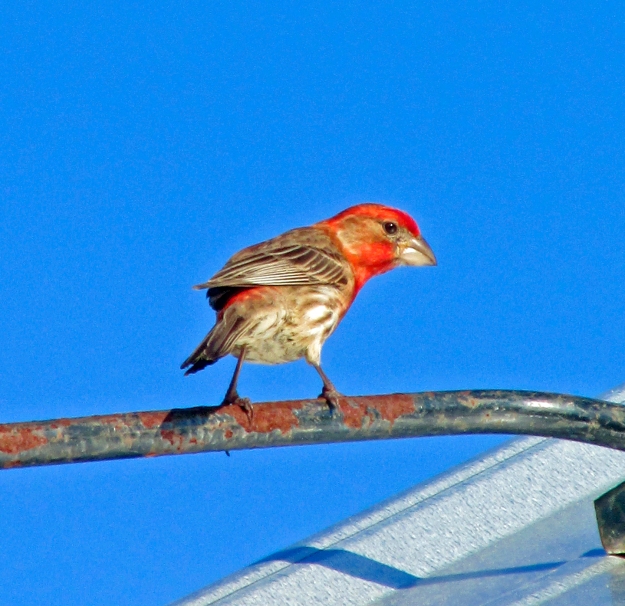
Bobolink,16; red-winged blackbird, 546; Eastern meadowlark, 144; common grackle, 474; brown-headed cowbird, 144; orchard oriole, 28; Baltimore oriole, 35; house finch, 96; pine siskin, 79; American goldfinch, 382; and house sparrow, 47.

HousieFinch

Photo by Bryan Stevens • A male house finch perched on a cable. These finches are native to the western United States but became established in the eastern states thanks to the illicit pet trade.

Timely arrival of blue-gray gnatcatcher signals the rush of spring migration

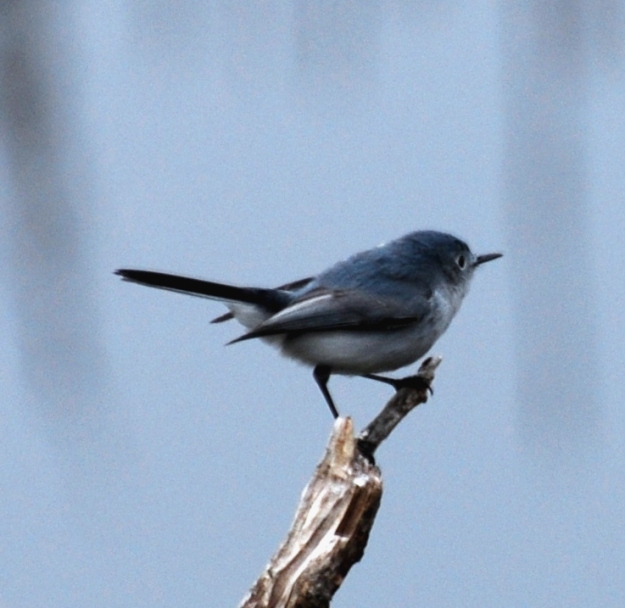
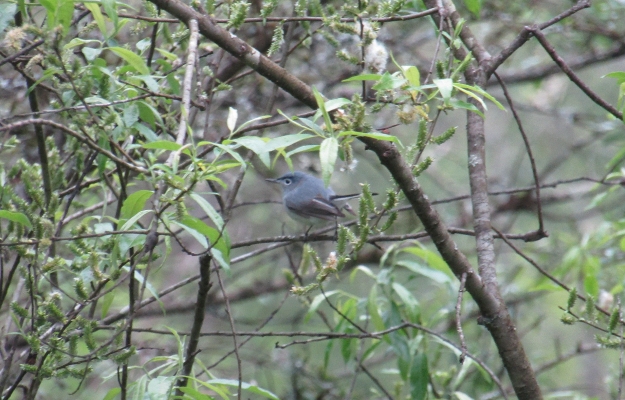
A blue-gray gnatcatchers finally put in a first spring appearance at my home on April 11. Most likely, these tiny birds had already arrived, but my schedule hadn’t yet allowed me a glimpse of this punctual songbird. Back in March, I saw and heard dozens of them during a trip to the South Carolina Low Country.

Gnatcatcher

Photo Courtesy of Jean Potter • Blue-gray Gnatcatchers are tiny, energetic bundles of feathers.


Birds are as dependable as clocks and calendars when it comes to noting the passage of time. I can keep track of the changing seasons based on the composition of the birds in my yard. The gnatcatcher has long been my signal to the start of the frenzied pace of spring migration for many of the birds returning to the region after sojourns much farther south. For example, the first gnatcatcher arrived in my yard in 2014 on April 4. Two days earlier, I had observed my first blue-grey gnatcatcher of the spring while visiting Winged Deer Park in Johnson City, Tennessee. It doesn’t hurt that the arrival of gnatcatchers coincides with the annual blooming of bluebells, a wildflower for which this local park is famous.

Once again, Winged Deer Park provided me with my first spring sighting of this bird when I finally saw one this year on April 6. Over the years I’ve kept track of such matters, blue-gray gnatcatchers reliably return every year in the final days of March and first days of April. A blue-gray gnatcatcher put in its first appearance at my home on April 2 in 2011. In 2009, I also saw my first gnatcatcher on April 2, although in 2008 I had to wait until April 5 for my first spring sighting of a gnatcatcher. In 2007, the blue-gray gnatcatcher was an “April Fool’s” bird, arriving on the first day of April. Arrival dates in March are a little less frequent. For instance, in 2003, a blue-gray gnatcatcher arrived on March 28. I saw my first spring gnatcatcher on March 30 in 1998. In 2006, the arrival date was March 31.

Gnatcatcher 2

The blue-gray gnatcatcher is a tiny, active bird with noisy habits that make it fairly easy to detect in early spring before foliage has grown dense in the branches of trees. This gnatcatcher ranks with the kinglets and hummingbirds as one of the smallest birds to range within the United States. This tiny bird tips the scales at only a fourth of an ounce. A gnatcatcher is an incredible bundle of feathered energy, seemingly always on the move as it snatches small winged insects out of the air or plucks other prey items from leaves or branches. Gnatcatchers are also quite curious birds that, more than once, have given me the distinct impression that I am the one being observed while watching their antics.

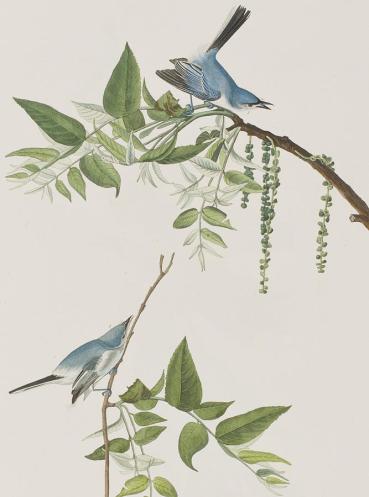
So, as the name suggests, do gnatcatchers truly eat gnats? The website All About Birds contends that, despite its name, the gnatcatcher does not concentrate its feeding efforts on gnats. This tiny bird does, however, prey on a variety of small insects and spiders. Winged insects, such as small flies and gnats, are part of the menu for a gnatcatcher, but this bird is also capable of plucking spiders from their webs or snatching tiny caterpillars from the underside of leaves.1-blue-grey-flycatcher-john-james-audubon

Like the hummingbirds, the gnatcatchers are an exclusively New World family of birds. They lack the diversity of the hummingbirds. Instead of several hundred species, there are only about a dozen species of gnatcatchers worldwide. Of that number, four — blue-gray gnatcatcher, California gnatcatcher, black-tailed gnatcatcher and black-capped gnatcatcher — range within the United States. The blue-gray gnatcatcher is the only member of this family to reside in the eastern United States. Other representatives of this family of small songbirds include the Cuban gnatcatcher, white-lored gnatcatcher, creamy-bellied gnatcatcher, tropical gnatcatcher and masked gnatcatcher.

The blue-gray gnatcatcher builds an exquisite and compact nest using such materials as spider silk and lichens. I have found many nests over the years by listening for the scolding notes of the parents which, even near their nest, have not learned the virtue of silence. The blue-gray gnatcatcher is one of the birds that, in my mind, truly kicks off the arrival season of many of my favorite neotropical migrants. With the arrival of gnatcatchers, I can now expect to enjoy the arrival of birds like hummingbirds, warblers, tanagers, vireos, thrushes, and grosbeaks.

BGGnatcatcher

••••••

Bryan Stevens lives near Roan Mountain, Tennessee. To learn more about birds and other topics from the natural world, friend Stevens on Facebook at https://www.facebook.com/ahoodedwarbler. He is always posting about local birds, wildlife, flowers, insects and much more.

Berry-rich diet makes waxwings profuse water drinkers

Waxwing-Sept11

Photo by Bryan Stevens • A cedar waxwing perches on a branch while taking a break from flycatching insect prey near a community park pond.

Ernie Marburg, a resident of Abingdon, Virginia, shared an interesting observation about a flock of cedar waxwings he observed recently in his yard.

Waxwings have a brown and gray silky plumage, a black mask and a perky crest. Some of the wing feathers show red tips. The similarity of these wing tips to melted drops of wax gives these birds the common name of waxwing.

Waxwing-Audubon

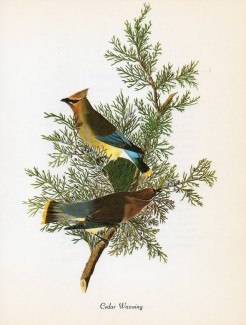
Early American naturalist and artist John James Audubon painted this pair of cedar waxwings.

“The typical flock of waxwings has arrived,” he wrote in his email. He added that the birds exhibited an unusual behavior during their visit.

“From their roosts in the tops of some tall nearby trees, they appeared to be leaving their roosts briefly and returning to the trees as though they were catching flies,” Ernie noted. “There were, however, no flies available.”

The waxwings, he went on to explain, appeared to be going after snowflakes. “Could they have been going after the snowflakes to drink water?” Ernie asked.

While I wasn’t sure that catching snowflakes is an energy-efficient way to relieve thirst, the waxwings might have had a different motivation for their behavior. As I informed Ernie in my reply to his email, waxwings are very social with each other. These birds form large flocks that travel, feed, roost and bathe together. They have also come up with interesting “rituals” to reinforce their social ties with each other.

Waxwing-Erwin

Photo by Bryan Stevens • The waxy tips to the wing feathers are evident in this photograph of a cedar waxwing.

These rituals, or games, they “play” with each other include a flock of perched birds passing a single berry or fruit in a line, one bird to another, without any of the birds eating the item. I speculated that snowflake catching was their idea of a fun game and a way to practice for fly-catching season, which is just around the corner.

Perhaps I should have conducted some research. As it turns out, other people have witnessed this snowflake-catching behavior, which has led those who have studied the birds to determine that the birds do indeed eat snowflakes to ease thirst. Apparently their diet, which is rich in sugar thanks to the various berries that provide a huge percentage of their food, waxwings are often afflicted with intense thirst. In addition to catching snowflakes, they have been observed eating fallen snow. A single Bohemian waxwing — a relative of the cedar waxwing — can gobble down 300 berries in a couple of hours. According to some statistics, one of these birds can eat up to three times its weight in fruit in a single day. The next time I am lucky enough to observe waxwings in a snowstorm, you can bet I will be watching for this snowflake-eating behavior.
The cedar waxwing has few relatives. Worldwide, there are only two other species: the Bohemian waxwing, which is native to the northern forests of Eurasia and North America; and the Japanese waxwing, found in such northeast Asian countries as Japan, Korea and China.

Ruby-throated-WILLOWS

Photo by Bryan Stevens • Numbers of Ruby-throated Hummingbird in the region tend to fluctuate each year, but people should see a spike in their numbers as the hummingbirds end summer nesting and start migrating south again.

Hummingbirds due back soon

Waxwings are rather nomadic, coming and going with a maddening unpredictability. Other birds are more dependable, arriving and departing at roughly the same time year after year. One such bird should soon make its triumphant and welcome return to yards and gardens throughout the region. According to the website Hummingbird Guide, ruby-throated hummingbirds usually return to Tennessee and Virginia the first week of April. These tiny flying jewels arrive earlier in North and South Carolina, typically arriving the third week of March in those states.

The popularity of hummingbirds in general, and the ruby-throated hummingbird specifically, is simple to understand. These tiny birds are perfectly willing to insert themselves into our lives, offering hours of fascinating entertainment as they visit our gardens, duel at our sugar water feeders and occasionally even nest in trees and shrubs in our yards.

Individuals who feed birds know that it can be an expensive undertaking. The cost of providing sunflower seeds and suet cakes for hungry flocks during the winter months can nibble at the monthly budget, but hardly anyone would begrudge the sparrows, finches, wrens and woodpeckers. After all, they return the favor, putting on daily shows just outside our windows.

Rubythroated_Hummingbird

Photo by U.S. Fish & Wildlife Service • A male Ruby-throated Hummingbird hovers in front of the camera as it seeks nectar from tiny flower blossoms.

The same is true of hummingbirds. For a relatively modest investment, people putting out feeders or planting nectar-producing flowers are rewarded with the fun and amusing antics of these pint-sized and hyperactive birds.

Attracting hummingbirds is generally much less expensive than feeding other birds. After all, you need only a mixture of sugar water — four parts water to one part sugar — to fill a feeder and catch the attention of a visiting hummer. A few pounds of sugar will last a lot longer than that bag of sunflower seeds, and it’s much less expensive to purchase at the grocery store.

Do not add red coloring or dyes to your sugar water mixture. Some studies have indicated these substances are harmful to hummingbird health. This means tossing out many of the pre-packaged mixtures sold with sugar water feeders. After all, the entire purpose is to attract hummingbirds. Risking their health is simply not acceptable. If you do want to take extra steps to attract these diminutive, feathered sugar junkies, consider supplementing your landscape with a variety of flowering plants. To explore some of the best choices for flowers to tempt hummingbirds, visit the website of The Hummingbird Society at http://www.hummingbirdsociety.org.

Ruby-throatedFemale-EYE

Photo by Bryan Stevens • A ruby-throated hummingbird visits a feeder for a sip of sugar water.

I always put out my sugar water feeders in early April. I usually end up waiting a couple of weeks before the first hummingbird appears, but it’s worth the wait. I miss these tiny birds during the winter months, which they spend in much warmer surroundings in southern Mexico and Central America. A male with the namesake red throat is usually the first to appear at my feeders. However, female ruby-throated hummingbirds, which lack the dazzling ruby throat patch, are migrating, too. The females usually lag a week or two behind the pace of the migration for the males.

As always, I enjoy hearing from readers about their first spring sighting of a ruby-throated hummingbird. Readers are encouraged to jot down the date and the time of arrival when they observe their first hummingbird of the season. If the sighting’s duration allows you to verify, note whether the hummingbird was a male or female. These reports can be emailed to me at ahoodedwarbler@aol.com. Together, we’ll track the arrival of these tiny birds as they return to the region.


North America’s bluebirds never fail to impress with their winning ways

A famous song declares that “somewhere over the rainbow, bluebirds fly,” so you’ll have to excuse me if I have been looking for those elusive rainbows during the unseasonably warm weather the region’s enjoyed in recent weeks.

Also, like the song promises, “dreams really do come true,” which was fulfilled by the arrival of this year’s first pair of Eastern bluebirds at my home on Friday, Feb. 23. The presence of a pair of these beautiful and trusting birds is always sure to put people in a good mood. People have known for generations that bluebirds make good neighbors. A pair of bluebirds in your yard or garden provides hour upon hour of free entertainment as one watches these birds go about their daily routine. At this time of the year, much of that routine is focused on finding and claiming the best possible nesting location for the upcoming spring season.

Bluebird-Comic

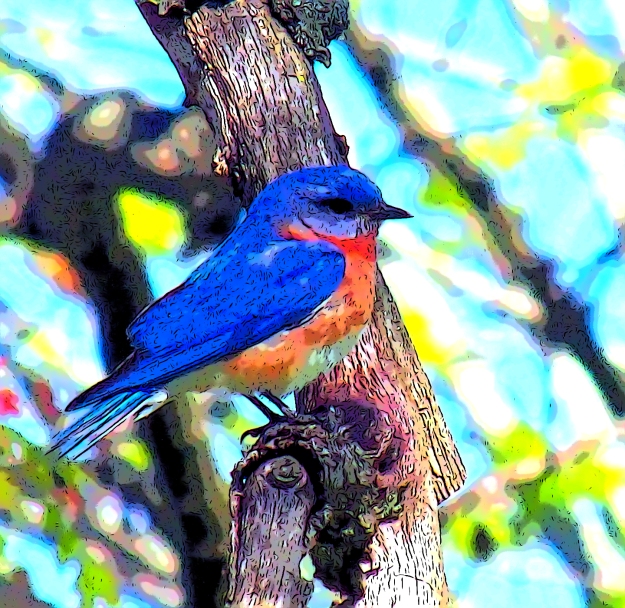
The Eastern bluebird is one of the most beloved American songbirds.

The Eastern bluebird is one of North America’s best-known cavity-nesting birds. About 85 species of North American birds use cavities in trees for nesting purposes. Cavity-nesters include ducks, such as buffleheads and wood ducks, as well as birds of prey such as Eastern screech-owls and American kestrels.

Woodpeckers and nuthatches can excavate their own cavity in a dead or decaying tree. Others, such as the bluebirds, must find a cavity already in existence. Such cavities are scarce real estate and can be subject to some intense competition. The Eastern bluebird is at a disadvantage when forced to compete with non-native introduced birds such as aggressive European starlings and house sparrows. Even native competitors such as house wrens and tree swallows are serious rivals when it comes down to staking a claim to prime nesting real estate.

Over the years, I have found bluebirds nesting in cavities inside wooden fence posts, but there are fewer wooden fence posts every year. This reinforces the idea of how changing landscapes have affected these birds. Instead of wooden fence posts, many farmers now use metal ones, and dead or dying trees — a much sought-after resource for cavity-nesting birds — are often removed from woodlands.

Bluebird-withPineNeedles

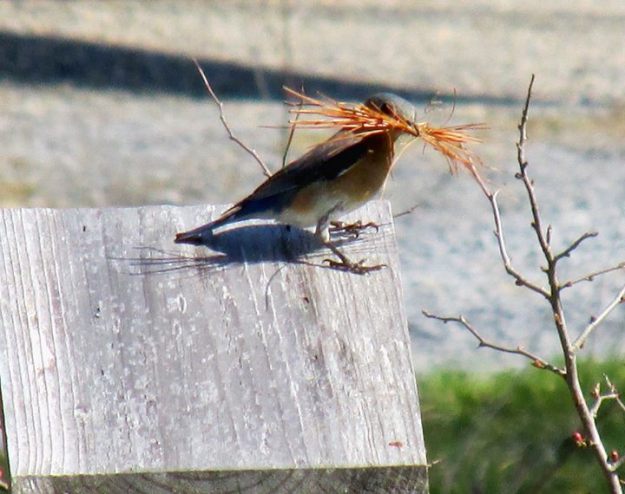
Photo by Bryan Stevens • A female Eastern Bluebird gathers pine needles to use as nesting material.

Fortunately for bluebirds, this species will also accept lodging in a nest box, or birdhouse, provided for them by human landlords. One of the simplest ways to bring bluebirds close is to offer wooden boxes, constructed to their specific requirements, for their use as nesting locations. Because of their trusting nature when it comes to their human neighbors, the Eastern bluebird is one of our most beloved birds. In fact, bluebirds are such popular birds that interest in them and their well-being has inspired the foundation of organizations such as the North American Bluebird Society. The Eastern bluebird has also been designated the official state bird for New York and Missouri, which provides more testimony to the immense popularity of this bird.

Bluebirds-One

Photo by Bryan Stevens • A flock of Eastern bluebirds perches on fenceposts.

There are two other species of bluebirds found in North America. The Western bluebird is found throughout the year in California, the southern Rocky Mountains, Arizona and New Mexico, as well as in part of Mexico. The species ranges in the summer as far north as the Pacific Northwest, British Columbia and Montana. The Mountain bluebird nests in open country in the western United States as far north as Alaska. They are short-distance migrants, retreating as far south as Mexico during the winter season.

Other than these three species, North America offers few others birds with mostly “blue” plumages. Some examples include indigo bunting, blue grosbeak, and blue jay, as well as birds like great blue heron and belted kingfisher.

In addition to housing, food and water can be used to lure Eastern bluebirds closer. This bird doesn’t eat seeds, but it can be attracted with an offering of mealworms — live or freeze-dried – or commercially prepared peanut butter nuggets. A water feature in a yard is also a magnet for bluebirds and a host of other bird species.

Bluebird-Pool

Photo by Bryan Stevens • A handsome male Eastern bluebird perches on a chain-link fence.

If your home doesn’t provide suitable open, spacious bluebird habitat, it’s still easy to enjoy these beautiful birds. An afternoon or evening drive into open country, such as agricultural farmland, is likely to yield sightings of this bird on fences and utility lines. Golf courses, some of which go the extra mile to accommodate bluebirds, also provide habitat for these lovely birds.

The Eastern bluebird is present in the region in all seasons and is one of our more common birds. If you’re already an experienced landlord and host for these birds, you probably already know they joys they can bring. If not, why not try to attract them closer to you? Most bluebirds in the region have already started looking for a nesting site. Many of these birds may nest two or even three times in a single season. March has only just arrived, so there’s still time to place a nest box or two on your property to get their attention.

••••••

If you have a question, wish to make a comment or share a sighting, email ahoodedwarbler@aol.com.

Bluebiord-Male-Playground

Photo by Bryan Stevens A male Eastern Bluebird perched on playground equipment at Winged Deer Park in Johnson City.

American robins become more prominent with shifting of seasons


Robins-ETSU-Feb

Photo by Bryan Stevens • Returning American robins, prominent in lawns and gardens during their annual spring migration, will soon turn their attention to nesting duties.

I don’t think I’m alone in doing what I can to speed along the process of spring’s arrival. I’ve heard from different people, all eager to share their observations of one of the sure signals — the arrival of flocks of American robins — of the shifting of the winter season to spring.

Bobby Howser phoned me to let me know of a large flock of American Robins he encountered at the Sullins College building in Bristol, Virginia.

He said the flock “swarmed like bees” into a tall holly tree. He was surprised to see so many robins in a single tree and asked if it was an unusual occurrence.

Houghton_MS_Am_21_(46)_-_John_James_Audubon,_robin 3

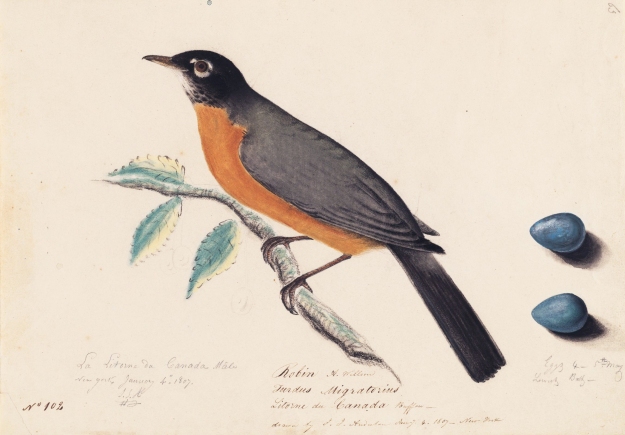
Early American naturalist and painter John James Audubon painted this American robin with a couple of the bird’s eggs.

Ernie Marburg in Abingdon, Virginia, emailed me about the same time.

“I just wanted to report that we have been inundated with a huge flock of mostly robins,” he wrote. He estimated that the flock contained 300 to 500 individuals.

“They ate all the red berries from my neighbor’s large holly tree yet appear to avoid other holly trees with many red berries just a short distance away,” Ernie wrote. The flock remained active in the tree from morning into early afternoon.

Not long after he first emailed me, Ernie contacted me again. “I wanted to give you an update on the robin invasion,” he wrote. “They have been here two additional mornings since I first reported to you. Their pattern is different now though. They are spaced apart and appear to be ground feeding individually.”

Robin-OnNest

Photo by Bryan Stevens • American robin sitting on its nest in the shelter of a side of a bridge spanning the Doe River in Elizabethton, Tennessee.

Ernie proposed a theory about the behavior of the robins.

“I think they followed the south to north weather pattern we had recently that provided significant rainfall,” he explained. “The rainfall, in turn, caused the ground to thaw and the earth worms to come to the surface thus providing a food source for the robins. In summary, the robins are following their food source.”

I responded to Ernie and congratulated him on what I thought was an excellent theory.

Ernie also wrote me that he had read an article some time ago that said robins would eat cooked elbow macaroni if put out for them.

“We did that, but not one robin ate the macaroni,” he said. “Moral of the story is, as you would expect, don’t believe everything you read.”

I’ve read similar suggestions of unusual items to try to tempt birds not prone to visit feeders. I told Ernie that I wasn’t too surprised that the robins ignored the macaroni. The observations of robin feeding habits made by Bobby and Ernie also correspond to the changing seasons. Holly trees retain their berries into late winter, which provide an abundant food source for robins, as well as other birds. As the temperatures begin to rise in early spring, the birds switch their diet in favor of earthworms. This protein-rich food source fuels the impressive migration made by robins each year.

Robin-Hunter

Photo by Bryan Stevens • An American robin scans for prey in the grass and clover of a lawn.

I posted on my Facebook page about the flocks of robins I’d observed, which resulted in several comments on my original post.

Johnny Mann, who lives in Bristol, Tennessee, shared on my Facebook page after I posted about seeing flocks of robins almost everywhere I have gone recently. He noted that he has been seeing Eastern bluebirds, which are a smaller relative of robins. He noted in his comment that the bluebirds are feeding on suet.

Jackie Lynn, who lives in Wytheville, Virginia, also posted a comment on my Facebook page. Jackie saw a large flock of robins feeding in a field, enjoying the worms brought to the surface by recent rains. “Dinner was served,” Jackie reported.

Several other people responded optimistically on my Facebook page, sharing the hope that the influx of robins does indeed signal the approach of spring.

The American robin is known by the scientific name Turdus migratorius, which can be translated as “migratory thrush.” Indeed, this well-known American bird is related to other thrushes, including the Eastern bluebird, wood thrush and veery. The relationship to other thrushes is quite visible in young birds, which display a spotted breast until they mature and acquire the familiar red breast associated with robins.

There are 82 other species in the genus, which ranges not only in the Americas, but Europe, Asia, Africa and Australia, as well. Some of the American robin’s fellow genus members include the olive thrush, the bare-eyed thrush, pale thrush, great thrush, black-billed thrush and cocoa thrush.

AmericanRobin

Photo by Bryan Stevens • While American robins like fruit when its available, they also spend a lot of time feeding on earthworms and insects.

When the first European settlers arrived in North America, the robin was still a bird living in the forests. Robins proved incredibly capable of adapting to the presence of humans. Soon enough, these once shy forest birds began to frequent lawns and city parks. The robin soon became one of America’s most popular songbirds. Three states — Connecticut, Michigan and Wisconsin — have conferred official state bird status on the American robin.

Robins begin nesting almost as soon as they return each spring. Nesting success in a previous season instills fidelity to the location where the birds nested, resulting in many robins returning to the same nesting area year after year. Although some robins invariably spent the entire winter season in the region, it is still a welcome sight to see migrating flocks of these birds in February and early March. The sudden resurgence of the American robin each spring is a reminder that another winter will soon be history. I know I’m always pleased to welcome them back.
•••••

Bryan Stevens lives near Roan Mountain, Tennessee. To learn more about birds and other topics from the natural world, friend him on Facebook at https://www.facebook.com/ahoodedwarbler. If you have a question, wish to make a comment or share a sighting, email ahoodedwarbler@aol.com.

american_robin

Early American naturalist and painter John James Audubon captured this family of American robins in one of his masterful paintings.

Osprey’s fishy diet sets it apart from most other raptors

Jim and Tammie Kroll emailed me about a very interesting bird observation on the Virginia Creeper Trail last month.

They saw a bald eagle along the Virginia Creeper Trail on May 14. “It was between Alvarado and Damascus,” Jim wrote in the email. We got to see it at two different locations and watched it around 15 minutes at each location.”

DSCN3266

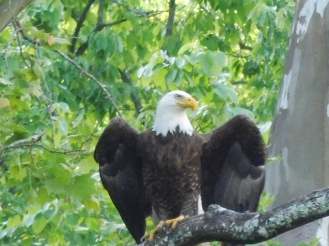
Photo by Jim and Tammie Kroll • This adult bald eagle was seen along the Virginia Creeper Trail.

He added that they talked to a woman who informed them that she also sees an eagle in the same area on the Creeper Trail.

The Krolls also shared a photo of the eagle. I’m always glad that to hear that observing the nation’s official bird is no longer a rare occurrence in the region. While I haven’t seen any bald eagles this year, I have observed a raptor that shares many characteristics with them.

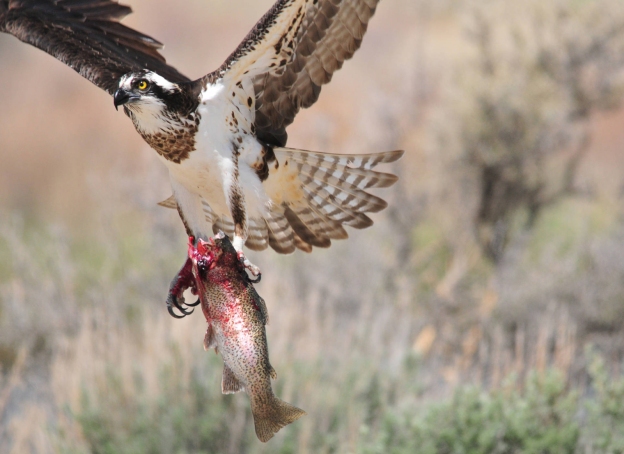
Ospreys, also known by the common name of “fish hawk,” occur worldwide. Ospreys migrate through the region in spring and fall, making sightings more likely along some lakes and larger rivers. I see them even more often when I travel to South Carolina, where these medium-sized raptors are common along the coast and in wetlands.

Some recently published books provide insight into the lives of bald eagles and ospreys. Teena Ruark Gorrow and Craig A. Koppie are the authors of the recent book, The DC Eagle Cam Project: Mr President and First Lady. This book profiles a celebrity pair of eagles that have nested for the past few years in U.S. National Arboretum in Washington, D.C.

osprey-book-Cover

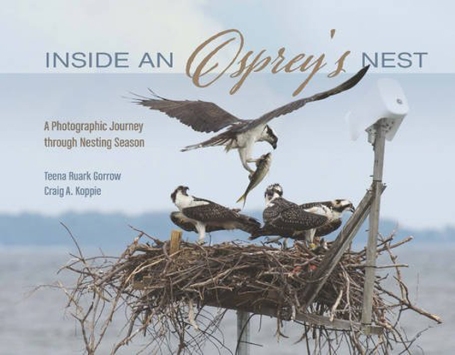
Front cover of a book by Teena Ruark Gorrow and Craig A. Koppie featuring photos of a nesting season in the life of a family of ospreys.

Gorrow and Koppie have also written other books together, including one offering a pictorial journey through an osprey nesting season. Titled “Inside an Osprey’s Nest,” this book provides an account of two fostered osprey chicks that receive new parents in a heartwarming, real-life account of a family of ospreys associated with the Chesapeake Conservancy Osprey Nest Cam.

During a recent interview, Gorrow shared that bald eagles and ospreys share more than a few things in common.

“The bald eagle, Haliaeetus leucocephalus, is America’s national bird and symbol,” Gorrow said. “It is a large raptor, or bird of prey, found only in North America. Also a raptor, the osprey, Pandion Haliaetus, is a large hawk found on every continent across the globe except Antarctica.”

Like the American bald eagle, Gorrow noted that ospreys experienced devastating health effects and reproductive failures from widespread human use of dangerous pesticides like DDT.

“By the 1970s, population numbers had plummeted to catastrophic levels for both eagles and ospreys,” she said. “Federal actions were put into place which imposed migratory bird protection and banned DDT. These measures, along with the work of dedicated scientists, conservationists and citizens, have helped these magnificent raptors recover.”

Gorrow said that when selecting a nest site, bald eagles and ospreys identify an area near water with a plentiful food supply and nearby trees. “With diets consisting mostly of fish, both require foraging areas rich in fishery resources,” she said.
During nesting season, ospreys and eagles are seen as competitors, even though food is abundant in the Chesapeake Bay region. “Bald eagles are opportunists and will usually pirate fish prey from osprey when given the chance,” Gorrow said.

Nesting season for eagles begins earlier than ospreys, so they have the upper hand in defending territories. “Eagle pairs in the Chesapeake Bay area usually lay eggs in mid-February, while the ospreys return from their southern wintering destinations around mid-March,” Gorrow said. “Ospreys generally build nests in March or April and lay eggs soon after.”

3cm358

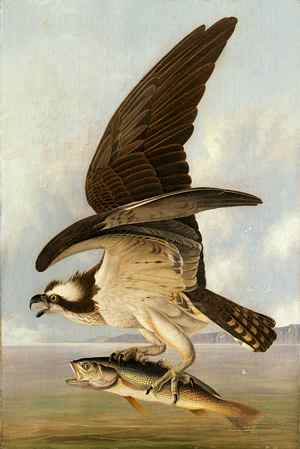
Early naturalist and artist John James Audubon painted this work of art featuring an osprey with a fish held in its talons.

The two large raptors also demonstrate other distinct preferences.

“Bald eagles utilize living and dead (known as snags) trees as nest sites,” she said. “Eagles rarely tolerate humans near their nests.

“On the other hand, ospreys are relatively tolerant of humans and sometimes build nests on private pavilions or docks beside waterfront properties,” Gorrow continued. “They seem to favor artificial structures and often construct over-water nests on the steel supports of bridges, channel markers, navigational buoys, fishing piers, jetties, and manmade nesting platforms. Ospreys sometimes choose snags with an open treetop or claim tall, artificial structures resembling dead trees, such as towers, utility poles, television antennas, road signs and stadium lights. They also sometimes nest on chimneys and rooftops on uninhabited buildings.”

A more in-depth glance into the lives of ospreys is available in the book “Inside an Osprey’s Nest,” which retails for $24.99. When purchased through the Chesapeake Conservancy at http://www.chesapeakeconservancy.org, $10 from every purchase supports conservation programs along the Chesapeake Bay Watershed. The book is also available at http://www.schifferbooks.com, Amazon.com and other booksellers.

•••••

To learn more about birds and other topics from the natural world, friend him on Facebook at https://www.facebook.com/ahoodedwarbler. He is always posting about local birds, wildlife, flowers, insects and much more.

Osprey-LYNNValley

Photo by Bryan Stevens • An osprey perches in a tree along the Watauga River in Elizabethton, Tennessee.

Warblers exert special pull for many birders

KirtlandsWarbler

Photo by U.S. Fish & Wildlife Service • The Kirtland’s Warbler, while endangered, is slowly building its numbers with intensive human assistance. Nearly 50 different warbler species nest in the eastern half of the continental United States. The rest of the world’s warblers reside mostly in Central and South America.

I’ve been fascinated with the group of small, energetic songbirds known as warblers almost from the start of my time as a birder. Many birds have inspired poetry, but to me, the warblers are poetry. I suppose another, more down-to-earth part of my fascination is that a little effort is usually required to see these birds. Although many species of warblers spend the summer months in the region, few of them would really be described as backyard birds. That being said, I am also fortunate to live in a location surrounded by woodlands that are inhabited by several species of warblers in the months spanning April to September on the calendar.

Of course, it’s always gratifying to hear from readers who have also caught the “warbler bug” and find these tiny, colorful songbirds as fascinating as I do. Graham Gardner of Abingdon, Virginia, sent me a recent email about the warblers, an extensive family of neotropical migrants that happen to be among my favorite birds.

CanadaWarbler

Photo by Graham Gardner • A Canada warbler wears a dark necklace of feathers across its yellow breast.

“I just wanted to share another great birding experience that I recently had with my father this past weekend,” Graham wrote in an email sent on May 1. “As you know, the spring migration of neotropical migrants is upon us. My father and I decided to take a trip to Peaks of Otter Lodge in the heart of the Blue Ridge Mountains to attempt to observe some of the more difficult-to-find warblers that I had not yet checked off my life list.”
He reported that the trip was wildly successful.

“We observed 10 warbler species in total in just under two days of birding.” Among them were three species that were new for him: cerulean warbler, Blackburnian warbler, and bay-breasted warbler.

He also shared some photos. “These guys are really quite difficult to photograph,” he wrote. “They are either constantly on the move, bouncing from branch to branch, or they are high in the canopy staying mostly out of sight.”

Graham wrote that he looks forward to searching for warblers in the coming weeks as they continue to pass through, and in some cases settle in, our Appalachian Mountains.
I congratulated Graham for his success with some of my favorite birds. I also let him know that he succeeded with a bird — the cerulean warbler — that has been elusive for me over the years. It’s one of the few warblers that spend time in the eastern United States that I haven’t managed to add to my life list. The other two warblers I need are the Connecticut warbler and Kirtland’s warbler.

Cerulean 2

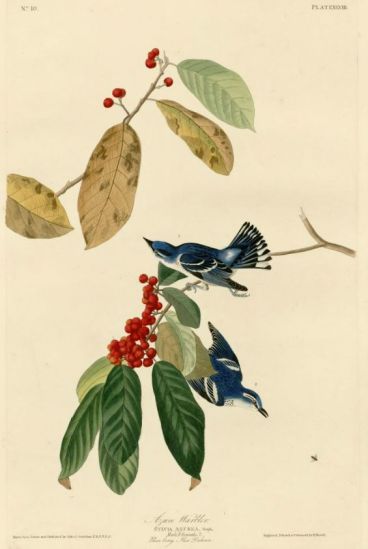
Early naturalist and artist John James Audubon painted this pair of cerulean warblers, a bird that he knew as the “Azure Warbler.”


“The cerulean was definitely the highlight of the trip for me,” Graham noted in a second email to me.

The cerulean warbler makes infrequent appearances in the region, but it has been observed as recently as the spring of 2016 at Steele Creek Park in Bristol, Tennessee. Some other locations — Frozen Head State Park, Edgar Evins State Park and Falls Creek Falls State Park — support breeding populations of this warbler within the Volunteer State.

Unfortunately, the cerulean warbler is one of the fastest declining songbirds in the United States. Habitat destruction in its breeding range in the Appalachian Mountains and its wintering range in South America is to blame for its plummeting numbers.

Among a family of several breathtakingly beautiful species, the cerulean warbler is one of the most exquisite of its kind in terms of appearance. Adult males have pale cerulean blue upperparts — hence the bird’s common name — and white underparts with a black necklace across the breast. They also show black streaking on the back and flanks.

Beyond its uncommon status, there are other reasons why it’s difficult to lay eyes on a cerulean warbler. First and foremost, cerulean warblers prefer to forage in the treetops. In that leafy, lofty habitat, observing these warblers can be difficult for ground-bound humans.

NoWaterthrush

Photo by Bryan Stevens • The Northern waterthrush is a warbler fond of foraging near slow, flowing water.

I’ve been very close to seeing a cerulean warbler twice. During a past Spring Naturalists Rally at Roan Mountain, Tennessee, several people watched a cerulean warbler flitting in some tall trees while I struggled unsuccessfully to get my binoculars on the rapidly moving bird. More recently, I was looking for birds with fellow birder Jean Potter along the Watauga River in Elizabethton, Tennessee, for a Fall Bird Count. She found a female cerulean warbler in a tree overhanging the river, but I failed to get my binoculars on the bird in time.

So, while my luck with cerulean warblers hasn’t changed (yet), I have seen several warblers at my home this spring, including hooded warbler, ovenbird, black-throated green warbler, black-and-white warbler and Northern parula. In addition, I’ve seen other warblers — yellow-breasted chat, Cape May warbler, yellow warbler and chestnut-sided warbler — at other locations in the region.

Black-and-WhiteWarbler

Photo by Graham Gardner • The black-and-white warbler, which is aptly named, is one of the most easily identified warblers.

The warblers are poetry written with splashes of movement and hints of color written across an often green background. While not easy to observe, they’re worth seeking out. Glimpsing one of these energetic songbirds is always a moment that puts a smile on my face — and in my heart.

•••••

Bryan Stevens lives near Roan Mountain, Tennessee. To learn more about birds and other topics from the natural world, friend Stevens on Facebook at http://www.facebook.com/ahoodedwarbler. He is always posting about local birds, wildlife, flowers, insects and much more. If you have a question, wish to make a comment or share a sighting, email ahoodedwarbler@aol.com.

Readers report on robin, purple martin that stand out from other members of their flocks


Albino-Swallow

Photo by Jean Potter • Two barn swallows in typical plumage perch on a wire with an albino individual.

Birds of a feather, as the old saying goes, tend to flock together, but what happens when a member of the flock stands out from the rest? Although conventional wisdom mandates that being conspicuous is not helpful for most wild creatures, some of them can’t help but get attention. Different readers have brought to my attention some birds at their homes that instantly stood out.

Sara and Ed Gschwind, residents of Bristol, Tennessee, have been keeping tabs on an American robin in their yard that is showing an extensive amount of white feathers in its plumage. For the most part, this particular robin has a white head, largely white wings and extensive white in the typically red breast. “My 88-year-old mother, Nora Rockett, suggested I send a photo to you,” Sara wrote in an email.

Robin-PartialAlbino

Photo by Ed Gschwind • A leucistic American robin enjoy time in a bird bath. Albino and leucistic birds are rather rare in nature.

Sara said that her mother, who has lived in Bristol all her life, has never seen anything like it. I replied to Sara’s email, asking for a few more details.

While the robin interacts with others of its kind, the Gschwinds haven’t seen any evidence this particular robin is attempting to nest. Ed took a photograph of the robin enjoying the water in a bird bath in the Gschwind yard.

“The robin bathes every day, and loves the water like all robins do,” Sara wrote. “The robin has been here since the robins returned three months ago. I’m trying to keep it happy.” Since the robin is a regular visitor, I agree that they’re doing a good job keeping the bird happy, since it’s not shown any inclination to leave their yard.

Tom Brake, who lives in Abingdon, Virginia, contacted me through Facebook about a male purple martin with extensive white feathers residing at the purple martin colony he has established at his home.

Purple martins are the largest member of the swallow family in the United States. Like many other swallow species, they nest in colonies. Martins are cavity-nesting birds that readily accept hollow gourds or special purple martin condominiums for nesting.

“Currently I have nests in 43 compartments with 20 being active (eggs having been laid),” Tom wrote. “Last year I had 51 pairs, and I hope to get close to being back to 60 or 70 active pairs this year. The next two weeks will be the busy time for completion of nests and laying.”

PurpleMartin-Albino-TomBrake

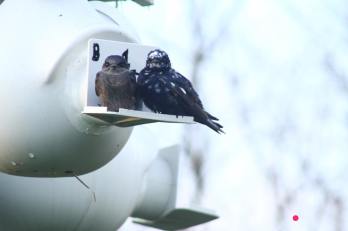
Photo by Tom Brake • A leucistic male purple martin perches with its mate, a typical female purple martin, near a hollow gourd they may use for nesting purposes.

As for the bird showing the white feathers, Tom has named him “Leuie” because the bird is an example of leucism, a condition related to albinism.

Albinism is a genetic, or inherited, condition resulting in a complete lack of production of pigmentation. Albino birds are, for the most part, extremely uncommon. I’ve heard of a variety of birds, ranging from hummingbirds and American robins to various ducks and swallows, that have a tendency to produce albino individuals.

Leucism is another genetic mutation that causes affected birds to grow feathers that are pale or whitish overall. A faint pattern may be visible. Leucism is also uncommon, but is more common that albinism. Both the robin in the Gschwind yard and the purple martin at Tom’s home are examples of leucistic birds.

Tom noted that “Leuie” is doing well so far. “He has a mate, but their first clutch of four eggs was either thrown out by a second year male martin or discarded by themselves because they sensed non-viability,” Tom wrote in a Facebook message. “Maybe the cold, wet weather had something to do with the loss.” He noted that the same thing happened recently to two other nests.

“Leuie and mate are still using their gourd, so I expect they will re-clutch,” Tom wrote. The term “re-clutch” means that Leuie’s mate will lay a new batch of eggs and Leuie will be ready to carry out his own paternal duties to help raise any resulting young.

Albinism and leucism are not the only conditions that can affect pigment in a bird’s feathers. Some birds have the opposite problem in that they produce too much pigment, resulting in a much darker bird than what would be typical. The plumage of such affected birds is described as melanistic, which is in stark contrast to an albino bird. With a melanistic bird, the feathers are much darker than usual because of an abundance of pigment. In rare albino birds, the opposite occurs and the lack of pigment in the feathers leave them looking white. Completely albino birds also tend to have red eyes. It’s probably better for a bird to be melanistic. Albino birds tend to stick out like sore thumbs, attracting the attention of predators.

Robins-AlbinoAndRegular

Photo by Ed Gschwind • Compare the leucistic American robin in the bird bath with the typical robin perched in a nearby chair. Albino birds are rather rare in nature.

I’ve only seen a few albino or partial albino birds in person, although I have observed videos and photographs of such birds. During a trip to Salt Lake City, Utah, in 2006, I observed an albino Brewer’s blackbird. An albino blackbird is almost an oxymoron. This particular blackbird had a white upper body and head and a black lower body. At first, I thought it might be a small tern, but closer observation — and identification of the birds with which it was associating — eventually confirmed that it was a Brewer’s blackbird, a common species in Salt Lake City.

Those observations remain my best looks at albino birds in the wild. I’ve also seen partial albinos, including an American Crow with white feathers in its wings that inhabited the woodlands and fields at my home for several years. I’ve also observed a couple of American goldfinches over the years that would probably qualify as leucistic birds.

A few years ago, I saw an albino Red-tailed hawk while driving between Erwin, Tennessee, and Asheville, North Carolina, on Interstate 26. The hawk was often present near the North Carolina Visitors Center. I’ve also heard from readers over the years about birds such as American goldfinches and downy woodpeckers exhibiting albino tendencies.

Albino-Hawk

Photo by Jean Potter • This partial albino red-tailed hawk was spotted for several years near the state line dividing northeast Tennessee and western North Carolina.

These issues involving the absence or abundance of pigment can complicate bird identification. After all, all-white birds, from snowy owls and tundra swans to great egrets and snow geese, do exist in nature. Even in these birds, however, there’s usually some other color present to break up the uniformity of the bird’s plumage. Keep in mind that such rarities as albino individuals of such common species as house finches and American robins can show up at your feeders or in your yard. It’s just another way birds constantly surprise us.

•••••

To learn more about birds and other topics from the natural world, friend him on Facebook at https://www.facebook.com/ahoodedwarbler. He is always posting about local birds, wildlife, flowers, insects and much more.