Tag Archives: Birding

Birding is a popular pastime for many Americans.

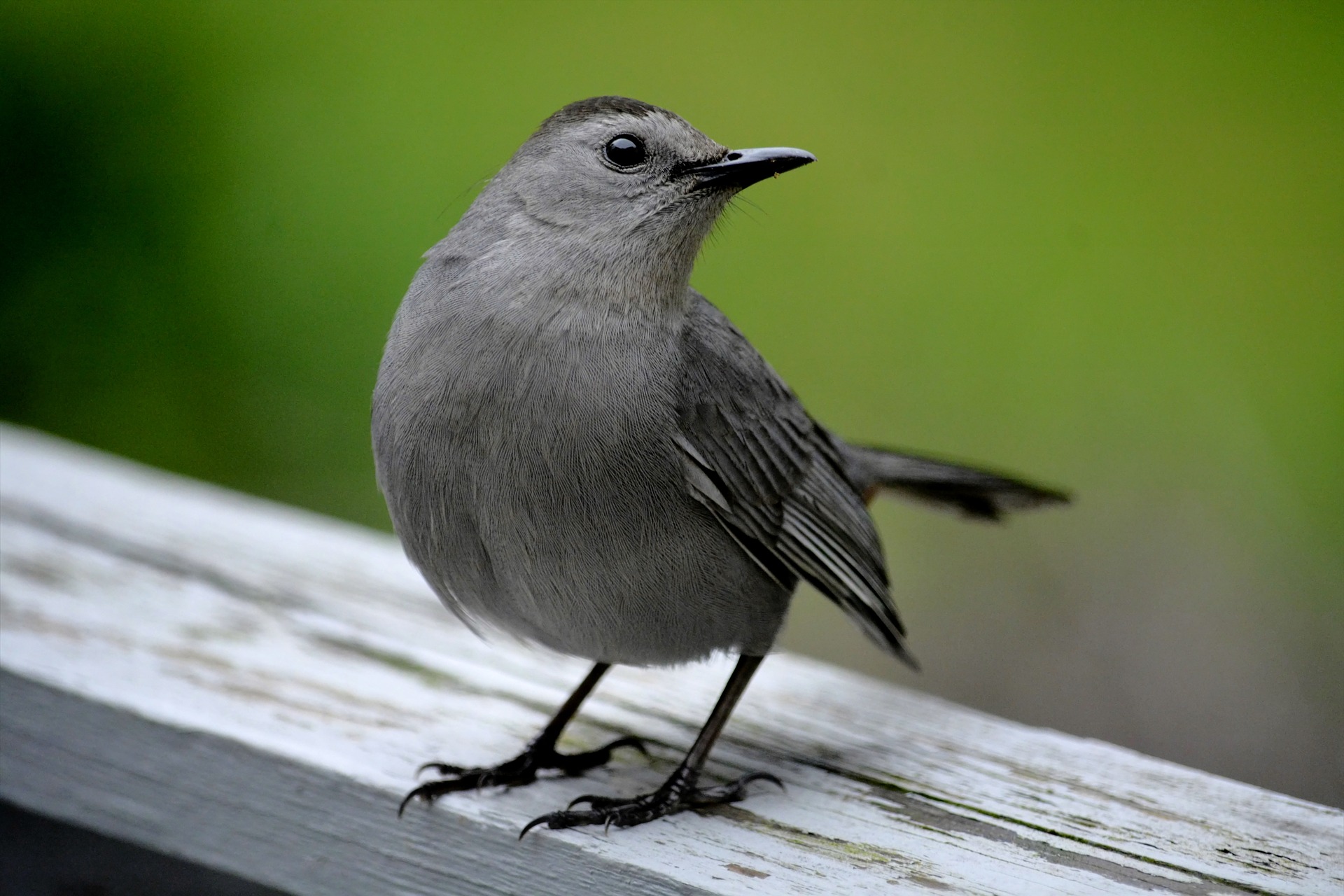
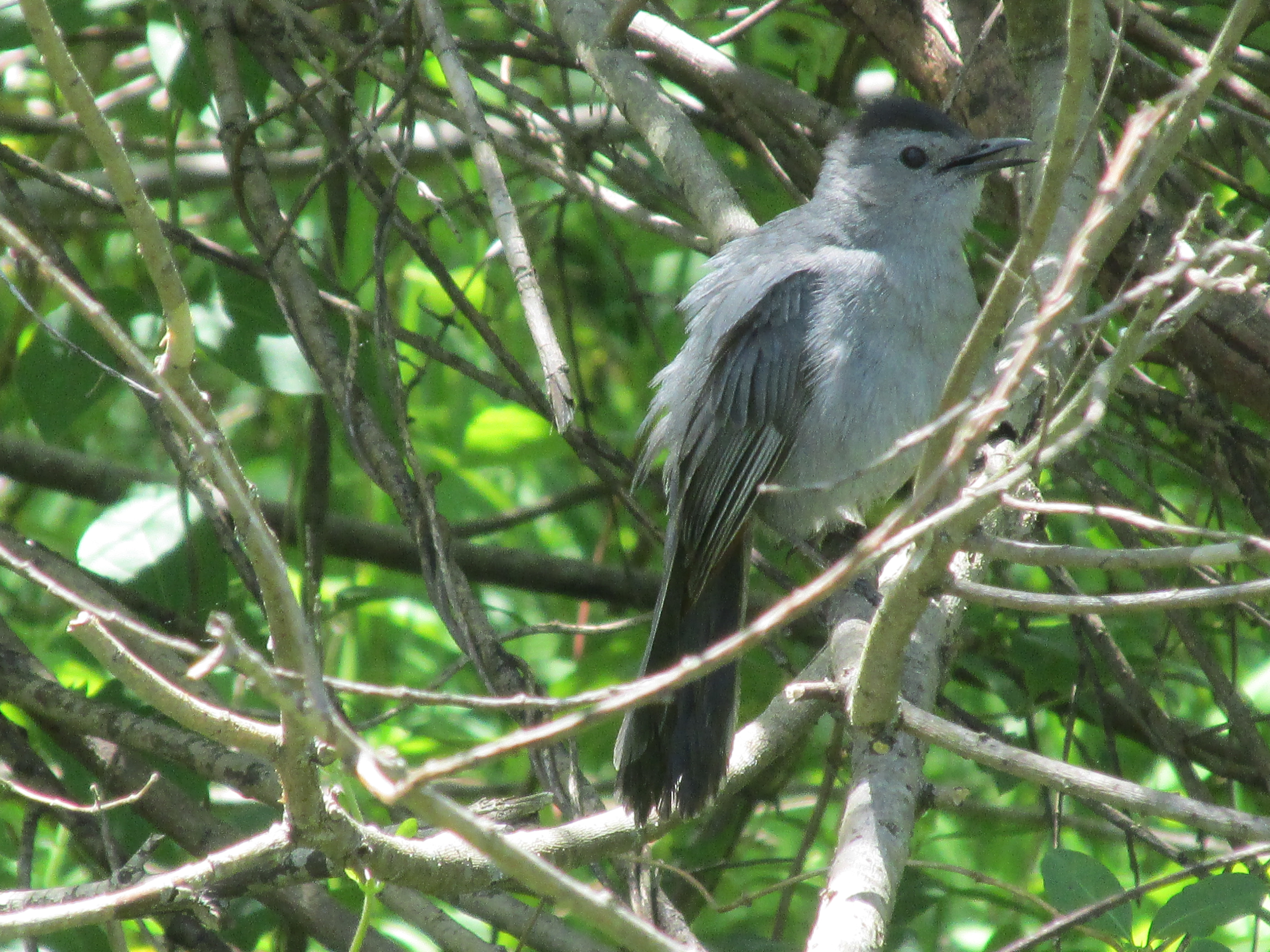
Gray catbirds require some gentle coaxing to give up shy habits

The gray catbird is a baffling bird with a personality that runs the gamut from introverted to extroverted, sometimes depending on the season and at other times seemingly just on a whim. With some gentle persuasion, however, people can gain a catbird’s trust and develop a fun friendship with these clever songbirds.

One summer, all I needed to do to win over the catbirds was to offer some less-than-perfect strawberries and blueberries. A few blemishes on the fruit didn’t bother the resident catbirds at all, and they soon became accustomed to receiving such treats.

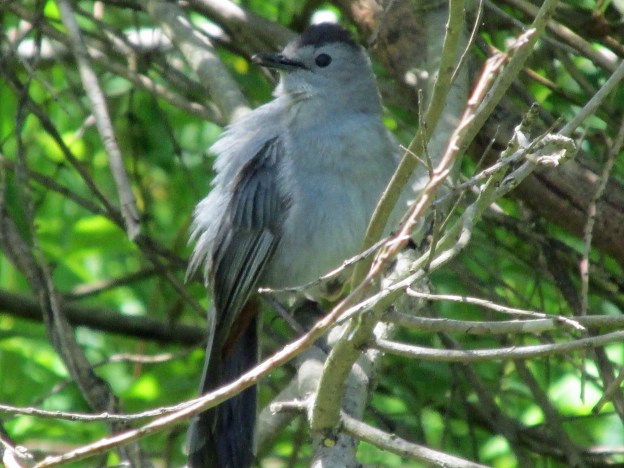
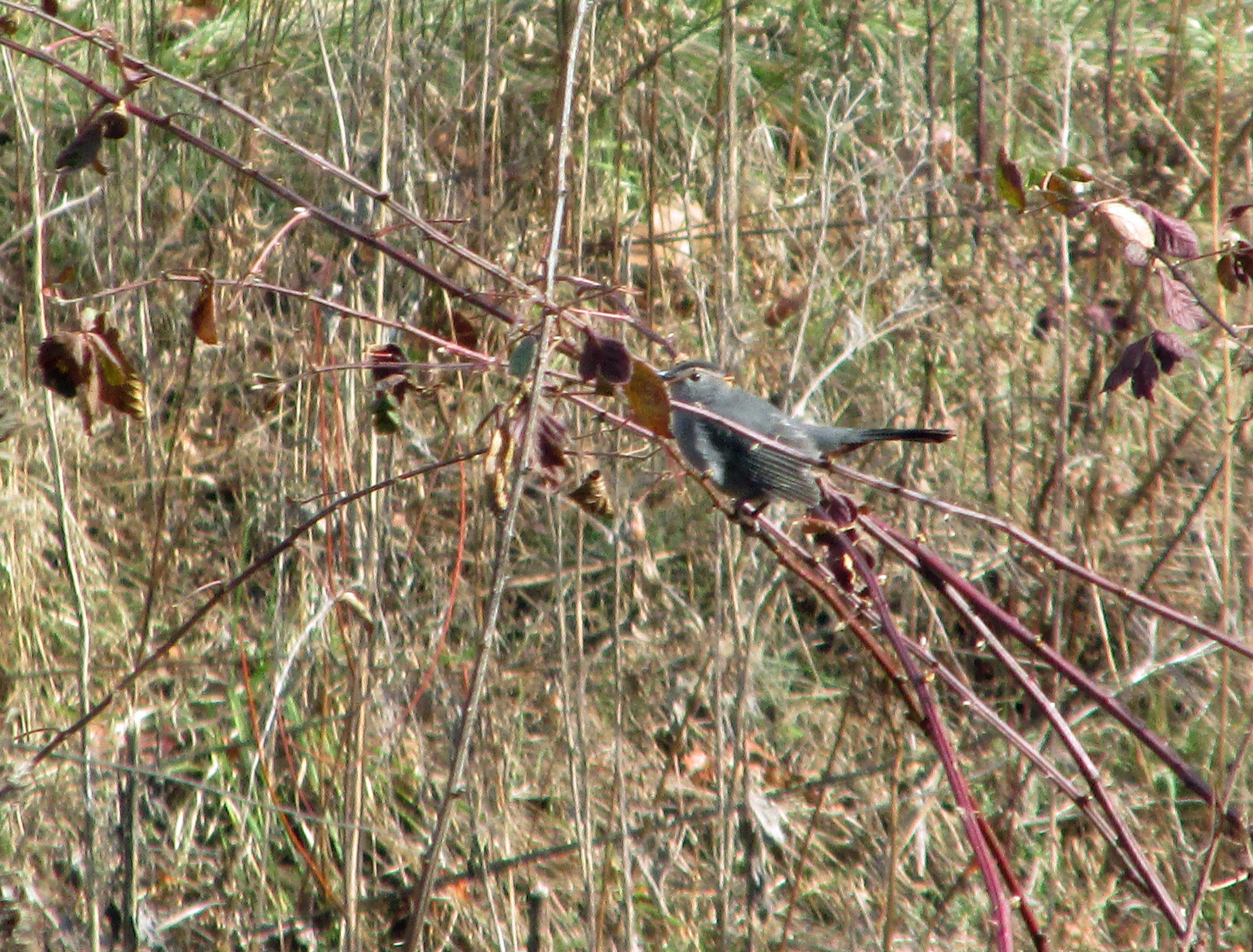
Your first introduction to the catbird is likely going to occur when you hear what sounds like an irritable feline hiding in a hedge, thicket or dense shrub. Upon closer examination, you may get a glimpse of a charcoal gray bird roughly the shape of a Northern mockingbird but smaller. A black cap and a patch of rusty-red feathers under the tail are the only exceptions to this bird’s overall gray plumage.
Photo by Bryan Stevens A curious Gray Catbird peeks from dense cover. Attendees at the fall rally can look for catbirds and other species at any of the offered bird hikes.

Catbirds are experts at concealing themselves from prying eyes. The gray plumage blends into the shadowy sections of the tangles and thickets where the bird likes to hide itself. However, even when gray catbirds are reluctant to be seen, they’re almost eager to be heard. The catbird is extremely vocal, with several calls and songs in its repertoire, including the rather faithful rendering of a fussy cat’s meow that provides this bird its common name.
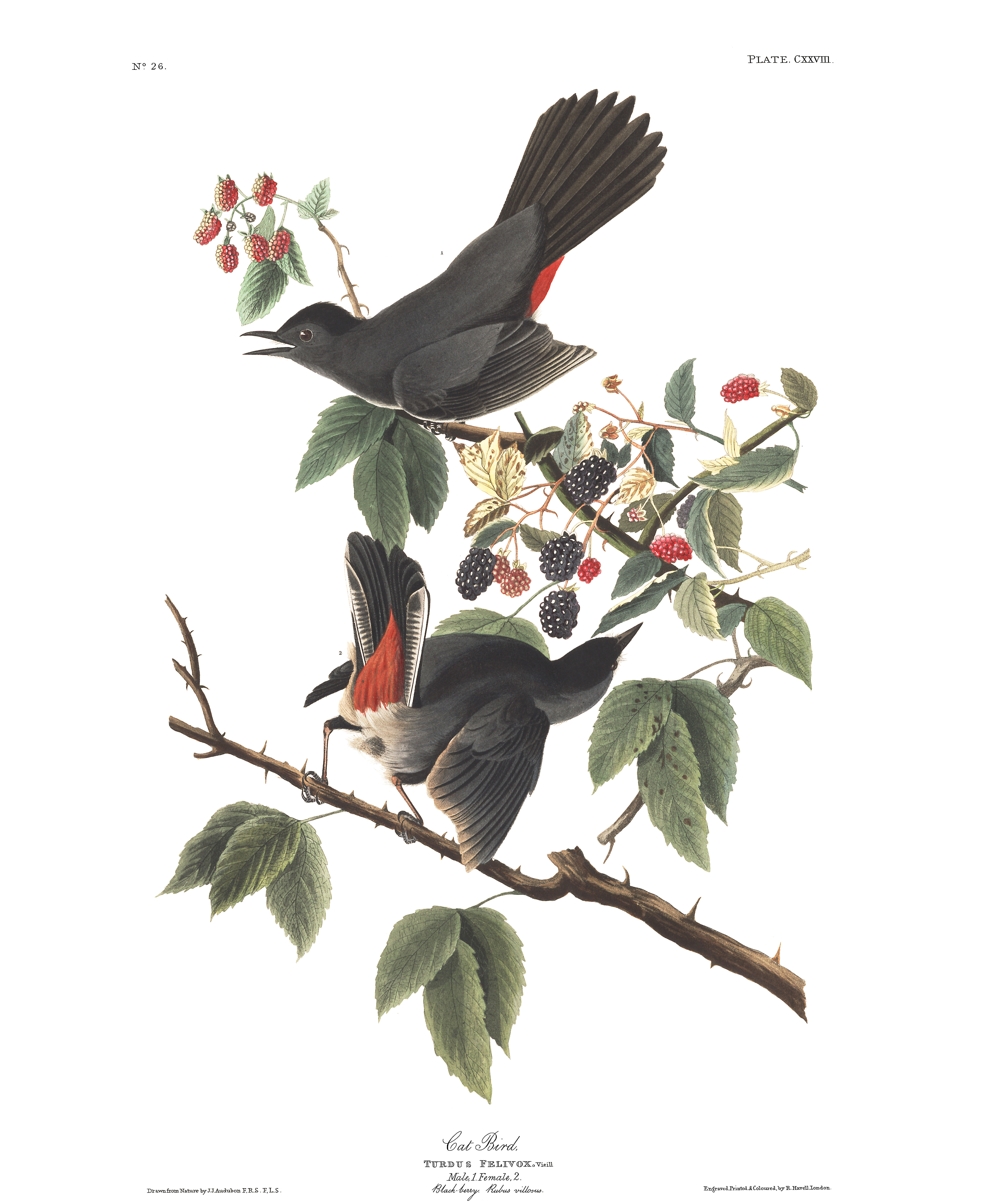
They’re part of a family related to thrushes that are known as “mimic thrushes.” Besides its surprisingly accurate rendition of a feline, the catbird has several other common vocalizations. Despite their shy nature, they’re extremely curious. Imitating their calls or simply producing a squeaky sound will usually persuade the bird to move out of cover and search for the source of the noise.

Catbirds are part of the parade of returning birds each spring that includes species like rose-breasted grosbeaks, scarlet tanagers, Baltimore orioles and indigo buntings, but because they lack the brilliant plumages of these other birds their arrival would probably go unnoticed if not for the fact they are extremely noisy for the first few weeks they are back. Then they go silent again and remain quieter as they take up the serious business of raising young.
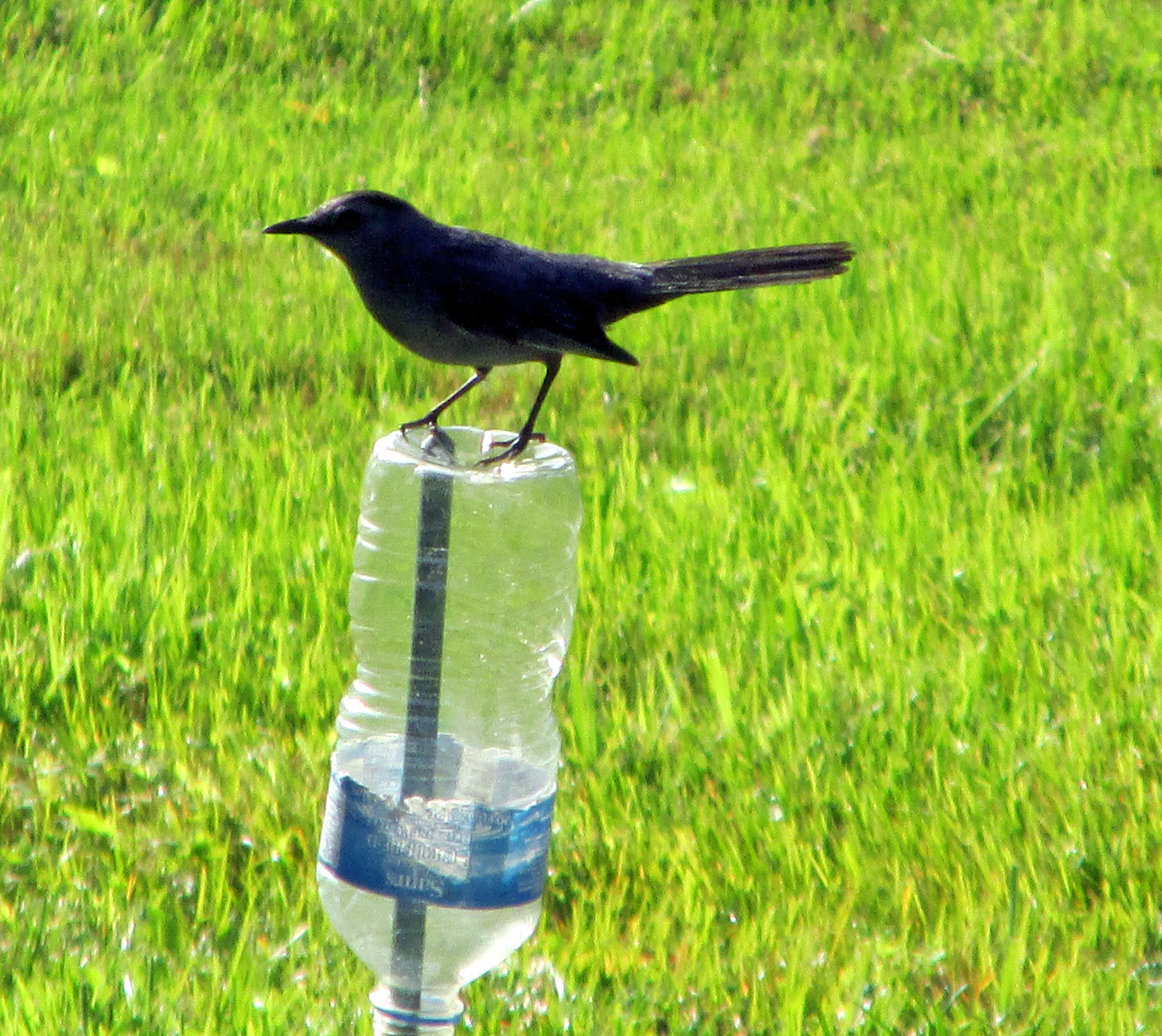
However, in a mood that appears to swing with the seasons, gray catbirds emerge again in late summer and early fall when they feast on such fruit as elderberries and wild cherries while making their whiny cacophony of calls from any tangle or thicket where they happen to be.

The catbird belongs to the genus Dumetella. The name is based upon the Latin term dūmus, which roughly translated means “thorny thicket.” Dumetella, in turn, means “dweller in the thornbushes” or “small bird of the thornbushes.” It’s a rather apt description for a bird fond of habitats often dominated by thorny vegetation. Older common names for the gray catbird included cat thrush and slate-colored mockingbird.

They are related to thrashers and mockingbirds, but scientists find them just different enough to warrant placing the gray catbird in its own genus. A relative known as the black catbird, which ranges throughout the Yucatan Peninsula of Mexico, as well as northern Guatemala and northern Belize, also belongs to a genus of its own. Both catbirds are classified as “mimic thrushes,” or Mimidae, of which there are about 30 species in the New World. There is a totally unrelated family of catbirds that ranges through Australia, Asia and parts of Africa.
The gray catbird is not as an accomplished mimic as some of its relatives, such as the Northern mockingbird. Males have motivation to constantly expand their repertoire, however, as doing so increases the likelihood of attracting a mate. They imitate other birds, but some have been recorded imitating frogs and other non-avian singers.

While not generally considered a bird to visit feeders, people have succeeded in attracting catbirds to feeders designed to offer grape jelly or orange slices. Planting fruit-bearing shrubs and trees is the best means of attracting these fascinating birds to your yard and garden.
 

Pigeons belong to a remarkable and diverse family of birds


Photo by Karen McSharry • This rock pigeon made a recent visit to a home in Bristol, Virginia. Not native to North America, the pigeon has been here almost since the first Europeans arrived on the continent.

Karen McSharry, a resident of Bristol, Tennessee, emailed me recently with some photos asking for help in determining an identification of the bird depicted in her photos.

“This fellow made a sharp descent and landed on my deck with a thud,” Karen wrote. “He just stood there, seemed stunned and didn’t move or make a sound.”

After an hour or so, her husband picked the bird up and set him in the wooded area behind their house.

“He doesn’t seem to be there now, over a week later,” she added.

Karen said that at first glance pigeon came to mind as she tried to identify her visiting feathered friend. “But his head is bigger and black,” she wrote. “There didn’t seem to be any iridescence.”

Photo by Pixabay.com • The Nicobar pigeon (Caloenas nicobarica) is a striking wild pigeon in appearance that is found on small islands and in coastal regions from the Andaman and Nicobar Islands, India, east through the Malay Archipelago, to the Solomons and Palau.

I wrote back and told Karen to trust her instincts. The bird she photographed was indeed a pigeon, known more formally as rock pigeon.

Once also known as rock doves, this pigeon is not native to North America, but the species has been here almost from the time the first Europeans began to sail to the shores of what eventually became the United States and Canada. The rock pigeon is native to Europe, Africa and parts of Asia, but the species has long been domesticated. Pigeons display a lot of variety in their appearance. Through artificial selection, the rock pigeon has been bred into all sorts of other patterns and colors beyond the wild bird’s standard appearance.

I don’t usually get pigeons at my home, although I did once have a domesticated bird visit my feeders for a few days. This particular bird had a band on one leg. I found out later it was a “homing” pigeon, which are pigeons trained to carry messages. After they deliver their message, they return “home,” hence the term “homing pigeon.” But they are still basically just a domesticated variety of rock pigeon.

Gordon Randall Smith, a resident of Saltville, Virginia, might be one of the region’s foremost authorities on pigeons. Eighty-one years old, he has bred pigeons for the past 76 years. He’s also raised game chickens and described his place as once being “like a zoo.”

Photo by Pixabay.com • The Victoria crowned pigeon (Goura victoria) is a large, bluish-grey pigeon with elegant blue lace-like crests, maroon breast, and red irises. A wild bird, this pigeon shows that nature is just as inventive as humans at giving some birds unusual and outlandish appearances.

Gordon has understandable difficulty naming a favorite domestic pigeon strain. “With hundreds of breeds available, choice becomes overwhelming,” Gordon wrote. “Throughout years of close relationships and interested involvement, preferences creep in.”

After consideration, he identified the Bohemian fairy swallow as his favorite variety of pigeon, followed by Chinese owls, crested helmets and Budapest muffed stork tumblers, as well as Lahore and Indian ribbon tailed fantails.

An uncle, Landon Smith, introduced him to the love for the propagation of a variety of domestic pigeons. “I’ve been a fancier, breeder and vivid admirer of birds throughout my amazing and very fruitful life on this planet earth,” Gordon wrote in a letter.

“I was introduced to a covey of ringneck mourning doves and pigeons at uncle Landon Smith’s passing,” Gordon noted. He described his uncle as a very dedicated person who kept various birds, animals and even exotic creatures of nature.

I looked up some of these whimsical names online. Although the basic pigeon stock is apparent in their makeup, these fanciful breeds truly show how enthusiastically the rock pigeon has embraced domestication.

In the wild, rock pigeons display an affinity for nesting and roosting on cliffs and rock ledges, hence the bird’s common name. Feral pigeons in large cities like New York have merely substituted high rises and skysrcapers for craggy cliffs.

Pigeons and doves constitute the avian family Columbidae and the order Columbiformes, which includes about 42 genera and 310 species. North America is home to several native doves, including the mourning dove, Inca dove, common ground dove, ruddy ground dove and white-winged dove. The latter was made famous in a refrain in the song “Edge of Seventeen” by Stevie Nicks.

Other doves and pigeons found around the globe include such fancifully named birds as pink-necked green pigeon, lemon dove, silvery pigeon, black cuckoo-dove, pheasant pigeon, purple-tailed imperial pigeon, topknot pigeon, common emerald dove, blue-headed wood dove, ruddy quail-dove, red-billed pigeon and Victoria crown pigeon. The diversity of form and function among wild doves and pigeons rivals anything that has been produced in their domesticated kin.

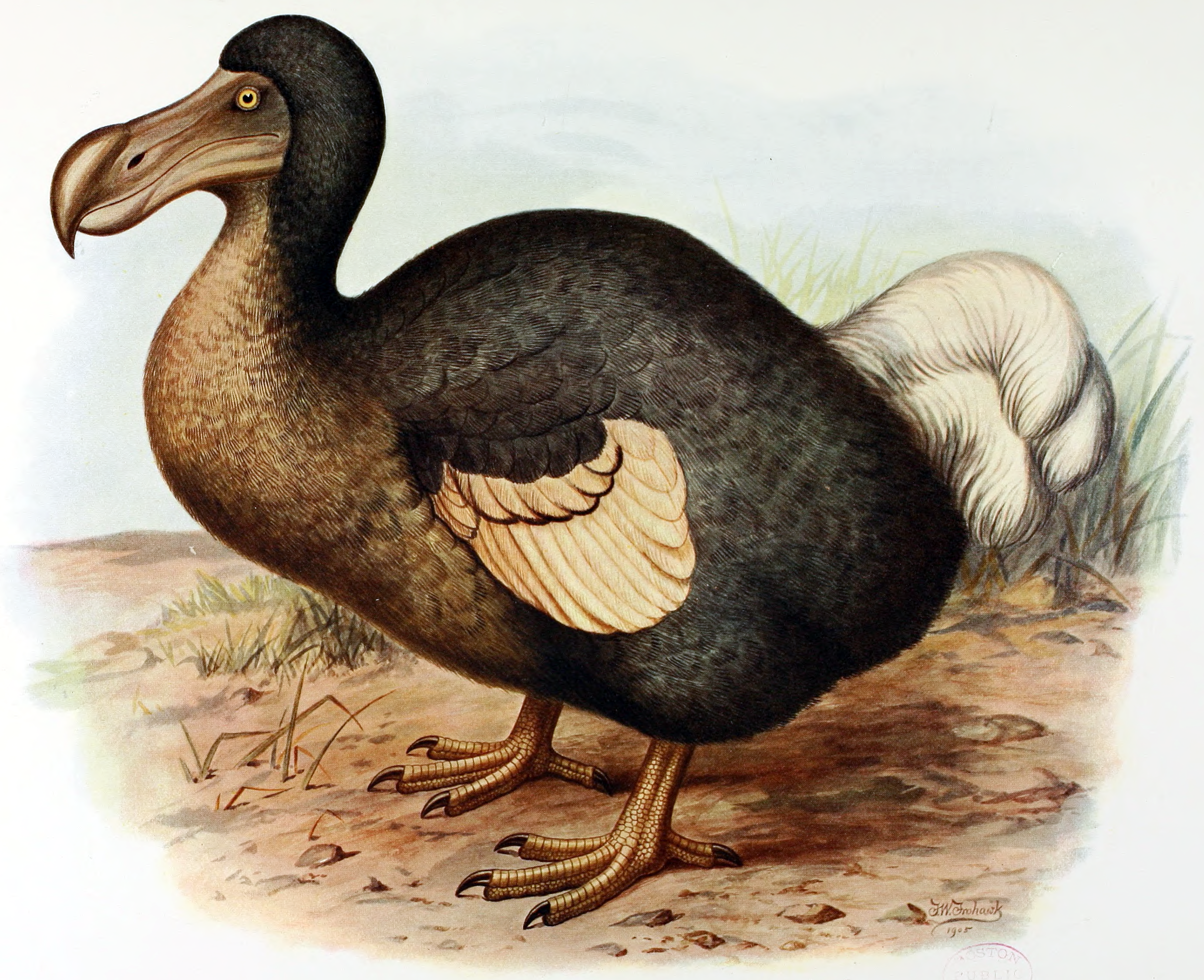
The now-extinct dodo was arguably the most famous member of the diverse family that includes pigeons and doves.

Cardinals don’t always look their best during late summer

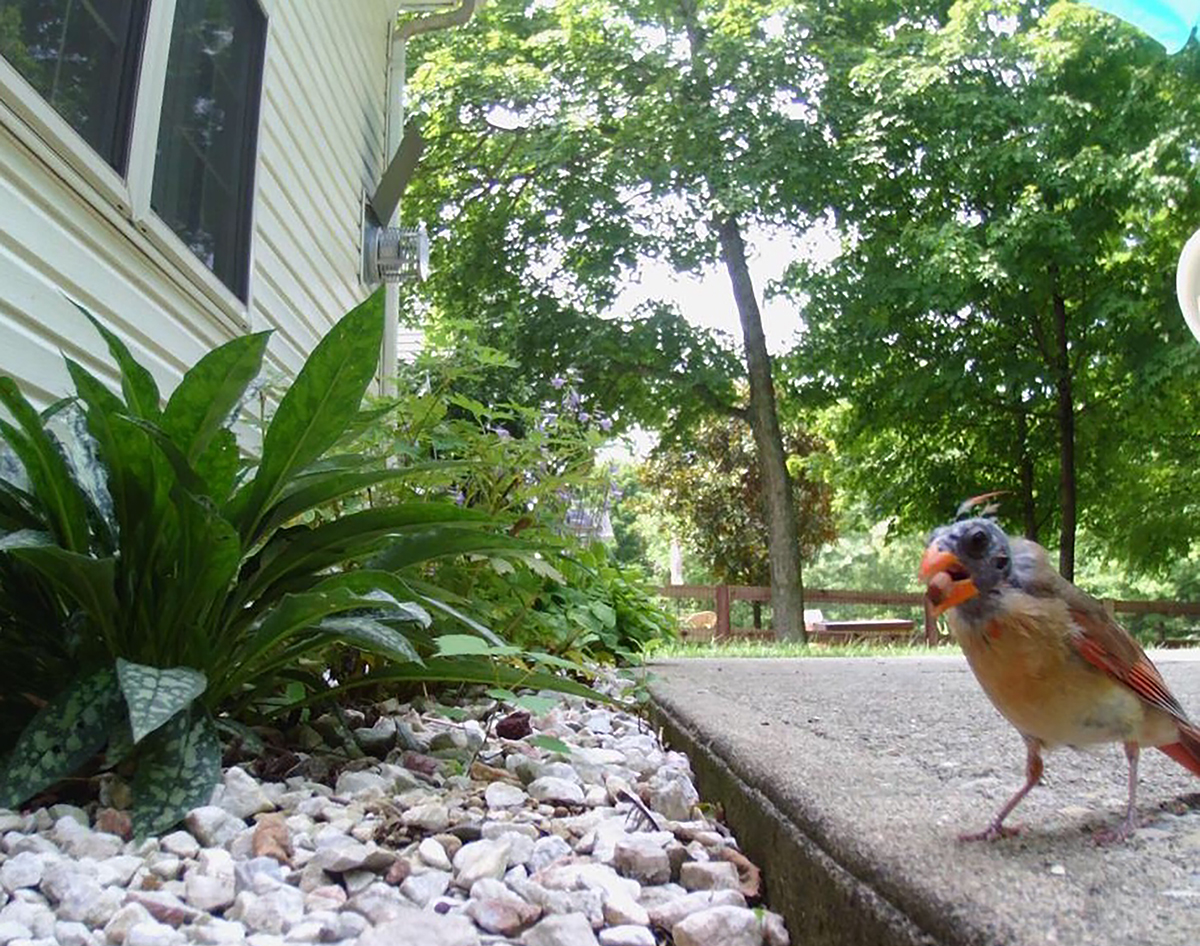
Photo Courtesy of Gina Fannin • This female Northern cardinal, with a head devoid of feathers, appeared at a home in Cincinnati, Ohio. Although these strange looking cardinals often surprise people, they are not all that uncommon in late summer.

Gina Fannin wrote about an unusual observation of a follicly challenged Northern cardinal at her home in Cincinnati, Ohio. The bird in question, a female cardinal, had lost most of the feathers on her head. Gina took a photo of the bird, which she sent with her email, in which she asked if I have ever encountered a cardinal with such a problem.

Gina said that she has seen male cardinals suffering from baldness, but never a female. “I’ve lived here 24 years, and this is the first time I’ve seen a bald female,” she wrote in her email.

I replied to Gina by informing her that I’ve heard of these strange instances for many years. Bald-headed cardinals seem to be a summer occurrence. I usually get some emails or calls this time of year about people surprised by visits from “weird bald-headed” cardinals. I first began to get calls and email from readers in the late 1990s about this unusual phenomenon that seems to usually afflict cardinals, although I have also seen blue jays suffering from this same ailment.

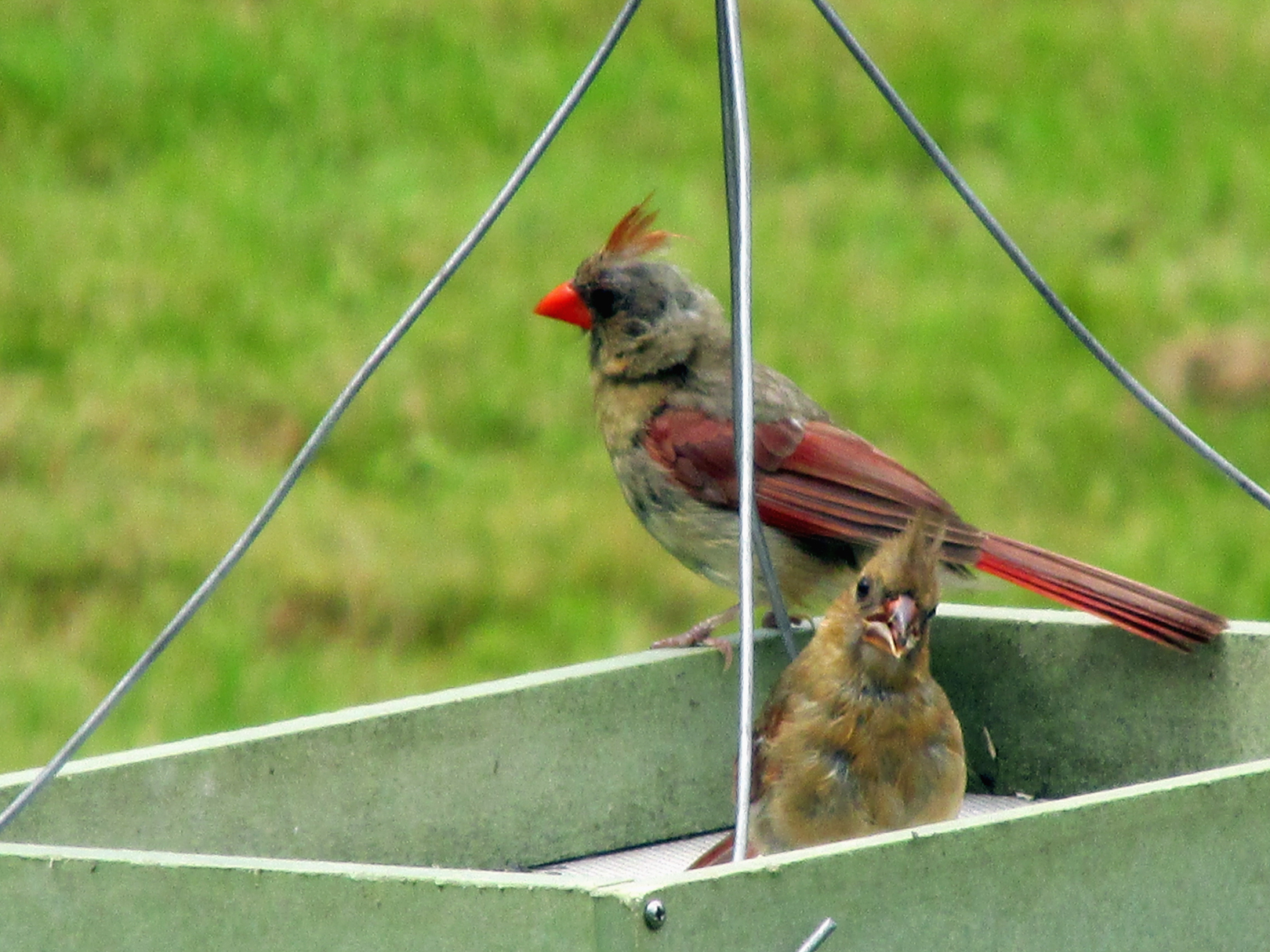
Photo by Bryan Stevens • This female Northern cardinal, shown with one of her offspring at a feeder in late summer, is exhibiting some problems with her feather molt.

I have studied the opinions of various bird experts, but there doesn’t seem to be consensus about the cause. Some believe the “baldness” is caused by an infestation of mites, which are small relatives of spiders and other arachnids. Others believe that the loss of feathers around the head is a part of a normal molting process. This theory is supported by the fact that cardinals do undergo molting in late summer, usually after the conclusion of the nesting season.

The process of molting removes old feathers, which simply drop from the body as new feathers emerge to take their place. For some reason, some cardinals and jays lose all their head feathers at one time before new feathers are ready to take their place. That’s why the condition is typically observed in the summer months. Both male and female cardinals can be afflicted with “bald” heads. It’s strange that the condition primarily affects these two birds, cardinals and jays, both of which have feather crests. On the other hand, cedar waxwings are also crested birds, but I have never observed or received a report on a “bald-headed” cedar waxwing.

Whatever the cause, a “bald-headed” cardinal is an ugly bird. Without feathers, a cardinal is transformed from a showy favorite among bird enthusiasts to a rather grotesque oddity that could aptly be described as resembling a scavenging vulture. Birds like vultures, however, have heads devoid of feathers for a very important reason: As scavengers, a feathered head would become quickly fouled as the bird reaches into the carcasses of dead animals to feed.

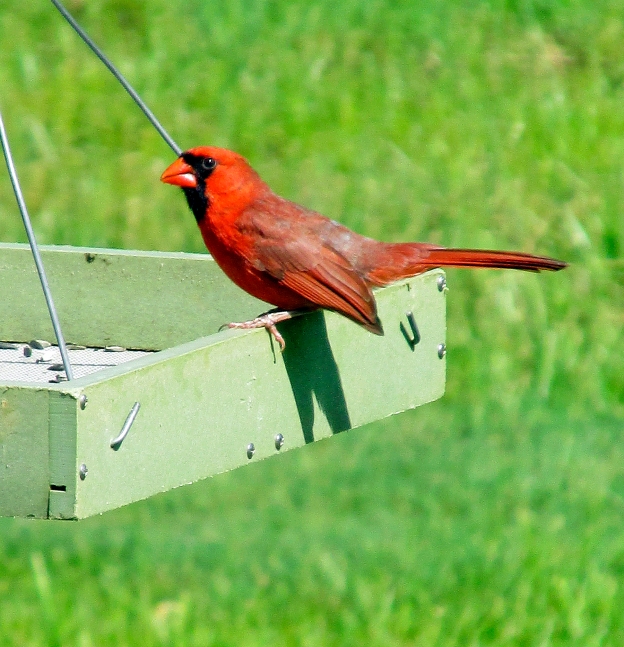
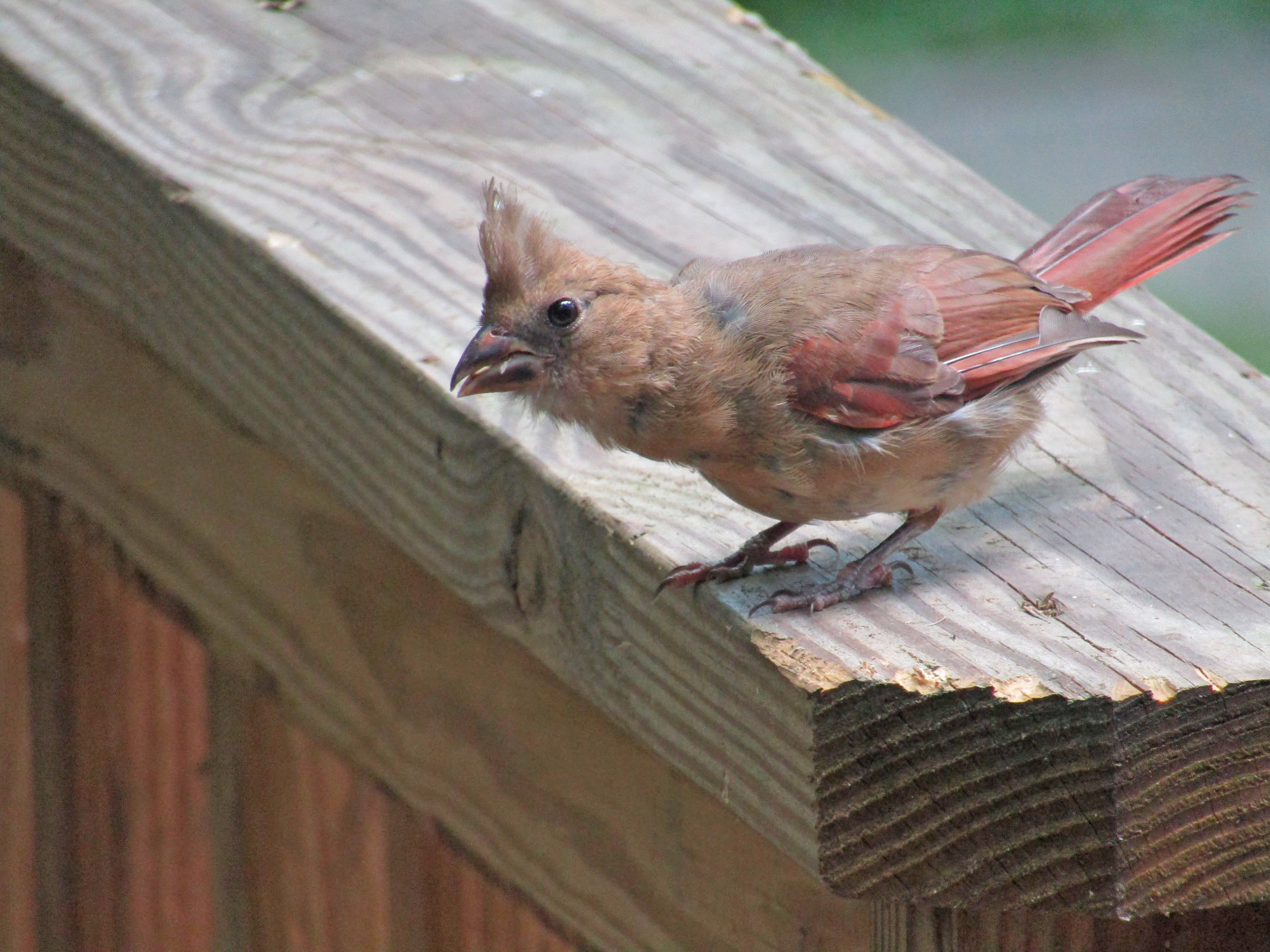
Photo by Bryan Stevens • This young Northern cardinal visits a feeder in the Atlanta suburbs.

The cardinals I have seen with “bald” heads have been visiting feeders stocked with sunflower seeds or perhaps a holder offering a suet cake. So, the absence of feathers is not a hygienic adaptation on the part of cardinals and jays similar to the hygienic necessity of bald heads among vultures. The good news is that the condition is temporary. The normal molt for a Northern cardinal takes two or three months. The feathers on the head do emerge eventually, which is probably very fortunate for the afflicted birds. Feathers serve as insulation during cold weather. A “bald-headed” cardinal would probably have difficulty surviving winter cold spells.

We’re all accustomed to seeing cardinals at our feeders, but people who feed birds would probably be surprised by how much food cardinals and other feeder visitors obtain away from our well-stocked offerings. During the summer months, cardinals eat a variety of wild seeds, fruit and insects. Some of the fruit consumed by cardinals include elderberry, dogwood, blackberry and wild grapes. Young cardinals still in the nest (and fledglings for some time after leaving the nest) are fed mostly insects, including crickets, spiders, moths and flies.

To make cardinals comfortable in every season, offer plenty of thick vegetation, such as a hedge or row of shrubs, and consider planting some of the fruit trees and shrubs that will help these beautiful birds supplement their diet.

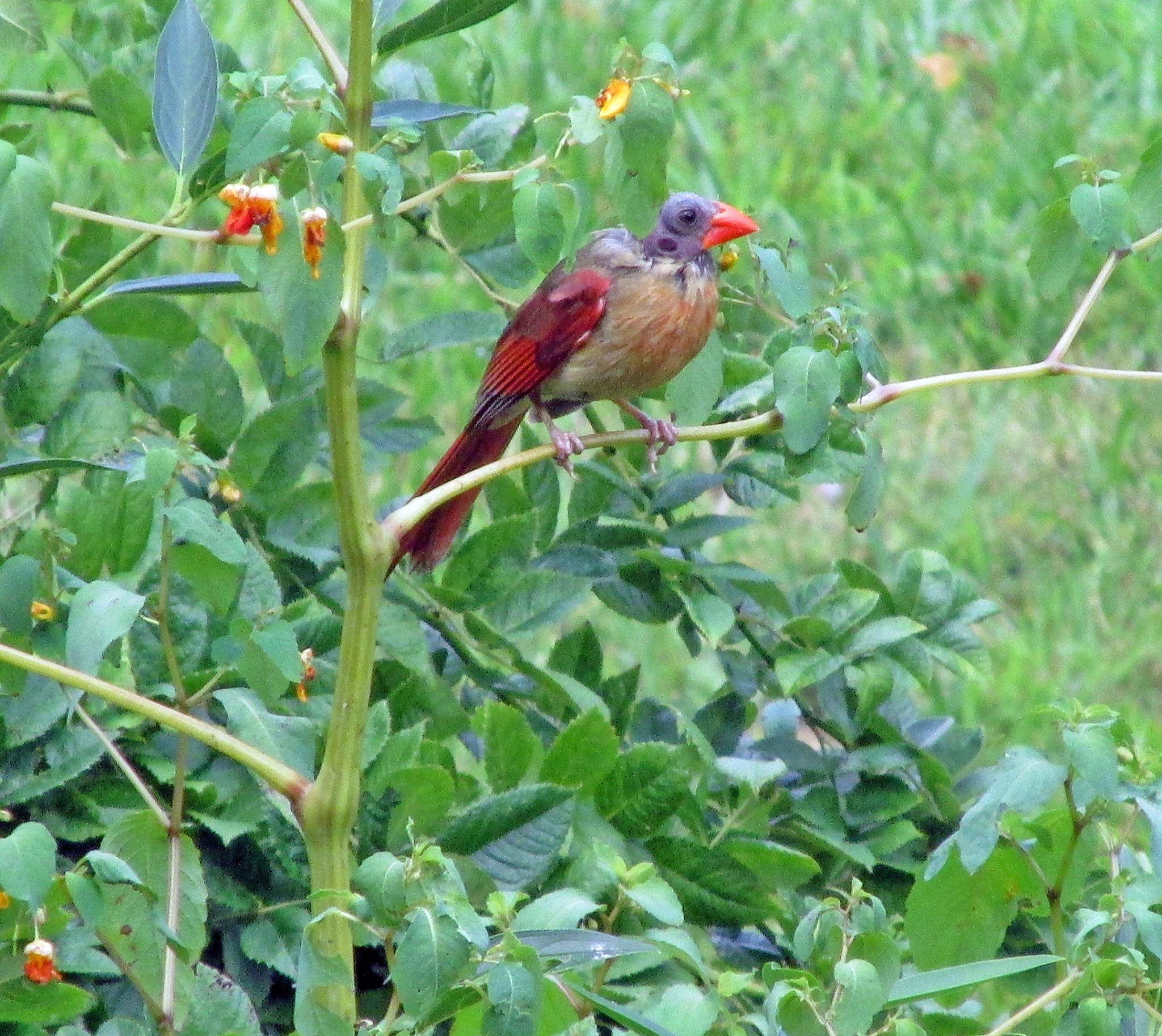
Photo by Bryan Stevens • A female Northern cardinal with most of her head featherless.

Long-running Elizabethton Summer Bird Count finds 115 species

The Elizabethton Bird Club holds two summer bird counts to supplement other bird population monitoring efforts on the birdlife of Tennessee.

This count focuses exclusively on locations within Carter County and was held Saturday, June 9, with 16 observers in five parties plus two yard watchers. A total of 115 species was found, which is slightly above the average of 113 per count. The all-time high was 123 species in 2017. Several species restricted to the higher elevations of East Tennessee were found.

The count yielded some surprises and highlights, including the following:

A single Northern bobwhite represented a species that has been increasingly difficult to find in the area.

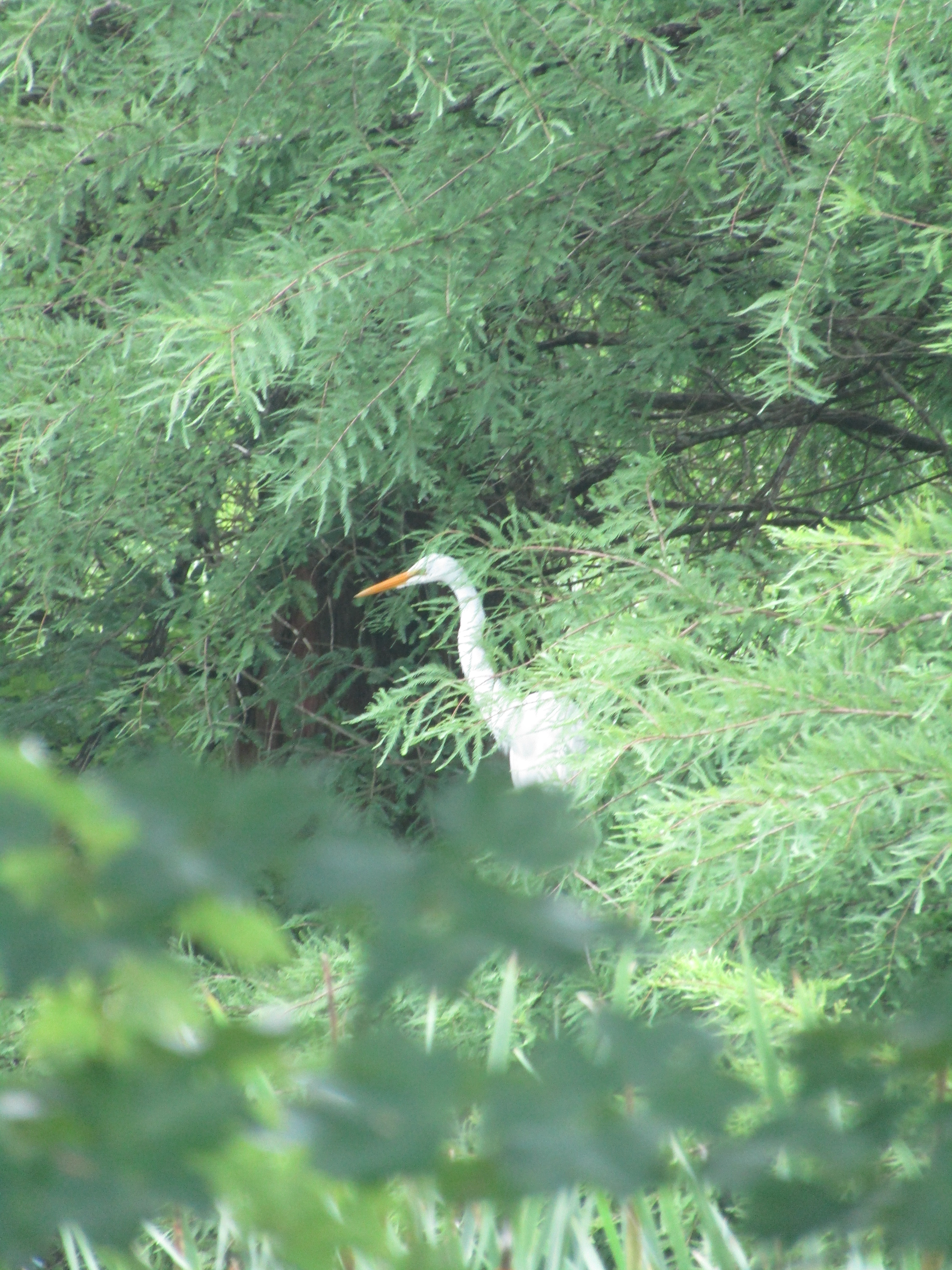
Photo by Bryan Stevens • Great egret, seen here among cypress trees, made the count for the first time this year.

A couple of birds made their debut appearance on this count, including great egret and fish crow, which is expanding its range rapidly in the region.

Other good finds included ruffed grouse, sharp-shinned hawk, American woodcock, Eurasian collared-dove, yellow-bellied sapsucker, alder flycatcher, least flycatcher, common raven, red-breasted nuthatch, brown creeper, winter wren, golden-crowned kinglet, hermit thrush, grasshopper sparrow, rose-breasted grosbeak, purple finch and pine siskin.

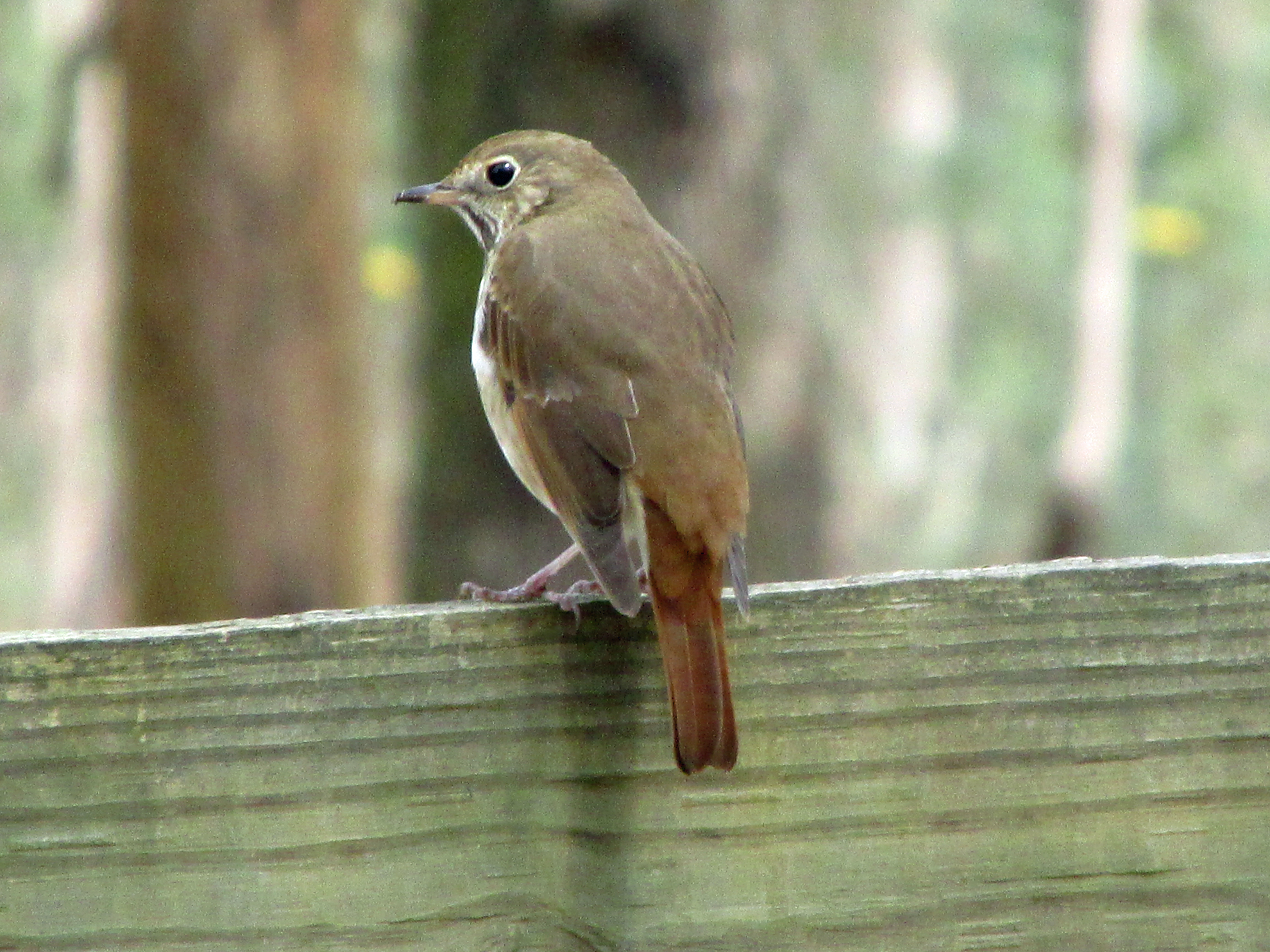
Photo by Bryan Stevens • Hermit thrush, pictured here, is an uncommon summer nesting bird at high elevations.

The count also found 20 species of warblers, including golden-winged, Swainson’s, magnolia, Blackburnian and yellow-rumped.

Of course, there are always unexpected misses. Birds usually found on summer counts but missed this year included green heron, yellow-crowned night-heron, bald eagle, great horned owl, white-eyed vireo, warbling vireo, purple martin, Kentucky warbler, prairie Warbler and vesper sparrow.

The count total follows:

Canada goose, 91; wood duck, 7; Mallard, 78; Northern bobwhite, 1; ruffed grouse, 2; wild turkey, 35; great blue heron, 42; and great egret, 1.

Black vulture, 2; turkey vulture, 58; sharp-shinned hawk, 1; Cooper’s hawk, 3; broad-winged hawk, 1; red-tailed hawk, 10; American kestrel, 1.

Killdeer, 4; American woodcock, 1; rock pigeon, 69; Eurasian collared-dove, 3; mourning dove, 171; and yellow-billed cuckoo, 3.

Eastern screech-owl, 2; barred owl, 1; chuck-will’s widow, 3; whip-poor-will, chimney swift, 46; ruby-throated hummingbird, 35; and belted kingfisher, 10.

Red-bellied woodpecker, 15; yellow-bellied sapsucker, 3; downy woodpecker, 15; hairy woodpecker, 1; Northern flicker, 9; and pileated woodpecker, 14.

Eastern wood-pewee, 17; Acadian flycatcher, 21; alder flycatcher, 3; least flycatcher, 4; Eastern phoebe, 40; great crested flycatcher, 4; and Eastern kingbird, 15.

Photo by Bryan Stevens • Eastern phoebe is a common flycatcher in the region and abundant on summer counts.

Yellow-throated vireo, 2; blue-headed vireo, 44; red-eyed vireo, 105; blue jay, 66; American crow, 133; fish crow, 1; and common raven, 5.

Northern rough-winged swallow, 21; tree swallow, 123; barn swallow, 106; and cliff swallow, 313.

Carolina chickadee, 63; tufted titmouse, 71; red-breasted nuthatch, white-breasted nuthatch, 15; brown creeper, 3; house wren, 48; winter wren. 8; and Carolina wren, 54.

Blue-gray gnatcatcher, 17; golden-crowned kinglet, 23; Eastern bluebird, 71; veery, 41; hermit thrush, 1; wood thrush, 62; American robin, 245; gray catbird, 44; brown thrasher, 12; Northern mockingbird, 34; European starling, 358; and cedar waxwing, 54.

Overnbird, 47; worm-eating warbler, 6; Louisiana waterthrush, 11, golden-winged warbler, 6; black-and-white warbler, 32; Swainson’s warbler, 3; common yellowthroat, 20; hooded warbler, 76; American redstart, 14; Northern parula, 18; magnolia warbler, 6; Blackburnian warbler, 4; yellow warbler, 2; chestnut-sided warbler, 32; black-throated blue warbler, 39; pine warbler, 1; yellow-rumped warbler, 1; yellow-throated warbler, 7; black-throated green warbler, 29; Canada warbler, 11; and yellow-breasted chat, 3.

Eastern towhee, 73; chipping sparrow, 73; field sparrow, 43; grasshopper sparrow, 1; song sparrow, 151; and dark-eyed junco, 55.

Scarlet tanager, 18; Northern cardinal, 108; rose-breasted grosbeak, 11; blue grosbeak, 6; indigo bunting, 106.

Red-winged blackbird, 79; Eastern meadowlark, 1; common grackle, 74; brown-headed cowbird, 18, orchard oriole, 1; and Baltimore oriole, 1.

House finch, 43; purple finch, 2; pine siskin, 2; American goldfinch, 55; and house sparrow, 6.

Carter County’s Roan Mountain and Holston Mountain offer excellent high elevation habitat. Lower elevations along the Doe and Watauga Rivers also provide plenty of terrain for looking for a variety of birds.

Photo by Bryan Stevens • American goldfinches look their very best for the summer count.

Eastern phoebe belongs to extensive flycatcher family

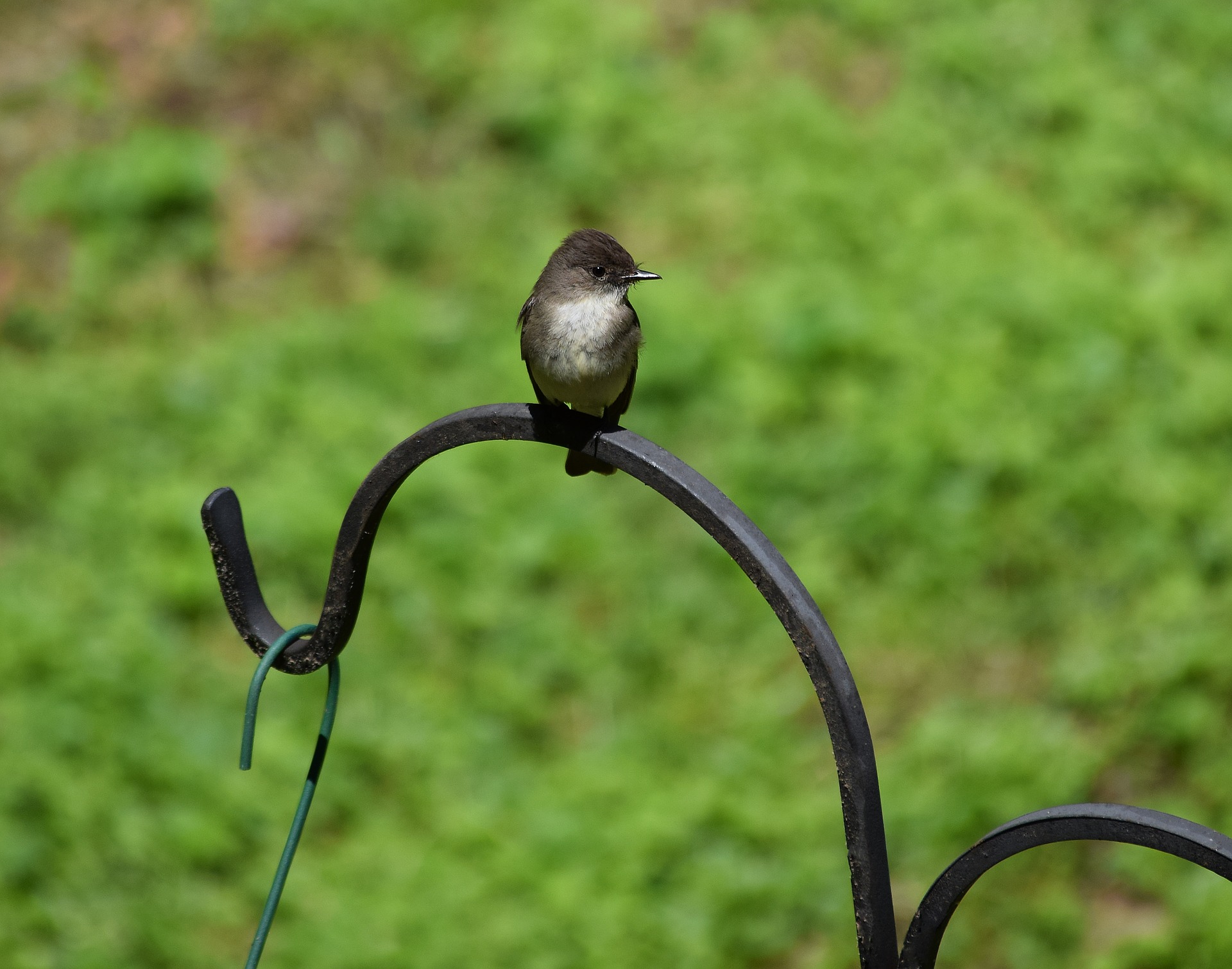
Photo by leoleobobeo/Pixabay.com • An Eastern phoebe perches on a garden shepherd’s hook. Phoebes, a member of the extensive New World flycatcher family, are adept at capturing flying insect prey by utilizing elevated perches.

Jill Henderson, who resides in Saltville, Virginia, emailed me recently with a question about a bird nesting atop a column on her back porch.

Jill provided me with four photographs attached to her email that greatly assisted in identifying the nesting birds on her back porch. 

“It seems to enjoy the water in my pool,” she added. Indeed, a couple of the photos showed the bird perched poolside on one of her lawn chairs. 

The nesting birds turned out to be Eastern phoebes, which are a member of the extensive family of birds known as “tyrant flycatchers.” The information about the pool assisted with the identification. Phoebes show an affinity for water, whether the source is a creek, pond or even a residential swimming pool.

Photo by Bryan Stevens • An Eastern phoebe scans from a perch for flying insect prey.

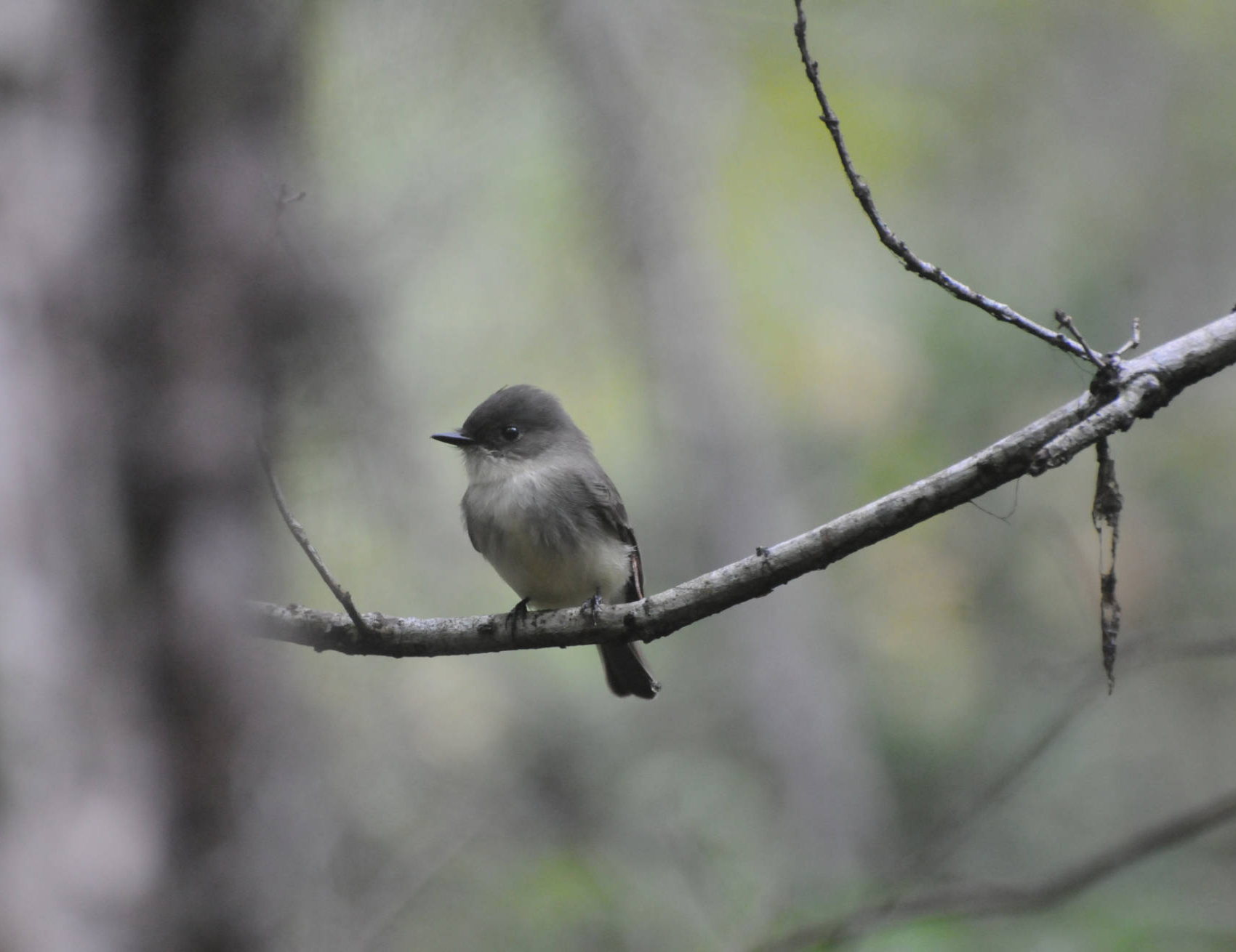
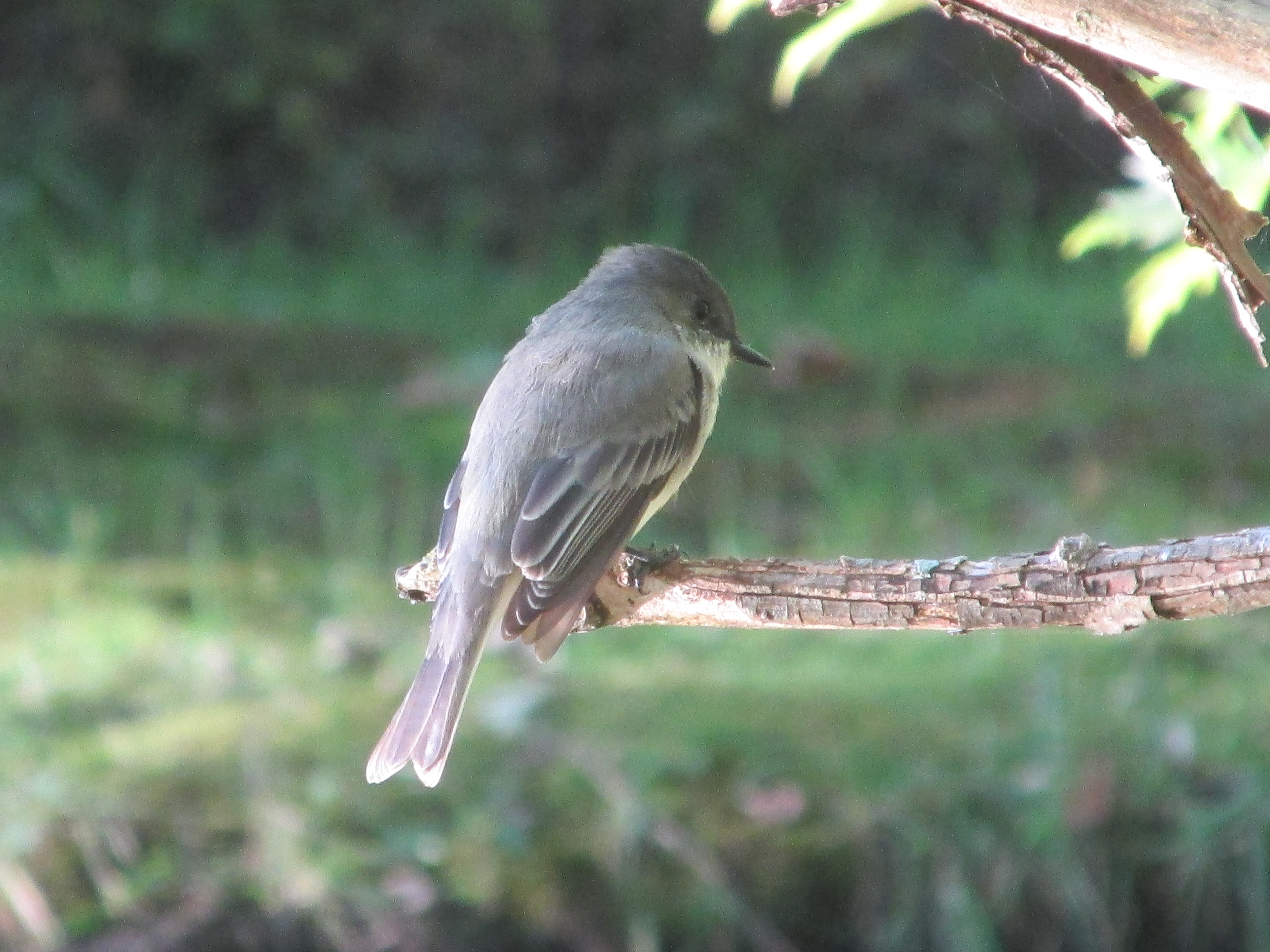
Considering the bright finery worn by some of the more colorful spring arrivals, it’s understandable if the return of Eastern phoebes escape immediate notice each year. In comparison with vibrant birds like rose-breasted grosbeak, ruby-throated hummingbird, scarlet tanager and yellow warbler, the Eastern phoebe is downright drab with its gray-black and dingy white plumage. Nevertheless, this member of the flycatcher clan has earned itself a favorite spot in the hearts of many a birdwatcher. It’s one of those birds that even beginning birders find surprisingly easy to recognize and identify after a bit of study. While it may not have a dramatic plumage pattern to hint at its identity, the Eastern phoebe is quite at home around human dwellings and comes into close contact with people going about their daily routines. Rather tame — or at least not too bothered by close proximity with humans — the Eastern phoebe has one behavior that sets it apart from all the other similar flycatchers. When this bird lands on a perch, it cannot resist a vigorous bobbing of its tail. Every time a phoebe lands on a perch, it will produce this easily recognized tail dip and rise. It’s a behavior that makes this bird almost instantly recognizable among birders with a knowledge of the trait.

Photo by Bryan Stevens • An Eastern phoebe fledgling only recently out of the nest.

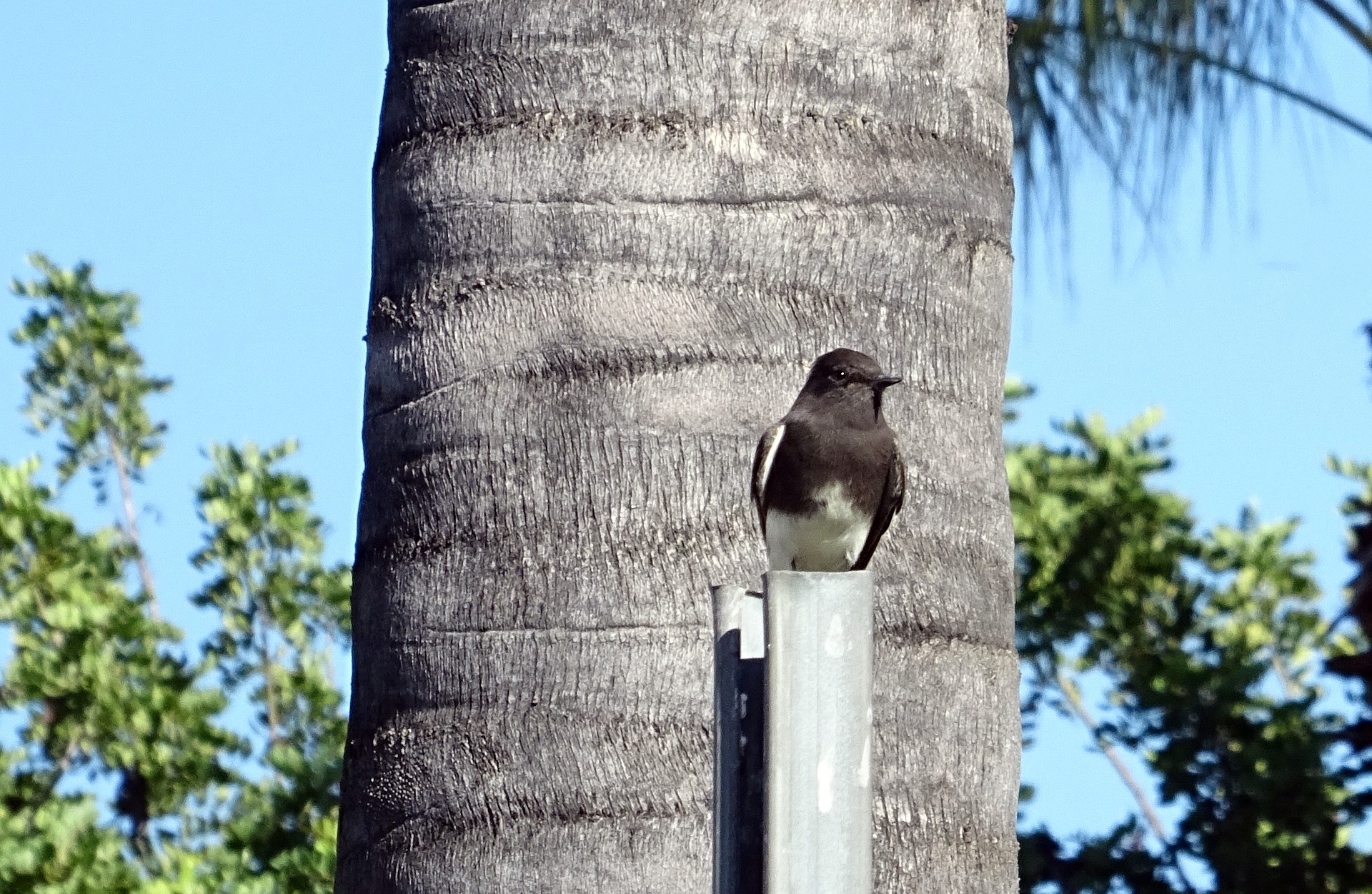
Photo by Sarangib/Pixabay.com • A black phoebe perches on a post near a palm tree.

The Eastern phoebe is also an enthusiastic springtime singer, and the song it chooses to sing is an oft-repeated two-syllable call “FEE-bee” that provides the inspiration for this bird’s common name. The Eastern phoebe, known by the scientific name of Sayornis phoebe, has two relatives in the genus Sayornis. The genus is named after Thomas Say, an American naturalist. The Eastern phoebe’s close relatives include the black phoebe and Say’s phoebe. The black phoebe ranges throughout Oregon, Washington and California and as far south as Central and South America. As its name suggests, this bird has mostly black feathers instead of the gray plumage of its relatives. The Say’s phoebe, also named for the man who gave the genus its name, is the western counterpart to the Eastern phoebe.

The phoebes belong to the the world’s largest family of birds, which is known collectively as the “tyrant flycatchers.” With more than 400 species, this family of birds consists of species known as tyrannulets, elaenias, pygmy tyrants, tody-flycatchers, spadebills, flatbills, attilas, kingbirds and kiskadees. 

Since they belong to the vast family of New World flycatchers, it’s probably no surprise that these phoebes feed largely on insects. The birds will often perch patiently until an insect’s flight brings it within easy range. A quick flight from its perch usually allows the skillful bird to return with a morsel snatched on the wing. In the winter months, the Eastern phoebe also eats berries and other small fruit. Phoebes can even feed on poison ivy berries without risk of ill effects.

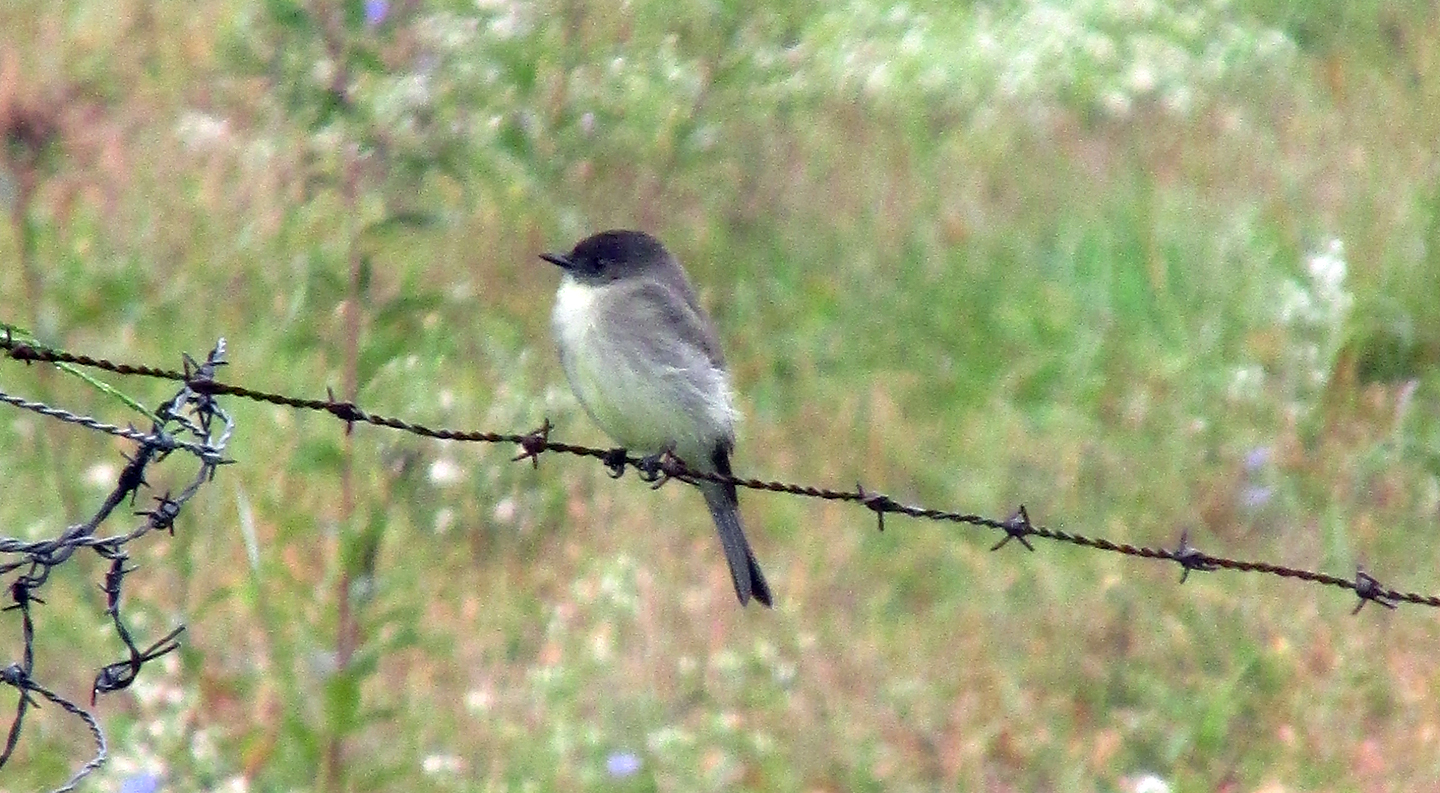
Photo by Bryan Stevens • An Eastern Phoebe perches on barbed wire.

Phoebes are fond of nesting on human structures, including culverts, bridges and houses. With the latter, they were once known for their habit of placing their nests under sheltering eaves. At my home, a pair of Eastern phoebes often chooses to nest on the wooden rafters in my family’s garage.  Although the species is migratory, a few hardy individuals will usually try to tough out winters in the region. The others that depart in the autumn will migrate to the southern United States and as far south as Central America. On some rare occasions, Eastern phoebes have flown far off their usual course and ended up in western Europe. I can usually count on Eastern phoebes returning to my home in early March, making them one of the first migrants to return each year. Their arrival rarely goes unnoticed since the males tend to start singing persistently as soon as they arrive.

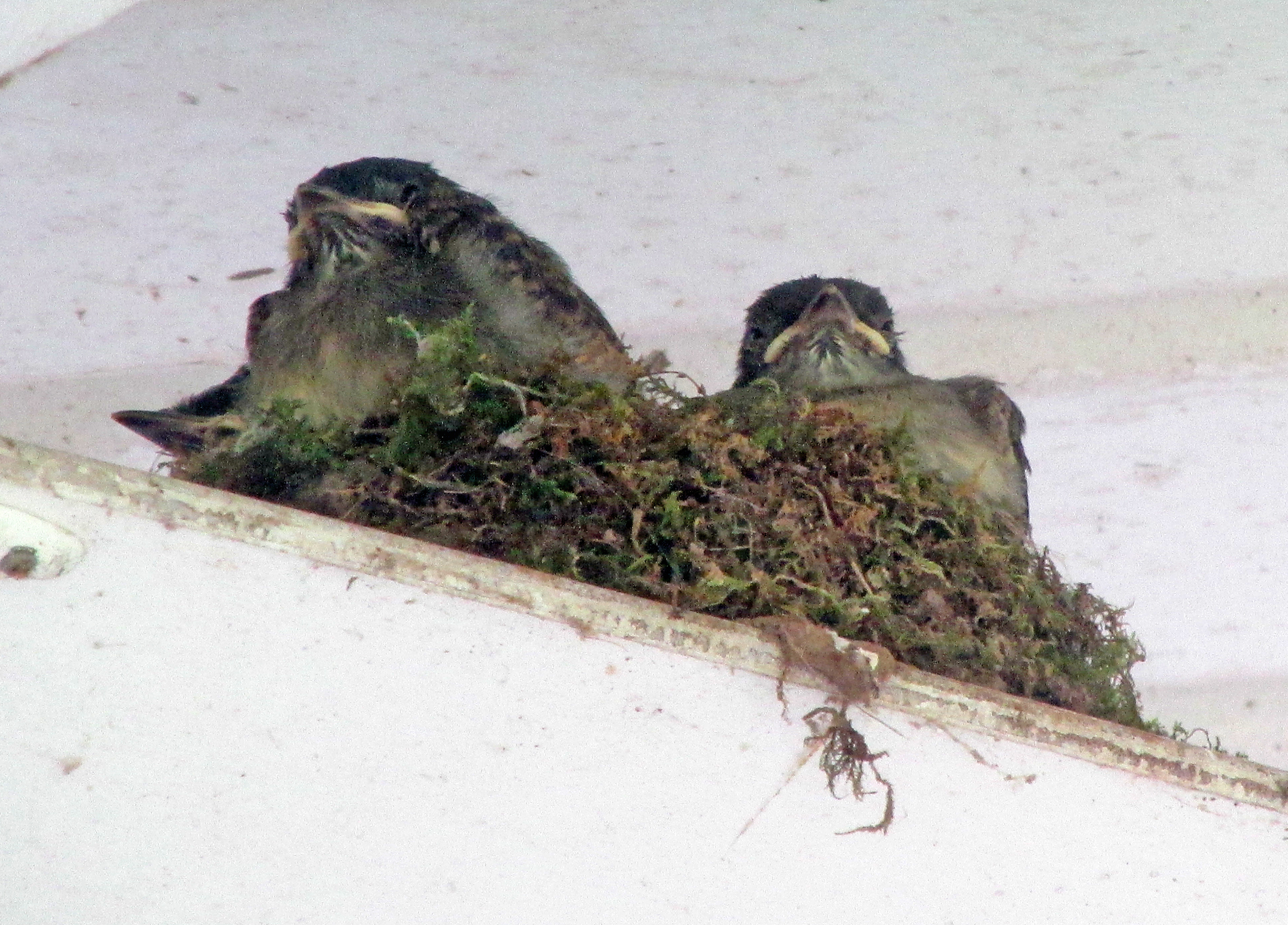
Photo by Bryan Stevens • Eastern phoebe nestlings stay in their nest atop a blade on an outdoor ceiling fan.


John James Audubon, an early naturalist and famed painter of North America’s birds, conducted an experiment with some young phoebes that represents the first-ever bird banding in the United States of America. His novel experiment, which he carried out in 1803, involved tying some silver thread to the legs of the phoebes he captured near his home in Pennsylvania. He wanted to answer a question he had about whether birds are faithful to home locations from year to year. The following year, Audubon again captured two phoebes and found the silver thread had remained attached to their legs. Today, ornithologists still conduct bird banding to gather information on birds and the mystery of their migrations. So, that pair of phoebes that returned to your backyard this spring — they just might be the same ones that have spent past summer seasons providing you with an enlightening glimpse into their lives.

Jill reminded me that she had written to me a few years back and had mentioned difficulty with hummingbird feeders and bears. “I am happy to report that so far this summer, there have been no incidents,” she wrote.

Her email also reminded me of a recent surprise. I awoke recently to the sound of a disturbance outside my bedroom window. I figured rambunctious squirrels were raiding my feeders. I raised the blind and surprised myself and a young black bear. Standing on his hind legs, the bear had managed to hook its paws on one of my feeders that hangs about four feet off the ground. The bear, probably a yearling based on its size, fled the scene, which probably spared my feeder. 

If you have a question, wish to comment on a column or share an observation, email me at ahoodedwarbler@aol.com. If you want help with identification, photographs definitely help.

Photo by Bryan Stevens • An Eastern phoebe utilizes a hiking trail sign as an elevated perch.

Sighting points out the weakness in relying on field guide range maps


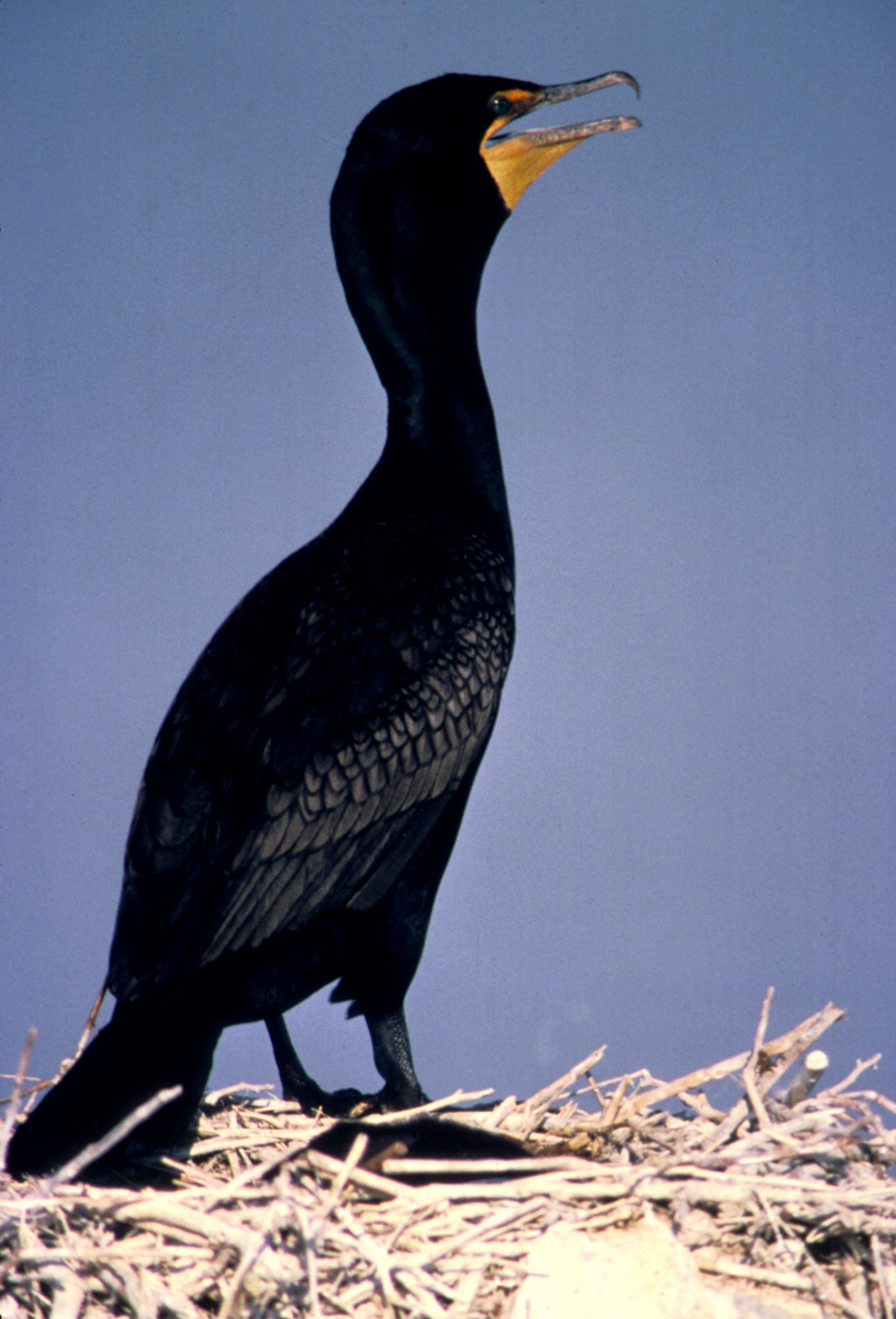
Photo by Rodney Krey/U.S. Fish & Wildlife Service • The double-crested cormorant is a water bird designed for preying on fish. The population of this cormorant has increased in recent years.


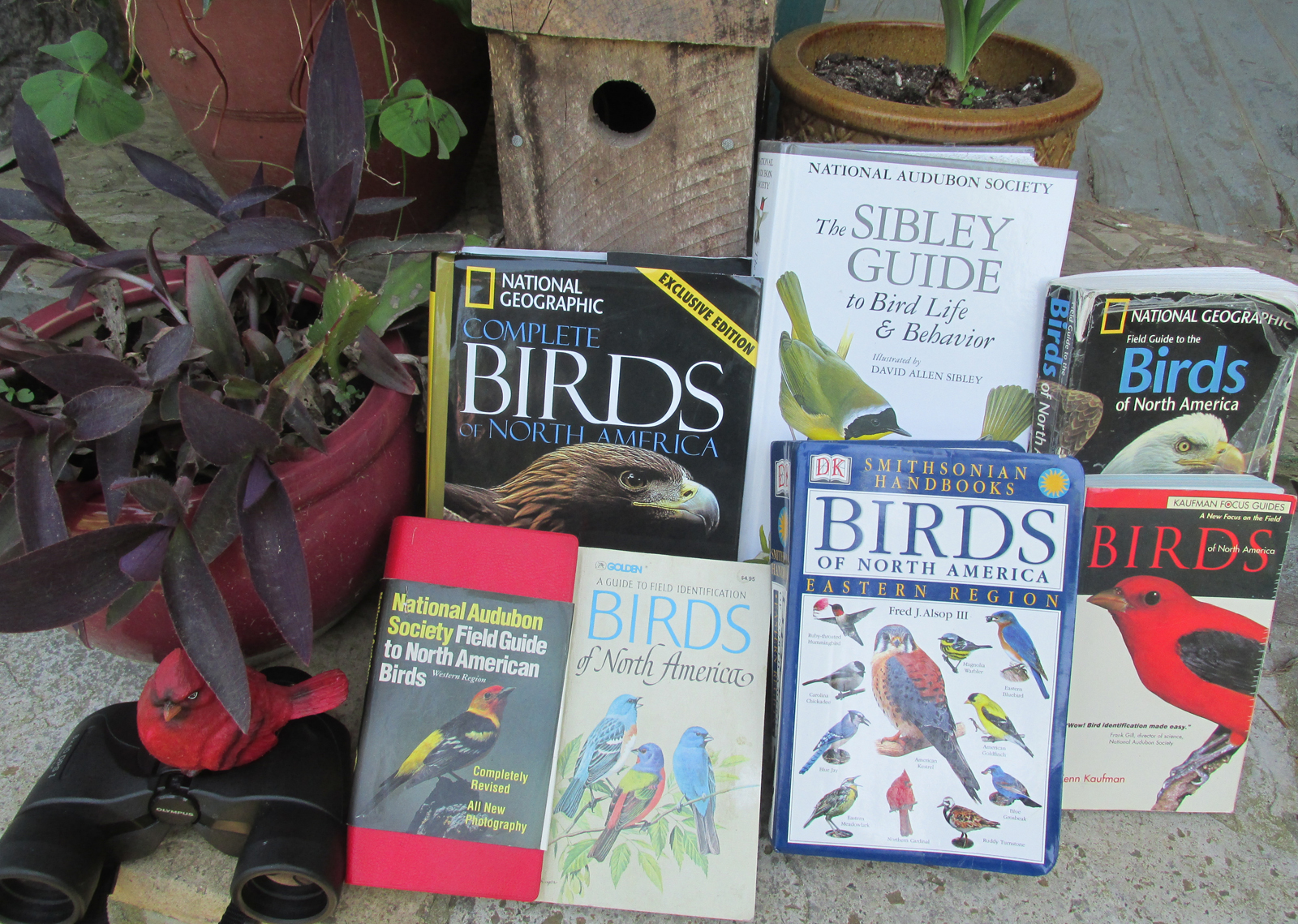
For those interested in learning to identify the birds they see during trips or that show up in their gardens or yards, a good field guide is an indispensable tool. But for whatever the reason, I’ve got to add a slight caveat to my recommendation to obtain a field guide for bird identification help: The range maps in many of our field guides are in need of a good update.

As a case in point, I recent received an email from reader Beth Webb, who had a question about an observation she made recently.

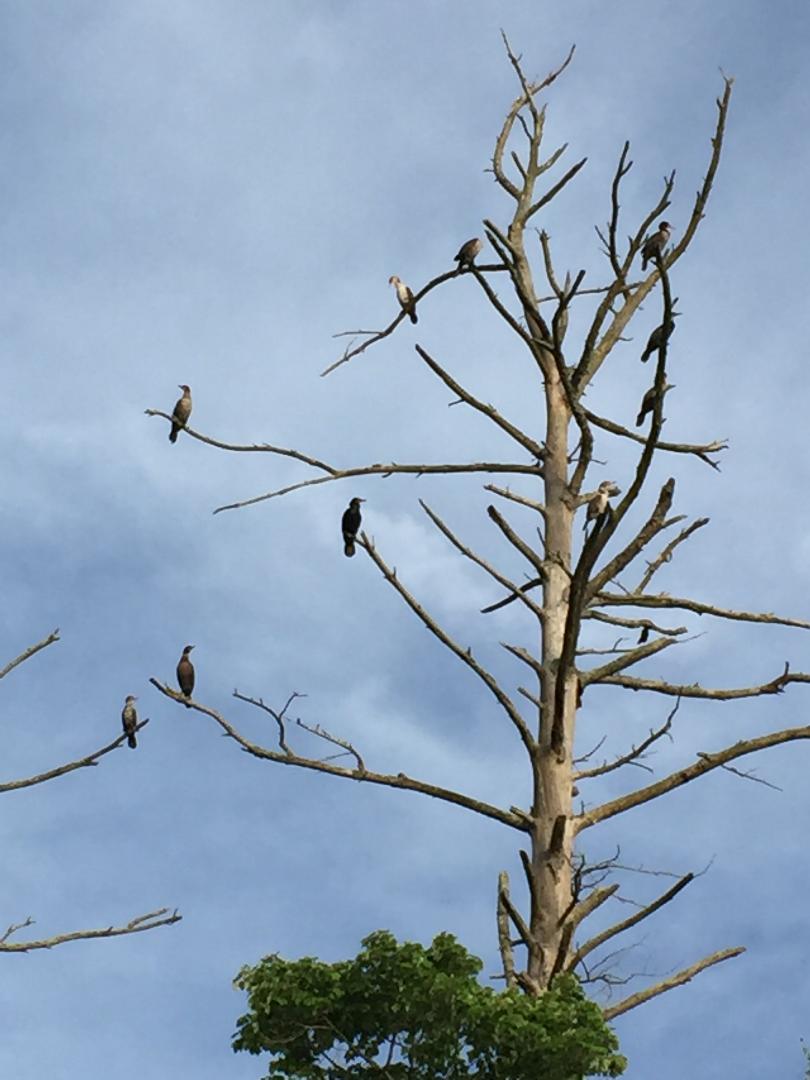
“While at South Holston Lake this weekend, I saw about 12 or 18 birds in a tree,” Beth wrote. “I could not identify them.”

She noted that her binoculars were not the best and the boat was rocking. Nevertheless, she had an idea on the identity of the perched birds.

“They had the silhouette of a cormorant,” Beth wrote. “My field guide is older and it does not place cormorants in this area, but I am wondering if they have been sighted here.”

Beth added that several years ago she saw a cormorant at South Holston Lake and was able to watch it dive in one spot and come up several seconds later in another.

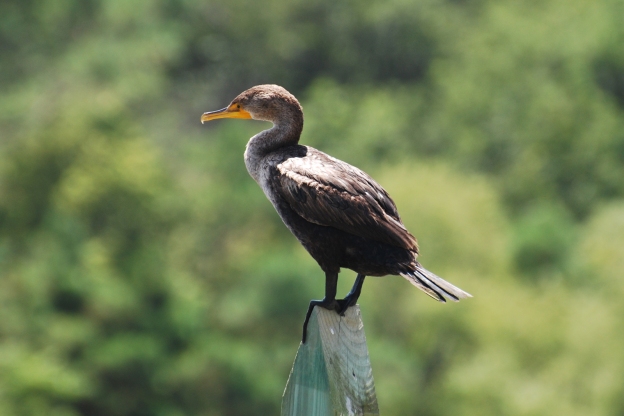
Photo courtesy of Sandy Loving • This photo taken on June 14, 2019, probably shows some of the same cormorants that Beth Webb saw on South Holston Lake.

I emailed Beth back an answer to her query, telling her that double-crested cormorants have not always been a common bird in our region. For the past couple of decades, their numbers have been increasing nationwide, not just in our region.

The fact that she saw so many of them in a single tree makes me think she probably came close to a nesting rookery. Cormorants often nest near wading birds like great blue herons, which are also known to nest at South Holston Lake.

So, even with a rocking boat, Beth did a great job identifying the cormorants. Beth’s observation points out a weakness in some field guides. Birds are not static creatures. They have the power of flight and are constantly using that ability to expand into new places, Publishers of bird identification field guides are often challenged to keep pace.

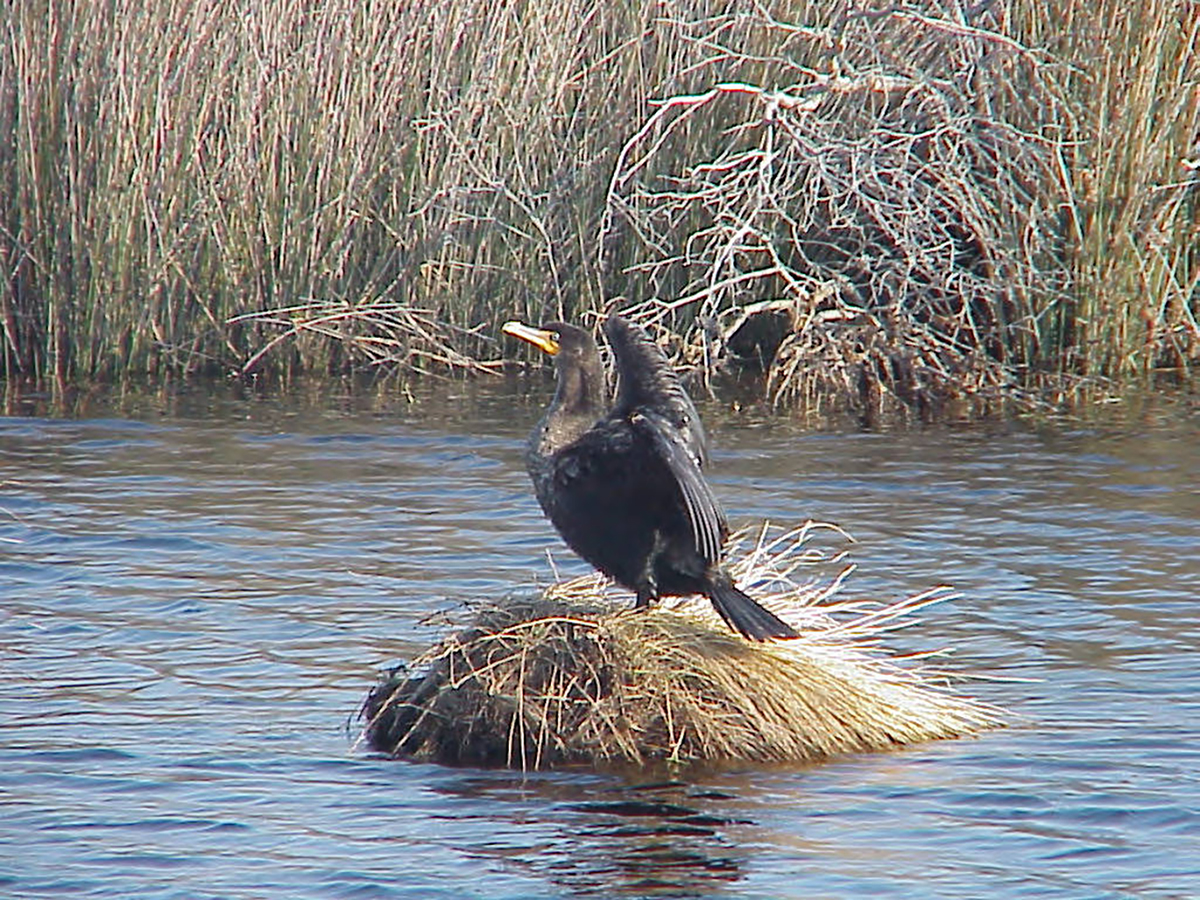
Photo by U.S. Fish & Wildlife Service • A double-crested cormorant dries its wings after a swim.

For instance, the region’s birders birding in the 1970s would have considered the now ubiquitous Canada goose a rare bird. Before the 1980s, the tree swallow hardly ever nested in the region. Another swallow – the cliff swallow – has abandoned the faces of cliffs to nest beneath concrete bridges and has gone from being a rare swallow in the region to one of the most common summer nesting birds in the entire region in just the last couple of decades. Species ranging from cattle egret to Eurasian collared dove may not appear on the range maps in your guide books, but they can be found in the region.

Most bird identification guides follow a simple format: illustrations (photographs or paintings) that are accompanied by brief, precise text and maps showing a particular bird’s expected range, sometimes delineated by season. Many birds may be absent in summer but present in winter, for instance, so a color-coded range map designating year-round, summer and winter residency is highly desirable.

Photo by Bryan Stevens • Field guides are an essential tool for bird identification, but features such as range maps can quickly go out of date.

A good field guide should also be small enough to be easily carried and consulted in the field. One that slides into a pocket is ideal. Many tech-savvy people are relying on their smart phones as an alternative to a field guide, but the printed page is hard to beat in remote areas where a phone experiences difficulty finding enough signal bars.

Hopefully future field guides will include updates to the range maps that show cormorants do indeed reach Northeast Tennessee and Southwest Virginia.

Two of the field guides that I recommend for beginning birders are the Golden Guide to Birds of North America by Chandler S. Robbins and the Peterson Field Guide to Birds of North America by Roger Tory Peterson.

The cormorants are certainly a bird worth knowing. The double-crested cormorant belongs to a family of 40 birds consisting of species referred to as both cormorants and shags. Some of the world’s other cormorants include the flightless cormorant, black-faced cormorant, white-breasted cormorant, crowned cormorant, little cormorant, pygmy cormorant and the imperial shag, which is also known as the blue-eyed shag.

Besides the double-crested cormorant, North America is home to five other species. The great cormorant lives along the shores of the Atlantic Ocean from Canada down to southern Florida. The pelagic cormorant and the Brandt’s cormorant can be seen along North America’s Pacific coastline. The red-faced cormorant lives in the southern regions of Alaska out into the Aleutian Islands. The most southern of these North American cormorants is the Neotropic cormorant, which is found along the southeast areas of Texas down into Mexico.

All cormorants primarily fish for their meals. They have strong legs to propel them though the water when they dive for fish. They also have a serrated bill with a hooked tip that is excellent for grasping slippery fish.

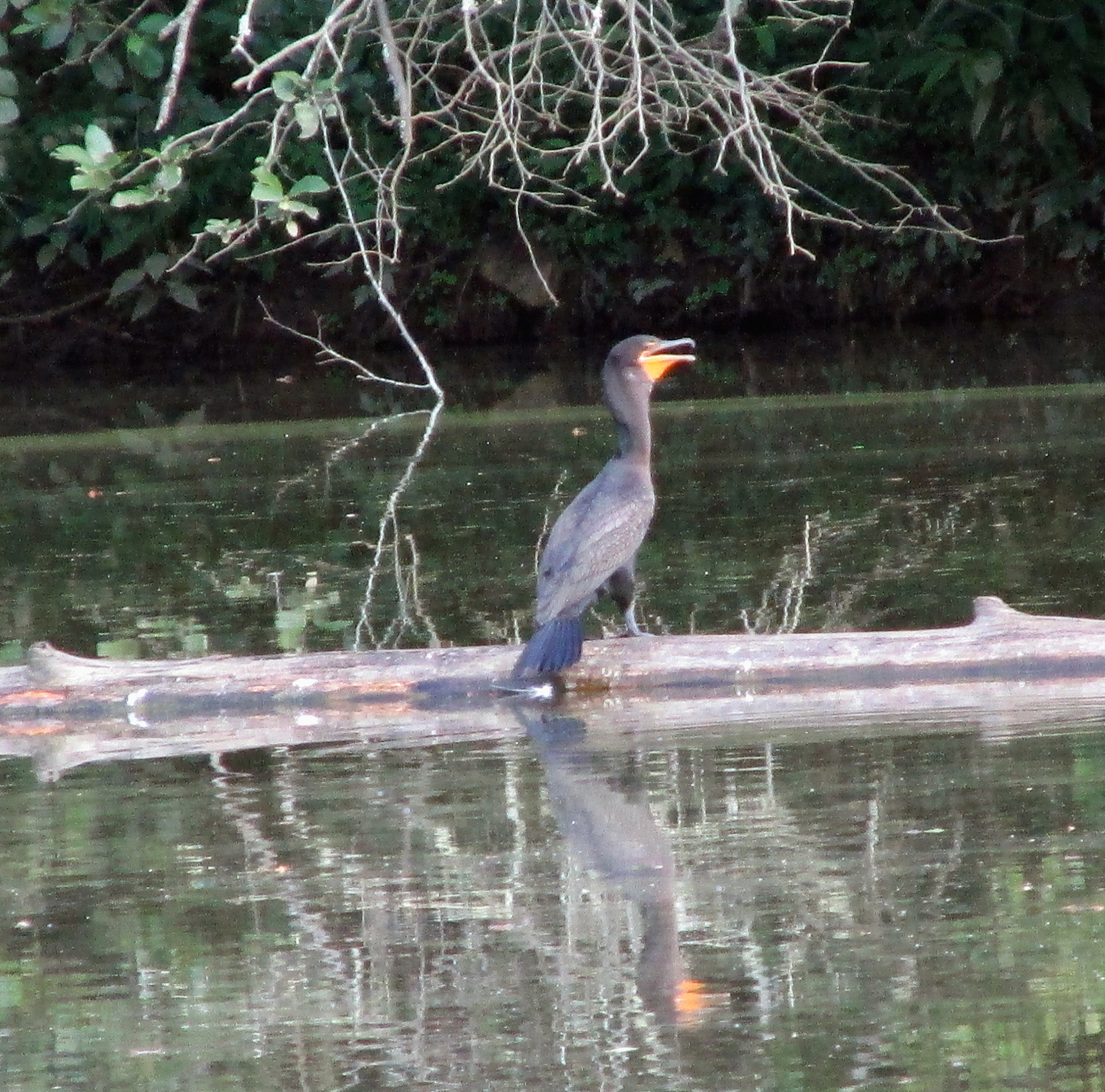
Photo by Bryan Stevens • A double-crested cormorant rests on a fallen log after a swim in a lake near Atlanta, Georgia.

On the recent Spring Bird Count for Northeast Tennessee conducted by the Lee and Lois Herndon Chapter of Tennessee Ornithological Society, a total of 82 double-crested cormorants were found on area waterways. Those birds provide a good indication that cormorants are now an established species in the region.

Indigo buntings common and colorful summer bird in region

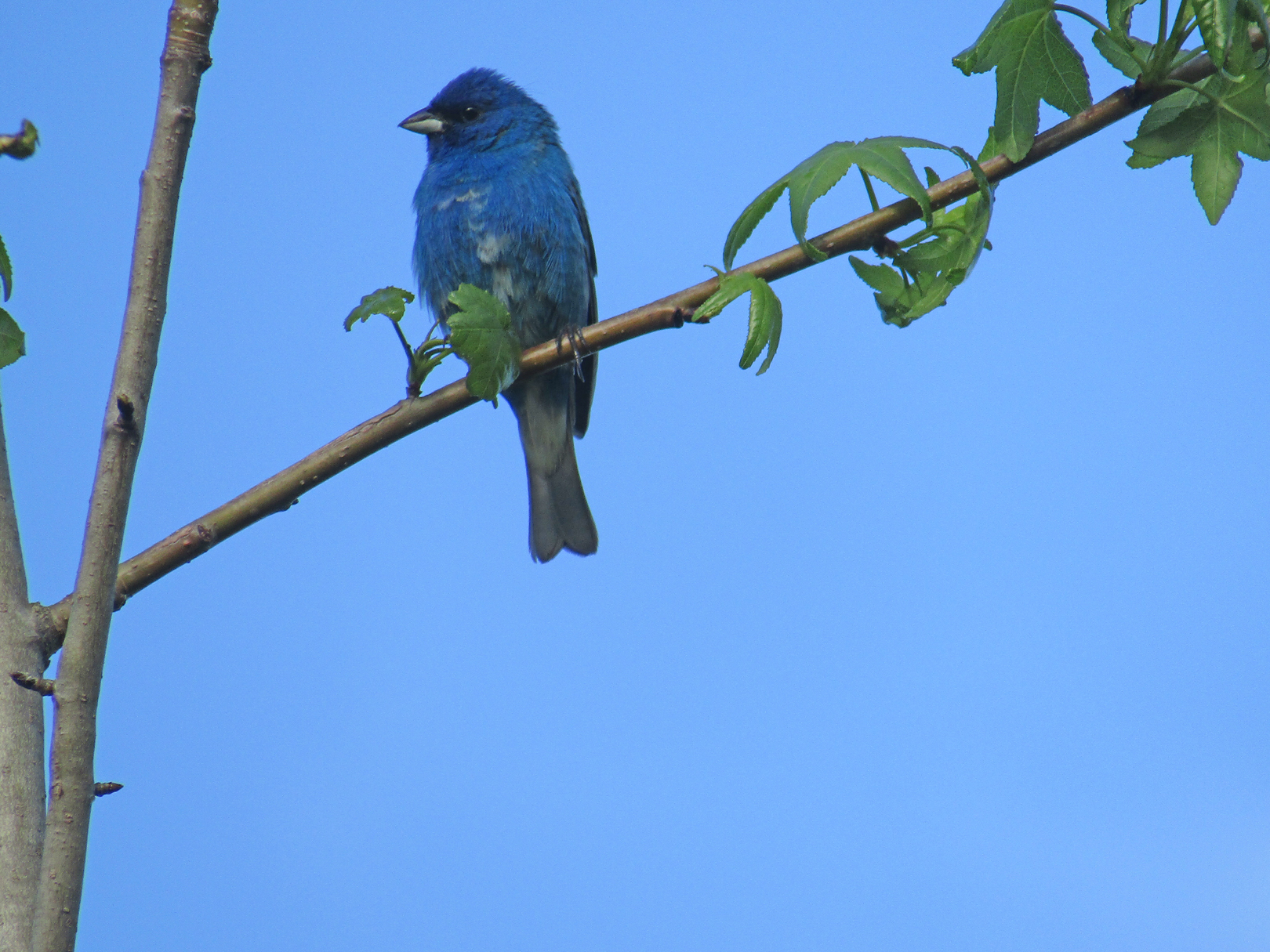
Photo by Bryan Stevens • The male indigo bunting’s one of the region’s more vibrantly colored birds of summer.

The recent five-county Spring Bird Count, conducted Saturday, May 4, by the Elizabethton Bird Club, found 145 species in the five Northeast Tennessee counties of Carter, Johnson, Sullivan, Unicoi and Washington. The count included such cities as Bristol, Johnson City, Jonesborough, Kingsport, Erwin, and Mountain City. A total of 57 participants in 11 parties counted during the annual survey of avian populations in the region. The long-running count is the only spring census of birds conducted in the area.

Not surprisingly, some of the most abundant birds included Canada goose, European starling, American crow, red-winged blackbird and common grackle. Some of the more common songbirds included red-eyed vireo, Northern cardinal, American robin, hooded warbler, American goldfinch and Indigo bunting.

The indigo bunting is one of the reasons spring is such a wonderful time of the year to watch the visitors to feeders. This small songbird likes to reside in the boundary region where forests and woodlands meet fields and pastures. Personally, the indigo bunting has always been a bird that is suggestive of the long, hot days of summer. One of my earliest and still quite vivid birding memories is a recollection of a shockingly blue bird atop a blue spruce tree in my yard. Several decades later, the tree is no longer standing, but these beautiful birds — I now know these summer visitors were indigo buntings — still return each year to my yard and gardens.

Photon by Bryan Stevens • Indigo Buntings will perch on wires and sing for hours even during hot summer days.

These birds usually arrive in the region in late April, and I’ve seen them linger until late October, although most indigo buntings have left the region by late September. Upon arrival, male indigo buntings become tenacious singers, repeating their jumbled notes even during the hottest hours of summer afternoons. The preference of this small songbird is to sing from the tops of tall trees, where they are often concealed by the green leaves. When I do get a glimpse of the obscured songster, often all I see is a dark shape silhouetted against the bright sky. Sometimes, if he plunges from the upper branches into the woodland understory, I get that telltale glimpse of blue feathers.

The indigo bunting is the only solid blue bird in the eastern United States, but it’s all an illusion — literally a trick of the light. The indigo bunting’s feathers are not really blue; the male’s brilliant azure plumage is caused by the process of diffraction of light around the structure of the bird’s feathers. This process scatters all but the blue light, and the resulting color shifts from black to blue to turquoise as the angle of reflected light changes. In bright light, it can even look unnaturally vivid blue. In poor light, however, an indigo bunting male can appear black. Fortunately, indigo buntings have both a characteristic body shape and song, so even if the birds are not seen at their best, they can still be recognized.

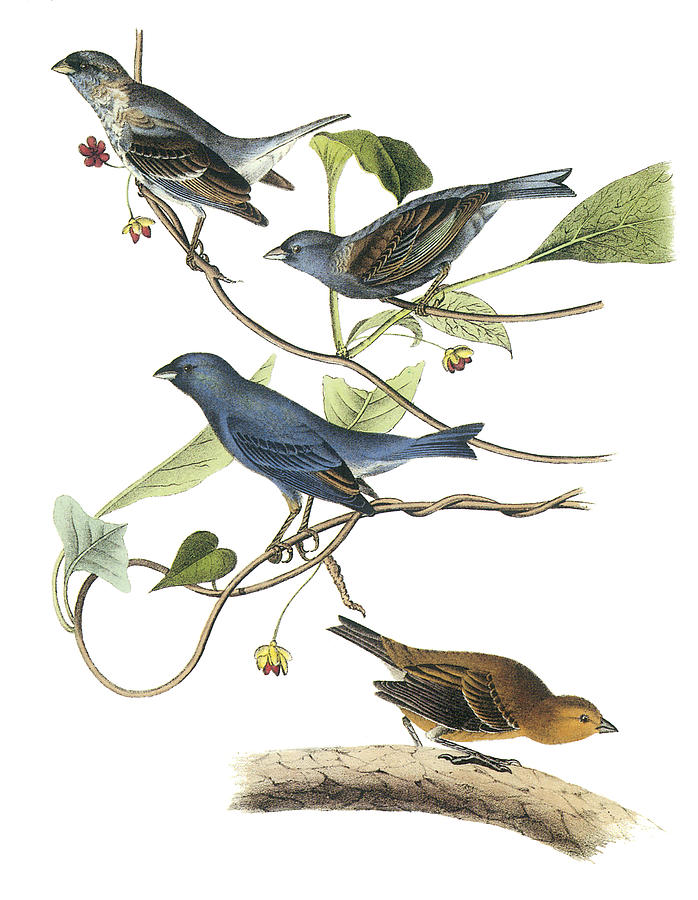
Early American naturalist and artist captured the differences in male, female and immature indigo buntings in this painting of the species.

Soon after returning to the eastern United States each spring, female buntings begin to gather materials to construct a well-crafted, cup-shaped nest. The male usually stays close to her, but he offers no assistance with nest building. She usually lays a clutch of three to four eggs, but she may nest another two times in a single season.

She will incubate the eggs for almost two weeks, but the young remain in the nest another two weeks after being hatched as featherless, blind and helpless young completely dependent on the care of attentive parents. The task of raising so many broods in the space of only a few months requires the participation of both the female and her mate, who must work hard to bring enough insects to the nest to keep the young fed.

Like many species of songbirds, the male is by far the most colorful. In this instance, the male is also responsible for the species’ name. Indigo is a blue dye that was once an important crop in the South. The drab female may boast some blue highlights in her plumage. Juvenile birds just out of the nest also resemble the female. Pay close attention to any indigo buntings you observe as summer progresses. Juvenile birds will look mostly brown with just a hint of blue in the wings and the tail. These will be the young buntings that were hatched this spring and early summer. They will often accompany their parents to feeders.

Indigo buntings are particularly fun birds to observe in late summer. Although some books indicate that males are not very active in rearing young, I have on numerous occasions witnessed male buntings feeding fledglings at feeders. Indigo bunting juveniles, like the young of many other birds, beg for tidbits from parents by “bowing,” spreading their wings and shivering. These actions usually prompt a parent to pop some morsel into an impatient youngster’s open bill. Indigo buntings are relatively easy to view. They frequent weedy fields and roadside brush. During the breeding season, males can also be seen singing from prominent perches. The song, a distinctive jumble of notes, can help observers find these dedicated singers.

The male indigo bunting is one of the most colorful birds to visit feeders in the region. This species is also extremely fond of millet seed. I like to have some feeders stocked with millet when the buntings begin to return each spring. They will also feed on thistle and sunflower seeds. Away from our feeders, they also devour plenty of seeds from various noxious weeds. Because of the indigo bunting’s appetite for the seeds of destructive weeds, it is considered a beneficial bird.

Photo by Bryan Stevens • Newly-returned neotropical migrants, such as this Indigo Bunting, increased the total number of species for the annual spring count.

One of the most attractive summer scenes is to observe American goldfinches and indigo buntings feeding together on the nodding heads of summer sunflowers. The goldfinch males, resplendent in their bright yellow and black plumage, compete with the blue indigo bunting males for the fresh sunflower seeds. When bright red male Northern cardinals join in, observers have a complete artists’s palette for summer viewing.

The indigo bunting will usually respond to human squeaks that imitate a bird’s call. When a flock or family group of buntings are disturbed by a human observer, they usually begin a chorus of alarmed “chipping.”

As I indicated earlier, indigo buntings remain in the region until late September. Although this bird typically winters in Mexico, Panama and the Caribbean, in recent decades some indigo buntings have only gone as far south as Florida to spend the winter. There in the Sunshine State, the indigo buntings may mingle with a close relative, the splendidly multi-colored painted bunting. I usually see these vibrant songbirds whenever I visit coastal South Carolina in spring or summer. Male painted buntings are probably one of the most colorful birds in the United States with hues of red, green, purple and blue in their feathers.

Photo by Bryan Stevens • A male painted bunting enjoys a bath in a fountain at Hunting Beach State Park in South Carolina.

Other North American buntings include the snow bunting, the lazuli bunting and the lark bunting, which is also the official state bird for Colorado. Some of the common but descriptive names for some of the world’s other buntings include rose-bellied bunting, orange-breasted bunting, cinereous bunting, white-capped bunting, lark-like bunting, ochre-rumped bunting, golden-breasted bunting, chestnut-bunting, red-headed bunting, yellow bunting, blue bunting, little bunting, brown-rumped bunting, meadow bunting, corn bunting and crested bunting.

Keep your feeders stocked with millet and sunflower seeds if you want to increase your chances of seeing indigo buntings, as well as other handsome summer songbirds such as American goldfinch, chipping sparrow and Eastern towhee.

Photo by Bryan Stevens • Although bright blue, a male indigo bunting will often blend with its surroundings.

Father of the Bird: Fatherhood runs the gamut among world’s birds

Photo by picman2/Pixabay.com • A male satin bowerbird has collected blue objects to decorate his “bower,” which provides a stage for performing elaborate mating displays designed to attract interested female bowerbirds.

As we honor fathers today with a special day in their honor, I thought it might be a good time to look to the bird world for some examples of what fatherhood means among our fine feathered friends.

Among many of the raptors, which includes hawks, falcons and eagles, females are significantly larger than males. Unsurprisingly, much of the job of protecting the nest and young falls to the larger and stronger females. Male raptors, for the most part, are good parents and hunt prey and deliver food to the nest. Sometimes, though, there can be trouble in paradise. For example, researchers are giving a new look at the dynamics between mated bald eagles. The prevailing theory once supposed that bald eagles mate for life.

In an article published Nov. 9, 2012, on the website of William and Mary College, researchers announced that they have begun to notice that eagles on occasion undertake the avian equivalent of “divorce.”

Photo by Bryan Stevens • Although bald eagles were long thought to mate for life, the national bird is not quite as devoted to its mate as originally believed.

Bryan Watts, the director of the Center for Conservation Biology, was interviewed for the article. Watts noted that both males and female eagles will cheat. Getting away with cheating, however, favors the female. Watts explained that the male may be absent fishing when another male eagle visits the nest site and proceeds to mate with the female. Consequently, the unsuspecting mate returns and could end up raising eaglets that were fathered by the intruder instead of himself.

There are some male birds who are more steadfast once they mate. For instance, swans, cranes and albatrosses are known for sticking with a chosen mate over a lifetime. Two endangered species — the California condor and the whooping crane — are known to mate for life. Cranes typically choose a mate when they reach the age of two or three; condors, on the other hand, usually don’t mate until they are at least six to eight years old. Of course, both these birds live long lives. Whooping cranes may live to the age of 25 while condors can live for as long as six decades.

Photo by U.S. Fish & Wildlife Service • Endangered California condors typically do mate for life.

According to the Audubon website, we can look to a family of shorebirds for some examples that go against usual gender norms. Phalaropes reverse the usual sex roles in birds, with the females being larger and more colorful than males, In addition, females take the lead in courtship, while males are left to incubate the eggs and care for the young once the business of mating is done. Three species of phalaropes inhabit North America: Wilson’s phalarope, red-necked phalarope and red phalarope.

Many male birds lend a hand in building nests or raising young. There are some examples of “deadbeat dads,” however, with one of the most glaring being the beloved ruby-throated hummingbird. A male hummingbird is unlikely to ever lay eyes on his offspring. Once mating has been concluded, the female is left to build a nest on her own. She also incubates the eggs without any help from her mate, who has probably already skipped out and started to court other female hummingbirds in the vicinity. Once the two eggs hatch, the female hummingbird is solely responsible for feeding the hungry offspring. It’s the primary reason hummingbirds always lay two eggs. With her high metabolism, a female hummingbird would be hard pressed to feed herself and any more than two young.

Photo by Bryan Stevens • Male hummingbirds do little to help females construct a nest and care for young.

Some male birds, like their human counterparts, approach romance by initiating courtship by bringing some shiny bling to the relationship. Bowerbirds, which are found mainly in New Guinea and Australia, are renowned for their unique courtship behavior. A male bowerbird will build a structure — the bower — and decorate it with sticks, flowers, shells or other brightly colored objects in an attempt to attract a mate. Alas, once he has won a mate with these “bribes,” he’s no better than male hummingbirds. The females are left to build the nest and raise the young without any assistance from the males.

Satin bowerbird males often decorate with blue, yellow or shiny objects, including berries, flowers or even plastic items such as ink pens, drinking straws and clothes pegs. As the males mature they use more blue objects than other colors. The decorated bower becomes a stage from which males carry out intense behavioral displays called dances to attract their mates.

The world’s largest flightless birds – ostriches, emus, rhea, cassowaries and a few others – would make good “father of the year” candidates. For instance, male ostriches share incubation duties with females. Once the eggs hatch, male ostriches are active in leading young to suitable foraging habitat and protecting them from predators. Some male ostriches can stand nine feet tall and weigh 320 pounds, so dad is an imposing obstacle for many predators. In the event of an attack, the male will try to draw off the predator while the chicks run for cover with their mother.

Photo by Pixabay on Pexels.com The male common ostrich, the world’s largest bird, is a dedicated father to his young, offering protection from a dangerous world.

Fatherhood often means a dedicated effort on the part of some birds, while other basically make their genetic contribution to ensuring the survival of the species and are done with the concept. There’s a surprising variety to behold once one starts looking at the different avian approaches to fatherhood.

blue and multicolored peacock

Photo by Chris Brenner on Pexels.com • Male birds, such as the Indian Peafowl, use various displays to attract mates. After mating is completed, male birds vary in the degree of assistance they offer with the task of raising a brood of hungry young.

Unusual ducks pick Bristol’s Middlebrook Lake for brief visit

IMG_5623

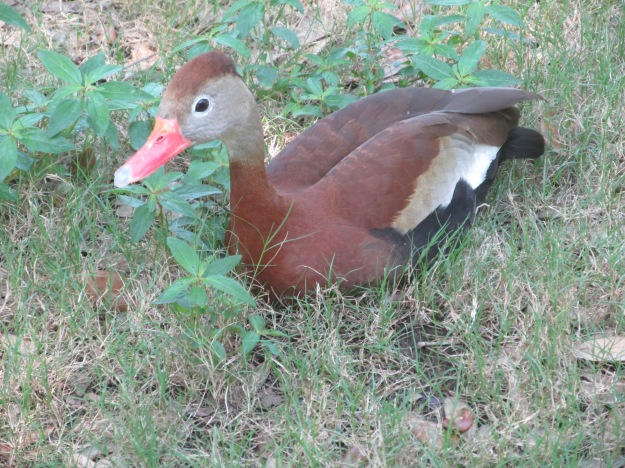
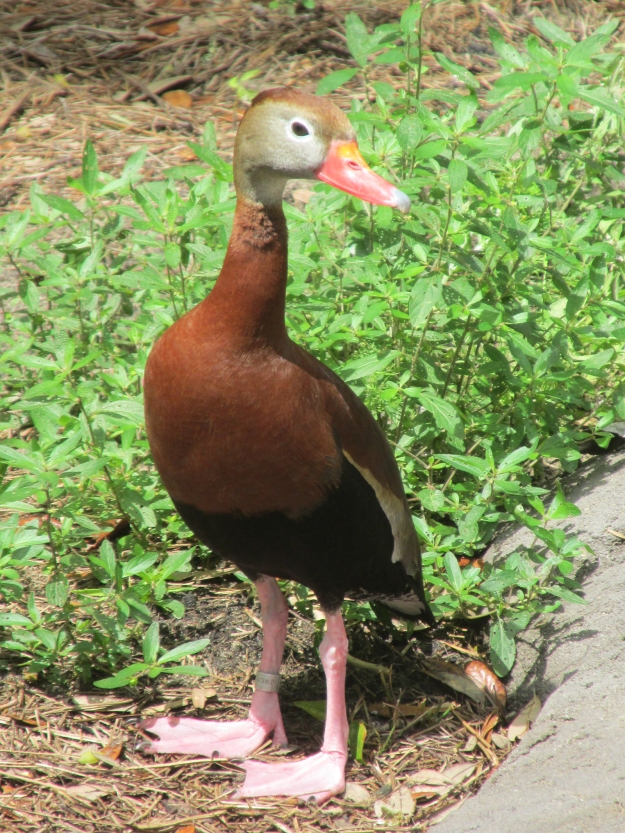
Photo by Bryan Stevens • A black-bellied whistling duck rests inside an aviary located at Brookgreen Gardens in South Carolina. In the wild, this species of duck has been expanding its range in the southern United States.


Joanne Campbell notified me via Facebook of a visit of an unusual waterfowl on Saturday, May 18, at her home near Middlebrook Lake in Bristol, Tennessee.

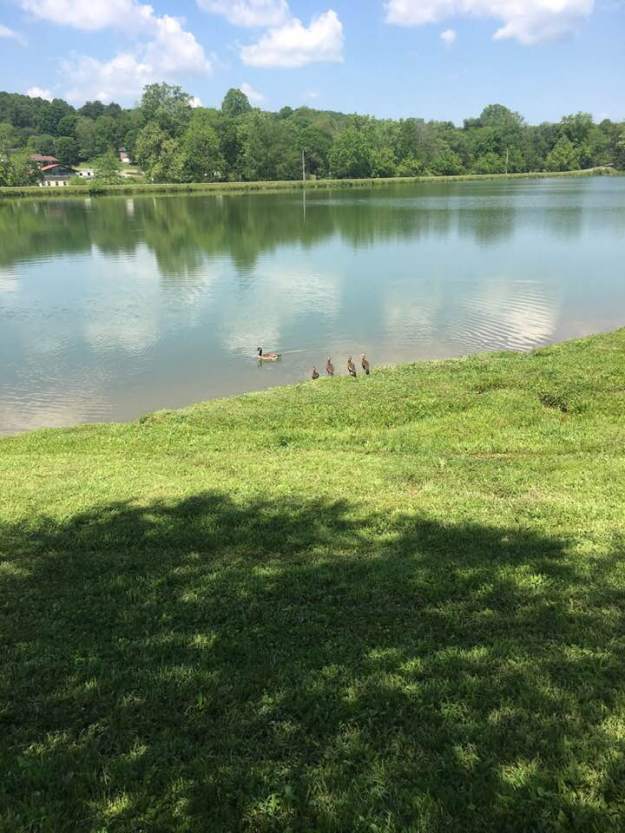
I needed a moment to look past the obvious Canada goose in the photograph before my eyes registered the four small ducks on the grassy bank. I recognized them instantly as black-bellied whistling ducks.

Black-bellied whistling ducks are members of a group of ducks known as “tree ducks” and “whistling ducks.” There is some debate about whether they are more closely related to ducks or geese.

60781976_2316666235056782_5416044963886530560_n

Photo courtesy of Joanne Campbell • The four visiting black-bellied whistling ducks line up along the edge of Middlebrook Lake as a Canada goose swims past.

Joanne’s recent sighting near her home culminates a series of sightings throughout the region over the past month or so. For whatever reason, these ducks have popped up in various locations throughout the region in recent weeks.

Birder and photographer Adam Campbell found 11 black-bellied whistling ducks at a new retention pond off Exit 14 along Interstate 81 in Abington, Virginia, on Sunday, May 12.

A month earlier, birder Graham Gerdeman, a resident of Nashville, Tennessee, found a black-bellied whistling duck at the Harpeth/Morton Mills Greenway in Nashville on Friday, April 12.

On Friday, April 19, another lone black-bellied whistling duck was spotted in a grocery store parking lot in Fairview near Murfreesboro, Tennessee, by birder Kathy Malone.

Birders Ronald Hoff and Dollyann Myers observed a black-bellied whistling duck on Friday, May 17, on a small lake on Highway 411 south of Maryville, Tennessee, on the line between Blount and Loudon counties.

Black-belliedWhistlingDuck

Photo by Bryan Stevens • Although widely kept in aviaries, black-bellied whistling ducks are becoming increasingly frequent wild visitors in the Volunteer State. East Tennessee saw a spike of sightings this spring of this duck.

In West Tennessee, closer to the Mississippi River waterfowl migration flyway, the black-bellied whistling duck is a more common bird. The ducks, which are typically found in Central and South America, range into the United States typically only in southern Texas and Arizona, as well as occasionally in Louisiana, Mississippi, Arkansas and Florida. Some field guides indicate that these ducks are not long-distance migrants, but birders in western Tennessee would disagree with that assessment.

In appearance, males and females are similar with long necks, red bills and long, pinkish-red legs. The plumage is mostly chestnut with a black belly and a readily visible white wing patch.

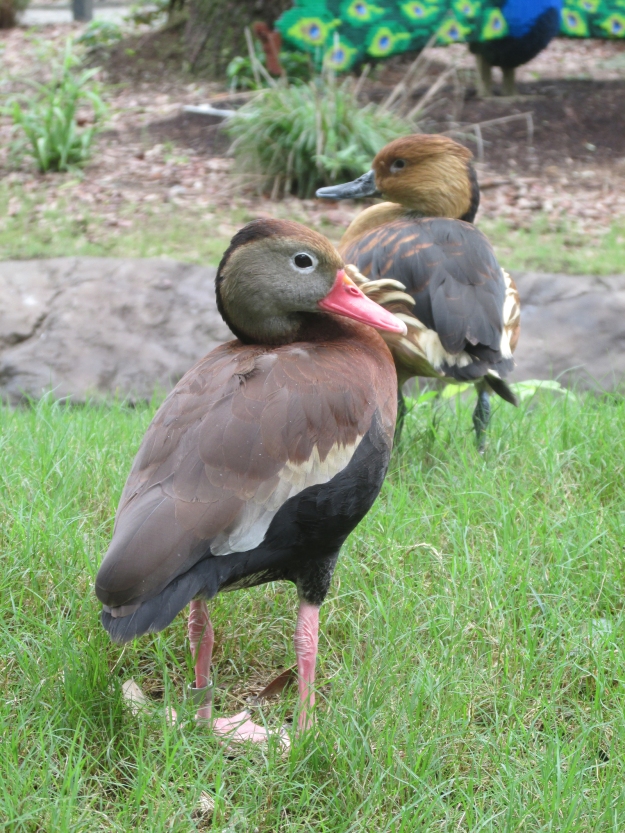
These ducks are often described as being somewhat similar to geese and are not considered true ducks. They are classified by biologists in the genus Dendrocygna. Species in the genus include the West Indian whistling duck, wandering whistling duck, fulvous whistling duck, plumed whistling duck, spotted whistling duck, lesser whistling duck and white-faced whistling duck. Only the fulvous whistling duck joins the black-bellied whistling duck in ranging into the United States in such locations as Florida, Louisiana, Texas and California.

DUCKS

Photo by Bryan Stevens • A black-bellied whistling duck (foreground) and a fulvous whistling duck (background) share space within an aviary at Brookgreen Gardens in South Carolina.

Black-bellied whistling ducks will nest both in natural cavities or on the ground in areas with thick vegetation. If nesting boxes are available, these ducks will gladly nest in them. According to the North American Breeding Bird Survey, black-bellied whistling-ducks have been expanding their range in the southern United States. These ducks have experienced strong population growth, estimated at more than 6 percent per year from 1966 to 2014. The world population is estimated at 1,100,000 to 2,000,000 birds and increasing, which could explain why appearances are becoming somewhat more commonplace in states like Tennessee, as well as Virginia and the Carolinas.

Formerly called the black-bellied tree duck, this waterfowl has also been given common names such as “whistling duck” and “Mexican squealer.” As indicated by these different names, these are highly vocal birds with a clear, piercing whistled call.

The black-bellied whistling ducks at Middlebrook Lake lingered for several hours, which allowed many birders in the region to make the drive to the lake to observe such an interesting visitor to the region.

Joanne later posted on Facebook about the excitement generated by the ducks. “I couldn’t get any work done for watching them,” she wrote in her post.

The ducks are not the first rare bird that Joanne has alerted me to at Middlebrook. Back in November of 2015, she notified me of an American white pelican that spent a couple of days on the lake. I’m grateful to her for notifying me about both the black-bellied whistling ducks and the pelican.

I always enjoy hearing from readers with observations to share. To make a comment, ask a question, or share a sighting, email me at ahoodedwarbler@aol.com.

Duck-Bath

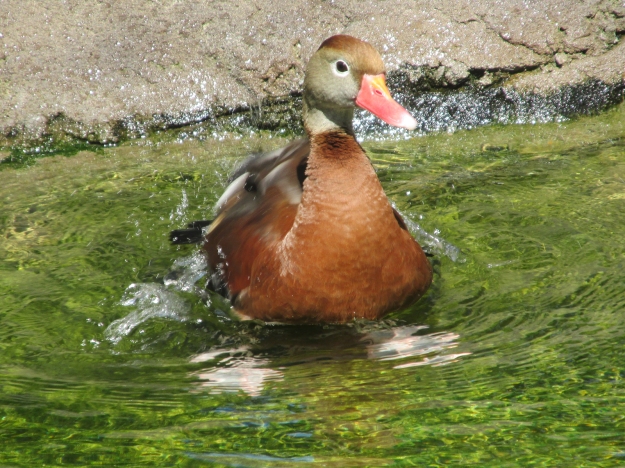
Photo by Bryan Stevens • A black-bellied whistling duck enjoys a vigorous bath within its enclosure in an aviary at Brookgreen Gardens in South Carolina. This duck is often kept in captivity. The wild population has expanded its range in recent years from Central America into the southern United States.

Smallest of the nuthatches finds a niche at woman’s feeders

natdiglib_6802_extralarge

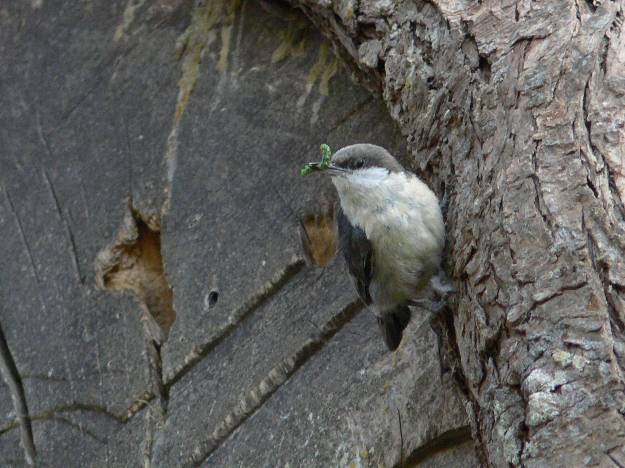
Photo by Lee Karmey/USFWS • A pygmy nuthatch captures a caterpillar.

Veronica Rausch contacted me by email to share a story of the nuthatches that frequent the feeders at her home in central Oregon.

“I have a small flock of pygmy nuthatches coming into the feeders next to my dining room window on a regular basis,” Veronica wrote, adding that the nuthatches began their visits about three weeks ago.

Veronica wrote that she lives in the pine forests of Central Oregon at an elevation of about 4,200 feet.

“The pygmy nuthatches are delightful little birds and share the feeders with the chickadees and juncos,” she wrote. “The bigger birds such as the Stellar’s jays and the woodpeckers will cause them to leave.”

Veronica has also enjoyed observing their unusual antics. “I saw one do a little dance on a branch by the suet feeder,” she described in her email. “Unfortunately, I wasn’t able to grab the camera fast enough! I hope they stick around.”

I replied to Veronica’s email, noting how I consider her fortunate to be hosting the smallest of North America’s nuthatches at her home. Admitting to some envy at her good fortune, I explained that I hope to some day add this species to my life list so I can check all of the continent’s nuthatches off my list of target birds.

Even by nuthatch standards, the pygmy nuthatch is a small bird. In appearance, this nuthatch shows buffy-white underparts contrasted with a brown head and a slate-gray back. They often breed in large extended family flocks, so the four individuals observed by Veronica might very well have been closely related to each other.

Nesting pygmy nuthatches are often assisted in their chores by “nest helpers,” which are close relatives that help the busy parents gather food and feed hungry young. These nest helpers also deliver food to females as they incubate eggs and will mount a spirited defense of a nest threatened by intruders. Their communal nature extends to nocturnal roosting when many individuals will huddle together to ensure their combined body heat helps them survive extremely cold nights.

So how small is the pygmy nuthatch? The adults are barely four inches long and weigh only a third of an ounce. A common fountain pen weighs more than this tiny nuthatch, which goes a long way towards explaining the bird’s scientific name, sitta pygmaea.

brown-headNuthatch

Photo by theSOARnet/Pixabay.com • The brown-headed nuthatch, the southeastern counterpart to the pygmy nuthatch that ranges throughout the Rocky Mountain states, is strongly associated with various types of pine trees.

Pygmy nuthatches are not at all likely to be found in the Mountain Empire or any adjacent areas, but there is another small nuthatch that is found in some extremely localized habitats in the region. The brown-headed nuthatch is a specialist of pine woodlands throughout the southeastern United States, favoring loblolly-shortleaf pines and longleaf-slash pines. This nuthatch requires standing dead trees for nesting and roosting. They forage for food, however, on live pines. The birds are more abundant in older pine stands.

I saw several brown-headed nuthatches during a recent stay on Fripp Island in South Carolina. I’ve also observed this small nuthatch during visits to Chattanooga, Tennessee, and Atlanta, Georgia, as well as various other locations in South Carolina. This nuthatch even occurs in the Mountain Empire region, most recently with four of these birds being found at Washington County Park on South Holston Lake near Bristol during the 2018 Christmas Bird Count conducted by the Bristol Bird Club.

These small birds will occasionally forage close to the ground, but they are often in the upper branches of pine trees. Their presence is often revealed by their call, which sounds amazingly like a squeeze toy. They produce their “squeaky toy” call persistently when agitated or curious. Brown-headed nuthatches often associate with mixed flocks in company with Carolina chickadees, tufted titmice, pine warblers and other small songbirds.

The power of flight gives most birds a perfectly valid reason to disregard the power of gravity. The family of tree-clinging birds known as nuthatches lives an even more topsy-turvy lifestyle than many other of their winged kin. Nuthatches prefer a headfirst stance, even “walking” upside down as they search for food in the nooks and crannies of tree trunks and branches.

The United States is home to four species of nuthatches: white-breasted, red-breasted, brown-headed and pygmy. White-breasted nuthatches are probably the most familiar nuthatch to backyard birders in this area.

WB-Nuthatch

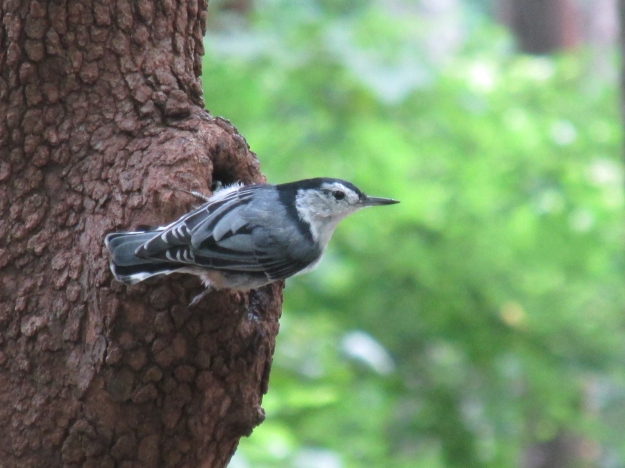
Photo by Bryan Stevens • A white-breasted nuthatch clings to the bark of a tree.

Because of their gravity-defying antics, the white-breasted nuthatch and other members of the family can provide hours of entertainment at our bird feeders. Individual white-breasted nuthatches will follow a single-minded path along the trunk of a tree or a branch on the way to a feeder. An individual nuthatch rarely varies from this path. It’s amusing to watch the jerky progress along the trunk as this bird prepares for a flight to a feeder holding sunflower seeds or a hanging wire basket of suet.

At my home, nuthatches typically remain aloof from the always-ongoing rivalry between the chickadees and titmice. The white-breasted nuthatch is also a no-nonsense visitor. Rarely distracted by disturbances among other birds, this nuthatch is content to grab a seed and go or hang on to the wire frame of a suet basket and peck off chunks of suet.

The more numerous titmice and chickadees give way when a white-breasted nuthatch claims a feeder. At times, however, among the frantic activity, a tufted titmouse or a Carolina chickadee will forget itself and fly to a position on a feeder already claimed by a nuthatch. If surprised enough to retreat to a nearby perch, the nuthatch will go through a rather comical little dance to express its displeasure. Wings spread out in a rigid pose, the bird will turn around in tight circles, showing definite resentment at being displaced by an offending chickadee or titmouse.

The stubby red-breasted nuthatch is another member of the family that occasionally finds its way to our yards. Smaller than the related white-breasted nuthatch and, as far as I can tell, complacent in the company of chickadees and titmice, the red-breasted nuthatch is always a welcome visitor. It has a tell-tale “yank yank” call that it produces when excited that sounds very much like little tin horns. The red-breasted nuthatch, perhaps because it spends so much of the year in more remote areas, can also be amazingly tame when it pays a winter visit.

Red-breastedNuthatch

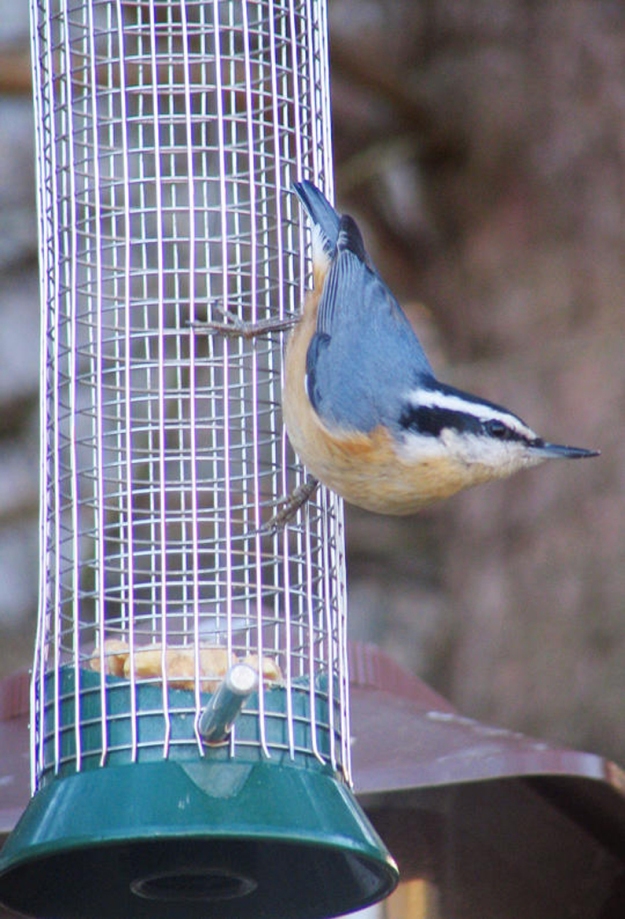
Photo by Bryan Stevens • A red-breasted nuthatch clings to the mesh of a feeding tube to get at the peanuts contained within.

Nuthatches can be attracted to feeders by offering peanuts, sunflower seeds and suet. They are also cavity-nesting birds, but are more reluctant about accepting a nesting box as a place to rear young. They will gladly accept an old woodpecker hole or other natural cavity in a tree.

I also want to complete my list of North American nuthatches by adding the fourth species — pygmy nuthatch — to my life list. I have made two trips to western North America, where this species ranges, but haven’t managed to find this bird. Both the pygmy and brown-headed are among the smallest members of the nuthatch family.

On the other end of the size scale is the appropriately named giant nuthatch, which reaches a length of almost eight inches. The giant nuthatch ranges through China, Thailand and Burma. This nuthatch is bigger than a downy woodpecker, one of our more common visitors at backyard feeders in our region.

Worldwide, there are about 25 species of nuthatches, some of which have surprisingly descriptive names for birds that spend most of their lives creeping in obscurity along the trunks and branches of trees. Some of the more creative common names for these little birds are inspired by locations around the globe, giving us species like Siberian nuthatch, Kashmir nuthatch, Burmese nuthatch, Bahama nuthatch, Algerian nuthatch, Indian nuthatch and Chinese nuthatch.

These birds are named “nuthatch” for the habit of some species to wedge a large seed in a crack and hack at it with their strong bills. I like to refer to them as “upside-down birds” because of their gravity-defying nature. It must give them an interesting perspective on the world around them.

Spring-Nuthatch

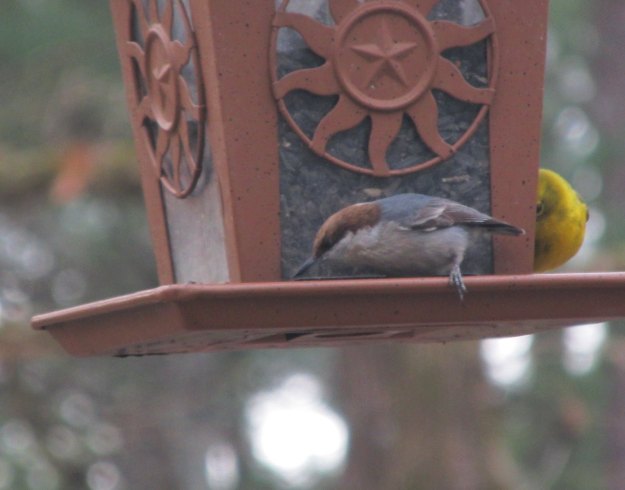
Photo by Bryan Stevens • In some areas, brown-headed nuthatches are feeder visitors. These small nuthatches are specialists that favor stands of loblolly pine.