Tag Archives: Birding

Birding is a popular pastime for many Americans.

North America’s bluebirds never fail to impress with their winning ways

A famous song declares that “somewhere over the rainbow, bluebirds fly,” so you’ll have to excuse me if I have been looking for those elusive rainbows during the unseasonably warm weather the region’s enjoyed in recent weeks.

Also, like the song promises, “dreams really do come true,” which was fulfilled by the arrival of this year’s first pair of Eastern bluebirds at my home on Friday, Feb. 23. The presence of a pair of these beautiful and trusting birds is always sure to put people in a good mood. People have known for generations that bluebirds make good neighbors. A pair of bluebirds in your yard or garden provides hour upon hour of free entertainment as one watches these birds go about their daily routine. At this time of the year, much of that routine is focused on finding and claiming the best possible nesting location for the upcoming spring season.
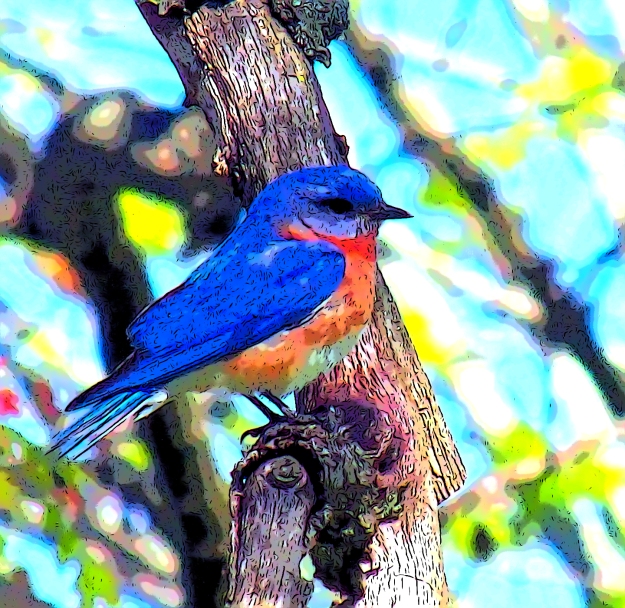
Bluebird-Comic

The Eastern bluebird is one of the most beloved American songbirds.

The Eastern bluebird is one of North America’s best-known cavity-nesting birds. About 85 species of North American birds use cavities in trees for nesting purposes. Cavity-nesters include ducks, such as buffleheads and wood ducks, as well as birds of prey such as Eastern screech-owls and American kestrels.

Woodpeckers and nuthatches can excavate their own cavity in a dead or decaying tree. Others, such as the bluebirds, must find a cavity already in existence. Such cavities are scarce real estate and can be subject to some intense competition. The Eastern bluebird is at a disadvantage when forced to compete with non-native introduced birds such as aggressive European starlings and house sparrows. Even native competitors such as house wrens and tree swallows are serious rivals when it comes down to staking a claim to prime nesting real estate.

Over the years, I have found bluebirds nesting in cavities inside wooden fence posts, but there are fewer wooden fence posts every year. This reinforces the idea of how changing landscapes have affected these birds. Instead of wooden fence posts, many farmers now use metal ones, and dead or dying trees — a much sought-after resource for cavity-nesting birds — are often removed from woodlands.
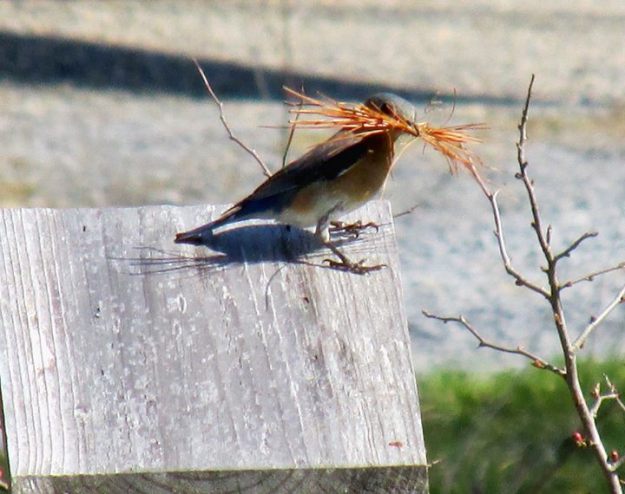
Bluebird-withPineNeedles

Photo by Bryan Stevens • A female Eastern Bluebird gathers pine needles to use as nesting material.

Fortunately for bluebirds, this species will also accept lodging in a nest box, or birdhouse, provided for them by human landlords. One of the simplest ways to bring bluebirds close is to offer wooden boxes, constructed to their specific requirements, for their use as nesting locations. Because of their trusting nature when it comes to their human neighbors, the Eastern bluebird is one of our most beloved birds. In fact, bluebirds are such popular birds that interest in them and their well-being has inspired the foundation of organizations such as the North American Bluebird Society. The Eastern bluebird has also been designated the official state bird for New York and Missouri, which provides more testimony to the immense popularity of this bird.

Bluebirds-One

Photo by Bryan Stevens • A flock of Eastern bluebirds perches on fenceposts.

There are two other species of bluebirds found in North America. The Western bluebird is found throughout the year in California, the southern Rocky Mountains, Arizona and New Mexico, as well as in part of Mexico. The species ranges in the summer as far north as the Pacific Northwest, British Columbia and Montana. The Mountain bluebird nests in open country in the western United States as far north as Alaska. They are short-distance migrants, retreating as far south as Mexico during the winter season.

Other than these three species, North America offers few others birds with mostly “blue” plumages. Some examples include indigo bunting, blue grosbeak, and blue jay, as well as birds like great blue heron and belted kingfisher.

In addition to housing, food and water can be used to lure Eastern bluebirds closer. This bird doesn’t eat seeds, but it can be attracted with an offering of mealworms — live or freeze-dried – or commercially prepared peanut butter nuggets. A water feature in a yard is also a magnet for bluebirds and a host of other bird species.
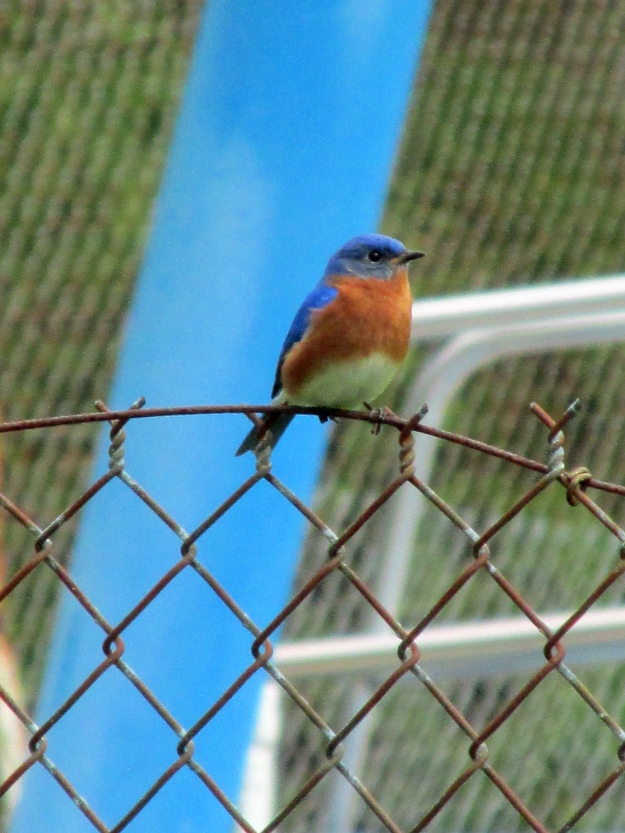
Bluebird-Pool

Photo by Bryan Stevens • A handsome male Eastern bluebird perches on a chain-link fence.

If your home doesn’t provide suitable open, spacious bluebird habitat, it’s still easy to enjoy these beautiful birds. An afternoon or evening drive into open country, such as agricultural farmland, is likely to yield sightings of this bird on fences and utility lines. Golf courses, some of which go the extra mile to accommodate bluebirds, also provide habitat for these lovely birds.

The Eastern bluebird is present in the region in all seasons and is one of our more common birds. If you’re already an experienced landlord and host for these birds, you probably already know they joys they can bring. If not, why not try to attract them closer to you? Most bluebirds in the region have already started looking for a nesting site. Many of these birds may nest two or even three times in a single season. March has only just arrived, so there’s still time to place a nest box or two on your property to get their attention.

••••••

If you have a question, wish to make a comment or share a sighting, email ahoodedwarbler@aol.com.
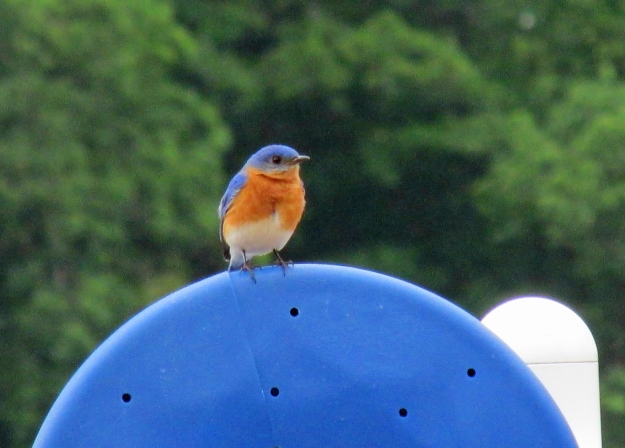
Bluebiord-Male-Playground

Photo by Bryan Stevens A male Eastern Bluebird perched on playground equipment at Winged Deer Park in Johnson City.

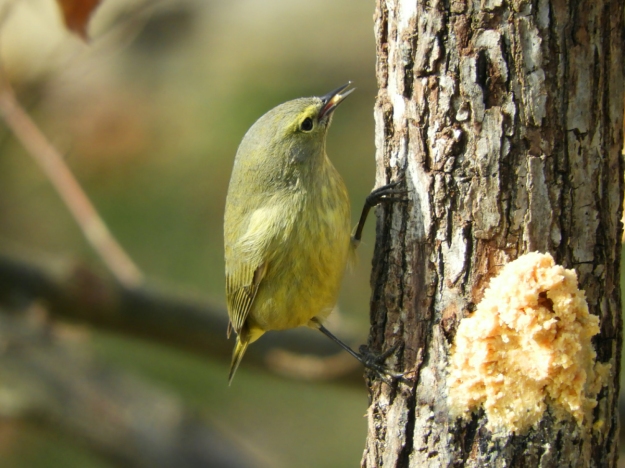
Unlikely orange-crowned warbler becomes daily visitor this winter at woman’s feeders

After you have fed the birds long enough, you’re going to get visits from “mystery” birds. No matter how thoroughly you thumb through the pages of your field guides or how many online Google searches you conduct, it can be hard to pin down the identity of certain birds, especially when you encounter them for the first time.

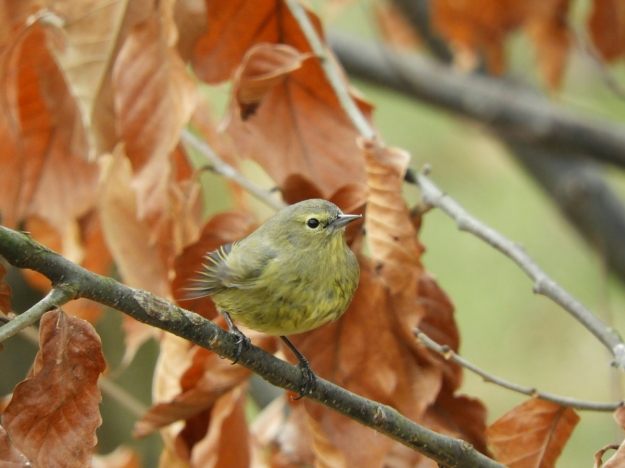
Orange-crowned-Two-BOYD

Photo by Rebecca Boyd • This orange-crowned warbler has found a favorable winter residence at the home of Rebecca Boyd in Knoxville, Tennessee, making frequent visits to suet feeders to supplement its usual diet of insects and berries.

In the summer and fall, young birds recently out of the nest can cause some confusion when they show up in the company of their parents at feeders. In the winter, often a season characterized by subdued plumages and nomadic wanderers, the surprise visitors can be one of the many “little brown birds” in the sparrow clan or a summer bird like an oriole or thrush that has decided to take a shot at overwintering.

Or, with greater frequency each winter, it might be one of the warblers. That was the case when Rebecca Boyd, a resident of Knoxville, Tennessee, contacted me recently via Facebook asking for assistance with a bird identification.

27583340_337866090062351_24195392_n

Photo by Rebecca Boyd • This orange-crowned warbler is one of the more nondescript members of the warbler family.

Although most of the warblers beat a hasty retreat from North America every fall, a handful of species have increasingly begun to spend the winter months far north of their usual tropical haunts. Some of these species include yellow-rumped warbler, pine warbler and palm warbler, but the low-profile orange-crowned warbler is also becoming more common between November and March, especially in yards and gardens offering supplemental food such as suet cakes.

The small greenish-yellow bird that showed up at Rebecca’s home was easily identified, thanks to some great photographs that she took of her visitor. I communicated to her that I believed her bird to be an orange-crowned warbler. She had also conducted her own research, which had also led her to that conclusion.

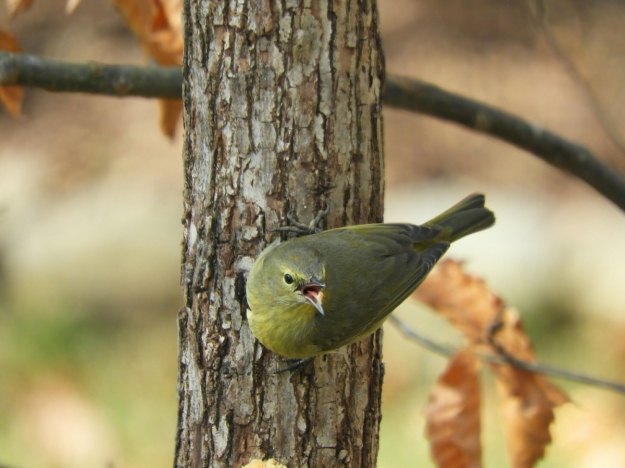
Orange-crowned-Four-BOYD

Photo by Rebecca Boyd • This orange-crowned warbler has found a home at the residence of Rebecca Boyd in Knoxville, Tennessee, this winter.

Rebecca said she also shared some photos with birding groups on Facebook, which brought some helpful feedback. “I’ve gotten numerous responses that orange-crowned warblers are becoming a lot more common on the east side of the Mississippi, with quite a few people saying they are seeing them in their yards, too,” Rebecca wrote.

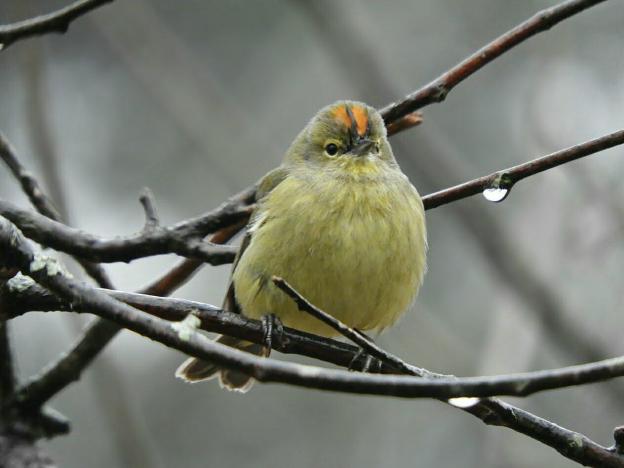
The orange-crowned warbler is one of the more undistinguished members of this New World family of birds that numbers about 115 species. The bird gains its common name from a physical feature that is rarely seen — an orange patch of feathers that, unless the bird is extremely excited or agitated, is usually concealed beneath its dull greenish-yellow feathers. It’s not a field mark that’s considered reliable for identifying the bird.

Rebecca got a lucky break and managed to photograph this elusive feature on her visiting bird. She said the feathers on the bird’s head appeared wet, which may have explained the appearance of the orange crown.

28033440_343701942812099_429716009_o 2

Photo by Rebecca Boyd • Wet feathers made the rarely seen orange crown visible on this orange-crowned warbler that has taken up residence at the home of Rebecca Boyd in Knoxville, Tennessee, this winter.

So, what does signify an orange-crowned warbler? The lack of wing bars, as well as the absence of a strong facial pattern is a strong indicator. The bird in Rebecca’s photo is not nearly as drab as this warbler can appear. Some appear very gray with only a hint of yellow or green in their plumage. There is often faint gray streaking evident in their yellow-green breast feathers. This warbler always shows yellow beneath its tail, a feature that is often only glimpsed as an observed bird is diving into cover. These birds also have sharp, thin bills. It’s usually a process of eliminating other suspects that brings birders to identify one of these warblers.

Unlike some warblers restricted to either the eastern or western United States, the orange-crowned warbler migrates and winters throughout the nation, east and west, although it primarily only nests within the western United States, as well as Alaska and Canada.

Although Rebecca said she has only been bird-watching and taking pictures for a little over a year, she has been a general point-and-shoot photography hobbyist for years. “My backyard is a bird paradise that attracts numerous and varied species,” Rebecca noted. “My favorites are bluebirds and hummingbirds, but the little warblers are also very special.”

Orange-crowned-One-BOYD

Photo by Rebecca Boyd • Besides orange-crowned warbler, like this individual, other warblers on occasion winter in the United States. Species most often attempting to spend the winter months in the United States include palm warbler, pine warbler, and yellow-rumped warbler.

Most of the warblers are currently residing on the island of the the Caribbean, or far south in Central and South America. A few others spend the winter in Florida or other southern states. The 50 or so species that nest in the United States and Canada will begin arriving as early as next month, although the majority of these summer residents will arrive or pass through the region in late April and May.

So, while it has a colorful name, the orange-crowned warbler is one of the more drab and nondescript members of its family. Other warblers living throughout the Americas include flame-throated warbler, crescent-chested warbler, citrine warbler and arrowhead warbler.

I’ll just keep daydreaming on the occasional snowy day of the approach of spring, which signals that the kin of the orange-crowned warbler will be winging their way north again in only a couple more months. I, for one, can’t wait.

••••••

If you have a question, wish to make a comment or share a sighting, email ahoodedwarbler@aol.com.

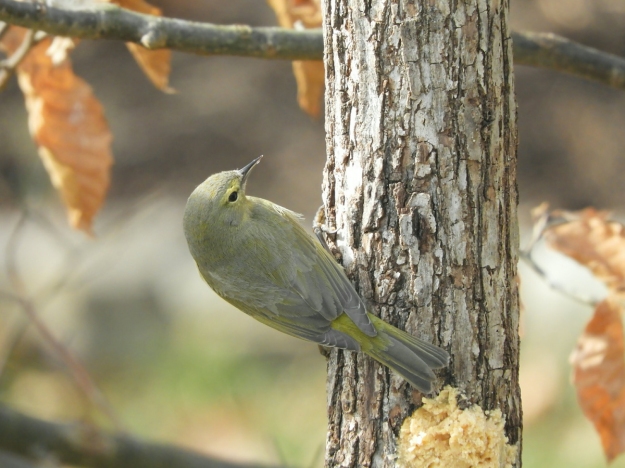
Orange-crowned-THREE-BOYD

Photo by Rebecca Boyd • This orange-crowned warbler grabs a bit of suet from a feeder at the home of Rebecca Boyd in Knoxville, Tennessee.

Duck…duck…goose? Winter season good time for finding rare geese in the region

SnowGoose-Jan21

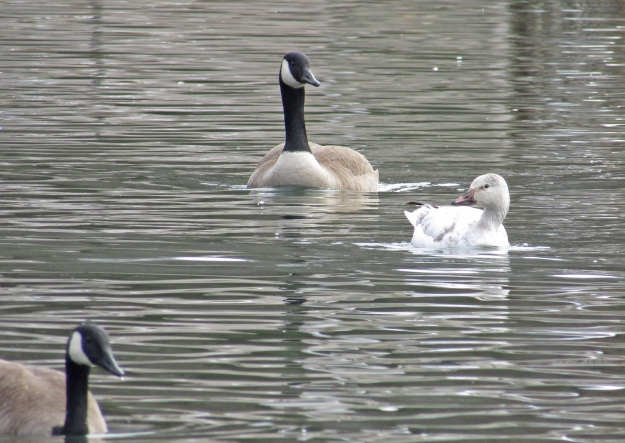
Photo by Bryan Stevens • A snow goose swims amid Canada geese at the pond at Fishery Park in Erwin, Tennessee.


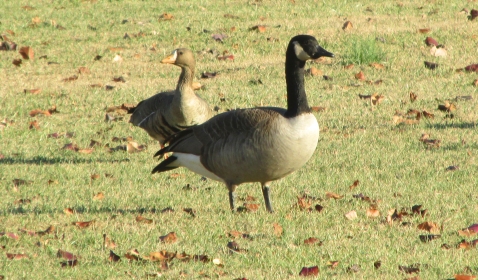
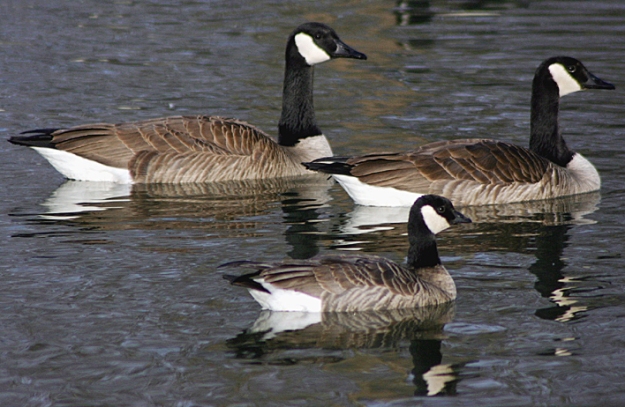
Of the geese found in the region, the well-known Canada goose is nearly ubiquitous. That’s not always been the case. For instance, in his book The Birds of Northeast Tennessee, Rick Knight points out that the geese now present throughout the year resulted from stocking programs conducted in the 1970s and 1980s. In earlier decades, the Canada goose was considered a rare winter visitor to the region.

Seeing the Canada goose in every sort of habitat from golf courses to grassy margins along city walking trails, it’s hard to imagine a time when this goose wasn’t one of the region’s most common waterfowl.

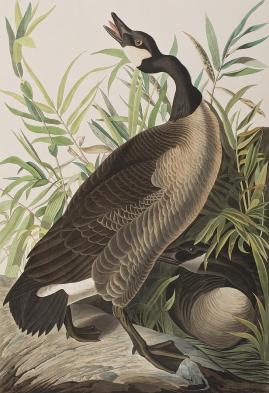
2-canada-goose-john-james-audubon

Early American naturalist and artist John James Audubon captured this pair of Canada geese in a most realistic painting.

The world’s geese are not as numerous as ducks, but there are still about 20 species of geese worldwide, compared to about 120 species of ducks. While both ducks and geese are lumped together as waterfowl, most geese are more terrestrial than ducks. Birders are just as likely to spot geese in a pasture or on the greens of a golf course as they are on a lake or pond.

There have been several species of geese usually considered rare to uncommon in the region that have been spotted by birders thus far this winter season. I personally observed greater white-fronted geese at several different locations in November and December.

The greater white-fronted goose is considerably smaller than a Canada goose. The bird is named for the distinctive white band found at the base of bill. This white band also helps distinguish this goose from similar domestic geese. The sexes are similar in appearance, but females are usually smaller than males. The head, neck and upper back of white-fronted geese are grayish-brown. The lower back and rump are dark brown, and the tail is dark brown and edged with white. The chest and breast are grayish with dark brown to black blotches and bars on the breast, giving this goose the nickname “specklebelly.” The bill is pinkish and the legs and feet are orange.

Canada-Greater

Photo by Bryan Stevens The Greater White-fronted Goose, in background, is much smaller than the typical Canada Goose, which is shown in the foreground of this photograph.

The greater white-fronted goose breeds in North America as well as in Europe and Asia, and they spend the winter throughout the United States and even in Japan. Most nesting in North America takes place on the North Slope of Alaska and across the western and central Canadian Arctic. Wintering habitats include coastal marshes, wet fields and and freshwater wetlands.

Only a couple of weeks ago, I spotted a snow goose at the fish pond located at Erwin Fishery Park. The snow goose is a North American goose known for its white plumage that gives the bird its common name; however, the snow goose actually comes in two versions: the white phase and a blue phase, which is often referred to as a “blue goose.”

The snow goose breeds in regions in the far north, including Alaska, Canada, Greenland and even the northeastern tip of Siberia. They may spend the winter as far south as Texas and Mexico, although some will migrate no farther than southwestern British Columbia in Canada.

The snow goose bucks the trends that show many species of waterfowl declining. Recent surveys show that the population of the snow goose exceeds five million birds, which is an increase of more than 300 percent since the mid-1970s. In fact, this goose is thriving to such a degree that the large population has begun to inflict damage on its breeding habitat in some tundra regions.

A smaller relative to the snow goose is the Ross’s goose, which for all practical purposes looks like a snow goose in miniature. The common name of this goose honors Bernard R. Ross, who was associated with the Hudson’s Bay Company in Canada’s Northwest Territories.

Ross-onWater

Photo by Bryan Stevens • A visiting Ross’s goose takes a swim on the large pond at Northeast State Community College in Elizabethton, Tennessee, a few winters ago.

Here’s a quick history lesson. Hudson’s Bay Company is the oldest commercial corporation in North America. The company has been in continuous operation for more than 340 years, which ranks it as one of the oldest in the world. The company began as a fur-trading enterprise, thanks to an English royal charter in back in 1670 during the reign of King Charles II. These days, Hudson’s Bay Company owns and operates retail stores throughout Canada and the United States.

In addition to his trade in furs, Ross collected specimens for the Smithsonian Institution in Washington, D.C. Ross is responsible for giving the goose that now bears his name one of its early common names – the Horned Wavy Goose of Hearne. I wonder why that never caught on?

Ross repeatedly insisted that this small goose was a species distinct from the related and larger lesser snow goose and greater snow goose. His vouching for this small white goose eventually convinced other experts that this bird was indeed its own species.

Ross was born in Ireland in 1827. He died in Toronto, Ontario, in 1874. He was described by other prominent early naturalists as “enthusiastic” and “a careful observer” in the employ of Hudson’s Bay Company. When John Cassin gave the Ross’s Goose its first scientific name of Anser rossii in 1861, he paid tribute to the Hudson’s Bay Company’s Ross.

Canada_Geese

Photo by Bryan Stevens • In some areas, Canada geese have become so prevalent that they are considered pests. Human handouts to waterfowl are not always compatible with good health for the birds that receive them.

The Ross’s goose has a “cuteness” factor working in its favor. For a goose, it is rather small. It could best be described as a snow goose in miniature. In fact, it isn’t much larger than such ducks as mallards and is considered the smallest of North America’s geese.

The Ross’s goose has also acquired some other common names, including “galoot” and “scabby-nosed wavey.” This latter name was inspired by the bird’s bill, which is covered with rough bumps around the base. I have to admit that “scabby-nosed wavey” is a name likely to stick in the memory. Today, the Ross’s goose’s scientific name is Chen rossii.

Other geese found worldwide include the pink-footed goose, bar-headed goose, emperor goose, red-breasted goose and barnacle goose.

So, does this inspire you to try a wild goose chase of your own? If it does, best of luck in your efforts.

•••••

To learn more about birds and other topics from the natural world, friend Stevens on Facebook at https://www.facebook.com/ahoodedwarbler. If you have a question, wish to make a comment or share a sighting, email ahoodedwarbler@aol.com.

A-Cackling Goose 1

Photo by Bryan Stevens • A Cackling goose, foreground, is shown in relation to some larger Canada geese, at a pond at Fishery Park in Erwin, Tennessee.

Winter wren one of the season’s low-profile visitors

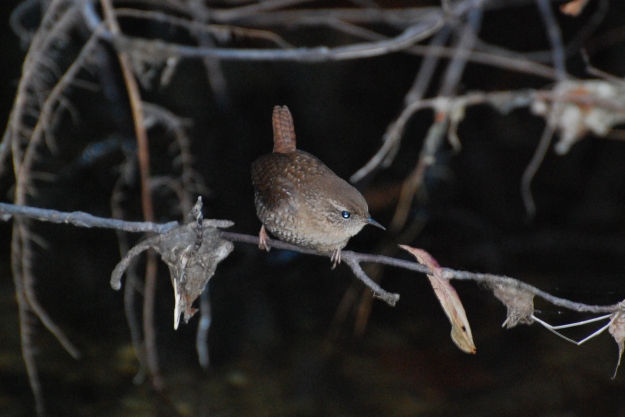
WinterWren

Photo by Jean Potter
What the winter wren lacks in size, it makes up for with its voice. A boisterous and exuberant singer during the spring nesting season,  winter wrens are also quick to scold intruders into their winter territories.


Of late, every time I step outside my front door I’ve incurred the ire of a winter wren that’s taken up residency in my yard. This wren is a tiny bird among a family of birds known for small size, but it makes its presence known in unmistakable terms.

For starters, the winter wren is a noisy bird. The one living at my home arrived in late November and immediately claimed a niche to call its own. Any intrusion is met with a scolding chatter as the wren scurries low to the ground to drop out of view. In fact, the winter wren’s a very terrestrial bird. Observers are just as likely to see one of these wrens run across the ground as they are to see it take flight. I’m hopeful he will remain as winter’s grip tightens for the next couple of months.

The website All About Birds, managed by The Cornell Lab of Ornithology, offers advice on making a wren-friendly yard. “Landscaping with native plants is a good way to provide habitat for Winter Wrens,” according to the website. Other steps to take could extend to creating brush piles and ensuring some sections of the yard offers dense vegetation. The website also notes that this wren is often found making its home near streams.

In the summer, the winter wren often nests atop some of the high-elevation mountains in the region, especially ones with abundant fir and spruce trees. Otherwise, it’s mostly a winter visitor in the region. Other wrens common to the region include the Carolina wren and the house wren. In suitable habitats, especially during fall and spring migration, two other wrens — marsh wren and sedge wren — are observed occasionally in the region. Other wrens native to the United States include the rock wren, canyon wren, cactus wren, Pacific wren and Bewick’s wren.

The world’s 88 species of wrens are, for the most part, the quintessential “little brown birds,” but that hasn’t kept them from acquiring some interesting and descriptive common names. Some examples include the tooth-billed wren, flutist wren, riverside wren, whiskered wren, happy wren, musician wren, timberline wren, speckle-breasted wren, white-breasted wood wren and giant wren. The last species on the list resides in Mexico and is indeed a “giant” among a family of tiny birds, reaching a length of almost nine inches and weighing all of 1.8 ounces.

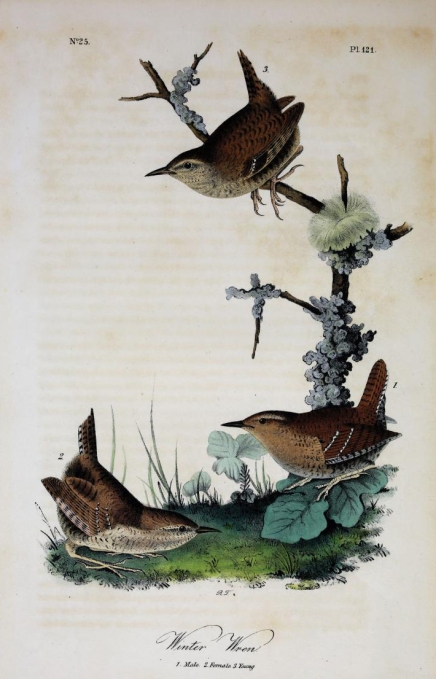
For the most part, wrens are birds of the New World. In fact, only the Eurasian wren represents the family in Europe, Asia and Africa. Experts recently split the winter wren into several different species, including the Pacific wren of the west coast of North America and the Eurasian wren of Europe, Asia and Africa.WinterWren_edited-1

Just as the winter wren thinks nothing of acting like a mouse when scurrying through leaf litter and over fallen logs in search of insect prey, this bird doesn’t hesitate to imitate mice by poking into shadowy holes in the ground or exploring the dark crevices of fallen logs. When winter temperatures drop sharply, many of these birds may cram themselves into a roosting hole to benefit from the communal heat from so many tiny feathered bodies in such close proximity. Winter wrens eat mostly insects and spiders, but in winter these birds will also eat some seeds and berries. Winter wrens rarely visit feeders, but a suet cake often attracts birds with similar dietary preferences, including kinglets and chickadees. A larger relative, the Carolina wren, is a common visitor to feeders.
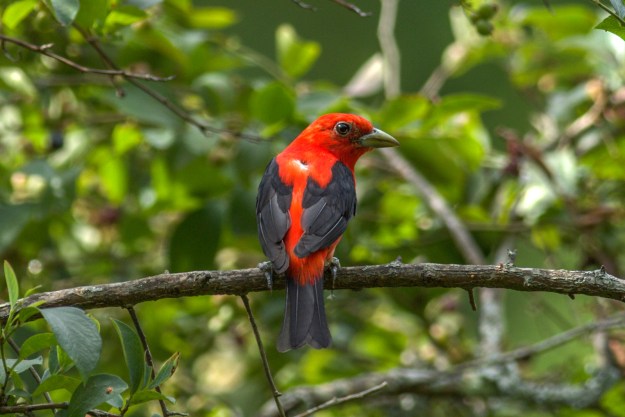
In English and German lore, the winter wren was known as the “king of the birds.” Different tales provide varying explanations for how such a small bird earned such an inflated title. Ritual hunts were enacted in some European locations. These hunts, known as “wren hunts,” were conducted by “wren boys” who would parade through town on their quests. Wren Day fell on Dec. 26, which coincided with the holiday St. Stephen’s Day. Some myths blame the noisy bird for betraying the hiding place of Stephen, who was delivered up as a Christian martyr to his enemies due to the bird’s treachery. In some European cultures, various superstitions sprang up about wrens. For instance, in Scotland it is considered extremely unlucky to kill a wren.

Personally, I feel lucky to have the tiny winter wren spending time around my home and can guarantee no “wren hunts” will be staged here. At a time of year when feathered friends can be scarce, a winter wren is a welcome visitor.

••••••

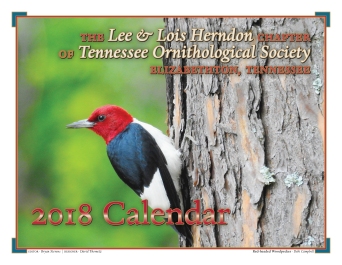
The Lee and Lois Herndon Chapter of Tennessee Ornithological Society produces an annual calendar featuring some exceptional bird photography from its members. This year’s calendar features full-color photographs of some colorful and engaging birds. The club sells the calendars for $15 each. All proceeds are used to support birding opportunities and bird-related causes. For instance, the club pays for bird seed to stock the feeders at Sycamore Shoals State Historic Park in Elizabethton, Tennessee. The club also regularly supports causes that benefit birds.HerndonCalendar2018(Cover)

The calendar also features an informative calendar grid with highlights for major holidays, as well as important bird-related dates. The calendar’s pages feature more than 80 full-color photographs of area birds, including common favorites, as well as a few more exotic birds. The front cover features a dazzling photograph of a red-headed woodpecker. The photo was taken by Debi Campbell, a resident of Bluff City, Tennessee, and current president of the Herndon chapter. If you’re interested in obtaining a calendar, contact ahoodedwarbler@aol.com by email. Calendars will also be available for purchase by cash or check only at the offices of the Bristol Herald Courier located at 320 Bob Morrison Blvd. in Bristol, Virginia.

If you’re interested in obtaining a calendar, contact ahoodedwarbler@aol.com by email. Calendars will also be available for purchase by cash or check only at the offices of the Bristol Herald Courier located at 320 Bob Morrison Blvd. in Bristol, Virginia.

•••••

Bryan Stevens lives near Roan Mountain, Tennessee. If you have a question, wish to make a comment or share a sighting, email ahoodedwarbler@aol.com.


Although graceful in the water, life gets awkward for grebes on land

As the calendar moves into the months of October and November, migrating waterfowl will replace the exodus of songbirds that evacuate the North American continent every fall in preparation for their winter season in the tropics. The umbrella term of waterfowl can include such birds as ducks, geese, loons and grebes.

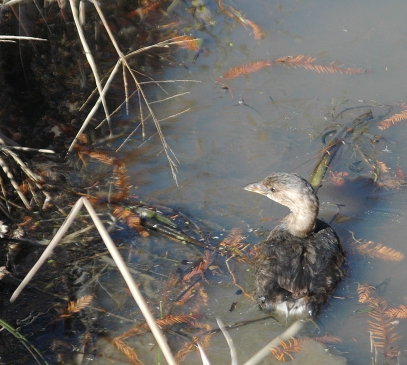
Pond-Edge-Grebe

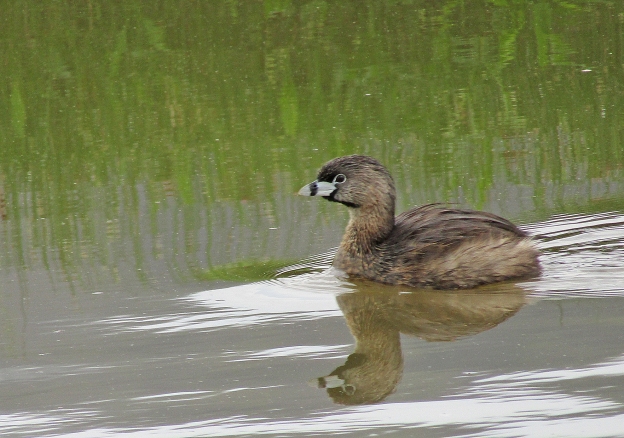
Photo by Bryan Stevens • This pied-billed grebe stranded itself on a wet lawn during fall migration. A grebe’s legs are positioned so far back on their bodies that grebes have difficult walking on land. Once released in a pond, the grebe was able to take flight and continue its migration.

That last family keeps one of the lowest profiles among the grouping of birds lumped together as waterfowl. Worldwide, there are 22 species of grebes. This family also includes three extinct species — Alaotra grebe, Atitlán grebe and Colombian grebe.

Many people are unaware of the grebes. After all, they are oddball birds with not a lot in common with other waterfowl such as loons and ducks. In eastern Tennessee, southwestern Virginia and western North Carolina, the pied-billed grebe is the most likely member of the grebe family to come into contact with humans. The pied-billed grebe’s scientific name, Podilymbus podiceps, can be roughly translated as “rear-footed diver.” The reference is to the fact that this grebe, as well as others of its kind, have their feet positioned so far back on their bodies that movement on land is difficult and awkward.

The pied-billed grebe has inspired a variety of other common names, including American dabchick, dabchick, Carolina grebe, devil-diver, dive-dapper, hell-diver, pied-billed dabchick, pied-bill, thick-billed grebe and water witch, all of which reflect this grebe’s almost exclusively aquatic lifestyle.

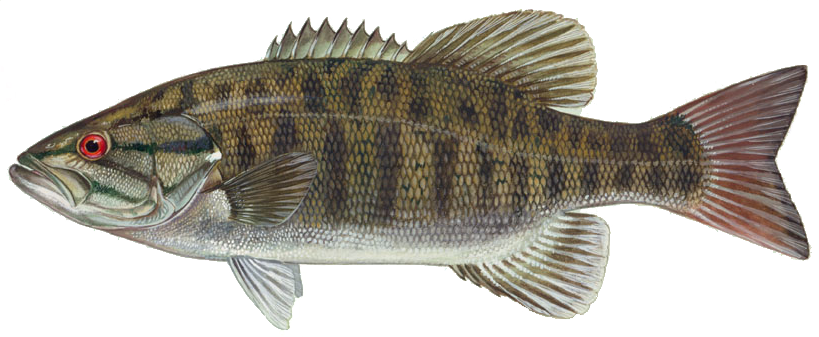
The pied-billed grebe is a world-class survivor. Already a member of an ancient family of birds, this species has outlasted the others in its genus. The Atitlán grebe, which was also known as the giant grebe, went extinct around 1989 after a series of catastrophic setbacks, including a devastating earthquake and the introduction of smallmouth and largemouth bass to Lake Atitlán in Guatemala. The bass consumed the prey this grebe needed for its survival, and large bass occasionally ate young grebes.

Smallmouth bass.png

Bass introduced into Lake Atitlán consumed the small fish that the Atitlán Grebe              required as a food source. Large bass also ate young grebes.


These birds range in size from the least grebe, which weighs only about six ounces, to the great grebe, which can tip the scales at four pounds. North American grebes include red-necked grebe, horned grebe, eared grebe, Clark’s grebe and Western grebe. In extreme southern Texas, birders can find least grebes in suitable wetland habitats.

With the exception of the least grebe, I’ve seen all of North America’s grebes. During visits to Utah in 2003 and 2006, I observed the sleek, long-necked Clark’s grebe and Western grebe. On a 2006 trip to Utah, I visited Antelope Island State Park and observed tens of thousands of Eared Grebes gathered on the Great Salt Lake for the nesting season. In Tennessee, one of the most reliable locations to find eared grebes is from viewing areas at Musick’s Campground on South Holston Lake, where a small number of these grebes have wintered for many years.

An unusual February fallout back in 2014 resulted in equally unusual numbers of red-necked grebes on area lakes, rivers, and ponds. I’d previously observed this grebe on Boone Lake, South Holston Lake and Watauga Lake in northeast Tennessee.

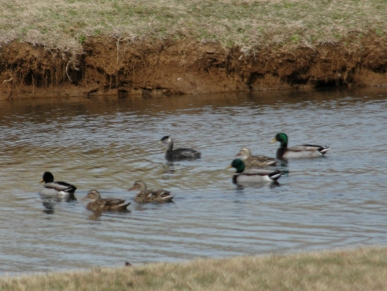
Grebe-Mallards

Photo by Bryan Stevens • A Red-necked Grebe mixes with Mallards at a pond on the campus of Northeast State Community College in Elizabethton.

Grebes are prone to landing on glistening surfaces — lawns, asphalt parking lots and even paved roads — during migration flights, especially at night during heavy rain. A serious problem arises when the grebe, with those rear-positioned feet, finds itself stranded, unable to take flight again without a paddling run across the surface of a body of water.

One of these strandings was recounted in Rick Knight’s book, The Birds of Northeast Tennessee. On Feb. 13, 1994, a red-necked grebe grounded itself with one of these crash landings onto a parking lot in Elizabethton, Tennessee. The fortunate grebe received a human-assisted rescue, being transported to a small lake near the town for release.

In November of 2011, a neighbor delivered a bird that had landed in his yard and could not take flight. The bird, put into a cardboard box for its own safety, didn’t appear to have any injuries. Once I saw the bird, I realized it was a pied-billed grebe. We released the bird on my fish pond, where the grebe dived and swam extensively before resting for a long period on a muddy edge of the pond. Overnight, the grebe disappeared. I believe the grebe took flight during the night and continued with its fall migration. The incident remains one of my closest encounters with a grebe.

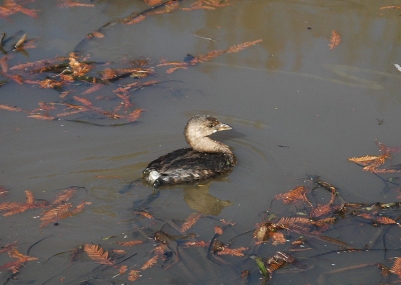
Rescue-GREBE

Photo by Bryan Stevens The pied-billed grebe paddles through the water after it was rescued after a stranding on a lawn.


In the coming weeks and all throughout the winter months, look for pied-bill grebes, as well well as more uncommon grebes like horned grebe and red-necked grebe, on lakes and rivers throughout the region.

•••••
Bryan Stevens lives near Roan Mountain, Tennessee. To ask a question, make a comment or share a sighting, email him at ahoodedwarbler@aol.com.

Sleek elegance of cedar waxwing wins bird many fans

Main-CedarWaxwing-Pic

Photo by Annette Bryant • A cedar waxwing plucks a fresh blueberry.

I still remember my first look at a cedar waxwing. Sleek as silk, wearing a mask like a bandit, with a jaunty crest atop its head, this fairly common bird commands attention when making an appearance in a yard or garden. Of course, it’s usually not alone, more often traveling as a member of a larger flock that can number as high as dozens or even hundreds of individuals.

Cedar waxwings win fans almost anywhere they go. Chances of luring these birds to your home and property can increase by offering some essential requirements. Tall trees, especially those that bear fruit, are attractive to these sociable birds. It’s more often water, not food, however, that will bring a flock of these birds close. They love a good splash in a bath, whether the source is a shallow stream or an ornamental pool set into the landscape.

As noted, they travel in often sizable flocks, usually in search of new food sources. The many members comprising a flock can deplete resources in a remarkably short time. During the winter season, I’ve watched a flock of waxwings make short work of a harvest of berries from a holly tree. Their nomadic lifestyles makes it nearly impossible to predict where cedar waxwings might make an appearance.

Waxwing-Sept11
Photo by Bryan Stevens • A cedar waxwing perches on a branch.

Based on early observation, the wild cherry trees scattered around the edges of my yard are fully laden with berries. As they ripen in late August and into September, the crop will likely attract waxwings as well as a host of other species.

Why is the term “waxwing” applied to this bird? According to the website All About Birds, the name comes from the waxy red secretions found on the tips of wing feathers. The site also notes that the precise function of these waxy tips is not known. There’s speculation among some experts that the bright red tips on the feathers could play a role in helping waxwings attract mates.

The cedar waxwing has few relatives. Worldwide, there are only two other species: the Bohemian waxwing, of the northern forests of Eurasia and North America; and the Japanese waxwing, found in such northeast Asian countries as Japan, Korea and China.

Although it’s classified as a songbird, the cedar waxwing does’t truly produce a vocalization that anyone would contend qualifies as a song. They are, however, very vocal birds, producing shrill, high-pitched notes as they pass through the upper branches of tall trees.

As much as the waxwing has a fondness for fruit, it’s also a bird that would have made an excellent flycatcher. Flocks of these birds will often congregate in trees near the edge of a pond, garden or yard — anywhere winged insects might be found in good numbers — in order to hawk insects on the wing. A waxwing will sally forth from a branch, snatch its prey in mid-air, and return to its perch for a quick snack.

Perhaps because of the late-summer abundance of bugs and berries, cedar waxwings are known for nesting late into the summer. They’re certainly not among the birds impatient to begin nesting as soon as temperatures turn mild in the spring.

Waxwing-Pair

Photo by Bryan Stevens • A pair of cedar waxwings                           hawk for insects near a pond.

Although a female brown-headed cowbird succeeds on occasion at slipping an egg into a waxwing nest, that attempt at foisting offspring onto unwitting foster parents is doomed. According to All About Birds, baby cowbirds will starve on the diet high in fruit fed to waxwing babies.

Now that you know a little more about this sociable and elegant songbird, keep an eye out for cedar waxwings visiting your yard or garden. I know my own wild cherry trees await their arrival.

•••••

Bryan Stevens lives near Roan Mountain, Tennessee. To learn more about birds and other topics from the natural world, friend him on Facebook at https://www.facebook.com/ahoodedwarbler. If you have a question, wish to make a comment or share a sighting, email ahoodedwarbler@aol.com.

County’s Summer Bird Count finds 104 species

Members and friends of the Lee & Lois Herndon Chapter of the Tennessee Ornithological Society enjoyed a busy June, conducting its two annual summer bird counts last month. To the satisfaction of everyone involved, these counts encountered normal temperature after a spring count this past May that actually saw some snowfall when it was held on May 6.

IMG_4140

Photo by Bryan Stevens • Nesting Yellow-bellied Sapsuckers can be found at higher elevations in Unicoi County. This woodpecker is usually considered a winter bird in the region, but a few nest in the mountains.

According to long-time compiler Rick Knight, the chapter holds these summer counts in the counties of Carter and Unicoi to provide a set of baseline data on the diversity and numbers of breeding birds in these two local counties. This supplements other summertime data collection projects, such as the long-running Breeding Bird Survey (one route in Carter County) and the Nightjar Survey (three local routes).

The Carter County Summer Bird Count was initiated shortly after the conclusion of the Tennessee Breeding Bird Atlas project. The Unicoi County Summer Bird Count’s origins are more recent, with this survey making its debut in June of 2014. The fourth consecutive Unicoi County Summer Count was held June 17 with 21 observers in five parties looking for birds on Unaka Mountain, as well as such locations as Erwin, Limestone Cove and Flag Pond. Morning weather was favorable, but scattered rain in the afternoon hindered some efforts. A total of 104 species were tallied, down slightly from the three-year average of 111 species. Highlights included a Bald Eagle, Merlin and six Yellow-bellied Sapsuckers, including a nest with young. A total of 20 species of warblers were tallied, including Swainson’s Warbler, Magnolia Warbler, Blackburnian Warbler and Prairie Warbler. Other notable birds include Hermit Thrush and Blue Grosbeak.

I took part on the count, looking for birds in the Limestone Cove area of the county with Brookie and Jean Potter, Charles Moore, and David and Connie Irick. Beyond bird, we saw other wildlife, including skunks, white-tailed deer, rabbits, groundhogs and various butterflies.

IMG_4146

Photo by Bryan Stevens • A young Red-winged Blackbird begs food from its attentive mother.

A highlight of our count took place near the Appalachian Trail along Highway 107 at Iron Mountain Gap where we found a pair of Yellow-bellied Sapsuckers delivering food to young inside a nesting cavity in a tree easily viewed from the roadside. In addition, a singing Chestnut-sided Warbler put on quite a show for a group of admiring birders enchanted with this bird’s dazzling plumage and energetic antics.

The total for the count follows:

Canada Goose, 73; Wood Duck, 22; Mallard; Wild Turkey, 19; Great Blue Heron, 13; and Green Heron, 3.
Black Vulture, 300; Turkey Vulture, 28; Sharp-shinned Hawk, 2; Cooper’s Hawk, 1; Bald Eagle, 1; Broad-winged Hawk, 7; Red-tailed Hawk, 4; American Kestrel, 2; and Merlin, 1.
Rock Pigeon, 67; Mourning Dove, 87; Great Horned Owl, 1; Barred Owl, 2; Chuck-will’s-Widow, 4; Whip-poor-will, 9; and Chimney Swift, 61.
Ruby-throated Hummingbird, 15; Belted Kingfisher, 4; Red-bellied Woodpecker, 13; Yellow-bellied Sapsucker, 6; Downy Woodpecker, 10; Hairy Woodpecker, 3; Northern Flicker, 7; and Pileated Woodpecker, 8.
Eastern Wood-Pewee, 7; Acadian Flycatcher, 24; Eastern Phoebe, 30; Great Crested Flycatcher, 3; and Eastern Kingbird, 14.
White-eyed Vireo, 4; Yellow-throated Vireo, 1; Blue-headed Vireo, 26; Red-eyed Vireo, 95; Blue Jay, 53; American Crow, 88; Fish Crow, 7; and Common Raven, 7.
Northern Rough-winged Swallow, 36; Purple Martin, 14; Tree Swallow, 70; Barn Swallow, 77; and Cliff Swallow, 149.
Carolina Chickadee, 51; Tufted Titmouse, 43; Red-breasted Nuthatch, 1; White-breasted Nuthatch, 18; Brown Creeper, 3; House Wren, 14; Carolina Wren, 42.

IMG_4172

Photo by Bryan Stevens • Most swallows, like this Barn Swallow, have fledged and will join their parents in migrating south in the coming weeks of late summer.

Blue-gray Gnatcatcher, 5; Golden-crowned Kinglet, 7; Eastern Bluebird, 33; Veery, 25; Hermit Thrush, 4; Wood Thrush, 37; American Robin, 281; Gray Catbird, 31; Brown Thrasher, 12; Northern Mockingbird, 24; European Starling, 534; and Cedar Waxwing, 49.
Ovenbird, 29; Worm-eating Warbler, 2; Louisiana Waterthrush, 4; Black-and-white Warbler, 12; Swainson’s Warbler, 6; Common Yellowthroat, 2; Hooded Warbler, 37; American Redstart, 4; Northern Parula, 19; Magnolia Warbler, 3; Blackburnian Warbler, 2; Yellow Warbler, 1; Chestnut-sided Warbler, 15; Black-throated Blue Warbler, 29; Pine Warbler, 1; Yellow-throated Warbler, 3; Prairie Warbler, 3; Black-throated Green Warbler, 16; Canada Warbler, 9; and Yellow-breasted Chat, 2.
Eastern Towhee, 55; Chipping Sparrow, 49; Field Sparrow, 8; Song Sparrow, 120; Dark-eyed Junco, 37; Scarlet Tanager, 27; Northern Cardinal, 83; Rose-breasted Grosbeak, 4; Blue Grosbeak, 2; and Indigo Bunting, 82.
Red-winged Blackbird, 84; Common Grackle, 58; Eastern Meadowlark, 9; Brown-headed Cowbird, 29; and Orchard Oriole, 1.
House Finch, 33; American Goldfinch, 96; and House Sparrow, 17.

YoungCardinal

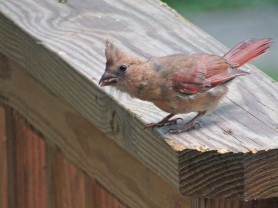
Photo by Bryan Stevens • Young birds, like this Northern Cardinal, point to a successful nesting season for most of the region’s birds.

Next week, I’ll post results from the Elizabethton Summer Bird Count.


••••••

To ask a question, make a comment or share a sighting, email ahoodedwarbler@aol.com or friend Stevens on Facebook.

Fruit increases chances of visit from scarlet tanagers


Last summer, Annette Bryant emailed me some beautiful photos she had taken of birds at her home in Marion, North Carolina.

“Photographing birds has been a passion of mine for many years,” Annette wrote to me. “I look forward to our blueberries getting ripe because I see certain birds only at that time.”

ScarletTanager-Bryant

Photo Courtesy of Annette Bryant • This male Scarlet Tanager adds a splash of tropical color whenever he appears.

One of those birds, she noted, is the scarlet tanager. Anyone who has beheld a scarlet tanager is hardly likely to forget the observation. Thanks to a recent observation I made of one of these birds, I have been reminded of some of the breathtaking birds — including the scarlet tanager — that make the mountains of northeast Tennessee, western North Carolina and southwest Virginia their summer home. The extraordinary appearance of the male scarlet tanager is certainly one that sets it apart from most other songbirds.

This tanager is not typically a feeder visitor, but bird enthusiasts can lure these birds with fruit, such as orange slices placed in special feeders or simply spiked onto the branches of backyard trees. As an added bonus, orange slices can also attract birds such as brown thrashers, Baltimore orioles and gray catbirds. The scarlet tanager indulges its fondness for fruit by incorporating various berries into its diet. In addition to the blueberries mentioned by Annette, other fruit-bearing trees and shrubs — mulberry, elderberry, serviceberry and wild cherry — will make your yard or garden more inviting to this somewhat elusive bird.

I usually have a few scarlet tanagers in residence around my home during the summer months, but I haven’t seen one so far this spring. However, my luck changed while taking part in the Summer Bird Count for Carter County, Tennessee. The count, conducted by members and friends of the Elizabethton Bird Club, has been a long-running survey of summer birds in the region. Along with fellow birders Jean and Brookie Potter, Chris Soto and Mary-Anna Wheat, I got a timely reminder of the beauty of the scarlet tanager while we searched for birds on Holston Mountain near Elizabethton, Tennessee. A stunning male tanager showed up and entertained us with fantastic looks for several moments.

The male scarlet tanager boasts a brilliant plumage of crimson red paired with black wings and tail. Of course, like many other birds, the female scarlet tanager makes no real claim to the common name with her comparatively drab greenish plumage. However, the scientific name, Piranga olivacea, gives a nod to the olive-green plumage of females, young males and even adult males when they’re molting their feathers.

So, why is it so difficult to lay eyes on such a brightly colored bird? The answer rests with this bird’s daily routine, which is usually conducted among the upper woodland canopy in such tall trees as oaks and poplars.

Scarlet-Tanager

Photo Courtesy of Jean Potter A male Scarlet Tanager brightens shadowy woodlands with a flash of tropical colors.

Fortunately, male tanagers produce a distinctive song. Upon first hearing it, listeners might mistake the hidden singer for an American robin. Listen a little closer, however, and the song sounds as if it is being delivered by a hoarse robin with a sore throat. The male tanager also makes a vocalization described as “chip-burr” that is easily heard.

If we were to see a scarlet tanager in a rain forest in South America, we might not be so surprised by its vibrant plumage, usually associated with many tropical birds. The scarlet tanager is certainly better attired than most birds to provide observers a glimpse of a creature that would indeed look more at home in the jungle.

Worldwide, there have traditionally been about 240 species of tanagers. Experts have changed some of the ways they classify tanagers, so that figure is no longer set in stone. Tanagers are a New World family of birds, concentrated mainly in the tropics of Central and South America. Some of the world’s other tanagers are known by extremely descriptive names, including yellow-backed tanager, blue-and-yellow tanager, seven-coloured tanager, gilt-edged tanager, green-capped tanager, beryl-spangled tanager, opal-rumped tanager and blue-gray tanager.

Scarlet

A print of Scarlet Tanagers by early North American naturalist and painter John James Audubon.

Annual spring rally returns to Roan Mountain April 28-30

Larry McDaniel and James Neves, the co-directors one of the region’s longest-running nature events, are excited about the activities they have to offer for the 59th annual Roan Mountain Spring Naturalists Rally. Continuing the tradition of the 58 preceding rallies, this year’s rally will offer a great assortment of programs, hikes and activities which celebrate the unique beauty and natural diversity of this environmental treasure that is Roan Mountain.
DaisyAndBee

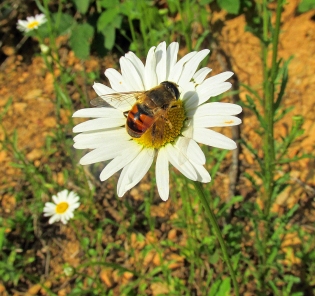
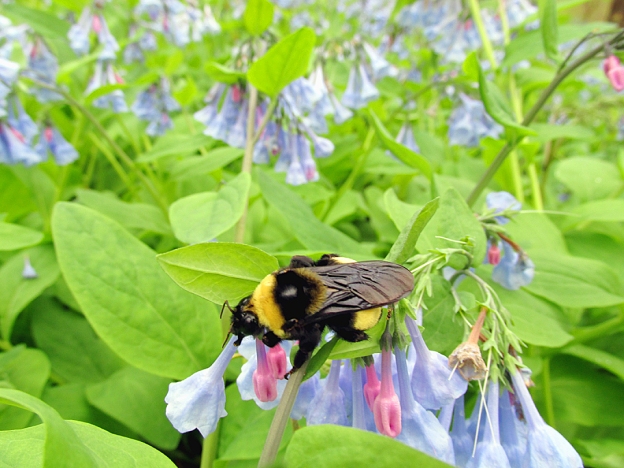
Photo by Bryan Stevens • Flowers and pollinating insects just go together.

Scheduled for Friday-Sunday, April 28-30, this year’s event is open to nature enthusiasts of all skill levels from casual interest to advanced study. There is something for everyone. Bring friends and family and invite the neighbors to take part. The headquarters and hub of activities for the rally is the Conference Center at Roan Mountain State Park. Registration, meals, programs, and exhibits will be centered there. Most of the field trips will meet at the field adjacent to the cabin area entrance. Participants will see signs in the field for the various field trips. Onsite registration is available at the field. For most of the field trips participants will carpool from the field to nearby trailheads. Organizers strongly encourage carpooling, which will help participants make new friends and lower fossil fuel emissions.

This year’s evening programs will focus on native bees, as well as mountains sports and recreation.

“Bees for Birders: Discovering Native Bee Watching Through Binoculars” will be presented by Sam Droege at 7:30 p.m. on Friday, April 28. Droege, a native of Hyattsville, Maryland, received an undergraduate degree at the University of Maryland and a master’s degree at the State University of New York – Syracuse. Most of his career has been spent at the USGS Patuxent Wildlife Research Center. He has coordinated the North American Breeding Bird Survey Program, developed the North American Amphibian Monitoring Program, the Bioblitz, Cricket Crawl, and Frogwatch USA programs and works on the design and evaluation of monitoring programs. Currently he is developing an inventory and monitoring program for native bees along with online identification guides for North American bees at http://www.discoverlife.org, and reviving the North American Bird Phenology Program (https://www.pwrc.usgs.gov/bpp/).

photo

Sam Droege

Diversity is a hallmark of the natural world. For instance, Droege points out that east of the Mississippi there are about 800 species of native bees. This is more species than the total species of birds and butterflies combined. Bees are also more abundant and easier to find. Flowers are their habitat and different species favor different types and groups of plants. So, why aren’t we watching them? Lack of information on how to watch them is the answer. With a pair of butterfly binoculars and a new free identification guide, anyone can begin to be a bee watcher, “beeder”, bee head, or simply a broader naturalist.

David Ramsey will present the evening program at 7:30 p.m. on Saturday, Aprilm 29. He will speak about “Wild Times: Conservation Through Mountain Sports and Recreation.” Ramsey is an outdoor photographer, writer and conservationist born and raised in Unicoi County. He has spent most of the past 30 years exploring and photographing these southern Appalachian Mountains and sharing his photography and passion for the mountains with thousands of people. During that time, his photography has been published extensively — locally, regionally and nationally. Throughout his life, Ramsey has been in

Dave-Ramsey

David Ramsey

spired by other photographer-conservationists, from Elliot Porter, Galen Rowell and Robert Glenn Ketchum to the region’s own Edward Schell. In 2011, he was selected as National Hero of Conservation by Field and Stream Magazine for his leadership in the effort to save the 10,000-acre Rocky Fork Watershed, part of which is now a Tennessee State Park. In 2012 he was chosen as a National Conservationist of the Year finalist by Budweiser and the National Fish and Wildlife Foundation. Ramsey is also a former Stanley A. Murray Volunteer of the Year for Southern Appalachian Highlands Conservancy. Ramsey is at work on finishing a book about the fight to preserve Rocky Fork and working to have the northeast Tennessee region recognized as a major outdoor recreation destination.

The Friends of Roan Mountain organization was created by people who cherish the natural beauty and cultural history of Roan Mountain. Members of the group sponsor interpretive and educational activities including Spring, Fall, and Winter Naturalists Rallies and a summer Xtreme Roan  Adventures Kid’s Nature Rally. Members also support the environmental mission of Roan Mountain State Park including environmental studies, conservation, and restoration. Membership supports these worthy projects and entitles members to free participation in all activities of the Spring, Fall, and Winter Rallies for that year, as well as the group’s newsletters.

TroutLilies-2017

Photo by Bryan Stevens • Wildflowers, like trout lilies, are abundant during the spring rally.

In addition to the evening programs, a variety of hikes, workshops and other events are planned for all three days of the rally. There is an extra cost for meals, which require advance registration. For more information or a brochure of the specific events, including a reservation form for all activities, including the Friday and Saturday evening meals, visit http://www.friendsofroanmtn.org/Spring%20Rally%20Brochure%20web%202017%20.pdf

Information is also available by contacting the co-directors for the Rally. Call Larry McDaniel at 423-773-9234 or email him at larrycmcd@hotmail.com. Call James Neves at 706-224-3355 or email him at jamesneves@gmail.com.

IndigoBunt

Photo by Bryan Stevens • Newly-arrived migrant birds, like indigo buntings, should be present during the rally.

Arrival of tree swallows one of season’s firsts among spring’s returning birds

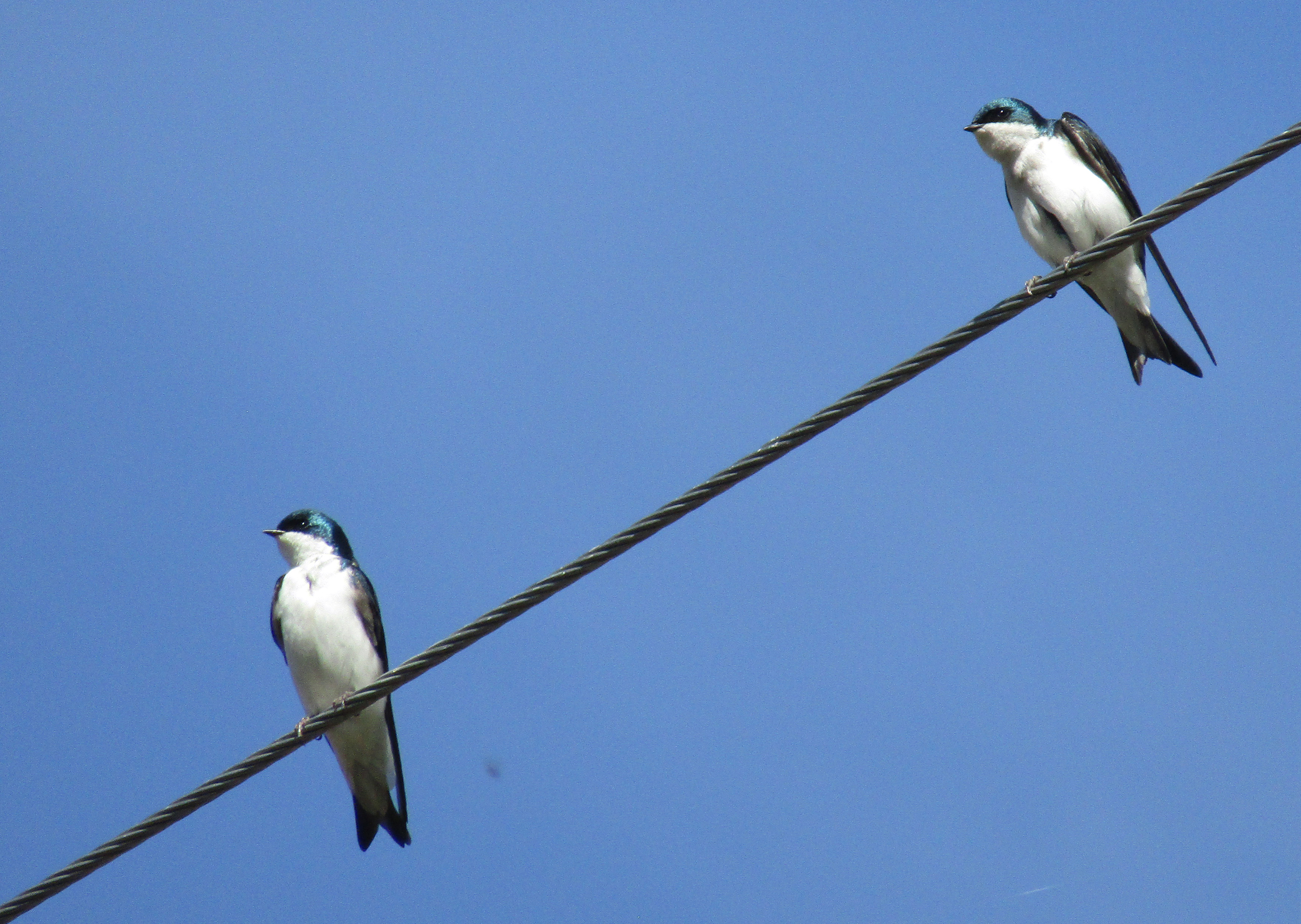
Photo by Bryan Stevens • Tree swallows are among the different species of birds returning to the region after spending the winter months farther south. These birds will be looking for nesting boxes or natural cavities in the coming weeks.

Waiting for spring? Join the club. Between alternating bouts of unseasonably warm temperatures and frigid blasts, the weather cannot seem to decide if winter’s hanging in there a little longer or if it’s time to proceed with spring’s arrival.

You might think that would translate into a messy arrival timetable for some of our returning birds, but so far my own personal observations indicate a different story. For instance, a pair of tree swallows arrived at my home on March 8. Curious, I explored my Facebook newsfeed and discovered that the first tree swallows returned in 2016 on the very same date! These punctual arrivals never cease to amaze me. It’s almost like clockwork for some of the birds that I have observed for many years at my home.

When John James Audubon painted these tree swallows, he knew them as “white-bellied swallows.”

When I posted about the arrival of the swallows on Facebook, some other people shared their own arrival stories. Paul Elmore in Bristol, Tennessee, mentioned the arrival of the first brown-headed cowbirds at his home. “Their sounds got my attention first,” he noted in his reply to my post, describing the sound as similar to “a marble being dropped into a pail of water.”

In addition to tree swallows and brown-headed cowbirds, other recent returns have included red-winged blackbirds and American robins, which have both been hailed as traditional harbingers of spring. Over the next few weeks, I look for the pace to pick up as returning birds like chipping sparrows, brown thrashers, blue-gray gnatcatchers and yellow-throated warblers mingle with lingering winter birds such as dark-eyed juncos, purple finches and yellow-rumped warblers.

The pair of swallows that returned on March 8 probably regretted the timing. Arriving during a warm spell that saw temperatures climb into the high 70s, the swallows were soon enduring a chilly blast that saw the mercury in outdoor thermometers dipping into the 20s. The swallows are insect-eating birds, so extended cold spells often force them to retreat to the area’s lakes and larger rivers, where they can swoop over the water and have an easier time plucking cold-numbed flying insects out of the air.

Photo by Bryan Stevens • Tree swallows usually return to the region in late February and early March. Look for other birds, such as brown thrashers and chipping sparrows, to return in the coming weeks.

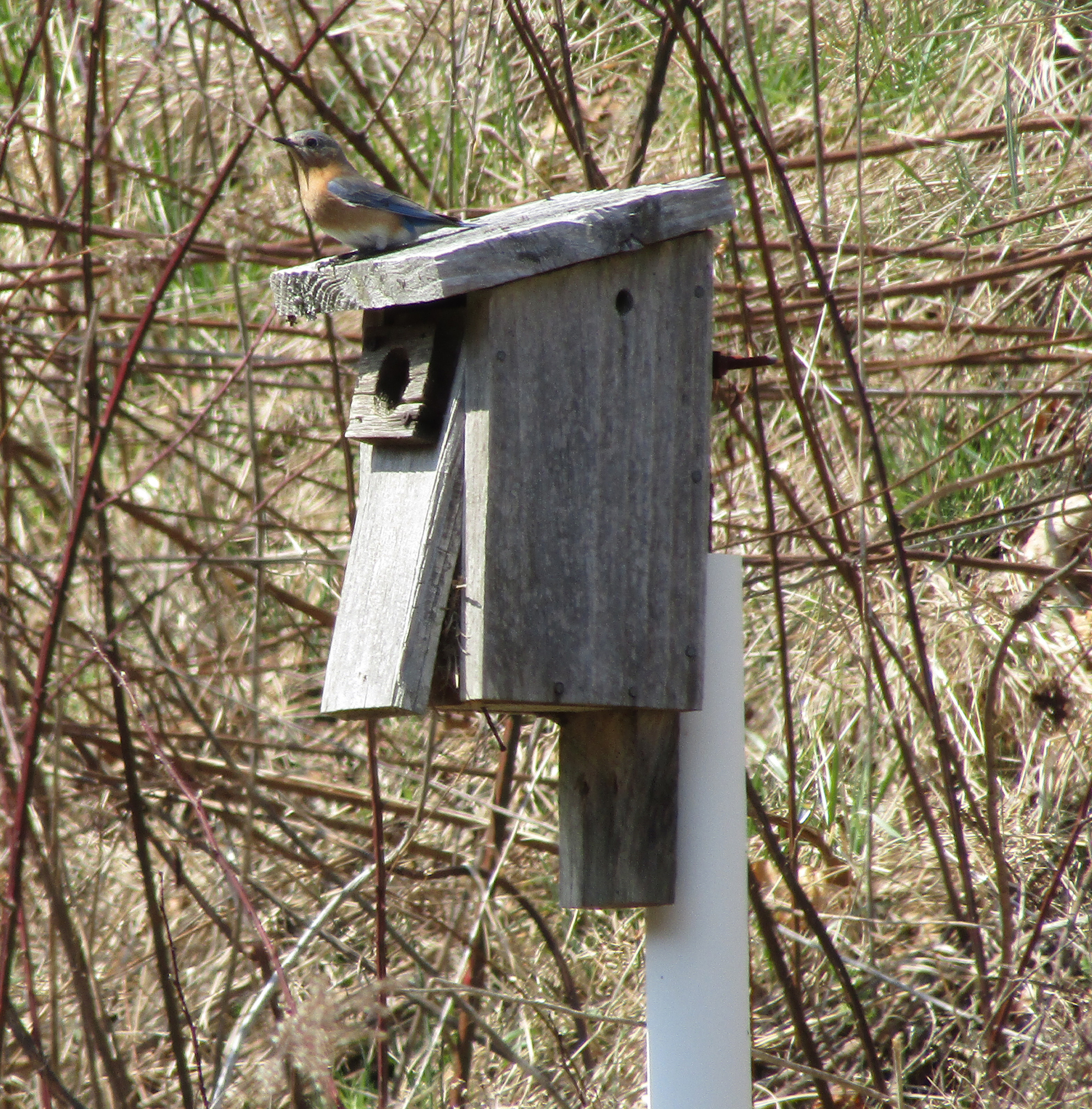
Once milder spring temperatures prevail, the flocks of swallows forced into these necessary habitats will disperse as pairs begin seeking nesting sites. Tree swallows are cavity-nesting birds, which often puts them into competition with Eastern bluebirds. The two species usually manage to work out a truce and settle down to nest in close proximity to each other.

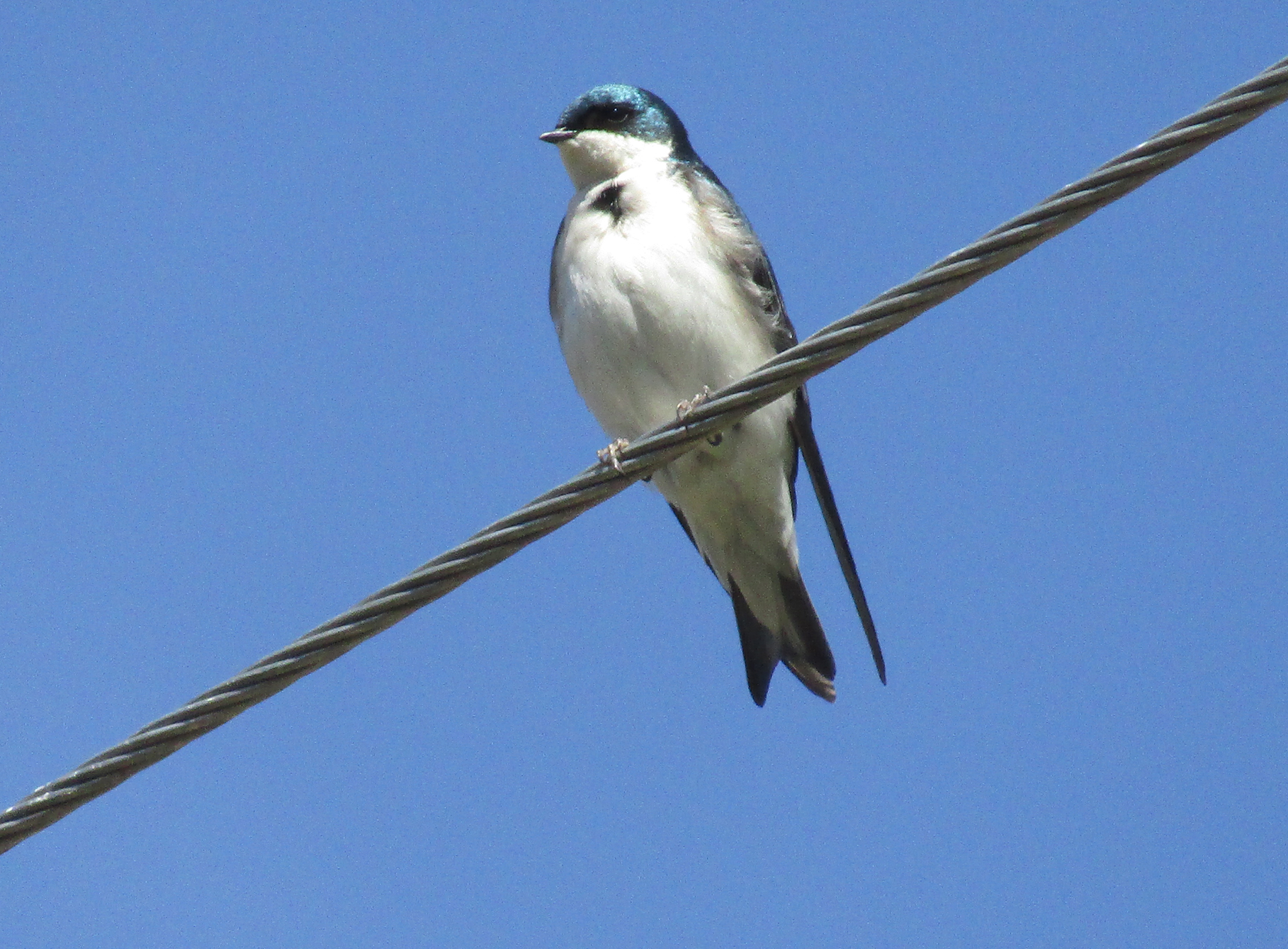
The iridescent blue-green male tree swallow, complete with white underparts and a forked tail, is a handsome bird and a welcome addition to the bird population in any yard or garden. Tree swallows enjoy water, so a nearby pond or creek is a boon for attracting these birds.

Tree swallows nesting in southwest Virginia are a relatively recent happening. According to Tony Decker’s The Birds of Smyth County, Virginia, tree swallows have only been common summer residents since about 1975. Some of the early records of these birds nesting in the region took place at locations like the ponds in Saltville, Virginia, and Laurel Bed Lake in Russell County, Virginia.

Photo by Bryan Stevens • A female Eastern bluebird stakes claim to a box to ward off inquisitive tree swallows. The two cavity-nesting species are often competitors for prime nesting real estate.

A decade later, tree swallows began nesting in northeast Tennessee. The first nesting record took place at Austin Springs on Boone Lake in Washington County, Tennessee, according to The Birds of Northeast Tennessee by Rick Knight. Tree swallows soon became regular nesting birds every summer in all five counties that comprise Northeast Tennessee.

It’s usually not too difficult to find five of the six species of swallows that are known to make Northeast Tennessee and Southwest Virginia their home from spring to fall. In addition to tree swallows, other swallows such as barn swallows, purple martins, cliff swallows and northern rough-winged swallows are fairly common summer birds in the region. The barn swallow and tree swallow are the two members of the family that are probably best known to people. They have adapted to life in both suburban and rural areas, which brings them into frequent contact with people.

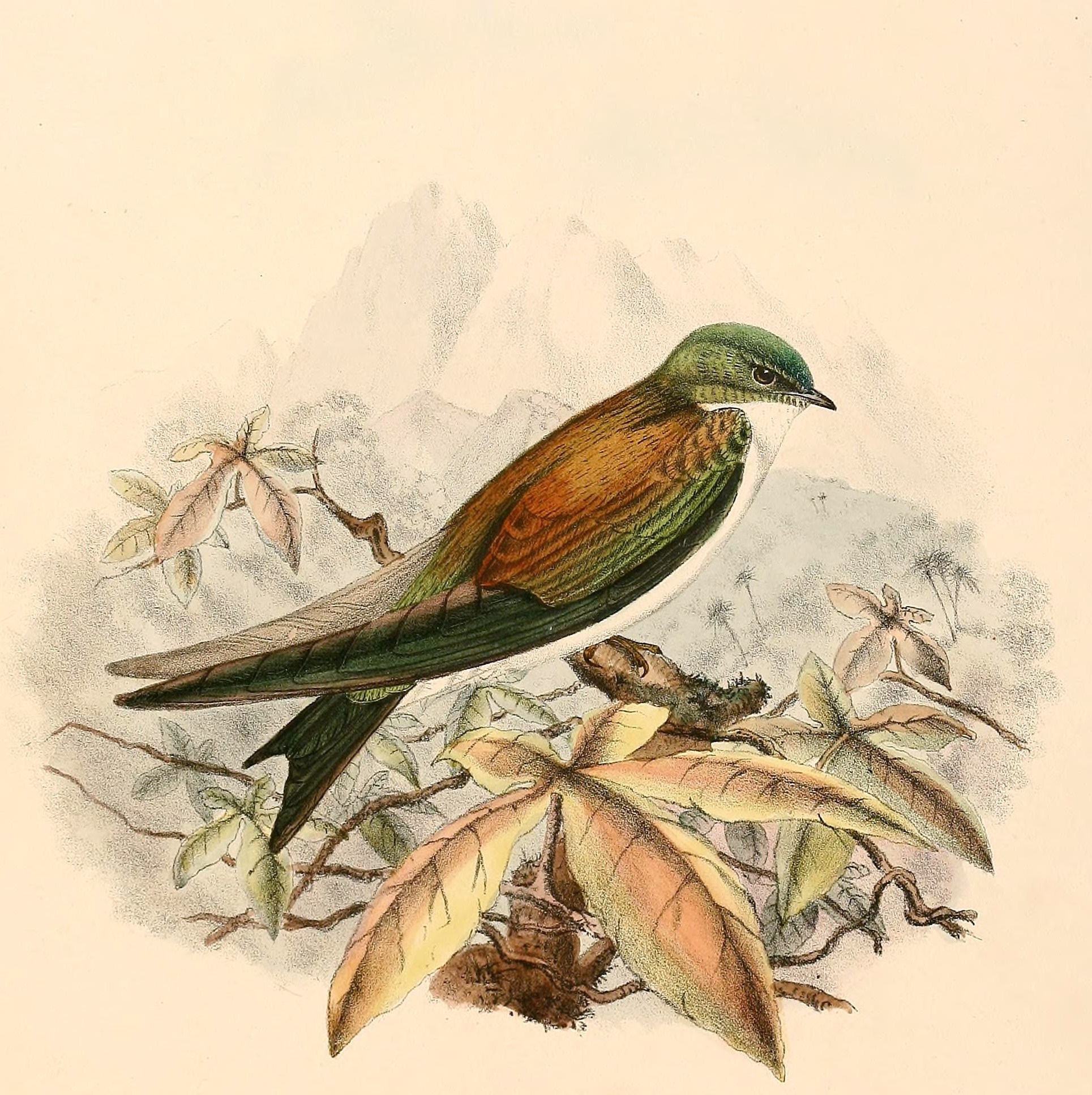
The golden swallow, which today exists only on the island of Hispaniola.

While only a few swallows range into the United States and Canada, a total of 83 species of swallows can be found worldwide. Some of the common names for these different swallows (also called martins in other parts of the world) are quite descriptive. A sampling includes white-eyed river martin, grey-rumped swallow, white-backed swallow, banded martin, blue swallow, violet-green swallow, golden swallow, brown-throated martin, brown-bellied swallow, pale-footed swallow, white-bibbed swallow, pearl-breasted swallow, red-breasted swallow, mosque swallow, fairy martin and streak-throated swallow.

Photo by Bryan Stevens • A male tree swallow perches on a utility wire extending over a fish pond.

While many swallows and martins have proven highly adaptive when faced with human disturbances to their habitat, a few species have experienced declines. One species — the white-eyed river martin — was last seen in Thailand in the 1980s and very well may be extinct. Closer to home, the golden swallow is now found only on the island of Hispaniola after disappearing from Jamaica in the 1980s. The Bahama swallow, which nests on only four islands in the Bahamas, is also vulnerable. Incidentally, both these swallows are closely related to the tree swallow, with all of them belonging to the genus Golden Swallow. Translated from Greek, the genus name means “fast mover,” a quite accurate description of these graceful and agile flyers.

With their enthusiastic twittering to each other, tree swallows make for friendly neighbors. It’s also a pleasant diversion to watch them swoop over fields and ponds. To increase your chances of hosting your own tree swallows, offer a bird box placed in an open area. Right now is the time to attract their attention with some prime real estate.

•••••

To learn more about birds and other topics from the natural world, friend Stevens on Facebook at https://www.facebook.com/ahoodedwarbler. He is always posting about local birds, wildlife, flowers, insects and much more. If you have a question, wish to make a comment or share a sighting, email ahoodedwarbler@aol.com.