Tag Archives: Our Fine Feathered Friends

Pigeons belong to a remarkable and diverse family of birds


Photo by Karen McSharry • This rock pigeon made a recent visit to a home in Bristol, Virginia. Not native to North America, the pigeon has been here almost since the first Europeans arrived on the continent.

Karen McSharry, a resident of Bristol, Tennessee, emailed me recently with some photos asking for help in determining an identification of the bird depicted in her photos.

“This fellow made a sharp descent and landed on my deck with a thud,” Karen wrote. “He just stood there, seemed stunned and didn’t move or make a sound.”

After an hour or so, her husband picked the bird up and set him in the wooded area behind their house.

“He doesn’t seem to be there now, over a week later,” she added.

Karen said that at first glance pigeon came to mind as she tried to identify her visiting feathered friend. “But his head is bigger and black,” she wrote. “There didn’t seem to be any iridescence.”

Photo by Pixabay.com • The Nicobar pigeon (Caloenas nicobarica) is a striking wild pigeon in appearance that is found on small islands and in coastal regions from the Andaman and Nicobar Islands, India, east through the Malay Archipelago, to the Solomons and Palau.

I wrote back and told Karen to trust her instincts. The bird she photographed was indeed a pigeon, known more formally as rock pigeon.

Once also known as rock doves, this pigeon is not native to North America, but the species has been here almost from the time the first Europeans began to sail to the shores of what eventually became the United States and Canada. The rock pigeon is native to Europe, Africa and parts of Asia, but the species has long been domesticated. Pigeons display a lot of variety in their appearance. Through artificial selection, the rock pigeon has been bred into all sorts of other patterns and colors beyond the wild bird’s standard appearance.

I don’t usually get pigeons at my home, although I did once have a domesticated bird visit my feeders for a few days. This particular bird had a band on one leg. I found out later it was a “homing” pigeon, which are pigeons trained to carry messages. After they deliver their message, they return “home,” hence the term “homing pigeon.” But they are still basically just a domesticated variety of rock pigeon.

Gordon Randall Smith, a resident of Saltville, Virginia, might be one of the region’s foremost authorities on pigeons. Eighty-one years old, he has bred pigeons for the past 76 years. He’s also raised game chickens and described his place as once being “like a zoo.”

Photo by Pixabay.com • The Victoria crowned pigeon (Goura victoria) is a large, bluish-grey pigeon with elegant blue lace-like crests, maroon breast, and red irises. A wild bird, this pigeon shows that nature is just as inventive as humans at giving some birds unusual and outlandish appearances.

Gordon has understandable difficulty naming a favorite domestic pigeon strain. “With hundreds of breeds available, choice becomes overwhelming,” Gordon wrote. “Throughout years of close relationships and interested involvement, preferences creep in.”

After consideration, he identified the Bohemian fairy swallow as his favorite variety of pigeon, followed by Chinese owls, crested helmets and Budapest muffed stork tumblers, as well as Lahore and Indian ribbon tailed fantails.

An uncle, Landon Smith, introduced him to the love for the propagation of a variety of domestic pigeons. “I’ve been a fancier, breeder and vivid admirer of birds throughout my amazing and very fruitful life on this planet earth,” Gordon wrote in a letter.

“I was introduced to a covey of ringneck mourning doves and pigeons at uncle Landon Smith’s passing,” Gordon noted. He described his uncle as a very dedicated person who kept various birds, animals and even exotic creatures of nature.

I looked up some of these whimsical names online. Although the basic pigeon stock is apparent in their makeup, these fanciful breeds truly show how enthusiastically the rock pigeon has embraced domestication.

In the wild, rock pigeons display an affinity for nesting and roosting on cliffs and rock ledges, hence the bird’s common name. Feral pigeons in large cities like New York have merely substituted high rises and skysrcapers for craggy cliffs.

Pigeons and doves constitute the avian family Columbidae and the order Columbiformes, which includes about 42 genera and 310 species. North America is home to several native doves, including the mourning dove, Inca dove, common ground dove, ruddy ground dove and white-winged dove. The latter was made famous in a refrain in the song “Edge of Seventeen” by Stevie Nicks.

Other doves and pigeons found around the globe include such fancifully named birds as pink-necked green pigeon, lemon dove, silvery pigeon, black cuckoo-dove, pheasant pigeon, purple-tailed imperial pigeon, topknot pigeon, common emerald dove, blue-headed wood dove, ruddy quail-dove, red-billed pigeon and Victoria crown pigeon. The diversity of form and function among wild doves and pigeons rivals anything that has been produced in their domesticated kin.
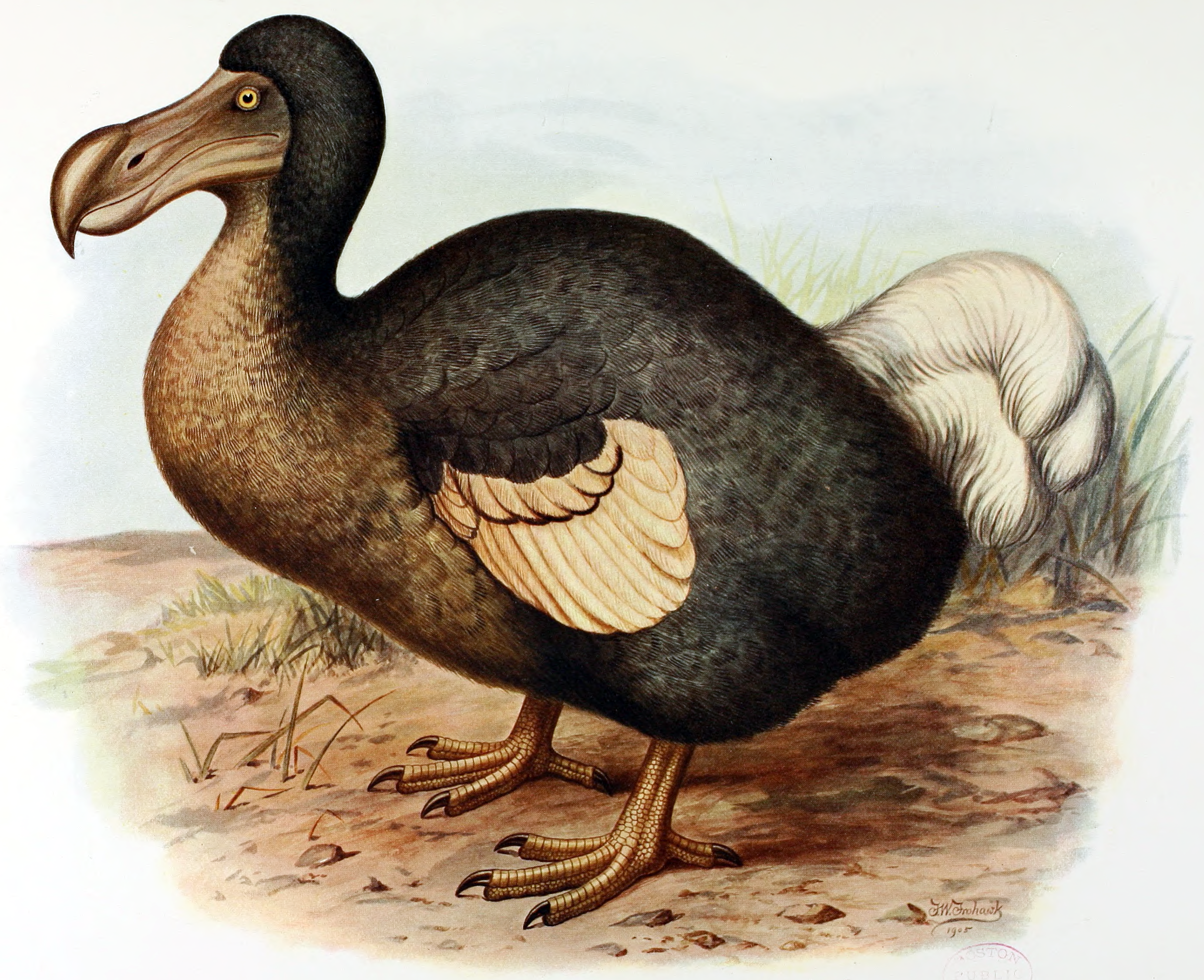
The now-extinct dodo was arguably the most famous member of the diverse family that includes pigeons and doves.
Cardinals don’t always look their best during late summer

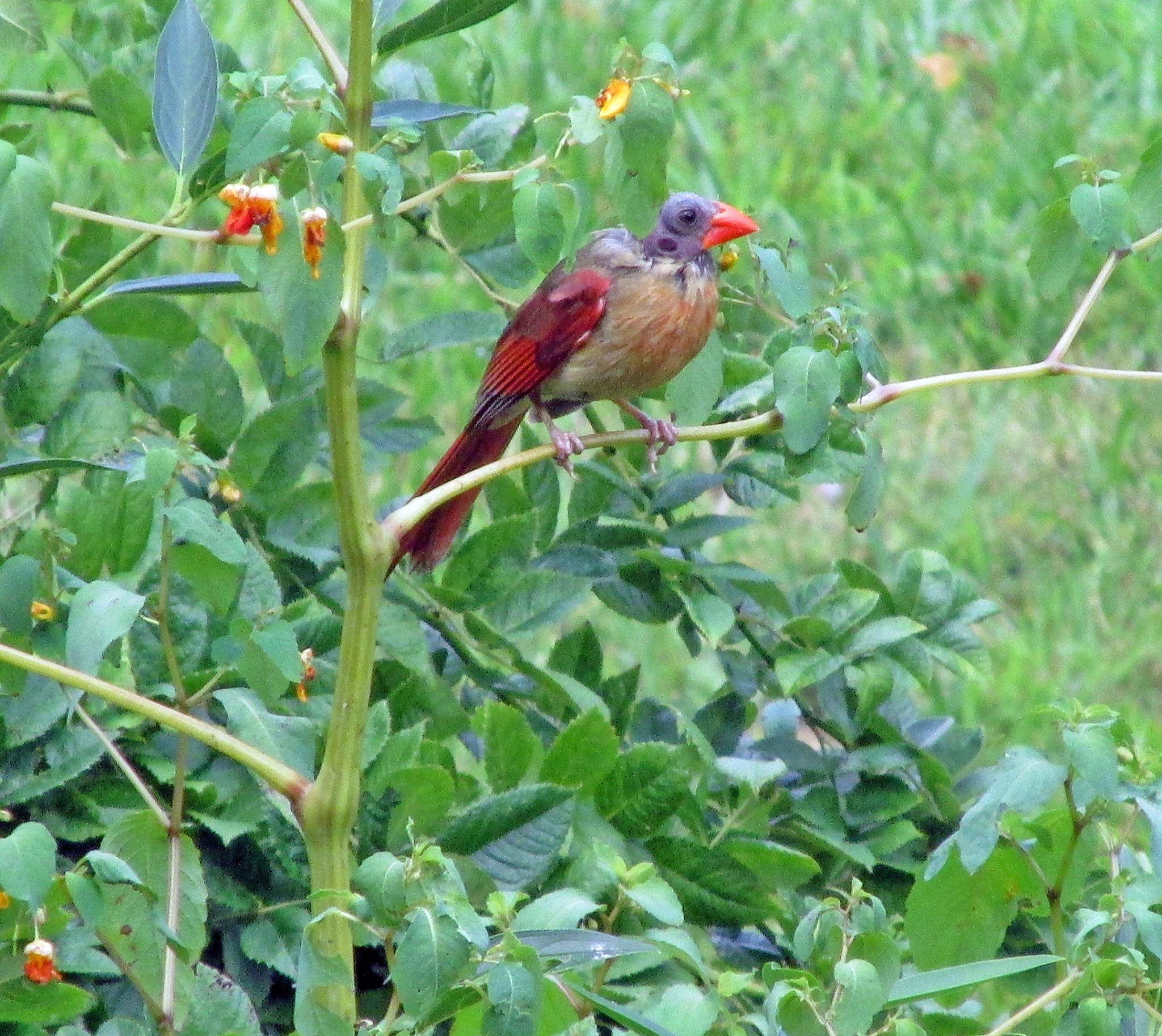
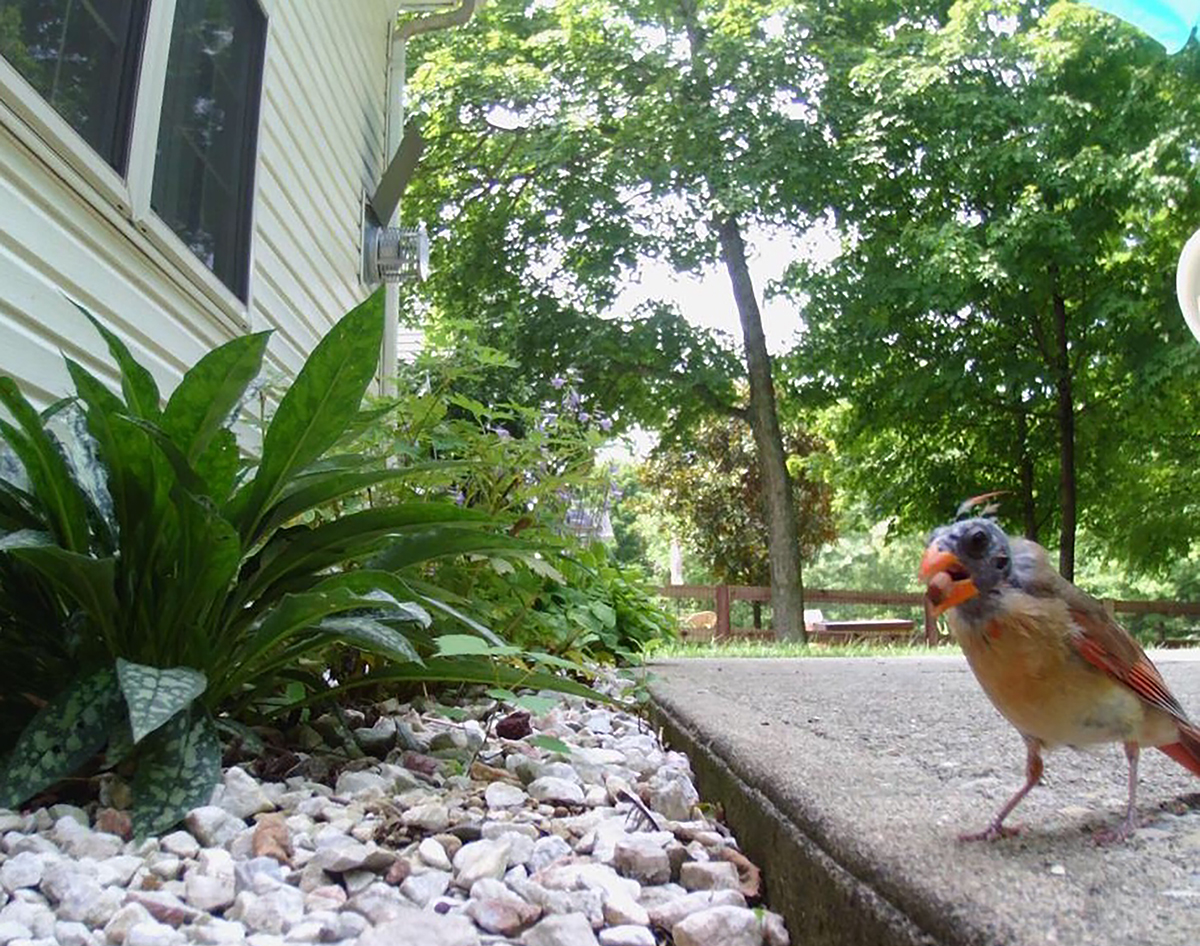
Photo Courtesy of Gina Fannin • This female Northern cardinal, with a head devoid of feathers, appeared at a home in Cincinnati, Ohio. Although these strange looking cardinals often surprise people, they are not all that uncommon in late summer.

Gina Fannin wrote about an unusual observation of a follicly challenged Northern cardinal at her home in Cincinnati, Ohio. The bird in question, a female cardinal, had lost most of the feathers on her head. Gina took a photo of the bird, which she sent with her email, in which she asked if I have ever encountered a cardinal with such a problem.

Gina said that she has seen male cardinals suffering from baldness, but never a female. “I’ve lived here 24 years, and this is the first time I’ve seen a bald female,” she wrote in her email.

I replied to Gina by informing her that I’ve heard of these strange instances for many years. Bald-headed cardinals seem to be a summer occurrence. I usually get some emails or calls this time of year about people surprised by visits from “weird bald-headed” cardinals. I first began to get calls and email from readers in the late 1990s about this unusual phenomenon that seems to usually afflict cardinals, although I have also seen blue jays suffering from this same ailment.

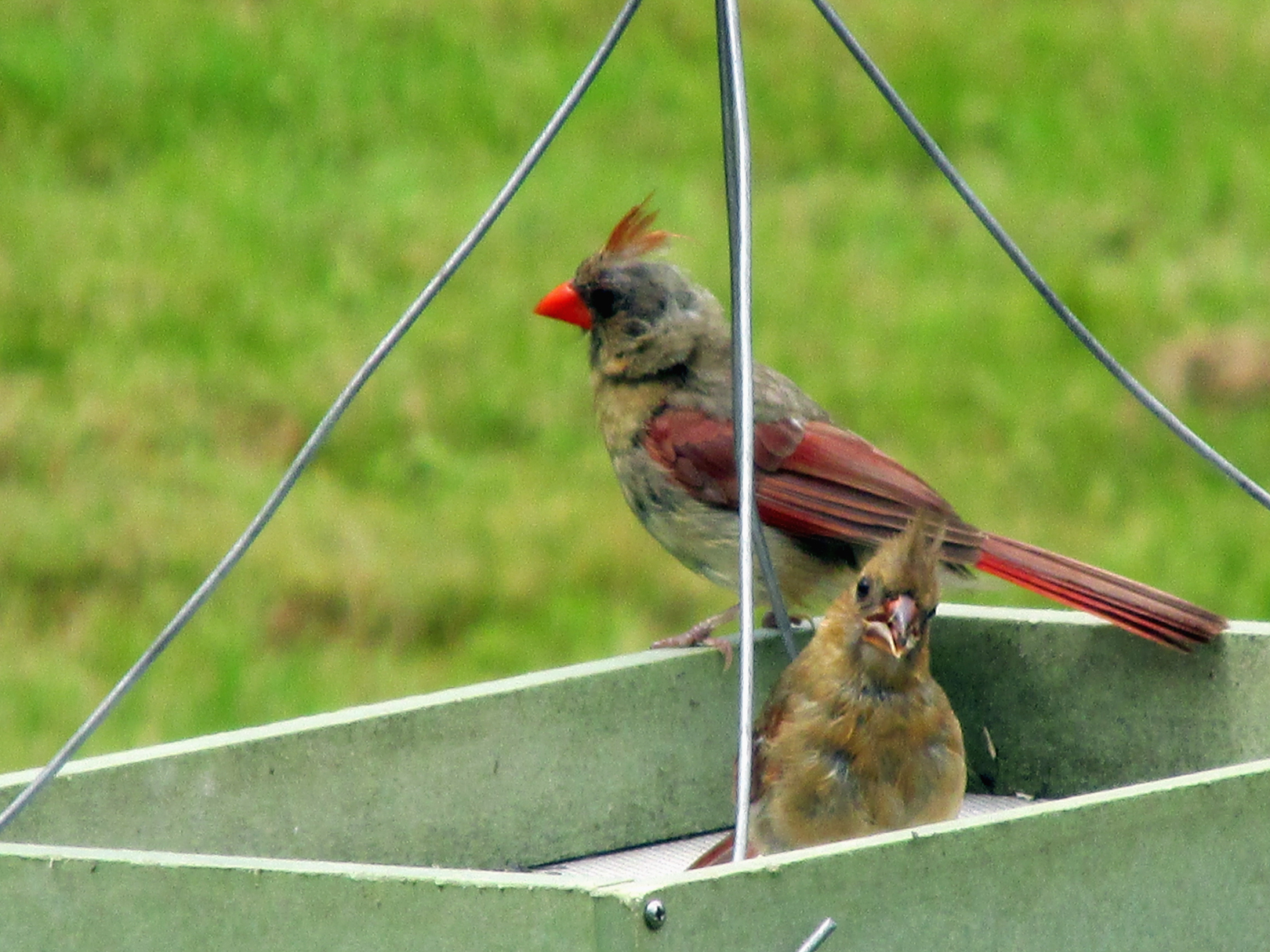
Photo by Bryan Stevens • This female Northern cardinal, shown with one of her offspring at a feeder in late summer, is exhibiting some problems with her feather molt.

I have studied the opinions of various bird experts, but there doesn’t seem to be consensus about the cause. Some believe the “baldness” is caused by an infestation of mites, which are small relatives of spiders and other arachnids. Others believe that the loss of feathers around the head is a part of a normal molting process. This theory is supported by the fact that cardinals do undergo molting in late summer, usually after the conclusion of the nesting season.

The process of molting removes old feathers, which simply drop from the body as new feathers emerge to take their place. For some reason, some cardinals and jays lose all their head feathers at one time before new feathers are ready to take their place. That’s why the condition is typically observed in the summer months. Both male and female cardinals can be afflicted with “bald” heads. It’s strange that the condition primarily affects these two birds, cardinals and jays, both of which have feather crests. On the other hand, cedar waxwings are also crested birds, but I have never observed or received a report on a “bald-headed” cedar waxwing.

Whatever the cause, a “bald-headed” cardinal is an ugly bird. Without feathers, a cardinal is transformed from a showy favorite among bird enthusiasts to a rather grotesque oddity that could aptly be described as resembling a scavenging vulture. Birds like vultures, however, have heads devoid of feathers for a very important reason: As scavengers, a feathered head would become quickly fouled as the bird reaches into the carcasses of dead animals to feed.

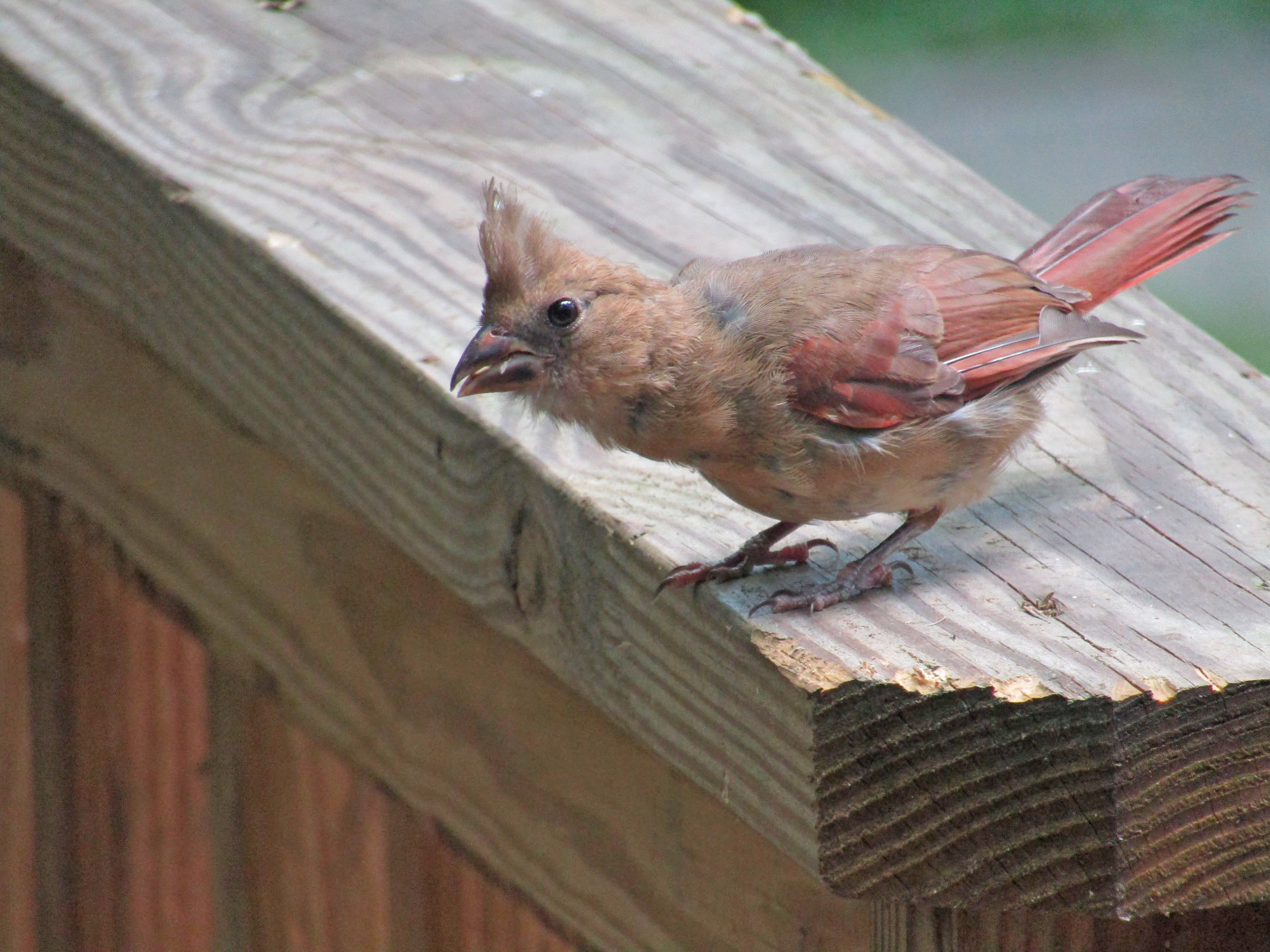
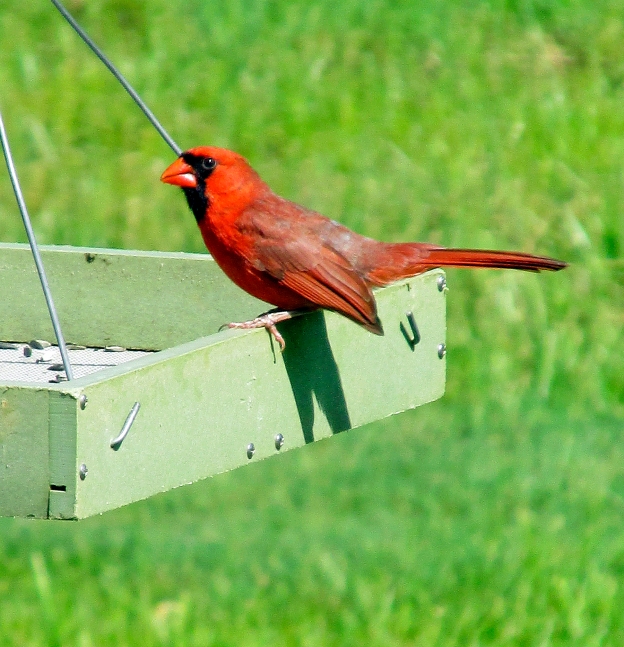
Photo by Bryan Stevens • This young Northern cardinal visits a feeder in the Atlanta suburbs.

The cardinals I have seen with “bald” heads have been visiting feeders stocked with sunflower seeds or perhaps a holder offering a suet cake. So, the absence of feathers is not a hygienic adaptation on the part of cardinals and jays similar to the hygienic necessity of bald heads among vultures. The good news is that the condition is temporary. The normal molt for a Northern cardinal takes two or three months. The feathers on the head do emerge eventually, which is probably very fortunate for the afflicted birds. Feathers serve as insulation during cold weather. A “bald-headed” cardinal would probably have difficulty surviving winter cold spells.

We’re all accustomed to seeing cardinals at our feeders, but people who feed birds would probably be surprised by how much food cardinals and other feeder visitors obtain away from our well-stocked offerings. During the summer months, cardinals eat a variety of wild seeds, fruit and insects. Some of the fruit consumed by cardinals include elderberry, dogwood, blackberry and wild grapes. Young cardinals still in the nest (and fledglings for some time after leaving the nest) are fed mostly insects, including crickets, spiders, moths and flies.

To make cardinals comfortable in every season, offer plenty of thick vegetation, such as a hedge or row of shrubs, and consider planting some of the fruit trees and shrubs that will help these beautiful birds supplement their diet.

Photo by Bryan Stevens • A female Northern cardinal with most of her head featherless.

Long-running Elizabethton Summer Bird Count finds 115 species

The Elizabethton Bird Club holds two summer bird counts to supplement other bird population monitoring efforts on the birdlife of Tennessee.

This count focuses exclusively on locations within Carter County and was held Saturday, June 9, with 16 observers in five parties plus two yard watchers. A total of 115 species was found, which is slightly above the average of 113 per count. The all-time high was 123 species in 2017. Several species restricted to the higher elevations of East Tennessee were found.

The count yielded some surprises and highlights, including the following:

A single Northern bobwhite represented a species that has been increasingly difficult to find in the area.

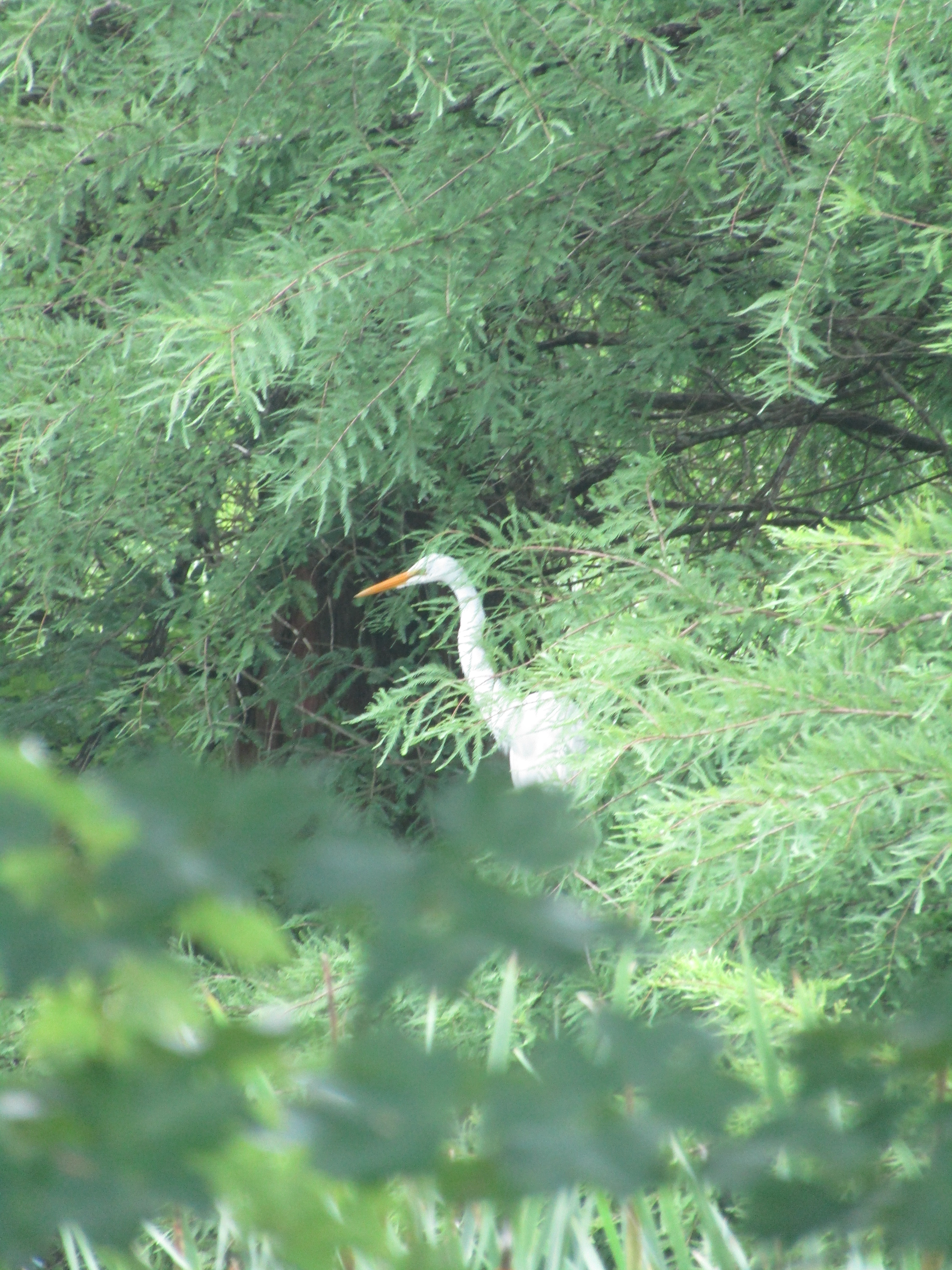
Photo by Bryan Stevens • Great egret, seen here among cypress trees, made the count for the first time this year.

A couple of birds made their debut appearance on this count, including great egret and fish crow, which is expanding its range rapidly in the region.

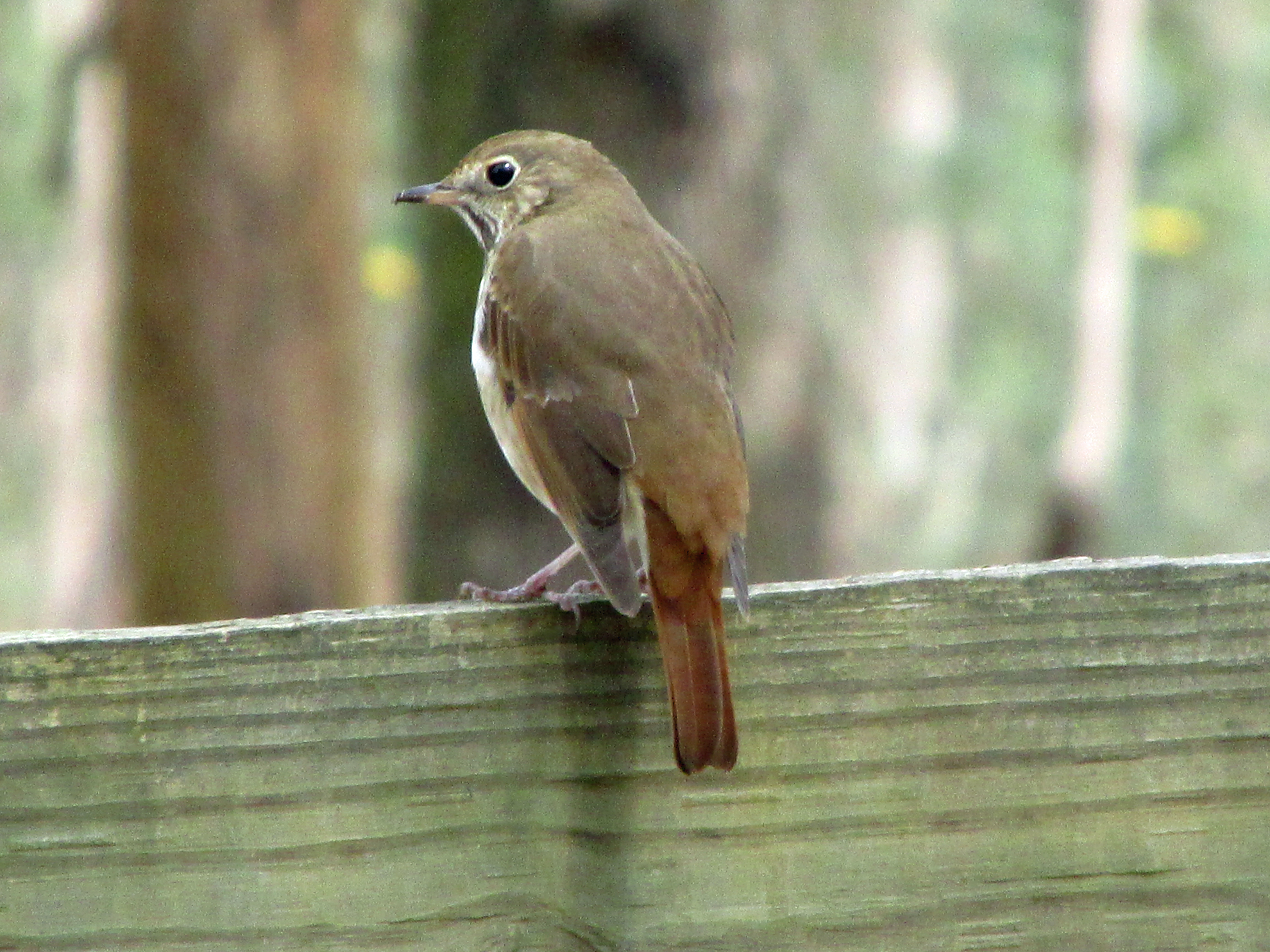
Other good finds included ruffed grouse, sharp-shinned hawk, American woodcock, Eurasian collared-dove, yellow-bellied sapsucker, alder flycatcher, least flycatcher, common raven, red-breasted nuthatch, brown creeper, winter wren, golden-crowned kinglet, hermit thrush, grasshopper sparrow, rose-breasted grosbeak, purple finch and pine siskin.

Photo by Bryan Stevens • Hermit thrush, pictured here, is an uncommon summer nesting bird at high elevations.

The count also found 20 species of warblers, including golden-winged, Swainson’s, magnolia, Blackburnian and yellow-rumped.

Of course, there are always unexpected misses. Birds usually found on summer counts but missed this year included green heron, yellow-crowned night-heron, bald eagle, great horned owl, white-eyed vireo, warbling vireo, purple martin, Kentucky warbler, prairie Warbler and vesper sparrow.

The count total follows:

Canada goose, 91; wood duck, 7; Mallard, 78; Northern bobwhite, 1; ruffed grouse, 2; wild turkey, 35; great blue heron, 42; and great egret, 1.

Black vulture, 2; turkey vulture, 58; sharp-shinned hawk, 1; Cooper’s hawk, 3; broad-winged hawk, 1; red-tailed hawk, 10; American kestrel, 1.

Killdeer, 4; American woodcock, 1; rock pigeon, 69; Eurasian collared-dove, 3; mourning dove, 171; and yellow-billed cuckoo, 3.

Eastern screech-owl, 2; barred owl, 1; chuck-will’s widow, 3; whip-poor-will, chimney swift, 46; ruby-throated hummingbird, 35; and belted kingfisher, 10.

Red-bellied woodpecker, 15; yellow-bellied sapsucker, 3; downy woodpecker, 15; hairy woodpecker, 1; Northern flicker, 9; and pileated woodpecker, 14.

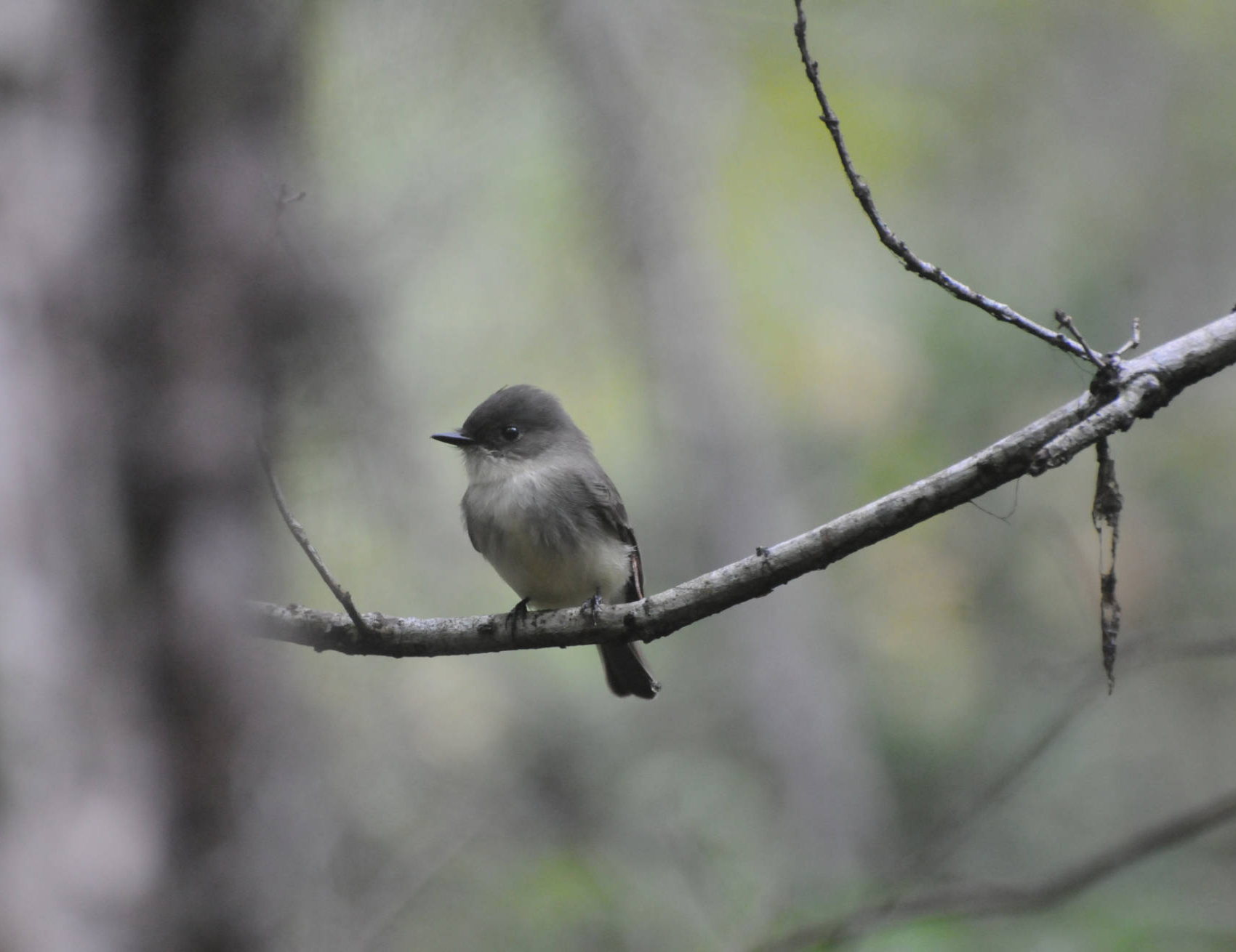
Eastern wood-pewee, 17; Acadian flycatcher, 21; alder flycatcher, 3; least flycatcher, 4; Eastern phoebe, 40; great crested flycatcher, 4; and Eastern kingbird, 15.

Photo by Bryan Stevens • Eastern phoebe is a common flycatcher in the region and abundant on summer counts.

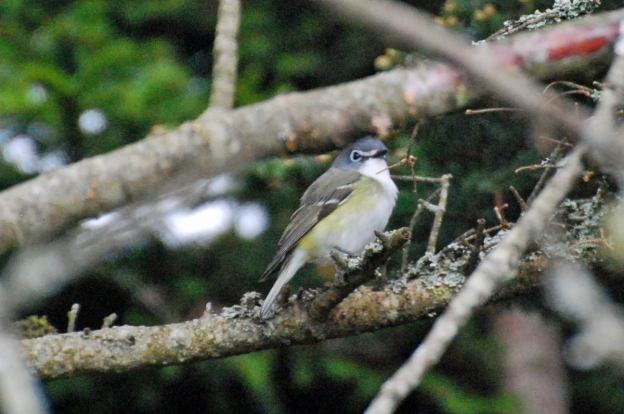
Yellow-throated vireo, 2; blue-headed vireo, 44; red-eyed vireo, 105; blue jay, 66; American crow, 133; fish crow, 1; and common raven, 5.

Northern rough-winged swallow, 21; tree swallow, 123; barn swallow, 106; and cliff swallow, 313.

Carolina chickadee, 63; tufted titmouse, 71; red-breasted nuthatch, white-breasted nuthatch, 15; brown creeper, 3; house wren, 48; winter wren. 8; and Carolina wren, 54.

Blue-gray gnatcatcher, 17; golden-crowned kinglet, 23; Eastern bluebird, 71; veery, 41; hermit thrush, 1; wood thrush, 62; American robin, 245; gray catbird, 44; brown thrasher, 12; Northern mockingbird, 34; European starling, 358; and cedar waxwing, 54.

Overnbird, 47; worm-eating warbler, 6; Louisiana waterthrush, 11, golden-winged warbler, 6; black-and-white warbler, 32; Swainson’s warbler, 3; common yellowthroat, 20; hooded warbler, 76; American redstart, 14; Northern parula, 18; magnolia warbler, 6; Blackburnian warbler, 4; yellow warbler, 2; chestnut-sided warbler, 32; black-throated blue warbler, 39; pine warbler, 1; yellow-rumped warbler, 1; yellow-throated warbler, 7; black-throated green warbler, 29; Canada warbler, 11; and yellow-breasted chat, 3.

Eastern towhee, 73; chipping sparrow, 73; field sparrow, 43; grasshopper sparrow, 1; song sparrow, 151; and dark-eyed junco, 55.

Scarlet tanager, 18; Northern cardinal, 108; rose-breasted grosbeak, 11; blue grosbeak, 6; indigo bunting, 106.

Red-winged blackbird, 79; Eastern meadowlark, 1; common grackle, 74; brown-headed cowbird, 18, orchard oriole, 1; and Baltimore oriole, 1.

House finch, 43; purple finch, 2; pine siskin, 2; American goldfinch, 55; and house sparrow, 6.

Carter County’s Roan Mountain and Holston Mountain offer excellent high elevation habitat. Lower elevations along the Doe and Watauga Rivers also provide plenty of terrain for looking for a variety of birds.

Photo by Bryan Stevens • American goldfinches look their very best for the summer count.

Unicoi County summer survey finds 107 bird species

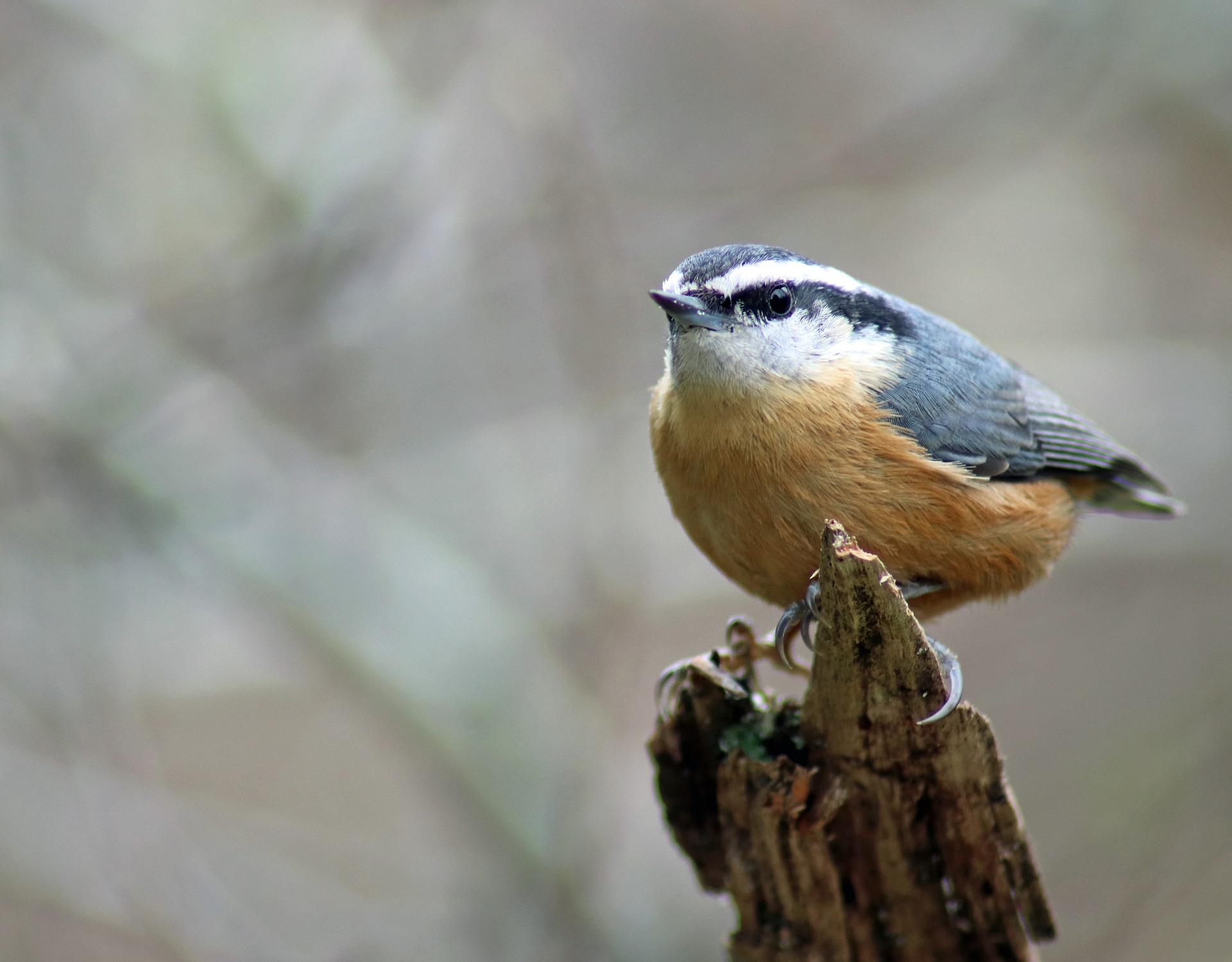
Photo by JudaM/Pixabay.com • Birds that nest at some high elevations, such as this red-breasted nuthatch, thrive at different locations in Unicoi County. A total of six red-breasted nuthatches were tallied on the recent Unicoi County Summer Bird Count.

The Elizabethton Bird Club holds two summer bird counts to supplement other population monitoring efforts on the birdlife of Tennessee. Six years ago, the club launched an annual survey of summer bird populations in Unicoi County.

The sixth annual Unicoi County Summer Count was held Saturday, June 15, with 16 observers in five parties. A total of 107 species was found, which is slightly below the average of 109 species. Unicoi County offers several high elevation species of birds not easily found in the region, according to compiler Rick Knight.

Knight noted that highlights for the count include sharp-shinned hawk, bald eagle, yellow-bellied sapsucker, least flycatcher, warbling vireo, common raven, red-breasted nuthatch, brown creeper, golden-crowned kinglet and hermit thrush. The count also found 18 species of warblers, including Swainson’s, Kentucky, magnolia and prairie.

Photo by Jean Potter • Golden-crowned kinglet is another high-elevation species found in Unicoi County during the summer.

The most common birds found in the count included American robin (241), European starling (224) indigo bunting (147) and song sparrow (146).

Some expected birds could not be found on the day of the count, including ruffed grouse, great horned owl, winter wren, Blackburnian warbler and pine warbler.

I counted with Dave and Connie Irick, Brookie and Jean Potter and Brenda Richards in the Limestone Cove community of Unicoi County. Some of our best birds included yellow-breasted chat, yellow-bellied sapsucker, rose-breasted grosbeak and Swainson’s warbler.

The total for this year’s Unicoi Bird Count follows:

Canada goose, 90; wood duck, 27; mallard, 33; wild turkey, 5; great blue heron, 2; and green heron, 3.

Photo by Bryan Stevens • Both black and turkey vultures were well represented on the Unicoi County Summer Bird Count.

Black vulture, 7; turkey vulture, 33; sharp-shinned hawk, 1; Cooper’s hawk, 1; bald eagle, 1; broad-winged hawk, 9; red-tailed hawk, 7; and American kestrel, 3.

Killdeer, 9; rock pigeon, 78; mourning dove, 70; yellow-billed cuckoo, 7; Eastern screech-owl, 1; and barred owl, 3.

Chuck-will’s widow, 3; Eastern whip-poor-will, 9; chimney swift, 37; ruby-throated hummingbird, 14; and belted kingfisher, 2.

Red-bellied woodpecker, 8; yellow-bellied sapsucker, 8; downy woodpecker, 17; hairy woodpecker, 1; Northern flicker, 8; and pileated woodpecker, 11.

Eastern wood-pewee, 4; Acadian flycatcher, 26; least flycatcher, 1; Eastern phoebe, 41; great crested flycatcher, 2; and Eastern kingbird, 8.

White-eyed vireo, 3; yellow-throated vireo, 1; blue-headed vireo, 23; warbling vireo, 2; and red-eyed vireo, 105.

Blue jay, 66; American crow, 84; common raven, 8; Northern rough-winged swallow, 53; purple martin, 40; tree swallow, 106; barn swallow, 152; and cliff swallow, 128.

Carolina chickadee, 69; tufted titmouse, 55; red-breasted nuthatch, 6; white-breasted nuthatch, 15; brown creeper, 3; house wren, 22; and Carolina wren, 60.

Blue-gray gnatcatcher, 20; golden-crowned kinglet, 4; Eastern bluebird, 62, veery, 11; hermit thrush, 3; wood thrush, 41; and American robin, 241.

Gray catbird, 25; brown thrasher, 11; Northern mockingbird, 27; European starling, 224; and cedar waxwing, 34.

Ovenbird, 36; worm-eating warbler, 17; Louisiana waterthrush, 10, black-and-white warbler, 15; Swainson’s warbler, 8; Kentucky warbler, 1; common yellowthroat, 10; hooded warbler, 75; American redstart, 2; Northern parula, 20; magnolia warbler, 1; yellow warbler, 6; chestnut-sided warbler, 9; black-throated blue warbler, 19; yellow-throated warbler, 15; prairie warbler, 1; black-throated green warbler, 17; Canada warbler, 8; and yellow-breasted chat, 2.

????????????????????????????????????

Eastern towhee, 46; chipping sparrow, 55; field sparrow, 7; song sparrow, 146; and dark-eyed junco, 17.

Scarlet tanager, 30; Northern cardinal, 64; rose-breasted grosbeak, 5; blue grosbeak, 3; and indigo bunting, 147.

Red-winged blackbird, 70; Eastern meadowlark, 9; common grackle, 71; brown-headed cowbird, 14; orchard oriole, 3; Baltimore oriole, 1; house finch, 19; American goldfinch, 92; and house sparrow, 18.

Unicoi County offers some great habitat for finding birds. In addition to the new state park, the county also offers Erwin Fishery Park and adjacent walking trails, as well as Unaka Mountain. The diversity of birds found on the summer count is a testament to the value of these habitats for birds and other wildlife.

Photo by Bryan Stevens • Green herons, such as this one, are found along the linear trail in Erwin during the summer months.


Sighting points out the weakness in relying on field guide range maps


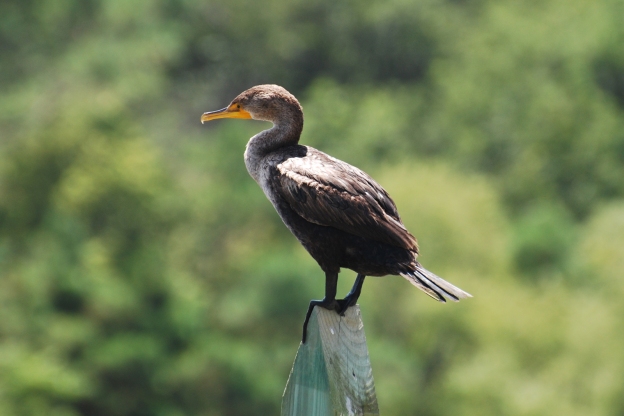
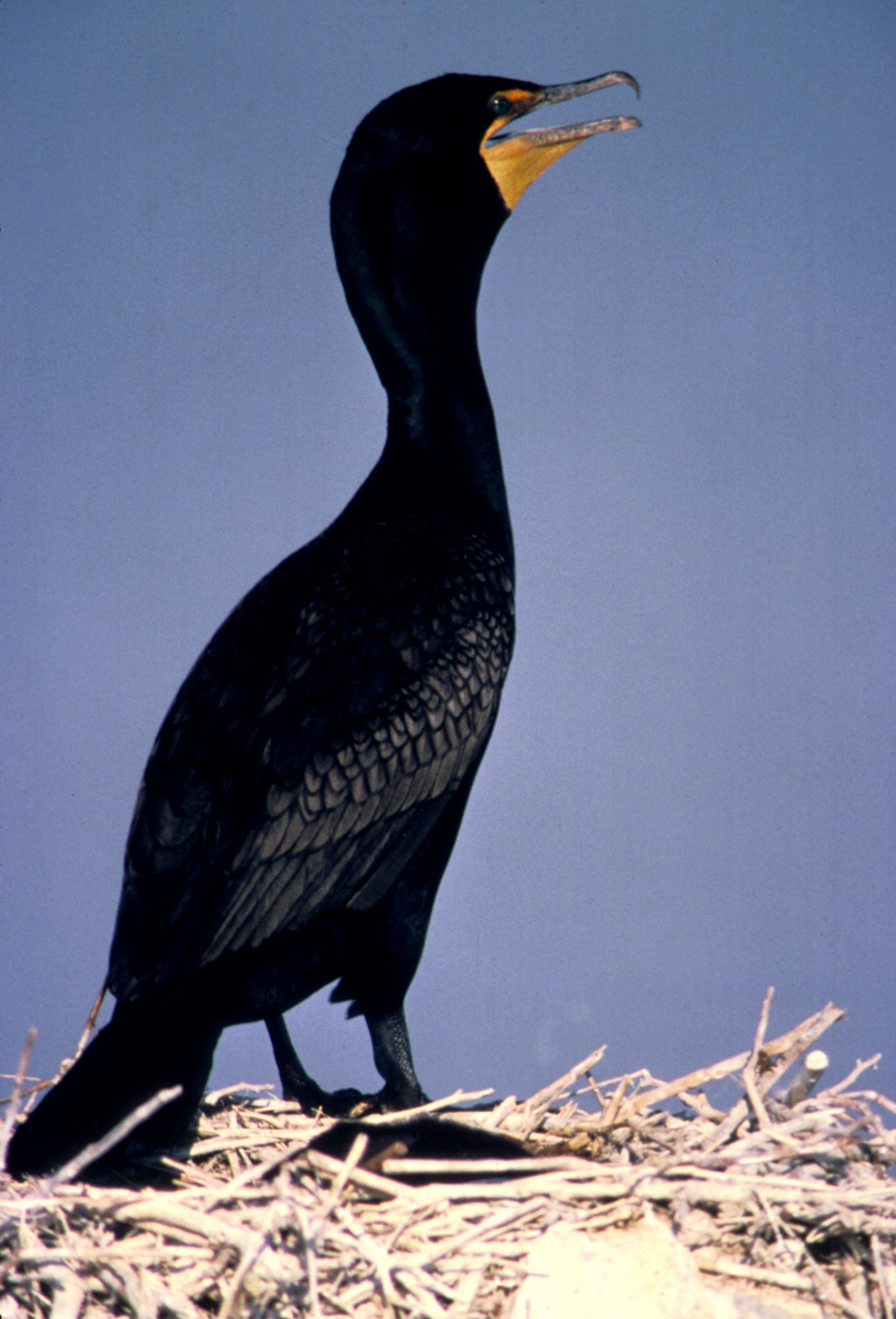
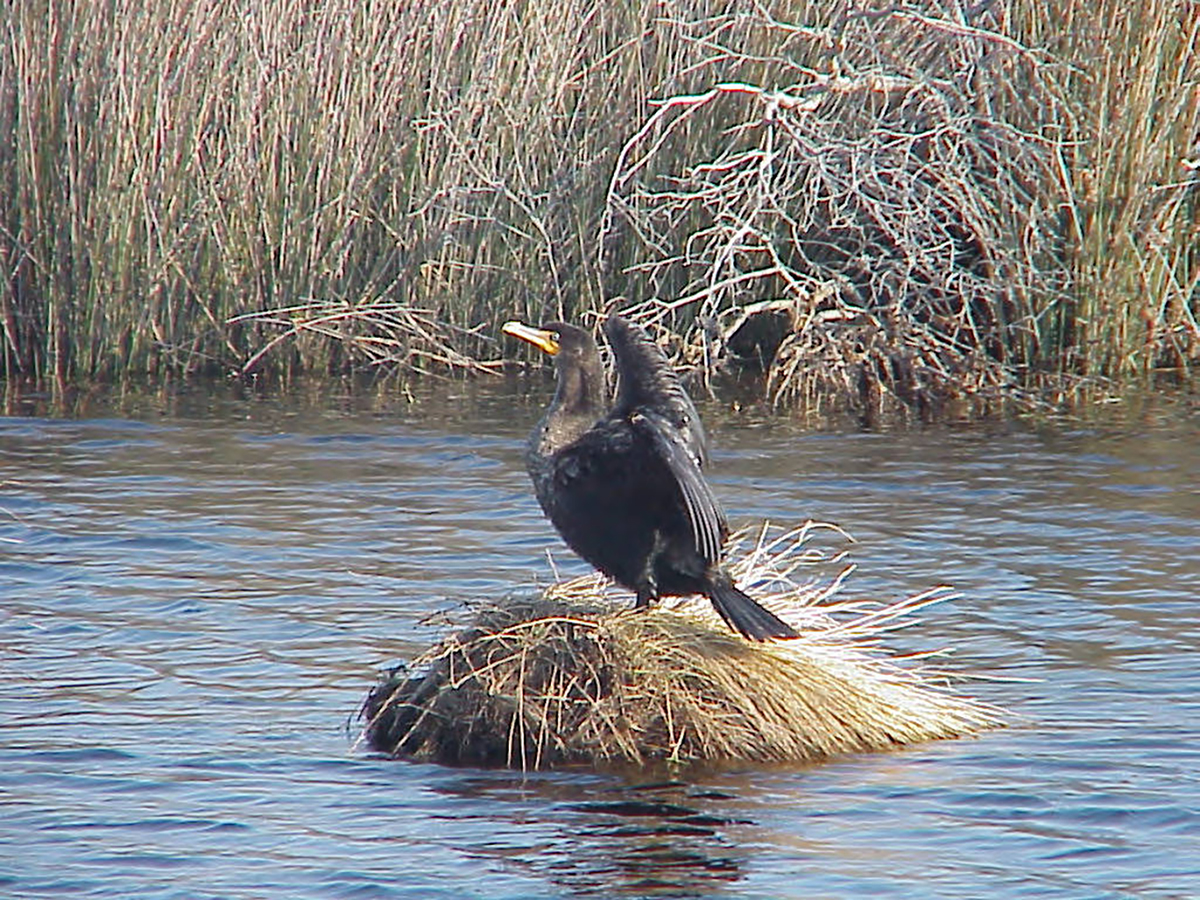
Photo by Rodney Krey/U.S. Fish & Wildlife Service • The double-crested cormorant is a water bird designed for preying on fish. The population of this cormorant has increased in recent years.


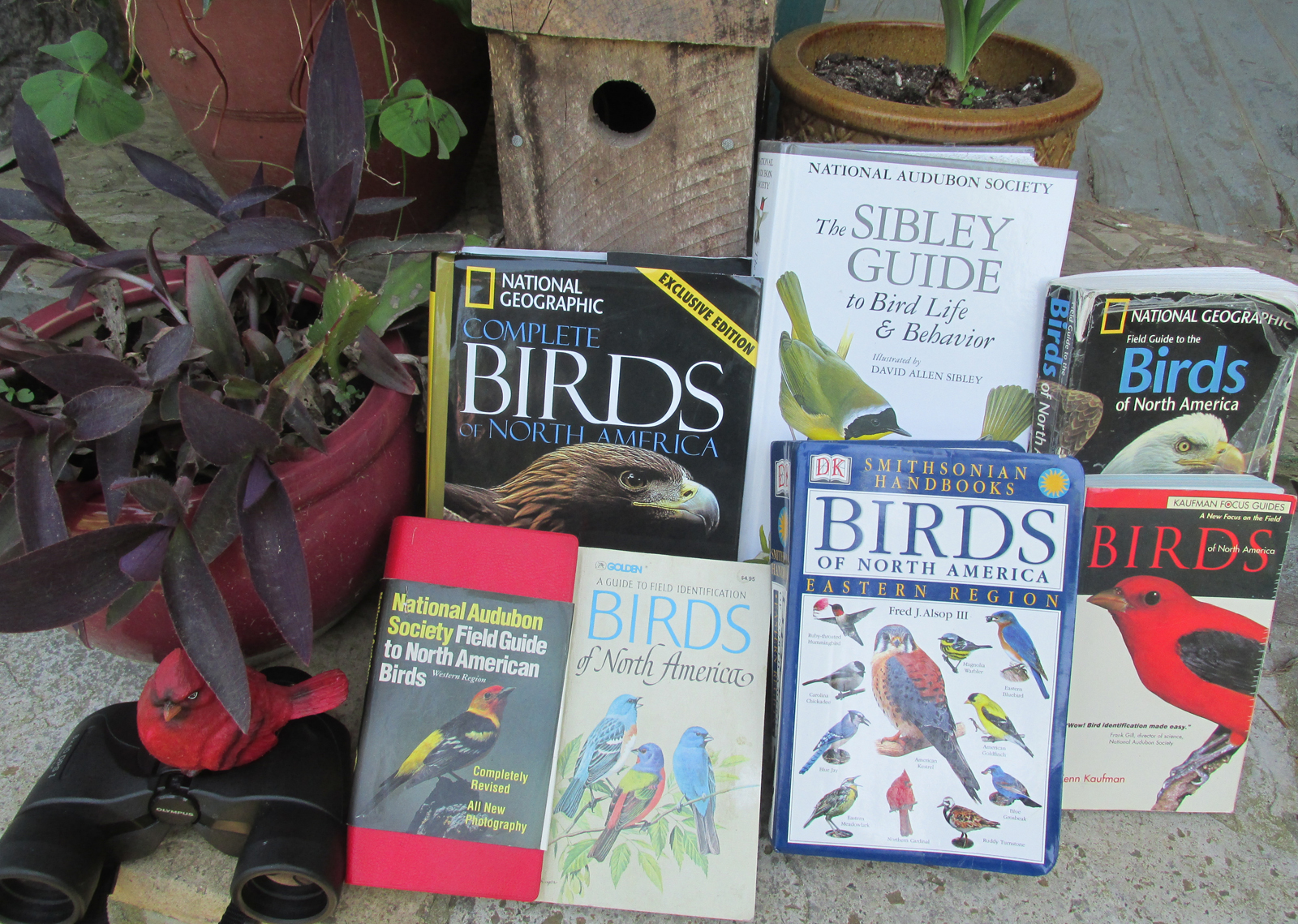
For those interested in learning to identify the birds they see during trips or that show up in their gardens or yards, a good field guide is an indispensable tool. But for whatever the reason, I’ve got to add a slight caveat to my recommendation to obtain a field guide for bird identification help: The range maps in many of our field guides are in need of a good update.

As a case in point, I recent received an email from reader Beth Webb, who had a question about an observation she made recently.

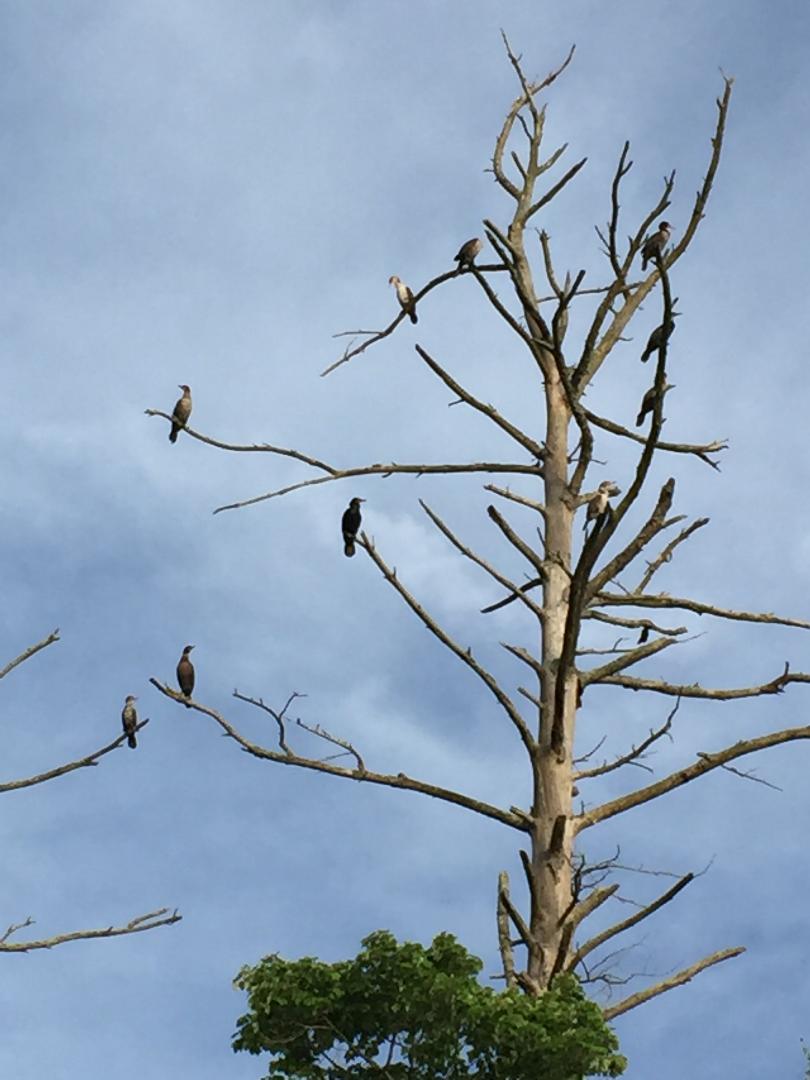
“While at South Holston Lake this weekend, I saw about 12 or 18 birds in a tree,” Beth wrote. “I could not identify them.”

She noted that her binoculars were not the best and the boat was rocking. Nevertheless, she had an idea on the identity of the perched birds.

“They had the silhouette of a cormorant,” Beth wrote. “My field guide is older and it does not place cormorants in this area, but I am wondering if they have been sighted here.”

Beth added that several years ago she saw a cormorant at South Holston Lake and was able to watch it dive in one spot and come up several seconds later in another.

Photo courtesy of Sandy Loving • This photo taken on June 14, 2019, probably shows some of the same cormorants that Beth Webb saw on South Holston Lake.

I emailed Beth back an answer to her query, telling her that double-crested cormorants have not always been a common bird in our region. For the past couple of decades, their numbers have been increasing nationwide, not just in our region.

The fact that she saw so many of them in a single tree makes me think she probably came close to a nesting rookery. Cormorants often nest near wading birds like great blue herons, which are also known to nest at South Holston Lake.

So, even with a rocking boat, Beth did a great job identifying the cormorants. Beth’s observation points out a weakness in some field guides. Birds are not static creatures. They have the power of flight and are constantly using that ability to expand into new places, Publishers of bird identification field guides are often challenged to keep pace.

Photo by U.S. Fish & Wildlife Service • A double-crested cormorant dries its wings after a swim.

For instance, the region’s birders birding in the 1970s would have considered the now ubiquitous Canada goose a rare bird. Before the 1980s, the tree swallow hardly ever nested in the region. Another swallow – the cliff swallow – has abandoned the faces of cliffs to nest beneath concrete bridges and has gone from being a rare swallow in the region to one of the most common summer nesting birds in the entire region in just the last couple of decades. Species ranging from cattle egret to Eurasian collared dove may not appear on the range maps in your guide books, but they can be found in the region.

Most bird identification guides follow a simple format: illustrations (photographs or paintings) that are accompanied by brief, precise text and maps showing a particular bird’s expected range, sometimes delineated by season. Many birds may be absent in summer but present in winter, for instance, so a color-coded range map designating year-round, summer and winter residency is highly desirable.

Photo by Bryan Stevens • Field guides are an essential tool for bird identification, but features such as range maps can quickly go out of date.

A good field guide should also be small enough to be easily carried and consulted in the field. One that slides into a pocket is ideal. Many tech-savvy people are relying on their smart phones as an alternative to a field guide, but the printed page is hard to beat in remote areas where a phone experiences difficulty finding enough signal bars.

Hopefully future field guides will include updates to the range maps that show cormorants do indeed reach Northeast Tennessee and Southwest Virginia.

Two of the field guides that I recommend for beginning birders are the Golden Guide to Birds of North America by Chandler S. Robbins and the Peterson Field Guide to Birds of North America by Roger Tory Peterson.

The cormorants are certainly a bird worth knowing. The double-crested cormorant belongs to a family of 40 birds consisting of species referred to as both cormorants and shags. Some of the world’s other cormorants include the flightless cormorant, black-faced cormorant, white-breasted cormorant, crowned cormorant, little cormorant, pygmy cormorant and the imperial shag, which is also known as the blue-eyed shag.

Besides the double-crested cormorant, North America is home to five other species. The great cormorant lives along the shores of the Atlantic Ocean from Canada down to southern Florida. The pelagic cormorant and the Brandt’s cormorant can be seen along North America’s Pacific coastline. The red-faced cormorant lives in the southern regions of Alaska out into the Aleutian Islands. The most southern of these North American cormorants is the Neotropic cormorant, which is found along the southeast areas of Texas down into Mexico.

All cormorants primarily fish for their meals. They have strong legs to propel them though the water when they dive for fish. They also have a serrated bill with a hooked tip that is excellent for grasping slippery fish.

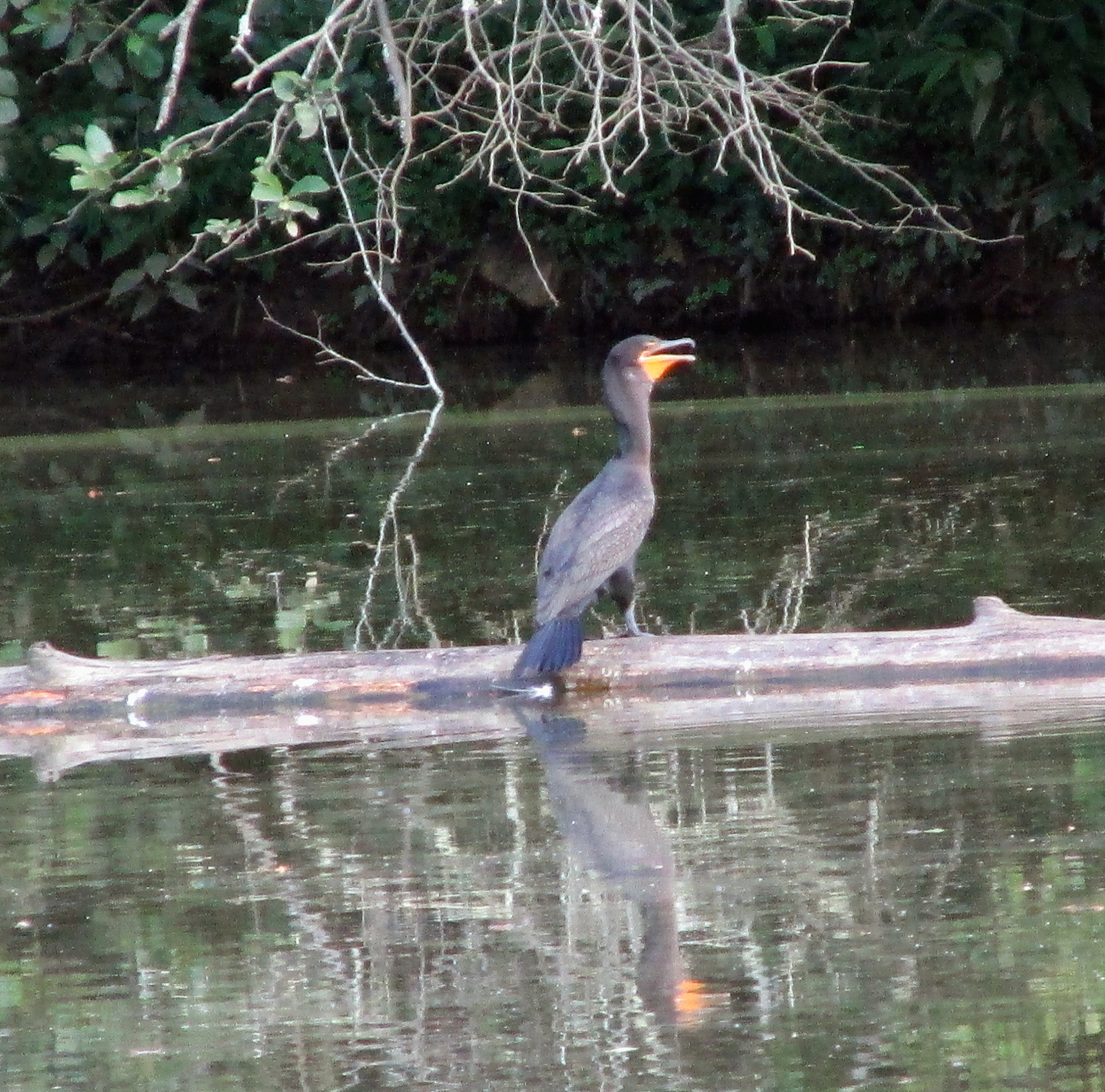
Photo by Bryan Stevens • A double-crested cormorant rests on a fallen log after a swim in a lake near Atlanta, Georgia.

On the recent Spring Bird Count for Northeast Tennessee conducted by the Lee and Lois Herndon Chapter of Tennessee Ornithological Society, a total of 82 double-crested cormorants were found on area waterways. Those birds provide a good indication that cormorants are now an established species in the region.

Father of the Bird: Fatherhood runs the gamut among world’s birds

Photo by picman2/Pixabay.com • A male satin bowerbird has collected blue objects to decorate his “bower,” which provides a stage for performing elaborate mating displays designed to attract interested female bowerbirds.

As we honor fathers today with a special day in their honor, I thought it might be a good time to look to the bird world for some examples of what fatherhood means among our fine feathered friends.

Among many of the raptors, which includes hawks, falcons and eagles, females are significantly larger than males. Unsurprisingly, much of the job of protecting the nest and young falls to the larger and stronger females. Male raptors, for the most part, are good parents and hunt prey and deliver food to the nest. Sometimes, though, there can be trouble in paradise. For example, researchers are giving a new look at the dynamics between mated bald eagles. The prevailing theory once supposed that bald eagles mate for life.

In an article published Nov. 9, 2012, on the website of William and Mary College, researchers announced that they have begun to notice that eagles on occasion undertake the avian equivalent of “divorce.”

Photo by Bryan Stevens • Although bald eagles were long thought to mate for life, the national bird is not quite as devoted to its mate as originally believed.

Bryan Watts, the director of the Center for Conservation Biology, was interviewed for the article. Watts noted that both males and female eagles will cheat. Getting away with cheating, however, favors the female. Watts explained that the male may be absent fishing when another male eagle visits the nest site and proceeds to mate with the female. Consequently, the unsuspecting mate returns and could end up raising eaglets that were fathered by the intruder instead of himself.

There are some male birds who are more steadfast once they mate. For instance, swans, cranes and albatrosses are known for sticking with a chosen mate over a lifetime. Two endangered species — the California condor and the whooping crane — are known to mate for life. Cranes typically choose a mate when they reach the age of two or three; condors, on the other hand, usually don’t mate until they are at least six to eight years old. Of course, both these birds live long lives. Whooping cranes may live to the age of 25 while condors can live for as long as six decades.

Photo by U.S. Fish & Wildlife Service • Endangered California condors typically do mate for life.

According to the Audubon website, we can look to a family of shorebirds for some examples that go against usual gender norms. Phalaropes reverse the usual sex roles in birds, with the females being larger and more colorful than males, In addition, females take the lead in courtship, while males are left to incubate the eggs and care for the young once the business of mating is done. Three species of phalaropes inhabit North America: Wilson’s phalarope, red-necked phalarope and red phalarope.

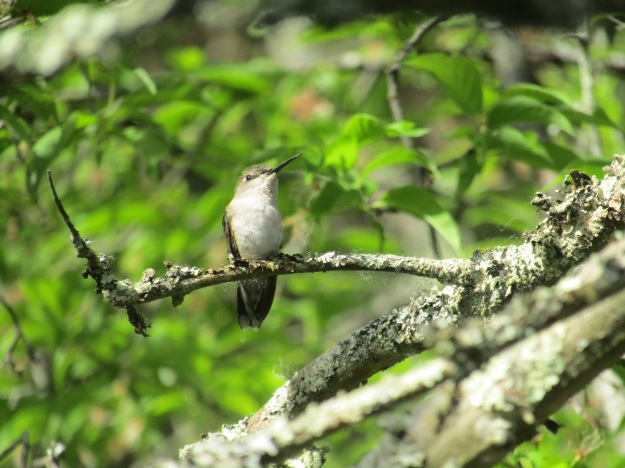
Many male birds lend a hand in building nests or raising young. There are some examples of “deadbeat dads,” however, with one of the most glaring being the beloved ruby-throated hummingbird. A male hummingbird is unlikely to ever lay eyes on his offspring. Once mating has been concluded, the female is left to build a nest on her own. She also incubates the eggs without any help from her mate, who has probably already skipped out and started to court other female hummingbirds in the vicinity. Once the two eggs hatch, the female hummingbird is solely responsible for feeding the hungry offspring. It’s the primary reason hummingbirds always lay two eggs. With her high metabolism, a female hummingbird would be hard pressed to feed herself and any more than two young.

Photo by Bryan Stevens • Male hummingbirds do little to help females construct a nest and care for young.

Some male birds, like their human counterparts, approach romance by initiating courtship by bringing some shiny bling to the relationship. Bowerbirds, which are found mainly in New Guinea and Australia, are renowned for their unique courtship behavior. A male bowerbird will build a structure — the bower — and decorate it with sticks, flowers, shells or other brightly colored objects in an attempt to attract a mate. Alas, once he has won a mate with these “bribes,” he’s no better than male hummingbirds. The females are left to build the nest and raise the young without any assistance from the males.

Satin bowerbird males often decorate with blue, yellow or shiny objects, including berries, flowers or even plastic items such as ink pens, drinking straws and clothes pegs. As the males mature they use more blue objects than other colors. The decorated bower becomes a stage from which males carry out intense behavioral displays called dances to attract their mates.

The world’s largest flightless birds – ostriches, emus, rhea, cassowaries and a few others – would make good “father of the year” candidates. For instance, male ostriches share incubation duties with females. Once the eggs hatch, male ostriches are active in leading young to suitable foraging habitat and protecting them from predators. Some male ostriches can stand nine feet tall and weigh 320 pounds, so dad is an imposing obstacle for many predators. In the event of an attack, the male will try to draw off the predator while the chicks run for cover with their mother.

Photo by Pixabay on Pexels.com The male common ostrich, the world’s largest bird, is a dedicated father to his young, offering protection from a dangerous world.

Fatherhood often means a dedicated effort on the part of some birds, while other basically make their genetic contribution to ensuring the survival of the species and are done with the concept. There’s a surprising variety to behold once one starts looking at the different avian approaches to fatherhood.

blue and multicolored peacock

Photo by Chris Brenner on Pexels.com • Male birds, such as the Indian Peafowl, use various displays to attract mates. After mating is completed, male birds vary in the degree of assistance they offer with the task of raising a brood of hungry young.

Annual Spring Bird Count gives snapshot of local bird populations

CommonMerg

Photo by Bryan Stevens • This female Common Merganser was photographed resting on a log during this year’s Spring Bird Count.

The recent five-county Spring Bird Count conducted Saturday, May 4, by the Elizabethton Bird Club found 145 species in the five Northeast Tennessee counties of Carter, Johnson, Sullivan, Unicoi and Washington. The count included such cities as Erwin, Bristol, Johnson City, Jonesborough, Kingsport and Mountain City.

BS-OrchardOriole-Forsythia

Photo by Bryan Stevens • Orchard orioles, like this bird, as well as Baltimore orioles, were found on the Spring Bird Count.

A total of 57 participants in 11 parties counted during the annual survey of avian populations in the region. The long-running count is the only spring census of birds conducted in Northeast Tennessee.

This year marked the 76th consecutive year that the Elizabethton Spring Bird Count has been conducted. The weather was mostly favorable, except for a late afternoon band of thunderstorms that passed through rather quickly.

A total of 154 species were tallied, which is slightly above the recent 30-year average of 149 species. The all-time high was 166 species found in 2016.

Count-NightHeron

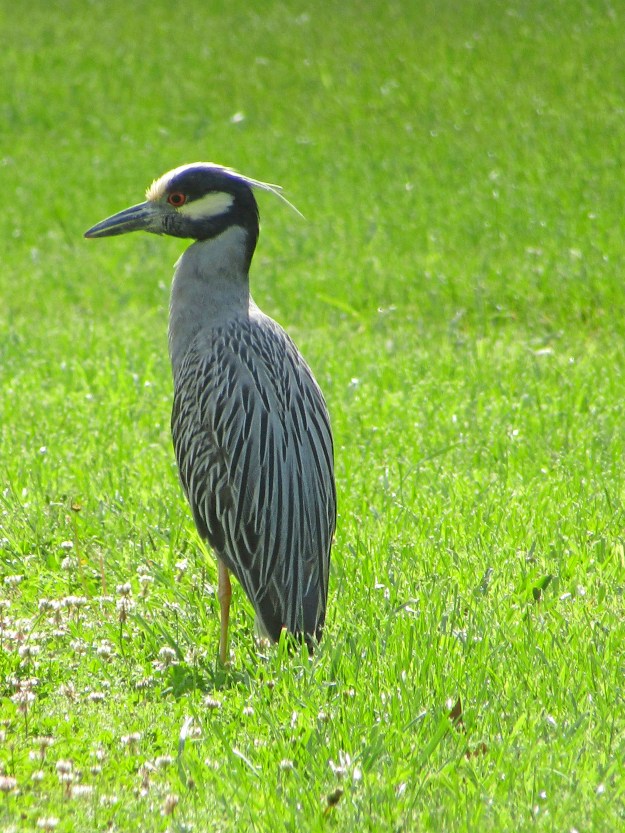
Several species of herons, including this Yellow-crowned Night Heron, were found for this year’s Spring Bird Count conducted by members and friends of the Elizabethton Bird Club.

Long-time compiler Rick Knight noted some highlights:
• Lingering gadwall and buffleheads.
• Four common merganser hens were found at sites on the Watauga River. These birds make up part of a regional breeding population.
• An American bittern.
• Both night-heron species.
• Bald eagles.
• Three sora rails.
• Three Forster’s Terns.
• Six Black-billed cuckoos.
• Two Northern Saw-whet owls.
* Four yellow-bellied sapsuckers, which are part of a regional breeding population.
• A single willow flycatcher.
• A pair of loggerhead shrike at a new site for the species.
• A single hermit thrush singing on territory at Roan Mountain.
• A single dickcissel.
• Two purple finches lingering later than usual.
• Nine pine siskins.
• A total of 29 warbler species, including golden-winged, Swainson’s, cerulean and Canada.

Siskin-Yellow

Photo by Bryan Stevens • Pine siskins are often considered winter birds, but some of these birds nest at higher elevations in the region.

Canada goose, 454; wood duck, 60; gadwall, 1; mallard, 151; bufflehead, 3; and common merganser, 4.

Ruffed grouse, 1; wild turkey, 38; pied-billed grebe, 1; double-crested cormorant, 82; American bittern, 1; great blue heron, 115; green heron, 15; black-crowned night-heron, 5; and yellow-crowned night-heron, 4.

American kestrel, 9; black vulture, 117; turkey vulture, 99; osprey, 10, sharp-shinned hawk, 1; Cooper’s hawk, 6; bald eagle, 5; red-shouldered hawk, 1; broad-winged hawk, 2; and red-tailed hawk, 18.

Sora, 3; killdeer, 29; spotted sandpiper, 27; solitary sandpiper, 16; lesser yellowlegs, 2; least sandpiper, 5; Wilson’s snipe, 1; and Forster’s tern, 3.

gbbc-killdeer

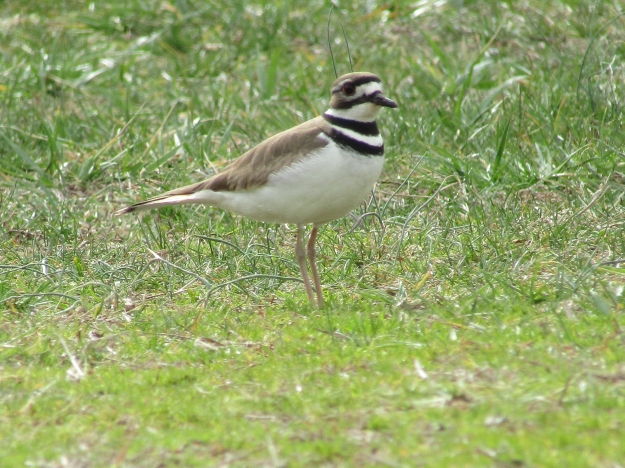
Photo by Bryan Stevens • Killdeer, a species of shorebird in the plover family, is a permanent resident in the region and was the most common shorebird on the count.

Rock pigeon, 179; Eurasian collared dove, 2; mourning dove, 263; Eastern screech-owl, 4; great horned owl, 1; barred owl, 7; Northern saw-whet owl, 2; common nighthawk, 1; chuck-will’s widow, 8; and Eastern whip-poor-will, 28.

Chimney swift, 112; ruby-throated hummingbird, 25; belted kingfisher, 13; red-headed woodpecker, 2; red-bellied woodpecker, 92; yellow-bellied sapsucker, 4; downy woodpecker, 21; hairy woodpecker, 1; and pileated woodpecker, 41.

Eastern wood-pewee, 18; Acadian flycatcher, 8; willow flycatcher, 1; least flycatcher, 5; Eastern phoebe, 103; great crested flycatcher, 21; and Eastern kingbird, 77.

Loggerhead shrike, 2; white-eyed vireo, 16; yellow-throated vireo, 2; blue-headed vireo, 60; warbling vireo, 5; red-eyed vireo, 261; blue jay, 194; American crow, 246; and common raven, 14.

BarnSwallows.jpg

Photo by Bryan Stevens • A nest of barn swallows demonstrates the affinity of this species for human structures.

Northern rough-winged swallow, 134; purple martin, 33; tree swallow, 240; barn swallow, 188; and cliff swallow, 584.

Carolina chickadee, 106; tufted titmouse, 142; red-breasted nuthatch, 10; white-breasted nuthatch, 17; brown creeper, 3; house wren, 63; winter wren, 7; and Carolina wren, 153.

Blue-gray gnatcatcher, 66; golden-crowned kinglet, 10; Eastern bluebird, 129; veery, 27; Swainson’s thrush, 3; hermit thrush, 1; wood thrush, 91; American robin, 581; gray catbird, 76; brown thrasher, 65; Northern mockingbird, 88; European starling, 654; and cedar waxwing, 39.

Ovenbird, 127; worm-eating warbler, 28; Louisiana waterthrush, 27; Northern waterthrush, 1; golden-winged warbler, 3; black-and-white warbler, 96; Swainson’s warbler, 8; Tennessee warbler, 1; Nashville warbler, 1; common yellowthroat, 23; hooded warbler, 157; American redstart, 14; Cape May warbler, 6; cerulean warbler, 1; Northern parula, 44; magnolia warbler, 4; bay-breasted warbler, 2; Blackburnian warbler, 10; yellow warbler, 11; chestnut-sided warbler, 30; blackpoll warbler, 1; black-throated blue warbler, 71; palm warbler, 1; pine warbler, 8; yellow-rumped warbler, 5; yellow-throated warbler, 20; prairie warbler, 5; black-throated green warbler, 75; Canada warbler, 40; and yellow-breasted warbler, 8.

hooded-warbler

Photo by Bryan Stevens • The hooded warbler was the most common warbler on the count, with a total of 157 individuals found.

Eastern towhee, 153; chipping sparrow, 128; field sparrow, 68; Savannah sparrow, 3; grasshopper sparrow, 5; song sparrow, 303; white-throated sparrow, 2; white-crowned sparrow, 1; dark-eyed junco; 54; summer tanager, 2; scarlet tanager, 86; Northern cardinal, 248; rose-breasted grosbeak, 15; blue grosbeak, 7; indigo bunting, 145; and dickcissel, 1.

Red-winged blackbird, 381; Eastern meadowlark, 95; common grackle, 371; brown-headed cowbird, 110; orchard oriole, 34; Baltimore oriole, 46; house finch, 68; purple finch, 2; pine siskin, 9; American goldfinch, 166; and house sparrow, 59.

CBC-Bufflehead

Photo by Bryan Stevens • Lingering waterfowl, such as these buffleheads, were found on the annual Spring Bird Count.

Woodpecker still bears name of historic expedition’s charismatic leader

natdiglib_28237_extralarge

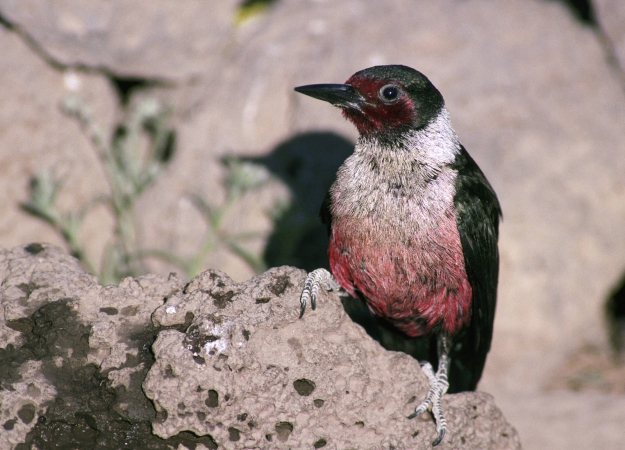
The Lewis’s woodpecker’s common and scientific names pay tribute to the famed explorer Meriwether Lewis, who with his partner, William Clark, explored the American West.

The 215th anniversary of the launch of the famous Lewis and Clark Expedition will be observed May 14. Also known as the Corps of Discovery Expedition, the enterprise became the first American expedition to cross the western portion of the United States and explore the recently acquired lands known collectively as the Louisiana Purchase. The Lewis and Clark expedition officially extended from May 14, 1804, to Sept. 23, 1806. As they drove deep into the American West, the members of the expedition saw wonders, including the feathered variety, never before beheld by people outside of various Native American tribes.

In authorizing the expedition, President Thomas Jefferson wanted to establish a reliable route for travel through the western half of the nation and to fend off any attempts by European nations to gain a foothold beyond the nation’s frontier. Jefferson also hoped Meriwether Lewis and William Clark would make some important discoveries about the nation’s native fauna and flora. Jefferson gave instructions for Lewis and Clark to collect bones they found during their journeys. He also asked them to keep alert for large animals that would be new to science. In particular, Jefferson hoped that the men he chose to head the expedition would help prove that the American mastodon still roamed the American West.

Mastodon bones had been found in the eastern half of the United States early in the nation’s history. Jefferson, accepting the widely held view of his time that God would not let animals go extinct, entertained the optimistic belief that large herbivores such as the bison of the American West roamed portions of the newly-acquired Louisiana Purchase along with American mastodons. The expedition failed to find great herds of American mastodons trumpeting their way across the vast prairies and grasslands of the Western United States. As any student of history knows, however, the expedition made many important biological discoveries ranging from unique animals as the pronghorn antelope and grizzly bear to various fish, reptiles and plants.

Meriwether_Lewis-Charles_Willson_Peale

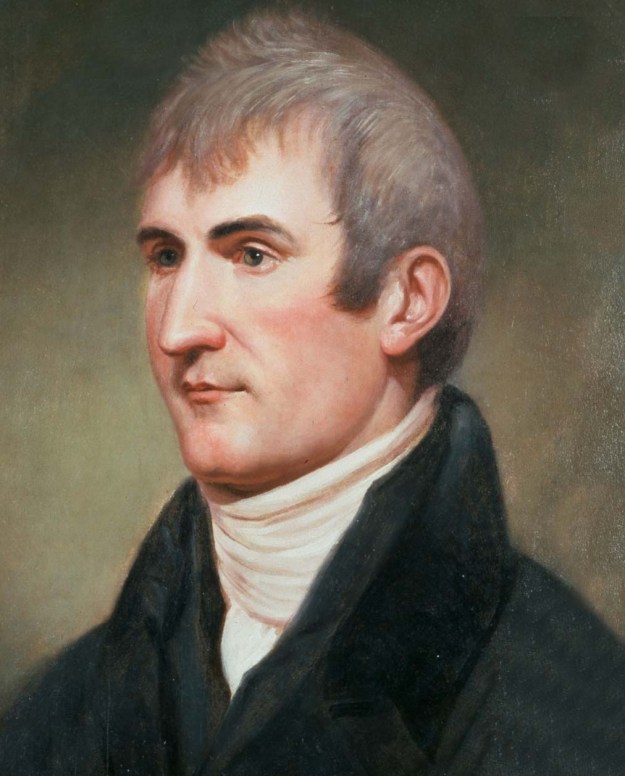
Meriwether Lewis gave his name to the famous Lewis and Clark Expedition. as well as to the woodpecker named Lewis’s woodpecker.

The expedition also described nearly half a dozen species of birds that, at the time, had never been discovered and detailed by European Americans. These birds included the common poorwill and the greater sage-grouse. One of the birds — Lewis’s woodpecker — even memorializes the name of Meriwether Lewis and his important contributions to the success of the venture.

Lewis described the woodpecker that now bears his name as a bird “new to science” in one of his journal entries dated May 27, 1806. He made his observations of the bird while the expedition camped on the Clearwater River in what is now known as Kamiah, Idaho. He had mentioned the “black woodpecker” in earlier accounts in his journal, but during his time in the Idaho camp, he managed to shoot and preserve several of the birds. In his account, he described the bird’s behavior as similar to the red-headed woodpecker of the Atlantic states back in the eastern United States.

As it turns out, both Lewis’s woodpecker and the red-headed woodpecker belong to the Melanerpes genus of woodpeckers, which also includes about two dozen species ranging North and South America, as well as the islands of the Caribbean. The other members of the genus found in the United States include acorn woodpecker, gila woodpecker and red-bellied woodpecker. The term Melanerpes comes from ancient Greek words for black (melas) and creeper (herpes), which roughly translates as “black creeper.” Lewis’s woodpecker, one of the largest of its kind found in the United States, can reach a length of 10 to 11 inches. In 1811, the famous naturalist Alexander Wilson composed the first description of the bird for science and named it Melanerpes lewis after Meriwether Lewis. In addition, the bird’s common name has always identified it as Lewis’s woodpecker.

Lewis-Woodpecker

Photo by Dave Menke/U.S. Fish and Wildlife Service • Lewis’s woodpecker is found primarily in the west. It eats insects, mostly caught in the air, as well as fruits and nuts. The woodpecker also shells and stores acorns in the bark of trees.

These woodpeckers nest in open ponderosa pine forests and burned forests with a high density of standing dead trees. They also breed in woodlands near streams, oak woodlands, orchards, and pinyon-juniper woodlands. In appearance, Lewis’s woodpecker stands out from other American woodpeckers. Its unique appearance includes a pink belly, gray collar and dark green back, quite unlike any other member of its family. In behavior, it also differs from other woodpeckers. This woodpecker is fond of flycatching, perching on bare branches or poles and then making flight sallies to capture winged insect prey. It has also been described as flying more like a crow than a woodpecker.

We haven’t been good stewards of the woodpecker that the famous Expedition brought to our notice. According to the organization Partners in Flight, Lewis’s Woodpeckers are uncommon and declining. Their populations declined by 72 percent between 1970 and 2014. Lewis’s Woodpeckers are threatened by changing forest conditions as a result of fire suppression, grazing and logging. These factors often leave pines of a uniform age in the woodpecker’s favored habitat and fewer of the dead and decaying pines crucial for the bird’s nesting success. Humans could help Lewis’s woodpecker thrive by not removing dead or dying trees from western forests.

After the Lewis and Clark Expedition returned to the eastern United States and reported back to Jefferson, he was awarded with 1,600 acres of land. He meant to work on publishing the journals he kept during the Expedition, but kept finding himself distracted. In 1807, Jefferson appointed Lewis governor over the Louisiana Territory that Lewis and Clark had so famously explored. He governed the territory from the Missouri city of St. Louis, which became known as the “Gateway to the West” as more Americans expanded into the territory they had learned about thanks to the famous Expedition.

lewis_memin-tippet

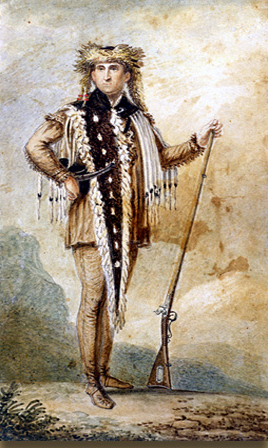
Meriwether Lewis in a pose painted with him wearing garb he chose for the expedition.

Lewis spent two troubled years trying to administrate the new territory, but he became entangled in political squabbles and financial difficulties. Things got so difficult for him that Lewis decided he needed to travel to the nation’s capital in person to clear up the mess. On his way to Washington, D.C., he stopped at an inn along the Natchez Trace about seventy miles southwest of Nashville. He died of gunshot wounds on Oct. 11, 1809, and historians have debated ever since whether his death resulted from suicide or murder. Regardless of the nature of his demise, he earned a place in the history books. He’s also remembered every time a birder lays eyes on the woodpecker that bears his name. When the bird is researched in a field guide or on a web page, the more curious individuals are sure to dig a little deeper to learn who provided the Lewis in the woodpecker’s name. His name will continue to be recalled as long as this unusual western woodpecker continues to fly in its beloved pine forests.

I’ve never seen a Lewis’s woodpecker, although I have visited Utah twice to make the attempt. Lewis’s woodpecker is listed as an uncommon permanent resident on the state checklist, so perhaps I will need to be more diligent the next time I visit its home range. I see the red-bellied woodpecker, a smaller relative of Lewis’s woodpecker, on a regular basis. This common bird more closely resembles what most people expect a woodpecker to look like, and it will visit feeders for such fare as sunflower seeds, peanuts and suet.

A-Red-belliedTHREE

Photo by Bryan Stevens • The red-bellied woodpecker is a close relative to Lewis’s woodpecker.

In next week’s column, I’ll continue my anniversary tribute to the Lewis and Clark Expedition with a discussion of the bird that honors William Clark, the other partner in the famous westward expedition of discovery.

Readers continue to share hummingbird tales
Garry Cole sent me an email recently to share a hummingbird story.

“I have been following the progress of hummingbird sightings as the birds moved closer to East Tennessee,” Garry wrote. “I read with envy how neighbors all around me had seen these jewels, but none had visited my home here in Hickory Tree near Bluff City.”

Then, on April 23, as Garry sat in the yard, a male ruby- throated hummingbird stopped and hovered less than a foot in front of his face.

“He looked me squarely in the eye as if to say, ‘Well, I’m here. When are you going to feed me?’”

Garry noted that the bird arrived at about 8:15 p.m. “I immediately went inside and prepared my feeder,” he said. “Now, I have at least four that visit my feeder every day. There may be more, but I have only seen four at one time.”

His hummingbirds drink about eight ounces of sugar mix every two or three days and seem to feed more frequently between 5 and 7 p.m.

Tom Brake shared via Facebook that hummingbirds have also returned to his home on Peaceful Valley Road in Abingdon, Virginia. In his posting to my Facebook page, he informed me that he had his first hummingbird sighting of spring on April 28.

Myra Harris message me on Facebook to let me know her mom, Mae Bell Byrd, who lives in Flag Pond in Unicoi County, Tennessee, saw her first hummingbird on April 12.

IMG_2786

Photo by Bryan Stevens • Welcoming back hummingbirds also involves making sure that they remain healthy and safe while spending the next six months in our yards and gardens.

Birds serve as muses to inspire poets to greater heights

turtledove-1275164_1920

Photo by makamuki0/Pixabay.com • The turtledove has featured prominently in poems and other literature, including the holiday song “The 12 Days of Christmas.”

With May’s arrival, other migrating birds have made stops in my yard, providing some excitement to the daily routine. It’s easy to wax poetic about the birds around us. Indeed, poets have been incorporating birds into some of their best-known work for centuries.

The Bard himself penned a poem titled “The Phoenix and the Turtle.” While the phoenix is a mythical bird and not one actually found in nature, the “turtle” in the poem’s title refers to the well-known European turtledove. Even before Shakespeare glorified the turtledove in his poetry, this small dove had already been entangled with myth and legend stretching back to Ancient Greece and Rome. For instance, the turtledove was considered by the Greeks as sacred to Demeter, the goddess of the harvest. Romans adopted the turtledove as an emblem of their goddess Fides, who reigned over the attributes of trust and faith. Perhaps, even more famously, the turtledove is still known today in the lyrics of the enduring Christmas carol, “The 12 Days of Christmas,” as the gift given on the second day of Christmas.

phoenix-2877486_1920

Photo by skylarvision/Pixabay.com • The phoenix was a legendary bird that, if destroyed, arose from its own ashes to live again.

Samuel Taylor Coleridge gave us his gloomy “The Rime of the Ancient Mariner” in 1798. The longest of his poems, it tells of a sailor who brings ill fortune upon himself by shooting an albatross, which is a family of sea-going birds consisting of about two dozen species. The poem also inspired the phrase “having an albatross around one’s neck” as a metaphor for bad luck.

samuel_taylor_coleridge

The poet Samuel Taylor Coleridge popularized the phrase “albatross around one’s neck” to suggest a period of ill fortune in his poem “The Rime of the Ancient Mariner.”

Albatrosses are large birds with wingspans larger than most other birds, making them capable of spending almost their entire lives at sea except for the times they come ashore for the purpose of nesting. The entire family has been besieged by a variety of problems, many of which are caused by humans. Three albatross species are critically endangered, five species are endangered, seven species are near threatened and seven species are considered vulnerable.

One of America’s most famous poets often looked to the natural world, especially its feathered inhabitants, for inspiration for some of her most famous poetry. “Hope is the Thing with Feathers” by Emily Dickinson is arguably one of the finest metaphors in American poetry, with the abstract concept of hope being equated with a bird Dickinson likely observed in her gardens in Amherst, Massachusetts.

Emily_Dickinson_daguerreotype

The poet Emily Dickinson’s perceptive observations of the natural world show in her poetry.

I’ve always enjoyed Dickinson’s “A Bird Came Down the Walk,” which transforms an ordinary encounter between a bird and a woman tossing it a crumb into an inspiring message of perseverance. One cannot help but feel that Dickinson, a famously reclusive woman, also envied the bird its power of flight and the freedom its wings gave it.

A near contemporary of Dickinson, and one famous for his moody, rhythmical works, Edgar Allan Poe published his masterpiece “The Raven” in 1845. While the poem won him many fans, he received a paltry $9 from the magazine “The American Review” for the work. Perhaps because of the insulting matter of compensation, Poe first allowed the work to be published under a pseudonym. “The New York Evening Mirror” became the first outlet to publish the poem with Poe’s name attached to it.

portrait-62996_1280

Edgar Allan Poe

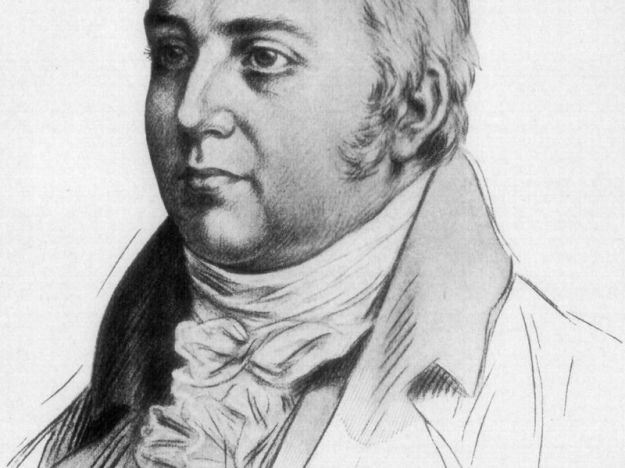
The young poet Percy Bysshe Shelley wrote a classic poem titled “To a Skylark” in 1820. Shelley, one of the English Romantic poets, has been overshadowed in some ways by his wife, the novelist Mary Shelley, who provided the world with the enduring novel Frankenstein. Shelley apparently wrote his poem after he and his wife encountered one of these birds during a stroll in the countryside during a trip to Italy.

As is the case with good literature, Shelley’s poem inspired other authors. Reportedly, the English playwright Noël Coward and the American novelist F. Scott Fitzgerald received inspiration from lines in the poem to create titles for their respective works, “Blithe Spirit” and “Tender is the Night.” American playwright Tennessee Williams titled his first play “Not About Nightingales,” apparently as a reaction to Shelley’s ode.

pg-10-shelley-pa

Although his wife arguably achieved more fame with her novel, Frankenstein, Percy Bysshe Shelley won immortality with his memorable poems in the spirit of English Romanticism.

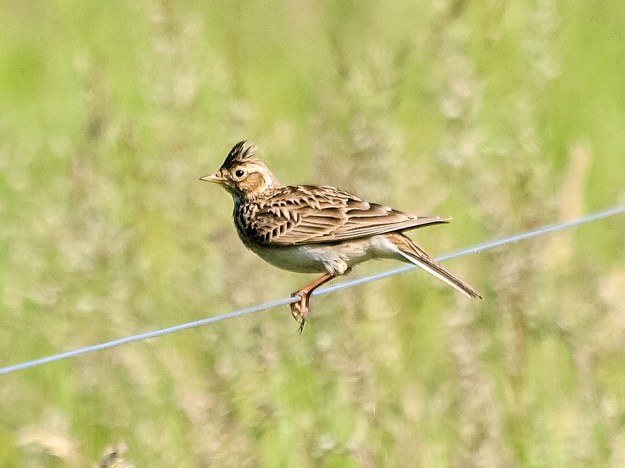
The Eurasian skylark is a widespread species found across Europe and Asia. This bird has also been introduced in various locations around the world. In North America, introduced populations of skylarks are found on southern Vancouver Island in British Columbia and San Juan Island in the state of Washington.

The only native lark in North America is the horned lark, also known by its scientific name of Alauda alpestris, which translated means “lark of the mountains.” The horned lark is a common, widespread bird of open country, such as prairies, deserts, and agricultural lands. Although horned larks also sing in flight like their relative, only the Eurasian skylark seems to be famous enough for its song to inspire poets to write tributes. The Eastern meadowlark, a fairly common bird in the region, is not an actual lark but a member of the blackbird family.

skylark-2394813_1920

Photo by Kathy2408/Pixabay.com • A Eurasian skylark perches on a wire. This bird once inspired the poet Percy Bysshe Shelley to write his famous poem “To a Skylark.”


Based on the opening lines to Shelley’s poem, it can be safely argued that Shelley was particularly impressed by the skylark’s song.

“Hail to thee, blithe spirit!
Bird thou never wert,
That from heaven, or near it,
Pourest thy full heart
In profuse strains of unpremeditated art.”

Birds are continually inspiring us, much like a singing skylark once served as an avian muse for one of Shelley’s most famous poems. Whether it is their song, their beauty, or their free spirits, birds are certainly worthy of a poem or two.

turdus-migratorius-875979_1920

“Hope” is the thing with feathers – That perches in the soul – And sings the tune without the words – And never stops – at all – And sweetest – in the Gale – is heard – And sore must be the storm – That could abash the little Bird That kept so many warm – I’ve heard it in the chillest land – And on the strangest Sea – Yet – never – in Extremity, It asked a crumb – of me.                                   — by Emily Dickinson


Now that hummingbirds are back, take some simple steps to keep them healthy

IMG_2786

Photo by Bryan Stevens • Welcoming back hummingbirds also involves making sure that they remain healthy and safe while spending the next six months in our yards and gardens.

Bristol residents Don and Donna Morrell saw their first hummingbird of spring at 10:19 a.m. on Monday, April 15. “My wife put the feeder up last week,” wrote Don in an email to me. “We live behind South Houston Dam.”

Gordon Aiton, who lives on Elm Street in Erwin, Tennessee, saw his first hummingbird of spring at 7:04 p.m. on Friday, April 19.

Phyllis Moore saw her first hummingbird — a male — at 7:50 p.m. on Friday, April 19, at her home in Bristol, Virginia.

Lynda Carter emailed me to report her first spring sighting of a male ruby-throated hummingbird at her feeder after lunch on Monday, April 15, and a second male appeared on Friday, April 19, a little after 1 p.m. Lynda said she lives at the end of Embreeville mountain in the Lamar community near Jonesborough, Tennessee.

Susan Okrasinski, a resident of Kingsport, Tennessee, saw her first hummingbird of spring on Easter Sunday, April 21.

“On my way into the kitchen I just saw (be still my heart) the first hummer of the season — whoo hoo!” Susan wrote in a post on her Facebook page. “It was a female, which is unusual as the males come up first and the females follow.  What a nice Easter surprise!”

Joanne Campbell, who lives at Middlebrook Lake in Bristol, Tennessee, posted on my Facebook page about her first spring hummer. “Had our first hummingbird sweep into our courtyard on Tuesday, April 23,” she wrote in her post.

Rubythroated_Hummingbird

Photo by U.S. Fish & Wildlife Service • A ruby-throated hummingbird seeks nectar from small blooms on a flower.

Every hummingbird’s arrival at our homes after an absence of nearly six months is nothing short of an epic achievement on the part of this tiny bird. According to the website, hummingbird.net, most ruby-throated hummingbirds make a daring journey across the Gulf of Mexico to return to their summer homes in the United States and Canada. They typically depart at dusk for their nonstop Gulf flight of up to 500 miles, which takes 18 to 22 hours, depending on the weather.

Now that we’ve welcomed them back into our yards and gardens after such a harrowing journey, it’s important as good hosts to make sure these tiny wonders are kept safe.

Some ways of ensuring that our hummingbird guests are kept healthy and secure are simply common sense. For instance, don’t use pesticides, herbicides or any other sort of toxin anywhere close to the vicinity of a sugar water feeder or a flower garden. Hummingbirds are such tiny creatures with such intense metabolisms that it only takes a minute amount of any harmful substance to sicken or kill one of these little flying gems.

Feeding hummingbirds is easy, but many people try to complicate the process. Only common, pure cane sugar, mixed to a ratio of four parts water to one part sugar, is a safe choice for these birds.

Hummingbird-Ornament

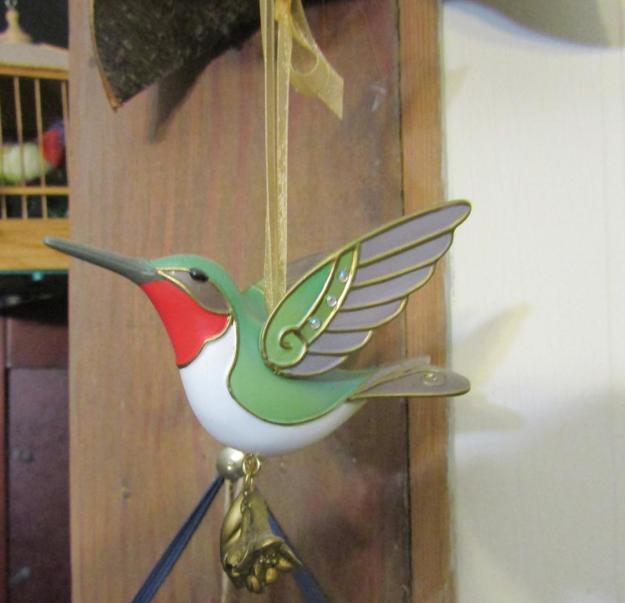
Photo by Bryan Stevens • Hummingbirds have even inspired ornaments and keepsakes in their image, a testament to their popularity and beloved status as yard and garden visitors.

For emphasis, I’ll repeat again that only common, pure cane sugar is safe for hummingbirds. There are no safe substitutes. Do not use organic, raw or brown sugar. Confectioner’s sugar, which contains an anti-caking substance (often corn starch, silicates or stearate salts), is also hazardous to hummingbirds.

There’s also a type of sugar known as turbinado sugar, which is named for the process of spinning the sugar in turbines to crystallize it. The crystals are rich in vitamins and mineral valuable for human health, but they are lethal for hummingbirds. Iron is one of the minerals contained in turbinado sugar. Hummingbird metabolism has a low tolerance for iron, which is present in the molasses added to brown sugar and in agave nectar. These are natural substances, but that doesn’t make them safe for hummingbirds.

The ratio of four parts water to one part sugar utilizing pure cane sugar most closely duplicates the nectar that hummingbirds obtain from some of their favorite flowers. Why try to mess with nature’s perfection?

I cannot imagine why anyone would supplement sugar water for hummingbirds with such human beverages as a sports drink or Kool-aid, but there have been reports of people doing so. Be aware that such additives will only risk the health of these tiny birds.

Hummer-Oct17

Photo by Bryan Stevens • Female ruby-throated hummingbirds must face many demands if they are to be successful at nesting and raising young, both tasks being done without assistance from male hummingbirds.

Honey is another substance, although perfectly natural in its origins, that should be avoided. Honey encourages the growth of fungus, which can quickly incapacitate or kill a hummingbird. A packet of artificial sweetener might taste great in your iced tea, but do not add such substances to the solution in your hummingbird feeder. These artificial sugar substitutes offer nothing of nutritional value for a bird with an extreme metabolism with excessive energy demands. In theory, a hummingbird mistakenly feeding on nothing but an artificial sweetener would soon starve to death.

It’s also important to change out your feeders and clean them as often as every one to three days. In extremely hot weather reaching more than 90 degrees, the sugar solution may need to be changed and the feeder cleaned on a daily basis. That’s not as difficult as it sounds. I prepare sugar water and store it in plastic juice containers. Refrigerated, the solution will last longer and can be doled out on a daily basis until a new supply is needed.

honey-2201210_1920

Photo by sapphir1/Pixabay.com • Although a natural substance, honey should not be fed to hummingbirds as it can promote a fungus harmful to hummingbirds.

Don’t use any type of soap or detergent to clean the feeders. The best advice I’ve read is to stick to hot water and vinegar, which will not leave behind a residue that could potentially harm the hummingbirds.

Do not put any sort of red dye or coloring into the sugar water, and do not purchase commercial solutions that incorporate red dyes. Some scientific studies suggest that red dye is a recipe for disaster with hummingbird. Such dyes are thought to lead to kidney failure and certain death for the hummingbird. There’s also plenty of evidence to suggest that banning red dye is an exaggeration of the peril. Taking that into consideration, I still err on the side of caution. Perhaps the red dye will eventually be proven harmless. Until that time, I prefer not to risk the health of my resident hummingbirds.

I’m often asked if the sugar water feeder itself should be red. There is ample evidence that hummingbirds are attracted to red. According to information from the National Audubon Society website, current thinking is that the red dye, as just mentioned, may not be good for them, nor is it necessary to attract hummingbirds. The color on a feeder is enough to attract them. Most feeders incorporate some red parts into their construction. People can mix their own nectar using 1/4 cup sugar to every 1 cup of water.

It’s a lot of work to attract hummingbirds and keep them safe and healthy. I’d like to think the rewards we get from these small birds make the effort worthwhile.

IMG_2859

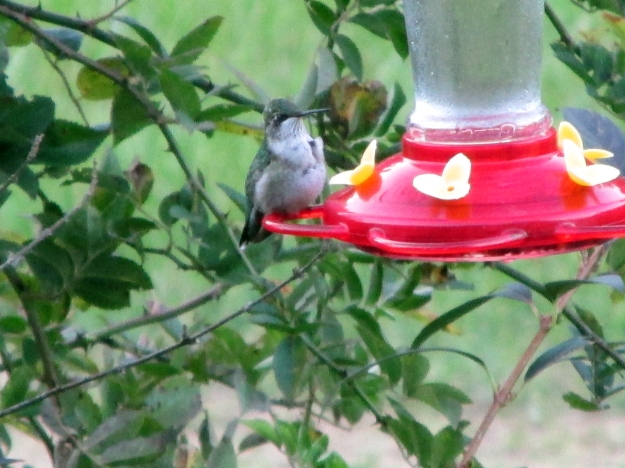
Photo by Bryan Stevens • A female ruby-throated hummingbird, lacking the bright throat patch of a male, surveys her surroundings from a low perch.