Category Archives: Bristol

Success of wild turkey’s resurgence leads to foul fowls in New England

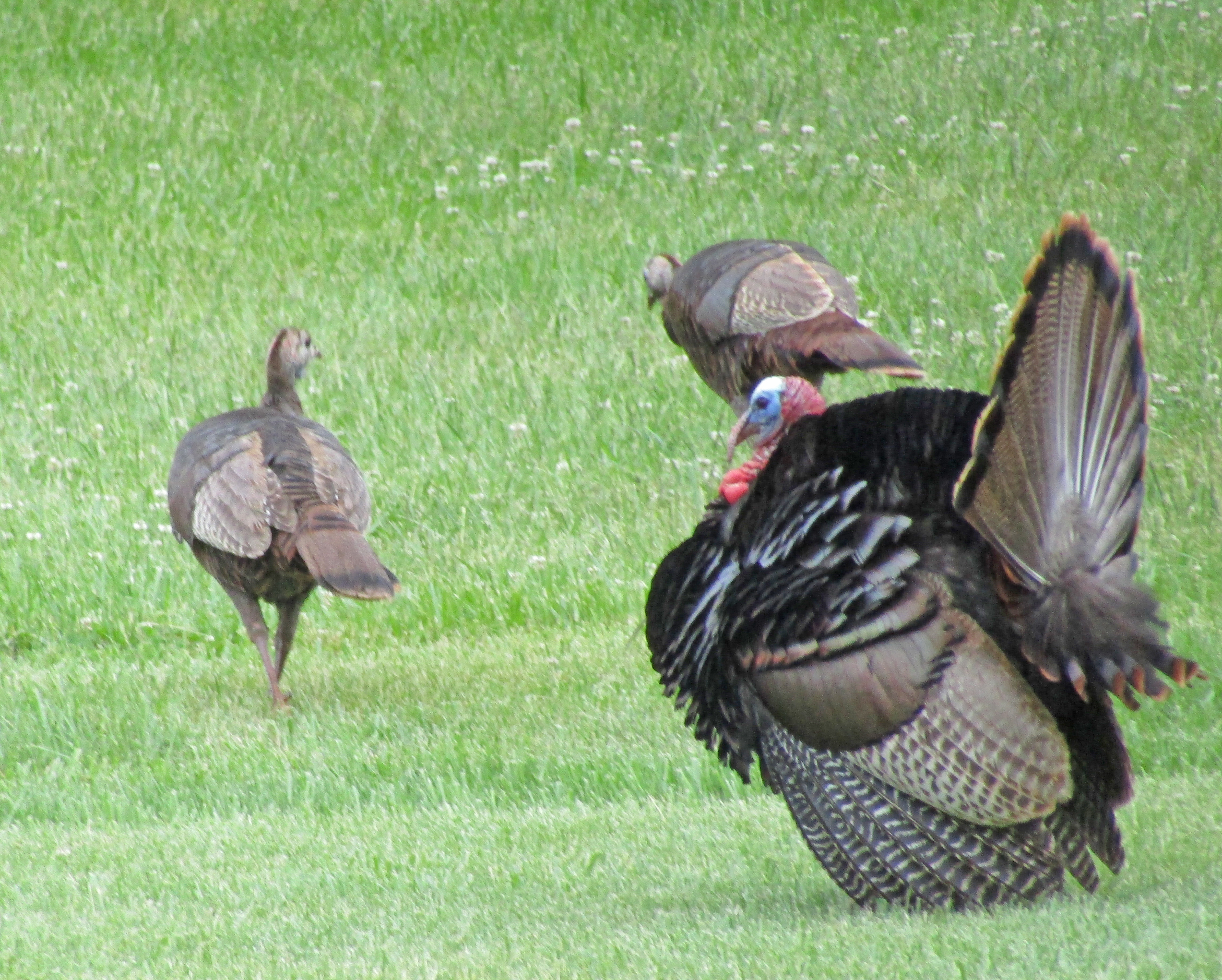
Photo by Avia5/Pixabay.com • A male wild turkey, often referred to as a “tom” or a “gobbler,” fans his tail in a display meant to impress hens and intimidate other males.

Celebrated in William Bradford’s written account of the First Thanksgiving in 1621, the wild turkey had all but vanished from Massachusetts and the rest of New England a mere two centuries later. By the time of Henry David Thoreau, who is arguably America’s first environmentalist, the noted author lamented in 1856 that the turkey and other wildlife were difficult to find in his native Massachusetts.

In a journal entry from the spring of 1856, Thoreau decried the part the descendants of those Pilgrims who celebrated the first Thanksgiving more than 200 years earlier had played in the decimation.

“When I consider that the nobler animals have been exterminated here — the cougar, the panther, lynx, wolverine, wolf, bear, moose, dear, the beaver, the turkey and so forth and so forth, I cannot but feel as if I lived in a tamed and, as it were, emasculated country,” Thoreau wrote in his journal. “Is it not a maimed and imperfect nature I am conversing with?”

Henry David Thoreau

Perhaps, but Thoreau would probably be encouraged that many of the animals he mentioned in his journal have now recovered and once again roam throughout New England. The wild turkey has been in the vanguard of that resurgence. In fact, the revival of the wild turkey’s fortunes in New England has had unintended consequences. In short, this venerable fowl has run amok in some parts of its former stronghold.

An article by Brianna Abbott for the Audubon Society’s website estimates that before Europeans first colonized New England in the 1600s, as many as 10 million wild turkeys roamed from Maine to Florida to the Rocky Mountains of the American West.

Today, wild turkeys are back with a vengeance. Turkeys may have grievances, it turns out, for the persecution they suffered at the hands of Americans for the past few centuries. Touted as a major restoration success story, the wild turkey began to be reintroduced to New England about half a century ago.

Now that they’re back, turkeys are part of a dramatically changed landscape. Suburbs now stretch in wide swaths of terrain that once supported forests and associated wildlife. Luckily — for the turkey, anyway — it is a very adaptable bird. Turkeys have taken to life in the suburbs with such enthusiasm that they are now a wildlife management issue for the human residents who must share living space with them. Emboldened problem turkeys chase and intimidate women and small children, as well as pets. Whole flocks have gone rogue.

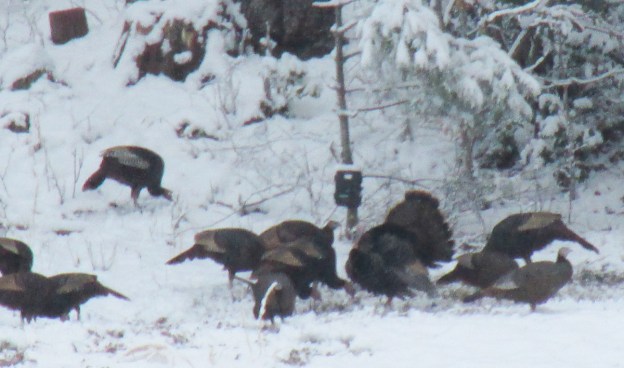
Photo by Bryan Stevens • Wild turkeys forage on a hillside.

Gone are the turkey’s natural predators — lynxes, cougars and wolves — that had kept America’s premier game bird’s population in balance. As Thoreau pointed out, nature is no longer perfect. More than 170,000 wild turkeys now live in New England and they’re not always at peace with their human neighbors.

Thoreau didn’t have the benefit of environmental science to back him up, but he would probably not be surprised that a “maimed” nature is causing some unexpected problems even as some of the animals he so sorely missed are returning to their former haunts.

The Tennessee Watchable Wildlife Website notes that the wild turkey was once nearly eliminated from the Volunteer State. By the early 1900s, over-hunting eliminated this species from most of its range, including much of Tennessee. Modern wildlife management has reestablished this bird throughout its historic range and into 49 of the 50 United States.

Photo by Bryan Stevens • Wild turkeys have re-established themselves in many areas across the United States, including New England.

According to the website, the natural habitat for the wild turkey consists of mature woodlands with scattered openings or fields. In such areas, turkeys can forage for food such as acorns and other wild nuts, seeds, fruits, insects, buds, fern fronds and even the occasional salamander.

Wild turkeys roam the woods around my home, and I know of other areas that are dependable locations for observing these birds. While their numbers are increasing, the wild turkey has not yet turned the tables. For the foreseeable future, I suspect Americans will continue to dine on turkey every Thanksgiving, and not the other way around.

Who could blame them, however, if turkeys were to feel perfectly justified in biting back at the American public? We’ve not always been the best stewards for our native wildlife. Call me an optimist. I believe turkeys and people can co-exist. As residents in New England have learned, we just have to be prepared for some give and take.

Photo by Bryan Stevens • A male gobbler seeks the attention of hens, as all these Wild Turkeys add to the number of this species found during the count.

Birds are not the only fall migrants sharing the skies

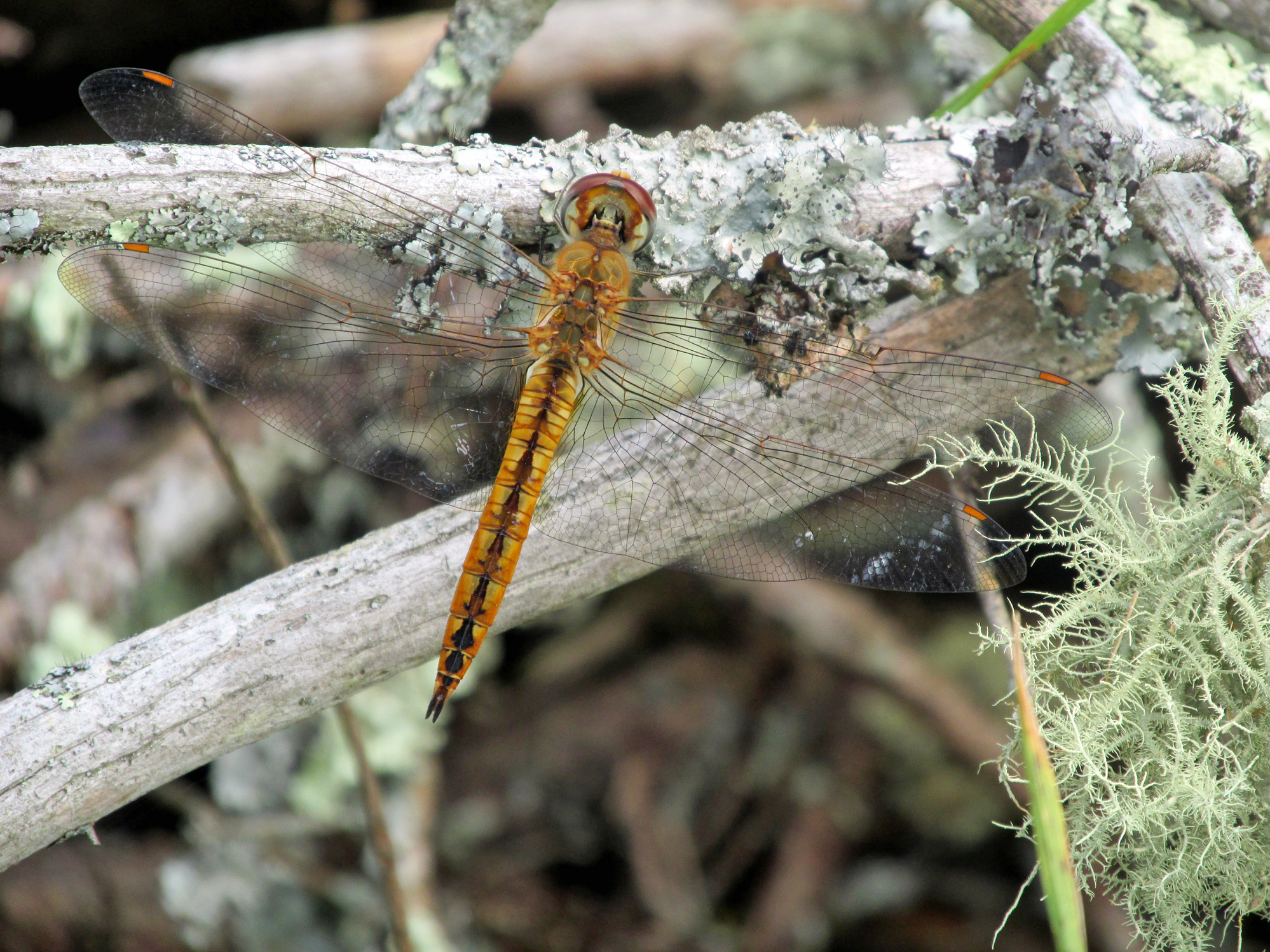
Photo by Bryan Stevens • Experts have documented long-distance migration flights by the Wandering Glider, a species of dragonfly.

Rhonda Eller of Chilhowie, Virginia, posted a question on my Facebook page about some dragonflies that appeared in her yard on Sept. 10.

“We have had a sudden breakout of dragonflies in our yard,” Rhonda explained. “We seldom see more than one or two at a time.”

Rhonda wondered if the dragonflies might have been drawn to her yard in pursuit of some sort of favorite insect prey. She also speculated that the recent dry conditions might have attracted the dragonflies.

I responded to her query by explaining that birds are not the only migrant in the skies at this time of year. Some dragonflies, just like birds, migrate. A species known as green darner is one that migrates. These darners are rather large, for a dragonfly, and travel in swarms. A couple of years ago I observed thousands of these dragonflies swarming over a municipal swimming pool and a nearby fish pond at a park in Erwin, Tennessee.

The WSLS Channel 10 television station out of Roanoke, Virginia, reported on swarms of dragonflies so large that they got picked up by local radar. Rhonda shared a link to the station’s story on my Facebook page.

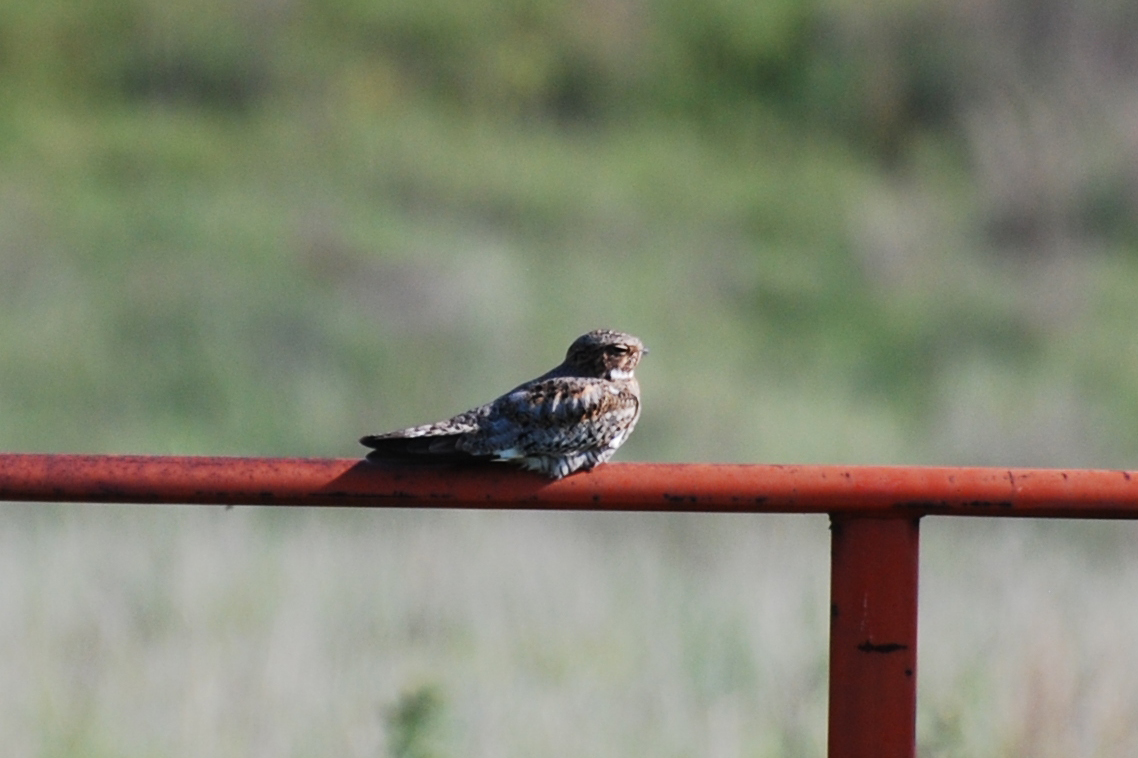
Photo by Jean Potter • A common nighthawk rests on a metal railing.

Of course, swarms of migrating insects are bound to get the attention of predatory birds. The same day that Rhonda experienced the influx of migrating dragonflies, I witnessed dozens of common nighthawks and chimney swifts swooping through the skies over my home. With a little more attention to detail, I also noticed the dragonflies sharing the skies with these birds.

I suspect that the nighthawks were feeding on the large darners while the swifts, which are much smaller birds, focused their foraging efforts on smaller winged insects. Tom McNeil, a neighbor and fellow member of the Elizabethton Bird Club, reported seeing nighthawks and swifts, too. Tom lives on the other side of a mountain ridge that separates our homes.

Tim Morris, a Facebook friend from Australia, noted in a comment on my post about the nighthawks that his country is home a bird known as the tawny frogmouth, a relative of the common nighthawk. Tim noted that frogmouths are big birds with camouflage markings that allow them to pretend to be dead tree boughs by day. “They feed not only on insects but mice and lizards, too,” he added.

Evidence of fall migration continued the next day when I detected a small wave of warblers foraging in trees at the edge of my yard. I saw five different species — American redstart, worm-eating warbler, Cape May warbler, Blackburnian warbler and Tennessee warbler — in the space of half an hour. Of the warblers in the flock, the Blackburnian and Cape May are some of the more vibrant ones.

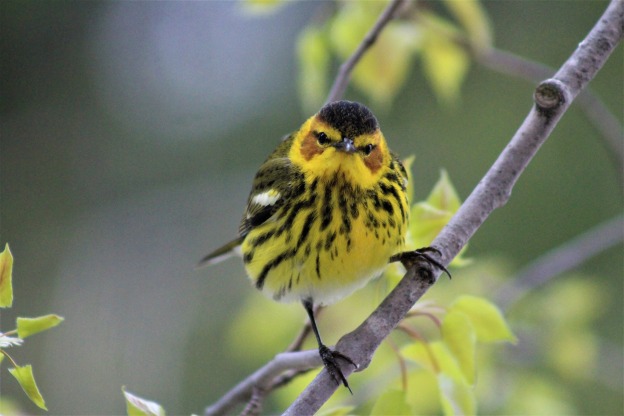
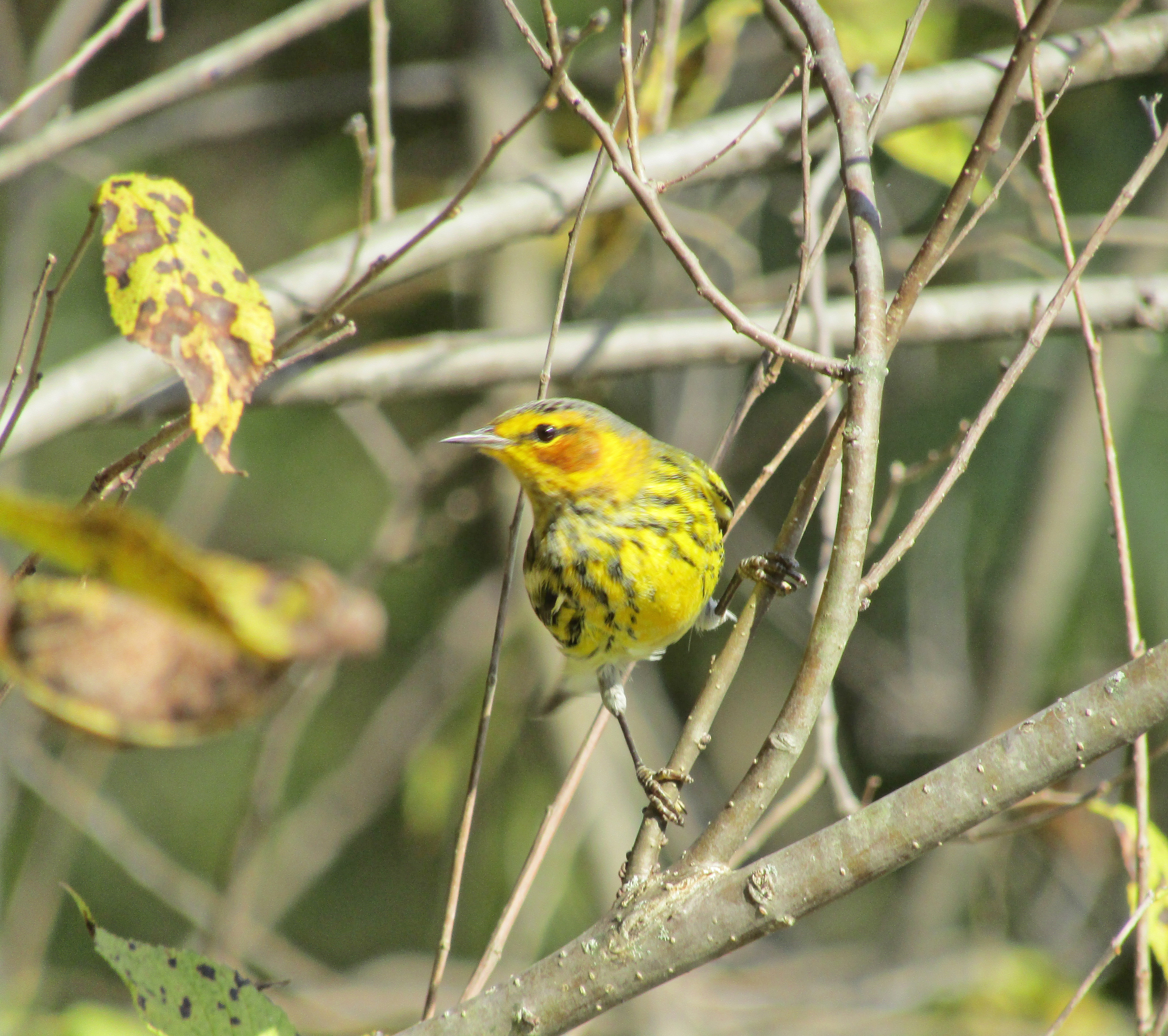
Photo by Bryan Stevens • While the Cape May warbler doesn’t breed locally, these warblers are fairly common spring and fall migrants in the region.

The Blackburnian warbler’s common name commemorates Anna Blackburne, an English naturalist who lived from 1726 to 1793. Her brother, Ashton, had immigrated to the United States, which made it possible for him to send his sister many specimens, especially birds. Their father, a salt merchant by trade, was also a well-respected amateur naturalist. In addition to the warbler that bears her name, Anna Blackburne also had a species of beetle named in her honor.

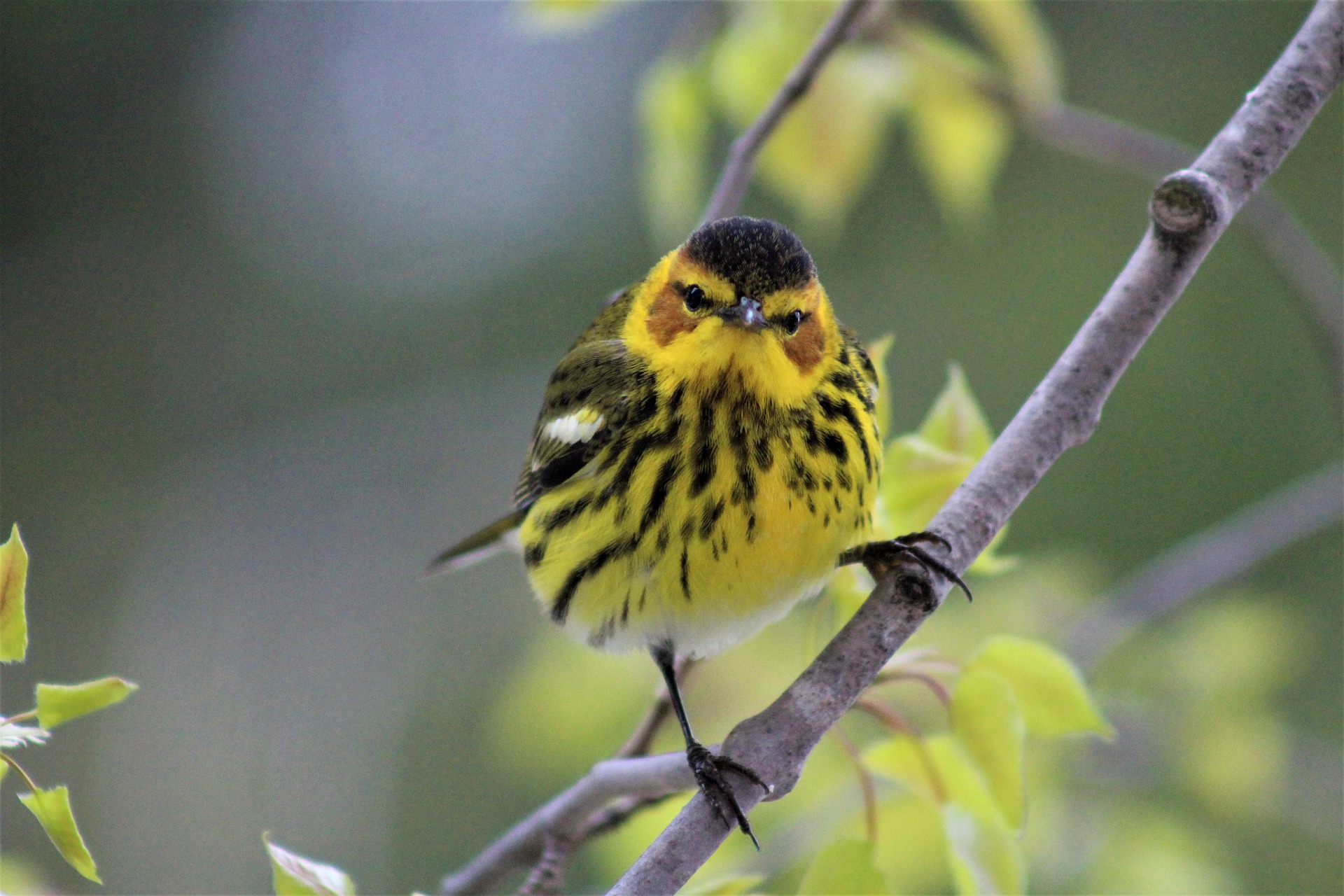
Both the Cape May and Tennessee warblers are named for the locations from which they were first collected. Neither of these small songbirds are closely affiliated with Cape May, New Jersey, or the Volunteer State. The Cape May warbler is also known as the “tiger warbler” for the dramatic black striping across its bright yellow breast. A green back and chestnut cheek patch make the Cape May warbler quite unlike any of its close kin. Even its scientific name — Setophaga tigrina — pays homage to the striped big cat. The term “setophaga” translates to “moth eater” and is a reference to this warbler’s intense fondness for the caterpillars known as spruce budworms that occasionally produce outbreaks in the northern spruce forests that serve as the nesting range for the Cape May warbler.


Photo by insitedesigns/Pixabay • A Cape May warbler peers from its perch on a tree branch.

According to the website, “All About Birds,” Cape May warblers have unusually shaped tongues that allow them to sip nectar from tropical flowers during the winter months spent in Central America and the Caribbean. Their unique tongues also make it possible for them to enjoy sips of sugar water from hummingbird feeders.

Whether its dragonflies, nighthawks, warblers or hummingbirds, plenty of birds and other flying creatures will be moving through the region for the next few weeks. Now’s the time to get outdoors and look for some of these migrants.

Photo by insitedesigns/Pixabay.com • The Cape May warbler migrates out of North America every fall to spend the winter in Central America and the Caribbean.

Hooded warbler and its kin bring tropical splash to area woodlands

Photo by Jean Potter • A male hooded warbler flits through the foliage of a rhododendron thicket.

I came away from a recent program on bird migration given by Kenn and Kimberly Kaufman learning a few new nuggets of information about warblers, which are one of my favorite bird families. The Kaufmans, well-known birders and activists on the behalf of birds, spoke Saturday, Aug. 31, on the topic of bird migration during the evening program at the Roan Mountain Fall Naturalists Rally. They confirmed some things I have always suspected to be true about fall migration in the region. For instance, warbler migration in the Southern Appalachians is indeed often more productive in the fall than in the spring. The Kaufmans also noted that fall migration takes place at a more leisurely pace for most of the migrating warblers. They even pointed out that some of the warblers, such as magnolia warbler and Tennessee warbler, which are uncommon fall migrants at their home in Ohio, are actually quite common in East Tennessee.

Hooded warblers nest in the woodlands around my home. So, from the time my favorite warbler returns in April until the last individual departs in October, I enjoy regular glimpses of this colorful and interesting bird. Like all warblers, the hooded warbler is quite energetic, dashing after tiny insects in the branches of shrubs and trees. Hooded warblers often forage close to the ground, which makes observing them easier.

Every time I behold a hooded warbler, I marvel at the bird’s exquisite appearance. The gold and green feathers seem to glow brightly in the dim light of the shadowy thickets of rhododendron they prefer to inhabit. The black hood and bib surrounding the male’s yellow face stands out by virtue of its stark contrast from the brighter feathers. Large coal-black eyes complete the effect. The appearance of the male bird provides this species with its common name. The female has an identical yellow-green coloration as the male, although she is slightly more drab. She lacks the black hood and bib, although older females may acquire some dark plumage on the head and around the face. Both sexes also show white tail feathers that they constantly fan and flick as they move about in thick vegetation and shrubbery.

Photo by Bryan Stevens  • Only males show the well-formed black hood and bib that gives the hooded warbler its common name.

I know that every migrant passing through my yard at this time of year is making its way southward, and it will likely be another five to six months before I again see any of my favorite songbirds. The hooded warbler will make itself at home in the forests of Mexico, as well as in Belize, Costa Rica and other Central American nations, throughout the winter season. Most hooded warblers begin returning to their winter haunts as early as mid-September, but lingering individuals continue to entertain birders in the United States throughout October.

Like many of the ruby-throated hummingbirds that make their home in the United States for the summer, the hooded warbler’s fall migration takes it across the vast open waters of the Gulf of Mexico, crossing to the Yucatan and then dispersing from there to various points in Central America. That birds as small as hummingbirds and warblers make this incredible migration twice yearly is one of nature’s most phenomenal feats of endurance. In their presentation, the Kaufmans explained that these tiny birds put on incredible fat reserves to help fuel their efforts.

The warblers, also known as wood-warblers, are an exclusively New World family of birds, numbering approximately 116 species. About 50 of these species of warblers make their home in the eastern United States and Canada for the spring and summer, departing in the fall and returning to tropical wintering grounds. Some of them are extremely bright and colorful birds. The hooded warbler would have to be included among the more brightly colored warblers.

Other colorful warblers that share similar tastes in range and habitat with the hooded warbler include the American redstart, black-throated blue warbler and black-throated green warbler.

While some of the neotropical migrants that venture into North America boast even brighter kin in the tropics, we need not feel cheated with the warblers that make their home in the United States for half of the year. Some of their relatives are beautiful birds, including the white-faced whitestart, golden-bellied warbler, three-striped warbler and rose-breasted chat, but few can really hold a candle to their relatives that venture north and brighten our lives.

The warblers are, in short, an incredible family of birds. I’ve seen all but a handful of the species that reside for part of the year in the eastern United States. I still want to see a Connecticut warbler and cerulean warbler, as well as the endangered Kirtland’s warbler of Michigan and the golden-cheeked warbler of Texas. I’ll miss the warblers once fall migration has run its course. For those months they are here, the warblers belong to us. They seem like “our” birds. They’re only on loan, though. Our winter birds will offer some compensation in their absence, but I’ll be impatiently awaiting that flash of gold from the recesses of a rhododendron thicket next April.

Photo by U.S. Fish & Wildlife Service • A female hooded warbler sits tightly on her eggs in the cup-shaped nest she has build within the concealing branches of a shrub.

Some birds stand out from the flock with their amazing migratory feats

Photo by jasonjdking/Pixabay.com • The bobolink is also known as the “rice bird” for its tendency to feed on cultivate grains such as rice. Even the bird’s scientific name, oryzivorus, means “rice eating” and refers to this bird’s appetite for many of the same grains consumed by humans. This small songbird also undertakes yearly migration flights equalling more than 12,400 miles.

The peak of fall migration is approaching. Birds of all species are winging their way southward ahead of the months of cold and scarcity. September and October are months of flux and transition. Like a bear fattening for hibernation, I gorge on sightings of warblers, hummingbirds, tanagers and other favorites, knowing that I won’t be seeing many of these birds again until next spring. Their memories will sustain me, as will my feeders, which will still bring plenty of colorful and entertaining birds into my yard even in times of snow and ice.
Bird migration at any season is a spectacle. Many of the birds that nested in mountain hollows or vegetation-choked wetlands will winter in Central and South America, the Caribbean or other distant but warmer destinations. The following snapshots of fall’s bird migration capture the phenomenon’s drama.

Bobolink
The bobolink is a small bird in the family of blackbirds, which includes grackles, orioles and cowbirds. Nesting across North America during the summer, bobolinks retreat to South America for the winter. These small birds undertake amazing migrations, making a round-trip of about 12,400 miles to regions south of the equator in Bolivia, Paraguay and Argentina each fall. Come spring, they make the trip again, but in a northerly direction.
According to the website All About Birds, migrating bobolinks orient themselves with the earth’s magnetic field. These small birds are able to accomplish this feat due to iron oxide in bristles of its nasal cavity and in tissues around the olfactory bulb and nerve. Bobolinks also use the stars scattered across the night sky to guide their migratory flights. Capable of living as long as nine years, a long-lived bobolink will rack up some serious miles simply migrating to its nesting grounds and back to its wintering habitat each year.

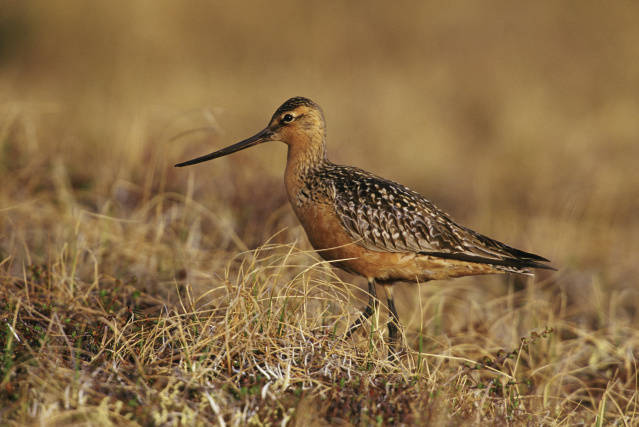
Bar-tailed godwit
Shorebirds, which in North America can consist of birds ranging from turnstones and sandpipers to willets and avocets, are champion migrants. For instance, the bar-tailed godwit makes an impressive non-stop migratory flight. This shorebird nests in the United States only in parts of remote Alaska, but this godwit also ranges into Scandinavia and northern Asia. Some of these godwits make a nine-day, non-stop migratory flight that takes them from New Zealand to the Yellow Sea of China and beyond, a distance of almost 6,000 miles each way.
Needless to say, since the godwits make no stops along the way, they must also go without food for the duration of their journey. The female godwit is larger than the male, but she still weighs only 12 ounces. The long-billed, long-legged bird is about 17 inches in length from the tip of the bill to its tail. That a creature so small can make such a distant, arduous trip and be the none the worse for wear is truly inspiring.

Broad-winged hawk
Many North American raptors migrate, but the broad-winged hawk dislikes the lonely aspects of solitary travel. Instead, these hawks form large flocks during migration, and in autumn the majority of these raptors travel past human-staffed hawk migration observation points, which are dubbed “hawk watches,” during a brief and concentrated period of only a few weeks. Observing the phenomenon locally is possible at the Mendota Fire Tower Hawk Watch site atop Clinch Mountain at an abandoned fire tower near Mendota, Virginia.
Broad-winged hawks are part of the family Accipitridae, which includes 224 species of hawks, eagles, vultures and other birds of prey. Broad-winged hawks are truly long-distance migrants. Many hawks passing over Mendota may end their migration as far south as Brazil. These hawks travel in flocks that can consist of hundreds or thousands of individuals. The birds conserve energy by soaring on thermals and mountain updrafts.

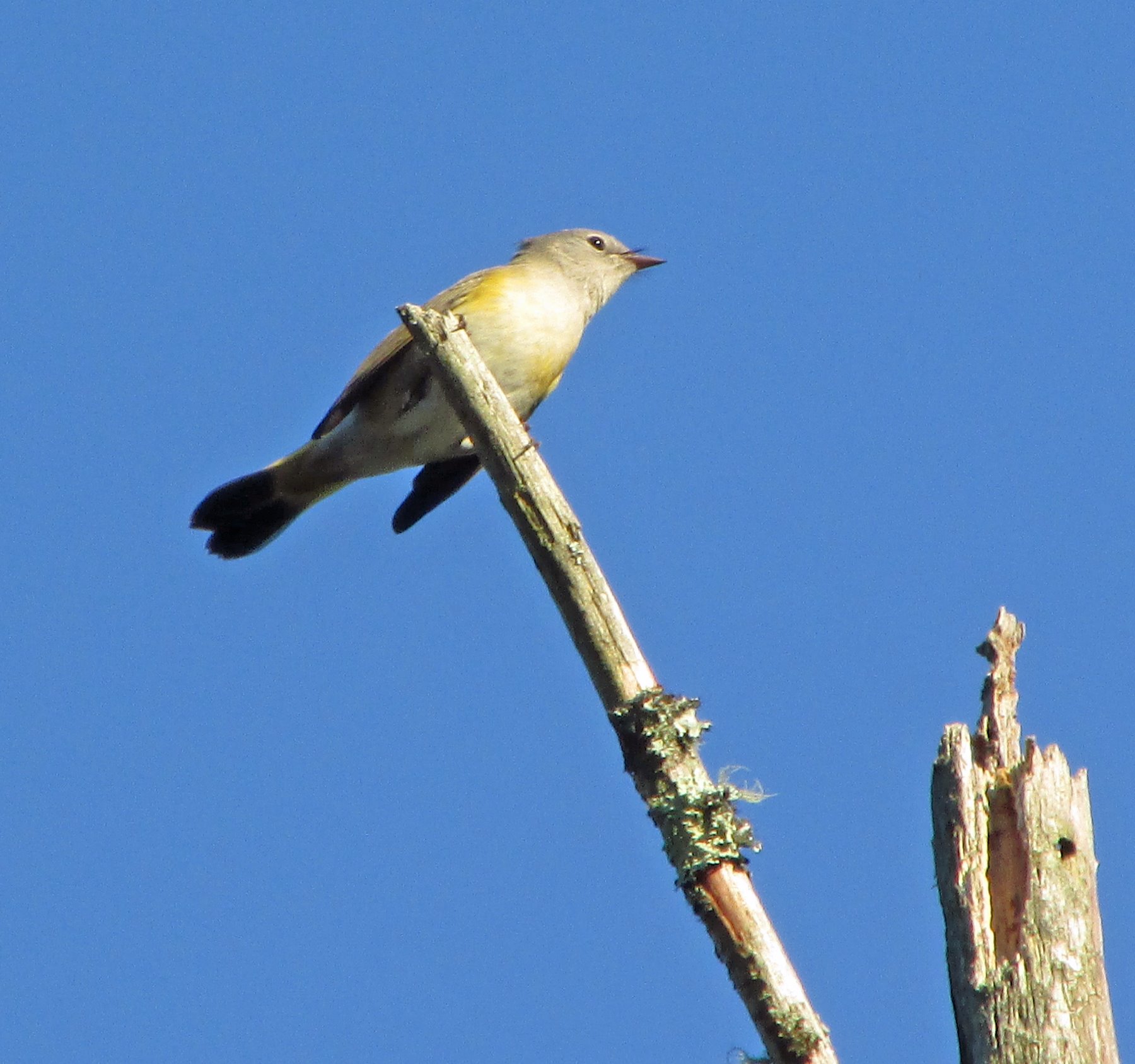
Photo by Bryan Stevens • Warblers, such as this American redstart, stage impressive migratory flights. The blackpoll warbler makes an incredibly arduous journey for a bird that is less than five inches long.

Blackpoll warbler
Most of the warblers that nest in North America retreat to Central and South America during the winter months. Few warblers, however, make as great a journey as the blackpoll warbler. Instead of migrating over land, this five-inch-long warbler undertakes a two-stage migration. The first half of the migration is a non-stop flight of about 1,500 miles. Every fall, these tiny birds fly over the ocean during this part of their migration, departing from Canada or the northern United States and not stopping until they reach various locations in the Caribbean. There they will spend some time recovering from the exhausting first half of their journey before they continue their way to such South American countries as Colombia and Venezuela. Once again, during the time they spend flying over open ocean, these tiny warblers do not feed.

* * * * *

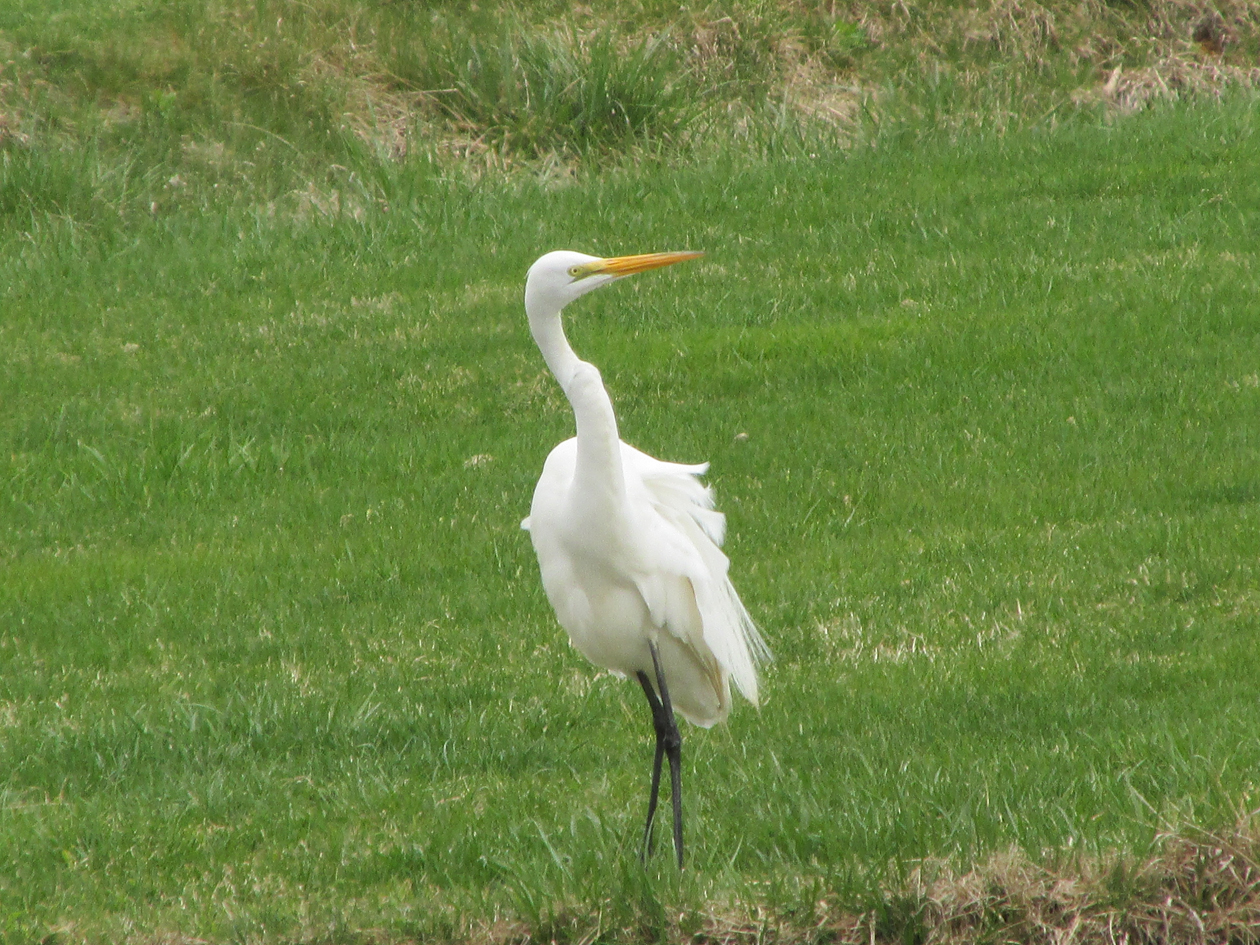
Photo by Bryan Stevens • A migrating Great Egret makes a stop at a golf course pond.

Wading birds topic for program
I’ll be presenting a program on herons, egrets and other wading birds at the September meeting of the Elizabethton Bird Club. The meeting will be held at 7 p.m. Tuesday, Sept. 6, at the Elizabethton campus of Northeast State Community College, 386 Highway 91. The meeting will be held on the second floor in Room 208. The free program is open to the public and will follow a brief business meeting.

Readers with questions are welcome to email me at ahoodedwarbler@aol.com or send a friend request on Facebook at facebook.com/ahoodedwarbler. I also love to receive comments and hear about bird observations.

Photo by Bryan Stevens • A spotted sandpiper and a solitary sandpiper rest at the edge of a pond during a migration rest stop.

Welcoming Eastern towhees into yards, gardens easy to accomplish

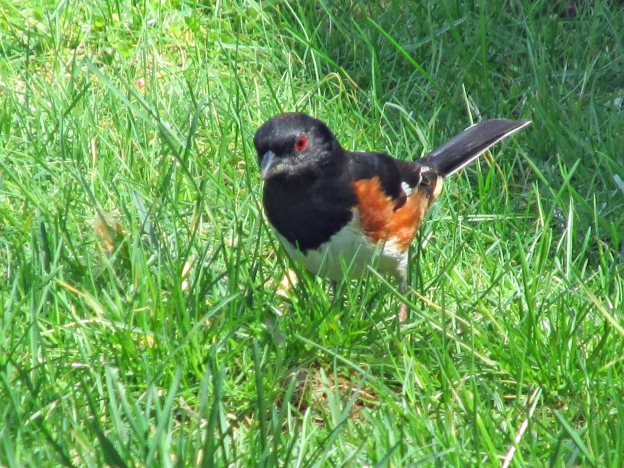
Photo by Ken Thomas • A male Eastern towhee forages for food in the grass beneath a feeder.

It’s the time of year when young birds start making their first forays to feeders, usually accompanied by their parents and siblings. In recent weeks, I’ve seen everything from young brown thrashers and tufted titmice to ruby-throated hummingbirds and Eastern bluebirds.

Ann Windsor posted an interesting photo on my Facebook page last month that illustrates this emergence of a new generation of feathered friends. Her photo showed a male Eastern towhee escorting one of his offspring to a feeder on the deck of Ann’s home in Selmer, Tennessee.

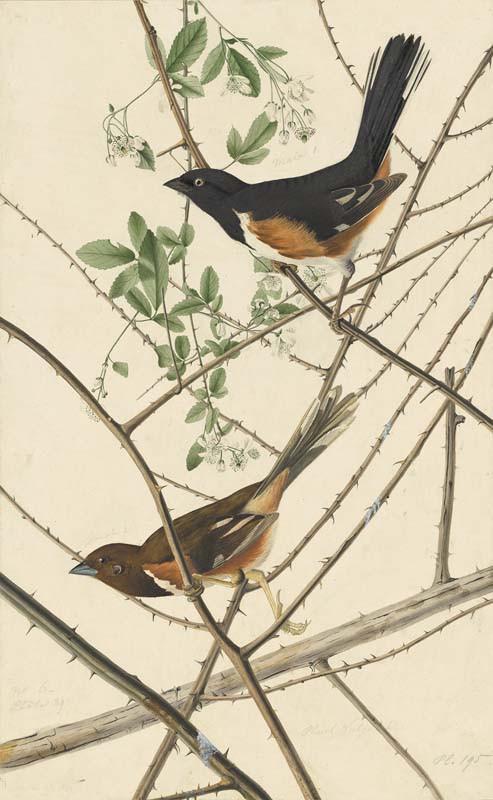
Early naturalist and artist John James Audubon painted these Eastern towhees.

Her post followed up a video she had posted of a pair of towhees visiting her feeder.

“I wanted to share with you about our towhee bird,” Ann noted in her post. “We call him ‘pretty boy,’ and he has been coming to our feeder now for two years or more.”

Back in early June, the male towhee showed up with a female for the first time. “She was more comfortable around us and got in the feeder with him,” Ann wrote. “We have so enjoyed him.”

Ann has made some interesting observations about the male towhee. “When he is in the little feeder dish, he’s the boss,” she wrote. “Any other birds come along, even the blue jays, and he runs them off.”

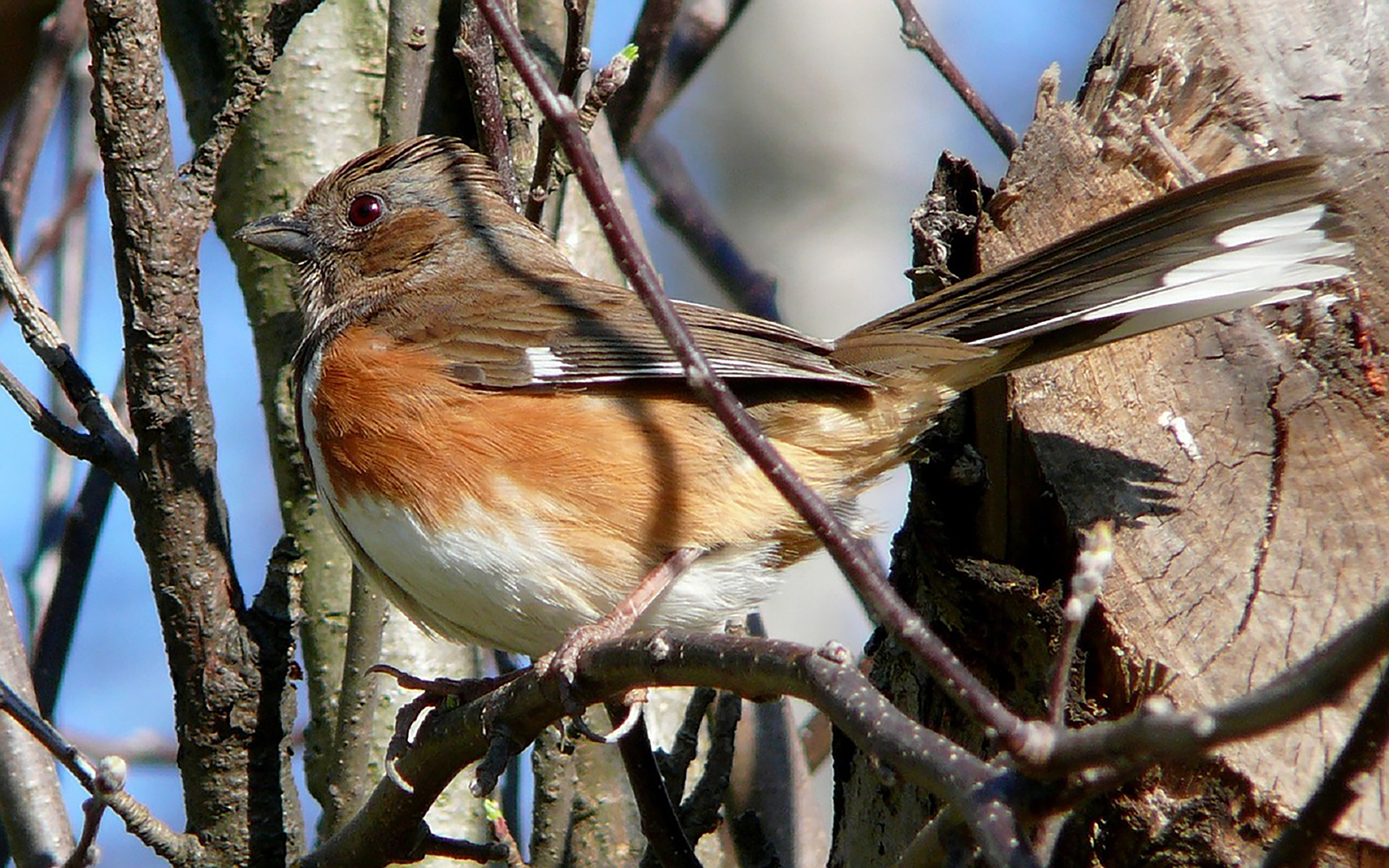
Photo by Pixabay.com • Female Eastern towhees are retain the male’s white and rusty-orange plumage, but they are brown instead of black like their male counterparts.

Ann’s day-to-day encounters with the towhees has turned into a “fun relationship” as the birds have learned to trust her enough that they don’t fly away when she’s in the yard.

I mentioned in a response to her first posting that the towhees would likely bring their young to her feeders once they left the nest. Indeed, about a month later, Ann posted another photo. In this particular picture, the male towhee arrives at the feeder with one of his recently fledged young.

“We have seen three so far,” Ann noted. She added that the young towhee in the photo loves to get up in one of the flower pots and dig around.

“I was wondering, as the young ones grow up, do they stay in the area, or do they go off to find their own territory?” Ann asked at the end of her post.

In my response, I told Ann that many birds have fidelity to the place where they were born, but things could get crowded if the adult birds also stay put. The parent towhees will probably “encourage” the young birds to strike out on their own and establish their own territories as adults. They might, however, become “neighbors” and choose a location not too far from her home.

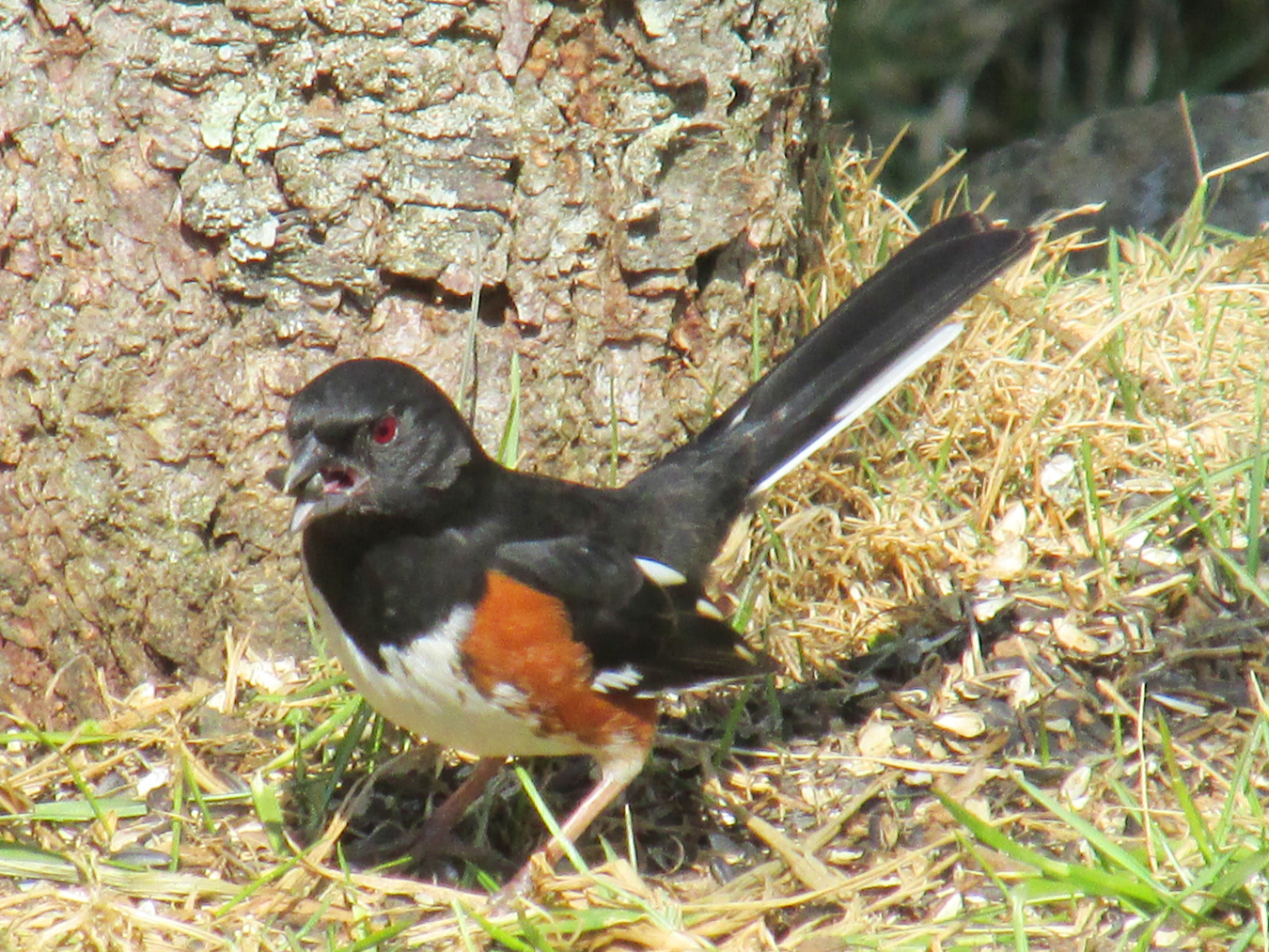
Photo by Bryan Stevens • A male Eastern towhee scratches for seeds on the ground beneath a feeder.

Eastern towhees spend a considerable amount of time on the ground and hidden in thickets and hedges. Other common names for this bird includes “ground robin” and “swamp robin.”€ They are one of the larger members of the sparrow family, however, and not related to the thrush family, which includes such birds as American robin, Eastern bluebird and wood thrush.

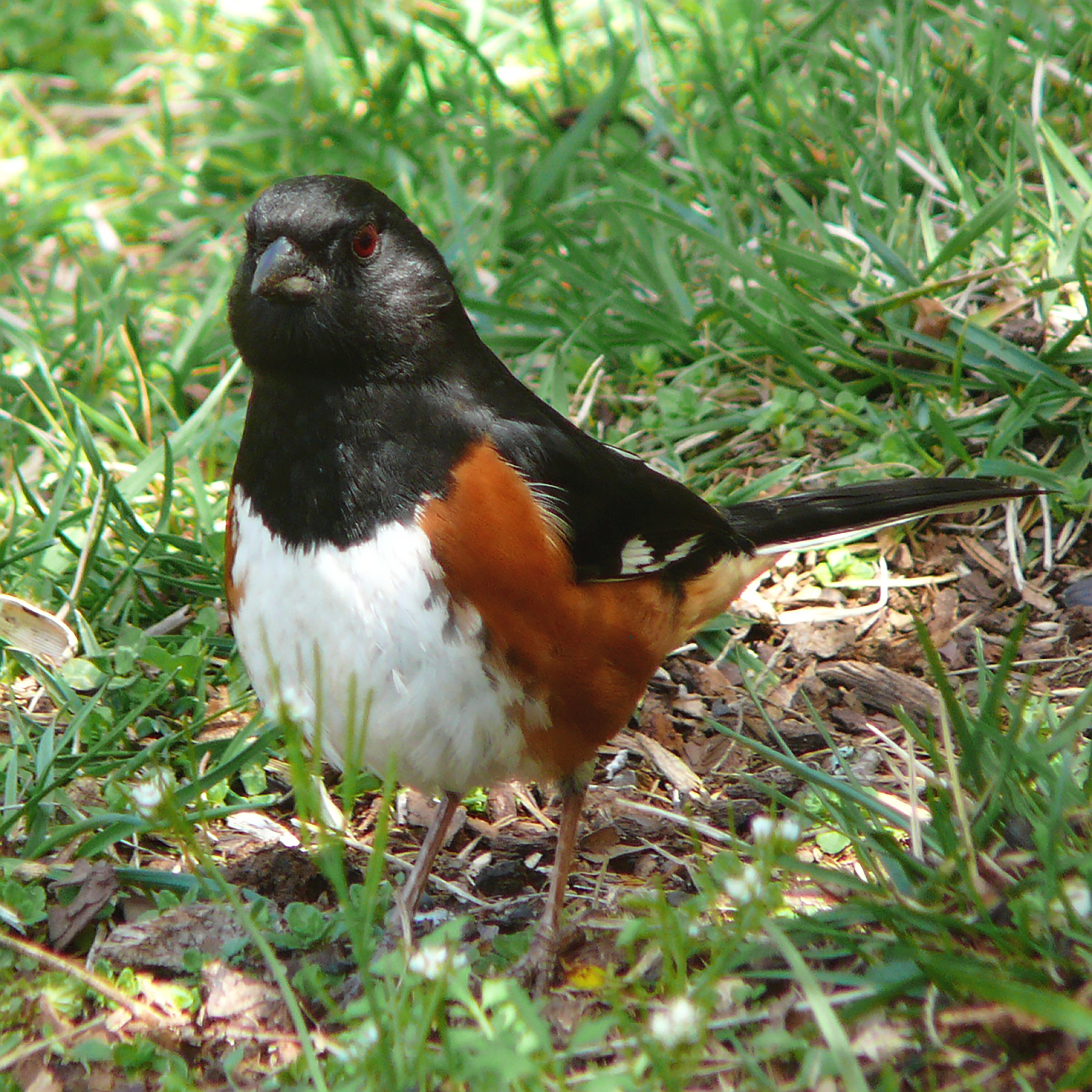
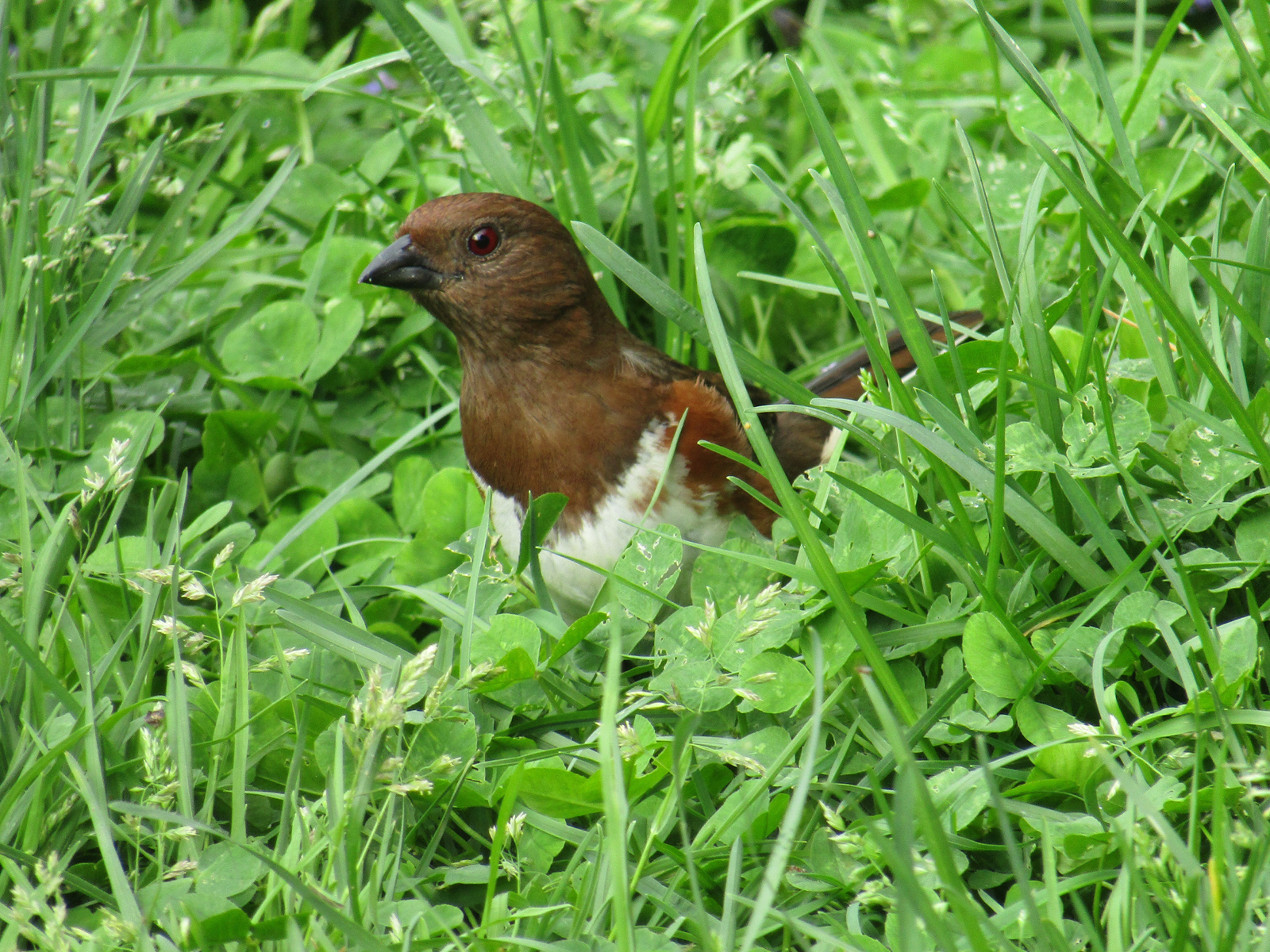
Unlike the many “€œbrown”€ members of the sparrow family, the Eastern Towhee is a brightly colored bird. Males have a black hood. The black coloration extends into the back and tail. The belly is white, and the sides are flanked with a rusty-red orange. In flight, their black tails are bordered with white feathers, which produces a dramatic flash of contrasting colors. The female Eastern Towhee is an attractive bird in her own right. She shares the rufous sides and white coloration that are present in the male’s plumage. However, the male’€™s black feathers are replaced by a warm, chocolate brown plumage in the female.

Photo by Bryan Stevens • A young Eastern Towhee visits a feeder in July. The chance to see young birds is a great reason to offer food during the summer, but some precautions should be taken to minimize uninvited guests.

The Eastern towhee is one of my favorite yard birds, but not just because of its dramatic appearance. These birds also have some instantly recognizable vocalizations. With the arrival of spring, the males will seek elevated perches for extensive singing bouts to attract mates and establish territories. Their song has been interpreted, quite aptly, as “Drink your tea!” They also have some alarm notes, such as “€œChew-ink”€ and “€œToe-Hee,” which is the basis for this bird’s common name.

The sparrows known as towhees are spread across two different genuses and consist of Abert’s towhee, California towhee and canyon towhee in the Melozone genus and the Eastern towhee, spotted towhee, green-tailed towhee, and collared towhee in the genus Pipilo. The genus name Pipilo is derived from Latin and roughly translates as “the chirping bunting.”

Keep watching your feeders. At this time of year, they provide one of the best venues for observing quality family time among our feathered friends.

Photo by Bryan Stevens • A female Eastern towhee peeks from the grass as she forages on the ground.

Eastern phoebe belongs to extensive flycatcher family

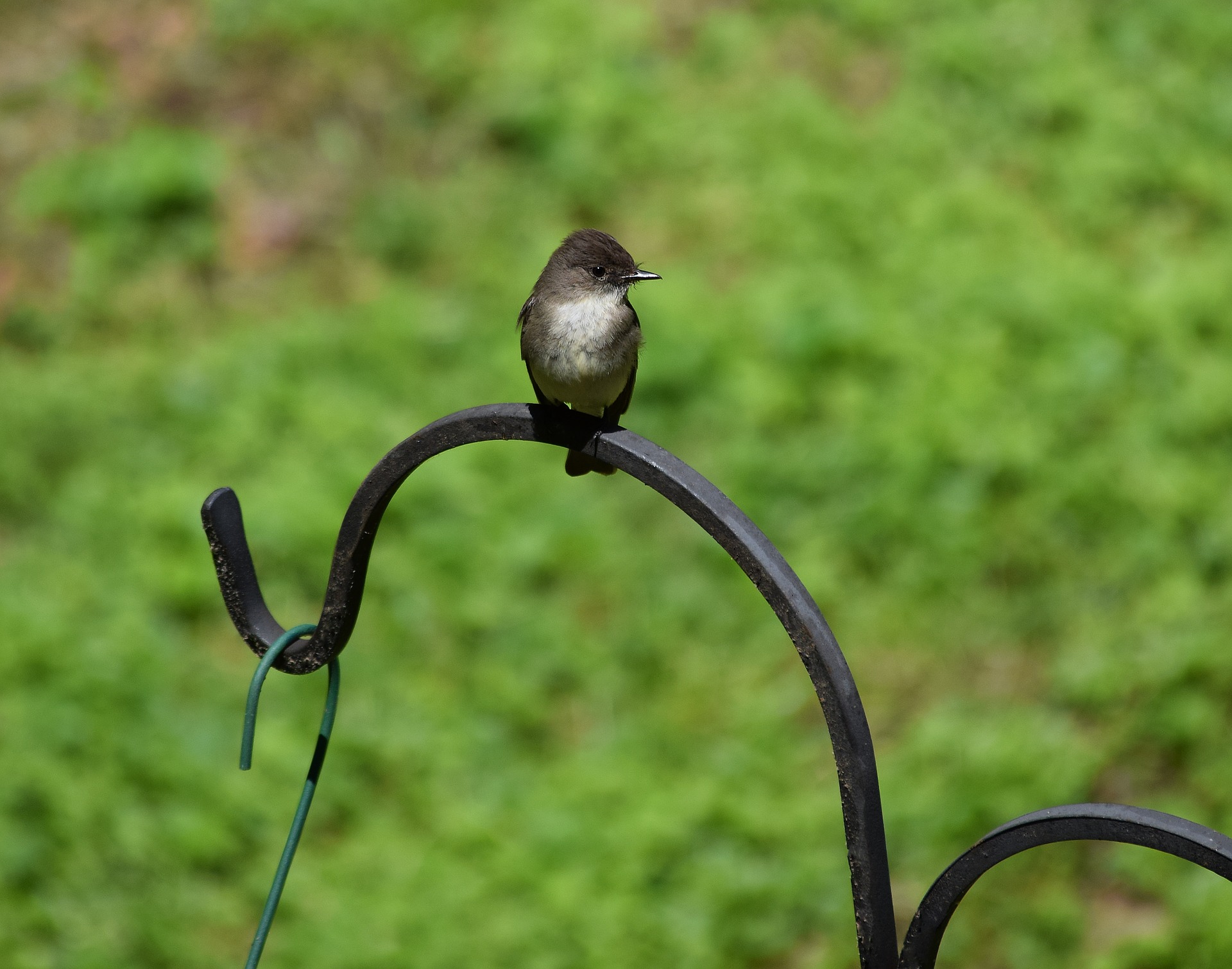
Photo by leoleobobeo/Pixabay.com • An Eastern phoebe perches on a garden shepherd’s hook. Phoebes, a member of the extensive New World flycatcher family, are adept at capturing flying insect prey by utilizing elevated perches.

Jill Henderson, who resides in Saltville, Virginia, emailed me recently with a question about a bird nesting atop a column on her back porch.

Jill provided me with four photographs attached to her email that greatly assisted in identifying the nesting birds on her back porch. 

“It seems to enjoy the water in my pool,” she added. Indeed, a couple of the photos showed the bird perched poolside on one of her lawn chairs. 

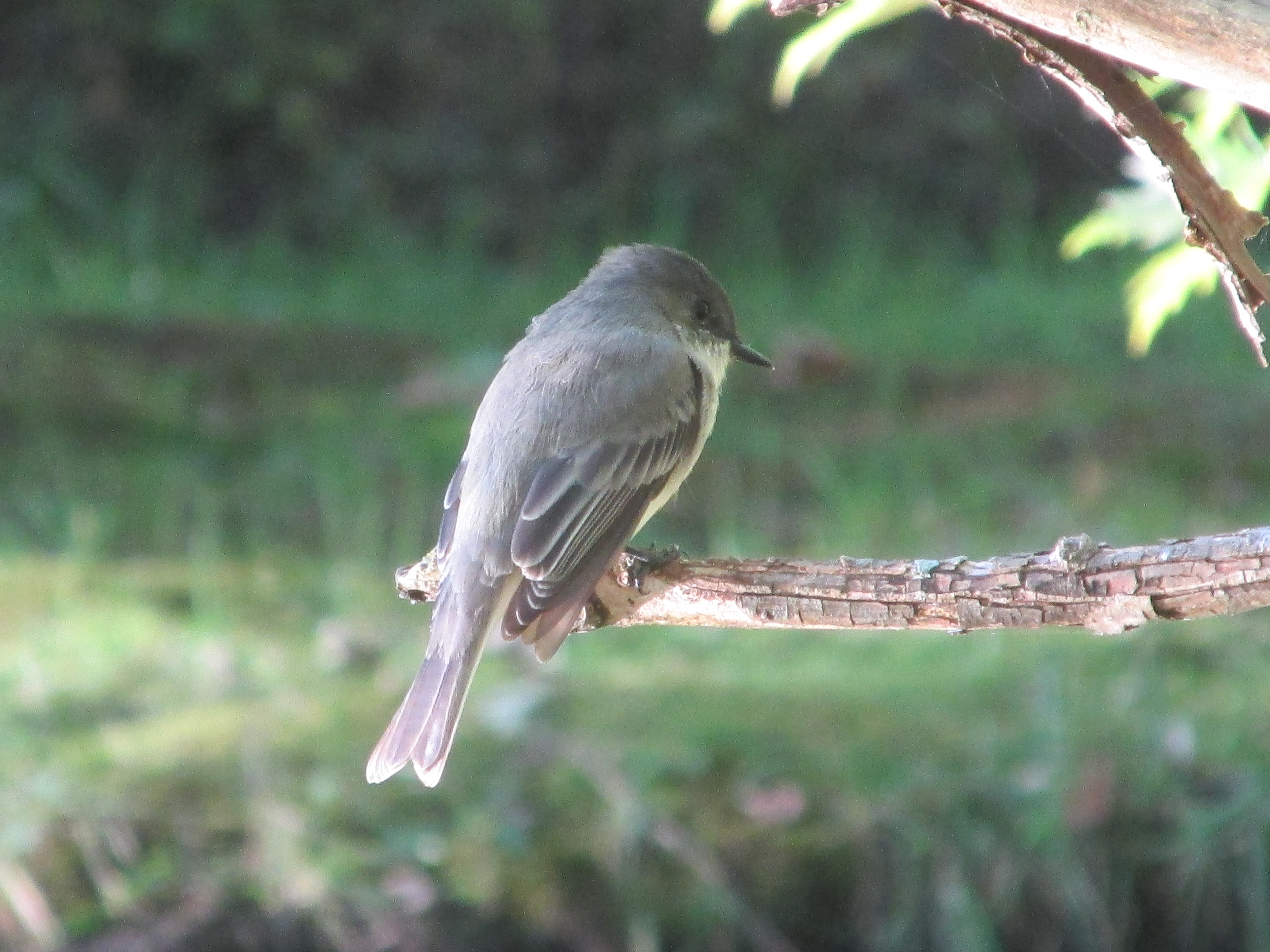
The nesting birds turned out to be Eastern phoebes, which are a member of the extensive family of birds known as “tyrant flycatchers.” The information about the pool assisted with the identification. Phoebes show an affinity for water, whether the source is a creek, pond or even a residential swimming pool.

Photo by Bryan Stevens • An Eastern phoebe scans from a perch for flying insect prey.

Considering the bright finery worn by some of the more colorful spring arrivals, it’s understandable if the return of Eastern phoebes escape immediate notice each year. In comparison with vibrant birds like rose-breasted grosbeak, ruby-throated hummingbird, scarlet tanager and yellow warbler, the Eastern phoebe is downright drab with its gray-black and dingy white plumage. Nevertheless, this member of the flycatcher clan has earned itself a favorite spot in the hearts of many a birdwatcher. It’s one of those birds that even beginning birders find surprisingly easy to recognize and identify after a bit of study. While it may not have a dramatic plumage pattern to hint at its identity, the Eastern phoebe is quite at home around human dwellings and comes into close contact with people going about their daily routines. Rather tame — or at least not too bothered by close proximity with humans — the Eastern phoebe has one behavior that sets it apart from all the other similar flycatchers. When this bird lands on a perch, it cannot resist a vigorous bobbing of its tail. Every time a phoebe lands on a perch, it will produce this easily recognized tail dip and rise. It’s a behavior that makes this bird almost instantly recognizable among birders with a knowledge of the trait.

Photo by Bryan Stevens • An Eastern phoebe fledgling only recently out of the nest.

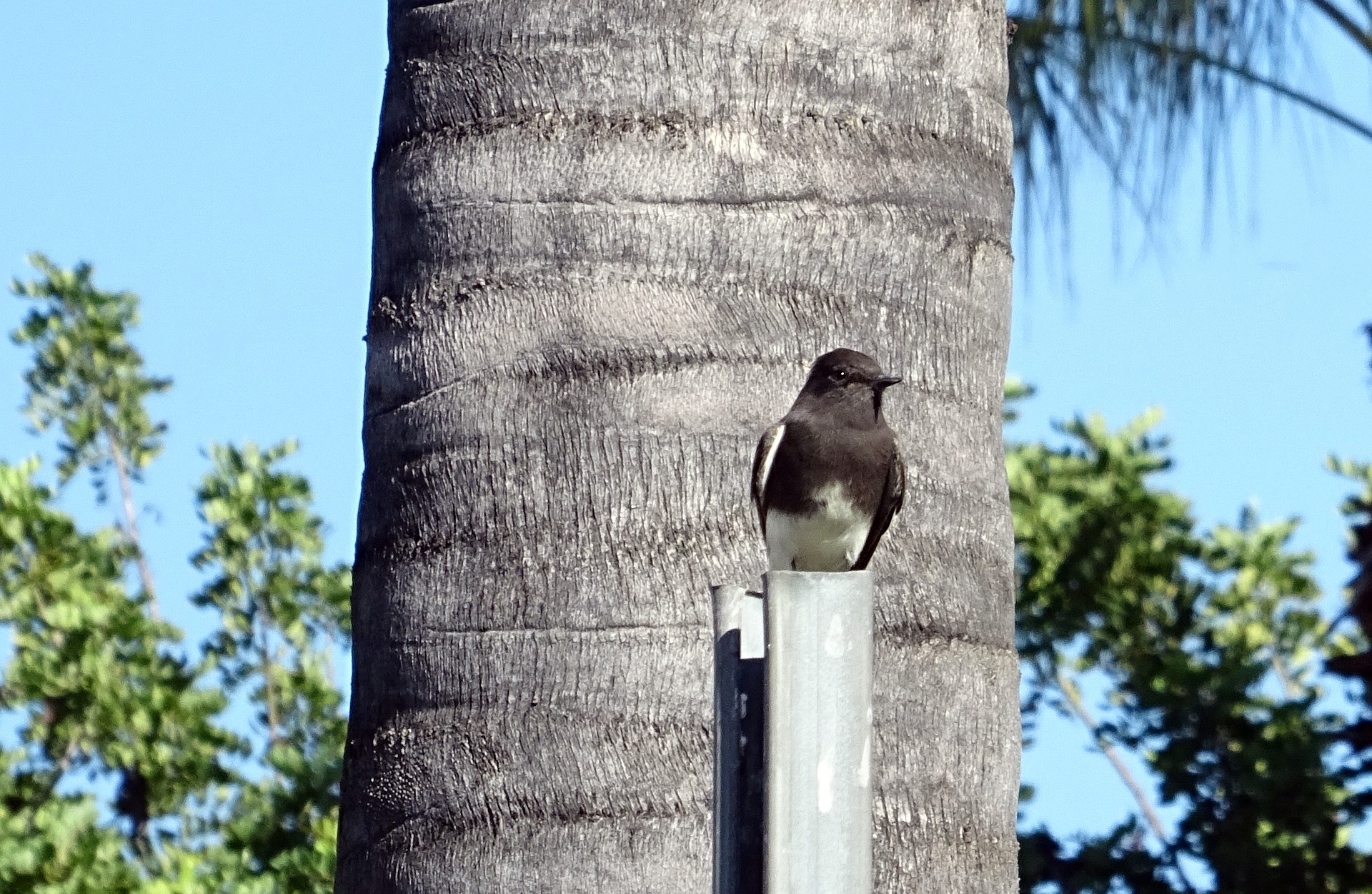
Photo by Sarangib/Pixabay.com • A black phoebe perches on a post near a palm tree.

The Eastern phoebe is also an enthusiastic springtime singer, and the song it chooses to sing is an oft-repeated two-syllable call “FEE-bee” that provides the inspiration for this bird’s common name. The Eastern phoebe, known by the scientific name of Sayornis phoebe, has two relatives in the genus Sayornis. The genus is named after Thomas Say, an American naturalist. The Eastern phoebe’s close relatives include the black phoebe and Say’s phoebe. The black phoebe ranges throughout Oregon, Washington and California and as far south as Central and South America. As its name suggests, this bird has mostly black feathers instead of the gray plumage of its relatives. The Say’s phoebe, also named for the man who gave the genus its name, is the western counterpart to the Eastern phoebe.

The phoebes belong to the the world’s largest family of birds, which is known collectively as the “tyrant flycatchers.” With more than 400 species, this family of birds consists of species known as tyrannulets, elaenias, pygmy tyrants, tody-flycatchers, spadebills, flatbills, attilas, kingbirds and kiskadees. 

Since they belong to the vast family of New World flycatchers, it’s probably no surprise that these phoebes feed largely on insects. The birds will often perch patiently until an insect’s flight brings it within easy range. A quick flight from its perch usually allows the skillful bird to return with a morsel snatched on the wing. In the winter months, the Eastern phoebe also eats berries and other small fruit. Phoebes can even feed on poison ivy berries without risk of ill effects.

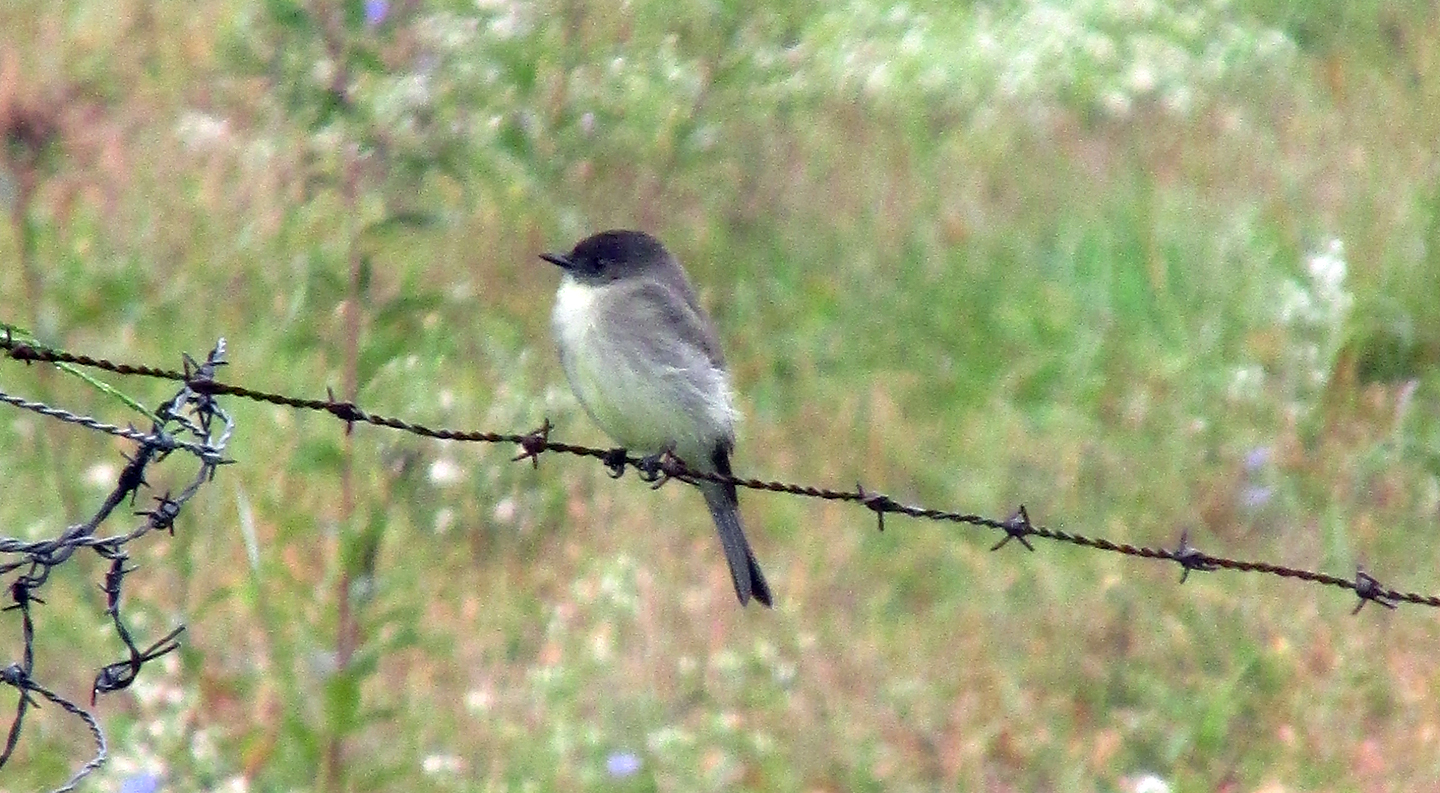
Photo by Bryan Stevens • An Eastern Phoebe perches on barbed wire.

Phoebes are fond of nesting on human structures, including culverts, bridges and houses. With the latter, they were once known for their habit of placing their nests under sheltering eaves. At my home, a pair of Eastern phoebes often chooses to nest on the wooden rafters in my family’s garage.  Although the species is migratory, a few hardy individuals will usually try to tough out winters in the region. The others that depart in the autumn will migrate to the southern United States and as far south as Central America. On some rare occasions, Eastern phoebes have flown far off their usual course and ended up in western Europe. I can usually count on Eastern phoebes returning to my home in early March, making them one of the first migrants to return each year. Their arrival rarely goes unnoticed since the males tend to start singing persistently as soon as they arrive.

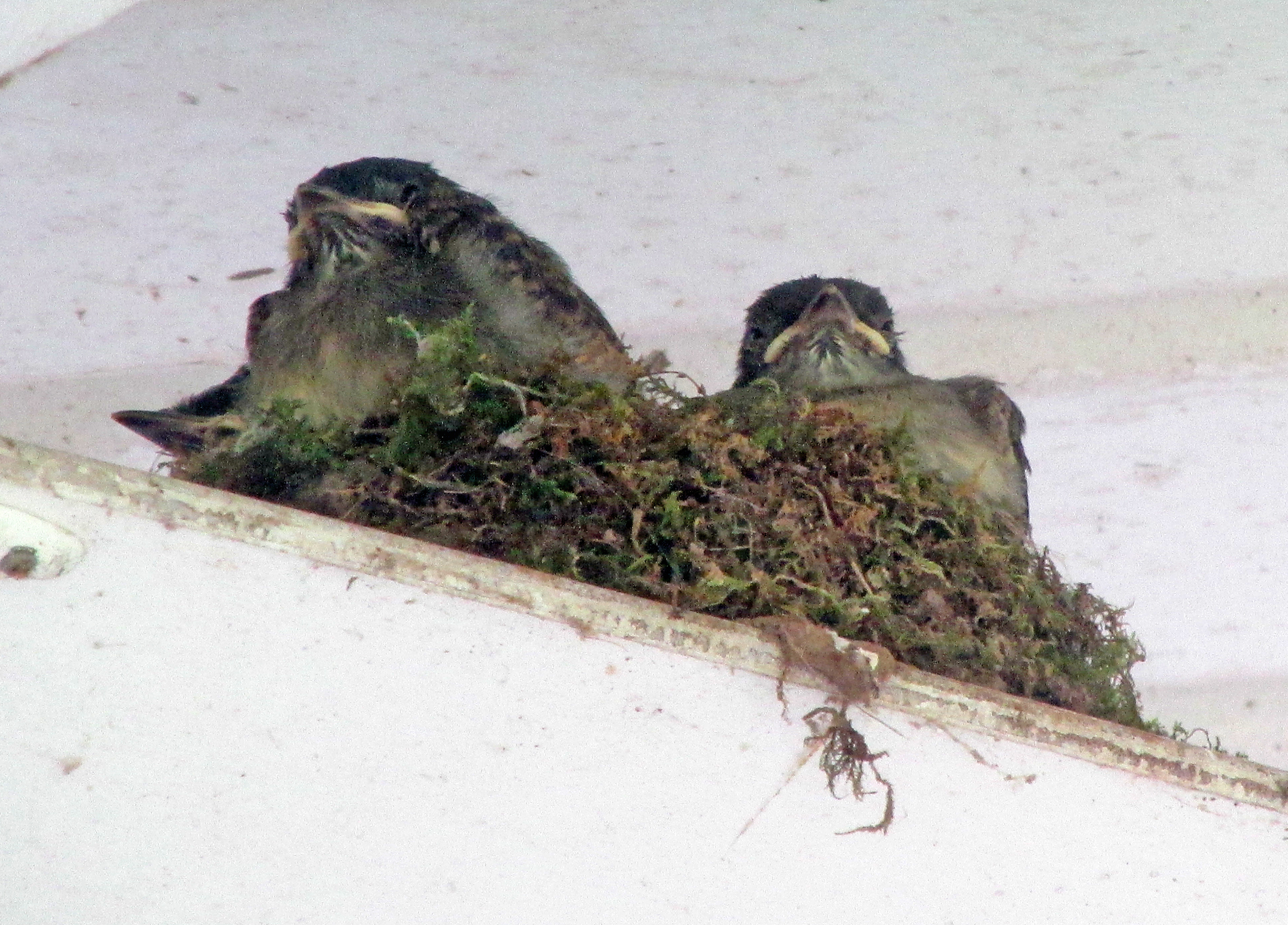
Photo by Bryan Stevens • Eastern phoebe nestlings stay in their nest atop a blade on an outdoor ceiling fan.


John James Audubon, an early naturalist and famed painter of North America’s birds, conducted an experiment with some young phoebes that represents the first-ever bird banding in the United States of America. His novel experiment, which he carried out in 1803, involved tying some silver thread to the legs of the phoebes he captured near his home in Pennsylvania. He wanted to answer a question he had about whether birds are faithful to home locations from year to year. The following year, Audubon again captured two phoebes and found the silver thread had remained attached to their legs. Today, ornithologists still conduct bird banding to gather information on birds and the mystery of their migrations. So, that pair of phoebes that returned to your backyard this spring — they just might be the same ones that have spent past summer seasons providing you with an enlightening glimpse into their lives.

Jill reminded me that she had written to me a few years back and had mentioned difficulty with hummingbird feeders and bears. “I am happy to report that so far this summer, there have been no incidents,” she wrote.

Her email also reminded me of a recent surprise. I awoke recently to the sound of a disturbance outside my bedroom window. I figured rambunctious squirrels were raiding my feeders. I raised the blind and surprised myself and a young black bear. Standing on his hind legs, the bear had managed to hook its paws on one of my feeders that hangs about four feet off the ground. The bear, probably a yearling based on its size, fled the scene, which probably spared my feeder. 

If you have a question, wish to comment on a column or share an observation, email me at ahoodedwarbler@aol.com. If you want help with identification, photographs definitely help.

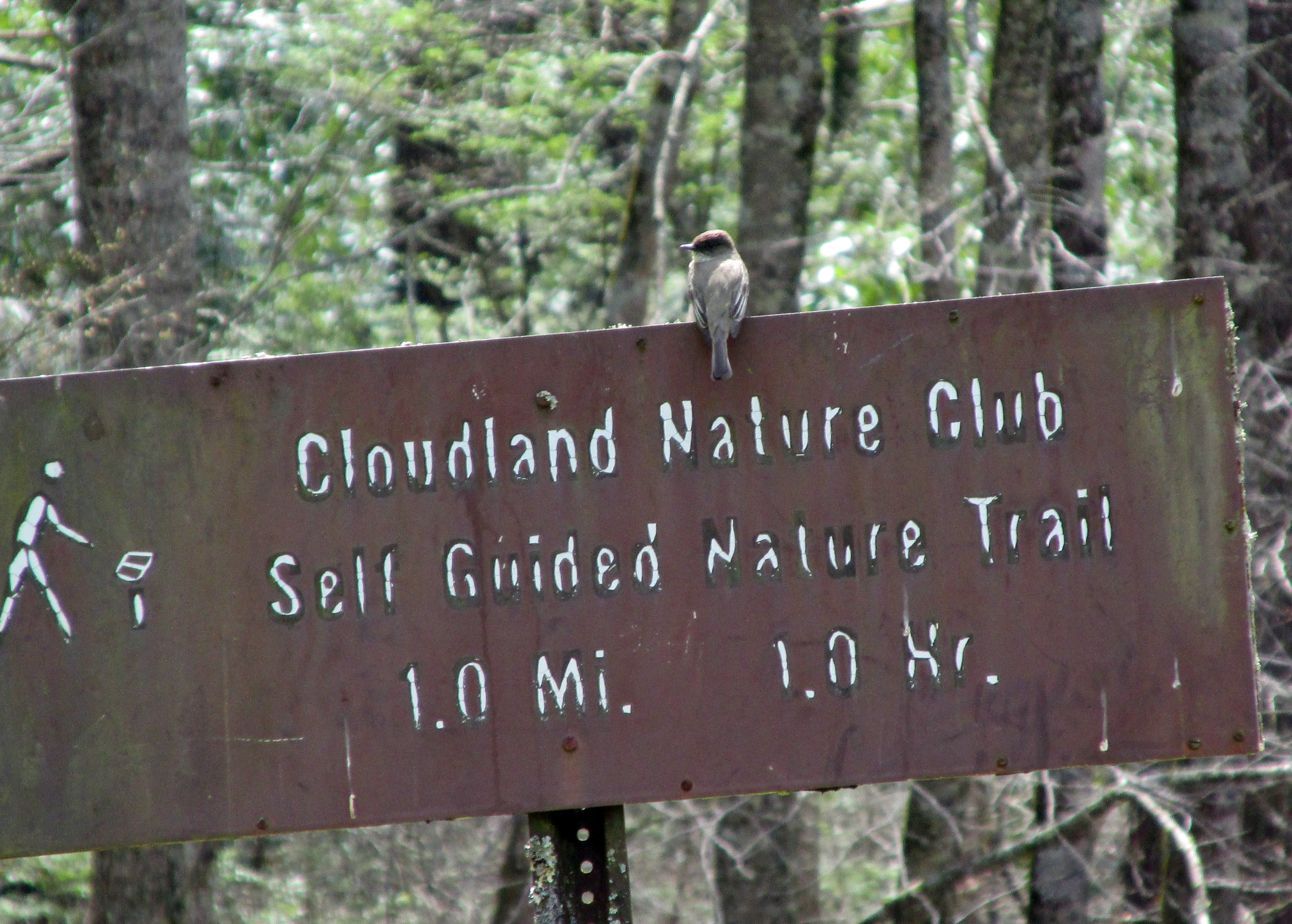
Photo by Bryan Stevens • An Eastern phoebe utilizes a hiking trail sign as an elevated perch.

Indigo buntings common and colorful summer bird in region

Photo by Bryan Stevens • The male indigo bunting’s one of the region’s more vibrantly colored birds of summer.

The recent five-county Spring Bird Count, conducted Saturday, May 4, by the Elizabethton Bird Club, found 145 species in the five Northeast Tennessee counties of Carter, Johnson, Sullivan, Unicoi and Washington. The count included such cities as Bristol, Johnson City, Jonesborough, Kingsport, Erwin, and Mountain City. A total of 57 participants in 11 parties counted during the annual survey of avian populations in the region. The long-running count is the only spring census of birds conducted in the area.

Not surprisingly, some of the most abundant birds included Canada goose, European starling, American crow, red-winged blackbird and common grackle. Some of the more common songbirds included red-eyed vireo, Northern cardinal, American robin, hooded warbler, American goldfinch and Indigo bunting.

The indigo bunting is one of the reasons spring is such a wonderful time of the year to watch the visitors to feeders. This small songbird likes to reside in the boundary region where forests and woodlands meet fields and pastures. Personally, the indigo bunting has always been a bird that is suggestive of the long, hot days of summer. One of my earliest and still quite vivid birding memories is a recollection of a shockingly blue bird atop a blue spruce tree in my yard. Several decades later, the tree is no longer standing, but these beautiful birds — I now know these summer visitors were indigo buntings — still return each year to my yard and gardens.

Photon by Bryan Stevens • Indigo Buntings will perch on wires and sing for hours even during hot summer days.

These birds usually arrive in the region in late April, and I’ve seen them linger until late October, although most indigo buntings have left the region by late September. Upon arrival, male indigo buntings become tenacious singers, repeating their jumbled notes even during the hottest hours of summer afternoons. The preference of this small songbird is to sing from the tops of tall trees, where they are often concealed by the green leaves. When I do get a glimpse of the obscured songster, often all I see is a dark shape silhouetted against the bright sky. Sometimes, if he plunges from the upper branches into the woodland understory, I get that telltale glimpse of blue feathers.

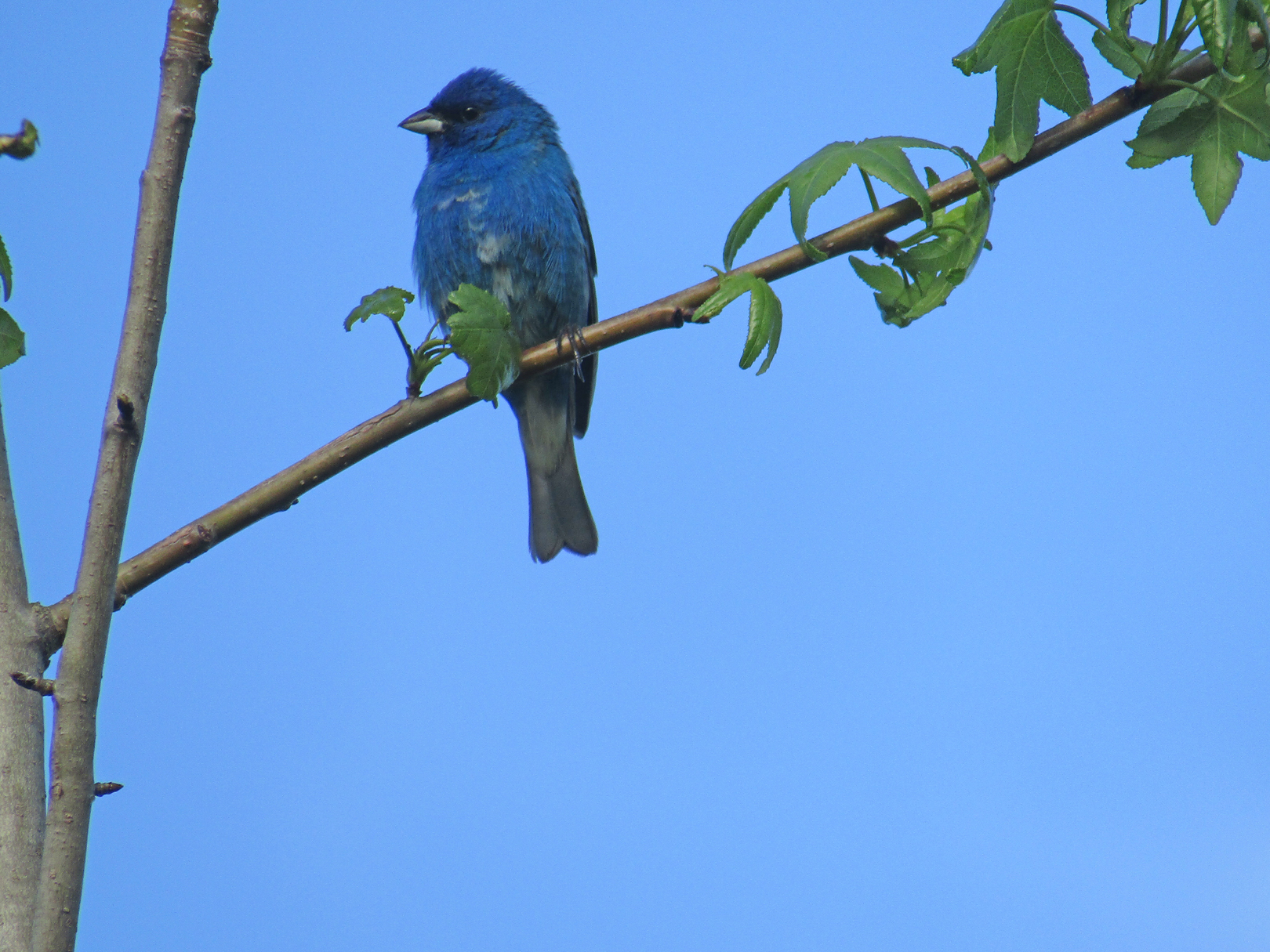
The indigo bunting is the only solid blue bird in the eastern United States, but it’s all an illusion — literally a trick of the light. The indigo bunting’s feathers are not really blue; the male’s brilliant azure plumage is caused by the process of diffraction of light around the structure of the bird’s feathers. This process scatters all but the blue light, and the resulting color shifts from black to blue to turquoise as the angle of reflected light changes. In bright light, it can even look unnaturally vivid blue. In poor light, however, an indigo bunting male can appear black. Fortunately, indigo buntings have both a characteristic body shape and song, so even if the birds are not seen at their best, they can still be recognized.

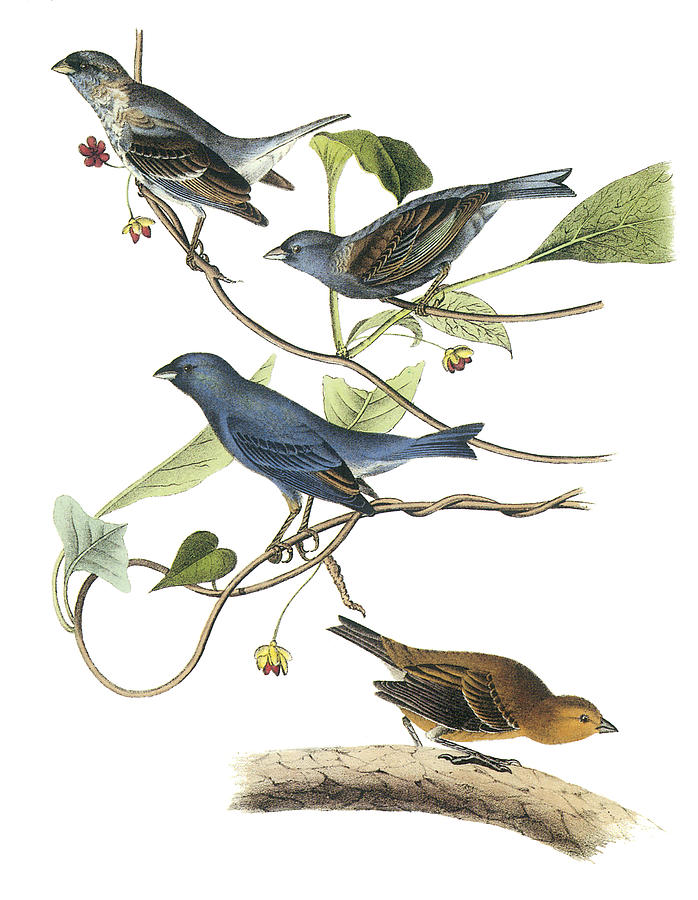
Early American naturalist and artist captured the differences in male, female and immature indigo buntings in this painting of the species.

Soon after returning to the eastern United States each spring, female buntings begin to gather materials to construct a well-crafted, cup-shaped nest. The male usually stays close to her, but he offers no assistance with nest building. She usually lays a clutch of three to four eggs, but she may nest another two times in a single season.

She will incubate the eggs for almost two weeks, but the young remain in the nest another two weeks after being hatched as featherless, blind and helpless young completely dependent on the care of attentive parents. The task of raising so many broods in the space of only a few months requires the participation of both the female and her mate, who must work hard to bring enough insects to the nest to keep the young fed.

Like many species of songbirds, the male is by far the most colorful. In this instance, the male is also responsible for the species’ name. Indigo is a blue dye that was once an important crop in the South. The drab female may boast some blue highlights in her plumage. Juvenile birds just out of the nest also resemble the female. Pay close attention to any indigo buntings you observe as summer progresses. Juvenile birds will look mostly brown with just a hint of blue in the wings and the tail. These will be the young buntings that were hatched this spring and early summer. They will often accompany their parents to feeders.

Indigo buntings are particularly fun birds to observe in late summer. Although some books indicate that males are not very active in rearing young, I have on numerous occasions witnessed male buntings feeding fledglings at feeders. Indigo bunting juveniles, like the young of many other birds, beg for tidbits from parents by “bowing,” spreading their wings and shivering. These actions usually prompt a parent to pop some morsel into an impatient youngster’s open bill. Indigo buntings are relatively easy to view. They frequent weedy fields and roadside brush. During the breeding season, males can also be seen singing from prominent perches. The song, a distinctive jumble of notes, can help observers find these dedicated singers.

The male indigo bunting is one of the most colorful birds to visit feeders in the region. This species is also extremely fond of millet seed. I like to have some feeders stocked with millet when the buntings begin to return each spring. They will also feed on thistle and sunflower seeds. Away from our feeders, they also devour plenty of seeds from various noxious weeds. Because of the indigo bunting’s appetite for the seeds of destructive weeds, it is considered a beneficial bird.

Photo by Bryan Stevens • Newly-returned neotropical migrants, such as this Indigo Bunting, increased the total number of species for the annual spring count.

One of the most attractive summer scenes is to observe American goldfinches and indigo buntings feeding together on the nodding heads of summer sunflowers. The goldfinch males, resplendent in their bright yellow and black plumage, compete with the blue indigo bunting males for the fresh sunflower seeds. When bright red male Northern cardinals join in, observers have a complete artists’s palette for summer viewing.

The indigo bunting will usually respond to human squeaks that imitate a bird’s call. When a flock or family group of buntings are disturbed by a human observer, they usually begin a chorus of alarmed “chipping.”

As I indicated earlier, indigo buntings remain in the region until late September. Although this bird typically winters in Mexico, Panama and the Caribbean, in recent decades some indigo buntings have only gone as far south as Florida to spend the winter. There in the Sunshine State, the indigo buntings may mingle with a close relative, the splendidly multi-colored painted bunting. I usually see these vibrant songbirds whenever I visit coastal South Carolina in spring or summer. Male painted buntings are probably one of the most colorful birds in the United States with hues of red, green, purple and blue in their feathers.

Photo by Bryan Stevens • A male painted bunting enjoys a bath in a fountain at Hunting Beach State Park in South Carolina.

Other North American buntings include the snow bunting, the lazuli bunting and the lark bunting, which is also the official state bird for Colorado. Some of the common but descriptive names for some of the world’s other buntings include rose-bellied bunting, orange-breasted bunting, cinereous bunting, white-capped bunting, lark-like bunting, ochre-rumped bunting, golden-breasted bunting, chestnut-bunting, red-headed bunting, yellow bunting, blue bunting, little bunting, brown-rumped bunting, meadow bunting, corn bunting and crested bunting.

Keep your feeders stocked with millet and sunflower seeds if you want to increase your chances of seeing indigo buntings, as well as other handsome summer songbirds such as American goldfinch, chipping sparrow and Eastern towhee.

Photo by Bryan Stevens • Although bright blue, a male indigo bunting will often blend with its surroundings.

Father of the Bird: Fatherhood runs the gamut among world’s birds

Photo by picman2/Pixabay.com • A male satin bowerbird has collected blue objects to decorate his “bower,” which provides a stage for performing elaborate mating displays designed to attract interested female bowerbirds.

As we honor fathers today with a special day in their honor, I thought it might be a good time to look to the bird world for some examples of what fatherhood means among our fine feathered friends.

Among many of the raptors, which includes hawks, falcons and eagles, females are significantly larger than males. Unsurprisingly, much of the job of protecting the nest and young falls to the larger and stronger females. Male raptors, for the most part, are good parents and hunt prey and deliver food to the nest. Sometimes, though, there can be trouble in paradise. For example, researchers are giving a new look at the dynamics between mated bald eagles. The prevailing theory once supposed that bald eagles mate for life.

In an article published Nov. 9, 2012, on the website of William and Mary College, researchers announced that they have begun to notice that eagles on occasion undertake the avian equivalent of “divorce.”

Photo by Bryan Stevens • Although bald eagles were long thought to mate for life, the national bird is not quite as devoted to its mate as originally believed.

Bryan Watts, the director of the Center for Conservation Biology, was interviewed for the article. Watts noted that both males and female eagles will cheat. Getting away with cheating, however, favors the female. Watts explained that the male may be absent fishing when another male eagle visits the nest site and proceeds to mate with the female. Consequently, the unsuspecting mate returns and could end up raising eaglets that were fathered by the intruder instead of himself.

There are some male birds who are more steadfast once they mate. For instance, swans, cranes and albatrosses are known for sticking with a chosen mate over a lifetime. Two endangered species — the California condor and the whooping crane — are known to mate for life. Cranes typically choose a mate when they reach the age of two or three; condors, on the other hand, usually don’t mate until they are at least six to eight years old. Of course, both these birds live long lives. Whooping cranes may live to the age of 25 while condors can live for as long as six decades.

Photo by U.S. Fish & Wildlife Service • Endangered California condors typically do mate for life.

According to the Audubon website, we can look to a family of shorebirds for some examples that go against usual gender norms. Phalaropes reverse the usual sex roles in birds, with the females being larger and more colorful than males, In addition, females take the lead in courtship, while males are left to incubate the eggs and care for the young once the business of mating is done. Three species of phalaropes inhabit North America: Wilson’s phalarope, red-necked phalarope and red phalarope.

Many male birds lend a hand in building nests or raising young. There are some examples of “deadbeat dads,” however, with one of the most glaring being the beloved ruby-throated hummingbird. A male hummingbird is unlikely to ever lay eyes on his offspring. Once mating has been concluded, the female is left to build a nest on her own. She also incubates the eggs without any help from her mate, who has probably already skipped out and started to court other female hummingbirds in the vicinity. Once the two eggs hatch, the female hummingbird is solely responsible for feeding the hungry offspring. It’s the primary reason hummingbirds always lay two eggs. With her high metabolism, a female hummingbird would be hard pressed to feed herself and any more than two young.

Photo by Bryan Stevens • Male hummingbirds do little to help females construct a nest and care for young.

Some male birds, like their human counterparts, approach romance by initiating courtship by bringing some shiny bling to the relationship. Bowerbirds, which are found mainly in New Guinea and Australia, are renowned for their unique courtship behavior. A male bowerbird will build a structure — the bower — and decorate it with sticks, flowers, shells or other brightly colored objects in an attempt to attract a mate. Alas, once he has won a mate with these “bribes,” he’s no better than male hummingbirds. The females are left to build the nest and raise the young without any assistance from the males.

Satin bowerbird males often decorate with blue, yellow or shiny objects, including berries, flowers or even plastic items such as ink pens, drinking straws and clothes pegs. As the males mature they use more blue objects than other colors. The decorated bower becomes a stage from which males carry out intense behavioral displays called dances to attract their mates.

The world’s largest flightless birds – ostriches, emus, rhea, cassowaries and a few others – would make good “father of the year” candidates. For instance, male ostriches share incubation duties with females. Once the eggs hatch, male ostriches are active in leading young to suitable foraging habitat and protecting them from predators. Some male ostriches can stand nine feet tall and weigh 320 pounds, so dad is an imposing obstacle for many predators. In the event of an attack, the male will try to draw off the predator while the chicks run for cover with their mother.

Photo by Pixabay on Pexels.com The male common ostrich, the world’s largest bird, is a dedicated father to his young, offering protection from a dangerous world.

Fatherhood often means a dedicated effort on the part of some birds, while other basically make their genetic contribution to ensuring the survival of the species and are done with the concept. There’s a surprising variety to behold once one starts looking at the different avian approaches to fatherhood.

blue and multicolored peacock

Photo by Chris Brenner on Pexels.com • Male birds, such as the Indian Peafowl, use various displays to attract mates. After mating is completed, male birds vary in the degree of assistance they offer with the task of raising a brood of hungry young.

Unusual ducks pick Bristol’s Middlebrook Lake for brief visit

IMG_5623

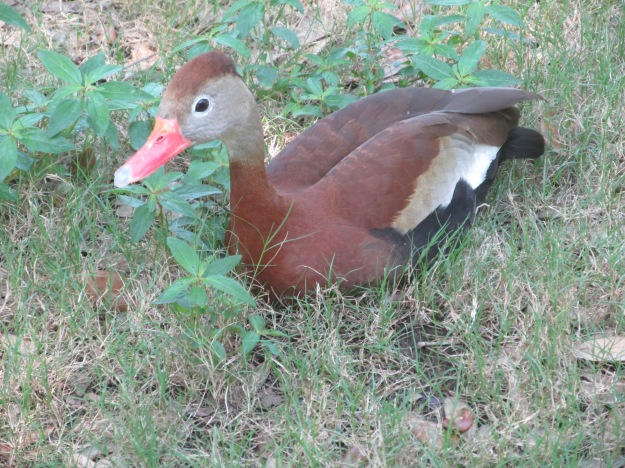
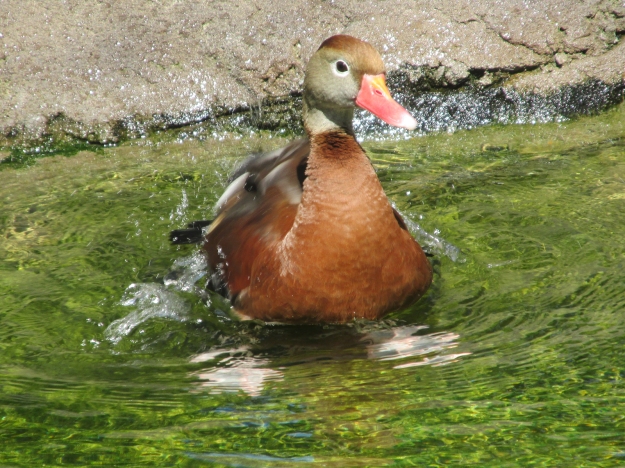
Photo by Bryan Stevens • A black-bellied whistling duck rests inside an aviary located at Brookgreen Gardens in South Carolina. In the wild, this species of duck has been expanding its range in the southern United States.


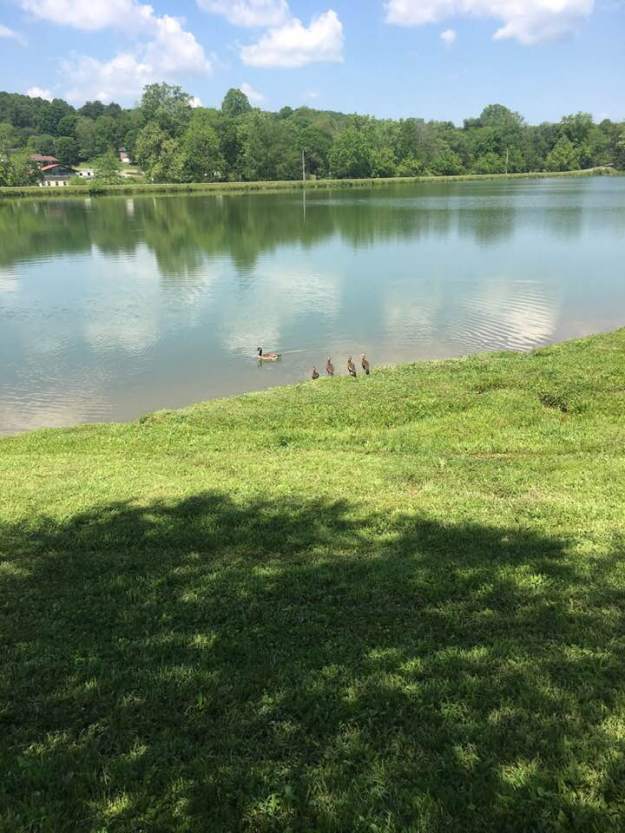
Joanne Campbell notified me via Facebook of a visit of an unusual waterfowl on Saturday, May 18, at her home near Middlebrook Lake in Bristol, Tennessee.

I needed a moment to look past the obvious Canada goose in the photograph before my eyes registered the four small ducks on the grassy bank. I recognized them instantly as black-bellied whistling ducks.

Black-bellied whistling ducks are members of a group of ducks known as “tree ducks” and “whistling ducks.” There is some debate about whether they are more closely related to ducks or geese.

60781976_2316666235056782_5416044963886530560_n

Photo courtesy of Joanne Campbell • The four visiting black-bellied whistling ducks line up along the edge of Middlebrook Lake as a Canada goose swims past.

Joanne’s recent sighting near her home culminates a series of sightings throughout the region over the past month or so. For whatever reason, these ducks have popped up in various locations throughout the region in recent weeks.

Birder and photographer Adam Campbell found 11 black-bellied whistling ducks at a new retention pond off Exit 14 along Interstate 81 in Abington, Virginia, on Sunday, May 12.

A month earlier, birder Graham Gerdeman, a resident of Nashville, Tennessee, found a black-bellied whistling duck at the Harpeth/Morton Mills Greenway in Nashville on Friday, April 12.

On Friday, April 19, another lone black-bellied whistling duck was spotted in a grocery store parking lot in Fairview near Murfreesboro, Tennessee, by birder Kathy Malone.

Birders Ronald Hoff and Dollyann Myers observed a black-bellied whistling duck on Friday, May 17, on a small lake on Highway 411 south of Maryville, Tennessee, on the line between Blount and Loudon counties.

Black-belliedWhistlingDuck

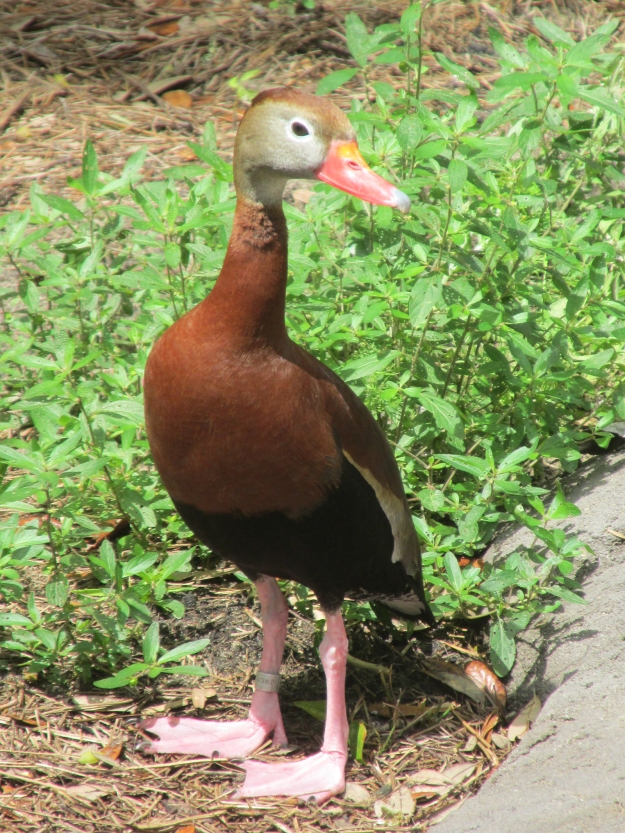
Photo by Bryan Stevens • Although widely kept in aviaries, black-bellied whistling ducks are becoming increasingly frequent wild visitors in the Volunteer State. East Tennessee saw a spike of sightings this spring of this duck.

In West Tennessee, closer to the Mississippi River waterfowl migration flyway, the black-bellied whistling duck is a more common bird. The ducks, which are typically found in Central and South America, range into the United States typically only in southern Texas and Arizona, as well as occasionally in Louisiana, Mississippi, Arkansas and Florida. Some field guides indicate that these ducks are not long-distance migrants, but birders in western Tennessee would disagree with that assessment.

In appearance, males and females are similar with long necks, red bills and long, pinkish-red legs. The plumage is mostly chestnut with a black belly and a readily visible white wing patch.

These ducks are often described as being somewhat similar to geese and are not considered true ducks. They are classified by biologists in the genus Dendrocygna. Species in the genus include the West Indian whistling duck, wandering whistling duck, fulvous whistling duck, plumed whistling duck, spotted whistling duck, lesser whistling duck and white-faced whistling duck. Only the fulvous whistling duck joins the black-bellied whistling duck in ranging into the United States in such locations as Florida, Louisiana, Texas and California.

DUCKS

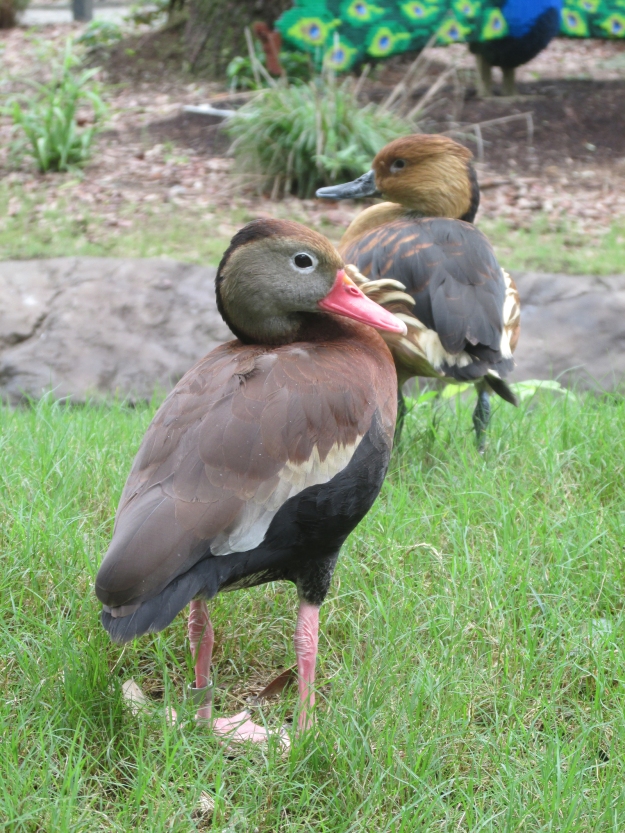
Photo by Bryan Stevens • A black-bellied whistling duck (foreground) and a fulvous whistling duck (background) share space within an aviary at Brookgreen Gardens in South Carolina.

Black-bellied whistling ducks will nest both in natural cavities or on the ground in areas with thick vegetation. If nesting boxes are available, these ducks will gladly nest in them. According to the North American Breeding Bird Survey, black-bellied whistling-ducks have been expanding their range in the southern United States. These ducks have experienced strong population growth, estimated at more than 6 percent per year from 1966 to 2014. The world population is estimated at 1,100,000 to 2,000,000 birds and increasing, which could explain why appearances are becoming somewhat more commonplace in states like Tennessee, as well as Virginia and the Carolinas.

Formerly called the black-bellied tree duck, this waterfowl has also been given common names such as “whistling duck” and “Mexican squealer.” As indicated by these different names, these are highly vocal birds with a clear, piercing whistled call.

The black-bellied whistling ducks at Middlebrook Lake lingered for several hours, which allowed many birders in the region to make the drive to the lake to observe such an interesting visitor to the region.

Joanne later posted on Facebook about the excitement generated by the ducks. “I couldn’t get any work done for watching them,” she wrote in her post.

The ducks are not the first rare bird that Joanne has alerted me to at Middlebrook. Back in November of 2015, she notified me of an American white pelican that spent a couple of days on the lake. I’m grateful to her for notifying me about both the black-bellied whistling ducks and the pelican.

I always enjoy hearing from readers with observations to share. To make a comment, ask a question, or share a sighting, email me at ahoodedwarbler@aol.com.

Duck-Bath

Photo by Bryan Stevens • A black-bellied whistling duck enjoys a vigorous bath within its enclosure in an aviary at Brookgreen Gardens in South Carolina. This duck is often kept in captivity. The wild population has expanded its range in recent years from Central America into the southern United States.

Woodpecker still bears name of historic expedition’s charismatic leader

natdiglib_28237_extralarge

The Lewis’s woodpecker’s common and scientific names pay tribute to the famed explorer Meriwether Lewis, who with his partner, William Clark, explored the American West.

The 215th anniversary of the launch of the famous Lewis and Clark Expedition will be observed May 14. Also known as the Corps of Discovery Expedition, the enterprise became the first American expedition to cross the western portion of the United States and explore the recently acquired lands known collectively as the Louisiana Purchase. The Lewis and Clark expedition officially extended from May 14, 1804, to Sept. 23, 1806. As they drove deep into the American West, the members of the expedition saw wonders, including the feathered variety, never before beheld by people outside of various Native American tribes.

In authorizing the expedition, President Thomas Jefferson wanted to establish a reliable route for travel through the western half of the nation and to fend off any attempts by European nations to gain a foothold beyond the nation’s frontier. Jefferson also hoped Meriwether Lewis and William Clark would make some important discoveries about the nation’s native fauna and flora. Jefferson gave instructions for Lewis and Clark to collect bones they found during their journeys. He also asked them to keep alert for large animals that would be new to science. In particular, Jefferson hoped that the men he chose to head the expedition would help prove that the American mastodon still roamed the American West.

Mastodon bones had been found in the eastern half of the United States early in the nation’s history. Jefferson, accepting the widely held view of his time that God would not let animals go extinct, entertained the optimistic belief that large herbivores such as the bison of the American West roamed portions of the newly-acquired Louisiana Purchase along with American mastodons. The expedition failed to find great herds of American mastodons trumpeting their way across the vast prairies and grasslands of the Western United States. As any student of history knows, however, the expedition made many important biological discoveries ranging from unique animals as the pronghorn antelope and grizzly bear to various fish, reptiles and plants.
Meriwether_Lewis-Charles_Willson_Peale

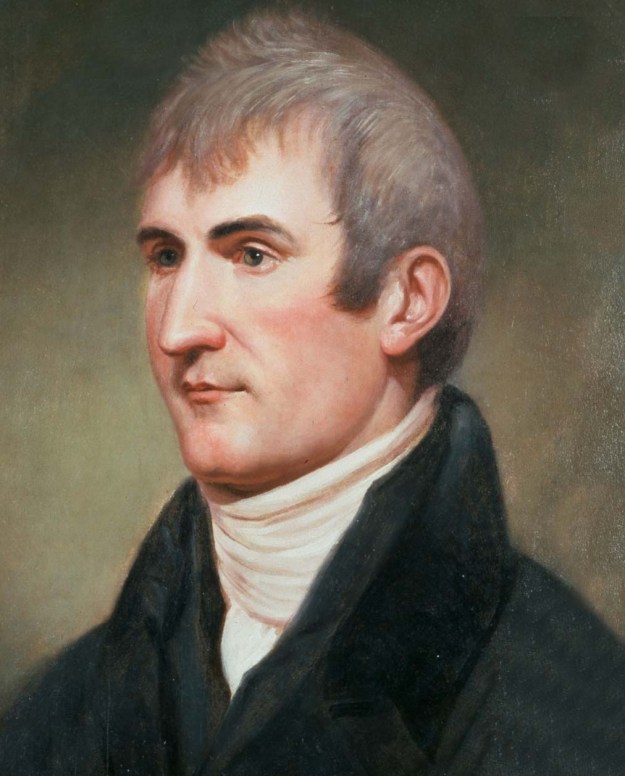
Meriwether Lewis gave his name to the famous Lewis and Clark Expedition. as well as to the woodpecker named Lewis’s woodpecker.

The expedition also described nearly half a dozen species of birds that, at the time, had never been discovered and detailed by European Americans. These birds included the common poorwill and the greater sage-grouse. One of the birds — Lewis’s woodpecker — even memorializes the name of Meriwether Lewis and his important contributions to the success of the venture.

Lewis described the woodpecker that now bears his name as a bird “new to science” in one of his journal entries dated May 27, 1806. He made his observations of the bird while the expedition camped on the Clearwater River in what is now known as Kamiah, Idaho. He had mentioned the “black woodpecker” in earlier accounts in his journal, but during his time in the Idaho camp, he managed to shoot and preserve several of the birds. In his account, he described the bird’s behavior as similar to the red-headed woodpecker of the Atlantic states back in the eastern United States.

As it turns out, both Lewis’s woodpecker and the red-headed woodpecker belong to the Melanerpes genus of woodpeckers, which also includes about two dozen species ranging North and South America, as well as the islands of the Caribbean. The other members of the genus found in the United States include acorn woodpecker, gila woodpecker and red-bellied woodpecker. The term Melanerpes comes from ancient Greek words for black (melas) and creeper (herpes), which roughly translates as “black creeper.” Lewis’s woodpecker, one of the largest of its kind found in the United States, can reach a length of 10 to 11 inches. In 1811, the famous naturalist Alexander Wilson composed the first description of the bird for science and named it Melanerpes lewis after Meriwether Lewis. In addition, the bird’s common name has always identified it as Lewis’s woodpecker.
Lewis-Woodpecker

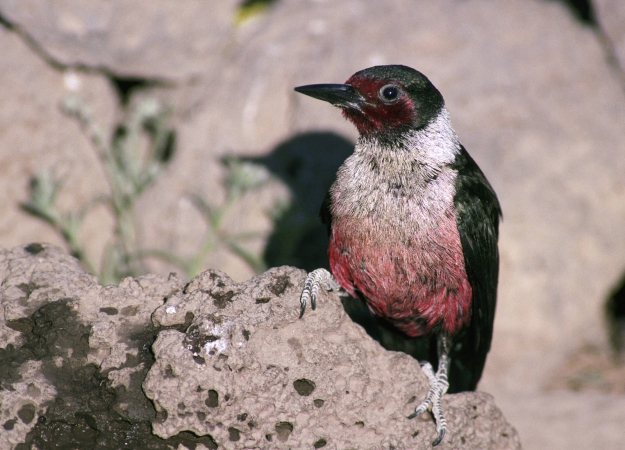
Photo by Dave Menke/U.S. Fish and Wildlife Service • Lewis’s woodpecker is found primarily in the west. It eats insects, mostly caught in the air, as well as fruits and nuts. The woodpecker also shells and stores acorns in the bark of trees.

These woodpeckers nest in open ponderosa pine forests and burned forests with a high density of standing dead trees. They also breed in woodlands near streams, oak woodlands, orchards, and pinyon-juniper woodlands. In appearance, Lewis’s woodpecker stands out from other American woodpeckers. Its unique appearance includes a pink belly, gray collar and dark green back, quite unlike any other member of its family. In behavior, it also differs from other woodpeckers. This woodpecker is fond of flycatching, perching on bare branches or poles and then making flight sallies to capture winged insect prey. It has also been described as flying more like a crow than a woodpecker.

We haven’t been good stewards of the woodpecker that the famous Expedition brought to our notice. According to the organization Partners in Flight, Lewis’s Woodpeckers are uncommon and declining. Their populations declined by 72 percent between 1970 and 2014. Lewis’s Woodpeckers are threatened by changing forest conditions as a result of fire suppression, grazing and logging. These factors often leave pines of a uniform age in the woodpecker’s favored habitat and fewer of the dead and decaying pines crucial for the bird’s nesting success. Humans could help Lewis’s woodpecker thrive by not removing dead or dying trees from western forests.

After the Lewis and Clark Expedition returned to the eastern United States and reported back to Jefferson, he was awarded with 1,600 acres of land. He meant to work on publishing the journals he kept during the Expedition, but kept finding himself distracted. In 1807, Jefferson appointed Lewis governor over the Louisiana Territory that Lewis and Clark had so famously explored. He governed the territory from the Missouri city of St. Louis, which became known as the “Gateway to the West” as more Americans expanded into the territory they had learned about thanks to the famous Expedition.
lewis_memin-tippet

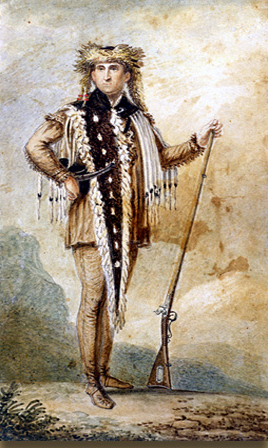
Meriwether Lewis in a pose painted with him wearing garb he chose for the expedition.

Lewis spent two troubled years trying to administrate the new territory, but he became entangled in political squabbles and financial difficulties. Things got so difficult for him that Lewis decided he needed to travel to the nation’s capital in person to clear up the mess. On his way to Washington, D.C., he stopped at an inn along the Natchez Trace about seventy miles southwest of Nashville. He died of gunshot wounds on Oct. 11, 1809, and historians have debated ever since whether his death resulted from suicide or murder. Regardless of the nature of his demise, he earned a place in the history books. He’s also remembered every time a birder lays eyes on the woodpecker that bears his name. When the bird is researched in a field guide or on a web page, the more curious individuals are sure to dig a little deeper to learn who provided the Lewis in the woodpecker’s name. His name will continue to be recalled as long as this unusual western woodpecker continues to fly in its beloved pine forests.

I’ve never seen a Lewis’s woodpecker, although I have visited Utah twice to make the attempt. Lewis’s woodpecker is listed as an uncommon permanent resident on the state checklist, so perhaps I will need to be more diligent the next time I visit its home range. I see the red-bellied woodpecker, a smaller relative of Lewis’s woodpecker, on a regular basis. This common bird more closely resembles what most people expect a woodpecker to look like, and it will visit feeders for such fare as sunflower seeds, peanuts and suet.

A-Red-belliedTHREE

Photo by Bryan Stevens • The red-bellied woodpecker is a close relative to Lewis’s woodpecker.

In next week’s column, I’ll continue my anniversary tribute to the Lewis and Clark Expedition with a discussion of the bird that honors William Clark, the other partner in the famous westward expedition of discovery.

Readers continue to share hummingbird tales
Garry Cole sent me an email recently to share a hummingbird story.

“I have been following the progress of hummingbird sightings as the birds moved closer to East Tennessee,” Garry wrote. “I read with envy how neighbors all around me had seen these jewels, but none had visited my home here in Hickory Tree near Bluff City.”

Then, on April 23, as Garry sat in the yard, a male ruby- throated hummingbird stopped and hovered less than a foot in front of his face.

“He looked me squarely in the eye as if to say, ‘Well, I’m here. When are you going to feed me?’”

Garry noted that the bird arrived at about 8:15 p.m. “I immediately went inside and prepared my feeder,” he said. “Now, I have at least four that visit my feeder every day. There may be more, but I have only seen four at one time.”

His hummingbirds drink about eight ounces of sugar mix every two or three days and seem to feed more frequently between 5 and 7 p.m.

Tom Brake shared via Facebook that hummingbirds have also returned to his home on Peaceful Valley Road in Abingdon, Virginia. In his posting to my Facebook page, he informed me that he had his first hummingbird sighting of spring on April 28.

Myra Harris message me on Facebook to let me know her mom, Mae Bell Byrd, who lives in Flag Pond in Unicoi County, Tennessee, saw her first hummingbird on April 12.

IMG_2786

Photo by Bryan Stevens • Welcoming back hummingbirds also involves making sure that they remain healthy and safe while spending the next six months in our yards and gardens.