Category Archives: Bryan Stevens Feathered Friends

Visit by Yellow-headed blackbird, last seen in region in 1994, creates a stir

Bugaboo Springs Road near Jonesborough, Tennessee, saw some heavier vehicular traffic in mid-January after the exciting observation of a yellow-headed blackbird associating with a sizable flock of brown-headed cowbirds.
Yellow-headedBlackbird-JBoro

Photo by Bryan Stevens • This yellow-headed blackbird has been residing with flocks of brown-headed cowbirds and European starlings at a cattle pasture near Jonesborough, Tennessee. The bird, the first of its kind seen in Northeast Tennessee since 1994, has generated excitement among birders. Some people have traveled from as far as Knoxville, Tennessee, and Roanoke, Virginia, to see the bird.

The bird came to the attention of Dawn Peters, a resident along Bugaboo Springs Road, who noticed the unusually colorful bird at her feeders while looking out the window of her laundry room. At first, she thought the bird might be an oddball member of the cowbird flock.

“I’d never seen one before,” she said. “I knew it was something strange and something new.”

Dawn took the time to take a photograph of the bird and then contacted friends Jean and Brookie Potter, who also happened to be birders. They alerted her to the rare status of her feeder visitor.

“He really stood out,” Dawn said of the blackbird with a yellow head.

The yellow-headed blackbird arrived at her feeders on a snowy day when the temperatures had plunged. Dawn said she has been feeding birds for 20 years since she and her husband moved to Bugaboo Springs Road near Jonesborough, Tennessee. “The birds know where to come for food,” she said. “I try to feed them all, but they can eat you out of house and home.”

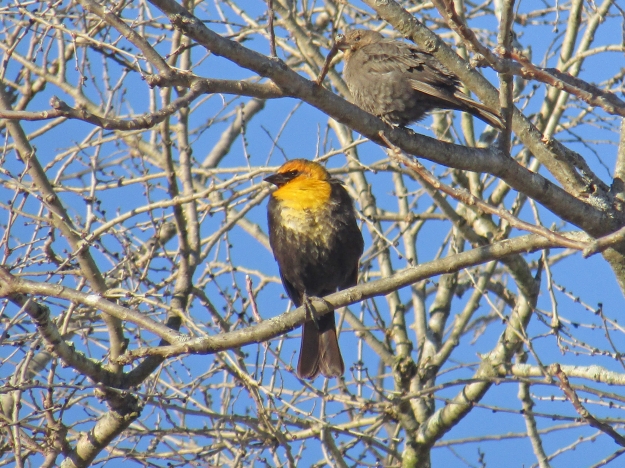
IMG_2235

Photo by Bryan Stevens This yellow-headed blackbird and several brown-headed cowbirds perch in a tree after foraging for food in a cattle lot near Jonesborough, Tennessee.

Dawn said she gets a variety of birds at her feeders, ranging from sparrows and cardinals to mourning doves and finches. “I also get downy woodpeckers and towhees,” she added.

On occasion, she will notice a hawk in the yard. In the summer, she puts out several feeders with sugar water to attract hummingbirds. “Last summer, I had brown thrashers raise a family in my yard,” she said.

Although the yellow-headed blackbird arrived with a flock of brown-headed cowbirds, the other flock members didn’t exactly embrace him. “Some of the cowbirds would peck at him,” she said.

While the yellow-headed blackbird hasn’t been back to her feeders since Jan. 13, the bird was rediscovered less than a mile from her home in a feed lot for cattle. The yellow-headed blackbird has continued to associate with large flocks of cowbirds and European starlings and has been observed by dozens of birders.

The yellow-headed blackbird, known by the scientific name Xanthocephalus xanthocephalus, is a relative of cowbirds, as well as the familiar red-winged blackbird. It’s a unique species in that it is the only member of the genus, Xanthocephalus. Breaking this word down from its ancient Greek origins, the name means, quite literally “yellow headed.”

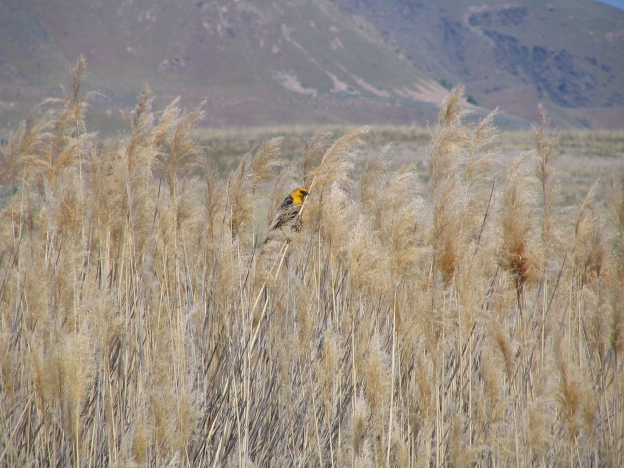
Yellow-headedBlackbird-Copy

Photo by Bryan Stevens This yellow-headed blackbird was photographed at Antelope Island State Park in Utah in 2006.

The yellow-headed blackbird’s also a species that has been only a rare visitor to the region. While a common bird in wetland habitats west of the Great Lakes, the yellow-head blackbird has not been reported often in East Tennessee. In fact, there are only a handful of records since the 1930s, the most recent sightings being reported and documented in 1990 and 1994. Since it has been almost a quarter of a century since the last time a yellow-headed blackbird was found in East Tennessee, one could argue that a visit from a vagrant individual of this species was long overdue. In southwest Virginia, there are a couple of records from Smyth County dating back to July of 1985 and March of 1988.

It’s not quite clear why a yellow-headed blackbird ventured into the region in mid-January. Normally, these birds spend the winter months in the southwestern United States and Mexico. They often migrate in huge flocks with other species of birds, which could explain why the bird found itself an honorary member of a flock of cowbirds estimated to number about 300 individuals.

My first attempt to add this species to my Tennessee list ended in failure, although I did enjoy seeing several white-crowned sparrows, a handsome bird that definitely doesn’t deserve being classified as one of the “little brown birds” that so often serves as an offhand designation for sparrows. That attempt was made on the morning of Jan. 18 and may have been ended prematurely. When I got access to a computer later, I checked to see if any other observations had been reported. I noticed a report from local birder Michelle Sparks, who saw the bird probably less than 90 minutes after I had ended my first attempt.
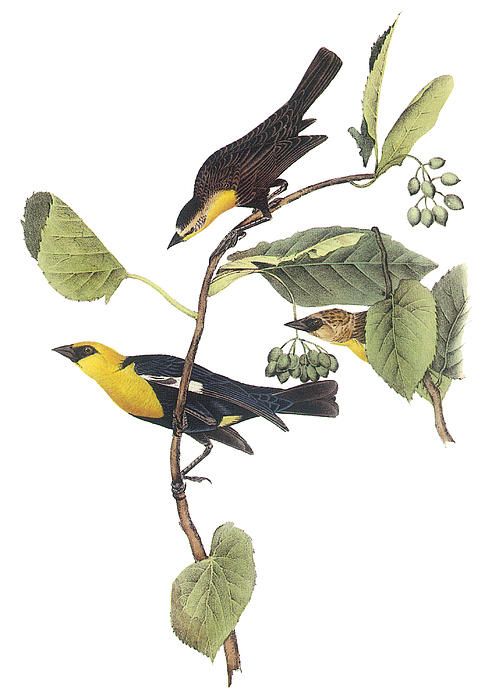
7ee8ab76db6c1c18d9bac62d3c602b30--john-james-audubon-blackbird 2

Early American naturalist and painter John James Audubon painted these yellow-headed blackbirds.

Speculating that the yellow-headed blackbird and its accompanying flocks of brown-headed cowbirds and European starlings would return to the feedlot to forage before dark, I returned at 4 p.m. to try again. I found the feedlot overwhelmed by hundreds of cowbirds and starlings, but I didn’t see any sign of a bird with a yellow head. Many of the cowbirds carpeted the pasture as they gleaned seeds and other food items. Many of the starlings were perched in the branches of trees and on the roof of an old farmhouse. At some point, almost every bird in the chaotic flock spooked and took to the air. The flock wheeled and turned, with most of the birds settling into the upper branches of some of the taller trees at the location. I soon detected a flash of yellow. I’m not sure where the bird had been hiding earlier, but the yellow-headed blackbird proved unmistakable, perched high in the trees with the sun shining brightly. He couldn’t hide from my binoculars or camera, which I used to snap several photos of this rare visitor to the region.

I have this species on my life list, having seen yellow-headed blackbirds during visits to Utah in 2003 and 2006. While in Utah, I also saw red-winged blackbird, brown-headed cowbirds and Brewer’s blackbirds, including a partial albino individual that presented a challenge in identifying.

While technically a songbird, the yellow-headed blackbird routinely ranks as one of the worst singers among North America’s songbirds. The yellow-headed blackbird is not all musical, with its song repertoire ranging from what has been described as “cacophonous strangling noises” and “honking gurgles” on the website for the publication, “Birdwatcher’s Digest.”
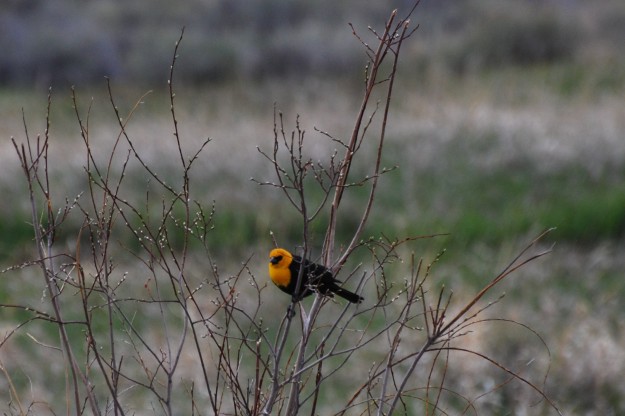
JEAN-Yellow-headed Blackbird

Photo by Jean Potter • This yellow-headed blackbird was photographed in Colorado in 2016.

The New World’s blackbirds belong to the family of birds, Icteridae, which also consists of birds such as meadowlarks, orioles, cowbirds, grackles, bobolinks and oropendolas. Although many blackbirds show predominantly black plumage, these birds often contrast their dark coloration with yellow, orange or red feathers. The name of the genus stems from Ancient Greek and Latin words that, translated into English, mean roughly, “jaundiced ones,” which stems from the yellow feathers present in the plumage of many species. Other blackbirds in the New World include tawny-shouldered blackbird, saffron-cowled blackbird, melodious blackbird, oriole blackbird and scarlet-headed blackbird. In the United States, other nesting species in the family include Brewer’s blackbird, tri-colored blackbird and rusty blackbird. The last of these species has shown chronic long-term and acute short-term population declines, based both on breeding season and wintering ground surveys. Some estimates suggest that the rusty blackbird population has declined by 80 percent, which could soon endanger the species.

I’m hoping the yellow-headed blackbird on Bugaboo Springs Road is liking where it has found itself this winter and will continue to delight observant birders over the upcoming weeks.

•••••

Bryan Stevens lives near Roan Mountain, Tennessee. If you have a question, wish to make a comment or share a sighting, email ahoodedwarbler@aol.com.
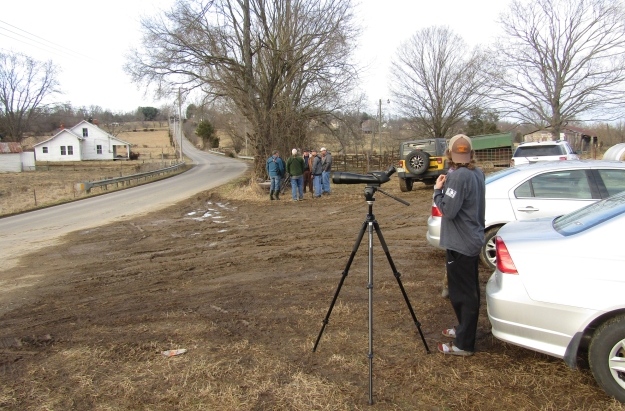
IMG_2236 2

Photo by Bryan Stevens • Birders from near and far converged on Bugaboo Springs Road near Jonesborough, Tennessee, to search for the yellow-headed blackbird.

Red-shouldered hawk makes a fascinating, if somewhat shy, guest

People who feed the birds soon get to know the feisty personalities from the retiring wallflowers when it comes to the visitors to their yards. Northern mockingbirds, male ruby-throated hummingbirds and American robins are usually counted among the more boisterous birds.

Then there are the birds that shrink from interaction and hang back on the fringes, including wood thrushes, Eastern towhees and the large but shy pileated woodpecker. The latter example just goes to show that size doesn’t always equate with an extroverted personality when it comes to birds.

Redshouldered_Hawk-LeeKarney

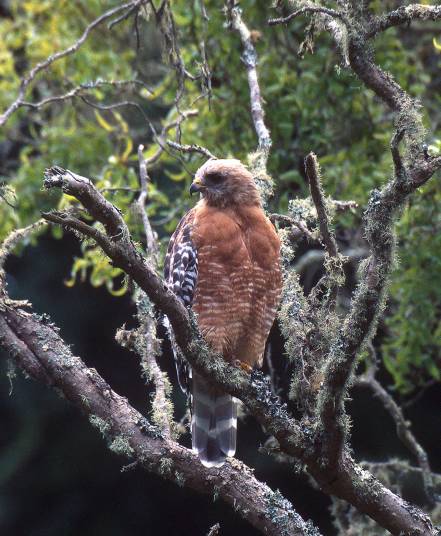
Photo by U.S. Fish and Wildlife Service/Lee Karney • Red-shouldered hawks prefer to perch and ambush prey. They drop on unsuspecting prey, which varies from reptiles and amphibians to rodents, that come within reach.

That’s certainly the case with a red-shouldered hawk that has taken up residence for the winter at my home. The hawk usually favors a stand of trees near the fish pond at my home when it visits the yard. The hawk made its initial appearances in December and then lingered into the new year. So far, the hawk has been a very shy guest. I’ve wanted to photograph the bird, but that’s difficult to do when it spooks and flies off the instant I step outside the door of my home. I’m not too disappointed because I know that raptors that are too comfortable around humans are at risk of running afoul of misinformed individuals who may regard all predatory birds as “bad.” The reality is that all hawks are valuable components of a healthy, working ecosystem with each species filling a certain niche.

According to a factsheet published by the New York State Department of Environmental Conservation, this raptor breeds in moist woodlands, riverine forests, the borders of swamps, open pine woods and similar habitats. Nesting almost always occurs near water, such as a swamp, river or pond.

Red-shoulderHawk

Photo by Bryan Stevens • This captive red-shouldered hawk was rehabilitated after suffering an injury and now works in an educational program at Brookgreen Gardens in South Carolina to teach the public about raptors, other birds, and various types of wildlife.


The red-shouldered hawk is an ambush predator. This raptor usually selects a favorable perch and remains still while scanning for possible prey. The hawk will drop rapidly onto any prey that wanders carelessly within range. In the summer, prey items largely consist of reptiles and amphibians, including snakes and frogs, as well as some insects and crayfish. Most of these creatures are scarce during the colder months of the year, which prompts these hawks to adopt a diet that focuses on rodents and the occasional songbird. Other than the altercations with the resident crows, I haven’t observed any encounters between the hawk at my home and any other birds — with one exception.

On a recent morning, the hawk was on its usual perch — a branch of a large willow adjacent to the fish pond — when seven Canada geese, another rare visitor to my home, suffered some sort of fright and took flight. The noisy geese flew directly over the willow, which spooked the raptor into taking flight in the opposite direction of the departing geese.

Red-shoulder-Pawleys 3

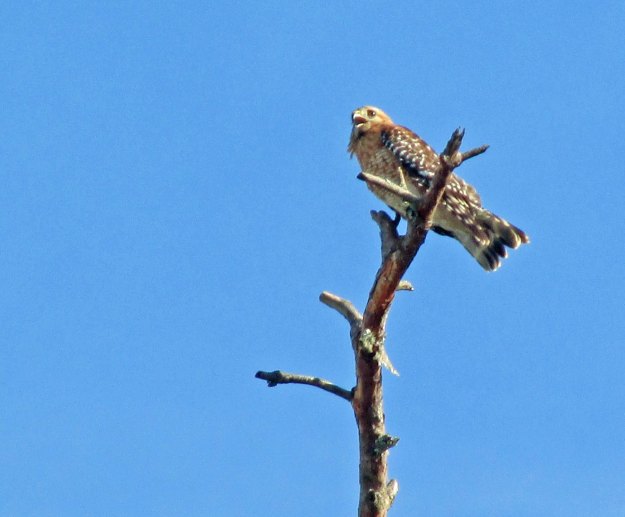
Photo by Bryan Stevens • A calling red-shouldered hawk perched in a dead tree on Pawleys Island in South Carolina.

The red-shouldered hawk produces a distinctive, piercing whistle that reminds me of the shrill call of a killdeer. The hawk at my house has been silent so far, perhaps not wishing to draw attention. The few times the local crows have noticed the hawk’s presence, they’ve flocked together to mob the unfortunate hawk. It’s also not the right time of year. During courtship and the subsequent nesting period, these hawks are vocal. At other times of the year, they are rarely heard. It’s also possible to mistakenly think you have heard one of these large hawks. Blue jays have apparently learned to imitate the “kee-yar” call of this hawk, often working a flawless rendition of the whistled notes of this large raptor.

In contrast to the related red-tailed hawk, the red-shouldered hawk soars less and prefers to perch hidden in the cover of trees. This hawk’s name comes from the reddish-brown shoulder patches in the bird’s wings. Adults show a tail marked with vivid bands of black and white that is quite distinctive.

The red-shouldered hawk belongs to the same genus of raptors as its larger relative, the red-tailed hawk. The genus, buteo, includes about two dozen large raptors that are often dominant avian predators in their respective habitats. The red-shouldered hawk is known by the scientific name Buteo lineatus.

red-shouldered-hawk-john-james-audubon

Early naturalist and artist John James Audubon painted this pair of red-shouldered hawk.

The red-shouldered hawk is less common in the region than some of the other raptors. This hawk’s stronghold is in Florida and other southern states like South Carolina and Georgia. I’ve seen many of these hawks on visits to both the Sunshine State and Palmetto State.

Some of the buteo species have adapted to life on islands, including the Galapagos hawk and the Hawaiian hawk. Some of these hawks have quite descriptive names, including the white-throated hawk, gray-lined hawk, zone-tailed hawk and short-tailed hawk. Outside the United States, raptors in the buteo genus are often known as buzzards. When the first European colonists came to the New World, they applied the term buzzard to both native vultures, as well as the large raptors like Swainson’s hawk and broad-winged hawk that reminded them of the ones back in Europe.

It’s been nice hosting this beautiful raptor, although the crows might disagree with me. A neighbor who lives close to me has had red-shouldered hawks spend the summer months on her property, so I’m hopeful that my visitor might even like the surroundings well enough to become a full-time resident.

•••••

Bryan Stevens lives near Roan Mountain, Tennessee. To learn more about birds and other topics from the natural world, friend him on Facebook at https://www.facebook.com/ahoodedwarbler. If you have a question, wish to make a comment or share a sighting, email ahoodedwarbler@aol.com.

Red-shouldered-Finally

Photo by Bryan Stevens • In a timely fashion, this red-shouldered hawk, which has avoided the camera for weeks, arrived on this rainy day in late January on the same date this post inspired by this bird was published.

What’s in a name? Vernacular designations for some birds lack imagination

I took part in a Christmas Bird Count last month. These annual mid-December surveys of bird populations are not quite as exciting as counts held during the spring or fall migration periods each year, but they can produce some interesting results. One exciting post-count activity after taking part in a CBC is getting together to compile the results tallied by the various participating groups and individuals. The results are usually compiled on field checklists for birds of Tennessee. These checklists, which are produced by the Tennessee Wildlife Resources Agency and the Tennessee Ornithological Society, feature a listing of the common name of every bird species likely to be encountered in the state.

AmKestrel-Flight

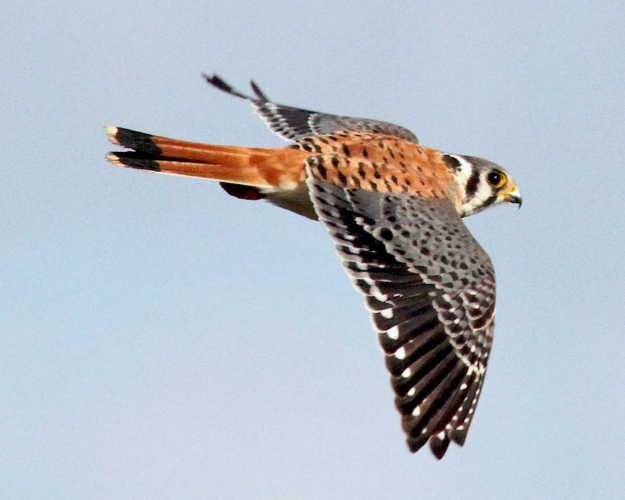
Photo by USFWS/Robert Burton • An American kestrel in flight shows the aerodynamic design that earned this small falcon the common name of sparrow hawk.

The compiler generally reads out the various names on the checklist, which lists all the local birds, beginning with black-bellied whistling duck and ending with house sparrow, and the spokespersons for the various parties respond as each bird’s name is called with the number of birds seen for each species. Over the years, some of the common names of birds featured on the list have changed, as has the position on the list for some of the species. For instance, the American kestrel and other falcons are no longer listed on the card in a grouping with the other raptors found in the state. This doesn’t make much sense to me. But, as I understand it, the falcons have been re-classified for scientific reasons, changing their relationship with the other birds listed on the checklists.

The falcons are not the only birds demoted from the grouping of raptors. The two native vultures — turkey vulture and black vulture — are now listed with herons and ibises instead of raptors. The falcons are now listed between the groupings of woodpeckers and flycatchers.

MaleTowhee-PIC

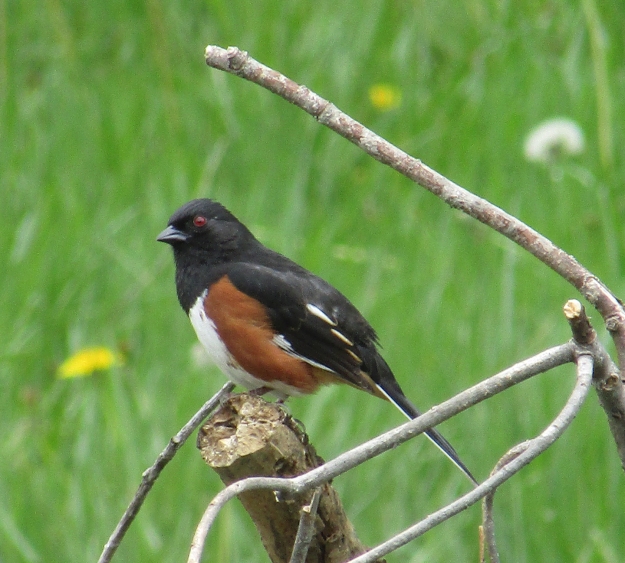
Photo by Bryan Stevens • Former common name rufous-sided towhee became Eastern towhee, which is far less descriptive of the bird’s appearance.

At least no expert has suggested a name change for any of the falcons. I dislike name changes, especially when we lose a descriptive name for a mundane one. That’s how we got relatively bland names like Eastern towhee instead of rufous-sided towhee and Northern flicker in place of yellow-shafted flicker. In fact, the American kestrel was once known as the sparrow hawk. The merlin and peregrine falcon, larger relatives of the kestrel, were once known as the pigeon hawk and duck hawk, respectively.

Common names are also known as “vernacular” names. Vernacular can be defined as the language or dialect spoken by the ordinary people, which contrasts with the scientific names for species of birds that are usually only recognized by ornithologists or other experts. However, just like dialects, there can be a great deal of variety among common names for the same birds. Many of the common names for some of our favorite birds lack any vivid descriptiveness.

IMG_4080

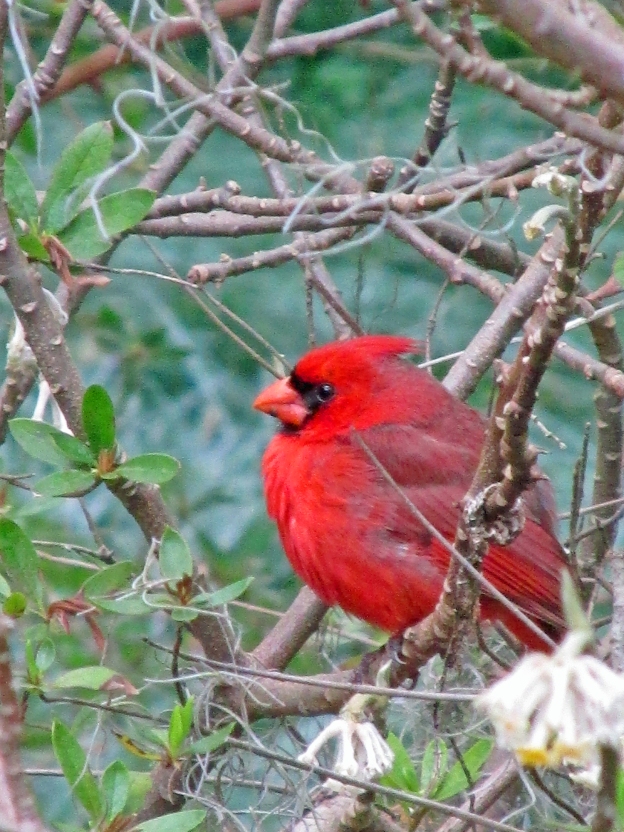
Photo by Bryan Stevens • Northern cardinal seems much less descriptive of this popular bird than such common names as Virginia nightingale and cardinal grosbeak.

For instance, let’s take a look at the Northern cardinal, which has been known by such common names as cardinal bird, cardinal grosbeak, crested redbird, Kentucky cardinal, redbird, Virginia redbird and Virginia nightingale. The first thing that irritates me about the common name of this bird is that there is no Southern cardinal. So, why is this bird the “Northern” cardinal? The only other birds in the Cardinalis genus are the desert cardinal, also known as the pyrrhuloxia, and the vermilion cardinal. Both these relatives have arguably more interesting and descriptive names than their relative, which is a favorite of many birders and arguably better known to many people.

I can understand why Kentucky cardinal and Virginia redbird are not inclusive names since the Northern cardinal ranges far beyond the borders of these two states. On the other hand, cardinal grosbeak with its reference to the cardinal’s large beak, as well as crested redbird, are both more descriptive and creative than the rather nondescript Northern cardinal.

Of course, a literary great summed up the confusing attitude toward common names. “What’s in a name?” William Shakespeare had Juliet ponder. “That which we call a rose by any other name would smell as sweet.”800px-Title_page_William_Shakespeare's_First_Folio_1623

I think The Bard was on to something. Whether we call a cardinal a redbird or a Virginia nightingale, it’s song will sound as sweet to our ears. The appearance of one of these birds on a gloomy day will elevate our mood whether we know the bird as cardinal grosbeak, Kentucky cardinal or, in scientific terminology, Cardinalis cardinalis.


BRISTOL HUMMERS DEPART

As promised, here’s an update on the hummingbirds that proved dutiful daily visitors to a sugar water feeder at the Bristol home of Ralph Beamer through Halloween, Thanksgiving and Christmas.

Early in the new year, Ralph notified me that the hummingbirds departed ahead of 2018’s arrival.

“We had a surprise on New Year’s Day,” Ralph wrote in an email. “The hummingbirds were gone. I am glad they left ahead of the extreme cold we have had the last few days.”

Ralph noted that he had a wonderful time watching them for the past three months. He is hopeful they will come back in the future, but figured that is probably wishful thinking.

Actually, some of these winter hummingbirds, which often turn out to be rufous hummingbirds, have proven quite faithful to favorite locations. Bird banders have recaptured some individual hummingbirds year after year in the same yards. During the stay of his visitors, Ralph shared photographs and videos with me of their visits to his feeders. I enjoyed receiving his periodic updates about them.

I emailed Ralph back and told him that these hummingbirds seem to also have a knack for knowing when to leave and suggested he keep an eye out for them again next fall.

••••••

Bryan Stevens lives near Roan Mountain, Tennessee. To learn more about birds and other topics from the natural world, friend Stevens on Facebook at https://www.facebook.com/ahoodedwarbler. If you have a question, wish to make a comment or share a sighting, email ahoodedwarbler@aol.com.

75 years strong, annual Elizabethton Christmas Bird Count breaks old records

GreaterWF-Goose

The 75th consecutive Elizabethton Christmas Bird Count held last month shattered records for this long-running survey. This year’s CBC was held on Saturday, Dec. 16, with 25 observers in six parties participating. The 85 species tallied established a new high for this count, shattering the old mark of 80 species set in 2012 and again in 2016. The average total over the last 30 years of the Elizabethton CBC is 72 species.

Participants included Fred Alsop, Jim Anderson, Jerry Bevins, Rob Biller, Rick Blanton, Kevin Brooks, Gil Derouen, Harry Lee Farthing, Dave Gardner, Carl Hacker, Jacki Hinshaw, David Irick, Rick Knight (compiler), Roy Knispel, Richard Lewis, Joe McGuiness, Charles Moore, Brookie and Jean Potter, Brenda Richards, Chris Soto, Amber Stanley, Bryan Stevens, Kim Stroud, and Scott Turner.

I took part in this CBC, as I have for many years, with fellow members and friends of the Elizabethton Bird Club. Participation in this annual survey has been a part of my holiday traditions for the past 20 years. The tradition of the CBC, however, goes much farther back.

According to the National Audubon Society’s website, the tradition of the Christmas Bird Count arose from a less than bird-friendly custom. By the turn of the 20th century, so-called sportsmen would conduct a “Side Hunt,” a rather bloodthirsty Christmas custom that saw hunters competing to see who could score the largest amount of feathered and furred corpses. It was a huge step forward for conservation when preeminent ornithologist Frank M. Chapman proposed a new holiday tradition. His radical idea was to count birds during the Christmas season rather than hunting and killing them.

chapman

Ornithologist Frank Chapman organized the very first Christmas Bird Count back   in December of 1900.

The Christmas Bird Count is now conducted each year on dates between Dec. 14 and Jan. 5. The first CBC took place in December of 1900 with 27 observers participating at 25 locations in the United States and Canada. Fifteen of the counts were conducted in the northeastern United States in an area ranging from Massachusetts to Philadelphia, Pennsylvania. Results from that first count in 1900 didn’t truly reflect the diversity of North America’s birds, but they were nonetheless interesting. The Greater Boston CBC consisted of only one participant and found only 17 species. However, some of those species included such good birds as American tree sparrow, brown creeper, Northern shrike and Northern bobwhite.

The Elizabethton Bird Club traditionally compiles the results from its two annual CBCs (Roan Mountain as well as Elizabethton) at its yearly Christmas party. This year when the tallies were added up, count participants were delighted to learn the count had set a new record with an amazing total of 85 species tallied, which is hard to come by in mid-December in Northeast Tennessee. An abundance of waterfowl helped push up the number of species found.

A few species are becoming more expected on this annual December count. For instance, greater white-fronted goose was found for the third time in the last five years. Before that, this goose had never been found on this count.

The bufflehead, the smallest of the diving ducks, set a new record with 293 individuals found. Four Northern Shovelers represented only the eight time this duck has appeared on the count. Greater Scaup were found for only the seventh time in the last 25 years. Ruddy Duck has now been found three times in the last 25 years, which matches the three occasions it was found prior to that time.

Bald eagles, thanks to locations like Watauga Lake and Wilbur Lake, are also becoming more common. Eagles have been found 20 of the last 25 years, but only once prior. Red-shouldered Hawk, which is uncommon in the region, was found for the sixth time in the last quarter-century.

Redshouldered_Hawk-LeeKarney

Photo by U.S. Fish & Wildlife Service/Lee Karney • A Red-shouldered Hawk perches in branches.

Eurasian Collared-Dove appears established in Elizabethton. This dove has been found six of the last nine years since it first made an appearance on the count.

All seven of the region’s woodpecker were found on this year’s CBC. The Red-headed Woodpecker has shown up on four counts in the last 25 years. This woodpecker was only found seven times in the years prior to 1992.

A Blue-headed Vireo spotted on this year’s count represented only the third time this species has been found. A flock of 75 American Pipits marked only the third time this species has been seen since 1992 on a CBC. Prior to that date, the species appeared only twice on an Elizabethton CBC.

Gray Catbird has been found five of the last 25 years, including this year, but only once prior to 1992. Palm Warbler, found only once prior to 1992, has now been found eight of the last 25 years. The single Pine Warbler seen means that this species has now been found four of the last 25 years, but only four times prior to 1992.

The European Starling with 1,335 individuals found on count day was easily the most common species on this year’s CBC. The 16 Dark-eyed Juncos, usually a relatively common species on the Elizabethton CBC, represented the fewest juncos ever found on this long-running survey.

Below is the complete species list:

Greater White-fronted Goose, 1; Canada Goose, 532; Wood Duck,1; Gadwall, 5; American Wigeon, 1; American Black Duck, 2; Mallard, 366; Northern Shoveler, 4; Green-winged Teal, 2; Ring-necked Duck, 14; Greater Scaup, 2; Lesser Scaup, 3; Bufflehead, 293; Hooded Merganser, 4; and Ruddy Duck, 1.

Ruddy-Hen

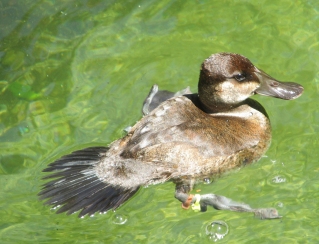
Photo by Bryan Stevens • A female Ruddy Duck.

Wild Turkey, 33; Common Loon, 2; Pied-billed Grebe, 14; Horned Grebe, 27; Great Blue Heron, 18; Black Vulture, 3; Turkey Vulture, 12; Bald Eagle, 3; Sharp-shinned Hawk, 1; Cooper’s Hawk, 2; Red-shouldered Hawk, 2; and Red-tailed Hawk, 25.

Killdeer,17; Ring-billed Gull, 27; Rock Pigeon, 305; Eurasian Collared-Dove, 1; Mourning Dove, 157; Eastern Screech-Owl, 12; Great Horned Owl, 2; Barred Owl, 1; and Belted Kingfisher, 10.

Red-headed Woodpecker, 1; Red-bellied Woodpecker, 33; Yellow-bellied Sapsucker, 8; Downy Woodpecker, 27; Hairy Woodpecker, 3; Northern Flicker, 26; and Pileated Woodpecker, 21.

American Kestrel, 16; Eastern Phoebe, 12; Blue-headed Vireo,1; Blue Jay, 162; American Crow, 223; and Common Raven, 4.

Red-breastedNutHatchYAHOO

Photo by Bryan Stevens • A Red-breasted Nuthatch at a feeder.

Carolina Chickadee, 117; Tufted Titmouse, 84; Red-breasted Nuthatch, 1; White-breasted Nuthatch, 25; Brown Creeper, 4; House Wren, 1; Winter Wren, 6; and Carolina Wren, 75.

Golden-crowned Kinglet, 41; Ruby-crowned Kinglet, 8; Eastern Bluebird, 111; Hermit Thrush, 11; Amercian Robin, 277; Gray Catbird, 1; Brown Thrasher, 1; and N. Mockingbird, 49.

Eurasian Starling, 1,335; American Pipit, 75; Cedar Waxwing, 154; Palm Warbler, 2; Pine Warbler, 1; and Yellow-rumped Warbler, 154.

Eastern Towhee, 22; Chipping Sparrow, 4; Field Sparrow, 8; Song Sparrow, 142; Swamp Sparrow, 5; White-throated Sparrow,102; Dark-eyed Junco, 16; and Northern Cardinal, 111.

Red-winged Blackbird, 1; Eastern Meadowlark, 1; Brown-headed Cowbird, 2; House Finch, 100; American Goldfinch, 90; and House Sparrow, 41.

The Audubon-sponsored CBC allows counts to also list birds not found on the count day that are seen during count week. This year participants found Redhead ducks, which were not present on count day. Notable misses this year include Ruffed Grouse, American Coot, Wilson’s Snipe, and White-crowned Sparrow.

Towhee-Feb12

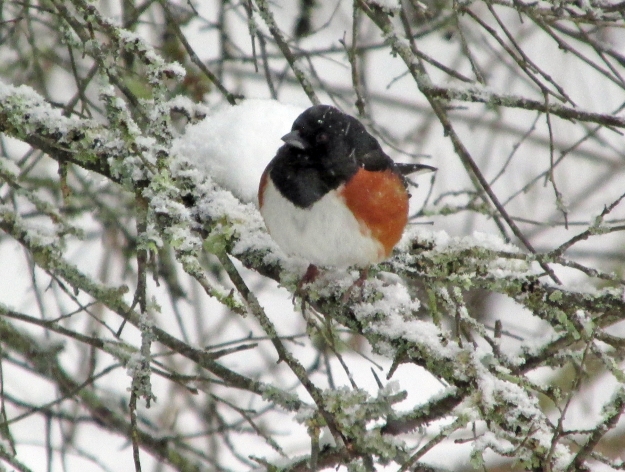
Photo by Bryan Stevens • A male Eastern Towhee waits out a snowstorm.

Cardinal has rivals when it comes to depiction on Christmas cards

Although many articles have been penned about the demise of the Christmas card, I still receive plenty of these paper greetings each holiday season. My friends and acquaintances, knowing me well, I suppose, often select cards featuring a variety of birds. Regardless of rising postal costs and hectic schedules during a busy season, the Christmas card appears to be an enduring tradition.

Northern_cardinal

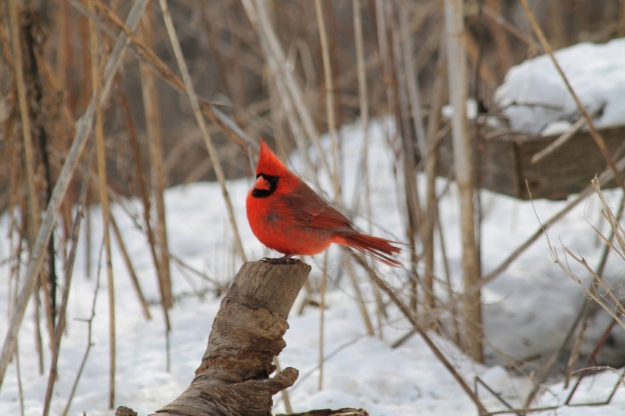
Photo by Nathan Rathbun/USFWS • An observation of a bright red male Northern cardinal is sure to put some cheer into the holidays.

Many of the cards I have received this year and in past holiday seasons have featured the Northern cardinal, which has long been one of my favorite birds. During the winter months, particularly during the holiday season, the Northern cardinal seems to take on even more significance. Anyone who received many Christmas cards this year will probably confirm that the cardinal often appears on them. The origins of the cardinal’s affiliation with the holiday of Christmas are a bit murky. After all, the Northern cardinal is a North American bird that would have been unknown in Europe until the 1600s, when the first explorers and settlers arrived from Europe.

Chinstrap5-HR

Photo by Jeff Keller/National Science Foundation • Chinstrap penguins (Pygoscelis antarctica) are also known as the bearded penguin and the ringed penguin. They reach about two feet tall and weigh less than 10 pounds. Chinstraps form strong bonds with their mates and will wait long periods for their mates to return to the breeding ground each year, rather than take a new mate.

The cardinal is hardly the only species of wildlife, let alone bird, that has become closely associated with the holiday. Everything from polar bears and seals to doves and penguins are also popular motifs for designers who craft Christmas cards. In recent years, I’ve even seen other birds — owls, chickadees, and even sandpipers — begin to decorate cards.

Often, when we think of the birds of the winter season, our thoughts focus on some of the less-than-colorful feeder visitors — the brown sparrows and wrens, the black and white chickadees and the drab American goldfinches that are such a contrast in winter to their vibrant summer appearance. The Northern Cardinal, especially the brilliant red male, stands out against a winter backdrop of snow white, deep green or drab gray. Could there be a better bird to brighten a Christmas card?

Well, as it turns out, there are other birds beyond the picture-perfect Northern cardinal that are worthy of gracing the front of Christmas cards. As previously mentioned, penguins are popular featured birds on many a Christmas card. Thanks to major motion pictures like Happy Feet (2006) and Mr. Popper’s Penguins (2011), as well as documentaries like 2005’s March of the Penguins, these dapper birds have enjoyed an enhanced profile in recent years and earned a place on our Christmas cards.

Emperor_Penguins

Photo by Kelly Falkner/National Science Foundation • Two emperor penguins greet each other near Ross Island in Antarctica. Emperors are the largest of all penguins, reaching nearly four feet tall.

Of course, there’s not one single “penguin” species. There are about 20 different penguin species, ranging in size from the emperor penguin, which weighs 75 pounds and stands three feet seven inches tall, to the little blue penguin, also whimsically known as the fairy penguin, which weighs 2.2 pounds and stands about 16 inches tall. Other species include the king penguin, yellow-eyed penguin and macaroni penguin.

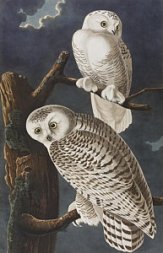
While at first glance owls are an unlikely species for depiction on a Christmas card, I can understand why people have embraced these nocturnal birds. With their big eyes and a reputation that has improved as we are less likely to embrace superstitious myths, owls are a good choice for gracing the cover of a card. One species — the snowy owl — is a perfect bird to depict the wintry season. With its white plumage, contrasted with varying amounts of black or brown markings on the body and wings, this owl of the Far North is a good symbol for the Christmas season. It’s no surprise at all to find an image of a snowy owl staring with piercing yellow eyes from the front of a Christmas card. Other species of owls that I’ve seen featured on cards include barn owl, great horned owl, Northern saw-whet owl, and burrowing owl.

In real life, the snowy owl is a denizen of the treeless tundra regions of the Arctic. Some winters see these owls staging massive migrations that bring them south of the Canadian border. While they are more likely to spend the winter months in such Canada-bordering states as Minnesota, Michigan and Wisconsin, snowy owls have surprised and delighted birders by winging their way as far south as Tennessee, Virginia and North Carolina during some winters.

Snowy-OWL

Photo by Tom Koerner/USFWS • This snowy owl was photographed at Sand Lake National Wildlife Refuge in South Dakota. Some winters see great numbers of this owl surge out of the tundra to winter south of the Canadian border.

While owls and penguins are definite contenders, I’d wager that the Northern cardinal is the bird most often depicted on Christmas and other greeting cards. As further evidence to explain the popularity of the Northern cardinal, consider that it’s the official state bird of seven states — Virginia, North Carolina, West Virginia, Ohio, Illinois, Indiana, and Kentucky. Only the Northern mockingbird, which represents five states as official state bird, even comes close to the Northern Cardinal in this respect. Being designated an official state bird is also an honor that’s eluded any species of owl, let alone any of the world’s various penguins.

5-snowy-owl-john-james-audubon

Snowy owl pair painted by John James Audubon.

Finally, one last thing works in favor of the Northern cardinal. Once the holidays are past, and the Christmas cards are packed away, there’s nothing like a glimpse of a Northern Cardinal to add some cheer to a bleak winter day.

•••••

Bryan Stevens lives near Roan Mountain, Tennessee. To learn more about birds and other topics from the natural world, friend Stevens on Facebook at https://www.facebook.com/ahoodedwarbler. If you have a question, wish to make a comment or share a sighting, email ahoodedwarbler@aol.com.

Crozier_Adelie_Penguin_Adult_looking-HR

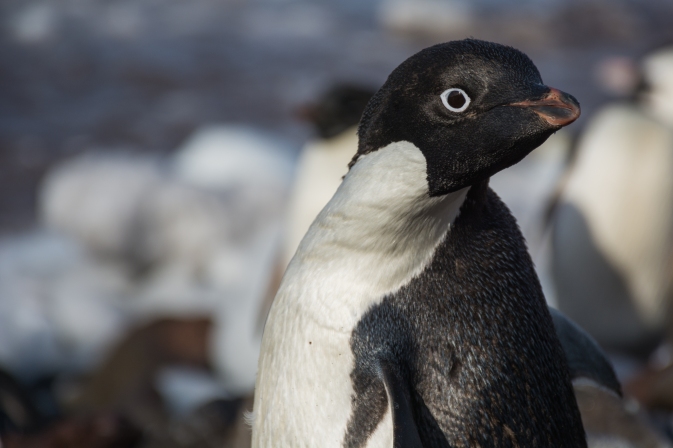
Photo by Mike Lucibella/National Science Foundation • An adult Adelie penguin turns its head. The Cape Crozier penguin colony is one of the largest known Adelie penguin colonies in the world, home to roughly half a million birds.


Winter weather events can adversely affect birds, too

Although the weather has been mild thus far this winter, that can change in the blink of an eye. Inclement weather affects humans, but it can also have adverse affects on birds. Snow, sleet, ice, wind and other forces can play havoc on the lives of our feather friends. Birds have many adaptations to help them deal with the worst the elements can throw at them, but sometimes events can overtake them.

LaplandLongspur-Auk

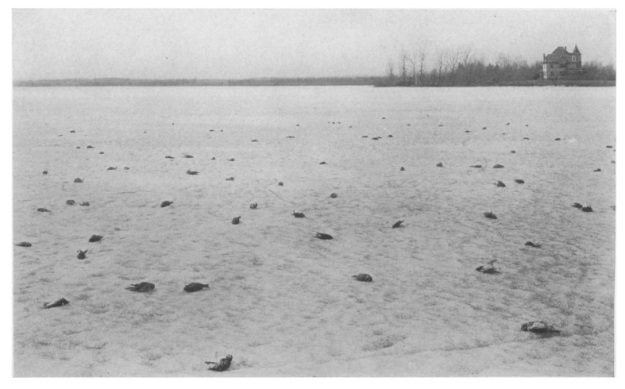
Bodies of the fallen Lapland longspurs are shown scattered on a frozen lake after a 1904 weather-related catastrophe overtook hundreds of thousands of migrating longspurs.

One such event took place on the night of March 13-14, 1904, when hundreds of thousands of one small songbird species perished as circumstances came together in a perfect storm. This infamous event in the annals of ornithology mystified residents living around the town of Worthington, Minnesota, when they awoke on the morning of March 14 to find thousands of dead birds strewn across the landscape. Birds fell onto everything from yards and gardens to street and rooftops, as well as numerous frozen lakes.

In an article in the ornithological publication The Auk, the affected songbird was identified as the Lapland longspur, a bird that nests in the Arctic tundra and spends winters on the expansive prairies and plains of the United States and Canada. The Lapland longspur, also known as the Lapland bunting, also ranges into Russia and the Northern Scandinavian countries of Europe. The term “longspur” refers to the long hind claws on this small songbird’s feet. Two other longspurs — Smith’s longspur and chestnut-collared longspur — are found in North America.

The Lapland longspur disaster on the night of March 13, 1904, originated with a massive migration flight taking these songbirds back to their tundra nesting grounds. The author of the Auk article speculated that the longspurs migrating northward encountered a winter storm in the darkness. Heavy snow accumulated on the feathers of the exhausted migrants, forcing them to crash to the ground by the hundreds of thousands across the terrain of southwestern Minnesota and northwestern Iowa. From the point of view of the disoriented birds, the lights from the towns dotted across the landscape added to the chaos and confusion. Many of the bird suffered blunt force traumas, including ruptured organs, crushed skulls, bone fractures and other such injuries incurred when falling to the ground from great heights.

The Auk article comes to a total of a million birds lost in a single night, although the author admits the toll could have been even higher. Although this is an immense figure, consider that a survey dating to 2004 estimated 8 million Lapland longspurs in Alaska alone during the nesting season.

aul152-871

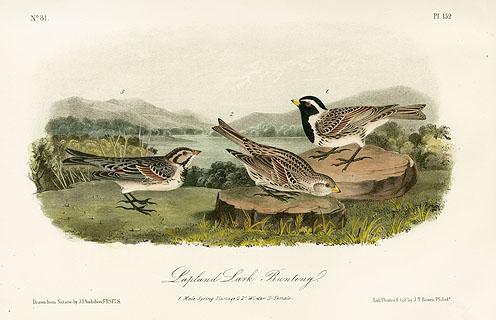
Early naturalist and artist John James Audubon painted Lapland Longspurs or, as he knew them, Lapland Lark Buntings.

The 1904 disaster didn’t seem to dent the overall numbers of the Lapland longspur. The populations of many species of birds can survive such catastrophes, but other species already struggling could be adversely affected by such events. For example, in February of 2007 a flock of year-old whooping cranes was exterminated by severe storms that overwhelmed them in a shelter at the Chassahowitzka National Wildlife Refuge in Florida. A total of 18 young whooping cranes, part of a flock trained to follow an ultralight aircraft from their birthplace in Wisconsin to the refuge in Florida salt marshes, were killed during the storm. The loss of that many young birds also robs the endangered species of much needed vitality. As of February 2015, the total whooping crane population stood at 603 individuals, including 161 captive birds.

Weather disasters extract a toll on both humans and birds. Sometimes they may affect hundreds of thousands of individuals, although the consequences are often confined to smaller segments of a population.

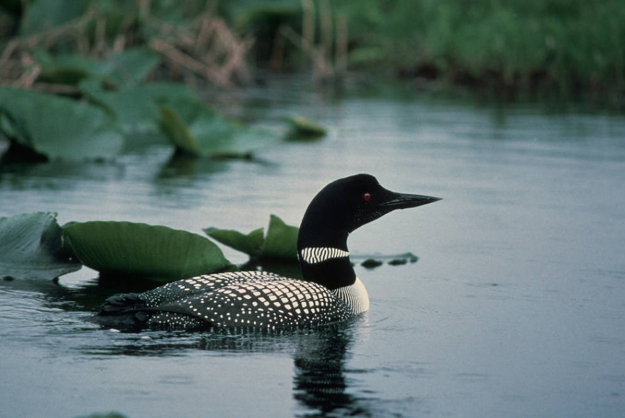
In early May of 2013, dozens of common loons migrating through Wisconsin encountered an unseasonable ice storm. Many of the birds found ice forming on their feathers, weighting them down and causing emergency landings. Wildlife rehabilitation workers rescued more than 50 birds, but there were probably many other loons affected by the freak storm that were lost without a trace.

Common_Loon_on_Water

Photo by U.S. Fish & Wildlife Service • Common loons are quite at home in the air and on the water, but these birds are awkward if weather forces them to set down on land.

Loons crashing onto land or even small ponds are doomed. Agile and graceful in water because of strong legs and webbed feet, loons are almost incapable of movement on land. Landing on a small body of water is not much better since loons must run along a stretch of waters — sometimes for hundreds of yards — in order to get their relatively heavy bodies aloft.

Loons are not the only birds that sometimes face forced landings. In March of this year, a winter storm raged through most of the Northeastern United States. The wakes of these storms resulted in wildlife agencies in the region being flooded with reports of dead or injured American woodcocks in the region. Most of the reports were concentrated in and around New York City. Not only did the storm interrupt the migration flight of the woodcocks, but cold temperatures caused the ground to freeze, preventing the stranded birds from finding food.

The woodcock is an unusual shorebird, also known by such whimsical names as “bog sucker” and “timberdoodle,” that has completely abandoned the shore in favor of woodlands and fields. The American woodcock is not a rare bird, but the species is rarely seen due to its retiring habits and inaccessible habitats.

Closer to home, an unusual February event back in 2014 resulted in equally unusual numbers of red-necked grebes on area lakes, rivers, and ponds. This grebe, a rare visitor to the region, was apparently forced by weather conditions to make a stopover on bodies of water in the region. Reports of red-necked grebes persisted for about a week before they eventually departed to continue their flight to more favored locations.

Back in 2011, it wasn’t a winter storm that killed thousands of birds in Arkansas. The birds — red-winged blackbirds, European starlings, brown-headed cowbirds, and common grackles — shared a communal roost near the town of Beebe.

On New Year’s Eve, just as 2011 was dawning, about 5,000 of these birds died after crashing into trees, buildings and automobiles, according to a National Geographic News article by Charles Q. Choi. Apparently these birds were frightened into flight by the explosive booms from a professional fireworks display celebrating the arrival of a New Year. In the chaos after thousands of birds not suited for nocturnal flight took to the air, they began to impact various stationary objects and crash back to the ground.

Summer-Pelicans

Photo by Bryan Stevens • Brown pelicans fly in a line over the Atlantic Ocean on the South Carolina coast.

Incidentally, in the same article, mention was made of a 2010 incident when hundreds of pelicans washed up on the border between Washington and Oregon. The article blamed a cold front that caused ice to form on the feathers of the bodies and wings of the pelicans.

Birds, much like their human admirers, live in a world greatly affected by the vagaries of weather. All things considered, birds manage to ride out most of what Mother Nature throws their way. It’s one of their many admirable qualities.

Winter wren one of the season’s low-profile visitors

WinterWren

Photo by Jean Potter
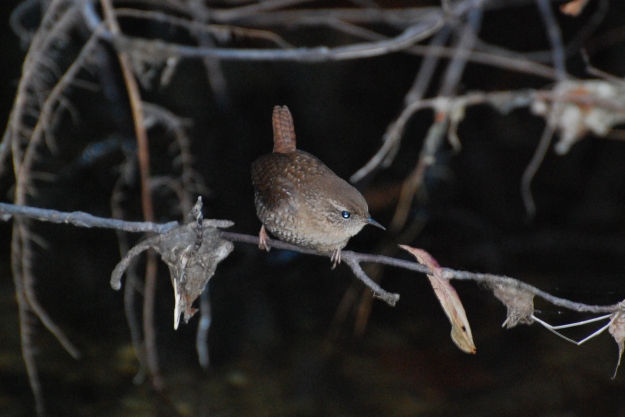
What the winter wren lacks in size, it makes up for with its voice. A boisterous and exuberant singer during the spring nesting season,  winter wrens are also quick to scold intruders into their winter territories.


Of late, every time I step outside my front door I’ve incurred the ire of a winter wren that’s taken up residency in my yard. This wren is a tiny bird among a family of birds known for small size, but it makes its presence known in unmistakable terms.

For starters, the winter wren is a noisy bird. The one living at my home arrived in late November and immediately claimed a niche to call its own. Any intrusion is met with a scolding chatter as the wren scurries low to the ground to drop out of view. In fact, the winter wren’s a very terrestrial bird. Observers are just as likely to see one of these wrens run across the ground as they are to see it take flight. I’m hopeful he will remain as winter’s grip tightens for the next couple of months.

The website All About Birds, managed by The Cornell Lab of Ornithology, offers advice on making a wren-friendly yard. “Landscaping with native plants is a good way to provide habitat for Winter Wrens,” according to the website. Other steps to take could extend to creating brush piles and ensuring some sections of the yard offers dense vegetation. The website also notes that this wren is often found making its home near streams.

In the summer, the winter wren often nests atop some of the high-elevation mountains in the region, especially ones with abundant fir and spruce trees. Otherwise, it’s mostly a winter visitor in the region. Other wrens common to the region include the Carolina wren and the house wren. In suitable habitats, especially during fall and spring migration, two other wrens — marsh wren and sedge wren — are observed occasionally in the region. Other wrens native to the United States include the rock wren, canyon wren, cactus wren, Pacific wren and Bewick’s wren.

The world’s 88 species of wrens are, for the most part, the quintessential “little brown birds,” but that hasn’t kept them from acquiring some interesting and descriptive common names. Some examples include the tooth-billed wren, flutist wren, riverside wren, whiskered wren, happy wren, musician wren, timberline wren, speckle-breasted wren, white-breasted wood wren and giant wren. The last species on the list resides in Mexico and is indeed a “giant” among a family of tiny birds, reaching a length of almost nine inches and weighing all of 1.8 ounces.

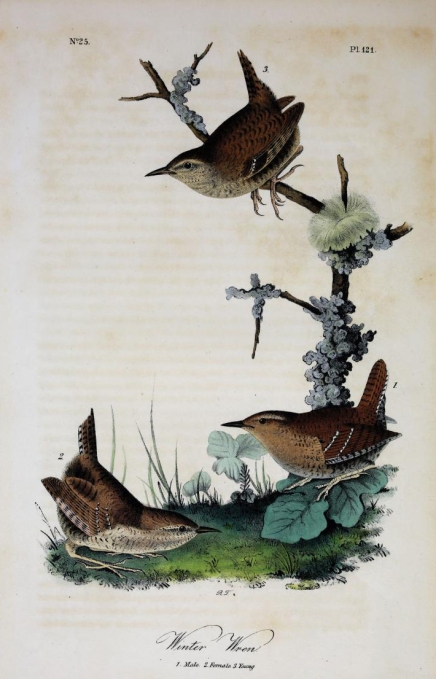
For the most part, wrens are birds of the New World. In fact, only the Eurasian wren represents the family in Europe, Asia and Africa. Experts recently split the winter wren into several different species, including the Pacific wren of the west coast of North America and the Eurasian wren of Europe, Asia and Africa.WinterWren_edited-1

Just as the winter wren thinks nothing of acting like a mouse when scurrying through leaf litter and over fallen logs in search of insect prey, this bird doesn’t hesitate to imitate mice by poking into shadowy holes in the ground or exploring the dark crevices of fallen logs. When winter temperatures drop sharply, many of these birds may cram themselves into a roosting hole to benefit from the communal heat from so many tiny feathered bodies in such close proximity. Winter wrens eat mostly insects and spiders, but in winter these birds will also eat some seeds and berries. Winter wrens rarely visit feeders, but a suet cake often attracts birds with similar dietary preferences, including kinglets and chickadees. A larger relative, the Carolina wren, is a common visitor to feeders.

In English and German lore, the winter wren was known as the “king of the birds.” Different tales provide varying explanations for how such a small bird earned such an inflated title. Ritual hunts were enacted in some European locations. These hunts, known as “wren hunts,” were conducted by “wren boys” who would parade through town on their quests. Wren Day fell on Dec. 26, which coincided with the holiday St. Stephen’s Day. Some myths blame the noisy bird for betraying the hiding place of Stephen, who was delivered up as a Christian martyr to his enemies due to the bird’s treachery. In some European cultures, various superstitions sprang up about wrens. For instance, in Scotland it is considered extremely unlucky to kill a wren.

Personally, I feel lucky to have the tiny winter wren spending time around my home and can guarantee no “wren hunts” will be staged here. At a time of year when feathered friends can be scarce, a winter wren is a welcome visitor.

••••••

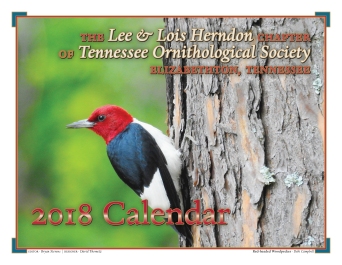
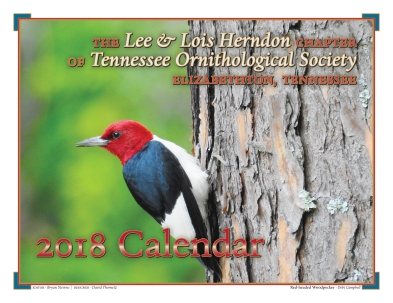
The Lee and Lois Herndon Chapter of Tennessee Ornithological Society produces an annual calendar featuring some exceptional bird photography from its members. This year’s calendar features full-color photographs of some colorful and engaging birds. The club sells the calendars for $15 each. All proceeds are used to support birding opportunities and bird-related causes. For instance, the club pays for bird seed to stock the feeders at Sycamore Shoals State Historic Park in Elizabethton, Tennessee. The club also regularly supports causes that benefit birds.HerndonCalendar2018(Cover)

The calendar also features an informative calendar grid with highlights for major holidays, as well as important bird-related dates. The calendar’s pages feature more than 80 full-color photographs of area birds, including common favorites, as well as a few more exotic birds. The front cover features a dazzling photograph of a red-headed woodpecker. The photo was taken by Debi Campbell, a resident of Bluff City, Tennessee, and current president of the Herndon chapter. If you’re interested in obtaining a calendar, contact ahoodedwarbler@aol.com by email. Calendars will also be available for purchase by cash or check only at the offices of the Bristol Herald Courier located at 320 Bob Morrison Blvd. in Bristol, Virginia.

If you’re interested in obtaining a calendar, contact ahoodedwarbler@aol.com by email. Calendars will also be available for purchase by cash or check only at the offices of the Bristol Herald Courier located at 320 Bob Morrison Blvd. in Bristol, Virginia.

•••••

Bryan Stevens lives near Roan Mountain, Tennessee. If you have a question, wish to make a comment or share a sighting, email ahoodedwarbler@aol.com.


Good intentions can have ill effects for ducks, geese, other waterfowl


Pattie Rowland contacted me on Facebook recently with a valid concern, especially now that the temperatures are turning a little cooler. People with good intentions often visit parks to feed the ducks and geese that reside at ponds and creeks.


“I see people with bags of bread thinking they are helping the ducks and geese,” she explained.

Despite the good intentions, Pattie, a resident of Erwin, Tennessee, has some concerns about the practice and requested that I help raise awareness about the possible unintended consequences.

While I’m not an expert, I applaud her attempt to raise the issue about what foods are nutritional and which are not when it comes to feeding wild or domesticated waterfowl. So, I did some research into the topic.

Dave McRuer, the director of Wildlife Medicine at the Wildlife Center of Virginia, wrote about the risks associated with feeding waterfowl in a 2015 article on the center’s website.

McRuer noted that wild ducks and geese feed on a variety of natural foods, such as wild grains and grasses, aquatic plants, and invertebrates. This varied diet provides the essentials waterfowl need to thrive.

Mallard-Drakes

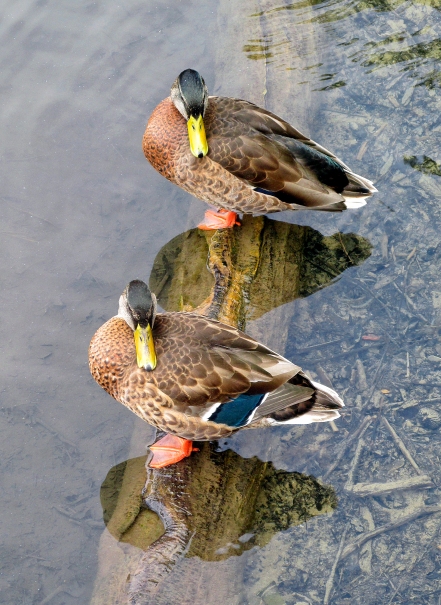
Photo by Bryan Stevens • Mallard drakes share a log during a period of relaxation. Mallards, Canada Geese, and some other waterfowl have voluntarily semi-domesticated themselves in exchange for an easy, but not always healthy, life based on human handouts.

On the other hand, McRuer warned about some of the foods commonly fed to waterfowl in public parks, such as bread, popcorn and corn, are typically low in protein and essential nutrients and minerals. Waterfowl feeding heavily on such fare are at risk for developing nutritional disorders.


His ultimate conclusion was that any benefits are far outweighed by risks when it comes to the feeding of waterfowl at public parks. His recommendation was to stop all forms of supplemental feeding.


He based his recommendation on more than nutritional concerns. Supplemental feeding can also lead to overcrowding, disease concerns, habitat degradation, and an unhealthy habituation to humans or animals associated with humans.


There are some alternatives to the quitting “cold turkey” option when it comes to feeding ducks and geese. Melissa Mayntz, a birder with more than 30 years of experience, penned an article for the website, The Spruce, recommending some foods that will not expose waterfowl to potential harm.


In an article titled “What to Feed Ducks,” Mayntz wrote that it is important to realize that waterfowl are capable of fending for themselves and do not require human handouts to survive, no matter what the season nor how much they seem to beg for treats. She did offer some tips on choosing nutritious treats to supplement the wild diet of park waterfowl.


Various grains, such as cracked corn, wheat, barley, oats, and rice can safely be offered as an occasional treat. In addition, she recommended grapes (sliced in half), chopped lettuce or other greens and vegetable trimmings or peels chopped into small, easily eaten pieces.

Mallard-March28

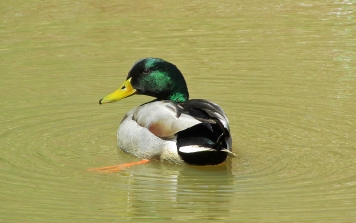
Photo by Bryan Stevens • A Mallard drake still shows some caution toward humans, arguing that this individual has not become dependent on human handouts.

Mayntz’s article basically echoes many of the warnings from the one by McRuer. Some of the foods commonly offered, such as bread, crackers, cereal and popcorn, offer very little nutritional value. In addition, bread and other similar foods are dangerous if they are moldy. Increasing the disk is the fact that any excess bread that isn’t eaten can quickly mold. Molded food can kill waterfowl, which is the last thing people would want to happen to these birds.


I agree with Mayntz in her conclusion, which admits that feeding waterfowl at local ponds and parks can be a fun experience in wildlife viewing for people of all ages. By avoiding potentially dangerous foods and restricting treats to items that actually provide nutritional value, birders can continue to enjoy this pastime without risking the lives of the birds they love so much.


As a general rule, I don’t feed the waterfowl at local parks. Many years ago I fed a flock of semi-domesticated mallards that took up residence at my fish pond. From a half dozen birds, the flock eventually grew to about two dozen ducks. The only food I fed them was cracked corn during the winter season. They foraged quite successfully for the rest of their food from the pond, the nearby creek and the fields. I’m convinced they helped control the numbers of pest insects during their stay. To this day, an occasional pair of mallards will visit on cold winter days. At times, they look at me like they’re expecting a handout and I wonder if they could be descendants of some of those mallards from the original flock.

Canada_Geese

Photo by Bryan Stevens • In some areas, Canada Geese have become so prevalent that they are considered pests. Human handouts to waterfowl are not always compatible with good health for the birds that receive them.


So, don’t let good intentions cause problems for any of our feathered friends. If you want to feed ducks at the local park, consider the healthy alternatives instead of providing bread. After all, people cannot live on bread alone, and neither can ducks.


•••••

Calendars make fun Christmas presents

The Lee and Lois Herndon Chapter of Tennessee Ornithological Society produces an annual calendar featuring some exceptional bird photography from its members. This year’s calendar features full-color photographs of some colorful and engaging birds. The club sells the calendars for $15 each. All proceeds are used to support birding opportunities and bird-related causes. For instance, the club pays for bird seed to stock the feeders at Sycamore Shoals State Historic Park in Elizabethton, Tennessee. The club also regularly supports causes that benefit birds.HerndonCalendar2018(Cover)

The calendar also features an informative calendar grid with highlights for major holidays, as well as important bird-related dates. The calendar’s pages feature more than 80 full-color photographs of area birds, including common favorites, as well as a few more exotic birds. The front cover features a dazzling photograph of a red-headed woodpecker. The photo was taken by Debi Campbell, a resident of Bluff City, Tennessee, and current president of the Herndon chapter. If you’re interested in obtaining a calendar, contact ahoodedwarbler@aol.com by email. Calendars will also be available for purchase by cash or check only at the offices of the Bristol Herald Courier located at 320 Bob Morrison Blvd. in Bristol, Virginia.

If you’re interested in obtaining a calendar, contact ahoodedwarbler@aol.com by email. Calendars will also be available for purchase by cash or check only at the offices of the Bristol Herald Courier located at 320 Bob Morrison Blvd. in Bristol, Virginia.


It’s not difficult to find reasons to admire America’s wild turkey

WildTurkey-TOM

Photo by Jean Potter • A male wild turkey struts his stuff while fanning his impressive tail feathers.

I’ve seen a few small flocks of wild turkeys this fall, although larger flocks have been elusive so far. As the fields and woods grow more stark as the cold season advances, I am confident I will start seeing more turkeys. I am even thinking of spending part of my upcoming Thanksgiving holiday looking for some of these very American birds.

The wild turkey has been venerated as an example of an American success story almost from the time the first Europeans settlers set foot on the continent of North America. Even prior to the arrival of Europeans, Native Americans hunted the wild turkey and also made a place for the bird in their myths and lore. Here are my top three reasons to celebrate the wild turkey, one of America’s most fascinating birds:

First, who doesn’t like to root for a contender? Many people have heard accounts of how the wild turkey was a candidate for America’s national bird. It’s a well-known example of historic trivia that the wild turkey had its supporters among the nation’s founding fathers, but was it ever seriously considered for the elevated status as America’s official bird? The answer’s not cut and dry.

96669-004-5F592F06

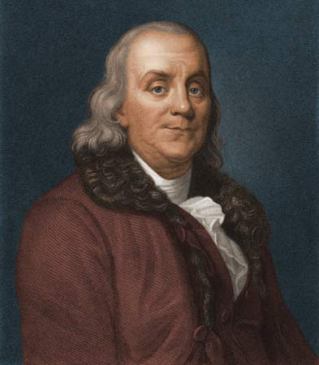
Ben Franklin wasn’t enthusiastic about the bald eagle as the national bird, but perhaps it’s best we don’t eat our national bird every Thanksgiving.

Benjamin Franklin, Thomas Jefferson and John Adams formed a committee assigned the task of designing an official seal for the new United States of America. As is often the case with government committees, the job of designing the seal took longer than expected. After three different committees came up with different designs, Pennsylvania lawyer named Thomas Barton eventually came up with one featuring a white eagle. Secretary of Congress Charles Thomson recommended replacing that eagle design with one depicting the native bald eagle. Eventually, the bald eagle received designation as the nation’s official bird.

Nevertheless, some of the committee members had second thoughts. Franklin later wrote a letter to his daughter that seemed to bemoan the choice of the bald eagle. He labeled the eagle “a bird of bad moral character” and lauded the wild turkey as a “bird of courage.”

Perhaps Franklin suffered some buyer’s remorse. “I wish the bald eagle had not been chosen as the representative of our country,” he wrote in his letter. “The turkey is a much more respectable bird.” He also noted that the turkey is a true and original American native. Of course, the bald eagle is also a bird unique to North America. So while there’s no direct evidence that Franklin did anything to actively promote the turkey as the nation’s official bird, he didn’t exactly provide a ringing endorsement of the bald eagle.

6_Wild_Turkey

Early naturalist and painter John James Audubon must have been very familiar with turkeys to have painted this lively scene of a hen and chicks.

Second, the wild turkey has a wide range of experience, both foreign and domestic, as a representative of the United States. While wild turkeys still roam through North America, to the tune of seven million individuals, their domesticated kin are farmed in huge numbers. Native tribes in the Americas began domesticating the wild turkey centuries ago. When early Spanish explorers conquered the Aztec empire in Mexico they found that turkeys were among the domesticated animals kept by the Aztecs. The Spaniards returned to Europe with domesticated turkeys around 1520. In the next few decades, domesticated turkeys spread into other European countries, arriving in England between 1525 and 1540.

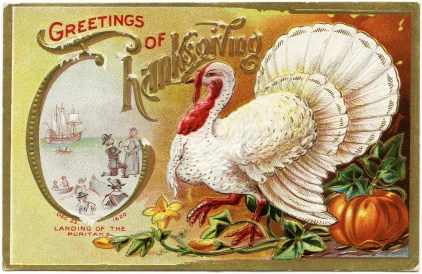
OldDesignShop_GreetingsOfThanksgivingPC1 2

The first European colonists brought turkeys to the New World with them only to discover the ancestors of their domesticated fowl already existed in America.

In a strange twist of fate, colonists in New England and Virginia brought domestic turkeys with them to the New World in the early decades of the 1600s only to be surprised to find the native forests already populated by wild turkeys, which were the ancestors of their domesticated fowls. Today, that back-and-forth saga regarding the turkey continues. One of the most important customers for U.S turkey farmers is the nation of Mexico. Almost 70 percent of U.S. turkey exports go to Mexico.

Finally, the wild turkey has that “in-your-face” attitude that is so American and helps turkeys thrive no matter where they live. In recent decades, some turkeys have taken to suburban living. An article by Brian Handwerk on the National Geographic website puts the spotlight on these turkeys that have taken so readily to living in the ‘burbs.

Massachusetts and Connecticut, former strongholds of the first settlements by Europeans in the New World, are home to densely populated cities like Boston and Hartford. These days, however, turkeys demand their share of the pie, figuratively speaking, when it comes to prime real estate. All a turkey really needs is some cover, which is adequately provided by landscaped lawns in the suburbs, and a few trees that provide nightly roosts. As social birds, they roam in flocks that don’t particularly pay attention to property lines.

Turkey_two

Photo by Bryan Stevens • A wild turkey forages for food.

In addition, a wild turkey’s a fairly big bird. A male turkey, or tom, can weigh between 16 and 24 pounds. The females, or hens, are usually about half that size. Human-turkey conflicts occur most often in the spring when the boisterous toms are focused intently on besting rivals and impressing potential mates. Unfortunately, these hormone-addled tom turkeys sometimes mistake humans going about their daily lives as rivals.

Turkey Silhouette Clip Art Free 27 (1) 2In addition, many human residents of the suburbs have a tendency to offer food to wildlife ranging from squirrels and deer to perhaps a flock of resident turkeys. Providing food can make turkeys expectant and demanding. To put it mildly, a turkey can be a little intimidating. They’re not likely to harm a human being, but occasionally turkeys will also stand their ground, refuse to back down and even give chase to any human who crosses them. Sounds like a proud American, right?

Now, one last thing for which Americans can be thankful. We don’t chow down on bald eagles every Thanksgiving. It would be awful, wouldn’t it, to eat our national bird?

••••••

Bryan Stevens lives in Roan Mountain, Tennessee. If you have a question, wish to make a comment or share a sighting, email ahoodedwarbler@aol.com. He also welcomes friend requests on Facebook at https://www.facebook.com/ahoodedwarbler.

Annual Fall Bird Count finds 122 species in Northeast Tennessee

Heron-UnderBridge

Photo by Bryan Stevens • A Great Blue Heron wades through the creek running through downtown historic Jonesborough on a warm afternoon this past summer. These large herons, helped by recent nesting colonies in Erwin, Elizabethton and other locations, have become more commonplace in the region. The 66 Great Blue Herons found on the recent Fall Bird Count represented a new high number for the species on this annual autumn survey of bird populations in the region.


The 48th annual Elizabethton Fall Count was held on Saturday, Sept. 30, with 54 observers in 12 parties covering Carter County and parts of the adjacent counties of Johnson, Sullivan, Unicoi and Washington. The participants tallied 122 species, which is slightly below the recent 30-year average of 126 species. The all-time high for this count was 137 species, which was reached in 1993.

Shorebirds were in very short supply due to a shortage of suitable habitat. Aside from killdeer, a solitary sandpiper was true to his name. In particular, two sites that formerly attracted shorebirds have undergone alterations that have essentially eliminated such conditions: Austin Springs and Bush Hog Pond.

This year’s count featured some other notable misses, as well, according to long-time count compiler Rick Knight. Birds missed include Northern Bobwhite (which has been found only four times in the last 24 years), Broad-winged Hawk, Spotted Sandpiper (first miss in last decade), Winter Wren, and Blue-gray Gnatcatcher.

Several birds set new high records for the number of individuals tallied, including Double-crested Cormorant (70); Great Blue Heron (66); Black Vulture (330); Turkey Vulture (215); Red-shouldered Hawk (6); Belted Kingfisher (40); and Red-bellied Woodpecker (90).

Bryan-KingfisherSunny

Photo by Bryan Stevens • The 40 Belted Kingfishers found during the Fall Bird Count represented a new high count for this long-running survey.

Fish Crow made its debut on a Fall Bird Count debut when two individuals were found in Kingsport along the Holston River.

The count total follows:

Canada Goose, 957; Wood Duck, 24; Mallard, 378; Blue-winged Teal, 2; Hooded Merganser, 1; Ruffed Grouse, 5; Wild Turkey, 79; Pied-billed Grebe, 11; and Double-crested Cormorant, 70.
Great Blue Heron, 66; Great Egret, 1; Green Heron, 4; Black-crowned Night-Heron, 2; Black Vulture, 330; and Turkey Vulture, 215.

Osprey, 12; Bald Eagle, 6; Northern Harrier, 2; Sharp-shinned Hawk, 7; Cooper’s Hawk, 7; Red-shouldered Hawk, 6; Red-tailed Haw, 27; American Kestrel, 16; Merlin, 1; and Peregrine Falcon, 1.

Killdeer 50; Solitary Sandpiper, 1; Ring-billed Gull, 1; Forster’s Tern, 1; Rock Pigeon, 404; Eurasian Collared-Dove, 2; Mourning Dove, 356; Yellow-billed Cuckoo, 1; Eastern Screech-Owl, 12; Great Horned Owl; 10; Barred Owl; 4; and Northern Saw-whet Owl; 1.

Common Nighthawk, 1; Chimney Swift, 254; Ruby-throated Hummingbird 8; Belted Kingfisher, 40; Red-headed Woodpecker, 7; Red-bellied Woodpecker, 90; Yellow-bellied Sapsucker, 16; Downy Woodpecker, 46; Hairy Woodpecker, 8; Northern Flicker, 63; and Pileated Woodpecker, 37.

Eastern Wood-Pewee 6; Eastern Phoebe, 76; Eastern Kingbird, 1; Loggerhead Shrike, 1; White-eyed Vireo; 2; Yellow-throated Vireo, 1; Blue-headed Vireo, 14; Red-eyed Vireo, 6; Blue Jay, 447; American Crow, 424; Fish Crow, 2; and Common Raven, 19.

SolitarySandpiper-One

Photo by Bryan Stevens • Migrating shorebirds, such as this Solitary Sandpiper, added diversity to this year’s Fall Bird Count in Northeast Tennessee.

Northern Rough-winged Swallow, 3; Tree Swallow, 68; Carolina Chickadee, 174; Tufted Titmouse,93; Red-breasted Nuthatch, 6; White-breasted Nuthatch, 44; Brown Creeper, 2; House Wren, 2; and Carolina Wren,180.

Golden-crowned Kinglet, 4; Ruby-crowned Kinglet,14; Eastern Bluebird, 163; Veery, 7; Gray-cheeked Thrush, 26; Swainson’s Thrush, 70; Hermit Thrush, 1; Wood Thrush, 19; American Robin, 301; Gray Catbird, 34; Brown Thrasher, 11; Northern Mockingbird, 100; European Starling, 2,106; and Cedar Waxwing, 205.

Ovenbird, 2; Black and White Warbler, 6; Tennessee Warbler, 32; Common Yellowthroat, 9; Hooded Warbler, 2; American Redstart, 5; Cape May Warbler, 8; Northern Parula, 3; Magnolia Warbler, 29; Bay-breasted Warbler, 10; Blackburnian Warbler, 2; Chestnut-sided Warbler, 2; Black-throated Blue Warbler, 5; Palm Warbler, 21; Pine Warbler, 11; Yellow-rumped Warbler, 5; Yellow-throated Warbler, 4; Prairie Warbler, 1; and Black-throated Green Warbler, 8.

grosbeak-photo

Photo by Bryan Stevens • Migrating Rose-breasted Grosbeaks were among the 122 species tallied for this year’s Fall Bird Count.

Eastern Towhee, 50; Chipping Sparrow, 57; Field Sparrow, 14; Song Sparrow,144; Lincoln’s Sparrow, 1; Swamp Sparrow, 1; Dark-eyed Junco, 75; Summer Tanager, 1; Scarlet Tanager, 11; Northern Cardinal, 173; Rose-breasted Grosbeak, 19; Indigo Bunting, 15.

Red-winged Blackbird, 41; Eastern Meadowlark, 17; Common Grackle, 859; Brown-headed Cowbird, 78; House Finch, 44; Pine Siskin, 1; American Goldfinch, 138; and House Sparrow, 33.

•••••

Bryan Stevens has been writing about birds on a weekly basis since 1995. If you have a question, wish to make a comment or share a sighting, email ahoodedwarbler@aol.com.