Category Archives: Johnson City Press

Berry-rich diet makes waxwings profuse water drinkers

Waxwing-Sept11

Photo by Bryan Stevens • A cedar waxwing perches on a branch while taking a break from flycatching insect prey near a community park pond.

Ernie Marburg, a resident of Abingdon, Virginia, shared an interesting observation about a flock of cedar waxwings he observed recently in his yard.

Waxwings have a brown and gray silky plumage, a black mask and a perky crest. Some of the wing feathers show red tips. The similarity of these wing tips to melted drops of wax gives these birds the common name of waxwing.
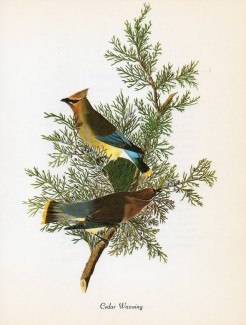
Waxwing-Audubon

Early American naturalist and artist John James Audubon painted this pair of cedar waxwings.

“The typical flock of waxwings has arrived,” he wrote in his email. He added that the birds exhibited an unusual behavior during their visit.

“From their roosts in the tops of some tall nearby trees, they appeared to be leaving their roosts briefly and returning to the trees as though they were catching flies,” Ernie noted. “There were, however, no flies available.”

The waxwings, he went on to explain, appeared to be going after snowflakes. “Could they have been going after the snowflakes to drink water?” Ernie asked.

While I wasn’t sure that catching snowflakes is an energy-efficient way to relieve thirst, the waxwings might have had a different motivation for their behavior. As I informed Ernie in my reply to his email, waxwings are very social with each other. These birds form large flocks that travel, feed, roost and bathe together. They have also come up with interesting “rituals” to reinforce their social ties with each other.

Waxwing-Erwin

Photo by Bryan Stevens • The waxy tips to the wing feathers are evident in this photograph of a cedar waxwing.

These rituals, or games, they “play” with each other include a flock of perched birds passing a single berry or fruit in a line, one bird to another, without any of the birds eating the item. I speculated that snowflake catching was their idea of a fun game and a way to practice for fly-catching season, which is just around the corner.

Perhaps I should have conducted some research. As it turns out, other people have witnessed this snowflake-catching behavior, which has led those who have studied the birds to determine that the birds do indeed eat snowflakes to ease thirst. Apparently their diet, which is rich in sugar thanks to the various berries that provide a huge percentage of their food, waxwings are often afflicted with intense thirst. In addition to catching snowflakes, they have been observed eating fallen snow. A single Bohemian waxwing — a relative of the cedar waxwing — can gobble down 300 berries in a couple of hours. According to some statistics, one of these birds can eat up to three times its weight in fruit in a single day. The next time I am lucky enough to observe waxwings in a snowstorm, you can bet I will be watching for this snowflake-eating behavior.

The cedar waxwing has few relatives. Worldwide, there are only two other species: the Bohemian waxwing, which is native to the northern forests of Eurasia and North America; and the Japanese waxwing, found in such northeast Asian countries as Japan, Korea and China.
Ruby-throated-WILLOWS

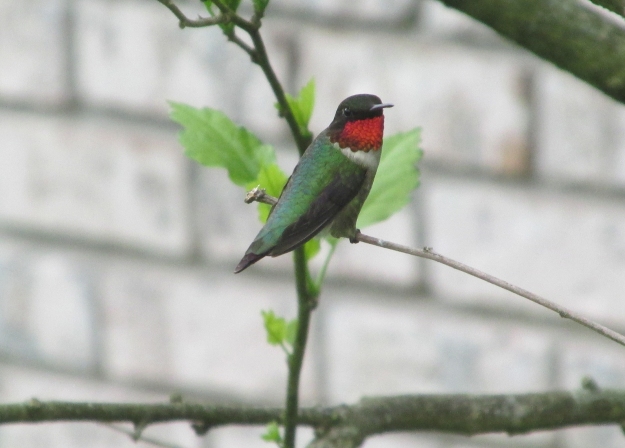
Photo by Bryan Stevens • Numbers of Ruby-throated Hummingbird in the region tend to fluctuate each year, but people should see a spike in their numbers as the hummingbirds end summer nesting and start migrating south again.

Hummingbirds due back soon

Waxwings are rather nomadic, coming and going with a maddening unpredictability. Other birds are more dependable, arriving and departing at roughly the same time year after year. One such bird should soon make its triumphant and welcome return to yards and gardens throughout the region. According to the website Hummingbird Guide, ruby-throated hummingbirds usually return to Tennessee and Virginia the first week of April. These tiny flying jewels arrive earlier in North and South Carolina, typically arriving the third week of March in those states.

The popularity of hummingbirds in general, and the ruby-throated hummingbird specifically, is simple to understand. These tiny birds are perfectly willing to insert themselves into our lives, offering hours of fascinating entertainment as they visit our gardens, duel at our sugar water feeders and occasionally even nest in trees and shrubs in our yards.

Individuals who feed birds know that it can be an expensive undertaking. The cost of providing sunflower seeds and suet cakes for hungry flocks during the winter months can nibble at the monthly budget, but hardly anyone would begrudge the sparrows, finches, wrens and woodpeckers. After all, they return the favor, putting on daily shows just outside our windows.
Rubythroated_Hummingbird

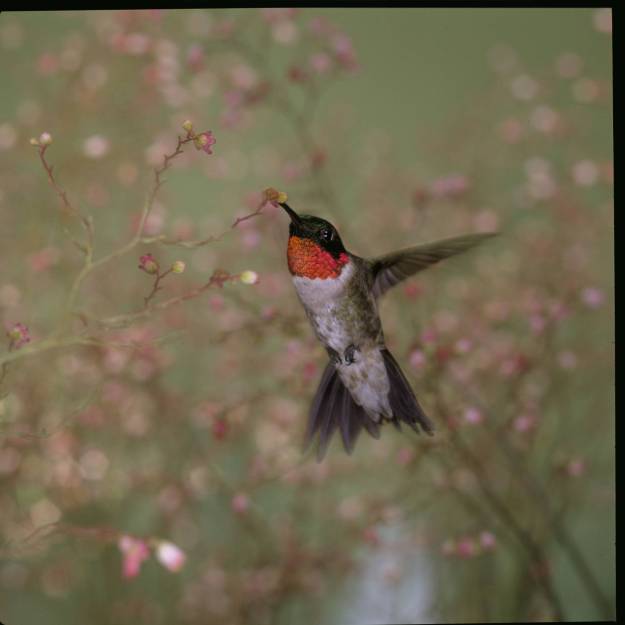
Photo by U.S. Fish & Wildlife Service • A male Ruby-throated Hummingbird hovers in front of the camera as it seeks nectar from tiny flower blossoms.

The same is true of hummingbirds. For a relatively modest investment, people putting out feeders or planting nectar-producing flowers are rewarded with the fun and amusing antics of these pint-sized and hyperactive birds.

Attracting hummingbirds is generally much less expensive than feeding other birds. After all, you need only a mixture of sugar water — four parts water to one part sugar — to fill a feeder and catch the attention of a visiting hummer. A few pounds of sugar will last a lot longer than that bag of sunflower seeds, and it’s much less expensive to purchase at the grocery store.

Do not add red coloring or dyes to your sugar water mixture. Some studies have indicated these substances are harmful to hummingbird health. This means tossing out many of the pre-packaged mixtures sold with sugar water feeders. After all, the entire purpose is to attract hummingbirds. Risking their health is simply not acceptable. If you do want to take extra steps to attract these diminutive, feathered sugar junkies, consider supplementing your landscape with a variety of flowering plants. To explore some of the best choices for flowers to tempt hummingbirds, visit the website of The Hummingbird Society at http://www.hummingbirdsociety.org.
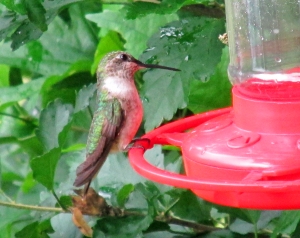
Ruby-throatedFemale-EYE

Photo by Bryan Stevens • A ruby-throated hummingbird visits a feeder for a sip of sugar water.

I always put out my sugar water feeders in early April. I usually end up waiting a couple of weeks before the first hummingbird appears, but it’s worth the wait. I miss these tiny birds during the winter months, which they spend in much warmer surroundings in southern Mexico and Central America. A male with the namesake red throat is usually the first to appear at my feeders. However, female ruby-throated hummingbirds, which lack the dazzling ruby throat patch, are migrating, too. The females usually lag a week or two behind the pace of the migration for the males.

As always, I enjoy hearing from readers about their first spring sighting of a ruby-throated hummingbird. Readers are encouraged to jot down the date and the time of arrival when they observe their first hummingbird of the season. If the sighting’s duration allows you to verify, note whether the hummingbird was a male or female. These reports can be emailed to me at ahoodedwarbler@aol.com. Together, we’ll track the arrival of these tiny birds as they return to the region.


Brown pelicans now thrive along nation’s coasts

Pelican=Reflected

Photo by Bryan Stevens • A young brown pelican fishes along the causeway at Huntington Beach State Park in South Carolina. These pelicans usually dive into the water, capturing prey in a large pouch that is connected to their bill. Pelicans also snatch fish while floating on the surface.

Back in early March I enjoyed a trip to coastal South Carolina, visiting locations near Pawleys Island such as Huntington Beach State Park, Myrtle Beach State Park and Brookgreen Gardens.

During my six-day stay in the South Carolina Low Country, I observed 95 species of birds, including several that should be making their spring return to our region any day now. I saw blue-gray gnatcatchers, yellow-throated warblers and a few shorebirds, including a greater yellowlegs. All of these birds usually migrate through Northeast Tennessee and Southwest Virginia in April and early May.

I also saw some coastal specialties that don’t usually come close to my landlocked home state of Tennessee, including anhinga, tricolored heron and brown pelican.

IMG_4311

Photo by Bryan Stevens • A young brown pelican floats on the water in a salt-water marsh at Huntington Beach State Park in South Carolina.

The brown pelican is the smallest of the world’s eight species of pelicans, which are grouped in the family Pelecanidae. Saying that a brown pelican is small, however, is a relative term. The brown pelican is about half the size of the related white pelican.

The brown pelican lives on both coasts, from around Seattle, Washington, and Cape Cod, Massachusetts, southward to the tropics. This pelican also lives along the Gulf Coast, as well as ranging south as far as the mouth of the Amazon River in South America.

According to the U.S. Fish & Wildlife Service’s website, there are two geographically and genetically distinct regional populations, or subspecies, of brown pelican that occur in North America. They are the California brown pelican, ranging from California to Chile, and the eastern brown pelican, which occurs along the Atlantic and Gulf coasts, as well as the Caribbean and the Central and South American coasts.

Pelicans have been documented living about 30 years in the wild, but the average age may be much less due to factors such as predation, disease and starvation. Many young pelicans, unskilled at catching fish, sadly do not reach adulthood.

DDT, which negatively affected breeding for birds such as bald eagle, osprey and peregrine falcon, also had a detrimental impact on the brown pelican. According to their website, in 1970, the U.S. Fish and Wildlife Service listed the brown pelican as endangered. The listing was possible through a law that had been passed before 1973’s Endangered Species Act. A recovery plan was published in 1983. In November 2009, the pelican was removed from the Endangered Species List, becoming another success story akin to that of the bald eagle.

Summer-Pelicans

Photo by Bryan Stevens • Brown pelicans fly in a line over the Atlantic Ocean on the South Carolina coast, conjuring forth fantasies of ancient flying creatures.

Visitors to beaches along the Atlantic Coast have probably seen the impressive flight of brown pelicans in a single file formation of birds gliding only a few feet above the surf. The span of the wings can reach seven feet six inches. Seen near dusk, an observer could be forgiven a flight of fancy that allows these pelicans and their graceful flying formations to be compared to the long-extinct flying reptiles, the pterosaurs.

At a distance, the birds can readily be described as majestic and even graceful. On closer inspection, some different adjectives come into play to describe the brown pelican. At close quarters, a brown pelican is an ungainly, almost ugly bird. Pelicans have long necks and bills, and on land, they shuffle awkwardly. Young bird are drab brown and gray, often looking much more disheveled than adult birds.

IMG_4340

Photo by Bryan Stevens • A large pouch that is connected to its bill is one physical trait that makes pelicans distinct from other birds. Although these birds often appear ungainly, they are quite skilled at using their pouch-equipped bill to capture fish.

According to the website All About Birds, the brown pelican feeds mostly on small fish such as menhaden, mullet, anchovies, herring, and sailfin mollies. These large birds may plunge from 65 feet above the surface of the water to capture fish in their famous throat pouch. In addition to fish, a pelican can take up to 2.6 gallons of water into its pouch with every dive. The water gets expelled, leaving behind the fish.

When not feeding, pelicans will rest on sandbars, pilings and rock jetties. These “loafing” spots are important places for pelicans to rest and recuperate after the rigors of diving and fishing for their fish meals.

IMG_4342

Photo by Bryan Stevens • A young brown pelican fishes along the causeway at Huntington Beach State Park. These birds capture fish in an elastic pouch that is attached to their bills.

The closest avian relatives of the pelicans are a couple of oddball birds known as the shoebill and hamerkop. The world’s other species of pelicans include Peruvian pelican, great white pelican, Australian pelican, American white pelican, pink-backed pelican, Dalmatian pelican and spot-billed pelican.

One state — Louisiana — has even made the brown pelican its official state bird. Most state birds are songbirds. The brown pelican is one of the exceptions, along with such birds as Minnesota’s common loon and the wild turkey, which has been adopted by Massachusetts.

IMG_4339

Photo by Bryan Stevens • A young brown pelican dips its bill into the water along the causeway at Huntington Beach State Park. Pelicans are skillful at snatching fish while floating on the surface.

On a handful of occasions, brown pelicans have made brief appearances in the region, usually generating a great deal of excitement among birders. White pelicans are also rare visitors, but they make slightly more stops in the region than their smaller relative. For instance, a white pelican spent a few days at Middlebrook Lake in Bristol around Thanksgiving in 2015. To increase your odds of observing a brown pelican in the wild, it will be much more productive to simply spend a few days along the coasts of Virginia, North Carolina, South Carolina, Georgia or Florida.

••••••

If you have a question, wish to make a comment or share a sighting, email ahoodedwarbler@aol.com.

john-james-audubon-brown-pelican_a-l-6043043-0

Early American naturalist and artist John James Audubon painted this representation of a brown pelican. Today, the state of Louisiana has even made the brown pelican its official state bird.

Tufted titmouse small songbird with big personality

In last week’s post I wrote about chickadees. These friendly little birds have an impish cousin that is also a frequent visitor to feeders in the region. If chickadees are active woodland sprites, their relative, the titmouse, is a curious imp with mischievous tendencies.

Titmouse-2

Photo by Bryan Stevens • A tufted titmouse puffs up its feathers on a cold day.

The tufted titmouse’s song — a persistent repetition of “Peter! Peter! Peter!” — is ringing through the woodlands around my home along with the urgent “fee-be fee-bo” of the Carolina chickadee. These birds form mixed flocks with each other and other species to explore their surroundings and search for food. They know that spring, despite the usual false starts, is drawing nearer with each passing day.

In addition to singing, titmice are enthusiastic scolders. They will scold over any transgression, real or imagined, focusing their ire on their fellow titmice or other birds, potential predators and even human observers. They’re quite persistent at their raucous scolding, which is just another reason I label them as imps of the woods.

Titmouse-Suet

Photo by Bryan Stevens • A young titmouse visits a suet feeder.

The tufted titmouse is a mostly gray bird with a distinctive crest and a pinkish-rusty coloration along the flanks. Titmouse eyes are black as coal and look large in proportion to their heads, which lends them an expressive appearance as they explore in yards and gardens. The term “titmouse” refers to the old English word “tit” meaning “small,” as well as the old English “mase,” also a reference to small size. Eventually, probably because of the bird’s small size and gray coloration, “mase” evolved into “mouse” and combined to form the word “titmouse.”

The titmice living in my yard visit my house windows at times, which drives my cats to distraction. I’ve wondered if the titmice are curious and trying to peek inside the house, but I believe I have a more down-to-earth explanation. These little birds are very thorough when foraging for food, and I’ve watched them pluck spiders and other insects from the window frames.

Titmouse-Creek

Photo by Bryan Stevens • A tufted titmouse approaches a stream for a quick drink.

Like chickadees, titmice are fond of sunflower seeds. No other offering will so readily lure them to feeders, although they do develop a fondness for suet cakes. I’ve also had great success attracting titmice to my feeders by offering unsalted, shelled peanuts. I sometimes break up the peanuts into smaller, more manageable pieces for the benefit of the titmice. These foods and a few trees or saplings around your home is all you really need to welcome titmice.

In the early 1900s, the tufted titmouse would have been considered a southern bird with its stronghold in states like Tennessee, Virginia, the Carolinas and Georgia. Perhaps it is the titmouse’s innate curiosity that has pushed the species to expand successfully beyond the southern United States. The titmouse has steadily expanded its range northward, thriving in new locations. Experts credit this expansion to more readily available access to supplemental food at feeders.

Titmouse-Eye

Photo by Bryan Stevens • A tufted titmouse turns an eye on the camera.

During the nesting season, titmice forage for a variety of insects. Many spiders, beetles, caterpillars and other small bugs will be fed to hungry young titmice in a tree cavity or a nesting box. Like chickadees, titmice build exquisite nests, often using mostly moss with other materials, such as bark, cloth scraps, dry leaves and shed snakeskins. These small birds line their nests with hair or fur of other animals.

Over the years, many readers have shared observations documenting the fur-collecting skills of tufted titmice. The birds are not content to simply collect shed fur. They seem to prefer collecting the fur fresh from a living animal. Many dogs fall victim to impish titmice that boldly pluck strands of fur from the canine’s coat.

In another funny story, a woman once told me about a titmouse that flew onto her head every time she stepped outside her home. Perhaps the bird sensed her affection for birds since it never failed to pluck strands of hair from her head to carry back to its nest. For any would-be skeptics, the woman provided photographic documentation of the incidents. In addition to dogs and humans, animals ranging from squirrels and opossums to mice and woodchucks have also been observed “sacrificing” fur for the nesting success of tufted titmice.

Titmouse-PHOTO

Photo by Bryan Stevens • The tufted titmouse is a backyard bird with an impish personality.

The female tufted titmouse incubates the eggs. She lays between three and nine eggs, although a usual clutch size is five to six eggs. The female titmouse is protective of her nest and is known for a behavior known as a “snake display.” I’ve observed titmice perform this display when I’ve peeked into nesting boxes. She remains tightly seated on her eggs, or young, while she hisses loudly and strikes in a manner very much like a striking serpent. Not all titmice engage in this display. Some remain still and try to “blend” with the nest, while others will fly away if a nest box is opened. Regardless, it’s a convincing display of bravado on the part of such a small bird. If it looks scary to people, I am sure it could succeed at repelling a squirrel or mouse. I’m uncertain if the behavior would deter an actual snake.

Other titmice in North America include bridled titmouse in Arizona and New Mexico; oak titmouse of the Pacific Coast region; juniper titmouse from the Great Basin, which consists of Wyoming, Idaho, Utah, Nevada, Oregon and California; and the black-crested titmouse, which ranges from Missouri into east-central Mexico.

Titmouse-WithPeanut

Photo by Bryan Stevens • A tufted titmouse pounds at a peanut held in its feet.

Titmice occur exclusively in North America and belong to the genus Baeolophus. Europe, Asia and Africa are home to some other crested birds in the family of chickadees and titmice. For instance, the European crested tit and the grey crested tit are species that sport a crest of feathers like titmice but are more closely related to chickadees.

Yes, the tufted titmouse is one of nature’s imps, but it’s also one of our more entertaining birds. Get to know these visitors by offering sunflower seeds or other fare and, if you want to go the extra step, place some bird boxes around your yard as potential nesting sites. By next winter, you may have an entire flock of these feathered imps as your guests.

•••••

Bryan Stevens lives near Roan Mountain, Tennessee. To learn more about birds and other topics from the natural world, friend Stevens on Facebook at https://www.facebook.com/ahoodedwarbler. If you have a question, wish to make a comment or share a sighting, email ahoodedwarbler@aol.com.

Titmouse-OnSuet

Photo by Bryan Stevens • A tufted titmouse makes a quick visit to a suet feeder.

Carolina chickadees are easy birds to befriend and bring into your daily life

Winter-Chickadee-Confused

Photo by Bryan Stevens • A Carolina chickadee perches on a branch.

In last week’s post, I pointed out that Eastern bluebirds have already started seeking nesting locations for the upcoming spring nesting season. They’re hardly the only cavity-nesting birds already checking out every nook and cranny for the perfect place to raise a family of young.

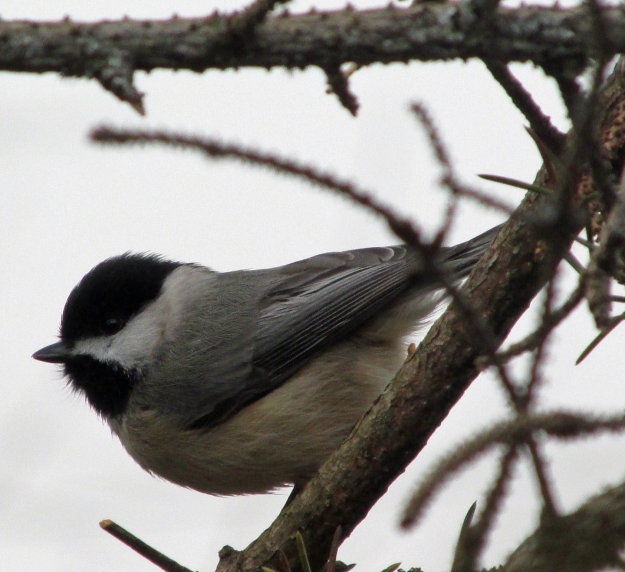
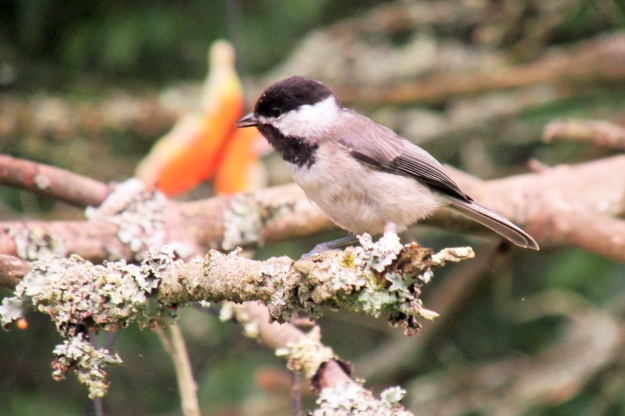
I’ve been hearing the familiar “fee-bee-fee-bo” song of the Carolina chickadee from the woodlands around my home. With the recent turn in the weather, the male chickadees are persistent singers, making the woods ring with their attempts to woo a mate.

The Carolina chickadee is at home in mixed or deciduous woods in the United States from New Jersey west to southern Kansas and south to Florida and Texas. The Carolina chickadee also ranges along the Appalachian Mountains, but on some of the higher peaks they are replaced by their cousin, the black-capped chickadee. In Tennessee, birders need to visit some of the higher peaks in the Great Smoky Mountains National Park to find black-capped chickadees.

Winterchickadee

Photo by Bryan Stevens • A Carolina chickadee visits a feeder for sunflower seeds.

Once a pair of chickadees settles down into domestic bliss, they almost at once start work upon constructing a nest. These little songbirds, looking quite smart in their handsome black, white and gray feathers, build an exquisite nest. The primary nesting material is green moss, which they stuff into a natural cavity or bird box in great quantities. The female chickadee fashions a depression in the collection of moss. She lines this shallow basin with plant fibers as well as strands of fur or hair to provide soft cushioning for her eggs.

Chickadee-Feb9

Photo by Bryan Stevens • A Carolina chickadee endures a cold winter’s day.

A female chickadee can lay a large number of eggs, with the clutch size ranging between three and ten eggs. Once the young hatch, both parents are kept busy delivering food to a large brood of hungry, noisy chicks. The young grow quickly, but they take advantage of the safety of their cavity nest and don’t depart for the wider world until 20 days after their hatching.

Energetic chickadees, birds of the most engaging antics, make wonderful feeder visitors. With their tame and trusting natures, chickadees are one of the birds I welcome to my feeders. Chickadees are daily visitors to my feeders in the winter season as well as other times of the year. I love to watch a chickadee land on a feeder, snatch a single sunflower seed and fly to a perch close at hand to hack open the seed’s shell and devour the kernel before they repeat the entire process again.

Chickadee-FeedTwo

Photo by Bryan Stevens • A Carolina chickadee makes a food delivery to nestlings.

North America’s other chickadees include the aforementioned black-capped chickadee, as well as boreal chickadee, chestnut-backed chickadee, grey-headed chickadee, Mexican chickadee, and mountain chickadee. On a trip to Utah in 2003 and 2006, I saw both black-capped chickadee and mountain chickadee.

In other parts of the world, chickadees are known as “tits,” which is from an Old English word denoting small size. Worldwide, there are about 60 species of chickadees and tits, which are classified collectively under the scientific family name, Paridae. Other members of this family range into Europe, Asia and Africa, including species with colorful names like fire-capped tit, yellow-bellied tit, azure tit, green-backed tit and cinnamon-breasted tit.

CarolinaChickadee-1

Photo by Bryan Stevens • Caroline chickadee waits for a chance to visit a crowded feeder.

It’s easy to attract chickadees to your yard. Shrubs and small trees, feeders stocked with sunflower seeds and perhaps a mesh cage offering a suet cake are sure to make these small birds feel welcome. If you want to witness the family life of chickadees, build or buy a box suitable for wrens and other smaller birds. Chickadees will happily take up residence. These birds often comprise the nucleus of mixed flocks of various species, so they will also bring other birds into your yard and within easy viewing range.

••••••

If you have a question, wish to make a comment or share a sighting, email ahoodedwarbler@aol.com.

CaroChickadee-Three

Photo by Bryan Stevens • A Carolina chickadee grasps a branch near a feeder.


North America’s bluebirds never fail to impress with their winning ways

A famous song declares that “somewhere over the rainbow, bluebirds fly,” so you’ll have to excuse me if I have been looking for those elusive rainbows during the unseasonably warm weather the region’s enjoyed in recent weeks.

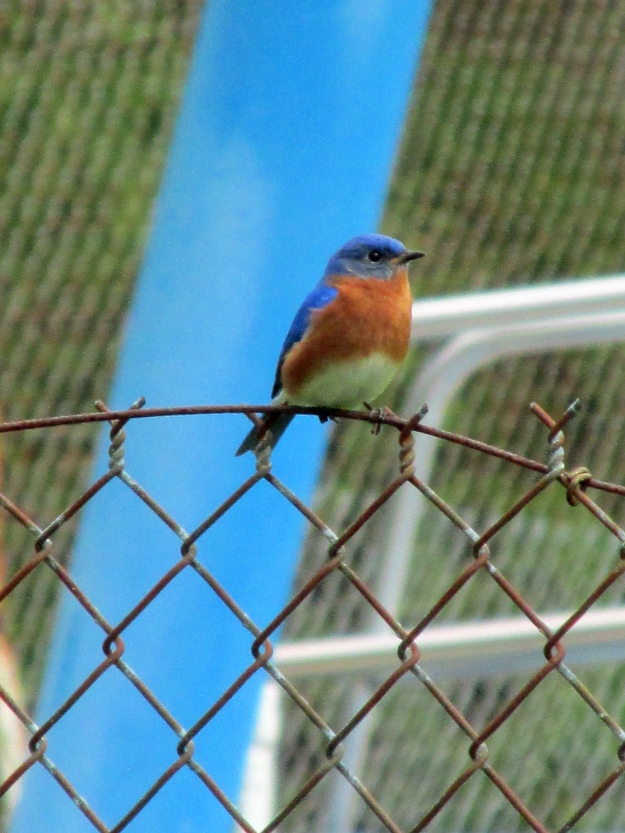
Also, like the song promises, “dreams really do come true,” which was fulfilled by the arrival of this year’s first pair of Eastern bluebirds at my home on Friday, Feb. 23. The presence of a pair of these beautiful and trusting birds is always sure to put people in a good mood. People have known for generations that bluebirds make good neighbors. A pair of bluebirds in your yard or garden provides hour upon hour of free entertainment as one watches these birds go about their daily routine. At this time of the year, much of that routine is focused on finding and claiming the best possible nesting location for the upcoming spring season.

Bluebird-Comic

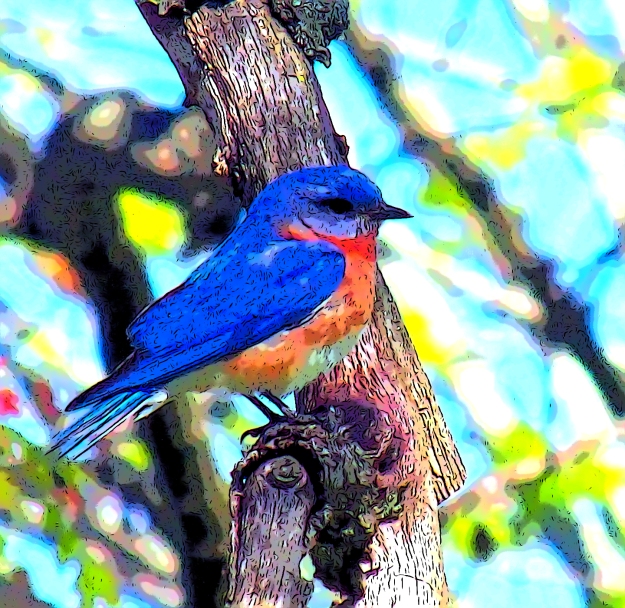
The Eastern bluebird is one of the most beloved American songbirds.

The Eastern bluebird is one of North America’s best-known cavity-nesting birds. About 85 species of North American birds use cavities in trees for nesting purposes. Cavity-nesters include ducks, such as buffleheads and wood ducks, as well as birds of prey such as Eastern screech-owls and American kestrels.

Woodpeckers and nuthatches can excavate their own cavity in a dead or decaying tree. Others, such as the bluebirds, must find a cavity already in existence. Such cavities are scarce real estate and can be subject to some intense competition. The Eastern bluebird is at a disadvantage when forced to compete with non-native introduced birds such as aggressive European starlings and house sparrows. Even native competitors such as house wrens and tree swallows are serious rivals when it comes down to staking a claim to prime nesting real estate.

Over the years, I have found bluebirds nesting in cavities inside wooden fence posts, but there are fewer wooden fence posts every year. This reinforces the idea of how changing landscapes have affected these birds. Instead of wooden fence posts, many farmers now use metal ones, and dead or dying trees — a much sought-after resource for cavity-nesting birds — are often removed from woodlands.

Bluebird-withPineNeedles

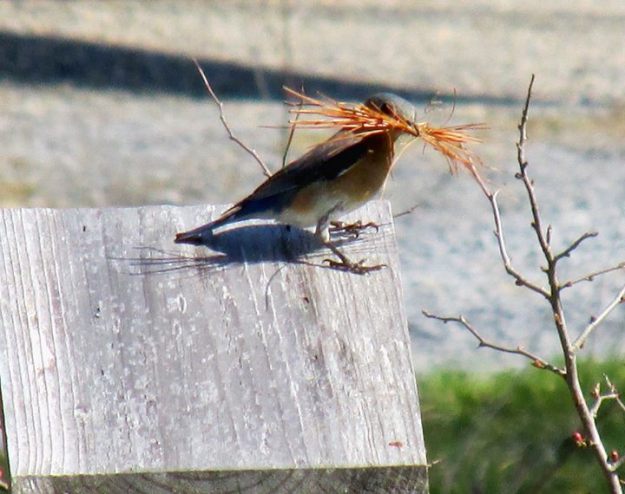
Photo by Bryan Stevens • A female Eastern Bluebird gathers pine needles to use as nesting material.

Fortunately for bluebirds, this species will also accept lodging in a nest box, or birdhouse, provided for them by human landlords. One of the simplest ways to bring bluebirds close is to offer wooden boxes, constructed to their specific requirements, for their use as nesting locations. Because of their trusting nature when it comes to their human neighbors, the Eastern bluebird is one of our most beloved birds. In fact, bluebirds are such popular birds that interest in them and their well-being has inspired the foundation of organizations such as the North American Bluebird Society. The Eastern bluebird has also been designated the official state bird for New York and Missouri, which provides more testimony to the immense popularity of this bird.

Bluebirds-One

Photo by Bryan Stevens • A flock of Eastern bluebirds perches on fenceposts.

There are two other species of bluebirds found in North America. The Western bluebird is found throughout the year in California, the southern Rocky Mountains, Arizona and New Mexico, as well as in part of Mexico. The species ranges in the summer as far north as the Pacific Northwest, British Columbia and Montana. The Mountain bluebird nests in open country in the western United States as far north as Alaska. They are short-distance migrants, retreating as far south as Mexico during the winter season.

Other than these three species, North America offers few others birds with mostly “blue” plumages. Some examples include indigo bunting, blue grosbeak, and blue jay, as well as birds like great blue heron and belted kingfisher.

In addition to housing, food and water can be used to lure Eastern bluebirds closer. This bird doesn’t eat seeds, but it can be attracted with an offering of mealworms — live or freeze-dried – or commercially prepared peanut butter nuggets. A water feature in a yard is also a magnet for bluebirds and a host of other bird species.

Bluebird-Pool

Photo by Bryan Stevens • A handsome male Eastern bluebird perches on a chain-link fence.

If your home doesn’t provide suitable open, spacious bluebird habitat, it’s still easy to enjoy these beautiful birds. An afternoon or evening drive into open country, such as agricultural farmland, is likely to yield sightings of this bird on fences and utility lines. Golf courses, some of which go the extra mile to accommodate bluebirds, also provide habitat for these lovely birds.

The Eastern bluebird is present in the region in all seasons and is one of our more common birds. If you’re already an experienced landlord and host for these birds, you probably already know they joys they can bring. If not, why not try to attract them closer to you? Most bluebirds in the region have already started looking for a nesting site. Many of these birds may nest two or even three times in a single season. March has only just arrived, so there’s still time to place a nest box or two on your property to get their attention.

••••••

If you have a question, wish to make a comment or share a sighting, email ahoodedwarbler@aol.com.

Bluebiord-Male-Playground

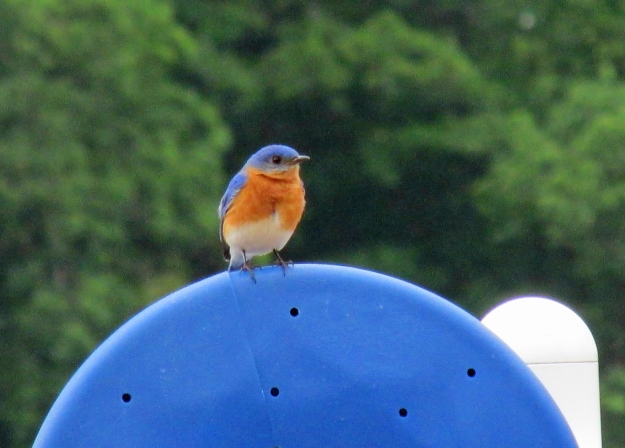
Photo by Bryan Stevens A male Eastern Bluebird perched on playground equipment at Winged Deer Park in Johnson City.

American robins become more prominent with shifting of seasons


Robins-ETSU-Feb

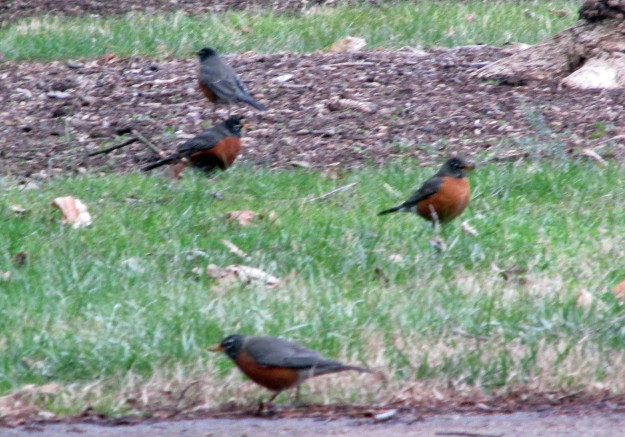
Photo by Bryan Stevens • Returning American robins, prominent in lawns and gardens during their annual spring migration, will soon turn their attention to nesting duties.

I don’t think I’m alone in doing what I can to speed along the process of spring’s arrival. I’ve heard from different people, all eager to share their observations of one of the sure signals — the arrival of flocks of American robins — of the shifting of the winter season to spring.

Bobby Howser phoned me to let me know of a large flock of American Robins he encountered at the Sullins College building in Bristol, Virginia.

He said the flock “swarmed like bees” into a tall holly tree. He was surprised to see so many robins in a single tree and asked if it was an unusual occurrence.

Houghton_MS_Am_21_(46)_-_John_James_Audubon,_robin 3

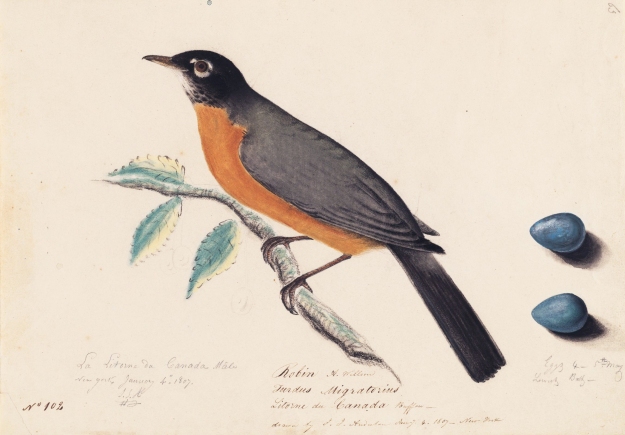
Early American naturalist and painter John James Audubon painted this American robin with a couple of the bird’s eggs.

Ernie Marburg in Abingdon, Virginia, emailed me about the same time.

“I just wanted to report that we have been inundated with a huge flock of mostly robins,” he wrote. He estimated that the flock contained 300 to 500 individuals.

“They ate all the red berries from my neighbor’s large holly tree yet appear to avoid other holly trees with many red berries just a short distance away,” Ernie wrote. The flock remained active in the tree from morning into early afternoon.

Not long after he first emailed me, Ernie contacted me again. “I wanted to give you an update on the robin invasion,” he wrote. “They have been here two additional mornings since I first reported to you. Their pattern is different now though. They are spaced apart and appear to be ground feeding individually.”

Robin-OnNest

Photo by Bryan Stevens • American robin sitting on its nest in the shelter of a side of a bridge spanning the Doe River in Elizabethton, Tennessee.

Ernie proposed a theory about the behavior of the robins.

“I think they followed the south to north weather pattern we had recently that provided significant rainfall,” he explained. “The rainfall, in turn, caused the ground to thaw and the earth worms to come to the surface thus providing a food source for the robins. In summary, the robins are following their food source.”

I responded to Ernie and congratulated him on what I thought was an excellent theory.

Ernie also wrote me that he had read an article some time ago that said robins would eat cooked elbow macaroni if put out for them.

“We did that, but not one robin ate the macaroni,” he said. “Moral of the story is, as you would expect, don’t believe everything you read.”

I’ve read similar suggestions of unusual items to try to tempt birds not prone to visit feeders. I told Ernie that I wasn’t too surprised that the robins ignored the macaroni. The observations of robin feeding habits made by Bobby and Ernie also correspond to the changing seasons. Holly trees retain their berries into late winter, which provide an abundant food source for robins, as well as other birds. As the temperatures begin to rise in early spring, the birds switch their diet in favor of earthworms. This protein-rich food source fuels the impressive migration made by robins each year.

Robin-Hunter

Photo by Bryan Stevens • An American robin scans for prey in the grass and clover of a lawn.

I posted on my Facebook page about the flocks of robins I’d observed, which resulted in several comments on my original post.

Johnny Mann, who lives in Bristol, Tennessee, shared on my Facebook page after I posted about seeing flocks of robins almost everywhere I have gone recently. He noted that he has been seeing Eastern bluebirds, which are a smaller relative of robins. He noted in his comment that the bluebirds are feeding on suet.

Jackie Lynn, who lives in Wytheville, Virginia, also posted a comment on my Facebook page. Jackie saw a large flock of robins feeding in a field, enjoying the worms brought to the surface by recent rains. “Dinner was served,” Jackie reported.

Several other people responded optimistically on my Facebook page, sharing the hope that the influx of robins does indeed signal the approach of spring.

The American robin is known by the scientific name Turdus migratorius, which can be translated as “migratory thrush.” Indeed, this well-known American bird is related to other thrushes, including the Eastern bluebird, wood thrush and veery. The relationship to other thrushes is quite visible in young birds, which display a spotted breast until they mature and acquire the familiar red breast associated with robins.

There are 82 other species in the genus, which ranges not only in the Americas, but Europe, Asia, Africa and Australia, as well. Some of the American robin’s fellow genus members include the olive thrush, the bare-eyed thrush, pale thrush, great thrush, black-billed thrush and cocoa thrush.

AmericanRobin

Photo by Bryan Stevens • While American robins like fruit when its available, they also spend a lot of time feeding on earthworms and insects.

When the first European settlers arrived in North America, the robin was still a bird living in the forests. Robins proved incredibly capable of adapting to the presence of humans. Soon enough, these once shy forest birds began to frequent lawns and city parks. The robin soon became one of America’s most popular songbirds. Three states — Connecticut, Michigan and Wisconsin — have conferred official state bird status on the American robin.

Robins begin nesting almost as soon as they return each spring. Nesting success in a previous season instills fidelity to the location where the birds nested, resulting in many robins returning to the same nesting area year after year. Although some robins invariably spent the entire winter season in the region, it is still a welcome sight to see migrating flocks of these birds in February and early March. The sudden resurgence of the American robin each spring is a reminder that another winter will soon be history. I know I’m always pleased to welcome them back.

•••••

Bryan Stevens lives near Roan Mountain, Tennessee. To learn more about birds and other topics from the natural world, friend him on Facebook at https://www.facebook.com/ahoodedwarbler. If you have a question, wish to make a comment or share a sighting, email ahoodedwarbler@aol.com.

american_robin

Early American naturalist and painter John James Audubon captured this family of American robins in one of his masterful paintings.

America’s lost parakeet remains poignant symbol of need to protect our birds

A century ago this week, a caged bird died in Cincinnati, Ohio. However, this was not simply a case of an untimely death of a beloved family pet. Instead, that bird represented the last of its kind.

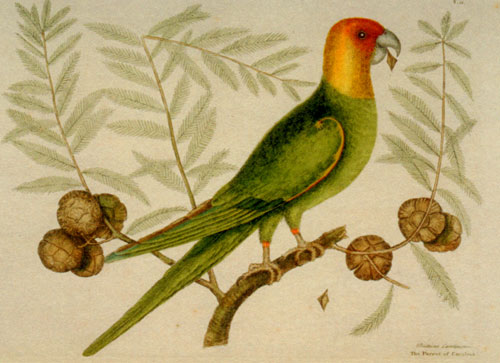
The bird belonged to the Psittacidae, a family of tropical birds that includes macaws, parrots, caiques, amazons and parrotlets. The bird, a male named Incas, was the last captive Carolina parakeet (the only species of parrot native to the eastern United States) in existence when he died at the Cincinnati Zoo on Feb. 21, 1918, in the same aviary where Martha, the last passenger pigeon, had died four years earlier.


The demise of Incas came about a year after the death of his mate, who had been named Lady Jane by their zookeepers. In a time before the forces of social media and round-the-clock mass media, the death of Incas likely went unnoticed by other than a few people.

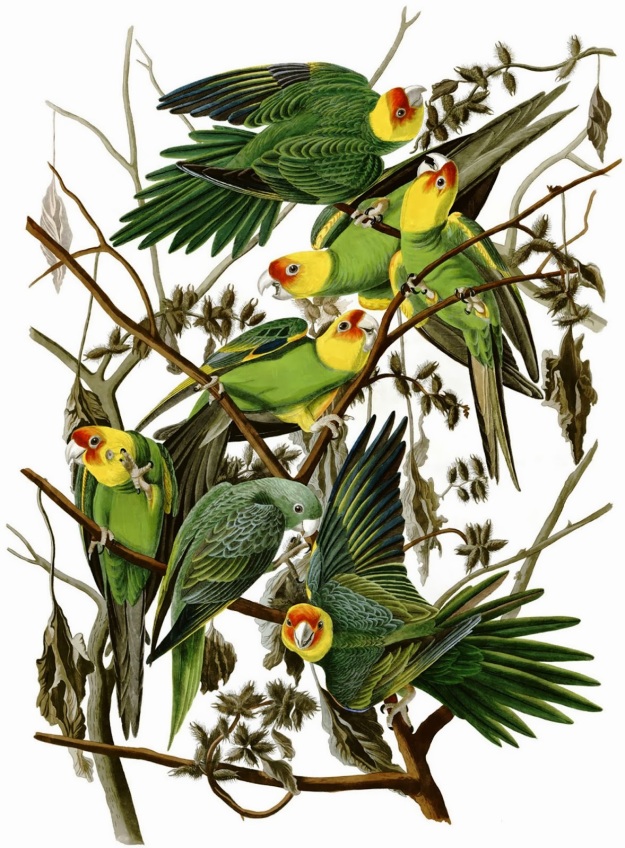
Carolina parakeets, John James Audubon


If few noticed the passing of Incas at the time, surely today we can mourn the loss of one of the most abundant birds to ever roam the continent. Few people even realize that North America was once home to its own species of parakeet. A few individuals — all that remained of once massive flocks of colorful, noisy native parakeets — made it into the 20th century. Despite the death of Incas in 1918, the Carolina parakeet as a species was not officially declared extinct until 1939. It was a classic example of going out with a whimper, not a bang, when the entire population of the Carolina parakeet crashed suddenly and for reasons still not fully understood.

For instance, large flocks of these birds still flew free until the final years of the 1800s, but in the first decade of the 1900s, these flocks disappeared. The only other native parrot — the thick-billed parrot of the American southwest — no longer flies north of the Mexican border. An attempt to re-introduce this parrot to Arizona in the 1980s ended in disappointing failure. Of course, thick-billed parrots still fly free south of the border.

il_fullxfull.603620894_qnpu

It would be wonderful to have native parrots still flying free. The extinct Carolina parakeet ranged throughout the eastern United States, including the states of Virginia, Tennessee and North Carolina. These parrots strayed on occasion as far north as Wisconsin and New York and ranged as far west as Colorado. Florida provided a stronghold for this colorful species, which also made its last stand in the Sunshine State. The last flock of thirteen wild birds was documented in Florida in 1904.

These birds have attracted attention since the arrival of the first Europeans. English explorer George Peckham mentioned the presence of Carolina parakeets in an account he wrote of his 1583 expedition in Florida. In the 1700s, English naturalist Mark Catesby described the species for science in a two-volume work titled “The Natural History of Carolina, Florida and the Bahama Islands.”

The parrots were evidently numerous, often encountered in large flocks. Few early naturalists attempted to properly study them, resulting in a sad dearth of knowledge. Much of what we do know is quite intriguing. The diet of these parakeets made them toxic, as early naturalist and artist John James Audubon observed when cats sickened and died after dining on fresh parakeets. One of the parakeet’s favorite foods — cockleburs —imparted the toxicity into the flesh of the birds.

wilsondummy

Alexander Wilson

An unusual empathy and loyalty may have contributed to the downfall of the species. Early naturalist Alexander Wilson wrote of an 1808 encounter with a large flock of these parakeets. After noting how the bird covered almost every twig in a tree, Wilson raised a gun and shot several of the birds. Some of the shot birds were only wounded. “The whole flock swept repeatedly around their prostrate companions, and again settled on a low tree, within twenty yards of the spot where I stood,” Wilson wrote. “At each successive discharge, although showers of them fell, yet the affection of the survivors seemed rather to increase.”

The same tendency to rally to the side of fallen companions made Carolina parakeets easy targets for people capturing them in the late 1800s for the exotic pet trade. This flocking together and unwillingness to abandon wounded members made the birds easy targets when farmers shot them. It certainly didn’t help matters that the parakeets were also hunted for their brightly colored feathers, which were used to adorn women’s hats. It remains unclear what exactly annihilated a once abundant bird, although it was likely a combination of all of the aforementioned factors.

Changes to the landscape encouraged the parakeets to shift their diet from weed seeds to cultivated fruit, which won them the ire of farmers. Logging of extensive forests may have impacted their numbers, too. Experts have even theorized that the parakeets fell victim to some sort of epidemic spread by domestic fowl.

carolina-parakeet-ii

Painting by Alexander Wilson of a Carolina Parakeet.

If only the dawning of a more environmentally aware age had arrived slightly sooner, the Carolina parakeet might have been saved along with species like the bald eagle and whooping crane. This native parakeet, if it had endured, might today be considered an ordinary backyard bird jostling for space at your feeders with birds like blue jays and purple finches.

Incas and his fellow Carolina parakeets may be gone, but they’ve not been forgotten. Their story is a reminder of why it remains crucial to protect all birds. Let that devotion to preservation be the legacy of America’s lost parakeets.

•••••

Bryan Stevens lives near Roan Mountain, Tennessee. To learn more about birds and other topics from the natural world, friend Stevens on Facebook at https://www.facebook.com/ahoodedwarbler. If you have a question, wish to make a comment or share a sighting, email ahoodedwarbler@aol.com.

BaldEagle-February

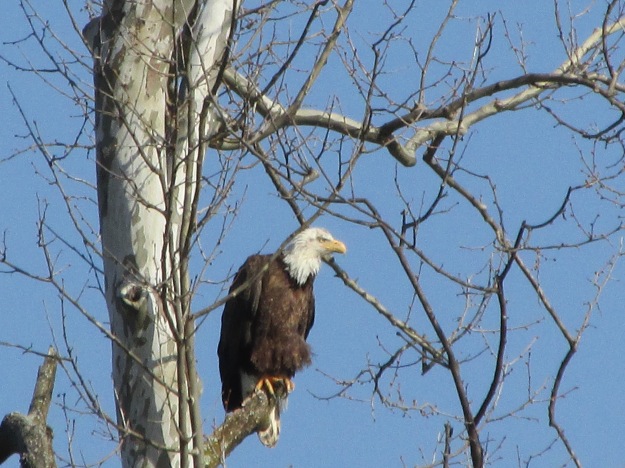
Photo by Bryan Stevens • Although protections came too late to help the Carolina Parakeet, laws like the Endangered Species Act did save birds like the Bald Eagle from possible extinction.


Unlikely orange-crowned warbler becomes daily visitor this winter at woman’s feeders

After you have fed the birds long enough, you’re going to get visits from “mystery” birds. No matter how thoroughly you thumb through the pages of your field guides or how many online Google searches you conduct, it can be hard to pin down the identity of certain birds, especially when you encounter them for the first time.

Orange-crowned-Two-BOYD

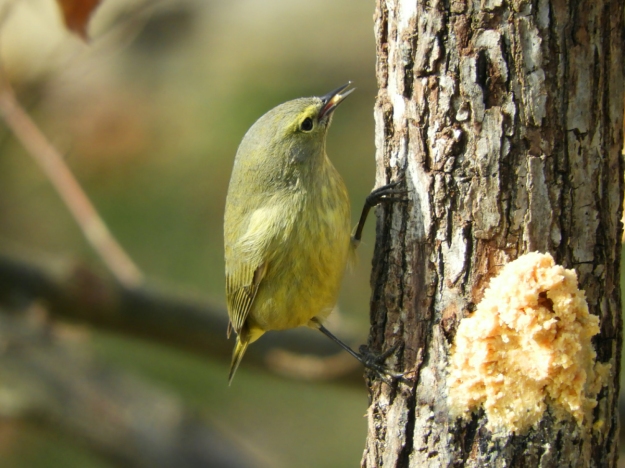
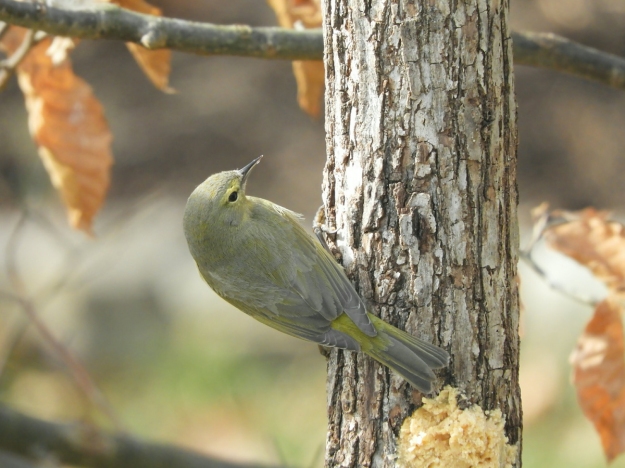
Photo by Rebecca Boyd • This orange-crowned warbler has found a favorable winter residence at the home of Rebecca Boyd in Knoxville, Tennessee, making frequent visits to suet feeders to supplement its usual diet of insects and berries.

In the summer and fall, young birds recently out of the nest can cause some confusion when they show up in the company of their parents at feeders. In the winter, often a season characterized by subdued plumages and nomadic wanderers, the surprise visitors can be one of the many “little brown birds” in the sparrow clan or a summer bird like an oriole or thrush that has decided to take a shot at overwintering.

Or, with greater frequency each winter, it might be one of the warblers. That was the case when Rebecca Boyd, a resident of Knoxville, Tennessee, contacted me recently via Facebook asking for assistance with a bird identification.

27583340_337866090062351_24195392_n

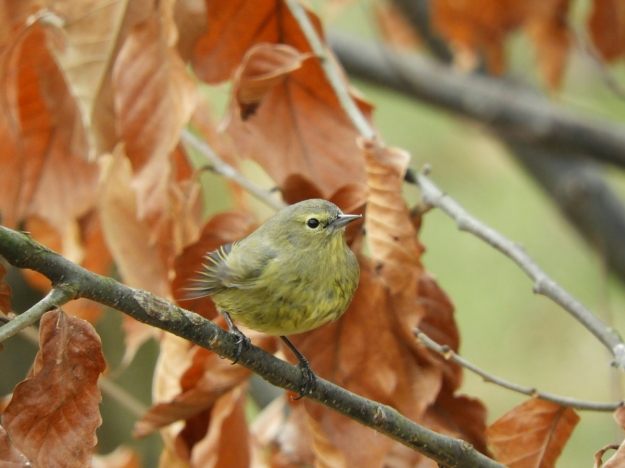
Photo by Rebecca Boyd • This orange-crowned warbler is one of the more nondescript members of the warbler family.

Although most of the warblers beat a hasty retreat from North America every fall, a handful of species have increasingly begun to spend the winter months far north of their usual tropical haunts. Some of these species include yellow-rumped warbler, pine warbler and palm warbler, but the low-profile orange-crowned warbler is also becoming more common between November and March, especially in yards and gardens offering supplemental food such as suet cakes.

The small greenish-yellow bird that showed up at Rebecca’s home was easily identified, thanks to some great photographs that she took of her visitor. I communicated to her that I believed her bird to be an orange-crowned warbler. She had also conducted her own research, which had also led her to that conclusion.

Orange-crowned-Four-BOYD

Photo by Rebecca Boyd • This orange-crowned warbler has found a home at the residence of Rebecca Boyd in Knoxville, Tennessee, this winter.

Rebecca said she also shared some photos with birding groups on Facebook, which brought some helpful feedback. “I’ve gotten numerous responses that orange-crowned warblers are becoming a lot more common on the east side of the Mississippi, with quite a few people saying they are seeing them in their yards, too,” Rebecca wrote.

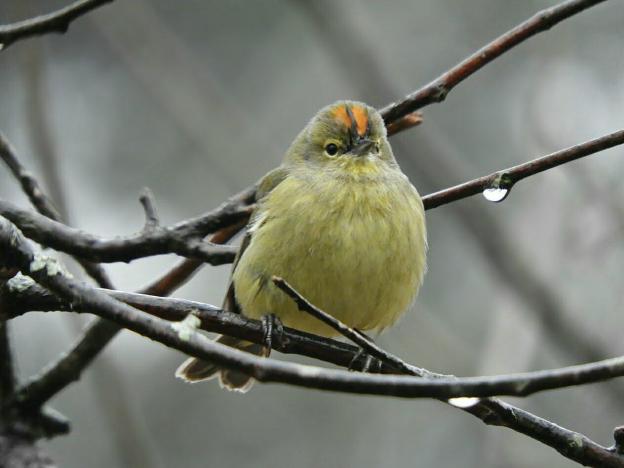
The orange-crowned warbler is one of the more undistinguished members of this New World family of birds that numbers about 115 species. The bird gains its common name from a physical feature that is rarely seen — an orange patch of feathers that, unless the bird is extremely excited or agitated, is usually concealed beneath its dull greenish-yellow feathers. It’s not a field mark that’s considered reliable for identifying the bird.

Rebecca got a lucky break and managed to photograph this elusive feature on her visiting bird. She said the feathers on the bird’s head appeared wet, which may have explained the appearance of the orange crown.

28033440_343701942812099_429716009_o 2

Photo by Rebecca Boyd • Wet feathers made the rarely seen orange crown visible on this orange-crowned warbler that has taken up residence at the home of Rebecca Boyd in Knoxville, Tennessee, this winter.

So, what does signify an orange-crowned warbler? The lack of wing bars, as well as the absence of a strong facial pattern is a strong indicator. The bird in Rebecca’s photo is not nearly as drab as this warbler can appear. Some appear very gray with only a hint of yellow or green in their plumage. There is often faint gray streaking evident in their yellow-green breast feathers. This warbler always shows yellow beneath its tail, a feature that is often only glimpsed as an observed bird is diving into cover. These birds also have sharp, thin bills. It’s usually a process of eliminating other suspects that brings birders to identify one of these warblers.

Unlike some warblers restricted to either the eastern or western United States, the orange-crowned warbler migrates and winters throughout the nation, east and west, although it primarily only nests within the western United States, as well as Alaska and Canada.

Although Rebecca said she has only been bird-watching and taking pictures for a little over a year, she has been a general point-and-shoot photography hobbyist for years. “My backyard is a bird paradise that attracts numerous and varied species,” Rebecca noted. “My favorites are bluebirds and hummingbirds, but the little warblers are also very special.”

Orange-crowned-One-BOYD

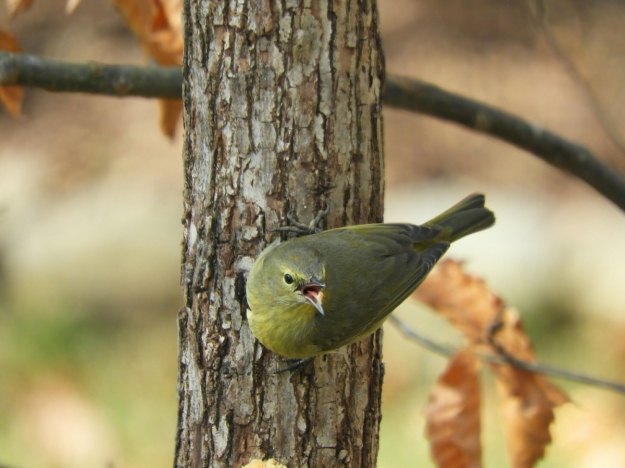
Photo by Rebecca Boyd • Besides orange-crowned warbler, like this individual, other warblers on occasion winter in the United States. Species most often attempting to spend the winter months in the United States include palm warbler, pine warbler, and yellow-rumped warbler.

Most of the warblers are currently residing on the island of the the Caribbean, or far south in Central and South America. A few others spend the winter in Florida or other southern states. The 50 or so species that nest in the United States and Canada will begin arriving as early as next month, although the majority of these summer residents will arrive or pass through the region in late April and May.

So, while it has a colorful name, the orange-crowned warbler is one of the more drab and nondescript members of its family. Other warblers living throughout the Americas include flame-throated warbler, crescent-chested warbler, citrine warbler and arrowhead warbler.

I’ll just keep daydreaming on the occasional snowy day of the approach of spring, which signals that the kin of the orange-crowned warbler will be winging their way north again in only a couple more months. I, for one, can’t wait.

••••••

If you have a question, wish to make a comment or share a sighting, email ahoodedwarbler@aol.com.

Orange-crowned-THREE-BOYD

Photo by Rebecca Boyd • This orange-crowned warbler grabs a bit of suet from a feeder at the home of Rebecca Boyd in Knoxville, Tennessee.

Duck…duck…goose? Winter season good time for finding rare geese in the region

SnowGoose-Jan21

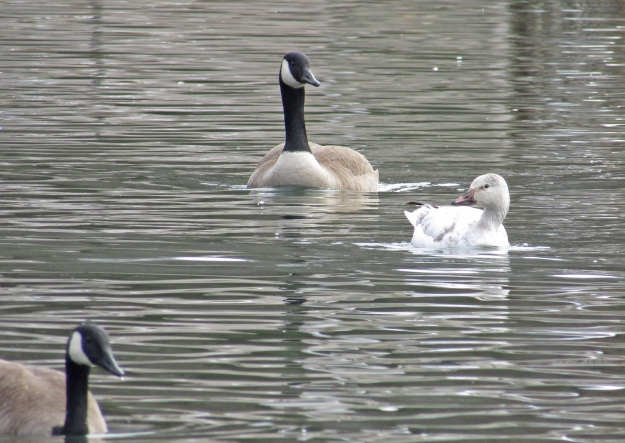
Photo by Bryan Stevens • A snow goose swims amid Canada geese at the pond at Fishery Park in Erwin, Tennessee.


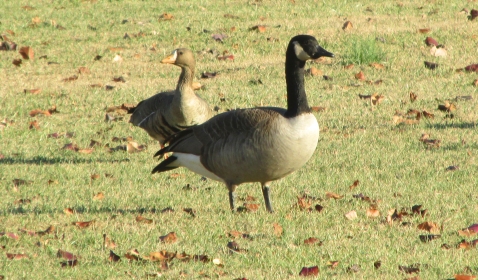
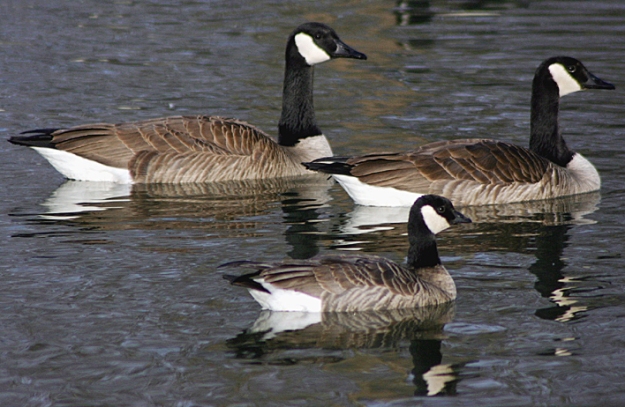
Of the geese found in the region, the well-known Canada goose is nearly ubiquitous. That’s not always been the case. For instance, in his book The Birds of Northeast Tennessee, Rick Knight points out that the geese now present throughout the year resulted from stocking programs conducted in the 1970s and 1980s. In earlier decades, the Canada goose was considered a rare winter visitor to the region.

Seeing the Canada goose in every sort of habitat from golf courses to grassy margins along city walking trails, it’s hard to imagine a time when this goose wasn’t one of the region’s most common waterfowl.

2-canada-goose-john-james-audubon

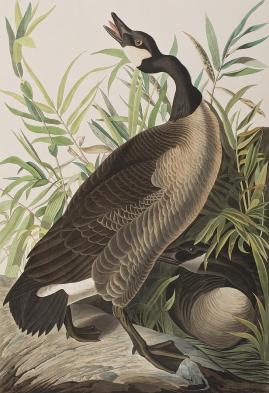
Early American naturalist and artist John James Audubon captured this pair of Canada geese in a most realistic painting.

The world’s geese are not as numerous as ducks, but there are still about 20 species of geese worldwide, compared to about 120 species of ducks. While both ducks and geese are lumped together as waterfowl, most geese are more terrestrial than ducks. Birders are just as likely to spot geese in a pasture or on the greens of a golf course as they are on a lake or pond.

There have been several species of geese usually considered rare to uncommon in the region that have been spotted by birders thus far this winter season. I personally observed greater white-fronted geese at several different locations in November and December.

The greater white-fronted goose is considerably smaller than a Canada goose. The bird is named for the distinctive white band found at the base of bill. This white band also helps distinguish this goose from similar domestic geese. The sexes are similar in appearance, but females are usually smaller than males. The head, neck and upper back of white-fronted geese are grayish-brown. The lower back and rump are dark brown, and the tail is dark brown and edged with white. The chest and breast are grayish with dark brown to black blotches and bars on the breast, giving this goose the nickname “specklebelly.” The bill is pinkish and the legs and feet are orange.

Canada-Greater

Photo by Bryan Stevens The Greater White-fronted Goose, in background, is much smaller than the typical Canada Goose, which is shown in the foreground of this photograph.

The greater white-fronted goose breeds in North America as well as in Europe and Asia, and they spend the winter throughout the United States and even in Japan. Most nesting in North America takes place on the North Slope of Alaska and across the western and central Canadian Arctic. Wintering habitats include coastal marshes, wet fields and and freshwater wetlands.

Only a couple of weeks ago, I spotted a snow goose at the fish pond located at Erwin Fishery Park. The snow goose is a North American goose known for its white plumage that gives the bird its common name; however, the snow goose actually comes in two versions: the white phase and a blue phase, which is often referred to as a “blue goose.”

The snow goose breeds in regions in the far north, including Alaska, Canada, Greenland and even the northeastern tip of Siberia. They may spend the winter as far south as Texas and Mexico, although some will migrate no farther than southwestern British Columbia in Canada.

The snow goose bucks the trends that show many species of waterfowl declining. Recent surveys show that the population of the snow goose exceeds five million birds, which is an increase of more than 300 percent since the mid-1970s. In fact, this goose is thriving to such a degree that the large population has begun to inflict damage on its breeding habitat in some tundra regions.

A smaller relative to the snow goose is the Ross’s goose, which for all practical purposes looks like a snow goose in miniature. The common name of this goose honors Bernard R. Ross, who was associated with the Hudson’s Bay Company in Canada’s Northwest Territories.

Ross-onWater

Photo by Bryan Stevens • A visiting Ross’s goose takes a swim on the large pond at Northeast State Community College in Elizabethton, Tennessee, a few winters ago.

Here’s a quick history lesson. Hudson’s Bay Company is the oldest commercial corporation in North America. The company has been in continuous operation for more than 340 years, which ranks it as one of the oldest in the world. The company began as a fur-trading enterprise, thanks to an English royal charter in back in 1670 during the reign of King Charles II. These days, Hudson’s Bay Company owns and operates retail stores throughout Canada and the United States.

In addition to his trade in furs, Ross collected specimens for the Smithsonian Institution in Washington, D.C. Ross is responsible for giving the goose that now bears his name one of its early common names – the Horned Wavy Goose of Hearne. I wonder why that never caught on?

Ross repeatedly insisted that this small goose was a species distinct from the related and larger lesser snow goose and greater snow goose. His vouching for this small white goose eventually convinced other experts that this bird was indeed its own species.

Ross was born in Ireland in 1827. He died in Toronto, Ontario, in 1874. He was described by other prominent early naturalists as “enthusiastic” and “a careful observer” in the employ of Hudson’s Bay Company. When John Cassin gave the Ross’s Goose its first scientific name of Anser rossii in 1861, he paid tribute to the Hudson’s Bay Company’s Ross.

Canada_Geese

Photo by Bryan Stevens • In some areas, Canada geese have become so prevalent that they are considered pests. Human handouts to waterfowl are not always compatible with good health for the birds that receive them.

The Ross’s goose has a “cuteness” factor working in its favor. For a goose, it is rather small. It could best be described as a snow goose in miniature. In fact, it isn’t much larger than such ducks as mallards and is considered the smallest of North America’s geese.

The Ross’s goose has also acquired some other common names, including “galoot” and “scabby-nosed wavey.” This latter name was inspired by the bird’s bill, which is covered with rough bumps around the base. I have to admit that “scabby-nosed wavey” is a name likely to stick in the memory. Today, the Ross’s goose’s scientific name is Chen rossii.

Other geese found worldwide include the pink-footed goose, bar-headed goose, emperor goose, red-breasted goose and barnacle goose.

So, does this inspire you to try a wild goose chase of your own? If it does, best of luck in your efforts.

•••••

To learn more about birds and other topics from the natural world, friend Stevens on Facebook at https://www.facebook.com/ahoodedwarbler. If you have a question, wish to make a comment or share a sighting, email ahoodedwarbler@aol.com.

A-Cackling Goose 1

Photo by Bryan Stevens • A Cackling goose, foreground, is shown in relation to some larger Canada geese, at a pond at Fishery Park in Erwin, Tennessee.

Visit by Yellow-headed blackbird, last seen in region in 1994, creates a stir

Bugaboo Springs Road near Jonesborough, Tennessee, saw some heavier vehicular traffic in mid-January after the exciting observation of a yellow-headed blackbird associating with a sizable flock of brown-headed cowbirds.

Yellow-headedBlackbird-JBoro

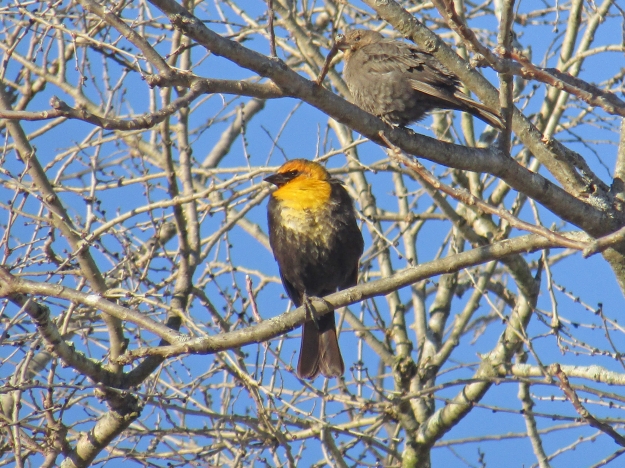
Photo by Bryan Stevens • This yellow-headed blackbird has been residing with flocks of brown-headed cowbirds and European starlings at a cattle pasture near Jonesborough, Tennessee. The bird, the first of its kind seen in Northeast Tennessee since 1994, has generated excitement among birders. Some people have traveled from as far as Knoxville, Tennessee, and Roanoke, Virginia, to see the bird.

The bird came to the attention of Dawn Peters, a resident along Bugaboo Springs Road, who noticed the unusually colorful bird at her feeders while looking out the window of her laundry room. At first, she thought the bird might be an oddball member of the cowbird flock.

“I’d never seen one before,” she said. “I knew it was something strange and something new.”

Dawn took the time to take a photograph of the bird and then contacted friends Jean and Brookie Potter, who also happened to be birders. They alerted her to the rare status of her feeder visitor.

“He really stood out,” Dawn said of the blackbird with a yellow head.

The yellow-headed blackbird arrived at her feeders on a snowy day when the temperatures had plunged. Dawn said she has been feeding birds for 20 years since she and her husband moved to Bugaboo Springs Road near Jonesborough, Tennessee. “The birds know where to come for food,” she said. “I try to feed them all, but they can eat you out of house and home.”

IMG_2235

Photo by Bryan Stevens This yellow-headed blackbird and several brown-headed cowbirds perch in a tree after foraging for food in a cattle lot near Jonesborough, Tennessee.

Dawn said she gets a variety of birds at her feeders, ranging from sparrows and cardinals to mourning doves and finches. “I also get downy woodpeckers and towhees,” she added.

On occasion, she will notice a hawk in the yard. In the summer, she puts out several feeders with sugar water to attract hummingbirds. “Last summer, I had brown thrashers raise a family in my yard,” she said.

Although the yellow-headed blackbird arrived with a flock of brown-headed cowbirds, the other flock members didn’t exactly embrace him. “Some of the cowbirds would peck at him,” she said.

While the yellow-headed blackbird hasn’t been back to her feeders since Jan. 13, the bird was rediscovered less than a mile from her home in a feed lot for cattle. The yellow-headed blackbird has continued to associate with large flocks of cowbirds and European starlings and has been observed by dozens of birders.

The yellow-headed blackbird, known by the scientific name Xanthocephalus xanthocephalus, is a relative of cowbirds, as well as the familiar red-winged blackbird. It’s a unique species in that it is the only member of the genus, Xanthocephalus. Breaking this word down from its ancient Greek origins, the name means, quite literally “yellow headed.”

Yellow-headedBlackbird-Copy

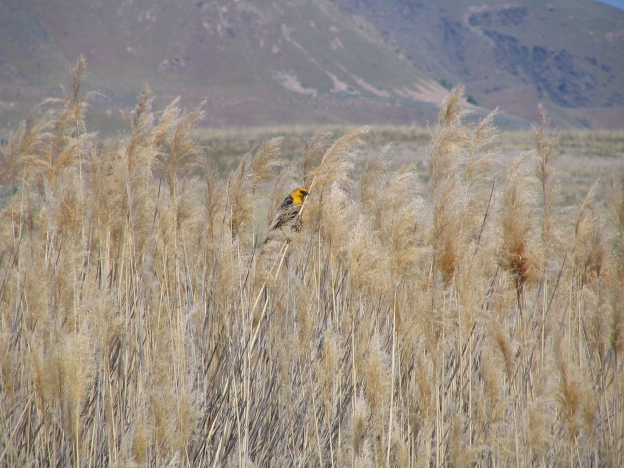
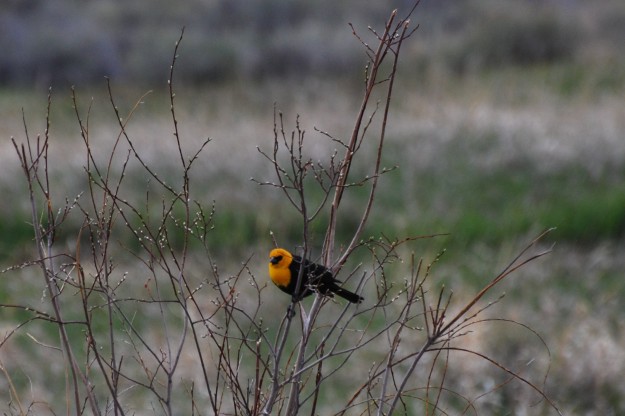
Photo by Bryan Stevens This yellow-headed blackbird was photographed at Antelope Island State Park in Utah in 2006.

The yellow-headed blackbird’s also a species that has been only a rare visitor to the region. While a common bird in wetland habitats west of the Great Lakes, the yellow-head blackbird has not been reported often in East Tennessee. In fact, there are only a handful of records since the 1930s, the most recent sightings being reported and documented in 1990 and 1994. Since it has been almost a quarter of a century since the last time a yellow-headed blackbird was found in East Tennessee, one could argue that a visit from a vagrant individual of this species was long overdue. In southwest Virginia, there are a couple of records from Smyth County dating back to July of 1985 and March of 1988.

It’s not quite clear why a yellow-headed blackbird ventured into the region in mid-January. Normally, these birds spend the winter months in the southwestern United States and Mexico. They often migrate in huge flocks with other species of birds, which could explain why the bird found itself an honorary member of a flock of cowbirds estimated to number about 300 individuals.

My first attempt to add this species to my Tennessee list ended in failure, although I did enjoy seeing several white-crowned sparrows, a handsome bird that definitely doesn’t deserve being classified as one of the “little brown birds” that so often serves as an offhand designation for sparrows. That attempt was made on the morning of Jan. 18 and may have been ended prematurely. When I got access to a computer later, I checked to see if any other observations had been reported. I noticed a report from local birder Michelle Sparks, who saw the bird probably less than 90 minutes after I had ended my first attempt.

7ee8ab76db6c1c18d9bac62d3c602b30--john-james-audubon-blackbird 2

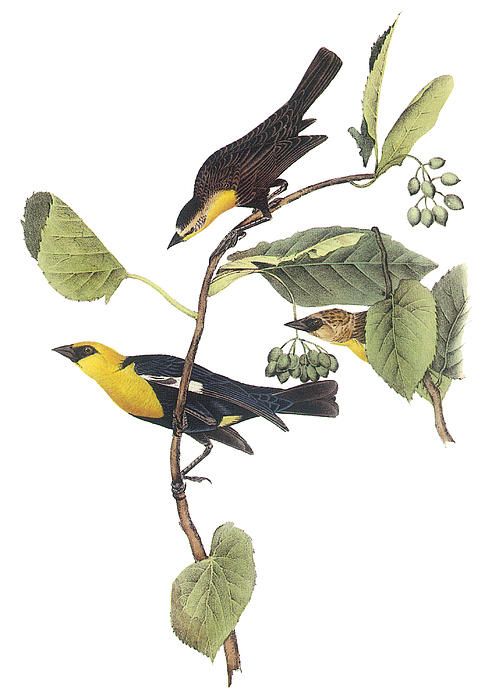
Early American naturalist and painter John James Audubon painted these yellow-headed blackbirds.

Speculating that the yellow-headed blackbird and its accompanying flocks of brown-headed cowbirds and European starlings would return to the feedlot to forage before dark, I returned at 4 p.m. to try again. I found the feedlot overwhelmed by hundreds of cowbirds and starlings, but I didn’t see any sign of a bird with a yellow head. Many of the cowbirds carpeted the pasture as they gleaned seeds and other food items. Many of the starlings were perched in the branches of trees and on the roof of an old farmhouse. At some point, almost every bird in the chaotic flock spooked and took to the air. The flock wheeled and turned, with most of the birds settling into the upper branches of some of the taller trees at the location. I soon detected a flash of yellow. I’m not sure where the bird had been hiding earlier, but the yellow-headed blackbird proved unmistakable, perched high in the trees with the sun shining brightly. He couldn’t hide from my binoculars or camera, which I used to snap several photos of this rare visitor to the region.

I have this species on my life list, having seen yellow-headed blackbirds during visits to Utah in 2003 and 2006. While in Utah, I also saw red-winged blackbird, brown-headed cowbirds and Brewer’s blackbirds, including a partial albino individual that presented a challenge in identifying.

While technically a songbird, the yellow-headed blackbird routinely ranks as one of the worst singers among North America’s songbirds. The yellow-headed blackbird is not all musical, with its song repertoire ranging from what has been described as “cacophonous strangling noises” and “honking gurgles” on the website for the publication, “Birdwatcher’s Digest.”

JEAN-Yellow-headed Blackbird

Photo by Jean Potter • This yellow-headed blackbird was photographed in Colorado in 2016.

The New World’s blackbirds belong to the family of birds, Icteridae, which also consists of birds such as meadowlarks, orioles, cowbirds, grackles, bobolinks and oropendolas. Although many blackbirds show predominantly black plumage, these birds often contrast their dark coloration with yellow, orange or red feathers. The name of the genus stems from Ancient Greek and Latin words that, translated into English, mean roughly, “jaundiced ones,” which stems from the yellow feathers present in the plumage of many species. Other blackbirds in the New World include tawny-shouldered blackbird, saffron-cowled blackbird, melodious blackbird, oriole blackbird and scarlet-headed blackbird. In the United States, other nesting species in the family include Brewer’s blackbird, tri-colored blackbird and rusty blackbird. The last of these species has shown chronic long-term and acute short-term population declines, based both on breeding season and wintering ground surveys. Some estimates suggest that the rusty blackbird population has declined by 80 percent, which could soon endanger the species.

I’m hoping the yellow-headed blackbird on Bugaboo Springs Road is liking where it has found itself this winter and will continue to delight observant birders over the upcoming weeks.

•••••

Bryan Stevens lives near Roan Mountain, Tennessee. If you have a question, wish to make a comment or share a sighting, email ahoodedwarbler@aol.com.

IMG_2236 2

Photo by Bryan Stevens • Birders from near and far converged on Bugaboo Springs Road near Jonesborough, Tennessee, to search for the yellow-headed blackbird.