Category Archives: Bird

Common nighthawk flocks form part of fall migration spectacle

Nighthawk

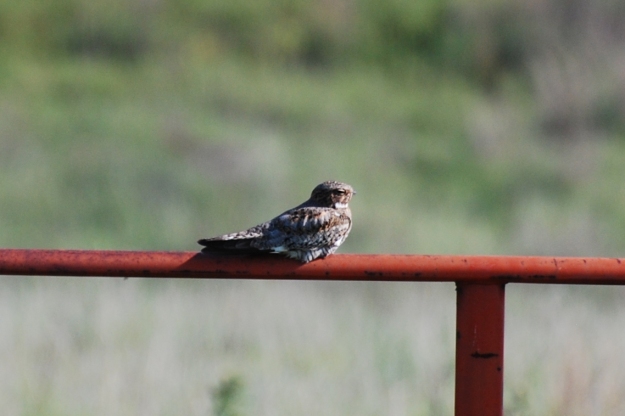
Photo by Jean Potter • A common nighthawk rests on a metal railing.

With September advancing on the calendar, I have been keeping an eye on the skies. For the most part, I focus on the upper branches of trees and feeders during the migration season, but I don’t forget the need to look skyward from time to time.

The reason? Well, that’s the best way to detect soaring raptors or flocks of migrating common nighthawks. The autumn sky is also a popular flyway for other birds, including chimney swifts and swallows.

So, what is a common nighthawk? First, this bird, despite what is implied by its name, is not a hawk. It’s also not strictly nocturnal. Particularly in the fall, nighthawks are active during daylight hours when engaged in catching winged insects. Outside of fall migration, these birds can often be observed over large parking lots or well-lit streets, snatching up insects swarming around the light poles.

The common nighthawk is one of three members of the nightjar family found in the region during the summer months. The other two nightjars are the whip-poor-will and chuck-will’s-widow, birds that produce their namesake vocalizations in the nocturnal hours. Both of these species migrate, but they don’t take the dramatic approach employed by nighthawks. Each fall, common nighthawks form large flocks, ranging in size from dozens to hundreds or even thousands of individuals, as they migrate south for the winter.
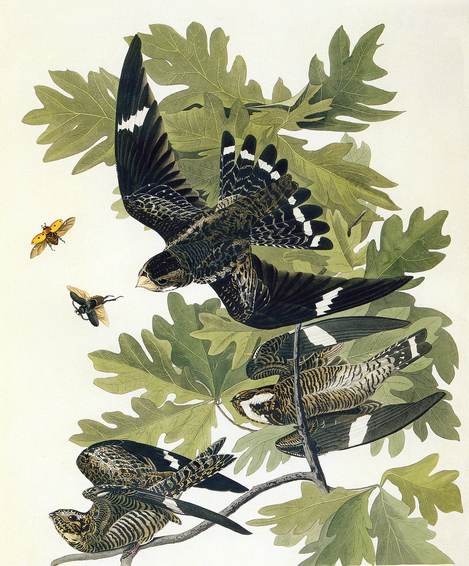
john_james_audubon_common_nighthawk_bird_print

Early American naturalist and artist painted this dynamic scene of common nighthawks.

The whip-poor-will, after the common nighthawk, is the second most widespread member of its family to spend its breeding season in North America. The whip-poor-will ranges from southern Canada to the Gulf states. This bird also occurs in Arizona, New Mexico and southwestern Texas. The whip-poor-will favors habitat consisting of deciduous woodlands and the edges of forests.

All members of the nightjar family feed exclusively on insects that are caught on the wing. In this respect, the nightjars can be considered the nocturnal counterparts of the swallows. The nightjars have comparatively large, gaping mouths they use to scoop up flying insects. They also have large eyes, an adaptation to their nocturnal lifestyle.

Whip-poor-will numbers have been declining in the past few decades. These nocturnal birds frequent woodland edges, but they seem to be rather particular about such habitats. A forest that is too mature seems to hold little interest for them. Disturbed habitats, such as those created by logging, are acceptable to the birds once secondary growth begins. As this new growth matures, however, the whip-poor-will apparently abandons such territory. Because of these requirements, whip-poor-wills can be somewhat localized in their distribution and sometimes difficult to locate.
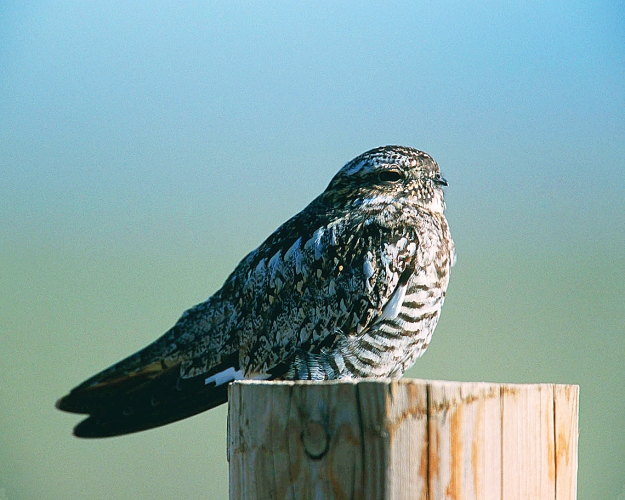
Nighthawk-PHOTO

Photo by U.S. Fish and Wildlife Service • A common nighthawk finds a perch for a brief rest.

When I was a kid, one of my favorite summer activities was sitting on the front porch of my grandparents’ home and listening to the whip-poor-wills call after dark. I remember how the plaintive call would be repeated for long intervals before a passing automobile’s headlights might frighten the bird into silence. Then, after a brief pause, the “whip-poor-will” calls would, tentatively at first, begin again and continue throughout the night.

Today, I’m living in my grandparents’ old home, and the whip-poor-wills no longer call. I heard a single individual that called for a single evening back in May of 1997, but that was apparently a migrating bird that did not remain in the surrounding woodlands. The only member of the nightjar family that I dependably encounter at home these days is the common nighthawk, and then only during that narrow window of late summer and early autumn.

Unlike whips and chucks, the common nighthawk isn’t active only after dark, which makes it much easier to observe these birds. They look somewhat like swifts and swallows but are much larger. They are brownish-gray birds with pointed wings and forked tails. They are easily identified by distinctive white patches on the underside of their wings.

The nightjar, or Caprimulgidae, family of birds is also sometimes known as “goatsuckers.” There are almost 80 species of nightjars in the world. Less than 10 occur in North America. The common nighthawk, whip-poor-will and the chuck-will’s widow are neotropical migrants. While they breed in a wide range of territory in North America, they spend their winters in Central and South America. Like all nightjars, nighthawks feed almost exclusively on insects, which they catch on the wing.

Many of the common nighthawk’s relatives have been given descriptive names, such as long-trained nightjar, collared nightjar, spot-tailed nightjar, red-necked nightjar, golden nightjar, fiery-necked nightjar, swamp nightjar, pennant-winged nightjar, lyre-tailed nightjar, little nightjar, sickle-winged nightjar, rufous-bellied nighthawk, short-tailed nighthawk, sand-coloured nighthawk and least nighthawk.

So, keep looking skyward. The next flock of migrating common nighthawks may fly over your home. These flocks are usually on the move throughout September although they begin to appear as early as late August. They can also appear almost magically, as if out of thin air. First, observers may see one of two birds, then several, followed quickly by dozens or sometimes hundreds as they wheel and cavort in the skies overhead with impressive grace and agility. I’ve seen flocks that would easily number more than 500 birds in locations throughout the region, although flocks often number only a couple of dozen birds. The two flocks I’ve observed so far this migration season numbered about thirty and fifty birds, respectively.
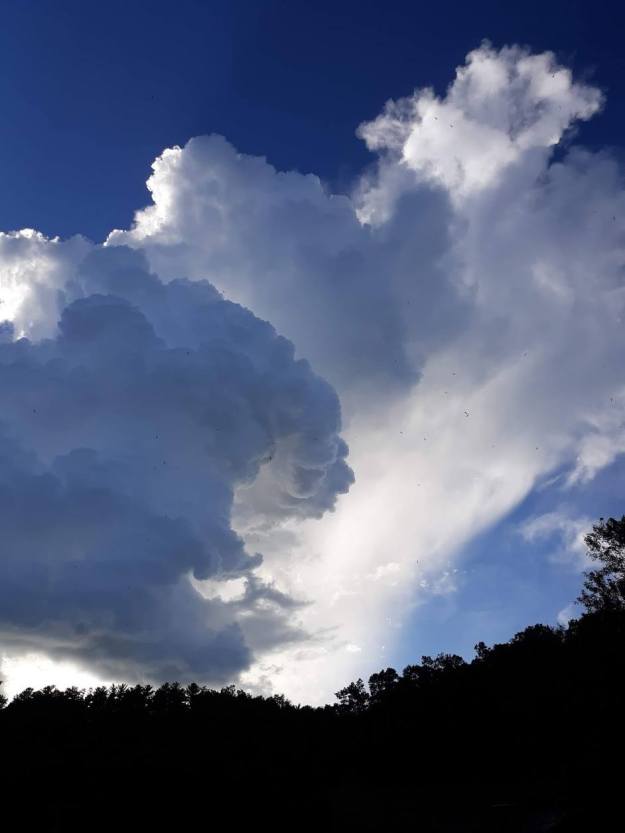
41004068_10215014667832542_3336138056443887616_o

Photo by Bryan Stevens • Rising clouds provide a backdrop for a flock of migrating nighthawks.
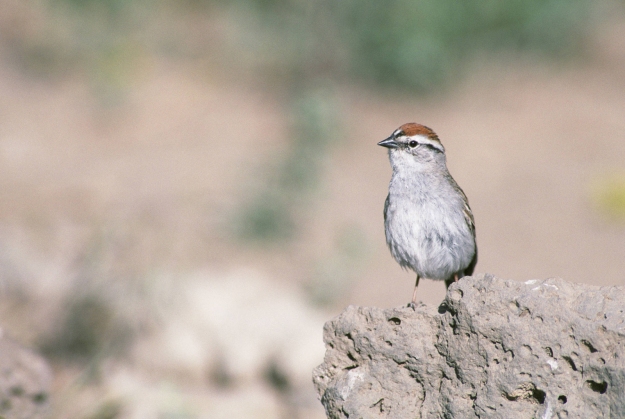


Chipping sparrow a common summer nesting bird

ChippingSparrow-ONE

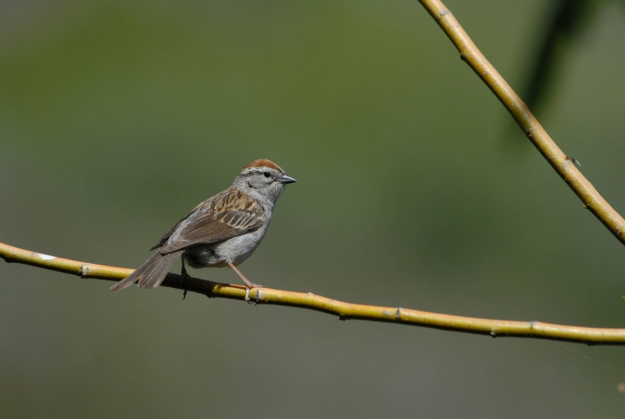
Photo by Dave Menke/USFWS • A black line running through the eye bordered by a white stripe, as well as a rusty-red cap, helps distinguish the chipping sparrow from other “little brown birds” that belong in the sparrow family.

I needed to do some homework before I could answer a question posed to me by Frances Rosenbalm of Bristol, Tennessee. As she communicated to me in an email, she had discovered a bird’s nest in her garden and wanted help identifying the species that built the nest.

“I have a bird that made a nest in the top of my tomato vines,” Frances explained in her email. “It had four turquoise speckled eggs in it.”

Frances described the nest as being made with large twigs and moss. “What kind of bird do you think it may be?” she wrote. She also noted that her garden is located near a farm field.

“I was so surprised to find this nest,” she wrote. “In all of all the years I have put a garden out, this has never happened,” Frances concluded.

51bUn1kQ7XL._SY291_BO1,204,203,200_QL40_ 2

After doing some research, which included poring over the pages of a great book by Hal H. Harrison titled, “A Field Guide to Birds’ Nests: United States East of the Mississippi River,” a work in the Peterson Field Guides series, I was able to write back to Frances with the news that I might have solved the mystery of the nest in the tomato vines.

The Harrison field guide is an exceptional book and one that’s perfect for someone who wants to know a little more about the birds other than their names. Entries for each bird include photographs depicting both the nest and the eggs as well as informative text with supplemental information about nesting birds in the Eastern United States.

Based on the description of the nest and its eggs, as well as its location near a farm field, I identified the nest described by Frances as belonging to chipping sparrows. I found some photographs online of chipping sparrow eggs in a nest and sent that in an email for her to consider.

Frances responded in another email. “I do believe you are right,” she wrote. “The eggs look a lot like the photo, and I have seen some birds that look like (chipping sparrows) flying around.”

For a species often lumped under the grouping of “Little Brown Birds,” the chipping sparrow is quite distinctive. In spring and summer, chipping sparrows sport a crisp, neat plumage with frosty gray underparts, a gray and white face and a striking black line through the eye. An easily recognizable field mark is the bright rusty crown atop the bird’s head.

ChippingSparrow-TWO

Photo by Dave Menke/USFWS • Chipping sparrows will form flocks for the winter season.

When horses were more common in daily American life, the chipping sparrow took advantage of this resource to almost invariably line their nests with horsehair. Now that not all nesting chipping sparrows have access to horses, these birds use fine plant fibers or hair gathered from other sources, including people, to line their nests.

Once a nest is constructed, a female chipping sparrow lays and incubates three to four eggs, which take about 14 days to hatch. Chipping sparrows often attempt to raise two broods in a single nesting season. Although dense evergreen trees are a preferred nesting location, these birds will also nest in vines.

During the warm months of the summer nesting season, chipping sparrows feed almost exclusively on insects. When winter makes insects scarce, these small birds switch their diet to one of seeds. Chipping sparrows will also feed on small fruits and berries.

Chipping sparrows will sometimes nest as many as three times in a single season. Although territorial during the nesting season, these birds form sizable flocks for migration and during the winter season. In making reference to these flocks, observers can use other descriptive terms. Flocks of sparrows have also been called a crew, a flutter, a host, a tournament and a quarrel. I am partial to a flutter of sparrows, but anyone who has watched the pecking order at the feeders will also understand the origins of a quarrel of sparrows.

Chipping-sparrow-john-james-audubon

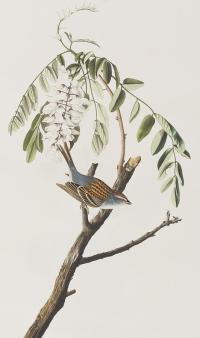
John James Audubon painted this chipping sparrow.

There are a couple of well-known Biblical passages using sparrows for powerful pieces of symbolism. One alludes to the fact that if God provides for small songbirds like sparrows, he will certainly provide for human beings. In addition, there is a passage that maintains that not a single sparrow falls without God being aware of the loss. A famous hymn, “His Eye is on the Sparrow,” is based on such biblical verses.

The world’s sparrows are divided into two large groupings — the Old World, or true sparrows, and the American sparrows of the New World.

Although largely considered rather dull, plain birds in appearance, some of them have earned descriptive names such as great sparrow, Arabian golden sparrow, green-backed sparrow, five-striped sparrow, yellow-browed sparrow and golden-crowned sparrow.

FieldSparrow-One

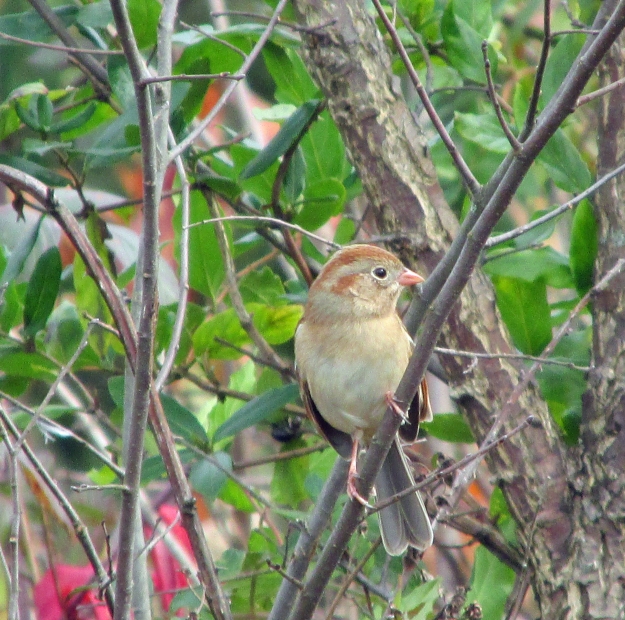
Photo by Bryan Stevens • A field sparrow perches on a branch. These sparrows are closely related to chipping sparrows and relatively common in Northeast Tennessee.

Welcome chipping sparrows and their kin with a well-stocked feeder and perhaps some thick tomato vines for concealing a nest. Unfairly dismissed by some as plain, dull songbirds, the sparrows reward a closer look with some subtle behaviors and plumages as worthy of additional attention as much as some of their more colorful relatives.

Rally to offer sneak peek at bird migration, other nature activities

CapeMayWarbler

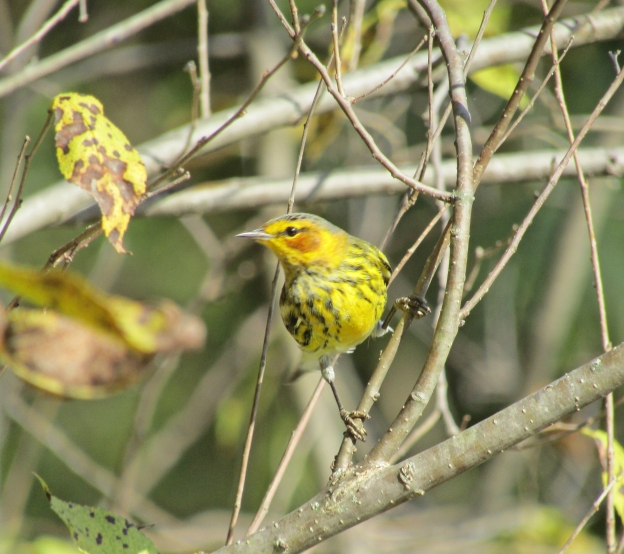
Photo by Bryan Stevens • While the Cape May warbler doesn’t breed locally, these warblers are fairly common spring and fall migrants in the region.

The 56th Roan Mountain Fall Naturalists Rally will draw nature enthusiasts from far and wide to this jewel of the Southern Appalachians on the first weekend after Labor Day with programs, nature walks, catered meals, and much more.

The annual Fall Naturalists Rally is always a great opportunity to enjoy the outdoors and, for birders, get a sneak peek at fall migration with any of the walks and programs focusing on our fine feathered friends. The best naturalists in the region volunteer their time and energy to make this a landmark event for people of all ages.

This year’s rally, which is scheduled for Friday-Sunday, Sept. 7-9, will feature guest speakers, Gabrielle Zeiger and Dr. Joey Shaw, for the main programs on Friday and Saturday evenings.

Zeiger’s Friday program, “Zen and the Art of Mushroom Hunting,” will get underway at 7:30 p.m. following a catered dinner at 6:30. Zeiger has been studying mushrooms in the region for 23 years. She considers herself more of a mushroom enthusiast than an expert. She is a member of the North American Mycological Association, and attends their national forays. She is involved in the association’s annual Wildacres foray in the Blue Ridge Mountains near Mount Mitchell in North Carolina.


Photos by Bryan Stevens • Mushrooms will feature in one of this year’s evening programs at the Fall Naturalists Rally.


Her program will focus on the two basic approaches — looking for good edibles and scientific study — to mushroom hunting. Her talk will touch on both approaches and include basic information on common mushrooms found in the area, species diversity and poisonous versus edible mushrooms. The program will include various types of fungi from gilled mushrooms, boletes, corals, stinkhorns and polypores, as well as the roles that they play in the environment such as decomposition and forest ecology. She will also talk about what mycologists do at forays. Findings will be included regarding 20 years of record keeping at Roan Mountain and scientific information on studies at Mount Mitchell regarding amount of rainfall and diversity of fruiting.

Photos Contributed • From left: Gabrielle Zeiger and Joey Shaw are this year’s featured speakers.


Saturday’s program on “Digitizing Tennessee’s One Million Herbarium Specimens,” will also start at 7:30 p.m. followed by a catered meal at 6:30. Dr. Joey Shaw received a bachelor’s of science in biology from the University of Tennessee at Chattanooga in 1998, and that same year began his graduate education in the Department of Botany at the University of Tennessee, Knoxville. In 2001, he received his master’s in botany for a floristic investigation of the Big South Fork National River and Recreation Area in Tennessee and Kentucky. In 2005 he received his Ph.D. from the University of Tennessee, Knoxville, for his work on the phylogeny and phylogeography of the North American plums and molecular evolution of different genetic regions of the chloroplast genome.

Shaw is currently serving the Association of Southeastern Biologists as Past President and will rotate off this Executive Committee in April 2019, after having served for over ten years and in all ranks of that committee. He is also serving as Chair of the Wildflower Pilgrimage Organizing Committee, and in this capacity he organizes this annual event that brings together more than 120 professional biologists with 850 members of the public to participate in more than 150 different events over four days every spring in the Great Smoky Mountains National Park.

Blue-headedVireo

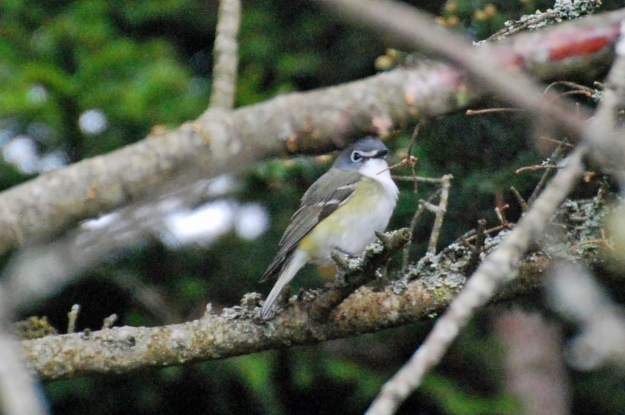
Photo by Bryan Stevens • Blue-headed vireos, such as this bird, are high-elevation summer residents in the region. In the fall, they are also common migrants.

Evening and lunch programs will take place in Roan Mountain State Park’s Conference Center and unless other noted, field trips will leave from the field on the left before the cabins in the park.

In addition to the programs, morning and afternoon walks will be held Saturday and Sunday on a vast array of subjects, including birds, salamanders, butterflies, spiders, snakes, geology, mosses and liverworts. A “moth party” will be held after the Friday and Saturday programs. Larry McDaniel will host this party taking a look at these winged nocturnal insects outside the Conference Center.

Consider joining the Friends of Roan Mountain, if you are not a member. Members get free admission to all Naturalists Rally events and the newsletter, “Friends of Roan Mountain.”

The rally offers catered evening meals by City Market of Elizabethton, as well as brown bag lunches on Saturday. All meals must be pre-paid in advance.

Registration and payment for meals and other activities can be made at the website for Friends of Roan Mountain at friendsofroanmtn.org. The website can also provide a brochure for download that offers a complete schedule and details all the available activities at this year’s rally. Whatever your interest, the Roan Mountain Fall Naturalists Rally is sure to have an activity available. For local birders, it’s often the kick-off to the fall migration season as warblers, vireos, thrushes, tanagers, birds of prey and many other species pass through the region on their way to their wintering grounds.

Tanager-Sept18

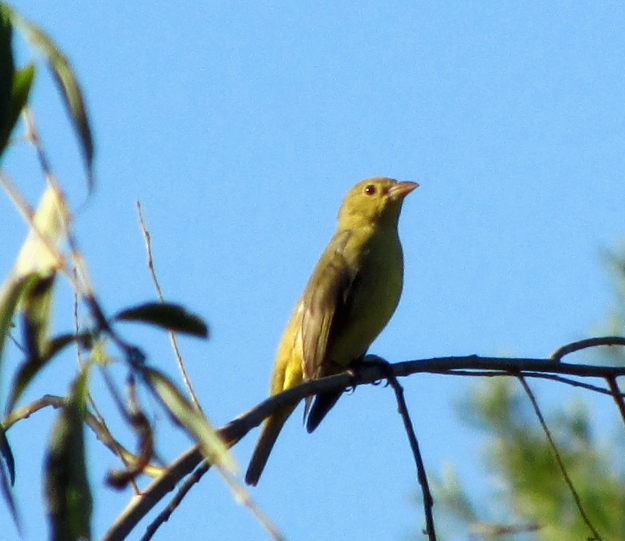
Photo by Bryan Stevens • A female scarlet tanager is a study in contrast from her mate with her dull greenish-yellow plumage being much less vibrant than the male’s bright red and black feathers.

Meadowlarks fond of grassland habitats

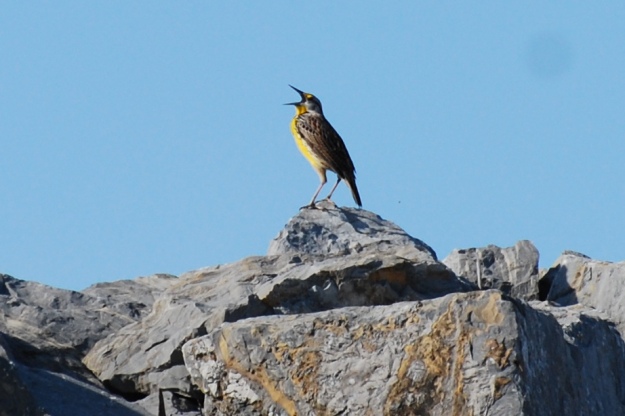
Jean-MeadowlarkPhoto by Jean Potter • A rocky outcrop provides a perch for this singing male Eastern meadowlark.
 

It’s always fun to add another notch to one’s list of birds. Whether you’re a casual lister or a devoted birder, a new species always offers a burst of excitement in the wake of a first-time observation.

Sharon Foster sent me an email recently to share her excitement about a sighting.

“I’m excited to say my daughter and I spotted a meadowlark up on Cross Mountain last week,” Sharon wrote in her email.

Sharon said she hadn’t been able to do a lot of bird watching other than in her yard and nearby places.

“I never thought I was going to see a meadowlark,” she noted. They are fantastic. We were thrilled. He was just sitting on the fence.’

She added that she didn’t have her good zoom camera with her, or else she could have taken a picture. She will still have her memory of her first sighting, and that’s what is important.

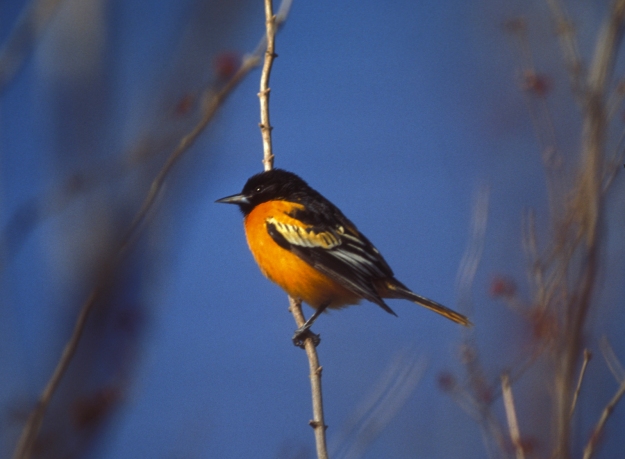
BaltimoreOriole-Two

Photo by USFWS • Baltimore orioles, like this male, are members of the blackbird family, making them relatives of species such as Eastern meadowlarks, brown-headed cowbirds, common grackles and red-winged blackbirds.

She also told me about a Baltimore oriole feeder she bought last fall late in the season.

“I read they usually come around early in spring,” Sharon wrote. She added that she spotted one in her yard by South Holston Lake several years ago.

Of course, when spring rolled around she nearly forgot about the feeder. “It was around mid-April when I thought about it and thought it was too late,” she wrote. “But I put it up anyway and lo and behold the next day there was an oriole in our pine tree.”

It was another memorable birding moment. “Talk about being excited,” Sharon wrote. “Wow! Birds can do that to you!”

WesternMeadowlark

Both the Baltimore oriole and the Eastern meadowlark belong to the family of birds known as icterids, or blackbirds, which also includes species like bobolink, brown-headed cowbird, common grackle and red-winged blackbird.

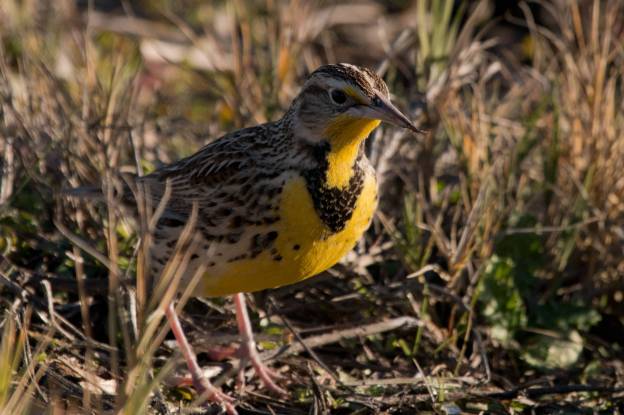
The Eastern meadowlark is a distinctive bird. It has brown plumage accented by black, with bright-yellow underparts and a bold black V across the chest. Though most of the tail is brown with blackish barring, the outer feathers are white and are a conspicuous trait to look for when the bird is in flight.

The Eastern meadowlark is considered a grassland bird and remains common in habitats such as prairies and other native grasslands. The meadowlark has proven adaptable as long as it can occupy unbroken grassland of about six acres or more. Pastures, fields and even airports have proven suitable habitats for meadowlarks. As suburban areas and subdivisions expand into rural areas, meadowlarks can hang on unless the grassland habitat becomes too segmented and broken into sections too small to be of value.

Meadowlark-USFWS

Photo by Peter Pearsall/USFWS • Eastern meadowlarks spend a lot of time on the ground while searching for insects.

Meadowlarks eat mostly insects, especially in summer. For the winter months, these birds will adapt their diet to include seeds, spilled corn and fruit. Meadowlarks, unlike other relatives among the Icterids, or blackbirds, do not typically visit feeders.

These birds construct nests close to the ground. Meadowlarks nesting in fields mown for hay face disaster if the grass is cut before their young have left the nest. The female meadowlark constructs the nest and lays two to seven eggs, which will require an incubation period of about two weeks. Even after hatching, the young are not capable of leaving the nest for another 10 to 12 days. Consequently, young meadowlarks are vulnerable for a month, not only to predators but to a farmer deciding to mow a hayfield.

While the Eastern meadowlark remains common, its numbers have suffered severe declines. such that they are considered to be a declining species. Populations fell more than 3 percent a year between 1966 and 2015, resulting in a cumulative decline of 89 percent, according to the North American Breeding Bird Survey. According to the website All About Birds, early mowing, overgrazing by livestock and pesticide use are all detrimental to meadowlark survival.

The highest population densities for the Eastern meadowlark are found in the Central Mixed Grass Prairie and the Eastern Tallgrass Prairie regions of the central United States. As the name suggests, the Eastern meadowlark has a counterpart in the western half of the United States. This is reflected in the fact that five central and western states — Kansas, Montana, Nebraska, North Dakota, Oregon and Wyoming — have made the Western meadowlark their official state bird. Ironically, the Eastern meadowlark has not been honored with that designation by any of the states it inhabits.

The difference in the two species rests not so much in their appearance as in their songs. The western meadowlark has distinctive vocalizations described as rather flute-like, which distinguish it from the closely related eastern meadowlark. Male Eastern meadowlarks seek out elevated perches to produce a musical, flute-like song in the spring. Utility wires, treetops and fence posts provide some of their favorite perches. Their singing is mostly used to define the borders of their grassland territory.
Finally getting your binoculars on a bird you’ve never seen is always an exciting moment. As we draw closer to the fall season, many different birds will migrate through the region. Fall migration is a great time to spend some time outdoors and try to see some birds that are new. Do some advance homework with a good field guide and study the birds that migrate through the region. Then, simply monitor your yard or a favorite park and wait to see some new species as they make migratory stops in the region.

eastern-meadowlark-john-james-audubon-

Early American naturalist and painter John James Audubon painting this scene depicting nesting meadowlarks.

No cowbird ever knows its biological parents

While many birds are excellent parents, others lack any maternal or paternal instincts altogether. The common cuckoo, a nesting bird in Europe and Asia, is a well-known brood parasite that would rather slip its eggs into the nest of other bird than raise its own young. In scientific terms, “brood parasite” refers to creatures that rely on others to raise their young. In addition to some birds, this tactic is also employed by some species of insects and fish.

COWBIRD-Female

Photo by Bryan Stevens • Female brown-headed cowbirds stay alert to observe bird leaving or coming to a nest. Once they have located a nest, these birds slip their own eggs into the nests of other birds.

The strategy is effective, if, in the human way of thinking, rather heartless. In biological terms, however, this “foster parenting” allows brood parasites to ensure a new generation without expending much energy on the part of the actual parents. Some recent contacts with readers have reminded me that not all of our feathered friends would qualify for “parent of the year.”

Mike Dickenson of Bristol, Tennessee, contacted me on Facebook about a discovery he made in a nest built under the steps of his house.

Cowbird-Female

Photo by Bryan Stevens • A female brown-headed cowbird visits a feeder.

“I noticed two blue eggs,” he said. “I checked a few days later and noticed two gray eggs also. Did another bird sneak her eggs into the nest?” Mike also informed me that some of the eggs hatched shortly after he discovered them.

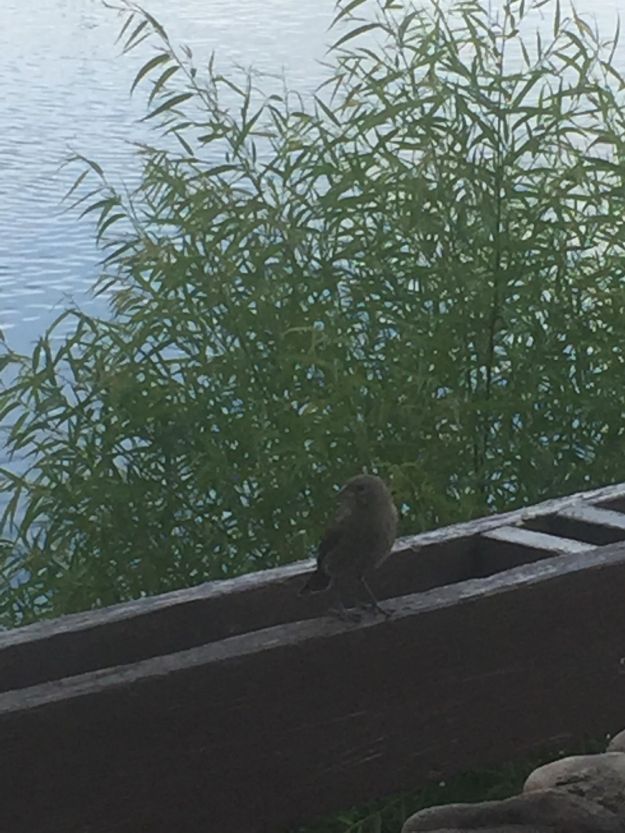
James Rowland of Erwin, Tennessee, sent me a message on Facebook asking me to identify a bird in a photograph he had taken. “What is this bird?” James asked. “It’s larger than a sparrow.”

He added that he observed and photographed the bird near the Covered Bridge in Elizabethton, Tennessee. A study of the bird in the photo revealed a very nondescript bird in largely gray plumage. Few of our birds are this plain and gray with almost no standout characteristics.

36043826_277373272833221_1274549914663124992_n

Photo by James Rowland • A brown-headed cowbird, probably a young bird or a female, near the Covered Bridge in Elizabethton, Tennessee.

In both cases, one of North America’s most successful brood parasites was involved. I responded to Mike and told him that is was entirely possible that a female brown-headed cowbird slipped some eggs into the nest beneath his steps. I likewise informed James that the bird in his photo looked like a brown-headed cowbird. I added that the bird was either a female or a young bird, since a male would have the brown head that gives the species its common name.

In North America, one of the best-known feathered brood parasites is the brown-headed cowbird. While many brood parasites are specialists, with females slipping their eggs into the nest of a specific species of host bird, the brown-headed cowbird approaches brood parasitism in a less discriminating manner. Female cowbirds have been known to lay their eggs in the nests of at least 221 different species of birds. No baby brown-headed cowbird ever knows its biological parents.

How did the brown-headed cowbird turn to a life of foisting eggs onto unsuspecting foster parents? The answer is connected with the American bison, also known as buffalo. When the bison roamed the Great Plains of the United States by the millions, flocks of brown-headed cowbirds followed the great herds, feeding on the insects flushed by the hooves of millions of bison. As the herds stayed on the move constantly, the cowbirds also developed a nomadic lifestyle. After the bison herd diminished, the cowbirds survived a potential crisis by simply transferring their bovine affinity from bison to domesticated cattle.

Brown-headedCowbird-Male

Photo by Bryan Stevens • A male brown-headed cowbird displays the brown head that gives this bird its common name.

At times, this random and undiscriminating approach to reproduction fails. Some finches feed their young a diet that consists of a great deal of vegetable matter. Young cowbirds fed this protein deficient diet fail to thrive and ultimately perish.

Other birds blissfully bring a rich assortment of protein snacks — insects, spiders and other small invertebrates — that permits the young foster bird to thrive, at times at the expense of the host bird’s own young. About 20 years ago I observed a willow flycatcher bringing food to a young brown-headed cowbird at least twice the size of the “parent” trying to feed it. I’ve also seen song sparrows, dwarfed by a cowbird changeling, trying to keep their enormous baby bird well fed.

Cowbirds are members of the blackbird family, which includes such relations as orioles, meadowlarks and grackles. All cowbirds are confined to the New World and include species such as the screaming cowbird of Argentina, Bolivia and Brazil, as well as the bronzed cowbird of Central America and the southern United States, especially the states of California, Arizona, New Mexico, Texas, and Louisiana. Other cowbird family members include giant cowbird and the shiny cowbird.

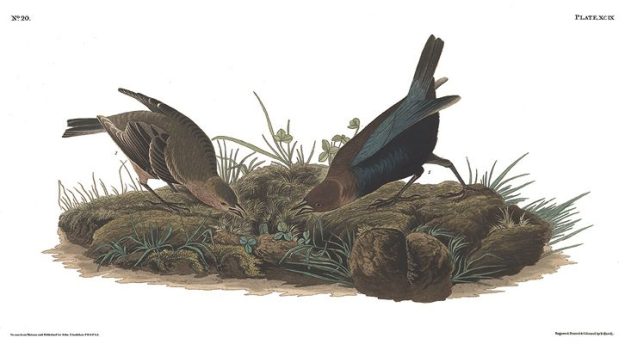
Brown-headed-Cowbird-Audubon-1-726x400

Early naturalist and painter John James Audubon painted this pair of brown-headed cowbirds.

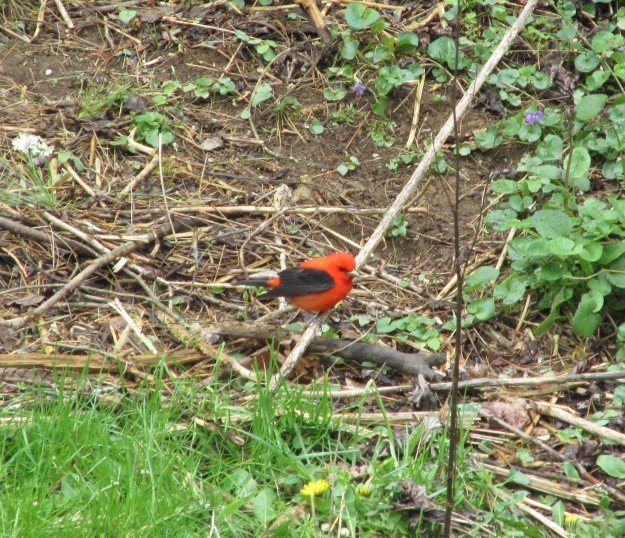
Male scarlet tanager stands out from other birds

Scarlet Tanager02

Photo by Jeana Chapman • A male scarlet tanager forages close to the ground, which is not typical behavior for these birds. Tanagers, although brightly colored, spend most of their time in the tree canopy obscured from view.

I received an email from Lewis and Jeana Chapman detailing a dazzling discovery they made.

The couple have been adding a few new birds to their bird list and decided to give me an update on what they’ve been seeing. The Chapmans reside in the community of Laurel Bloomery in Johnson County, Tennessee. The wooded slopes of Pond Mountain where they make their home provide an attractive location for migrating birds, as well a summer residents.

“The tree swallows returned this spring to nest in our bluebird box,” Lewis wrote in his email reporting his new sightings. “The great crested flycatcher has moved its nest from the front porch to the barn. Last year the flycatchers raised five chicks on the front porch. The nest got so full the chicks were perched around the edge.”

Some new additions to their list have included golden-crowned kinglet and the Northern flicker. “Most recently we spotted a scarlet tanager,” Lewis continued.

Scarlet-Tanager

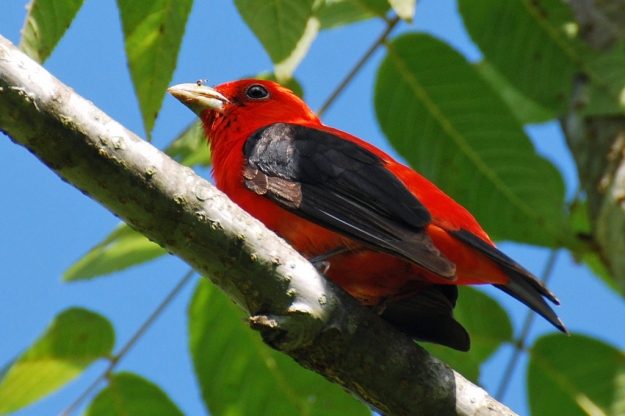
Photo Courtesy of Jean Potter A male scarlet tanager brightens shadowy woodlands with a flash of tropical colors yet remains mostly inconspicuous in the forest canopy.

They had never seen a scarlet tanager at their home. Over the years I have heard from other readers left stunned by the tropical beauty of the male scarlet tanager. That description would not be that far off. While the scarlet tanager resides in the United States and Canada from April to October each year, this bird spends the rest of the year in South America. Citizens of the United States and Canada get the better part of the bargain when it comes to hosting this bird. After the summer nesting season, male scarlet tanagers lose their brilliant red plumage and look more like the greenish females. By the time they get back to the tropics for the winter, this striking bird has transformed into a rather drab specimen.

I’ve written in previous columns about the scarlet tanager, which is one of those birds that always takes an observer’s breath away upon first seeing it. Of course, it’s the male scarlet tanager that bewitches observers with his dazzling feathers of vivid red and jet black. Female and immature tanagers are a dull olive-yellow in coloration with dark wings and tails.

Tanager-Sept18

A female scarlet tanager is a study in contrast from her mate with her dull greenish-yellow plumage being much less vibrant than the male’s bright red and black feathers.

During their summer stay in the region, scarlet tanagers largely prey on insects. Although renowned as a fruit-eating bird, the scarlet tanager primarily feeds on fruit during its migration flights and on its wintering range in the tropics. This tanager breeds in deciduous and mixed deciduous-evergreen woodlands across the eastern half of North America. I’ve often heard that oaks are a favorite tree for this woodland dweller.

It’s unlikely that you’ll run across the nest of a scarlet tanager. These birds nest high in trees, often locating their nests 50 feet or more above the ground. After building a nest, a female tanager will incubate her three to five eggs for about two weeks. It’s during this time that her inconspicuous appearance is a plus, helping her blend well with her surroundings. After the young hatch, the parents are kept busy feeding the nestlings for another 10 to 15 days.

The website All About Birds notes that the population of scarlet tanagers has declined in the last half-century. Between 1966 and 2014, according to the North American Breeding Bird Survey, scarlet tanager numbers declined by 14 percent. The environmental organization Partners in Flight estimates a global breeding population of 2.2 million, with 93 percent of these birds spending some part of the year in the United States and the other seven percent breeding in Canada. These birds do poorly in forests that have been harvested for lumber. Other causes of habitat fragmentation probably also affect the well-being of scarlet tanagers. It’s worth keeping an eye out for any other signs of decline in this beautiful birds.

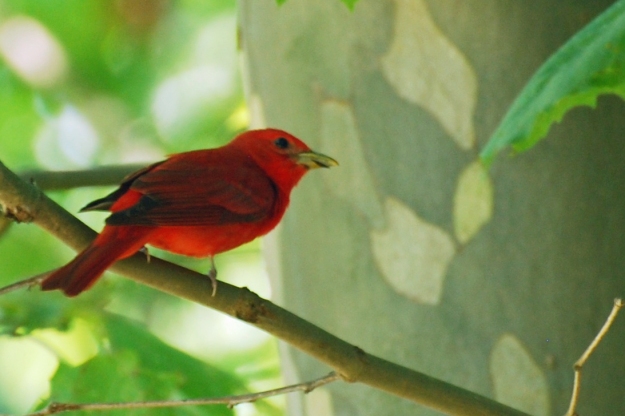
The scarlet tanager is a fairly common songbird during the summer months, but it also has a less common relative that can be found in northeast Tennessee, southwest Virginia and western North Carolina. The male summer tanager is the only entirely red bird found in North America. Lacking the scarlet tanager’s black wings, the summer tanager’s red feathers are also of a rosier hue.

Summer-Tanager

Photo Courtesy of Jean Potter The Summer Tanager is the only all-red bird in North America. It is less common in Northeast Tennessee than the related Scarlet Tanager.


While I have seen summer tanagers in Tennessee on occasion, most recently at Steele Creek Park in Bristol, Tennessee, I saw my first summer tanager during a spring trip to South Carolina many years ago. Overall, the summer tanager has more of a southern stronghold than the scarlet tanager, as the summer tanager’s range also extends into the southwestern United States.

Both of these tanagers are birds fond of dense, undisturbed woodlands. Most of the time, unfortunately, these tanagers reside in the dense woodland canopy. They’re more often heard than seen, producing a song similar to an American robin’s, but usually described as somewhat more raspy. The apt description I like for these two tanagers is that their songs sound like one sung by a hoarse robin with a sore throat.

Some of the world’s other tanagers are known by extremely descriptive names, including seven-colored tanager, flame-colored tanager, lemon-rumped tanager, green-headed tanager, golden-chevroned tanager, azure-shouldered tanager, fawn-breasted tanager, metallic-green tanager, emerald tanager, gilt-edged tanager, golden-naped tanager, opal-crowned tanager, blue-gray tanager and silver-beaked tanager.

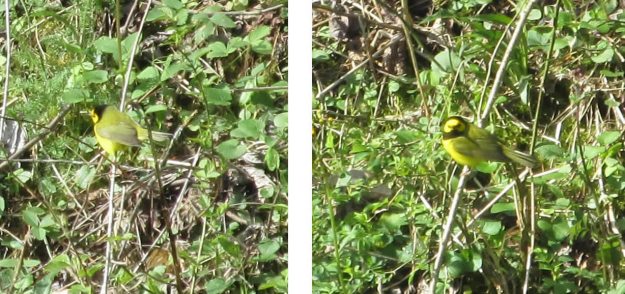
The tanager wasn’t the only unexpected feathered visitor to the Chapman home this spring. The same week the tanager made its appearance, a male hooded warbler also visited with the Chapmans. “This we found ironic because of your email address,” Lewis wrote. For readers who may not have noticed, my email address is ahoodedwarbler@aol.com. I’ve used this email address for many years to celebrate one of my favorite birds.

HoodedWarbler01 (5)

Photo by Lewis Chapman • A male hooded warbler also impressed the Chapmans during this small songbird’s recent visit.

The Chapmans also provided me with photos of all their colorful birds. In subsequent emails, they also informed me of some other unusual visitors. “One of our strangest visitors was an albino American goldfinch,” Lewis also revealed in his email. “Over this past weekend, we had rose-breasted grosbeak and indigo bunting show up.”

Many of these birds — the rose-breasted grosbeak, the scarlet tanager, the indigo bunting — always wow observers experiencing their first observation of them. Our two native tanagers — scarlet and summer — are definitely two memorable birds for anyone who has had the pleasure of seeing one. It’s a great time of year to get outdoors and keep your eyes open for a splash of bright color. You never know what you may see when you lift your binoculars.


Hummingbirds are back, and readers share first spring sightings

30425329_10214061548565156_3810521485761143823_o 3

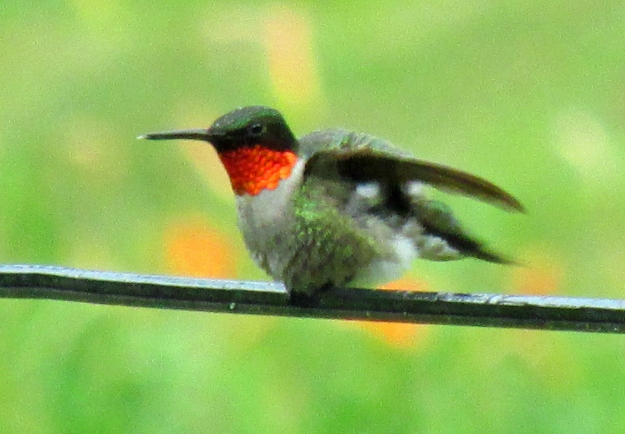
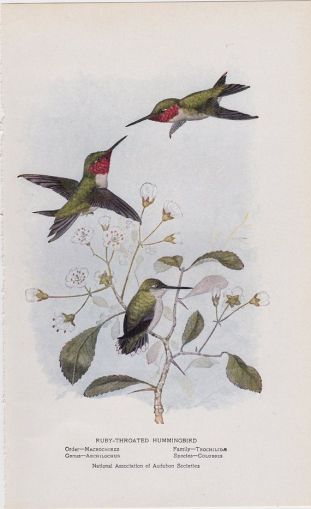
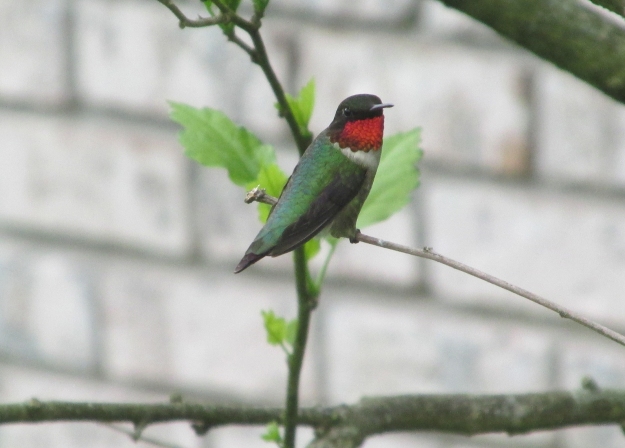
Photo by Bryan Stevens • Ruby-throated hummingbirds returned to the region earlier this month. This male, sipping sugar water from a feeder, shows its namesake red throat patch.

As many readers have already noticed, the ruby-throated hummingbirds are back. These tiny flying gems began returning to the region in the first days of April, but reports of their arrival spiked during the second week of April.

What do the hummingbirds that make their homes in our yards from April to October do during the five months they are absent from the region?

Most ruby-throated hummingbirds retreat to southern Mexico and Central America, some winging their way as far south as extreme western Panama, as well as the West Indies and southern Florida. They utilize a variety of habitats, ranging from citrus groves and forest edges to tropical deciduous forests and the edges of rivers and wetlands.

Those ruby-throated hummingbirds that make it as far south as Panama may find that they must compete with 59 other species of hummingbirds that call the Central America country home. In their winter home, the ruby-throated hummingbirds are definitely just another face in the crowd when its comes to their kin. In Panama, a ruby-throated hummingbird might encounter violet-headed hummingbirds, white-necked jacobins, black-throated mangos and green violet ears.

Ruby-OneSpot

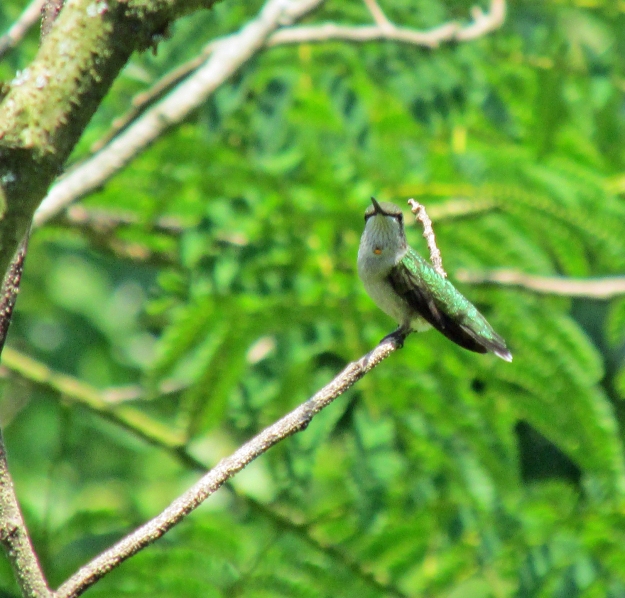
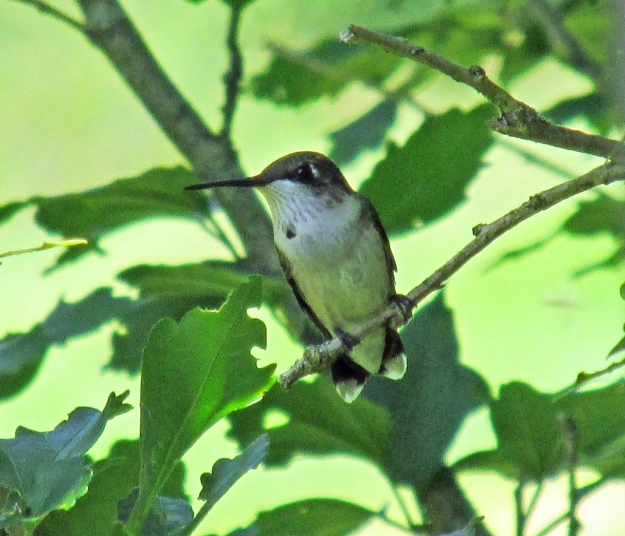
Photo by Bryan Stevens • A young ruby-throated hummingbird shows a hint of the red throat gorget that gives this bird its common name.

It must be nice to live among so many hummingbirds. Closer to home, the ruby-throated hummingbird is the only one of its kind to nest in the eastern United States. Some of the ones arriving at our feeders now will speed their way farther north, but some will settle in our yards and gardens as they bring forth the next generation of ruby-throated hummingbirds.

Dianne Draper reported the earliest observation of which I am aware. A friend on Facebook and a fellow birder, Dianne posted that the first hummingbird of spring arrived at her home in Jonesborough, Tennessee, on the morning of April 4. Her sighting was seven days earlier than any of the others I received.

Harold and Elizabeth Willis in Marion, North Carolina, reported their first hummingbird at 5 p.m. on Wednesday, April 11.

Helen Whited in Richland, Virginia, saw her first hummingbird at 12:40 p.m. on Thursday, April 12.

Judy and Bill Beckman saw their first spring hummer at 7:25 p.m. on April 12 at their home in Unicoi, Tennessee.

Ruby-throatedFemale-EYE

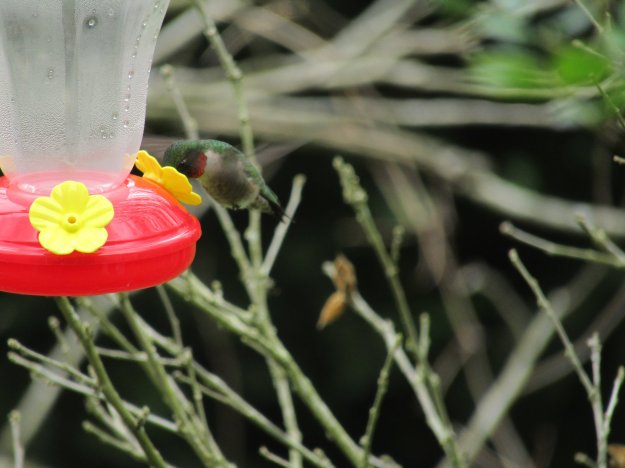
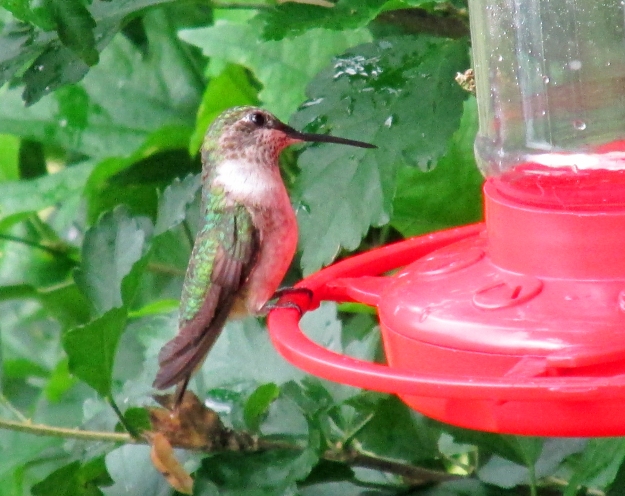
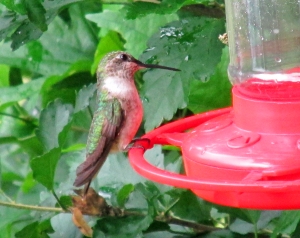
Photo by Bryan Stevens • A female ruby-throated hummingbird settles onto the perch of a sugar water feeder.

Lois Wilhelm, who lives on Little Bald Creek Road on Spivey Mountain in Erwin, Tennessee, saw her first hummingbird of 2018 at 3:30 p.m. on April 12.

Glen Eller in Kingsport, Tennessee, saw his first spring hummingbird around 5 p.m. on April 12. The bird — a male — drank for about four minutes. “I guess he needed a good fill up,” Glen commented.

Nola Martin from Nebo, North Carolina, reported her first hummer arrived just before 11 a.m. on April 12.

“He was a little green bird….not sure which kind or which sex,” she wrote in her email. “It certainly remembered where one of my feeders was last year, though, as it was looking for it in that spot, I didn’t have that one out yet.”

Nola said she now has five of her seven feeders filled and placed out for the returning hummingbirds.

Betty Poole saw her first male hummingbird of spring when the bird arrived at 9:05 a.m. on Friday, April 13, at her home in Bristol, Virginia. Her daughter, Jane P. Arnold, emailed me the information about her mother’s sighting. Jane is still awaiting her own first spring sighting of a hummingbird.

Ruby-WingLift

Photo by Bryan Stevens • A ruby-throated hummingbird lifts its wings to shake water droplets off its back.

Debbie Oliver, while watching Wheel of Fortune on the evening of April 12, got her first glimpse of a spring hummer at her deck feeders in Bristol, Tennessee.

“I couldn’t observe if it was male or female due to the dimming light,” she wrote in an email.

“It was a curious ruby-throated hummingbird just flying around the feeder without taking a sip of nectar,” she added.  Around 9 a.m. the following morning, she spotted a male ruby-throated hummer drinking nectar at the feeder.

She speculated about whether the bird was the same individual that visited the previous evening. “We’ll never know,” she decided.

Joneen Sargent emailed me to let me know that her husband, Dale, saw a ruby-throated hummingbird on April 12 at 7 a.m. The Sargents live off of Booher Drive in Bristol, Tennessee.

Bob Cheers of Bristol, Virginia, saw his first ruby-throated hummingbird at 6:45 a.m. on April 13. Bob keeps a record of the arrival dates for this tiny bird. In 2015, he saw the first hummer on April 9. Last year, he saw his first hummer on April 11. In 2016, the first bird arrived on April 13. In 2014, he had to wait until April 14 to see the first hummer of spring.

RubyRed

Photo by Bryan Stevens • A male ruby-throated hummingbird perches near a feeder that he is ready to defend from all comers.

Mark Hurt, who lives on Glenway Avenue in Bristol near Virginia High School, said that his “little buddy,” the ruby-throated hummingbird, returned about 1 p.m. on April 13.

Sandra Loving reported that her first hummer sighting took place at 6:17 p.m. on April 13 at South Holston Lake in Tennessee.

Peggy Oliver saw her first male ruby-throated hummingbird of spring at 6:15 p.m. on April 13.

Ashley Russ of Abingdon, Virginia, emailed me to share that she spotted her first hummingbird of the season at 7:20 p.m. on April 13.

Terry Fletcher saw her first male ruby-throated hummingbird at her feeder at 6:50 a.m. on April 14 at home in the First Colony subdivision in Bristol, Tennessee. Away from home the previous day, Terry was told by a next-door neighbor that the hummingbirds actually showed up on April 13.

Janice Denton, who lives on Canthook Hill Road in Bristol, Tennessee, emailed me news of her first sighting.

“I’m excited to let you know that I saw my first ruby-throated hummingbird on Friday, April 13,” she wrote. “I have had my feeders out for about two weeks and was sitting on my front porch in the afternoon hoping to see a hummingbird.”

On April 15 around noon, Janice also reported that she saw a male ruby-throated on a feeder outside her kitchen window, and another one came along and chased it off.  “I hope they all stick around for the summer,” she wrote.

Ruby-Spot-Two

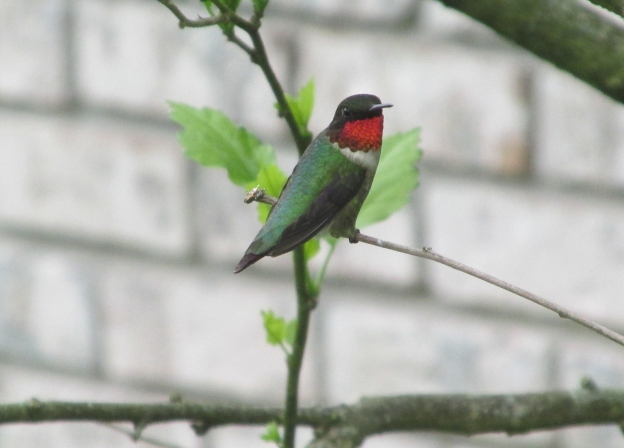
Photo by Bryan Stevens • Only adult male ruby-throated hummingbirds show the namesake ruby-red throat patch.

Lynne Reinhard reported via Facebook that she had her first hummingbird sighting at her home on the upper end of South Holston Lake on April 14. She noted that the hummingbird arrived a day earlier than last spring.

Linda Sproles, who lives on Hunter Hills Circle in Bristol, Tennessee, observed the first arrival of a hummingbird at her deck feeder at 10:43 a.m. on April 14. “It was a female, I believe, because it did not have a red throat patch,” she added.

Kathy Maggio, who lives between Benhams and Mendota in Washington County, Virginia, spotted her first hummingbird of spring at 1:15 p.m. on April 14.

Phyllis Moore of Bristol, Virginia, saw her first ruby-throated hummingbird of the spring at 4 p.m. on April 14.

Pat Stakely Cook, who resides in Marion, North Carolina, reported two ruby-throated hummingbirds at her feeders on April 14. The two male hummers stayed busy feeding and chasing each other.

32183fcb801d3cdbd206582ffb25517d 2

Early American naturalist and painter John James Audubon painted this work featuring the ruby-throated hummingbird. From the moment New World explorers arrived in the New World from Europe, they were impressed by the tiny, dazzling hummingbirds, a family of birds unknown in the Old World.

Amy Wallin Tipton, a resident of Erwin, Tennessee, saw her first hummingbird, a male, at 4 p.m. on April 14. She shared her sighting via Facebook.

Judi Sawyer, a resident of Roan Mountain, Tennessee, saw her first spring hummingbird, a male, at her home on the morning of April 14. Some house wrens decided to make their arrival the same day, she reported on Facebook.

Ginger Wertz-Justis in Baileyton, Tennessee, saw a male hummingbird at 6:30 p.m. on April 14.

Richard Trinkle emailed me to report that he saw a male ruby-throated hummingbird at 6:15 p.m. on April 14 at his Bristol home near Friendship Ford.

Robin Small saw the first hummer at 6:15 p.m. on April 14. “As I was looking at the snow falling and the cardinals, woodpeckers and regular visitors to my deck feeders, I saw my first hummingbird of 2018,” Robin wrote in an email. Robin put the feeder out the previous day when temperatures had been in the 80s and added that the hummer visited several times as the snow fell the evening of its arrival.

Janice Humble, who lives near South Holston Lake, put out her feeder on April 14. “It wasn’t 15 minutes until I had a hummingbird,” she wrote in her email.  “I saw two others that same evening.”

Lewis Spicer of Abingdon, Virginia, had both a male and female hummingbird visit his home for the first time this spring on the same day on April 15. He saw the male at 9:35 a.m. The female hummer arrived during afternoon rain at 12:45.

Frank and Myra Renault of Abingdon, Virginia, saw their first hummingbird of spring — a female — at 12:06 p.m. on April 16.

Sheila Myers, who lives on Porter Valley Road in Marion, Virginia, saw her first hummer at noon on April 16.

Rhonda Eller in Chilhowie, Virginia, saw her first spring hummingbird at 4:53 p.m. on April 18.

I am pleased to report that my own first hummingbird sighting for 2018 took place when a feisty male zipped into the yard while I was seated on the front porch. He sipped at four different feeders before he zoomed off. He arrived at 5:40 p.m. on April 14, one day earlier than last year’s first arrival. My feeders had been waiting for the arrival of hummingbirds for about a week when he first appeared.

Ruby-throated-WILLOWS

Photo by Bryan Stevens • Numbers of Ruby-throated Hummingbird in the region tend to fluctuate each year, but people should see a spike in their numbers as the hummingbirds end summer nesting and start migrating south again.


Timely arrival of blue-gray gnatcatcher signals the rush of spring migration

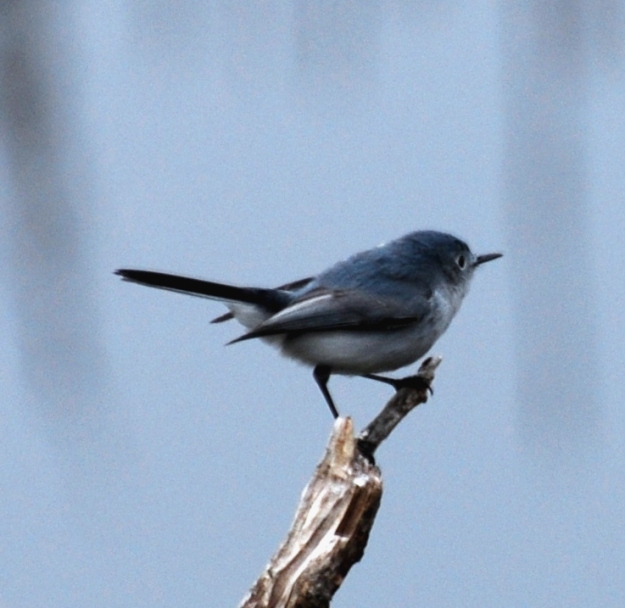
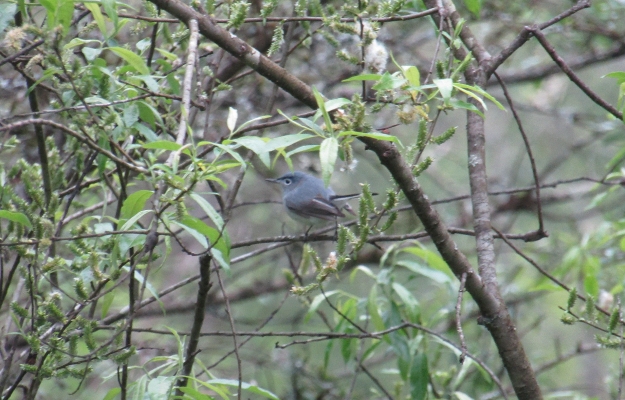
A blue-gray gnatcatchers finally put in a first spring appearance at my home on April 11. Most likely, these tiny birds had already arrived, but my schedule hadn’t yet allowed me a glimpse of this punctual songbird. Back in March, I saw and heard dozens of them during a trip to the South Carolina Low Country.

Gnatcatcher

Photo Courtesy of Jean Potter • Blue-gray Gnatcatchers are tiny, energetic bundles of feathers.


Birds are as dependable as clocks and calendars when it comes to noting the passage of time. I can keep track of the changing seasons based on the composition of the birds in my yard. The gnatcatcher has long been my signal to the start of the frenzied pace of spring migration for many of the birds returning to the region after sojourns much farther south. For example, the first gnatcatcher arrived in my yard in 2014 on April 4. Two days earlier, I had observed my first blue-grey gnatcatcher of the spring while visiting Winged Deer Park in Johnson City, Tennessee. It doesn’t hurt that the arrival of gnatcatchers coincides with the annual blooming of bluebells, a wildflower for which this local park is famous.

Once again, Winged Deer Park provided me with my first spring sighting of this bird when I finally saw one this year on April 6. Over the years I’ve kept track of such matters, blue-gray gnatcatchers reliably return every year in the final days of March and first days of April. A blue-gray gnatcatcher put in its first appearance at my home on April 2 in 2011. In 2009, I also saw my first gnatcatcher on April 2, although in 2008 I had to wait until April 5 for my first spring sighting of a gnatcatcher. In 2007, the blue-gray gnatcatcher was an “April Fool’s” bird, arriving on the first day of April. Arrival dates in March are a little less frequent. For instance, in 2003, a blue-gray gnatcatcher arrived on March 28. I saw my first spring gnatcatcher on March 30 in 1998. In 2006, the arrival date was March 31.

Gnatcatcher 2

The blue-gray gnatcatcher is a tiny, active bird with noisy habits that make it fairly easy to detect in early spring before foliage has grown dense in the branches of trees. This gnatcatcher ranks with the kinglets and hummingbirds as one of the smallest birds to range within the United States. This tiny bird tips the scales at only a fourth of an ounce. A gnatcatcher is an incredible bundle of feathered energy, seemingly always on the move as it snatches small winged insects out of the air or plucks other prey items from leaves or branches. Gnatcatchers are also quite curious birds that, more than once, have given me the distinct impression that I am the one being observed while watching their antics.

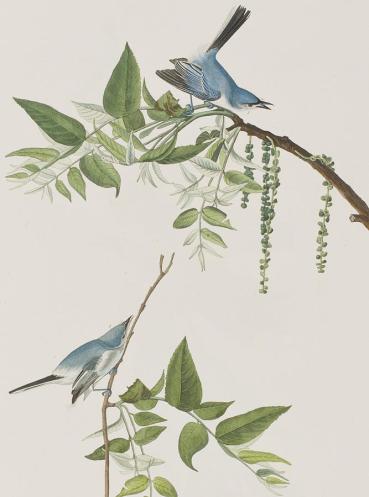
So, as the name suggests, do gnatcatchers truly eat gnats? The website All About Birds contends that, despite its name, the gnatcatcher does not concentrate its feeding efforts on gnats. This tiny bird does, however, prey on a variety of small insects and spiders. Winged insects, such as small flies and gnats, are part of the menu for a gnatcatcher, but this bird is also capable of plucking spiders from their webs or snatching tiny caterpillars from the underside of leaves.1-blue-grey-flycatcher-john-james-audubon

Like the hummingbirds, the gnatcatchers are an exclusively New World family of birds. They lack the diversity of the hummingbirds. Instead of several hundred species, there are only about a dozen species of gnatcatchers worldwide. Of that number, four — blue-gray gnatcatcher, California gnatcatcher, black-tailed gnatcatcher and black-capped gnatcatcher — range within the United States. The blue-gray gnatcatcher is the only member of this family to reside in the eastern United States. Other representatives of this family of small songbirds include the Cuban gnatcatcher, white-lored gnatcatcher, creamy-bellied gnatcatcher, tropical gnatcatcher and masked gnatcatcher.

The blue-gray gnatcatcher builds an exquisite and compact nest using such materials as spider silk and lichens. I have found many nests over the years by listening for the scolding notes of the parents which, even near their nest, have not learned the virtue of silence. The blue-gray gnatcatcher is one of the birds that, in my mind, truly kicks off the arrival season of many of my favorite neotropical migrants. With the arrival of gnatcatchers, I can now expect to enjoy the arrival of birds like hummingbirds, warblers, tanagers, vireos, thrushes, and grosbeaks.

BGGnatcatcher

••••••

Bryan Stevens lives near Roan Mountain, Tennessee. To learn more about birds and other topics from the natural world, friend Stevens on Facebook at https://www.facebook.com/ahoodedwarbler. He is always posting about local birds, wildlife, flowers, insects and much more.

Berry-rich diet makes waxwings profuse water drinkers

Waxwing-Sept11

Photo by Bryan Stevens • A cedar waxwing perches on a branch while taking a break from flycatching insect prey near a community park pond.

Ernie Marburg, a resident of Abingdon, Virginia, shared an interesting observation about a flock of cedar waxwings he observed recently in his yard.

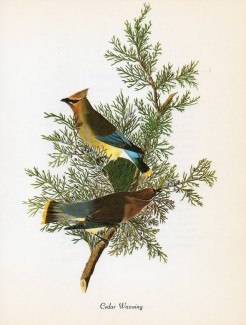
Waxwings have a brown and gray silky plumage, a black mask and a perky crest. Some of the wing feathers show red tips. The similarity of these wing tips to melted drops of wax gives these birds the common name of waxwing.

Waxwing-Audubon

Early American naturalist and artist John James Audubon painted this pair of cedar waxwings.

“The typical flock of waxwings has arrived,” he wrote in his email. He added that the birds exhibited an unusual behavior during their visit.

“From their roosts in the tops of some tall nearby trees, they appeared to be leaving their roosts briefly and returning to the trees as though they were catching flies,” Ernie noted. “There were, however, no flies available.”

The waxwings, he went on to explain, appeared to be going after snowflakes. “Could they have been going after the snowflakes to drink water?” Ernie asked.

While I wasn’t sure that catching snowflakes is an energy-efficient way to relieve thirst, the waxwings might have had a different motivation for their behavior. As I informed Ernie in my reply to his email, waxwings are very social with each other. These birds form large flocks that travel, feed, roost and bathe together. They have also come up with interesting “rituals” to reinforce their social ties with each other.

Waxwing-Erwin

Photo by Bryan Stevens • The waxy tips to the wing feathers are evident in this photograph of a cedar waxwing.

These rituals, or games, they “play” with each other include a flock of perched birds passing a single berry or fruit in a line, one bird to another, without any of the birds eating the item. I speculated that snowflake catching was their idea of a fun game and a way to practice for fly-catching season, which is just around the corner.

Perhaps I should have conducted some research. As it turns out, other people have witnessed this snowflake-catching behavior, which has led those who have studied the birds to determine that the birds do indeed eat snowflakes to ease thirst. Apparently their diet, which is rich in sugar thanks to the various berries that provide a huge percentage of their food, waxwings are often afflicted with intense thirst. In addition to catching snowflakes, they have been observed eating fallen snow. A single Bohemian waxwing — a relative of the cedar waxwing — can gobble down 300 berries in a couple of hours. According to some statistics, one of these birds can eat up to three times its weight in fruit in a single day. The next time I am lucky enough to observe waxwings in a snowstorm, you can bet I will be watching for this snowflake-eating behavior.

The cedar waxwing has few relatives. Worldwide, there are only two other species: the Bohemian waxwing, which is native to the northern forests of Eurasia and North America; and the Japanese waxwing, found in such northeast Asian countries as Japan, Korea and China.

Ruby-throated-WILLOWS

Photo by Bryan Stevens • Numbers of Ruby-throated Hummingbird in the region tend to fluctuate each year, but people should see a spike in their numbers as the hummingbirds end summer nesting and start migrating south again.

Hummingbirds due back soon

Waxwings are rather nomadic, coming and going with a maddening unpredictability. Other birds are more dependable, arriving and departing at roughly the same time year after year. One such bird should soon make its triumphant and welcome return to yards and gardens throughout the region. According to the website Hummingbird Guide, ruby-throated hummingbirds usually return to Tennessee and Virginia the first week of April. These tiny flying jewels arrive earlier in North and South Carolina, typically arriving the third week of March in those states.

The popularity of hummingbirds in general, and the ruby-throated hummingbird specifically, is simple to understand. These tiny birds are perfectly willing to insert themselves into our lives, offering hours of fascinating entertainment as they visit our gardens, duel at our sugar water feeders and occasionally even nest in trees and shrubs in our yards.

Individuals who feed birds know that it can be an expensive undertaking. The cost of providing sunflower seeds and suet cakes for hungry flocks during the winter months can nibble at the monthly budget, but hardly anyone would begrudge the sparrows, finches, wrens and woodpeckers. After all, they return the favor, putting on daily shows just outside our windows.

Rubythroated_Hummingbird

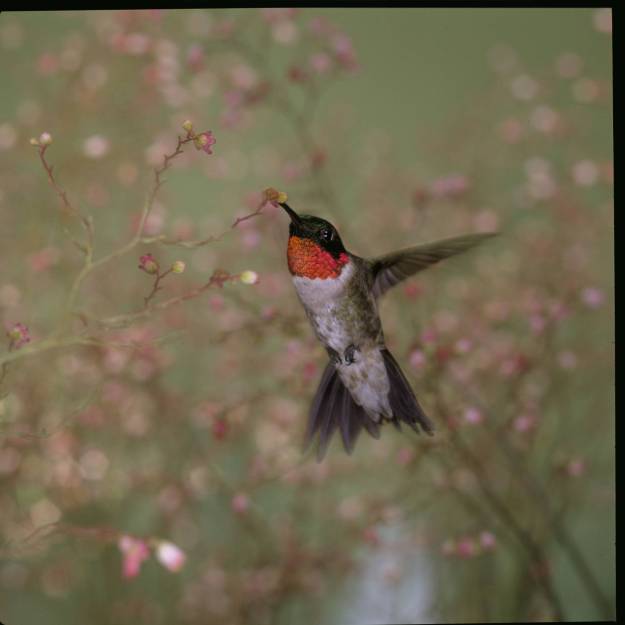
Photo by U.S. Fish & Wildlife Service • A male Ruby-throated Hummingbird hovers in front of the camera as it seeks nectar from tiny flower blossoms.

The same is true of hummingbirds. For a relatively modest investment, people putting out feeders or planting nectar-producing flowers are rewarded with the fun and amusing antics of these pint-sized and hyperactive birds.

Attracting hummingbirds is generally much less expensive than feeding other birds. After all, you need only a mixture of sugar water — four parts water to one part sugar — to fill a feeder and catch the attention of a visiting hummer. A few pounds of sugar will last a lot longer than that bag of sunflower seeds, and it’s much less expensive to purchase at the grocery store.

Do not add red coloring or dyes to your sugar water mixture. Some studies have indicated these substances are harmful to hummingbird health. This means tossing out many of the pre-packaged mixtures sold with sugar water feeders. After all, the entire purpose is to attract hummingbirds. Risking their health is simply not acceptable. If you do want to take extra steps to attract these diminutive, feathered sugar junkies, consider supplementing your landscape with a variety of flowering plants. To explore some of the best choices for flowers to tempt hummingbirds, visit the website of The Hummingbird Society at http://www.hummingbirdsociety.org.

Ruby-throatedFemale-EYE

Photo by Bryan Stevens • A ruby-throated hummingbird visits a feeder for a sip of sugar water.

I always put out my sugar water feeders in early April. I usually end up waiting a couple of weeks before the first hummingbird appears, but it’s worth the wait. I miss these tiny birds during the winter months, which they spend in much warmer surroundings in southern Mexico and Central America. A male with the namesake red throat is usually the first to appear at my feeders. However, female ruby-throated hummingbirds, which lack the dazzling ruby throat patch, are migrating, too. The females usually lag a week or two behind the pace of the migration for the males.

As always, I enjoy hearing from readers about their first spring sighting of a ruby-throated hummingbird. Readers are encouraged to jot down the date and the time of arrival when they observe their first hummingbird of the season. If the sighting’s duration allows you to verify, note whether the hummingbird was a male or female. These reports can be emailed to me at ahoodedwarbler@aol.com. Together, we’ll track the arrival of these tiny birds as they return to the region.


Tufted titmouse small songbird with big personality

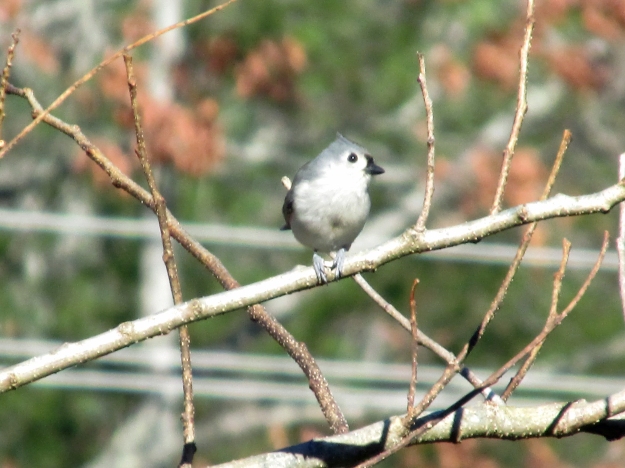
In last week’s post I wrote about chickadees. These friendly little birds have an impish cousin that is also a frequent visitor to feeders in the region. If chickadees are active woodland sprites, their relative, the titmouse, is a curious imp with mischievous tendencies.

Titmouse-2

Photo by Bryan Stevens • A tufted titmouse puffs up its feathers on a cold day.

The tufted titmouse’s song — a persistent repetition of “Peter! Peter! Peter!” — is ringing through the woodlands around my home along with the urgent “fee-be fee-bo” of the Carolina chickadee. These birds form mixed flocks with each other and other species to explore their surroundings and search for food. They know that spring, despite the usual false starts, is drawing nearer with each passing day.

In addition to singing, titmice are enthusiastic scolders. They will scold over any transgression, real or imagined, focusing their ire on their fellow titmice or other birds, potential predators and even human observers. They’re quite persistent at their raucous scolding, which is just another reason I label them as imps of the woods.

Titmouse-Suet

Photo by Bryan Stevens • A young titmouse visits a suet feeder.

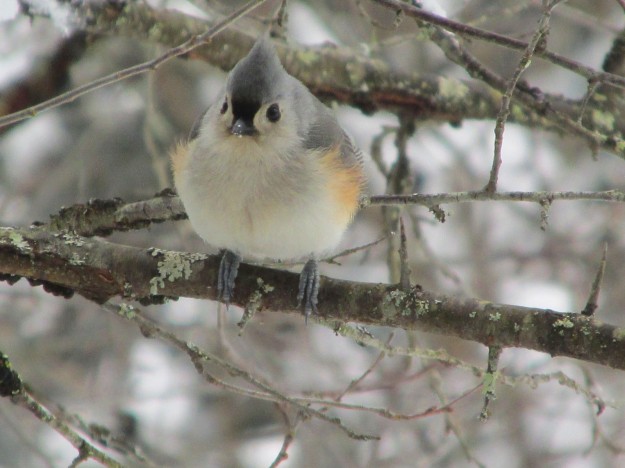
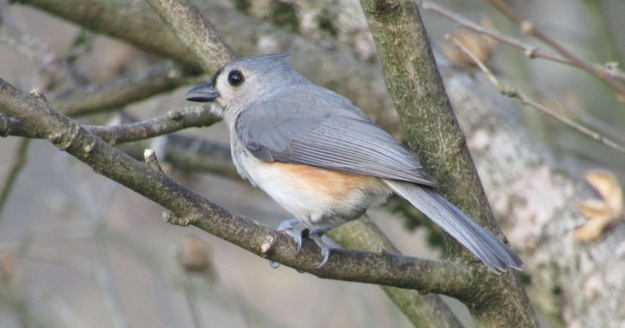
The tufted titmouse is a mostly gray bird with a distinctive crest and a pinkish-rusty coloration along the flanks. Titmouse eyes are black as coal and look large in proportion to their heads, which lends them an expressive appearance as they explore in yards and gardens. The term “titmouse” refers to the old English word “tit” meaning “small,” as well as the old English “mase,” also a reference to small size. Eventually, probably because of the bird’s small size and gray coloration, “mase” evolved into “mouse” and combined to form the word “titmouse.”

The titmice living in my yard visit my house windows at times, which drives my cats to distraction. I’ve wondered if the titmice are curious and trying to peek inside the house, but I believe I have a more down-to-earth explanation. These little birds are very thorough when foraging for food, and I’ve watched them pluck spiders and other insects from the window frames.

Titmouse-Creek

Photo by Bryan Stevens • A tufted titmouse approaches a stream for a quick drink.

Like chickadees, titmice are fond of sunflower seeds. No other offering will so readily lure them to feeders, although they do develop a fondness for suet cakes. I’ve also had great success attracting titmice to my feeders by offering unsalted, shelled peanuts. I sometimes break up the peanuts into smaller, more manageable pieces for the benefit of the titmice. These foods and a few trees or saplings around your home is all you really need to welcome titmice.

In the early 1900s, the tufted titmouse would have been considered a southern bird with its stronghold in states like Tennessee, Virginia, the Carolinas and Georgia. Perhaps it is the titmouse’s innate curiosity that has pushed the species to expand successfully beyond the southern United States. The titmouse has steadily expanded its range northward, thriving in new locations. Experts credit this expansion to more readily available access to supplemental food at feeders.

Titmouse-Eye

Photo by Bryan Stevens • A tufted titmouse turns an eye on the camera.

During the nesting season, titmice forage for a variety of insects. Many spiders, beetles, caterpillars and other small bugs will be fed to hungry young titmice in a tree cavity or a nesting box. Like chickadees, titmice build exquisite nests, often using mostly moss with other materials, such as bark, cloth scraps, dry leaves and shed snakeskins. These small birds line their nests with hair or fur of other animals.

Over the years, many readers have shared observations documenting the fur-collecting skills of tufted titmice. The birds are not content to simply collect shed fur. They seem to prefer collecting the fur fresh from a living animal. Many dogs fall victim to impish titmice that boldly pluck strands of fur from the canine’s coat.

In another funny story, a woman once told me about a titmouse that flew onto her head every time she stepped outside her home. Perhaps the bird sensed her affection for birds since it never failed to pluck strands of hair from her head to carry back to its nest. For any would-be skeptics, the woman provided photographic documentation of the incidents. In addition to dogs and humans, animals ranging from squirrels and opossums to mice and woodchucks have also been observed “sacrificing” fur for the nesting success of tufted titmice.

Titmouse-PHOTO

Photo by Bryan Stevens • The tufted titmouse is a backyard bird with an impish personality.

The female tufted titmouse incubates the eggs. She lays between three and nine eggs, although a usual clutch size is five to six eggs. The female titmouse is protective of her nest and is known for a behavior known as a “snake display.” I’ve observed titmice perform this display when I’ve peeked into nesting boxes. She remains tightly seated on her eggs, or young, while she hisses loudly and strikes in a manner very much like a striking serpent. Not all titmice engage in this display. Some remain still and try to “blend” with the nest, while others will fly away if a nest box is opened. Regardless, it’s a convincing display of bravado on the part of such a small bird. If it looks scary to people, I am sure it could succeed at repelling a squirrel or mouse. I’m uncertain if the behavior would deter an actual snake.

Other titmice in North America include bridled titmouse in Arizona and New Mexico; oak titmouse of the Pacific Coast region; juniper titmouse from the Great Basin, which consists of Wyoming, Idaho, Utah, Nevada, Oregon and California; and the black-crested titmouse, which ranges from Missouri into east-central Mexico.

Titmouse-WithPeanut

Photo by Bryan Stevens • A tufted titmouse pounds at a peanut held in its feet.

Titmice occur exclusively in North America and belong to the genus Baeolophus. Europe, Asia and Africa are home to some other crested birds in the family of chickadees and titmice. For instance, the European crested tit and the grey crested tit are species that sport a crest of feathers like titmice but are more closely related to chickadees.

Yes, the tufted titmouse is one of nature’s imps, but it’s also one of our more entertaining birds. Get to know these visitors by offering sunflower seeds or other fare and, if you want to go the extra step, place some bird boxes around your yard as potential nesting sites. By next winter, you may have an entire flock of these feathered imps as your guests.

•••••

Bryan Stevens lives near Roan Mountain, Tennessee. To learn more about birds and other topics from the natural world, friend Stevens on Facebook at https://www.facebook.com/ahoodedwarbler. If you have a question, wish to make a comment or share a sighting, email ahoodedwarbler@aol.com.

Titmouse-OnSuet

Photo by Bryan Stevens • A tufted titmouse makes a quick visit to a suet feeder.