Tag Archives: Autumn

Chipping sparrow a common summer nesting bird

ChippingSparrow-ONE

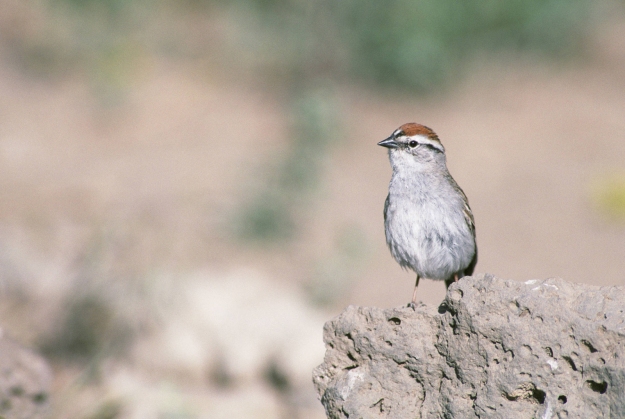
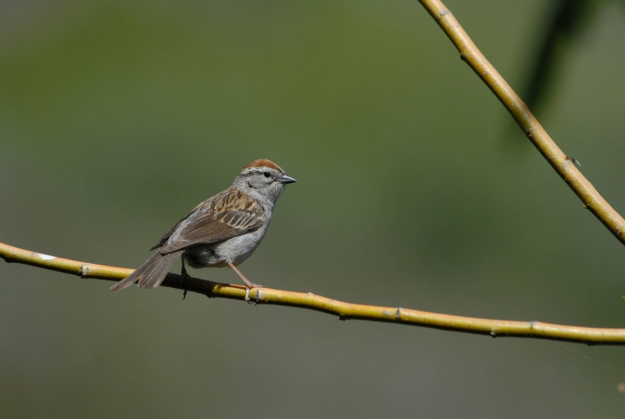
Photo by Dave Menke/USFWS • A black line running through the eye bordered by a white stripe, as well as a rusty-red cap, helps distinguish the chipping sparrow from other “little brown birds” that belong in the sparrow family.

I needed to do some homework before I could answer a question posed to me by Frances Rosenbalm of Bristol, Tennessee. As she communicated to me in an email, she had discovered a bird’s nest in her garden and wanted help identifying the species that built the nest.

“I have a bird that made a nest in the top of my tomato vines,” Frances explained in her email. “It had four turquoise speckled eggs in it.”

Frances described the nest as being made with large twigs and moss. “What kind of bird do you think it may be?” she wrote. She also noted that her garden is located near a farm field.

“I was so surprised to find this nest,” she wrote. “In all of all the years I have put a garden out, this has never happened,” Frances concluded.

51bUn1kQ7XL._SY291_BO1,204,203,200_QL40_ 2

After doing some research, which included poring over the pages of a great book by Hal H. Harrison titled, “A Field Guide to Birds’ Nests: United States East of the Mississippi River,” a work in the Peterson Field Guides series, I was able to write back to Frances with the news that I might have solved the mystery of the nest in the tomato vines.

The Harrison field guide is an exceptional book and one that’s perfect for someone who wants to know a little more about the birds other than their names. Entries for each bird include photographs depicting both the nest and the eggs as well as informative text with supplemental information about nesting birds in the Eastern United States.

Based on the description of the nest and its eggs, as well as its location near a farm field, I identified the nest described by Frances as belonging to chipping sparrows. I found some photographs online of chipping sparrow eggs in a nest and sent that in an email for her to consider.

Frances responded in another email. “I do believe you are right,” she wrote. “The eggs look a lot like the photo, and I have seen some birds that look like (chipping sparrows) flying around.”

For a species often lumped under the grouping of “Little Brown Birds,” the chipping sparrow is quite distinctive. In spring and summer, chipping sparrows sport a crisp, neat plumage with frosty gray underparts, a gray and white face and a striking black line through the eye. An easily recognizable field mark is the bright rusty crown atop the bird’s head.
ChippingSparrow-TWO

Photo by Dave Menke/USFWS • Chipping sparrows will form flocks for the winter season.

When horses were more common in daily American life, the chipping sparrow took advantage of this resource to almost invariably line their nests with horsehair. Now that not all nesting chipping sparrows have access to horses, these birds use fine plant fibers or hair gathered from other sources, including people, to line their nests.

Once a nest is constructed, a female chipping sparrow lays and incubates three to four eggs, which take about 14 days to hatch. Chipping sparrows often attempt to raise two broods in a single nesting season. Although dense evergreen trees are a preferred nesting location, these birds will also nest in vines.

During the warm months of the summer nesting season, chipping sparrows feed almost exclusively on insects. When winter makes insects scarce, these small birds switch their diet to one of seeds. Chipping sparrows will also feed on small fruits and berries.

Chipping sparrows will sometimes nest as many as three times in a single season. Although territorial during the nesting season, these birds form sizable flocks for migration and during the winter season. In making reference to these flocks, observers can use other descriptive terms. Flocks of sparrows have also been called a crew, a flutter, a host, a tournament and a quarrel. I am partial to a flutter of sparrows, but anyone who has watched the pecking order at the feeders will also understand the origins of a quarrel of sparrows.
Chipping-sparrow-john-james-audubon

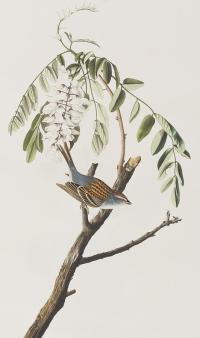
John James Audubon painted this chipping sparrow.

There are a couple of well-known Biblical passages using sparrows for powerful pieces of symbolism. One alludes to the fact that if God provides for small songbirds like sparrows, he will certainly provide for human beings. In addition, there is a passage that maintains that not a single sparrow falls without God being aware of the loss. A famous hymn, “His Eye is on the Sparrow,” is based on such biblical verses.

The world’s sparrows are divided into two large groupings — the Old World, or true sparrows, and the American sparrows of the New World.

Although largely considered rather dull, plain birds in appearance, some of them have earned descriptive names such as great sparrow, Arabian golden sparrow, green-backed sparrow, five-striped sparrow, yellow-browed sparrow and golden-crowned sparrow.
FieldSparrow-One

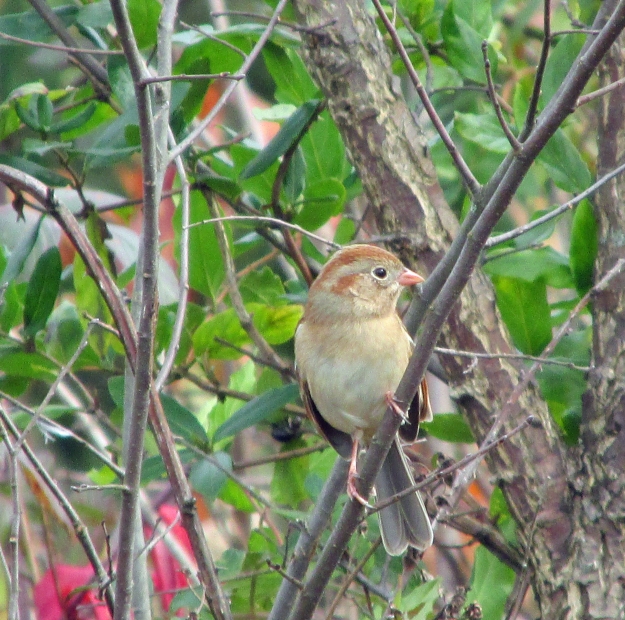
Photo by Bryan Stevens • A field sparrow perches on a branch. These sparrows are closely related to chipping sparrows and relatively common in Northeast Tennessee.

Welcome chipping sparrows and their kin with a well-stocked feeder and perhaps some thick tomato vines for concealing a nest. Unfairly dismissed by some as plain, dull songbirds, the sparrows reward a closer look with some subtle behaviors and plumages as worthy of additional attention as much as some of their more colorful relatives.
Rally to offer sneak peek at bird migration, other nature activities

CapeMayWarbler

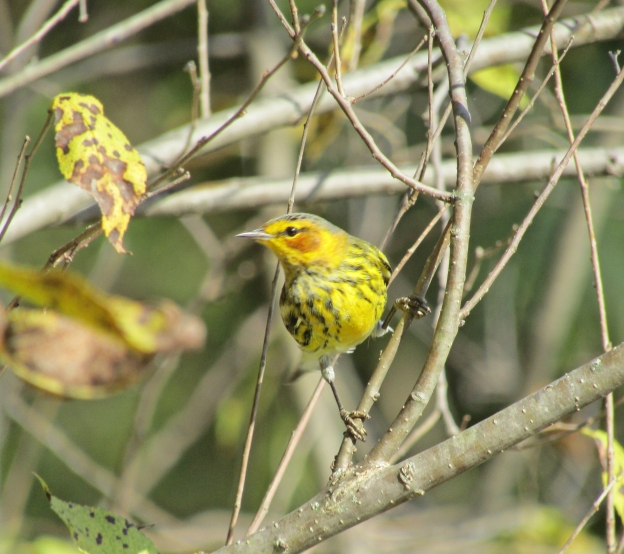
Photo by Bryan Stevens • While the Cape May warbler doesn’t breed locally, these warblers are fairly common spring and fall migrants in the region.

The 56th Roan Mountain Fall Naturalists Rally will draw nature enthusiasts from far and wide to this jewel of the Southern Appalachians on the first weekend after Labor Day with programs, nature walks, catered meals, and much more.

The annual Fall Naturalists Rally is always a great opportunity to enjoy the outdoors and, for birders, get a sneak peek at fall migration with any of the walks and programs focusing on our fine feathered friends. The best naturalists in the region volunteer their time and energy to make this a landmark event for people of all ages.

This year’s rally, which is scheduled for Friday-Sunday, Sept. 7-9, will feature guest speakers, Gabrielle Zeiger and Dr. Joey Shaw, for the main programs on Friday and Saturday evenings.

Zeiger’s Friday program, “Zen and the Art of Mushroom Hunting,” will get underway at 7:30 p.m. following a catered dinner at 6:30. Zeiger has been studying mushrooms in the region for 23 years. She considers herself more of a mushroom enthusiast than an expert. She is a member of the North American Mycological Association, and attends their national forays. She is involved in the association’s annual Wildacres foray in the Blue Ridge Mountains near Mount Mitchell in North Carolina.


Photos by Bryan Stevens • Mushrooms will feature in one of this year’s evening programs at the Fall Naturalists Rally.


Her program will focus on the two basic approaches — looking for good edibles and scientific study — to mushroom hunting. Her talk will touch on both approaches and include basic information on common mushrooms found in the area, species diversity and poisonous versus edible mushrooms. The program will include various types of fungi from gilled mushrooms, boletes, corals, stinkhorns and polypores, as well as the roles that they play in the environment such as decomposition and forest ecology. She will also talk about what mycologists do at forays. Findings will be included regarding 20 years of record keeping at Roan Mountain and scientific information on studies at Mount Mitchell regarding amount of rainfall and diversity of fruiting.

Photos Contributed • From left: Gabrielle Zeiger and Joey Shaw are this year’s featured speakers.


Saturday’s program on “Digitizing Tennessee’s One Million Herbarium Specimens,” will also start at 7:30 p.m. followed by a catered meal at 6:30. Dr. Joey Shaw received a bachelor’s of science in biology from the University of Tennessee at Chattanooga in 1998, and that same year began his graduate education in the Department of Botany at the University of Tennessee, Knoxville. In 2001, he received his master’s in botany for a floristic investigation of the Big South Fork National River and Recreation Area in Tennessee and Kentucky. In 2005 he received his Ph.D. from the University of Tennessee, Knoxville, for his work on the phylogeny and phylogeography of the North American plums and molecular evolution of different genetic regions of the chloroplast genome.

Shaw is currently serving the Association of Southeastern Biologists as Past President and will rotate off this Executive Committee in April 2019, after having served for over ten years and in all ranks of that committee. He is also serving as Chair of the Wildflower Pilgrimage Organizing Committee, and in this capacity he organizes this annual event that brings together more than 120 professional biologists with 850 members of the public to participate in more than 150 different events over four days every spring in the Great Smoky Mountains National Park.

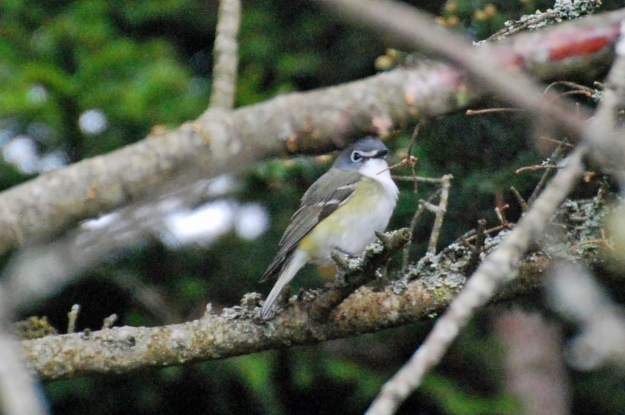
Blue-headedVireo

Photo by Bryan Stevens • Blue-headed vireos, such as this bird, are high-elevation summer residents in the region. In the fall, they are also common migrants.

Evening and lunch programs will take place in Roan Mountain State Park’s Conference Center and unless other noted, field trips will leave from the field on the left before the cabins in the park.

In addition to the programs, morning and afternoon walks will be held Saturday and Sunday on a vast array of subjects, including birds, salamanders, butterflies, spiders, snakes, geology, mosses and liverworts. A “moth party” will be held after the Friday and Saturday programs. Larry McDaniel will host this party taking a look at these winged nocturnal insects outside the Conference Center.

Consider joining the Friends of Roan Mountain, if you are not a member. Members get free admission to all Naturalists Rally events and the newsletter, “Friends of Roan Mountain.”

The rally offers catered evening meals by City Market of Elizabethton, as well as brown bag lunches on Saturday. All meals must be pre-paid in advance.

Registration and payment for meals and other activities can be made at the website for Friends of Roan Mountain at friendsofroanmtn.org. The website can also provide a brochure for download that offers a complete schedule and details all the available activities at this year’s rally. Whatever your interest, the Roan Mountain Fall Naturalists Rally is sure to have an activity available. For local birders, it’s often the kick-off to the fall migration season as warblers, vireos, thrushes, tanagers, birds of prey and many other species pass through the region on their way to their wintering grounds.

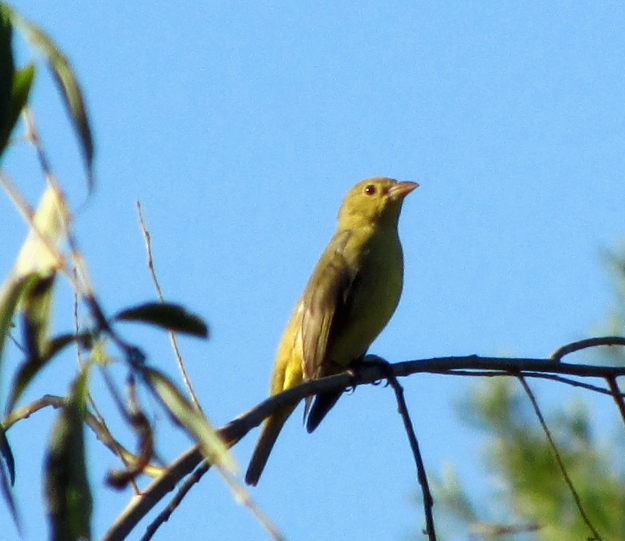
Tanager-Sept18

Photo by Bryan Stevens • A female scarlet tanager is a study in contrast from her mate with her dull greenish-yellow plumage being much less vibrant than the male’s bright red and black feathers.

Family of pigeons, doves features one famous member

Vivian Tester of Bristol, Tennessee, sent me an email seeking help with a pigeon problem.

“I need your advice on trying to keep the pigeons off my bird feeders,” Vivian wrote. “They are chasing off the birds I want to feed and devouring all the seed. My neighbor says they are doves but whatever they are, they are annoying. I don’t know if the squirrel-proof feeder would work or not. I would appreciate any help.”

animal animal photography avian beak

Photo of a rock pigeon by Pixabay on Pexels.com

I recommended that Vivian offer only black oil sunflower seeds to see if that might can discourage the unwanted guests. While pigeons will eat sunflower seeds, they much prefer smaller seeds like milo and millet often found in mixed seed packages. If their preferred food source dries up, they may be convinced to move elsewhere.

Stopping feeding for a trial period is another possibility. Remove food for a week and then slowly start offering seeds again. If the pigeons have moved to other feeding grounds, perhaps they will be slow to return.

It’s a tough problem to solve. Although some feeders can be designed to prevent a large bird like a pigeon or dove from perching, the birds are going to still make the attempt. In doing so, they knock seed to the ground below and will happily feed on the spillage. The best option for avoiding pigeons would be to use tube feeders designed for minimal spillage if jostled. Doves and pigeons prefer to feed on the ground, so scattering seeds there, intentionally or inadvertently, is an invitation for flocks to gather.

PIGEON-PIC

Photo by Jean Potter • The widespread rock pigeon is one of the most successful members of the bird family Columbidae, which is comprised of some 310 species of doves and pigeons. One of the most famous representatives of the family is the dodo, an extinct relative of such common birds as the mourning dove and rock pigeon.

Nature, too, offers a solution. Several species of raptors prey readily on doves and pigeons. Peregrine falcons and Cooper’s hawks are two effective controls on such birds, but it is not easy to issue an invitation for one of these birds to take up residence in your yard.

The two mostly likely offenders in the region are the mourning dove and the rock pigeon. Mourning doves are an abundant native species at home in both rural areas and suburbs. The rock pigeon is not a native species but has thrived in the United States since it first arrived with early colonists from Europe. Rock pigeons are mostly a problem for people attempting to feed birds in urban and suburban areas.

Pigeons and doves constitute the animal family Columbidae, which is comprised of some 310 species. One of the most famous members of this family is the extinct bird known as the dodo. The well-known story of the dodo doesn’t often make reference to the relations this bird had to living doves and pigeons.

Roelant_Savery_-_Landscape_with_Birds_-_WGA20885 2

In the lower right corner of this illustration, a dodo is visible along with such birds                        as macaws, cranes, and even a wild turkey. Titled “Landscape with Birds,” this painting            was done by artist Roelant Savery in 1628.

Early scientists did not know what to make of the dodo and theorized that the unusual flightless bird was everything from a small ostrich to flightless versions of an albatross or a vulture. Johannes Theodor Reinhardt, a zoologist from Denmark, hinted at the dodo’s relationship to the world’s pigeons and doves as early as 1842. At first his theory was ridiculed, but other biologists and zoologists eventually came to accept the fact that the dodo was indeed a large, flightless pigeon.

The dodo stood a few inches over three feet tall and could weigh close to 40 pounds. Most of what is known about the dodo comes from paintings and drawings of the bird made by early explorers in the 17th century. Some of the humans who observed the bird also left behind valuable written accounts. First discovered by Dutch sailors who visited the Indian Ocean island of Mauritius in 1598, the dodo became extinct only 64 years later. So about the same time the rock pigeon was establishing itself as an introduced species of bird in North America, around the world one of its cousins slid quietly into extinction.800px-Van_den_Venne_dodo 2

The dodo has acquired a reputation in popular culture as slow-witted, lethargic, fat, clumsy and stupid, dooming the bird as a creature too ill-suited to exist. Today, most scientists believe that the dodo was adapted perfectly to its island habitat. Having evolved as a flightless bird, the arrival of humans in its paradise meant its doom. The reputation for stupidity is unfair. Having never encountered humans, dodos did not have an instinctive fear of them. This lack of fear made it easy for the early explorers of their island home to quickly render them extinct.

Modern science has even pinpointed the dodo’s closest living relative. Thanks to DNA analysis, the Nicobar pigeon of southeast Asia has been identified as the closest relation of the dodo. The Nicobar pigeon is much smaller (only 16 inches long) and, unlike its famous relative, is capable of flight. This pigeon feeds mostly on fruit and seed. When grain of any kind is available, it will also make use of such a food source.

Most contemporary sources reveal that the dodo enjoyed a diet rich in fruit, but modern biologists speculate the dodo probably also foraged for nuts, seeds and tubers. It’s ironic that the dodos were slaughtered to extinction to provide food for early explorers of their island. An English explorer by the name of Sir Thomas Herbert recognized the dodo’s exploitation as a food source, but disparaged the bird’s taste. “To the delicate they are offensive and of no nourishment,” Herbert wrote in his published work, “A Relation of Some Years Travel into Africa and the Greater Asia.”

Lophopsittacus.mauritianus

This sketch, completed in 1634 by Sir Thomas Herbert, shows a broad-billed parrot, a red rail and possibly one of the last dodos to exist on the planet. Herbert described the dodo as a rather poor food source for early explorers to its island home. 

Like the pigeons that have become a scourge on Vivian’s feeders, it’s very likely that, had they survived, dodos might visit feeders today on the island of Mauritius. For the most part, the world’s doves and pigeons are considered successful birds.

In the United States, some other native doves include the widespread mourning dove, as well as white-winged dove, common ground dove and Inca dove. The Eurasian collared-dove, introduced into the Bahamas and Florida, has now spread extensively into the United States and is known to have established populations through northeast Tennessee and southwest Virginia.

Dove-Wing

Photo by Bryan Stevens • A mourning dove stretches a wing while perched on a feeder.

Some descriptive names for some of the world’s doves include purple-winged ground dove, lemon dove, zebra dove, ochre-bellied dove, tambourine dove, white-faced cuckoo-dove, ring-necked dove, little cuckoo-dove and sapphire quail-dove. Pigeons have also been bestowed with such colorful names as snow pigeon, speckled pigeon, yellow-eyed pigeon, pale-capped pigeon, metallic pigeon, crested pigeon, pink pigeon and squatter pigeon.

We all like to attract as many birds as possible to our yards and gardens. A variety of food will help achieve that objective. Be aware, though, that such free buffets will also encourage messy birds like pigeons that make feathered pigs of themselves and almost always overstay their welcome. There’s also the option to admire pigeons and doves as survivors with a lineage worthy of some admiration. Hang some tube feeders accessible to smaller songbirds but toss some seeds into a corner of the yard for the ground-feeding pigeons and doves. They’re birds, too, after all.

Dodo_head

English naturalists dissected a dodo skull, shown in this sketch, in 1848 to help prove the relationship of the dodo to pigeons.

Roelandt_Savery_-_'Dodo_Birds',_Chalk,_black_and_amber_on_cream_paper


Good intentions can have ill effects for ducks, geese, other waterfowl


Pattie Rowland contacted me on Facebook recently with a valid concern, especially now that the temperatures are turning a little cooler. People with good intentions often visit parks to feed the ducks and geese that reside at ponds and creeks.


“I see people with bags of bread thinking they are helping the ducks and geese,” she explained.

Despite the good intentions, Pattie, a resident of Erwin, Tennessee, has some concerns about the practice and requested that I help raise awareness about the possible unintended consequences.

While I’m not an expert, I applaud her attempt to raise the issue about what foods are nutritional and which are not when it comes to feeding wild or domesticated waterfowl. So, I did some research into the topic.

Dave McRuer, the director of Wildlife Medicine at the Wildlife Center of Virginia, wrote about the risks associated with feeding waterfowl in a 2015 article on the center’s website.

McRuer noted that wild ducks and geese feed on a variety of natural foods, such as wild grains and grasses, aquatic plants, and invertebrates. This varied diet provides the essentials waterfowl need to thrive.

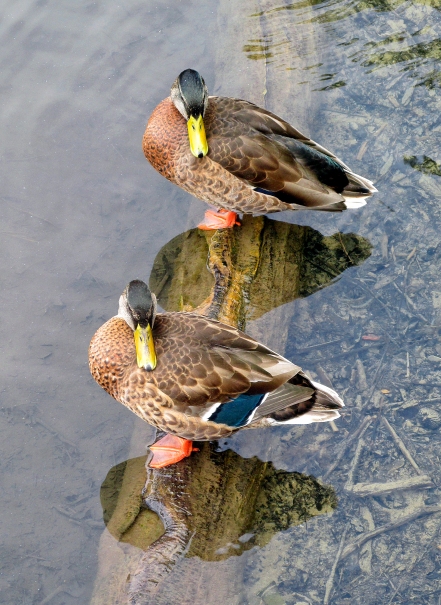
Mallard-Drakes

Photo by Bryan Stevens • Mallard drakes share a log during a period of relaxation. Mallards, Canada Geese, and some other waterfowl have voluntarily semi-domesticated themselves in exchange for an easy, but not always healthy, life based on human handouts.

On the other hand, McRuer warned about some of the foods commonly fed to waterfowl in public parks, such as bread, popcorn and corn, are typically low in protein and essential nutrients and minerals. Waterfowl feeding heavily on such fare are at risk for developing nutritional disorders.


His ultimate conclusion was that any benefits are far outweighed by risks when it comes to the feeding of waterfowl at public parks. His recommendation was to stop all forms of supplemental feeding.


He based his recommendation on more than nutritional concerns. Supplemental feeding can also lead to overcrowding, disease concerns, habitat degradation, and an unhealthy habituation to humans or animals associated with humans.


There are some alternatives to the quitting “cold turkey” option when it comes to feeding ducks and geese. Melissa Mayntz, a birder with more than 30 years of experience, penned an article for the website, The Spruce, recommending some foods that will not expose waterfowl to potential harm.


In an article titled “What to Feed Ducks,” Mayntz wrote that it is important to realize that waterfowl are capable of fending for themselves and do not require human handouts to survive, no matter what the season nor how much they seem to beg for treats. She did offer some tips on choosing nutritious treats to supplement the wild diet of park waterfowl.


Various grains, such as cracked corn, wheat, barley, oats, and rice can safely be offered as an occasional treat. In addition, she recommended grapes (sliced in half), chopped lettuce or other greens and vegetable trimmings or peels chopped into small, easily eaten pieces.

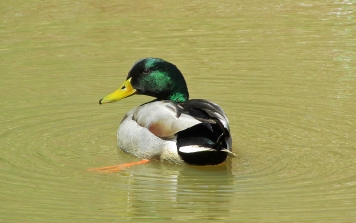
Mallard-March28

Photo by Bryan Stevens • A Mallard drake still shows some caution toward humans, arguing that this individual has not become dependent on human handouts.

Mayntz’s article basically echoes many of the warnings from the one by McRuer. Some of the foods commonly offered, such as bread, crackers, cereal and popcorn, offer very little nutritional value. In addition, bread and other similar foods are dangerous if they are moldy. Increasing the disk is the fact that any excess bread that isn’t eaten can quickly mold. Molded food can kill waterfowl, which is the last thing people would want to happen to these birds.


I agree with Mayntz in her conclusion, which admits that feeding waterfowl at local ponds and parks can be a fun experience in wildlife viewing for people of all ages. By avoiding potentially dangerous foods and restricting treats to items that actually provide nutritional value, birders can continue to enjoy this pastime without risking the lives of the birds they love so much.


As a general rule, I don’t feed the waterfowl at local parks. Many years ago I fed a flock of semi-domesticated mallards that took up residence at my fish pond. From a half dozen birds, the flock eventually grew to about two dozen ducks. The only food I fed them was cracked corn during the winter season. They foraged quite successfully for the rest of their food from the pond, the nearby creek and the fields. I’m convinced they helped control the numbers of pest insects during their stay. To this day, an occasional pair of mallards will visit on cold winter days. At times, they look at me like they’re expecting a handout and I wonder if they could be descendants of some of those mallards from the original flock.

Canada_Geese

Photo by Bryan Stevens • In some areas, Canada Geese have become so prevalent that they are considered pests. Human handouts to waterfowl are not always compatible with good health for the birds that receive them.


So, don’t let good intentions cause problems for any of our feathered friends. If you want to feed ducks at the local park, consider the healthy alternatives instead of providing bread. After all, people cannot live on bread alone, and neither can ducks.


•••••

Calendars make fun Christmas presents

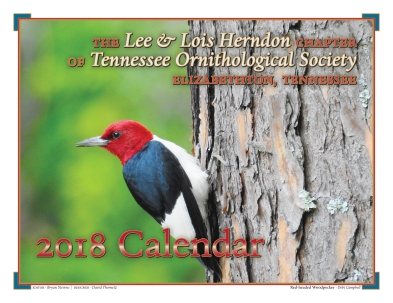
The Lee and Lois Herndon Chapter of Tennessee Ornithological Society produces an annual calendar featuring some exceptional bird photography from its members. This year’s calendar features full-color photographs of some colorful and engaging birds. The club sells the calendars for $15 each. All proceeds are used to support birding opportunities and bird-related causes. For instance, the club pays for bird seed to stock the feeders at Sycamore Shoals State Historic Park in Elizabethton, Tennessee. The club also regularly supports causes that benefit birds.HerndonCalendar2018(Cover)

The calendar also features an informative calendar grid with highlights for major holidays, as well as important bird-related dates. The calendar’s pages feature more than 80 full-color photographs of area birds, including common favorites, as well as a few more exotic birds. The front cover features a dazzling photograph of a red-headed woodpecker. The photo was taken by Debi Campbell, a resident of Bluff City, Tennessee, and current president of the Herndon chapter. If you’re interested in obtaining a calendar, contact ahoodedwarbler@aol.com by email. Calendars will also be available for purchase by cash or check only at the offices of the Bristol Herald Courier located at 320 Bob Morrison Blvd. in Bristol, Virginia.

If you’re interested in obtaining a calendar, contact ahoodedwarbler@aol.com by email. Calendars will also be available for purchase by cash or check only at the offices of the Bristol Herald Courier located at 320 Bob Morrison Blvd. in Bristol, Virginia.


Annual Fall Bird Count finds 122 species in Northeast Tennessee

Heron-UnderBridge

Photo by Bryan Stevens • A Great Blue Heron wades through the creek running through downtown historic Jonesborough on a warm afternoon this past summer. These large herons, helped by recent nesting colonies in Erwin, Elizabethton and other locations, have become more commonplace in the region. The 66 Great Blue Herons found on the recent Fall Bird Count represented a new high number for the species on this annual autumn survey of bird populations in the region.


The 48th annual Elizabethton Fall Count was held on Saturday, Sept. 30, with 54 observers in 12 parties covering Carter County and parts of the adjacent counties of Johnson, Sullivan, Unicoi and Washington. The participants tallied 122 species, which is slightly below the recent 30-year average of 126 species. The all-time high for this count was 137 species, which was reached in 1993.

Shorebirds were in very short supply due to a shortage of suitable habitat. Aside from killdeer, a solitary sandpiper was true to his name. In particular, two sites that formerly attracted shorebirds have undergone alterations that have essentially eliminated such conditions: Austin Springs and Bush Hog Pond.

This year’s count featured some other notable misses, as well, according to long-time count compiler Rick Knight. Birds missed include Northern Bobwhite (which has been found only four times in the last 24 years), Broad-winged Hawk, Spotted Sandpiper (first miss in last decade), Winter Wren, and Blue-gray Gnatcatcher.

Several birds set new high records for the number of individuals tallied, including Double-crested Cormorant (70); Great Blue Heron (66); Black Vulture (330); Turkey Vulture (215); Red-shouldered Hawk (6); Belted Kingfisher (40); and Red-bellied Woodpecker (90).

Bryan-KingfisherSunny

Photo by Bryan Stevens • The 40 Belted Kingfishers found during the Fall Bird Count represented a new high count for this long-running survey.

Fish Crow made its debut on a Fall Bird Count debut when two individuals were found in Kingsport along the Holston River.

The count total follows:

Canada Goose, 957; Wood Duck, 24; Mallard, 378; Blue-winged Teal, 2; Hooded Merganser, 1; Ruffed Grouse, 5; Wild Turkey, 79; Pied-billed Grebe, 11; and Double-crested Cormorant, 70.
Great Blue Heron, 66; Great Egret, 1; Green Heron, 4; Black-crowned Night-Heron, 2; Black Vulture, 330; and Turkey Vulture, 215.

Osprey, 12; Bald Eagle, 6; Northern Harrier, 2; Sharp-shinned Hawk, 7; Cooper’s Hawk, 7; Red-shouldered Hawk, 6; Red-tailed Haw, 27; American Kestrel, 16; Merlin, 1; and Peregrine Falcon, 1.

Killdeer 50; Solitary Sandpiper, 1; Ring-billed Gull, 1; Forster’s Tern, 1; Rock Pigeon, 404; Eurasian Collared-Dove, 2; Mourning Dove, 356; Yellow-billed Cuckoo, 1; Eastern Screech-Owl, 12; Great Horned Owl; 10; Barred Owl; 4; and Northern Saw-whet Owl; 1.

Common Nighthawk, 1; Chimney Swift, 254; Ruby-throated Hummingbird 8; Belted Kingfisher, 40; Red-headed Woodpecker, 7; Red-bellied Woodpecker, 90; Yellow-bellied Sapsucker, 16; Downy Woodpecker, 46; Hairy Woodpecker, 8; Northern Flicker, 63; and Pileated Woodpecker, 37.

Eastern Wood-Pewee 6; Eastern Phoebe, 76; Eastern Kingbird, 1; Loggerhead Shrike, 1; White-eyed Vireo; 2; Yellow-throated Vireo, 1; Blue-headed Vireo, 14; Red-eyed Vireo, 6; Blue Jay, 447; American Crow, 424; Fish Crow, 2; and Common Raven, 19.

SolitarySandpiper-One

Photo by Bryan Stevens • Migrating shorebirds, such as this Solitary Sandpiper, added diversity to this year’s Fall Bird Count in Northeast Tennessee.

Northern Rough-winged Swallow, 3; Tree Swallow, 68; Carolina Chickadee, 174; Tufted Titmouse,93; Red-breasted Nuthatch, 6; White-breasted Nuthatch, 44; Brown Creeper, 2; House Wren, 2; and Carolina Wren,180.

Golden-crowned Kinglet, 4; Ruby-crowned Kinglet,14; Eastern Bluebird, 163; Veery, 7; Gray-cheeked Thrush, 26; Swainson’s Thrush, 70; Hermit Thrush, 1; Wood Thrush, 19; American Robin, 301; Gray Catbird, 34; Brown Thrasher, 11; Northern Mockingbird, 100; European Starling, 2,106; and Cedar Waxwing, 205.

Ovenbird, 2; Black and White Warbler, 6; Tennessee Warbler, 32; Common Yellowthroat, 9; Hooded Warbler, 2; American Redstart, 5; Cape May Warbler, 8; Northern Parula, 3; Magnolia Warbler, 29; Bay-breasted Warbler, 10; Blackburnian Warbler, 2; Chestnut-sided Warbler, 2; Black-throated Blue Warbler, 5; Palm Warbler, 21; Pine Warbler, 11; Yellow-rumped Warbler, 5; Yellow-throated Warbler, 4; Prairie Warbler, 1; and Black-throated Green Warbler, 8.

grosbeak-photo

Photo by Bryan Stevens • Migrating Rose-breasted Grosbeaks were among the 122 species tallied for this year’s Fall Bird Count.

Eastern Towhee, 50; Chipping Sparrow, 57; Field Sparrow, 14; Song Sparrow,144; Lincoln’s Sparrow, 1; Swamp Sparrow, 1; Dark-eyed Junco, 75; Summer Tanager, 1; Scarlet Tanager, 11; Northern Cardinal, 173; Rose-breasted Grosbeak, 19; Indigo Bunting, 15.

Red-winged Blackbird, 41; Eastern Meadowlark, 17; Common Grackle, 859; Brown-headed Cowbird, 78; House Finch, 44; Pine Siskin, 1; American Goldfinch, 138; and House Sparrow, 33.

•••••

Bryan Stevens has been writing about birds on a weekly basis since 1995. If you have a question, wish to make a comment or share a sighting, email ahoodedwarbler@aol.com.

Green herons will depart from region in coming weeks as cooler conditions return

With the arrival of September, migration’s pace will quicken. In late August, I started seeing warblers passing through my yard. In other locations in the region, birders have shared reports of shorebirds and wading birds.

13435451_10208227244911211_1254837562662583452_n

Photo by Bryan Stevens • Green herons are short, stocky herons that can assume some comical poses.

Jonesborough resident Julia Ellis wrote about her own observation of a green heron that took place recently. She had seen a photo of a green heron with one of my recent columns, which helped her identify the bird.

She explained in her email that she saw the heron at along a creek on her Cherokee Road farm. “I was at a loss as to what it was,” Julia wrote. “It showed up several times a few weeks ago very close to dusk. The picture in the newspaper cleared up the mystery for me.”

Although not unusual at this time of year, green herons have been lurking along the linear trail’s waterways in Erwin. The scientific name — Butorides virescens – of this bird comes from a mix of Middle English and Ancient Greek and roughly translates as “greenish bittern.”

The green in the bird’s plumage appears as a dark green cap, as well as a greenish back and wings. Adult birds also have chestnut-colored neck feathers and a line of white feathers along the throat and belly. These herons often assume a hunched position, which can make them look smaller than they actually are.

Keep alert when walking along the trails in Erwin and you may catch sight of one of these interesting herons, too. Farm ponds in the countryside around Jonesborough, as well as wetland habitat around Persimmon Ridge Park, are also good places to look for this small heron. Most green herons will depart in late September and early October. This small heron retreats from the United States during the winter season but will return next spring in April and May.

A few herons — great blue heron and black-crowned night heron — remain in the region throughout the year, even enduring the cold winter months in Northeast Tennessee, Southwest Virginia and Western North Carolina.

Plovers among migration champions of vast and varied shorebird clan

0815171646c (1)

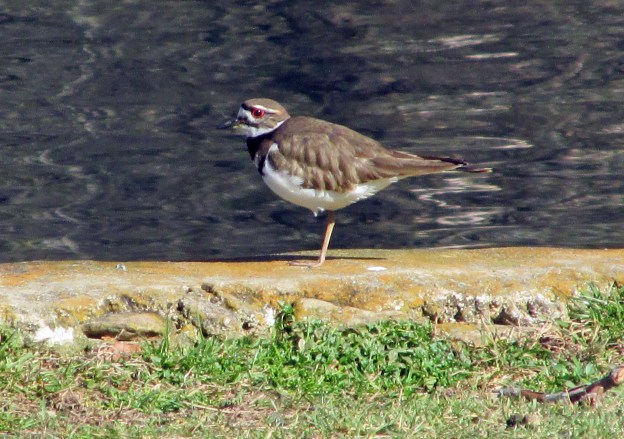
Photo by Janice Humble • A killdeer wanders in a grassy area near the Wal-Mart on Volunteer Parkway in Bristol. The killdeer, a species of plover, is one of the more common shorebirds found in the region.

I’m always glad to lend a hand at identifying birds. If you’re uncertain of a bird’s identification and have a photo of the bird in question, assistance is an email away. Janice Humble emailed me seeking some help with identifying the bird in a photograph attached with her message. She noted that the bird was accompanied by a companion in the grassy area near the Wal-Mart on Volunteer Parkway in Bristol. She also noted that the two birds uttered loud “peeps” during her observation.

The bird turned out to be a killdeer, a species of plover native to North America. Plovers belong to the family of shorebirds that include various sandpipers, curlews, dowitchers, stilts, avocets and other species. The killdeer is a rather common shorebird that finds itself at home far from the seashore, often present in habitats such as pastures and golf courses, as well as the grassy areas near the concrete and asphalt jungles that surround Wal-Marts and other such shopping complexes.

The killdeer’s famous for its faking of an injured wing. When its nest or young is threatened, a killdeer will go into an elaborate display, fluttering the “injured” wing and uttering shrill peeps to distract the potential predator. If successful, the bird will lure the predator away from the nest or vulnerable young. Once at a safe distance, the killdeer undergoes a miraculous recovery and takes wing, leaving behind a bewildered and perhaps chagrined predator.

Killdeer_AgainstLog

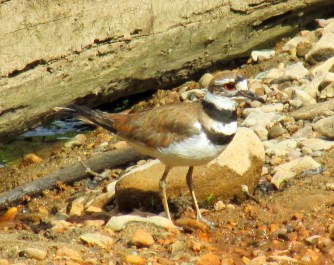
Photo by Bryan Stevens • A Killdeer explores near a stream bank.

Other North American plovers related to the killdeer include American golden-plover, black-bellied plover, Pacific golden plover, Wilson’s plover, piping plover, snowy plover, mountain plover and semipalmated plover. About 70 different species of plovers exist around the world, including such descriptively named birds as little ringed plover, red-capped plover, three-banded plover and white-fronted plover.

Musick’s Campground on Holston Lake has been one of the best area locations for seeking shorebirds during their migrations. The shore near the campground has been a magnet for persuading unusual shorebirds to pause their journey to rest, refresh and refuel. The location’s privately owned, but individual wishing to bird the shoreline can enter by signing the guest book located a small but well-marked kiosk. Some of the most memorable shorebirds I’ve seen at Musick’s Campground over the years include whimbrel, dunlin, sanderling, greater yellowlegs, short-billed dowitcher, American avocet, black-bellied plover and semipalmated plover. In recent weeks, the location has hosted such unexpected shorebirds as red knot and red-necked phalarope.

While the neighboring states of Virginia and North Carolina offer coastal birding opportunities, my native Tennessee remains quite landlocked. This fact poses a challenge for birders looking to capitalize on the seasonal migrations of shorebirds. Fortunately ponds, mudflats on the shorelines of lakes, riverbanks and even flooded fields offer adequate substitute habitat for many shorebirds. While the Mountain Empire region may lack a seashore, migrating shorebirds have learned to make do.

6300749922_099f28ae81_o (1)

Photo by Jean Potter • The American golden-plover, like this individual, is a long-distance migrant among the varied family of shorebirds.

This varied and far-flung family is also known as “wind birds,” a term which is an allusion to the capacity of many species of shorebirds to undertake nothing less than epic migrations. Many of the shorebirds that pass through in the spring are in haste to reach their nesting grounds as far north as the edge of the Arctic tundra. In fall, many of the same birds are eager to return to destinations in Central and South America ahead of cold weather and times of scarcity.

The plovers — the sedentary killdeer excepted — are among the champions of long-distance migration. According to the Audubon website, the black-bellied plover spends the brief summer season nesting in the world’s high Arctic zones but disperses to spend the winter months on the coasts of six of the globe’s seven continents.

The Pacific golden-plover’s twice yearly migrations represent an even more impressive feat. This shorebird often nests in Alaska and winter in Hawaii. The website Phys.org notes that research on this plover has revealed that the bird is capable of flying almost 3,000 miles in a mere four days. The website also reveals that those plovers wintering in Hawaii cannot lay claim to longest migrations. Some Pacific golden-plovers nest even farther south in the Pacific, reaching the Marshall Islands.

Black-belliedPlover

Photo by Jean Potter • A black-bellied plover stands out from most relatives when it wears its nesting season breeding plumage.

Shorebirds represent only a single family of birds migrating through the region in the fall. Songbirds from warblers and thrushes to vireos and flycatchers, as well as raptors and waterfowl, wing their way through the region every fall. Get outdoors with a pair of binoculars and have a look. It’s almost impossible not to see something, which may turn out to be a delightful and unanticipated surprise.

••••••

To learn more about birds and other topics from the natural world, friend Stevens on Facebook at https://www.facebook.com/ahoodedwarbler. To ask a question, make a comment or share a sighting, email him at ahoodedwarbler@aol.com.

Upcoming programs offer insight into birds and birding

Fall migration has begun. The pace may be a trickle at present, but the floodgates will open in September and October as a multitude of neotropical migrants — birds that spend the summer nesting season in North America — make their way back to warmer territory in Central and South America.

GREENHeron-Aug26

Photo by Bryan Stevens • Upcoming programs in the region will focus on topics such as songbirds, raptors and the basics of beginning birdwatching. Plan to attend one or more of the programs to learn more about birds, such as this green heron.

A few of the “early birds” are already well on their way. At home, I am already seeing evidence of the increasing pace of migration as hummingbird numbers increase daily at my feeders and thrushes and warblers make stopovers in the surrounding woodlands. In the coming weeks, I fully expect to see even more of these migrating birds. It’s one of the major reasons that autumn’s my favorite season. The birds that were in such a rush to get to nesting grounds back in April and May take a more leisurely pace as they journey back south in September and October.

September will also offer some opportunities to learn more about our feathered friends at some upcoming programs that aim to provide some unique insights into the birds that share the world with us. Consider attending some or all of these events, and then be sure to get outdoors in the next couple of months to discover the diversity of the birds that pass through the region every fall.

I will be presenting a free program titled “Bold Birding in the Backyard and Beyond” at the Elizabethton/Carter County Public Library at 1 p.m. on Wednesday, Sept. 6. The program, which is part of the library’s Adult Services program, is designed as an introduction for beginners to the pastimes of birding and birdwatching.

 
My presentation will feature photographs taken around my home, as well as from some of my birding adventures during my travels. I took many of the photographs that will be presented in Tennessee, Virginia and North Carolina, but I will also show some photos from trips to Utah, Georgia, South Carolina and Florida.

 
I will offer some basic steps people can take to increase their enjoyment of the experience of birdwatching. I will also highlight the opportunities and advantages that membership in a local birding organization can bring.

IMG_7559 2

Photo by Bryan Stevens • Tufted titmouse checks out a feeder.


The library will provide light refreshments and a display of books on birds and birding that are available through the library’s collection. The library is located at 201 N. Sycamore St., Elizabethton. For more information, call 547-6360.

The annual Roan Mountain Fall Naturalists Rally brings together nature enthusiasts from throughout the region and beyond for a weekend of nature programs, walks and other activities. This year’s rally — the 55th consecutive one in the event’s history — will be held Friday-Sunday, Sept. 8-10. Most activities will be based at the Roan Mountain State Park Conference Center in Roan Mountain, Tennessee.

While the focus of the annual rally is always on a wide range of topics in the natural world, this year’s two evening programs on Friday and Saturday will put the spotlight on birds.

Dr. Andy Jones has worked at the Cleveland Museum of Natural History for more than a decade. He was hired in 2006 as the William A. and Nancy R. Klamm Endowed Chair of Ornithology, thanks to a donation from the Klamms to the museum. In 2011, he was also named Director of Science, overseeing all activities in the Collections and Research Division. A native of Kingsport, Tennessee, he has ties to several members in area birding organizations, including the Bristol Bird Club. His program, titled, “Using Sequences, Songs, and Serendipity to Understand Eastern North American Birds,” will explore birds and their songs, which are more complicated than anyone expected.

Andy Jones - Friday evening speaker

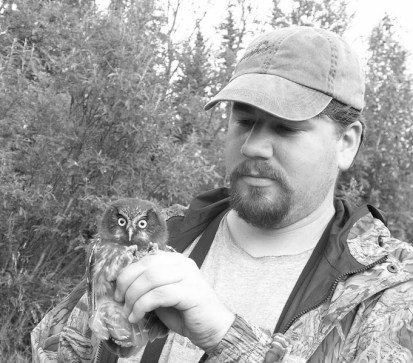
Photo Courtesy of FORM • Dr. Andy Jones holds a Northern saw-whet owl.

Ranger Marty Silver has worked as an environmental educator and conservation officer for Tennessee State Parks for more than 38 years, most of that time at Warriors Path State Park in Kingsport. He is responsible for the park’s interpretive programming, resource protection, trail maintenance, habitat management and outdoor education. Silver works with people of all ages, especially school children, and shares nature discovery and conservation awareness with more than 30,000 students each year. In addition, he has presented numerous teacher training workshops and has received a number of state-wide and national environmental education awards.

Silver will bring some rehabilitated captive raptors that he employs in educational programs. These birds suffered injuries in the past that made it impossible to return them to the wild, but they now serve as feathered ambassadors to help people learn about a family of birds that is often misunderstood. These raptors (with a little help from Ranger Silver) share new insights into how everyone can play a role in resource protection through nature education.

Marty Silver - Saturday evening speaker

Photo Courtesy of FORM • Marty Silver and a great horned owl present an educational program on birds.

Both evening programs begin at 7:30 p.m. and follow buffet meals that will be held at 6:30 p.m. There is an additional cost to attend the meals, and reservations are necessary. There are registration fees to attend any of the activities, including the evening programs, at the Roan Mountain Fall Naturalists Rally. Membership in the organization will result in fees being waived. For information on joining Friends of Roan Mountain or a complete schedule for this year’s Rally, please visit http://www.friendsofroanmtn.org for a downloadable brochure, registration form and contact information. In addition to the evening programs, the three-day rally will feature bird walks, as well as hikes featuring a variety of topics, including butterflies, mushrooms, wildflowers, salamanders and spiders.

•••••

Attending these programs could offer some helpful information to prepare for this year’s fall migration. However, even if you’re unable to fit any of the programs into your schedule, plan on getting outdoors this fall. Birds are going to be much easier to find and observe as they migrate, so keep your eyes open.
•••••

If you have a question, wish to make a comment or share a sighting, email ahoodedwarbler@aol.com.

There’s change in the air…

With every passing day, autumn is creeping closer. The calendar indicates that the first official day of fall is Sept. 23, but the rest of the world around us doesn’t wait for us to turn the page.

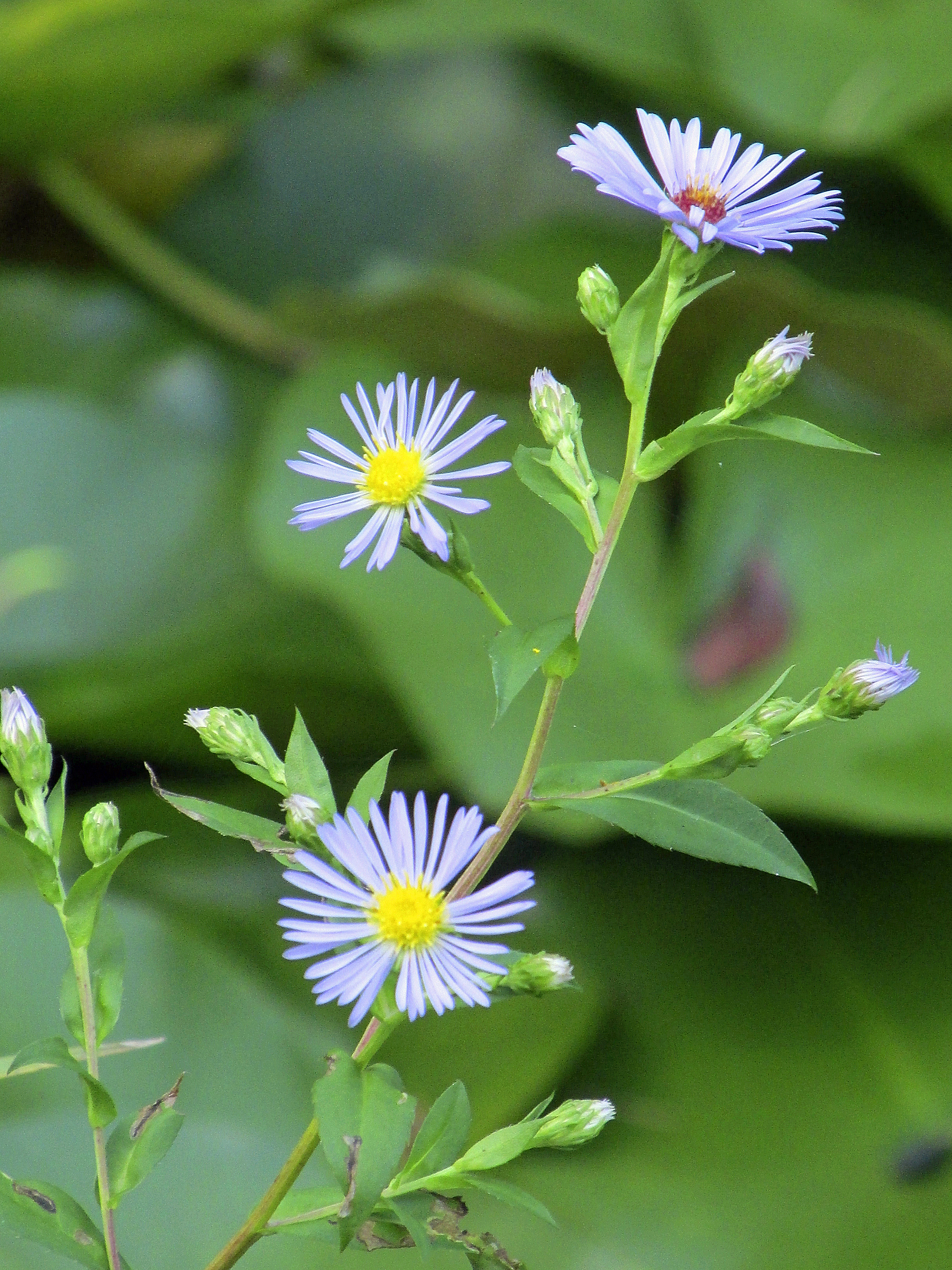
Photo by Bryan Stevens Asters, which come in a variety of colors, are usually a late-blooming wildflower.

Photo by Bryan Stevens
Asters, which come in a variety of colors, are usually a late-blooming wildflower.

Fall is upon us, which is apparent in a myriad of subtle signs, from the blooms of new wildflowers to the last surge of the season’s butterflies and dragonflies.

Of course, there’s also the migration of our feathered friends.


The dazzling birds of spring, such as Scarlet Tanagers and Rose-breasted Grosbeaks, are winging their way through our backyards again.

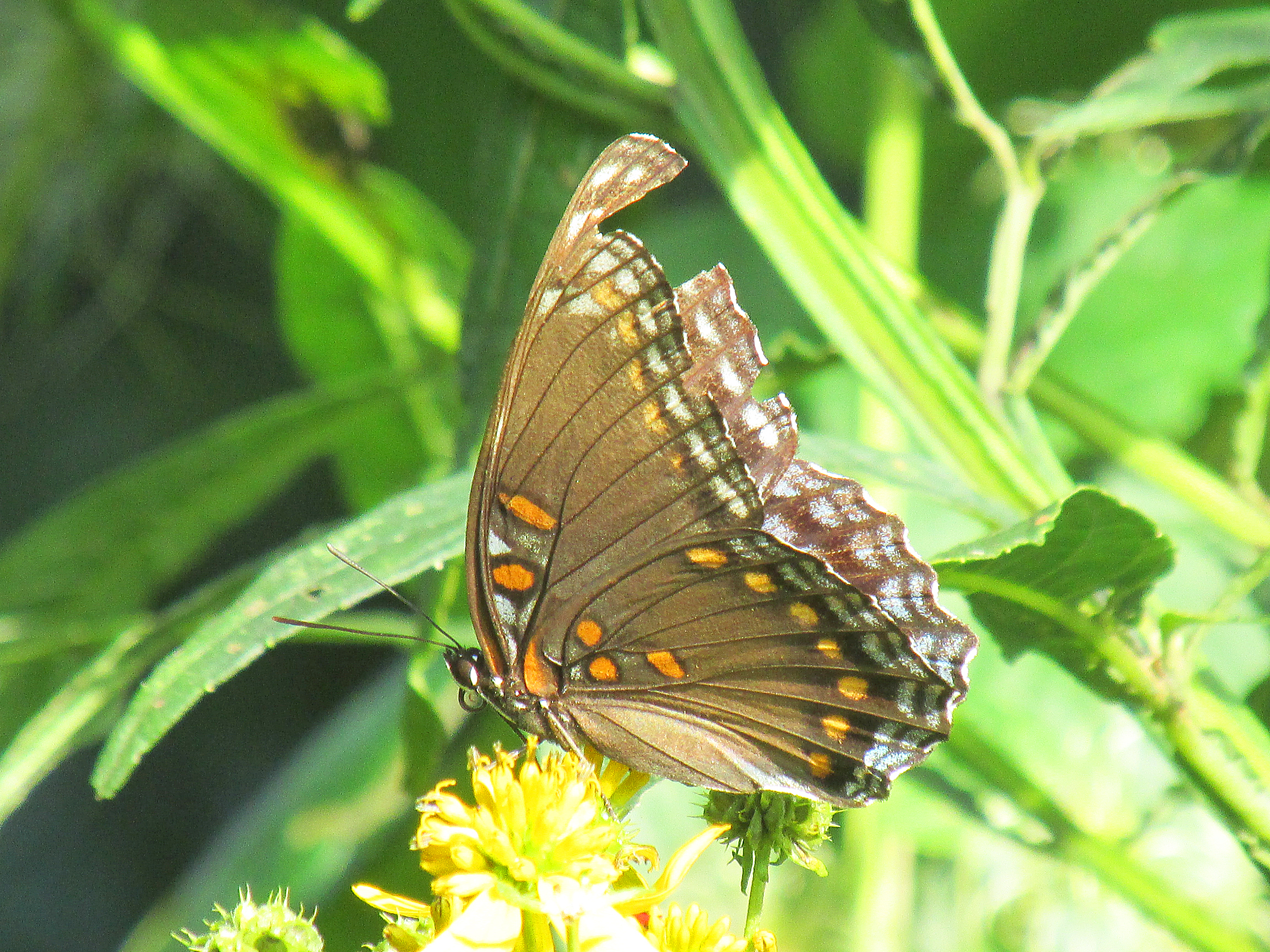
Photo by Bryan Stevens  Many butterflies, such as this swallowtail, look rather tattered this far into the season.

Photo by Bryan Stevens
Many butterflies, such as this swallowtail, look rather tattered this far into the season.

Many of these visitors have adopted a more subdued appearance as they stage their earlier migration flights in reverse. Then, there are fall warblers, sometimes also known by birders as “confusing fall warblers” since not only do observers have to distinguish between differences in male and female plumages, but also must contend with immature birds that resemble neither of their parents.


Want to learn how to quickly identify some of these so-called “confusing” warblers you may see flitting through the treetops this fall? Simply visit

http://dl.allaboutbirds.org/download_the_warbler_guide_quickfinders?utm_campaign=Warrbler-Campaign&utm_source=facebook&utm_campaign=Warbler-Campaign&utm_source=adwords&gclid=Cj0KEQjw-dSgBRDb0oOl9MzxqMEBEiQAkHqy-YYJxjOHJaXTUB4yRx0CewNowVY0m5PyD9K46roYfJkaAkuO8P8HAQ

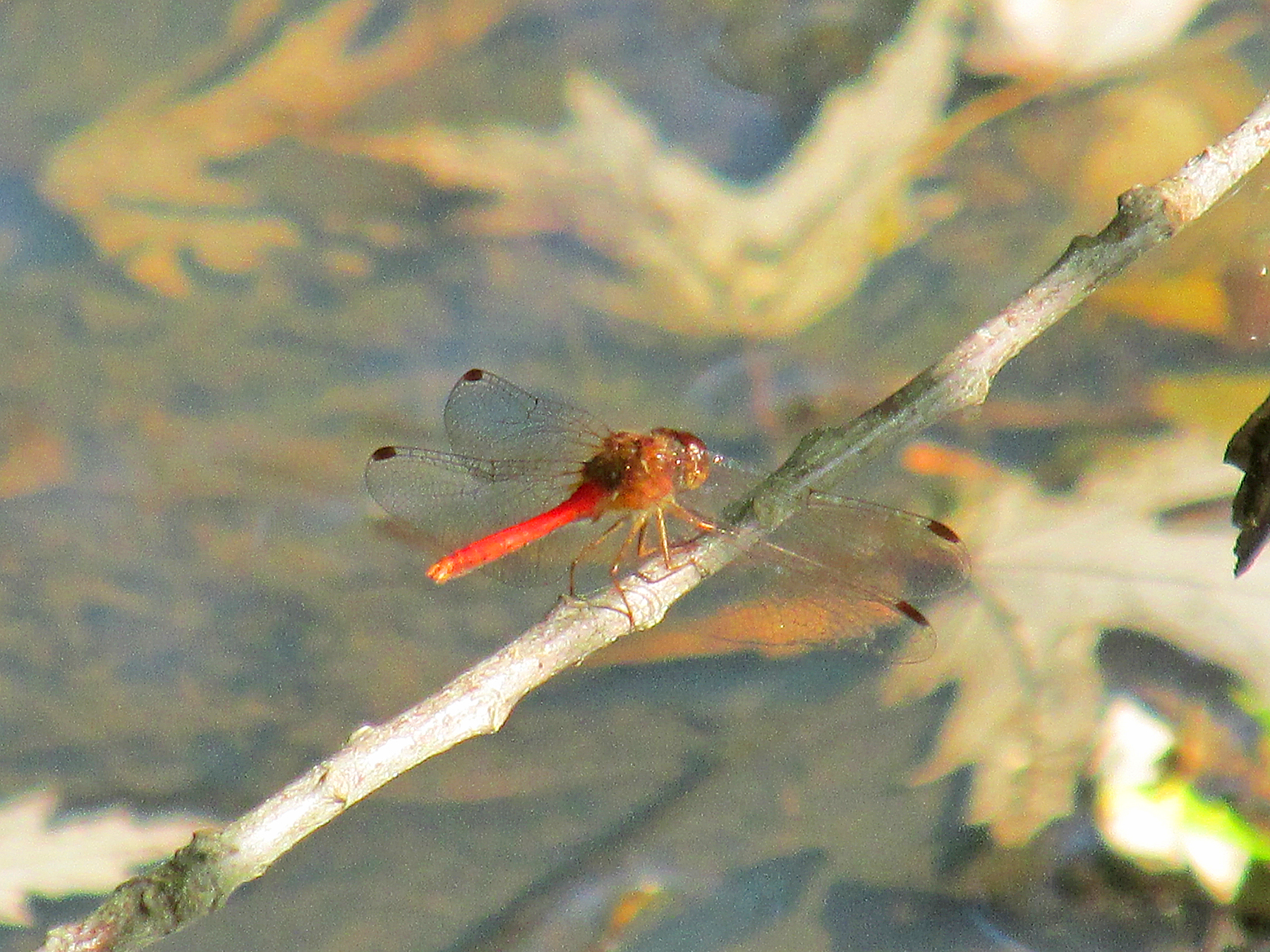
Along the edges of ponds, the final dragonflies of the season have begun to emerge. Autumn Meadowhawks and Blue-faced Meadowhawks have both made appearance at my fish pond along Simerly Creek Road.  Other dragonflies have been scarce, and the damselflies have almost disappeared. I am still seeing a few Eastern Pondhawks, Blue Dashers, Eastern Amberwings and even a Fawn Darner.

Photo by Bryan Stevens The aptly-named Autumn Meadowhawk is one of the last dragonflies to emerge each year.

Photo by Bryan Stevens
The aptly-named Autumn Meadowhawk is one of the last dragonflies to emerge each year.

During a visit to Erwin Fishery Park on Sept. 12, I was amazed to observe thousands of dragonflies — basically, a swarm of these incredible winged insects — hawking for smaller winged insects in the air above the now-closed swimming pool at the municipal park.

Most of the individuals in this incredible swarm looked like Green Darners, but I think a few other species had also joined the feeding frenzy. Green Darners, incidentally, are known for gathering in large flocks, just like birds, and staging their own migratory flights.

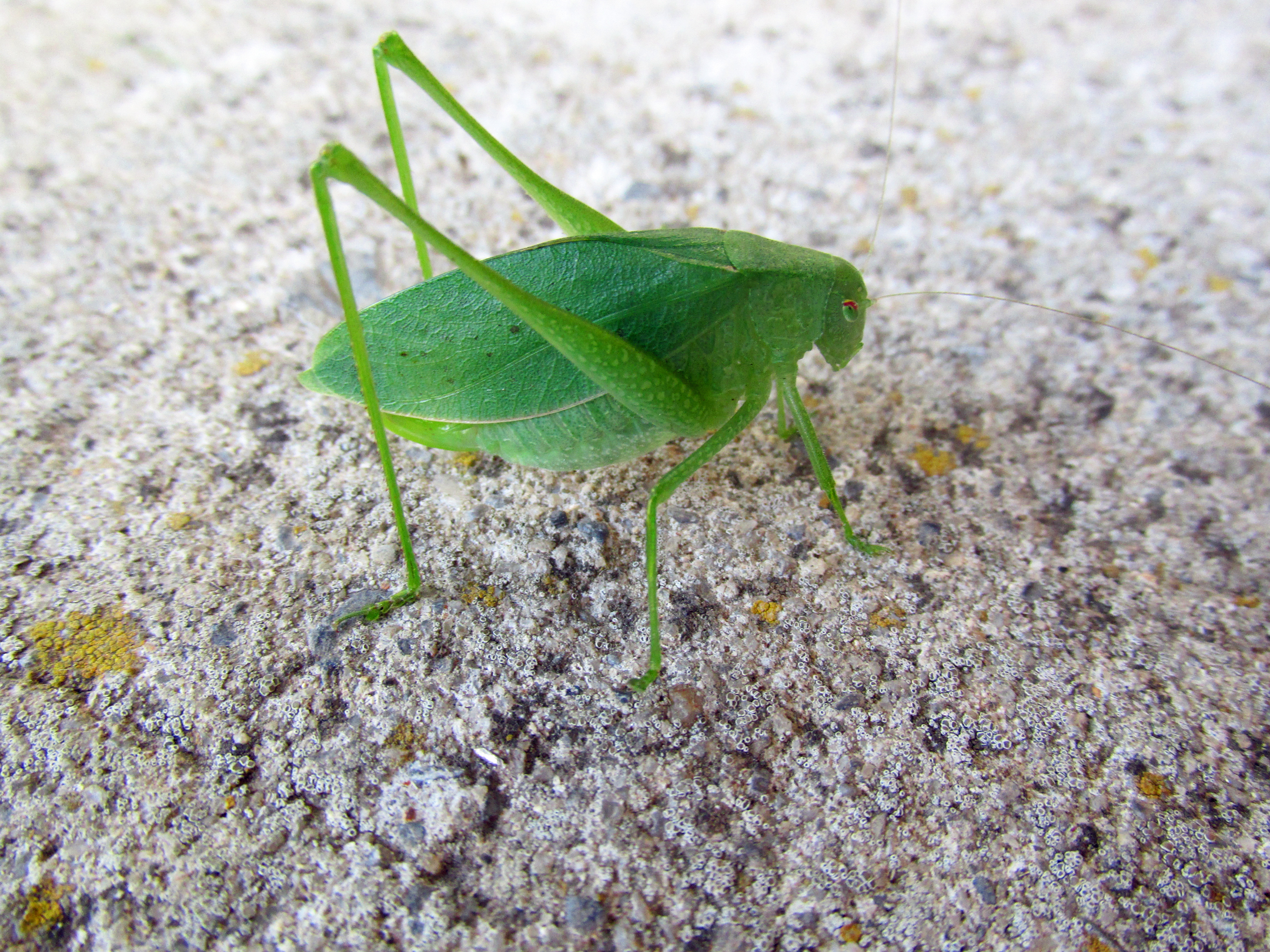
Photo by Bryan Stevens Katydids, some resembling nothing so much as a green leaf, are becoming more prominent as summer transitions into fall.

Photo by Bryan Stevens
Katydids, some resembling nothing so much as a green leaf, are becoming more prominent as summer transitions into fall.

Speaking of insects, I’ve also been hearing Katydids. A recent post of a Katydid photo on my Facebook page prompted responses that brought up the old superstition that the first frost will take place several weeks after the Katydids begin their nocturnal serenades.

I always look forward to September, but it always seems to be an extremely busy month for me. This year’s no exception, but I am determined to carve out some time to enjoy this month of transition.

Join me in paying closer attention to the world around you this month. There are new birds to see almost every day if you simply take the time to look. If the birds are absent, look with even more attention to detail and you’re sure to be rewarded with some other remarkable observations.

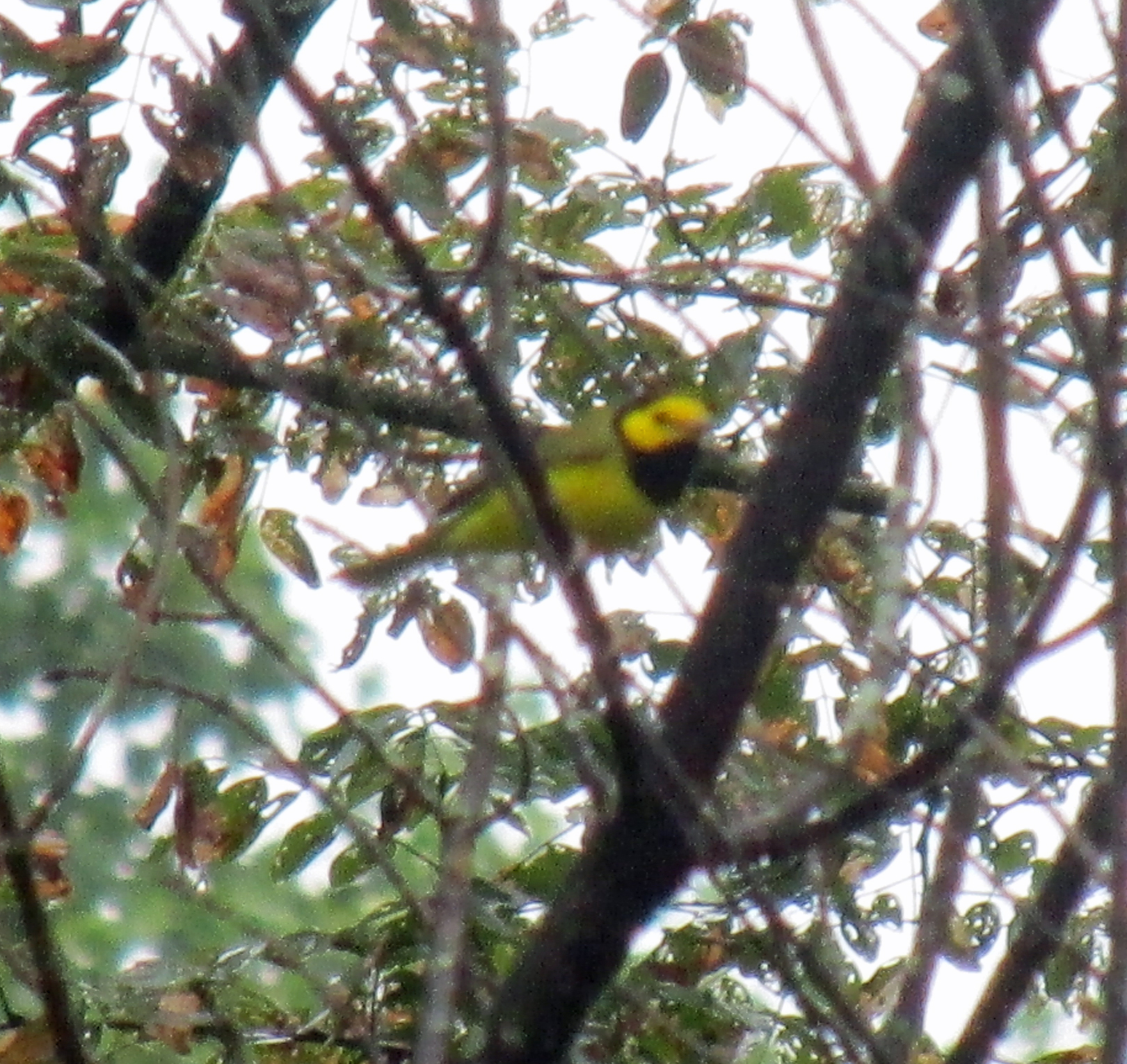
Photo by Bryan Stevens A male Hooded Warbler makes a quick journey through the back yard.

Photo by Bryan Stevens
A male Hooded Warbler makes a quick journey through the back yard.

Photo by Bryan Stevens

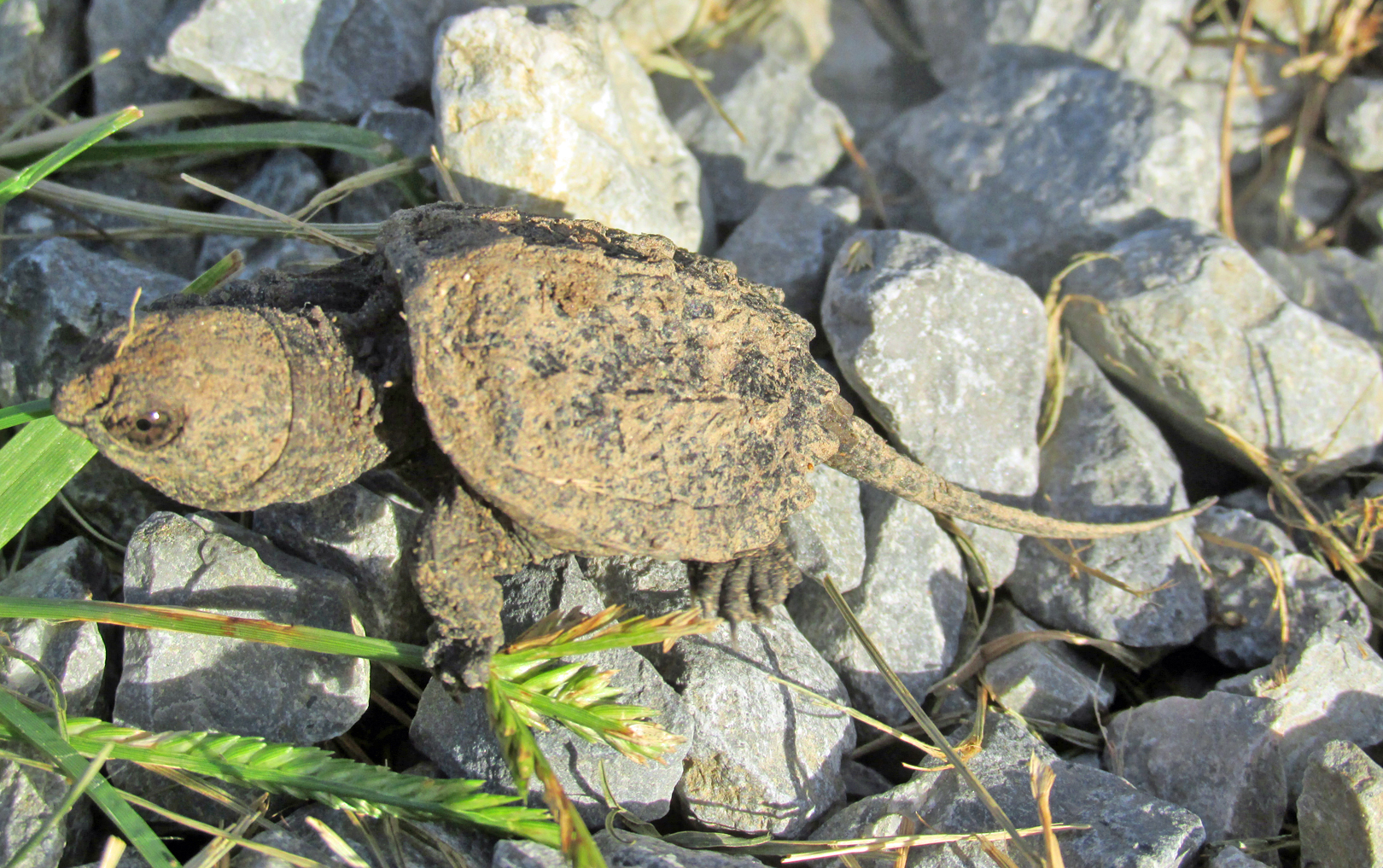
Photo by Bryan Stevens A newly-hatched Snapping Turtle will have a few weeks to grow before burrowing down to hibernate through the long, cold winter season.