Tag Archives: Kingsport Times

77th Elizabethton Christmas Bird Count yields 63 species

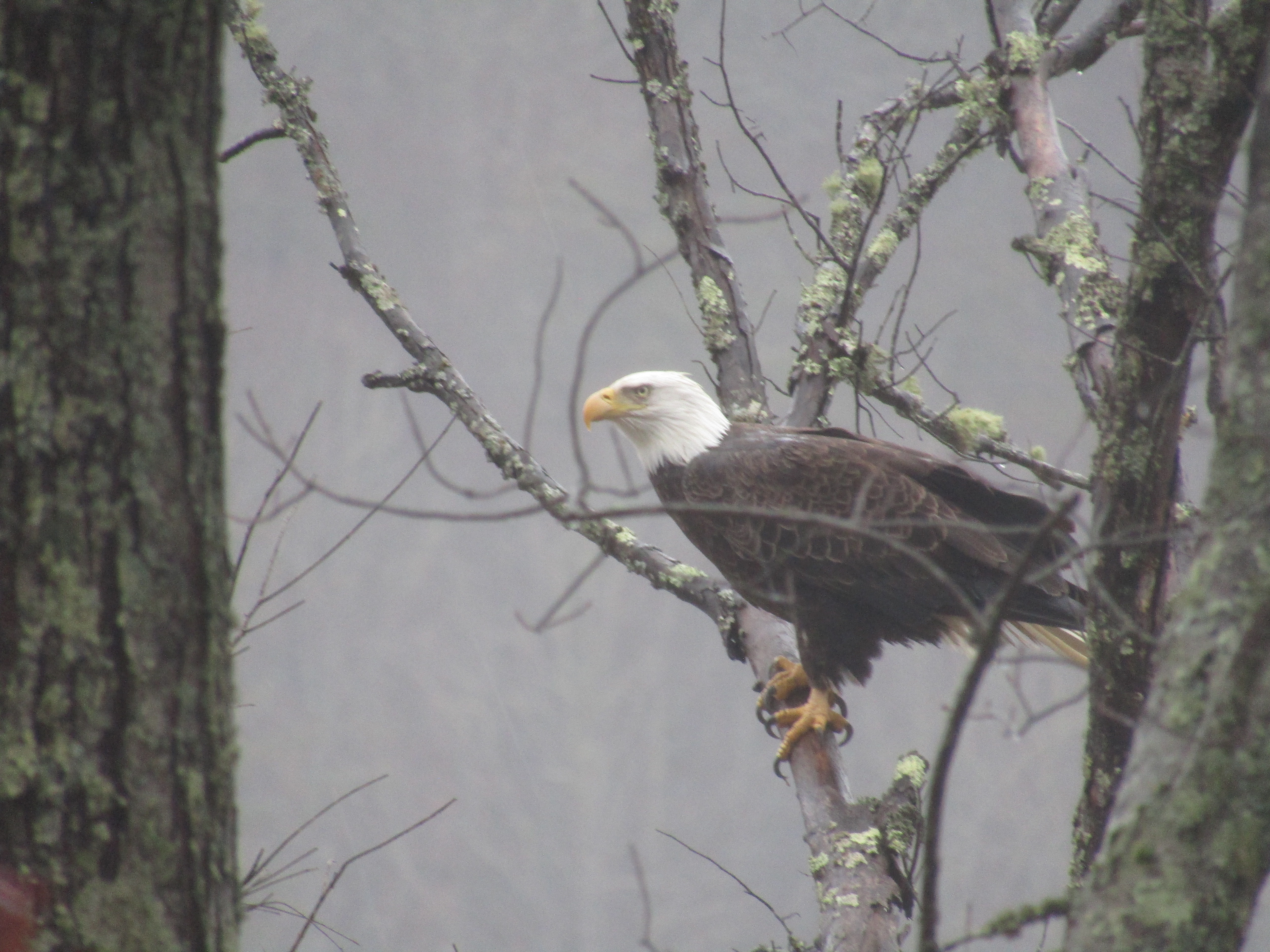
Photo by Bryan Stevens • This adult bald eagle was one of several counted on this year’s Christmas Bird Count.

The 77th consecutive Elizabethton Christmas Bird Count was held by members and friends of the Elizabethton Bird Club on Saturday, Dec. 14. Participants in the long-running CBC tallied a total of 63 species of birds, which was down considerably from the recent average of 73 species. The all-time high for this count consisted of 85 species and was established two years ago with the 2018 Elizabethton CBC.

The temperature lingered in the 40s all day with light rain. The low species total, as well as low individual numbers, was likely due to the lousy weather, according to long-time count compiler Rick Knight.

Knight noted some count highlights, including single representatives of ruffed grouse, pine warbler and red-headed woodpecker. In addition, 75 wild turkeys, 181 Eastern bluebirds, and 449 cedar waxwings demonstrated that some birds were far from scarce.

The 1,015 individuals counted made the European starling the most abundant bird on this year’s CBC, followed by cedar waxwing (449), American robin (371) and Canada goose (319).
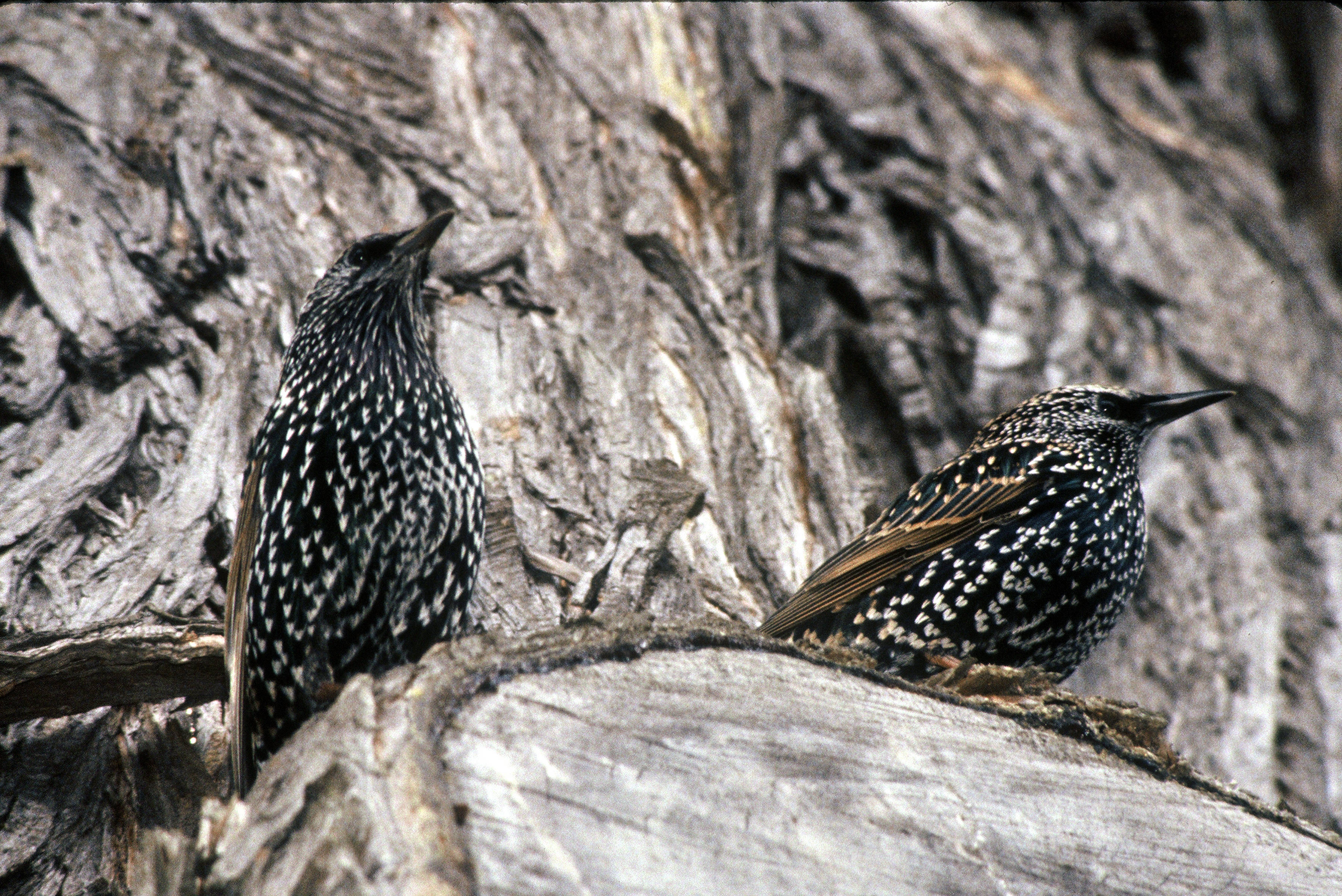
Photo by U.S. Fish & Wildlife Service • The European Starling ranked as the most common species on the count.

Notable misses included almost all the ducks — only three species being found. Knight noted that duck numbers have been low so far this season.

Counters also missed finding killdeer, Wilson’s snipe, Eurasian collar-dove, red-breasted nuthatch, brown thrasher, Eastern meadowlark, white-crowned sparrow and fox sparrow. A single Eastern screech-owl represented the only owl species found on the count.

My own count area consisted of territory around Watauga Lake and the town of Butler. Accompanying me on this count were Brookie and Jean Potter, David and Connie Irick, Eric Middlemas, Brenda Richards and Chris Soto.

Highlights of our day counting birds in mid-December included numerous sightings of bald eagles and a welcome and restorative lunch at Dry Hill General Store and Deli in Butler. We also enjoyed our observations of a common loon, horned grebe, and several species of raptors.
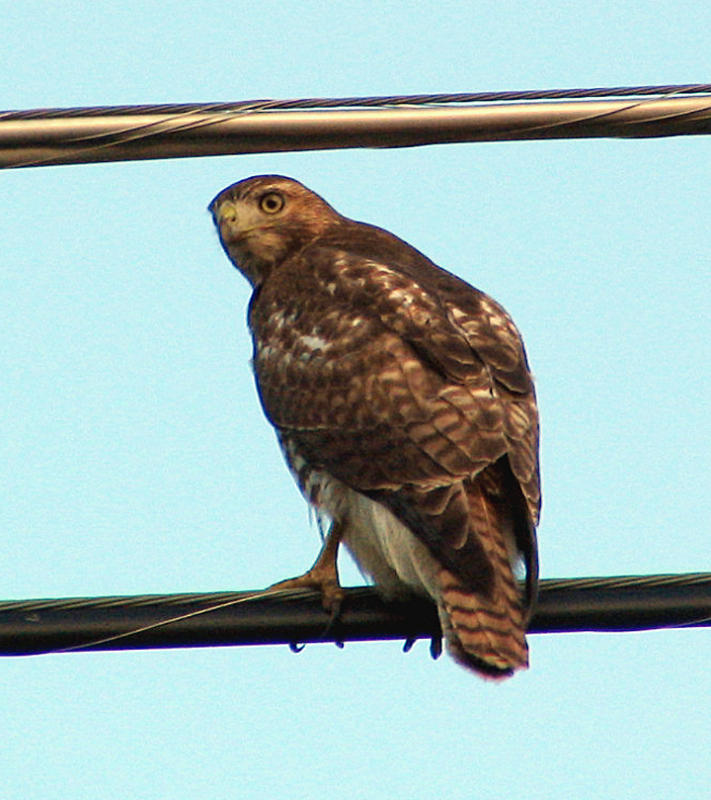
Photo by Bryan Stevens • Nine red-tailed hawks made it onto this year’s Elizabethton Christmas Bird Count.

Here’s the final total for the 2019 Elizabethton CBC:

Canada goose, 319; mallard, 268; ring-necked duck, 4; bufflehead, 107; ruffed grouse, 1; and wild turkey, 75.

Common loon, 1; pied-billed grebe, 4; horned grebe, 1; double-crested cormorant, 4; and great blue heron, 18.

Black vulture, 4; turkey vulture, 38; sharp-shinned hawk, 4; Cooper’s hawk, 1; bald eagle, 6; and red-tailed hawk, 9.

Ring-billed gull, 20; rock pigeon, 246; mourning dove, 200; Eastern screech-owl, 1; and belted kingfisher, 11.

Red-headed woodpecker, 1; red-bellied woodpecker, 10; yellow-bellied sapsucker, 10; downy woodpecker, 21; hairy woodpecker, 2; Northern flicker, 27; and pileated woodpecker, 7.

American kestrel, 8; Eastern phoebe, 7; blue jay, 164; American crow, 299; and common raven, 1.

Carolina chickadee, 133; Tufted titmouse, 61; white-breasted nuthatch, 29; brown creeper, 1; winter wren, 5; and Carolina wren, 94.

Golden-crowned kinglet, 15; ruby-crowned kinglet, 1; Eastern bluebird, 181; American robin, 371; Northern mockingbird, 57; European starling, 1,015; and cedar waxwing, 449.

Pine warbler, 1; yellow-rumped warbler, 61; Eastern towhee, 17; chipping sparrow, 16; field sparrow, 28; Savannah sparrow, 5; song sparrow, 125; swamp sparrow, 1; white-throated sparrow, 40; and dark-eyed junco, 45.

Northern cardinal, 124; brown-headed cowbird, 1; house finch, 72; American goldfinch, 63; and house sparrow, 29.

Photo by Jean Potter • Two species of warbler — pine warbler, pictured here, and yellow-rumped warbler — made this year’s Elizabethton CBC.

Roan Mountain CBC finds 49 species

The Elizabethton Bird Club conducts a second CBC for Roan Mountain in Carter County, Tennessee. The 67th Roan Mountain CBC was held the following day, Sunday, Dec. 15, with eight observers in two parties. The skies had cleared from the previous day. Participants counting at elevations above 4,500 feet found an inch of fresh snow.
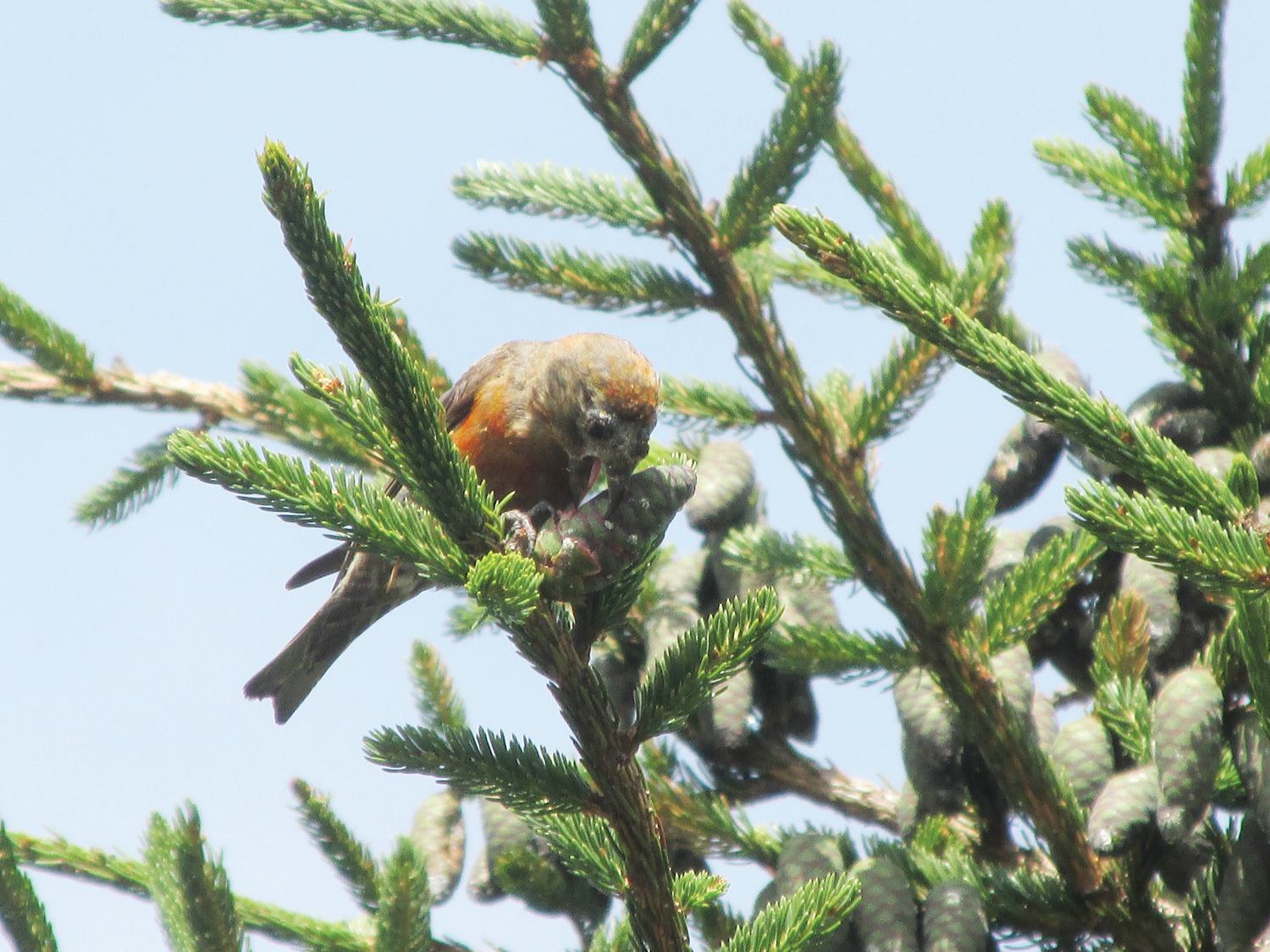
Knight noted that a good cone crop is present in the spruce-fir forest. The count tallied 49 species, which is three above the recent 30 year average. The all-time high on this count was 55 species found in 1987. Lower species totals on this count are due to harsher climate in higher elevations, less diversity of habitats, and lower number of observers and parties.

Some highlights included 26 Canada geese. On most CBCs, Canada geese would not be considered extraordinary, but Knight noted there are few records on the Roan Mountain CBC for this goose.  Other highlights included 11 American black ducks, two red-breasted nuthatches and a single purple finch. A single American kestrel, which is also represented by only a few records on this count, was found. The counters found 27 common ravens, which meant that this corvid species outnumbered its relative the blue jay, which tallied only 21 individuals.

Knight suggested that a few notable misses for this count included sharp-shinned hawk, brown creeper and fox sparrow.

The Roan Mountain CBC total follows:

Canada goose, 26; American black duck, 11; buffledhead, 17; hooded merganser, 1; wild turkey, 2; pied-billed grebe, 2; and great blue heron, 1.

Turkey vulture, 3; Cooper’s hawk, 2; red-shouldered hawk, 2; and red-tailed hawk, 2.

Rock pigeon, 14; mourning dove, 34; belted kingfisher, 1; red-bellied woodpecker, 4; yellow-bellied sapsucker, 3; downy woodpecker, 14; hairy woodpecker, 1; and pileated woodpecker, 2.

American kestrel, 1; Eastern phoebe, 4; blue jay, 21; American crow, 96; and common raven, 27.

Carolina chickadee, 46; tufted titmouse, 31; red-breasted nuthatch, 2; white-breasted nuthatch, 12; winter wren, 1; and Carolina wren, 21.

Golden-crowned kinglet, 9; Eastern bluebird, 18; American robin, 126; Northern mockingbird, 1; European starling, 33; and cedar waxwing, 12.

Yellow-rumped warbler, 1; Eastern towhee, 17; field sparrow, 3; song sparrow, 68; white-throated sparrow, 11; and dark-eyed junco, 62.

Northern cardinal, 19; house finch, 2; purple finch, 1; red crossbill, 10; pine siskin, 1; and American goldfinch, 6.
Cardinals do their part to make the winter season brighter

Photo by Skeeze/Pixabay.com • A male Northern cardinal lands on a snowy perch. Cardinals are perfect symbols for the Christmas season with their bright red plumage.

The shopping days before Christmas are getting fewer, so I hope everyone has had time to find gifts for everyone on their lists. My own sincere wish to readers is that everyone gets to enjoy a great holiday that just might also include watching some birds.

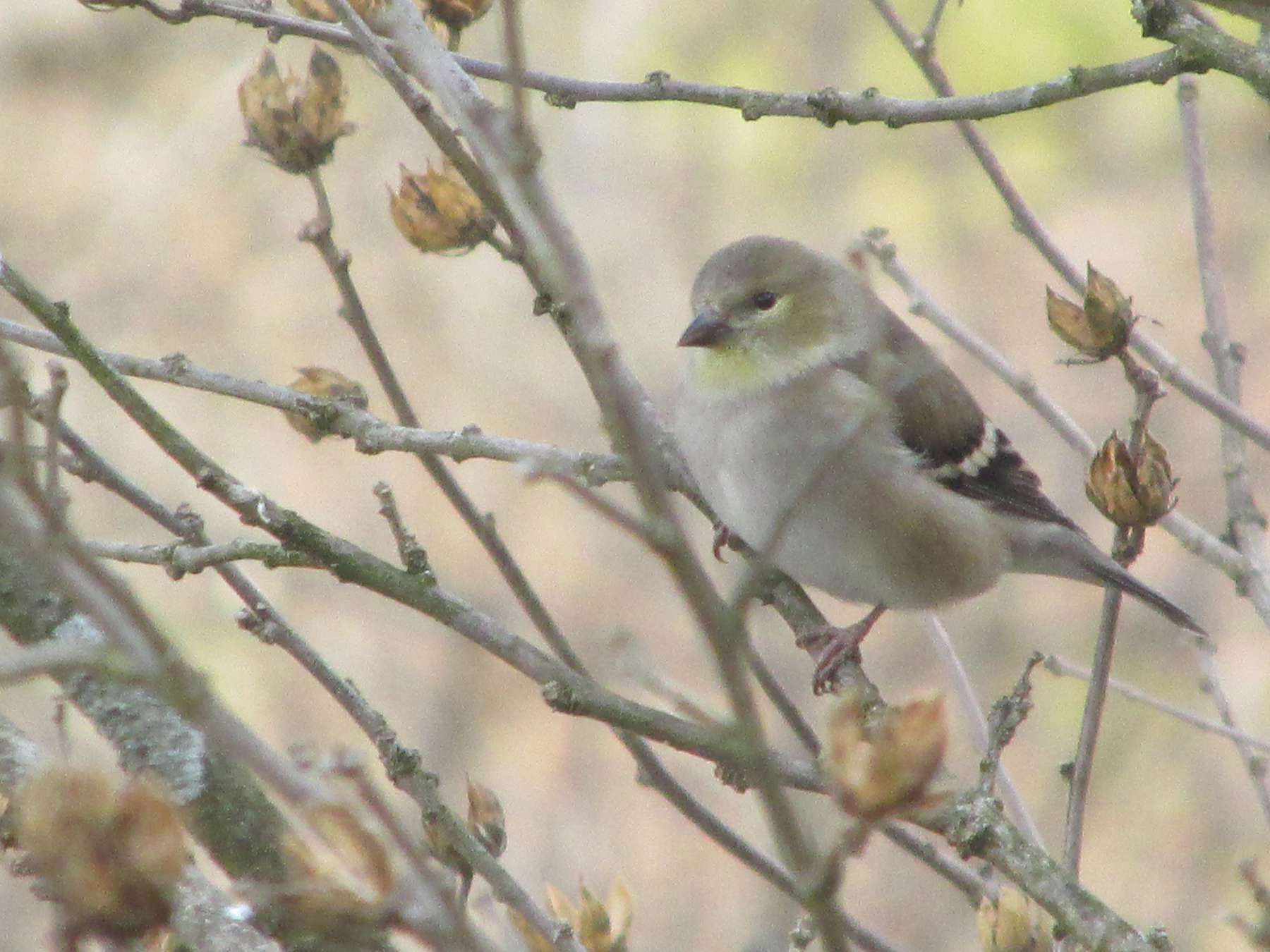
Often, when we think of the birds of the winter season, our thoughts focus on some of the less-than-colorful feeder visitors — the brown sparrows and wrens, the black and white chickadees, the drab American goldfinches that look so unlike their summer appearance.

There’s one bird, however, that makes an impression in any season. The Northern cardinal, especially the brilliant red male, stands out against a winter backdrop of snow white, deep green or drab gray.

Photo by Bryan Stevens • Northern cardinal seems much less descriptive of this popular bird than such common names as Virginia nightingale and Kentucky redbird.

Over the years, the Northern cardinal has also become associated with the Christmas season. How many Christmas cards have you received this holiday season with a cardinal featured in the artwork? I’d wager that at least a few cards in any assortment of holiday greetings will feature the likeness of a bright red cardinal.

Cardinals, also known by such common names as redbird and Virginia nightingale, are easily recognized backyard birds. I never tire of observing these colorful birds. Cardinals are easily lured to any backyard with plentiful cover to provide a sense of security and a generous buffet of sunflower seed.

Photo by Bryan Stevens • Even the female Northern cardinal offers a subtle beauty not quite as showy as the male.

Cardinals accept a wide variety of food at feeders. Sunflower seed is probably their favorite, but they will also sample cracked corn, peanuts, millet, bakery scraps and even suet. The cardinal is also one of only a few birds that I have noticed will consistently feed on safflower seed.

While we may get the idea that cardinals feed largely on seed, that is a misconception based on our observation of the birds at our feeders. When away from our feeders, cardinals feed on insects and fruit, including the berries of mulberry, holly, pokeberry, elderberry, Russian olive, dogwood and sumac.

There’s no difficulty in identifying a cardinal. The male boasts crimson plumage, a crest, a black face and orange bill. The female, although less colorful, is also crested. Female cardinals are soft brown in color, with varying degrees of a reddish tinge in their feathers, particularly in their wings. Immature cardinals resemble females except young cardinals have dark bills.

Cardinals are a widespread species, ranging westward to the Dakotas and south to the Gulf Coast and Texas. The southeastern United States was once the stronghold of the cardinal population. In the past century, however, cardinals have expanded their range into New England and Canada. These birds have even been introduced to Hawaii.

Photo by U.S. Fish and Wildlife Service • A male cardinal looks splendid against a snowy background.

At feeders, cardinals mingle with a variety of other birds. Their preference for dense, tangled habitat is one they share with such birds as brown thrashers, Eastern towhees, Carolina wrens and song sparrows. In general, however, cardinals directly associate only with their own kind. Cardinals will form loose flocks during the winter, but these flocks are never as cohesive as those of such flocking birds as American goldfinches. Cardinals are more often observed in pairs. For such a bright bird, the male cardinal can be surprisingly difficult to detect as he hides in thick brush that conceals his presence. Cardinals are nervous birds, however, and usually betray their presence with easily recognized chip notes.

It’s not surprising that such a popular bird has also become associated with many trappings of the Christmas season.

“You see cardinals on greeting cards, stationery, paper plates, paper napkins and tablecloths, doormats, light switch plates, candles, candle holders, coffee mugs, plates, glasses, Christmas tree ornaments and lights, bookmarks, mailboxes, Christmas jewelry,” writes June Osborne in her book The Cardinal. “And the list goes on. Cardinals have become an integral part of the way that many people celebrate the holiday season.”

Photo by Bryan Stevens • Northern cardinals are a favorite for makers of Christmas ornaments.

I can be included among such people. My Christmas decorations include an assortment of cardinal figurines and ornaments. There are other birds — doves and penguins for example — associated with the holiday season, but for me the holidays magnify the importance of one of my favorite birds. The cardinal, in its festive red plumage, appears made to order for a symbol of the holiday season.

There’s additional evidence to put forward as testimony to the popularity of the Northern cardinal. It’s the official state bird of seven states: Virginia, North Carolina, West Virginia, Ohio, Illinois, Indiana and Kentucky. Only the Northern mockingbird, which represents five states as official state bird, even comes close to the Northern cardinal in this respect.

Even once the holidays are past, there’s nothing like a glimpse of a Northern cardinal to add some cheer to a bleak winter day.

Some gifts ideas are truly ‘for the birds’

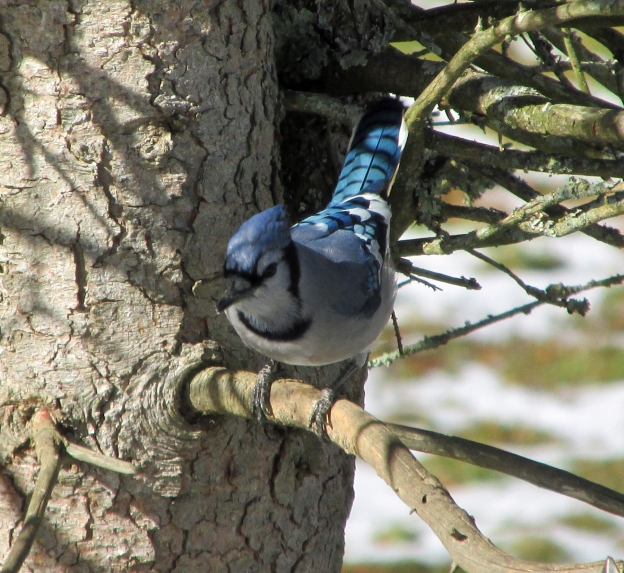
Photo by PilotBrent/Pixabay.com • A blue jay visits a feeder stocked with seed. A feeder provides a great method for drawing birds to our yards and gardens, which enhances observation of these feathered creatures.

With the days on the calendar counting down to Christmas, I thought this might be a good opportunity to make a list of gift suggestions for the birding enthusiasts on your shopping list. Keeping in mind that some budgets are a bit tight, I’ve kept these suggestions to gift ideas that can be purchased for about $20.

Bird feeders
One of the best ways to bring birds closer is to put up a feeder. For that reason, a Christmas present of a bird feeder will never be remiss. Whether shopping online or in garden centers or department stores, there’s no shortage of feeders for purchase. Bird feeding brings hours of entertainment to human hosts for only the cost of a sack of sunflower seed.
The most successful feeder that I’ve used in recent years is a type of hanging tray manufactured by such brands as Woodlink and PerkyPet and available on Amazon.com and other retail outlets for about $20. The one at my home is made from recycled plastic. Cardinals, sparrows, finches, and even the shy Eastern towhees love this open-air feeder. The mesh bottom of the feeder allows for good drainage.
There are so many designs, from extremely practical to awesomely whimsical, that choosing a feeder as a gift isn’t at all difficult. The birds and that friend on your list will thank you for the gift of a feeder. If you’re feeling in the giving spirit, throw in a bag of black oil sunflower seed to help get the recipient’s feeder off to a great start.

Photo by Bryan Stevens • Field guides are an essential tool for bird identification.

ID assistance
A field guide to birds is an indispensable tool for both the curious backyard birdwatcher and the more adventuresome birder expanding his or her viewing opportunities farther afield. Once you’ve taken the path to start identifying birds beyond your own yard and garden, a reliable field guide is indispensable.
I prefer field guides illustrated with paintings rather than photographs, but I have a varied collection of guides. I started a long time ago with the Golden Guide to Birds. It’s a classic and still a great guide to help interest children in the birds around them.
Some of the guides I recommend and use myself these days are National Geographic Field Guide to the Birds of North America, The Sibley Field Guide to Birds of Eastern North America, and Peterson Field Guide to Birds of Eastern and Central North America. Any of these field guides should be easily found online or in stores at a cost of around $20.

365 days of birds
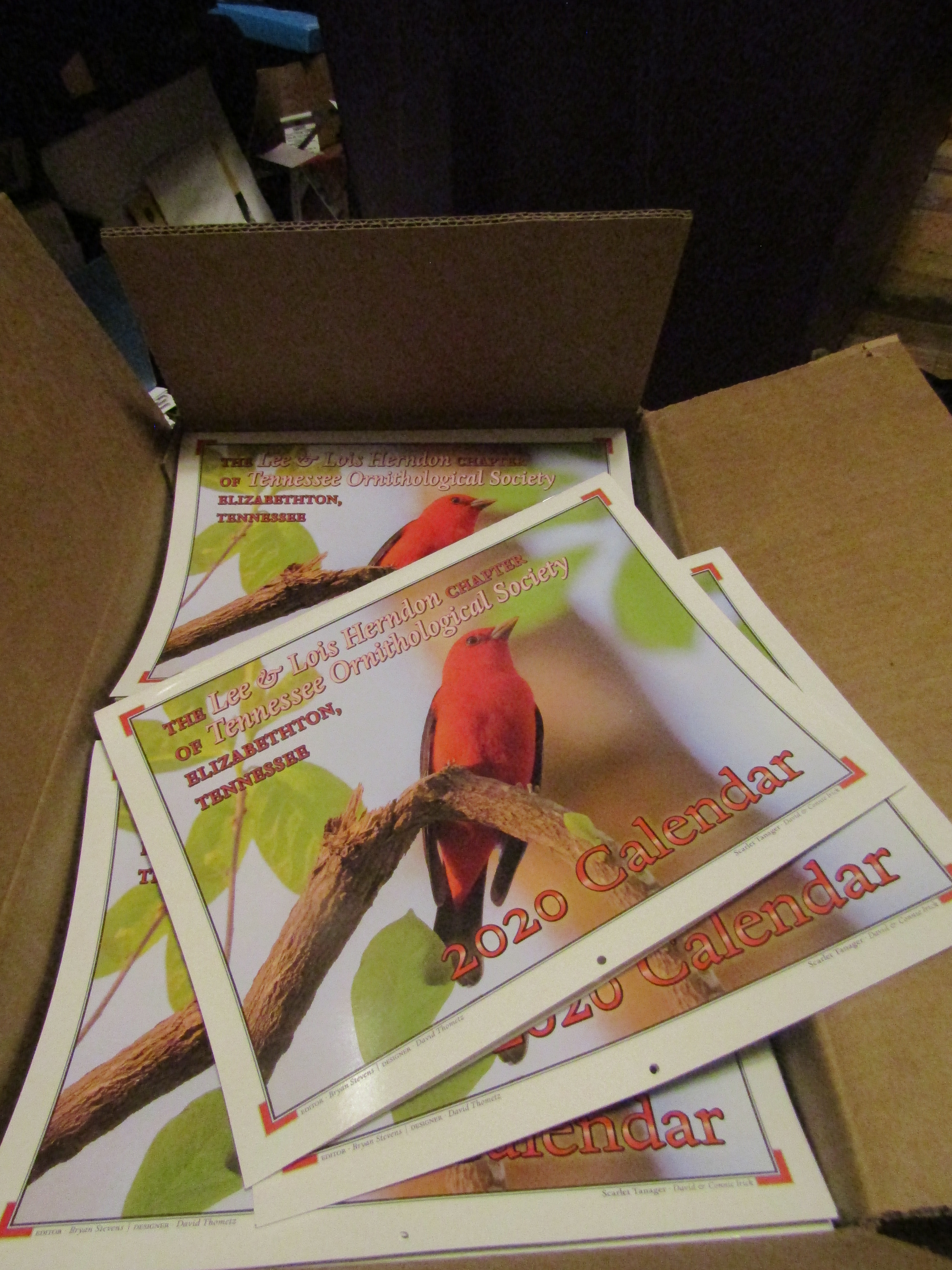
The Lee and Lois Herndon Chapter of Tennessee Ornithological Society (Elizabethton Bird Club) produces a calendar as part of a long-standing holiday fund-raising effort. The 2020 calendar features a stunning photograph of a male scarlet tanager. The inside pages feature dozens more full-color photographs and an informative and educational grid. These calendars sell for $15 plus $2 for shipping. All sales help the club fund birding programs, public park feeders, conservation efforts and other activities in upper Northeast Tennessee. To obtain a calendar, email me at ahoodedwarbler@aol.com.

Photo by Bryan Stevens • This year’s calendar produced by the Elizabethton Bird Club features a male scarlet tanager on the cover.

Flocking Together

Gift someone with a membership in a local birding organization. Bristol is home to the venerable Bristol Bird Club, which offers dual membership in the Virginia and Tennessee Ornithological Societies. The memberships of clubs are comprised of friendly, helpful individuals. Newcomers are taken under the wings and soon shown many helpful birding tips and introduced to some of the area’s birding hot spots. Single membership annual dues are $25 and family memberships are $32. To gain information about the BBC, email Treasurer Brenda Richards at richardsb16@gmail.com or write to her at: Brenda Richards, 160 Milden Hall Rd., Blountville, TN 37617.
In addition to the Bristol Bird Club, other clubs in the region include Birding Kingsport and the Elizabethton Bird Club. Other clubs in Southwest Virginia include the Buchanan County Bird Club and Russell County Bird Club. For more information on these clubs, visit https://www.facebook.com/groups/725795874231666.
Membership in any of these clubs will pay real dividends that help people make social contacts and enhance their birding skills with the help of experienced birders.
With this list of suggested gifts, happy shopping. I hope everyone’s seeing some good birds.

Photo by Bryan Stevens • A male wood duck swims with a pair of mallards.

American robin named for European counterpart


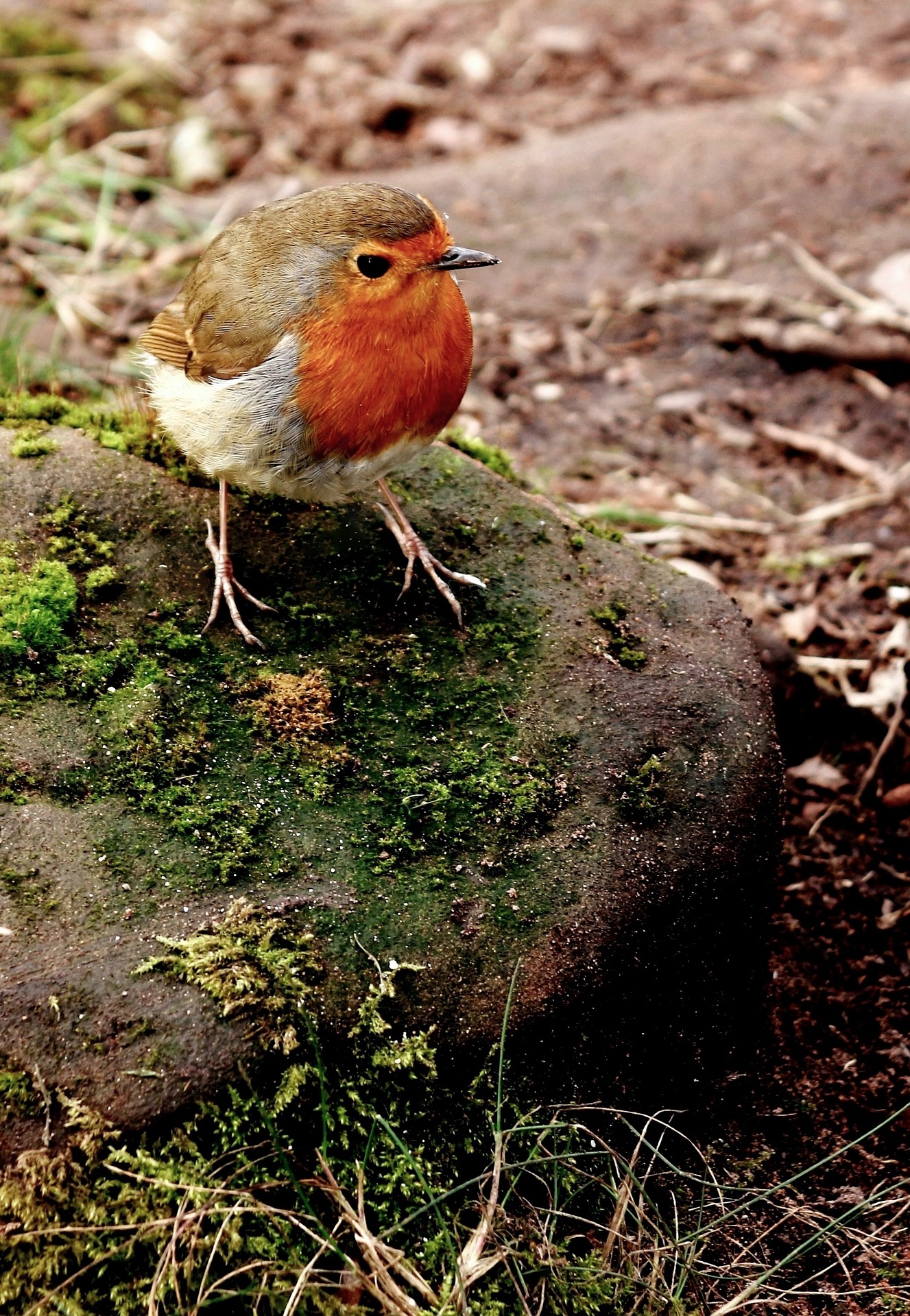
Photo by Andrew Poynton/Pixabay.com • The European robin is a common garden bird in Great Britain and other countries in Europe. The American robin was given its common name when early English colonists were reminded of their own robin back in the Old World. 

I received emails recently from Terry Fletcher, who lives on Vance Drive in Bristol, and Ernie Marburg from Abingdon, Virginia. Both emails involved flocks of birds, including American robins and cedar waxwings.

The past two days the robins have been going crazy in my small yard,” Terry wrote. “I live in a woodland area off Vance Drive.”

Terry described a flock of at least 40 robins passing through the relatively small yard. “They were also darting back and forth among the trees,” Terry wrote. “Any thoughts about this flurry of activity?

Ernie Marburg also sent me an email with a query about robins and waxwings.

“I haven’t had much to report recently, but yesterday and today I had large flocks of migrating birds,” Ernie noted. “Yesterday’s flock of cedar waxwings was extremely large.”

Ernie estimated the flock consisted of 400 to 500 individuals. He added that the flock rested for a time in his neighbor’s large oak trees and then went on its way.

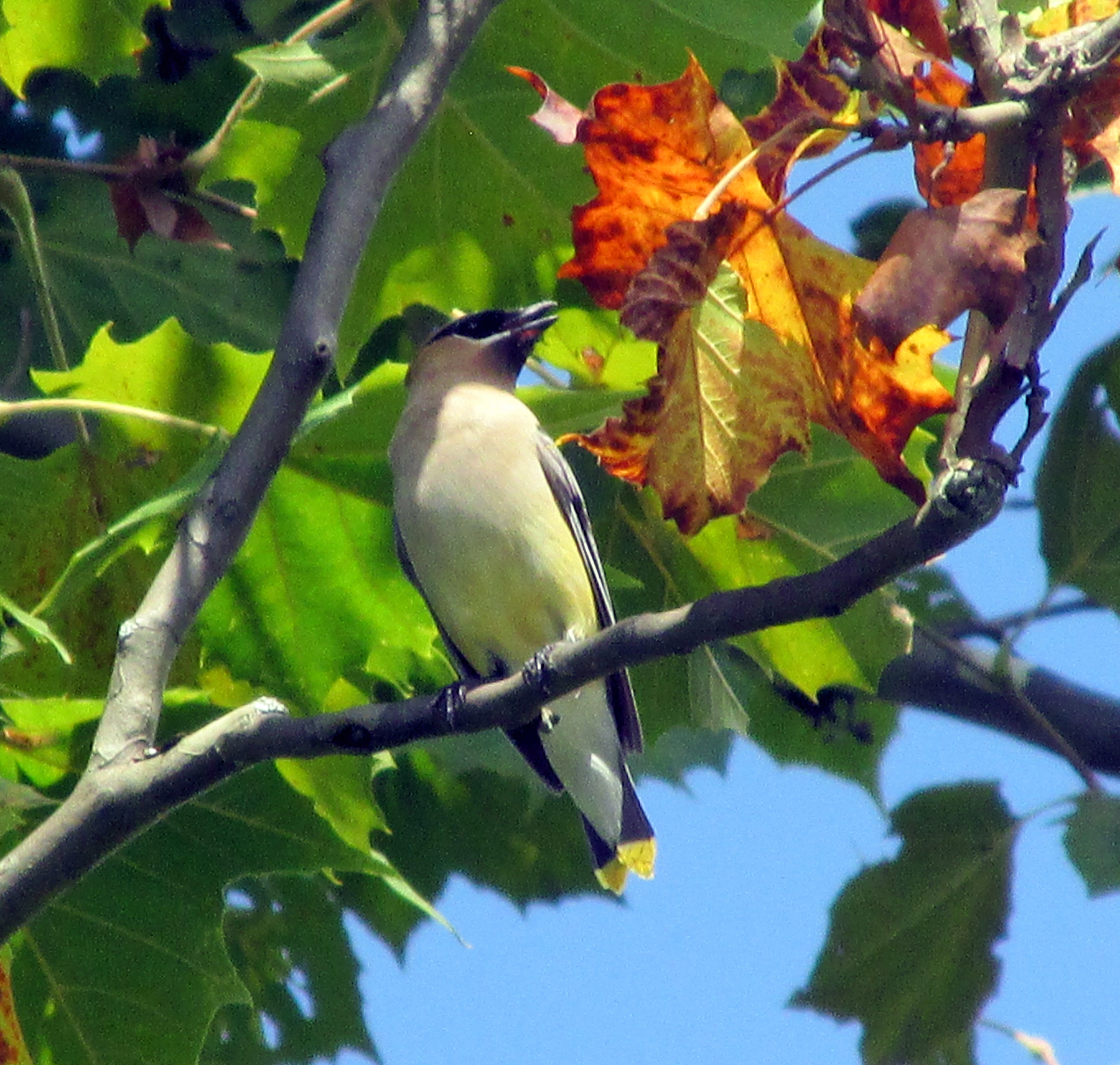
Photo by Bryan Stevens • A cedar waxwing perches on a branch.

“The flock today was less exciting for me, but somewhat even larger than the waxwings,” Ernie noted. The second flock consisted mostly of European starlings with a few American robins in the mix.

Ernie observed the starlings in some neighboring dogwoods as they consumed red berries. His question involved the migration habits of the starlings, waxwings and robins.

The fact is that, although we don’t think of robins very much in winter, they are still very much present in the region. The same is true of waxwings and is particularly true about starlings.

Terry’s wooded area sounds perfect for robins in winter. In the colder months of the year, robins form large, loosely organized flocks, often taking up residence in wooded lots. Ernie’s neighborhood also sounds like a perfect haven for these flocking birds.

Photo by Bryan Stevens • An American robin scans for prey in the grass and clover of a lawn.

The activity observed by Terry is just the way robins behave at time. The activity could have been an example of the birds sensing the approach of a weather front. The robins, reacting to changing conditions, were simply attempting to feed as much as they could before a change in the weather. arrived.

The American robin is a large bird in the thrush family, which in North America also includes such birds as Eastern bluebird, wood thrush, and Townsend’s solitaire.

In the British Isles, the European robin is simply known as “robin” or “robin redbreast.” When the first English colonists arrived in New England and other parts of colonial-era North America, they took pleasure in finding that some of the birdlife in the New World resembled familiar birds from their homeland. The red-breasted American robin looked like the bird they knew in the Old World as “robin,” which motivated them to name the New World bird “robin,” as well.

Other than the red breast, however, the two robins are not all that similar. The American robin is the larger of the two birds. Farther separating these two birds is the fact that the European robin is not a thrush but rather a member of the family of Old World flycatchers.

Photo by PublicDomainPhotos/Pixabay.com • A European robin sings from a perch.

In some ways, the two robins are similar. Both are fond of earthworms, spending a great deal of their time on the ground foraging for worms. They will also follow human gardeners at their work, waiting patiently for the followed person to disturb the soil with a spade or hoe and expose earthworms for the waiting bird. They are also rather tolerant of humans and have learned to make their own homes close to human dwellings.

Some of the British transplants to North America must have felt homesick for familiar things because several unsuccessful attempts were made to introduce the European robin to the United States and Canada. European robins introduced in New York and Oregon failed to gain a foothold, unlike the introduction of such alien birds as the house sparrow and European starling.

On a few occasions, our American robins have overflown their destinations and ended up in the United Kingdom. For instance, an American robin became a first for London birdwatchers when one was found in that nation’s capital city in March of 2006. Whether of the European or American persuasion, robins have long been a favorite of birdwatchers and nature enthusiasts.

Photo by Bryan Stevens • An American robin perches on a tree branch and surveys its surroundings.

Success of wild turkey’s resurgence leads to foul fowls in New England

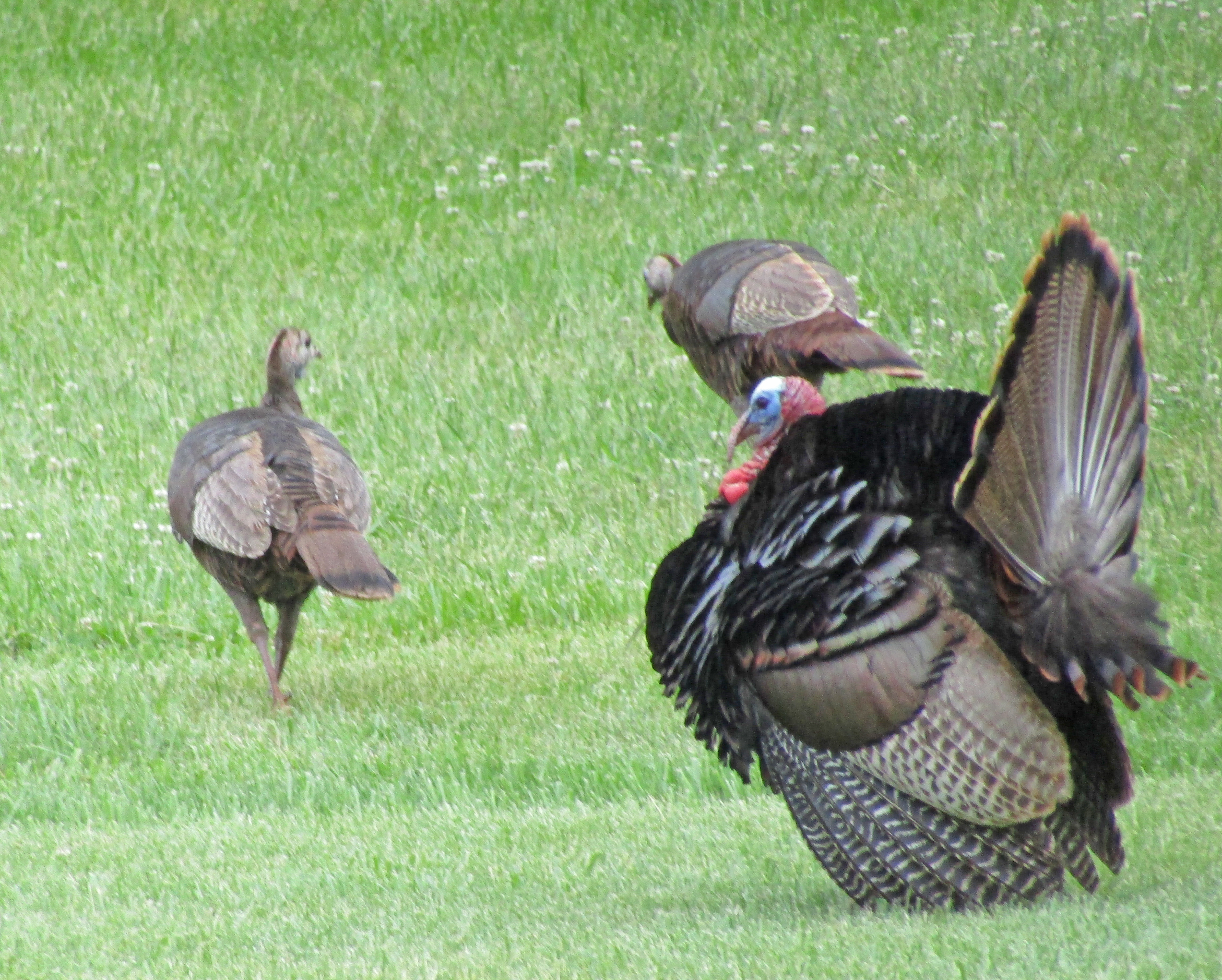
Photo by Avia5/Pixabay.com • A male wild turkey, often referred to as a “tom” or a “gobbler,” fans his tail in a display meant to impress hens and intimidate other males.

Celebrated in William Bradford’s written account of the First Thanksgiving in 1621, the wild turkey had all but vanished from Massachusetts and the rest of New England a mere two centuries later. By the time of Henry David Thoreau, who is arguably America’s first environmentalist, the noted author lamented in 1856 that the turkey and other wildlife were difficult to find in his native Massachusetts.

In a journal entry from the spring of 1856, Thoreau decried the part the descendants of those Pilgrims who celebrated the first Thanksgiving more than 200 years earlier had played in the decimation.

“When I consider that the nobler animals have been exterminated here — the cougar, the panther, lynx, wolverine, wolf, bear, moose, dear, the beaver, the turkey and so forth and so forth, I cannot but feel as if I lived in a tamed and, as it were, emasculated country,” Thoreau wrote in his journal. “Is it not a maimed and imperfect nature I am conversing with?”

Henry David Thoreau

Perhaps, but Thoreau would probably be encouraged that many of the animals he mentioned in his journal have now recovered and once again roam throughout New England. The wild turkey has been in the vanguard of that resurgence. In fact, the revival of the wild turkey’s fortunes in New England has had unintended consequences. In short, this venerable fowl has run amok in some parts of its former stronghold.

An article by Brianna Abbott for the Audubon Society’s website estimates that before Europeans first colonized New England in the 1600s, as many as 10 million wild turkeys roamed from Maine to Florida to the Rocky Mountains of the American West.

Today, wild turkeys are back with a vengeance. Turkeys may have grievances, it turns out, for the persecution they suffered at the hands of Americans for the past few centuries. Touted as a major restoration success story, the wild turkey began to be reintroduced to New England about half a century ago.

Now that they’re back, turkeys are part of a dramatically changed landscape. Suburbs now stretch in wide swaths of terrain that once supported forests and associated wildlife. Luckily — for the turkey, anyway — it is a very adaptable bird. Turkeys have taken to life in the suburbs with such enthusiasm that they are now a wildlife management issue for the human residents who must share living space with them. Emboldened problem turkeys chase and intimidate women and small children, as well as pets. Whole flocks have gone rogue.

Photo by Bryan Stevens • Wild turkeys forage on a hillside.

Gone are the turkey’s natural predators — lynxes, cougars and wolves — that had kept America’s premier game bird’s population in balance. As Thoreau pointed out, nature is no longer perfect. More than 170,000 wild turkeys now live in New England and they’re not always at peace with their human neighbors.

Thoreau didn’t have the benefit of environmental science to back him up, but he would probably not be surprised that a “maimed” nature is causing some unexpected problems even as some of the animals he so sorely missed are returning to their former haunts.

The Tennessee Watchable Wildlife Website notes that the wild turkey was once nearly eliminated from the Volunteer State. By the early 1900s, over-hunting eliminated this species from most of its range, including much of Tennessee. Modern wildlife management has reestablished this bird throughout its historic range and into 49 of the 50 United States.

Photo by Bryan Stevens • Wild turkeys have re-established themselves in many areas across the United States, including New England.

According to the website, the natural habitat for the wild turkey consists of mature woodlands with scattered openings or fields. In such areas, turkeys can forage for food such as acorns and other wild nuts, seeds, fruits, insects, buds, fern fronds and even the occasional salamander.

Wild turkeys roam the woods around my home, and I know of other areas that are dependable locations for observing these birds. While their numbers are increasing, the wild turkey has not yet turned the tables. For the foreseeable future, I suspect Americans will continue to dine on turkey every Thanksgiving, and not the other way around.

Who could blame them, however, if turkeys were to feel perfectly justified in biting back at the American public? We’ve not always been the best stewards for our native wildlife. Call me an optimist. I believe turkeys and people can co-exist. As residents in New England have learned, we just have to be prepared for some give and take.

Photo by Bryan Stevens • A male gobbler seeks the attention of hens, as all these Wild Turkeys add to the number of this species found during the count.

Despite its dark and misunderstood reputation, American crow one of nation’s success stories

Photo by Peter Pearsall/USFWS • American crows — large, intelligent, all-black birds with hoarse, cawing voices — are familiar over much of the continent. Crows are common sights in treetops, fields and roadsides and in habitats ranging from open woods and empty beaches to town centers.

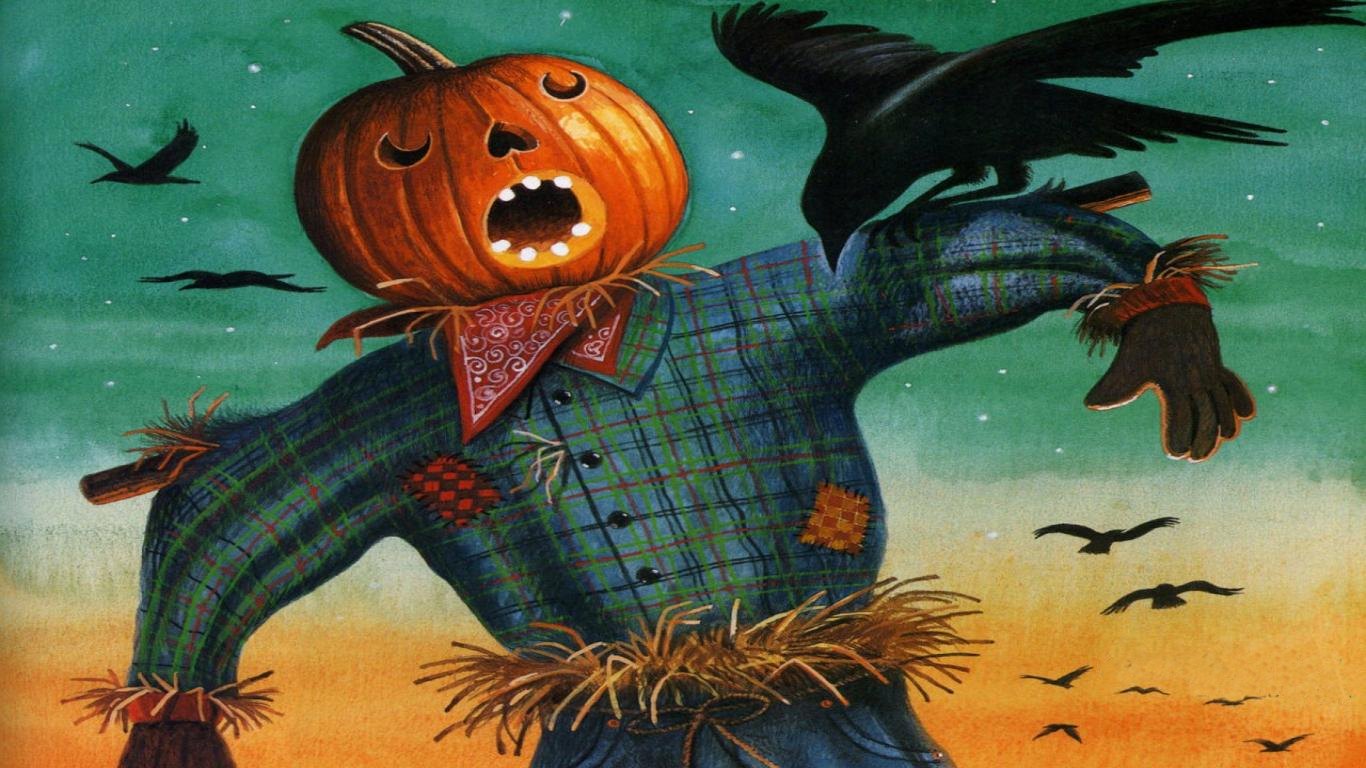
While seeking birds far afield, I have occasionally spotted some innovative scarecrows standing sentry in gardens and agricultural fields. I’m not sure if anyone still erects these human effigies for their original purpose of warding off crows and other feathered agricultural pests. These days, scarecrows likely serve an ornamental purpose and are often part of a yard’s whimsical Halloween or autumn decorations.

Regardless of the intention behind them, scarecrows have never been effective at driving crows away from human fields and crops. To put it simply, crows are too smart to get spooked by the human invention of the scarecrow. The bird with one of the smartest brains among all birds is more than a match for the brainless friend of Dorothy standing vigil in the proverbial cornfield.

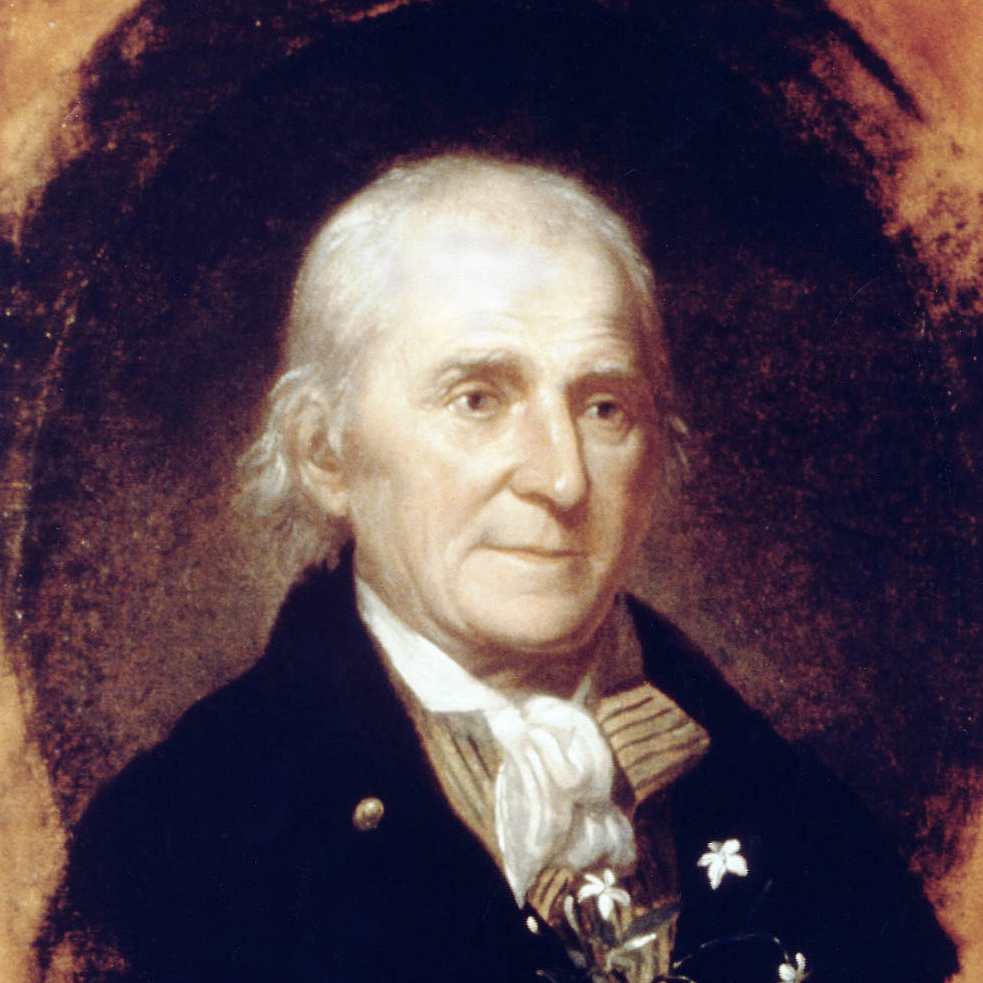
The intelligence of this bird has long been known. Early American naturalist William Bartram wrote about a crow named Tom in a highly entertaining essay titled “Anecdotes of an American Crow.” Bartram, who lived from 1739 to 1823, brought humorous observations and keen insight to his subject as he wrote about the joys — as well as tribulations — of living with Tom, a crow that enjoyed tormenting Bartram’s dog and purloining the writer’s spectacles and trying to hide them.

William Bartram

The essay demonstrates that almost as soon as Europeans arrived in North America, some of those with a bent toward the natural world recognized the intelligence and amazing adaptability of the American crow. As well as writing about the natural world, Bartram earned widespread acclaim for his drawings of botanical and ornithological subjects. Tom, the featured crow in Bartram’s brief essay, certainly exhibited intelligence of an impressive degree. Not only did the crow steal his owner’s eyeglasses, he foiled Bartram’s first attempt to reclaim them. The story makes very humorous reading. To read Bartram’s account, visit http://www.geocities.ws/jswortham/crow.

What else have crows done down through the ages to gain such a dark and much undeserved reputation? It probably doesn’t help matters that a flock of crows is known as a “murder.” Ancient Greeks considered crows as omens, which often foretold death and other disasters. The warrior goddess known as the Morrighan from Celtic mythology often appears in the form of a crow or raven. She is also often portrayed as being accompanied by a group of these black-plumaged birds. Many Native American tribes revere crows as communicators between worlds. Crows have been documented using tools and solving problems, which shows an uncanny ability to analyze and strategize. The early Celtic people also noted and admired these traits in crows.

Photo by Bryan Stevens / A trio of American crows forages on a grassy lawn.

Crows are very social birds, often forming family flocks. They may also form much larger flocks for the purpose of roosting. When nesting, this social behavior comes in useful for a mated pair. Offspring from previous successful nesting efforts often serve as helpers. In addition to gaining their own life experience on successful nesting and caring for chicks, these older siblings may protect the nest site from predators or even deliver food to fill hungry beaks and bellies.

While famous for their associations to humans and our agriculture, crows forage far beyond the cornfield for their food. Many crows scavenge road-killed wildlife, such as squirrels, opossums and rabbits. While they certainly don’t turn up their beaks at the notion of eating carrion, crows do so less often than birds such as turkey vultures, black vultures and the crow’s fellow corvid, the common raven.

Photo by Bryan Stevens / Wary American crows survey their surroundings.

The kinship to the raven is evident, but even moderately experienced birders rarely confuse these similar species. The raven is a large bird with a heavy beak, a distinctive profile and a wedge-shaped tail. In a direct comparison with a raven, a crow looks downright puny. Both are members of the corvid family, which consists of 120 species including jays, rooks, magpies and jackdaws. Some of the world’s other crows include the descriptively named little crow, hooded crow, carrion crow, collared crow, long-billed crow and violet crow. While most of the world’s crows are thriving, the Hawaiian crow, has been extinct in the wild since 2002, although the species still exists in captive-breeding programs in various zoos.

Thanks to its resourcefulness and intelligence, the crow is deserving of more respect and even admiration. The American crow is a uniquely American success story. Think more of Bartram’s story of Tom the crow and not the dark, misguided myths and legends about crows this Halloween. Long may the crows fly.

Early naturalist and artist John James Audubon painted this American crow.

Mysterious owl retains a low profile even during Halloween season

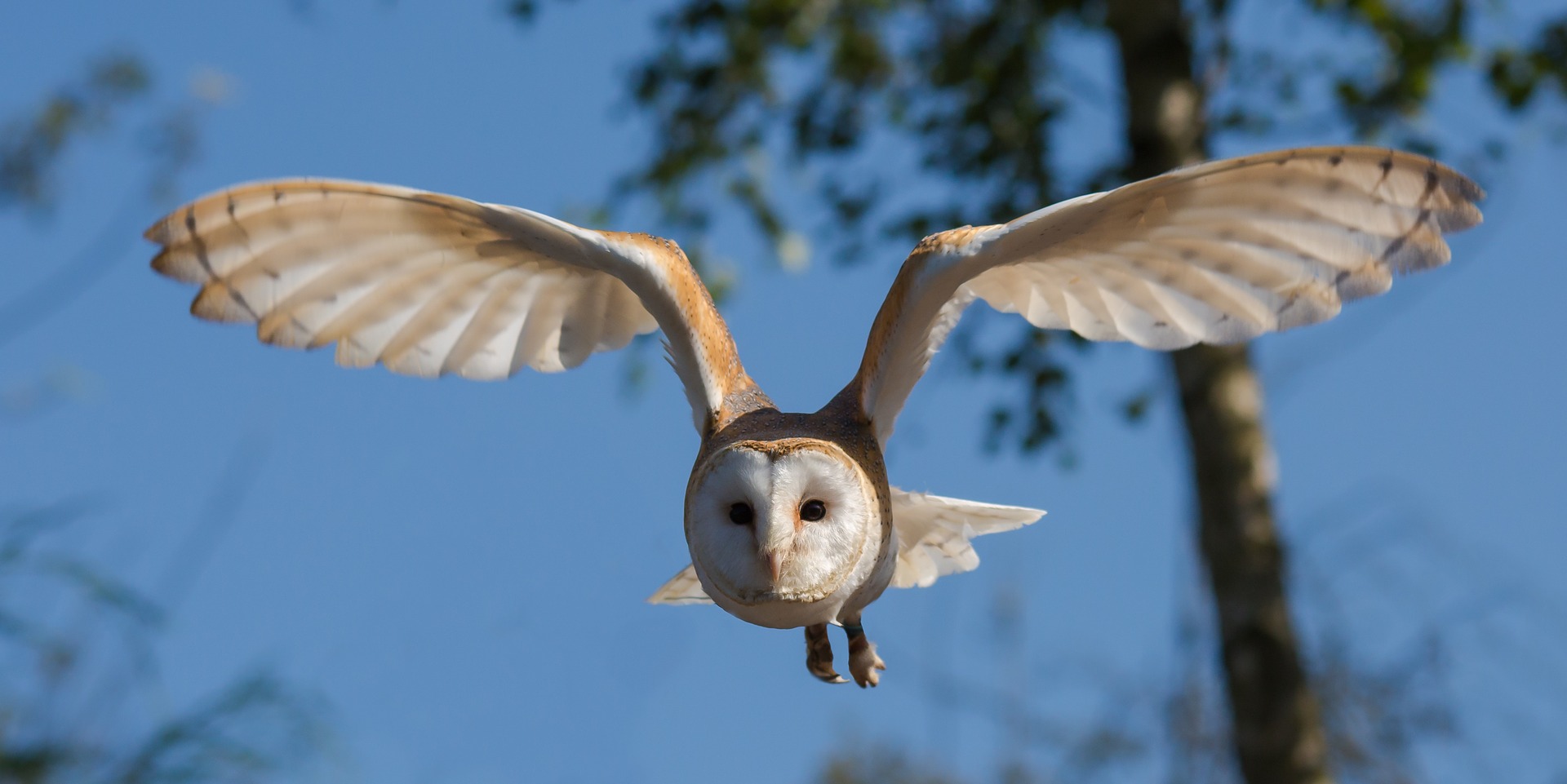
Photo by jeanvdmeulen/Pixabay.com • The barn owl’s heart-shaped face helps this bird, which is also known by such names as death owl, ghost owl, and hobgoblin owl, stand out from the other owls that share the domain of night.

With common names such as cave owl, death owl, ghost owl, night owl and hobgoblin owl, the nocturnal hunter more widely known as the barn owl provides a fitting focus for exploration as the calendar counts down toward Halloween.

Barn owls lurk in the shadows of night, but most people would never know it unless they happen to hear some of the spine-tingling vocalizations produced by this poorly known predatory bird. Shiver-inducing shrieks and screams quite capable of piercing the veil of darkness are often produced by the barn owl. This owl doesn’t utter loud hoots like the great horned owl. Instead, the call of the barn owl is not likely one to be soon forgotten because of its raspy, nails-on-the-chalkboard nature. A hearer could easily be misled into misinterpreting the shrill vocalizations as originating from something far more ghoulish.

According to the website for the Owl Research Institute in Charlo, Montana, barn owls are the most widely distributed owl in the world, and they may be one of the most common, as well. In Montana, where ORI is located, barn owls observations are rather sparse. ORI has documented 12 barn owl nests and made numerous observations in the last 12 years, according to its website. Likewise, the barn owl is not too often observed in Northeast Tennessee and Southwest Virginia.

Photo by dannymoore1973/Pixabay.com A barn owl’s wings and feathers provide almost silent flight for this efficient predatory bird.

The barn owl is often associated with rural, agricultural areas, which is one reason they can often be found in old barns, sheds and farm silos. However, the first barn owl I ever saw in the wild was living beneath the eaves of a building on the campus of Mountain Home Veterans Administration in Johnson City, Tennessee, within walking distance of commercial buildings and the campus of East Tennessee State University.

The barn owl has no close relatives among the other owls found in the region. The barn owl is in its own unique family known as Tytonidae. The family name comes from a Greek word, Tuto, which translates as “night owl.”

Photo by Bryan Stevens • An Eastern Screech Owl, pictured, is considered a member of the family called Strigidae, which consists of the owls described as “typical owls” by experts.

Other owls in our region — great horned owl, barred owl, Eastern screech-owl, short-eared owl— belong to a family called Strigidae, which are often described as “typical owls” by ornithologists and other experts.

The barn owl is one of nature’s most perfect predators. Among animals tested by scientists, the barn owl shows an almost uncanny ability to detect prey animals by sound alone. Prey, which is often small voles or other rodents, often doesn’t know of the danger until it’s too late. The structure of the barn owl’s wings and feathers is such that these predatory birds can fly through the darkness in almost perfect silence.

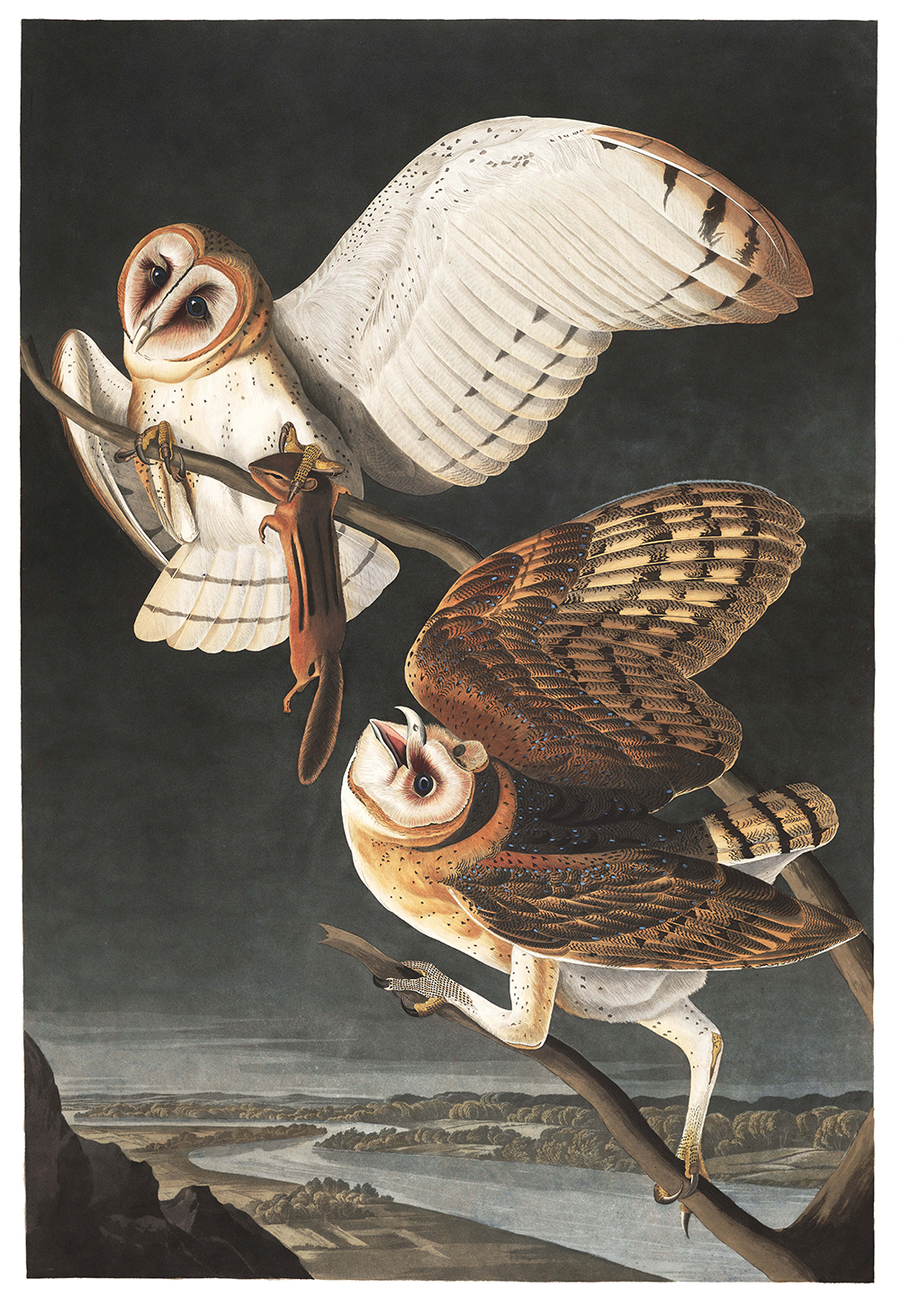
Early American painter John James Audubon captured this dynamic scene of barn owls with a capture chipmunk.

There’s a heavy cost that the owl must pay for these special adaptations. According to the Barn Owl Trust, an organization founded in 1988 in the United Kingdom to conserve one of the most beautiful birds on Earth, a barn owl’s specially adapted feathers are not particularly waterproof. In addition, barn owls are unable to store a lot of body fat. The Trust’s website notes that barn owls are unable to hunt in heavy rain and are particularly prone to starvation during prolonged periods of severe weather and/or prey shortage.

Much myth and legend have arisen around the world’s owls, including the barn owl. A native tribe in California known as the Newuks believed that warriors who proved courageous and virtuous became great horned owls after death. Men who practiced wicked ways, however, were thought to become barn owls.

This owl with the white heart-shaped face has long spooked humans. The bird’s head and upper body typically vary between pale brown and various shade of gray. Especially in flight, the barn owl can look rather pale.

The barn owl is the most widespread terrestrial bird species in the world, occurring on every continent except Antarctica. In addition to its various spooky common names, barn owls are also known by such descriptive monikers as monkey-faced owl, silver owl and golden owl. Some other common names include church owl and steeple owl. This owl acquired this name for its habit of utilizing steeples or bell towers in churches as roosting locations when barns or caves were lacking.

For a bird so closely associated with people and their dwellings and related structures, the barn owl remains an enigma to many. YouTube offers a variety of videos that showcase the creepy vocalizations of barn owls. Familiarize yourself with their calls, and you’ll be more likely to distinguish a barn owl calling after dark from the more sinister specters on the prowl this Halloween.

To learn more about barn owls or to make a contribution toward their conservation, visit www.barnowltrust.org.uk

Photo by mochawalk/Pixabay.com • A barn owl gives a penetrating stare to the camera.

Palm warbler’s name an unfortunate misnomer that has stuck

Photo by Jean Potter The palm warbler’s name is a mistaken assumption that this warbler held special affinity for palm trees. It doesn’t.

The warbler parade that begins each autumn with such brightly colored migrants as Blackburnian warbler, black-throated blue warbler and magnolia warbler usually ends with some of the less vibrant members of this family of New World birds.

On a recent bird walk at Sycamore Shoals State Historic Park in Elizabethton, Tennessee, I helped locate a flock of 13 palm warblers and a single yellow-rumped warbler. These two warblers, which look rather brownish and nondescript in the fall, pass through the region later than most other migrating warblers. In fact, the yellow-rumped warbler is one of the few warblers that routinely spends the winter months in the region.

The yellow-rumped warbler has a most suitable name thanks to the yellow patch of feathers on the bird’s rump. The resemblance of the patch to a pat of butter is uncanny enough to have encouraged birders to nickname this often abundant winter warbler the “butter butt.”

The palm warbler’s name is, at best, a misnomer. Throughout most of its life, the palm warbler doesn’t even encounter palm trees. Johann Friedrich Gmelin, a German naturalist who lived from 1748 to 1804, saddled the palm warbler with its inappropriate name. Gmelin based his naming of the bird based on the fact that a specimen had been collected on Hispaniola, an island in the Caribbean with an abundance of palm trees.

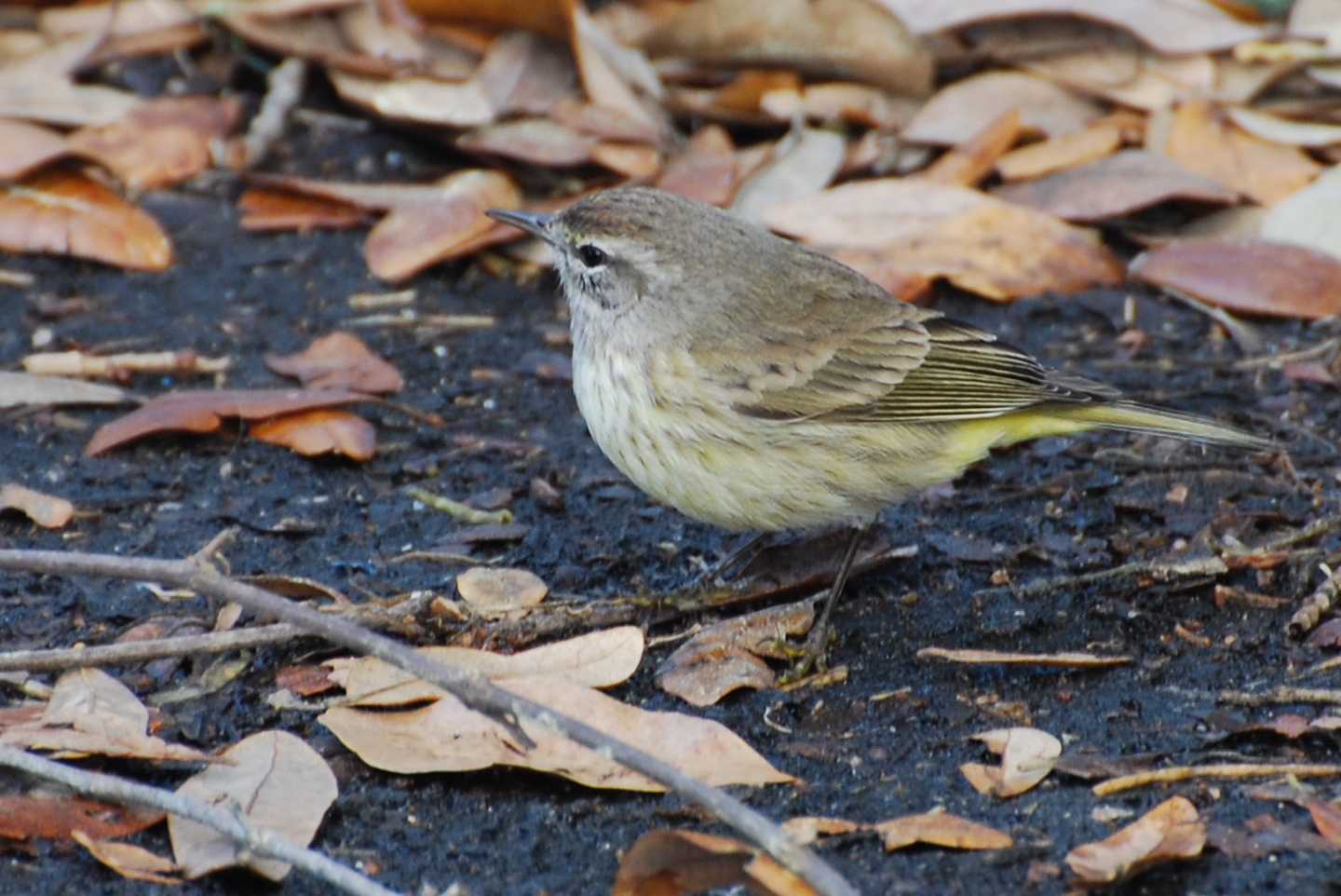
Photo by Bryan Stevens
A Palm Warbler forages along a chain-link fence.

Gmelin published several textbooks in the fields of chemistry, pharmaceutical science, mineralogy, and botany. He also had a hand in publishing a catalog of scientific names for various species, including some birds that had until that point never been given a species classification. Thanks to his efforts, a warbler has forever been linked with a type of tree that is, at best, entirely incidental to the bird’s life cycle.

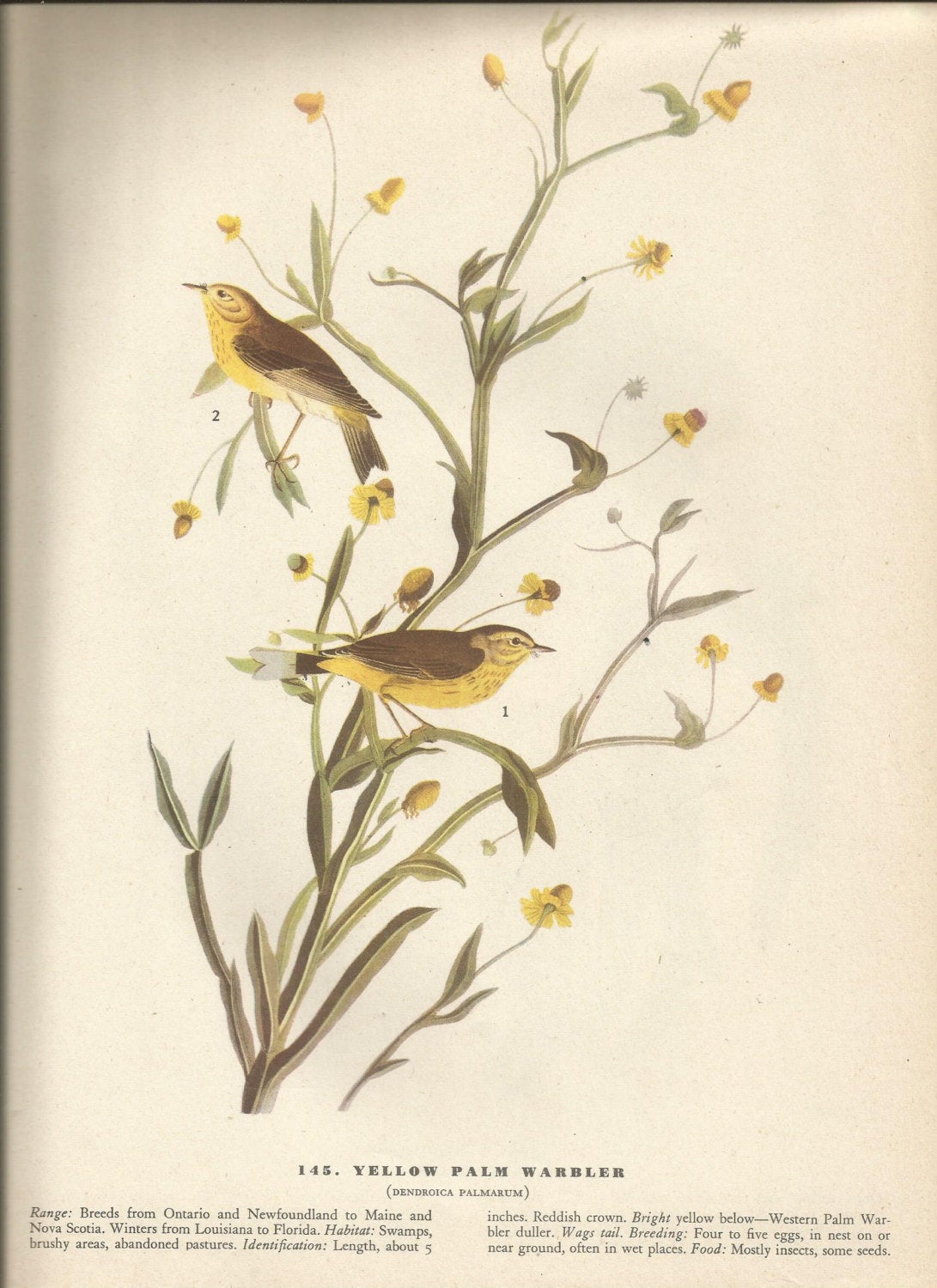
Early naturalist and painter John James Audubon painted these palm warblers.

Palm warblers do seek out warmer domains during the winter months, including the islands of the Caribbean. Some of them do not even migrate that far, choosing to remain along the Gulf and Atlantic coastlines of the southern United States. On occasion, individual palm warblers choose to remain in northeast Tennessee, southwest Virginia or western North Carolina during the winter months.

Every spring, however, palm warblers make a long migration flight north. This warbler is one of the northernmost breeding warblers, spending the summer months in the boreal forests of Canada. They build their nests in the thickets surrounding the many bogs along the edges of the great coniferous forests of this region of Canada.

The female palm warbler lays four to five eggs, but both parents will stay busy collecting insects once the young hatch. On an insect-rich diet, the young birds develop quickly and are able to leave the nest in 12 days. They will remain with their parents as their wings strengthen and they learn to fend for themselves.

While not able to flaunt vibrant plumage like such relatives as the Cape May warbler or the American redstart, the palm warbler is not truly as unattractive as a first glance might suggest. In fact, one subspecies, known as the “yellow palm warbler,” is quite dramatic in appearance with a profusion of yellow feathers accented with a bold russet cap and dramatic rufous striping across the yellow underparts. Even in autumn, the other palm warblers are not devoid of color. Most palm warbler show a splash of bright yellow on the throat and beneath the tail.

Photo by Bryan Stevens • A black-and-white warbler creeps over the bark of a pine in search of insect prey. The reason for this warbler’s common name is self-evident in its appearance.

In fall migration and during the winter season, palm warblers often inhabit weedy fields, grasping the dried stalks of tall weeds as they forage for berries, seeds and insects and their larvae. Look for the spot of yellow beneath the warbler’s tail, which is constantly bobbed up and down as the bird goes about its routine. The tail-bobbing behavior is a good way to distinguish this warbler from the sparrows of similar size and brown coloration that often share the fields and woodland edges.

The last of the October Saturday bird walks will be held at Sycamore Shoals State Historic Park on Oct. 26. Participants should meet in the parking lot at the park’s visitors center at 8 a.m. for a 90-minute stroll along the gravel walking trails. The walks are conducted by the Elizabethton Bird Club and are free and open to the public. Bring binoculars to increase viewing enjoyment. There’s a chance that palm warblers will be seen on the walk, but with our fine feathered friends, nothing is ever guaranteed.

Photo by Jean Potter • A “yellow” palm warbler searches leaf litter for insects and other prey items.


Water a magnet for waxwings, other birds

Photo by Patrice_Audet/Pixabay.com • Cedar waxwings feed extensively on various fruits and insects, forming large nomadic flocks that can quickly deplete local resources.

The extended spell of dry, hot weather we’ve experienced for the past several weeks threatens to spoil fall colors, but if you’re a person who can offer a water feature or bird bath, this might be the perfect time to observe thirsty flocks of birds. In particular, cedar waxwings, which often travel in large flocks, embrace water with an exceptional avian enthusiasm.

I still remember my first look at a cedar waxwing. Sleek as silk, wearing a mask like a bandit, with a jaunty crest atop its head, this fairly common bird commands attention when making an appearance in a yard or garden. Of course, it’s usually not alone, more often traveling as a member of a larger flock that can number as high as dozens or even hundreds of individuals.

Flocks of these sociable birds win fans almost anywhere they go. Chances of luring these birds to your home and property can increase by offering some essential requirements. Tall trees, especially those that bear fruit, are attractive to these sociable birds. It’s more often water, not food, however, that will bring a flock of these birds close. They love a good splash in a bath, whether the source is a shallow stream or an ornamental pool set into the landscape.

Photo by Bryan Stevens • A pair of cedar waxwings hawk for insects near a pond.

As noted, they travel in often sizable flocks, usually in search of new food sources. The many members comprising a flock can deplete resources in a remarkably short time. During the winter season, I’ve watched a flock of waxwings make short work of a harvest of berries from a holly tree. Their nomadic lifestyles make it nearly impossible to predict where cedar waxwings might make an appearance.

In most years, the wild cherry trees scattered around the edges of my yard are fully laden with berries. As they ripen in late August and into September, waxwings appear and commence harvesting the fruit. Once again, they arrived at just the right time last month to catch the wild cherries at their peak.

As much as the waxwing has a fondness for fruit, it’s also a bird that would have made an excellent flycatcher. Flocks of these birds will often congregate in trees near the edge of a pond, garden or yard — anywhere winged insects might be found in good numbers — in order to hawk insects on the wing. A waxwing will sally forth from a branch, snatch its prey in mid-air, and return to its perch for a quick snack.

Early American naturalist and artist John James Audubon painted this pair of cedar waxwings.

Perhaps because of the late-summer abundance of bugs and berries, cedar waxwings are known for nesting late into the summer. They’re certainly not among the birds impatient to begin nesting as soon as temperatures turn mild in the spring. Some fellow birders recently reported seeing cedar waxwings feeding fledgling just out of the nest as the calendar flipped from September of October.

Why is the term “waxwing” applied to this bird? According to the website All About Birds, the name comes from the waxy red secretions found on the tips of wing feathers. The site also notes that the precise function of these waxy tips is not known. There’s speculation among some experts that the bright red tips on the feathers could play a role in helping waxwings attract mates.

The cedar waxwing has few relatives. Worldwide, there are only two other species: the Bohemian waxwing, of the northern forests of Eurasia and North America; and the Japanese waxwing, found in such northeast Asian countries as Japan, Korea and China.

Although it’s classified as a songbird, the cedar waxwing does’t truly produce a vocalization that anyone would contend qualifies as a song. They are, however, very vocal birds, producing shrill, high-pitched notes as they pass through the upper branches of tall trees. The excitable commotion of an active flocks of these sleek and elegant birds is always a welcome sound at my home.

Photo by Bryan Stevens • The waxy tips to the wing feathers are evident in this photograph of a cedar waxwing.

Birds are not the only fall migrants sharing the skies

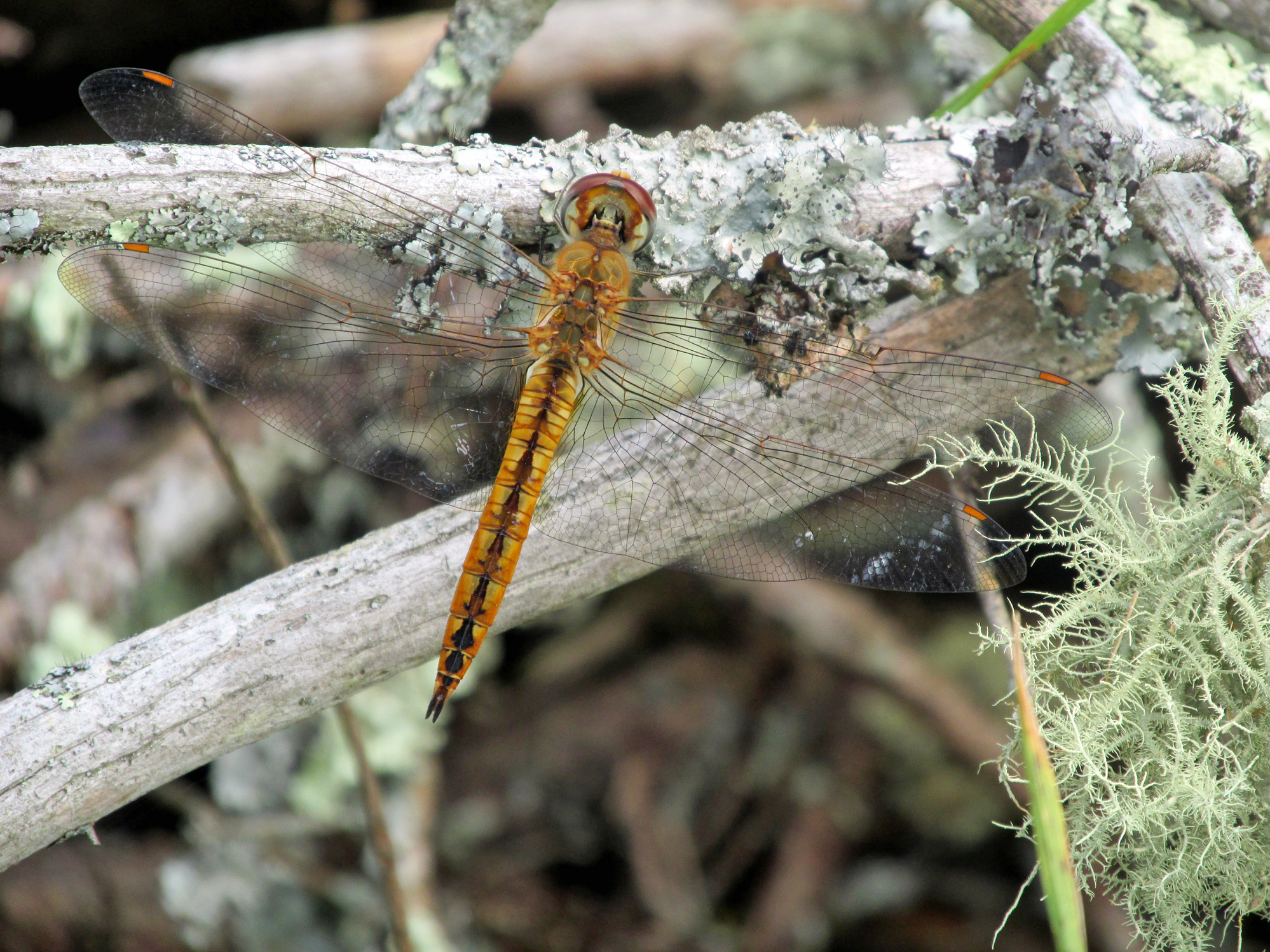
Photo by Bryan Stevens • Experts have documented long-distance migration flights by the Wandering Glider, a species of dragonfly.

Rhonda Eller of Chilhowie, Virginia, posted a question on my Facebook page about some dragonflies that appeared in her yard on Sept. 10.

“We have had a sudden breakout of dragonflies in our yard,” Rhonda explained. “We seldom see more than one or two at a time.”

Rhonda wondered if the dragonflies might have been drawn to her yard in pursuit of some sort of favorite insect prey. She also speculated that the recent dry conditions might have attracted the dragonflies.

I responded to her query by explaining that birds are not the only migrant in the skies at this time of year. Some dragonflies, just like birds, migrate. A species known as green darner is one that migrates. These darners are rather large, for a dragonfly, and travel in swarms. A couple of years ago I observed thousands of these dragonflies swarming over a municipal swimming pool and a nearby fish pond at a park in Erwin, Tennessee.

The WSLS Channel 10 television station out of Roanoke, Virginia, reported on swarms of dragonflies so large that they got picked up by local radar. Rhonda shared a link to the station’s story on my Facebook page.

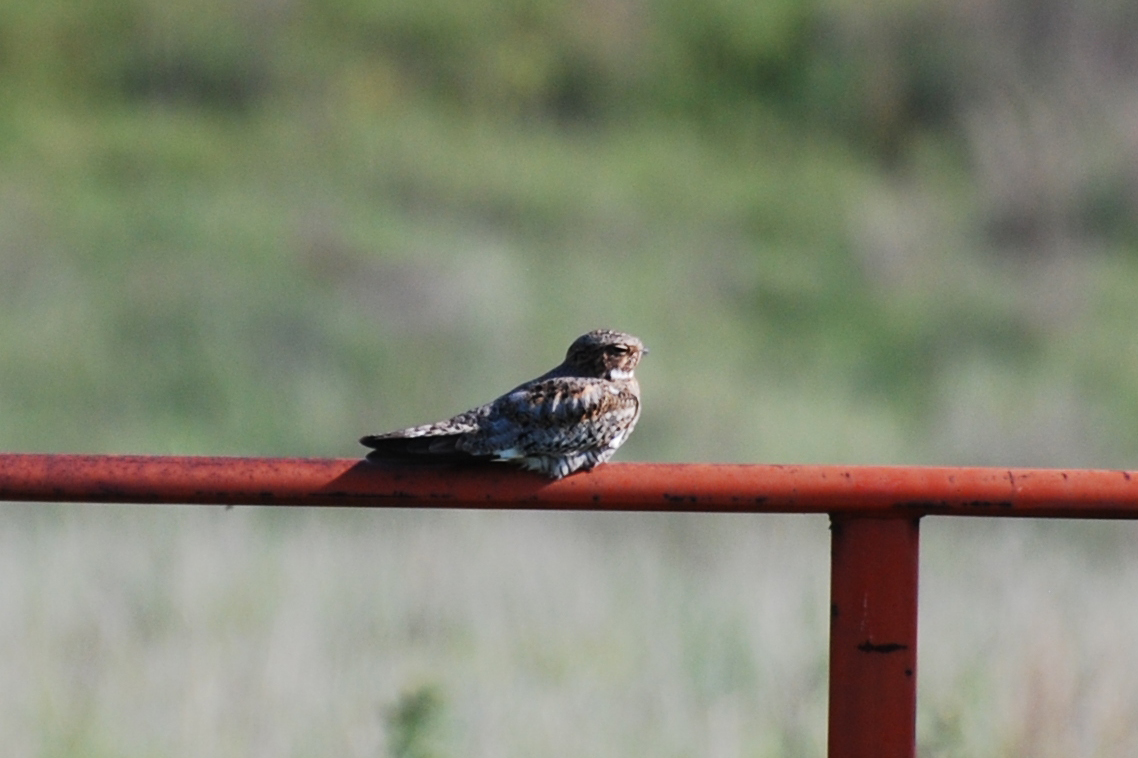
Photo by Jean Potter • A common nighthawk rests on a metal railing.

Of course, swarms of migrating insects are bound to get the attention of predatory birds. The same day that Rhonda experienced the influx of migrating dragonflies, I witnessed dozens of common nighthawks and chimney swifts swooping through the skies over my home. With a little more attention to detail, I also noticed the dragonflies sharing the skies with these birds.

I suspect that the nighthawks were feeding on the large darners while the swifts, which are much smaller birds, focused their foraging efforts on smaller winged insects. Tom McNeil, a neighbor and fellow member of the Elizabethton Bird Club, reported seeing nighthawks and swifts, too. Tom lives on the other side of a mountain ridge that separates our homes.

Tim Morris, a Facebook friend from Australia, noted in a comment on my post about the nighthawks that his country is home a bird known as the tawny frogmouth, a relative of the common nighthawk. Tim noted that frogmouths are big birds with camouflage markings that allow them to pretend to be dead tree boughs by day. “They feed not only on insects but mice and lizards, too,” he added.

Evidence of fall migration continued the next day when I detected a small wave of warblers foraging in trees at the edge of my yard. I saw five different species — American redstart, worm-eating warbler, Cape May warbler, Blackburnian warbler and Tennessee warbler — in the space of half an hour. Of the warblers in the flock, the Blackburnian and Cape May are some of the more vibrant ones.

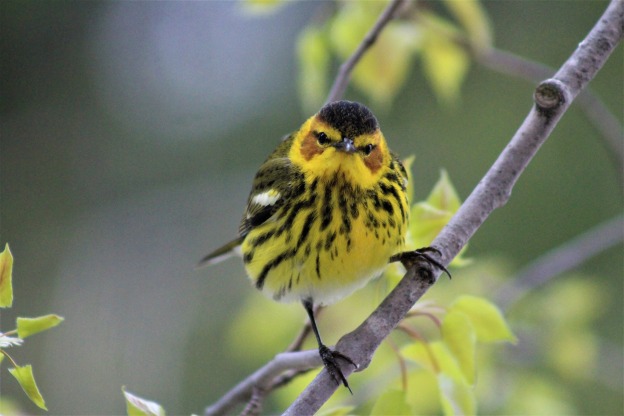
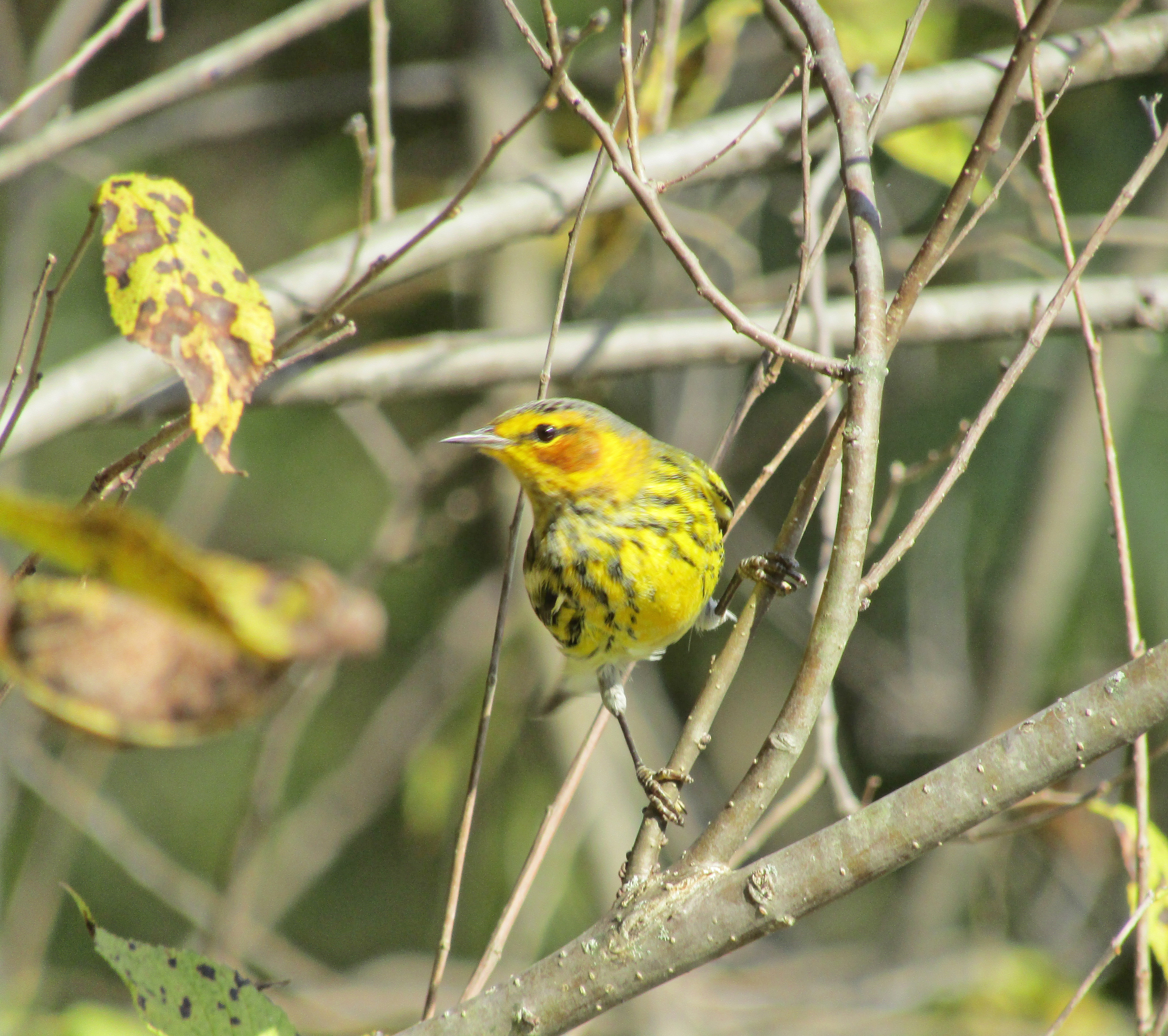
Photo by Bryan Stevens • While the Cape May warbler doesn’t breed locally, these warblers are fairly common spring and fall migrants in the region.

The Blackburnian warbler’s common name commemorates Anna Blackburne, an English naturalist who lived from 1726 to 1793. Her brother, Ashton, had immigrated to the United States, which made it possible for him to send his sister many specimens, especially birds. Their father, a salt merchant by trade, was also a well-respected amateur naturalist. In addition to the warbler that bears her name, Anna Blackburne also had a species of beetle named in her honor.

Both the Cape May and Tennessee warblers are named for the locations from which they were first collected. Neither of these small songbirds are closely affiliated with Cape May, New Jersey, or the Volunteer State. The Cape May warbler is also known as the “tiger warbler” for the dramatic black striping across its bright yellow breast. A green back and chestnut cheek patch make the Cape May warbler quite unlike any of its close kin. Even its scientific name — Setophaga tigrina — pays homage to the striped big cat. The term “setophaga” translates to “moth eater” and is a reference to this warbler’s intense fondness for the caterpillars known as spruce budworms that occasionally produce outbreaks in the northern spruce forests that serve as the nesting range for the Cape May warbler.


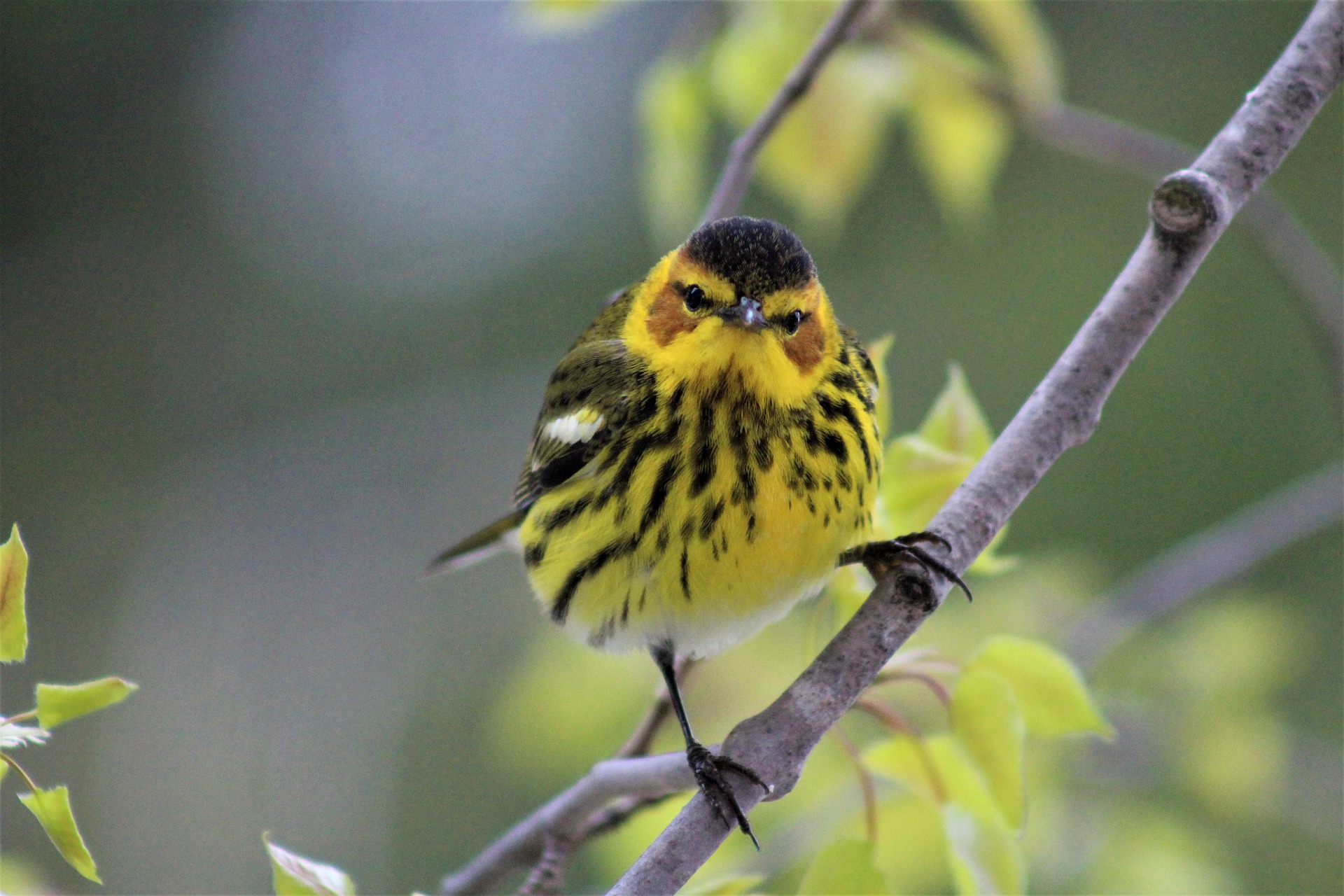
Photo by insitedesigns/Pixabay • A Cape May warbler peers from its perch on a tree branch.

According to the website, “All About Birds,” Cape May warblers have unusually shaped tongues that allow them to sip nectar from tropical flowers during the winter months spent in Central America and the Caribbean. Their unique tongues also make it possible for them to enjoy sips of sugar water from hummingbird feeders.

Whether its dragonflies, nighthawks, warblers or hummingbirds, plenty of birds and other flying creatures will be moving through the region for the next few weeks. Now’s the time to get outdoors and look for some of these migrants.

Photo by insitedesigns/Pixabay.com • The Cape May warbler migrates out of North America every fall to spend the winter in Central America and the Caribbean.