Tag Archives: Migrants

Palm warbler’s name an unfortunate misnomer that has stuck

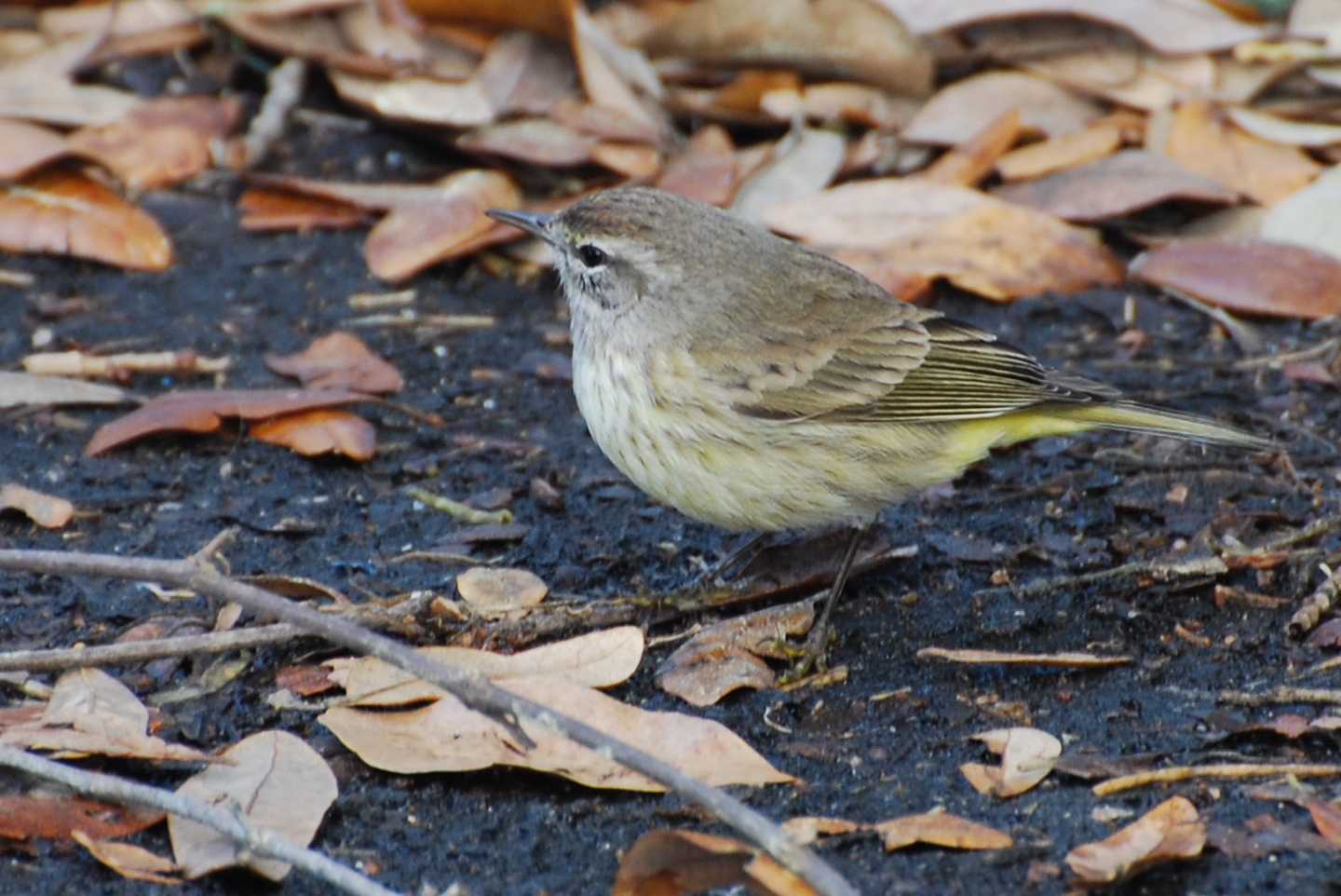
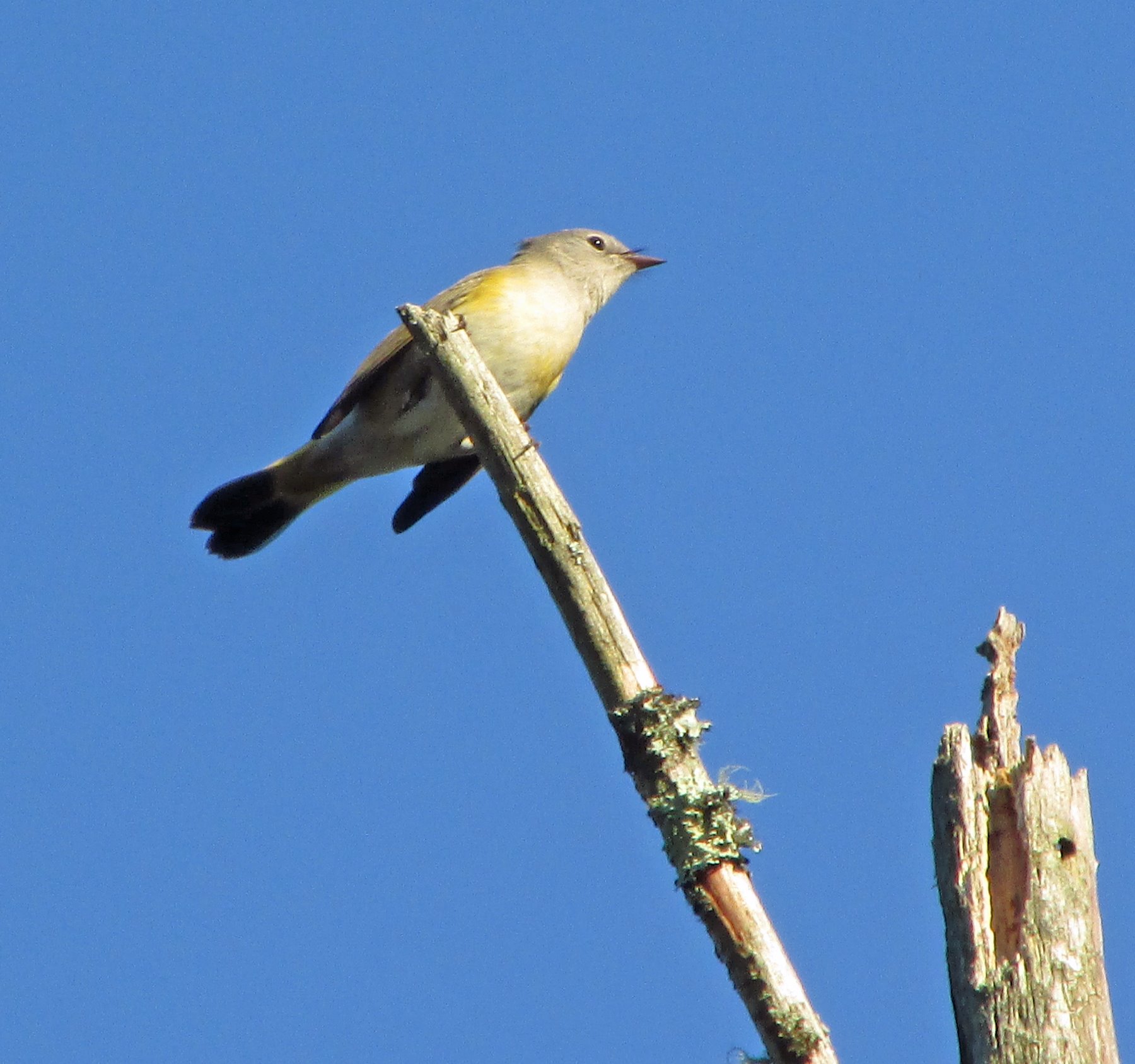
Photo by Jean Potter The palm warbler’s name is a mistaken assumption that this warbler held special affinity for palm trees. It doesn’t.

The warbler parade that begins each autumn with such brightly colored migrants as Blackburnian warbler, black-throated blue warbler and magnolia warbler usually ends with some of the less vibrant members of this family of New World birds.

On a recent bird walk at Sycamore Shoals State Historic Park in Elizabethton, Tennessee, I helped locate a flock of 13 palm warblers and a single yellow-rumped warbler. These two warblers, which look rather brownish and nondescript in the fall, pass through the region later than most other migrating warblers. In fact, the yellow-rumped warbler is one of the few warblers that routinely spends the winter months in the region.

The yellow-rumped warbler has a most suitable name thanks to the yellow patch of feathers on the bird’s rump. The resemblance of the patch to a pat of butter is uncanny enough to have encouraged birders to nickname this often abundant winter warbler the “butter butt.”

The palm warbler’s name is, at best, a misnomer. Throughout most of its life, the palm warbler doesn’t even encounter palm trees. Johann Friedrich Gmelin, a German naturalist who lived from 1748 to 1804, saddled the palm warbler with its inappropriate name. Gmelin based his naming of the bird based on the fact that a specimen had been collected on Hispaniola, an island in the Caribbean with an abundance of palm trees.

Photo by Bryan Stevens
A Palm Warbler forages along a chain-link fence.

Gmelin published several textbooks in the fields of chemistry, pharmaceutical science, mineralogy, and botany. He also had a hand in publishing a catalog of scientific names for various species, including some birds that had until that point never been given a species classification. Thanks to his efforts, a warbler has forever been linked with a type of tree that is, at best, entirely incidental to the bird’s life cycle.

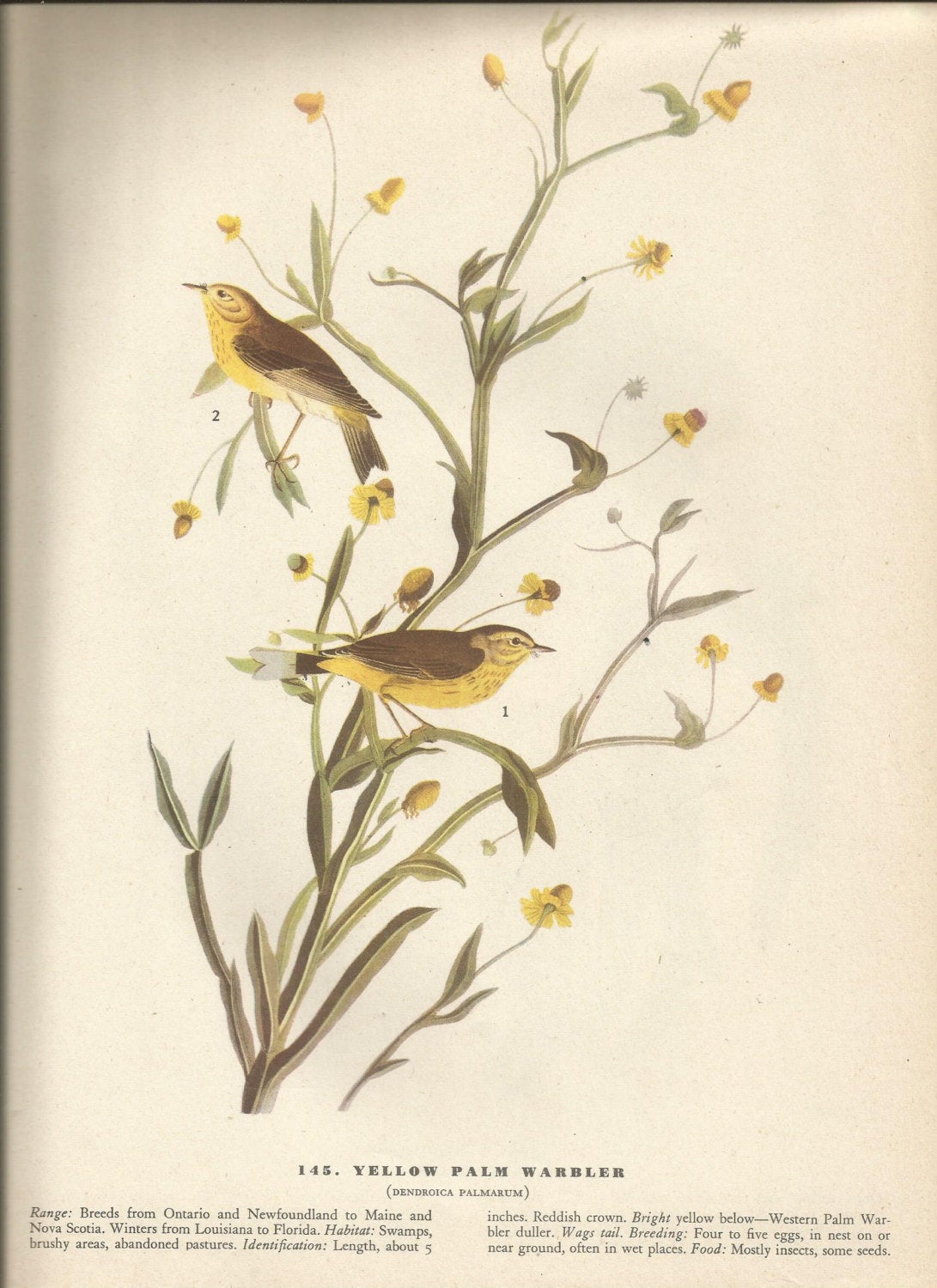
Early naturalist and painter John James Audubon painted these palm warblers.

Palm warblers do seek out warmer domains during the winter months, including the islands of the Caribbean. Some of them do not even migrate that far, choosing to remain along the Gulf and Atlantic coastlines of the southern United States. On occasion, individual palm warblers choose to remain in northeast Tennessee, southwest Virginia or western North Carolina during the winter months.

Every spring, however, palm warblers make a long migration flight north. This warbler is one of the northernmost breeding warblers, spending the summer months in the boreal forests of Canada. They build their nests in the thickets surrounding the many bogs along the edges of the great coniferous forests of this region of Canada.

The female palm warbler lays four to five eggs, but both parents will stay busy collecting insects once the young hatch. On an insect-rich diet, the young birds develop quickly and are able to leave the nest in 12 days. They will remain with their parents as their wings strengthen and they learn to fend for themselves.

While not able to flaunt vibrant plumage like such relatives as the Cape May warbler or the American redstart, the palm warbler is not truly as unattractive as a first glance might suggest. In fact, one subspecies, known as the “yellow palm warbler,” is quite dramatic in appearance with a profusion of yellow feathers accented with a bold russet cap and dramatic rufous striping across the yellow underparts. Even in autumn, the other palm warblers are not devoid of color. Most palm warbler show a splash of bright yellow on the throat and beneath the tail.

Photo by Bryan Stevens • A black-and-white warbler creeps over the bark of a pine in search of insect prey. The reason for this warbler’s common name is self-evident in its appearance.

In fall migration and during the winter season, palm warblers often inhabit weedy fields, grasping the dried stalks of tall weeds as they forage for berries, seeds and insects and their larvae. Look for the spot of yellow beneath the warbler’s tail, which is constantly bobbed up and down as the bird goes about its routine. The tail-bobbing behavior is a good way to distinguish this warbler from the sparrows of similar size and brown coloration that often share the fields and woodland edges.

The last of the October Saturday bird walks will be held at Sycamore Shoals State Historic Park on Oct. 26. Participants should meet in the parking lot at the park’s visitors center at 8 a.m. for a 90-minute stroll along the gravel walking trails. The walks are conducted by the Elizabethton Bird Club and are free and open to the public. Bring binoculars to increase viewing enjoyment. There’s a chance that palm warblers will be seen on the walk, but with our fine feathered friends, nothing is ever guaranteed.

Photo by Jean Potter • A “yellow” palm warbler searches leaf litter for insects and other prey items.


Birds are not the only fall migrants sharing the skies

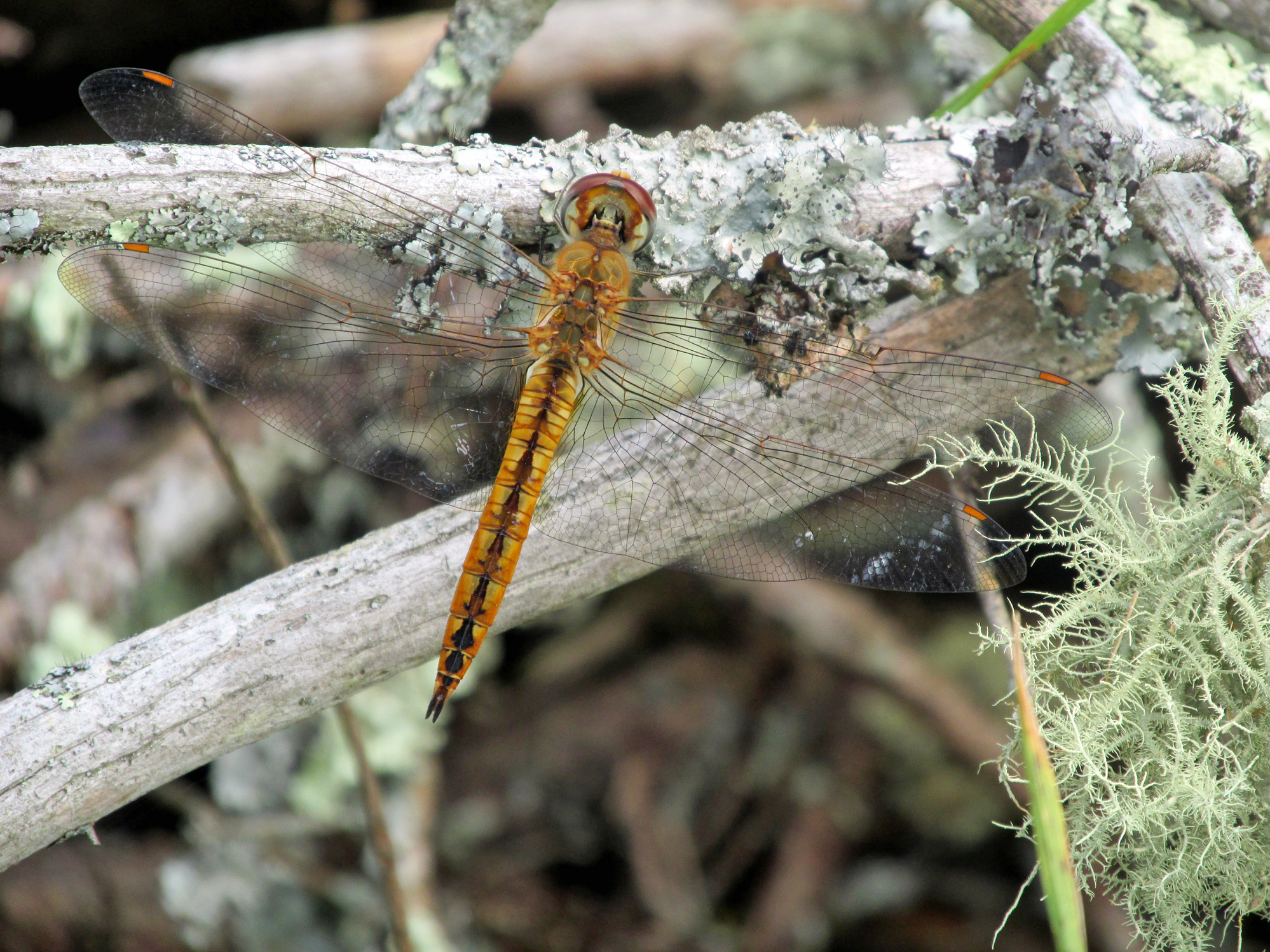
Photo by Bryan Stevens • Experts have documented long-distance migration flights by the Wandering Glider, a species of dragonfly.

Rhonda Eller of Chilhowie, Virginia, posted a question on my Facebook page about some dragonflies that appeared in her yard on Sept. 10.

“We have had a sudden breakout of dragonflies in our yard,” Rhonda explained. “We seldom see more than one or two at a time.”

Rhonda wondered if the dragonflies might have been drawn to her yard in pursuit of some sort of favorite insect prey. She also speculated that the recent dry conditions might have attracted the dragonflies.

I responded to her query by explaining that birds are not the only migrant in the skies at this time of year. Some dragonflies, just like birds, migrate. A species known as green darner is one that migrates. These darners are rather large, for a dragonfly, and travel in swarms. A couple of years ago I observed thousands of these dragonflies swarming over a municipal swimming pool and a nearby fish pond at a park in Erwin, Tennessee.

The WSLS Channel 10 television station out of Roanoke, Virginia, reported on swarms of dragonflies so large that they got picked up by local radar. Rhonda shared a link to the station’s story on my Facebook page.

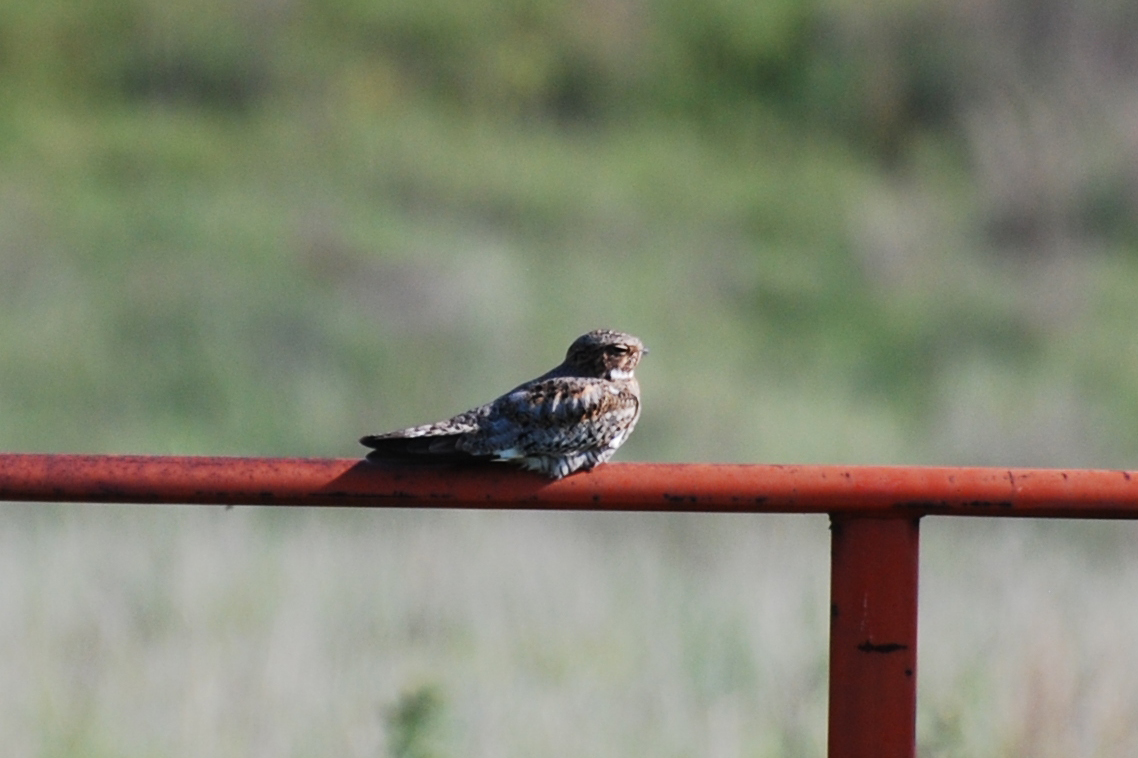
Photo by Jean Potter • A common nighthawk rests on a metal railing.

Of course, swarms of migrating insects are bound to get the attention of predatory birds. The same day that Rhonda experienced the influx of migrating dragonflies, I witnessed dozens of common nighthawks and chimney swifts swooping through the skies over my home. With a little more attention to detail, I also noticed the dragonflies sharing the skies with these birds.

I suspect that the nighthawks were feeding on the large darners while the swifts, which are much smaller birds, focused their foraging efforts on smaller winged insects. Tom McNeil, a neighbor and fellow member of the Elizabethton Bird Club, reported seeing nighthawks and swifts, too. Tom lives on the other side of a mountain ridge that separates our homes.

Tim Morris, a Facebook friend from Australia, noted in a comment on my post about the nighthawks that his country is home a bird known as the tawny frogmouth, a relative of the common nighthawk. Tim noted that frogmouths are big birds with camouflage markings that allow them to pretend to be dead tree boughs by day. “They feed not only on insects but mice and lizards, too,” he added.

Evidence of fall migration continued the next day when I detected a small wave of warblers foraging in trees at the edge of my yard. I saw five different species — American redstart, worm-eating warbler, Cape May warbler, Blackburnian warbler and Tennessee warbler — in the space of half an hour. Of the warblers in the flock, the Blackburnian and Cape May are some of the more vibrant ones.

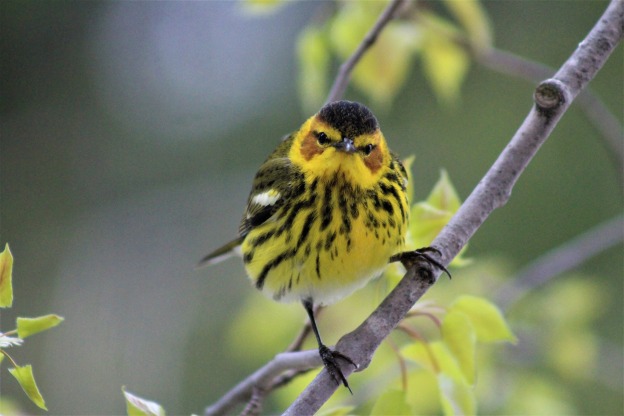
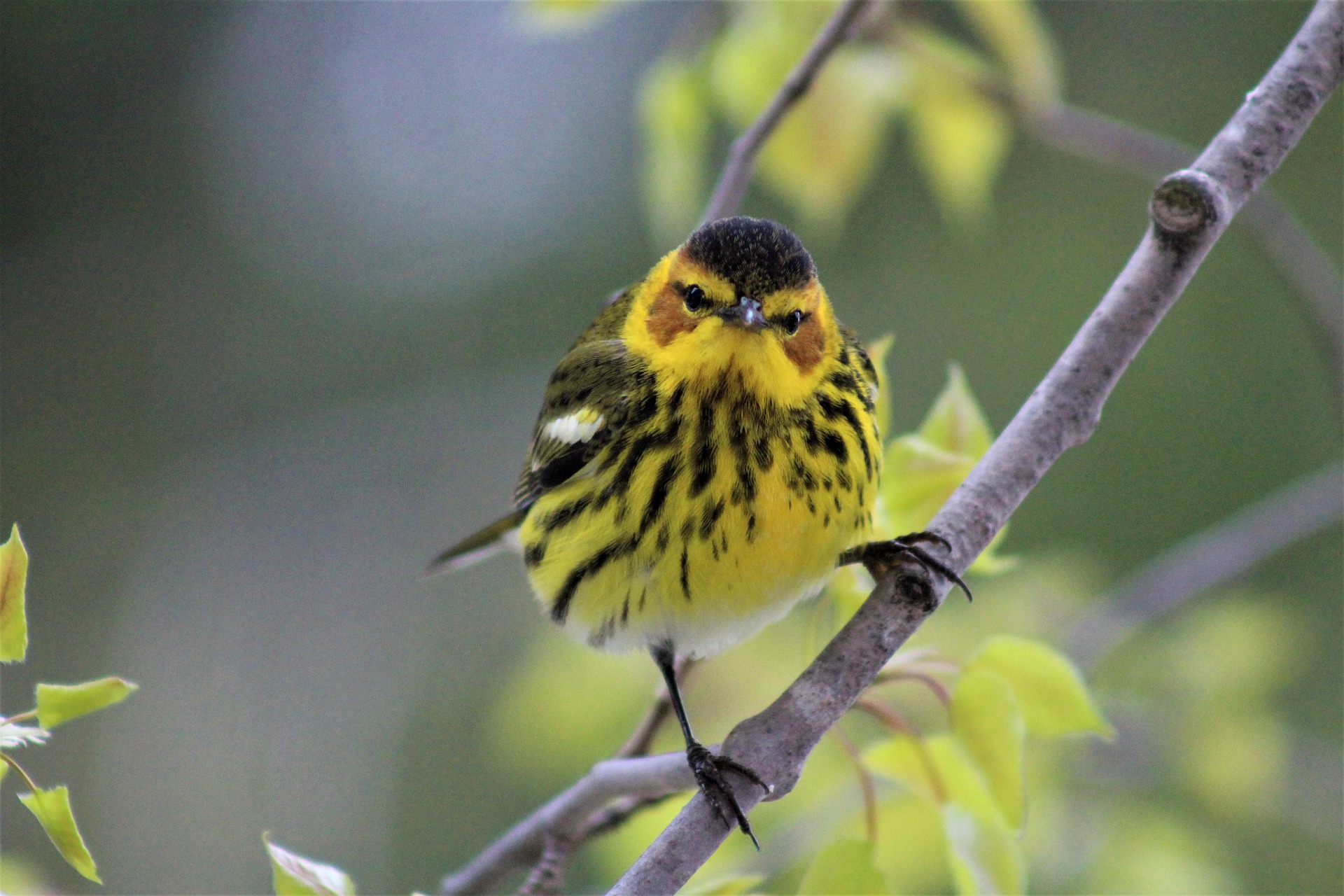
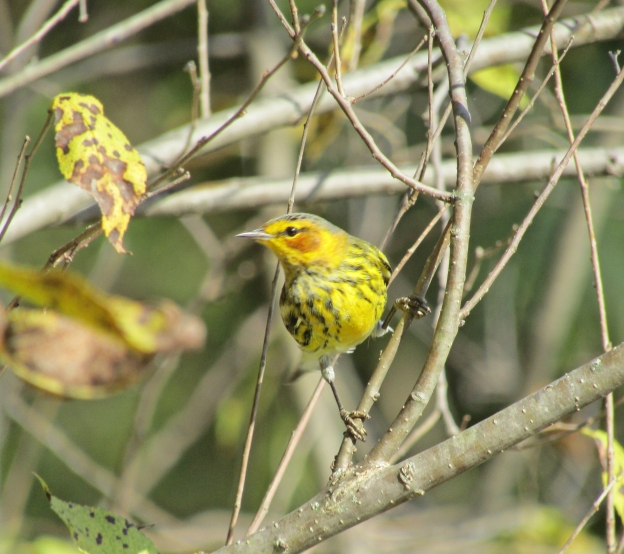
Photo by Bryan Stevens • While the Cape May warbler doesn’t breed locally, these warblers are fairly common spring and fall migrants in the region.

The Blackburnian warbler’s common name commemorates Anna Blackburne, an English naturalist who lived from 1726 to 1793. Her brother, Ashton, had immigrated to the United States, which made it possible for him to send his sister many specimens, especially birds. Their father, a salt merchant by trade, was also a well-respected amateur naturalist. In addition to the warbler that bears her name, Anna Blackburne also had a species of beetle named in her honor.

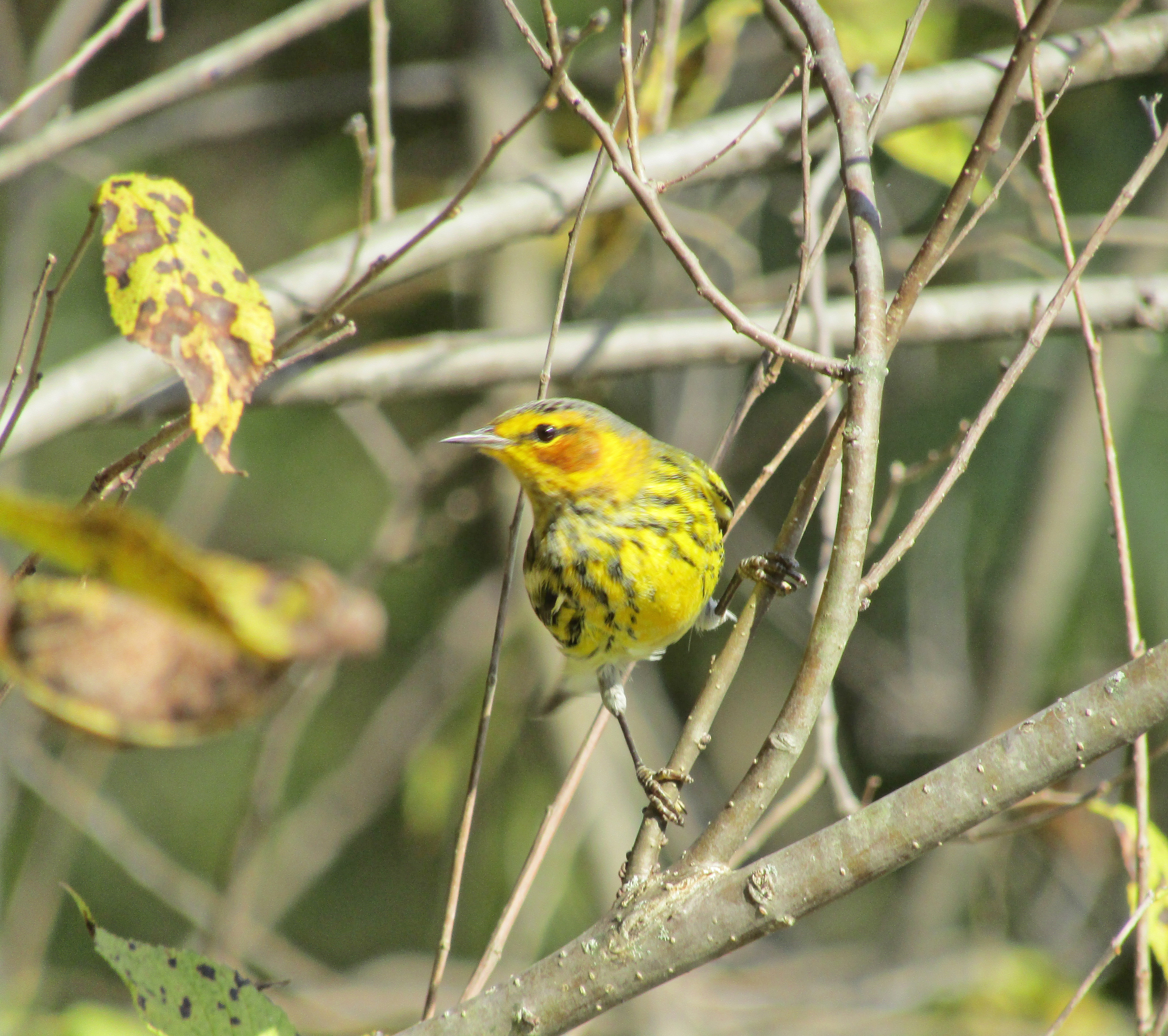
Both the Cape May and Tennessee warblers are named for the locations from which they were first collected. Neither of these small songbirds are closely affiliated with Cape May, New Jersey, or the Volunteer State. The Cape May warbler is also known as the “tiger warbler” for the dramatic black striping across its bright yellow breast. A green back and chestnut cheek patch make the Cape May warbler quite unlike any of its close kin. Even its scientific name — Setophaga tigrina — pays homage to the striped big cat. The term “setophaga” translates to “moth eater” and is a reference to this warbler’s intense fondness for the caterpillars known as spruce budworms that occasionally produce outbreaks in the northern spruce forests that serve as the nesting range for the Cape May warbler.


Photo by insitedesigns/Pixabay • A Cape May warbler peers from its perch on a tree branch.

According to the website, “All About Birds,” Cape May warblers have unusually shaped tongues that allow them to sip nectar from tropical flowers during the winter months spent in Central America and the Caribbean. Their unique tongues also make it possible for them to enjoy sips of sugar water from hummingbird feeders.

Whether its dragonflies, nighthawks, warblers or hummingbirds, plenty of birds and other flying creatures will be moving through the region for the next few weeks. Now’s the time to get outdoors and look for some of these migrants.

Photo by insitedesigns/Pixabay.com • The Cape May warbler migrates out of North America every fall to spend the winter in Central America and the Caribbean.

Hooded warbler and its kin bring tropical splash to area woodlands

Photo by Jean Potter • A male hooded warbler flits through the foliage of a rhododendron thicket.

I came away from a recent program on bird migration given by Kenn and Kimberly Kaufman learning a few new nuggets of information about warblers, which are one of my favorite bird families. The Kaufmans, well-known birders and activists on the behalf of birds, spoke Saturday, Aug. 31, on the topic of bird migration during the evening program at the Roan Mountain Fall Naturalists Rally. They confirmed some things I have always suspected to be true about fall migration in the region. For instance, warbler migration in the Southern Appalachians is indeed often more productive in the fall than in the spring. The Kaufmans also noted that fall migration takes place at a more leisurely pace for most of the migrating warblers. They even pointed out that some of the warblers, such as magnolia warbler and Tennessee warbler, which are uncommon fall migrants at their home in Ohio, are actually quite common in East Tennessee.

Hooded warblers nest in the woodlands around my home. So, from the time my favorite warbler returns in April until the last individual departs in October, I enjoy regular glimpses of this colorful and interesting bird. Like all warblers, the hooded warbler is quite energetic, dashing after tiny insects in the branches of shrubs and trees. Hooded warblers often forage close to the ground, which makes observing them easier.

Every time I behold a hooded warbler, I marvel at the bird’s exquisite appearance. The gold and green feathers seem to glow brightly in the dim light of the shadowy thickets of rhododendron they prefer to inhabit. The black hood and bib surrounding the male’s yellow face stands out by virtue of its stark contrast from the brighter feathers. Large coal-black eyes complete the effect. The appearance of the male bird provides this species with its common name. The female has an identical yellow-green coloration as the male, although she is slightly more drab. She lacks the black hood and bib, although older females may acquire some dark plumage on the head and around the face. Both sexes also show white tail feathers that they constantly fan and flick as they move about in thick vegetation and shrubbery.

Photo by Bryan Stevens  • Only males show the well-formed black hood and bib that gives the hooded warbler its common name.

I know that every migrant passing through my yard at this time of year is making its way southward, and it will likely be another five to six months before I again see any of my favorite songbirds. The hooded warbler will make itself at home in the forests of Mexico, as well as in Belize, Costa Rica and other Central American nations, throughout the winter season. Most hooded warblers begin returning to their winter haunts as early as mid-September, but lingering individuals continue to entertain birders in the United States throughout October.

Like many of the ruby-throated hummingbirds that make their home in the United States for the summer, the hooded warbler’s fall migration takes it across the vast open waters of the Gulf of Mexico, crossing to the Yucatan and then dispersing from there to various points in Central America. That birds as small as hummingbirds and warblers make this incredible migration twice yearly is one of nature’s most phenomenal feats of endurance. In their presentation, the Kaufmans explained that these tiny birds put on incredible fat reserves to help fuel their efforts.

The warblers, also known as wood-warblers, are an exclusively New World family of birds, numbering approximately 116 species. About 50 of these species of warblers make their home in the eastern United States and Canada for the spring and summer, departing in the fall and returning to tropical wintering grounds. Some of them are extremely bright and colorful birds. The hooded warbler would have to be included among the more brightly colored warblers.

Other colorful warblers that share similar tastes in range and habitat with the hooded warbler include the American redstart, black-throated blue warbler and black-throated green warbler.

While some of the neotropical migrants that venture into North America boast even brighter kin in the tropics, we need not feel cheated with the warblers that make their home in the United States for half of the year. Some of their relatives are beautiful birds, including the white-faced whitestart, golden-bellied warbler, three-striped warbler and rose-breasted chat, but few can really hold a candle to their relatives that venture north and brighten our lives.

The warblers are, in short, an incredible family of birds. I’ve seen all but a handful of the species that reside for part of the year in the eastern United States. I still want to see a Connecticut warbler and cerulean warbler, as well as the endangered Kirtland’s warbler of Michigan and the golden-cheeked warbler of Texas. I’ll miss the warblers once fall migration has run its course. For those months they are here, the warblers belong to us. They seem like “our” birds. They’re only on loan, though. Our winter birds will offer some compensation in their absence, but I’ll be impatiently awaiting that flash of gold from the recesses of a rhododendron thicket next April.

Photo by U.S. Fish & Wildlife Service • A female hooded warbler sits tightly on her eggs in the cup-shaped nest she has build within the concealing branches of a shrub.

Some birds stand out from the flock with their amazing migratory feats

Photo by jasonjdking/Pixabay.com • The bobolink is also known as the “rice bird” for its tendency to feed on cultivate grains such as rice. Even the bird’s scientific name, oryzivorus, means “rice eating” and refers to this bird’s appetite for many of the same grains consumed by humans. This small songbird also undertakes yearly migration flights equalling more than 12,400 miles.

The peak of fall migration is approaching. Birds of all species are winging their way southward ahead of the months of cold and scarcity. September and October are months of flux and transition. Like a bear fattening for hibernation, I gorge on sightings of warblers, hummingbirds, tanagers and other favorites, knowing that I won’t be seeing many of these birds again until next spring. Their memories will sustain me, as will my feeders, which will still bring plenty of colorful and entertaining birds into my yard even in times of snow and ice.
Bird migration at any season is a spectacle. Many of the birds that nested in mountain hollows or vegetation-choked wetlands will winter in Central and South America, the Caribbean or other distant but warmer destinations. The following snapshots of fall’s bird migration capture the phenomenon’s drama.

Bobolink
The bobolink is a small bird in the family of blackbirds, which includes grackles, orioles and cowbirds. Nesting across North America during the summer, bobolinks retreat to South America for the winter. These small birds undertake amazing migrations, making a round-trip of about 12,400 miles to regions south of the equator in Bolivia, Paraguay and Argentina each fall. Come spring, they make the trip again, but in a northerly direction.
According to the website All About Birds, migrating bobolinks orient themselves with the earth’s magnetic field. These small birds are able to accomplish this feat due to iron oxide in bristles of its nasal cavity and in tissues around the olfactory bulb and nerve. Bobolinks also use the stars scattered across the night sky to guide their migratory flights. Capable of living as long as nine years, a long-lived bobolink will rack up some serious miles simply migrating to its nesting grounds and back to its wintering habitat each year.

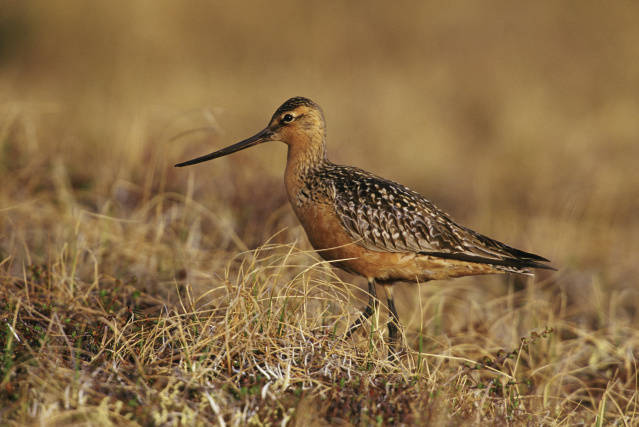
Bar-tailed godwit
Shorebirds, which in North America can consist of birds ranging from turnstones and sandpipers to willets and avocets, are champion migrants. For instance, the bar-tailed godwit makes an impressive non-stop migratory flight. This shorebird nests in the United States only in parts of remote Alaska, but this godwit also ranges into Scandinavia and northern Asia. Some of these godwits make a nine-day, non-stop migratory flight that takes them from New Zealand to the Yellow Sea of China and beyond, a distance of almost 6,000 miles each way.
Needless to say, since the godwits make no stops along the way, they must also go without food for the duration of their journey. The female godwit is larger than the male, but she still weighs only 12 ounces. The long-billed, long-legged bird is about 17 inches in length from the tip of the bill to its tail. That a creature so small can make such a distant, arduous trip and be the none the worse for wear is truly inspiring.

Broad-winged hawk
Many North American raptors migrate, but the broad-winged hawk dislikes the lonely aspects of solitary travel. Instead, these hawks form large flocks during migration, and in autumn the majority of these raptors travel past human-staffed hawk migration observation points, which are dubbed “hawk watches,” during a brief and concentrated period of only a few weeks. Observing the phenomenon locally is possible at the Mendota Fire Tower Hawk Watch site atop Clinch Mountain at an abandoned fire tower near Mendota, Virginia.
Broad-winged hawks are part of the family Accipitridae, which includes 224 species of hawks, eagles, vultures and other birds of prey. Broad-winged hawks are truly long-distance migrants. Many hawks passing over Mendota may end their migration as far south as Brazil. These hawks travel in flocks that can consist of hundreds or thousands of individuals. The birds conserve energy by soaring on thermals and mountain updrafts.

Photo by Bryan Stevens • Warblers, such as this American redstart, stage impressive migratory flights. The blackpoll warbler makes an incredibly arduous journey for a bird that is less than five inches long.

Blackpoll warbler
Most of the warblers that nest in North America retreat to Central and South America during the winter months. Few warblers, however, make as great a journey as the blackpoll warbler. Instead of migrating over land, this five-inch-long warbler undertakes a two-stage migration. The first half of the migration is a non-stop flight of about 1,500 miles. Every fall, these tiny birds fly over the ocean during this part of their migration, departing from Canada or the northern United States and not stopping until they reach various locations in the Caribbean. There they will spend some time recovering from the exhausting first half of their journey before they continue their way to such South American countries as Colombia and Venezuela. Once again, during the time they spend flying over open ocean, these tiny warblers do not feed.

* * * * *

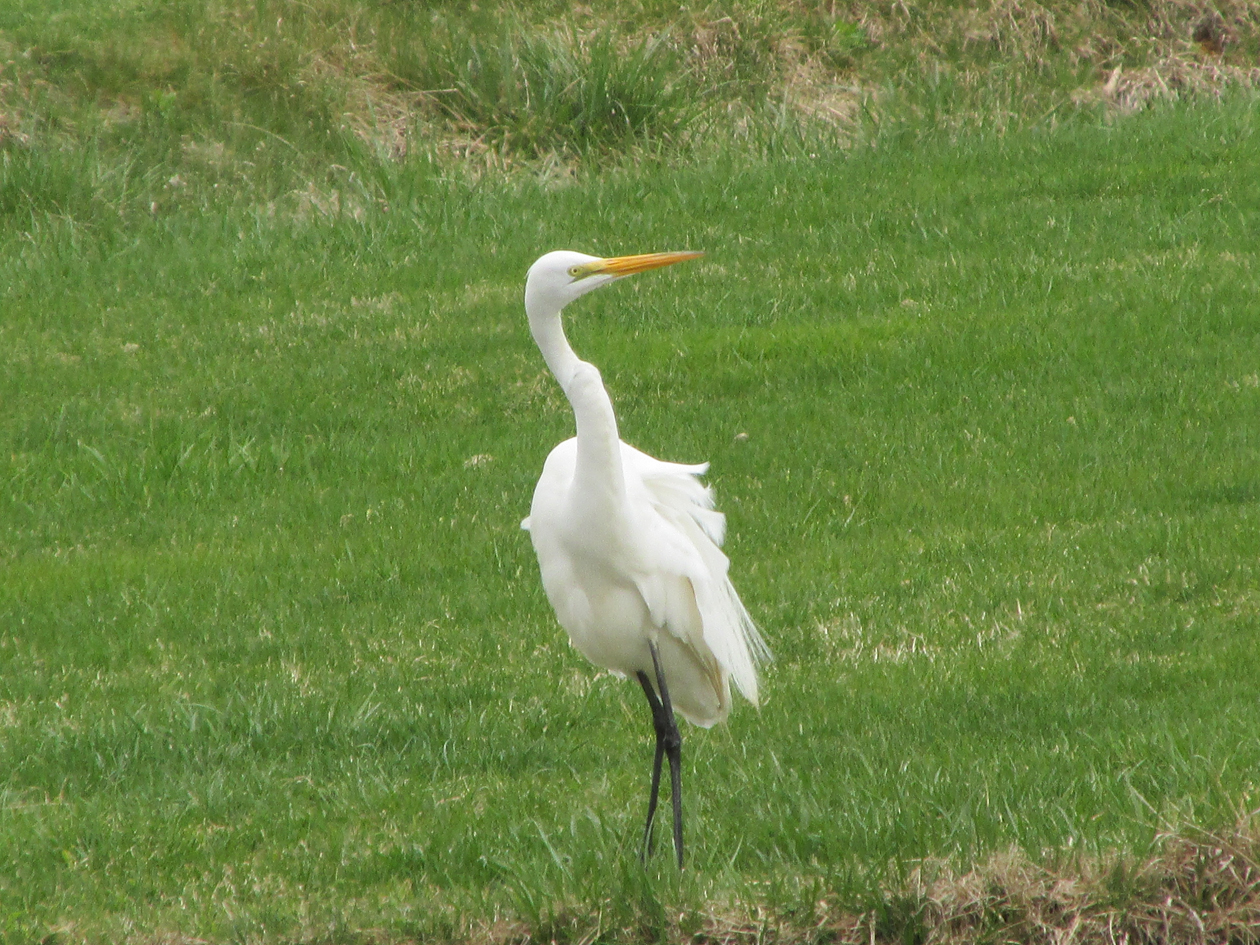
Photo by Bryan Stevens • A migrating Great Egret makes a stop at a golf course pond.

Wading birds topic for program
I’ll be presenting a program on herons, egrets and other wading birds at the September meeting of the Elizabethton Bird Club. The meeting will be held at 7 p.m. Tuesday, Sept. 6, at the Elizabethton campus of Northeast State Community College, 386 Highway 91. The meeting will be held on the second floor in Room 208. The free program is open to the public and will follow a brief business meeting.

Readers with questions are welcome to email me at ahoodedwarbler@aol.com or send a friend request on Facebook at facebook.com/ahoodedwarbler. I also love to receive comments and hear about bird observations.

Photo by Bryan Stevens • A spotted sandpiper and a solitary sandpiper rest at the edge of a pond during a migration rest stop.

The world can be a big, bad place for tiny hummingbirds

Mantis-Four

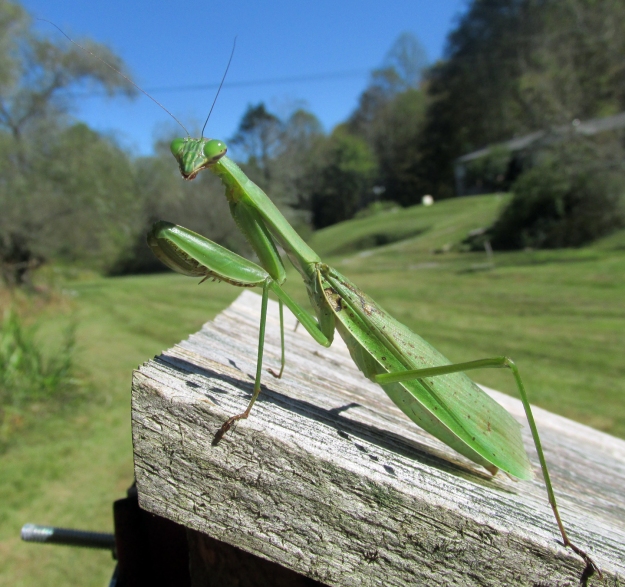
Photo by Bryan Stevens • Large mantises have been known to prey on ruby-throated hummingbirds.

Many years ago I read an account of a scarlet tanager making a snack of a ruby-throated hummingbird. Memory being what it is, I am no longer sure if that account was corroborated or one of those urban legends of birding.

A few pertinent facts should be considered. Male scarlet tanagers look striking in their red and black plumage. Ruby-throated hummingbirds are attracted to the color red. In the details I recall of the story about the predatory tanager, the hummingbird kept flying close to the tanager as if attracted to the red plumage. If so, it was a case of curiosity kills the cat or, in this case, the hummingbird. The tanager seized the hummingbird in its bill and, for good measure and to “tenderize” its prey, beat the hummingbird against the side of a branch. All of this took place before a crowd of birders who observed the incident through their binoculars. I don’t recall anyone taking a photo of the hummingbird’s tragic demise.

An email from Gene Counts reminded me of the tale of the tanager and the hummingbird. Gene, who lives in Haysi, Virginia, sent me a photograph and a short note about a praying mantis that stalks hummingbirds as they visit his feeders for a sip of sugar water.

MantisVsHummer

Photo by Gene Counts • This photo was shared by Gene Counts, who described how the mantis stalked hummingbirds that came to his feeder.

Gene told me of his excitement upon capturing the large insect’s behavior in a photograph.

“I just had to share this picture with you,” Gene wrote. “After all, my wife, Judy, was more excited today than the day we married in Chicago 54 years ago.”

He certainly hooked my attention with that introduction.

“A praying mantis is using our feeder as his own private hunting preserve,” Gene continued in his email. “The mantis follows and stalks the hummingbirds all the way around 360 degrees.”

So far, the stalking has only resulted in “several near misses,” but Gene declared that he is ready to pounce in case the mantis gets lucky.

“It has been four hours and he has lowered his goal,” Gene wrote of the patient mantis. “He is now clinging to the bottom (of the feeder) waiting for an insect. Now I can expel my breath as he no longer an avian threat.”

While Gene’s mantis may not be an immediate threat to hummingbirds visiting his yard in Haysi, does that mean we can be complacent when these large insects share our yards and gardens with hummingbirds?

Ruby-throated-WILLOWS

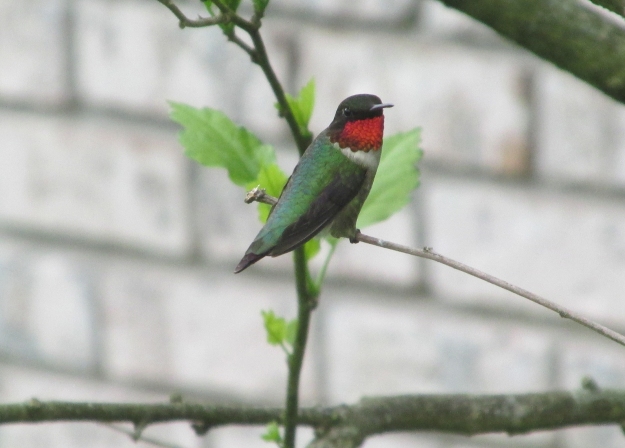
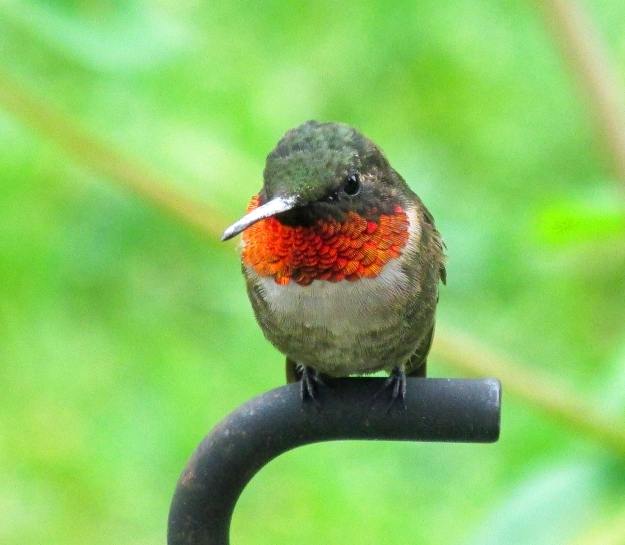
Photo by Bryan Stevens • Numbers of Ruby-throated Hummingbird in the region tend to fluctuate each year, but people should usually see a spike in their numbers as the hummingbirds end summer nesting and start migrating south again.


Documented evidence exists to identify large praying mantises as predators on ruby-throated hummingbirds. A brief foray online found numerous instances of hummers falling victims to these large carnivorous insects.

There are two species of mantises in the region — the European, or praying mantis, and the Chinese mantis — capable of capturing hummingbirds. Both species were introduced in the 1800s to act as a predator of insect pests detrimental to crops and gardens. The Chinese mantis can reach a length of 4.3 inches, while the European mantis achieves a length of about 3.5 inches. A third species — Carolina mantis — reaches only a length of 2.5 inches and should not pose a threat to ruby-throated hummingbirds, which are about 3.5 inches long.

Although introduced from Europe, the European mantis (Mantis religiosa) has earned recognition as the official state insect of Connecticut. The native Carolina mantis is the official state insect for South Carolina.

In Central and South America, where the world’s more than 300 species of hummingbirds reach their greatest diversity, there are also more species of predatory mantises. Some of these tropical insects prey on the tropical counterparts to the ruby-throated hummingbird.

Consider the way the mantis makes a perfect predator. It’s spiky forelimbs are spiky and serrated, making them perfect for seizing and grasping. This insect’s triangular head can turn their heads 180 degrees to scan its surroundings with two large compound eyes. A mantis also has three other simple eyes to increase its keen vision. Brutal mouthparts can easily tear apart and devour any prey the mantis manages to catch with its ambush hunting style.

Hummingbirds, regardless of species, are in a tough spot in the food chain. A bird not much bigger than many large insects is going to be a target for opportunistic predators like a mantis that will attempt to kill and consume anything small enough for them to make the effort.

p03mnqtd

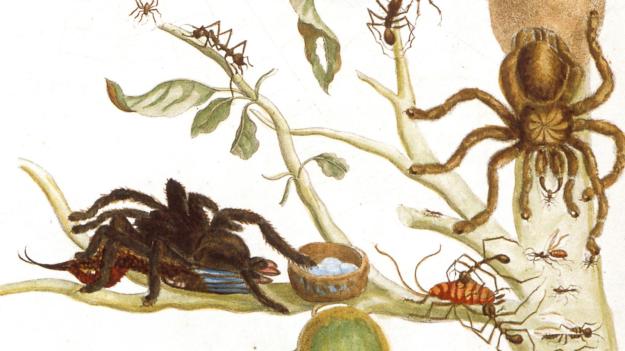
Maria Sibylla Merian, a German-born naturalist and scientific illustrator, was one of the first naturalists to observe insects directly. She painted this horrific work featuring a large spider preying on a hummingbird that had been dutifully incubating her eggs. When she died in 1717, she was recognized as one of the world’s foremost entomologists.

To make matters worse for ruby-throated hummingbirds, some large spiders and the bigger dragonflies have also been documented as hummingbird predators. When ruby-throated hummingbirds retreat to Central America for the winter months, they also face threats from lizards and snakes.

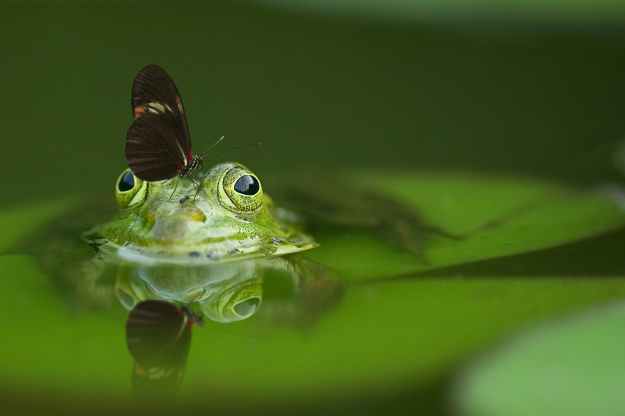
The list of predators that have been known to eat ruby-throated hummingbirds extends to bullfrogs, as well as many raptors, including kestrels, merlins and sharp-shinned hawks. Blue jays and other birds will raid hummingbird nests for eggs or young. Squirrels and chipmunks are also nest predators.

nature water eyes pond

Photo by Pixabay on Pexels.com. Large frogs have also been known to prey on hummingbirds.

Despite all these perils, some ruby-throated hummingbirds have achieved a “long” life. The oldest on record was a ruby-throated hummingbird banded at the age of nine years and one month. Most elder hummingbirds are females. Few male hummingbirds, perhaps because of the energy they expend dueling with each other, reach their fifth birthday.

It’s definitely not easy being as tiny as a hummingbird in a world of fearsome giants, but birders who have seen a hummingbird hover boldly in front of their faces know how these tiny birds take life in stride. They may have a disadvantage in size, but that doesn’t keep them from living life as if they were as big as an eagle.

Rubythroat

Photo by Bryan Stevens • Despite a perceived disadvantage of size, ruby-throated hummingbirds are quite capable of thriving in a giant world.

Rally to offer sneak peek at bird migration, other nature activities

CapeMayWarbler

Photo by Bryan Stevens • While the Cape May warbler doesn’t breed locally, these warblers are fairly common spring and fall migrants in the region.

The 56th Roan Mountain Fall Naturalists Rally will draw nature enthusiasts from far and wide to this jewel of the Southern Appalachians on the first weekend after Labor Day with programs, nature walks, catered meals, and much more.

The annual Fall Naturalists Rally is always a great opportunity to enjoy the outdoors and, for birders, get a sneak peek at fall migration with any of the walks and programs focusing on our fine feathered friends. The best naturalists in the region volunteer their time and energy to make this a landmark event for people of all ages.

This year’s rally, which is scheduled for Friday-Sunday, Sept. 7-9, will feature guest speakers, Gabrielle Zeiger and Dr. Joey Shaw, for the main programs on Friday and Saturday evenings.

Zeiger’s Friday program, “Zen and the Art of Mushroom Hunting,” will get underway at 7:30 p.m. following a catered dinner at 6:30. Zeiger has been studying mushrooms in the region for 23 years. She considers herself more of a mushroom enthusiast than an expert. She is a member of the North American Mycological Association, and attends their national forays. She is involved in the association’s annual Wildacres foray in the Blue Ridge Mountains near Mount Mitchell in North Carolina.


Photos by Bryan Stevens • Mushrooms will feature in one of this year’s evening programs at the Fall Naturalists Rally.


Her program will focus on the two basic approaches — looking for good edibles and scientific study — to mushroom hunting. Her talk will touch on both approaches and include basic information on common mushrooms found in the area, species diversity and poisonous versus edible mushrooms. The program will include various types of fungi from gilled mushrooms, boletes, corals, stinkhorns and polypores, as well as the roles that they play in the environment such as decomposition and forest ecology. She will also talk about what mycologists do at forays. Findings will be included regarding 20 years of record keeping at Roan Mountain and scientific information on studies at Mount Mitchell regarding amount of rainfall and diversity of fruiting.

Photos Contributed • From left: Gabrielle Zeiger and Joey Shaw are this year’s featured speakers.


Saturday’s program on “Digitizing Tennessee’s One Million Herbarium Specimens,” will also start at 7:30 p.m. followed by a catered meal at 6:30. Dr. Joey Shaw received a bachelor’s of science in biology from the University of Tennessee at Chattanooga in 1998, and that same year began his graduate education in the Department of Botany at the University of Tennessee, Knoxville. In 2001, he received his master’s in botany for a floristic investigation of the Big South Fork National River and Recreation Area in Tennessee and Kentucky. In 2005 he received his Ph.D. from the University of Tennessee, Knoxville, for his work on the phylogeny and phylogeography of the North American plums and molecular evolution of different genetic regions of the chloroplast genome.

Shaw is currently serving the Association of Southeastern Biologists as Past President and will rotate off this Executive Committee in April 2019, after having served for over ten years and in all ranks of that committee. He is also serving as Chair of the Wildflower Pilgrimage Organizing Committee, and in this capacity he organizes this annual event that brings together more than 120 professional biologists with 850 members of the public to participate in more than 150 different events over four days every spring in the Great Smoky Mountains National Park.

Blue-headedVireo

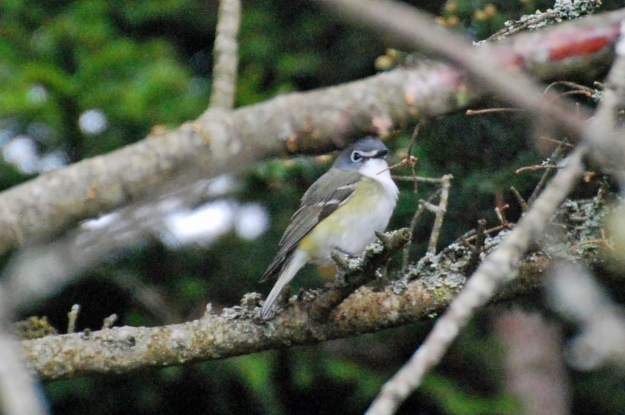
Photo by Bryan Stevens • Blue-headed vireos, such as this bird, are high-elevation summer residents in the region. In the fall, they are also common migrants.

Evening and lunch programs will take place in Roan Mountain State Park’s Conference Center and unless other noted, field trips will leave from the field on the left before the cabins in the park.

In addition to the programs, morning and afternoon walks will be held Saturday and Sunday on a vast array of subjects, including birds, salamanders, butterflies, spiders, snakes, geology, mosses and liverworts. A “moth party” will be held after the Friday and Saturday programs. Larry McDaniel will host this party taking a look at these winged nocturnal insects outside the Conference Center.

Consider joining the Friends of Roan Mountain, if you are not a member. Members get free admission to all Naturalists Rally events and the newsletter, “Friends of Roan Mountain.”

The rally offers catered evening meals by City Market of Elizabethton, as well as brown bag lunches on Saturday. All meals must be pre-paid in advance.

Registration and payment for meals and other activities can be made at the website for Friends of Roan Mountain at friendsofroanmtn.org. The website can also provide a brochure for download that offers a complete schedule and details all the available activities at this year’s rally. Whatever your interest, the Roan Mountain Fall Naturalists Rally is sure to have an activity available. For local birders, it’s often the kick-off to the fall migration season as warblers, vireos, thrushes, tanagers, birds of prey and many other species pass through the region on their way to their wintering grounds.

Tanager-Sept18

Photo by Bryan Stevens • A female scarlet tanager is a study in contrast from her mate with her dull greenish-yellow plumage being much less vibrant than the male’s bright red and black feathers.

Hummingbirds not the only birds returning to region as spring migration advances

Hummer-Morning

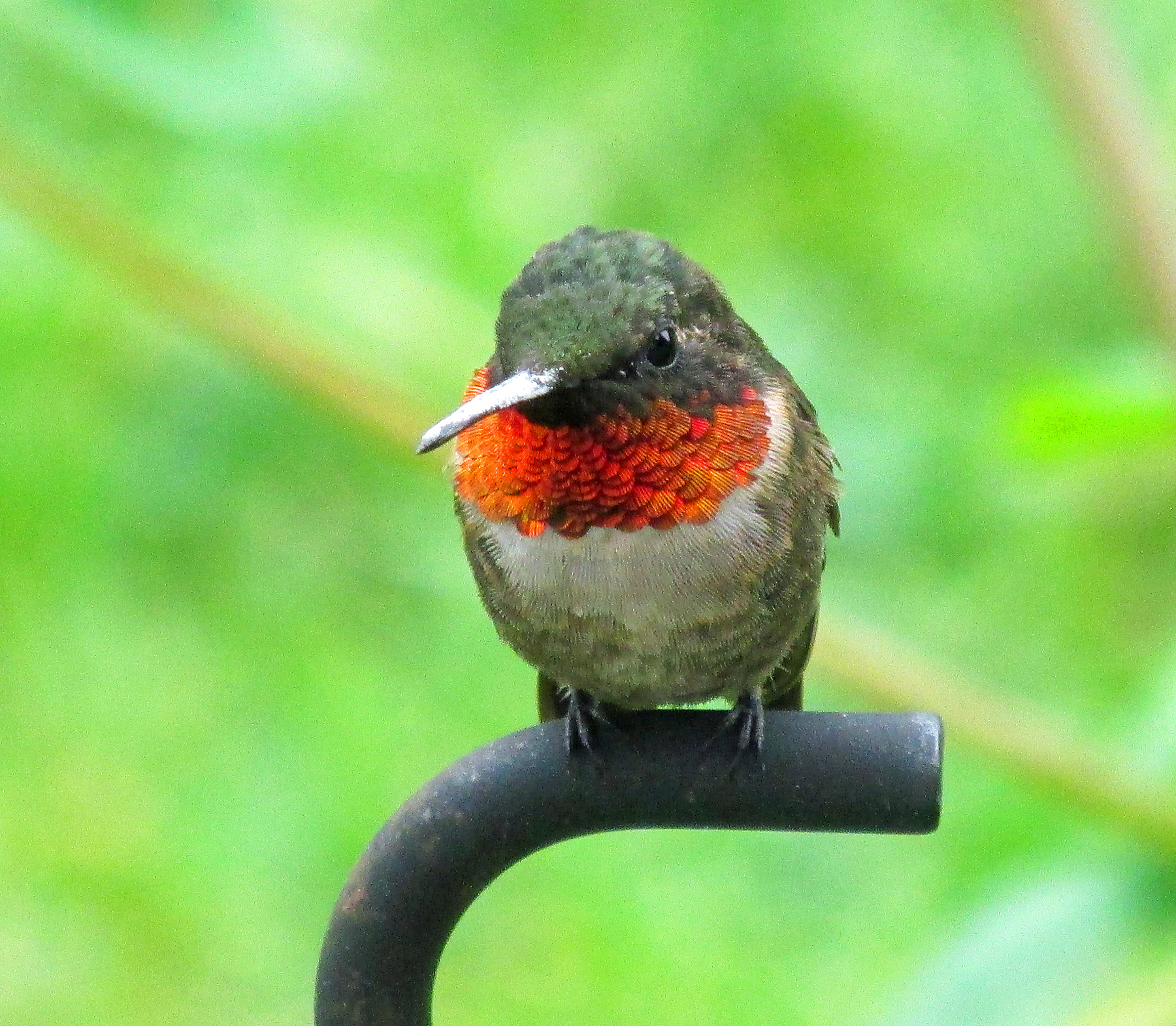
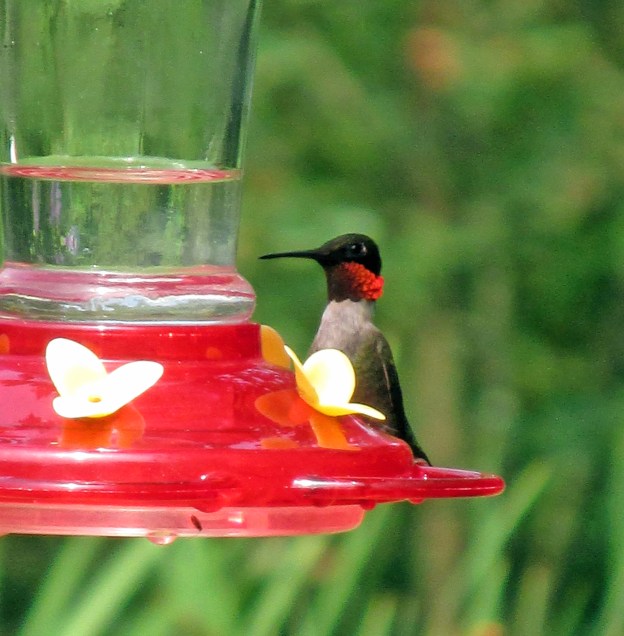
Photo by Bryan Stevens • A Ruby-throated Hummingbird perches on a sugar water feeder.

A voiceover for a promotional trailer for an upcoming movie in the Jurassic Park franchise asks the question “Do you remember the first time you saw a dinosaur?” and answers it with the sentence “The first time you see them, it’s like a miracle!”

Obviously, dinosaurs aren’t walking the earth — except in this highly successful movie franchise — although experts maintain that dinosaurian descendants (birds) still roam the world.

Dinosaurs, of course, have impressed humans with immense size ever since their enormous fossils began to be uncovered. Hummingbirds also impress with size, or rather the lack of it. It’s that tiny size that has prompted people to describe them as “miracles” from the time the first European explorers sailed to the New World in the late 1400s. When Spanish explorers first encountered them, they had no equivalent birds in Europe to use as a reference. They referred to hummingbirds as “joyas voladoras,” or flying jewels.

So, how many remember their first sighting of a hummingbird? These tiny birds, still accurately and often described as flying gems, are worthy of the word “miracle” being used to define them. When we see the ruby-throated hummingbirds return to the region every spring, our belief in miracles is strengthened.

I still have readers sharing reports of their first hummingbird sightings this spring.

• Marty Huber and Jo Ann Detta in Abingdon, Virginia, sent me an email about their first spring hummingbird sighting.

They reported that they got their first look at a spring hummingbird on April 18 at 5:04 p.m. “We were excited and have been looking since the beginning of the month,” they wrote. “Last year we didn’t see our first until April 23.”

• Ed and Rebecca Feaster of Piney Flats, Tennessee, put out their feeders after reading one of my columns earlier in April.

“We are happy to report that we saw a little female ruby-throated hummer on the morning of April 20,” they wrote in their email. “We were thankful to offer her nectar as she seemed very, very hungry!”

The Feasters noted that they have been in the Tri-Cities area for three years.

They had previously lived more than 20 years in the Roanoke Valley. “Birders in that area said to look for the hummers to arrive when the azaleas bloom,” they wrote. “The same seems to hold true here as the ones around our home began to blossom just a couple days ago.”

• Jane Arnold, a resident of Bristol, Virginia, sent me an email about her first hummer sighting.

“Just wanted to let you know that my first hummer of the year arrived at 10:20 a.m. Saturday, April 21,” she wrote. “I was so excited to see him! I had taken my feeder out to hang (it was sitting on a table) and [the hummingbird] flew to it.”

• Don and Donna Morrell emailed me with their first hummingbird sighting of spring. “My wife Donna and I saw our first hummingbirds on April 22,” Don wrote.

The Morrells saw both a male and female hummingbird. “We are located behind South Holston Dam,” Don added. “We are glad our friends are back. Also on that same day we saw an eagle and white crane.”

Egretta

Photo by Bryan Stevens • A migrating Great Egret makes a stop at a golf course pond.

Most likely the white crane was a great egret, which is also migrating through the region right now. Although often called cranes, egrets are part of the family of wading birds that includes herons. North America’s true cranes are the endangered whooping crane and the sandhill crane.

• Facebook friend Sherry Thacker reported a first sighting of a ruby-throated hummingbird on April 22.

IMG_0927

Photo Courtesy of Helen Whited • A Baltimore Oriole visits a feeder “baited” with an orange slice.

“It came looking at the thistle seed feeder that is red,” she reported. “I had not put up the sugar water feeder, but I did today.”

Sherry reported seeing some beautiful hummingbirds last year.

Of course, we are in the midst of spring migration, which means hummingbirds are hardly the only new arrivals.

• Helen Whited in Abingdon, Virginia, has seen two very brightly-colored species of birds pass through her yard this spring. On April 17, her feeders were visited by male rose-breasted grosbeaks. “I am so excited to see my first grosbeaks,” she shared in an email that also contained a photo featuring two of the visiting grosbeaks. On April 21, Helen sent me another email with a photo of a male Baltimore oriole visiting a specially designed feeder made to hold orange slices to attract fruit-loving orioles. Grosbeaks and orioles are two migrant species of birds that deliver splashes of tropical color to the region each year.

Helen had prepared for the visit by the Baltimore oriole. In an email from last year, she had told me that her husband had promised her an oriole feeder for her birthday. I’m glad she’s been able to report success in bringing one of these bright orange and black birds to her yard.

DDB1466C-233A-4CB8-8C73-BD7C30B4E4A3 (1)

Photo Courtesy of Helen Whited • A pair of Rose-breasted grosbeaks take turns visiting a feeder.

• Anita Huffman of Rugby, Virginia, saw a male rose-breasted grosbeak on April 22. She reported her sighting on Bristol-Birds, a network for sharing postings about bird observations in the region.

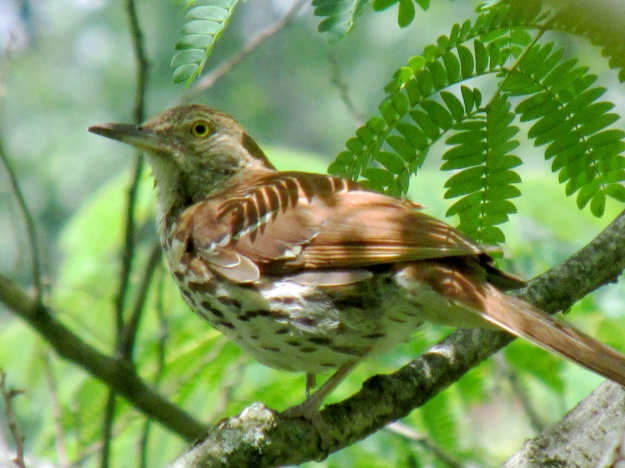
• John Harty, a resident of Bristol, Tennessee, sought my help with identifying a new bird in his yard. Based on his description of the bird — the shape of a robin, reddish-brown coloration and a taste for suet cakes at John’s feeder — I suggested that his bird was probably a brown thrasher.

Brown thrashers returned to my home in late March and almost immediately sought out my suet feeders. Other recent arrivals have included several warblers — hooded, black-throated green and black-and-white — as well as tree swallows, which immediately got down to the business of selecting a nesting box. All of these birds nest in the gardens and woods around my home.

BrownThrasher-MIMOSA

Photo by Bryan Stevens • Brown Thrasher perched in a Mimosa Tree.

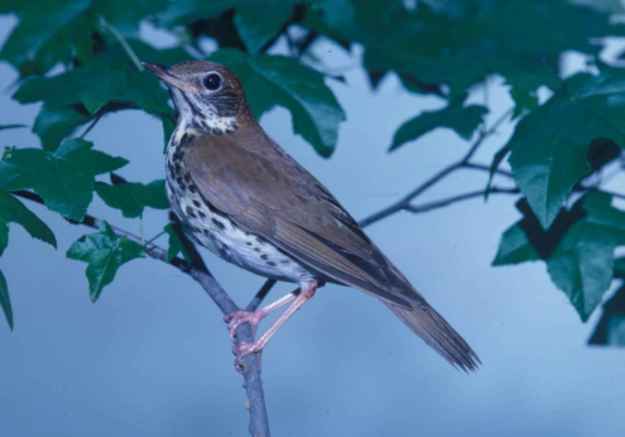
Some birds, however, announce their arrival not with bright colors but with beautiful songs. On April 23, I listened as a wood thrush sang its flute-like song from the edge of the woods just outside my bedroom window. The sweet song of this thrush is one of my favorite sounds of spring.

Every bird is a miracle, whether you’re seeing or hearing them for the first time or welcoming them back for another spring and summer season.

wood-thrush-songbird-hylocichla-mustelina-looks-up-while-it-perches-on-a-branch

Photo by U.S. Fish & Wildlife Service • The Wood Thrush often sings its flute-like song from deep under cover in dense woodlands.

Berry-rich diet makes waxwings profuse water drinkers

Waxwing-Sept11

Photo by Bryan Stevens • A cedar waxwing perches on a branch while taking a break from flycatching insect prey near a community park pond.

Ernie Marburg, a resident of Abingdon, Virginia, shared an interesting observation about a flock of cedar waxwings he observed recently in his yard.

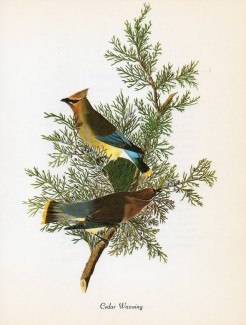
Waxwings have a brown and gray silky plumage, a black mask and a perky crest. Some of the wing feathers show red tips. The similarity of these wing tips to melted drops of wax gives these birds the common name of waxwing.

Waxwing-Audubon

Early American naturalist and artist John James Audubon painted this pair of cedar waxwings.

“The typical flock of waxwings has arrived,” he wrote in his email. He added that the birds exhibited an unusual behavior during their visit.

“From their roosts in the tops of some tall nearby trees, they appeared to be leaving their roosts briefly and returning to the trees as though they were catching flies,” Ernie noted. “There were, however, no flies available.”

The waxwings, he went on to explain, appeared to be going after snowflakes. “Could they have been going after the snowflakes to drink water?” Ernie asked.

While I wasn’t sure that catching snowflakes is an energy-efficient way to relieve thirst, the waxwings might have had a different motivation for their behavior. As I informed Ernie in my reply to his email, waxwings are very social with each other. These birds form large flocks that travel, feed, roost and bathe together. They have also come up with interesting “rituals” to reinforce their social ties with each other.

Waxwing-Erwin

Photo by Bryan Stevens • The waxy tips to the wing feathers are evident in this photograph of a cedar waxwing.

These rituals, or games, they “play” with each other include a flock of perched birds passing a single berry or fruit in a line, one bird to another, without any of the birds eating the item. I speculated that snowflake catching was their idea of a fun game and a way to practice for fly-catching season, which is just around the corner.

Perhaps I should have conducted some research. As it turns out, other people have witnessed this snowflake-catching behavior, which has led those who have studied the birds to determine that the birds do indeed eat snowflakes to ease thirst. Apparently their diet, which is rich in sugar thanks to the various berries that provide a huge percentage of their food, waxwings are often afflicted with intense thirst. In addition to catching snowflakes, they have been observed eating fallen snow. A single Bohemian waxwing — a relative of the cedar waxwing — can gobble down 300 berries in a couple of hours. According to some statistics, one of these birds can eat up to three times its weight in fruit in a single day. The next time I am lucky enough to observe waxwings in a snowstorm, you can bet I will be watching for this snowflake-eating behavior.

The cedar waxwing has few relatives. Worldwide, there are only two other species: the Bohemian waxwing, which is native to the northern forests of Eurasia and North America; and the Japanese waxwing, found in such northeast Asian countries as Japan, Korea and China.

Ruby-throated-WILLOWS

Photo by Bryan Stevens • Numbers of Ruby-throated Hummingbird in the region tend to fluctuate each year, but people should see a spike in their numbers as the hummingbirds end summer nesting and start migrating south again.

Hummingbirds due back soon

Waxwings are rather nomadic, coming and going with a maddening unpredictability. Other birds are more dependable, arriving and departing at roughly the same time year after year. One such bird should soon make its triumphant and welcome return to yards and gardens throughout the region. According to the website Hummingbird Guide, ruby-throated hummingbirds usually return to Tennessee and Virginia the first week of April. These tiny flying jewels arrive earlier in North and South Carolina, typically arriving the third week of March in those states.

The popularity of hummingbirds in general, and the ruby-throated hummingbird specifically, is simple to understand. These tiny birds are perfectly willing to insert themselves into our lives, offering hours of fascinating entertainment as they visit our gardens, duel at our sugar water feeders and occasionally even nest in trees and shrubs in our yards.

Individuals who feed birds know that it can be an expensive undertaking. The cost of providing sunflower seeds and suet cakes for hungry flocks during the winter months can nibble at the monthly budget, but hardly anyone would begrudge the sparrows, finches, wrens and woodpeckers. After all, they return the favor, putting on daily shows just outside our windows.

Rubythroated_Hummingbird

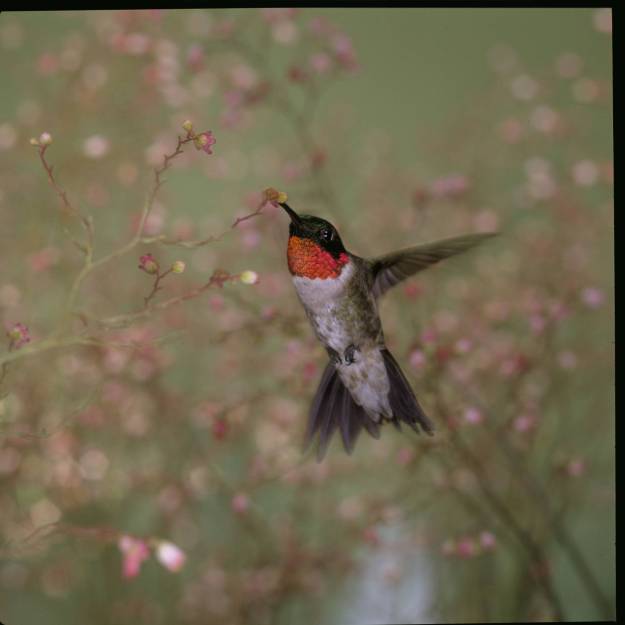
Photo by U.S. Fish & Wildlife Service • A male Ruby-throated Hummingbird hovers in front of the camera as it seeks nectar from tiny flower blossoms.

The same is true of hummingbirds. For a relatively modest investment, people putting out feeders or planting nectar-producing flowers are rewarded with the fun and amusing antics of these pint-sized and hyperactive birds.

Attracting hummingbirds is generally much less expensive than feeding other birds. After all, you need only a mixture of sugar water — four parts water to one part sugar — to fill a feeder and catch the attention of a visiting hummer. A few pounds of sugar will last a lot longer than that bag of sunflower seeds, and it’s much less expensive to purchase at the grocery store.

Do not add red coloring or dyes to your sugar water mixture. Some studies have indicated these substances are harmful to hummingbird health. This means tossing out many of the pre-packaged mixtures sold with sugar water feeders. After all, the entire purpose is to attract hummingbirds. Risking their health is simply not acceptable. If you do want to take extra steps to attract these diminutive, feathered sugar junkies, consider supplementing your landscape with a variety of flowering plants. To explore some of the best choices for flowers to tempt hummingbirds, visit the website of The Hummingbird Society at http://www.hummingbirdsociety.org.

Ruby-throatedFemale-EYE

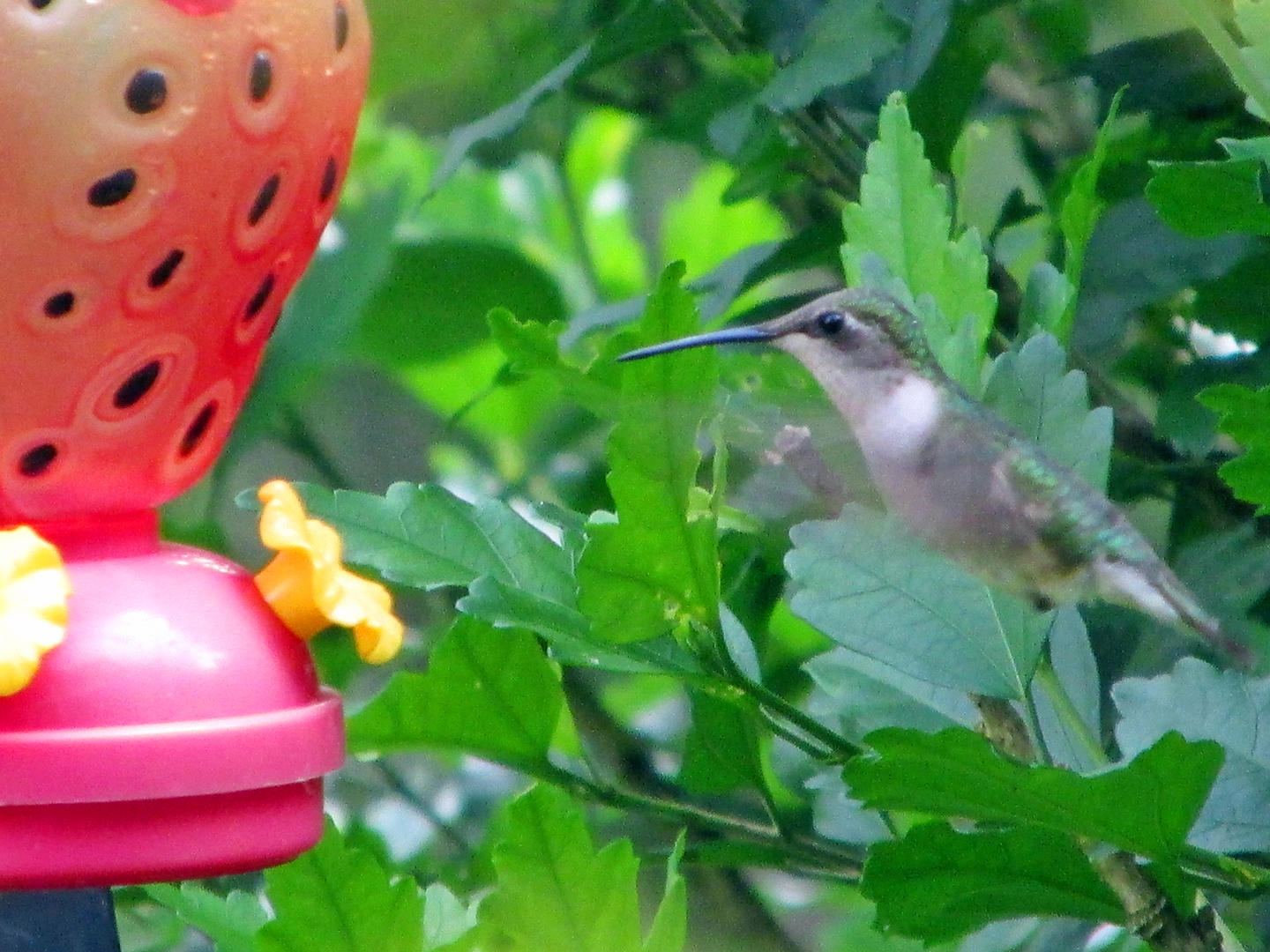
Photo by Bryan Stevens • A ruby-throated hummingbird visits a feeder for a sip of sugar water.
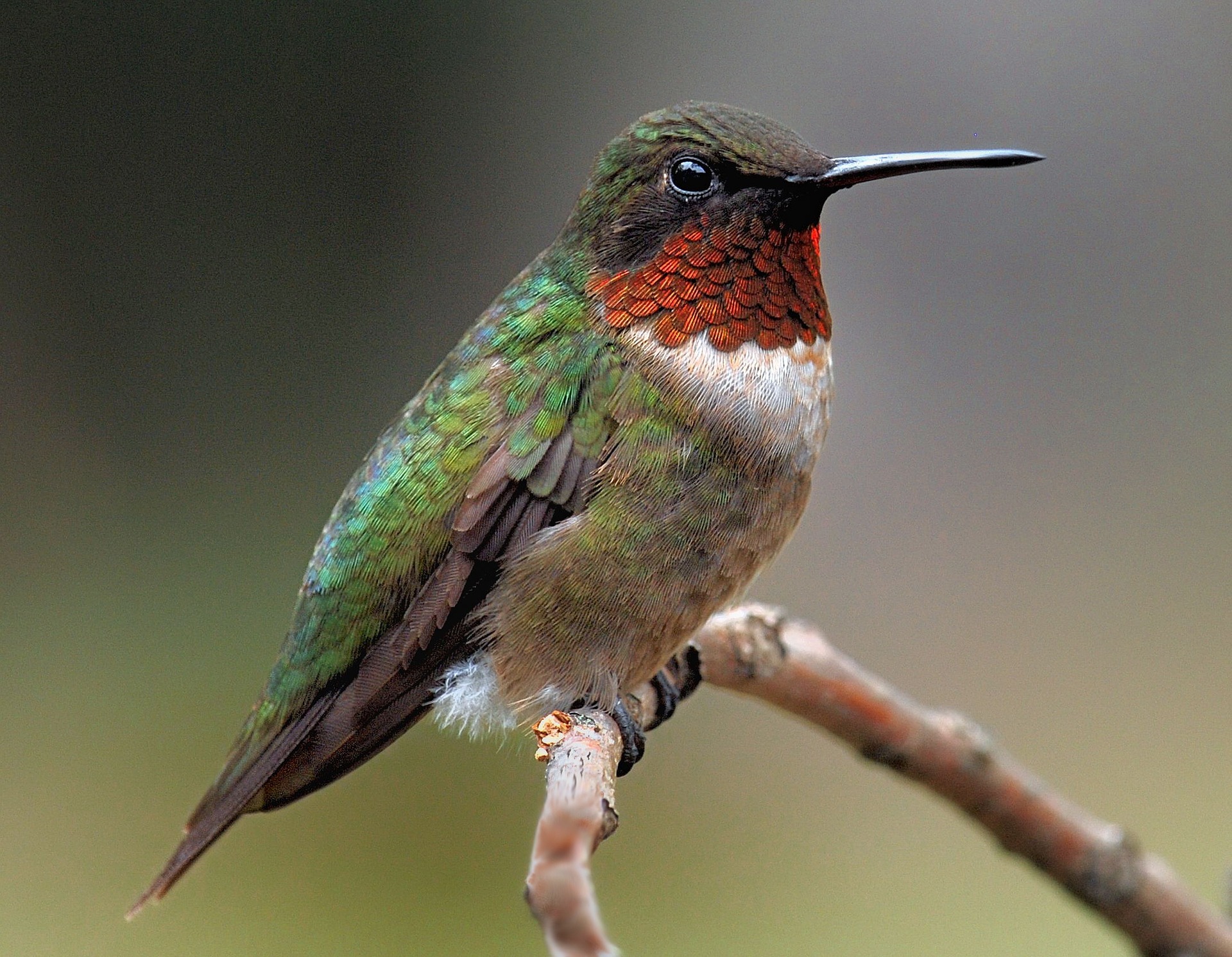
I always put out my sugar water feeders in early April. I usually end up waiting a couple of weeks before the first hummingbird appears, but it’s worth the wait. I miss these tiny birds during the winter months, which they spend in much warmer surroundings in southern Mexico and Central America. A male with the namesake red throat is usually the first to appear at my feeders. However, female ruby-throated hummingbirds, which lack the dazzling ruby throat patch, are migrating, too. The females usually lag a week or two behind the pace of the migration for the males.

As always, I enjoy hearing from readers about their first spring sighting of a ruby-throated hummingbird. Readers are encouraged to jot down the date and the time of arrival when they observe their first hummingbird of the season. If the sighting’s duration allows you to verify, note whether the hummingbird was a male or female. These reports can be emailed to me at ahoodedwarbler@aol.com. Together, we’ll track the arrival of these tiny birds as they return to the region.


American robins become more prominent with shifting of seasons


Robins-ETSU-Feb

Photo by Bryan Stevens • Returning American robins, prominent in lawns and gardens during their annual spring migration, will soon turn their attention to nesting duties.

I don’t think I’m alone in doing what I can to speed along the process of spring’s arrival. I’ve heard from different people, all eager to share their observations of one of the sure signals — the arrival of flocks of American robins — of the shifting of the winter season to spring.

Bobby Howser phoned me to let me know of a large flock of American Robins he encountered at the Sullins College building in Bristol, Virginia.

He said the flock “swarmed like bees” into a tall holly tree. He was surprised to see so many robins in a single tree and asked if it was an unusual occurrence.

Houghton_MS_Am_21_(46)_-_John_James_Audubon,_robin 3

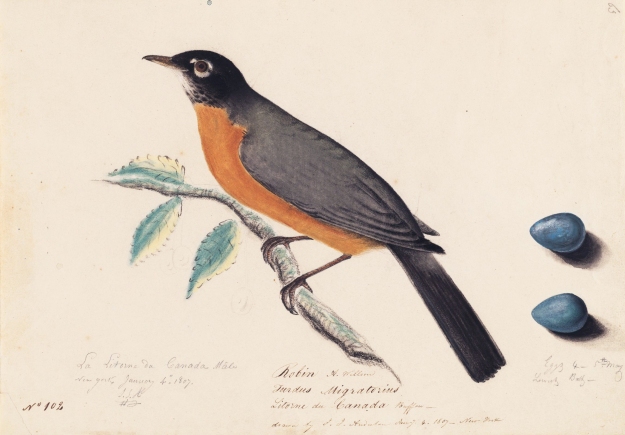
Early American naturalist and painter John James Audubon painted this American robin with a couple of the bird’s eggs.

Ernie Marburg in Abingdon, Virginia, emailed me about the same time.

“I just wanted to report that we have been inundated with a huge flock of mostly robins,” he wrote. He estimated that the flock contained 300 to 500 individuals.

“They ate all the red berries from my neighbor’s large holly tree yet appear to avoid other holly trees with many red berries just a short distance away,” Ernie wrote. The flock remained active in the tree from morning into early afternoon.

Not long after he first emailed me, Ernie contacted me again. “I wanted to give you an update on the robin invasion,” he wrote. “They have been here two additional mornings since I first reported to you. Their pattern is different now though. They are spaced apart and appear to be ground feeding individually.”

Robin-OnNest

Photo by Bryan Stevens • American robin sitting on its nest in the shelter of a side of a bridge spanning the Doe River in Elizabethton, Tennessee.

Ernie proposed a theory about the behavior of the robins.

“I think they followed the south to north weather pattern we had recently that provided significant rainfall,” he explained. “The rainfall, in turn, caused the ground to thaw and the earth worms to come to the surface thus providing a food source for the robins. In summary, the robins are following their food source.”

I responded to Ernie and congratulated him on what I thought was an excellent theory.

Ernie also wrote me that he had read an article some time ago that said robins would eat cooked elbow macaroni if put out for them.

“We did that, but not one robin ate the macaroni,” he said. “Moral of the story is, as you would expect, don’t believe everything you read.”

I’ve read similar suggestions of unusual items to try to tempt birds not prone to visit feeders. I told Ernie that I wasn’t too surprised that the robins ignored the macaroni. The observations of robin feeding habits made by Bobby and Ernie also correspond to the changing seasons. Holly trees retain their berries into late winter, which provide an abundant food source for robins, as well as other birds. As the temperatures begin to rise in early spring, the birds switch their diet in favor of earthworms. This protein-rich food source fuels the impressive migration made by robins each year.

Robin-Hunter

Photo by Bryan Stevens • An American robin scans for prey in the grass and clover of a lawn.

I posted on my Facebook page about the flocks of robins I’d observed, which resulted in several comments on my original post.

Johnny Mann, who lives in Bristol, Tennessee, shared on my Facebook page after I posted about seeing flocks of robins almost everywhere I have gone recently. He noted that he has been seeing Eastern bluebirds, which are a smaller relative of robins. He noted in his comment that the bluebirds are feeding on suet.

Jackie Lynn, who lives in Wytheville, Virginia, also posted a comment on my Facebook page. Jackie saw a large flock of robins feeding in a field, enjoying the worms brought to the surface by recent rains. “Dinner was served,” Jackie reported.

Several other people responded optimistically on my Facebook page, sharing the hope that the influx of robins does indeed signal the approach of spring.

The American robin is known by the scientific name Turdus migratorius, which can be translated as “migratory thrush.” Indeed, this well-known American bird is related to other thrushes, including the Eastern bluebird, wood thrush and veery. The relationship to other thrushes is quite visible in young birds, which display a spotted breast until they mature and acquire the familiar red breast associated with robins.

There are 82 other species in the genus, which ranges not only in the Americas, but Europe, Asia, Africa and Australia, as well. Some of the American robin’s fellow genus members include the olive thrush, the bare-eyed thrush, pale thrush, great thrush, black-billed thrush and cocoa thrush.

AmericanRobin

Photo by Bryan Stevens • While American robins like fruit when its available, they also spend a lot of time feeding on earthworms and insects.

When the first European settlers arrived in North America, the robin was still a bird living in the forests. Robins proved incredibly capable of adapting to the presence of humans. Soon enough, these once shy forest birds began to frequent lawns and city parks. The robin soon became one of America’s most popular songbirds. Three states — Connecticut, Michigan and Wisconsin — have conferred official state bird status on the American robin.

Robins begin nesting almost as soon as they return each spring. Nesting success in a previous season instills fidelity to the location where the birds nested, resulting in many robins returning to the same nesting area year after year. Although some robins invariably spent the entire winter season in the region, it is still a welcome sight to see migrating flocks of these birds in February and early March. The sudden resurgence of the American robin each spring is a reminder that another winter will soon be history. I know I’m always pleased to welcome them back.

•••••

Bryan Stevens lives near Roan Mountain, Tennessee. To learn more about birds and other topics from the natural world, friend him on Facebook at https://www.facebook.com/ahoodedwarbler. If you have a question, wish to make a comment or share a sighting, email ahoodedwarbler@aol.com.
american_robin

Early American naturalist and painter John James Audubon captured this family of American robins in one of his masterful paintings.

Winter weather events can adversely affect birds, too

Although the weather has been mild thus far this winter, that can change in the blink of an eye. Inclement weather affects humans, but it can also have adverse affects on birds. Snow, sleet, ice, wind and other forces can play havoc on the lives of our feather friends. Birds have many adaptations to help them deal with the worst the elements can throw at them, but sometimes events can overtake them.

LaplandLongspur-Auk

Bodies of the fallen Lapland longspurs are shown scattered on a frozen lake after a 1904 weather-related catastrophe overtook hundreds of thousands of migrating longspurs.

One such event took place on the night of March 13-14, 1904, when hundreds of thousands of one small songbird species perished as circumstances came together in a perfect storm. This infamous event in the annals of ornithology mystified residents living around the town of Worthington, Minnesota, when they awoke on the morning of March 14 to find thousands of dead birds strewn across the landscape. Birds fell onto everything from yards and gardens to street and rooftops, as well as numerous frozen lakes.

In an article in the ornithological publication The Auk, the affected songbird was identified as the Lapland longspur, a bird that nests in the Arctic tundra and spends winters on the expansive prairies and plains of the United States and Canada. The Lapland longspur, also known as the Lapland bunting, also ranges into Russia and the Northern Scandinavian countries of Europe. The term “longspur” refers to the long hind claws on this small songbird’s feet. Two other longspurs — Smith’s longspur and chestnut-collared longspur — are found in North America.

The Lapland longspur disaster on the night of March 13, 1904, originated with a massive migration flight taking these songbirds back to their tundra nesting grounds. The author of the Auk article speculated that the longspurs migrating northward encountered a winter storm in the darkness. Heavy snow accumulated on the feathers of the exhausted migrants, forcing them to crash to the ground by the hundreds of thousands across the terrain of southwestern Minnesota and northwestern Iowa. From the point of view of the disoriented birds, the lights from the towns dotted across the landscape added to the chaos and confusion. Many of the bird suffered blunt force traumas, including ruptured organs, crushed skulls, bone fractures and other such injuries incurred when falling to the ground from great heights.

The Auk article comes to a total of a million birds lost in a single night, although the author admits the toll could have been even higher. Although this is an immense figure, consider that a survey dating to 2004 estimated 8 million Lapland longspurs in Alaska alone during the nesting season.
aul152-871

Early naturalist and artist John James Audubon painted Lapland Longspurs or, as he knew them, Lapland Lark Buntings.

The 1904 disaster didn’t seem to dent the overall numbers of the Lapland longspur. The populations of many species of birds can survive such catastrophes, but other species already struggling could be adversely affected by such events. For example, in February of 2007 a flock of year-old whooping cranes was exterminated by severe storms that overwhelmed them in a shelter at the Chassahowitzka National Wildlife Refuge in Florida. A total of 18 young whooping cranes, part of a flock trained to follow an ultralight aircraft from their birthplace in Wisconsin to the refuge in Florida salt marshes, were killed during the storm. The loss of that many young birds also robs the endangered species of much needed vitality. As of February 2015, the total whooping crane population stood at 603 individuals, including 161 captive birds.

Weather disasters extract a toll on both humans and birds. Sometimes they may affect hundreds of thousands of individuals, although the consequences are often confined to smaller segments of a population.

In early May of 2013, dozens of common loons migrating through Wisconsin encountered an unseasonable ice storm. Many of the birds found ice forming on their feathers, weighting them down and causing emergency landings. Wildlife rehabilitation workers rescued more than 50 birds, but there were probably many other loons affected by the freak storm that were lost without a trace.

Common_Loon_on_Water

Photo by U.S. Fish & Wildlife Service • Common loons are quite at home in the air and on the water, but these birds are awkward if weather forces them to set down on land.

Loons crashing onto land or even small ponds are doomed. Agile and graceful in water because of strong legs and webbed feet, loons are almost incapable of movement on land. Landing on a small body of water is not much better since loons must run along a stretch of waters — sometimes for hundreds of yards — in order to get their relatively heavy bodies aloft.

Loons are not the only birds that sometimes face forced landings. In March of this year, a winter storm raged through most of the Northeastern United States. The wakes of these storms resulted in wildlife agencies in the region being flooded with reports of dead or injured American woodcocks in the region. Most of the reports were concentrated in and around New York City. Not only did the storm interrupt the migration flight of the woodcocks, but cold temperatures caused the ground to freeze, preventing the stranded birds from finding food.

The woodcock is an unusual shorebird, also known by such whimsical names as “bog sucker” and “timberdoodle,” that has completely abandoned the shore in favor of woodlands and fields. The American woodcock is not a rare bird, but the species is rarely seen due to its retiring habits and inaccessible habitats.

Closer to home, an unusual February event back in 2014 resulted in equally unusual numbers of red-necked grebes on area lakes, rivers, and ponds. This grebe, a rare visitor to the region, was apparently forced by weather conditions to make a stopover on bodies of water in the region. Reports of red-necked grebes persisted for about a week before they eventually departed to continue their flight to more favored locations.

Back in 2011, it wasn’t a winter storm that killed thousands of birds in Arkansas. The birds — red-winged blackbirds, European starlings, brown-headed cowbirds, and common grackles — shared a communal roost near the town of Beebe.

On New Year’s Eve, just as 2011 was dawning, about 5,000 of these birds died after crashing into trees, buildings and automobiles, according to a National Geographic News article by Charles Q. Choi. Apparently these birds were frightened into flight by the explosive booms from a professional fireworks display celebrating the arrival of a New Year. In the chaos after thousands of birds not suited for nocturnal flight took to the air, they began to impact various stationary objects and crash back to the ground.

Summer-Pelicans

Photo by Bryan Stevens • Brown pelicans fly in a line over the Atlantic Ocean on the South Carolina coast.

Incidentally, in the same article, mention was made of a 2010 incident when hundreds of pelicans washed up on the border between Washington and Oregon. The article blamed a cold front that caused ice to form on the feathers of the bodies and wings of the pelicans.

Birds, much like their human admirers, live in a world greatly affected by the vagaries of weather. All things considered, birds manage to ride out most of what Mother Nature throws their way. It’s one of their many admirable qualities.