Tag Archives: nature

Stunning summer tanager a lesser-known relative of scarlet tanager

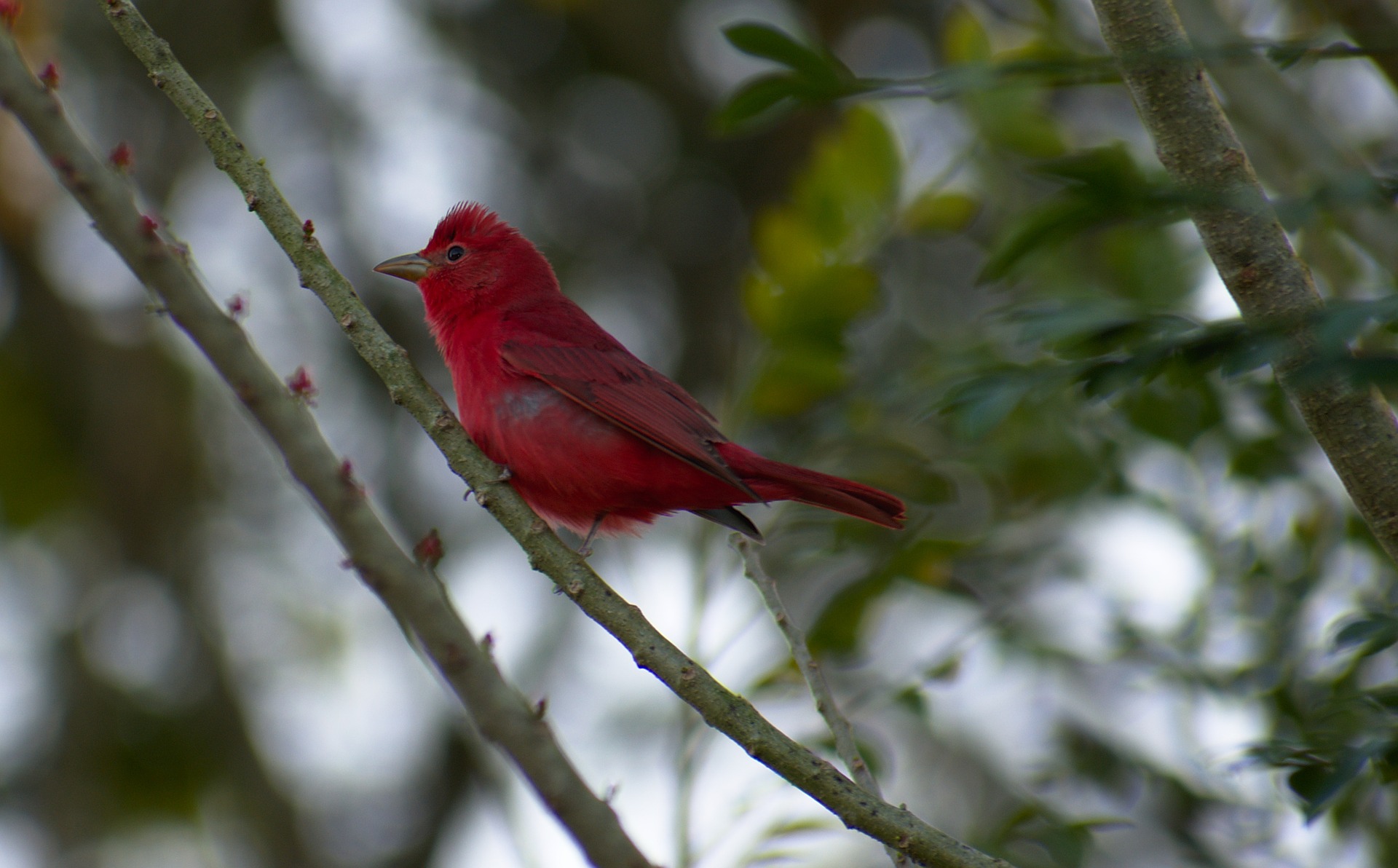
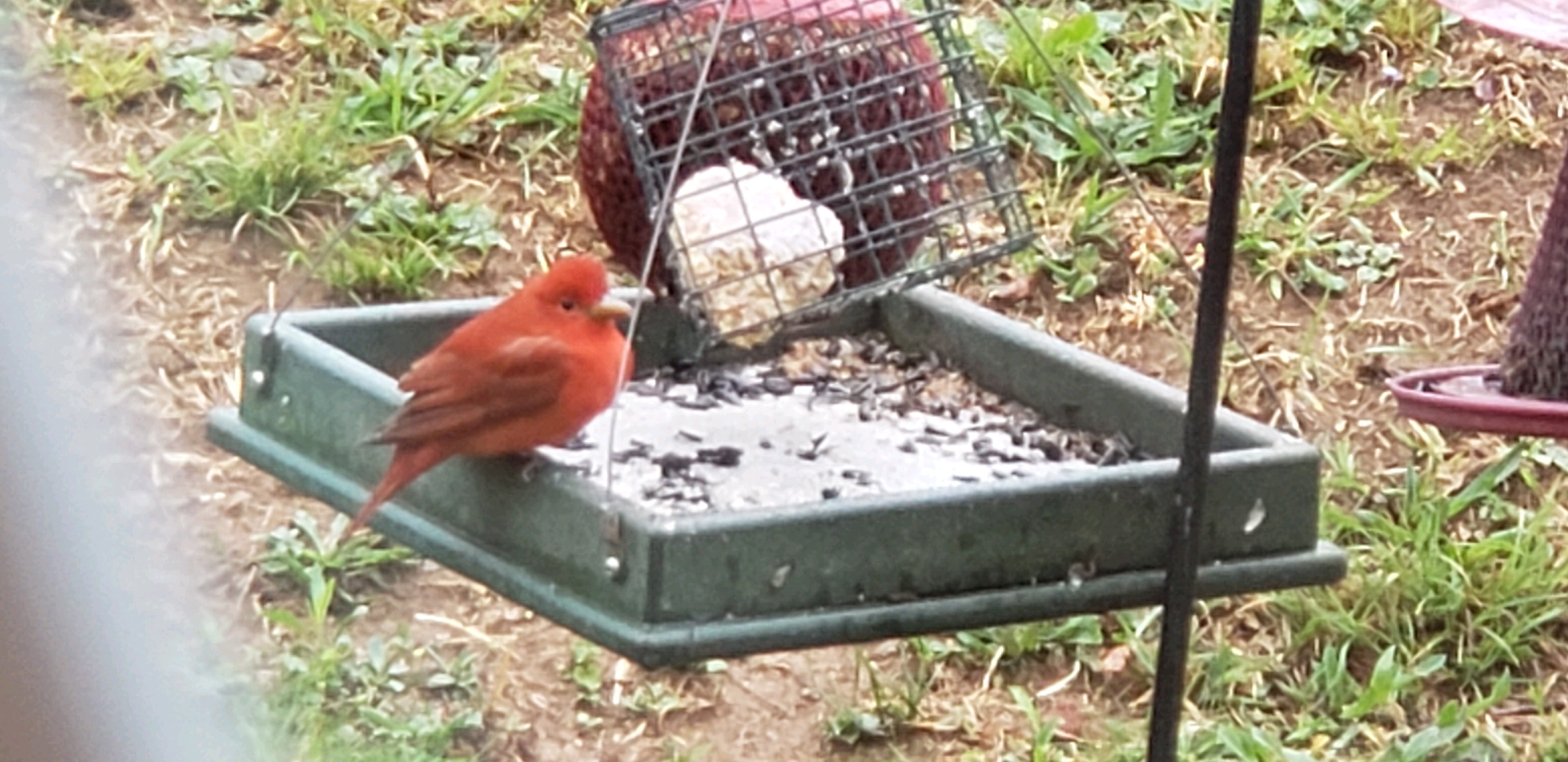
Photo Provided by Helen Whited • A male summer tanager visits a feeder during a migration stop in southwest Virginia.

Helen Whited, a resident of Richlands, Virginia, recently emailed me a photo of a feathered visitor in her yard asking for help with identification. She had already narrowed down the possibilities. “I’m thinking a tanager of some kind,” Helen wrote in her email.

When I opened Helen’s attached photo file, I recognized the plump, red bird perched on her feeder near a suet cage. I wrote an email back, informing Helen that her visitor was indeed a tanager. The summer tanager is not rare, per se, but these birds do not seem as common in the region as the related and better known scarlet tanager. Farther south, summer tanagers are much more prevalent in the spring and summer months.

Helen also reported seeing her first ruby-throated hummingbird of spring on April 25. “It’s later than usual, but they’re here,” she wrote in an email.

She added that several neighbors in Richlands, Virginia, reported seeing hummingbirds as early as April 21, but they seemed to be shunning her until the morning of April 25.

Since the last couple of columns have been about hummingbirds, I want to shift the focus this week to Helen’s other visitor.

If the casual birder or nature enthusiast is aware of the summer tanager, it’s usually as the less showy cousin of the more fiery and vibrant scarlet tanager, one of the most striking birds inhabiting woodlands in the eastern United States.

That’s a shame, for many reasons.

Photo by Ronald Plett/Pixabay.com • A male summer tanager perches in the leafy canopy.

First and foremost, the summer tanager holds one unique distinction. The male summer tanager is the only completely red bird in North America. Other birds known for their red plumage — Northern cardinal, house finch, vermillion flycatcher — show other colors in their feathers besides red.

The strawberry-colored male summer tanager is often difficult to spot due to a propensity to keep hidden against the green leaves of the forest canopy. The website “All About Birds” describes the female as “mustard yellow” in her coloration, which is rather apt. Female summer tanagers are usually less greenish than female scarlet tanagers. The female is even harder to spot than the male, though both sexes have a very distinctive chuckling call note.

Over the years, different local spots have proven reliable for finding summer tanagers. Large trees near the Steele Creek Park Nature Center in Bristol, Tennessee, used to be a fairly dependable location for these tanagers during late spring and summer.

Early American naturalist and artist John James Audubon painted this work featuring a family of summer tanagers.

The summer tanager is classified in the genus Piranga, which includes the scarlet tanager as well as the western tanager of the states west of the Rocky Mountains. This genus also includes the flame-colored tanager, white-winged tanager and red-headed tanager. Experts now classify this genus with members of the cardinal family and have separated the Piranga tanagers from other New World tanagers.

The song of the summer tanager has been described as similar to that of the American robin. Like the scarlet tanager, the summer tanager is fond of fruit and berries, but it also eats insects, often catching them on the wing.

Confined mostly to the eastern United States during the nesting season, the summer tanager doesn’t range as far north as the scarlet tanager, making its stronghold in the Gulf and southern states.

The summer tanager’s scientific name, Piranga rubra, translates as “red bird.” It’s not really clear why this tanager acquired the word “summer” in its common name. After all, both the summer tanager and scarlet tanager are only present in North America for a brief nesting season from late April to early September.

Other birds besides tanagers are on the move as spring migration continues. Get outdoors and see what wanders into your yard or garden. To share your own observations, email me at ahoodedwarbler@aol.com. I’m also on Facebook.

Photo Courtesy of Jean Potter • The summer tanager is the only all-red bird in North America. It is less common in Northeast Tennessee than the related scarlet tanager.

Sandhill crane adopts grocery store parking lot during migration stop

I felt certain I’d misheard when fellow birder Brookie Potter phoned me and reported a sandhill crane in the parking lot of the Food City grocery store located in south Johnson City. Plagued with a bad connection, it took a second call to clarify his remarks. “Did you say there’s a sandhill crane in the parking lot at Food City?” I asked him when I called back and established a better connection.

Photo by Bryan Stevens • The sandhill crane walks toward a flooded field behind the grocery store.

Early naturalist John James Audubon painted this work depicting a sandhill crane.

He confirmed that I’d heard correctly, which launched a quick trip to the aforementioned grocery store. I’m familiar with the store and knew that there are large fields surrounding this particular Food City and an adjacent section of stores. When I arrived, I began scanning the field. A sandhill crane is a fairly tall bird and should stick out. No luck. I called Brookie back and told him I was at the Food City but saw no sign of a crane.

“It’s here,” he said. “In the parking lot.” He gave me specific directions. Moments later I arrived in my car and saw a sandhill crane taking careful steps as it moved through the aisles of parked cars. 

The crane first attracted the notice of John Neth, a resident of the Milligan College community, who notified other area birders. When I arrived I found Brookie and his wife, Jean, who had her camera and was taking photos of the crane as it ambled tamely through the parking lot. 

Photo by Bryan Stevens• The sandhill crane looks more natural after retreating to a wet field behind the grocery store.

I saw my first sandhill crane in a harvested corn field in early 1999 In Shady Valley, Tennessee. Since that first sighting, I have observed sandhill cranes near Musick’s Campground at Holston Lake in Bristol, Tennessee, as well as along the Tennessee River in Knoxville. I also saw dozens of these majestic birds during a trip to Utah in the spring of 2006. I’ve also seen sandhill cranes in Florida. Many of the cranes living in the Sunshine State are quite tame, ranging into private yards and onto airport tarmacs. My theory is that the bird at the Food City is a Florida visitor based on its trusting nature toward humans and its level of comfort in the artificial environment of an asphalt parking lot.

A sandhill crane stands over four feet tall, with a wingspan stretching more than six feet, making it one of the largest birds found in Tennessee. Every winter, thousands of sandhill cranes migrate to the 6,000-acre Hiwassee Wildlife Refuge located on Chickamauga Lake at the confluence of the Hiwassee River with the Tennessee River. In the more mountainous areas of northeast Tennessee, western North Carolina and southwest Virginia, sightings of these cranes are considerably more rare.

In December 2011 and January 2012, a hooded crane made headlines by appearing with the sandhill cranes gathered at Hiwassee. Hooded cranes normally winter in southern Japan, as well as locations in South Korea and China. On occasion, endangered whooping cranes have also mingled with the large flocks of sandhill cranes at Hiwassee. 

My observations of a whooping crane are confined to a single occasion about 20 years ago when a migrating individual made a brief stop at a field in Greene County. The whooping crane is a continuing success story for the Endangered Species Act. A March 2018 Fish and Wildlife Service report estimates that the total current population of whooping cranes is about 800 individuals, which is a dramatic increase from the low point for the species in 1938 when the world’s whooping cranes numbered only 15 adult birds in a single flock.

Photo by Bryan Stevens • A snapshot of the first arrival among male ruby-throated hummingbirds in 2020.

Readers continue to share hummingbird sightings

People have continued to report their first spring sightings of ruby-throated hummingbirds with me. 

•••••

John Whinery reported that his first hummingbird of spring was a female ruby-throated hummingbird on the morning of April 19.  “I saw her just southwest of Fall Branch along Highway 93 a mile in Greene County,” he wrote in a Facebook post.

•••••

Rhonda Eller reported her first hummingbird of the season on April 19. “So happy to see my first hummingbird at the feeder this morning,” Rhonda wrote on Facebook.

•••••

“Got our first sighting of a hummingbird this morning about 10:30,” Russ MacIntyre wrote in an email on Monday, April 20. “We put our feeders out on April 4 or April 5.” Russ lives on Hazelnut Drive in Jonesborough, Tennessee. 

•••••

Tom McNeil in the Piney Grove community of Hampton was pleased to announce on Facebook the arrival of a hummingbird at his home. “Finally! A male arrived at 4:20 p.m. on April 20.”

•••••

Phyllis Moore shared on Facebook that she saw her first hummingbird at home in Bristol, Virginia, on the morning of April 20.

•••••

Anita Clemmer reported on Facebook that she saw her first spring hummingbird on April 22. “I got my first ruby-throated hummingbird today in Deep Gap, North Carolina,” she posted.

••••••

Felicia Mitchell, Emory, Virginia, share the news of her first sighting in a Facebook message. “First hummingbird at my feeder on April 24 at 7:10 p.m.,” she wrote. 

•••••

I appreciate all the responses I received this year from people glad to welcome their hummingbirds back. 

•••••

Here are a few more photos of the sandhill crane during its April visit.


Returning ruby-throats, like the rest of world’s hummingbirds, never fail to dazzle

Photo by Anne and Saturnino Miranda/Pixabay.com • The Cuban emerald is a species of hummingbird found in a wide range of semi-open habitats in Cuba, as well as the Isle of Pines and the western Bahamas. Numbering 330 species, the world’s hummingbirds dazzle humans with their incredibly diverse plumages.

Experts estimate that there are 330 species of hummingbirds, all of which are found in the New World. Consider that these dazzling little birds have been given vividly descriptive names, such as cinnamon-throated hermit, red-tailed comet, blue-chinned sapphire, lazuline sabrewing, sparkling violetear, fiery topaz, green-tailed goldenthroat, bronze-tailed plumeleteer,  amethyst-throated mountain-gem, peacock coquette, red-billed emerald, empress brilliant, purple-backed sunbeam, green-backed hillstar, orange-throated sunangel, black metaltail, marvelous spatuletail and blue-tufted starthroat.

The only reliable species to inhabit the eastern United States from spring to fall each year is the ruby-throated hummingbird, which is currently arriving at various points from Florida to Maine and westward to states like Illinois, Minnesota and Oklahoma.
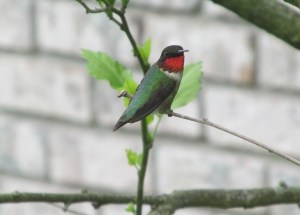
Photo by Bryan Stevens • Numbers of Ruby-throated Hummingbird in the region tend to fluctuate each year, but people should see a spike in their numbers when the hummingbirds end summer nesting and start migrating south again this autumn.

One of my most memorable hummingbird sightings took place in January of 1999 during a cruise in the Bahamas. A stopover in Nassau and a visit to the Paradise Island Resort permitted me a fleeting glimpse of a Bahama woodstar, a small hummingbird with a superficial resemblance to the ruby-throated hummingbird. The real beauty from my visit to the Bahamas, however, took place on a private cay maintained by the Disney Cruise line. While many passengers enjoyed the sun and sand of the beach, I walked nature trails to find birds. 

Photo by Daniel Roberts/Pixabay.com • The calliope hummingbird is the smallest of its kind known to reside in North America.

I found Western spindalis, then known as stripe-headed tanager, as well as black-faced grassquits and bananaquits, and I got several close looks at male and female Cuban emeralds, a hummingbird found in a wide range of semi-open habitats in Cuba, the Isle of Pines and the western Bahamas. The male is almost entirely metallic or iridescent green and measures almost four inches long. The ones I encountered were also curious and quite tame, often flying within inches of my face. 

Other than the two hummingbirds I saw during that trip, my remaining hummingbird observations have been confined to the United States. That hasn’t prevented me from seeing such unexpected hummingbirds as green-breasted mango, calliope hummingbird, black-chinned hummingbird, rufous hummingbird, Allen’s hummingbird, and broad-tailed hummingbird. 

Photo by Anne and Saturnino Miranda/Pixabay.com • It’s not difficult at all to see how the male Cuban emerald in such vibrant green plumage acquired its common name.

If I ever win the lottery, I plan to see as many hummingbirds as I can. For now, I am happy to report that ruby-throated hummingbirds are returning to northeast Tennessee, southwest Virginia, and western North Carolina.

I received an email from Susie Parks, who lives in the North Cove section of McDowell County in North Carolina. “My daughter, Luanne Graham, and I sighted our first hummer on March 28,” Priscilla noted. 

“I read your column in the McDowell News,” she added. “I am 84 years old and have been a birder most of my life.” 

Susie added that she and her daughter are both retired teachers who live next to each other. “We put our feeders out earlier than usual because she had heard that the hummers might be arriving earlier this year,” Susie wrote.

Susie noted that the first hummingbird sighted at her own feeder arrived on the first day of April, a few days after the hummingbird that visited her daughter’s feeder. “I keep a journal and I always note the first sighting,” she added, “and this is the earliest hummer I have ever recorded.”

This sightings by Susie and Luanne are the earliest I’ve had reported to me this year. 

•••••

Facebook friend Jimmie Daniels in Newland, North Carolina, reported on her Facebook page that the first hummingbird of spring arrived at 6:24 p.m. on Wednesday, April 8.  “We just saw our first hummingbird and that always makes me happy,” she wrote. “If you have not put out feeders yet, it is a good time to do that.”

•••••

Bob Cheers of Bristol, Virginia, reported a ruby-throated female arrived at his home at 7:55 a.m. on Friday, April 10. He speculated that the hummingbird was possibly “the same gal that arrived last year on the same day but 10 hours later.” Bob added that hummingbirds are amazing and that it was almost inconceivable to him that it could be the same bird. Bob, who had read in previous columns that downy woodpeckers and Carolina chickadees occasionally take a sip of sugar water from hummingbird feeders, also asked if I had ever heard of a red-bellied woodpecker feeding regularly at a hummingbird feeder. I’ve not personally witnessed this, but perhaps some readers have seen red-bellied woodpeckers at sugar water feeders. Let me know!
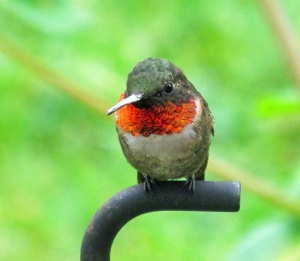
Photo by Bryan Stevens • Despite a perceived disadvantage of size, ruby-throated hummingbirds are quite capable of thriving in a giant world.

•••••

Brenda Hickman Dishner posted on my Facebook page that she spotted her first hummer of spring on Friday, April 10. “We live near Highway 421 and Houston Dam in Bristol, Tennessee,” she added.

•••••

Philip Laws, who lives in Limestone Cove in Unicoi County, reported to me on Facebook that he saw his first hummingbirds on April 10. “Hummers returned to Limestone Cove on Good Friday,” Philip noted.

•••••

Jeanne Siler Lilly reported her first spring hummingbird with a comment on my Facebook page. “I saw one at my feeder on April 10,” she wrote, adding that the bird visited a couple of times.

•••••

Mary Jones in Johnson City said her first hummingbird this year arrived on April 11. “I had one show up the Saturday before Easter and every day since,” she wrote in a Facebook comment. 

•••••

Dianna Lynne in Elizabethton saw her first hummingbird this spring on April 11. “They stopped in on Easter morning at the porch feeder here in Stoney Creek,” Dianne said in a comment on Facebook.

•••••

Erwin resident Amy Wallin Tipton saw her first ruby-throated hummingbird on Easter Sunday.  “I just wanted to let you know I just saw my first male ruby-throat of the season,” Amy wrote in a Facebook message. “It was at 11:55 a.m.”

•••••

Lia Pritchard saw her first hummer of the season on Easter Sunday at her home in Fall Branch, Tennessee. Her father, Glen Eller, shared the report of Lia’s sighting.

Photo by Bryan Stevens • Keep hummingbirds happy with a sugar water solution of four parts water to one part sugar.

•••••

Lynda Carter, who lives in Jonesborough, saw her first hummingbird at 8:45 a.m. on Monday, April 13, after a stormy night. “The bird may have blown in sideways from Arkansas last night,” Lynda joked in an email.

•••••

Richard Lewis in Bristol sent me a message on Facebook to announce the arrival of his first spring hummingbird. “I had my first ruby-throated hummingbird Monday, April 13, at 6 p.m. at my home in Bristol, Tennessee,” he wrote.

•••••

Joneen Sargent, who lives in Sullivan County west of Holston Lake off Highway 421, emailed me at 8:06 p.m. on Monday, April 13, to report her first spring hummingbird. “Just saw my first hummingbird of the season,” Joneen wrote. “Gives me hope.”

•••••

Jane Arnold emailed me to notify me of her mother’s hummingbird sighting. Her mother, Betty Poole, who lives in Abingdon, Virginia, saw her first hummingbird — a female — on Wednesday, April 15. Jane’s still awaiting her first spring hummer. 

•••••

Priscilla Gutierrez saw the first hummingbirds of spring the morning of Wednesday, April 15. “I put out a feeder and by 6 p.m. they were coming to [the] feeder,” Priscilla added in a comment on my Facebook page. 

•••••

Erwin resident April Kerns Fain posted on her Facebook page at 5:32 p.m. on Thursday, April 16, that she saw her first hummingbird. 

Erwin resident Pattie Rowland posted on my Facebook page that she saw her first ruby-throated hummingbird on Friday, April 17. “Just saw a hummer in Erwin,” Pattie wrote. 

•••••

Sharee Bowman reported her first hummingbird of spring in a Facebook message. “I saw my first hummingbird in Cedar Bluff, Virginia, on Friday, April 17,” she wrote. 

Photo by Bryan Stevens • A ruby-throated hummingbird lifts its wings to shake water droplets off its back.

Ruby-throated hummingbirds make welcome return to region

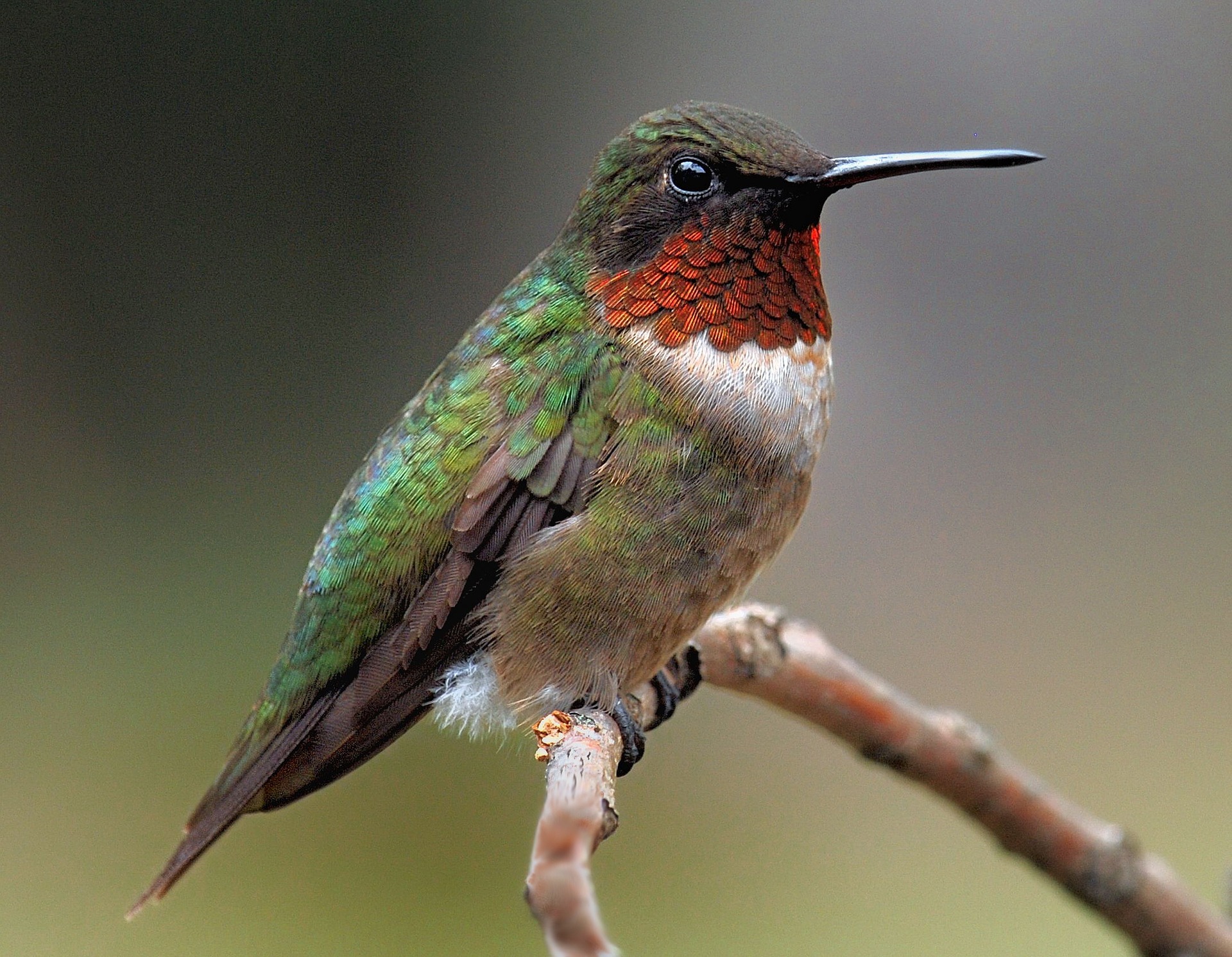
Photo by TheSOARnet / Pixabay.com • Male ruby-throated hummingbirds usually migrate ahead of females. These tiny birds must cross the Gulf of Mexico, without stopping, to reach their nesting grounds in the eastern United States. The journey across the Gulf can take them 18 to 22 hours, dependent on weather conditions.

Pat Stakely Cook‎ of Marion, North Carolina, reported the earliest spring sighting of a ruby-throated hummingbird.
Pat posted, “Hummingbird is back here in Marion, North Carolina,” on my Facebook page at 5;45 p.m. on Sunday, April 5.
•••••
Sam Jewett emailed me to report a first spring sighting.
“My first red-throated one showed up Monday, April 6, at Lake James in North Carolina, and boy, has he been hungry,” Sam wrote.
•••••
Judy and Bill Beckman, who reside on Springbrook Road in Unicoi, reported their own sighting.
“We just had our first hummingbird visit our feeder at around 5:50 p.m. on Monday, April 6,” the couple wrote in an email to me.
•••••
Joy Patton, who lives in Marion, North Carolina, also reported her first hummingbird on April 6.
“I put my feeder up a few days early this year because the weather has been so nice,” Joy wrote in an email. “The second day, April 6, a male ruby-throated hummingbird visited and ate and ate!”
Joy added that her daughter, Cindy Pierce, who lives near Fayetteville, North Carolina, saw her first hummingbird that same day.

Photo by Bryan Stevens • A ruby-throated hummingbird lifts its wings to shake water droplets off its back.
•••••
Judi Sawyer, a resident of Roan Mountain, Tennessee, reported the first hummingbird arrival on her Facebook page. Judi is a fellow member of the Lee and Lois Herndon Chapter of the Tennessee Ornithological Society. “The hummers are back,” Judi wrote on her page on Tuesday, April 7.
•••••
Bristol resident Vivian C Tester posted on my Facebook page on Wednesday, April 8, about her first sighting. “I just had my first hummer stop by,” Vivian wrote. “So glad I had just put my feeder out.”
•••••
The ruby-throated hummingbird, known by the scientific name of Archilochus colubris, is one of more than 300 species of hummingbirds. All hummingbirds are found in the New World and are completely absent from the Old World. Male ruby-throated hummingbirds launch their spring migration about 10 days prior to female hummingbirds. Most of these tiny birds make an incredible non-stop journey across the Gulf of Mexico each year to return to our yards and gardens across the Eastern United States.

Photo by Bryan Stevens • Despite a perceived disadvantage of size, ruby-throated hummingbirds are quite capable of thriving in a giant world.

Based on the number of people who shared hummingbird sightings with me, these tiny birds have a lot of big fans. If you would like to host your own hummingbirds, here are some crucial tips:
• Make your yard a zone that’s free of insecticides and pesticides. Residues of these chemicals can remain on blossoms, which then run the risk of sickening a hummingbird. In addition, hummingbirds subsist on more than nectar. They consume many tiny insects and spiders. Eating bugs that have been contaminated with dangerous chemicals can also sicken or kill hummingbirds.
• Provide shrubs and trees in your landscape to make your yard more inviting. Hummingbirds claim favorite posts and perches, where they will rest when they are not visiting our gardens or feeders. Shrubs and trees can also provide locations for concealing nests built by female hummingbirds.
• Cultivate plants that offer nectar-producing blooms. While hummingbirds are known to favor the color red, these nectar-sipping birds will also visit blooms of other colors. Some favorite spring blooms include the flowers of red buckeye, wild columbine, crossvine and native varieties of azaleas. As spring advances into summer, the diversity of flowers available to lure hummingbirds into your garden will increase dramatically.

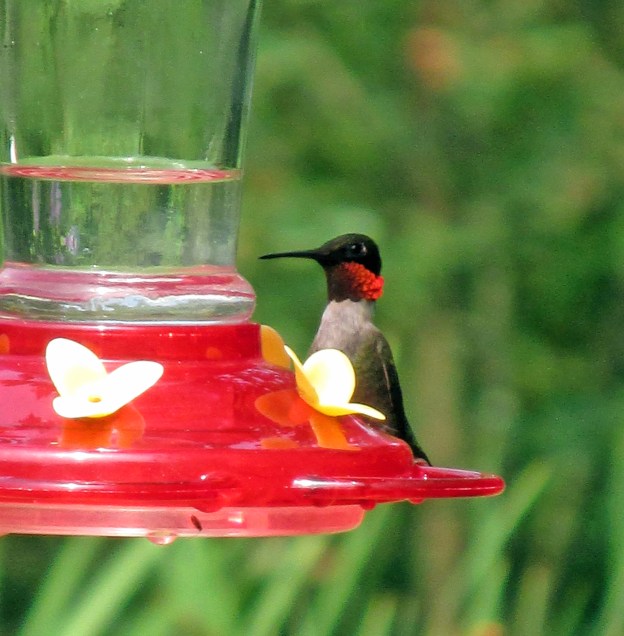
Photo by Bryan Stevens • A male ruby-throated hummingbird perches near a feeder that he is ready to defend from all comers.

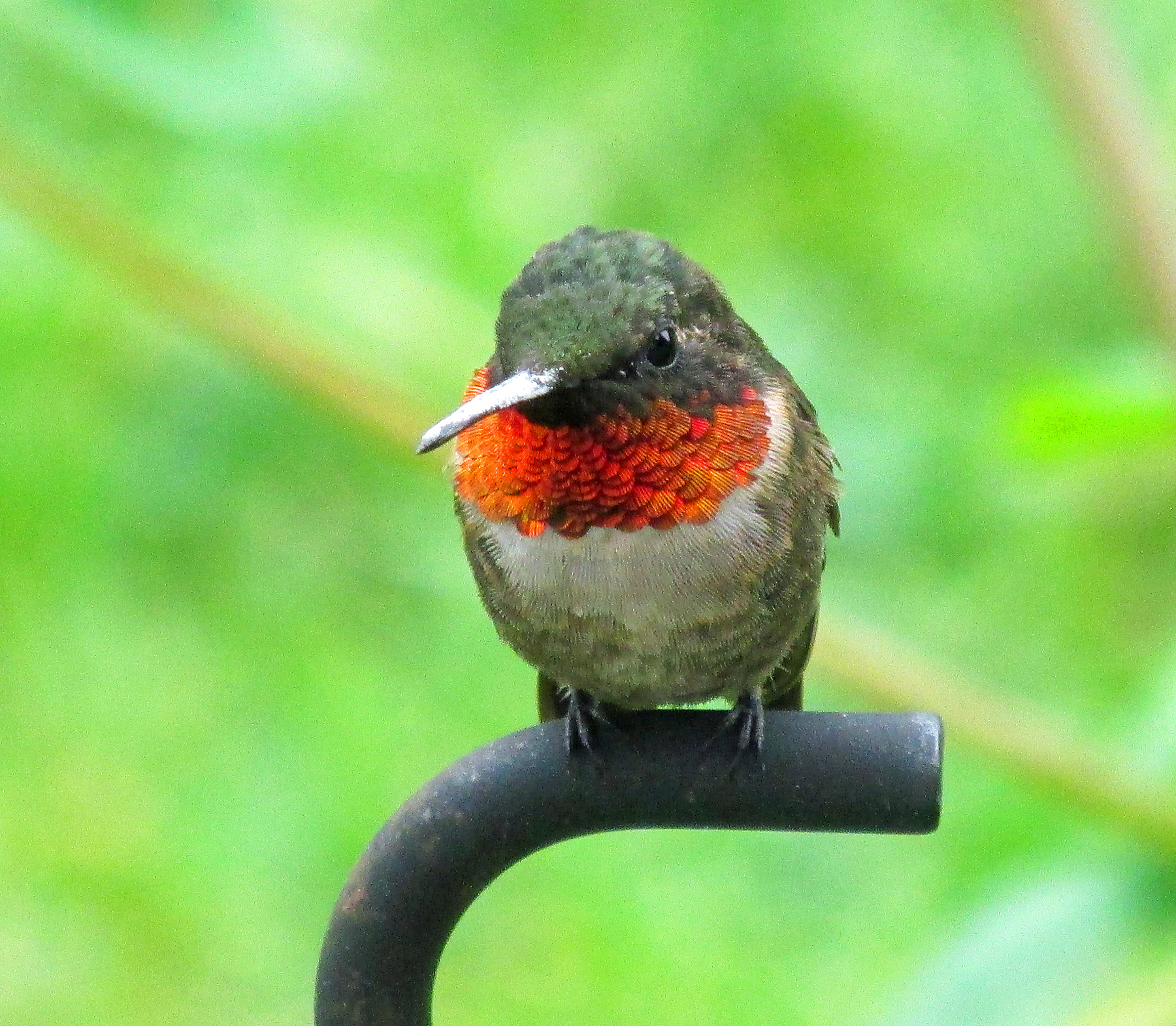
I am still awaiting my first hummingbird of spring. I’m confident it won’t be long. Invariably, the first hummingbird to show up in my yard is a male with the gorget — or throat patch — of red, iridescent feathers that gives his species its common name.
He’ll be especially welcome this particular spring.
•••••
Share a sighting, ask a question, or make a comment by emailing ahoodedwarbler@aol.com.

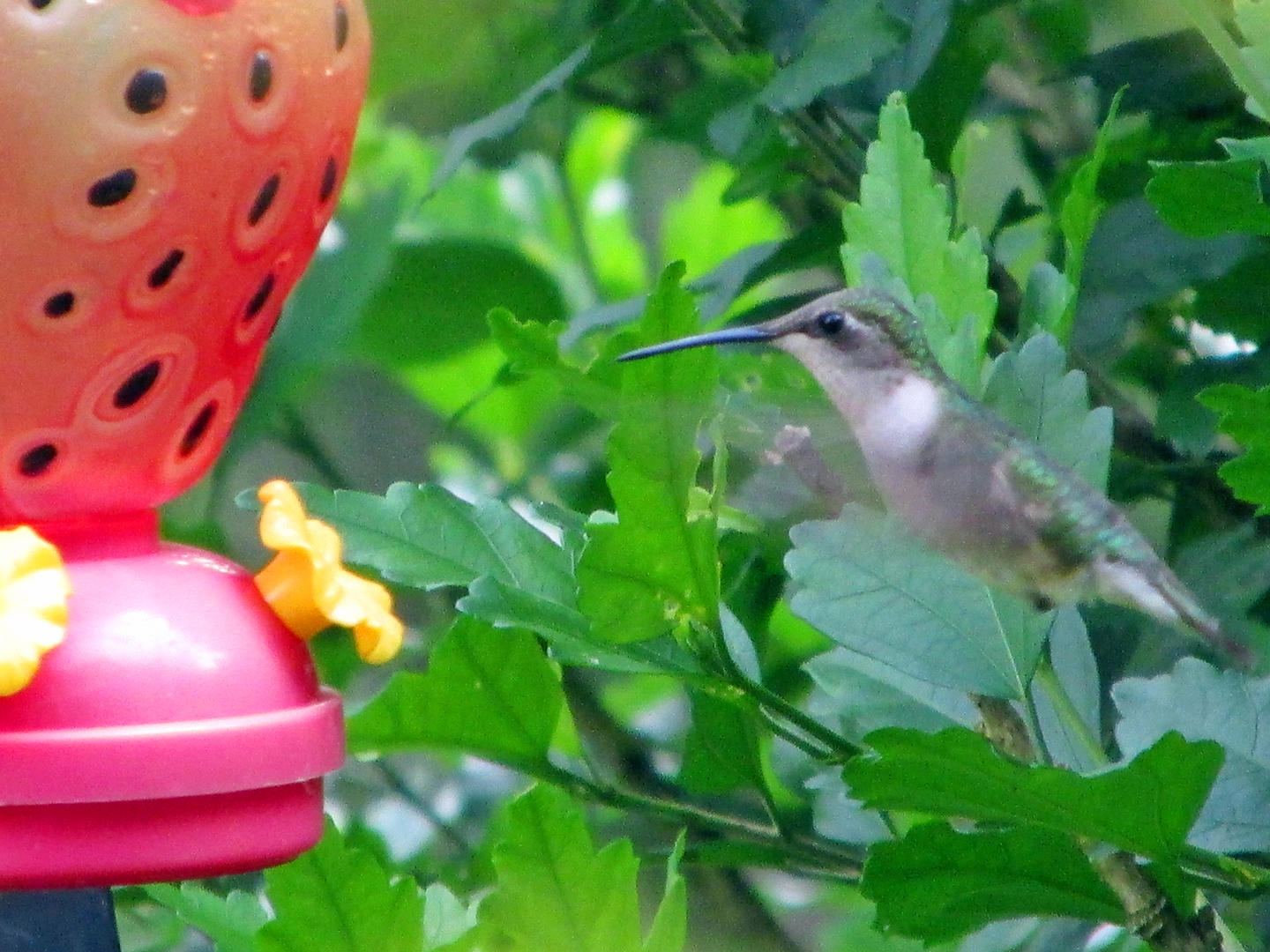
Photo by Bryan Stevens • A female ruby-throated hummingbird approaches a feeder for a sip of sugar water.

Wandering flocks of cedar waxwings surprise with their visits

Photo by DivaDan/Pixabay.com • A cedar waxwing plucks a single berry from the laden branches of a fruit-bearing tree.

Early last month I received an email from Ernie Marburg about some visitors at his home in Abingdon, Virginia. “Just wanted to let you know that the Cedar Waxwings are in the neighborhood,” he wrote. “The flocks are looking for berries in the holly trees.” 

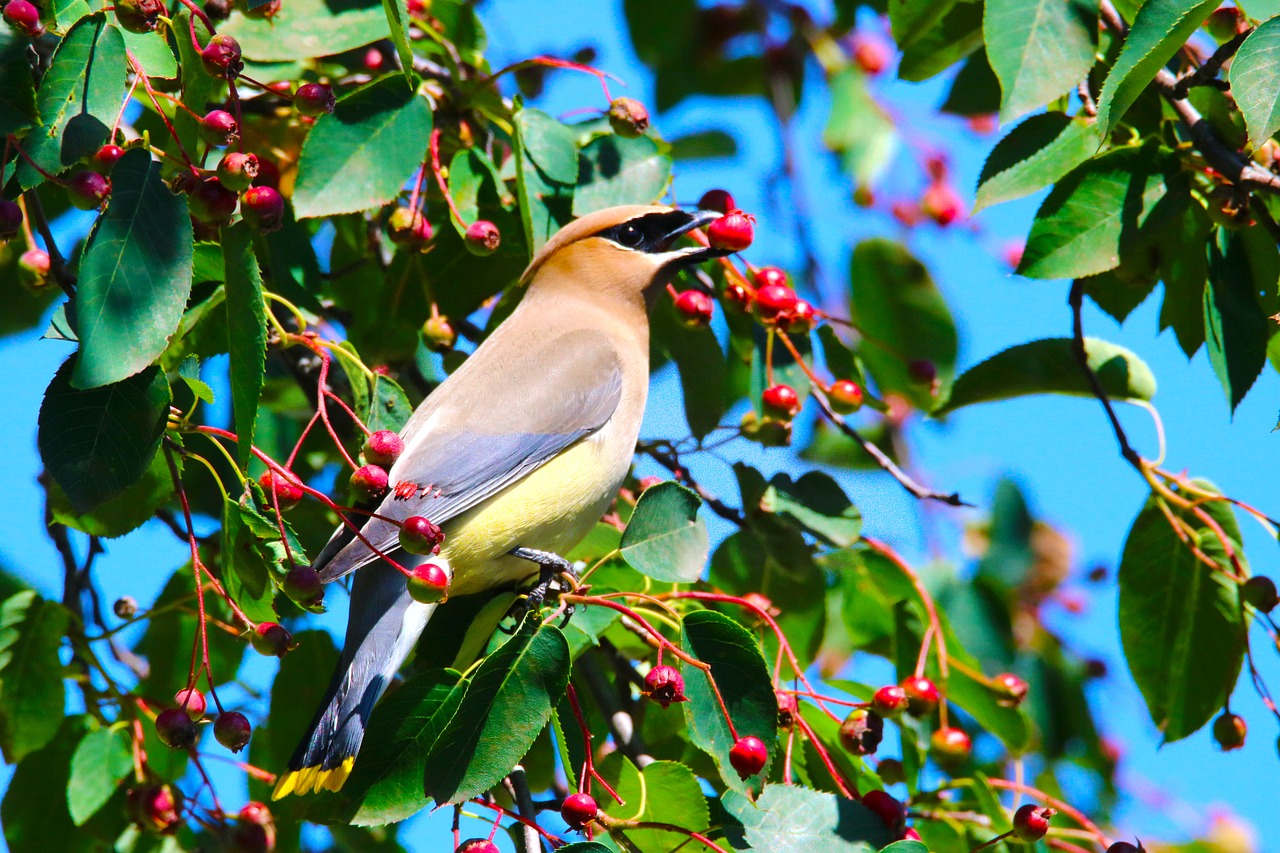
Waxwings have a brown and gray silky plumage, a black mask and a perky crest. Some of the wing feathers show red tips. The similarity of these wing tips to melted drops of wax gives these birds the common name of waxwing.

Photo by Bryan Stevens • The waxy tips to the wing feathers are evident in this photograph of a cedar waxwing.

The cedar waxwing has few relatives. Worldwide, there are only two other species: the Bohemian waxwing, of the northern forests of Eurasia and North America; and the Japanese waxwing, found in such northeast Asian countries as Japan, Korea and China.

Although it’s classified as a songbird, the cedar waxwing does’t truly produce a vocalization that anyone would contend qualifies as a song. They are, however, very vocal birds, producing shrill, high-pitched notes as they pass through the upper branches of tall trees.

As much as the waxwing has a fondness for fruit, it’s also a bird that would have made an excellent flycatcher. Flocks of these birds will often congregate in trees near the edge of a pond, garden or yard — anywhere winged insects might be found in good numbers — in order to hawk insects on the wing. A waxwing will sally forth from a branch, snatch its prey in mid-air, and return to its perch for a quick snack.
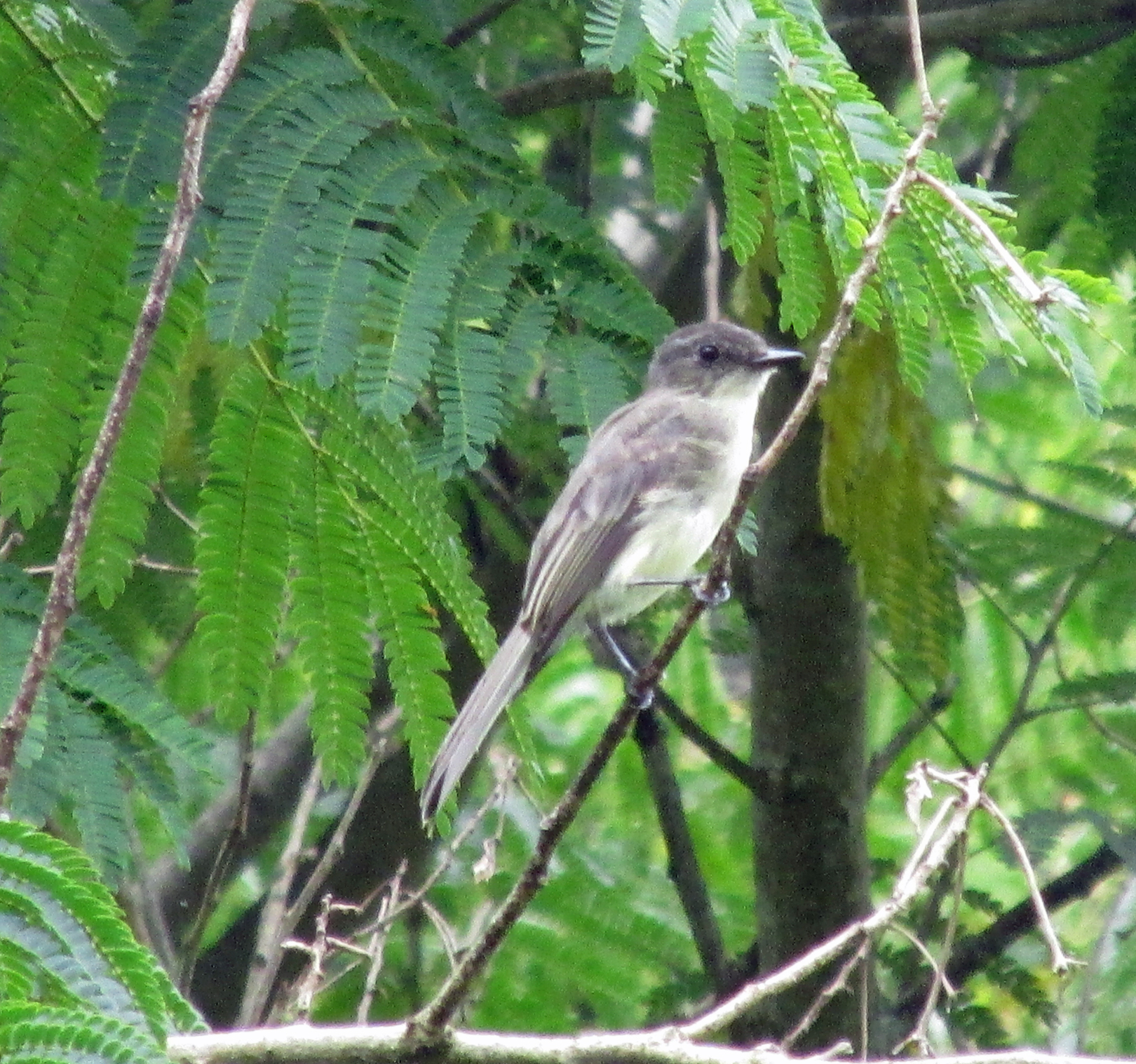
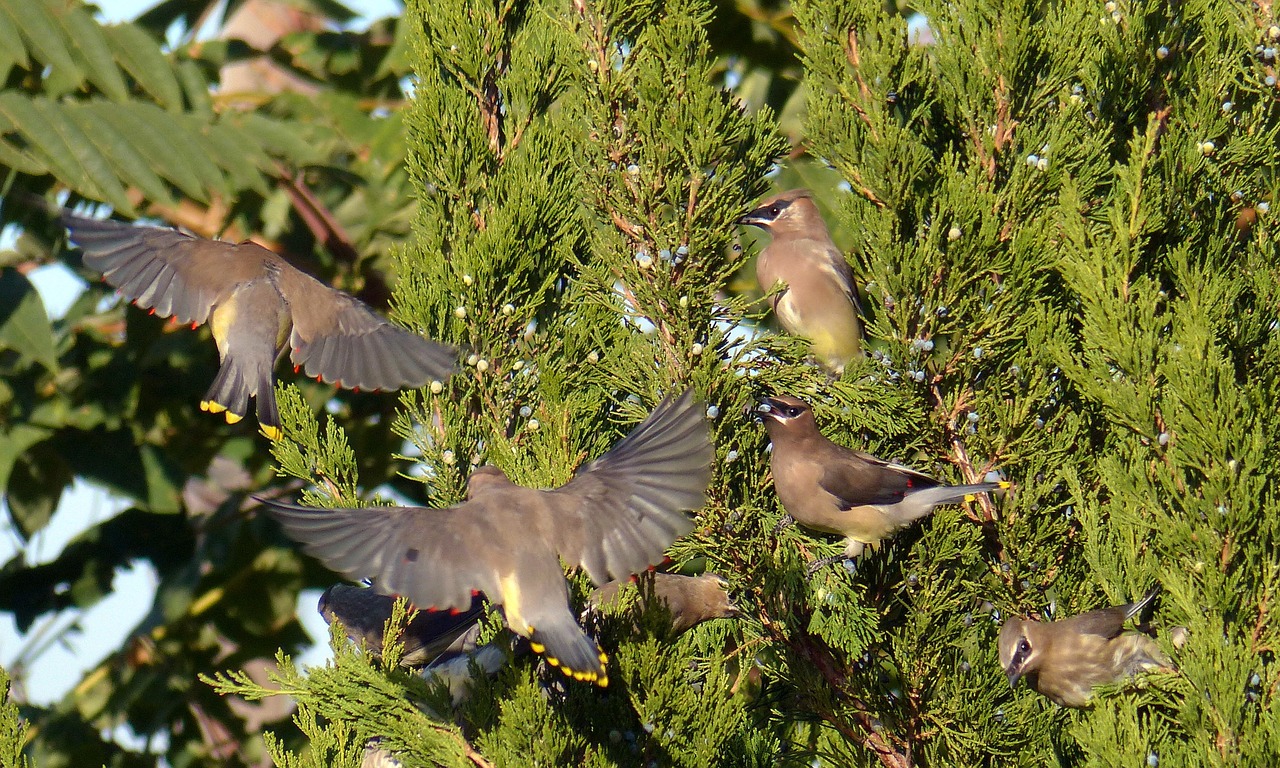
Photo by dmgreen44/Pixabay.com • A flock of cedar waxwings strip berries from the branches of a cedar tree.

Waxwings are rather nomadic, coming and going with a maddening unpredictability. Other birds are more dependable, arriving and departing at roughly the same time year after year. One such bird should soon make its triumphant and welcome return to yards and gardens throughout the region. According to the website Hummingbird Guide, ruby-throated hummingbirds usually return to Tennessee and Virginia the first week of April. These tiny flying jewels arrive earlier in North and South Carolina, typically arriving the third week of March in those states.

Early American naturalist and artist John James Audubon painted this pair of cedar waxwings.

The popularity of hummingbirds in general, and the ruby-throated hummingbird specifically, is simple to understand.

These tiny birds are perfectly willing to insert themselves into our lives, offering hours of fascinating entertainment as they visit our gardens, duel at our sugar water feeders and occasionally even nest in trees and shrubs in our yards.

I’m hoping to hear from readers about their first spring hummingbird observations. Email me at ahoodedwarbler@aol.com. Be sure to include the time and date of your sighting, as well as your locations. You can also find me through Facebook.

Photo by Bryan Stevens • A male ruby-throated hummingbird perches near a feeder that he is ready to defend from all comers.

Sounds of spring grow more varied as season advances

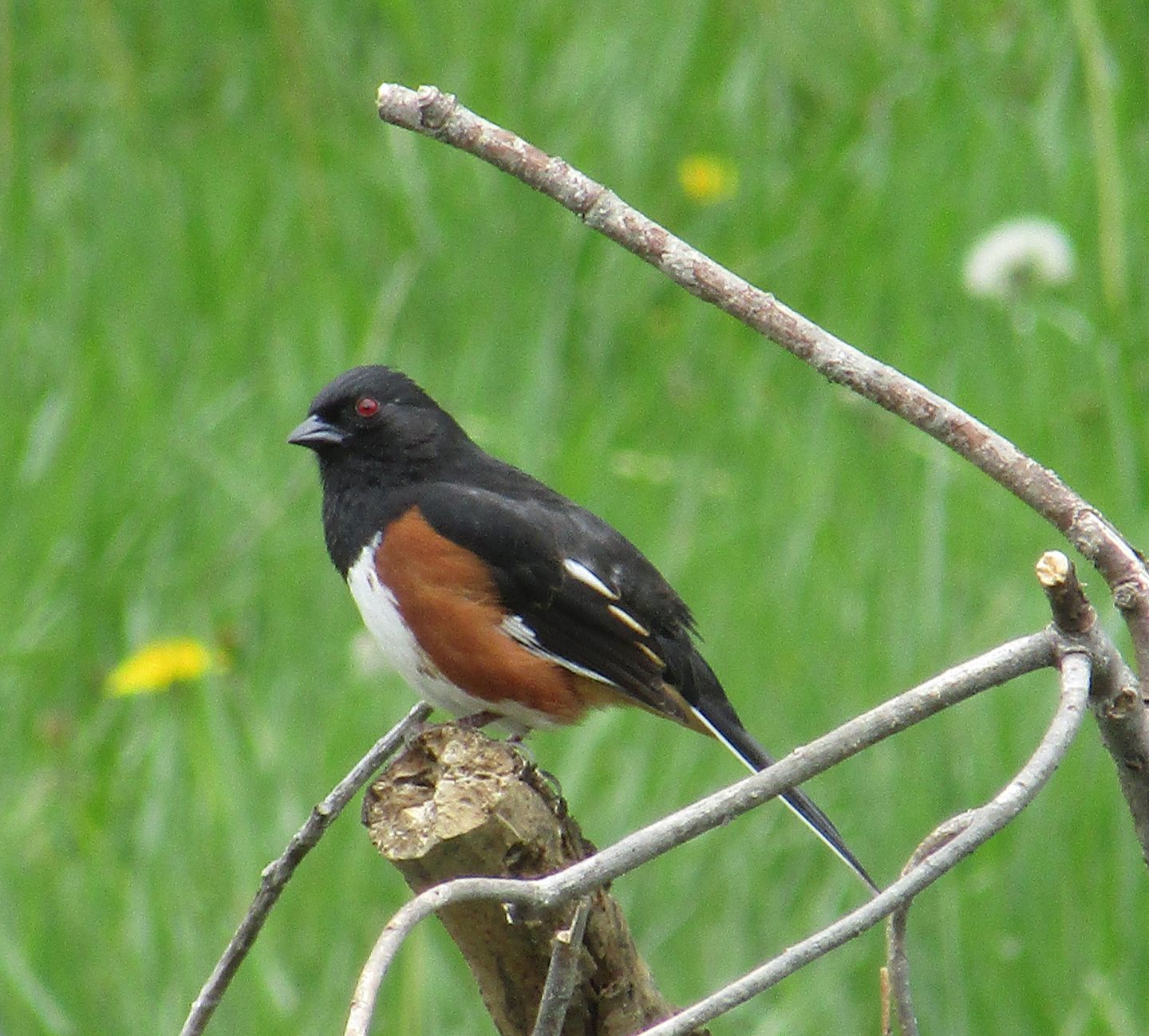
Photo by Bryan Stevens • Former common name rufous-sided towhee became Eastern towhee, which is far less descriptive of the bird’s appearance. In spring, male towhees become persistent singers. Listen for their “drink-your-tea” song as the males perch on elevated branches and twigs.

The sounds of spring surround us from sunrise to sunset with much of this seasonal chorus being provided by our feathered friends, the birds. In these weird weeks in need of something distracting, I’ve been letting nature’s sounds, as well as sights, provide some measure of relief from stressful headlines and anxious thoughts.

The mornings around my home often begin with a loud, insistent “Peter! Peter! Peter!” uttered from the woods or even just outside my bedroom window. Male tufted titmice, little gray relatives of chickadees with a distinctive crest and large, dark eyes, sing their urgent “Peter! Peter! Peter!” as a constant refrain in their efforts to attract mates now that they feel spring in their blood.

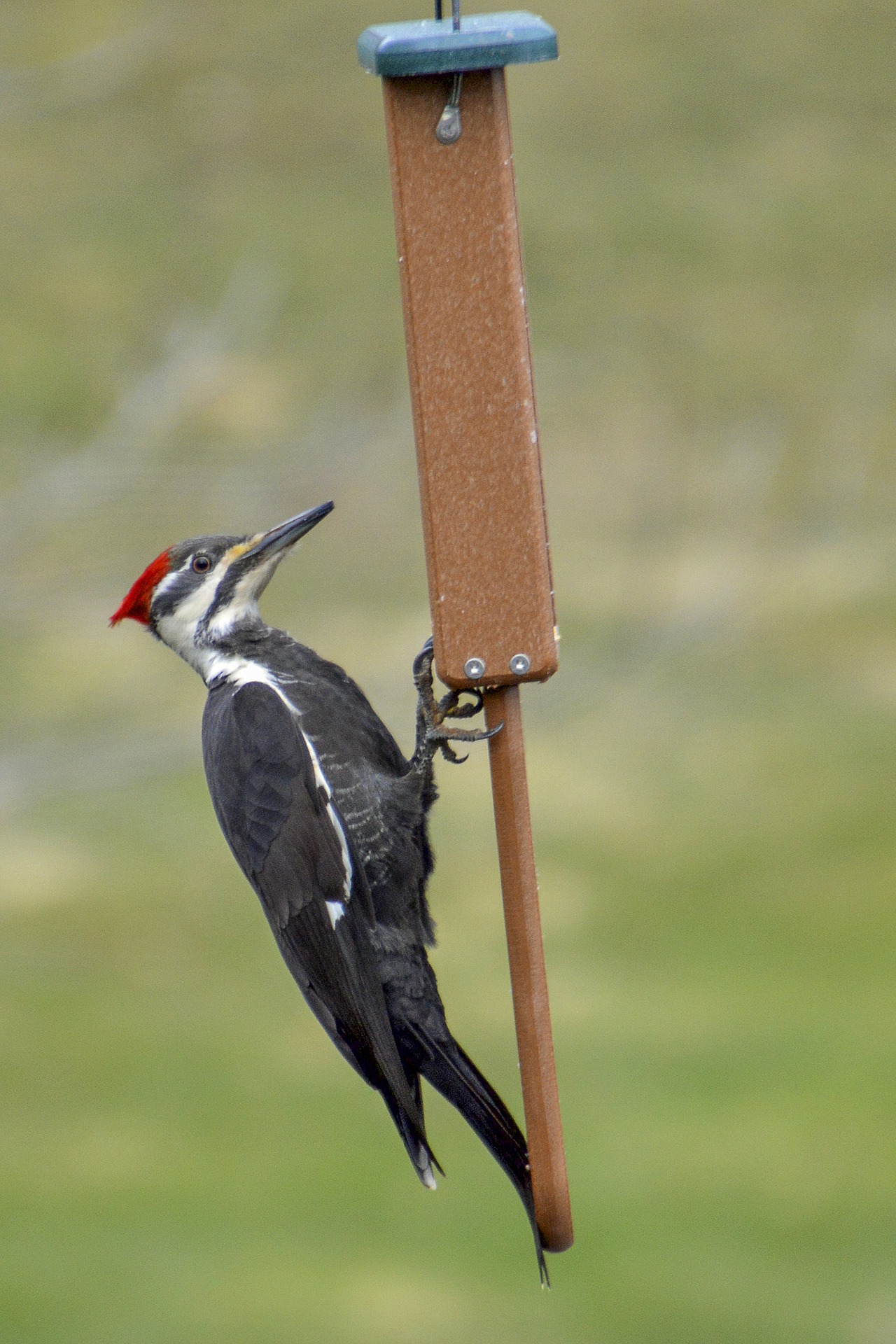
A series of rat-a-tat-tats echoes from deeper in the woods as woodpeckers tap their sturdy bills against the trunks of trees. The three most common woodpeckers at my home are red-bellied, downy, and pileated, and they all have their own unique vocalizations, as well.

Photo by Bryan Stevens • Woodpeckers not only vocalize, they also add to the spring cacophony by drumming against the trunks of trees.

The pileated woodpecker produces clear, far-carrying resonant piping sounds that can last for a few seconds each blast. The much smaller downy woodpecker produces a whinny of high-pitched notes that descend in pitch toward their conclusion. The red-bellied call is probably the one that stands out the most. The call’s a harsh, rolling “Churr, churr, churr” given almost like an expression of exasperation as they circle tree trunks and explore branches.

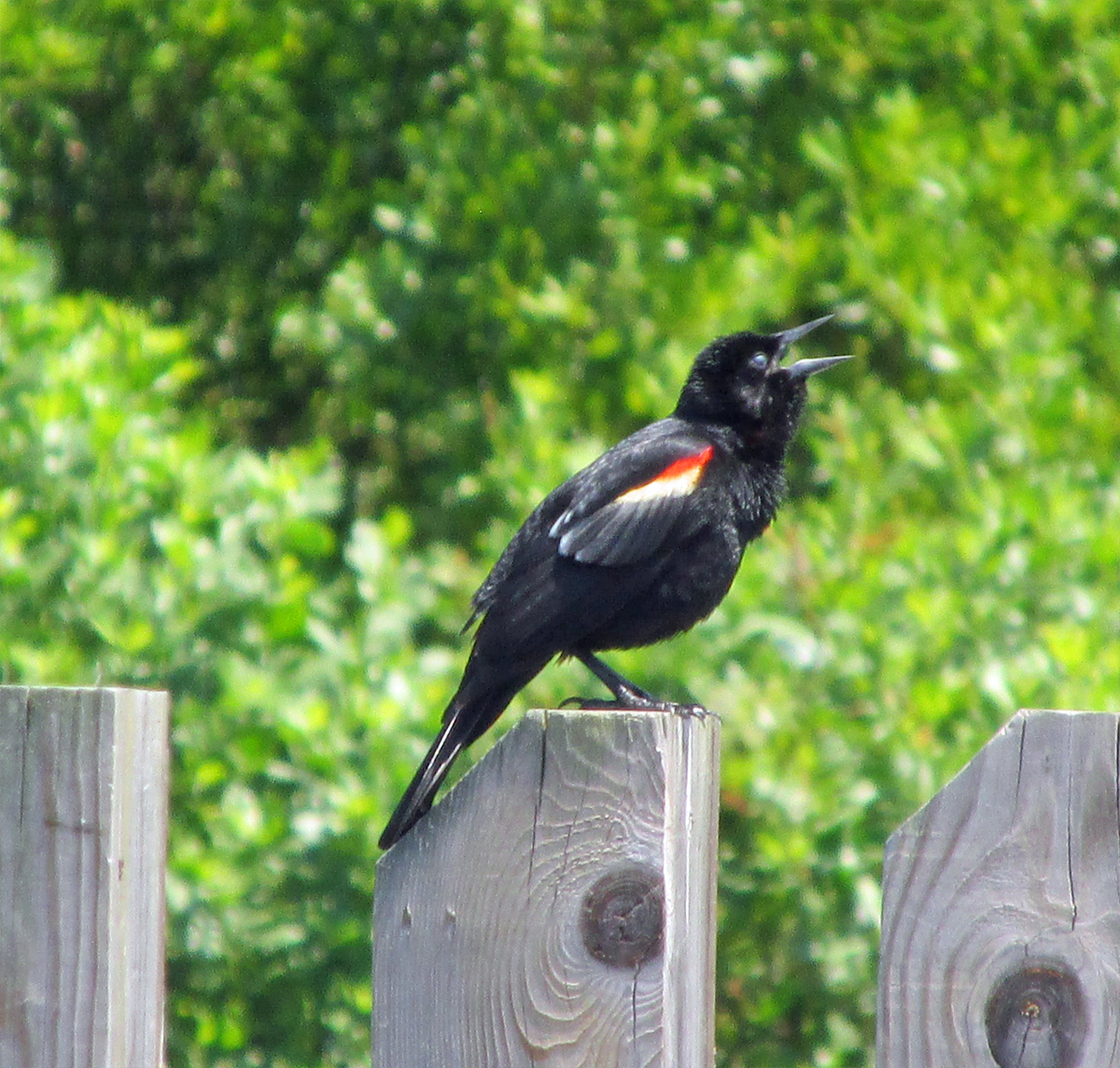
Since their return earlier this month, the resident red-winged blackbirds are often some of the earliest singers these days. According to the website All About Birds, the male red-winged blackbird’s “conk-la-ree!” is a classic sound of wetlands across the continent of North America. According to the website, the one-second song starts with an abrupt note that transforms quickly into a musical trill.

Photo by Bryan Stevens • A male red-winged blackbird sings to attract mates and ward off rivals.

Some birds helpfully introduce themselves with a song that repeats their name. One such common bird is the Eastern phoebe. In recent weeks, a pair has been checking out the rafters of my garage for potential nest sites. The male spends much of the day producing his strident “fee-bee” call, which is a perfect phonetic rendition of the bird’s common name.

Photo by Bryan Stevens • The Eastern Phoebe’s song is a repetitive rendition of its own name — “fee-bee” — given over and over.

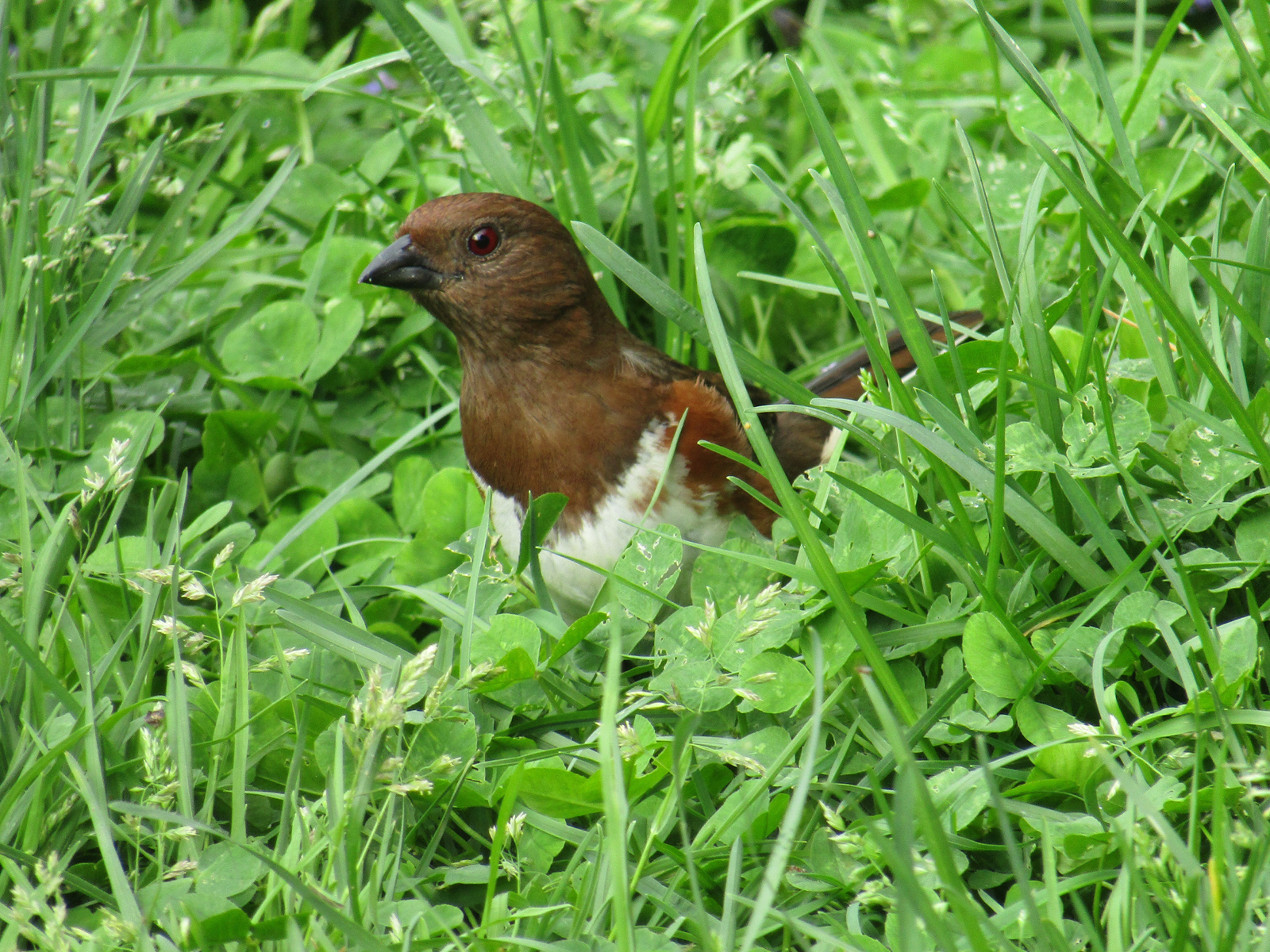
Then there’s one of my favorite songs of spring, which is produced by the Eastern towhee, which is also known by such common names as “ground robin” and “swamp robin.” These birds, which are actually a species of sparrow, also have some instantly recognizable vocalizations. With the arrival of spring, the males seek elevated perches for extensive singing bouts to attract mates and establish territories. Their song has been interpreted, quite accurately, as “drink your tea!” They also have some alarm notes, such as “€œChew-ink”€ and “€œToe-Hee,” of which the latter provides the basis for this bird’s common name.

Of course, other wildlife joins the chorus. I have so many spring peepers at the fish pond and in the wet fields around my house that the noise from these tiny amphibians can reach deafening levels. The chorus is bound to grow more diverse and louder as spring advances. Take some time to enjoy the sounds of nature at your own home.

••••••

To share your own sighting, make a comment or ask a question, send email to ahoodedwarbler@aol.com. I’m also on Facebook.

Photo by Bryan Stevens • An alert Eastern towhee female forages on a lawn.


Buffleheads among delightful winter surprises in region

Marion Howe sent me a stunning photograph of an impressive visitor at her feeders. Shortly after I wrote about Pileated Woodpeckers a few weeks ago, Marion sent me a photo of a Pileated Woodpecker at her suet feeder.

Photo by Marion Howe • This Pileated Woodpecker visited the home of Marion Howe in Kingsport, Tennessee..

“Although I now live in Bristol, I previously lived in Kingsport where I had the pleasure to watch a multitude of birds in my yard, including this one,” Marion wrote. “What a treat when she decided to stop by for a bite to eat!”

Away from our backyard feeders, what sort of birds can one expect to find during the late winter and early spring in northeast Tennessee?

If you’re ready to look a little farther afield, the region offers some great locations for searching for wintering and migrating waterfowl. A variety of ducks and geese pass through the region in late fall and winter. A few species stop to spend the season on area lakes and rivers.

Wilbur Lake in Carter County offers one of the largest wintering populations of Bufflehead in the entire region, if not the state.

Photo by Bryan Stevens • Lingering waterfowl, such as these buffleheads, are found in the region in winter and spring.

The Bufflehead belongs to the genus Bucephala, which also includes Common Goldeneye and Barrow’s Goldeneye. These three ducks are all small tree-hole nesting sea ducks found exclusively in the Northern Hemisphere.

The “sea duck” family consists of several other types of ducks, including scoters, mergansers and eiders. All but two of the 20 species in this grouping occur only in the Northern Hemisphere. Most of the sea ducks, not surprisingly, are adapted to life in salt-water environments.

The Bufflehead stands out from its fellow sea ducks for many reasons. The breeding habitat of this little duck consists of wooded lakes and ponds in Alaska and Canada, almost entirely within the boreal forest, or taiga, habitat. In the winter months, Buffleheads migrate to quiet bays or open inland lakes on both the eastern and western coasts of North America, as well as the southern United States as far as southern Florida and the Gulf of Mexico.

Photo by bryanhanson1956/Pixabay.com • A pair of Buffleheads enjoy a swim together.

Wilbur Lake has hosted a winter population of Buffleheads for decades. This small duck usually arrives in the final days of October and a few will remain until late April or early May. The flock at Wilbur ranges from about 100 to 200 individuals.

There’s another flock of Buffleheads that spends the winter at Osceola Island Recreation Area in the tailwaters below South Holston Dam in Sullivan County. A one-mile recreational trail at this location offers views of the waterways and any waterfowl congregated on them. The Buffleheads usually remain close to the weir dams at this location. Other wintering ducks at this area include American Wigeon, Mallard and Ring-necked Duck.
Carter County’s high-elevation Ripshin Lake often hosts wintering Buffleheads, but usually only a few individuals are present for as long as this small lake remains unfrozen.

The Bufflehead’s name is derived from “Buffalo Head,” which refers to this small duck’s oversized head. Male Buffleheads have a large, white patch across the back of the head that extends from cheek to cheek, forming a bushy crest that gives the head its large appearance. From a distance, the remainder of the head looks blackish, but when viewed from close range in good light the black plumage in the head shows an iridescent green and purple sheen. The back and rump are black, but the rest of the body is glossy white. The black-and-white pattern is quite unique, making a male Bufflehead impossible to mistake for any other bird. The male’s bill is blue-gray and his legs and feet are pink.

Female Buffleheads are brownish-gray, except for an oval white patch that extends from below the eye back towards the nape of the neck. The belly is whitish, and the female’s bill is dark gray and her legs and feet are grayish.

The Bufflehead is the smallest of North America’s diving ducks. One of the dabbling ducks, the Green-winged Teal, rivals the Bufflehead for the distinction as the continent’s smallest duck. The Bufflehead ranges between 12 and 16 inches long and can weigh 13 ounces. Males are larger than females. By comparison, the Green-winged Teal is usually 14 to 15 inches long and weighs 11 to 12 ounces.

Photo by Bryan Stevens • A raft of buffleheads swim on the Watauga River.

Buffleheads spend a lot of time diving for food beneath the water’s surface. Their varied diet consists of insects, crustaceans, some aquatic plants and fish eggs.

The Bufflehead depends on one of our native woodpeckers to provide nesting habitat. The Bufflehead is just the right size to fit into abandoned nesting cavities previously occupied by Northern Flickers.

I’m not sure why the Wilbur Buffleheads choose not to spend the winter months on a salt-water bay farther south, but I am very happy that some of these small, entertaining ducks are so close at hand. I suspect the woodlands around Wilbur Lake may, in fact, resemble some of the wooded lakes on this duck’s summer nesting range.

The Bufflehead is a fairly common duck and appears to be thriving. In 1992, the continent-wide breeding population was estimated at 1,390,000 birds.

Photo by Bryan Stevens • A raft of Buffleheads brave some rough waters on the Watauga River.

Flocks of red-winged blackbirds, other sightings, could signal winter’s end

Photo by JudaM/Pixabay.com • Feeders are a good way to tempt red-winged blackbirds closer for great views. Males are exceptional in their glossy black plumage with red wing patches accented by a hint of yellow. Females are brown and striped, giving them a similar appearance to large sparrows.


H. Lea Jones, Jr. of Bristol, Virginia, wrote to me after seeing my post about pileated woodpeckers a few weeks ago.

“I read with interested your story about this woodpecker,” Lea wrote in an email. “I have been keeping up feeding the birds, which both of my now deceased parents loved to watch, outside the large kitchen windows of their home which I inherited. One day, a couple of years back, while manning the chair and watching the birds, I was startled to see two of these woodpeckers hanging from my extra large suet cage. There was one on each side. Maybe a male and a female?”

Photo by Mike Dobe/Pixabay.com • A pileated woodpecker visits a suet feeder.

Lea noted that the two woodpeckers stayed at the suet for maybe 30 seconds. “I was shocked to see these huge birds and only could assume, at the time, they were woodpeckers. Just very beautiful birds!”

After a little research, Lea discovered the identity of the visitors. “And now I know the ‘sound’ in the wooded area behind the house,” Lea wrote. I had also described the sound in my post.

“Nothing like it I’d ever heard before,” Lea wrote. “Since reading your article, I now realize what a rare sight I have been blessed with. It was truly an amazing sight indeed.”

Dr. John Brenner sent me an email recently about an unexpected sighting at his home in Abingdon, Virginia, on Thursday, Feb. 13, around 5 p.m.

“I saw a Baltimore oriole in my back yard,” he reported. “It was sitting on a fence then flew over to my feeders where it walked around under them.”

He explained that he lives in the heart of Abingdon and has been living at his current address for about three and a half years. “This is the first time I have seen this bird,” he said. “I thought it was unusual.”

Photo by USFWS • Baltimore orioles, like this male, are members of the blackbird family, making them relatives of species such as Eastern meadowlarks, brown-headed cowbirds, common grackles and red-winged blackbirds.

Winter sightings of orioles are rather unusual, but they are not unheard of. The North Carolina Birds website details the emerging phenomenon of wintering orioles.

“Until the 1960s, it (Baltimore oriole) essentially did not winter in the United States, but with milder winters and people putting out oranges and peanut butter on their feeders, and not just various seeds and suet, a number of orioles started wintering from North Carolina to Florida,” according to a profile of the species. Straying into Virginia would certainly not be out of the question, although Baltimore orioles are usually expected in southwest Virginia and Northeast Tennessee from April to October.

In the last couple of weeks, large flocks of red-winged blackbirds have been making stops at my home. The largest flock numbered about 50 individual birds. Red-winged blackbirds are often considered harbingers of spring, but these birds arrived with some of the recent wintry weather that arrived in February.

Photo by Bryan Stevens • A male red-winged blackbird sings to attract mates and ward off rivals.

I’ve long associated red-winged blackbirds with early spring. I also had a single red-winged blackbird make a one-day visit earlier in February during a snowstorm. Those February visitors are the vanguard of large numbers of red-winged blackbirds that return in impressive numbers every March. The blackbirds arriving now behave much differently than the quiet, shy ones that often make brief visits to feeders during late winter snowstorms.

The showy and loud red-winged blackbirds made themselves at home at my fish pond and adjacent stands of cattails, producing quite a commotion. “The kon-ke-ree song of the male red-winged blackbird is a sure indication that spring is on the way,” according to a profile of the species located at the Tennessee Watchable Wildlife website. At this time of year, the male red-winged blackbirds seek elevated perches to display and vocalize.

The male red-winged blackbirds is a very aptly named bird. Glossy black males sport red wing patches that are often trimmed with a narrow band of yellow feathers. By contrast, female red-winged blackbirds are mostly brown birds that could easily be mistaken for large sparrows. Both sexes have sharply pointed bills.

Photo by Bryan Stevens • Red-winged blackbirds arrive as a noisy flock on a wintry February evening.

After I posted on Facebook about the sightings of the red-winged blackbird flocks, Rita Schuettler, a fan of these birds and a resident of Elizabethton, Tennessee, asked whether these flocks were unseasonably early.

Photo by Lintow/Pixabay.com • Female red-winged blackbirds could easily be mistaken for a large sparrow.

I told Rita in a subsequent post that a friend in Atlanta has informed me that he began seeing the blackbird flocks in his neighborhood a couple of weeks ago. So they are right on time for make their appearance in Northeast Tennessee. Laura Evans Barden also posted on my Facebook page that she has been seeing red-winged blackbirds in recent weeks, as well as more common grackles and European starlings.

Red-winged blackbirds are fond of wetlands. Any marsh, damp field or flooded pasture is likely to attract a few resident red-winged blackbirds. Females choose nesting locations in cattails or other marsh vegetation. She usually lays three or four eggs. Although she does receive some help from the male, most of the responsibility for raising the young is left to her.

There is a reason that male red-winged blackbirds are not always quite as engaged in feeding and tending their young. Male red-winged blackbirds are often polygynous, which means that males will often court multiple mates. His time is often occupied defending females and their respective nests from the advances of other male red-winged blackbirds.

Other relatives of the red-winged blackbird in the United States include the tricolored blackbird found along the Pacific Coast and the yellow-headed blackbird resident in wetlands west of the Great Lakes. Rusty blackbird, common grackle and brown-headed cowbird are other species of blackbirds found in Tennessee, Virginia and North Carolina.

Photo by Bryan Stevens  • This yellow-headed blackbird was photographed at Antelope Island State Park in Utah in 2006.

People report American robins lingering this winter

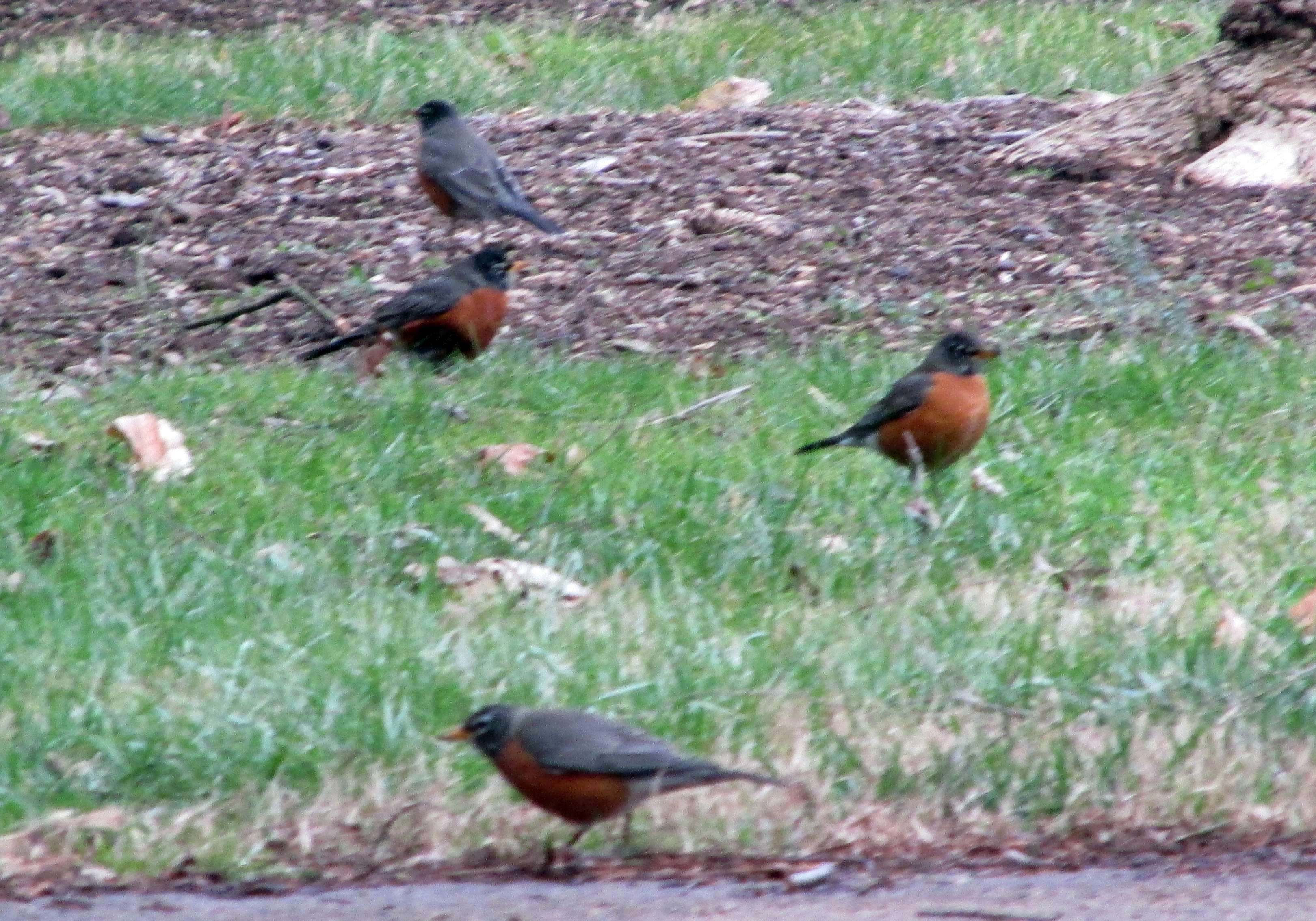
Photo by fotocitizen/Pixabay.com • An American robin fluffs its feathers to stay warm on a cold, wintry day. While the robin is a migratory bird, it’s not unusual for many individuals to forego migration in order to stay on their nesting range the whole year.

A stroll on some walking trails through the woods on Jan. 11 near my home resulted in my first 2020 observation of American robins. The presence of robins during the winter can be a hit-or-miss affair. After I posted my sighting on Facebook, I received plenty of anecdotal evidence to support my belief that many robins decided to skip migration this past fall and spend the winter in the region.

Jennifer Bauer, park superintendent for Sycamore Shoals State Historic Park in Elizabethton, Tennessee, posted that she saw a flock of about 25 robins at the park on Jan. 10.

Anne Powell Cowan, a resident of Bristol, Tennessee, commented that she has seen robins in Bristol all winter. “They never left,” Anne wrote in her comment. “We also have a red-headed woodpecker at our farm in Sullivan County.”

Betty Lacy in Elizabethton, Tennessee, posted that she is hosting a “swarm” of robins. “They love my tall hemlock hedges,” Betty wrote. “I know there was well over 100 of them. They have made little openings all over the hedge where they go in and out!”

Photo by Bryan Stevens •  American robins, prominent in lawns and gardens during their annual spring migration, will turn their attention to nesting duties as soon as spring arrives. For now, some are content to spend the cold winter season a little farther north than some of their kin.

Vivian Hicks has noticed plenty of robins, too. “Robins have been hopping around and feeding in my yard in Southwest Virginia,” Vivian posted.

Mimi Hale has noticed the same in Elizabethton, Tennessee. “Robins have been all over my yard for the last several weeks,” she commented on my post.

Dawn Peters, who resides in Jonesborough, Tennessee, posted that robins have been present at her home since before Christmas.

Gloria Walton Blevins in Damascus, Virginia, also indicated the robins haven’t flown south. “They have been in Damascus all winter,” Gloria commented.

Teresa Treadway in Elizabethton, Tennessee, offered a humorous take on the abundance of robins. “Mine were so confused, they never left,” Teresa posted.

It was left to Catherine Romaine Henderson of Greer, South Carolina, to leave a question on my post. “Does that mean an early spring?” Catherine wondered in reaction to this winter’s abundance of robins.

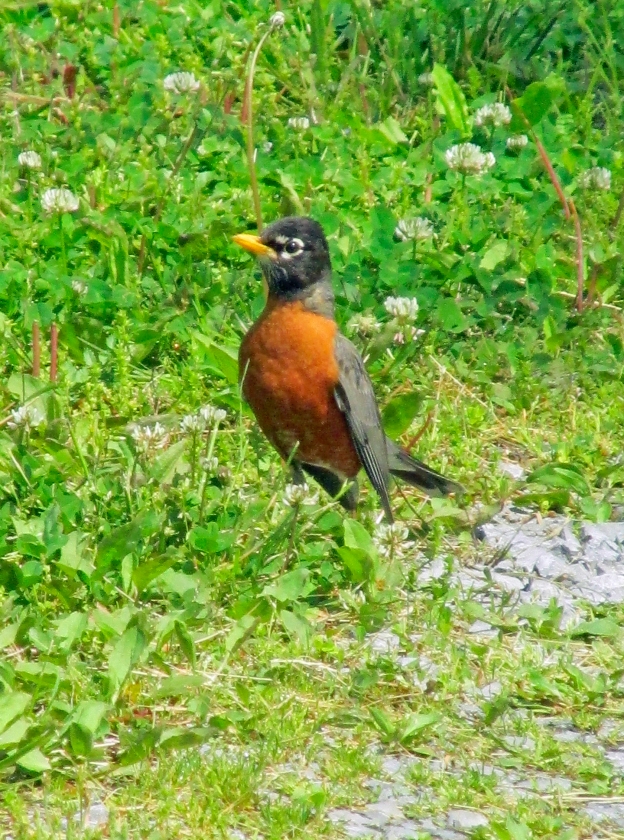
Photo by Bryan Stevens • An American robin perches on a branch. The robin is one of the best-known song birds in the United States.

The American robin is indeed widely held to be a harbinger of spring. Furthermore, the robin is a popular American bird. In fact, this bird has been designated the official state bird by Wisconsin and Michigan.

In truth, many robins forego migration to endure a few months of cold weather. Their ability to shift their diet from earthworms and insects to fruit and feeder fare helps robins eke out a living. Robins remain an abundant bird but their fondness for co-existing with humans can leave them vulnerable to pesticides applied to lawns and gardens.

According to the website, “All About Birds,” the American robin nests three times a year. On average, however, only 40 percent of robin nests succeed at fledging young. Even once out of the nest, young robins are vulnerable. The website estimates that only 25 percent of each year’s fledged robins will reach November. So, the young robins that join some of the large flocks people are seeing in the region are birds that have beaten the odds.

Photo by Bryan Stevens • Even once out of the nest, young robins, such as the one pictured here, are vulnerable. Experts estimate that only 25 percent of each year’s fledged robins will reach November.

Even the robins that do depart the region each fall don’t migrate far. Many robins that spend the summer in Canada or the United States only migrate as far as the Gulf States, southern Florida, southern California, Baja California and Mexico.

Robins are such friendly and engaging birds. If we can have them near us for 12 months of the year, who’s going to complain? They have even adapted to take food at feeders. If you’d like to try your luck at attracting robins to feeders, know that they like their sunflower seeds hulled. They will also eat mealworms, fruit, peanut hearts and suet. Robins prefer to feed on the ground or on an open platform feeder.

Photo by Bryan Stevens • While American robins like fruit when its available, they also spend a lot of time feeding on earthworms and insects.

Dreaming of winter finches flocking south

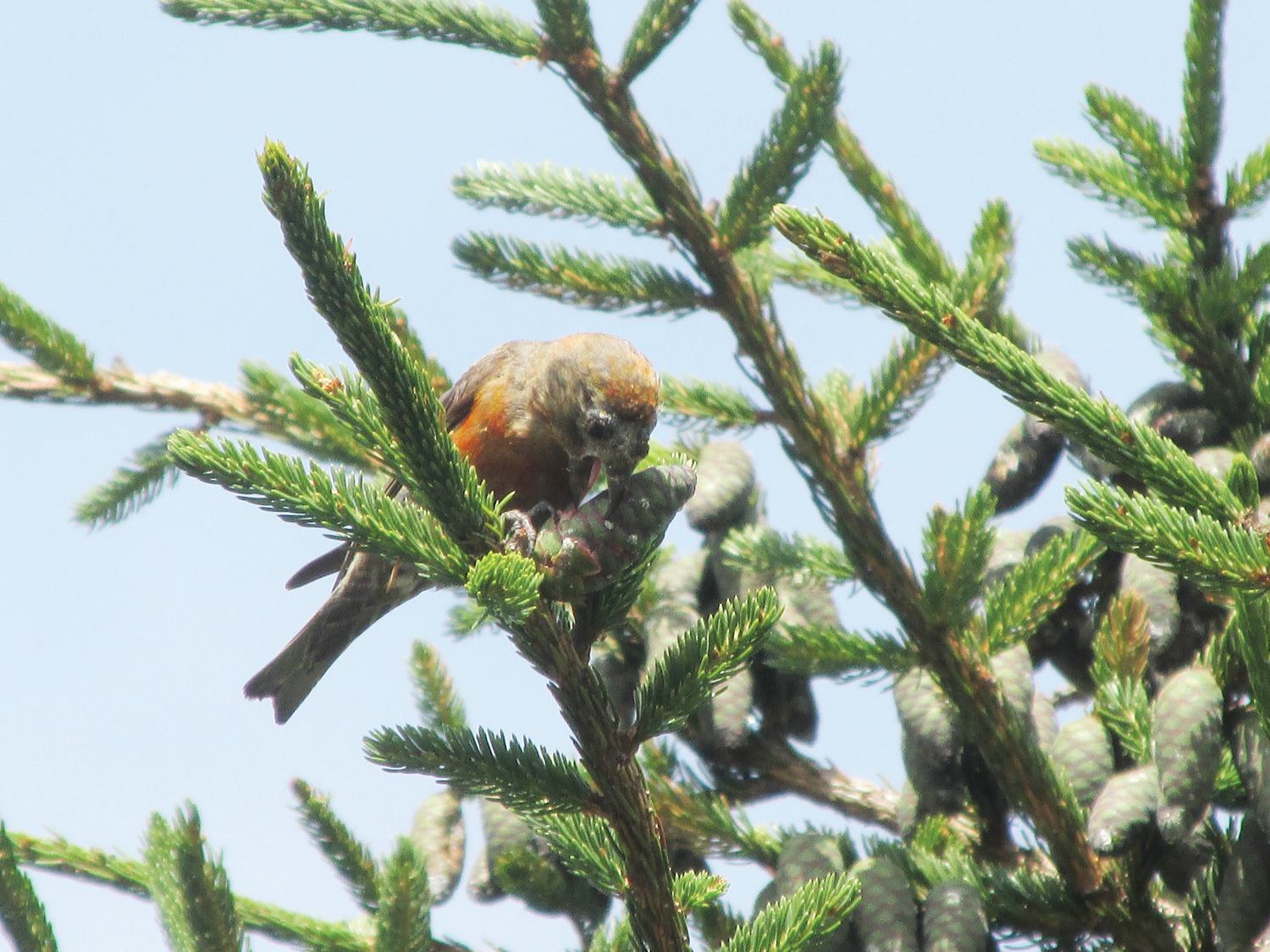
Photo by Bryan Stevens • Red crossbills use unique beaks to pry seeds from a conifer cone. These birds are among the so-called “northern finches” that occasionally stage massive winter migrations fueled by food shortages in their usual range. They are also nomadic residents throughout the year in northeast Tennessee and western North Carolina.

I recently got a shoutout on Facebook from Tom McNeil, a longtime birding friend and a neighbor here in the mountains of Northeast Tennessee. Tom asked if I’d been seeing any red crossbills on my side “of the ridge” and informed me he had been seeing these odd-beaked birds for the past couple of weeks.

I hadn’t noticed any crossbills and told him so, but I am definitely keeping alert for them after Tom’s notification. Every winter I hope my feeders will be visited by representatives of a group of birds known collectively as “northern finches.” This loose grouping consists of a half dozen species — purple finch, pine siskin, evening grosbeak, pine grosbeak, white-winged crossbill, red crossbill and common redpoll — that periodically stage irruptions from their traditional northern ranges to push south in large numbers during the colder months.

Photo by Bryan Stevens • A red crossbill uses its unique beak to pry seeds from a conifer cone. These birds are among the so-called “northern finches” that occasionally stage massive winter migrations fueled by food shortages in their usual range.

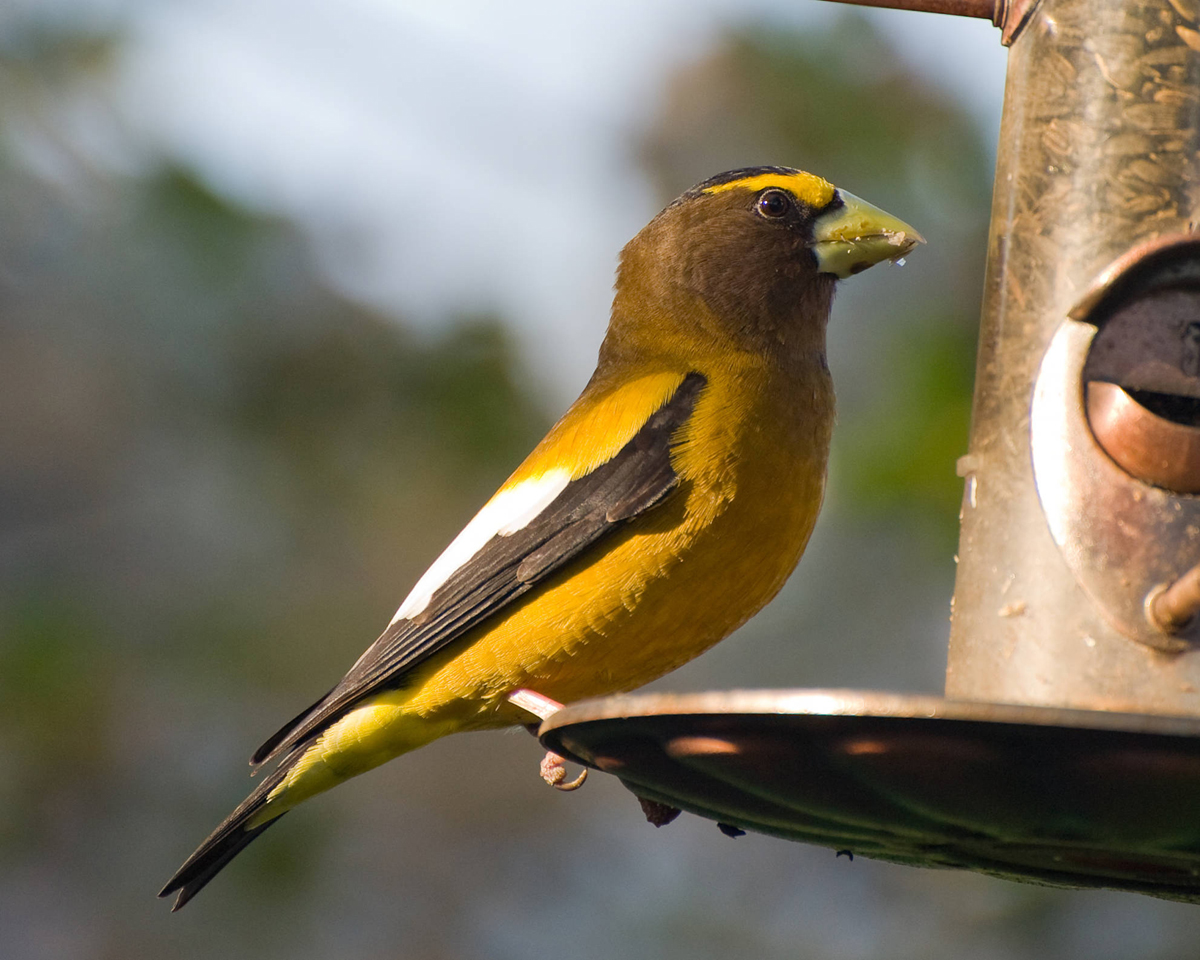
I’ve been feeding birds since the winter of 1993, and over the years, the first three species I listed have graced my feeders. Although I haven’t seen any this winter, pine siskins and purple finches have continued to be occasional winter visitors. Sadly, however, I haven’t been visited by showy evening grosbeaks since the late 1990s. The last time I saw an evening grosbeak in the region was back in 2000.

I’ve never laid eyes on a common redpoll, although I spent several hours 20 years ago staking out a yard in Shady Valley, Tennessee, in an unsuccessful bid to observe a redpoll that had been a reliable visitor at a feeder in that small community.

I have seen red crossbills, but my observations of these birds have always taken place during the summer months. Pine grosbeaks and white crossbills are almost unheard of in the region, and I haven’t had opportunity to visit the nesting summer ranges of these birds.

So, as the weather turns cold each year, hope springs eternal that perhaps this will be the winter that will bring some of these northern finches to my feeders, or at least to a feeder in the general area.

The factor that drives these irruptive northern finches to come south is food — or the lack thereof — in their usual ranges. When seed crops are poor in the north, these seed-eating birds may wander as far south as the Gulf States in search of supplemental food sources such as feeders stocked with sunflower seed.

Photo by Public Domain Photos/Pixabay.com • Crossbills and other finches often migrate in source of food.

The red crossbill is a specialist when it comes to foraging for its food. The bird uses its unique bill to open the cones of various conifers. The upper and lower mandibles of the bill are twisted in a way to make them cross when the beak is closed, hence the name “crossbill.”

Worldwide, there are only five species of crossbills — the red crossbill of North America, Asia and Europe; the parrot crossbill of northwest Europe and western Russia; the Scottish crossbill of Scotland; and the white-winged crossbill of Canada, the northern United States, including Alaska, as well as Asia and northeastern Europe. There’s also the endangered Hispaniolan crossbill of the island of Hispaniola in the Caribbean.

Photo by George Gentry/U.S. Fish & Wildlife Service • A male evening grosbeak perches on the side of a sunflower-stocked feeder.

W. Herbert Wilson Jr. wrote an article about the northern finches for the Oct-Dec. 1999 edition of “North American Bird Bander.” Wilson noted that supplemental food, such as feeder fare, can influence the migratory habits of many birds, including these finches. He cited the example of black-capped chickadees, which have been shown to demonstrate an increased chance of survival during lean winter times when they have access to feeders. He also noted that the provision of food at feeders has helped birds like the tufted titmouse, house finch and Northern cardinal extend their range northward. In part, Wilson theorized that more people are feeding birds closer to the northern climes where these birds live. As a result, the long-distance irruptions are no longer necessary to find supplemental food.

Other theories have also been advanced by other experts, including changing migratory routes, diminishing overall finch numbers and climate change. Theories aside, I will continue to hope some of these birds wing their way toward my feeders this winter. If I’m lucky, this could even be the year the evening grosbeaks return! If anyone is seeing any of these “northern finches,” I’d

love to hear about it. Contact me at ahoodedwarbler@aol.com.

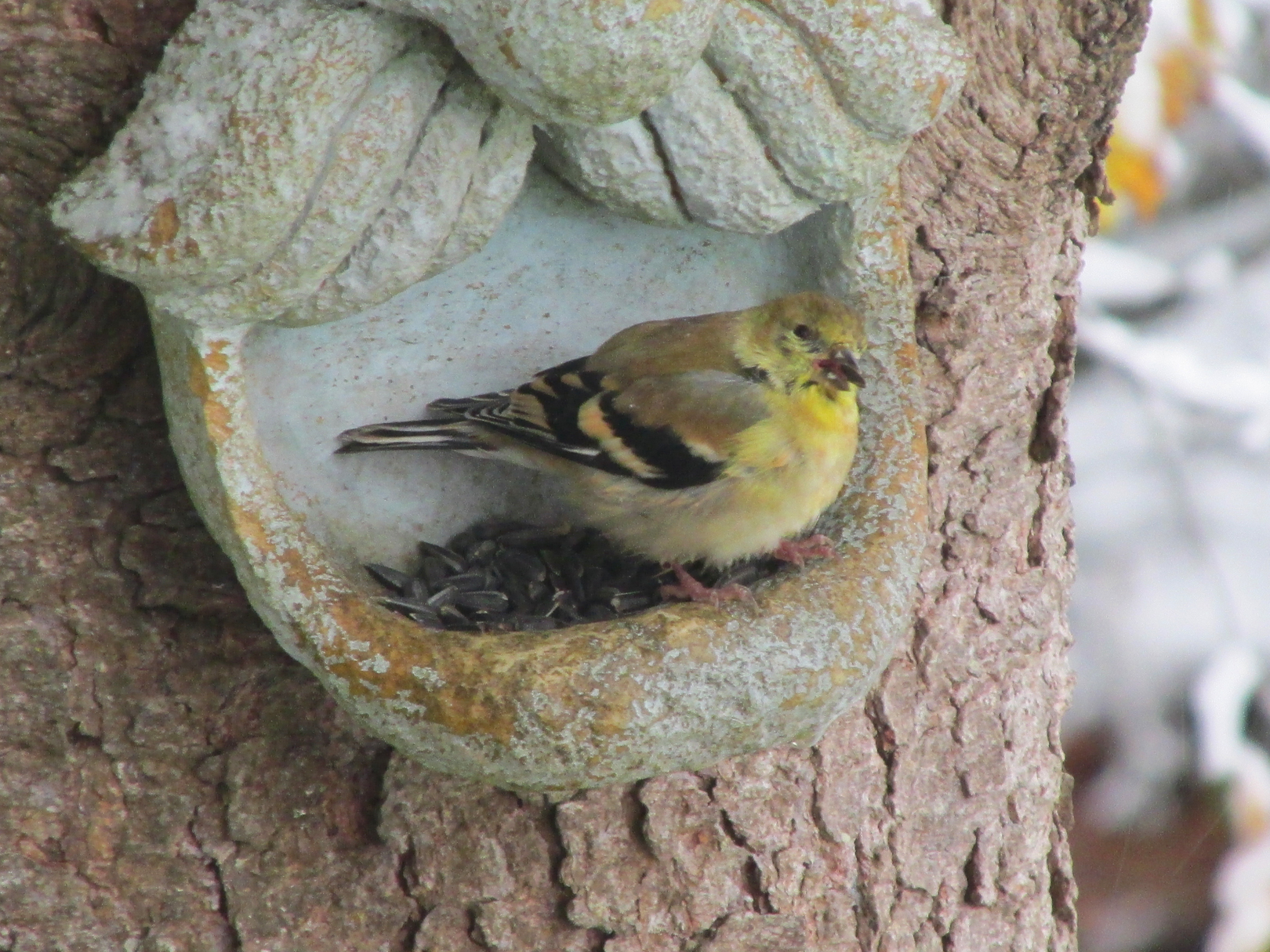
Photo by Bryan Stevens • An American goldfinch visits a feeder for sunflower seeds