
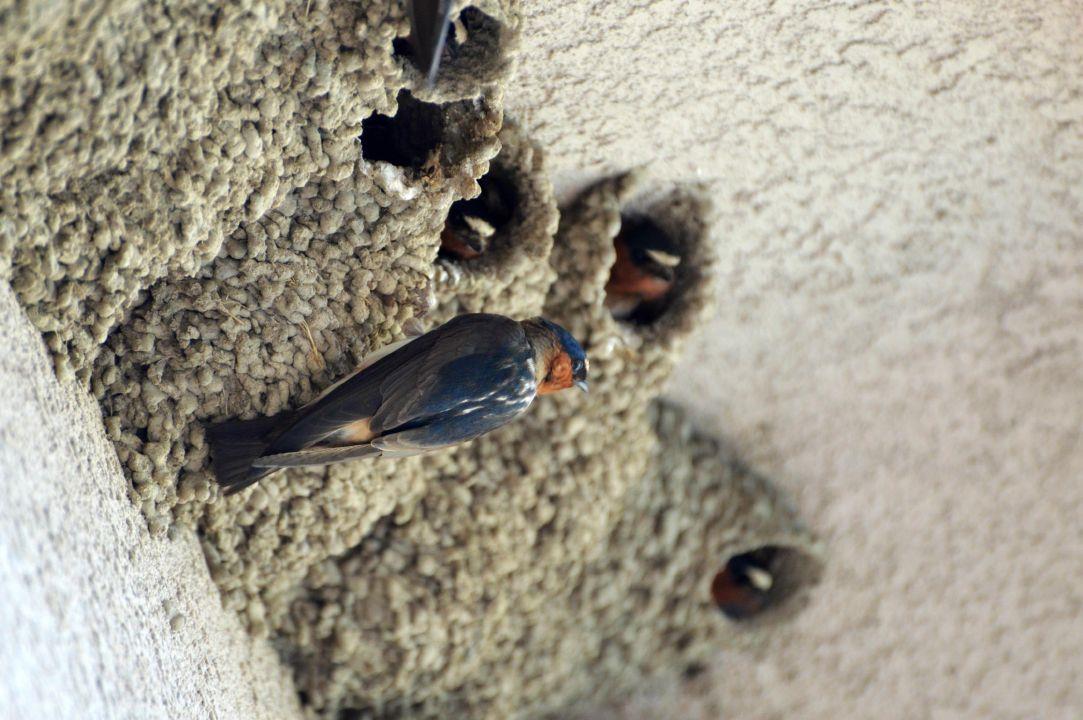
Carole/Pixabay • Cliff swallows traditionally built their mud nests on the sides of cliffs but in recent times they have adapted to nesting beneath bridges and other man-made structures.
From Washington County comes another Helene recovery story, this time of the feathered variety.
When raging floodwaters rushed through the Nolichucky River in September 2024, many area bridges got swept away, including the Taylor Bridge in Washington County.
In this instance, the loss of the bridge also left hundreds of cliff swallows homeless. In 2024, these birds had already departed the region. Not until they returned in the spring of 2025 did the resident cliff swallows discover that their dependable nesting location beneath the bridge had been claimed by floodwaters.
Jonesborough resident Lynda Carter reported the news to me that the restoration of the bridge has also resulted in the swallows returning this spring.
“I was delighted to discover the cliff swallows are rebuilding their colony underneath the new Taylor Bridge on the Nolichucky,” Lynda wrote in an email. “Their massive colony was lost along with the old bridge during the Helene flooding.”
Cliff swallows have greatly expanded their numbers in Northeast Tennessee in the past few decades. Once somewhat rare, their adaptable nature has made the cliff swallow one of the most abundant swallow in the entire region. Even with setbacks from the loss of bridges in Helene, the species has stayed common.
It’s not difficult to fathom why they’re so common. These birds nest in colonies and area concrete bridges have proven an acceptable alternative to cliffs for this graceful, aerodynamic bird. I’ve visited bridge in the region that provide a summer nesting location for hundreds of cliff swallows.
The cliff swallow is the same species celebrated in natural lore for returning annually to Mission San Juan Capistrano in California. There’s even a local California celebration every year on March 19 to mark the return of arguably the world’s most famous species of swallow.
The migration was immortalized in popular culture by Leon René’s 1939 hit song, “When the Swallows Come Back to Capistrano,” which almost overnight transformed the historic Mission into a global tourist destination.
Local lore credits a local priest with championing the swallows. He witnessed a shopkeeper destroying cliff swallow nests and supposedly invited the birds to move to the Mission.
Pairs of cliff swallows build exquisite gourd-shaped nests entirely out of mud that they collect in their beaks. Their nests are amazing structures, especially considering the birds can only build the mud nest chambers one beakful of mud at a time.
Cliff swallows are long-distance migrants. They winter as far south as Brazil, Uruguay and Argentina before they make the trip back each spring to spread out across North America.
The birds have been publicly celebrated in Capistrano, California, since the 1920s, but there are records documenting that the birds returned annually to the Mission from the time of its establishment in 1776.
Today the Mission functions as a museum and welcomes 300,000 visitors each year. The structure was built of stone and adobe bricks, which are made water, dirt, sand and straw. Adobe structures were once common throughout the southwestern United States. In the United States, New Mexico can claim the most adobe buildings with more than 59,000 such structures located in the state. Adobe buildings are also common in California, Texas and Arizona. Building with adobe is common around the globe in locations such as Mali and Iran.
Cliff swallows do line their mud nests with dry grass and feathers to offer a softer cushion for eggs and chicks.
Other swallows that spend the nesting season in Northeast Tennessee include tree swallow, barn swallow, Northern rough-winged swallow, purple martin and bank swallow. Bank swallows are rare and more likely to be found in the western part of Tennessee along Mississippi River bluffs.
•••
I’ve heard from a reader about a first sighting of a ruby-throated hummingbird this spring. I’m still waiting to see my first spring hummingbird. I’ll reveal more details about the first sighting in next week’s column. There’s plenty of time to share first spring sightings of hummingbirds. I’d love to share details in next week’s column. Email me at ahoodedwarbler@aol.com to share you own first-of-spring hummingbird sighting. Please include the date and time.
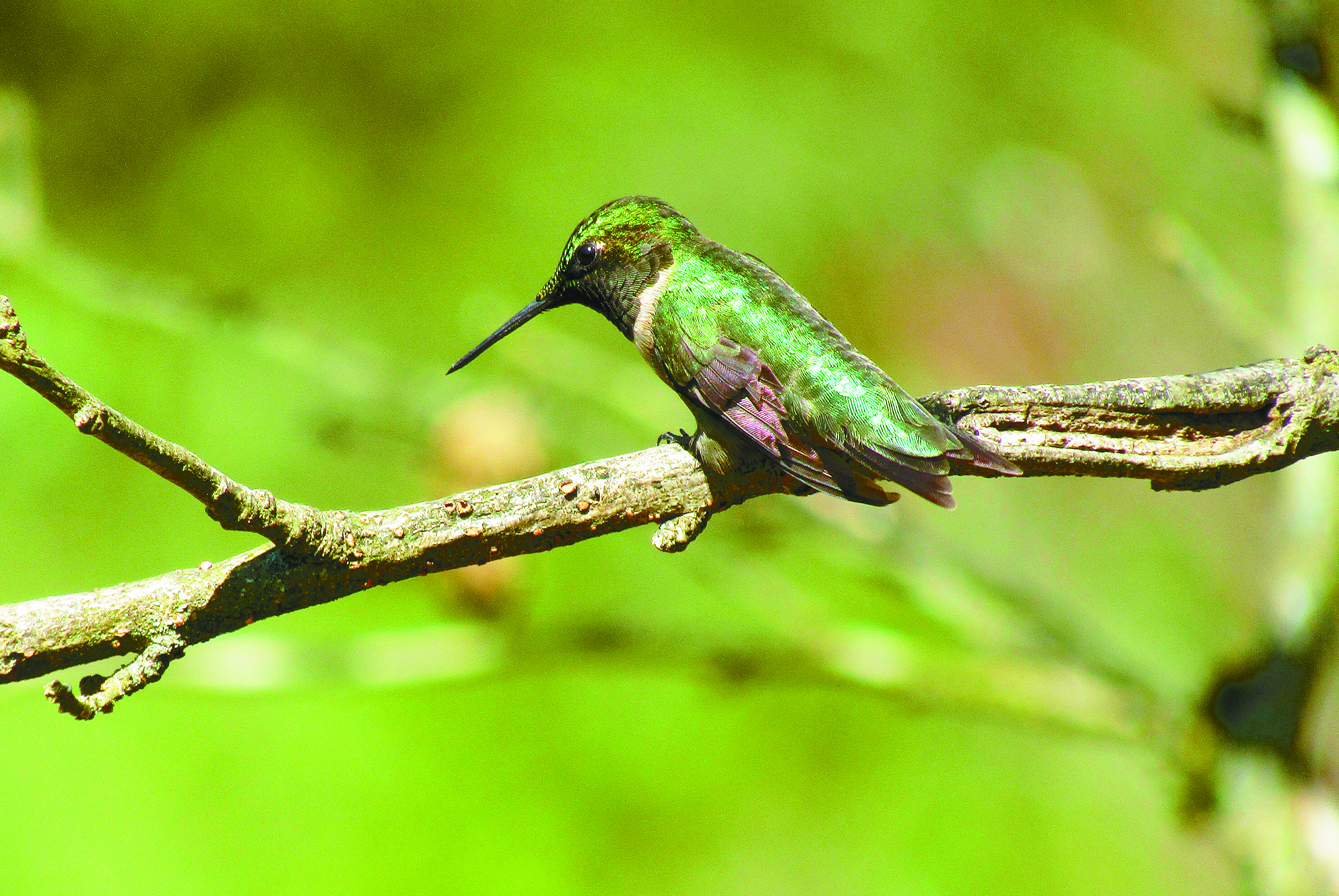
Bryan Stevens • Ruby-throated hummingbirds have been spotted in the region.
 Our Fine Feathered Friends