Tag Archives: Tennessee

Bristol’s CBC records low total of species, but still makes some interesting finds

brown-headnuthatch

Photo by SOARnet/Pixabay.com • The brown-headed nuthatch favors stands of loblolly pine, which are not common in the region. A record number of these small nuthatches were found on the recent Bristol TN-VA Christmas Bird Count.

Just before the end of last year, 21 participants gathered to conduct the Bristol TN-VA Christmas Bird Count. Count compiler Richard Lewis noted that the CBC found 71 species and a total of 5,700 individual birds.

“This was the 63rd year the count has been run since 1956,” Lewis posted on Bristol-Birds. “It was the lowest total number of species recorded in 27 years.”

Lewis could not explain the low total of species other than to note that the area doesn’t seem to have the usual influx of wintering birds from up north. In addition, waterfowl numbers were low. “Some species are not coming as far south this year,” he added.

The best find of the count was the discovery of a new bald eagle nest on South Holston Lake. Other noteworthy species recorded were black-crowned night-heron, red-shouldered hawk, merlin and brown-headed nuthatch. The four individuals found represent a new high count for the brown-headed nuthatch on the Bristol CBC. The species had only been seen on the count three other times.

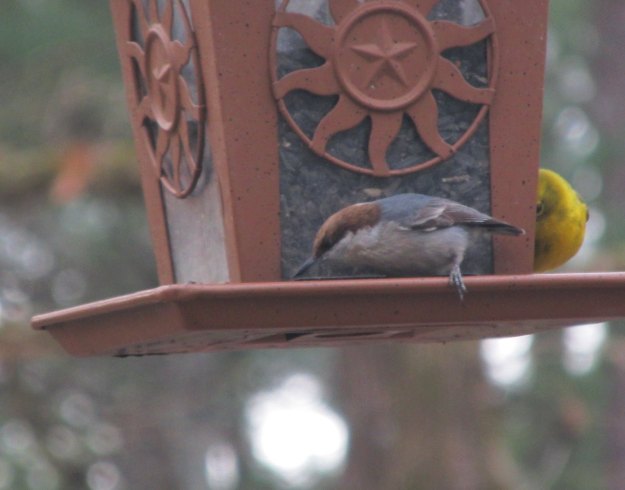
The brown-headed nuthatch is a specialist of pine woodlands throughout the southeastern United States, favoring loblolly-shortleaf pines and longleaf-slash pines. This nuthatch requires standing dead trees for nesting and roosting. They forage for food, however, on live pines. The birds are more abundant in older pine stands.

This small nuthatch is not at all common in the region, but there are some records, including other Bristol records. I’ve had much better luck finding the brown-headed nuthatch during visits to coastal South Carolina or suburban Atlanta in Georgia. In these southern locations, it can be a quite common bird.
Spring-Nuthatch

Photo by Bryan Stevens • In some areas, brown-headed nuthatches are feeder visitors. These small nuthatches are specialists that favor stands of loblolly pine.

These small birds will occasionally forage close to the ground, but they are often in the upper branches of pine trees. Their presence is often revealed by their call, which sounds amazingly like a squeeze toy. They produce their “squeaky toy” call persistently when agitated or curious. Brown-headed nuthatches often associate with mixed flocks in company with Carolina chickadees, tufted titmice, pine warblers and other small songbirds. White-breasted nuthatches and red-breasted nuthatches are more likely visitors to yards and gardens in the region.

Participants in the CBC included Ron Carrico, Rob Biller, Rack Cross, Angela Cross, Robert Hunter, Terry Hunter, Rick Knight, Roy Knispel, Cade Campbell, Larry McDaniel, Ruth Clark, Mary Clark, Randy Smith, Ron Harrington Sam Evans, Kevin Hamed, Rick Phillips, Adrianna Nelson, Michelle Sparks, Richard Lewis and Phillip Lewis.

The total for the Bristol TN-VA CBC follows:

Canada goose, 730; gadwall, 49; American wigeon, 11; American black duck, 1; mallard, 294; ring-necked duck, 245; bufflehead, 51; and hooded merganser, 25.

Wild turkey, 53; common loon, 4; pied-billed grebe, 18; horned grebe, 2; great blue heron, 22; and black-crowned night-heron, 1.

Black vulture, 75; turkey vulture, 52; sharp-shinned hawk, 2; Cooper’s hawk, 5; bald eagle, 2; red-shouldered hawk, 1; and red-tailed hawk, 27.


American coot, 12; killdeer, 14; Bonaparte’s gull, 6; ring-billed gull, 143; rock pigeon, 607; mourning dove, 253; Eastern screech owl, 4; and great horned owl, 2.

Belted kingfisher, 15; red-bellied woodpecker, 30; yellow-bellied sapsucker, 6; down woodpecker, 21; Northern flicker, 12; pileated woodpecker, 12; American kestrel, 11; and merlin, 1.

Eastern phoebe, 5; loggerhead shrike, 1; blue jay, 176; American crow, 404; common raven, 5; Carolina chickadee, 145; tufted titmouse, 93; red-breasted nuthatch, 1; white-breasted nuthatch, 62; and brown-headed nuthatch, 4.

Brown creeper, 5; Carolina wren, 130; winter wren, 5; golden-crowned kinglet, 33; ruby-crowned kinglet, 6; Eastern bluebird, 167; hermit thrush, 8; American robin, 93; Northern mockingbird, 90; European starling, 816; and cedar waxwing, 12.

Yellow-rumped warbler, 18; field sparrow, 15; dark-eyed junco, 41; white-crowned sparrow, 17; white-throated sparrow, 68; song sparrow, 115; swamp sparrow, 7; and Eastern towhee, 22.

Eastern meadowlark, 13; house finch, 47; American goldfinch, 89; and house sparrow, 25.

Glade Spring CBC finds 63 species

A Christmas Bird Count is also conducted annually in Glade Spring, Virginia. This year’s Glade Spring CBC took place Dec. 27 and found a total of 63 species and 6,696 individual birds. The total and individual count both dropped slightly from last year’s count, which found 71 species and 6,891 individual birds. Twenty-three people participated on the 2018 Glade Spring CBC.

Count compiler Ron Harrington noted that one new species — a common loon found on a private pond just off Old Saltworks Road — made its Glade Spring CBC debut. Six common mergansers, a new count circle high, were found on the North Fork of the Holston River. A single common merganser was found in that same river last year for the first time.
rthawk-one

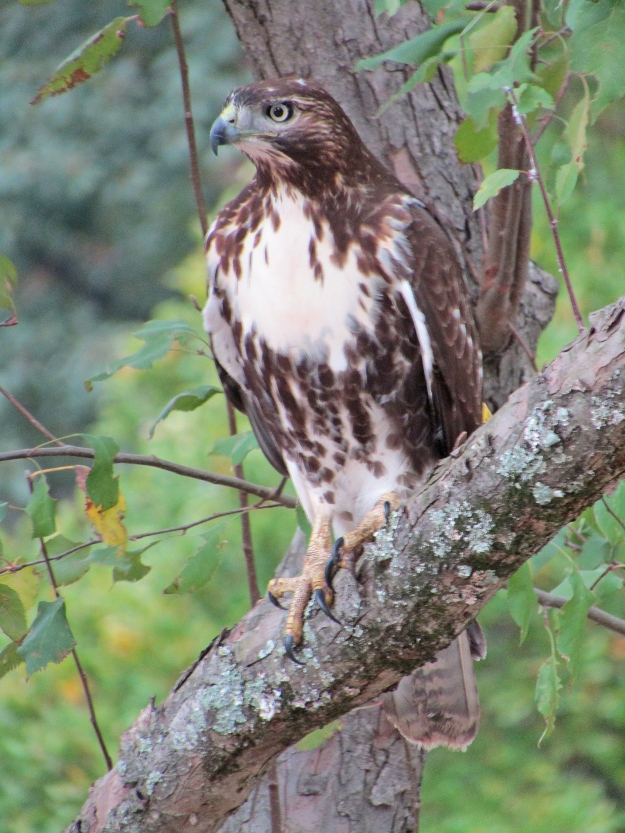
Photo by Bryan Stevens • Raptors, like this Red-tailed Hawk, proved plentiful on Christmas Bird Counts conducted throughout the region.

Other highlights noted by Harrington included 48 red-tailed hawks (a new high count total), 10 hairy woodpeckers (tying the record high) and three palm warblers, which represented a new high count for this warbler species. The CBC also recorded a high count for wood ducks with seven individuals being found. Other notable finds include swamp sparrow, brown creeper, brown thrasher, loggerhead shrike, winter wren, hermit thrush, Eurasian collared dove and common grackle.

•••••

With these snapshots of winter bird populations in the area, readers can use these references to see if they can find some of these same birds visiting their yards, gardens and favorite birding spots. As always, I enjoy hearing from readers about the sightings they are making. Email me at ahoodedwarbler@aol.com to share sightings, make comments or ask questions.

Cardinales

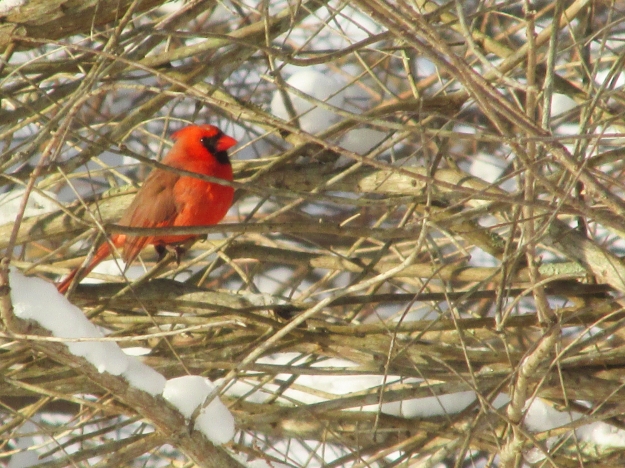
Photo by Bryan Stevens • A male Northern Cardinal perches in a tangle of branches on a rainy day.
Christmas Bird Count makes for fun outing during the holiday season

carolinawren-snow

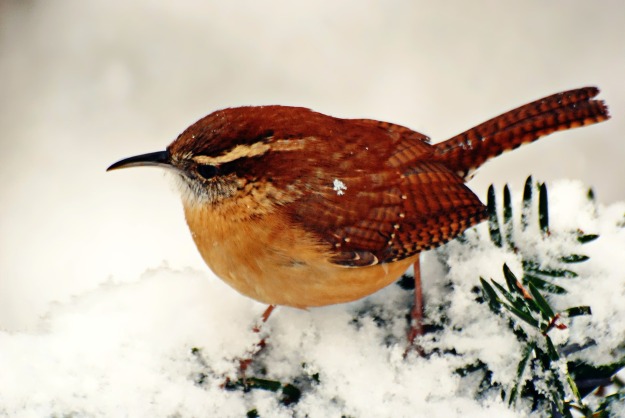
Photo by RetyiRetyi/Pixabay.com • Carolina wrens are small, inquisitive and hardy songbirds. The recent Elizabethton Christmas Bird Count found a record number of this wren during its annual survey of bird populations.

I participated in the 76th consecutive Elizabethton Christmas Bird Count, which was held Saturday, Dec. 15. This annual count is one of the oldest Christmas Bird Counts in the region, as well as in Tennessee.

I was one of twenty-eight observers in six parties. Together, we tallied 77 species, which is above the recent 30-year average of 72 species. The all-time high was set last year when 85 species were counted on this annual survey.

Osprey-LYNNValley

Photo by Bryan Stevens • An osprey perches in a tree along the Watauga River in Elizabethton, Tennessee. These fish-eating raptors are rare in winter in Northeast Tennessee.

Two species — osprey and orange-crowned warbler — were found on this CBC for the first time. Longtime count compiler Rick Knight observed that one noticeable difference between last year’s count and the 2018 Elizabethton CBC was the number of ducks. Last year’s CBC yielded 13 species, but only six species of ducks were found this year.

Knight also noted that a record number — 139 — of Carolina wrens was spotted by CBC participants.

A single bald eagle was found, but it was enough to continue a recent trend. This eagle has appeared for 19 of the last 20 on the Elizabethton CBC. Counts more than 20 years ago rarely produced any bald eagles.

A single red-shouldered hawk represented a good find since this hawk has only been found on six of the previous 25 years. A single merlin represented an even more exceptional find for this CBC. Merlin has been represented only two times in the last 25 years for this particular count.

Red-shoulderHawk

Photo by Bryan Stevens • This captive red-shouldered hawk was rehabilitated after suffering an injury and now works in an educational program at Brookgreen Gardens in South Carolina to teach the public about raptors, other birds, and various types of wildlife.

Knight noted that two shorebirds — killdeer and Wilson’s snipe — have experienced a steady decline in making this annual count. This year’s count produced only a single killdeer and snipe.

Knight speculated that low numbers of cedar waxwings and American robins on this year’s CBC probably indicates a poor wild fruit crop. These two species depend heavily on fruit to supplement their diet during the winter months.

Chipping sparrow has now been found for 15 straight years, but had only previously been reported six times in the first 50 years of the history of the Elizabethton CBC.

Without fail, some species manage to evade counters. According to Knight, some of the conspicuous misses this year included ruffed grouse, common loon and barred owl.

Mom-Grouse

Photo by Bryan Stevens • Although found during counts held in other seasons, no ruffed grouse was found on the 2018 Elizabethton Christmas Bird Count.

The Elizabethton Bird Club has been holding its annual Christmas count in Elizabethton, Tennessee, since 1942. The tradition of the Christmas Bird Count dates back much farther and originates from a less than bird-friendly custom. According to the National Audubon Society’s website, so-called sportsmen in the late 19th century would conduct a “Side Hunt,” a rather blood-thirsty Christmas custom that saw hunters competing to see who could score the largest amount of feathered and furred corpses.

The annual holiday bird survey may even have arisen from an earlier custom with roots in Europe that came to the United States of America with early colonists. The “Side Hunt” has some similarity to a peculiar celebration in Ireland and other European countries known as “Wren Day” or “Hunt the Wren Day.” The event was conducted the day after Christmas, the date of Dec. 26 being consigned as Saint Stephen’s Day. By the 20th century, the hunt consisted of tracking down a fake wren carried atop a decorated pole. Crowds would parade through towns in masks and colorful attire. These groups were referred to as “wren boys.”

Whether or not the “Side Hunt and “Wren Hunt” shared any connections, it was a huge step forward for conservation when preeminent ornithologist Frank M. Chapman proposed a new holiday tradition. His radical idea was to count birds during the Christmas season rather than hunting and killing them

chapman

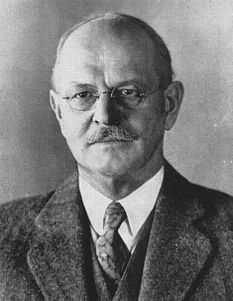
Frank M. Chapman

The Christmas Bird Count is now conducted each year on dates between Dec. 14 and Jan. 5. The first CBC took place in December of 1900 with 27 observers participating at 25 locations in the United States and Canada. Fifteen of the counts were conducted in the northeastern United States from Massachusetts to Philadelphia. Results from that first count in 1900 didn’t truly reflect the diversity of North America’s birds, but they were nonetheless interesting. The Greater Boston CBC boasted only one participant and only found 17 species. However, some of those species included such good birds as American tree sparrow, brown creeper, Northern shrike and Northern bobwhite.

For me, the Christmas Bird Count is a fun holiday outing with friends. There’s also satisfaction in knowing the results gathered from these nationwide counts will also contribute to the body of citizen science that helps experts determine the status of our feathered friends.

For a complete tally of this year’s Elizabethton Christmas Bird Count, please see the online sidebar to this week’s column at HeraldCourier.com.

Elizabethton Christmas Bird Count

Canada goose, 459; wood duck, 1; American wigeon, 1; American black duck, 1; mallard, 150; bufflehead, 182; and hooded merganser, 11.

Wild turkey, 57; pied-billed grebe, 16; horned grebe, 11; double-crested cormorant, 1; and great blue heron, 29.

Black vulture, 5; turkey vulture, 19; osprey, 1; sharp-shinned hawk, 1; Cooper’s hawk, 4; bald eagle, 1; red-shouldered hawk, 1; and red-tailed hawk, 17.

Snipe-One

Photo by Bryan Stevens • Wilson’s snipe are not often found in the winter in Northeast Tennessee.

American coot, 1; killdeer, 1; Wilson’s snipe, 1; and ring-billed gull, 14.

Rock pigeon, 296; Eurasian collared-dove, 4; mourning dove, 126; Eastern screech-owl, 4; and great horned owl, 2.

Belted kingfisher, 21; red-bellied woodpecker, 26; yellow-bellied sapsucker, 11; downy woodpecker, 30; hairy woodpecker, 4; Northern flicker, 25; and pileated woodpecker, 20.

American kestrel, 16; merlin, 1; Eastern phoebe, 11; blue jay, 128; American crow, 291; and common raven, 10.

Carolina chickadee, 80; tufted titmouse, 72; red-breasted nuthatch, 1; white-breasted nuthatch, 29; and brown creeper, 10.

Winter wren, 4; Carolina wren, 139; golden-crowned kinglet, 38; and ruby-crowned kinglet, 15.

Eastern bluebird, 122; hermit thrush, 7; American robin, 17; brown thrasher, 1; and Northern mockingbird, 50.

mockingbird-nov11

Photo by Bryan Stevens • The Northern Mockingbird has been the official state bird for Tennessee since 1933.

European starling, 592; cedar waxwing, 30; orange-crowned warbler, 1; palm warbler, 1; and yellow-rumped warbler, 32.

Eastern towhee, 22; chipping sparrow, 29; field sparrow, 34; Savannah sparrow, 4; fox sparrow, 3; song sparrow, 129; swamp sparrow, 8; white-throated sparrow, 70; white-crowned sparrow, 20; and dark-eyed junco, 66.

Northern cardinal, 159; red-winged blackbird, 25; Eastern meadowlark, 4; house finch, 34; American goldfinch, 46; and house sparrow, 8.

Cardinal-Enclosed

Photo by Bryan Stevens • A total of 159 Northern cardinals made this species a common bird on the recent Elizabethton CBC.

Yellow-rumped warblers are wild about poison ivy berries

WARBLER

Photo by Edbo23/Pixabay.com • The yellow-rumped warbler is one of the few warblers that attempts to reside in the region during the winter months. Switching from a diet of insects to one of fruit and seeds helps the birds manage to find enough to eat during the lean months. This species is particularly fond of poison ivy berries.


November and December are bleak months for birders as we experience a bit of a letdown after the joys of fall migration. Many of the favorite birds that spend the summer months with us have departed and will not return until spring. Hummingbirds, tanagers, vireos and most warblers, despite a few lingering individuals, have left the scene.

I really feel the pinch since warblers are one of my favorite families of birds. In northeast Tennessee, southwestern Virginia and western North Carolina, there are only three warblers that bird enthusiasts are likely to see in the winter. The yellow-rumped warbler is by far the most common winter warbler, but palm warblers and pine warblers are also occasional winter residents. A few other warblers are occasional stragglers, attempting to eke out a living during the cold months. For instance, I’ve seen a few common yellowthroats during the winter over the years

Yellow-RUMP

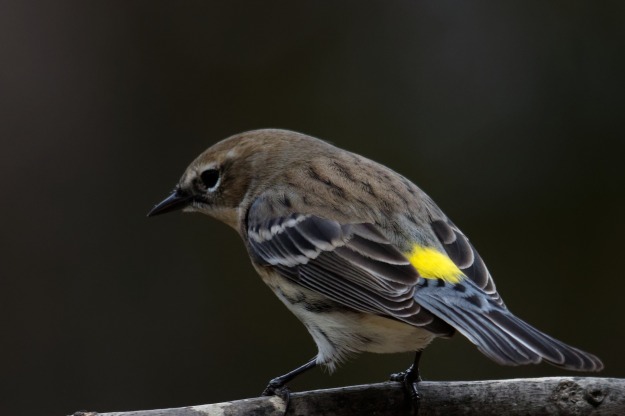
Photo by Edbo23/Pixabay.com • During the winter months, a yellow-rumped warbler is a dull bird in mostly brown and gray plumage except for the rump patch of bright yellow feathers that provides the bird its common name.

With the exception of the yellow-rumped warbler, however, the chances of enjoying warblers during the winter are rather slim. At least the yellow-rumped warbler is common and I encounter flocks of these birds on most occasions when I walk woodland trails in the region any time from November to April.

Until 1973, the yellow-rumped warbler was divided by scientists into two distinct species: the myrtle warbler in the eastern United States and Audubon’s warbler in the western United States. During a visit to Salt Lake City, Utah, in 2003, I saw my first and only “Audubon’s” warbler. This western counterpart is more colorful than the version birders know so well in the eastern half of the country. In addition to yellow plumage on the rear and flanks, the Audubon’s warbler also boasts a yellow crown and a yellow throat patch. Otherwise, the two birds are remarkably similar in appearance.

Of course, it’s the creamy yellow rump patch — looking like a small pat of butter — that gives this species its common name. Birders have adopted another nickname for the species, often referring to them simply as “butter-butts.”

There is now some discussion in scientific circles of dividing the species into not two distinct species, but four. The other two species would be the black-fronted warbler of mountains in Northern Mexico and Goldman’s warbler, which resides in Guatemala. I wouldn’t mind seeing Audubon’s warbler resurrected as a full species, since it would place an additional species on my life list of birds seen. In addition, it seems fitting that we have at least one bird that honors the name of the famed naturalist and painter John James Audubon.

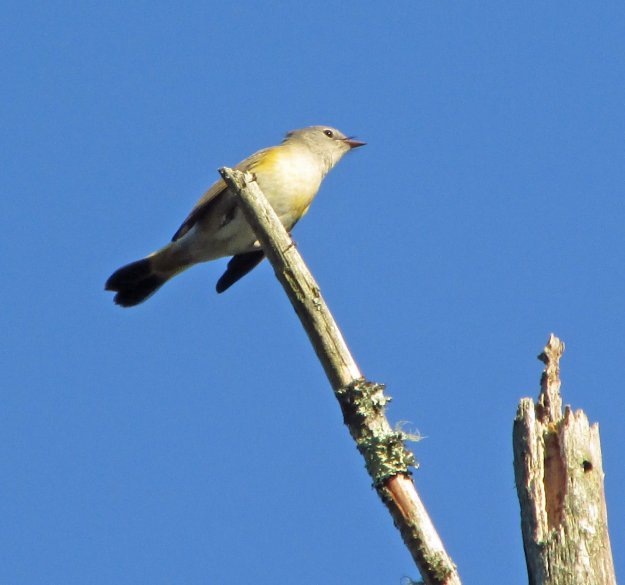
The scientific name for the yellow-rumped warbler is Setophaga coronata, which are terms derived from ancient Greek that when roughly translated mean “crowned moth-eater.” Like most warblers, the yellow-rumped warbler is fond of insects, but there’s another food source these birds turn to during times of scarcity.

Yellow-rumpWarbler (1)

Photo by Bryan Stevens • A wintering yellow-rumped warbler clings to palm fronds in coastal South Carolina.

So, how does a warbler make it through the winter season in the region? After all, most warblers exist on a diet heavy on insects and other small invertebrates. The yellow-rumped warbler, however, supplements its diet with different seasonal berries, including juniper berries, Virginia creeper berries and dogwood berries. They also feed on berries from one unlikely source. These birds love to gorge themselves on poison ivy berries that, fortunately, produce no ill effects. I’ve long noticed that many of the trails I enjoy walking during the winter season wind through woodlands overrun by poison ivy. Of course, by eating the berries, the warbler also help spread the noxious vines.

The yellow-rumped warbler is not the only bird known to feed on poison ivy berries. Other birds seen eating these berries include Northern flickers, bobwhites, Eastern phoebes, Cedar waxwings, tufted titmice and American robins. White-tailed deer show a preference for dining on poison ivy leaves over other types of vegetation. The berries are high in fat and calories, which makes them an ideal food source for creatures with high metabolisms like songbirds. The berries also ripen in fall and early winter when many other types of berries are scarce. While it is best for humans to avoid contact with this plant, it is a valuable fall and winter food source for wildlife.

IMG_6339

Photo by Bryan Stevens • A male yellow-rumped in spring plumage looks quite different than his subdued winter appearance.

While the yellow-rumped warbler is quite capable of dealing with some frost and snow, more than half of the world’s warblers live in more tropical climates outside the borders of the United States and Canada. Not all yellow-rumped warbler attempt to tough out winter conditions in the United States. Some do migrate to the tropics, where they utilize a variety of habitats, including mangroves, thorn scrub, pine-oak-fir forests and shade coffee plantations.

All warblers are exclusively New World bird species. The family numbers about 120 species. Some of the descriptively named species of warblers not seen within the United States or its northern neighbor include citrine warbler, white-striped warbler, black-crested warbler, pale-legged warbler, buff-rumped warbler, golden-bellied warbler and black-eared warbler.

During your next woodland stroll, keep your eyes peeled for small brown birds in the branches of nearby trees. If the last thing you see before they dive for cover is a bright yellow rump patch, you’ll know you’ve observed a yellow-rumped warbler.

plate-153-yellow-rump-warbler-final

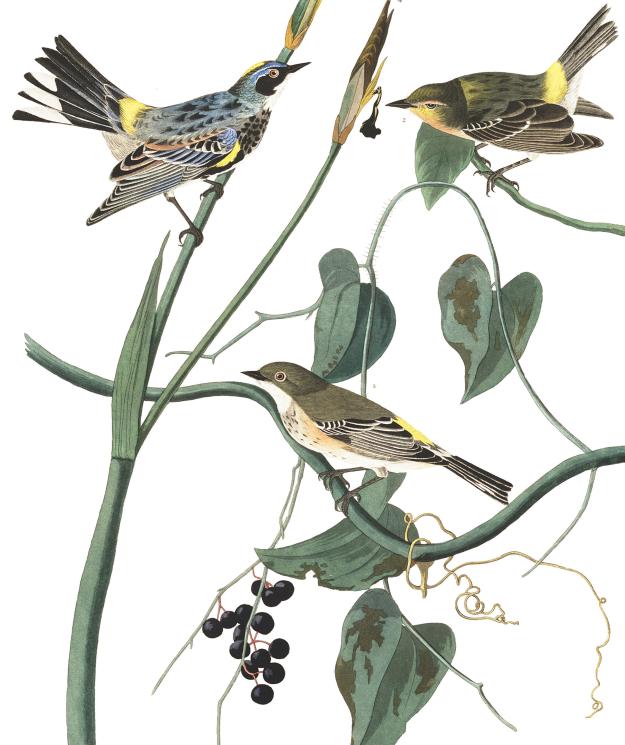
Early naturalist and painter John James Audubon painted these yellow-rumped warblers.


Gift suggestions for the bird-lovers on your Christmas shopping list

Although some people like to get an early start on holiday shopping, I’m certain some, like myself, are still in the process of checking those lists. If you’re looking for some ideas for bird and nature enthusiasts on your list, I’ll make a few modest suggestions that could result in making the season merry and bright.

Photo-FieldGuides

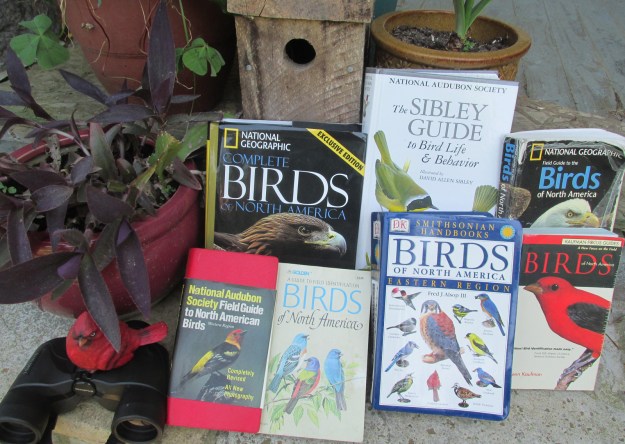
Photo by Bryan Stevens • Field guides are an essential tool for bird identification.

Field guides
If you’ve enjoyed watching the birds that congregate at your feeders or noticing the visitors to your yard and gardens, but you’ve also become curious about the identities of all your feathered visitors, it might be time for a helpful and informative field guide. I prefer field guides illustrated with paintings rather than photographs, but I have a varied collection of guides. I started a long time ago with the Golden Guide to Birds. It’s a classic and still a great guide to help interest children in the birds around them.
Some of the guides I recommend and use myself these days are National Geographic Field Guide to the Birds of North America, The Sibley Field Guide to Birds of Eastern North America, and Peterson Field Guide to Birds of Eastern and Central North America. Any of these field guides should be easily found online or in stores at a cost of under $20.
If you have already acquired a good basic field guide, perhaps you’re ready for more specialized field guides that focus on particular families of birds or on the behavior of backyard birds.
For the warblers, there are several field guides available, including the Stokes Field Guide to Warblers, A Field Guide to Warblers of North America (Peterson Field Guides), and the Warbler Guide.
For a handy guide to identify some of the birds seen on beach and coastal vacations, consider such titles as Stokes Beginner’s Guide to Shorebirds and Shorebirds: An Identification Guide to the Waders of the World, and National Audubon Society Pocket Guide to Familiar Birds of Sea and Shore.
For fans of hawks and allied raptors, several guides exist including A Field Guide to Hawks of North America (Peterson Field Guides), Birds of Prey: Hawks, Eagles, Falcons, and Vultures of North America, and Hawks from Every Angle: How to Identify Raptors In Flight.
In short, there’s a field guide for every family and grouping of birds. With expertly rendered illustrations or photographs, brief and concise text, and helpful range maps, nothing beats a good field guide forYea, improving one’s ability to identify birds. I recommend thumbing through the pages of a good guide over trying to randomly use Google to search online for a bird glimpsed for a brief time.

bird-Feeder

Photo by Pixabay.com • A well-stocked feeder is a first step toward attracting more birds to your yard.

Feeders
Bird feeders come in an astounding variety of shapes and sizes. Nothing will do more to bring birds into our daily lives than maintaining a well-stocked feeder. Be certain to include a bag of sunflower seeds so that your gift will allow the recipient to immediately begin to enjoy the parade of birds sure to flock to the feeder.

Bluebird-2

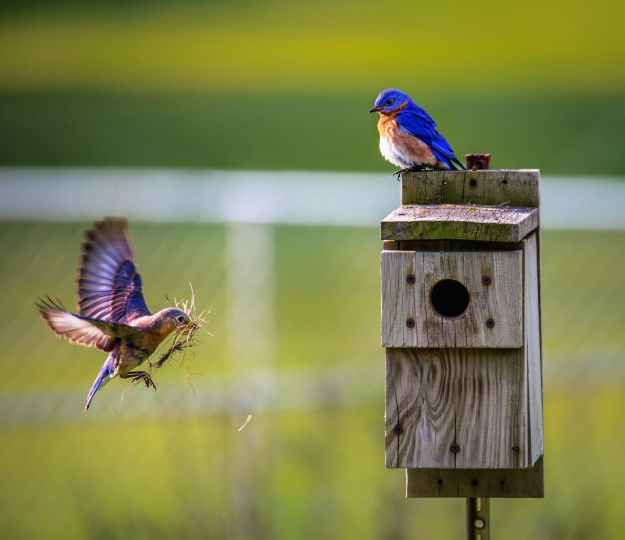
Photo by Bryan Stevens • Birds, like this Eastern bluebird, appreciate nest boxes.

Houses
It’s never too early to start thinking about spring and the return of many of our favorite birds. To bring more birds into our lives, it doesn’t hurt to encourage them by providing man-made nesting and roosting boxes. Many of our favorite birds — Eastern bluebird, tree swallow, tufted titmouse, white-breasted nuthatch — are cavity-nesting species but will just as readily raise their young in nesting boxes as in a hole in a tree. With boxes customized to their own particular needs, other birds such as Eastern screech-owl, wood duck and great crested flycatcher will also make use of bird boxes. Many gardening centers, produce stands, feed stores and other shopping outlets sell bird boxes of various designs, shapes and sizes. If you’re shopping for a bluebird box, be certain that the recipient’s yard is a spacious one. Bluebirds feel more comfortable in open surroundings. If the yard is more overgrown and woodsy, consider a box tailored more for a woodland bird like a chickadee or a nuthatch.

binoculars-2164526_1920

Photo by Pixabay.com • A good pair of binoculars will bring birds much closer.

Binoculars
Unless requested, don’t buy binoculars for an adult. Most birders would prefer to pick out their own pair to use to make up-close and personal bird observations. An inexpensive pair, however, could be perfect for fostering in a child an interest in birds and nature. If you have grandchildren, children, or even nephews and nieces, a beginner’s pair of binoculars could make a life-altering gift that lets the recipient view the world in a whole new light.

CalendarCover

Calendars
Birds have always been a popular photography subject for calendars. There’s an almost endless variety of bird calendars, but I’m partial to one produced by the Lee and Lois Herndon Chapter of Tennessee Ornithological Society, of which I am a member. This annual fundraising endeavor features some exceptional bird photography from club members. This year’s calendar features full-color photographs of some of the region’s most colorful and engaging birds. The club sells the calendars for $15 each. For an additional $2 shipping fee, calendars can be sent to any address in the United States. All proceeds are used to support birding opportunities and bird-related causes.
The calendar also features an informative calendar grid with highlights for major holidays as well as important bird-related dates. The calendar’s pages feature more than 80 full-color photographs of area birds, including common favorites and some not-so-common visitors. The front cover features a dazzling photograph of a male rose-breasted grosbeak. If you’re interested in obtaining a calendar, email ahoodedwarbler@aol.com or look up Elizabethton Bird Club on Facebook.


Hummingbird-Ornament

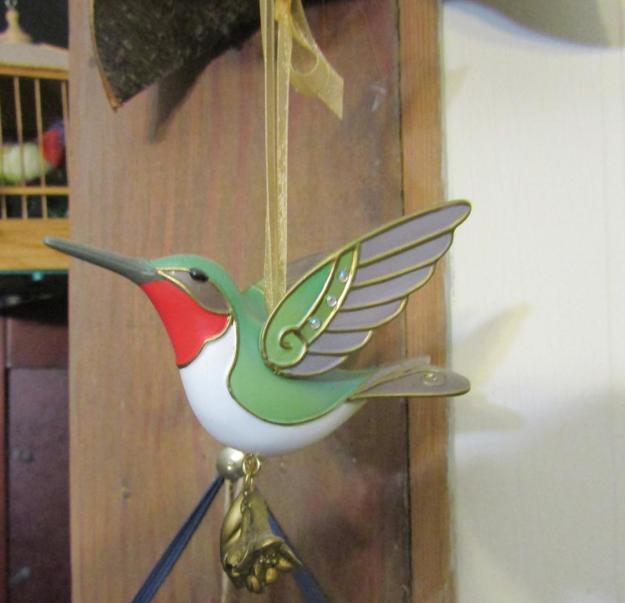
Photo by Bryan Stevens • A bird-related Christmas ornament makes a nice gift.

Ornaments

The branches of my Christmas tree are always weighted heavily with a variety of bird-related Christmas ornaments. Holiday tinsel and baubles make the season look a lot like Christmas if they feature some of our favorite birds such as cardinals, chickadees, hummingbirds, penguins, doves, geese, eagles or any of the other popular species of birds. Choose a fun and unique bird ornament for the enthusiast on your Christmas list.

animals avian beaks birdhouse

Photo by Kevin Blanzy on Pexels.com

Fall Bird Count finds 127 species

rthawk-one

Photo by Bryan Stevens • Raptors, like this Red-tailed Hawk, proved plentiful on count day. Broad-winged Hawk, a relative of the Red-tailed Hawk, even set a new record for most individuals found.

The 49th consecutive Elizabethton Fall Count was held Saturday, Sept. 29, with 50 observers in 13 parties covering parts of five adjacent counties.

According to count compiler Rick Knight, a total of 127 species were tallied (plus Empidonax species), slightly higher than the average of the last 30 years, which was 125. The all-time high was 137 species in 1993.

Two very rare species were found: Purple Gallinule at Meadowview Golf Course in Kingsport and Black-legged Kittiwake on South Holston Lake. The kittiwake had been found Sept. 27 and lingered until count day.

Shorebird habitat was scarce due to high water levels at most sites, thus only one species was found (other than Killdeer).Broad-winged Hawks were numerous, part of a notable late flight likely due to unfavorable weather conditions preceeding the count.
Warblers were generally in low numbers, although 23 species were seen. No migrant sparrows had arrived yet. Blackbirds, too, were scarce. Some regular species were tallied in record high numbers, likely due to the above average number of field parties.

turkey_two

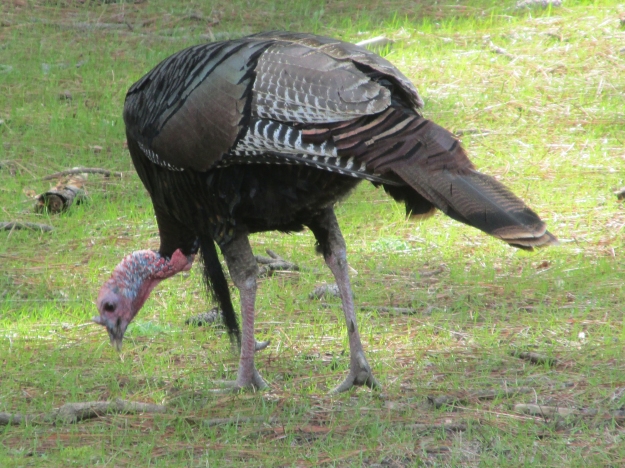
Photo by Bryan Stevens • Wild Turkeys and Ruffed Grouse were found on this year’s count, but participants failed to locate any Northern Bobwhites.

The list of species follows:

Canada Goose, 781; Wood Duck, 79; Mallard, 345; Blue-winged Teal, 110;  Com. Merganser, 2;  Ruffed Grouse, 2; and Wild Turkey, 56.

Pied-billed Grebe 32; Double-crested Cormorant, 78; Great Blue Heron, 49; Great Egret, 2; Green Heron, 2; and Black-crowned Night-Heron, 5.

Wild-NightHeron-Adult

Photo by Bryan Stevens • Several species of herons and egrets were located, including Black-crowned Night Heron.

Black Vulture 71; Turkey Vulture 203; and Osprey, 27. This represented a new record for the number of Osprey found on this count.

 
Bald Eagle 8; Northern Harrier, 1; Sharp-shinned Hawk, 3; Cooper’s Hawk, 9; Red-shouldered Hawk, 6; Broad-winged Hawk, 321; (most ever on this count) and Red-tailed Hawk, 19.

 
Virginia Rail 1; Purple Gallinule, 1; Killdeer, 43; Spotted Sandpiper, 1; Black-legged Kittiwake, 1; Caspian Tern, 1; and Common Tern, 2.


Rock Pigeon, 597; Eurasian Collared-Dove, 2; Mourning Dove, 330; Yellow-billed Cuckoo, 4; E. Screech-Owl, 24; Great Horned Owl, 10; Barred Owl, 5; Northern Saw-whet Owl, 1; and Common Nighthawk, 1.

 
Chimney Swift, 481; Ruby-throated Hummingbird, 31; Belted Kingfisher, 32; Red-headed Woodpecker, 5; Red-bellied Woodpecker, 92; Yellow-bellied Sapsucker, 5; Downy Woodpecker, 59; Hairy Woodpecker, 12; Northern Flicker, 67; Pileated Woodpecker, 54; American Kestrel, 13; and Merlin, 2. The figures for Red-bellied and Pileated Woodpeckers mark new high counts for these two species.

red-bellied-bryan

Photo by Bryan Stevens • A record number of Red-bellied Woodpeckers were found on this year’s Fall Bird Count.

Eastern Wood-Pewee 15; Empidonax species, 2; Eastern Phoebe, 79; Eastern Kingbird, 9; White-eyed Vireo, 1; Yellow-throated Vireo, 2; Blue-headed Vireo, 21; Philadelphia Vireo, 3; Red-eyed Vireo, 4; Blue Jay, 646; American Crow, 364; and Common Raven, 1.
Northern Rough-winged Swallow, 3; Tree Swallow, 465; Barn Swallow, 1; and Cliff Swallow, 3.

Carolina Chickadee, 177; Tufted Titmouse, 133; Red-breasted Nuthatch, 4; White-breasted Nuthatch, 71; Brown Creeper, 1; House Wren, 4; Winter Wren, 1; and Carolina Wren, 218. Both Tufted Titmouse and White-breasted Nuthatch were found in record numbers, as was the Carolina Wren, too

Golden-crowned Kinglet, 8, Eastern Bluebird, 187;  Gray-cheeked, Thrush 12; Swainson’s Thrush, 46;  Wood Thrush, 9; American Robin, 591; Gray Catbird, 64; Brown Thrasher, 23; and Northern Mockingbird, 111; European Starling 1,226;  and Cedar Waxwing, 294. The number of Gray Catbirds set a new record for the species.

Worm-eating Warbler 1; Northern Waterthrush, 1; Black-and-white Warbler, 7; Prothonotary Warbler, 1; Tennessee Warbler, 42; Orange-crowned Warbler, 2; Kentucky Warbler, 2; Common Yellowthroat, 9; Hooded Warbler, 7; American Redstart, 16; Cape May Warbler, 6; Northern Parula, 8; Magnolia Warbler, 18; Bay-breasted Warbler, 15; Blackburnian Warbler, 8; Yellow Warbler, 1; Chestnut-sided Warbler, 1; Black-throated Blue Warbler, 4; Palm Warbler, 63; Pine Warbler, 11; Yellow-throated Warbler, 1; Prairie Warbler, 1; and Black-throated Green Warbler, 7.

Fall-AmRedstart

Photo by Bryan Stevens • Participants found a total of 23 different species of warblers, including American Redstarts.

Eastern Towhee, 66; Chipping Sparrow, 94; Field Sparrow, 16; Song Sparrow, 97; and Dark-eyed Junco, 42.

Summer Tanager 2; Scarlet Tanager, 11;  N. Cardinal, 149; Rose-breasted Grosbeak, 125; and Indigo Bunting, 14.

Bobolink, 2; Red-winged Blackbird, 132; Eastern Meadowlark, 7; Common Grackle, 8; Brown-headed Cowbird, 5; House Finch, 41; Pine Siskin, 11; American Goldfinch, 220; and House Sparrow, 69.

Goldfinch 5

Photo by Bryan Stevens • American Goldfinches were among the smaller songbirds found during the annual Fall Bird Count.

Some birds expert at conjuring Halloween-style thrills and chills

nature bird cute wildlife

The  greater tit, a European relative of the Carolina chickadee, has learned to hunt and kill a species of small bat in the Hungarian mountains. • Photo by Pixabay on Pexels.com

Here’s a repost from November of 2018. The timing seems appropriate. 

My ruby-throated hummingbirds set a new record this year, lingering until Oct. 17. Although present on the morning of that date, I didn’t see any that evening. The next morning, their absence — quite notable and somewhat saddening — continued. In all likelihood, I won’t see any more ruby-throated hummingbirds until next April. I hope they arrive early.

Carolyn Baker Martin commented on the post I made on Facebook about the departure of the hummers. Carolyn noted that 2018 has been an interesting year for birds and flowers. Carolyn, who lives in Elizabethton, Tennessee, also shared a recent observation she made of a hummingbird behavior that I’ve never personally witnessed.

“I had a hummer recently in torpor,” Carolyn wrote in her post. “It sat on the feeder a long time without moving or feeding. Finally, a tail feather began to move. It fed constantly for one more day and was gone.”

Despite their small size, most hummingbirds, including the ruby-throated hummingbirds, are less frail than they appear. Torpor is a biological adaptation possessed by hummingbirds and some other creatures that lets them survive a serious cold spell. It’s not quite the same thing, but think of these tiny birds as voluntarily going into a coma when they enter torpor. Comatose or catatonic creatures are a staple of some horror and suspense films, so perhaps a look at how some birds can induce shivers along the spine is in order in view of the celebration of Halloween this week.

Image by Josep Monter Martinez from Pixabay • Bats, like birds, have the power of flight. Scientists have also learned that some unlikely birds have also developed a liking for feasting on bat brains.

The ultimate coma victim is the fabled zombie, but that’s not likely to afflict any of our feathered friends, right? Well, consider the great tits of Hungary, which are relatives of our tufted titmouse and Carolina chickadee. These birds — at least the Hungarian ones — have apparently acquired a taste for brains.

Not human brains, thankfully. The victims of these brain-hungry great tits are a species of bat — a flying creature often associated with the modern celebration of Halloween, as well as legends about vampires — that shared the habitat of these birds in the Bükk Mountains of Hungary. As it turns out, the tits only hunted bats, in this case a tiny species known as common pippistrelle, out of dire necessity.

Bat ecologists Péter Estók and Björn M. Siemers, after observing the odd behavior of the great tits during some winter seasons, conducted a study to see if great tits are consistent devourers of bats’ brains. They discovered that the birds did hunt the bats and had even learned to detect a special call the bats make as they emerge from hibernation. The ecologists conducted their study over two years and learned that the great tits teach others of their kind the special art of hunting bats. They also learned that the birds made efficient killers, dragging the bats from their roosts and cracking their skulls to get at their brains.

However, when provided with plenty of alternative food, including such favorite items as bacon and sunflower seeds, the great tits chose to eat these items rather than actively hunt bats. The researchers concluded that great tits only resort to harvesting the brains of small bats during times of scarcity during harsh winters. The bizarre story is even featured in the title of a fascinating book by Becky Crew titled “Zombie Birds, Astronaut Fish, and Other Weird Animals.”

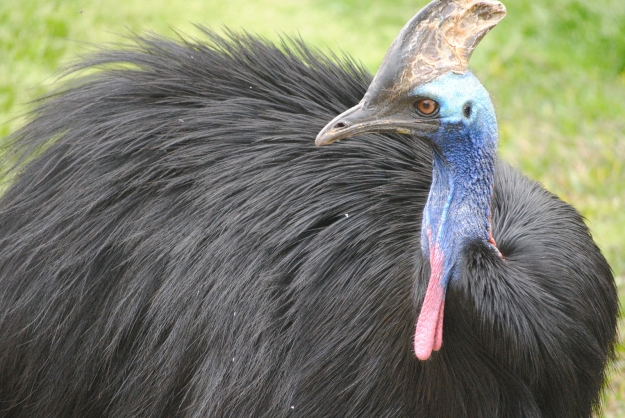
Cassowary

Photo by lailajuliana / Pixabay.com • The southern cassowary reaches a height of more than five feet and weighs 120 pounds. The bird has a fearsome but perhaps undeserved reputation for attacks on humans.

So, if humans have nothing to fear from brain-hungry birds, are there any birds that we should fear? Some experts suggest that precautions might be in order if one expects to come into close proximity with a southern cassowary, which is the third-tallest and second-heaviest living bird, smaller only than the ostrich and emu.

The cassowary, a native of New Guinea and northeastern Australia, has developed a reputation as a fearsome bird capable of injuring or killing humans. According to ornithologist Ernest Thomas Gilliard, cassowaries deserve their reputation. In his 1958 book, “Living Birds of the World,” he explained that the second of the three toes of a cassowary is fitted with a long, straight, dagger-like claw which can sever an arm or eviscerate an abdomen with ease. According to Gilliard, there have been many records of natives being killed by this bird.

A thorough study, however, has partly exonerated the cassowary from these misdeeds. In a total of 150 documented attacks against humans, cassowaries often acted in self-defense or in defense of a nest or chicks. The only documented death of a human took place in 1926 when two teenaged brothers attacked a cassowary with clubs. The 13-year-old brother received a serious kick from the bird, but he survived. His 16-year old brother tripped and fell during the attack, which allowed the cassowary to kick him in the neck and sever the boy’s jugular vein.

Mesembriornis_model

Model of the terror bird Mesembriornis at the Chicago Field Museum, prepared by taxidermist Leon L. Pray, seen on the left.

So we can rest easier knowing that murderous birds that reach a height of almost six feet tall are unlikely to terrorize us should we travel to the lands down under. A more ancient relative of the cassowary, however, might have been a different story had humans lived during the same time period. Phorusrhacids, also known as “terror birds,” were a group of large carnivorous flightless birds that once had some members reign as an apex predator in South America before they went extinct around two million years ago. The tallest of the terror birds reached a height of almost 10 feet. Titanis walleri, one of the larger species, even ranged into what is now the United States in Texas and Florida.

web-terror

Terror birds were equipped with large, sharp beaks, powerful necks and sharp talons. Their beaks, which would have been used to kill prey, were attached to exceptionally large skulls. Despite their fearsome appearance, these birds probably fed on prey about the size of rabbits. Perhaps not knowing this, Hollywood has cast these birds as monsters in such films as 2016’s “Terror Birds” and 2008’s “10,000 BC.”

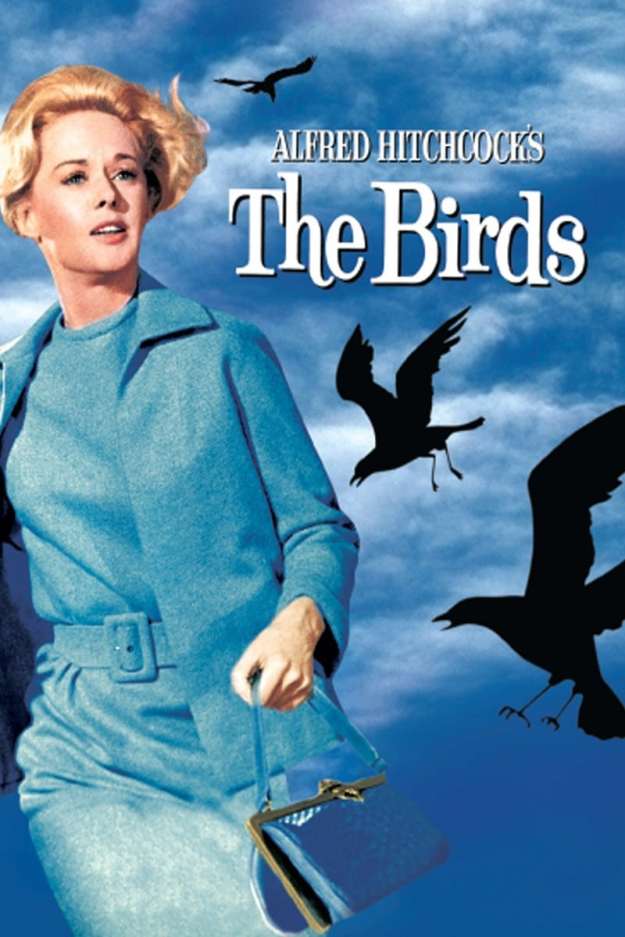
Besides, casting birds as the villains had already been done back in 1963 when Alfred Hitchcock released his film, “The Birds,” based loosely on a short story by Daphne du Maurier. The film, which starred some big Hollywood names such as Rod Taylor, Tippi Hedren, Jessica Tandy, Suzanne Pleshette and Veronica Cartwright, cast a whole new light on a “murder” of crows. Today, the film has achieved the status of a Hollywood classic. I guess it just goes to show that werewolves, zombies, and other Halloween monsters have nothing on our fine feathered friends.

TheBIRDS!

Great horned owl reigns as ‘feathered tiger of the night’ among birds


owl-Alexas-Fotos-Pixabay

Photo by Alexas-Fotos/Pixabay • A great horned owl is capable of almost silent flight, which helps the predatory bird take prey by surprise. Many myths and superstitions surround the world’s owls, but the truth about owls is often more fascinating.

I’ve been so focused on migrating warblers and other songbirds of late that I felt some surprise when outside near dark on Oct. 10 when I heard the low hoots of a feathered phantom from the woodlands on the ridge behind my home.

The hooting of a great horned owl is an instantly recognizable sound and always sends shivers traveling along the spine. The after-dark calls of this large predatory bird also got me to thinking about previous encounters with this owl, such as watching one glide silently over wetlands in Shady Valley, Tennessee, many years ago. I had traveled to the bogs in Shady Valley maintained by The Nature Conservancy in the hope of witnessing the mating displays of the American woodcock. Before those avian rituals began, a great horned owl kicked off the evening in style. I still remember the large owl passing like a dark shadow only a couple of feet over my head. The wings did not even appear to flap as the owl’s silent flight propelled the bird out of sight within seconds.

gray owl showing orange and black left eye

Photo by Flickr on Pexels.com

I also remembered another occasion while driving on a wet and stormy night, rounding a curve, and finding an owl, upright in the road, standing over fresh roadkill. The owl’s eyes reflected the beams of my headlights before it seized its meal in powerful talons and flew off into the darkness. I’ve always wondered if the owl had killed something in the road or came along at just the right moment to scavenge a meal after some creature had been killed by a passing car.

Owls have been around for a long time, according to “Owls: The Silent Hunters,” an episode of National Geographic’s series, “Wildlife Wonders.” The narrator for the episode reveals that the first recognizable owls first showed up in the fossil record about 40 million years ago. Since that time, owls have evolved into a fantastic, widespread and diverse group of about 135 different species. North America is home to several species, including the far-ranging great horned owl, which ranks as one of continent’s largest owls. It’s not the largest owl in North America, but it is the most widespread of the continent’s large owls. The snowy owl — popularized in J.K. Rowling’s fiction as Harry Potter’s loyal companion owl, Hedwig — is one of the largest owls in the Northern Hemisphere, bigger than such large owls as great horned owl and barred owl. The aptly named great gray owl is larger in body size than the great horned owl, but the snowy owl is heavier and more massive than either of these two contenders.

Snowy_Owl

Photo by U.S. Fish & Wildlife Service • A captive snowy owl educates the public about owls and some of the perils they face in an environment shared by humans.

Nevertheless, the great horned owl is large enough, ferocious enough, and lethal enough to have been described by many ornithologists as a “feathered tiger of the night.” The great horned owl lives and hunts in the woodlands of northeast Tennessee, southwest Virginia and western North Carolina. They thrive in rural areas, but these adaptable owls have also learned to make their way in the suburbs and even city parks. Not by any stretch of the imagination, however, is this owl confined to the southern Appalachians. These owls also make their home in the wetlands along the southern Atlantic coast, as well as arid deserts of the American southwest.

During a September vacation many years ago to Fripp Island, South Carolina, a solitary great horned owl provided several days of entertainment for my parents and me. We took a golf cart at dusk each evening to park at a spot that offered a good view of the marshes and tidal creeks in the interior of the island. For several consecutive days, the owl flew to a perch on a piece of driftwood as the sun sank below the horizon. We would wait patiently for only a brief interval before the owl entertained us with its low hoots that resonated across the marsh.

animal animal photography avian beak

Photo by Pixabay on Pexels.com

The great horned owl is capable of taking a wide variety of prey, including many rodents ranging in size from mice and voles to rabbits and squirrels. Although various mammals form the most part of its diet, the great horned owl will kill adult birds as large as a Canada goose, wild turkey and great blue heron. This owl also preys on fish, reptiles, amphibians and even insects. The great horned owl is one of the few predators that preys regularly on skunks. Lacking a well-defined sense of smell, owls aren’t bothered in the least by the skunk’s powerful arsenal of stink. That ability to fly and glide using almost completely silent wings has given this nocturnal predator an enormous advantage over many of its prey species.

A wild great horned owl’s longevity peaks at around 13 years of age. Captive owls, however, have been reported reaching ages of more than 30 years old.

Various Native American tribes have held owls in high respect. Dwight G. Smith, author of “Great Horned Owl,” a book in the “Wild Bird Guides” series, noted that members of the Zuni tribe of the southwestern United States often hold owl feathers in their mouths to impart the owl’s ability to hunt silently onto their own hunting abilities.

bird night forest owl

Photo by Pixabay on Pexels.com

The main fascination humans hold for owls rests in their mystery. Owls, being mainly nocturnal creatures, rarely cross paths with humans. These predatory birds have many adaptations that help them stake out their claim on the night hours. Owls possess large eyes with binocular vision and extremely accurate depth perception — which also make them seem more expressive to human observers and perhaps helped establish the reputation of the “wise” owl.

Owls cannot completely rotate their heads, but they come close. Owls are flexible enough, however, to be able to turn their heads in a 270-degree arc, or three-quarters of the way around. Owls have keen hearing to go with their excellent eyesight. In fact, owls don’t even need to see their prey to capture it. Tests with barn owls in total darkness have shown that they are capable of catching mice by hearing alone. An owl’s prominent facial disk directs sounds toward their ears. The “ear tufts” on the great horned owl and some other relatives are ornamental feathers, and not actual ears.

greathornedowl-2

Photo by Bryan Stevens / A great horned owl perches on a post during its part in a wild bird show at Callaway Gardens in Pine Mountain, Georgia.

Around the world, the world’s owls have earned some rather descriptive common names. Examples include pharoah eagle-owl, vermiculated fishing owl, fearful owl, pearl-spotted owlet, chestnut-backed owlet, spectacled owl, black-and-white owl, crested owl, cinereous owl, tawny owl, whiskered screech owl, greater sooty owl and desert owl.

Americans will observe Halloween on Wednesday, Oct. 31, which brings me to one other piece of owl trivia. There’s an ancient Chinese belief that owls snatch the souls of incautious people — just something I thought you might want to know if you find yourself out and about after dark on Halloween night and hear the hoots of a nearby owl.

great_horned_owl_and_chick-2

Photo by George Gentry/U.S. Fish and Wildlife Service • A great horned owl is shown on the nest with one of her chicks.

Tennessee warbler visits Volunteer State only a few weeks each year

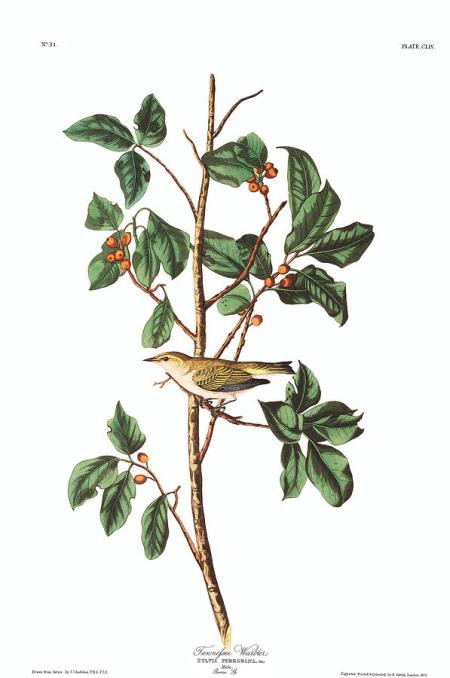
2-tennessee-warbler-john-james-audubon

A Tennessee warbler as painted by early naturalist and painted John James Audubon. Because the first of these warblers was found in Tennessee, the bird was given a rather inappropriate name. At most, they spend a few weeks each year in the Volunteer State during migration.

This fall has been a good time to see warblers. Some of the more common ones I have noticed in the yard so far have included American redstart, chestnut-sided warbler and black-throated green warbler. Of course, these two species nest in the region during the summer.

One of fall’s first true migrants showed up on Sept. 17 when a rambunctious Tennessee warbler made its debut by chasing a male Northern cardinal from the blue spruce near the creek.

The pioneering American ornithologist Alexander Wilson gave the Tennessee warbler its name, which, unfortunately, is not an accurate moniker.

Here’s some trivia for you should you ever find yourself competing on the game show “Jeopardy” and the category is “Warblers.” Four of our warblers — Kentucky Warbler, Louisiana waterthrush, Connecticut warbler and Tennessee warbler — bear common names that honor states. The Kentucky warbler and Tennessee warbler are named for the states where they were first found and described by Wilson in 1811. Neither the Tennessee warbler or Kentucky warbler are particularly affiliated with the states for which they were named. In fact, the Tennessee warbler passes through the Volunteer State only for a few weeks each year during spring and fall migration. Its closest breeding range is in the boreal forests of Michigan, and these warblers spend the winter in Mexico or farther south. Wilson got lucky and found his Tennessee warbler along the Cumberland River during migration.

TennesseeWarblerByPaulSparks_AdobeStock

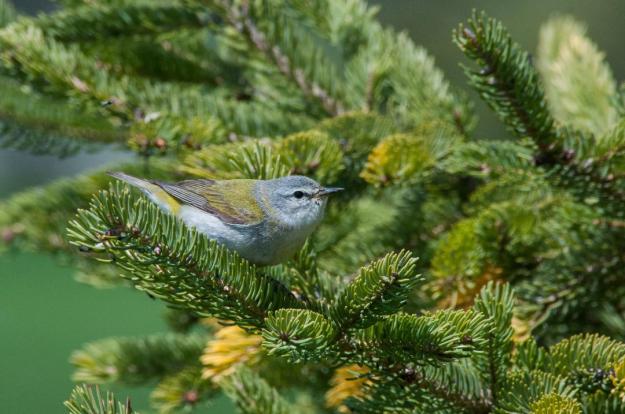
Tennessee Warbler Photo by Paul Spark/Adobe Stock • The Tennessee warbler, while named for the Volunteer State, spends very little time within Tennessee. These warblers migrate through the region each spring and fall but nest much farther north in the boreal forests.

Don’t blame Wilson too harshly for the mistake. Even after he “discovered” the first Tennessee warblers back in 1811, it would be almost another century before scientists finally located the bird’s nesting grounds in Canada in 1901. The remote and inaccessible nature of the the region helped prolong this mystery about the Tennessee warbler’s life cycle.

In almost 25 years of birding, I’ve never seen a Tennessee warbler during spring migration. I see many of these birds every autumn as they stage their fall migration through the Volunteer State to reach destinations farther south. The appearance of the Tennessee warbler varies greatly depending on the season. In autumn, most Tennessee warblers are greenish-yellow birds with whitish-gray underparts. In the spring, the basic green and white pattern remains evident, but both males and females sport a gray head and a black line that runs through the eye and along the side of the bird’s face. The plumage — at least in illustrations and photographs — is shown as more crisp and distinct with spring birds.

Some experts have floated the opinion that the Tennessee warbler should be named named “coffee warbler,” since wintering individuals are attracted to coffee plantations in Central America. According to the website, “Birds of North America,” recent studies demonstrate the importance of shade coffee plantations for Tennessee warblers during their time spent outside North America every winter. Other warblers, such as the black-throated blue warbler, are also closely associated with coffee plantations during the wintering season.

Some years find Tennessee warblers in great abundance, probably thanks to a feast of caterpillars infesting the spruce trees in the boreal forests where these warblers nest during the summer months. In years of famine when the caterpillars are less rampant in the forests the Tennessee warbler calls home, the birds raise fewer young, and the population grows less dramatically.

Tiny-MorningGlory

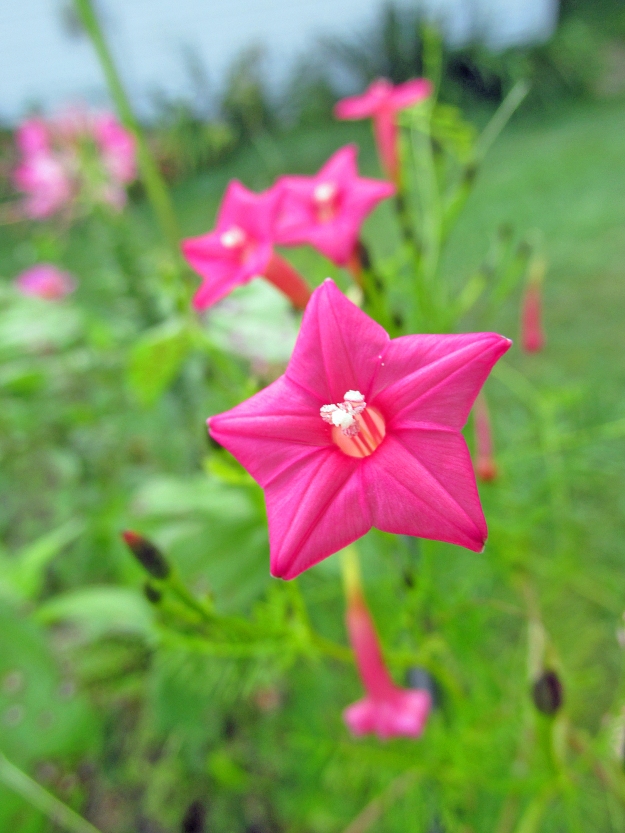
Photo by Bryan Stevens • Tennessee warblers are nectar thieves, punching holes in the sides of flowers to get nectar without contributing to the pollination process.

The Tennessee warbler is not strictly an eater of caterpillars and insects. This warbler has a bit of a sweet tooth — or should that be sweet beak? They visit flowers to partake of nectar; however, the Tennessee warbler is not a good example of an avian pollinator. Tennessee warblers cheat by poking holes in the flower with their bills to steal the nectar without having to let the flower’s pollen accumulate on their bills and heads. The Tennessee warbler will also come to sugar water feeders put out on their wintering grounds to attract hummingbirds. The Tennessee warbler also supplements its diet with fruit and berries.

Here’s something that might also come in handy in a test of your knowledge of trivia some day: Not only is the Tennessee warbler named for the state, but the capital city of Nashville also has its name linked another member — the Nashville warbler — of the warbler clan. Once again, Wilson provided a rather inaccurate name, as the bird in question is only a visitor to Nashville during a limited window of time each year.

While the briefly visiting Tennessee Warbler already pays tribute to our state with its common name, the Northern mockingbird was selected in 1933 as the official bird for Tennessee. This relative of the brown thrasher and gray catbird also serves as the state bird for Arkansas, Florida, Mississippi and Texas. At my home, Northern mockingbirds are usually evident only during the winter months. I haven’t seen one at home so far this year. Gray catbirds were scarce this summer, but a pair of brown thrashers provided much entertainment as they raised young in my yard and gardens.

mockingbird-nov11

Photo by Bryan Stevens • The Northern Mockingbird has been the official state bird for Tennessee since 1933.

For now, I think Tennesseans will probably stick with the mockingbird, rather than the Tennessee warbler, when it comes to offering one of our feathered friends the accolade of official state bird. That’s not to say we can’t enjoy observations of this warbler during its brief forays through the state. Don’t wait too long, though. The window of opportunity usually closes by mid-October.

The world can be a big, bad place for tiny hummingbirds

Mantis-Four

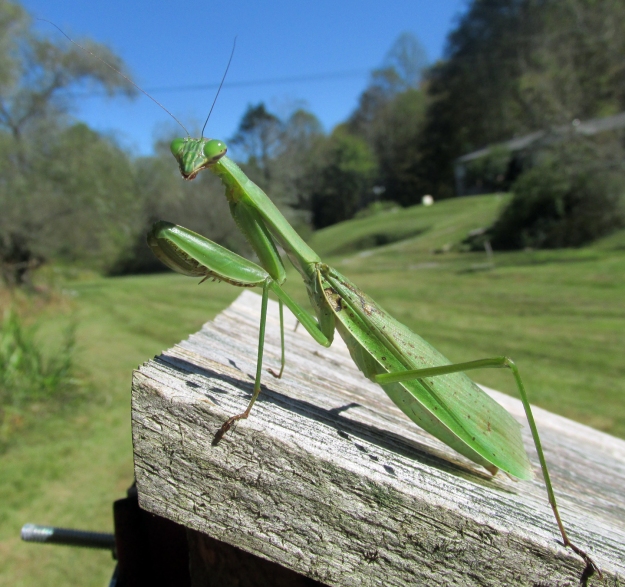
Photo by Bryan Stevens • Large mantises have been known to prey on ruby-throated hummingbirds.

Many years ago I read an account of a scarlet tanager making a snack of a ruby-throated hummingbird. Memory being what it is, I am no longer sure if that account was corroborated or one of those urban legends of birding.

A few pertinent facts should be considered. Male scarlet tanagers look striking in their red and black plumage. Ruby-throated hummingbirds are attracted to the color red. In the details I recall of the story about the predatory tanager, the hummingbird kept flying close to the tanager as if attracted to the red plumage. If so, it was a case of curiosity kills the cat or, in this case, the hummingbird. The tanager seized the hummingbird in its bill and, for good measure and to “tenderize” its prey, beat the hummingbird against the side of a branch. All of this took place before a crowd of birders who observed the incident through their binoculars. I don’t recall anyone taking a photo of the hummingbird’s tragic demise.

An email from Gene Counts reminded me of the tale of the tanager and the hummingbird. Gene, who lives in Haysi, Virginia, sent me a photograph and a short note about a praying mantis that stalks hummingbirds as they visit his feeders for a sip of sugar water.

MantisVsHummer

Photo by Gene Counts • This photo was shared by Gene Counts, who described how the mantis stalked hummingbirds that came to his feeder.

Gene told me of his excitement upon capturing the large insect’s behavior in a photograph.

“I just had to share this picture with you,” Gene wrote. “After all, my wife, Judy, was more excited today than the day we married in Chicago 54 years ago.”

He certainly hooked my attention with that introduction.

“A praying mantis is using our feeder as his own private hunting preserve,” Gene continued in his email. “The mantis follows and stalks the hummingbirds all the way around 360 degrees.”

So far, the stalking has only resulted in “several near misses,” but Gene declared that he is ready to pounce in case the mantis gets lucky.

“It has been four hours and he has lowered his goal,” Gene wrote of the patient mantis. “He is now clinging to the bottom (of the feeder) waiting for an insect. Now I can expel my breath as he no longer an avian threat.”

While Gene’s mantis may not be an immediate threat to hummingbirds visiting his yard in Haysi, does that mean we can be complacent when these large insects share our yards and gardens with hummingbirds?

Ruby-throated-WILLOWS

Photo by Bryan Stevens • Numbers of Ruby-throated Hummingbird in the region tend to fluctuate each year, but people should usually see a spike in their numbers as the hummingbirds end summer nesting and start migrating south again.


Documented evidence exists to identify large praying mantises as predators on ruby-throated hummingbirds. A brief foray online found numerous instances of hummers falling victims to these large carnivorous insects.

There are two species of mantises in the region — the European, or praying mantis, and the Chinese mantis — capable of capturing hummingbirds. Both species were introduced in the 1800s to act as a predator of insect pests detrimental to crops and gardens. The Chinese mantis can reach a length of 4.3 inches, while the European mantis achieves a length of about 3.5 inches. A third species — Carolina mantis — reaches only a length of 2.5 inches and should not pose a threat to ruby-throated hummingbirds, which are about 3.5 inches long.

Although introduced from Europe, the European mantis (Mantis religiosa) has earned recognition as the official state insect of Connecticut. The native Carolina mantis is the official state insect for South Carolina.

In Central and South America, where the world’s more than 300 species of hummingbirds reach their greatest diversity, there are also more species of predatory mantises. Some of these tropical insects prey on the tropical counterparts to the ruby-throated hummingbird.

Consider the way the mantis makes a perfect predator. It’s spiky forelimbs are spiky and serrated, making them perfect for seizing and grasping. This insect’s triangular head can turn their heads 180 degrees to scan its surroundings with two large compound eyes. A mantis also has three other simple eyes to increase its keen vision. Brutal mouthparts can easily tear apart and devour any prey the mantis manages to catch with its ambush hunting style.

Hummingbirds, regardless of species, are in a tough spot in the food chain. A bird not much bigger than many large insects is going to be a target for opportunistic predators like a mantis that will attempt to kill and consume anything small enough for them to make the effort.

p03mnqtd

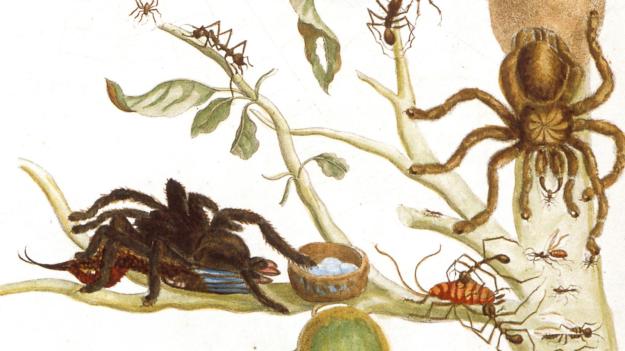
Maria Sibylla Merian, a German-born naturalist and scientific illustrator, was one of the first naturalists to observe insects directly. She painted this horrific work featuring a large spider preying on a hummingbird that had been dutifully incubating her eggs. When she died in 1717, she was recognized as one of the world’s foremost entomologists.

To make matters worse for ruby-throated hummingbirds, some large spiders and the bigger dragonflies have also been documented as hummingbird predators. When ruby-throated hummingbirds retreat to Central America for the winter months, they also face threats from lizards and snakes.

The list of predators that have been known to eat ruby-throated hummingbirds extends to bullfrogs, as well as many raptors, including kestrels, merlins and sharp-shinned hawks. Blue jays and other birds will raid hummingbird nests for eggs or young. Squirrels and chipmunks are also nest predators.

nature water eyes pond

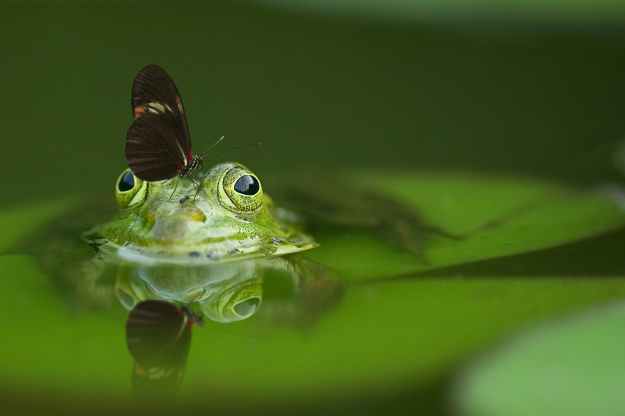
Photo by Pixabay on Pexels.com. Large frogs have also been known to prey on hummingbirds.

Despite all these perils, some ruby-throated hummingbirds have achieved a “long” life. The oldest on record was a ruby-throated hummingbird banded at the age of nine years and one month. Most elder hummingbirds are females. Few male hummingbirds, perhaps because of the energy they expend dueling with each other, reach their fifth birthday.

It’s definitely not easy being as tiny as a hummingbird in a world of fearsome giants, but birders who have seen a hummingbird hover boldly in front of their faces know how these tiny birds take life in stride. They may have a disadvantage in size, but that doesn’t keep them from living life as if they were as big as an eagle.

Rubythroat

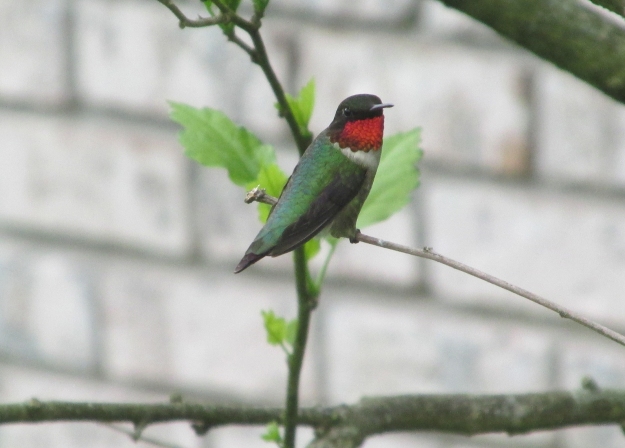
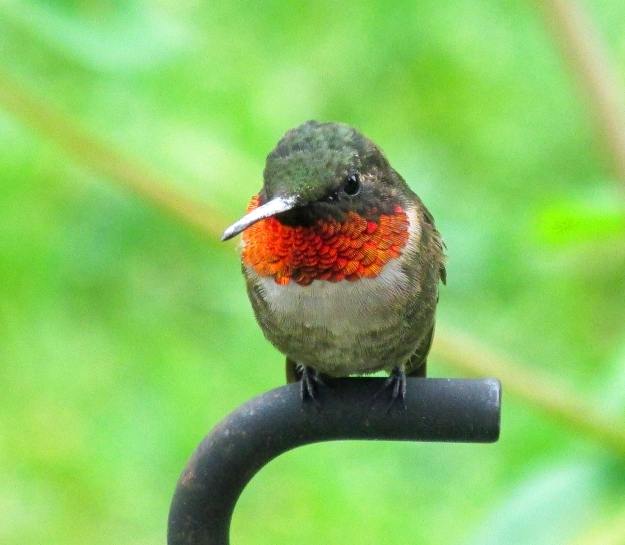
Photo by Bryan Stevens • Despite a perceived disadvantage of size, ruby-throated hummingbirds are quite capable of thriving in a giant world.

Meadowlarks fond of grassland habitats

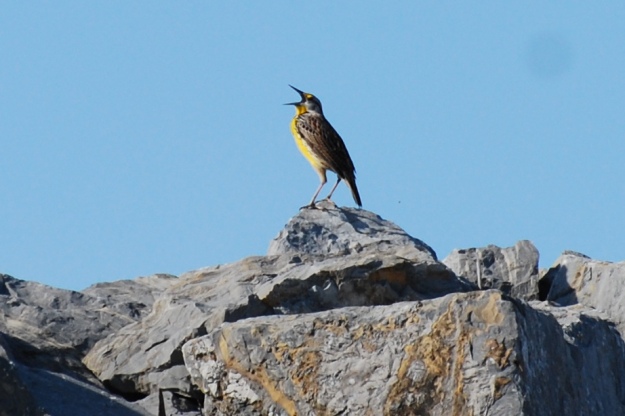
Jean-MeadowlarkPhoto by Jean Potter • A rocky outcrop provides a perch for this singing male Eastern meadowlark.


It’s always fun to add another notch to one’s list of birds. Whether you’re a casual lister or a devoted birder, a new species always offers a burst of excitement in the wake of a first-time observation.

Sharon Foster sent me an email recently to share her excitement about a sighting.

“I’m excited to say my daughter and I spotted a meadowlark up on Cross Mountain last week,” Sharon wrote in her email.

Sharon said she hadn’t been able to do a lot of bird watching other than in her yard and nearby places.

“I never thought I was going to see a meadowlark,” she noted. They are fantastic. We were thrilled. He was just sitting on the fence.’

She added that she didn’t have her good zoom camera with her, or else she could have taken a picture. She will still have her memory of her first sighting, and that’s what is important.

BaltimoreOriole-Two

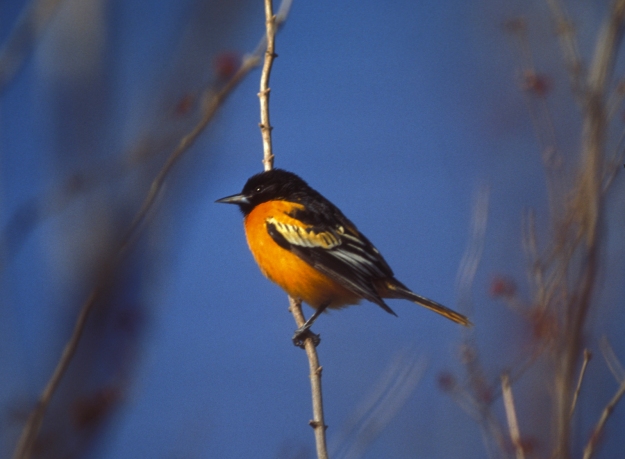
Photo by USFWS • Baltimore orioles, like this male, are members of the blackbird family, making them relatives of species such as Eastern meadowlarks, brown-headed cowbirds, common grackles and red-winged blackbirds.

She also told me about a Baltimore oriole feeder she bought last fall late in the season.

“I read they usually come around early in spring,” Sharon wrote. She added that she spotted one in her yard by South Holston Lake several years ago.

Of course, when spring rolled around she nearly forgot about the feeder. “It was around mid-April when I thought about it and thought it was too late,” she wrote. “But I put it up anyway and lo and behold the next day there was an oriole in our pine tree.”

It was another memorable birding moment. “Talk about being excited,” Sharon wrote. “Wow! Birds can do that to you!”

WesternMeadowlark

Both the Baltimore oriole and the Eastern meadowlark belong to the family of birds known as icterids, or blackbirds, which also includes species like bobolink, brown-headed cowbird, common grackle and red-winged blackbird.

The Eastern meadowlark is a distinctive bird. It has brown plumage accented by black, with bright-yellow underparts and a bold black V across the chest. Though most of the tail is brown with blackish barring, the outer feathers are white and are a conspicuous trait to look for when the bird is in flight.

The Eastern meadowlark is considered a grassland bird and remains common in habitats such as prairies and other native grasslands. The meadowlark has proven adaptable as long as it can occupy unbroken grassland of about six acres or more. Pastures, fields and even airports have proven suitable habitats for meadowlarks. As suburban areas and subdivisions expand into rural areas, meadowlarks can hang on unless the grassland habitat becomes too segmented and broken into sections too small to be of value.

Meadowlark-USFWS

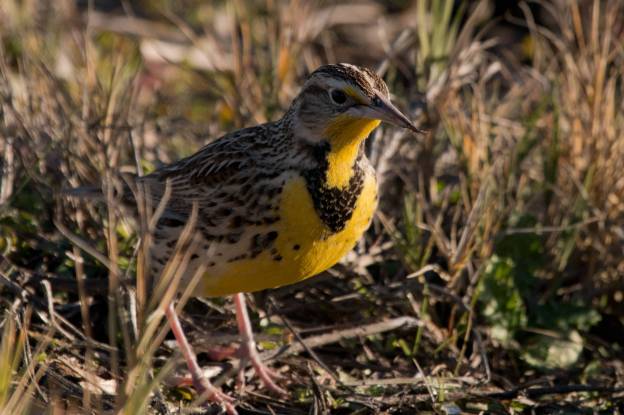
Photo by Peter Pearsall/USFWS • Eastern meadowlarks spend a lot of time on the ground while searching for insects.

Meadowlarks eat mostly insects, especially in summer. For the winter months, these birds will adapt their diet to include seeds, spilled corn and fruit. Meadowlarks, unlike other relatives among the Icterids, or blackbirds, do not typically visit feeders.

These birds construct nests close to the ground. Meadowlarks nesting in fields mown for hay face disaster if the grass is cut before their young have left the nest. The female meadowlark constructs the nest and lays two to seven eggs, which will require an incubation period of about two weeks. Even after hatching, the young are not capable of leaving the nest for another 10 to 12 days. Consequently, young meadowlarks are vulnerable for a month, not only to predators but to a farmer deciding to mow a hayfield.

While the Eastern meadowlark remains common, its numbers have suffered severe declines. such that they are considered to be a declining species. Populations fell more than 3 percent a year between 1966 and 2015, resulting in a cumulative decline of 89 percent, according to the North American Breeding Bird Survey. According to the website All About Birds, early mowing, overgrazing by livestock and pesticide use are all detrimental to meadowlark survival.
The highest population densities for the Eastern meadowlark are found in the Central Mixed Grass Prairie and the Eastern Tallgrass Prairie regions of the central United States. As the name suggests, the Eastern meadowlark has a counterpart in the western half of the United States. This is reflected in the fact that five central and western states — Kansas, Montana, Nebraska, North Dakota, Oregon and Wyoming — have made the Western meadowlark their official state bird. Ironically, the Eastern meadowlark has not been honored with that designation by any of the states it inhabits.

The difference in the two species rests not so much in their appearance as in their songs. The western meadowlark has distinctive vocalizations described as rather flute-like, which distinguish it from the closely related eastern meadowlark. Male Eastern meadowlarks seek out elevated perches to produce a musical, flute-like song in the spring. Utility wires, treetops and fence posts provide some of their favorite perches. Their singing is mostly used to define the borders of their grassland territory.

Finally getting your binoculars on a bird you’ve never seen is always an exciting moment. As we draw closer to the fall season, many different birds will migrate through the region. Fall migration is a great time to spend some time outdoors and try to see some birds that are new. Do some advance homework with a good field guide and study the birds that migrate through the region. Then, simply monitor your yard or a favorite park and wait to see some new species as they make migratory stops in the region.

eastern-meadowlark-john-james-audubon-

Early American naturalist and painter John James Audubon painting this scene depicting nesting meadowlarks.