Tag Archives: The Erwin Record

Dark reputation of world’s owls is being rehabilitated as people learn more about them and their habits


greathornedowl-2

Photo by Bryan Stevens / A great horned owl perches on a post during its part in a wild bird show at Callaway Gardens in Pine Mountain, Georgia.

As I sit at my computer working on this week’s post, I can hear the low, sonorous call of a great horned owl from the woods located behind my house. The great horned owl is one of two species I often hear near my home. In addition, I regularly hear the much smaller Eastern screech-owl calling from the same woods. The intervals around dusk and dawn are popular times for owls to produce their eerie calls. At present, there’s a pair of great horned owls living in the woods near my home. If I hear one, I usually hear the other. These large owls call to each other to communicate their whereabouts. Perhaps it helps them avoid surprise encounters with each other once they begin hunting after the sun sets.

The great horned owl lives and hunts in the woodlands of northeast Tennessee, southwest Virginia and western North Carolina. These large owls thrive in rural areas, but these adaptable predatory birds have also learned to survive in the suburbs and even city parks. While quite at home in the region, the great horned owl is not confined to the Southern Appalachians. These owls also make their home in the wetlands along the southern Atlantic coast, as well as arid deserts of the American southwest. If nothing else, the great horned owl has shown amazing resilience and adaptability.

With about 200 different species, the world’s owls form an order known as Strigiformes. Characteristics that define owls include a mostly solitary and nocturnal existence. These predatory birds are also typified by such physical traits as an upright stance, binocular vision, exceptional hearing, sharp talons, and feathers adapted for silent flight.

BarredOwl-Perched

Photo by Bryan Stevens / A Barred Owl blends with the background in this photo taken of a wild owl at Brookgreen Gardens in South Carolina.

The smallest owl — weighing as little as an ounce and measuring a mere five inches) — is the elf owl (Micrathene whitneyi). To give you some perspective, that DVD of your favorite movie also weighs about an ounce. The common house sparrow that flocks in shopping center parking lots is slightly bigger than this tiny owl. According to the website, The Owl Page, the elf owl was originally known as Whitney’s Owl. The scientific name whitneyi is a Latinized word formed from the last name of Josiah Dwight Whitney, a prominent American geologist for whom the diminutive owl was named. Whitney was considered the foremost authority of his day on the economic geology of the United States. In addition to having a tiny owl named in his honor, Whitney’s name graces Mount Whitney, the highest point in the continental United States, and the Whitney Glacier, which was the first confirmed glacier in the United States.

The miniature elf owl is every bit the predator, but its prey generally consists of various insects as well as such desert dwellers as scorpions and spiders. Despite the extremes of the environment in which it lives, the elf owl does just fine. It prefers areas offering plenty of saguaro cactus. Cavities in these iconic desert plants provide roosting and nesting locations for this tiny owl. The elf owl range from the southwest regions of the United States to Central Mexico and Baja California. Unfortunately, the numbers of this owl in Texas and California have declined in recent times.33ecc634b6bf2f56939e0c28a1e0c6c0

To find the world’s largest owl, head to the other side of the world to the islands of Japan, as well as remote areas of Siberia, Manchuria and Korea. With a body comparable in size to that of a young child and a wingspan wider than six feet, the Blakiston’s fish owl (Bubo blakistoni) earns its distinction as the largest owl in the world. The fish owls are part of a larger grouping of birds known as eagle owls, which specialize in hunting in habitats found along large rivers. Female Blakiston’s fish owls are larger than males, and a large female can weigh as much as 10 pounds and attain a 6.5-foot wingspan. This big owl was named after English naturalist Thomas Blakiston (1832-1891) who found the first specimen on Japan’s northern island of Hokkaido in 1883. According to Paul Frost of The Raptor Foundation, this owl is sacred to the Ainu, a native people residing on Hokkaidu. The Ainu refer to this owl as “kotan kor kamuy,” which means “god of the village” or “god who defends the village”.

While many culture view owls with misgivings, often associating their nocturnal tendencies with more sinister motives, that’s not always the case. For instance, the Japanese people believe that owls bring good fortune. In addition, owls offer protection from suffering. Other cultures have feared and reviled owls. The ancient Romans share much of the blame for the negative image owls are still overcoming. Romans considered owls as harbingers of death, defeat and other disasters. To ward off the evil caused by an owl, Romans advised that the offending owl should be killed and nailed to a door. Such a bloodthirsty solution leads me to think that owls had more to fear from Romans than Romans had to fear from them.

The need for common names for the 200 species of owls has resulted in some creative monikers. Some of the most descriptive common names for some of the world’s owls include ashy-faced barn owl, barking owl, brown owl, cuckoo owlet, fearful owl, giant eagle owl, Christmas Island hawk owl, snowy owl, laughing owl, rufous owl, tawny-bellied screech owl, winking owl, and spotted wood owl.

great_horned_owl_and_chick-2

Photo by George Gentry/U.S. Fish and Wildlife Service / A Great Horned Owl is shown on the nest with one of her chicks.

Many relatives of the great horned owl have proven equally adaptive, carving out niches for themselves in habitats as diverse as jungles, deserts and the frozen tundra. Indeed, the great horned owl has many relatives living in our region. The Eastern screech owl is a tiny cousin, but some other large owls that live in the area include the barred owl and the barn owl. More rare to the region are visits by such owls as the short-eared owl and the long-eared owl. There’s even another tiny relative — the Northern saw whet owl — that is rarely heard and even more seldom seen.

Regardless of the species, the activities of owls are invariably cloaked in darkness. Despite electric lights and other trappings of civilization, people still delight in the shivers that result from hearing the hoots of an owl. It’s truly no surprise that owls have become popular motifs in the weeks leading up to our recent celebration of the Halloween holiday. Owls may live alongside us, but we’ll never truly belong to their world, which consists of all the spooky things that go bump in the night.

•••••

Bryan Stevens lives near Roan Mountain, Tennessee. If you have a question, wish to make a comment or share a sighting, email ahoodedwarbler@aol.com. Find him on Facebook at https://www.facebook.com/ahoodedwarbler.
Although graceful in the water, life gets awkward for grebes on land

As the calendar moves into the months of October and November, migrating waterfowl will replace the exodus of songbirds that evacuate the North American continent every fall in preparation for their winter season in the tropics. The umbrella term of waterfowl can include such birds as ducks, geese, loons and grebes.

Pond-Edge-Grebe

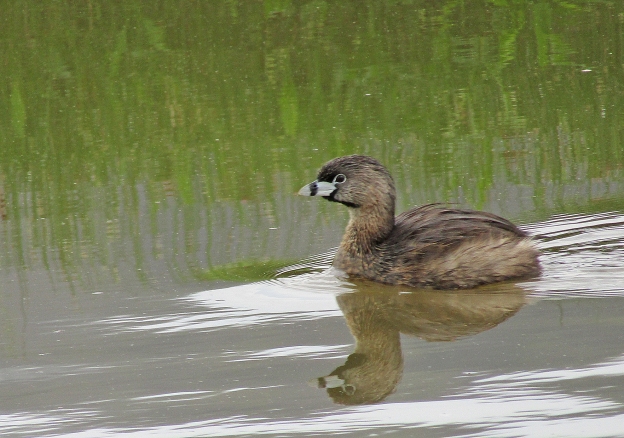
Photo by Bryan Stevens • This pied-billed grebe stranded itself on a wet lawn during fall migration. A grebe’s legs are positioned so far back on their bodies that grebes have difficult walking on land. Once released in a pond, the grebe was able to take flight and continue its migration.

That last family keeps one of the lowest profiles among the grouping of birds lumped together as waterfowl. Worldwide, there are 22 species of grebes. This family also includes three extinct species — Alaotra grebe, Atitlán grebe and Colombian grebe.

Many people are unaware of the grebes. After all, they are oddball birds with not a lot in common with other waterfowl such as loons and ducks. In eastern Tennessee, southwestern Virginia and western North Carolina, the pied-billed grebe is the most likely member of the grebe family to come into contact with humans. The pied-billed grebe’s scientific name, Podilymbus podiceps, can be roughly translated as “rear-footed diver.” The reference is to the fact that this grebe, as well as others of its kind, have their feet positioned so far back on their bodies that movement on land is difficult and awkward.

The pied-billed grebe has inspired a variety of other common names, including American dabchick, dabchick, Carolina grebe, devil-diver, dive-dapper, hell-diver, pied-billed dabchick, pied-bill, thick-billed grebe and water witch, all of which reflect this grebe’s almost exclusively aquatic lifestyle.

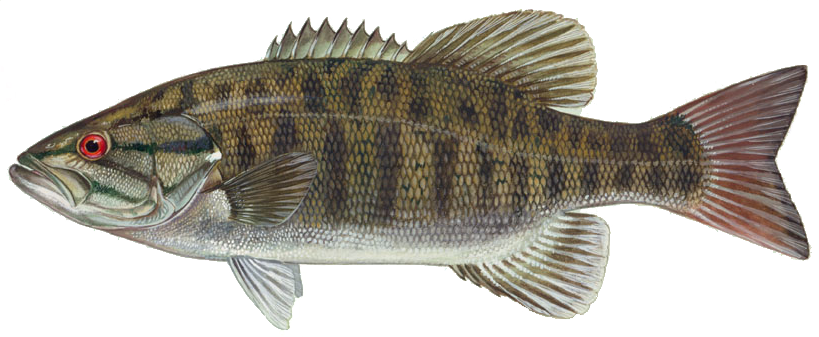
The pied-billed grebe is a world-class survivor. Already a member of an ancient family of birds, this species has outlasted the others in its genus. The Atitlán grebe, which was also known as the giant grebe, went extinct around 1989 after a series of catastrophic setbacks, including a devastating earthquake and the introduction of smallmouth and largemouth bass to Lake Atitlán in Guatemala. The bass consumed the prey this grebe needed for its survival, and large bass occasionally ate young grebes.

Smallmouth bass.png

Bass introduced into Lake Atitlán consumed the small fish that the Atitlán Grebe              required as a food source. Large bass also ate young grebes.


These birds range in size from the least grebe, which weighs only about six ounces, to the great grebe, which can tip the scales at four pounds. North American grebes include red-necked grebe, horned grebe, eared grebe, Clark’s grebe and Western grebe. In extreme southern Texas, birders can find least grebes in suitable wetland habitats.

With the exception of the least grebe, I’ve seen all of North America’s grebes. During visits to Utah in 2003 and 2006, I observed the sleek, long-necked Clark’s grebe and Western grebe. On a 2006 trip to Utah, I visited Antelope Island State Park and observed tens of thousands of Eared Grebes gathered on the Great Salt Lake for the nesting season. In Tennessee, one of the most reliable locations to find eared grebes is from viewing areas at Musick’s Campground on South Holston Lake, where a small number of these grebes have wintered for many years.

An unusual February fallout back in 2014 resulted in equally unusual numbers of red-necked grebes on area lakes, rivers, and ponds. I’d previously observed this grebe on Boone Lake, South Holston Lake and Watauga Lake in northeast Tennessee.

Grebe-Mallards

Photo by Bryan Stevens • A Red-necked Grebe mixes with Mallards at a pond on the campus of Northeast State Community College in Elizabethton.

Grebes are prone to landing on glistening surfaces — lawns, asphalt parking lots and even paved roads — during migration flights, especially at night during heavy rain. A serious problem arises when the grebe, with those rear-positioned feet, finds itself stranded, unable to take flight again without a paddling run across the surface of a body of water.

One of these strandings was recounted in Rick Knight’s book, The Birds of Northeast Tennessee. On Feb. 13, 1994, a red-necked grebe grounded itself with one of these crash landings onto a parking lot in Elizabethton, Tennessee. The fortunate grebe received a human-assisted rescue, being transported to a small lake near the town for release.

In November of 2011, a neighbor delivered a bird that had landed in his yard and could not take flight. The bird, put into a cardboard box for its own safety, didn’t appear to have any injuries. Once I saw the bird, I realized it was a pied-billed grebe. We released the bird on my fish pond, where the grebe dived and swam extensively before resting for a long period on a muddy edge of the pond. Overnight, the grebe disappeared. I believe the grebe took flight during the night and continued with its fall migration. The incident remains one of my closest encounters with a grebe.

Rescue-GREBE

Photo by Bryan Stevens The pied-billed grebe paddles through the water after it was rescued after a stranding on a lawn.


In the coming weeks and all throughout the winter months, look for pied-bill grebes, as well well as more uncommon grebes like horned grebe and red-necked grebe, on lakes and rivers throughout the region.

•••••
Bryan Stevens lives near Roan Mountain, Tennessee. To ask a question, make a comment or share a sighting, email him at ahoodedwarbler@aol.com.

Spring Bird Count participants deal with unseasonal cold snap

The 74th annual Elizabethton Spring Bird Count was held on Saturday, May 6. A total of 43 observers in nine parties took part in the annual survey, which consists Carter County and parts of adjacent Johnson, Sullivan, Unicoi and Washington counties. In addition to Elizabethton, the count includes territory in such cities as Elizabethton, Erwin, Kingsport, Bristol and Johnson City.

Count-Gobbler

Photo by Bryan Stevens • A male gobbler seeks the attention of hens, as all these Wild Turkeys add to the number of this species found during the count.

The most unusual aspect of this year’s count involved rather cold conditions, according to long-time count compiler Rick Knight. Although held nearly a week into May, this was one of the coldest days ever experienced on a spring count. The temperature range was 36 to 54 degrees. Light rain fell before sunrise; the morning was partly cloudy to cloudy, then the afternoon saw light rain, with light snow showers at the higher elevations and a half-inch accumulation of snow on Roan Mountain.

Knight noted that previous cold spring counts included: 32 to 55 degrees in 1979, 44 to 52 degrees in 1987, and 27 to 54 degrees in 1992. Despite the weather, participants managed to find 148 species, which is exactly the average over the last 30 years, but below the average over the last decade, which stands at 154 species.

The most common species on this year’s Spring Bird Count was the Cliff Swallow with 1,046 individuals — a new record for this species — found this year. Other common species include European Starling (704), American Robin (693) and Tree Swallow (526).

A Stilt Sandpiper found in Washington County represented only the third time this species has been observed during the Elizabethton Spring Bird Count. As always, Knight said there were a few notable misses, such as Northern Bobwhite, Ruffed Grouse, Pied-billed Grebe, Brown Creeper, Winter Wren, Swamp Sparrow and Pine Siskin. In addition, no gulls were found on any of the area lakes.

Count-MaleMartin

Photo by Bryan Stevens • Purple Martins, like this male, were sluggish on the day of the count thanks to cold temperatures and steady rainfall.

In addition, several species of warblers that nest in the region showed rather low numbers. Some of the low numbers for some species may be attributable to the weather. Nevertheless, the count produced observations of 28 different warbler species.

The total is listed below:
Canada Goose, 390; Wood Duck, 27; Mallard, 93; Blue-winged Teal, 5; and Hooded Merganser, 2.
Wild Turkey, 54; Common Loon, 2; Double-crested Cormorant, 42; Great Blue Heron, 115; Great Egret, 1; Green Heron, 13; Yellow-crowned Night-Heron, 8; and Black-crowned Night-heron, 1.
Black Vulture, 74; Turkey Vulture, 108; Osprey, 10; Sharp-shinned Hawk, 1; Cooper’s Hawk, 5; Bald Eagle, 13; Broad-winged Hawk, 5; Red-winged Hawk, 25; and American Kestrel, 11.
Virginia Rail, 4; Killdeer, 35; Spotted Sandpiper, 27; Solitary Sandpiper, 19; Greater Yellowlegs, 1; Lesser Yellowlegs, 1; Stilt Sandpiper, 1; and Least Sandpiper, 6.
Forster’s Tern, 1; Rock Pigeon, 155; Eurasian Collared-Dove, 3; Mourning Dove, 224; Yellow-billed Cuckoo, 4; Black-billed Cuckoo, 1; Eastern Screech-owl, 6; Great Horned Owl, 1; Barred Owl, 2; Common Nighthawk, 1; Chuck-will’s-widow, 2; Whip-poor-will, 10.
Chimney Swift, 66; Ruby-throated Hummingbird, 23; Belted Kingfisher, 23; Red-headed Woodpecker, 5; Red-bellied Woodpecker, 54; Yellow-bellied Sapsucker, 3; Downy Woodpecker, 23; Hairy Woodpecker, 5; Northern Flicker, 30; and Pileated Woodpecker, 34.

Count-NightHeron

Several species of herons, including this Yellow-crowned Night Heron, were found for this year’s Spring Bird Count.

Eastern Wood-pewee, 1; Acadian Flycatcher, 5; Willow Flycatcher, 1; Least Flycatcher, 6; Eastern Phoebe, 42; Great Crested Flycatcher, 13; Eastern Kingbird, 43; and Loggerhead Shrike, 1.
White-eyed Vireo, 5; Yellow-throated Vireo, 10; Blue-headed Vireo, 41; Warbling Vireo, 9; Red-eyed Vireo, 122; Blue Jay, 138; American Crow, 301; Fish Crow, 2; and Common Raven, 22.
Northern Rough-winged Swallow, 345; Purple Martin, 36; Tree Swallow, 526; Barn Swallow, 259; and Cliff Swallow, 1,046.
Carolina Chickadee, 82; Tufted Titmouse, 140; Red-breasted Nuthatch, 3; White-breasted Nuthatch, 13; House Wren, 30; Marsh Wren, 1; Carolina Wren, 99; Blue-gray Gnatcatcher, 39; Golden-crowned Kinglet, 11; and Ruby-crowned Kinglet, 2.
Eastern Bluebird, 136; Veery, 44; Swainson’s Thrush, 5; Hermit Thrush, 1; Wood Thrush, 82; American Robin, 693; Gray Catbird, 35; Brown Thrasher, 51; Northern Mockingbird, 95; European Starling, 704; and Cedar Waxwing, 272.
Ovenbird, 117; Worm-eating Warbler, 19; Louisiana Waterthrush, 18, Northern Waterthrush, 1; Golden-winged Warbler, 3; Black-and-White Warbler, 47; Swainson’s Warbler, 2; Tennessee Warbler, 1; Kentucky Warbler, 1; Common Yellowthroat, 17; Hooded Warbler, 95; American Redstart, 6; Cape May Warbler, 7; Northern Parula, 25; Bay-breasted Warbler, 4; Blackburnian Warbler, 1; Yellow Warbler, 3; Chestnut-sided Warbler, 9; Blackpoll Warbler, 1; Black-throated Blue Warbler, 25; Palm Warbler, 1; Pine Warbler, 15; Yellow-rumped Warbler, 18; Yellow-throated Warbler, 20; Prairie Warbler, 4; Black-throated Green Warbler, 53; Canada Warbler, 1; and Yellow-breasted Chat, 11.

SolitarySandpiper-One

Photo by Bryan Stevens • Migrating shorebirds, such as this Solitary Sandpiper, added diversity to this year’s Spring Bird Count in Northeast Tennessee.

Eastern Towhee, 132; Chipping Sparrow, 67; Field Sparrow, 35; Savannah Sparrow, 4; Grasshopper Sparrow, 1; Song Sparrow, 166; White-throated Sparrow, 4; White-crowned Sparrow, 2; Dark-eyed Junco, 28; Summer Tanager, 2; Scarlet Tanager, 60; Northern Cardinal, 212; Rose-breasted Grosbeak, 19; Blue Grosbeak, 5; Indigo Bunting, 79; Bobolink, 22; Red-winged Blackbird, 271; Eastern Meadowlark, 89; Common Grackle, 327; Brown-headed Cowbird, 97; Orchard Oriole, 21; Baltimore Oriole, 16; House Finch, 64; American Goldfinch, 228; and House Sparrow, 52.

•••••

To learn more about birds and other topics from the natural world, friend Stevens on Facebook at https://www.facebook.com/ahoodedwarbler. He is always posting about local birds, wildlife, flowers, insects and much more. If you have a question, wish to make a comment or share a sighting, email ahoodedwarbler@aol.com.
Count-IndigoBunting

Photo by Bryan Stevens • Newly-returned neotropical migrants, such as this Indigo Bunting, increased the total number of species for the annual spring count.

Arrival of tree swallows one of season’s firsts among spring’s returning birds

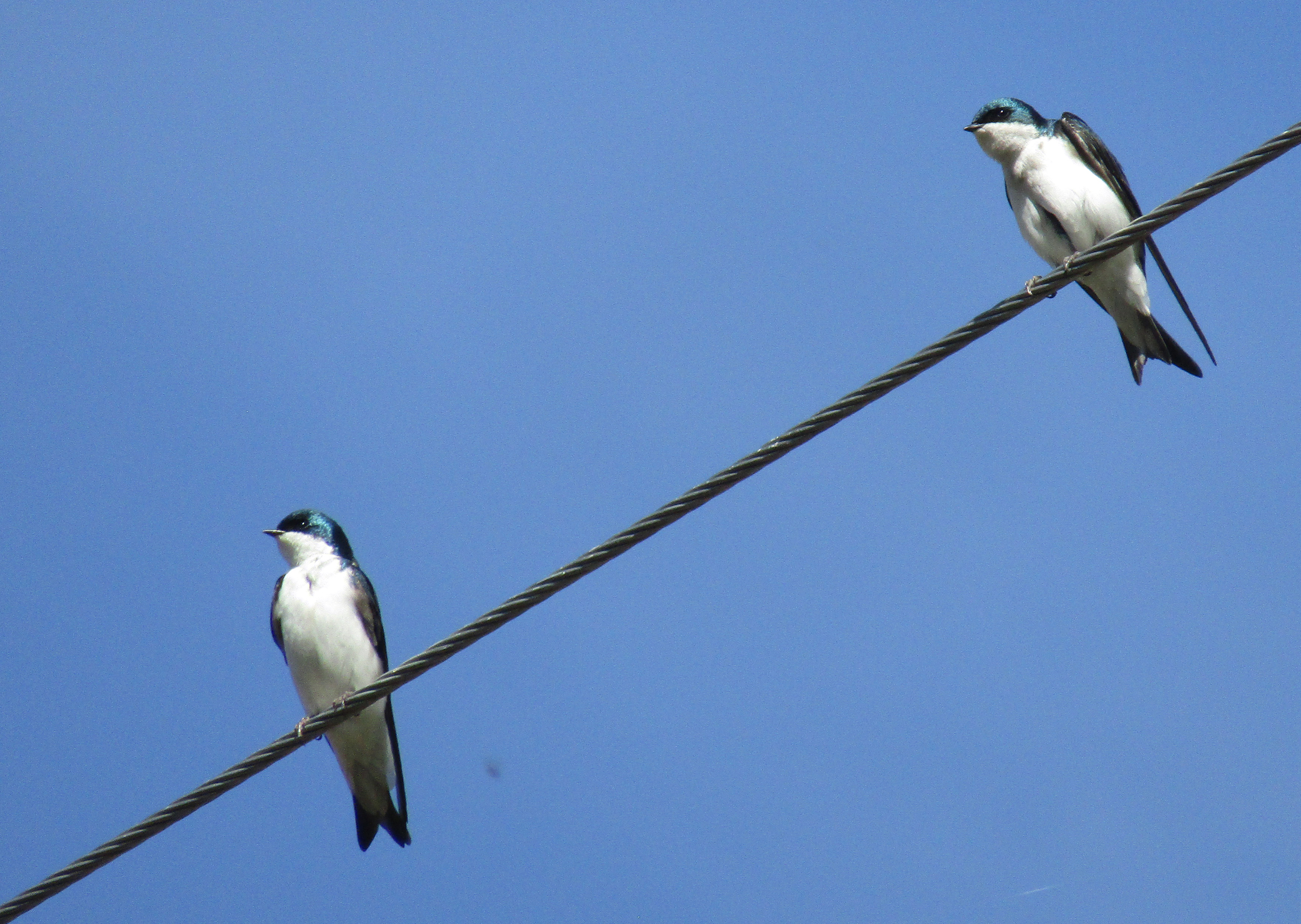
Photo by Bryan Stevens • Tree swallows are among the different species of birds returning to the region after spending the winter months farther south. These birds will be looking for nesting boxes or natural cavities in the coming weeks.

Waiting for spring? Join the club. Between alternating bouts of unseasonably warm temperatures and frigid blasts, the weather cannot seem to decide if winter’s hanging in there a little longer or if it’s time to proceed with spring’s arrival.

You might think that would translate into a messy arrival timetable for some of our returning birds, but so far my own personal observations indicate a different story. For instance, a pair of tree swallows arrived at my home on March 8. Curious, I explored my Facebook newsfeed and discovered that the first tree swallows returned in 2016 on the very same date! These punctual arrivals never cease to amaze me. It’s almost like clockwork for some of the birds that I have observed for many years at my home.

When John James Audubon painted these tree swallows, he knew them as “white-bellied swallows.”

When I posted about the arrival of the swallows on Facebook, some other people shared their own arrival stories. Paul Elmore in Bristol, Tennessee, mentioned the arrival of the first brown-headed cowbirds at his home. “Their sounds got my attention first,” he noted in his reply to my post, describing the sound as similar to “a marble being dropped into a pail of water.”

In addition to tree swallows and brown-headed cowbirds, other recent returns have included red-winged blackbirds and American robins, which have both been hailed as traditional harbingers of spring. Over the next few weeks, I look for the pace to pick up as returning birds like chipping sparrows, brown thrashers, blue-gray gnatcatchers and yellow-throated warblers mingle with lingering winter birds such as dark-eyed juncos, purple finches and yellow-rumped warblers.

The pair of swallows that returned on March 8 probably regretted the timing. Arriving during a warm spell that saw temperatures climb into the high 70s, the swallows were soon enduring a chilly blast that saw the mercury in outdoor thermometers dipping into the 20s. The swallows are insect-eating birds, so extended cold spells often force them to retreat to the area’s lakes and larger rivers, where they can swoop over the water and have an easier time plucking cold-numbed flying insects out of the air.

Photo by Bryan Stevens • Tree swallows usually return to the region in late February and early March. Look for other birds, such as brown thrashers and chipping sparrows, to return in the coming weeks.

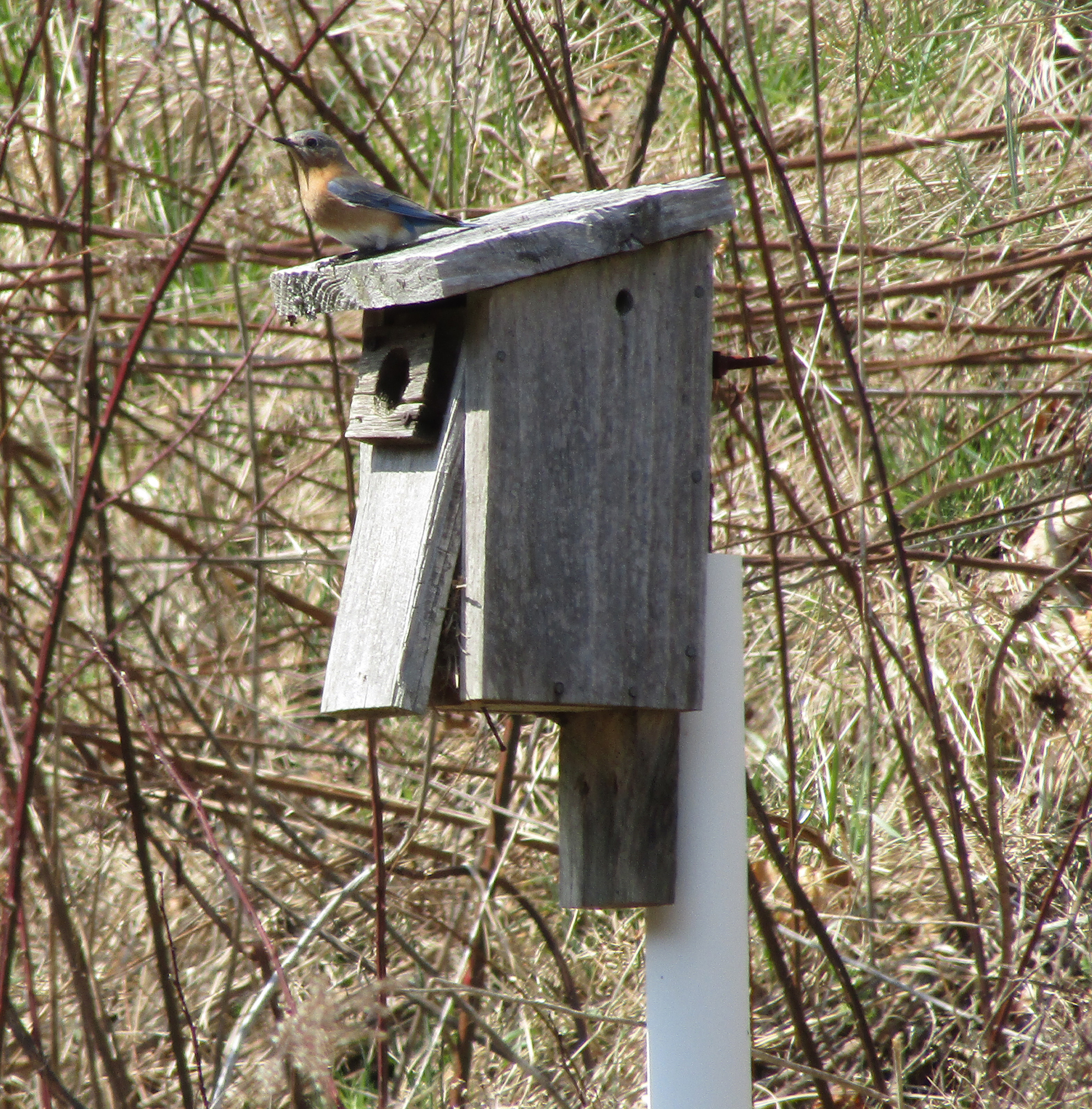
Once milder spring temperatures prevail, the flocks of swallows forced into these necessary habitats will disperse as pairs begin seeking nesting sites. Tree swallows are cavity-nesting birds, which often puts them into competition with Eastern bluebirds. The two species usually manage to work out a truce and settle down to nest in close proximity to each other.

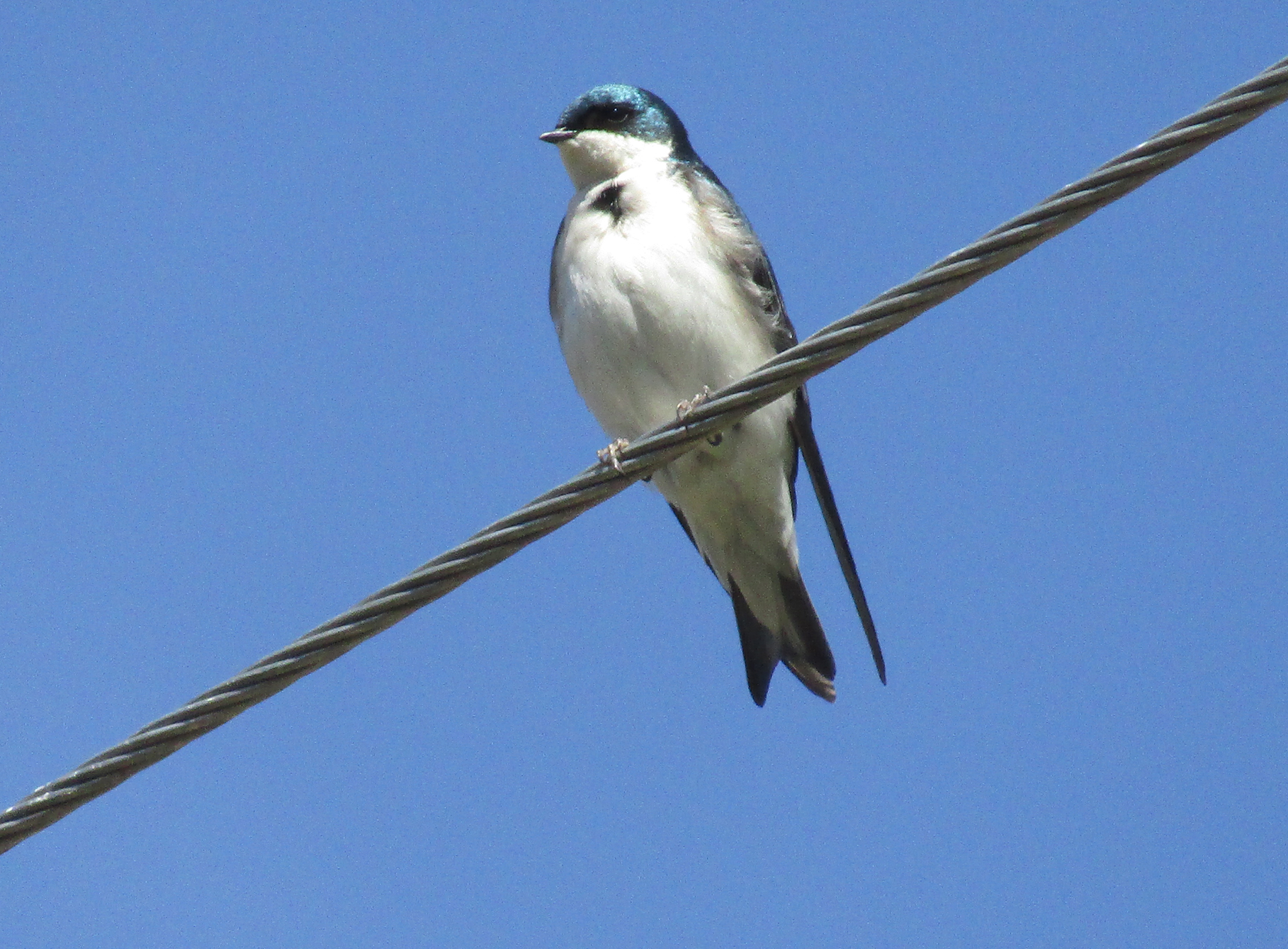
The iridescent blue-green male tree swallow, complete with white underparts and a forked tail, is a handsome bird and a welcome addition to the bird population in any yard or garden. Tree swallows enjoy water, so a nearby pond or creek is a boon for attracting these birds.

Tree swallows nesting in southwest Virginia are a relatively recent happening. According to Tony Decker’s The Birds of Smyth County, Virginia, tree swallows have only been common summer residents since about 1975. Some of the early records of these birds nesting in the region took place at locations like the ponds in Saltville, Virginia, and Laurel Bed Lake in Russell County, Virginia.

Photo by Bryan Stevens • A female Eastern bluebird stakes claim to a box to ward off inquisitive tree swallows. The two cavity-nesting species are often competitors for prime nesting real estate.

A decade later, tree swallows began nesting in northeast Tennessee. The first nesting record took place at Austin Springs on Boone Lake in Washington County, Tennessee, according to The Birds of Northeast Tennessee by Rick Knight. Tree swallows soon became regular nesting birds every summer in all five counties that comprise Northeast Tennessee.

It’s usually not too difficult to find five of the six species of swallows that are known to make Northeast Tennessee and Southwest Virginia their home from spring to fall. In addition to tree swallows, other swallows such as barn swallows, purple martins, cliff swallows and northern rough-winged swallows are fairly common summer birds in the region. The barn swallow and tree swallow are the two members of the family that are probably best known to people. They have adapted to life in both suburban and rural areas, which brings them into frequent contact with people.

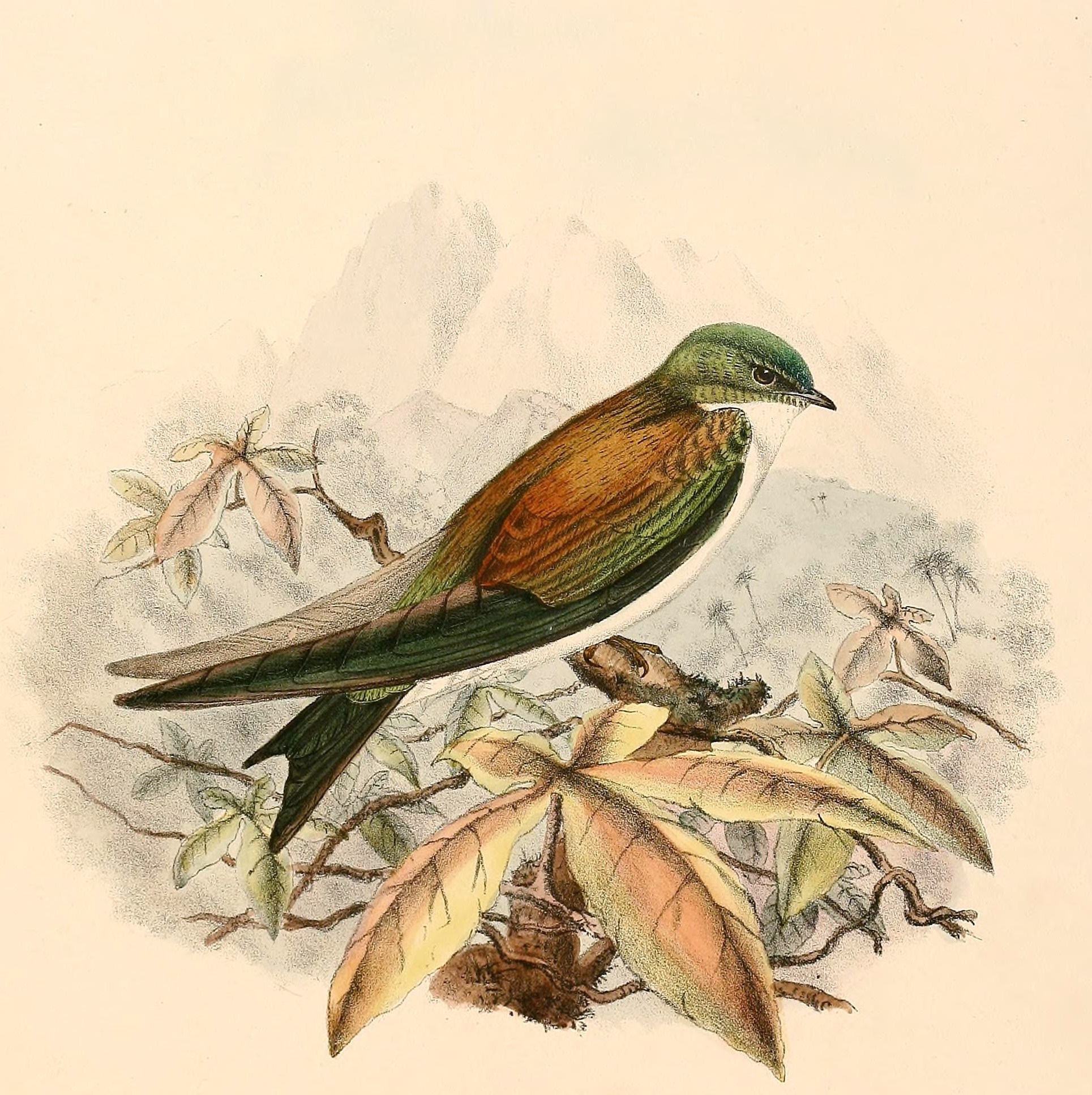
The golden swallow, which today exists only on the island of Hispaniola.

While only a few swallows range into the United States and Canada, a total of 83 species of swallows can be found worldwide. Some of the common names for these different swallows (also called martins in other parts of the world) are quite descriptive. A sampling includes white-eyed river martin, grey-rumped swallow, white-backed swallow, banded martin, blue swallow, violet-green swallow, golden swallow, brown-throated martin, brown-bellied swallow, pale-footed swallow, white-bibbed swallow, pearl-breasted swallow, red-breasted swallow, mosque swallow, fairy martin and streak-throated swallow.

Photo by Bryan Stevens • A male tree swallow perches on a utility wire extending over a fish pond.

While many swallows and martins have proven highly adaptive when faced with human disturbances to their habitat, a few species have experienced declines. One species — the white-eyed river martin — was last seen in Thailand in the 1980s and very well may be extinct. Closer to home, the golden swallow is now found only on the island of Hispaniola after disappearing from Jamaica in the 1980s. The Bahama swallow, which nests on only four islands in the Bahamas, is also vulnerable. Incidentally, both these swallows are closely related to the tree swallow, with all of them belonging to the genus Golden Swallow. Translated from Greek, the genus name means “fast mover,” a quite accurate description of these graceful and agile flyers.

With their enthusiastic twittering to each other, tree swallows make for friendly neighbors. It’s also a pleasant diversion to watch them swoop over fields and ponds. To increase your chances of hosting your own tree swallows, offer a bird box placed in an open area. Right now is the time to attract their attention with some prime real estate.

•••••

To learn more about birds and other topics from the natural world, friend Stevens on Facebook at https://www.facebook.com/ahoodedwarbler. He is always posting about local birds, wildlife, flowers, insects and much more. If you have a question, wish to make a comment or share a sighting, email ahoodedwarbler@aol.com.
Count sets new records while gathering data on world’s birds

Photo by Bryan Stevens • The downy woodpecker ranked among the 10 most frequently reported birds on the 2017 Great Backyard Bird Count. A record number of 173,826 people took part in this year’s GBBC, which was held Feb. 17-20.

In announcing the results of this year’s Great Backyard Bird Count, organizers of the annual global bird survey shared an anecdote about a second-grade student in Memphis, Tennessee. The girl, who obviously enjoyed making a contribution as a citizen scientist for the GBBC, made a real connection with the birds she was being asked to count.

Calling her participation the “best day of her life,” the girl went on to share her excitement about seeing a downy woodpecker. She was hardly alone in seeing this small woodpecker. A total of 38,760 checklists across the country included downy woodpecker with their totals.

The girl’s joy at discovering a downy woodpecker — a bird that was completely new to her — all but guarantees that she will look forward to taking part in the 2018 GBBC. If her interest in birds continues to develop, she just may catch the birding bug herself.

Photo by Bryan Stevens • Counting crows and other birds at Shook Branch at Watauga Lake during the recent GBBC.

The 2017 Great Backyard Bird Count is now part of the history books, and thanks to participants from around the world, this year’s GBBC ranked as the biggest count in its 20-year history. Participants set a new high bar for number of checklists submitted and total number of species reported.

An estimated 214,018 participants took part this year, compared to the 2016 final total estimate of 163,763 individuals. An incredible total of 5,940 different species was tallied by GBBC participants, which is a dramatic spike from last year’s total of 5,689 species. That record number of participants also turned in a record number of completed checklists — 173,826, compared to the final total of 162,052 in 2016.

The three states with birders submitting the most checklists were, in descending order, New York, Pennsylvania and California. Incidentally, Virginia came in sixth, with 5,190 checklists submitted during the 2017 GBBC. North Carolina came in ninth with 4,220 checklists submitted by 2017 GBBC participants. Birders in Tennessee will need to step up for future counts. The Volunteer State ranked 20th on the list with 2,215 checklists submitted.

The states seeing the most species of birds reported were, in descending order, California (370 species), Texas (360 species) and Florida (309 species). North Carolina checklists indicated a total of 213 species to land the Tar Heel State at No. 8 on the list of states with most species reported. Virginia, in 12th place, tallied a total of 196 species. Tennessee came in 32nd place with 136 species, which isn’t too bad for a landlocked state.

In North America, the most numerous birds reported on the count included several species of geese, as well as blackbirds, starlings and crows. A total of 4,793,261 snow geese made this bird the most numerous North American species reported on the GBBC. Other common birds, in descending order, included red-winged blackbird with 2,464,572 individual birds tallied, as well as Canada goose, 1,895,077; European starling, 919,038; mallard, 715,594; ring-billed gull, 647,950; American coot, 500,261; greater white-fronted goose, 426,040; common grackle, 416,720; and American crow, 378,483. During my participation this year, I saw several of these species, including red-winged blackbird, Canada goose, European starling, mallard, ring-billed gull and American crow.

Photo by Bryan Stevens • Killdeer in Limestone Cove during the Great Backyard Bird Count held last month.

The ten most frequently reported species, in descending order, were Northern cardinal, American crow, mourning dove, dark-eyed junco, downy woodpecker, blue jay, black-capped chickadee, house finch, house sparrow and white-breasted nuthatch. While taking part in the GBBC last month, I saw all these species with the exception of the black-capped chickadee. Instead, my submitted checklists featured Carolina chickadees.

The birds on the most frequently reported list are almost without exception birds of yards and gardens, making them more likely to be counted by more individual participants. On the other hand, the most numerous, or abundant, birds are those that join together to form large flocks. They’re widespread, but less likely to be encountered in yards and gardens.

I counted at home and at several favorite birding locations. During a visit to Watauga Lake in Carter County, Tennessee, my mother and I observed an immature bald eagle and a yellow-bellied sapsucker, which turned out to be among my personal GBBC highlights this year. I always enjoy looking for birds during the four-day count period. I also like to feel that I am contributing to a shared knowledge about birds and their populations.

Photo by Bryan Stevens • Buffleheads on the Watauga River during the recent GBBC.

If you would like to view photos of birds from around the world that were taken during this year’s GBBC, visit gbbc.birdcount.org/photo-subs-2017/.

If you didn’t get to take part this year, be sure to plan ahead for next year when the GBBC will be held Feb. 16-19, 2018. Help make next year’s count another one for the record books.

•••••

To learn more about birds and other topics from the natural world, friend Stevens on Facebook at https://www.facebook.com/ahoodedwarbler. He is always posting about local birds, wildlife, flowers, insects and much more. If you have a question, wish to make a comment or share a sighting, email ahoodedwarbler@aol.com.
 

Birds, other wildlife deserve protection of Endangered Species Act

Photo by Lisa Hupp/USFWS • A bald eagle has an average of 7,000 feathers. Bald eagles are protected under the Bald and Golden Eagle Protection Act. For instance, it is against the law to possess their feathers or other remains. Eagles are abundant enough they no longer qualify for listing under the Endangered Species Act.

The Endangered Species Act serves as one of the strongest, most effective wildlife protection laws in the world. Although the ESA was not meant to protect only birds — the law actually protects everything from bats and whales to wolves and shellfish — it has done an outstanding job ensuring that our feathered friends continue to fly free and thrive in a world they must increasingly share with human beings.

According to Earthjustice — an environmental law organization that uses the power of the law to fight for the earth and its inhabitants — the ESA was passed with overwhelming bipartisan support more than 40 years ago to provide a legal safety net for wildlife, fish and plant species that are in danger of extinction.

Photo by Scott Flaherty/USFWS • The California condor is an example of a species saved from the brink of extinction thanks to the Endangered Species Act. Much work remains to be done to protect this large bird.

Earthjustice and other environmental groups are warning that some members of the current Congress want to slash the Endangered Species Act, threatening the very existence of the imperiled wildlife and ecosystems the Act protects. Some politicians from the state of Utah seem to be leading this effort, which is a sad irony considering the wealth of natural majesty the unique lands of Utah has to offer.

None other than President Richard Nixon, a Republican, signed the ESA into law back on Dec. 28, 1973, and it was an effort that crossed political party lines that made the legislation a reality. Biologists warn that our planet is facing a sixth wave of mass extinction, according to a release from Earthjustice. The Endangered Species Act, which has prevented 99 percent of the species under its care from vanishing, is precisely the kind of effective tool needed today. It has revived the bald eagle, the American alligator, the California condor and many others.

House Natural Resources Chairman Rob Bishop (R-UT) has said he wants to “repeal and replace” the Endangered Species Act. Others are supporting legislative proposals that would make it harder for the U.S. Fish and Wildlife Service to resolve Endangered Species Act lawsuits. The ESA is truly a prime example of the old saying, “If it’s not broke, don’t try to fix it.” Bishop and his allies, to put it plainly, are wrong.

Photo by Lou George/USFWS • The Kirtland’s Warbler is an endangered songbird that has seen its numbers slowly increase thanks to the protection of the Endangered Species Act.

If there’s ever been a government regulation that has done what it set out to do, it has been the Endangered Species Act. Without the ESA, many of our birds, including the nation’s official bird, might no longer still exist on the planet. The bald eagle had been reduced to a mere 417 pairs in 1963. With the passage of the ESA, the eagle began to rebound. In 2007, in a highly publicized success story, the existence of 11,040 pairs of bald eagles in the United States allowed this majestic bird to be removed from its listing under the ESA in 2007.

Photo by USFWS • Whooping cranes still exist largely due to protections afforded them by the Endangered Species Act.

The bald eagle is only one of the many birds to benefit from the protection of the ESA. The tall and stately whooping crane and the beautiful and tiny Kirtland’s warbler are some of the other birds that are slowly showing population increases once they were afforded intensive protection under the ESA. The nene, or Hawaiian goose, and the peregrine falcon — the world’s fastest bird — have also received much needed protection.

Lest anyone think that eagles and other formerly endangered species are completely out of the woods, just consider the recent rash of bald eagle shootings in Tennessee. Two eagles, one in Rhea County and one in Meigs County, were victims of shootings. The severity of their injuries resulted in both birds being euthanized.

It’s heartbreaking to think that anyone would shoot a bald eagle, a bird that all patriotic Americans should revere as a lofty symbol of the nation’s majesty. The shootings are a reminder that it’s still not a safe world for many of the birds and other creatures that share the planet with us. The ESA is a marvelous piece of legislation that gives a measure of protection to the helpless. The law allows all Americans to share in the responsibility of being wise stewards of God’s diverse and wonderful creatures.

Photo by Steve Maslowski/U.S. Fish and Wildlife Service • The golden-cheeked warbler, a beautiful but endangered songbird that nests in Texas, is one of many birds that benefits from protections provided by the Endangered Species Act.

Demanding that the government keep the ESA strong and intact is not and should not be mere politics. It’s showing that Americans still value wildlife and the rights of future generations to enjoy that wildlife over money and short-term profits. Left or right, Republican or Democrat, the Endangered Species Act should be immune to political differences.

On a purely personal level, I hope to one day see such endangered songbirds as the golden-cheeked warbler and the black-capped vireo, and I want the same for future generations. That’s not likely to happen without the protections of the ESA remaining strong and intact.

Let your state and federal representatives know that you support continued protections for birds and other wildlife. We can co-exist with the amazing variety of wild creatures that share our planet. It’s just a matter of priorities. Our congressional representatives and senators need to know Americans aren’t willing to tolerate attacks on the ESA. Our president and his administration need to receive the same message.

Photo by Ted Heuer/U.S. Fish and Wildlife Service • The Nene, or Hawaiian goose, has gradually increased in numbers thanks to the Endangered Species Act.

If you enjoy birds, keep visiting local and state parks. Continue planning trips to National Parks and Wildlife Refuges. Don’t stop feeding your backyard birds. Most importantly, fight to make sure the wildlife that makes the world a richer place continues to find that humans do make good neighbors.

For information on how to contact your government officials to express your thoughts on the value of the Endangered Species Act, visit http://www.usa.gov/elected-officials.

••••••

To learn more about birds and other topics from the natural world, friend Stevens on Facebook at https://www.facebook.com/ahoodedwarbler. He is always posting about local birds, wildlife, flowers, insects and much more.
 

Origins of the name of Muscovy duck shrouded in mystery

Joan Stenger sent me an email recently about an unusual waterfowl observation. On a recent  Saturday, she visited downtown Bristol where the creek widens a bit near the fire station and beside the park. Joan wrote that she saw a flock of ducks and Canada geese and enjoyed watching them.

muscovy-ducks

Photo by Bryan Stevens                                                             Muscovy ducks seen outside of Texas are domesticated versions of the wild waterfowl. Male Muscovy ducks sport red carbuncles around their bills.

“One fellow stood on the opposite bank and had bright red marks on his face,” she added. “My daughter and I went over the bridge and into the park to get closer and hopefully get a better view.”

Joan described the odd duck as larger than the other ducks but not as big as the geese. “Its back was dark dark blue with teal,” she wrote. “I had never seen such a duck! “
She said they continued to watch the flock of Canada geese and then returned home.  There she consulted her bird books and only found one small mention and picture of a Muscovy duck. Armed with that information, she conducted an online search for more information about Muscovy ducks.
 “Have you seen many of these fellows?” Joan asked in her email.
In my reply to her email, I informed Joan that Muscovy ducks are becoming more common. However, outside of Texas, most Muscovy Ducks seen are “feral” domesticated versions of the wild bird. Many people have probably also seen feral mallards that are content to reside year-round with us. The Muscovy ducks have probably decided the same thing.
In southern Texas, it is possible to observe wild Muscovy ducks, but sightings of these ducks outside of the Lonestar State involve domesticated ducks. Like mallards, Muscovy ducks have long been domesticated, and some of the domesticated individuals have gone feral. These ducks, descendants of their wild ancestors, have become more common, both nationwide and locally.

I’ve heard from other curious people over the years about encounters with Muscovy ducks. The birds behave unusually for a duck. For instance, they often pant like a dog and strut around more like a wild turkey than a typical duck. Most of these feral Muscovy ducks are also relatively tame in association with people, long ago having learned to connect humans with free handouts of bread, popcorn and other foods.

muscovy-three

Photo by Bryan Stevens                                                            Wild Muscovy ducks are dark waterfowl with white wing patches. Domesticated Muscovy ducks exhibit a wide variety of plumage colors, including brown and white feathers.

In the wild, Muscovy ducks are native to Mexico, as well as Central and South America. Before Christopher Columbus reached the New World in 1492, natives had long domesticated this duck. When Columbus first visited the New World, he even took back to Europe some of these ducks.
The term “Muscovy” is a reference to the Russian city of Moscow, but the reasons behind the connection of this duck’s common name to Moscow are obscure. One theory is that the duck acquired the name in association with the Company of Merchant Adventurers to New Lands, later shortened to the Muscovy Company. Perhaps this chartered trading outfit sold some of these ducks to European customers in the 1500s.
After all, Columbus and early explorers named the wild turkey for the faraway country of Turkey, mistakenly believing that the New World provided a more direct route to this realm so important to trade. Perhaps the Muscovy duck also acquired a name connected with Moscow for no better reason. It does appear that the origins of the name are one of history’s odd mysteries.
Adding to the mystery is the fact that the duck’s scientific name also refers to a city — Cairo in Egypt — far from this bird’s native home. Translated, the Muscovy duck’s scientific name means “musky bird from Cairo.” Another common name for the duck is Barbary duck, which refers to a region of Africa home to modern-day Libya.

While the wild Muscovy duck is a tropical bird, the domestic ones are perfectly capable of weathering cold temperatures as low as 10 degrees Fahrenheit.

muscovy-two

Photo by Bryan Stevens                                                       Domesticated and feral Muscovy ducks are widespread across North America. These ducks were first discovered by Europeans arriving in the New World, although native tribes had long raised them as domestic animals.

The Muscovy Duck has only one other close relative, the white-winged wood duck of India and Bangladesh, One of the world’s largest ducks, the white-winged wood duck is a seriously endangered species. One curious fact about this duck is its tendency to only forage for food after dark.

Wild Muscovy ducks are large waterfowl with a black plumage accented with big white wing patches. They can be almost 34 inches long and weigh as much as nine pounds. It’s the heads of these ducks that really make them stand apart. Both sexes have bare black-and-red or all-red faces. Males also sport pronounced caruncles at the base of the bill, as well a a slight crest of feathers. The appearance of domestic Muscovy ducks is quite variable, with some birds sporting almost entirely white plumage.
Muscovy ducks and mallards will also hybridize, producing sterile offspring that are known as “mullards.” I’ve observed both domestic Muscovy ducks and “mullard” hybrids at local parks, but I haven’t yet seen any wild Muscovy ducks. The domestic version of this duck has also established feral populations around the globe in locations such as Europe, New Zealand, Canada and Australia.henry_charles_bryant00
•••••••
In addition to asking her question about Muscovy ducks, Joan shared a story about bluebirds at her home.
“We feed the birds year round and enjoy their antics at the feeders,” she reported. “We were pleased to have bluebirds raise a nest full of babies this year, although I was told that we would not have bluebirds because we live in town.” Apparently “no one told the bluebirds,” Joan joked.
Because of her feeders and the bird baths, she receives visits from a good variety of birds, mostly dominated by the cardinals.


Birds bring their best game when seeking mates

clarks_grebes_rushing

Photo by Dave Menke/U.S. Fish & Wildlife Service • A pair of Clark’s Grebes displays in a courtship ritual known as “rushing” or “weed dance.” Birds use a variety of strategies to attract and keep mates.

Most birds don’t bring a box of chocolates or a bouquet of roses when they take up courtship of a prospective mate, but birds have several equivalent behaviors that they employ to attract the attentions of the opposite sex. Since we recently celebrated Valentine’s Day, I thought a look at some of the more unusual courtship rituals of some of our feathered friends would be appropriate.

Birds bearing gifts. Many birds present small trinkets to a prospective mate. For instance, many male penguins make a present of a stone or pebble to female penguins. There could be more than a simple bribe behind this gift. Female penguins don’t build elaborate nests. In fact, a scrape on the bare ground, perhaps encircled by a collection of pebbles, marks the extent of their nest construction. So, the perfect pebble could be the way to winning a female penguin’s heart.

cardinals-dec18

Photo by Bryan Stevens • Northern Cardinals are beginning to pair together in anticipation of the spring nesting season.

The way to the heart is through the stomach. Observant birders may have witnessed a male Northern cardinal slip a female a morsel of food, such as a peanut or a shelled sunflower kernel. It’s a marked change for this bird. During the winter months, a male cardinal is more likely to chase a female away from a feeder rather than share food with her. However, as spring approaches, his behavior undergoes a change and he becomes content to feed next to a female cardinal, often slipping her some choice tidbits.

May I have this dance? Many species of birds perform elaborate and ritualistic dance displays. Among birds known for tripping the light fantastic are flamingoes, cranes, grouse and grebes. Cranes are one of the oldest families of birds on earth. They’re also some of the most accomplished dancers in the animal kingdom. Pairs perform very ritualistic dances that, if the performers were human, would no doubt require the services of an accomplished choreographer. Cranes mate for life and the ritual of dancing is a way to strengthen the bonds between a mated pair. The ability to dance is, apparently, not instinctive. Young cranes must practice their dance moves, a process that can take years before they master the elaborate dance.

mallardpair

Photo by Bryan Stevens • A pair of Mallards find a thawed spot on a frozen pond.

Synchronized swimming. While many birds dance to impress a mate or strengthen pair bonds, grebes perform a dance that takes place completely on the surface of the water. A pair will engage in this intricate performance, perfectly mirroring the moves of the other as they literally race across the surface of the water. These dances by grebes are also known as “rushing” or “weed dance.” It’s called as a weed dance because at the culmination of the ritual, the birds usually hold some type of aquatic plants in their bills while racing swiftly over the surface of the water. Pairs that perform well together stay together, building a nest and raising young.

print2-2

An 18th century illustration of the habits of the Bower Birds.

Good housekeeping seal of approval. The tropical family of bowerbirds are famous for complex nests built by males and then decorated with bright and colorful objects to catch the eye of a potential mate. The nest of these birds are actually referred to a “bower.” Usually constructed on the ground, the male will line the approach to the bower with items such as shells, leaves, flowers, feathers, stones, berries, and even discarded garbage, including plastic scraps or bits of glass. Unusually odd items pressed into these decorative displays have included coins and spent rifle shells. This habit of male bowerbirds must rank as the ultimate in trying to impress a mate with shiny bling.

These are just a few of the inventive ways that birds go about attracting and keeping mates. Perhaps you followed some of these tips from our feathered friends to ensure you had a great Valentine’s Day.

•••••

To learn more about birds and other topics from the natural world, friend Stevens on Facebook at https://www.facebook.com/ahoodedwarbler. He is always posting about local birds, wildlife, flowers, insects and much more. If you have a question, wish to make a comment or share a sighting, email ahoodedwarbler@aol.com.

Annual Great Backyard Bird Count enlists public as citizen scientists for global survey

clapper_rail

Photo by U.S. Fish & Wildlife Service/Lee Karney • The Clapper Rail is abundant in saltwater marshes and mangrove swamps from Massachusetts to South America. Observant participants in the Great Backyard Bird Count are sure to find some of these reclusive birds.

I look forward every year to the annual Great Backyard Bird Count, a survey established as a citizen science project back in 1998. Since 2013, the GBBC has been a global effort, allowing birders around the world to take part. Participants in 2015 observed almost half of the world’s known bird species, and that effort was surpassed just last year during the 2016 count. Over the years, I have counted various interesting birds, including green-winged teal, Ross’s goose, snow goose, American kestrel and Cooper’s hawk, while taking part in the GBBC.

The GBBC is a joint project of the Cornell Lab of Ornithology and the National Audubon Society with partner Bird Studies Canada. With its global perspective, a great many exotic bird species are now tallied on the annual GBBC, but the survey remains firmly established as a grassroots effort to compile data crucial for the conservation of the world’s beloved birds. The information gathered by tens of thousands of volunteers helps track the health of bird populations at a scale that would not otherwise be possible.

parakeet_auklet_flight_castle_rock_shumagin_islands

Photo by U.S. Fish & Wildlife Service/Steve Hillebrand • Parakeet Auklets in flight in the Alaska Maritime National Wildlife Refuge. The Great Backyard Bird Count extends beyond North America and now covers the entire globe.

It’s incredibly easy to take part in the GBBC. Anyone anywhere in the world can count birds for at least 15 minutes on one or more days of the four-day count period and enter their sightings at http://www.BirdCount.org. There’s no charge or fee for taking part in the GBBC, which is a fun way to observe a variety of birds. Thanks to the flexible count criteria, it is also an easy way to make a contribution to science. The data delivered by the thousands of participants is now collected and compiled by the website ebird.org.

This year’s GBBC will be held over a four-day period, starting on Friday, Feb. 17, and continuing through Monday, Feb. 20. Participants are invited to count birds at their own homes in their yards and gardens. They can also travel farther into the field, birding in their favorite parks, wildlife refuges or other birding hot spots. Participants can count alone or join with groups of fellow birders. Those taking part in the GBBC are invited to count in as many locations as they like. The reported results will help create a real-time snapshot of where birds are distributed during the winter months.

sandhill_cranes

Photo by U.S. Fish & Wildlife Service/Lee Karney • A pair of Sandhill Cranes in a New Mexico wetland.

The 2016 Great Backyard Bird Count saw 142 species of birds reported in Tennessee. In Virginia, a total of 177 species was counted by participants in the annual survey. The Old Dominion State has a distinct advantage over landlocked Tennessee in having ample coastal access to the Atlantic Ocean, which helps explain the more than 30 additional species tallied in Virginia. Birds like brown pelican, American oystercatcher, Northern gannet, purple sandpiper and great black-backed gull represented finds not found in Tennessee.

Both states were outpaced by GBBC participants in North Carolina, who managed to find an incredible total of 213 species, including red-cockaded woodpecker, little blue heron, razorbill, brant, parasitic jaeger, Northern fulmar and Western tanager.

Overall, the top three species-rich states were Florida (323), Texas (359) and California (369). In the lower 48 states of the United States, a total of 616 species of birds were reported for the 2016 GBBC.

sharptailed_grouse-2

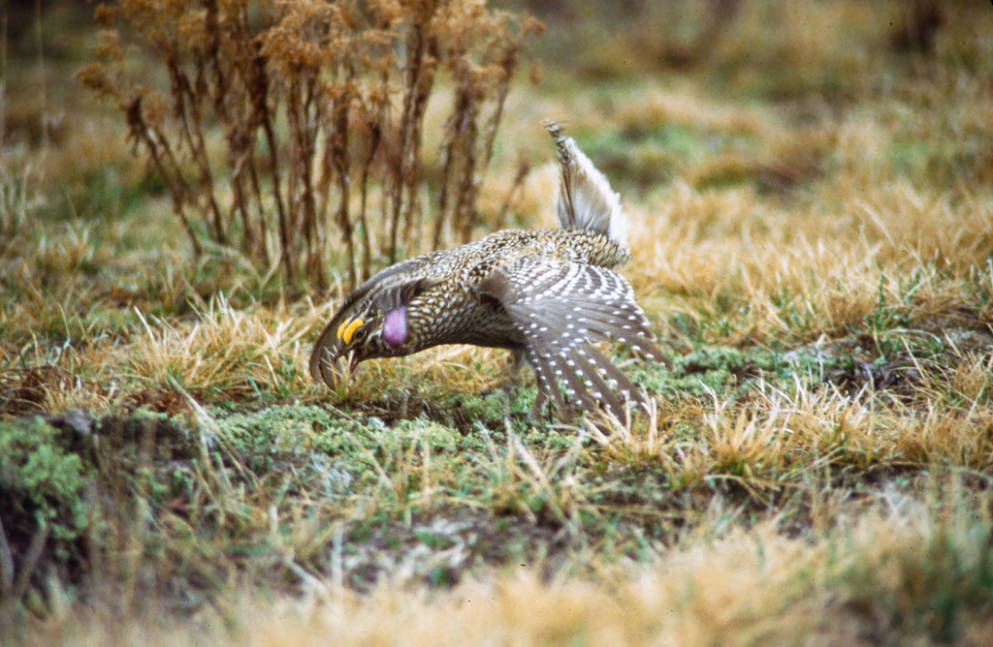
Photo by U.S. Fish & Wildlife Service/Richard Baetsen • Sharp-tailed grouse engaged in a mating display. Keeping track of populations of vulnerable species is a major component of the annual GBBC.

The 2016 GBBC shattered records. An estimated 163,763 bird watchers from more than 130 countries joined the effort. Participants submitted 162,052 bird checklists reporting 5,689 species, which is more than half the known bird species in the world and 599 more species than the previous year. So, what results will 2017 produce?

Social media, like Facebook and Twitter, have helped raise awareness about the importance of the GBBC, which has proven helpful in tracking long-term population trends of North American birds, as well as the bird populations on other continents. If anything, counting birds during the GBBC is an easy way to do your part to advance the cause of science intended to improve the plight of our beloved birds. So, circle the dates on your calendar and join me in taking part in the upcoming Great Backyard Bird Count. For more information on the Great Backyard Bird Count, visit www.BirdCount.org.

•••••

Bryan Stevens lives near Roan Mountain, Tennessee. To learn more about birds and other topics from the natural world, friend Stevens on Facebook at https://www.facebook.com/ahoodedwarbler. He is always posting about local birds, wildlife, flowers, insects and much more. If you have a question, wish to make a comment or share a sighting, email ahoodedwarbler@aol.com.

2017gbbc_robinposter

Flicker, towhee among recent winter bird arrivals

Towhee1

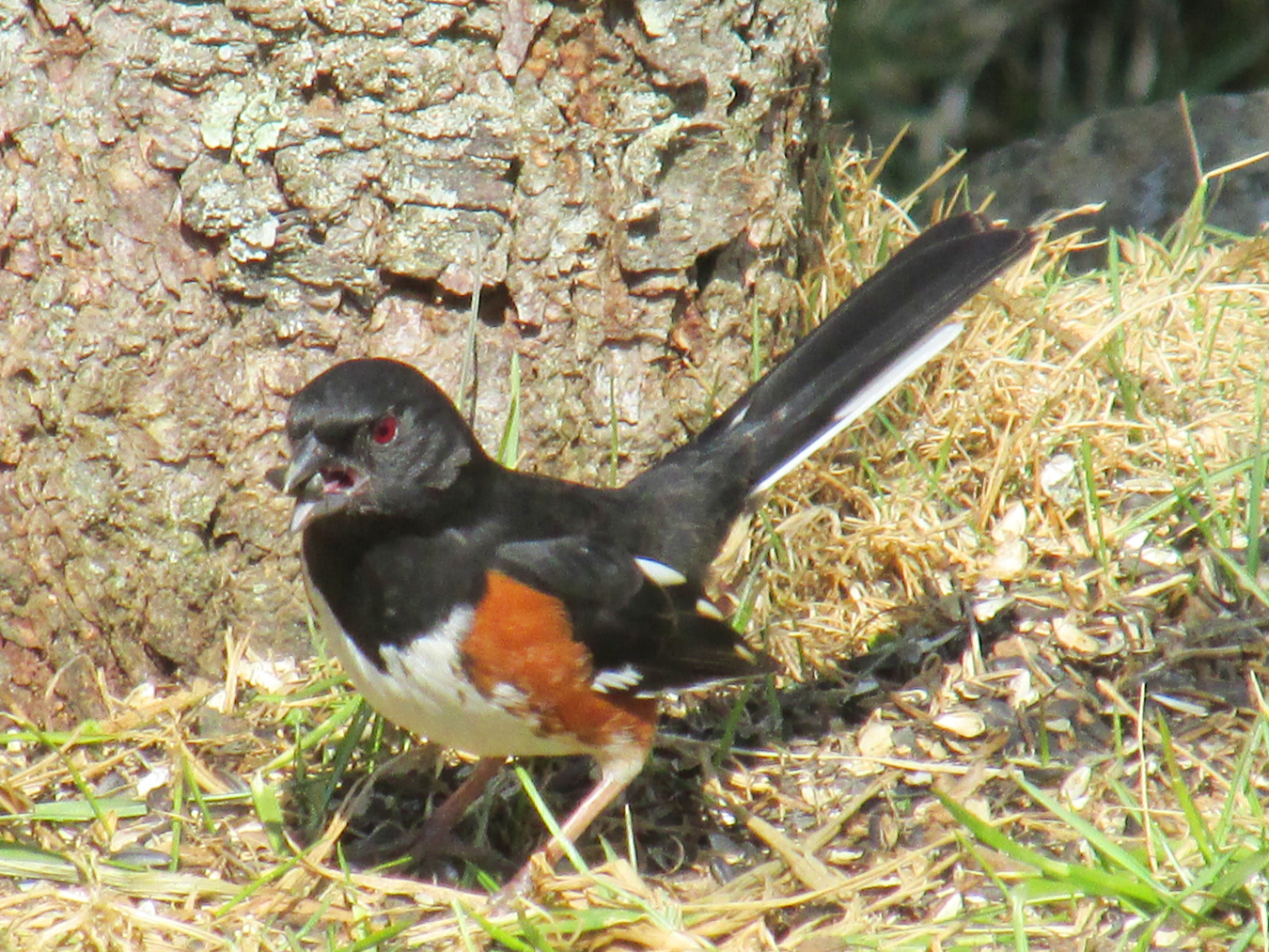
Photo by Bryan Stevens • An Eastern towhee feeds on the ground beneath a feeder.

I’d almost given up on any new birds arriving to break the daily monotony of birds in my yard when two birds put in their first appearances of the year. An Eastern towhee and a Northern flicker both showed up simultaneously for the first time in 2017 on Jan. 13.

The towhee, a male, was feeding in the usual manner of its kind, scratching vigorously on the ground beneath my feeders. Towhees are quite ingenious at uncovering any seeds dropped by other birds.

flicker

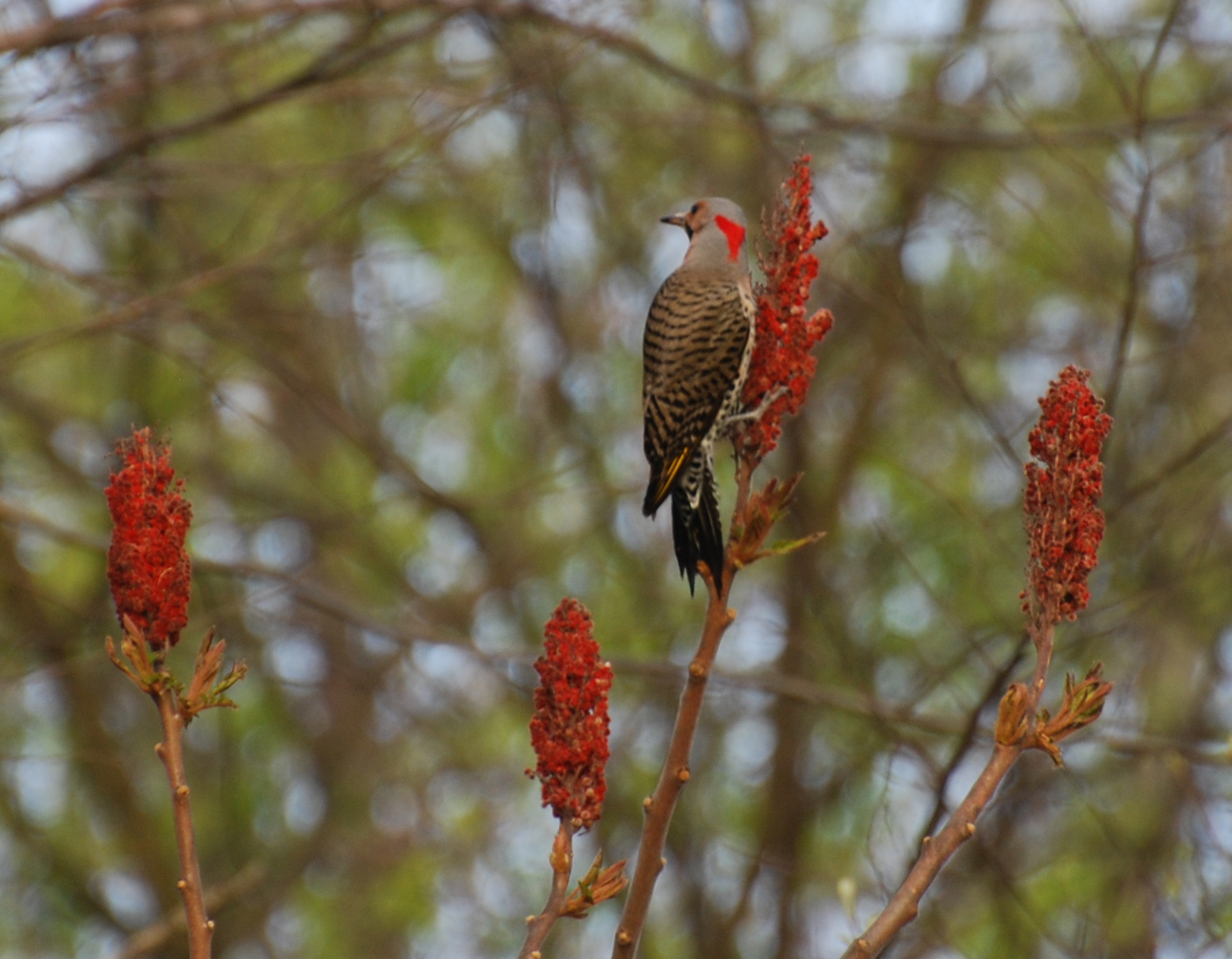
Photo by Jean Potter • A Northern flicker perches on a staghorn sumac.

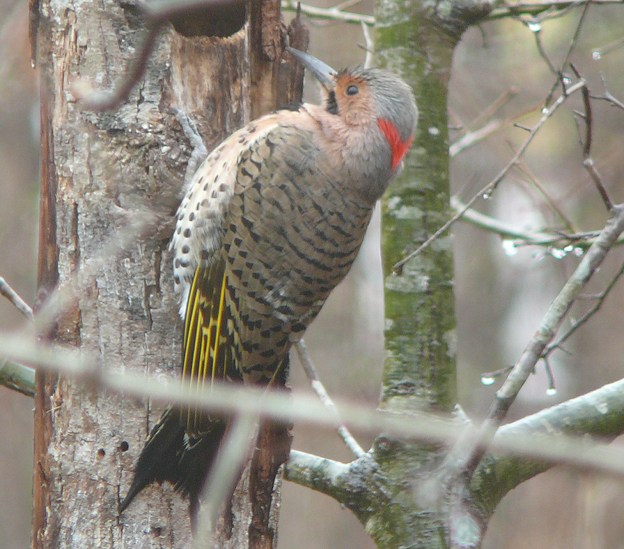
The flicker was calling from the upper branches of a very tall tree at the edge of a wood lot near my home. The ringing calls of the flicker carried quite clearly even from a distance. Most woodpeckers, including the Northern flicker, are enthusiastic performers. We often think of woodpeckers in association with loud, repetitive drumming with their beaks against the trunk of a tree. Flickers are also known for using other surfaces for drumming. I’ve observed flickers drumming agains metal utility poles and metal siding on homes. That’s really not so strange when you consider that the purpose of the drumming is to communicate with mates or to signal potential rivals that they’re getting a little too close.

Woodpeckers are also known for a variety of vocalizations, and the Northern flicker is no exception. In addition to drumming, the flicker also employs a variety of loud vocalizations that are fairly distinctive. A loud, repeated flicker, often translated as “wicka-wicka-wicka,” is similar to the cluck-like call of the larger pileated woodpecker. The flicker is also known for emitting a sharp, loud “kleeer” call can be heard from a considerable distance. It was this “kleer” call that first drew my attention to the presence of the flicker at my home on Jan. 13.

Flickers are probably most vocal during the spring months. They go quiet for a period during the summer nesting season but start to make themselves heard again during the fall months. A warm, sunny day during the winter is often motivational enough to convince flickers to vocalize.

northern_flicker-1-2

Photo by U.S. Fish & Wildlife Service • A Northern flicker peers from a nesting cavity.

A lot of wildlife is probably getting mixed signals thanks to the extremely mild January temperatures. For instance, I’ve already had a few crocuses blooming in my gardens. Bees and other pollinators have also awoken from winter slumber to take advantage of the unseasonal blooms. If frigid weather does eventually arrive, I hope that these “early birds” suffer no ill effects.

The Northern flicker is the second-largest woodpecker in the region. The only bigger member of the family is the large and unmistakable pileated woodpecker. The flicker ranges across the United States and Canada. The flicker is also present in Central America, Cuba and the Cayman Islands. Known scientifically as Colaptes auratus, which can be roughly translated as the “golden woodpecker,” there are about a dozen species of flickers in North, Central and South America, as well as the Caribbean.

birds-of-ga-northern-flicker

The Nothern flicker is the official state bird of Alabama, where the bird is known as “Yellowhammer.”

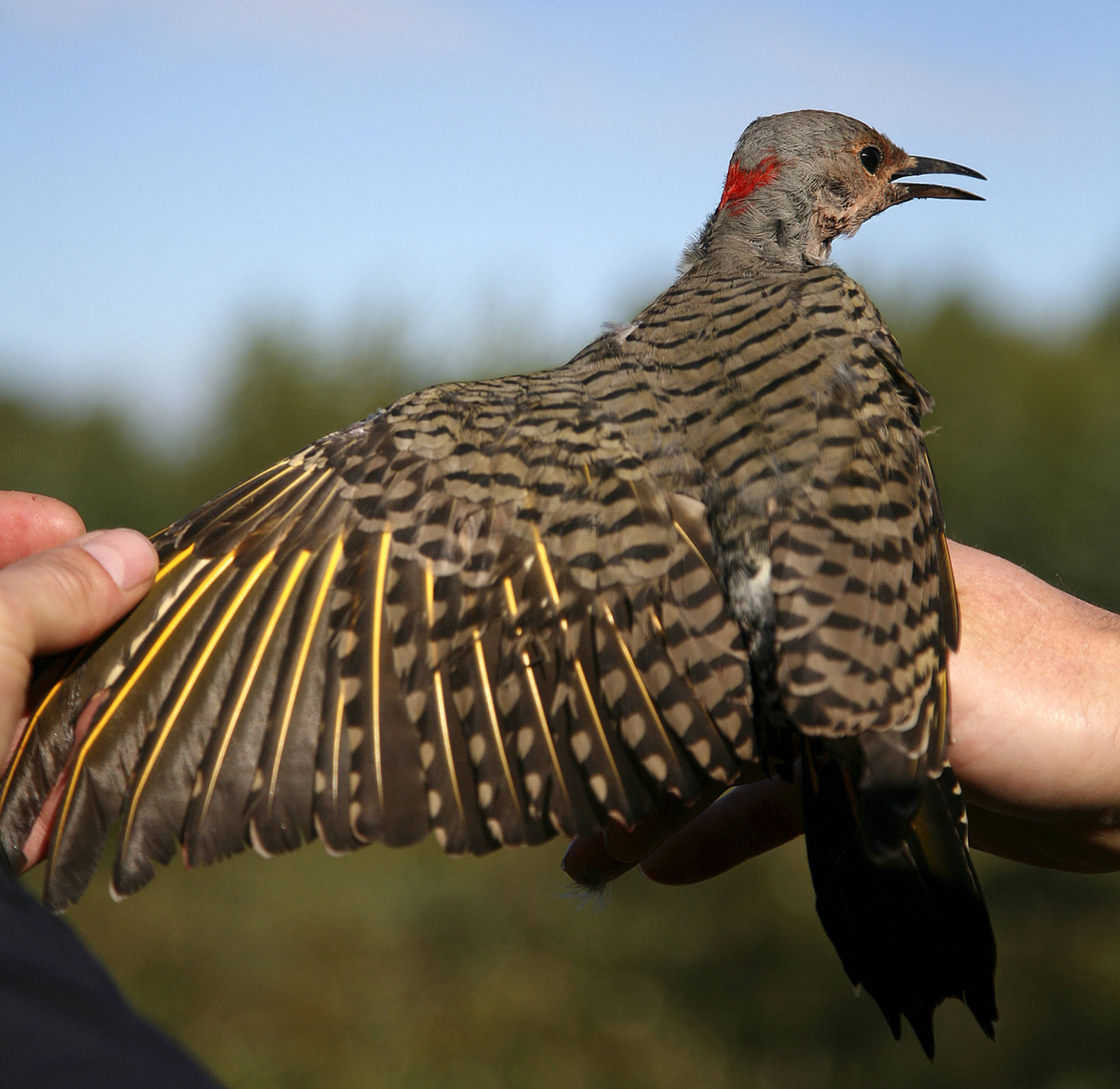
In the United States and Canada, flickers in the eastern half of the continent are known as “yellow-shafted” flickers. The phrase “yellow-shafted” describes the Eastern race of this woodpecker, which is replaced in the western United States by the “red-shafted” flicker. In reality, both the yellow and red-shafted birds are considered by experts to be the same species. The yellow feathers in Eastern birds are found under the wings and on the tail. The yellow, or red, sections of the wings are most visible when the bird is in flight. I’ve seen both forms of this woodpecker, observing the red-shafted form during trips to Utah in 2003 and 2006.

Although most people think of woodpeckers as spending most of their time clinging to the trunks of trees, the flicker actually has something in common with the Eastern towhee. Like the towhee, the flicker spends a lot of time on the ground hunting for its favorite food — ants. The flicker even has a special adaptation — a barbed tongue — that it uses to capture ants.

flicker-yellowwing-2

Photo by U.S. Fish and Wildlife Service • A Northern flicker, captured for a banding operation, has its wing extended to show the yellow feathers indicative of the eastern race of this species.

Flickers will come to feeders, but I’ve never had much luck attracting them. Perhaps I’ve not offered the right fare. The late John V. Dennis recommends “meat scraps, cracked walnuts and pecans, halved oranges and apples, and white bread” in his book, “A Complete Guide to Bird Feeding.” Even Dennis acknowledged that flickers are, at best, wary visitors to feeders. Not much has changed since Dennis wrote his book back in 1977. If any readers have had success luring flickers to their feeders, I’d love to hear their advice for attracting them.

The flicker has even been recognized as an official state bird by Alabama. Of course, Alabama officially bestowed the recognition on the “yellowhammer,” a nod to a nickname for both the flicker as well as Confederate soldiers during the Civil War. Even today, Alabama is still known as the Yellowhammer State. Somewhat surprisingly, the flicker is the only woodpecker that has received designation as a state bird.

••••••

To learn more about birds and other topics from the natural world, friend Stevens on Facebook at https://www.facebook.com/ahoodedwarbler. He is always posting about local birds, wildlife, flowers, insects and much more. If you have a question, wish to make a comment or share a sighting, email ahoodedwarbler@aol.com.