Category Archives: Bryan Stevens Feathered Friends

Man hits a bonanza with recent sighting of eagles

Photo Courtesy of Jim Kroll • These four bald eagles were observed along Mendota Road near Abingdon, Virginia.

Jim Kroll sent me a recent email about a Jan. 30 sighting he made on Mendota Road in Abingdon, Virginia.

“I saw three hawks and an eagle close together in the same tree,” he wrote in his email. “The eagle and one hawk appear to be almost side-by-side on the same limb.”

He added that he had never observed such a combination in the same tree.

“I did not know they got along that well with each other,” Jim wrote.

He noted that he regularly sees hawks near his home in Abingdon and occasionally sees eagles on Mendota Road.

“There was a second eagle,” he added. “The two eagles would fly off together to the river, swooping around each other along the way.”

He said that he watched the hawks and eagles for probably 30 to 45 minutes as they would fly away from the tree multiple times and then return.

He also reported that the hawks were larger than the eagles. This bit of information got me to thinking about his sighting due to the fact that there are no hawks bigger than a bald eagle.

Once I looked at the photo that Jim shared with his email, I realized that his sighting was more remarkable than he realized.

“All four of the birds are eagles,” I wrote to him after viewing the photo. “The dark ones are immature eagles.”

“All four of the birds are eagles,” I wrote to him after viewing the photo. “The dark ones are immature eagles.”

According to information from the East Tennessee State University Eagle Cam project, it typically requires four to five years before young eagles develop the characteristic yellow bill with white head and tail of an adult bird.

Remember that Jim saw a second adult eagle that does not appear in the photograph he shared.

I’m not sure what was taking place with this appearance by multiple eagles. I’m favoring the possibility that the young dark eagles might have been the young of the adult pair of birds. Female eagles are larger than male eagles, so it is also likely the adult bird in the photo is a male and the other eagles in your photo are all females.
The fact that Jim saw five eagles at a single location at the same time is worth commending.

I informed him that I feel lucky when I see one eagle or a pair. I told Jim that to see five eagles at one spot is exceptional and congratulated him.
After I shared my opinion that all the birds in his photo were eagles, he emailed me again.

“We were probably a football field length away from the tree the eagles were in and just jumped to the conclusion that the darker birds were hawks,” he wrote to me.
He had considered how large the birds looked in flight, and he noted that their size and wingspan had not seem right for hawks, but he said he never thought about the other three birds also being eagles. He also shared another photo of the adult eagles flying toward the river.

“Their wingspan was impressive,” he wrote. “It was cool watching them swoop around each other near the river.”

He also shared that he saw another eagle recently near the Nordyke Bridge, five to six miles from where he saw the group of eagles.

Jim added that he has seen eagles at the top of South Holston Dam and along the Virginia Creeper Trail near Alvarado.

The ETSU Eagle Cam project operates eagle cams in Johnson City near Winged Deer Park and in Bluff City.

https://www.etsu.edu/cas/biology/eagle-cam/cameras.php

Here’s some more information about bald eagles from the ETSU Eagle Cam website.
Haliaeetus leucocephalus, better known as the bald eagle, is the United States’ national bird and is an easily recognizable species even to the casual observer. No other bird has a bright white head and tail with a massive yellow bill.
Bald Eagles belong to the family Accipitridae, which also includes hawks, kites, harriers and Old World vultures.

The scientific name roughly translates to “white-headed sea eagle,” which is appropriate because these birds are almost always found nesting near water.

•••

To share a sighting, ask a question or make a comment, email me at ahoodedwarbler@aol.com.
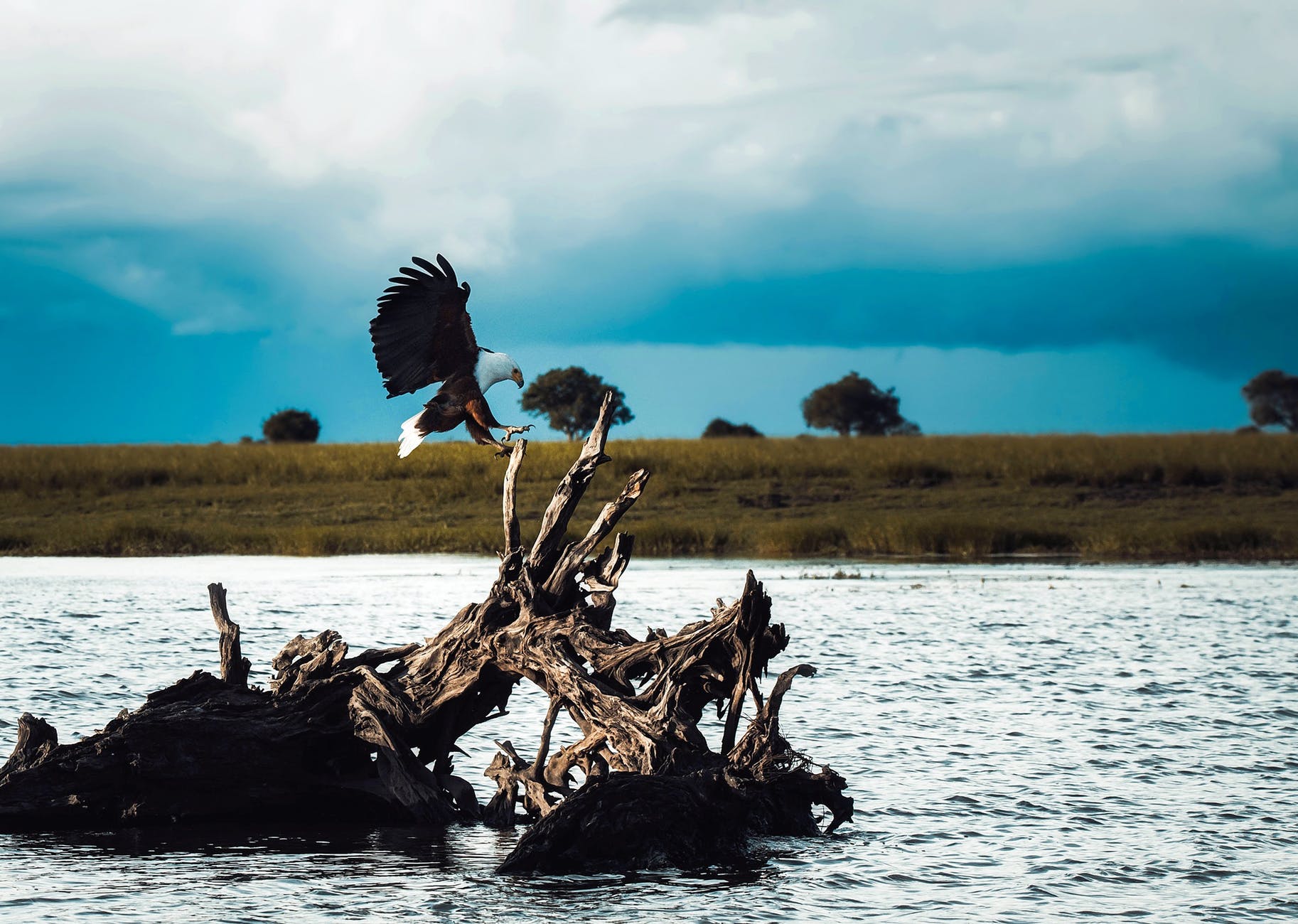
Photo by Pixabay on Pexels.com Bald eagles are often associated with wetland habitats.
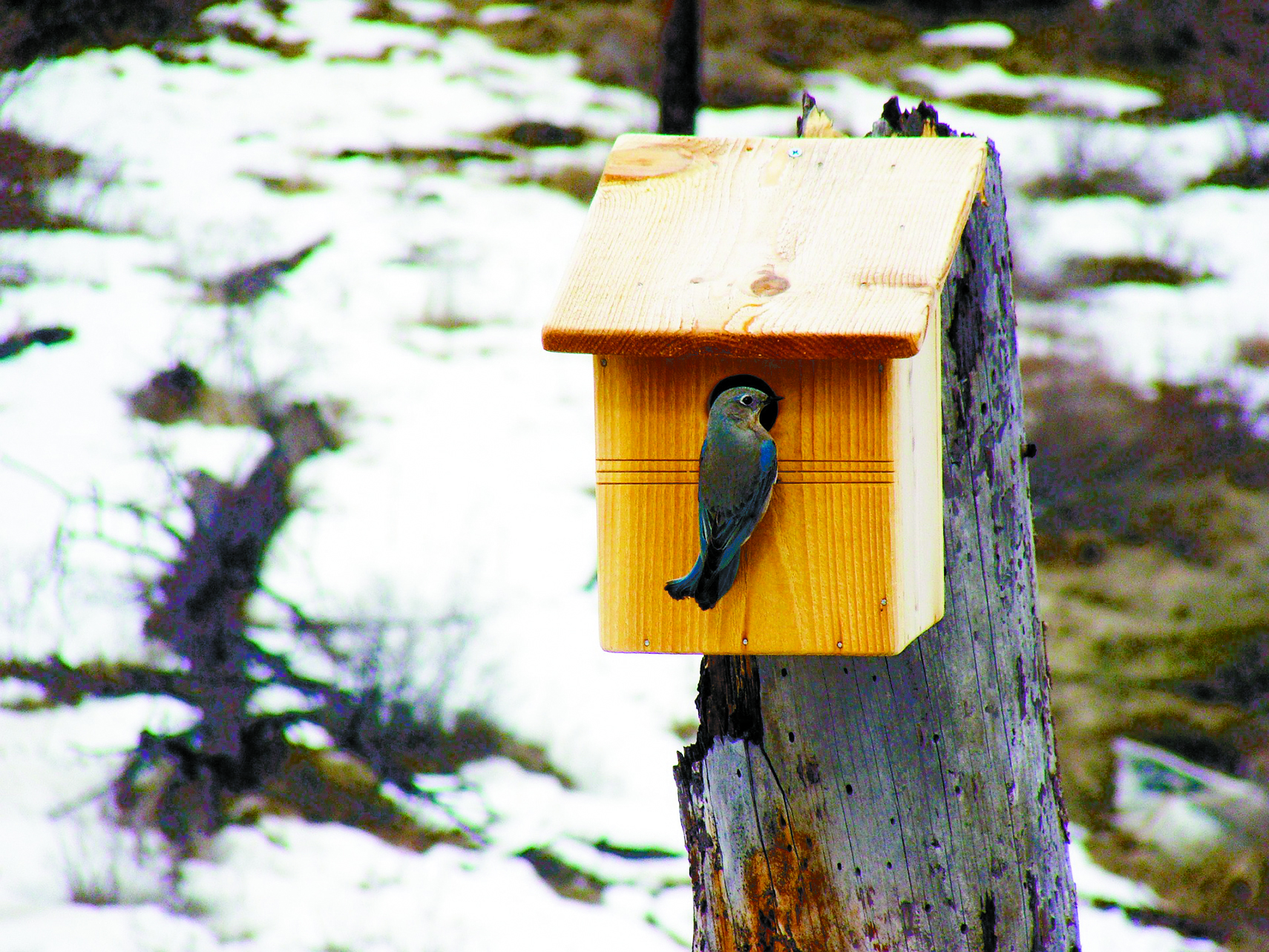
Give bluebirds a hand as they scout for nesting locations

Photo by Matthew Saulsbury/Pixabay • Bluebirds are likely already scouting for nesting cavities and nest boxes in the region.

It’s time to turn the calendar page to February and, depending on the prognostication of the groundhog, winter may or may not be on the wane. Regardless, some of our feather friends are already acting like spring has sprung.
Perhaps it’s simply confusion when days can veer from sunny, short-sleeve conditions to frigid snowstorms, but I tend to trust the instincts of our fine feathered friends.

An email from Unicoi County resident Amanda Austwick proved timely.
“I saw a post on Facebook from a woman in Ontario, Canada, and she had a photo of a bluebird in a tree surrounded by red berries, with a touch of snow on them,” Amanda wrote. “I thought bluebirds migrated south in winter.”

I responded to Amanda’s email and will share some information in this week’s column. For the most part, local bluebirds do not migrate out of the region in winter. Bluebirds living farther north do often, but not always, migrate farther south.
As I mentioned to Amanda, I notice bluebirds almost daily on my drive from home to work. On sunny mornings, male Eastern bluebirds are producing their enthusiastic, warbling song even if there’s been a touch of frost overnight.

The Eastern bluebird is one of North America’s best-known cavity-nesting birds. About 85 species of North American birds use cavities in trees for nesting purposes. Cavity-nesting birds include ducks, such as buffleheads and wood ducks, as well as birds of prey such as Eastern screech-owls and American kestrels. Woodpeckers and nuthatches can excavate their own cavity in a dead or decaying tree.

Others, such as the bluebirds, must find a cavity already in existence. Such cavities are scarce real estate and can be subject to some intense competition.
The Eastern bluebird is at a disadvantage when forced to compete with non-native introduced birds such as aggressive European starlings and house sparrows. Even native competitors such as house wrens and tree swallows are serious rivals when it comes down to staking a claim to prime nesting sites.

Over the years, I have found bluebirds nesting in cavities inside wooden fence posts, but there are fewer wooden fence posts every year. This reinforces the idea of how changing landscapes have affected these birds. Instead of wooden fence posts, many farmers now use metal ones, and dead or dying trees — a much sought-after resource for cavity-nesting birds — are often removed from woodlands. Winter storms this season, along with accompanying high winds, have brought down numerous trees in the woodlands around my home, no doubt removing some current or future nesting possibilities.

When it comes to choosing a nesting cavity, male bluebirds take the lead, investigating and exploring potential sites before introducing females to the chosen real estate. If she accepts his choice, she will build the nest.

Cavities can also find use by bluebirds for secure locations for roosting overnight. According to the website Tennessee Watchable Wildlife, observers have documented bluebirds using nest boxes to stay warm during cold winter nights, packing eight to 12 individuals into one box. With the generated body heat from all those birds, I imagine that was one cozy box!

The website also noted that the oldest known Eastern bluebird in the wild reached an age of 10 years and six months. Given that most songbird live fairly short lives, that was quite an achievement.

For those interested in becoming bluebird landlords, check out nest box designs at the Tennessee Watchable Wildlife website. Several different nest box designs are available at the profile for the Eastern bluebird at tnwatchablewildlife.org.
If you’re not a do-it-yourself individuals, most lawn and garden centers, farm supply stores and speciality bird shops carry readymade bluebird boxes for purchase.
In addition to housing, food and water can be used to lure Eastern bluebirds closer. This bird doesn’t eat seeds, but it can be attracted with an offering of mealworms — live or freeze-dried – or commercially prepared peanut butter nuggets. A water feature in a yard is also a magnet for bluebirds and a host of other bird species.

•••
To ask a question, make a comment or share an observation, please email me at ahoodedwarbler@aol.com.

Northern flickers claim kinship as part of woodpecker family

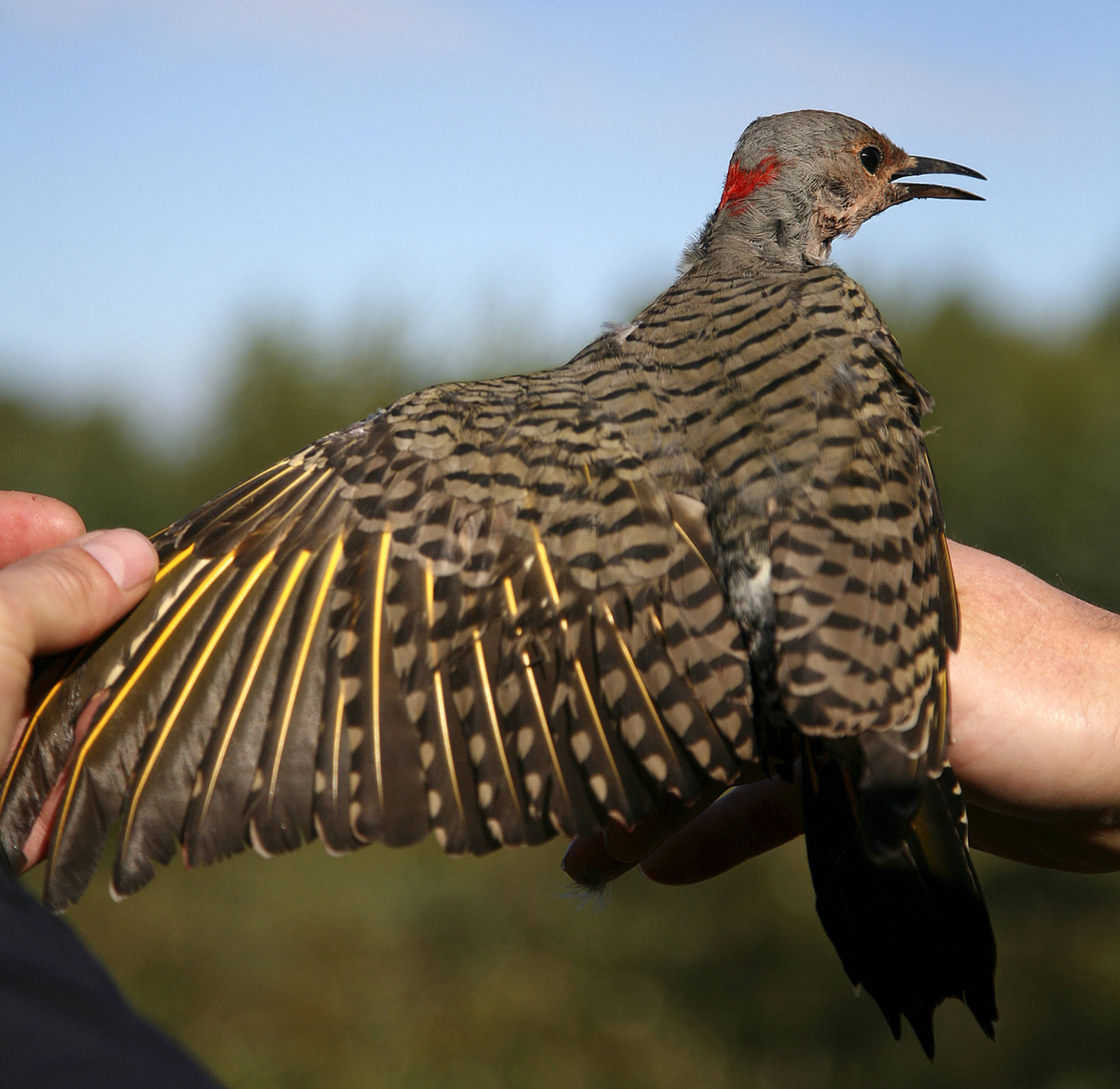
Photo by NatureLady/Pixabay • Northern Flickers belong to the woodpecker family. Relatives living in the region include the pileated woodpecker, yellow-bellied sapsucker and downy woodpecker. Unlike most woodpeckers, flickers spend an extensive amount of time foraging on the ground for various insects.

While driving along Simerly Creek Road on a recent morning, a flash of yellow and white darted from the trees adjacent to the road and flew ahead of my vehicle a short distance before veering back into the trees.

An oval of white — the rump patch of a Northern flicker — stood out on the bird and made identification simple, even while traveling at a speed of 40 miles per hour.
Flickers are woodpeckers, but they are some differences between them and other members of this clan. While flickers can be found during all seasons in the region, this woodpecker is one of the migratory ones. I see the most Northern flickers during fall migration. This woodpecker is one of the few of its kind that usually migrates to warmer climates during the colder months, although the species is not completely absent from the region in the winter season.

This species also has many other common names, including yellow-hammer — a popular name in the Deep South — and harry-wicket, heigh-ho and gawker bird. The Northern flicker is also the only woodpecker to serve a state — Alabama — as an official bird. The flicker earned this distinction back in 1927. Alabama soldiers who fought for the Confederacy were nicknamed “yellowhammers” because of their grey-and-yellow uniforms, which matched the colors of the bird. Incidentally, Alabama was one of the first states to ever name an official state bird.

There are two races of Northern flicker — yellow-shafted and red-shafted — found in the United States. Eastern flickers show yellow feather shafts beneath the wings while western counterparts show red beneath the wings. A trip to Utah several years ago gave me a chance to also see the red-shafted race of this bird.

The Northern flicker is also not the only flicker in the United States. The gilded flicker inhabits many of the deserts — Sonoran, Yuma and Colorado — in the United States. Of course, trees are scarce in deserts, but that hasn’t proven an obstacle for this woodpecker. The bird is closely associated with saguaro cactus. Other desert dwellers depend on this woodpecker. Once the flickers are no longer making use of their nest and roost holes in the multi-armed cacti, other wildlife moved into the chambers.

The Northern flicker is an enthusiastic drummer, pounding loudly on the sides of trees with its stout bill. The purpose of the drumming is to communicate with mates and signal potential rivals that they’re intruding. Toward that objective, flickers sometimes substitute metal utility poles or the sides of buildings for the trunks of trees. In addition to drumming, the flicker also employs a variety of loud vocalizations that are fairly distinctive. A loud, repeated vocalization, often translated as “wicka-wicka-wicka,” is similar to the cluck-like call of the larger pileated woodpecker. The flicker is also known for emitting a sharp, loud “kleeer” call that can be heard from a considerable distance. Flickers are probably most vocal during the spring months.

When searching for flickers, however, don’t spend all your time scanning tree trunks. Flickers spend a lot of time in fields or on lawns in search of insect prey, which mostly consists of ants and beetles. Flickers also eat seeds and fruit, and these woodpeckers will also visit feeders for peanuts, sunflower seed and suet.
The adult flicker is a brown bird with black bars on the back and wings. A distinctive black patch occupies the upper breast, while the lower breast and belly are beige with black spots. Males can be identified by a black or red mustache stripe at the base of the beak. They also have a red stripe on the back of their gray heads. The flicker’s dark tail is set apart by a white rump patch that is conspicuous when the bird takes flight.

Some woodpeckers have been impacted by the rise of automobiles. According to the website All About Birds, in the mid 20th century, red-headed woodpeckers were quite commonly hit by cars as the birds foraged for aerial insects along roadsides. I thought of this tidbit of information as I reflected on my most recent flicker sighting.

Look for Northern flickers in fields, orchards, city parks and well-planted suburban yards. These woodpeckers are usually not too shy around human observers and will sometimes allow for extended observation. If you’re even more fortunate, you could find one visiting your yard or garden. Just remember to scan the ground. This is one woodpecker that’s not a consistent tree-hugger like many of its kin.

Photo by USFWS • The yellow feather shafts of the “yellow-shafted” race of Northern flicker are evident in this photo.


Couple shares story about nesting mourning doves

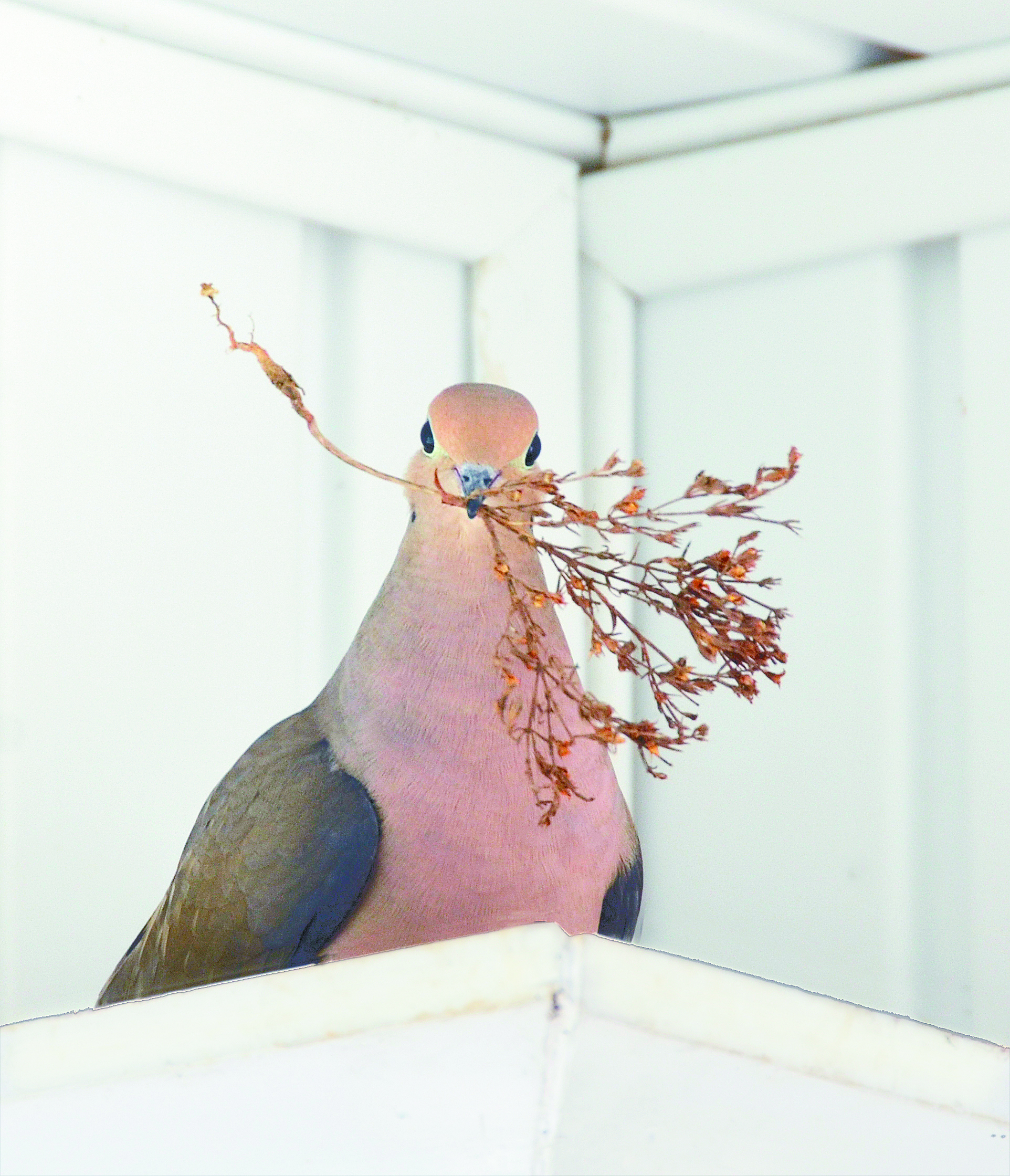
Contributed Photo by Tim Barto • One of the mourning doves nesting atop a porch column at the home of Star and Tim Barton in Telford arrives with a sprig of nesting material held in its beak. Tim’s photo of the dove even impressed the editors at “Smoky Mountain Living.” The magazine published the photo earlier this year.

Star Barto, a resident of Telford in Washington County, contacted me after reading my column on the Eastern phoebes nesting on my  front porch. Incidentally, the phoebes have now successfully fledged their young.

Star began her email by sharing that she and her husband, Tim, have been blessed with mourning doves building their nests on the top of one of their porch columns.  

“This is our fifth year with a ring side seat,” Star wrote. “They usually have two nestings per season that produce two babies each time.”

This year, the birds changed things up and the Bartos are celebrating  a third nest — atop the same porch column.  

“We call it our special version of an Airbnb,” she noted.

At first, the doves would fly each time Star or Tim opened the front door, but the birds gradually grew accustomed to their human landlords.  

Star wrote that their nest is in such a ideal location — safe, dry, under cover, high up — that the doves return year after year and do not doubt the safety of their habitat.  

“We turn off the porch light, of course, and work hard at minimizing disruption,” she wrote.  

“And they thrive,” Star added. “It is beyond thrilling to be able to see so up close and personal the magic of Mother Nature.”

The mourning dove is a common backyard bird across the country. It’s also considered a game bird.

According to the website, All About Birds, the mourning dove is the most widespread and abundant game bird in North America. According to the website, hunters harvest more than 20 million of these birds every year, but the mourning dove remains one of the most abundant birds with a U.S. population estimated at 350 million. The mourning dove also ranges into Canada and Mexico. 

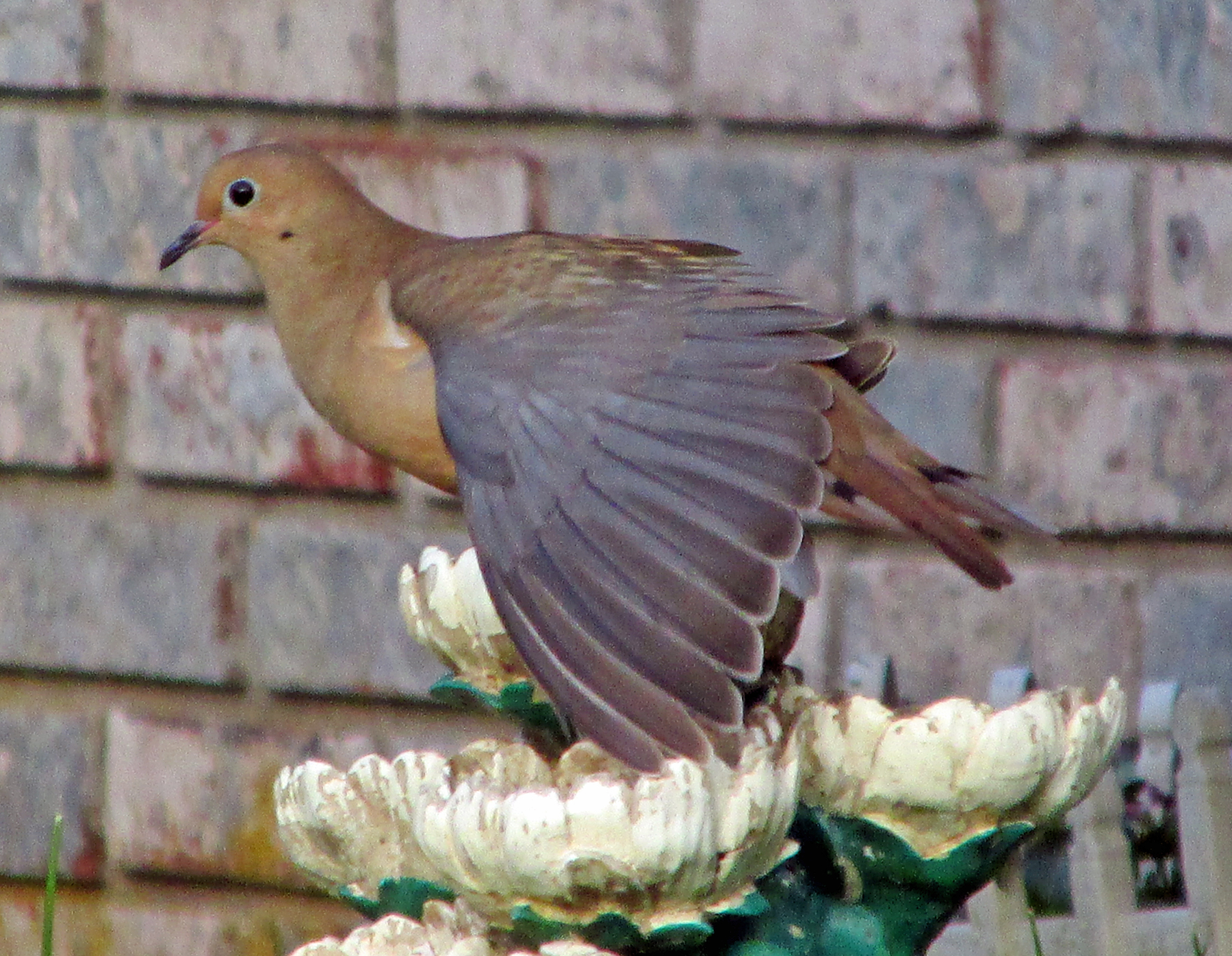
Photo by Bryan Stevens • A mourning dove stretches a wing while perched on a feeder.

The mourning dove gets its name from its mournful cooing, which has been likened to a lament. Birds are more vocal during the nesting season. 

Former common names for this dove include Carolina pigeon, rain dove and turtle dove. The mourning dove is a member of the dove family, Columbidae, which includes 344 different species worldwide.

From the standpoint of a scientist, there’s no real difference between doves and pigeons. In general, smaller members of the family are known as doves and the larger ones are classified as pigeons, but that’s not a firm rule.

Some of the more descriptively named doves and pigeons include blue-eyed ground dove, purplish-backed quail dove, ochre-bellied dove, red-billed pigeon, emerald-spotted wood dove, pink-necked green pigeon, sombre pigeon, topknot pigeon, white-bellied imperial pigeon, cinnamon ground dove, pheasant pigeon, crested cuckoo-dove and crowned pigeon.

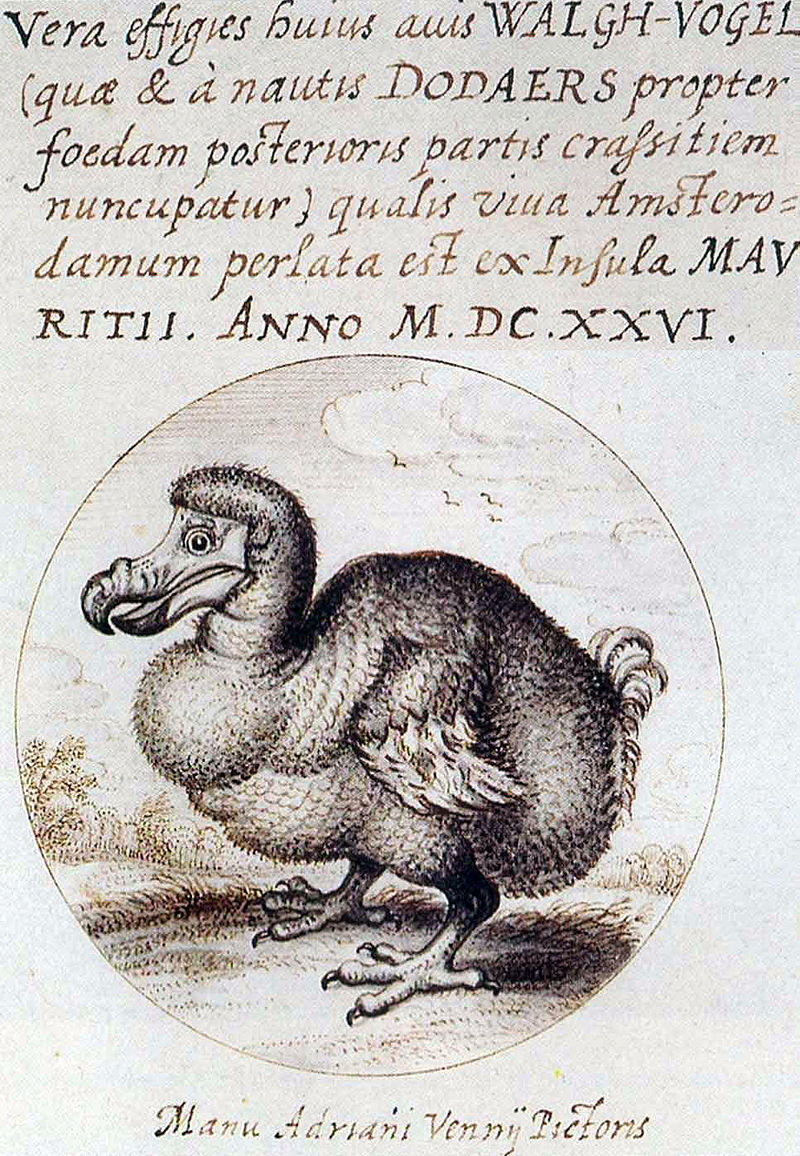
An early illustration of the dodo.

Arguably the most famous dove is the extinct dodo, a bird renowned as being  almost too stupid to live. The dodo almost certainly doesn’t deserve its reputation as a “bird brain.” The reason for the bird’s swift extinction after encountering humans can be explained by the fact that this large, flightless dove evolved on the island of Mauritius in the Indian Ocean. Largely defenseless, the dodo’s fate was sealed from the moment this bird was confronted with new arrivals — humans and affiliated animals such as rats, pigs and cats — at its home.  The results of these first encounters were catastrophic for the species.

The first mention of the three-foot-tall dodo in the historic record occurred in 1598 when Dutch sailors reached Mauritius. By 1662, the bird vanishes from the historic record. The bird disappeared so swiftly that for some time after it was often considered a mythical creature.

Other native doves in the United States include common ground-dove, Inca dove, white-winged dove and Key West quail-dove. The Eurasian collared-dove is an introduced species that has spread rapidly across the country and occurs in Northeast Tennessee. 

Doves are unusual among birds in feeding young a type of milk. Known as “crop milk,” both parents feed young in the nest with this substance produced in the crop, which is simply an enlargement of the bird’s esophagus. The crop is usually used for storage of surplus food, which is usually seeds. 

Young doves are known as squabs, and the crop milk they are fed early in life is rich in antioxidants, fats and proteins, allowing them to thrive and grow quickly. 

To share a sighting, make a comment or ask a question, please email me at ahoodedwarbler@aol.com. 

Tanagers are among world’s most colorful birds

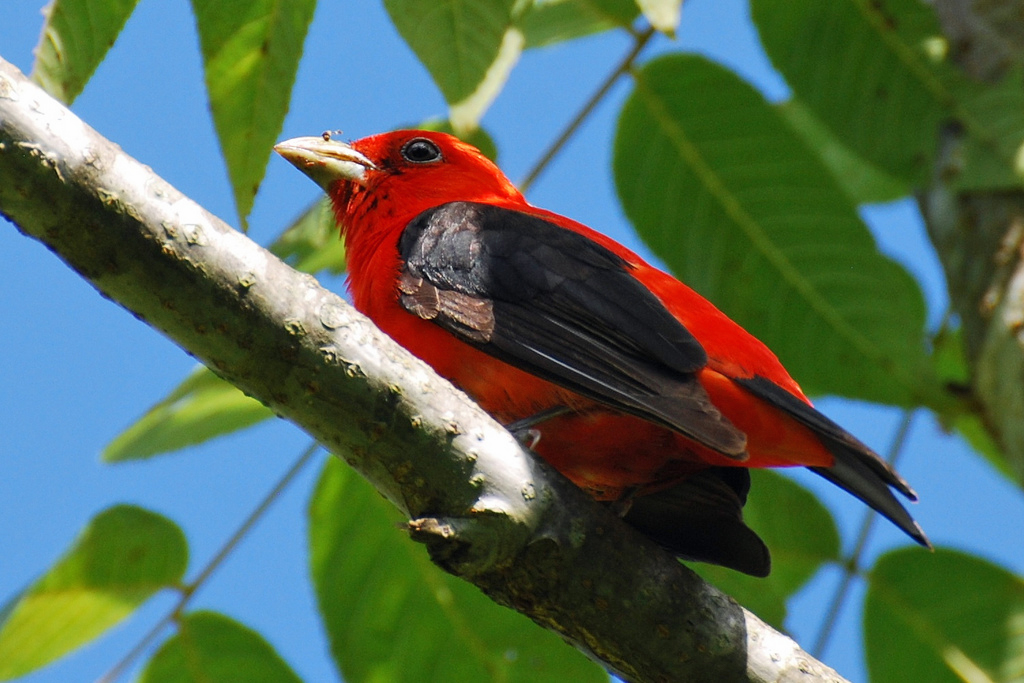
Photo Courtesy of Jean Potter
A male scarlet tanager brightens shadowy woodlands with a flash of tropical colors yet remains mostly inconspicuous in the forest canopy.

The daily chorus of songbirds greeting the dawn is usually welcome unless I’m feeling particularly sleepy. Carolina wrens are one of the first birds in residence to sing each day. This time of year they get plenty of accompanists, including American robins, Eastern phoebes, Carolina chickadees, Northern cardinals, Eastern towhees, red-eyed vireos, indigo buntings, hooded warblers, ovenbirds and others.

As June arrived, however, I began to take notice of the absent voice of scarlet tanagers. It wasn’t until June 9 that I heard the first male scarlet tanager of the season singing from the wooded ridge behind my home.

In late April and throughout May, once the oaks, the maples, the poplars and other trees begin spreading out new green leaves to create a concealing woodland canopy, a familiar song can be heard from the treetops. 

Upon first hearing it, listeners might mistake the hidden singer for an American robin. Listen a little closer, however, and the song sounds as if it is being delivered by a robin stricken a bit hoarse with a sore throat.

The producer of the hoarse but melodic song is a scarlet tanager, one of the most showy birds of Eastern woodlands from April to early October. Like the warblers, vireos, flycatchers and other songbirds, the scarlet tanager is migratory. They spend the winter months in the tropical forests of Central and South America. The scarlet tanager is better attired than most birds to provide us a glimpse of what life must be like in the tropical rain forests, which are a riot of color and sound.

It takes only one sighting to sear the vision of these vibrant birds into our retinas, as well as into our memories. The scarlet tanager boasts a brilliant plumage of crimson red paired with black wings and tail. Of course, this is the male. The female scarlet tanager makes no real claim to the common name with her comparatively drab greenish plumage. However, the scientific name, Piranga olivacea, gives a nod to the olive-green plumage of females, young males and even adult males when molting their feathers.

Although once nominated as a candidate for state bird by the school children of Minnesota, the scarlet tanager ultimately failed to gain the designation. Instead, as perhaps is fitting for the “Land of 10,000 Lakes,” the common loon represents Minnesota as official state bird.

The related summer tanager is less widespread in Northeast Tennessee, but males of this species are no less dramatic in appearance than the Scarlet Tanager. Male summer tanagers are a rosy-red over all their body. Females, with a dull greenish plumage, are relegated to the background. She can be distinguished from her counterpart, the scarlet tanager, because of their darker wings and larger bills.

The summer tanager holds the distinction of being the only all-red bird in North America. Birds like Northern cardinals and scarlet tanagers also have some black in their plumage.

I’ve seen summer tanagers at Steele Creek Park in Bristol and Willow Springs Park in Johnson City. Sadly, over the years my sightings of this attractive songbird have been few and far between. My most memorable observation of a male summer tanager took place many years ago during a spring visit to Fripp Island, South Carolina. Most of the summer tanagers I have observed in Northeast Tennessee have been females.

On the other hand, I usually have a few scarlet tanagers in residence around my home during the summer months. If the woodlands at my home fail to attract this bird, I can usually make a visit to higher elevations on Roan Mountain, Unaka Mountain or Holston Mountain to gain an exciting glimpse of this beautiful bird.

Worldwide, there have traditionally been about 240 species of tanagers. Experts have changed some of the ways they classify tanagers, so that figure is no longer set in stone. Tanagers are a New World family of birds, concentrated mainly in the tropics.

In the western United States, the scarlet and summer tanagers are replaced by Western tanagers and hepatic tanagers. During a visit to Salt Lake City in Utah in 2006 I saw several Western tanagers.

Some of the world’s other tanagers are known by extremely descriptive names, including flame-colored tanager, green-headed tanager, golden-chevroned tanager, azure-shouldered tanager, fawn-breasted tanager, saffron-crowned tanager, metallic-green tanager, turquoise tanager, scarlet-bellied mountain tanager and diademed tanager.

A print of Scarlet Tanagers by early North American naturalist and painter John James Audubon.

Scientists have recently given fresh consideration to the relationship of many tanagers to the other birds of the world. As a result, many of the North American tanagers are now closely allied with such birds as Northern cardinal and have been pushed into a tenuous relationship with tropical tanagers.

The scarlet tanager is not typically a feeder visitor, but you can lure these birds with orange slices placed in special feeders or simply spiked onto the branches of backyard trees. As an added bonus, orange slices can also attract birds such as baltimore orioles and gray catbirds.

Fond of fruit, the scarlet tanager incorporates various berries into its diet. Landscape around your home with fruit-bearing trees such as mulberry, serviceberry and wild cherry to make your yard more inviting to these elusive bird.

Yes, the scarlet tanager is more often heard than seen, but it is a bird worth seeking out. A sighting is guaranteed to impress. Seeing a scarlet tanager will almost make observers feel like they’ve been dropped into a tropical jungle instead of standing beneath a woodland canopy in the Southern Appalachians.

I’ll be participating in some summer bird counts over the next few weeks, so I am hopeful that my 2022 drought of scarlet tanager sightings will soon be at an end.

Culprit emerges in ‘murder mystery’

Photo by Tom Ferguson/Pixabay • A sharp-shinned hawk perches at the edge of a bird bath. The raptor’s talons, which are on full display, help explain this bird’s efficiency as a predator. 

Darlene Bloomfield emailed me from her home in Parry Sound, Ontario, in Canada. She wanted my help in solving an avian “whodunnit” type of mystery. 

“We had both a robin and a brown thrasher nesting in our cedar hedge,” Darlene wrote in her email.

“Both seemed to have babies,” she added. “The other morning we found a mound of robin feathers on the ground in front of the hedge along with many tiny feathers.”

She also noted that the robins are no longer around.

“Would a thrasher kill a robin?” Darlene asked. “We have seen them chasing each other.”

She also noted that they didn’t find the bodies of the dead robins.

So, in a case perhaps best filed under NCIS Ontario, I looked at the clues and responded.

Robins and thrashers are about the same size and will skirmish if they have to defend their territory, but sadly the evidence points to another culprit.

The little mound of feathers sounds like what a hawk (likely a sharp-shinned hawk or Cooper’s hawk) would leave behind after grabbing a meal in a yard or garden.

The absence of the bodies is also explained. The predatory hawk likely dined on robin and left only the plucked feathers as evidence. 

I expressed sympathy that the incident happened. I’ve been somewhat light-hearted in my relation of the mystery in this column, but it’s important to note that hawks and other predatory creature are not evil. They are not villains. They are doing what they were designed to do. 

The sharp-shinned hawk and its larger relative, the Cooper’s hawk, are classified as accipiter hawks. The sharp-shinned hawk and Cooper’s hawk are the two raptors most often encountered by people who feed birds. Part of the family of Accipiter hawks, these two species are widespread in woodlands.

The Cooper’s hawk is larger, often described as similar in size to an American crow. The Sharp-shinned, on the other hand, is usually described as the size of a dove. There’s some overlap in size, so it is not the only reliable means of identifying these hawks. For example, female Sharp-shinned hawks are roughly equivalent in size to a male Cooper’s hawk. As with many raptors, the female is larger than the male in both these species.

There are some other things to look for in telling these species apart. For instance, adult Sharp-shinned hawks often look like they have a dark cap or hood. The eyes on a sharp-shinned hawk also look like they are halfway between the front and back of the head. In addition, the head itself looks small in comparison to the overall size of this hawk’s body.

These two species feed heavily on songbirds, which causes some bird-lovers distress. I like to view predation incidents as good examples of how the the natural world is good at keeping things balanced. 

The sharp-shinned is really beautiful, especially for a hawk. Preying on songbirds doesn’t make them “bad” birds. They’re extremely efficient predators, and if you’ve ever witnessed one of these raptors in action, you can’t help but be impressed by both the power and precision deployed by these raptors in capturing prey.

The Accipiter genus of hawks includes about 50 species. In Northeast Tennessee, as well as across much of North America, the two common species are sharp-shinned hawk and Cooper’s hawk. A third species, the Northern goshawk, is a rare visitor to the region.


The Northern goshawk is a large, powerful hawk, and it is also fiercely defensive of its nest. This hawk is known to attack other raptors, mammals and even humans that stray too close to its nesting site.

Goshawk is a term derived from “goose hawk,” referring to the ability of this bird when utilized in falconry to take down such large prey as geese.

Other Accipiter hawks around the world include spot-tailed sparrowhawk, rufous-chested sparrowhawk, grey-headed goshawk, chestnut-flanked sparrowhawk, semi-collared hawk, red-thighed sparrowhawk and tiny hawk, which is one of the world’s smallest raptors. This diminutive hawk is about the size of a European starling and lives in Central and South America.

The sharp-shinned hawk will feed on a variety of birds, ranging in size from sparrows, warblers and thrushes to birds as large as ruffed grouse and mourning dove. This hawk also feeds on small mammals, reptiles and insects.

•••

To share a sighting, make a comment or ask a question, please email me at ahoodedwarbler@aol.com.

Red-headed woodpeckers more uncommon than some of their kin


Photo by Pixabay • The red-headed woodpecker is accurately named for its entirely red head. Male and female red-headed woodpeckers are identical in appearance, but young birds lack the red head.

Some readers asked for help in determining the identity of some birds that they have encountered. I tried to offer some insight into each query.

First, Lynda Carter in the Lamar community of Washington County emailed me recently with a question about a possible sighting of a red-headed woodpecker.

“I know they are uncommon and I did not get my binoculars on the bird,” Lynda wrote. “I saw the bird land in a large open-crowned oak after hearing a call very like (a) red-bellied (woodpecker) but different somehow.”

Lynda noted that she could see a lot of red on head and when the bird flew across her pasture to a pine tree, she could see big blocks of black and white in the plumage.

“I shared my sighting with my sister who lives up the mountain from me and she thought she spotted the same bird on a telephone pole in her yard a few days later,” Lynda said.

Lynda added that she and her sister live on the end of Embreeville Mountain. “We are interested in your thoughts concerning our mystery bird,” she wrote.

I responded to Lynda with my absolute confidence that she and her sister did see a red-headed woodpecker. Here are a few reasons for my belief in the identification she came up with.

The large patches of black and white are trademark characteristics of a red-headed woodpecker. The black is actually almost a glossy blue-black.

Of course, the entirely red head also separates the aptly-named red-headed woodpecker from all other members of the family in the region.

She and her sister also live in a section of Washington County near some known locations for finding red-headed woodpeckers.

Photo by USFWS • The red-headed woodpecker is an easily identified bird for anyone getting a good look.

It’s also spring. Red-headed woodpeckers are partly migratory, so her sighting could have involved a migrating bird. I’ve seen several red-headed woodpeckers in the spring in some surprising locations over the years.

We corresponded a bit more and Lynda shared more about the birds around her home.

“I do live in a great spot for birding,” she wrote.  “We have open pasture, wooded gullies and the mountain behind us. Cherokee National Forest is my neighbor to the south and the Nolichucky River is just down the road.”

Lynda hosts nesting wood thrushes that return to the same open wooded patch behind her house. “I just love hearing their song in early morning hours and again in the evening,” she wrote.

She also wrote that she has seen more scarlet tanagers, which is always a thrill, in the last year or two.

“I have had male and female rose-breasted grosbeak at my bin feeder,” she added.

She has recently heard Eastern meadowlarks, red-eyed vireo and ovenbird. She also provides several nest boxes currently occupied by Eastern bluebirds and tree swallows.

The red-headed woodpecker and its relative, the red-bellied woodpecker, belong to a genus of tree-clinging birds known as Melanerpes. The term, translated from Latin, means “black creeper.” Indeed, many of the two dozen members of the Melanerpes genus have an extensive amount of black feathers in their plumage. Other members of the genus include woodpeckers from the Caribbean, as well as from Central and South American. Some of them have quite colorful names, such as yellow-tufted woodpecker, golden-cheeked woodpecker and the accurately named beautiful woodpecker, a native of Colombia.

The red-bellied is a common bird in the region, but some effort or simple good luck is needed to find red-headed woodpeckers. These woodpeckers, which often form family flocks, have localized populations that shift from year to year.

One reason the red-headed woodpecker may be less common than its cousin relates to its fondness for hawking for flying insects along roadsides. The woodpeckers are frequently struck by cars when swooping after their winged prey. Historically, the American chestnut and beech trees also provided much of the mast crops consumed by these birds. With the extermination of the chestnut and the scarcity of beech in some locations, the red-headed woodpecker now depends on oaks and acorns. In fact, this woodpecker is rarely encountered outside of woodlands offering an abundance of oak trees.

https://www.youtube.com/watch?v=Is6MB_8-7ro

•••

Ed Wells, who lives in Nebo, North Carolina, near Lake James, emailed me recently and presented me with another identification challenge.

“I enjoy reading your feature each week,” Wells wrote.  “You always inform and teach me.”

He  also attached some photographs of a bird that flew into the side of his house in 2021.

“I have not been able to make a positive ID,” he said.  “It appeared to be a small shorebird with a straight bill of medium length. Wing span was probably 10 inches or less and perhaps about the same from bill to tail.”

“I moved the stunned bird out of the cold wind and placed it on some mulch,” Ed wrote. “It eventually recovered and flew away.”

Ed also shared that while boating on the lake recently, he saw a bird that he believes might be the same species as his mystery bird. The shorebird was perched on rocks near the waterline.

“My boat startled it and it flew rapidly away,” he added.

https://www.youtube.com/watch?v=gD6nQm1CFKI

Based on his photos, the best I could do was determine the bird was some sort of “peep,” which is a birding nickname for a group of small- to medium-sized sandpipers.

I speculated that the bird might have been a stilt sandpiper, but I also consulted Rick Knight, a veteran birder with much more experience with shorebirds.

“The bill looks too short for stilt sandpiper,” Rick concluded. He said that he would lean toward the bird being a least sandpiper or pectoral sandpiper.

Many shorebirds have been migrating through the region in recent weeks. During the recent five-county Spring Bird Count conducted by the Elizabethton Bird Club, counters found several shorebird species, including least sandpiper, pectoral sandpiper, semipalmated sandpiper, spotted sandpiper, solitary sandpiper, lesser yellowlegs greater yellowlegs and killdeer.

•••

Have questions about birds? Email me at ahoodedwarbler@aol.com. Feel free to make comments and share observations, too.

Brown thrashers return to rude, cold awakening

Photo by Bryan Stevens
Brown Thrasher perched in a Mimosa Tree.

Just when it appears safe to welcome spring, nature throws a curveball in the form of a snowstorm and a frigid but brief cold snap.

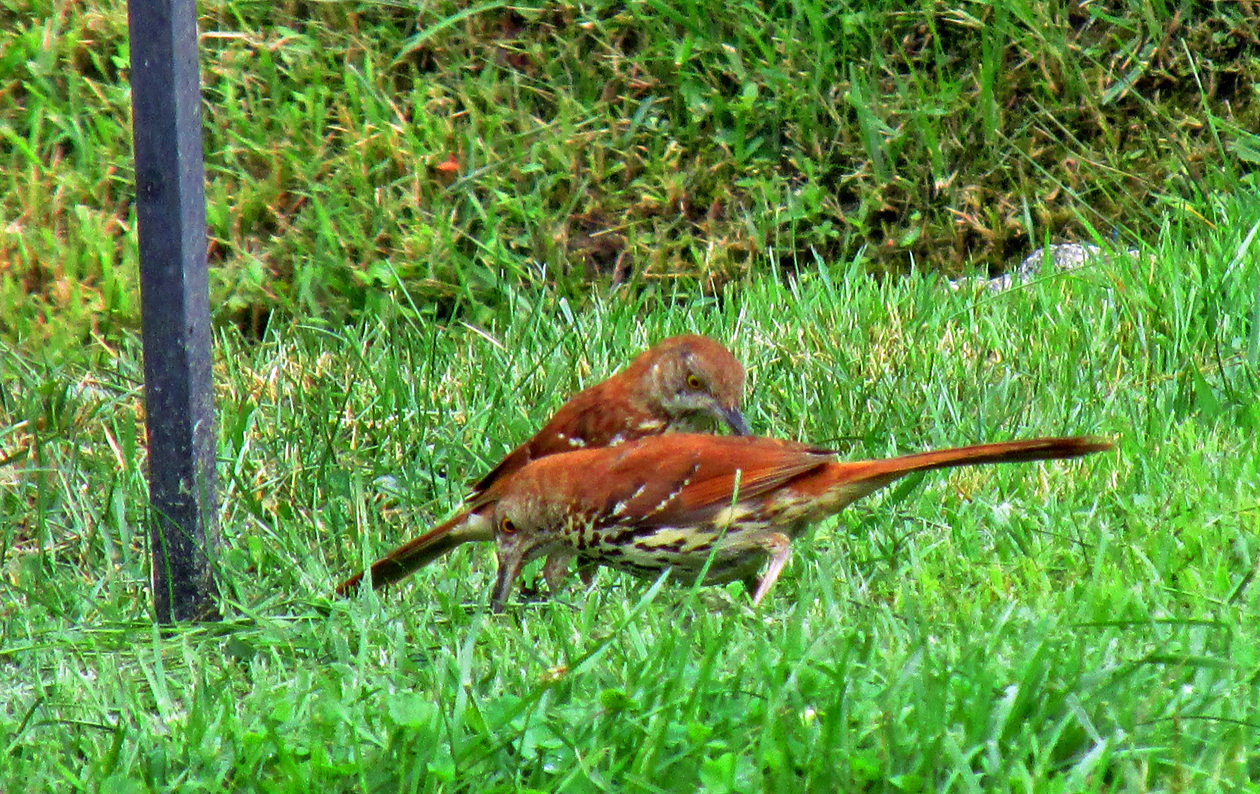
At least the snowstorm had a silver lining at my home when a pair of brown thrashers chose to make their spring arrival at the same time.

Many of the resident birds looked a bit peeved to find snow and ice after a bout of mild spring weather, but the two thrashers outside my window on March 12 looked absolutely stunned.

I’ve always thought that brown thrashers are expressive birds, but the expressions of these birds looked like a mix of bewilderment and consternation to find that their return coincided with a short-lived dip into temperatures in the single digits.

Karen Fouts, who resides in Marion, Virginia, commiserated with the thrashers, agreeing with my post that the poor birds appeared stunned by the change in the weather.

“I’ve been waiting for ours but hope they wait a week or so,” Karen wrote in a comment to my post.

Although a few brown thrashers linger in Northeast Tennessee through the winter season, the majority of these birds fly a little farther south for the cold months. Invariably, brown thrashers make their return in March and can be considered another of our feathered friends whose arrival represents more evidence that spring is returning.

Photo by Bryan Stevens
A pair of Brown Thrashers forage for food on the ground below a feeder.

A few years ago, quite by accident, I came across a brown thrasher nest. I hadn’t gone looking for it. The nest, expertly woven into a thicket of honeysuckle vines, was tucked beneath a sheltering eave of an outdoor storage building. I don’t think anything but a fortunate accident could have ever revealed the nest. I still remember peeking into that tangle of vines and seeing a golden eye staring back. The bird didn’t look in the least pleased that I had accidentally stumbled across her nest.

The otherwise extroverted brown thrasher, which prefers to nest in difficult-to-access, tangled messes, found the cluster of vines a perfect location.

For those not familiar with brown thrashers — relatives of the Northern mockingbird — they are known for their feisty and fearless protection of their nest and young. I’m probably fortunate the thrasher on her nest decided to choose stealth instead of attack. Sometimes, discretion is truly the better part of valor and the bird probably decided that, if she remained motionless, she would blend in well with her surroundings.

The brown thrasher (Toxostoma rufum) belongs to the family of “mimic thrushes,” which provides a label for a group of songbirds capable of imitating the songs of other birds. Mimidae, the Latin root for “mimic,” provides the scientific name for the family, which includes mockingbirds and the New World catbirds, as well as thrashers. The Northern mockingbird is best known for the ability to mimic, but relatives like the gray catbird and brown thrasher are also talented mimics.

The thrasher is a fairly large songbird about 11.5 inches long with a wingspan of 13 inches. Much of the body length comes from the bird’s long tail feathers. A thrasher weighs, however, only about 2.5 ounces.

Early American naturalist and artist John James Audubon painted a dramatic scene of Brown Thrashers defending their nest from an attacking snake.

The brown thrasher is not a picky eater. It’s known to eat everything from berries and nuts to insects and small lizards. It’s also aggressive in defending its nest and young. John James Audubon, a French-American ornithologist, naturalist and painter, painted quite a dramatic scene of a group of brown thrashers valiantly defending a nest from an attacking snake. The painting is so detailed that one must imagine Audubon based his work on a real-life experience. His work, originally painted in the early decades of the 1800s, still holds up today.

Incidentally, Audubon knew the brown thrasher as the “ferruginous thrush.” Another former common name for this species was “brown thrush.”

They are familiar birds in southern gardens. In fact, the brown thrasher is the official state bird of Georgia and also provided the name for Atlanta’s National Hockey League team, the Atlanta Thrashers. The thrasher became Georgia’s state bird due to passage of a Joint Resolution of the Georgia General Assembly in 1970.

Returning to the expressive nature of brown thrashers, I think it’s the bird’s golden eyes that make them seem so alert and attentive. Once they feel secure in a lawn or garden, they become less shy. As one might expect from a large songbird, thrashers have voracious appetites. Among the feeder fare I offer, thrashers seem to prefer suet cakes. They’re not woodpeckers, however, so the awkward attempts of these long-tailed birds to access the suet offer some comic antics for observers.

More birds are due to make their spring returns soon. The return of ruby-throated hummingbirds is a highly anticipated arrival for many people. These birds usually get back in the first weeks of April. As always, I hope to track the return of these tiny flying gems.

To share your first spring hummingbird sighting, send me an email at ahoodedwarbler@aol.com or contact me on Facebook. Please provide the date, time and location for your sightings.

Turkeys strutting their stuff as spring begins to take hold

Photo by Robert Pos/USFWS • A tom turkey displays to a hen in a ritual meant to attract the female turkey as a potential mate. Winter’s flocks will break up as the nesting season progresses. Raising young is a solitary affair for a hen turkey.

In my experience, rainy days always seem to bring out wild turkeys. 

I saw five of these large wild fowl in the fields adjacent to Bell Cemetery in Limestone Cove on my drive to work on the morning of March 16. I posted my sighting on Facebook and got some responses from friends who have had their own recent encounters with turkeys.

Erwin resident Michael Briggs posted that on another recent rainy day he counted 17 turkeys in his yard. 

Kaylynn Sanford Wilster, a resident of Piney Flats, posted photos of a large flock of wild turkeys roaming her yard. 

Few birds have featured so prominently in the history of the United States as the wild turkey. Thanks to the federal government eventually moving to protect the wild turkey population, this bird today is quite common across the nation. Fields bordering woodlands are a great place to observe wild turkeys strutting their stuff, especially during the autumn and winter seasons when turkeys form large flocks, which are also known as “rafters.” Watching a male turkey, or tom, fan his impressive tail feathers to get the attention of hens or intimidate other male rivals offers a peek into the thinking some of the nation’s founders held regarding the wild turkey.

While turkeys are often associated with early winter and the Thanksgiving holiday, they are actually rather active in the springtime. The large flocks are still holding together, albeit loosely, as male turkeys, known as toms, strut and fan their impressive tail feathers in an attempt to make an impression on as many hens as possible. 

Once this business of attraction is settled with successful matings, the tom turkey will go his own way and leave the hard work of incubating eggs and caring for young entirely to the hen. 

The Tennessee Watchable Wildlife website puts it like this: “The male wild turkey provides no parental care. The female alone incubates the eggs. The young follow her immediately after hatching and quickly learn to catch food for themselves. Several females and their broods may form flocks of 30 or more birds.”

The website also points out that the wild turkey is the largest nesting bird found within the Volunteer State. Males can tip the scales at a little over 16 pounds while the average female weighs slightly more than nine pounds. 

According to Watchable Wildlife, males begin competing to attracts females in late winter and early spring. The tom’s efforts feature both an audio and visual component. The male turkey produces his trademark “gobble” to attract any listening hens. When the female appears, he puffs up his body feathers and struts around her with his tail spread and wingtips dragging on the ground.

Tom turkey also compete with each other. The dominant males will mate with several females in one season, but the hen alone is left to usher a new generation of turkeys into the world.

The Watchable Wildlife site reveals that a turkey’s nest is a simple affair, usually fashioned inside a slight depression in the ground that is lined with dead leaves or grass, usually placed at the base of a tree or bush and concealed in thick vegetation.

The hen will lay from seven to 14 eggs, which she will then spend about 28 days incubating. 

According to Tennessee Watchable Wildlife, the young depart the nest shortly after hatching and follow the female. She will take them to favorable spots to forage for food. Young turkeys, known as poults, begin to fly at six to 10 days old. Male young remain with the female until the fall; female young remain with the female until the spring.

It’s always fun to follow the progress of a hen and her brood throughout the spring and summer. Fortunately, wild turkeys are fairly common these days, but that hasn’t always been the case. 

Although an important food source for early settlers and Native Americans, the wild turkey was subjected to extensive over-hunting. The population crashed, and by the beginning of the 1900s was on the verge of extermination in many areas of the country.

Reintroduction efforts by various government game agencies helped the wild turkey recover. Today, the wild turkey is found in every county in the state of Tennessee. The wild turkey population has also recovered nationwide. 

To share your own sighting, make a comment or ask a question, please email me at ahoodedwarbler@aol.com. 

Bird of mystery, black rail famed for eluding birders

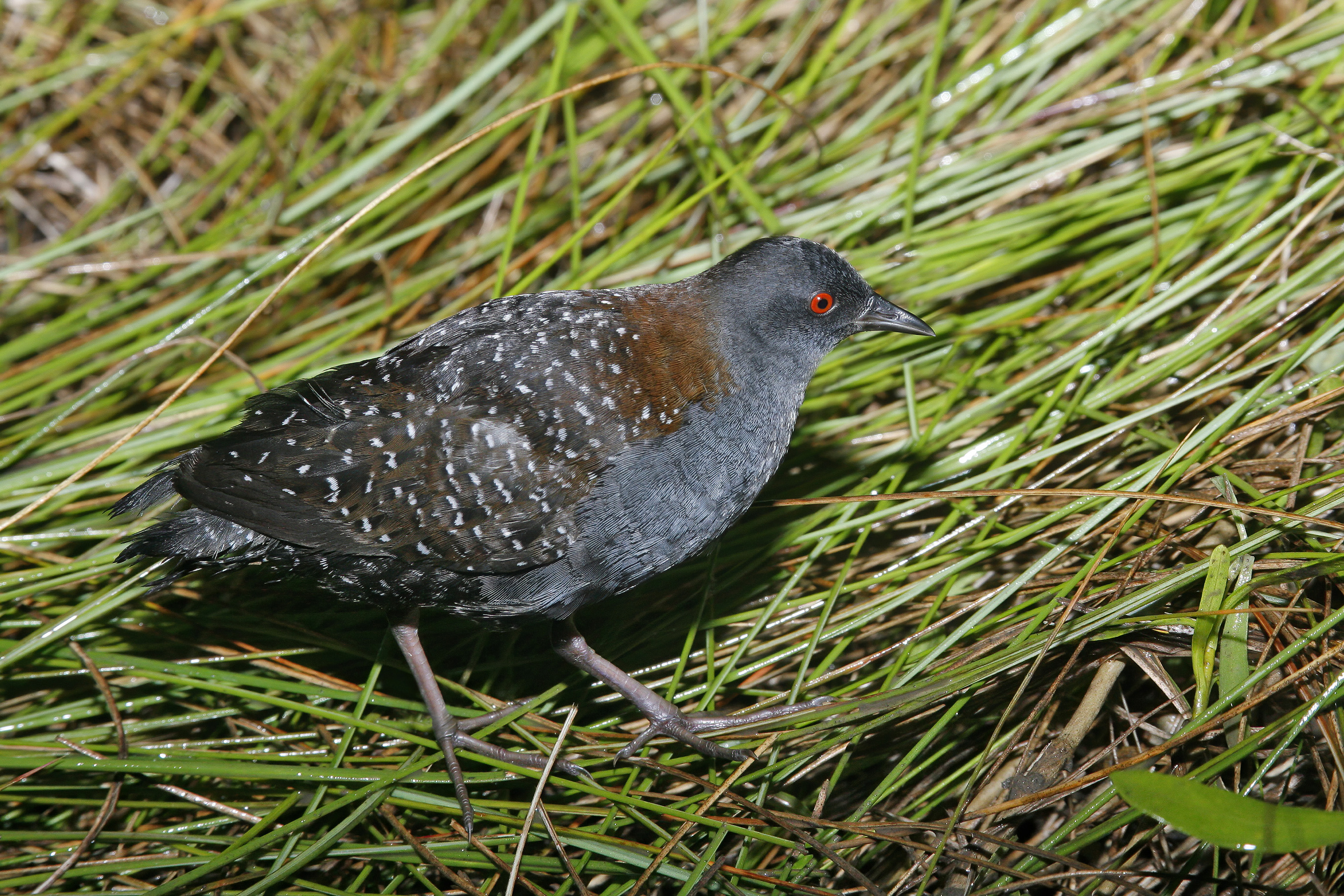
Photo by AGAMA/Adobe Stock • Adult male black rail (Laterallus jamaicensis) standing in a swamp during the night in Brazoria County, Texas. The black rail is a  secretive, rarely seen bird of wetlands and marshes. Much smaller than other members of the rail family, the bird doesn’t offer even determined birders any easy observations.

On Wednesday morning, Oct. 13, I fetched my mom’s newspaper before heading to work. Scanning the front page headlines while walking back from the mailbox, I missed a tiny bird.

The bird flushed into a panicked flight at the last possible second from right under my feet. At a glance, I knew at once that I’d seen something incredibly different. I can only describe the bird as a black, somewhat pear-shaped bird, perhaps a little larger than a typical sparrow, with a less than elegant flight that took it a couple of feet into a stand of cattails and other wet-loving vegetation.

Then, just like that, the bird was gone. After that brief encounter, which may have lasted at best a second or two, the bird vanished. With sparrows or warblers, an observer can squeak some notes to persuade a curious bird to come back into sight. I tried and got no response.

Of course, I didn’t think I’d seen a warbler or a sparrow. In an instant, perhaps one of the most significant bird sightings I’ve ever had at my home was concluded but hardly resolved.

I remained standing, staring, trying to determine what I’d just seen. I had an idea, but it was almost too unexpected and too unsupported to entertain. I won’t be adding it to my life list of birds seen, but I am fairly confident that I saw a black rail, one of the tiniest representatives in a family of birds that also include sora rail, Virginia rail, clapper rail and king rail.

When I describe the bird as tiny, it’s not an exaggeration. Adults are bigger than most sparrows but smaller than an American robin. They are gray-black birds speckled with white on the back. They have a black crown and chestnut patch evident on the back of the neck. The bill is black.The legs range from pink to wine-colored. The most striking feature of this bird, if observed under favorable conditions, is its bright red eyes.

Many birders have probably enjoyed a flight of fancy while imagining a beady pair of red eyes staring back at them from dense marsh vegetation. The black rail is so difficult to observe that it has become a sort of feathered “holy grail” for birders. I was certainly not expecting the possibility of my path crossing with this tiny wanderer.

The black rail has not been extensively studied by scientists, which means much about this elusive bird of marshes and wetland is poorly understood. There are different reasons behind the mysteries surrounding the bird.

For instance, although it does vocalize, black rails call mostly after dark. Not many people go wandering through marshes at night, so black rails largely go unheard.

In addition, when these small birds perceive a threat, they prefer running through dense vegetation instead of taking flight. Some black rails in northern areas are migratory, so these birds are capable of sustained flight. They simply don’t like to fly unless circumstances dictate flight upon them. They’d prefer to scurry through wetland, much like a small rodent. They are even known to take advantage of trails blazoned through marshes by mice and other small rodents.

A few aspects of my observation work in favor of the bird being a black rail. I’ve seen other rails — sora, Virginia rail and clapper rail — on multiple occasions. Virginia rail and clapper rail can be ruled out. They’re too large and too different in appearance to be mistaken for a black rail. The sora bears a certain similarity to a black rail, but it is mostly brown and gray with a yellow bill. It’s also larger than a black rail.

Once the black rail’s close kin are eliminated, there aren’t any other likely suspects that might be confused with it. It’s frustrating. I will likely always refer to this sighing as “the bird that looked a lot like a black rail.” My hesitation stems partly from the simple fact that so many birders are unable to ever get a look at this bird. Why should I have had better luck, even if only for a split second?

Incidentally, two of my best rail sighings have taken place in Erwin.

Back in 2000, I observed a Virginia rail stepping delicately and deliberately though some cattails and other vegetation on the fringes of the wetland area adjacent to the large pond at Erwin Fishery Park. I watched the bird move carefully and deliberately through the vegetation. It was only for a moment or two, but it was of longer duration than my recent “blink-and-you-missed-it” observation of the black rail in my driveway.

My best observation of a sora took place in the spring a few years ago during a visit to the boardwalk over the wetlands near the industrial park in Erwin. The boardwalk is part of the extended linear trail in town. I was birding that day with Margaret Roy, the former manager of Mountain Inn & Suites of Erwin.

Margaret wanted to learn more about birds, and we really got lucky when we found such an uncommon bird only minutes after we stepped onto the boardwalk. It was as simple as looking down on the mudflats and noticing an odd, plump bird walking without concern beneath us. From our elevated viewing platform, we got excellent looks through binoculars and I took some photos.

Early naturalists, even without benefit of binoculars, were aware of the black rail. John James Audubon, the famous painter and naturalist, painted a black rail and its chick. Audubon referred to the elusive denizen of wetlands depicted in his painting as the “least water-rail.” Others have called the bird by such names as “least water-hen,” “little black rail” and “black crake.” In some parts of the world, rails are referred to as crakes, but they are basically all the same type of bird.

According to the website, All About Birds, black rails have been eliminated from many saltwater tidal habitats. The website even encourages people to listen for black rails in spring in freshwater wetlands. Although they favor tidal habitats on the coast, black rails will nest in a variety of wet meadows, marshy edges, and even along creeks and rivers. Some event attempt to nest around farm ponds or fields of hay with standing water.

Black rails are scarce, but they do range throughout the United States and Canada. The two states with the most black rails are Florida and California. Unfortunately, those two states feature habitats under siege from human encroachment.

Because of their small size, black rails are limited water that is more shallow than used by most rails. They feed on seeds, insects, crustaceans and mollusks. In 2015, the black rail was confirmed as a nesting species in South Carolina after long being classified as a non-breeding migrant to the state.

High tides that force these birds from their dense cover make them vulnerable to predators ranging from herons and hawks to foxes and cats.

Rails belong to the family of birds known as Rallidae, which includes not only crakes and rails, but coots and gallinules, too. The entire family consists of about 150 species, including bird with such descriptive names as grey-throated rail, ash-throated crake, snoring rail, invisible rail, chestnut rail and striped crake. Many species of rails, particularly those that evolved on isolated islands, have become flightless.

There’s a saying that lightning never strikes twice. I’m hoping the saying is wrong. I’ve learned a lot about this fascinating bird while researching the topic of black rails after my all-too-brief sighting. I’d very much like to get a more satisfying look at a black rail some day.

Fingers crossed.