Tag Archives: Bryan Stevens

Hooded warbler easily wins fans among birders

Photo by Jean Potter • A male hooded warbler flits through the foliage of a rhododendron thicket.

The woods surrounding my home have been alive with birdsong. We’re almost ready to turn the calendar to June, but there’s been no diminishment in the fervor of the daily chorus.

The main members of the feathered choir are warblers. I’ve heard yellow-throated warbler, black-throated green warbler, black-and-white warbler, Northern parula, ovenbird, common yellowthroat and, my favorite, hooded warbler, morning and evening.

During the winter months when the hooded warbler absents itself from Northeast Tennessee, the species resides in the forests of Mexico, as well as in Belize, Costa Rica and other Central American nations.

Like many of the ruby-throated hummingbirds that make their home in the United States for the summer, the hooded warbler’s seasonal migrations take it across the vast open waters of the Gulf of Mexico. After that amazing crossing, these small songbirds disperse throughout the southeastern United States.

That birds as small as hummingbirds and warblers make this incredible migration twice yearly is one of nature’s most phenomenal feats of endurance. In a presentation by Kenn and Kimberly Kaufman that I attended six years ago, I learned that these tiny birds put on incredible fat reserves to help fuel their valiant Gulf crossings.

The warblers, also known as wood-warblers, are an exclusively New World family, numbering approximately 116 species. About 50 of these species make their home in the eastern United States and Canada for the spring and summer, departing in the fall and returning to tropical wintering grounds. Some are extremely bright and colorful birds. The hooded warbler is somewhere in the middle in a sliding scale that goes from dull to wow.

Other colorful warblers that share similar tastes in range and habitat with the hooded warbler include the American redstart, black-throated blue warbler and black-throated green warbler.

Readers who make it to the end of this weekly column will know that even my email address is a testament to my enthusiasm for the hooded warbler.

Hooded warblers nest in the woodlands around my home. So, from the time my favorite warbler returns in April until the last individual departs in October, I enjoy regular glimpses of this colorful and interesting bird. Like all warblers, the hooded warbler is quite energetic, dashing after tiny insects in the branches of shrubs and trees. Hooded warblers often forage close to the ground, which makes observing them easier.

Of course, birds are free to break the rules. One of my most memorable sightings of a hooded warbler involved a male singing from the upper branches of a dead pine tree. I’d estimate that the bird was at least 40 feet off the ground, singing his little heart out to attract a mate. I was standing on an elevated rise of land while the tree providing the warbler its perch was lower in a gully that actually placed bird and observer on a roughly level playing field.

The bird sang for many moments, which is not always the case with warblers. These birds tend to dash for cover at the slightest disturbance, but this enthusiastic male didn’t seem to pay and heed to the fact that most of its kin prefer to skulk in shrubs and dense rhododendron thickets no more than a few feet off the ground.

Back in the late 1990s, when I had just started out in birding, I observed two adult hooded warblers feeding a couple of young birds only recently out of the nest.

I was enjoying observing the sweet scene as the parent birds carried foods to the young birds, which begged incessantly and loudly when, unexpectedly, a song sparrow wandered into the scene.

The sparrow was brutally beset by the parent warblers, which attacked the intruder from all sides. The poor sparrow, having no clue to the reason for their ire, beat a hasty retreat. Sparrows are no threat, but that didn’t matter to these zealous parents.

When I first began birding, I was only dimly aware there was a family of birds known as warblers, which are now hands-down my overall favorite birds. The hooded warbler was one of the first birds I managed to identify on my own.

It’s one bird unlikely to be mistaken for any other. Every time I behold a hooded warbler, I marvel at the bird’s exquisite appearance. The gold and green feathers seem to glow brightly in the dim light of the shadowy thickets of rhododendron they prefer to inhabit. The black hood and bib surrounding the male’s yellow face stands out by virtue of its stark contrast from the brighter feathers. Large coal-black eyes complete the effect. The appearance of the male bird provides this species with its common name. The female has an identical yellow-green coloration as the male, although she is slightly more drab. She lacks the black hood and bib, although older females may acquire some dark plumage on the head and around the face. Both sexes also show white tail feathers that they constantly fan and flick as they move about in thick vegetation and shrubbery.

The warblers are, in short, an incredible family of birds. I’ve seen all but a handful of the species that reside for part of the year in the eastern United States. I still want to see a Connecticut warbler and cerulean warbler, as well as the endangered Kirtland’s warbler of Michigan and the golden-cheeked warbler of Texas.

I’ve come to think of the hooded warblers at my home as “my warblers.” There may be a kernel of truth to my belief. The website All About Birds in a profile on the species notes that a seven-year study conducted in Pennsylvania gave evidence that male hooded warblers are faithful to nesting territories from previous years. Approximately 50% of banded males were shown to return to the same area to breed again year after year.

So, some of those hooded warblers singing from the rhododendron thickets at my home are probably birds returning for consecutive spring seasons. Some of the warblers that returned back in April could be great-great-great grandchildren of those warblers that attacked the unfortunate song sparrow. At the least, it gives me pleasure to think so.

•••

To share a sighting, ask a question or make a comment, email me at ahoodedwarbler@aol.com, an address that shows my profound fascination for this particular bird.

Photo by Bryan Stevens • A male hooded warbler peers from a tangle of branches.

Annual spring bird count finds 151 species


Photo by Hans Toom/Pixabay • A male common yellowthroat, a species of warbler, is resident in the region spring through fall. The black mask of the males makes this bird quite distinctive.

The 81st consecutive Elizabethton Spring Bird Count was held on Saturday, May 4, with 40 observers in 16 parties.

Participants covered Carter County plus parts of adjacent Johnson, Sullivan, Unicoi and Washington counties. Temperatures were mild with little wind;

however, light rain just before sunrise and light to moderate rain during much of the afternoon hampered birding to some degree. Despite these conditions, good numbers were counted.

This year’s count tallied 151 species, including 28 species of warblers. The average number of

species over the last 20 years was 153 species. The all-time high was 166 species in 2016.

These yearly spring counts provide an amazing snapshot of the birds that can be found living in or migrating through the region. Some exceptional finds for this year’s count included Virginia rail, green-winged teal, grasshopper sparrow, golden-winged warbler and dickcissel.

The most abundant birds included cliff swallow (790), American robisparrown (742), European starling (500), Canada goose (391), red-eyed vireo (343), song sparrow (338), Northern Cardinal (321), Common Grackle (315), Red-winged Blackbird (282), American Crow (280), American Goldfinch (279), Hooded warbler (231) and Mourning Dove (223).

The list:

Canada goose, 391; wood duck, 35; blue-winged teal, 4; mallard, 96; green-winged teal,1; and common merganser, 2. 

https://www.youtube.com/watch?v=hp-CrM–HSU

Wild turkey, 23; ruffed grouse, 1; pied-billed grebe, 1; rock pigeon, 117; Eurasian collared-dove, 1; mourning dove, 223; yellow-billed cuckoo, 4; chuck-will’s-widow, 8; Eastern whip-poor-will, 28; chimney swift, 168; and ruby-throated hummingbird, 9.

Virginia rail, 1; killdeer, 29; least sandpiper, 27; pectoral sandpiper, 2; semipalmated sandpiper, 3; spotted sandpiper, 49; solitary sandpiper, 27; lesser yellowlegs 5; and greater yellowlegs, 1.

Double-crested cormorant, 80; great blue heron, 76; great egret, 2; green heron, 21; and yellow-crowned night-heron, 4.

Black vulture, 111; turkey vulture, 96; osprey, 13;

Cooper’s hawk, 3; bald eagle, 7; red-shouldered hawk, 6; broad-winged hawk, 8; red-tailed hawk, 14; Eastern screech-owl, 11; great horned owl,1; and barred owl, 8.

Belted kingfisher, 25; red-headed woodpecker, 16; red-bellied woodpecker, 87; yellow-bellied sapsucker, 9; downy woodpecker, 31; hairy woodpecker, 8; Northern flicker, 52; and pileated woodpecker, 46.

American kestrel, 9; great crested flycatcher, 30; Eastern kingbird, 66; Eastern wood-pewee, 31; Acadian flycatcher, 16; least flycatcher, 15; and Eastern phoebe, 96.

White-eyed vireo, 18; yellow-throated vireo, 12; blue-headed vireo, 49; warbling vireo, 15; and red-eyed vireo, 343.

Blue jay, 151; American crow, 280; fish crow, 12;  common raven, 13. Carolina chickadee, 143; tufted titmouse, 158; tree swallow, 154; Northern rough-winged swallow, 49; purple martin, 68; barn swallow, 213; and cliff swallow, 780.

Ruby-crowned kinglet, 3; golden-crowned kinglet, 2; cedar waxwing, 64; red-breasted nuthatch, 8; white-breasted nuthatch, 27; brown creeper, 2; blue-gray gnatcatcher, 77; Carolina wren, 203; house wren, 50; winter wren, 5; and marsh wren, 1.

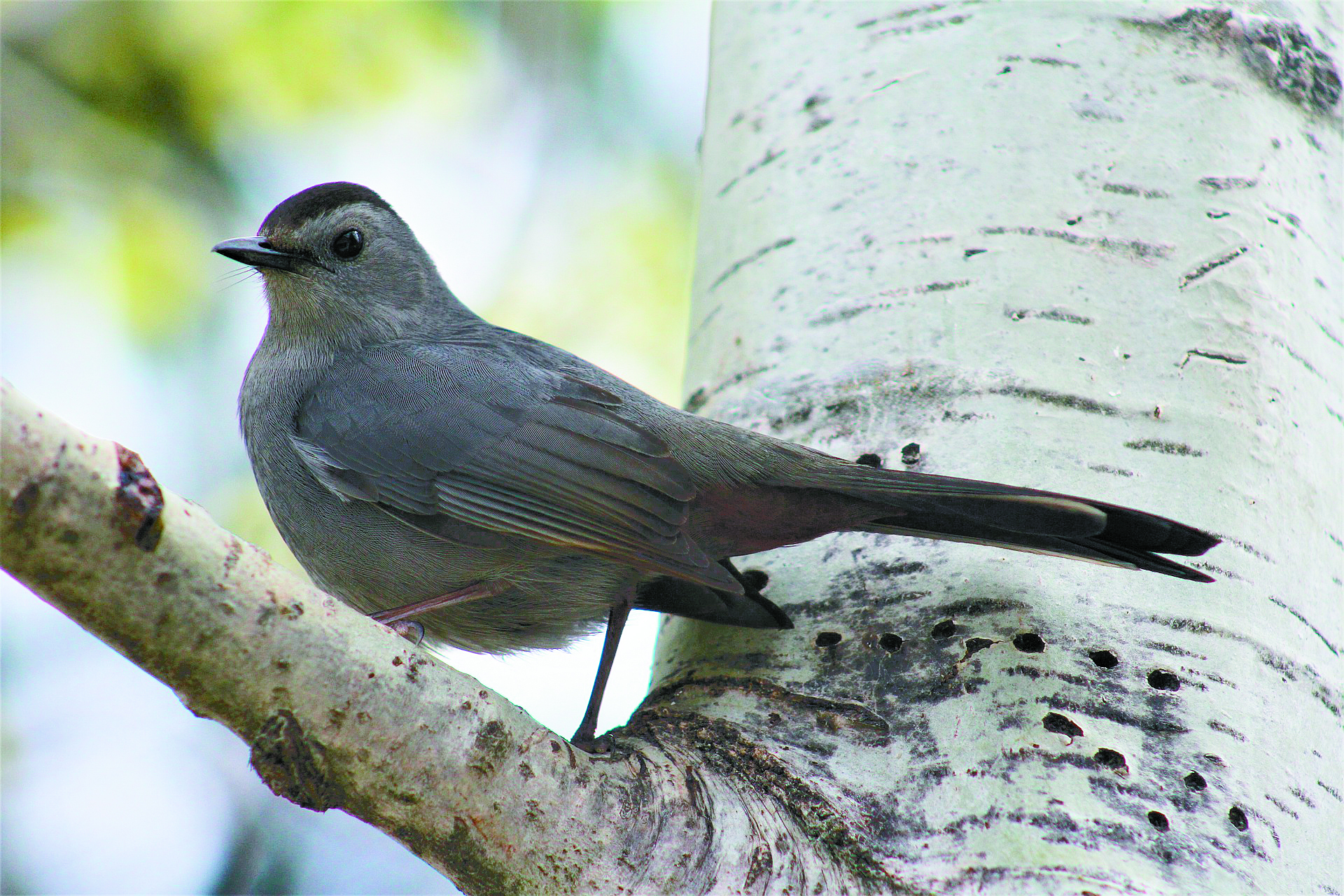
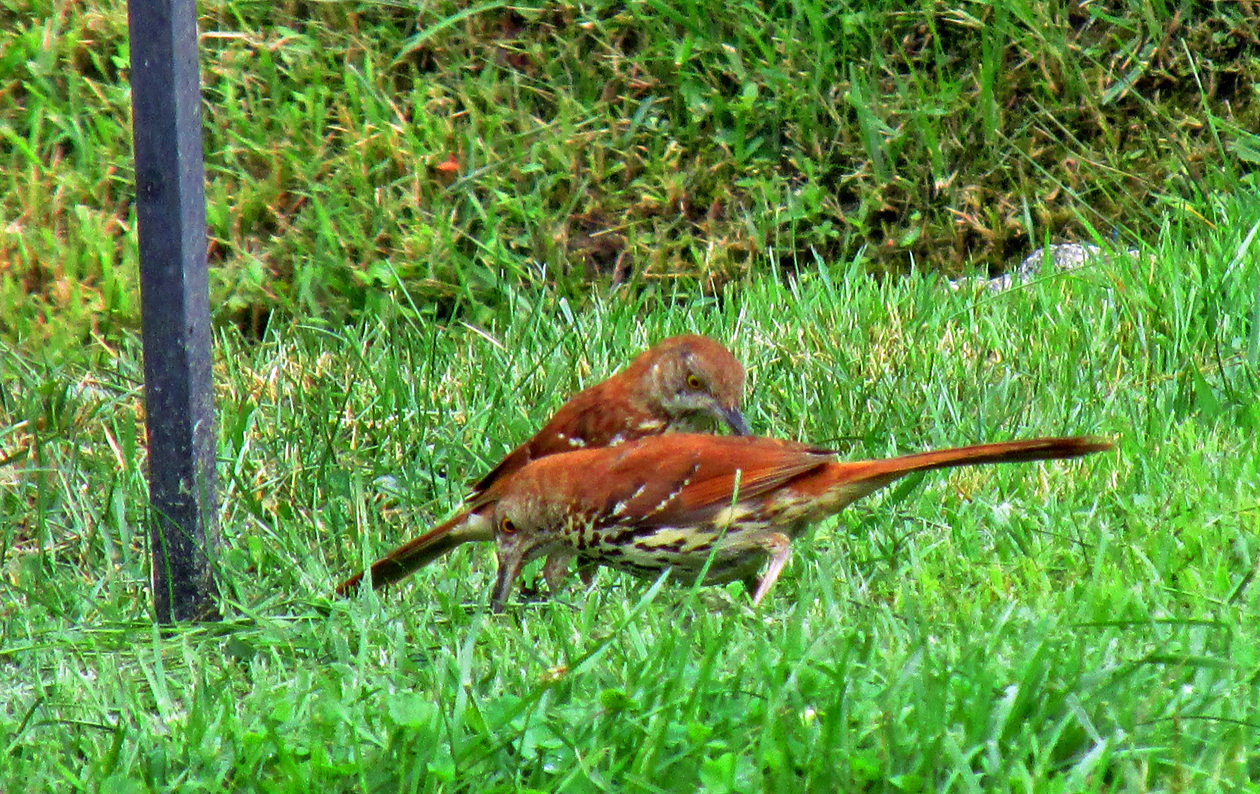
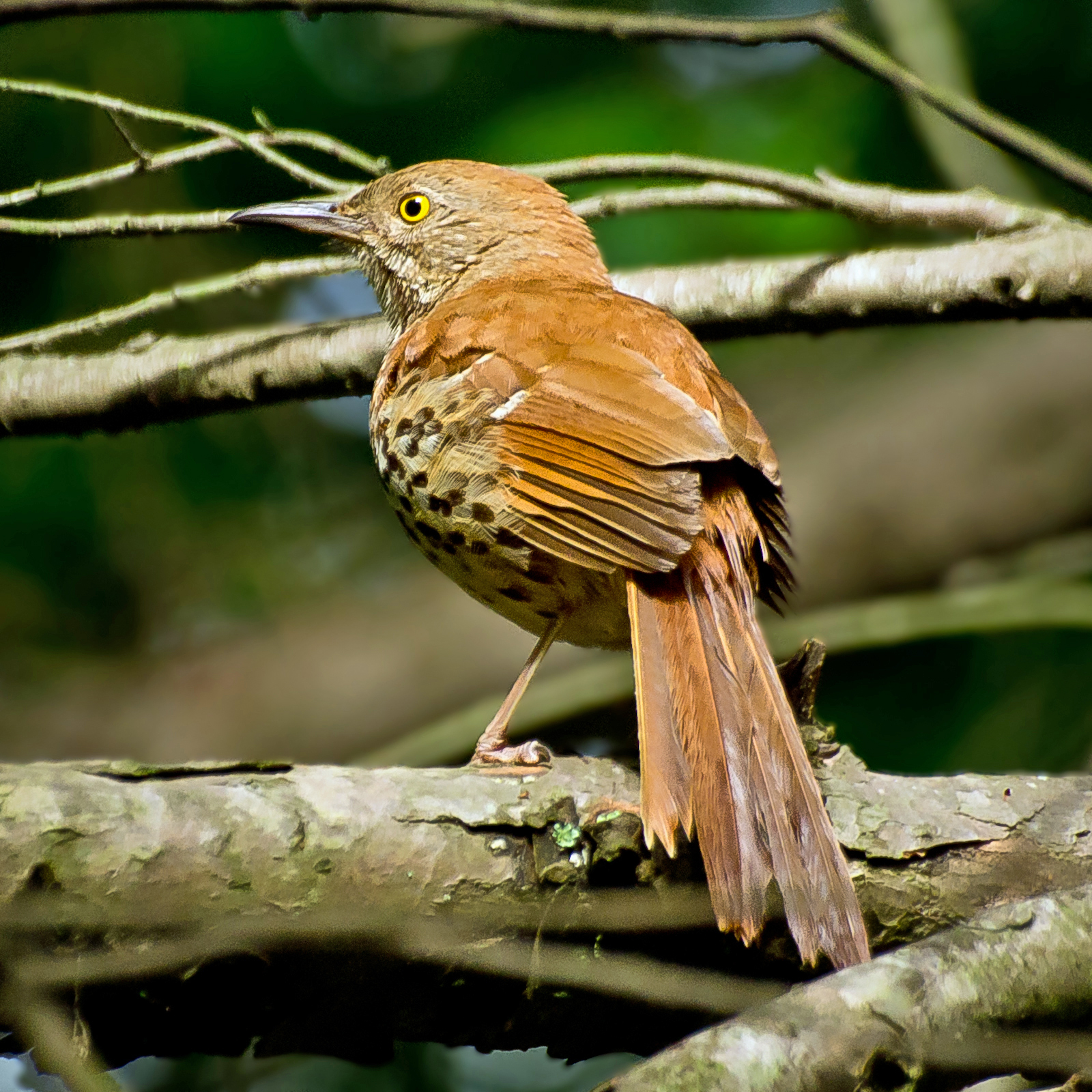
Gray catbird, 54; brown thrasher, 64; Northern nockingbird, 94; European starling, 500; Eastern bluebird, 134; veery, 14; gray-cheeked thrush, 2; Swainson’s thrush, 9; Hermit thrush, 1; Wood thrush, 118; and American robin, 742.

House sparrow 30; house finch, 79; pine siskin, 1; American goldfinch, 279; grasshopper sparrow, 1; chipping sparrow, 123; field sparrow, 43;

dark-eyed junco, 48; white-crowned sparrow, 1;

White-throated sparrow, 5; Savannah sparrow, 6; song sparrow, 338; swamp sparrow, 1; and Eastern towhee, 179.

Yellow-breasted chat, 11; Eastern meadowlark, 81; orchard oriole, 24; Baltimore oriole, 18; red-winged blackbird, 282; brown-headed cowbird, 61; and common grackle, 315.

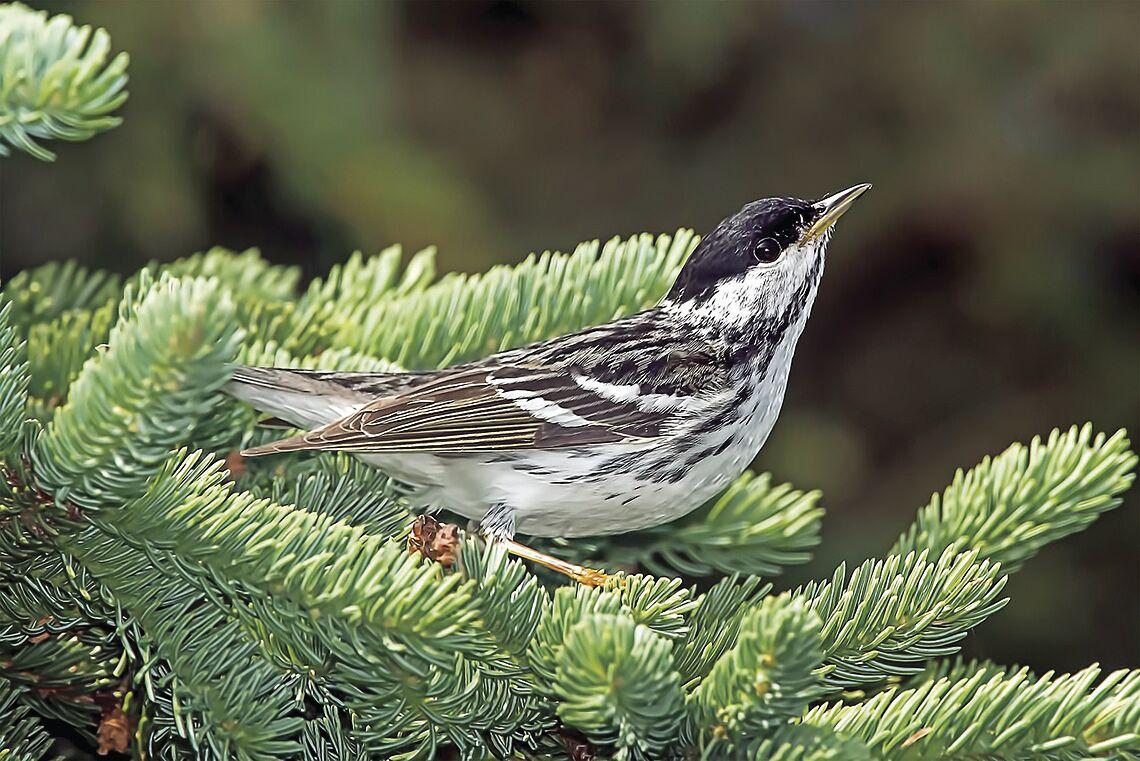
Ovenbird, 162; worm-eating warbler, 28; Louisiana waterthrush, 34; Northern waterthrush, 4; golden-winged warbler, 1; black-and-white warbler, 103; Swainson’s warbler,15; Tennessee warbler, 15; Kentucky warbler, 7; common yellowthroat, 48; hooded warbler, 231; American redstart, 33; Cape May warbler, 9; Northern parula, 89; magnolia warbler, 4; bay-breasted warbler, 7; Blackburnian warbler, 24; yellow warbler, 15; chestnut-sided warbler, 30; blackpoll warbler, 8; black-throated blue warbler, 89; palm warbler, 3; pine warbler, 8; yellow-rumped warbler, 21; yellow-throated warbler, 54; prairie warbler, 1; black-throated green warbler, 81; and Canada warbler, 37.

Summer tanager, 1; scarlet tanager, 97; Northern cardinal, 321; rose-breasted grosbeak, 30; blue grosbeak, 10; indigo bunting, 184; and dickcissel, 1.

https://www.youtube.com/watch?v=EI3pZ3t2i4E

•••

To share a sighting, ask a question or make a comment, email me at ahoodedwarbler@aol.com. 

Fish crow is the new bird in town at locations across region

Fish crows painted by John James Audubon.

Sharp-eared birders may be detecting some unfamiliar crow calls in downtown Erwin during strolls around town.

While the caws of American crows are rather harsh and raucous to the ear, the smaller and related fish crow has a caw with a higher, more nasal tone that is just different enough to stand out.

Fish crows have been expanding their presence in the region for several years, joining some other newcomers such as common mergansers and Eurasian collared doves.

The fish crow is a native species of the southeastern United States that has been pushing its range farther north and west.

I first got to know fish crows on visits to coastal South Carolina starting in the 1990s. These small crows can be quite abundant along the coastline of the Palmetto State.

It’s only been in the last six years that I’ve added fish crow to my list of birds observed in my home state.

I began to hear fish crows around the campus of East Tennessee State University in Johnson City during daily strolls while teaching in the literature and language department at ETSU back in late fall of 2018.

For months before that sighting, I’d begun to notice postings about the presence of fish crows on the campus of the Mountain Home Veterans Administration adjacent to the ETSU campus. I’d heard about the fish crows from some of my birding friends, too. I had not stirred myself to look for these slightly smaller relatives of the American crow. So, when I heard a familiar “caw” that was a bit too nasal for an American crow, I stopped for a closer look.

Photo by Pixabay • The American crow, pictured, is larger than the related fish crow and has a more raucous caw.

I heard the vocalizations again and found a couple of fish crows perched atop the parking garage behind the Carnegie Hotel, which is located between ETSU and the VA campus. With some surprise and delight, I realized that the birds were fish crows.

Fast-forward six years. In recent weeks I’ve been hearing fish crows in downtown Erwin on a fairly regular basis. This past week I heard the nasally caw of this crow as I approached the back door of the offices of The Erwin Record. I looked up and spotted a fish crow perched in one of the trees bordering the parking lot. I wonder how long before I get one of these small crows paying a visit to the fish pond at my home.

As I mentioned earlier, I’m familiar with fish crows from trips to coastal South Carolina, where these members of the corvid family are quite common. Fish crows have expanded inland away from coastal areas in recent decades. Fish crows showing up here in Northeast Tennessee originated from that expansion, which likely followed river systems like the Tennessee River.

The easiest way to detect a fish crow’s presence is to keep your ears open. Fish crows make a distinctive vocalization that is quite different from the typical “caw” of an American crow or the harsh croak of a common raven. The website All About Birds describes the call as a “distinctive caw that is short, nasal and quite different-sounding from an American crow.”

The website also makes note of the fact that the call is sometimes doubled-up with an inflection similar to someone saying “uh-uh.”

Although their name suggests a fondness for fish, they’re not finicky about their food and will eat about anything they can swallow. Fish crows are also known for raiding nests to steal the eggs of other birds. They will also dig up sea turtle eggs, which are buried in sand dunes by female turtles.

Fish crows don’t scruple at stealing food from other birds and have been observed harassing birds ranging from gulls to ospreys. Fish crows also harass American crows and, if they are successful, don’t hesitate to skedaddle with any morsel that they’re able to “persuade” their slightly larger relative to surrender.

The fish crow ranges in various coastal and wetland habitats along the eastern seaboard from Rhode Island south to Key West, and west along the northern coastline of the Gulf of Mexico.

It’s been fun to find these birds closer to home in Erwin and Johnson City.

It’s not been easy for crows in recent years. The West Nile virus has been particularly hard on American crows, which seem to have very little immunity to this mosquito-spread disease.

According to the research I’ve conduced, the fish crow, however, is more resistant to the virus, with close to half the birds exposed to the disease able to shake off the effects and fully recover.

According to the website Tennessee Watchable Wildlife, the first recorded sighting of a fish crow in Tennessee took place in 1931. Half a century later, the first nest record was documented in 1980. Both of these records took place in Shelby County.

The oldest known fish crow in the wild reached an age of 14 years 6 months old. Visit tnwatchablewildlife.com for more information about fish crows and other state birds.

Fish crows and other crows around the world are sometimes regarded more darkly than is usual for our fine feathered friends. We invent lore and superstition, mostly inspired by the crow’s dark plumage and some rather unsavory eating habits. Some people even consider crows a bad omen.

I’ve never been concerned personally with keeping crows, or any bird for that matter, at a distance. I always try to stay alert for any surprise these winged creatures bring my way.

Worldwide, there are about 50 species of crows in the Corvus genus. Some other crows include carrion crow, hooded crow, rook, small crow, white-necked crow, Eastern jungle crow, large-billed crow, violet crow and white-billed crow.

Why have fish crows expanded their range in recent decades? The answer is not clear, but it’s good to have them here. I’m glad to welcome them to the Valley Beautiful.

•••

To share a sighting, make a comment or ask a question, email me at ahoodedwarbler@aol.com. 

Male rose-breasted grosbeaks are always a stunning sight

Photo by Edbo23/Pixabay • A male rose-breasted grosbeak is arguably one of the most impressive of the migrating birds making spring stops at lucky households offering feeders stocked with an ample supply of sunflower and other seeds.

Susan Westall emailed me on Sunday, April 21, for help identifying a new bird at her feeders.

Susan wrote, “We spotted this bird today (April 21) around 2:45 p.m. This bird has never been to visit that we’re aware of. We didn’t find the identity.”

Susan, who noted that she resides in Marion, North Carolina, asked if I could help identify the bird. She helpfully enclosed three photographs.

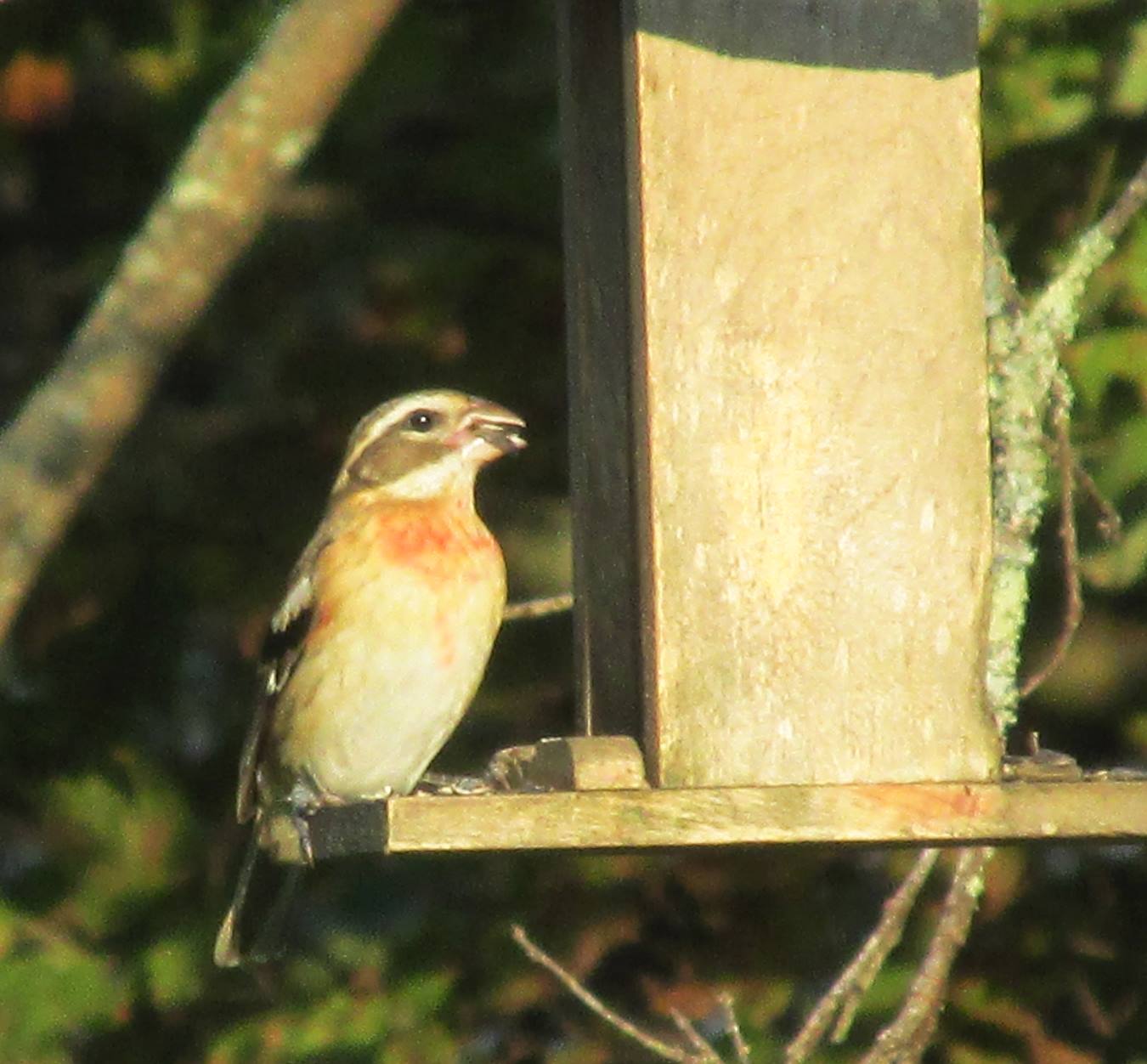
Photo provided by Susan Westall • A male rose-breasted grosbeak at a feeder at the Westall home.

One glimpse at her snapshots of the feathered visitor showed me that her mystery bird was none other than a rose-breasted grosbeak, one of the many splashy and impressive migrants that travel through Northeast Tennessee, Southwestern Virginia and Western North Carolina every spring.

Other than ruby-throated hummingbirds, the one bird whose return in the spring is guaranteed to generate excitement is the rose-breasted grosbeak. Every spring, I get phone calls and emails from people wanting to share the thrill of seeing these vibrant birds in their back yards.

A few people, like Susan, are completely stumped that such a flamboyant feathered visitor has landed in their own yard like an out-of-place inhabitant of a tropical jungle.

For most of us, these spring visits by rose-breasted grosbeaks is a fleeting and temporary stay. After finding the local arrangements, which can consist of well-stocked feeders and perhaps a convenient water source, to their liking, these migrants may linger for several days.

However, rose-treated grosbeaks nest at higher elevations and are usually impatient to continue the journey to where they will spend the summer months tending to their young.

Single birds are occasionally the first to arrive, but rose-breasted grosbeaks do form flocks when migrating. Even if a scout shows up alone at your feeders, he will often soon be joined by other grosbeaks.

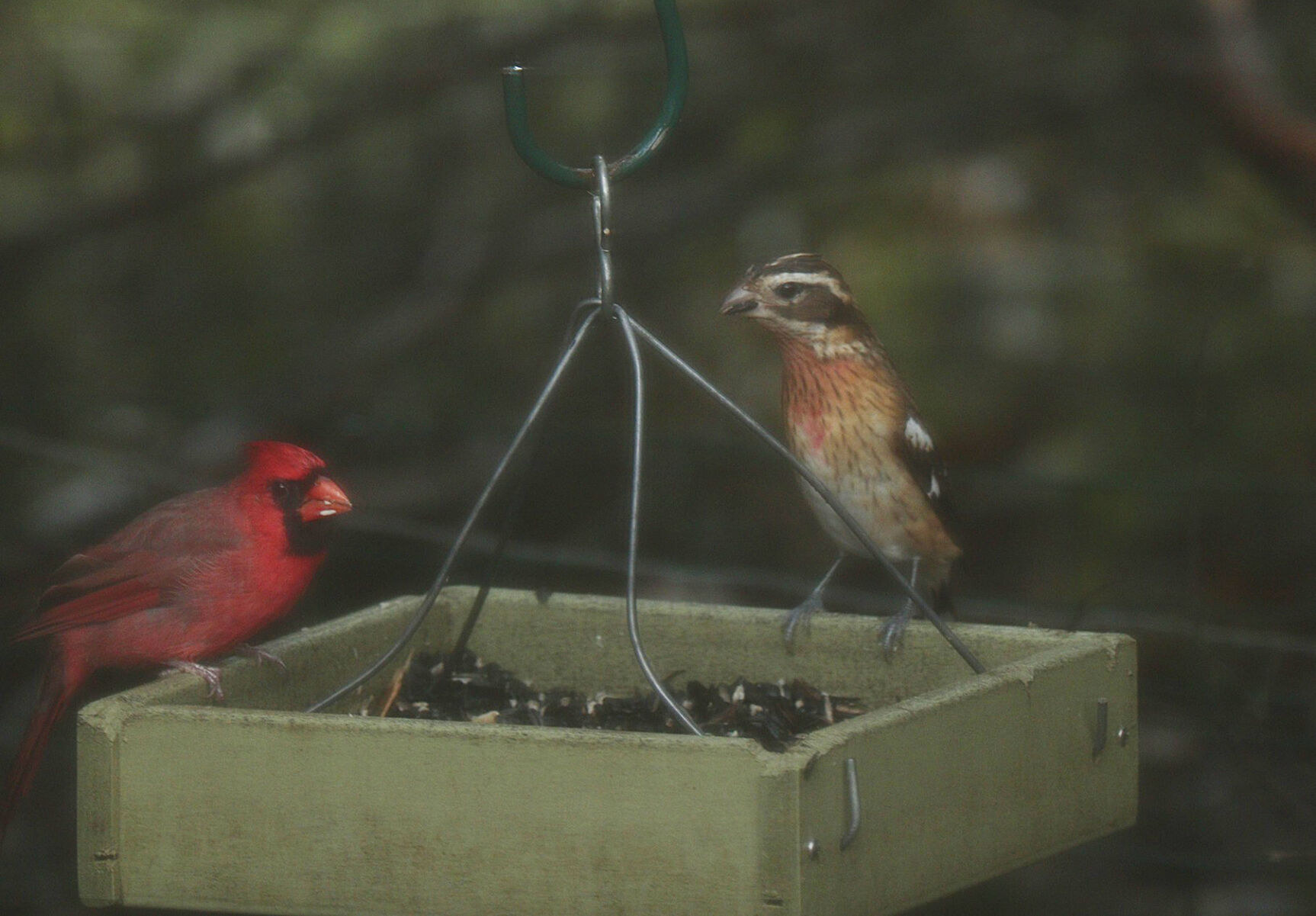
Photo provided by Byron Tucker • A male rose-breasted grosbeak has a showdown with a red-bellied woodpecker for access to a feeder.

Plenty of rose-breasted grosbeaks pass through the area, and a few even decide to make the region’s mountains their summer home. Rose-breasted grosbeaks spread out widely across the eastern half of the North American continent, ranging from northeastern British Columbia to Quebec and Nova Scotia in Canada. They also range south from New Jersey to Georgia. The rose-breasted grosbeak also reaches Colorado, Oklahoma and Kansas.

Farther west, the rose-breasted grosbeak is replaced by the closely related black-headed grosbeak. I saw black-headed grosbeaks on a trip to Salt Lake City, Utah, in 2006.

In many bird species males and females differ considerably. This is certainly true of male and female rose-breasted grosbeaks. The genders in this species are considered dimorphic, which is a scientific term which means that certain male and female birds of the same species may vary widely in size, plumage coloration, song or other secondary sexual traits.

They also have some things in common. Both sexes have a massive bill, which they use to hull sunflower seeds at feeders or glean insects from leaves and branches. It’s the heavy, blunt bill for which the term “grosbeak” is derived. “Gros” is a German term for large or big, so grosbeak simply means a large-beaked bird.

People who band birds to further the study of them will tell you that rose-breasted grosbeaks have a wicked bite and are capable of delivering quite a nip. Bird banders frequently encounter rose-breasted grosbeaks in their mist nets — and bear the scars to prove it.

Only the male rose-breasted grosbeak displays the namesake splash of rosy-red feathers across a white breast. The rest of the male’s plumage consists of a dramatic contrast of black and white feathers. The female grosbeak, however, doesn’t stand out in the same way. She is much less colorful than the male. With her brown and white plumage, she is often mistaken for a large sparrow or finch.

At our feeders, this bird’s extremely fond of sunflower seeds. Away from our feeders, grosbeaks feed on insects, seeds, fruit and even some leaf buds and flowers. I’ve seen these birds satisfying a sweet tooth — or should that be sweet beak? — by feeding on jewelweed flowers and apple blossoms. If sugar’s good for hummingbirds, I am sure it is a valuable energy source for rose-breasted grosbeaks, too.

The rose-breasted grosbeak is a cherished spring visitor that never fails to impress by bringing a hint of the tropics to the mountains of Northeast Tennessee. If you are disappointed in hopes of seeing the species this spring, take heart. The rose-breasted grosbeak migrates through the region again in the fall, often from mid-September to late October. The males sometimes look less vibrant by autumn, but it’s always a treat to see this bird.

I’m hoping many readers are also enjoying their own opportunities for hosting this delightful songbird.

Photo by Bryan Stevens • A male rose-breasted grosbeak perched in a tree on Holston Mountain in Tennessee.

Other songbirds are also on the move. Warblers, vireos, tanager, flycatchers, orioles and more are migrating through the region. Some will stay and make a home in the region for the summer. Others will push on beyond the Southern Appalachians. Keep your eyes open for what may show up next.

•••

Mark this on your schedule: Bristol Bird Club will host a presentation by Kera and George Brewster of Wild Birds Unlimited in Johnson City on Tuesday, May 21.

They couple had been scheduled to give a program at the club’s January meeting, but a snowstorm prevented it.

The club meeting will take place at 7 p.m. at The Summit at 1227 Volunteer Parkway in Bristol, Tennessee. Attendees can also join the meeting and view the program on Zoom. For a Zoom invite, email Larry McDaniel at bristolbirdclub2022@gmail.com.

•••

Share a sighting, ask a question or make a comment by emailing me at ahoodedwarbler@aol.com.

Photo by Pixabay.com • A well-stocked feeder is a first step toward attracting more birds to your yard.

More readers share their hummingbird arrival stories

Photo by Bryan Stevens • A male ruby-throated hummingbird perches on a branch. These tiny birds returned to the region earlier this month.

Ruby-throated hummingbirds are back in the region for another season. This male takes a sip of nectar from the blooms of a potted plant.

I reported last week on a handful of people who saw the “early bird” ruby-throated hummingbirds making their return to local yards and gardens. Many more readers have contacted me this past week to share more hummingbird sightings.

For those who haven’t seen a hummingbird yet, just remain patient. They’re definitely arriving for another season with us. 

•••

Gina Kinney emailed me on behalf of her mom, Ginger Brackins, as she has done for several years, to share news of her mom’s hummingbird sighting.

“She said she saw her first hummingbird on Saturday, April 13, at around 5:30 p.m. in Erwin,” Ginger wrote.

•••

Only the male ruby-throated hummingbird shows the bright red throat patch.

“I put my feeder out on April 1 and took it down this morning (April 14) to clean it and put new feed in it,” wrote Joan Chipokas in an email. “About 30 minutes later, a male hummer came to the feeder. Didn’t see him again today, but I was busy so really wasn’t watching. Hopefully I’ll start seeing him on a regular basis and the female will show up too.”

Joan wrote that she lives on Suncrest Village Lane in Gray.

•••

Kingsport resident Ray Chandler reported a sighting of a first spring hummingbird on April 14 . “They are regular visitors to the feeders now,” he shared in an email.

•••

Lonnie Hale reported a first of spring hummingbird sighting in an email to me.

“We saw our first hummingbird yesterday (April 14),” Lonnie wrote. “I put the feeders out in the morning, bought four hanging baskets of flowers and BAM.”

Lonnie lives near Big Stone Gap, Virginia. “Love these little guys,” Lonnie added.

•••

April Fain in Unicoi also saw her first ruby-throated hummingbird of the season on April 14. “We had our first hummingbird this morning,” April wrote in a Facebook message to me. “I saw him three times.”

•••

Photo by Bryan Stevens • Despite a perceived disadvantage of size, ruby-throated hummingbirds are quite capable of thriving in a giant world.

Amy Tipton sent me a message on Facebook to report that her parents had observed their first spring hummingbird.

“The hummingbirds are back in Unicoi County,” she wrote. “My parents, Edison and Emma Jean Wallin, spotted their first one of the season this evening (April 14) at 6:30 at the feeder on their front porch in Limestone Cove. Mama just put her feeder out today.”

•••

“My first hummer just came in,” Karen and Bobby Andis of Kingsport reported via Facebook Messenger on April 14. “A small female…very hungry.”

I got a followup message the following day. “A male showed this morning,” they wrote.

•••

Erwin resident Donna Barnes Kilday shared a post on my Facebook page to report the arrival of her first hummingbird. “Saw my first hummingbird today,” she wrote on April 15.

•••

Priscilla Gutierrez shared in a Facebook comment that she saw her first hummingbird of spring on April 16.

•••

“I’ve had my feeder out for 2 weeks,” Virginia Martin commented on a Facebook post. Virginia, who resides in East Carters Valley in Scott County, added that she saw her first ruby-throated hummingbird on April 13 at 3:15 p.m.

“I believe they are a couple of days behind schedule for my area, possibly weather-related since we’ve had a spell of cooler temperatures and a few very windy storms recently,” she added.

Virginia noted that she has fed hummers for years, and use only the homemade sugar water in a common inexpensive feeder.

“It’s located just outside my dining area window, so I have literally a ‘bird’s eye’ view,” she wrote. “There’s a dogwood tree close by, and other good perching places for them to monitor and protect their territory.”

•••

Jan Bostrom sent me an email to share her first spring hummingbird sighting. She wrote, “I saw my first hummingbird yesterday (April 17) around 6 p.m.” Jan wrote that she been on the lookout because her neighbor saw her first hummingbird on April 15.

“I’m thrilled to be retired and to have time to enjoy God’s beauty around me,” Jan shared.

•••

I’ve finally joined the ranks of those who have welcomed hummingbirds back for another season.

The hummingbirds returned to my own home on April 17 at 7:15 p.m. I heard the telltale buzz of the bird’s wings before I spotted him. I stayed still and he zipped to my feeders for a quick sip. He returned a few times before dusk. When I posted my success on Facebook, several other people commented to let me know that hummingbirds had returned at their homes on April 17.

The following day I enjoyed watching two male ruby-throated hummingbirds in a prickly standoff about control of the front porch feeders.

•••

Vivian C. Tester in Bristol, Tennessee, posted a comment on one of my Facebook posts to let me know of her first spring sighting.

“Just saw my first hummingbird of spring,” she wrote on April 17.

•••

Rosalie Sisson in Jackson, Tennessee, commented on my Facebook page that she saw her first hummingbird of the season at about 6 Central time on April 17.

•••

Lauri Sneyd Garland in Unicoi, also on April 17, noted in a comment on my Facebook page she has been seeing hummingbirds for the last couple of days.

•••

Tina Jefferson Reese in Bristol, Tennessee, reported via a comment on my Facebook page that she also saw her first hummingbird on April 17.

•••

Linda C. Robinette wrote, “Ours fluttered in around 11:30 this morning (April 17),” in a comment on my Facebook page.

•••

Kaylynn Sanford Wilster at Boone Lake saw her first spring hummingbird on April 18. “Saw my first one yesterday,” she wrote on April 19 in a Facebook comment on a post of mine.

•••

Spring migration is in full swing. At least six different species of warblers have returned to the woodlands around my home. A broad-winged hawk has also returned to a favorite field less than a quarter of a mile from my home. Keep your eyes open for new arrivals. Chimney swifts have been zipping over the rooftops of downtown Erwin since April 17.

To share a sighting, make a comment or ask a question, email me at ahoodedwarbler@aol.com.


Tiny kinglets, gnatcatchers lead the charge among spring’s returning birds

Photo by Pixabay • The blue-gray gnatcatcher’s diminutive size belies its defiant attitude. These birds are intensely territorial and brooks no intruders.

The ruby-crowned kinglets, which passed through last fall in October and November, have returned, retracing their migratory path for the spring season and making their presence felt at my home with their jittery call notes and songs.

Most of the more recent returning birds have been on the smaller side. In addition to ruby-crowned kinglets, which arrived on April 1, I saw and heard a tiny blue-grey gnatcatcher on March 31.

As their name suggests, kinglets are tiny birds. In fact, about the only North American birds smaller than kinglets are some of the hummingbirds. The kinglets, known outside North America as “flamecrests” or “firecrests,” belong to the family, Regulidae, and the genus, Regulus. The family and genus names are derived from a Latin word, regulus, which means “rex,” or “king.” The name was apparently inspired by the colorful crown patches, often red, orange or gold, that resemble the royal “crowns” of kings. In addition to the two North American species, four other species of kinglets can be found in North Africa, Europe and Asia.

The gnatcatcher is also one of our smaller birds. I’ve always though that blue-gray gnatcatchers resemble a shrunken mockingbird. Like quarrelsome mockingbirds, gnatcatchers are noisy, scolding songbirds.

They are also determined to protect their nesting territories at all costs and will attack much larger birds. In North America, the gnatcatcher ranks in size with birds like kinglets and hummingbirds. Despite its diminutive status, the gnatcatcher acknowledges no superiors. According to the All About Birds website, blue-gray gnatcatchers are “fiercely territorial” and use vocal displays and postures to in intimidate other birds. They may chase a rival as far as 70 feet. If all this fails to deter an intruder, a gnatcatcher will escalate to midair confrontations.

Gnatcatchers don’t hesitate to call for reinforcements when warranted. With persistent squeaking they will drum up a brigade of feisty, feathered fighters to repel intrusions by potential predators too large for a gnatcatcher and its mate to handle on their own.

Ruby-crowned Kinglet

There are two species of kinglets in North America.

Although similar in size and overall coloration, the ruby-crowned and golden-crowned kinglets are easily distinguished from each other. Side by side, the two North American kinglets are easy to identify. The golden-crowned kinglet has a striped facial pattern formed by bold black and white stripes. The ruby-crowned kinglet, on the other hand, has a bold white eye ring but no striping. The golden-crowned kinglet has an orange crown patch, while the ruby-crowned kinglet has a red crown patch that is, more often than not, kept concealed. Both sexes of the golden-crowned kinglet possess a yellow crown patch, but only the male ruby-crowned kinglet boasts a scarlet patch of feathers atop the head. Observers can expend a lot of energy trying to get a look at the crown patches, which are typically only displayed when the bird is agitated.

There are 17 species of gnatcatchers. Most of these species reside in Central and South America. Some of the other species found in North America include California gnatcatcher and black-capped gnatcatcher.

Kinglets are very active birds. If warblers can be described as energetic, the kinglets are downright frenetic in their activities. The kinglets almost never pause for long, flitting from branch to branch in trees and shrubs as they constantly flick their wings over their backs. These bursts of hyperactivity can make them difficult to observe. Although small in size, these birds more than compensate for it with a feisty spirit that does them well through the harsh winter months.

Gnatcatchers are also constantly on the move, flicking their tails and darting through the branches of trees just starting to put out new green leaves. They glean caterpillars and small insects from the undersides of leaves to help fuel their demanding metabolism.

Kinglets and gnatcatchers often join mixed flocks comprised of other species of birds, some of which are regular feeder visitors. Perhaps by observing their flock counterparts, some kinglets have learned to accept feeder fare such as suet, meal worms and chopped nuts. Away from feeders, kinglets mostly feed on a range of small insects and arachnids. Gnatcatchers are strictly eaters of insects, but while a feeder holds no attraction for them, their curious nature often makes these tiny bird quite approachable.

Normally, kinglets have a rather fleeting lifespan. These tiny birds can be considered old if they live three or four years. There are always exceptions. The oldest golden-crowned kinglet on record was six years and four months old. That individual, a male, was documented by a bird bander in 1976, according to the website All About Birds.

Likewise, gnatcatchers live brief lives. The oldest known blue-gray gnatcatcher was a male, and at least four years, two months old, when it was recaught at a banding station in Pennsylvania and rereleased, according to the All About Birds website.

•••

I’m still waiting for the smallest of the small to make its spring appearance. Ruby-throated hummingbirds are back, although I haven’t seen one yet. To share your first hummingbird sighting of spring, email me at ahoodedwarbler@aol.com.


Blue jays bold, bossy backyard visitors

Photo by edbo23/Pixabay A blue jay grabs a peanut from a feeder.

At my own home, blue jays have an easy life. They’re so much bigger than most of the other birds that visit my feeders that they can be a little bossy toward their smaller kin. All are welcome, though.

The blue jay is the smallest member of the Corvid family in Tennessee. This bird’s larger relatives in the state include the American crow, fish crow and common raven.

The blue jay, which is typically 10 to 12 inches long, is one of the largest songbirds to visit our feeders. They’re fond of sunflower seed, peanuts, suet and other feeder fare. Blue jays are quite noisy and produce a variety of vocalizations. They’re also capable of mimicry and can mimic in convincing fashion the calls of red-tailed and red-shouldered hawks.

While they are primarily woodland birds, blue ays are very adaptable and capable of thriving in suburban parks and other less wild areas. In the fall, acorns are a favorite food. There are times in autumn when almost every blue jay I see has an acorn n its bill. They also tend to stash food for future days, and this habit has also helped re-forest oak woodlands.

Jays are social birds and form flocks, which offers some protection from predators. It only takes one sharp-eyed bird in a flock to sound an alarm to protect the entire group.
Other birds can also detect blue jay alarm calls and react accordingly.

Accipiter hawks — Northern goshawk, Cooper’s hawk, sharp-shinned hawk — are the primary predators on blue jays. They share some of the same habitat and the agile hawks are usually able to outmaneuver the slower flying jays.

I was a little surprised to discover that the blue jay has never been chosen as an official state bird, although it does serve as the official bird for the province of Prince Edward Island in Canada.

Blue jays are undeniably striking birds. They are bright blue on top and white to gray on its throat, chest and belly. They have white wing bars and black and white banding on the tail. Its bill, legs and feet are black. The bird also has a black collar on its lower throat. At a glance, all blue jays — male and female — look alike. However, experts have determined that the black throat collars are subtly different from bird to bird and may help members of a flock recognize each other.

Larger birds typically have longer life spans than small ones. The medium- sized blue jay will probably live longer than a wren or sparrow. The oldest known wild, banded blue jay was at least 26 years, 11 months old when it was found dead after being caught in fishing gear, according to the website All About Birds. It had been banded in 1989 around Saint Pierre and Miquelon, which is a French archipelago south of the Canadian island of Newfoundland. He dead individual was found in the same area in 2016.

There are other species of jays in the United States, including the Steller’s jay, which is the western counterpart of the bue jay, as well as Western scrub-jay, Florida scrub-jay and pinyon jay. Worldwide, there are about 50 species of jays, which are closely related to crows, magpies and other species in the genus of Corvidae.

Some of the descriptive names for other jays include white-throated magpiejay, gray jay, green jay, purplish jay, azure jay, violaceous jay, turquoise jay, beautiful jay, silvery-throated jay, azure hooded jay and black-headed jay.

The smallest of the world’s jays is, appropriately enough, named the dwarf jay. It is eight to nine inches long and weighs about 1.4 ounces.

During two visits to Salt Lake City in Utah in 2003 and 2006, I added a couple of jays to my life list, including Western scrub-jay and Steller’s jay. I also saw black-billed magpies, a close relative of jays.

Photo by Bryan Stevens • A Steller’s jay found at Snowbird, a ski resort town near Salt Lake City, Utah.

•••

To share sightings, ask a question or make a comment, email me at ahoodedwarbler@aol.com.

Majestic canvasback among region’s wintering waterfowl

Photo by U.S. Fish & Wildlife/Eugene Hester • The red eye of a male canvasback stands out in as striking a fashion as does the duck’s dark and light plumage.

Erwin resident Joe McGuiness, who is also a fellow member of the Elizabethton Bird Club, alerted me recenntly to the presence of a canvasback drake at a pond along the town’s linear trail.

This duck was with a couple of redheads, also a species of duck, in the pond spanned by a boardwalk in the industrial park on the south side of Erwin. Some birds hold special meaning with me. Although its a natural question for a bird lover to be asked, I have difficulty pinpointing a single bird as my favorite. One of my overall favorite birds is the Northern cardinal. Among the summer-visiting warblers, the hooded warbler has long been my favorite. With shorebirds, the marbled godwit has long been at the top of my rankings. My favorite bird of prey is the American kestrel or, as I first learned of this raptor in the little “Golden Guide to Birds,” the sparrow hawk. Among owls, I have a soft spot for Eastern screech-owls.

I have a favorite duck, too. It’s the canvasback, which is a species of waterfowl that I don’t see very often, which makes observations even more special. I saw my first canvasback in the mid 1990s during a winter visit with my parents to Wilbur Lake near Elizabethton, Tennessee. We always liked visiting this small reservoir during the colder months to view the buffleheads and any other ducks that happened to visit this small mountain lake. On this particular occasion, a flock of redheads had also arrived. While viewing these ducks, we noticed a member of the flock that looked different from the others. Specifically, it was larger and whiter than the redheads. After a brief consultation with my copy of Roger Tory Peterson’s “A Field Guide to the Birds of Eastern and Central North America,” I identified my very first canvasback.

Since that time, I’ve observed canvasbacks at other locations in northeast Tennessee and southwest Virginia. It’s been awhile, but I have observed these ducks at Osceola Island Recreation Area below Holston Dam and at Musick’s Campground at South Holston Lake. Back in January and February of 2014, some canvasbacks took a liking to the pond at Erwin Fishery Park. I’ve also observed canvasbacks on the Watauga River in Elizabethton and on the Holston River in Kingsport. I saw eight canvasbacks on Feb. 22, 2015, on the Watauga River, not very far from where I saw my very first one back in the 1990s. The flock, which consisted of all males, represented a rather high number for this duck in the region.

Recent winter storms that have plowed through the region have brought some unusual ducks. A few days before he notified me of the canvasback, Joe also informed me about a pair of Northern shovelers at Erwin Fishery Park.

A male canvasback is unmistakably regal with a sloping profile that instantly distinguishes it from other ducks. Males, or drakes, have chestnut-red heads, white bodies, black breasts and rears and bright red eyes. The distinctive bill is also black. Females, like many other ducks, are drab and brown but share the distinctive bill, helping to separate them from such relatives as female redheads.

Photo by Bryan Stevens • Canvasbacks on the Watauga River in Elizabethton.

The canvasback is also a fairly large duck with males reaching a body length of 21 inches. Females are only an inch shorter in body length. Drakes weigh an average of 2.7 pounds while hens can weigh 2.5 pounds.

Canvasback breed in prairie potholes in the western United States and Canada. I got the chance to see many of these ducks in their nesting habitat during a trip to Utah in May of 2006. My visit provided very memorable observations of large flocks of these impressive diving ducks. I found them in temporary ponds in flooded fields. Utah had enjoyed abundant rainfall that spring, which was no doubt welcomed by breeding ducks. The trip also yielded observations of such ducks as cinnamon teal, redhead, red-breasted mergansers, ring-necked ducks and gadwalls, as well as other unique wetland-loving species as white-faced ibis, yellow-headed blackbird and Wilson’s phalarope.

During winter, the canvasback usually prefers large open bodies of water, including lakes, ponds and sheltered bays. These ducks are largely vegetarian, although they do consume some animal matter, including insect larvae, snails and other mollusks. This duck’s scientific name, Aythya valisineria, which refers to a species of plant that canvasbacks consume in great quantities. Vallisneria americana, which is often called wild celery or water-celery, doesn’t resemble the vegetable known as celery. These wild plants are long, limp and flat, which led to other common names such as “tape grass” and “eelgrass.”

The canvasback is member of the genus, Aythya, which is comprised of a dozen species of diving ducks. The other members of the genus in North America include greater scaup, lesser scaup, redhead and ring-necked duck. The related tufted duck is a rare visitor to the United States. They’re described diving ducks because they dive under the surface to search for food, rather than dabble around pond edges and shorelines like the ducks known as “dabblers.”

Two members of the genus — Madagascan pochard and Baer’s pochard — are endangered species. In March of 2013, a survey found the population of the Madagascan pochard was about 80 individuals. When surveys found a worldwide population of perhaps fewer than 1,000 individuals, Baer’s pochard was reclassified as “critically endangered” in 2012. The canvasback has never declined to the low levels of these relatives, but it has been a bird that has required some protective oversight from the federal government. At times, this has included exemptions from duck hunting seasons.

Canvasback populations are stronger these days but haven’t been robust for quite some time. According to the Duck Unlimited website, the population of this stately duck has seen some improvement. In 2009, a population survey by the U.S. Department of Fish and Wildlife showed an increase in canvasbacks from 488,000 to 662,000 individuals. According to the Ducks Unlimited website, this population spike took place in the wake of a hunting ban on canvasbacks during the 2008-09 waterfowl season.

•••

To share a sighting, ask a question or make a comment, email me at ahoodedwarbler@aol.com.


Column, which is turning 28 years old, began with a profile on juncos

Photo by simardfrancois from Pixabay • The dark-eyed junco is a winter visitor at many bird feeders in the region, but this bird also nests every summer on some high elevation mountains in the region.

I wrote my first bird column on Sunday, Nov. 5, 1995, which means this weekly column is marking its 28th anniversary this week.

This column has appeared in a total of six different newspapers, which I regard as a personal achievement, as well as an accomplishment for our feathered friends. It’s on their behalf that I pen these weekly efforts to promote conservation and good will toward all birds. I have also posted the column as a weekly blog posting since February 2014 at http://www.ourfinefeatheredfriends.com.

I’ve played detective, helping people identify everything from “rain crows,” or cuckoos, to Muscovy ducks, chukars and double-crested cormorants. I’ve observed unusual birds, including white pelicans, brants and roseate spoonbills, in Northeast Tennessee, Southwest Virginia and Western North Carolina and spotlighted them in these columns.

While I’ve had some vision challenges this past year, I still take delight in the kaleidoscopic parade of colorful warblers that pass through the region each spring and fall as well as the fast-paced duel of ruby-throated hummingbirds and the occasional rufous hummingbirds straying through the region.

At my home, I also provide sunflower seed and other supplemental food for the resident birds like Carolina chickadees, white-breasted nuthatches, song sparrows and downy woodpeckers.

Even as I tweak my anniversary column for “Feathered Friends,” parts of the region just experienced the first heavy frost. This prognostication of approaching winter weather is a perfect time to dust off this week’s column, which is a revision of the first bird column I ever wrote. This column focused on a common visitor to yards and feeders during the winter months. In fact, dark-eyed juncos should be returning to the region any day. Here, with some revisions I have made through the years, is that first column.

Photo by Ken Thomas • A dark-eyed junco perches on some bare branches on a winter’s day.

•••

Of all the birds associated with winter weather, few are as symbolic as the dark-eyed junco, or “snow bird.” The junco occurs in several geographic variations.

John V. Dennis, author of “A Complete Guide to Bird Feeding,” captures the essence of the junco in the following description: “Driving winds and swirling snow do not daunt this plucky bird. The coldest winter days see the junco as lively as ever and with a joie de vivre that bolsters our sagging spirits.” The dark-eyed junco’s scientific name, hyemalis, is New Latin for “wintry,” an apt description of this bird.

Most people look forward to the spring return of some of our brilliant birds — warblers, tanagers and orioles — and I must admit that I also enjoy the arrival of these birds. The junco, in comparison to some of these species, is not in the same league. Nevertheless, the junco is handsome in its slate gray and white plumage, giving rise to the old saying “dark skies above, snow below.”

Just as neotropical migrants make long distance journeys twice a year, the junco is also a migrating species. But in Appalachia, the junco is a special type of migrant. Most people think of birds as “going south for the winter.” In a basic sense this is true. But some juncos do not undertake a long horizontal (the scientific term) migration from north to south. Instead, these birds merely move from high elevations, such as the spruce fir peaks, to the lower elevations. This type of migration is known as vertical migration. Other juncos, such as those that spend their breeding season in northern locales, do make a southern migration and, at times, even mix with the vertical migrants.

During the summer months, a visit to higher elevations mountaintops is almost guaranteed to produce sightings of dark-eyed juncos. Juncos may nest as many as three times in a season. A female junco usually lays three to six eggs for each nest, which she constructs without any assistance from her mate.

Juncos are usually in residence around my home by early November. Once they make themselves at home I can expect to play host to them until at least late April or early May of the following year. So, for at least six months, the snow bird is one of the most common and delightful feeder visitors a bird enthusiast could want.

Juncos flock to feeders where they are rather mild-mannered — except among themselves. There are definite pecking orders in a junco flock, and females are usually on the lower tiers of the hierarchy. Females can sometimes be distinguished from males because of their paler gray or even brown upper plumage.

Since juncos are primarily ground feeders they tend to shun hanging feeders. But one winter I observed a junco that had mastered perching on a hanging “pine cone” feeder to enjoy a suet and peanut butter mixture.

Dark-eyed juncos often are content to glean the scraps other birds knock to the ground. Juncos are widespread. They visit feeders across North America. The junco is the most common species of bird to visit feeding stations. They will sample a variety of fare, but prefer such seeds as millet, cracked corn or black oil sunflower.

The juncos are a small branch of the sparrow clan. Some of the other juncos include the endangered Guadalupe junco, yellow-eyed junco, Baird’s junco and volcano junco. The last one on the list is endemic to the Talamancan montane forests of Costa Rica and western Panama. Baird’s junco is named for Spencer Fullerton Baird, an American ornithologist and naturalist.

Photo by Bryan Stevens • A dark-eyed junco visits a hanging feeder.

Baird served as secretary for the Smithsonian Institution from 1878 until his death in 1887. He greatly expanded the natural history collections of the Smithsonian from 6,000 specimens in 1850 to over two million by the time of his death.

I hope you’ve enjoyed this introduction to juncos. There’s something about winter that makes a junco’s dark and light garb an appropriate and even striking choice, particularly against a backdrop of newly fallen snow.

Of course, the real entertainment from juncos come from their frequent visits to our backyard feeders. When these birds flock to a feeder and began a furious period of eating, I don’t even have to glance skyward or tune in the television weather forecast. I know what they know. Bad weather is on the way!

••••

I’ve not seen the first junco of the season, but I did observe a close relative (white-throated sparrow) on the morning of Oct. 24 at my home.

If you’d like to share your first sighting this season of dark-eyed juncos, email me at ahoodedwarbler@aol.com. As always, the column is also a line of communication with fellow bird enthusiasts. I’ve enjoyed sharing stories about birds with countless readers over the past 28 years. I can also be reached on Facebook at https://www.facebook.com/ahoodedwarbler.

Photo by Bryan Stevens • Dark-eyed junco nests on high mountain slopes during the summer month. This dark-eyed junco was photographed at Carver’s Gap on Roan Mountain during the summer nesting season.

Raucous ravens, hooting owls and more contribute to the autumn soundscape

Photo by LoggaWiggler from Pixabay • Ravens are extremely vocal birds. Captive-raised ravens have even learned words.

The spring bird chorus is deservedly famous, but the birds don’t exactly go silent in the autumn.

Although recent mornings have started out with a definite chill over the past couple of weeks since the calendar officially turned the page into fall, the birds have simply fluffed their feathers and continued with business as usual.

The birds have been active despite these morning chills that I have been somewhat reluctant to acknowledge. Carolina wrens scold from tangles of vines and weeds. As of Oct. 5, I am still hearing the soft whirr of hummingbird wings, too, although I know that the curtain’s closing on their yearly stay. Other vocalizations I’ve detected early in the day have included the rattle of a belted kingfisher at the fish pond, the quarrelsome mews of a gray catbird plucking pokeberries one at a time from an overladen plant and a vigorous Eastern Phoebe repeating its “fee-bee” name continuously from the edge of the woods.

Some other birds also make their presence known while remaining concealed from direct visual observation, including a great horned owl that regularly produces resonant, distant hoots from a nearby ridge. From the ridge behind my home, the croaks of common ravens have added a bit of a spooky vibe to fog-shrouded mornings.

Photo by Bryan Stevens • A great horned owl grasps a post with its talons. This bird was part of a show at Callaway Gardens in Georgia featuring rehabilitated raptors.

Ravens are extremely vocal birds. In addition to the harsh croaks usually associated with these birds, raven can also produce an uncanny imitation of a tinkling bell.

I’m not pulling any legs. Among their vocal repertoire, ravens can produce, usually in flight, a “bell” call. I’m not sure if this is a common vocalization. I only remember ever hearing a raven’s “bell” on a few occasions. I was with a group of more established birders at Roan Mountain State Park when a raven flew overhead. Someone called out, “Listen to that.” I listened and heard my first raven “bell” call.

The strange thing is that I can find little about this unusual vocalization when I researched the subject. According to the website All About Birds, common ravens calls vary from a low, gurgling croak to harsh grating sounds and shrill alarm calls. Scientists have placed their vocalizations into as many as 33 different categories based on sound and context. The most commonly heard is the classic gurgling croak, rising in pitch and seeming to come from the back of the throat.

The croak is their standby vocalization, which they produce often. The raven’s croak can be heard from a mile away. And, in defense of the poet Edgar Allan Poe and his “ominous bird of yore,” ravens are accomplished mimics. According to All About Birds, ravens can imitate other birds. Raven raised in captivity can even learn words. “Nevermore?”

This is the time of year when departures appear to outpace new arrivals, but there are some birds that will soon make their return after a lengthy absence, including white-throated sparrows, dark-eyed juncos and winter wrens. The local ravens, on the other hand, appear to have chosen to reside near my home year-round.

From the opening refrain of “once upon a midnight dreary” in his poem, “The Raven,” Edgar Allan Poe established a somber mood and also helped cement the dark reputation of one of North America’s most misunderstood birds. Poe describes the bird that provides the title of his famous poem with adjectives such as “grim, ungainly, ghastly, gaunt and ominous.” His raven also speaks, although it has the limited vocabulary of a single word, “Nevermore.”

How else does the real common raven resemble the “bird of yore” in Poe’s classic poem? For starters, the raven is an intelligent bird. Authors of a scientific study conducted about 15 years ago posited the claim that ravens and crows are just as intelligent as some of the great apes. Although parrots are more famous for the ability to mimic human speech, captive ravens have proven capable of learning more words than even the most impressive vocabulary-endowed parrots. So, Poe was not wide of the mark when he gave the gift of gab to the raven in his poem.

The sounds of autumn are definitely richer for having the croaking calls of ravens in the mix. Keep your eyes (and ears) open for new arrivals as the transition of seasons continues.

•••

To share a sighting, ask a question or make a comment, email me at ahoodedwarbler@aol.com.