Tag Archives: Spring

White-faced ibis creates birding stir with rare visit to region

When I awoke on April 19, I didn’t expect that I’d end up seeing a new state bird before the day ended. Thanks to timely notices of a new bird sighting by email, I used my work break to drive to Elizabethton, Tennessee, to see a white-faced ibis at the Carter County Rescue Squad pond. The opportunity for unexpected appearances by birds like the white-faced ibis is why I love spring migration.

White-FacedIbis

Photo by Bryan Stevens • The red eye of this white-faced ibis allowed observers to confirm the identity of the bird. The similar glossy ibis does not have red eyes.

Tom McNeil spotted the bird at a much larger pond on the campus of Northeast State Community College in Elizabethton. After he reported the bird, I was able to use a work break to travel to the location and find the bird nearby at the smaller pond, where several area birders had already arrived. The ibis had moved to this smaller pond after departing the larger pond where it was first detected.

This is only the second record of a white-faced ibis for Northeast Tennessee.

The white-faced ibis is a widespread wading bird, nesting from the western United States and Canada south through Mexico, as well as from southeastern Brazil and southeastern Bolivia south to central Argentina, and along the coast of central Chile.

I saw white-faced ibises for the first time during a trip to Utah in May of 2006. The state had enjoyed a spring with ample rainfall, and every flooded field and pasture contained flocks of these distinctive wading birds. These flooded fields provided temporary habitat for numerous other birds, including cinnamon teal and Wilson’s phalarope.

UtahIbis

Photo by Bryan Stevens • A flooded field in northern Utah near the border with Wyoming provided foraging habitat for this white-faced ibis.

The white-faced ibis is almost identical in appearance to the glossy ibis, which is the most widespread ibis in the world. The glossy ibis ranges across six continents, absent only from Antarctica. In the United States, the glossy ibis ranges mostly along the southern Atlantic coastal area. I have observed this bird at several locations in South Carolina.

The similar appearances of white-faced and glossy ibis presents challenges to identification, which was the case with this recent visitor. The bird found in Elizabethton lacked the white plumage in the face that gives the species its common name. Fortunately, the bird did plainly show one physical trait — red eyes — that easily distinguishes it from the related glossy ibis. Sometimes, all it takes to clinch an identification is a simple physical characteristic such as, in this case, a red eye.

A third ibis native to North America is the white ibis. The Audubon Society identifies the white ibis as one of the most numerous wading birds in Florida, but the bird is common also in other parts of the southeast with appropriate wetland habitat. Like the wood stork, the ibis has declined in Florida in recent decades largely as a result of human encroachment.

BRYAN-IBIS

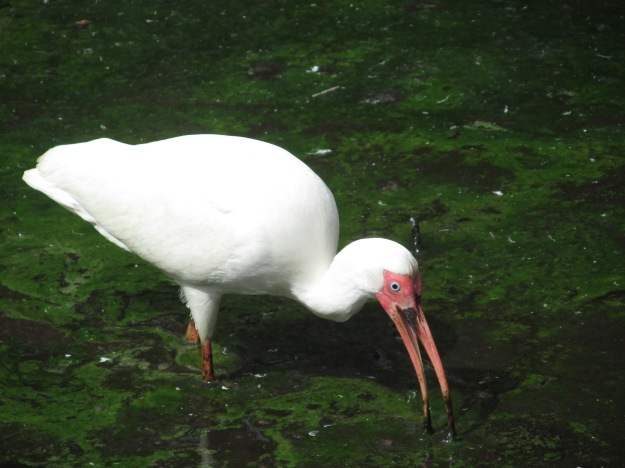
Photo by Bryan Stevens • A white ibis forages for food by probing in water and mud.

The white ibis looks like a humorously absurd bird that could have been invented by Dr. Seuss. The extravagant, all-white plumage is contrasted by pinkish-orange legs, an extremely long, downcurved, reddish-pink bill and bright blue eyes. In flight, the white ibis shows black feathers on the edges of its wings.

I’ve seen white ibises in Tennessee as well as in South Carolina and Florida. In the Sunshine State, another relative — the unmistakable scarlet ibis — is sometimes observed in the wild. The scarlet ibis inhabits tropical South America and islands of the Caribbean, but the species if often held in zoos and other attractions. Escaped birds rather than strays are often the source of sightings in Florida of this vibrant scarlet-feathered ibis.

Glossy-Flock

Photo by Bryan Stevens • A glossy ibis flock feeds in a wetland located at Huntington Beach State Park in South Carolina.

All ibises have long, downcurved bills. These birds usually feed in small flocks, probing wetlands for prey such as crustaceans, small fish, amphibians, insects, and various invertebrates. Worldwide, there are about 34 species of ibis, including the red-naped ibis, black-faced ibis, green ibis, straw-necked ibis and African sacred ibis, which is the bird often depicted in tombs and other monuments of ancient Egypt. This ibis was associated with the Egyptian god, Thoth, who was often depicted as a man with the head of an ibis.

The brief visit from the white-faced ibis provides a good reminder that we’re in the midst of spring migration. Stay alert for those unexpected birds. You never know what you might see.

IMG_5931

Photo by Bryan Stevens • The white-faced ibis found in Elizabethton, Tennessee, is shown walking past a domestic duck and a mallard.

Readers continue to report hummer arrivals

A few other readers have shared their first spring hummingbird sightings.
• Bunny Medeiros of Abingdon, Virginia sent me an email to announce her first sighting. “To my delight, the day after I put out my feeder a hummer appeared,” she wrote. The bird, a male, made his appeared on April 14.
• Rhonda Eller of Chilhowie, Virginia, saw her first ruby-throated hummingbird of spring on April 18. “Surely spring is going to come and stay!” Rhonda predicted on her post of my Facebook page.

Bird survey seeks volunteers

The Virginia Breeding Bird Atlas is getting ready for a third year of surveying the state’s birds. The atlas is a citizen science project, and volunteers conduct most of the key data collection. Organizers are hopeful that Virginia’s strong birding community will partner with the Virginia Ornithological Society and Virginia Department of Game and Inland Fisheries to accomplish the largest bird conservation effort in the state to date.
“This is our third year, and we can always use more volunteers to participate,” said Steven Hopp with Environmental Studies at Emory and Henry College. “Our region down here in the corner is one of the least-covered areas of the state.”
Anyone interested in participating and learning more about the atlas is welcome to email Hopp at shopp@ehc.edu.

IMG_5909

Photo by Bryan Stevens • The white-faced ibis probed the edge of a pond in its search for food, occasionally catching and consuming tadpoles.

Hummingbirds are back, and readers share first spring sightings

30425329_10214061548565156_3810521485761143823_o 3

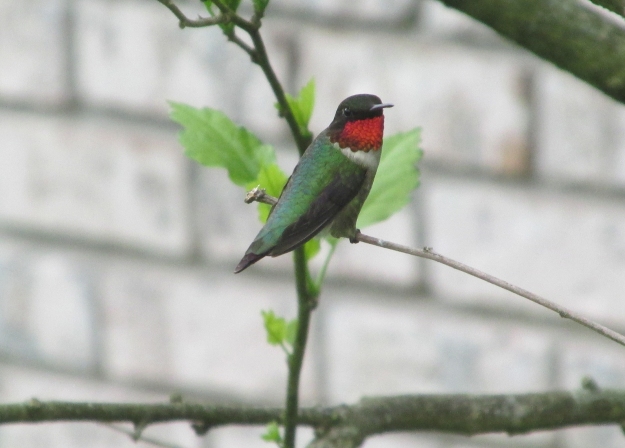
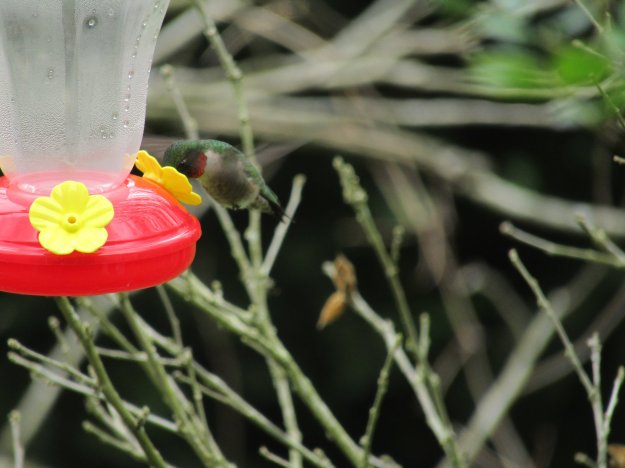
Photo by Bryan Stevens • Ruby-throated hummingbirds returned to the region earlier this month. This male, sipping sugar water from a feeder, shows its namesake red throat patch.

As many readers have already noticed, the ruby-throated hummingbirds are back. These tiny flying gems began returning to the region in the first days of April, but reports of their arrival spiked during the second week of April.

What do the hummingbirds that make their homes in our yards from April to October do during the five months they are absent from the region?

Most ruby-throated hummingbirds retreat to southern Mexico and Central America, some winging their way as far south as extreme western Panama, as well as the West Indies and southern Florida. They utilize a variety of habitats, ranging from citrus groves and forest edges to tropical deciduous forests and the edges of rivers and wetlands.

Those ruby-throated hummingbirds that make it as far south as Panama may find that they must compete with 59 other species of hummingbirds that call the Central America country home. In their winter home, the ruby-throated hummingbirds are definitely just another face in the crowd when its comes to their kin. In Panama, a ruby-throated hummingbird might encounter violet-headed hummingbirds, white-necked jacobins, black-throated mangos and green violet ears.

Ruby-OneSpot

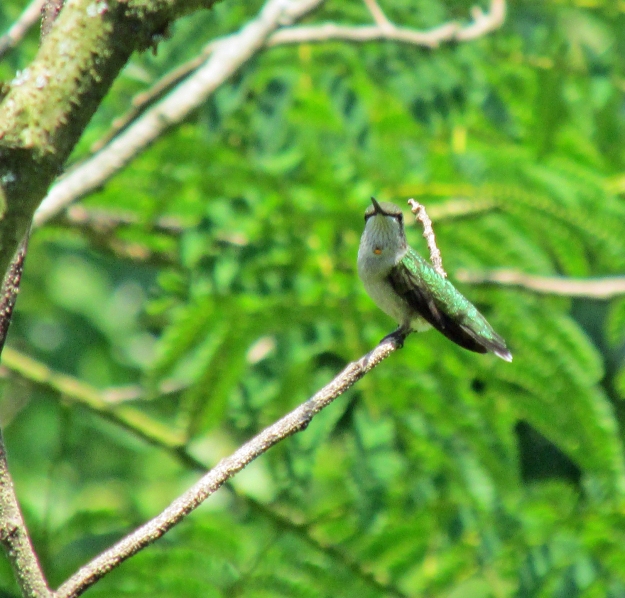
Photo by Bryan Stevens • A young ruby-throated hummingbird shows a hint of the red throat gorget that gives this bird its common name.

It must be nice to live among so many hummingbirds. Closer to home, the ruby-throated hummingbird is the only one of its kind to nest in the eastern United States. Some of the ones arriving at our feeders now will speed their way farther north, but some will settle in our yards and gardens as they bring forth the next generation of ruby-throated hummingbirds.

Dianne Draper reported the earliest observation of which I am aware. A friend on Facebook and a fellow birder, Dianne posted that the first hummingbird of spring arrived at her home in Jonesborough, Tennessee, on the morning of April 4. Her sighting was seven days earlier than any of the others I received.

Harold and Elizabeth Willis in Marion, North Carolina, reported their first hummingbird at 5 p.m. on Wednesday, April 11.

Helen Whited in Richland, Virginia, saw her first hummingbird at 12:40 p.m. on Thursday, April 12.

Judy and Bill Beckman saw their first spring hummer at 7:25 p.m. on April 12 at their home in Unicoi, Tennessee.

Ruby-throatedFemale-EYE

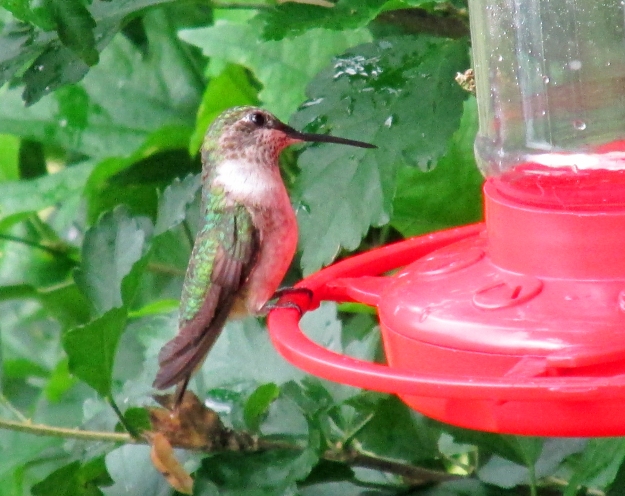
Photo by Bryan Stevens • A female ruby-throated hummingbird settles onto the perch of a sugar water feeder.

Lois Wilhelm, who lives on Little Bald Creek Road on Spivey Mountain in Erwin, Tennessee, saw her first hummingbird of 2018 at 3:30 p.m. on April 12.

Glen Eller in Kingsport, Tennessee, saw his first spring hummingbird around 5 p.m. on April 12. The bird — a male — drank for about four minutes. “I guess he needed a good fill up,” Glen commented.

Nola Martin from Nebo, North Carolina, reported her first hummer arrived just before 11 a.m. on April 12.

“He was a little green bird….not sure which kind or which sex,” she wrote in her email. “It certainly remembered where one of my feeders was last year, though, as it was looking for it in that spot, I didn’t have that one out yet.”

Nola said she now has five of her seven feeders filled and placed out for the returning hummingbirds.

Betty Poole saw her first male hummingbird of spring when the bird arrived at 9:05 a.m. on Friday, April 13, at her home in Bristol, Virginia. Her daughter, Jane P. Arnold, emailed me the information about her mother’s sighting. Jane is still awaiting her own first spring sighting of a hummingbird.

Ruby-WingLift

Photo by Bryan Stevens • A ruby-throated hummingbird lifts its wings to shake water droplets off its back.

Debbie Oliver, while watching Wheel of Fortune on the evening of April 12, got her first glimpse of a spring hummer at her deck feeders in Bristol, Tennessee.

“I couldn’t observe if it was male or female due to the dimming light,” she wrote in an email.

“It was a curious ruby-throated hummingbird just flying around the feeder without taking a sip of nectar,” she added.  Around 9 a.m. the following morning, she spotted a male ruby-throated hummer drinking nectar at the feeder.

She speculated about whether the bird was the same individual that visited the previous evening. “We’ll never know,” she decided.

Joneen Sargent emailed me to let me know that her husband, Dale, saw a ruby-throated hummingbird on April 12 at 7 a.m. The Sargents live off of Booher Drive in Bristol, Tennessee.

Bob Cheers of Bristol, Virginia, saw his first ruby-throated hummingbird at 6:45 a.m. on April 13. Bob keeps a record of the arrival dates for this tiny bird. In 2015, he saw the first hummer on April 9. Last year, he saw his first hummer on April 11. In 2016, the first bird arrived on April 13. In 2014, he had to wait until April 14 to see the first hummer of spring.

RubyRed

Photo by Bryan Stevens • A male ruby-throated hummingbird perches near a feeder that he is ready to defend from all comers.

Mark Hurt, who lives on Glenway Avenue in Bristol near Virginia High School, said that his “little buddy,” the ruby-throated hummingbird, returned about 1 p.m. on April 13.

Sandra Loving reported that her first hummer sighting took place at 6:17 p.m. on April 13 at South Holston Lake in Tennessee.

Peggy Oliver saw her first male ruby-throated hummingbird of spring at 6:15 p.m. on April 13.

Ashley Russ of Abingdon, Virginia, emailed me to share that she spotted her first hummingbird of the season at 7:20 p.m. on April 13.

Terry Fletcher saw her first male ruby-throated hummingbird at her feeder at 6:50 a.m. on April 14 at home in the First Colony subdivision in Bristol, Tennessee. Away from home the previous day, Terry was told by a next-door neighbor that the hummingbirds actually showed up on April 13.

Janice Denton, who lives on Canthook Hill Road in Bristol, Tennessee, emailed me news of her first sighting.

“I’m excited to let you know that I saw my first ruby-throated hummingbird on Friday, April 13,” she wrote. “I have had my feeders out for about two weeks and was sitting on my front porch in the afternoon hoping to see a hummingbird.”

On April 15 around noon, Janice also reported that she saw a male ruby-throated on a feeder outside her kitchen window, and another one came along and chased it off.  “I hope they all stick around for the summer,” she wrote.

Ruby-Spot-Two

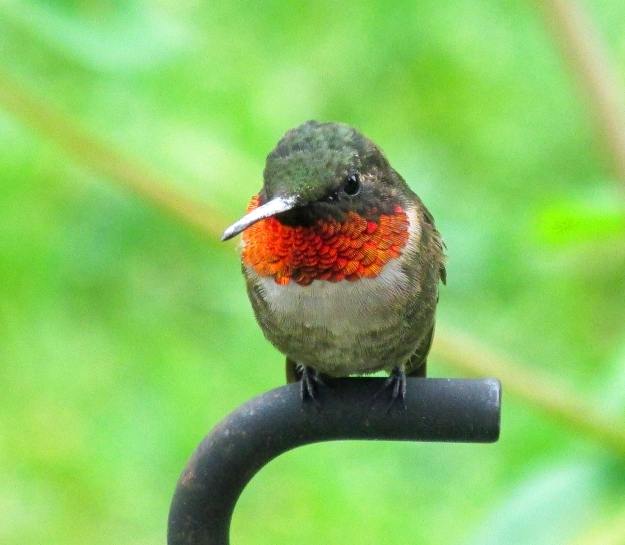
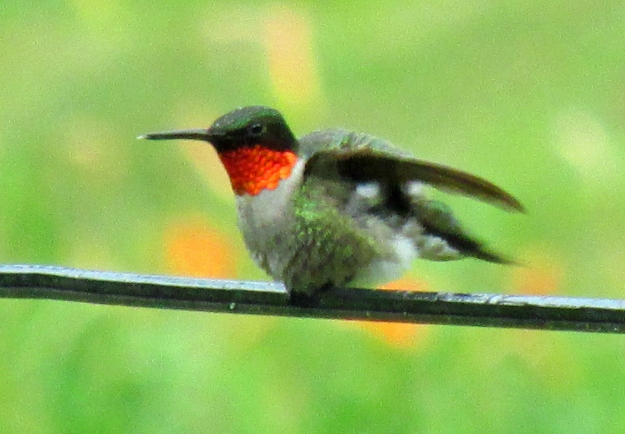
Photo by Bryan Stevens • Only adult male ruby-throated hummingbirds show the namesake ruby-red throat patch.

Lynne Reinhard reported via Facebook that she had her first hummingbird sighting at her home on the upper end of South Holston Lake on April 14. She noted that the hummingbird arrived a day earlier than last spring.

Linda Sproles, who lives on Hunter Hills Circle in Bristol, Tennessee, observed the first arrival of a hummingbird at her deck feeder at 10:43 a.m. on April 14. “It was a female, I believe, because it did not have a red throat patch,” she added.

Kathy Maggio, who lives between Benhams and Mendota in Washington County, Virginia, spotted her first hummingbird of spring at 1:15 p.m. on April 14.

Phyllis Moore of Bristol, Virginia, saw her first ruby-throated hummingbird of the spring at 4 p.m. on April 14.

Pat Stakely Cook, who resides in Marion, North Carolina, reported two ruby-throated hummingbirds at her feeders on April 14. The two male hummers stayed busy feeding and chasing each other.

32183fcb801d3cdbd206582ffb25517d 2

Early American naturalist and painter John James Audubon painted this work featuring the ruby-throated hummingbird. From the moment New World explorers arrived in the New World from Europe, they were impressed by the tiny, dazzling hummingbirds, a family of birds unknown in the Old World.

Amy Wallin Tipton, a resident of Erwin, Tennessee, saw her first hummingbird, a male, at 4 p.m. on April 14. She shared her sighting via Facebook.

Judi Sawyer, a resident of Roan Mountain, Tennessee, saw her first spring hummingbird, a male, at her home on the morning of April 14. Some house wrens decided to make their arrival the same day, she reported on Facebook.

Ginger Wertz-Justis in Baileyton, Tennessee, saw a male hummingbird at 6:30 p.m. on April 14.

Richard Trinkle emailed me to report that he saw a male ruby-throated hummingbird at 6:15 p.m. on April 14 at his Bristol home near Friendship Ford.

Robin Small saw the first hummer at 6:15 p.m. on April 14. “As I was looking at the snow falling and the cardinals, woodpeckers and regular visitors to my deck feeders, I saw my first hummingbird of 2018,” Robin wrote in an email. Robin put the feeder out the previous day when temperatures had been in the 80s and added that the hummer visited several times as the snow fell the evening of its arrival.

Janice Humble, who lives near South Holston Lake, put out her feeder on April 14. “It wasn’t 15 minutes until I had a hummingbird,” she wrote in her email.  “I saw two others that same evening.”

Lewis Spicer of Abingdon, Virginia, had both a male and female hummingbird visit his home for the first time this spring on the same day on April 15. He saw the male at 9:35 a.m. The female hummer arrived during afternoon rain at 12:45.

Frank and Myra Renault of Abingdon, Virginia, saw their first hummingbird of spring — a female — at 12:06 p.m. on April 16.

Sheila Myers, who lives on Porter Valley Road in Marion, Virginia, saw her first hummer at noon on April 16.

Rhonda Eller in Chilhowie, Virginia, saw her first spring hummingbird at 4:53 p.m. on April 18.

I am pleased to report that my own first hummingbird sighting for 2018 took place when a feisty male zipped into the yard while I was seated on the front porch. He sipped at four different feeders before he zoomed off. He arrived at 5:40 p.m. on April 14, one day earlier than last year’s first arrival. My feeders had been waiting for the arrival of hummingbirds for about a week when he first appeared.

Ruby-throated-WILLOWS

Photo by Bryan Stevens • Numbers of Ruby-throated Hummingbird in the region tend to fluctuate each year, but people should see a spike in their numbers as the hummingbirds end summer nesting and start migrating south again.


Timely arrival of blue-gray gnatcatcher signals the rush of spring migration

A blue-gray gnatcatchers finally put in a first spring appearance at my home on April 11. Most likely, these tiny birds had already arrived, but my schedule hadn’t yet allowed me a glimpse of this punctual songbird. Back in March, I saw and heard dozens of them during a trip to the South Carolina Low Country.

Gnatcatcher

Photo Courtesy of Jean Potter • Blue-gray Gnatcatchers are tiny, energetic bundles of feathers.


Birds are as dependable as clocks and calendars when it comes to noting the passage of time. I can keep track of the changing seasons based on the composition of the birds in my yard. The gnatcatcher has long been my signal to the start of the frenzied pace of spring migration for many of the birds returning to the region after sojourns much farther south. For example, the first gnatcatcher arrived in my yard in 2014 on April 4. Two days earlier, I had observed my first blue-grey gnatcatcher of the spring while visiting Winged Deer Park in Johnson City, Tennessee. It doesn’t hurt that the arrival of gnatcatchers coincides with the annual blooming of bluebells, a wildflower for which this local park is famous.

Once again, Winged Deer Park provided me with my first spring sighting of this bird when I finally saw one this year on April 6. Over the years I’ve kept track of such matters, blue-gray gnatcatchers reliably return every year in the final days of March and first days of April. A blue-gray gnatcatcher put in its first appearance at my home on April 2 in 2011. In 2009, I also saw my first gnatcatcher on April 2, although in 2008 I had to wait until April 5 for my first spring sighting of a gnatcatcher. In 2007, the blue-gray gnatcatcher was an “April Fool’s” bird, arriving on the first day of April. Arrival dates in March are a little less frequent. For instance, in 2003, a blue-gray gnatcatcher arrived on March 28. I saw my first spring gnatcatcher on March 30 in 1998. In 2006, the arrival date was March 31.

Gnatcatcher 2

The blue-gray gnatcatcher is a tiny, active bird with noisy habits that make it fairly easy to detect in early spring before foliage has grown dense in the branches of trees. This gnatcatcher ranks with the kinglets and hummingbirds as one of the smallest birds to range within the United States. This tiny bird tips the scales at only a fourth of an ounce. A gnatcatcher is an incredible bundle of feathered energy, seemingly always on the move as it snatches small winged insects out of the air or plucks other prey items from leaves or branches. Gnatcatchers are also quite curious birds that, more than once, have given me the distinct impression that I am the one being observed while watching their antics.

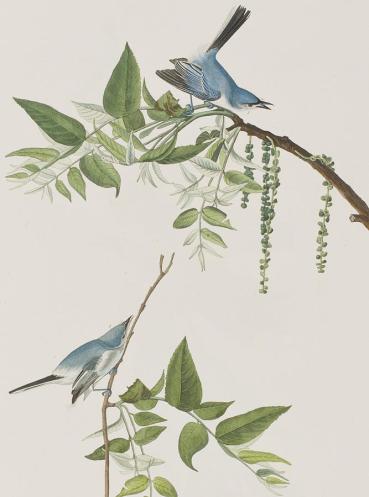
So, as the name suggests, do gnatcatchers truly eat gnats? The website All About Birds contends that, despite its name, the gnatcatcher does not concentrate its feeding efforts on gnats. This tiny bird does, however, prey on a variety of small insects and spiders. Winged insects, such as small flies and gnats, are part of the menu for a gnatcatcher, but this bird is also capable of plucking spiders from their webs or snatching tiny caterpillars from the underside of leaves.1-blue-grey-flycatcher-john-james-audubon

Like the hummingbirds, the gnatcatchers are an exclusively New World family of birds. They lack the diversity of the hummingbirds. Instead of several hundred species, there are only about a dozen species of gnatcatchers worldwide. Of that number, four — blue-gray gnatcatcher, California gnatcatcher, black-tailed gnatcatcher and black-capped gnatcatcher — range within the United States. The blue-gray gnatcatcher is the only member of this family to reside in the eastern United States. Other representatives of this family of small songbirds include the Cuban gnatcatcher, white-lored gnatcatcher, creamy-bellied gnatcatcher, tropical gnatcatcher and masked gnatcatcher.

The blue-gray gnatcatcher builds an exquisite and compact nest using such materials as spider silk and lichens. I have found many nests over the years by listening for the scolding notes of the parents which, even near their nest, have not learned the virtue of silence. The blue-gray gnatcatcher is one of the birds that, in my mind, truly kicks off the arrival season of many of my favorite neotropical migrants. With the arrival of gnatcatchers, I can now expect to enjoy the arrival of birds like hummingbirds, warblers, tanagers, vireos, thrushes, and grosbeaks.

BGGnatcatcher

••••••

Bryan Stevens lives near Roan Mountain, Tennessee. To learn more about birds and other topics from the natural world, friend Stevens on Facebook at https://www.facebook.com/ahoodedwarbler. He is always posting about local birds, wildlife, flowers, insects and much more.

Upcoming Roan Mountain Spring Naturalists Rally will offer chances to enjoy migrating birds and much more

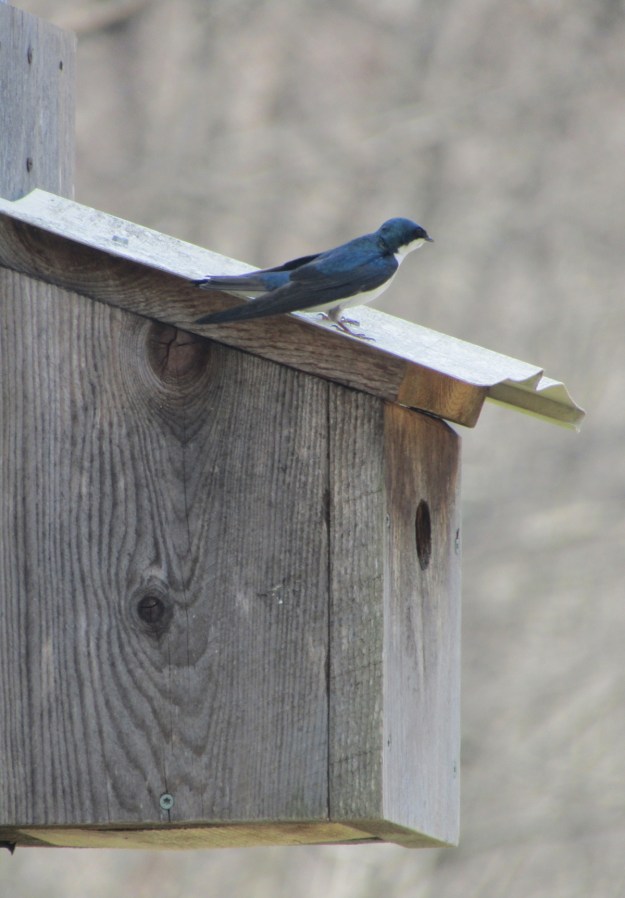
TreeSwallow-April13

Photo by Bryan Stevens • A tree swallow checks out a nesting box soon after returning for the nesting season on Friday, April 13 to Hampton, Tennessee.

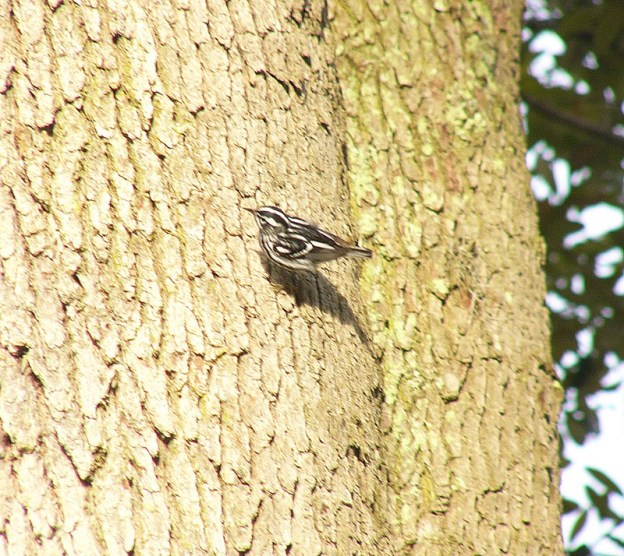
Spring has certainly sprung. In the past week, several birds have made their return after a long absence, including broad-winged hawk, brown thrasher, blue-gray gnatcatcher, tree swallow and black-and-white warbler. It’s a good time to get outside and see what birds one can see without even really trying.

One long-running annual event will help interested people see birds and experience other aspects of the natural world. The upcoming 60th annual Roan Mountain Spring Naturalists Rally promises three days of nature-packed activities and events for people of all ages. This year’s rally will be held Friday-Sunday, April 27-29.
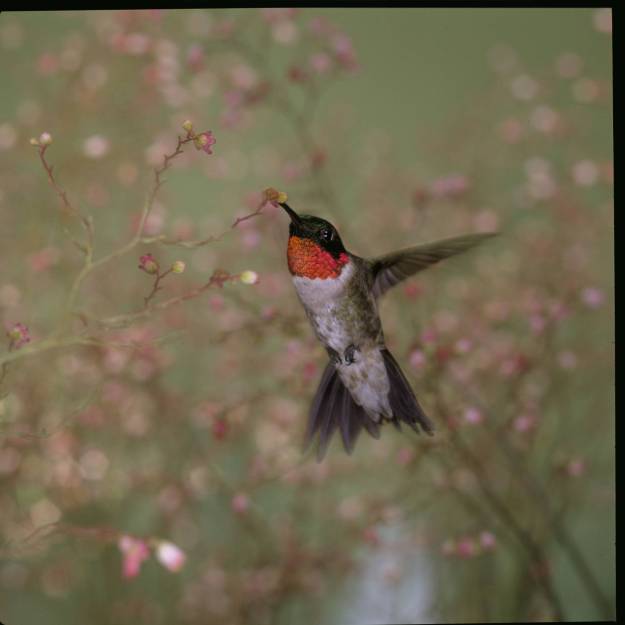
As always, in addition to bird walks and other nature hikes, the rally will offer evening programs by guest speakers on Friday and Saturday after a catered dinner.

Kris_hike_Germany

Photo Courtesy of Friends of Roan Mountain • Kris Light is shown during a nature walk while on a trip to Germany.

Kris Light will speak on Friday at 7:30 p.m. on “The Birds and Bees of Wildflowers: Pollination Strategies of Flowers.” Light is a lifetime Tennessean who grew up in Nashville and graduated from University of Tennessee-Knoxville. She has experience teaching classroom science for elementary school students and is an outreach educator for the American Museum of Science and Energy in Oak Ridge. She is a lifelong student of nature and a favorite leader of wildflower walks for various parks around the state.

Light described her program as focusing on the fascinating interaction between flowers and their pollinators and how colors, odors, shape, and even the presence of stripes or spots on the petals can greatly influence the type of pollinators that will be attracted to them.

DrKevinHamed

Photo Courtesy of Friends of Roan Mountain • Kevin Hamed is shown holding a salamander. These amphibians will be the focus of his upcoming presentation at the Roan Mountain Springs Naturalists Rally.

Dr. Kevin Hamed will discuss the diversity of salamanders on Roan and other neighboring mountains during his Saturday program at 7:30 p.m. His presentation is titled “The Future of Appalachian Salamanders: What the Past Tells Us.”

Hamed is a professor of biology at Virginia Highlands Community College where he is dedicated to getting his students out of the classroom and into nature, where they gain experience collecting specimens and recording data. This field data has been useful to various local, state, and federal organizations in making important land management decisions.

Hamed is recognized as an expert on salamanders of the southern Appalachians. For his program Saturday night he will discuss the unique environment of the area’s mountains which makes this area “holy ground” for salamander study, present his research on the nesting behavior of salamanders, and discuss the importance of salamanders as indicators of environmental change.

Bloodroot-Last

Photo by Bryan Stevens • Spring’s ephemeral wildflowers, like these bloodroots, are a major attraction during the Roan Mountain Spring Naturalists Rallies.

All activities and programs are free to members of the Friends of Roan Mountain. There is a charge, however, for the Friday and Saturday evening meals, which are scheduled for 6:30 p.m. Visit friendsofroanmtn.org to register and pay online to reserve meals for Friday and Saturday. Deadline to reserve a meal is April 24. The website also offers a complete listing of morning and afternoon hikes, as well as other programs and activities. Charges do apply for attendees who are not members of FORM.

••••••

Ruby-throated hummingbirds are back. My first ruby-throated hummingbird, a feisty male, zipped into the yard while I was on the front porch grading papers. He sipped at four different feeders before he zoomed off. He arrived at 5:40 p.m. on April 14. I’ve heard from other people who have already seen one of these tiny flying gems. I’ll provide more details on their arrival in next week’s blog post. Keep those reports coming to me by sending an email to ahoodedwarbler@aol.com. Please list the date and time when you saw your first spring hummer.

Hummer-CloserUp

Photo by Bryan Stevens • Ruby-throated hummingbirds such as this male are returning to the region.


Berry-rich diet makes waxwings profuse water drinkers

Waxwing-Sept11

Photo by Bryan Stevens • A cedar waxwing perches on a branch while taking a break from flycatching insect prey near a community park pond.

Ernie Marburg, a resident of Abingdon, Virginia, shared an interesting observation about a flock of cedar waxwings he observed recently in his yard.

Waxwings have a brown and gray silky plumage, a black mask and a perky crest. Some of the wing feathers show red tips. The similarity of these wing tips to melted drops of wax gives these birds the common name of waxwing.

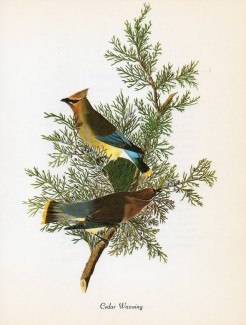
Waxwing-Audubon

Early American naturalist and artist John James Audubon painted this pair of cedar waxwings.

“The typical flock of waxwings has arrived,” he wrote in his email. He added that the birds exhibited an unusual behavior during their visit.

“From their roosts in the tops of some tall nearby trees, they appeared to be leaving their roosts briefly and returning to the trees as though they were catching flies,” Ernie noted. “There were, however, no flies available.”

The waxwings, he went on to explain, appeared to be going after snowflakes. “Could they have been going after the snowflakes to drink water?” Ernie asked.

While I wasn’t sure that catching snowflakes is an energy-efficient way to relieve thirst, the waxwings might have had a different motivation for their behavior. As I informed Ernie in my reply to his email, waxwings are very social with each other. These birds form large flocks that travel, feed, roost and bathe together. They have also come up with interesting “rituals” to reinforce their social ties with each other.

Waxwing-Erwin

Photo by Bryan Stevens • The waxy tips to the wing feathers are evident in this photograph of a cedar waxwing.

These rituals, or games, they “play” with each other include a flock of perched birds passing a single berry or fruit in a line, one bird to another, without any of the birds eating the item. I speculated that snowflake catching was their idea of a fun game and a way to practice for fly-catching season, which is just around the corner.

Perhaps I should have conducted some research. As it turns out, other people have witnessed this snowflake-catching behavior, which has led those who have studied the birds to determine that the birds do indeed eat snowflakes to ease thirst. Apparently their diet, which is rich in sugar thanks to the various berries that provide a huge percentage of their food, waxwings are often afflicted with intense thirst. In addition to catching snowflakes, they have been observed eating fallen snow. A single Bohemian waxwing — a relative of the cedar waxwing — can gobble down 300 berries in a couple of hours. According to some statistics, one of these birds can eat up to three times its weight in fruit in a single day. The next time I am lucky enough to observe waxwings in a snowstorm, you can bet I will be watching for this snowflake-eating behavior.

The cedar waxwing has few relatives. Worldwide, there are only two other species: the Bohemian waxwing, which is native to the northern forests of Eurasia and North America; and the Japanese waxwing, found in such northeast Asian countries as Japan, Korea and China.

Ruby-throated-WILLOWS

Photo by Bryan Stevens • Numbers of Ruby-throated Hummingbird in the region tend to fluctuate each year, but people should see a spike in their numbers as the hummingbirds end summer nesting and start migrating south again.

Hummingbirds due back soon

Waxwings are rather nomadic, coming and going with a maddening unpredictability. Other birds are more dependable, arriving and departing at roughly the same time year after year. One such bird should soon make its triumphant and welcome return to yards and gardens throughout the region. According to the website Hummingbird Guide, ruby-throated hummingbirds usually return to Tennessee and Virginia the first week of April. These tiny flying jewels arrive earlier in North and South Carolina, typically arriving the third week of March in those states.

The popularity of hummingbirds in general, and the ruby-throated hummingbird specifically, is simple to understand. These tiny birds are perfectly willing to insert themselves into our lives, offering hours of fascinating entertainment as they visit our gardens, duel at our sugar water feeders and occasionally even nest in trees and shrubs in our yards.

Individuals who feed birds know that it can be an expensive undertaking. The cost of providing sunflower seeds and suet cakes for hungry flocks during the winter months can nibble at the monthly budget, but hardly anyone would begrudge the sparrows, finches, wrens and woodpeckers. After all, they return the favor, putting on daily shows just outside our windows.

Rubythroated_Hummingbird

Photo by U.S. Fish & Wildlife Service • A male Ruby-throated Hummingbird hovers in front of the camera as it seeks nectar from tiny flower blossoms.

The same is true of hummingbirds. For a relatively modest investment, people putting out feeders or planting nectar-producing flowers are rewarded with the fun and amusing antics of these pint-sized and hyperactive birds.

Attracting hummingbirds is generally much less expensive than feeding other birds. After all, you need only a mixture of sugar water — four parts water to one part sugar — to fill a feeder and catch the attention of a visiting hummer. A few pounds of sugar will last a lot longer than that bag of sunflower seeds, and it’s much less expensive to purchase at the grocery store.

Do not add red coloring or dyes to your sugar water mixture. Some studies have indicated these substances are harmful to hummingbird health. This means tossing out many of the pre-packaged mixtures sold with sugar water feeders. After all, the entire purpose is to attract hummingbirds. Risking their health is simply not acceptable. If you do want to take extra steps to attract these diminutive, feathered sugar junkies, consider supplementing your landscape with a variety of flowering plants. To explore some of the best choices for flowers to tempt hummingbirds, visit the website of The Hummingbird Society at http://www.hummingbirdsociety.org.

Ruby-throatedFemale-EYE

Photo by Bryan Stevens • A ruby-throated hummingbird visits a feeder for a sip of sugar water.

I always put out my sugar water feeders in early April. I usually end up waiting a couple of weeks before the first hummingbird appears, but it’s worth the wait. I miss these tiny birds during the winter months, which they spend in much warmer surroundings in southern Mexico and Central America. A male with the namesake red throat is usually the first to appear at my feeders. However, female ruby-throated hummingbirds, which lack the dazzling ruby throat patch, are migrating, too. The females usually lag a week or two behind the pace of the migration for the males.

As always, I enjoy hearing from readers about their first spring sighting of a ruby-throated hummingbird. Readers are encouraged to jot down the date and the time of arrival when they observe their first hummingbird of the season. If the sighting’s duration allows you to verify, note whether the hummingbird was a male or female. These reports can be emailed to me at ahoodedwarbler@aol.com. Together, we’ll track the arrival of these tiny birds as they return to the region.


Tufted titmouse small songbird with big personality

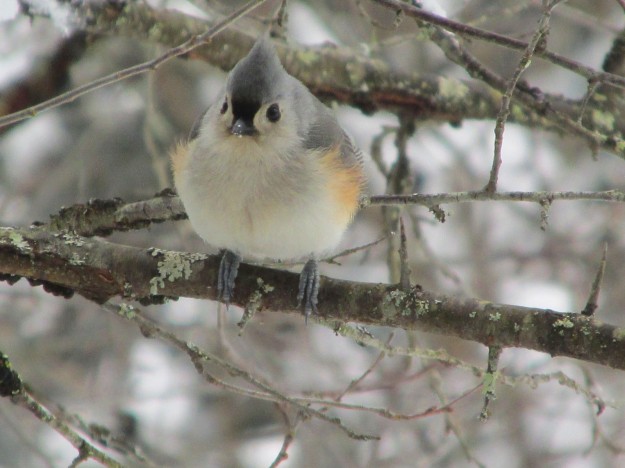
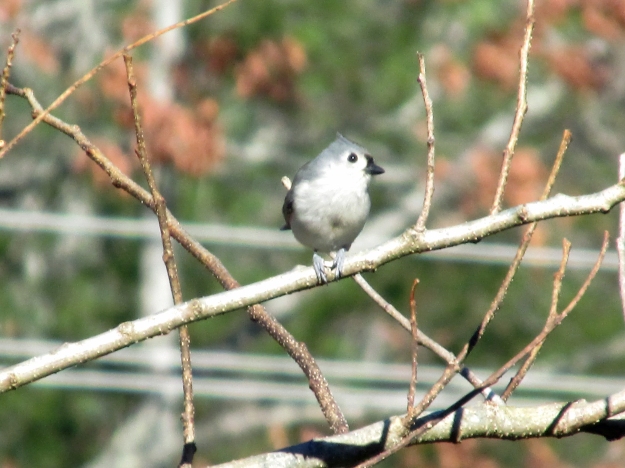
In last week’s post I wrote about chickadees. These friendly little birds have an impish cousin that is also a frequent visitor to feeders in the region. If chickadees are active woodland sprites, their relative, the titmouse, is a curious imp with mischievous tendencies.

Titmouse-2

Photo by Bryan Stevens • A tufted titmouse puffs up its feathers on a cold day.

The tufted titmouse’s song — a persistent repetition of “Peter! Peter! Peter!” — is ringing through the woodlands around my home along with the urgent “fee-be fee-bo” of the Carolina chickadee. These birds form mixed flocks with each other and other species to explore their surroundings and search for food. They know that spring, despite the usual false starts, is drawing nearer with each passing day.

In addition to singing, titmice are enthusiastic scolders. They will scold over any transgression, real or imagined, focusing their ire on their fellow titmice or other birds, potential predators and even human observers. They’re quite persistent at their raucous scolding, which is just another reason I label them as imps of the woods.

Titmouse-Suet

Photo by Bryan Stevens • A young titmouse visits a suet feeder.

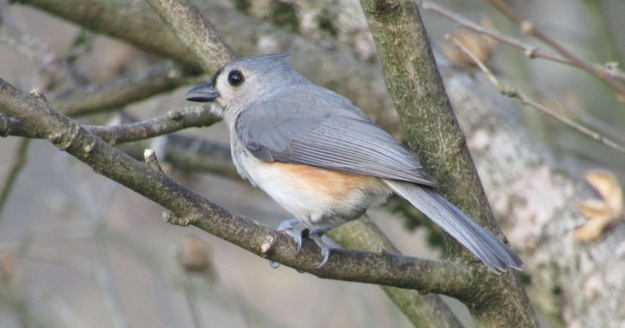
The tufted titmouse is a mostly gray bird with a distinctive crest and a pinkish-rusty coloration along the flanks. Titmouse eyes are black as coal and look large in proportion to their heads, which lends them an expressive appearance as they explore in yards and gardens. The term “titmouse” refers to the old English word “tit” meaning “small,” as well as the old English “mase,” also a reference to small size. Eventually, probably because of the bird’s small size and gray coloration, “mase” evolved into “mouse” and combined to form the word “titmouse.”

The titmice living in my yard visit my house windows at times, which drives my cats to distraction. I’ve wondered if the titmice are curious and trying to peek inside the house, but I believe I have a more down-to-earth explanation. These little birds are very thorough when foraging for food, and I’ve watched them pluck spiders and other insects from the window frames.

Titmouse-Creek

Photo by Bryan Stevens • A tufted titmouse approaches a stream for a quick drink.

Like chickadees, titmice are fond of sunflower seeds. No other offering will so readily lure them to feeders, although they do develop a fondness for suet cakes. I’ve also had great success attracting titmice to my feeders by offering unsalted, shelled peanuts. I sometimes break up the peanuts into smaller, more manageable pieces for the benefit of the titmice. These foods and a few trees or saplings around your home is all you really need to welcome titmice.

In the early 1900s, the tufted titmouse would have been considered a southern bird with its stronghold in states like Tennessee, Virginia, the Carolinas and Georgia. Perhaps it is the titmouse’s innate curiosity that has pushed the species to expand successfully beyond the southern United States. The titmouse has steadily expanded its range northward, thriving in new locations. Experts credit this expansion to more readily available access to supplemental food at feeders.

Titmouse-Eye

Photo by Bryan Stevens • A tufted titmouse turns an eye on the camera.

During the nesting season, titmice forage for a variety of insects. Many spiders, beetles, caterpillars and other small bugs will be fed to hungry young titmice in a tree cavity or a nesting box. Like chickadees, titmice build exquisite nests, often using mostly moss with other materials, such as bark, cloth scraps, dry leaves and shed snakeskins. These small birds line their nests with hair or fur of other animals.

Over the years, many readers have shared observations documenting the fur-collecting skills of tufted titmice. The birds are not content to simply collect shed fur. They seem to prefer collecting the fur fresh from a living animal. Many dogs fall victim to impish titmice that boldly pluck strands of fur from the canine’s coat.

In another funny story, a woman once told me about a titmouse that flew onto her head every time she stepped outside her home. Perhaps the bird sensed her affection for birds since it never failed to pluck strands of hair from her head to carry back to its nest. For any would-be skeptics, the woman provided photographic documentation of the incidents. In addition to dogs and humans, animals ranging from squirrels and opossums to mice and woodchucks have also been observed “sacrificing” fur for the nesting success of tufted titmice.

Titmouse-PHOTO

Photo by Bryan Stevens • The tufted titmouse is a backyard bird with an impish personality.

The female tufted titmouse incubates the eggs. She lays between three and nine eggs, although a usual clutch size is five to six eggs. The female titmouse is protective of her nest and is known for a behavior known as a “snake display.” I’ve observed titmice perform this display when I’ve peeked into nesting boxes. She remains tightly seated on her eggs, or young, while she hisses loudly and strikes in a manner very much like a striking serpent. Not all titmice engage in this display. Some remain still and try to “blend” with the nest, while others will fly away if a nest box is opened. Regardless, it’s a convincing display of bravado on the part of such a small bird. If it looks scary to people, I am sure it could succeed at repelling a squirrel or mouse. I’m uncertain if the behavior would deter an actual snake.

Other titmice in North America include bridled titmouse in Arizona and New Mexico; oak titmouse of the Pacific Coast region; juniper titmouse from the Great Basin, which consists of Wyoming, Idaho, Utah, Nevada, Oregon and California; and the black-crested titmouse, which ranges from Missouri into east-central Mexico.

Titmouse-WithPeanut

Photo by Bryan Stevens • A tufted titmouse pounds at a peanut held in its feet.

Titmice occur exclusively in North America and belong to the genus Baeolophus. Europe, Asia and Africa are home to some other crested birds in the family of chickadees and titmice. For instance, the European crested tit and the grey crested tit are species that sport a crest of feathers like titmice but are more closely related to chickadees.

Yes, the tufted titmouse is one of nature’s imps, but it’s also one of our more entertaining birds. Get to know these visitors by offering sunflower seeds or other fare and, if you want to go the extra step, place some bird boxes around your yard as potential nesting sites. By next winter, you may have an entire flock of these feathered imps as your guests.

•••••

Bryan Stevens lives near Roan Mountain, Tennessee. To learn more about birds and other topics from the natural world, friend Stevens on Facebook at https://www.facebook.com/ahoodedwarbler. If you have a question, wish to make a comment or share a sighting, email ahoodedwarbler@aol.com.

Titmouse-OnSuet

Photo by Bryan Stevens • A tufted titmouse makes a quick visit to a suet feeder.

Carolina chickadees are easy birds to befriend and bring into your daily life

Winter-Chickadee-Confused

Photo by Bryan Stevens • A Carolina chickadee perches on a branch.

In last week’s post, I pointed out that Eastern bluebirds have already started seeking nesting locations for the upcoming spring nesting season. They’re hardly the only cavity-nesting birds already checking out every nook and cranny for the perfect place to raise a family of young.

I’ve been hearing the familiar “fee-bee-fee-bo” song of the Carolina chickadee from the woodlands around my home. With the recent turn in the weather, the male chickadees are persistent singers, making the woods ring with their attempts to woo a mate.

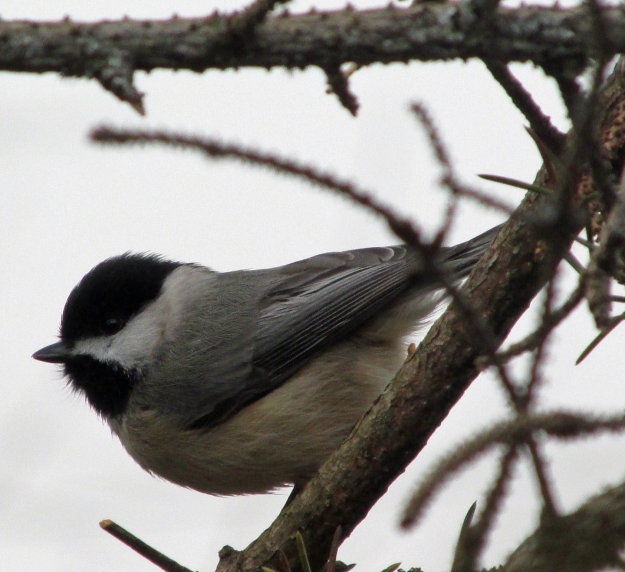
The Carolina chickadee is at home in mixed or deciduous woods in the United States from New Jersey west to southern Kansas and south to Florida and Texas. The Carolina chickadee also ranges along the Appalachian Mountains, but on some of the higher peaks they are replaced by their cousin, the black-capped chickadee. In Tennessee, birders need to visit some of the higher peaks in the Great Smoky Mountains National Park to find black-capped chickadees.

Winterchickadee

Photo by Bryan Stevens • A Carolina chickadee visits a feeder for sunflower seeds.

Once a pair of chickadees settles down into domestic bliss, they almost at once start work upon constructing a nest. These little songbirds, looking quite smart in their handsome black, white and gray feathers, build an exquisite nest. The primary nesting material is green moss, which they stuff into a natural cavity or bird box in great quantities. The female chickadee fashions a depression in the collection of moss. She lines this shallow basin with plant fibers as well as strands of fur or hair to provide soft cushioning for her eggs.

Chickadee-Feb9

Photo by Bryan Stevens • A Carolina chickadee endures a cold winter’s day.

A female chickadee can lay a large number of eggs, with the clutch size ranging between three and ten eggs. Once the young hatch, both parents are kept busy delivering food to a large brood of hungry, noisy chicks. The young grow quickly, but they take advantage of the safety of their cavity nest and don’t depart for the wider world until 20 days after their hatching.

Energetic chickadees, birds of the most engaging antics, make wonderful feeder visitors. With their tame and trusting natures, chickadees are one of the birds I welcome to my feeders. Chickadees are daily visitors to my feeders in the winter season as well as other times of the year. I love to watch a chickadee land on a feeder, snatch a single sunflower seed and fly to a perch close at hand to hack open the seed’s shell and devour the kernel before they repeat the entire process again.

Chickadee-FeedTwo

Photo by Bryan Stevens • A Carolina chickadee makes a food delivery to nestlings.

North America’s other chickadees include the aforementioned black-capped chickadee, as well as boreal chickadee, chestnut-backed chickadee, grey-headed chickadee, Mexican chickadee, and mountain chickadee. On a trip to Utah in 2003 and 2006, I saw both black-capped chickadee and mountain chickadee.

In other parts of the world, chickadees are known as “tits,” which is from an Old English word denoting small size. Worldwide, there are about 60 species of chickadees and tits, which are classified collectively under the scientific family name, Paridae. Other members of this family range into Europe, Asia and Africa, including species with colorful names like fire-capped tit, yellow-bellied tit, azure tit, green-backed tit and cinnamon-breasted tit.

CarolinaChickadee-1

Photo by Bryan Stevens • Caroline chickadee waits for a chance to visit a crowded feeder.

It’s easy to attract chickadees to your yard. Shrubs and small trees, feeders stocked with sunflower seeds and perhaps a mesh cage offering a suet cake are sure to make these small birds feel welcome. If you want to witness the family life of chickadees, build or buy a box suitable for wrens and other smaller birds. Chickadees will happily take up residence. These birds often comprise the nucleus of mixed flocks of various species, so they will also bring other birds into your yard and within easy viewing range.

••••••

If you have a question, wish to make a comment or share a sighting, email ahoodedwarbler@aol.com.

CaroChickadee-Three

Photo by Bryan Stevens • A Carolina chickadee grasps a branch near a feeder.


North America’s bluebirds never fail to impress with their winning ways

A famous song declares that “somewhere over the rainbow, bluebirds fly,” so you’ll have to excuse me if I have been looking for those elusive rainbows during the unseasonably warm weather the region’s enjoyed in recent weeks.

Also, like the song promises, “dreams really do come true,” which was fulfilled by the arrival of this year’s first pair of Eastern bluebirds at my home on Friday, Feb. 23. The presence of a pair of these beautiful and trusting birds is always sure to put people in a good mood. People have known for generations that bluebirds make good neighbors. A pair of bluebirds in your yard or garden provides hour upon hour of free entertainment as one watches these birds go about their daily routine. At this time of the year, much of that routine is focused on finding and claiming the best possible nesting location for the upcoming spring season.

Bluebird-Comic

The Eastern bluebird is one of the most beloved American songbirds.

The Eastern bluebird is one of North America’s best-known cavity-nesting birds. About 85 species of North American birds use cavities in trees for nesting purposes. Cavity-nesters include ducks, such as buffleheads and wood ducks, as well as birds of prey such as Eastern screech-owls and American kestrels.

Woodpeckers and nuthatches can excavate their own cavity in a dead or decaying tree. Others, such as the bluebirds, must find a cavity already in existence. Such cavities are scarce real estate and can be subject to some intense competition. The Eastern bluebird is at a disadvantage when forced to compete with non-native introduced birds such as aggressive European starlings and house sparrows. Even native competitors such as house wrens and tree swallows are serious rivals when it comes down to staking a claim to prime nesting real estate.

Over the years, I have found bluebirds nesting in cavities inside wooden fence posts, but there are fewer wooden fence posts every year. This reinforces the idea of how changing landscapes have affected these birds. Instead of wooden fence posts, many farmers now use metal ones, and dead or dying trees — a much sought-after resource for cavity-nesting birds — are often removed from woodlands.

Bluebird-withPineNeedles

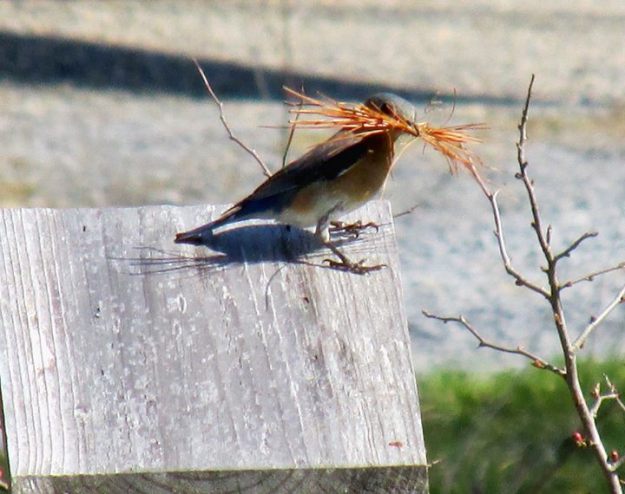
Photo by Bryan Stevens • A female Eastern Bluebird gathers pine needles to use as nesting material.

Fortunately for bluebirds, this species will also accept lodging in a nest box, or birdhouse, provided for them by human landlords. One of the simplest ways to bring bluebirds close is to offer wooden boxes, constructed to their specific requirements, for their use as nesting locations. Because of their trusting nature when it comes to their human neighbors, the Eastern bluebird is one of our most beloved birds. In fact, bluebirds are such popular birds that interest in them and their well-being has inspired the foundation of organizations such as the North American Bluebird Society. The Eastern bluebird has also been designated the official state bird for New York and Missouri, which provides more testimony to the immense popularity of this bird.

Bluebirds-One

Photo by Bryan Stevens • A flock of Eastern bluebirds perches on fenceposts.

There are two other species of bluebirds found in North America. The Western bluebird is found throughout the year in California, the southern Rocky Mountains, Arizona and New Mexico, as well as in part of Mexico. The species ranges in the summer as far north as the Pacific Northwest, British Columbia and Montana. The Mountain bluebird nests in open country in the western United States as far north as Alaska. They are short-distance migrants, retreating as far south as Mexico during the winter season.

Other than these three species, North America offers few others birds with mostly “blue” plumages. Some examples include indigo bunting, blue grosbeak, and blue jay, as well as birds like great blue heron and belted kingfisher.

In addition to housing, food and water can be used to lure Eastern bluebirds closer. This bird doesn’t eat seeds, but it can be attracted with an offering of mealworms — live or freeze-dried – or commercially prepared peanut butter nuggets. A water feature in a yard is also a magnet for bluebirds and a host of other bird species.

Bluebird-Pool

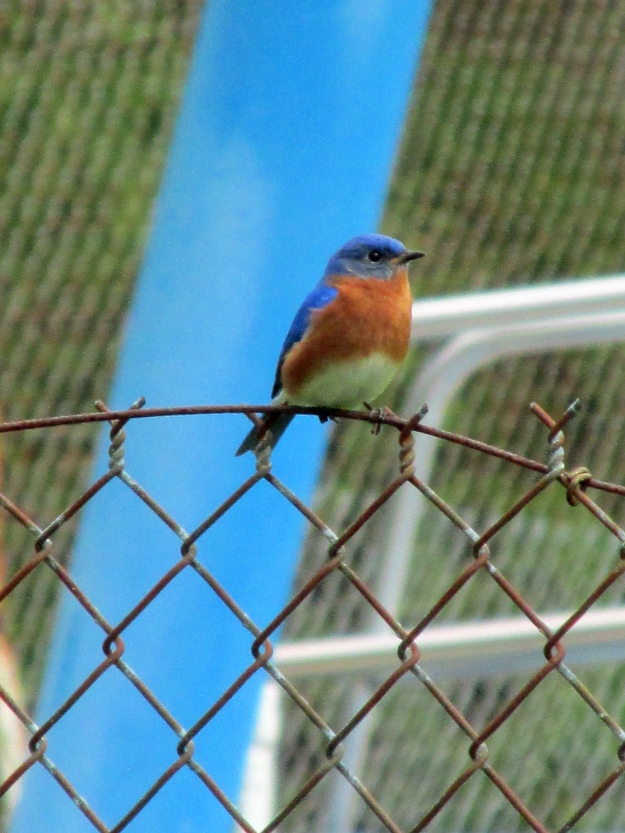
Photo by Bryan Stevens • A handsome male Eastern bluebird perches on a chain-link fence.

If your home doesn’t provide suitable open, spacious bluebird habitat, it’s still easy to enjoy these beautiful birds. An afternoon or evening drive into open country, such as agricultural farmland, is likely to yield sightings of this bird on fences and utility lines. Golf courses, some of which go the extra mile to accommodate bluebirds, also provide habitat for these lovely birds.

The Eastern bluebird is present in the region in all seasons and is one of our more common birds. If you’re already an experienced landlord and host for these birds, you probably already know they joys they can bring. If not, why not try to attract them closer to you? Most bluebirds in the region have already started looking for a nesting site. Many of these birds may nest two or even three times in a single season. March has only just arrived, so there’s still time to place a nest box or two on your property to get their attention.

••••••

If you have a question, wish to make a comment or share a sighting, email ahoodedwarbler@aol.com.

Bluebiord-Male-Playground

Photo by Bryan Stevens A male Eastern Bluebird perched on playground equipment at Winged Deer Park in Johnson City.

American robins become more prominent with shifting of seasons


Robins-ETSU-Feb

Photo by Bryan Stevens • Returning American robins, prominent in lawns and gardens during their annual spring migration, will soon turn their attention to nesting duties.

I don’t think I’m alone in doing what I can to speed along the process of spring’s arrival. I’ve heard from different people, all eager to share their observations of one of the sure signals — the arrival of flocks of American robins — of the shifting of the winter season to spring.

Bobby Howser phoned me to let me know of a large flock of American Robins he encountered at the Sullins College building in Bristol, Virginia.

He said the flock “swarmed like bees” into a tall holly tree. He was surprised to see so many robins in a single tree and asked if it was an unusual occurrence.

Houghton_MS_Am_21_(46)_-_John_James_Audubon,_robin 3

Early American naturalist and painter John James Audubon painted this American robin with a couple of the bird’s eggs.

Ernie Marburg in Abingdon, Virginia, emailed me about the same time.

“I just wanted to report that we have been inundated with a huge flock of mostly robins,” he wrote. He estimated that the flock contained 300 to 500 individuals.

“They ate all the red berries from my neighbor’s large holly tree yet appear to avoid other holly trees with many red berries just a short distance away,” Ernie wrote. The flock remained active in the tree from morning into early afternoon.

Not long after he first emailed me, Ernie contacted me again. “I wanted to give you an update on the robin invasion,” he wrote. “They have been here two additional mornings since I first reported to you. Their pattern is different now though. They are spaced apart and appear to be ground feeding individually.”

Robin-OnNest

Photo by Bryan Stevens • American robin sitting on its nest in the shelter of a side of a bridge spanning the Doe River in Elizabethton, Tennessee.

Ernie proposed a theory about the behavior of the robins.

“I think they followed the south to north weather pattern we had recently that provided significant rainfall,” he explained. “The rainfall, in turn, caused the ground to thaw and the earth worms to come to the surface thus providing a food source for the robins. In summary, the robins are following their food source.”

I responded to Ernie and congratulated him on what I thought was an excellent theory.

Ernie also wrote me that he had read an article some time ago that said robins would eat cooked elbow macaroni if put out for them.

“We did that, but not one robin ate the macaroni,” he said. “Moral of the story is, as you would expect, don’t believe everything you read.”

I’ve read similar suggestions of unusual items to try to tempt birds not prone to visit feeders. I told Ernie that I wasn’t too surprised that the robins ignored the macaroni. The observations of robin feeding habits made by Bobby and Ernie also correspond to the changing seasons. Holly trees retain their berries into late winter, which provide an abundant food source for robins, as well as other birds. As the temperatures begin to rise in early spring, the birds switch their diet in favor of earthworms. This protein-rich food source fuels the impressive migration made by robins each year.

Robin-Hunter

Photo by Bryan Stevens • An American robin scans for prey in the grass and clover of a lawn.

I posted on my Facebook page about the flocks of robins I’d observed, which resulted in several comments on my original post.

Johnny Mann, who lives in Bristol, Tennessee, shared on my Facebook page after I posted about seeing flocks of robins almost everywhere I have gone recently. He noted that he has been seeing Eastern bluebirds, which are a smaller relative of robins. He noted in his comment that the bluebirds are feeding on suet.

Jackie Lynn, who lives in Wytheville, Virginia, also posted a comment on my Facebook page. Jackie saw a large flock of robins feeding in a field, enjoying the worms brought to the surface by recent rains. “Dinner was served,” Jackie reported.

Several other people responded optimistically on my Facebook page, sharing the hope that the influx of robins does indeed signal the approach of spring.

The American robin is known by the scientific name Turdus migratorius, which can be translated as “migratory thrush.” Indeed, this well-known American bird is related to other thrushes, including the Eastern bluebird, wood thrush and veery. The relationship to other thrushes is quite visible in young birds, which display a spotted breast until they mature and acquire the familiar red breast associated with robins.

There are 82 other species in the genus, which ranges not only in the Americas, but Europe, Asia, Africa and Australia, as well. Some of the American robin’s fellow genus members include the olive thrush, the bare-eyed thrush, pale thrush, great thrush, black-billed thrush and cocoa thrush.

AmericanRobin

Photo by Bryan Stevens • While American robins like fruit when its available, they also spend a lot of time feeding on earthworms and insects.

When the first European settlers arrived in North America, the robin was still a bird living in the forests. Robins proved incredibly capable of adapting to the presence of humans. Soon enough, these once shy forest birds began to frequent lawns and city parks. The robin soon became one of America’s most popular songbirds. Three states — Connecticut, Michigan and Wisconsin — have conferred official state bird status on the American robin.

Robins begin nesting almost as soon as they return each spring. Nesting success in a previous season instills fidelity to the location where the birds nested, resulting in many robins returning to the same nesting area year after year. Although some robins invariably spent the entire winter season in the region, it is still a welcome sight to see migrating flocks of these birds in February and early March. The sudden resurgence of the American robin each spring is a reminder that another winter will soon be history. I know I’m always pleased to welcome them back.

•••••

Bryan Stevens lives near Roan Mountain, Tennessee. To learn more about birds and other topics from the natural world, friend him on Facebook at https://www.facebook.com/ahoodedwarbler. If you have a question, wish to make a comment or share a sighting, email ahoodedwarbler@aol.com.

american_robin

Early American naturalist and painter John James Audubon captured this family of American robins in one of his masterful paintings.

Readers share arrival stories about spring’s hummingbirds

Ruby-throated hummingbirds have returned. The annual first sighting of a hummingbird is one of my most cherished spring moments. Invariably, the first hummingbird to show up in my yard is a male with the gorget — or throat patch — of red, iridescent feathers that gives his species its common name.

4934219635_1db9c900c4_o

Photo by Bryan Stevens • Ruby-throated Hummingbirds swarm to a feeder filled with a sugar water mixture.

As I indicated in a recent column, the ruby-throated hummingbird is one of more than 300 species of hummingbirds. All hummingbirds are found in the New World and are absent from the Old World. Male ruby-throated hummingbirds launch their spring migration about 10 days prior to female hummingbirds.
Based on the number of people who shared hummingbird sightings with me, these tiny birds have a lot of big fans. If you would like to host your own hummingbirds, here are some crucial tips.

• Make your yard a zone that’s free of insecticides and pesticides. Residues of these chemicals can remain on blossoms, which then run the risk of sickening a hummingbird. In addition, hummingbirds subsist on more than nectar. They consume many tiny insects and spiders. Eating bugs that have been contaminated with dangerous chemicals can also sicken or kill hummingbirds.

• Provide shrubs and trees to your landscape to make your yard more inviting. Hummingbirds claim favorite posts and perches, where they will rest when they are not visiting our gardens or feeders. Shrubs and trees can also provide locations for concealing nests built by female hummingbirds.

• Cultivate plants that offer nectar-producing blooms. While hummingbirds are known to favor the color red, these nectar-sipping birds will also visit blooms of other colors. Some favorite spring blooms include the flowers of red buckeye, wild columbine, crossvine and native varieties of azaleas. As spring advances into summer, the diversity of flowers available to lure hummingbirds into your garden will increase dramatically.

Ruby-throated

Photo by Bill Buchanan/U.S. Fish & Wildlife Service • Hummingbirds visit flowers for nectar, so be sure your garden offers a variety of blooms.


Thursday, April 6

Eddie and Delores Phipps of Bluff City, Tennessee, reported seeing their first hummingbird.

“We were excited to see our first hummingbird at the feeder on the morning of April 6,” the couple wrote in an email.  “It was the earliest we have ever seen one. He has been back every day since!”

Eddie and Delores provided me with the report of the earliest arriving hummingbird. Soon after the couple reported their hummingbird, I began to receive more sightings from throughout northeast Tennessee and southwest Virginia.

Sunday, April 9

Monica Black, a resident of Unicoi, Tennessee, saw her first hummingbird of the season about 5 p.m.

“Near the chairs in the back garden there is a spillway created from the koi pond down to the frog pond,” Monica said in the email she sent me. “The hummers like to drink and bathe in it.”

The visiting hummingbird also treated her to a viewing of the first bathing hummingbird of the season.

“The male is the only hummer spotted so far,” she added.

•••••

Facebook friend Phyllis Moore informed me that her friend, Janie Compton, saw her first hummingbird at 6:34 p.m. on Sunday, April 9, in Chesterfield, Virginia.

•••••

Nata Jackson, a resident of Greene County, Tennessee, shared details about her first sighting of spring. In her email, she said she had just put up her feeder when the bird arrived.

IMG_2786

Photo by Bryan Stevens • Only the male Ruby-throated Hummingbird has the brilliant red throat patch, or gorget, that gives the species its common name.

Tuesday, April 11

Nancy and Walt Vernon, of Bristol, Tennessee, emailed details of their first sighting. “We saw it about 12:30 while having lunch,” Nancy wrote in her email. “We have three feeders which we keep filled all summer.”

•••••

Jeanie Campbell, who lives on Mendota Road in Abingdon, Virginia, also sent me an email. Her first spring hummer — a tiny female — wasn’t very active at first. “Then she began drinking away,” Jeanie wrote.

A few days later on April 15, a male — or “Mr. Red Throat” as Jeanie described him — appeared. “He buzzed around all day,” she said.

•••••

Glen Eller, a fellow member of the Lee and Lois Herndon Chapter of Tennessee Ornithological Society, posted on Bristol-Birds — a mailing list archive for area bird sightings — that his daughter, Lia, saw her first hummingbird at 6:55 a.m. Glen’s daughter lives in Fall Branch, Tennessee.

“It’s seemingly a little bit late in this warm spring,” Glen wrote in his post.

Wednesday, April 12

Philip Laws saw his first hummingbird of spring at 4:15 p.m. in the Limestone Cove community in Unicoi County. In his Facebook post to my page, Philip said the arrival served as a reminder that he had meant to put his feeders out a few days earlier, but had failed to do so. He quickly got out feeders to welcome the birds.

•••••

Amy Wallin Tipton, in Erwin, posted on her Facebook page about the return of her hummingbirds.

•••••

Kristy Dunn, who lives in Johnson City, sent me an email to share her first hummingbird sighting of spring.

•••••

Bill and Judith Beckman sent me an email to report their first hummingbird of the season. The hummer arrived around 4 p.m. at their home on Spivey Mountain in Unicoi County.

••••••

Preston Bowers emailed to let me know he saw his first hummingbird at about 5:30 p.m.

“I have lived in Blountville since 1970,” he wrote. “Oddly enough, I never noticed hummingbirds on this property until about three years ago.”

A creek in front of his house has an abundance of jewelweed, which the ruby-throat seems to like quite well.

“So I installed a hummingbird feeder at the corner of my porch where I sit in the porch swing and play ukulele,” he added. “What a joy to watch these amazing birds as they fly by at lightning speeds or hover ever so gracefully.” Preston noted that some of their antics seem like an aerial battle. “I hear sounds that are so similar to the sound of a World War II fighter plane in tactical operations,” he wrote.

Rubythroat

Photo by Bryan Stevens • A male Ruby-throated Hummingbird perches on the tip of a garden post.

•••••

Sandra Loving sent an email notifying me that she got her first sighting of a spring hummer at her feeders at her home on South Holston Lake at 7:50 p.m.

•••••

Sharon Foster, who lives on Friendship Drive at South Holston Lake, emailed me about the date of her first hummer’s arrival. “We’ve had hummingbirds at our feeders all week,” she added.

Friday, April 14

Lynne Reinhard saw her first hummingbird at 8:15 a.m. near the upper end of South Holston Lake in Bristol. She posted the news of her sighting on my Facebook page.

•••••

Jill Henderson, who lives on Poor Valley Road in Saltville, Virginia, emailed about her first hummer sighting: “Just wanted to let you know that I saw my first hummingbird of the spring season at approximately 9:15 a.m. at my home.”

•••••

Beverly Puerckhauer in the Graystone area of Bristol, Tennessee,

RT-Male-April15

Photo by Bryan Stevens • A Ruby-throated Hummingbird must share a feeder with hungry honeybees.

saw her first hummingbird and shared news of the arrival in a comment on my Facebook page.

Saturday, April 15

Linda Quinn Cauley posted on my Facebook page that she saw her first hummingbird at 9:30 a.m. Linda lives off Sciota Road near Unicoi, Tennessee.

•••••

Karen Fouts, of Marion, Virginia, saw her first hummingbird of spring — a male — and posted a comment on my Facebook page. Karen said she refers to these early arrival hummingbirds as the “advance scouts.”

•••••

Mary Beierle, a resident of the Stoney Creek community in Elizabethton, Tennessee, sent me an email telling me she saw her first hummingbird around 3 p.m. “Only one so far, but we’re excited,” she added.

•••••

Don and Shirley Cook, who reside on the upper end of South Holston Lake in Washington County, Virginia, sent me an email to notify me that they saw their first hummer at 3 p.m.

•••••

Glenna Kiser, who lives near Lebanon, Virginia, informed me in an email of her first hummingbird this spring at 1 p.m.

••••••

Several readers enjoyed their first spring sightings of hummingbirds on Easter Sunday.

Sunday, April 16

Nancy Estes emailed me just after she saw her first hummingbird of the season.

“I didn’t get a close look since I was inside my house, but I am assuming it is a ruby-throated hummingbird,” Nancy wrote. “I live in Bristol’s Middlebrook subdivision.”

•••••

Reva Russell, who lives in the Lynnwood Hills subdivision in Bristol, Virginia, notified me in an email that she saw her first hummingbird of the season at 2 p.m.

•••••

Terry Fletcher, who lives at First Colony Condominiums near the Bristol Country Club, sent an email about the first hummingbird of spring. Terry also photographed the hummingbird through a screen door and shared the photo in an email.

•••••

Debbie Oliver, who resides in Bristol, Tennessee, emailed me about her first sighting.

“It wasn’t a visit from the Easter Bunny but a delightful visit from a ruby-throated hummingbird at our deck feeders around 2:30 in the afternoon,” she wrote in her email.

•••••

Cheryl Jones in Damascus, Virginia, saw her first hummingbird of spring at 5:02 p.m. In her email, she said she was beginning to wonder what was keeping them.

Hummer-Farm

Photo by Bryan Stevens • Ruby-throated Hummingbirds have officially returned to the region as of the first week of April.

•••••

The first hummingbird of spring showed up at at the home of Ken Croghan on Walden Road east of Abingdon, Virginia, while he was sitting on the front deck having dinner. He shared news of the arrival in an email.

•••••

Lynn Heller and her husband were having dinner at their home in Holston Hills in Bristol, Tennessee, when they looked out the window at their hummingbird feeder. “I was telling my husband about your article and that you asked readers to share sightings of their first hummingbird,” she wrote in her email.  “About five minutes later, there he was — a ruby throated hummingbird at 6:31 p.m. on Easter Sunday. What a treat!”

•••••

Donald Elliott Rice of Elizabethton, Tennessee, filled up his feeders on Easter Sunday. “Within a half hour, they showed up,” he posted on Facebook.

•••••

Julie Carter Grason saw her first hummingbird at her home in the Clear Creek community of Bristol, Virginia. She shared the news in a comment on my Facebook page.

•••••

Shirley Jenkins of Bluff City, Tennessee, saw her first ruby-throated hummingbird this spring and shared details in an email. “My family and I were sitting on the back porch about 3:30 when out of nowhere, a ruby red throat came zooming by,” she wrote in her email.

Shirley added that the bird checked out a wind chime hanging on the porch before he went on his way.

“I was thrilled to see it, since I love those adorable little creatures,” she noted. “I will definitely be putting my feeder out pronto.”

•••••

I saw my own first ruby-throated hummingbird — a male — on Saturday, April 15. Although he acted somewhat tentative at first, he became more at ease with me as I watched him at the feeders during repeated visits throughout the day. In 2016, the first hummingbird arrived on April 12, so the arrival date was slightly later this year.