Tag Archives: Winter weather

Dark-eyed junco heralds winter’s approach and marks milestone in weekly bird musings

junco-feb9

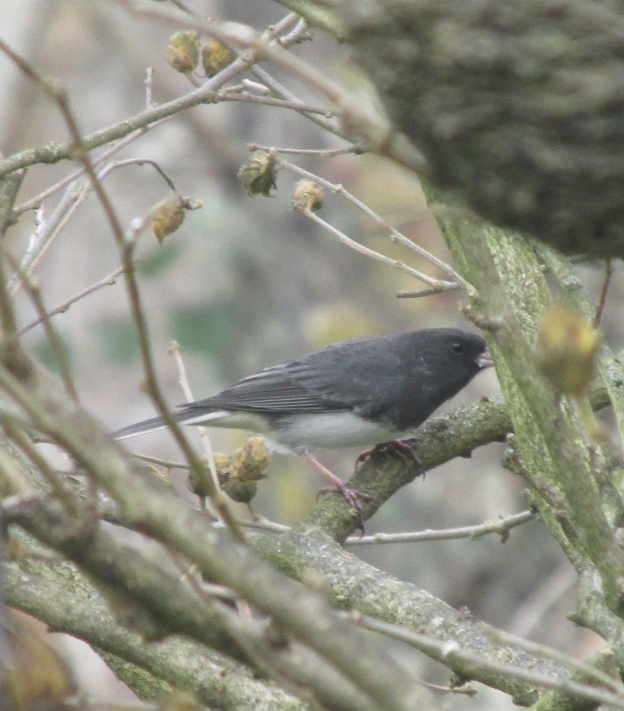
Photo by Bryan Stevens • A dark-eyed junco, usually a harbinger of wintry weather and snowy days, shells sunflower seeds beneath a feeder.

I wrote my first column about our “feathered friends” on Sunday, Nov. 5, 1995, which means this column will soon celebrate its 23rd anniversary.

This column has appeared on a weekly basis for the last 23 years in a total of five different newspapers, and in recent years it has been syndicated to several more. The column has also been a great conduit for getting to know other people interested birds and birding. I always enjoy hearing from readers, and I hope to continue to do so in the coming years as well. Since February 2014, I’ve also been posting the column as a weekly blog on birds and birding.

I saw my first swamp sparrow of the fall on Oct. 23. Autumn’s a time when many of those so-called “little brown birds,” also known as the sparrows, return to live in the fields, gardens, yards and woodlands around our home. Two of the other anticipated arrivals are white-throated sparrows and dark-eyed juncos.
SwampSparrow-April11

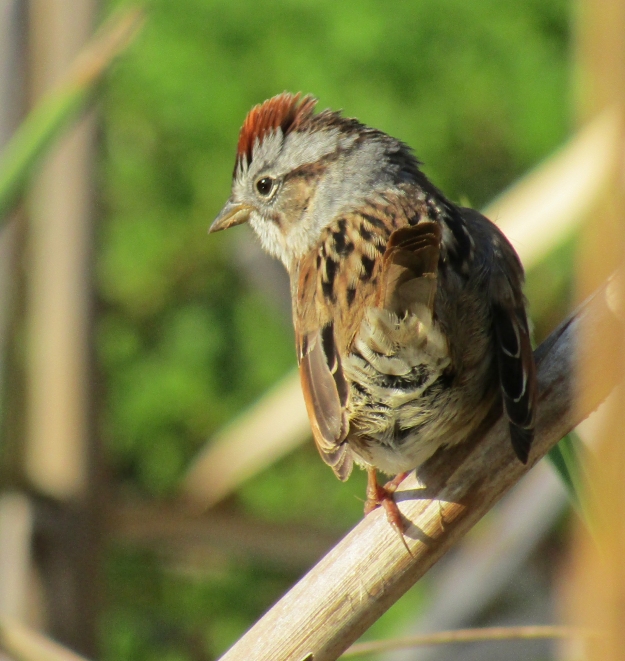
Photo by Bryan Stevens • Sparrows, like this swamp sparrow, often spend the winter months in fields, woods, and wetlands, sometimes visiting feeders in our homes and gardens.

In fact, that first column I wrote back in 1995 focused on one of the region’s most prevalent winter residents— the dark-eyed junco. Experts place juncos among the varied sparrow family. All juncos are resident of the New World, ranging throughout North and Central America. Scientists are continually debating precisely how many species of junco exist, with estimates ranging from a mere three species to about a dozen species.

Some of the other juncos include the volcano junco, yellow-eyed junco, Chiapas junco, Guadalupe junco, pink-sided junco, Oregon junco and Baird’s junco, which is named in honor Spencer Fullerton Baird, a 19th century American naturalist and a former Secretary of the Smithsonian Institution.

With that introduction and with some revisions I have made through the years, here is that very first column that I ever wrote about birds.
dark-eyed-junco-Skeeze-Pixabay

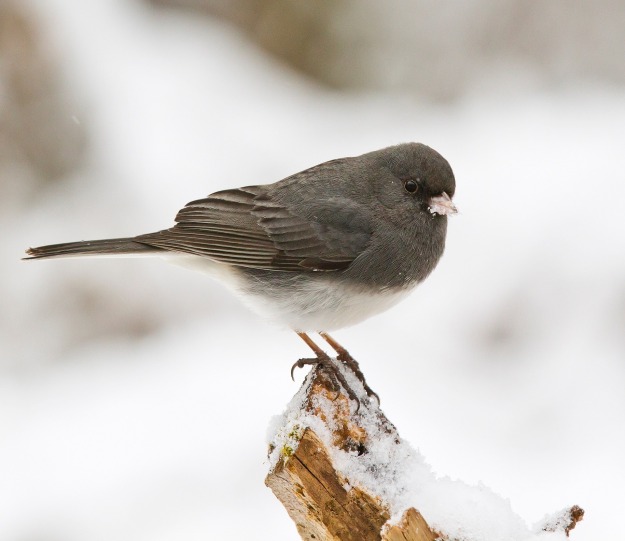
Photo by Skeeze-Pixabay • A dark-eyed junco clings to a snowy perch.

…..

Of all the birds associated with winter weather, few are as symbolic as the dark-eyed junco, or “snow bird.” The junco occurs in several geographic variations.

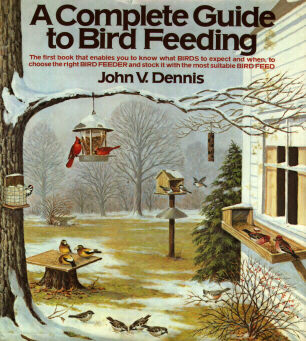
John V. Dennis, author of “A Complete Guide to Bird Feeding,” captures the essence of the junco in the following description: “Driving winds and swirling snow do not daunt this plucky bird. The coldest winter days see the junco as lively as ever and with a joie de vivre that bolsters our sagging spirits.” The dark-eyed junco’s scientific name, hyemalis, is New Latin for “wintry,” an apt description of this bird.
dennisjl 2

Most people look forward to the spring return of some of our brilliant birds — warblers, tanagers and orioles — and I must admit that I also enjoy the arrival of these birds. The junco, in comparison to some of these species, is not in the same league. Nevertheless, the junco is handsome in its slate gray and white plumage, giving rise to the old saying “dark skies above, snow below.”

Just as neotropical migrants make long distance journeys twice a year, the junco is also a migrating species. But in Appalachia, the junco is a special type of migrant. Most people think of birds as “going south for the winter.” In a basic sense this is true. But some juncos do not undertake a long horizontal (the scientific term) migration from north to south. Instead, these birds merely move from high elevations, such as the spruce fir peaks, to the lower elevations. This type of migration is known as vertical migration. Other juncos, such as those that spend their breeding season in northern locales, do make a southern migration and, at times, even mix with the vertical migrants.

Juncos are usually in residence around my home by early November. Once they make themselves at home I can expect to play host to them until at least late April or early May of the following year. So, for at least six months, the snow bird is one of the most common and delightful feeder visitors a bird enthusiast could want.

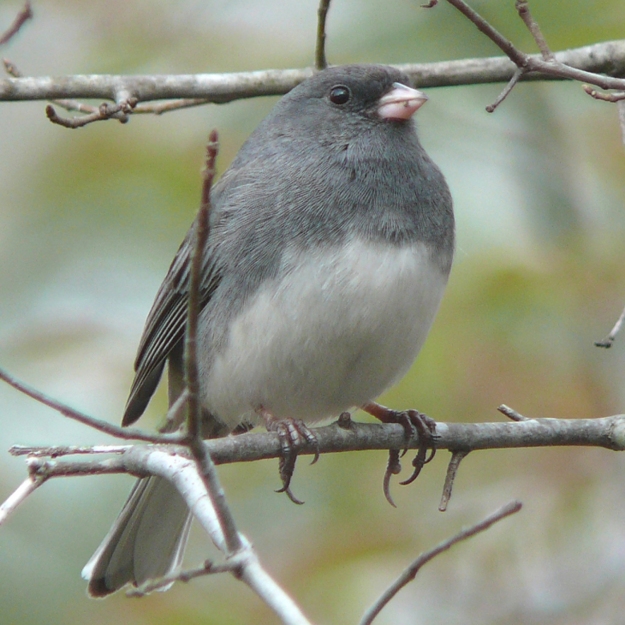
Juncos flock to feeders where they are rather mild-mannered — except among themselves. There are definite pecking orders in a junco flock, and females are usually on the lower tiers of the hierarchy. Females can sometimes be distinguished from males because of their paler gray or even brown upper plumage.
Junco

Photo by Ken Thomas • A dark-eyed junco perches on some bare branches on a winter’s day.

Since juncos are primarily ground feeders, they tend to shun hanging feeders. But one winter I observed a junco that had mastered perching on a hanging “pine cone” feeder to enjoy a suet and peanut butter mixture.

Dark-eyed juncos often are content to glean the scraps other birds knock to the ground. Juncos are widespread. They visit feeders across North America. The junco is the most common species of bird to visit feeding stations. They will sample a variety of fare, but prefer such seeds as millet, cracked corn or black oil sunflower.

There’s something about winter that makes a junco’s dark and light garb an appropriate and even striking choice, particularly against a backdrop of newly fallen snow.
Junco-Carver

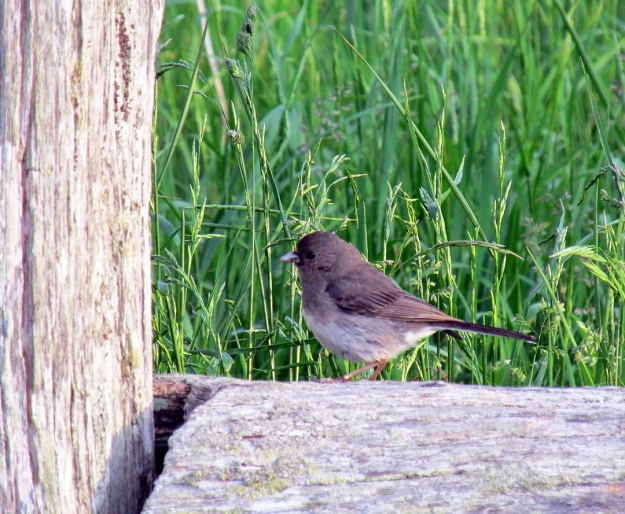
Photo by Bryan Stevens • Dark-eyed junco nests on high mountain slopes during the summer month. This dark-eyed junco was photographed at Carver’s Gap on Roan Mountain during the summer nesting season.

Of course, the real entertainment from juncos come from their frequent visits to our backyard feeders. When these birds flock to a feeder and begin a furious period of eating, I don’t even have to glance skyward or tune in the television weather forecast. I know what they know. Bad weather is on the way!

•••••

Back when I wrote that original column, juncos often returned each fall in the final days of October or first days of November. In the last few years, however, their arrival times have grown consistently later in November. At times, it takes a serious snowfall to drive these hardy birds to seek out easy fare at my feeders. I’m hoping they’ll return soon. In the meantime, if you want to share your first dark-eyed junco sighting of the fall, I’d love to hear from you. If you want to share a sighting, have a question or wish to make a comment, email ahoodedwarbler@aol.com.
dark-eyedjunco-female

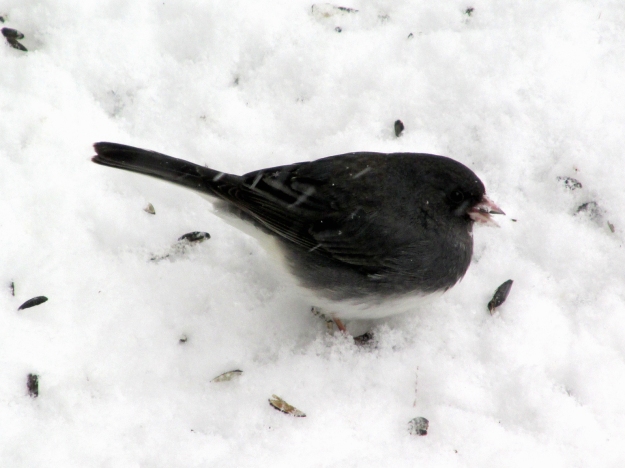
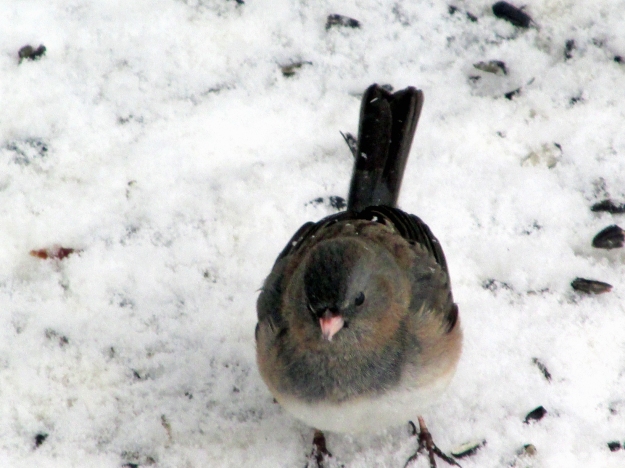
Photo by Bryan Stevens • A female dark-eyed junco scrambles for sunflowers seeds in the snow.
What’s in a name? Vernacular designations for some birds lack imagination

I took part in a Christmas Bird Count last month. These annual mid-December surveys of bird populations are not quite as exciting as counts held during the spring or fall migration periods each year, but they can produce some interesting results. One exciting post-count activity after taking part in a CBC is getting together to compile the results tallied by the various participating groups and individuals. The results are usually compiled on field checklists for birds of Tennessee. These checklists, which are produced by the Tennessee Wildlife Resources Agency and the Tennessee Ornithological Society, feature a listing of the common name of every bird species likely to be encountered in the state.

AmKestrel-Flight

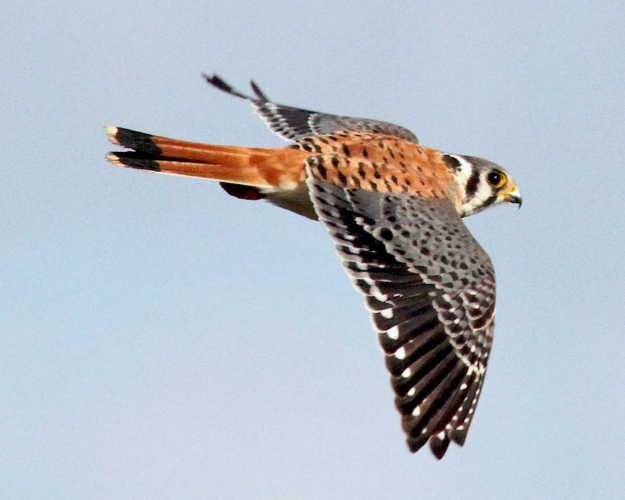
Photo by USFWS/Robert Burton • An American kestrel in flight shows the aerodynamic design that earned this small falcon the common name of sparrow hawk.

The compiler generally reads out the various names on the checklist, which lists all the local birds, beginning with black-bellied whistling duck and ending with house sparrow, and the spokespersons for the various parties respond as each bird’s name is called with the number of birds seen for each species. Over the years, some of the common names of birds featured on the list have changed, as has the position on the list for some of the species. For instance, the American kestrel and other falcons are no longer listed on the card in a grouping with the other raptors found in the state. This doesn’t make much sense to me. But, as I understand it, the falcons have been re-classified for scientific reasons, changing their relationship with the other birds listed on the checklists.

The falcons are not the only birds demoted from the grouping of raptors. The two native vultures — turkey vulture and black vulture — are now listed with herons and ibises instead of raptors. The falcons are now listed between the groupings of woodpeckers and flycatchers.

MaleTowhee-PIC

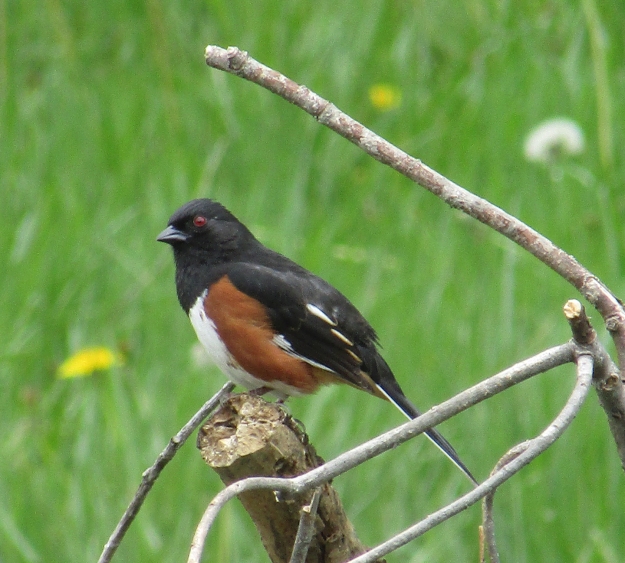
Photo by Bryan Stevens • Former common name rufous-sided towhee became Eastern towhee, which is far less descriptive of the bird’s appearance.

At least no expert has suggested a name change for any of the falcons. I dislike name changes, especially when we lose a descriptive name for a mundane one. That’s how we got relatively bland names like Eastern towhee instead of rufous-sided towhee and Northern flicker in place of yellow-shafted flicker. In fact, the American kestrel was once known as the sparrow hawk. The merlin and peregrine falcon, larger relatives of the kestrel, were once known as the pigeon hawk and duck hawk, respectively.

Common names are also known as “vernacular” names. Vernacular can be defined as the language or dialect spoken by the ordinary people, which contrasts with the scientific names for species of birds that are usually only recognized by ornithologists or other experts. However, just like dialects, there can be a great deal of variety among common names for the same birds. Many of the common names for some of our favorite birds lack any vivid descriptiveness.

IMG_4080

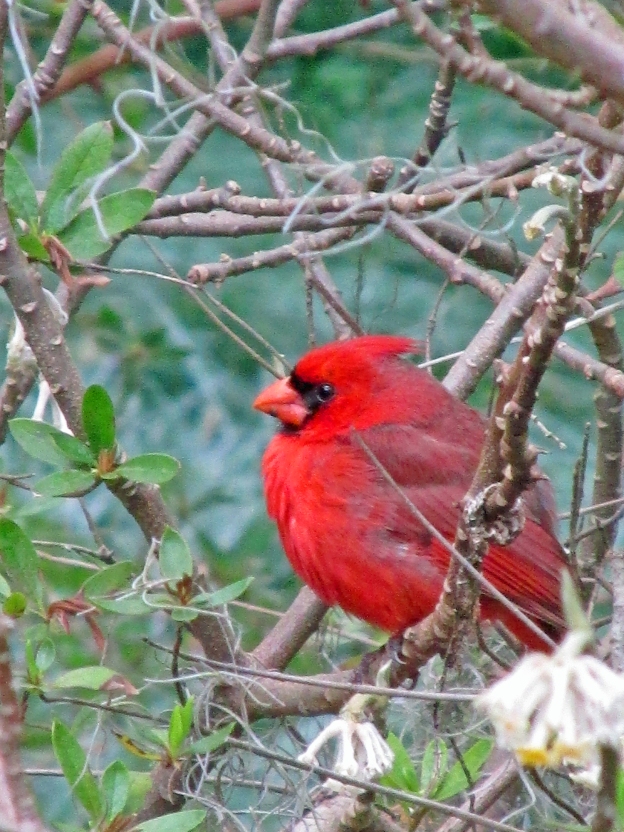
Photo by Bryan Stevens • Northern cardinal seems much less descriptive of this popular bird than such common names as Virginia nightingale and cardinal grosbeak.

For instance, let’s take a look at the Northern cardinal, which has been known by such common names as cardinal bird, cardinal grosbeak, crested redbird, Kentucky cardinal, redbird, Virginia redbird and Virginia nightingale. The first thing that irritates me about the common name of this bird is that there is no Southern cardinal. So, why is this bird the “Northern” cardinal? The only other birds in the Cardinalis genus are the desert cardinal, also known as the pyrrhuloxia, and the vermilion cardinal. Both these relatives have arguably more interesting and descriptive names than their relative, which is a favorite of many birders and arguably better known to many people.

I can understand why Kentucky cardinal and Virginia redbird are not inclusive names since the Northern cardinal ranges far beyond the borders of these two states. On the other hand, cardinal grosbeak with its reference to the cardinal’s large beak, as well as crested redbird, are both more descriptive and creative than the rather nondescript Northern cardinal.

Of course, a literary great summed up the confusing attitude toward common names. “What’s in a name?” William Shakespeare had Juliet ponder. “That which we call a rose by any other name would smell as sweet.”800px-Title_page_William_Shakespeare's_First_Folio_1623

I think The Bard was on to something. Whether we call a cardinal a redbird or a Virginia nightingale, it’s song will sound as sweet to our ears. The appearance of one of these birds on a gloomy day will elevate our mood whether we know the bird as cardinal grosbeak, Kentucky cardinal or, in scientific terminology, Cardinalis cardinalis.


BRISTOL HUMMERS DEPART

As promised, here’s an update on the hummingbirds that proved dutiful daily visitors to a sugar water feeder at the Bristol home of Ralph Beamer through Halloween, Thanksgiving and Christmas.

Early in the new year, Ralph notified me that the hummingbirds departed ahead of 2018’s arrival.

“We had a surprise on New Year’s Day,” Ralph wrote in an email. “The hummingbirds were gone. I am glad they left ahead of the extreme cold we have had the last few days.”

Ralph noted that he had a wonderful time watching them for the past three months. He is hopeful they will come back in the future, but figured that is probably wishful thinking.

Actually, some of these winter hummingbirds, which often turn out to be rufous hummingbirds, have proven quite faithful to favorite locations. Bird banders have recaptured some individual hummingbirds year after year in the same yards. During the stay of his visitors, Ralph shared photographs and videos with me of their visits to his feeders. I enjoyed receiving his periodic updates about them.

I emailed Ralph back and told him that these hummingbirds seem to also have a knack for knowing when to leave and suggested he keep an eye out for them again next fall.

••••••

Bryan Stevens lives near Roan Mountain, Tennessee. To learn more about birds and other topics from the natural world, friend Stevens on Facebook at https://www.facebook.com/ahoodedwarbler. If you have a question, wish to make a comment or share a sighting, email ahoodedwarbler@aol.com.

Even during winter season, activity on the Roan doesn’t slow much

RM-Sunset-Dec17

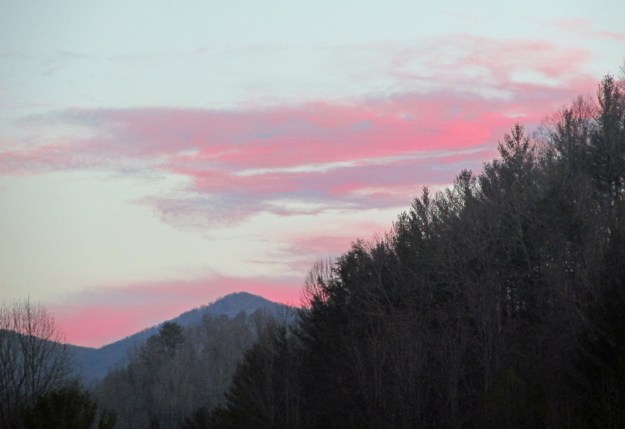
Photo by Bryan Stevens • The setting sun casts a pink glow to the winter sky near the village of Roan Mountain. The 11th annual Roan Mountain Winter Naturalists Rally is set for Saturday, Feb. 11, at the Roan Mountain State Park Conference Center.

Activities last month and planned events for February are just some of the evidence that, no matter the season, things are always happening on Roan Mountain.

For instance, the 65th Roan Mountain Christmas Bird Count was held Sunday, Dec. 17, with nine observers in two parties. Up to four inches of snow blanketed most of the area, but the roads were clear. These weather conditions highlight the fact that over the years a couple of Roan Mountain CBCs had to be cancelled due to weather conditions.

Participants included Fred Alsop, Jim Anderson, Rick Blanton, Kevin Brooks, compiler Rick Knight, Roy Knispel, Guy McGrane, Amber Stanley, and Charles Warden. A total of 44 species were tallied, near the 30 year average of 46. The all-time high of 55 species was established back in 1987.

SNowbird-Feb18

Photo by Bryan Stevens • A total of 50 Dark-eyed Juncos made the tally during the Roan Mountain Christmas Bird Count held Dec. 17, 2017.

A list of the species follows:

Canada Goose, 24; Pied-billed Grebe, 1; Great Blue Heron, 3; Cooper’s Hawk, 1; Red-shouldered Hawk, 1; and Red-tailed Hawk, 6.

Rock Pigeon, 19; Mourning Dove, 58; Eastern Screech-Owl, 2; Barred Owl, 1; Red-bellied Woodpecker, 3; Yellow-bellied Sapsucker, 2; Downy Woodpecker, 10; Hairy Woodpecker, 2; Northern Flicker, 1; and Pileated Woodpecker, 7.

American Kestrel, 1; Eastern Phoebe, 6; Blue Jay, 23; American Crow, 82; and Common Raven, 11.

Carolina Chickadee, 25; Tufted Titmouse, 20; Red-breasted Nuthatch, 5; White-breasted Nuthatch, 15; Brown Creeper, 2; Winter Wren, 2; Carolina Wren, 15; Golden-crowned Kinglet, 13; Eastern Bluebird, 30; American Robin, 12; Northern Mockingbird, 6; European Starling, 65; and Cedar Waxwing, 2.

Winter-Cardinal

Photo by Bryan Stevens • A total of 15 Northern Cardinals were found the day of the Roan Mountain Christmas Bird Count last month.

Eastern Towhee, 9; Field Sparrow, 11; Song Sparrow, 80; Swamp Sparrow, 2; White-throated Sparrow, 11; Dark-eyed Junco, 50; Northern Cardinal, 15; House Finch, 3; American Goldfinch, 46; and House Sparrow, 41.

Some interesting incidents on this count included finding an Eastern Phoebe at an elevation of 4,450 feet surrounded by snow. The most abundant birds included Common Crow with 83 individuals found and European Starling with 65 individuals counted.

•••••••

The focus will be on botany for the upcoming Roan Mountain Winter Naturalists Rally, scheduled for Saturday, Feb. 11.

Huff

Lisa Huff

According to Richard Broadwell, director for the winter rally, the event has drawn hardy nature enthusiasts from far and wide to Roan Mountain for the past 11 winter seasons. Top naturalists volunteer their time and energy to make the event both enjoyable and educational for people of all ages. Parents are encouraged to bring the kids.

Broadwell noted that the 2018 Winter Rally continues this celebration of the natural world by providing top speakers on topics concerning the environs of the Roan Highlands. Speakers for morning programs will be Ben Jarrett, Southern Regional Science Coordinator, for The American Chestnut Foundation; Lisa Huff, Stewardship Ecologist with the Tennessee State Natural Areas Program; and Dwayne Estes, professor of biology at Austin Peay State University.

Jarrett will speak about the historical significance of the American chestnut in a program tilted “Restoration of American Chestnut: A Marriage of Breeding and Biotechnology.” He will take a look at the American chestnut and its economic, ecological and social importance). He will also educate about the chestnut blight and subsequent downfall of the species, as well as the ongoing restoration efforts through backcross breeding and genetic engineering.

Jarrett

Ben Jarrett

Huff will present a history of the shortleaf pine and bluestem vegetation community in Tennessee in a program titled “The Mystery of the Missing Shortleaf Pine.” She started working for the Tennessee State Natural Areas Program in 2000. She is tasked with the daily operations and management of over 42,000 acres in 21 natural areas in East Tennessee.

Estes will speak about southeastern United States grasslands, such as savannas, prairies, glades, barrens, bald, bogs, fens, and meadows, all of which are imminently threatened. He will also educate about the work of the Southeastern Grasslands Initiative in Clarksville, which aims to focus grassland conservation efforts across a 21-state region. SGI will use a multi-faceted approach combining restoration, preservation, recreation, research, rescue, seed banking, education and market-driven strategies. SGI is currently working with and seeking support from private philanthropic foundations, corporations, non-profit conservation organizations and government agencies. His program is titled “The Southeastern Grasslands Initiative: Charting a New Course for Conservation in the 21st Century.”

ESTES

Dwayne Estes

All programs will be held at the Roan Mountain State Park Conference Center. Jarrett will speak at 9:30 a.m. followed by Huff at 10:30 a.m. The program by Estes at 11:40 a.m. will conclude the slate of presentations. Lunch, which requires a pre-paid reservation, will be served at 12:30 p.m. Sarah Sanford, candidate for Master’s of Environmental Management at Duke University, will present a lunchtime program on “Grassy Balds Management in the Roan Highlands.”

Four different hikes are planned for the afternoon, starting at 1:30 p.m. Hike options include:

• Lisa Huff will lead a hike in the Hampton Creek Cove Natural Area. Binoculars are recommended. The moderately strenuous hike should not take more than three hours.

• Jamey Donaldson, ETSU John C. Warden Herbarium Adjunct Curator, will lead a hike to the alder balds on the ridgeline of Roan Mountain. Dress warmly for this strenuous hike.

Sisken-Spruce

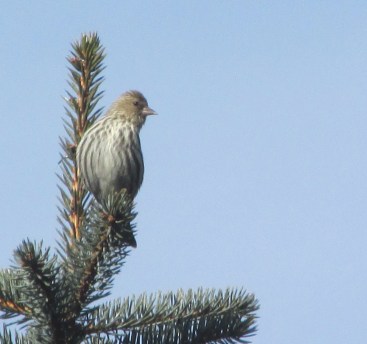
Photo by Bryan Stevens • A Pine Siskin in a spruce at Carver’s Gap on Roan Mountain.

• Marty Silver, Ranger with Warriors Path State Park, will lead a wildlife tracking and animal signs hike down near the Doe River in Roan Mountain State Park. This is a moderately strenuous and kid-friendly activity.

• Dr. Frosty Levy, Professor Emeritus of Biology at East Tennessee State University, will lead an easy winter tree identification hike in Roan Mountain State Park.

For more information and a downloadable brochure, visit http://friendsofroanmtn.org/2018%20Winter%20Rally%20Brochure.pdf or email Broadwell at rbroadwell@gmail.com. The event is free to members of Friends of Roan Mountain and children. Adults who are not members of FORM can register for all activities for $10.

Winter weather events can adversely affect birds, too

Although the weather has been mild thus far this winter, that can change in the blink of an eye. Inclement weather affects humans, but it can also have adverse affects on birds. Snow, sleet, ice, wind and other forces can play havoc on the lives of our feather friends. Birds have many adaptations to help them deal with the worst the elements can throw at them, but sometimes events can overtake them.

LaplandLongspur-Auk

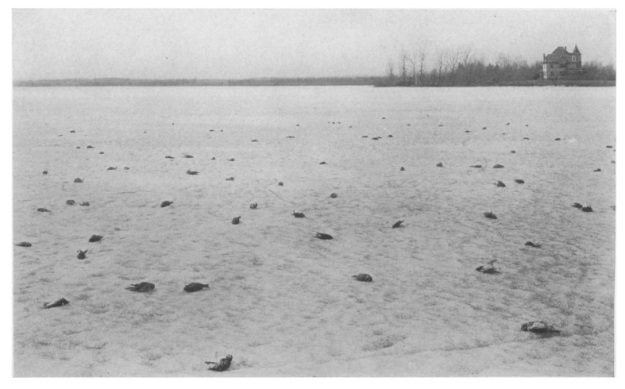
Bodies of the fallen Lapland longspurs are shown scattered on a frozen lake after a 1904 weather-related catastrophe overtook hundreds of thousands of migrating longspurs.

One such event took place on the night of March 13-14, 1904, when hundreds of thousands of one small songbird species perished as circumstances came together in a perfect storm. This infamous event in the annals of ornithology mystified residents living around the town of Worthington, Minnesota, when they awoke on the morning of March 14 to find thousands of dead birds strewn across the landscape. Birds fell onto everything from yards and gardens to street and rooftops, as well as numerous frozen lakes.

In an article in the ornithological publication The Auk, the affected songbird was identified as the Lapland longspur, a bird that nests in the Arctic tundra and spends winters on the expansive prairies and plains of the United States and Canada. The Lapland longspur, also known as the Lapland bunting, also ranges into Russia and the Northern Scandinavian countries of Europe. The term “longspur” refers to the long hind claws on this small songbird’s feet. Two other longspurs — Smith’s longspur and chestnut-collared longspur — are found in North America.

The Lapland longspur disaster on the night of March 13, 1904, originated with a massive migration flight taking these songbirds back to their tundra nesting grounds. The author of the Auk article speculated that the longspurs migrating northward encountered a winter storm in the darkness. Heavy snow accumulated on the feathers of the exhausted migrants, forcing them to crash to the ground by the hundreds of thousands across the terrain of southwestern Minnesota and northwestern Iowa. From the point of view of the disoriented birds, the lights from the towns dotted across the landscape added to the chaos and confusion. Many of the bird suffered blunt force traumas, including ruptured organs, crushed skulls, bone fractures and other such injuries incurred when falling to the ground from great heights.

The Auk article comes to a total of a million birds lost in a single night, although the author admits the toll could have been even higher. Although this is an immense figure, consider that a survey dating to 2004 estimated 8 million Lapland longspurs in Alaska alone during the nesting season.

aul152-871

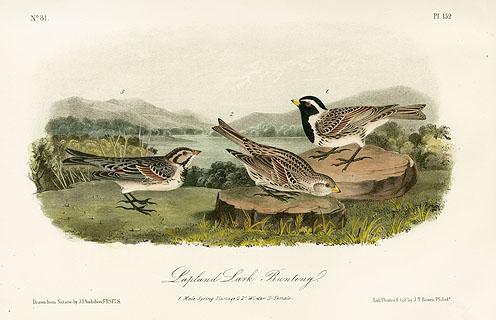
Early naturalist and artist John James Audubon painted Lapland Longspurs or, as he knew them, Lapland Lark Buntings.

The 1904 disaster didn’t seem to dent the overall numbers of the Lapland longspur. The populations of many species of birds can survive such catastrophes, but other species already struggling could be adversely affected by such events. For example, in February of 2007 a flock of year-old whooping cranes was exterminated by severe storms that overwhelmed them in a shelter at the Chassahowitzka National Wildlife Refuge in Florida. A total of 18 young whooping cranes, part of a flock trained to follow an ultralight aircraft from their birthplace in Wisconsin to the refuge in Florida salt marshes, were killed during the storm. The loss of that many young birds also robs the endangered species of much needed vitality. As of February 2015, the total whooping crane population stood at 603 individuals, including 161 captive birds.

Weather disasters extract a toll on both humans and birds. Sometimes they may affect hundreds of thousands of individuals, although the consequences are often confined to smaller segments of a population.

In early May of 2013, dozens of common loons migrating through Wisconsin encountered an unseasonable ice storm. Many of the birds found ice forming on their feathers, weighting them down and causing emergency landings. Wildlife rehabilitation workers rescued more than 50 birds, but there were probably many other loons affected by the freak storm that were lost without a trace.

Common_Loon_on_Water

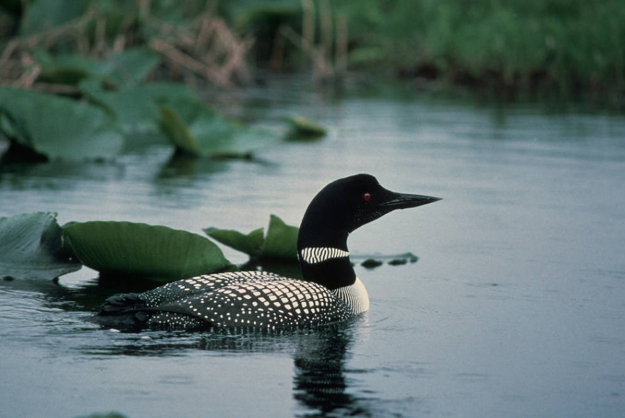
Photo by U.S. Fish & Wildlife Service • Common loons are quite at home in the air and on the water, but these birds are awkward if weather forces them to set down on land.

Loons crashing onto land or even small ponds are doomed. Agile and graceful in water because of strong legs and webbed feet, loons are almost incapable of movement on land. Landing on a small body of water is not much better since loons must run along a stretch of waters — sometimes for hundreds of yards — in order to get their relatively heavy bodies aloft.

Loons are not the only birds that sometimes face forced landings. In March of this year, a winter storm raged through most of the Northeastern United States. The wakes of these storms resulted in wildlife agencies in the region being flooded with reports of dead or injured American woodcocks in the region. Most of the reports were concentrated in and around New York City. Not only did the storm interrupt the migration flight of the woodcocks, but cold temperatures caused the ground to freeze, preventing the stranded birds from finding food.

The woodcock is an unusual shorebird, also known by such whimsical names as “bog sucker” and “timberdoodle,” that has completely abandoned the shore in favor of woodlands and fields. The American woodcock is not a rare bird, but the species is rarely seen due to its retiring habits and inaccessible habitats.

Closer to home, an unusual February event back in 2014 resulted in equally unusual numbers of red-necked grebes on area lakes, rivers, and ponds. This grebe, a rare visitor to the region, was apparently forced by weather conditions to make a stopover on bodies of water in the region. Reports of red-necked grebes persisted for about a week before they eventually departed to continue their flight to more favored locations.

Back in 2011, it wasn’t a winter storm that killed thousands of birds in Arkansas. The birds — red-winged blackbirds, European starlings, brown-headed cowbirds, and common grackles — shared a communal roost near the town of Beebe.

On New Year’s Eve, just as 2011 was dawning, about 5,000 of these birds died after crashing into trees, buildings and automobiles, according to a National Geographic News article by Charles Q. Choi. Apparently these birds were frightened into flight by the explosive booms from a professional fireworks display celebrating the arrival of a New Year. In the chaos after thousands of birds not suited for nocturnal flight took to the air, they began to impact various stationary objects and crash back to the ground.

Summer-Pelicans

Photo by Bryan Stevens • Brown pelicans fly in a line over the Atlantic Ocean on the South Carolina coast.

Incidentally, in the same article, mention was made of a 2010 incident when hundreds of pelicans washed up on the border between Washington and Oregon. The article blamed a cold front that caused ice to form on the feathers of the bodies and wings of the pelicans.

Birds, much like their human admirers, live in a world greatly affected by the vagaries of weather. All things considered, birds manage to ride out most of what Mother Nature throws their way. It’s one of their many admirable qualities.