Tag Archives: North Carolina

Hummingbirds are back, and readers share first spring sightings

30425329_10214061548565156_3810521485761143823_o 3

Photo by Bryan Stevens • Ruby-throated hummingbirds returned to the region earlier this month. This male, sipping sugar water from a feeder, shows its namesake red throat patch.

As many readers have already noticed, the ruby-throated hummingbirds are back. These tiny flying gems began returning to the region in the first days of April, but reports of their arrival spiked during the second week of April.

What do the hummingbirds that make their homes in our yards from April to October do during the five months they are absent from the region?

Most ruby-throated hummingbirds retreat to southern Mexico and Central America, some winging their way as far south as extreme western Panama, as well as the West Indies and southern Florida. They utilize a variety of habitats, ranging from citrus groves and forest edges to tropical deciduous forests and the edges of rivers and wetlands.

Those ruby-throated hummingbirds that make it as far south as Panama may find that they must compete with 59 other species of hummingbirds that call the Central America country home. In their winter home, the ruby-throated hummingbirds are definitely just another face in the crowd when its comes to their kin. In Panama, a ruby-throated hummingbird might encounter violet-headed hummingbirds, white-necked jacobins, black-throated mangos and green violet ears.

Ruby-OneSpot

Photo by Bryan Stevens • A young ruby-throated hummingbird shows a hint of the red throat gorget that gives this bird its common name.

It must be nice to live among so many hummingbirds. Closer to home, the ruby-throated hummingbird is the only one of its kind to nest in the eastern United States. Some of the ones arriving at our feeders now will speed their way farther north, but some will settle in our yards and gardens as they bring forth the next generation of ruby-throated hummingbirds.

Dianne Draper reported the earliest observation of which I am aware. A friend on Facebook and a fellow birder, Dianne posted that the first hummingbird of spring arrived at her home in Jonesborough, Tennessee, on the morning of April 4. Her sighting was seven days earlier than any of the others I received.

Harold and Elizabeth Willis in Marion, North Carolina, reported their first hummingbird at 5 p.m. on Wednesday, April 11.

Helen Whited in Richland, Virginia, saw her first hummingbird at 12:40 p.m. on Thursday, April 12.

Judy and Bill Beckman saw their first spring hummer at 7:25 p.m. on April 12 at their home in Unicoi, Tennessee.

Ruby-throatedFemale-EYE

Photo by Bryan Stevens • A female ruby-throated hummingbird settles onto the perch of a sugar water feeder.

Lois Wilhelm, who lives on Little Bald Creek Road on Spivey Mountain in Erwin, Tennessee, saw her first hummingbird of 2018 at 3:30 p.m. on April 12.

Glen Eller in Kingsport, Tennessee, saw his first spring hummingbird around 5 p.m. on April 12. The bird — a male — drank for about four minutes. “I guess he needed a good fill up,” Glen commented.

Nola Martin from Nebo, North Carolina, reported her first hummer arrived just before 11 a.m. on April 12.

“He was a little green bird….not sure which kind or which sex,” she wrote in her email. “It certainly remembered where one of my feeders was last year, though, as it was looking for it in that spot, I didn’t have that one out yet.”

Nola said she now has five of her seven feeders filled and placed out for the returning hummingbirds.

Betty Poole saw her first male hummingbird of spring when the bird arrived at 9:05 a.m. on Friday, April 13, at her home in Bristol, Virginia. Her daughter, Jane P. Arnold, emailed me the information about her mother’s sighting. Jane is still awaiting her own first spring sighting of a hummingbird.

Ruby-WingLift

Photo by Bryan Stevens • A ruby-throated hummingbird lifts its wings to shake water droplets off its back.

Debbie Oliver, while watching Wheel of Fortune on the evening of April 12, got her first glimpse of a spring hummer at her deck feeders in Bristol, Tennessee.

“I couldn’t observe if it was male or female due to the dimming light,” she wrote in an email.

“It was a curious ruby-throated hummingbird just flying around the feeder without taking a sip of nectar,” she added.  Around 9 a.m. the following morning, she spotted a male ruby-throated hummer drinking nectar at the feeder.

She speculated about whether the bird was the same individual that visited the previous evening. “We’ll never know,” she decided.

Joneen Sargent emailed me to let me know that her husband, Dale, saw a ruby-throated hummingbird on April 12 at 7 a.m. The Sargents live off of Booher Drive in Bristol, Tennessee.

Bob Cheers of Bristol, Virginia, saw his first ruby-throated hummingbird at 6:45 a.m. on April 13. Bob keeps a record of the arrival dates for this tiny bird. In 2015, he saw the first hummer on April 9. Last year, he saw his first hummer on April 11. In 2016, the first bird arrived on April 13. In 2014, he had to wait until April 14 to see the first hummer of spring.

RubyRed

Photo by Bryan Stevens • A male ruby-throated hummingbird perches near a feeder that he is ready to defend from all comers.

Mark Hurt, who lives on Glenway Avenue in Bristol near Virginia High School, said that his “little buddy,” the ruby-throated hummingbird, returned about 1 p.m. on April 13.

Sandra Loving reported that her first hummer sighting took place at 6:17 p.m. on April 13 at South Holston Lake in Tennessee.

Peggy Oliver saw her first male ruby-throated hummingbird of spring at 6:15 p.m. on April 13.

Ashley Russ of Abingdon, Virginia, emailed me to share that she spotted her first hummingbird of the season at 7:20 p.m. on April 13.

Terry Fletcher saw her first male ruby-throated hummingbird at her feeder at 6:50 a.m. on April 14 at home in the First Colony subdivision in Bristol, Tennessee. Away from home the previous day, Terry was told by a next-door neighbor that the hummingbirds actually showed up on April 13.

Janice Denton, who lives on Canthook Hill Road in Bristol, Tennessee, emailed me news of her first sighting.

“I’m excited to let you know that I saw my first ruby-throated hummingbird on Friday, April 13,” she wrote. “I have had my feeders out for about two weeks and was sitting on my front porch in the afternoon hoping to see a hummingbird.”

On April 15 around noon, Janice also reported that she saw a male ruby-throated on a feeder outside her kitchen window, and another one came along and chased it off.  “I hope they all stick around for the summer,” she wrote.

Ruby-Spot-Two

Photo by Bryan Stevens • Only adult male ruby-throated hummingbirds show the namesake ruby-red throat patch.

Lynne Reinhard reported via Facebook that she had her first hummingbird sighting at her home on the upper end of South Holston Lake on April 14. She noted that the hummingbird arrived a day earlier than last spring.

Linda Sproles, who lives on Hunter Hills Circle in Bristol, Tennessee, observed the first arrival of a hummingbird at her deck feeder at 10:43 a.m. on April 14. “It was a female, I believe, because it did not have a red throat patch,” she added.

Kathy Maggio, who lives between Benhams and Mendota in Washington County, Virginia, spotted her first hummingbird of spring at 1:15 p.m. on April 14.

Phyllis Moore of Bristol, Virginia, saw her first ruby-throated hummingbird of the spring at 4 p.m. on April 14.

Pat Stakely Cook, who resides in Marion, North Carolina, reported two ruby-throated hummingbirds at her feeders on April 14. The two male hummers stayed busy feeding and chasing each other.

32183fcb801d3cdbd206582ffb25517d 2

Early American naturalist and painter John James Audubon painted this work featuring the ruby-throated hummingbird. From the moment New World explorers arrived in the New World from Europe, they were impressed by the tiny, dazzling hummingbirds, a family of birds unknown in the Old World.

Amy Wallin Tipton, a resident of Erwin, Tennessee, saw her first hummingbird, a male, at 4 p.m. on April 14. She shared her sighting via Facebook.

Judi Sawyer, a resident of Roan Mountain, Tennessee, saw her first spring hummingbird, a male, at her home on the morning of April 14. Some house wrens decided to make their arrival the same day, she reported on Facebook.

Ginger Wertz-Justis in Baileyton, Tennessee, saw a male hummingbird at 6:30 p.m. on April 14.

Richard Trinkle emailed me to report that he saw a male ruby-throated hummingbird at 6:15 p.m. on April 14 at his Bristol home near Friendship Ford.

Robin Small saw the first hummer at 6:15 p.m. on April 14. “As I was looking at the snow falling and the cardinals, woodpeckers and regular visitors to my deck feeders, I saw my first hummingbird of 2018,” Robin wrote in an email. Robin put the feeder out the previous day when temperatures had been in the 80s and added that the hummer visited several times as the snow fell the evening of its arrival.

Janice Humble, who lives near South Holston Lake, put out her feeder on April 14. “It wasn’t 15 minutes until I had a hummingbird,” she wrote in her email.  “I saw two others that same evening.”

Lewis Spicer of Abingdon, Virginia, had both a male and female hummingbird visit his home for the first time this spring on the same day on April 15. He saw the male at 9:35 a.m. The female hummer arrived during afternoon rain at 12:45.

Frank and Myra Renault of Abingdon, Virginia, saw their first hummingbird of spring — a female — at 12:06 p.m. on April 16.

Sheila Myers, who lives on Porter Valley Road in Marion, Virginia, saw her first hummer at noon on April 16.

Rhonda Eller in Chilhowie, Virginia, saw her first spring hummingbird at 4:53 p.m. on April 18.

I am pleased to report that my own first hummingbird sighting for 2018 took place when a feisty male zipped into the yard while I was seated on the front porch. He sipped at four different feeders before he zoomed off. He arrived at 5:40 p.m. on April 14, one day earlier than last year’s first arrival. My feeders had been waiting for the arrival of hummingbirds for about a week when he first appeared.

Ruby-throated-WILLOWS

Photo by Bryan Stevens • Numbers of Ruby-throated Hummingbird in the region tend to fluctuate each year, but people should see a spike in their numbers as the hummingbirds end summer nesting and start migrating south again.


North America’s bluebirds never fail to impress with their winning ways

A famous song declares that “somewhere over the rainbow, bluebirds fly,” so you’ll have to excuse me if I have been looking for those elusive rainbows during the unseasonably warm weather the region’s enjoyed in recent weeks.

Also, like the song promises, “dreams really do come true,” which was fulfilled by the arrival of this year’s first pair of Eastern bluebirds at my home on Friday, Feb. 23. The presence of a pair of these beautiful and trusting birds is always sure to put people in a good mood. People have known for generations that bluebirds make good neighbors. A pair of bluebirds in your yard or garden provides hour upon hour of free entertainment as one watches these birds go about their daily routine. At this time of the year, much of that routine is focused on finding and claiming the best possible nesting location for the upcoming spring season.

Bluebird-Comic

The Eastern bluebird is one of the most beloved American songbirds.

The Eastern bluebird is one of North America’s best-known cavity-nesting birds. About 85 species of North American birds use cavities in trees for nesting purposes. Cavity-nesters include ducks, such as buffleheads and wood ducks, as well as birds of prey such as Eastern screech-owls and American kestrels.

Woodpeckers and nuthatches can excavate their own cavity in a dead or decaying tree. Others, such as the bluebirds, must find a cavity already in existence. Such cavities are scarce real estate and can be subject to some intense competition. The Eastern bluebird is at a disadvantage when forced to compete with non-native introduced birds such as aggressive European starlings and house sparrows. Even native competitors such as house wrens and tree swallows are serious rivals when it comes down to staking a claim to prime nesting real estate.

Over the years, I have found bluebirds nesting in cavities inside wooden fence posts, but there are fewer wooden fence posts every year. This reinforces the idea of how changing landscapes have affected these birds. Instead of wooden fence posts, many farmers now use metal ones, and dead or dying trees — a much sought-after resource for cavity-nesting birds — are often removed from woodlands.

Bluebird-withPineNeedles

Photo by Bryan Stevens • A female Eastern Bluebird gathers pine needles to use as nesting material.

Fortunately for bluebirds, this species will also accept lodging in a nest box, or birdhouse, provided for them by human landlords. One of the simplest ways to bring bluebirds close is to offer wooden boxes, constructed to their specific requirements, for their use as nesting locations. Because of their trusting nature when it comes to their human neighbors, the Eastern bluebird is one of our most beloved birds. In fact, bluebirds are such popular birds that interest in them and their well-being has inspired the foundation of organizations such as the North American Bluebird Society. The Eastern bluebird has also been designated the official state bird for New York and Missouri, which provides more testimony to the immense popularity of this bird.

Bluebirds-One

Photo by Bryan Stevens • A flock of Eastern bluebirds perches on fenceposts.

There are two other species of bluebirds found in North America. The Western bluebird is found throughout the year in California, the southern Rocky Mountains, Arizona and New Mexico, as well as in part of Mexico. The species ranges in the summer as far north as the Pacific Northwest, British Columbia and Montana. The Mountain bluebird nests in open country in the western United States as far north as Alaska. They are short-distance migrants, retreating as far south as Mexico during the winter season.

Other than these three species, North America offers few others birds with mostly “blue” plumages. Some examples include indigo bunting, blue grosbeak, and blue jay, as well as birds like great blue heron and belted kingfisher.

In addition to housing, food and water can be used to lure Eastern bluebirds closer. This bird doesn’t eat seeds, but it can be attracted with an offering of mealworms — live or freeze-dried – or commercially prepared peanut butter nuggets. A water feature in a yard is also a magnet for bluebirds and a host of other bird species.

Bluebird-Pool

Photo by Bryan Stevens • A handsome male Eastern bluebird perches on a chain-link fence.

If your home doesn’t provide suitable open, spacious bluebird habitat, it’s still easy to enjoy these beautiful birds. An afternoon or evening drive into open country, such as agricultural farmland, is likely to yield sightings of this bird on fences and utility lines. Golf courses, some of which go the extra mile to accommodate bluebirds, also provide habitat for these lovely birds.

The Eastern bluebird is present in the region in all seasons and is one of our more common birds. If you’re already an experienced landlord and host for these birds, you probably already know they joys they can bring. If not, why not try to attract them closer to you? Most bluebirds in the region have already started looking for a nesting site. Many of these birds may nest two or even three times in a single season. March has only just arrived, so there’s still time to place a nest box or two on your property to get their attention.

••••••

If you have a question, wish to make a comment or share a sighting, email ahoodedwarbler@aol.com.

Bluebiord-Male-Playground

Photo by Bryan Stevens A male Eastern Bluebird perched on playground equipment at Winged Deer Park in Johnson City.

America’s lost parakeet remains poignant symbol of need to protect our birds

A century ago this week, a caged bird died in Cincinnati, Ohio. However, this was not simply a case of an untimely death of a beloved family pet. Instead, that bird represented the last of its kind.

The bird belonged to the Psittacidae, a family of tropical birds that includes macaws, parrots, caiques, amazons and parrotlets. The bird, a male named Incas, was the last captive Carolina parakeet (the only species of parrot native to the eastern United States) in existence when he died at the Cincinnati Zoo on Feb. 21, 1918, in the same aviary where Martha, the last passenger pigeon, had died four years earlier.


The demise of Incas came about a year after the death of his mate, who had been named Lady Jane by their zookeepers. In a time before the forces of social media and round-the-clock mass media, the death of Incas likely went unnoticed by other than a few people.

Carolina parakeets, John James Audubon


If few noticed the passing of Incas at the time, surely today we can mourn the loss of one of the most abundant birds to ever roam the continent. Few people even realize that North America was once home to its own species of parakeet. A few individuals — all that remained of once massive flocks of colorful, noisy native parakeets — made it into the 20th century. Despite the death of Incas in 1918, the Carolina parakeet as a species was not officially declared extinct until 1939. It was a classic example of going out with a whimper, not a bang, when the entire population of the Carolina parakeet crashed suddenly and for reasons still not fully understood.

For instance, large flocks of these birds still flew free until the final years of the 1800s, but in the first decade of the 1900s, these flocks disappeared. The only other native parrot — the thick-billed parrot of the American southwest — no longer flies north of the Mexican border. An attempt to re-introduce this parrot to Arizona in the 1980s ended in disappointing failure. Of course, thick-billed parrots still fly free south of the border.

il_fullxfull.603620894_qnpu

It would be wonderful to have native parrots still flying free. The extinct Carolina parakeet ranged throughout the eastern United States, including the states of Virginia, Tennessee and North Carolina. These parrots strayed on occasion as far north as Wisconsin and New York and ranged as far west as Colorado. Florida provided a stronghold for this colorful species, which also made its last stand in the Sunshine State. The last flock of thirteen wild birds was documented in Florida in 1904.

These birds have attracted attention since the arrival of the first Europeans. English explorer George Peckham mentioned the presence of Carolina parakeets in an account he wrote of his 1583 expedition in Florida. In the 1700s, English naturalist Mark Catesby described the species for science in a two-volume work titled “The Natural History of Carolina, Florida and the Bahama Islands.”

The parrots were evidently numerous, often encountered in large flocks. Few early naturalists attempted to properly study them, resulting in a sad dearth of knowledge. Much of what we do know is quite intriguing. The diet of these parakeets made them toxic, as early naturalist and artist John James Audubon observed when cats sickened and died after dining on fresh parakeets. One of the parakeet’s favorite foods — cockleburs —imparted the toxicity into the flesh of the birds.

wilsondummy

Alexander Wilson

An unusual empathy and loyalty may have contributed to the downfall of the species. Early naturalist Alexander Wilson wrote of an 1808 encounter with a large flock of these parakeets. After noting how the bird covered almost every twig in a tree, Wilson raised a gun and shot several of the birds. Some of the shot birds were only wounded. “The whole flock swept repeatedly around their prostrate companions, and again settled on a low tree, within twenty yards of the spot where I stood,” Wilson wrote. “At each successive discharge, although showers of them fell, yet the affection of the survivors seemed rather to increase.”

The same tendency to rally to the side of fallen companions made Carolina parakeets easy targets for people capturing them in the late 1800s for the exotic pet trade. This flocking together and unwillingness to abandon wounded members made the birds easy targets when farmers shot them. It certainly didn’t help matters that the parakeets were also hunted for their brightly colored feathers, which were used to adorn women’s hats. It remains unclear what exactly annihilated a once abundant bird, although it was likely a combination of all of the aforementioned factors.

Changes to the landscape encouraged the parakeets to shift their diet from weed seeds to cultivated fruit, which won them the ire of farmers. Logging of extensive forests may have impacted their numbers, too. Experts have even theorized that the parakeets fell victim to some sort of epidemic spread by domestic fowl.

carolina-parakeet-ii

Painting by Alexander Wilson of a Carolina Parakeet.

If only the dawning of a more environmentally aware age had arrived slightly sooner, the Carolina parakeet might have been saved along with species like the bald eagle and whooping crane. This native parakeet, if it had endured, might today be considered an ordinary backyard bird jostling for space at your feeders with birds like blue jays and purple finches.

Incas and his fellow Carolina parakeets may be gone, but they’ve not been forgotten. Their story is a reminder of why it remains crucial to protect all birds. Let that devotion to preservation be the legacy of America’s lost parakeets.

•••••

Bryan Stevens lives near Roan Mountain, Tennessee. To learn more about birds and other topics from the natural world, friend Stevens on Facebook at https://www.facebook.com/ahoodedwarbler. If you have a question, wish to make a comment or share a sighting, email ahoodedwarbler@aol.com.

BaldEagle-February

Photo by Bryan Stevens • Although protections came too late to help the Carolina Parakeet, laws like the Endangered Species Act did save birds like the Bald Eagle from possible extinction.


Purple finches always welcome winter visitors when snow and cold drives them to feeders

Purple-March30

Photo by Bryan Stevens • Purple finches are mainly winter visitors in the region, although they may make appearances during their fall and spring migrations. Although similar to house finches, purple finches have their own unique appearance once observers become familiar with them. The notched tail, evident in this bird, is a good way to distinguish purple finches from very similar house finches.

The region experienced its first brush with wintry weather with the snowstorm that arrived Dec. 8. With a few inches of snow on the ground, some birds that had been ignoring my feeders decided to give them a second look. American goldfinches, dark-eyed juncos and a red-bellied woodpecker made frequent visits to the feeders over the weekend as more snow and cold temperatures put a temporary stop to the mild start of the 2017-2018 winter season.

So far, the feathered clientele at my feeders are the expected visitors, including Carolina chickadees, downy woodpeckers, song sparrows and white-breasted nuthatches. Some birds, such as pine siskin and purple finch, which can make feeder watching an exciting winter pastime, have not yet made an appearance. Both these species belong to a group of birds known in birding circles as “Northern finches” that also includes species like red crossbill, evening grosbeak and common redpoll.

Evening_Grosbeak

Photo by George Gentry/U.S. Fish & Wildlife Service • A male evening grosbeak perches on the side of a sunflower-stocked feeder.

The purple finch, which is a winter visitor to northeast Tennessee, southwest Virginia and western North Carolina is apparently not as common as in past years. Some experts have speculated that the decline in the numbers of purple finches each winter can be attributed, at least in part, to the closely related house finch. Today, the house finch is quite widespread, found across the United States. Originally, however, the house finch was a bird of the western part of the country, living in Mexico and the southwestern United States.

About 1940, the house finch became established in the eastern United States. In violation of federal law, these small finches were being sold in New York City as pet birds described as “Hollywood Finches.” To avoid trouble with authorities, vendors and even some owners released their “Hollywood Finches” into the wild. Finding the area around New York City to their liking, house finches spread. Within a few decades, they were common birds throughout the eastern United States, including Tennessee, Virginia and North Carolina. The house finch had also been introduced into Hawaii about 1870, and is still present today, along with many other species of birds not native to the island.

HousieFinch

Photo by Bryan Stevens • A male house finch perched on a cable. These finches are native to the western United States but became established in the eastern states thanks to the illicit pet trade.

As the house finch claimed a new range, they inevitably encountered the related purple finch. During the winter, both finches are often present at feeders in the region. When both are available for observation, bird enthusiasts should take advantage of the opportunity to compare and contrast these birds. Personally, I have never had any difficulty distinguishing a purple finch from a house finch. The two species, at least in my eyes, are easily recognized. I can understand why some people might have trouble separating the two birds. The late Roger Tory Peterson once described the purple finch as a bird “dipped in raspberry juice.” Think about that imagery for a moment and you’ve got a good start to distinguishing a male purple finch from a male house finch. Unfortunately, the description does nothing to distinguish females of the two species.

Let’s deal first with the males. Male purple finches are delicate pink-red (that raspberry coloration) on the head and breast, mixing with brown on the back and cloudy white on the belly. The red of a male purple finch is definitely a color I have not observed with many other birds. Even “red” birds such as male Northern cardinals and male scarlet tanagers do not show the same red color. Once you learn the way the red appears in the plumage of a male purple finch, you are on your way to telling this bird apart from its relative.

purple-finch-john-james-audubon

Early naturalist and artist John James Audubon painted this depiction of purple finches.

The red in the plumage of male house finches is surprisingly variable. In most cases, the heads, necks and shoulders of male birds are reddish and the red at times extends to the stomach and between the wings on the bird’s back. The intensity of the red changes with the seasons and is also derived from the berries and fruits in the bird’s diet. Pale yellow and bright orange are alternatives to the typical red plumage.

Look closely at the photograph of the purple finches accompanying this column. There’s a distinctive facial pattern evident on the birds. The strong facial markings include a whitish eye stripe and a dark line down the side of the throat. This pattern simply doesn’t exist with the male house finch. When I make a snap identification of these two birds, I always look for the facial pattern even before I study any other aspects of the appearance of the bird. In addition, purple finches have powerful, conical beaks and a tail that appears short and is clearly notched at the tip. Rounding out the description of a male house finch is the fact that they have a long, square-tipped brown tail and are brown or dull-brown across the back with some shading into gray on the wing feathers. The breast and stomach feathers may be streaked.
Females of both house finches and purple finches are dull brown birds that could easily be mistaken for sparrows. Again, the facial pattern is much more apparent on a female purple finch than on the related female house finch. In addition, I have always noticed that female purple finches are usually a darker shade of brown than the dull brown female house finches. Both male and female house finches are more slender than their more chunky-bodied counterparts.

PurpleFinches

Photo by Bryan Stevens • A study of the facial pattern of a female purple finch helps contrast her from similar female house finches. Again, the notched tail is also a good indication of the bird’s identity.

In the United States, another close relative of the house finch and purple finch is the Cassin’s finch of the western United States. Together, the three species make up a classification known as the American rosefinches. Formerly placed in the genus Carpodacus, these three birds are now in the genus known as Haemorhous. The new classification separates them from the Eurasian rosefinches, which includes more than two dozen species including scarlet finch, great rosefinch and crimson-browed finch.

Purple finches occupy a variety of winter habitats, including fields and woodland edges, as well as yards and gardens. All it takes to lure these finches to your feeder is a plentiful offering of sunflower seeds. If you are lucky enough to have both of these finches visiting your feeders, take time to study the differences. It takes some practice, but they can be distinguished quite confidently.

Merry Christmas to all my fellow bird enthusiasts! 

Good intentions can have ill effects for ducks, geese, other waterfowl


Pattie Rowland contacted me on Facebook recently with a valid concern, especially now that the temperatures are turning a little cooler. People with good intentions often visit parks to feed the ducks and geese that reside at ponds and creeks.


“I see people with bags of bread thinking they are helping the ducks and geese,” she explained.

Despite the good intentions, Pattie, a resident of Erwin, Tennessee, has some concerns about the practice and requested that I help raise awareness about the possible unintended consequences.

While I’m not an expert, I applaud her attempt to raise the issue about what foods are nutritional and which are not when it comes to feeding wild or domesticated waterfowl. So, I did some research into the topic.

Dave McRuer, the director of Wildlife Medicine at the Wildlife Center of Virginia, wrote about the risks associated with feeding waterfowl in a 2015 article on the center’s website.

McRuer noted that wild ducks and geese feed on a variety of natural foods, such as wild grains and grasses, aquatic plants, and invertebrates. This varied diet provides the essentials waterfowl need to thrive.

Mallard-Drakes

Photo by Bryan Stevens • Mallard drakes share a log during a period of relaxation. Mallards, Canada Geese, and some other waterfowl have voluntarily semi-domesticated themselves in exchange for an easy, but not always healthy, life based on human handouts.

On the other hand, McRuer warned about some of the foods commonly fed to waterfowl in public parks, such as bread, popcorn and corn, are typically low in protein and essential nutrients and minerals. Waterfowl feeding heavily on such fare are at risk for developing nutritional disorders.


His ultimate conclusion was that any benefits are far outweighed by risks when it comes to the feeding of waterfowl at public parks. His recommendation was to stop all forms of supplemental feeding.


He based his recommendation on more than nutritional concerns. Supplemental feeding can also lead to overcrowding, disease concerns, habitat degradation, and an unhealthy habituation to humans or animals associated with humans.


There are some alternatives to the quitting “cold turkey” option when it comes to feeding ducks and geese. Melissa Mayntz, a birder with more than 30 years of experience, penned an article for the website, The Spruce, recommending some foods that will not expose waterfowl to potential harm.


In an article titled “What to Feed Ducks,” Mayntz wrote that it is important to realize that waterfowl are capable of fending for themselves and do not require human handouts to survive, no matter what the season nor how much they seem to beg for treats. She did offer some tips on choosing nutritious treats to supplement the wild diet of park waterfowl.


Various grains, such as cracked corn, wheat, barley, oats, and rice can safely be offered as an occasional treat. In addition, she recommended grapes (sliced in half), chopped lettuce or other greens and vegetable trimmings or peels chopped into small, easily eaten pieces.

Mallard-March28

Photo by Bryan Stevens • A Mallard drake still shows some caution toward humans, arguing that this individual has not become dependent on human handouts.

Mayntz’s article basically echoes many of the warnings from the one by McRuer. Some of the foods commonly offered, such as bread, crackers, cereal and popcorn, offer very little nutritional value. In addition, bread and other similar foods are dangerous if they are moldy. Increasing the disk is the fact that any excess bread that isn’t eaten can quickly mold. Molded food can kill waterfowl, which is the last thing people would want to happen to these birds.


I agree with Mayntz in her conclusion, which admits that feeding waterfowl at local ponds and parks can be a fun experience in wildlife viewing for people of all ages. By avoiding potentially dangerous foods and restricting treats to items that actually provide nutritional value, birders can continue to enjoy this pastime without risking the lives of the birds they love so much.


As a general rule, I don’t feed the waterfowl at local parks. Many years ago I fed a flock of semi-domesticated mallards that took up residence at my fish pond. From a half dozen birds, the flock eventually grew to about two dozen ducks. The only food I fed them was cracked corn during the winter season. They foraged quite successfully for the rest of their food from the pond, the nearby creek and the fields. I’m convinced they helped control the numbers of pest insects during their stay. To this day, an occasional pair of mallards will visit on cold winter days. At times, they look at me like they’re expecting a handout and I wonder if they could be descendants of some of those mallards from the original flock.

Canada_Geese

Photo by Bryan Stevens • In some areas, Canada Geese have become so prevalent that they are considered pests. Human handouts to waterfowl are not always compatible with good health for the birds that receive them.


So, don’t let good intentions cause problems for any of our feathered friends. If you want to feed ducks at the local park, consider the healthy alternatives instead of providing bread. After all, people cannot live on bread alone, and neither can ducks.


•••••

Calendars make fun Christmas presents

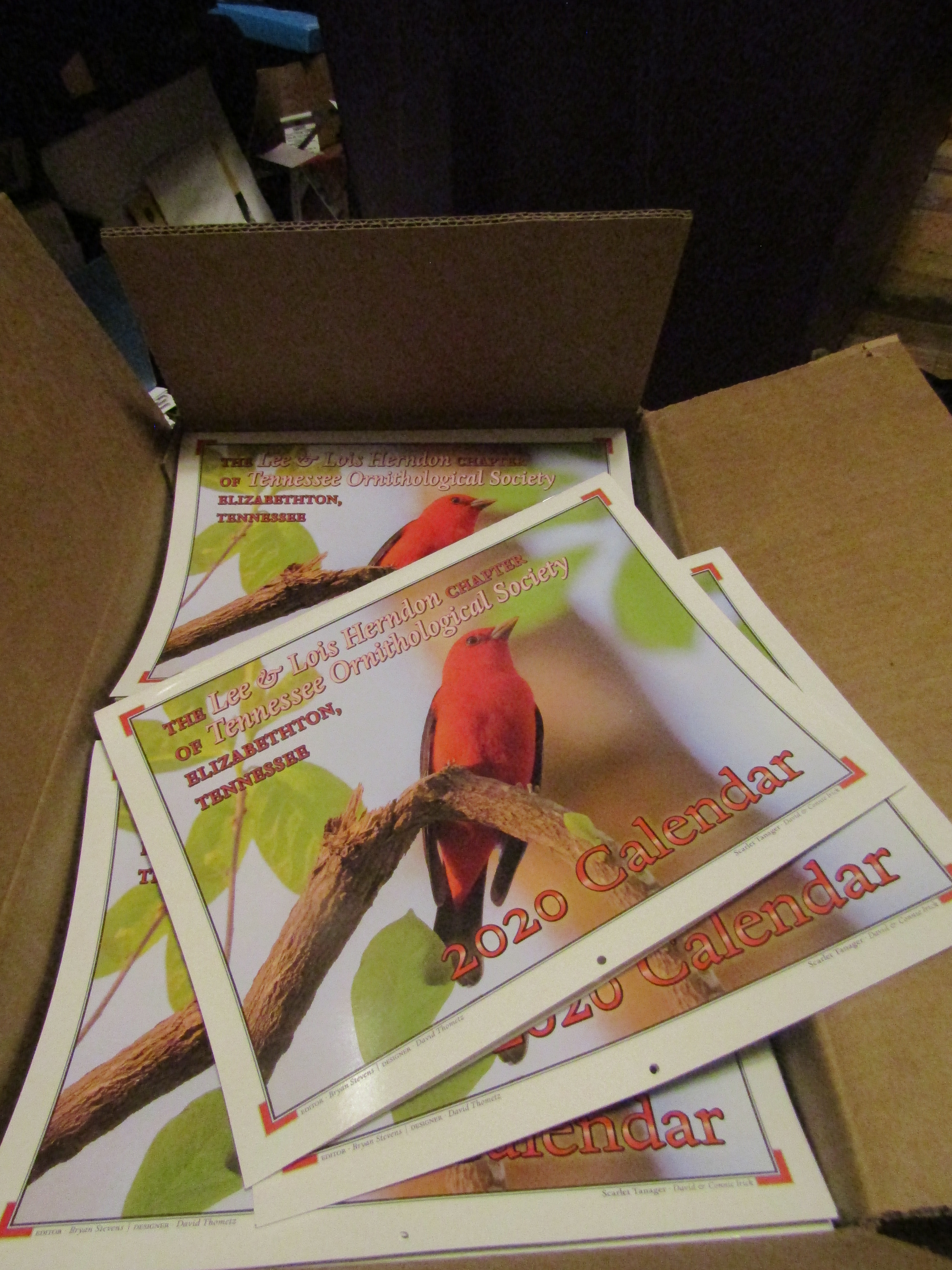
The Lee and Lois Herndon Chapter of Tennessee Ornithological Society produces an annual calendar featuring some exceptional bird photography from its members. This year’s calendar features full-color photographs of some colorful and engaging birds. The club sells the calendars for $15 each. All proceeds are used to support birding opportunities and bird-related causes. For instance, the club pays for bird seed to stock the feeders at Sycamore Shoals State Historic Park in Elizabethton, Tennessee. The club also regularly supports causes that benefit birds.HerndonCalendar2018(Cover)

The calendar also features an informative calendar grid with highlights for major holidays, as well as important bird-related dates. The calendar’s pages feature more than 80 full-color photographs of area birds, including common favorites, as well as a few more exotic birds. The front cover features a dazzling photograph of a red-headed woodpecker. The photo was taken by Debi Campbell, a resident of Bluff City, Tennessee, and current president of the Herndon chapter. If you’re interested in obtaining a calendar, contact ahoodedwarbler@aol.com by email. Calendars will also be available for purchase by cash or check only at the offices of the Bristol Herald Courier located at 320 Bob Morrison Blvd. in Bristol, Virginia.

If you’re interested in obtaining a calendar, contact ahoodedwarbler@aol.com by email. Calendars will also be available for purchase by cash or check only at the offices of the Bristol Herald Courier located at 320 Bob Morrison Blvd. in Bristol, Virginia.


Dark-eyed junco faithful visitor to feeders during wintry weather

Junco-Ground

Photo by Kenneth Thomas / Dark-eyed juncos, often referred to as “snow birds,” flock to feeders in winter during periods of inclement weather.

I recently took part in the 48th annual Elizabethton Fall Count. Although part of the count’s focus is on Carter County, significant attention is paid to the adjacent counties of Johnson, Sullivan, Unicoi and Washington in Northeast Tennessee. This year’s count, which was held Saturday, Sept. 30, with 54 observers in 12 parties, tallied 122 species, which is slightly below the recent 30-year average of 126 species. The all-time high for this count was 137 species, which was reached in 1993.

Together with Brenda Richards, I travelled the Forest Service road on Holston Mountain to seek out some species that prefer higher elevation habitats, including dark-eyed juncos. The junco is also a winter visitor to yards and gardens throughout the region and should be returning any day now for a seasonal stay during the colder months of the year. During our progress up the mountain, we glimpsed several dark-eyed juncos as well as other birds such as blue-headed vireo and black-and-white warbler.

I have always had a fondness for juncos. In fact, I wrote my first birding column on Sunday, Nov. 5, 1995, which means that I recently celebrated the 22nd anniversary of my weekly accounts of birds and birding. The column has appeared weekly without interruption in various newspapers in the last 22 years. The column has also been a great conduit for getting to know other people interested in our “feathered friends.” I always enjoy hearing from readers, and I hope to continue to do so in the coming years. Since February of 2014, I’ve also been posting the column as a weekly blog on birds and birding.

Here, with some revisions I have made through the years, is that first column that has now involved into a look that is all “For the Birds.”
…..

Of all the birds associated with winter weather, few are as symbolic as the Dark-eyed Junco, or “snow bird.” The junco occurs in several geographic variations.dennisjl 2

John V. Dennis, author of “A Complete Guide to Bird Feeding,” captures the essence of the junco in the following description: “Driving winds and swirling snow do not daunt this plucky bird. The coldest winter days see the junco as lively as ever and with a joie de vivre that bolsters our sagging spirits.” The Dark-eyed Junco’s scientific name, hyemalis, is New Latin for “wintry,” an apt description of this bird.

Most people look forward to the spring return of some of our brilliant birds — warblers, tanagers and orioles — and I must admit that I also enjoy the arrival of these birds. The junco, in comparison to some of these species, is not in the same league. Nevertheless, the junco is handsome in its slate gray and white plumage, giving rise to the old saying “dark skies above, snow below.”

Just as neotropical migrants make long distance journeys twice a year, the junco is also a migrating species. But in Appalachia, the junco is a special type of migrant. Most people think of birds as “going south for the winter.” In a basic sense this is true. But some juncos do not undertake a long horizontal (the scientific term) migration from north to south. Instead, these birds merely move from high elevations, such as the spruce fir peaks, to the lower elevations. This type of migration is known as vertical migration. Other juncos, such as those that spend their breeding season in northern locales, do make a southern migration and, at times, even mix with the vertical migrants.

Juncos are usually in residence around my home by early November. Once they make themselves at home I can expect to play host to them until at least late April or early May of the following year. So, for at least six months, the snow bird is one of the most common and delightful feeder visitors a bird enthusiast could want.

john-james-audubon-limited-centennial-edition-giclee-on-paper-dark-eyed-junco-2

Early American naturalist and artist John James Audubon painted this pair of Dark-eyed Juncos.

Juncos flock to feeders where they are rather mild-mannered — except among themselves. There are definite pecking orders in a junco flock, and females are usually on the lower tiers of the hierarchy. Females can sometimes be distinguished from males because of their paler gray or even brown upper plumage.

Since juncos are primarily ground feeders, they tend to shun hanging feeders. But one winter I observed a junco that had mastered perching on a hanging “pine cone” feeder to enjoy a suet and peanut butter mixture.

Dark-eyed juncos often are content to glean the scraps other birds knock to the ground. Juncos are widespread. They visit feeders across North America. The junco is the most common species of bird to visit feeding stations. They will sample a variety of fare, but prefer such seeds as millet, cracked corn or black oil sunflower.

There’s something about winter that makes a junco’s dark and light garb an appropriate and even striking choice, particularly against a backdrop of newly fallen snow.

Junco-AtFeeder

Photo by Bryan Stevens / A Dark-eyed Junco perches on the side of a hanging feeder offering sunflower seeds.

Of course, the real entertainment from juncos come from their frequent visits to our backyard feeders. When these birds flock to a feeder and begin a furious period of eating, I don’t even have to glance skyward or tune in the television weather forecast. I know what they know. Bad weather is on the way!

•••••

If you have a question, wish to make a comment or share a sighting, email ahoodedwarbler@aol.com.

Skittish nature means getting to know towhees takes some effort

Mary Beierle, who lives in Elizabethton, Tennessee, sent me an email to share information about recent nesting activity by a pair of Eastern towhees at her home in the Stoney Creek community.

“Just wanted to tell you that we have a nesting pair of Eastern towhees here in Stoney Creek,” Mary wrote in her email. “This is the first year they have stayed after a brief visit in early spring.”

While not as many people may be familiar with Eastern towhees as, say, northern cardinals or ruby-throated hummingbirds, those who have made an acquaintance with these unusual songbirds are, like Mary, captivated instantly.

“I am very fond of these birds,” she noted in her email. “The male is really beautiful and the female is also lovely, although not as colorful as the male.”9780307370020-us 2

Eastern towhees spend much of their time on the ground and hidden in thickets and hedges. As a result, other common names for this bird includes “ground robin” and “swamp robin,” which refer to some of this bird’s habitat preferences. They’re not thrushes, however, and are unrelated to thrush family members such as American robin, Eastern bluebird and wood thrush. Instead, towhees are one of the larger members of the sparrow family.

Mary noted some of this bird’s typical behavior from her observations. “I love the way they hop around,” she wrote. “They are very skittish, and I can’t get them to stand still for a photo.”

At my own home, I have a pair of Eastern towhees currently occupied with nesting. When I get too close, both parents claim an elevated perch and call in agitation as long as I am in the vicinity. The towhees are just one of many nesting birds so far this spring. Other nesting birds in my yard or the surrounding woodlands this spring have included tree swallow, Eastern bluebird, brown thrasher, song sparrow, American robin and Eastern phoebe.

The Eastern towhee represents a bit of a milestone in my personal birding history. I saw and identified my first Eastern towhee in early spring in 1993. At that time, I was struggling to identify some of the common visitors at my feeders. I was acquainted with white-breasted nuthatches, blue jays, downy woodpeckers, Carolina wrens, dark-eyed juncos and a handful of other birds. When I looked out a window and saw this bird feeding on the ground, the morning sun illuminating his dramatic plumage of black, white and rufous red, I was immediately aware this visitor represented something new and unexpected.

Consulting a field guide — I was using the Golden Nature Guide to the Most Familiar American Birds at the time — I soon found a painted illustration of a rufous-sided towhee that matched in every detail the bird I had just observed on the ground beneath a blue spruce in my yard.

Many of the older field guides still list the Eastern towhee as “rufous-sided towhee” which is actually more descriptive of the bird’s appearance than the word “eastern.” In 1995, ornithologists renamed the rufous-sided towhee to Eastern towhee and also separated the Eastern species from its western counterpart, the spotted towhee. Until that point, these two towhees had been considered different races of the same species. In 2003, I saw a spotted towhee during a visit to Salt Lake City, Utah. The bird looks almost identical to an Eastern towhee except for considerable white spotting — hence its common name — on the bird’s back.

3544493082_02f675508f_o

Male Eastern Towhee sings from a perch.

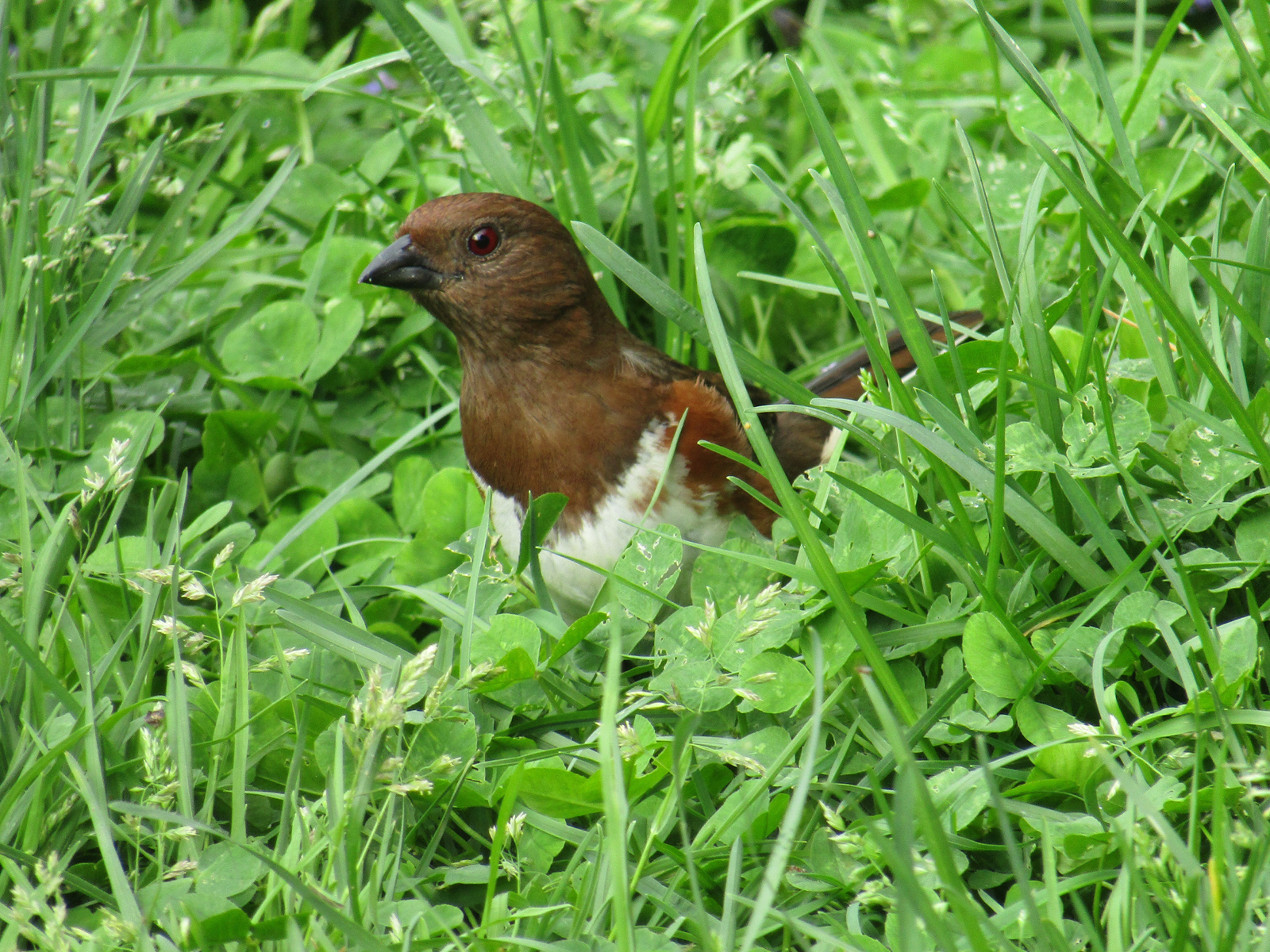
Male and female Eastern towhees each possess a stately if subtle beauty. Males have a black hood. The black coloration extends into the back and tail. The belly is white and the sides are flanked with a rusty-red color. In flight, their black tails are bordered with white feathers, which produces a dramatic flash of contrasting colors. The female Eastern towhee is an attractive bird in her own right. She shares the rufous sides and white coloration that are present in the male’s plumage. However, the male’s black feathers are replaced by a warm, chocolate brown plumage in the female. In addition, their bright red eyes help set these birds apart from other songbirds.

The Eastern towhee is one of my favorite yard birds, but not just because of its dramatic appearance. These birds also have some instantly recognizable vocalizations. With the arrival of spring, the males will seek elevated perches for extensive singing bouts to attract mates and establish territories. Their song has been interpreted, quite accurately, as an emphatically delivered “Drink your tea!” They also have some alarm notes, such as “Chew-ink” and “Toe-Hee,” which provides the basis for this bird’s common name.

Eastern_Towhee

Female Eastern Towhees are usually more retiring than males.

They are often found in the same sort of tangled habitat favored by Northern cardinals, gray catbirds and brown thrashers. To attract these birds, simply refrain from doing too much to alter your landscape. For instance, don’t manicure every square inch of your yard. Leave some wild corners that will run rampant and provide a luxurious tangle for birds that thrive under cover. In the southern United States, towhees prosper in scrub palmetto habitats. In our region, any hedge or bramble thicket will provide adequate cover to make these birds feel welcome.

While they may never completely lose their wariness, towhees will become gradually more accepting of sharing a yard with people. It helps that they will readily visit feeders for sunflower seeds. If you succeed in attracting a family of Eastern towhees to your yard and garden, I am confident you’ll not be disappointed.

Readers report on robin, purple martin that stand out from other members of their flocks


Albino-Swallow

Photo by Jean Potter • Two barn swallows in typical plumage perch on a wire with an albino individual.

Birds of a feather, as the old saying goes, tend to flock together, but what happens when a member of the flock stands out from the rest? Although conventional wisdom mandates that being conspicuous is not helpful for most wild creatures, some of them can’t help but get attention. Different readers have brought to my attention some birds at their homes that instantly stood out.

Sara and Ed Gschwind, residents of Bristol, Tennessee, have been keeping tabs on an American robin in their yard that is showing an extensive amount of white feathers in its plumage. For the most part, this particular robin has a white head, largely white wings and extensive white in the typically red breast. “My 88-year-old mother, Nora Rockett, suggested I send a photo to you,” Sara wrote in an email.

Robin-PartialAlbino

Photo by Ed Gschwind • A leucistic American robin enjoy time in a bird bath. Albino and leucistic birds are rather rare in nature.

Sara said that her mother, who has lived in Bristol all her life, has never seen anything like it. I replied to Sara’s email, asking for a few more details.

While the robin interacts with others of its kind, the Gschwinds haven’t seen any evidence this particular robin is attempting to nest. Ed took a photograph of the robin enjoying the water in a bird bath in the Gschwind yard.

“The robin bathes every day, and loves the water like all robins do,” Sara wrote. “The robin has been here since the robins returned three months ago. I’m trying to keep it happy.” Since the robin is a regular visitor, I agree that they’re doing a good job keeping the bird happy, since it’s not shown any inclination to leave their yard.

Tom Brake, who lives in Abingdon, Virginia, contacted me through Facebook about a male purple martin with extensive white feathers residing at the purple martin colony he has established at his home.

Purple martins are the largest member of the swallow family in the United States. Like many other swallow species, they nest in colonies. Martins are cavity-nesting birds that readily accept hollow gourds or special purple martin condominiums for nesting.

“Currently I have nests in 43 compartments with 20 being active (eggs having been laid),” Tom wrote. “Last year I had 51 pairs, and I hope to get close to being back to 60 or 70 active pairs this year. The next two weeks will be the busy time for completion of nests and laying.”

PurpleMartin-Albino-TomBrake

Photo by Tom Brake • A leucistic male purple martin perches with its mate, a typical female purple martin, near a hollow gourd they may use for nesting purposes.

As for the bird showing the white feathers, Tom has named him “Leuie” because the bird is an example of leucism, a condition related to albinism.

Albinism is a genetic, or inherited, condition resulting in a complete lack of production of pigmentation. Albino birds are, for the most part, extremely uncommon. I’ve heard of a variety of birds, ranging from hummingbirds and American robins to various ducks and swallows, that have a tendency to produce albino individuals.

Leucism is another genetic mutation that causes affected birds to grow feathers that are pale or whitish overall. A faint pattern may be visible. Leucism is also uncommon, but is more common that albinism. Both the robin in the Gschwind yard and the purple martin at Tom’s home are examples of leucistic birds.

Tom noted that “Leuie” is doing well so far. “He has a mate, but their first clutch of four eggs was either thrown out by a second year male martin or discarded by themselves because they sensed non-viability,” Tom wrote in a Facebook message. “Maybe the cold, wet weather had something to do with the loss.” He noted that the same thing happened recently to two other nests.

“Leuie and mate are still using their gourd, so I expect they will re-clutch,” Tom wrote. The term “re-clutch” means that Leuie’s mate will lay a new batch of eggs and Leuie will be ready to carry out his own paternal duties to help raise any resulting young.

Albinism and leucism are not the only conditions that can affect pigment in a bird’s feathers. Some birds have the opposite problem in that they produce too much pigment, resulting in a much darker bird than what would be typical. The plumage of such affected birds is described as melanistic, which is in stark contrast to an albino bird. With a melanistic bird, the feathers are much darker than usual because of an abundance of pigment. In rare albino birds, the opposite occurs and the lack of pigment in the feathers leave them looking white. Completely albino birds also tend to have red eyes. It’s probably better for a bird to be melanistic. Albino birds tend to stick out like sore thumbs, attracting the attention of predators.

Robins-AlbinoAndRegular

Photo by Ed Gschwind • Compare the leucistic American robin in the bird bath with the typical robin perched in a nearby chair. Albino birds are rather rare in nature.

I’ve only seen a few albino or partial albino birds in person, although I have observed videos and photographs of such birds. During a trip to Salt Lake City, Utah, in 2006, I observed an albino Brewer’s blackbird. An albino blackbird is almost an oxymoron. This particular blackbird had a white upper body and head and a black lower body. At first, I thought it might be a small tern, but closer observation — and identification of the birds with which it was associating — eventually confirmed that it was a Brewer’s blackbird, a common species in Salt Lake City.

Those observations remain my best looks at albino birds in the wild. I’ve also seen partial albinos, including an American Crow with white feathers in its wings that inhabited the woodlands and fields at my home for several years. I’ve also observed a couple of American goldfinches over the years that would probably qualify as leucistic birds.

A few years ago, I saw an albino Red-tailed hawk while driving between Erwin, Tennessee, and Asheville, North Carolina, on Interstate 26. The hawk was often present near the North Carolina Visitors Center. I’ve also heard from readers over the years about birds such as American goldfinches and downy woodpeckers exhibiting albino tendencies.

Albino-Hawk

Photo by Jean Potter • This partial albino red-tailed hawk was spotted for several years near the state line dividing northeast Tennessee and western North Carolina.

These issues involving the absence or abundance of pigment can complicate bird identification. After all, all-white birds, from snowy owls and tundra swans to great egrets and snow geese, do exist in nature. Even in these birds, however, there’s usually some other color present to break up the uniformity of the bird’s plumage. Keep in mind that such rarities as albino individuals of such common species as house finches and American robins can show up at your feeders or in your yard. It’s just another way birds constantly surprise us.

•••••

To learn more about birds and other topics from the natural world, friend him on Facebook at https://www.facebook.com/ahoodedwarbler. He is always posting about local birds, wildlife, flowers, insects and much more.

Column marks 19th anniversary this week

Photo by Ken Thomas Cutline: Dark-eyed Juncos are also known as "snow birds" because of their tendency to flock to feeders ahead of a bout of snowy weather.

Photo by Ken Thomas
Dark-eyed Juncos are also known as “snow birds” because of their tendency to flock to feeders ahead of a bout of snowy weather.

I wrote my first “Feathered Friends” column on Sunday, Nov. 5, 1995. Over the years, the column has appeared in various newspapers. I’ve also been posting weekly blogs on the subject of birds since this past February.
It’s with some irony that I can now reflect in just the few months since the paper that gave the column its start decided to rudely cut ties with both the column and me, other news outlets have stepped forward to carry my weekly thoughts on birds and birding.
The column is currently published weekly in three different newspapers: the Bristol Herald Courier, the Erwin Record and The McDowell News in Marion, N.C. The column also runs weekly in the Carter County Compass, an online news source for the citizens of Elizabethton and Carter County.
 
Sometimes, I wonder where the time has gone as I reflect on the fact that I am celebrating the 19th anniversary of my writing this weekly column, which has appeared in four different newspapers. These days, I also write a weekly online blog about birds while also making bird-related and nature-related posts to my Facebook page.
 
I constantly wonder what I am going to write about each week. Fortunately, I seem to have enough interested readers that someone is usually calling or e-mailing me with an interesting observation or a question that helps get the ball rolling for another column.
 
In that respect, writing “Our Fine Feathered Friends” has also been a great means of getting to know other people interested in birds and nature. So, too, has “For the Birds” and “Feathered Friends.”
I always enjoy hearing from readers, and I hope to continue to do so in the coming years as well.

Photo by Bryan Stevens This Dark-eyed Junco was the first of its kind to return to my yard this fall. This individual arrived on Oct. 28.

Photo by Bryan Stevens
This Dark-eyed Junco was the first of its kind to return to my yard this fall. This individual arrived on Oct. 28.

 
That first column I wrote back in 1995 focused on one of the region’s most prevalent winter residents — the Dark-eyed Junco. The first Dark-eyed Junco to put in an appearance in my yard this year did so on Oct. 28, just a few days ahead of the first winter storm.
 
Here, with some revisions I have made through the years, is the very first “Feathered Friends” column.
••••••
 
Of all the birds associated with winter weather, few are as symbolic as the Dark-eyed Junco, or “snow bird.” The junco occurs in several geographic variations.
 
John V. Dennis, author of “A Complete Guide to Bird Feeding,” captures the essence of the junco in the following description: “Driving winds and swirling snow do not daunt this plucky bird. The coldest winter days see the junco as lively as ever and with a joie de vivre that bolsters our sagging spirits.” The Dark-eyed Junco’s scientific name, hyemalis, is New Latin for “wintry,” an apt description of this bird.a52e51c88da04850ee7b1210.L
 
Most people look forward to the spring return of some of our brilliant birds — warblers, tanagers and orioles — and I must admit that I also enjoy the arrival of these birds. The junco, in comparison to some of these species, is not in the same league. Nevertheless, the junco is handsome in its slate gray and white plumage, giving rise to the old saying, “dark skies above, snow below.”
 
Just as neotropical migrants make long distance journeys twice a year, the junco is also a migrating species. But in Appalachia, the junco is a special type of migrant. Most people think of birds as “going south for the winter.” In a basic sense this is true. But some juncos do not undertake a long horizontal (the scientific term) migration from north to south. Instead, these birds merely move from high elevations, such as the spruce fir peaks, to the lower elevations. This type of migration is known as vertical migration. Other juncos, such as those that spend their breeding season in northern locales, do make a southern migration and, at times, even mix with the vertical migrants.
Junco-Carver

Photo by Bryan Stevens                                     A Dark-eyed Junco on a fence at Carver’s Gap on Roan Mountain.

 
Juncos are usually in residence around my home by early November. Once they make themselves at home I can expect to play host to them until at least late April or early May of the following year. So, for at least six months, the snow bird is one of the most common and delightful feeder visitors a bird enthusiast could want.
 
Juncos flock to feeders where they are rather mild-mannered — except among themselves. There are definite pecking orders in a junco flock, and females are usually on the lower tiers of the hierarchy. Females can sometimes be distinguished from males because of their paler gray or even brown upper plumage.
 
Since juncos are primarily ground feeders they tend to shun hanging feeders. But one winter I observed a junco that had mastered perching on a hanging “pine cone” feeder to enjoy a suet and peanut butter mixture. Still, most Dark-eyed Juncos often are content to glean the scraps other birds knock to the ground.

Junco-AtFeeder

Photo by Bryan Stevens                                     A Dark-eyed Junco feeds on sunflower seeds in a hanging feeder.

 
Juncos are widespread. They visit feeders across North America. The junco is the most common species of bird to visit feeding stations. They will sample a variety of fare, but prefer such seeds as millet, cracked corn or black oil sunflower.
 
There’s something about winter that makes a junco’s dark and light garb an appropriate and even striking choice, particularly against a backdrop of newly fallen snow. Of course, the real entertainment from juncos come from their frequent visits to our backyard feeders. When these birds flock to a feeder and begin a furious period of eating, I don’t even have to glance skyward or tune in the television weather forecast. I know what they know. Bad weather is on the way!
Junco

Photo by Bryan Stevens                                                                                                                          A Dark-eyed Junco feeds on the ground beneath a feeder.