

Photo by Bryan Stevens
A male Eastern Bluebird perched on playground equipment at Winged Deer Park in Johnson City.
Autumn seemed to get a late start this year, but once the season reached its peak we had so much beautiful color. The mountains looked gorgeous in gold, yellow, orange and magenta foliage blanketing the mountains beneath vibrant blue skies.
Turning from October to November, we’ve mostly been left with the birds that will stick with us through the remaining winter months. The white-throated sparrows returned on Halloween. I heard one of these talented sparrows singing from a brush pile on the evening of Oct. 31.
Other birds in the yard in recent days have included winter wren, ruby-crowned kinglet, red-bellied woodpecker and Eastern bluebirds.
I think of blue has a calm, soothing color, and that’s certainly the case with an Eastern bluebird. American essayist, poet and philosopher Henry David Thoreau described bluebirds as carrying the sky on their backs, which is an apt description.
The Eastern bluebird is usually a prominent bird in any season. These birds are yearlong residents in the region. They begin to scout for nesting locations as early as February, if not sooner.
Now until next spring, it will be easy to locate bluebirds on most sunny mornings. Bluebirds routinely shrug off the frost and cold that are part and parcel with the winter season. Male Eastern bluebirds will often produce their enthusiastic, warbling song even on the coldest days so long as the sun is shining brightly.
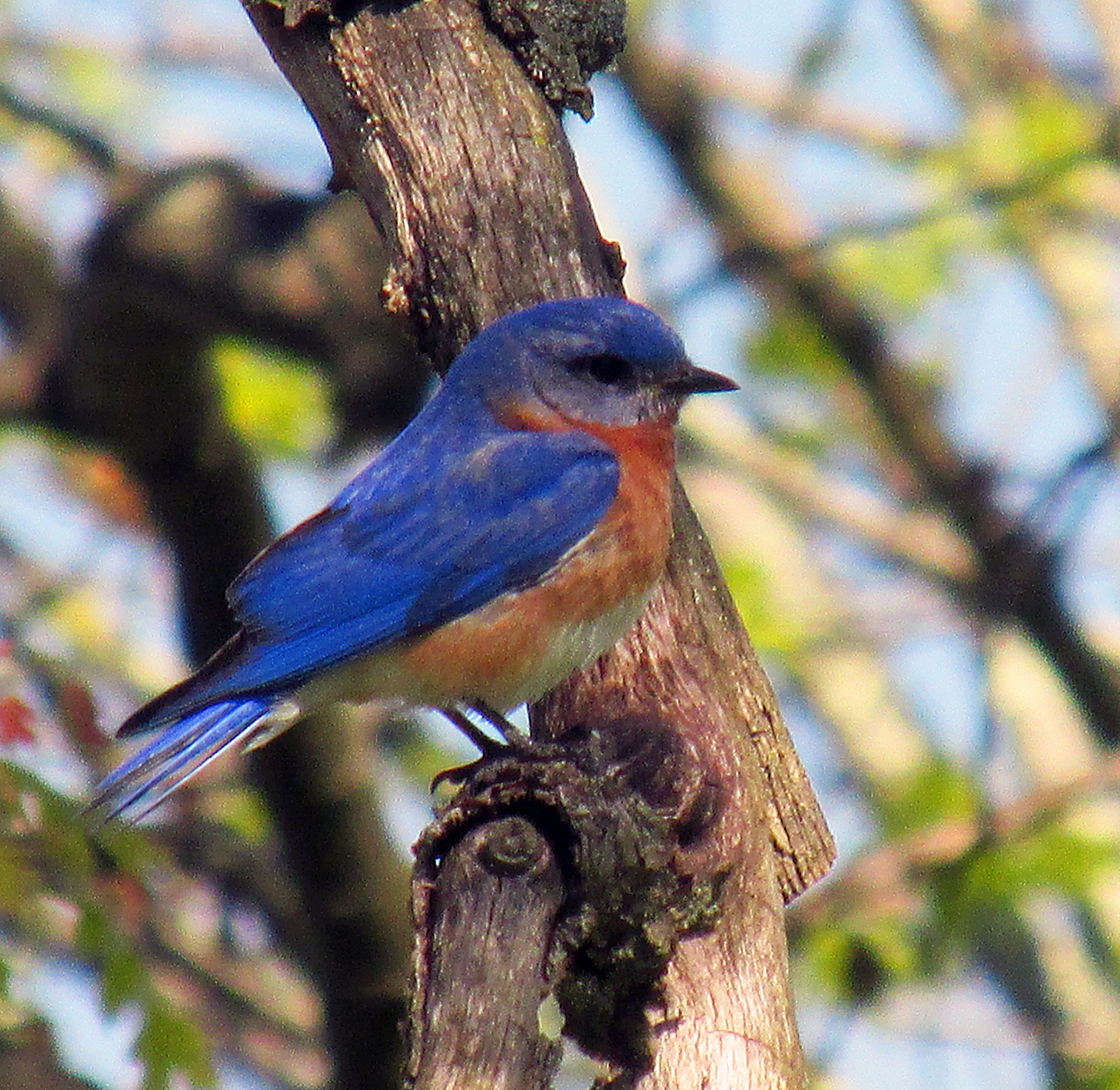
Photo by Bryan Stevens
The male Eastern Bluebird is beloved by many bird enthusiasts.
The Eastern bluebird is one of North America’s best-known cavity-nesting birds. About 85 species of North American birds use cavities in trees for nesting purposes. Cavity-nesting birds include ducks, such as buffleheads and wood ducks, as well as birds of prey such as Eastern screech-owls and American kestrels. Woodpeckers and nuthatches can excavate their own cavity in a dead or decaying tree.
Their dependence on cavities for nesting makes it easy to attract bluebirds. Putting up a couple of bird boxes constructed to their specific needs in open spaces will eventually attract these cavity-nesting birds.
Male Eastern bluebirds are a vibrant blue on the back and head, reddish brown on the breast and white on the belly. Females follow this same color pattern but are less brightly colored.
Most songbirds live brief lives, but there are always exceptions. The oldest recorded Eastern bluebird, according to the website All About Birds, was at least 10 years, 6 months old. This individual had been banded in New York in May 1989, and was found dead in South Carolina November 1999.
A profile of the Eastern bluebird on the Tennessee Wildlife Resources Agency website captures the essence of this beloved bird.
“The brilliant blue color of the male, the delightful call and familial behavior make the Eastern bluebird one of the most popular songbirds in Tennessee,” the profile reads. “It is a permanent resident, though some birds may move short distances south from their breeding areas to avoid very cold temperatures.”
The profile further points out that the Eastern bluebird is a small thrush, making it related to birds such as the American robin, the veery and the hermit thrush.
It’s not the only North American bluebird. The other two are the Western bluebird and the mountain bluebird. I enjoyed observations of the mountain bluebird during trips to Utah in 2003 and 2006.
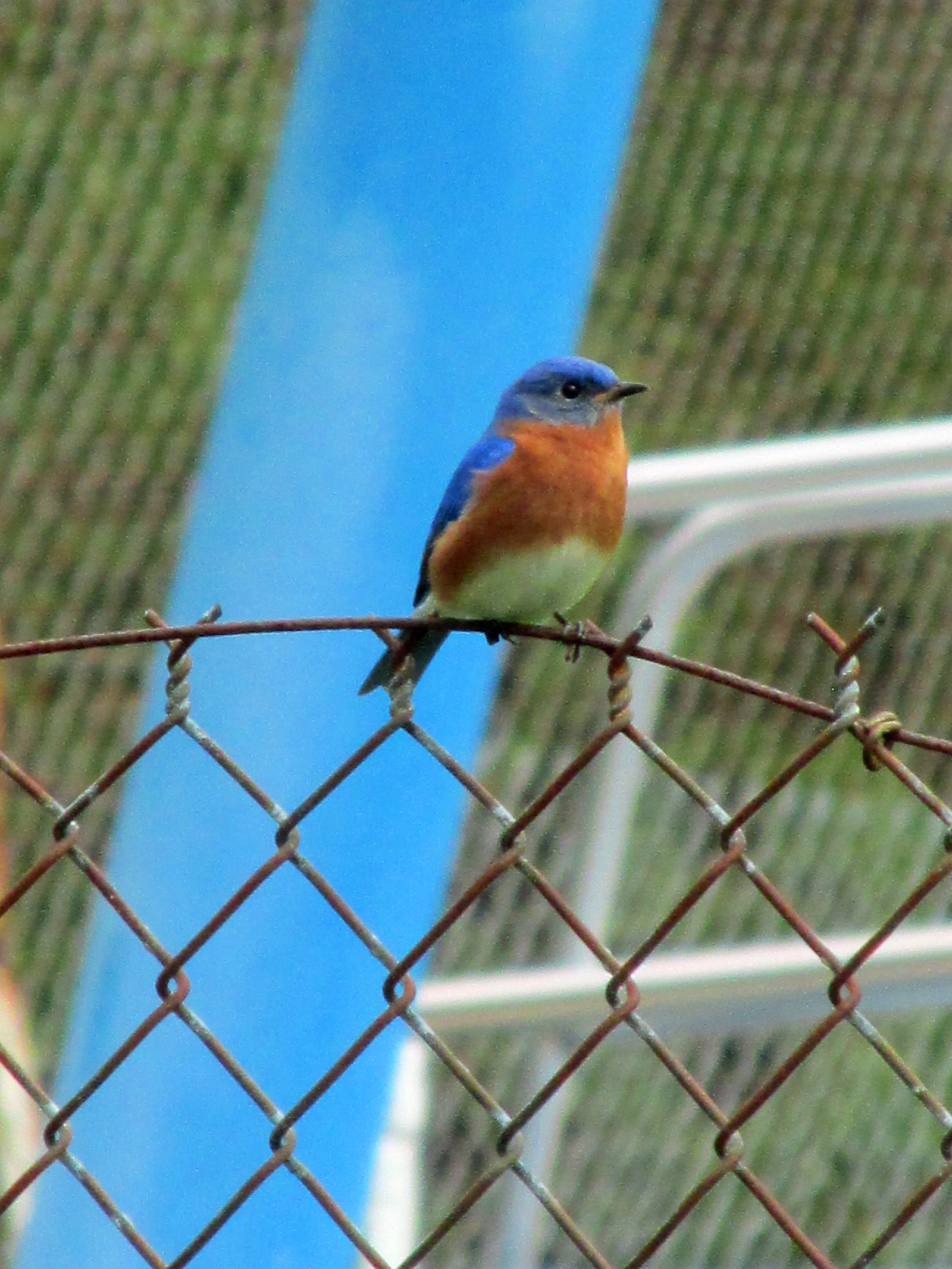
Photo by Bryan Stevens • A handsome male Eastern bluebird perches on a chain-link fence.
Unrelated “blue” birds in North America include the indigo bunting, blue grosbeak and lazuli bunting. Species such as the great blue heron and belted kingfisher show varying amounts of blue in their plumage.
For those interested in becoming bluebird landlords, check out nest box designs at the Tennessee Watchable Wildlife website. Several different nest box designs are available at the profile for the Eastern bluebird at tnwatchablewildlife.org.
If you’re not a do-it-yourself individuals, most lawn and garden centers, farm supply stores and speciality bird shops carry readymade bluebird boxes for purchase.
In addition to housing, food and water can be used to lure Eastern bluebirds closer. This bird doesn’t eat seeds, but it can be attracted with an offering of mealworms — live or freeze-dried – or commercially prepared peanut butter nuggets or suet cakes. A water feature in a yard is also a magnet for bluebirds and a variety of other bird species.

Photo by Bryan Stevens
The female Eastern Bluebird is not quite as brightly colored as her mate.

