Tag Archives: Erwin Record

Column marks 19th anniversary this week

Photo by Ken Thomas Cutline: Dark-eyed Juncos are also known as "snow birds" because of their tendency to flock to feeders ahead of a bout of snowy weather.
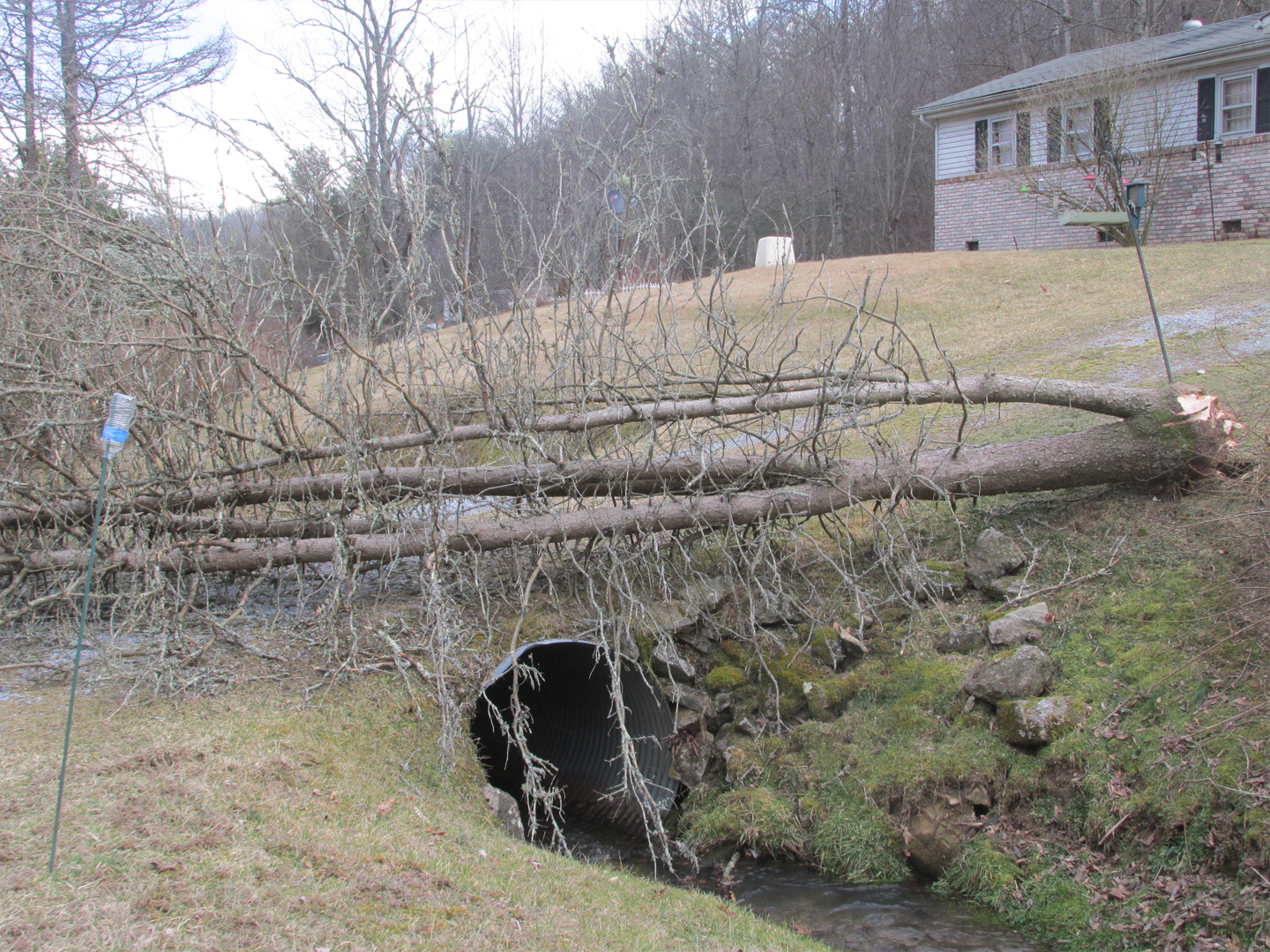
Photo by Ken Thomas
Dark-eyed Juncos are also known as “snow birds” because of their tendency to flock to feeders ahead of a bout of snowy weather.

I wrote my first “Feathered Friends” column on Sunday, Nov. 5, 1995. Over the years, the column has appeared in various newspapers. I’ve also been posting weekly blogs on the subject of birds since this past February.
It’s with some irony that I can now reflect in just the few months since the paper that gave the column its start decided to rudely cut ties with both the column and me, other news outlets have stepped forward to carry my weekly thoughts on birds and birding.
The column is currently published weekly in three different newspapers: the Bristol Herald Courier, the Erwin Record and The McDowell News in Marion, N.C. The column also runs weekly in the Carter County Compass, an online news source for the citizens of Elizabethton and Carter County.
 
Sometimes, I wonder where the time has gone as I reflect on the fact that I am celebrating the 19th anniversary of my writing this weekly column, which has appeared in four different newspapers. These days, I also write a weekly online blog about birds while also making bird-related and nature-related posts to my Facebook page.
 
I constantly wonder what I am going to write about each week. Fortunately, I seem to have enough interested readers that someone is usually calling or e-mailing me with an interesting observation or a question that helps get the ball rolling for another column.
 
In that respect, writing “Our Fine Feathered Friends” has also been a great means of getting to know other people interested in birds and nature. So, too, has “For the Birds” and “Feathered Friends.”
I always enjoy hearing from readers, and I hope to continue to do so in the coming years as well.

Photo by Bryan Stevens This Dark-eyed Junco was the first of its kind to return to my yard this fall. This individual arrived on Oct. 28.

Photo by Bryan Stevens
This Dark-eyed Junco was the first of its kind to return to my yard this fall. This individual arrived on Oct. 28.

 
That first column I wrote back in 1995 focused on one of the region’s most prevalent winter residents — the Dark-eyed Junco. The first Dark-eyed Junco to put in an appearance in my yard this year did so on Oct. 28, just a few days ahead of the first winter storm.
 
Here, with some revisions I have made through the years, is the very first “Feathered Friends” column.
••••••
 
Of all the birds associated with winter weather, few are as symbolic as the Dark-eyed Junco, or “snow bird.” The junco occurs in several geographic variations.
 
John V. Dennis, author of “A Complete Guide to Bird Feeding,” captures the essence of the junco in the following description: “Driving winds and swirling snow do not daunt this plucky bird. The coldest winter days see the junco as lively as ever and with a joie de vivre that bolsters our sagging spirits.” The Dark-eyed Junco’s scientific name, hyemalis, is New Latin for “wintry,” an apt description of this bird.a52e51c88da04850ee7b1210.L
 
Most people look forward to the spring return of some of our brilliant birds — warblers, tanagers and orioles — and I must admit that I also enjoy the arrival of these birds. The junco, in comparison to some of these species, is not in the same league. Nevertheless, the junco is handsome in its slate gray and white plumage, giving rise to the old saying, “dark skies above, snow below.”
 
Just as neotropical migrants make long distance journeys twice a year, the junco is also a migrating species. But in Appalachia, the junco is a special type of migrant. Most people think of birds as “going south for the winter.” In a basic sense this is true. But some juncos do not undertake a long horizontal (the scientific term) migration from north to south. Instead, these birds merely move from high elevations, such as the spruce fir peaks, to the lower elevations. This type of migration is known as vertical migration. Other juncos, such as those that spend their breeding season in northern locales, do make a southern migration and, at times, even mix with the vertical migrants.
Junco-Carver

Photo by Bryan Stevens                                     A Dark-eyed Junco on a fence at Carver’s Gap on Roan Mountain.

 
Juncos are usually in residence around my home by early November. Once they make themselves at home I can expect to play host to them until at least late April or early May of the following year. So, for at least six months, the snow bird is one of the most common and delightful feeder visitors a bird enthusiast could want.
 
Juncos flock to feeders where they are rather mild-mannered — except among themselves. There are definite pecking orders in a junco flock, and females are usually on the lower tiers of the hierarchy. Females can sometimes be distinguished from males because of their paler gray or even brown upper plumage.
 
Since juncos are primarily ground feeders they tend to shun hanging feeders. But one winter I observed a junco that had mastered perching on a hanging “pine cone” feeder to enjoy a suet and peanut butter mixture. Still, most Dark-eyed Juncos often are content to glean the scraps other birds knock to the ground.

Junco-AtFeeder

Photo by Bryan Stevens                                     A Dark-eyed Junco feeds on sunflower seeds in a hanging feeder.

 
Juncos are widespread. They visit feeders across North America. The junco is the most common species of bird to visit feeding stations. They will sample a variety of fare, but prefer such seeds as millet, cracked corn or black oil sunflower.
 
There’s something about winter that makes a junco’s dark and light garb an appropriate and even striking choice, particularly against a backdrop of newly fallen snow. Of course, the real entertainment from juncos come from their frequent visits to our backyard feeders. When these birds flock to a feeder and begin a furious period of eating, I don’t even have to glance skyward or tune in the television weather forecast. I know what they know. Bad weather is on the way!
Junco

Photo by Bryan Stevens                                                                                                                          A Dark-eyed Junco feeds on the ground beneath a feeder.

Owls perfectly suited to reign once the sun sets

It was a frosty morning on Simerly Creek on Oct. 20, and the sunrise had given a pink hue to some overhead clouds for a nice enhancement of the morning. From the wooded hollow across the road, I heard a very vocal Eastern Screech-Owl greeting the day with trembling wails. Although Eastern Screech-Owls are normally nocturnal, they can be most active within a couple of hours of both sunset and sunrise. Although I was headed to work, perhaps this particular owl was, in its own way, sending a message of “Good night and sleep tight.”

Photo by U.S. Fish and Wildlife Service The tiny Northern Saw-whet Owl nests on several of the region's higher mountains.

Photo by U.S. Fish and Wildlife Service
The tiny Northern Saw-whet Owl nests on several of the region’s higher mountains.

The calling owl also reminded me that we’ll celebrate Halloween later this week. It’s the one night of the year that we become acutely aware of things that go bump in the night. Of course, what you must also take into consideration are those nocturnal birds that glide through the darkness on nearly silent wings.

Ghouls and goblins can be dismissed as mere apparitions of the imagination. Some real-life feathered phantoms, however, do roam the darkness, perhaps even in your own backyard. Chances are, you have more likely heard them rather than to have seen them.

If you do happen to hear anything slightly unusual this coming Halloween night, listen carefully. It’s a safe bet that the sound — whether it’s a deep, resonant hoot or a trembling wail — might just be produced by an owl.
Several species of owls reside in Southwest Virginia and Northeast Tennessee, including Eastern screech-owl, barred owl, barn owl and great horned owl. A fifth owl, the tiny Northern saw-whet owl, can be found at some high-elevation locations. A few other owls have made sporadic appearances in the region, including long-eared owl, short-eared owl and even snowy owl.

Photo by Bryan Stevens An Eastern Screech-Owl perches in the branches of an Eastern hemlock.

Photo by Bryan Stevens
An Eastern Screech-Owl perches in the branches of an Eastern hemlock.

The most common — and two of my favorites — are the large great horned owl and the small Eastern screech-owl.

The great horned owl is widespread in the Americas and is one of the more frequently encountered owls in the region. A fearsome nocturnal predator, the great horned owl has rightly earned the name “Tiger of the Night.”

1602056_10202525845179781_102132457_o

Photo by Bryan Stevens A Great Horned Owl surveys the audience during a raptor show at Callaway Gardens in Pine Mountain, Ga.

Although rabbits are its most common prey, this large owl is not a finicky predator. This owl has been known to capture and consume everything from armadillos and muskrats to great blue herons and young American alligators. They will also prey on various amphibians, fish, crustaceans and even insects. The great horned owl is also known to prey on smaller owls, which includes almost all of the other owls found in the region.
All owls are extremely beneficial predators. The tiny Eastern screech-owl feeds on mice, insects, lizards, crayfish and the occasional bird. If not for owls and other predators, prey species — whether rodents or insects — would multiply beyond the means of the environment to support them. Anyone facing the problem of mice and rats seeking an easier living inside a human home can appreciate the role played by predatory owls.
Although the Eastern screech-owl’s only about 10 inches long, it has a wingspan of 20 to 24 inches. By comparison, the great horned owl is about 25 inches long with an equally impressive wingspan of between three and five feet. The structure of an owl’s feathers are what enables these winged predators to fly silently through the shadows.

Otus_asio_audubon

Early naturalist John James Audubon painted this family of Eastern Screech-Owls.

Many species of owls have proven capable of thriving even in the face of human alteration of the environment. Both the great horned owl and the Eastern screech-owl are known to hunt in both rural and urban areas. They also can make a home in a suburban park. In fact, the great horned owl has proven extremely adaptable and can be found in such varied habitats as forests, swamps and deserts.
For the average person the term “owl” is representative of what is actually an extremely diverse family of birds. Worldwide, there are about 220 species of owls varying in size and habits.
In North America owls range in size from such tiny species as the sparrow-sized elf owl of the southwestern United States to the continent-ranging great horned owl. Humans have come up with some descriptive names for various owls around the world. A sampling of these names includes fearful owl, pharaoh eagle-owl, collared owlet, pearl-spotted owlet, least pygmy-owl, red-chested owlet, buff-fronted owl, Stygian owl, vermiculated fishing-owl, black-and-white owl, bare-legged owl, maned owl, bearded screech-owl, spectacled owl and golden-masked owl.
Most people become aware of the presence of an owl by hearing its call. Not all owls, however, produce a “who who” call. For instance, the Eastern screech-owl’s calls are haunting, shivering wails. The deep hoots of a great horned owl are incredibly impressive. The barred owl boasts quite a vocabulary of calls, including hoots, cackles and chilling screams.

Photo by Bryan Stevens A Barred Owl rests on a perch during an educational raptor program offered at Callaway Gardens in Pine Mountain, Ga.

Photo by Bryan Stevens
A Barred Owl rests on a perch during an educational raptor program offered at Callaway Gardens in Pine Mountain, Ga.

I’ve seen great horned owls in Tennessee, Virginia, South Carolina and Utah in environments ranging from woodlands to coastal wetlands. This owl is one of the first birds to nest each year, starting as early as late January and early February.

Owls, according to Linda Spencer, author of “Knock on Wood: A Serendipitous Selection of Superstitions,” have inspired a mixed bag of superstitions ever since humans stood up. Owls have long been associated with the forces of both good and evil. The “hoot” or call of an owl is believed by people of many cultures to foretell death. There are some interesting ways to counter the ominous hoot of an owl, according to Spencer. Means of warding off the evil owl power include putting irons in your fire, throwing salt, pepper and vinegar on the fire, tying a knot or taking one’s clothes off, turning them inside out and putting them back on.

According to Laura Martin, author of “The Folklore of Birds,” one of the earliest human drawings depicting owls dates back to the early Paleolithic period. The scene is of a family of snowy owls painted on a cave wall in France.

13922

Owls have also entered the culture as symbols of wisdom and goodness. The wise old owl, Martin writes, dates back to the time of King Arthur. Martin also notes that the sorcerer Merlin was always shown with an owl on his shoulder. She also explains that during the Middle Ages owls became symbols of learning and intelligence. Martin also reveals that Greeks didn’t fear owls as did the Romans. In fact, the owl was the sacred mascot of the Greek goddess of wisdom, Athena.
She also delves into owl lore in Japan, where pictures and figures of owls are placed in homes to ward off famine or epidemics. There is some logic to this practice since owls can help prevent such disasters by keeping rodents in check. As well as being carriers of disease, rodents can deplete stores of grain.

Photo by Bryan Stevens A Burrowing Owl photographed in 2006 at Antelope Island State Park in Utah.

Photo by Bryan Stevens
A Burrowing Owl photographed in 2006 at Antelope Island State Park in Utah.

The main fascination humans hold for owls rests in their mystery. Owls, as mainly nocturnal creatures, rarely cross paths with us.

Owls have many adaptations that help them stake out their claim on the night hours. Owls possess large eyes with binocular vision and extremely accurate depth perception — which also make them seem more expressive to human observers.
Owls cannot completely rotate their heads, but they come close. Owls are flexible enough to be able to turn their heads in a 270-degree arc, or three-quarters of the way around.
Owls have keen hearing to go with their excellent eyesight. In fact, owls don’t even need to see their prey to capture it. Tests with barn owls in total darkness have shown that they are capable of catching mice by hearing alone. An owl’s prominent facial disk directs sounds toward their ears. The “ear tufts” on the great horned owl and some other relatives are ornamental feathers, and not actual ears.
There’s one more owl-related myth I forgot to mention. There’s a Chinese belief that owls snatch the souls of unwary people — just something you should know if you are out and about after dark on Halloween night.

Photo by Bryan Stevens An Eastern Screech-Owl at rest in a roosting hole in a large sycamore tree.

Photo by Bryan Stevens
An Eastern Screech-Owl at rest in a roosting hole in a large sycamore tree.

Bob Sargent leaves behind legacy of decades of hummingbird research

n_a (18)

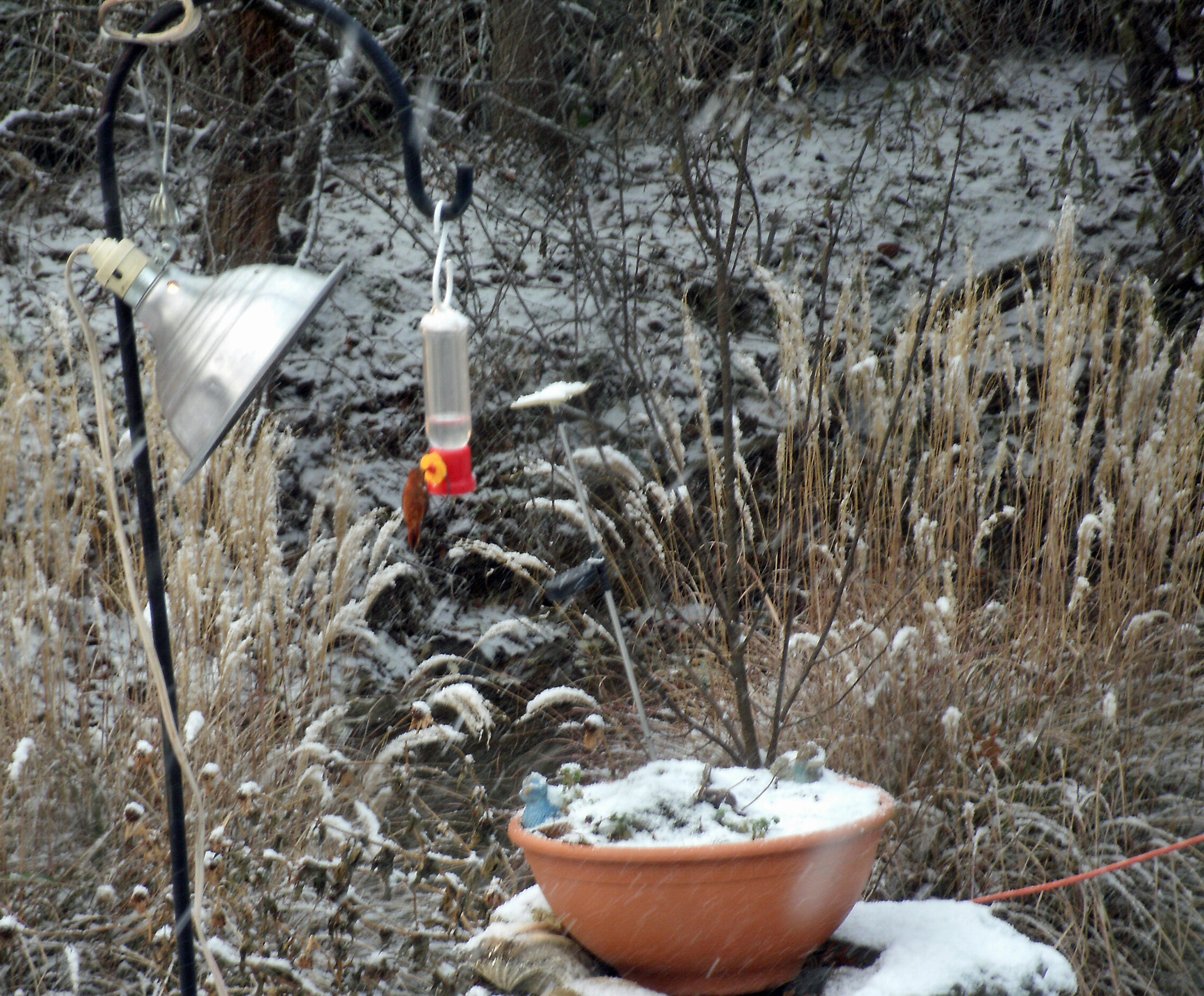
Photo by Bryan Stevens                                                                                                        Bob Sargent works diligently to band a Rufous Hummingbird at the home of Gary and Brenda Wallace in Elizabethton, Tenn.

I was saddened to learn of the recent passing of Bob Sargent. With his wife, Martha, Bob was the co-founder of the The Hummer/Bird Study Group. This non-profit organization founded by the Sargents was based in their hometown of Clay, Alabama, and dedicated to the study and preservation of hummingbirds and other neotropical migrants.

Their research programs with hummingbirds and migrating songbirds got underway back in 1987. The HBSG was formed in 1994. The Sargents have described the HBSG as a child born of the necessity to support their continuing research.

 Photo by Bryan Stevens                                                                                                          A Rufous Hummingbird gets a sip of sugar water midway through the banding process.


Photo by Bryan Stevens                                                                                  A Rufous Hummingbird gets a sip of sugar water midway through the banding process.

It was also a way to reward those who contributed financially to that effort. In the early days the Sargents’ savings account paid the expenses incurred by the HBSG. Many friends and bird conservationists contributed financially to the cause, and the Sargents wanted these donations to be tax-deductible.

The Sargent also became ambassadors in the promotion of hummingbirds. Their specialty became those species of western hummingbirds that have been gradually shifting their migration routes and wintering grounds to include forays into the eastern half of the United States.

n_a (16)

Photo by Bryan Stevens                                                                                            Martha Sargent takes a photo as her husband, Bob, lets Brenda Wallace hold a Rufous Hummingbird ready to be released after the banding process.

In the late 1990s, the Sargents presented a well-attended program sponsored by the Bristol Bird Club. That was the first occasion I had to meet this energetic and dedicated couple. I wrote about the fascinating program in my bird column and shared with readers Bob’s emphasis on keeping sugar water feeders available during the winter months. It was an eye-opening program that tuned me into the phenomenon of wintering hummingbirds.

Not too long after that column ran, I received a call from Bennette Rowan, an artist and Johnson City resident, in November of 1997. She had one of those western hummingbirds at her feeder. After she got in touch with me, the Sargents were also alerted. The couple arrived in Johnson City on Dec. 3, 1997, to band and identify the bird. To the surprise and delight of everyone present, the bird turned out to be an Allen’s hummingbird — the first of its kind ever found in Northeast Tennessee and only the fourth for the entire state. Bennette, who had orginally named her bird “Rusty,” modified the name to Rusty-Allen. The bird remained at her home until Dec. 16 of that year.

n_a (17)

Photo by Bryan Stevens                                                                                                       From left: Bob Sargent, Brenda Wallace, Martha Sargent and Gary Wallace pose for a photo after the Sargents successfully banded a Rufous Hummingbird at the Elizabethton home of the Wallaces.

A few years later I got to watch the Sargents band another hummingbird at the home of Brenda and Gary Wallace in Elizabethton. On that occasion, I also photographed the couple as they went expertly about the precise job of capturing, documenting, identifying and banding the hummingbird. It turned out to be a female Rufous hummingbird.

As more of these reports arrived every late fall and early winter, the Sargents became overwhelmed and could not respond to each and every case. They began to bring other hummingbird banders under their wing, so to speak. Individuals such as Chris Sloan and Mark Armstrong became principally involved with the documentation and banding of hummingbirds found within the Volunteer State.

I feel extremely fortunate to have known Bob Sargent, who died Sept. 7, 2014, at the age of 77.  An electrician by trade, he leaves a lasting legacy of more than a quarter-century of research into the mysteries of some of our tiniest birds.

Several birders across Tennessee posted tributes to Bob on the TN-Birds list-serve forum.

Cyndi Routledge of Montgomery County described him as a “dear friend and mentor” who “positively impacted my life in infinite ways as he did with endless others. He leaves a legacy of hummingbird banders and hummingbird lovers across the United States and even beyond its borders.”

She also made a suggestion to those reading her post.

“And perhaps at some point today, go outside, sit near your hummingbird feeders, listen for the hums and chirps of those tiny miracles and give thanks for Bob, for his life and for those birds,” she wrote in her post.

Jud Johnston of Waynesboro, Tennessee, commented on Bob’s death. “A great loss for birders and birding in the Southeast,” Jud wrote.

In the years since I saw that program, presented in such educational and entertaining fashion by Bob and Martha Sargent, hardly a year has gone by when a reader hasn’t alerted me to the presence of one of those “brown hummingbirds” that show up at their feeders when the Ruby-throated Hummingbirds have already flown south for the winter season.

In the next couple of weeks, the Ruby-throated Hummingbirds that have made our spring, summer and fall so delightful will once again disappear. They’ll return in about six to seven months, but our lives will be a bleaker without them.

This is where things can get interesting. Don’t take down your feeders. Keep a supply of sugar water available as “bait” to attract any Rufous Hummingbirds, or even Allen’s or Black-chinned Hummingbirds that might decide to spend late fall and early winter with you.

So, be very attentive to any hummingbird that arrives at your feeders in late October or early November. Most Ruby-throated Hummingbirds depart the region in early October. Many of these winter-visiting hummingbirds show a great amount of brown plumage instead of the usual green. Any of these conditions may indicate you’ve been gifted with a rare visit from one of these exceptional little birds. If you are so fortunate, please send me an email at ahoodedwarbler@aol.com.

Photo by U.S. Fish & Wildlife Service/Dave Menke The Rufous Hummingbird is increasingly becoming a migrant/winter resident  in the eastern United States.

Photo by U.S. Fish & Wildlife Service/Dave Menke
The Rufous Hummingbird is increasingly becoming a migrant/winter resident in the eastern United States.

Parade of fall warblers has begun

I love warblers!

Among my birding friends, it’s no secret the warblers are among my favorite birds. I impatiently await the start of fall migration each year knowing that it holds the potential of bringing about two dozen warbler species to my yard. The trickle of fall migrants has already started with the arrival of juvenile Chestnut-sided Warblers and American Redstarts to my yard on Aug. 19.

Photo by U.S Fish and Wildlife Service A Kentucky Warbler brings food to young in a nest.

Photo by U.S Fish and Wildlife Service
A Kentucky Warbler brings food to young in a nest.

The wood-warblers, the more clinical name for this group of birds, consist of 116 species exclusive to the New World. About half of the species collectively make their home in North America for at least a few months out of the year. The others range throughout the Caribbean, as well as Central and South America. Most of them are noted for leading frantic, fast-paced lives that are far from sedentary. For this reason, they can be extremely challenging to observe with a pair of binoculars.

Hooded_Warbler

Photo by U.S. Fish and Wildlife Service A female Hooded Warbler sits tight on her nest.

The Chestnut-sided Warbler and American Redstart nest at various locations in Southwest Virginia and Northeastern Tennessee, but they are not usually present during the summer months. I do host a few species of warblers that nest in the woodlands around my home. These include Hooded Warbler, Northern Parula, Black-throated Green Warbler, Black-and-white Warbler and Ovenbird.

OvenBird-Photo

Photo by U.S. Fish and Wildlife Service Although usually silent in the fall, Ovebirds have a distinctive, ringing song they sing constantly in the spring.

One of the last warblers to arrive at my home this spring was the enigmatic Ovenbird. With its loud, ringing song — “Teacher! Teacher! Teacher!” — it’s impossible not to notice the arrival of this warbler. So, even after the other summer warblers had already been present for a couple of weeks, I finally heard the song of an Ovenbird ringing from the woods.

Why do I describe this warbler as enigmatic? For starters, Ovenbirds do not easily permit even stealthy birders to glimpse them. I have gotten good looks at Ovenbirds throughout the years, but they are still difficult to observe. They are one of the warblers more easily heard than seen. When they are observed, it’s usually no more than a fleeting look before the bird dives back into heavy cover.

The Ovenbird is not one of the brightly colored warblers, such as Blackburnian Warbler or Yellow Warbler. The Ovenbird is a small brown bird with a white breast with dark streaking — an appearance that bears a superficial resemblance to the larger thrushes that share the same woodland habitat. The only hint of color is an orange crown bordered by dark stripes atop the bird’s head. Even this orange crown patch is not easily seen. When agitated, an Ovenbird may raise its head feathers, which makes this orange mark easier to detect. The Ovenbird also has a distinct white ring around its eyes. They also have pink legs and a pinkish bill.

The Ovenbird, unlike many warblers, is not named for its appearance. Instead, the bird’s name derives from the shape of the nest it builds. The nest is a domed structure placed on the ground, woven from vegetation and containing a side entrance. Early European settlers in North America thought the nest looked like a Dutch oven, hence the name “ovenbird” for the small warbler with the intricate nest.

Rather than hopping along the length of a branch or limb, an Ovenbird walks in a deliberate fashion. This bird feeds on insects, spiders and other small prey items foraged from the woodland floor. On rare occasions, a lingering Ovenbird shows up at feeders during the winter months.

Ovenbirds spend the summer nesting season in mature deciduous and mixed forests across Canada and the eastern United States. Ovenbirds migrate each fall to the southeastern United States, the West Indies, and from Mexico to northern South America for the winter season.

The two warblers most closely related to the ovenbird are the Louisiana Waterthrush and Northern Waterthrush. These atypical warblers share a preference for leading lives spent mostly near the ground adjacent to streams. The Louisiana Waterthrush seeks out the rushing water of our mountain streams during early spring while the Northern Waterthrush prefers quiet pools of water farther north during its nesting season. The Ovenbird, however, is not as closely associated with water.

*****

14349093215_520933ef20_b

Photo Courtesy of Jean Potter A Magnolia Warbler perched on an evergreen bough.

The last day of August provided fantastic lawn chair birding here at home. I saw a Scarlet Tanager, Red-eyed Vireo, Eastern Phoebe, Eastern Wood-Pewee, an Epidomax “empid” flycatcher species and a flock of at least 50 Common Nighthawks. I also added three fall warblers to my list: Yellow-throated Warbler, Chestnut-sided Warbler, Northern Parula and Magnolia Warbler. I also saw plenty of Ruby-throated Hummingbirds, Gray Catbirds, a Brown Thrasher, Cedar Waxwings, Downy Woodpecker and many of the regular feeder visitors.

The arrival of September brought even more warblers to my yard as they make brief visits during their fall migration. I had better luck with lawn chair birding while saying goodbye to August than I did welcoming September. On this first day of September that was also Labor Day, I saw a single Common Nighthawk, as opposed to last night’s flock of 50. I only saw one warbler, but it was a Chestnut-sided Warbler and different than the species I saw last night. Other birds that I observed including several Gray Catbirds and Blue-gray Gnatcatchers, Eastern Wood-Pewee, Brown Thrasher and family flocks of American Goldfinches and House Finches. Earlier that same day, I watched and listened as a Common Raven flew overhead. The Ruby-throated Hummingbirds are also still numerous.

NorthernParula

Photo by Bryan Stevens A migrating Northern Parula forages for insects in the branches of a Blue Spruce.

My lawn chair birding on Sept. 3 was brief but interesting. One new warbler, a male Canada Warbler, showed up, as well as two Northern Parulas that spent all their time chasing each other through the holly and the willow trees. I also got a fleeting glimpse of a Magnolia Warbler. In the sky overhead, a single Chimney Swift glided through the air with a trio of Common Nighthawks.

The cast of migrants changes almost daily. I enjoyed a good evening of lawn chair birding on Sept. 5, adding a few new warblers for the fall to my list. Only saw four species, but two of them — immature Black-and-White Warbler and Black-throated Green Warbler — were new for the fall. I also saw Chestnut-sided Warbler and Northern Parula. A sizable flock of at least 50 Common Nighthawks passed overhead. Other sightings included Eastern Phoebe, Brown Thrasher, Gray Catbirds, Wood Thrush, Pileated Woodpecker, Red-eyed Vireo and Ruby-throated Hummingbirds. All the resident feeder birds have enjoyed a good nesting seasons with numbers of Song Sparrows in the yard are showing an increase.

BlackThroated_Green_Warbler_Female

Photo by U.S. Fish and Wildlife Service A female Black-throated Green Warbler perches in a conifer.

I was surprised On Sept. 6 with an observation of a Cape May Warbler (a young male) feeding low in vegetation in the swampy area of the backyard. It might seem odd to find a Cape May feeding so low to the ground, but it was at the base of a large Norway Spruce. This was a new warbler for the fall migration season. That same day, I observed two Magnolia Warblers and a Northern Parula. In the evening, small flocks of Chimney Swifts and Common Nighthawks flew over my home.

So, the first week in September has seen fall migration off to a good start. I love to hear  what others are seeing as the fall season advances. Email me at ahoodedwarbler@aol.com or comment here at my blog.

13961818378_065f8f0125_o

Photo Courtesy of Jean Potter A female Black-and-white Warbler gathers nesting material.

Fall rally will offer chances to look for birds, explore other natural wonders

Looking for a fun way to get outdoors and see some birds? The yearly Roan Mountain Fall Naturalists Rally is always a great way to enjoy a preview of the imminent autumn bird migration. The three-day rally offers more than birding opportunities, however, and features hikes to look for everything from reptiles, wildflowers and mushrooms to butterflies, moths and other insects.

Photo by Bryan Stevens A curious Gray Catbird peeks from dense cover. Attendees at the fall rally can look for catbirds and other species at any of the offered bird hikes.

Photo by Bryan Stevens                                       A curious Gray Catbird peeks from dense cover. Attendees at the fall rally can look for catbirds and other species at any of the offered bird hikes.

This year’s Fall Naturalists Rally will be held Friday-Sunday, Sept. 5-7. For 52 years the rally has drawn nature enthusiasts from far and wide to Roan Mountain on the weekend after Labor Day. Top naturalists volunteer their time and energy to make the event both enjoyable and educational for people of all ages.

Gary Barrigar, director of the fall rally, noted that the event  continues to celebrate the natural world by providing two top speakers. This year the event will feature naturalist and ecologist Jennifer Frick and photographer Mark Peacock.

Because of the continued support of the Friends of Roan Mountain, Barrigar noted that all the seasonal rallies have the resources  they need to prosper and grow and that Friends of Roan Mountain provides support for research and restoration projects on the Roan.

Juvenal-Two

Photo by Bryan Stevens                                       A Horace’s Duskywing is a late-season butterfly that could possibly be found on some of this year’s butterfly walks.

Barrigar encourages people to consider joining the Friends of Roan Mountain, if you are not already a member. Membership provides free admission to all rally events and a subscription to the newsletter, “Friends of Roan Mountain.”

He also expressed many thanks to Roan Mountain State Park for its long-time support of the rallies, as well as to the trip leaders who donate their time and expertise.

Evening and Lunch programs will take place in Roan Mountain State Park’s Conference Center and field trips will leave from the field on the left before the cabins in the park.

Rally-Butterfly

Photo by Bryan Stevens                                               Wildflowers and butterflies are only some of the topics for hikes and activities at the fall rally.

As always, programs are scheduled for 7:30 p.m. on Friday and Saturday evenings.

This year’s rally will kick off Friday with registration at 5:30 p.m. at the Roan Mountain State Park Conference Center. Evening meals will be held at 6:30 p.m. both days. Dinner reservations are required.

On Friday evening, Jennifer Frick will present “Why Is There Such High Biodiversity in the Southern Appalachians?” It’s a question many attendees will probably have asked themselves.  A full professor of biology and environmental science at Brevard College, where she has taught since 1997, Frick will provide some answers to that question.

In January of 2014, she was promoted to Division Chair of Science and Mathematics.  She teaches courses in environmental perspectives, biodiversity and natural history and was awarded the 2003-2004 Award for Exemplary Teaching. She earned her Ph.D. in Zoology from Clemson University in 1995 and completed a Postdoctoral Research Fellowship at the Smithsonian Marine Station in 1996-1997.

For nearly 15 years, she and her husband, Edward Ruppert, lived in a log cabin that they built in Balsam Grove, N.C. They generated their own electricity and lived “off the grid” without a direct connection to the power grid.

Once their son, Fritz, was born, they decided to adopt a more traditional lifestyle and built a “normal” home that does connect to the power grid, but is energy efficient and fits into the landscape.

Frick is working on a book titled “Dreams of Eden” that describes both the skills they acquired in living off the grid and the philosophy they developed in living so close to nature.91g3czbBOxL._SL1500_

Many of the skills necessary to live without modern conveniences were cultivated during a period in which she and her husband lived aboard a sailboat, cruising the Southeast.  Frick has recently published Waterways: Sailing the Southeastern Coast, which relates these experiences. Combining insights from ecology and sailing, she blends travel narrative and nature writing to inspire and educate.

Originally from South Carolina, she grew up with a love of nature and an appreciation for her surroundings.

She has written several scientific articles, most recently on the biology of the Blue Ghost Firefly and the caloric values of native fruits, in such journals as Biological Bulletin, Invertebrate Zoology, and North Carolina Academy of Science. She has also authored two websites for South Carolina Educational Television on the Natural History of the Saltmarsh and the Natural History of the Swamp. From 2001-2005, she wrote a regular column for The Transylvania Times.

As an outgrowth of those newspaper articles, she published a book called Mountain Nature: A Seasonal Natural History of the Southern Appalachians. Illustrated with both color and black-and-white images, it conveys the seasonal change in animals and plants of the region, emphasizing their interactions and unique characteristics.

Her program will focus on describing of the astounding local biodiversity and explaining why this region supports such a profusion of life. It will be illustrated with her photographs, many of which are taken from Mountain Nature.

Hummer-CloserUp

Photo by Bryan Stevens            Ruby-throated Hummingbirds are common on the Roan during fall migration.

Born and raised in Morris, Illinois, Peacock moved to the hills of northeast Tennessee in 1995 to attend Emmanuel Christian Seminary following law school and practicing law at his family’s law firm. He was soon hired by Milligan College to teach courses in business, law and ethics. Later he added digital photography to his list of courses offered. His love for photography was instilled in him by his grandfather, who taught him lighting and composition and that, at its best, photography is storytelling. Most weekends, he is out hiking and exploring the area with friends and his dog, Blue – and sharing his discoveries on his blog, “Appalachian Treks,” which seeks to promote this region and its beauty.

His landscape photography has been featured in various local and regional publications and graces the walls of numerous homes, offices and organizations. Recently, his work was featured in photographic shows “Seasons of the Blue Ridge” and “East Meets West” at the Nelson Fine Art Center in Johnson City. He often leads workshops for organizations and individuals, teaching the art and craft of photography. In addition to landscape photography, he enjoys working in the areas of family portraiture, sports photography, and higher education photography. Please  visit his gallery and blog at www.markwpeacock.com for more information.

In his Saturday evening program, he will explore the natural beauty of the Southern Appalachians through his photography. Journey with him as  he shares his landscape photography of many of the well-known scenic attractions of our region along with images of many lesser known, but stunning destinations found in these hills. Along the way, you’ll learn about some of the colorful characters who came before us in these beautiful mountains.

Photo by Bryan Stevens Spotted Jewelweed is a common wildflower on moist, shady slopes of the Roan.

Photo by Bryan Stevens
Spotted Jewelweed is a common wildflower on moist, shady slopes of the Roan.

In addition to the evening programs, a variety of hikes and activities will be held Saturday morning and afternoon, as well as Sunday morning. Visit http://www.friendsofroanmtn.org for a brochure outlining all the available hikes and other programs.

For more information on this year’s rally or FORM, call Barrigar at (423) 543-7576.

••••••

At home on Simerly Creek Road in Hampton, I am getting glimpses of the start of fall migration. I’ve seen a few warblers along the edges of the woods and yard, including Chestnut-sided Warblers and American Redstarts. To share an observation, make a comment or ask a question, email me at ahoodedwarbler@aol.com or “friend” me on Facebook at https://www.facebook.com/ahoodedwarbler.

AphroditeFrit

Photo by Bryan Stevens                                                                                                                    The Aphrodite Fritillary is a fun discovery for butterfly enthusiasts attending the Roan rally.

Common Nighthawk member of nightjar family that is neither nocturnal nor a raptor

With September looming just a few pages ahead on the calendar, I have been keeping an eye on the skies. For the most part, I focus on the trees and feeders during the migration season, but I also make sure I look up from time to time.

The reason? Well, that’s the best way to detect flocks of migrating Common Nighthawks.

Photo by U.S. Fish and Wildlife Service A Common Nighthawk finds a perch for a brief rest.

Photo by U.S. Fish and Wildlife Service
A Common Nighthawk finds a perch for a brief rest.

So, what is a Common Nighthawk? First, this bird, despite what is implied by its name, is not a hawk. It’s also not strictly nocturnal.

My observation of this particular Common Nighthawk completed my tally of the members of the nightjar family found in the region during the summer months. The nightjar family is represented by three species of birds — Common Nighthawk, Whip-poor-will and Chuck-will’s-widow  in Northeast Tennessee. Readers may recall from earlier columns that I have already heard Whip-poor-wills and Chuck-will’s-widows this year. Each fall, Common  Nighthawks form large flocks, ranging in size from dozens to hundreds or even thousands of individuals, as they migrate south for the winter.

john_james_audubon_common_nighthawk_bird_print

Painting by early American naturalist John James Audubon of Common Nighthawks.

The Whip-poor-will, after the Common Nighthawk, is the second most widespread member of its family to spend its breeding season in North America. The Whip-poor-will ranges from southern Canada to the Gulf states. The Whip-poor-will also occurs in Arizona, New Mexico and southwestern Texas. The Whip-poor-will favors habitat consisting of deciduous woodlands and the edges of forests.

All members of the nightjar family feed exclusively on insects that are caught on the wing. In this respect, the nightjars can be considered the nocturnal counterparts of the swallows. The nightjars have comparatively large, gaping mouths they use to scoop up flying insects. They also have large eyes, an adaptation to their nocturnal lifestyle.

Whip-poor-will numbers have apparently been declining in the past few decades. These nocturnal birds frequent woodland edges, but they seem to be rather particular about such habitats. A forest that is too mature seems to hold little interest for them. Disturbed habitats, such as those created by logging, are acceptable to the birds once secondary growth begins. As this new growth matures, however, the Whip-poor-will apparently abandons such territory. Because of these requirements, Whip-poor-wills can be somewhat localized in their distribution and sometimes difficult to locate.

When I was a kid one of my favorite summer activities was sitting on the front porch of my grandparents’ home on Simerly Creek Road and listening to the Whip-poor-wills call after dark. I remember how the plaintive call would be repeated for long intervals before a passing automobile’s headlights might frighten the bird into silence for a short while. Then, tentatively, the calls would renew.

Today, I’m living in my grandparents’ old home and the Whip-poor-wills no longer call. Well, there was a single individual that called for a single evening back in May of 1997, but that was apparently a migrating bird that did not remain in the surrounding woodlands.

The only member of the nightjar family that I dependably encounter at home on Simerly Creek Road these days is the Common Nighthawk, and then only during that narrow window of late summer and early autumn.

4711691560_4b28e49436_b

Photo Courtesy of Jean Potter A Common Nighthawk rests on a metal railing.

So, keep looking skyward. The next flock of migrating Common Nighthawks may fly over your home. These flocks are usually on the move from mid-August to mid-September.

Unlike Whips and Chucks, the Common Nighthawk does fly only at night, which makes it much easier to observe these birds. They look somewhat like swifts and swallows but are much larger. They are brownish-gray birds with pointed wings and forked tails. They are easily identified by distinctive white patches on the underside of their wings.

The nightjar, or Caprimulgidae, family of birds is also sometimes known as “goatsuckers.” There are almost 80 species of nightjars in the world. Less than 10 occur in North America. The Common Nighthawk, Whip-poor-will and the Chuck-will’s widow are neotropical migrants. While they breed in a wide range of territory in North America, they spend their winters in Central and South America. Like all nightjars, Common Nighthawks feed almost exclusively on insects, which they catch on the wing.

Keep looking skyward once September arrives, and you’re likely to see one of these impressive migration flights of Common Nighthawks. I’ve seen flocks that would easily number more than 500 birds in locations ranging from Greeneville and Unicoi to Sycamore Shoals State Historic Park in Elizabethton.

Invite butterflies into your gardens, yards

Swallowtails_edited-1

Photo by Bryan Stevens                                                    Spicebush Swallowtail and Tiger Swallowtail seeking salts and minerals from the edge of a gravel driveway.


I’m taking a break from the birds for one week to bring you some other things with wings in the form of a pictorial essay on butterflies, which include such families of winged insects as skippers, swallowtails, fritillaries and much more.

Most of these photos were taken at my home on Simerly Creek Road in Hampton, TN. A few were taken in other locations, including South Carolina and Georgia.

53469_4360543104155_1887969607_o

Photo by Bryan Stevens                             White Peacock found on Fripp Island, S.C., in October of 2012.  Resident from Argentina north through Central America, Mexico and the West Indies to South Texas and southern Florida. This butterfly migrates and temporarily colonizes to central Texas and coastal South Carolina. It is a rare wanderer to North Carolina, Missouri, Nebraska and Kansas.

According to the North American Butterfly Association, there are about 20,000 species of butterflies in the world. About 725 species have occurred in North American north of Mexico, with about 575 of these occurring regularly in the lower 48 states of the United States, and with about 275 species occurring regularly in Canada. Roughly 2,000 species are found in Mexico.

Butterflies are part of the class of Insects in the order Lepidoptera. Moths are also included in this order.

Butterflies are not newcomers to the world of insects. Fossilized butterflies are known to date back to the Eocene epoch, some 40 to 50 million years ago.

10293711_10203217981762763_2929721534219810613_o

Photo by Bryan Stevens                                Some butterflies, such as the sulphurs, are known to migrate.

According to NABA, species that move northward each year include Cloudless Sulphur, Little Yellow, Gulf Fritillary, Painted Lady, American Lady, Red Admiral, Common Buckeye, Long-tailed Skipper, Clouded Skipper, Fiery Skipper, Sachem and Ocola Skipper.

In especially good years, one can see Painted Ladies, Cloudless Sulphurs or Clouded Skippers streaming northward along migratory routes. Most years, however, these migrant dispersals are so gradual they don’t attract much notice. During fall trips to coastal South Carolina, I have often noticed hundreds of Cloudless Sulphurs along the edges of the interstate highway system.

Photo by Bryan Stevens A Monarch sips nectar from blooming Ironweed.

Photo by Bryan Stevens
A Monarch sips nectar from blooming Ironweed.

PipeVineSwallowtails

Photo by Bryan Stevens                            Pipevine Swallowtails seeks nectar from zinnia blooms. This butterfly was the most common one found during the recent Roan Mountain Butterfly Count. A total of 236 individual Pipevine Swallowtails, many located on milkweed in the fields at the Dave Miller Homestead at Roan Mountain State Park, were found.

The North American Butterfly Association holds annual Butterfly Count in much the same manner as the Audubon Society conducts annual Christmas Bird Counts. Locally, an Elizabethton Butterfly Count and a Roan Mountain Butterfly Count are conducted every July and August.

Each count is a compilation of all butterflies observed at sites within a 15-mile diameter count circle in a one-day period. The annually published reports provide a tremendous amount of information about the geographical distribution and relative population sizes of the species counted. Comparisons of the results across years can be used to monitor changes in butterfly populations and study the effects of weather and habitat change on North American butterflies.

This year’s first attempt at conducting the 22nd annual Roan Mountain Butterfly Count was rained out. A week later — July 26 — the count was re-scheduled and enjoyed a convergence of good weather and abundant flowers. A total of 764 individual butterflies were counted. The total of 34 species was considered very high for this count, according to compiler Don Holt.

Diana-Male-Two

Photo by Bryan Stevens                                                                  A male Diana Fritillary seeks nectar from a zinnia bloom.

Holt noted that other common species found on this count included Silver-spotted Skipper, Aphrodite Fritillary, Eastern Tailed Blue and Meadow Fritillary. Some exceptional finds included a male Diana Fritillary at the Dave Miller Homestead and a Harvester at Hampton Creek Cove.

Photo by Bryan Stevens Northern Pearly Eye

Photo by Bryan Stevens                                                                                                                        A Northern Pearly Eye perches on the vertical surface of a concrete step.

CabbageWhite-Joe-Pye

Photo by Bryan Stevens                                                                                                                        The non-native Cabbage White is one of the few butterflies considered an agricultural pest. The butterfly’s caterpillars damage such crops as cabbage, as well as other mustard family plants.

Checkerspot-Dorsal

Photo by Bryan Stevens                                                                                                                              A Northern Checkerspot finds colorful coneflowers a convenient perch.

WoodNymph-ONE

Photo by Bryan Stevens                                                                                                                                A Wood Nymph clings to a leaf near a pond.

To attract more butterflies closer to your home, landscape with a variety of flowers and plants. Don’t forget to provide host plants that will feed hungry caterpillars, as well as nectar-rich flowers to feed adult butterflies. Do not use insecticides! You want to welcome these beautiful insects, not kill them.

To learn more, visit this page provided by the Missouri Botanical Garden.

http://www.missouribotanicalgarden.org/visit/family-of-attractions/butterfly-house/butterflies-and-plants/butterfly-gardening.aspx

LeastSkipper-2

Photo by Bryan Stevens                                                                                                                        The Least Skipper is one of the smallest of butterflies in the eastern United States.

There are several fun Facebook pages for butterfly enthusiasts. Check out https://www.facebook.com/groups/ButterfliesoftheeasternUnitedStates/  and https://www.facebook.com/groups/303259184298/

Red-SpotPurple

Photo by Bryan Stevens                                                                                                                                Red-spotted Purple perches atop a platform provided by a wide poplar leaf.

Buckeye-Spread

Photo by Bryan Stevens                                                                                                                                         A Common Buckeye suns itself in a gravel driveway.

RedAdmiral

Photo by Bryan Stevens                                                                                                                                      Red Admiral in the wetlands along the the Ivy Creek Greenway at George Pierce Park in Suwanee, Ga.


Look for herons along edges of local ponds, rivers

I enjoyed a recent trip to Atlanta, Ga. The extended weekend visited gave me the opportunity to see some birds I don’t see often at home in Northeast Tennessee, including Brown-headed Nuthatch and Pine Warbler.

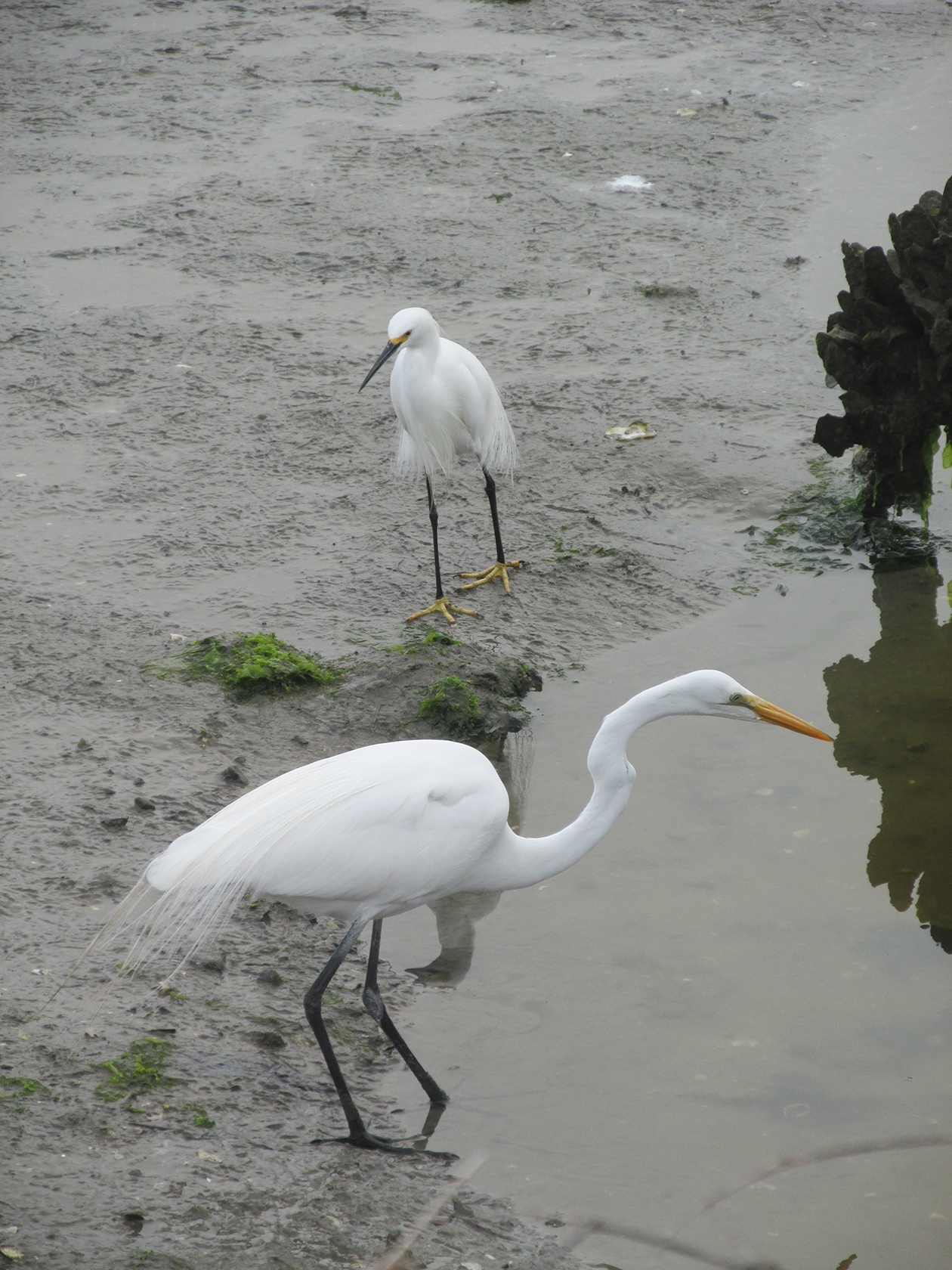
Photo by Bryan Stevens A Great Egret resting on a spit of land in a lake at Murphy Candler Park in Brookhaven, Ga.

Photo by Bryan Stevens
A Great Egret resting on a spit of land in a lake at Murphy Candler Park in Brookhaven, Ga.

I observed a Great Egret at Murphey Candler Park in Brookhaven, Georgia. Hiking trails around a small lake at this park offer some convenient locations for scanning the lake for wading birds and waterfowl. The egret was the first Great Egret I’ve observed in the Atlanta area.

I had visited this park hoping to find dragonflies, but for the most part struck out on finding these winged insects. I was compensated not only with the egret, but with observations of Double-crested Cormorants, Canada Geese, Mallards, Belted Kingfishers, Cedar Waxwings and Song Sparrows.

Photo by Bryan Stevens A Great Blue Heron moves stealthily through a wetland.

Photo by Bryan Stevens
A Great Blue Heron moves stealthily through a wetland.

Egrets are members of a family of birds known as Ardeidae, which includes herons, bitterns and egrets. The Great Egret is a very stately, graceful bird with white plumage, long legs and a sharp, yellow bill. It is smaller than the Great Blue Heron. The Great Egret stands 3.3 feet tall and has a wingspan of 52 to 67 inches. On average, however, they weigh only about 2.2 pounds.

Photo by Bryan Stevens A large flock of Great Egrets flies over the Watauga River in Elizabethton.

Photo by Bryan Stevens
A large flock of Great Egrets flies over the Watauga River in Elizabethton.

These egrets nest in large colonies. In the late 1800s and early 1900s, the colonial nesting habits of these birds made them particularly vulnerable to humans who slaughtered the birds in the millions to harvest their feathers for use in the fashion industry. The Great Egret and other wading birds were almost decimated in order to decorate fashionable hats for women.

The National Audubon Society was founded in 1905, largely as an effort to combat the unregulated slaughter of birds like Great Egrets, Snowy Egrets and Roseate Spoonbills. Now, more than a century later, the Great Egret still serves as the official logo for the National Audubon Society. In addition, the Great Egret has rebounded from those dark years. In fact, this bird now ranges as far north as southern Canada in appropriate wetland habitats. During spring and fall migration, Great Egrets also pass through northeast Tennessee. Look for them along rivers, lakes and on small farm ponds.

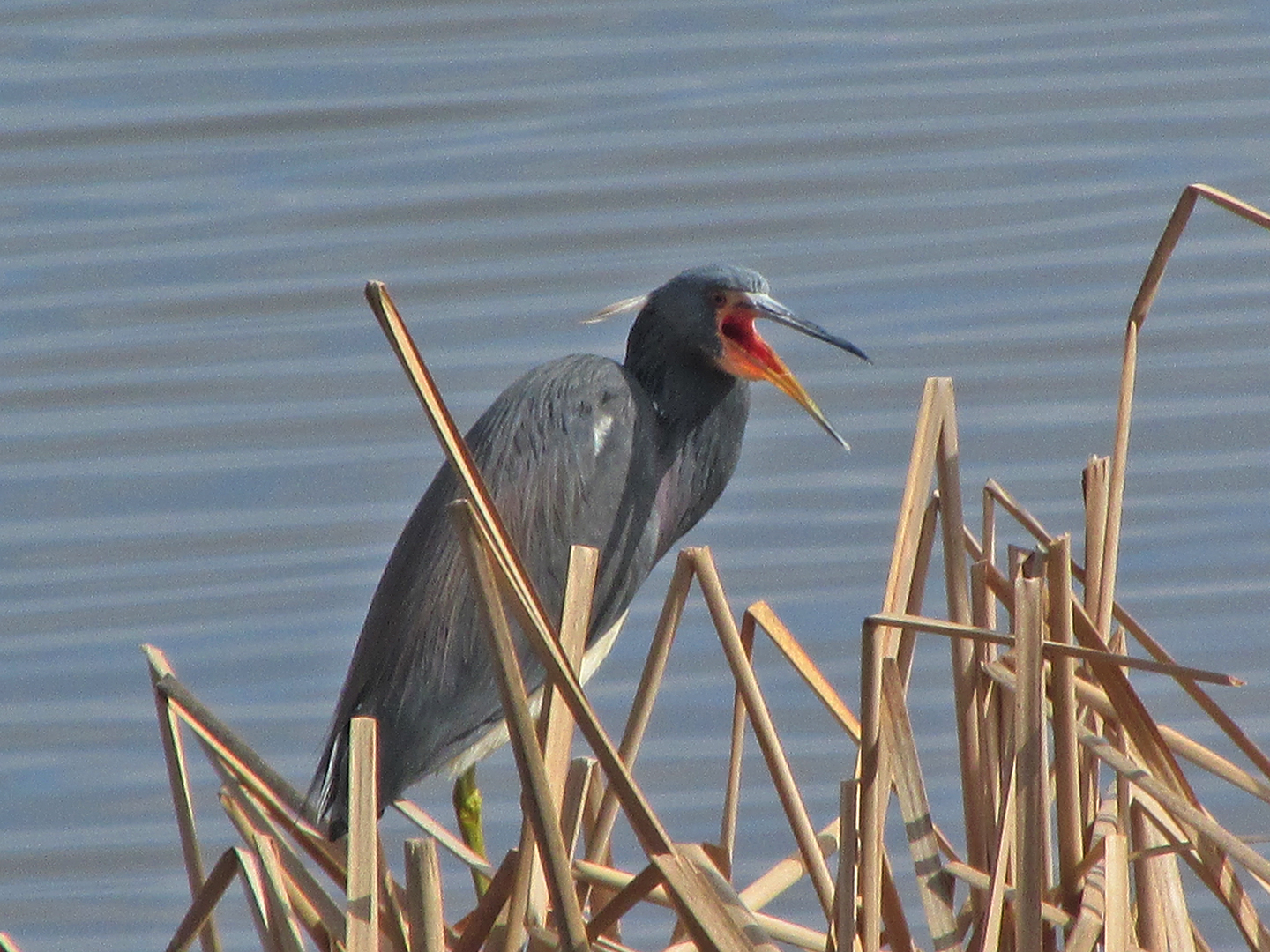
During visits to favorite birding locations in Elizabethton and Erwin, I have also observed Green Herons and Great Blue Herons.

Photo by Bryan Stevens A young Green Heron rests at the edge of a pond.

Photo by Bryan Stevens
A young Green Heron rests at the edge of a pond.

The Green Heron can easily be overlooked as it lurks near a stream’s banks or the edges of a pond. This heron is not tall and stately like the Great Egret or Great Blue Heron. The bird is a patient ambush predator capable of remaining motionless for extended periods as it waits for prey to move within reach of its sharp, pointed bill. I’m always flushing these herons from cover before I even realize they are present.

I do get fortunate on occasion, however, and manage to approach a Green Heron without panicking the bird into a hasty flight. If you stand very still and don’t make sudden movements, you can manage to observe this bird from a respectful distance.

Such was the case of a Green Heron that I found stalking the edges of the pond at Erwin Fishery Park. I had my camera, so I snapped some photographs as I watched the heron’s slow, deliberate steps along the pond’s edge. Then, with a lightning-quick motion, the bird lunged its bill into the water and snatched a large tadpole. The heron required a brief time to get the wiggling tadpole positioned. After that technicality was resolved, the heron swallowed the plump tadpole quickly and almost immediately resumed search for more prey.

Photo by Bryan Stevens A Green Heron finesses a captured tadpole in its bill.

Photo by Bryan Stevens
A Green Heron finesses a captured tadpole in its bill.

The unfortunate tadpole had developed hind legs, which did not prove an obstacle for the bird swallowing it, but still had a tail. Although it was very close to achieving frog-hood, this particular tadpole instead became part of the varied diet of a Green Heron, which can also include fish, crustaceans, insects and even mice. At this same Erwin pond, I once watched another Green Heron patiently stalking and successfully snatching dragonflies that perched on pond vegetation within reach of the bird’s bill.

Photo by Bryan Stevens A Green Heron elevates a shaggy crest of feathers, a behavior often initiated when the bird feels alarmed.

Photo by Bryan Stevens
A Green Heron elevates a shaggy crest of feathers, a behavior often initiated when the bird feels alarmed.

The Green Heron is usually present in Northeast Tennessee from April to October. The bird migrates to Central America for the winter months. A few other herons, including the Great Blue Heron and the Black-crowned Night-Heron, live year-round in the region.

Kingfishers are world-class anglers

1622507_10202822806683633_5738404313137626778_o

Photo by Bryan Stevens                                                                                                       A perched Belted Kingfisher rests between attempts to catch fish along the waterfront at Winged Deer Park in Johnson City.

Fishing is a favorite pastime for many people, who like nothing better than to spend a lazy summer afternoon trying their luck at their favorite fishing spot.

There’s also an angling counterpart among our feathered friends. The Belted Kingfisher’s nature as an angler rules out this bird visiting feeders in the backyard, but that doesn’t mean you’re unlikely to see this bird. With a little strategic effort, an observation of a Belted Kingfisher is fairly easy to obtain, especially during the summer months. If you live near a stream, pond, river or other body of water, you have probably been fortunate enough to observe a Belted Kingfisher as it completes its daily routine.

If you are a fishing enthusiast yourself, you’ve likely shared some favorite fishing holes with this bird. The Belted Kingfisher is patient in its pursuit of fish. The birds prefer to perch on an exposed branch or a wire that overlooks a body of water that offers ample fishing opportunities. The Belted Kingfisher, however, is capable of hovering in place in order to spot and then capture its prey in an impressive plunge and lunge into the water.

Most of my observations of hunting kingfishers have involved the birds in their ambush approach to fishing — perching and diving on the unsuspecting fish. I have on a few occasions, however, also observed kingfishers as they hover over the water in a quest for a meal.

The Belted Kingfisher, like most of its kin, looks to have a head and bill that are slightly too large for the rest of the body. It’s the long, heavy bill that the Belted Kingfisher uses to snatch fish from their watery homes.

A walnut tree with some dead branches overlooking my family’s fish pond is a favorite perching site for visiting Belted Kingfishers. A few Belted Kingfishers become regular visitors almost every spring and summer. In past years, I’ve been delighted by pairs of kingfishers that have brought as many as six of their offspring to hunt around the edges of the pond and creek near my home.

When a Belted Kingfisher does manage to capture a fish — not always a certainty, despite their great skill — the bird will usually fly to a perch where they will beat the fish unconscious before swallowing it. I remember one particular kingfisher that liked to catch fish in the creek and then fly to the corner of the metal garage roof where the bird proceeded to beat senseless the unlucky fish.

Worldwide, there are about 90 species of kingfishers that range in size from the 16-inch-long Laughing Kookaburra of Australia to the tiny African Dwarf Kingfisher, which at four inches in length is smaller than most sparrows. This family of birds is divided into three groupings, the river kingfishers, the tree kingfishers and the water kingfishers.

Despite the name “kingfisher,” not all kingfishers exist on a diet of fish. Some members of the kingfisher family instead prey on other quarry, such as snakes, lizards and insects.

Some interesting common names have been used to identify the world’s kingfishers, including Half-collared Kingfisher, Shining Blue Kingfisher, Blue-eared Kingfisher, Azure Kingfisher, Indigo-banded Kingfisher, Silvery Kingfisher, Malachite Kingfisher, White-bellied Kingfisher, Cerulean Kingfisher, Rufous-backed Kingfisher, Spangled Kookaburra, Rufous-bellied Kookaburra, Shovel-billed Kookaburra, Lilac Kingfisher, Brown-winged Kingfisher, Stork-billed Kingfisher, Great-billed Kingfisher, Striped Kingfisher, Lazuli Kingfisher, Ultramarine Kingfisher, Cinnamon-banded Kingfisher, Sacred Kingfisher, Mewing Kingfisher, Chattering Kingfisher, Glittering Kingfisher, Red-breasted Paradise Kingfisher, Pied Kingfisher and Green-and-rufous Kingfisher.

Kingfishers comprise a cosmopolitan family of birds with species present on every continent except Antarctica.

kingfisher

A depiction of Belted KingfisherS painted by John James Audubon.

The three North American kingfishers, however, are exclusively fish-eaters. The Belted Kingfisher, with a range that spans most of the United States, is the only kingfisher encountered by most Americans.

Two others, the Ringed Kingfisher and the Green Kingfisher, are found in Texas and occasionally in other locations near the Mexican border. The Ringed Kingfisher is similar in appearance to the Belted Kingfisher, but is somewhat larger with a rufous-colored belly. The little Green Kingfisher, not quite nine inches long, has the typical kingfisher appearance, but is green rather than blue on its upperparts.

With the Belted Kingfisher, only the female sports a ring of rufous coloration across her breast. She is an exception to the rule that most male birds are more vividly colored than their female companions.

In her book The Folklore of Birds, Laura C. Martin writes that in some accounts the kingfisher, not the dove, was the second bird Noah released from the ark after the Biblical flood. Instead of looking for land, the kingfisher flew too high and the sun scorched the bird’s feathers. After his setback with the raven and now the kingfisher, Noah made the kingfisher remain on the ark’s deck to catch its food from the water.

Halcyon days, a term meaning a period of peaceful quiet, is derived from Greek legend. According to the legend, the god Zeus restrained the storms during the period when the kingfishers nest. The scientific name for the Belted Kingfisher is Megaceryle alcyon, a variation on the term “halcyon.”

2782284667_afa8c0651e_o

Photo Courtesy of Jean Potter                                                                                                          Belted Kingfisher sits on a wire to scan for fish.

Belted Kingfishers nest by excavating a cavity in a dirt bank, usually near water. The tunnel slopes upward from the entrance, and may extend as far as eight feet into the bank.

Again in Martin’s book, there is an account of a Cherokee legend about how the kingfisher acquired its angling lifestyle. The poor bird wanted to be a waterbird, but lacked the equipment to make a living at fishing. The other animals convened a council and, in pity for the kingfisher’s plight, endowed the bird with its spear-like bill. Since that time, the bird has been known as “king of the fishers.”

The “king of the fishers” is indeed to be envied by human anglers. Although not successful in every attempt, the Belted Kingfisher is certainly exceptional in its pursuit of fish. According to John Eastman in his book, Birds of Lake, Pond and Marsh, the Belted Kingfisher typically captures about 10 fish per day.

If you want to observe this bird for yourself, stake out a pond or section of river. You’re not likely to have to wait for long before you are rewarded with an observation. In my experience, however, the Belted Kingfisher is somewhat shy and wary of humans, so observe from a respectful distance or you’re likely to scare off the bird, which will depart giving its rattling call that sounds so much like the sound of annoyance on its part.

Summer is the season of the swallow


No matter where you live, you probably don’t have to go far to see one of the members of the swallow family. These graceful, aerodynamic birds are quite familiar to most people. If you spend much time at all outdoors during the summer months, chances are you’ve observed some members of this family.

Overall, it’s been a good year for swallows. It’s usually not too difficult to find five of the six species that are known to make Northeast Tennessee and Southwest Virginia their home from spring to fall. In addition to barn and tree swallows, I have seen purple martins, cliff swallows and northern rough-winged swallows so far this year.

Photo courtesy of Mary Taylor Beierle A tree swallow peeks inside a nest box at the Beierle home.

Photo courtesy of Mary Taylor Beierle
 A tree swallow peeks inside a nest box at the Beierle home.

Barn swallow and tree swallow are the two members of the family that are probably best known to people. They have adapted to life in both suburban and rural areas, which brings them into frequent contact with people.

These days, the barn swallow is as apt to nest in a parking garage or on an apartment balcony as inside a barn in the countryside. Once young swallows leave the nest, parents will park them on a perch as they continue to feed the still dependent young. Adults fly over nearby fields, foraging for insects that they catch on the wing and deliver back to the waiting, always hungry, young birds.

A freshly mown field is a magnet for swallows. I don’t know how the word spreads so quickly among these birds, but I’ve observed dozens of these birds descending on fields soon after they have been mowed for hay. At times, the birds arrive while the mowing is still taking place, swooping after insects stirred up in the tractor’s wake.

I haven’t observed any bank swallows in the region this year, but these members of the swallow family are rather hit-or-miss in the region. Because of their specialized nesting needs, bank swallows are localized in their distribution and not as widespread as their kin.

Cliff swallows nest beneath many local bridges. These swallows, which at one time nested primarily on rocky cliffs, hence their name, now frequently nest under man-made structures. These swallows make their jug-shaped nests out of mud and clay. These nesting “jugs” are all located in clusters beneath bridges and other structures. It’s a wonder that the parents flying in with food are able to tell their nests apart from the nearby seemingly identical nests of their neighbors.

NRW-Swallow

Photo by Bryan Stevens                                  For such a small bird, the Northern rough-winged Swallow has a long name.

Northern rough-winged swallows are opportunists when it comes to nesting. According to a profile written by Mark Johns with North Carolina Wesleyan College, this small swallow nests near rocky gorges, shale banks, stony road cuts, railroad embankments, gravel pits, eroded margins of streams and other exposed banks of clay, sand or gravel. They will also nest in old kingfisher burrows, protruding drainpipes, crevices in brick or stone structures such as dams, bridges or tunnels, gutters and culverts. Their nests are often built near open water.

The Northern rough-winged swallow ranks as one of the species with the longest common names in North America. It’s name consists of 26 letters and a hyphen, which ranks it one letter below both the Northern beardless-tyrannulet and a recently-created species — the saltmarsh sharp-tailed sparrow — which each have 27 letters and a hyphen. Formerly known as sharp-tailed sparrow, the species was renamed with “salt marsh” added to distinguish it from a relative, Nelson’s sparrow.

TreeSwallow-MaryBierlie

Photo courtesy of Mary Taylor Beierle                                      A male Tree Swallow surveys his territory from atop a nesting box.

Purple martins, which rank as the largest species in the swallow family in North America, are famous for nesting in large colonies. Nesting facilities range from groupings of natural or artificial gourds fashioned into a nesting chamber, as well as large, multi-level condominium dwellings tailored for the specific needs of this communal bird. A colony can consist of several dozen to several hundred pairs of these birds. Only the adult male purple martin shows the iridescent, dark blue-purple plumage that provides the species with its name.

The tree swallow is my favorite, probably because a pair of these birds has nested in my yard for many years. Unlike other swallows, these cavity-nesting birds will readily accept nesting boxes. They compete with Eastern bluebirds for boxes, but the two species usually can work out a truce and settle down to nest in close proximity to each other. The iridescent blue-green male tree swallow, complete with white underparts and a forked tail, is a handsome bird and a welcome addition to the bird population in any yard or garden. Tree swallows enjoy water, so a nearby pond or creek is a boon for attracting these birds.

TreeSwallowPerched-Bierlie

Photo courtesy of Mary Taylor Beierle          Tree swallows readily accept human-provided nesting boxes. They also make delightful neighbors during the summer season.

While only a few swallows range into the United States and Canada, a total of 83 species of swallows can be found worldwide. Some of the common names for these different swallows (and martins) are quite descriptive. A sampling includes white-eyed river martin, square-tailed saw-wing, white-headed saw-wing, grey-rumped swallow, white-backed swallow, banded martin, violet-green swallow, golden swallow, brown-chested martin, brown-bellied swallow, pale-footed swallow, white-bibbed swallow, pearl-breasted swallow, greater striped swallow, mosque swallow, fairy martin and chestnut-collared swallow.

••••••

Several of the photos this week were provided by Mary Taylor Beierle, a resident of Stoney Creek in Carter County. Mary is also the author of the book, “Edmond The Daddy Turkey,” a delightful story about a male turkey who learns how to be a father.

Mary emailed me the photos with a brief note about her visiting swallows.  “I am thrilled to have them here as we had never seen them before,” she said. “Good thing I have several bird books so I could identify them.”

To learn more about Mary’s book, visit http://www.amazon.com/Edmond-Daddy-Turkey-Taylor-Beierle/dp/0985986123

10441231_838490356179548_1093306511537972714_n

Photo by Bryan Stevens A Barn Swallow perches on a utility wire over a field.