Tag Archives: Fall migrants

Common nighthawk flocks form part of fall migration spectacle

Nighthawk

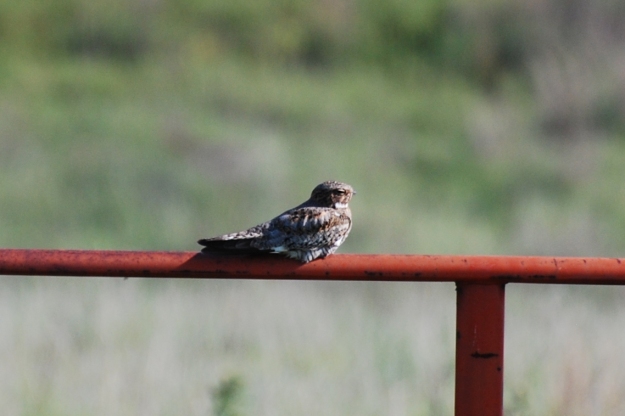
Photo by Jean Potter • A common nighthawk rests on a metal railing.

With September advancing on the calendar, I have been keeping an eye on the skies. For the most part, I focus on the upper branches of trees and feeders during the migration season, but I don’t forget the need to look skyward from time to time.

The reason? Well, that’s the best way to detect soaring raptors or flocks of migrating common nighthawks. The autumn sky is also a popular flyway for other birds, including chimney swifts and swallows.

So, what is a common nighthawk? First, this bird, despite what is implied by its name, is not a hawk. It’s also not strictly nocturnal. Particularly in the fall, nighthawks are active during daylight hours when engaged in catching winged insects. Outside of fall migration, these birds can often be observed over large parking lots or well-lit streets, snatching up insects swarming around the light poles.

The common nighthawk is one of three members of the nightjar family found in the region during the summer months. The other two nightjars are the whip-poor-will and chuck-will’s-widow, birds that produce their namesake vocalizations in the nocturnal hours. Both of these species migrate, but they don’t take the dramatic approach employed by nighthawks. Each fall, common nighthawks form large flocks, ranging in size from dozens to hundreds or even thousands of individuals, as they migrate south for the winter.

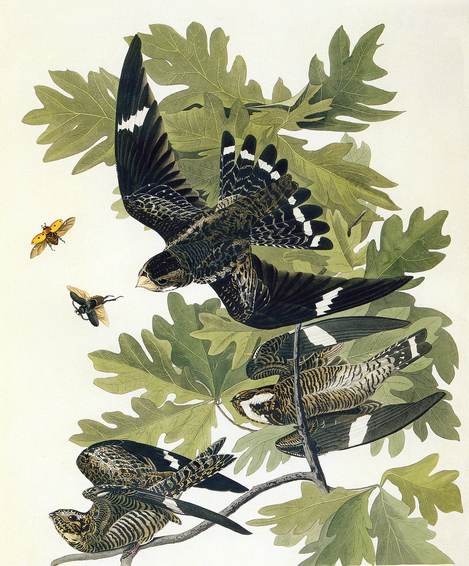
john_james_audubon_common_nighthawk_bird_print

Early American naturalist and artist painted this dynamic scene of common nighthawks.

The whip-poor-will, after the common nighthawk, is the second most widespread member of its family to spend its breeding season in North America. The whip-poor-will ranges from southern Canada to the Gulf states. This bird also occurs in Arizona, New Mexico and southwestern Texas. The whip-poor-will favors habitat consisting of deciduous woodlands and the edges of forests.

All members of the nightjar family feed exclusively on insects that are caught on the wing. In this respect, the nightjars can be considered the nocturnal counterparts of the swallows. The nightjars have comparatively large, gaping mouths they use to scoop up flying insects. They also have large eyes, an adaptation to their nocturnal lifestyle.

Whip-poor-will numbers have been declining in the past few decades. These nocturnal birds frequent woodland edges, but they seem to be rather particular about such habitats. A forest that is too mature seems to hold little interest for them. Disturbed habitats, such as those created by logging, are acceptable to the birds once secondary growth begins. As this new growth matures, however, the whip-poor-will apparently abandons such territory. Because of these requirements, whip-poor-wills can be somewhat localized in their distribution and sometimes difficult to locate.

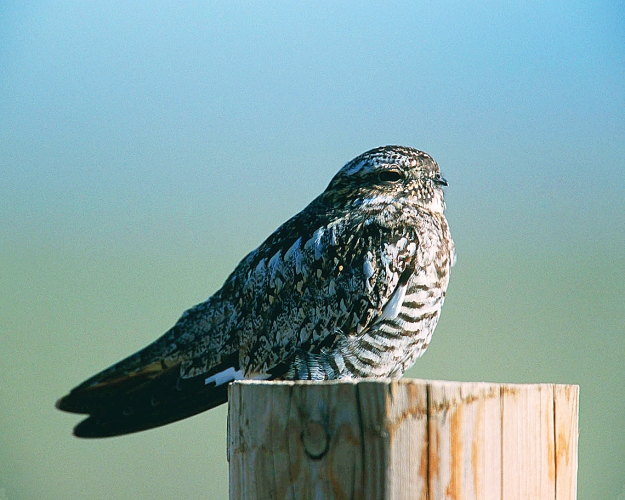
Nighthawk-PHOTO

Photo by U.S. Fish and Wildlife Service • A common nighthawk finds a perch for a brief rest.

When I was a kid, one of my favorite summer activities was sitting on the front porch of my grandparents’ home and listening to the whip-poor-wills call after dark. I remember how the plaintive call would be repeated for long intervals before a passing automobile’s headlights might frighten the bird into silence. Then, after a brief pause, the “whip-poor-will” calls would, tentatively at first, begin again and continue throughout the night.

Today, I’m living in my grandparents’ old home, and the whip-poor-wills no longer call. I heard a single individual that called for a single evening back in May of 1997, but that was apparently a migrating bird that did not remain in the surrounding woodlands. The only member of the nightjar family that I dependably encounter at home these days is the common nighthawk, and then only during that narrow window of late summer and early autumn.

Unlike whips and chucks, the common nighthawk isn’t active only after dark, which makes it much easier to observe these birds. They look somewhat like swifts and swallows but are much larger. They are brownish-gray birds with pointed wings and forked tails. They are easily identified by distinctive white patches on the underside of their wings.

The nightjar, or Caprimulgidae, family of birds is also sometimes known as “goatsuckers.” There are almost 80 species of nightjars in the world. Less than 10 occur in North America. The common nighthawk, whip-poor-will and the chuck-will’s widow are neotropical migrants. While they breed in a wide range of territory in North America, they spend their winters in Central and South America. Like all nightjars, nighthawks feed almost exclusively on insects, which they catch on the wing.

Many of the common nighthawk’s relatives have been given descriptive names, such as long-trained nightjar, collared nightjar, spot-tailed nightjar, red-necked nightjar, golden nightjar, fiery-necked nightjar, swamp nightjar, pennant-winged nightjar, lyre-tailed nightjar, little nightjar, sickle-winged nightjar, rufous-bellied nighthawk, short-tailed nighthawk, sand-coloured nighthawk and least nighthawk.

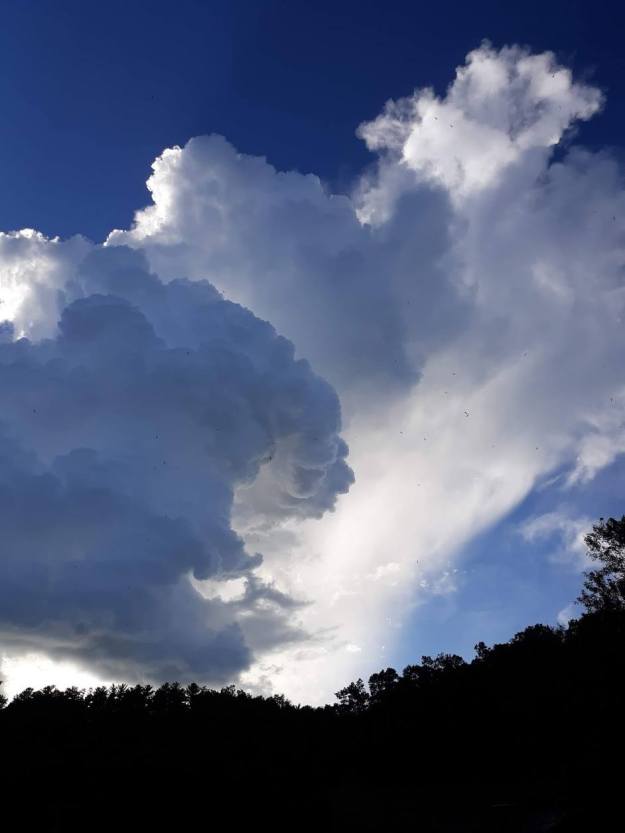
So, keep looking skyward. The next flock of migrating common nighthawks may fly over your home. These flocks are usually on the move throughout September although they begin to appear as early as late August. They can also appear almost magically, as if out of thin air. First, observers may see one of two birds, then several, followed quickly by dozens or sometimes hundreds as they wheel and cavort in the skies overhead with impressive grace and agility. I’ve seen flocks that would easily number more than 500 birds in locations throughout the region, although flocks often number only a couple of dozen birds. The two flocks I’ve observed so far this migration season numbered about thirty and fifty birds, respectively.

41004068_10215014667832542_3336138056443887616_o

Photo by Bryan Stevens • Rising clouds provide a backdrop for a flock of migrating nighthawks.


The world can be a big, bad place for tiny hummingbirds

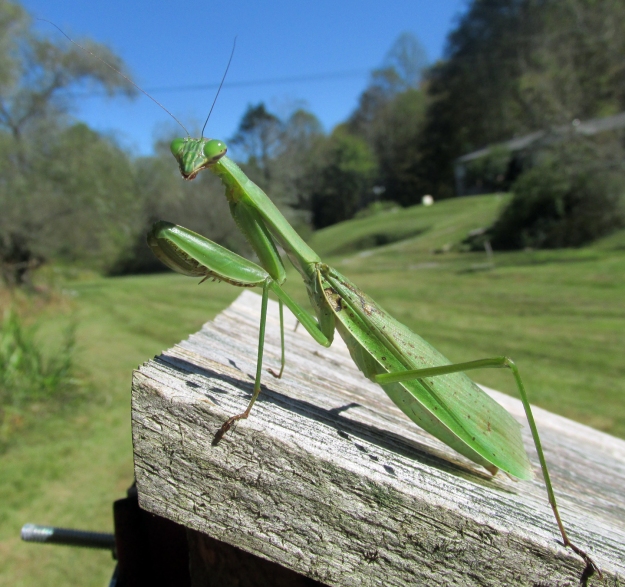
Mantis-Four

Photo by Bryan Stevens • Large mantises have been known to prey on ruby-throated hummingbirds.

Many years ago I read an account of a scarlet tanager making a snack of a ruby-throated hummingbird. Memory being what it is, I am no longer sure if that account was corroborated or one of those urban legends of birding.

A few pertinent facts should be considered. Male scarlet tanagers look striking in their red and black plumage. Ruby-throated hummingbirds are attracted to the color red. In the details I recall of the story about the predatory tanager, the hummingbird kept flying close to the tanager as if attracted to the red plumage. If so, it was a case of curiosity kills the cat or, in this case, the hummingbird. The tanager seized the hummingbird in its bill and, for good measure and to “tenderize” its prey, beat the hummingbird against the side of a branch. All of this took place before a crowd of birders who observed the incident through their binoculars. I don’t recall anyone taking a photo of the hummingbird’s tragic demise.

An email from Gene Counts reminded me of the tale of the tanager and the hummingbird. Gene, who lives in Haysi, Virginia, sent me a photograph and a short note about a praying mantis that stalks hummingbirds as they visit his feeders for a sip of sugar water.

MantisVsHummer

Photo by Gene Counts • This photo was shared by Gene Counts, who described how the mantis stalked hummingbirds that came to his feeder.

Gene told me of his excitement upon capturing the large insect’s behavior in a photograph.

“I just had to share this picture with you,” Gene wrote. “After all, my wife, Judy, was more excited today than the day we married in Chicago 54 years ago.”

He certainly hooked my attention with that introduction.

“A praying mantis is using our feeder as his own private hunting preserve,” Gene continued in his email. “The mantis follows and stalks the hummingbirds all the way around 360 degrees.”

So far, the stalking has only resulted in “several near misses,” but Gene declared that he is ready to pounce in case the mantis gets lucky.

“It has been four hours and he has lowered his goal,” Gene wrote of the patient mantis. “He is now clinging to the bottom (of the feeder) waiting for an insect. Now I can expel my breath as he no longer an avian threat.”

While Gene’s mantis may not be an immediate threat to hummingbirds visiting his yard in Haysi, does that mean we can be complacent when these large insects share our yards and gardens with hummingbirds?

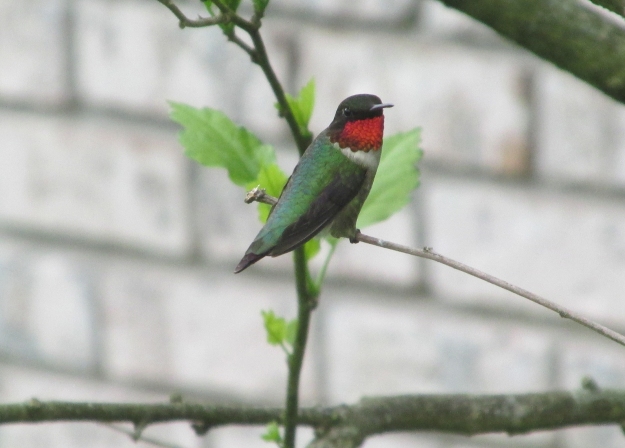
Ruby-throated-WILLOWS

Photo by Bryan Stevens • Numbers of Ruby-throated Hummingbird in the region tend to fluctuate each year, but people should usually see a spike in their numbers as the hummingbirds end summer nesting and start migrating south again.


Documented evidence exists to identify large praying mantises as predators on ruby-throated hummingbirds. A brief foray online found numerous instances of hummers falling victims to these large carnivorous insects.

There are two species of mantises in the region — the European, or praying mantis, and the Chinese mantis — capable of capturing hummingbirds. Both species were introduced in the 1800s to act as a predator of insect pests detrimental to crops and gardens. The Chinese mantis can reach a length of 4.3 inches, while the European mantis achieves a length of about 3.5 inches. A third species — Carolina mantis — reaches only a length of 2.5 inches and should not pose a threat to ruby-throated hummingbirds, which are about 3.5 inches long.

Although introduced from Europe, the European mantis (Mantis religiosa) has earned recognition as the official state insect of Connecticut. The native Carolina mantis is the official state insect for South Carolina.

In Central and South America, where the world’s more than 300 species of hummingbirds reach their greatest diversity, there are also more species of predatory mantises. Some of these tropical insects prey on the tropical counterparts to the ruby-throated hummingbird.

Consider the way the mantis makes a perfect predator. It’s spiky forelimbs are spiky and serrated, making them perfect for seizing and grasping. This insect’s triangular head can turn their heads 180 degrees to scan its surroundings with two large compound eyes. A mantis also has three other simple eyes to increase its keen vision. Brutal mouthparts can easily tear apart and devour any prey the mantis manages to catch with its ambush hunting style.

Hummingbirds, regardless of species, are in a tough spot in the food chain. A bird not much bigger than many large insects is going to be a target for opportunistic predators like a mantis that will attempt to kill and consume anything small enough for them to make the effort.

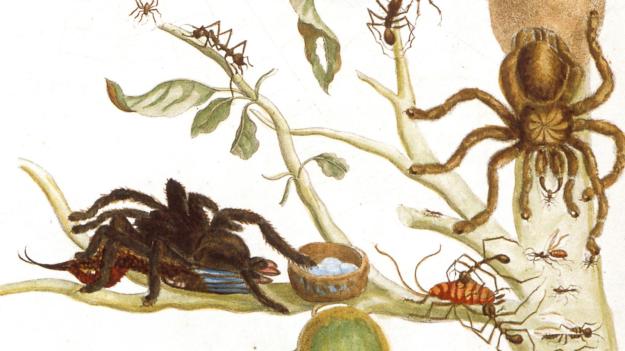
p03mnqtd

Maria Sibylla Merian, a German-born naturalist and scientific illustrator, was one of the first naturalists to observe insects directly. She painted this horrific work featuring a large spider preying on a hummingbird that had been dutifully incubating her eggs. When she died in 1717, she was recognized as one of the world’s foremost entomologists.

To make matters worse for ruby-throated hummingbirds, some large spiders and the bigger dragonflies have also been documented as hummingbird predators. When ruby-throated hummingbirds retreat to Central America for the winter months, they also face threats from lizards and snakes.

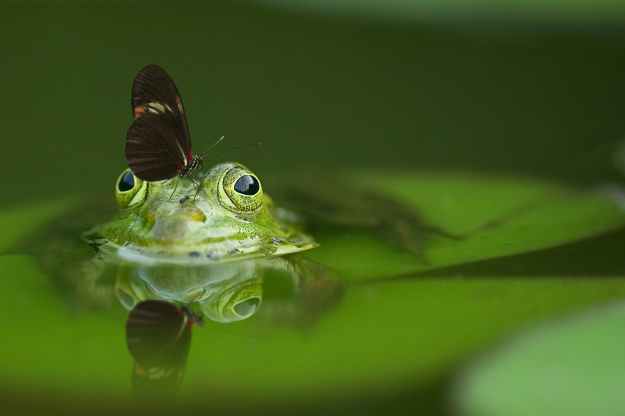
The list of predators that have been known to eat ruby-throated hummingbirds extends to bullfrogs, as well as many raptors, including kestrels, merlins and sharp-shinned hawks. Blue jays and other birds will raid hummingbird nests for eggs or young. Squirrels and chipmunks are also nest predators.

nature water eyes pond

Photo by Pixabay on Pexels.com. Large frogs have also been known to prey on hummingbirds.

Despite all these perils, some ruby-throated hummingbirds have achieved a “long” life. The oldest on record was a ruby-throated hummingbird banded at the age of nine years and one month. Most elder hummingbirds are females. Few male hummingbirds, perhaps because of the energy they expend dueling with each other, reach their fifth birthday.

It’s definitely not easy being as tiny as a hummingbird in a world of fearsome giants, but birders who have seen a hummingbird hover boldly in front of their faces know how these tiny birds take life in stride. They may have a disadvantage in size, but that doesn’t keep them from living life as if they were as big as an eagle.

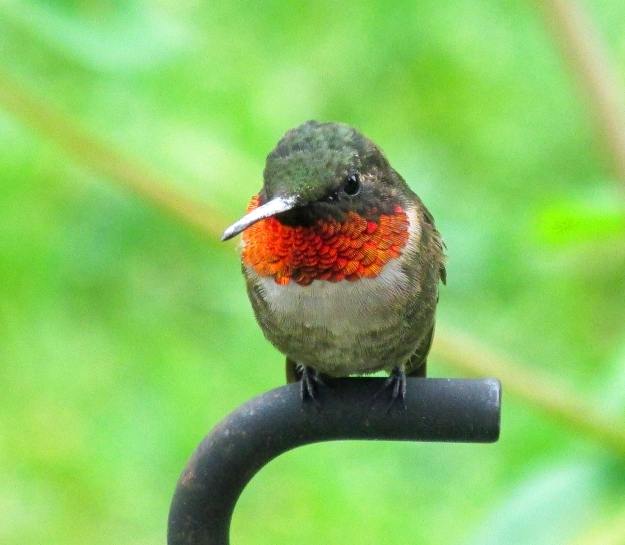
Rubythroat

Photo by Bryan Stevens • Despite a perceived disadvantage of size, ruby-throated hummingbirds are quite capable of thriving in a giant world.

Chipping sparrow a common summer nesting bird

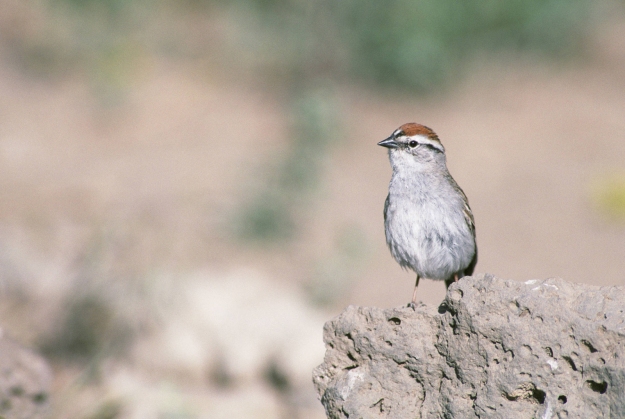
ChippingSparrow-ONE

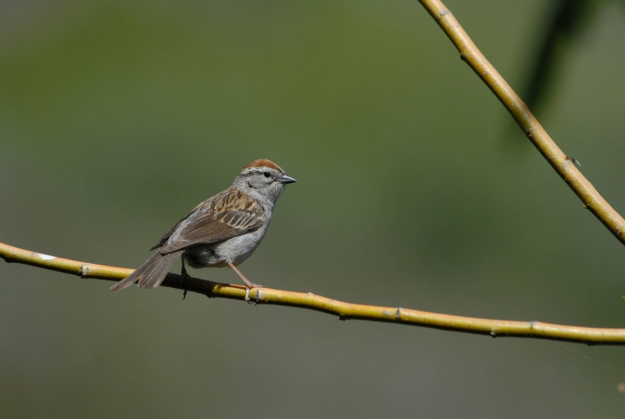
Photo by Dave Menke/USFWS • A black line running through the eye bordered by a white stripe, as well as a rusty-red cap, helps distinguish the chipping sparrow from other “little brown birds” that belong in the sparrow family.

I needed to do some homework before I could answer a question posed to me by Frances Rosenbalm of Bristol, Tennessee. As she communicated to me in an email, she had discovered a bird’s nest in her garden and wanted help identifying the species that built the nest.

“I have a bird that made a nest in the top of my tomato vines,” Frances explained in her email. “It had four turquoise speckled eggs in it.”

Frances described the nest as being made with large twigs and moss. “What kind of bird do you think it may be?” she wrote. She also noted that her garden is located near a farm field.

“I was so surprised to find this nest,” she wrote. “In all of all the years I have put a garden out, this has never happened,” Frances concluded.

51bUn1kQ7XL._SY291_BO1,204,203,200_QL40_ 2

After doing some research, which included poring over the pages of a great book by Hal H. Harrison titled, “A Field Guide to Birds’ Nests: United States East of the Mississippi River,” a work in the Peterson Field Guides series, I was able to write back to Frances with the news that I might have solved the mystery of the nest in the tomato vines.

The Harrison field guide is an exceptional book and one that’s perfect for someone who wants to know a little more about the birds other than their names. Entries for each bird include photographs depicting both the nest and the eggs as well as informative text with supplemental information about nesting birds in the Eastern United States.

Based on the description of the nest and its eggs, as well as its location near a farm field, I identified the nest described by Frances as belonging to chipping sparrows. I found some photographs online of chipping sparrow eggs in a nest and sent that in an email for her to consider.

Frances responded in another email. “I do believe you are right,” she wrote. “The eggs look a lot like the photo, and I have seen some birds that look like (chipping sparrows) flying around.”

For a species often lumped under the grouping of “Little Brown Birds,” the chipping sparrow is quite distinctive. In spring and summer, chipping sparrows sport a crisp, neat plumage with frosty gray underparts, a gray and white face and a striking black line through the eye. An easily recognizable field mark is the bright rusty crown atop the bird’s head.

ChippingSparrow-TWO

Photo by Dave Menke/USFWS • Chipping sparrows will form flocks for the winter season.

When horses were more common in daily American life, the chipping sparrow took advantage of this resource to almost invariably line their nests with horsehair. Now that not all nesting chipping sparrows have access to horses, these birds use fine plant fibers or hair gathered from other sources, including people, to line their nests.

Once a nest is constructed, a female chipping sparrow lays and incubates three to four eggs, which take about 14 days to hatch. Chipping sparrows often attempt to raise two broods in a single nesting season. Although dense evergreen trees are a preferred nesting location, these birds will also nest in vines.

During the warm months of the summer nesting season, chipping sparrows feed almost exclusively on insects. When winter makes insects scarce, these small birds switch their diet to one of seeds. Chipping sparrows will also feed on small fruits and berries.

Chipping sparrows will sometimes nest as many as three times in a single season. Although territorial during the nesting season, these birds form sizable flocks for migration and during the winter season. In making reference to these flocks, observers can use other descriptive terms. Flocks of sparrows have also been called a crew, a flutter, a host, a tournament and a quarrel. I am partial to a flutter of sparrows, but anyone who has watched the pecking order at the feeders will also understand the origins of a quarrel of sparrows.

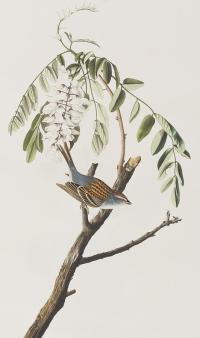
Chipping-sparrow-john-james-audubon

John James Audubon painted this chipping sparrow.

There are a couple of well-known Biblical passages using sparrows for powerful pieces of symbolism. One alludes to the fact that if God provides for small songbirds like sparrows, he will certainly provide for human beings. In addition, there is a passage that maintains that not a single sparrow falls without God being aware of the loss. A famous hymn, “His Eye is on the Sparrow,” is based on such biblical verses.

The world’s sparrows are divided into two large groupings — the Old World, or true sparrows, and the American sparrows of the New World.

Although largely considered rather dull, plain birds in appearance, some of them have earned descriptive names such as great sparrow, Arabian golden sparrow, green-backed sparrow, five-striped sparrow, yellow-browed sparrow and golden-crowned sparrow.

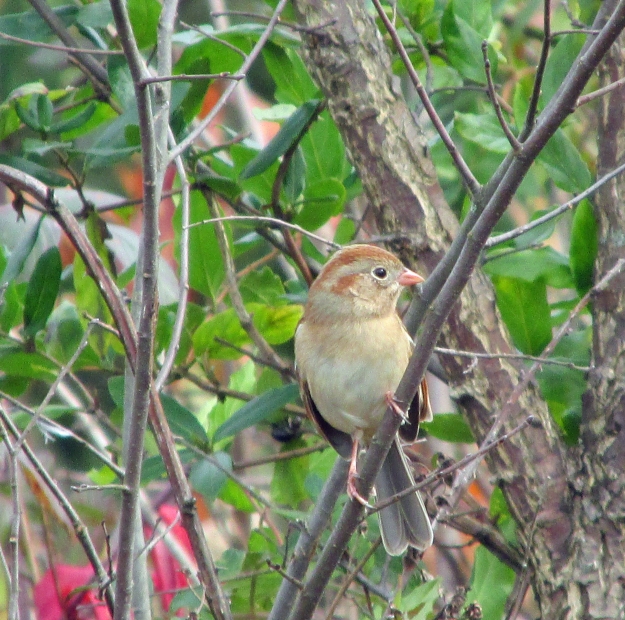
FieldSparrow-One

Photo by Bryan Stevens • A field sparrow perches on a branch. These sparrows are closely related to chipping sparrows and relatively common in Northeast Tennessee.

Welcome chipping sparrows and their kin with a well-stocked feeder and perhaps some thick tomato vines for concealing a nest. Unfairly dismissed by some as plain, dull songbirds, the sparrows reward a closer look with some subtle behaviors and plumages as worthy of additional attention as much as some of their more colorful relatives.

Rally to offer sneak peek at bird migration, other nature activities

CapeMayWarbler

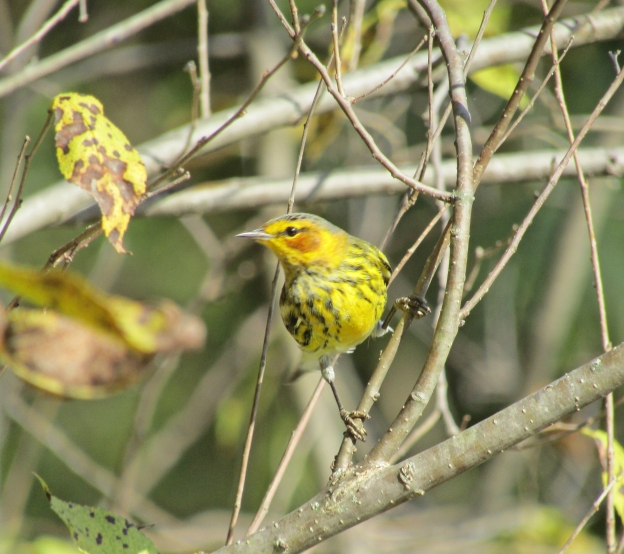
Photo by Bryan Stevens • While the Cape May warbler doesn’t breed locally, these warblers are fairly common spring and fall migrants in the region.

The 56th Roan Mountain Fall Naturalists Rally will draw nature enthusiasts from far and wide to this jewel of the Southern Appalachians on the first weekend after Labor Day with programs, nature walks, catered meals, and much more.

The annual Fall Naturalists Rally is always a great opportunity to enjoy the outdoors and, for birders, get a sneak peek at fall migration with any of the walks and programs focusing on our fine feathered friends. The best naturalists in the region volunteer their time and energy to make this a landmark event for people of all ages.

This year’s rally, which is scheduled for Friday-Sunday, Sept. 7-9, will feature guest speakers, Gabrielle Zeiger and Dr. Joey Shaw, for the main programs on Friday and Saturday evenings.

Zeiger’s Friday program, “Zen and the Art of Mushroom Hunting,” will get underway at 7:30 p.m. following a catered dinner at 6:30. Zeiger has been studying mushrooms in the region for 23 years. She considers herself more of a mushroom enthusiast than an expert. She is a member of the North American Mycological Association, and attends their national forays. She is involved in the association’s annual Wildacres foray in the Blue Ridge Mountains near Mount Mitchell in North Carolina.


Photos by Bryan Stevens • Mushrooms will feature in one of this year’s evening programs at the Fall Naturalists Rally.


Her program will focus on the two basic approaches — looking for good edibles and scientific study — to mushroom hunting. Her talk will touch on both approaches and include basic information on common mushrooms found in the area, species diversity and poisonous versus edible mushrooms. The program will include various types of fungi from gilled mushrooms, boletes, corals, stinkhorns and polypores, as well as the roles that they play in the environment such as decomposition and forest ecology. She will also talk about what mycologists do at forays. Findings will be included regarding 20 years of record keeping at Roan Mountain and scientific information on studies at Mount Mitchell regarding amount of rainfall and diversity of fruiting.

Photos Contributed • From left: Gabrielle Zeiger and Joey Shaw are this year’s featured speakers.


Saturday’s program on “Digitizing Tennessee’s One Million Herbarium Specimens,” will also start at 7:30 p.m. followed by a catered meal at 6:30. Dr. Joey Shaw received a bachelor’s of science in biology from the University of Tennessee at Chattanooga in 1998, and that same year began his graduate education in the Department of Botany at the University of Tennessee, Knoxville. In 2001, he received his master’s in botany for a floristic investigation of the Big South Fork National River and Recreation Area in Tennessee and Kentucky. In 2005 he received his Ph.D. from the University of Tennessee, Knoxville, for his work on the phylogeny and phylogeography of the North American plums and molecular evolution of different genetic regions of the chloroplast genome.

Shaw is currently serving the Association of Southeastern Biologists as Past President and will rotate off this Executive Committee in April 2019, after having served for over ten years and in all ranks of that committee. He is also serving as Chair of the Wildflower Pilgrimage Organizing Committee, and in this capacity he organizes this annual event that brings together more than 120 professional biologists with 850 members of the public to participate in more than 150 different events over four days every spring in the Great Smoky Mountains National Park.

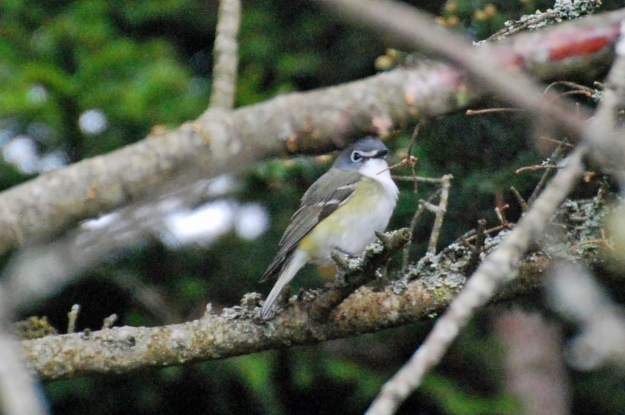
Blue-headedVireo

Photo by Bryan Stevens • Blue-headed vireos, such as this bird, are high-elevation summer residents in the region. In the fall, they are also common migrants.

Evening and lunch programs will take place in Roan Mountain State Park’s Conference Center and unless other noted, field trips will leave from the field on the left before the cabins in the park.

In addition to the programs, morning and afternoon walks will be held Saturday and Sunday on a vast array of subjects, including birds, salamanders, butterflies, spiders, snakes, geology, mosses and liverworts. A “moth party” will be held after the Friday and Saturday programs. Larry McDaniel will host this party taking a look at these winged nocturnal insects outside the Conference Center.

Consider joining the Friends of Roan Mountain, if you are not a member. Members get free admission to all Naturalists Rally events and the newsletter, “Friends of Roan Mountain.”

The rally offers catered evening meals by City Market of Elizabethton, as well as brown bag lunches on Saturday. All meals must be pre-paid in advance.

Registration and payment for meals and other activities can be made at the website for Friends of Roan Mountain at friendsofroanmtn.org. The website can also provide a brochure for download that offers a complete schedule and details all the available activities at this year’s rally. Whatever your interest, the Roan Mountain Fall Naturalists Rally is sure to have an activity available. For local birders, it’s often the kick-off to the fall migration season as warblers, vireos, thrushes, tanagers, birds of prey and many other species pass through the region on their way to their wintering grounds.

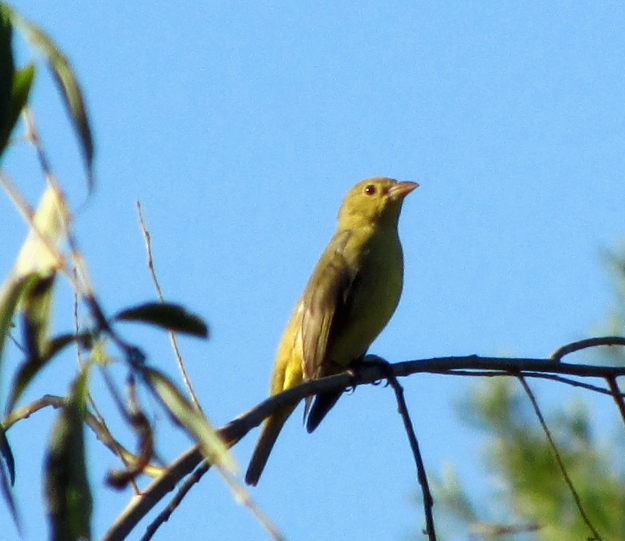
Tanager-Sept18

Photo by Bryan Stevens • A female scarlet tanager is a study in contrast from her mate with her dull greenish-yellow plumage being much less vibrant than the male’s bright red and black feathers.

Although graceful in the water, life gets awkward for grebes on land

As the calendar moves into the months of October and November, migrating waterfowl will replace the exodus of songbirds that evacuate the North American continent every fall in preparation for their winter season in the tropics. The umbrella term of waterfowl can include such birds as ducks, geese, loons and grebes.

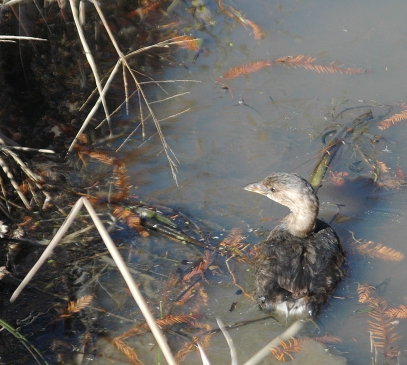
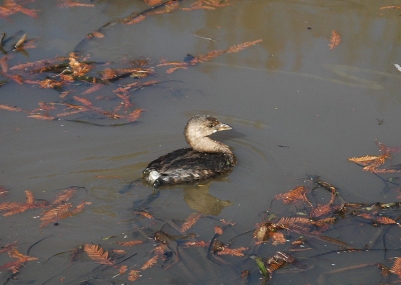
Pond-Edge-Grebe

Photo by Bryan Stevens • This pied-billed grebe stranded itself on a wet lawn during fall migration. A grebe’s legs are positioned so far back on their bodies that grebes have difficult walking on land. Once released in a pond, the grebe was able to take flight and continue its migration.

That last family keeps one of the lowest profiles among the grouping of birds lumped together as waterfowl. Worldwide, there are 22 species of grebes. This family also includes three extinct species — Alaotra grebe, Atitlán grebe and Colombian grebe.

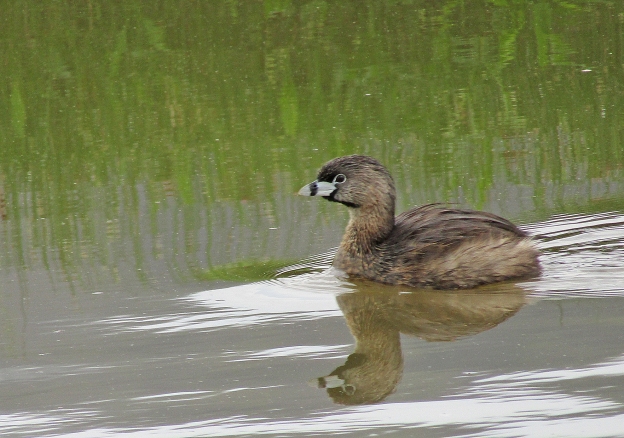
Many people are unaware of the grebes. After all, they are oddball birds with not a lot in common with other waterfowl such as loons and ducks. In eastern Tennessee, southwestern Virginia and western North Carolina, the pied-billed grebe is the most likely member of the grebe family to come into contact with humans. The pied-billed grebe’s scientific name, Podilymbus podiceps, can be roughly translated as “rear-footed diver.” The reference is to the fact that this grebe, as well as others of its kind, have their feet positioned so far back on their bodies that movement on land is difficult and awkward.

The pied-billed grebe has inspired a variety of other common names, including American dabchick, dabchick, Carolina grebe, devil-diver, dive-dapper, hell-diver, pied-billed dabchick, pied-bill, thick-billed grebe and water witch, all of which reflect this grebe’s almost exclusively aquatic lifestyle.

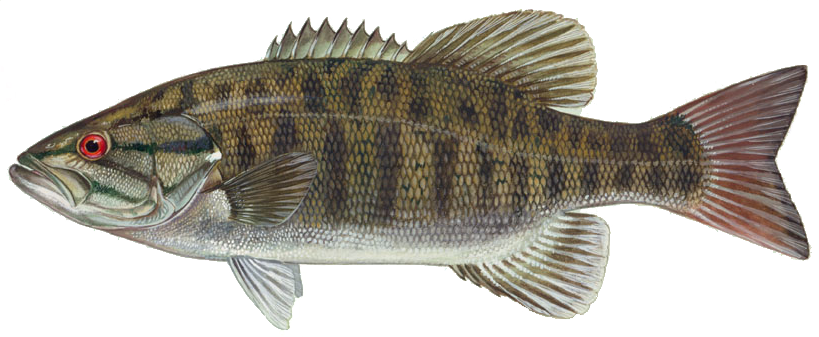
The pied-billed grebe is a world-class survivor. Already a member of an ancient family of birds, this species has outlasted the others in its genus. The Atitlán grebe, which was also known as the giant grebe, went extinct around 1989 after a series of catastrophic setbacks, including a devastating earthquake and the introduction of smallmouth and largemouth bass to Lake Atitlán in Guatemala. The bass consumed the prey this grebe needed for its survival, and large bass occasionally ate young grebes.

Smallmouth bass.png

Bass introduced into Lake Atitlán consumed the small fish that the Atitlán Grebe              required as a food source. Large bass also ate young grebes.


These birds range in size from the least grebe, which weighs only about six ounces, to the great grebe, which can tip the scales at four pounds. North American grebes include red-necked grebe, horned grebe, eared grebe, Clark’s grebe and Western grebe. In extreme southern Texas, birders can find least grebes in suitable wetland habitats.

With the exception of the least grebe, I’ve seen all of North America’s grebes. During visits to Utah in 2003 and 2006, I observed the sleek, long-necked Clark’s grebe and Western grebe. On a 2006 trip to Utah, I visited Antelope Island State Park and observed tens of thousands of Eared Grebes gathered on the Great Salt Lake for the nesting season. In Tennessee, one of the most reliable locations to find eared grebes is from viewing areas at Musick’s Campground on South Holston Lake, where a small number of these grebes have wintered for many years.

An unusual February fallout back in 2014 resulted in equally unusual numbers of red-necked grebes on area lakes, rivers, and ponds. I’d previously observed this grebe on Boone Lake, South Holston Lake and Watauga Lake in northeast Tennessee.

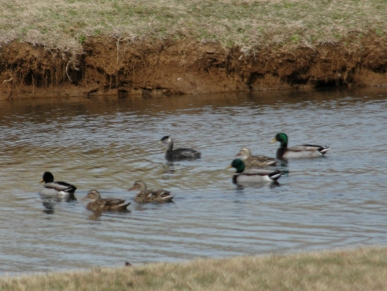
Grebe-Mallards

Photo by Bryan Stevens • A Red-necked Grebe mixes with Mallards at a pond on the campus of Northeast State Community College in Elizabethton.

Grebes are prone to landing on glistening surfaces — lawns, asphalt parking lots and even paved roads — during migration flights, especially at night during heavy rain. A serious problem arises when the grebe, with those rear-positioned feet, finds itself stranded, unable to take flight again without a paddling run across the surface of a body of water.

One of these strandings was recounted in Rick Knight’s book, The Birds of Northeast Tennessee. On Feb. 13, 1994, a red-necked grebe grounded itself with one of these crash landings onto a parking lot in Elizabethton, Tennessee. The fortunate grebe received a human-assisted rescue, being transported to a small lake near the town for release.

In November of 2011, a neighbor delivered a bird that had landed in his yard and could not take flight. The bird, put into a cardboard box for its own safety, didn’t appear to have any injuries. Once I saw the bird, I realized it was a pied-billed grebe. We released the bird on my fish pond, where the grebe dived and swam extensively before resting for a long period on a muddy edge of the pond. Overnight, the grebe disappeared. I believe the grebe took flight during the night and continued with its fall migration. The incident remains one of my closest encounters with a grebe.

Rescue-GREBE

Photo by Bryan Stevens The pied-billed grebe paddles through the water after it was rescued after a stranding on a lawn.


In the coming weeks and all throughout the winter months, look for pied-bill grebes, as well well as more uncommon grebes like horned grebe and red-necked grebe, on lakes and rivers throughout the region.

•••••
Bryan Stevens lives near Roan Mountain, Tennessee. To ask a question, make a comment or share a sighting, email him at ahoodedwarbler@aol.com.

Upcoming programs offer insight into birds and birding

Fall migration has begun. The pace may be a trickle at present, but the floodgates will open in September and October as a multitude of neotropical migrants — birds that spend the summer nesting season in North America — make their way back to warmer territory in Central and South America.

GREENHeron-Aug26

Photo by Bryan Stevens • Upcoming programs in the region will focus on topics such as songbirds, raptors and the basics of beginning birdwatching. Plan to attend one or more of the programs to learn more about birds, such as this green heron.

A few of the “early birds” are already well on their way. At home, I am already seeing evidence of the increasing pace of migration as hummingbird numbers increase daily at my feeders and thrushes and warblers make stopovers in the surrounding woodlands. In the coming weeks, I fully expect to see even more of these migrating birds. It’s one of the major reasons that autumn’s my favorite season. The birds that were in such a rush to get to nesting grounds back in April and May take a more leisurely pace as they journey back south in September and October.

September will also offer some opportunities to learn more about our feathered friends at some upcoming programs that aim to provide some unique insights into the birds that share the world with us. Consider attending some or all of these events, and then be sure to get outdoors in the next couple of months to discover the diversity of the birds that pass through the region every fall.

I will be presenting a free program titled “Bold Birding in the Backyard and Beyond” at the Elizabethton/Carter County Public Library at 1 p.m. on Wednesday, Sept. 6. The program, which is part of the library’s Adult Services program, is designed as an introduction for beginners to the pastimes of birding and birdwatching.

 
My presentation will feature photographs taken around my home, as well as from some of my birding adventures during my travels. I took many of the photographs that will be presented in Tennessee, Virginia and North Carolina, but I will also show some photos from trips to Utah, Georgia, South Carolina and Florida.

 
I will offer some basic steps people can take to increase their enjoyment of the experience of birdwatching. I will also highlight the opportunities and advantages that membership in a local birding organization can bring.

IMG_7559 2

Photo by Bryan Stevens • Tufted titmouse checks out a feeder.


The library will provide light refreshments and a display of books on birds and birding that are available through the library’s collection. The library is located at 201 N. Sycamore St., Elizabethton. For more information, call 547-6360.

The annual Roan Mountain Fall Naturalists Rally brings together nature enthusiasts from throughout the region and beyond for a weekend of nature programs, walks and other activities. This year’s rally — the 55th consecutive one in the event’s history — will be held Friday-Sunday, Sept. 8-10. Most activities will be based at the Roan Mountain State Park Conference Center in Roan Mountain, Tennessee.

While the focus of the annual rally is always on a wide range of topics in the natural world, this year’s two evening programs on Friday and Saturday will put the spotlight on birds.

Dr. Andy Jones has worked at the Cleveland Museum of Natural History for more than a decade. He was hired in 2006 as the William A. and Nancy R. Klamm Endowed Chair of Ornithology, thanks to a donation from the Klamms to the museum. In 2011, he was also named Director of Science, overseeing all activities in the Collections and Research Division. A native of Kingsport, Tennessee, he has ties to several members in area birding organizations, including the Bristol Bird Club. His program, titled, “Using Sequences, Songs, and Serendipity to Understand Eastern North American Birds,” will explore birds and their songs, which are more complicated than anyone expected.

Andy Jones - Friday evening speaker

Photo Courtesy of FORM • Dr. Andy Jones holds a Northern saw-whet owl.

Ranger Marty Silver has worked as an environmental educator and conservation officer for Tennessee State Parks for more than 38 years, most of that time at Warriors Path State Park in Kingsport. He is responsible for the park’s interpretive programming, resource protection, trail maintenance, habitat management and outdoor education. Silver works with people of all ages, especially school children, and shares nature discovery and conservation awareness with more than 30,000 students each year. In addition, he has presented numerous teacher training workshops and has received a number of state-wide and national environmental education awards.

Silver will bring some rehabilitated captive raptors that he employs in educational programs. These birds suffered injuries in the past that made it impossible to return them to the wild, but they now serve as feathered ambassadors to help people learn about a family of birds that is often misunderstood. These raptors (with a little help from Ranger Silver) share new insights into how everyone can play a role in resource protection through nature education.

Marty Silver - Saturday evening speaker

Photo Courtesy of FORM • Marty Silver and a great horned owl present an educational program on birds.

Both evening programs begin at 7:30 p.m. and follow buffet meals that will be held at 6:30 p.m. There is an additional cost to attend the meals, and reservations are necessary. There are registration fees to attend any of the activities, including the evening programs, at the Roan Mountain Fall Naturalists Rally. Membership in the organization will result in fees being waived. For information on joining Friends of Roan Mountain or a complete schedule for this year’s Rally, please visit http://www.friendsofroanmtn.org for a downloadable brochure, registration form and contact information. In addition to the evening programs, the three-day rally will feature bird walks, as well as hikes featuring a variety of topics, including butterflies, mushrooms, wildflowers, salamanders and spiders.

•••••

Attending these programs could offer some helpful information to prepare for this year’s fall migration. However, even if you’re unable to fit any of the programs into your schedule, plan on getting outdoors this fall. Birds are going to be much easier to find and observe as they migrate, so keep your eyes open.
•••••

If you have a question, wish to make a comment or share a sighting, email ahoodedwarbler@aol.com.

Annual Fall Bird Count finds 125 species

rthawk-one

Photo by Bryan Stevens                  Red-tailed Hawks were found in good numbers on the recent fall count, but the species was outnumbered by migrating Broad-winged Hawks.

The Lee and Lois Herndon Chapter of Tennessee Ornithological Society held its annual Fall Bird Count back in September. The chapter’s five-county Fall Bird Count, the 47th consecutive survey conducted by the chapter, was held Sept. 24. A total of 39 observers (and two yard watchers) found a total of 125 species. Oppressive heat on the day of the count probably negatively affected bird numbers.
The Fall Bird Count, as well as the chapter’s annual Spring Bird Count, surveys bird populations in the upper Northeast Tennessee counties of Carter, Johnson, Sullivan, Unicoi and Washington.
The annual count is compiled by long-time chapter statistician Rick Knight.
The recent count was most notable for low numbers of many species. “A curious statistic: we had more Cedar Waxwings than European Starlings,” Knight remarked.
The all-time high on for a Fall Bird Count was 137 species in 1993.
•••••

bluewingteal-splash

Photo by Bryan Stevens                                     Blue-winged Teal were among the migratory waterfowl found during the recent Fall Bird Count conducted by the Elizabethton Bird Club.

The total for this year’s Fall Bird Count follows:
Canada Goose, 1,118; Wood Duck, 40; Mallard, 224; Blue-winged Teal, 4; Green-winged Teal, 1; Ruffed Grouse, 2; Wild Turkey, 23; Pied-billed Grebe, 3; Double-crested Cormorant, 16; Great Blue Heron, 30; Great Egret, 10; Green Heron, 2; Black-crowned Night-Heron, 2; and Yellow-crowned Night-Heron, 1.
Black Vulture, 159; Turkey Vulture, 222; Osprey, 7; Bald Eagle, 4; Sharp-shinned Hawk, 2; Cooper’s Hawk, 10; Red-shouldered Hawk, 5; Broad-winged Hawk, 25; and Red-tailed Hawk, 22.
Killdeer, 66; Spotted Sandpiper, 3; Least Sandpiper, 4; Pectoral Sandpiper, 6; American Woodcock, 4.
Rock Pigeon, 365; Eurasian Collared Dove, 2; Mourning Dove, 174; Yellow-billed Cuckoo, 1; Eastern Screech-Owl, 14; Great Horned Owl, 8; Barred Owl, 8, and Northern Saw-whet Owl, 1.


Downy-Male-Feb23

Photo by Bryan Stevens Downy Woodpecker was the most numerous woodpecker tallied on the fall count.

Common Nighthawk, 3; Chimney Swift, 379; Ruby-throated Hummingbird, 30; Belted Kingfisher, 33; Red-headed Woodpecker, 1; Red-bellied Woodpecker, 61; Yellow-bellied Sapsucker, 5; Downy Woodpecker, 42; Hairy Woodpecker, 10; Northern Flicker, 28; and Pileated Woodpecker, 32.
American Kestrel, 14; Peregrine Falcon, 2; Eastern Wood-pewee, 12; Acadian Flycatcher, 1; Empid species, 3; Eastern Phoebe, 68; and Eastern Kingbird, 1.
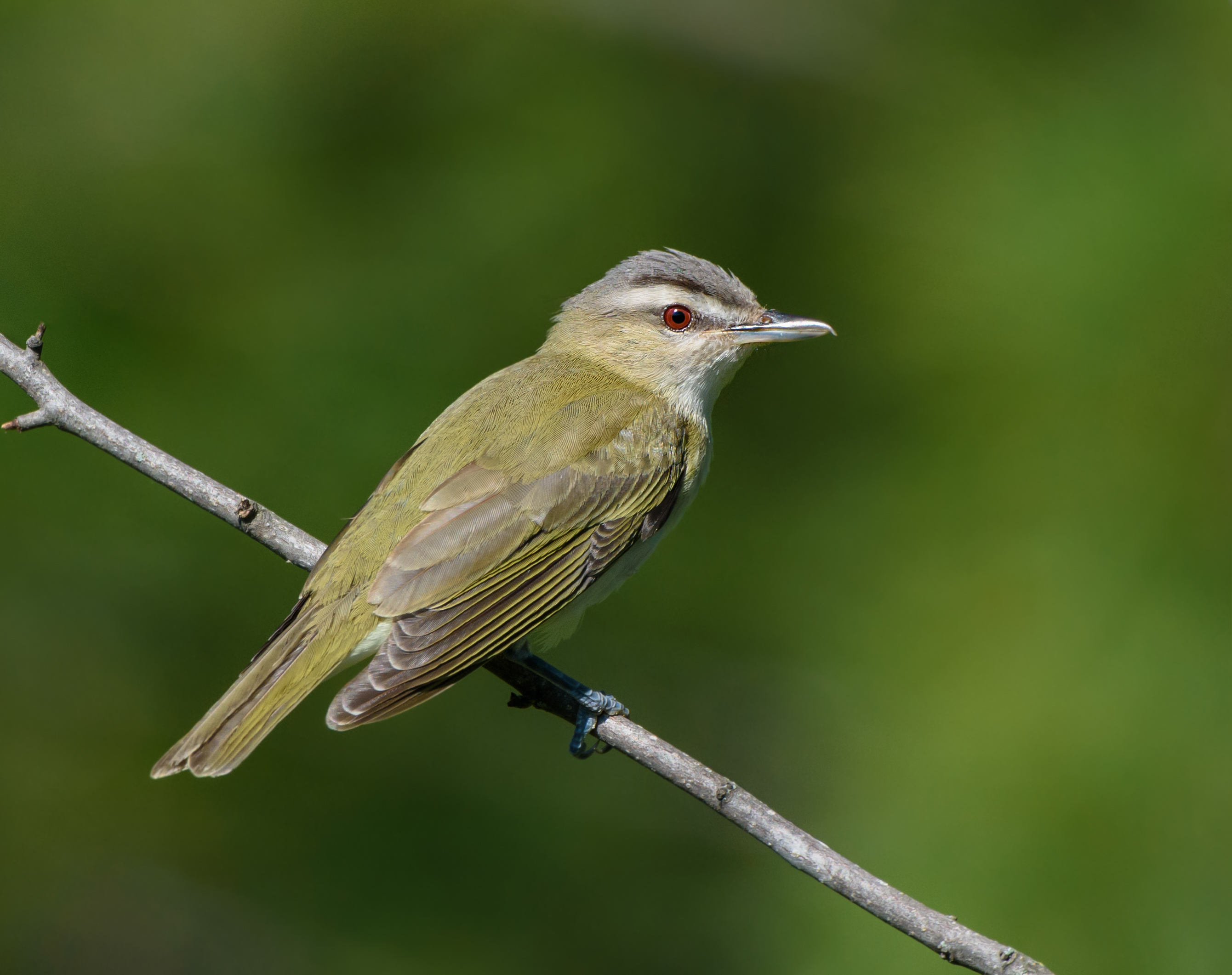
White-eyed Vireo, 2; Yellow-throated Vireo, 2; Blue-headed Vireo, 20; Red-eyed Vireo, 15; Blue Jay; 329; American Crow, 376; and Common Raven; 26.
Purple Martin, 1; Tree Swallow, 163; Barn Swallow, 1; Carolina Chickadee, 152; Tufted Titmouse, 124; Red-breasted Nuthatch, 12; and White-breasted Nuthatch, 36.

mockingbird-nov11

Photo by Bryan Stevens                                                 A total of 54 Northern Mockingbirds, Tennessee’s official state bird, was found on the count.

Brown Creeper, 5; House Wren, 3; Carolina Wren, 139; Blue-gray Gnatcatcher, 2; Golden-crowned Kinglet, 23; and Ruby-crowned Kinglet, 5.
Eastern Bluebird, 91; Veery, 4; Gray-cheeked Thrush, 6; Swainson’s Thrush, 89; Hermit Thrush, 1; Wood Thrush, 16; American Robin, 343, Gray Catbird, 48; Brown Thrasher, 14; and Northern Mockingbird, 54.

crossbills

Photo by Bryan Stevens                                    Red Crossbills were among the finches tallied on this year’s Fall Bird Count.

European Starling, 426; Cedar Waxwing, 506; Ovenbird, 4; Worm-eating Warbler, 1; Northern Waterthrush, 1; Black-and-white Warbler, 4; Tennessee Warbler, 12; Orange-crowned Warbler, 1; Common Yellowthroat, 10; Hooded Warbler, 4; American Redstart, 13; Cape May Warbler, 7; Northern Parula, 3; Magnolia Warbler, 11; Bay-breasted Warbler, 6; Blackburnian Warbler, 3; Chestnut-sided Warbler, 2; Black-throated Blue Warbler, 3; Palm Warbler, 16; Pine Warbler, 11; Yellow-rumped Warbler, 2; Yellow-throated Warbler, 2; Prairie Warbler, 1; and Black-throated Green Warbler, 8.
Eastern Towhee, 65; Chipping Sparrow, 24; Field Sparrow, 11; Song Sparrow, 83; Dark-eyed Junco, 95; Summer Tanager, 2; Scarlet Tanager, 15; Northern Cardinal, 138, Rose-breasted Grosbeak, 43; and Indigo Bunting, 13.
Red-winged Blackbird, 61; Eastern Meadowlark, 10; Common Grackle, 156; House Finch, 51; Red Crossbill, 2; Pine Siskin, 10; American Goldfinch, 231; and House Sparrow, 38.

••••••
The season’s first White-throated Sparrow showed up at my home on Oct. 30. I’m hopeful that the sparrow is but the first of many new arrivals ahead of the winter season. To share a sighting, ask a question or make a comment, send an email to ahoodedwarbler@aol.com.

Winter birds bring their own winning ways to region as weather turns colder

Erwin resident Don Dutton called me recently to ask about hummingbirds. He hasn’t seen many this past summer season, but as I told him, their numbers fluctuate from year to year. Most of the ruby-throated hummingbirds have now departed the region. I did encourage him to keep his sugar water feeders hanging as fall gets closer to the colder weather of winter. You never know when a rufous hummingbird or other western species might stray into Northeast Tennessee.

rufous-oct13

Photo by Bryan Stevens                                                           A young male Rufous Hummingbird at my feeder in Hampton, Tennessee, on Oct. 13.

In fact, I’ve been visited twice since the first of October by a young male rufous hummingbird. It’s easy to tell the rufous from the ruby-throated hummingbird. The rufous shows a great deal of brown/rufous coloration in its plumage. The bird at my feeders visited on Oct. 7 and again on Oct. 13. I’m very hopeful the bird will linger for a spell. I am asking anyone who sees a hummingbird in the coming weeks to let me know by sending an email to ahoodedwarbler@aol.com.

••••••

evening_grossbeak_on_feeder

Photo by U.S. Fish and Wildlife Service/George Gentry An evening grosbeak, the largest of the winter finches that stage occasional irruptions southward in search of food, visits a feeder. Could this be the year these colorful birds return to the Southern Appalachians?

With October already halfway completed, it’s time to stop lamenting the end of summer and brace for another winter. The cold season brings an entirely new range of birds to the region for our viewing enjoyment. If nothing else, winter birds provide a tremendous morale boost to help us overcome the occasional gloom of the winter season. There’s nothing quite as entertaining as watching a large, boisterous flock of birds like evening grosbeaks or pine siskins at your feeders.

So, some of our favorite summer birds have flown south. We’ll miss them, but we will see them again next spring. In the meantime, winter offers its own bird diversity.

Here are some of the types of birds to enjoy as the weather outdoors becomes colder.
Ducks and other waterfowl. The U.S. Fish and Wildlife Service conducts yearly surveys of the breeding success of native ducks. In cooperation with the Canadian Wildlife Service, this year’s survey has some mixed news for those birders eager to observe ducks later this fall and in the winter at area lakes, rivers and ponds. Im love to check the pond at Erwin Fishery Park and the ponds along the linear trail for visiting waterfowl once the weather turns colder. The figures from the report came from surveys conducted in May and early June.
Overall duck numbers in the survey area are statistically similar to last year and remain steady. Total populations were estimated at 48.4 million breeding ducks in the traditional survey area, which is 38 percent above the 1955-2015 long-term average.

canvasback-trio

Photo by Bryan Stevens A trio of Canvasbacks on the Watauga River in Elizabethton, Tennessee.

Last year’s estimate was 49.5 million birds. The projected mallard fall flight index is 13.5 million birds, similar to the 2015 estimate of 13.8 million.
American wigeon, green-winged teal and redhead are two ducks that are expected to show an increase in numbers.
Unfortunately, some other species showed declines, including Northern shoveler and canvasback.

Siskin-Yellow

Photo by Bryan Stevens                             Northern finches, such as this Pine Siskin, may come south in large numbers.

Other waterfowl that could join the annual migration of ducks include everything from loons and grebes to geese and cormorants.
Northern finches. Reports from the Northeastern United States indicate that the cone crop — a vital food source for a variety of songbirds —has been extremely poor. Reports from Canada indicate more of the same, which could result in a variety of the so-called Northern finches — pine siskin, common redpoll, purple finch, red crossbill, white-winged crossbill and evening grosbeak — heading south in massive numbers as they seek out alternative food sources.
I’d be thrilled to see flocks of common redpolls or evening grosbeaks at my feeders, although the more likely visitors are probably pine siskins and purple finches. I haven’t hosted evening grosbeaks at my feeders since the late 1990s. In fact, I haven’t seen an evening grosbeak since 2000. Perhaps this will be the year these large, colorful and energetic finches overwhelm our feeders once again.
The coming winter could be a very interesting one for birders. Keep your eyes open and your binoculars handy.
Sparrows. Although we have a few sparrows in our yards and gardens during the spring and summer, this group of birds often referred to as LBBs, or Little Brown Birds, really comes into its own during the winter season.
Some of the sparrows that may come to feeders during the colder months of the year include white-throated sparrow, white-crowned sparrow, swamp sparrow, field sparrow, and fox sparrow. Technically, even the Eastern towhee and dark-eyed junco are members of the sparrow family, although they lack names containing the word “sparrow.”
Many of the sparrows prefer yards offering dense cover, such as hedges, brush piles or evergreen trees.

Red-breastedNuthatch

Photo by Bryan Stevens         Red-breasted Nuthatches are already showing up at feeders throughout the Southern Appalachians.

If you enjoy a challenge, set yourself the task of learning the subtle differences between some of our native sparrows.
Nuthatches and woodpeckers. Although the woodpeckers are present throughout the year, it’s often easier to observe these “tree-huggers” once the leaves are off the trees.
A couple of species, including the red-breasted nuthatch, red-headed woodpecker and yellow-bellied sapsucker, are migratory birds with numbers that fluctuate from year to year.
I’m learning about reports that elevated numbers of red-breasted nuthatches are already winging their way south. These tiny birds with their “yank, yank” calls are immensely entertaining at feeders. They love sunflower seeds and peanuts, so make sure you have plenty of their favorites ready and waiting for them.

Arduous migration journeys by some birds represent wondrous natural achievements

grosbeak-photo

Photo by Bryan Stevens                                                          This rose-breasted grosbeak struck a window Monday, Oct. 3, during fall migration. Although this bird rested and later recovered, many birds are felled by similar perils and obstacles as they migrate south each fall.

A stunned rose-breasted grosbeak recuperating on the front porch on Oct. 3 provided a reminder that migrating birds face a variety of perils and obstacles as they wing their way back south. Now that we’re into October, many of the birds of summer — orioles, tanagers, warblers and hummingbirds — are becoming scarce in our yards and gardens. These neotropical migrants are temporary visitors, remaining in North America only long enough to nest and raise young before they take to the wing to return to more tropical regions for the winter months that will grip their summer home in snow and ice for several months.

Some of these birds migrate out of the tropics to avoid competition. Others find North America a land of abundant, albeit temporary, resources. This land of plenty offers a wealth of insects, seeds, fruit and other nourishing, nutritious food to help parent birds keep their strength while they work to ensure their young thrive. The phenomenon of migration isn’t exclusive to the neotropical migrants of the New World. Birds in other parts of the world migrate, too.

rubythroated_hummingbird

Photo by U.S. Fish & Wildlife Service                 The tiny ruby-throated hummingbird crosses the Gulf of Mexico twice yearly to migrate from Central America to North America in the spring and back again in the fall.

The Arctic tern, for example, truly takes migration to extremes. This small seabird travels each year from its Arctic nesting grounds to the Antarctic region, where it spends the winter months. Put into terms of mileage, the Arctic tern can travel about 50,000 miles in a single year. For a bird with a body length of about 15 inches and a wingspan of about 28 inches, this incredible migration is an astonishing feat.

The ruby-throated hummingbird, a favorite of many bird enthusiasts living in the eastern United States, makes an impressive migration each year. Just to reach the United States, these tiny birds undertake a strenuous journey. They leave their wintering grounds in Central America to return to the United States and Canada for the nesting season. Most of these tiny birds, which are barely four inches long, make a non-stop flight of more than 500 miles across the Gulf of Mexico. The journey can take almost an entire day! With the end of summer, the entire population of ruby-throated hummingbirds, increased by a new generation of young birds, makes the Gulf crossing for a second time in a year to return to the American tropics for the winter months.

The broad-winged hawk, a raptor found in the region during the summer, makes a fall migration back to South America every fall that astonishes human onlookers who gather along mountain peaks to witness the spectacle. The hawks form large flocks, also called kettles, that can number thousands of birds.

bartailed_godwit_on_tundra

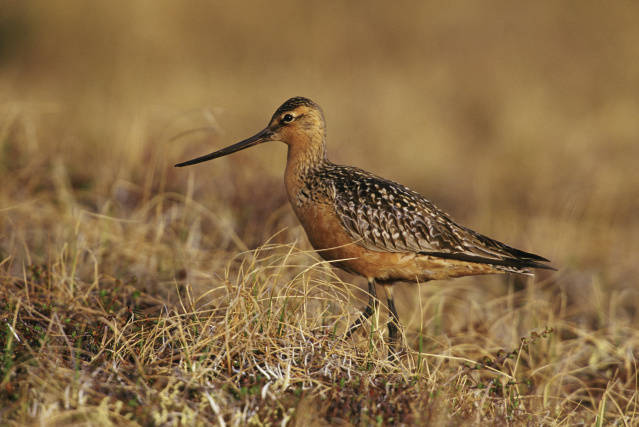
Photo by U.S. Fish & Wildlife Service/Steve Maslowski The bar-tailed godwit stages migrations that can take nine days of non-stop flight spanning nearly 6,000 miles.

Shorebirds, which in North America can consist of birds ranging from plovers and godwits to dowitchers and avocets, are champion migrants. The bar-tailed godwit makes an even more impressive non-stop migratory flight. This shorebird nests in parts of Scandinavia, northern Asia and Alaska. Some of these godwits make a nine-day non-stop migratory flight that takes them from New Zealand to the Yellow Sea of China, a distance of almost 6,000 miles. Needless to say, since the godwits make no stops along the way, they must also go without food for the duration of their journey.

Most of the warblers that nest in North America retreat to Central and South America during the winter months. Few warblers, however, make as great a journey as the blackpoll warbler. Instead of migrating over land, this five-inch-long warbler undertakes a two-stage migration. The first half of the migration is a non-stop flight of about 1,500 miles. Every fall, these tiny birds fly over the ocean during this part of their migration, departing from Canada or the northern United States and not stopping until they reach various locations in the Caribbean. There they will spend some time recovering from the exhausting first half of their journey before they continue their way to such South American countries as Colombia and Venezuela. Once again, during the time they spend flying over open ocean, these tiny warblers do not feed.

Even birds that cannot fly undertake migrations. For instance, flightless penguins swim hundreds or thousands of miles to reach preferred ranges for feeding or nesting. The Australian emu, a smaller relative of the ostrich, makes seasonal migrations on foot to ensure access to abundant food supplies at all seasons.

arctic_tern

Photo by U.S. Fish & Wildlife Service/Kirk Rogers         The Arctic tern’s migration, which takes it from the Arctic to the Antarctic, keeps this small seabird in the sky for about 50,000 miles each year.

Birds are not even the only animals to migrate. Many creatures, from whales and wildebeest to dragonflies and butterflies, impress humans with their endurance as they stage regular migrations.
Even as some of our summer favorites depart, we should prepare to welcome back some winter favorites, including dark-eyed juncos, yellow-rumped warblers, white-throated sparrows and yellow-bellied sapsuckers. Fall is indeed a time of departure for many birds, but it’s also a time to make new friends with the other birds that should soon start arriving in our yards and gardens.
As for the rose-breasted grosbeak on the porch, that story had a happy ending. After taking some time to recover after apparently striking a window, the bird hopped around the porch for a moment and then took wing and flew to nearby hawthorn trees. The bird’s flight — strong and straight — delighted me. The grosbeak could have been badly injured or even killed. I wished it the best for the remainder of its journey.

•••••

I’m dedicating this week’s column to the memory of J. Wallace Coffey, a great birder and wonderful individual who died Tuesday, Sept. 27. I met Wallace, a native of Bristol, Tennessee, back in the late 1990s. He introduced me to some wonderful birding destinations in the region, including such Virginia locations as Burke’s Garden, Steele Creek Park in Bristol, the wetlands of Saltville and Musick’s Campground on Holston Lake. Wallace was a tireless promoter of birds, birding and birders, and he loved to encourage young people to explore nature. He was also a great leader for the Bristol Bird Club, as well as the Elizabethton Bird Club. He will be greatly missed.
•••••

Bryan Stevens lives near Roan Mountain, Tennessee. To learn more about birds and other topics from the natural world, friend Stevens on Facebook at https://www.facebook.com/ahoodedwarbler. He is always posting about local birds, wildlife, flowers, insects and much more. If you have a question, wish to make a comment or share a sighting, email ahoodedwarbler@aol.com.

Summer’s bright American goldfinches will soon transform into their dull winter plumage

goldfinch-thistlefeed

Photo by Bryan Stevens                            An American goldfinch feeds on thistle seeds from a feeder designed to contain these tiny seeds.

I received a phone call recently from Allan Vance, who had a question about American goldfinches. Allan told me he moved back to Bristol about nine years ago after living for about 30 years in Savannah, Georgia. He now resides in the community of Middlebrook, where he feeds the various birds that flock to his yard.

Allan explained that the goldfinches had become conspicuous in their absence from his yard starting a few weeks ago. “I haven’t seen a single one in weeks,” he said.

1451693-center-1

A thistle sock with seeds favored by American goldfinches.

Allan purchases thistle socks for the flock of goldfinches at his home. These “socks” are actually long, mesh bags holding the tiny seeds of the nyjer plant. Although these seeds are also known as thistle seeds, they are not related to the thistle plants that are sometimes classified as noxious weeds. Finches are able to cling to the sides of the mesh socks as they carefully remove the seeds. The tiny seeds are quite securely held within the mesh socks. Special feeders with small ports for dispensing of these tiny seeds are also available.

After he purchased his most recent thistle sock, Allan expected the birds to visit it as is their usual custom.     After several weeks, only one bird — not a goldfinch — had visited the sock. He wondered if there might be some explanation behind the goldfinches suddenly turning their backs on these favorite seeds.

I explained that there were two possible reasons, which are somewhat connected to each other, for the goldfinches suddenly shunning the sock. It’s early fall and there’s an abundance of natural food sources available to fold finches. Many roadside, fields and gardens are filled with plants that are already producing a banquet of fresh seeds for finches and other seed-loving birds. It’s possible that, faced with a smorgasbord of other foods, the goldfinches are no longer quite as reliant on the seeds in Allan’s thistle socks.

goldfinch

Photo by Bryan Stevens                                    An American goldfinch showing its bright summer plumage.

The American goldfinch is also one of the last songbirds to nest each season. Some goldfinches don’t even start to think about nesting until late July and early August. Their nesting season is timed to coincide with a time of natural abundance. Goldfinches feed their young mostly on insects, as opposed to most songbirds that work so hard to gather insects to feed their young a protein-rich diet.

It’s a satisfying irony that, although brown-headed cowbird females sometimes slip their eggs into a goldfinch nest, any young hatched in those nests rarely survive. While goldfinch hatchlings are adapted to thrive on a diet of seeds, the fostered young cowbirds fail to thrive on a diet so lacking in insects.

In addition to feeding birds, his yard serves as a place for them to nest. He noted that wrens have successfully nested at his home over the years. He said a funny memory from years ago involved a white-tailed deer at a feeder. “I saw this doe raiding my feeder,” he said, adding that the deer used its tongue to lick seeds from the feeder.

goldfinch-twigs

Photo by Bryan Stevens                                        A fall American goldfinch looks quite different than it does at the height of summer.

The male American goldfinch during the breeding season is unmistakable in his bright yellow and black plumage. Female goldfinches are more subdued in coloration. Males also sing a bubbly, cheerful song when seeking to win the attention of a potential mate. Outside of the nesting season, goldfinches are quite sociable and form large flocks. Dozens of these small songbirds can descend on feeders at almost any time of the year, but they are primarily attracted to our feeders during the lean times of the winter months.

For these and other reasons, goldfinches are favorites of many bird lovers. There are actually three species of goldfinches in North America. The two related species are Lawrence’s goldfinch of California and the lesser goldfinch, which ranges through the southwestern United States as well as Central and South America.

summer-goldfinch

Photo by Bryan Stevens                                            A male American Goldfinch perches on a barbed wire fence.

The American goldfinch is also known by other common names, including wild canary, yellowbird and willow goldfinch. I’ve also heard the goldfinch referred to as “lettuce bird.” This nickname, which was one my maternal grandmother applied to the bird, relates to the bird’s fondness for seeds. Apparently the goldfinches would flock to lettuce plants in the garden once they had gone to seed.

Come winter, this vibrant bird undergoes a transformation into a dull, drab bird with grayish feather. In fact, this annual molt usually begins in September. During the fall and winter, the American goldfinch looks almost like an entirely different bird.

It’s understandable why people love to entertain flocks of these finches in their yards and gardens. Three states — Washington, Iowa and New Jersey — have made the American goldfinch their official state bird.

•••••

To learn more about birds and other topics from the natural world, friend Stevens on Facebook at https://www.facebook.com/ahoodedwarbler. He is always posting about local birds, wildlife, flowers, insects and much more. If you have a question, wish to make a comment or share a sighting, email ahoodedwarbler@aol.com.

goldfinches-iced

Photo by Bryan Stevens                                                                                                                  Winter goldfinches are not the birds of splendid appearance that they wear during the summer months.