Tag Archives: nature

Buffleheads among delightful winter surprises in region

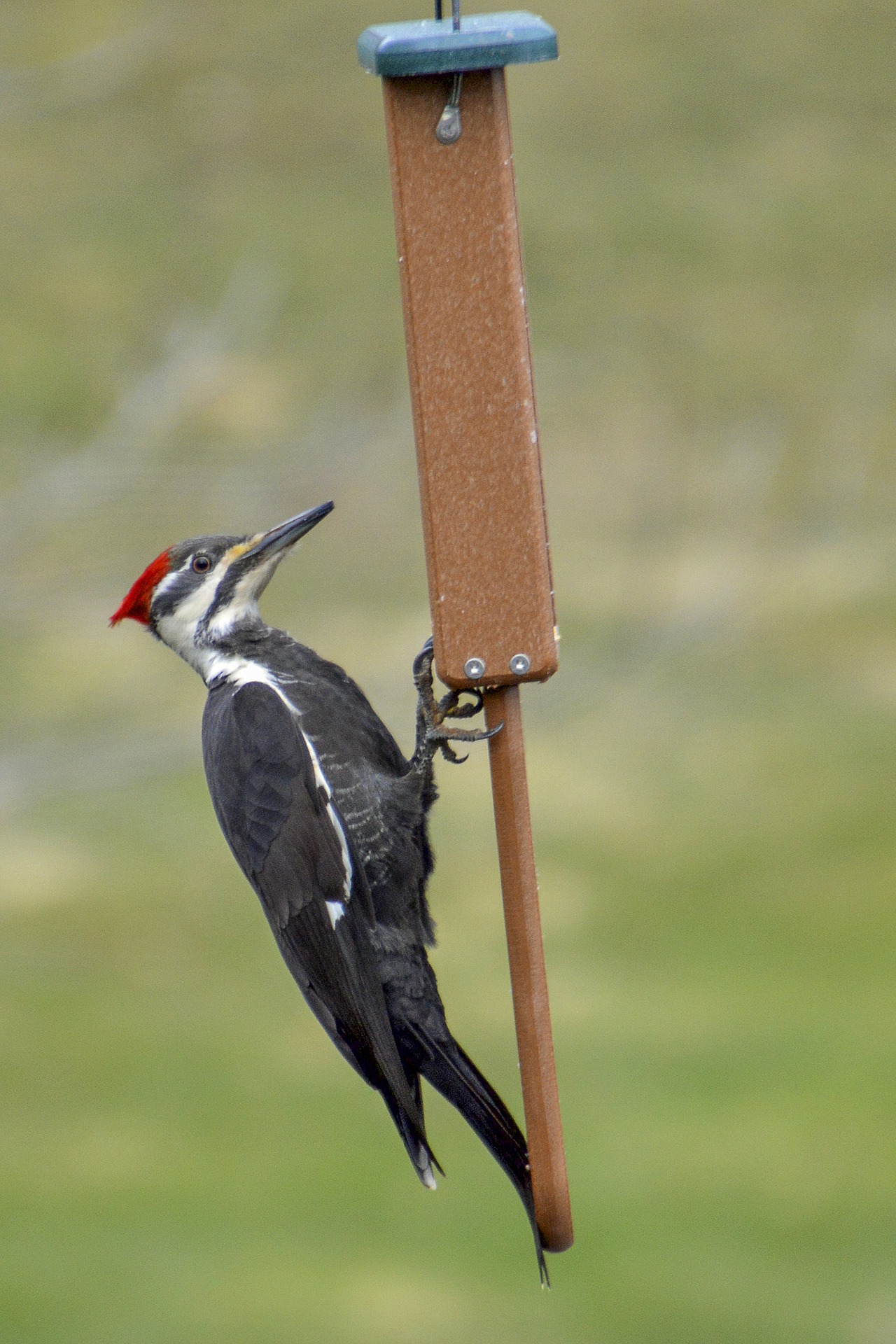
Marion Howe sent me a stunning photograph of an impressive visitor at her feeders. Shortly after I wrote about Pileated Woodpeckers a few weeks ago, Marion sent me a photo of a Pileated Woodpecker at her suet feeder.

Photo by Marion Howe • This Pileated Woodpecker visited the home of Marion Howe in Kingsport, Tennessee..

“Although I now live in Bristol, I previously lived in Kingsport where I had the pleasure to watch a multitude of birds in my yard, including this one,” Marion wrote. “What a treat when she decided to stop by for a bite to eat!”

Away from our backyard feeders, what sort of birds can one expect to find during the late winter and early spring in northeast Tennessee?

If you’re ready to look a little farther afield, the region offers some great locations for searching for wintering and migrating waterfowl. A variety of ducks and geese pass through the region in late fall and winter. A few species stop to spend the season on area lakes and rivers.

Wilbur Lake in Carter County offers one of the largest wintering populations of Bufflehead in the entire region, if not the state.

Photo by Bryan Stevens • Lingering waterfowl, such as these buffleheads, are found in the region in winter and spring.

The Bufflehead belongs to the genus Bucephala, which also includes Common Goldeneye and Barrow’s Goldeneye. These three ducks are all small tree-hole nesting sea ducks found exclusively in the Northern Hemisphere.

The “sea duck” family consists of several other types of ducks, including scoters, mergansers and eiders. All but two of the 20 species in this grouping occur only in the Northern Hemisphere. Most of the sea ducks, not surprisingly, are adapted to life in salt-water environments.

The Bufflehead stands out from its fellow sea ducks for many reasons. The breeding habitat of this little duck consists of wooded lakes and ponds in Alaska and Canada, almost entirely within the boreal forest, or taiga, habitat. In the winter months, Buffleheads migrate to quiet bays or open inland lakes on both the eastern and western coasts of North America, as well as the southern United States as far as southern Florida and the Gulf of Mexico.

Photo by bryanhanson1956/Pixabay.com • A pair of Buffleheads enjoy a swim together.

Wilbur Lake has hosted a winter population of Buffleheads for decades. This small duck usually arrives in the final days of October and a few will remain until late April or early May. The flock at Wilbur ranges from about 100 to 200 individuals.

There’s another flock of Buffleheads that spends the winter at Osceola Island Recreation Area in the tailwaters below South Holston Dam in Sullivan County. A one-mile recreational trail at this location offers views of the waterways and any waterfowl congregated on them. The Buffleheads usually remain close to the weir dams at this location. Other wintering ducks at this area include American Wigeon, Mallard and Ring-necked Duck.

Carter County’s high-elevation Ripshin Lake often hosts wintering Buffleheads, but usually only a few individuals are present for as long as this small lake remains unfrozen.

The Bufflehead’s name is derived from “Buffalo Head,” which refers to this small duck’s oversized head. Male Buffleheads have a large, white patch across the back of the head that extends from cheek to cheek, forming a bushy crest that gives the head its large appearance. From a distance, the remainder of the head looks blackish, but when viewed from close range in good light the black plumage in the head shows an iridescent green and purple sheen. The back and rump are black, but the rest of the body is glossy white. The black-and-white pattern is quite unique, making a male Bufflehead impossible to mistake for any other bird. The male’s bill is blue-gray and his legs and feet are pink.

Female Buffleheads are brownish-gray, except for an oval white patch that extends from below the eye back towards the nape of the neck. The belly is whitish, and the female’s bill is dark gray and her legs and feet are grayish.

The Bufflehead is the smallest of North America’s diving ducks. One of the dabbling ducks, the Green-winged Teal, rivals the Bufflehead for the distinction as the continent’s smallest duck. The Bufflehead ranges between 12 and 16 inches long and can weigh 13 ounces. Males are larger than females. By comparison, the Green-winged Teal is usually 14 to 15 inches long and weighs 11 to 12 ounces.

Photo by Bryan Stevens • A raft of buffleheads swim on the Watauga River.

Buffleheads spend a lot of time diving for food beneath the water’s surface. Their varied diet consists of insects, crustaceans, some aquatic plants and fish eggs.

The Bufflehead depends on one of our native woodpeckers to provide nesting habitat. The Bufflehead is just the right size to fit into abandoned nesting cavities previously occupied by Northern Flickers.

I’m not sure why the Wilbur Buffleheads choose not to spend the winter months on a salt-water bay farther south, but I am very happy that some of these small, entertaining ducks are so close at hand. I suspect the woodlands around Wilbur Lake may, in fact, resemble some of the wooded lakes on this duck’s summer nesting range.

The Bufflehead is a fairly common duck and appears to be thriving. In 1992, the continent-wide breeding population was estimated at 1,390,000 birds.

Photo by Bryan Stevens • A raft of Buffleheads brave some rough waters on the Watauga River.

Flocks of red-winged blackbirds, other sightings, could signal winter’s end

Photo by JudaM/Pixabay.com • Feeders are a good way to tempt red-winged blackbirds closer for great views. Males are exceptional in their glossy black plumage with red wing patches accented by a hint of yellow. Females are brown and striped, giving them a similar appearance to large sparrows.


H. Lea Jones, Jr. of Bristol, Virginia, wrote to me after seeing my post about pileated woodpeckers a few weeks ago.

“I read with interested your story about this woodpecker,” Lea wrote in an email. “I have been keeping up feeding the birds, which both of my now deceased parents loved to watch, outside the large kitchen windows of their home which I inherited. One day, a couple of years back, while manning the chair and watching the birds, I was startled to see two of these woodpeckers hanging from my extra large suet cage. There was one on each side. Maybe a male and a female?”

Photo by Mike Dobe/Pixabay.com • A pileated woodpecker visits a suet feeder.

Lea noted that the two woodpeckers stayed at the suet for maybe 30 seconds. “I was shocked to see these huge birds and only could assume, at the time, they were woodpeckers. Just very beautiful birds!”

After a little research, Lea discovered the identity of the visitors. “And now I know the ‘sound’ in the wooded area behind the house,” Lea wrote. I had also described the sound in my post.

“Nothing like it I’d ever heard before,” Lea wrote. “Since reading your article, I now realize what a rare sight I have been blessed with. It was truly an amazing sight indeed.”

Dr. John Brenner sent me an email recently about an unexpected sighting at his home in Abingdon, Virginia, on Thursday, Feb. 13, around 5 p.m.

“I saw a Baltimore oriole in my back yard,” he reported. “It was sitting on a fence then flew over to my feeders where it walked around under them.”

He explained that he lives in the heart of Abingdon and has been living at his current address for about three and a half years. “This is the first time I have seen this bird,” he said. “I thought it was unusual.”

Photo by USFWS • Baltimore orioles, like this male, are members of the blackbird family, making them relatives of species such as Eastern meadowlarks, brown-headed cowbirds, common grackles and red-winged blackbirds.

Winter sightings of orioles are rather unusual, but they are not unheard of. The North Carolina Birds website details the emerging phenomenon of wintering orioles.

“Until the 1960s, it (Baltimore oriole) essentially did not winter in the United States, but with milder winters and people putting out oranges and peanut butter on their feeders, and not just various seeds and suet, a number of orioles started wintering from North Carolina to Florida,” according to a profile of the species. Straying into Virginia would certainly not be out of the question, although Baltimore orioles are usually expected in southwest Virginia and Northeast Tennessee from April to October.

In the last couple of weeks, large flocks of red-winged blackbirds have been making stops at my home. The largest flock numbered about 50 individual birds. Red-winged blackbirds are often considered harbingers of spring, but these birds arrived with some of the recent wintry weather that arrived in February.

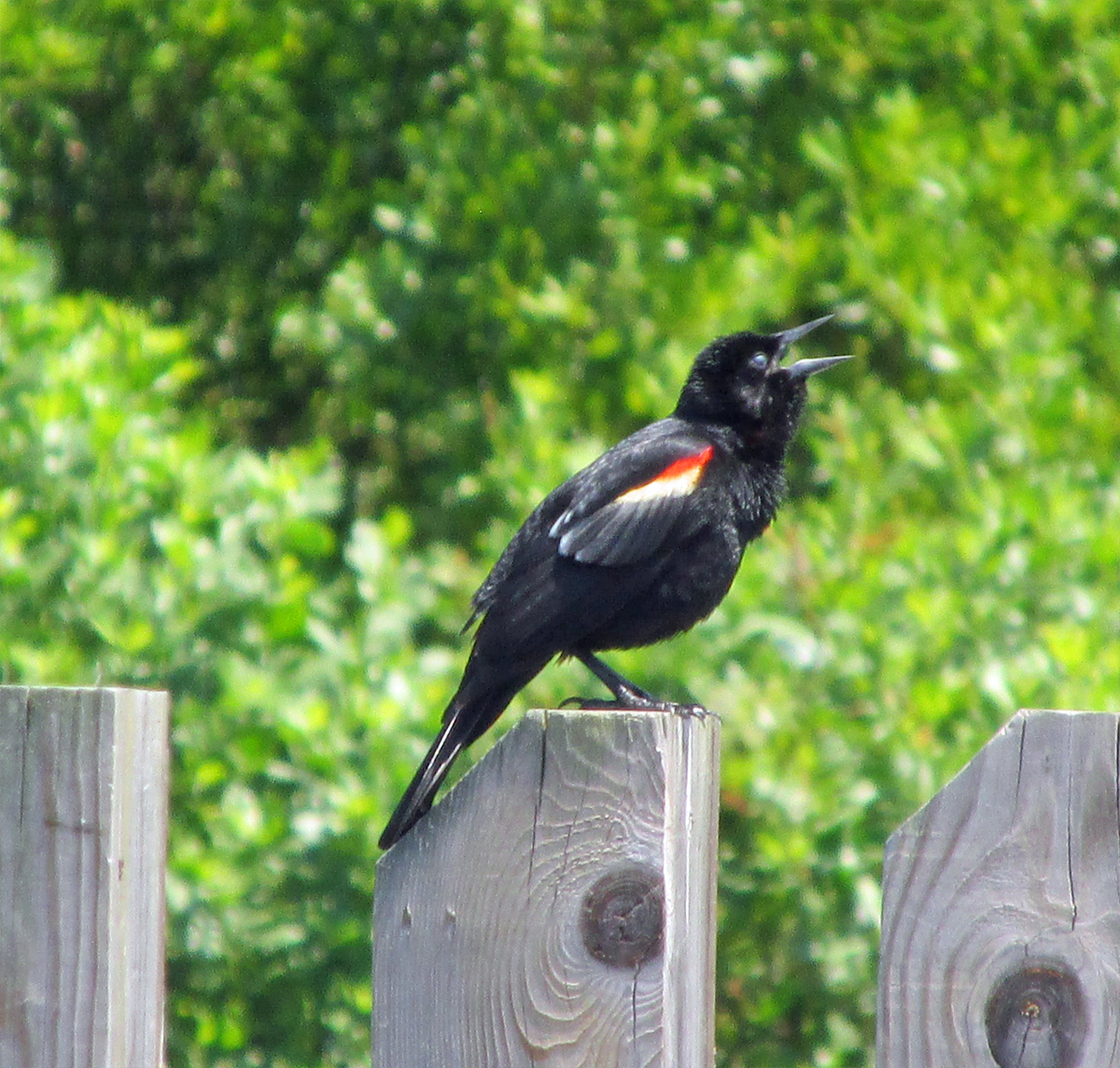
Photo by Bryan Stevens • A male red-winged blackbird sings to attract mates and ward off rivals.

I’ve long associated red-winged blackbirds with early spring. I also had a single red-winged blackbird make a one-day visit earlier in February during a snowstorm. Those February visitors are the vanguard of large numbers of red-winged blackbirds that return in impressive numbers every March. The blackbirds arriving now behave much differently than the quiet, shy ones that often make brief visits to feeders during late winter snowstorms.

The showy and loud red-winged blackbirds made themselves at home at my fish pond and adjacent stands of cattails, producing quite a commotion. “The kon-ke-ree song of the male red-winged blackbird is a sure indication that spring is on the way,” according to a profile of the species located at the Tennessee Watchable Wildlife website. At this time of year, the male red-winged blackbirds seek elevated perches to display and vocalize.

The male red-winged blackbirds is a very aptly named bird. Glossy black males sport red wing patches that are often trimmed with a narrow band of yellow feathers. By contrast, female red-winged blackbirds are mostly brown birds that could easily be mistaken for large sparrows. Both sexes have sharply pointed bills.

Photo by Bryan Stevens • Red-winged blackbirds arrive as a noisy flock on a wintry February evening.

After I posted on Facebook about the sightings of the red-winged blackbird flocks, Rita Schuettler, a fan of these birds and a resident of Elizabethton, Tennessee, asked whether these flocks were unseasonably early.

Photo by Lintow/Pixabay.com • Female red-winged blackbirds could easily be mistaken for a large sparrow.

I told Rita in a subsequent post that a friend in Atlanta has informed me that he began seeing the blackbird flocks in his neighborhood a couple of weeks ago. So they are right on time for make their appearance in Northeast Tennessee. Laura Evans Barden also posted on my Facebook page that she has been seeing red-winged blackbirds in recent weeks, as well as more common grackles and European starlings.

Red-winged blackbirds are fond of wetlands. Any marsh, damp field or flooded pasture is likely to attract a few resident red-winged blackbirds. Females choose nesting locations in cattails or other marsh vegetation. She usually lays three or four eggs. Although she does receive some help from the male, most of the responsibility for raising the young is left to her.

There is a reason that male red-winged blackbirds are not always quite as engaged in feeding and tending their young. Male red-winged blackbirds are often polygynous, which means that males will often court multiple mates. His time is often occupied defending females and their respective nests from the advances of other male red-winged blackbirds.

Other relatives of the red-winged blackbird in the United States include the tricolored blackbird found along the Pacific Coast and the yellow-headed blackbird resident in wetlands west of the Great Lakes. Rusty blackbird, common grackle and brown-headed cowbird are other species of blackbirds found in Tennessee, Virginia and North Carolina.

Photo by Bryan Stevens  • This yellow-headed blackbird was photographed at Antelope Island State Park in Utah in 2006.

People report American robins lingering this winter

Photo by fotocitizen/Pixabay.com • An American robin fluffs its feathers to stay warm on a cold, wintry day. While the robin is a migratory bird, it’s not unusual for many individuals to forego migration in order to stay on their nesting range the whole year.

A stroll on some walking trails through the woods on Jan. 11 near my home resulted in my first 2020 observation of American robins. The presence of robins during the winter can be a hit-or-miss affair. After I posted my sighting on Facebook, I received plenty of anecdotal evidence to support my belief that many robins decided to skip migration this past fall and spend the winter in the region.

Jennifer Bauer, park superintendent for Sycamore Shoals State Historic Park in Elizabethton, Tennessee, posted that she saw a flock of about 25 robins at the park on Jan. 10.

Anne Powell Cowan, a resident of Bristol, Tennessee, commented that she has seen robins in Bristol all winter. “They never left,” Anne wrote in her comment. “We also have a red-headed woodpecker at our farm in Sullivan County.”

Betty Lacy in Elizabethton, Tennessee, posted that she is hosting a “swarm” of robins. “They love my tall hemlock hedges,” Betty wrote. “I know there was well over 100 of them. They have made little openings all over the hedge where they go in and out!”

Photo by Bryan Stevens •  American robins, prominent in lawns and gardens during their annual spring migration, will turn their attention to nesting duties as soon as spring arrives. For now, some are content to spend the cold winter season a little farther north than some of their kin.

Vivian Hicks has noticed plenty of robins, too. “Robins have been hopping around and feeding in my yard in Southwest Virginia,” Vivian posted.

Mimi Hale has noticed the same in Elizabethton, Tennessee. “Robins have been all over my yard for the last several weeks,” she commented on my post.

Dawn Peters, who resides in Jonesborough, Tennessee, posted that robins have been present at her home since before Christmas.

Gloria Walton Blevins in Damascus, Virginia, also indicated the robins haven’t flown south. “They have been in Damascus all winter,” Gloria commented.

Teresa Treadway in Elizabethton, Tennessee, offered a humorous take on the abundance of robins. “Mine were so confused, they never left,” Teresa posted.

It was left to Catherine Romaine Henderson of Greer, South Carolina, to leave a question on my post. “Does that mean an early spring?” Catherine wondered in reaction to this winter’s abundance of robins.

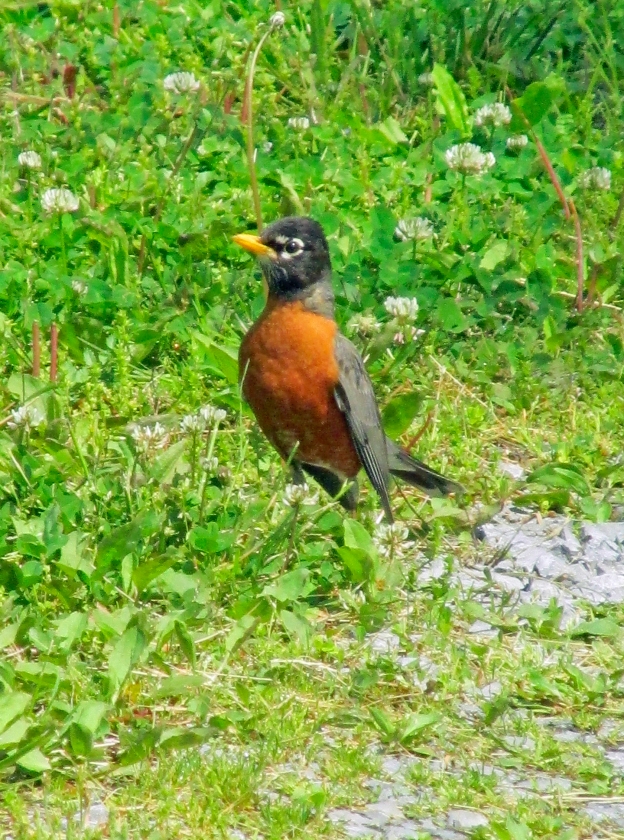
Photo by Bryan Stevens • An American robin perches on a branch. The robin is one of the best-known song birds in the United States.

The American robin is indeed widely held to be a harbinger of spring. Furthermore, the robin is a popular American bird. In fact, this bird has been designated the official state bird by Wisconsin and Michigan.

In truth, many robins forego migration to endure a few months of cold weather. Their ability to shift their diet from earthworms and insects to fruit and feeder fare helps robins eke out a living. Robins remain an abundant bird but their fondness for co-existing with humans can leave them vulnerable to pesticides applied to lawns and gardens.

According to the website, “All About Birds,” the American robin nests three times a year. On average, however, only 40 percent of robin nests succeed at fledging young. Even once out of the nest, young robins are vulnerable. The website estimates that only 25 percent of each year’s fledged robins will reach November. So, the young robins that join some of the large flocks people are seeing in the region are birds that have beaten the odds.

Photo by Bryan Stevens • Even once out of the nest, young robins, such as the one pictured here, are vulnerable. Experts estimate that only 25 percent of each year’s fledged robins will reach November.

Even the robins that do depart the region each fall don’t migrate far. Many robins that spend the summer in Canada or the United States only migrate as far as the Gulf States, southern Florida, southern California, Baja California and Mexico.

Robins are such friendly and engaging birds. If we can have them near us for 12 months of the year, who’s going to complain? They have even adapted to take food at feeders. If you’d like to try your luck at attracting robins to feeders, know that they like their sunflower seeds hulled. They will also eat mealworms, fruit, peanut hearts and suet. Robins prefer to feed on the ground or on an open platform feeder.

Photo by Bryan Stevens • While American robins like fruit when its available, they also spend a lot of time feeding on earthworms and insects.

Dreaming of winter finches flocking south

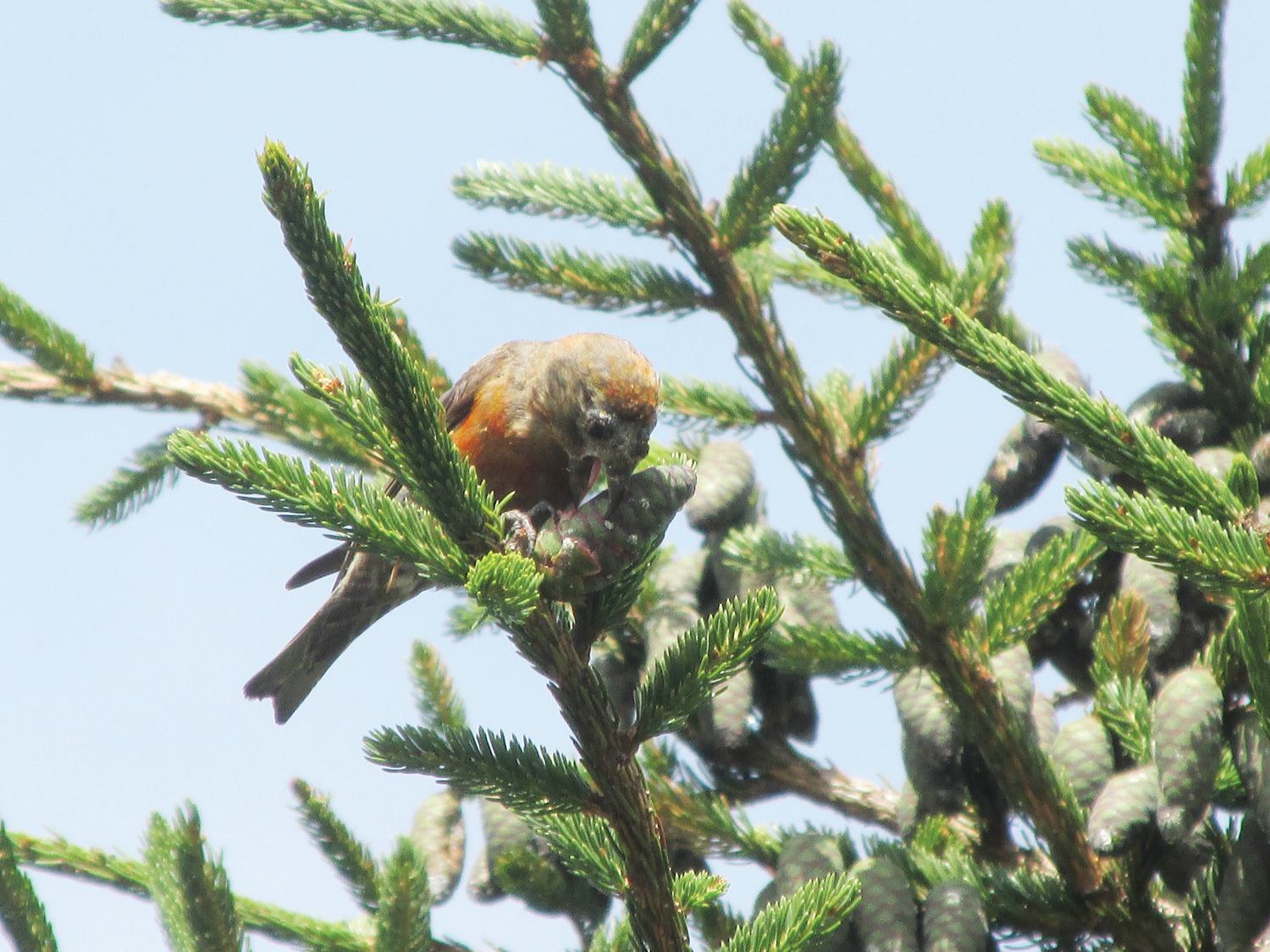
Photo by Bryan Stevens • Red crossbills use unique beaks to pry seeds from a conifer cone. These birds are among the so-called “northern finches” that occasionally stage massive winter migrations fueled by food shortages in their usual range. They are also nomadic residents throughout the year in northeast Tennessee and western North Carolina.

I recently got a shoutout on Facebook from Tom McNeil, a longtime birding friend and a neighbor here in the mountains of Northeast Tennessee. Tom asked if I’d been seeing any red crossbills on my side “of the ridge” and informed me he had been seeing these odd-beaked birds for the past couple of weeks.

I hadn’t noticed any crossbills and told him so, but I am definitely keeping alert for them after Tom’s notification. Every winter I hope my feeders will be visited by representatives of a group of birds known collectively as “northern finches.” This loose grouping consists of a half dozen species — purple finch, pine siskin, evening grosbeak, pine grosbeak, white-winged crossbill, red crossbill and common redpoll — that periodically stage irruptions from their traditional northern ranges to push south in large numbers during the colder months.

Photo by Bryan Stevens • A red crossbill uses its unique beak to pry seeds from a conifer cone. These birds are among the so-called “northern finches” that occasionally stage massive winter migrations fueled by food shortages in their usual range.

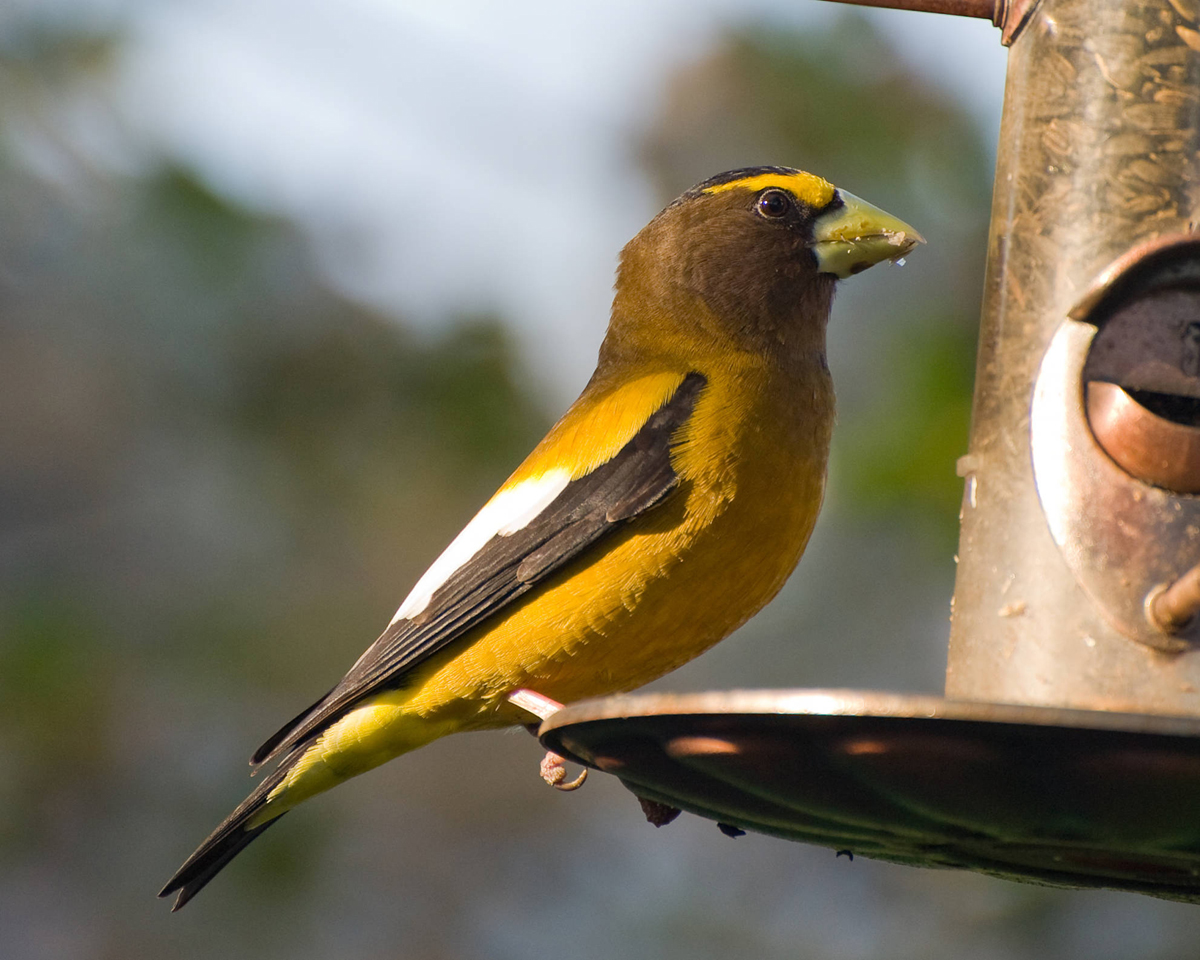
I’ve been feeding birds since the winter of 1993, and over the years, the first three species I listed have graced my feeders. Although I haven’t seen any this winter, pine siskins and purple finches have continued to be occasional winter visitors. Sadly, however, I haven’t been visited by showy evening grosbeaks since the late 1990s. The last time I saw an evening grosbeak in the region was back in 2000.

I’ve never laid eyes on a common redpoll, although I spent several hours 20 years ago staking out a yard in Shady Valley, Tennessee, in an unsuccessful bid to observe a redpoll that had been a reliable visitor at a feeder in that small community.

I have seen red crossbills, but my observations of these birds have always taken place during the summer months. Pine grosbeaks and white crossbills are almost unheard of in the region, and I haven’t had opportunity to visit the nesting summer ranges of these birds.

So, as the weather turns cold each year, hope springs eternal that perhaps this will be the winter that will bring some of these northern finches to my feeders, or at least to a feeder in the general area.

The factor that drives these irruptive northern finches to come south is food — or the lack thereof — in their usual ranges. When seed crops are poor in the north, these seed-eating birds may wander as far south as the Gulf States in search of supplemental food sources such as feeders stocked with sunflower seed.

Photo by Public Domain Photos/Pixabay.com • Crossbills and other finches often migrate in source of food.

The red crossbill is a specialist when it comes to foraging for its food. The bird uses its unique bill to open the cones of various conifers. The upper and lower mandibles of the bill are twisted in a way to make them cross when the beak is closed, hence the name “crossbill.”

Worldwide, there are only five species of crossbills — the red crossbill of North America, Asia and Europe; the parrot crossbill of northwest Europe and western Russia; the Scottish crossbill of Scotland; and the white-winged crossbill of Canada, the northern United States, including Alaska, as well as Asia and northeastern Europe. There’s also the endangered Hispaniolan crossbill of the island of Hispaniola in the Caribbean.

Photo by George Gentry/U.S. Fish & Wildlife Service • A male evening grosbeak perches on the side of a sunflower-stocked feeder.

W. Herbert Wilson Jr. wrote an article about the northern finches for the Oct-Dec. 1999 edition of “North American Bird Bander.” Wilson noted that supplemental food, such as feeder fare, can influence the migratory habits of many birds, including these finches. He cited the example of black-capped chickadees, which have been shown to demonstrate an increased chance of survival during lean winter times when they have access to feeders. He also noted that the provision of food at feeders has helped birds like the tufted titmouse, house finch and Northern cardinal extend their range northward. In part, Wilson theorized that more people are feeding birds closer to the northern climes where these birds live. As a result, the long-distance irruptions are no longer necessary to find supplemental food.

Other theories have also been advanced by other experts, including changing migratory routes, diminishing overall finch numbers and climate change. Theories aside, I will continue to hope some of these birds wing their way toward my feeders this winter. If I’m lucky, this could even be the year the evening grosbeaks return! If anyone is seeing any of these “northern finches,” I’d

love to hear about it. Contact me at ahoodedwarbler@aol.com.

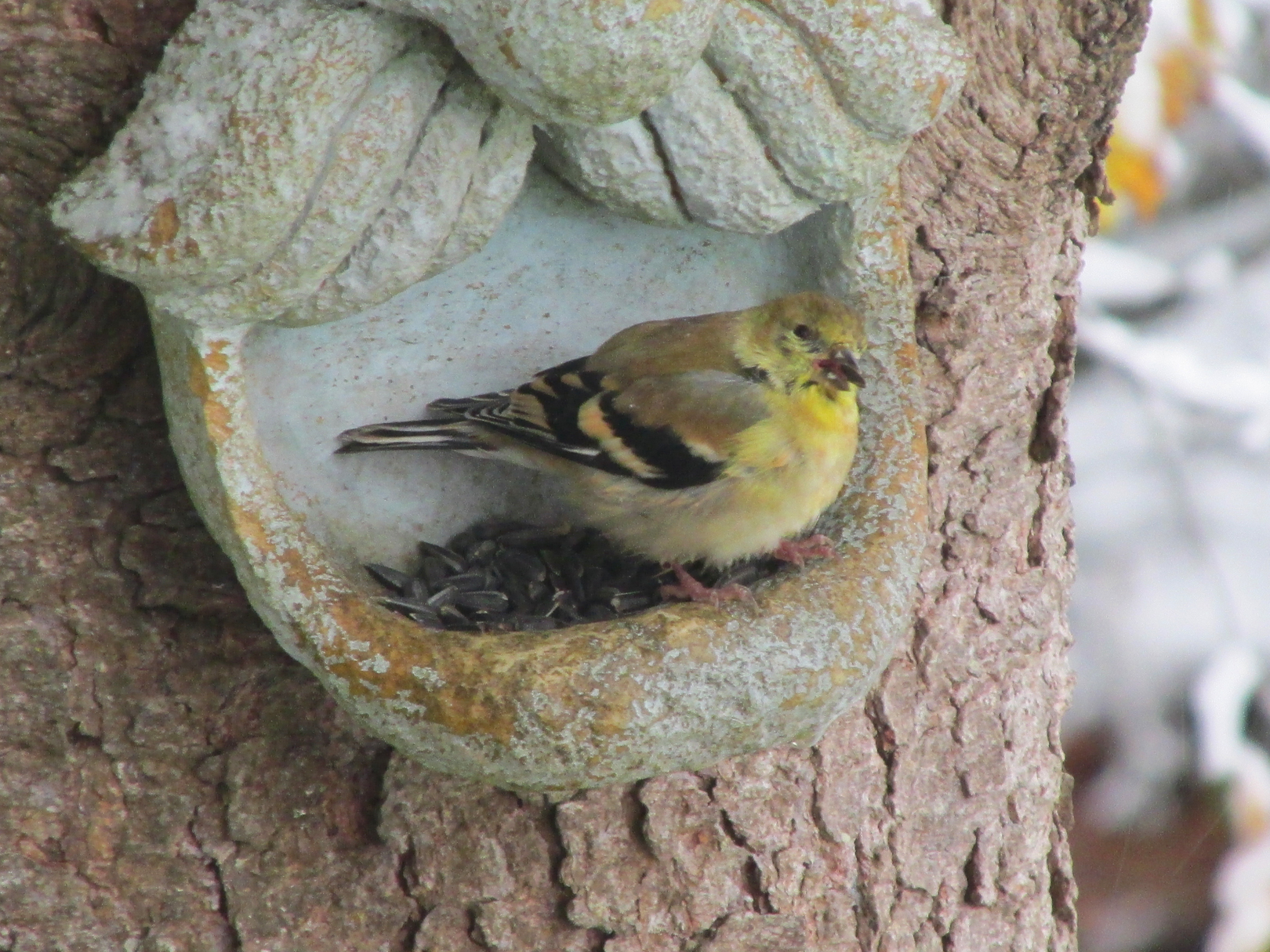
Photo by Bryan Stevens • An American goldfinch visits a feeder for sunflower seeds

Birds made news headlines in 2019

Photo by Public Domain Photos/Pixabay.com • California condors have gradually returned to parts of their range beyond California. A family of condors now resides in Zion National Park, marking a return of these birds to Utah.


Birds made headlines in 2019. Some species, having been presumed extinct, were rediscovered — some in the mostly unlikely of places. One of the major bird-related stories of the year involved a stark warning about a sharp decline in overall bird numbers. Below, in no particular order, are some of last year’s top stories about our fine feathered friends.

69 years old and a mother again

The Laysan albatross known as Wisdom and her mate, Akeakamai, became parents again in 2010. Wisdom is at least 69 years old and ranks as the world’s oldest known banded wild bird. Her mate’s name, by the way, translates as “lover of wisdom.” The chick hatched in February at Midway Atoll National Wildlife Refuge and Battle of Midway National Memorial. Wisdom has raised more than 30 chicks in her lifetime. While Laysan albatrosses are not considered endangered, some of their kin are threatened with extinction.

Photo by J. Klavitter/USFWS • Wisdom, one of Midway Atoll’s oldest residents, became a mother again in 2019. The female Laysan albatross is approaching her 70th birthday.

While walking to church

The year started with some good birding news when a bird thought extinct was rediscovered in a suburb of Medellín, Colombia, on Jan. 7, 2019. Rodolfo Correa Peña was headed to a church service when he spotted an odd bird in a garden. The bird turned out to be an Antioquia brushfinch, a bird known previously only from museum specimens. Peña, an engineering student with an interest in birding, knew the local brushfinches and recognized that the bird was different. He secured photos of the bird and stunned the scientific community with the rediscovery of a bird presumed extinct.

Photo by U.S. Fish & Wildlife Service • Endangered California condors receives some good news in 2019..

Condors soaring high

California condors continue to delight with their success stories, even extending their range beyond California. Estimates indicate that 300 condors exist in the wild with about 200 more birds in captivity for use with breeding programs. Evidence that the work to preserve the species is working was provided this year in Utah’s Zion National Park, which became home to a condor named “1K” because it is the 1,000th chick hatched as part of an extensive condor restoration program. The chick hatched in May and took a rather clumsy first flight in September. The chick represents the first condor born within Zion National Park in more than a century. In 1987, when the condor population totaled only 27 known condors, wildlife officials captured the surviving wild birds and made them part of an existing captive breeding program. In 1992, the condor recovery program started to release the birds back into the wild. There are now more condors flying free in the wild than are maintained in captivity.

Photo by Bryan Stevens
A large flock of Great Egrets flies over the Watauga River in Elizabethton. There is mounting evidence that many bird populations are on the decline.

Fewer birds?

Bird enthusiasts were shaken by the publication in September of an article warning that the number of birds in the United States and Canada has fallen by 29 percent since 1970. The analysis, published in the journal “Science,” is an extensive attempt to determine what is happening to avian populations. The results shocked — there are 2.9 billion fewer birds taking wing now than there were 50 years ago.

A painting of an Ivory-billed Woodpecker by Mark Catesby, an English naturalist.

Hope

Yet, in words penned by poet Emily Dickinson, “Hope is the thing with feathers.” Birds are among the most resilient lifeforms on the planet. If humans can get out of the way and quit making life more difficult for the feathered inhabitants of the planet, birds are more than capable of rebounding. The federal government needs to maintain safeguards and regulations that are in place to protect birds while ordinary people must alter their ways by shunning pesticides, preserving a variety of habitats and simply giving more regard to the fellow creatures they share the Earth with. If we can do these things, the birds will be fine. Don’t take my word for it. Look at the examples of Wisdom the Laysan albatross and a California condor known as “1K.”

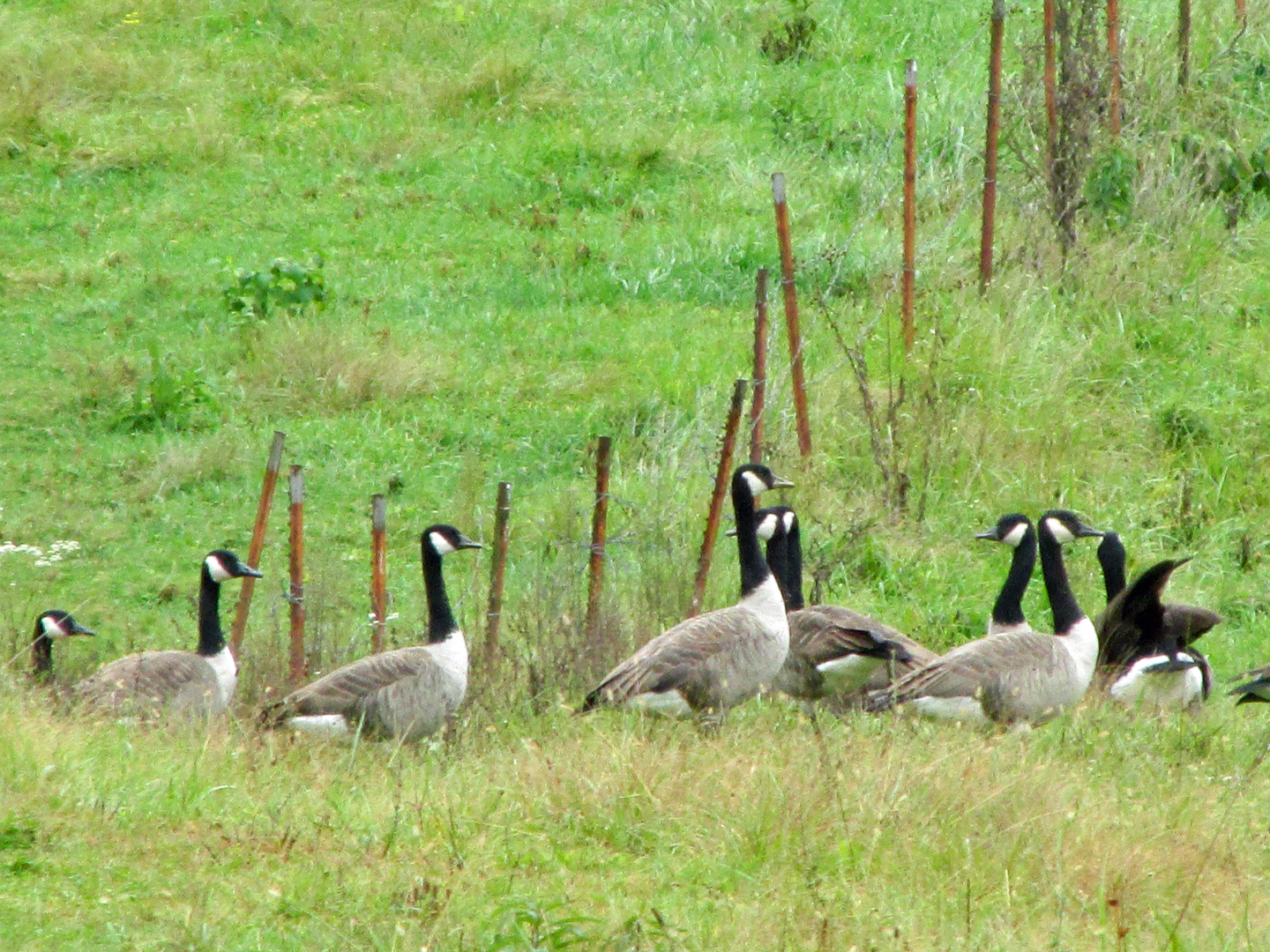
Photo by Bryan Stevens • Canada geese forage in a field in Unicoi County, Tennessee.

Egrets, snow geese sightings enliven winter birding

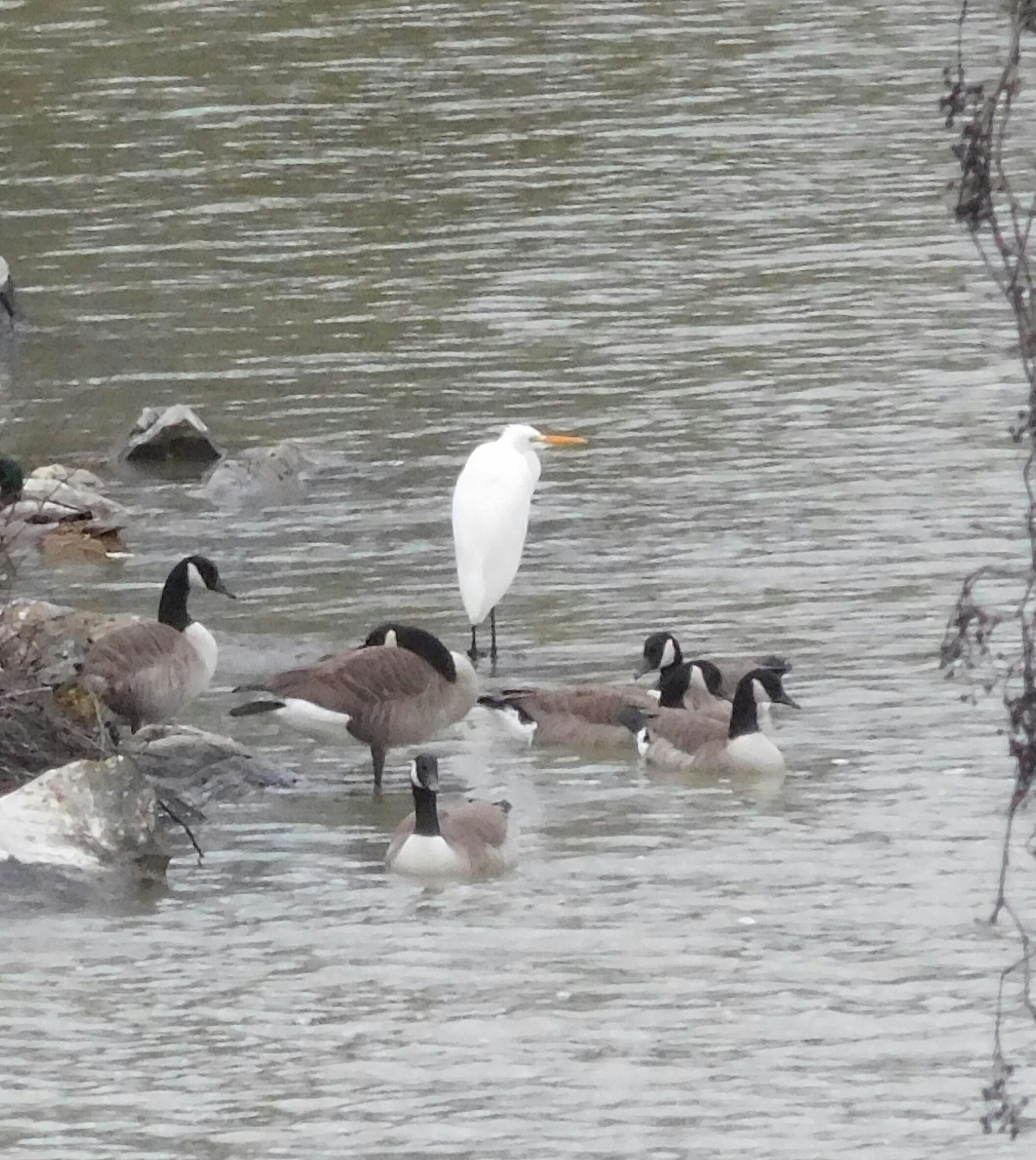
Photo by Dewey Fuller • A great egret stands amid a flock of Canada geese at Middlebrook Lake in Bristol, Tennessee.

It’s 2020, but I feel like I am still playing catchup with the birds found in the last few weeks of 2019. We might not have had much snow so far this winter, but birds with white plumage have stirred up some excitement in recent weeks. The birds are finally showing some winter movement as they turn up in some unlikely places and at unseasonable times. While I have felt that the winter’s off to a slow start in regards to birds, some other unusual visitors have popped up in various locations in the region.

Dewey Fuller, who resides near Middlebrook Lake in Bristol, Tennessee, emailed me recently to report an unexpected bird and share photos of the feathered visitor.

He correctly identified the bird as a great egret based on its white plumage and dark legs. “Another unusual visitor to Middlebrook,” Dewey wrote in his email.

The waders — herons, egrets, storks — usually reside in wetlands and coastal areas, but they are prone to wander after the nesting season. Their wandering usually takes place in late summer and early fall, so the Middlebrook visitor was a tad out of season.

While it is unusual for a great egret to visit the region in December, I know from personal experience that a twelfth month visit from this graceful wading bird is not unheard of. The first great egret to ever visit my home arrived on a snowy evening in December many years ago. This past summer heralded a more seasonal visit from only the second great egret to visit my home.

Joe McGuiness, an employee with the U.S. Forest Service who resides in Erwin, recently observed a great egret at a pond along the linear walking trail in Erwin, Tennessee. I’m not sure why these stately white birds have been present in December, but they certainly attracted attention with their unexpected presences.

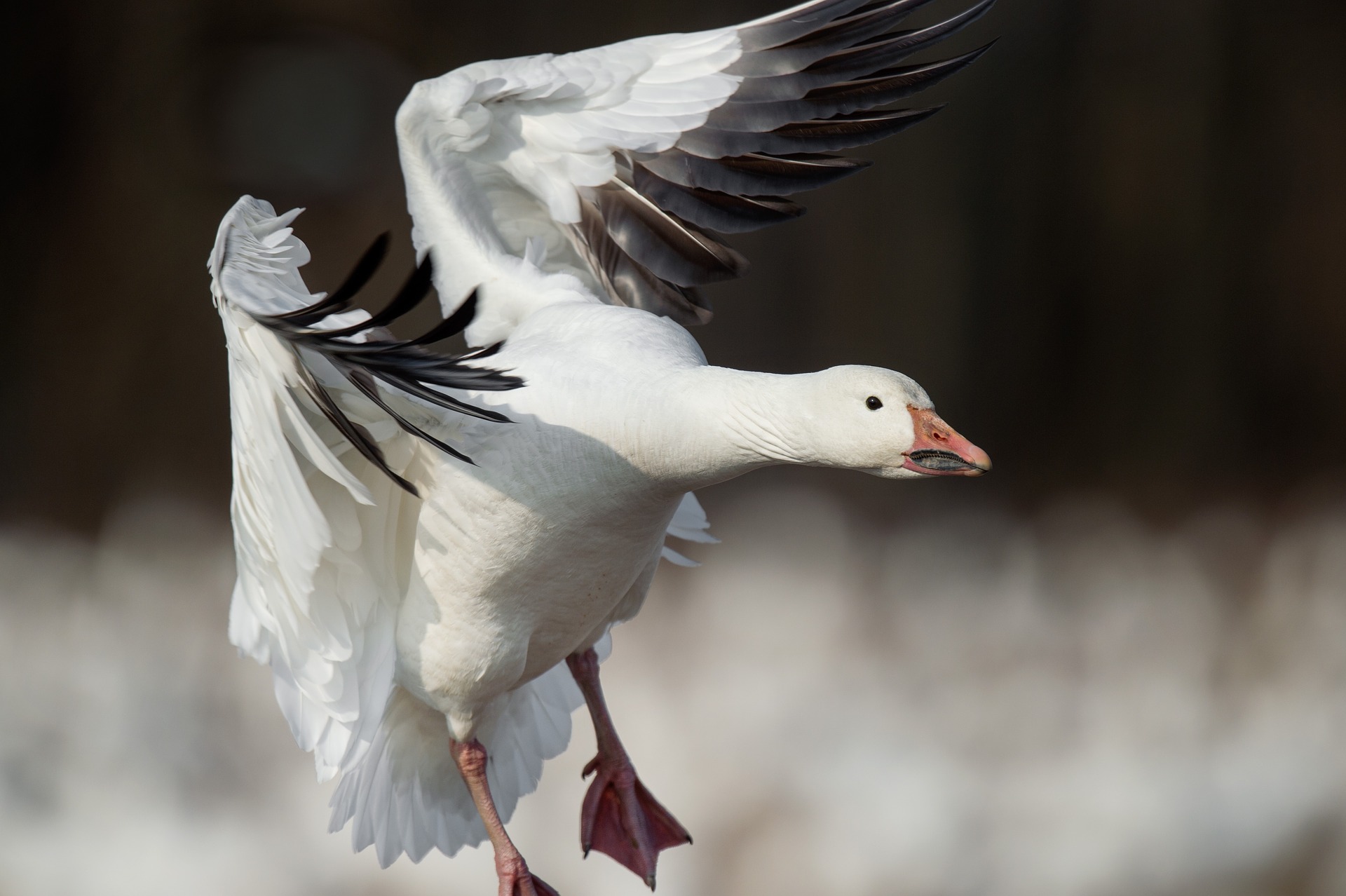
Photo by StockSnap/Pixabay.com • A snow goose comes in for a landing, showing off its black flight feathers that contrast with its otherwise all-white plumage.

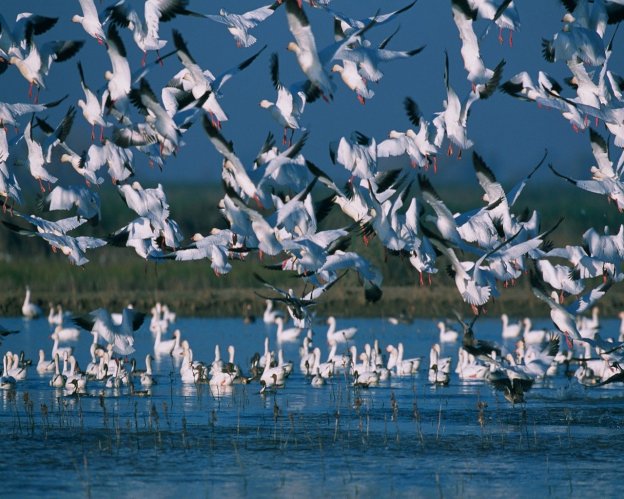
The egret was only one recent mostly all-white bird to put in an appearance. I found a single snow goose in a cornfield along Old Johnson City Highway about a half mile from the Lynch Farmhouse/Gallery in Unicoi, Tennessee shortly before Thanksgiving.

Snow geese are extremely abundant, but their migratory flyways usually keep these geese far from the mountains and valleys of Northeast Tennessee.

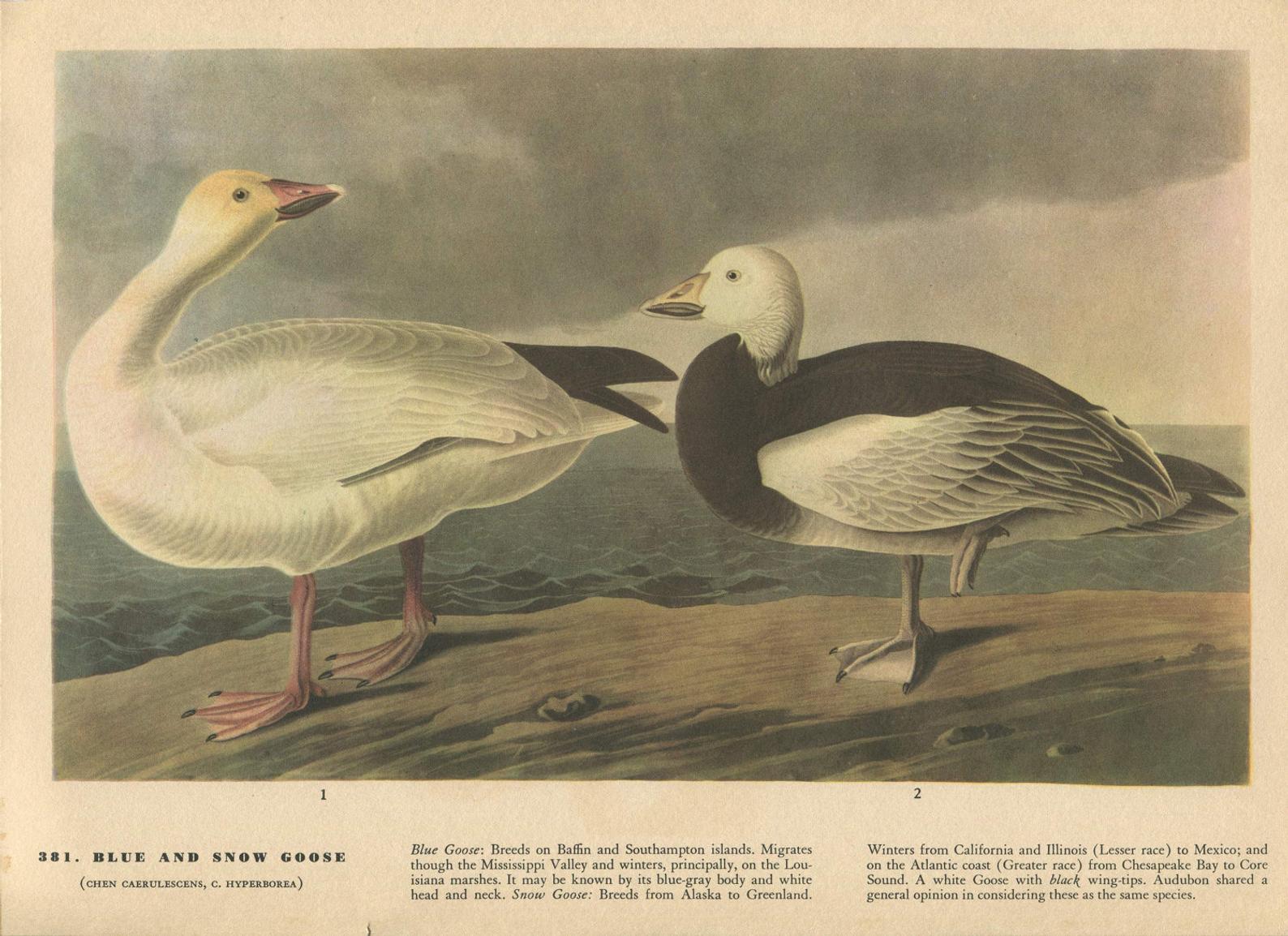
The snow goose has a second color phase known as a “blue goose” that has plumage that replaces the white feathers of the snow goose except in the head, neck and tip of the tail. The white phase of the species boasts all-white plumage except for black flight feathers. Adults have pinkish-red legs and bills. Serrations along the bill create the diagnostic “grin patch” that helps people distinguish the goose from the smaller related Ross’s goose. Male snow geese are typically somewhat larger than females.

Snow geese breed well north of the timberline in Canada, Alaska, Greenland and Siberia. In winter, they head south to spend the colder months across much of the United States and even Mexico.

Snow geese numbers have exploded in the late 20th and early 21st centuries. In fact, some experts worry that the sheer abundance of this goose is doing damage to the fragile tundra habitat these geese use for breeding. According to the website “All About Birds,” hunting for snow geese in the eastern United States was stopped in 1916 because of low population levels. Hunting was allowed again in 1975 after populations had recovered.

Although they remain a hunted game bird, an occasional snow goose achieves significant longevity in the wild. The oldest snow goose was an individual documented as being 27 years and six months old that was shot in Texas in 1999.

Photo by Bryan Stevens • A snow goose swims amid Canada geese at the pond at Fishery Park in Erwin, Tennessee, in February of 2018. .

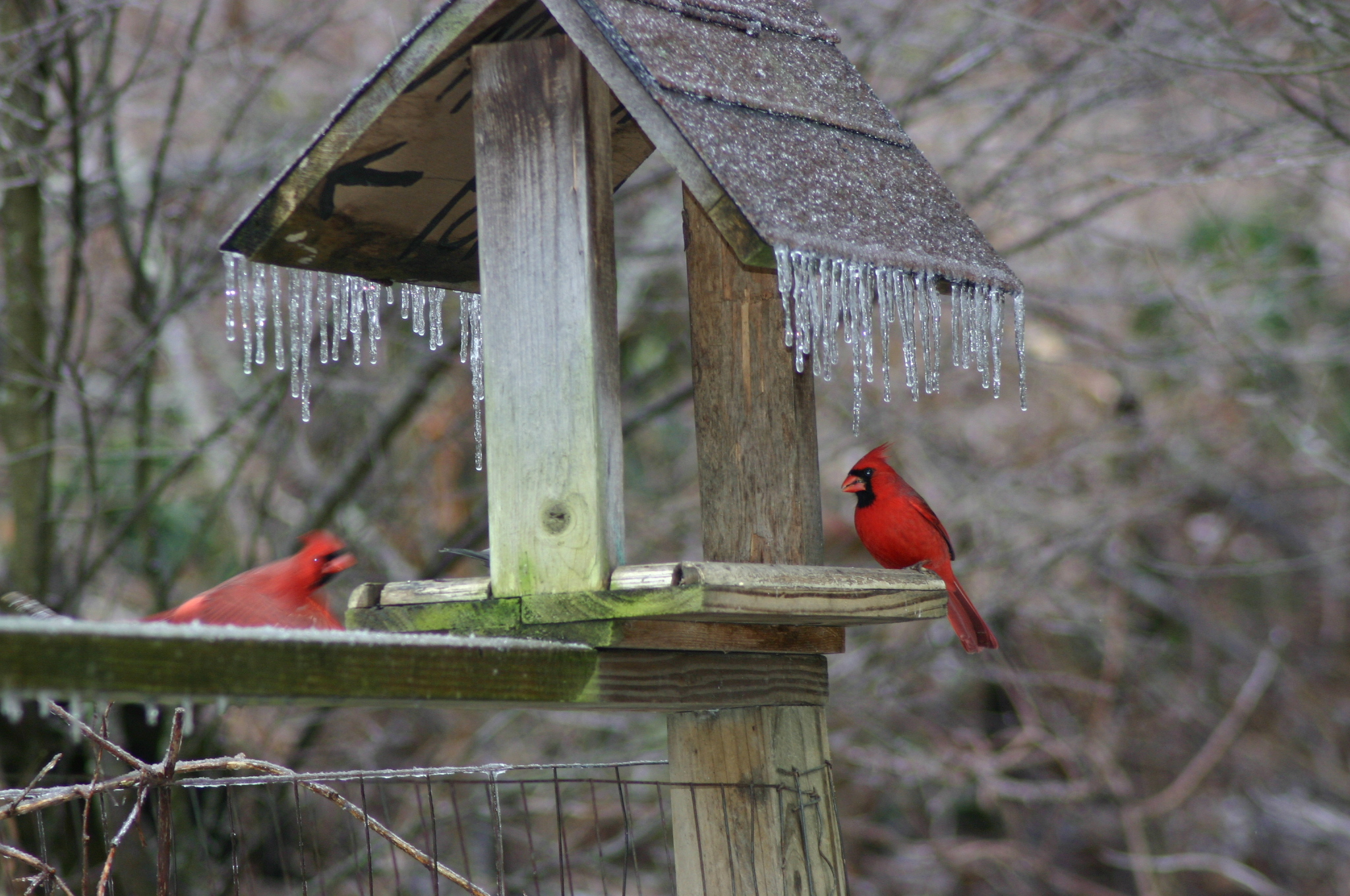
Cardinals do their part to make the winter season brighter

Photo by Skeeze/Pixabay.com • A male Northern cardinal lands on a snowy perch. Cardinals are perfect symbols for the Christmas season with their bright red plumage.

The shopping days before Christmas are getting fewer, so I hope everyone has had time to find gifts for everyone on their lists. My own sincere wish to readers is that everyone gets to enjoy a great holiday that just might also include watching some birds.

Often, when we think of the birds of the winter season, our thoughts focus on some of the less-than-colorful feeder visitors — the brown sparrows and wrens, the black and white chickadees, the drab American goldfinches that look so unlike their summer appearance.

There’s one bird, however, that makes an impression in any season. The Northern cardinal, especially the brilliant red male, stands out against a winter backdrop of snow white, deep green or drab gray.

Photo by Bryan Stevens • Northern cardinal seems much less descriptive of this popular bird than such common names as Virginia nightingale and Kentucky redbird.

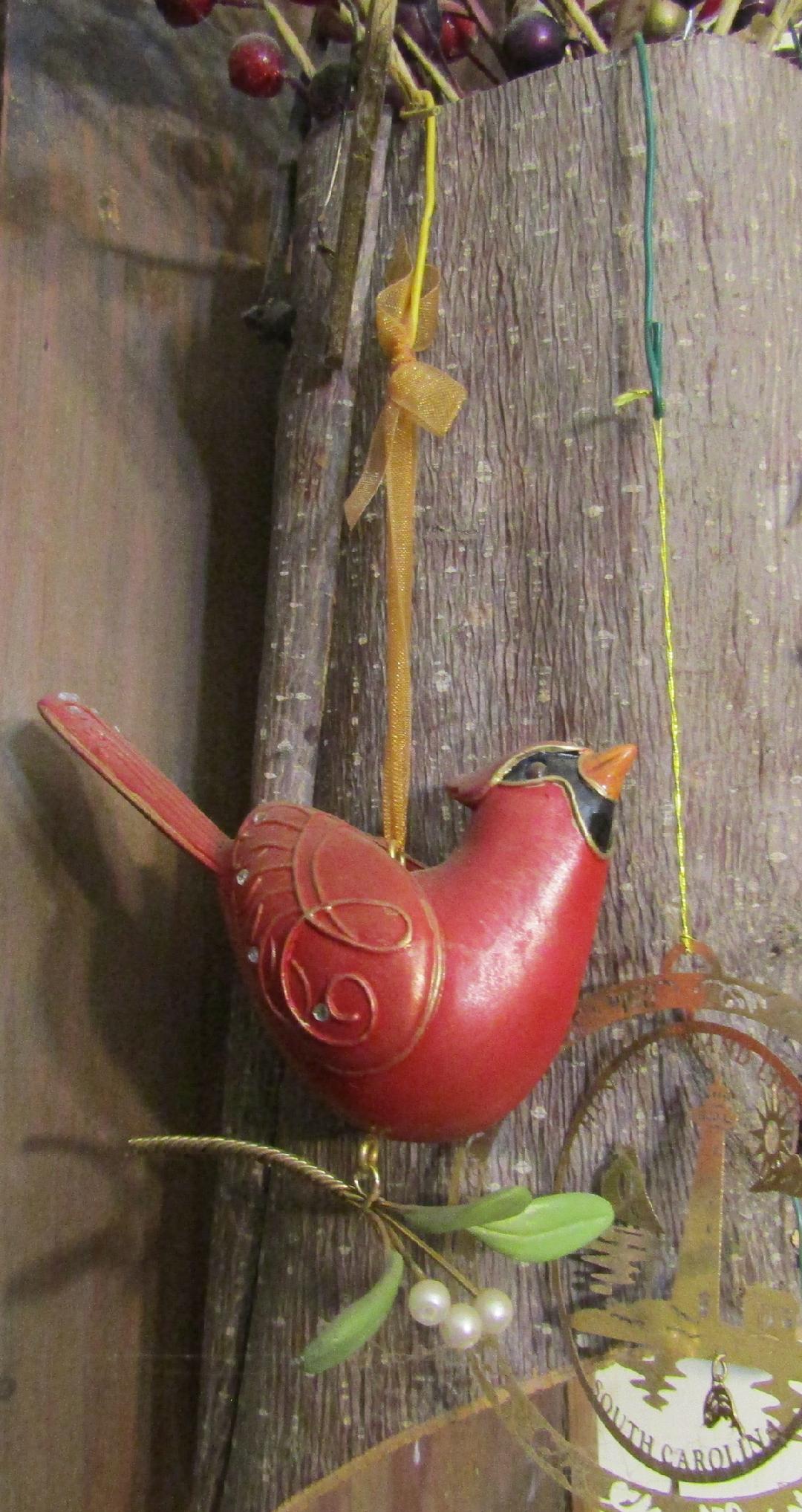
Over the years, the Northern cardinal has also become associated with the Christmas season. How many Christmas cards have you received this holiday season with a cardinal featured in the artwork? I’d wager that at least a few cards in any assortment of holiday greetings will feature the likeness of a bright red cardinal.

Cardinals, also known by such common names as redbird and Virginia nightingale, are easily recognized backyard birds. I never tire of observing these colorful birds. Cardinals are easily lured to any backyard with plentiful cover to provide a sense of security and a generous buffet of sunflower seed.

Photo by Bryan Stevens • Even the female Northern cardinal offers a subtle beauty not quite as showy as the male.

Cardinals accept a wide variety of food at feeders. Sunflower seed is probably their favorite, but they will also sample cracked corn, peanuts, millet, bakery scraps and even suet. The cardinal is also one of only a few birds that I have noticed will consistently feed on safflower seed.

While we may get the idea that cardinals feed largely on seed, that is a misconception based on our observation of the birds at our feeders. When away from our feeders, cardinals feed on insects and fruit, including the berries of mulberry, holly, pokeberry, elderberry, Russian olive, dogwood and sumac.

There’s no difficulty in identifying a cardinal. The male boasts crimson plumage, a crest, a black face and orange bill. The female, although less colorful, is also crested. Female cardinals are soft brown in color, with varying degrees of a reddish tinge in their feathers, particularly in their wings. Immature cardinals resemble females except young cardinals have dark bills.

Cardinals are a widespread species, ranging westward to the Dakotas and south to the Gulf Coast and Texas. The southeastern United States was once the stronghold of the cardinal population. In the past century, however, cardinals have expanded their range into New England and Canada. These birds have even been introduced to Hawaii.

Photo by U.S. Fish and Wildlife Service • A male cardinal looks splendid against a snowy background.

At feeders, cardinals mingle with a variety of other birds. Their preference for dense, tangled habitat is one they share with such birds as brown thrashers, Eastern towhees, Carolina wrens and song sparrows. In general, however, cardinals directly associate only with their own kind. Cardinals will form loose flocks during the winter, but these flocks are never as cohesive as those of such flocking birds as American goldfinches. Cardinals are more often observed in pairs. For such a bright bird, the male cardinal can be surprisingly difficult to detect as he hides in thick brush that conceals his presence. Cardinals are nervous birds, however, and usually betray their presence with easily recognized chip notes.

It’s not surprising that such a popular bird has also become associated with many trappings of the Christmas season.

“You see cardinals on greeting cards, stationery, paper plates, paper napkins and tablecloths, doormats, light switch plates, candles, candle holders, coffee mugs, plates, glasses, Christmas tree ornaments and lights, bookmarks, mailboxes, Christmas jewelry,” writes June Osborne in her book The Cardinal. “And the list goes on. Cardinals have become an integral part of the way that many people celebrate the holiday season.”

Photo by Bryan Stevens • Northern cardinals are a favorite for makers of Christmas ornaments.

I can be included among such people. My Christmas decorations include an assortment of cardinal figurines and ornaments. There are other birds — doves and penguins for example — associated with the holiday season, but for me the holidays magnify the importance of one of my favorite birds. The cardinal, in its festive red plumage, appears made to order for a symbol of the holiday season.

There’s additional evidence to put forward as testimony to the popularity of the Northern cardinal. It’s the official state bird of seven states: Virginia, North Carolina, West Virginia, Ohio, Illinois, Indiana and Kentucky. Only the Northern mockingbird, which represents five states as official state bird, even comes close to the Northern cardinal in this respect.

Even once the holidays are past, there’s nothing like a glimpse of a Northern cardinal to add some cheer to a bleak winter day.

Some gifts ideas are truly ‘for the birds’

Photo by PilotBrent/Pixabay.com • A blue jay visits a feeder stocked with seed. A feeder provides a great method for drawing birds to our yards and gardens, which enhances observation of these feathered creatures.

With the days on the calendar counting down to Christmas, I thought this might be a good opportunity to make a list of gift suggestions for the birding enthusiasts on your shopping list. Keeping in mind that some budgets are a bit tight, I’ve kept these suggestions to gift ideas that can be purchased for about $20.

Bird feeders
One of the best ways to bring birds closer is to put up a feeder. For that reason, a Christmas present of a bird feeder will never be remiss. Whether shopping online or in garden centers or department stores, there’s no shortage of feeders for purchase. Bird feeding brings hours of entertainment to human hosts for only the cost of a sack of sunflower seed.
The most successful feeder that I’ve used in recent years is a type of hanging tray manufactured by such brands as Woodlink and PerkyPet and available on Amazon.com and other retail outlets for about $20. The one at my home is made from recycled plastic. Cardinals, sparrows, finches, and even the shy Eastern towhees love this open-air feeder. The mesh bottom of the feeder allows for good drainage.
There are so many designs, from extremely practical to awesomely whimsical, that choosing a feeder as a gift isn’t at all difficult. The birds and that friend on your list will thank you for the gift of a feeder. If you’re feeling in the giving spirit, throw in a bag of black oil sunflower seed to help get the recipient’s feeder off to a great start.

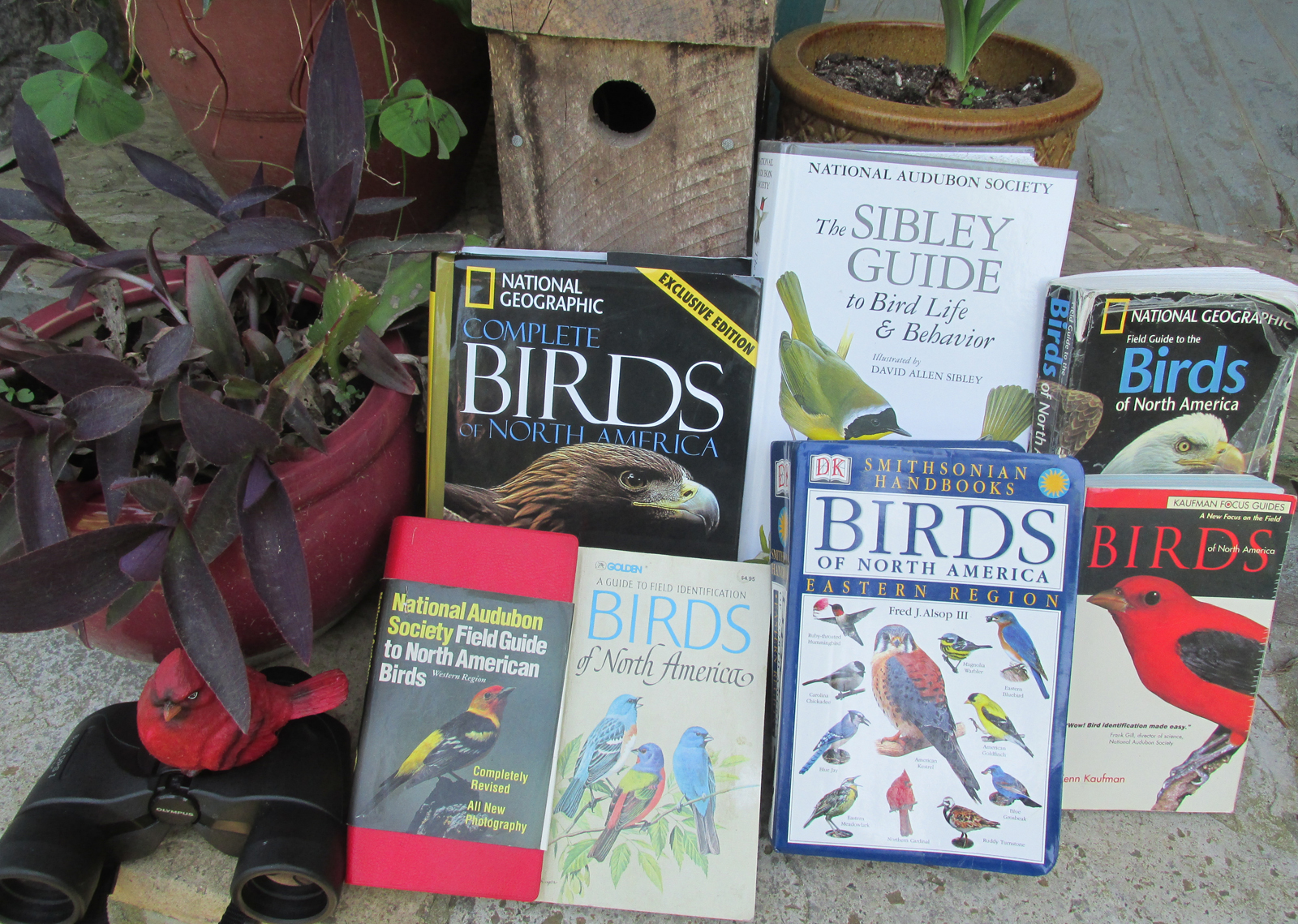
Photo by Bryan Stevens • Field guides are an essential tool for bird identification.

ID assistance
A field guide to birds is an indispensable tool for both the curious backyard birdwatcher and the more adventuresome birder expanding his or her viewing opportunities farther afield. Once you’ve taken the path to start identifying birds beyond your own yard and garden, a reliable field guide is indispensable.
I prefer field guides illustrated with paintings rather than photographs, but I have a varied collection of guides. I started a long time ago with the Golden Guide to Birds. It’s a classic and still a great guide to help interest children in the birds around them.
Some of the guides I recommend and use myself these days are National Geographic Field Guide to the Birds of North America, The Sibley Field Guide to Birds of Eastern North America, and Peterson Field Guide to Birds of Eastern and Central North America. Any of these field guides should be easily found online or in stores at a cost of around $20.

365 days of birds
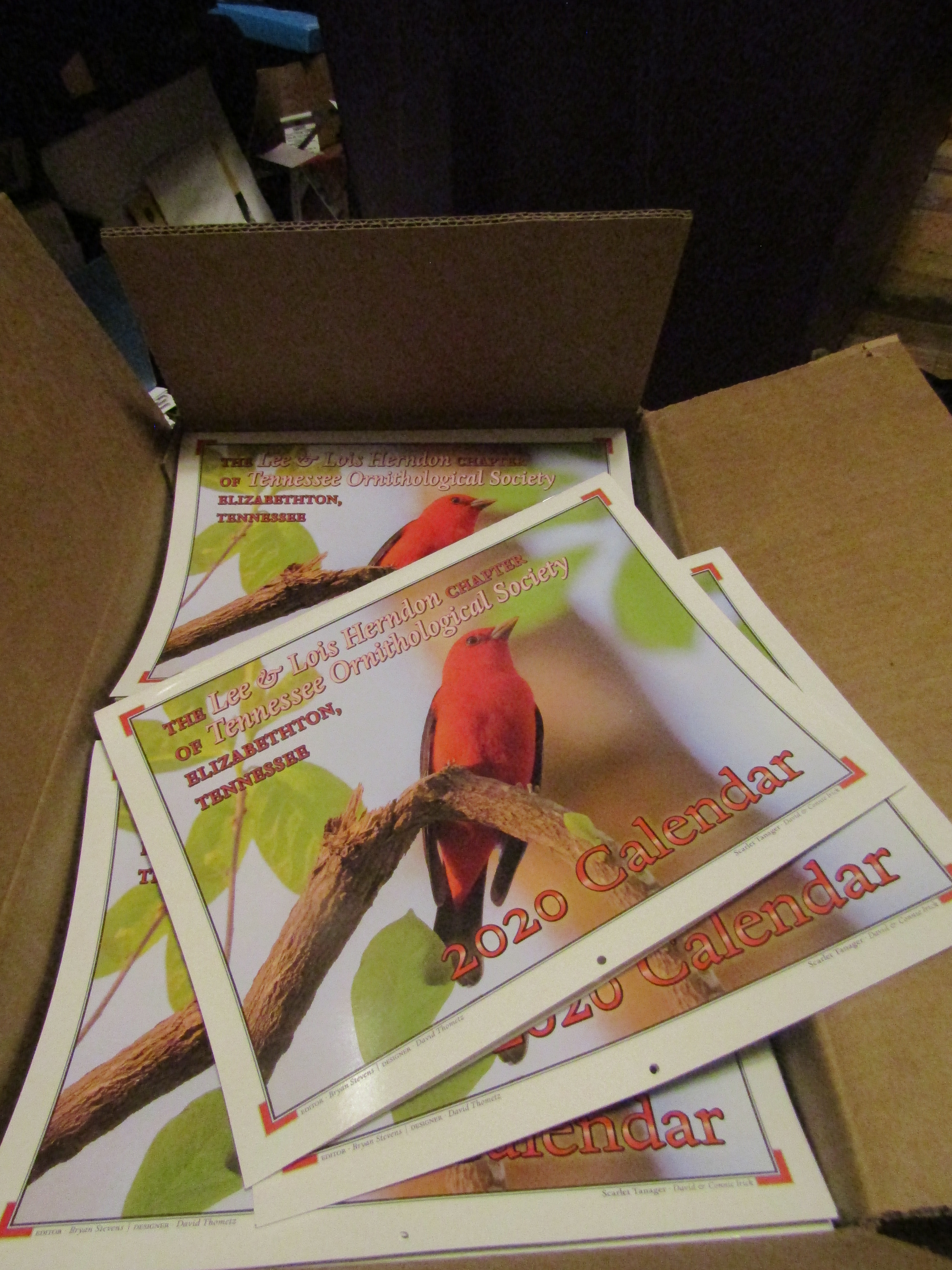
The Lee and Lois Herndon Chapter of Tennessee Ornithological Society (Elizabethton Bird Club) produces a calendar as part of a long-standing holiday fund-raising effort. The 2020 calendar features a stunning photograph of a male scarlet tanager. The inside pages feature dozens more full-color photographs and an informative and educational grid. These calendars sell for $15 plus $2 for shipping. All sales help the club fund birding programs, public park feeders, conservation efforts and other activities in upper Northeast Tennessee. To obtain a calendar, email me at ahoodedwarbler@aol.com.

Photo by Bryan Stevens • This year’s calendar produced by the Elizabethton Bird Club features a male scarlet tanager on the cover.

Flocking Together

Gift someone with a membership in a local birding organization. Bristol is home to the venerable Bristol Bird Club, which offers dual membership in the Virginia and Tennessee Ornithological Societies. The memberships of clubs are comprised of friendly, helpful individuals. Newcomers are taken under the wings and soon shown many helpful birding tips and introduced to some of the area’s birding hot spots. Single membership annual dues are $25 and family memberships are $32. To gain information about the BBC, email Treasurer Brenda Richards at richardsb16@gmail.com or write to her at: Brenda Richards, 160 Milden Hall Rd., Blountville, TN 37617.
In addition to the Bristol Bird Club, other clubs in the region include Birding Kingsport and the Elizabethton Bird Club. Other clubs in Southwest Virginia include the Buchanan County Bird Club and Russell County Bird Club. For more information on these clubs, visit https://www.facebook.com/groups/725795874231666.
Membership in any of these clubs will pay real dividends that help people make social contacts and enhance their birding skills with the help of experienced birders.
With this list of suggested gifts, happy shopping. I hope everyone’s seeing some good birds.

Photo by Bryan Stevens • A male wood duck swims with a pair of mallards.

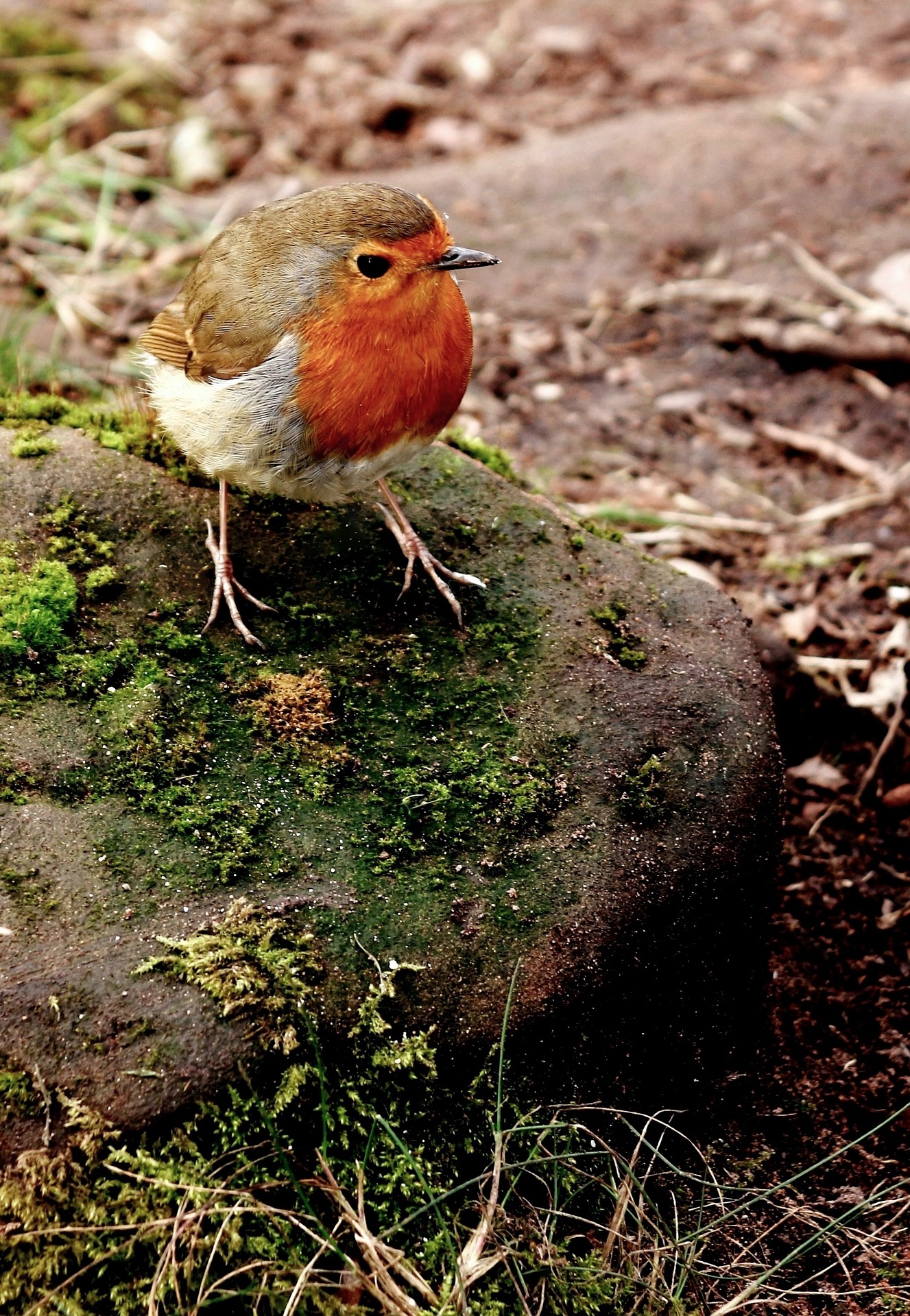
American robin named for European counterpart


Photo by Andrew Poynton/Pixabay.com • The European robin is a common garden bird in Great Britain and other countries in Europe. The American robin was given its common name when early English colonists were reminded of their own robin back in the Old World. 

I received emails recently from Terry Fletcher, who lives on Vance Drive in Bristol, and Ernie Marburg from Abingdon, Virginia. Both emails involved flocks of birds, including American robins and cedar waxwings.

The past two days the robins have been going crazy in my small yard,” Terry wrote. “I live in a woodland area off Vance Drive.”

Terry described a flock of at least 40 robins passing through the relatively small yard. “They were also darting back and forth among the trees,” Terry wrote. “Any thoughts about this flurry of activity?

Ernie Marburg also sent me an email with a query about robins and waxwings.

“I haven’t had much to report recently, but yesterday and today I had large flocks of migrating birds,” Ernie noted. “Yesterday’s flock of cedar waxwings was extremely large.”

Ernie estimated the flock consisted of 400 to 500 individuals. He added that the flock rested for a time in his neighbor’s large oak trees and then went on its way.

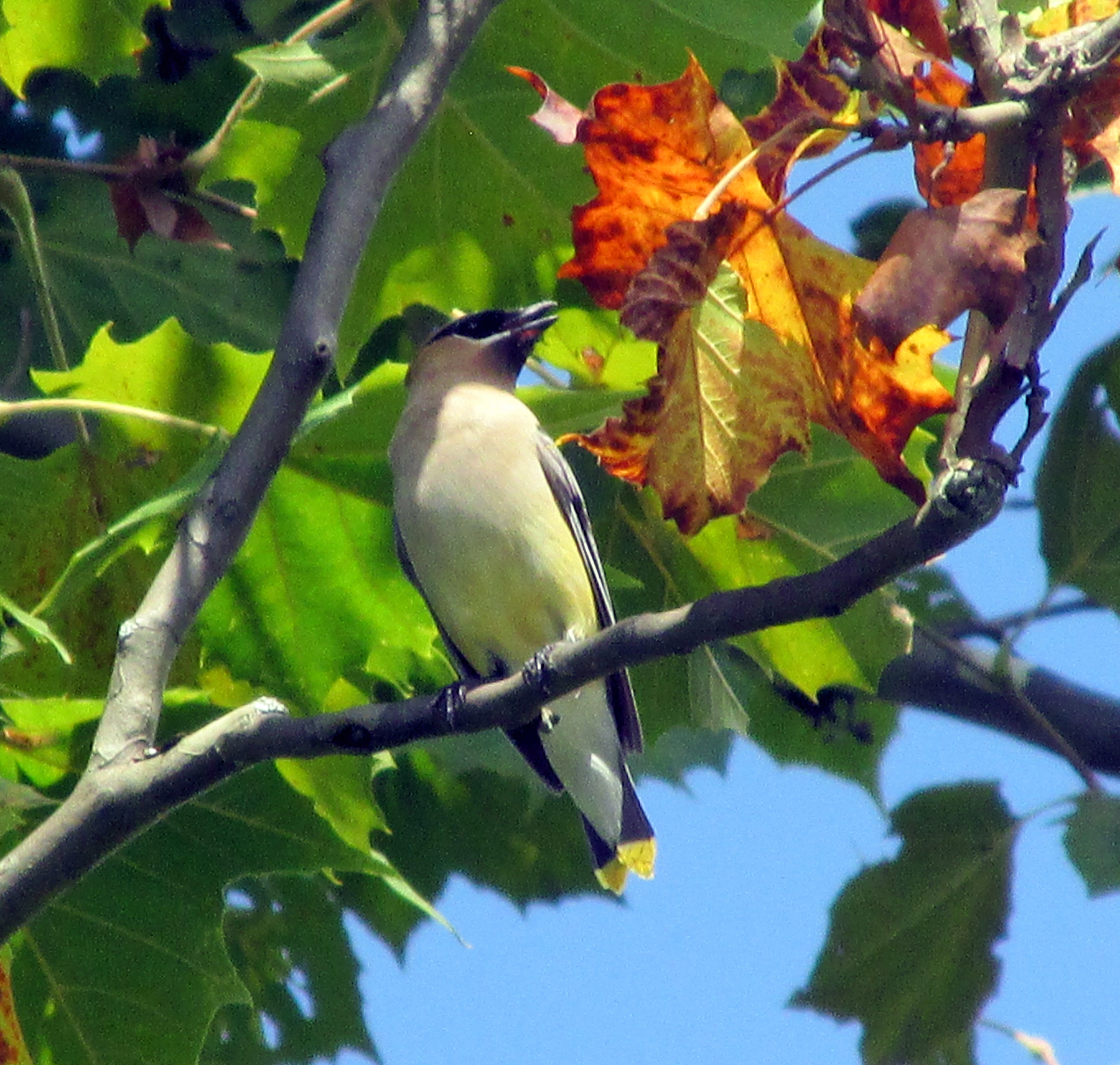
Photo by Bryan Stevens • A cedar waxwing perches on a branch.

“The flock today was less exciting for me, but somewhat even larger than the waxwings,” Ernie noted. The second flock consisted mostly of European starlings with a few American robins in the mix.

Ernie observed the starlings in some neighboring dogwoods as they consumed red berries. His question involved the migration habits of the starlings, waxwings and robins.

The fact is that, although we don’t think of robins very much in winter, they are still very much present in the region. The same is true of waxwings and is particularly true about starlings.

Terry’s wooded area sounds perfect for robins in winter. In the colder months of the year, robins form large, loosely organized flocks, often taking up residence in wooded lots. Ernie’s neighborhood also sounds like a perfect haven for these flocking birds.
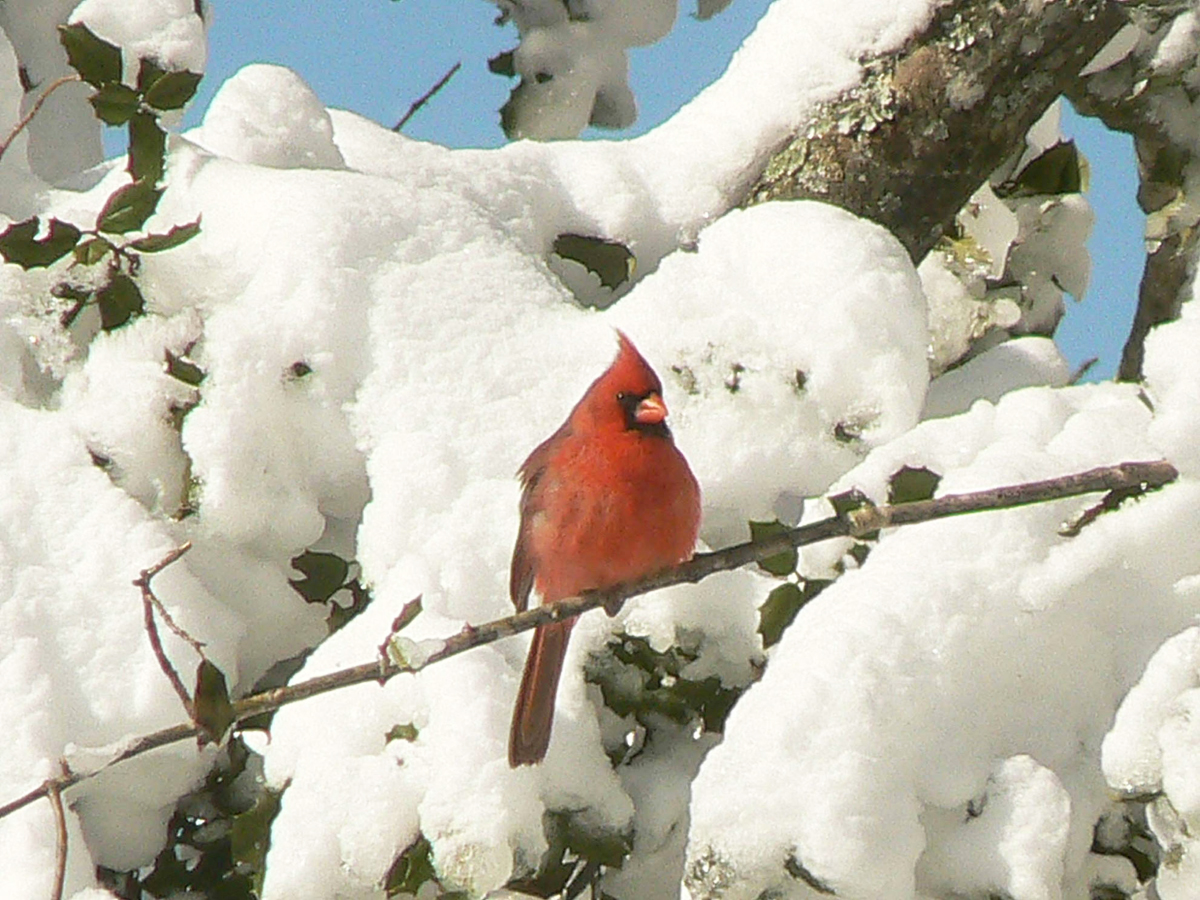
Photo by Bryan Stevens • An American robin scans for prey in the grass and clover of a lawn.

The activity observed by Terry is just the way robins behave at time. The activity could have been an example of the birds sensing the approach of a weather front. The robins, reacting to changing conditions, were simply attempting to feed as much as they could before a change in the weather. arrived.
The American robin is a large bird in the thrush family, which in North America also includes such birds as Eastern bluebird, wood thrush, and Townsend’s solitaire.

In the British Isles, the European robin is simply known as “robin” or “robin redbreast.” When the first English colonists arrived in New England and other parts of colonial-era North America, they took pleasure in finding that some of the birdlife in the New World resembled familiar birds from their homeland. The red-breasted American robin looked like the bird they knew in the Old World as “robin,” which motivated them to name the New World bird “robin,” as well.

Other than the red breast, however, the two robins are not all that similar. The American robin is the larger of the two birds. Farther separating these two birds is the fact that the European robin is not a thrush but rather a member of the family of Old World flycatchers.

Photo by PublicDomainPhotos/Pixabay.com • A European robin sings from a perch.

In some ways, the two robins are similar. Both are fond of earthworms, spending a great deal of their time on the ground foraging for worms. They will also follow human gardeners at their work, waiting patiently for the followed person to disturb the soil with a spade or hoe and expose earthworms for the waiting bird. They are also rather tolerant of humans and have learned to make their own homes close to human dwellings.

Some of the British transplants to North America must have felt homesick for familiar things because several unsuccessful attempts were made to introduce the European robin to the United States and Canada. European robins introduced in New York and Oregon failed to gain a foothold, unlike the introduction of such alien birds as the house sparrow and European starling.

On a few occasions, our American robins have overflown their destinations and ended up in the United Kingdom. For instance, an American robin became a first for London birdwatchers when one was found in that nation’s capital city in March of 2006. Whether of the European or American persuasion, robins have long been a favorite of birdwatchers and nature enthusiasts.

Photo by Bryan Stevens • An American robin perches on a tree branch and surveys its surroundings.

Success of wild turkey’s resurgence leads to foul fowls in New England

Photo by Avia5/Pixabay.com • A male wild turkey, often referred to as a “tom” or a “gobbler,” fans his tail in a display meant to impress hens and intimidate other males.

Celebrated in William Bradford’s written account of the First Thanksgiving in 1621, the wild turkey had all but vanished from Massachusetts and the rest of New England a mere two centuries later. By the time of Henry David Thoreau, who is arguably America’s first environmentalist, the noted author lamented in 1856 that the turkey and other wildlife were difficult to find in his native Massachusetts.

In a journal entry from the spring of 1856, Thoreau decried the part the descendants of those Pilgrims who celebrated the first Thanksgiving more than 200 years earlier had played in the decimation.

“When I consider that the nobler animals have been exterminated here — the cougar, the panther, lynx, wolverine, wolf, bear, moose, dear, the beaver, the turkey and so forth and so forth, I cannot but feel as if I lived in a tamed and, as it were, emasculated country,” Thoreau wrote in his journal. “Is it not a maimed and imperfect nature I am conversing with?”

Henry David Thoreau

Perhaps, but Thoreau would probably be encouraged that many of the animals he mentioned in his journal have now recovered and once again roam throughout New England. The wild turkey has been in the vanguard of that resurgence. In fact, the revival of the wild turkey’s fortunes in New England has had unintended consequences. In short, this venerable fowl has run amok in some parts of its former stronghold.

An article by Brianna Abbott for the Audubon Society’s website estimates that before Europeans first colonized New England in the 1600s, as many as 10 million wild turkeys roamed from Maine to Florida to the Rocky Mountains of the American West.

Today, wild turkeys are back with a vengeance. Turkeys may have grievances, it turns out, for the persecution they suffered at the hands of Americans for the past few centuries. Touted as a major restoration success story, the wild turkey began to be reintroduced to New England about half a century ago.

Now that they’re back, turkeys are part of a dramatically changed landscape. Suburbs now stretch in wide swaths of terrain that once supported forests and associated wildlife. Luckily — for the turkey, anyway — it is a very adaptable bird. Turkeys have taken to life in the suburbs with such enthusiasm that they are now a wildlife management issue for the human residents who must share living space with them. Emboldened problem turkeys chase and intimidate women and small children, as well as pets. Whole flocks have gone rogue.

Photo by Bryan Stevens • Wild turkeys forage on a hillside.

Gone are the turkey’s natural predators — lynxes, cougars and wolves — that had kept America’s premier game bird’s population in balance. As Thoreau pointed out, nature is no longer perfect. More than 170,000 wild turkeys now live in New England and they’re not always at peace with their human neighbors.

Thoreau didn’t have the benefit of environmental science to back him up, but he would probably not be surprised that a “maimed” nature is causing some unexpected problems even as some of the animals he so sorely missed are returning to their former haunts.

The Tennessee Watchable Wildlife Website notes that the wild turkey was once nearly eliminated from the Volunteer State. By the early 1900s, over-hunting eliminated this species from most of its range, including much of Tennessee. Modern wildlife management has reestablished this bird throughout its historic range and into 49 of the 50 United States.

Photo by Bryan Stevens • Wild turkeys have re-established themselves in many areas across the United States, including New England.

According to the website, the natural habitat for the wild turkey consists of mature woodlands with scattered openings or fields. In such areas, turkeys can forage for food such as acorns and other wild nuts, seeds, fruits, insects, buds, fern fronds and even the occasional salamander.

Wild turkeys roam the woods around my home, and I know of other areas that are dependable locations for observing these birds. While their numbers are increasing, the wild turkey has not yet turned the tables. For the foreseeable future, I suspect Americans will continue to dine on turkey every Thanksgiving, and not the other way around.

Who could blame them, however, if turkeys were to feel perfectly justified in biting back at the American public? We’ve not always been the best stewards for our native wildlife. Call me an optimist. I believe turkeys and people can co-exist. As residents in New England have learned, we just have to be prepared for some give and take.

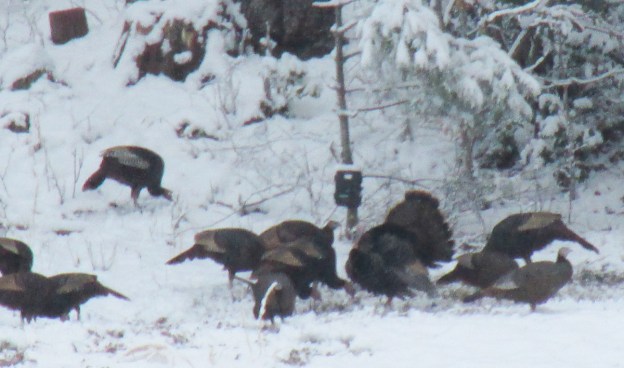
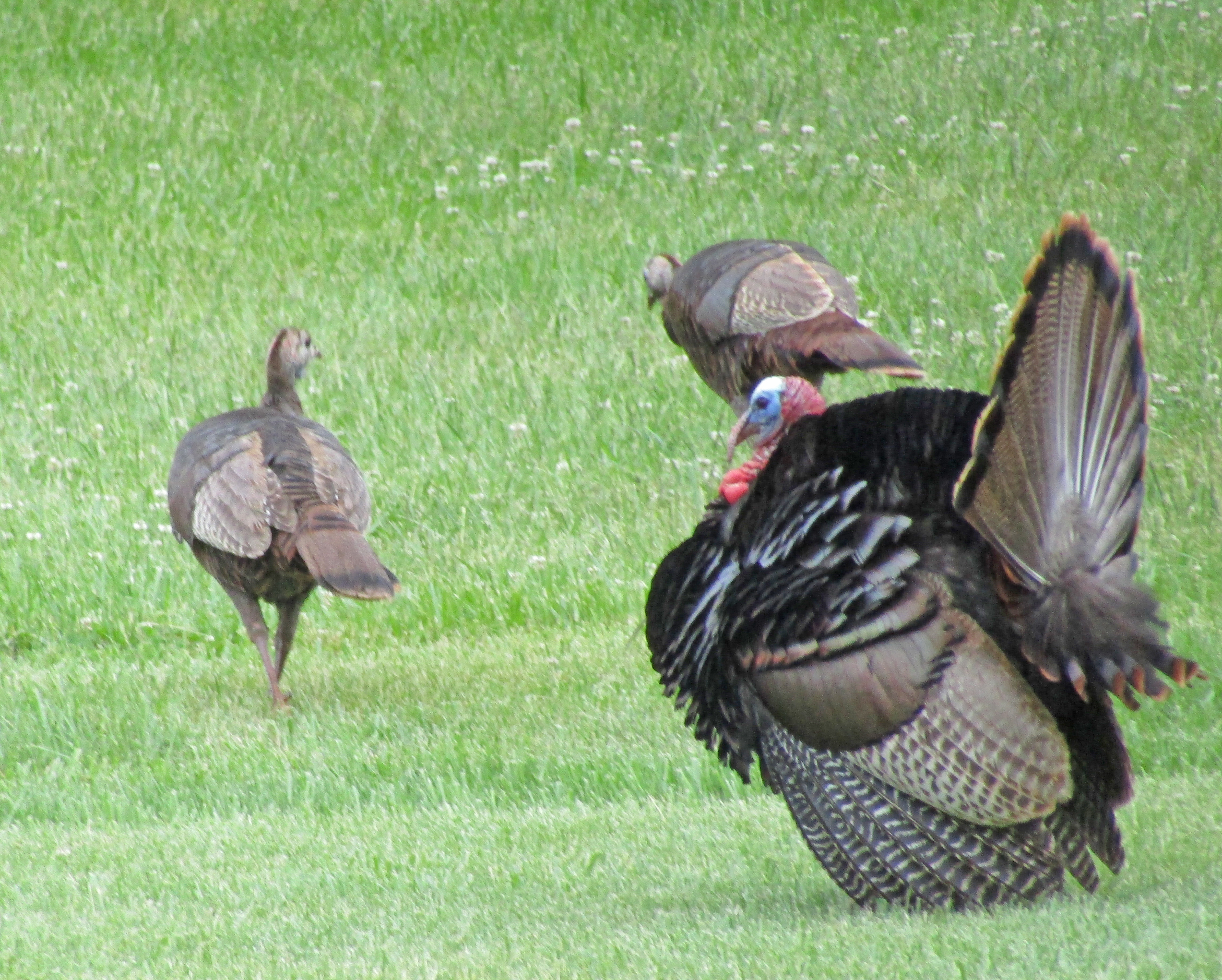
Photo by Bryan Stevens • A male gobbler seeks the attention of hens, as all these Wild Turkeys add to the number of this species found during the count.