Category Archives: Birding

Brown Thrasher’s nesting habits bring this golden-eyed bird into our yards

Photo by Bryan Stevens A fledgling Brown Thrasher perches on a ledge inside a garage.

Photo by Bryan Stevens
A fledgling Brown Thrasher perches on a ledge inside a garage.

It’s been a banner year for brown thrashers at my home. In recent weeks, these large songbirds have provided plenty of entertainment by bringing their young to the feeders. They especially like the suet feeder. The parent birds work to detach chunks of suet. Once they secure these morsels, the parents feed their hungry young.

Photo Courtesy of Jean Potter A Brown Thrasher scans the grass for insect prey.

Photo Courtesy of Jean Potter
A Brown Thrasher scans the grass for insect prey.

A few years ago, quite by accident, I came across a brown thrasher nest. I hadn’t gone looking for it. The nest, expertly woven into a thicket of honeysuckle vines, was tucked beneath a sheltering eave of an outdoor storage building. I don’t think anything but a fortunate accident could have ever revealed the nest. I still remember peeking into that tangle of vines and seeing a golden eye staring back. The bird didn’t look in the least pleased that I had accidentally stumbled across her nest.

The otherwise extroverted brown thrasher, which prefers to nest in difficult-to-access, tangled messes, found the cluster of vines a perfect location. I haven’t discovered any thrasher nests this year, but I’ve observed several fledglings when they began visiting the feeders with their parents.  For those not familiar with brown thrashers — relatives of the Northern mockingbird — they are known for their feisty and fearless protection of their nest and young.

Photo by Bryan Stevens Brown Thrashers prefer thickets and brushy areas that offer security for these somewhat shy birds.

Photo by Bryan Stevens
Brown Thrashers prefer thickets and brushy areas that offer security for these somewhat shy birds.

••The brown thrasher (Toxostoma rufum) belongs to the family of “mimic thrushes,” which provides a label for a group of songbirds capable of imitating the songs of other birds. Mimidae, the Latin root for “mimic,” provides the scientific name for the family, which includes mockingbirds and the New World catbirds, as well as thrashers. The Northern mockingbird is best known for the ability to mimic, but relatives like the gray catbird and brown thrasher are also talented mimics.

The thrasher is a fairly large songbird about 11.5 inches long with a wingspan of 13 inches. Much of the body length comes from the bird’s long tail feathers. A thrasher weighs, however, only about 2.5 ounces.

The brown thrasher is not a picky eater. It’s known to eat everything from berries and nuts to insects and small lizards. It’s also aggressive in defending its nest and young. John James Audubon, a French-American ornithologist, naturalist and painter, painted quite a dramatic scene of a group of brown thrashers valiantly defending a nest from an attacking snake. The painting is so detailed that you have to imagine Audubon based his work on a real-life experience. His work, originally painted in the early decades of the 1800s, still holds up today.

Early American naturalist and artist John James Audubon painted a dramatic scene of Brown Thrashers defending their nest from an attacking snake.

Early American naturalist and artist John James Audubon painted a dramatic scene of Brown Thrashers defending their nest from an attacking snake.

Incidentally, Audubon knew the brown thrasher as the “ferruginous thrush.” Another former common name for this species was “brown thrush.”

This brown thrasher breeds across the United States and Canada east of the Rocky Mountains. Thrashers withdraw from the northern part of their range in the winter months, spending the season in the southeastern United States.

They are familiar birds in southern gardens. In fact, the brown thrasher is the official state bird of Georgia and also provided the name for Atlanta’s National Hockey League team, the Atlanta Thrashers. The thrasher became Georgia’s state bird due to passage of a Joint Resolution of the Georgia General Assembly in 1970.

The brown thrasher is the only member of the thrasher clan in the eastern United States. In Texas and the western half of the country, however, there are several other species of thrasher, including sage thrasher, long-billed thrasher, Crissal thrasher, curve-billed thrasher, Bendire’s thrasher, California thrasher and Le Conte’s thrasher. Many of these thrashers also occur in Mexico.

These New World birds also occur in the Caribbean, including such species as White-breasted Thrasher, Pearly-eyed Thrasher and Scaly-breasted Thrasher.

Photo by Bryan Stevens   A pair of Brown Thrashers perch near a fence at Tipton-Haynes Historic Site in Johnson City.

Photo by Bryan Stevens
 A pair of Brown Thrashers perch near a fence at Tipton-Haynes Historic Site in Johnson City.

•••••

Rebecca Howe, who resides in Kent, Ohio, has sent me an email.

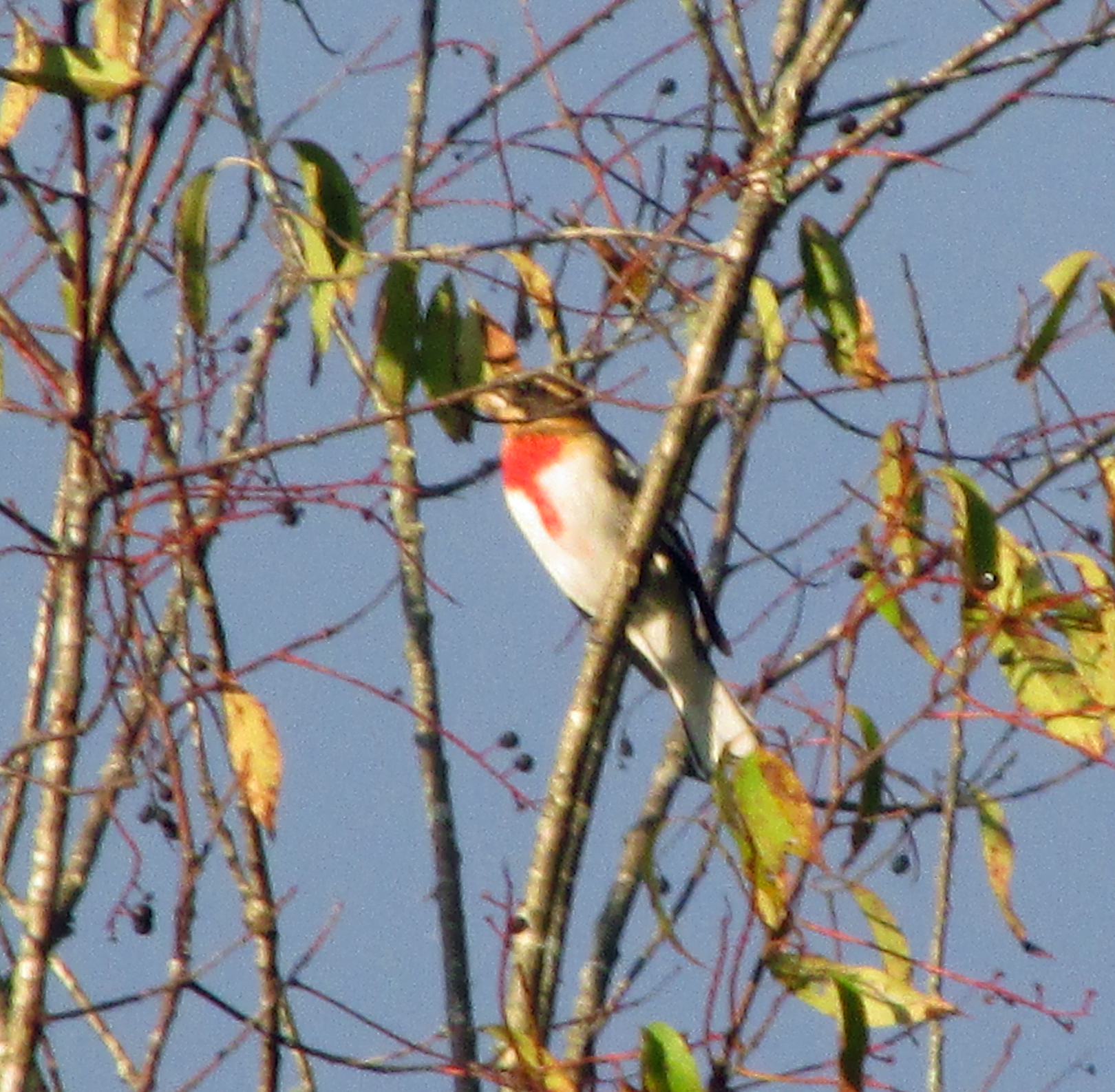
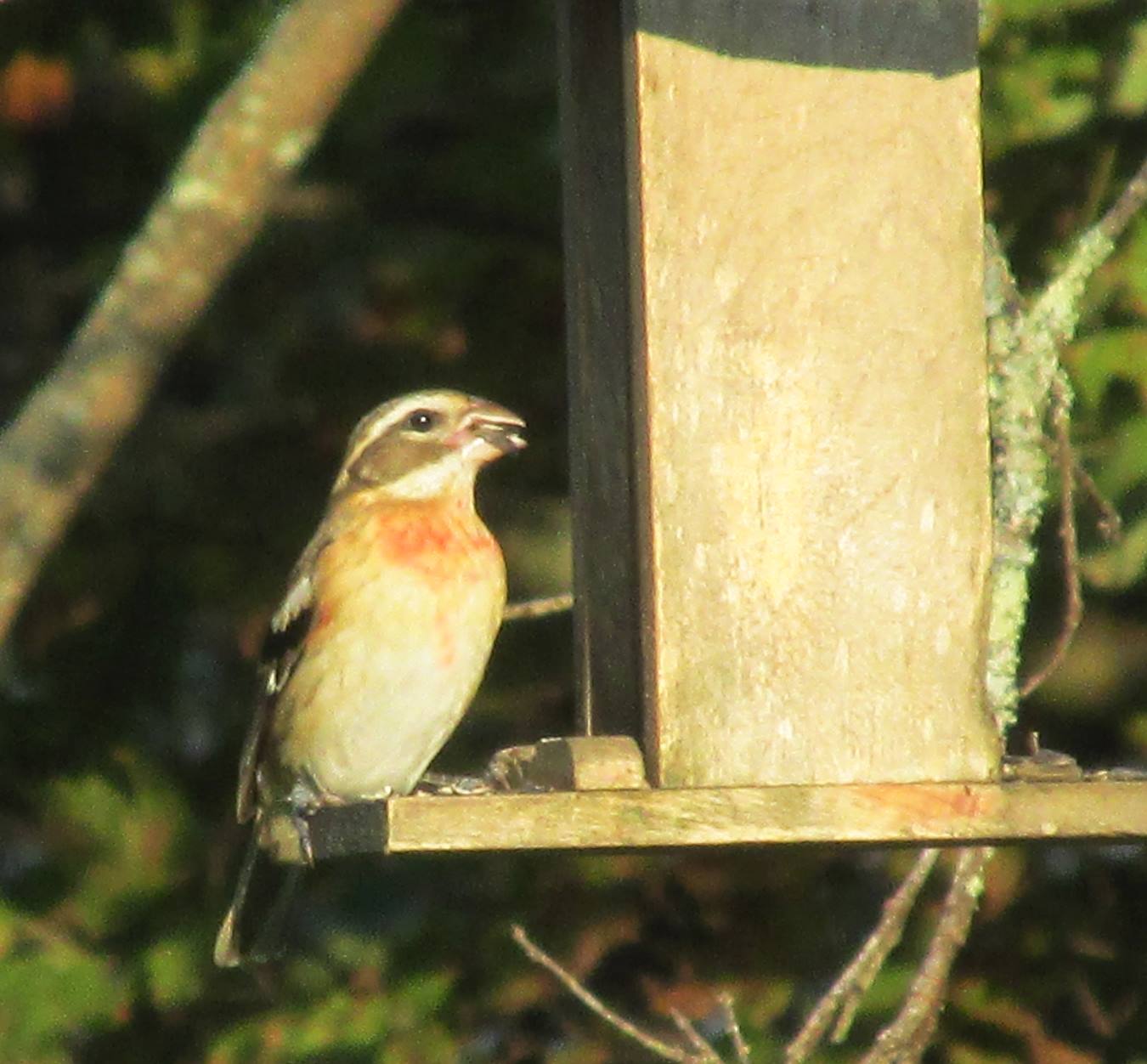
“I am blessed to have rose-breasted grosbeaks come to my house each spring,” she wrote. “I watch males arrive first and then females.”

She has recently been seeing young birds arriving at her feeding station.

“Now the birds seem to be leaving,” she noted. “Do they leave their breeding grounds around this time to move south for the winter?”

I thanked Rebecca for sharing about her rose-breasted grosbeak observations in a follow-up email and informed her that different birds depart at different times to go south for the winter. Some birds do not get into a rush to reach their destination, so the start of migration is more of a slow-paced, casual “wandering” that takes them to different locations in a more or less southern direction.

Brown Thrasher visits a suet feeder. The thrasher diet consists of everything from berries and seeds to insects and even small reptiles.

Photo by Bryan Stevens                                Brown Thrasher visits a suet feeder. The thrasher diet consists of everything from berries and seeds to insects and even small reptiles.

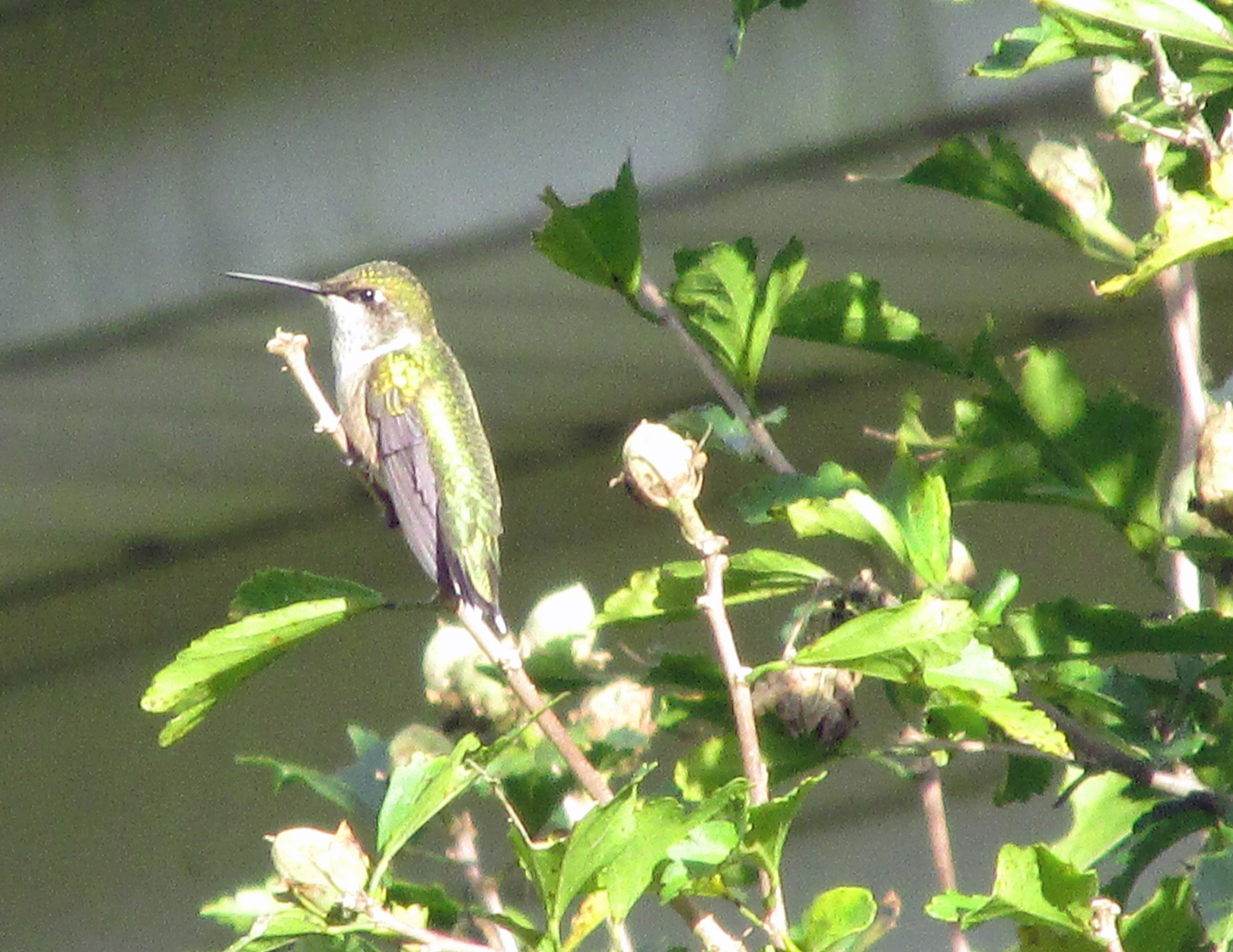
Closer to Southwest Virginia and Northeast Tennessee, birds like yellow warbler, Louisiana waterthrush and a few others are known to depart as early as July and August. Ruby-throated hummingbirds are another good example of slow migrants. Those that pushed to the northern limit of their range are probably already heading back. But they are very nomadic. Maybe they could even be described as “restless,” and it is this time of year when I start to get the highest numbers of these little birds.

••••••

I look forward to hearing from readers. Those who wish to ask a question, share an observation or make a comment may reach me at ahoodedwarbler@aol.com. Follow me on Facebook to see more bird and nature photos at https://www.facebook.com/ahoodedwarbler

Photo by Bryan Stevens A pair of Brown Thrashers forage for food on the ground below a feeder.

Photo by Bryan Stevens
A pair of Brown Thrashers forage for food on the ground below a feeder.

Feeding birds occasionally brings uninvited guests to the table

I received a recent email from Flag Pond reader Amanda Austwick with the header, “Bird Feeders Damaged.” I get calls and emails about lots of unusual feeder visitors, but this one sort of stood out from the rest.

In the email, I was asked if I had any idea what would attack a bird feeder in late afternoon in June?

“I’ve heard of bears attacking a feeder in winter,” she wrote. “We do have bears up here, but I haven’t seen any in years.”

The damage to the feeders wasn’t minimal.

“One feeder was completely bent over on the ground,” she wrote.

At the time of the incident, there hadn’t been any rain. As a result, the animal that attacked the feeders left no prints.

I responded to the email with the belief that the animal responsible for the damage was likely a Black Bear.

“It sounds exactly like a bear,” I informed Amanda. “Actually, most of the reports of bears damaging feeders I have heard about have taken place in spring and summer. I suppose if a bear finds your feeder, however, it may be inclined to damage them at any time of the year.”

Photo Courtesy of Amanda Austwick This bear caused considerable damage to the Austwick feeders.

Photo Courtesy of Amanda Austwick                       This bear caused considerable damage to the Austwick feeders.

I also pointed out that the bear is actually just feeding on the seed. The damage is a by-product caused by the fact they probably don’t know their own strength.

“I know you will miss your birds, but it would probably be best to stop feeding for a couple of weeks,” I informed Amanda.

I suggested that after the two-week hiatus on feeding the birds that she put the feeders back outdoors but arrange to take them inside during the night.

“I know this first incident took place during the day, but bears are still most often going to visit during the night,” I wrote to her.

Unfortunately, the bear returned before she received my email response. The animal caused even more damage to the feeders, which she was able to document with photographs. A photo that she also emailed to The Erwin Record was even featured on the newspaper’s front page a couple of weeks ago.

Bear-Feeders

Photo Courtesy of Amanda Austwick                                          This Black Bear became a daytime visitor at the Austwick home. There are ways to discourage such visits.

By making the feeders absent for a time and then limiting the availability of the bird seed to daylight hours, perhaps this bear will lose interest and move on. Unfortunately, the attempt to deal with the problem came too late to prevent the bear from causing some property damage.

Residents in Flag Pond and other locations in Unicoi County are certainly not the only people that have to contend with bears.

Every year the Tennessee Wildlife Resources Agency receives hundreds of calls and complaints concerning black bears. According to TWRA’s website, most of the complaints involve bears raiding garbage containers and bird feeders, as well as feeding on pet food left outdoors.

The website also makes clear it is not TWRA policy to routinely trap and move bears causing these types of problems.

“Due to the relatively large home ranges and mobility of bears, there is no place remote enough in Tennessee to relocate bears where they will not have contact with humans,” the website states. “Secondly, by moving bears often all that is accomplished is just the problem has been moved and not solved.”

According to experts with TWRA, the long-term solution to bears raiding garbage containers, bird feeders and pet food left outdoors is to simply remove the food source and bears most often will go elsewhere.

The website even notes that some people even intentionally feed bears. As often happens, even the best of intentions can go awry.

As a result of the improper storage of garbage, easy availability of bird seed and the direct feeding of bears, animals often become habituated to humans and become a nuisance and a threat to human safety.

Sadly, according to TWRA officials, there are no other alternatives but to destroy bears that become a threat to human safety. The agency spent hundreds of man-hours last year addressing bear-human conflicts and some bears had to be destroyed as a result of irresponsible behavior of people directly and indirectly feeding bears.

Photo Courtesy of Jean Potter A Black Bear cub photographed at Cades Cove.

Photo Courtesy of Jean Potter
A Black Bear cub photographed at Cades Cove.

TWRA notes that the fact “Garbage Kills Bears” is irrefutable and urges people to remember that a fed bear is a dead bear. TWRA encourages residents to educate themselves by being “bear aware.” The agency asks all Tennesseans to help keep communities safe by preserving the “wild” nature of bears by following these few simple tips:

• Do not feed bears

• Store garbage in bear-proof containers or in a manner that is inaccessible to bears

• Keep pet food indoors and feed pets in the house or garage

• Do not add food to your compost piles

• Keep cooking grills clean and stored indoors when not in use.

• Do not feed birds between April and January when bears are most active.

I don’t agree, however, with this moratorium. Feeders can be bear-proofed, although it requires effort and expense. I also think that feeders can be taken indoors at night to reduce the chance of attracting bears. I will concede that a determined bear willing to visit feeders during the daylight hours may require that all feeding of birds be curtailed, at least until the animal decides to move to greener pastures.

Black Bears (Ursus americanus) are one of Tennessee’s states treasures. Bears mostly inhabit Blount, Carter, Cocke, Greene, Jefferson, Johnson, Monroe, Polk, Sevier, Sullivan, Unicoi and Washington counties along the eastern border of the state. The highest densities of bears reside in the Cherokee National Forest and the Great Smokey National Park.

Since the 1970s, the number of bears has significantly increased in Tennessee, according to TWRA. For example, prior to 1980, the annual harvest in the state was usually less than 20 bears. Today the picture could not be more astounding. Since 2004, Tennessee’s annual bear harvest has exceeded 300 animals! In 2009, a harvest of 571 bears in Tennessee set a new state record.

Photo by Waverley Traylor/ U.S. Fish & Wildlife Service American black bear at Great Dismal Swamp National Wildlife Refuge in Virginia.

Photo by Waverley Traylor/ U.S. Fish & Wildlife Service
American black bear at Great Dismal Swamp National Wildlife Refuge in Virginia.

A key first step to rebuilding Tennessee’s bear population was the establishment of national forests and parks that shelter and protect Tennessee’s sparse bear population.

With careful management and enforcement by TWRA and ecological conditions in their favor, bear populations have responded dramatically. Tennessee’s bear population thrives today largely due to the dedication of the TWRA, CNF, GSMNP, the bear research program at University of Tennessee and the support of Tennessee sportsman license dollars.

Today Tennessee’s wildlife, forest and park service agencies confront new and difficult challenges in managing bear-human conflicts. As human and bear populations increase, and more people move near public lands, bear-human interactions have undoubtedly increased creating potentially dangerous situations for the public and for bears.

TWRA maintains that the primary corrective action to this management dilemma is to simply restrict the access bears have to human foods. Tennessee residents and visitors can support bears by taking steps to ensure that wild bears remain “wild,” by carefully managing sources of human food or garbage that might attract bears.

I’ve had neighbors, too, who have observed bears on their property recently. A few of them have even gotten photographs of the bears. I haven’t seen a bear on my property, but many years ago a bear left prints (and damaged some plants) in my grandfather’s tobacco plot. More recently, I’ve found droppings that I am fairly confident were left by a bear.

The bears aren’t going anywhere, so we will probably be encountering them more often.

Photo by Bryan Stevens A young Eastern Towhee visits a feeder in July. The chance to see young birds is a great reason to offer food during the summer, but some precautions should be taken to minimize uninvited guests.

Photo by Bryan Stevens
A young Eastern Towhee visits a feeder in July. The chance to see young birds is a great reason to offer food during the summer, but some precautions should be taken to minimize uninvited guests.


Annual Carter County Summer Bird Count tallies 116 species


Members of the Lee and Lois Herndon Chapter of Tennessee Ornithological Society, known less formally as the Elizabethton Bird Club, conducted the 21st annual Carter County Summer Bird Count on Saturday, June 7.

Photo by Bryan Stevens  A total of 231 Song Sparrows, such as the one pictured here, were found during the recent Summer Bird Count.

Photo by Bryan Stevens
A total of 231 Song Sparrows, such as the one pictured here, were found during the recent Summer Bird Count.

The 19 observers in six parties logged 58 party hours, plus 5.5 nocturnal party hours. The total of 116 species tallied was slightly above the average of 112. The range for this count has varied between 105 and 121 species.

 Observers included Jim Anderson, Rob Armistead, Kevin Brooks, J.G. and Deb Campbell, Harry Lee Farthing, Don Holt, Christy Kendall, Rick Knight, Roy Knispel, Joe McGuiness, Tom McNeil, Cathy Myers, Kathy Noblet, Chris Soto, Bryan Stevens, Kim Stroud, Mary Anna Wheat and John Whinery.

The species list follows:

Canada Goose, 379; Wood Duck, 11; Mallard, 74; Ruffed Grouse,  6; Wild Turkey,  9; Double-crested Cormorant, 1; Great Blue Heron, 25; and Yellow-crowned Night-Heron, 3.

Black Vulture, 4; Turkey Vulture,  60; Sharp-shinned Hawk,  2; Cooper’s Hawk,  1; Broad-winged Hawk, 4; Red-tailed Hawk, 4; and American Kestrel,  6.

Killdeer,  6; American Woodcock, 1; Rock Pigeon, 67; Mourning Dove, 111; and Yellow-billed Cuckoo, 1.

Eastern Screech-Owl, 3; Barred Owl, 3; Common Nighthawk, 1; Chuck-will’s-widow, 2; and Eastern Whip-poor-will, 13.

Chimney Swift,  96; Ruby-throated Hummingbird,  30; Belted Kingfisher,  7; Red-bellied Woodpecker, 15; Yellow-bellied Sapsucker, 1; Downy Woodpecker,  21; Hairy Woodpecker, 6; Northern Flicker, 22; and Pileated Woodpecker, 11.

Photo by Bryan Stevens The Ruby-throated Hummingbird was represented by a total of 30 individuals on the recent Summer Bird Count.

Photo by Bryan Stevens
The Ruby-throated Hummingbird was represented by a total of 30 individuals on the recent Summer Bird Count.

Eastern Wood-Pewee, 26; Acadian Flycatcher, 44; Alder Flycatcher, 4; Least Flycatcher, 9; Eastern Phoebe, 38; Great Crested Flycatcher, 4; and Eastern Kingbird, 17.

White-eyed Vireo, 10; Yellow-throated Vireo, 2; Blue-headed Vireo, 54; Red-eyed Vireo, 166; Blue Jay, 91; American Crow, 130; and Common Raven, 6.

Purple Martin, 21; Tree Swallow, 152; Northern Rough-winged Swallow, 36; Cliff Swallow, 295; and Barn Swallow, 159.

Carolina Chickadee, 71; Tufted Titmouse, 72; Red-breasted Nuthatch, 9; White-breasted Nuthatch, 15; Brown Creeper, 1; Carolina Wren, 86; House Wren, 54; and Winter Wren, 8.

Blue-gray Gnatcatcher, 41; Golden-crowned Kinglet, 10; Eastern Bluebird, 48; Veery, 31; Hermit Thrush, 2; Wood Thrush,  56; American Robin,  356; Gray Catbird,  44; N. Mockingbird,  59; Brown Thrasher, 16; European Starling,  607; and Cedar Waxwing,  94.

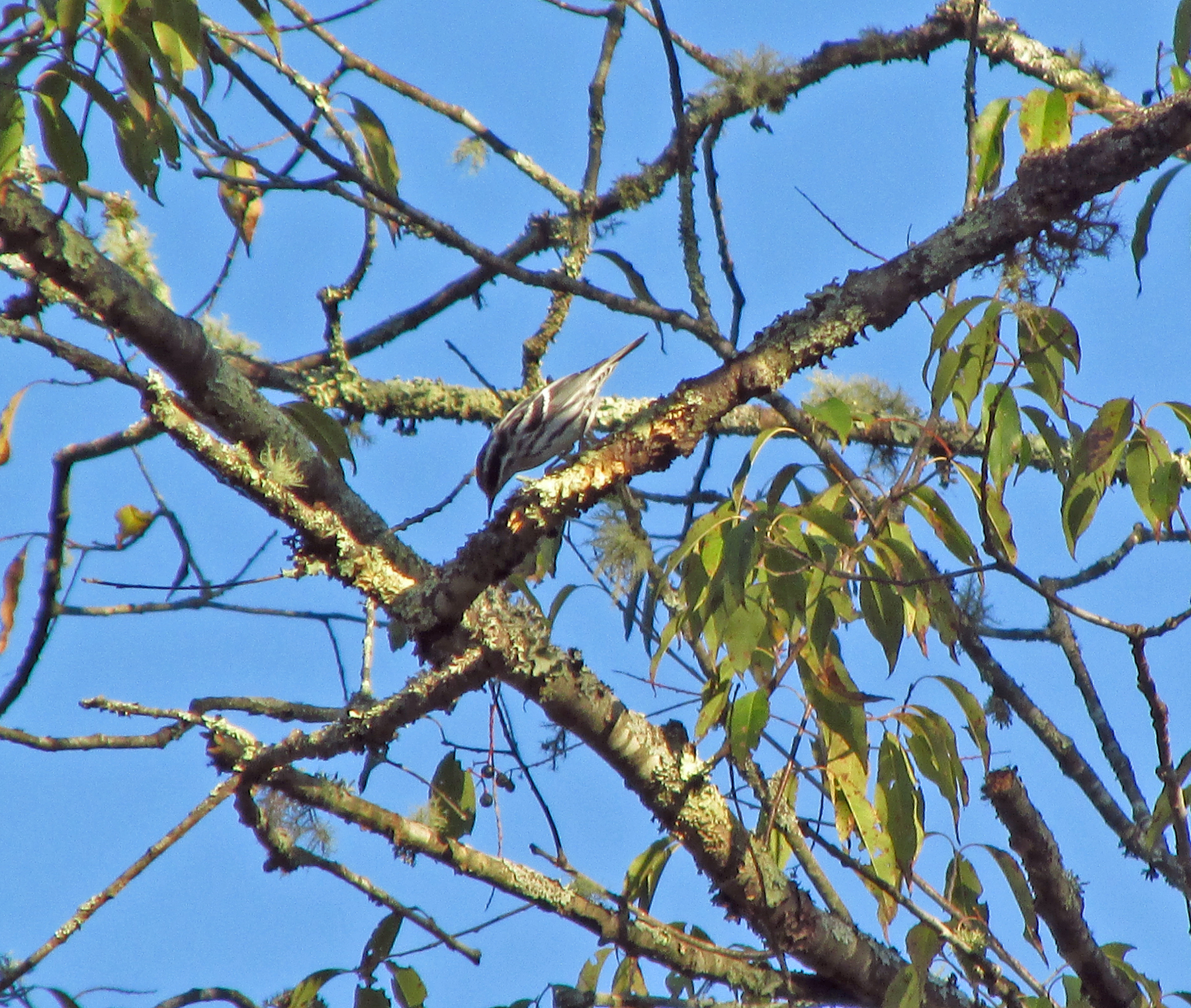
Ovenbird, 70; Worm-eating Warbler, 14; Louisiana Waterthrush, 4; Golden-winged Warbler, 3; Black-and-white Warbler,  38; Swainson’s Warbler, 3; Kentucky Warbler, 1; Common Yellowthroat,  27; Hooded Warbler, 88; American Redstart, 9; Northern Parula,  15; Magnolia Warbler, 2; Blackburnian Warbler,  14; Yellow Warbler, 5; Chestnut-sided Warbler, 27; Black-throated Blue Warbler,  35; Pine Warbler, 4; Yellow-rumped Warbler, 1; Yellow-throated Warbler, 13; Black-throated Green Warbler, 34; Canada Warbler, 24; and Yellow-breasted Chat, 10.

Eastern Towhee, 120; Chipping Sparrow, 100; Field Sparrow,  37; Vesper Sparrow,  1; Song Sparrow, 231; Dark-eyed Junco, 89; Scarlet Tanager, 27; Northern Cardinal,  157; Rose-breasted Grosbeak, 17; Blue Grosbeak, 2; and Indigo Bunting, 181.

Red-winged Blackbird, 69; Eastern Meadowlark, 25; Common Grackle,  95; Brown-headed Cowbird, 39; Orchard Oriole, 7; Baltimore Oriole, 4; House Finch,  28; Red Crossbill, 1; American Goldfinch, 166; and House Sparrow, 128.

Photo by Bryan Stevens Although waterfowl can be difficult to find in Carter County during the summer months, a total of 11 Wood Ducks were tallied for the Summer Bird Count.

Photo by Bryan Stevens
Although waterfowl can be difficult to find in Carter County during the summer months, a total of 11 Wood Ducks were tallied for the Summer Bird Count.

All 116 species found on the count are known or suspected to nest in Carter County, except for the Double-crested Cormorant.

•••••

Hampton resident Barbara Lake emailed me to share some photos of a clutch of eggs in one of her bluebird boxes.

Photo Courtesy of Barbara Lake A clutch of five Eastern Bluebird eggs in a box at the home of Barbara and Jerry Lake in Hampton.

Photo Courtesy of Barbara Lake
A clutch of five Eastern Bluebird eggs in a box at the home of Barbara and Jerry Lake in Hampton.

She actually has two pairs of Eastern Bluebirds nesting in boxes at her home. She has named the bird Blossom and Max, as well as Aliy and Allen. The latter are named for Iditarod and Yukon Quest musher friends.

“I wrote to Aliy and told her I named a bluebird after her, and she is happy about it.  So now I have to keep her up to date about what’s going on.”

Some of Barbara’s bluebird boxes are equipped with television cameras, which allows her to monitor activity on a television screen in the comfort of her home.

•••••

Now that it is July, birding sometimes becomes more difficult because of the intense heat, high humidity and other factors. There are still interesting bird observations to make. Many birds are still taking care of young, either in or out of the nest. If you’d like to share an observation, make a comment or ask a question, email me at ahoodedwarbler@aol.com or post a comment here.


Region’s drab vireos more famous for persistent singing than their appearance

In some recent columns, I’ve focused on some of the summer songbirds — scarlet tanager, rose-breasted grosbeak – with flashy, bright plumages.  Not all our summer nesting birds boast such vivid coloration. In fact, one family of songbirds — the vireos — is known for its dull plumage.

Photo by Bryan Stevens      A blue-headed vireo sings from a woodland perch.

Photo by Bryan Stevens A blue-headed vireo sings from a woodland perch.

I’ve had some interesting encounters with vireos in the past few weeks. From early May through mid-June, a male red-eyed vireo sang daily from the woodland near my home. He would commence signing early in the morning and continue through late afternoon. I never saw him, which is not too surprising. Red-eyed vireos lead almost their entire lives in the forest canopy. If you do manage to observe one, you’ll see an olive green bird with white underpart. The red-eyed vireo, known scientifically as Vireo olivaceus, shows a narrow white eyebrow bordered above with black. It also has a grayish crown and the namesake red eye.
At a glance, the vireos would appear related to the wood warblers. Research into vireo DNA, however, has led many experts to contend that vireos are more closely related to crows and shrikes. Like the flycatcher, warbler and hummingbird families, the vireo family is exclusive to the New World. There are about 50 species of vireos. The majority reside in the tropics, but about a dozen species spend their nesting season within the United States.

JP-RedEyedVireo-Fledgling

Photo Courtesy of Jean Potter A young red-eyed vireo begs for food, which will bring a prompt response from a nearby parent.

In Southwest Virginia and Northeast Tennessee, vireos resident during the summer months include red-eyed, white-eyed, blue-headed, yellow-throated and warbling.  Most people are likely unaware of vireos. Although not uncommon, these birds are much more frequently heard than seen. They spend much of their time in the forest canopy or in dense brush. When singing, they can remain at a perch, unmoving, for long periods of time. 
On recent woodland walks I have heard the loud scolding calls of red-eyed vireos. This call, given apparently when the vireo is alarmed or irritated, is quite unlike the usual vocalizations produced by this bird. First and foremost, the call is louder than one would think could be produced by a bird that is only about six inches long.
During the summer season, the red-eyed vireo is also one of the most persistent of singing songbirds. Another of its common names is “Preacher Bird,” so called because of its tendency to unceasingly deliver it song. To give you an idea of just how persistently this bird sings, the red-eyed vireo holds the record for singing its song the most times in a single day. Some individuals have been recorded singing the series of emphatic syllables more than 20,000 times in a day. The song is not particularly musical, consisting of whistled phrases, each slightly different and punctuated with brief pauses. 

Photo Courtesy of Jean Potter A red-eyed vireo sits on its basket-shaped nest.

Photo Courtesy of Jean Potter
A red-eyed vireo sits on its basket-shaped nest.

The red-eyed vireo is still considered one of eastern North America’s most common summer breeding birds. At one time, this bird was probably the most common breeding bird in Eastern woodlands. It is still one of the most widespread, ranging from the Eastern United States into the Northwestern United States and across Canada. In fall, they withdraw to spend the winter in South America.
The term “vireo,” originating in Latin, can be translated into English as “green bird.” It’s an apt description, as many of these small birds are primarily dull green in coloration.
There is an endangered vireo, the black-capped vireo, a bird with a limited breeding range in Texas. Black-capped vireos numbers have dwindled to perilous levels due to the loss of low growing woody cover these birds need for breeding purposes. The cause of the loss of habitat varies, but includes the clearance of land for livestock as well as overgrazing by livestock and deer. In the past, fires regularly opened up such habitats. Due to modern fire control practices, such fires are no longer a natural occurrence. Since this species is already endangered, brown-headed cowbirds have also contributed to the problem since the cowbirds slip their own eggs into the nests of black-capped vireos.

Vireo_blackcapped_B07T

Photo by USFWS The black-capped vireo is the only member of the vireo family in the United States classified as endangered.

Two others, Bell’s vireo and gray vireo, are identified as species of concern on the Audubon Watchlist. This listing spotlights species that may bear intense scrutiny to make certain they don’t become endangered.
Other vireos that can be found in the United States, for at least part of the year, include Philadelphia vireo, plumbeous vireo and Cassin’s vireo. A specialty of Florida is the black-whiskered vireo. 
Many species of vireo are also found in the islands of the Caribbean, including Jamaican vireo, Cuban vireo and Puerto Rican vireo. Some of the more colorful common names for vireos include the yellow-green vireo, golden vireo and yellow-winged vireo. 
In Central and South America, the vireo family expands to include many birds with common names such as “Shrike-Vireo,” “Greenlet” and “Peppershrike.” Some of the varied species include the lemon-chested greenlet, green shrike-vireo and the black-bellied peppershrike.

Warbling_Vireo

Photo by Dave Menke/USFWS A warbling vireo is the most drab member of a family known for its drabness. The warbling vireo’s impressive song, however, reminds many listeners of the song of the gaudy painted bunting.

Known by the scientific name, Vireo gilvus, the warbling vireo is another member of this family of songbirds that can be found in the region. It is named for its distinctive, warbling song. Some experts have likened its song to that of the painted bunting. That must be about all the two birds have in common. In contrast with the gaudy painted bunting, the warbling vireo can quite honestly stake a claim as one of our most drab songbirds. Overall, this is a grayish little bird with a white eyeline that is paler than the rest of its plumage. Its legs are blue-gray in color and this species has a bill that is stout like other vireos and unlike the beaks of most warblers. It’s their plainness that is the most distinctive aspect of their appearance.
Many vireos construct deep cup- or basket-shaped nests, often in the higher branches of tall trees. Male and female share incubation duties and work together to feed their young. 
Most vireos feed on in­sects during their summer stay north of the border. However, during migration they often feed on berries and continue to do so on their wintering grounds. Experts have noted that the white-throated vireo is particularly fond of gumbo-limbo seeds. This tropical tree can be found from southern Florida and Mexico, as well as throughout the Caribbean and in South America in Brazil and Venezuela.

Photo by Jean Potter The Blue-headed Vireo prefers wooded habitats at higher elevations.

Photo by Jean Potter
The Blue-headed Vireo prefers wooded habitats at higher elevations.

At times, it’s important to use our ears, as well as our eyes, when trying to find birds. That’s particularly true of the vireos. The widespread family can be found in rural areas, as well as suburban settings. Tall stands of trees are one of the essential requirements. So, when you next hear some whistled phrases coming from the treetops, be sure to look up. You may get lucky.
To hear a singing red-eyed vireo, visit the link below to view a video of the bird on YouTube:

First-ever Unicoi County Summer Bird Count tallies 111 species

Members of the Lee and Lois Herndon Chapter of Tennessee Ornithological Society conducted the first-ever Unicoi County Summer Bird Count on Saturday, June 14.

Photo by Bryan Stevens A young Eastern Bluebird slowly gains independence after leaving the nest.

Photo by Bryan Stevens
A young Eastern Bluebird slowly gains independence after leaving the nest.

Rick Knight, a long-time compiler for the chapter’s seasonal bird counts, organized and launched the count as a means to collect valuable information about the local distribution of birds in an often overlooked county in the region.

Nineteen observers in five parties logged 53 party hours, plus three nocturnal party hours, searching for birds from Flag Pond to Limestone Cove within Unicoi County.

 A total of 111 species were tallied during the count by the following observers: Jim Anderson, Rob Armistead, Harry Lee Farthing, Don Holt, Rick Knight, Roy Knispel, Richard Lewis, Vern Maddux, Joe McGuiness, Tom McNeil, Charles Moore, Cathy Myers, Kathy Noblet, Brookie and Jean Potter, Bryan Stevens, Kim Stroud, Gary Wallace and John Whinery.

 Species found during the count included:

Canada Goose, 76; Wood Duck, 17; Mallard, 31; Ruffed Grouse,1; Wild Turkey, 29; Great Blue Heron, 12; and Green Heron, 6.

Black Vulture, 3; Turkey Vulture, 28; Bald Eagle, 3 ; Sharp-shinned Hawk, 1; Cooper’s Hawk, 1; Red-shouldered Hawk, 1; Broad-winged Hawk, 3; Red-tailed Hawk, 5; American Kestrel, 2; and Peregrine Falcon, 3.

Killdeer,17; Rock Pigeon,  75; Mourning Dove, 77; Yellow-billed Cuckoo,  3; Eastern Screech-Owl,  2; Great Horned Owl, 1; Chuck-will’s-widow, 6; Eastern Whip-poor-will,  3; Chimney Swift,  44; Ruby-throated Hummingbird, 17; and Belted Kingfisher,  4.

Photo Courtesy of Jean Potter The Yellow-bellied Sapsuckers found during the count indicate that this species is nesting at high-elevation locations in Unicoi County.

Photo Courtesy of Jean Potter
The Yellow-bellied Sapsuckers found during the count indicate that this species is nesting at high-elevation locations in Unicoi County.

Red-bellied Woodpecker,  20; Yellow-bellied Sapsucker  3; Downy Woodpecker  15; Hairy Woodpecker  5; Northern Flicker,  12; Pileated Woodpecker, 16;  Eastern Wood-Pewee  8; Acadian Flycatcher  29; Least Flycatcher  5; Eastern Phoebe,  44; Great Crested Flycatcher,  2; and Eastern Kingbird,  13.

White-eyed Vireo,  1; Yellow-throated Vireo,  1; Blue-headed Vireo,  29; Warbling Vireo,  1; Red-eyed Vireo,  157; Blue Jay, 59; American Crow, 139; Common Raven, 8; Purple Martin, 36; Tree Swallow, 94; Northern Rough-winged Swallow, 68; Cliff Swallow, 64; and Barn Swallow, 139.

Carolina Chickadee,  63; Tufted Titmouse,  47; Red-breasted Nuthatch,  3; White-breasted Nuthatch,  20; Brown Creeper, 1; Carolina Wren, 80; House Wren,  31; Winter Wren,  2; and Blue-gray Gnatcatcher, 27.

Eastern Bluebird, 46; Veery, 35; Wood Thrush, 37; American Robin, 435; Gray Catbird, 37; Northern Mockingbird, 37; Brown Thrasher, 14; European Starling, 464; and Cedar Waxwing,  71.

Ovenbird, 56; Worm-eating Warbler, 9; Louisiana Waterthrush, 5; Golden-winged Warbler, 1; Black-and-white Warbler, 19; Swainson’s Warbler, 6; Kentucky Warbler, 1; Common Yellowthroat,  2; Hooded Warbler, 78; American Redstart,  8; Northern Parula, 13; Magnolia Warbler, 1; Blackburnian Warbler, 2; Yellow Warbler, 1; Chestnut-sided Warbler,  23; Black-throated Blue Warbler, 20; Yellow-throated Warbler, 4; Prairie Warbler, 7; Black-throated Green Warbler,  30; Canada Warbler, 9; and Yellow-breasted Chat, 5.

Photo by Bryan Stevens A young Chipping Sparrow perches on a barbed wire fence at the Bell Cemetery in Limestone Cove.

Photo by Bryan Stevens
A young Chipping Sparrow perches on a barbed wire fence at the Bell Cemetery in Limestone Cove.

Eastern Towhee,  70; Chipping Sparrow,  60; Field Sparrow,  12; Song Sparrow,  214; Dark-eyed Junco,  28; Scarlet Tanager,  20; Northern Cardinal,  138; Rose-breasted Grosbeak, 2; Blue Grosbeak, 1; and Indigo Bunting, 197.

Red-winged Blackbird,  101; Eastern Meadowlark,  13; Common Grackle,  94; Brown-headed Cowbird,  34; Orchard Oriole,  1; Baltimore Oriole,  1; House Finch,  8; American Goldfinch,  84; and House Sparrow,  64.

Knight noted that all 111 species found during the count are known or suspected to nest in Unicoi County. For instance, the three Bald Eagles found on the count included an adult bird and two recently fledged young. Eagles have been documented nesting near the Devil’s Looking Glass above the Nolichucky River for the past couple of years.

•••••

During the count, I stayed close to home with the territory of Limestone Cove and the portion of Sciota Road located within Unicoi County. Gary Wallace and John Whinery joined me for several hours of productive birding.

We found some birds I would never have expected to find so close to home, including singing Prairie Warblers and a noisy, scolding Yellow-breasted Chat. On Bean Creek Road near the state line with North Carolina, we also found a male Yellow-bellied Sapsucker while walking a section of the Appalachian Trail. This was my first summer sighting of what is normally a winter bird in the region. In recent years, however, a few sapsuckers have started nesting in some of the local mountains.

We also missed some target birds. We checked out every pond we could view in our territory and failed to find a Green Heron.

Summer is also an extremely busy time of year for birds as they go about the business of bringing up a new generation of birds. Most birds have completed spring migration and have settled into locations they will call home for the next few months. During the recent Summer Bird Count in Unicoi County, we saw numerous young birds, ranging from Chipping Sparrows and Eastern Bluebirds to American Robins and Barn Swallows.

Photo by Bryan Stevens A young Barn Swallow perched on a utility line at the Bell Cemetery in Limestone Cove awaits a delivery of food from its parents.

Photo by Bryan Stevens
A young Barn Swallow perched on a utility line at the Bell Cemetery in Limestone Cove awaits a delivery of food from its parents.

•••••

To ask a question, make a comment or share an observation, email me at ahoodedwarbler@aol.com or leave a remark here at “Our Fine Feathered Friends.”


Other things with wings

Photo by Bryan Stevens

Photo by Bryan Stevens                             Don’t believe all you hear. Dragonflies and damselflies are harmless to humans. They can’t sting. They can’t sew your lips shut. People have invented many scary names for these winged insects, including “snake killer,” “water witch” and “devil’s darning needle.” Don’t be fooled by the bad press and all the myths. Dragonflies and their kin are some of the world’s most beneficial insects. Pictured, a decorative and illuminating dragonfly owned by a fan of these valuable insects.

I’m taking a hiatus from the birds for one week to bring you some other things with wings in the form of a pictorial essay of dragonflies and damselflies, otherwise known as “odes,” or members of the insect order of Odonata.

I hope you enjoy this diversion. I know I’ve had much fun this spring photographing the odes at the fish pond at my home on Simerly Creek Road in Hampton. I’ve also visited some other locations to find and photograph them, including Erwin Fishery Park in Unicoi County.


Photo by Bryan Stevens An Eastern Amberwing casts an amber shadow on this rock at the edge of a pond in Erwin, Tennessee.

Photo by Bryan Stevens
An Eastern Amberwing casts an amber shadow on this rock at the edge of a pond in Erwin, Tennessee. This is one of the smaller dragonflies in the Southern Appalachians. The largest dragonfly to ever live was Meganeura monyi, which lived during the Carboniferous period about 300 million years ago. It resembled and was related to present-day dragonflies. With a wingspan of almost 26 inches, it is one of the largest known flying insect species. Like modern dragonflies, Meganeura monyi was predatory and fed on other insects.

Photo by Bryan Stevens The Aurora Damselfly is a study in simple elegance.

Photo by Bryan Stevens
The Aurora Damselfly is a study in simple elegance. Damselflies are typically weaker flyers than dragonflies.

Photo by Bryan Stevens A glimpse through the vegetation at one of the pond's most voracious predators. Dragonflies consume many other species of insects, including some that are considered pests. Pictured is a female Blue Dasher.

Photo by Bryan Stevens
A glimpse through the vegetation at one of the pond’s most voracious predators. Dragonflies consume many other species of insects, including some that are considered pests. Pictured is a female Blue Dasher.

Photo by Bryan Stevens

Photo by Bryan Stevens                                                                                                              Dragonflies and damselflies have been around longer than birds. Scientists estimate that these insects have been flying our skies for 300 million years.

Photo by Bryan Stevens

Photo by Bryan Stevens                                                                                                         Pictured, a male Ebony Jewelwing displays along the edge of Simerly Creek. Most, but not all, damselflies are fairly small. Megaloprepus caerulatus, which belongs to the Forest Giant family of damselflies, is the world’s largest damselfly. This damselfly inhabits rain forests in Central and South America. It has the greatest wingspan — 7.5 inches for large males — of any living damselfly or dragonfly.

Photo by Bryan Stevens

Photo by Bryan Stevens                                                                                                              What big eyes they have! Not surprisingly, it’s the better to see you with that has pushed the evolution of the dragonfly eye. A dragonfly’s head is comprised almost entirely of two large, compound eyes. Pictured, a Blue Dasher.

Photo by Bryan Stevens

Photo by Bryan Stevens                                                                                                        Common Green Darners photographed in early May on Holston Mountain in Elizabethton. At least 5,000 species of dragonflies and damselflies have been documented by scientists. There are probably more yet to be discovered.

Photo by Bryan Stevens

Photo by Bryan Stevens                                                                                     There are no vegetarian dragonflies. Adult dragonflies feed on other insects that they catch in flight. Larval dragonflies, called nymphs, are aggressive underwater predators that feed on almost anything they can catch, including tadpoles, small fish, other aquatic insects and even each other. If mosquitoes are a nuisance, be sure to welcome dragonflies. They’re a major predator of mosquitoes. Pictured, a Widow Skimmer perches at the edge of a pond, resting until her next flight to prey on other insects.

Like birds, some species of dragonflies migrate. They may also form swarms — the equivalent of a flock of birds — as they stage their migratory flights.

Photo by Bryan Stevens

Photo by Bryan Stevens                                                                                                        This empty shell once housed a voracious dragonfly nymph until it emerged as an adult dragonfly.

Photo by Bryan Stevens

Photo by Bryan Stevens                                                                                                                     A Common Whitetail perches by a pond’s edge.

For more information on dragonflies in the Volunteer State, please visit http://www.pbase.com/rconnorsnaturephoto/tennessee_odonata to learn more.


Happiness is an Eastern Bluebird


Bluebirds make good neighbors. A pair of Eastern Bluebirds in your yard or garden will have no trouble with minor intrusions into their lives as they go about their daily routine, and the payoff for you is hours of free entertainment.

Photo by Bryan Stevens A male Eastern Bluebird perched on playground equipment at Winged Deer Park in Johnson City.

Photo by Bryan Stevens
A male Eastern Bluebird perched on playground equipment at Winged Deer Park in Johnson City.

I’m pleased to report that the first of the season’s young Eastern Bluebirds have left the security of their nest box in our yard – the only home they’ve known since hatching – for the wider world of field and woodland.

As has usually been the case, I didn’t witness their departure. In the days after the fledglings departed the wooden nest box, I’ve observed them perched and waiting, impatiently usually, for their parents to arrive with caterpillars, moths or other morsels of food.

The Eastern Bluebird is one of North America’s best-known cavity-nesting birds. About 85 species of North American birds use cavities in trees for nesting purposes. Cavity-nesters include ducks, such as Buffleheads and Wood Ducks, as well as birds of prey such as Eastern Screech-owls and American Kestrels.

Some of these species, such as woodpeckers and nuthatches, can excavate their own cavity in a dead or decaying tree. Others, such as the bluebirds, must find a cavity already in existence. Such cavities are scarce real estate and can be subject to some intense competition. The Eastern Bluebird is at a disadvantage when forced to compete with non-native introduced birds such as aggressive European Starlings and the House Sparrows.
Photo by Bryan Stevens A male Eastern Bluebird inspects a nesting cavity in a wooden fence post.

Photo by Bryan Stevens
A male Eastern Bluebird inspects a nesting cavity in a wooden fence post.

Last month, I found bluebirds nesting in a cavity in a wooden fence post that was part of an enclosure for a field. The fence post nest reinforced how changing landscapes have also affected these birds. Instead of wooden fence posts, many farmers now use metal ones. Dead or dying trees – a much sought-after resource for cavity-nesting birds — are often removed from woodlands.

Fortunately for bluebirds, this species will also accept lodging in a nest box, or birdhouse, provided for them by human landlords. Because of their trusting nature when it comes to their human neighbors, the Eastern Bluebird is one of our most beloved birds. In fact, bluebirds are such popular birds that interest in them and their well-being has inspired the foundation of such organizations as the North American Bluebird Society. The Eastern Bluebird has also been designated the official state bird for New York and Missouri.

There are two other species of bluebirds found in North America.

The Western Bluebird is found throughout the year in California, the southern Rocky Mountains, Arizona and New Mexico, as wells part of Mexico. The species ranges in the summer as far north as the Pacific Northwest, British Columbia and Montana.

The Mountain Bluebird nests in open country in the western United States as far north as Alaska. They are short-distance migrants, retreating as far south as Mexico during the winter season.

Except for a whitish-grayish belly, the male Mountain Bluebird is a brilliant sky blue above with paler blue on his underparts. The female looks similar if duller in her coloration.

Some people in the region mistakenly assume that Eastern Bluebirds are “mountain” bluebirds because they will reside in higher elevation open areas. The simplest way to tell the two species apart — although not necessary since the range of the Mountain Bluebirds is hundreds of miles to the west — is the reddish undersides of both sexes of the Eastern Bluebird.

The states of Nevada and Idaho have selected the Mountain Bluebird as their official state bird. I saw this species in 2006 during a trip that took me to Utah and Idaho.

Bluebirds are members of the extended family of thrushes, making them relatives of such birds as American Robin, Wood Thrush and Veery. The relationship of the Eastern Bluebird to the American Robin can be seen in the red breast sported by both species. In addition, young robins and bluebirds both have spotted breasts, providing more evidence of their affinity with many of the thrushes. The thrush family numbers more than 100 species worldwide and extends into Europe, Asia and Africa, as well as various islands.

Photo by Bryan Stevens A female Eastern Bluebird gathers pine needles to use as nesting material.

Photo by Bryan Stevens
A female Eastern Bluebird gathers pine needles to use as nesting material.

Inviting the Eastern Bluebird into your yard and gardens is not usually too difficult. It helps if you live in an open, spacious habitat bordered with small trees. Providing a nesting box constructed to the specifications for this bird is another way to attract them. With natural cavities in trees and fence posts a rare commodity, this bird will readily accept boxes. It’s not a sure-fire means of bring bluebirds closer. Plenty of other native birds, including Carolina Chickadees, Tree Swallows and House Wrens, will also make use of a box designated for bluebirds.

The NABS recommends a box that is well ventilated, watertight and equipped with drainage holes. The box should also be easy to open, monitor and clean.

For more specific and very valuable information about becoming a landlord for bluebirds, please visit http://www.nabluebirdsociety.org/PDF/FAQ/NABS%20factsheet%20-%20Getting%20Started%20-%2024May12%20DRAFT.pdf to access an informative fact sheet.

Starlings and House Sparrows are not native species and are not protected by law. When present, these two introduced species will probably be your biggest challenge to successfully hosting Eastern Bluebirds. On its website, NABS encourages the control of starlings and House Sparrows. The website – http://www.sialis.org – also provides beneficial information for would-be bluebird landlords.

Tree Swallows and House Wrens, both native birds, will probably be the biggest rivals for nesting boxes intended for Eastern Bluebirds. If you should find that a pair of Tree Swallows or House Wrens has claimed a box, consider yourself fortunate and benefit from the opportunity to view the habits of these two interesting species for a few weeks.

In addition to housing, food and water can be used to lure Eastern Bluebirds closer. This bird doesn’t eat seeds, but it can be attracted with an offering of mealworms — live or freeze-dried – or commercially prepared peanut butter nuggets. A water feature in a yard is also a magnet for bluebirds and a host of other bird species.

If your home doesn’t provide suitable bluebird habitat, it’s still easy to enjoy these beautiful birds. An afternoon or evening drive into open country, such as agricultural farmland, is likely to yield sightings of this bird on fences and utility lines. Golf courses, some of which go the extra mile to accommodate bluebirds, also provide habitat for these lovely birds.

The Eastern Bluebird is present in the region in any season and is one of our more common birds. If you’re already an experienced landlord and host for these birds, you probably already know they joys they can bring. If not, why not try to attract them closer to you? Most bluebirds in the region have already completed the first nesting of the season, but these birds are known to nest two or even three times in a single season. There’s still time to place a nest box or two on your property to get their attention.

Photo by Bryan Stevens The female Eastern Bluebird is not quite as brightly colored as her mate.

Photo by Bryan Stevens
The female Eastern Bluebird is not quite as brightly colored as her mate.

Landscaping with fruit-bearing trees and shrubs can also pay dividends when its comes to the Eastern Bluebird. Although this bird feeds heavily on insects, almost a third of its diet consists of fruits, including blackberry, mulberry and pokeberry.

Inviting bluebirds to become a part of your life isn’t difficult, and you’ll be delighted to have them. Trust someone who has lived with bluebirds in his yard and gardens for more than 20 years.

•••••

To ask a question, make a comment or share a bird observation, reach me at ahoodedwarbler@aol.com.

Photo by Bryan Stevens The male Eastern Bluebird is beloved by many bird enthusiasts.

Photo by Bryan Stevens
The male Eastern Bluebird is beloved by many bird enthusiasts.


‘Wind birds’ make their way through region during annual migrations

Since the Volunteer State has no access to the sea, it is sometimes amazing how many birds affiliated with coastal areas can be found if you know when and where to look.

A recent seven-day visit to coastal South Carolina reinforced the romance of a group of related birds known collectively as shorebirds or, in a somewhat more adventuresome context, “wind birds.” This diverse family of birds range in size from sparrow-sized sandpipers to larger species such as American Avocet, Long-billed Curlew and Marbled Godwit.

During daily visits to Huntington Beach State Park, located within five minutes of my brother’s new home on Pawleys Island, S.C., I observed plenty of these “wind birds.” I saw a range of species, including Wilson’s Plover, Short-billed and Long-billed Dowitcher, Greater Yellowlegs, Sanderling, Least Sandpiper, Ruddy Turnstone, Spotted Sandpiper, Semipalmated Sandpiper, Black-bellied Plover, Semipalmated Plover, Dunlin and even the gangly Black-necked Stilt.

Photo by Bryan Stevens A pair of Sanderlings at surf's edge at Huntington Beach State Park.

Photo by Bryan Stevens
A pair of Sanderlings at surf’s edge at Huntington Beach State Park.

Known as “wind birds” for the propensity of many members of this extended family to stage long-distance migrations, some species fly through Northeast Tennessee each spring and fall as they migrate to and from distant nesting grounds.

I have seen several species — Wilson’s Snipe, Greater Yellowlegs, Pectoral Sandpiper, Least Sandpiper, Solitary Sandpiper and Spotted Sandpiper — in the region this spring. Their stays are usually of brief duration as they are eager to push farther north. Many of them will not stop until they reach the edge of the Arctic tundra.

While I was enjoying seeing a wide range of shorebirds in South Carolina, two Stilt Sandpipers put in a rare appearance in Northeast Tennessee. I hated to miss them. I’ve only seen one other Stilt Sandpiper in the region, and that observation took place back in 2000 at Austin Springs on Boone Lake.

The Stilt Sandpipers were found by Brookie and Jean Potter on the Watauga River at Rasar’s Farm in Elizabethton. The couple reported that it was their first spring sighting of Stilt Sandpipers, as well as their first Carter County sighting of this species. The photo at the start of the column, provided by Jean Potter, shows the two Stilt Sandpipers bordered by a pair of Greater Yellowlegs.
Stilt Sandpipers making migration stops in Tennessee still have a long way to travel. These shorebirds nest on the Arctic tundra beyond the tree line. Wet sedge-meadows with raised ridges and hummocks provide nesting habitat. After the nesting season they fly south as far as northern South America and can be found at fresh water ponds, marshes, lagoons and flooded fields.

This medium-sized sandpiper stands out from most of the sandpipers in its size range. It has long, greenish legs, as well as a long neck and bill, which is drooped at the tip. In breeding plumage, this shorebird has a distinctive chestnut cheek patch.

••••••

During my South Carolina stay, I didn’t encounter any Stilt Sandpipers. I did, however, find three Black-necked Stilts.

The only time I have seen this unusual shorebird in Tennessee took place on Oct. 13, 2004, at Austin Springs on Boone Lake in Washington County. The bird, first found by Rick Knight, drew many excited birders to the location for looks at this shorebird before it departed to continue its migration flight south.

Photo by Bryan Stevens Two Black-necked Stilts forage along the causeway wetland at Huntington Beach State Park.

Photo by Bryan Stevens
Two Black-necked Stilts forage along the causeway wetland at Huntington Beach State Park.

I have also seen Black-necked Stilt on Fripp Island, S.C, as well as in Utah.

The world of shorebirds has produced many look-alike species, including many of the small sandpipers often collectively labeled as “peeps” by birders. The Black-necked Stilt, however, is not at all likely to be confused with any other shorebird. It is a slender bird atop a pair of extremely long pink legs. It has a two-tone appearance with black upper parts and white underparts. The black and white dichotomy continues along the bird’s long neck and head. This bird also has a thin, needle-shaped bill that it uses to delicately pluck aquatic insects and other prey from water or mud.

I first spied the Black-necked Stilts at Huntington Beach State Park while walking on a marsh boardwalk near the park’s Nature Center. They flew toward the causeway, so I got into my car and drove there to try to re-locate them. I did find two of the stilts feeding along the causeway, but I never managed to find the third bird.

I watched the two Black-necked Stilts foraging for food in shallow water shared by egrets and alligators. The two birds, despite a somewhat gangly appearance, moved with elegantly efficient strides on their long pink legs. This bird feeds on an assortment of aquatic creatures, including small fish, insects and tadpoles. The seeds of aquatic plants also provides some of the food in its diet.

I also saw several plovers, another group of shorebirds, while in South Carolina. Wilson’s Plover was one that stood out during my visits to Huntington Beach State Park. Wilson’s Plover is a coastal shorebird that breeds on both coasts of the Americas from the equator northwards. Its range extends north to include much of the U.S. eastern seaboard as well as the Pacific coast of Mexico.

A Wilson's Plover in the dunes at Huntington Beach State Park in South Carolina.

A Wilson’s Plover in the dunes at Huntington Beach State Park in South Carolina.

I’ve observed Wilson’s Plovers on Fripp Island, S.C., in the past, but those sightings have been rather sporadic. I have also observed this bird at one other location — at Douglas Lake in Cocke County back in the late 1990s.

The Wilson’s Plovers at Huntington Beach State Park were nesting in the dunes, which also gave me an opportunity to see some young plovers. A young Wilson’s Plover looks like a ball of downy feathers standing on toothpicks. This plover nests on a bare scrape on sandy beaches or sandbars. To protect the plovers, as well as other nesting species, this section of dunes on Huntington Beach State Park bars the entry of dogs. It is also roped off to prevent accidental intrusion by people.

Photo by Bryan Stevens A pair of Wilson's Plover chicks at Huntington Beach State Park in South Carolina.

Photo by Bryan Stevens
A pair of Wilson’s Plover chicks at Huntington Beach State Park in South Carolina.

Most of the Wilson’s Plovers that spend the summer in the United States retreat each fall, although a few migrate only as far as Florida. The rest spend the winter as far south as Brazil.

For a small shorebird, the Wilson’s Plover sports a thick, blunt and relatively large bill. In fact, this bill — that looks too big for its body — is a good way to identify this shorebird at a glance. The Wilson’s Plover forages for food on beaches. It has a fondness for crabs, which may explain the size and shape of its bill, but this bird will also eat insects, marine worms and other small organisms.

The Wilson’s Plover is larger than the related Semipalmated Plover and Piping Plover but considerably smaller than such relatives as Killdeer and Black-bellied Plover. This shorebird weighs only a couple of ounces, with a length of about eight inches and a wingspan of 19 inches. The Wilson’s Plover has a dark neck ring, grayish-brown upper parts, a white underside and pinkish legs.

This bird was named after the Scottish-American ornithologist Alexander Wilson. Wilson collected the type specimen during a trip in May of 1813 to Cape May, N.J. Other birds named for this pioneering bird expert include Wilson’s Warbler, Wilson’s Phalarope, Wilson’s Snipe and Wilson’s Storm Petrel.

•••••

With a few exceptions, most of the shorebirds that I have found along the Atlantic Coast I have also observed here in land-locked Tennessee during spring and fall migration. It’s one of those little known facts I enjoy sharing with people, who are often surprised that these “beach birds” also make visits to our state.

•••••

Make a comment, ask a question or share an observation by sending an email to ahoodedwarbler@aol.com or posting a comment here on my blog. I am also on Facebook.

A mixed flock of Short-billed and Long-billed Dowitchers and a Ruddy Turnstone at Huntington Beach State Park.

A mixed flock of Short-billed and Long-billed Dowitchers and a Ruddy Turnstone at Huntington Beach State Park.


Taste of tropics arrives with Scarlet Tanagers

In late April and early May, once the oaks, the maples, the poplars begin spreading out new green leaves to create a concealing woodland canopy, a familiar song can be heard from the treetops. Upon first hearing it, listeners might mistake the hidden singer for an American Robin. Listen a little closer, however, and the song sounds as if it is being delivered by a hoarse robin with a sore throat.

The producer of the hoarse but melodic song is a Scarlet Tanager, one of the most showy birds of Eastern woodlands from April to early October. Like the warblers, vireos, flycatchers and other songbirds, the Scarlet Tanager is migratory. They spend the winter months in the tropical forests of Central and South America. The Scarlet Tanager is better attired than most birds to provide us a glimpse of what life must be like in the tropical rain forests, which are a riot of color and sound.

A print of Scarlet Tanagers by early North American naturalist and painter John James Audubon.

A print of Scarlet Tanagers by early North American naturalist and painter John James Audubon.

It takes only one sighting to sear the vision of these vibrant birds into our retinas, as well as into our memories. The Scarlet Tanager boasts a brilliant plumage of crimson red paired with black wings and tail. Of course, this is the male. The female Scarlet Tanager makes no real claim to the common name with her comparatively drab greenish plumage. However, the scientific name, Piranga olivacea, gives a nod to the olive-green plumage of females, young males and even adult males when molting their feathers.

Although once nominated as a candidate for state bird by the school children of Minnesota, the Scarlet Tanager ultimately failed to gain the designation. Instead, as perhaps is fitting for the “Land of 10,000 Lakes,” the Common Loon represents Minnesota as official state bird.

The related Summer Tanager is less widespread in Northeast Tennessee, but males of this species are no less dramatic in appearance than the Scarlet Tanager. Male Summer Tanagers are a rosy-red over all their body. Females, with a dull greenish plumage, are relegated to the background. She can be distinguished from her counterpart, the Scarlet Tanager, because of their darker wings and larger bills.

Photo Courtesy of Jean Potter The Summer Tanager is the only all-red bird in North America. It is less common in Northeast Tennessee than the related Scarlet Tanager.

Photo Courtesy of Jean Potter
The Summer Tanager is the only all-red bird in North America. It is less common in Northeast Tennessee than the related Scarlet Tanager.

The Summer Tanager holds the distinction of being the only all-red bird in North America. Birds like Northern Cardinals and Scarlet Tanagers also have some black in their plumage.

I’ve seen Summer Tanagers at Steele Creek Park in Bristol and Willow Springs Park in Johnson City. Sadly, over the years my sightings of this attractive songbird have been few and far between. My best sighting of a male Summer Tanager took place during a spring visit to Fripp Island, S.C., many years ago. Most of the Summer Tanagers I have observed in Northeast Tennessee have been females.

On the other hand, I usually have a few Scarlet Tanagers in residence around my home during the summer months. If the woodlands at my home fail to attract this bird, I can usually make a visit to higher elevations on Roan Mountain and Holston Mountain to gain an exciting glimpse of this beautiful bird.

Worldwide, there have traditionally been about 240 species of tanagers. Experts have changed some of the ways they classify tanagers, so that figure is no longer set in stone. Tanagers are a New World family of birds, concentrated mainly in the tropics.

In the western United States, the Scarlet and Summer Tanagers are replaced by Western Tanagers and Hepatic Tanagers. During a visit to Salt Lake City in Utah in 2006 I saw several Western Tanagers.

Some of the world’s other tanagers are known by extremely descriptive names, including Flame-colored Tanager, Green-headed Tanager, Golden-chevroned Tanager, Azure-shouldered Tanager, Fawn-breasted Tanager, Saffron-crowned Tanager, Metallic-green Tanager, Turquoise Tanager, Scarlet-bellied Mountain Tanager and Diademed Tanager.

Scientists, who have to occupy themselves, have recently given fresh consideration to the relationship of many tanagers to the other birds of the world. As a result, many of the North American tanagers are now closely allied with such birds as Northern Cardinals and more remote from tropical tanagers.

The Scarlet Tanager is not typically a feeder visitor, but you can lure these birds with orange slices placed in special feeders or simply spiked onto the branches of backyard trees. As an added bonus, orange slices can also attract birds such as Baltimore Orioles and Gray Catbirds.

Fond of fruit, the Scarlet Tanager incorporates various berries into its diet. Landscape around your home with fruit-bearing trees such as mulberry, serviceberry and wild cherry to make your yard more inviting to these elusive bird.

Yes, the Scarlet Tanager is more often heard than seen, but it is a bird worth seeking out. A sighting of one will amaze you.

•••••

I love to hear from readers. Just post comments on my blog at ourfinefeatheredfriends.wordpress.com. You can also reach me on Facebook or send email to ahoodedwarbler@aol.com. Please share the link to the blog with others who might be interested in the topic of birds and birding in Northeast Tennessee.


Northeast Tennessee Spring Bird Count finds 157 species

Members of the Lee and Lois Herndon Chapter of Tennessee Ornithological Society held the annual Spring Bird Count on Saturday, May 3. The count has now been held for several decades and is conducted in the five-county area of Northeast Tennessee that includes the counties of Carter, Johnson, Sullivan, Unicoi and Washington.

10296052_10202842919586443_3829607003488944484_o

Photo by Bryan Stevens The American Robin ranked as the most abundant bird on this year’s Spring Bird Count for Northeast Tennessee.

A total of 40 individuals in nine parties looked for birds on a beautiful May day, which in itself was a slight change from the way the count has been conducted in the past. The count has traditionally been conducted the last weekend in April but was moved back this year so as not to compete with the Roan Mountain Spring Naturalists Rally, which was held a week earlier than its usual date.

Those taking part in the count were Fred and JoAnn Alsop, Jim Anderson, Paul and Emily Bayes, Jerry Bevins, Rob Biller, Kevin and Dallas Brooks, Ron Carrico, Harry Lee Farthing, Paul Haynes, Don Holt, Heather Jones, Caitlyn King, David Kirschke, Rick Knight (compiler), Roy Knispel, Tom Laughlin, Richard Lewis, Vern Maddux, Larry McDaniel, Joe McGuiness, Tom McNeil, Charles Moore, Cathy Myers, Kathy Noblet, Brookie and Jean Potter, Amy and Scott Reys, Chris Soto, Bryan Stevens, Kim Stroud, Byron Tucker, Gary and Brenda Wallace, Mary Anna Wheat, John Whinery and Rex Whitfield.

I know I am always enthusiastic on the day of a spring count, and I suspect the same holds true for other participants. You never know what unexpected bird might make an appearance for this annual survey. Some of my own good finds this year included Yellow-crowned Night-heron, Yellow-breasted Chat, Yellow-billed Cuckoo and Orchard Oriole.

A total of 157 species found fell somewhat short of the all-time record of 161 species, which was established back in 2005. The average number of species for this count is 147.

My friend, Byron Tucker, who was visiting from Atlanta, Ga., got to take part and also make his first visit to Holston Mountain in Carter County. He said he enjoyed the outing. We counted with Elizabethton residents Gary and Brenda Wallace.

My favorite warbler – Hooded Warbler – tied with Ovenbird as the most abundant warbler tallied for this year’s spring count with 173 individuals counted for both these species. A total of 27 warbler species made the count, as well as one Brewster’s Warbler, which is a hybrid between a Blue-winged Warbler and Golden-winged Warbler.

I’m thrilled to report that the most abundant bird on the count wasn’t the European Starling. That honor went to the American Robin with 960 individuals reported by counters. The European Starling came in second with 865 individuals.

Other common species included Cliff Swallow (806), Canada Goose (580), Red-winged Blackbird (469), Common Grackle (401) and American Crow (341).

A Canvasback found on a pond in Washington County established a new late date for this duck in Northeast Tennessee. Other species of interest making the count included Western Sandpiper, Gray-cheeked Thrush, Blackpoll Warbler and Sora.

The total number of species follows:

Canada Goose, 580; Wood Duck, 53; Mallard, 183; Blue-winged Teal, 11; Canvasback, 1; Lesser Scaup, 1; Hooded Merganser, 1; Ruffed Grouse, 4; Wild Turkey, 40; Common Loon, 11; Horned Grebe, 1; and Double-crested Cormorant, 53.

Great Blue Heron, 79; Green Heron, 11; Black-crowned Night-heron, 1; Yellow-crowned Night-heron, 1; Black Vulture, 62; and Turkey Vulture, 214.

Osprey, 11; Sharp-shinned Hawk, 3; Cooper’s Hawk, 10; Bald Eagle, 11; Red-shouldered Hawk, 3; Broad-winged Hawk, 10; Red-tailed Hawk, 41; American Kestrel, 11; and Merlin, 2.

Virginia Rail, 1; Sora, 1; American Coot, 1; Killdeer, 32; Spotted Sandpiper, 68; Solitary Sandpiper, 43; Greater Yellowlegs, 1; Lesser Yellowlegs, 2; Western Sandpiper, 1; Least Sandpiper, 21; White-rumped Sandpiper, 4; and Wilson’s Snipe, 4.

Bonaparte’s Gull, 3; Ring-billed Gull, 54; Rock Pigeon, 182; Eurasian Collared-Dove, 1; Mourning Dove, 204; and Yellow-billed Cuckoo, 2.

Eastern Screech-Owl, 8; Great Horned Owl, 6; Barred Owl, 10; Northern Saw-whet Owl, 2; Common Nighthawk, 4; Chuck-Will’s-Widow, 8; and Whip-Poor-Will, 31.

Chimney Swift, 238; Ruby-throated Hummingbird, 28; Belted Kingfisher, 19; Red-headed Woodpecker, 2; Red-bellied Woodpecker, 82; Yellow-bellied Sapsucker, 5; Downy Woodpecker, 20; Hairy Woodpecker, 10; Northern Flicker, 41; and Pileated Woodpecker, 42.

Eastern Wood-Pewee, 11; Yellow-bellied Flycatcher, 1; Acadian Flycatcher, 27; Willow Flycatcher, 3; Least Flycatcher, 7; Eastern Phoebe, 54; Great Crested Flycatcher, 11; and Eastern Kingbird, 82.

White-eyed Vireo, 17; Yellow-throated Vireo, 10; Blue-headed Vireo, 63; Warbling Vireo, 6; Red-eyed Vireo, 151; Blue Jay, 225; American Crow, 341; and Common Raven, 16.

Horned Lark, 2; Northern Rough-winged Swallow, 223; Purple Martin, 61; Tree Swallow, 271; Barn Swallow, 284; and Cliff Swallow, 806.

Image

Photo by Bryan Stevens
The Northern Rough-winged Swallow was represented on the spring count by 223 individuals.

Carolina Chickadee, 147; Tufted Titmouse, 165; Red-breasted Nuthatch, 7; White-breasted Nuthatch, 25; and Brown Creeper, 7.
House Wren, 45; Winter Wren, 5; Carolina Wren, 134; Blue-gray Gnatcatcher, 84; Golden-crowned Kinglet, 2; and Ruby-crowned Kinglet, 8.

Eastern Bluebird, 151; Veery, 12; Gray-cheeked Thrush, 1; Wood Thrush, 67; American Robin, 960; Gray Catbird, 37; Northern Mockingbird, 128; Brown Thrasher, 43; European Starling, 865; and Cedar Waxwing, 59.

Ovenbird, 173; Worm-eating Warbler, 25; Louisiana Waterthrush, 19; Northern Waterthrush, 2; Golden-winged Warbler, 1; Black-and-white Warbler, 53; Swainson’s Warbler, 6; Kentucky Warbler, 4; Common Yellowthroat, 22; Hooded Warbler, 173; American Redstart, 10; Cape May Warbler, 2; Northern Parula, 28; Magnolia Warbler, 2; Blackburnian Warbler, 12; Yellow Warbler, 10; Chestnut-sided Warbler, 25; Blackpoll Warbler, 1; Black-throated Blue Warbler, 61; Palm Warbler, 3; Pine Warbler, 9; Yellow-rumped Warbler, 42; Yellow-throated Warbler, 34; Prairie Warbler, 3; Black-throated Green Warbler, 97; Canada Warbler, 30; Yellow-breasted Chat, 19; and Brewster’s Warbler, a hybrid of Blue-winged and Golden-winged Warblers, 1.

Eastern Towhee, 179; Chipping Sparrow, 166; Field Sparrow, 55; Savannah Sparrow, 3; Song Sparrow, 259; Swamp Sparrow, 2; White-throated Sparrow, 11; White-crowned Sparrow, 24; and Dark-eyed Junco, 56.

Summer Tanager, 4; Scarlet Tanager, 78; Northern Cardinal, 212; Rose-breasted Grosbeak, 40; and Indigo Bunting, 69.

Bobolink, 1; Red-winged Blackbird, 469; Eastern Meadowlakrk, 100; Common Grackle, 401; Brown-headed Cowbird, 88; Orchard Oriole, 27; and Baltimore Oriole, 27.

House Finch, 38; Pine Siskin, 1; American Goldfinch, 301; and House Sparrow, 93.