Tag Archives: Birdwatching

Towhees greet spring’s arrival with enthusiasm

Towhjee-Sings

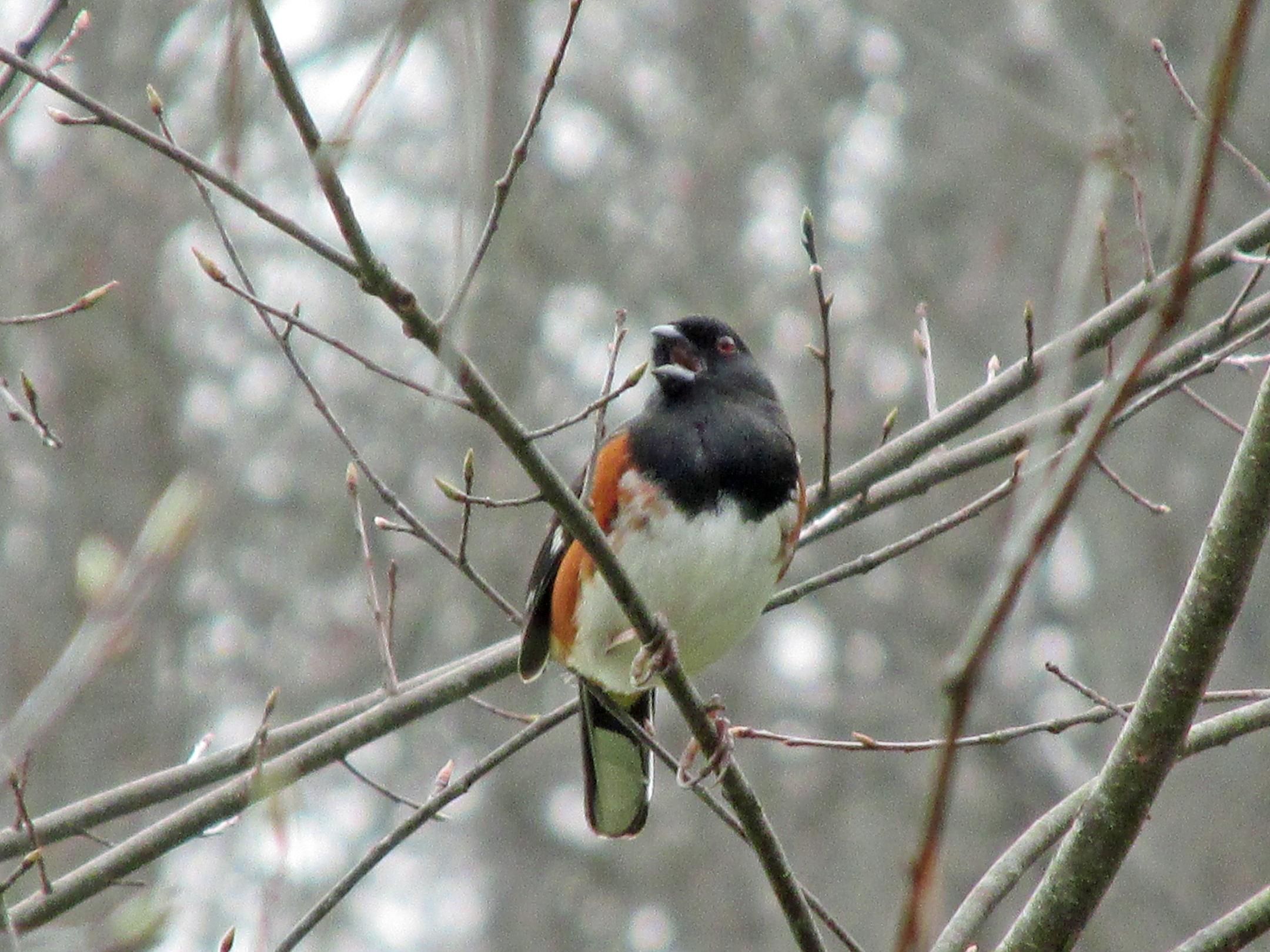
Photo by Bryan Stevens                                                                         A male Eastern Towhee sings from an elevated perch.

The fact that April is already so far advanced has caught me somewhat by surprise, which is surprising since there are plenty of signs letting me know spring’€™s approaching. For instance, each morning when I leave for work I usually hear a cacophony of singing birds, including Eastern Bluebirds, Song Sparrows, Tufted Titmice and Carolina Chickadees.

The birds are stirring, and that always means the seasons are shifting. On bird that has been quite prominent in the yard for the past few weeks has been the Eastern Towhees. We had several individuals, both males and females, spend the winter near the feeders.

I saw and identified my first Eastern Towhee in early spring in 1993. At that time, I was struggling to identify some of the common visitors at my feeders. I was acquainted with White-breasted Nuthatches, Blue Jays, Downy Woodpeckers, Carolina Wrens, Dark-eyed Juncos and a handful of other birds. When I looked out a window and saw this bird feeding on the ground, the morning sun illuminating his dramatic plumage of black, white and rufous red, I was immediately aware this visitor represented something new and unexpected.
il_570xN.742473837_4gwh

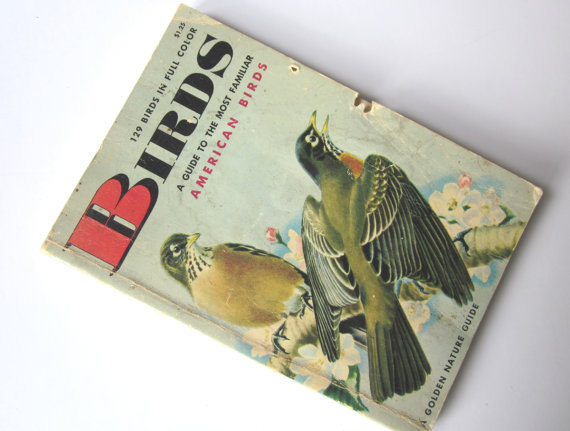
This pocket-sized reference guide helped many beginning birders learn to identify common backyard birds.

Consulting a field guide —€” I was using the Golden Nature Guide to the Most Familiar American Birds — I soon found a painted illustration of a Rufous-sided Towhee that matched in every detail the bird I had just observed on the ground beneath a Blue Spruce in my yard.

Many of the older field guides still list the Eastern Towhee as “€œRufous-sided Towhee,”€ which is actually more descriptive of the bird’s appearance than the word “€œeastern.”

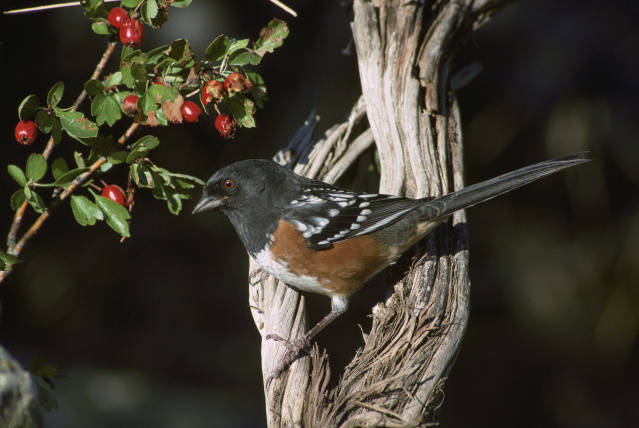
Photo by U.S. Fish & Wildlife Service A male Spotted Towhee shows extensive spotting on its back.

Photo by U.S. Fish & Wildlife Service
A male Spotted Towhee shows extensive spotting on its back.

In 1995, ornithologists renamed the Rufous-sided Towhee to Eastern Towhee and also separated the Eastern Towhee from its western counterpart, the Spotted Towhee. Until that point, these two towhees had been considered different races of the same species.

In 2003, I saw a Spotted Towhee during a visit to Salt Lake City, Utah. The bird looks almost identical to an Eastern Towhee except for considerable white spotting —€” hence its common name — on the bird’€™s back.

Eastern_Towhee

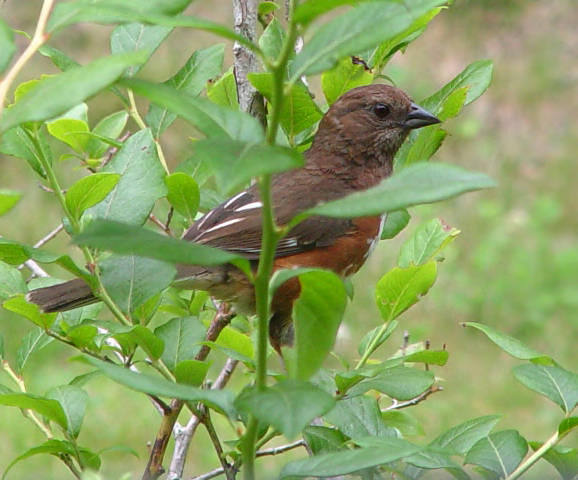
Photo by U.S. Fish & Wildlife Service           The female Eastern Towhee’s plumage is a rich, chocolate brown where the male’s feathers are black.

Eastern Towhees do spend a considerable amount of time on the ground and hidden in thickets and hedges. Other common names for this bird includes “Ground Robin” and “Swamp Robin.”€ They are one of the larger members of the sparrow family, however, and not related to the thrush family, which includes such birds as American Robin, Eastern Bluebird and Wood Thrush.
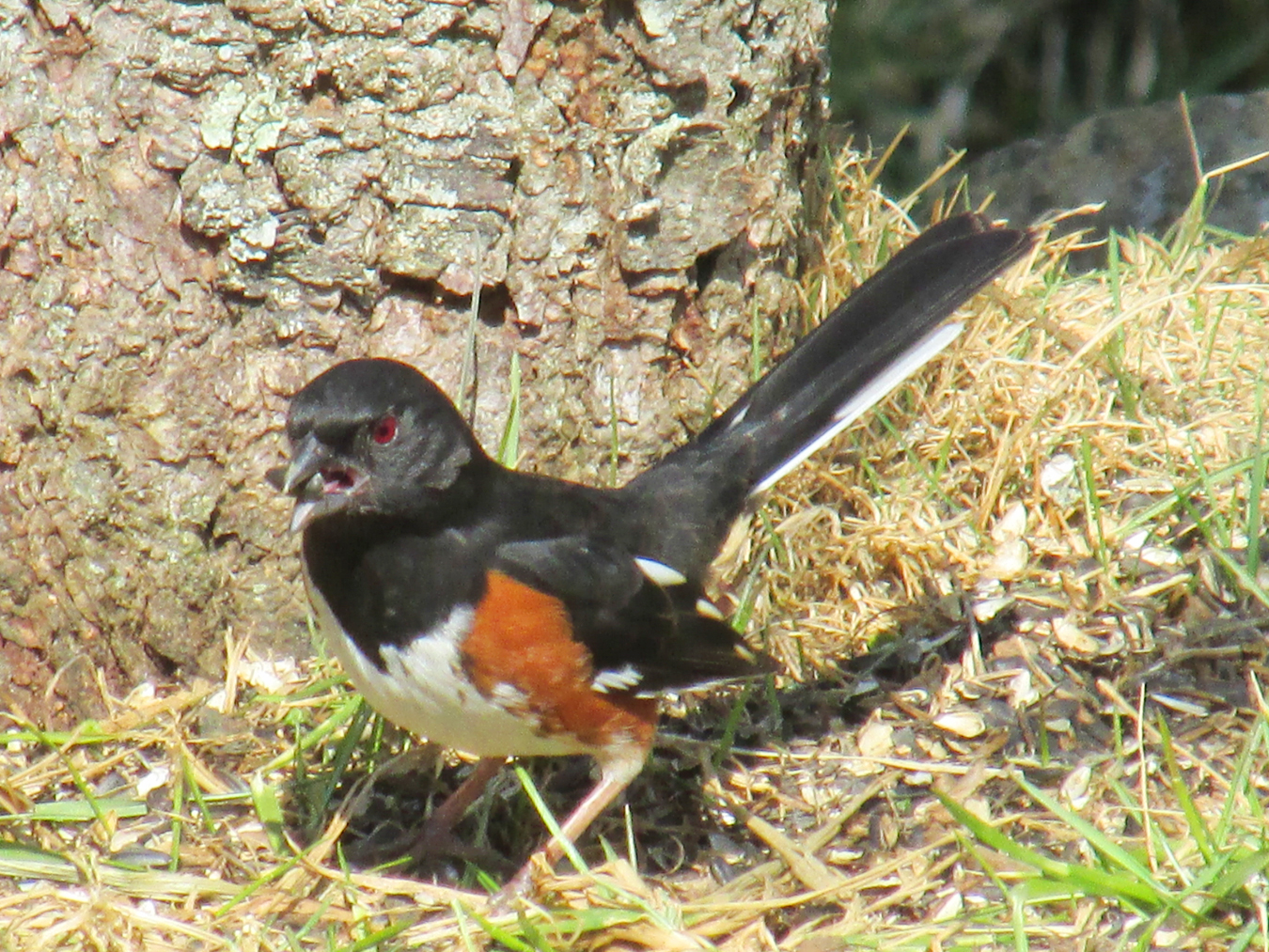
Towhee1

Photo by Bryan Stevens                            Towhees spend much of their time on the ground when searching for food.

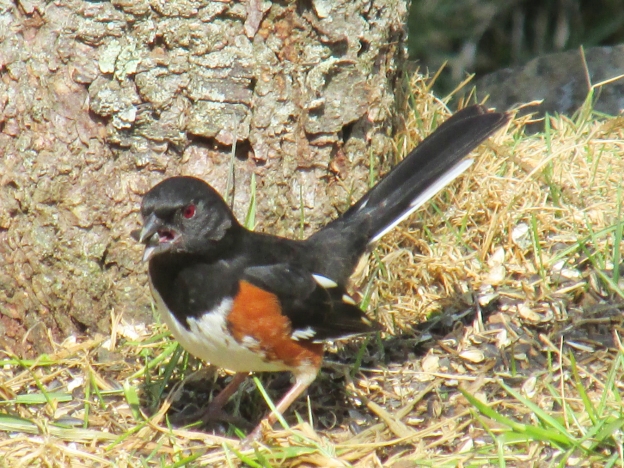
Unlike the “€œbrown”€ members of the sparrow family, the Eastern Towhee is a brightly colored bird. Males have a black hood. The black coloration extends into the back and tail. The belly is white and the sides are flanked with a rusty-red color. In flight, their black tails are bordered with white feathers, which produces a dramatic flash of contrasting colors. The female Eastern Towhee is an attractive bird in her own right. She shares the rufous sides and white coloration that are present in the male’s plumage. However, the male’€™s black feathers are replaced by a warm, chocolate brown plumage in the female.

The Eastern Towhee is one of my favorite yard birds, but not just because of its dramatic appearance. These birds also have some instantly recognizable vocalizations. With the arrival of spring, the males will seek elevated perches for extensive singing bouts to attract mates and establish territories. Their song has been interpreted, quite accurately, as “Drink your tea!” They also have some alarm notes, such as “€œChew-ink”€ and “€œToe-Hee,” which is the basis for this bird’s common name.
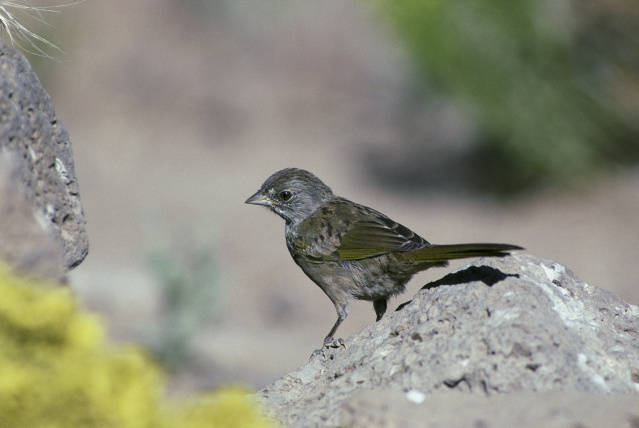
Greentailed_towhee

Photo by U.S. Fish & Wildlife Service    Although the smallest member of the towhee family, the Green-tailed Towhee is still a larger bird than most members of the sparrow clan.

They are often found in the same sort of tangled habitat favored by Northern Cardinals and Brown Thrashers. To attract these birds, don’€™t manicure every inch of your yard. Leave some wild corners that will provide shelter for birds that thrive under cover. In the southern United States, these birds thrive in scrub palmetto habitats.

Other North American towhees include Green-tailed Towhee, Abert’s Towhee, California Towhee and Canyon Towhee.

••••••••••

I want to close this week’s column by asking for help from readers. I love to document the yearly arrival of Ruby-throated Hummingbirds. I’d appreciate hearing from any readers who would like to share the information about their first hummingbird sighting of the season. Simply send me your name and location, as well as the date and time when your first hummingbird arrived. The best way to contact me is by my email at ahoodedwarbler@aol.com. Messages are also welcome through my Facebook account at http://www.facebook.com/ahoodedwarbler.
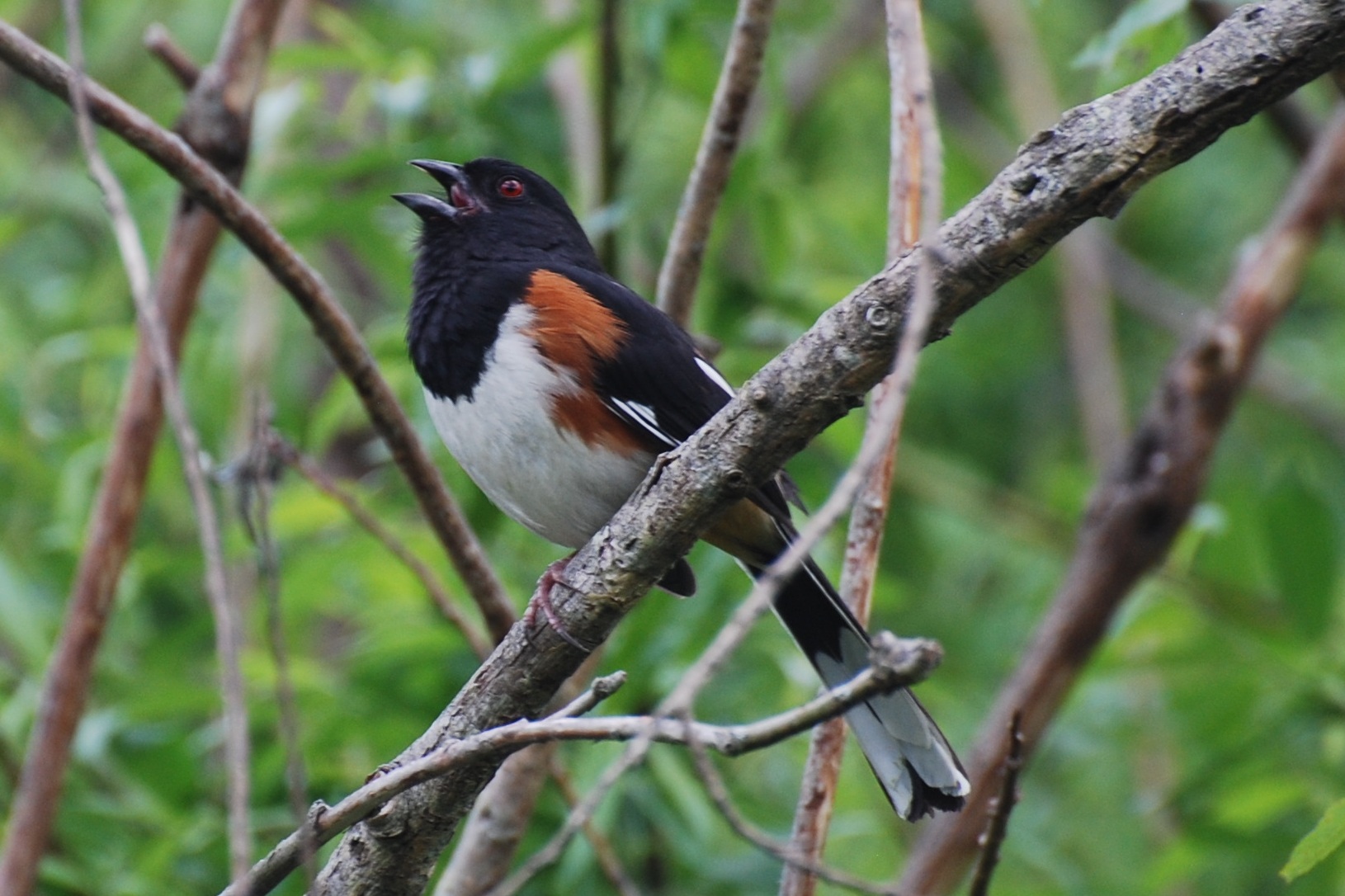
3544493082_02f675508f_o

Photo Courtesy of Jean Potter                                                                                                                The male Eastern Towhee sings persistently during the spring season.
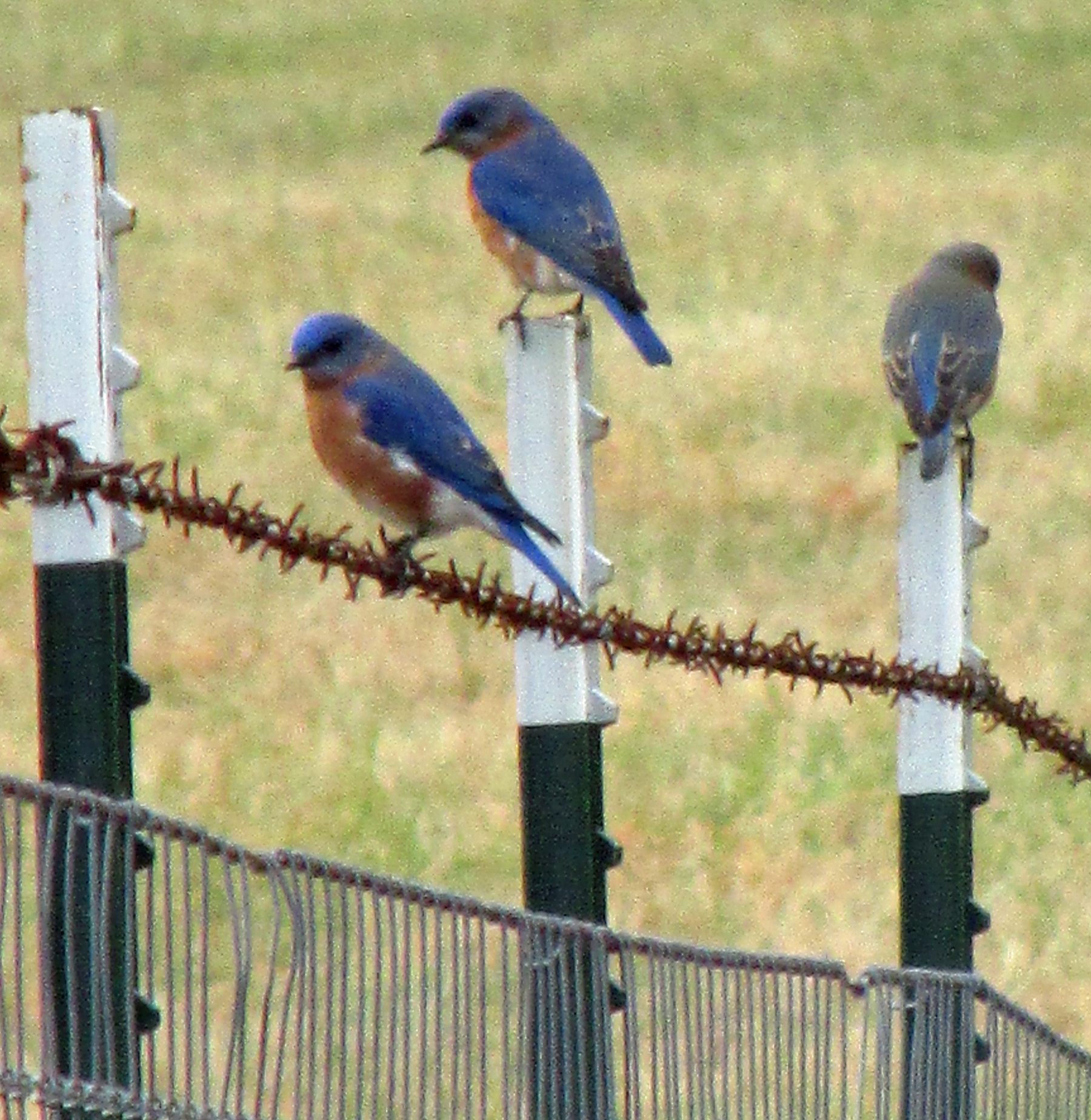
 

Enjoy these recent birding photos

Bluebirds-One

Eastern Bluebirds perch on a fence.

Bluebird-2

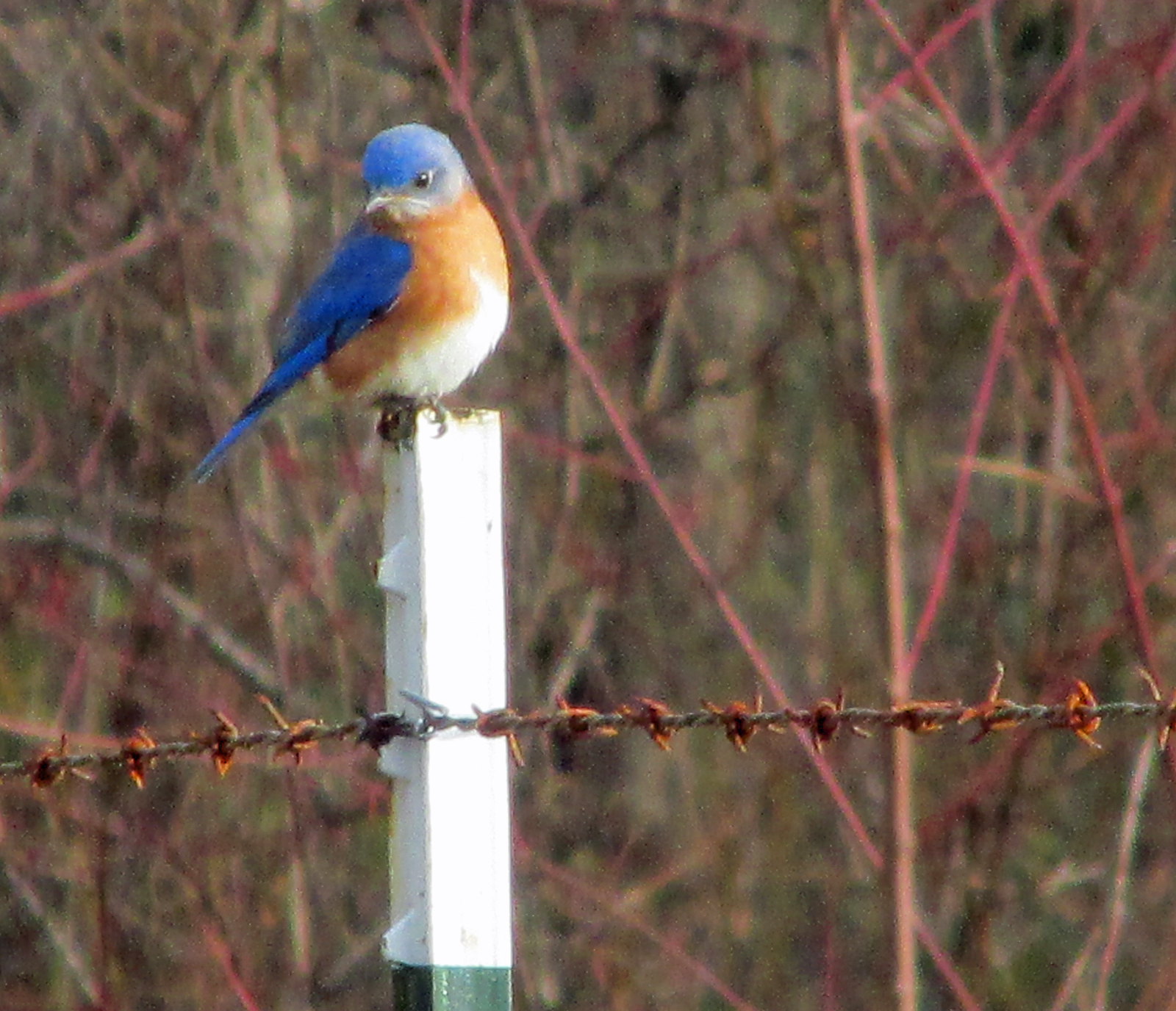
Male Eastern Bluebird surveys his surroundings from a fence post perch.

Bluebirds-Tw0

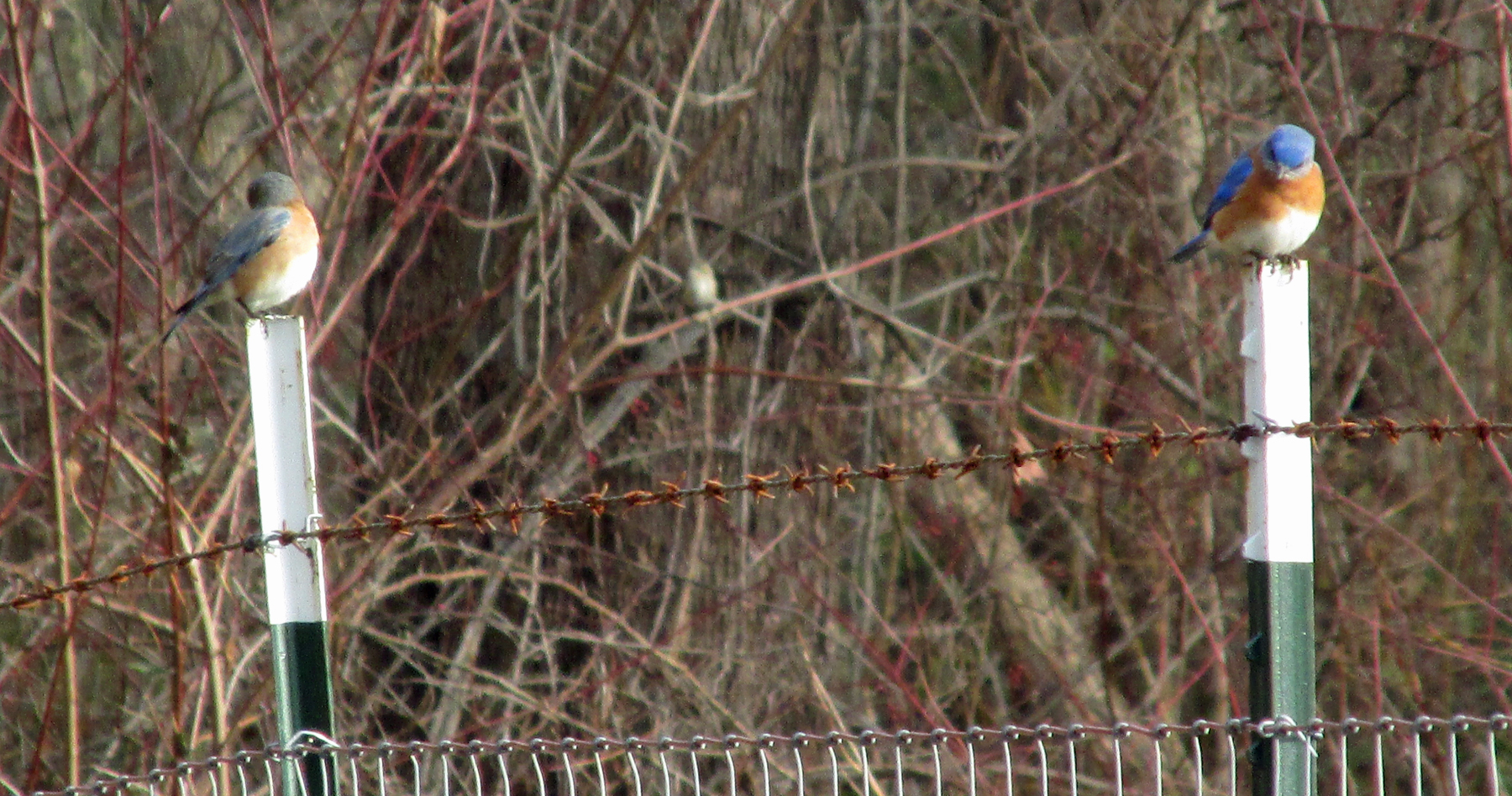
Eastern Bluebirds enjoy sunshine on a recent January afternoon.

BuffleFlock

A flock of Buffleheads on the Watauga River.

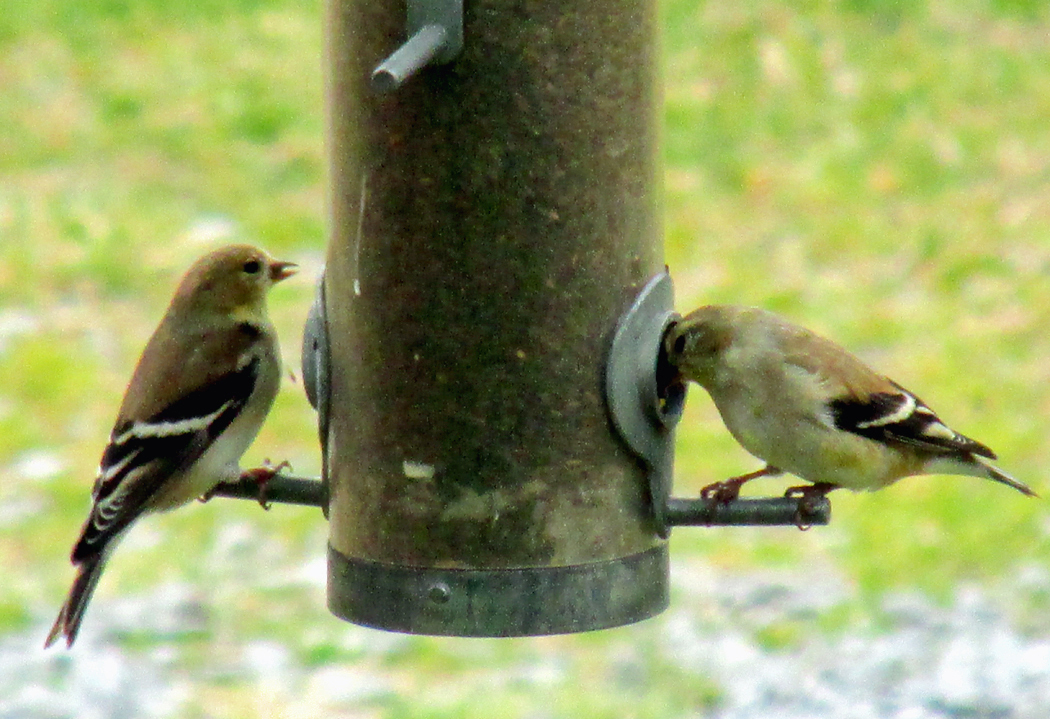
Goldfinches

American Goldfinches visit a feeder.

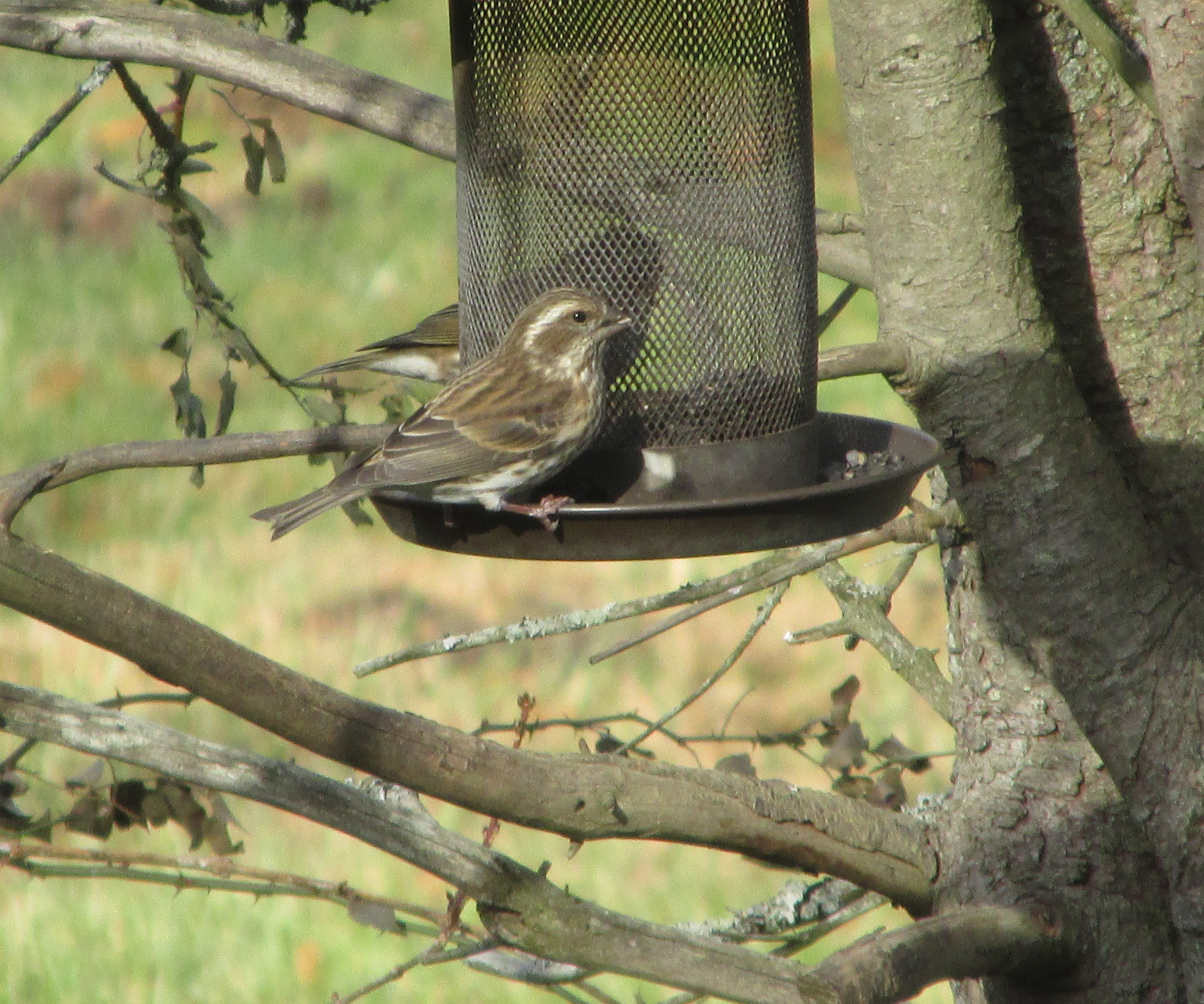
PurpleFinches

Female Purple Finches visit a feeder.

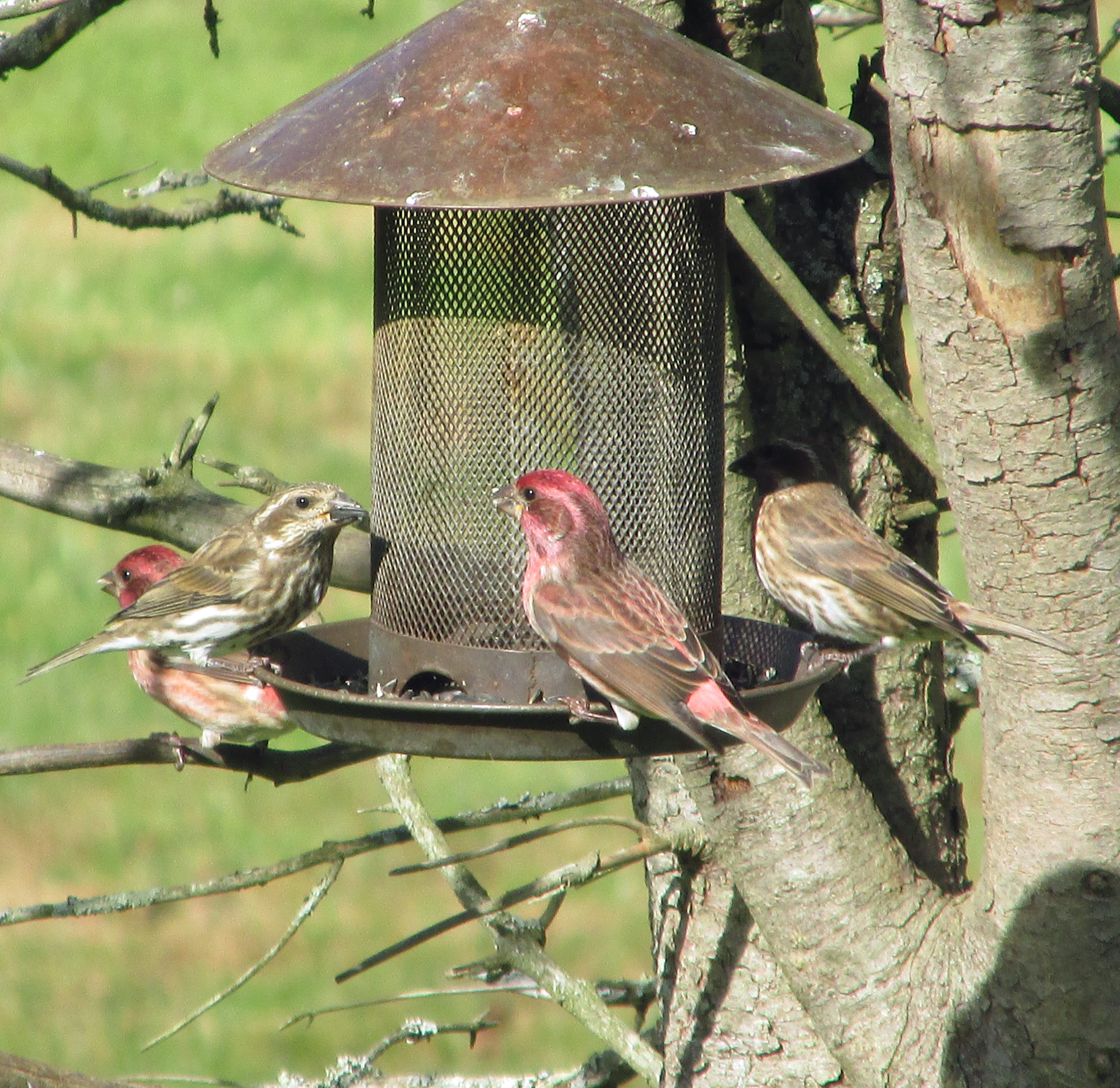
Purples

A flock of Purple Finches share space at a feeder.

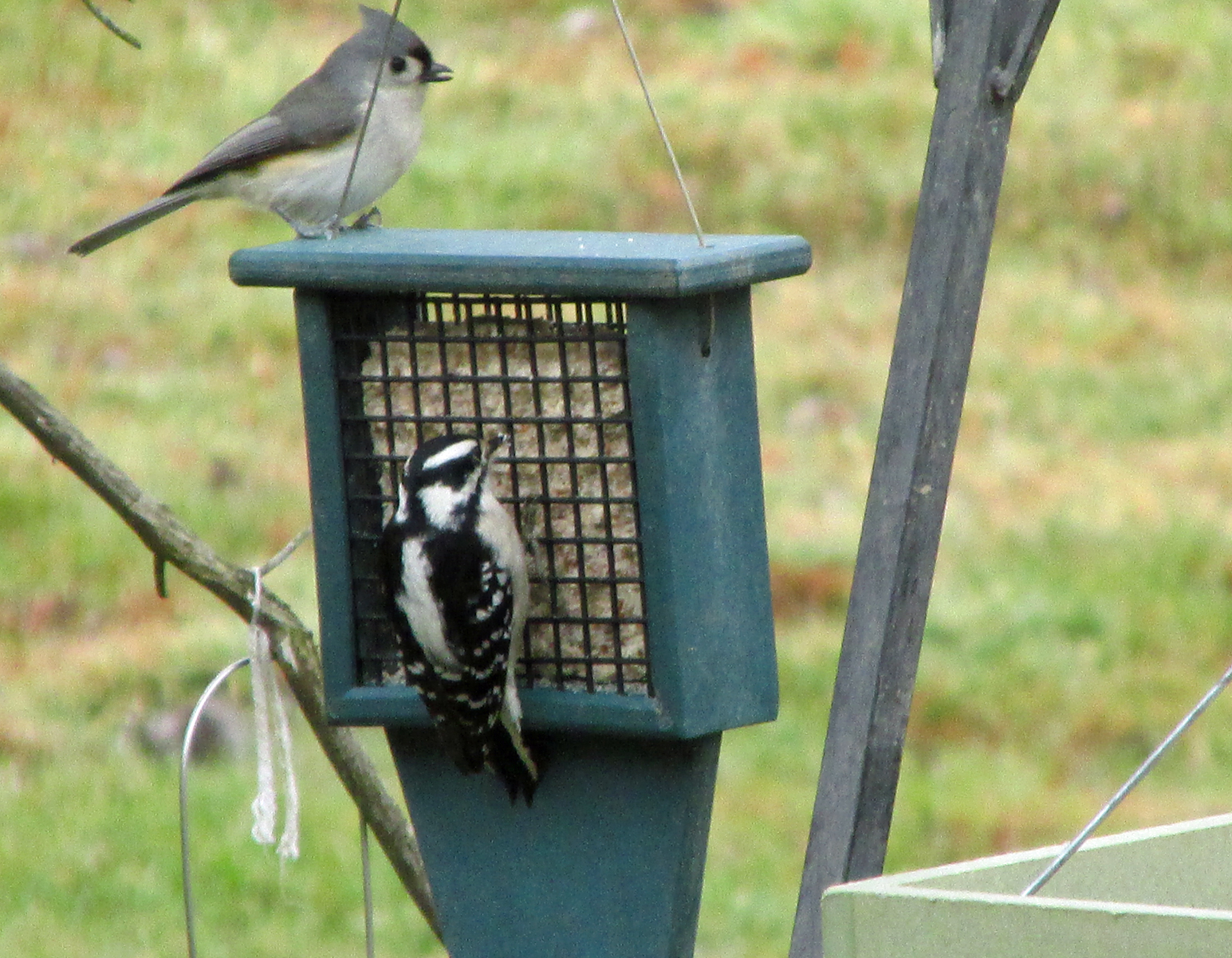
DUo-Downy-Titmouse

Downy Woodpecker and Tufted Titmouse arrive at a suet feeder.


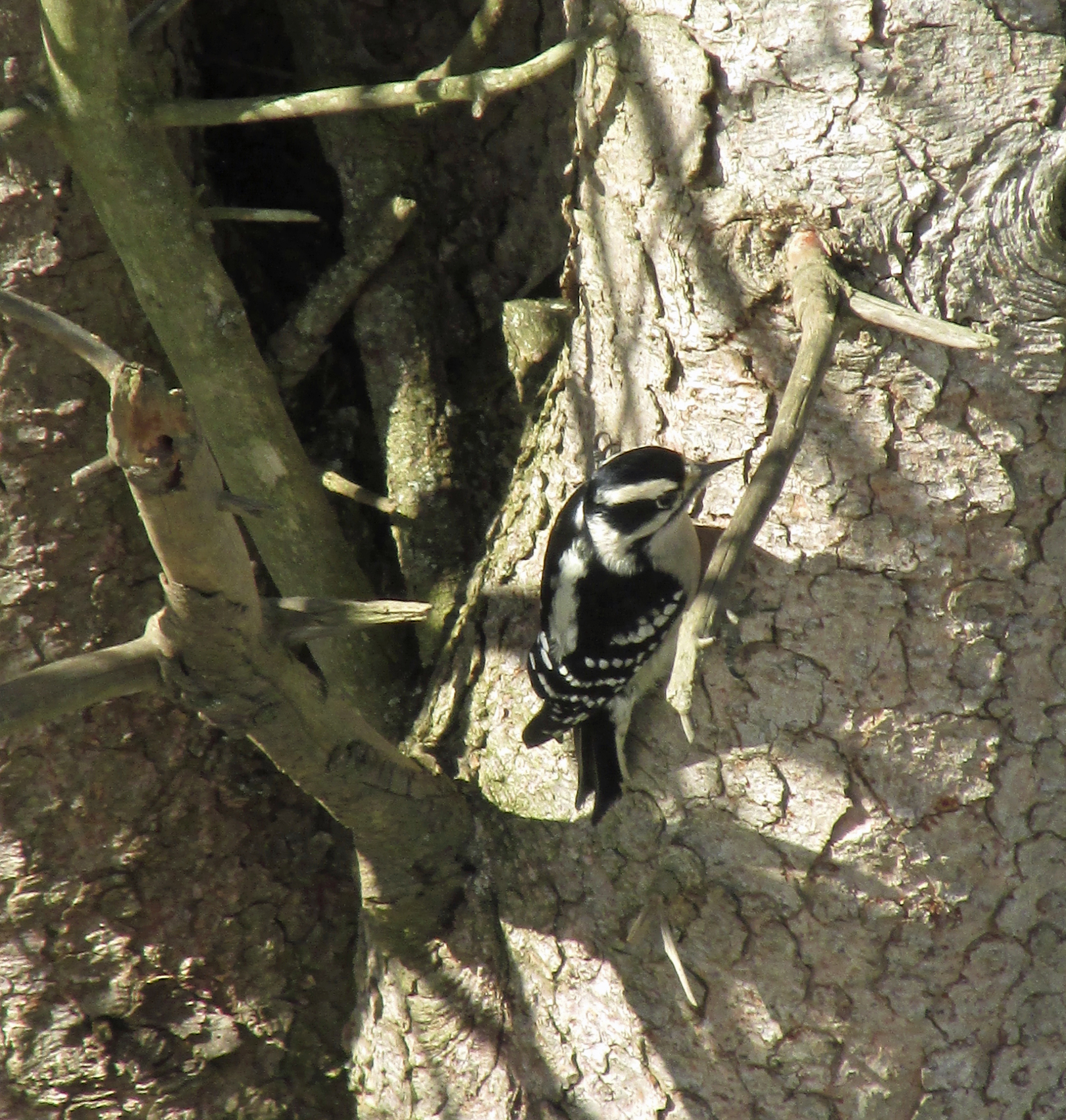
Female-Downy1

A female Downy Woodpecker climbs on a tree trunk.


There’s change in the air…

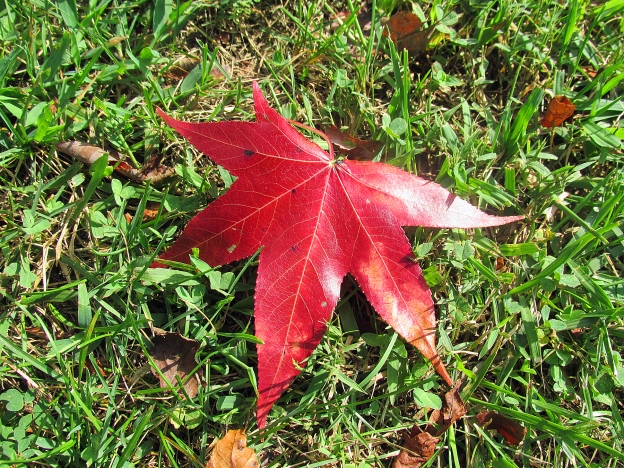
With every passing day, autumn is creeping closer. The calendar indicates that the first official day of fall is Sept. 23, but the rest of the world around us doesn’t wait for us to turn the page.

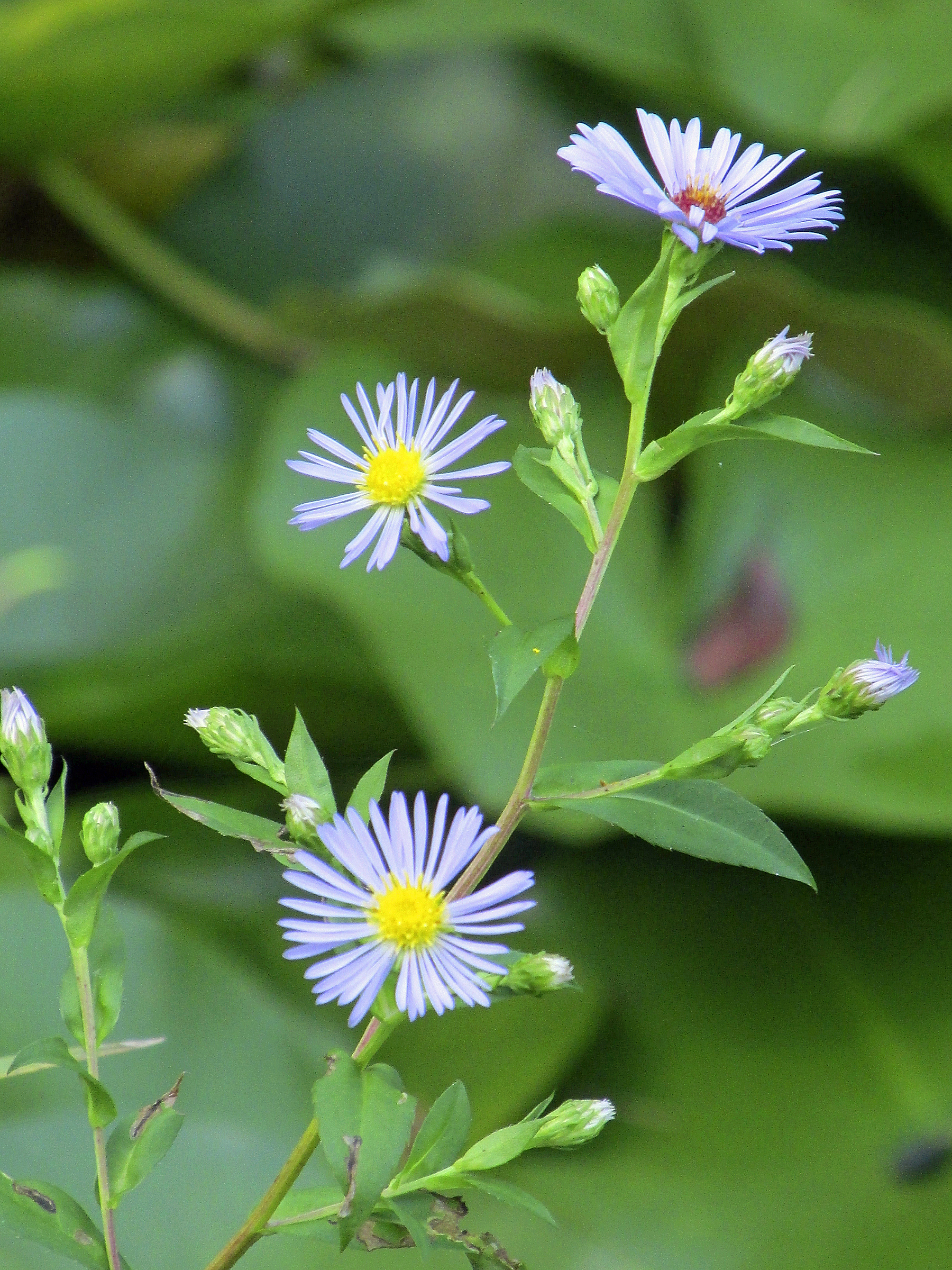
Photo by Bryan Stevens Asters, which come in a variety of colors, are usually a late-blooming wildflower.

Photo by Bryan Stevens
Asters, which come in a variety of colors, are usually a late-blooming wildflower.

Fall is upon us, which is apparent in a myriad of subtle signs, from the blooms of new wildflowers to the last surge of the season’s butterflies and dragonflies.

Of course, there’s also the migration of our feathered friends.


The dazzling birds of spring, such as Scarlet Tanagers and Rose-breasted Grosbeaks, are winging their way through our backyards again.

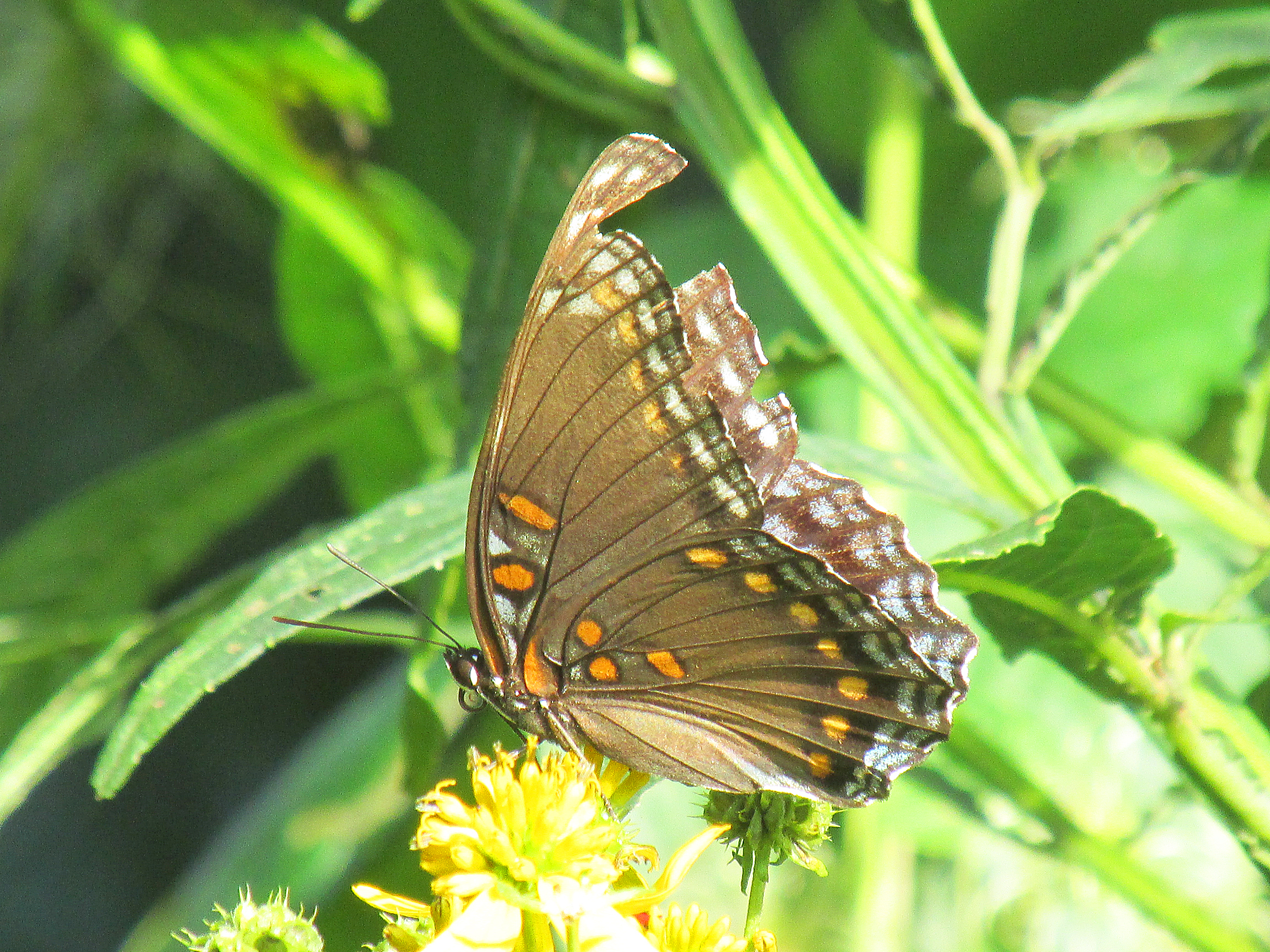
Photo by Bryan Stevens  Many butterflies, such as this swallowtail, look rather tattered this far into the season.

Photo by Bryan Stevens
Many butterflies, such as this swallowtail, look rather tattered this far into the season.

Many of these visitors have adopted a more subdued appearance as they stage their earlier migration flights in reverse. Then, there are fall warblers, sometimes also known by birders as “confusing fall warblers” since not only do observers have to distinguish between differences in male and female plumages, but also must contend with immature birds that resemble neither of their parents.


Want to learn how to quickly identify some of these so-called “confusing” warblers you may see flitting through the treetops this fall? Simply visit

http://dl.allaboutbirds.org/download_the_warbler_guide_quickfinders?utm_campaign=Warrbler-Campaign&utm_source=facebook&utm_campaign=Warbler-Campaign&utm_source=adwords&gclid=Cj0KEQjw-dSgBRDb0oOl9MzxqMEBEiQAkHqy-YYJxjOHJaXTUB4yRx0CewNowVY0m5PyD9K46roYfJkaAkuO8P8HAQ

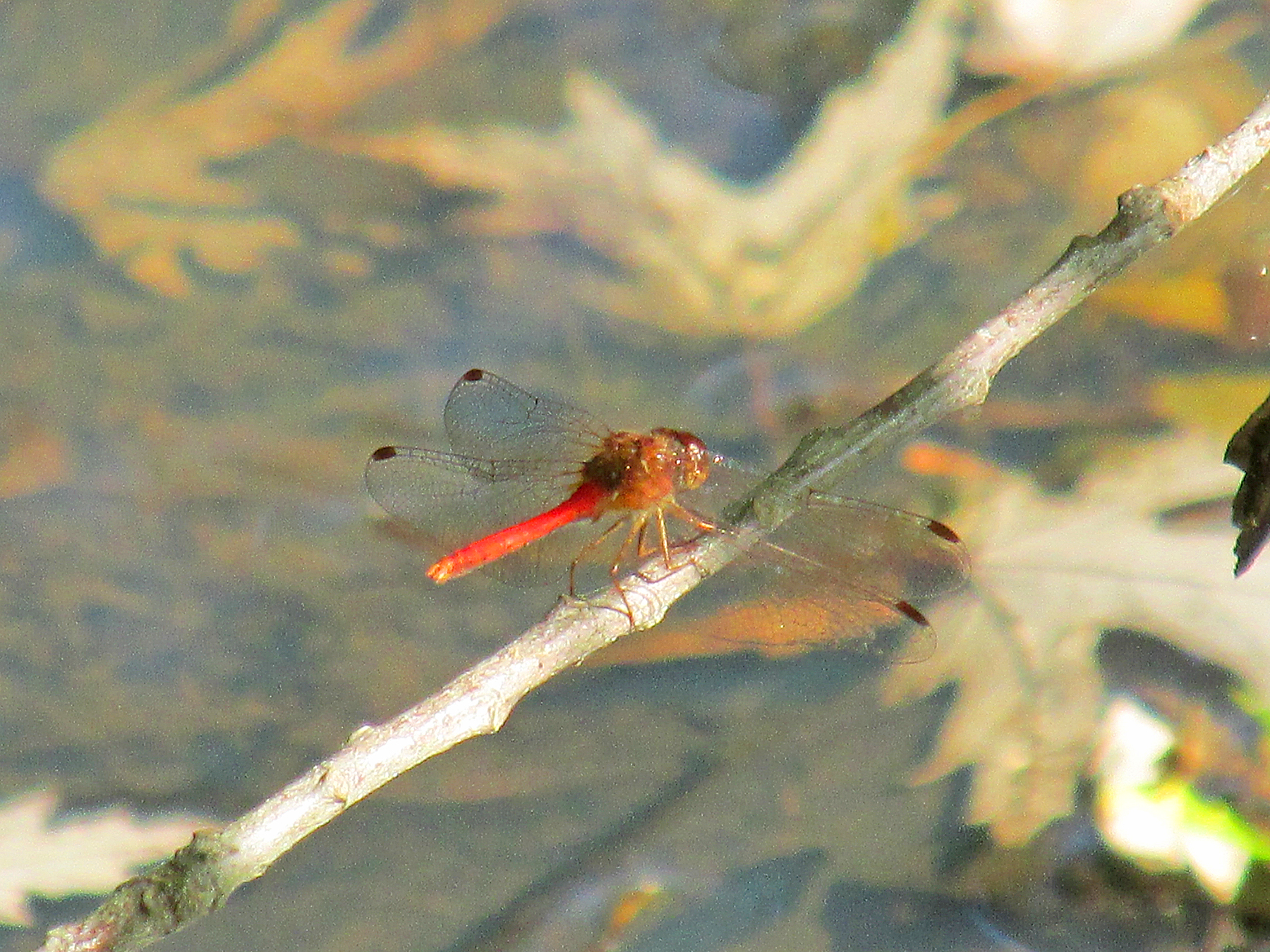
Along the edges of ponds, the final dragonflies of the season have begun to emerge. Autumn Meadowhawks and Blue-faced Meadowhawks have both made appearance at my fish pond along Simerly Creek Road.  Other dragonflies have been scarce, and the damselflies have almost disappeared. I am still seeing a few Eastern Pondhawks, Blue Dashers, Eastern Amberwings and even a Fawn Darner.

Photo by Bryan Stevens The aptly-named Autumn Meadowhawk is one of the last dragonflies to emerge each year.

Photo by Bryan Stevens
The aptly-named Autumn Meadowhawk is one of the last dragonflies to emerge each year.

During a visit to Erwin Fishery Park on Sept. 12, I was amazed to observe thousands of dragonflies — basically, a swarm of these incredible winged insects — hawking for smaller winged insects in the air above the now-closed swimming pool at the municipal park.

Most of the individuals in this incredible swarm looked like Green Darners, but I think a few other species had also joined the feeding frenzy. Green Darners, incidentally, are known for gathering in large flocks, just like birds, and staging their own migratory flights.

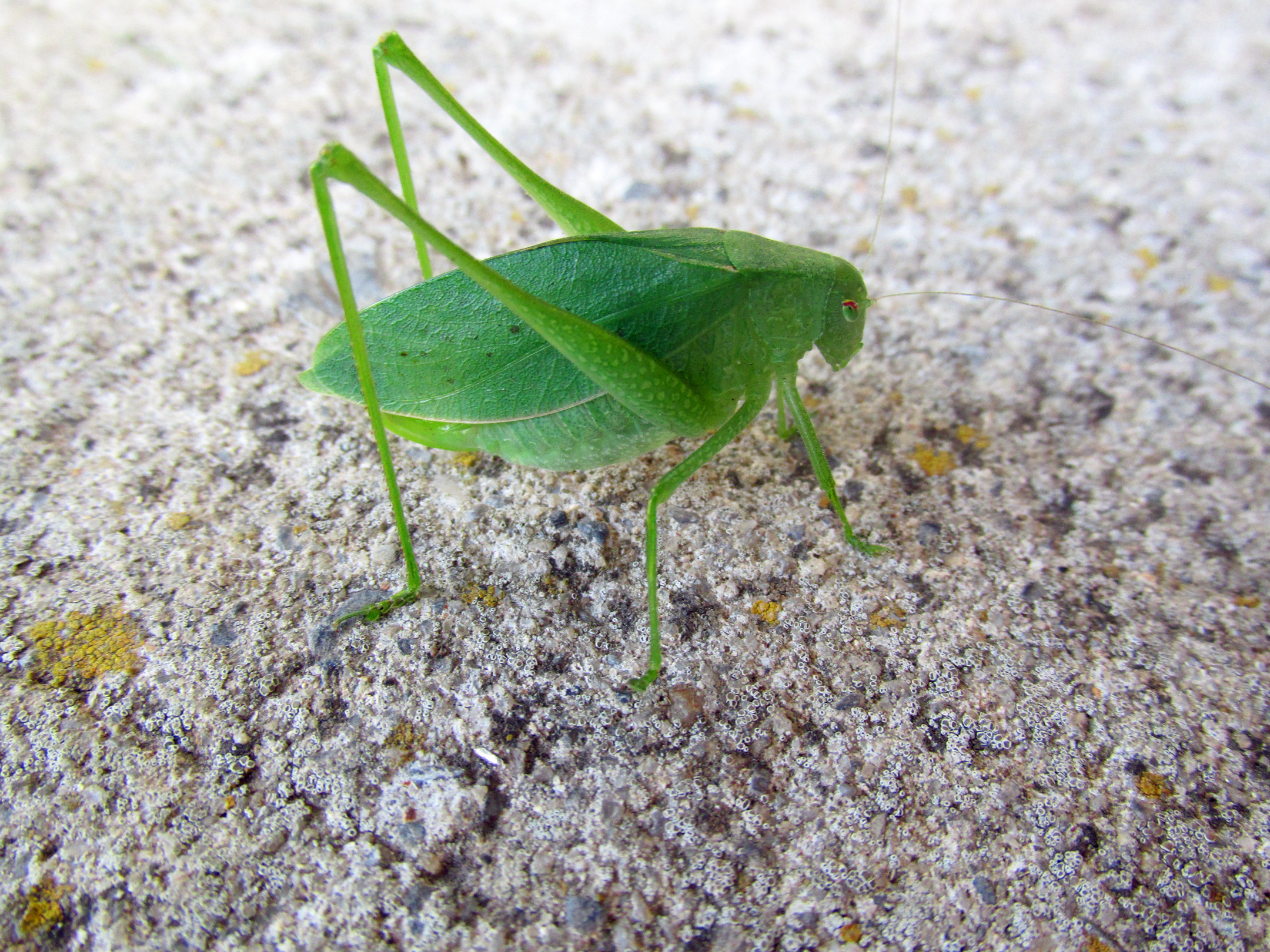
Photo by Bryan Stevens Katydids, some resembling nothing so much as a green leaf, are becoming more prominent as summer transitions into fall.

Photo by Bryan Stevens
Katydids, some resembling nothing so much as a green leaf, are becoming more prominent as summer transitions into fall.

Speaking of insects, I’ve also been hearing Katydids. A recent post of a Katydid photo on my Facebook page prompted responses that brought up the old superstition that the first frost will take place several weeks after the Katydids begin their nocturnal serenades.

I always look forward to September, but it always seems to be an extremely busy month for me. This year’s no exception, but I am determined to carve out some time to enjoy this month of transition.

Join me in paying closer attention to the world around you this month. There are new birds to see almost every day if you simply take the time to look. If the birds are absent, look with even more attention to detail and you’re sure to be rewarded with some other remarkable observations.

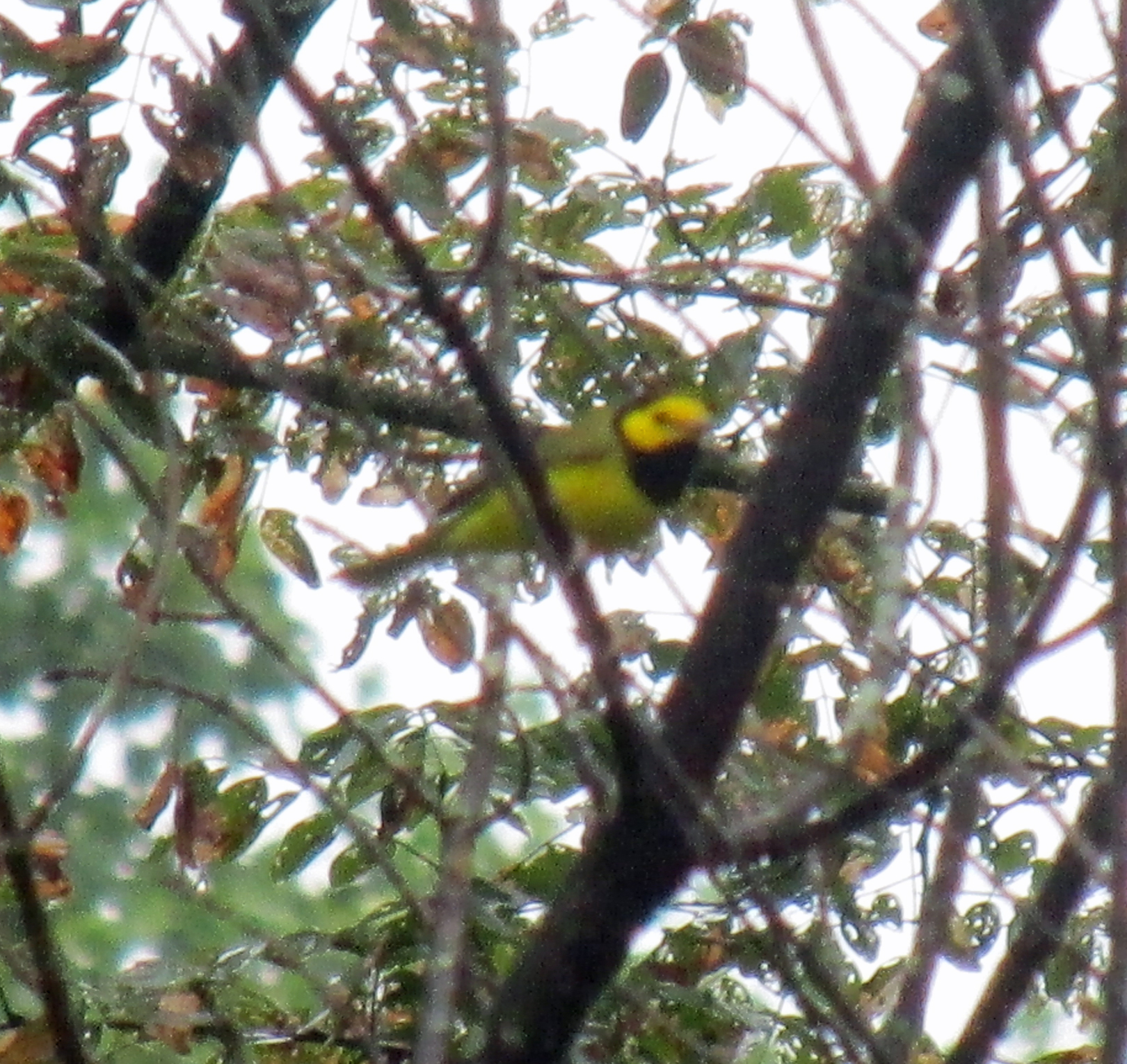
Photo by Bryan Stevens A male Hooded Warbler makes a quick journey through the back yard.

Photo by Bryan Stevens
A male Hooded Warbler makes a quick journey through the back yard.

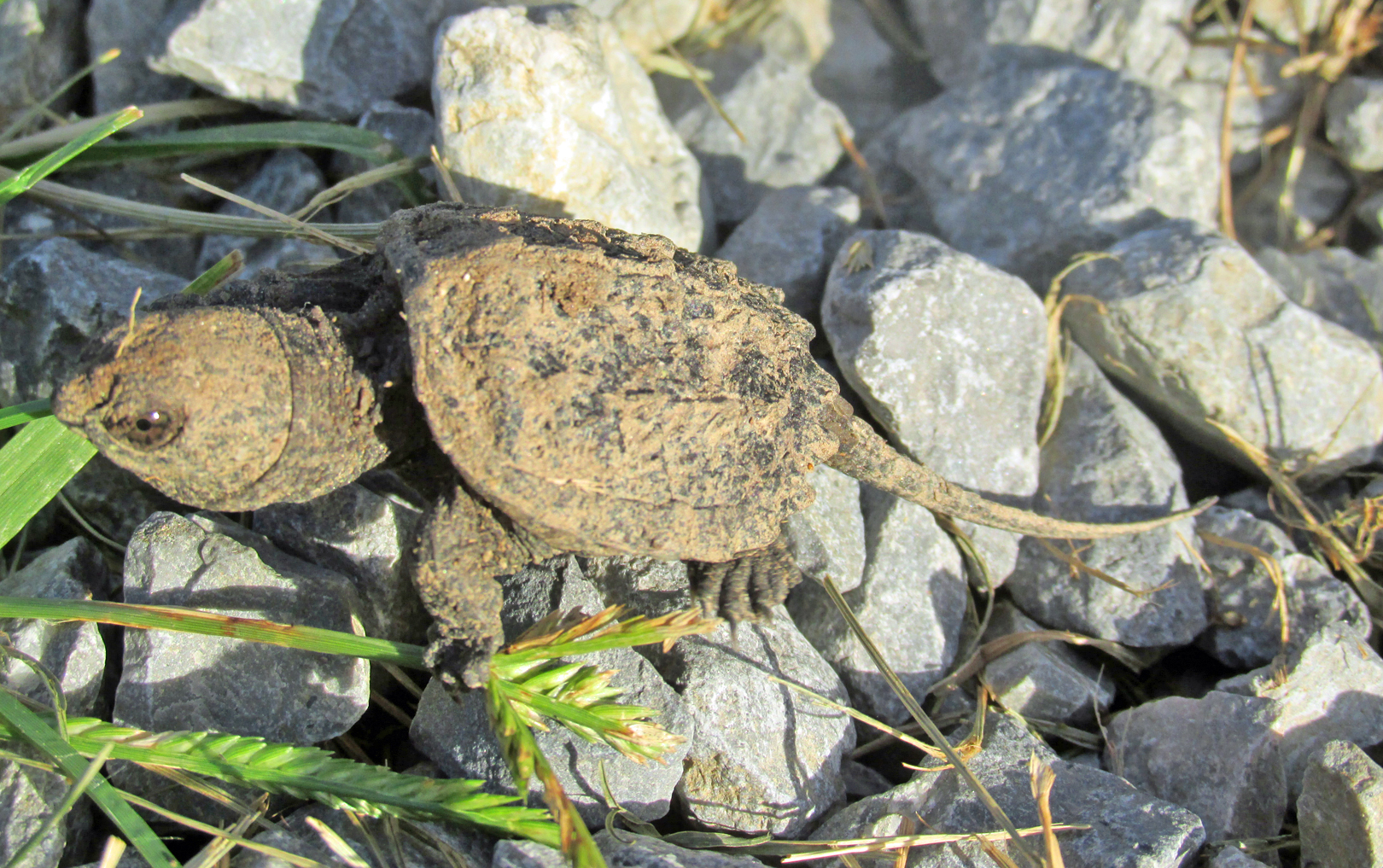
Photo by Bryan Stevens

Photo by Bryan Stevens A newly-hatched Snapping Turtle will have a few weeks to grow before burrowing down to hibernate through the long, cold winter season.

Region’s drab vireos more famous for persistent singing than their appearance

In some recent columns, I’ve focused on some of the summer songbirds — scarlet tanager, rose-breasted grosbeak – with flashy, bright plumages.  Not all our summer nesting birds boast such vivid coloration. In fact, one family of songbirds — the vireos — is known for its dull plumage.

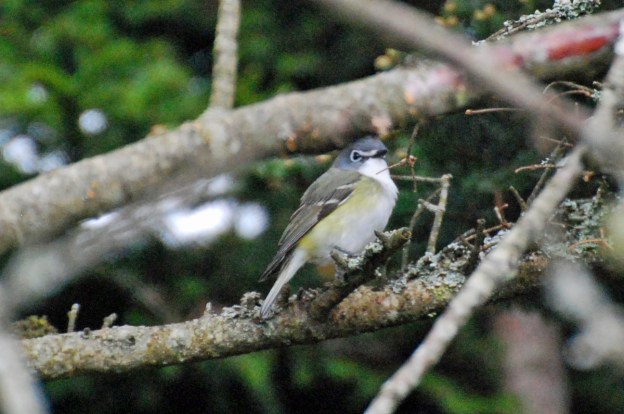
Photo by Bryan Stevens      A blue-headed vireo sings from a woodland perch.

Photo by Bryan Stevens A blue-headed vireo sings from a woodland perch.

I’ve had some interesting encounters with vireos in the past few weeks. From early May through mid-June, a male red-eyed vireo sang daily from the woodland near my home. He would commence signing early in the morning and continue through late afternoon. I never saw him, which is not too surprising. Red-eyed vireos lead almost their entire lives in the forest canopy. If you do manage to observe one, you’ll see an olive green bird with white underpart. The red-eyed vireo, known scientifically as Vireo olivaceus, shows a narrow white eyebrow bordered above with black. It also has a grayish crown and the namesake red eye.
At a glance, the vireos would appear related to the wood warblers. Research into vireo DNA, however, has led many experts to contend that vireos are more closely related to crows and shrikes. Like the flycatcher, warbler and hummingbird families, the vireo family is exclusive to the New World. There are about 50 species of vireos. The majority reside in the tropics, but about a dozen species spend their nesting season within the United States.

JP-RedEyedVireo-Fledgling

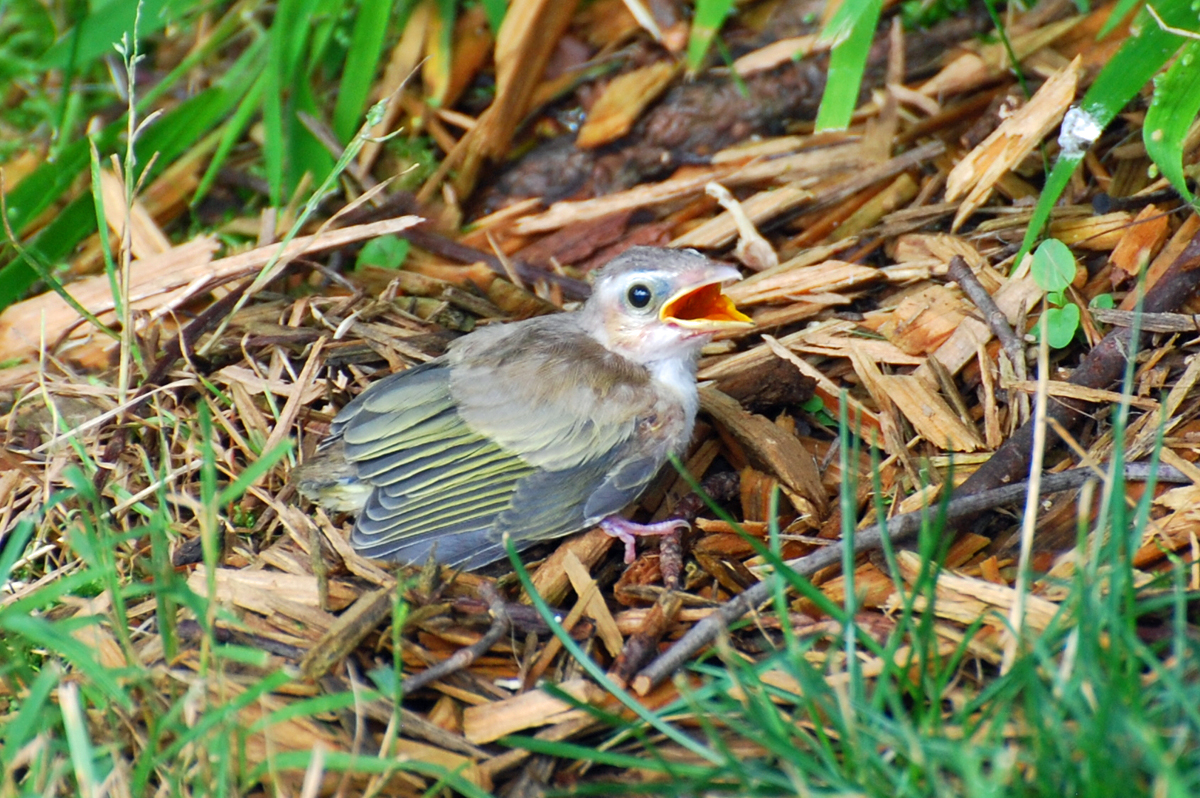
Photo Courtesy of Jean Potter A young red-eyed vireo begs for food, which will bring a prompt response from a nearby parent.

In Southwest Virginia and Northeast Tennessee, vireos resident during the summer months include red-eyed, white-eyed, blue-headed, yellow-throated and warbling.  Most people are likely unaware of vireos. Although not uncommon, these birds are much more frequently heard than seen. They spend much of their time in the forest canopy or in dense brush. When singing, they can remain at a perch, unmoving, for long periods of time. 
On recent woodland walks I have heard the loud scolding calls of red-eyed vireos. This call, given apparently when the vireo is alarmed or irritated, is quite unlike the usual vocalizations produced by this bird. First and foremost, the call is louder than one would think could be produced by a bird that is only about six inches long.
During the summer season, the red-eyed vireo is also one of the most persistent of singing songbirds. Another of its common names is “Preacher Bird,” so called because of its tendency to unceasingly deliver it song. To give you an idea of just how persistently this bird sings, the red-eyed vireo holds the record for singing its song the most times in a single day. Some individuals have been recorded singing the series of emphatic syllables more than 20,000 times in a day. The song is not particularly musical, consisting of whistled phrases, each slightly different and punctuated with brief pauses. 

Photo Courtesy of Jean Potter A red-eyed vireo sits on its basket-shaped nest.

Photo Courtesy of Jean Potter
A red-eyed vireo sits on its basket-shaped nest.

The red-eyed vireo is still considered one of eastern North America’s most common summer breeding birds. At one time, this bird was probably the most common breeding bird in Eastern woodlands. It is still one of the most widespread, ranging from the Eastern United States into the Northwestern United States and across Canada. In fall, they withdraw to spend the winter in South America.
The term “vireo,” originating in Latin, can be translated into English as “green bird.” It’s an apt description, as many of these small birds are primarily dull green in coloration.
There is an endangered vireo, the black-capped vireo, a bird with a limited breeding range in Texas. Black-capped vireos numbers have dwindled to perilous levels due to the loss of low growing woody cover these birds need for breeding purposes. The cause of the loss of habitat varies, but includes the clearance of land for livestock as well as overgrazing by livestock and deer. In the past, fires regularly opened up such habitats. Due to modern fire control practices, such fires are no longer a natural occurrence. Since this species is already endangered, brown-headed cowbirds have also contributed to the problem since the cowbirds slip their own eggs into the nests of black-capped vireos.

Vireo_blackcapped_B07T

Photo by USFWS The black-capped vireo is the only member of the vireo family in the United States classified as endangered.

Two others, Bell’s vireo and gray vireo, are identified as species of concern on the Audubon Watchlist. This listing spotlights species that may bear intense scrutiny to make certain they don’t become endangered.
Other vireos that can be found in the United States, for at least part of the year, include Philadelphia vireo, plumbeous vireo and Cassin’s vireo. A specialty of Florida is the black-whiskered vireo. 
Many species of vireo are also found in the islands of the Caribbean, including Jamaican vireo, Cuban vireo and Puerto Rican vireo. Some of the more colorful common names for vireos include the yellow-green vireo, golden vireo and yellow-winged vireo. 
In Central and South America, the vireo family expands to include many birds with common names such as “Shrike-Vireo,” “Greenlet” and “Peppershrike.” Some of the varied species include the lemon-chested greenlet, green shrike-vireo and the black-bellied peppershrike.

Warbling_Vireo

Photo by Dave Menke/USFWS A warbling vireo is the most drab member of a family known for its drabness. The warbling vireo’s impressive song, however, reminds many listeners of the song of the gaudy painted bunting.

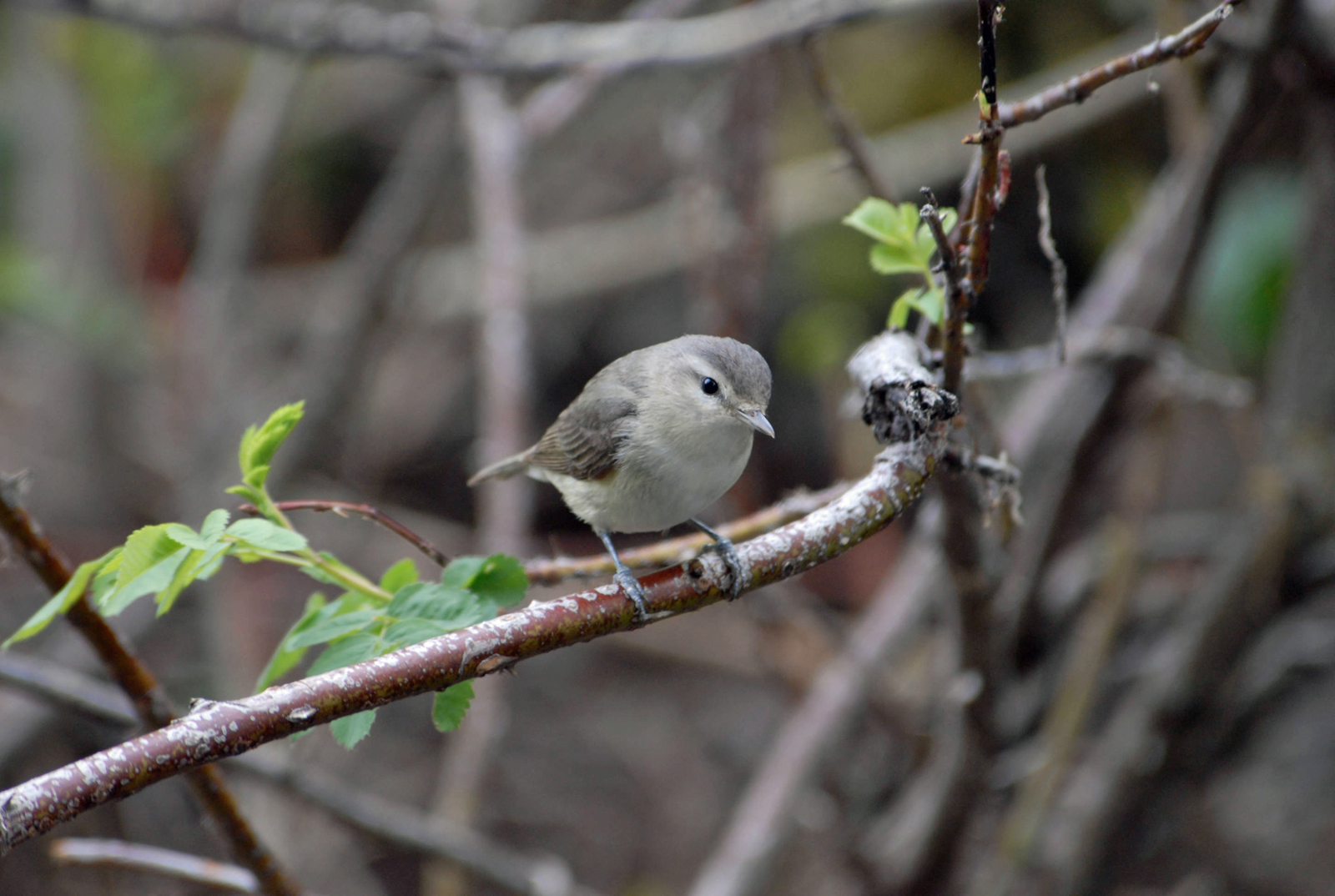
Known by the scientific name, Vireo gilvus, the warbling vireo is another member of this family of songbirds that can be found in the region. It is named for its distinctive, warbling song. Some experts have likened its song to that of the painted bunting. That must be about all the two birds have in common. In contrast with the gaudy painted bunting, the warbling vireo can quite honestly stake a claim as one of our most drab songbirds. Overall, this is a grayish little bird with a white eyeline that is paler than the rest of its plumage. Its legs are blue-gray in color and this species has a bill that is stout like other vireos and unlike the beaks of most warblers. It’s their plainness that is the most distinctive aspect of their appearance.
Many vireos construct deep cup- or basket-shaped nests, often in the higher branches of tall trees. Male and female share incubation duties and work together to feed their young. 
Most vireos feed on in­sects during their summer stay north of the border. However, during migration they often feed on berries and continue to do so on their wintering grounds. Experts have noted that the white-throated vireo is particularly fond of gumbo-limbo seeds. This tropical tree can be found from southern Florida and Mexico, as well as throughout the Caribbean and in South America in Brazil and Venezuela.

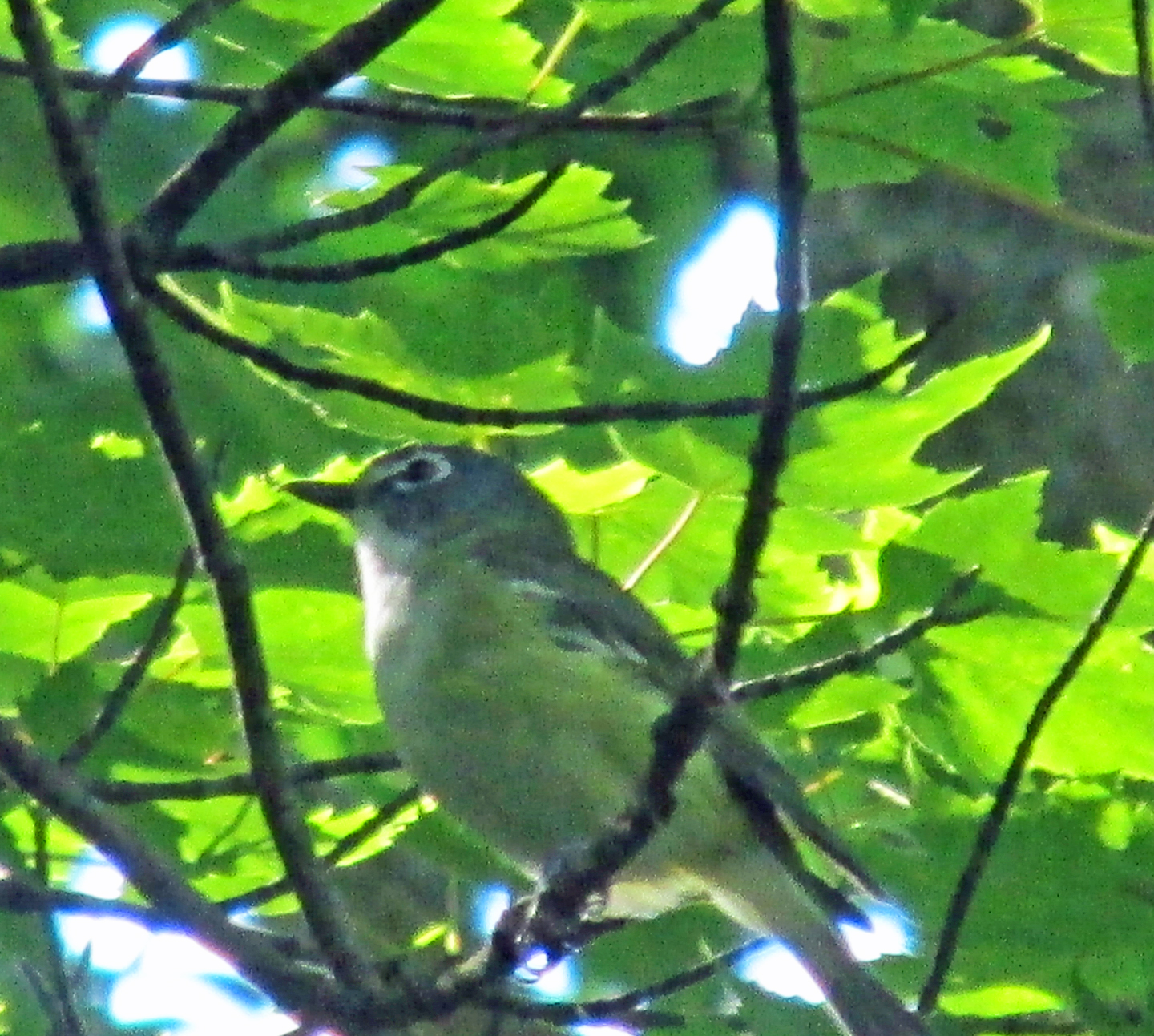
Photo by Jean Potter The Blue-headed Vireo prefers wooded habitats at higher elevations.

Photo by Jean Potter
The Blue-headed Vireo prefers wooded habitats at higher elevations.

At times, it’s important to use our ears, as well as our eyes, when trying to find birds. That’s particularly true of the vireos. The widespread family can be found in rural areas, as well as suburban settings. Tall stands of trees are one of the essential requirements. So, when you next hear some whistled phrases coming from the treetops, be sure to look up. You may get lucky.
To hear a singing red-eyed vireo, visit the link below to view a video of the bird on YouTube: