Tag Archives: Erwin Record

Birds boast phenomenal knack for long-distance travel

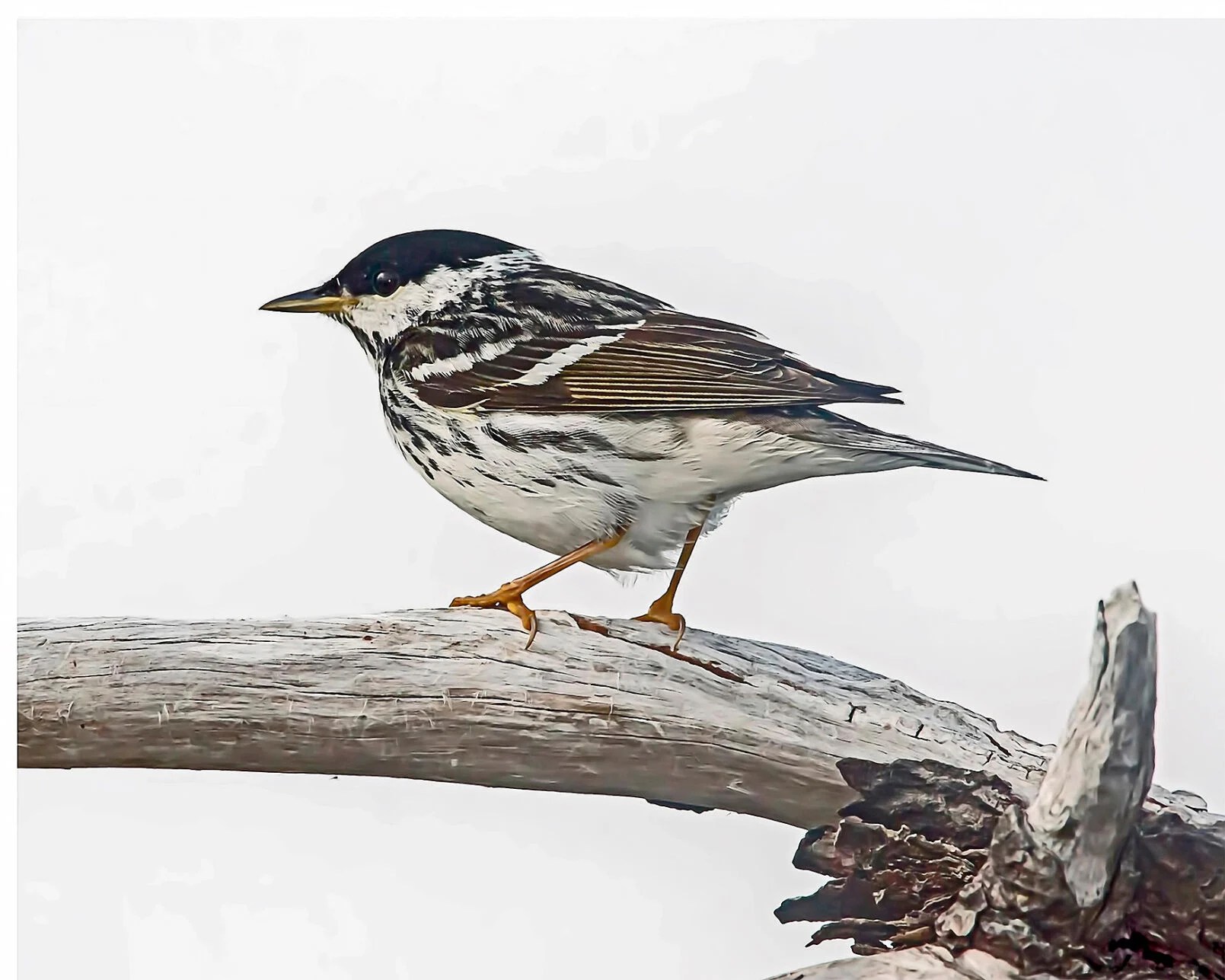
Hans Toom/Pixabay • The blackpoll warbler has one of the more difficult and lengthy migrations of the family of warblers.

The phenomenon of migration isn’t exclusive to the neotropical migrants of the New World. Birds in other parts of the world migrate, too. Waterfowl, shorebirds and raptors are among some of the families of birds that stage impressive migrations.

Of course, I spent most of my birding within Tennessee, particularly in the Northeast Tennessee region. Since the Volunteer State has no access to the sea, it is sometimes amazing how many birds affiliated with coastal areas can be found if you know when and where to look. Fall’s a good time to scan lakeshores, river banks and the edges of farm ponds for migrating shorebirds and wading birds.

I discussed last week some of the species I hope to see this fall. Every time I see some of these migrants I am impressed by what a phenomenal feat each and every single one of these birds represents. As my mother is fond of asking: “How do they do it?”

For such relatively small creatures, many if our birds are world-class travelers. Here are a few profiles of some of these incredible migrants.

Photo by U.S. Fish & Wildlife Service/Kirk Rogers • The Arctic tern is a world champion among migrating birds.


One good tern deserves another

The Arctic tern, for example, truly takes migration to extremes. This small seabird travels each year from its Arctic nesting grounds to the Antarctic region, where it spends the winter months. Put into terms of mileage, the Arctic tern can travel about 50,000 miles in a single year. For a bird with a body length of about 15 inches and a wingspan of about 28 inches, this incredible migration is an astonishing feat. These statistics permit the Arctic tern to easily lay claim to the title of champion migrant among our feathered friends. According to the website for National Geographic, Arctic terns face a serious threat from climate change. In a profile on the tern at its website, National Geographic warns that Arctic terns are projected to lose 20 to 50 percent of their habitat due to the temperature changes linked to climate change. They also face loss of habitat due to encroachment by human activities such as oil drilling.
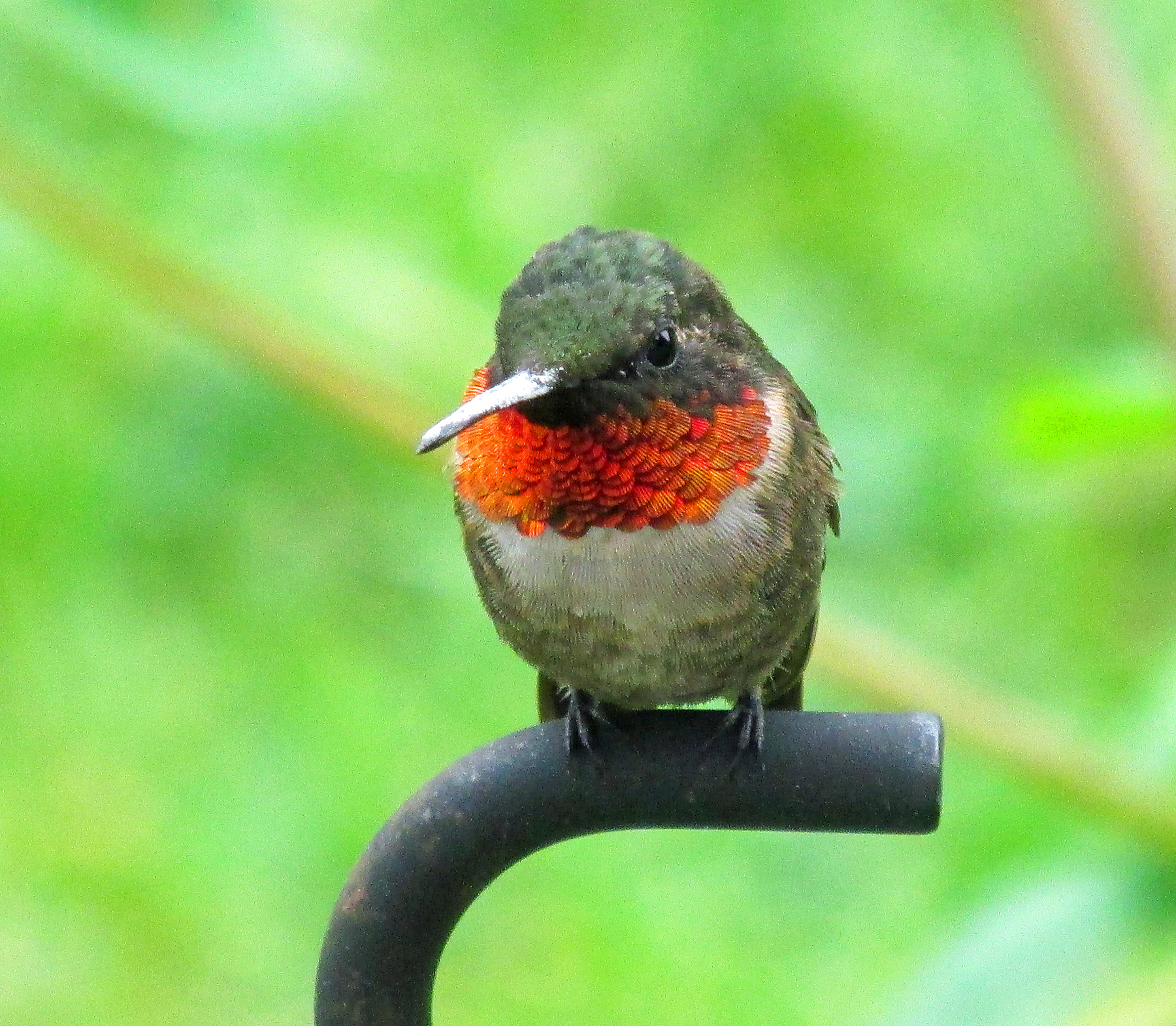
Photo by Bryan Stevens • Despite a perceived disadvantage of size, ruby-throated hummingbirds are quite capable of thriving in a giant world.

Size matters less than we think

The ruby-throated hummingbird makes an impressive migration each year. It’s even more awesome when one considers the diminutive size of these small travelers. Just to reach the United States, these tiny birds undertake a strenuous journey. They leave their wintering grounds in Central America to return to the United States and Canada for the nesting season. Most of these tiny birds, which are barely four inches long, make a non-stop flight of more than 500 miles across the Gulf of Mexico. The journey can take almost an entire day. With the end of summer, the entire population of ruby-throated hummingbirds, increased by a new generation of young birds, makes the Gulf crossing for a second time in a year to return to the American tropics for the winter months.
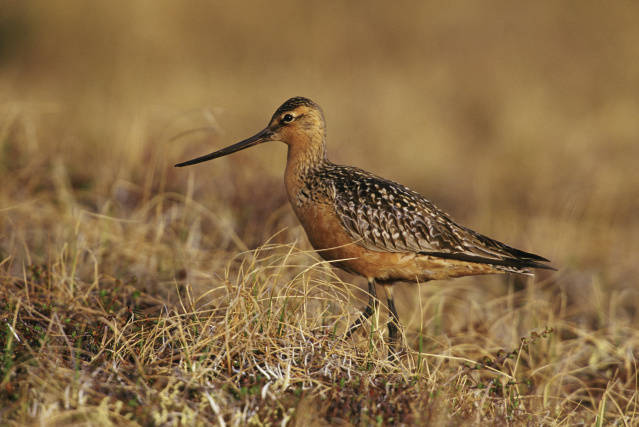
Photo by U.S. Fish & Wildlife Service/Steve Maslowski The bar-tailed godwit stages migrations that can take nine days of non-stop flight spanning nearly 6,000 miles.


Godwits, by Jove!

Shorebirds, which in North America can consist of birds ranging from turnstones and sandpipers to willets and avocets, are champion migrants. For instance, the bar-tailed godwit makes an impressive non-stop migratory flight. This shorebird nests in the United States only in parts of remote Alaska, but this godwit also ranges into Scandinavia and northern Asia. Some of these godwits make a nine-day, non-stop migratory flight that takes them from New Zealand to the Yellow Sea of China and beyond, a distance of almost 6,000 miles each way. Needless to say, since the godwits make no stops along the way, they must also go without food for the duration of their journey. The female godwit is larger than the male, but she still weighs only 12 ounces. The long-billed, long-legged bird is about 17 inches in length from the tip of the bill to its tail. That a creature so small can make such a distant, arduous trip and be the none the worse for wear is truly inspiring.

Bryan Stevens • A broad-winged hawk perches in a woodland in the Southern Appalachians.

A fine kettle of hawks

Many North American raptors migrate, but the broad-winged hawk dislikes the lonely aspects of solitary travel. Instead, these hawks form large flocks, known as kettles, during migration. In autumn the majority of these raptors travel past human-staffed hawk migration observation points, which are dubbed “hawk watches,” during a brief and concentrated period of only a few weeks. Observing the phenomenon locally is possible at the Mendota Fire Tower Hawk Watch site atop Clinch Mountain at an abandoned fire tower near Mendota, Virginia. Broad-winged hawks are part of the family Accipitridae, which includes 224 species of hawks, eagles, vultures and other birds of prey. Broad-winged hawks are truly long-distance migrants. Many hawks passing over Mendota may end their migration as far south as Brazil. These hawks travel in flocks that can consist of hundreds or thousands of individuals. The birds conserve energy by soaring on thermals and mountain updrafts.
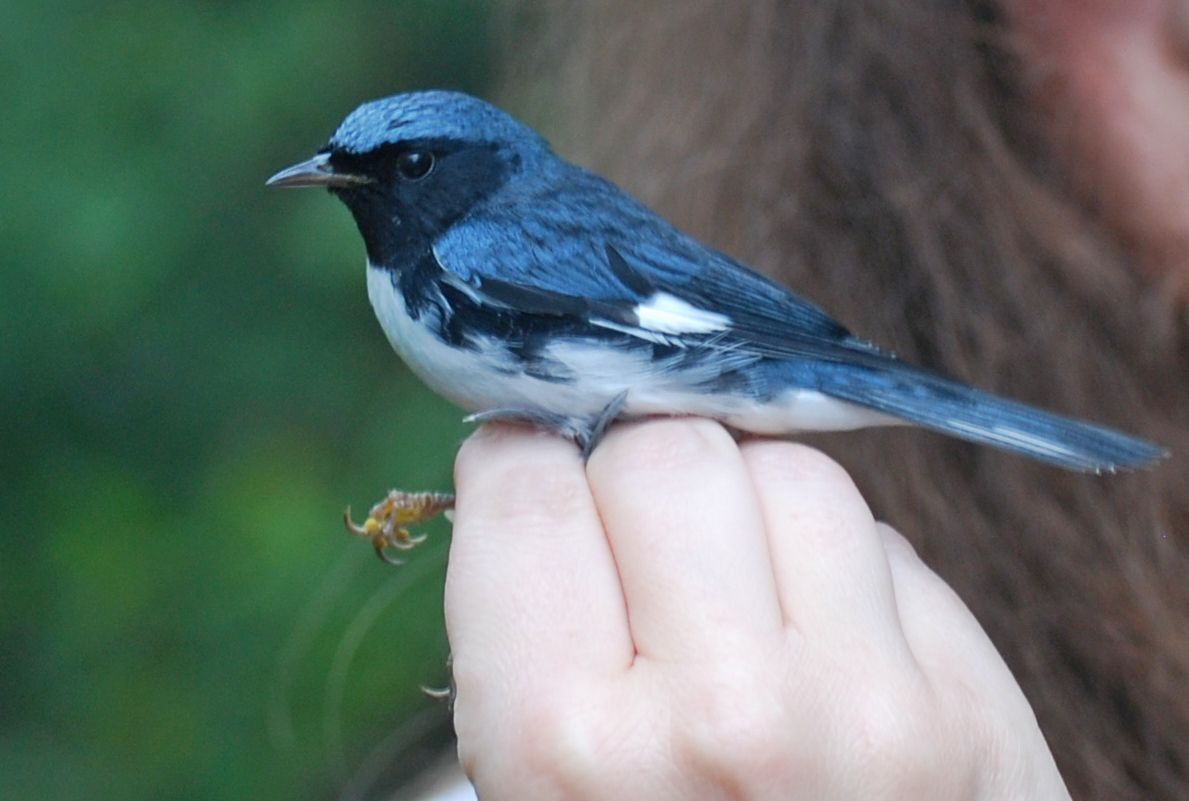
Jean Potter • Warblers, such as this male black-throated blue warbler, migrate into North America each spring to nest and retreat each fall for conditions farther south during the winter.

Traveling in stages

Most of the warblers that nest in North America retreat to Central and South America during the winter months. Few warblers, however, make as great a journey as the blackpoll warbler. Instead of migrating over land, this five-inch-long warbler undertakes a two-stage migration. The first half of the migration is a non-stop flight of about 1,500 miles. Every fall, these tiny birds fly over the ocean during this part of their migration, departing from Canada or the northern United States and not stopping until they reach various locations in the Caribbean. There they will spend some time recovering from the exhausting first half of their journey before they continue their way to such South American countries as Colombia and Venezuela.

•••

Bryan Stevens has written about birds since 1995. To share a sighting, ask a question or make a comment, email him at ahoodedwarbler@aol.com.

Looking for fall migrating birds already underway

A male Wilson’s warbler perches in some branches. Many species of warbler migrate through the region each fall.

Summer’s waning. Just look at the calendar. We’re already approaching the midway point in August.

Birders track the transitions as one season merges into another, knowing that these are some of the best times to seek out birds. Fall migration doesn’t wait for a page to turn on a calendar. In fact, some birds are already on the move. I thought I’d devote this week’s column to some of the birds I hope to observe this fall as a mass migration draws many of our summer residents south toward warmer wintering grounds. In no particular order, here are some of the birds I’m hoping to see this autumn.

COMMON NIGHTHAWKS

The name common nighthawk is a misnomer. The species is not strictly nocturnal and it is certainly not a hawk. It’s actually a member of the nightjar family, which includes such birds as chuck-will’s-widow and whip-poor-will. The nighthawk doesn’t offer a serenade like these relatives, but it does produce a “pent” call that sounds much like an electric buzzer. It’s often the first indication of one of these birds swooping overhead. Nighthawks form impressive flocks, often numbering in the dozens or even hundreds. They are often active in evening hours, but I’ve seen large flocks of these migrating birds in mid-afternoon. August and September are the best time to look skyward to enjoy the spectacle of a large flock of swooping nighthawks as they pass overhead.

Photo by U.S. Fish and Wildlife Service
A Common Nighthawk finds a perch for a brief rest.


I didn’t host any of these colorful birds this spring, so I hope to get another opportunity this fall. The males in their vibrant black-and-white plumage and namesake breast patch of rosy-red feathers are slightly less colorful in the fall. I’ve actually had better luck in autumn hosting these birds at feeders. They love sunflower seeds, so keep your feeders stocked with their favorite foods to increase your chances. Females and young birds look different than adult males, but the heavy beak (the word “gros” is German for large) is a good indicator of their identity. Bird banders netting this species to document information for science can testify that these birds are also capable of a nasty nip at careless fingers with that stout bill.

Bryan Stevens • A pine warbler visits a suet feeder.

WARBLERS

These birds are undeniably at their most gorgeous during spring migration, but many species of warbler retain colorful plumage into the fall season. Young birds, often in a plumage entirely different than adult birds, are responsible for the term “confusing fall warblers.” I’ll be looking for the species that are harder to locate in the spring, including bay-breasted warbler, Cape May warbler, Blackburnian warbler and Tennessee warbler. I’ll also be hoping for a rarity such as cerulean warbler or mourning warbler. I will be sad when the parade of warblers produces a palm warbler or a yellow-romped warbler. These last two species are a sure sign that fall migration’s coming to a close for another season.

Photo by Bryan Stevens
A Great Egret resting on a spit of land in a lake at Murphy Candler Park in Brookhaven, Ga.

WADING BIRDS

Late summer and early fall can also be a fantastic time for scanning rivers, lakes and farm ponds for wading birds. Hurricanes in recent years have even forcibly relocated American flamingos to Tennessee and other unlikely locations. It’s slightly more reasonable to hope for something unexpected like a wood stork or roseate spoonbill. The more likely candidates for observing in the region are great egrets, tri-colored herons and snowy egrets. It’s also a last chance to view green herons before this small species retreats to warmer locations for the coming winter.

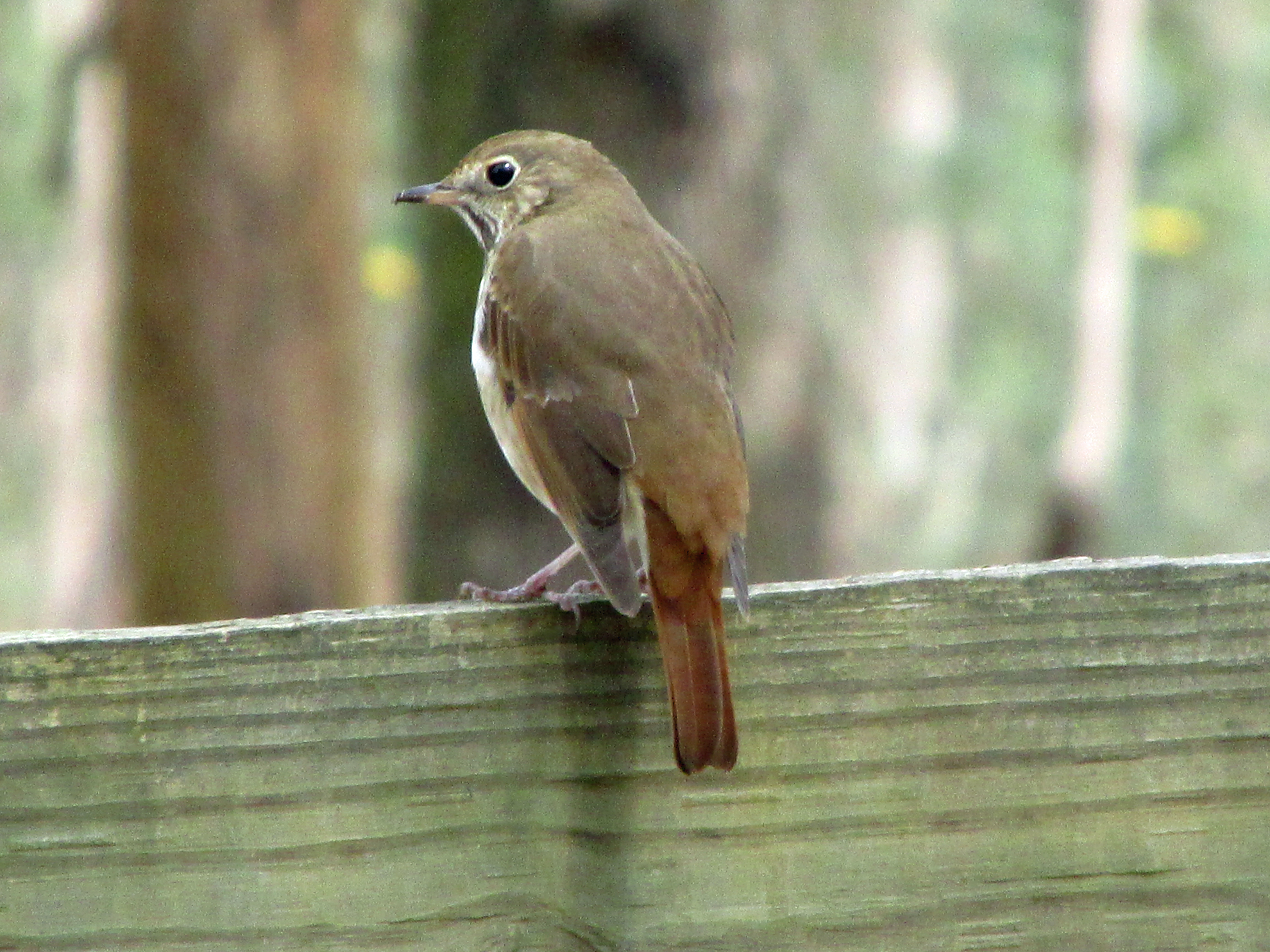
Bryan Stevens • A hermit thrush perches on a fence.

THRUSHES

These medium-sized songbirds are typically brown in plumage, often with spotted white breasts. They’re beautiful singers in spring and summer, but they’ve often cut back on their singing by fall. Nevertheless, they form large migrating flocks that will roam autumn woodlands to rest and refuel during short breaks from migrating. Swainson’s thrush is not difficult to find in the fall. This species is named in honor of 19th century artist and ornithologist William Swainson. Like most birders, I will be hoping for the more difficult species like Bicknell’s thrush and gray-cheeked thrush. Knowing their call notes can help alert you to their presence.

There will be a dazzling diversity of our feathered friends on the move this month. The seasonal phenomenon of migration extends into September and October. Pay attention to the visitors in your yards and gardens.

•••

Share sightings, ask questions or make comments by emailing me at ahoodedwarbler @aol.com.

Photo by Bryan Stevens • This migrating rose-breasted grosbeaks struck a window and spent some time recovering. Later, the bird flew safely back to a row of trees.

Late summer offers interesting birding opportunities for birders

Photo by Steven Arnold/Pixabay • A great blue heron attempts to get a handle on a snake in preparation for swallowing its serpentine prey.

A pair of Carolina wrens has taken advantage of what was meant to be the temporary storage of some boxes on the front porch to claim the interior of one of the cardboard containers as a nesting location.

In the latter days of summer, usually a lackluster period for birdwatching, there are still some interesting behaviors or actions on the part of our feathered friends to provide some points of interest.

Wrens already have a reputation for nesting in some unusual locations. My introduction to the Carolina wren took place in my childhood when a pair of these wrens nested in an old apron my grandmother used as a bag for her clothespins. Other unusual locations for wren nests that I have found over the years included the interior of a plastic shopping bag hanging from a nail in my garage and an attempt to nest in the exhaust vent for my clothes dryer. I’ve also seen them nest in hanging flower baskets.

Photo by Jean Potter • A Carolina wren creeps along a fence.

The world’s 88 species of wrens are, for the most part, the quintessential “little brown birds,” but that hasn’t kept them from acquiring some interesting and descriptive common names. Some examples include the tooth-billed wren, flutist wren, riverside wren, whiskered wren, happy wren, musician wren, timberline wren, speckle-breasted wren, white-breasted wood wren and giant wren. The last species on the list resides in Mexico and is indeed a “giant” among a family of tiny birds, reaching a length of almost nine inches and weighing all of 1.8 ounces.

I’ve also been monitoring a great blue heron lurking along the creek that flows past my home. A collapsed foot bridge (thanks to Helene) still spans the creek and provided, at least from the heron’s perspective, a means of concealment from my prying eyes when I stepped onto the front porch. The heron ducked under the bridge and slowly stepped downstream, out of sight and presumably what the bird thought would be out of mind. But I tricked the heron, stepping back inside the house and waiting for It to reappear. I stepped into view again and the heron, instead of taking flight, repeated its earlier actions, skirting beneath the bridge and wading downstream. I could probably have continued this game of peek-a-boo, but I felt that I had imposed on the heron long enough. The bird evidently desired to try its luck fishing upstream beneath a shady overhang of branches from trees growing along the creek banks. I stepped back inside, peeked out a window and watched the heron move in a slow, stately manner, but this time the bird headed up the creek.

All herons are skillful anglers, so I am confident that the bird probably managed to catch an unwary frog or fish. As the tallest heron in North America, the great blue heron boasts a diverse diet. These birds, armed with a dagger-shaped bill, excellent vision and quick reflexed, prey on rodents, amphibians, snakes, fish and even small alligators. Basically, a great blue heron will eat anything it can swallow.

Photo by Bryan Stevens • A great blue heron’s quick reflexed and dagger-like bill make it a formidable predator.

Other herons around the world with descriptive names include purple heron, white-bellied heron, black-headed heron, great-billed heron, whistling heron, pied heron and Goliath heron. The latter, as its name suggests, is a giant among herons.

There’s more to report on the birding front. Hummingbird numbers are on the rise again. After the usual summer lull, the resident ruby-throated hummingbirds have raised their profile, visiting daily at feeders as well as blooming flowers. Female hummingbirds have had time to raise their young. In fact, many of the hummingbirds visiting your yards and gardens at this time of year are probably birds born earlier in the season. In a couple of months these young birds will make their inaugural migration across the Gulf of Mexico to reach winter grounds in Central America. Until that time, hang a sugar water feeder, grab a lawn chain and enjoy the hours of no-cost entertainment provided by these feisty, flying gems.

So, although the summer doldrums do make birds scarce at times, just know that they’re still out there. In the meantime, nature offers plenty of other engaing wildlife. During the day, it’s fun to look for butterflies and dragonflies. After dark, there’s always moths and lightning bugs.

Keep in mind, it’s not always the visuals. For instance, the past couple of nights I’ve enjoyed listening to an Eastern screech-owl’s nocturnal serenade with its trembling wailing call that gives this small owl its name.

•••

Bryan Stevens has been writing about birds and birding since 1995. Email him at ahoodedwarbler@aol.com to share a sighting, make a comment or ask a question.

Photo by Bryan Stevens • A ruby-throated hummingbird visits a feeder for a sip of sugar water.


Birds make use of various strategies to attract and keep mates

Shauna Fletche/Pixabay • Some birds, like waxwings, like to present tasty treats to their potential mates.


With Valentine’s Day around the corner, it’s an opportune time to see how courtship is handled among our fine feathered friends. Most birds don’t bring a box of chocolates or a bouquet of roses when they take up courtship of a prospective mate, but birds have several equivalent behaviors that they employ to attract the attentions of the opposite sex. In honor of Valentine’s Day I thought a look at some of the more unusual courtship rituals of some of our feathered friends would be appropriate.

Aerial acrobatics designed to impress

In late winter and early spring, a true oddball begins courting. The American woodcock, also known by such whimsical names as “bog sucker” and “timberdoodle,” is a shorebird that has completely abandoned the shore in favor of woodlands and fields. Beginning as early as February, American woodcocks in the region conduct nightly courtship displays, starting at dusk, that combine aerial acrobatics with an assortment of unusual acoustical flourishes. Any wet field adjacent to a wooded area could offer a stage for these evening displays, but unless you know where to look and make an effort to do so, the American woodcock might as well remain a phantom of the night.

These mating rituals provide almost the only time of the year during which this bird makes itself available for observation. It’s only during this brief window that opens into their lives that we can be assured a glimpse. Even then, our peeks at woodcocks often consist of a fuzzy twilight escapade as the bird flings itself heavenward only to make a spiraling descent a few seconds later. The displays begin with a distinct vocalization, a type of “pent,” that also has the quality of sounding like some sort of mechanical buzzer.

Once the displays conclude for the season, the birds assume nesting duties, usually unobserved by humans. The rest of the year, almost nothing but blind, sheer luck would allow a birder to stumble across an American woodcock. It’s almost as if they disappear after these spring flights of fancy.

Birds bearing gifts

Many birds present small trinkets to a prospective mate. For instance, many male penguins make a present of a stone or pebble to female penguins. There could be more than a simple bribe behind this gift. Female penguins don’t build elaborate nests. In fact, a scrape on the bare ground, perhaps encircled by a collection of pebbles, marks the extent of their nest construction. So, the perfect pebble could be the way to winning a female penguin’s heart.

The way to the heart is through the stomach

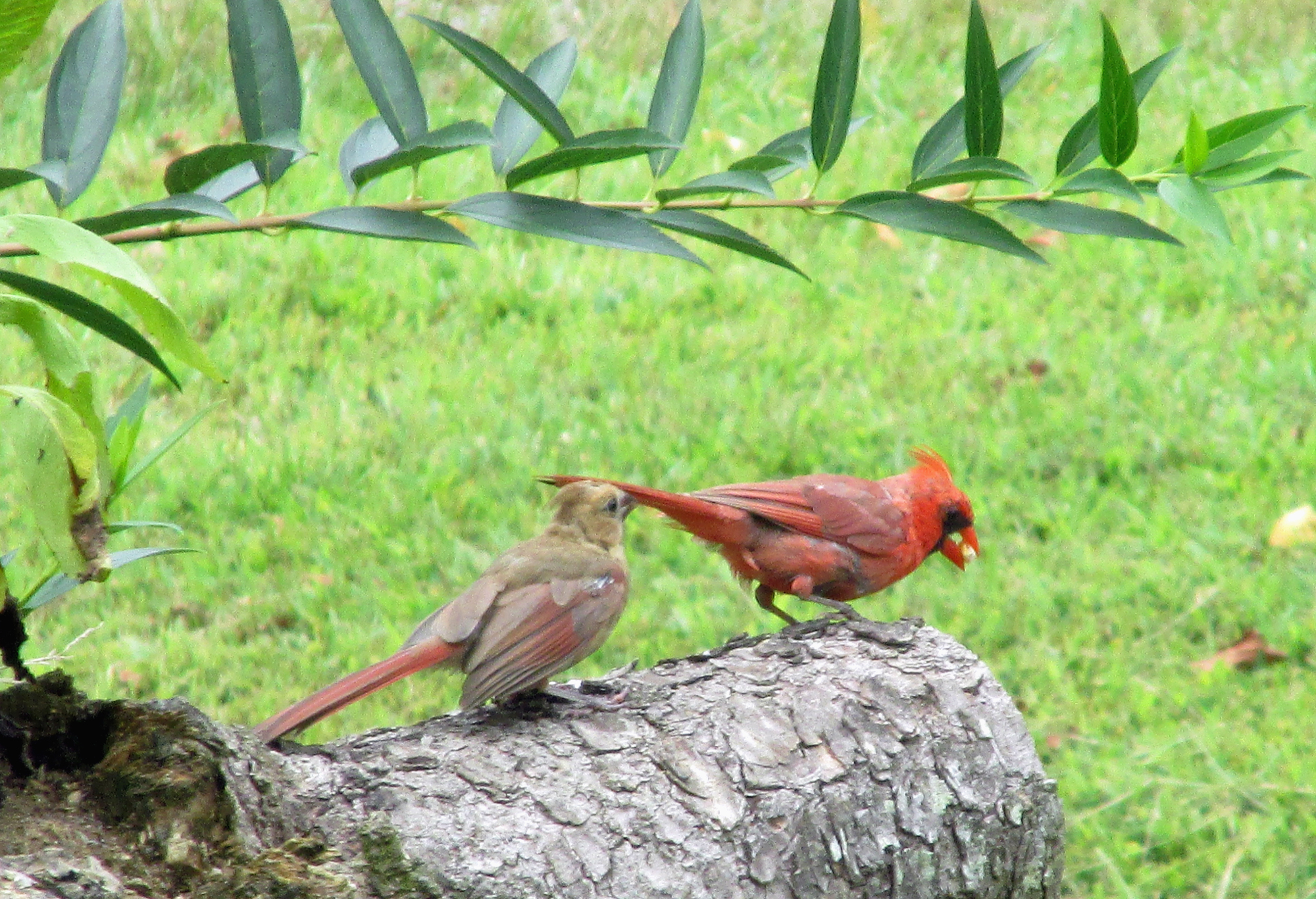
Observant birders may have witnessed a male Northern cardinal slip a female a morsel of food, such as a peanut or a shelled sunflower kernel. It’s a marked change for this bird. During the winter months, a male cardinal is more likely to chase a female away from a feeder rather than share food with her. However, as spring approaches, his behavior undergoes a change and he becomes content to feed next to a female cardinal, often slipping her some choice tidbits.

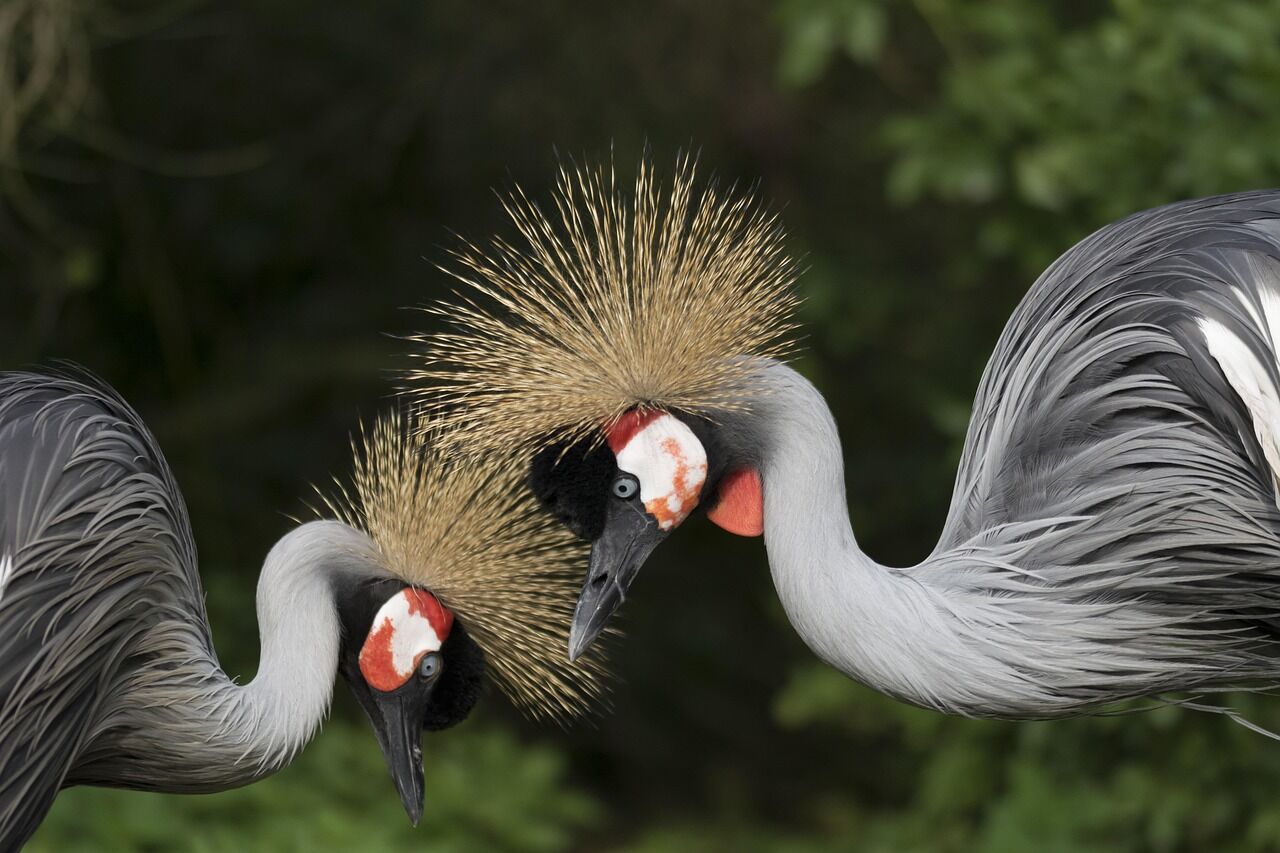
Sabine van Erp/Pixabay • Bow to your partner: Grey-crowned cranes perform an elaborate dance designed to strengthen their bond.

May I have this dance?

Many species of birds perform elaborate and ritualistic dance displays. Among birds known for tripping the light fantastic are flamingoes, cranes, grouse and grebes. Cranes are one of the oldest families of birds on earth. They’re also some of the most accomplished dancers in the animal kingdom. Pairs perform very ritualistic dances that, if the performers were human, would no doubt require the services of an accomplished choreographer. Cranes mate for life and the ritual of dancing is a way to strengthen the bonds between a mated pair. The ability to dance is, apparently, not instinctive. Young cranes must practice their dance moves, a process that can take years before they master the elaborate dance.

Dave Menke/U.S. Fish & Wildlife Service • A pair of Clark’s Grebes displays in a courtship ritual known as “rushing” or “weed dance.” Birds use a variety of strategies to attract and keep mates.

Synchronized swimming

While many birds dance to impress a mate or strengthen pair bonds, grebes perform a dance that takes place completely on the surface of the water. A pair will engage in this intricate performance, perfectly mirroring the moves of the other as they literally race across the surface of the water. These dances by grebes are also known as “rushing” or “weed dance.” It’s called as a weed dance because at the culmination of the ritual, the birds usually hold some type of aquatic plants in their bills while racing swiftly over the surface of the water. Pairs that perform well together stay together, building a nest and raising young.

Good housekeeping seal of approval

The tropical family of bowerbirds are famous for complex nests built by males and then decorated with bright and colorful objects to catch the eye of a potential mate. The nests of these birds are actually referred to as a “bower.” Usually constructed on the ground, the male will line the approachs to the bower with items such as shells, leaves, flowers, feathers, stones, berries, and even discarded garbage, including plastic scraps or bits of glass. Unusually odd items pressed into these decorative displays have included coins and spent rifle shells. This habit of male bowerbirds must rank as the ultimate in trying to impress a mate with shiny bling.

These are just a few of the inventive ways that birds go about attracting and keeping mates. Perhaps you can pick up some pointers from our feathered friends to ensure you have a great Valentine’s Day this year.

•••

If you have a question, wish to make a comment or share a sighting, email me at ahoodedwarbler@aol.com.

Seeing Yellow: Visit from an odd cardinal surprises local couple

Photo by Bryan Stevens • A male Northern cardinal leads a young cardinal to food sources.

Unicoi resident Bobby Davis called me last week to share news about a sighting of a yellow cardinal. Bobby said that he and his wife, Tressa, have two bird baths and a hummingbird feeder in their yard and are in the habit of watching the comings and goings of their feathered friends. At 1 p.m. on Tuesday, Aug. 8, they noticed a yellow cardinal in the yard near some rhododendrons.

A “yellow” cardinal is simply a Northern cardinal that has inherited a rare genetic condition that causes the bird’s feathers to turn yellow instead of red.

A news item posted to a website for The Wood Thrush Shop in Nashville relates the story of a backyard feeding station in Harriman, Tennessee, in Roane County that was visited by a yellow Northern cardinal on a regular basis.

Yellow Northern cardinals have been seen in at least four different states the last 10 years but remain a rarity.

The article explained that the yellow coloration in affected cardinals is caused by a rare genetic mutation. The colors red, orange and yellow in a bird’s feathers are created with carotenoid pigments derived from the foods they eat. In the male Northern cardinal, yellow pigments from the diet apparently are converted to red by a specific enzyme. In a very rare genetic mutation, probably affecting fewer than one in a million cardinals, that enzyme is lacking, so the conversion to red doesn’t occur and the feathers are bright yellow instead.

Back in May of this year, a yellow cardinal given the name Maize was spotted in Alabama. That sighting took place less than 15 miles from a location that hosted another yellow cardinal in 2018. Was Maize a descendant of that yellow cardinal spotted six years ago?

Perhaps the yellow cardinal will stick around at Bobby and Tressa’s home. Bobby informed me that they have an ordinary pair of red cardinals that resides in their yard, but he noted that the three birds have not interacted.

•••

Interestingly enough, there is a bird with the actual name yellow cardinal, but it is not closely related to the Northern cardinal. This South American bird has the scientific name of Gubernatrix cristata and is a member of the tanager family.

The yellow cardinal was formally described in 1817 by the French ornithologist Louis Pierre Vieillot under the binomial name Coccothraustes cristata. The word “cristata” means crested or plumed.

This yellow cardinal ranges in Argentina, Brazil, Paraguay and Uruguay. Its natural habitats are dry savanna, temperate shrubland, subtropical or tropical moist shrubland and temperate grasslands. The yellow cardinal is threatened by habitat loss and from pet trade trappers for sale as exotic pets. Males are trapped at a higher rate than females, and the yellow cardinal is considered endangered due to the constant entrapment. If recent counts are accurate, only about 1,000 t0 2,000 of these birds still exist.

Photo by U.S. Fish & Wildlife Service
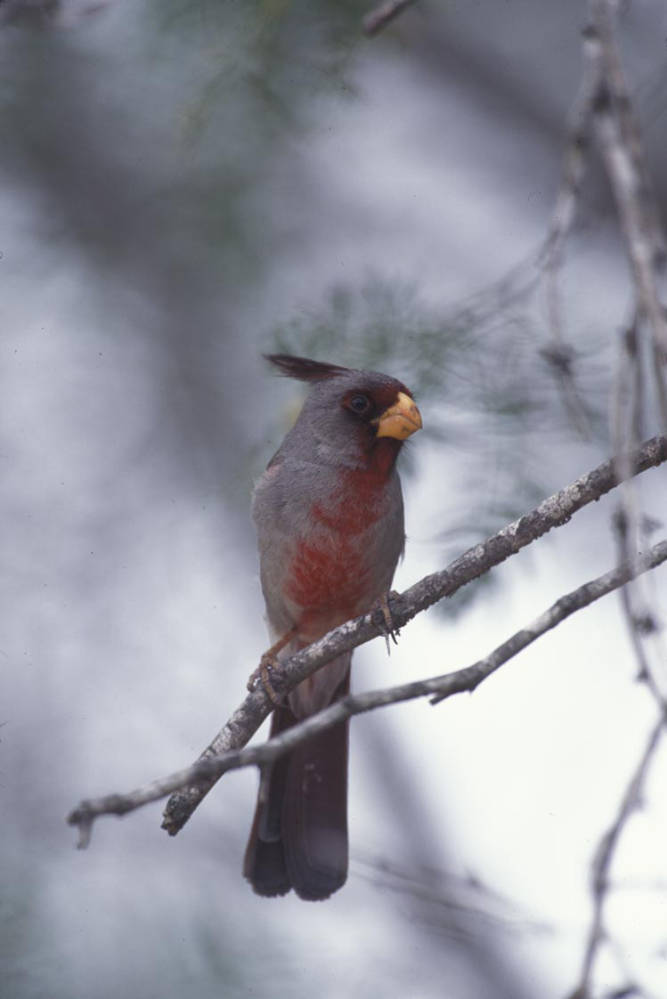
Pyrrhuloxia, also known as desert cardinal, is related to the Northern cardinal. 

The Northern Cardinal, on the other hand, is an abundant, beloved songbird. There’s additional evidence to put forward as testimony to the popularity of the Northern cardinal. It’s the official state bird of seven states: Virginia, North Carolina, West Virginia, Ohio, Illinois, Indiana and Kentucky. Only the Northern mockingbird, which represents five states as official state bird, even comes close to the Northern cardinal in this respect.

Cardinals are a widespread species, ranging westward to the Dakotas and south to the Gulf Coast and Texas. The southeastern United States was once the stronghold of the cardinal population. In the past century, however, cardinals have expanded their range into New England and Canada. These birds have even been introduced to Hawaii.

The Northern cardinal has only two close relative in the genus Cardinalis. The pyrrhuloxia, also known as the desert cardinal, ranges throughout Arizona, New Mexico and Texas, as well as in Mexico. The third relative is known as vermilion cardinal and is found in Colombia and Venezuela. This bird suffers some losses to the exotic pet trade, but its numbers have managed to remain fairly stable.

•••

I’ve been an active birder since the early 1990s. To share a sighting, ask a question or make a comment, email me at ahoodedwarbler@aol.com.

Tiny kinglets, gnatcatchers lead the charge among spring’s returning birds

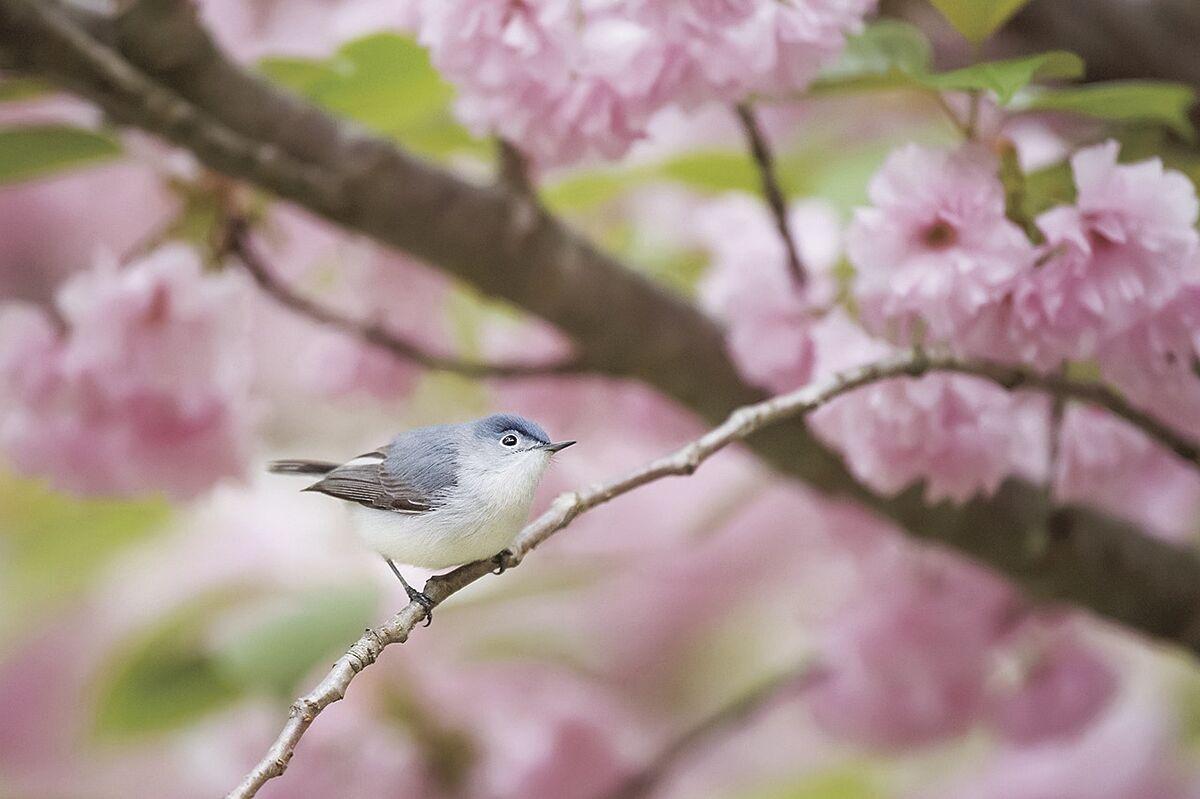
Photo by Pixabay • The blue-gray gnatcatcher’s diminutive size belies its defiant attitude. These birds are intensely territorial and brooks no intruders.

The ruby-crowned kinglets, which passed through last fall in October and November, have returned, retracing their migratory path for the spring season and making their presence felt at my home with their jittery call notes and songs.

Most of the more recent returning birds have been on the smaller side. In addition to ruby-crowned kinglets, which arrived on April 1, I saw and heard a tiny blue-grey gnatcatcher on March 31.

As their name suggests, kinglets are tiny birds. In fact, about the only North American birds smaller than kinglets are some of the hummingbirds. The kinglets, known outside North America as “flamecrests” or “firecrests,” belong to the family, Regulidae, and the genus, Regulus. The family and genus names are derived from a Latin word, regulus, which means “rex,” or “king.” The name was apparently inspired by the colorful crown patches, often red, orange or gold, that resemble the royal “crowns” of kings. In addition to the two North American species, four other species of kinglets can be found in North Africa, Europe and Asia.

The gnatcatcher is also one of our smaller birds. I’ve always though that blue-gray gnatcatchers resemble a shrunken mockingbird. Like quarrelsome mockingbirds, gnatcatchers are noisy, scolding songbirds.

They are also determined to protect their nesting territories at all costs and will attack much larger birds. In North America, the gnatcatcher ranks in size with birds like kinglets and hummingbirds. Despite its diminutive status, the gnatcatcher acknowledges no superiors. According to the All About Birds website, blue-gray gnatcatchers are “fiercely territorial” and use vocal displays and postures to in intimidate other birds. They may chase a rival as far as 70 feet. If all this fails to deter an intruder, a gnatcatcher will escalate to midair confrontations.

Gnatcatchers don’t hesitate to call for reinforcements when warranted. With persistent squeaking they will drum up a brigade of feisty, feathered fighters to repel intrusions by potential predators too large for a gnatcatcher and its mate to handle on their own.

Ruby-crowned Kinglet

There are two species of kinglets in North America.

Although similar in size and overall coloration, the ruby-crowned and golden-crowned kinglets are easily distinguished from each other. Side by side, the two North American kinglets are easy to identify. The golden-crowned kinglet has a striped facial pattern formed by bold black and white stripes. The ruby-crowned kinglet, on the other hand, has a bold white eye ring but no striping. The golden-crowned kinglet has an orange crown patch, while the ruby-crowned kinglet has a red crown patch that is, more often than not, kept concealed. Both sexes of the golden-crowned kinglet possess a yellow crown patch, but only the male ruby-crowned kinglet boasts a scarlet patch of feathers atop the head. Observers can expend a lot of energy trying to get a look at the crown patches, which are typically only displayed when the bird is agitated.

There are 17 species of gnatcatchers. Most of these species reside in Central and South America. Some of the other species found in North America include California gnatcatcher and black-capped gnatcatcher.

Kinglets are very active birds. If warblers can be described as energetic, the kinglets are downright frenetic in their activities. The kinglets almost never pause for long, flitting from branch to branch in trees and shrubs as they constantly flick their wings over their backs. These bursts of hyperactivity can make them difficult to observe. Although small in size, these birds more than compensate for it with a feisty spirit that does them well through the harsh winter months.

Gnatcatchers are also constantly on the move, flicking their tails and darting through the branches of trees just starting to put out new green leaves. They glean caterpillars and small insects from the undersides of leaves to help fuel their demanding metabolism.

Kinglets and gnatcatchers often join mixed flocks comprised of other species of birds, some of which are regular feeder visitors. Perhaps by observing their flock counterparts, some kinglets have learned to accept feeder fare such as suet, meal worms and chopped nuts. Away from feeders, kinglets mostly feed on a range of small insects and arachnids. Gnatcatchers are strictly eaters of insects, but while a feeder holds no attraction for them, their curious nature often makes these tiny bird quite approachable.

Normally, kinglets have a rather fleeting lifespan. These tiny birds can be considered old if they live three or four years. There are always exceptions. The oldest golden-crowned kinglet on record was six years and four months old. That individual, a male, was documented by a bird bander in 1976, according to the website All About Birds.

Likewise, gnatcatchers live brief lives. The oldest known blue-gray gnatcatcher was a male, and at least four years, two months old, when it was recaught at a banding station in Pennsylvania and rereleased, according to the All About Birds website.

•••

I’m still waiting for the smallest of the small to make its spring appearance. Ruby-throated hummingbirds are back, although I haven’t seen one yet. To share your first hummingbird sighting of spring, email me at ahoodedwarbler@aol.com.
 

Spring signs less clear than in seasons past

Photo by Bryan Stevens * A male mallard lounges by the edge of a fish pond in a previous spring season.

Signs of spring are, as the old saying goes, popping up all over. Daffodils and crocuses unfurling their blooms, a pair of mallards paying a visit to my fish pond and the blue skies overhead on sunny days have signaled the transition toward spring as surely as the turning of the calendar page to March.

Some of these familiar sights have been hazy for me during this season of transition. In early February I lost vision in my right eye. After visits to various medical experts, an MRI, blood tests and other procedures, I got a diagnosis of optic papillitis, a form of optic neuritis. In simpler terms, I suffered a stroke of the eye that aggravated and inflamed the optic nerve.

The good news, as I see it, tests have not found any evidence of underlying conditions like cancer or a brain tumor. The bad news, also as I see it, is that recovery is not guaranteed and can take time. The process is usually measured in weeks and months, not days.

It’s been unsettling, to describe it mildly. Reading requires the assistance of a magnifying glass. Too much time focused on a bright screen brings discomfort.

I’m carrying on with birding as best I can. Binoculars, as birders know, are made for use by two eyes. I have feeders to lure the birds in close, but my favorite cardinals, chickadees and wrens are a bit blurry.

I’ve always tried to stay optimistic. I’m hopeful that by the time the ruby-throated hummingbirds return for a sip of sugar water at my feeders in April, my sight will be good enough to enjoy the beauty of their green and white plumage and the brilliant red throat if the visiting hummer is a male.

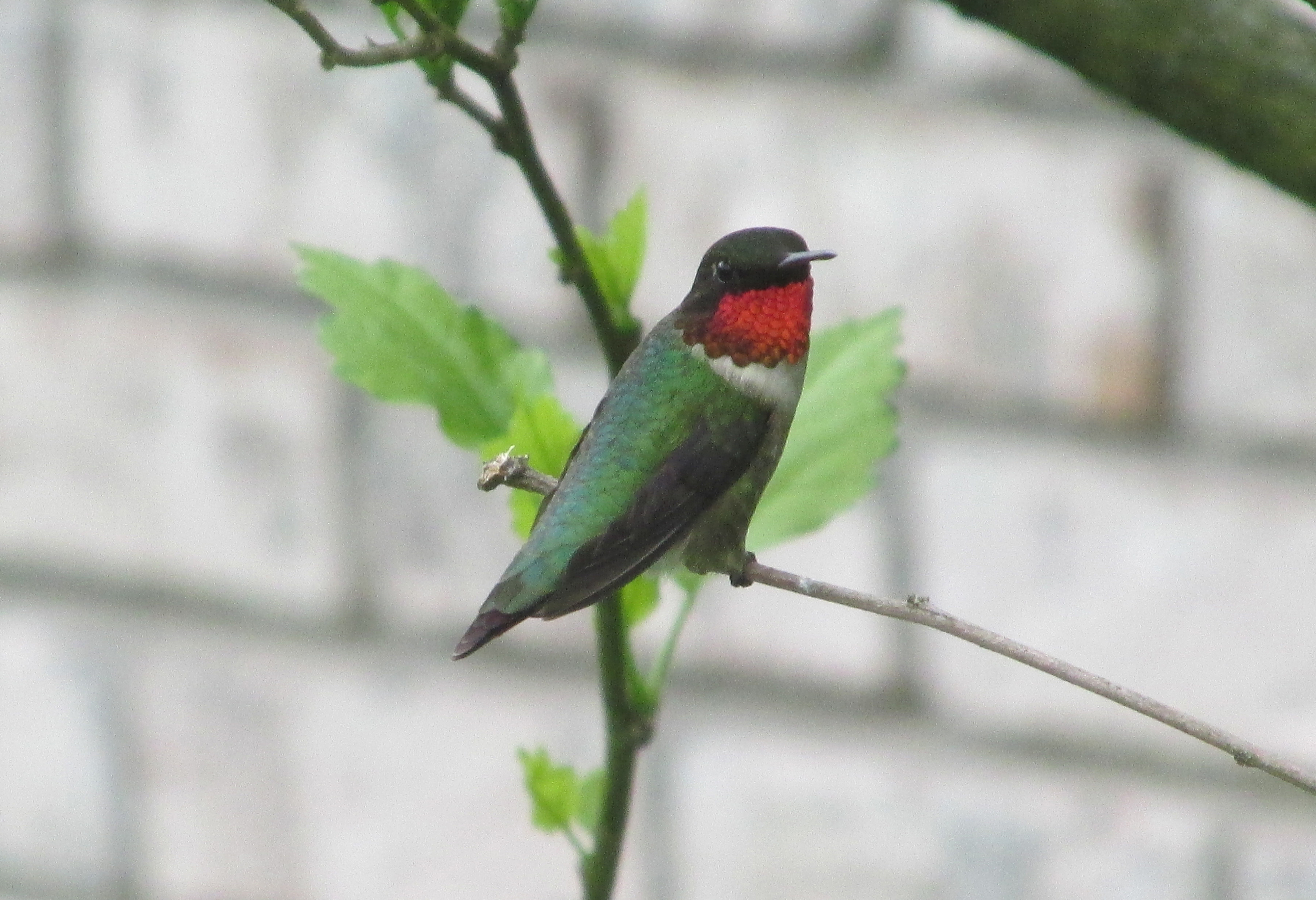
Photo by Bryan Stevens • Male ruby-throated hummingbird show the namesake red throat. The feathers on a male’s throat are iridescent, which means they can change when seen from different angles. In poor light, the ruby-red throat can look almost black.

If spring’s too soon, I’ll push the goal farther along in the 2023 calendar and hope to be ready to identify the annual fall parade of warblers.

As I wait, nothing’s stopping me from enjoying the sounds of spring. On rainy days, the chorus of spring peepers produce their amphibious cacophany at dusk and throughout the night. Many of the birds are also singing their hearts out. Eastern phoebes, tufted titmice, Carolina chickadees and Northern cardinals all make their presence with their loud, persistent songs.

On Monday, Feb. 20, I watched as the fuzzy shapes of two dozen red-winged blackbirds dropped down into the cattails in the marshy area near the fish pond. It’s not February for me until I’ve seen a migrating flock of blackbirds benefitting from an overnight stay in the cattails.

Photo by Bryan Stevens * A mallard drake looks vibrant with his green, glossy head.

On Sunday, Feb. 26, a mallard pair visited the fish pond. They were the first mallards that I’ve observed at my fish pond for many years. In full disclosure, my mom spotted them and informed me of their arrival. Mallards are big enough that I saw the male of the pair easily enough. His green head and chestnut breast stood out from the brown cattails and other vegetation bordering the pond. The female mallard blended nicely with the background and evaded my gaze. Regardless, I was thrilled to welcome mallards back to the pond. They only lingered for a single day, but they have me hoping that other ducks, such as blue-winged teal or wood ducks, will make similar visits as the season progresses.

On March 1, I saw my first spring butterfly. The seasonal first was a spring azure, a tiny, delicate butterfly. The sighting reminded me that nature will provide plenty of incentive to work on regaining my full vision. I still have more butterflies, as well as dragonflies, damselflies, moths and June bugs to look forward to seeing as we progress through spring and summer.

I’ve always believed that nature is a restorative force. Now I am going to test that theory in my goal to have my vision back at or near normal capacity by the time I hear the buzzy whir of hummingbird wings in April.

In the meantime, there will still be plenty of time to focus on our myriad feathered friends. I have someone who has been great at taking down my dictated words for my weekly column.

As always, make a comment, share an observation or ask a question by emailing me at ahoodedwarbler@aol.com.


Sandpiper a surprise addition for summer bird count

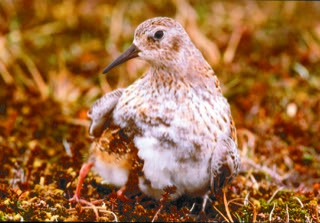
Photo by USFWS • A baby least sandpiper shelters beneath its dutiful mother. The aptly named least sandpiper is the smallest species of shorebird.

It’s not too often I get a chance to make a historic bird sighting, but that’s what happened on a recent Saturday while seated on a bench with Rob Armistead having a breakfast break while taking part in a seasonal bird survey in Elizabethton along the Watauga River.

I chose the location for the break because I knew that it has traditionally been a good spot to observe some unexpected species. Past good birds that I’ve observed along this section of the Watauga River have included orange-crowned warbler, yellow-throated vireo, sora, Baltimore oriole and red-headed woodpecker.

On this occasion, a tiny shorebird made an appearance, settling on some exposed rock formations. In April and May, these same rocks are great locations to find migrating spotted sandpipers and solitary sandpipers. 

The bird was smaller than these sandpipers and immediately stood out as a “peep,” a nickname that birders give to a group of small sandpipers that are all similar in appearance.

The one physical trait that help distinguish a least sandpiper from other “peeps” is leg coloration. Least sandpipers have greenish or yellowish legs in contrast to the black legs of other similar “peeps.”

In good light and at close range, Rob and I confirmed that the bird had greenish legs and were thrilled to add a least sandpiper to our own tally of observed birds.

The least sandpiper, as suggested by its name, is the smallest member of the sandpiper family. In fact, this sandpiper, which is not much bigger than a sparrow, is the world’s smallest shorebird. The least sandpiper weighs only a single ounce and is only five to six inches long. 

According to the website All About Birds, the least sandpiper migrates thousands of miles between its Arctic breeding grounds and wintering grounds as far south as Chile and Brazil.

In releasing the count compilation, official compiler Rick Knight made note of the fact that the least sandpiper represents a late migrant and the first-ever June record for the species in the five-county area. 

During the course of the day, Rob and I joined Brookie and Jean Potter for a trip to Holston Mountain, where we added some mid- to high-elevation species such as scarlet tanager, rose-breasted grosbeak, veery, Eastern wood-pewee, dark-eyed junco, ruffed course and chestnut-sided warbler. 

Photo by Bryan Stevens • A male rose-breasted grosbeak perched on a branch on Roan Mountain, Tennessee.

This year’s survey was the 29th annual Carter County Summer Bird Count and was conducted by members and friends of the Elizabethton Bird Club. I’ve been participating on this yearly survey of local birds since the late 1990s.

This year’s count was held Saturday, June 11. A total of 22 observers took part in this year’s count. 

A total of 116 species was tallied, which is right on average for the last decade and slightly above the average of 114 over the previous 28 years, according to Knight.

He noted that the all-time high for this count was 123 species in 2017.

Here’s the total:

 Canada goose, 131; wood duck, 9; mallard, 53; ruffed grouse, 3; and wild turkey, 20.

Rock pigeon, 49; Eurasian collared-dove, 1; mourning dove, 155; yellow-billed cuckoo, 1; Chuck-will’s-widow, 4; Eastern whip-poor-will, 9; chimney swift, 116; and ruby-throated hummingbird, 22.

Killdeer, 18; least sandpiper, 1; double-crested cormorant, 13; great Blue heron, 22; and green heron, 2.

Black vulture, 5; turkey vulture, 65; Cooper’s hawk, 4; bald eagle, 1; red-shouldered hawk, 2; broad-winged hawk, 5; red-tailed hawk, 5; Eastern screech-owl, 6; and barred owl, 3.

Belted kingfisher, 5; red-bellied woodpecker, 32; downy Woodpecker, 23; hairy woodpecker, 4; Northern flicker, 27; and pileated woodpecker, 16.

American kestrel, 1; great crested flycatcher, 2; Eastern kingbird, 27; Eastern wood-pewee, 31; Acadian flycatcher, 20; alder flycatcher, 2; least flycatcher, 12; and Eastern phoebe, 73.

White-eyed vireo, 5; yellow-throated vireo, 1; blue-headed vireo, 54; warbling vireo, 1; and red-eyed vireo, 165.

Blue jay, 110; American crow, 259; fish crow, 2; and common raven, 10.

Tree swallow, 118; Northern rough-winged swallow, 45; purple martin, 22; barn swallow, 173; and cliff swallow, 265.

Carolina chickadee, 73; tufted titmouse, 93; red-breasted nuthatch, 14; white-breasted nuthatch, 23; house wren, 57; winter wren,  4; and Carolina wren,  116.

Blue-gray gnatcatcher,  23; golden-crowned kinglet, 7; Eastern bluebird, 152; veery,  29; hermit thrush, 1; wood thrush, 66; American robin,  581; gray catbird, 60; brown thrasher,  22; and Northern mockingbird, 70

European starling, 411; cedar waxwing, 61; house sparrow, 98; house finch, 51; pine siskin, 10; and American goldfinch, 170.

Grasshopper sparrow, 1; chipping sparrow,  80; field sparrow, 43, dark-eyed junco, 70; song sparrow, 348; Eastern towhee, 150; yellow-breasted chat, 7.

Eastern meadowlark, 13; orchard oriole, 2; Baltimore oriole , 1; red-winged blackbird, 73; brown-headed cowbird, 49; and common grackle,143.

Ovenbird, 77; worm-eating warbler  3; Louisiana waterthrush, 12; golden-winged warbler,  2; black-&-white warbler, 31; Swainson’s warbler, 6; common yellowthroat, 31; hooded warbler,  110; American redstart , 6; Northern parula, 47; magnolia warbler, 1; Blackburnian warbler,  5; yellow warbler, 3; chestnut-sided warbler, 31; black-throated blue warbler, 49; pine warbler,  3; yellow-rumped warbler, 1; yellow-throated warbler, 16; black-throated green warbler, 19; and Canada warbler,  10.

Scarlet tanager, 42; Northern cardinal, 173; rose-breasted grosbeak, 7; blue grosbeak, 4; and indigo bunting, 161.

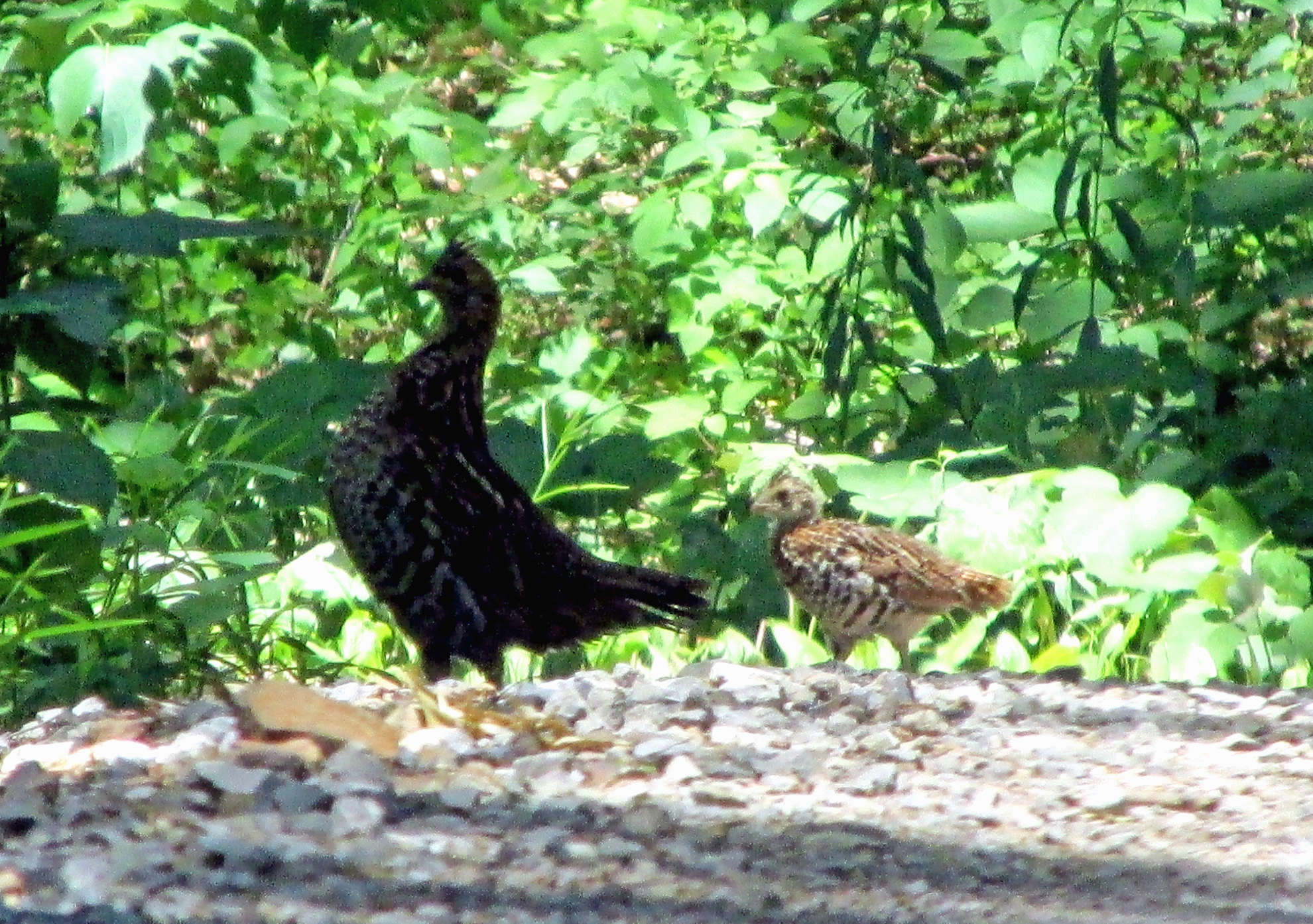
Photo by Bryan Stevens • A young grouse follows its mother into concealment by the edge of a road on Holston Mountain, Tennessee.

My other personal highlight on this count was seeing three young Ruffed Grouse darting  across the road, one at a time, while riding on Panhandle Road to the top of Holston Mountain. Those three young grouse turned out to be the only grouse counted by any participants on the count.

The Unicoi County Summer Bird Count was conducted Saturday, June 18. I’ll provide the results of that count in an upcoming column. 

Tanagers are among world’s most colorful birds

Photo Courtesy of Jean Potter
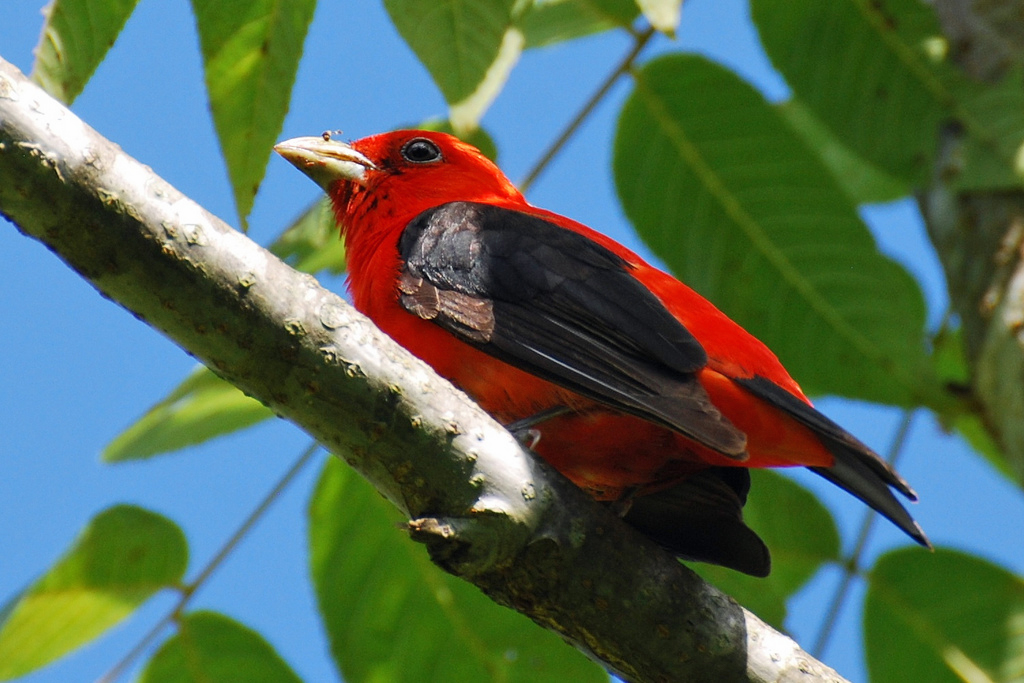
A male scarlet tanager brightens shadowy woodlands with a flash of tropical colors yet remains mostly inconspicuous in the forest canopy.

The daily chorus of songbirds greeting the dawn is usually welcome unless I’m feeling particularly sleepy. Carolina wrens are one of the first birds in residence to sing each day. This time of year they get plenty of accompanists, including American robins, Eastern phoebes, Carolina chickadees, Northern cardinals, Eastern towhees, red-eyed vireos, indigo buntings, hooded warblers, ovenbirds and others.

As June arrived, however, I began to take notice of the absent voice of scarlet tanagers. It wasn’t until June 9 that I heard the first male scarlet tanager of the season singing from the wooded ridge behind my home.

In late April and throughout May, once the oaks, the maples, the poplars and other trees begin spreading out new green leaves to create a concealing woodland canopy, a familiar song can be heard from the treetops. 

Upon first hearing it, listeners might mistake the hidden singer for an American robin. Listen a little closer, however, and the song sounds as if it is being delivered by a robin stricken a bit hoarse with a sore throat.

The producer of the hoarse but melodic song is a scarlet tanager, one of the most showy birds of Eastern woodlands from April to early October. Like the warblers, vireos, flycatchers and other songbirds, the scarlet tanager is migratory. They spend the winter months in the tropical forests of Central and South America. The scarlet tanager is better attired than most birds to provide us a glimpse of what life must be like in the tropical rain forests, which are a riot of color and sound.

It takes only one sighting to sear the vision of these vibrant birds into our retinas, as well as into our memories. The scarlet tanager boasts a brilliant plumage of crimson red paired with black wings and tail. Of course, this is the male. The female scarlet tanager makes no real claim to the common name with her comparatively drab greenish plumage. However, the scientific name, Piranga olivacea, gives a nod to the olive-green plumage of females, young males and even adult males when molting their feathers.

Although once nominated as a candidate for state bird by the school children of Minnesota, the scarlet tanager ultimately failed to gain the designation. Instead, as perhaps is fitting for the “Land of 10,000 Lakes,” the common loon represents Minnesota as official state bird.

The related summer tanager is less widespread in Northeast Tennessee, but males of this species are no less dramatic in appearance than the Scarlet Tanager. Male summer tanagers are a rosy-red over all their body. Females, with a dull greenish plumage, are relegated to the background. She can be distinguished from her counterpart, the scarlet tanager, because of their darker wings and larger bills.

The summer tanager holds the distinction of being the only all-red bird in North America. Birds like Northern cardinals and scarlet tanagers also have some black in their plumage.

I’ve seen summer tanagers at Steele Creek Park in Bristol and Willow Springs Park in Johnson City. Sadly, over the years my sightings of this attractive songbird have been few and far between. My most memorable observation of a male summer tanager took place many years ago during a spring visit to Fripp Island, South Carolina. Most of the summer tanagers I have observed in Northeast Tennessee have been females.

On the other hand, I usually have a few scarlet tanagers in residence around my home during the summer months. If the woodlands at my home fail to attract this bird, I can usually make a visit to higher elevations on Roan Mountain, Unaka Mountain or Holston Mountain to gain an exciting glimpse of this beautiful bird.

Worldwide, there have traditionally been about 240 species of tanagers. Experts have changed some of the ways they classify tanagers, so that figure is no longer set in stone. Tanagers are a New World family of birds, concentrated mainly in the tropics.

In the western United States, the scarlet and summer tanagers are replaced by Western tanagers and hepatic tanagers. During a visit to Salt Lake City in Utah in 2006 I saw several Western tanagers.

Some of the world’s other tanagers are known by extremely descriptive names, including flame-colored tanager, green-headed tanager, golden-chevroned tanager, azure-shouldered tanager, fawn-breasted tanager, saffron-crowned tanager, metallic-green tanager, turquoise tanager, scarlet-bellied mountain tanager and diademed tanager.

A print of Scarlet Tanagers by early North American naturalist and painter John James Audubon.

Scientists have recently given fresh consideration to the relationship of many tanagers to the other birds of the world. As a result, many of the North American tanagers are now closely allied with such birds as Northern cardinal and have been pushed into a tenuous relationship with tropical tanagers.

The scarlet tanager is not typically a feeder visitor, but you can lure these birds with orange slices placed in special feeders or simply spiked onto the branches of backyard trees. As an added bonus, orange slices can also attract birds such as baltimore orioles and gray catbirds.

Fond of fruit, the scarlet tanager incorporates various berries into its diet. Landscape around your home with fruit-bearing trees such as mulberry, serviceberry and wild cherry to make your yard more inviting to these elusive bird.

Yes, the scarlet tanager is more often heard than seen, but it is a bird worth seeking out. A sighting is guaranteed to impress. Seeing a scarlet tanager will almost make observers feel like they’ve been dropped into a tropical jungle instead of standing beneath a woodland canopy in the Southern Appalachians.

I’ll be participating in some summer bird counts over the next few weeks, so I am hopeful that my 2022 drought of scarlet tanager sightings will soon be at an end.

Sales of local calendar fund bird-worthy aims


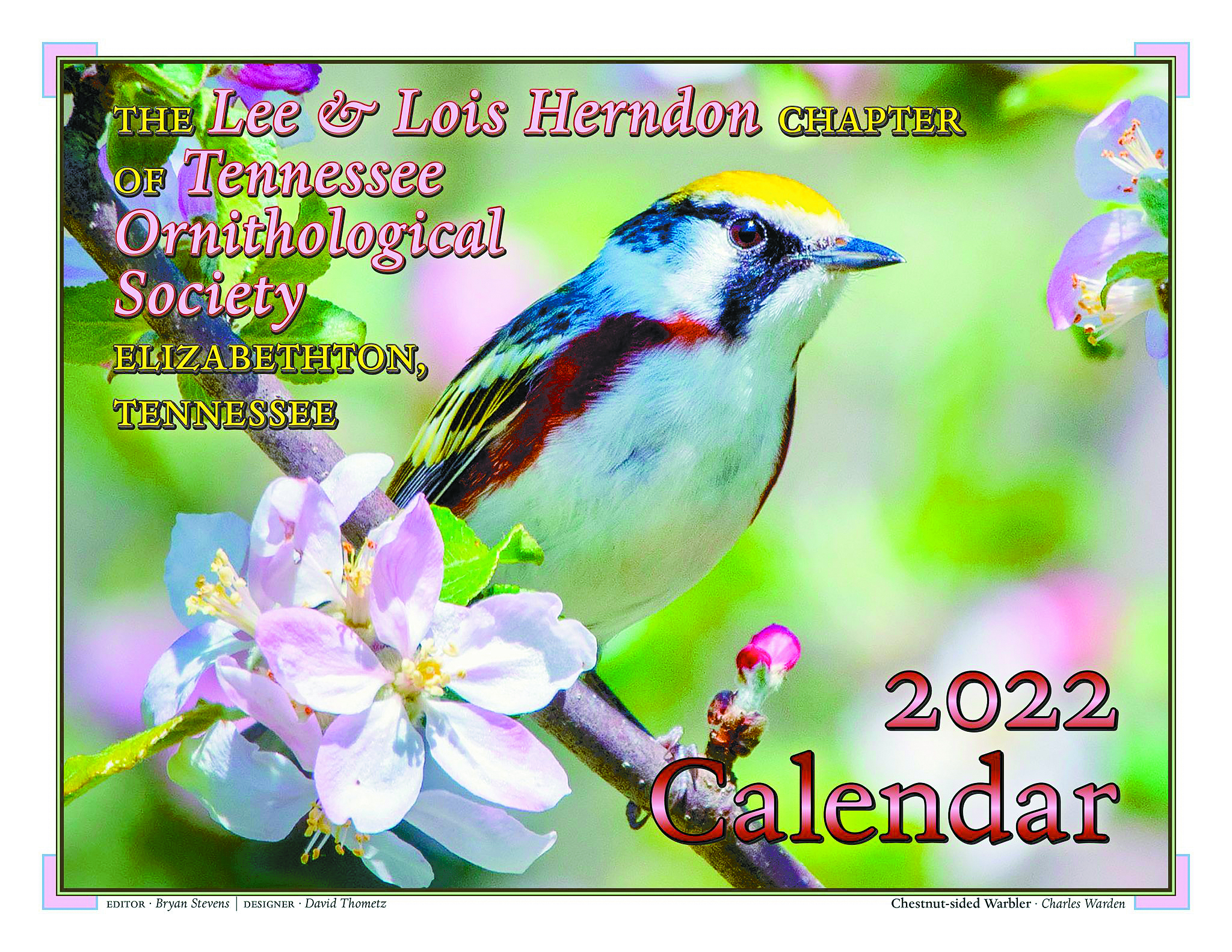
The front cover of the 2022 bird calendar produced by the Elizabethton Bird Club features a photo of a chestnut-sided warbler taken by club member Charles Warden. The calendar is available for purchase for $15, plus $2 for shipping and handling. They make great Christmas gifts for nature and bird enthusiasts. For more information, email ahoodedwarbler@aol.com. 

If you didn’t find all you needed on Black Friday for those on your shopping list, here’s a suggestion. The Lee and Lois Herndon Chapter of Tennessee Ornithological Society, also known as the Elizabethton Bird Club, has produced its annual calendar featuring bird photographs by its members and friends of the organization.

These calendars make wonderful Christmas gifts and stocking stuffers. This year’s front cover features a gorgeous photo of a chestnut-sided warbler taken by club member Charles Warden. This is Warden’s first year contributing photographs to the club’s yearly calendar project. More of his photos are on display through the calendar. He is a resident of Johnson City.

“I took the photo on the Spring Bird Count with Fred Alsop and Judi Sawyer on May 1 of this year at Hampton Creek Cove,” Warden said.

He said that the bird was among the blooms of what he thinks was an apple tree.

“We heard the warbler and chased it down,” he said. “It came out in the open and posed nicely for pictures.”

He has been interested in photography since he took a beginning photography class at East Tennessee State University on a lark in 1977.

“I am lucky enough to be making a living as a photographer for ETSU marketing.”

Bird photography is certainly a challenge, he said, and requires much patience, decent equipment and a lot of luck.

“It’s been a learning curve for sure, and it’s still a tough call when to take the binoculars down and put the camera up as it’s so mesmerizing to watch the birds,” Warden said.

The chestnut-sided warbler is a summer resident in the region and can be found at middle and higher elevations on many of the area’s mountains, including Unaka and Roan. Unlike many warblers, both males and females are brightly colored, with the female being slightly less so. Males during the summer nesting season show a yellow crown, black mask, white cheeks, throat and breast and the namesake chestnut flanking on his sides.

He’s also a cheery and persistent singer when he arrives on his nesting territory. His song is usually transcribed as “Pleased, pleased, pleased to meetcha!” For birders, it’s like a welcoming reintroduction each spring when this particular song is heard from the branches of trees in local woodlands.

For the singing male, there’s a more personal reason for singing his song. The “pleased, pleased, pleased to meetcha” refrain is a way of attracting the attention of potential mates. Males sing an entirely different song once settled into nesting activities with a mate. The song used to attract mates is more heavily accented, according to the website, All About Birds. Some males sing only unaccented songs and thus have a lower success rate at attracting mates.

Chestnut-sided warblers are classified by scientists as birds that favor successional habitats for nesting purposes. These sorts of habitats are usually disturbed by human activities such as logging. However, disturbed habitats can be created by natural occurrences, including fires, flooding and storm damage. During the winter months, this warbler withdraws into Central America with many individuals finding suitable habitat on shade-coffee plantations.

Female chestnut-sided warblers will weave a nest of bark, grass and other components all bound together with gathered spider silk. She will lay three to five eggs. These warblers make the most of the summer season, often nesting a second time after raising their first brood.

Chestnut-sided warblers feed largely on insects, but the birds also incorporate seeds and fruits into their diet. Young are fed by both parents on a diet of small insects, spiders and caterpillars. The chestnut-sided warbler’s scientific name, Setophaga pensylvanica, roughly translates as “eater of moths from Pennsylvania,” which is a nod to the bird’s insect-rich diet.

Other warblers that can be found in the mountains of Northeast Tennessee — and in the pages of the calendar — include black-throated blue warbler, golden-winged warbler, worm-eating warbler, hooded warbler, prairie warbler and common yellowthroat.

Like most small songbirds, the New World warblers, to which the chestnut-sided warbler belongs, don’t have long lifespans. A few individuals, however, defy the odds. According to the website, All About Birds, the longest-lived chestnut-sided warbler documented by scientists was a nearly seven-year-old bird banded in Rhode Island in 1980. The bird had been banded in the same state six years and 11 months earlier in 1973.

Of course, with the exception of the yellow-rumped warbler, most of the warblers don’t spend the winter months in the region. With one of these calendars, however, you can enjoy beautiful photos of some of our most lovely warblers while awaiting their return this spring in mid-April and early May.

The inside pages of the professionally-produced calendar feature dozens more full-color photographs and an informative and educational grid. These calendars sell for $15 plus $2 for shipping. All sales help the club fund birding programs, public park feeders, conservation efforts and other activities in upper Northeast Tennessee.

For more information on how to obtain a calendar, email me at ahoodedwarbler@aol.com.