Tag Archives: facebook

Unlikely orange-crowned warbler becomes daily visitor this winter at woman’s feeders

After you have fed the birds long enough, you’re going to get visits from “mystery” birds. No matter how thoroughly you thumb through the pages of your field guides or how many online Google searches you conduct, it can be hard to pin down the identity of certain birds, especially when you encounter them for the first time.
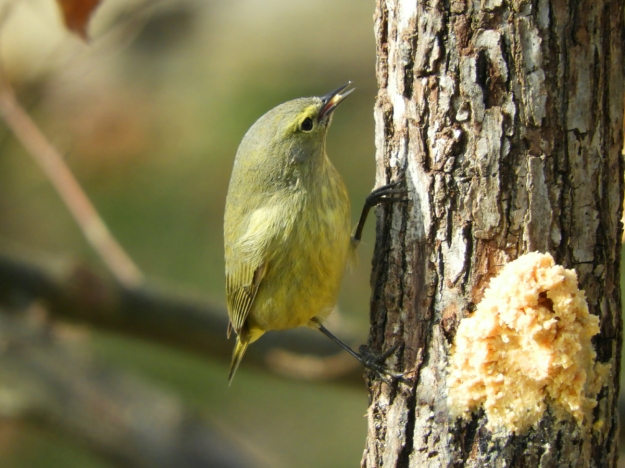
Orange-crowned-Two-BOYD

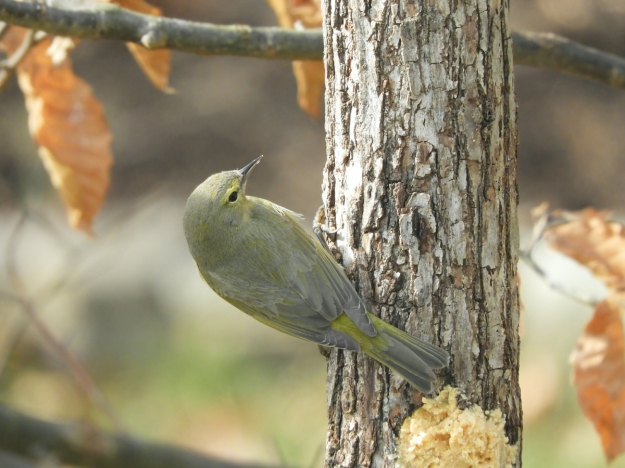
Photo by Rebecca Boyd • This orange-crowned warbler has found a favorable winter residence at the home of Rebecca Boyd in Knoxville, Tennessee, making frequent visits to suet feeders to supplement its usual diet of insects and berries.

In the summer and fall, young birds recently out of the nest can cause some confusion when they show up in the company of their parents at feeders. In the winter, often a season characterized by subdued plumages and nomadic wanderers, the surprise visitors can be one of the many “little brown birds” in the sparrow clan or a summer bird like an oriole or thrush that has decided to take a shot at overwintering.

Or, with greater frequency each winter, it might be one of the warblers. That was the case when Rebecca Boyd, a resident of Knoxville, Tennessee, contacted me recently via Facebook asking for assistance with a bird identification.

27583340_337866090062351_24195392_n

Photo by Rebecca Boyd • This orange-crowned warbler is one of the more nondescript members of the warbler family.

Although most of the warblers beat a hasty retreat from North America every fall, a handful of species have increasingly begun to spend the winter months far north of their usual tropical haunts. Some of these species include yellow-rumped warbler, pine warbler and palm warbler, but the low-profile orange-crowned warbler is also becoming more common between November and March, especially in yards and gardens offering supplemental food such as suet cakes.

The small greenish-yellow bird that showed up at Rebecca’s home was easily identified, thanks to some great photographs that she took of her visitor. I communicated to her that I believed her bird to be an orange-crowned warbler. She had also conducted her own research, which had also led her to that conclusion.
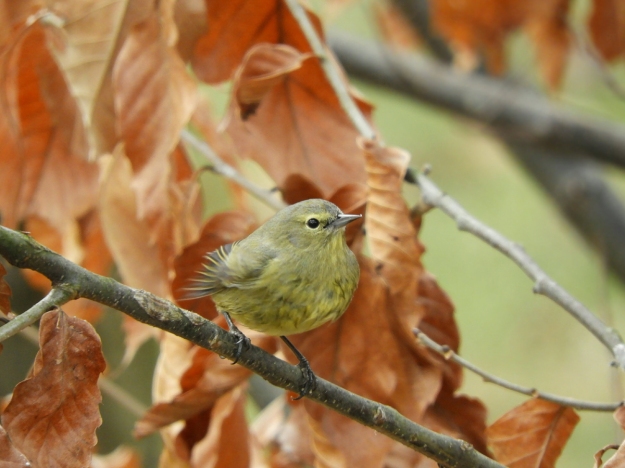
Orange-crowned-Four-BOYD

Photo by Rebecca Boyd • This orange-crowned warbler has found a home at the residence of Rebecca Boyd in Knoxville, Tennessee, this winter.

Rebecca said she also shared some photos with birding groups on Facebook, which brought some helpful feedback. “I’ve gotten numerous responses that orange-crowned warblers are becoming a lot more common on the east side of the Mississippi, with quite a few people saying they are seeing them in their yards, too,” Rebecca wrote.

The orange-crowned warbler is one of the more undistinguished members of this New World family of birds that numbers about 115 species. The bird gains its common name from a physical feature that is rarely seen — an orange patch of feathers that, unless the bird is extremely excited or agitated, is usually concealed beneath its dull greenish-yellow feathers. It’s not a field mark that’s considered reliable for identifying the bird.

Rebecca got a lucky break and managed to photograph this elusive feature on her visiting bird. She said the feathers on the bird’s head appeared wet, which may have explained the appearance of the orange crown.
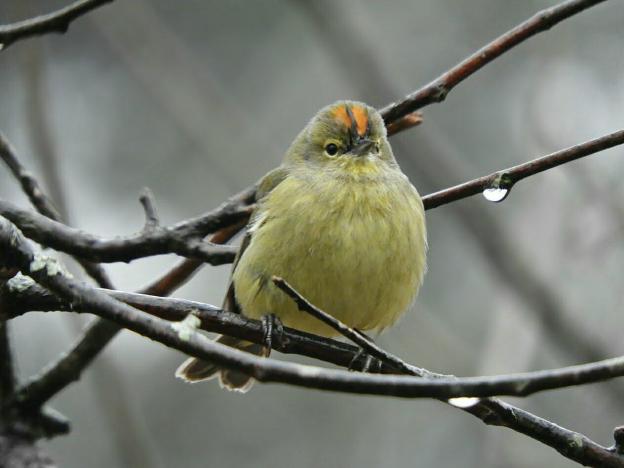
28033440_343701942812099_429716009_o 2

Photo by Rebecca Boyd • Wet feathers made the rarely seen orange crown visible on this orange-crowned warbler that has taken up residence at the home of Rebecca Boyd in Knoxville, Tennessee, this winter.

So, what does signify an orange-crowned warbler? The lack of wing bars, as well as the absence of a strong facial pattern is a strong indicator. The bird in Rebecca’s photo is not nearly as drab as this warbler can appear. Some appear very gray with only a hint of yellow or green in their plumage. There is often faint gray streaking evident in their yellow-green breast feathers. This warbler always shows yellow beneath its tail, a feature that is often only glimpsed as an observed bird is diving into cover. These birds also have sharp, thin bills. It’s usually a process of eliminating other suspects that brings birders to identify one of these warblers.

Unlike some warblers restricted to either the eastern or western United States, the orange-crowned warbler migrates and winters throughout the nation, east and west, although it primarily only nests within the western United States, as well as Alaska and Canada.

Although Rebecca said she has only been bird-watching and taking pictures for a little over a year, she has been a general point-and-shoot photography hobbyist for years. “My backyard is a bird paradise that attracts numerous and varied species,” Rebecca noted. “My favorites are bluebirds and hummingbirds, but the little warblers are also very special.”
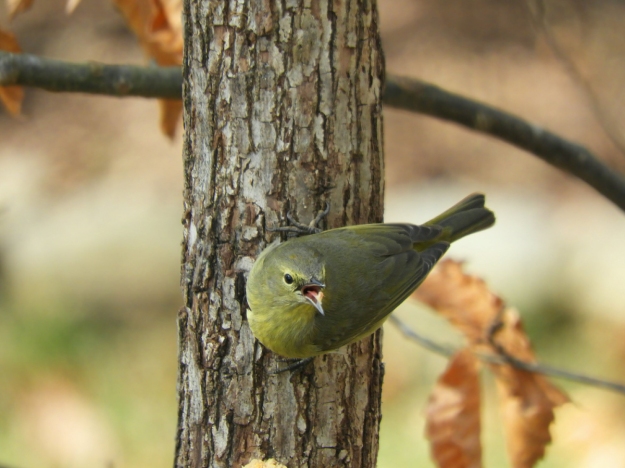
Orange-crowned-One-BOYD

Photo by Rebecca Boyd • Besides orange-crowned warbler, like this individual, other warblers on occasion winter in the United States. Species most often attempting to spend the winter months in the United States include palm warbler, pine warbler, and yellow-rumped warbler.

Most of the warblers are currently residing on the island of the the Caribbean, or far south in Central and South America. A few others spend the winter in Florida or other southern states. The 50 or so species that nest in the United States and Canada will begin arriving as early as next month, although the majority of these summer residents will arrive or pass through the region in late April and May.

So, while it has a colorful name, the orange-crowned warbler is one of the more drab and nondescript members of its family. Other warblers living throughout the Americas include flame-throated warbler, crescent-chested warbler, citrine warbler and arrowhead warbler.

I’ll just keep daydreaming on the occasional snowy day of the approach of spring, which signals that the kin of the orange-crowned warbler will be winging their way north again in only a couple more months. I, for one, can’t wait.

••••••

If you have a question, wish to make a comment or share a sighting, email ahoodedwarbler@aol.com.
Orange-crowned-THREE-BOYD

Photo by Rebecca Boyd • This orange-crowned warbler grabs a bit of suet from a feeder at the home of Rebecca Boyd in Knoxville, Tennessee.

75 years strong, annual Elizabethton Christmas Bird Count breaks old records

GreaterWF-Goose

The 75th consecutive Elizabethton Christmas Bird Count held last month shattered records for this long-running survey. This year’s CBC was held on Saturday, Dec. 16, with 25 observers in six parties participating. The 85 species tallied established a new high for this count, shattering the old mark of 80 species set in 2012 and again in 2016. The average total over the last 30 years of the Elizabethton CBC is 72 species.

Participants included Fred Alsop, Jim Anderson, Jerry Bevins, Rob Biller, Rick Blanton, Kevin Brooks, Gil Derouen, Harry Lee Farthing, Dave Gardner, Carl Hacker, Jacki Hinshaw, David Irick, Rick Knight (compiler), Roy Knispel, Richard Lewis, Joe McGuiness, Charles Moore, Brookie and Jean Potter, Brenda Richards, Chris Soto, Amber Stanley, Bryan Stevens, Kim Stroud, and Scott Turner.

I took part in this CBC, as I have for many years, with fellow members and friends of the Elizabethton Bird Club. Participation in this annual survey has been a part of my holiday traditions for the past 20 years. The tradition of the CBC, however, goes much farther back.

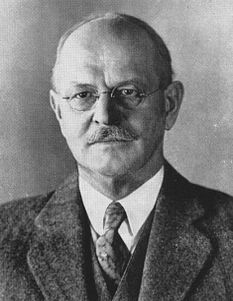
According to the National Audubon Society’s website, the tradition of the Christmas Bird Count arose from a less than bird-friendly custom. By the turn of the 20th century, so-called sportsmen would conduct a “Side Hunt,” a rather bloodthirsty Christmas custom that saw hunters competing to see who could score the largest amount of feathered and furred corpses. It was a huge step forward for conservation when preeminent ornithologist Frank M. Chapman proposed a new holiday tradition. His radical idea was to count birds during the Christmas season rather than hunting and killing them.

chapman

Ornithologist Frank Chapman organized the very first Christmas Bird Count back   in December of 1900.

The Christmas Bird Count is now conducted each year on dates between Dec. 14 and Jan. 5. The first CBC took place in December of 1900 with 27 observers participating at 25 locations in the United States and Canada. Fifteen of the counts were conducted in the northeastern United States in an area ranging from Massachusetts to Philadelphia, Pennsylvania. Results from that first count in 1900 didn’t truly reflect the diversity of North America’s birds, but they were nonetheless interesting. The Greater Boston CBC consisted of only one participant and found only 17 species. However, some of those species included such good birds as American tree sparrow, brown creeper, Northern shrike and Northern bobwhite.

The Elizabethton Bird Club traditionally compiles the results from its two annual CBCs (Roan Mountain as well as Elizabethton) at its yearly Christmas party. This year when the tallies were added up, count participants were delighted to learn the count had set a new record with an amazing total of 85 species tallied, which is hard to come by in mid-December in Northeast Tennessee. An abundance of waterfowl helped push up the number of species found.

A few species are becoming more expected on this annual December count. For instance, greater white-fronted goose was found for the third time in the last five years. Before that, this goose had never been found on this count.

The bufflehead, the smallest of the diving ducks, set a new record with 293 individuals found. Four Northern Shovelers represented only the eight time this duck has appeared on the count. Greater Scaup were found for only the seventh time in the last 25 years. Ruddy Duck has now been found three times in the last 25 years, which matches the three occasions it was found prior to that time.

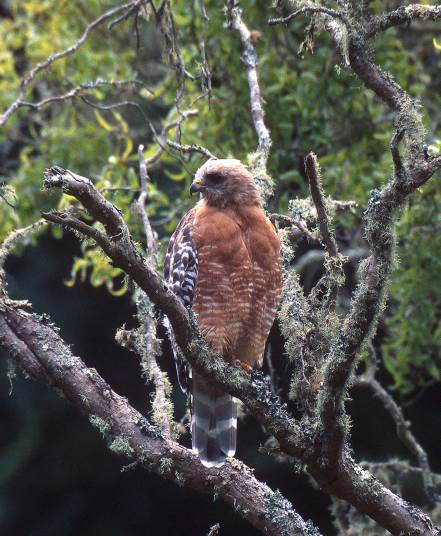
Bald eagles, thanks to locations like Watauga Lake and Wilbur Lake, are also becoming more common. Eagles have been found 20 of the last 25 years, but only once prior. Red-shouldered Hawk, which is uncommon in the region, was found for the sixth time in the last quarter-century.

Redshouldered_Hawk-LeeKarney

Photo by U.S. Fish & Wildlife Service/Lee Karney • A Red-shouldered Hawk perches in branches.

Eurasian Collared-Dove appears established in Elizabethton. This dove has been found six of the last nine years since it first made an appearance on the count.

All seven of the region’s woodpecker were found on this year’s CBC. The Red-headed Woodpecker has shown up on four counts in the last 25 years. This woodpecker was only found seven times in the years prior to 1992.

A Blue-headed Vireo spotted on this year’s count represented only the third time this species has been found. A flock of 75 American Pipits marked only the third time this species has been seen since 1992 on a CBC. Prior to that date, the species appeared only twice on an Elizabethton CBC.

Gray Catbird has been found five of the last 25 years, including this year, but only once prior to 1992. Palm Warbler, found only once prior to 1992, has now been found eight of the last 25 years. The single Pine Warbler seen means that this species has now been found four of the last 25 years, but only four times prior to 1992.

The European Starling with 1,335 individuals found on count day was easily the most common species on this year’s CBC. The 16 Dark-eyed Juncos, usually a relatively common species on the Elizabethton CBC, represented the fewest juncos ever found on this long-running survey.

Below is the complete species list:

Greater White-fronted Goose, 1; Canada Goose, 532; Wood Duck,1; Gadwall, 5; American Wigeon, 1; American Black Duck, 2; Mallard, 366; Northern Shoveler, 4; Green-winged Teal, 2; Ring-necked Duck, 14; Greater Scaup, 2; Lesser Scaup, 3; Bufflehead, 293; Hooded Merganser, 4; and Ruddy Duck, 1.

Ruddy-Hen

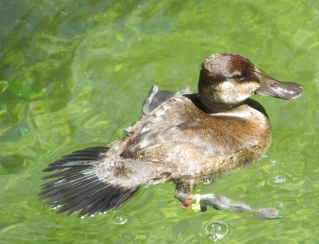
Photo by Bryan Stevens • A female Ruddy Duck.

Wild Turkey, 33; Common Loon, 2; Pied-billed Grebe, 14; Horned Grebe, 27; Great Blue Heron, 18; Black Vulture, 3; Turkey Vulture, 12; Bald Eagle, 3; Sharp-shinned Hawk, 1; Cooper’s Hawk, 2; Red-shouldered Hawk, 2; and Red-tailed Hawk, 25.

Killdeer,17; Ring-billed Gull, 27; Rock Pigeon, 305; Eurasian Collared-Dove, 1; Mourning Dove, 157; Eastern Screech-Owl, 12; Great Horned Owl, 2; Barred Owl, 1; and Belted Kingfisher, 10.

Red-headed Woodpecker, 1; Red-bellied Woodpecker, 33; Yellow-bellied Sapsucker, 8; Downy Woodpecker, 27; Hairy Woodpecker, 3; Northern Flicker, 26; and Pileated Woodpecker, 21.

American Kestrel, 16; Eastern Phoebe, 12; Blue-headed Vireo,1; Blue Jay, 162; American Crow, 223; and Common Raven, 4.

Red-breastedNutHatchYAHOO

Photo by Bryan Stevens • A Red-breasted Nuthatch at a feeder.

Carolina Chickadee, 117; Tufted Titmouse, 84; Red-breasted Nuthatch, 1; White-breasted Nuthatch, 25; Brown Creeper, 4; House Wren, 1; Winter Wren, 6; and Carolina Wren, 75.

Golden-crowned Kinglet, 41; Ruby-crowned Kinglet, 8; Eastern Bluebird, 111; Hermit Thrush, 11; Amercian Robin, 277; Gray Catbird, 1; Brown Thrasher, 1; and N. Mockingbird, 49.

Eurasian Starling, 1,335; American Pipit, 75; Cedar Waxwing, 154; Palm Warbler, 2; Pine Warbler, 1; and Yellow-rumped Warbler, 154.

Eastern Towhee, 22; Chipping Sparrow, 4; Field Sparrow, 8; Song Sparrow, 142; Swamp Sparrow, 5; White-throated Sparrow,102; Dark-eyed Junco, 16; and Northern Cardinal, 111.

Red-winged Blackbird, 1; Eastern Meadowlark, 1; Brown-headed Cowbird, 2; House Finch, 100; American Goldfinch, 90; and House Sparrow, 41.

The Audubon-sponsored CBC allows counts to also list birds not found on the count day that are seen during count week. This year participants found Redhead ducks, which were not present on count day. Notable misses this year include Ruffed Grouse, American Coot, Wilson’s Snipe, and White-crowned Sparrow.

Towhee-Feb12

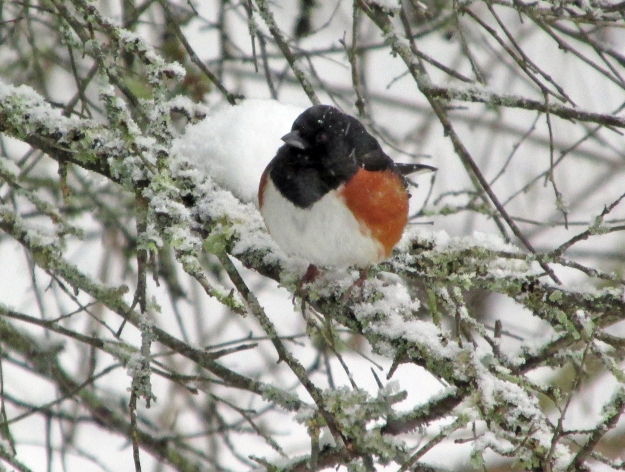
Photo by Bryan Stevens • A male Eastern Towhee waits out a snowstorm.