Tag Archives: Our Fine Feathered Friends

American wigeon also known by name ‘baldpate’

Wigeon-TimMcCabe

Photo by Tim McCabe/U.S. Fish & Wildlife Service • This male American wigeon shows the white head patch that gives this duck its other common name of “baldpate.” In this photograph, a female wigeon rests near her mate while a male redhead, a species of diving duck, swims in the background. This duck nests in season wetlands in the American midwest.

Erwin, Tennessee, resident Pattie Rowland recently asked my help identifying some ducks she had photographed at the pond at Erwin Fishery Park. She already suspected the ducks in her photo were American wigeons, but she wanted confirmation.

The ducks were indeed wigeons, which are classified with the “dabblers” instead of the “divers,” which are two broad categories for describing the wild ducks likely to occur throughout North America. Dabblers feed mostly near the surface of the water, foraging on everything for aquatic insects to roots and tubers. The “divers,” not surprisingly, dive into the depth to pursue fish, mollusks and other aquatic prey.

“This was my first time to see them,” Pattie noted in a Facebook message. I congratulated her because I know how exciting a new observation of a bird can be.

Wigeon-RoyLowe

Photo by Roy Lowe/U.S. Fish & Wildlife Service • A male American wigeon looks quite at home swimming on a small pond. Wigeons belong to ducks that are classified as “dabblers” and “puddle ducks.”

It’s not been an exciting winter for ducks in the region. Other than some redheads and buffleheads back in November and early December at the start of the winter, the wigeons are the only wild ducks of interest that I’ve observed at the pond.

The U.S. Fish and Wildlife Service released its report this past summer on 2018 Trends in Duck Breeding Populations, based on surveys conducted in May and early June of 2018 by FWS and Canadian Wildlife Service.

Overall duck numbers in the survey area remained high, according to the report. Total populations were estimated at 41.2 million breeding ducks in the traditional survey area, 13 percent lower than last year’s estimate of 47.3 million but 17 percent above the long-term average. The projected mallard fall flight index was estimated at 11.4 million birds, down from the 2017 estimate of 12.9 million.
“The dip in the population for prairie-breeding puddle ducks is not unexpected and by no means unprecedented given that conditions on the prairies this spring were drier than last year,” said DU Chief Scientist Tom Moorman. “As a result, 2018 populations dropped accordingly. However, populations of all key species except northern pintails and scaup remain above long-term averages. This year’s breeding population decline is a reminder of the need to sustain the capacity of breeding habitats, particularly in the prairies as we go through natural variation in wetland conditions. Waterfowl populations are adapted well to short-term swings in habitat conditions, but we must continue to guard against the long-term loss of prairie breeding habitat.”

07812

Early naturalist and artist John James Audubon painted this pair of American wigeon, a duck for which the male has earned the name “baldpate” for a distinctive white crown patch.

American wigeons, however, bucked the trend of some of the other prairie-breeding puddle ducks and showed a slight rise in overall numbers. The wigeon breeding population was estimated at 2.8 individual ducks, according to the survey. Wigeons beat their long-term average, which rests at 2.6 million.

The American wigeon can be found all over North America. Their breeding grounds stretch from Alaska across the tundras of Canada all the way to the Atlantic Ocean. American Wigeons can be found in their wintering habitats from the American Northwest to central Mexico, from the southern prairie pothole region through the Gulf Coast and from New York to the Bahamas close to the Atlantic shoreline. American wigeons are also common winter visitors to Central America, the Caribbean, northern Colombia, Trinidad and occasionally Venezuela

Wigeons are aquatic grazers and forage on grasses and sedges in wet meadows and pastures. The American wigeon’s diet has a higher proportion of plant matter than the diet of any other dabbling duck.

It’s also called the “baldpate” for the same reason our national bird is known as the “bald” eagle. A white patch on the forehead reminded early naturalists of a bald man’s head in much the same way that our national bird earned the term “bald” eagle because of its own white head. Further, the word “bald” is thought to derive from an archaic word in Middle English meaning “white patch,” from which the archaic definition “marked or steaked with white” is drawn.

The origins of the term “wigeon” are a bit murkier. According to Merriam-Webster Dictionary, the first known use of “wigeon” dates back to 1508, and other sources suggest that the term perhaps was derived from a French/Balearic term meaning “a kind of small crane.”

gadwalls-937033_1920

Photo by Coffee/Pixabay.com • Gadwalls are close relatives of American wigeon.

There are two other species of wigeons — the Eurasian wigeon of Asia and Europe and the Chiloé wigeon of South America. Wigeons belong to the Mareca genus of dabbling ducks, which also includes gadwall and falcated teal.

While female American wigeons produce a rather raspy quacking sound, wigeons more typically produce a vocalization when excited that sounds like “whew, whew, whew.”

Some ducks have become associated with certain bodies of water in the region, and the American wigeon is no exception. In addition to the pond at Erwin Fishery Park, there have been reports of American wigeons this winter from a large pond adjacent to the campus of Northeast State Community College in Elizabethton, Tennessee, as well as on the weir dam at Osceola Island Recreation Site in Bristol. Hooded mergansers have wintered in large numbers at Middlebrook Lake in Bristol. Hundreds of buffleheads have wintered at Wilbur Lake near Elizabethton, Tennessee, for decades. March and April, being periods of transition as winter changes into spring, could bring migrating ducks to the region’s ponds, lakes and rivers. Keep your eyes open and you could be surprised by what you find.


Many birds plan ahead for times of scarcity

bird-Struza

Photo by Struza/Pixabay.com • A chickadee plucks a peanut from its shell. Chickadees, like many other songbirds, often store food that they can utilize during lean times.

Ernie Marburg sent me an email last month about an article he had read on chickadees that he thought might be of interest. The article’s main focus involved the fact that chickadees are apparently capable of remembering 1,000 cache sites and retrieving food several months after having placed it in various scattered locations.

“Their memories are better than ours,” Ernie wrote. “Mine, anyway.”

Ernie also had a question for me about observations he and his wife have made at their home in Abingdon, Virginia, about birds and the practice of caching food.

“My wife and I have both observed crows taking bread (five or six pieces at a time) in their beaks and flying off and burying it in lawns among the grass,” he wrote. “We have also observed that they march through the lawn apparently looking for such food caches. Is this something that is commonly known? Are we correct in our observation of this?”

BlueJay-Dbadry

Photo by dbadry/Pixabay.com • Blue Jays often create food caches for acorns and other items. This jay is leaving a feeder with several peanuts thanks to an expandable esophagus.

Experts have indeed noticed this behavior. In fact, it’s fairly well known that crows are methodical in their approach to storing food. Crows, which belong to the corvid family that includes birds such as jays, ravens and magpies, are also highly intelligent animals. Their intelligence shows in the extra step they take after they have buried food. The crow will often take a leaf or twig and place it over the spot where the food has been buried. Experts suspect the bird takes this action to mark the spot and attract attention to the location when they return to look for the buried food.

Birds store food for convenience when they have more food than they can finish, but they also cache food in anticipation of periods such as inclement winter weather when food is likely to become scarce.

The blue jay, a relative of the American crow, is fond of acorns. The jay is so enamored of acorns — a nutrient-rich food for many birds and other animals — and so dedicated to caching acorns that the bird actually helps oak forests expand. A single jay may cache thousands of acorns each fall. Inevitably, some of the cache will be forgotten, to go uneaten and give the acorn the chance to sprout into a seedling in the spring that may grow into a mighty oak in a new stand of oaks.

The jay even has some modifications to help with the storing of food. Blue jays have a flexible esophagus that can distend and allow them to stuff multiple acorns down their throats. Caching food is hard work, so it helps reduce energy consumption if the jay can transport several acorns at a time instead of a single acorn on each trip to a cache site.

carolina-chickadee-2501531_1920

Photo by Anne773/Pixabay.com • A Carolina chickadee visits a feeder for a sunflower seed. Chickadees are a songbird that’s known for storing surplus seeds as insurance against lean times.

Now, back to chickadees for a moment. Research has shown that the brains of black-capped chickadees grow in anticipation of the need to remember where these tiny songbirds cache their sunflower seeds and other foods. The interesting finding is that only the part of the brain associated with memory grows. After all, it doesn’t do much good to store food for a rainy or snowy day if the bird promptly forgets where the food has been hidden.

natdiglib_28233_extralarge

This image illustrates an acorn woodpecker’s visit to a food cache. These woodpeckers are famous for storing acorns in dead and living trees, as well as substitutes such as telephone poles.

The acorn woodpecker might qualify as a world-class cacher of food. As the bird’s name suggests, this woodpecker loves acorns. An acorn woodpecker will devote a significant amount of its time to establishing granaries. In this case, the granaries are holes drilled in the trunks of trees (or sometimes in a telephone pole or the side of a wooden building) for the storing of acorns. Some of these trees have hundreds of holes drilled into them with each hole containing an acorn placed there by the woodpecker. The woodpeckers often use dead trees, but they also utilize living trees. Surprisingly, the holes do not seem to affect the health of the trees.

From chickadees and woodpeckers to crows and jays, birds manage to continually surprise with seemingly infinite resourcefulness.

black crow bird

Photo by Pixabay on Pexels.com • The American crow is also known for caching food.

Brief stay of Virginia’s warbler along Kingsport’s Holston River leaves birders amazed

At times, there’s nothing left to do but scratch your head and wonder. It’s a gesture many birders have been making around the Holston River in Kingsport as walks in the area along Netherland Inn Drive on the greenbelt have produced numerous warbler sightings in recent weeks.

Virginia'sWarbler-TWO

Photo by Sherrie Quillen • The Virginia’s warbler found in January in Kingsport represented the first Tennessee record for the species and one of only a few records east of the Mississippi River.

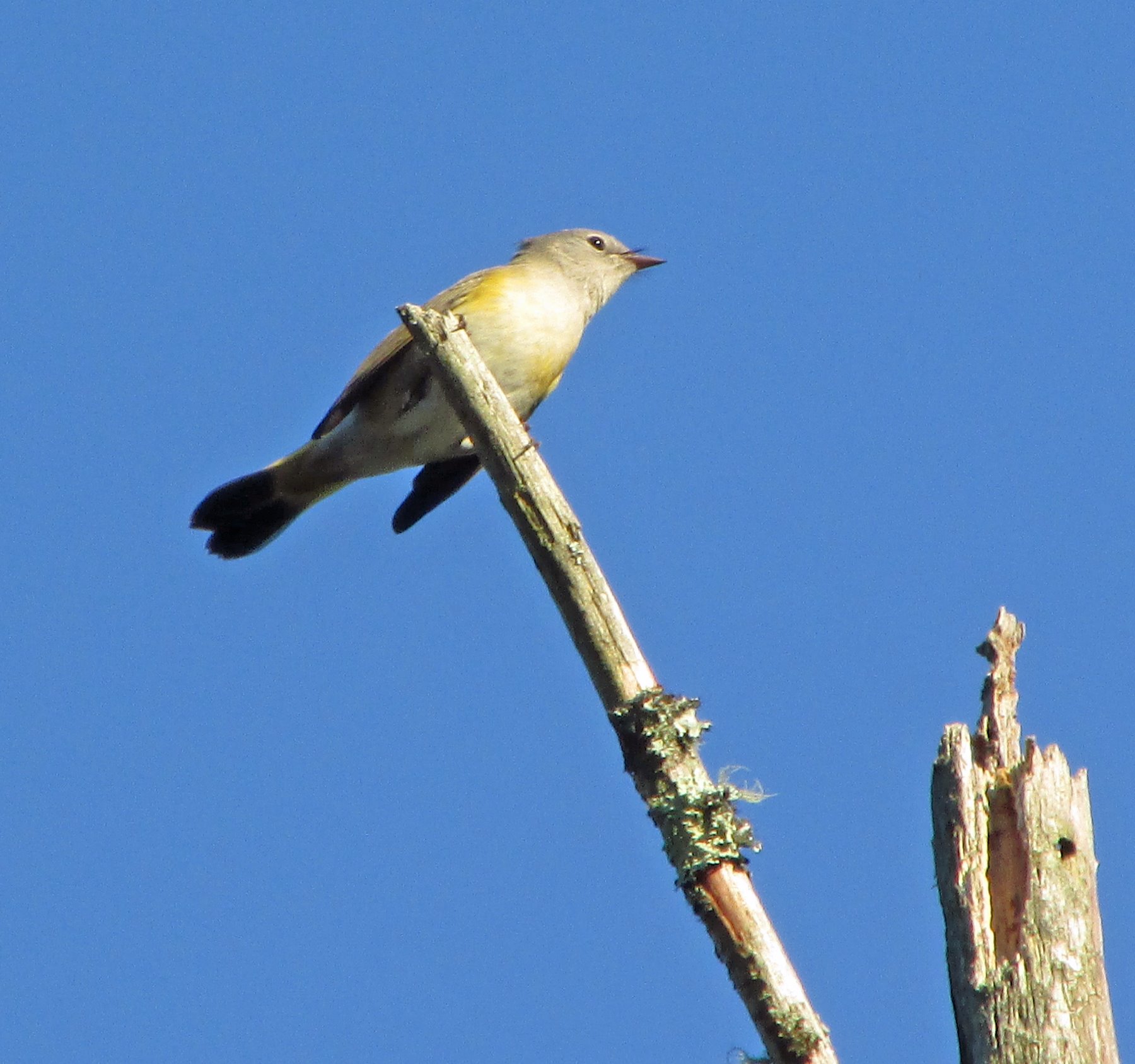
The list includes expected winter warblers such as orange-crowned, pine, and yellow-rumped, as well as such off-season puzzlers as American redstart, common yellowthroat, Northern parula, Cape May warbler and Nashville warbler; these warblers really should be wintering far to the south in locations around the Caribbean and in Central America. So far this winter, sharp-eyed birders have seen at least 12 different warbler species on the Riverfront Greenbelt. None of them have generated the level of excitement that has been produced by a small plain gray and yellow bird that is doggedly devoted to its daily routine. Birders have rushed from all parts of Tennessee, as well as from as far afield as Virginia and New Jersey, for a chance to see a visiting Virginia’s warbler, a bird that has only been observed on a handful of occasions east of the Mississippi River.

This warbler is not named for the state of Virginia. Spencer F. Baird, who first described the Virginia’s Warbler in 1860, named the species after Virginia Anderson, the wife of Dr. W. W. Anderson, who collected the first specimen in 1858 in New Mexico. Virginia’s warbler is not all that exceptional in appearance. While gray overall the bird shows a white eyering and some yellow highlights to feathers on the chest and under the tail. The bird also wags its tail, a behavior that can be helpful in identifying it.

Virginia's-Warbler_map

Northeast Tennessee is outside of the expected range in the American southwest of Virginia’s warbler.

The Virginia’s warbler is a species known for showing up in some rather odd locations. Back in 2012, one of these warblers generated birding excitement around New York City when one was found in Alley Pond Park in the New York City borough of Queens. In their usual range, however, Virginia’s warblers nest in arid terrain, including open pinyon-juniper and oak woodlands in the southwestern Rocky Mountain states, which is a far cry from the banks of the Holston River in Kingsport or Queens in New York.

The Kingsport specimen pulled a vanishing act when the weather turned milder in early February. Well-known birder Rick Knight, who lives in Johnson City, Tennessee, addressed the status of the bird in a post he made to the list-serve, “TN-Bird”:

“The Virginia’s Warbler and the other unusual warblers present at Riverfront Park in Kingsport seem to wander some on warm days and then return to the water’s edge on cold days to take advantage of the milder microclimate there.” Knight went on to speculate that the bird may still be in the vicinity and will return to its usual haunts when cold temperatures return. So far, despite a mix of warm days with colder ones, the Virginia’s warbler hasn’t been seen since Feb. 2.

Virginia'sWarbler-ONE

Photo by Sherrie Quillen • The influx of birders to view the Virginia’s warbler led to other unexpected finds along the Kingsport greenbelt, including such out-of-season birds as blue-gray gnatcatchers, Nashville warbler and Northern parula. More than a few birders referred to the famous Patagonian Picnic Table Effect to describe the sightings.

Several birders who found the bird and added it to their life lists commented on the fact that so many other unexpected species were found at the same time in the same location. It wasn’t long before people began evoking the famous birding phenomenon known as the Patagonia Picnic Table Effect, which is a birding phenomenon named for a famous hotspot in southeast Arizona. The lure of a bird called the rose-throated becard at the location attracted a rush of birders to the area. More eyes resulted in more discoveries of other rare birds. In turn, the additional finds continued attracting even more birders and resulted in the discovery of even more rare bird species.

So, who first noticed the presence of the out-of-place warbler? The credit for the discovery goes to two Kingsport residents. On a post to Facebook, the two women who discovered the bird shared details of their exciting find. Bambi “Birdfinder” Fincher posted the notice of the bird’s discovery.

BGGnatcatcher

Photo by Bryan Stevens • A couple of blue-gray gnatcatchers, such as this invidiual, represented an unusual find in winter in the region. The gnatcatchers were spotted by sharp-eyed birders in their quest to observe the Virginia’s warbler in Kingsport.

“Yesterday (Saturday, Jan. 19) in the pouring rain, Sherrie Quillen and I found a Virginia’s warbler on Kingsport Birding Trail-Riverfront Greenbelt,” she wrote in a post to the Birding Kingsport Facebook page. “This is the first record of this bird in the state of Tennessee.”

Bambi explained her birding success simply. “I’m always looking! Keeps me birding!”

She also invited other birders to join her some time. “It can be pretty amazing,” she wrote. “No promises of a state record or life bird, but I can promise you that you will learn something about your surroundings and yourself.”

She earned her nickname “birdfinder” about 10 years ago when she first started birding. “I was out birding with Bill Moyle or Bill Grigsby — one of the Bill’s, anyway — and I was really ‘finding’ birds but didn’t know what they were.”

The Bills didn’t let her get discouraged. “They said, ‘That’s OK, you will learn the birds, but you are a birdfinder.’ It stuck.”

I met both Bambi and Sherrie for the first time on the day I traveled to Kingsport to try my luck at observing this warbler. Bambi quickly proved her “birdfinder” talents. Although I had to wait for about an hour for the bird to make an appearance, when it did arrive, it flew right to the spot by the river that Bambi had recommended I keep under observation. The specific spot consisted of a thin stand of privet rooted in the riverbank only a few yards from a bench located near the paved walking path. When the bird arrived, making telltale chip notes, I got my binoculars on it and enjoyed a satisfying but brief look at the bird. Birds are rarely as cooperative as this particular Virginia’s warbler turned out to be. Several other birders waiting with me also got to see the warbler at the same time. As warblers are my favorite family of birds, getting to observe this unexpected visitor has been the highlight of my birding year thus far.

Goldencheeked_Warbler_wood-2

Photo by U.S. Fish & Wildlife Service • The author of the blog hasn’t yet seen a handful of species among the Eastern warblers, including the endangered golden-cheeked warbler, pictured here. The remaining elusive eastern warblers include Connecticut, Kirtland’s and cerulean.

In the Eastern United States, there are only a handful of warblers I haven’t yet observed. I need to see a cerulean warbler and Connecticut warbler, as well as a Kirtland’s warbler and golden-cheeked warbler. The latter two species are considered endangered and highly localized warblers occurring mostly in Michigan and Texas, respectively — two states I’ve not yet visited.

I’ll always remember my first look at a Virginia’s warbler just before noon on Jan. 28, 2019. The bird had already been present for ten days by the time I made the drive to Kingsport to try my luck. In addition, I saw many other interesting birds while waiting for my target bird to arrive. Some of the other observed birds included palm warbler, blue-gray gnatcatcher, ruby-crowned kinglets and golden-crowned kinglets.

PalmWarblerrr

Photo by Bryan Stevens • A palm warbler forages along a chain-link fence. This warbler is often a wintering bird in the region and a few were seen by observers who trekked to the Kingsport greenbelt to view the visiting Virginia’s warbler.

Man saves common loon after bird makes crash landing

loon-dkbach

Photo by dkbach/Pixabay.com • The common loon is a masterful diver and swimmer, but these birds are awkward and nearly helpless on land.

An early December snowstorm had deposited a blanket of snow over the landscape, but milder temperatures quickly melted the snow on roadways when a weary — or perhaps disoriented — traveler made a crash landing.

Complete disaster was avoided thanks to the efforts of Joe McGuiness, a resident of Erwin, Tennessee, as well as an employee of the U.S. Forest Service. Joe shared the story at a recent meeting of the Elizabethton Bird Club.
Joe discovered the stranded traveler just after he finished having lunch on Dec. 6. He looked out his window and saw a “dark blob” in the driveway.loon-30901_1280
Joe recognized that the blob was actually an immature common loon. As he went to investigate, the bird tried to slide downhill on some of the recent snow.

Waterfowl like loons and grebes occasionally make landings on wet roadways. These birds mistake the dark, damp asphalt for water and don’t realize their error until it is too late.

“It probably landed on a neighborhood road by mistake,” explained Joe, who resides in the Rolling Hills residential community in Erwin. Over the years, Joe has been a magnet for some unusual birds. Several years ago, an American woodcock became a daily visitor for a spell in the community where Joe lives. Several birders got an opportunity to see that particular bird, which is usually extremely elusive and difficult to observe at close range.

loon_rescue

Photo courtesy of Joe McGuiness • When this common loon stranded itself, Erwin resident Joe McGuiness went into action, collecting the bird for transport to a nearby pond. Because of the position of their feet on their bodies, loons are almost incapable of walking on land.

Once he identified the loon, Joe still faced the challenge of rescuing it. Without human intervention, the bird would have been doomed. Loons, while so graceful and powerful in their element, are clumsy and almost helpless on land. According to loons.org, the official website for The Loon Preservation Committee, the placement of a loon’s legs at the far back of the body ensures that loons are excellent divers and swimmers. It also means that loons can not easily walk on land. This difficulty is one reason why loons nest right next to the water. At night, loons sleep over deep water, away from land, for protection from predators.

Once a loon lands on any body of water, it requires a considerably long “runway” to take off again. They sort of run along the surface of the water to gain the momentum to become airborne again. Obviously, that’s not going to happen for one of these birds if they’ve made the mistake of putting down on dry land. Fortunately, Joe realized he would need to help the loon reach water.

loon-krista-269

Photo by Krista-269/Pixabay.com • Common loons in summer breeding plumage are strikingly handsome birds that show much grace and agility in the water.

By tossing a coat over the loon, Joe managed to subdue the bird and transport it to a local pond for release. As he placed the bird at the edge of the pond, the loon surprised him and didn’t budge. Joe gave the bird a helpful nudge. In response, the bird turned and whacked him in the face with its beak. I suppose no good deed goes unpunished.

Eventually, the frightened loon moved into the water. The loon has remained on the pond recuperating for several weeks, which has allowed people to see the rescued creature.

In the northern United States and Canada, the common loon is often put forward as a symbol of the wilderness areas where it likes to reside on ponds and lakes for the summer nesting season. In Europe and Asia, the common loon is known by the more descriptive name “great northern diver.”

Common_Loon_on_Water

Photo by U.S. Fish & Wildlife Service • Common loons are quite at home in the air and on the water, but these birds are awkward if weather forces them to set down on land.

A common loon can reach a length of 3 feet. This bird’s wingspan can stretch out to almost 5 feet. They can attain a weight between 9 and 12 pounds, which is quite heavy for most birds.

All five living species of loons are members of the genus Gavia, which in addition to the common loon also includes red-throated loon, Arctic loon, Pacific loon and yellow-billed loon. All loons feed chiefly on fish.

It’s usually human behavior that puts loons at risk. For example, ingested lead fishing tackle is a leading cause of mortality for loons in New Hampshire. Joe’s encounter with a loon, and its happy ending, spotlights how people can sometimes help these beautiful birds instead of harming them.

Pacific_loon

Photo by U.S. Fish & Wildlife Service • A Pacific loon if breeding plumage.

Overwintering birds make their return to some familiar area haunts

Mergansers

Photo by Bryan Stevens • A female hooded merganser flaps her wings as another preens her feathers behind her.

Now that the warblers, hummingbirds and other birds of summer have, for the most part, departed, new arrivals have filtered into the region to take their place and prevent the winter months from seeming too bleak.

At my own home, these new arrivals have included a field sparrow — the first I’ve seen at home in several years — and a swamp sparrow. I’ve not caught sight of white-throated sparrows or dark-eyed juncos so far, but these hardy sparrows often don’t arrive until the first incidents of truly snowy weather. However, Helen Whited of Richlands, Virginia, emailed me to let me know that she saw her first dark-eyed junco of the season on Monday, Nov. 5.

Different species of waterfowl have also returned to some familiar haunts, and I’m grateful to readers who have kept me informed about some of these arrivals. Joanne Campbell of Bristol, Tennessee, posted on my Facebook page that hooded mergansers have returned to Middlebrook Lake near her home on Saturday, Nov. 3. The hooded merganser, Joanne noted, is one of her favorite birds. Brookie and Jean Potter of Elizabethton, Tennessee, reported that four male buffleheads returned to Wilbur Lake near their home on Oct. 27.

Middlebrook Lake has served as a winter home for hooded mergansers since 1987, while buffleheads have congregated on Wilbur Lake for decades. Another good location to look for buffleheads during the winter months is in the weir below South Holston Dam around the Osceola Island Recreation Area. Several hundred of these ducks have been reported in past winters at these various locations.

Although classified as sea ducks, the mergansers are more at home in river habitats. There are six closely related species in three genera: Mergus, Mergellus and Lophodytes. The latter two genera have only a single species each: the hooded merganser (Lophodytes cucullatus) and the smew (Mergellus albellus).

The typical mergansers are fish-eating waterfowl in the genus known as Mergus. The hooded merganser’s genus name of Lophodytes is derived from Greek and, roughly translated, means “crested diver.” Both male and female hooded mergansers have crests capable of being raised or lowered. Females are mostly brown, but males have a striking plumage in a pattern of brown, white and black.

Hooded_Merganser___Drake

Photo by Photo by Tim McCabe/U.S. Fish & Wildlife Service • The male hooded merganser stands out among ducks with his black, white, and brown plumage.

Everyone has probably heard the phrase “as scarce as hen’s teeth.” It means almost exactly what you think. Birds don’t have teeth, so it’s a way to describe something exceptionally rare. It’s a characteristic that sets birds apart from other creatures, such as mammals.

There are some birds, however, that come closer to having teeth than their other beaked counterparts. Mergansers would definitely fall into that category. The mergansers are a type of duck known collectively as “sawbills,” a reference to their long, thin bills with serrated edges that help them grip prey. The “sawbills” come closer than any of our other birds in having teeth, although not in the same sense as mammals have teeth.

merganser-Bill-ALexas-fotos

Photo by Alexas-fotos/Pixabay.com • This closeup of a female common merganser shows in detail the serrated bill, which assists this duck in seizing and grasping the fish that makes up a good portion of the bird’s diet.

The other mergansers in the Mergus genus consist of four species: common merganser, Brazilian merganser, red-breasted Merganser and scaly-sided Merganser. The last of these is an endangered species with only about 5,000 birds in the worldwide population. These remaining scaly-sided mergansers are found in the border regions of China, North Korea and Russia.

While today’s birds, even mergansers, all lack teeth, that hasn’t always been the case. About 80 million years ago, a bird known as Hesperornis (“western bird”) swam the inland seas that stretched over areas from Kansas to Canada. They swam through those ancient seas because they could not fly.

The body plan of Hesperornis was similar to modern loons and mergansers. Instead of a serrated bill, however, this ancient bird had actual teeth in its long beak. Just like today’s loons and mergansers, it probably fished for its food. At almost six feet in length, however, it dwarfed our modern mergansers and loons and probably fed on larger piscine prey.

Hesperornis_Heinrich_Harder

This early 20th century illustration of Hesperornis is no longer considered scientifically accurate by scientists, but it does demonstrate one striking feature – the toothed jaws of this ancient bird.

Hooded mergansers are content to seek smaller fish. According to the website for the Ducks Unlimited organization, the hooded merganser is the smallest of the three North American mergansers. In addition to fish, hooded mergansers feed on crayfish and other crustaceans, as well as aquatic insects.

The hooded merganser prefers forested wetlands. As a cavity-nesting bird, it seeks out natural cavities in trees for nesting, although it will also accept nest boxes provided by human landlords. This duck breeds from as far north as Alaska and Canada and as far south as Louisiana and Georgia.

IMG_5909

Photo by Bryan Stevens • Hooded merganser females, or hens, have a gray-brown head and neck with a reddish-brown crest, which marks quite a contrast from the male’s appearance.

Late fall and winter are good times to see ducks in the region. Some will spend a good portion of the winter season on area lakes, rivers and ponds, while others will make only brief stops during their migration to their preferred wintering grounds. Some of the other ducks that are usually somewhat common in the region in winter include ring-necked duck and American wigeon. If you live or work near a body of water, stay alert for the comings and goings of waterfowl as winter approaches. You may be afforded an opportunity to see a hooded merganser or bufflehead for yourself.

IMG_5191

Photo by Bryan Stevens • Female hooded merganser enjoys a swim.

•••••

The Lee & Lois Herndon Chapter of Tennessee Ornithological Society produces an annual calendar featuring some exceptional bird photography from its members. This 2019 calendar will feature full-color photographs of some of the region’s most colorful and engaging birds. The club sells the calendars for $15 each. All proceeds are used to support birding opportunities and bird-related causes here in Northeast Tennessee. For instance, the club pays for bird seed to stock the feeders at Sycamore Shoals State Historic Park in Elizabethton, Tennessee. The club also regularly supports causes that benefit birds.HerndonCalendar2019(Cover) (1)
The calendar also features an informative calendar grid with highlights for major holidays, as well as important bird-related dates. The calendar’s pages feature more than 80 full-color photographs of area birds, including common favorites and some not-so-common visitors. The front cover features a dazzling photograph of a gorgeous male rose-breasted grosbeak. If you’re interested in obtaining a calendar, contact ahoodedwarbler@aol.com by email or send a message via Facebook at http://www.facebook.com/ahoodedwarbler. Calendars can be mailed to any destination in the United States for an additional charge of $2 for shipping and postage.


Dark-eyed junco heralds winter’s approach and marks milestone in weekly bird musings

junco-feb9

Photo by Bryan Stevens • A dark-eyed junco, usually a harbinger of wintry weather and snowy days, shells sunflower seeds beneath a feeder.

I wrote my first column about our “feathered friends” on Sunday, Nov. 5, 1995, which means this column will soon celebrate its 23rd anniversary.

This column has appeared on a weekly basis for the last 23 years in a total of five different newspapers, and in recent years it has been syndicated to several more. The column has also been a great conduit for getting to know other people interested birds and birding. I always enjoy hearing from readers, and I hope to continue to do so in the coming years as well. Since February 2014, I’ve also been posting the column as a weekly blog on birds and birding.

I saw my first swamp sparrow of the fall on Oct. 23. Autumn’s a time when many of those so-called “little brown birds,” also known as the sparrows, return to live in the fields, gardens, yards and woodlands around our home. Two of the other anticipated arrivals are white-throated sparrows and dark-eyed juncos.

SwampSparrow-April11

Photo by Bryan Stevens • Sparrows, like this swamp sparrow, often spend the winter months in fields, woods, and wetlands, sometimes visiting feeders in our homes and gardens.

In fact, that first column I wrote back in 1995 focused on one of the region’s most prevalent winter residents— the dark-eyed junco. Experts place juncos among the varied sparrow family. All juncos are resident of the New World, ranging throughout North and Central America. Scientists are continually debating precisely how many species of junco exist, with estimates ranging from a mere three species to about a dozen species.

Some of the other juncos include the volcano junco, yellow-eyed junco, Chiapas junco, Guadalupe junco, pink-sided junco, Oregon junco and Baird’s junco, which is named in honor Spencer Fullerton Baird, a 19th century American naturalist and a former Secretary of the Smithsonian Institution.

With that introduction and with some revisions I have made through the years, here is that very first column that I ever wrote about birds.

dark-eyed-junco-Skeeze-Pixabay

Photo by Skeeze-Pixabay • A dark-eyed junco clings to a snowy perch.

…..

Of all the birds associated with winter weather, few are as symbolic as the dark-eyed junco, or “snow bird.” The junco occurs in several geographic variations.

John V. Dennis, author of “A Complete Guide to Bird Feeding,” captures the essence of the junco in the following description: “Driving winds and swirling snow do not daunt this plucky bird. The coldest winter days see the junco as lively as ever and with a joie de vivre that bolsters our sagging spirits.” The dark-eyed junco’s scientific name, hyemalis, is New Latin for “wintry,” an apt description of this bird.

dennisjl 2

Most people look forward to the spring return of some of our brilliant birds — warblers, tanagers and orioles — and I must admit that I also enjoy the arrival of these birds. The junco, in comparison to some of these species, is not in the same league. Nevertheless, the junco is handsome in its slate gray and white plumage, giving rise to the old saying “dark skies above, snow below.”

Just as neotropical migrants make long distance journeys twice a year, the junco is also a migrating species. But in Appalachia, the junco is a special type of migrant. Most people think of birds as “going south for the winter.” In a basic sense this is true. But some juncos do not undertake a long horizontal (the scientific term) migration from north to south. Instead, these birds merely move from high elevations, such as the spruce fir peaks, to the lower elevations. This type of migration is known as vertical migration. Other juncos, such as those that spend their breeding season in northern locales, do make a southern migration and, at times, even mix with the vertical migrants.

Juncos are usually in residence around my home by early November. Once they make themselves at home I can expect to play host to them until at least late April or early May of the following year. So, for at least six months, the snow bird is one of the most common and delightful feeder visitors a bird enthusiast could want.

Juncos flock to feeders where they are rather mild-mannered — except among themselves. There are definite pecking orders in a junco flock, and females are usually on the lower tiers of the hierarchy. Females can sometimes be distinguished from males because of their paler gray or even brown upper plumage.

Junco

Photo by Ken Thomas • A dark-eyed junco perches on some bare branches on a winter’s day.

Since juncos are primarily ground feeders, they tend to shun hanging feeders. But one winter I observed a junco that had mastered perching on a hanging “pine cone” feeder to enjoy a suet and peanut butter mixture.

Dark-eyed juncos often are content to glean the scraps other birds knock to the ground. Juncos are widespread. They visit feeders across North America. The junco is the most common species of bird to visit feeding stations. They will sample a variety of fare, but prefer such seeds as millet, cracked corn or black oil sunflower.

There’s something about winter that makes a junco’s dark and light garb an appropriate and even striking choice, particularly against a backdrop of newly fallen snow.

Junco-Carver

Photo by Bryan Stevens • Dark-eyed junco nests on high mountain slopes during the summer month. This dark-eyed junco was photographed at Carver’s Gap on Roan Mountain during the summer nesting season.

Of course, the real entertainment from juncos come from their frequent visits to our backyard feeders. When these birds flock to a feeder and begin a furious period of eating, I don’t even have to glance skyward or tune in the television weather forecast. I know what they know. Bad weather is on the way!

•••••

Back when I wrote that original column, juncos often returned each fall in the final days of October or first days of November. In the last few years, however, their arrival times have grown consistently later in November. At times, it takes a serious snowfall to drive these hardy birds to seek out easy fare at my feeders. I’m hoping they’ll return soon. In the meantime, if you want to share your first dark-eyed junco sighting of the fall, I’d love to hear from you. If you want to share a sighting, have a question or wish to make a comment, email ahoodedwarbler@aol.com.

dark-eyedjunco-female

Photo by Bryan Stevens • A female dark-eyed junco scrambles for sunflowers seeds in the snow.

Some birds expert at conjuring Halloween-style thrills and chills

nature bird cute wildlife

The  greater tit, a European relative of the Carolina chickadee, has learned to hunt and kill a species of small bat in the Hungarian mountains. • Photo by Pixabay on Pexels.com

Here’s a repost from November of 2018. The timing seems appropriate. 

My ruby-throated hummingbirds set a new record this year, lingering until Oct. 17. Although present on the morning of that date, I didn’t see any that evening. The next morning, their absence — quite notable and somewhat saddening — continued. In all likelihood, I won’t see any more ruby-throated hummingbirds until next April. I hope they arrive early.

Carolyn Baker Martin commented on the post I made on Facebook about the departure of the hummers. Carolyn noted that 2018 has been an interesting year for birds and flowers. Carolyn, who lives in Elizabethton, Tennessee, also shared a recent observation she made of a hummingbird behavior that I’ve never personally witnessed.

“I had a hummer recently in torpor,” Carolyn wrote in her post. “It sat on the feeder a long time without moving or feeding. Finally, a tail feather began to move. It fed constantly for one more day and was gone.”

Despite their small size, most hummingbirds, including the ruby-throated hummingbirds, are less frail than they appear. Torpor is a biological adaptation possessed by hummingbirds and some other creatures that lets them survive a serious cold spell. It’s not quite the same thing, but think of these tiny birds as voluntarily going into a coma when they enter torpor. Comatose or catatonic creatures are a staple of some horror and suspense films, so perhaps a look at how some birds can induce shivers along the spine is in order in view of the celebration of Halloween this week.

Image by Josep Monter Martinez from Pixabay • Bats, like birds, have the power of flight. Scientists have also learned that some unlikely birds have also developed a liking for feasting on bat brains.

The ultimate coma victim is the fabled zombie, but that’s not likely to afflict any of our feathered friends, right? Well, consider the great tits of Hungary, which are relatives of our tufted titmouse and Carolina chickadee. These birds — at least the Hungarian ones — have apparently acquired a taste for brains.

Not human brains, thankfully. The victims of these brain-hungry great tits are a species of bat — a flying creature often associated with the modern celebration of Halloween, as well as legends about vampires — that shared the habitat of these birds in the Bükk Mountains of Hungary. As it turns out, the tits only hunted bats, in this case a tiny species known as common pippistrelle, out of dire necessity.

Bat ecologists Péter Estók and Björn M. Siemers, after observing the odd behavior of the great tits during some winter seasons, conducted a study to see if great tits are consistent devourers of bats’ brains. They discovered that the birds did hunt the bats and had even learned to detect a special call the bats make as they emerge from hibernation. The ecologists conducted their study over two years and learned that the great tits teach others of their kind the special art of hunting bats. They also learned that the birds made efficient killers, dragging the bats from their roosts and cracking their skulls to get at their brains.

However, when provided with plenty of alternative food, including such favorite items as bacon and sunflower seeds, the great tits chose to eat these items rather than actively hunt bats. The researchers concluded that great tits only resort to harvesting the brains of small bats during times of scarcity during harsh winters. The bizarre story is even featured in the title of a fascinating book by Becky Crew titled “Zombie Birds, Astronaut Fish, and Other Weird Animals.”

Cassowary

Photo by lailajuliana / Pixabay.com • The southern cassowary reaches a height of more than five feet and weighs 120 pounds. The bird has a fearsome but perhaps undeserved reputation for attacks on humans.

So, if humans have nothing to fear from brain-hungry birds, are there any birds that we should fear? Some experts suggest that precautions might be in order if one expects to come into close proximity with a southern cassowary, which is the third-tallest and second-heaviest living bird, smaller only than the ostrich and emu.

The cassowary, a native of New Guinea and northeastern Australia, has developed a reputation as a fearsome bird capable of injuring or killing humans. According to ornithologist Ernest Thomas Gilliard, cassowaries deserve their reputation. In his 1958 book, “Living Birds of the World,” he explained that the second of the three toes of a cassowary is fitted with a long, straight, dagger-like claw which can sever an arm or eviscerate an abdomen with ease. According to Gilliard, there have been many records of natives being killed by this bird.

A thorough study, however, has partly exonerated the cassowary from these misdeeds. In a total of 150 documented attacks against humans, cassowaries often acted in self-defense or in defense of a nest or chicks. The only documented death of a human took place in 1926 when two teenaged brothers attacked a cassowary with clubs. The 13-year-old brother received a serious kick from the bird, but he survived. His 16-year old brother tripped and fell during the attack, which allowed the cassowary to kick him in the neck and sever the boy’s jugular vein.

Mesembriornis_model

Model of the terror bird Mesembriornis at the Chicago Field Museum, prepared by taxidermist Leon L. Pray, seen on the left.

So we can rest easier knowing that murderous birds that reach a height of almost six feet tall are unlikely to terrorize us should we travel to the lands down under. A more ancient relative of the cassowary, however, might have been a different story had humans lived during the same time period. Phorusrhacids, also known as “terror birds,” were a group of large carnivorous flightless birds that once had some members reign as an apex predator in South America before they went extinct around two million years ago. The tallest of the terror birds reached a height of almost 10 feet. Titanis walleri, one of the larger species, even ranged into what is now the United States in Texas and Florida.

web-terror

Terror birds were equipped with large, sharp beaks, powerful necks and sharp talons. Their beaks, which would have been used to kill prey, were attached to exceptionally large skulls. Despite their fearsome appearance, these birds probably fed on prey about the size of rabbits. Perhaps not knowing this, Hollywood has cast these birds as monsters in such films as 2016’s “Terror Birds” and 2008’s “10,000 BC.”

Besides, casting birds as the villains had already been done back in 1963 when Alfred Hitchcock released his film, “The Birds,” based loosely on a short story by Daphne du Maurier. The film, which starred some big Hollywood names such as Rod Taylor, Tippi Hedren, Jessica Tandy, Suzanne Pleshette and Veronica Cartwright, cast a whole new light on a “murder” of crows. Today, the film has achieved the status of a Hollywood classic. I guess it just goes to show that werewolves, zombies, and other Halloween monsters have nothing on our fine feathered friends.

TheBIRDS!

Great horned owl reigns as ‘feathered tiger of the night’ among birds


owl-Alexas-Fotos-Pixabay

Photo by Alexas-Fotos/Pixabay • A great horned owl is capable of almost silent flight, which helps the predatory bird take prey by surprise. Many myths and superstitions surround the world’s owls, but the truth about owls is often more fascinating.

I’ve been so focused on migrating warblers and other songbirds of late that I felt some surprise when outside near dark on Oct. 10 when I heard the low hoots of a feathered phantom from the woodlands on the ridge behind my home.

The hooting of a great horned owl is an instantly recognizable sound and always sends shivers traveling along the spine. The after-dark calls of this large predatory bird also got me to thinking about previous encounters with this owl, such as watching one glide silently over wetlands in Shady Valley, Tennessee, many years ago. I had traveled to the bogs in Shady Valley maintained by The Nature Conservancy in the hope of witnessing the mating displays of the American woodcock. Before those avian rituals began, a great horned owl kicked off the evening in style. I still remember the large owl passing like a dark shadow only a couple of feet over my head. The wings did not even appear to flap as the owl’s silent flight propelled the bird out of sight within seconds.

gray owl showing orange and black left eye

Photo by Flickr on Pexels.com

I also remembered another occasion while driving on a wet and stormy night, rounding a curve, and finding an owl, upright in the road, standing over fresh roadkill. The owl’s eyes reflected the beams of my headlights before it seized its meal in powerful talons and flew off into the darkness. I’ve always wondered if the owl had killed something in the road or came along at just the right moment to scavenge a meal after some creature had been killed by a passing car.

Owls have been around for a long time, according to “Owls: The Silent Hunters,” an episode of National Geographic’s series, “Wildlife Wonders.” The narrator for the episode reveals that the first recognizable owls first showed up in the fossil record about 40 million years ago. Since that time, owls have evolved into a fantastic, widespread and diverse group of about 135 different species. North America is home to several species, including the far-ranging great horned owl, which ranks as one of continent’s largest owls. It’s not the largest owl in North America, but it is the most widespread of the continent’s large owls. The snowy owl — popularized in J.K. Rowling’s fiction as Harry Potter’s loyal companion owl, Hedwig — is one of the largest owls in the Northern Hemisphere, bigger than such large owls as great horned owl and barred owl. The aptly named great gray owl is larger in body size than the great horned owl, but the snowy owl is heavier and more massive than either of these two contenders.

Snowy_Owl

Photo by U.S. Fish & Wildlife Service • A captive snowy owl educates the public about owls and some of the perils they face in an environment shared by humans.

Nevertheless, the great horned owl is large enough, ferocious enough, and lethal enough to have been described by many ornithologists as a “feathered tiger of the night.” The great horned owl lives and hunts in the woodlands of northeast Tennessee, southwest Virginia and western North Carolina. They thrive in rural areas, but these adaptable owls have also learned to make their way in the suburbs and even city parks. Not by any stretch of the imagination, however, is this owl confined to the southern Appalachians. These owls also make their home in the wetlands along the southern Atlantic coast, as well as arid deserts of the American southwest.

During a September vacation many years ago to Fripp Island, South Carolina, a solitary great horned owl provided several days of entertainment for my parents and me. We took a golf cart at dusk each evening to park at a spot that offered a good view of the marshes and tidal creeks in the interior of the island. For several consecutive days, the owl flew to a perch on a piece of driftwood as the sun sank below the horizon. We would wait patiently for only a brief interval before the owl entertained us with its low hoots that resonated across the marsh.

animal animal photography avian beak

Photo by Pixabay on Pexels.com

The great horned owl is capable of taking a wide variety of prey, including many rodents ranging in size from mice and voles to rabbits and squirrels. Although various mammals form the most part of its diet, the great horned owl will kill adult birds as large as a Canada goose, wild turkey and great blue heron. This owl also preys on fish, reptiles, amphibians and even insects. The great horned owl is one of the few predators that preys regularly on skunks. Lacking a well-defined sense of smell, owls aren’t bothered in the least by the skunk’s powerful arsenal of stink. That ability to fly and glide using almost completely silent wings has given this nocturnal predator an enormous advantage over many of its prey species.

A wild great horned owl’s longevity peaks at around 13 years of age. Captive owls, however, have been reported reaching ages of more than 30 years old.

Various Native American tribes have held owls in high respect. Dwight G. Smith, author of “Great Horned Owl,” a book in the “Wild Bird Guides” series, noted that members of the Zuni tribe of the southwestern United States often hold owl feathers in their mouths to impart the owl’s ability to hunt silently onto their own hunting abilities.

bird night forest owl

Photo by Pixabay on Pexels.com

The main fascination humans hold for owls rests in their mystery. Owls, being mainly nocturnal creatures, rarely cross paths with humans. These predatory birds have many adaptations that help them stake out their claim on the night hours. Owls possess large eyes with binocular vision and extremely accurate depth perception — which also make them seem more expressive to human observers and perhaps helped establish the reputation of the “wise” owl.

Owls cannot completely rotate their heads, but they come close. Owls are flexible enough, however, to be able to turn their heads in a 270-degree arc, or three-quarters of the way around. Owls have keen hearing to go with their excellent eyesight. In fact, owls don’t even need to see their prey to capture it. Tests with barn owls in total darkness have shown that they are capable of catching mice by hearing alone. An owl’s prominent facial disk directs sounds toward their ears. The “ear tufts” on the great horned owl and some other relatives are ornamental feathers, and not actual ears.

greathornedowl-2

Photo by Bryan Stevens / A great horned owl perches on a post during its part in a wild bird show at Callaway Gardens in Pine Mountain, Georgia.

Around the world, the world’s owls have earned some rather descriptive common names. Examples include pharoah eagle-owl, vermiculated fishing owl, fearful owl, pearl-spotted owlet, chestnut-backed owlet, spectacled owl, black-and-white owl, crested owl, cinereous owl, tawny owl, whiskered screech owl, greater sooty owl and desert owl.

Americans will observe Halloween on Wednesday, Oct. 31, which brings me to one other piece of owl trivia. There’s an ancient Chinese belief that owls snatch the souls of incautious people — just something I thought you might want to know if you find yourself out and about after dark on Halloween night and hear the hoots of a nearby owl.

great_horned_owl_and_chick-2

Photo by George Gentry/U.S. Fish and Wildlife Service • A great horned owl is shown on the nest with one of her chicks.

Chipping sparrow a common summer nesting bird

ChippingSparrow-ONE

Photo by Dave Menke/USFWS • A black line running through the eye bordered by a white stripe, as well as a rusty-red cap, helps distinguish the chipping sparrow from other “little brown birds” that belong in the sparrow family.

I needed to do some homework before I could answer a question posed to me by Frances Rosenbalm of Bristol, Tennessee. As she communicated to me in an email, she had discovered a bird’s nest in her garden and wanted help identifying the species that built the nest.

“I have a bird that made a nest in the top of my tomato vines,” Frances explained in her email. “It had four turquoise speckled eggs in it.”

Frances described the nest as being made with large twigs and moss. “What kind of bird do you think it may be?” she wrote. She also noted that her garden is located near a farm field.

“I was so surprised to find this nest,” she wrote. “In all of all the years I have put a garden out, this has never happened,” Frances concluded.

51bUn1kQ7XL._SY291_BO1,204,203,200_QL40_ 2

After doing some research, which included poring over the pages of a great book by Hal H. Harrison titled, “A Field Guide to Birds’ Nests: United States East of the Mississippi River,” a work in the Peterson Field Guides series, I was able to write back to Frances with the news that I might have solved the mystery of the nest in the tomato vines.

The Harrison field guide is an exceptional book and one that’s perfect for someone who wants to know a little more about the birds other than their names. Entries for each bird include photographs depicting both the nest and the eggs as well as informative text with supplemental information about nesting birds in the Eastern United States.

Based on the description of the nest and its eggs, as well as its location near a farm field, I identified the nest described by Frances as belonging to chipping sparrows. I found some photographs online of chipping sparrow eggs in a nest and sent that in an email for her to consider.

Frances responded in another email. “I do believe you are right,” she wrote. “The eggs look a lot like the photo, and I have seen some birds that look like (chipping sparrows) flying around.”

For a species often lumped under the grouping of “Little Brown Birds,” the chipping sparrow is quite distinctive. In spring and summer, chipping sparrows sport a crisp, neat plumage with frosty gray underparts, a gray and white face and a striking black line through the eye. An easily recognizable field mark is the bright rusty crown atop the bird’s head.

ChippingSparrow-TWO

Photo by Dave Menke/USFWS • Chipping sparrows will form flocks for the winter season.

When horses were more common in daily American life, the chipping sparrow took advantage of this resource to almost invariably line their nests with horsehair. Now that not all nesting chipping sparrows have access to horses, these birds use fine plant fibers or hair gathered from other sources, including people, to line their nests.

Once a nest is constructed, a female chipping sparrow lays and incubates three to four eggs, which take about 14 days to hatch. Chipping sparrows often attempt to raise two broods in a single nesting season. Although dense evergreen trees are a preferred nesting location, these birds will also nest in vines.

During the warm months of the summer nesting season, chipping sparrows feed almost exclusively on insects. When winter makes insects scarce, these small birds switch their diet to one of seeds. Chipping sparrows will also feed on small fruits and berries.

Chipping sparrows will sometimes nest as many as three times in a single season. Although territorial during the nesting season, these birds form sizable flocks for migration and during the winter season. In making reference to these flocks, observers can use other descriptive terms. Flocks of sparrows have also been called a crew, a flutter, a host, a tournament and a quarrel. I am partial to a flutter of sparrows, but anyone who has watched the pecking order at the feeders will also understand the origins of a quarrel of sparrows.

Chipping-sparrow-john-james-audubon

John James Audubon painted this chipping sparrow.

There are a couple of well-known Biblical passages using sparrows for powerful pieces of symbolism. One alludes to the fact that if God provides for small songbirds like sparrows, he will certainly provide for human beings. In addition, there is a passage that maintains that not a single sparrow falls without God being aware of the loss. A famous hymn, “His Eye is on the Sparrow,” is based on such biblical verses.

The world’s sparrows are divided into two large groupings — the Old World, or true sparrows, and the American sparrows of the New World.

Although largely considered rather dull, plain birds in appearance, some of them have earned descriptive names such as great sparrow, Arabian golden sparrow, green-backed sparrow, five-striped sparrow, yellow-browed sparrow and golden-crowned sparrow.

FieldSparrow-One

Photo by Bryan Stevens • A field sparrow perches on a branch. These sparrows are closely related to chipping sparrows and relatively common in Northeast Tennessee.

Welcome chipping sparrows and their kin with a well-stocked feeder and perhaps some thick tomato vines for concealing a nest. Unfairly dismissed by some as plain, dull songbirds, the sparrows reward a closer look with some subtle behaviors and plumages as worthy of additional attention as much as some of their more colorful relatives.

Rally to offer sneak peek at bird migration, other nature activities

CapeMayWarbler

Photo by Bryan Stevens • While the Cape May warbler doesn’t breed locally, these warblers are fairly common spring and fall migrants in the region.

The 56th Roan Mountain Fall Naturalists Rally will draw nature enthusiasts from far and wide to this jewel of the Southern Appalachians on the first weekend after Labor Day with programs, nature walks, catered meals, and much more.

The annual Fall Naturalists Rally is always a great opportunity to enjoy the outdoors and, for birders, get a sneak peek at fall migration with any of the walks and programs focusing on our fine feathered friends. The best naturalists in the region volunteer their time and energy to make this a landmark event for people of all ages.

This year’s rally, which is scheduled for Friday-Sunday, Sept. 7-9, will feature guest speakers, Gabrielle Zeiger and Dr. Joey Shaw, for the main programs on Friday and Saturday evenings.

Zeiger’s Friday program, “Zen and the Art of Mushroom Hunting,” will get underway at 7:30 p.m. following a catered dinner at 6:30. Zeiger has been studying mushrooms in the region for 23 years. She considers herself more of a mushroom enthusiast than an expert. She is a member of the North American Mycological Association, and attends their national forays. She is involved in the association’s annual Wildacres foray in the Blue Ridge Mountains near Mount Mitchell in North Carolina.


Photos by Bryan Stevens • Mushrooms will feature in one of this year’s evening programs at the Fall Naturalists Rally.


Her program will focus on the two basic approaches — looking for good edibles and scientific study — to mushroom hunting. Her talk will touch on both approaches and include basic information on common mushrooms found in the area, species diversity and poisonous versus edible mushrooms. The program will include various types of fungi from gilled mushrooms, boletes, corals, stinkhorns and polypores, as well as the roles that they play in the environment such as decomposition and forest ecology. She will also talk about what mycologists do at forays. Findings will be included regarding 20 years of record keeping at Roan Mountain and scientific information on studies at Mount Mitchell regarding amount of rainfall and diversity of fruiting.

Photos Contributed • From left: Gabrielle Zeiger and Joey Shaw are this year’s featured speakers.


Saturday’s program on “Digitizing Tennessee’s One Million Herbarium Specimens,” will also start at 7:30 p.m. followed by a catered meal at 6:30. Dr. Joey Shaw received a bachelor’s of science in biology from the University of Tennessee at Chattanooga in 1998, and that same year began his graduate education in the Department of Botany at the University of Tennessee, Knoxville. In 2001, he received his master’s in botany for a floristic investigation of the Big South Fork National River and Recreation Area in Tennessee and Kentucky. In 2005 he received his Ph.D. from the University of Tennessee, Knoxville, for his work on the phylogeny and phylogeography of the North American plums and molecular evolution of different genetic regions of the chloroplast genome.

Shaw is currently serving the Association of Southeastern Biologists as Past President and will rotate off this Executive Committee in April 2019, after having served for over ten years and in all ranks of that committee. He is also serving as Chair of the Wildflower Pilgrimage Organizing Committee, and in this capacity he organizes this annual event that brings together more than 120 professional biologists with 850 members of the public to participate in more than 150 different events over four days every spring in the Great Smoky Mountains National Park.

Blue-headedVireo

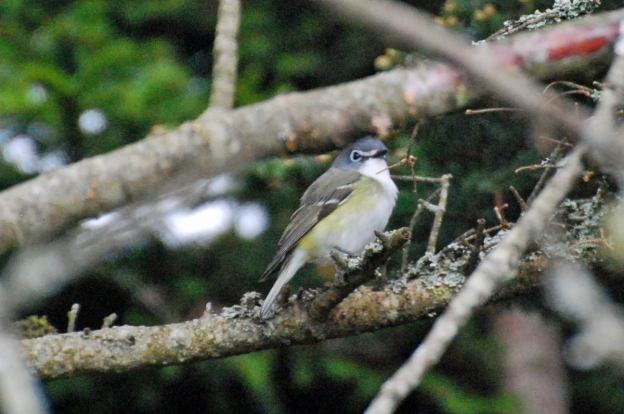
Photo by Bryan Stevens • Blue-headed vireos, such as this bird, are high-elevation summer residents in the region. In the fall, they are also common migrants.

Evening and lunch programs will take place in Roan Mountain State Park’s Conference Center and unless other noted, field trips will leave from the field on the left before the cabins in the park.

In addition to the programs, morning and afternoon walks will be held Saturday and Sunday on a vast array of subjects, including birds, salamanders, butterflies, spiders, snakes, geology, mosses and liverworts. A “moth party” will be held after the Friday and Saturday programs. Larry McDaniel will host this party taking a look at these winged nocturnal insects outside the Conference Center.

Consider joining the Friends of Roan Mountain, if you are not a member. Members get free admission to all Naturalists Rally events and the newsletter, “Friends of Roan Mountain.”

The rally offers catered evening meals by City Market of Elizabethton, as well as brown bag lunches on Saturday. All meals must be pre-paid in advance.

Registration and payment for meals and other activities can be made at the website for Friends of Roan Mountain at friendsofroanmtn.org. The website can also provide a brochure for download that offers a complete schedule and details all the available activities at this year’s rally. Whatever your interest, the Roan Mountain Fall Naturalists Rally is sure to have an activity available. For local birders, it’s often the kick-off to the fall migration season as warblers, vireos, thrushes, tanagers, birds of prey and many other species pass through the region on their way to their wintering grounds.

Tanager-Sept18

Photo by Bryan Stevens • A female scarlet tanager is a study in contrast from her mate with her dull greenish-yellow plumage being much less vibrant than the male’s bright red and black feathers.