Tag Archives: Our Fine Feathered Friends

Rare birds are occasional silver linings after hurricanes

Kaleomanuiwa Wong/USFWS • A sooty tern clings to a rocky perch. Hurricane Frances blew a sooty tern to Holston Lake in Bristol on Sept. 8, 2004.

During a program I presented on birds and birding at the Elizabethton/Carter County Public Library many years ago, an attendee asked me if I knew what happens to birds in a hurricane?

The question, no doubt prompted by the 2017 hurricanes Harvey and Irma, is of particular concern now that many of our favorite birds are migrating south along paths that could take them into harm’s way.

Hurricanes are often a factor that fall migrants must face. In 2004, Hurricane Frances blew some unusual tropical birds to Holston Lake in Bristol. Severe storms also present devastating obstacles for other birds.

Well-known birder and author Kenn Kaufman shared his knowledge about birds and hurricanes when interviewed back in 2011 on the Audubon website. Among some fascinating insight he shared, Kaufman noted that the way intense storms affect birds depends on the species. He noted that a whimbrel, a large shorebird, would be more likely to fly through a major hurricane and live to tell the tale. On the other hand, such a storm would likely prove lethal for songbirds like warblers and thrushes.

To the questioner at my program, I also admitted that dedicated birders are, at times, rather atypical people. For a birder looking to find a totally unexpected bird, every hurricane comes with a proverbial silver lining. In the case of birders, that lining involves some of those stronger flyers — birds like whimbrels, noddies, terns, jaegers or tropicbirds — that get swept into the eye of the storm, carried far inland and dropped onto large lakes as the storm weakens.

My first direct observation of one of these hurricane-transported displaced birds took place back on Sept. 8, 2004. I had been drawn to Musick’s Campground on South Holston Lake by reports of an incredible fallout of such birds, which included species like whimbrel and red knot. More than a dozen fellow birders were present in the swirl of wind, mist and rain when a graceful bird with a dramatic two-toned black and white plumage flew overhead.

I had no idea of the bird’s identity, but I knew instantly it was a species I’d never observed. I heard someone yell “sooty tern” — the identity of the shouter turned out to be area birding legend Rick Knight — and then pandemonium broke out as birders in rain gear got their binoculars into position to track the bird before it flew out of sight.

We needn’t have worried. The bird lingered long enough for all those present to get a good look. I was accompanied that day by the late Howard P. Langridge, a well-known birder in both Florida and Tennessee. Howard had seen sooty terns, but he had found them when visiting the islands of the Dry Tortugas, west of the Florida Keys.
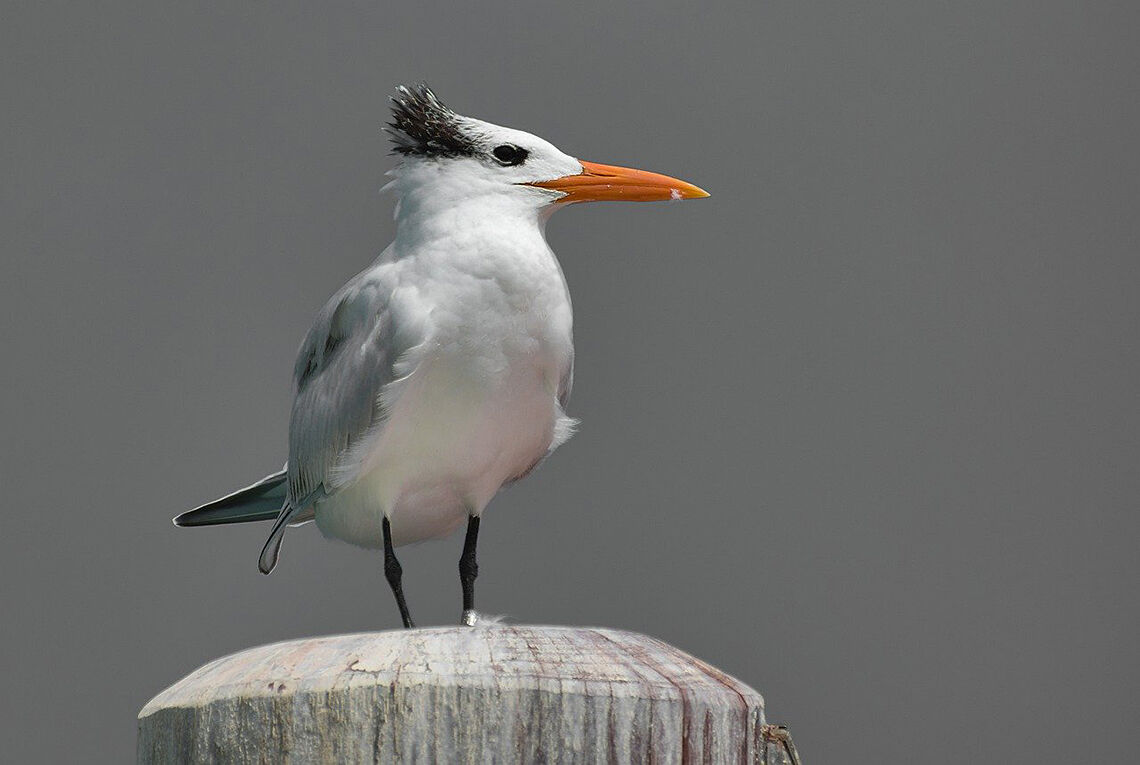
Ronald Plett/Pixabay • Royal terns, like the individual pictured, usually stay close to coastlines. In 1989, Hurricane Hugo blew a royal tern all the way to Watauga Lake, establishing the first record for the species in the state.

Two months after the exciting observation of that sooty tern, Howard passed away at age 81. So, even to this day, memories of that bird are tinged with some bittersweetness from the fact it was one of my last birding adventures with a man who served as a bit of a birding mentor for me.

On our drive back home after that exciting encounter with the storm-driven tern, Howard talked excitedly about sooty terns and some of the other rare birds he had seen in a birding career that spanned more than 50 years.

In addition, we learned a valuable lesson that day. It’s an accepted fact that no bird is worth risking life or limb. It’s also a good idea to be careful where you park when going out to a rain-drenched lakeshore to look for birds from a diminished hurricane. Howard and I lingered after the other birders departed. When we started to leave, he discovered his car’s back tires had gotten stuck in the clay mud. With Howard behind the wheel, I pushed his car as the tires spun madly for traction. I ruined a new pair of denim jeans, but I got the car out of the mud. It’s one more memory that will put a smile on my face to this day.

The sooty tern, blown to a Bristol lake in 2004 by Hurricane Frances, remains a highlight of my birding; however, it’s hardly the only unusual bird to be dumped on area lakes thanks to hurricanes that formed in tropic waters.

Hurricane Hugo back in 1989 remains one of the most legendary storms in the minds of most long-time birders in the area. I hadn’t yet taken up birding at that time, but birders like Howard made sure I knew all about the bird bounty stirred up by Hugo. Two species of jaegers — parasitic and pomarine — were among the birds blown inland to Watauga Lake in Carter County. Seeing these birds usually requires a seat on a boat capable of traveling far out to sea to look for birds that hardly ever venture near the shoreline except for nesting.

Hurricane Hugo also blew more than 50 Forster’s terns — a record number for the region — to Watauga Lake. In addition, a single royal tern — a first record for Tennessee — was also detected by birders looking for birds displaced by Hurricane Hugo.

Much farther back, a high count of Caspian terns was recorded Sept. 5, 1964, at Boone Lake in the wake of Hurricane Cleo. The late Wallace Coffey, a well-known birder in Bristol, was present to witness those 130 Caspian terns. Both Caspian and royal terns are birds usually found along the Atlantic Coast in places like Florida, Georgia and the Carolinas.

As I write this week’s post, I did some digging online to see if Hurricane Helene caused any problems for migrating birds.

It’s possible that the storm did drive some unusual species inland. Common gallinules have been spotted in Oak Ridge, as well as Roane County and Anderson County in the days after the storm. American avocets have also shown up in locations across the Volunteer State in the same time period.

Cornell Laboratory of Ornithology did report some displaced birds in the wake of Hurricane Helene, but the reports came mostly from coastal areas that saw some off-shore species like sooty shearwater, Audubon’s shearwater, magnificent frigatebird, brown noddy, bridled tern, sooty tern, Bermuda petrel and American flamingo driven closer to coastlines.

I haven’t heard of any regional migrant fallouts, but then Helene was a rather horrific storm. Even dedicated birders know when to hunker down and look for birds another day.

•••

Email me at ahoodedwarbler@aol.com to share a sighting, make a comment or ask a question.
Catbirds make noisy neighbors during the warmer months

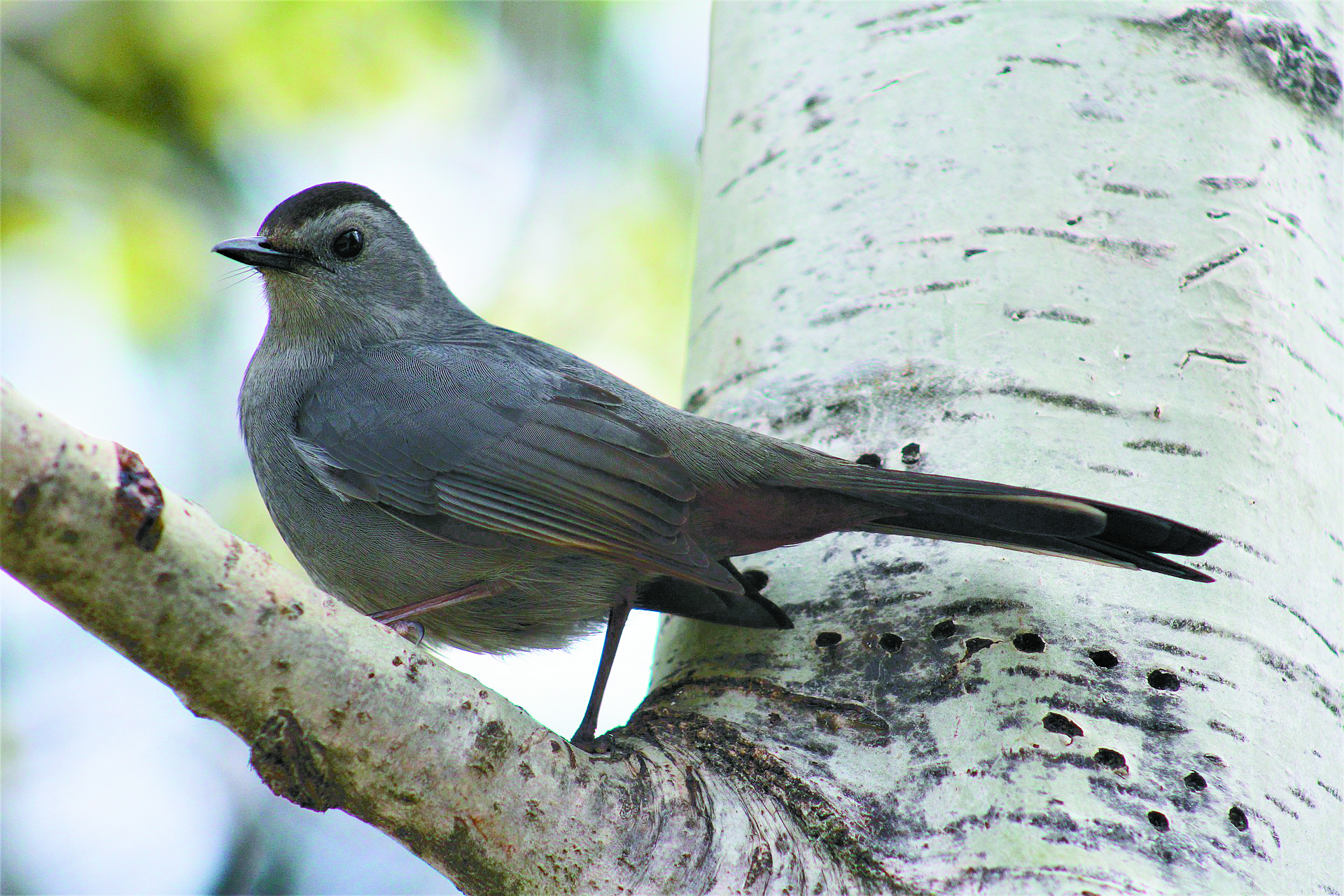
Photo by Bryan Stevens A curious Gray Catbird peeks from dense cover. Attendees at the fall rally can look for catbirds and other species at any of the offered bird hikes.

(NOTE: Hurricane Helene disrupted my weekly posting. I’ve still been writing, so catching up now on the posting.)

I wrote last week about brown thrashers. This week I’m turning the spotlight on a close relative of the thrashers, the gray catbird.

As summer has waned and autumn’s approach has become more inevitable with each passing day, I’ve become more aware of both thrashers and catbirds skulking around the edges of the yard and the nearby woodlands.

These birds have been lured closer by polk berries, wild grapes and pin cherries. Both thrasher and catbirds are fond of fruit. One summer my mom and I “trained” a catbird to come to the discards left behind when strawberries are “capped.” Not as picky as people, the catbird thought the discarded scraps of strawberries provided an unexpected treat.

Catbirds are part of a family related to thrushes that are known as “mimic thrushes.” Besides its surprisingly accurate rendition of a feline, the catbird has several other common vocalizations. Despite their shy nature, they’re extremely curious. Imitating their calls or simply producing a squeaky sound will usually persuade the bird to move out of cover and search for the source of the noise.

Catbirds are part of the annual fall exodus that includes species like rose-breasted grosbeaks, scarlet tanagers, Baltimore orioles and indigo buntings, but because they lack the brilliant plumages of these other birds their passage would probably go unnoticed if not for the fact they are extremely noisy.

Catbirds do get quieter during the nesting season when they take up the serious business of raising young, but after that annual task is completed they immediately slide back into their crotchety vocal habits.

Catbirds are experts at concealing themselves from prying eyes. The bird’s charcoal gray plumage, unbroken except for a patch of maroon feathers beneath the tail, blends into the shadowy sections of the tangles and thickets where they like to lurk. However, even when gray catbirds are reluctant to be seen, they’re almost eager to be heard. As indicated, the catbird is extremely vocal with several calls and songs in its repertoire, including the rather faithful rendering of a fussy cat’s meow that provides this bird its common name.

They are related to thrashers and mockingbirds, but scientists find them just different enough to warrant placing the gray catbird in its own genus.

A relative known as the black catbird, which ranges throughout the Yucatan Peninsula of Mexico as well as northern Guatemala and northern Belize, also belongs to a genus of its own. Both catbirds are classified as “mimic thrushes,” or Mimidae, of which there are about 30 species in the New World.

There is also a totally unrelated family of catbirds that ranges through Australia, Asia and parts of Africa. Some of these birds include the ochre-breasted catbird, tooth-billed catbird and spotted catbird.

The gray catbird is not as an accomplished mimic as some of its relatives, such as the Northern mockingbird. Nevertheless, experts have documented that the gray catbird can produce more than 100 different sounds. Males have motivation to constantly expand their repertoire, however, as doing so increases the likelihood of attracting a mate. They imitate other birds, but some have been recorded imitating frogs and other non-avian singers.

An occasional catbird enjoys surprising longevity. The oldest known gray catbird was at least 17 years, 11 months old when it was recaptured and rereleased during banding operations in New Jersey in 2001, according to the website All About Birds. That individual had been banded originally in Maryland in 1984.

I will miss the catbirds once they depart farther south for the winter, although occasionally a few hardy individuals linger into November and December in the region.

Other birds, including warblers, hummingbirds and most flycatchers will soon take their leave until next spring. Try to enjoy them before they decamp.

•••

To share a sighting, ask a question or make a comment, please email me at ahoodedwarbler@aol.com.


Birds share fall skies with migrating butterflies, dragonflies

During a stop at the Unicoi Walmart to visit the pharmacy on Wednesday, Sept. 3, I spied an energetic fluttering of wings in the garden center. Although I’ve spied various birds, including Carolina wrens and house sparrows, making themselves at home in this garden center, this winged creature was quite a bit smaller.

I watched the butterfly flit from marigold to zinnia to fall mums, feasting on the nectar the blooms provided. A closer look revealed the butterfly’s identity as a long-tailed skipper, a species more likely found in South Carolina, Georgia and Florida than Northeast Tennessee.

Photo by Bryan Stevens • A long-tailed skipper sips nectar from a marigold at the garden center at the Unicoi Walmart.

According to Wikipedia, the long-tailed skipper is a spread-winged skipper butterfly found throughout tropical and subtropical South America, south to Argentina and north into the eastern United States and southern Ontario. It cannot live in areas with prolonged frost. I have seen lots of them in South Carolina and Georgia; this is my second sighting of one in Northeast Tennessee. I found the first one in a garden in Elizabethton near the Covered Bridge.

The sighting reminded me that it’s not only birds using the skies for migration as we advance toward the autumn season. I also remembered a question I got from a reader back in 2014. Rhonda Eller of Chilhowie, Virginia, posted a question on my Facebook page about some dragonflies that appeared in her yard on Sept. 10.

“We have had a sudden breakout of dragonflies in our yard,” Rhonda explained. “We seldom see more than one or two at a time.”

Rhonda wondered if the dragonflies might have been drawn to her yard in pursuit of some sort of favorite insect prey. She also speculated that the recent dry conditions might have attracted the dragonflies.

Photo by Bryan Stevens • The wandering glider is a migratory species of dragonfly.

I responded at the time to her query by explaining that birds share the skies at this time of year with many other migrants. Some dragonflies, just like birds, migrate. A species known as green darner is one that migrates. These darners are rather large, for a dragonfly, and travel in swarms. A couple of years ago I observed thousands of these dragonflies swarming over a municipal swimming pool and a nearby fish pond at Erwin Fishery Park.

The WSLS Channel 10 television station out of Roanoke, Virginia, reported on swarms of dragonflies so large that they got picked up by local radar. Rhonda shared a link to the station’s story on my Facebook page.

Of course, swarms of migrating insects are bound to get the attention of predatory birds. The same day that Rhonda experienced the influx of migrating dragonflies, I witnessed dozens of common nighthawks and chimney swifts swooping through the skies over my home. With a little more attention to detail, I also noticed the dragonflies sharing the skies with these birds.

I suspect that the nighthawks were feeding on the large darners while the swifts, which are much smaller birds, focused their foraging efforts on smaller winged insects. Tom McNeil, a neighbor and fellow member of the Elizabethton Bird Club, reported seeing nighthawks and swifts, too. Tom lives on the other side of a mountain ridge that separates our homes.

Tim Morris, a Facebook friend from Australia, noted in a comment on my post about the nighthawks that his country is home to a bird known as the tawny frogmouth, a relative of the common nighthawk. Tim noted that frogmouths are big birds with camouflage markings that allow them to pretend to be dead tree boughs by day. “They feed not only on insects but mice and lizards, too,” he added.

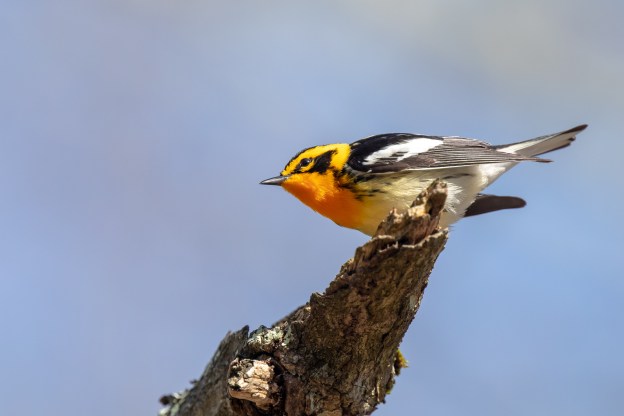
Evidence of fall migration continued the next day when I detected a small wave of warblers foraging in trees at the edge of my yard. I saw five different species — American redstart, worm-eating warbler, Cape May warbler, Blackburnian warbler and Tennessee warbler — in the space of half an hour. Of the warblers in the flock, the Blackburnian and Cape May are some of the more vibrant ones.

So far in 2024, warblers have absented themselves from my yard this fall. It’s started to aggravate me, but I’ll try to be patient.

The Blackburnian warbler’s common name commemorates Anna Blackburne, an English naturalist who lived from 1726 to 1793. Her brother, Ashton, had immigrated to the United States, which made it possible for him to send his sister many specimens, especially birds. Their father, a salt merchant by trade, was also a well-respected amateur naturalist. In addition to the warbler that bears her name, Anna Blackburne also had a species of beetle named in her honor.

Both the Cape May and Tennessee warblers are named for the locations from which they were first collected. Neither of these small songbirds are closely affiliated with Cape May, New Jersey, or the Volunteer State. The Cape May warbler is also known as the “tiger warbler” for the dramatic black striping across its bright yellow breast. A green back and chestnut cheek patch make the Cape May warbler quite unlike any of its close kin. Even its former scientific name — Setophaga tigrina — paid homage to the striped big cat. The term “setophaga” translates to “moth eater” and is a reference to this warbler’s intense fondness for the caterpillars known as spruce budworms that occasionally produce outbreaks in the northern spruce forests that serve as the nesting range for the Cape May warbler.

According to the website, “All About Birds,” Cape May warblers have unusually shaped tongues that allow them to sip nectar from tropical flowers during the winter months spent in Central America and the Caribbean. Their unique tongues also make it possible for them to enjoy sips of sugar water from hummingbird feeders.

Whether its dragonflies, nighthawks, warblers, hummingbirds or a long-tailed skipper in a Walmart garden center, plenty of birds and other flying creatures will be moving through the region for the next few weeks. Now’s the time to get outdoors and look for some of these migrants.

•••

Bryan Stevens has been birding actively for about 30 years. He has written a weekly column on birds and birding since 1995. To ask a question, make a comment or share a sighting, email him at ahoodedwarbler@aol.com.

Seeing Yellow: Visit from an odd cardinal surprises local couple

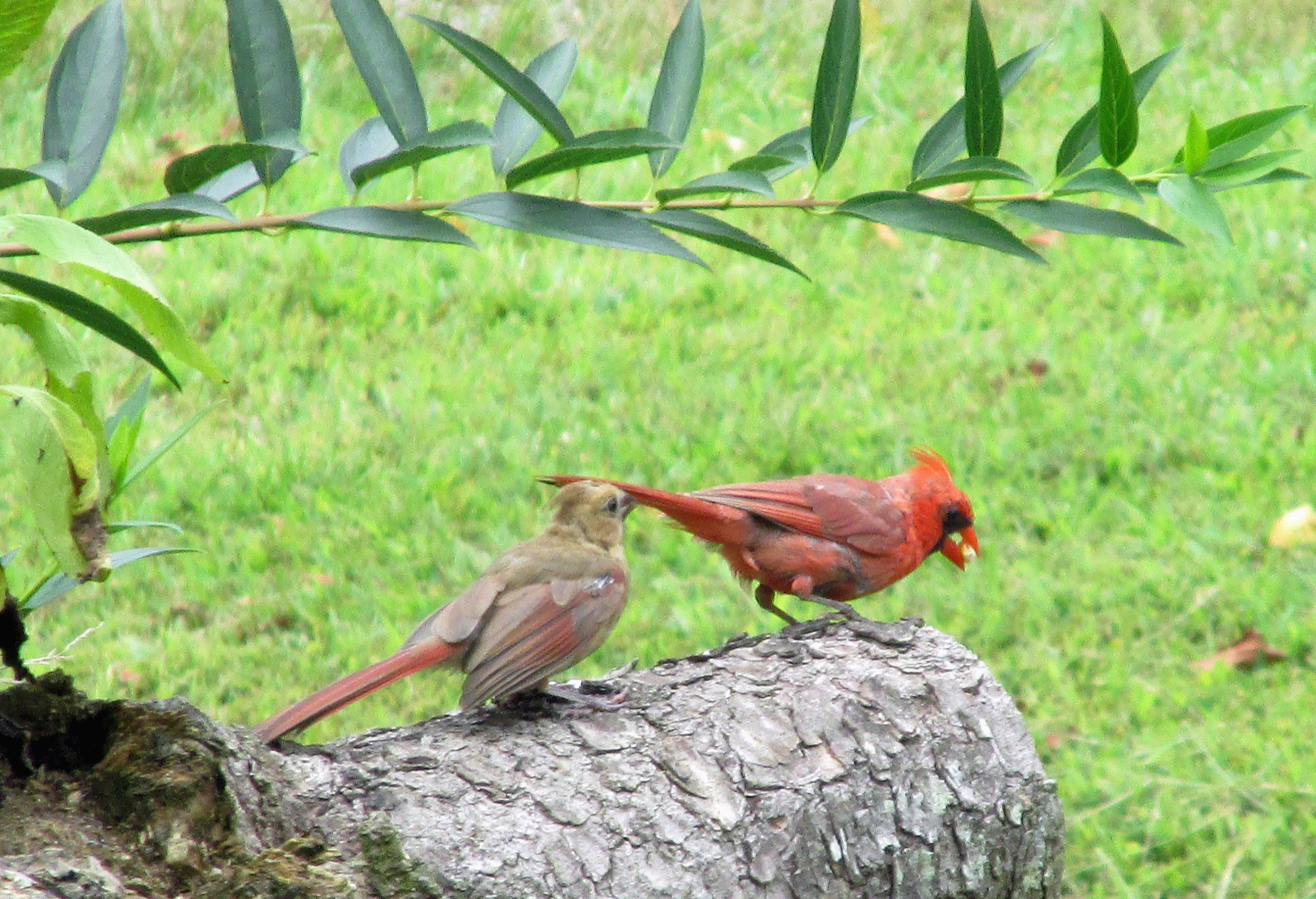
Photo by Bryan Stevens • A male Northern cardinal leads a young cardinal to food sources.

Unicoi resident Bobby Davis called me last week to share news about a sighting of a yellow cardinal. Bobby said that he and his wife, Tressa, have two bird baths and a hummingbird feeder in their yard and are in the habit of watching the comings and goings of their feathered friends. At 1 p.m. on Tuesday, Aug. 8, they noticed a yellow cardinal in the yard near some rhododendrons.

A “yellow” cardinal is simply a Northern cardinal that has inherited a rare genetic condition that causes the bird’s feathers to turn yellow instead of red.

A news item posted to a website for The Wood Thrush Shop in Nashville relates the story of a backyard feeding station in Harriman, Tennessee, in Roane County that was visited by a yellow Northern cardinal on a regular basis.

Yellow Northern cardinals have been seen in at least four different states the last 10 years but remain a rarity.

The article explained that the yellow coloration in affected cardinals is caused by a rare genetic mutation. The colors red, orange and yellow in a bird’s feathers are created with carotenoid pigments derived from the foods they eat. In the male Northern cardinal, yellow pigments from the diet apparently are converted to red by a specific enzyme. In a very rare genetic mutation, probably affecting fewer than one in a million cardinals, that enzyme is lacking, so the conversion to red doesn’t occur and the feathers are bright yellow instead.

Back in May of this year, a yellow cardinal given the name Maize was spotted in Alabama. That sighting took place less than 15 miles from a location that hosted another yellow cardinal in 2018. Was Maize a descendant of that yellow cardinal spotted six years ago?

Perhaps the yellow cardinal will stick around at Bobby and Tressa’s home. Bobby informed me that they have an ordinary pair of red cardinals that resides in their yard, but he noted that the three birds have not interacted.

•••

Interestingly enough, there is a bird with the actual name yellow cardinal, but it is not closely related to the Northern cardinal. This South American bird has the scientific name of Gubernatrix cristata and is a member of the tanager family.

The yellow cardinal was formally described in 1817 by the French ornithologist Louis Pierre Vieillot under the binomial name Coccothraustes cristata. The word “cristata” means crested or plumed.

This yellow cardinal ranges in Argentina, Brazil, Paraguay and Uruguay. Its natural habitats are dry savanna, temperate shrubland, subtropical or tropical moist shrubland and temperate grasslands. The yellow cardinal is threatened by habitat loss and from pet trade trappers for sale as exotic pets. Males are trapped at a higher rate than females, and the yellow cardinal is considered endangered due to the constant entrapment. If recent counts are accurate, only about 1,000 t0 2,000 of these birds still exist.

Photo by U.S. Fish & Wildlife Service
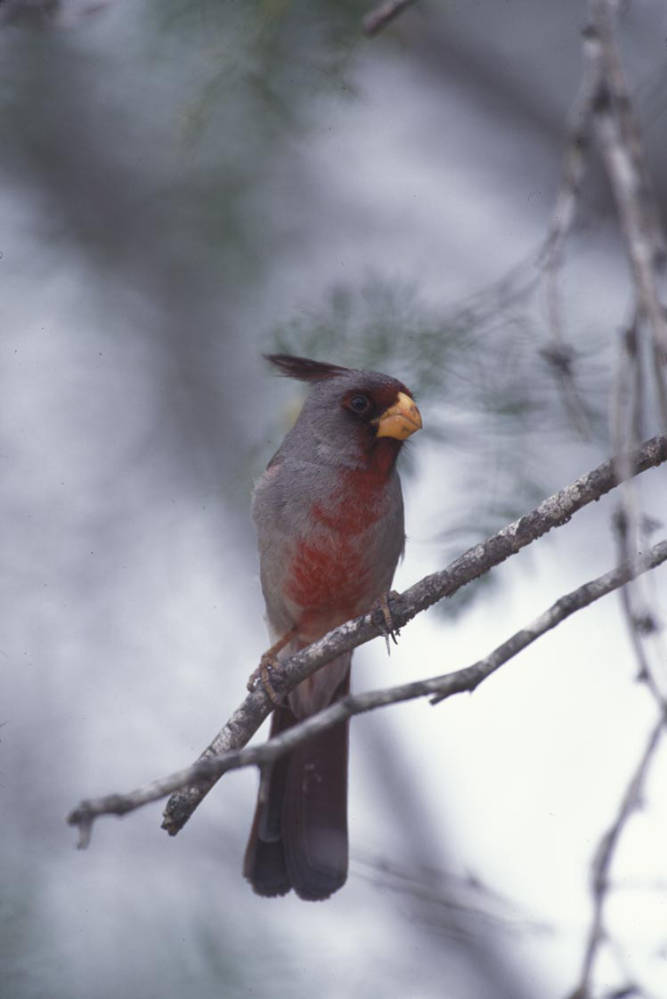
Pyrrhuloxia, also known as desert cardinal, is related to the Northern cardinal. 

The Northern Cardinal, on the other hand, is an abundant, beloved songbird. There’s additional evidence to put forward as testimony to the popularity of the Northern cardinal. It’s the official state bird of seven states: Virginia, North Carolina, West Virginia, Ohio, Illinois, Indiana and Kentucky. Only the Northern mockingbird, which represents five states as official state bird, even comes close to the Northern cardinal in this respect.

Cardinals are a widespread species, ranging westward to the Dakotas and south to the Gulf Coast and Texas. The southeastern United States was once the stronghold of the cardinal population. In the past century, however, cardinals have expanded their range into New England and Canada. These birds have even been introduced to Hawaii.

The Northern cardinal has only two close relative in the genus Cardinalis. The pyrrhuloxia, also known as the desert cardinal, ranges throughout Arizona, New Mexico and Texas, as well as in Mexico. The third relative is known as vermilion cardinal and is found in Colombia and Venezuela. This bird suffers some losses to the exotic pet trade, but its numbers have managed to remain fairly stable.

•••

I’ve been an active birder since the early 1990s. To share a sighting, ask a question or make a comment, email me at ahoodedwarbler@aol.com.

Native wading birds wander widely in late summer


Photo by Bryan Stevens • A great egret captures a frog from a pond’s edge in South Carolina.

The fish pond at my home has attracted a stalker. Amid the cattails and beneath the drooping branches of tall bald cypress trees, a lurking great blue heron has patiently been stalking fish, frogs and anything else that comes within striking reach of the bird’s sturdy dagger-shaped beak.

The heron’s visits have prompted me to dig into my archived columns this week. Please enjoy this column, which was previously published in July of 2019, about summer’s wading birds.

•••

North America’s stately wading birds — egrets, herons, bitterns, ibises and their kin — are well-known wanderers in late summer. As with all birds capable of flight, a pair of strong wings cannot be underestimated. Birds can show up in the most likely places.

Take for instance the first confirmed sighting of an American flamingo in Tennessee. This particular flamingo — an almost unthinkable bird for the Volunteer State — showed up along Highway 78 in Lake County on July 13, 2019.

Ruben Stoll and Alan Troyer found the flamingo, backing up their discovery with photographs of the large pink bird associating with great egrets and other wading birds. The flamingo created considerable buzz on rare bird alerts in several nearby states. Many birders rushed to add this exceptional visitor to their state and life lists.

Photo by Bryan Stevens • White ibises occasionally meander away from the coast in late summer. Immature birds will be brown instead of white.

In summers past, other exciting wading birds ranging from little blue herons to wood storks have excited the region’s birders. I recently celebrated my own sighting of one of these wanderers that made a stop at my fish pond on July 10.

I had stepped outside my house and let the door slam a little too loudly behind me, causing a stately great egret near my fish pond to take flight and fly over the roof of my house. I regretted instantly not having a camera with me.

Two days later, I got another chance. The great egret made another appearance. Unfortunately for the tall bird, he attracted the ire of the resident red-winged blackbirds. In a most inhospitable manner, the blackbirds attacked and dived at the egret, which made some awkward attempts to evade the angry blackbirds. Blackbirds are protective of their territory and have swooped at me several times when I’ve ventured too close to their favored cattails.

More prepared on this occasion, I had my camera with me and managed to get a few photographs of the egret.

The next day, only a few miles from my home, Lauri Sneyd Vance took a photograph of a great egret that stopped at her home in Limestone Cove in Unicoi County, Tennessee. Having seen my Facebook post, she notified me that she had also received a visit from an egret. Was it the same bird? Perhaps.

Oddly enough, the bird is actually the second great egret to visit my fish pond. The first one made an unseasonable stop several years ago on a snowy December afternoon — hardly a time of year I might have expected a visit from an egret in the mountains of Northeast Tennessee.

The great egret stands 3.3 feet tall. With an all-white plumage, a long yellow bill and dark legs, this egret is often described as graceful and elegant. Its likeness was incorporated into the logo for the National Audubon Society, an organization formed to protect egrets and other wading birds from a wanton slaughter in the late 1800s when millions of the birds were killed so their feathers could be used in women’s fashions.

During the breeding season, adult great egrets sprout long plumes on their back. These frilly feathers are known as aigrettes, which are used to attract the attention of prospective mates in elaborate mating displays.

According to the All About Birds website, great egrets feed mostly on fish, but they also eat amphibians, reptiles, rodents, songbirds and crustaceans. On visits to the South Carolina coast, I’ve observed great egrets dining on frogs and small fish. In prime habitat, flocks of great egrets will gather to forage together in wetlands or around ponds. More sociable than some herons, great egrets also nest and roost communally.

The other North American egrets include snowy egret, reddish egret and cattle egret. Other egrets found around the world include the intermediate egret, little egret, slaty egret, black egret,dimorphic egret and Chinese egret.

As summer advances, keep your eye on area rivers, lakes and ponds. It’s the best time of year to see egrets, herons and other long-legged wading birds. In the case of the American flamingo, I realize that lightning rarely strikes twice, but if you do happen to see a gangly pink bird, let me know.

•••

Share sightings, ask questions or make comments by emailing me at ahoodedwarbler@aol.com.

Photo by Bryan Stevens
A Great Blue Heron moves stealthily through a wetland.

Unicoi County summer bird count finds 109 species

Photo Hans Toom/ Pixabay • The aptly named yellow warbler was one of 18 warbler species found on this year’s Unicoi County Summer Bird Count.

The 11th annual Unicoi County summer bird count was held Saturday, June 8, with 19 observers in seven parties. The count has been conducted yearly since its inception by members of the Elizabethton Bird Club.

I have taken part on this count from the first one held, missing only once when I was out of town. It’s an enjoyable count and, for me, it’s very close to home. This count also provides a reliable snapshot of the birds present in Unicoi County in early summer. 

Counters tallied 109 species which is slightly above the average of 108 species. The all-time high was 112 species in 2016. 

Abundant birds included European starling (314), American robin (246), song sparrow (175), American crow (174), red-eyed vireo (172), Northern cardinal (128) and cliff swallow, 126. Eighteen species of warblers were found, the most abundant being hooded warbler with 84 individuals tallied. 

As always a few low-density or very localized species were missed, including yellow-billed cuckoo, bald eagle, great horned owl, American kestrel, grasshopper sparrow, golden-winged warbler and prairie warbler.

The list:

Canada goose, 18; wood duck, 3; mallard, 20; wild turkey, 7; and ruffed grouse, 1.

Rock pigeon, 61; mourning dove, 56; chuck-will’s-widow,1; Eastern whip-poor-will, 18; chimney swift, 29; and ruby-throated hummingbird, 8.

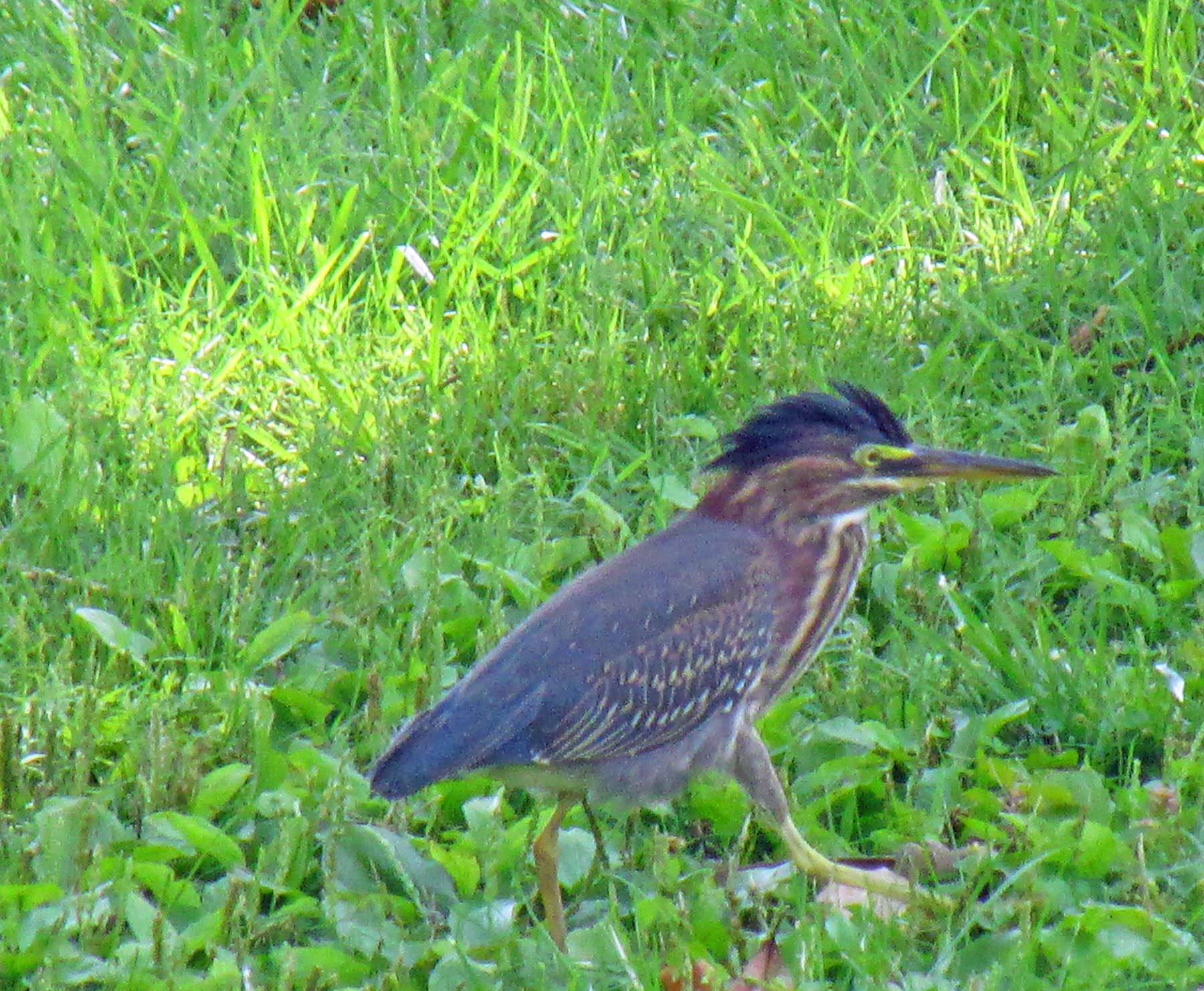
Killdeer, 8; great blue heron, 3; and green heron, 2.

Photo by Bryan Stevens
A green heron elevates a shaggy crest of feathers, a behavior often initiated when the bird feels alarmed.

Black vulture, 1; turkey vulture 37; sharp-shinned hawk, 1;

Cooper’s hawk 3; red-shouldered hawk, 4; broad-winged hawk, 10; red-tailed hawk, 2; Eastern screech-owl, 5; barred owl, 4; and Northern saw-whet owl, 1.

Belted kingfisher, 5; red-bellied woodpecker, 15; yellow-bellied sapsucker, 9;

downy woodpecker, 8; hairy woodpecker, 5; Northern flicker, 10; and pileated woodpecker, 20.

Great crested flycatcher, 3; Eastern kingbird, 11; Eastern wood-pewee, 10; Acadian flycatcher, 32; least flycatcher, 5; and Eastern phoebe, 65.

White-eyed vireo, 3; yellow-throated vireo, 1; blue-headed vireo, 38; warbling vireo, 3; and red-eyed vireo, 172.

Blue jay, 61; American crow, 174; fish crow, 5; common raven, 8; Carolina chickadee, 71; and tufted titmouse, 60.

Photo by Bryan Stevens • A tree swallow visits a nest box to check on young.

Tree swallow, 49; Northern rough-winged swallow, 20; purple martin, 25; barn swallow, 78; and cliff swallow, 126.

Golden-crowned kinglet, 2; cedar waxwing, 36; red-breasted nuthatch, 2; white-breasted nuthatch, 18; brown creeper, 4; and blue-gray gnatcatcher, 23.

Carolina wren, 84; house wren, 31; and winter wren, 3.

Gray catbird, 34; brown thrasher, 14; Northern mockingbird, 17; European starling, 314; Eastern bluebird, 59; veery, 12; hermit thrush, 2; wood thrush, 34; and American robin, 246.

House sparrow, 14; house finch, 33; American goldfinch, 56; chipping sparrow, 54; field sparrow, 6; dark-eyed junco, 20; song sparrow, 175; Eastern towhee, 6; and yellow-breasted chat, 1.

Eastern meadowlark, 14; orchard oriole, 4; Baltimore oriole, 1; red-winged blackbird, 60; brown-headed cowbird, 16; and common grackle, 63.

Ovenbird, 38; worm-eating warbler, 10; Louisiana waterthrush, 10; black-and-white warbler, 19; Swainson’s warbler, 16; Kentucky warbler, 1; common yellowthroat, 6; hooded warbler, 84; American redstart, 12; Northern parula, 41; magnolia warbler, 2; Blackburnian warbler, 10; yellow warbler, 3; chestnut-sided warbler, 17; black-throated blue warbler, 45; yellow-throated warbler, 17; black-throated green warbler, 45; and Canada warbler, 13.

Scarlet tanager, 20; Northern cardinal, 128; rose-breasted grosbeak, 4; blue grosbeak, 1; and indigo bunting, 77.

•••

Bryan Stevens has birded since the early 1990s and has written about birds and birding since 1995. To ask a question, make a comment or share a sighting, email him at ahoodedwarbler@aol.com.


Indigo buntings speak to the summer season

Photo courtesy of George Stone • Indigo buntings range from southern Canada to northern Florida during the summer months, occasionally even expanding beyond this wide range.

George Stone emailed me after finding my weekly bird column online.

“I live approximately 90 miles west of Edmonton, Alberta, Canada,” he wrote in his email. “This morning (June 6) I had my first ever sighting of an indigo bunting at my feeder!”

He also asked a question, wanting to know if indigo buntings are rare in his location in Canada.

I did some digging online and found that indigo buntings range from southern Canada to northern Florida in the summer. I relayed this information to George in a reply to his email, congratulating him on his sighting.

I informed him that I reside in Northeast Tennessee, close to the borders with Virginia and North Carolina. I also told him that in summer, indigo bunting is not rare at all here in Northeast Tennessee. I saw and heard several while doing a summer bird count on June 8 in the Limestone Cove community of Unicoi County.

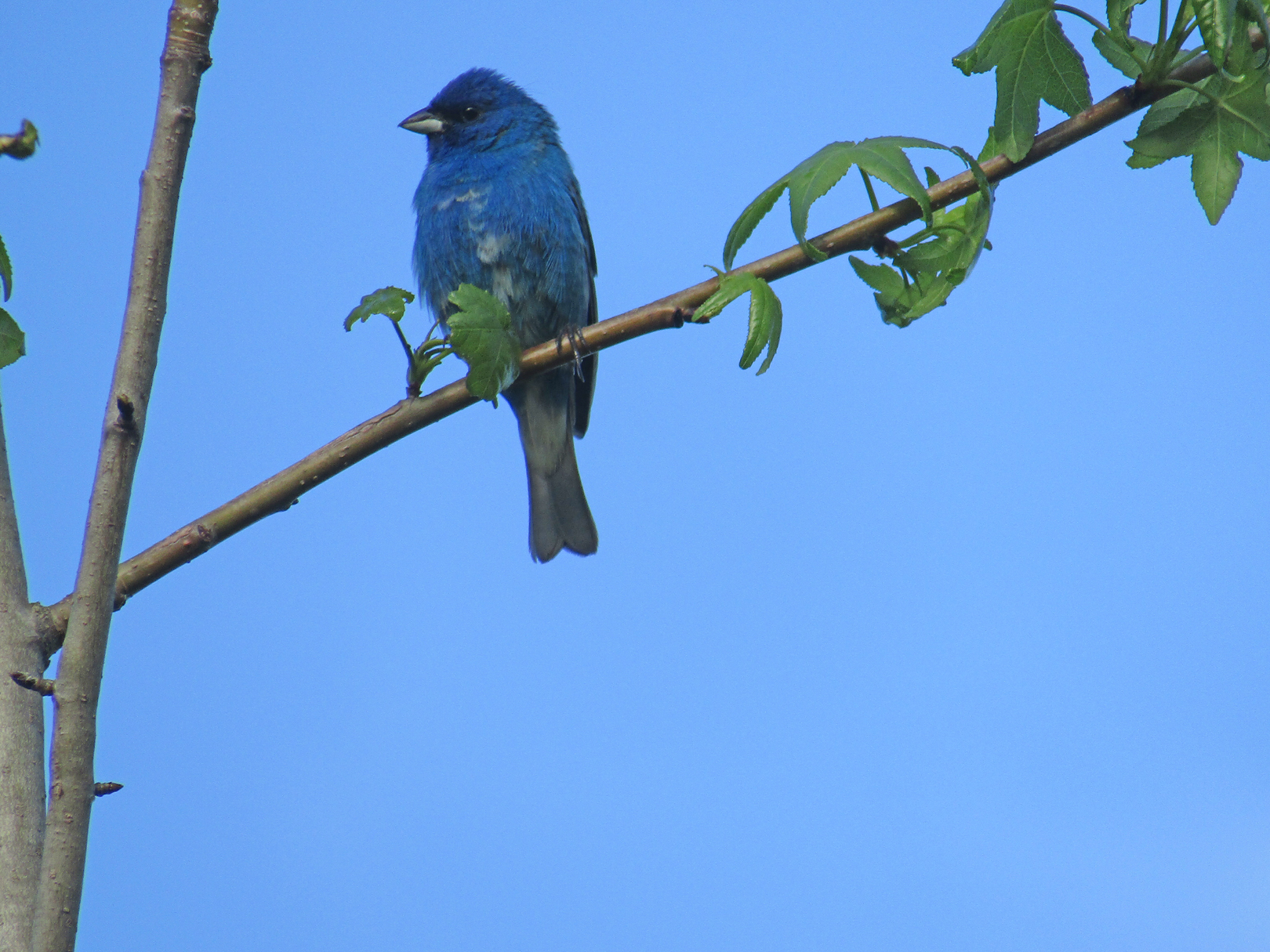
Photo by Bryan Stevens • The male indigo bunting is a resplendent bird.

The male indigo bunting is the only solid blue bird in the eastern United States, but it’s all an illusion — literally a trick of the light. The indigo bunting’s feathers are not really blue; the male’s brilliant azure plumage is caused by the process of diffraction of light around the structure of the bird’s feathers. This process scatters all but the blue light, and the resulting color shifts from black to blue to turquoise as the angle of reflected light changes. In bright light, it can even look unnaturally vivid blue. In poor light, however, an indigo bunting male can appear black. Fortunately, indigo buntings have both a characteristic body shape and song, so even if the birds are not seen in their best light, they can still be recognized.

For such a bright blue bird, indigo buntings are not easy to detect. Males like to find an elevated perch and sing to proclaim their territory and pitch their availability to potential mates. Learn the song, which consists of a burst of jumbled, high-pitched notes, and use that knowledge to help pinpoint singing males. Once you zero in on the singing bird’s location, it’s easy to focus binoculars and enjoy peeking at such a pretty bird.

The indigo bunting belongs to a genus of birds known as Passerina, which is included the family Cardinalidae, which includes birds like Northern cardinal and rose-breasted grosbeak. They are often lumped into a group known as North American buntings, although they are not closely related to such birds as snow bunting and lark bunting. The latter is even recognized as the official state bird for Colorado, a unique honor for this group of birds. The other members of the Passerina genus include lazuli bunting, varied bunting, painted bunting, rose-bellied bunting, orange-breasted bunting and blue grosbeak.

Photo by Bryan Stevens • Newly-returned neotropical migrants, such as this Indigo Bunting, increased the total number of species for the annual spring count.

Worldwide, other birds known as buntings include such descriptively named species as slaty bunting, corn bunting, white-capped bunting, gray-necked bunting, cinereous bunting, lark-like bunting, cinnamon-breasted bunting, chestnut-eared bunting, little bunting, yellow-throated bunting, golden-breasted bunting, black-headed bunting, red-headed bunting and yellow bunting.

For me, the indigo bunting has always been a bird of the summer season. Not even the heat of mid-day tires out a persistently singing male indigo bunting. They linger into the early October, but later in the season these birds begin to molt feathers and take on a more shabby look. Enjoy them while they’re here.

•••

To ask a question, make a comment or share a sighting, email me at ahoodedwarbler@aol.com.


Hooded warbler easily wins fans among birders

Photo by Jean Potter • A male hooded warbler flits through the foliage of a rhododendron thicket.

The woods surrounding my home have been alive with birdsong. We’re almost ready to turn the calendar to June, but there’s been no diminishment in the fervor of the daily chorus.

The main members of the feathered choir are warblers. I’ve heard yellow-throated warbler, black-throated green warbler, black-and-white warbler, Northern parula, ovenbird, common yellowthroat and, my favorite, hooded warbler, morning and evening.

During the winter months when the hooded warbler absents itself from Northeast Tennessee, the species resides in the forests of Mexico, as well as in Belize, Costa Rica and other Central American nations.

Like many of the ruby-throated hummingbirds that make their home in the United States for the summer, the hooded warbler’s seasonal migrations take it across the vast open waters of the Gulf of Mexico. After that amazing crossing, these small songbirds disperse throughout the southeastern United States.

That birds as small as hummingbirds and warblers make this incredible migration twice yearly is one of nature’s most phenomenal feats of endurance. In a presentation by Kenn and Kimberly Kaufman that I attended six years ago, I learned that these tiny birds put on incredible fat reserves to help fuel their valiant Gulf crossings.

The warblers, also known as wood-warblers, are an exclusively New World family, numbering approximately 116 species. About 50 of these species make their home in the eastern United States and Canada for the spring and summer, departing in the fall and returning to tropical wintering grounds. Some are extremely bright and colorful birds. The hooded warbler is somewhere in the middle in a sliding scale that goes from dull to wow.

Other colorful warblers that share similar tastes in range and habitat with the hooded warbler include the American redstart, black-throated blue warbler and black-throated green warbler.

Readers who make it to the end of this weekly column will know that even my email address is a testament to my enthusiasm for the hooded warbler.

Hooded warblers nest in the woodlands around my home. So, from the time my favorite warbler returns in April until the last individual departs in October, I enjoy regular glimpses of this colorful and interesting bird. Like all warblers, the hooded warbler is quite energetic, dashing after tiny insects in the branches of shrubs and trees. Hooded warblers often forage close to the ground, which makes observing them easier.

Of course, birds are free to break the rules. One of my most memorable sightings of a hooded warbler involved a male singing from the upper branches of a dead pine tree. I’d estimate that the bird was at least 40 feet off the ground, singing his little heart out to attract a mate. I was standing on an elevated rise of land while the tree providing the warbler its perch was lower in a gully that actually placed bird and observer on a roughly level playing field.

The bird sang for many moments, which is not always the case with warblers. These birds tend to dash for cover at the slightest disturbance, but this enthusiastic male didn’t seem to pay and heed to the fact that most of its kin prefer to skulk in shrubs and dense rhododendron thickets no more than a few feet off the ground.

Back in the late 1990s, when I had just started out in birding, I observed two adult hooded warblers feeding a couple of young birds only recently out of the nest.

I was enjoying observing the sweet scene as the parent birds carried foods to the young birds, which begged incessantly and loudly when, unexpectedly, a song sparrow wandered into the scene.

The sparrow was brutally beset by the parent warblers, which attacked the intruder from all sides. The poor sparrow, having no clue to the reason for their ire, beat a hasty retreat. Sparrows are no threat, but that didn’t matter to these zealous parents.

When I first began birding, I was only dimly aware there was a family of birds known as warblers, which are now hands-down my overall favorite birds. The hooded warbler was one of the first birds I managed to identify on my own.

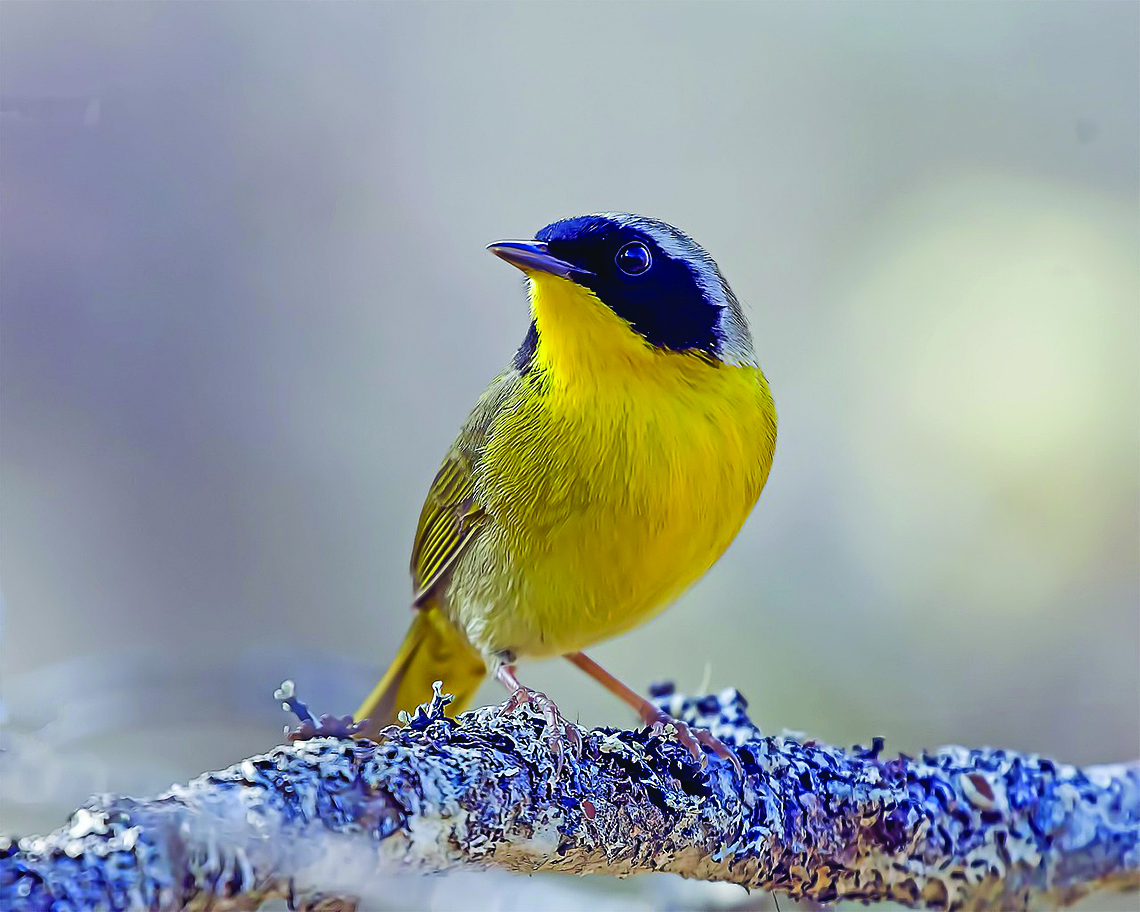
It’s one bird unlikely to be mistaken for any other. Every time I behold a hooded warbler, I marvel at the bird’s exquisite appearance. The gold and green feathers seem to glow brightly in the dim light of the shadowy thickets of rhododendron they prefer to inhabit. The black hood and bib surrounding the male’s yellow face stands out by virtue of its stark contrast from the brighter feathers. Large coal-black eyes complete the effect. The appearance of the male bird provides this species with its common name. The female has an identical yellow-green coloration as the male, although she is slightly more drab. She lacks the black hood and bib, although older females may acquire some dark plumage on the head and around the face. Both sexes also show white tail feathers that they constantly fan and flick as they move about in thick vegetation and shrubbery.

The warblers are, in short, an incredible family of birds. I’ve seen all but a handful of the species that reside for part of the year in the eastern United States. I still want to see a Connecticut warbler and cerulean warbler, as well as the endangered Kirtland’s warbler of Michigan and the golden-cheeked warbler of Texas.

I’ve come to think of the hooded warblers at my home as “my warblers.” There may be a kernel of truth to my belief. The website All About Birds in a profile on the species notes that a seven-year study conducted in Pennsylvania gave evidence that male hooded warblers are faithful to nesting territories from previous years. Approximately 50% of banded males were shown to return to the same area to breed again year after year.

So, some of those hooded warblers singing from the rhododendron thickets at my home are probably birds returning for consecutive spring seasons. Some of the warblers that returned back in April could be great-great-great grandchildren of those warblers that attacked the unfortunate song sparrow. At the least, it gives me pleasure to think so.

•••

To share a sighting, ask a question or make a comment, email me at ahoodedwarbler@aol.com, an address that shows my profound fascination for this particular bird.

Photo by Bryan Stevens • A male hooded warbler peers from a tangle of branches.

Annual spring bird count finds 151 species


Photo by Hans Toom/Pixabay • A male common yellowthroat, a species of warbler, is resident in the region spring through fall. The black mask of the males makes this bird quite distinctive.

The 81st consecutive Elizabethton Spring Bird Count was held on Saturday, May 4, with 40 observers in 16 parties.

Participants covered Carter County plus parts of adjacent Johnson, Sullivan, Unicoi and Washington counties. Temperatures were mild with little wind;

however, light rain just before sunrise and light to moderate rain during much of the afternoon hampered birding to some degree. Despite these conditions, good numbers were counted.

This year’s count tallied 151 species, including 28 species of warblers. The average number of

species over the last 20 years was 153 species. The all-time high was 166 species in 2016.

These yearly spring counts provide an amazing snapshot of the birds that can be found living in or migrating through the region. Some exceptional finds for this year’s count included Virginia rail, green-winged teal, grasshopper sparrow, golden-winged warbler and dickcissel.

The most abundant birds included cliff swallow (790), American robisparrown (742), European starling (500), Canada goose (391), red-eyed vireo (343), song sparrow (338), Northern Cardinal (321), Common Grackle (315), Red-winged Blackbird (282), American Crow (280), American Goldfinch (279), Hooded warbler (231) and Mourning Dove (223).

The list:

Canada goose, 391; wood duck, 35; blue-winged teal, 4; mallard, 96; green-winged teal,1; and common merganser, 2. 

https://www.youtube.com/watch?v=hp-CrM–HSU

Wild turkey, 23; ruffed grouse, 1; pied-billed grebe, 1; rock pigeon, 117; Eurasian collared-dove, 1; mourning dove, 223; yellow-billed cuckoo, 4; chuck-will’s-widow, 8; Eastern whip-poor-will, 28; chimney swift, 168; and ruby-throated hummingbird, 9.

Virginia rail, 1; killdeer, 29; least sandpiper, 27; pectoral sandpiper, 2; semipalmated sandpiper, 3; spotted sandpiper, 49; solitary sandpiper, 27; lesser yellowlegs 5; and greater yellowlegs, 1.

Double-crested cormorant, 80; great blue heron, 76; great egret, 2; green heron, 21; and yellow-crowned night-heron, 4.

Black vulture, 111; turkey vulture, 96; osprey, 13;

Cooper’s hawk, 3; bald eagle, 7; red-shouldered hawk, 6; broad-winged hawk, 8; red-tailed hawk, 14; Eastern screech-owl, 11; great horned owl,1; and barred owl, 8.

Belted kingfisher, 25; red-headed woodpecker, 16; red-bellied woodpecker, 87; yellow-bellied sapsucker, 9; downy woodpecker, 31; hairy woodpecker, 8; Northern flicker, 52; and pileated woodpecker, 46.

American kestrel, 9; great crested flycatcher, 30; Eastern kingbird, 66; Eastern wood-pewee, 31; Acadian flycatcher, 16; least flycatcher, 15; and Eastern phoebe, 96.

White-eyed vireo, 18; yellow-throated vireo, 12; blue-headed vireo, 49; warbling vireo, 15; and red-eyed vireo, 343.

Blue jay, 151; American crow, 280; fish crow, 12;  common raven, 13. Carolina chickadee, 143; tufted titmouse, 158; tree swallow, 154; Northern rough-winged swallow, 49; purple martin, 68; barn swallow, 213; and cliff swallow, 780.

Ruby-crowned kinglet, 3; golden-crowned kinglet, 2; cedar waxwing, 64; red-breasted nuthatch, 8; white-breasted nuthatch, 27; brown creeper, 2; blue-gray gnatcatcher, 77; Carolina wren, 203; house wren, 50; winter wren, 5; and marsh wren, 1.

Gray catbird, 54; brown thrasher, 64; Northern nockingbird, 94; European starling, 500; Eastern bluebird, 134; veery, 14; gray-cheeked thrush, 2; Swainson’s thrush, 9; Hermit thrush, 1; Wood thrush, 118; and American robin, 742.

House sparrow 30; house finch, 79; pine siskin, 1; American goldfinch, 279; grasshopper sparrow, 1; chipping sparrow, 123; field sparrow, 43;

dark-eyed junco, 48; white-crowned sparrow, 1;

White-throated sparrow, 5; Savannah sparrow, 6; song sparrow, 338; swamp sparrow, 1; and Eastern towhee, 179.

Yellow-breasted chat, 11; Eastern meadowlark, 81; orchard oriole, 24; Baltimore oriole, 18; red-winged blackbird, 282; brown-headed cowbird, 61; and common grackle, 315.

Ovenbird, 162; worm-eating warbler, 28; Louisiana waterthrush, 34; Northern waterthrush, 4; golden-winged warbler, 1; black-and-white warbler, 103; Swainson’s warbler,15; Tennessee warbler, 15; Kentucky warbler, 7; common yellowthroat, 48; hooded warbler, 231; American redstart, 33; Cape May warbler, 9; Northern parula, 89; magnolia warbler, 4; bay-breasted warbler, 7; Blackburnian warbler, 24; yellow warbler, 15; chestnut-sided warbler, 30; blackpoll warbler, 8; black-throated blue warbler, 89; palm warbler, 3; pine warbler, 8; yellow-rumped warbler, 21; yellow-throated warbler, 54; prairie warbler, 1; black-throated green warbler, 81; and Canada warbler, 37.

Summer tanager, 1; scarlet tanager, 97; Northern cardinal, 321; rose-breasted grosbeak, 30; blue grosbeak, 10; indigo bunting, 184; and dickcissel, 1.

https://www.youtube.com/watch?v=EI3pZ3t2i4E

•••

To share a sighting, ask a question or make a comment, email me at ahoodedwarbler@aol.com. 

No shortage of contenders to vie for most beautiful bird status

Karen Burke/Pixabay • A Baltimore oriole feeds from a dish of grape jelly. Male orioles show off vibrant feathers during the spring season.

Last week’s column focused on rose-breasted grosbeaks. Males of this species are a stunning sight every spring. People seeing them for the first time are always blown away.

After a link to last week’s column was posted to Facebook, Daisy Scism in Damascus, Virginia, commented that she had a visit from a rose-breasted grosbeak at her feeder recently.

The arrival of rose-breasted grosbeaks got me to thinking of other colorful birds that spend the summer months in Northeast Tennessee, Western North Carolina and Southwest Virginia.

Here’s my list of must-see birds sure to knock your socks off with their dramatic appearance.

Scarlet Tanager

In late April and early May, once the oaks, the maples, the poplars and other tall deciduous trees begin spreading out new green leaves to create a concealing woodland canopy, a familiar song can be heard coming from the treetops. Upon first hearing it, listeners might mistake the hidden singer for an American robin. Listen a little closer, however, and the song sounds as if it is being delivered by a hoarse robin with a sore throat.

Photo Courtesy of Jean Potter
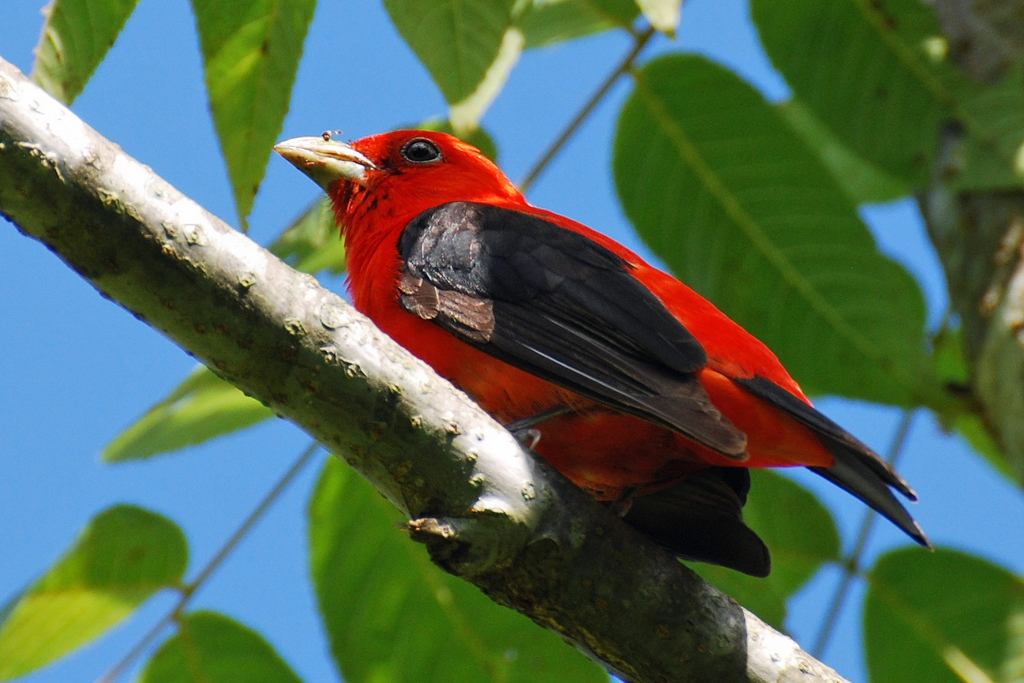
A male scarlet tanager brightens shadowy woodlands with a flash of tropical colors yet remains mostly inconspicuous in the forest canopy.

The producer of the hoarse but melodic song is a scarlet tanager, one of the most showy birds of Eastern woodlands from April to early October. The scarlet tanager also has an easily recognized call note, best described as a distinctive “chip-burr” or “chip-churr.”

Photo by Bryan Stevens • Despite the brilliant scarlet and black feathers, tanagers are more often heard than seen,

The male scarlet tanager boasts a brilliant plumage of crimson red paired with black wings and tail. Of course, this describes only the male. The female tanager makes no real claim to the common name with her comparatively drab greenish plumage. However, the scientific name, Piranga olivacea, gives a nod to the olive-green plumage of females, young males and even adult males when molting their feathers.

Baltimore Oriole

The Baltimore oriole would stand out among North American birds even without its colorful plumage and its long association with the city of Baltimore and its affiliated Major League Baseball team.

For instance, few other birds can match the Baltimore oriole for the sheer elaborate nature of the woven nest these birds construct for the purpose of sheltering eggs and young. The nests resemble hanging baskets that the female oriole weaves from a variety of collected strips of grass. The lining inside is even more elaborate and features soft materials such as plant down, feathers or even wool that can insulate and cushion the eggs. The nest itself is anchored securely in the fork of a tree branch.

Again, credit for being on a list of stunning regional birds goes to the males. The adult male Baltimore oriole is orange on the underparts, shoulder patch and rump, with some individual birds appearing a very deep flaming orange and others appearing yellowish orange. All of the rest of the male’s plumage is black. Adult female are yellow brown on the upper parts with darker wings and dull orange yellow on the breast and belly. The juvenile oriole is similar looking to the female, with males taking until the fall of their second year to reach adult plumage.

Photo by Bryan Stevens • The male indigo bunting is a resplendent bird.

Indigo Bunting

The indigo bunting is one of the reasons I love to pay attention to the clientele visiting my feeders. This small songbird likes to reside in the boundary region where forests and woodlands meet fields and pastures. Personally, the indigo bunting has always been a bird that is suggestive of the long, hot days of summer.

One of my earliest and still quite vivid birding memories is a recollection of a shockingly blue bird atop a blue spruce tree in my yard. Several decades later, the tree is no longer standing, but these beautiful birds — I now know those long-ago summer visitors were indigo buntings — still return each year to my yard and gardens.

The male indigo bunting is the only solid blue bird in the eastern United States, but it’s all an illusion — literally a trick of the light. The indigo bunting’s feathers are not really blue; the male’s brilliant azure plumage is caused by the process of ;right diffraction around the structure of the bird’s feathers. This process scatters all but the blue light, and the resulting color shifts from black to blue to turquoise as the angle of reflected light changes. In bright light, it can even look unnaturally vivid blue. In poor light, however, an indigo bunting male can appear black.

Indigo buntings usually arrive in the region in late April, and I’ve seen them linger until late October, although most indigo buntings have left the region by late September.

•••

Do you have your own candidates for most beautiful birds. Feel free to email me your choice at ahoodedwarbler@aol.com. Share sightings, ask questions or make comments as well.