Category Archives: Uncategorized

Looking back on the birding highlights of 2016


img_4718

All photography by Bryan Stevens • An American goldfinch feeds during the snowfall from Winter Storm Helena.

Although its been many years since grade school, I still enjoy a good snow day. Much of the snow from Winter Storm Helena fell overnight, so I awoke on a Saturday morning to see a tranquil blanket of ice crystals that would have made a perfect white Christmas had the storm arrived only a few weeks earlier.

img_4697

Winter Storm Helena has produced the only significant snowfall so far this winter in Northeast Tennessee.

Of the many things I pondered on my lazy Saturday morning was the fact that we didn’t used to name our snowstorms. After a quick consultation with Google on my computer, I learned that The Weather Channel kicked off this trend of bestowing names on winter storms back in the fall of 2012. I guess the rest of the media quickly followed suit. I do have Winter Storm Helena to thank for a definite uptick in the number of birds seeking out my feeders for an easy meal of sunflower seeds or suet. I gazed out a window for most of the morning, keeping watch on the mixed flock of birds that made a steady pilgrimage to the feeders.

A feisty flock of dark-eyed juncos, its members racing across the snow-covered ground beneath the feeders in search of seeds dropped by other birds, could easily claim the distinction of being among the most faithful visitors. The “snow birds” kept their position near the feeders for most of the day.

Other common visitors included the frantic tufted titmice and Carolina chickadees. These tiny bundles of feathers are always engaged in a perpetual race to grab a seed, fly to a perch, eat the seed, then repeat the process.

An occasional solitary downy woodpecker or no-nonsense white-throated sparrow broke the sameness in the ranks of the flocks. A flash of red signaled the arrival of a male Northern cardinal. Noisy screeches signaled the arrival of blue jays. The jays ate quickly and soon departed.

least-bittern-photo

A least bittern climbs through wetland vegetation at Huntington Beach State Park in South Carolina.

It wasn’t too long before I found myself hoping for the unexpected: a lone common redpoll among the dull goldfinches or a querulous flock of evening grosbeaks. Yes, those are long shots, but that’s what makes watching birds so exciting. I enjoyed several memorable birding moments last year, and I’m starting to look forward to what surprises watching birds might bring in 2017. Rather than predict what some of those unanticipated moments might be, I thought I’d look back at my top birding moments from 2016. Here’s my list:

rufous-handy

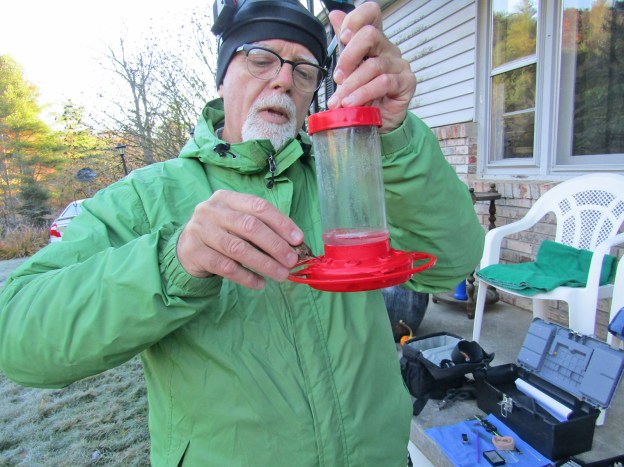
A rufous hummingbirds rests in a gloved hand after being banded.

• During a June trip to South Carolina, I saw a life bird. It’s not often that I get to add a new species to my list, so I was quite pleased. The bird — a least bittern — also represented the final species of heron that I needed to complete my observation of all North America’s herons. I saw the least bittern — very briefly — on the first day of my visit to Huntington Beach State Park. Not trusting my eyes, I declined to acknowledge I’d seen this diminutive heron. A few days later, on a tip from another birder, I got my “official” look at this bird, as well as some photos.

• A male rufous hummingbird visited feeders maintained by my mother and me from Oct. 7 to Nov. 5, 2016. I can be confident in the identification of the bird because noted bird bander Mark Armstrong traveled to my home to capture, document and band the bird. Now, with a tiny band around its leg, if the hummer returns next year we might be able to confirm it’s the same bird. This is the third sighting of a rufous hummingbird I have made at my home over the past several years.
three-phoebes

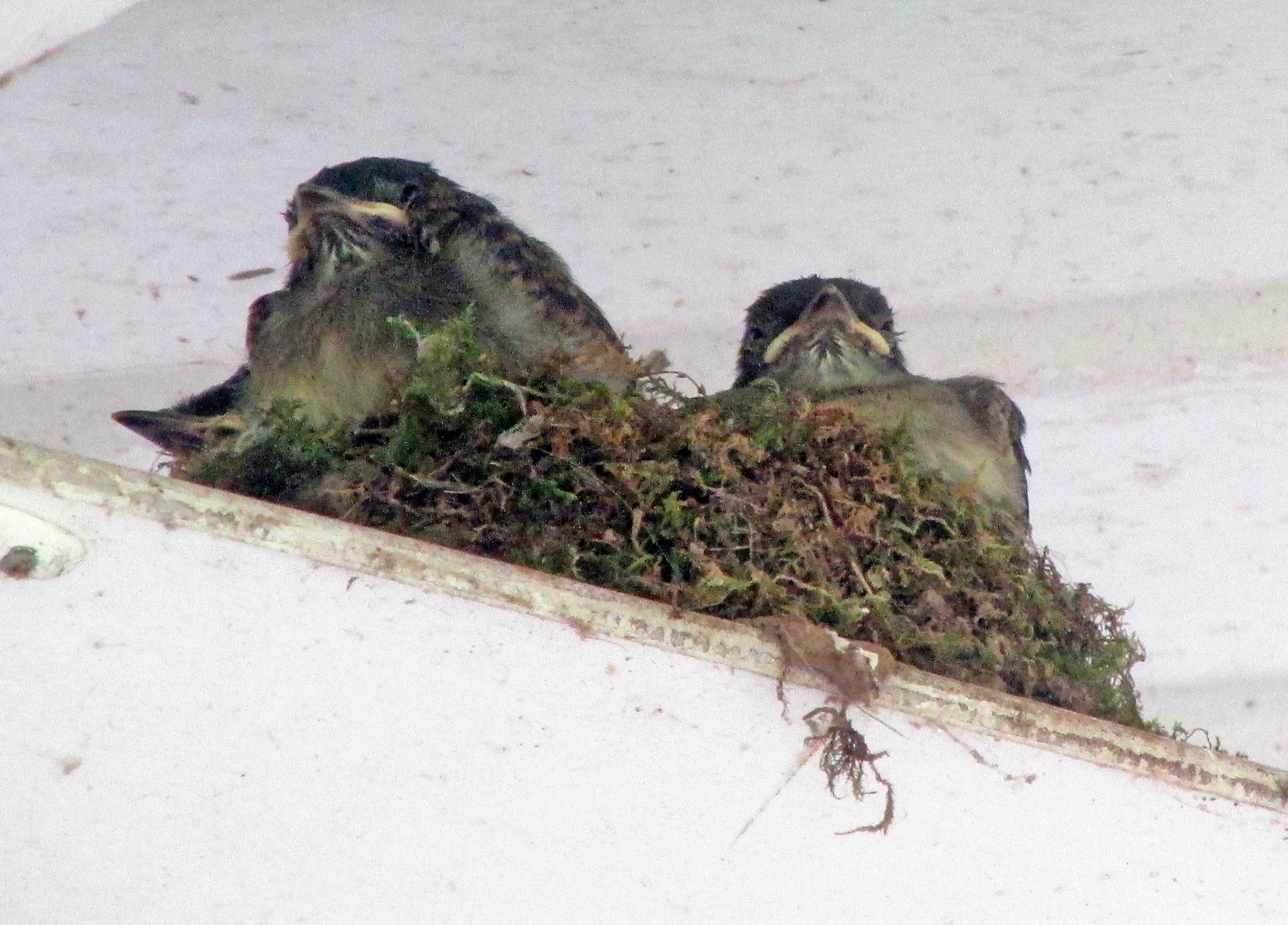
Three young Eastern phoebes share a crowded nest.

• Eastern phoebes build a nest on my porch fan. When I returned home after my summer vacation, I was delighted to find a pair of Eastern phoebes had built a nest on the blades of the ceiling fan on my front porch. Needless to say, the fan was taken out of commission during their nesting activity. The phoebes raised three fledglings, giving me a daily glimpse into their progress. During the recent snowstorm, I had a single phoebe foraging in the willows at the creek. I speculated that the bird could be one of the now mature nestlings from this summer’s porch nest.
hummer-mother

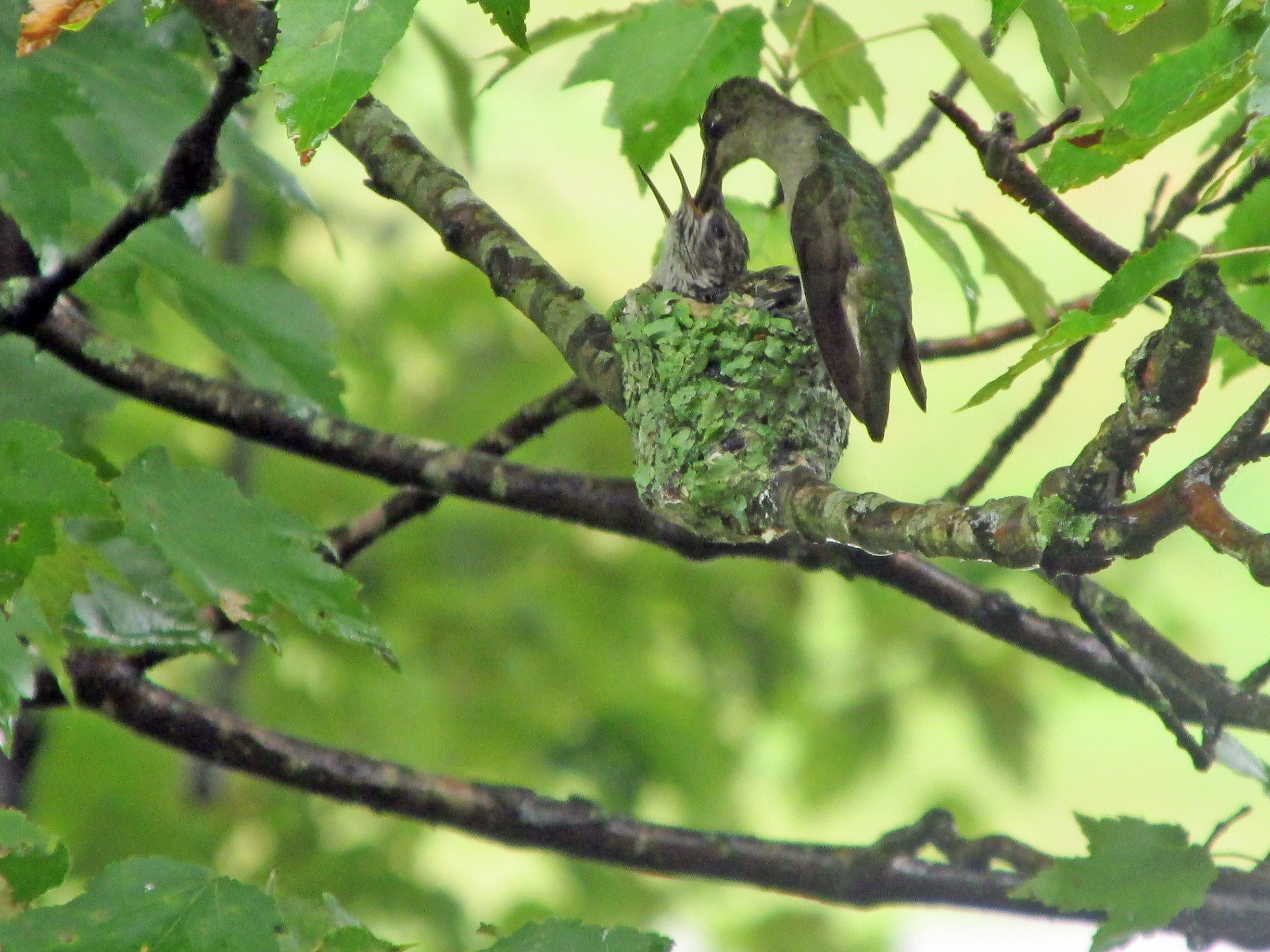
The mother hummingbird Bliss tends her two offspring.

• Last year was a stellar year for hummingbirds, which have always been one of my favorite birds. I’ve always been curious about hummingbird nests, but I’ve never succeeded in finding one. I still haven’t found one, but I was invited by Bluff City resident Donna Ottinger to visit and see a ruby-throated hummingbird nest in a maple tree in her yard. It was an incredible experience to see my first ruby-throated hummingbird nest, still occupied at the time by two tiny hatchlings being dutifully tended by their mother, a hummingbird Donna named Bliss.

ruffedgrouse-2016

Rufus, a ruffed grouse, resides in Flag Pond in Unicoi County.

• I met a most unusual ruffed grouse this past year in the mountains near Flag Pond in Unicoi County, Tennessee. The grouse, by the name of Rufus, has been a fascinating and funny neighbor to Leon and Janice Rhodes for the past couple of years. I met Rufus on Saturday, June 25, at the Rhodes family farm. Brayden Paulk, a grandson of the couple, had invited me. The unique wild grouse acted like one of the family. The memorable meeting ranks as one of my most fascinating bird observations.
If anyone had asked me at the start of 2016 what I expected from the year, I would never have predicted adding a least bittern to my life list or making the acquaintance of a grouse named Rufus. I can look forward with confidence to another round of delightful birding surprises in 2017.

•••••

To learn more about birds and other topics from the natural world, friend Stevens on Facebook at https://www.facebook.com/ahoodedwarbler. He is always posting about local birds, wildlife, flowers, insects and much more. If you have a question, wish to make a comment or share a sighting, email ahoodedwarbler@aol.com.
Long-running bird counts find some surprises

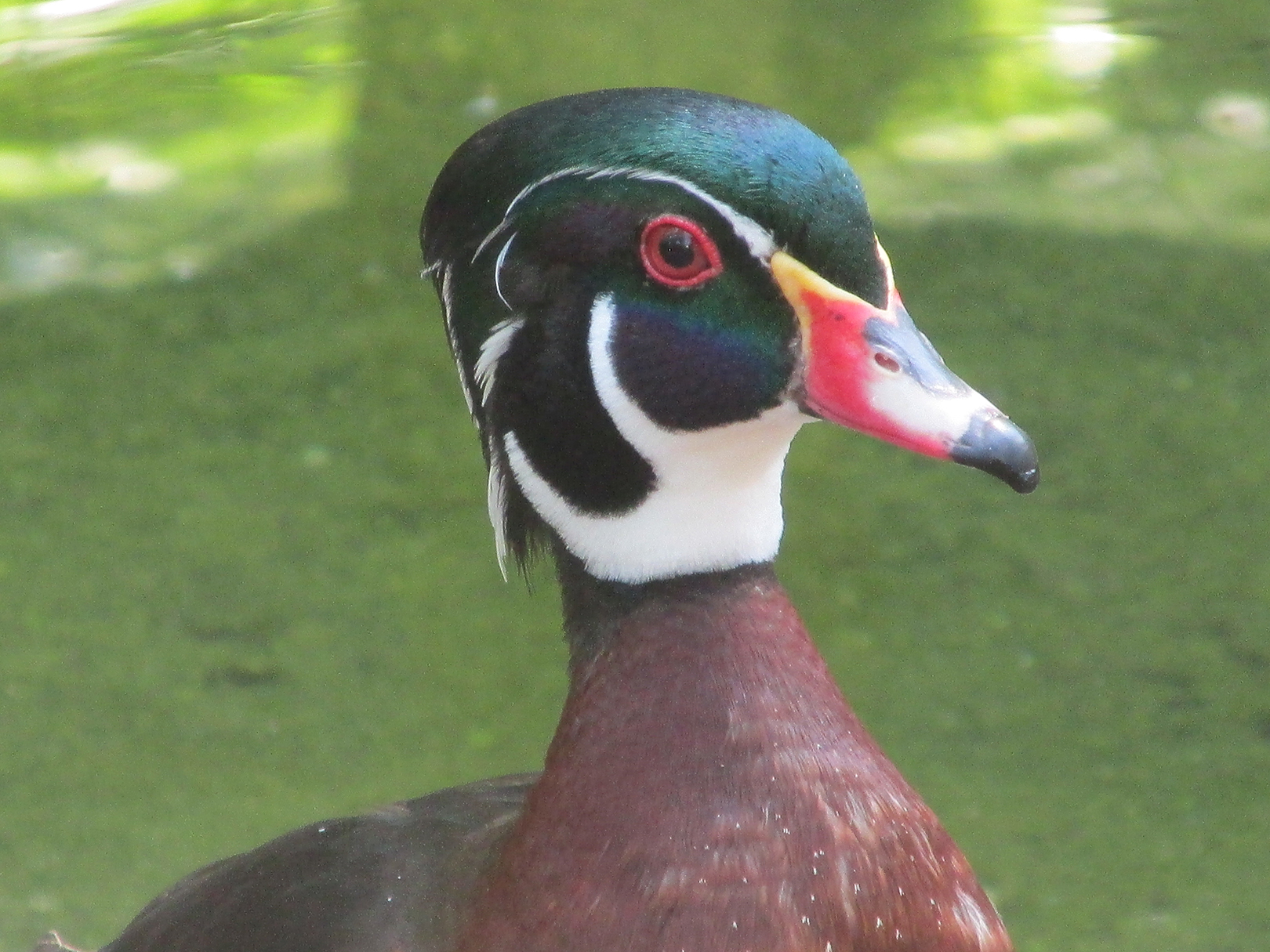
woodduck-head

Photo by Bryan Stevens • Abundant waterfowl, such as this Wood Duck, helped push the 2016 Elizabethton Christmas Bird Count to tie a previous record.

The annual Christmas Bird Counts conducted by the Lee and Lois Herndon Chapter of Tennessee Ornithological Society found some good birds.

The 74th consecutive Elizabethton CBC was held on Saturday, Dec. 17. Twenty-four observers in six parties, plus one feeder-watcher, participated. Conditions were generally favorable and featured mild temperatures (35-66 degrees) on a mostly cloudy day with windy conditions, especially in the higher elevations.

I spent the morning and early afternoon counting birds with Chris Soto and Charles Moore along the Watauga River in Elizabethton. We also received some assistance from Michelle Sparks.

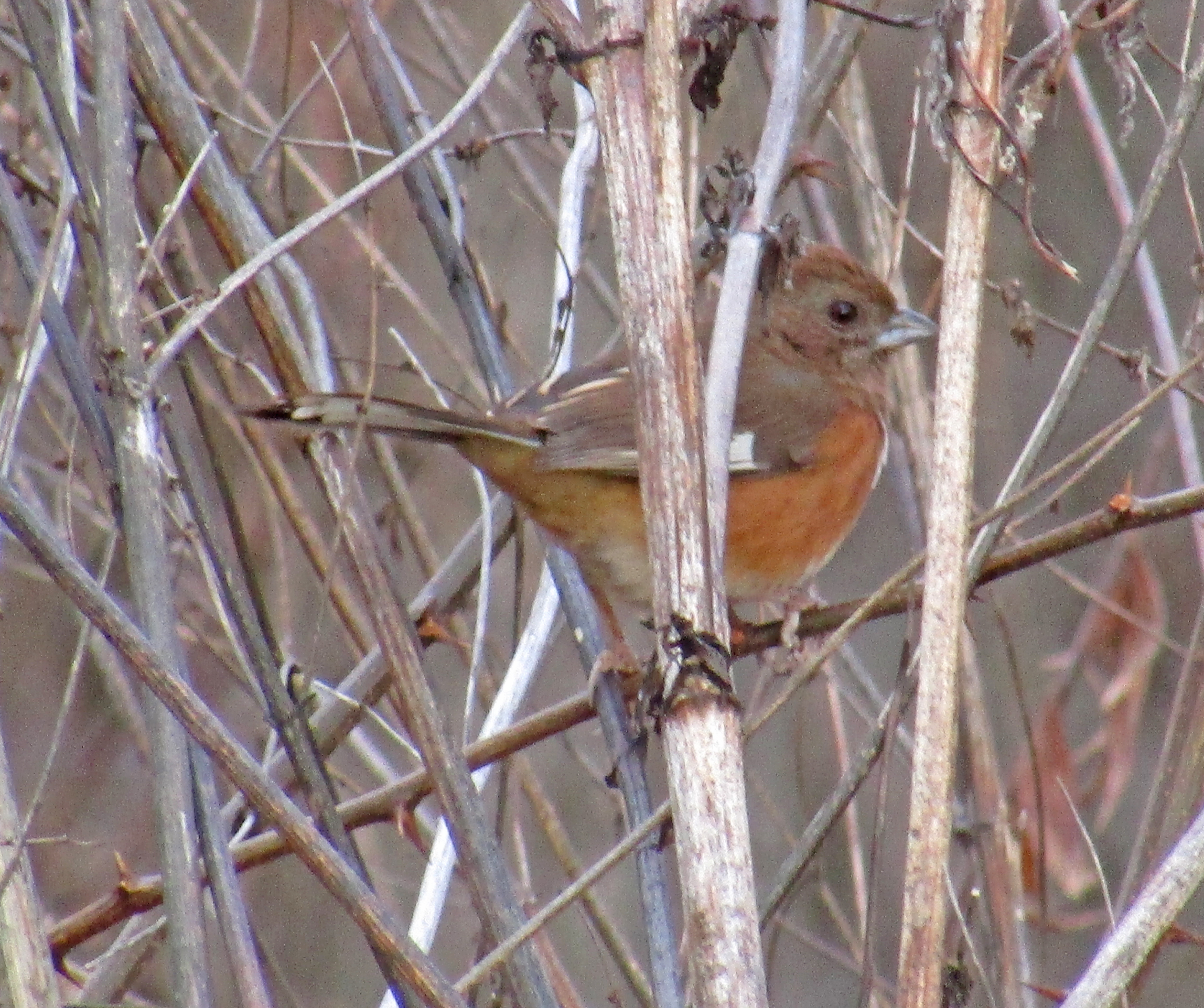
cbc-femaletowhee

Photo by Bryan Stevens • This female Eastern Towhee was one of several towhees found on the 2016 Elizabethton CBC.

A total of 80 species were tallied, tying the all-time high for this count set in 2012.  By comparison, the average over the last 30 years has been 72 species, according to the count’s long-time compiler, Rick Knight.

Knight said that highlights from the count included:

• 12 species of ducks (plus four more in count week) were counted on this year’s CBC. In particular, wigeon, shoveler, green-winged teal, both scaup and red-breasted merganser are scarce on this count, but all were found this year.

• Double-crested Cormorant was found for just the seventh time on this CBC, with six of those times since 2004.

• This CBC marked just the third time in the last 24 years and 10th ever on this CBC that Red-headed Woodpecker has made the count.

• The seven Red-breasted Nuthatches reported represented an above average number for this species.

• This was only the third time for Pine Warbler on this CBC in the last 50 years and the three Pine Warblers found this year represent a high count for this CBC.

• A single Savannah Sparrow was the first on this CBC in 16 years. There’s not much accessible habitat for this sparrow within the count area.

• Nine Purple Finches on this CBC marked the most found since 1987.

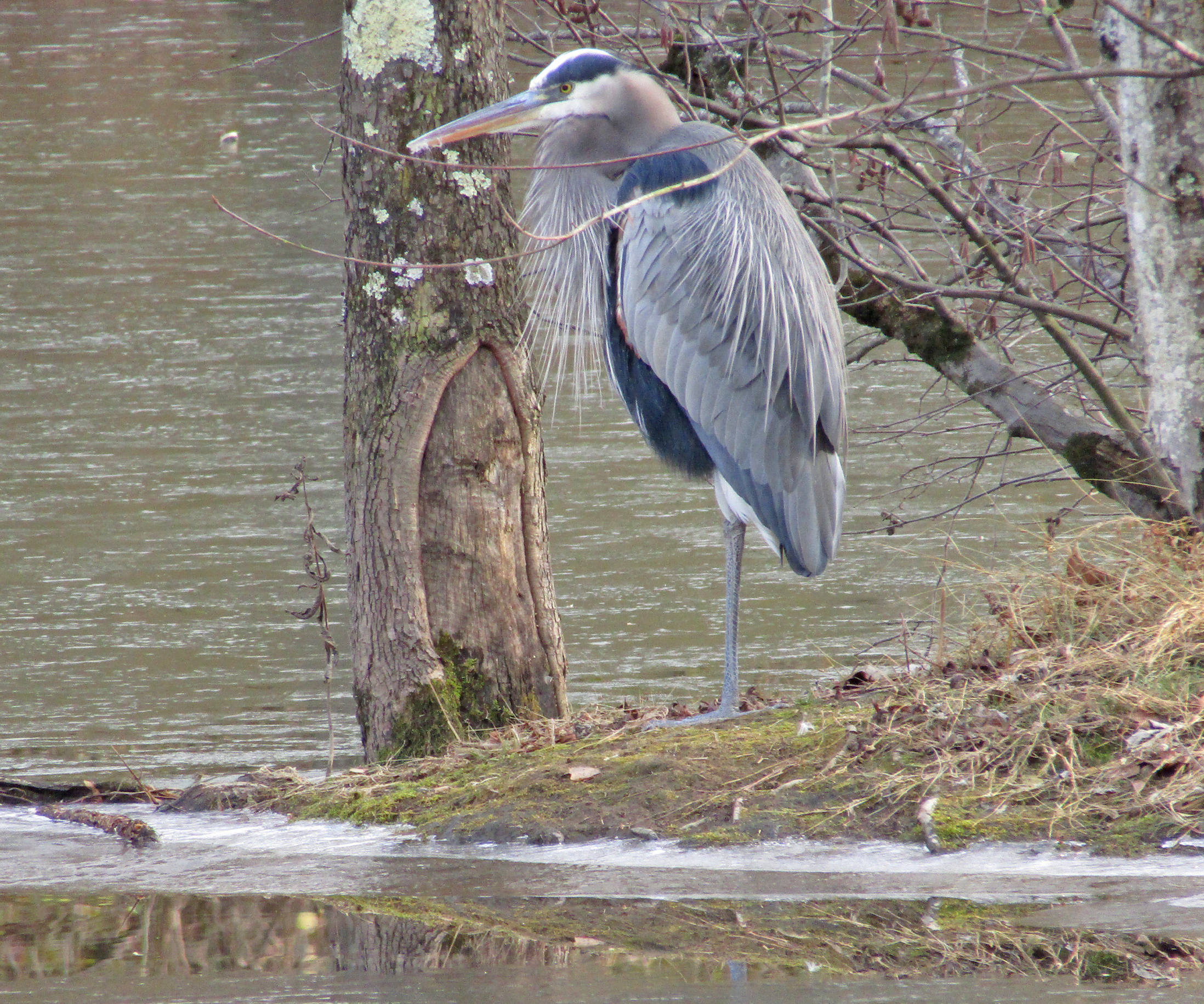
heron-cold

Photo by Bryan Stevens • The 26 Great Blue Herons found during the Elizabethton CBC almost tied the old record.

• Red Crossbills on this year’s CBC marked only the fourth occurrence on this CBC in the last 30 years.

Nevertheless, the Elizabethton CBC had some notable misses, including Brown Creeper, White-crowned Sparrow and Pine Siskin.

Some species are showing rather obvious trends on this CBC, according to Knight.

• The 114 Wild Turkeys found are the second most found in the  last 24 years. Prior to that date, no turkeys had been found on this CBC.

• Great Blue Herons continue to increase. The 26 individuals found represent the second most ever reported on this CBC.

• The four Bald Eagles found meant that this large raptor has been found for 17 of last 18 years, but only three times before that.

• Only three Killdeers were found, which reflects a continuing decline on this CBC likely due to habitat loss and degradation.

red-bellied-bryan

Photo by Bryan Stevens • The 47 Red-bellied Woodpeckers on the 2016 Elizabethton CBC set an all-time high for this species.

• The eleven Eurasian Collared-Doves found means that this dove has been found five of the last eight years.

• The 21 Belted Kingfishers found tied for second highest total ever for this species.

• The 47 Red-bellied Woodpeckers found set a new high count for this species, which has shown a steady increase in the foothills and lower mountains. CBCs conducted in the 1970s in Elizabethton had only single-digit counts for this woodpecker.

• Common Raven, with 13 found on this year’s CBC, has been found yearly since 1974, but none had appeared on this count prior to that date.

• Eastern Bluebird numbers continued to rise yearly. The 177 bluebirds this year represent the third-highest count for this species.

• Numbers for Field Sparrow, Song Sparrow and White-throated Sparrow showed the fewest of these three species since 1996, 1974 and 1969, respectively. These low sparrow numbers may be due to drought this year, which meant fewer seeds to feed these sparrows.

The total for the Elizabethton CBC follows:

nuthatch-grabandgo

Photo by Bryan Stevens • Feeder visitors, like this White-breasted Nuthatch, were abundant birds on both Christmas Bird Counts.

Canada Goose, 426; Wood Duck, 1; Gadwall, 10; American Wigeon, 2; American Black Duck, 1; Mallard, 205; Northern Shoveler, 2; Green-winged Teal, 3; Ring-necked Duck, 1; Greater Scaup, 2; Lesser Scaup, 1; Bufflehead, 256; and Red-breasted Merganser, 4.

Ruffed Grouse, 1; Wild Turkey, 114; Common Loon, 3; Pied-billed Grebe, 10; Horned Grebe, 21; Double-crested Cormorant, 4; and Great Blue Heron, 26.

Black Vulture, 10; Turkey Vulture, 2; Sharp-shinned Hawk, 4; Cooper’s Hawk, 8; Bald Eagle, 4; and Red-tailed Hawk, 13.

American Coot, 33; Killdeer, 3; Wilson’s Snipe, 4; Ring-billed Gull, 3; Rock Pigeon, 487; Eurasian Collared-Dove, 11; and Mourning Dove, 246.

Eastern Screech-owl, 2; Great Horned Owl, 1; Barred Owl, 2; Belted Kingfisher, 21; Red-headed Woodpecker, 2; Red-bellied Woodpecker, 45; Yellow-bellied Sapsucker, 7; Downy Woodpecker, 23; Hairy Woodpecker, 7; Northern Flicker, 15; and Pileated Woodpecker, 24.

American Kestrel, 13; Eastern Phoebe, 10; Blue Jay, 209; American Crow, 541; and Common Raven, 13.

crows-dec-21

Photo by Bryan Stevens • American Crows are abundant birds on these two CBCs.

Carolina Chickadee, 114; Tufted Titmouse, 102; Red-breasted Nuthatch, 7; White-breasted Nuthatch, 41; Winter Wren, 8; Carolina Wren, 85.

Golden-crowned Kinglet, 19; Ruby-crowned Kinglet, 3; Eastern Bluebird, 175; Hermit Thrush, 4; American Robin, 105; and Northern Mockingbird, 40.

European Starling, 809; Cedar Waxwing, 272; Pine Warbler, 3; and Yellow-rumped Warbler, 58.

Eastern Towhee, 25; Chipping Sparrow, 29; Field Sparrow, 7; Savannah Sparrow, 1; Fox Sparrow, 1; Song Sparrow, 70; Swamp Sparrow, 2; White-throated Sparrow, 57; and Dark-eyed Junco, 135.

Northern Cardinal, 92; House Finch, 74; Purple Finch, 5; Red Crossbill, 7; American Goldfinch, 101; and House Sparrow, 17.

••••••

The 64th Roan Mountain CBC was held on Wednesday, Dec. 21, with six participants in two parties. Conditions were generally favorable: mild temperatures (21-53 degrees) were coupled with clear skies and no significant winds.

amblackduck

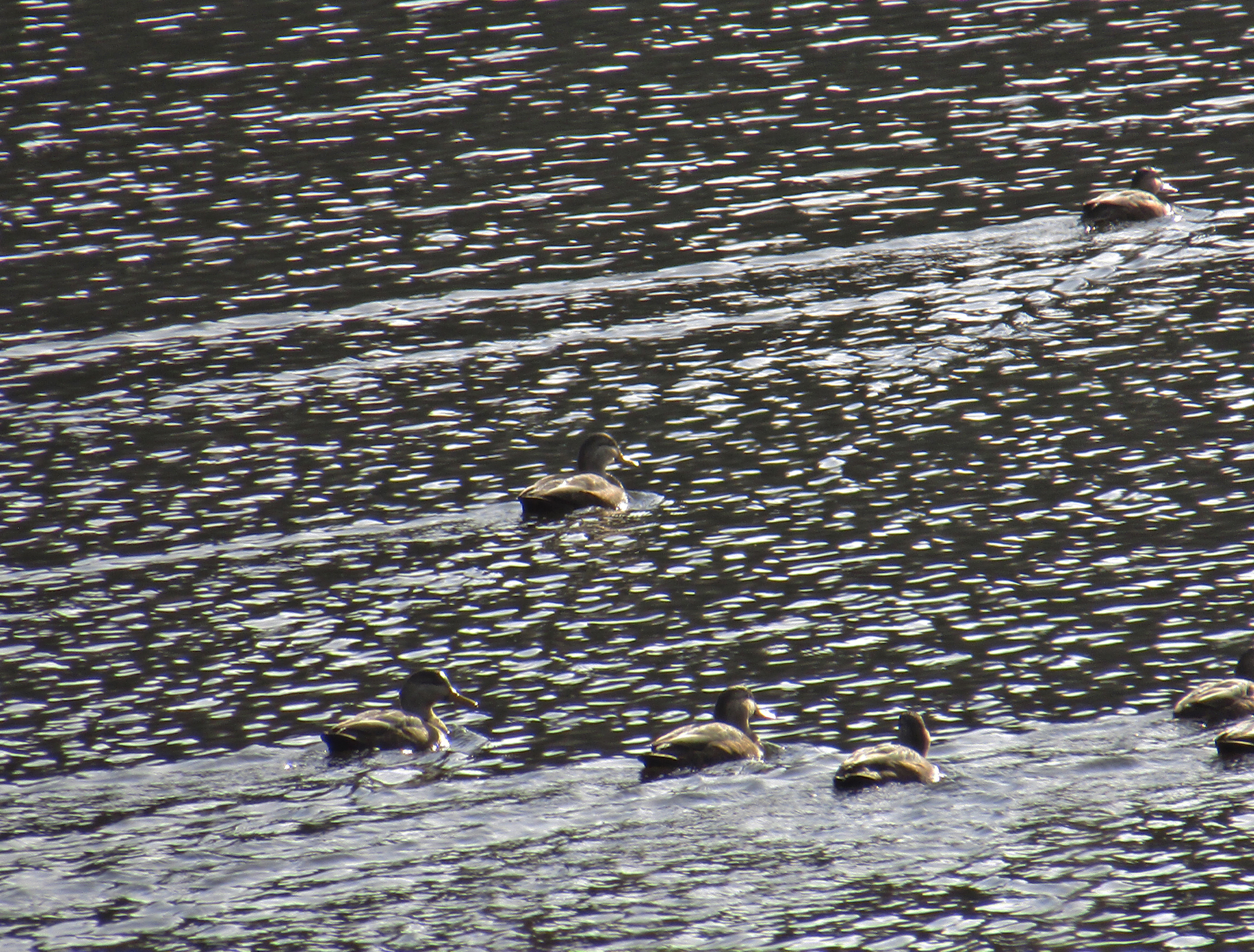
Photo by Bryan Stevens • These American Black Ducks were found at Ripshin Lake during the Roan Mountain CBC.

A total of 42 species were tallied, slightly below the recent 30-year average of 46. The all-time high was 55 species back in 1987. Despite the decent weather, birds were hard to find. I counted with Brooke and Jean Potter in the town of Roan Mountain and on Ripshin Mountain.

Highlights included 12 American Black Ducks, a single Red-breasted Nuthatch, a solitary Ruby-crowned Kinglet and two Purple Finches. Notable misses for this count included Ruffed Grouse, Hairy Woodpecker, Northern Flicker, Brown Creeper, American Robin, Cedar Waxwing, Eastern Towhee and Pine Siskin.

The total for the Roan Mountain CBC follows:

Canada Goose, 5; American Black Duck, 12;  Bufflehead, 6; Wild Turkey, 8; Pied-billed Grebe, 1; and Great Blue Heron, 1.

Turkey Vulture, 1; Cooper’s Hawk, 1; Red-tailed Hawk, 6; Rock Pigeon, 25; Mourning Dove, 66; Barred Owl, 2; and Belted Kingfisher, 1.

rthawk-three

Photo by Bryan Stevens • Red-tailed Hawks are a fairly common winter raptor in the region.

Red-bellied Woodpecker, 6; Yellow-bellied Sapsucker, 1; Downy Woodpecker, 7; and Pileated Woodpecker, 2.

Eastern Phoebe, 1; Blue Jay, 22; American Crow, 170; and Common Raven, 9.

Carolina Chickadee, 24; Tufted Titmouse, 17; Red-breasted Nuthatch, 1; White-breasted Nuthatch, 6; Winter Wren, 2; and Carolina Wren, 18.

Golden-crowned Kinglet, 7; Ruby-crowned Kinglet, 1; Eastern Bluebird, 6; Northern Mockingbird, 3; and European Starling, 78.

Field Sparrow, 10; Fox Sparrow, 2; Song Sparrow, 55; White-throated Sparrow, 8; Dark-eyed Junco, 68; and Northern Cardinal, 12.

House Finch, 6; Purple Finch, 2; American Goldfinch, 17; and House Sparrow, 24.


Annual Christmas Bird Count a more peaceable custom than its predecessors

cbc-cooperhawk

Photo by Bryan Stevens • This adult Cooper’s Hawk was found on the 2016 Elizabethton CBC.

I participated in the annual Elizabethton Christmas Bird Count and Roan Mountain Christmas Bird Count conducted by the Lee and Lois Herndon Chapter of Tennessee Ornithological Society on Saturday, Dec. 17, and Wednesday, Dec. 21.

During the Elizabethton Count with my fellow counters — Charles Moore, Chris Soto and Michelle Sparks — we found some good winter birds, including gadwalls and buffleheads on the Watauga River, white-throated sparrows and yellow-bellied sapsuckers at Sycamore Shoals State Historic Park and a Cooper’s hawk near the American Legion headquarters near downtown Elizabethton. I helped Brookie and Jean Potter with the Roan Mountain CBC. Some of our good birds included Ruby-crowned Kinglet, American Black Duck and Purple Finch. I will provide the results of both these CBCs in upcoming blog posts.

Despite a sore toe that hampered my walking this year, I was determined to take part. I’ve participated in Christmas Bird Counts, often shortened by birders to CBCs, since the late 1990s. Other long-running CBCs in the region include the Bristol CBC, the Shady Valley CBC and the Roan Mountain CBC. I have always tried to take part in this annual tradition which has become part of my own holiday celebration.

WinterWren

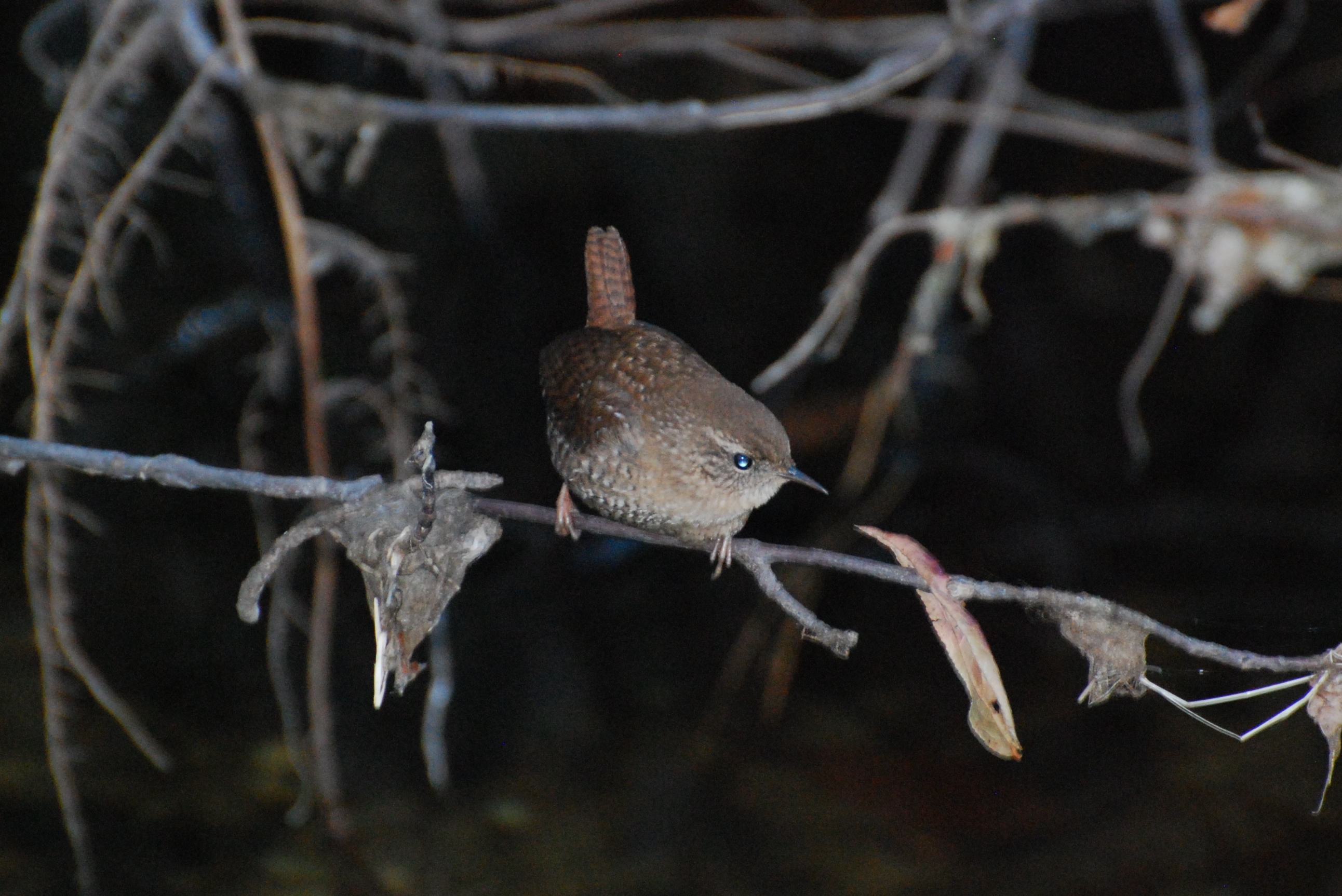
Photo by U.S. Fish & Wildlife Service • The Winter Wren is a small but noisy bird.

According to the National Audubon Society’s website, the tradition of the Christmas Bird Count arose from a less than bird-friendly custom. By the turn of the 20th century, so-called sportsmen would conduct a “Side Hunt,” a rather blood-thirsty Christmas custom that saw hunters competing to see who could score the largest amount of feathered and furred corpses.

The annual holiday bird survey may even have arisen from an earlier custom with roots in Europe that came to the United States of America with early colonists. The “Side Hunt” has some similarity to a peculiar celebration in Ireland and other European countries known as “Wren Day” or “Hunt the Wren Day.” The event was conducted the day after Christmas, the date of Dec. 26 being consigned as Saint Stephen’s Day. By the 20th century, the hunt consisted of tracking down a fake wren carried atop a decorated pole. Crowds would parade through towns in masks and colorful attire. These groups were referred to as “wren boys.”

chapman

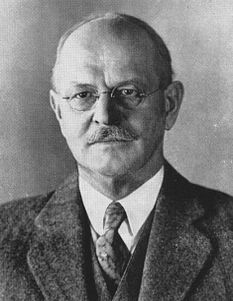
Frank Chapman

Whether or not the “Side Hunt and “Wren Hunt” shared any connections, it was a huge step forward for conservation when preeminent ornithologist Frank M. Chapman proposed a new holiday tradition. His radical idea was to count birds during the Christmas season rather than hunting and killing them.

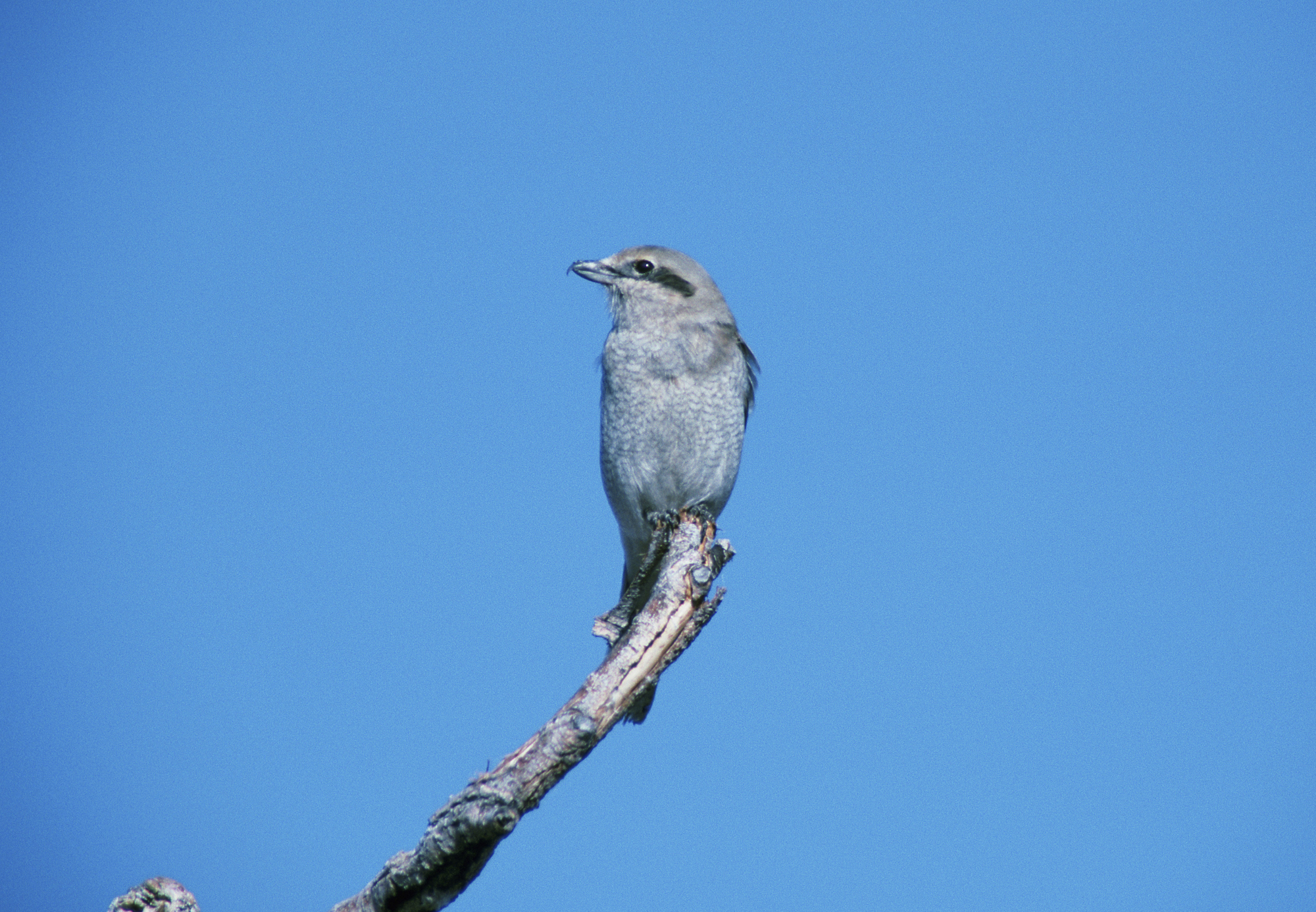
The Christmas Bird Count is now conducted each year on dates between Dec. 14 and Jan. 5. The first CBC took place in December of 1900 with 27 observers participating at 25 locations in the United States and Canada. Fifteen of the counts were conducted in the northeastern United States from Massachusetts to Philadelphia. Results from that first count in 1900 didn’t truly reflect the diversity of North America’s birds, but there were nonetheless interesting. The Greater Boston CBC boasted only one participant and only found 17 species. However, some of those species included such good birds as American tree sparrow, brown creeper, Northern shrike and Northern bobwhite.

Northern shrike perched on bare branch

Photo by Dave Menke/U.S. Fish & Wildlife Service • The Northern shrike, pictured, was one of the birds represented on one of the very first Christmas Bird Counts conducted in the United States.


These days the Christmas Bird Count is also conducted in almost 20 other nations around the world, although participants still largely hail from the United States and Canada. CBCs are still conducted under the auspices of the National Audubon Society. The CBC is one of the earliest examples of citizen science in action. People of different levels of experience can easily participate in a CBC and in so doing contribute to the scientific data available about bird populations in winter in the United States. Trends can be deduced from some of the fluctuations in populations of various bird species in different regions of the nation.

cbc-deer

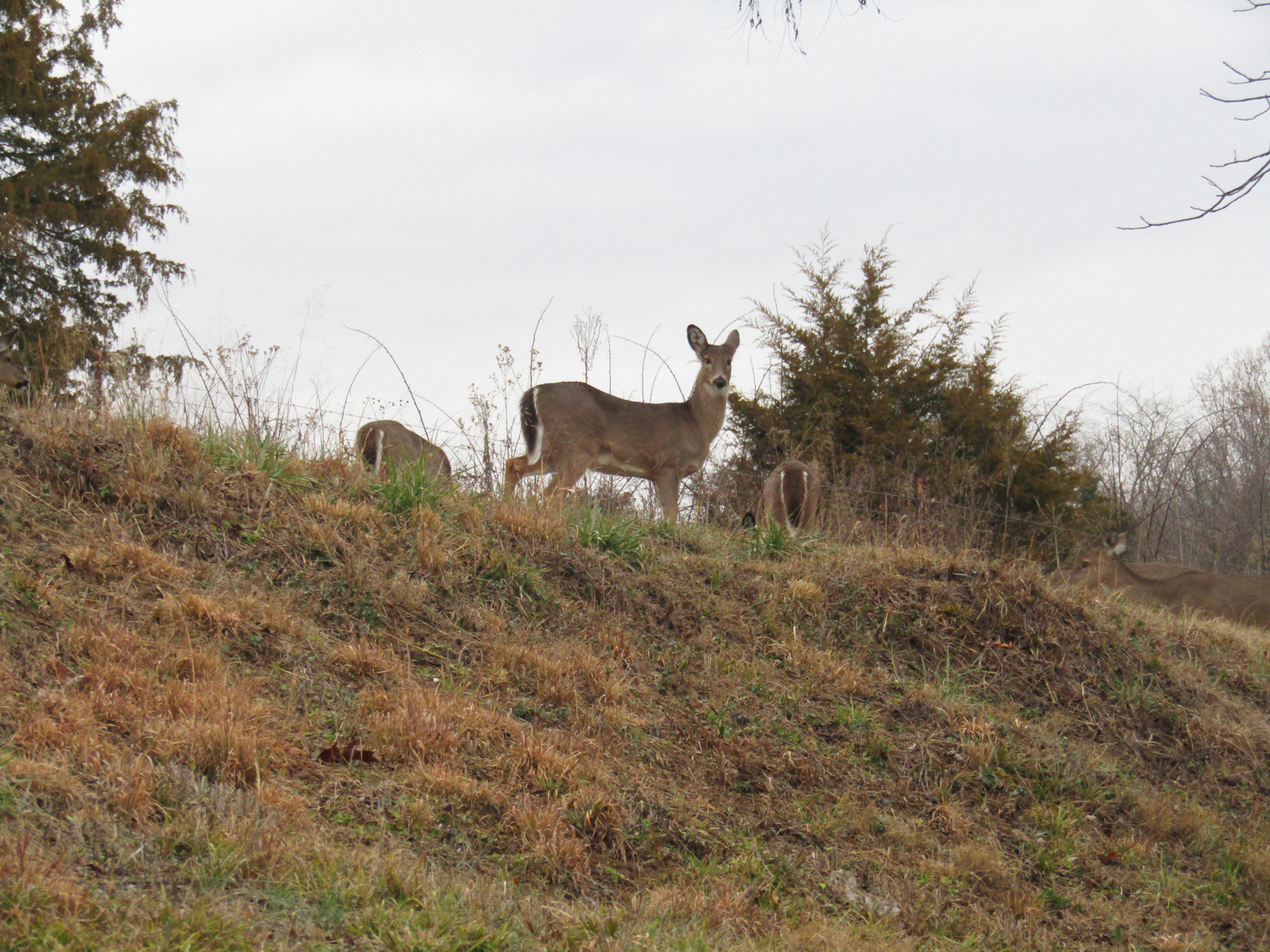
Photo by Bryan Stevens • Other wildlife, such as white-tailed deer, is often spotted while counting birds for the CBC.

We’ve come a long way since the days when birders used a gun to bring a bird up close and personal for inspection. There’s still competition, but these days birders are trying to see which count party can observe and identity the most species of birds. The only evidence we bring back from the field is an occasional photograph.

••••••

I had a mistake in a recent post on the history of feeding birds. Americans spend about $3 billion a year on bird feed. In my recent post, I erred in stating that the figure spent on bird seed was $3 million. When you think about it, Americans really do love their birds. The evidence is right there in how much money we spend to feed them. I hope readers of my weekly blog posts enjoyed a wonderful Christmas. My wish for 2017 is that everyone gets to see plenty of fun birds.

••••••

To learn more about birds and other topics from the natural world, friend Stevens on Facebook at https://www.facebook.com/ahoodedwarbler. He is always posting about local birds, wildlife, flowers, insects and much more.

Wild turkey’s connection with holiday of Thanksgiving dates back to Pilgrim era

sfw_plate-6-great-american-hen-young-final

Early naturalist and painter John James Audubon painted this depiction of a wild turkey hen and poults.

When the Pilgrims sat down to the first Thanksgiving feast in the New World, many of the trappings we associate with the November holiday were missing from the menu. Instead the Pilgrims enjoyed a repast of bounty that was seasonally available when they held that first celebration back in 1621. The Pilgrim leader William Bradford wrote of that first observance in his work titled “Of Plymouth Plantation.” Some of the details may surprise you.

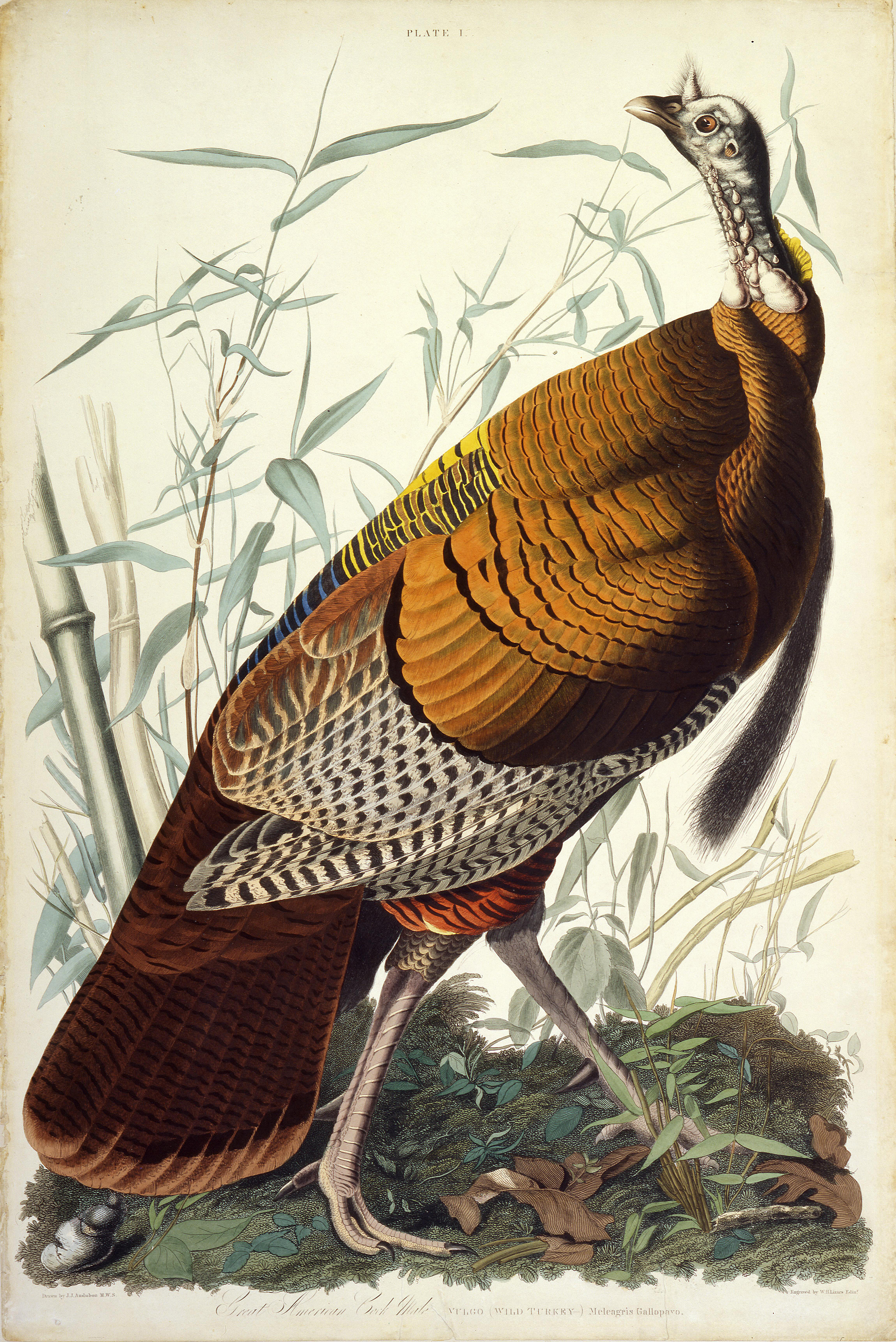
john_james_audubon_-_great_american_cock_wild_turkey

Wild turkey painted by John James Audubon.

When Americans sit down in a few days to celebrate Thanksgiving, plenty of us will enjoy a meal of turkey with all the traditional trimmings. Among the items available for that first feast were a variety of fish, including good New England cod, as well as bass and other fish. The Pilgrims took “good store” of fish and “every family had their portion.” Bradford also wrote that as winter approached, Massachusetts Bay suddenly experienced an abundance of waterfowl, but that their numbers eventually decreased. Birders will recognize what was happening with this sudden influx of ducks and other waterfowl. They were migrating. The waterfowl were temporarily abundant, but then as the ducks and other birds continued to make their way south, they became scarce again.

cod

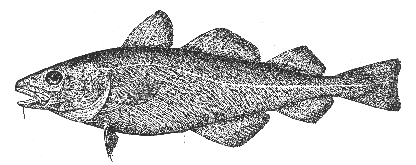
The early settlers in Massachusetts took advantage of abundant resources, including fish such as cod (pictured) and bass. Wild turkeys were also abundant.

The Pilgrims also enjoyed Indian corn, as well as the wild fowl that is still very popular at traditional Thanksgiving meals today. They may have lacked cranberries and potatoes, but they most definitely feasted on turkey. “And besides waterfowl,” Bradford wrote, “there was great store of wild turkeys, of which they took many, besides venison.”

So, cod and venison shared top billing with turkey at that early Thanksgiving. Of course, Bradford was writing about North America’s wild turkey, which is a far cry from the domesticated fowl that typically ends up on serving platters on Thanksgiving Day in our age

turkey_two

Photo by Bryan Stevens                                      A wild turkey forages for food.

Surprisingly, the wild turkey, which was so abundant during the Pilgrim era in Massachusetts, almost didn’t survive until the 19th century. It’s almost miraculous that the wild turkey didn’t join the unfortunate ranks of such extinct birds as the passenger pigeon and Carolina parakeet. In fact, only an estimated 30,000 Wild Turkeys were alive about 1930. The same forces that wiped out the immense flocks of passenger pigeons and migrating Eskimo curlews almost drove the wild turkey to extinction. Habitat destruction and a merciless commercial slaughter almost claimed another uniquely American bird.

turkeys-hillside

Photo by Bryan Stevens                                                                    A flock of wild turkeys makes its way along a grassy slope in Northeast Tennessee.

Ironically, the wild turkey’s valued status as a gamebird (the largest in North America) helped persuade many Americans to fight for its conservation. It’s an effort that succeeded admirably. Today, there are almost seven million wild turkeys roaming North America. The wild turkey is now abundant enough to be legally hunted in most states, including Tennessee, Virginia and North Carolina. The turkey is once again common across the continent, including in Massachusetts.
The wild turkey is a large bird of mostly a terrestrial lifestyle. Males, or tom turkeys, can reach a length of 46 inches, weigh between 11 and 24 pounds and boast a wingspan of 60 inches. Females, or hens, are typically much smaller and weigh between 5 to 12 pounds. The wild turkey is perfectly capable of flying at speeds up to 55 miles per hour, but they often prefer to walk and run over the ground. They’re good sprinters, in fact, and can reach a running speed of 25 miles per hour.

The female turkey, or hen, nests, incubates eggs and rears young without any help from her mate. The hen may lay as many as a dozen eggs. The clutch usually hatches within a month. Newly-hatched turkeys are known as poults. The poults are capable of finding their own food after leaving the nest, which they do within 12 hours of hatching. They are supervised, however, by the hen. Wild turkeys require a mixture of woodlands with clearings and fields to thrive. They roost in trees at night, but feed in more open habitats.

wildturkeys

Photo by Bryan Stevens                                        A pair of wild turkeys remains alert while searching for food.

The wild turkey’s scientific name is Meleagris gallopavo. This bird is exclusively resident in North America, but domesticated turkeys are now raised around the globe. The wild turkey has only one close relative, the ocellated turkey, or Meleagris ocellata. The ocellated turkey ranges throughout the Yucatán Peninsula in Mexico as well as the northern parts of Belize and Guatemala.

Few birds have featured so prominently in the history of the United States as the wild turkey. In fact, the turkey came close to being named the official bird of the United States. Benjamin Franklin, who proposed the turkey as the official United States bird, was dismayed when the bald eagle was chosen over the turkey. Franklin wrote to his daughter, referring to the eagle’s “bad moral character,” saying, “I wish the Bald Eagle had not been chosen as the Representative of our country! The turkey is a much more respectable bird, and withal a true original native of America.” George Washington, the nation’s first president, also shared Franklin’s opinion, and pointed out the Bald Eagle’s lifestyle as a carrion eater.

A-WildTurkeysinSnow

Photo by Bryan Stevens                                                                               Wild turkeys forage for food when snow melts off the ground.

While their objections are duly noted, perhaps it’s just as well that Americans don’t have an official national bird that’s also served up at holiday meals in households throughout the nation. If not as our national symbol, the wild turkey is still deserving of respect. This bird, found only in North America, is a true American success story.

Annual Fall Bird Count finds 125 species

rthawk-one

Photo by Bryan Stevens                  Red-tailed Hawks were found in good numbers on the recent fall count, but the species was outnumbered by migrating Broad-winged Hawks.

The Lee and Lois Herndon Chapter of Tennessee Ornithological Society held its annual Fall Bird Count back in September. The chapter’s five-county Fall Bird Count, the 47th consecutive survey conducted by the chapter, was held Sept. 24. A total of 39 observers (and two yard watchers) found a total of 125 species. Oppressive heat on the day of the count probably negatively affected bird numbers.
The Fall Bird Count, as well as the chapter’s annual Spring Bird Count, surveys bird populations in the upper Northeast Tennessee counties of Carter, Johnson, Sullivan, Unicoi and Washington.
The annual count is compiled by long-time chapter statistician Rick Knight.
The recent count was most notable for low numbers of many species. “A curious statistic: we had more Cedar Waxwings than European Starlings,” Knight remarked.
The all-time high on for a Fall Bird Count was 137 species in 1993.
•••••

bluewingteal-splash

Photo by Bryan Stevens                                     Blue-winged Teal were among the migratory waterfowl found during the recent Fall Bird Count conducted by the Elizabethton Bird Club.

The total for this year’s Fall Bird Count follows:
Canada Goose, 1,118; Wood Duck, 40; Mallard, 224; Blue-winged Teal, 4; Green-winged Teal, 1; Ruffed Grouse, 2; Wild Turkey, 23; Pied-billed Grebe, 3; Double-crested Cormorant, 16; Great Blue Heron, 30; Great Egret, 10; Green Heron, 2; Black-crowned Night-Heron, 2; and Yellow-crowned Night-Heron, 1.
Black Vulture, 159; Turkey Vulture, 222; Osprey, 7; Bald Eagle, 4; Sharp-shinned Hawk, 2; Cooper’s Hawk, 10; Red-shouldered Hawk, 5; Broad-winged Hawk, 25; and Red-tailed Hawk, 22.
Killdeer, 66; Spotted Sandpiper, 3; Least Sandpiper, 4; Pectoral Sandpiper, 6; American Woodcock, 4.
Rock Pigeon, 365; Eurasian Collared Dove, 2; Mourning Dove, 174; Yellow-billed Cuckoo, 1; Eastern Screech-Owl, 14; Great Horned Owl, 8; Barred Owl, 8, and Northern Saw-whet Owl, 1.


Downy-Male-Feb23

Photo by Bryan Stevens Downy Woodpecker was the most numerous woodpecker tallied on the fall count.

Common Nighthawk, 3; Chimney Swift, 379; Ruby-throated Hummingbird, 30; Belted Kingfisher, 33; Red-headed Woodpecker, 1; Red-bellied Woodpecker, 61; Yellow-bellied Sapsucker, 5; Downy Woodpecker, 42; Hairy Woodpecker, 10; Northern Flicker, 28; and Pileated Woodpecker, 32.
American Kestrel, 14; Peregrine Falcon, 2; Eastern Wood-pewee, 12; Acadian Flycatcher, 1; Empid species, 3; Eastern Phoebe, 68; and Eastern Kingbird, 1.
White-eyed Vireo, 2; Yellow-throated Vireo, 2; Blue-headed Vireo, 20; Red-eyed Vireo, 15; Blue Jay; 329; American Crow, 376; and Common Raven; 26.
Purple Martin, 1; Tree Swallow, 163; Barn Swallow, 1; Carolina Chickadee, 152; Tufted Titmouse, 124; Red-breasted Nuthatch, 12; and White-breasted Nuthatch, 36.

mockingbird-nov11

Photo by Bryan Stevens                                                 A total of 54 Northern Mockingbirds, Tennessee’s official state bird, was found on the count.

Brown Creeper, 5; House Wren, 3; Carolina Wren, 139; Blue-gray Gnatcatcher, 2; Golden-crowned Kinglet, 23; and Ruby-crowned Kinglet, 5.
Eastern Bluebird, 91; Veery, 4; Gray-cheeked Thrush, 6; Swainson’s Thrush, 89; Hermit Thrush, 1; Wood Thrush, 16; American Robin, 343, Gray Catbird, 48; Brown Thrasher, 14; and Northern Mockingbird, 54.

crossbills

Photo by Bryan Stevens                                    Red Crossbills were among the finches tallied on this year’s Fall Bird Count.

European Starling, 426; Cedar Waxwing, 506; Ovenbird, 4; Worm-eating Warbler, 1; Northern Waterthrush, 1; Black-and-white Warbler, 4; Tennessee Warbler, 12; Orange-crowned Warbler, 1; Common Yellowthroat, 10; Hooded Warbler, 4; American Redstart, 13; Cape May Warbler, 7; Northern Parula, 3; Magnolia Warbler, 11; Bay-breasted Warbler, 6; Blackburnian Warbler, 3; Chestnut-sided Warbler, 2; Black-throated Blue Warbler, 3; Palm Warbler, 16; Pine Warbler, 11; Yellow-rumped Warbler, 2; Yellow-throated Warbler, 2; Prairie Warbler, 1; and Black-throated Green Warbler, 8.
Eastern Towhee, 65; Chipping Sparrow, 24; Field Sparrow, 11; Song Sparrow, 83; Dark-eyed Junco, 95; Summer Tanager, 2; Scarlet Tanager, 15; Northern Cardinal, 138, Rose-breasted Grosbeak, 43; and Indigo Bunting, 13.
Red-winged Blackbird, 61; Eastern Meadowlark, 10; Common Grackle, 156; House Finch, 51; Red Crossbill, 2; Pine Siskin, 10; American Goldfinch, 231; and House Sparrow, 38.

••••••
The season’s first White-throated Sparrow showed up at my home on Oct. 30. I’m hopeful that the sparrow is but the first of many new arrivals ahead of the winter season. To share a sighting, ask a question or make a comment, send an email to ahoodedwarbler@aol.com.

Arduous migration journeys by some birds represent wondrous natural achievements

grosbeak-photo

Photo by Bryan Stevens                                                          This rose-breasted grosbeak struck a window Monday, Oct. 3, during fall migration. Although this bird rested and later recovered, many birds are felled by similar perils and obstacles as they migrate south each fall.

A stunned rose-breasted grosbeak recuperating on the front porch on Oct. 3 provided a reminder that migrating birds face a variety of perils and obstacles as they wing their way back south. Now that we’re into October, many of the birds of summer — orioles, tanagers, warblers and hummingbirds — are becoming scarce in our yards and gardens. These neotropical migrants are temporary visitors, remaining in North America only long enough to nest and raise young before they take to the wing to return to more tropical regions for the winter months that will grip their summer home in snow and ice for several months.

Some of these birds migrate out of the tropics to avoid competition. Others find North America a land of abundant, albeit temporary, resources. This land of plenty offers a wealth of insects, seeds, fruit and other nourishing, nutritious food to help parent birds keep their strength while they work to ensure their young thrive. The phenomenon of migration isn’t exclusive to the neotropical migrants of the New World. Birds in other parts of the world migrate, too.

rubythroated_hummingbird

Photo by U.S. Fish & Wildlife Service                 The tiny ruby-throated hummingbird crosses the Gulf of Mexico twice yearly to migrate from Central America to North America in the spring and back again in the fall.

The Arctic tern, for example, truly takes migration to extremes. This small seabird travels each year from its Arctic nesting grounds to the Antarctic region, where it spends the winter months. Put into terms of mileage, the Arctic tern can travel about 50,000 miles in a single year. For a bird with a body length of about 15 inches and a wingspan of about 28 inches, this incredible migration is an astonishing feat.

The ruby-throated hummingbird, a favorite of many bird enthusiasts living in the eastern United States, makes an impressive migration each year. Just to reach the United States, these tiny birds undertake a strenuous journey. They leave their wintering grounds in Central America to return to the United States and Canada for the nesting season. Most of these tiny birds, which are barely four inches long, make a non-stop flight of more than 500 miles across the Gulf of Mexico. The journey can take almost an entire day! With the end of summer, the entire population of ruby-throated hummingbirds, increased by a new generation of young birds, makes the Gulf crossing for a second time in a year to return to the American tropics for the winter months.

The broad-winged hawk, a raptor found in the region during the summer, makes a fall migration back to South America every fall that astonishes human onlookers who gather along mountain peaks to witness the spectacle. The hawks form large flocks, also called kettles, that can number thousands of birds.

bartailed_godwit_on_tundra

Photo by U.S. Fish & Wildlife Service/Steve Maslowski The bar-tailed godwit stages migrations that can take nine days of non-stop flight spanning nearly 6,000 miles.

Shorebirds, which in North America can consist of birds ranging from plovers and godwits to dowitchers and avocets, are champion migrants. The bar-tailed godwit makes an even more impressive non-stop migratory flight. This shorebird nests in parts of Scandinavia, northern Asia and Alaska. Some of these godwits make a nine-day non-stop migratory flight that takes them from New Zealand to the Yellow Sea of China, a distance of almost 6,000 miles. Needless to say, since the godwits make no stops along the way, they must also go without food for the duration of their journey.

Most of the warblers that nest in North America retreat to Central and South America during the winter months. Few warblers, however, make as great a journey as the blackpoll warbler. Instead of migrating over land, this five-inch-long warbler undertakes a two-stage migration. The first half of the migration is a non-stop flight of about 1,500 miles. Every fall, these tiny birds fly over the ocean during this part of their migration, departing from Canada or the northern United States and not stopping until they reach various locations in the Caribbean. There they will spend some time recovering from the exhausting first half of their journey before they continue their way to such South American countries as Colombia and Venezuela. Once again, during the time they spend flying over open ocean, these tiny warblers do not feed.

Even birds that cannot fly undertake migrations. For instance, flightless penguins swim hundreds or thousands of miles to reach preferred ranges for feeding or nesting. The Australian emu, a smaller relative of the ostrich, makes seasonal migrations on foot to ensure access to abundant food supplies at all seasons.

arctic_tern

Photo by U.S. Fish & Wildlife Service/Kirk Rogers         The Arctic tern’s migration, which takes it from the Arctic to the Antarctic, keeps this small seabird in the sky for about 50,000 miles each year.

Birds are not even the only animals to migrate. Many creatures, from whales and wildebeest to dragonflies and butterflies, impress humans with their endurance as they stage regular migrations.

Even as some of our summer favorites depart, we should prepare to welcome back some winter favorites, including dark-eyed juncos, yellow-rumped warblers, white-throated sparrows and yellow-bellied sapsuckers. Fall is indeed a time of departure for many birds, but it’s also a time to make new friends with the other birds that should soon start arriving in our yards and gardens.

As for the rose-breasted grosbeak on the porch, that story had a happy ending. After taking some time to recover after apparently striking a window, the bird hopped around the porch for a moment and then took wing and flew to nearby hawthorn trees. The bird’s flight — strong and straight — delighted me. The grosbeak could have been badly injured or even killed. I wished it the best for the remainder of its journey.

•••••

I’m dedicating this week’s column to the memory of J. Wallace Coffey, a great birder and wonderful individual who died Tuesday, Sept. 27. I met Wallace, a native of Bristol, Tennessee, back in the late 1990s. He introduced me to some wonderful birding destinations in the region, including such Virginia locations as Burke’s Garden, Steele Creek Park in Bristol, the wetlands of Saltville and Musick’s Campground on Holston Lake. Wallace was a tireless promoter of birds, birding and birders, and he loved to encourage young people to explore nature. He was also a great leader for the Bristol Bird Club, as well as the Elizabethton Bird Club. He will be greatly missed.
•••••

Bryan Stevens lives near Roan Mountain, Tennessee. To learn more about birds and other topics from the natural world, friend Stevens on Facebook at https://www.facebook.com/ahoodedwarbler. He is always posting about local birds, wildlife, flowers, insects and much more. If you have a question, wish to make a comment or share a sighting, email ahoodedwarbler@aol.com.
Summer’s bright American goldfinches will soon transform into their dull winter plumage

goldfinch-thistlefeed

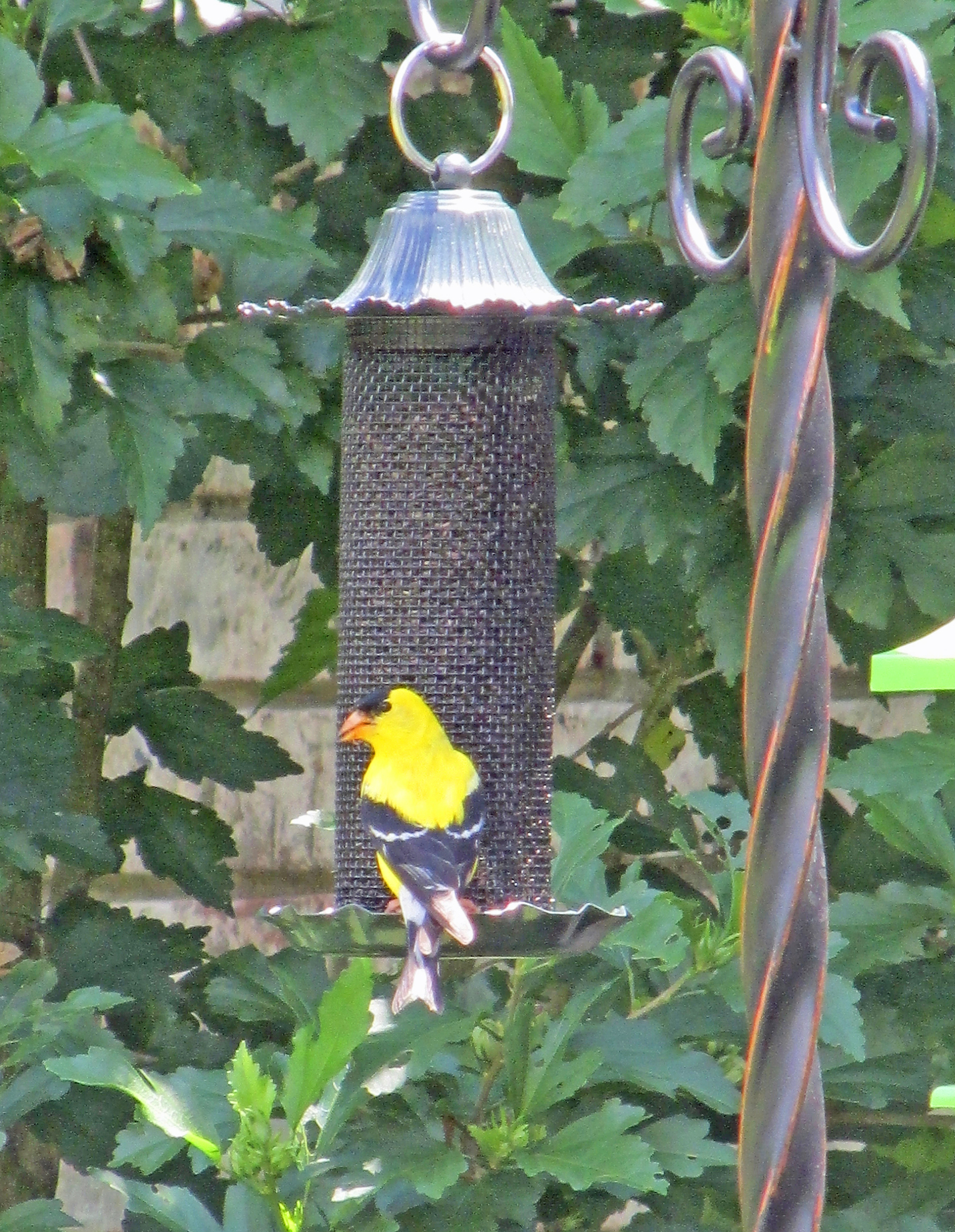
Photo by Bryan Stevens                            An American goldfinch feeds on thistle seeds from a feeder designed to contain these tiny seeds.

I received a phone call recently from Allan Vance, who had a question about American goldfinches. Allan told me he moved back to Bristol about nine years ago after living for about 30 years in Savannah, Georgia. He now resides in the community of Middlebrook, where he feeds the various birds that flock to his yard.

Allan explained that the goldfinches had become conspicuous in their absence from his yard starting a few weeks ago. “I haven’t seen a single one in weeks,” he said.

1451693-center-1

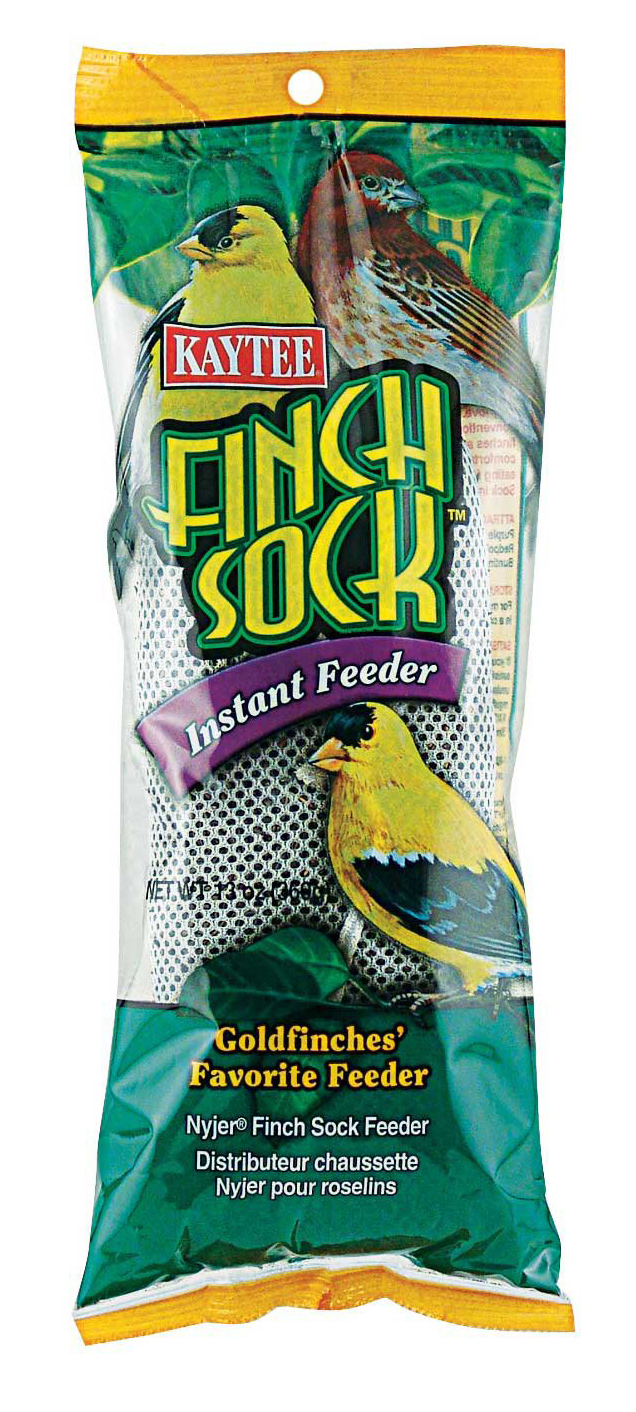
A thistle sock with seeds favored by American goldfinches.

Allan purchases thistle socks for the flock of goldfinches at his home. These “socks” are actually long, mesh bags holding the tiny seeds of the nyjer plant. Although these seeds are also known as thistle seeds, they are not related to the thistle plants that are sometimes classified as noxious weeds. Finches are able to cling to the sides of the mesh socks as they carefully remove the seeds. The tiny seeds are quite securely held within the mesh socks. Special feeders with small ports for dispensing of these tiny seeds are also available.

After he purchased his most recent thistle sock, Allan expected the birds to visit it as is their usual custom.     After several weeks, only one bird — not a goldfinch — had visited the sock. He wondered if there might be some explanation behind the goldfinches suddenly turning their backs on these favorite seeds.

I explained that there were two possible reasons, which are somewhat connected to each other, for the goldfinches suddenly shunning the sock. It’s early fall and there’s an abundance of natural food sources available to fold finches. Many roadside, fields and gardens are filled with plants that are already producing a banquet of fresh seeds for finches and other seed-loving birds. It’s possible that, faced with a smorgasbord of other foods, the goldfinches are no longer quite as reliant on the seeds in Allan’s thistle socks.

goldfinch

Photo by Bryan Stevens                                    An American goldfinch showing its bright summer plumage.

The American goldfinch is also one of the last songbirds to nest each season. Some goldfinches don’t even start to think about nesting until late July and early August. Their nesting season is timed to coincide with a time of natural abundance. Goldfinches feed their young mostly on insects, as opposed to most songbirds that work so hard to gather insects to feed their young a protein-rich diet.

It’s a satisfying irony that, although brown-headed cowbird females sometimes slip their eggs into a goldfinch nest, any young hatched in those nests rarely survive. While goldfinch hatchlings are adapted to thrive on a diet of seeds, the fostered young cowbirds fail to thrive on a diet so lacking in insects.

In addition to feeding birds, his yard serves as a place for them to nest. He noted that wrens have successfully nested at his home over the years. He said a funny memory from years ago involved a white-tailed deer at a feeder. “I saw this doe raiding my feeder,” he said, adding that the deer used its tongue to lick seeds from the feeder.

goldfinch-twigs

Photo by Bryan Stevens                                        A fall American goldfinch looks quite different than it does at the height of summer.

The male American goldfinch during the breeding season is unmistakable in his bright yellow and black plumage. Female goldfinches are more subdued in coloration. Males also sing a bubbly, cheerful song when seeking to win the attention of a potential mate. Outside of the nesting season, goldfinches are quite sociable and form large flocks. Dozens of these small songbirds can descend on feeders at almost any time of the year, but they are primarily attracted to our feeders during the lean times of the winter months.

For these and other reasons, goldfinches are favorites of many bird lovers. There are actually three species of goldfinches in North America. The two related species are Lawrence’s goldfinch of California and the lesser goldfinch, which ranges through the southwestern United States as well as Central and South America.

summer-goldfinch

Photo by Bryan Stevens                                            A male American Goldfinch perches on a barbed wire fence.

The American goldfinch is also known by other common names, including wild canary, yellowbird and willow goldfinch. I’ve also heard the goldfinch referred to as “lettuce bird.” This nickname, which was one my maternal grandmother applied to the bird, relates to the bird’s fondness for seeds. Apparently the goldfinches would flock to lettuce plants in the garden once they had gone to seed.

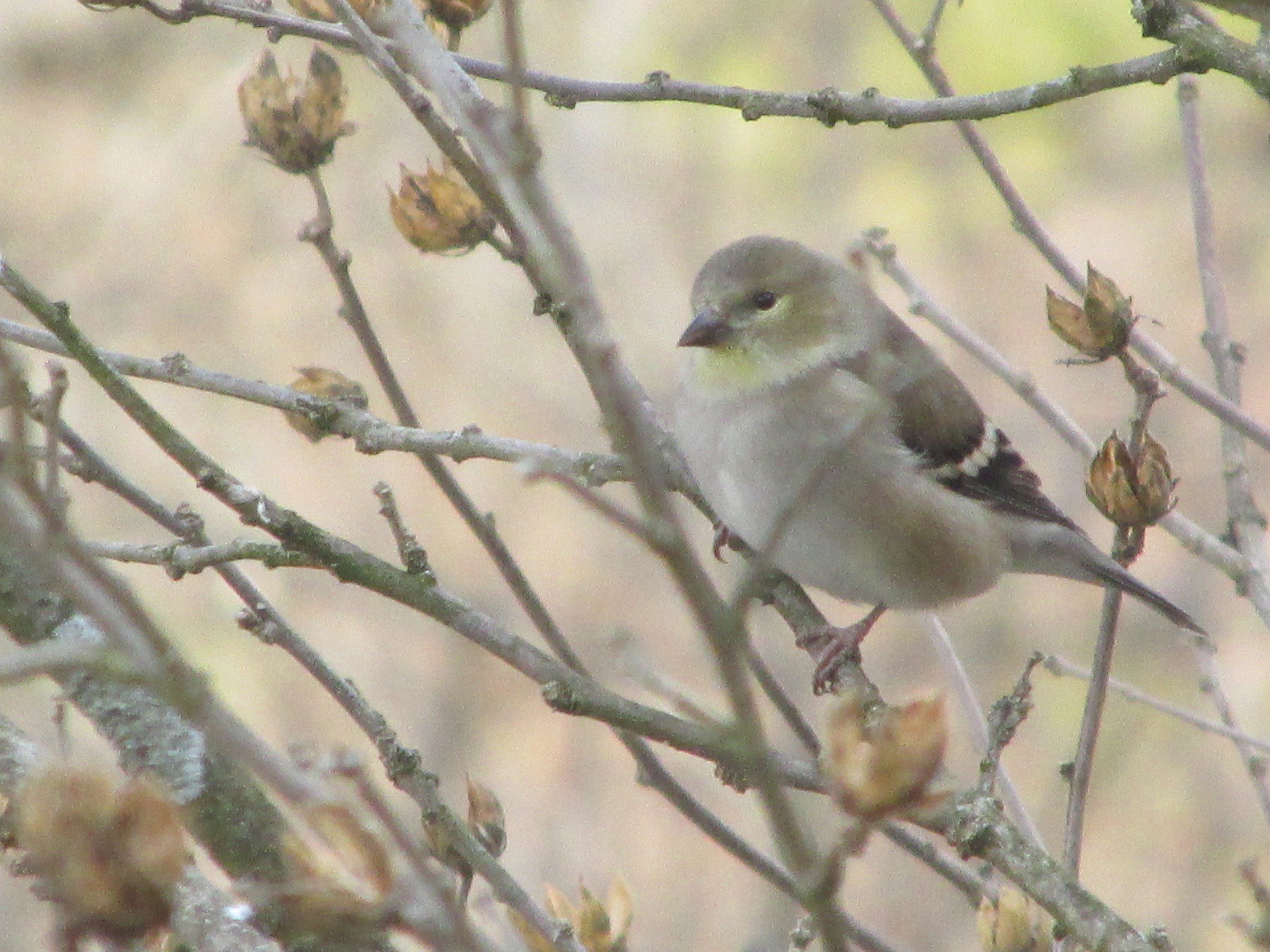
Come winter, this vibrant bird undergoes a transformation into a dull, drab bird with grayish feather. In fact, this annual molt usually begins in September. During the fall and winter, the American goldfinch looks almost like an entirely different bird.

It’s understandable why people love to entertain flocks of these finches in their yards and gardens. Three states — Washington, Iowa and New Jersey — have made the American goldfinch their official state bird.

•••••

To learn more about birds and other topics from the natural world, friend Stevens on Facebook at https://www.facebook.com/ahoodedwarbler. He is always posting about local birds, wildlife, flowers, insects and much more. If you have a question, wish to make a comment or share a sighting, email ahoodedwarbler@aol.com.
goldfinches-iced

Photo by Bryan Stevens                                                                                                                  Winter goldfinches are not the birds of splendid appearance that they wear during the summer months.

Hooded warbler favorite member from an exceptional family of birds

hooded-hidden

Photo by Bryan Stevens                                   Hooded Warblers, like this male, prefer to remain in the shadows of shrubs and thickets.

hoodedwarbler

A plushie Hooded Warbler.

I watched a male hooded warbler flitting among the branches of a forsythia shrub during a soft rainfall on Sept. 18. As I watched the small bird dash after unseen insects among the thicket formed by the forsythia branches, I marveled at the bird’s exquisite appearance. The gold and green feathers seemed to glow brightly in the dim light as a drizzle of rain wet both bird and leaves. The black hood and bib surrounding the male’s yellow face stood out by virtue of its stark contrast from the brighter feathers.

The appearance of the male bird provides this species with its common name. The female has an identical yellow-green coloration as the male, although she is slightly more drab. She lacks the black hood and bib, although older females may acquire some dark plumage on the head and around the face. Both sexes also show white tail feathers that they constantly flick as the move about in thick vegetation and shrubbery.

I know that every migrant passing through my yard is making its way south and it may be another five to six months before I again see any of my favorite songbirds. The hooded warbler will make itself at home in the forests of Mexico, as well as Belize, Costa Rica and other Central American nations. Most hooded warblers begin returning to their winter haunts as early as mid-September, but lingering individuals continue to entertain birders in the United States throughout October.

hooded-warbler-at

Photo by Jean Potter                                            A male Hooded Warbler perches in a rhododendron thicket.

Like many of the ruby-throated hummingbirds that make their home in the United States for the summer, the hooded warbler’s fall migration takes it across the vast open waters of the Gulf of Mexico, crossing to the Yucatan and then dispersing from there to various points in Central America. That birds as small as hummingbirds and warblers make this incredible migration twice yearly is one of nature’s most phenomenal feats of endurance.

The warblers, also known as wood-warblers, are an exclusively New World family of birds, numbering approximately 116 species. About 50 of these species of warblers make their home in the eastern United States and Canada for the spring and summer, departing in the fall and returning to tropical wintering grounds. Some of them are extremely bright and colorful birds. As I’ve indicated in recent columns, however, some members of the family show more subdued plumages of tan, beige and brown. The hooded warbler would have to be included among the more brightly colored warblers.

Other colorful warblers that share similar tastes in range and habitat with the hooded warbler include the American redstart, black-throated blue warbler and black-throated green warbler. None of the eastern warblers show any true red in their plumage, but red and pink warblers can be found south of the border. The pink-headed warbler, red warbler and red-faced warbler all make their home in Mexico and and Central America.

????????????????????????????????????

Photo by Bryan Stevens                                        A male Hooded Warbler perches in a thicket during a fall migration stopover.

While some of the neotropical migrants that venture into North America boast even brighter kin in the tropics, we need not feel cheated with the warblers that make their home in the United States for half of the year. Some of their relatives are beautiful birds, including the white-faced whitestart, golden-bellied warbler, three-striped warbler and rose-breasted chat, but few can really hold a candle to their relatives that venture north and brighten the lives of the lucky humans fortunate enough to observe them during the summer nesting season or the seasonal migration journeys.

hooded-peek

Photo by Bryan Stevens                                   The male Hooded Warbler isn’t likely to be mistaken for any other warbler.

The hooded warbler has long been my favorite member of this family of interesting, energetic and engaging songbirds. Hooded warblers reside in the woodlands around my home, nesting and rearing young each year. I’ve never found a nest, but many years ago I watched a pair of hooded warblers fend off a song sparrow that ventured too close to one of their fledglings. Of course, the sparrow posed no realistic threat to the young warbler, but that didn’t make the conflict with the hooded warblers any less intense. The poor sparrow looked completely befuddled and uncertain about its offense. After the warblers drove the sparrow from the vicinity, I watched both parents deliver some food to the young bird.

Like most warblers, the hooded warbler feeds almost exclusively on small insects and arachnids. Some warblers will also feed on fruit, seeds and even nectar. The hooded warbler favors habitats featuring woodlands with an understory of smaller trees and shrubs, such as stands of willows or rhododendron thickets. Of course, a tangle of forsythia is enough to attract a visit from a migrating hooded warbler.

9781408134610The warblers have become such popular songbirds that they warrant field guides devoted exclusively to their ranks. My long-time favorite guide is Warblers of the Americas by Jon Curson, David Quinn and David Beadle published in 1994. More recently, other guides have been published, including A Field Guide to Warblers of North America, a book in the Peterson Field Guide series, and the Stokes Field Guide to Warblers. If you want a book to enlighten you about the magic of this family of birds, consider Chasing Warblers, a book by Bob and Vera Thornton about an adventure to find and photograph all 52 species of warblers that nest in the United States.

plate-110-hooded-warbler-final-2

John James Audubon painted this image of Hooded Warblers about two centuries ago.

The warblers are, in short, an incredible family of birds. I’ve seen all but a handful of the species that reside for part of the year in the eastern United States. I still want to see a Connecticut warbler and cerulean warbler, as well as the endangered Kirtland’s warbler of Michigan and the golden-cheeked warbler of Texas. I’ll miss the warblers once fall migration has run its course. For those few months they are here, the warblers belong to us. They seem like “our” birds. They’re only on loan, though. Our winter birds bring their own favorites back to our yards, but I’ll be impatiently awaiting that flash of gold in the shadows of a rhododendron thicket next April.

••••••

To learn more about birds and other topics from the natural world, friend Stevens on Facebook at https://www.facebook.com/ahoodedwarbler. He is always posting about local birds, wildlife, flowers, insects and much more. If you have a question, wish to make a comment or share a sighting, email ahoodedwarbler@aol.com.

hoodedwarbler-inhand

Photo by Bryan Stevens                                                                                             A female Hooded Warbler poses for her picture after being banded at Carver’s Gap on Roan Mountain.

Ovenbird often a difficult bird to get to know

Last week, I discussed the worm-eating warbler, which is one of the more drab warblers in terms of appearance. I think that must have started a trend, because so far this migration season has been dominated by some of the less colorful — but still very interesting — warblers. The opening days of September brought with them the annual fall parade of migrating warblers. As usual, this yearly opportunity to view visiting warblers began as a trickle of species but has picked up in intensity as each day passed.

ovenbird

Photo by Jean Potter                                         Ovenbird sings from an elevated perch in the woodland canopy.

 By Sunday, Sept. 11, I had already observed close to a dozen species of warblers, including hooded warbler, black-throated green warbler, Northern waterthrush, ovenbird, magnolia warbler, chestnut-sided warbler, black-and-white warbler, Tennessee warbler, and American redstart. 
 
One of the first warblers to arrive at my home this spring was the enigmatic ovenbird. With its loud, ringing song — “Teacher! Teacher! Teacher!” — it’s impossible not to notice the arrival of this warbler.  Why describe this warbler as enigmatic? For starters, ovenbirds do not easily permit even stealthy birders to glimpse them. I have gotten good looks at ovenbirds throughout the years, but they are still difficult to observe. They are one of the warblers more easily heard than seen. When they are observed, it’s usually no more than a fleeting look before the bird dives back into heavy cover. That’s not always the case, however.
ovenbird-warbler

Photo by U.S. Fish & Wildlife Service/Steve Maslowski                      The ovenbird is not named for its plumage or its habitat preference. Instead, its name refers to the shape of its nest. Ovenbirds and other warblers are currently migrating through the region.

 
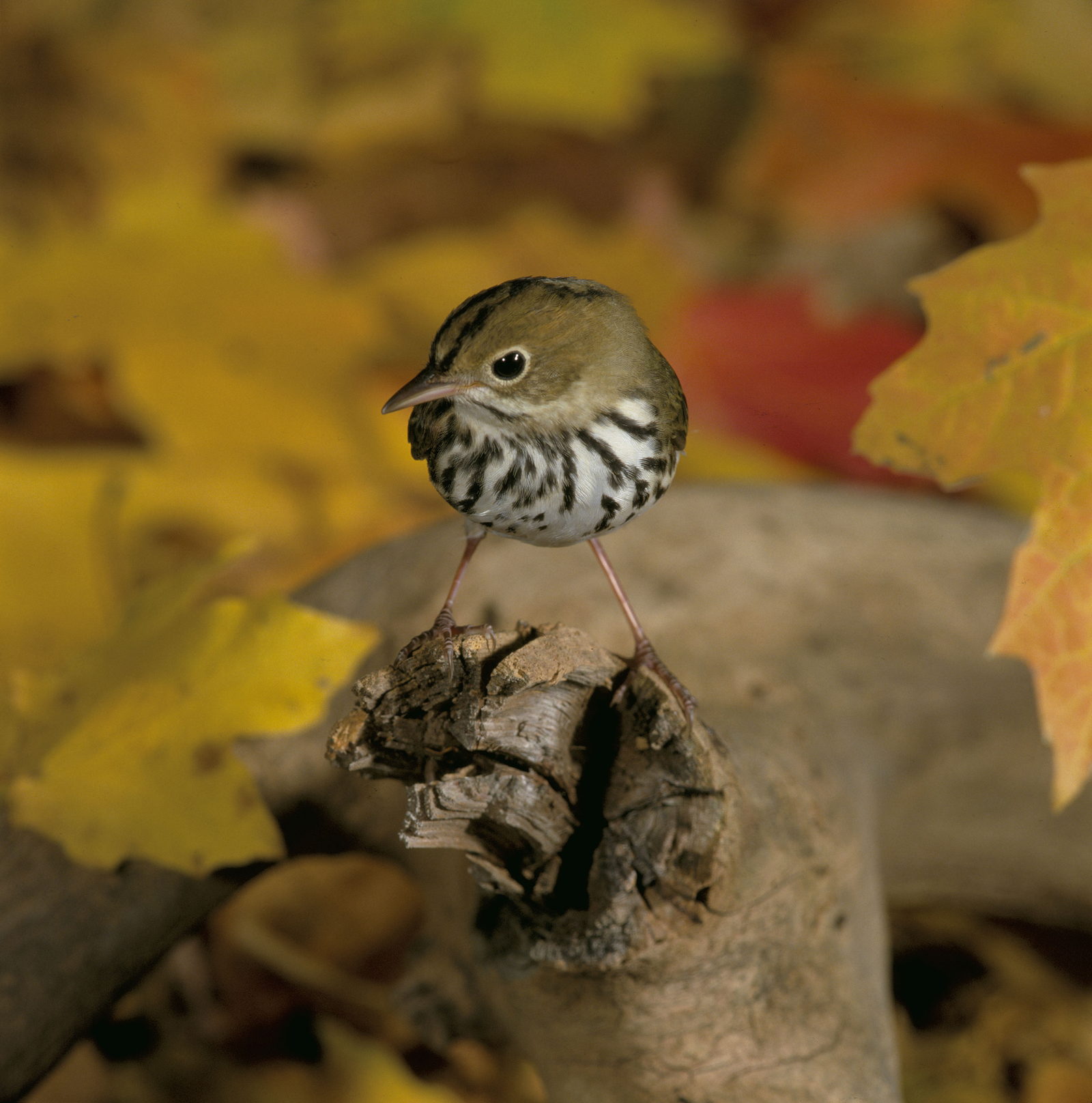
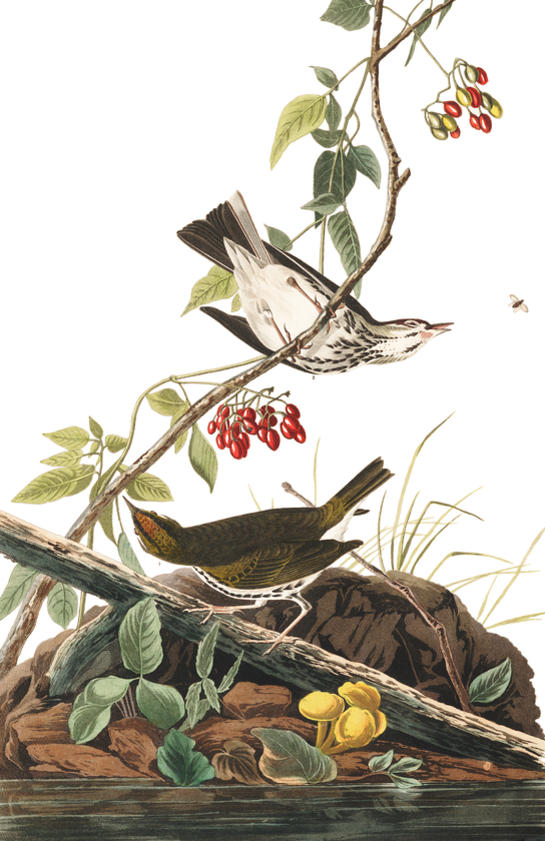
I’ve actually seen three different ovenbirds this fall, with increasingly good looks at this warbler each time I have encountered it. The ovenbird is not one of the brightly colored warblers, such as black-throated blue warbler or yellow warbler. The ovenbird is a small brown bird with a white breast with dark streaking — an appearance that bears a superficial resemblance to the larger thrushes that share the same woodland habitat. The only hint of color is an orange crown bordered by dark stripes atop the bird’s head. Even this orange crown patch is not easily seen. When agitated, an ovenbird may raise its head feathers, which makes this orange mark easier to detect. The ovenbirds I’ve observed recently have all shown off that orange crown patch to great effect. The ovenbird also has a distinct white ring around its eyes, as well as pink legs and a pinkish bill.
plate-143-golden-crowned-thrush-final

Early naturalist John James Audubon painted a pair of Ovenbirds, which he knew as “Golden-crowned Thrushes.”

 
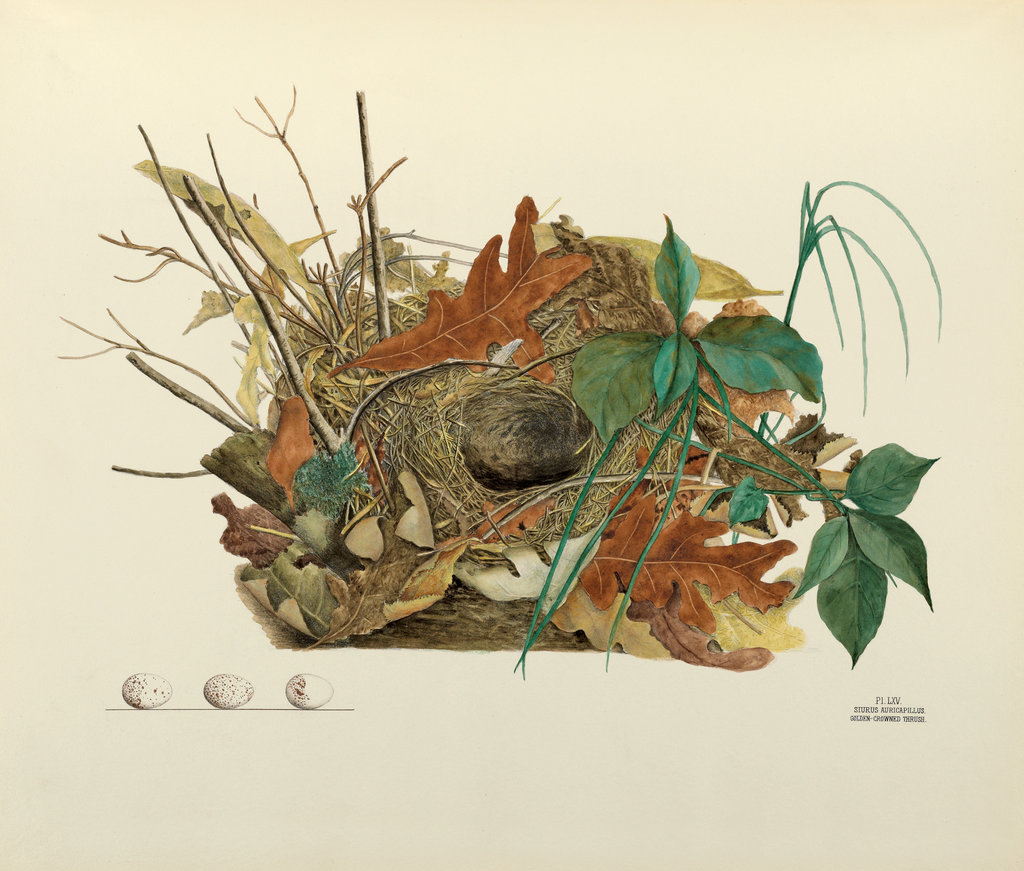
The ovenbird, unlike many warblers, is not named for its appearance. Instead, the bird’s name derives from the shape of the nest it builds. The nest is a domed structure placed on the ground, woven from vegetation and containing a side entrance. Early European settlers in North America thought the nest looked like a Dutch oven, hence the name “ovenbird” for the small warbler with the intricate nest.
 
Rather than hopping along the length of a branch or limb, an ovenbird walks in a deliberate fashion. This bird feeds on insects, spiders and other small prey items foraged from the woodland floor. On rare occasions, a lingering ovenbird shows up at feeders during the winter months.
 
Ovenbirds spend the summer nesting season in mature deciduous and mixed forests across Canada and the eastern United States. They do not make as lengthy a migration as that undertaken by some of their relatives. Ovenbirds migrate each fall to the southeastern United States, the West Indies, and from Mexico to northern South America for the winter season. 
  
The two warblers most closely related to the ovenbird are the Louisiana waterthrush and Northern waterthrush. These atypical warblers share a preference for leading lives spent mostly near the ground adjacent to streams. The Louisiana waterthrush seeks out the rushing water of our mountain streams during early spring while the Northern waterthrush prefers quiet pools of water farther north during its nesting season. The ovenbird, however, is not as closely associated with water.
09audubon-ensha-slide-4jho-jumbo

Amateur ornithologist and artist Genevieve Jones painted this depiction of the Ovenbird’s namesake nest.

 
While I have used the adjective “drab” to describe some of these brown warblers, it is not truly accurate. Although these warblers lack bright colors like orange, yellow and blue, they have an incredible, subtle beauty all their own. In the coming weeks, I will discuss some of the brighter warblers in this fascinating family of migratory songbirds.
 
Warblers are not the only birds migrating through the region. Other notable migrants I’ve observed recently have included common nighthawks, red-eyed vireos and green herons. 
 
•••••
 
Bryan Stevens lives near Roan Mountain, Tennessee. To learn more about birds and other topics from the natural world, friend Stevens on Facebook at https://www.facebook.com/ahoodedwarbler. He is always posting about local birds, wildlife, flowers, insects and much more. If you have a question, wish to make a comment or share a sighting, email ahoodedwarbler@aol.com.

Worm-eating warbler less conspicuous member of family of bright, active migratory songbirds

worm-eating-warbler

Photo by U.S. Fish & Wildlife Service                The worm-eating warbler is one of the more nondescript warblers.

It’s September, which for me signals the autumn migration season of warblers and other neotropical birds. The warblers are a family of small songbirds that also happens to be the main reason I enjoy bird watching. Although warblers can be a challenge to observe and a puzzler to identify, they’re bundles of multi-colored feathers brimming with high-octane energy as they forage in treetops, along woodland edges, in weedy fields and around ponds and streams.

Like all migrating birds, warblers face numerous obstacles and hazards as they fly back south every fall after spending most of the spring and the entire summer spread across the United States and Canada for the season of nesting and raising young. Storms, such as the recent Hurricane Hermine, can be a hazard. Predatory raptors, like peregrine falcons and merlins, follow the migration routes and pick off various migrants. Even something as mundane as a window pane can bring a tragic halt to migration each year for thousands of our smaller songbirds.

worm-eating-2

Photo Courtesy of Dianna Lynne Tucker           This worm-eating warbler perched on a flower pot while recovering from an impact with a window.

I recently received an email from Chris Soto, a fellow member of the Lee and Lois Herndon Chapter of the Tennessee Ornithological Society. Her sister, Dianna Lynne Tucker, resides in Elizabethton, Tennessee, near Holston Mountain. Her home has a yard that is a magnet for a variety of songbirds. One of the birds passing through her yard had an unfortunate impact with a window. Chris and Dianna already suspected the identity of the bird, but they emailed me asking for help to confirm it. I concurred that the bird was a worm-eating warbler.

“After a brief rest, the bird recovered,” Chris noted in the email. I always like a story with a happy ending.

The scientific name for this warbler is interesting. The worm-eating warbler, or Helmitheros vermivorum, is in a genus of one. It’s the only species contained within the genus. Vermi means “of or relating to worms” while vorum is related to eating. Hence, vermivorum is quite literally an “eater of worms.” The worms in this warbler’s diet, however, are not earthworms. Instead this bird feeds on caterpillars, the larval form of moths and caterpillars. The worm-eating warbler has one unusual foraging method to look for caterpillars. This warbler will often cling to a cluster of dead leaves while probing into the tangle to seek out any concealed caterpillars, as well as small insects and spiders. All in all, the worm-eating warbler doesn’t feed any more exclusively on caterpillars than other warblers.

worm-eating-1

Photo Courtesy of Dianna Lynne Tucker         Like other songbirds, the migratory worm-eating warbler faces many perils during its annual fall migration.

This warbler’s non-musical song is a dry trill that compares with the songs of chipping sparrows and dark-eyed juncos. Since these other birds can be found in similar habitats, it can be a bit of a challenge for beginners to identify this warbler by sound alone. The worm-eating warbler isn’t one of the more colorful members of the family. It has a subtle beauty, however, with a plumage of brown and buff feathers. The most distinctive part of its appearance are the black stripes that run along the crown and a dark stripe through the eye. This warbler has a pinkish bill. Both males and females look alike.

abc-worm-eaterprogram

Photo Courtesy of Brian Rovira                        This worm-eating warbler recovered after striking a window at the home of Brian Rovira in Unicoi, Tennessee.

According to the website All About Birds, the oldest worm-eating warbler ever documented was a male that was at least eight years, one month old when he was recaptured and rereleased during banding operations in Connecticut. I’ve seen fewer of this particular warbler over the past ten years, but the overall population figures for this species have actually trended slightly upward. The worm-eating warbler’s population is concentrated in the southeastern United States. It favors deciduous woodland habitat with shaded banks, steep gullies and ravines. The habitat around my home must have changed enough that they are no longer a frequent visitor. The worm-eating warblers will migrate to Mexico and Central America this fall, electing to spend the winter months in warmer terrain.

1-brown-headed-worm-eating-warbler-john-james-audubon

Early American naturalist and painter John James Audubon painted the worm-eating warbler in company with some native butterflies.

Warblers and their active lifestyles can be a challenge for human observers. Nevertheless, it’s worth the effort to seek out these colorful, energetic and interesting songbirds. Many people like to look for returning spring warblers, but I’ve always found the fall season the best time to look for these birds. September is the month when the majority of these warblers will migrate through our region. Warblers ignore offerings of seeds at our feeders, but a bird bath, ornamental fountain, pond or stream is like a magnet drawing these migrants to stop, enjoy a cool drink and a vigorous splash in the inviting water.

Keep a pair of binoculars at hand and your eyes open. If you’d like to share your observations of migrants passing through your yard this fall, I’d love to hear from you.

•••••

Bryan Stevens lives near Roan Mountain, Tennessee. To learn more about birds and other topics from the natural world, friend Stevens on Facebook at https://www.facebook.com/ahoodedwarbler. He is always posting about local birds, wildlife, flowers, insects and much more. If you have a question, wish to make a comment or share a sighting, email ahoodedwarbler@aol.com.