Category Archives: Uncategorized

Woman gets glimpse into life of a nesting ruby-throated hummingbird

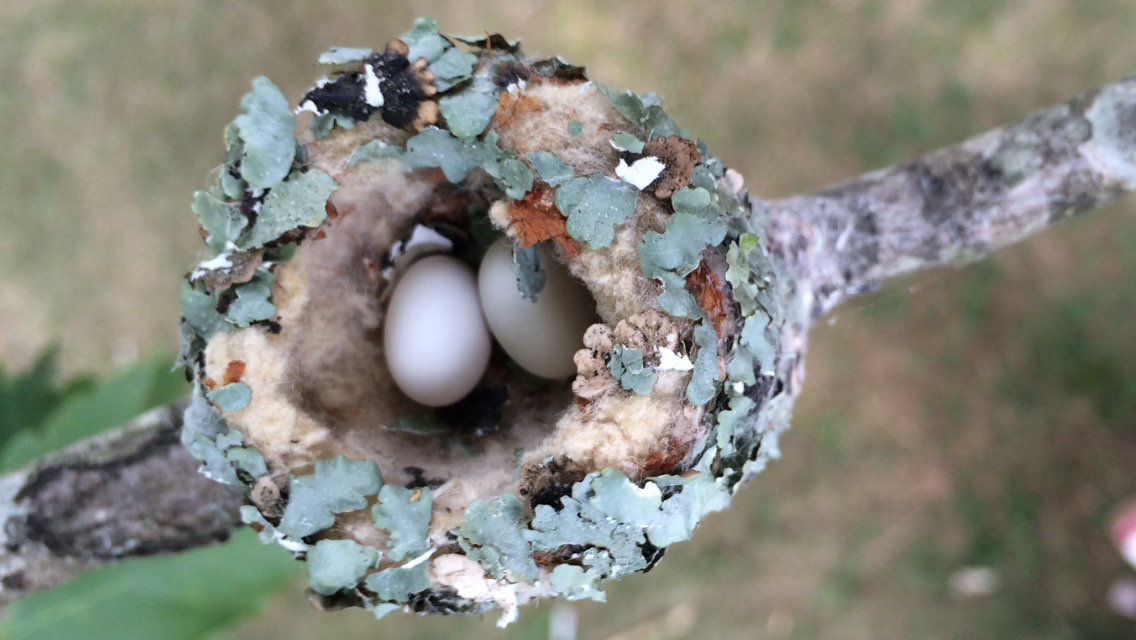
eggs-in-nest

Photo Courtesy of Donna Ottinger                        This nest, filled with two tiny eggs, was discovered in a maple tree in a Bluff City yard by Donna Ottinger.

For Bluff City, Tennessee, resident Donna Ottinger, the show in her front yard beats anything you might find on television this summer. Since late July, Donna has been watching a female ruby-throated hummingbird that she has named Bliss carry out her nesting duties.
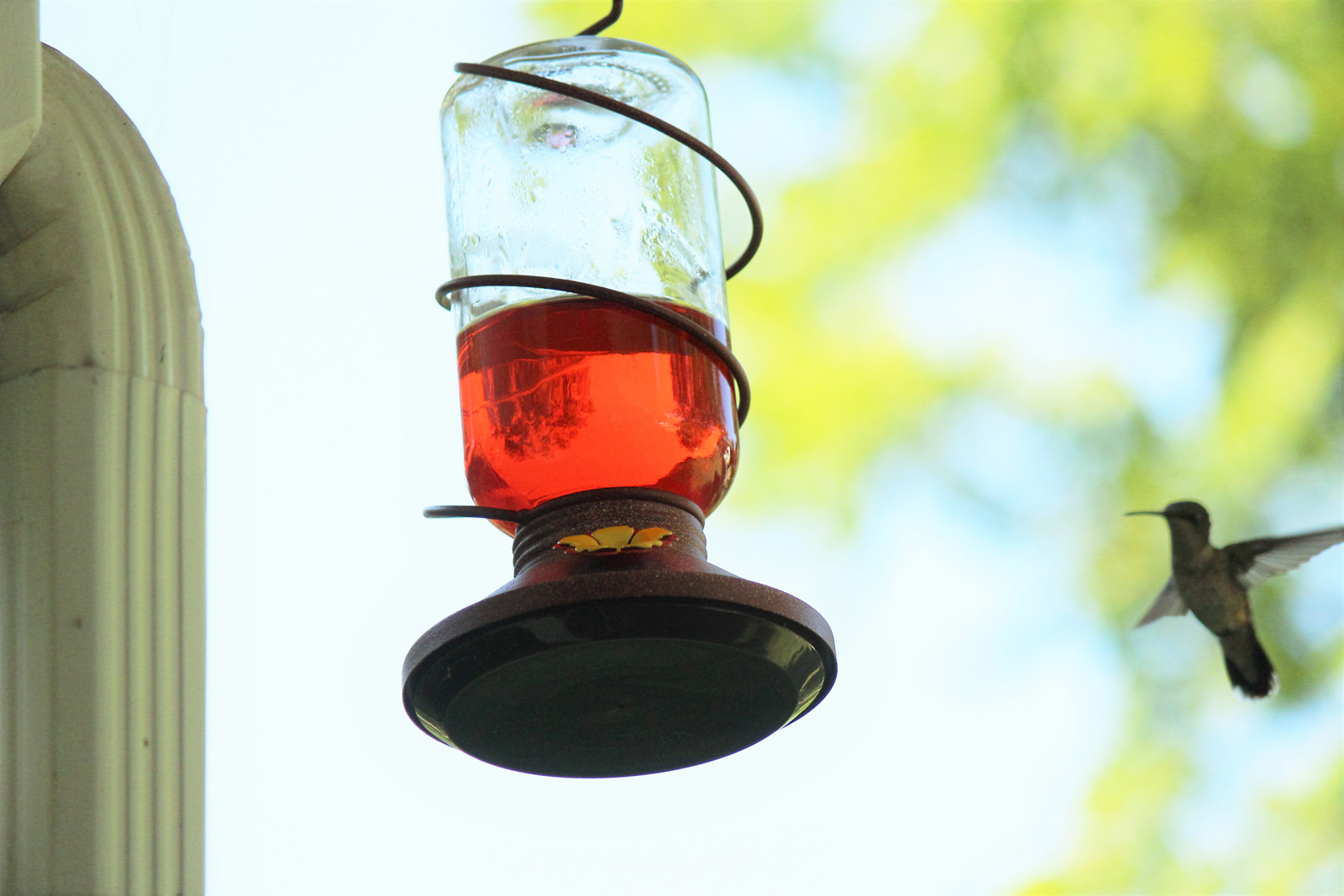
bliss-feeder

Photo Courtesy of Donna Ottinger                  Bliss the ruby-throated hummingbird visits a feeder for a sip of sugar water.

Like all female ruby-throated hummingbirds, Bliss produced two eggs for containment in a delicate nest of spiderweb, lichen and plant fibers woven onto a maple tree branch. There are some reasons why it’s always a pair of eggs for hummingbirds. First, the nest is so small — about the size of a walnut half-shell — that there is barely room for two eggs, let alone more. Second, once the young hatch, the nest has just enough room to accommodate them as they grow, fed well by their mother. Third, feeding two hungry young hummingbirds is a demanding task. A female hummingbird has to find enough food to fuel her own body and help her young in the nest grow and thrive. It’s a full-time job during the daylight hours. She’s pressed hard to succeed at raising two young. Attempting to rear more would most likely prove impossible.

Donna compared the two tiny eggs to Tic Tac mints. The entire process — from building the nest to incubating eggs to tending hatchlings — requires a commitment of more than two months. Donna noted that even after the young hummingbirds hatched, Bliss continued to reinforce the nest with collected silk from spider webs.

Donna kept the nest under observation after she discovered it in late July. As she noted on her Facebook page, finding a hummingbird nest is not an everyday occurrence. The nest is on one of the lower branches of a large maple tree in her front yard only a short distance from her porch. She was able to sit comfortably while watching Bliss come and go to her tiny nest.
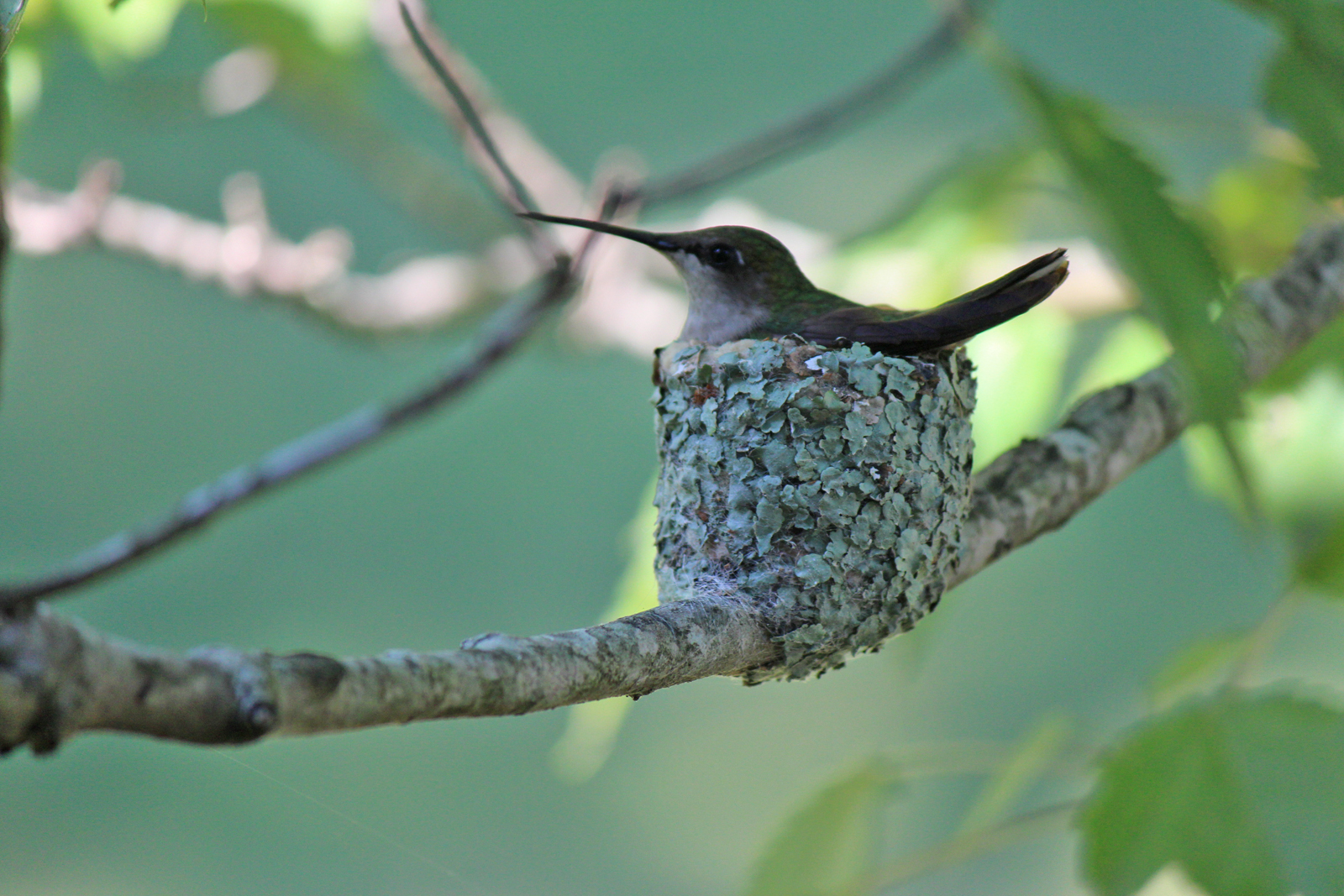
bliss-incubating

Photo Courtesy of Donna Ottinger                                           Bliss, a ruby-throated hummingbird, sits on her nest to incubate her two eggs.

“It’s been a real blessing,” Donna told me when we met in person on Aug. 19. She was gracious enough to permit my mom and me to sit on her front porch and enjoy the show. During our visit, we got to watch as Bliss arrived to feed the babies. It’s not a spectacle for the squeamish. Bliss plunged her long bill deep into the throats of each baby bird in turn and pumped some nutritious contents into the growing youngsters. Despite the fact that it looked like she could easily impale the babies, they suffered no ill effects and looked quite full and satisfied after the visit.
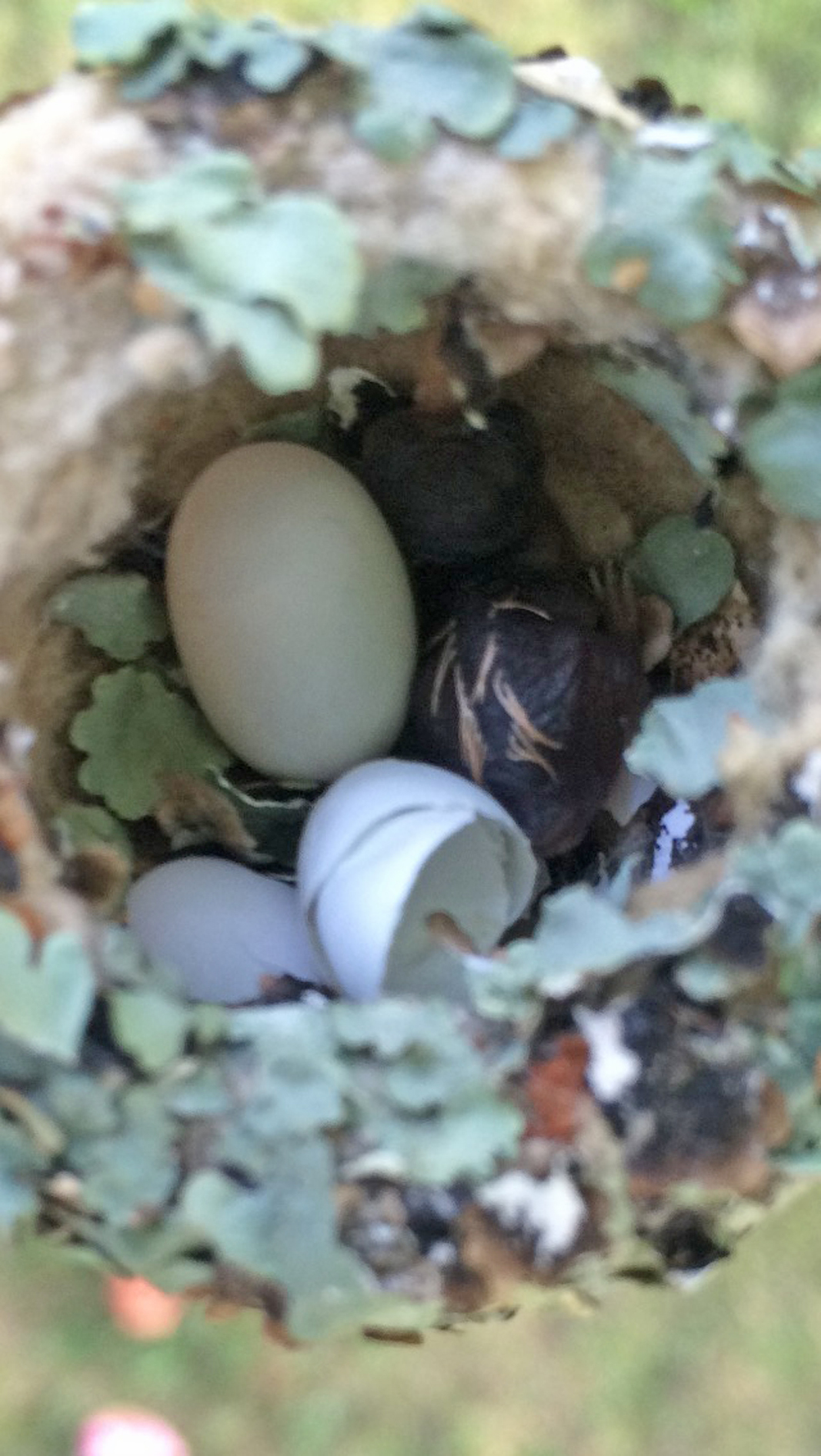
aug-1-monday-just-hatched-this-morning

Photo Courtesy of Donna Ottinger              On Aug. 1, one chick hatched. The second chick hatched the following day, making for a very full nest.

The two babies were hatched on Aug. 1 and Aug. 2, respectively. The staggered hatching reflects the fact that Bliss also laid the eggs on separate days. Not knowing the gender of the babies, Donna named the Aug. 1 hatchling Monday for the day of the week hatching took place. In turn, the second baby, which escaped its shell on Aug. 2, was named Tuesday.

Once hatched, young hummingbirds remain in the nest about 28 days (nearly a month) and depend on their mother to bring them regular meals. If that’s not enough, the ruby-throated hummingbird is known to nest twice in a season. It certainly must rank a female hummingbird as one of the busiest of our summer birds. At the time I wrote this column, Monday and Tuesday had still not left the nest.

The young hummers have grown at an astonishing rate and Donna has witnessed their progress day by day. She noted that young hummers start off life with a short bill. Like the rest of their bodies, however, their bills have grown accordingly as Monday and Tuesday received regular feedings from Bliss.
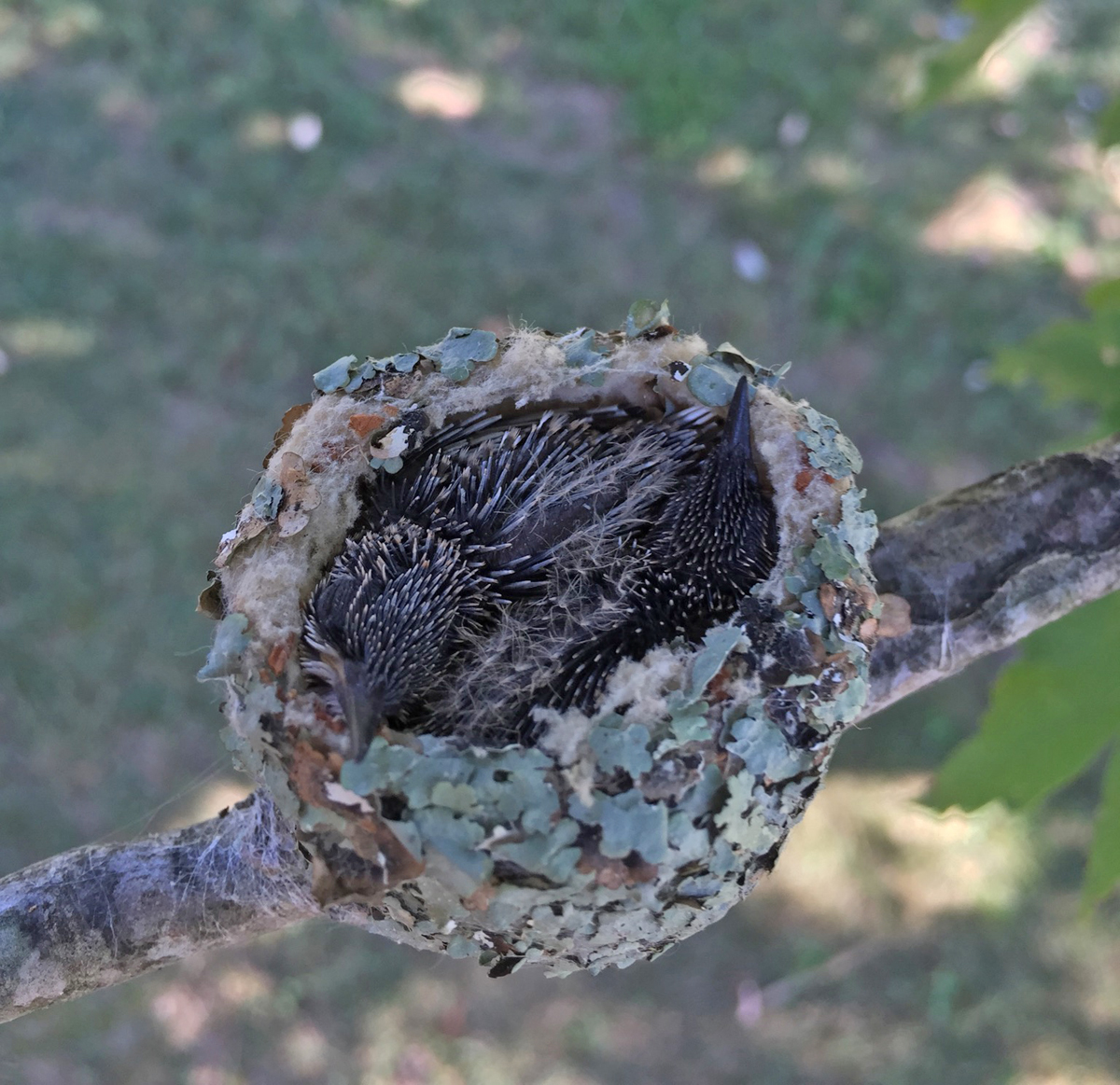
aug-13-monday-and-tuesday-with-more-feathers

Photo Courtesy of Donna Ottinger                Having grown at a rapid pace, hummingbird chicks Monday and Tuesday find their nest growing rather cramped by mid-August.

Female hummingbirds receive no assistance from their mates. Males don’t assist with the rearing of their own young. For male hummingbirds, summer is mainly a time to thrive on the abundance of nectar-bearing blooms, as well as a profusion of tiny insects and spiders that also make up a good portion of their diet.

When I saw them, I knew that little Monday and Tuesday would be out of the nest in a short time. It would also be necessary for them to soon begin fall migration. On Aug. 23, Donna reported on her Facebook page that the young hummers had left the nest.
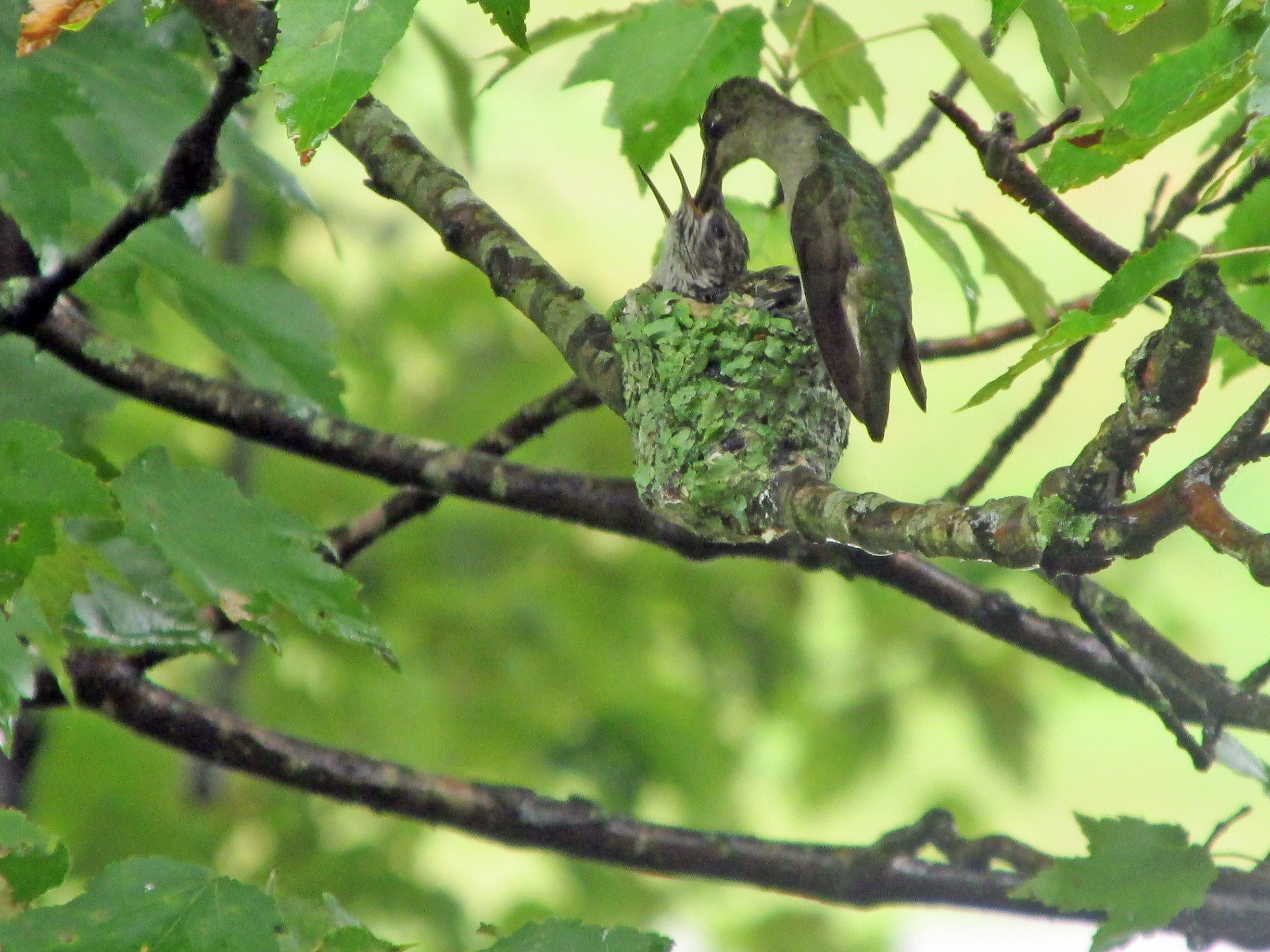
hummer-mother

Photo by Bryan Stevens                                   Bliss feeds her two young hummingbirds.

“Just three weeks after hatching, the baby hummers have both left the nest,” she wrote in her post. “They didn’t go far, and Bliss is still feeding them in a nearby tree where they have taken up new residence.”

The next generation of hummingbirds always helps swell the number of these tiny birds in our yards in late summer and early fall. Keeping visiting ruby-throated hummingbirds can be as simple as planting an abundance of the flowers they love, but offering multiple sugar water feeders also helps. Keep the sugar water mix at a four parts water to one part sugar ratio. Don’t offer honey in your feeders. When mixed with water, it can spoil and spread fungal diseases. Remember that hummingbirds don’t subsist on sugar water alone. They also eat numerous tiny insects and spiders to obtain the protein they need for their dietary needs, so don’t use insecticides near feeders or flowers that hummers are likely to visit.
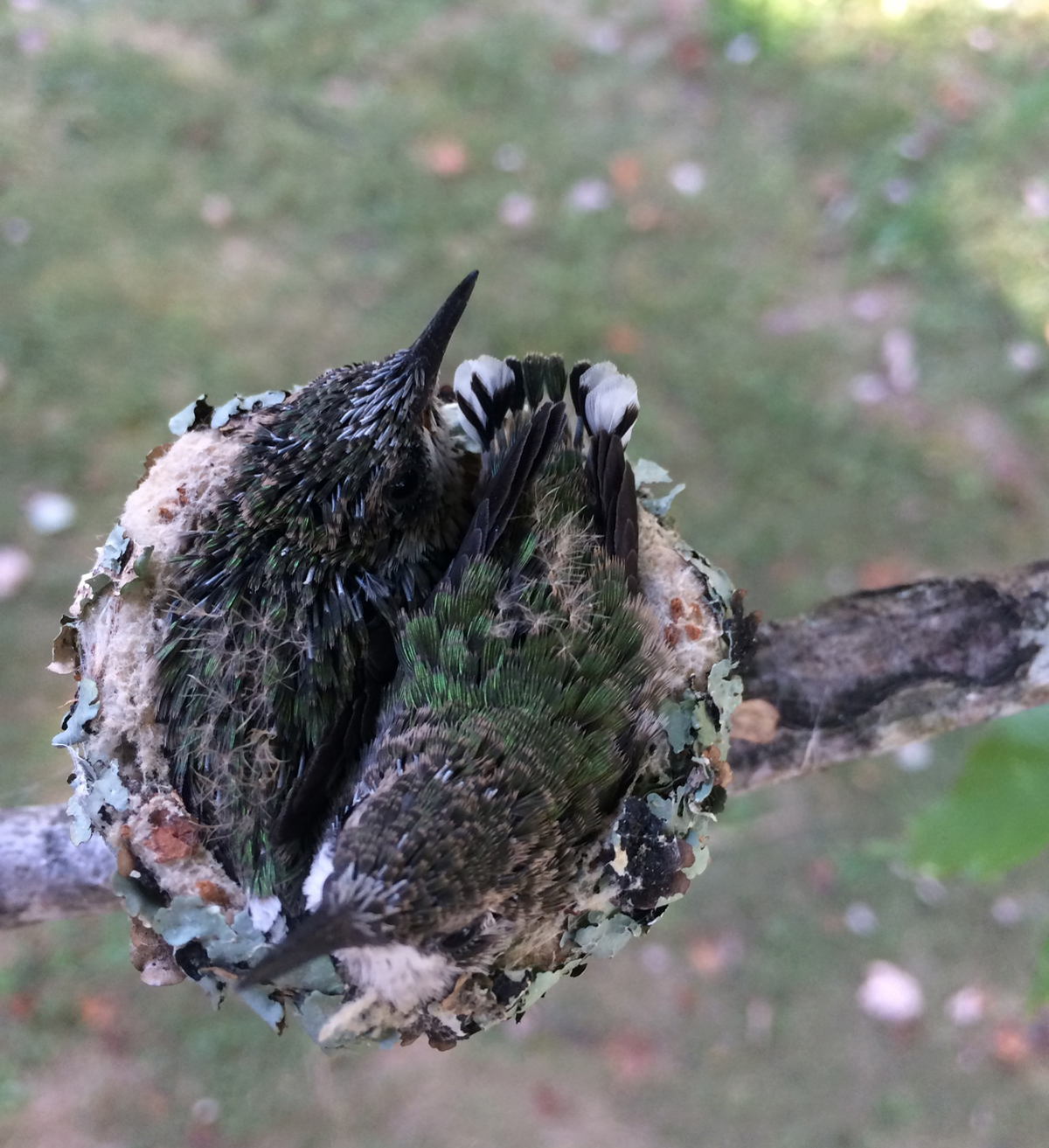
aug-17-monday-and-tuesday-with-color-showing-on-feathers

Photo Courtesy of Donna Ottinger  Monday and Tuesday find the nest increasingly crowded in the days before they fledged.

It was absolutely wondrous to observe Bliss and her babies. The experience has motivated me to keep a closer watch on the hummingbirds in my yard. There are female hummers present every summer. They have to be nesting somewhere, and I’d like to find a nest in my own yard.

•••••

To learn more about birds and other topics from the natural world, friend Stevens on Facebook at https://www.facebook.com/ahoodedwarbler. He is always posting about local birds, wildlife, flowers, insects and much more. If you have a question, wish to make a comment or share a sighting, email ahoodedwarbler@aol.com.

aug-13-monday-and-tuesday-with-more-feathers

Photos Courtesy of Donna Ottinger            Monday and Tuesday share a compact nest.
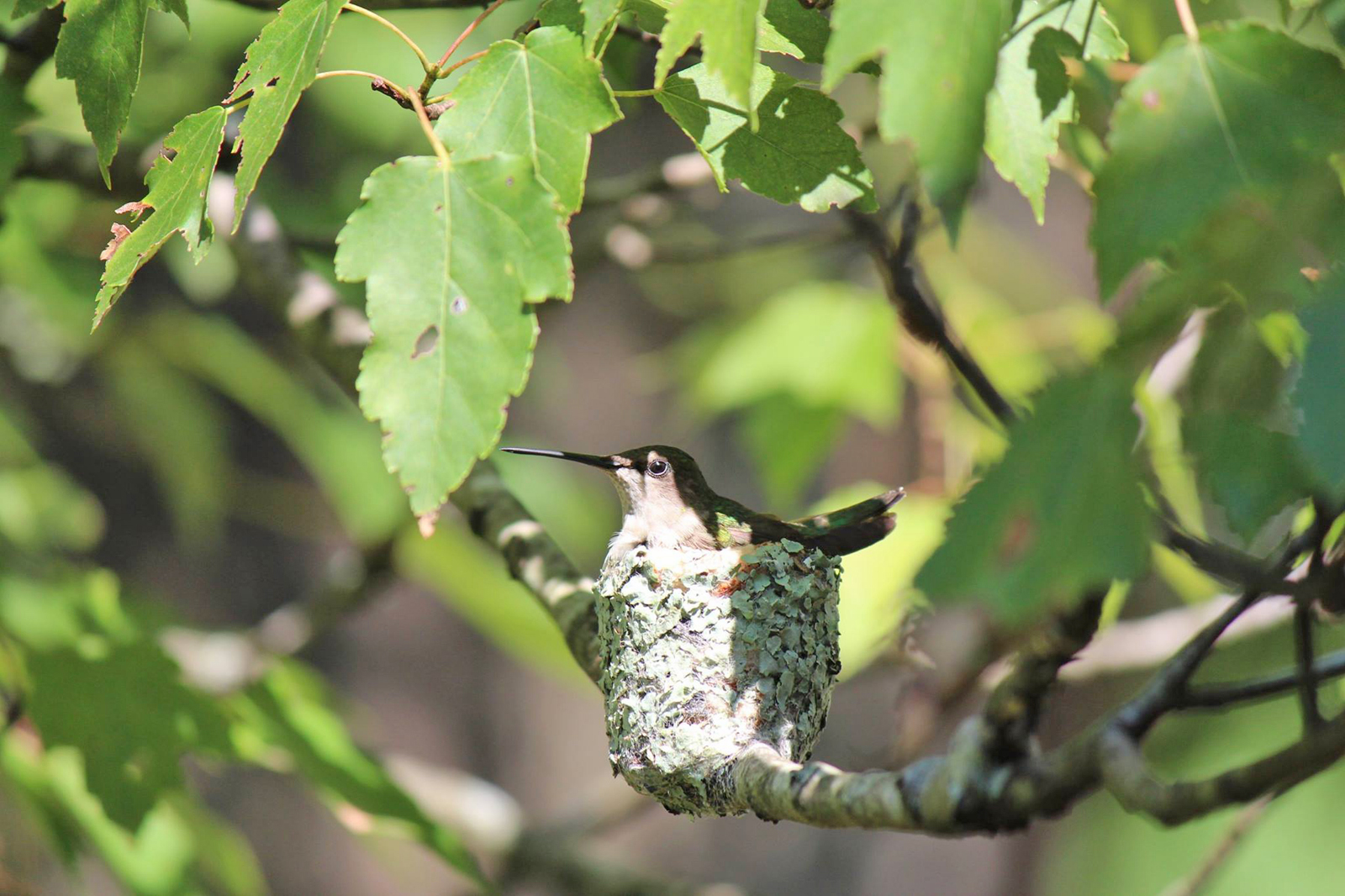
13661895_1230239206996666_2874895669499226165_o

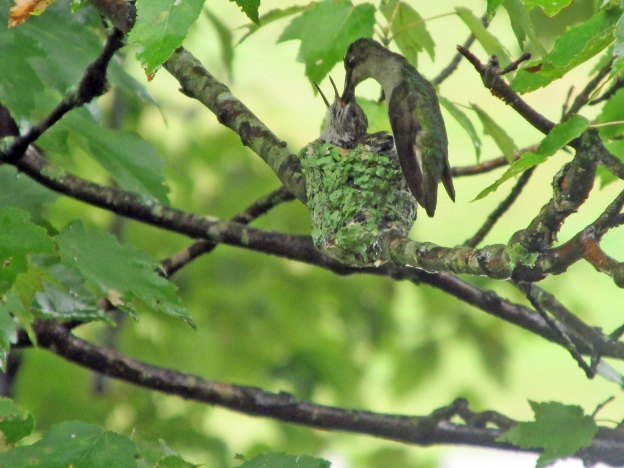
Bliss incubates her eggs at her nest in Bluff City, Tennessee.

Tremulous call of Eastern screech-owl baffles couple

Photo by Bryan Stevens An Eastern Screech-Owl at rest in a roosting hole in a large sycamore tree.

Photo by Bryan Stevens
An Eastern Screech-Owl at rest in a roosting hole in a large sycamore tree.

I received a recent email from Lewis Chapman seeking help in solving the identity of a nocturnal caller. Chapman and his wife moved to Laurel Bloomery in Johnson County, Tennessee, in late June.

“Shortly after we arrived we started hearing a strange night bird call that could best be described as an eerie winnowing,” he wrote in his email. After the couple conducted some Internet research into the mysterious after-hours vocalist, his wife suggested the caller might be a snipe.

As mentioned in previous columns, the snipe is a real bird despite its reputation as a mythical creature thanks to the rural tradition of the “snipe hunt.” While the calling bird at their home did remind them of a Wilson’s snipe, they were not convinced.

“Is this the right time of year to be hearing one in our area?” Lewis asked in his email. “Is there another bird that makes this kind of winnowing?” Both of his astute questions helped me narrow the possibilities.

In my reply, I did inform Lewis that the Wilson’s snipe, as well as the closely related American woodcock, make their home in the region. The summer season, however, isn’t the best time of year to hear either of these relatively elusive shorebirds. These birds are most vocal at the peak of their breeding season, which usually occurs much earlier in the year.

Screech-Owl-LUCY

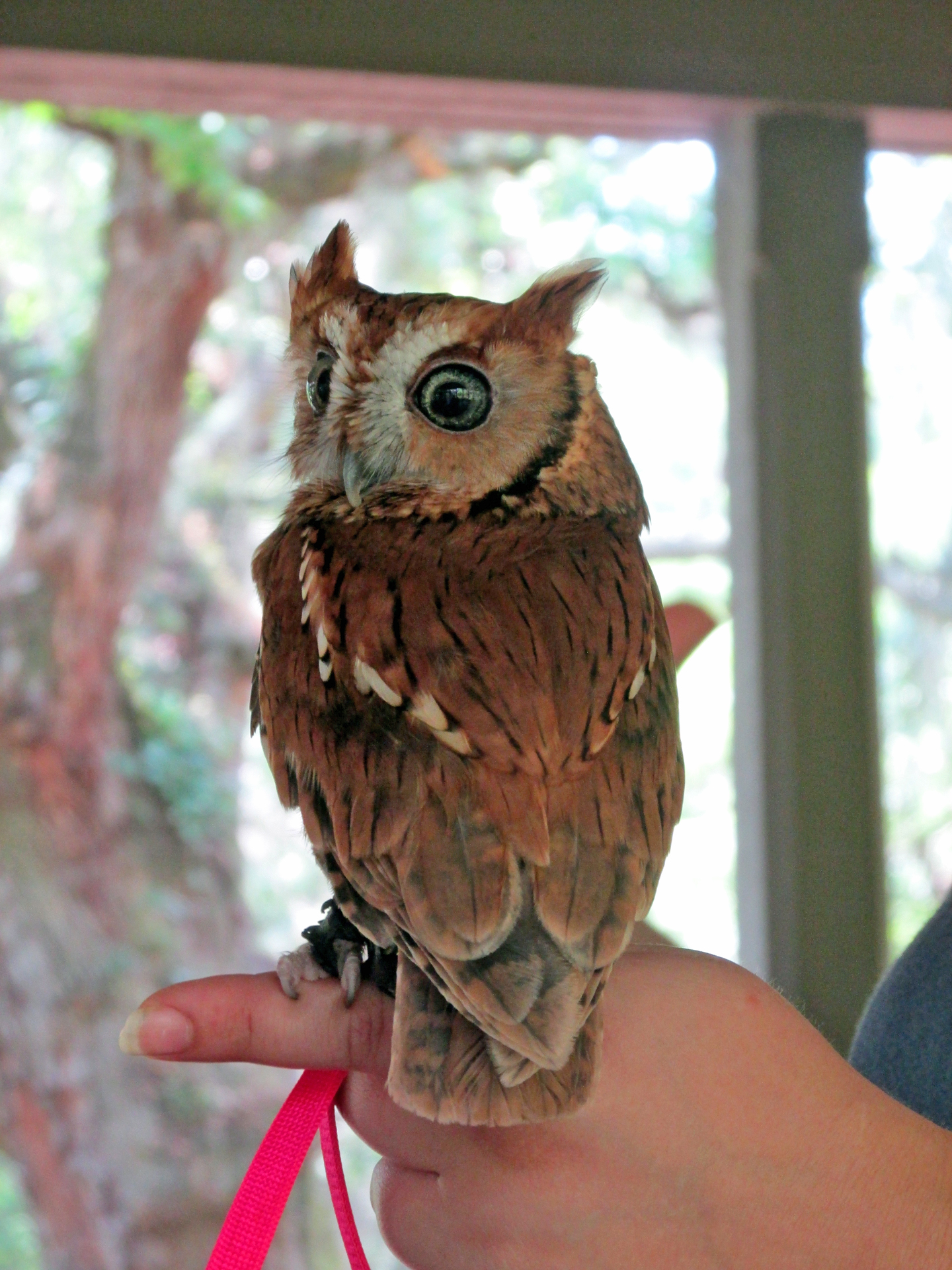
Photo by Bryan Stevens                     Lucy, an Eastern screech-owl, is part of an educational program at Brookgreen Gardens in South Carolina that teaches audiences some fascinating information about native wildlife. For instance, despite her small size, Lucy is an adult owl, not a baby.


It was his second question, especially the description of the “winnowing” sound, that got me thinking in an entirely different direction. It also helped that I’ve heard some of these small, nocturnal vocalists at my own home in recent weeks. I suggested that the Chapmans get online and look up the song and other vocalizations of the Eastern Screech-owl.

An adult Eastern screech-owl is usually only between six and nine inches in length. Many people upon first seeing a screech-owl assume it’s a baby owl. On a recent South Carolina trip I made several visits to Brookgreen Gardens near Pawleys Island. On several of these visits I attended the daily educational programs conducted by the zoo staff at the gardens that are designed to introduce visitors to various examples of native wildlife. The presenter usually introduced a couple of animals to the audience. On several occasions, the show featured birds of prey, including hawks and owls.

Two of the shows featured Lucy, an Eastern screech-owl, and people in the audience invariably asked if she was a baby owl. To their astonishment, they learned that Lucy was an adult screech-owl and unlikely to grow any bigger. There are larger owls in our region, including the great horned owl and barred owl. Lucy and her kin must avoid these much larger owls, which would have no hesitation at trying to make a meal of the much smaller owl.

Because of their small size, screech-owls prey on some comparatively small creatures, including insects, small rodents, amphibians and reptiles. The Eastern screech-owl is also a cavity-nesting bird and will accept bird boxes provided by humans so long as the box’s entrance hole is customized to their size.

Screech-Owl

Photo by Bryan Stevens                                      An Eastern Screech-owl perches among some hemlock branches.

The screech-owl is probably the owl most likely to encounter human beings. It’s an adaptable little feathered predator, fully as at home in the backyard and garden as it is in parks and woodlands. In addition to nesting in cavities, this owl roosts in them during the daytime hours. Look for roosting screech-owls in knotholes of trees or in unoccupied wood duck boxes. Although they come in two color phases — red and gray — both variations are quite capable of camouflage. When perched or roosting, these small owls blend remarkably with their surroundings.

The Eastern screech owl also produces a variety of odd wails and other vocalizations including a distinctive, trembling “whinny” call that is often made when the owl feels curious or alarmed. It’s a wavering, haunting call that is made after dark, most often at the hours closer to dawn and dusk. Imitating the call of a screech-owl or playing a recording is also a trick for getting some shy songbirds to show themselves. Screech-owls are unwelcome neighbors among songbirds, which will flock to this owl’s call and band together to “mob” the predator and try to convince it to depart the immediate area.

In addition to the Eastern screech-owl, the United States is also home to several other small owls, including Western screech-owl, Northern pygmy-owl, Northern saw-whet owl, flammulated owl and elf owl.

After I pointed to the screech-owl as the identity of the unseen caller at the Chapman home, I did receive another email from Lewis. My suggestion of the screech-owl proved correct. “It’s fun having the Eastern screech-owl in our woods,” he wrote back. “It has a beautiful call and most nights it does it for quite awhile.”

Audubon-Owls

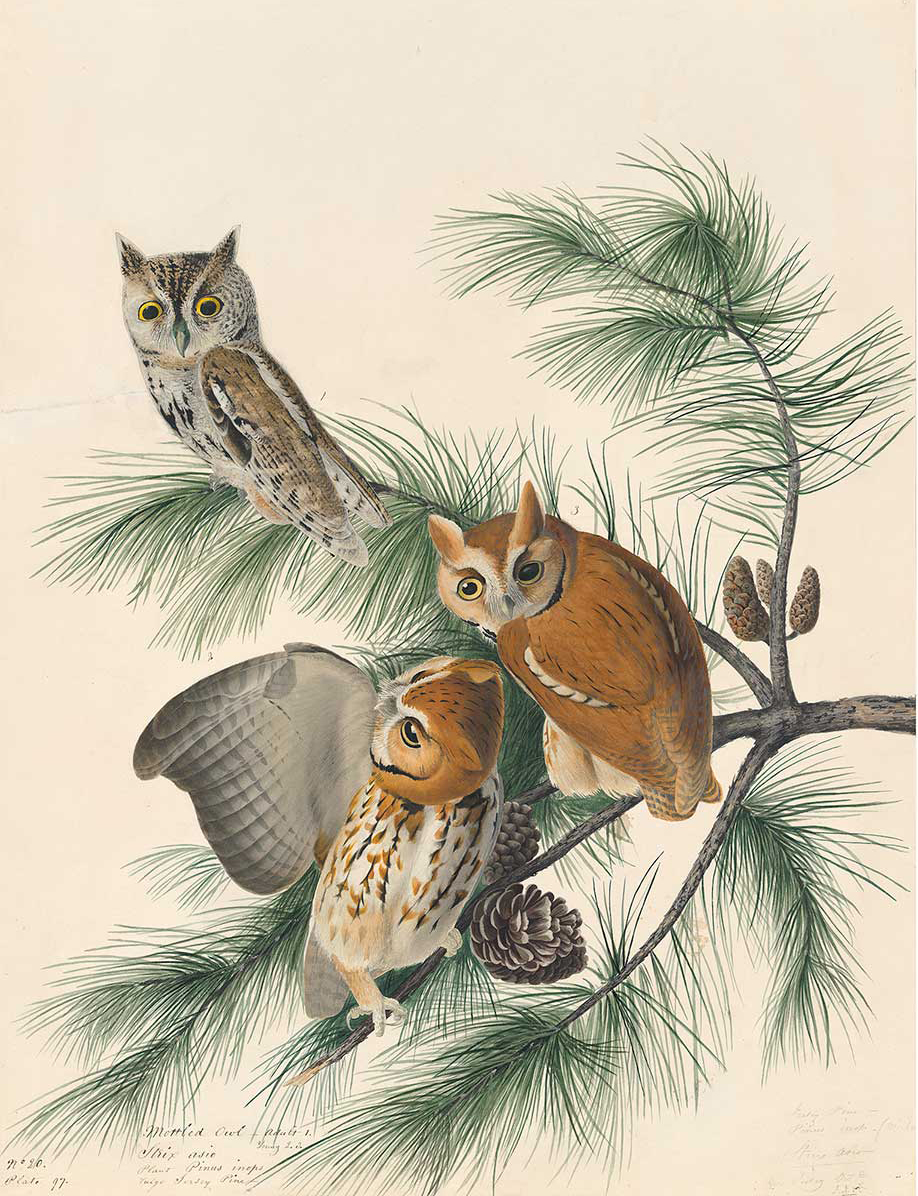
Early naturalist and artist John James Audubon painted a family of Eastern Screech-owls.

Screech-owls do make good neighbors. Their prey preferences remove many nuisance insects and rodents from the habitat they share with humans as well as other wildlife. If you’re hearing an odd, winnowing call from the edge of the woods at your own home, there’s a good chance that you have one of these small owls as a neighbor.

Since moving to Laurel Bloomery, the Chapmans have already seen many great backyard birds, including indigo bunting, great crested flycatcher, ruby-throated hummingbird, house wren, black-and-white warbler, pileated woodpecker and chipping sparrow. Now they can also add Eastern screech-owl to the list. Who knows? They may some day also add a Wilson’s snipe to their yard list of birds.

•••••

To learn more about birds and other topics from the natural world, friend Stevens on Facebook at https://www.facebook.com/ahoodedwarbler. He is always posting about local birds, wildlife, flowers, insects and much more. If you have a question, wish to make a comment or share a sighting, email ahoodedwarbler@aol.com.

Birds engage in vigorous bathing to keep feathers in good shape


GbH-Preens

Great Blue Heron sets aside plenty of time to preen its feathers

Birds are natural scene stealers, which is probably why we enjoy watching them and glimpsing their various behaviors. A couple of months ago during a vacation to South Carolina, I got to see many interesting birds, including one new addition to my life list. I also got a glimpse into a variety of interesting bird behaviors. For instance, I observed the different fishing techniques of various herons and egrets.

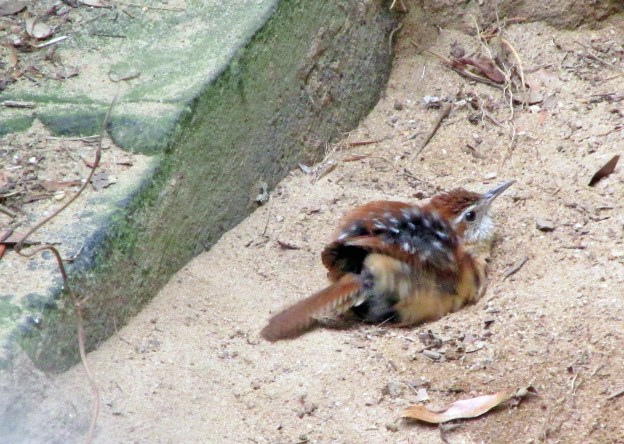
During a visit to the Native Wildlife Zoo at Brookgreen Gardens, I observed many captive birds. One interesting aspect of the zoo, however, is the fact that wild and captive animals often interact. I was watching some gray and red foxes in their habitat when I noticed something in a corner of the enclosure. As I focused my binoculars on the corner, a whirling dervish of brown and tan feathers was splashing vigorously in the loose sand. The bird — a Carolina wren — had worked itself into a frenzy, tossing dirt and sand all over its small body.

R0098_102

A range of bird baths can provide water for bathing and drinking, which will make yards and gardens more attractive to birds.

Many readers probably know of the appeal to birds of a well-situated and maintained bird bath filled with clean, fresh water. Birds will flock to such attractions to bathe. While a bath in water is one way to maintain a bird’s plumage, it’s not the only method available to help keep feathers in top-notch shape. It might even surprise some readers to learn that access to water is not always essential for proper feather care. Some birds choose to take a “dust bath” in dry earth or sand. The dust or sand serves as an accessible way to scrub parasites out of a bird’s feathers.

While birds taking a bath look like they’re having a lot of fun — and perhaps they are — frequent bathing serves a vital purpose. Feathers are one of the things all birds have in common, but it’s extremely important that birds keep their feathers clean and healthy. Not only are feathers necessary to make flight possible for birds that take to the air, they’re also valuable as insulation to keep birds dry and warm.

Pintail-Splashing

A female Northern Pintail splashes vigorously to clean her feathers.

Some birds also put other creatures to work in the constant chore of keeping their feathers in good condition. Many birds utilize ants into their feather-care routine. The behavior is so widespread — more than 200 species use ants to help them take care of their feathers — that the behavior has been given a name, which is “anting.”

The birds are interested in chemicals produced by the ants. Anting is an offshoot of dust bathing and can be achieved in two ways. Birds may passively position themselves near an ant hill, thus ensuring that many ants will swarm though the bird’s feathers. Others more directly pick up ants in their bills and rub the ants on their feathers. Although ants are usually the insect of choice in these feather-care regimens, some birds have used millipedes instead of ants. Although it hasn’t been conclusively proven, many experts think that birds use the ants because of chemicals produced by the insects that repel feather parasites such as mites or to curb potential bacterial or fungal problems.

Pintail-Grooming

After a bath, birds like this Northern Pintail devote time to preening their feathers.

Just like some birds make bathing in water a chance to reinforce their social bonds, many species also engage in dust bathing as a communal activity. Some species of quail are known for dust bathing as a group. Northern bobwhites will visit dust bathing sites on a regular basis. In a dust bath, birds will usually toss dust and dirt onto their bodies, working the dust into their feathers. They will also work their bodies, including their heads, into the dust. Since birds cannot exactly use their bills to clean feathers on their heads, this action makes perfect sense.

ChestnutSided-BATH

A Chestnut-sided Warbler bathes in a woodland puddle.

After a bird has concluded a vigorous bath, whether in water or sand, it will usually seek out a perch for a long bout of preening its feathers. While watching the antics of a bathing bird is fun for observers — and often looks fun for the bird, too — it’s a serious business. A bird that neglects these daily chores will soon suffer from dirty, damaged feathers. It’s not just cosmetics for the bird. It’s a matter of life and death. Perhaps that explains the intensity with which birds throw themselves into the activity of bathing.

Offer a shallow, clean pool of water in a bird bath and you won’t wait long for birds to make an appearance. If you have a sandy corner in your yard or garden, you could also leave that spot untouched to see if any birds show up for a quick dirt bath. These are just a few easy touches you can add to your landscape to increase your chances of interacting in the daily lives of some of your favorite birds.

••••••

To learn more about birds and other topics from the natural world, friend Stevens on Facebook at https://www.facebook.com/ahoodedwarbler. He is always posting about local birds, wildlife, flowers, insects and much more. If you have a question, wish to make a comment or share a sighting, email ahoodedwarbler@aol.com.

Making the acquaintance of a special ruffed grouse with lots of personality

Although I’ve seen many birds over the years, it’s not often that I’m introduced on a first-name basis with one. So, I’m happy to report that I’ve now made the acquaintance of Rufous, a resident of the woodlands around Flag Pond, a small community in Unicoi County, Tennessee.


Rufuous-Two (1)

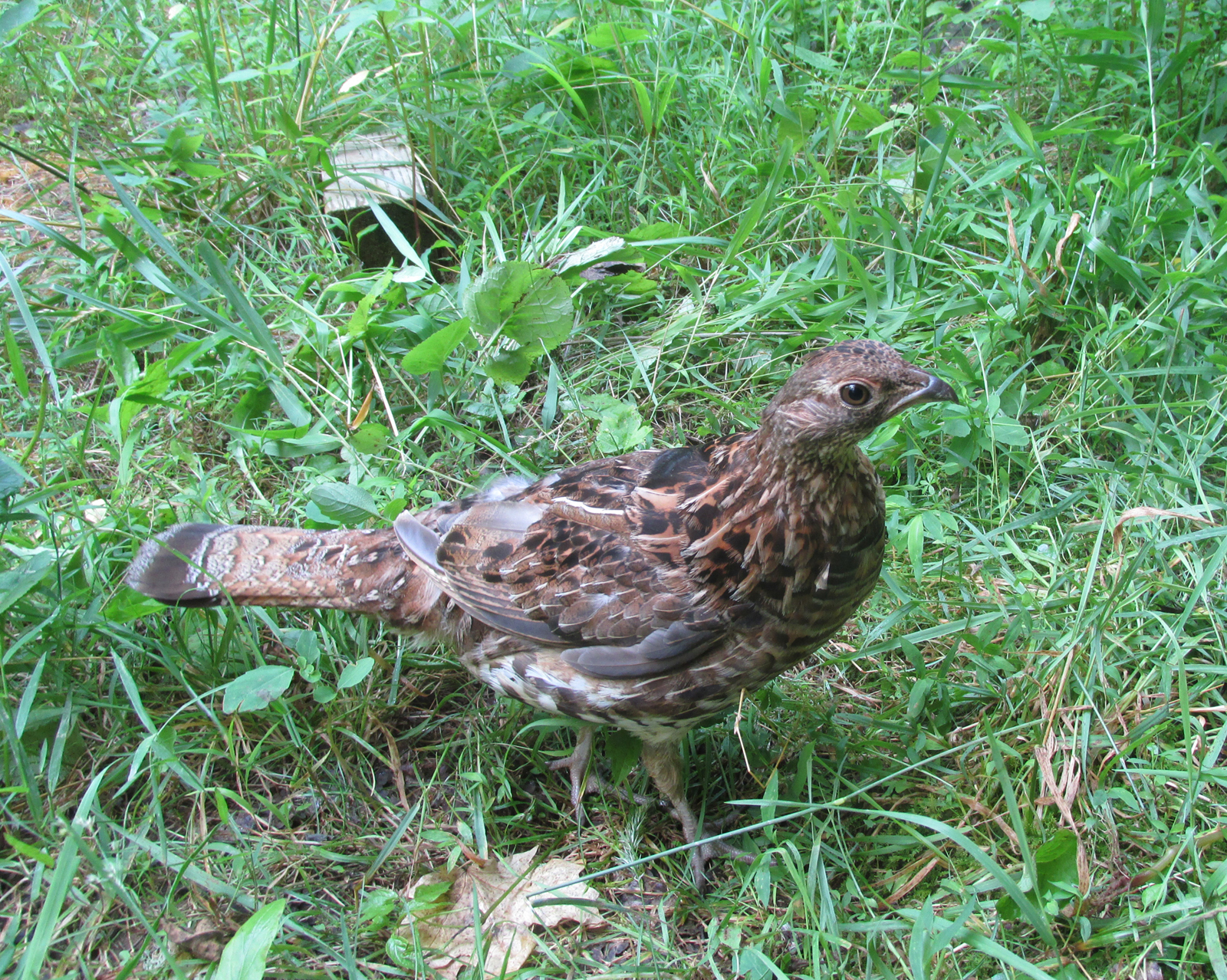
Photo by Bryan Stevens                               Rufous the ruffed grouse has been visiting the farm of Leon and Janice Rhodes for the past couple of years, apparently showing little fear of his human neighbors.

Rufous is a ruffed grouse that has been a fascinating and funny neighbor to Leon and Janice Rhodes for the past couple of years. I met Rufous on Saturday, June 25, at the Rhodes family farm. Brayden Paulk, a grandson of the couple, invited me to visit and attempt to meet Rufous.


This particular grouse is apparently a creature of habit, and Brayden suggested that a morning visit might be more conducive to my chances of getting to know Rufous.
I arrived around 9 a.m. and met Brayden and his grandfather. We went to a nearby barn, which apparently serves as a familiar meeting spot for Rufous and those people lucky enough to have gotten to know him over the past couple of years.
Rufous is only one member of a family of ruffed grouse in residence on the Rhodes property. In an email to me, Brayden told me that the mountain farm is a good place to see ruffed grouse. The 17-year-old doesn’t live in Tennessee, but he is a frequent visitor, spending time with his grandparents as often as possible. He and his family live in Oxford, Alabama. He also told me that his grandparents send him every one of my bird columns in the mail.

Brayden-Rufous

Photo by Bryan Stevens                Inside his grandfather’s barn, Brayden Paulk spends a moment with Rufous, a ruffed grouse with an abundance of charisma.

“I do happen to live in a great place for birds,” he informed me in an email. His home is located close to the Mountain Longleaf National Wildlife Refuge, which Brayden said is known for breeding blue-headed vireos, red-headed woodpeckers, and Swainson’s warblers.
“It has a lot of longleaf [pine] habitat, so I hope soon that red-cockaded woodpeckers might be reintroduced there, and establish a colony,” he added. The red-cockaded woodpecker is classified as an endangered species across much of the southeastern United States.
Brayden is a volunteer working in the Talladega National Forest in the foothills of the Appalachians on a study focused on the effects of controlled burns on cavity-nesting birds, such as red-cockaded woodpeckers.
He is an enthusiastic and, as I learned after meeting him, quite an accomplished birder. Warblers are his favorite family of birds, followed by ducks and sparrows.
“I enjoy where I live because I get to enjoy species such as the black-throated green warbler, blue-headed vireo and even red crossbill in the summer,” he said.
We have also exchanged emails in a discussion about why some of these birds, which are usually found in the boreal forests much farther north, stay much farther south along the spine of the Southern Appalachians.
His future plans are to major in Conservation Biology. “I hope to get a masters in ornithology from Cornell,” Brayden shared.

Rufous-Three

Photo by Bryan Stevens                               Leon Rhodes uses his cap to challenge Rufous to a friendly duel.

Of course, during our recent meeting, his focus was on arranging a meeting with Rufous, a bird with “a lot of personality.” Both Brayden and his grandfather cautioned that Rufous doesn’t follow a schedule. In other words, the meeting would take place only if Rufous was so inclined.

Although he has a very tame nature, Rufous is most definitely a wild bird.
Fortunately, I didn’t have to wait too long. Brayden was the first to detect the soft clucks as Rufous made his way cautiously toward the old barn. He emerged from the surrounding woodlands and walked into the barn where I was seated and waiting with Brayden and his grandfather.
Rufous immediately noticed my presence, identifying me as a stranger in the midst of some more familiar friends. He kept a wary eye turned on me during his visit. After a few moments of watching Rufous strut around the barn like he owned it — and perhaps he does in his own mind — I removed my camera from my pocket. I made sure that my actions didn’t alarm Rufous. When he didn’t object, I proceeded to take photos and videos of this very personable ruffed grouse.

Chick-Grouse

Photo by Bryan Stevens                              Rufous would have started out life much like this ruffed grouse chick, which was photographed on Holston Mountain in Carter County, Tennessee.

One of his favorite activities during these visits is to duel with a red baseball cap worn by Leon Rhodes. Whenever Brayden’s grandfather removed the cap and waved it in front of Rufous, the grouse became very focused. He channeled his attention almost exclusively on the cap until, with a startlingly swift attack. The entire sequence reminded me of a bull attacking a matador’s red cape.
For probably a half hour, Rufous put on quite a show, and I think Brayden and his grandfather were thrilled that the grouse proved so cooperative during my visit.

ruffed_grouse_audubon

Early American naturalist and painter John James Audubon painted these ruffed grouse as a familym unit.

After my visit with Rufous, I took Brayden for a brief birding trip to Rock Creek Recreation Area near Erwin, Tennessee. I was hopeful we might get to see a black-throated blue warbler, which has been an elusive warbler for Brayden. We did get some good birds at Rock Creek, including hooded warbler, Northern parula, blue-headed vireo, red-eyed vireo, black-throated green warbler and blue-gray gnatcatcher.
We didn’t, however, find a black-throated blue warbler. We didn’t give up, though, and proceeded to the Cherokee National Forest on Unaka Mountain. We made one very productive stop, finding a singing veery, a scarlet tanager and a dark-eyed junco. We also found more warblers, including black-and-white warbler, worm-eating warbler and black-throated green warbler. I’m happy to report we also found a male black-throated blue warbler. So, the productive morning resulted in my meeting with a grouse with a lot of personality and Brayden getting a new species for his life list of birds.
I don’t have any theory to explain Rufous and his acceptance of his human neighbors. I do believe birds, like humans, are individuals. Some of them have quirks that set them apart from others. Although he acts tame, Rufous is still a wild bird. Most ruffed grouse are extremely wary birds that go out of their way to avoid humans. Meeting a grouse that took humans in stride was a fascinating experience.

Grouse 2

Photo Courtesy of Jean Potter                          This photo shows the ruff of feathers that gives this grouse its common name.

The ruffed grouse is named for the male’s neck ruff. These feathers around the neck can be erected in mating displays, creating an impressive “collar.”  The ruffed grouse has served since 1931 as the state bird of Pennsylvania.

Many years ago, a ruffed grouse boldly walked into my front yard and then ventured onto the front porch. Only my timely intervention rescued the visiting grouse from a cat that belonged to my parents.
The unusual behavior of Rufous has persisted for two years. That, in my book, makes him a very unique grouse. I’ll always remember the day that I made his acquaintance.

Rufous-One

Photo by Bryan Stevens       Rufous proved to be a grouse with a unique personality.

••••••

To learn more about birds and other topics from the natural world, friend Stevens on Facebook at https://www.facebook.com/ahoodedwarbler. He is always posting about local birds, wildlife, flowers, insects and much more. If you have a question, wish to make a comment or share a sighting, email ahoodedwarbler@aol.com.

Summer Bird Counts gather data on bird populations of two Northeast Tennessee counties

The Lee and Lois Herndon Chapter of Tennessee Ornithological Society held its annual Summer Bird Counts in the counties of Carter and Unicoi in June, adding to the data  that exists for regional bird populations during the summer nesting season.

Red-shoulderHawk

Photos by Bryan Stevens                                                Red-shoulder Hawks, such as this captive individual that is part of an educational program at Brookgreen Gardens in South Carolina, are relatively rare birds in Northeast Tennessee.

Although its hasn’t been conducted for a long time, the Unicoi County Summer Bird Count established a new record this year with a total of 112 species reported, in contrast to the 110 and 111 species tallied during the first two Summer Counts conducted in 2014 and 2015.
A total of 21 observers in five parties counted birds in Unicoi County on Sunday, June 12, from Flag Pond and Erwin to Unicoi and Limestone Cove, as well as other strategic locations. A total of 20 species of nesting warblers made the count, including Blackburnian, Swainson’s and Magnolia. Other highlights from the count include a single Northern Bobwhite, four Bald Eagles, a Red-shouldered Hawk (a scarce bird in Northeast Tennessee) and three Red Crossbills.
Although I participated in the first two Unicoi County Summer Bird Count, I was in South Carolina at the time of this year’s survey. I hate to miss any count, and I was excited to learn that this year’s survey set a new record for most species to date.

13308181_10208158978684598_6427136243659155075_o

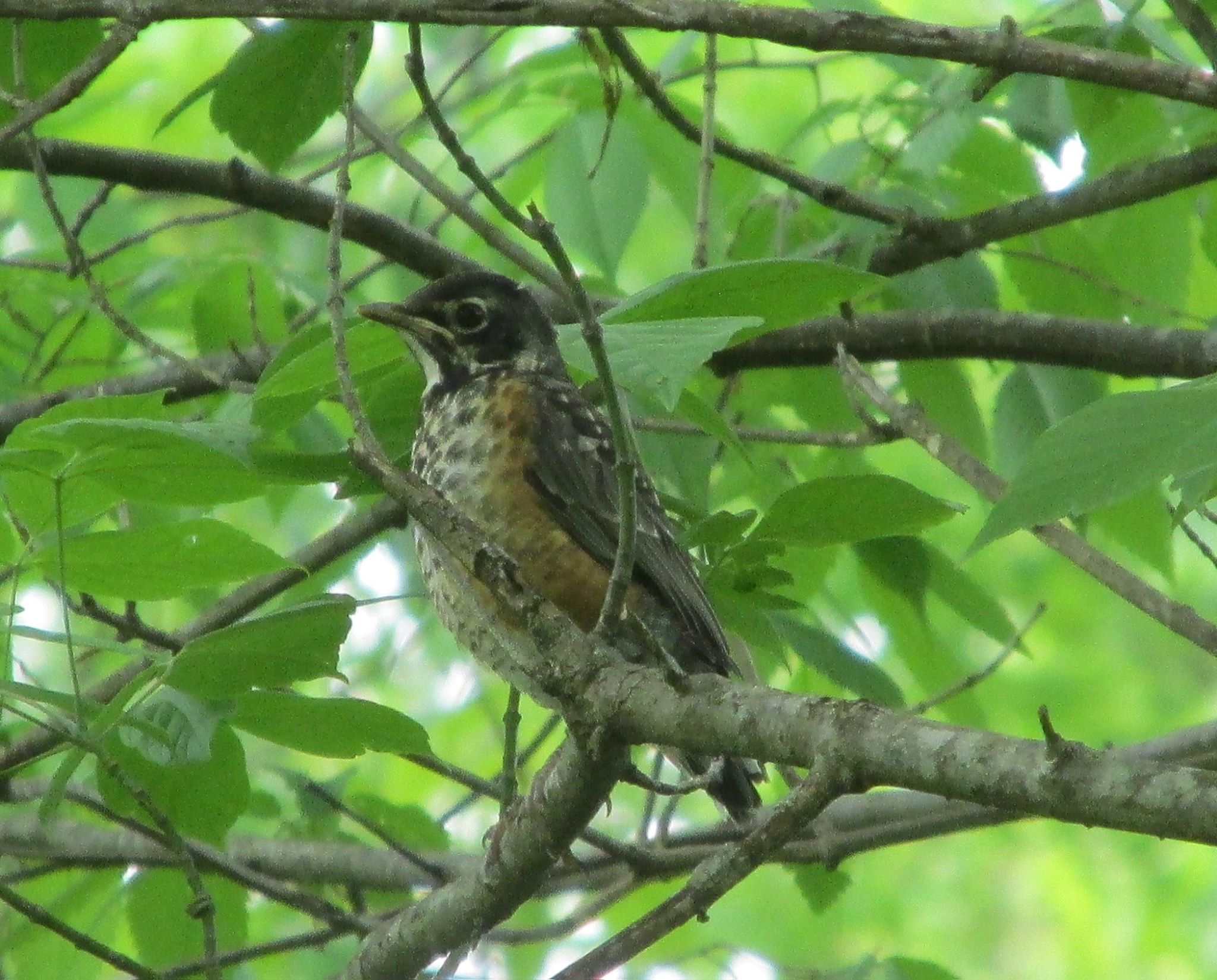
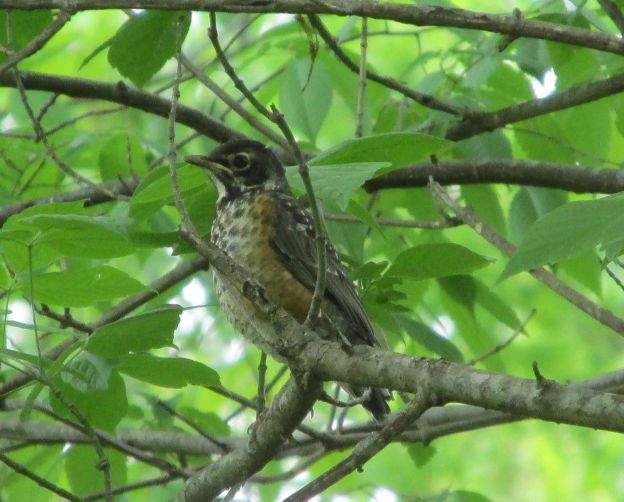
Young American Robins, such as this bird, helped provide sizable numbers for this bird on the Summer Counts.

The American Robin took the prize as the most common bird with 417 robins observed by count participants. The robin was closely followed by European Starling (317); Song Sparrow (186); and Indigo Bunting (129). The 85 Hooded Warblers found on count day made this species the most common warbler on this year’s survey.

The total follows:
Canada Goose, 76; Wood Duck, 12; Mallard, 21; Northern Bobwhite, 1; Ruffed Grouse, 3; and Wild Turkey, 16.
Great Blue Heron, 22; Green Heron, 2; Black Vulture, 7; Turkey Vulture, 43; Sharp-shinned Hawk, 1; Cooper’s Hawk, 3; Bald Eagle, 4; Red-shouldered Hawk, 1; Broad-winged Hawk, 5; and Red-tailed Hawk, 8.
Killdeer, 10; Rock Pigeon, 52; Mourning Dove, 108; Yellow-billed Cuckoo, 2; Eastern Screech-owl, 1; Great Horned Owl, 3; Barred Owl, 2; Chuck-Will’s-Widow, 3; Whip-poor-will, 11; and Chimney Swift, 35.
Ruby-throated Hummingbird, 7; Belted Kingfisher, 4; Red-bellied Woodpecker, 26; Yellow-bellied Sapsucker, 3; Downy Woodpecker, 16; Hairy Woodpecker, 7; Northern Flicker, 8; and Pileated Woodpecker, 14.
American Kestrel, 3; Eastern Wood-Pewee, 7; Acadian Flycatcher, 43; Least Flycatcher, 6; Eastern Phoebe, 54; Great Crested Flycatcher, 1; and Eastern Kingbird, 13.

909-unicoi-county-tennessee

Counts focused on Unicoi County and adjacent Carter County.

White-eyed Vireo, 6; Yellow-throated Vireo, 1; Blue-headed Vireo, 41; Warbling Vireo, 1; and Red-eyed Vireo, 140.
Blue Jay, 52; American Crow, 156; Common Raven, 6; Northern Rough-winged Swallow, 33; Purple Martin, 14; Tree Swallow, 108; Barn Swallow, 69; and Cliff Swallow, 70.
Carolina Chickadee, 65; Tufted Titmouse, 43; Red-breasted Nuthatch, 9; White-breasted Nuthatch, 15; Brown Creeper, 2; House Wren, 27; Winter Wren, 1; and Carolina Wren, 78.
Blue-gray Gnatcatcher, 22; Golden-crowned Kinglet, 13; Eastern Bluebird, 67; Veery, 23; Hermit Thrush, 3; Wood Thrush, 35; American Robin, 417; Gray Catbird, 40; Brown Thrasher, 23; Northern Mockingbird, 27; European Starling, 377; and Cedar Waxwing, 51.
Ovenbird, 70; Worm-eating Warbler, 18; Louisiana Waterthrush, 6; Black-and-white Warbler, 19; Swainson’s Warbler, 4; Kentucky Warbler, 2; Common Yellowthroat, 4; Hooded Warbler, 85; American Redstart, 9; Northern Parula, 15; Magnolia Warbler, 2; Blackburnian Warbler, 1; Yellow Warbler, 3; Chestnut-sided Warbler, 10; Black-throated Blue Warbler, 25; Yellow-throated Warbler, 18; Prairie Warbler, 6; Black-throated Green Warbler, 53; Canada Warbler, 16; and Yellow-breasted Chat, 3.
Eastern Towhee, 68; Chipping Sparrow, 40; Field Sparrow, 19; Song Sparrow, 186; and Dark-eyed Junco, 49.

Crossbill-Carvers

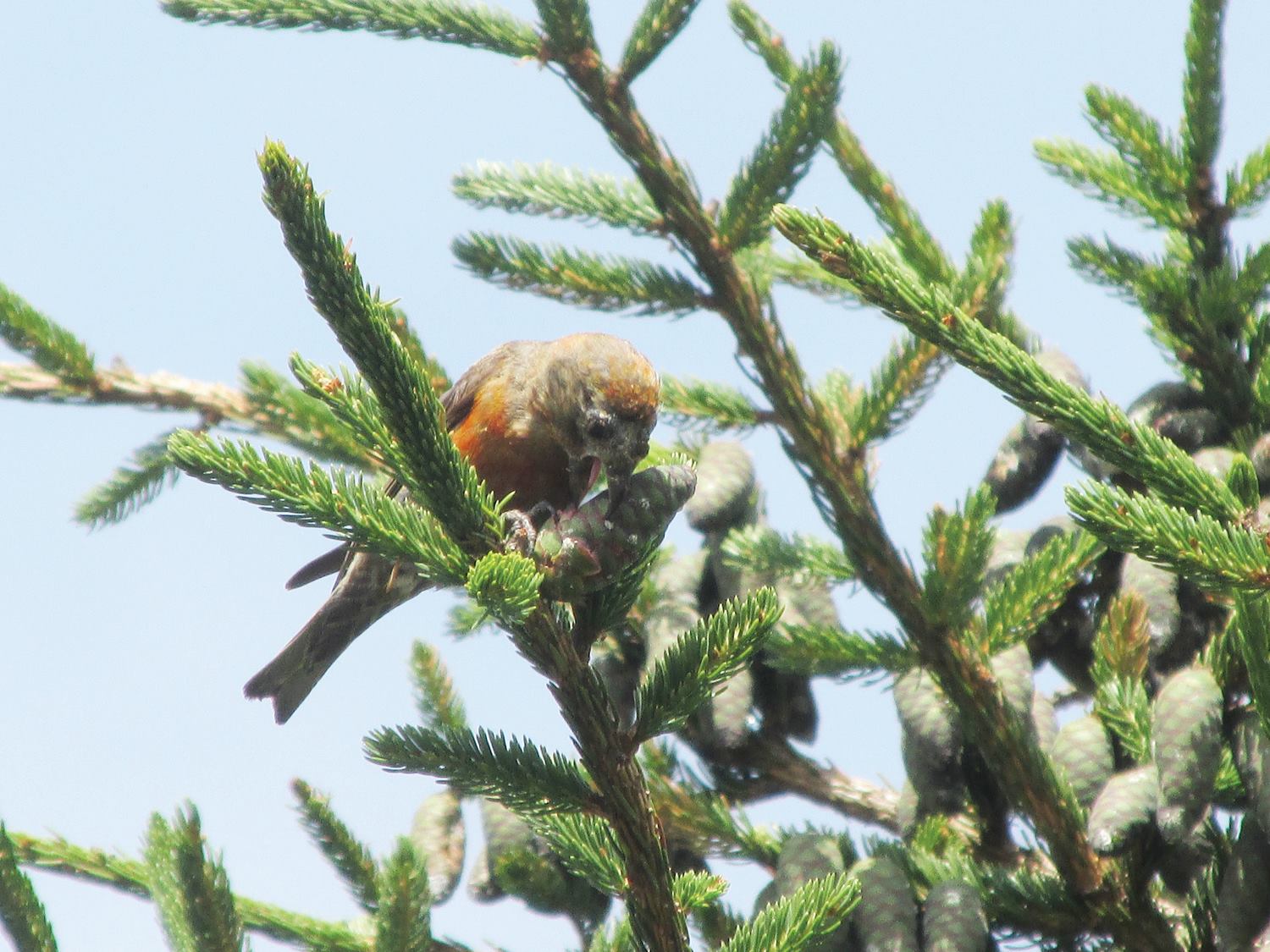
Red Crossbills were found on the Unicoi County Summer Count.

Scarlet Tanager, 29; Northern Cardinal, 97; Rose-breasted Grosbeak, 9; Blue Grosbeak, 3; Indigo Bunting, 129; Red-winged Blackbird, 120; Eastern Meadowlark, 11; Common Grackle, 50; and Brown-headed Cowbird, 46.
House Finch, 29; Red Crossbill, 3; American Goldfinch, 76; and House Sparrow, 26.

•••••

The 23rd annual Summer Bird Count for Carter County was held Saturday, June 18, with 18 observers in seven parties. Strong winds were a problem for most of the day, causing a few missed species and reduced numbers for others. Still, this year’s count managed 108 species, just below the average of 112 for the previous 22 years. The range for this count has varied from 105 species to a high of 121 species. Interesting finds included a Yellow-crowned Night-Heron, a Red-shouldered Hawk, a Eurasian Collared-Dove, a Warbling Vireo, a Brown Creeper and a Hermit Thrush, as well as 18 species of warblers.

The total follows:
Canada Goose, 315; Wood Duck, 4; Mallard, 145; Ruffed Grouse, 2; Wild Turkey, 18; Great Blue Heron, 20; Green Heron, 3; and Yellow-crowned Night-Heron, 1.
Black Vulture, 16; Turkey Vulture, 38; Cooper’s Hawk, 4; Red-shouldered Hawk, 1; Broad-winged Hawk, 2; and Red-tailed Hawk, 5.
Killdeer, 6; Rock Pigeon, 55; Eurasian Collared Dove, 1; Mourning Dove, 110; Barred Owl, 4; Common Nighthawk, 1; Chuck-Will’s-Widow, 2; and Whip-poor-will, 17.
Chimney Swift, 42; Ruby-throated Hummingbird, 25; Belted Kingfisher, 3; Red-bellied Woodpecker, 16; Downy Woodpecker, 4; Hairy Woodpecker, 4; Northern Flicker, 14; and Pileated Woodpecker, 12.
American Kestrel, 1; Eastern Wood-Pewee, 6; Acadian Flycatcher, 14; Alder Flycatcher, 2; Least Flycatcher, 2; Eastern Phoebe, 36; Great Crested Flycatcher, 3; and Eastern Kingbird, 16.
White-eyed Vireo, 4; Yellow-throated Vireo, 3; Blue-headed Vireo, 21; Warbling Vireo, 1; and Red-eyed Vireo, 91.

Waxwing-Pair

Cedar Waxwings were found on both counts.

Blue Jay, 40; American Crow, 237; Common Raven, 3; Northern Rough-winged Swallow, 64; Purple Martin, 43; Tree Swallow, 72; Barn Swallow, 70; and Cliff Swallow, 341.
Carolina Chickadee, 43; Tufted Titmouse, 44; Red-breasted Nuthatch, 7; White-breasted Nuthatch, 7; and Brown Creeper, 1.
House Wren, 31; Winter Wren, 6; Carolina Wren, 51; Blue-gray Gnatcatcher, 12; Golden-crowned Kinglet, 8; Eastern Bluebird, 52; Veery, 20; Hermit Thrush, 1; Wood Thrush, 34; American Robin, 332; Gray Catbird, 24; Brown Thrasher, 16; Northern Mockingbird, 32; Eurasian Starling, 244; Cedar Waxwing, 17.
Ovenbird, 45; Worm-eating Warbler, 7; Louisiana Waterthrush, 6; Black-and-white Warbler, 21; Swainson’s Warbler, 2; Common Yellowthroat, 8; Hooded Warbler, 67; American Redstart, 5; Northern Parula, 6; Magnolia Warbler, 1; Blackburnian Warbler, 1; Chestnut-sided Warbler, 7; Black-throated Blue Warbler, 23; Pine Warbler, 1; Yellow-throated Warbler, 7; Black-throated Green Warbler, 18; Canada Warbler, 16; and Yellow-breasted Chat, 7.

HouseSparrow

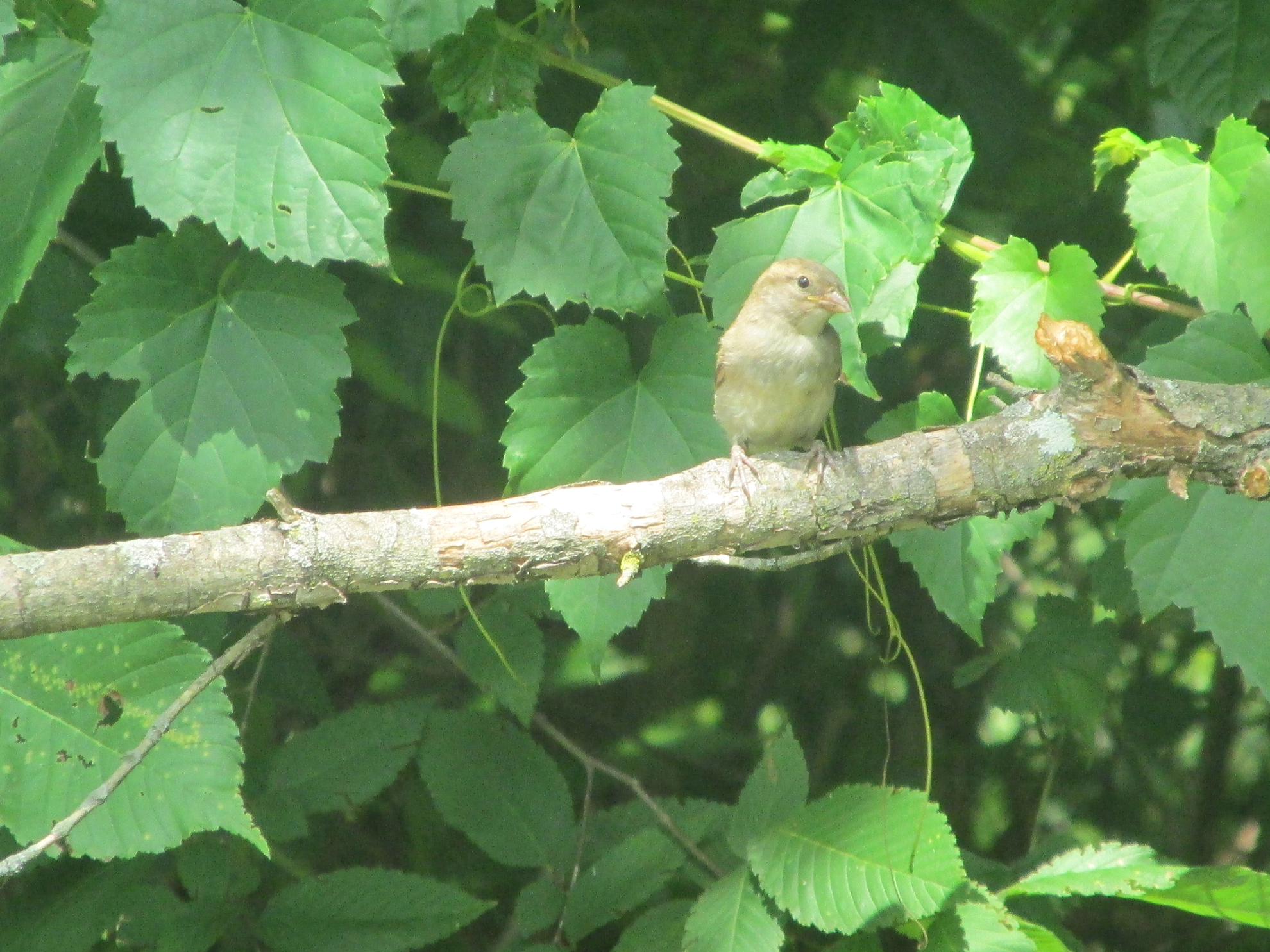
House Sparrows were present for both counts.

Eastern Towhee, 87; Chipping Sparrow, 59; Field Sparrow, 23; Song Sparrow, 121; Dark-eyed Junco, 62; Scarlet Tanager, 19; Northern Cardinal, 80; Rose-breasted Grosbeak, 11; Blue Grosbeak, 5; and Indigo Bunting, 90.
Red-winged Blackbird, 41; Eastern Meadowlark, 14; Common Grackle, 95; Brown-headed Cowbird, 43; Orchard Oriole, 8; and Baltimore Oriole, 2.
House Finch, 40; American Goldfinch, 81; and House Sparrow, 47.

•••••

To learn more about birds and other topics from the natural world, friend me on Facebook at https://www.facebook.com/ahoodedwarbler. He is always posting about local birds, wildlife, flowers, insects and much more. If you have a question, wish to make a comment or share a sighting, email ahoodedwarbler@aol.com.


Baltimore oriole famous for elaborate nest construction as well as bright plumage

Thomas Defriece of Damascus, Virginia, exchanged some Facebook messages with me in the spring about a mystery bird at his home.
He said he heard a bird song he had not previously heard outside a window at his home. When he looked out, he said that he saw “the prettiest bird” that he had ever seen. “It was orange and black, and when it took flight, the tail feathers were yellow,” he shared. “I assume it was a Batlimore oriole. Man, it was so pretty.”

BaltimoreOriole-Two

Photo by U.S. Fish & Wildlife Service                                       A male Baltimore Oriole will seek out elevated perches for the purpose of singing their songs.

He noted that he is originally from Maryland, where the Baltimore oriole has long served as the state’s official bird. “I’ve never seen an oriole, so I was excited,” he wrote in his Facebook message. I believe that he was correct in his identification of a bird that I’ve found rather uncommon in most parts of southwest Virginia, northeast Tennessee and western North Carolina.

 
The Baltimore oriole, despite its bright plumage, is a member of one of the blackbird clans, known in scientific circles as the Icterus genus. In his book, “Birds of Forest, Yard, and Thicket,” John Eastman notes that there are 26 species in the genus, eight of which nest in the United States. In the eastern United States, there are only two orioles — the Baltimore oriole and its smaller relative, the orchard oriole. The western half of the nation is home to a half dozen orioles, including Bullock’s oriole, Scott’s oriole, Audubon’s oriole, hooded oriole and Altamira oriole. I saw several gaudy, noisy Bullock’s orioles during a trip to Utah in May of 2006.

BS-OrchardOriole-Forsythia

Photo by Bryan Stevens                                        A migrating orchard oriole explore a blooming forsythia.

I actually have better luck finding the orchard oriole closer to home. I have learned that tall trees are an essential part of the Baltimore oriole’s favored habitat. Baltimore orioles are well-known for their colorful appearance, but their fame also rests with a sack-like nest that Eastman describes as a “durable marvel of tight-woven plant fibers” in his informational book. Eastman also notes that during another era in America, the Baltimore oriole often built its marvelous nests in American elms before Dutch elm disease almost eradicated these trees from the landscape. He reports that maples, willows and apples have served as nesting trees in the absence of elms. Once the hard-working female oriole sets to work, she may spend eight days or longer weaving plant fibers into a strong pouch suspended from the outer ends of drooping branches. The durability of the nest means that other birds, including house finches, may occupy the old nest once abandoned by the original inhabitant.

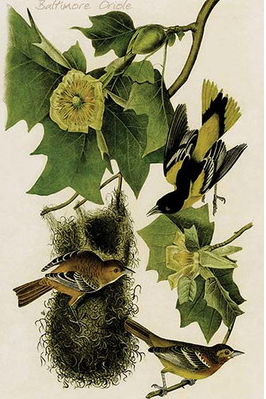
Baltimore-Oriole-by-John-James-Audubon-Graphic-Art-0-587-64671-L

Early naturalist and artist painted the Baltimore Oriole with the birds unusual nest.

Orioles are present in the region from April to October, generally retreating to the American tropics for the cold months of winter. There they may live on plantations that produce such much-coveted crops as bananas, coffee and cacao, which is the essential ingredient for chocolate.
The Baltimore oriole is named in honor of one of the founding fathers of the state of Maryland. George Calvert, or Baron Baltimore, was an influential English colonist instrumental in establishing the colony of Maryland. His servants wore orange and black uniforms, which inspired early American naturalist Mark Catesby to name the bird the Baltimore oriole. The bird’s association with the the city of Baltimore and the state of Maryland have continued to this day. The bird is also famous as the namesake of one of America’s professional baseball teams.

 
Baltimore orioles eat insects and fruit, but these adaptive birds have also developed a fondness for sweet nectar. Orioles no longer have to raid sugar water feeders meant for hummingbirds. Many manufacturers of bird-feeding equipment now produce affordable sugar water feeders specifically designed for use by orioles. Many bird enthusiasts also use orange slices and grape jelly to lure orioles into their yards. I’ve tried these tricks, but I’ve attracted more gray catbirds and scarlet tanager than I have orioles.
Close relatives of the orioles are the oropendolas of South and Central America. Oropendolas are large birds with pointed bills and long tails. They are usually also at least partially bright yellow in their coloration. The oropendolas put the oriole to shame, however, when it comes to building nests. Although of the same basic design of an oriole’s nest, the oropendolas construct pendulous nests that may hand down more than three feet. These birds, unlike orioles, nest in colonies. So these huge, hanging nests are multiplied, with a single tree sometimes holding dozens of nests.

BaltimoreOriole-FWS

Photo by U.S. Fish & Wildlife Service The Baltimore oriole is a bird known for its bright plumage.

If you’re fortunate enough to have a Baltimore oriole as a neighbor, it isn’t only their bright coloration and elaborate nest building that recommend these birds. They’re also one of the few birds willing to eat the hairy tent caterpillars that are often a blight on the landscape. Back in the late 1990s, I observed a male Baltimore oriole visiting a large caterpillar tent in the branches of a cherry tree. The bird methodically plucked the caterpillars from the silken tent, eating them one after the other. While many birds avoid some of the spiny and hairy caterpillars, orioles actively seek them out and do a great service of reducing the damage these hungry caterpillars can inflict on the environment.

BaltimoreOriole

Photo by Bryan Stevens                                                   Baltimore orioles often perch in the tree canopy, making them difficult to observe.

Orioles must have found the Defriece home in Damascus to their liking. In subsequent Facebook messages, Thomas informed me that he has seen the male oriole again, as well as a female. Perhaps the birds decided the location was a good one for nesting.


For most of our birds, the nesting season is winding down. A few species, like cedar waxwing and American goldfinch, are just now starting to think about nesting, but most birds have already finished with the work of ensuring a new generation of their species. At my home, I’ve been seeing young birds join their parents at my feeders. Northern cardinals, Carolina chickadees, song sparrows, and white-breasted nuthatches have all introduced their offspring to the supplemental food provided by my feeders.
••••••

To learn more about birds and other topics from the natural world, friend Stevens on Facebook at https://www.facebook.com/ahoodedwarbler. He is always posting about local birds, wildlife, flowers, insects and much more. If you have a question, wish to make a comment or share a sighting, email ahoodedwarbler@aol.com.

Seeing their reflections triggers aggressive behavior in robins, other birds

10296052_10202842919586443_3829607003488944484_o

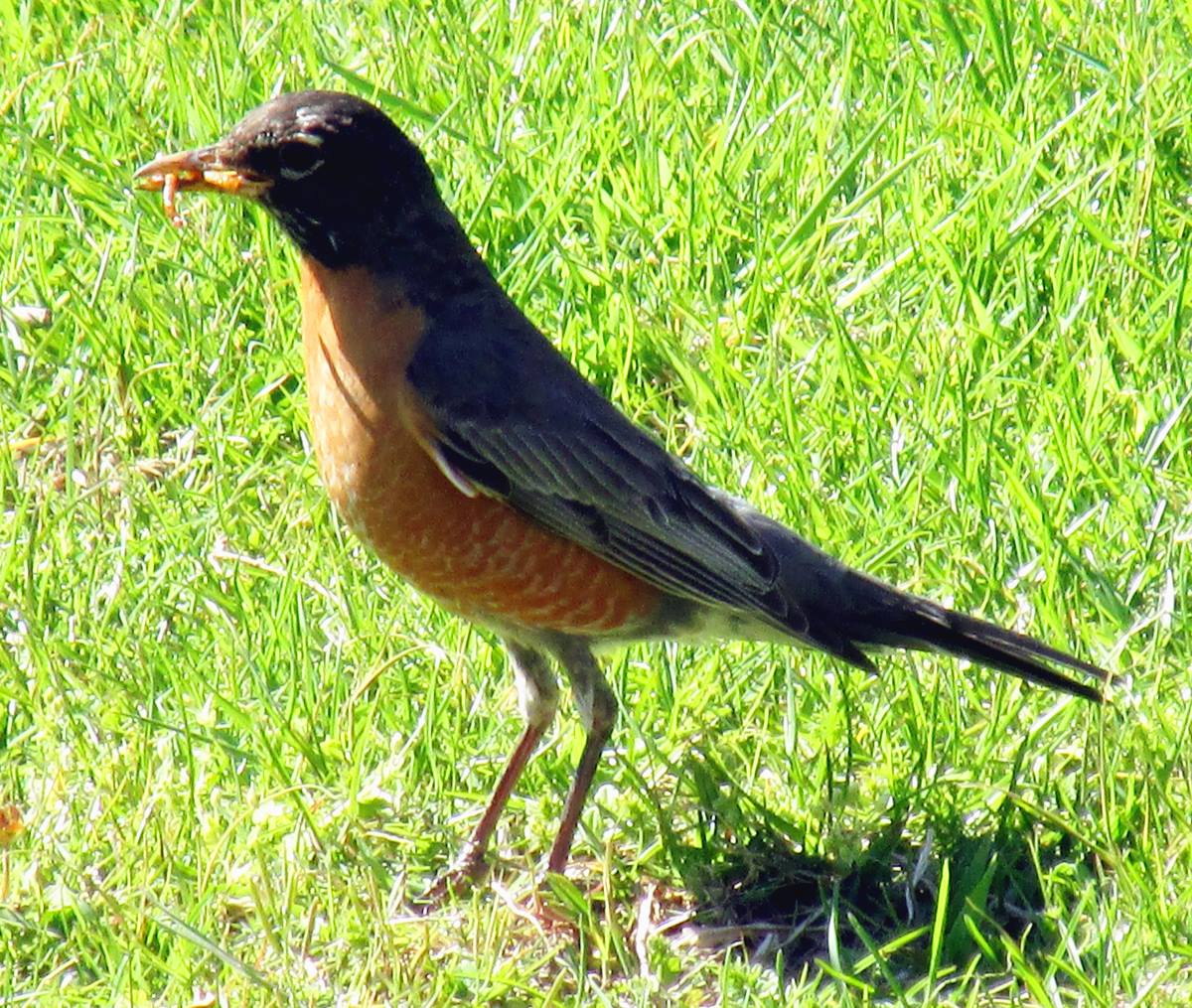
Photo by Bryan Stevens                                                An American robin forages for food to take back to hungry young.

I’ve gotten a couple of questions recently on a puzzling problem regarding American robins and windows. To be more specific, the robins are throwing themselves against windowpanes in the mistaken assumption they are safeguarding territory from intruders.


Sheila Myers, a resident of Seven Mile Ford, Virginia, wrote to me a few weeks ago about her problem with a robin. “The bird started bumping my window April 14,” Sheila explained in an email. “I covered the window with plastic bags and newspaper strips, but the bird would still fly around the obstacles.” When she removed the obstacles, the bird came back again.  

Sheila also shared an interesting encounter with one of our larger birds.

“As I was driving home some time ago, I was coming up a hill and  almost collided with an eagle,” she wrote. “The eagle had a possum in its talons.”

As much as it was a surprise for Sheila, the encounter was also a shock for the eagle.  “The eagle dropped its prey and was able to soar just above my van,” Sheila wrote. “It was quite a beautiful experience.”


In addition to Sheila’s email seeking a solution to her robin problem, I also received a message from Phil Rust, who is also having a similar problem with a male robin. “Hopefully you can help us with a major problem at our home,” Phil wrote. “Since early spring robins have been attacking several of our windows about 8 to 9 a.m. daily.”

Phil explained that the robins fly into the glass from top to bottom leaving a mess all over.  “The sills are covered with droppings and they peck the glass violently,” he added. “Removing all their mess has not deterred them.  Rubber snakes in the sills hasn’t phased them either. Any suggestions please?”

The problem is rooted in bird biology and isn’t readily solved by anything people can do to deter the robins. The offenders are probably male robins with surging spring hormones. The robins are seeing their reflections and think it is another male robin. Birds under the influence of their hormones get very single-minded. Given some time, he will probably lose interest in your windows.

Cardinal-MorePlease

Photo by Bryan  Stevens                                 Northern Cardinals can also be tricked into attacking their reflections in a window pane during the nesting season when elevated hormones affect the bird’s behavior.

This problem isn’t confined to American robins. I’ve experienced a similar situation myself with a female Northern cardinal. In her case, her nest was near a window at the back of the house. When she would catch sight of her reflection, she assumed another female had encroached into her nesting territory.


I’ve also seen Eastern bluebirds and dark-eyed juncos attack the exterior mirrors on parked vehicles. The junco was attacking the mirrors of several cars parked in a lot at Roan Mountain State Park in Tennessee. No sooner would the bird tire of attacking one mirror than it would catch sight of its reflection in another mirror. The small bird seemed quite tireless in its determination to rid the vicinity of all rival juncos. 

The case with the bluebird involved cars in a workplace parking lot. The mirrors were getting quite messy, but the cause remained a mystery until a co-worker caught a male bluebird in the act of vandalizing the mirrors on one of the parked cars. The male bluebird and his mate were actually raising young in a nearby nest box.  

In these cases, the birds are responding exactly as their brains are wired to respond. They don’t have the means to differentiate their own reflections from actual rival birds. So, their behavior is likely to continue until their hormones begin to wane near the conclusion of the nesting season.

Most of the robins that returned earlier this spring have already had time to complete one nesting. I’ve even seen some hard-working parent birds delivering food to baby robins waiting impatiently on a perch for these frequent deliveries. Robins will often nest a second and even a third time in a season.

13323221_10208158977044557_4952701993341053949_o

Photo by Bryan Stevens                                        Once the nesting season concludes, most reflection-attacking birds will return to their senses.


Despite occasional lapses into attacking windows and vehicle mirrors, robins are beloved by most people. We’ve even made the American robin the official state bird in Wisconsin, Michigan and Connecticut. 

••••••

To learn more about birds and other topics from the natural world, friend Stevens on Facebook at https://www.facebook.com/ahoodedwarbler. He is always posting about local birds, wildlife, flowers, insects and much more. If you have a question, wish to make a comment or share a sighting, email ahoodedwarbler@aol.com.


Annual Spring Naturalists Rally returns to Roan Mountain April 22-24

Bloodroot-Last

Photo by Bryan Stevens  Spring blooms, like this Bloodroot, are still a major focus, but a variety of other topics of natural history have expanded the offerings at this annual event.

Organizers of the 58th annual Roan Mountain Spring Naturalists Rally are pleased to announce this yearly event will continue the tradition of offering nature enthusiasts the opportunity to enjoy field trips and engaging programs that cover many aspects of the natural history of Roan Mountain and the surrounding area.
The Roan Mountain State Park’s Conference Center will host programs, meals, information booths and registration, while field trips will leave from the field on the left before entrance to the cabins in the park. Registration will also be available at the field prior to the field trip departures.

Because of the continued support of the Friends of Roan Mountain, the seasonal Naturalists Rallies have the resources they need to prosper and grow. The Friends of Roan Mountain also provides support for research and restoration projects on the Roan.

Salamander-Pretty

Photo by Bryan Stevens                            Everything from salamanders and dragonflies to edible plants and geology provides a diversity of subjects for the many hikes and programs of the annual rally.


Consider joining the Friends of Roan Mountain, if you are not a member. There are plenty of perks for members, who receive free admission to all Naturalists Rally events and regular editions of the organization’s newsletter, “Friends of Roan Mountain.”

This year’s Spring Naturalists Rally will be held Friday-Sunday, April 22-24. Featured evening speakers for this year’s event are Liz Domingue and Mick Whitelaw. Their programs will feature the topics of butterflies and moths, as well as Roan Mountain’s historic association with the Tweetsie railroad.

CarolinaSatry

Photo by Bryan Stevens                           Butterflies, such as this Carolina Satyr, and moths will provide the focus for Liz Domingue’s evening program at this year’s rally.

Domingue is a naturalist, educator, photographer, writer and guide. Her interest in and study of natural history has been her lifelong pursuit and passion. Through photography, observation, and research, she has studied wildlife, plants, and the natural world in the United States and abroad. She is a co-author of the field guide, Butterflies & Familiar Moths of the Smokies (soon to be in press) and a contributing writer for Smokies Life. In addition, she has served as a contributing writer, photographer and consultant for McGraw-Hill Science Textbooks. Her photos have been published in a variety of books and magazines. Domingue leads guided interpretive hikes and Naturalist Adventure Tours, and conducts environmental education programs for youth, adults, and fellow educators through her own business, “Just Get Outdoors.”

The history of Roan Mountain goes back almost two billion years and includes major mountain building events that created the biggest iron ore deposit known in the eastern United States. Much, much later, high grade magnetite ore was discovered on Roan Mountain after the War of 1812 and was later smelted by the Confederates in a local bloomery. In 1881 a train line designed to bring the ore from Roan Mountain to Johnson City for smelting was begun. The train served the iron mine until 1929 and local communities until 1950 and became known as the “Tweetsie”. This talk
will review the history of the Roan Mountain iron mines and the little train with a heart.

Mick-Whitelaw

Mick Whitelaw

Dr. Mick Whitelaw received his bachelor’s of science degree in geology at Monash University, Melbourne, Australia in 1983 and a doctorate from the University of Florida in 1990. He held instructor positions at the University of Texas, El Paso and the University of Louisiana, Lafayette, before taking his current position in the Department of Geosciences at East Tennessee State University in 2003. He specializes in stratigraphy and the geology of the East Tennessee region and serves as site geologist for the Gray Fossil Site.
For more information or a brochure of the specific events, including a reservation form for all activities, including the Friday and Saturday evening meals, visit http://www.friendsofroanmtn.org/Spring%202016%20Rally%20Brochure.pdf

Caterpillar-AprilTroutLily  DwarfLarkspurCabbageWhite_Close HummerMoth-2004

At age 65, Wisdom is a mother yet again

For about a decade, I have been following the story of one of nature’s oldest mother birds. I’ll share it with you for my Easter 2016 post.

Wisdom_Returns_to_Feed_Her_Chick

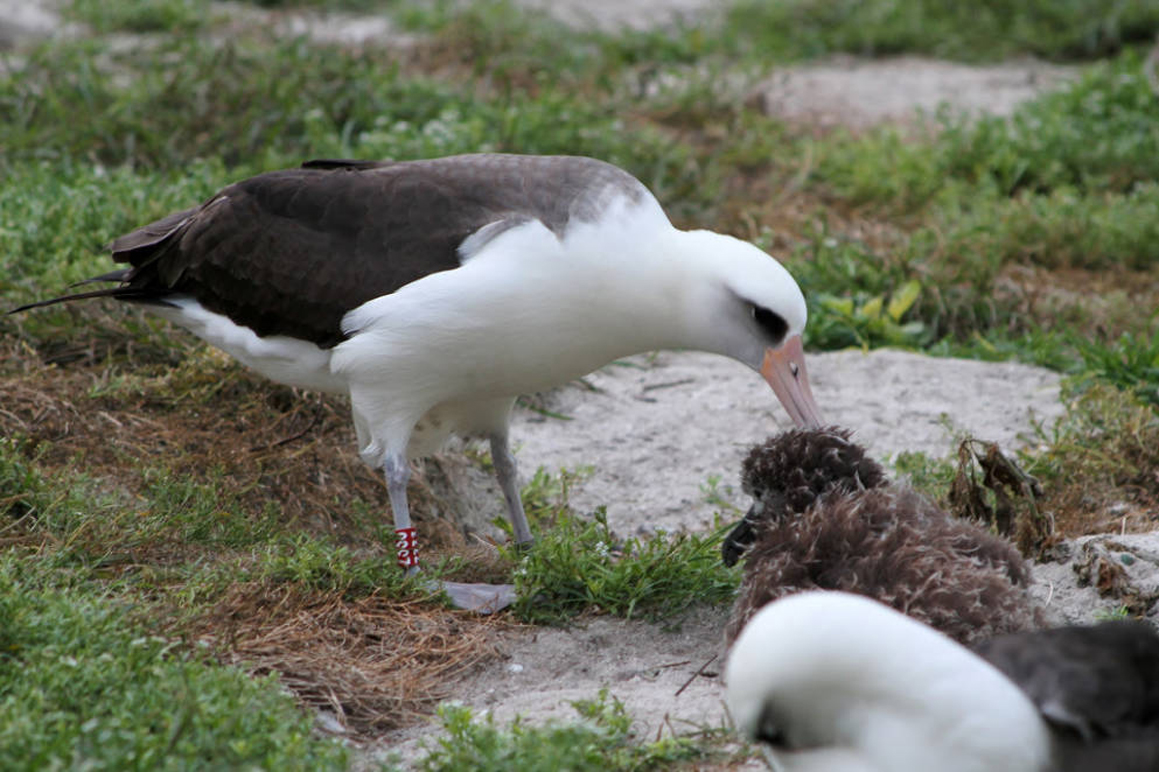
Photo by U.S. Fish & Wildlife Service                      Wisdom is shown with a chick born in 2011. Mother and chick survived a powerful tsunami that claimed the lives of other albatrosses, both adults and chicks.

The oldest known breeding bird in the wild, a Laysan albatross named Wisdom – she’s at least 65 years old – became a mother again last month. Wisdom lives with her mate, Akeakamai, at Midway Atoll National Wildlife Refuge, part of Papahanaumokuakea Marine National Monument.

The chick was observed still coming out of its shell on February 1, 2016, and days later was named Kukini, which is a Hawaiian word for messenger. Wisdom’s mate had been on the nest since Jan. 20 when he took over incubation duties while Wisdom headed out to sea. Wisdom returned just as the Super Bowl ended with her belly full. Shortly after Wisdom’s return, Wisdom’s mate was on the march towards the shoreline and immediately took flight in search of food.

“Wisdom is an iconic symbol of inspiration and hope,” noted Refuge Manager Robert Peyton in a press release on the subject of the hatching of Wisdom’s latest chick.

Peyton explained that from a scientific perspective, albatrosses are a critical indicator species for the world’s oceans that sustain millions of human beings as well. In the case of Wisdom, she is breaking longevity records of previously banded birds by at least a decade.

Laysan_albatross_nesting_on_Eastern_Island (1)

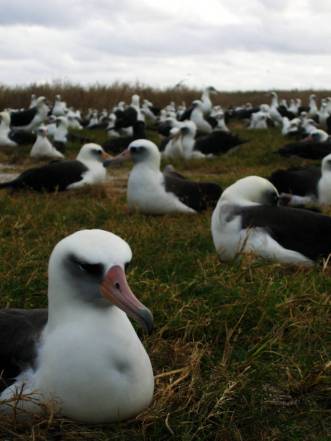
Photo by David Patte/U.S. Fish & Wildlife Service       Midway Atoll National Wildlife Refuge is home to the largest colony of albatrosses in the world.

“With over a million albatrosses on Midway Atoll alone, this shows just how much is left to learn about the natural world around us,” Peyton said.

The story of this amazing bird is even more astonishing given her maternal success. Wisdom has raised at least eight chicks since 2006, and as many as 40 in her lifetime. Just as astounding, she has likely flown over three million miles since she was first tagged on Midway Atoll in 1956.

To put things in perspective, consider this statement by Bruce Peterjohn, Chief of the Patuxent Wildlife Research Center’s National Bird Banding Laboratory.

“That is up to six trips from the Earth to the Moon and back again,” he noted “What is also miraculous is that biologist Chandler Robbins, who banded her as a breeding adult in 1956 on Midway Atoll, sighted her 46 years later near the same nesting location.” Today, at the age of 97, Robbins still comes to work on occasion doing what he loves to do.

Wisdom’s chick is not the only bird in town. Albatrosses arrive on Midway Atoll in late November by the hundreds of thousands. In December U.S. Fish and Wildlife Service volunteers counted 470,000 active nests across the entire atoll – since each nest represents two adults, the total breeding population at Midway is 940,000. A low estimate of Midway’s overall population, this number doesn’t account for the non-breeders present in the colony, resting, searching for a mate, and practicing their mating dance skills.

Wisdom has nested since the late 1950s on Midway’s Eastern Island behind Bravo Barracks. She was banded as a nesting adult in the same location by Robbins in December 1956. Robbins estimated that she was a minimum of five years old at the time. Another albatross — a Northern Royal Albatross that lived on the South Island of New Zealand and was named “Grandma” — reached a banded age of 51.5 years and probable actual age of 61 years or more. Wisdom and her mate have successfully fledged a chick annually in recent years. She is the world’s oldest Laysan albatross. If human, she would be approaching senior citizen status today.

Laysan_albatross

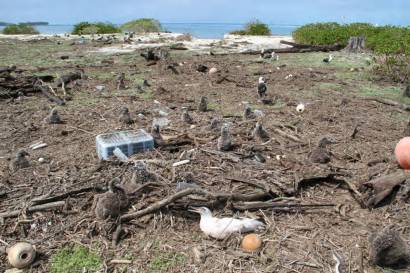
Photo by Pete Leary/U.S. Fish & Wildlife Service                         Both adults and chicks got stuck in debris and had to be rescued in the wake of the huge tsunami that washed over the island back in 2011.

Wisdom, as well as her chick, survived the same tsunami that laid waste to much of Japan on March 10, 2011. FWS released an official announcement five days after the natural catastrophe stating that surveys of the three islands revealed that more than 110,000 albatross chicks – about 22 percent of that year’s albatross production – were lost as a result of the tsunami and two severe winter storms that hit in January and February. At least 2,000 adults also died.

Even through such setbacks, Wisdom has thrived. She is one very special creature. FWS personnel who have worked on these islands to monitor albatross and other bird populations cherish her, and not only because she has provided valuable information about the longevity of these majestic birds. Wisdom weighs only eight pounds, but she has been producing chicks to increase the population of her kind for half a century.


Surviving_Laysan_Albatross_Chick

Photo by Pete Leary/U.S. Fish & Wildlife Service  This fortunate Laysan albatross chick survived the tsunami that surged over the island back in 2011.

The Laysan Albatross, Phoebastria immutabilis, is a large seabird that ranges across the North Pacific. Compared to other relatives in the albatross family, the Laysan Albatross is a small bird. It is the second most common seabird in the Hawaiian Islands, with an estimated population of 2.5 million birds. Although numbers are thought to be increasing, the Laysan Albatross has not recovered from extensive hunting that drastically reduced the population in the early 1900s.


If you would like to see a video of a Laysan albatross feeding a chick, visit https://www.flickr.com/photos/52133016@N08/12310107385/


Getting to know the ‘little brown warblers’

Worm-eatingWarbler

Photo by Dan Sudia/USFWS                                                          The Worm-eating Warbler’s subtle plumage sets it apart from more colorful members of the warbler family.

When I am asked why the warblers are one of my favorite families of birds, I often tell the questioner I enjoy warblers for the splash of bright colors many of them bring to our local woodlands. Strictly speaking, however, that’s not true for every warbler. In fact, some of them are little brown birds lacking any brights colors such as orange, red, yellow or green.

One of my favorite brown warblers is the Worm-eating Warbler. I suppose I have a sentimental attachment because it is one of the first warblers I ever saw. Sadly, Worm-eating Warblers have disappeared or declined in some areas due to habitat loss. They are also vulnerable to nest parasitism by Brown-headed Cowbirda. A few of these warblers routinely made their home each summer in the woodlands around my home for many years. Unfortunately, they do not seem as common as they were a decade ago. I’m not sure if the habitat has changed or if this subtly understated warbler has simply become less common. The Worm-eating Warbler favors steep slopes with dense understory.

2669329625_a5a6b7d951_o (1)

Photo by Jean Potter                                                                              The Worm-eating Warbler nests during the summer months throughout the eastern United States.

The Worm-eating Warbler’s breeding range stretches from southeastern Iowa, Ohio, New York and southern New England south to northeastern Texas, central Gulf Coast states and eastern North Carolina. This warbler, like most of its kin, winters in the tropics, migrating each autumn as far as southern Mexico and Central America.

This warbler’s appearance is not at all flashy, especially compared to warblers with much brighter plumage such as the American Redstart, Blackburnian Warbler and Chestnut-sided Warbler. The Worm-eating Warbler’s head and underparts are buffy, and the bird has a unique head pattern consisting of black crown stripes and a dark stripe through the eye. The Swainson’s Warbler is similar, but larger and warm brown rather than buffy in coloration.

At a glance, the Worm-eating Warbler might also be mistaken for a wren or small sparrow. Known by the scientific name of Helmitheros vermivora, the Worm-eating Warbler is the sole member of the genus Helmitheros.

At first, this bird would be seem to be one of the misnamed warblers. On closer examination, however, its name is quite appropriate. While it does not feed on earthworms, this warbler is quite fond of caterpillars, which are often referred to — mistakenly — as worms. They also feed on insects and spiders.

07347 2

This painting of Worm-eating Warblers by John James Audubon shows the birds probing in dry leaves for small caterpillars.

The Worm-eating Warbler does have a distinctive feeding behavior that I have observed on numerous occasions. These birds like to hang upside-down beneath a cluster of dry or dead leaves. They use a relatively long bill to probe for insects or caterpillars concealed within the mass of leaves. More often than not, their search is rewarded with some sort of prey item.

The male and female Worm-eating Warbler are identical. The female builds a nest on the ground, which she attempts to hide among dead leaves. She lays four or five eggs, which she incubates herself. Once the young hatch, her mate does help feed them. The parents also guard the nest and are known to try to distract potential predators by feigning injury.

In the spring, when the males are singing persistently, these birds can easily be located by their song. The male sings a short, high-pitched trill that is similar to the song of the Chipping Sparrow.

8717339267_b6a3d5217d_o

Photo by Jean Potter                                                                                The Ovenbird is another of the brown warblers that nest in North America.

Other brown warblers include Ovenbird, Swainson’s Warbler, Northern Waterthrush and Louisiana Waterthrush. Like these four species, the Worm-eating Warbler is a summer nesting bird in Northeast Tennessee.
This fall has been a good time to see warblers. Some of the more common ones I have noticed in the yard so far have included Tennessee Warbler and Black-throated Green Warbler.

Here’s some trivia for you should you ever find yourself competing on the game show “Jeopardy” and the category is “Warblers.” Four of our warblers — Kentucky Warbler, Louisiana Waterthrush, Connecticut Warbler and Tennessee Warbler — bear common names that honor states. The Kentucky Warbler and Tennessee Warbler are named for the states where they were first found and described by ornithologist Alexander Wilson in 1811. Neither the Tennessee Warbler or Kentucky Warbler are particularly affiliated with the states for which they were named. In fact, the Tennessee Warbler passes through the Volunteer State only for a few weeks each year during spring and fall migration. Its closest breeding range is in Michigan and these warblers spend the winter in Mexico or farther south.

Here’s something that might also come in handy in a test of your knowledge of trivia some day. Not only is the Tennessee Warbler named for the state, but the capital city of Nashville also has its name linked another member of the warbler clan, the Nashville Warbler.

Mocker-Beach

Photo by Bryan Stevens                                                                            The Northern Mockingbird has served as the state bird of Tennessee since 1933.

Should we ever decide to drop the Northern Mockingbird as state bird, the Tennessee Warbler would already pay tribute to our state with its common name. Of course, there is that inconvenient truth that the warbler is only a brief visitor to the state each year. I don’t foresee any plan to remove the mockingbird from its official designation. The Northern Mockingbird was selected in 1933 as the official bird for the Tennessee. This relative of the Brown Thrasher and Gray Catbird also serves as the state bird for Arkansas, Florida, Mississippi and Texas. At my home, Northern Mockingbirds are usually evident only during the winter months. I haven’t seen one at home so far this year.