Tag Archives: Feathered Friends

Diversity of birds a plus for Hungry Mother State Park’s launch of birding festival

IMG_3203

Photo by Bryan Stevens                                                                 A singing male Orchard Oriole entertained festival attendees during a Saturday morning bird walk.

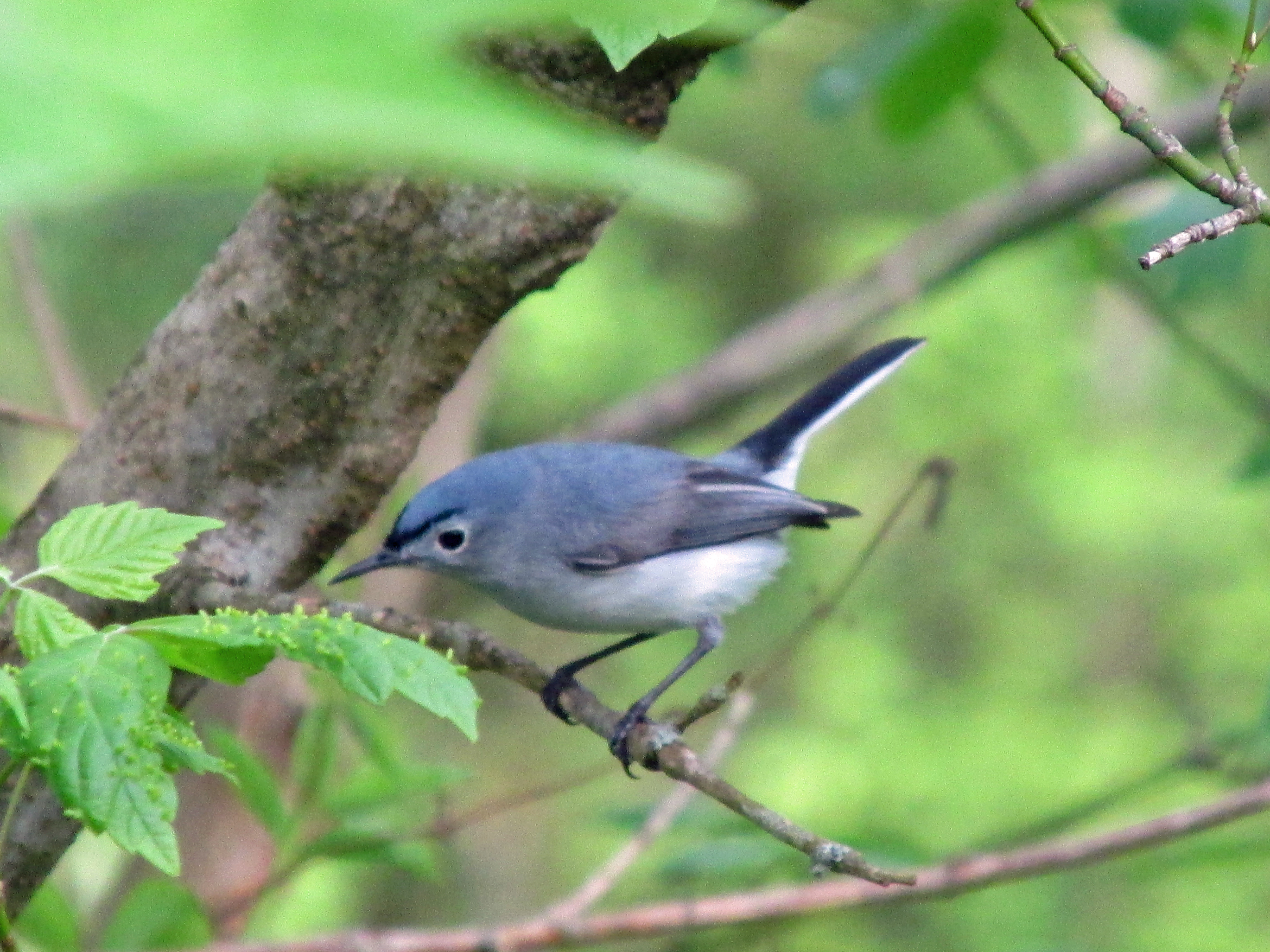
I’m just back from attending the first-ever Birding Festival at Hungry Mother State Park. It was a wonderful weekend filled with exciting observations of birds such as Baltimore Oriole, Orchard’s Oriole, Great Egret, Solitary Sandpiper, Spotted Sandpiper, Red-breasted Mergansers and even a pair of nesting Blue-gray Gnatcatchers.

IMG_3171

Photo by Bryan Stevens                                      “I think we’re safe,” said one Northern Rough-winged Swallow to the other. “Swallows don’t have arms.”

The park is located in Smyth County near the town of Marion, Virginia, and is accessible just off of Route 16 near interstate 81. The park offers visitors more than 2,000 acres of wooded mountainous terrain, a large lake, several miles of trails for hiking and biking, a conference center, camping, picnicking, a lakeside beach for swimming, and a discovery center to learn about the area.

The festival, which was held Friday-Sunday, May 1-3, meshed nicely with other recreational opportunities offered at HMSP. Tanya Hall, the Chief Ranger of Visitor Experience, noted that  Hungry Mother is one of the more popular parks in Virginia.

IMG_3721

Photo by Bryan Stevens                   A kayaker glides across Hungry Mother Lake.

“We have 18 miles of trails that you can either hike or bike and we have a 108-acre lake that has various species of fish available to catch,” Hall noted.

Sport fish in the lake including largemouth, smallmouth and spotted bass, as well as crappie, channel catfish, carp, sunfish, rock bass, muskellunge, and walleye.

The lake is also a favorite destination for swimmers, canoeists, kayakers and paddleboarders, which were all in evidence during this weekend’s events.

Hall said the park is also fortunate to have an “awesome interpretation department” that hosts numerous programs each day that are offered not only to camping and cabin guests, but also to the public.

IMG_3718

Photo by Bryan Stevens                                  The Hungry Mother State Park Restaurant, which offers lunch, dinner and a Sunday brunch.

Hall said the park also has one of the most unique names of all Virginia’s state parks. There’s also a unique legend tied to the name, which is associated with Molly’s Knob, the highest point in the park.
IMG_9078

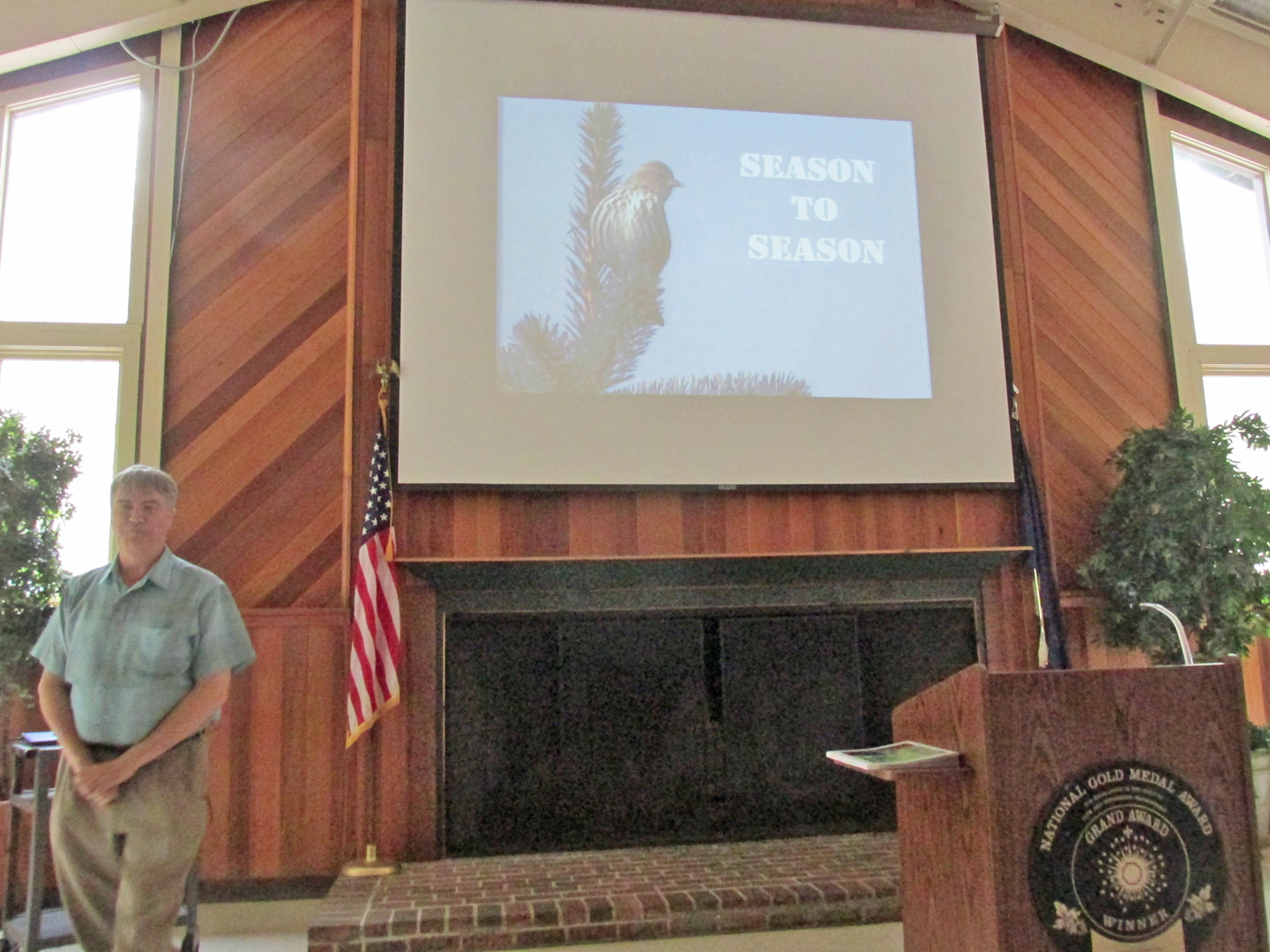
Photo by David Thometz                             Beginning my pictorial program, “Season to Season,” for the Friday evening audience at the Hungry Mother State Park Birding Festival.

According to local legend,  Indians destroyed several settlements on the New River south of the park, resulting in Molly Marley and her small child being taken to the raiders’ base north of the park. Molly and her child eventually escaped and wandered through the wilderness, surviving by eating berries. Molly finally collapsed and her child wandered down a creek until she found help. The only words she could impart to rescuers were “Hungry Mother.” Unfortunately, by the time a rescue party arrived at the foot of the mountain where she had collapsed, they found Molly dead. Today, the mountain is called Molly’s Knob and the stream is known as Hungry Mother Creek. So, when the park was developed in the 1930s, a dam was constructed to block the creek and form Hungry Mother Lake. The legend also provided the name for this very unique park.

IMG_9091

Photo by David Thometz                                                    Looking for Virginia Rails at the wetlands at Saltville.

I presented a program on birds and nature through all four of the seasons. I got to meet many people that I have corresponded with through Facebook and email. I also got to meet some interesting new people.

The festival also featured Richard Moncrief, who is the Birding and Nature Observation Market Manager for Carl Zeiss Sports Optics. Montcrief presented two programs on “Binocular Know How” and a very informative and entertaining “Birding Basics.” Some local Master Naturalists, including Melanie Smith and Randy Smith, gave programs on “Birding by Ear” and “Backyard Birding.”

Another highlight of the festival included an excursion to nearby Saltville to bird the wetlands in that historic southwest Virginia town.

I overheard plenty of discussion that the festival should become an annual event, and I certainly concur with that sentiment. I know I’d like to visit again next May.

IMG_9162

Photo by David Thometz                                                                                                                      Trying to get that perfect angle for a photo.

IMG_3169

Photo by Bryan Stevens                                                                                                                                A male Baltimore Oriole sings from the top of a tall tree.

IMG_9117

Photo by David Thometz                                                                                                                                  If you look in the right corner of this outdoor fireplace, you’ll find a Mallard hen that has chosen an unusual nesting location.
IMG_3206

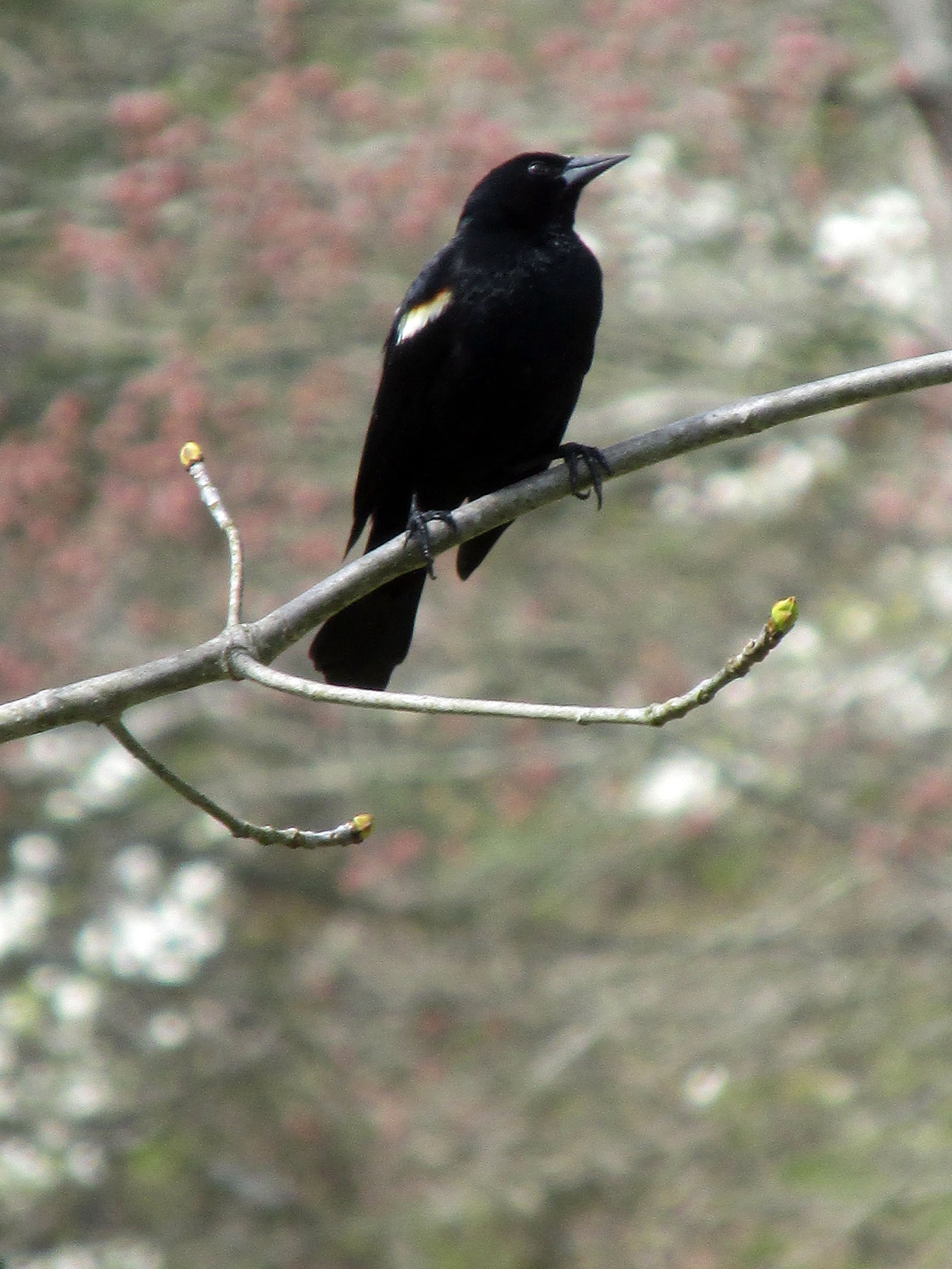
Photo by Bryan Stevens              Red-winged Blackbird
IMG_3162

Orchard Oriole


IMG_3307

Great Egret

IMG_3192

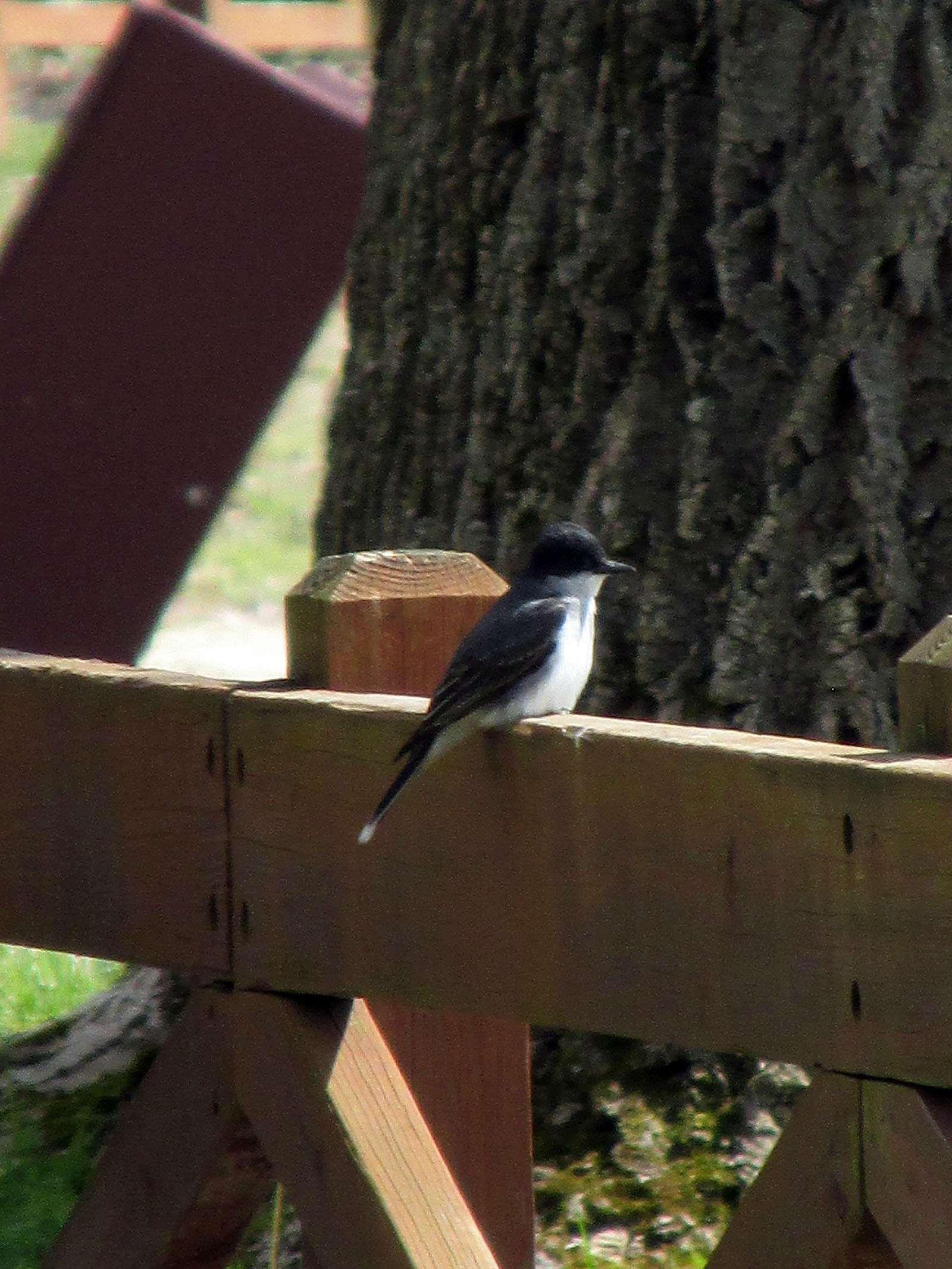
Eastern Kingbird

IMG_3133

Sign promoting activities during the Birding Festival.


More than halfway to my goal of 100 yard birds in 2015

Yellow-Crowns-April19

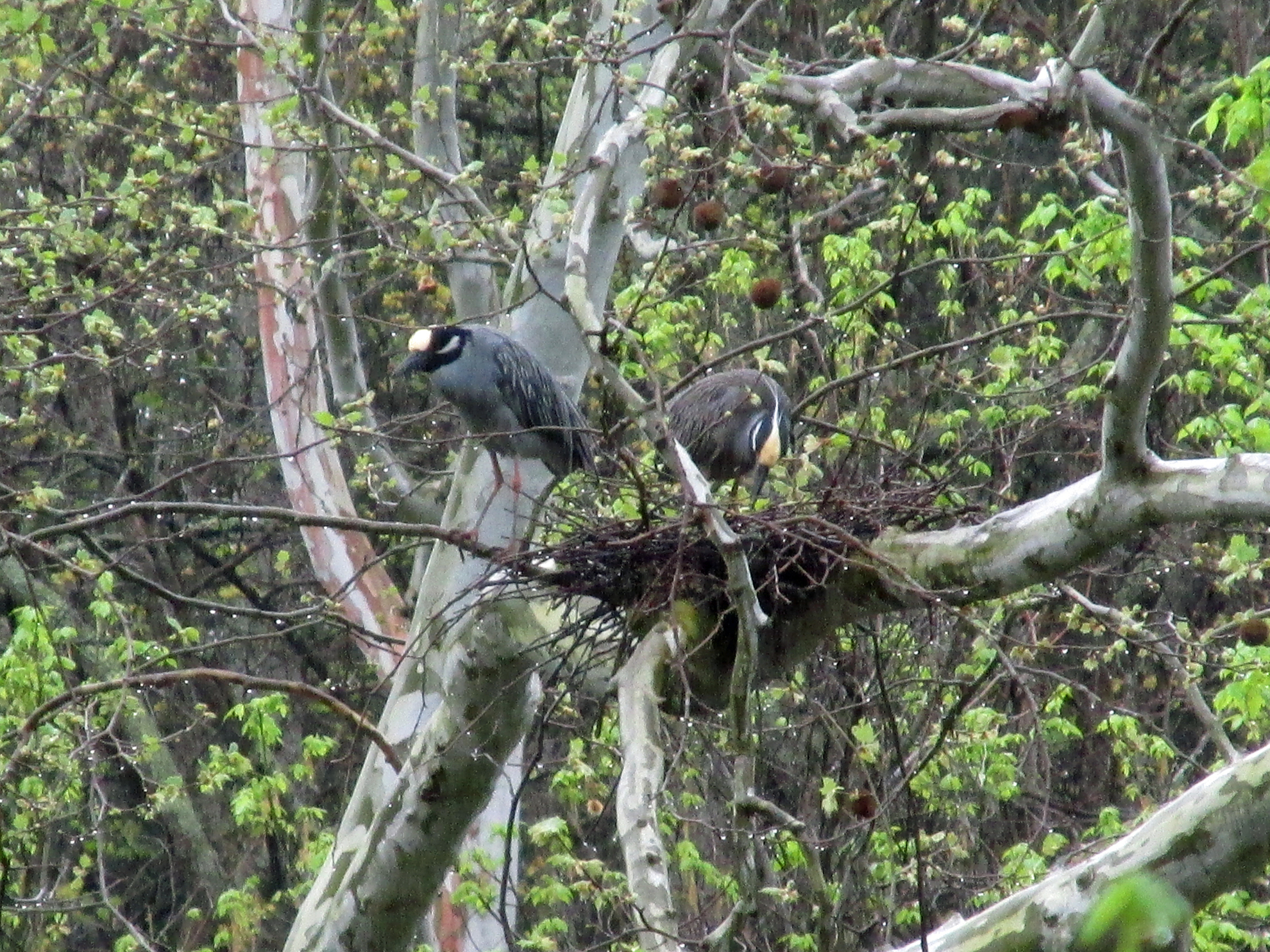
I would love to add Yellow-crowned Night-Heron to my yard list. Great Blue Herons, Black-crowned Night-Herons, Green Herons and Great Egrets have visited the creek and fish pond at my home, but I’ve never had a visit from a Yellow-crowned Night-Heron. I photographed this pair on a nest along the Watauga River on Blevins Road.

On April 19, a singing male Black-throated Green Warbler became the 50th bird species to make an appearance in my yard this year.

Back at the start of this year, I considered trying for another “big year” in the five-county area of Northeast Tennessee that consists of the counties of Carter, Johnson, Sullivan, Unicoi and Washington.

However, such an undertaking requires a lot of travel and expense, as well as an immense dedication of time. After a 2014 marked by many personal upsets, I didn’t feel capable of making an attempt. Considering I last undertook a “big year” effort back in 2013, I felt it was too soon for me to try this again.

BG-Gnat-April25

The Blue-gray Gnatcatcher, an early bird among spring migrants, arrived on Easter Sunday, April 5, this year. It was Bird No. 42 on my yard list for 2015.

Instead, I’ve focused my attention on the birds that come calling to my yard, fish pond, the creek and the surrounding woodlands. Over the years, I’ve enjoyed some amazing visitors from a variety of feathered friends.

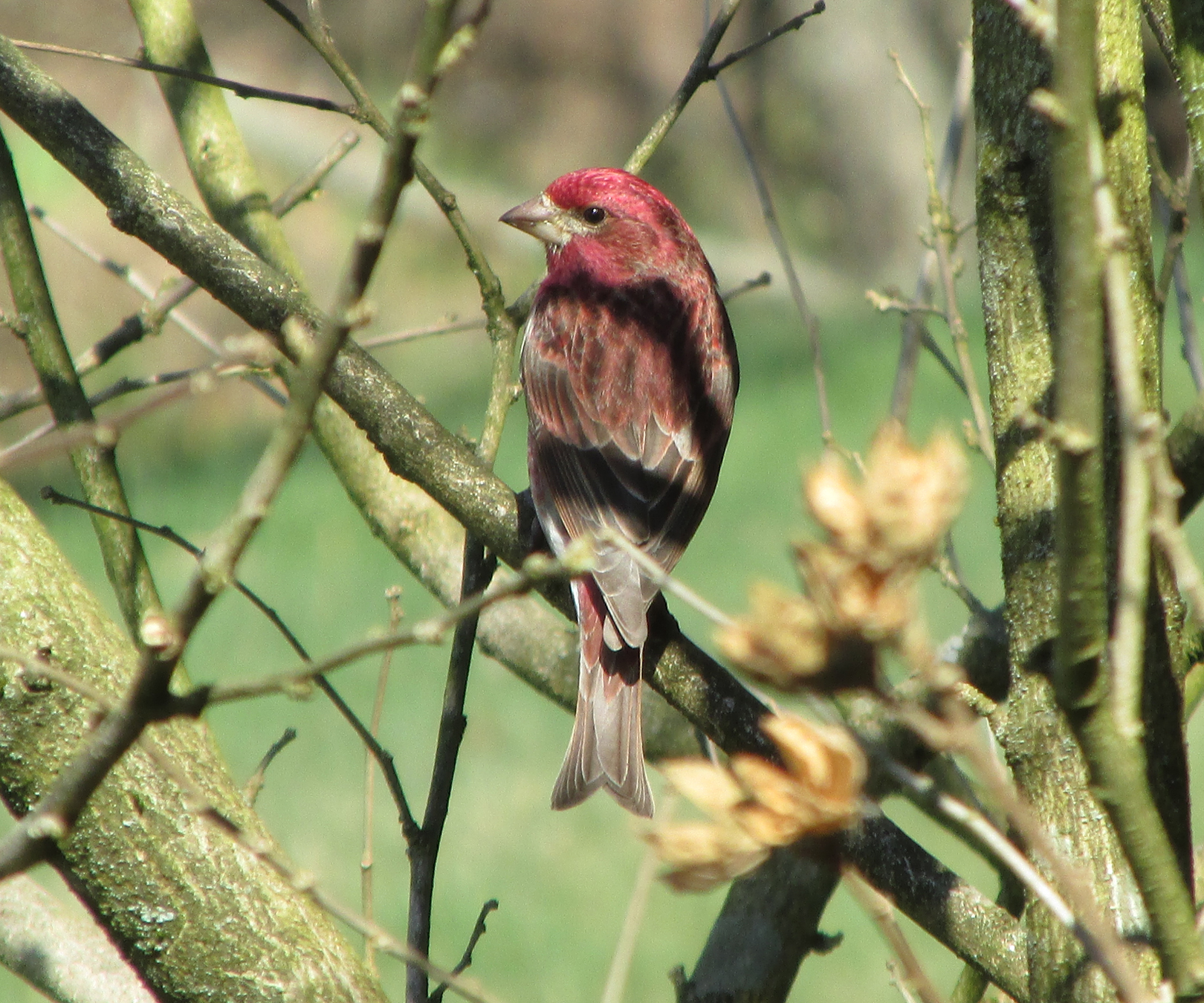
It was an amazing winter, with large flocks of Purple Finches and Pine Siskins at my feeders. In fact, these two species remain present even as the calendar moves closer to May. In fact, I saw a Pine Siskin at the feeders on Saturday, April 25.

Hoodie-April22

My favorite warbler, the Hooded Warbler, returned this spring on April 13. The males are currently singing daily from rhododendron thickets in the woodlands around my home.

As is usually the case here at my Simerly Creek home in Hampton, spring migration is proceeding at a slow pace. For some reason, the fall migration is a more “birdy” time. So, any bird I miss seeing this spring, I will hope to pick up while I continue looking for yard birds this autumn.

11174272_10205371493639214_6825911444318051913_o

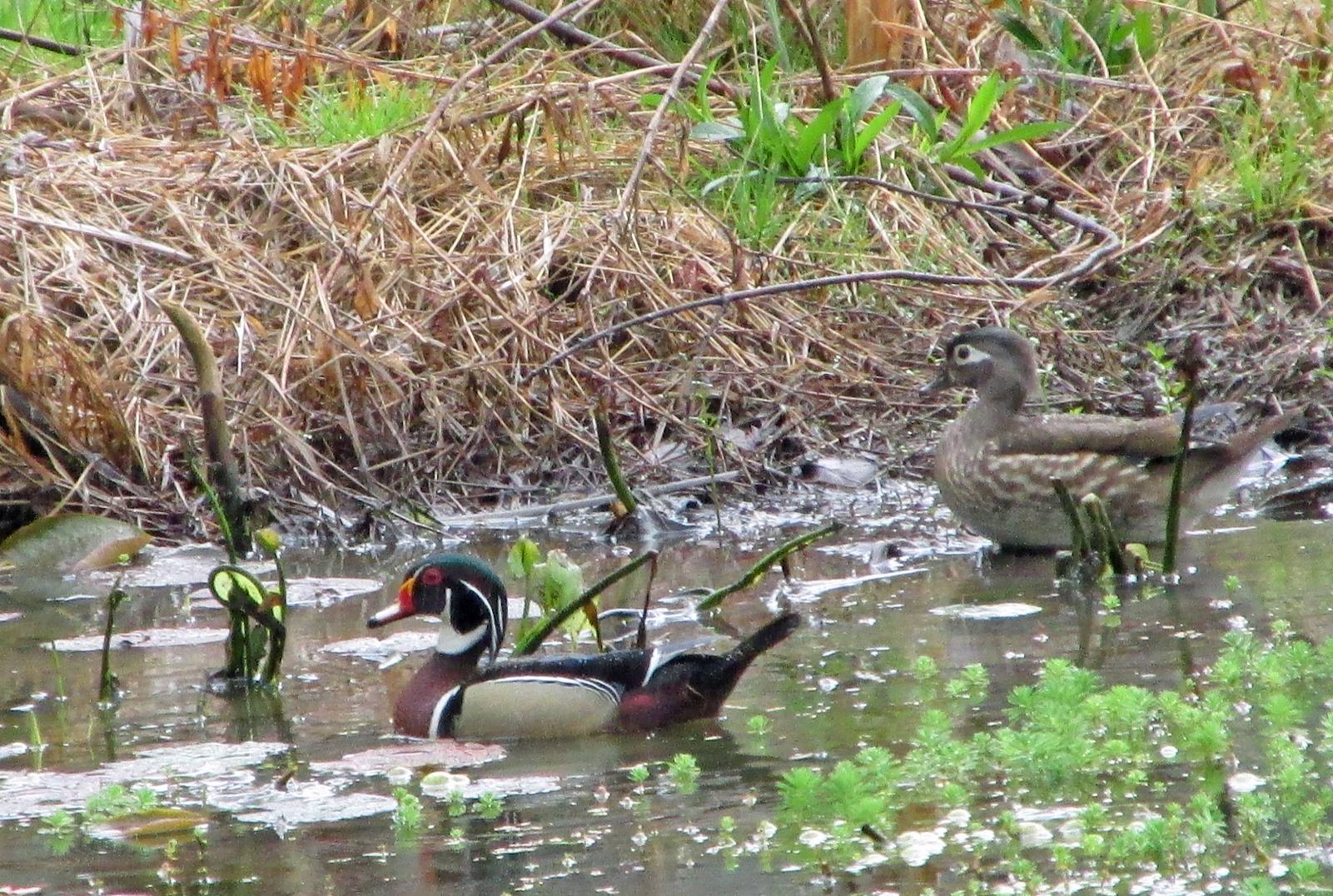
A pair of Wood Ducks visited the pond on a recent rainy morning. Until a decade ago, Wood Ducks were regular spring visitors. For some reason, they have become much more sporadic in their visits over the past 10 years.

Of course, there have been a few spring surprises, including a pair of Wood Ducks that showed up at the fish pond on a rainy morning on Sunday, April 19. Several of the resident warblers have also arrived, including Hooded Warbler, Black-and-white Warbler, Northern Parula, Black-throated Green Warbler and Ovenbird.

As of the time of my sitting down to post this blog entry, I’ve found 52 species in my yard so far this year.

The most recent sightings have been a Wood Thrush (No. 52) and a Northern Parula (No. 53) on my list. These two species showed up on April 20 and April 21, respectively.

Kingbird-ETSU

I have been birding for more than 20 years, but in that time I have only had one Eastern Kingbird visit my yard. Will the second kingbird pay a visit at some point in 2015?

So, wish me luck as I continue this more modest undertaking. Let’s call it a “Big Yard Year.” I am hopeful that I can find 100 species in my yard before Dec. 31. I’ll continue you update occasionally here on my weekly blog.


Looking forward to upcoming Birding Festival at Hungry Mother State Park

Spring-RobinBaby

Photo by Bryan Stevens                                  This fledgling American Robin was photographed last spring during a visit to Hungry Mother State Park.

If you’re as eager as I am to see some new arrivals among our “Feathered Friends” this spring, join me Friday-Sunday, May 1-3, at one of Southwest Virginia’s most popular parks for a full weekend of bird and nature-related events.

Hungry Mother State Park in Marion, Virginia, plans to spotlight many of those opportunities in a brand-new nature festival that organizers have dubbed the Hungry Mother State Park Birding Festival. I will also be taking part in the festival by giving a program on the region’s birds during the festival’s evening program on Friday, May 1, from 6 to 7:30 p.m.
HMSP-Canoes

Photo by Bryan Stevens Canoes await visitors to Hungry Mother State Park, which will hold its first-ever Birding Festival from May 1 to May 3.

The timing for the festival couldn’t be better. Many of our favorite birds have been returning to the region after spending the winter months in warmer climes as far afield as the Caribbean and Central and South America. If you’ve always wanted to learn more about such birds as warblers and tanagers or hummingbirds and vireos, plan to come out to this wonderful new event at one of the region’s most popular parks.

I discussed the upcoming festival with Tanya Hall, who works as the Chief Ranger of Visitor Experience, at HMSP. She informed me that the seed for the festival was planted when Hall and other park personnel heard about the possibility of obtaining grant funding to support the festival.

“Once we heard about the grant being offered, we approached the Friends of Hungry Mother State Park to see if they would want to apply for it, and of course they did,” Hall said.

She praised the work of the Friends group in supporting HMSP.

“We have a wonderfully supportive Friends group here,” she said. “They assist us in many activities with hands on projects throughout the park and they sponsor various events throughout the year.”

IMG_4435

Photo by Bryan Stevens                                                              Woodpeckers, such as this Red-bellied Woodpecker, will be among the birds participants will likely see during the three-day Birding Festival at Hungry Mother State Park.

She gave much of the credit for launching this year’s festival to Glenn Moorer, a Friend of HMSP, as well as a park retiree, who headed up the committee on writing the grant.

“He has a love for birds,” Hall explained.

A festival focused on birds seemed a natural fit. Hall, as well as Education Support Specialist Rachel Toward and dedicated HMSP volunteer Randy Smith all share a passion for birds.

“So, with all of us here with our affinity towards birds, birding was a shoe-in for one of the programs sponsored by this Public Lands Every Day Grant and Toyota,” Hall said. “We want to share our passion so others in the community have an opportunity to see just how special birds are.”

The planning for the festival has occupied several months.

“We have a weekend full of fun-filled bird activities,” Hall said. “We will be starting Friday with school field trips to the park.”

Dock

Photo Courtesy of Hungry Mother State Park Beautiful scenery will also be in the spotlight during the Birding Festival at Hungry Mother State Park.

Some of Friday’s school-related events will feature Dr. Steven Hopp with Emory and Henry College, who will be discussing and demonstrating the banding of birds. In addition, the Blue Ridge Discovery Center will be providing two field trips on Avian Adventures.

“On Saturday we will have hikes geared toward more experienced birders and also beginners,” Hall said. “We have kayaking bird tours and a Saltville Marsh Hike planned also.”

Throughout Saturday, various booths will be set up to distribute information on birds, as well as other activities and agencies, in the area. There will also be a children’s activity tent.

Purple-March30

Photo by Bryan Stevens                            Lingering Purple Finches could still be present by the time of Hungry Mother State Park’s Birding Festival.

Another event that Hall is certain many individuals will enjoy will be the live bird presentation, “Wings to Soar,” on Sunday afternoon.

“We have activities throughout the weekend geared to advanced birders and beginners,” Hall said. “By incorporating all ages and degrees of experience, we hope to instill a love of birds in beginners and offer a chance to advanced birders to share their skills with the rest of us and hopefully have the chance to network and meet new people in a hobby they love.”
The festival meshes nicely with other recreational opportunities offered at HMSP.

“Hungry Mother is one of the more popular parks in Virginia,” Hall said. “We have 18 miles of trails that you can either hike or bike and we have a 108-acre lake that has various species of fish available to catch. The lake is also a favorite destination for swimmers, canoeists, kayakers and paddleboarders.”

Hall said the park is also fortunate to have an “awesome interpretation department” that hosts numerous programs each day that are offered not only to camping and cabin guests, but also to the public.

Mallard-March28

Photo by Bryan Stevens                                                      A male Mallard enjoys a spring swim.

“You don’t have to be staying at Hungry Mother State Park to enjoy the activities we offer,” Hall noted. “We probably have the most unique name of all Virginia State parks, and we have a unique legend behind the name which is tied to Molly’s Knob, the highest point in the park.”

Several months ago, Hall also invited me to take part in the debut of the festival. I plan to present a PowerPoint presentation on birds, and perhaps a few other examples of nature’s diverse life, in a program that will spotlight birds throughout all four of the seasons.

Egretta

Photo by Bryan Stevens                                                                                When dealing with birds, surprises, such as a visit from a migrating Great Egret, are never off the table.

“Many of us know you through the articles you write for the Bristol Herald Courier,” she said. “We look forward to your articles each week, and we are looking forward to hearing your presentation and to seeing some of nature’s finest animals.”

I’m looking forward to sharing my program with attendees at the first-ever Hungry Mother State Park Birding Festival. It gives me a unique opportunity to meet some of the readers of my weekly column. If you attend, be sure to introduce yourself at some point.

The festival will also feature Richard Moncrief, who is the Birding and Nature Observation Market Manager for Carl Zeiss Sports Optics.

“He will be presenting two programs on Birding Basics and on Binocular Know How,” Hall said. “I know I am always wondering what the differences are between binoculars and which would be the best to buy for what I use them for.”

Some local Master Naturalists, including Melanie Smith and Randy Smith, will be giving programs on Birding by Ear and Backyard Birding.

“All in all, I believe there will be a little something for everyone to enjoy,” Hall said. “We are all so excited about this weekend and hope that everyone will come out and enjoy at least one program, because once you come, you’ll want to stay for another!”

Although she has been employed only a couple of years at HMSP, Hall loves her job and her new home.

“I started in this position as Chief Ranger of Visitor Experience this past November,” she said. “I was hired as the Education Support Specialist or the Interpreter in July of 2013. As an interpreter, we hope to forge a bond with the visitors and our natural resources we have here at Hungry Mother State Park.”

This is accomplished, Hall explained, by “interpreting” the natural, historical and cultural world for park visitors.

SongSparrow-Stick

Photo by Bryan Stevens                                      A Song Sparrow poses for a quick photograph at the water’s edge.

“I have worked in various other jobs; preschool teacher, recreation supervisor for the Blue Ridge Job Corps, and federal Park Ranger for the U.S Army Corps of Engineers,” she said. “I love working here at Hungry Mother with our Friends group, with all the guests that visit our park, and with a staff that truly cares about you and making your stay at a Virginia State Park the very best. I truly enjoy my job.”

All the festival’s programming is free and open to the public. The only fees associated with the festival will be the parking fee at the gate, which will be $3 on Friday and $4 on Saturday and Sunday.

A full schedule of activities can be found on virginiastateparks.gov under the Events tab for Hungry Mother State Park. For more information, call (276) 781-7400.

Towhees greet spring’s arrival with enthusiasm

Towhjee-Sings

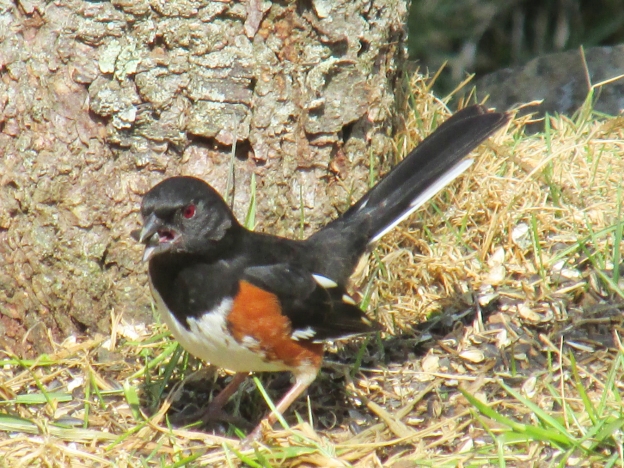
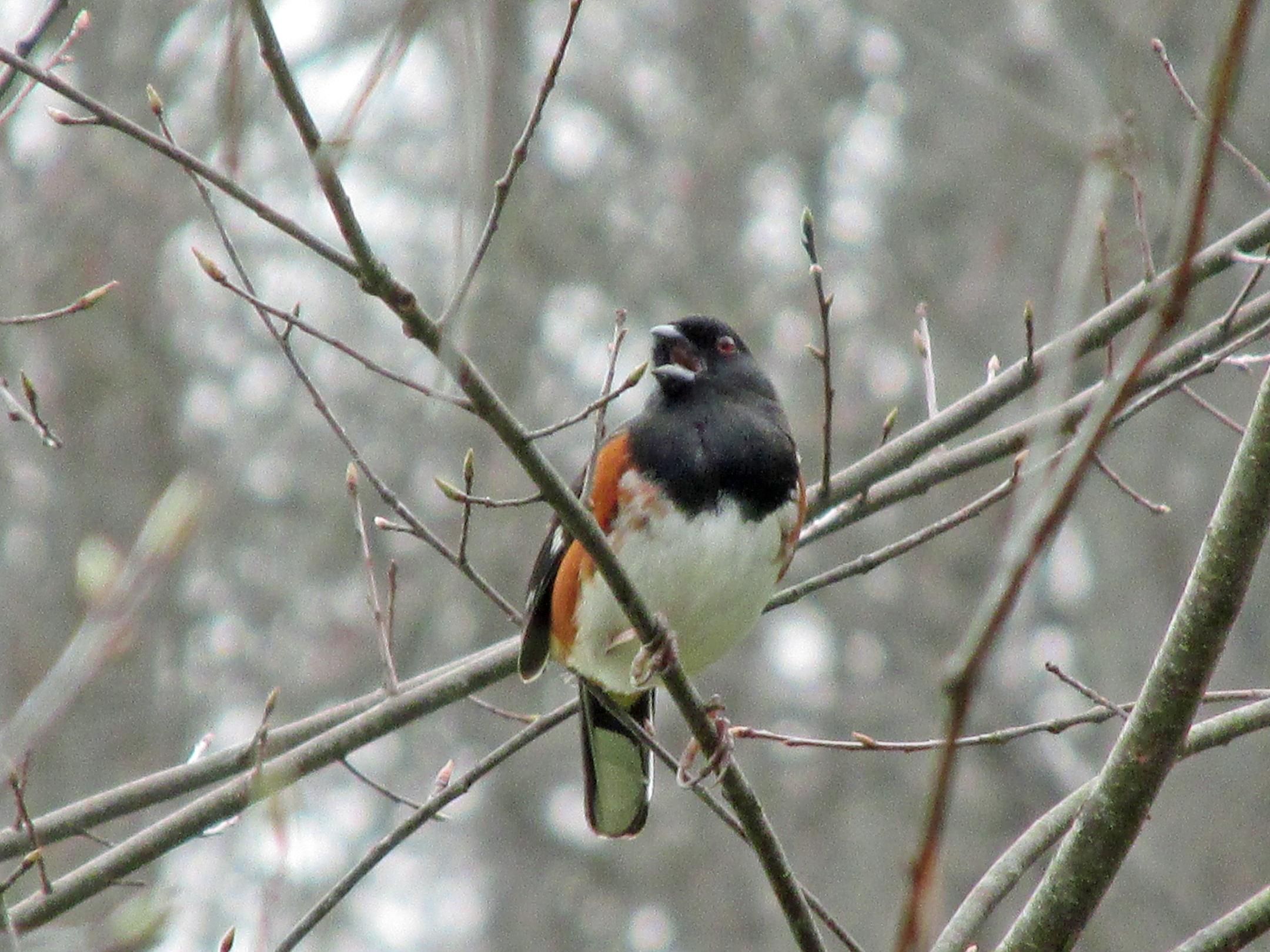
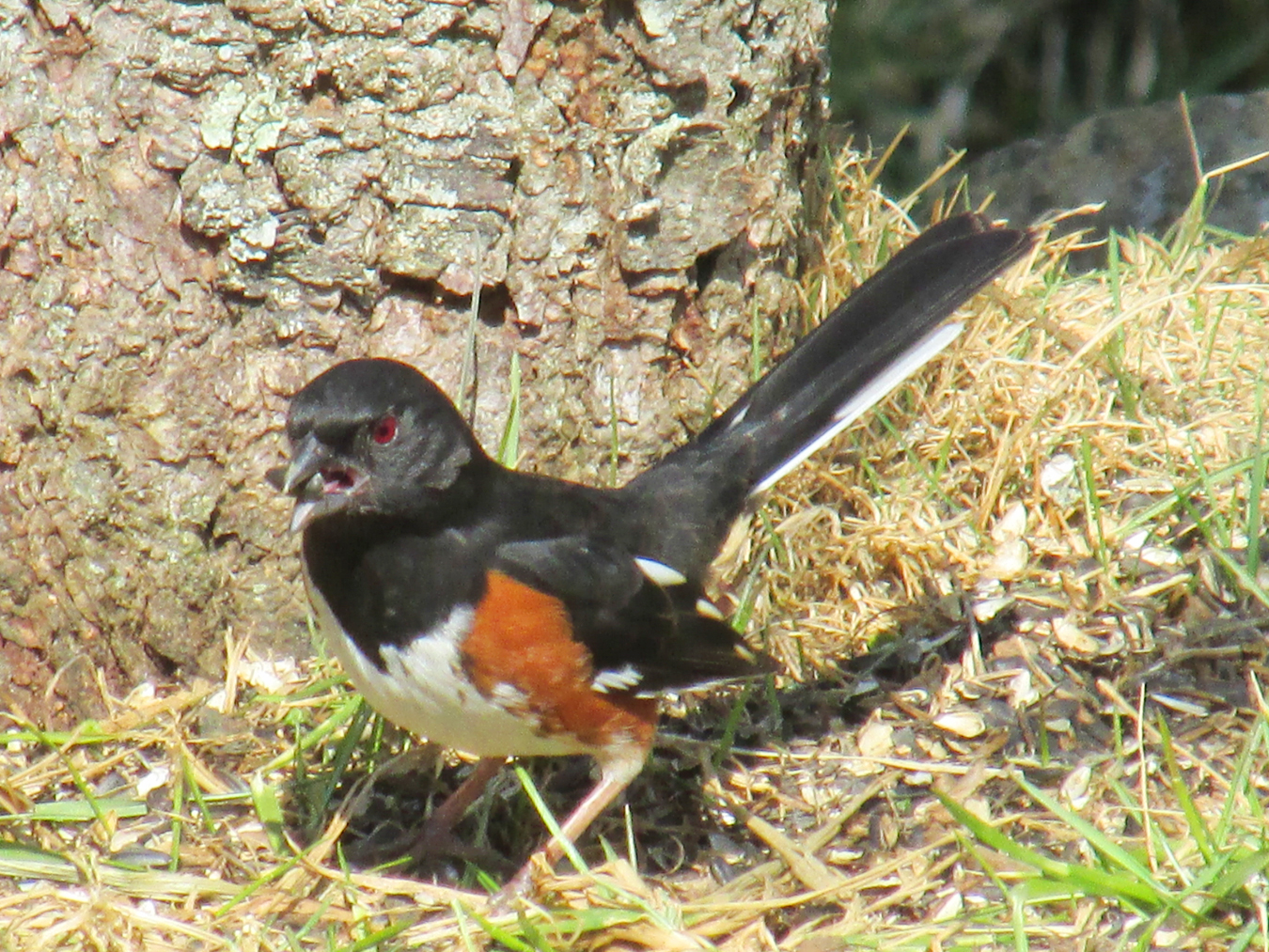
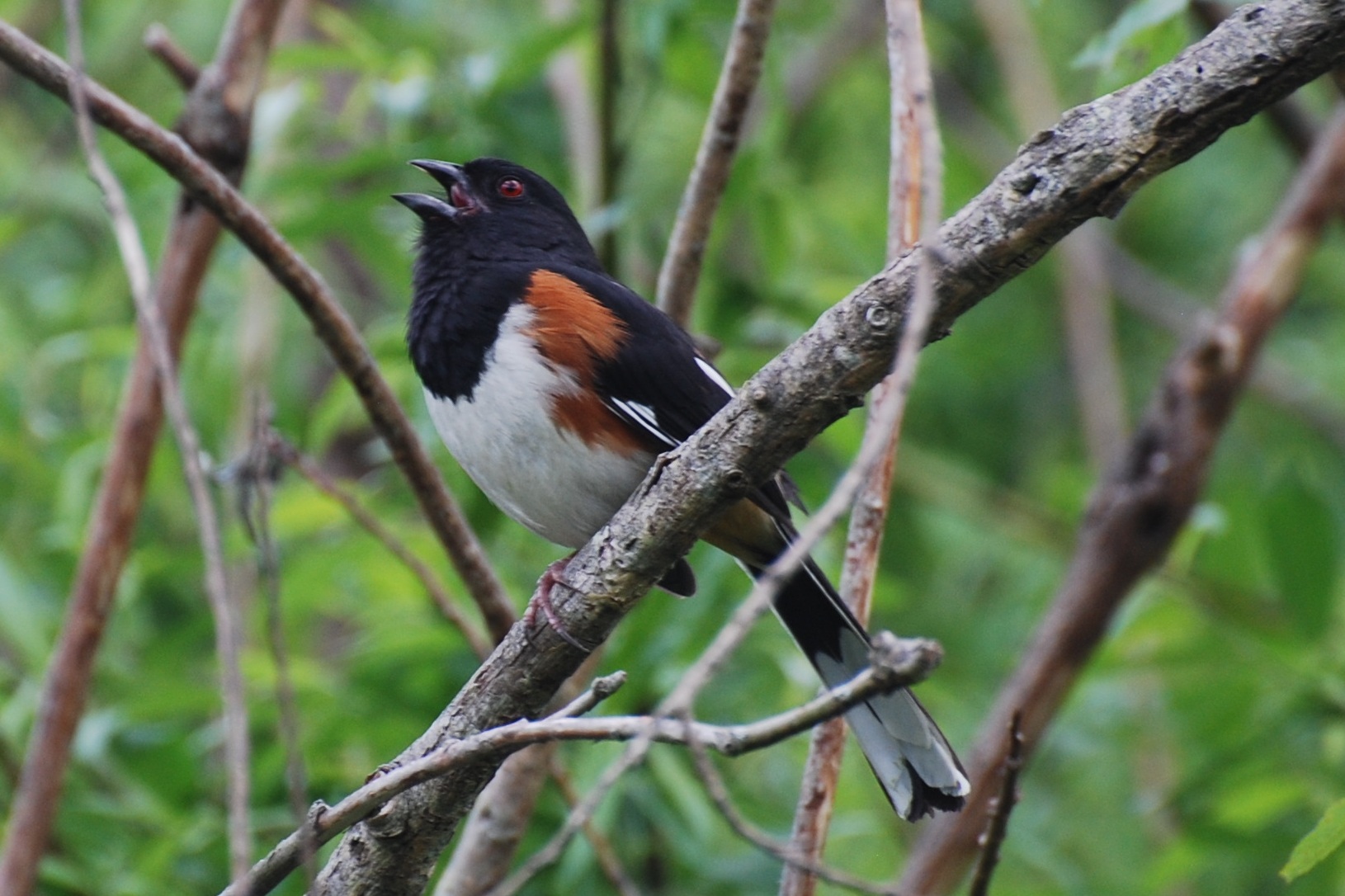
Photo by Bryan Stevens                                                                         A male Eastern Towhee sings from an elevated perch.

The fact that April is already so far advanced has caught me somewhat by surprise, which is surprising since there are plenty of signs letting me know spring’€™s approaching. For instance, each morning when I leave for work I usually hear a cacophony of singing birds, including Eastern Bluebirds, Song Sparrows, Tufted Titmice and Carolina Chickadees.

The birds are stirring, and that always means the seasons are shifting. On bird that has been quite prominent in the yard for the past few weeks has been the Eastern Towhees. We had several individuals, both males and females, spend the winter near the feeders.

I saw and identified my first Eastern Towhee in early spring in 1993. At that time, I was struggling to identify some of the common visitors at my feeders. I was acquainted with White-breasted Nuthatches, Blue Jays, Downy Woodpeckers, Carolina Wrens, Dark-eyed Juncos and a handful of other birds. When I looked out a window and saw this bird feeding on the ground, the morning sun illuminating his dramatic plumage of black, white and rufous red, I was immediately aware this visitor represented something new and unexpected.

il_570xN.742473837_4gwh

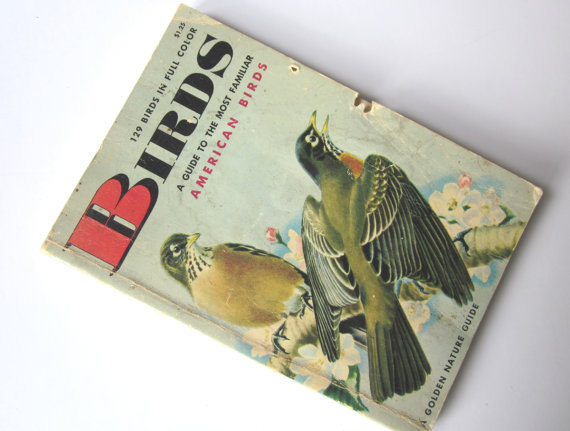
This pocket-sized reference guide helped many beginning birders learn to identify common backyard birds.

Consulting a field guide —€” I was using the Golden Nature Guide to the Most Familiar American Birds — I soon found a painted illustration of a Rufous-sided Towhee that matched in every detail the bird I had just observed on the ground beneath a Blue Spruce in my yard.

Many of the older field guides still list the Eastern Towhee as “€œRufous-sided Towhee,”€ which is actually more descriptive of the bird’s appearance than the word “€œeastern.”

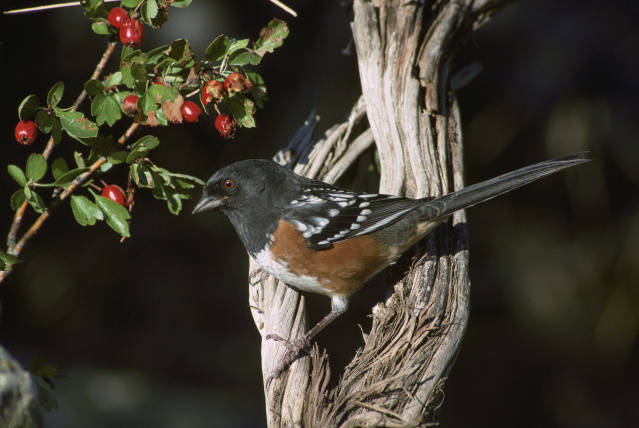
Photo by U.S. Fish & Wildlife Service A male Spotted Towhee shows extensive spotting on its back.

Photo by U.S. Fish & Wildlife Service
A male Spotted Towhee shows extensive spotting on its back.

In 1995, ornithologists renamed the Rufous-sided Towhee to Eastern Towhee and also separated the Eastern Towhee from its western counterpart, the Spotted Towhee. Until that point, these two towhees had been considered different races of the same species.

In 2003, I saw a Spotted Towhee during a visit to Salt Lake City, Utah. The bird looks almost identical to an Eastern Towhee except for considerable white spotting —€” hence its common name — on the bird’€™s back.

Eastern_Towhee

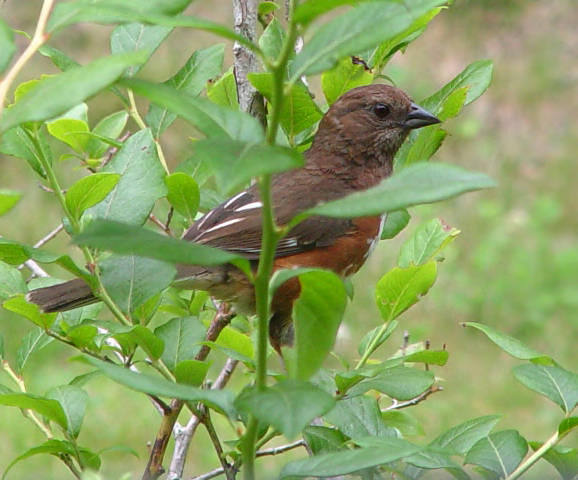
Photo by U.S. Fish & Wildlife Service           The female Eastern Towhee’s plumage is a rich, chocolate brown where the male’s feathers are black.

Eastern Towhees do spend a considerable amount of time on the ground and hidden in thickets and hedges. Other common names for this bird includes “Ground Robin” and “Swamp Robin.”€ They are one of the larger members of the sparrow family, however, and not related to the thrush family, which includes such birds as American Robin, Eastern Bluebird and Wood Thrush.

Towhee1

Photo by Bryan Stevens                            Towhees spend much of their time on the ground when searching for food.

Unlike the “€œbrown”€ members of the sparrow family, the Eastern Towhee is a brightly colored bird. Males have a black hood. The black coloration extends into the back and tail. The belly is white and the sides are flanked with a rusty-red color. In flight, their black tails are bordered with white feathers, which produces a dramatic flash of contrasting colors. The female Eastern Towhee is an attractive bird in her own right. She shares the rufous sides and white coloration that are present in the male’s plumage. However, the male’€™s black feathers are replaced by a warm, chocolate brown plumage in the female.

The Eastern Towhee is one of my favorite yard birds, but not just because of its dramatic appearance. These birds also have some instantly recognizable vocalizations. With the arrival of spring, the males will seek elevated perches for extensive singing bouts to attract mates and establish territories. Their song has been interpreted, quite accurately, as “Drink your tea!” They also have some alarm notes, such as “€œChew-ink”€ and “€œToe-Hee,” which is the basis for this bird’s common name.

Greentailed_towhee

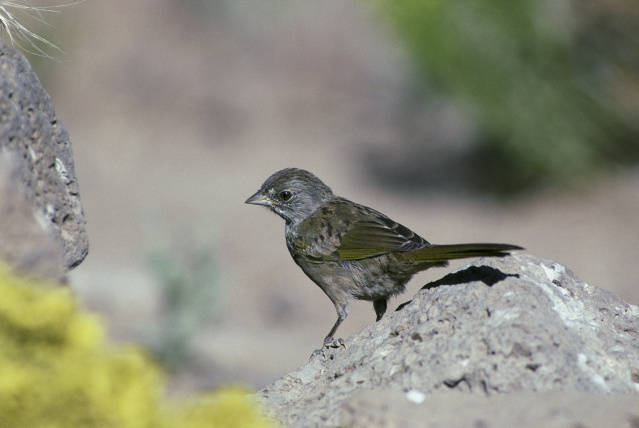
Photo by U.S. Fish & Wildlife Service    Although the smallest member of the towhee family, the Green-tailed Towhee is still a larger bird than most members of the sparrow clan.

They are often found in the same sort of tangled habitat favored by Northern Cardinals and Brown Thrashers. To attract these birds, don’€™t manicure every inch of your yard. Leave some wild corners that will provide shelter for birds that thrive under cover. In the southern United States, these birds thrive in scrub palmetto habitats.

Other North American towhees include Green-tailed Towhee, Abert’s Towhee, California Towhee and Canyon Towhee.

••••••••••

I want to close this week’s column by asking for help from readers. I love to document the yearly arrival of Ruby-throated Hummingbirds. I’d appreciate hearing from any readers who would like to share the information about their first hummingbird sighting of the season. Simply send me your name and location, as well as the date and time when your first hummingbird arrived. The best way to contact me is by my email at ahoodedwarbler@aol.com. Messages are also welcome through my Facebook account at http://www.facebook.com/ahoodedwarbler.

3544493082_02f675508f_o

Photo Courtesy of Jean Potter                                                                                                                The male Eastern Towhee sings persistently during the spring season.


Heavy snow forces fox sparrows to abandon reclusive habits

FoxSparrow-Foot

Photo by Bryan Stevens                                                                A Fox Sparrow lifts one foot into its belly feathers on a cold morning in reaction to bitter cold.The cold weather that closed out the month of February in the region also marked a shift in the seasons. The frigid temperatures, snow and ice also brought increased traffic to feeders.

One of the recent new arrivals at my home during the last of the February storms was a fox sparrow, who fed along with such birds as purple finches, pine siskins, American goldfinches and dark-eyed juncos.

In North America, the sparrows are classified in the Emberizidae family, which also includes the buntings, cardinals, grosbeaks and tanagers. The American, or New World, sparrows are a diverse group of seed-eating songbirds with conical bills. Many of them are brown or gray in color, leading to the term “little brown birds” being used to describe a family of similar birds. On closer study, each species of sparrow is quite unique, with many of them having distinctive head patterns or splashes of color apart from the dull browns and grays.

Fox-Bryan

Photo by Bryan Stevens                                                                  Fox Sparrows prefer to remain in thickets and tangle of thick cover. Heavy snows will often bring this sparrow to backyard feeders.

Although they share the name “sparrow,” American sparrows are more closely related to Old World buntings than they are to the Old World sparrows. In fact, the only true Old World sparrow in Northeast Tennessee is the House Sparrow, which was introduced to the United States and is not a native bird.

Although the label “little brown birds” is somewhat accurate for sparrows, learning to distinguish most of the more common sparrows isn’t that difficult. Observing those sparrows that visit feeders is a good place to start. Other sparrows that will come to feeders include song sparrow, field sparrow, chipping sparrow, white-throated sparrow and white-crowned sparrow. The dark-eyed junco and Eastern towhee are also members of the sparrow family, but their common names do not include the term “sparrow.”

Worldwide, there are many superstitions connected with birds commonly known as “sparrows.” In the book The Folklore of Birds, author Laura C. Martin notes that in China the sparrow is a foreteller of good luck. She also points out that in Japan the sparrow is a symbol for gentleness, gratitude and joy.

Keep in mind, however, that sparrows in Japan and China are not among the same family of birds known as sparrows that are found in the United States. In fact, with a few exceptions, our native sparrows are unique to North America.

Menke-Fox_sparrow (1)

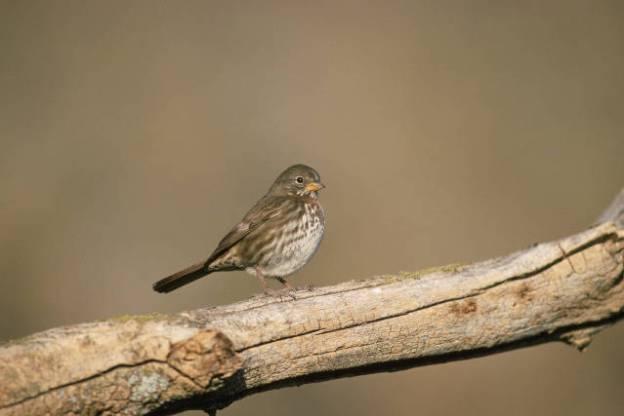
Photo by U.S. Fish & Wildlife Service                                             A Fox Sparrow perches on a bare branch. These large sparrows are only winter visitors in Northeast Tennessee.

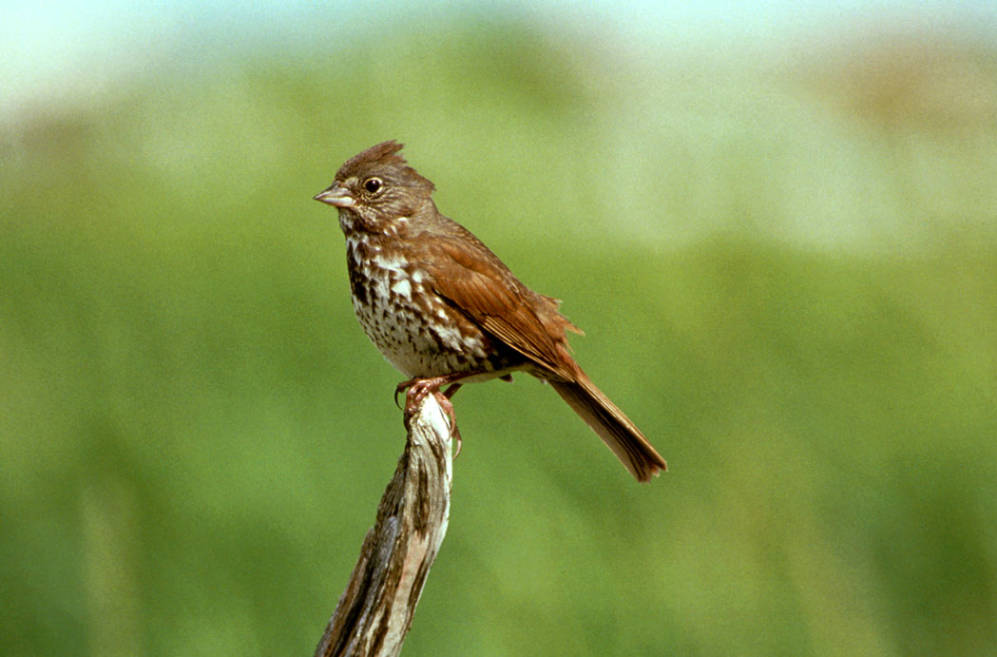
For instance, the fox sparrow is a large, plump bird that in many parts of North America is most familiar as a migrant or wintering bird. The fox sparrow has a rusty tail and a streaked breast, evocative of a fox, hence its common name. Its plumage is dominated by brick-red and gray feathers.

In addition to a rather distinctive appearance for one of the so-called “Little Brown Birds,” the fox sparrow can easily be recognized by its behavior, too. This bird has a vigorous, distinctive way of foraging on the ground, kicking backward with both feet to uncover food. In fact, the instinct to forage in this manner means they are most often seen on the ground below a feeder instead of perched on a feeder like other birds.

Fox__Sparrow

Photo by U.S. Fish & Wildlife Service                                 A Fox Sparrow perches on a branch, giving a good view of the rusty-red plumage that inspired its common name.

I’ve noticed over the years that February and March is usually the best time of the year to observe this winter sparrow. Even when these large sparrows are present, it often takes a heavy snow to bring them out of their tangled thickets to our feeders. Other sparrows are less frequent visitors to yards, and can most often be found in the region during the migration season. These sparrows of the transitional periods between the seasons include savannah sparrow, vesper sparrow and swamp sparrow. March and April are good times to look for these sparrows.

Most fox sparrows spend the nesting season in remote, fairly inaccessible locations as far north as Alaska and Canada.  As a result, most people only see these birds during the winter months when they can become very reliable visitors to feeders. The recent heavy snows at the end of February brought a single fox sparrow to my feeders. The bird arrived early each morning and usually didn’t extend its visit beyond mid-afternoon.

•••••

Bryan Stevens lives near Roan Mountain, Tennessee. Friend him on Facebook at https://www.facebook.com/ahoodedwarbler. He is always posting about local birds, wildlife, flowers, insects and much more. If you have a question, wish to make a comment or share a sighting, email ahoodedwarbler@aol.com.

FOXIE

Photo by Bryan Stevens                                                                                                                        A heavy snowfall often prompts Fox Sparrows to visit backyard feeders, although they prefer to feed on the ground below the feeders. They kick vigorously to uncover fallen seeds covered by snow or leaves.

Meet the gravity-defying nuthatches

WBNuthatch-Poised

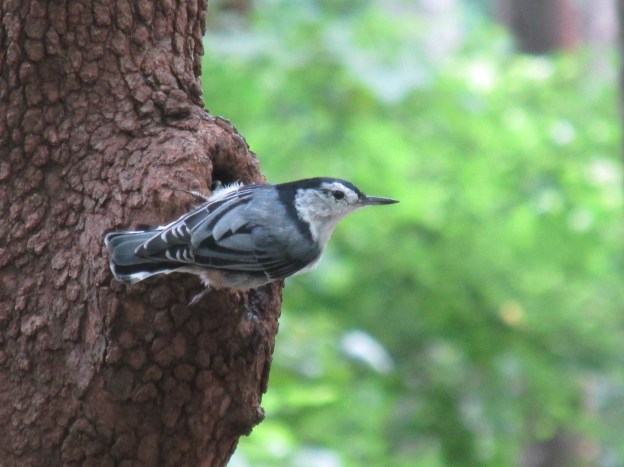
Photo by Bryan Stevens                                                 A White-breasted Nuthatch perches at the end of a branch.

The power of flight gives most birds a perfectly valid reason to disregard the power of gravity. The family of tree-clinging birds known as nuthatches lives an even more topsy-turvy lifestyle than many other of their winged kin. Nuthatches prefer a headfirst stance as they search for food in the nooks and crannies in tree trunks and branches.

The United States is home to four species of nuthatches: white-breasted, red-breasted, brown-headed and pygmy. White-breasted nuthatches are probably the most familiar nuthatch to backyard birders in this area.

WBNuthatch-WithSeed

Photo by Bryan Stevens                                      A White-breasted Nuthatch plucks a sunflower seed from a feeder.

Because of their gravity-defying antics, the white-breasted nuthatch and other members of the family can provide hours of entertainment at our bird feeders. Individual white-breasted nuthatches will follow a single-minded path along the trunk of a tree or a branch on the way to a feeder. An individual nuthatch rarely varies from this path. It’s amusing to watch the jerky progress along the trunk as this bird prepares for a flight to a feeder holding sunflower seeds or a hanging wire basket of suet.

At my home, nuthatches typically remain aloof from the rivalry always ongoing between the chickadees and titmice. The white-breasted nuthatch is also a no-nonsense visitor. Rarely distracted by disturbances among other birds, this nuthatch is content to grab a seed and go or hang on to the wire frame of a suet basket and peck off chunks of suet.

Red-breastedNuthatch

Photo by Bryan Stevens                                A Red-breasted Nuthatch visits a feeder for peanuts.

The more numerous titmice and chickadees give way when a white-breasted nuthatch claims a feeder. At times, however, among the frantic activity, a tufted titmouse or a Carolina chickadee will forget itself and fly to a position on a feeder already claimed by a nuthatch. If surprised enough to retreat to a nearby perch, the nuthatch will go through a rather comical little dance to express its displeasure. Wings spread out in a rigid pose, the bird will turn around in tight circles, showing definite resentment at being displaced by an offending chickadee or titmouse.

These displays are usually brief, unless they are directed toward another white-breasted nuthatch. A male-female pair of these nuthatches can peaceably visit a feeding area at the same time. Two male nuthatches — or two female nuthatches for that matter — show little toleration for each other. Their little dances of defiance are in these cases demonstrated for each other. Eventually, one nuthatch will give way, but these are stubborn birds, much more set in their ways than chickadees and titmice.

Red-breastedNutHatchYAHOO

Photo by Bryan Stevens                                            Red-breasted Nuthatches are occasional winter feeder visitors in Northeast Tennessee.

In our region, the stubby red-breasted nuthatch is another member of the family that occasionally finds its way to our yards. Smaller than the related white-breasted nuthatch and, as far as I can tell, complacent in the company of chickadees and titmice, the red-breasted nuthatch is always a welcome visitor. It has a tell-tale “yank yank” call that it produces when excited that sounds very much like little tin horns. The red-breasted nuthatch, perhaps because it spends so much of the year in more remote areas, can also be amazingly tame when it pays a winter visit.

Spring-Nuthatch

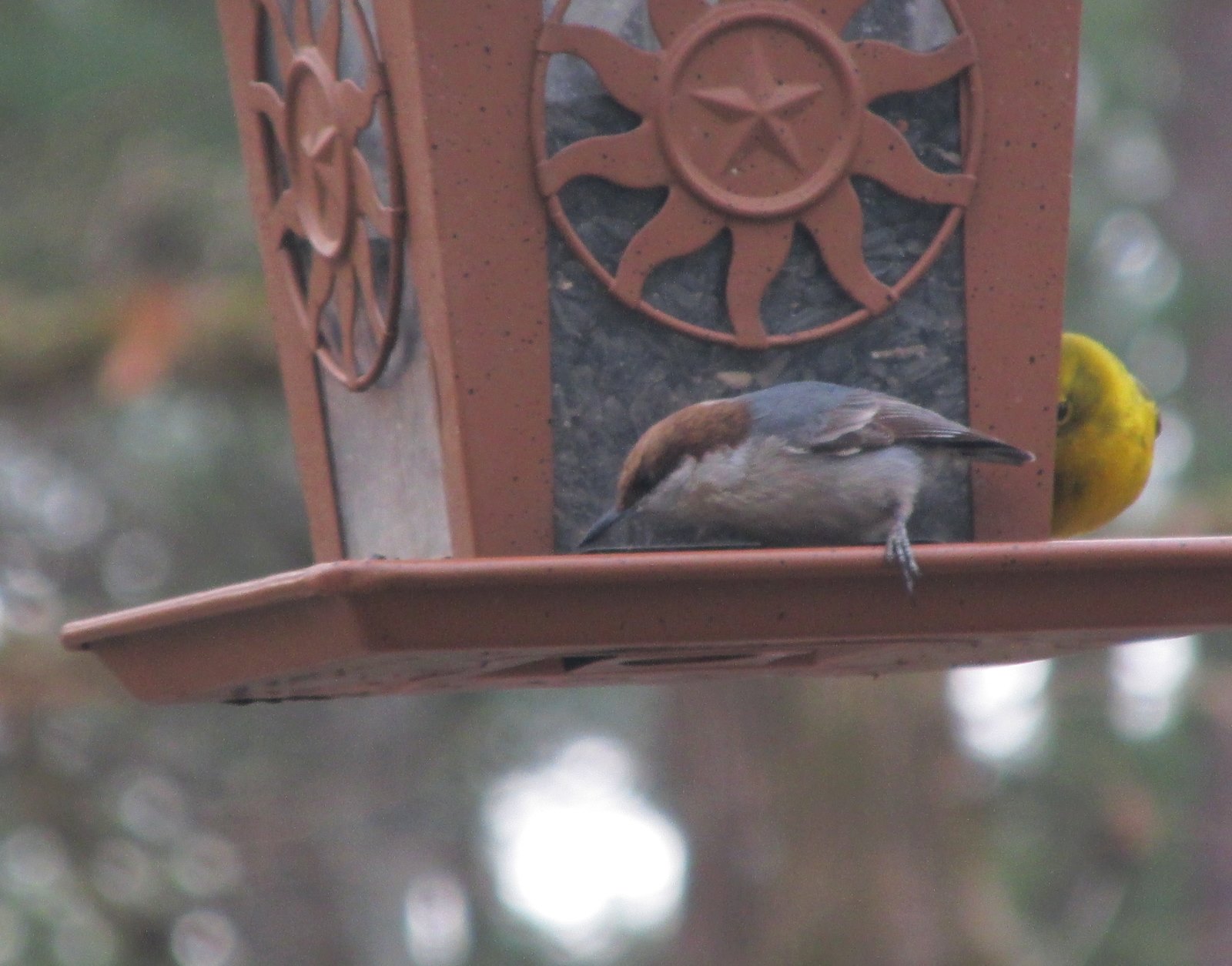
Photo by Bryan Stevens                                     A Brown-headed Nuthatch seeks out a sunflower seed from a feeder.

Both of these nuthatches can be attracted to feeders by offering peanuts, sunflower seeds and suet. They are also cavity-nesting birds, but are more reluctant about accepting a nesting box as a place to rear young. They will gladly accept an old woodpecker hole or other natural cavity in a tree.

The brown-headed nuthatch is a specialist of pine woodlands throughout the southeastern United States, favoring loblolly-shortleaf pines and longleaf-slash pines. This nuthatch requires standing dead trees for nesting and roosting. They forage for food, however, on live pines. The birds are more abundant in older pine stands.

AWC_1051

A painting of Red-breasted Nuthatches by early naturalist John James Audubon.

This small nuthatch is not at all common in the region, but there are some records. I’ve had much better luck finding the brown-headed nuthatch during visits to coastal South Carolina or suburban Atlanta in Georgia. In these southern locations, it can be a quite common bird.

These small birds will occasionally forage close to the ground, but they are often in the upper branches of pine trees. Their presence is often revealed by their call, which sounds amazingly like a squeeze toy. They produce their “squeaky toy” call persistently when agitated or curious. Brown-headed nuthatches often associate with mixed flocks in company with Carolina chickadees, tufted titmice, pine warblers and other small songbirds.

I also want to complete my list of North American nuthatches by adding the fourth species — pygmy nuthatch — to my life list. I have made two trips to western North America, where this species ranges, but haven’t managed to find this bird. Both the pygmy and brown-headed are among the smallest members of the nuthatch family.

On the other end of the size scale is the appropriately named giant nuthatch, which reaches a length of almost eight inches. The giant nuthatch ranges through China, Thailand and Burma. This nuthatch is bigger than a downy woodpecker, one of our more common visitors at backyard feeders in our region.

Worldwide, there are about 25 species of nuthatches, some of which have surprisingly descriptive names for birds that spend most of their lives creeping in obscurity along the trunks and branches of trees. Some of the more creative common names for these little birds include beautiful nuthatch, velvet-fronted nuthatch, sulphur-billed nuthatch, chestnut-bellied nuthatch, snowy-browed nuthatch and chestnut-vented nuthatch.
These birds are named “nuthatch” for the habit of some species to wedge a large seed in a crack and hack at it with their strong bills. I like to refer to them as “upside-down birds” because gravity doesn’t seem much of a factor in their daily lives. They are content to walk headfirst down a tree trunk or probe the underside of a large branch. It must give them an interesting perspective on the world around them.

WhiteBReastedNuthatchie_edited-1

Photo by Bryan Stevens                                                                                                                A White-breasted Nuthatch recovers after striking a window.


Enjoy these recent birding photos

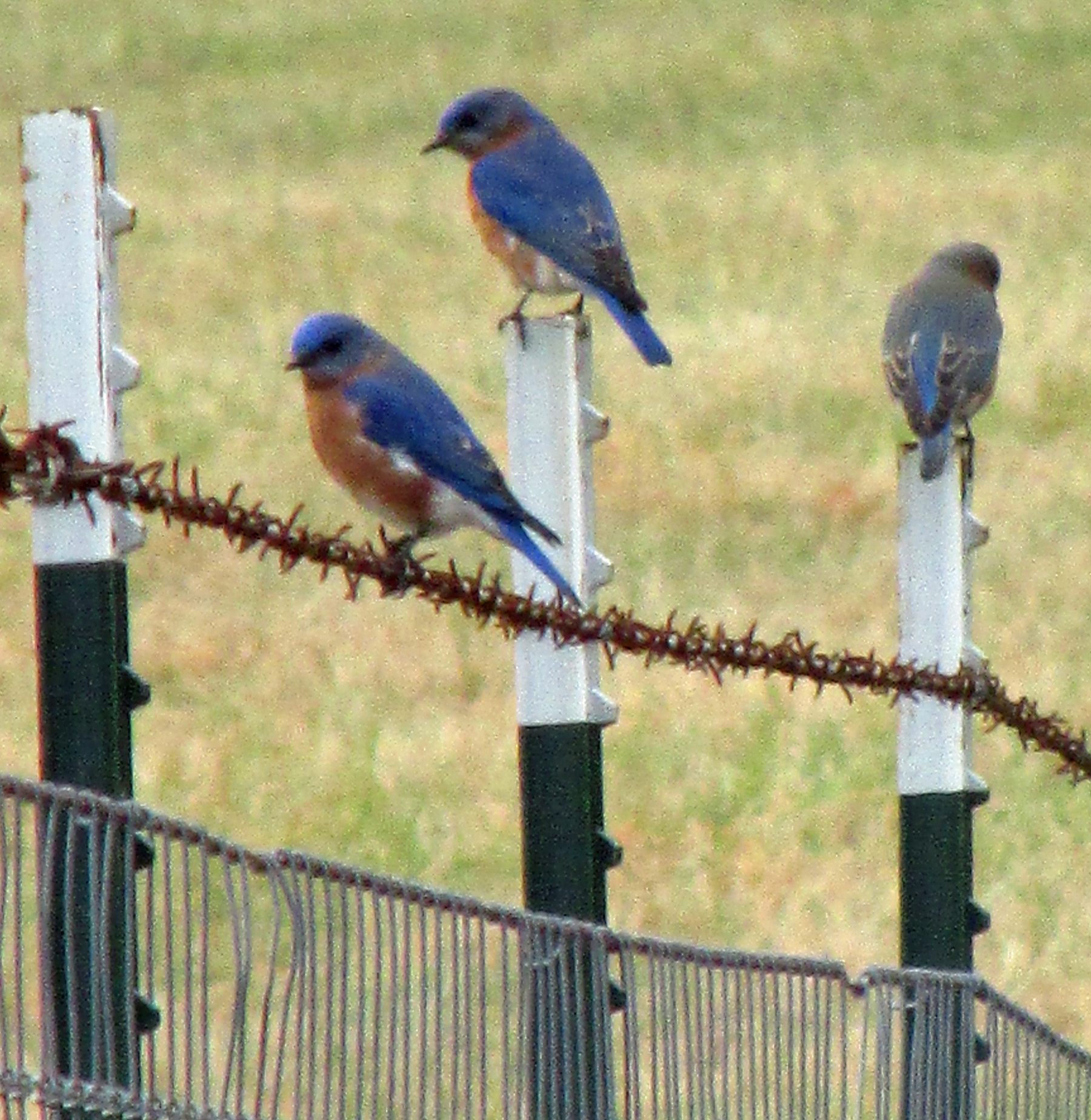
Bluebirds-One

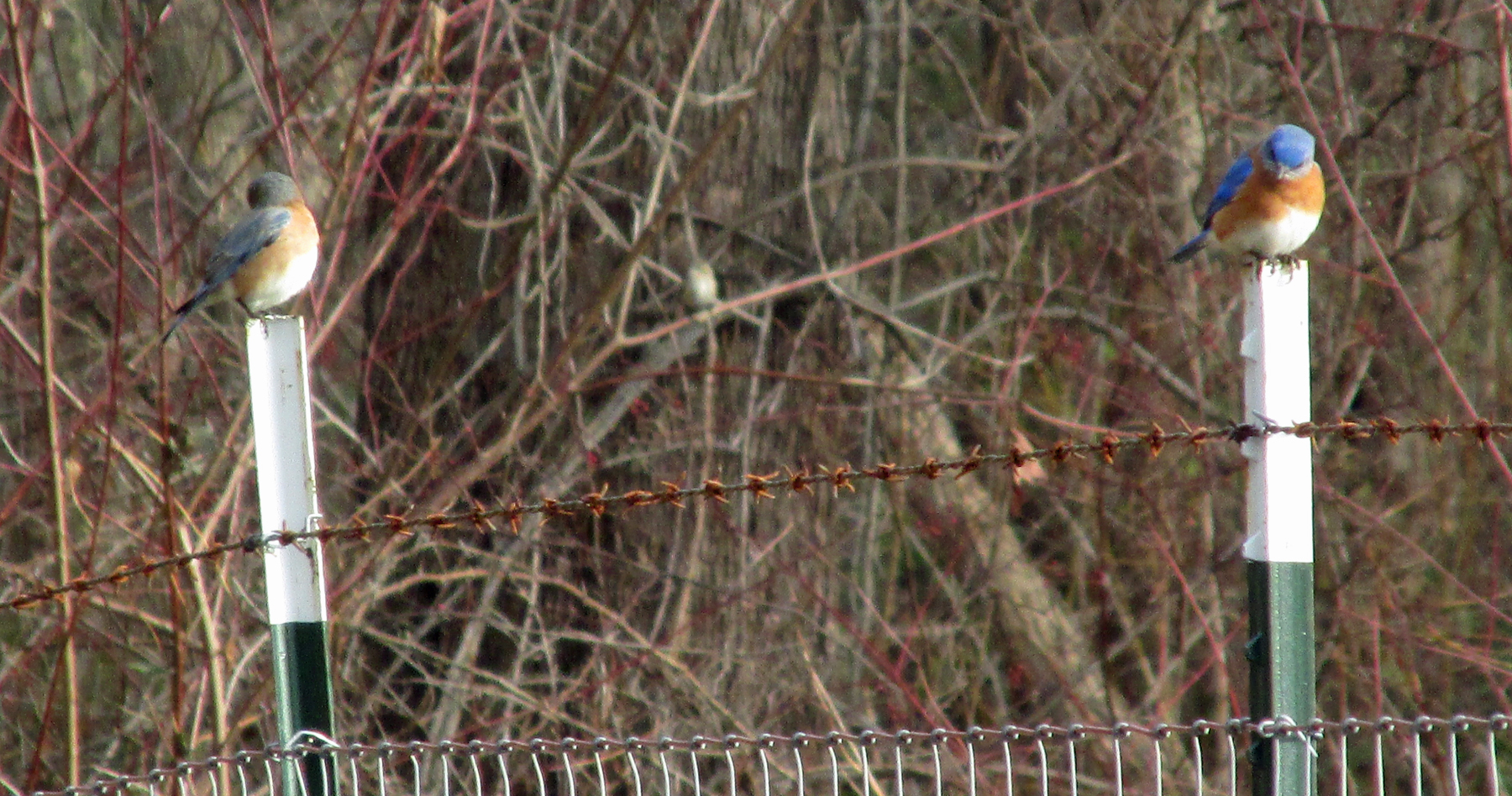
Eastern Bluebirds perch on a fence.

Bluebird-2

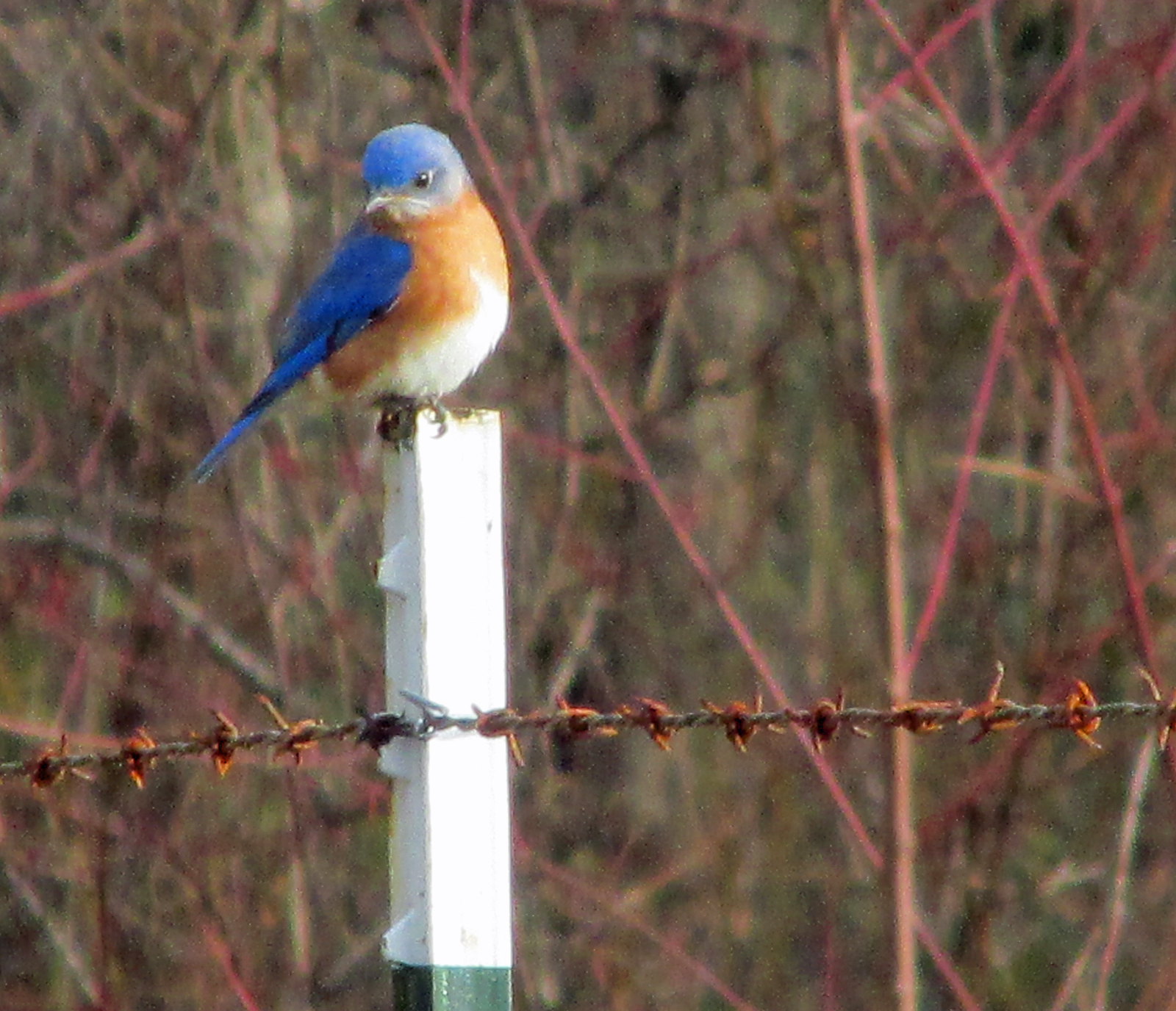
Male Eastern Bluebird surveys his surroundings from a fence post perch.

Bluebirds-Tw0

Eastern Bluebirds enjoy sunshine on a recent January afternoon.

BuffleFlock

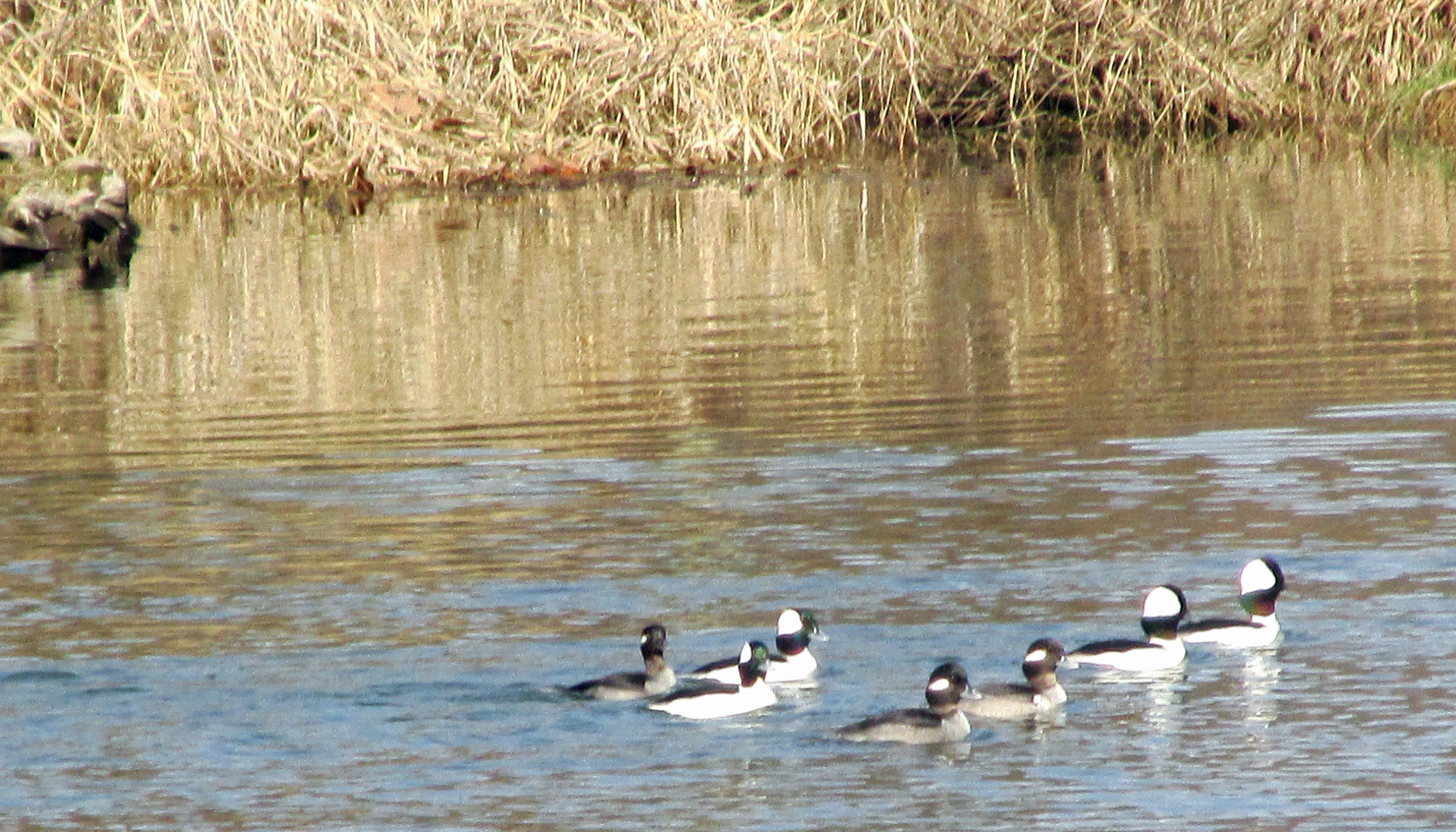
A flock of Buffleheads on the Watauga River.

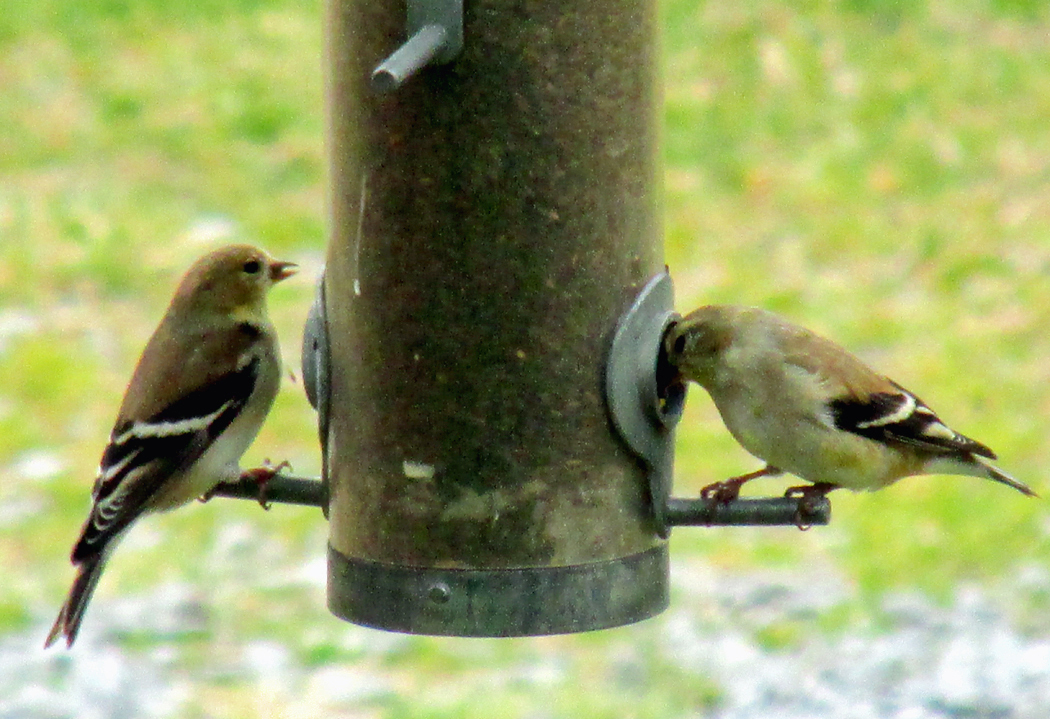
Goldfinches

American Goldfinches visit a feeder.

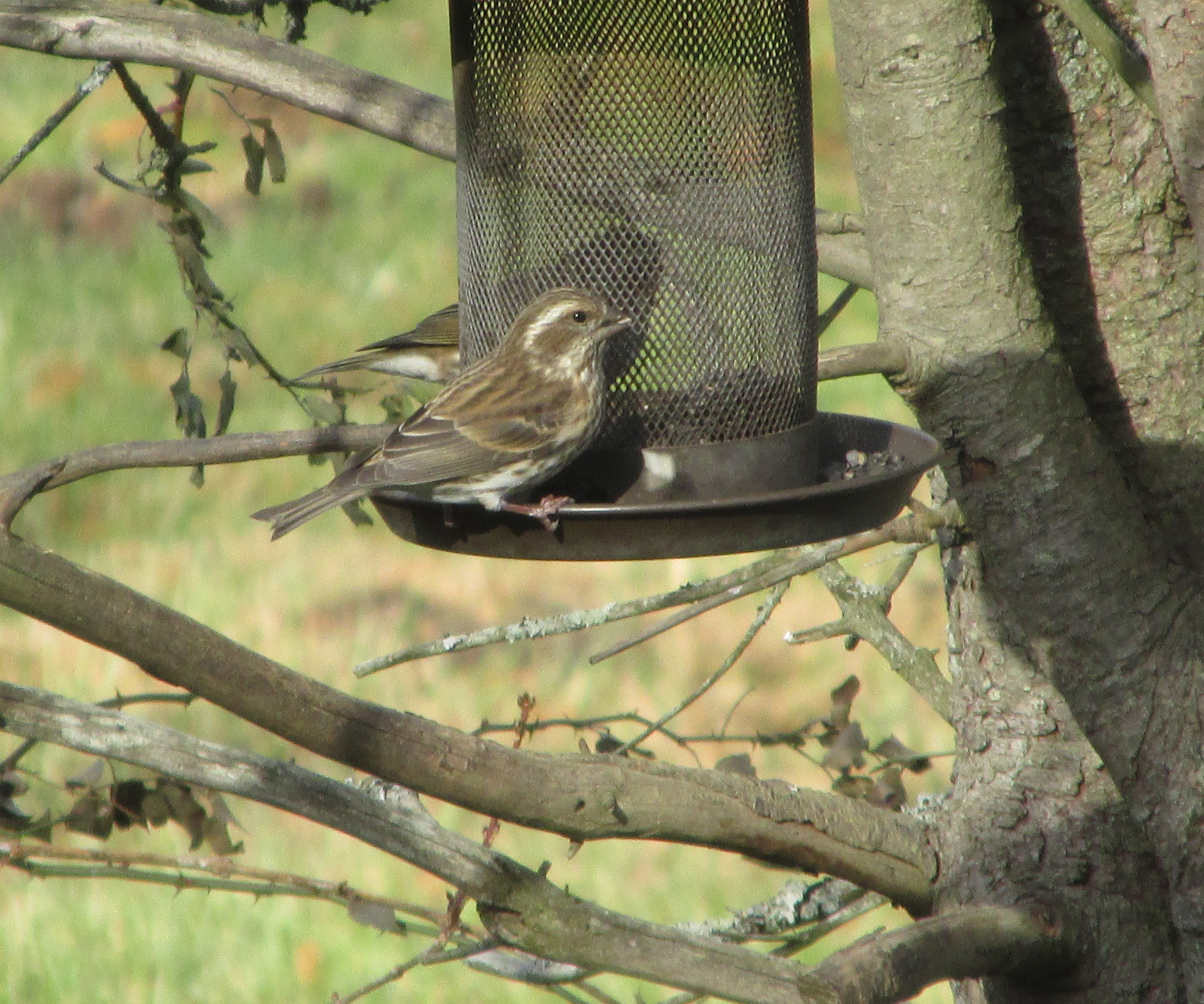
PurpleFinches

Female Purple Finches visit a feeder.

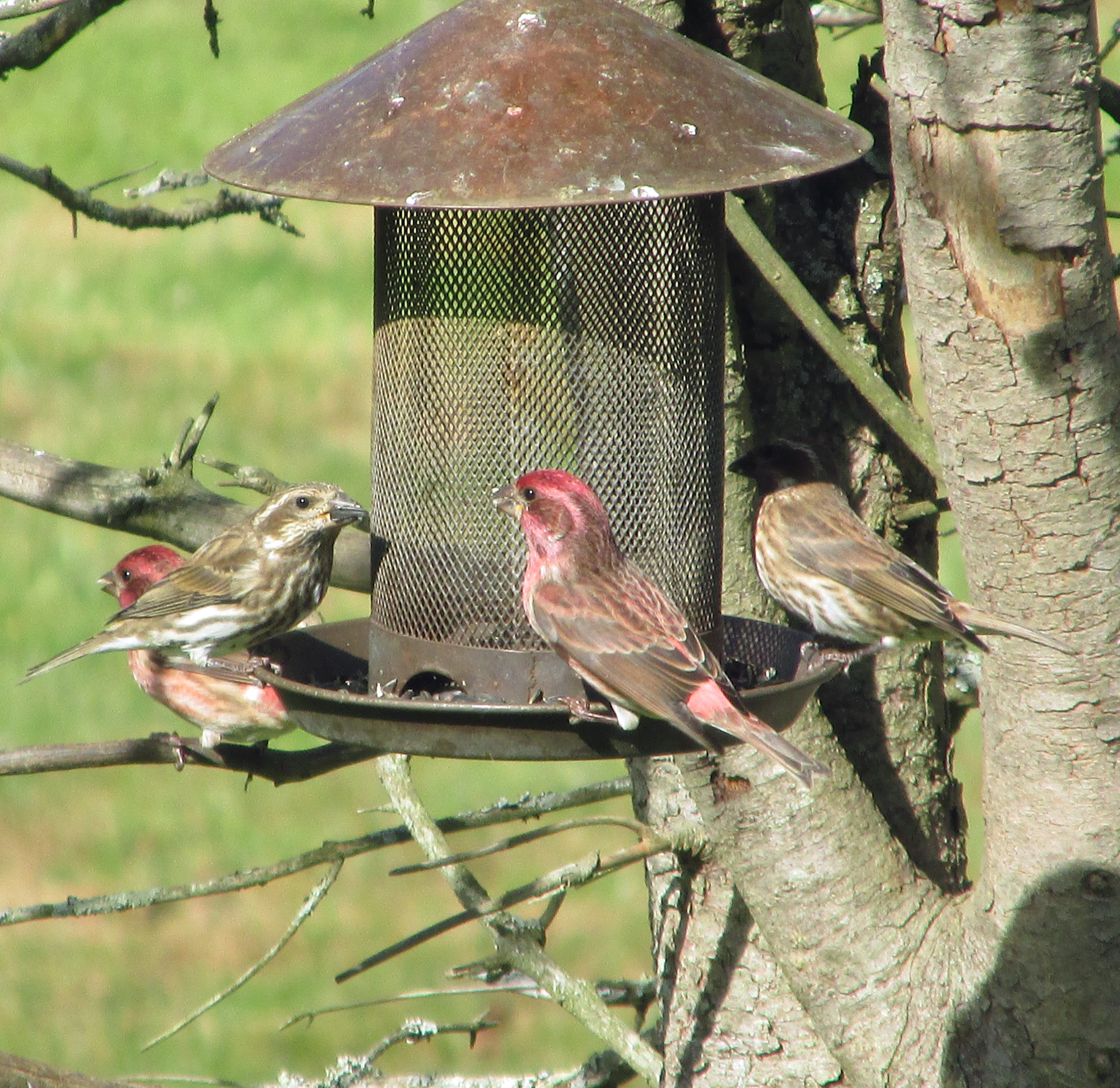
Purples

A flock of Purple Finches share space at a feeder.

DUo-Downy-Titmouse

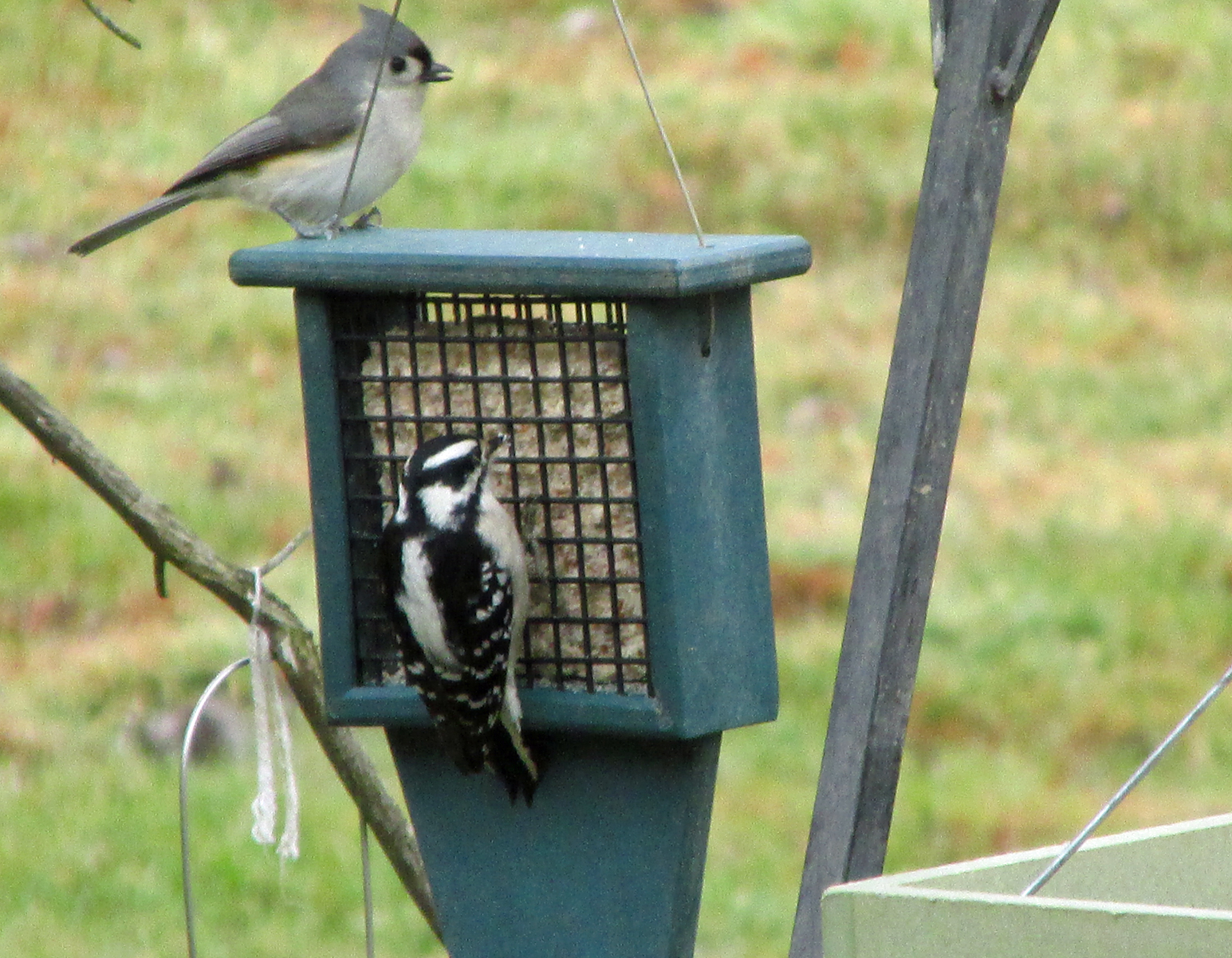
Downy Woodpecker and Tufted Titmouse arrive at a suet feeder.


Female-Downy1

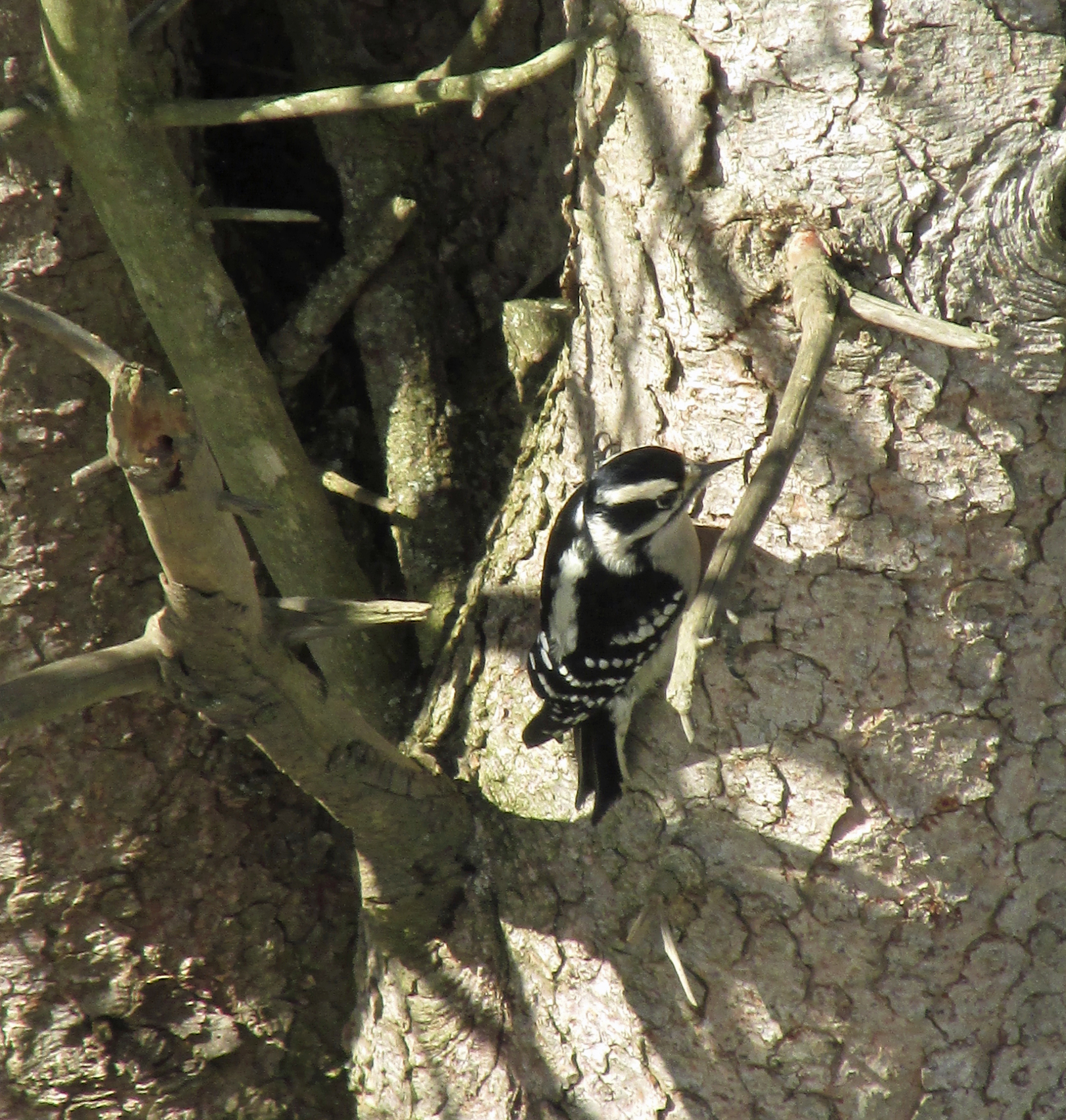
A female Downy Woodpecker climbs on a tree trunk.


Wild turkey epitomizes rugged determination of the American spirit

A Wild Turkey is ama amazingly resilient bird, capable of surviving in a variety of habitats.

A Wild Turkey is an amazingly resilient bird, capable of surviving in a variety of habitats.

Americans will come together this week to celebrate Thanksgiving, so I thought I’d focus this week’s column on the wild turkey.

It’s usually in early November that I begin encountering wild turkey flocks, whether I’m in the field to look for birds or simply driving to and from work. I saw a group of four wild turkeys on Nov. 4 as they foraged in a field near my home. Over the years, I’ve also found other locations that are dependable for turkey sightings. In some areas, flocks comprised of dozens or even hundreds of turkeys are commonplace.

E._migratorius

This bird, one of the last Passenger Pigeons, was photographed in 1899.

Surprisingly, despite its current abundance across North America, the wild turkey almost didn’t survive the 19th century. It’s almost miraculous that the wild turkey didn’t join the unfortunate ranks of such extinct birds as the passenger pigeon and Carolina parakeet. In fact, only an estimated 30,000 wild turkeys were alive about 1930. The same forces that wiped out the immense flocks of passenger pigeons and America’s only wild parakeet almost drove the wild turkey to extinction. Habitat destruction and a merciless commercial slaughter almost claimed the wild turkey, another uniquely American bird.

Passenger_pigeon_shoot (1)

The same market forces that slaughtered Passenger Pigeons nearly decimated America’s Wild Turkey, too.

Ironically, the wild turkey’s valued status as a gamebird helped persuade many Americans to fight for its conservation. It’s an effort that succeeded admirably. Today, there are about seven million wild turkeys roaming North America. The wild turkey is now abundant enough to be legally hunted in most states, including Virginia and Tennessee.

Interest in the wild turkey as a game bird has even inspired the establishment of the National Wild Turkey Federation, which is a national nonprofit organization that serves as a leader in upland wildlife habitat conservation in North America. The NWTF was founded in 1973 in the Commonwealth of Virginia. The NWTF is now headquartered in Edgefield, South Carolina, and has local chapters in every state. The NWTF remains dedicated to the conservation of the wild turkey and the preservation of a sustainable hunting heritage.

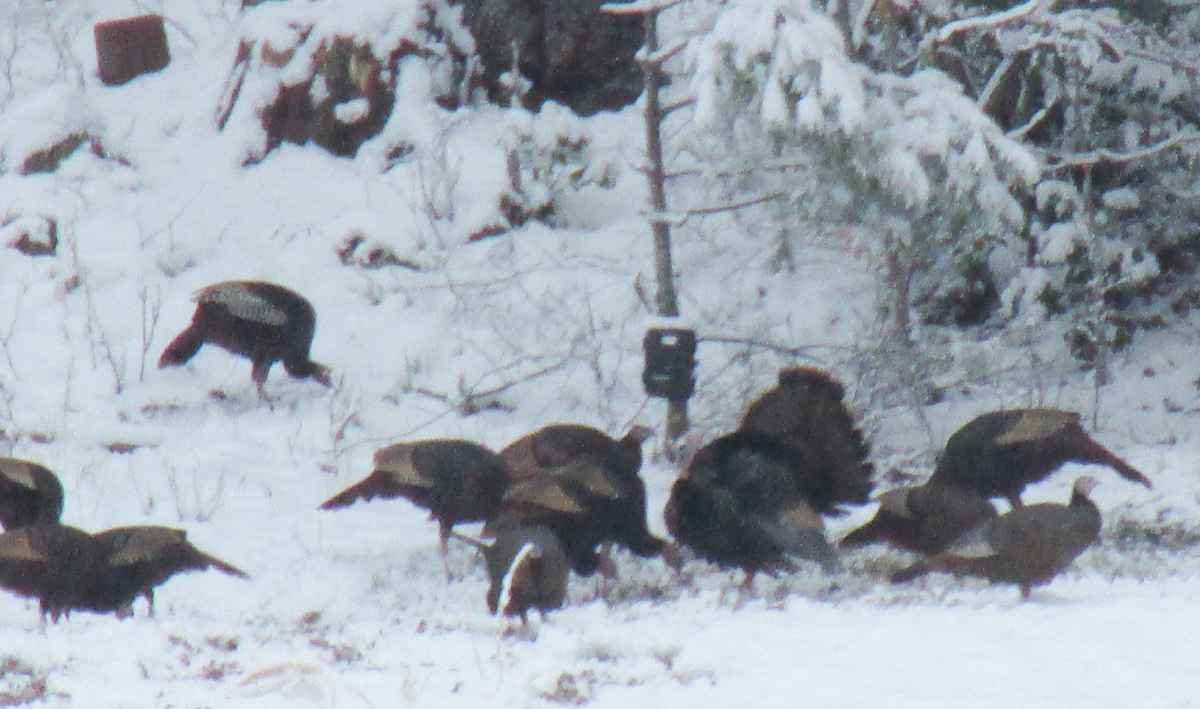
Photo by Bryan Stevens A flock of turkeys forage for food while a few of the males, or Toms, display to attract the attention of females in the flock.

Photo by Bryan Stevens
A flock of turkeys forage for food while a few of the males, or Toms, display to attract the attention of females in the flock.

The wild turkey, for which the NWTF was formed, is a large bird. Males, or tom turkeys, can reach a length of 46 inches, weigh 16 pounds and boast a wingspan of 60 inches. It’s a widely held misconception that the wild turkey cannot fly. The turkey is perfectly capable of flying at speeds up to 55 miles per hour, but they often prefer to walk and run over the ground. They’re good sprinters, in fact, and can reach a running speed of 25 miles per hour.

The female turkey, or hen, nests, incubates eggs and rears young without any help from her mate. The hen may lay as many as a dozen eggs. The clutch usually hatches within a month. Newly-hatched turkeys are known as poults. The poults are capable of finding their own food after leaving the nest, which they do within 12 hours of hatching. They are supervised, however, by the hen. Wild turkeys require a mixture of woodlands with clearings and fields to thrive. They roost in trees at night, but feed in more open habitats.

Early naturalist John James Audubon painted this wild turkey hen accompanied by her poults, or young.

Early naturalist John James Audubon painted this wild turkey hen accompanied by her poults, or young.

The wild turkey’s scientific name is Meleagris gallopavo. The wild bird is exclusively resident in North America, but domesticated turkeys are now raised around the globe.

The wild turkey has only one close relative, the ocellated turkey, or Meleagris ocellata, which ranges throughout the Yucatán Peninsula in Mexico as well as the northern parts of Belize and Guatemala. The extent of this fowl’s range is only about 50,000 square miles while the wild turkey ranges throughout the United States, as well as Canada and Mexico. Tail feathers in both sexes are bluish-gray in color with a well defined, eye-shaped, blue-bronze colored spot near the end followed by a bright gold tip. These “eyespots” in the feathers provide the basis for the use of the term “ocellated” in this fowl’s common name. The tail feather spots are reminiscent of those seen in peacock feathers.

Few birds have featured so prominently in the history of the United States as the wild turkey. In fact, the turkey came close to being named the official bird of the United States.

Benjamin Franklin, who proposed the turkey as the official United States bird, was distraught when the bald eagle was chosen over the turkey. Franklin wrote to his daughter, referring to the eagle’s “bad moral character,” saying, “I wish the bald eagle had not been chosen as the Representative of our country! The turkey is a much more respectable bird, and withal a true original native of America.” George Washington, the nation’s first president, also shared Franklin’s opinion, and pointed out the bald eagle’s lifestyle as a carrion eater.

Photo by Bryan Stevens The Wild Turkey has become closely associated with the Thanksgiving holiday.

Photo by Bryan Stevens
The Wild Turkey has become closely associated with the Thanksgiving holiday.

If not as our national symbol, the wild turkey is still deserving of respect. This bird, found only in North America, is a survivor.

Here’s some additional turkey trivia:

• The Aztecs first domesticated the wild turkey. Spaniards brought this tamed fowl back to Europe with them in the mid-16th century and from Spain, domestic turkeys spread to France and later Britain as a farmyard animal.
• At Thanksgiving, humans consume many turkeys. In the wild, turkeys are preyed upon by coyotes, bobcats, cougars, golden eagles, great horned owls and red foxes.

• Today, the wild turkey population stands at about 7 million. This bird, an adaptable species, now thrives in suburban areas, as well as the rural countryside.

• The feathers of turkeys were important in Native American cultures. Tribes as diverse as the Sioux, the Wampanoag, the Powhatan and the Hopi all wore turkey feathers or used feathers in their rituals.

Photo by Bryan Stevens The thaw after a snow makes it easier for wild turkeys to forage for food.

Photo by Bryan Stevens
The thaw after a snow makes it easier for wild turkeys to forage for food.

• Turkeys belong to an order of birds known as the galliformes, which includes grouse, ptarmigans, pheasants, quail, partridges and chickens. The only other native galliformes in the regions are ruffed grouse and Northern bobwhite.

• The wild turkey is the largest of North America’s game birds. The largest wild turkey on record weighed 37 pounds, but a domestic turkey holds the record, tipping the scales at 86 pounds. That bird certainly could have fed a lot of people gathered around the Thanksgiving dining table.

•••••

To learn more about birds and other topics from the natural world, friend Stevens on Facebook at https://www.facebook.com/ahoodedwarbler. He is always posting about local birds, wildlife, flowers, insects and much more. If you have a question, wish to make a comment or share a sighting, email ahoodedwarbler@aol.com.

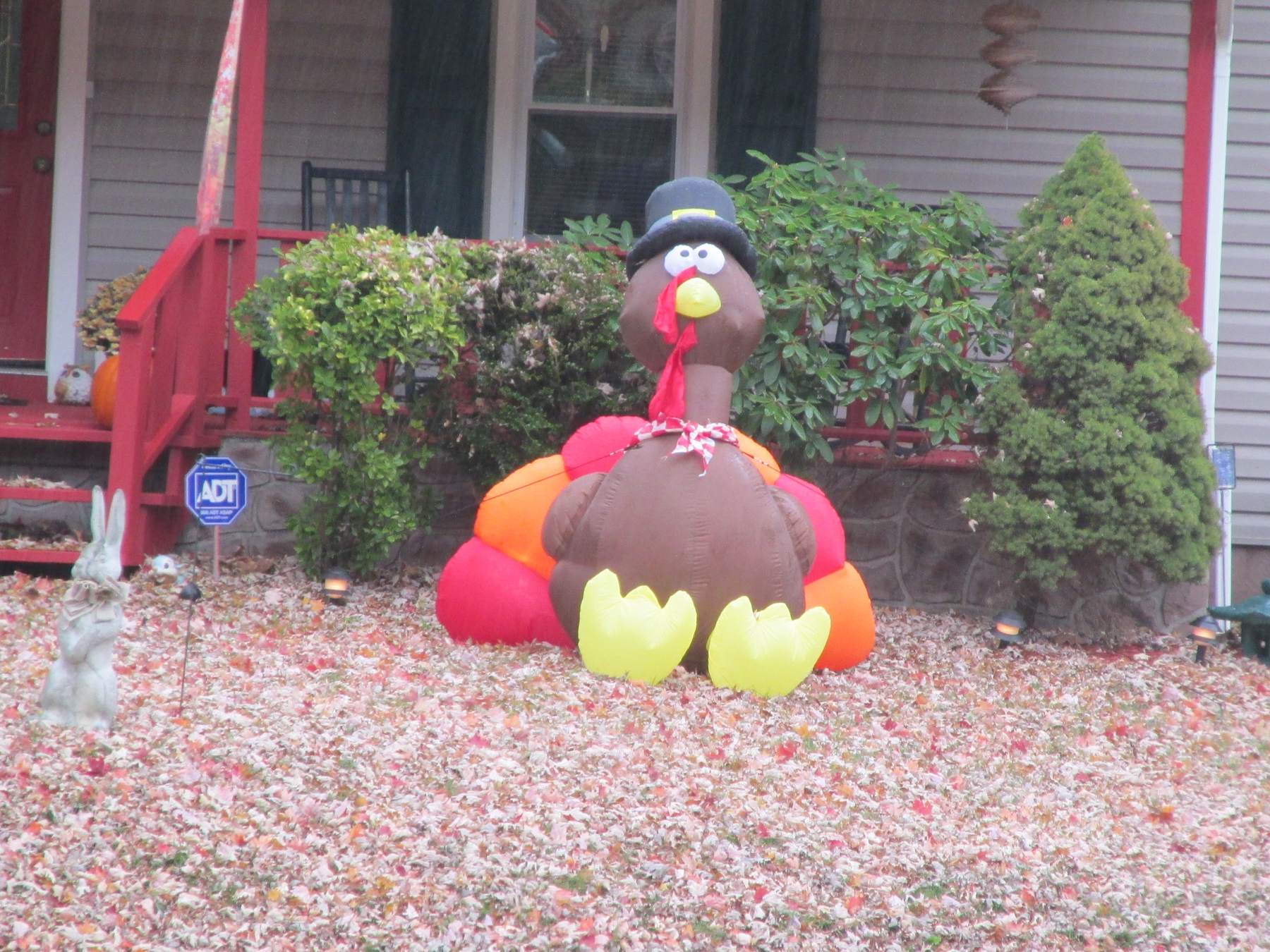
Photo by Bryan Stevens A decorate turkey pays homage to the real bird.

Photo by Bryan Stevens
A decorative turkey made from plywood and a haybale pays homage to the real bird.

Brown Thrasher’s nesting habits bring this golden-eyed bird into our yards

Photo by Bryan Stevens A fledgling Brown Thrasher perches on a ledge inside a garage.

Photo by Bryan Stevens
A fledgling Brown Thrasher perches on a ledge inside a garage.

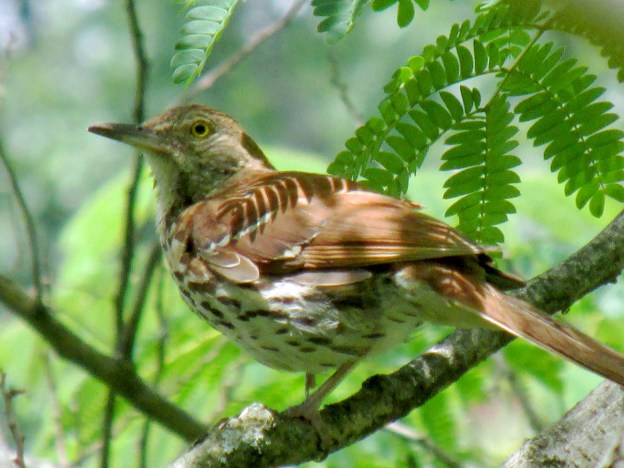
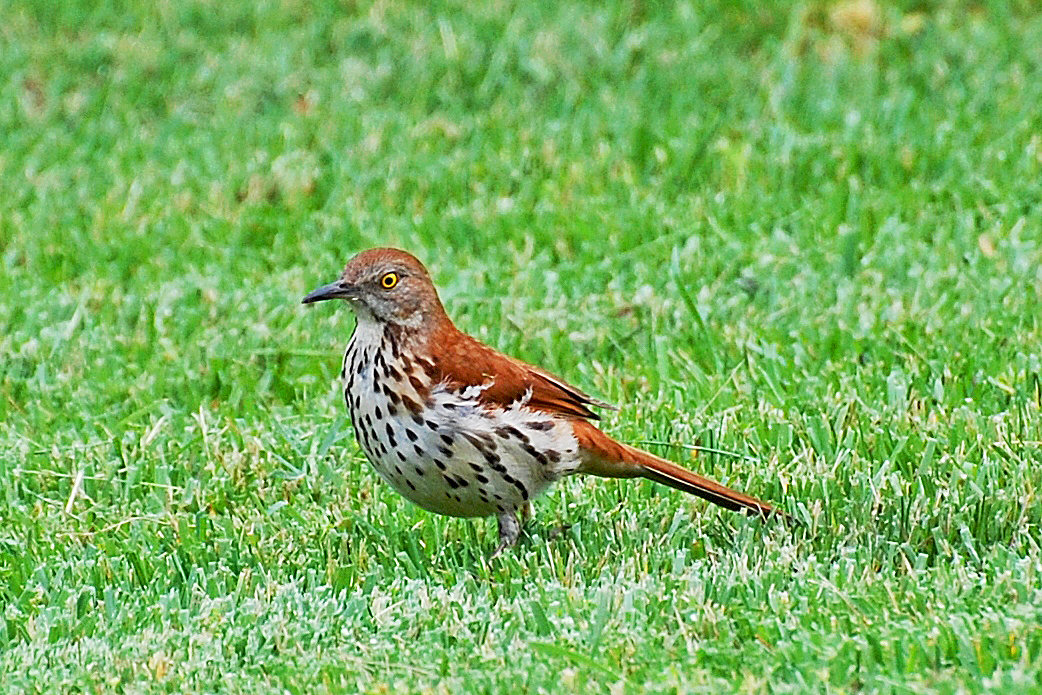
It’s been a banner year for brown thrashers at my home. In recent weeks, these large songbirds have provided plenty of entertainment by bringing their young to the feeders. They especially like the suet feeder. The parent birds work to detach chunks of suet. Once they secure these morsels, the parents feed their hungry young.

Photo Courtesy of Jean Potter A Brown Thrasher scans the grass for insect prey.

Photo Courtesy of Jean Potter
A Brown Thrasher scans the grass for insect prey.

A few years ago, quite by accident, I came across a brown thrasher nest. I hadn’t gone looking for it. The nest, expertly woven into a thicket of honeysuckle vines, was tucked beneath a sheltering eave of an outdoor storage building. I don’t think anything but a fortunate accident could have ever revealed the nest. I still remember peeking into that tangle of vines and seeing a golden eye staring back. The bird didn’t look in the least pleased that I had accidentally stumbled across her nest.

The otherwise extroverted brown thrasher, which prefers to nest in difficult-to-access, tangled messes, found the cluster of vines a perfect location. I haven’t discovered any thrasher nests this year, but I’ve observed several fledglings when they began visiting the feeders with their parents.  For those not familiar with brown thrashers — relatives of the Northern mockingbird — they are known for their feisty and fearless protection of their nest and young.

Photo by Bryan Stevens Brown Thrashers prefer thickets and brushy areas that offer security for these somewhat shy birds.

Photo by Bryan Stevens
Brown Thrashers prefer thickets and brushy areas that offer security for these somewhat shy birds.

••The brown thrasher (Toxostoma rufum) belongs to the family of “mimic thrushes,” which provides a label for a group of songbirds capable of imitating the songs of other birds. Mimidae, the Latin root for “mimic,” provides the scientific name for the family, which includes mockingbirds and the New World catbirds, as well as thrashers. The Northern mockingbird is best known for the ability to mimic, but relatives like the gray catbird and brown thrasher are also talented mimics.

The thrasher is a fairly large songbird about 11.5 inches long with a wingspan of 13 inches. Much of the body length comes from the bird’s long tail feathers. A thrasher weighs, however, only about 2.5 ounces.

The brown thrasher is not a picky eater. It’s known to eat everything from berries and nuts to insects and small lizards. It’s also aggressive in defending its nest and young. John James Audubon, a French-American ornithologist, naturalist and painter, painted quite a dramatic scene of a group of brown thrashers valiantly defending a nest from an attacking snake. The painting is so detailed that you have to imagine Audubon based his work on a real-life experience. His work, originally painted in the early decades of the 1800s, still holds up today.

Early American naturalist and artist John James Audubon painted a dramatic scene of Brown Thrashers defending their nest from an attacking snake.

Early American naturalist and artist John James Audubon painted a dramatic scene of Brown Thrashers defending their nest from an attacking snake.

Incidentally, Audubon knew the brown thrasher as the “ferruginous thrush.” Another former common name for this species was “brown thrush.”

This brown thrasher breeds across the United States and Canada east of the Rocky Mountains. Thrashers withdraw from the northern part of their range in the winter months, spending the season in the southeastern United States.

They are familiar birds in southern gardens. In fact, the brown thrasher is the official state bird of Georgia and also provided the name for Atlanta’s National Hockey League team, the Atlanta Thrashers. The thrasher became Georgia’s state bird due to passage of a Joint Resolution of the Georgia General Assembly in 1970.

The brown thrasher is the only member of the thrasher clan in the eastern United States. In Texas and the western half of the country, however, there are several other species of thrasher, including sage thrasher, long-billed thrasher, Crissal thrasher, curve-billed thrasher, Bendire’s thrasher, California thrasher and Le Conte’s thrasher. Many of these thrashers also occur in Mexico.

These New World birds also occur in the Caribbean, including such species as White-breasted Thrasher, Pearly-eyed Thrasher and Scaly-breasted Thrasher.

Photo by Bryan Stevens   A pair of Brown Thrashers perch near a fence at Tipton-Haynes Historic Site in Johnson City.

Photo by Bryan Stevens
 A pair of Brown Thrashers perch near a fence at Tipton-Haynes Historic Site in Johnson City.

•••••

Rebecca Howe, who resides in Kent, Ohio, has sent me an email.
“I am blessed to have rose-breasted grosbeaks come to my house each spring,” she wrote. “I watch males arrive first and then females.”
She has recently been seeing young birds arriving at her feeding station.

“Now the birds seem to be leaving,” she noted. “Do they leave their breeding grounds around this time to move south for the winter?”

I thanked Rebecca for sharing about her rose-breasted grosbeak observations in a follow-up email and informed her that different birds depart at different times to go south for the winter. Some birds do not get into a rush to reach their destination, so the start of migration is more of a slow-paced, casual “wandering” that takes them to different locations in a more or less southern direction.

Brown Thrasher visits a suet feeder. The thrasher diet consists of everything from berries and seeds to insects and even small reptiles.

Photo by Bryan Stevens                                Brown Thrasher visits a suet feeder. The thrasher diet consists of everything from berries and seeds to insects and even small reptiles.

Closer to Southwest Virginia and Northeast Tennessee, birds like yellow warbler, Louisiana waterthrush and a few others are known to depart as early as July and August. Ruby-throated hummingbirds are another good example of slow migrants. Those that pushed to the northern limit of their range are probably already heading back. But they are very nomadic. Maybe they could even be described as “restless,” and it is this time of year when I start to get the highest numbers of these little birds.

••••••

I look forward to hearing from readers. Those who wish to ask a question, share an observation or make a comment may reach me at ahoodedwarbler@aol.com. Follow me on Facebook to see more bird and nature photos at https://www.facebook.com/ahoodedwarbler

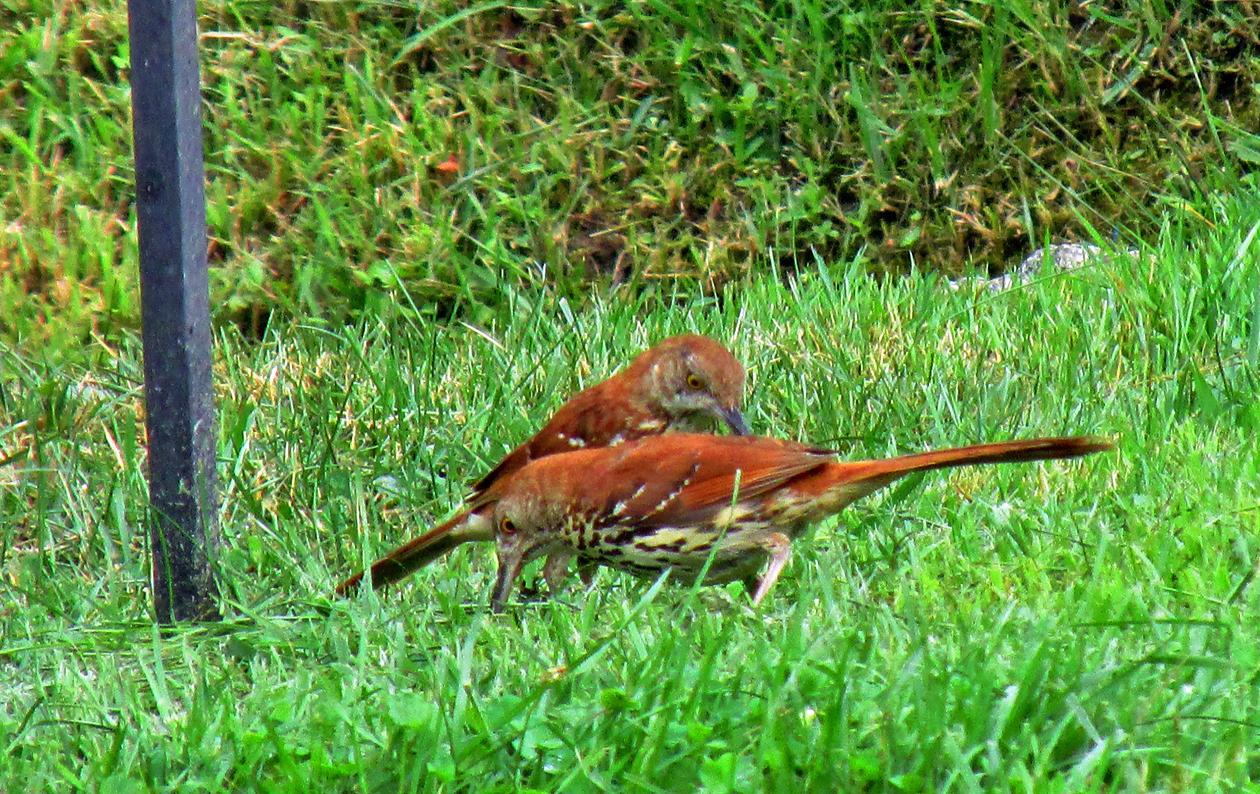
Photo by Bryan Stevens A pair of Brown Thrashers forage for food on the ground below a feeder.

Photo by Bryan Stevens
A pair of Brown Thrashers forage for food on the ground below a feeder.

‘Tooth’ of the matter: Sawbills harken back to days when birds still had teeth

Everyone has probably heard the phrase “as scarce as hen’s teeth.” It means almost exactly what you think. Birds don’t have teeth, so it’s a way to describe something exceptionally rare. It’s a characteristic that sets birds apart from other creatures, such as mammals.

There are some birds, however, that come closer to having teeth than their other beaked counterparts. Mergansers would definitely fall into that category. The mergansers are a type of duck known collectively as “sawbills,” a reference to their long, thin bills with serrated edges that help them grip prey. The “sawbills” come closer than any of our other birds in having teeth, although not in the same sense as mammals have teeth.

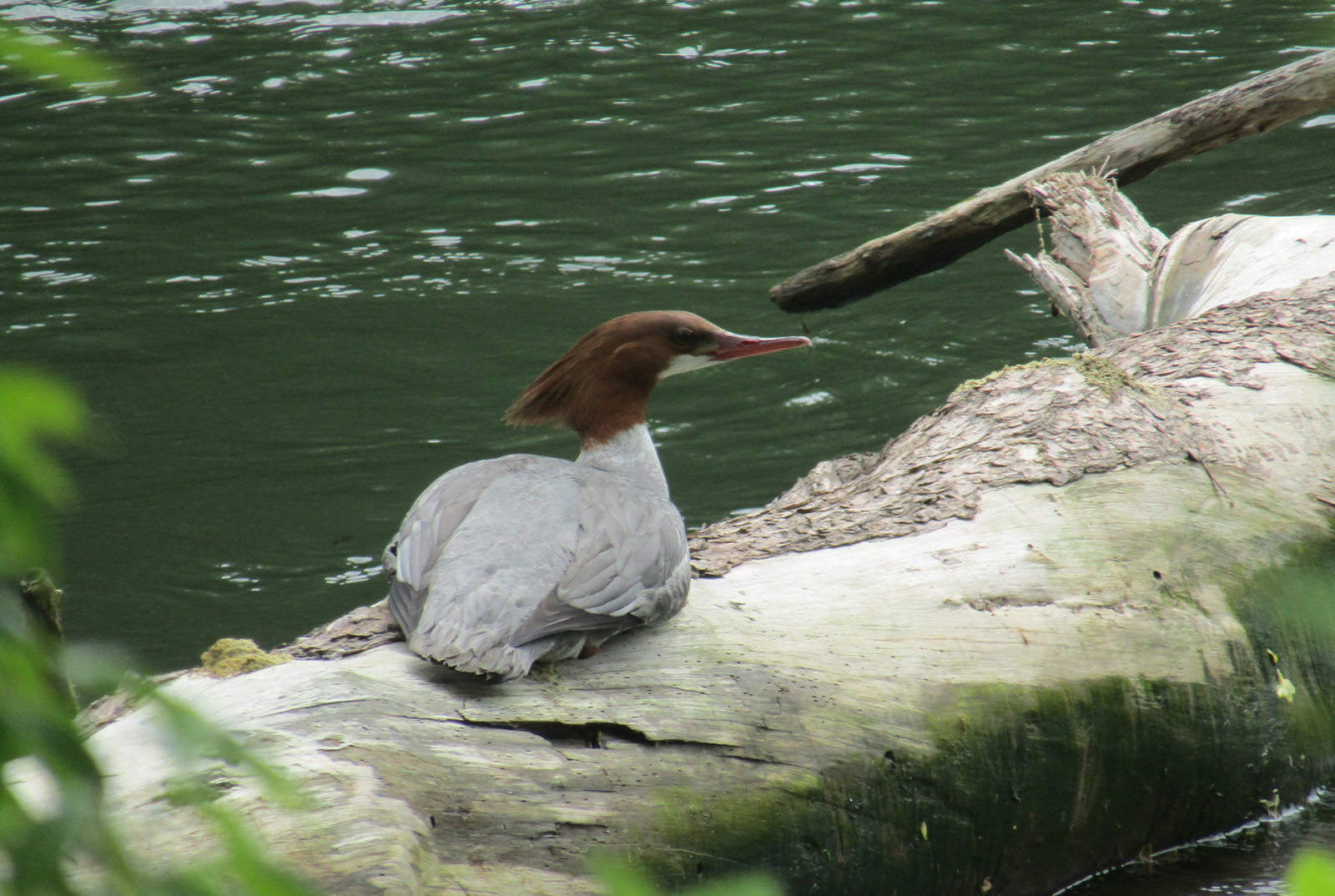
Photo by Bryan Stevens • This female Common Merganser was photographed during this year’s Spring Bird Count.

Although classified as sea ducks, the mergansers are more at home in river habitats. There are six closely related species in three genera: Mergus, Mergellus and Lophodytes. The latter two genera have only a single species, the Hooded Merganser (Lophodytes cucullatus) and the Smew (Mergellus albellus).

The other mergansers in the Mergus genus consist of four species, Common Merganser, Brazilian Merganser, Red-breasted Merganser and Scaly-sided Merganser. The latter is an endangered species with only about 2,500 adult birds in the worldwide population. These remaining Scaly-sided Mergansers are found in the border regions of China, North Korea and Russia.

Mergs-OnWatauga

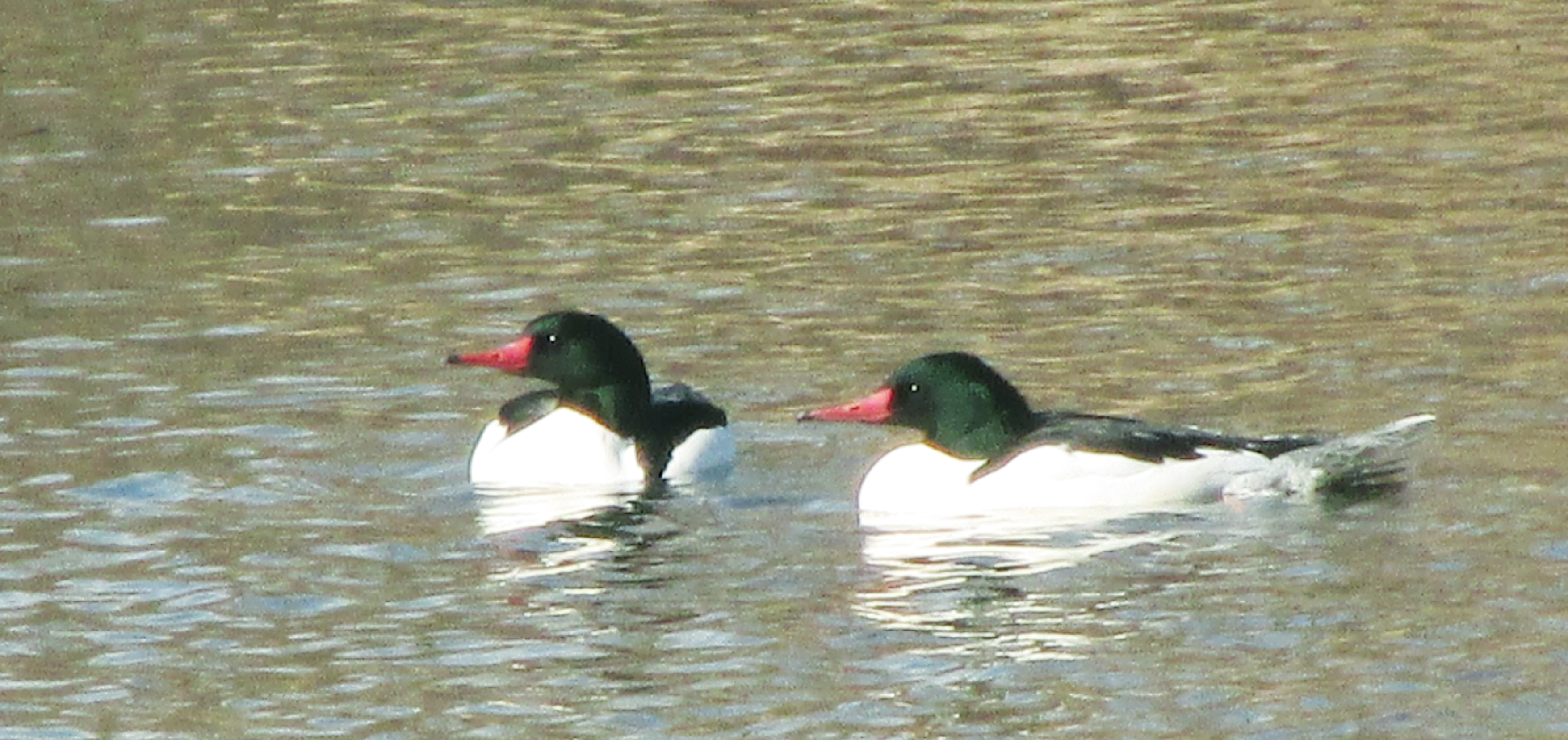
Photo by Bryan Stevens • A pair of Common Mergansers on the Watauga River in the Lynn Valley community of Elizabethton.

Another species, the Auckland Merganser, became extinct in the early 1900s. Sadly, the last evidence of this species dates back to Jan. 9, 1902, when the last wild pair was shot. After that time, this bird native to the Auckland Islands was never seen again.

In recent weeks, a couple of Common Mergansers spent a few days on the Watauga River in the Lynn Valley community. I saw them on a couple of occasions and also managed to get some photographs of the two handsome drakes.

In Europe, the Common Merganser is called a Goosander, probably a nod to its large size that makes this bird superficially more similar to geese than ducks. Early naturalists such as John James Audubon also provided this bird with a different name, referring to it as the “Buff-breasted Merganser.”

For many years, the Common Merganser was one of my target birds. Finally, more than 10 years ago, I saw my first Common Mergansers during a visit to Middlebrook Lake in Bristol with Reece Jamerson, Gil Derouen and the late Howard Langridge. Despite the word “common” in its name, this merganser isn’t particularly common in Northeast Tennessee. Its relatives, Hooded Merganser and Red-breasted Merganser, are much more regular visitors to the region.

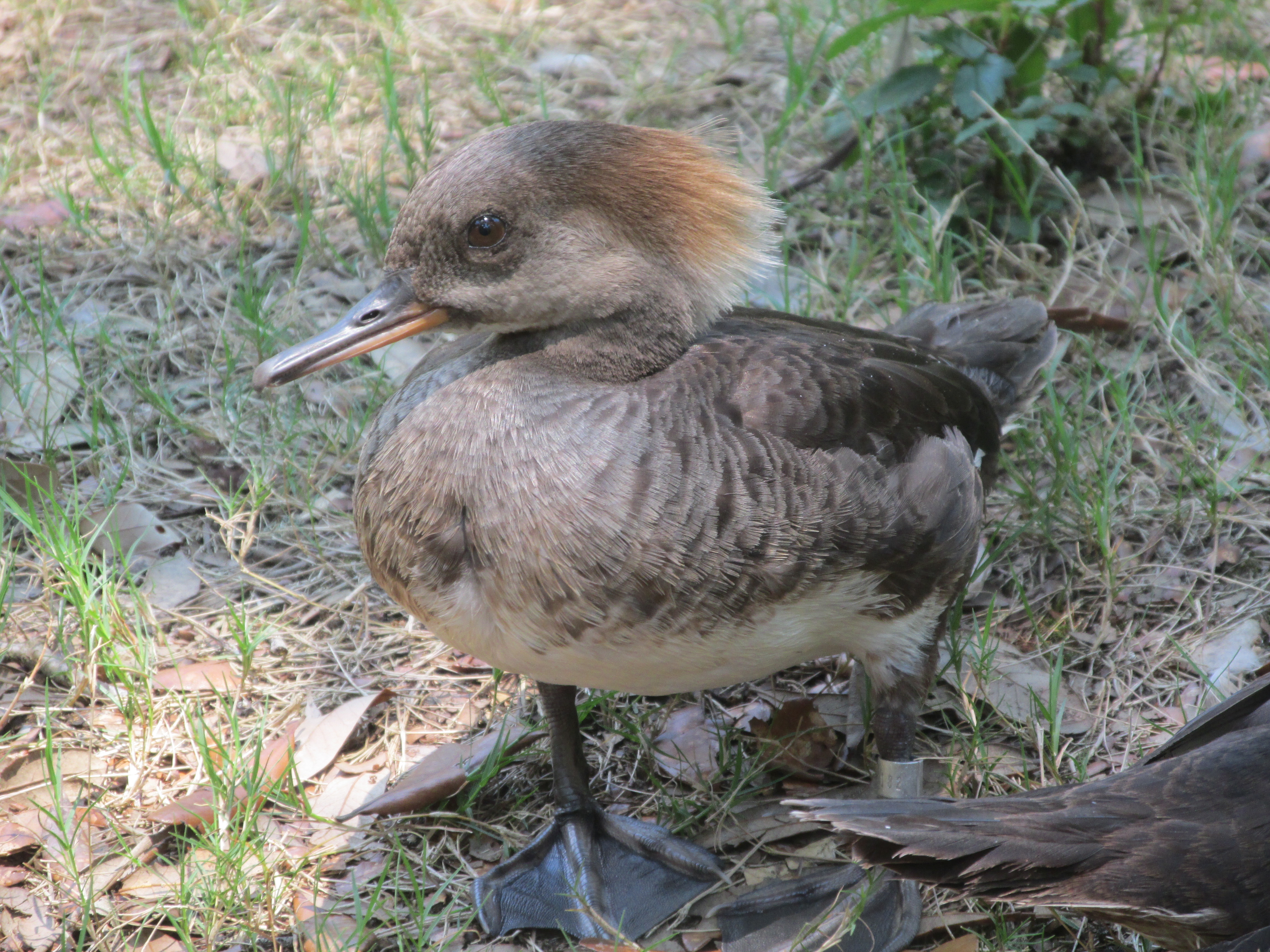
Photo by Bryan Stevens • Hooded merganser females, or hens, have a gray-brown head and neck with a reddish-brown crest, which marks quite a contrast from the male’s appearance.

In addition to Bristol’s Middlebrook Lake, I have seen Common Mergansers on Watauga Lake and on the Holston River in Kingsport.

The Common Merganser, particularly the males, are easily identified. Apart from their large size, which is about 26 inches long for males, males of this duck have a dark green head and upper neck. The lower neck, breast and underparts are creamy-white with a varying amounts of a pink or reddish wash. The back is black, while the bill, legs and feet are red. Females are similar to female Red-breasted Mergansers but show a clearly defined white chin patch lacking in their close relative.

According to the website Ducks Unlimited, Common Mergansers breed from Alaska, the southern Yukon, Labrador and Newfoundland south to central California, Arizona, New Mexico, southern Chihuahua and east of the Rockies to Minnesota, Michigan, New York, New England and Nova Scotia.

Photo by Bryan Stevens • A female hooded merganser flaps her wings as another preens her feathers behind her.

They are also one of the biggest of North America’s cavity-nesting birds, utilizing natural cavities in trees, as well as man-made nesting boxes. They will also nest on the ground.

Common mergansers feed mainly on fish, amphibians, crustaceans, mollusks and other aquatic organisms. The last extensive population surveys of Common Mergansers took place during the 1970s, when the population in North America was estimated at 1.5 million birds.

••••••

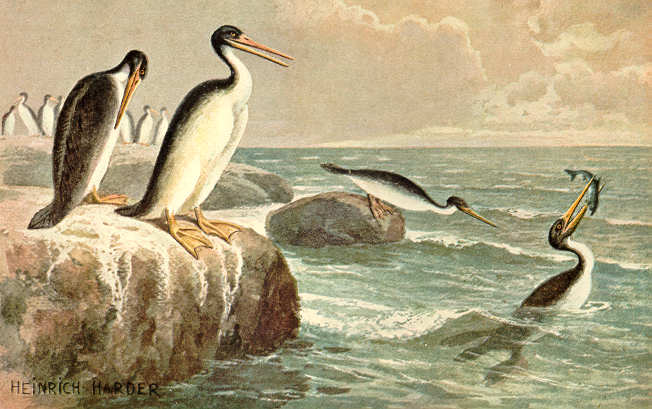
While today’s birds, even mergansers, all lack teeth, that hasn’t always been the case. About 80 million years ago, a bird known as Hesperornis (“western bird”) swam the inland seas that stretched over areas from Kansas to Canada. They swam through those ancient seas because they could not fly.

This early 20th century illustration of Hesperornis is no longer considered scientifically accurate by scientists, but it does demonstrate one striking feature - the toothed jaws of this ancient bird.

This early 20th century illustration of Hesperornis is no longer considered scientifically accurate by scientists, but it does demonstrate one striking feature – the toothed jaws of this ancient bird.

The body plan of Hesperornis was similar to modern loons and even the mergansers. Instead of a serrated bill, however, this ancient bird had actual teeth in its long beak. Just like today’s loons and mergansers, it probably fished for its food.

At almost six feet in length, however, it dwarfed our modern mergansers and loons and probably fed on larger piscine prey. So, why don’t today’s birds have teeth? The best answer I have found is that teeth (and other solid bones) were lost in order to make the avian form more streamlined and lightweight.

The power of flight demands a great deal of energy, and teeth are an unnecessary weight. As a result, birds grew hollow bones and lost their teeth.

••••••

I have been taking part in the Great Backyard Bird Count and have enjoyed some interesting observations that I’ll discuss in future columns. I would love to hear from readers. Just post comments on my new blog at ourfinefeatheredfriends.wordpress.com. You can also reach me on Facebook or send email to ahoodedwarbler@aol.com. Please share the link to the blog with others who might be interested in the topic of birds and birding in Northeast Tennessee.