Tag Archives: Bryan Stevens

Getting ready for the spring migration of birds

It’s already the middle of March. While birds don’t follow calendars, they are punctual, and thanks to their boundless energies, the grand spectacle of spring migration is already upon us. The pace will quicken in April and early May as many of our favorite summer birds, including species ranging from hummingbirds and warblers to swifts and swallows, wing their way back to the region.

A few will stay, pair with a mate and begin the nesting season in earnest while others will continue toward destinations farther north. For fellow bird enthusiasts, now is the time to conduct some spring tasks to make our feathered friends feel more welcome when they do return.

Place birdhouses
Many birds are cavity-nesting species, which means they utilize natural nooks and crannies as locations for nests. Nesting in a natural tree cavity or in a human-provided birdhouse offers an extra degree of security not available to birds that build traditional cup-shape nests, not to mention all the birds that simply lay their eggs right on the ground without going to much effort to construct an actual nest.
Some of the cavity-nesting species in the region that will readily accept quarters in a bird house include Carolina chickadee, Eastern bluebird, white-breasted nuthatch, tree swallow, tufted titmouse, great crested flycatcher, prothonotary warbler and house wren.
Cavity-nesting isn’t restricted to songbirds. Wood ducks, Eastern screech-owls and American kestrels will make use of birdhouses built to their unique specifications.
Plans for constructing your own bird houses tailored to individual species can be found at various online sites. For those not as good with do-it-yourself projects, department stores, gardening centers and other other shops sell a variety of pre-made houses.
Put hummingbird
feeders out early
Journey North, a website that tracks the annual migration of hummingbirds as well as other wild creatures reports a slow start to the ruby-throated hummingbird spring migration. “Journey North citizen scientists in Texas and along the Gulf are noting arrivals, but reports are still few and far between,” notes an article on the website.
Reports had been received of a ruby-throated hummingbird in Fairhope, Alabama, on March 2, and another in Port O’Connor, Texas, on March 6.
However, Journey North reported February’s cold spell across much of the southern U.S. could have caused a delay in migration. To report first observations of migrating ruby-throated hummingbirds, visit journeynorth.org.
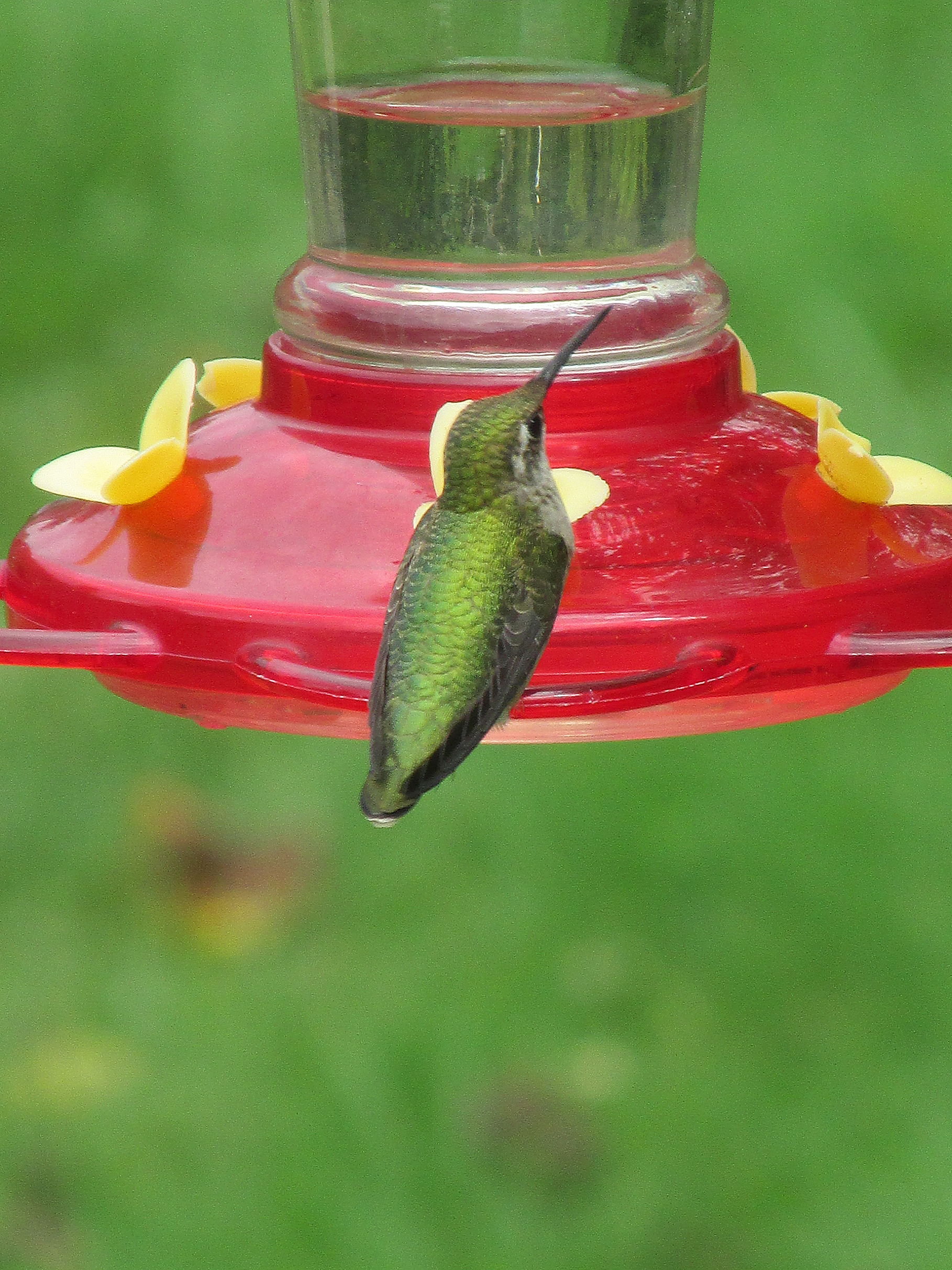
Whether they’re early, late or right on time, the hummingbirds are only weeks away. There will always be “early birds” even among hummingbirds. Increase the likelihood of seeing one of these tiny gems by putting out a sugar water feeder soon.
Remember to fill your feeder with a mixture of one part sugar to four parts water. Don’t add red coloring. Experts suspect that some dyes could be detrimental to hummingbird health. Why take the risk?

Clean feeders
This past winter saw large flocks of pine siskin, purple finch and evening grosbeak in some locations across the region. In some states, these large flocks also suffered from outbreaks of diseases, including salmonella.
As returning birds mingle with lingering winter visitors at our feeders this spring, the chance of spreading disease will increase.
Now is definitely the time to be proactive, cleaning feeders and bird baths regularly and keeping alert to any sign that ill birds might be among the visiting flocks.
Cleaning need not be laborious. Fill a spray bottle with a dilute solution of bleach water. A good ratio is no more than 1 part bleach to 9 parts water. Remove feeders, give them a quick rinse, and then spritz them with the bleach solution. Rinse thoroughly and allow to dry before refilling with seed for the birds.
Keep feeding the birds, but play the diligent host. Put out only the amount of seed that visiting birds can eat in a single day. Monitor the flocks for any sign of illness and respond quickly if such signs are detected.

Refurbish brush piles
This past winter with its heavy snow and ice, as well as fierce winds, no doubt brought down many branches. When cleaning your yard of branches, consider adding them to an existing brush pile. I’ve long been a fan of keeping a brush pile in order to provide the resident songbirds with shelter and security from the elements, as well as from predators.
If you don’t have a brush pile, spring’s the perfect time to create one. If an unkempt pile of sticks offends your aesthetic sensibilities, tuck the brush pile into an obscure corner or locate it at the margins of the lawn or garden.
Personally, I like to locate brush piles near my busier feeders. A brush pile gives visiting birds a quick retreat if a predatory hawk arrives unexpectedly. For some birds, the need for dense cover is paramount.
Offering brush piles, as well as hedges and dense shrubbery, will help welcome visitors such as gray catbirds, Eastern towhees, brown thrashers and some sparrows. Wide, open spaces make many songbirds nervous.

Install
water features
With a large fish pond, a flowing creek and a couple of mountain seeps on my property, I’ve never needed to introduce an additional water source. For those with properties that don’t offer ready access to water, adding an ornamental pool or fountain, or even a bird bath or artificial waterfall, will act as a magnet for many birds. American robins and cedar waxwings love a place to splish and splash, as well as take a refreshing sip. Migrating warblers, which for the most part ignore feeders, are almost magically drawn to water features.
There is also something relaxing for the human psyche when it comes to water features. Treat yourself as well as the visiting birds by adding one to your lawn or garden.

Make beneficial
landscape additions
Spring’s a great time to plan ahead. While a handout of sunflower seed is appreciated by many birds, there’s nothing that beats organic sources of food.
Add plants and trees to the landscape of your yard and garden with the express purpose of providing birds with seeds, fruits and berries. Most experts urge native plant varieties that meet the nutritional needs of many bird species.
Flowers can be chosen that provide that desired burst of color for an interval but then go on to produce fruit or seeds craved by many birds. Native flowers can also be planted that offer a natural source of nectar for ruby-throated hummingbirds. Do some homework. Some nurseries specialize in native plants.

Give yourself a treat
Now is also the perfect time to indulge in a purchase that will enhance your enjoyment of the returning birds. If you have been wanting a new pair of binoculars, a new software app to help identify birds or a camera to let you document bird sightings with photographs, there’s no time like the present.
Welcome spring and the returning birds at the same time while ensuring maximum enjoyment of both.

Photo by Pixabay.com • A good pair of binoculars will bring birds much closer.

Love is in the air for visiting red-shouldered hawks

Photo by U.S. Fish & Wildlife Service/Lee Karney • A Red-shouldered hawk perches in branches.

As spring creeps closer, lovebirds spring up among a variety of birds, ranging from Eastern bluebirds to Northern cardinals. Of course, this inclination for birds to establish bonded pairs isn’t limited to songbirds.

As has occurred for the past couple of years, a red-shouldered hawk arrived at my home in early February ahead of Valentine’s Day, which proved appropriate considering what transpired after the handsome raptor’s arrival.

The raptor’s usual habit is to choose a perch in the branches of a large willow tree at the fish pond to secure a prominent spot for surveying its surroundings. If it’s the same red-shouldered hawk that has visited in past years, it has overcome its past shyness and does not fly instantly when I step outdoors. In fact, the hawk has remained perched even while I have been engaged in activities around my parked car, the garage and my mailbox.

As I discovered on Feb. 21, this hawk’s not a loner this year. There’s a pair of these striking hawks in residence! There’s ample evidence that they’ve established a pair bond, too. In fact, the two raptors have shown no shyness at all, going about their enthusiastic mating in full view of any and all passersby.

I’m pleased, even if I feel a bit voyeuristic, at this evidence that there’s a mated pair of these hawks that have adopted my home as their own. I’d love for them to decide to nest and raise some young in the nearby woodlands. A neighbor who previously lived close to me had shared on her Facebook page observations and photographs of red-shouldered hawks spending the summer months on her property, so I’m hopeful that my visitors might do the same. My neighbor, now deceased, was extremely detailed in her day-to-day observations of the natural world that took place in the fields and woods around her home.

Photo by Bryan Stevens • This captive red-shouldered hawk was rehabilitated after suffering an injury and now works in an educational program at Brookgreen Gardens in South Carolina to teach the public about raptors, other birds, and various types of wildlife.

Red-shouldered hawks are definitely a raptor worthy getting to know better. According to a factsheet published by the New York State Department of Environmental Conservation, this raptor breeds in moist woodlands, riverine forests, the borders of swamps, open pine woods and similar habitats. Nesting almost always occurs near water, such as a swamp, river or pond.

Different raptors utilize different strategies for subduing prey. The red-shouldered hawk is an ambush predator. This raptor usually selects a favorable perch and remains motionless and patient while scanning for possible prey. The hawk will drop rapidly onto any prey that wanders carelessly within range. In the summer, prey items largely consist of reptiles and amphibians, including snakes and frogs, as well as some insects and crayfish. Most of these creatures are scarce during the colder months of the year, which prompts these hawks to adopt a diet that focuses on rodents and the occasional songbird. Other than the altercations with the resident crows, I haven’t observed any encounters between the hawk at my home and any other birds — with one exception.

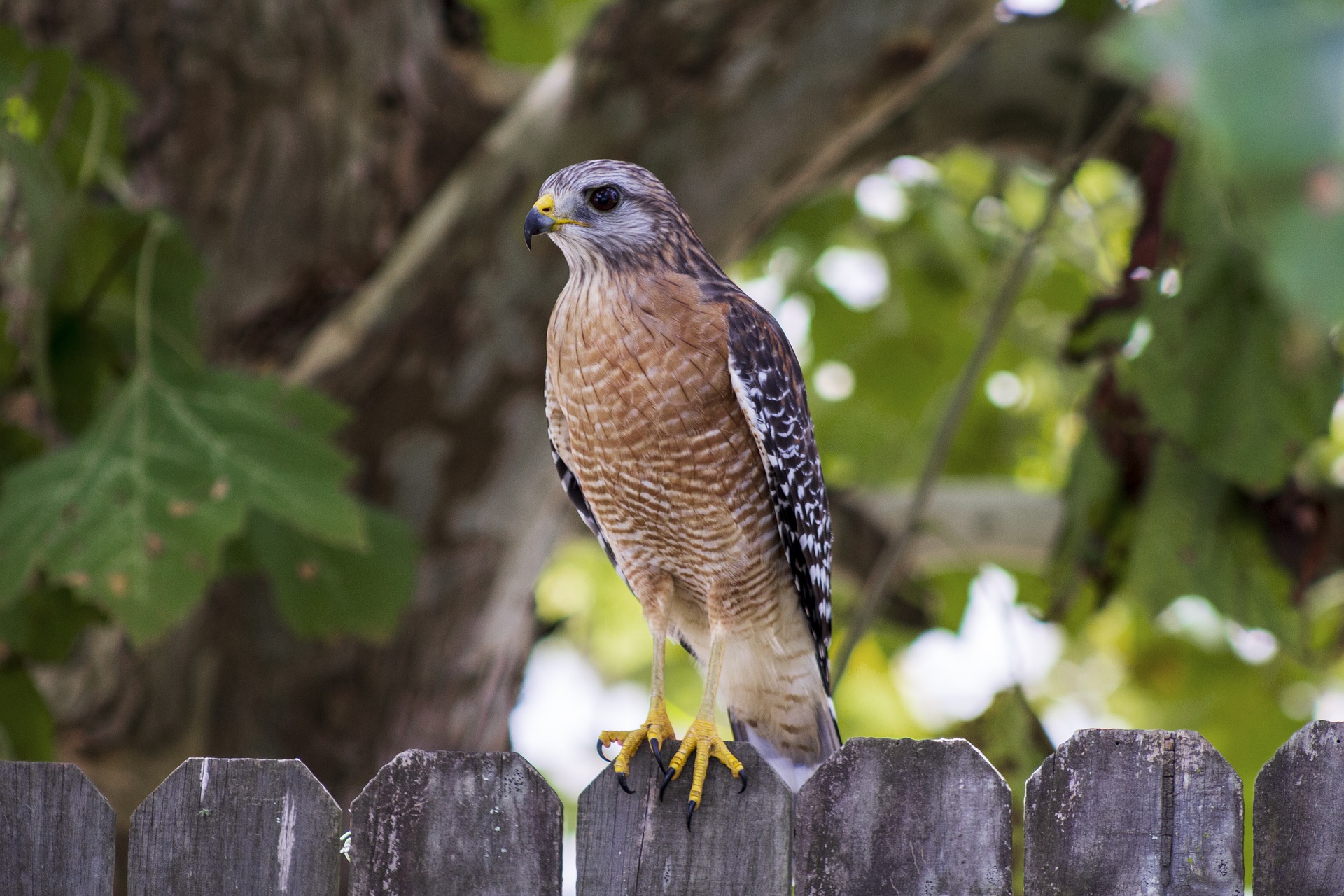
Photo by Peter Benoit from Pixabay • A red-shouldered hawk perches on a suburban fence.

On a morning a couple of years ago, a red-shouldered hawk was on its usual perch when seven Canada geese, another rare visitor to my home, suffered some sort of fright and took flight. The noisy geese flew directly over the willow, which spooked the raptor into taking flight in the opposite direction of the departing geese. I still fondly recall that amusing but accidental clash between these two species of birds.

The frogs at my fish pond interrupted their hibernation on Feb. 12 to begin their own amphibious serendades daily. I’ve even speculated that the red-shouldered hawks may have timed their return to coincide with the emergence of this potential food source. Considering how many frogs of several different species make the pond their home, it wouldn’t be far-fetched to think they are one of the major attractions bringing the hawks back year after year.

The red-shouldered hawk produces a distinctive, piercing whistle that reminds me of the shrill call of a killdeer. The two hawks that are visiting this year have been more vocal than usual. In the past I took their atypical silence as an effort to avoid the local crows. So far, the crows have left them alone this year, but in years past the local crows would flock together to mob the unfortunate hawks if they happened to take notice of their presence.

Photo by U.S. Fish & Wildlife Service • A red-shouldered hawk levels a penetrating stare.

During courtship and the subsequent nesting period, these hawks are vocal. At other times of the year, they are rarely heard. It’s also possible for a person to mistakenly think they have heard one of these large hawks. Blue jays have apparently learned to imitate the “kee-yar” call of this hawk, often working a flawless rendition of the whistled notes of this large raptor.

In contrast to the related red-tailed hawk, the red-shouldered hawk soars less and prefers to perch hidden in the cover of trees. This hawk’s name comes from the reddish-brown shoulder patches in the bird’s wings. Adults show a tail marked with vivid bands of black and white that is quite distinctive.

The red-shouldered hawk belongs to the same genus of raptors as its larger relative, the red-tailed hawk. The genus, buteo, includes about two dozen large raptors that are often dominant avian predators in their respective habitats. The red-shouldered hawk is known by the scientific name Buteo lineatus.

The red-shouldered hawk is less common in the region than some of the other raptors. This hawk’s stronghold is in Florida and other southern states like South Carolina and Georgia. I’ve seen many of these hawks on visits to both the Sunshine State and Palmetto State.

Some of the buteo species have adapted to life on islands, including the Galapagos hawk and the Hawaiian hawk. Outside the United States, buteo raptors are often known as buzzards. When the first European colonists came to the New World, they applied the term buzzard to both native vultures, as well as the large raptors like Swainson’s hawk and broad-winged hawk that reminded them of the ones back in Europe.

Around the world, there are some 30 species of Buteo hawks. In the Old World, these raptors are known as buzzards instead of hawks. In the New World, particularly in the United States, the term buzzard more often refers to vultures than hawks.

Some of the more descriptively named Buteo hawks include the gray-lined hawk of South America, the forest buzzard of South Africa and the Eastern buzzard, which is native to Mongolia, China, Japan and some offshore islands.

Several Buteo species have been given common names to honor people. Some of these include Ridgway’s Hawk, named for ornithologist Robert Ridgway; Archer’s buzzard, named in honor of the British explorer and colonial official Sir Geoffrey Francis Archer; and Swainson’s hawk, which is named for British naturalist William Swainson.

It’s been nice hosting these beautiful raptors, although the crows and jays likely disagree with me.

Restless robin flocks signal spring’s approach

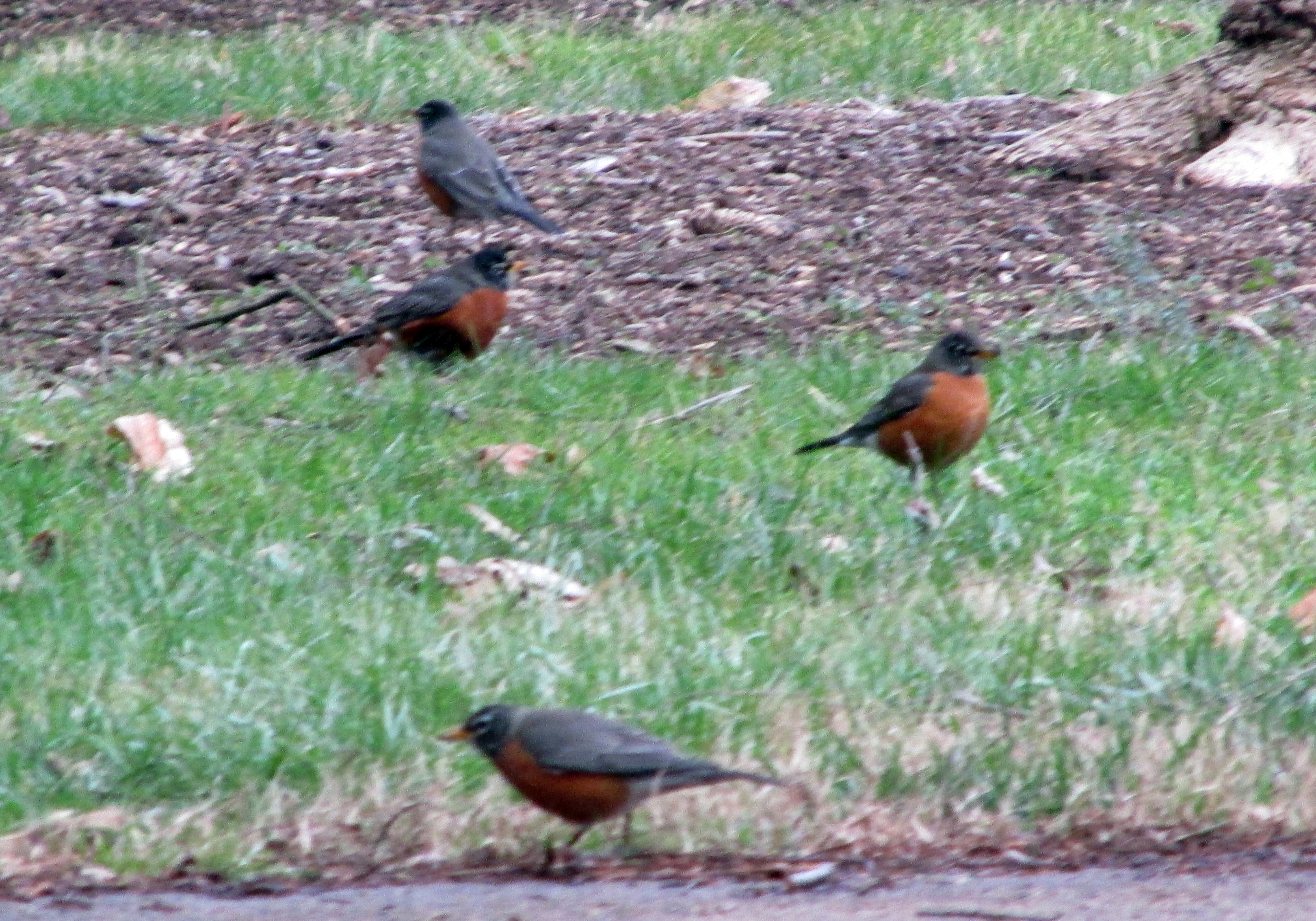
When I posted Jan. 29 on Facebook about seeing my first flock of American robins in 2021, I didn’t anticipate the avalanche from other observant bird enthusiasts.

Priscilla Gutierrez commented on seeing about 30 robins in a field along Limestone Cove Road in Unicoi.

“They don’t come to the feeders,” Priscilla noted. “It was wonderful to see them.”

Alice Torbett in Knoxville shared that she saw her first flock of robins about two weeks ago when they swooped in to harvest berries from the holly tees at her Knoxville home. “They were very considerate to wait until after Christmas,” Alice wrote.

Erwin resident Brenda Marie Crowder commented that “tons of Robins are eating my holly berries right now. With snow dropping and all.”

Jonesborough resident Nan Hidalgo reported that she had five robins in her yard on a recent Friday afternoon.

Christine M. Schwarz in Alexandria, Virginia, shared her own sightings.

Photo by Bryan Stevens • An American robin grasps a perch and keeps an eye on its surroundings.

“Three weeks ago there was a large flock at Mount Vernon,” Christine wrote in a comment to my post. “I have seen a smaller group over here by Fort Belvoir, too. I can’t believe they’re migrating now — more like wintering over.”

Byron Tucker, who lives in Atlanta, commented, “The other day, I saw a flock of robins and blackbirds mixed together.”

Dee Obrien, formerly of Elizabethton, Tennessee, but now living in Florida, lamented the timing of the robins. “They always seem to come back to soon, poor little things,” she wrote. “It is too cold.”

Becky Boyd shared her own experience with robins. “I’ve had dozens here in Knoxville,” she said. “They all recently left, except one loner who is terrorizing the bluebirds and attacks them at the feeders.”

Erwin resident Donna Rea, and a former co-worker at The Erwin Record, posted a question to my Facebook robin discussion.

“What do robins eat this time of year?” Donna asked. “Will they eat out of our feeders if the ground is frozen and they can’t find a hibernating worm?”

Photo by Jack Bulmner/Pixabaycom • An American robin plucks a berry from a branch.

I suggested in my reply that robins might eat suet at feeders, as well as fruit. More likely, the restless robins in the region are probably scouring the countryside for holly trees with berries. Of course, robins are omnivorous in their appetite and would gladly take an earthworm if they could coax one out of the chilly ground.

South Carolina resident Catherine Romaine Henderson simply posted an optimistic comment on my robin post. “Please tell me spring is coming!”

The American robin is indeed widely held to be a harbinger of spring. Furthermore, the robin is a popular American bird. In fact, this bird has been designated the official state bird by Wisconsin and Michigan.

In truth, many robins forego migration to endure a few months of cold weather. Their ability to shift their diet from earthworms and insects to fruit and feeder fare helps robins eke out a living. Robins remain an abundant bird but their fondness for co-existing with humans can leave them vulnerable to pesticides applied to lawns and gardens.

According to the website, “All About Birds,” the American robin nests three times a year. On average, however, only 40 percent of robin nests succeed at fledging young. Even once out of the nest, young robins are vulnerable. The website estimates that only 25 percent of each year’s fledged robins will reach November. So, the young robins that join some of the large flocks people are seeing in the region are birds that have beaten the odds.

Photo by Bryan Stevens • Returning American robins, prominent in lawns and gardens during their annual spring migration, will soon turn their attention to nesting duties.

Even the robins that do depart the region each fall don’t migrate far. Many robins that spend the summer in Canada or the United States only migrate as far as the Gulf States, southern Florida, southern California, Baja California and Mexico.

The American robin is a large bird in the thrush family, which in North America also includes such birds as Eastern bluebird, wood thrush, and Townsend’s solitaire.

In the British Isles, the European robin is simply known as “robin” or “robin redbreast.” When the first English colonists arrived in New England and other parts of colonial-era North America, they took pleasure in finding that some of the birdlife in the New World resembled familiar birds from their homeland. The red-breasted American robin looked like the bird they knew in the Old World as “robin,” which motivated them to name the New World bird “robin,” as well.

Other than the red breast, however, the two robins are not all that similar. The American robin is the larger of the two birds. Further separating these two birds is the fact that the European robin is not a thrush but rather a member of the family of Old World flycatchers.

Photo by Bryan Stevens • While American robins like fruit when its available, they also spend a lot of time feeding on earthworms and insects.

In some ways, the two robins are similar. Both are fond of earthworms, spending a great deal of their time on the ground foraging for worms. They will also follow human gardeners at their work, waiting patiently for the followed person to disturb the soil with a spade or hoe and expose earthworms for the waiting bird. They are also rather tolerant of humans and have learned to make their own homes close to human dwellings.

Some of the British transplants to North America must have felt homesick for familiar things because several unsuccessful attempts were made to introduce the European robin to the United States and Canada. European robins introduced in New York and Oregon failed to gain a foothold, unlike the introduction of such alien birds as the house sparrow and European starling.

On a few occasions, our American robins have overflown their destinations and ended up in the United Kingdom. For instance, an American robin became a first for London birdwatchers when one was found in that nation’s capital city in March of 2006. Whether of the European or American persuasion, robins have long been a favorite of birdwatchers and nature enthusiasts.

They have even adapted to take food at feeders. If you’d like to try your luck at attracting robins to feeders, know that they like their sunflower seeds hulled. They will also eat mealworms, fruit, peanut hearts and suet. Robins prefer to feed on the ground or on an open platform feeder.

Robins are such friendly and engaging birds. If we can have them near us for 12 months of the year, who’s going to complain?


Hermit thrushes brave East Tennessee winters

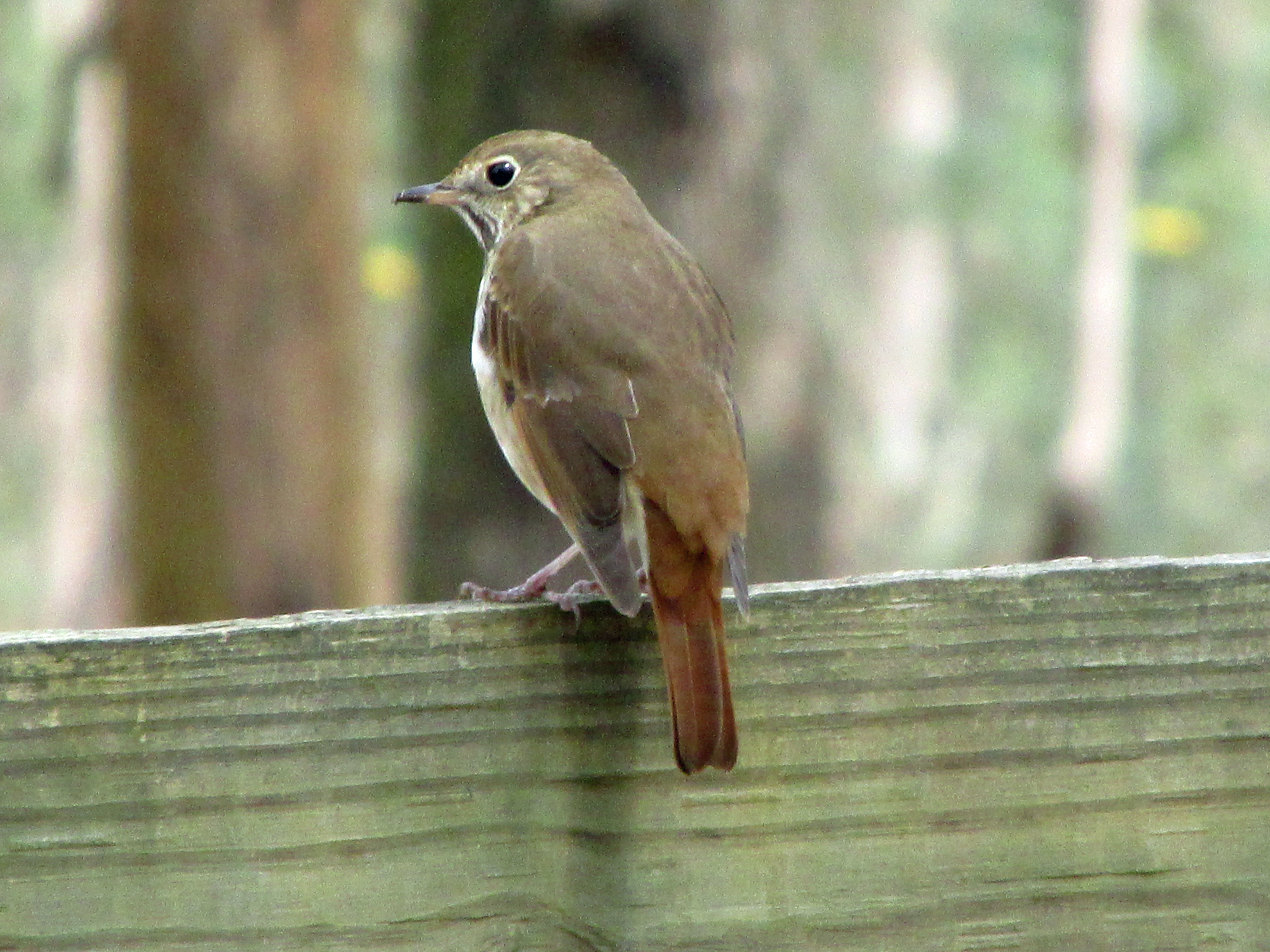
Photo by Bryan Stevens • A hermit thrush perched on a fence rail shows the reddish tail, a reliable field mark to separate this species from close relatives. The tail contrasts from the rest of the bird’s plumage.

Karen Miller sent me an email about a winter visitor in her yard at her home in Parrottsville, Tennessee. “I have seen a hermit thrush eating holly berries for 10 days,” Karen wrote. “Is he migrating or is he perhaps a winter visitor here in Parrottsville?”

To answer her question, I replied and informed her that the thrush is a winter visitor. The hermit thrush takes up residence after its kin have already departed the region in the fall, making it one of the few thrushes to remain in Northeast Tennessee during the winter months. I’ve always thought a good nickname for this bird would be the “winter thrush” because of its presence during the colder months of the year. Of course, for those who know where to look, a few hermit thrushes spend the summer nesting season at high elevation peaks such as Roan Mountain on the Tennessee and North Carolina border.

The hermit thrush is one of the larger brown thrushes, which also includes such related birds as Swainson’s thrush, veery, gray-cheeked thrush and wood thrush. Other less closely related members of the thrush family include the American robin, Eastern bluebird and Townsend’s solitaire.

USFWS • Hermit thrushes like to keep to the shadows.

The poet Walt Whitman employed a hermit thrush as a symbol in his poem, “When Lilacs Last in the Dooryard Bloom’d,” a moving pastoral elegy in honor of the assassinated President Abraham Lincoln. Whitman evidently knew his birds, and it’s not difficult for naturalists and bird enthusiasts to identify that he referred to the hermit thrush when he wove this songbird as a symbol into his stanzas honoring Lincoln. “Sing on there in the swamp,” Whitman wrote in his poem. “O singer bashful and tender, I hear your notes, I hear your call. I hear, I come presently, I understand you…”

Whitman evidently knew of this bird’s bashful, retiring habits, and he had obviously enjoyed the flute-like notes of the hermit thrush’s call. Whitman and many other Americans have been made fans of this gifted songbird. In fact, the citizens of Vermont even proclaimed the hermit thrush as their official state bird. The hermit thrush is well known for its song — a series of clear, musical notes, each on a different pitch, consisting of a piping introductory note and a reedy tremolo. The song had often been described as melancholy by various bird experts. The birds don’t usually sing in winter, but they do produce a call note when disturbed or alarmed that is described as a low “chuck.”

The visiting hermit thrush at her home has allowed Karen Miller to get to know this somewhat reclusive bird better. “He sits on the ground, cocks his head, spies a berry and then jumps up and gets it,” she wrote. She noted that her visitor has a good appetite. “He eats four or five at a time,” she said. “I’m so glad to see him.”

Photo by USFWS • Like many thrushes, the hermit thrush is fond of fruit and berries, especially during the winter.

According to the Smoky Mountains Visitors Guide website, the hermit thrush forages for most of its food from the ground. This bird’s diet includes insects, spiders, snails, and earthworms, plus considerable amounts of wild fruits during the fall and winter. Hermit thrushes may join up with mixed flocks of birds during the winter, often associating with such songbirds as kinglets, brown creepers, chickadees and titmice. For those not fortunate enough to host a wintering hermit thrush, this bird can be found during the summer months atop some high-elevation peaks. Close to home, look for this thrush in the Roan Mountain Rhododendron Gardens. The hermit thrush is also found at some locations in the Great Smoky Mountain National Park.

Female hermit thrushes collect nesting materials and construct the nest, within which she will lay three to six eggs. These thrushes nest once or twice a season. According to the website All About Birds, nesting habits differ between hermit thrushes in the western North America and their counterparts in the eastern half of the continent. Eastern thrushes tend to nest on the ground, but those in the west often place their nests in shrubs or tree branches.

At home on Simerly Creek Road, my first hermit thrush of the winter arrived in early November of last year. During a woodland stroll with neighbor Beth McPherson, the resident thrush put on an impressive show, hopping and scraping on the woodland floor beneath a rhododendron thicket bordering a mountain spring. In such surroundings, it’s not difficult to fathom why this bird has developed such a subtle plumage of muted browns and grays. Even when foraging actively, the bird blended remarkably with the background of fallen leaves and other woodland debris.

The hermit thrush is known by the scientific name, Catharus guttatus. The term guttatus is Latin for “spotted,” which seems appropriate. Surprisingly, the hermit thrush is not closely related to the other North American migrant species of Catharus thrushes. Instead, the hermit thrush is more closely related to the russet nightingale-thrush, a Mexican songbird. The hermit thrush could accurately be called the “red-tailed thrush” for the fact that this species has a rusty-red tail that stands apart from the warm brown-gray tones of the rest of its plumage. A white eye ring, pink legs and a heavily spotted breast complete the rest of this bird’s understated appearance.

Photo by Bryan Stevens • A hermit thrush perches on a branch in a winter woodland.

The wintering hermit thrushes in the region will likely stay put for the next couple of months, but they will mostly depart the area in April or early May. If you want to look for them, now’s the time.

••••• Bryan Stevens lives near Roan Mountain, Tennessee. To learn more about birds and other topics from the natural world, friend Stevens on Facebook at https://www.facebook.com/ahoodedwarbler. He is always posting about local birds, wildlife, flowers, insects and much more. If you have a question, wish to make a comment or share a sighting, email ahoodedwarbler@aol.com.


Baffling visitors turn out to be Northern flickers

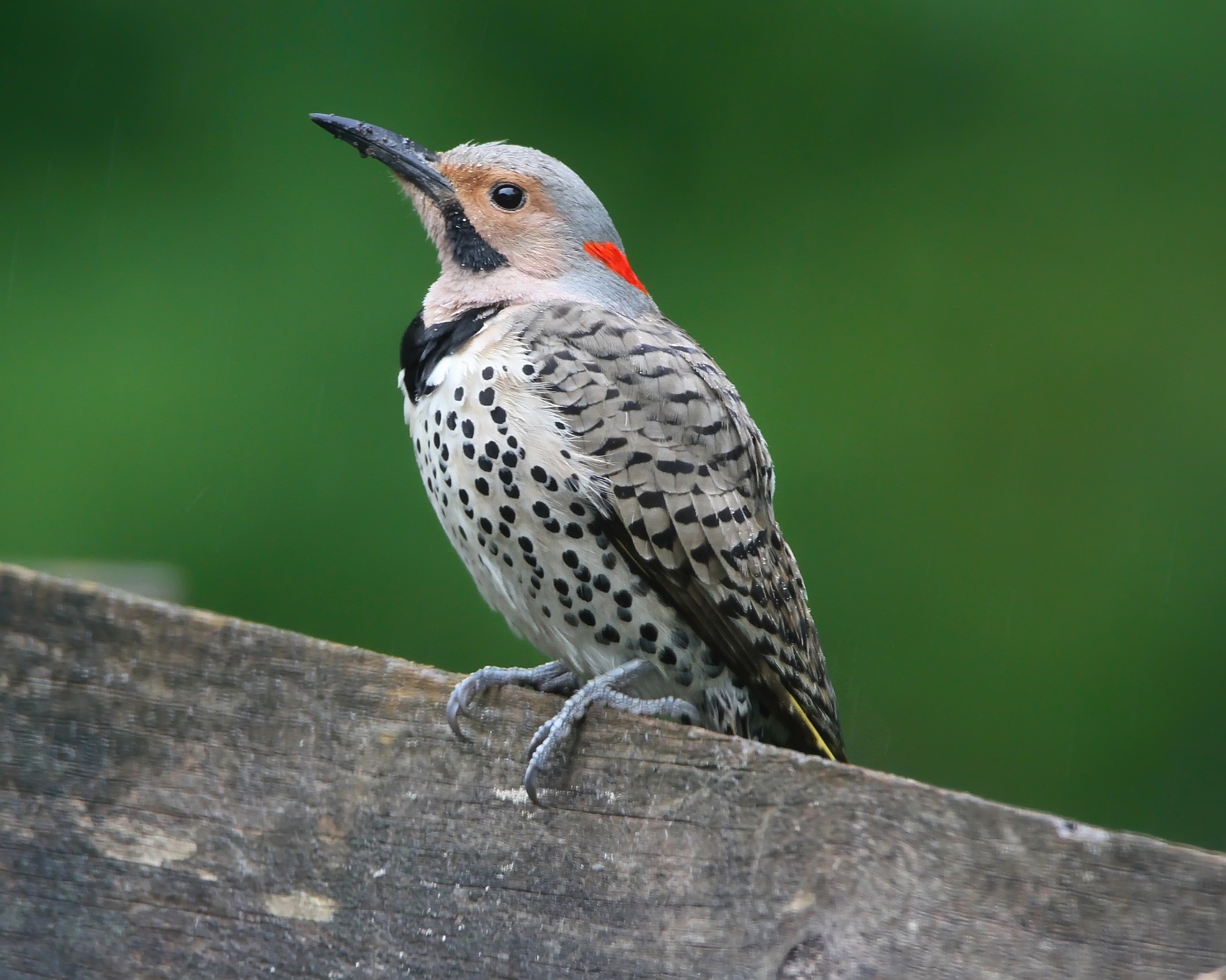
Photo by NatureLady/Pixabay.com • A Northern flicker grasps a board with its talons. These medium-sized woodpeckers spend much more time on the ground than the other woodpeckers in the region.

Irene and Peter Cannatelli emailed me recently to ask for some help identifying birds in their yard at their home in Jonesborough, Tennessee.

“We have a pair of birds we’ve never seen,” Irene wrote in the email.

They were unable to get a photo of the birds, but Irene provided a detailed description. “They have a red crown, black under neck, like a collar, a long thin beak, and brown speckled bodies,” she wrote. In addition, she noted that the birds showed white down the middle of their backs when flying off.

“They are ground feeders,” she added.

Once I studied her description of the birds in question, I felt confident that the visitors were Northern flickers, a member of the woodpeckers family, albeit a less than typical member of the extensive clan. Most of the region’s woodpeckers are black and white birds. The Northern flicker, on the other hand, shows considerable color— for a woodpecker. Irene’s description left me in no doubt of my identification.

After I responded to the email, Irene googled Northern flicker and confirmed my identification. “That is what they looked like,” she agreed.

She also shared more about her enthusiasm for local birds. “We have five bird feeders in our little bird garden,” Irene wrote.

“We made suet for the first time this past week using Crisco, oatmeal, peanut butter, sunflower seeds, cornmeal and raisins,” Irene added. “We made four blocks. When we put the first one out it was gone in one day.”

Many birds appreciate both homemade and store-bought suet cakes, which provide a needed protein boost in the winter season when insects are scarce.

Irene noted that some of the clientele at her feeders include cardinals, finches, lots of doves and blue jays. Now the couple can add flickers to that growing list.

While flickers can be found during all seasons in the region, this woodpecker is one of the migratory ones. I see the most Northern flickers during fall migration. This woodpecker is one of the few of its kind that usually migrates to warmer climates during the colder months, although the species is not completely absent from the region in the winter season.

As mentioned earlier, this is a woodpecker with many other common names, including yellow-hammer — a popular name in the Deep South — and harry-wicket, heigh-ho and gawker bird. The Northern flicker is also the only woodpecker to serve a state — Alabama — as an official bird. The flicker earned this distinction back in 1927. Soldiers from Alabama who fought for the Confederacy were nicknamed “yellowhammers” because of their grey-and-yellow uniforms, which matched the colors of the bird. Incidentally, Alabama was one of the first states to ever name an official state bird.

Photo by Dave Menke/USFWS • A Northern flicker peers from a tree cavity.

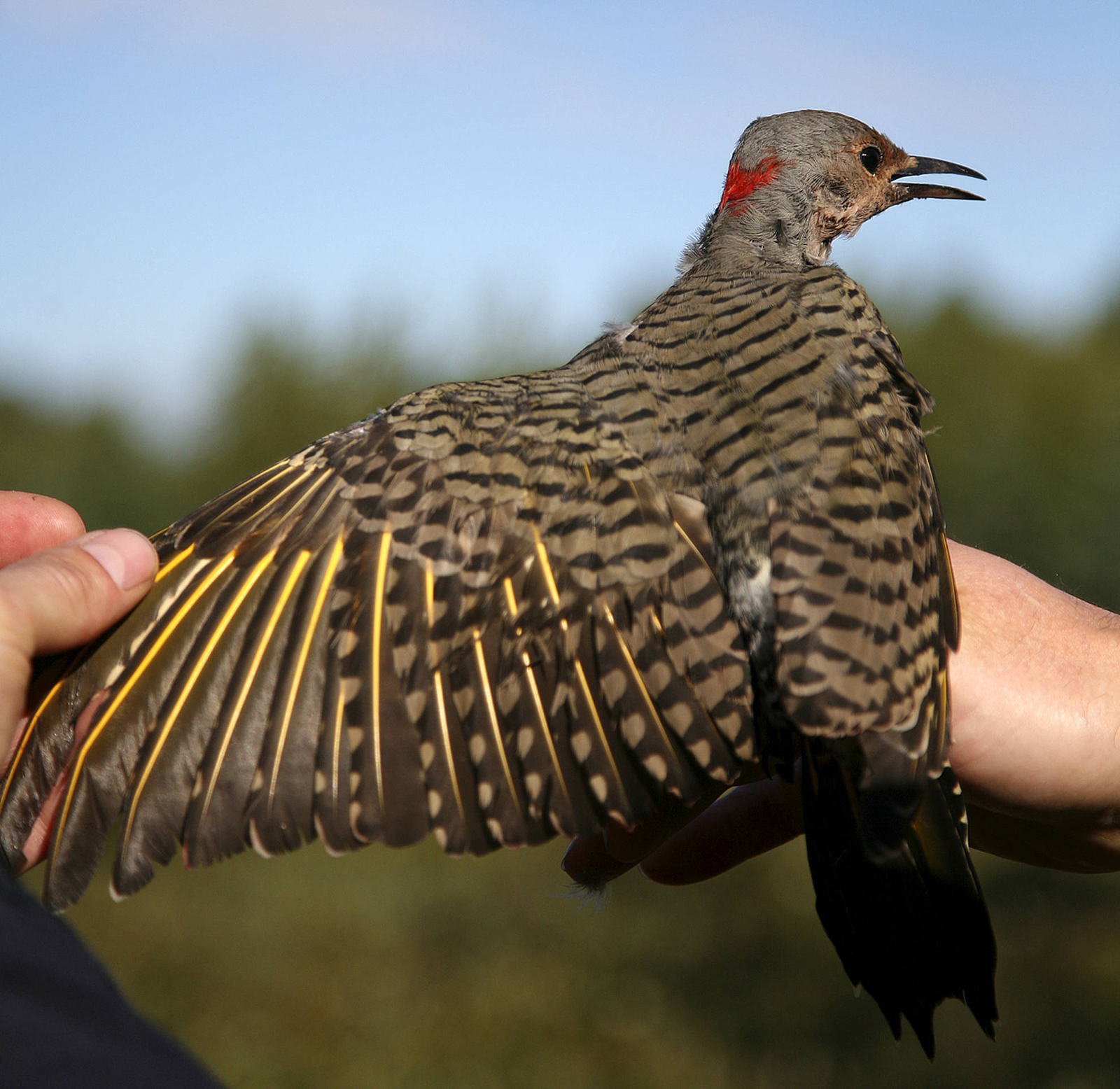
There are two races of Northern flicker — yellow-shafted and red-shafted — found in the United States. Eastern flickers show yellow feather shafts beneath the wings while western counterparts show red beneath the wings. A trip to Utah several years ago gave me a chance to also see the red-shafted race of this bird.

The Northern flicker is also not the only flicker in the United States. The gilded flicker inhabits many of the deserts — Sonoran, Yuma and Colorado — in the United States. Of course, trees are scarce in deserts, but that hasn’t proven an obstacle for this woodpecker. The bird is closely associated with saguaro cactus. Other desert dwellers depend on this woodpecker. Once the flickers are no longer making use of their nest and roost holes in the multi-armed cacti, other wildlife moved into the chambers.

The Northern flicker is an enthusiastic drummer, pounding loudly on the sides of trees with its stout bill. The purpose of the drumming is to communicate with mates and signal potential rivals that they’re intruding. Toward that objective, flickers sometimes substitute metal utility poles or the sides of buildings for the trunks of trees. In addition to drumming, the flicker also employs a variety of loud vocalizations that are fairly distinctive. A loud, repeated vocalization, often translated as “wicka-wicka-wicka,” is similar to the cluck-like call of the larger pileated woodpecker. The flicker is also known for emitting a sharp, loud “kleeer” call that can be heard from a considerable distance. Flickers are probably most vocal during the spring months.

When searching for flickers, however, don’t concentrate on scanning tree trunks. Flickers spend a lot of time in fields or on lawns in search of insect prey, which mostly consists of ants and beetles. This non-typical behavior by this particular bird is what threw off the Cannatellis’ attempt to identify their visitors. Flickers also eat seeds and fruit, and these woodpeckers will also visit feeders for peanuts, sunflower seed and suet.

The adult flicker is a brown bird with black bars on the back and wings. A distinctive black patch occupies the upper breast, while the lower breast and belly are beige with black spots. Males can be identified by a black or red mustache stripe at the base of the beak. They also have a red stripe on the back of their gray heads. The flicker’s dark tail is set apart by a white rump patch that is conspicuous when the bird takes flight.

Photo by USFWS • A researcher extends a flicker’s wing to show the yellow feather shafts.

The Northern flicker, as either the red- or yellow-shafted reach, ranges across the United States and Canada. The flicker also ranges to Central America, Cuba and the Cayman Islands. Known scientifically as Colaptes auratus, which can be roughly translated as the “golden woodpecker,” there are about a dozen species of flickers in North, Central and South America, as well as the Caribbean.

Look for Northern flickers in fields, orchards, city parks and well-planted suburban yards. These woodpeckers are usually not too shy around human observers and will sometimes allow for extended observation. If you’re even more fortunate, you could find one visiting your yard or garden. Just remember to scan the ground. This is one woodpecker that’s not a consistent tree-hugger like many of its kin.


Tennessee and neighboring states hosting exceptional rare birds this winter

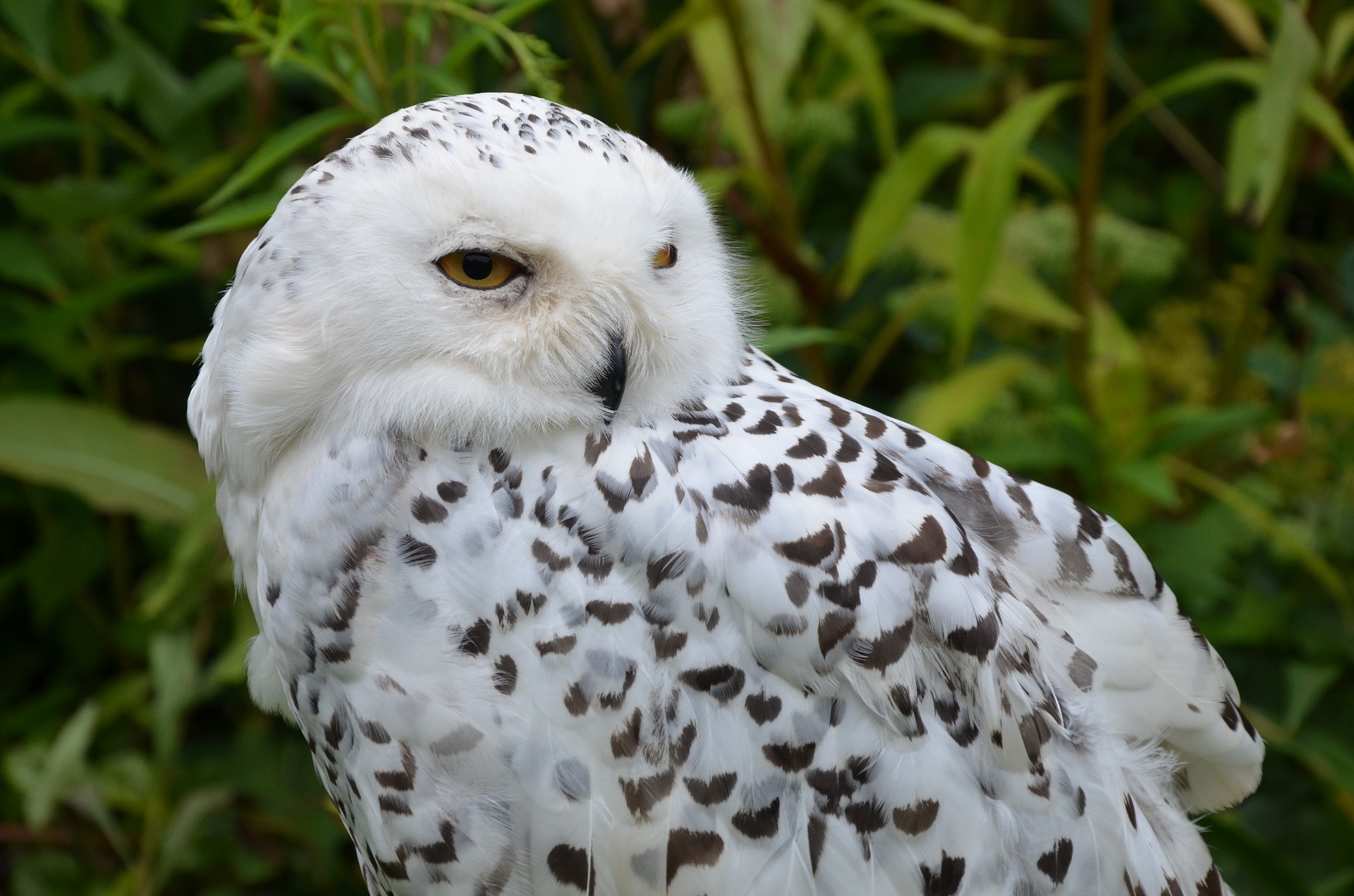
Photo by LoneWombatMedia from Pixabay • Among the unusual avian visitors to the Volunteer State this winter has been a snowy owl that has delighted observers in Chattanooga. Snowy owls, such as the individual pictured, are more commonly found on the tundra regions of the Arctic.

Birds have wings. Birds can fly. Birds confound our expectations.

Perhaps the mobility of birds is part of the human fascination with them. An unexpected bird can pop up at any time at almost any place. In fact, with 2021 less than a month old, the Volunteer State has already hosted some absolutely incredible birds.

For example, birder Evan Kidd found a Pacific Slope Flycatcher in Maryville on Jan. 7. 

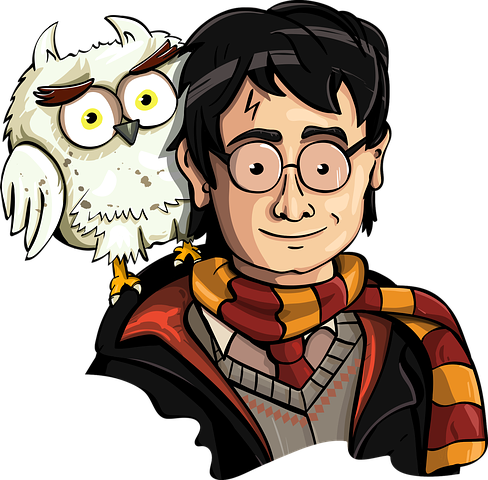
A couple of weeks later, a snowy owl, which is a bird most people have only become acquainted with in the pages of J.K. Rowling’s “Harry Potter” novels, made an appearance on Zephyr Lane near Lake Chickamauga in Chattanooga. 

Chattanooga’s been a real hot spot so far this year. In addition to the snowy owl, Chattanooga’s hosted such unlikely visitors as white-throated swift and Bullock’s oriole. 

All of these birds quickly achieved celebrity status and attracted birders from near and far hoping for a glimpse of these rarities to Tennessee. 

Birder Michael Todd posted on Facebook on Jan. 13 about his own observation of the white-throated swift. This particular sighting came with a bit of an unnerving twist for all the people who had flocked to see the swift.

“Luckily, the swift narrowly avoided being a snack for a marauding merlin that tried its best to have some swift for lunch today,” Todd revealed in his Facebook post. 

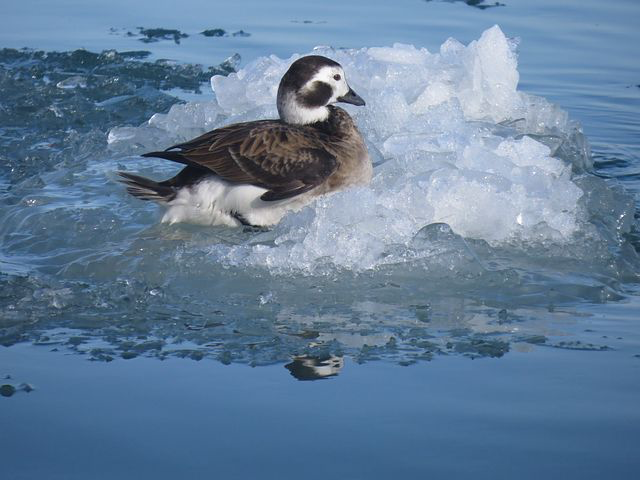
Closer to home, a long-tailed duck has been hanging out with buffleheads and other ducks at the weir dam at Osceola Recreation Area in Bristol. 

Ray Miller from Pixabay • Long-tailed ducks, such as this individual, favor colder waters, but they occasionally venture into Tennessee.

The winter invasion of evening grosbeaks, a finch that usually inhabits the forests of Canada and the northern United States, continued into 2021 as well.

What brings birds to locations far beyond their typical range? Obviously, their wings and the associated power of flight makes it possible for birds to travel surprising distances.

But on a more down-to-earth level, some of these birds such as the snowy owl and evening grosbeaks have ventured far south of their normal ranges because their usual food sources are scarce. Climate change may be exacerbating those scarcities. On occasion, a major weather phenomenon like hurricanes or other strong storms will force birds into unfamiliar territory. And who’s to say that an occasional bird doesn’t succumb to the temptation of wanderlust and decide to explore greener pastures? Or maybe some of these birds are simply stubborn, lost, and reluctant to ask for directions.

The reasons an unexpected bird might grace any given location are myriad. What’s easily explained is the excitement that they can generate. Back in the winter of 2009 I traveled with some friends to Spring Hill, Tennessee, in the hope of getting a look at a snowy owl. After several hours staking out some large fields with dozens of other birders on property owned by General Motors at the time, we got our owl. Incidentally, that particular owl got the nickname “Chevy” due to its association with the GM production facilities in Spring Hill. The moment that owl unfurled its wing and made a short but majestic flight over the field remains a birding thrill of a lifetime. 

Making the moment even more memorable was the fact that I got to see my first (and so far only) snowy owl in my home state of Tennessee instead of traveling to the edge of the Arctic tundra during the summer to look for this awesome owl on its native turf. It’s not that I would say no to a tundra tour, but it hasn’t been in the cards yet.

I have a short list of some other exceptional birds that have made their way to Tennessee rather than forcing me to venture across the country and around the globe to see. I observed monk parakeets and a green-breasted mango hummingbird in North Carolina, as well as a harlequin duck and Virginia’s warbler along Netherland Inn Drive in Kingsport from the greenbelt that meanders along the Holston River. Earlier this year while birding alone, I felt a moment of “that’s different” when a raptor took flight over the parking lot at Sycamore Shoals State Historic Park in Elizabethton and materialized as a Mississippi kite once I got my binoculars on it. 

I think it’s part of the reason some birders are addicted to the chase. There’s nothing wrong with the cardinals and sparrows in the backyard, but a “rare bird” can truly generate a powerful jolt of excitement. 

Photo by Edbo23/Pixabay.com • During the winter months, a yellow-rumped warbler is a dull bird in mostly brown and gray plumage except for the rump patch of bright yellow feathers that provides the bird its common name. Although not a rare bird, these common resident make winter days more lively for observers.

Technology, including social media and GPS, has helped pinpoint these rarities when they stray into unfamiliar terrain. For instance, the snowy owl near Chattanooga is hardly the only one of its kind straying south of the Arctic this winter. These owls have made a major push south with individuals spotted in Lee, Illinois; Cumberland, Pennsylvania; Wood, Ohio; and Clinton, Iowa. A snowy owl has even been spending the winter on Ocracoke Island along the Outer Banks of North Carolina. There’s even dramatic photographs online of the owl against the backdrop of the famous Cape Hatteras Lighthouse. 

What’s the best way to spot a rare bird? Keep your eyes open and learn to recognize the birds that aren’t part of the familiar local flocks. One word of warning: Looking for those rarities can become addictive.

Watch for wintering kestrels in open habitats


Photo by reitz27/Pixabay.com • While one of the smaller falcons, the American kestrel is also one of the this family of raptors more colorful members.

I enjoyed a drive through Limestone Cove in Unicoi, Tennessee, on the afternoon of the next-to-the-last day of 2020. In addition to finding a total of 13 Eastern bluebirds, I saw an American kestrel perched on utility lines near Bell Cemetery. The sighting was the first I’ve had of a kestrel so far during the 2020-21 winter season. Over the years, the cemetery and adjacent fields have been a reliable location for finding this small falcon during the winter.

The American kestrel, although present throughout the year in the region, is somewhat more prominent during the winter months when kestrels from farther north migrate into the region. However, this falcon also nests in the region and can be found at any time of the year in suitable habitat, which is usually open countryside.

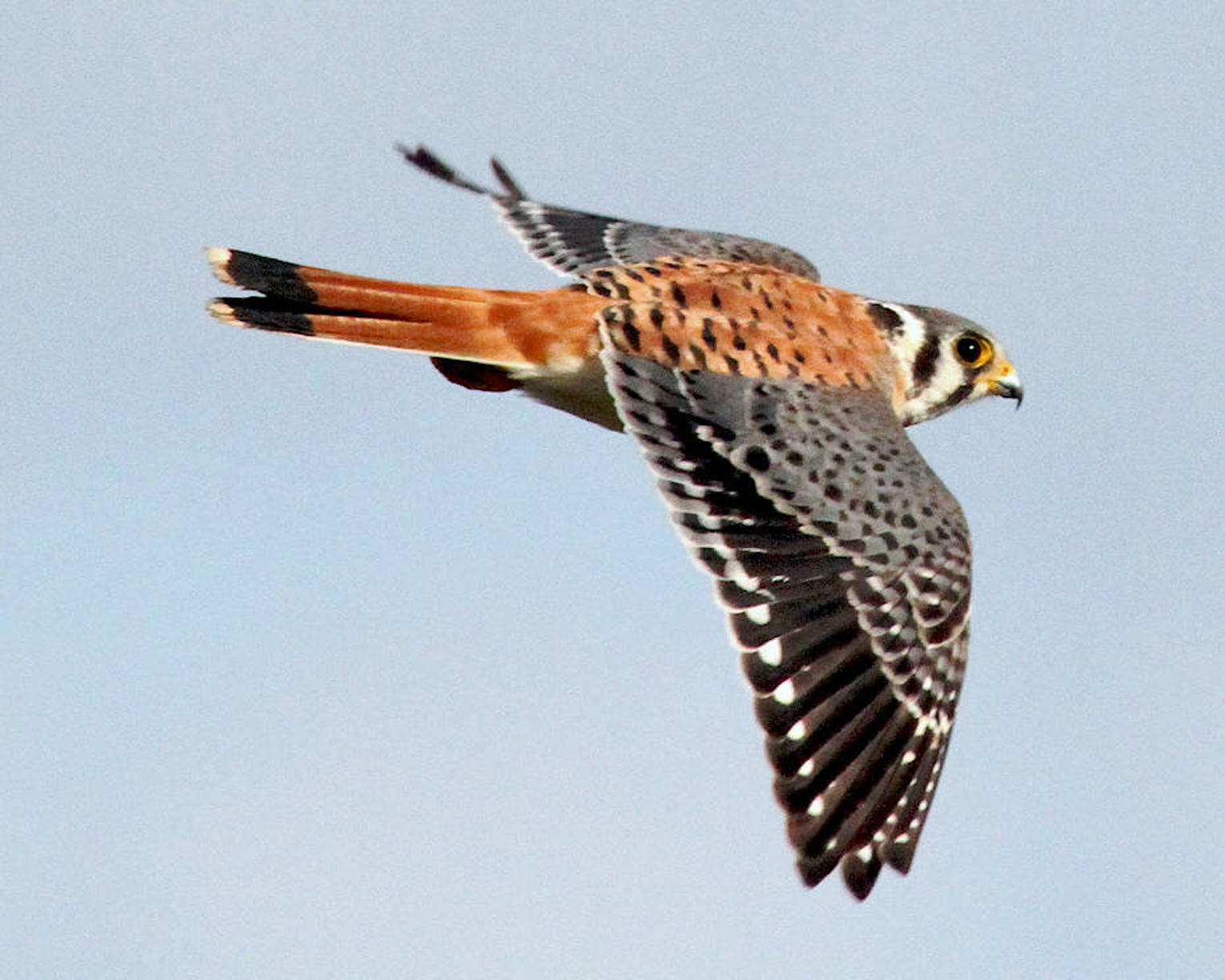
The American kestrel is a small member of the falcon family, which includes such relatives as merlin, peregrine falcon and gyrfalcon. All falcons, regardless of size, share a similar aerodynamic design that includes sleek, streamlined bodies and long, slim wings which taper to pointed tips. They fly with rapid wingbeats and are capable of swift flight.

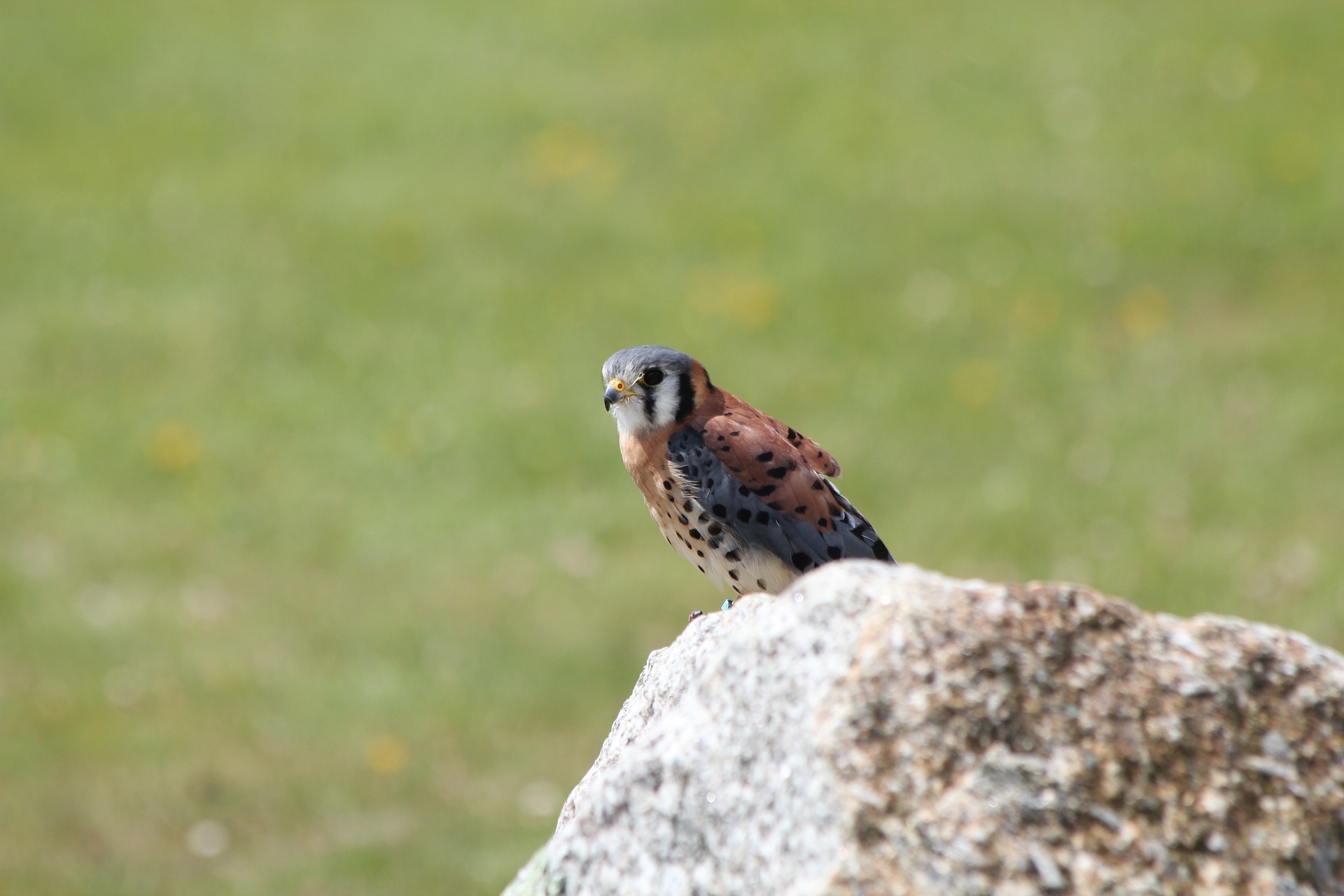
Photo by PBarlowArt/Pixabay.com • An American kestrel uses a rock outcrop as a convenient perch.

The male American kestrel is a colorful bird. He shows a rusty back with some black barring, a rusty tail and steel blue-gray wings. The female kestrel is brownish with black barring on her back and tail. She also shows a buff-colored wash streaked with brown on her under- parts. Both sexes show a strong facial pattern marked by two black “sideburns” on the side of the face.

The American kestrel has long been one of my favorite raptors. They’re seldom as skittish as many other raptors and will permit close observation. Formerly known by the name “Sparrow Hawk,” the American kestrel does not feed entirely on other birds. In fact, a large part of this small falcon’s diet includes rodents and insects.

In its nesting preference, the American kestrel is unusual among other native falcons and hawks. Kestrels nest in cavities, including abandoned woodpecker holes and nest boxes provided by humans.

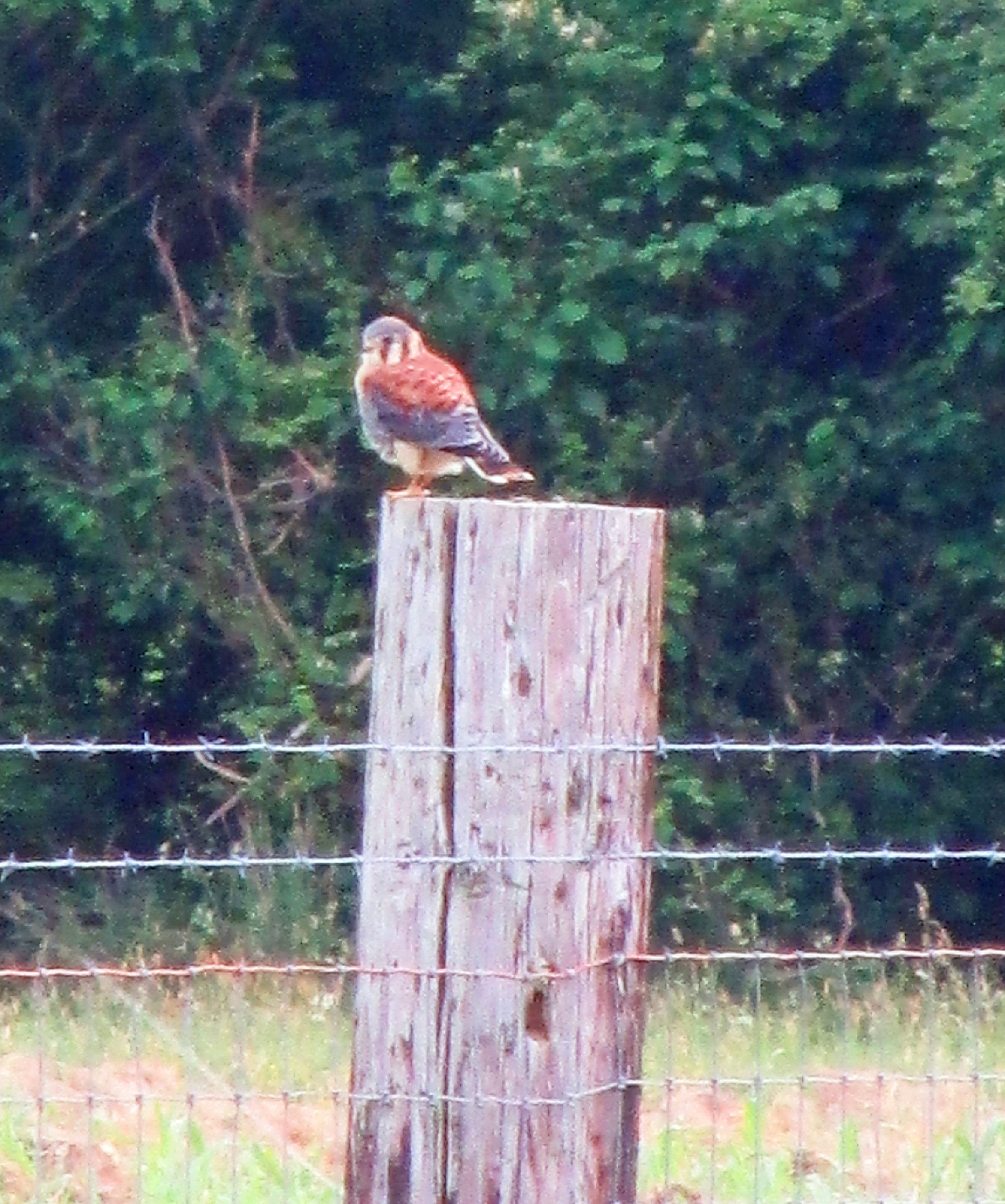
Photo by Bryan Stevens • An American Kestrel uses a fence post for a perch.

Like many raptors, the American kestrel likes to hunt from a perch, swooping down on unsuspecting prey. The kestrel, however, is also capable of hovering, a type of flight that only a relatively few birds, including the belted kingfisher and the ruby-throated hummingbird, are capable of performing.

The falcons comprise a family of birds with a long history with humans. The sport of falconry, although not as widely practiced today, long ago became associated with royalty and nobility. In fact, falconry has been called “the sport of kings.” The sport basically involved hunting prey, usually other birds, with birds of prey such as falcons. As a pastime, falconry never became as popular in the United States as in other parts of the world.

There are more than 60 species of falcons found worldwide. While the peregrine falcon’s endangered status became well-known in the United States, other falcons have been threatened with extinction. The Mauritius Kestrel once dwindled to a population of only six individuals. Today, the population, due to intensive human effort, has greatly recovered.

Other members of the falcon family can be found in the region, including the peregrine falcon and the merlin. Other falcons in North America include the prairie falcon and the Aplomado falcon. Worldwide, some of the more descriptively named falcons include spotted kestrel, rock kestrel, greater kestrel, lesser kestrel, red-footed falcon, red-necked falcon, sooty falcon and brown falcon.

To share observations, ask questions, or make a comment, email me at ahoodedwarbler@aol.com.

Photo by USFWS/Robert Burton • An American kestrel in flight shows the aerodynamic design that earned this small falcon the common name of sparrow hawk.

Birds make headlines in 2020

Photo by Irene K-s/Pixabay.com  • The ongoing pandemic with its social distancing protocols has motivated many people to connect with nature, especially through activities like bird feeding and birdwatching. Even common birds, like these chipping sparrows and an American goldfinch, help people cope with the stresses of the global pandemic.

To state that it has been a strange year is an exercise in understatement. Nevertheless, the few 2020 bright spots have focused on our fine feathered friends, whether it was the long-awaited return of birds like evening grosbeaks or a welcome spike in interest in all things related to birds. While we wait for 2021 and hope for better days to come, I decided to take a glimpse at some of the bird-related news headlines for this past year.

New birds found

Scientists discovered five new species of birds in 2020. Some of the most recent additions to the world’s avifauna include songbirds from various remote islands, including the Peleng fantail, Peleng leaf warbler, the Taliabu grasshopper warbler, the Taliabu myzoemla and the Taliabu leaf warbler. These newly-discovered species will help swell the ranks of the world’s estimated 9,000 to 10,000 bird species. Since many headlines have concerned warnings about disappearing birds, it’s nice to know that scientists are still finding new birds in some unexpected locations. 

Photo by thịnh nguyễn xuân/Pixabay.com • This red and green macaw in captivity shows the bright plumage of its wild kin, which are again flying free in Argentina.

Don’t cry for the macaws, Argentina

Red and green macaws, which have been exterminated from other parts of Argentina, are thriving in Iberá National Park after the country reintroduced these large, colorful birds in 2015. This year, a pair of the 15 macaws living in the park produced three chicks. It’s a start and marks the first red and green macaws hatched in Argentina in more than 150 years.

Birds provide cure for COVID blues

In a year that saw the human species suffer from an ongoing pandemic, many people turned to nature, particularly birds, as a means to cope with the stresses of life during the time of COVID-19. The Audubon Society’s website spotlighted the way birds have brightened the lives of humans during the imposition of social distancing to help prevent the spread of the virus. Sales of bird seed and birdhouses have increased since the early months of the pandemic. It’s not difficult to understand the reason. People have been doing more to invite birds into their lives, whether it’s bribing them with a well-stocked feeder or providing shelter for such necessary activities as nesting and roosting. For more articles on the magic of birds during a global pandemic, visit the Audubon website at Audubon.org. 

Wisdom’s maternal instincts unabated

Wisdom has returned to Papahanaumokuakea Marine National Monument on the island of Midway. Wisdom, a Laysan albatross that is at least 69 years old, is set to become a mother again after laying an egg in early December as she has been done more than 30 times since 1956. At an age when human mothers might be looking to a chance to enjoy becoming grandmothers or even great-grandmothers, Wisdom wants another crack at motherhood. She has been immensely successful as a breeding albatross, surviving with her offspring the great tsunami that swept over the island in March of 2011. Much studied by scientists, Wisdom has successfully hatched a chick every year since 2006 and looks to replicate this feat again in 2021. 

Evening grosbeaks return to region

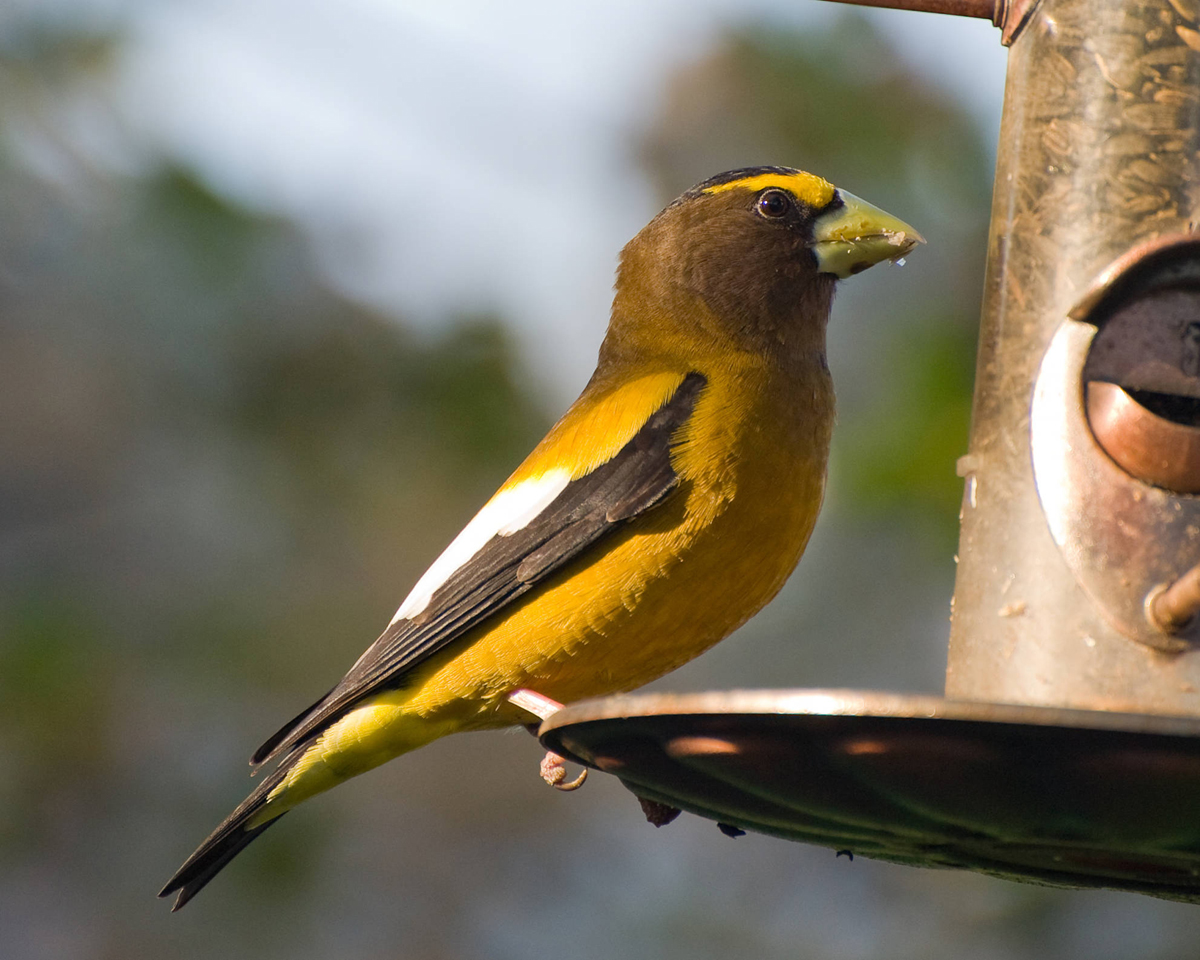
After being absent for 20 years, evening grosbeaks have made sporadic appearances at feeders throughout the region with sightings reported from Elizabethton, Roan Mountain, Hampton and Townsend, as well as other locations across the Volunteer State. Part of an irruption of other Northern finches, the grosbeaks have been joined by such species as purple finches, pine siskins and common redpolls. Dianna Lynne, who lives on Stoney Creek in Elizabethton, Tennessee, reported a small flock of both male and female evening grosbeaks at her feeders on Dec. 9. She joins a list of some other people lucky enough to host these entertaining birds this winter.

Brookie and Jean Potter, as well as their neighbors, Jim and Diane Bishop, continued to host a flock of grosbeaks at their homes near Wilbur Lake in Elizabethton, Tennessee. They first saw their grosbeaks in early December, but the flock, which has grown to as many as 17 individuals, now visits daily and has extended its stay into 2021.

Without a doubt, the approaching year 2021 will offer its own surprises. People and birds will make more headlines. Remember to keep space in your life and schedule for birds and nature. These will help anyone weather any storm. To share observations, ask questions, or make a comment, email me at ahoodedwarbler@aol.com. 

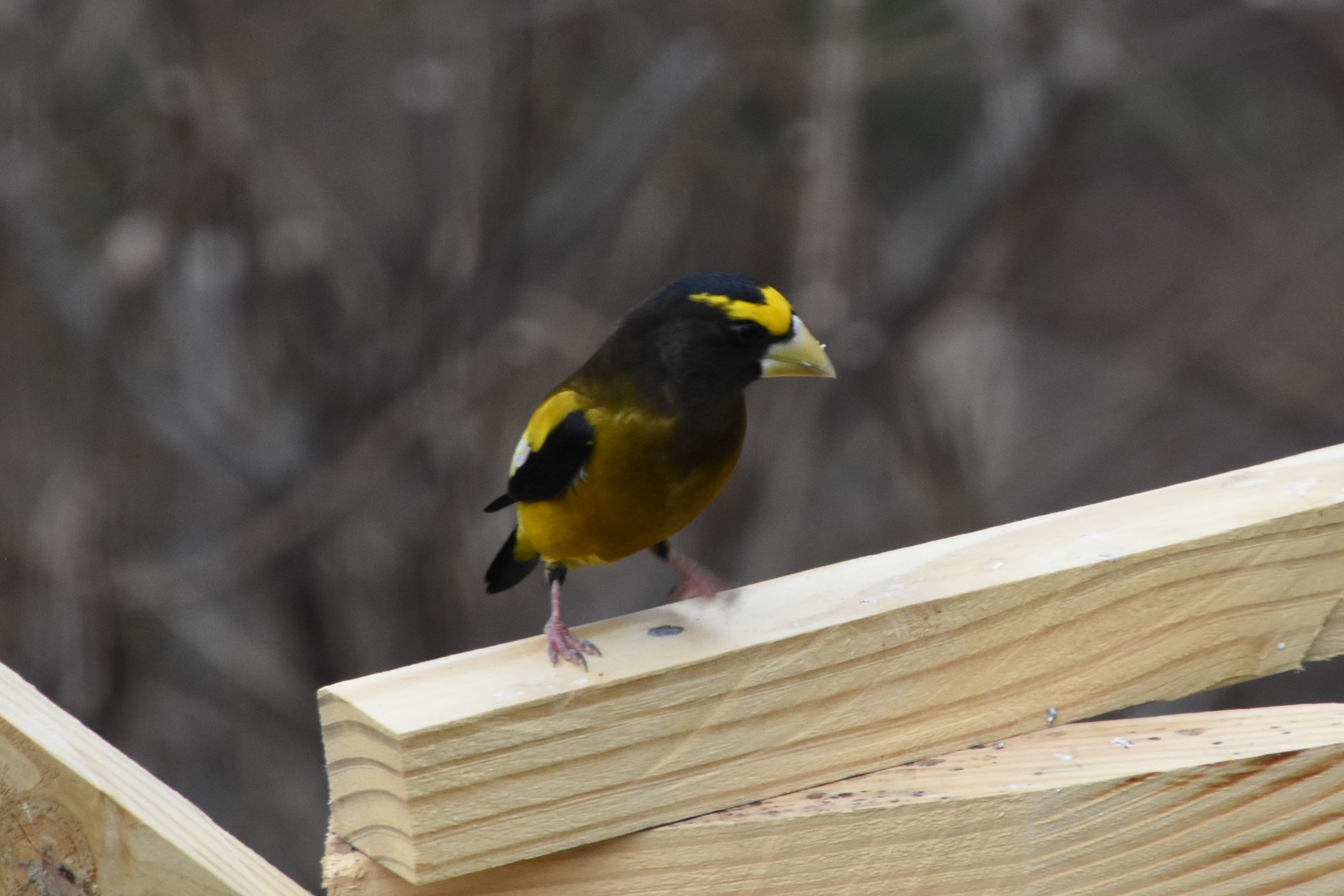
Photo by Jean Potter • A male evening grosbeak perches for a view of a nearby feeder.


Evening grosbeaks staging comeback after 20-year absence

I’ve a feeling that when we look back on the year 2020, we’re not going to have an abundance of happy memories. Fortunately, I have birds and birding to keep me sane during a year of often dismal news. If nothing else, I will always remember 2020 as the year the evening grosbeaks returned to the region after a 20-year absence.

Evening grosbeaks are large, gregarious, noisy, showy members of the finch family, which includes several more commonplace feeder visitors as house finches, American goldfinches, pine siskins, and purple finches. During the 1980s and 1990s, flocks of dozens, sometimes hundreds, of these birds descended on feeders in the region. I knew a man in the Piney Grove community of Hampton, Tennessee, who converted the metal lids of trash cans into makeshift feeders arranged around his deck to accommodate a flock of more than 100 evening grosbeaks. 

Photo by George Gentry/U.S. Fish & Wildlife Service • A male evening grosbeak perches on the side of a sunflower-stocked feeder.

Then, like a switch being flipped, the great flocks of grosbeaks ceased winter visits to the region after 2000. Birders needed a few years to realize that this bird was no longer to be expected as a fixture of the season. Different theories, none ever confirmed, were put forward to explain the sudden absence.

As years went on, I always held out hope at the start of the winter season that this could be the year they returned, only to be perennially disappointed. Then, in 2020, a year when I could hardly be blamed for anticipating a positive happening, I began to hear reports.

Flocks of evening grosbeaks were spotted in Virginia, North Carolina, and even farther afield in different parts of the Volunteer State. I dared to hope they would make it back to Northeast Tennessee. I even dreamed this might be the year I’d get them back at my feeders. 

On Saturday, Nov. 14, Judi Sawyer in Roan Mountain, Tennessee, posted on her Facebook page that a single evening grosbeak had visited her feeders. “Unfortunately, it flew away when I reached for my camera,” Judi said.

Photo Courtesy of Barbara Lake • Two male evening grosbeaks claim a feeder as a female Northern cardinal waits patiently in the background.

On Friday, Nov. 27, I received an email from Barbara Lake in Hampton, Tennessee. “I’m pretty sure we have a flock of evening grosbeaks visiting us,” Barbara wrote in her email.  “They are definitely in the cardinal/grosbeak family.” 

Barbara added that she and her husband, Jerry, had never before seen evening grosbeaks at their home.  “The colors remind me of the American goldfinch, but they’re bigger with a cardinal-type beak.”

She gave such an apt description that I really didn’t need to confirm her observation, but she helpfully provided a photograph of a couple of the grosbeaks at her feeder. “Are they just passing through, like the rose-breasted grosbeaks do?” Barbara asked.

In answer to Barbara’s question, the intent of this influx of evening grosbeaks is still to be determined. The Lakes live atop a high hill that provides a great lookout over the surrounding terrain. “Your home on the hill is probably a beacon for migrating birds,” I informed Barbara in a reply to her email.

Photo by Jean Potter • A male evening grosbeak enjoys black oil sunflower seed from a hanging feeder.

Friends Brookie and Jean Potter announced the arrival of grosbeaks at their home near Wilbur Lake in Elizabethton, Tennessee, on Jean’s Facebook page on Dec. 3.  “Five Evening Grosbeaks paid us a surprise visit this morning,” Jean wrote on her post.  “We’re ecstatic! This is life bird No. 461 for us and we were able to host it in our backyard.”

Jean also noted that the winter of 2020-21 is turning out to be an irruption year for some species of birds more often associated with Canada and the northern parts of the United States. These irruptive migrations, she noted, are motivated by a scarce food supply for some northern birds, resulting in them coming south. 

The small flock visited for only the afternoon, but the next day  a single grosbeak returned and fed briefly at the feeders at the Potter home.

I’ve only been feeding birds since the winter of 1993, so I started in time to enjoy the evening grosbeak boom of the 1990s. Over the years, an incredible diversity of species have visited my feeders. This winter season has already seen a drive south by several so-called winter finches, including pine siskin, common redpoll, red crossbills, and purple finches. Although not a finch, red-breasted nuthatches have been prevalent at feeders throughout the region for the past couple of months.  Back in October, pine siskins and purple finches began to visit my feeders. Their visits have since diminished considerably. I had hoped the recent snowfall might motivate them to return, but it didn’t happen.

I’ve never seen a common redpoll, although I spent several hours 20 years ago staking out a yard in Shady Valley, Tennessee, in an unsuccessful bid to observe a redpoll that had been a reliable visitor at a feeder in that small community. I have seen red crossbills, but my observations of these birds have always taken place during the summer months near Carver’s Gap in Roan Mountain and the Unaka Mountain in Unicoi County.

Photo by Alain Audet/Pixabay.com • A male evening grosbeak grips a perch on a cold day.

So, as the weather turns cold each year, hope springs eternal that perhaps this will be the winter that will bring some of these northern finches to my feeders, or at least to a feeder in the general area.

Photo by George Gentry/U.S. F&WS • Male evening grosbeaks brings some vibrant color to any place they choose to visit.

I am still waiting for an evening grosbeak to return to my home. I am happy reminiscing about the flocks of dozens of individuals that gathered at my feeders in the ’90s.

The evening grosbeak belongs to the genus Coccothraustes in the finch family. There are only two other species in the genus: the hawfinch of Europe and temperate Asia and the hooded grosbeak of Central America.

One word of advice in case evening grosbeaks show up at your own feeders: These are some of the most fun visitors you will ever host, but they have huge appetites. Be prepared to earmark more of your budget for purchasing sunflower seed, which is a favorite food of these always-hungry birds.

Rufous hummingbirds appear after other hummers depart for the winter

Photo by Bryan Stevens • A young rufous hummingbird approaches a feeder for a sip of sugar water. These hummingbirds, which are native to the western United States and Canada, have become regular visitors throughout the eastern United States in late fall and early winter.

Almost every year since beginning to write this column, I have penned articles about the phenomenon of wintering hummingbirds. With the official 2020-21 winter season approaching, I have already gotten word of hummingbirds making themselves at a couple of homes in the region, as well as from such far-flung locales as Ohio and New York.

Photo by U.S. Fish & Wildlife Service/Dave Menke • The rufous hummingbird is increasingly becoming a migrant/winter resident in the eastern United States.

Katherine Noblet, a former resident of Johnson City, Tennessee, is hosting a rufous hummingbird at her home in Mount Vernon, Ohio. The tiny bird was banded and identified on Nov. 16. The verdict? The tiny visitor is a first-year female rufous hummingbird.

Noblet, who also hosted rufous hummingbirds when she lived in Tennessee, has posted on Facebook about her most recent winter hummingbird. She noted that the hummingbird, which she has named Reba, first appeared on Nov. 14. Temperatures have dipped into the 20s during the bird’s stay.

“Why a few of these tiny creatures want to hang around this far north is a mystery, but she looks happy and healthy and cannot be existing on just sugar water,” Noblet noted in a Facebook post on Nov. 24. “I have to trust she knows what she is doing.”

Closer to home, some Roan Mountain residents have reported lingering hummingbirds.

Leslie and Kathie Storie, who reside on Heaton Creek in Roan Mountain, Tennessee, posted to Facebook on Oct. 29 about a visiting hummingbird.

Photo by Bryan Stevens • A rufous hummingbird grasps a briar as a perch for a moment’s rest from its frantic activities.

“We had a hummingbird on Heaton Creek about 6 o’clock today,” they noted in a post on my Facebook page.

Although they had already taken down their feeders, they reported still having pineapple sage and lantana in bloom in their yard. These flowers are favorites of hummingbirds and would no doubt help attract one of these tiny birds.


Judi Sawyer, also a resident of Roan Mountain, has hosted not one but two rufous hummingbirds this fall. She noticed the birds in early October. One of the two birds was banded and documented on Oct. 4. One of the birds evaded the bander’s traps, but the one that was banded was identified as an immature male rufous hummingbird.

I also received an email recently from Susan Jensen, a resident of Carmel, New York, about a lingering hummingbird at her feeders. She had found one of my online articles about wintering hummingbirds and contacted me for more information.

“We have had ruby-throated hummingbirds for many years and I have three feeders for them during the season,” Jensen said. “I always leave one up until I know for sure everyone has passed through to their winter location.”

In October, she reported a feeder visitor that looked like a strange ruby-throated hummingbird. She described the bird as bronze and rusty with a bit of green.

Photo by Bryan Stevens • Rufous hummingbirds have been extensively documented as wintering throughout the southeastern United States. This male rufous hummingbird was documented in Hampton, Tennessee, a couple of years ago.

“For about two weeks I thought it was a ruby-throated hummingbird until I realized it wasn’t,” Susan wrote in her email.

After a quick Google search, I emailed Susan and put her in touch with Robert Yunick of Schenectady, New York. On Friday, Nov. 20, he traveled to Susan’s home. He banded the bird, which he identified as juvenile female rufous hummingbird, confirming Susan’s thoughts on the bird’s identity. Susan shared a video of the banding process at this link:

https://share.icloud.com/photos/0wh7RBoUKoPsxXBvQi39coTCQ

“It has been here since Oct. 10,” she informed me in an email. She noted that the bird has endured at several freezing nights when the temperature dipped down to 20 degrees.

“I change the feeder every three days and, if it is frozen like it was this morning, I change it again,” she said. “We are now going to bring the feeder in at night and put it out early the next morning.”

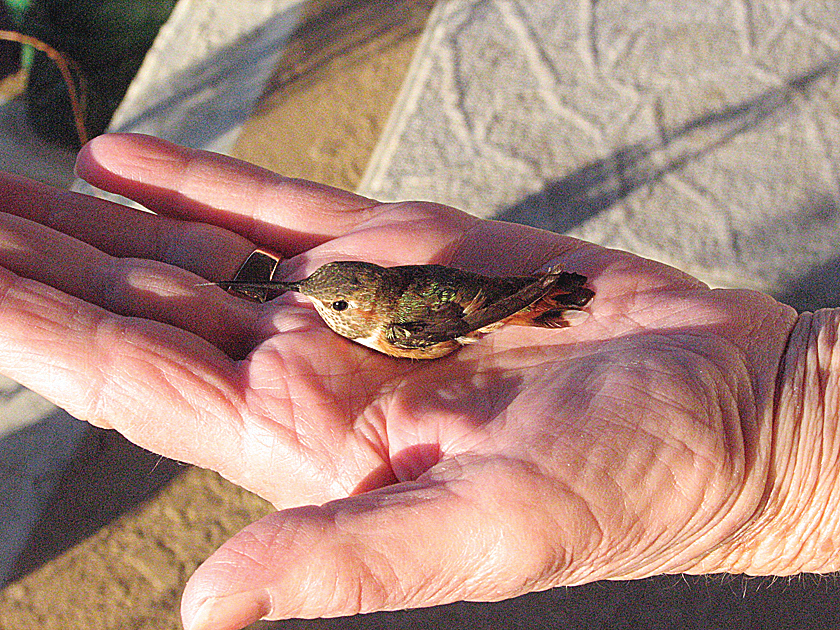
A rufous hummingbird hosts in a host’s hand after being banded and documented in Hampton, Tennessee, several years ago.

Susan enjoyed observing the banding process. “The whole process was surprising,” she wrote to me. “I had never witnessed anything like it.”

Susan said the visiting hummingbird got caught in the trap fairly quickly.

“Bob worked very quickly to measure and band her,” Susan added. “It took about 20 minutes and he fed her three times.”

At the conclusion of the process, she got to hold the tiny visitor. “I have held a hummingbird before, but it was still very special,” Susan said.

She also shared what she termed an “extra story” about hummingbirds.

“About three to four years ago, I was sitting on my deck, watching the babies (immature) hummingbirds buzz around later in the evening,” she said. “They chase each other, and do all kinds of acrobatics.”

During that evening’s antics, one of the hummingbirds flew right into the post used to hold Susan’s feeder.

“It knocked itself out, falling on the railing,” Susan explained. “I was stunned. I picked her up and proceeded to do everything wrong until my son came home. He looked up what to do, and we righted all the wrongs.”

They realized that the bird needed to be fed, so they took down the feeder and fed her twice.

“After that, she took off,” Susan noted. “It was amazing.”

Susan shared that she has been feeding the birds at her home in New York’s Hudson Valley for over 30 years.

“My parents got me interested,” she explained. “They took up bird watching when I was in high school and I have been bird watching ever since.”

Watching birds, she noted, is her all-time favorite thing. “Even when my husband and I are hiking we are always looking for something new,” she said. “It never gets old.”

Photo by Daniel Roberts/Pixabay.com • An adult male rufous hummingbird is a dazzling bird. Many of the winter rufous hummingbirds look much less vibrant.

Through the years, I have seen several of these seemingly out-of-place hummingbirds. Some of them remain at their host’s feeders for a brief stay of a few days or a couple of weeks, but some of these hummingbirds have extended their stay for several months, lingering throughout the winter months before eventually departing in February or March.

The big question concerns whether these hummingbirds are truly lost and out of place. The answer, based on everything I have managed to learn, is that these hummingbirds are precisely where they want to be. For still unknown reasons, some of these western hummingbirds make a migration swing through the eastern United States.

Many of the visiting winter hummingbirds turn out to be rufous hummingbirds, which is a species native to the western United States. The birds visiting at the homes of Katherine, Judi, and Susan all turned out to be rufous hummingbirds. It’s likely the visitor reported by the Storeys was also a rufous hummingbird.

In the summer months, the ruby-throated is the expected species of hummingbird in the eastern United States. In the winter months — not so much. However, in regions all across the Eastern United States, as well as along the Gulf Coast, a few ruby-throated hummingbirds are attempting to overwinter.

The rufous hummingbird has basically become an expected winter visitor each year in Southwest Virginia, East Tennessee, and western North Carolina. A few reports are received each winter. I have observed rufous hummingbirds in many different locations throughout East Tennessee and Southwest Virginia.

Winter hummingbirds, while always a delightful surprise for their hosts, no longer shock long-time birders. We’ve grown to expect them. If any readers are still hosting lingering hummingbirds at their feeders, I’d love to hear their stories. Email me at ahoodedwarbler@aol.com.