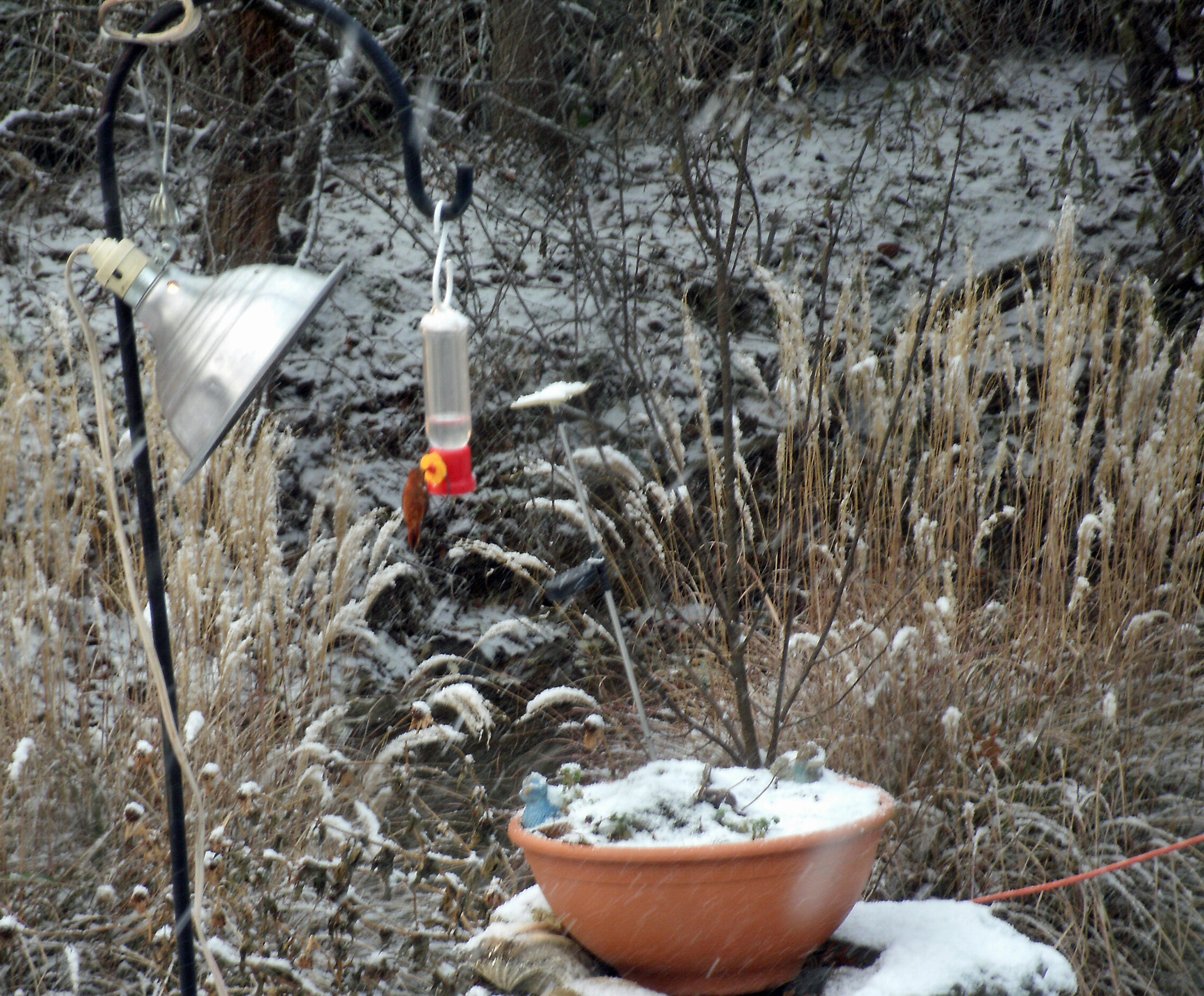
The hummingbird that had been at the home of Howard and Faye Guinn since October departed on Dec. 23. Faye informed me of the bird’s departure in an email.
“I got to have a winter hummingbird for two days of winter,” she wrote. “He surely decided to spend the holidays in Mexico. I hope he finds flowers in bloom there. Hummingbirds and flowers just go together.”
••••••
I had written about wintering hummingbirds in previous blog posts, including the one visiting the Guinn home near Jonesborough, Tennessee. After reading one of my recent blog posts on wintering hummingbirds, I received an email from Oscar, a resident of Vancouver, Canada, and a self-proclaimed “bird-lover.”
He also informed me that wintering hummingbirds are not a phenomenon exclusive to the United States. Some of these tiny birds also spend time north of the border during the winter months.
“We are delighted to have these beautiful little birds visiting our feeder at our window every day,” Oscar wrote. “Every 10 minutes he drinks and goes back to the same tree branch.”
While Vancouver is a rather temperate city, Oscar said the temperature can get cool on some days.
“He doesn’t go away for long periods,” Oscar reported. “It seems to look like he is afraid to lose his food to another bird, when his partner tries to feed he chases him away like he is very upset and not sharing his food, no matter what. Is this behavior common among these birds?”
In my reply, I did note that hummingbirds are usually quite territorial. Any readers who hosts more than one hummingbird at a time is probably familiar with the chasing antics Oscar described in his email.
“Watching this is so entertaining , like a gift from God,” Oscar shared. “We can’t have enough of it.”
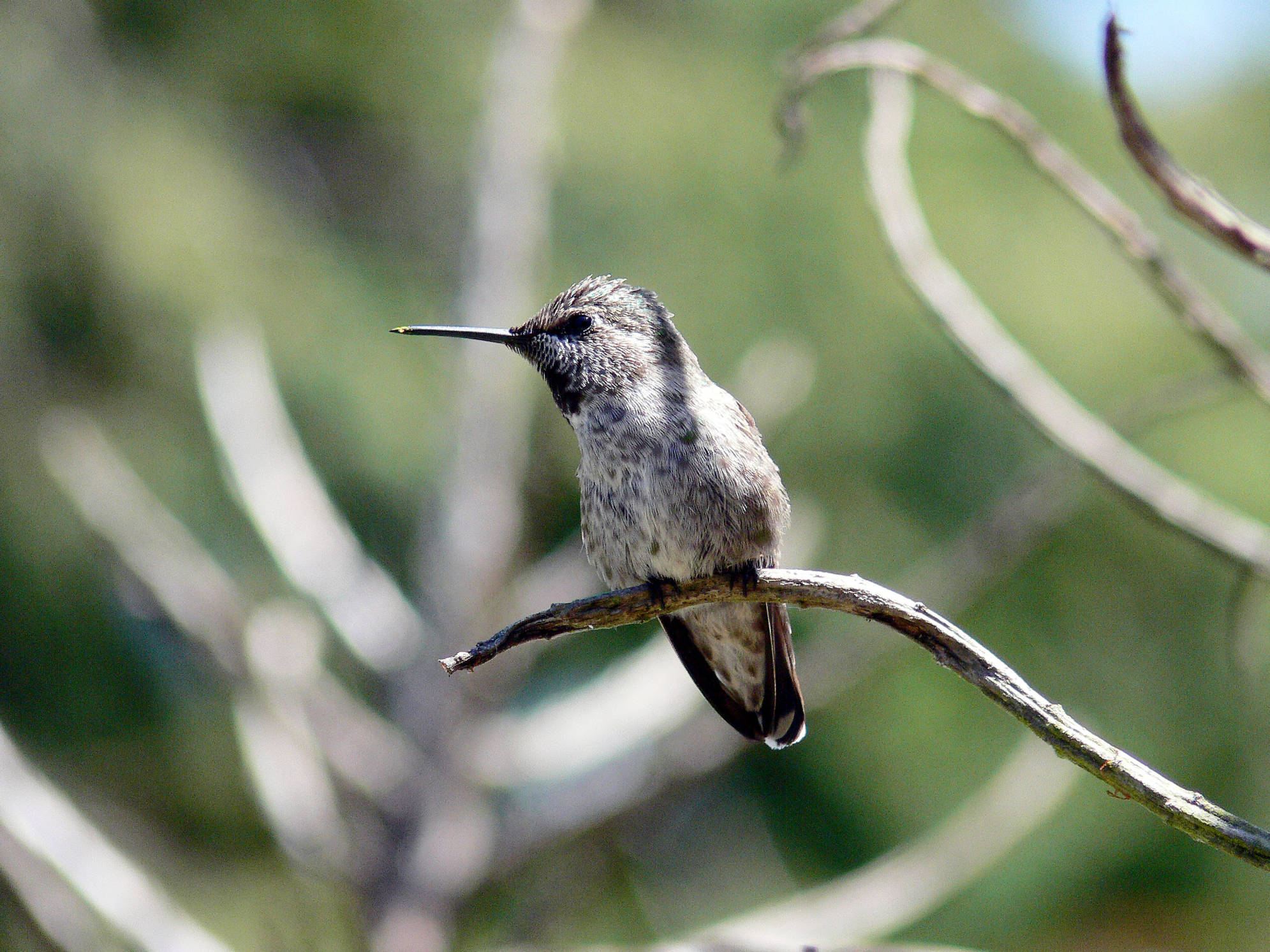
I did some research, which informed me that Oscar’s visiting hummingbirds are likely Anna’s hummingbirds.
A species native to western North America, the Anna’s
hummingbird is a year-round resident of the Pacific Coast. It ranges from northern Baja to points as far north as Vancouver and southern British Columbia.

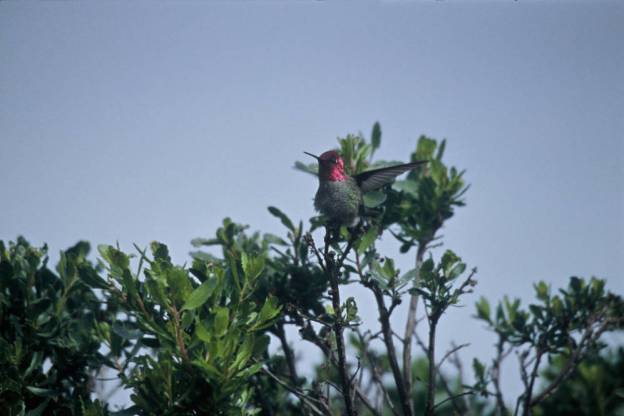
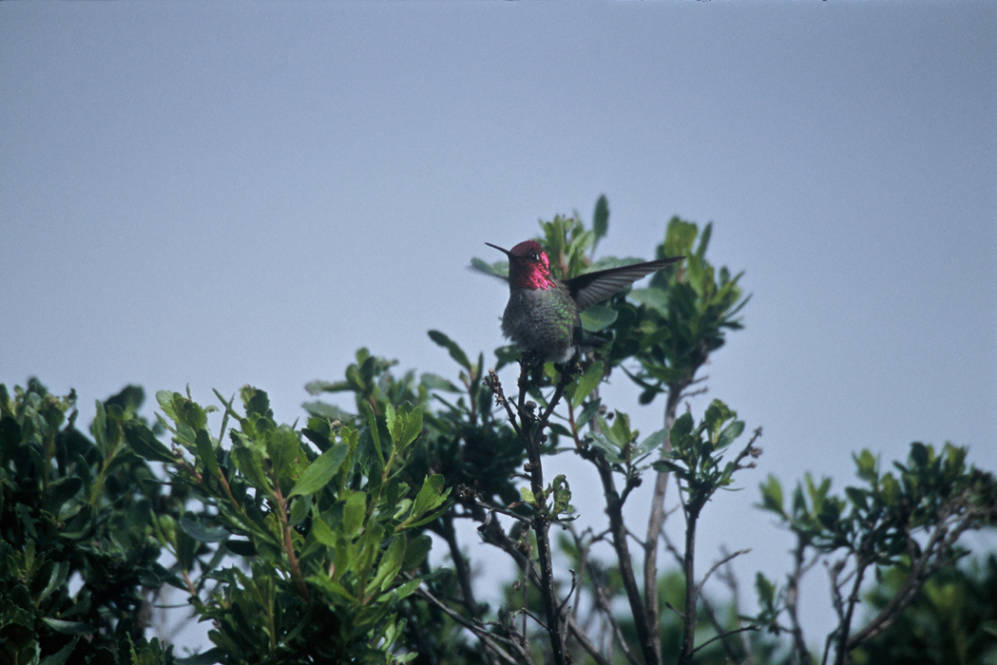
Photo by U.S. Fish and Wildlife Service A male Anna’s Hummingbird spreads it wings while settling onto a perch.
René Primevère Lesson, a French ornithologist and author of a manual for ornithology, gave the Anna’s Hummingbird its name.
This bird was named after Anna Masséna, Duchess of Rivoli. She served as an attendant for Empress Eugenie, the wife of Napoleon III and the last Empress consort of the French.
Another hummingbird — the Magnificent Hummingbird — was also named by Lesson to honor François Victor Masséna, the Duke of Rivoli and husband of the Duchess Anna. Until the 1980s this large hummingbird was known as Rivoli’s Hummingbird.
In the early 20th century, Anna’s hummingbird bred only in northern Baja California and southern California. Modern landscaping techniques, including the planting of exotic shrubs and flowers, has helped this hummingbird expand its range north, especially in urban and suburban areas.
I’ve seen several of the western species of hummingbirds, but I haven’t had the opportunity to observe an Anna’s Hummingbird. I suppose that species remains near the top of my “bird bucket list.”
•••••••
Until the recent cold snap, it has been a relatively mild winter. Even the Arctic blast produced mostly cold and very little in the way of snow.
The frigid conditions did, not surprisingly, result in increased traffic at my feeders.
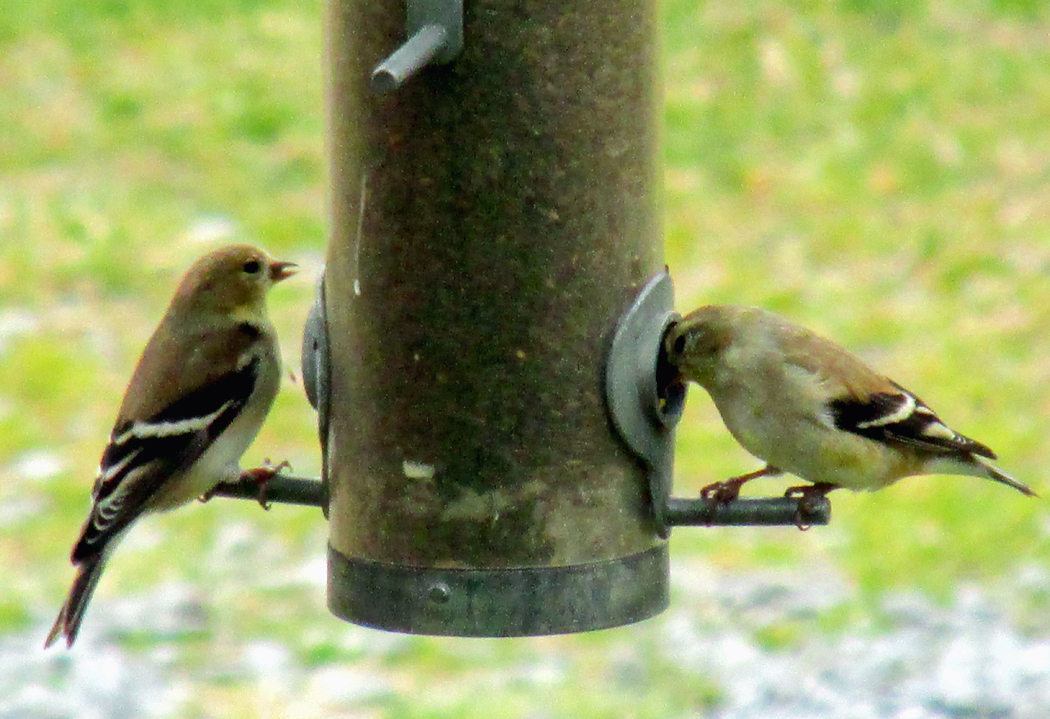
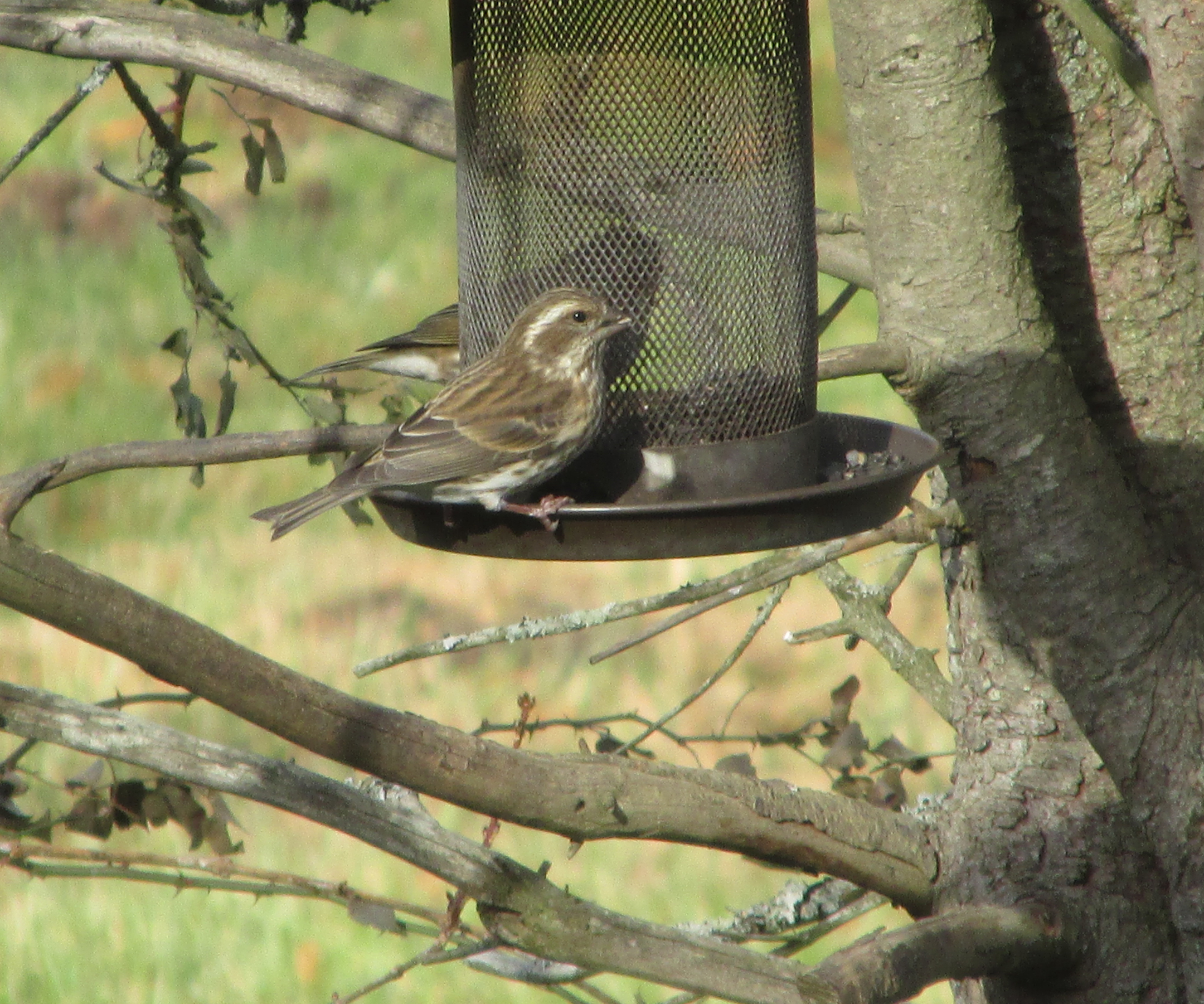
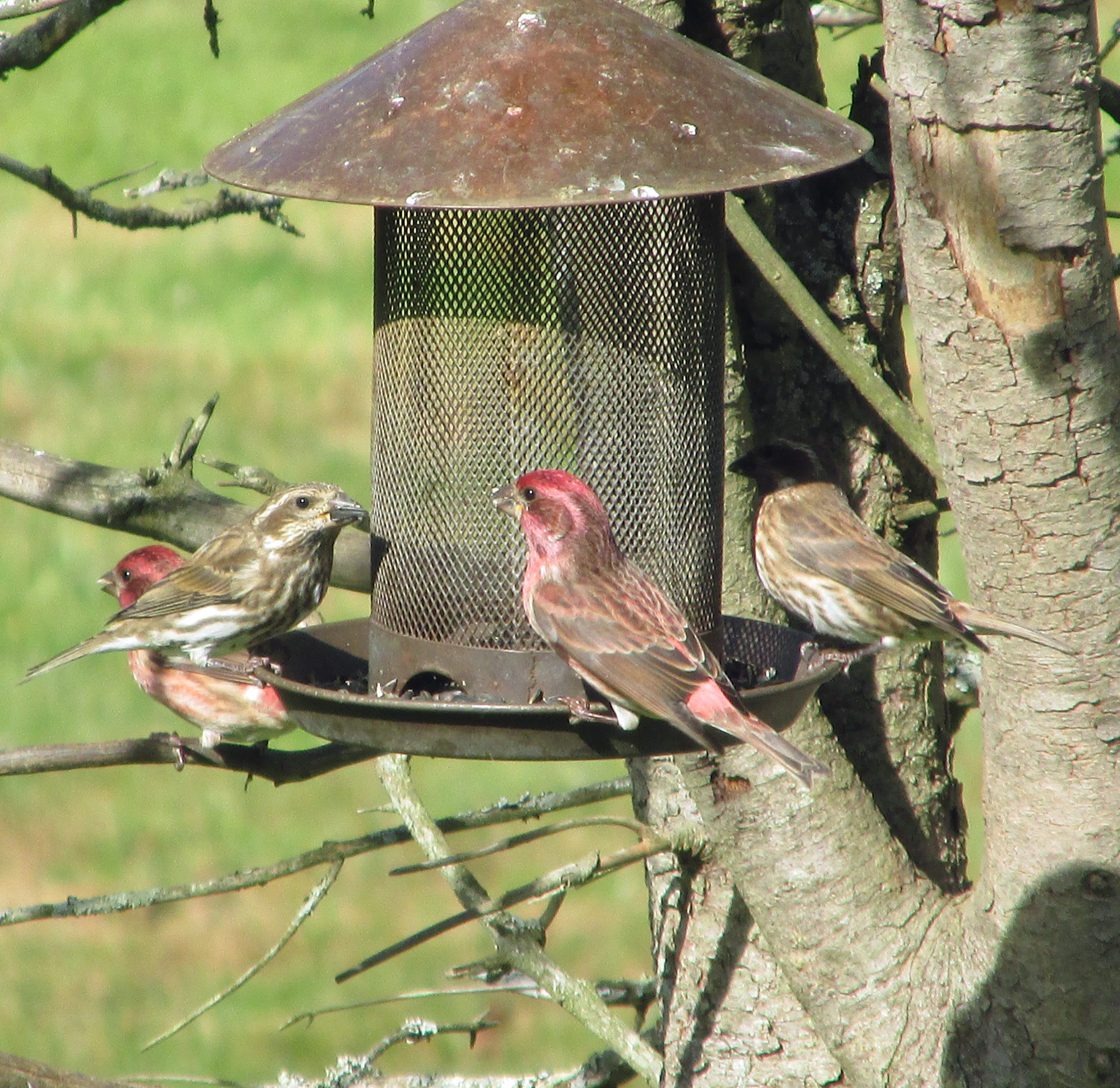
I haven’t hosted any birds as exotic as an Anna’s Hummingbird this winter, but the flocks of Pine Siskins and Purple Finches continue to grow. The arrival of January has seen as many as 25 Pine Siskins and about a dozen Purple Finches at my feeders.
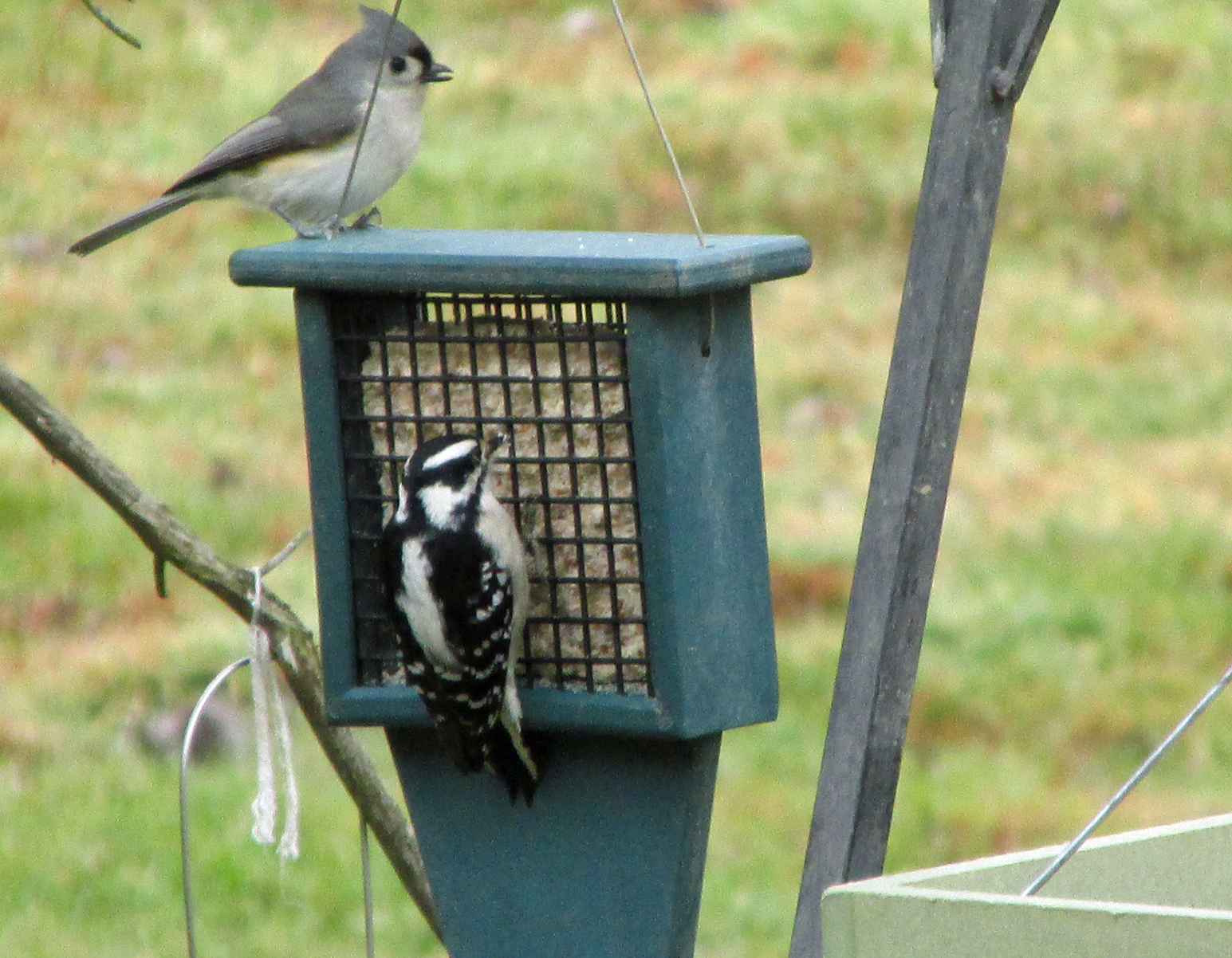
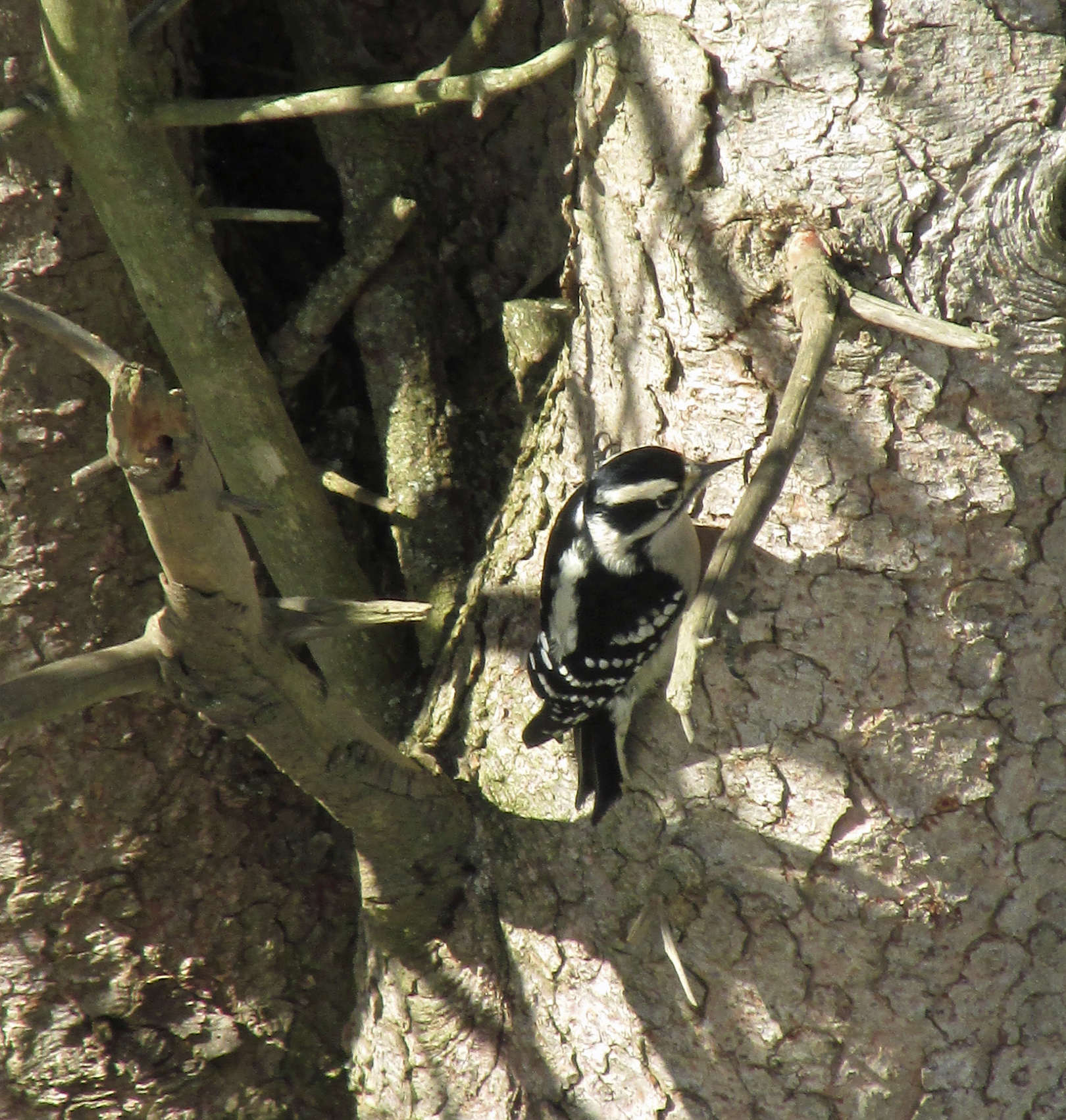
I always offer suet cakes as well as seeds, an offering that seems much appreciated by birds as diverse as Carolina Chickadees and Downy Woodpeckers to Carolina Wrens and Blue Jays. I usually buy commercially prepared suet/peanut butter cakes, which disappear quickly once the birds find them. The occasional squirrel also helps with making short work of them.

Photo by Bryan Stevens A mixed flock of American Goldfinches and Pine Siskins scour the ground beneath a feeder.
With every passing day, autumn is creeping closer. The calendar indicates that the first official day of fall is Sept. 23, but the rest of the world around us doesn’t wait for us to turn the page.

Photo by Bryan Stevens
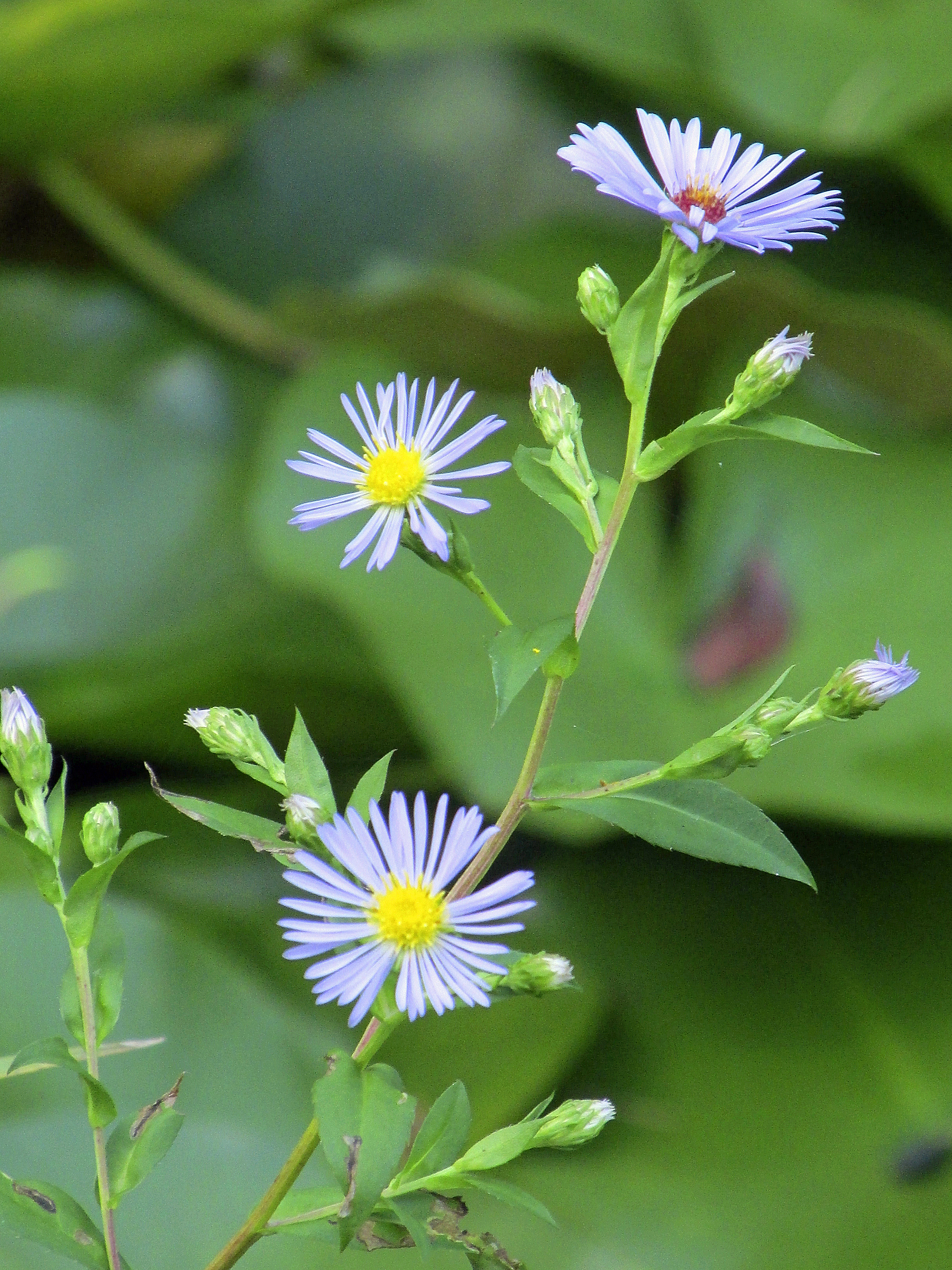
Asters, which come in a variety of colors, are usually a late-blooming wildflower.
Fall is upon us, which is apparent in a myriad of subtle signs, from the blooms of new wildflowers to the last surge of the season’s butterflies and dragonflies.
Of course, there’s also the migration of our feathered friends.
The dazzling birds of spring, such as Scarlet Tanagers and Rose-breasted Grosbeaks, are winging their way through our backyards again.

Photo by Bryan Stevens
Many butterflies, such as this swallowtail, look rather tattered this far into the season.
Many of these visitors have adopted a more subdued appearance as they stage their earlier migration flights in reverse. Then, there are fall warblers, sometimes also known by birders as “confusing fall warblers” since not only do observers have to distinguish between differences in male and female plumages, but also must contend with immature birds that resemble neither of their parents.
Want to learn how to quickly identify some of these so-called “confusing” warblers you may see flitting through the treetops this fall? Simply visit
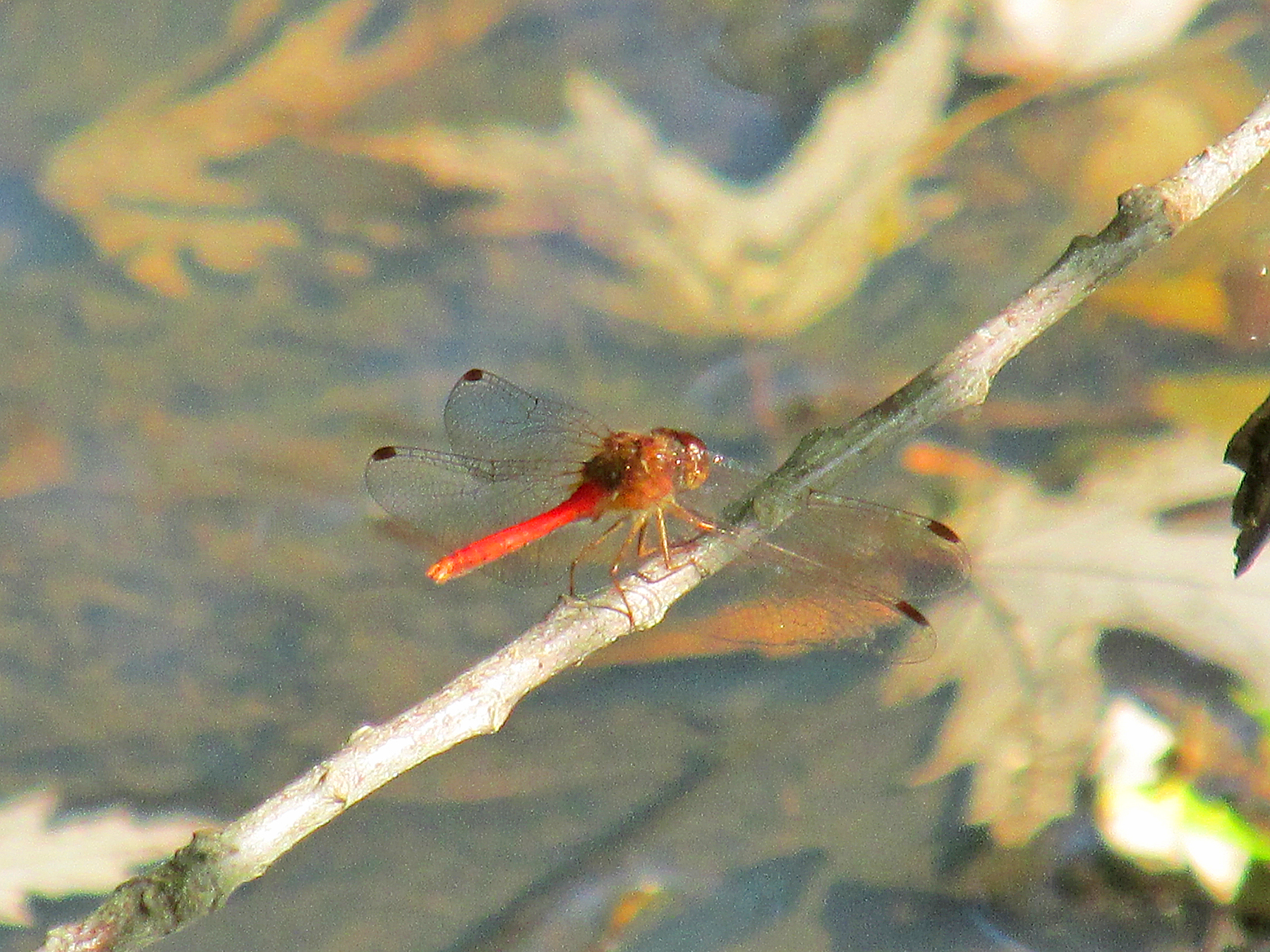
Along the edges of ponds, the final dragonflies of the season have begun to emerge. Autumn Meadowhawks and Blue-faced Meadowhawks have both made appearance at my fish pond along Simerly Creek Road. Other dragonflies have been scarce, and the damselflies have almost disappeared. I am still seeing a few Eastern Pondhawks, Blue Dashers, Eastern Amberwings and even a Fawn Darner.

Photo by Bryan Stevens
The aptly-named Autumn Meadowhawk is one of the last dragonflies to emerge each year.
During a visit to Erwin Fishery Park on Sept. 12, I was amazed to observe thousands of dragonflies — basically, a swarm of these incredible winged insects — hawking for smaller winged insects in the air above the now-closed swimming pool at the municipal park.
Most of the individuals in this incredible swarm looked like Green Darners, but I think a few other species had also joined the feeding frenzy. Green Darners, incidentally, are known for gathering in large flocks, just like birds, and staging their own migratory flights.

Photo by Bryan Stevens
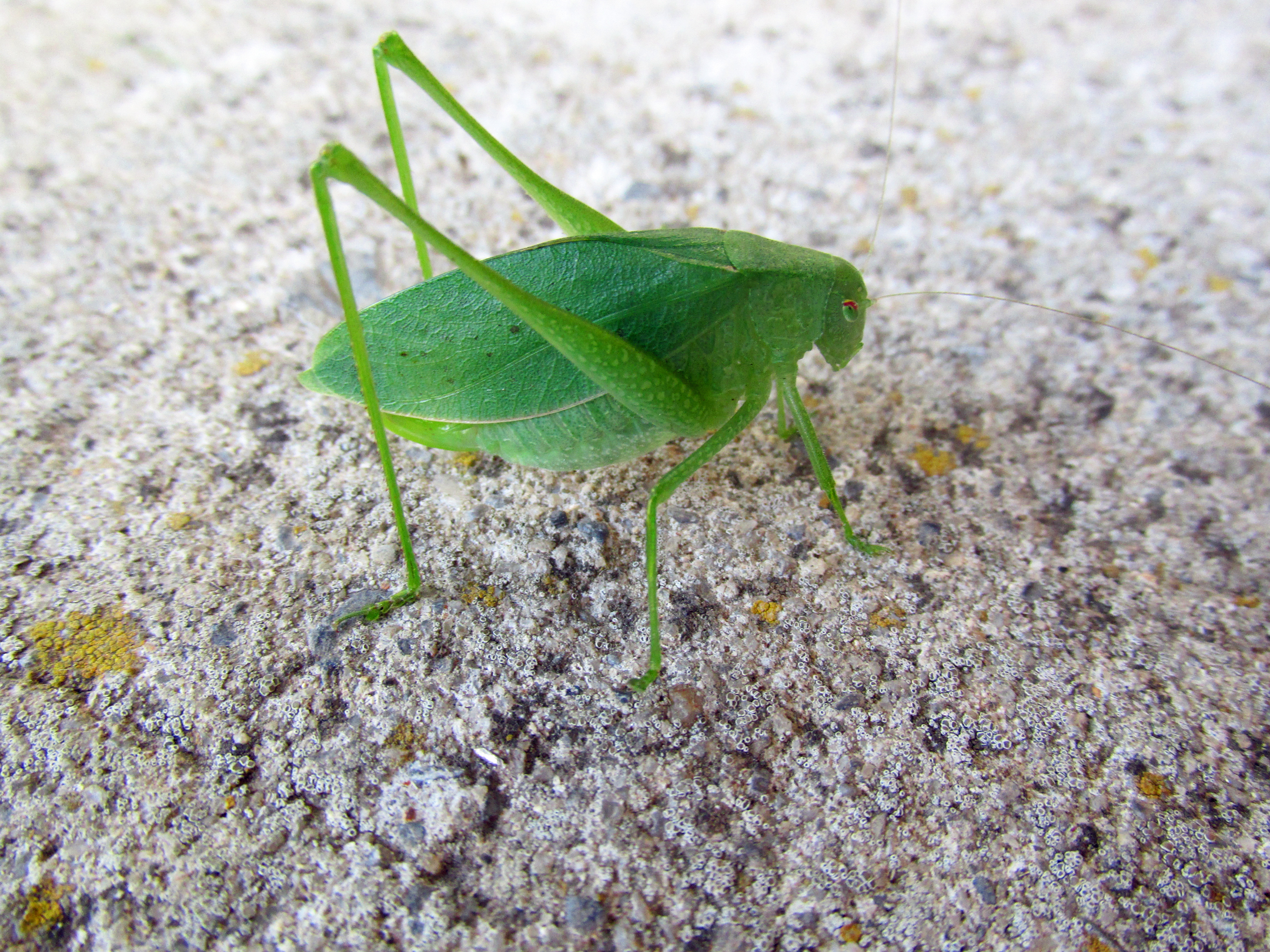
Katydids, some resembling nothing so much as a green leaf, are becoming more prominent as summer transitions into fall.
Speaking of insects, I’ve also been hearing Katydids. A recent post of a Katydid photo on my Facebook page prompted responses that brought up the old superstition that the first frost will take place several weeks after the Katydids begin their nocturnal serenades.
I always look forward to September, but it always seems to be an extremely busy month for me. This year’s no exception, but I am determined to carve out some time to enjoy this month of transition.
Join me in paying closer attention to the world around you this month. There are new birds to see almost every day if you simply take the time to look. If the birds are absent, look with even more attention to detail and you’re sure to be rewarded with some other remarkable observations.

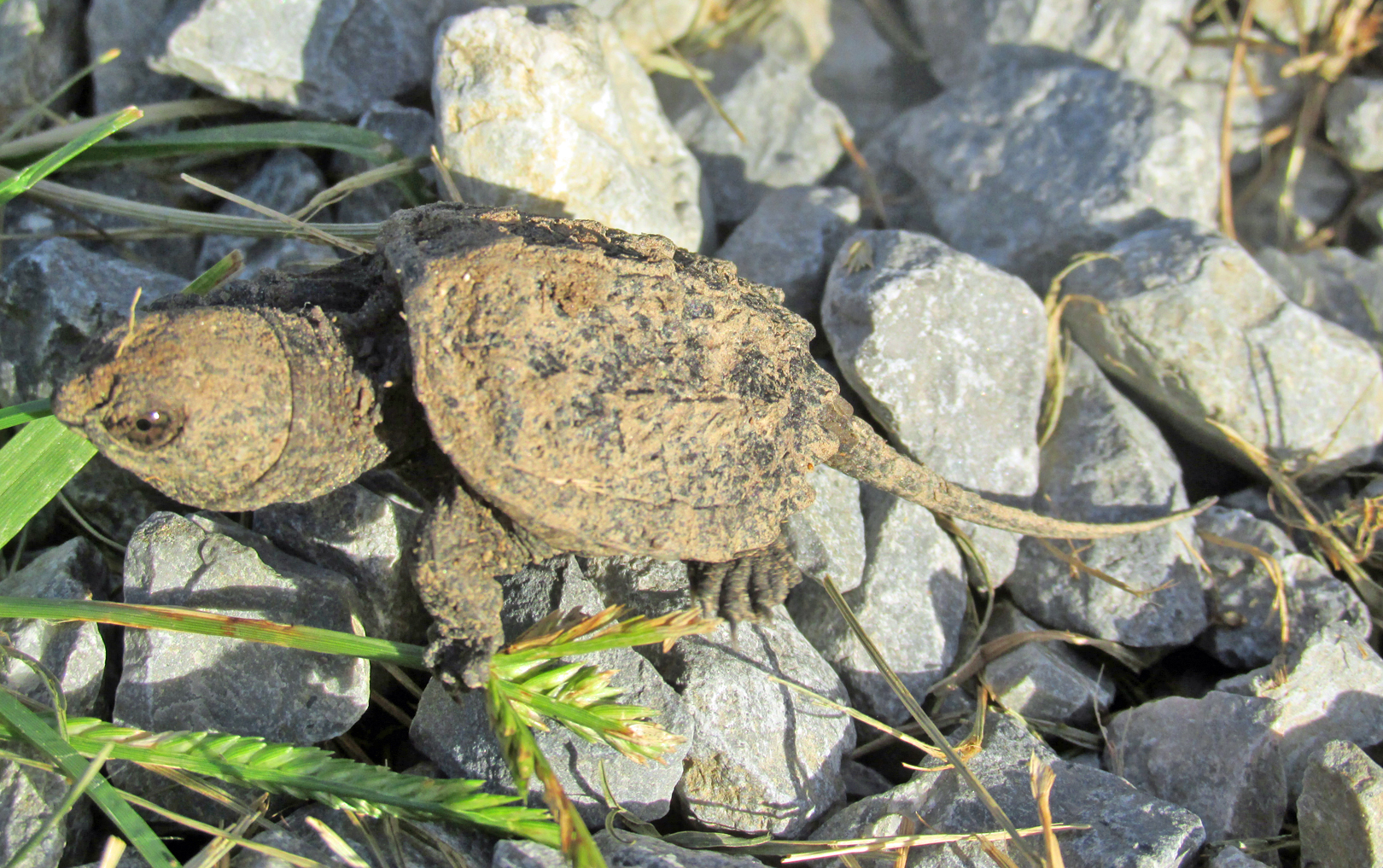
Photo by Bryan Stevens A newly-hatched Snapping Turtle will have a few weeks to grow before burrowing down to hibernate through the long, cold winter season.
Looking for a fun way to get outdoors and see some birds? The yearly Roan Mountain Fall Naturalists Rally is always a great way to enjoy a preview of the imminent autumn bird migration. The three-day rally offers more than birding opportunities, however, and features hikes to look for everything from reptiles, wildflowers and mushrooms to butterflies, moths and other insects.

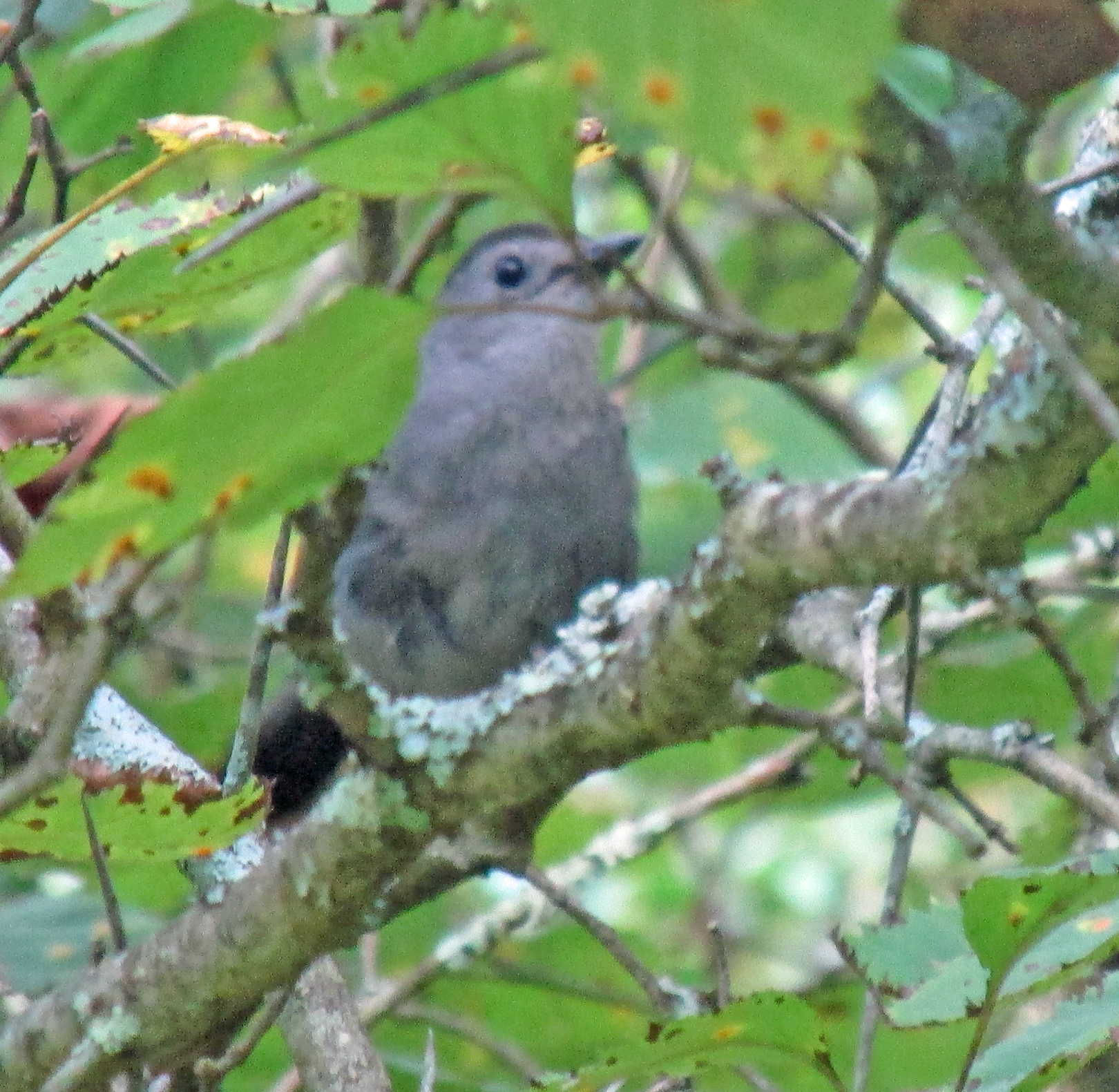
Photo by Bryan Stevens A curious Gray Catbird peeks from dense cover. Attendees at the fall rally can look for catbirds and other species at any of the offered bird hikes.
This year’s Fall Naturalists Rally will be held Friday-Sunday, Sept. 5-7. For 52 years the rally has drawn nature enthusiasts from far and wide to Roan Mountain on the weekend after Labor Day. Top naturalists volunteer their time and energy to make the event both enjoyable and educational for people of all ages.
Gary Barrigar, director of the fall rally, noted that the event continues to celebrate the natural world by providing two top speakers. This year the event will feature naturalist and ecologist Jennifer Frick and photographer Mark Peacock.
Because of the continued support of the Friends of Roan Mountain, Barrigar noted that all the seasonal rallies have the resources they need to prosper and grow and that Friends of Roan Mountain provides support for research and restoration projects on the Roan.

Photo by Bryan Stevens A Horace’s Duskywing is a late-season butterfly that could possibly be found on some of this year’s butterfly walks.
Barrigar encourages people to consider joining the Friends of Roan Mountain, if you are not already a member. Membership provides free admission to all rally events and a subscription to the newsletter, “Friends of Roan Mountain.”
He also expressed many thanks to Roan Mountain State Park for its long-time support of the rallies, as well as to the trip leaders who donate their time and expertise.
Evening and Lunch programs will take place in Roan Mountain State Park’s Conference Center and field trips will leave from the field on the left before the cabins in the park.

Photo by Bryan Stevens Wildflowers and butterflies are only some of the topics for hikes and activities at the fall rally.
As always, programs are scheduled for 7:30 p.m. on Friday and Saturday evenings.
This year’s rally will kick off Friday with registration at 5:30 p.m. at the Roan Mountain State Park Conference Center. Evening meals will be held at 6:30 p.m. both days. Dinner reservations are required.
On Friday evening, Jennifer Frick will present “Why Is There Such High Biodiversity in the Southern Appalachians?” It’s a question many attendees will probably have asked themselves. A full professor of biology and environmental science at Brevard College, where she has taught since 1997, Frick will provide some answers to that question.
In January of 2014, she was promoted to Division Chair of Science and Mathematics. She teaches courses in environmental perspectives, biodiversity and natural history and was awarded the 2003-2004 Award for Exemplary Teaching. She earned her Ph.D. in Zoology from Clemson University in 1995 and completed a Postdoctoral Research Fellowship at the Smithsonian Marine Station in 1996-1997.
For nearly 15 years, she and her husband, Edward Ruppert, lived in a log cabin that they built in Balsam Grove, N.C. They generated their own electricity and lived “off the grid” without a direct connection to the power grid.
Once their son, Fritz, was born, they decided to adopt a more traditional lifestyle and built a “normal” home that does connect to the power grid, but is energy efficient and fits into the landscape.
Frick is working on a book titled “Dreams of Eden” that describes both the skills they acquired in living off the grid and the philosophy they developed in living so close to nature.
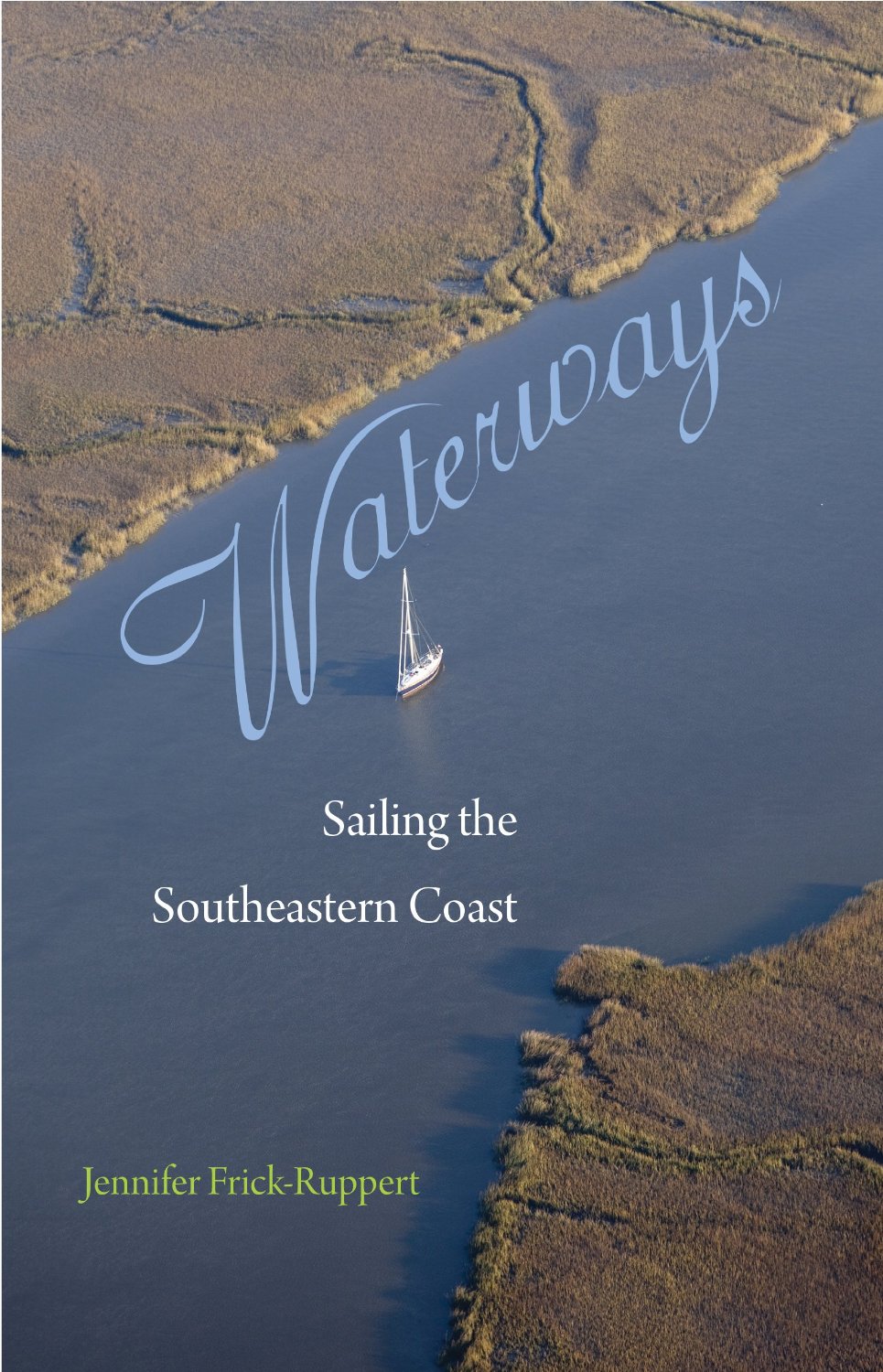
Many of the skills necessary to live without modern conveniences were cultivated during a period in which she and her husband lived aboard a sailboat, cruising the Southeast. Frick has recently published Waterways: Sailing the Southeastern Coast, which relates these experiences. Combining insights from ecology and sailing, she blends travel narrative and nature writing to inspire and educate.
Originally from South Carolina, she grew up with a love of nature and an appreciation for her surroundings.
She has written several scientific articles, most recently on the biology of the Blue Ghost Firefly and the caloric values of native fruits, in such journals as Biological Bulletin, Invertebrate Zoology, and North Carolina Academy of Science. She has also authored two websites for South Carolina Educational Television on the Natural History of the Saltmarsh and the Natural History of the Swamp. From 2001-2005, she wrote a regular column for The Transylvania Times.
As an outgrowth of those newspaper articles, she published a book called Mountain Nature: A Seasonal Natural History of the Southern Appalachians. Illustrated with both color and black-and-white images, it conveys the seasonal change in animals and plants of the region, emphasizing their interactions and unique characteristics.
Her program will focus on describing of the astounding local biodiversity and explaining why this region supports such a profusion of life. It will be illustrated with her photographs, many of which are taken from Mountain Nature.
Born and raised in Morris, Illinois, Peacock moved to the hills of northeast Tennessee in 1995 to attend Emmanuel Christian Seminary following law school and practicing law at his family’s law firm. He was soon hired by Milligan College to teach courses in business, law and ethics. Later he added digital photography to his list of courses offered. His love for photography was instilled in him by his grandfather, who taught him lighting and composition and that, at its best, photography is storytelling. Most weekends, he is out hiking and exploring the area with friends and his dog, Blue – and sharing his discoveries on his blog, “Appalachian Treks,” which seeks to promote this region and its beauty.
His landscape photography has been featured in various local and regional publications and graces the walls of numerous homes, offices and organizations. Recently, his work was featured in photographic shows “Seasons of the Blue Ridge” and “East Meets West” at the Nelson Fine Art Center in Johnson City. He often leads workshops for organizations and individuals, teaching the art and craft of photography. In addition to landscape photography, he enjoys working in the areas of family portraiture, sports photography, and higher education photography. Please visit his gallery and blog at www.markwpeacock.com for more information.
In his Saturday evening program, he will explore the natural beauty of the Southern Appalachians through his photography. Journey with him as he shares his landscape photography of many of the well-known scenic attractions of our region along with images of many lesser known, but stunning destinations found in these hills. Along the way, you’ll learn about some of the colorful characters who came before us in these beautiful mountains.
In addition to the evening programs, a variety of hikes and activities will be held Saturday morning and afternoon, as well as Sunday morning. Visit http://www.friendsofroanmtn.org for a brochure outlining all the available hikes and other programs.
For more information on this year’s rally or FORM, call Barrigar at (423) 543-7576.
••••••
At home on Simerly Creek Road in Hampton, I am getting glimpses of the start of fall migration. I’ve seen a few warblers along the edges of the woods and yard, including Chestnut-sided Warblers and American Redstarts. To share an observation, make a comment or ask a question, email me at ahoodedwarbler@aol.com or “friend” me on Facebook at https://www.facebook.com/ahoodedwarbler.

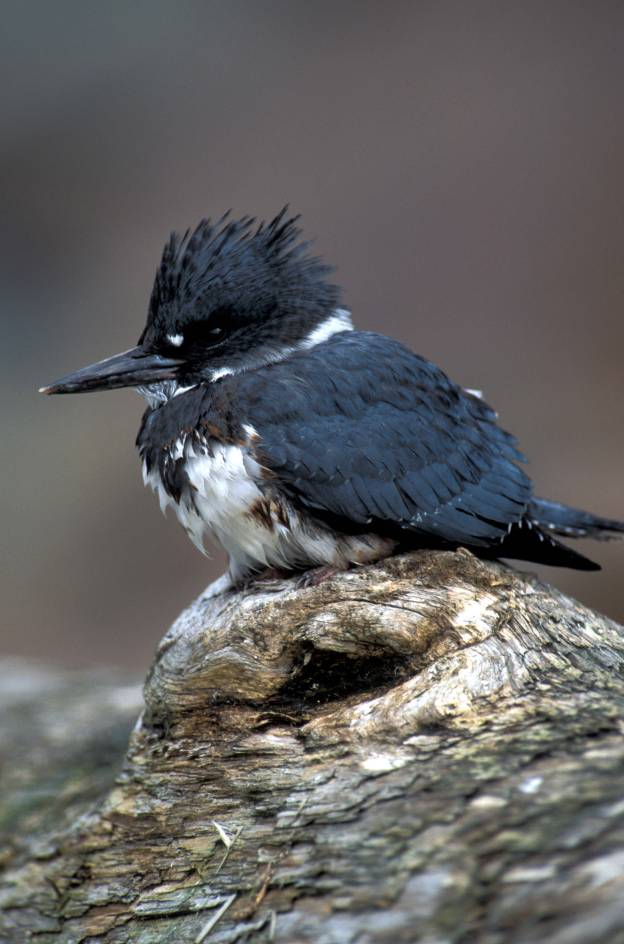
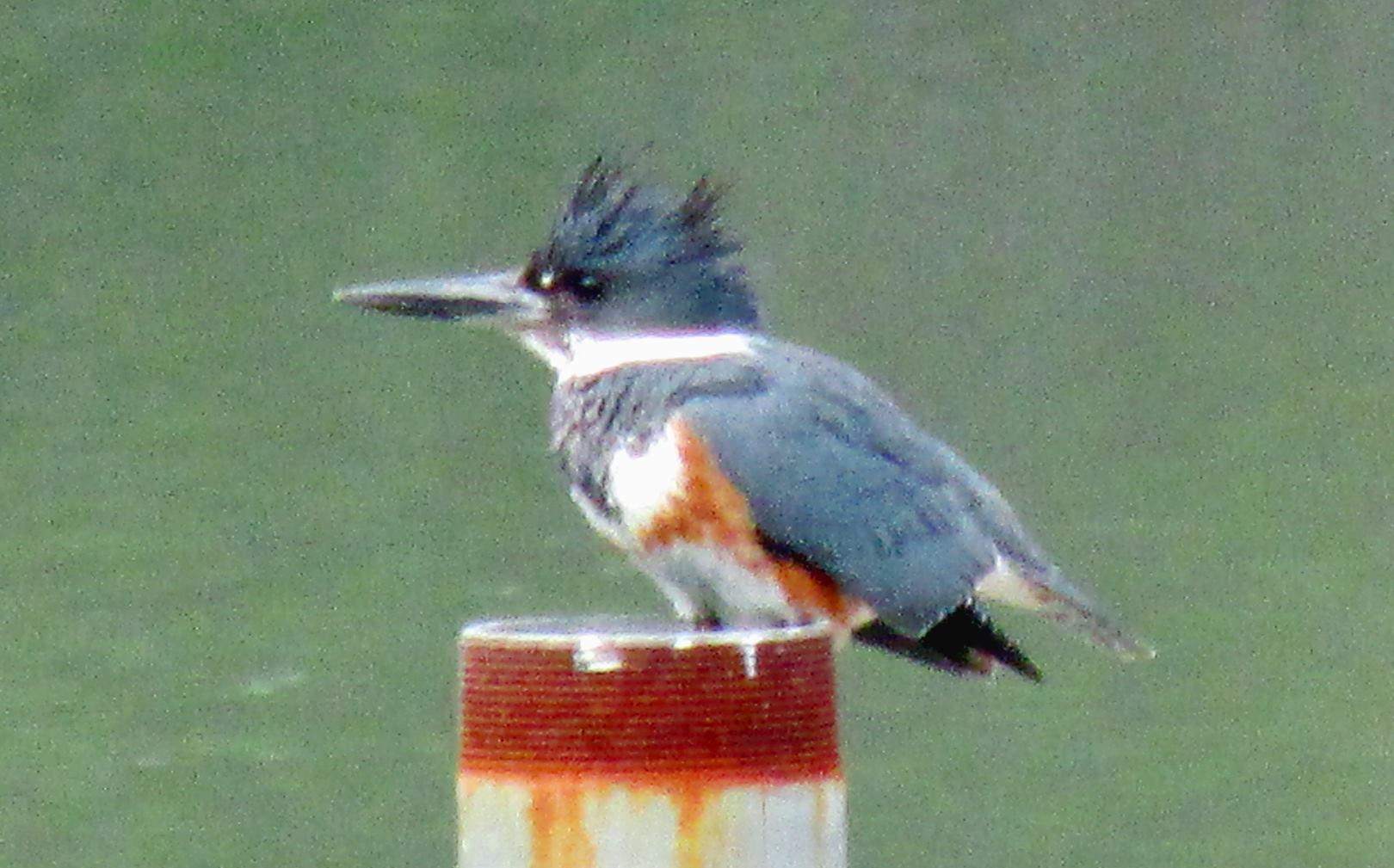
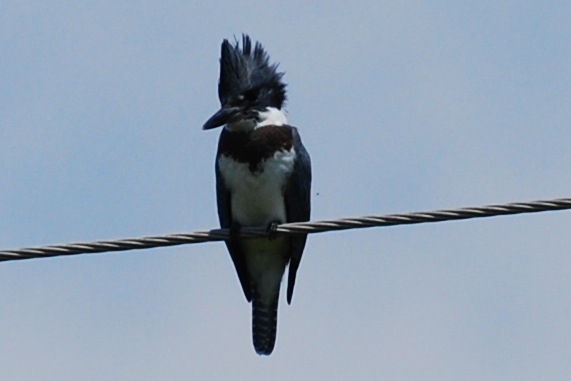
Photo by Bryan Stevens A perched Belted Kingfisher rests between attempts to catch fish along the waterfront at Winged Deer Park in Johnson City.
Fishing is a favorite pastime for many people, who like nothing better than to spend a lazy summer afternoon trying their luck at their favorite fishing spot.
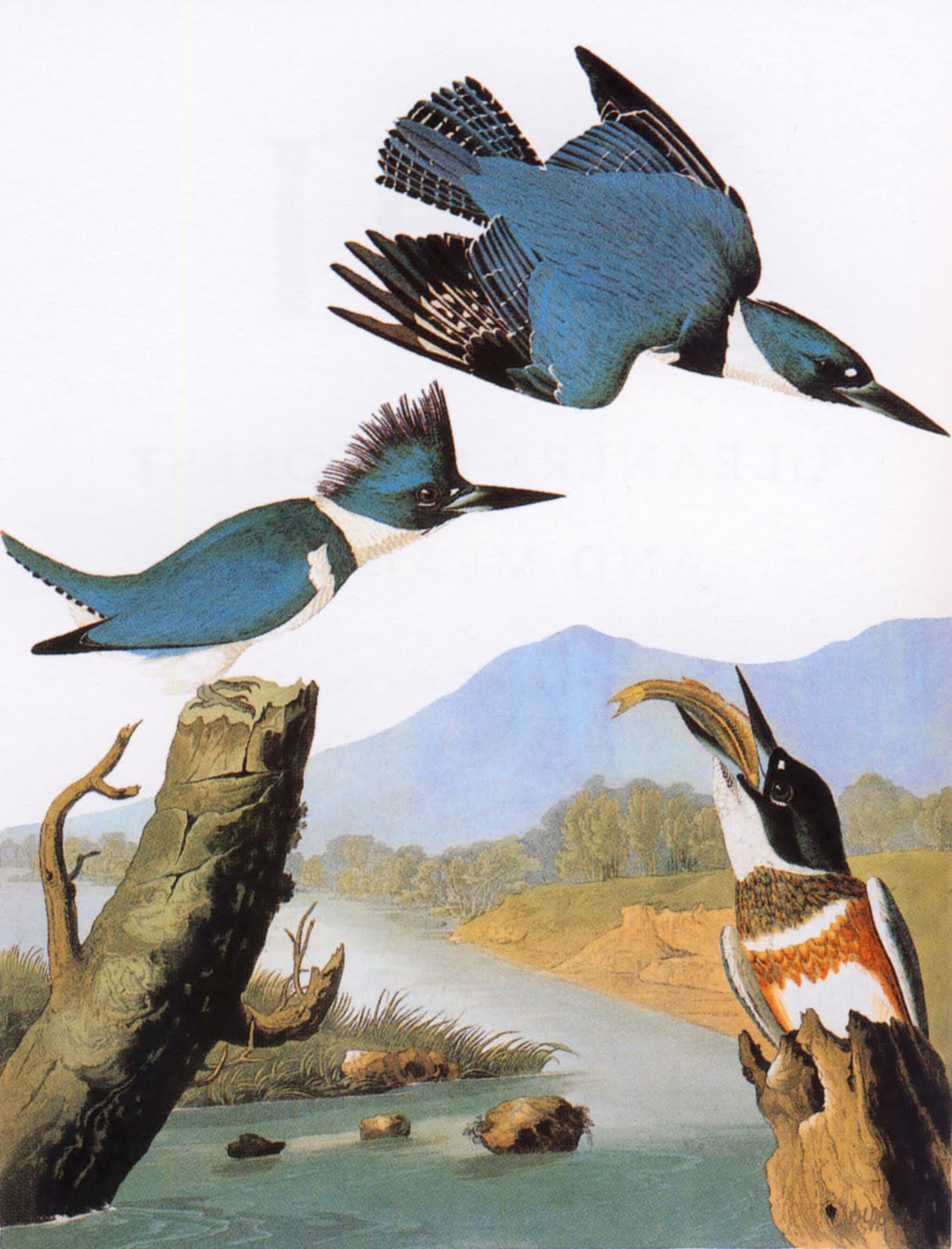
There’s also an angling counterpart among our feathered friends. The Belted Kingfisher’s nature as an angler rules out this bird visiting feeders in the backyard, but that doesn’t mean you’re unlikely to see this bird. With a little strategic effort, an observation of a Belted Kingfisher is fairly easy to obtain, especially during the summer months. If you live near a stream, pond, river or other body of water, you have probably been fortunate enough to observe a Belted Kingfisher as it completes its daily routine.
If you are a fishing enthusiast yourself, you’ve likely shared some favorite fishing holes with this bird. The Belted Kingfisher is patient in its pursuit of fish. The birds prefer to perch on an exposed branch or a wire that overlooks a body of water that offers ample fishing opportunities. The Belted Kingfisher, however, is capable of hovering in place in order to spot and then capture its prey in an impressive plunge and lunge into the water.
Most of my observations of hunting kingfishers have involved the birds in their ambush approach to fishing — perching and diving on the unsuspecting fish. I have on a few occasions, however, also observed kingfishers as they hover over the water in a quest for a meal.
The Belted Kingfisher, like most of its kin, looks to have a head and bill that are slightly too large for the rest of the body. It’s the long, heavy bill that the Belted Kingfisher uses to snatch fish from their watery homes.
A walnut tree with some dead branches overlooking my family’s fish pond is a favorite perching site for visiting Belted Kingfishers. A few Belted Kingfishers become regular visitors almost every spring and summer. In past years, I’ve been delighted by pairs of kingfishers that have brought as many as six of their offspring to hunt around the edges of the pond and creek near my home.
When a Belted Kingfisher does manage to capture a fish — not always a certainty, despite their great skill — the bird will usually fly to a perch where they will beat the fish unconscious before swallowing it. I remember one particular kingfisher that liked to catch fish in the creek and then fly to the corner of the metal garage roof where the bird proceeded to beat senseless the unlucky fish.
Worldwide, there are about 90 species of kingfishers that range in size from the 16-inch-long Laughing Kookaburra of Australia to the tiny African Dwarf Kingfisher, which at four inches in length is smaller than most sparrows. This family of birds is divided into three groupings, the river kingfishers, the tree kingfishers and the water kingfishers.
Despite the name “kingfisher,” not all kingfishers exist on a diet of fish. Some members of the kingfisher family instead prey on other quarry, such as snakes, lizards and insects.
Some interesting common names have been used to identify the world’s kingfishers, including Half-collared Kingfisher, Shining Blue Kingfisher, Blue-eared Kingfisher, Azure Kingfisher, Indigo-banded Kingfisher, Silvery Kingfisher, Malachite Kingfisher, White-bellied Kingfisher, Cerulean Kingfisher, Rufous-backed Kingfisher, Spangled Kookaburra, Rufous-bellied Kookaburra, Shovel-billed Kookaburra, Lilac Kingfisher, Brown-winged Kingfisher, Stork-billed Kingfisher, Great-billed Kingfisher, Striped Kingfisher, Lazuli Kingfisher, Ultramarine Kingfisher, Cinnamon-banded Kingfisher, Sacred Kingfisher, Mewing Kingfisher, Chattering Kingfisher, Glittering Kingfisher, Red-breasted Paradise Kingfisher, Pied Kingfisher and Green-and-rufous Kingfisher.
Kingfishers comprise a cosmopolitan family of birds with species present on every continent except Antarctica.
The three North American kingfishers, however, are exclusively fish-eaters. The Belted Kingfisher, with a range that spans most of the United States, is the only kingfisher encountered by most Americans.
Two others, the Ringed Kingfisher and the Green Kingfisher, are found in Texas and occasionally in other locations near the Mexican border. The Ringed Kingfisher is similar in appearance to the Belted Kingfisher, but is somewhat larger with a rufous-colored belly. The little Green Kingfisher, not quite nine inches long, has the typical kingfisher appearance, but is green rather than blue on its upperparts.
With the Belted Kingfisher, only the female sports a ring of rufous coloration across her breast. She is an exception to the rule that most male birds are more vividly colored than their female companions.
In her book The Folklore of Birds, Laura C. Martin writes that in some accounts the kingfisher, not the dove, was the second bird Noah released from the ark after the Biblical flood. Instead of looking for land, the kingfisher flew too high and the sun scorched the bird’s feathers. After his setback with the raven and now the kingfisher, Noah made the kingfisher remain on the ark’s deck to catch its food from the water.
Halcyon days, a term meaning a period of peaceful quiet, is derived from Greek legend. According to the legend, the god Zeus restrained the storms during the period when the kingfishers nest. The scientific name for the Belted Kingfisher is Megaceryle alcyon, a variation on the term “halcyon.”
Belted Kingfishers nest by excavating a cavity in a dirt bank, usually near water. The tunnel slopes upward from the entrance, and may extend as far as eight feet into the bank.
Again in Martin’s book, there is an account of a Cherokee legend about how the kingfisher acquired its angling lifestyle. The poor bird wanted to be a waterbird, but lacked the equipment to make a living at fishing. The other animals convened a council and, in pity for the kingfisher’s plight, endowed the bird with its spear-like bill. Since that time, the bird has been known as “king of the fishers.”
The “king of the fishers” is indeed to be envied by human anglers. Although not successful in every attempt, the Belted Kingfisher is certainly exceptional in its pursuit of fish. According to John Eastman in his book, Birds of Lake, Pond and Marsh, the Belted Kingfisher typically captures about 10 fish per day.
If you want to observe this bird for yourself, stake out a pond or section of river. You’re not likely to have to wait for long before you are rewarded with an observation. In my experience, however, the Belted Kingfisher is somewhat shy and wary of humans, so observe from a respectful distance or you’re likely to scare off the bird, which will depart giving its rattling call that sounds so much like the sound of annoyance on its part.
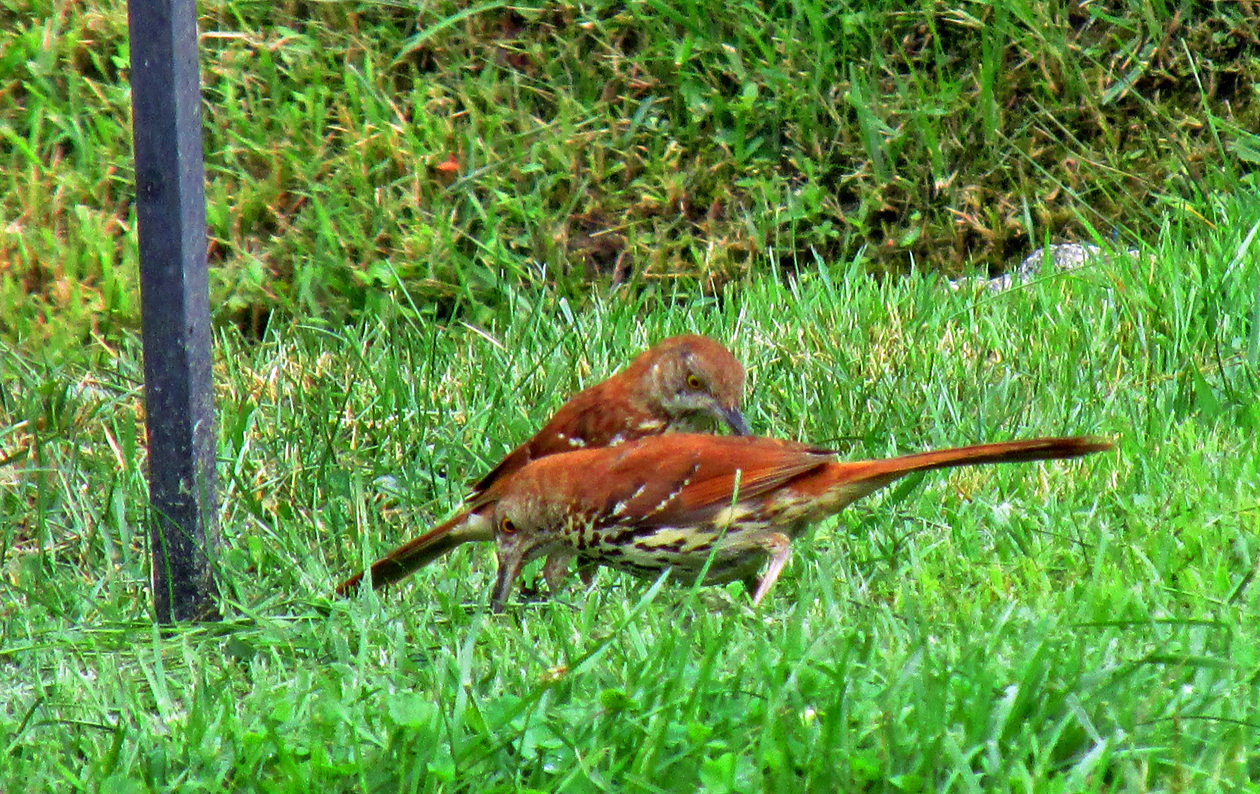
It’s been a banner year for brown thrashers at my home. In recent weeks, these large songbirds have provided plenty of entertainment by bringing their young to the feeders. They especially like the suet feeder. The parent birds work to detach chunks of suet. Once they secure these morsels, the parents feed their hungry young.
A few years ago, quite by accident, I came across a brown thrasher nest. I hadn’t gone looking for it. The nest, expertly woven into a thicket of honeysuckle vines, was tucked beneath a sheltering eave of an outdoor storage building. I don’t think anything but a fortunate accident could have ever revealed the nest. I still remember peeking into that tangle of vines and seeing a golden eye staring back. The bird didn’t look in the least pleased that I had accidentally stumbled across her nest.
The otherwise extroverted brown thrasher, which prefers to nest in difficult-to-access, tangled messes, found the cluster of vines a perfect location. I haven’t discovered any thrasher nests this year, but I’ve observed several fledglings when they began visiting the feeders with their parents. For those not familiar with brown thrashers — relatives of the Northern mockingbird — they are known for their feisty and fearless protection of their nest and young.

Photo by Bryan Stevens
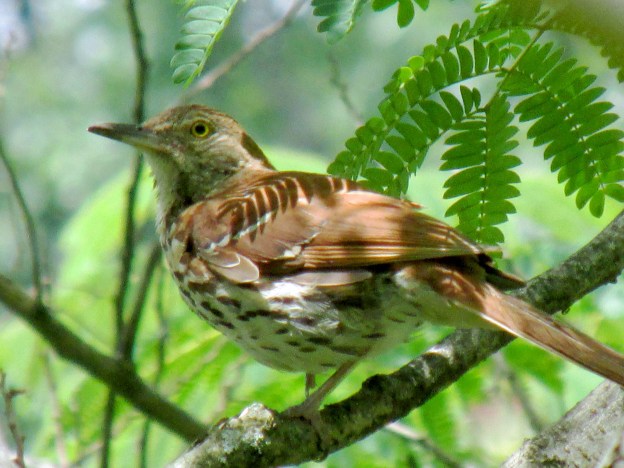
Brown Thrashers prefer thickets and brushy areas that offer security for these somewhat shy birds.
The brown thrasher (Toxostoma rufum) belongs to the family of “mimic thrushes,” which provides a label for a group of songbirds capable of imitating the songs of other birds. Mimidae, the Latin root for “mimic,” provides the scientific name for the family, which includes mockingbirds and the New World catbirds, as well as thrashers. The Northern mockingbird is best known for the ability to mimic, but relatives like the gray catbird and brown thrasher are also talented mimics.
The thrasher is a fairly large songbird about 11.5 inches long with a wingspan of 13 inches. Much of the body length comes from the bird’s long tail feathers. A thrasher weighs, however, only about 2.5 ounces.
The brown thrasher is not a picky eater. It’s known to eat everything from berries and nuts to insects and small lizards. It’s also aggressive in defending its nest and young. John James Audubon, a French-American ornithologist, naturalist and painter, painted quite a dramatic scene of a group of brown thrashers valiantly defending a nest from an attacking snake. The painting is so detailed that you have to imagine Audubon based his work on a real-life experience. His work, originally painted in the early decades of the 1800s, still holds up today.

Early American naturalist and artist John James Audubon painted a dramatic scene of Brown Thrashers defending their nest from an attacking snake.
Incidentally, Audubon knew the brown thrasher as the “ferruginous thrush.” Another former common name for this species was “brown thrush.”
This brown thrasher breeds across the United States and Canada east of the Rocky Mountains. Thrashers withdraw from the northern part of their range in the winter months, spending the season in the southeastern United States.
They are familiar birds in southern gardens. In fact, the brown thrasher is the official state bird of Georgia and also provided the name for Atlanta’s National Hockey League team, the Atlanta Thrashers. The thrasher became Georgia’s state bird due to passage of a Joint Resolution of the Georgia General Assembly in 1970.
The brown thrasher is the only member of the thrasher clan in the eastern United States. In Texas and the western half of the country, however, there are several other species of thrasher, including sage thrasher, long-billed thrasher, Crissal thrasher, curve-billed thrasher, Bendire’s thrasher, California thrasher and Le Conte’s thrasher. Many of these thrashers also occur in Mexico.
These New World birds also occur in the Caribbean, including such species as White-breasted Thrasher, Pearly-eyed Thrasher and Scaly-breasted Thrasher.

Photo by Bryan Stevens
A pair of Brown Thrashers perch near a fence at Tipton-Haynes Historic Site in Johnson City.
•••••
Rebecca Howe, who resides in Kent, Ohio, has sent me an email.
“I am blessed to have rose-breasted grosbeaks come to my house each spring,” she wrote. “I watch males arrive first and then females.”
She has recently been seeing young birds arriving at her feeding station.
“Now the birds seem to be leaving,” she noted. “Do they leave their breeding grounds around this time to move south for the winter?”
I thanked Rebecca for sharing about her rose-breasted grosbeak observations in a follow-up email and informed her that different birds depart at different times to go south for the winter. Some birds do not get into a rush to reach their destination, so the start of migration is more of a slow-paced, casual “wandering” that takes them to different locations in a more or less southern direction.

Photo by Bryan Stevens Brown Thrasher visits a suet feeder. The thrasher diet consists of everything from berries and seeds to insects and even small reptiles.
Closer to Southwest Virginia and Northeast Tennessee, birds like yellow warbler, Louisiana waterthrush and a few others are known to depart as early as July and August. Ruby-throated hummingbirds are another good example of slow migrants. Those that pushed to the northern limit of their range are probably already heading back. But they are very nomadic. Maybe they could even be described as “restless,” and it is this time of year when I start to get the highest numbers of these little birds.
••••••
I look forward to hearing from readers. Those who wish to ask a question, share an observation or make a comment may reach me at ahoodedwarbler@aol.com. Follow me on Facebook to see more bird and nature photos at https://www.facebook.com/ahoodedwarbler
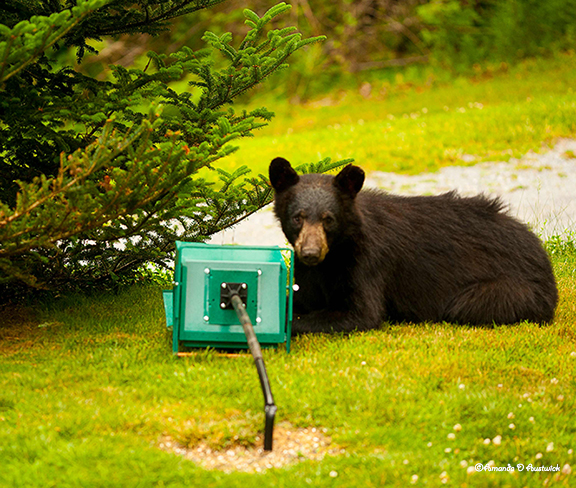
I received a recent email from Flag Pond reader Amanda Austwick with the header, “Bird Feeders Damaged.” I get calls and emails about lots of unusual feeder visitors, but this one sort of stood out from the rest.
In the email, I was asked if I had any idea what would attack a bird feeder in late afternoon in June?
“I’ve heard of bears attacking a feeder in winter,” she wrote. “We do have bears up here, but I haven’t seen any in years.”
The damage to the feeders wasn’t minimal.
“One feeder was completely bent over on the ground,” she wrote.
At the time of the incident, there hadn’t been any rain. As a result, the animal that attacked the feeders left no prints.
I responded to the email with the belief that the animal responsible for the damage was likely a Black Bear.
“It sounds exactly like a bear,” I informed Amanda. “Actually, most of the reports of bears damaging feeders I have heard about have taken place in spring and summer. I suppose if a bear finds your feeder, however, it may be inclined to damage them at any time of the year.”
I also pointed out that the bear is actually just feeding on the seed. The damage is a by-product caused by the fact they probably don’t know their own strength.
“I know you will miss your birds, but it would probably be best to stop feeding for a couple of weeks,” I informed Amanda.
I suggested that after the two-week hiatus on feeding the birds that she put the feeders back outdoors but arrange to take them inside during the night.
“I know this first incident took place during the day, but bears are still most often going to visit during the night,” I wrote to her.
Unfortunately, the bear returned before she received my email response. The animal caused even more damage to the feeders, which she was able to document with photographs. A photo that she also emailed to The Erwin Record was even featured on the newspaper’s front page a couple of weeks ago.

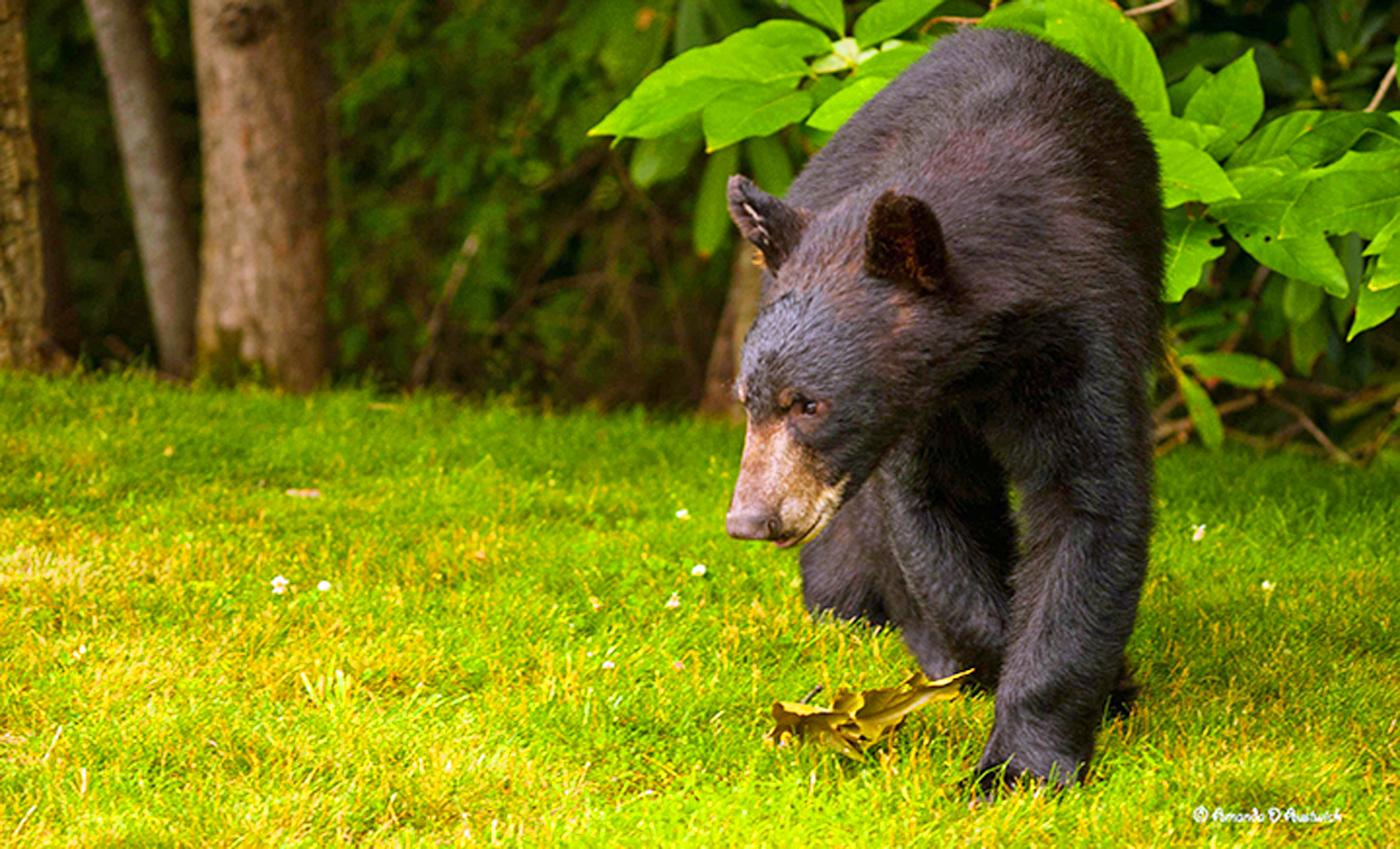
Photo Courtesy of Amanda Austwick This Black Bear became a daytime visitor at the Austwick home. There are ways to discourage such visits.
By making the feeders absent for a time and then limiting the availability of the bird seed to daylight hours, perhaps this bear will lose interest and move on. Unfortunately, the attempt to deal with the problem came too late to prevent the bear from causing some property damage.
Residents in Flag Pond and other locations in Unicoi County are certainly not the only people that have to contend with bears.
Every year the Tennessee Wildlife Resources Agency receives hundreds of calls and complaints concerning black bears. According to TWRA’s website, most of the complaints involve bears raiding garbage containers and bird feeders, as well as feeding on pet food left outdoors.
The website also makes clear it is not TWRA policy to routinely trap and move bears causing these types of problems.
“Due to the relatively large home ranges and mobility of bears, there is no place remote enough in Tennessee to relocate bears where they will not have contact with humans,” the website states. “Secondly, by moving bears often all that is accomplished is just the problem has been moved and not solved.”
According to experts with TWRA, the long-term solution to bears raiding garbage containers, bird feeders and pet food left outdoors is to simply remove the food source and bears most often will go elsewhere.
The website even notes that some people even intentionally feed bears. As often happens, even the best of intentions can go awry.
As a result of the improper storage of garbage, easy availability of bird seed and the direct feeding of bears, animals often become habituated to humans and become a nuisance and a threat to human safety.
Sadly, according to TWRA officials, there are no other alternatives but to destroy bears that become a threat to human safety. The agency spent hundreds of man-hours last year addressing bear-human conflicts and some bears had to be destroyed as a result of irresponsible behavior of people directly and indirectly feeding bears.
TWRA notes that the fact “Garbage Kills Bears” is irrefutable and urges people to remember that a fed bear is a dead bear. TWRA encourages residents to educate themselves by being “bear aware.” The agency asks all Tennesseans to help keep communities safe by preserving the “wild” nature of bears by following these few simple tips:
• Do not feed bears
• Store garbage in bear-proof containers or in a manner that is inaccessible to bears
• Keep pet food indoors and feed pets in the house or garage
• Do not add food to your compost piles
• Keep cooking grills clean and stored indoors when not in use.
• Do not feed birds between April and January when bears are most active.
I don’t agree, however, with this moratorium. Feeders can be bear-proofed, although it requires effort and expense. I also think that feeders can be taken indoors at night to reduce the chance of attracting bears. I will concede that a determined bear willing to visit feeders during the daylight hours may require that all feeding of birds be curtailed, at least until the animal decides to move to greener pastures.
Black Bears (Ursus americanus) are one of Tennessee’s states treasures. Bears mostly inhabit Blount, Carter, Cocke, Greene, Jefferson, Johnson, Monroe, Polk, Sevier, Sullivan, Unicoi and Washington counties along the eastern border of the state. The highest densities of bears reside in the Cherokee National Forest and the Great Smokey National Park.
Since the 1970s, the number of bears has significantly increased in Tennessee, according to TWRA. For example, prior to 1980, the annual harvest in the state was usually less than 20 bears. Today the picture could not be more astounding. Since 2004, Tennessee’s annual bear harvest has exceeded 300 animals! In 2009, a harvest of 571 bears in Tennessee set a new state record.

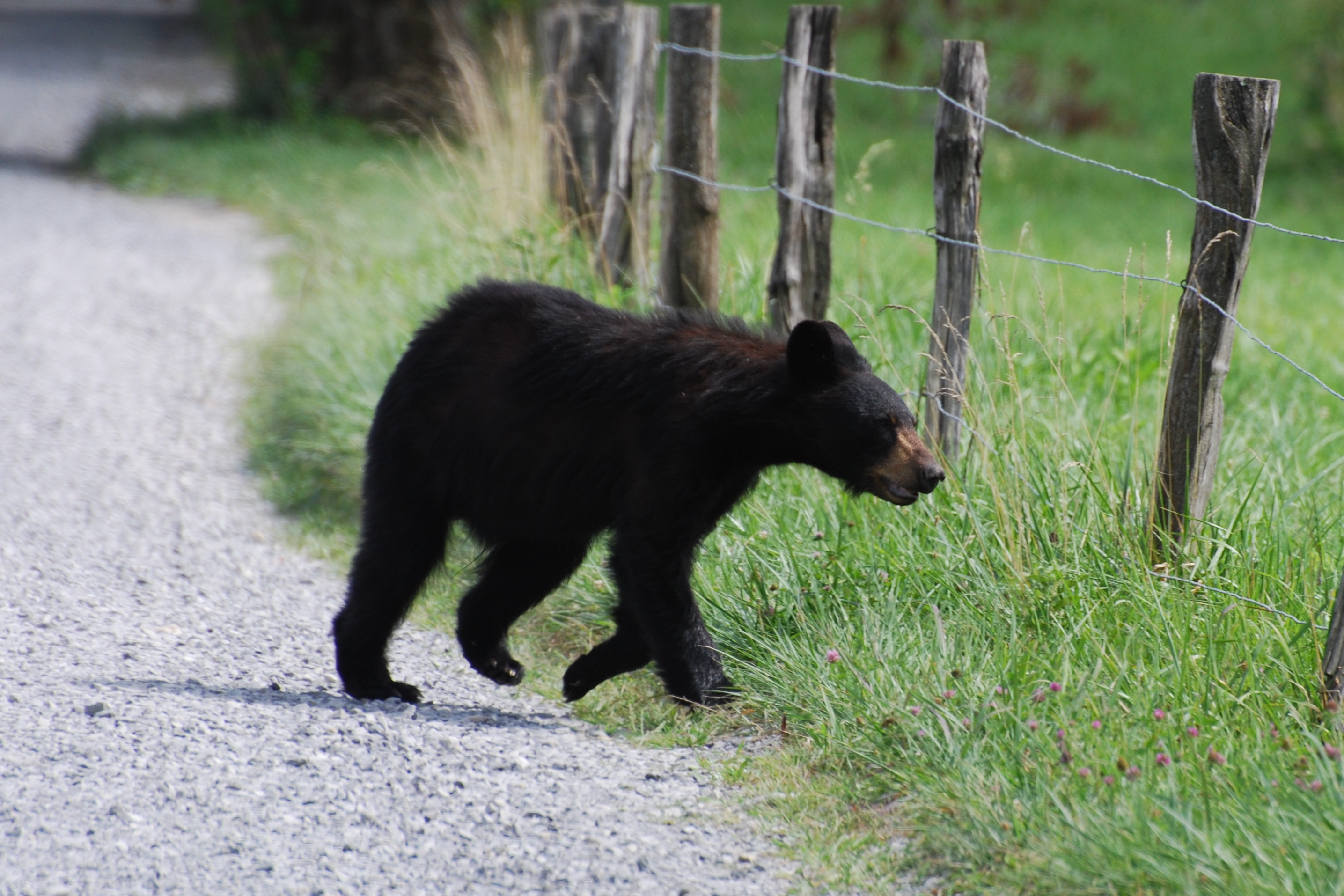
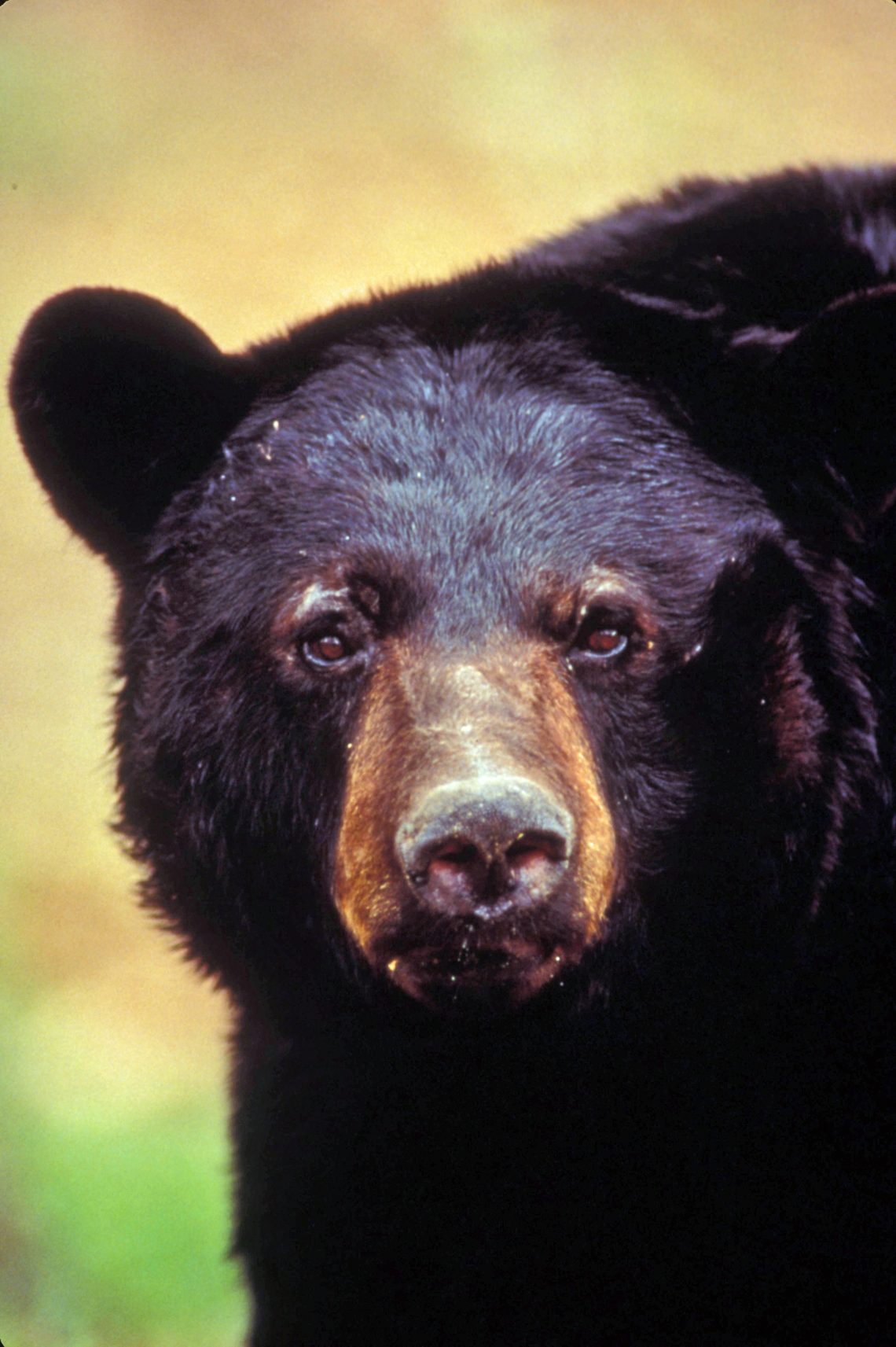
Photo by Waverley Traylor/ U.S. Fish & Wildlife Service
American black bear at Great Dismal Swamp National Wildlife Refuge in Virginia.
A key first step to rebuilding Tennessee’s bear population was the establishment of national forests and parks that shelter and protect Tennessee’s sparse bear population.
With careful management and enforcement by TWRA and ecological conditions in their favor, bear populations have responded dramatically. Tennessee’s bear population thrives today largely due to the dedication of the TWRA, CNF, GSMNP, the bear research program at University of Tennessee and the support of Tennessee sportsman license dollars.
Today Tennessee’s wildlife, forest and park service agencies confront new and difficult challenges in managing bear-human conflicts. As human and bear populations increase, and more people move near public lands, bear-human interactions have undoubtedly increased creating potentially dangerous situations for the public and for bears.
TWRA maintains that the primary corrective action to this management dilemma is to simply restrict the access bears have to human foods. Tennessee residents and visitors can support bears by taking steps to ensure that wild bears remain “wild,” by carefully managing sources of human food or garbage that might attract bears.
I’ve had neighbors, too, who have observed bears on their property recently. A few of them have even gotten photographs of the bears. I haven’t seen a bear on my property, but many years ago a bear left prints (and damaged some plants) in my grandfather’s tobacco plot. More recently, I’ve found droppings that I am fairly confident were left by a bear.
The bears aren’t going anywhere, so we will probably be encountering them more often.

Photo by Bryan Stevens
A young Eastern Towhee visits a feeder in July. The chance to see young birds is a great reason to offer food during the summer, but some precautions should be taken to minimize uninvited guests.
For the past 56 springs, nature enthusiasts from throughout the region have gathered on the verdant slopes of Roan Mountain for the annual Naturalists Rally.
James Neves, who with Jennifer Bauer serves as co-director of the Roan Mountain Spring Naturalists Rally, said that one change for this year’s rally is the date the event is being held. Instead of being held in May, this year’s rally will be held the last weekend of April.
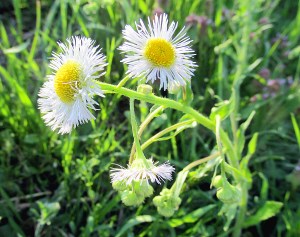
Photo by Bryan Stevens
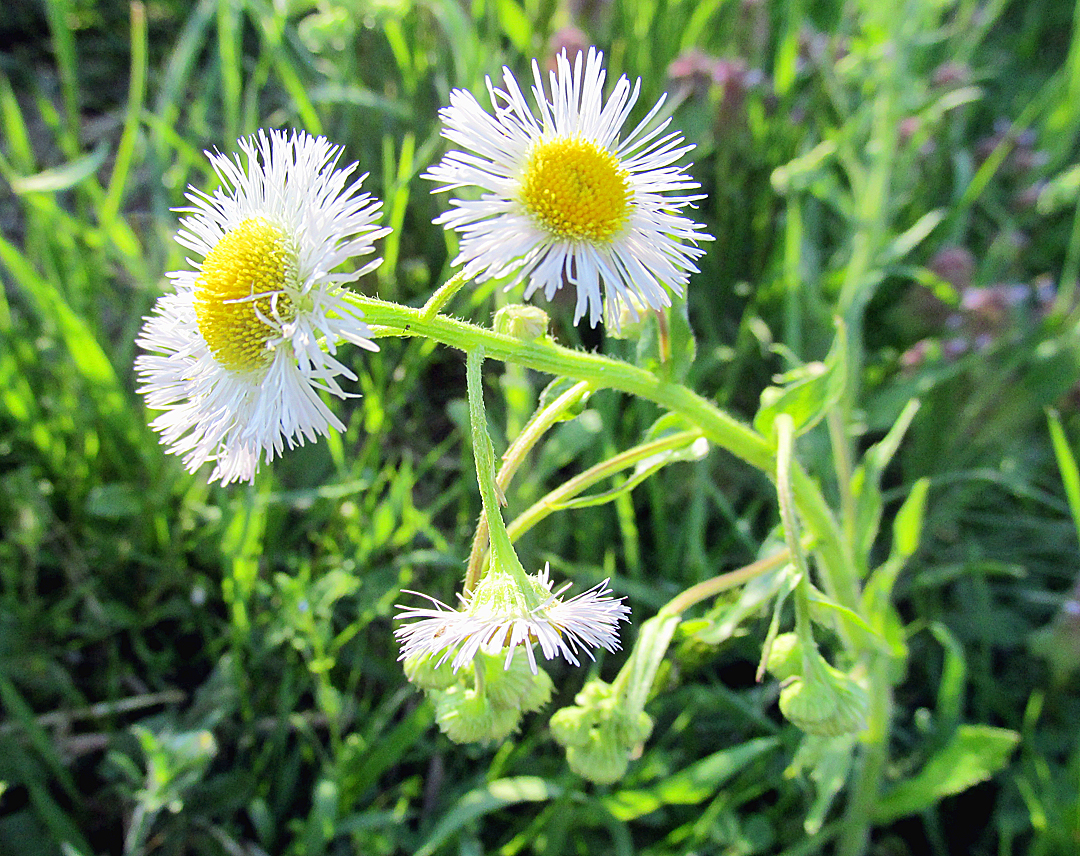
Daisy Fleabane will be among the many blooming wildflowers to welcome rally attendees.
This year’s Roan Mountain Spring Naturalists Rally will be held Friday, April 25, through Sunday, April 27.
“The spring rally is being held a week earlier than its traditional date, but I don’t really see it as a big change,” Neves said. “If you think about it, it’s really an effort to keep things the same. During the last several years, there has been a shift in the timing of the bloom of many of the spring wildflowers, and so I hope that the change will allow for the Naturalists Rally to occur when these wildflowers are blooming.”
Neves said this year’s speakers for the annual event are Daniel C. Dourson and Bob Hale.
The Friday evening program by Dourson is titled “Of Ice Thorns, Tree Crotches and Love Darts: Shelled Creatures of the Southern Appalachians.”

Dourson will be providing a treasury of little-known facts about snails that inhabit mountains like the Roan.
For instance, did you know that some snails are covered in long “hair-like” structures or that the slime of some snails will fluoresce under ultra-violet light? Or were you aware that slime from some snails is used to treat skin disorders?
Join Dourson, a wildlife biologist, naturalist and natural history author, as he shares his passion for the shelled creatures known as “land snails.” Dourson, who has been studying land snails in the Southern Appalachians for nearly 20 years, recently described four new species of land snails from the area, including the globally endangered Roan Mountain endemic, Roan Covert, or Fumonelix roanensis.
His program will also let his audience learn of the intricate delicate features that separate these creatures and find out what love darts, ice thorns and tree crotches have to do with these organisms.
Attendees can also join him in the field on Saturday afternoon for an exciting field trip to search for these jewels of the forest leaf litter.
Bob Hale will present the Saturday evening program on “Spring Wildflowers and Native Orchids.” Hale’s interest in wildflowers began with making slides of spring wildflowers in the late 1960s. This interest expanded to photographing wildflowers throughout the growing season. While working as a chemist at Eastman Chemical Company for 33 years, he was a member of the Eastman Camera Club for more than 25 years. He served as president, held several other offices with the club and taught numerous photography classes during that time.

Hale has used SLR cameras for many years, taking both slides and negatives for prints. With the coming of the digital age, he switched to that technology in 2004. His program will feature a sampling of his images of wildflowers including a special focus on numerous native orchids. This collection of images was taken from many nearby locations in the Southern Appalachians including Grayson Highlands, the Blue Ridge Parkway, Unaka Mountain, Buffalo Mountain, Cherokee National Forest, the Appalachian Trail, middle Tennessee and the Great Smoky Mountains National Park.
Hale is also an avid gardener, growing a wide variety of annuals, perennials, spring bulbs and shrubs. He has developed a strong interest in daylilies and has been growing, hybridizing and selling them for more than 40 years.
The Friday and Saturday program will be presented at 7:30 p.m. after the 6:30 p.m. dinners that will be catered by City Market of Elizabethton.
The Friday menu includes a choice of breaded or grilled chicken, vegetable selection, salad, bread, dessert and drink. The Saturday menu includes a choice of roast pork or vegetable lasagna, vegetable selection, salad, bread, dessert and drink. Each meal costs $9 for adults and $5 for children 12 and under. Pre-paid reservations are required and must be received by Tuesday, April 22.
After the programs on Friday and Saturday, two late evening programs are scheduled at 9 .m. Local naturalist Larry McDaniel will conduct a “Moth Party” on Friday to look for these nocturnal winged wonders. Gary Henson, director of the Harry D. Powell Observatory and a professor in the Department of Physics, Astronomy and Geology at East Tennessee State University, will conduct a viewing of the summer skies from the nearby Miller Homestead on Saturday.
Neves said a range of people are crucial to the success of the annual spring rally.
“The Friends of Roan Mountain are always grateful for the rangers and staff at Roan Mountain State Park, and they continue to be very involved with the rally,” Neves said. “Park Manager Jacob Young helped us in numerous ways over the years to make the rally a success, and he also leads a reptiles and amphibians field trip, a favorite with many of our young participants.”
Neves noted that Meg Guy, another park ranger, will be leading a new hike that will highlight basic tree identification. In addition, former Park Manager Pat Gagan will lead a Wildlife Walk for Everybody. This walk will allow participants with limited mobility to enjoy the natural beauty at Roan Mountain.
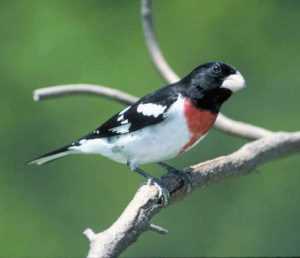
Photo by U.S. Fish & Wildlife Service/ David Brezinski
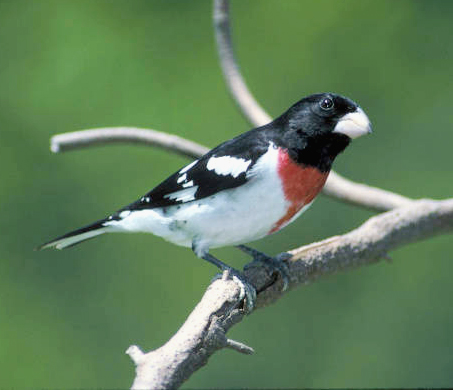
Rose-breasted Grosbeaks will likely be among the colorful birds present for this year’s rally.
“We always hope to provide a selection of field trips and programs with a lot of variety and that are accessible to everyone from the novice to avid naturalist,” Neves said. “We have hikes expressly for beginners, such as our Birding for Beginners or Tree Identification Basics, and many of our hikes are specially labeled as kid friendly. That said, all of our field trip leaders try to cater to young participants or people who are new to identifying plants, birds, insects and more.”
Neves said the rally also offers some early morning field trips and longer hikes for those who are a bit more adventurous.
“Anyone very serious about nature photography should not miss joining Jerry Greer on one of his field trips,” he said. “New photographers are welcome, too, of course.”
Although the hikes have a particular focus, there’s a surprising amount of overlap.
“There will always be flowers to see on a birding field trip, and there will always be birds to hear and see on a wildflower hike,” Neves explained. “The rally has always been an opportunity for nature lovers, naturalists, to gather together and enjoy being outside, to observe the interesting and beautiful, and to learn together. That is what is really important.”
Neves notes that the Roan Mountain State Park Campground is currently closed while updates and improvements are completed. The work is expected to be finished by mid-May.
Evening programs and the lunch-time workshops will take place in the Roan Mountain State Park’s Conference Center, while all field trips will begin at the field located left of the entrance to the park’s cabins.
Because of the continued support of the Friends of Roan Mountain, Neves said the Naturalists Rallies have the resources they need to prosper and grow. He noted that the Friends of Roan Mountain also provides support for research and restoration projects on the Roan.
He suggests that those who enjoy attending the seasonal rallies should also consider joining the Friends of Roan Mountain, if they are not a member already. Members receive free admission to all Naturalists Rally events and the group’s newsletter, “Friends of Roan Mountain.”
Rally hikes on Saturday include:
• Nature Photography with Jerry Greer. Participants will meet at 6 a.m. at Carver’s Gap.
• Early Birds at Hampton Creek Cove with members of the Lee and Lois Herndon Chapter of Tennessee Ornithological Society. Participants will meet at the RMSP Welcome Center at 6:30 a.m.
The next six hikes will begin at 8:30 a.m. and will include:
• Jones Falls Hike with Marty Silver.
• Birds of Roan Mountain with members of the Herndon Chapter of TOS.
• River and High Mountain Wildflowers with Guy Mauldin.
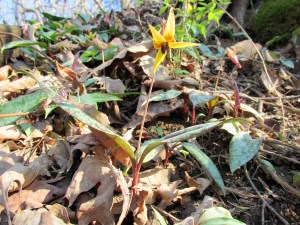
Photo by Bryan Stevens
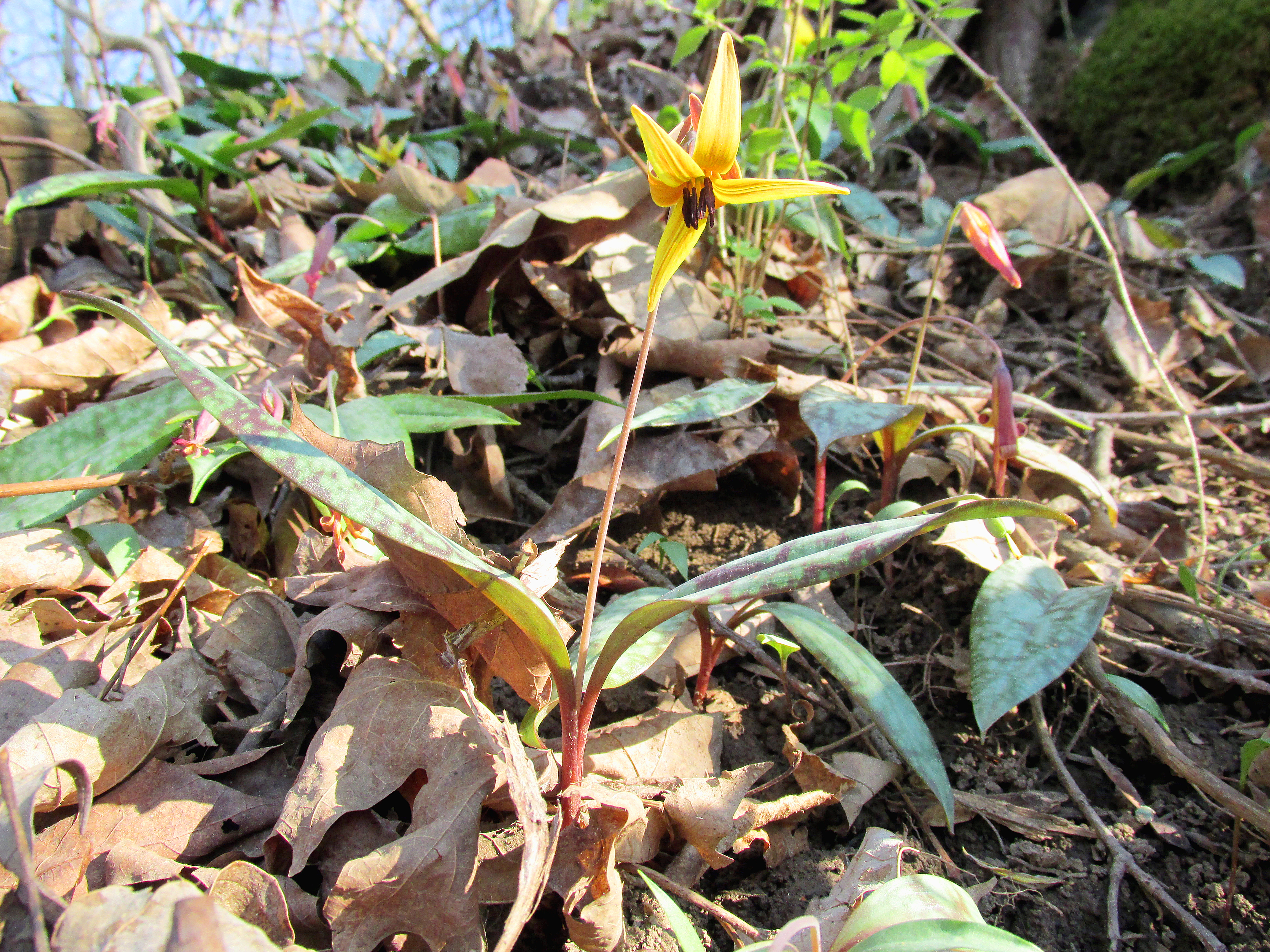
Wildflowers, such as this Trout Lily, provided the original inspiration for the annual Spring Rally.
• Nature Photography with Jerry Greer.
• Tree Identification Basics with Meg Guy.
• Birding for Beginners with Joe McGuiness.
A lunchtime workshop with Mick Whitelaw and members of the East Tennessee State University Department of Geology and Science Club on Fossil Casting for All aAges will be held from 11 a.m. to 1:30 p.m.
A lunch break will provide an interval between hikes. Marty Silver will present a program on dragonflies at 12:30 p.m.
Afternoon hikes will commence at 2 p.m. and will include:
• Land Snails and Invertebrates with Dan Dourson.
• Nature Walk for Everybody with Pat Gagan.
• Wildflowers and Trees of the Twin Springs/Hackline Cross Trail with David Hall.
• Reptiles and Amphibians of the Roan with Jacob Young.
• Baa-tany Goat Project and Roan’s Unique Alder Balds with Jamey Donaldson.
• Aquatic Insects as Water Quality Indicators with Gary Barrigar.
• Butterflies and Insects with Larry McDaniel.
Sunday will offer morning and afternoon hikes, including:
• Birds of Hampton Creek Cove at 8:30 a.m. with James Neves.
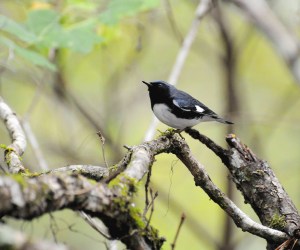
Photo by U.S. Fish & Wildlife Service/Mark Musselman
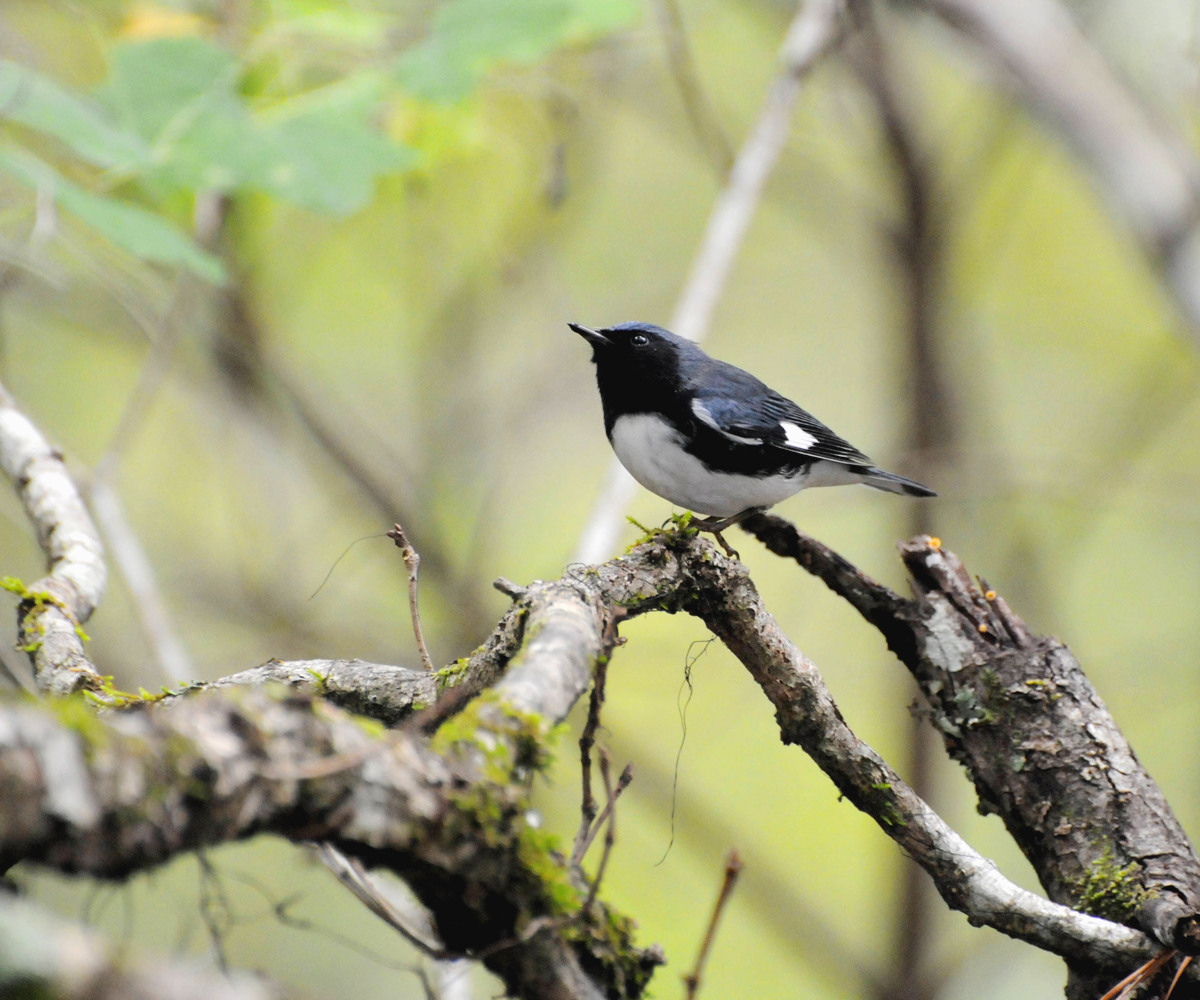
Black-throated Blue Warblers are among the birds than can often be found at Hampton Creek Cove during a Spring Rally.
• Doe River Gorge Wildflowers and Geology at 8:30 a.m. with Gabrielle Ziger and Mick Whitelaw. This is an all-day hike. Bring water, lunch and rain gear.
• Salamanders with Dale Ledford at 2 p.m.
• Butterflies and Insects with Don Holt at 2 p.m.
All hikes, unless otherwise noted, will depart from the field on the left of the cabin area entrance.
For more information on this year’s rally, visit http://www.friendsofroanmtn.org or http://www.facebook.com/FriendsOfRoanMountain.
•••••
Barbara and Jerry Lake, Hampton, returned home from a recent trip to Vidalia, La., and Natchez, Miss., to find three nests being built.
Their bluebirds, Blossom and Max, are occupants of a box in the front yard. Carolina Chickadees are in the box at the edge of the woods beside their screened porch.
“I haven’t yet seen the birds in the nest by the driveway, but the nest itself looks like the chickadee’s nest,” Barbara wrote in an email.
They have cameras installed in several of the boxes so they can monitor the progress of their nesting birds.
“Both the porch box and driveway box are hooked to the TV on the porch so I have to switch wires to watch them,” she explained.
The Lakes are also awaiting the arrival of hummingbirds. “I put up a hummingbird feeder before we left, but so far I haven’t seen a hummer,” Barbara wrote.
The couple enjoyed a fun trip, attending the Roadtrek Rally in their Roadtrek motorhome.
“It was our first rally and we’ve owned our motorhome for seven years,” she wrote. “We had a great time and will certainly go on more. We drove the Natchez Trace Parkway home to Hampton.”
•••••
Brookie and Jean Potter saw a Ruby-throated Hummingbird at their feeders on Wednesday, April 9, at their home near Wilbur Lake in Carter County.
•••••
Marlene Mountain, a Facebook friend, informed me that she saw her first Ruby-throated Hummingbird while looking out the window at her home on Sunday, April 6, at 1:28 p.m. She is also still hosting Dark-eyed Juncos at her feeders.
•••••
Jim and Wanda Lane called me this past week to ask me if I knew about the different Great Blue Herons in various Elizabethton and Carter County locations.
I thanked them for letting my know about them, and let them know that I have visited the two Elizabethton locations on Blevins Road and behind the airport. I’ve enjoyed monitoring these nests before the leaves bud on the trees.
•••••
Here at home on Simerly Creek Road, I saw my first Ruby-throated Hummingbird of spring on Friday, April 11. I’ve also seen a variety of other migrating birds, but I think I will leave them for next week’s post.
It’s been a great time to get outdoors this past week. I hope everyone is seeing some fantastic birds at home and at their favorite birding spots. Thanks for reading!
It’s easy to post comments on my blog at ourfinefeatheredfriends.wordpress.com. You can also reach me on Facebook or send email to ahoodedwarbler@aol.com. Please share the link to the blog with others who might be interested in the topic of birds and birding in Northeast Tennessee.
If you’re wondering where March went, you’re not alone. As it turned out, weather-wise, this March has veered from one extreme to another. I have enjoyed the days of sunshine and short sleeves more than the days with snow or rain. Of course, even the rain has been welcome since it helped many of our early spring flowers unfurl their petals once the sun returned.
Birding has been productive this past month, and I have been pleased to see some of our usual summer birds returning for the year. My most exciting observation this past month, however, would have to be the Ross’s Goose found at the Great Lakes pond on the campus of Northeast State Community College in Elizabethton.

Photo by Bryan Stevens
A Ross’s Goose, foreground, is shown with two Canada Geese. The photo makes plain the small size of the Ross’s Goose.
I saw the goose at the pond on March 11, but some fellow birders alerted me to the bird’s presence. The goose also lingered at the pond and around the nearby Watauga River for several days after I saw it.
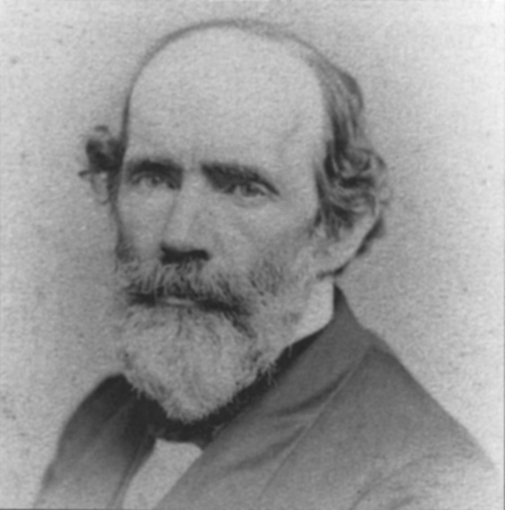
The common name of this goose honors Bernard R. Ross, who was associated with the Hudson’s Bay Company in Canada’s Northwest Territories.
Here’s a quick history lesson. Hudson’s Bay Company is the oldest commercial corporation in North America. The company has been in continuous operation for more than 340 years, which ranks it as one of the oldest in the world. The company began as a fur-trading enterprise thanks to an English royal charter in back in 1670 during the reign of King Charles II. These days, Hudson’s Bay Company owns and operates retail stores throughout Canada and the United States.
In addition to his trade in furs, Ross collected specimens for the Smithsonian Institution in Washington, D.C. Ross is responsible for giving the goose that now bears his name one of its early common names – the Horned Wavy Goose of Hearne. I wonder why that never caught on?
He repeatedly insisted that this small goose was a species distinct from the related and larger Lesser Snow Goose and Greater Snow Goose. His vouching for this small white goose eventually convinced other experts that this bird was indeed its own species.
Ross was born in Ireland in 1827. He died in Toronto, Ontario, in 1874. He was described by other prominent early naturalists as “enthusiastic” and “a careful observer” in the employ of Hudson’s Bay Company. When John Cassin gave the Ross’s Goose its first scientific name of Anser rossii in 1861, he paid tribute to the Hudson’s Bay Company’s Ross.

Ornithologist John Cassin named the Ross’s Goose in 1861 in honor of Bernard Ross, who helped convince scientists that this small goose of the Arctic tundra was a true species.
Cassin was a famous American ornithologist and curator at the Philadelphia Academy of Natural Sciences. I suppose the fact he died of poisoning due to his handling of bird skins preserved with arsenic must be considered rather gruesomely ironic. Despite a death that resulted indirectly from his enthusiasm for birds, Cassin has also been immortalized by having several species named in his honor. Cassin’s Finch, Cassin’s Kingbird, Cassin’s Auklet, Cassin’s Vireo and Cassin’s Sparrow all bear his name.
The Ross’s Goose has a “cuteness” factor working in its favor. For a goose, it is rather small. It could best be described as a Snow Goose in miniature. In fact, it isn’t much larger than such ducks as Mallards and is considered the smallest of North America’s geese.
The Ross’s Goose has also acquired some other common names, including “Galoot” and “Scabby-nosed Wavey.” This latter name was inspired by the bird’s bill, which is covered with rough bumps around the base. I have to admit that “Scabby-nosed Wavey” is a name likely to stick in the memory. Today, the Ross’s Goose’s scientific name is Chen rossii.
This bird’s other claim to fame is that it’s nesting territory wasn’t discovered by scientists until 1938, more than 70 years after this goose was first described by men such as Ross and Cassin. It turns out that the Ross’s Goose nests in the Arctic on tundra, marshes and ponds. Today, this breeding range is protected as the Queen Maud Gulf Migratory Bird Sanctuary and is the summer home to most of the world population of this small goose. During the winter months, these geese favor shallow lakes, fresh-water marshes, flooded fields and other agricultural lands.
According to the Ducks Unlimited website, the California Central Valley is currently the main wintering area for the Ross’s Goose. Increasing numbers of these geese, however, now winter in Arkansas, Louisiana, New Mexico, Texas and the north-central highlands of Mexico.

Photo by Bryan Stevens
The visiting Ross’s Goose takes a swim on the large pond at Northeast State Community College in Elizabethton.
Winter and migratory visits by these geese to Northeast Tennessee are still rather rare. According to the book “Birds of Northeast Tennessee” by Rick Knight, the Ross’s Goose made its first recorded appearance in the region in 1998. Over the next decade, only 11 observations were documented for this goose. Since 2008, a few more sightings have been added to this records, including the recent one at the Great Lakes pond. This body of water has become a magnet for other unusual waterfowl, including Greater White-fronted Goose, Snow Goose, Red-necked Grebe and Canvasback.
•••••
I finally saw some Purple Finches at my feeders at home on Simerly Creek Road in Hampton on March 29.

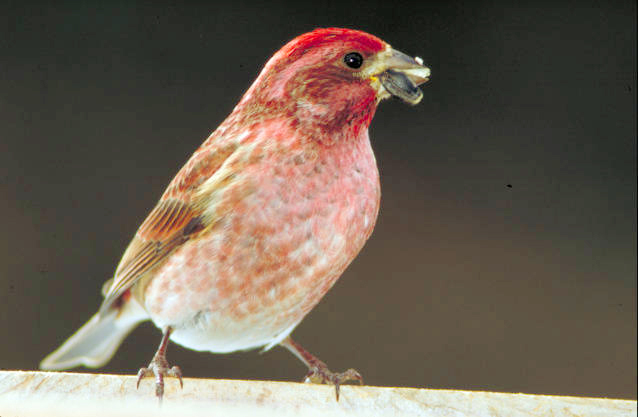
Photo by U.S. Fish and Wildlife Service/Thomas G. Barnes A male Purple Finch, if observed carefully, can be reliably distinguished from the familiar House Finch.
Steve Ward from Atlanta, Ga., posted a question to my Facebook page after I posted some photographs of male Purple Finches. Steve wanted to know how to best distinguish Purple Finches from House Finches.
The Birds Unlimited Blog has a great entry, complete with illustrations, dealing with the confusion that can arise when trying to distinguish House Finch, Purple Finch and their western relative, Cassin’s Finch. Learn more by visiting http://blog.wbu.com/category/birds/house-finch/
I did offer Steve a few tips in a reply I posted on Facebook. I’ve never really had trouble identifying Purple Finches from House Finches. This is one of those easily confused bird combinations that I don’t get confused about.
There are some clues to look for if you get a visit by either of these species at your feeders. Purple Finches, in my opinion, have more distinctive facial patterns. The males also seem more infused with the wine-red or raspberry-purple coloration that give the species its common name. I think the Purple Finch also has a slightly heavier bill. It’s probably easier to tell them apart if you happen to have them visiting your feeders at the same time.
I think female Purple Finches are even easier to contrast from female House Finches. Most female Houses are extremely drab and lack the distinct facial pattern that is so evident in a female Purple.
•••••
By the way, I love that writing this blog allows me to interact with people here in Northeast Tennessee, as well as in such locations as in Georgia, South Carolina and even in other countries. I love hearing from readers. Just post comments on my blog at ourfinefeatheredfriends.wordpress.com. You can also reach me on Facebook or send email to ahoodedwarbler@aol.com. Please share the link to my blog with others who might be interested in the topic of birds, birding or nature in Northeast Tennessee.
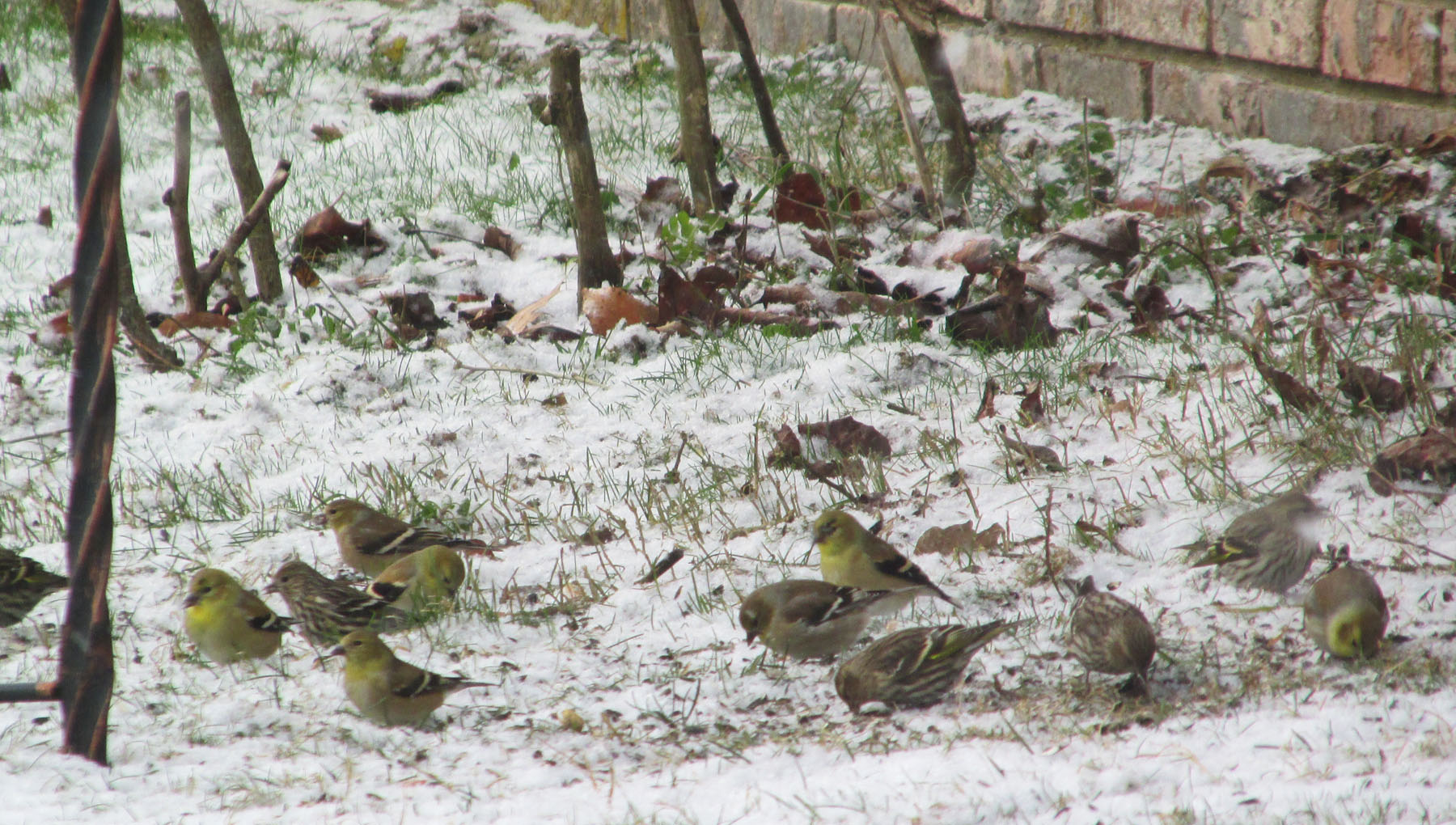
Photo by Bryan Stevens
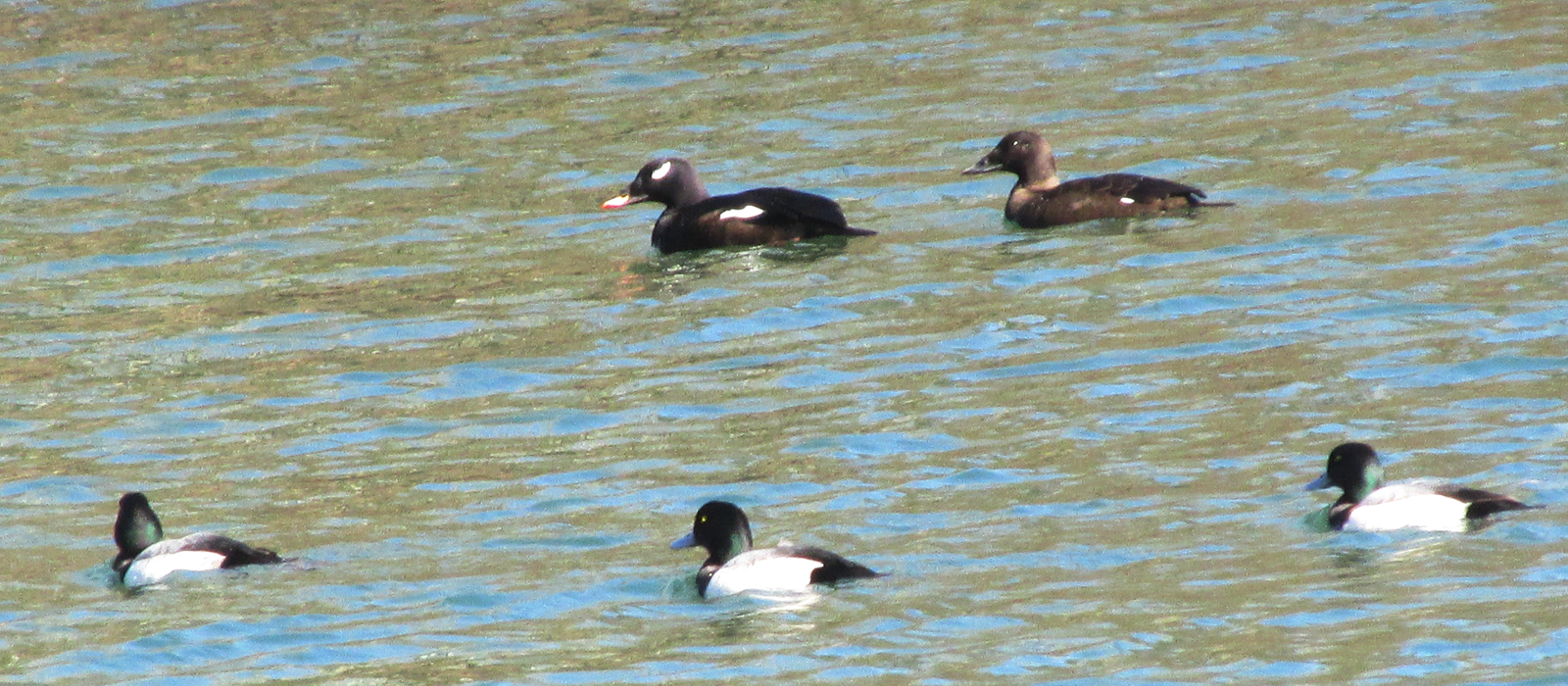
A pair of White-winged Scoters, back, swim on the Watauga River in Elizabethton with three Greater Scaups.
Last month’s Great Backyard Bird Count certainly merited description as a global affair. Checklists came in from more than 103 countries, including Australia, China, Argentina, Kazakhstan, Iceland, India, Kenya, as well as Canada, the United States and Mexico. Birders fanned out at hot spots around the world to count birds from Friday, Feb. 14 to Monday, Feb. 17.
Participants in the 2013 GBBC tallied more than 40 percent of the world’s bird species, with organizers setting a goal to take that figure to 50 percent this year.
A total of 644 species were found within the United States during the 2014 GBBC. California, Texas and Florida led the count with 364, 349 and 305 species found within those states, respectively.
In Tennessee, a total of 139 species were found during the GBBC. That’s a far cry from the 201 species located by sharp-eyed birders in Georgia, 200 species found in North Carolina, 184 species identified in both Alabama and Mississippi, as well as the 180 species counted in Virginia.
Arkansas eked past Tennessee with 141 species found, but Tennesseans did better than Missouri, where GBBC participants tallied 133 species, and Kentucky, where counters found 128 species.
A total of 2,357 checklists were completed by Tennessee GBBC participants, which provided some extensive coverage across the Volunteer State.
With 100 species, Hamilton County proved the most productive Tennessee county, followed closely by Shelby and Knox, with 98 and 97 species, respectively.
Closer to home, results were less dramatic but still important.
In Unicoi County, nine participants, including myself, found 39 species of birds during the four-day count period. In Carter County, 49 species of birds were found by 14 participants, including myself.
I mostly counted at home during this year’s GBBC, but I did make trips to the pond at Erwin Fishery Park and Roan Mountain State Park to expand my birding territory.
•••••
As checklists poured in from GBBC participants, a few trends became clear from the early stages of this year’s count. For instance, this year lacked any evidence of a “superflight” of irruptive finches. Last year the GBBC documented such a phenomenon, which was driven by food shortages in Canada. Ten species of irruptive birds (mostly finches) staged a record invasion in areas where they don’t usually show up.
This year lacked huge numbers of White-winged Crossbills, Red Crossbills, Common and Hoary Redpolls, Pine and Evening grosbeaks, Pine Siskin, Purple Finch, Red-breasted Nuthatch and Bohemian Waxwing, birds that were more numerous farther south last year as well.
On the other hand, the 2014 GBBC has confirmed that this has been a great year for spotting Snowy Owls across the United States.
A massive irruption of Snowy Owls into the northeastern, mid-Atlantic and Great Lakes states had already been producing headlines for the past several months.
Halfway through the GBBC, with 327 checklists reporting a total of 476 Snowy Owls in 20 states and provinces of the United States and Canada, it was clear that many of the Snowy Owls had found their winter homes to their liking. Last year, 392 owls from eight provinces and 14 states were all that were counted during all four days of the 2013 GBBC.
As an illustration of how the owls have moved, in 2013 Canada had 46 percent of the Snowy Owl reports, but this year that number has dropped to 32 percent. Despite this year’s impressive numbers, these large, white owls can still be hard to find. Many GBBC participants succeeded by checking seashores and lakeshores, farm fields and even cities, where the owls often choose a prominent perch with a good view, such as a utility pole or even the roof of a city building.
In much of North America, people (and birds) have been shivering through bone-chilling blasts of arctic air also called the “polar vortex” phenomenon. The impact of this extended cold on birds has beens most apparent in areas such as the Great Lakes, which are almost completely frozen. Only Lake Ontario has any significant open water now and that has resulted in major movements of waterfowl such as ducks, geese and grebes. The GBBC is capturing these patterns well.
For example, the White-winged Scoter is not usually found inland in February, but has been widely reported from interior locations over the past few days as has the Long-tailed Duck. Both these species showed up in unusual numbers in Northeast Tennessee during late January and throughout February.

Photo by Bryan Stevens
These two White-winged Scoters spent several days in late January and early February on the Watauga River near Meredith Cabins in Elizabethton.
A pair of White-winged Scoters spent several days on the Watauga River near Meredith Cabins in late January and early February. My mom and I managed to get good looks at the two ducks on Feb. 1. By climbing down a tangled bank, I also managed to get some decent photographs of them.
White-winged Scoters are large, solidly built ducks. Males can weigh three-and-a-half pounds while females can reach a weight of two-and-a-half pounds. Both sexes have the vivid white wing patch that gives the duck its common name.
This duck nests on freshwater lakes and wetlands in the northwestern interior of the United States and Canada.
Other scoters include Surf Scoter, Velvet Scoter, Black Scoter and Common Scoter. Surf and Black Scoters are also occasional visitors to Northeast Tennessee.
A total of 62 White-winged Scoters were found in Tennessee during this year’s GBBC. Three Surf Scoters were also found.
••••••
The scoters are classified with the diving ducks. To learn more about scoters and other diving ducks, here’s a helpful link to a PDF with detailed information about various species, including White-winged Scoter.
http://extension.umd.edu/sites/default/files/_docs/programs/riparianbuffers/FS611.pdf
••••••
According to an update regarding the GBBC posted at birdcount.org, one of the more exciting rare birds reported in this year’s GBBC was spotted across the pond. A Yellow-rumped Warbler has been visiting a feeder in, of all places, central England! This is the first New World warbler ever recorded for the GBBC from the Eastern Hemisphere.
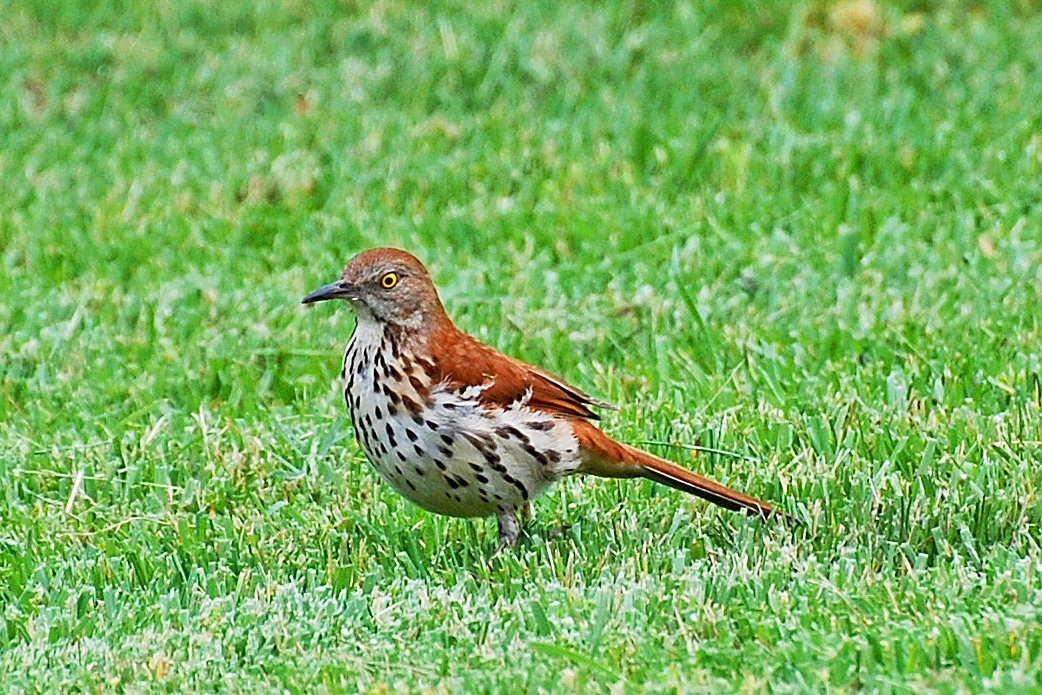
Photo by Bryan Stevens
This Yellow-rumped Warbler was photographed on Fripp Island, S.C., several years ago.
In northeast Tennessee, the Yellow-rumped Warbler, many years ago known as Myrtle’s Warbler, is a common winter bird. Indeed, it is the only warbler that typically attempts to spend the winter months in the eastern United States.
••••••
I would love to hear from readers. Just post comments on my new blog at ourfinefeatheredfriends.wordpress.com. You can also reach me on Facebook or send email to ahoodedwarbler@aol.com. Please share the link to the blog with others who might be interested in the topic of birds and birding in Northeast Tennessee.