
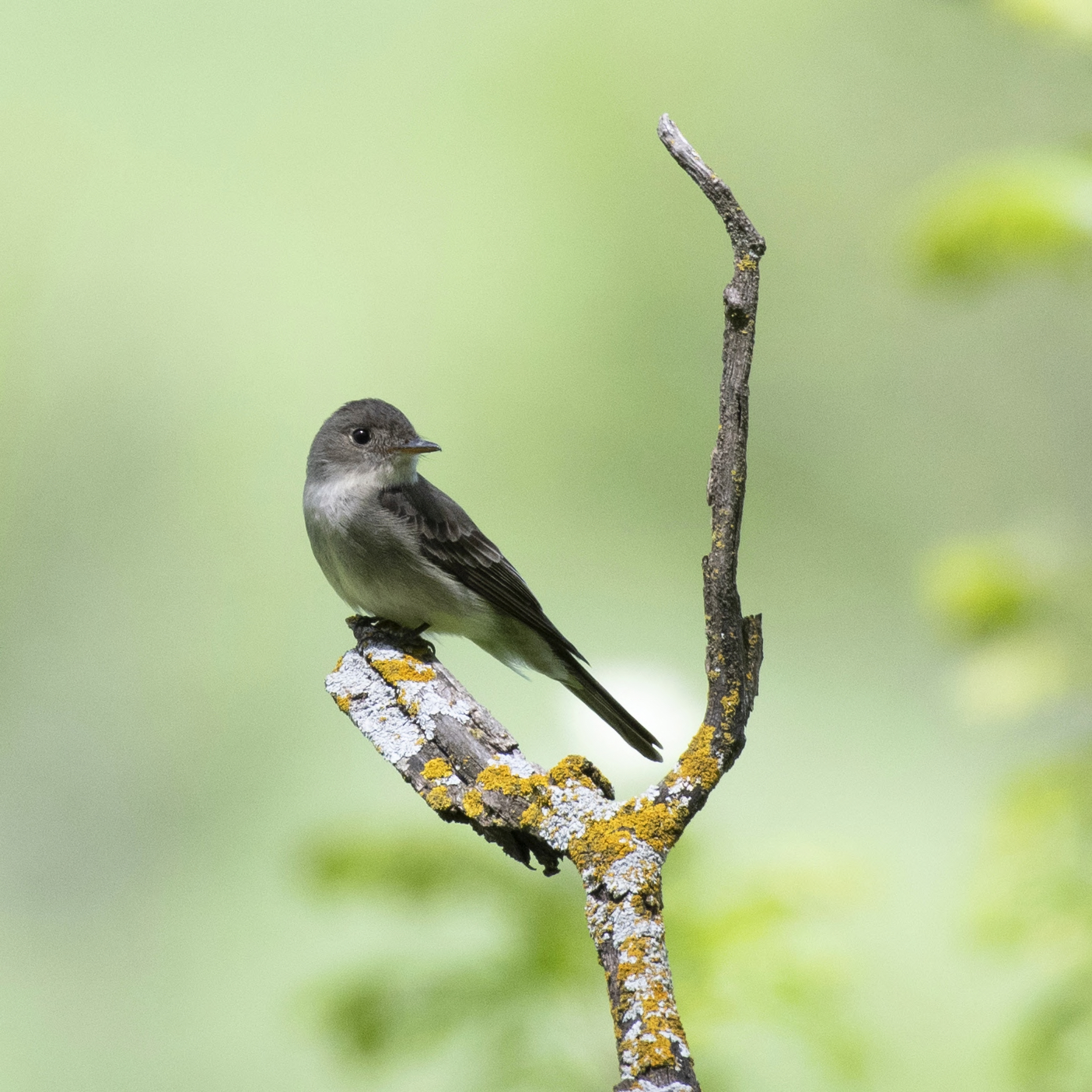
Photo by USFWS • An Eastern wood-pewee perches on an exposed branch.
My annual fall warbler watching has not taken off yet. We’ve had hot days recently and not many weather fronts moving through the area that might push migrating warblers to make a stopover in my yard.
Even the warblers I have seen, such as a recent black-throated blue warbler, are species that nest in Northeast Tennessee, meaning they may or may not be migrating so much as lingering.
There are, however, still signs of migration. Ruby-throated hummingbird activity remains intense at both the feeders and the stands of blooming jewelweed around my home. I’ve been seeing everything from cedar waxwings and wild turkeys to red-eyed vireos and Eastern wood-pewee.
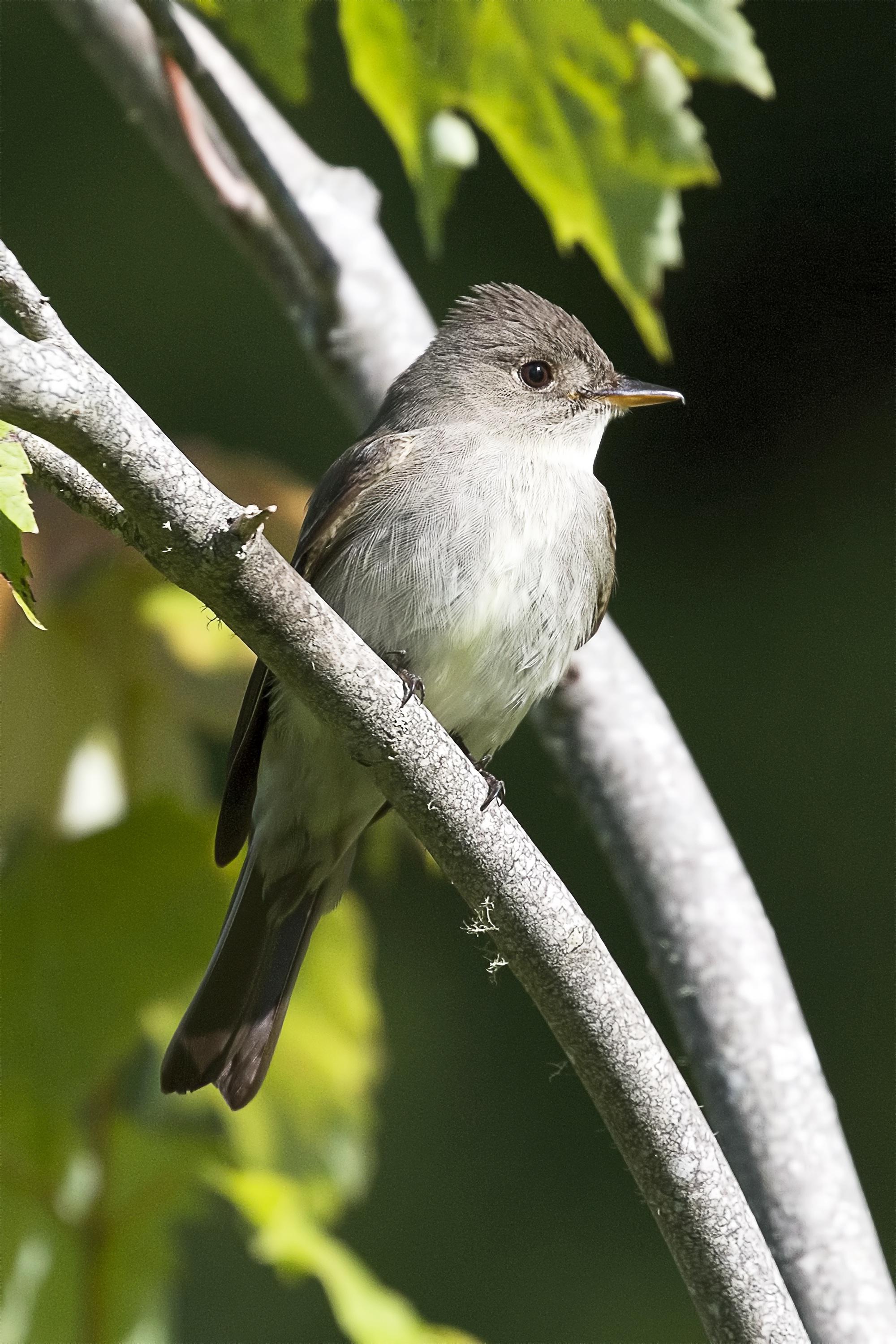
Photo by Hans Toom/Pixabay • An Eastern wood-pewee perches on a branch. These flycatchers are tireless at singing their name “pee-wee” during the summer season.
The latter species is a member of the family known as tyrant flycatchers. During the early summer months it’s easy to find Eastern wood-pewees. Head to this bird’s favored mid-elevation on local mountain slopes and you’re almost certain to hear its plaintive “pee-a-wee” whistle the gives the bird its common name. Their sheer dedication to singing their name repeatedly reminds me of the persistence of another champion summertime singer, the red-eyed vireo.
By early fall, however, Eastern wood-pewees fall mostly silent, but they seem to increase their profile as migrants perch on bare branches of open trees to frequently venture out to “flycatch” meals on the wing.
In appearance, the Eastern wood-pewee doesn’t have much to help it stand out. Like many of its relatives, it’s a plain bird with olive-brown to gray upper parts, a pale throat and a whitish belly. Some birds show a faint hint of an incomplete eye ring that looks more like a crescent at the back of the eye. Otherwise, unlike some relatives, the pewee lacks a prominent ring around its eyes.
The Eastern pewee looks like its head comes to a triangular peak, but this species is not truly crested like the related great crested flycatcher.
In diet, it lives up to its flycatcher family heritage, feeding on houseflies, mosquitoes, bees and wasps, winged ants, moths, stoneflies and mayflies. If insects are unavailable, they may feed on berries and seeds, but they are dedicated insectivores. They catch most of their food on the wing, sallying forth from their perches. If unsuccessful, they will swing back, land again and wait for another chance to strike.
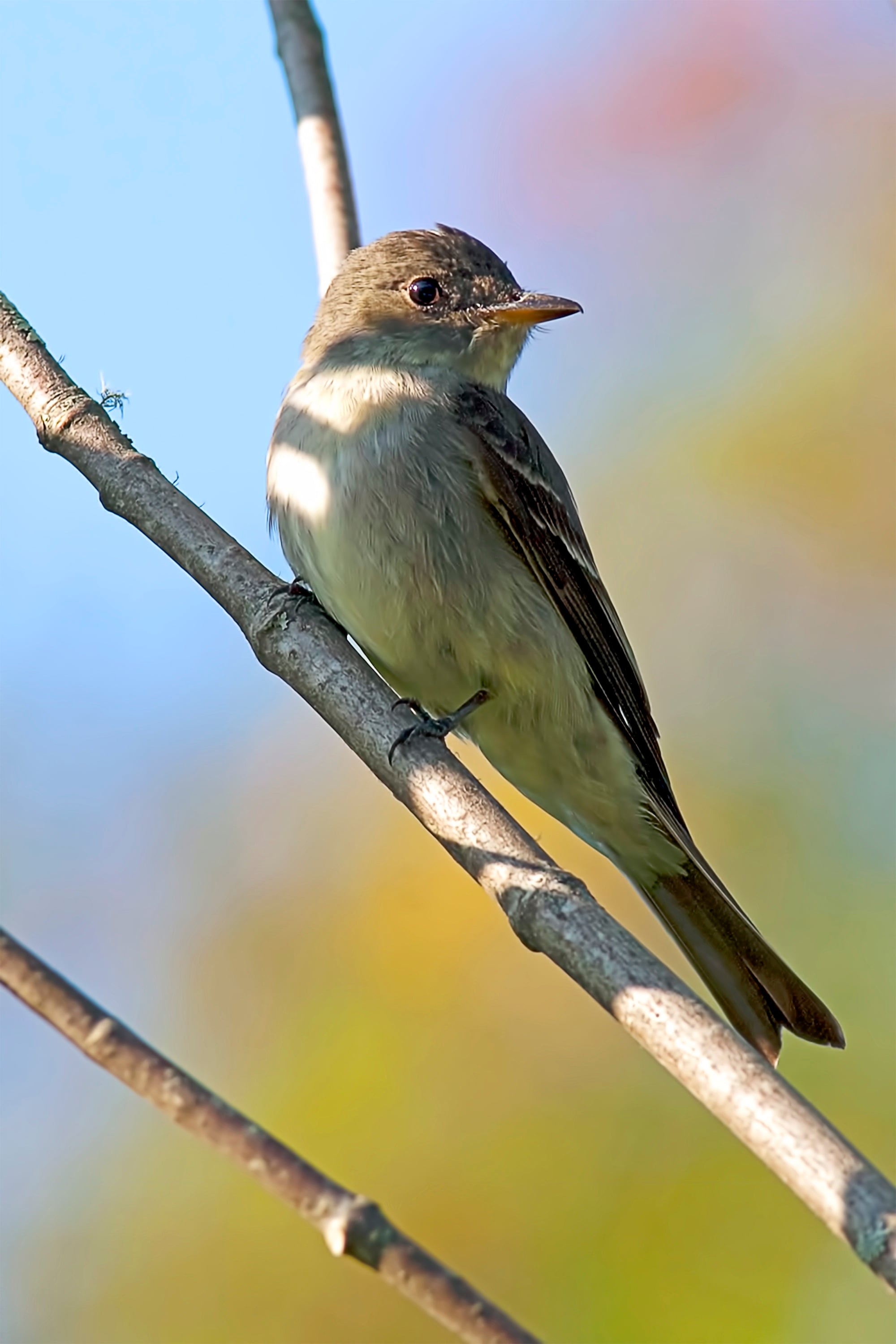
The Eastern wood-pewee’s bill has a dark upper mandible and a yellowish lower mandible, a good way to separate the bird from other flycatchers.
Small songbirds are not known for longevity, but one Eastern wood-pewee was at least 8 years, 2 months old when it was recaptured and rereleased during banding operations in Maryland in 2010. That was enough to rank the bird as the oldest documented member of its species, according to the website All About Birds.
Some practice will help observers tell an Eastern phoebe from an Eastern wood-pewee. Phoebes are slightly heavier than pewees, although they are close in overall body length. The pewee does not bob its tail at its perch, which is a habit that the phoebe does so reliably that that action alone can confirm its identity. The bills of these two birds provide another reliable way to distinguish them. Phoebes have an all-black bill, while pewees have a two-toned bill with a lighter lower mandible. It takes an observation with good lighting condition to detect this difference at times, but its a surefire way to confirm a visiting pewee’s identity.
Phoebes can rightfully be considered a backyard bird guest throughout the year, but autumn is the best season to get acquainted with the Eastern wood-pewee.
Stake out any trees with lofty bare limbs. Chances are a migrating Eastern wood-pewee will show up and lay a claim to this valuable real estate. For flycatchers, a good perch will help increase the odds their flycatching will be successful. Watching them on the hunt as they refuel to continue fall migration is always a source of reliable entertainment.
•••
Bryan Stevens has written about birds, birding and birders since 1995. Email him at ahoodedwarbler@aol.com.
 Our Fine Feathered Friends