Tag Archives: Feathered Friends

Winter weather events can adversely affect birds, too

Although the weather has been mild thus far this winter, that can change in the blink of an eye. Inclement weather affects humans, but it can also have adverse affects on birds. Snow, sleet, ice, wind and other forces can play havoc on the lives of our feather friends. Birds have many adaptations to help them deal with the worst the elements can throw at them, but sometimes events can overtake them.
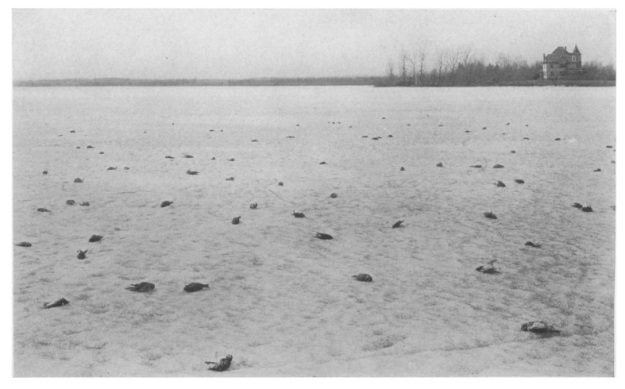
LaplandLongspur-Auk

Bodies of the fallen Lapland longspurs are shown scattered on a frozen lake after a 1904 weather-related catastrophe overtook hundreds of thousands of migrating longspurs.

One such event took place on the night of March 13-14, 1904, when hundreds of thousands of one small songbird species perished as circumstances came together in a perfect storm. This infamous event in the annals of ornithology mystified residents living around the town of Worthington, Minnesota, when they awoke on the morning of March 14 to find thousands of dead birds strewn across the landscape. Birds fell onto everything from yards and gardens to street and rooftops, as well as numerous frozen lakes.

In an article in the ornithological publication The Auk, the affected songbird was identified as the Lapland longspur, a bird that nests in the Arctic tundra and spends winters on the expansive prairies and plains of the United States and Canada. The Lapland longspur, also known as the Lapland bunting, also ranges into Russia and the Northern Scandinavian countries of Europe. The term “longspur” refers to the long hind claws on this small songbird’s feet. Two other longspurs — Smith’s longspur and chestnut-collared longspur — are found in North America.

The Lapland longspur disaster on the night of March 13, 1904, originated with a massive migration flight taking these songbirds back to their tundra nesting grounds. The author of the Auk article speculated that the longspurs migrating northward encountered a winter storm in the darkness. Heavy snow accumulated on the feathers of the exhausted migrants, forcing them to crash to the ground by the hundreds of thousands across the terrain of southwestern Minnesota and northwestern Iowa. From the point of view of the disoriented birds, the lights from the towns dotted across the landscape added to the chaos and confusion. Many of the bird suffered blunt force traumas, including ruptured organs, crushed skulls, bone fractures and other such injuries incurred when falling to the ground from great heights.

The Auk article comes to a total of a million birds lost in a single night, although the author admits the toll could have been even higher. Although this is an immense figure, consider that a survey dating to 2004 estimated 8 million Lapland longspurs in Alaska alone during the nesting season.
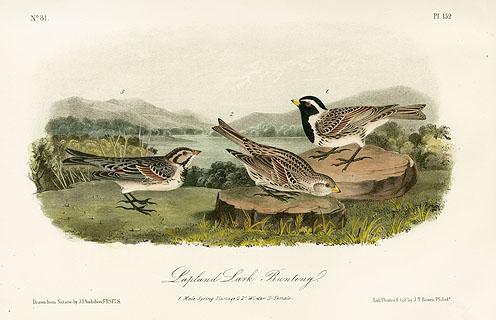
aul152-871

Early naturalist and artist John James Audubon painted Lapland Longspurs or, as he knew them, Lapland Lark Buntings.

The 1904 disaster didn’t seem to dent the overall numbers of the Lapland longspur. The populations of many species of birds can survive such catastrophes, but other species already struggling could be adversely affected by such events. For example, in February of 2007 a flock of year-old whooping cranes was exterminated by severe storms that overwhelmed them in a shelter at the Chassahowitzka National Wildlife Refuge in Florida. A total of 18 young whooping cranes, part of a flock trained to follow an ultralight aircraft from their birthplace in Wisconsin to the refuge in Florida salt marshes, were killed during the storm. The loss of that many young birds also robs the endangered species of much needed vitality. As of February 2015, the total whooping crane population stood at 603 individuals, including 161 captive birds.

Weather disasters extract a toll on both humans and birds. Sometimes they may affect hundreds of thousands of individuals, although the consequences are often confined to smaller segments of a population.

In early May of 2013, dozens of common loons migrating through Wisconsin encountered an unseasonable ice storm. Many of the birds found ice forming on their feathers, weighting them down and causing emergency landings. Wildlife rehabilitation workers rescued more than 50 birds, but there were probably many other loons affected by the freak storm that were lost without a trace.
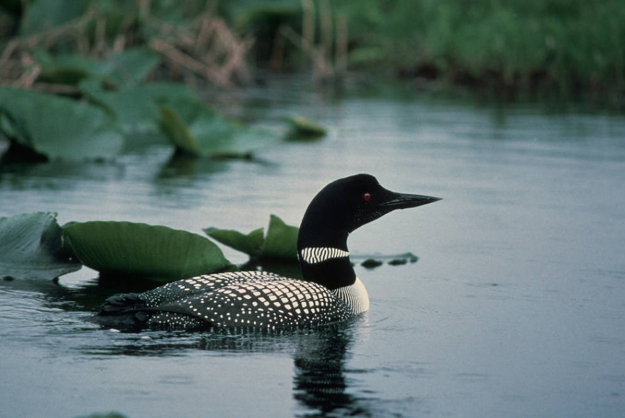
Common_Loon_on_Water

Photo by U.S. Fish & Wildlife Service • Common loons are quite at home in the air and on the water, but these birds are awkward if weather forces them to set down on land.

Loons crashing onto land or even small ponds are doomed. Agile and graceful in water because of strong legs and webbed feet, loons are almost incapable of movement on land. Landing on a small body of water is not much better since loons must run along a stretch of waters — sometimes for hundreds of yards — in order to get their relatively heavy bodies aloft.

Loons are not the only birds that sometimes face forced landings. In March of this year, a winter storm raged through most of the Northeastern United States. The wakes of these storms resulted in wildlife agencies in the region being flooded with reports of dead or injured American woodcocks in the region. Most of the reports were concentrated in and around New York City. Not only did the storm interrupt the migration flight of the woodcocks, but cold temperatures caused the ground to freeze, preventing the stranded birds from finding food.

The woodcock is an unusual shorebird, also known by such whimsical names as “bog sucker” and “timberdoodle,” that has completely abandoned the shore in favor of woodlands and fields. The American woodcock is not a rare bird, but the species is rarely seen due to its retiring habits and inaccessible habitats.

Closer to home, an unusual February event back in 2014 resulted in equally unusual numbers of red-necked grebes on area lakes, rivers, and ponds. This grebe, a rare visitor to the region, was apparently forced by weather conditions to make a stopover on bodies of water in the region. Reports of red-necked grebes persisted for about a week before they eventually departed to continue their flight to more favored locations.

Back in 2011, it wasn’t a winter storm that killed thousands of birds in Arkansas. The birds — red-winged blackbirds, European starlings, brown-headed cowbirds, and common grackles — shared a communal roost near the town of Beebe.

On New Year’s Eve, just as 2011 was dawning, about 5,000 of these birds died after crashing into trees, buildings and automobiles, according to a National Geographic News article by Charles Q. Choi. Apparently these birds were frightened into flight by the explosive booms from a professional fireworks display celebrating the arrival of a New Year. In the chaos after thousands of birds not suited for nocturnal flight took to the air, they began to impact various stationary objects and crash back to the ground.

Summer-Pelicans

Photo by Bryan Stevens • Brown pelicans fly in a line over the Atlantic Ocean on the South Carolina coast.

Incidentally, in the same article, mention was made of a 2010 incident when hundreds of pelicans washed up on the border between Washington and Oregon. The article blamed a cold front that caused ice to form on the feathers of the bodies and wings of the pelicans.

Birds, much like their human admirers, live in a world greatly affected by the vagaries of weather. All things considered, birds manage to ride out most of what Mother Nature throws their way. It’s one of their many admirable qualities.
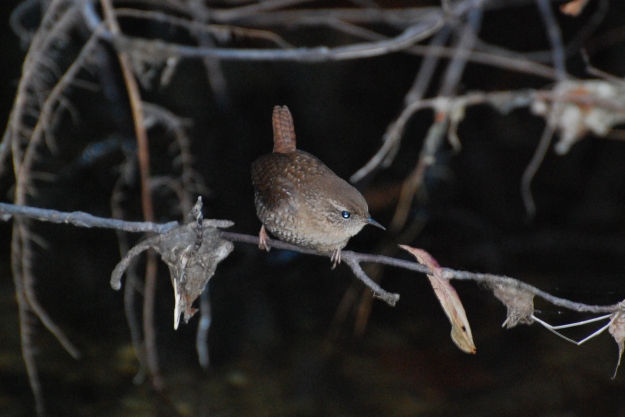
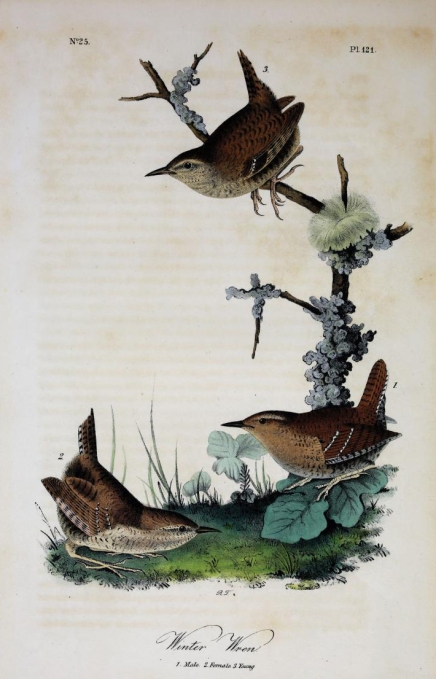
Winter wren one of the season’s low-profile visitors

WinterWren

Photo by Jean Potter
What the winter wren lacks in size, it makes up for with its voice. A boisterous and exuberant singer during the spring nesting season,  winter wrens are also quick to scold intruders into their winter territories.


Of late, every time I step outside my front door I’ve incurred the ire of a winter wren that’s taken up residency in my yard. This wren is a tiny bird among a family of birds known for small size, but it makes its presence known in unmistakable terms.

For starters, the winter wren is a noisy bird. The one living at my home arrived in late November and immediately claimed a niche to call its own. Any intrusion is met with a scolding chatter as the wren scurries low to the ground to drop out of view. In fact, the winter wren’s a very terrestrial bird. Observers are just as likely to see one of these wrens run across the ground as they are to see it take flight. I’m hopeful he will remain as winter’s grip tightens for the next couple of months.

The website All About Birds, managed by The Cornell Lab of Ornithology, offers advice on making a wren-friendly yard. “Landscaping with native plants is a good way to provide habitat for Winter Wrens,” according to the website. Other steps to take could extend to creating brush piles and ensuring some sections of the yard offers dense vegetation. The website also notes that this wren is often found making its home near streams.

In the summer, the winter wren often nests atop some of the high-elevation mountains in the region, especially ones with abundant fir and spruce trees. Otherwise, it’s mostly a winter visitor in the region. Other wrens common to the region include the Carolina wren and the house wren. In suitable habitats, especially during fall and spring migration, two other wrens — marsh wren and sedge wren — are observed occasionally in the region. Other wrens native to the United States include the rock wren, canyon wren, cactus wren, Pacific wren and Bewick’s wren.

The world’s 88 species of wrens are, for the most part, the quintessential “little brown birds,” but that hasn’t kept them from acquiring some interesting and descriptive common names. Some examples include the tooth-billed wren, flutist wren, riverside wren, whiskered wren, happy wren, musician wren, timberline wren, speckle-breasted wren, white-breasted wood wren and giant wren. The last species on the list resides in Mexico and is indeed a “giant” among a family of tiny birds, reaching a length of almost nine inches and weighing all of 1.8 ounces.

For the most part, wrens are birds of the New World. In fact, only the Eurasian wren represents the family in Europe, Asia and Africa. Experts recently split the winter wren into several different species, including the Pacific wren of the west coast of North America and the Eurasian wren of Europe, Asia and Africa.WinterWren_edited-1

Just as the winter wren thinks nothing of acting like a mouse when scurrying through leaf litter and over fallen logs in search of insect prey, this bird doesn’t hesitate to imitate mice by poking into shadowy holes in the ground or exploring the dark crevices of fallen logs. When winter temperatures drop sharply, many of these birds may cram themselves into a roosting hole to benefit from the communal heat from so many tiny feathered bodies in such close proximity. Winter wrens eat mostly insects and spiders, but in winter these birds will also eat some seeds and berries. Winter wrens rarely visit feeders, but a suet cake often attracts birds with similar dietary preferences, including kinglets and chickadees. A larger relative, the Carolina wren, is a common visitor to feeders.

In English and German lore, the winter wren was known as the “king of the birds.” Different tales provide varying explanations for how such a small bird earned such an inflated title. Ritual hunts were enacted in some European locations. These hunts, known as “wren hunts,” were conducted by “wren boys” who would parade through town on their quests. Wren Day fell on Dec. 26, which coincided with the holiday St. Stephen’s Day. Some myths blame the noisy bird for betraying the hiding place of Stephen, who was delivered up as a Christian martyr to his enemies due to the bird’s treachery. In some European cultures, various superstitions sprang up about wrens. For instance, in Scotland it is considered extremely unlucky to kill a wren.

Personally, I feel lucky to have the tiny winter wren spending time around my home and can guarantee no “wren hunts” will be staged here. At a time of year when feathered friends can be scarce, a winter wren is a welcome visitor.

••••••

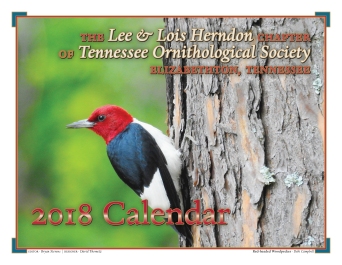
The Lee and Lois Herndon Chapter of Tennessee Ornithological Society produces an annual calendar featuring some exceptional bird photography from its members. This year’s calendar features full-color photographs of some colorful and engaging birds. The club sells the calendars for $15 each. All proceeds are used to support birding opportunities and bird-related causes. For instance, the club pays for bird seed to stock the feeders at Sycamore Shoals State Historic Park in Elizabethton, Tennessee. The club also regularly supports causes that benefit birds.HerndonCalendar2018(Cover)

The calendar also features an informative calendar grid with highlights for major holidays, as well as important bird-related dates. The calendar’s pages feature more than 80 full-color photographs of area birds, including common favorites, as well as a few more exotic birds. The front cover features a dazzling photograph of a red-headed woodpecker. The photo was taken by Debi Campbell, a resident of Bluff City, Tennessee, and current president of the Herndon chapter. If you’re interested in obtaining a calendar, contact ahoodedwarbler@aol.com by email. Calendars will also be available for purchase by cash or check only at the offices of the Bristol Herald Courier located at 320 Bob Morrison Blvd. in Bristol, Virginia.

If you’re interested in obtaining a calendar, contact ahoodedwarbler@aol.com by email. Calendars will also be available for purchase by cash or check only at the offices of the Bristol Herald Courier located at 320 Bob Morrison Blvd. in Bristol, Virginia.

•••••

Bryan Stevens lives near Roan Mountain, Tennessee. If you have a question, wish to make a comment or share a sighting, email ahoodedwarbler@aol.com.


Annual Fall Bird Count finds 122 species in Northeast Tennessee

Heron-UnderBridge

Photo by Bryan Stevens • A Great Blue Heron wades through the creek running through downtown historic Jonesborough on a warm afternoon this past summer. These large herons, helped by recent nesting colonies in Erwin, Elizabethton and other locations, have become more commonplace in the region. The 66 Great Blue Herons found on the recent Fall Bird Count represented a new high number for the species on this annual autumn survey of bird populations in the region.


The 48th annual Elizabethton Fall Count was held on Saturday, Sept. 30, with 54 observers in 12 parties covering Carter County and parts of the adjacent counties of Johnson, Sullivan, Unicoi and Washington. The participants tallied 122 species, which is slightly below the recent 30-year average of 126 species. The all-time high for this count was 137 species, which was reached in 1993.

Shorebirds were in very short supply due to a shortage of suitable habitat. Aside from killdeer, a solitary sandpiper was true to his name. In particular, two sites that formerly attracted shorebirds have undergone alterations that have essentially eliminated such conditions: Austin Springs and Bush Hog Pond.

This year’s count featured some other notable misses, as well, according to long-time count compiler Rick Knight. Birds missed include Northern Bobwhite (which has been found only four times in the last 24 years), Broad-winged Hawk, Spotted Sandpiper (first miss in last decade), Winter Wren, and Blue-gray Gnatcatcher.

Several birds set new high records for the number of individuals tallied, including Double-crested Cormorant (70); Great Blue Heron (66); Black Vulture (330); Turkey Vulture (215); Red-shouldered Hawk (6); Belted Kingfisher (40); and Red-bellied Woodpecker (90).

Bryan-KingfisherSunny

Photo by Bryan Stevens • The 40 Belted Kingfishers found during the Fall Bird Count represented a new high count for this long-running survey.

Fish Crow made its debut on a Fall Bird Count debut when two individuals were found in Kingsport along the Holston River.

The count total follows:

Canada Goose, 957; Wood Duck, 24; Mallard, 378; Blue-winged Teal, 2; Hooded Merganser, 1; Ruffed Grouse, 5; Wild Turkey, 79; Pied-billed Grebe, 11; and Double-crested Cormorant, 70.
Great Blue Heron, 66; Great Egret, 1; Green Heron, 4; Black-crowned Night-Heron, 2; Black Vulture, 330; and Turkey Vulture, 215.

Osprey, 12; Bald Eagle, 6; Northern Harrier, 2; Sharp-shinned Hawk, 7; Cooper’s Hawk, 7; Red-shouldered Hawk, 6; Red-tailed Haw, 27; American Kestrel, 16; Merlin, 1; and Peregrine Falcon, 1.

Killdeer 50; Solitary Sandpiper, 1; Ring-billed Gull, 1; Forster’s Tern, 1; Rock Pigeon, 404; Eurasian Collared-Dove, 2; Mourning Dove, 356; Yellow-billed Cuckoo, 1; Eastern Screech-Owl, 12; Great Horned Owl; 10; Barred Owl; 4; and Northern Saw-whet Owl; 1.

Common Nighthawk, 1; Chimney Swift, 254; Ruby-throated Hummingbird 8; Belted Kingfisher, 40; Red-headed Woodpecker, 7; Red-bellied Woodpecker, 90; Yellow-bellied Sapsucker, 16; Downy Woodpecker, 46; Hairy Woodpecker, 8; Northern Flicker, 63; and Pileated Woodpecker, 37.

Eastern Wood-Pewee 6; Eastern Phoebe, 76; Eastern Kingbird, 1; Loggerhead Shrike, 1; White-eyed Vireo; 2; Yellow-throated Vireo, 1; Blue-headed Vireo, 14; Red-eyed Vireo, 6; Blue Jay, 447; American Crow, 424; Fish Crow, 2; and Common Raven, 19.

SolitarySandpiper-One

Photo by Bryan Stevens • Migrating shorebirds, such as this Solitary Sandpiper, added diversity to this year’s Fall Bird Count in Northeast Tennessee.

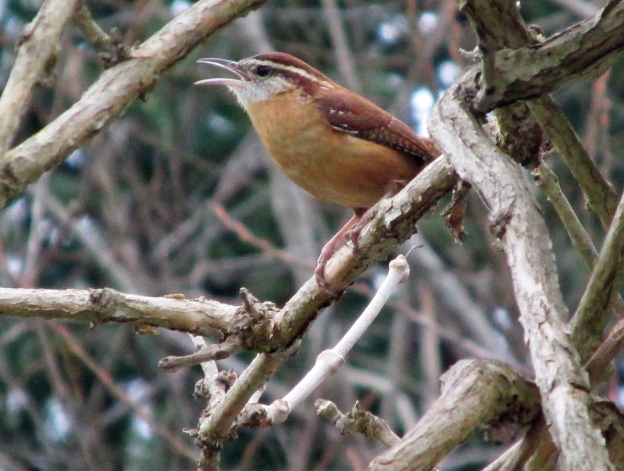
Northern Rough-winged Swallow, 3; Tree Swallow, 68; Carolina Chickadee, 174; Tufted Titmouse,93; Red-breasted Nuthatch, 6; White-breasted Nuthatch, 44; Brown Creeper, 2; House Wren, 2; and Carolina Wren,180.

Golden-crowned Kinglet, 4; Ruby-crowned Kinglet,14; Eastern Bluebird, 163; Veery, 7; Gray-cheeked Thrush, 26; Swainson’s Thrush, 70; Hermit Thrush, 1; Wood Thrush, 19; American Robin, 301; Gray Catbird, 34; Brown Thrasher, 11; Northern Mockingbird, 100; European Starling, 2,106; and Cedar Waxwing, 205.

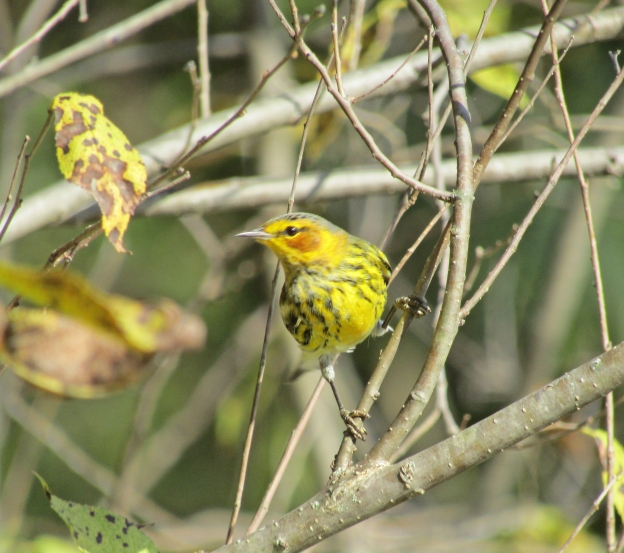
Ovenbird, 2; Black and White Warbler, 6; Tennessee Warbler, 32; Common Yellowthroat, 9; Hooded Warbler, 2; American Redstart, 5; Cape May Warbler, 8; Northern Parula, 3; Magnolia Warbler, 29; Bay-breasted Warbler, 10; Blackburnian Warbler, 2; Chestnut-sided Warbler, 2; Black-throated Blue Warbler, 5; Palm Warbler, 21; Pine Warbler, 11; Yellow-rumped Warbler, 5; Yellow-throated Warbler, 4; Prairie Warbler, 1; and Black-throated Green Warbler, 8.

grosbeak-photo

Photo by Bryan Stevens • Migrating Rose-breasted Grosbeaks were among the 122 species tallied for this year’s Fall Bird Count.

Eastern Towhee, 50; Chipping Sparrow, 57; Field Sparrow, 14; Song Sparrow,144; Lincoln’s Sparrow, 1; Swamp Sparrow, 1; Dark-eyed Junco, 75; Summer Tanager, 1; Scarlet Tanager, 11; Northern Cardinal, 173; Rose-breasted Grosbeak, 19; Indigo Bunting, 15.

Red-winged Blackbird, 41; Eastern Meadowlark, 17; Common Grackle, 859; Brown-headed Cowbird, 78; House Finch, 44; Pine Siskin, 1; American Goldfinch, 138; and House Sparrow, 33.

•••••

Bryan Stevens has been writing about birds on a weekly basis since 1995. If you have a question, wish to make a comment or share a sighting, email ahoodedwarbler@aol.com.

Dark-eyed junco faithful visitor to feeders during wintry weather

Junco-Ground

Photo by Kenneth Thomas / Dark-eyed juncos, often referred to as “snow birds,” flock to feeders in winter during periods of inclement weather.

I recently took part in the 48th annual Elizabethton Fall Count. Although part of the count’s focus is on Carter County, significant attention is paid to the adjacent counties of Johnson, Sullivan, Unicoi and Washington in Northeast Tennessee. This year’s count, which was held Saturday, Sept. 30, with 54 observers in 12 parties, tallied 122 species, which is slightly below the recent 30-year average of 126 species. The all-time high for this count was 137 species, which was reached in 1993.

Together with Brenda Richards, I travelled the Forest Service road on Holston Mountain to seek out some species that prefer higher elevation habitats, including dark-eyed juncos. The junco is also a winter visitor to yards and gardens throughout the region and should be returning any day now for a seasonal stay during the colder months of the year. During our progress up the mountain, we glimpsed several dark-eyed juncos as well as other birds such as blue-headed vireo and black-and-white warbler.

I have always had a fondness for juncos. In fact, I wrote my first birding column on Sunday, Nov. 5, 1995, which means that I recently celebrated the 22nd anniversary of my weekly accounts of birds and birding. The column has appeared weekly without interruption in various newspapers in the last 22 years. The column has also been a great conduit for getting to know other people interested in our “feathered friends.” I always enjoy hearing from readers, and I hope to continue to do so in the coming years. Since February of 2014, I’ve also been posting the column as a weekly blog on birds and birding.

Here, with some revisions I have made through the years, is that first column that has now involved into a look that is all “For the Birds.”
…..

Of all the birds associated with winter weather, few are as symbolic as the Dark-eyed Junco, or “snow bird.” The junco occurs in several geographic variations.dennisjl 2

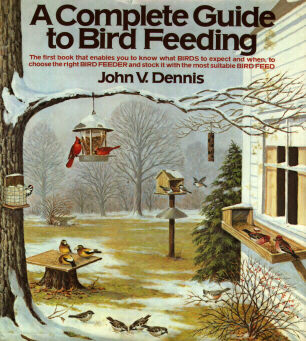
John V. Dennis, author of “A Complete Guide to Bird Feeding,” captures the essence of the junco in the following description: “Driving winds and swirling snow do not daunt this plucky bird. The coldest winter days see the junco as lively as ever and with a joie de vivre that bolsters our sagging spirits.” The Dark-eyed Junco’s scientific name, hyemalis, is New Latin for “wintry,” an apt description of this bird.

Most people look forward to the spring return of some of our brilliant birds — warblers, tanagers and orioles — and I must admit that I also enjoy the arrival of these birds. The junco, in comparison to some of these species, is not in the same league. Nevertheless, the junco is handsome in its slate gray and white plumage, giving rise to the old saying “dark skies above, snow below.”

Just as neotropical migrants make long distance journeys twice a year, the junco is also a migrating species. But in Appalachia, the junco is a special type of migrant. Most people think of birds as “going south for the winter.” In a basic sense this is true. But some juncos do not undertake a long horizontal (the scientific term) migration from north to south. Instead, these birds merely move from high elevations, such as the spruce fir peaks, to the lower elevations. This type of migration is known as vertical migration. Other juncos, such as those that spend their breeding season in northern locales, do make a southern migration and, at times, even mix with the vertical migrants.

Juncos are usually in residence around my home by early November. Once they make themselves at home I can expect to play host to them until at least late April or early May of the following year. So, for at least six months, the snow bird is one of the most common and delightful feeder visitors a bird enthusiast could want.

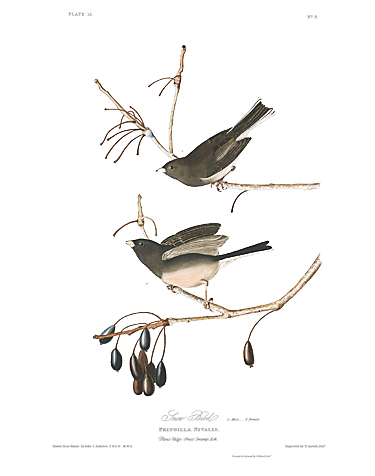
john-james-audubon-limited-centennial-edition-giclee-on-paper-dark-eyed-junco-2

Early American naturalist and artist John James Audubon painted this pair of Dark-eyed Juncos.

Juncos flock to feeders where they are rather mild-mannered — except among themselves. There are definite pecking orders in a junco flock, and females are usually on the lower tiers of the hierarchy. Females can sometimes be distinguished from males because of their paler gray or even brown upper plumage.

Since juncos are primarily ground feeders, they tend to shun hanging feeders. But one winter I observed a junco that had mastered perching on a hanging “pine cone” feeder to enjoy a suet and peanut butter mixture.

Dark-eyed juncos often are content to glean the scraps other birds knock to the ground. Juncos are widespread. They visit feeders across North America. The junco is the most common species of bird to visit feeding stations. They will sample a variety of fare, but prefer such seeds as millet, cracked corn or black oil sunflower.

There’s something about winter that makes a junco’s dark and light garb an appropriate and even striking choice, particularly against a backdrop of newly fallen snow.

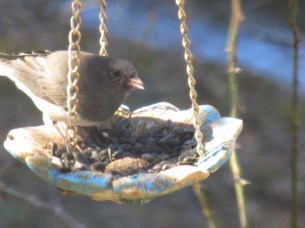
Junco-AtFeeder

Photo by Bryan Stevens / A Dark-eyed Junco perches on the side of a hanging feeder offering sunflower seeds.

Of course, the real entertainment from juncos come from their frequent visits to our backyard feeders. When these birds flock to a feeder and begin a furious period of eating, I don’t even have to glance skyward or tune in the television weather forecast. I know what they know. Bad weather is on the way!

•••••

If you have a question, wish to make a comment or share a sighting, email ahoodedwarbler@aol.com.

Reader reports visit from rufous hummingbird

An email from Bristol resident Ralph Beamer offered a timely reminder about the need to keep a watchful eye on our sugar water feeders even as most of the ruby-throated hummingbirds depart the region.

“For the past week, I have had a red humming bird coming to the feeder,” Ralph explained in his email. He added that he had never seen a hummingbird like this recent visitor.

“Have you had any reports of a similar sighting?” Ralph asked.

Ralph is the first person to make such a report this fall, but sightings of a species of hummingbird other than the expected ruby-throated hummingbird are becoming more commonplace each year. Once the numbers of ruby-throated hummingbirds are reduced as these tiny birds migrate from the region, noticing an unusual hummingbird at a feeder becomes even easier.

In a reply to Ralph’s email, I sought more information on the hummingbird’s coloration. He confirmed that the bird’s feathers looked more reddish brown than bright red, which supports my belief that he has received a visit from a rufous hummingbird.Ruf-Drawing

I speak from personal experience. My yard has attracted rufous hummingbirds on a couple of occasions. In October of 2016 I received my most recent visit from a rufous hummingbird, which lingered into November and was banded by Mark Armstrong. A former curator of birds for the Knoxville Zoo, Armstrong has devoted several years to studying the phenomenon of rufous hummingbirds that appear to migrate on a regular basis through the eastern United States every fall and early winter. Mark’s efforts have largely focused on Tennessee reports of rufous hummingbirds, but other banders operating from the Gulf Coast to New England have confirmed rufous hummingbirds in their respective regions.

The possibility of attracting a rufous hummingbird is the reason I encourage others to keep a sugar water feeder available into October and November. Experts who have studied the matter note that the presence of a feeder will not encourage ruby-throated hummingbirds to linger. These tiny birds know instinctively when it’s time to depart. Without the attraction of a feeder, however, a visiting rufous hummingbird might reject any extended stay in your yard.

Selasphorus rufus, or the rufous hummingbird, is about the same size as the ruby-throated hummingbird. Both species reach a body length of a little more than three inches and weigh only a few grams. In fact, one of these small hummingbirds might weigh the equivalent of a dime. Female rufous hummingbirds are slightly bigger than males, so a well-fed female rufous hummingbird might weigh as much as a nickel. So, to get an accurate impression of this sort of size, simply think of these tiny birds as weighing less than some of the spare change in your pocket.

Although hummingbirds are not known for their longevity, the website for Tennessee Watchable Wildlife notes that the oldest rufous hummingbird on record reached an age of eight years and 11 months. For the most part, hummingbirds blaze like tiny comets and enjoy typically brief but fast-paced lives. Despite a prevalent impression, hummingbirds are not delicate creatures. For instance, the rufous hummingbird’s tolerance for cold allows it to survive temperatures that dip briefly below zero. This adaptation has allowed the rufous hummingbird to breed as far north as Alaska.

The Selasphorus genus of hummingbirds consists of the rufous and six other species. Of those species, the Allen’s hummingbird, broad-tailed hummingbird and calliope hummingbird are known to also migrate through the eastern United States although with less frequency than the rufous. The remaining Selaphorus hummers — scintillant hummingbird, glow-throated hummingbird and volcano hummingbird — range in the tropical regions of Costa Rica and Panama. Those rufous hummingbirds that don’t spend the fall and early winter in the southeastern United States choose to overwinter in the region of Mexico around the city of Acapulco. This majority of the rufous hummingbird population migrates north again in the spring to claim nesting territory that can range from the Rocky Mountains of the western United States, as well as the Pacific Coast states of California, Oregon and Washington, all the way north to southern Alaska, as well as British Columbia in Canada.

Those rufous hummingbirds that continue to migrate through the southeastern United States each autumn constitute more evidence that we still have a lot to learn about birds. Even an abundant species like the rufous hummingbird offers mysteries that curious humans can attempt to understand.

While I can’t guarantee hummingbirds, I want to remind readers of the bird walks at 8 a.m. each Saturday in October at Sycamore Shoals State Historic Park in Elizabethton, Tennessee. Remaining walks, which are free and open to the public, are scheduled for Oct. 21 and Oct. 28. Meet at the parking lot at the park’s visitors center. Bring binoculars to increase your viewing pleasure.

•••••

Bryan Stevens lives near Roan Mountain, Tennessee. To ask a question, make a comment or share a sighting, email him at ahoodedwarbler@aol.com.

October walks at state park will offer migrant-viewing opportunities

The autumn season is a great time to practice birdwatching skills. The temperatures are milder, some of the concealing leaves have dropped from the trees and many migrating birds are moving through the region. With those factors in mind, the Lee and Lois Herndon Chapter of Tennessee Ornithological Society, also known as the Elizabethton Bird Club, will conduct morning bird walks every Saturday in October at Sycamore Shoals State Historic Park in Elizabethton, Tennessee.


The walks will begin at 8 a.m. and participants are asked to meet in the parking lot in front of the park’s visitors center. The dates for this year’s walks are Oct. 7, Oct. 14, Oct. 21 and Oct. 28.

Participants are advised to bring binoculars to increase viewing enjoyment. Persons of any skill level are invited to take part in these walks along the park’s walking trails, which offer river, field and woodland habitats. Members of the Elizabethton Bird Club will happily answer questions and help new birders with identification of any birds encountered. Targeted species will include migrants such as warblers, tanagers, thrushes and flycatchers, as well as resident songbirds ranging from Northern cardinals and blue jays to Carolina chickadees and red-bellied woodpeckers.


I enjoy fall birding probably more than any other season. It’s always nice to welcome some of our favorites when they return in the spring, but autumn’s the most productive season (at least in my own experience) when it comes to seeing the greatest diversity of birds in a relatively brief period of time.
Birding in my yard during September produced sightings of several species of warblers, a family of birds that is always one of the anticipated highlights of the migration season. Migrants spotted in my yard this fall have included American redstart, Blackburnian warbler, Cape May warbler, Tennessee warbler, Northern parula, magnolia warbler, hooded warbler, black-and-white warbler, chestnut-sided warbler, black-throated blue warbler, black-throated green warbler and Northern waterthrush.

Bay-BreastedWarbler

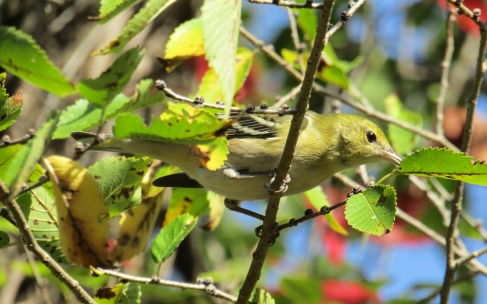
Photo by Bryan Stevens • Warblers, like this bay-breasted warbler, are experts at remaining hidden in the leaves of trees. Their energetic movements make warblers difficult to follow through binoculars. In addition, bay-breasted warblers are among those species described as “confusing fall warblers,” because their autumn appearance is a dramatic departure from the look they had in the spring.


The warblers are the warmth-chasing retirees of the bird world. Like their human counterparts with summer homes in the mountains to escape the worst of summer’s scorching temperatures, warblers retreat southward every fall, spreading into the southern United States, the Caribbean, and Central and South America for the winter months.


Of course, warblers are not the only neotropical birds to employ this technique of nesting and raising young in the northern latitudes during the summer only to return south for the winter. Tanagers, vireos, flycatchers and some other families do the same, but not with the same niche-exploiting diversity of the warblers. As a family, the warblers boast 114 species. Not quite half of the species make some part of North America their summer home, which leaves the rest of the more sedentary family members living year-round in the American tropics.

Pewee-Sept19

Photo by Bryan Stevens • An Eastern Wood-Pewee perches during a migration stop in the yard.


Warblers pose a worthy challenge for birders. It takes practice to chase their movements in binoculars as they flit among the upper branches of tall trees. They are, for the most part, a family of almost frantically active birds that rarely pause for long while foraging for food, which mostly consists of various insects or insect larvae. Warblers migrating through the region during the autumn season bring another challenge to the table. Many warblers wear completely different plumages in spring and fall, which requires some mental adjustments when trying to match a binoculars view of a warbler to its illustration in a field guide. Known as the “confusing fall warblers,” these tricky cases prompt some novice birders to throw up their arms in defeat. I know because I once felt like that myself. As with all worthwhile pursuits, practice makes perfect.


Come out and join me and other bird club members at one of the Saturday strolls at Sycamore Shoals State Historic Park, which is located at 1651 W. Elk Ave., Elizabethton, Tennessee. We’ll chase some warblers through the treetops. We may not identify every single one, but we’ll have a fun time in the attempt.


•••••

Bryan Stevens lives near Roan Mountain, Tennessee. To ask a question, make a comment or share a sighting, email him at ahoodedwarbler@aol.com.

Native wrens offset lack of size with fiercely competitive spirit


Nature’s not always neat and tidy. In fact, nature operates with rough-and-tumble mechanisms that, all too often, put some of our favorite birds at odds with each other. Like any other living creature, birds compete for resources — food, water, prime nesting real estate and even mates. Some of those pretty and entertaining birds at your feeder or bird baths have a dark side that isn’t often glimpsed.

When some insight is gained into these behaviors, it’s only human to feel discouraged, disenchanted or dismayed. Nonetheless, some recent emails have reminded me to look at some of these more distressing incidents as teaching moments.

Joy Stewart emailed me asking for advice on a problem with rival nesting birds in her yard.

HouseWren-JEAN

Photo by Jean Potter • A house wren brings a delivery of food to waiting young.

“I have a total of 10 bird houses in my yard,” she wrote. “They are sized for a variety of bird species, and most years nearly all are filled—usually wrens, bluebirds, tree swallows, nuthatches or finches.”

At a recent get-together, she talked with a woman who also puts out bird houses and works hard to attract birds. “She talked at length about how bad house wrens are and how they destroy or kill bluebird eggs and babies,” Joy wrote. “She described how these wrens had just killed a house full of baby bluebirds. The woman also said house wrens are not native to this country.”

Joy noted that she usually tries to keep track of these types of issues, but the woman’s claims were all shocking news to her and made her wonder if such cutthroat competition might explain why her bluebirds seem to have absented themselves from her yard.

She ended her email by asking two questions. “Is the problem as bad as it sounds?” Joy inquired. “Also, how do I now work to get rid of the house wrens that have been coming to my two wren houses for over 10 years?”

She noted that just permanently taking down the houses would likely not work. “If nothing else, they will just move into the slightly larger houses,” she noted.

I replied to Joy’s email, noting that her friend is partly correct, but has confused house wren and house sparrow. From her description, I also noted that it appears she has house wrens in her yard.

The house wren is a native bird; the house sparrow is not a native bird, but was introduced into the country. Its true origins are Africa/Europe.

However, as cavity-nesting birds, both the sparrow and the wren compete with bluebirds. Legally, Joy can take steps to “control” house sparrows. As non-native birds, they are not protected.

House_sparrow (1)

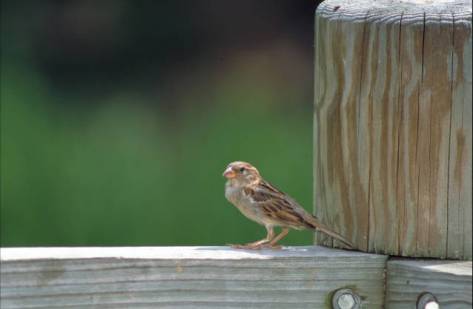
Photo by U.S. Fish & Wildlife Service • House sparrows, such as this female, are non-native birds that pose a serious threat to native cavity-nesting birds such as Eastern bluebirds.

However, the house wren is a native bird. I also happen to like house wrens. They have such bubbly, happy songs, and they’re good parents. They can raise as many as 10 young in one nest box.

Unfortunately, both the wren and the sparrow engage in ruthless behavior when it comes to nesting. Both species will evict bluebirds and other birds from boxes. They will even destroy eggs and young. Bluebirds can and do fight back, but despite their small size, house wrens are very feisty.

House wrens like brushy habitat that offers a lot of cover. I suggested Joy might consider trimming back or eliminating brush and hedges. Open space is also more attractive to bluebirds. Of course, chickadees and nuthatches also like brushy habitat and woodland edges, just like the house wrens.

It’s complicated, but I come down on the side of our native birds. House wrens have their place, but house sparrows should never have been in this country in the first place. I advised that Joy leave the wren boxes available to forestall the wrens deciding they have to fight other birds for a box. At the same time, I would not place any other boxes close (at least not within easy view) of the wren boxes, as wrens are very territorial.

Bluebird-2

Photo by Bryan Stevens • Eastern bluebirds compete with native cavity-nesting birds such as house wrens and tree swallows for prime nest locations. Non-native birds, such as European starlings and house sparrows, can out-compete native birds for limited resources.

In response to a follow-up query, I suggested that placing the boxes completely out of sight would be the best rule of thumb. Try to have a building, a wall, or perhaps a large tree blocking the wren boxes from other boxes. At least this way, perhaps the adult wrens won’t be viewing the competition. It would be advisable to keep as much space between the wren boxes and the boxes meant for other birds as is practical and possible.

•••••

An email from another reader likely involved a nesting wren. These small birds are rather notorious for choosing odd nesting sites. I’m thinking it is that tendency that explains Vivian Tester’s recent email asking for some suggestions for a somewhat unique problem.

“I’m looking for advice,” Vivian wrote. “I have a bird that has made a nest on my car windshield. I have driven the car a few times and she will fly away when I start the car, but I don’t want to do anything to harm her or the eggs.”

The situation had her baffled. “How long should it take for the process of laying eggs and them hatching and leaving the nest?” Vivian asked.

She noted that she had not been able to see any eggs. She added that the nest’s construction starts at the windshield and goes into the area under the hood. “I haven’t tried to open the hood in case it would destroy the nest,” she wrote.

Surprisingly, Vivian said the same thing happened last year but she just kept removing the nest. “I’m just not sure what I should do,” she wrote.

In my reply, I told Vivian that it sounds like she has a wren or perhaps a sparrow, and it can take 12-16 days for the eggs to hatch. The young must then spend another 10-12 days in the nest, so it could be at least four weeks for the entire process.

I suggested that, unless she could go without her car for a month, she should open the hood and gently remove the nest somewhere close by. A box or crate could hold the nest and the parent birds are likely to simply move from the car over to the new location for the nest. The parents are more attached to the nest itself than they are your car.

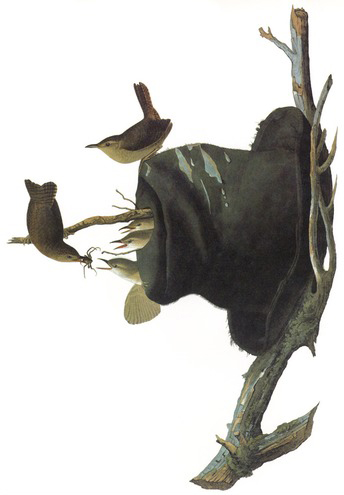
I admitted that I was sort of “winging” it on this problem. While a car is an odd choice for nesting, I’ve heard of birds such as swallows that nest on boats and then follow the boats along their river routes.audubon-ix-songsters-and-mimics-house-wren

After I responded, Vivian emailed me back. “I wanted to update you on the bird nest,” she wrote. “I did move it today into a hanging basket just above my car.”

The nesting bird flew away when Vivian opened the hood. “I am hoping she will return since I did see four little eggs in it,” she wrote.

I believe Vivian’s bird is probably a Carolina wren. I’ve observed these wrens, a slightly larger relative of the house wren, nesting in an old apron my grandmother used as a bag for her clothespins, as well as a plastic shopping bag hanging from a nail in my garage. A pair also once tried to nest in the exhaust vent for my clothes dryer.

Worldwide, there are about 80 species of wrens. All but one of the world’s wrens are confined to the New World. A variety of common names describe the various species with some creativity, including such monikers as tooth-billed wren, flutist wren, white-headed wren, sepia-brown wren, fawn-breasted wren and moustached wren.

•••••

Bryan Stevens lives near Roan Mountain, Tennessee. To share a sighting, make a comment, or ask a question, send email to ahoodedwarbler@aol.com.

Grade school encounter with killdeer provides memorable teaching moment

With the arrival of April, the pace of migration will quicken. Throughout the month of March, the “early birds” made their return to my yard, including species like tree swallow, brown thrasher, chipping sparrow and blue-gray gnatcatcher.

Birders know they have a narrow window of opportunity to enjoy the arriving birds in the spring. Some will linger briefly and continue to points farther north, while others will take up residence but turn secretive quickly as they get down to the important business of building nests, incubating eggs and raising young.

Killdeer-CHICK

A young killdeer — looking like a fuzzy golfball on toothpics, is born precocial. They can leave the nest and feed themselves, all while wearing a coat of downy feathers. Photo by Krista Lundgren/U.S. Fish & Wildlife


The task of producing young is the most important one that birds undertake. Even with the most dedicated parents, many birds born this spring will never reach the age of one. Eggs in the nest are vulnerable to opportunist predators, including snakes, mice, squirrels, raccoons and even other birds. Many of the birds that nest in our yards, gardens and woodlands produce altricial young. The term “altricial” is a scientific one meaning the young birds are born helpless and blind, without feathers, with almost non-existent mobility. However, they grow quickly. Since just as many creatures would like to gobble up hatchling birds as like to consume eggs, it doesn’t pay to remain in a nest for any longer than absolutely necessary.

Birds hatched in cup-shaped nests placed in trees, shrubs or even on the ground usually leave their nests within a couple of weeks. On the other hand, cavity-nesting birds produce young that can afford to linger a little longer. Some of their hatchlings may remain inside a nesting cavity for as long as a month. Even after altricial young leave their nests, they will remain dependent on their parents for some time.

kildeer_plover

Painting by John James Audubon of what he called the “Killdeer Plover.”

On the opposite side of the equation, many birds produce precocial young, which are born with their eyes open, bodies with feathers or down, and the mobility to follow their parents almost from the time they leave the egg. Precocial young can also find their own food, although parents may escort them to good foraging areas. Well-known precocial birds include ducks and chickens. Anyone who has ever observed ducklings or chicks following a mother hen is familiar with the attributes of precocial young.

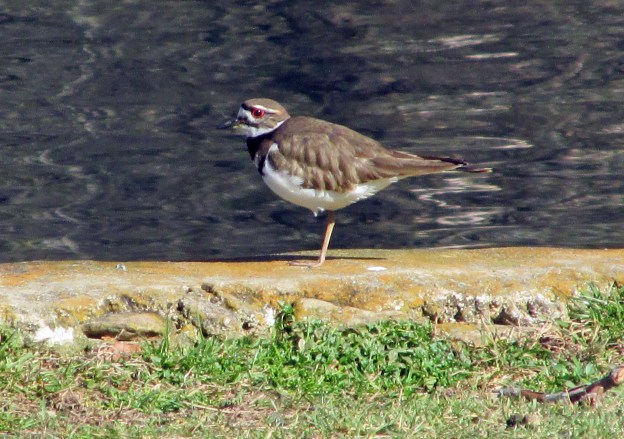
Many wild birds produce precocial young, including shorebirds, grouse and quail, wild turkeys, loons and grebes. The ostrich, the world’s largest bird, also produces precocial young. Closer to home, one of my earliest bird memories involves a bird quite famous for the care and keeping of its precocial young. The killdeer is a North American shorebird that is at home in a variety of habitats, including rooftops, parking lots, golf courses, pastures and, in the case of my remembrance, an elementary school playground.

I don’t remember who discovered the nest, but I know that my teacher at Hampton Elementary School and her fellow faculty members protected the nest once they became aware of it. My teacher also had the wisdom to incorporate the nesting killdeer into her lessons. In other words, she made the discovery of these nesting birds a “teachable moment” for her young students.

Killdeer-Eggs

Photo by Bryan Stevens • Four eggs in a killdeer nest, which is assembled right on the ground.

I can’t think of a better bird for teaching some lessons about the strategies birds use to raise young. The killdeer doesn’t make much of a nest. The female often lays her amazingly well-camouflaged eggs — usually four, but occasionally three or five — in a shallow depression in dirt or gravel. On occasion, they may line the nest with plant materials or other items. I once observed a killdeer nest in a gravel parking lot of a mobile home dealership. The ingenious female killdeer, using an abundant material, had lined her nest with discarded cigarette butts — dozens of them. I’ve always joked that I hoped the young weren’t born with a nicotine addiction.

Killdeer parents are zealous parents in safeguarding their young. Adults are famous for feigning a “broken wing” to distract potential predators away from nests and offspring. They will also call loudly while faking their injury to keep the predator’s attention diverted. It’s the loud call — an exuberant “kill-deer” — that has given this member of the plover family its common name.

Like many memories from childhood, some details of that killdeer family’s fate are a little hazy. As far as I know, the parent killdeers succeeded at raising their young family. Perhaps that moment of learning, which let me glimpse into the private life of a fascinating family of birds, pointed me toward my eventual interest in birds.

Killdeer_AgainstLog

Photo by Bryan Stevens • An adult killdeer is usually a conspicuous, loud bird. 

Later, as an adult and during my early years as a birder, I had an encounter with a baby killdeer. I found the tiny bird limp and lifeless on the ground. Saddened, I reached down to pick up the young bird — it looked like a fuzzy golf ball on matchstick legs — for a closer look. As my fingers started to close around the bird, the baby revived and sprinted off with an impressive display of speed. That’s when I learned that killdeer young have one last defense against would-be predators; they can play possum!

While shorebirds, killdeers are not tied to the shoreline. Although I have observed them along beaches in South Carolina, these birds are just as much at home in cattle pastures, muddy edges of rivers and lakes or even baseball fields. Such terrestrial habitats provide these birds with plenty of food, which includes insects, spiders, centipedes, earthworms and the occasional seed. While many people remain unaware of the world’s shorebirds, the killdeer is the one member of the family that is probably frequently encountered by many Americans. Their fondness for habitats created by humans, from parking lots to gravel-covered rooftops, bring these birds close to us.

••••••

Remember to share your first hummingbird sightings with me. Simply jot down the time and date that you first notice these tiny birds have returned. You can email me at ahoodedwarbler@aol.com or though Facebook. I am increasingly impatient to see my first hummingbirds of the season.

Count sets new records while gathering data on world’s birds

Photo by Bryan Stevens • The downy woodpecker ranked among the 10 most frequently reported birds on the 2017 Great Backyard Bird Count. A record number of 173,826 people took part in this year’s GBBC, which was held Feb. 17-20.

In announcing the results of this year’s Great Backyard Bird Count, organizers of the annual global bird survey shared an anecdote about a second-grade student in Memphis, Tennessee. The girl, who obviously enjoyed making a contribution as a citizen scientist for the GBBC, made a real connection with the birds she was being asked to count.

Calling her participation the “best day of her life,” the girl went on to share her excitement about seeing a downy woodpecker. She was hardly alone in seeing this small woodpecker. A total of 38,760 checklists across the country included downy woodpecker with their totals.

The girl’s joy at discovering a downy woodpecker — a bird that was completely new to her — all but guarantees that she will look forward to taking part in the 2018 GBBC. If her interest in birds continues to develop, she just may catch the birding bug herself.

Photo by Bryan Stevens • Counting crows and other birds at Shook Branch at Watauga Lake during the recent GBBC.

The 2017 Great Backyard Bird Count is now part of the history books, and thanks to participants from around the world, this year’s GBBC ranked as the biggest count in its 20-year history. Participants set a new high bar for number of checklists submitted and total number of species reported.

An estimated 214,018 participants took part this year, compared to the 2016 final total estimate of 163,763 individuals. An incredible total of 5,940 different species was tallied by GBBC participants, which is a dramatic spike from last year’s total of 5,689 species. That record number of participants also turned in a record number of completed checklists — 173,826, compared to the final total of 162,052 in 2016.

The three states with birders submitting the most checklists were, in descending order, New York, Pennsylvania and California. Incidentally, Virginia came in sixth, with 5,190 checklists submitted during the 2017 GBBC. North Carolina came in ninth with 4,220 checklists submitted by 2017 GBBC participants. Birders in Tennessee will need to step up for future counts. The Volunteer State ranked 20th on the list with 2,215 checklists submitted.

The states seeing the most species of birds reported were, in descending order, California (370 species), Texas (360 species) and Florida (309 species). North Carolina checklists indicated a total of 213 species to land the Tar Heel State at No. 8 on the list of states with most species reported. Virginia, in 12th place, tallied a total of 196 species. Tennessee came in 32nd place with 136 species, which isn’t too bad for a landlocked state.

In North America, the most numerous birds reported on the count included several species of geese, as well as blackbirds, starlings and crows. A total of 4,793,261 snow geese made this bird the most numerous North American species reported on the GBBC. Other common birds, in descending order, included red-winged blackbird with 2,464,572 individual birds tallied, as well as Canada goose, 1,895,077; European starling, 919,038; mallard, 715,594; ring-billed gull, 647,950; American coot, 500,261; greater white-fronted goose, 426,040; common grackle, 416,720; and American crow, 378,483. During my participation this year, I saw several of these species, including red-winged blackbird, Canada goose, European starling, mallard, ring-billed gull and American crow.

Photo by Bryan Stevens • Killdeer in Limestone Cove during the Great Backyard Bird Count held last month.

The ten most frequently reported species, in descending order, were Northern cardinal, American crow, mourning dove, dark-eyed junco, downy woodpecker, blue jay, black-capped chickadee, house finch, house sparrow and white-breasted nuthatch. While taking part in the GBBC last month, I saw all these species with the exception of the black-capped chickadee. Instead, my submitted checklists featured Carolina chickadees.

The birds on the most frequently reported list are almost without exception birds of yards and gardens, making them more likely to be counted by more individual participants. On the other hand, the most numerous, or abundant, birds are those that join together to form large flocks. They’re widespread, but less likely to be encountered in yards and gardens.

I counted at home and at several favorite birding locations. During a visit to Watauga Lake in Carter County, Tennessee, my mother and I observed an immature bald eagle and a yellow-bellied sapsucker, which turned out to be among my personal GBBC highlights this year. I always enjoy looking for birds during the four-day count period. I also like to feel that I am contributing to a shared knowledge about birds and their populations.

Photo by Bryan Stevens • Buffleheads on the Watauga River during the recent GBBC.

If you would like to view photos of birds from around the world that were taken during this year’s GBBC, visit gbbc.birdcount.org/photo-subs-2017/.

If you didn’t get to take part this year, be sure to plan ahead for next year when the GBBC will be held Feb. 16-19, 2018. Help make next year’s count another one for the record books.

•••••

To learn more about birds and other topics from the natural world, friend Stevens on Facebook at https://www.facebook.com/ahoodedwarbler. He is always posting about local birds, wildlife, flowers, insects and much more. If you have a question, wish to make a comment or share a sighting, email ahoodedwarbler@aol.com.


Birds, other wildlife deserve protection of Endangered Species Act

Photo by Lisa Hupp/USFWS • A bald eagle has an average of 7,000 feathers. Bald eagles are protected under the Bald and Golden Eagle Protection Act. For instance, it is against the law to possess their feathers or other remains. Eagles are abundant enough they no longer qualify for listing under the Endangered Species Act.

The Endangered Species Act serves as one of the strongest, most effective wildlife protection laws in the world. Although the ESA was not meant to protect only birds — the law actually protects everything from bats and whales to wolves and shellfish — it has done an outstanding job ensuring that our feathered friends continue to fly free and thrive in a world they must increasingly share with human beings.

According to Earthjustice — an environmental law organization that uses the power of the law to fight for the earth and its inhabitants — the ESA was passed with overwhelming bipartisan support more than 40 years ago to provide a legal safety net for wildlife, fish and plant species that are in danger of extinction.

Photo by Scott Flaherty/USFWS • The California condor is an example of a species saved from the brink of extinction thanks to the Endangered Species Act. Much work remains to be done to protect this large bird.

Earthjustice and other environmental groups are warning that some members of the current Congress want to slash the Endangered Species Act, threatening the very existence of the imperiled wildlife and ecosystems the Act protects. Some politicians from the state of Utah seem to be leading this effort, which is a sad irony considering the wealth of natural majesty the unique lands of Utah has to offer.

None other than President Richard Nixon, a Republican, signed the ESA into law back on Dec. 28, 1973, and it was an effort that crossed political party lines that made the legislation a reality. Biologists warn that our planet is facing a sixth wave of mass extinction, according to a release from Earthjustice. The Endangered Species Act, which has prevented 99 percent of the species under its care from vanishing, is precisely the kind of effective tool needed today. It has revived the bald eagle, the American alligator, the California condor and many others.

House Natural Resources Chairman Rob Bishop (R-UT) has said he wants to “repeal and replace” the Endangered Species Act. Others are supporting legislative proposals that would make it harder for the U.S. Fish and Wildlife Service to resolve Endangered Species Act lawsuits. The ESA is truly a prime example of the old saying, “If it’s not broke, don’t try to fix it.” Bishop and his allies, to put it plainly, are wrong.

Photo by Lou George/USFWS • The Kirtland’s Warbler is an endangered songbird that has seen its numbers slowly increase thanks to the protection of the Endangered Species Act.

If there’s ever been a government regulation that has done what it set out to do, it has been the Endangered Species Act. Without the ESA, many of our birds, including the nation’s official bird, might no longer still exist on the planet. The bald eagle had been reduced to a mere 417 pairs in 1963. With the passage of the ESA, the eagle began to rebound. In 2007, in a highly publicized success story, the existence of 11,040 pairs of bald eagles in the United States allowed this majestic bird to be removed from its listing under the ESA in 2007.

Photo by USFWS • Whooping cranes still exist largely due to protections afforded them by the Endangered Species Act.

The bald eagle is only one of the many birds to benefit from the protection of the ESA. The tall and stately whooping crane and the beautiful and tiny Kirtland’s warbler are some of the other birds that are slowly showing population increases once they were afforded intensive protection under the ESA. The nene, or Hawaiian goose, and the peregrine falcon — the world’s fastest bird — have also received much needed protection.

Lest anyone think that eagles and other formerly endangered species are completely out of the woods, just consider the recent rash of bald eagle shootings in Tennessee. Two eagles, one in Rhea County and one in Meigs County, were victims of shootings. The severity of their injuries resulted in both birds being euthanized.

It’s heartbreaking to think that anyone would shoot a bald eagle, a bird that all patriotic Americans should revere as a lofty symbol of the nation’s majesty. The shootings are a reminder that it’s still not a safe world for many of the birds and other creatures that share the planet with us. The ESA is a marvelous piece of legislation that gives a measure of protection to the helpless. The law allows all Americans to share in the responsibility of being wise stewards of God’s diverse and wonderful creatures.

Photo by Steve Maslowski/U.S. Fish and Wildlife Service • The golden-cheeked warbler, a beautiful but endangered songbird that nests in Texas, is one of many birds that benefits from protections provided by the Endangered Species Act.

Demanding that the government keep the ESA strong and intact is not and should not be mere politics. It’s showing that Americans still value wildlife and the rights of future generations to enjoy that wildlife over money and short-term profits. Left or right, Republican or Democrat, the Endangered Species Act should be immune to political differences.

On a purely personal level, I hope to one day see such endangered songbirds as the golden-cheeked warbler and the black-capped vireo, and I want the same for future generations. That’s not likely to happen without the protections of the ESA remaining strong and intact.

Let your state and federal representatives know that you support continued protections for birds and other wildlife. We can co-exist with the amazing variety of wild creatures that share our planet. It’s just a matter of priorities. Our congressional representatives and senators need to know Americans aren’t willing to tolerate attacks on the ESA. Our president and his administration need to receive the same message.
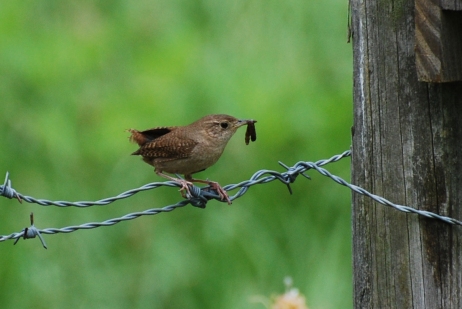
Photo by Ted Heuer/U.S. Fish and Wildlife Service • The Nene, or Hawaiian goose, has gradually increased in numbers thanks to the Endangered Species Act.

If you enjoy birds, keep visiting local and state parks. Continue planning trips to National Parks and Wildlife Refuges. Don’t stop feeding your backyard birds. Most importantly, fight to make sure the wildlife that makes the world a richer place continues to find that humans do make good neighbors.
For information on how to contact your government officials to express your thoughts on the value of the Endangered Species Act, visit http://www.usa.gov/elected-officials.

••••••

To learn more about birds and other topics from the natural world, friend Stevens on Facebook at https://www.facebook.com/ahoodedwarbler. He is always posting about local birds, wildlife, flowers, insects and much more.