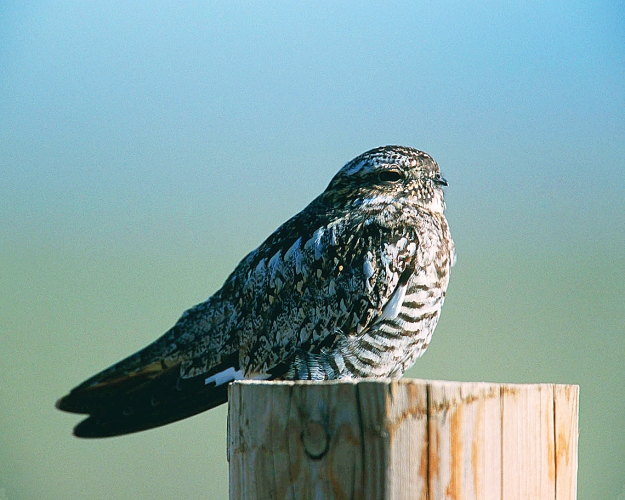
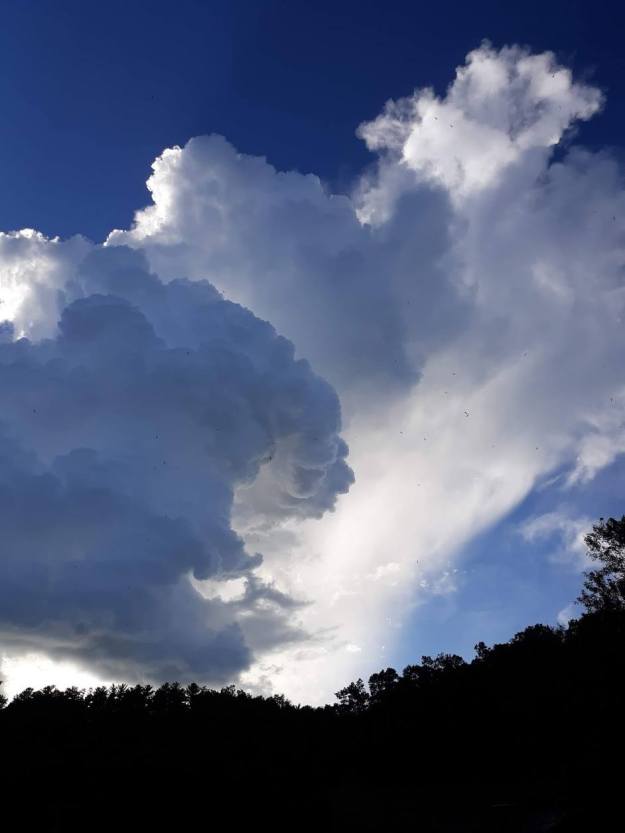
Category Archives: Birding

Brief stay of Virginia’s warbler along Kingsport’s Holston River leaves birders amazed

At times, there’s nothing left to do but scratch your head and wonder. It’s a gesture many birders have been making around the Holston River in Kingsport as walks in the area along Netherland Inn Drive on the greenbelt have produced numerous warbler sightings in recent weeks.
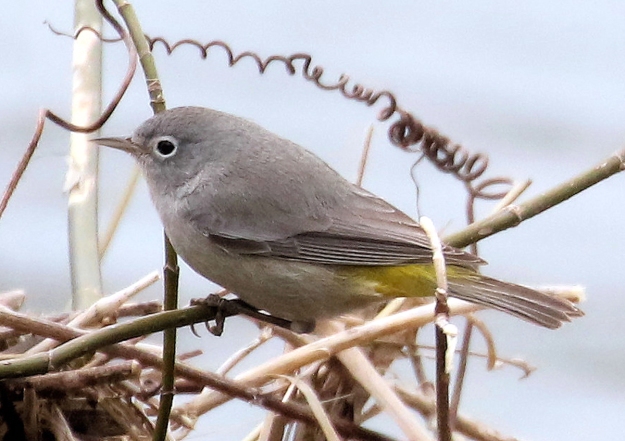
Virginia'sWarbler-TWO

Photo by Sherrie Quillen • The Virginia’s warbler found in January in Kingsport represented the first Tennessee record for the species and one of only a few records east of the Mississippi River.

The list includes expected winter warblers such as orange-crowned, pine, and yellow-rumped, as well as such off-season puzzlers as American redstart, common yellowthroat, Northern parula, Cape May warbler and Nashville warbler; these warblers really should be wintering far to the south in locations around the Caribbean and in Central America. So far this winter, sharp-eyed birders have seen at least 12 different warbler species on the Riverfront Greenbelt. None of them have generated the level of excitement that has been produced by a small plain gray and yellow bird that is doggedly devoted to its daily routine. Birders have rushed from all parts of Tennessee, as well as from as far afield as Virginia and New Jersey, for a chance to see a visiting Virginia’s warbler, a bird that has only been observed on a handful of occasions east of the Mississippi River.

This warbler is not named for the state of Virginia. Spencer F. Baird, who first described the Virginia’s Warbler in 1860, named the species after Virginia Anderson, the wife of Dr. W. W. Anderson, who collected the first specimen in 1858 in New Mexico. Virginia’s warbler is not all that exceptional in appearance. While gray overall the bird shows a white eyering and some yellow highlights to feathers on the chest and under the tail. The bird also wags its tail, a behavior that can be helpful in identifying it.
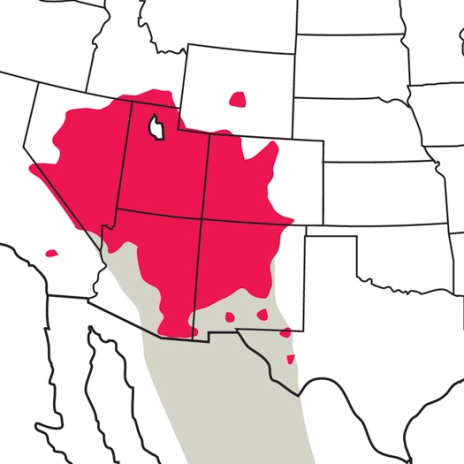
Virginia's-Warbler_map

Northeast Tennessee is outside of the expected range in the American southwest of Virginia’s warbler.

The Virginia’s warbler is a species known for showing up in some rather odd locations. Back in 2012, one of these warblers generated birding excitement around New York City when one was found in Alley Pond Park in the New York City borough of Queens. In their usual range, however, Virginia’s warblers nest in arid terrain, including open pinyon-juniper and oak woodlands in the southwestern Rocky Mountain states, which is a far cry from the banks of the Holston River in Kingsport or Queens in New York.

The Kingsport specimen pulled a vanishing act when the weather turned milder in early February. Well-known birder Rick Knight, who lives in Johnson City, Tennessee, addressed the status of the bird in a post he made to the list-serve, “TN-Bird”:

“The Virginia’s Warbler and the other unusual warblers present at Riverfront Park in Kingsport seem to wander some on warm days and then return to the water’s edge on cold days to take advantage of the milder microclimate there.” Knight went on to speculate that the bird may still be in the vicinity and will return to its usual haunts when cold temperatures return. So far, despite a mix of warm days with colder ones, the Virginia’s warbler hasn’t been seen since Feb. 2.

Virginia'sWarbler-ONE

Photo by Sherrie Quillen • The influx of birders to view the Virginia’s warbler led to other unexpected finds along the Kingsport greenbelt, including such out-of-season birds as blue-gray gnatcatchers, Nashville warbler and Northern parula. More than a few birders referred to the famous Patagonian Picnic Table Effect to describe the sightings.

Several birders who found the bird and added it to their life lists commented on the fact that so many other unexpected species were found at the same time in the same location. It wasn’t long before people began evoking the famous birding phenomenon known as the Patagonia Picnic Table Effect, which is a birding phenomenon named for a famous hotspot in southeast Arizona. The lure of a bird called the rose-throated becard at the location attracted a rush of birders to the area. More eyes resulted in more discoveries of other rare birds. In turn, the additional finds continued attracting even more birders and resulted in the discovery of even more rare bird species.

So, who first noticed the presence of the out-of-place warbler? The credit for the discovery goes to two Kingsport residents. On a post to Facebook, the two women who discovered the bird shared details of their exciting find. Bambi “Birdfinder” Fincher posted the notice of the bird’s discovery.

BGGnatcatcher

Photo by Bryan Stevens • A couple of blue-gray gnatcatchers, such as this invidiual, represented an unusual find in winter in the region. The gnatcatchers were spotted by sharp-eyed birders in their quest to observe the Virginia’s warbler in Kingsport.

“Yesterday (Saturday, Jan. 19) in the pouring rain, Sherrie Quillen and I found a Virginia’s warbler on Kingsport Birding Trail-Riverfront Greenbelt,” she wrote in a post to the Birding Kingsport Facebook page. “This is the first record of this bird in the state of Tennessee.”

Bambi explained her birding success simply. “I’m always looking! Keeps me birding!”

She also invited other birders to join her some time. “It can be pretty amazing,” she wrote. “No promises of a state record or life bird, but I can promise you that you will learn something about your surroundings and yourself.”

She earned her nickname “birdfinder” about 10 years ago when she first started birding. “I was out birding with Bill Moyle or Bill Grigsby — one of the Bill’s, anyway — and I was really ‘finding’ birds but didn’t know what they were.”

The Bills didn’t let her get discouraged. “They said, ‘That’s OK, you will learn the birds, but you are a birdfinder.’ It stuck.”

I met both Bambi and Sherrie for the first time on the day I traveled to Kingsport to try my luck at observing this warbler. Bambi quickly proved her “birdfinder” talents. Although I had to wait for about an hour for the bird to make an appearance, when it did arrive, it flew right to the spot by the river that Bambi had recommended I keep under observation. The specific spot consisted of a thin stand of privet rooted in the riverbank only a few yards from a bench located near the paved walking path. When the bird arrived, making telltale chip notes, I got my binoculars on it and enjoyed a satisfying but brief look at the bird. Birds are rarely as cooperative as this particular Virginia’s warbler turned out to be. Several other birders waiting with me also got to see the warbler at the same time. As warblers are my favorite family of birds, getting to observe this unexpected visitor has been the highlight of my birding year thus far.

Goldencheeked_Warbler_wood-2

Photo by U.S. Fish & Wildlife Service • The author of the blog hasn’t yet seen a handful of species among the Eastern warblers, including the endangered golden-cheeked warbler, pictured here. The remaining elusive eastern warblers include Connecticut, Kirtland’s and cerulean.

In the Eastern United States, there are only a handful of warblers I haven’t yet observed. I need to see a cerulean warbler and Connecticut warbler, as well as a Kirtland’s warbler and golden-cheeked warbler. The latter two species are considered endangered and highly localized warblers occurring mostly in Michigan and Texas, respectively — two states I’ve not yet visited.

I’ll always remember my first look at a Virginia’s warbler just before noon on Jan. 28, 2019. The bird had already been present for ten days by the time I made the drive to Kingsport to try my luck. In addition, I saw many other interesting birds while waiting for my target bird to arrive. Some of the other observed birds included palm warbler, blue-gray gnatcatcher, ruby-crowned kinglets and golden-crowned kinglets.

PalmWarblerrr

Photo by Bryan Stevens • A palm warbler forages along a chain-link fence. This warbler is often a wintering bird in the region and a few were seen by observers who trekked to the Kingsport greenbelt to view the visiting Virginia’s warbler.
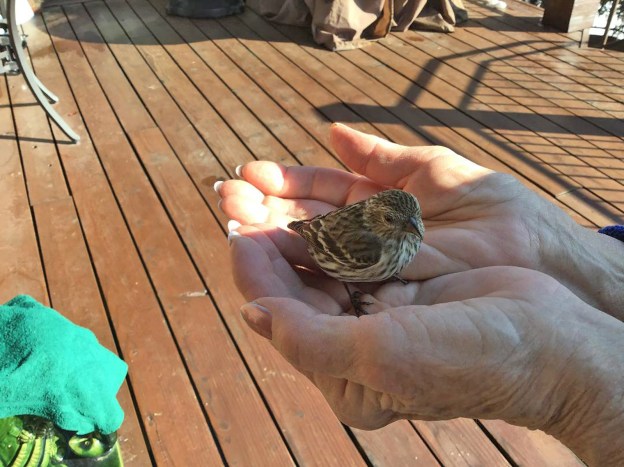
Reader from Utah shares story about pine siskin rescue

PineSiskin-Utah

Photo Courtesy of Fred Bergold • This pine siskin recovered after crashing into a window at the Utah home of Fred Bergold.

A recent email reminded me that some of the birds that visit us during the winter range far beyond our yards and gardens here in Northeast Tennessee.

I received an email from Fred Bergold, a reader who resides in Utah.

“This little warbler flew into our window,” Fred explained in his email, which arrived with photos attached. “My wife picked it off the deck and held it for about half an hour.”

The kind treatment worked. “When it got its bearings back, it flew to the top of our Colorado green spruce,” Fred wrote.

Siskin-PairAtFeeders

Photo by Bryan Stevens • Pine siskins feast on thistle seeds at a feeder.

“We feed the local wintering birds black oil sunflower seeds, which many species seem to like,’ Fred continued. “We live in Fruit Heights, Utah, just north of Salt Lake City.”

When I looked at the photos Fred provided, I realized that the bird in question wasn’t one of the warblers but a species of small finch known as a pine siskin. I replied to Fred’s email and offered a quick lesson in distinguishing pine siskins from warblers and other small songbirds.

I informed Fred that siskins usually travel in flocks and that they love feeders with sunflower seeds.

I also shared with him that I’ve gotten to travel to his home state of Utah twice since 2003. Getting to see some western species — American dipper, lazuli bunting, western tanager, violet-winged swallow — while visiting the state produced some memorable birding moments.

Sisken-Spruce

Photo by Bryan Stevens • A Pine siskin in a spruce at Carver’s Gap on Roan Mountain.

Winters, no matter where one lives, can decrease the variety of bird species one sees on a daily basis. I often find myself hoping for the excitement produced when flocks of “irruptive” finches not often seen in the area expand their range into the region. In addition to pine siskins, birds such as evening grosbeaks, purple finches, common redpolls and red crossbills represent a few of these northern finch species that occasionally stage massive migratory movements, or irruptions, into areas far outside their typical ranges.

These finches are not the only birds to stage these periodic irruptions. The website birdsource.org identifies several non-finch species — red-breasted nuthatch, Clark’s nutcracker, bohemian waxwing, black-capped chickadee and varied thrush — that undertake periodic winter irruptions. Two of these northern finches — the pine siskin and the red crossbill — are sporadic summer residents on some of the higher mountains in our region.

Siskins-OnGround

Photo by Bryan Stevens • A flock of pine siskins carpet the ground beneath some feeders as they forage for food.

These irruptions are not usually motivated by cold or severe weather. The absence of a favored food source on a bird’s normal winter range is usually a trigger for an irruption. Birds, such as pine siskins, will fly farther than normal in a quest for reliable food sources. Not surprisingly, well-stocked feeders often attract their attention.

The pine siskin belongs to a genus of birds known as Spinus, which includes three species of goldfinches and more than a dozen species of siskins, many of them native to Central and South America. Only one species — the Eurasian siskin — is found outside of the New World. Other siskins include the black-capped siskin, hooded siskin, red siskin, black siskin, Antillean siskin and Andean siskin.

GoldfinchBABE

Photo by Bryan Stevens • The American goldfinch is a relative of the pine siskin, and the two species often associate with each other at feeding stations.

Siskins often associate with American goldfinches. In shape and size, the two birds are extremely similar. Unlike goldfinches, however, siskins display extensive streaking on their back and breast. The bill of a siskin is sharp and pointed. Overall a drab brown in coloration, siskins also show some surprisingly bright yellow coloration in their wings and tails. Although sociable, individuals can display some irritable tantrums when competing for prime space at feeders.

Some people quickly discover that a large flock of pine siskins is quite a drain on the daily allotment of feed provided for backyard birds. For such small birds, they have large appetites. Siskins are also extremely tame and can often be approached quite closely. A few years ago during a particularly frigid cold snap, I succeeded in luring a pine siskin to land on my gloved hand, which held some sunflower seeds. Needless to say, it was a very memorable, intimate moment.

In addition to this unusual tameness, siskins are extremely vocal birds. These birds have a shrill trill that sounds almost mechanical to my ears. Large flocks also produce a constant twittering noise as they perch in trees or on feeders.

Next month will offer an opportunity to participate in the annual Great Backyard Bird Count, which is a free, fun, and easy event that engages bird watchers of all ages in counting birds to create a real-time snapshot of bird populations. Recording visiting birds such as pine siskins is an important component of the GBBC. Participants are asked to count birds for as little as 15 minutes (or as long as they wish) on one or more days of the four-day event and report their sightings online at birdcount.org. Anyone can take part in the Great Backyard Bird Count, from beginning bird watchers to experts, and you can participate from your backyard, or anywhere in the world. The 21st annual GBBC will be held Friday, Feb. 16, through Monday, Feb. 19, 2018. Please visit the official website at birdcount.org for more information. I’ll also focus on the GBBC more in upcoming columns, including information about activities planned at a local park.

Evening_Grosbeak_Ted_Schroeder_OR09

Photo by Ted Schroeder/Great Backyard Bird Count • Evening grosbeaks may be more common on this year’s GBBC, according to early reports on the movements of these large, colorful finches.

Yellow-rumped warblers are wild about poison ivy berries

WARBLER

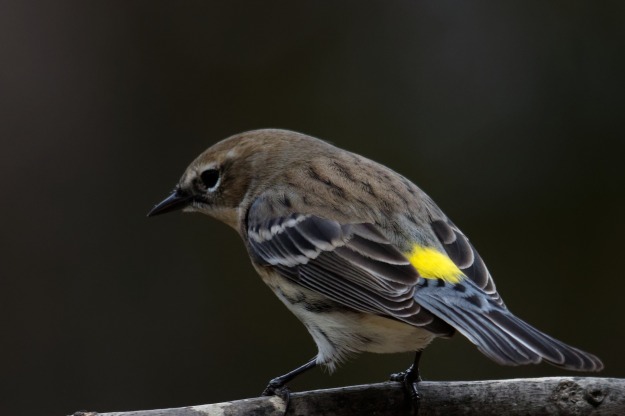
Photo by Edbo23/Pixabay.com • The yellow-rumped warbler is one of the few warblers that attempts to reside in the region during the winter months. Switching from a diet of insects to one of fruit and seeds helps the birds manage to find enough to eat during the lean months. This species is particularly fond of poison ivy berries.


November and December are bleak months for birders as we experience a bit of a letdown after the joys of fall migration. Many of the favorite birds that spend the summer months with us have departed and will not return until spring. Hummingbirds, tanagers, vireos and most warblers, despite a few lingering individuals, have left the scene.

I really feel the pinch since warblers are one of my favorite families of birds. In northeast Tennessee, southwestern Virginia and western North Carolina, there are only three warblers that bird enthusiasts are likely to see in the winter. The yellow-rumped warbler is by far the most common winter warbler, but palm warblers and pine warblers are also occasional winter residents. A few other warblers are occasional stragglers, attempting to eke out a living during the cold months. For instance, I’ve seen a few common yellowthroats during the winter over the years

Yellow-RUMP

Photo by Edbo23/Pixabay.com • During the winter months, a yellow-rumped warbler is a dull bird in mostly brown and gray plumage except for the rump patch of bright yellow feathers that provides the bird its common name.

With the exception of the yellow-rumped warbler, however, the chances of enjoying warblers during the winter are rather slim. At least the yellow-rumped warbler is common and I encounter flocks of these birds on most occasions when I walk woodland trails in the region any time from November to April.

Until 1973, the yellow-rumped warbler was divided by scientists into two distinct species: the myrtle warbler in the eastern United States and Audubon’s warbler in the western United States. During a visit to Salt Lake City, Utah, in 2003, I saw my first and only “Audubon’s” warbler. This western counterpart is more colorful than the version birders know so well in the eastern half of the country. In addition to yellow plumage on the rear and flanks, the Audubon’s warbler also boasts a yellow crown and a yellow throat patch. Otherwise, the two birds are remarkably similar in appearance.

Of course, it’s the creamy yellow rump patch — looking like a small pat of butter — that gives this species its common name. Birders have adopted another nickname for the species, often referring to them simply as “butter-butts.”

There is now some discussion in scientific circles of dividing the species into not two distinct species, but four. The other two species would be the black-fronted warbler of mountains in Northern Mexico and Goldman’s warbler, which resides in Guatemala. I wouldn’t mind seeing Audubon’s warbler resurrected as a full species, since it would place an additional species on my life list of birds seen. In addition, it seems fitting that we have at least one bird that honors the name of the famed naturalist and painter John James Audubon.

The scientific name for the yellow-rumped warbler is Setophaga coronata, which are terms derived from ancient Greek that when roughly translated mean “crowned moth-eater.” Like most warblers, the yellow-rumped warbler is fond of insects, but there’s another food source these birds turn to during times of scarcity.

Yellow-rumpWarbler (1)

Photo by Bryan Stevens • A wintering yellow-rumped warbler clings to palm fronds in coastal South Carolina.

So, how does a warbler make it through the winter season in the region? After all, most warblers exist on a diet heavy on insects and other small invertebrates. The yellow-rumped warbler, however, supplements its diet with different seasonal berries, including juniper berries, Virginia creeper berries and dogwood berries. They also feed on berries from one unlikely source. These birds love to gorge themselves on poison ivy berries that, fortunately, produce no ill effects. I’ve long noticed that many of the trails I enjoy walking during the winter season wind through woodlands overrun by poison ivy. Of course, by eating the berries, the warbler also help spread the noxious vines.

The yellow-rumped warbler is not the only bird known to feed on poison ivy berries. Other birds seen eating these berries include Northern flickers, bobwhites, Eastern phoebes, Cedar waxwings, tufted titmice and American robins. White-tailed deer show a preference for dining on poison ivy leaves over other types of vegetation. The berries are high in fat and calories, which makes them an ideal food source for creatures with high metabolisms like songbirds. The berries also ripen in fall and early winter when many other types of berries are scarce. While it is best for humans to avoid contact with this plant, it is a valuable fall and winter food source for wildlife.

IMG_6339

Photo by Bryan Stevens • A male yellow-rumped in spring plumage looks quite different than his subdued winter appearance.

While the yellow-rumped warbler is quite capable of dealing with some frost and snow, more than half of the world’s warblers live in more tropical climates outside the borders of the United States and Canada. Not all yellow-rumped warbler attempt to tough out winter conditions in the United States. Some do migrate to the tropics, where they utilize a variety of habitats, including mangroves, thorn scrub, pine-oak-fir forests and shade coffee plantations.

All warblers are exclusively New World bird species. The family numbers about 120 species. Some of the descriptively named species of warblers not seen within the United States or its northern neighbor include citrine warbler, white-striped warbler, black-crested warbler, pale-legged warbler, buff-rumped warbler, golden-bellied warbler and black-eared warbler.

During your next woodland stroll, keep your eyes peeled for small brown birds in the branches of nearby trees. If the last thing you see before they dive for cover is a bright yellow rump patch, you’ll know you’ve observed a yellow-rumped warbler.

plate-153-yellow-rump-warbler-final

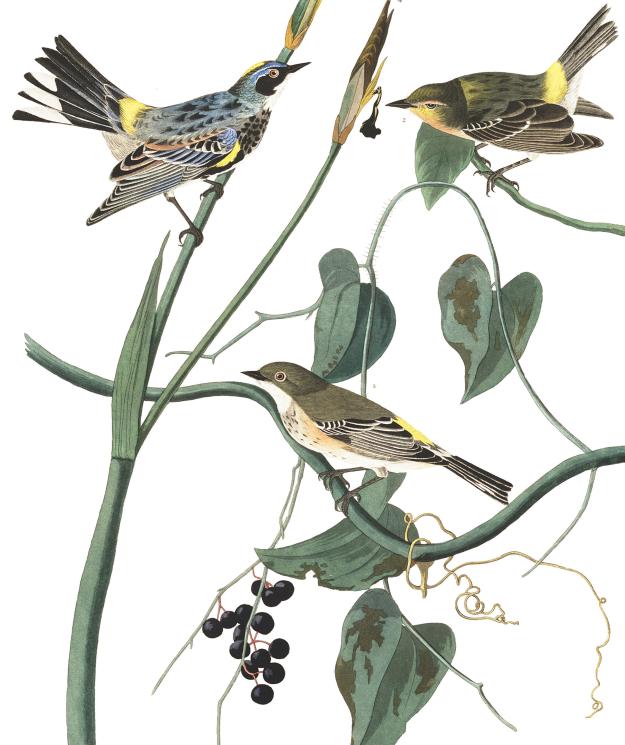
Early naturalist and painter John James Audubon painted these yellow-rumped warblers.


Cardinals seem tailor-made for Christmas season

cardinal-1998407_1920

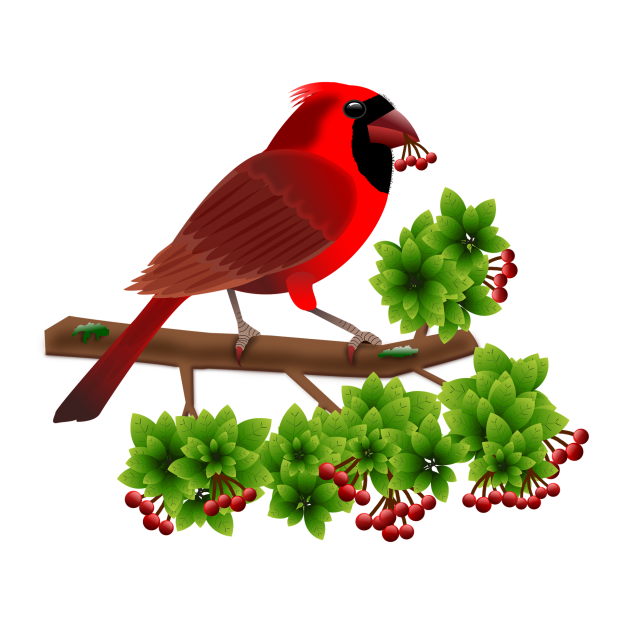
The Northern cardinal, a familiar backyard bird in many sections of the United States, is a perfect symbol of the Christmas season.

The shopping days before Christmas are getting fewer, so I hope everyone has had time to find gifts for everyone on their lists. My wish to readers is that everyone gets to enjoy a great holiday that just might also include watching some birds.

Although I hate to see the colorful birds of spring and summer — scarlet tanagers, Baltimore orioles, indigo buntings, rose-breasted grosbeaks — depart every fall, the winter season offers some compensation.

Often, when we think of the birds of the winter season, our thoughts focus on some of the less-than-colorful feeder visitors — the brown sparrows and wrens, the black and white chickadees and the drab American goldfinches, so unlike their summer appearance.

northern-cardinal-938377_1920

Photo by Skeeze/Pixabay.com • A male Northern cardinal lands on a snowy perch. Cardinals are perfect symbols for the Christmas season with their bright red plumage.

There’s one bird, however, that makes an impression in any season. The Northern cardinal, especially the brilliant red male, stands out against a winter backdrop of snow white, deep green or drab gray. On a recent snowy afternoon, I spent some time watching a pair of Northern cardinals from my window. Cardinals are wary birds. They make cautious approaches to feeders, never rushing to the seed in the manner of a Carolina chickadee or tufted titmouse.

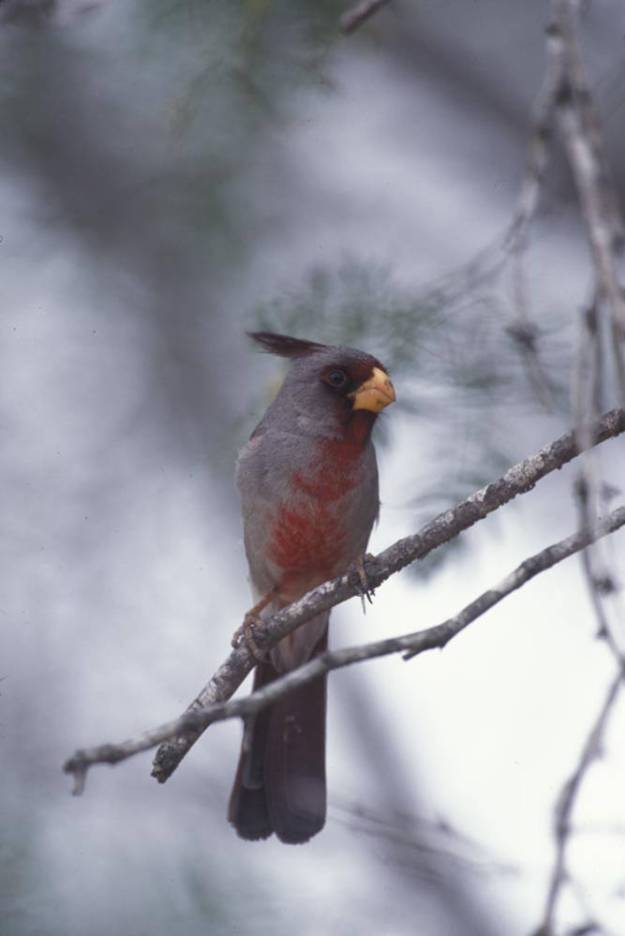
The Northern cardinal belongs to a genus of birds known as Cardinalis in the family Cardinalidae. There are only two other species in this genus, and they range across North America and into northern South America. The two relatives are the pyrrhuloxia, or Cardinalis sinuatus, a bird of the southwestern United States, and the Vermilion Cardinal, or phoeniceus, a bird found in Colombia and Venezuela.

WO3919__Pyrrhuloxia

Photo by U.S. Fish & Wildlife Service • The Pyrrhuloxia, or desert cardinal, is a counterpart to the Northern cardinal in the American southwest.

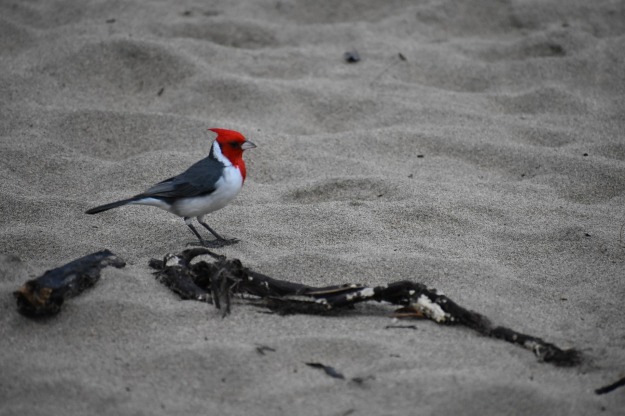
Two other South American birds — red-crested cardinal and yellow-billed cardinal — are more closely related to tanagers than to our familiar Northern cardinal. Both the Northern cardinal and red-crested cardinal have been introduced into the state of Hawaii, so two non-native birds from different parts of the globe are now resident in the Aloha State.

bird-3354768_1920

Photo by Pixabay.com • A red-crested cardinal forages on a sandy beach. This bird has been introduced to such exotic locations as Hawaii.

Over the years, the Northern cardinal has also become associated with the Christmas season. How many Christmas cards have you received this holiday season with a cardinal featured in the artwork? I’d wager that at least a few cards in any assortment of holiday greetings will feature the likeness of a bright red cardinal.

Cardinals, also known by such common names as redbird and Virginia nightingale, are easily recognized backyard birds. I never tire of observing these colorful birds. Cardinals are easily lured to any backyard with plentiful cover to provide a sense of security and a generous buffet of sunflower seed.

northern-cardinal-female

Photo by Skeeze/Pixabay.com • A female Northern cardinal lands on a deck railing. Female cardinals are not as brightly colorful as males, but they do have their own subtle beauty.

Cardinals accept a wide variety of food at feeders. Sunflower seed is probably their favorite, but they will also sample cracked corn, peanuts, millet, bakery scraps and even suet. The cardinal is also one of only a few birds that I have noticed will consistently feed on safflower seed.

While we may get the idea that cardinals feed largely on seed, that is a misconception based on our observation of the birds at our feeders. When away from our feeders, cardinals feed on insects and fruit, including the berries of mulberry, holly, pokeberry, elderberry, Russian olive, dogwood and sumac.


There’s no difficulty in identifying a cardinal. The male boasts crimson plumage, a crest, a black face and orange bill. The female, although less colorful, is also crested. Female cardinals are soft brown in color, with varying degrees of a reddish tinge in their feathers, particularly in their wings. Immature cardinals resemble females except young cardinals have dark bills.

Cardinals are a widespread species, ranging westward to the Dakotas and south to the Gulf Coast and Texas. The southeastern United States was once the stronghold of the cardinal population. In the past century, however, cardinals have expanded their range into New England and Canada.

The familiar Northern Cardinal is not the only bird to bear the name cardinal. Others include the yellow cardinal of Argentina, Brazil, Paraguay and Uruguay, the vermilion cardinal of Colombia and Venezuela, and the red-crested cardinal, a songbird native of South America that has also been introduced to Puerto Rico and Hawaii.

DaddyCardinal

Photo by Bryan Stevens • Northern cardinals will visit feeders stocked with sunflower seeds at any season.

At feeders, cardinals mingle with a variety of other birds. Cardinals are common visitors to backyard feeders. For such a bright bird, the male cardinal can be surprisingly difficult to detect as he hides in the thick brush that conceals his presence. Cardinals are nervous birds, however, and usually betray their presence with easily recognized chip notes. Their preference for dense, tangled habitat is one they share with such birds as brown thrashers, Eastern towhees, Carolina wrens and song sparrows. In general, however, cardinals directly associate only with their own kind. Cardinals will form loose flocks during the winter, but these flocks are never as cohesive as those of such flocking birds as American goldfinches. Cardinals are more often observed in pairs.

It’s not surprising that such a popular bird has also become associated with many trappings of the Christmas season.

“You see cardinals on greeting cards, stationery, paper plates, paper napkins and tablecloths, doormats, light switch plates, candles, candle holders, coffee mugs, plates, glasses, Christmas tree ornaments and lights, bookmarks, mailboxes, Christmas jewelry,” writes June Osborne in her book The Cardinal. “And the list goes on. Cardinals have become an integral part of the way that many people celebrate the holiday season.”

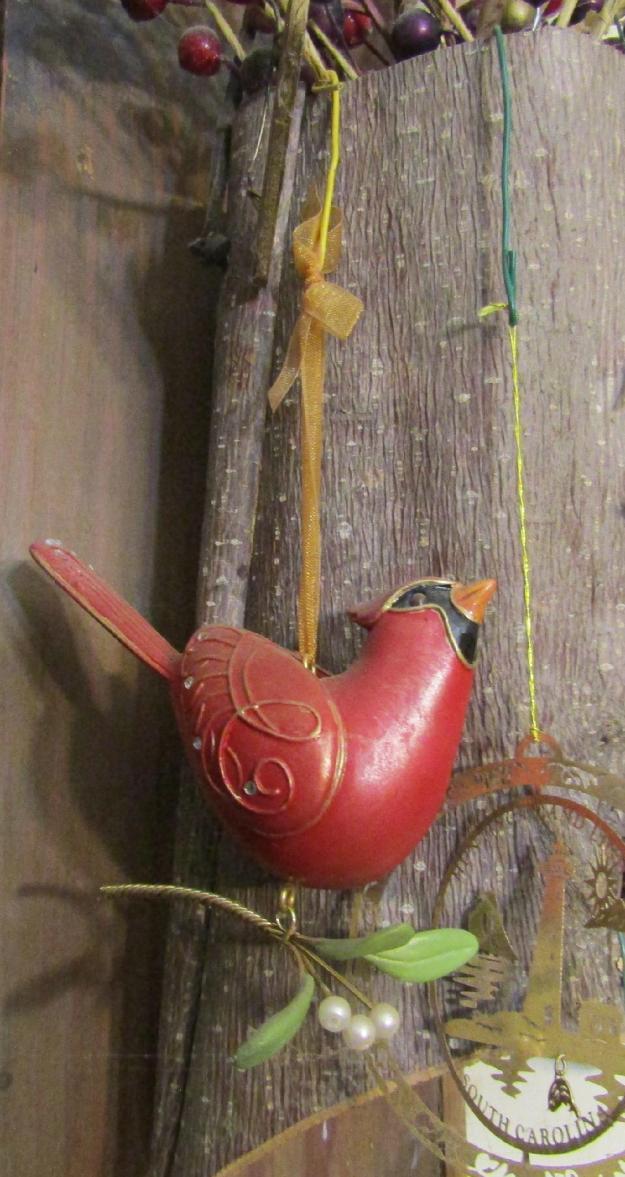
I can be included among such people. My Christmas decorations include an assortment of cardinal figurines and ornaments. There are other birds — doves and penguins for example — associated with the holiday season, but for me the holidays magnify the importance of one of my favorite birds. The cardinal, in its festive red plumage, appears made to order for a symbol of the holiday season.

Cardinal-Ornament

Photo by Bryan Stevens • Northern cardinals are a favorite for makers of Christmas ornaments.

There’s additional evidence to put forward as testimony to the popularity of the Northern cardinal. It’s the official state bird of seven states: Virginia, North Carolina, West Virginia, Ohio, Illinois, Indiana and Kentucky. Only the Northern mockingbird, which represents five states as official state bird, even comes close to the Northern cardinal in this respect.

Even once the holidays are past, there’s nothing like a glimpse of a Northern cardinal to add some cheer to a bleak winter day. Simply add some black oil sunflower seeds to your feeders to welcome this beautiful bird to your yard.

Cardinal-Two 2

Photo by Bryan Stevens • A male Northern cardinal visits a feeder on a snowy afternoon.

Gift suggestions for the bird-lovers on your Christmas shopping list

Although some people like to get an early start on holiday shopping, I’m certain some, like myself, are still in the process of checking those lists. If you’re looking for some ideas for bird and nature enthusiasts on your list, I’ll make a few modest suggestions that could result in making the season merry and bright.

Photo-FieldGuides

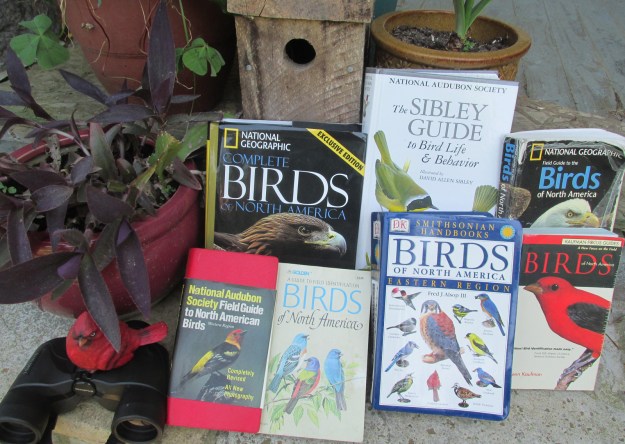
Photo by Bryan Stevens • Field guides are an essential tool for bird identification.

Field guides
If you’ve enjoyed watching the birds that congregate at your feeders or noticing the visitors to your yard and gardens, but you’ve also become curious about the identities of all your feathered visitors, it might be time for a helpful and informative field guide. I prefer field guides illustrated with paintings rather than photographs, but I have a varied collection of guides. I started a long time ago with the Golden Guide to Birds. It’s a classic and still a great guide to help interest children in the birds around them.
Some of the guides I recommend and use myself these days are National Geographic Field Guide to the Birds of North America, The Sibley Field Guide to Birds of Eastern North America, and Peterson Field Guide to Birds of Eastern and Central North America. Any of these field guides should be easily found online or in stores at a cost of under $20.
If you have already acquired a good basic field guide, perhaps you’re ready for more specialized field guides that focus on particular families of birds or on the behavior of backyard birds.
For the warblers, there are several field guides available, including the Stokes Field Guide to Warblers, A Field Guide to Warblers of North America (Peterson Field Guides), and the Warbler Guide.
For a handy guide to identify some of the birds seen on beach and coastal vacations, consider such titles as Stokes Beginner’s Guide to Shorebirds and Shorebirds: An Identification Guide to the Waders of the World, and National Audubon Society Pocket Guide to Familiar Birds of Sea and Shore.
For fans of hawks and allied raptors, several guides exist including A Field Guide to Hawks of North America (Peterson Field Guides), Birds of Prey: Hawks, Eagles, Falcons, and Vultures of North America, and Hawks from Every Angle: How to Identify Raptors In Flight.
In short, there’s a field guide for every family and grouping of birds. With expertly rendered illustrations or photographs, brief and concise text, and helpful range maps, nothing beats a good field guide forYea, improving one’s ability to identify birds. I recommend thumbing through the pages of a good guide over trying to randomly use Google to search online for a bird glimpsed for a brief time.

bird-Feeder

Photo by Pixabay.com • A well-stocked feeder is a first step toward attracting more birds to your yard.

Feeders
Bird feeders come in an astounding variety of shapes and sizes. Nothing will do more to bring birds into our daily lives than maintaining a well-stocked feeder. Be certain to include a bag of sunflower seeds so that your gift will allow the recipient to immediately begin to enjoy the parade of birds sure to flock to the feeder.

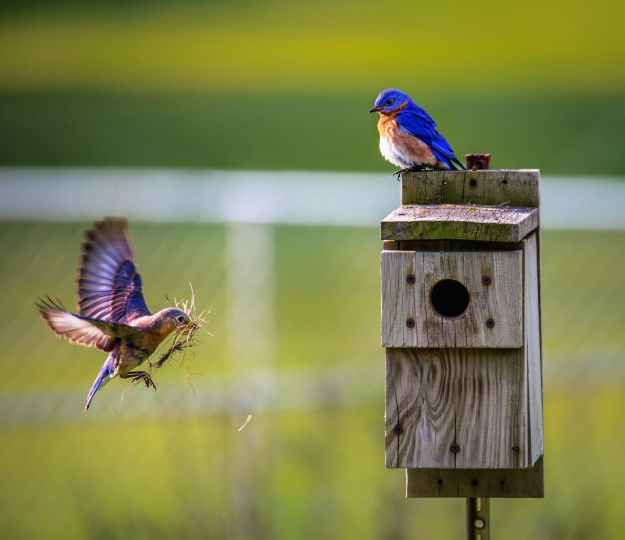
Bluebird-2

Photo by Bryan Stevens • Birds, like this Eastern bluebird, appreciate nest boxes.

Houses
It’s never too early to start thinking about spring and the return of many of our favorite birds. To bring more birds into our lives, it doesn’t hurt to encourage them by providing man-made nesting and roosting boxes. Many of our favorite birds — Eastern bluebird, tree swallow, tufted titmouse, white-breasted nuthatch — are cavity-nesting species but will just as readily raise their young in nesting boxes as in a hole in a tree. With boxes customized to their own particular needs, other birds such as Eastern screech-owl, wood duck and great crested flycatcher will also make use of bird boxes. Many gardening centers, produce stands, feed stores and other shopping outlets sell bird boxes of various designs, shapes and sizes. If you’re shopping for a bluebird box, be certain that the recipient’s yard is a spacious one. Bluebirds feel more comfortable in open surroundings. If the yard is more overgrown and woodsy, consider a box tailored more for a woodland bird like a chickadee or a nuthatch.

binoculars-2164526_1920

Photo by Pixabay.com • A good pair of binoculars will bring birds much closer.

Binoculars
Unless requested, don’t buy binoculars for an adult. Most birders would prefer to pick out their own pair to use to make up-close and personal bird observations. An inexpensive pair, however, could be perfect for fostering in a child an interest in birds and nature. If you have grandchildren, children, or even nephews and nieces, a beginner’s pair of binoculars could make a life-altering gift that lets the recipient view the world in a whole new light.

CalendarCover

Calendars
Birds have always been a popular photography subject for calendars. There’s an almost endless variety of bird calendars, but I’m partial to one produced by the Lee and Lois Herndon Chapter of Tennessee Ornithological Society, of which I am a member. This annual fundraising endeavor features some exceptional bird photography from club members. This year’s calendar features full-color photographs of some of the region’s most colorful and engaging birds. The club sells the calendars for $15 each. For an additional $2 shipping fee, calendars can be sent to any address in the United States. All proceeds are used to support birding opportunities and bird-related causes.
The calendar also features an informative calendar grid with highlights for major holidays as well as important bird-related dates. The calendar’s pages feature more than 80 full-color photographs of area birds, including common favorites and some not-so-common visitors. The front cover features a dazzling photograph of a male rose-breasted grosbeak. If you’re interested in obtaining a calendar, email ahoodedwarbler@aol.com or look up Elizabethton Bird Club on Facebook.


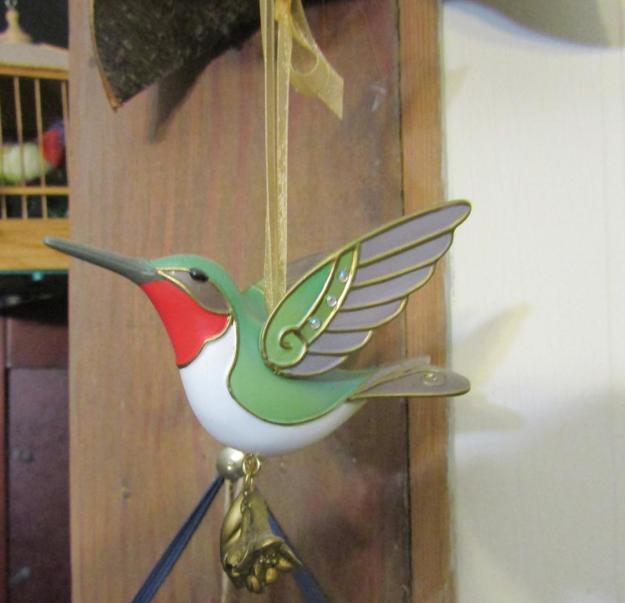
Hummingbird-Ornament

Photo by Bryan Stevens • A bird-related Christmas ornament makes a nice gift.

Ornaments

The branches of my Christmas tree are always weighted heavily with a variety of bird-related Christmas ornaments. Holiday tinsel and baubles make the season look a lot like Christmas if they feature some of our favorite birds such as cardinals, chickadees, hummingbirds, penguins, doves, geese, eagles or any of the other popular species of birds. Choose a fun and unique bird ornament for the enthusiast on your Christmas list.

animals avian beaks birdhouse

Photo by Kevin Blanzy on Pexels.com

Some birds expert at conjuring Halloween-style thrills and chills

nature bird cute wildlife

The  greater tit, a European relative of the Carolina chickadee, has learned to hunt and kill a species of small bat in the Hungarian mountains. • Photo by Pixabay on Pexels.com

Here’s a repost from November of 2018. The timing seems appropriate. 

My ruby-throated hummingbirds set a new record this year, lingering until Oct. 17. Although present on the morning of that date, I didn’t see any that evening. The next morning, their absence — quite notable and somewhat saddening — continued. In all likelihood, I won’t see any more ruby-throated hummingbirds until next April. I hope they arrive early.

Carolyn Baker Martin commented on the post I made on Facebook about the departure of the hummers. Carolyn noted that 2018 has been an interesting year for birds and flowers. Carolyn, who lives in Elizabethton, Tennessee, also shared a recent observation she made of a hummingbird behavior that I’ve never personally witnessed.

“I had a hummer recently in torpor,” Carolyn wrote in her post. “It sat on the feeder a long time without moving or feeding. Finally, a tail feather began to move. It fed constantly for one more day and was gone.”

Despite their small size, most hummingbirds, including the ruby-throated hummingbirds, are less frail than they appear. Torpor is a biological adaptation possessed by hummingbirds and some other creatures that lets them survive a serious cold spell. It’s not quite the same thing, but think of these tiny birds as voluntarily going into a coma when they enter torpor. Comatose or catatonic creatures are a staple of some horror and suspense films, so perhaps a look at how some birds can induce shivers along the spine is in order in view of the celebration of Halloween this week.

Image by Josep Monter Martinez from Pixabay • Bats, like birds, have the power of flight. Scientists have also learned that some unlikely birds have also developed a liking for feasting on bat brains.

The ultimate coma victim is the fabled zombie, but that’s not likely to afflict any of our feathered friends, right? Well, consider the great tits of Hungary, which are relatives of our tufted titmouse and Carolina chickadee. These birds — at least the Hungarian ones — have apparently acquired a taste for brains.

Not human brains, thankfully. The victims of these brain-hungry great tits are a species of bat — a flying creature often associated with the modern celebration of Halloween, as well as legends about vampires — that shared the habitat of these birds in the Bükk Mountains of Hungary. As it turns out, the tits only hunted bats, in this case a tiny species known as common pippistrelle, out of dire necessity.

Bat ecologists Péter Estók and Björn M. Siemers, after observing the odd behavior of the great tits during some winter seasons, conducted a study to see if great tits are consistent devourers of bats’ brains. They discovered that the birds did hunt the bats and had even learned to detect a special call the bats make as they emerge from hibernation. The ecologists conducted their study over two years and learned that the great tits teach others of their kind the special art of hunting bats. They also learned that the birds made efficient killers, dragging the bats from their roosts and cracking their skulls to get at their brains.

However, when provided with plenty of alternative food, including such favorite items as bacon and sunflower seeds, the great tits chose to eat these items rather than actively hunt bats. The researchers concluded that great tits only resort to harvesting the brains of small bats during times of scarcity during harsh winters. The bizarre story is even featured in the title of a fascinating book by Becky Crew titled “Zombie Birds, Astronaut Fish, and Other Weird Animals.”

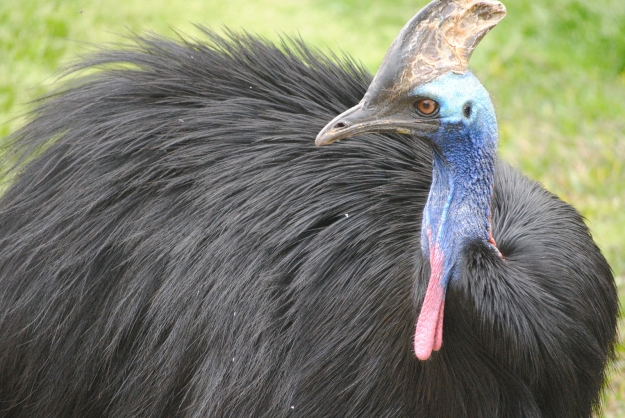
Cassowary

Photo by lailajuliana / Pixabay.com • The southern cassowary reaches a height of more than five feet and weighs 120 pounds. The bird has a fearsome but perhaps undeserved reputation for attacks on humans.

So, if humans have nothing to fear from brain-hungry birds, are there any birds that we should fear? Some experts suggest that precautions might be in order if one expects to come into close proximity with a southern cassowary, which is the third-tallest and second-heaviest living bird, smaller only than the ostrich and emu.

The cassowary, a native of New Guinea and northeastern Australia, has developed a reputation as a fearsome bird capable of injuring or killing humans. According to ornithologist Ernest Thomas Gilliard, cassowaries deserve their reputation. In his 1958 book, “Living Birds of the World,” he explained that the second of the three toes of a cassowary is fitted with a long, straight, dagger-like claw which can sever an arm or eviscerate an abdomen with ease. According to Gilliard, there have been many records of natives being killed by this bird.

A thorough study, however, has partly exonerated the cassowary from these misdeeds. In a total of 150 documented attacks against humans, cassowaries often acted in self-defense or in defense of a nest or chicks. The only documented death of a human took place in 1926 when two teenaged brothers attacked a cassowary with clubs. The 13-year-old brother received a serious kick from the bird, but he survived. His 16-year old brother tripped and fell during the attack, which allowed the cassowary to kick him in the neck and sever the boy’s jugular vein.

Mesembriornis_model

Model of the terror bird Mesembriornis at the Chicago Field Museum, prepared by taxidermist Leon L. Pray, seen on the left.

So we can rest easier knowing that murderous birds that reach a height of almost six feet tall are unlikely to terrorize us should we travel to the lands down under. A more ancient relative of the cassowary, however, might have been a different story had humans lived during the same time period. Phorusrhacids, also known as “terror birds,” were a group of large carnivorous flightless birds that once had some members reign as an apex predator in South America before they went extinct around two million years ago. The tallest of the terror birds reached a height of almost 10 feet. Titanis walleri, one of the larger species, even ranged into what is now the United States in Texas and Florida.

web-terror

Terror birds were equipped with large, sharp beaks, powerful necks and sharp talons. Their beaks, which would have been used to kill prey, were attached to exceptionally large skulls. Despite their fearsome appearance, these birds probably fed on prey about the size of rabbits. Perhaps not knowing this, Hollywood has cast these birds as monsters in such films as 2016’s “Terror Birds” and 2008’s “10,000 BC.”

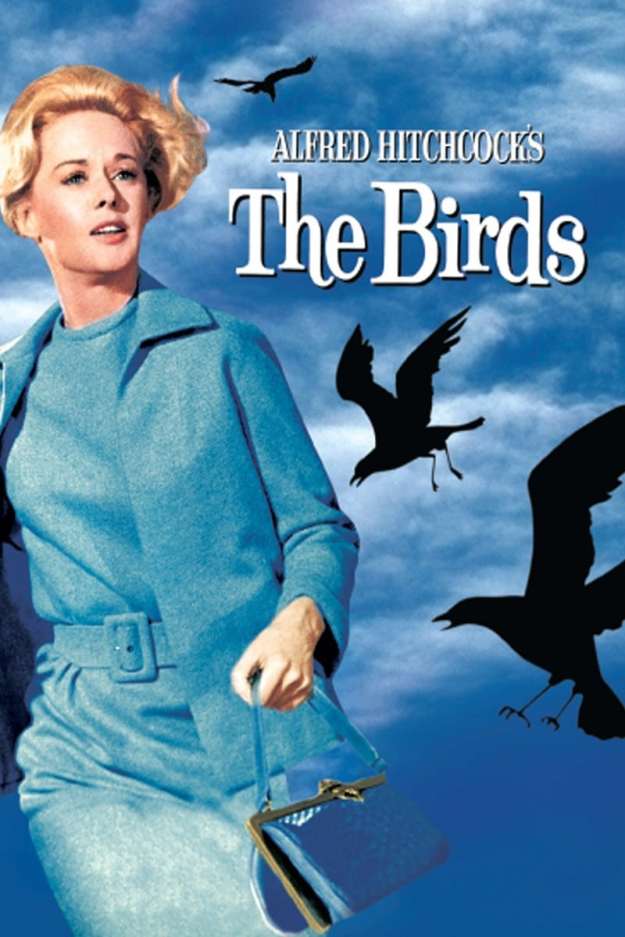
Besides, casting birds as the villains had already been done back in 1963 when Alfred Hitchcock released his film, “The Birds,” based loosely on a short story by Daphne du Maurier. The film, which starred some big Hollywood names such as Rod Taylor, Tippi Hedren, Jessica Tandy, Suzanne Pleshette and Veronica Cartwright, cast a whole new light on a “murder” of crows. Today, the film has achieved the status of a Hollywood classic. I guess it just goes to show that werewolves, zombies, and other Halloween monsters have nothing on our fine feathered friends.

TheBIRDS!

Great horned owl reigns as ‘feathered tiger of the night’ among birds


owl-Alexas-Fotos-Pixabay

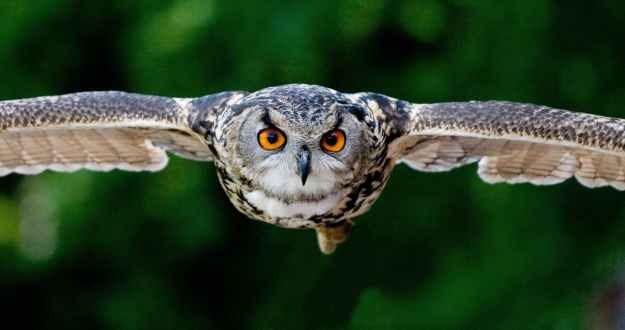
Photo by Alexas-Fotos/Pixabay • A great horned owl is capable of almost silent flight, which helps the predatory bird take prey by surprise. Many myths and superstitions surround the world’s owls, but the truth about owls is often more fascinating.

I’ve been so focused on migrating warblers and other songbirds of late that I felt some surprise when outside near dark on Oct. 10 when I heard the low hoots of a feathered phantom from the woodlands on the ridge behind my home.

The hooting of a great horned owl is an instantly recognizable sound and always sends shivers traveling along the spine. The after-dark calls of this large predatory bird also got me to thinking about previous encounters with this owl, such as watching one glide silently over wetlands in Shady Valley, Tennessee, many years ago. I had traveled to the bogs in Shady Valley maintained by The Nature Conservancy in the hope of witnessing the mating displays of the American woodcock. Before those avian rituals began, a great horned owl kicked off the evening in style. I still remember the large owl passing like a dark shadow only a couple of feet over my head. The wings did not even appear to flap as the owl’s silent flight propelled the bird out of sight within seconds.

gray owl showing orange and black left eye

Photo by Flickr on Pexels.com

I also remembered another occasion while driving on a wet and stormy night, rounding a curve, and finding an owl, upright in the road, standing over fresh roadkill. The owl’s eyes reflected the beams of my headlights before it seized its meal in powerful talons and flew off into the darkness. I’ve always wondered if the owl had killed something in the road or came along at just the right moment to scavenge a meal after some creature had been killed by a passing car.

Owls have been around for a long time, according to “Owls: The Silent Hunters,” an episode of National Geographic’s series, “Wildlife Wonders.” The narrator for the episode reveals that the first recognizable owls first showed up in the fossil record about 40 million years ago. Since that time, owls have evolved into a fantastic, widespread and diverse group of about 135 different species. North America is home to several species, including the far-ranging great horned owl, which ranks as one of continent’s largest owls. It’s not the largest owl in North America, but it is the most widespread of the continent’s large owls. The snowy owl — popularized in J.K. Rowling’s fiction as Harry Potter’s loyal companion owl, Hedwig — is one of the largest owls in the Northern Hemisphere, bigger than such large owls as great horned owl and barred owl. The aptly named great gray owl is larger in body size than the great horned owl, but the snowy owl is heavier and more massive than either of these two contenders.

Snowy_Owl

Photo by U.S. Fish & Wildlife Service • A captive snowy owl educates the public about owls and some of the perils they face in an environment shared by humans.

Nevertheless, the great horned owl is large enough, ferocious enough, and lethal enough to have been described by many ornithologists as a “feathered tiger of the night.” The great horned owl lives and hunts in the woodlands of northeast Tennessee, southwest Virginia and western North Carolina. They thrive in rural areas, but these adaptable owls have also learned to make their way in the suburbs and even city parks. Not by any stretch of the imagination, however, is this owl confined to the southern Appalachians. These owls also make their home in the wetlands along the southern Atlantic coast, as well as arid deserts of the American southwest.

During a September vacation many years ago to Fripp Island, South Carolina, a solitary great horned owl provided several days of entertainment for my parents and me. We took a golf cart at dusk each evening to park at a spot that offered a good view of the marshes and tidal creeks in the interior of the island. For several consecutive days, the owl flew to a perch on a piece of driftwood as the sun sank below the horizon. We would wait patiently for only a brief interval before the owl entertained us with its low hoots that resonated across the marsh.

animal animal photography avian beak

Photo by Pixabay on Pexels.com

The great horned owl is capable of taking a wide variety of prey, including many rodents ranging in size from mice and voles to rabbits and squirrels. Although various mammals form the most part of its diet, the great horned owl will kill adult birds as large as a Canada goose, wild turkey and great blue heron. This owl also preys on fish, reptiles, amphibians and even insects. The great horned owl is one of the few predators that preys regularly on skunks. Lacking a well-defined sense of smell, owls aren’t bothered in the least by the skunk’s powerful arsenal of stink. That ability to fly and glide using almost completely silent wings has given this nocturnal predator an enormous advantage over many of its prey species.

A wild great horned owl’s longevity peaks at around 13 years of age. Captive owls, however, have been reported reaching ages of more than 30 years old.

Various Native American tribes have held owls in high respect. Dwight G. Smith, author of “Great Horned Owl,” a book in the “Wild Bird Guides” series, noted that members of the Zuni tribe of the southwestern United States often hold owl feathers in their mouths to impart the owl’s ability to hunt silently onto their own hunting abilities.

bird night forest owl

Photo by Pixabay on Pexels.com

The main fascination humans hold for owls rests in their mystery. Owls, being mainly nocturnal creatures, rarely cross paths with humans. These predatory birds have many adaptations that help them stake out their claim on the night hours. Owls possess large eyes with binocular vision and extremely accurate depth perception — which also make them seem more expressive to human observers and perhaps helped establish the reputation of the “wise” owl.

Owls cannot completely rotate their heads, but they come close. Owls are flexible enough, however, to be able to turn their heads in a 270-degree arc, or three-quarters of the way around. Owls have keen hearing to go with their excellent eyesight. In fact, owls don’t even need to see their prey to capture it. Tests with barn owls in total darkness have shown that they are capable of catching mice by hearing alone. An owl’s prominent facial disk directs sounds toward their ears. The “ear tufts” on the great horned owl and some other relatives are ornamental feathers, and not actual ears.

greathornedowl-2

Photo by Bryan Stevens / A great horned owl perches on a post during its part in a wild bird show at Callaway Gardens in Pine Mountain, Georgia.

Around the world, the world’s owls have earned some rather descriptive common names. Examples include pharoah eagle-owl, vermiculated fishing owl, fearful owl, pearl-spotted owlet, chestnut-backed owlet, spectacled owl, black-and-white owl, crested owl, cinereous owl, tawny owl, whiskered screech owl, greater sooty owl and desert owl.

Americans will observe Halloween on Wednesday, Oct. 31, which brings me to one other piece of owl trivia. There’s an ancient Chinese belief that owls snatch the souls of incautious people — just something I thought you might want to know if you find yourself out and about after dark on Halloween night and hear the hoots of a nearby owl.

great_horned_owl_and_chick-2

Photo by George Gentry/U.S. Fish and Wildlife Service • A great horned owl is shown on the nest with one of her chicks.

Tennessee warbler visits Volunteer State only a few weeks each year

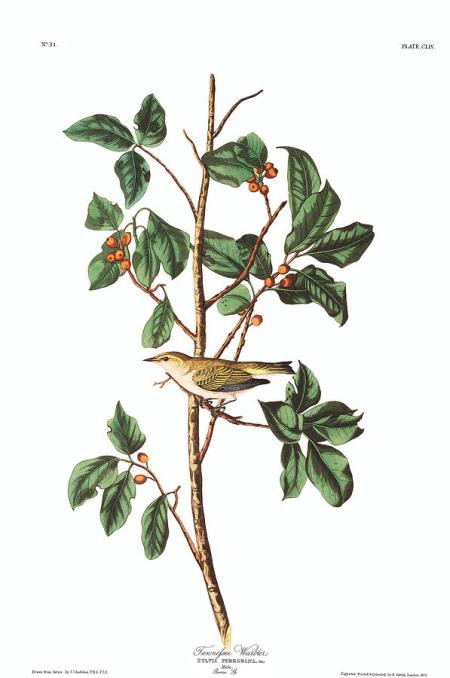
2-tennessee-warbler-john-james-audubon

A Tennessee warbler as painted by early naturalist and painted John James Audubon. Because the first of these warblers was found in Tennessee, the bird was given a rather inappropriate name. At most, they spend a few weeks each year in the Volunteer State during migration.

This fall has been a good time to see warblers. Some of the more common ones I have noticed in the yard so far have included American redstart, chestnut-sided warbler and black-throated green warbler. Of course, these two species nest in the region during the summer.

One of fall’s first true migrants showed up on Sept. 17 when a rambunctious Tennessee warbler made its debut by chasing a male Northern cardinal from the blue spruce near the creek.

The pioneering American ornithologist Alexander Wilson gave the Tennessee warbler its name, which, unfortunately, is not an accurate moniker.

Here’s some trivia for you should you ever find yourself competing on the game show “Jeopardy” and the category is “Warblers.” Four of our warblers — Kentucky Warbler, Louisiana waterthrush, Connecticut warbler and Tennessee warbler — bear common names that honor states. The Kentucky warbler and Tennessee warbler are named for the states where they were first found and described by Wilson in 1811. Neither the Tennessee warbler or Kentucky warbler are particularly affiliated with the states for which they were named. In fact, the Tennessee warbler passes through the Volunteer State only for a few weeks each year during spring and fall migration. Its closest breeding range is in the boreal forests of Michigan, and these warblers spend the winter in Mexico or farther south. Wilson got lucky and found his Tennessee warbler along the Cumberland River during migration.

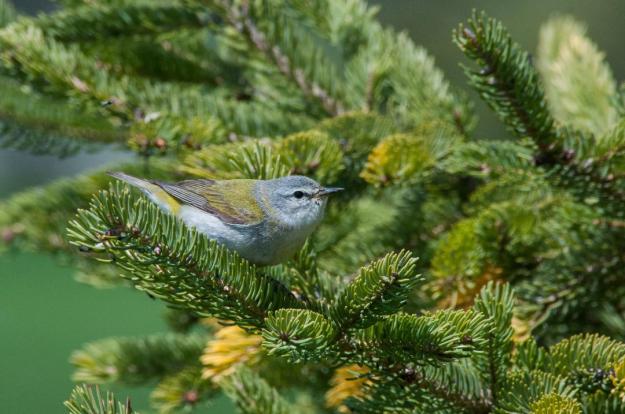
TennesseeWarblerByPaulSparks_AdobeStock

Tennessee Warbler Photo by Paul Spark/Adobe Stock • The Tennessee warbler, while named for the Volunteer State, spends very little time within Tennessee. These warblers migrate through the region each spring and fall but nest much farther north in the boreal forests.

Don’t blame Wilson too harshly for the mistake. Even after he “discovered” the first Tennessee warblers back in 1811, it would be almost another century before scientists finally located the bird’s nesting grounds in Canada in 1901. The remote and inaccessible nature of the the region helped prolong this mystery about the Tennessee warbler’s life cycle.

In almost 25 years of birding, I’ve never seen a Tennessee warbler during spring migration. I see many of these birds every autumn as they stage their fall migration through the Volunteer State to reach destinations farther south. The appearance of the Tennessee warbler varies greatly depending on the season. In autumn, most Tennessee warblers are greenish-yellow birds with whitish-gray underparts. In the spring, the basic green and white pattern remains evident, but both males and females sport a gray head and a black line that runs through the eye and along the side of the bird’s face. The plumage — at least in illustrations and photographs — is shown as more crisp and distinct with spring birds.

Some experts have floated the opinion that the Tennessee warbler should be named named “coffee warbler,” since wintering individuals are attracted to coffee plantations in Central America. According to the website, “Birds of North America,” recent studies demonstrate the importance of shade coffee plantations for Tennessee warblers during their time spent outside North America every winter. Other warblers, such as the black-throated blue warbler, are also closely associated with coffee plantations during the wintering season.

Some years find Tennessee warblers in great abundance, probably thanks to a feast of caterpillars infesting the spruce trees in the boreal forests where these warblers nest during the summer months. In years of famine when the caterpillars are less rampant in the forests the Tennessee warbler calls home, the birds raise fewer young, and the population grows less dramatically.

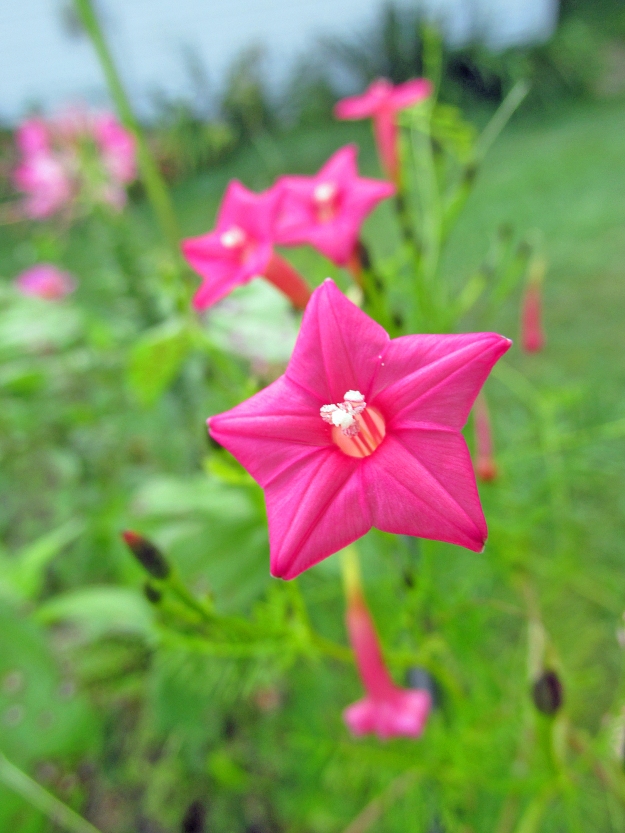
Tiny-MorningGlory

Photo by Bryan Stevens • Tennessee warblers are nectar thieves, punching holes in the sides of flowers to get nectar without contributing to the pollination process.

The Tennessee warbler is not strictly an eater of caterpillars and insects. This warbler has a bit of a sweet tooth — or should that be sweet beak? They visit flowers to partake of nectar; however, the Tennessee warbler is not a good example of an avian pollinator. Tennessee warblers cheat by poking holes in the flower with their bills to steal the nectar without having to let the flower’s pollen accumulate on their bills and heads. The Tennessee warbler will also come to sugar water feeders put out on their wintering grounds to attract hummingbirds. The Tennessee warbler also supplements its diet with fruit and berries.

Here’s something that might also come in handy in a test of your knowledge of trivia some day: Not only is the Tennessee warbler named for the state, but the capital city of Nashville also has its name linked another member — the Nashville warbler — of the warbler clan. Once again, Wilson provided a rather inaccurate name, as the bird in question is only a visitor to Nashville during a limited window of time each year.

While the briefly visiting Tennessee Warbler already pays tribute to our state with its common name, the Northern mockingbird was selected in 1933 as the official bird for Tennessee. This relative of the brown thrasher and gray catbird also serves as the state bird for Arkansas, Florida, Mississippi and Texas. At my home, Northern mockingbirds are usually evident only during the winter months. I haven’t seen one at home so far this year. Gray catbirds were scarce this summer, but a pair of brown thrashers provided much entertainment as they raised young in my yard and gardens.

mockingbird-nov11

Photo by Bryan Stevens • The Northern Mockingbird has been the official state bird for Tennessee since 1933.

For now, I think Tennesseans will probably stick with the mockingbird, rather than the Tennessee warbler, when it comes to offering one of our feathered friends the accolade of official state bird. That’s not to say we can’t enjoy observations of this warbler during its brief forays through the state. Don’t wait too long, though. The window of opportunity usually closes by mid-October.

Mother Nature’s whims can produce major impacts on birds

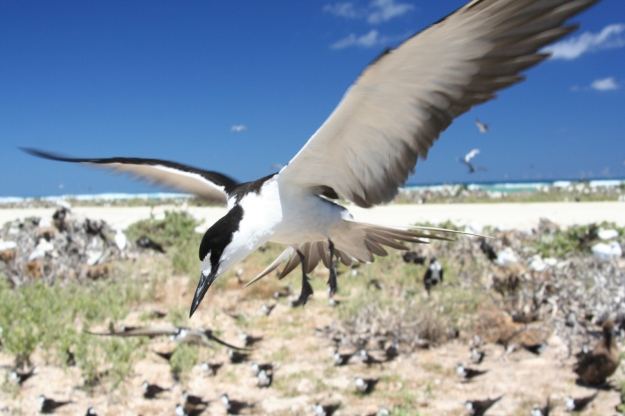
Sooty_tern_flying

Photo by U.S. Fish and Wildlife Service/Duncan Wright The sooty tern, pictured, nests mainly in Hawaii, but some also nest on the islands of the Dry Tortugas, west of the Florida Keys. In 2004, Hurricane Frances blew one of these tropical birds to Holston Lake in Bristol. Severe storms also present devastating obstacles for other birds.

With Hurricane Florence dominating the headlines in recent weeks, it’s only natural to speculate on whether such storms can impact birds in a negative way.

According to a 2011 blog post made on the National Wildlife Federation website, hurricanes can be bad news for some birds. Naturally enough, sea birds and waterfowl are most exposed to the forces of a hurricane. Some birds will move inland to avoid the incoming storm. The birds that inhabit our yards and gardens will ride out the storm using special adaptations. Songbirds will automatically tighten their toes around their perches, riding out the winds of a hurricane by holding onto a branch with a death grip. It’s the same adaptation that lets them sleep on a branch without letting go and falling off during the night.

The blog points out that the news often covers the appearance of rare species after a major storm. Some of these birds transported to unusual locations are probably younger or weaker birds. Once transported far from their usual range by a hurricane, it can take weeks to return home — if they can find the right foods on their way back.

John-James-Audubon-Bachman_s-Swamp-Warbler.-1.-Male.-2.-Female.-Gordonia-pubescens.- (1)

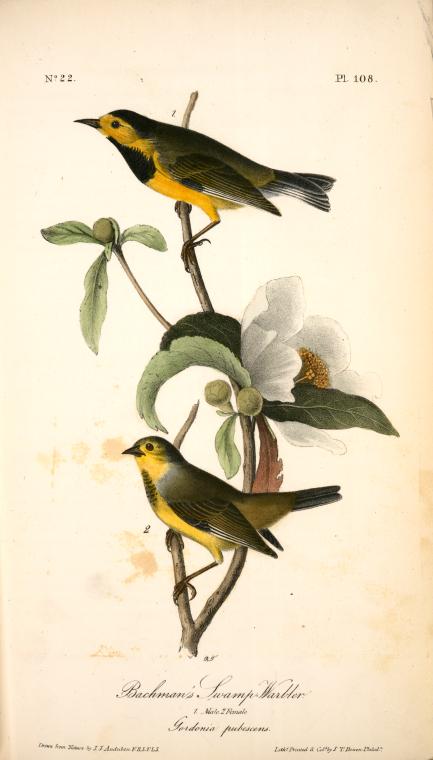
Early naturalist and accomplished artist John James Audubon painted Bachman’s warbler without ever seeing a living one. A friend sent him some skins of the warbler collected near Charleston, South Carolina. A hurricane may have contributed to the extinction of Bachman’s warbler.

In a worst case scenario, hurricanes may have dealt fatal blows to some bird species. For instance, a hurricane may have delivered the knock-out blow to a species of warbler that went extinct last century, according to the website, Field Guide to Extinct Birds. A hurricane that slammed into Cuba in the 1930s when most of the Bachman’s warbler population was wintering on the island might have wiped out enough of the population to make the survivors too rare and far-flung to find each other to breed. The warbler, sensitive to habitat destruction from logging and already in a steep decline, never seemed to recover. It was the ultimate example of keeping all of one’s eggs — or birds — in one unlucky basket.

Discovered in 1832 near Charleston, South Carolina, by the Reverend John Bachman, this warbler attracted little attention for the first half century after its discovery. Bachman sent some skins of the bird to his friend, the artist and early naturalist John James Audubon. Subsequently, Audubon painted this warbler by using those skins and Bachman’s description of the bird’s habits for inspiration. Ironically, considering he described the species for science, Audubon never actually laid eyes on an actual living Bachman’s warbler.

The last specimens of Bachman’s warbler were collected in Mississippi in the early 1940s. The last strongholds for breeding Bachman’s warblers in the United States were Fairfax County, Virginia, in the 1950s and South Carolina’s I’on Swamp in the early 1960s. The last photograph documenting a Bachman’s warbler was taken in 1954. in Charleston, South Carolina, bringing the story of this warbler full circle from its discovery in the same vicinity back in 1832. No Bachman’s warbler sightings have been confirmed since 1961, despite reports in the 1970s and 1980s, as well as reports made in the spring of 2000 and 2001 in the Congaree Swamp National Monument in Richland County, South Carolina. None of those sightings could be confirmed.

Like the ivory-billed woodpecker and Eskimo curlew, Bachman’s warbler is another bird likely to be labeled for the near future with the tag “likely extinct” associated with its name. Like the large woodpecker and the shorebird with a penchant for long-distance migration, the Bachman’s warbler went out with a whimper, not a bang, with most of its viable population snuffed out by an October hurricane just as the species returned to Cuba for the winter season.

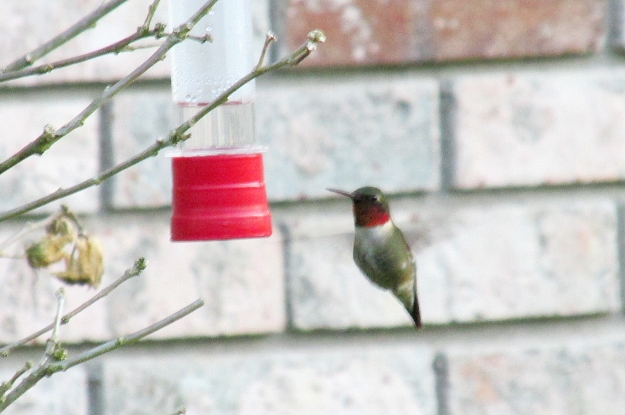
Ruby-throat

Photo by Bryan Stevens • Ruby-throated Hummingbirds make a non-stop crossing of the Gulf of Mexico. A hurricane in the Gulf during migration could have serious consequences for this small bird.

More recently, experts worried Hurricane Irma might have delivered a knockout blow to the population of another tiny species of warbler. The Barbuda warblers on the tiny Caribbean island of Barbuda were feared exterminated in the wake of Irma. When the storm hit the island in September of 2017, its path affected more than 90 percent of the island and nearly wiped out the available habitat for the warbler, which already had a Near Threatened status. After the passage of the storm, participants in searches for the warbler turned up sightings of the bird. Nevertheless, the population status and ability to fully recover remains uncertain.

Science keeps adding to its knowledge of how birds are affected by hurricanes and other storms. A 2017 study showed possible consequences for a seabird known as the sooty tern in relation to hurricanes.

The study, published in the peer-reviewed open-access journal PeerJ, is the first to map the birds’ annual migratory path and demonstrate how its timing and trajectory place them in the direct path of hurricanes moving into the Caribbean after forming over the Atlantic.

Climate change threatens to bring about more frequent and powerful hurricanes, which could be bad news for the terns. Migration is a stressful undertaking for birds. If they encounter a strong storm in a weakened state, the results could be catastrophic. The study revealed a strong relationship between the numbers and locations of bird deaths and the numbers and locations of hurricanes. The study also showed that it isn’t just monster storms with the potential to cause devastation. Tropical Storm Delia, a small storm in the Gulf of Mexico in 1973, killed a lot of sooty terns. Essentially, the terns were in the wrong place at the wrong time.

Shorebirds

Photo by Bryan Stevens • A mixed flock of Short-billed and Long-billed Dowitchers and a Ruddy Turnstone at Huntington Beach State Park in South Carolina. Hurricanes can interrupt the migrations of even these long-distance migrants.

Of course, the sooty tern is not a rare bird. About 80,000 or more of these terns are estimated to breed in the Dry Tortugas each year. That’s the entire point, however; Bachman’s warbler was also once considered a common bird.

All of these examples point to the resilience of birds, but there’s also a lesson to learn. We should never take any of our feathered friends for granted. While the winds and rains from a hurricane can decimate human lives, wildlife is not immune. Sadly, birds can weather many a storm, but sometimes they get swamped.


Common nighthawk flocks form part of fall migration spectacle

Nighthawk

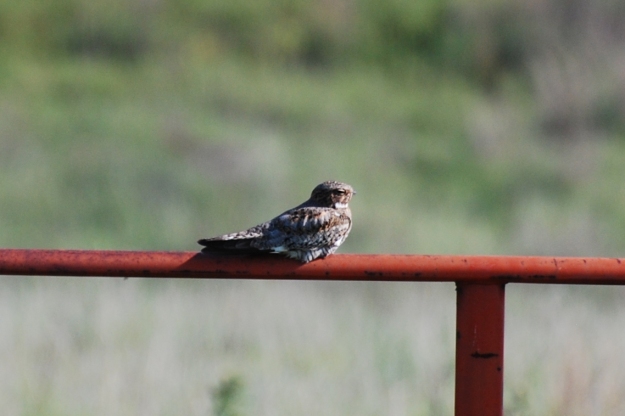
Photo by Jean Potter • A common nighthawk rests on a metal railing.

With September advancing on the calendar, I have been keeping an eye on the skies. For the most part, I focus on the upper branches of trees and feeders during the migration season, but I don’t forget the need to look skyward from time to time.

The reason? Well, that’s the best way to detect soaring raptors or flocks of migrating common nighthawks. The autumn sky is also a popular flyway for other birds, including chimney swifts and swallows.

So, what is a common nighthawk? First, this bird, despite what is implied by its name, is not a hawk. It’s also not strictly nocturnal. Particularly in the fall, nighthawks are active during daylight hours when engaged in catching winged insects. Outside of fall migration, these birds can often be observed over large parking lots or well-lit streets, snatching up insects swarming around the light poles.

The common nighthawk is one of three members of the nightjar family found in the region during the summer months. The other two nightjars are the whip-poor-will and chuck-will’s-widow, birds that produce their namesake vocalizations in the nocturnal hours. Both of these species migrate, but they don’t take the dramatic approach employed by nighthawks. Each fall, common nighthawks form large flocks, ranging in size from dozens to hundreds or even thousands of individuals, as they migrate south for the winter.
john_james_audubon_common_nighthawk_bird_print

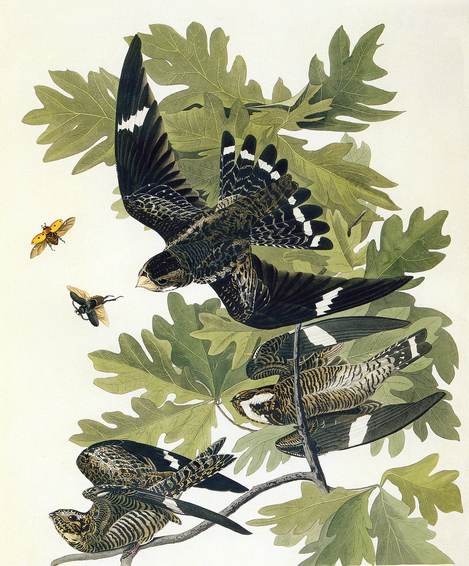
Early American naturalist and artist painted this dynamic scene of common nighthawks.

The whip-poor-will, after the common nighthawk, is the second most widespread member of its family to spend its breeding season in North America. The whip-poor-will ranges from southern Canada to the Gulf states. This bird also occurs in Arizona, New Mexico and southwestern Texas. The whip-poor-will favors habitat consisting of deciduous woodlands and the edges of forests.

All members of the nightjar family feed exclusively on insects that are caught on the wing. In this respect, the nightjars can be considered the nocturnal counterparts of the swallows. The nightjars have comparatively large, gaping mouths they use to scoop up flying insects. They also have large eyes, an adaptation to their nocturnal lifestyle.

Whip-poor-will numbers have been declining in the past few decades. These nocturnal birds frequent woodland edges, but they seem to be rather particular about such habitats. A forest that is too mature seems to hold little interest for them. Disturbed habitats, such as those created by logging, are acceptable to the birds once secondary growth begins. As this new growth matures, however, the whip-poor-will apparently abandons such territory. Because of these requirements, whip-poor-wills can be somewhat localized in their distribution and sometimes difficult to locate.

Nighthawk-PHOTO

Photo by U.S. Fish and Wildlife Service • A common nighthawk finds a perch for a brief rest.

When I was a kid, one of my favorite summer activities was sitting on the front porch of my grandparents’ home and listening to the whip-poor-wills call after dark. I remember how the plaintive call would be repeated for long intervals before a passing automobile’s headlights might frighten the bird into silence. Then, after a brief pause, the “whip-poor-will” calls would, tentatively at first, begin again and continue throughout the night.

Today, I’m living in my grandparents’ old home, and the whip-poor-wills no longer call. I heard a single individual that called for a single evening back in May of 1997, but that was apparently a migrating bird that did not remain in the surrounding woodlands. The only member of the nightjar family that I dependably encounter at home these days is the common nighthawk, and then only during that narrow window of late summer and early autumn.

Unlike whips and chucks, the common nighthawk isn’t active only after dark, which makes it much easier to observe these birds. They look somewhat like swifts and swallows but are much larger. They are brownish-gray birds with pointed wings and forked tails. They are easily identified by distinctive white patches on the underside of their wings.

The nightjar, or Caprimulgidae, family of birds is also sometimes known as “goatsuckers.” There are almost 80 species of nightjars in the world. Less than 10 occur in North America. The common nighthawk, whip-poor-will and the chuck-will’s widow are neotropical migrants. While they breed in a wide range of territory in North America, they spend their winters in Central and South America. Like all nightjars, nighthawks feed almost exclusively on insects, which they catch on the wing.

Many of the common nighthawk’s relatives have been given descriptive names, such as long-trained nightjar, collared nightjar, spot-tailed nightjar, red-necked nightjar, golden nightjar, fiery-necked nightjar, swamp nightjar, pennant-winged nightjar, lyre-tailed nightjar, little nightjar, sickle-winged nightjar, rufous-bellied nighthawk, short-tailed nighthawk, sand-coloured nighthawk and least nighthawk.

So, keep looking skyward. The next flock of migrating common nighthawks may fly over your home. These flocks are usually on the move throughout September although they begin to appear as early as late August. They can also appear almost magically, as if out of thin air. First, observers may see one of two birds, then several, followed quickly by dozens or sometimes hundreds as they wheel and cavort in the skies overhead with impressive grace and agility. I’ve seen flocks that would easily number more than 500 birds in locations throughout the region, although flocks often number only a couple of dozen birds. The two flocks I’ve observed so far this migration season numbered about thirty and fifty birds, respectively.

41004068_10215014667832542_3336138056443887616_o

Photo by Bryan Stevens • Rising clouds provide a backdrop for a flock of migrating nighthawks.