Tag Archives: Birding

There’s change in the air…

With every passing day, autumn is creeping closer. The calendar indicates that the first official day of fall is Sept. 23, but the rest of the world around us doesn’t wait for us to turn the page.

Photo by Bryan Stevens Asters, which come in a variety of colors, are usually a late-blooming wildflower.

Photo by Bryan Stevens
Asters, which come in a variety of colors, are usually a late-blooming wildflower.

Fall is upon us, which is apparent in a myriad of subtle signs, from the blooms of new wildflowers to the last surge of the season’s butterflies and dragonflies.

Of course, there’s also the migration of our feathered friends.


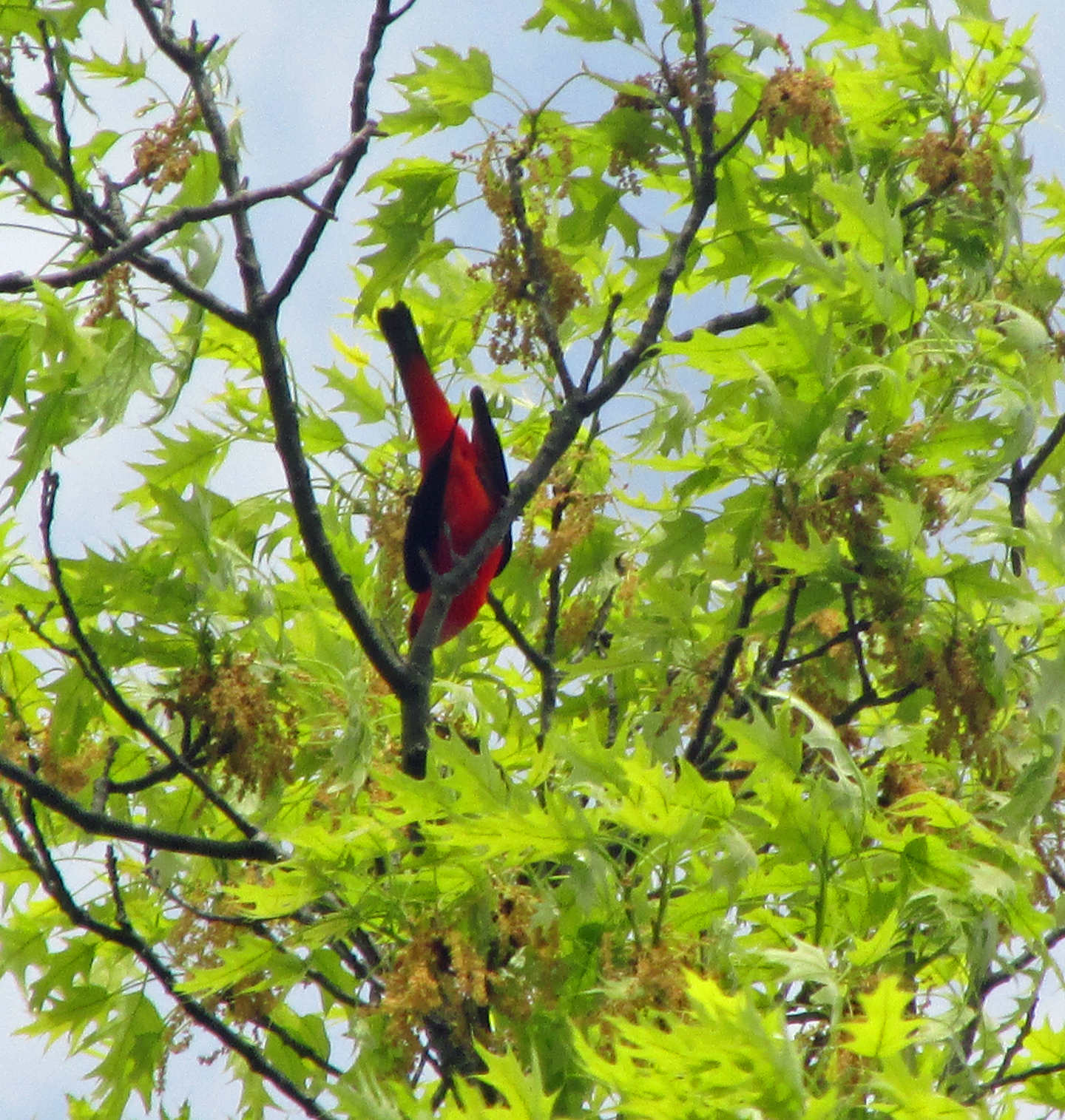
The dazzling birds of spring, such as Scarlet Tanagers and Rose-breasted Grosbeaks, are winging their way through our backyards again.

Photo by Bryan Stevens  Many butterflies, such as this swallowtail, look rather tattered this far into the season.

Photo by Bryan Stevens
Many butterflies, such as this swallowtail, look rather tattered this far into the season.

Many of these visitors have adopted a more subdued appearance as they stage their earlier migration flights in reverse. Then, there are fall warblers, sometimes also known by birders as “confusing fall warblers” since not only do observers have to distinguish between differences in male and female plumages, but also must contend with immature birds that resemble neither of their parents.


Want to learn how to quickly identify some of these so-called “confusing” warblers you may see flitting through the treetops this fall? Simply visit

http://dl.allaboutbirds.org/download_the_warbler_guide_quickfinders?utm_campaign=Warrbler-Campaign&utm_source=facebook&utm_campaign=Warbler-Campaign&utm_source=adwords&gclid=Cj0KEQjw-dSgBRDb0oOl9MzxqMEBEiQAkHqy-YYJxjOHJaXTUB4yRx0CewNowVY0m5PyD9K46roYfJkaAkuO8P8HAQ

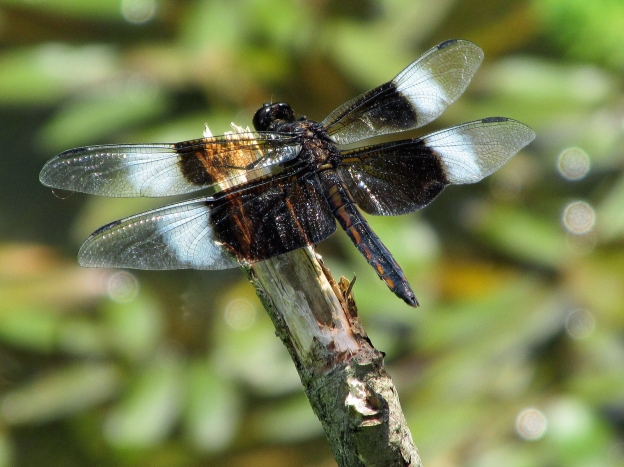
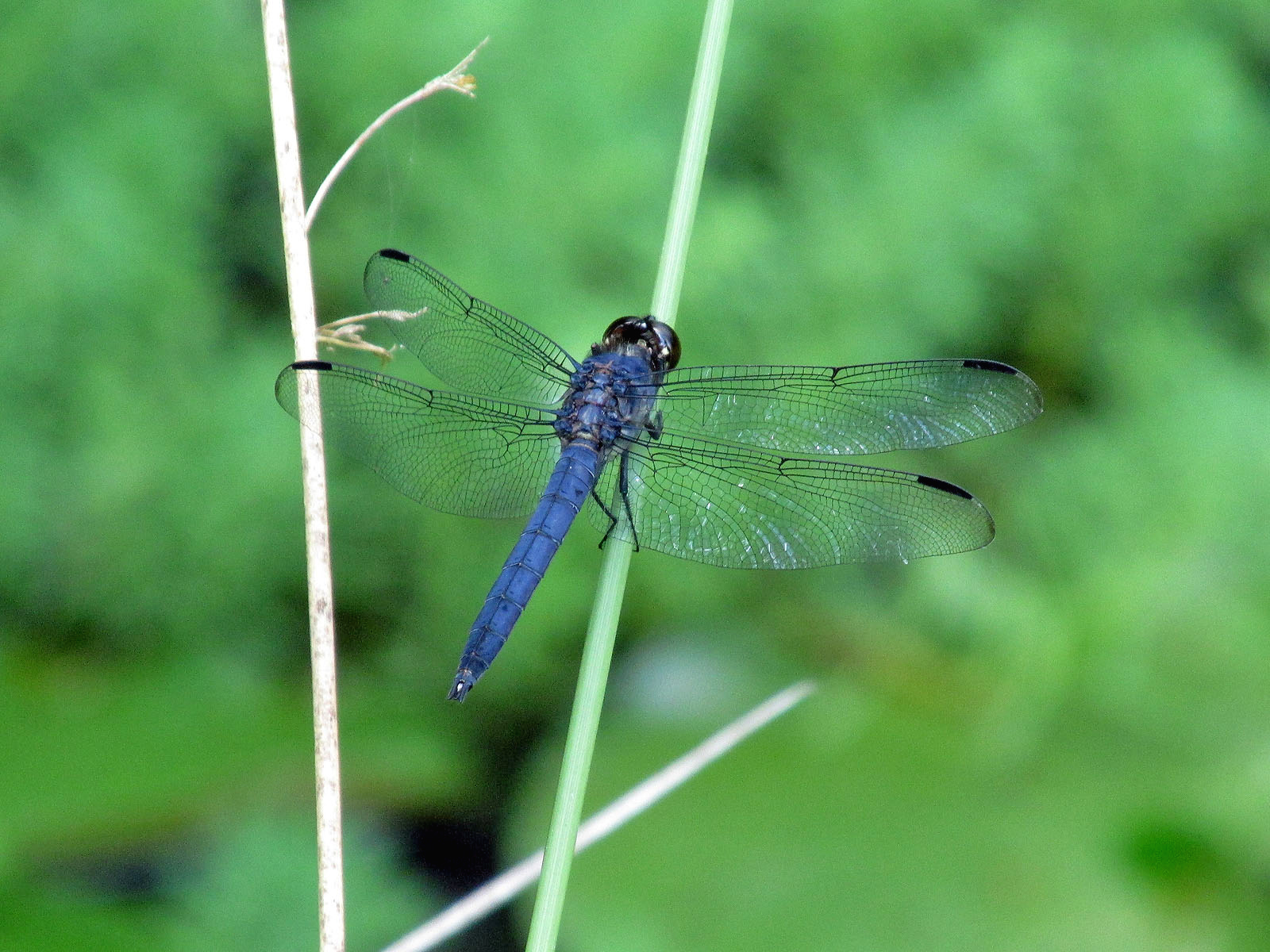
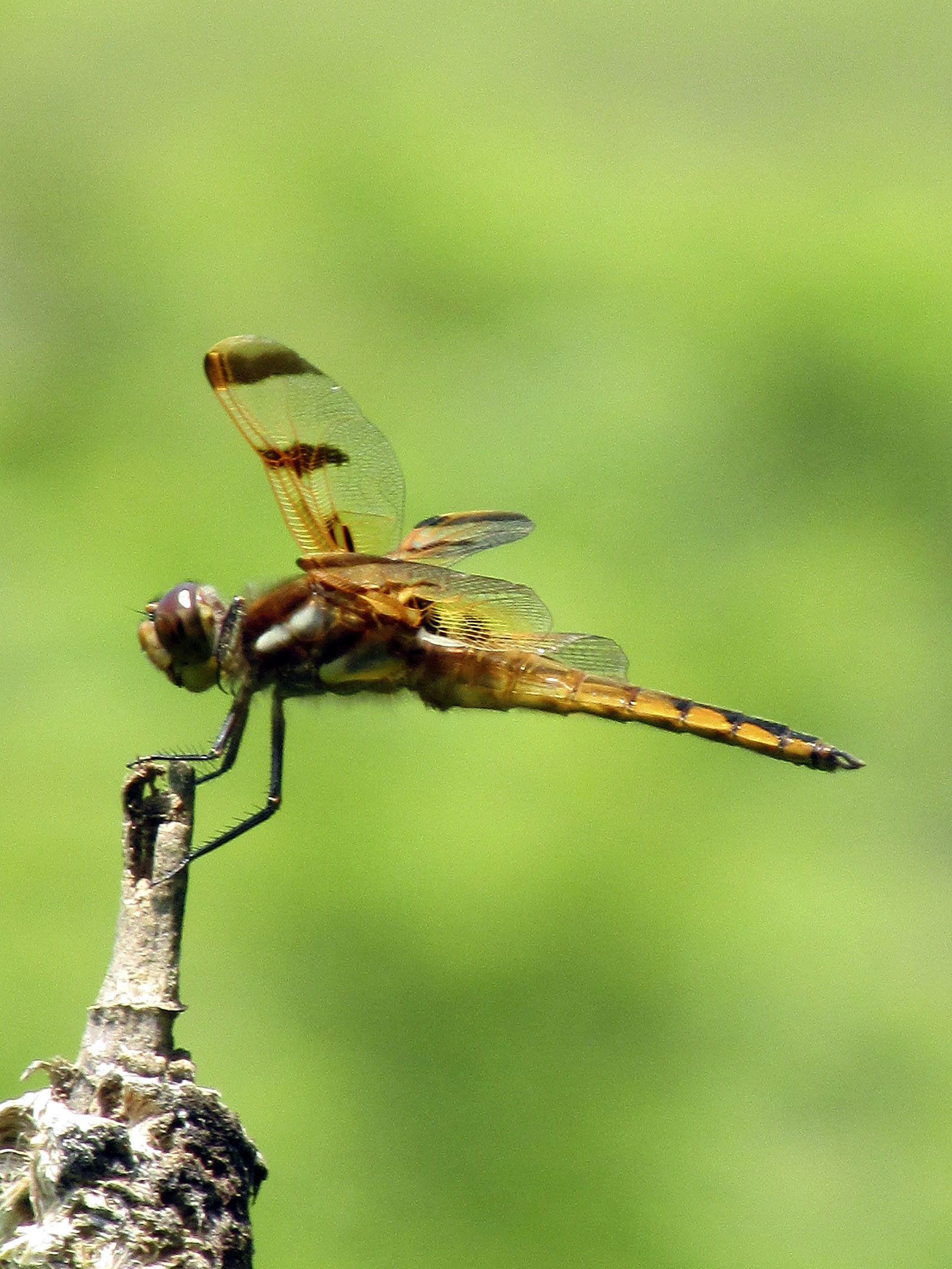
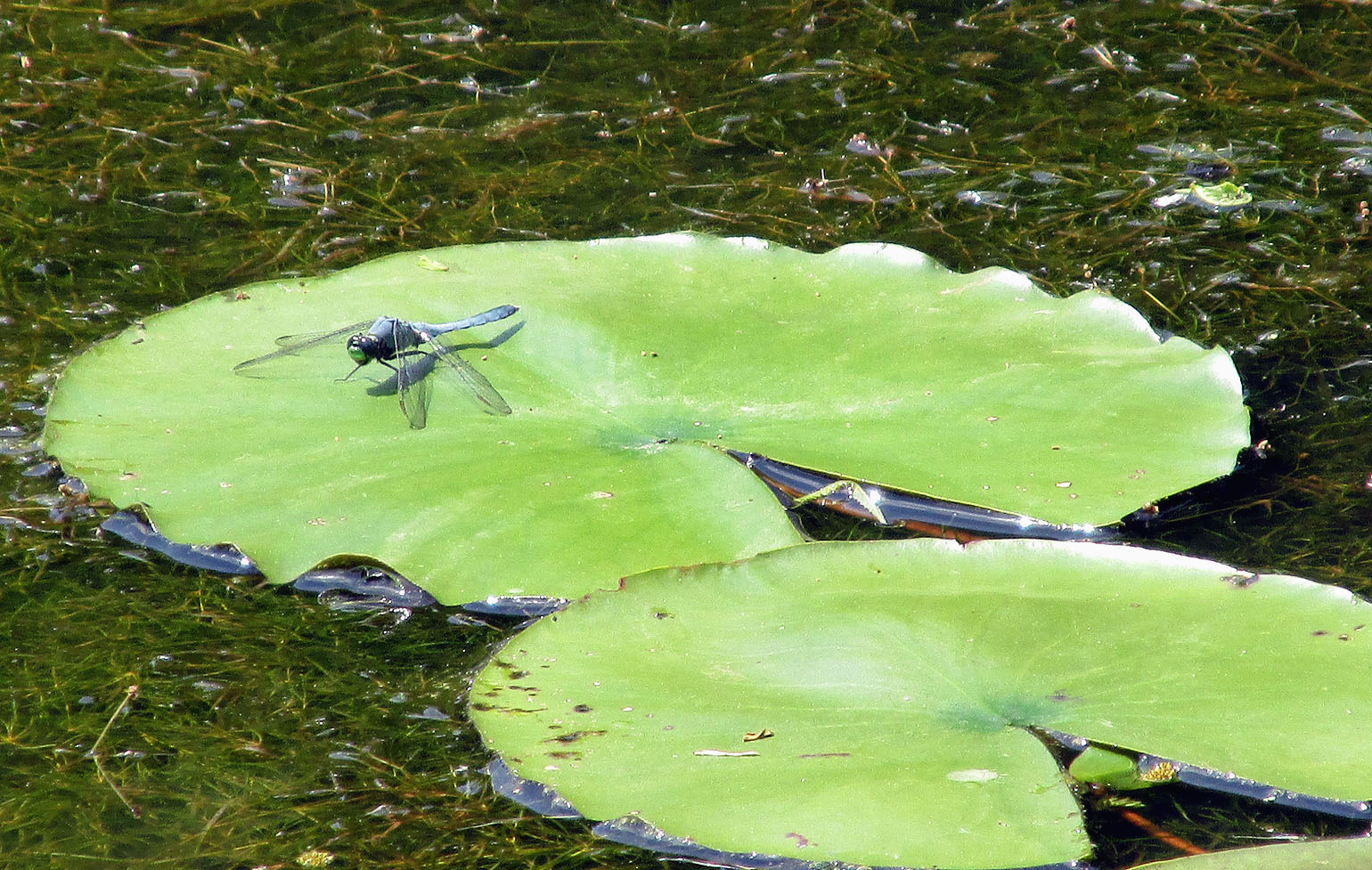
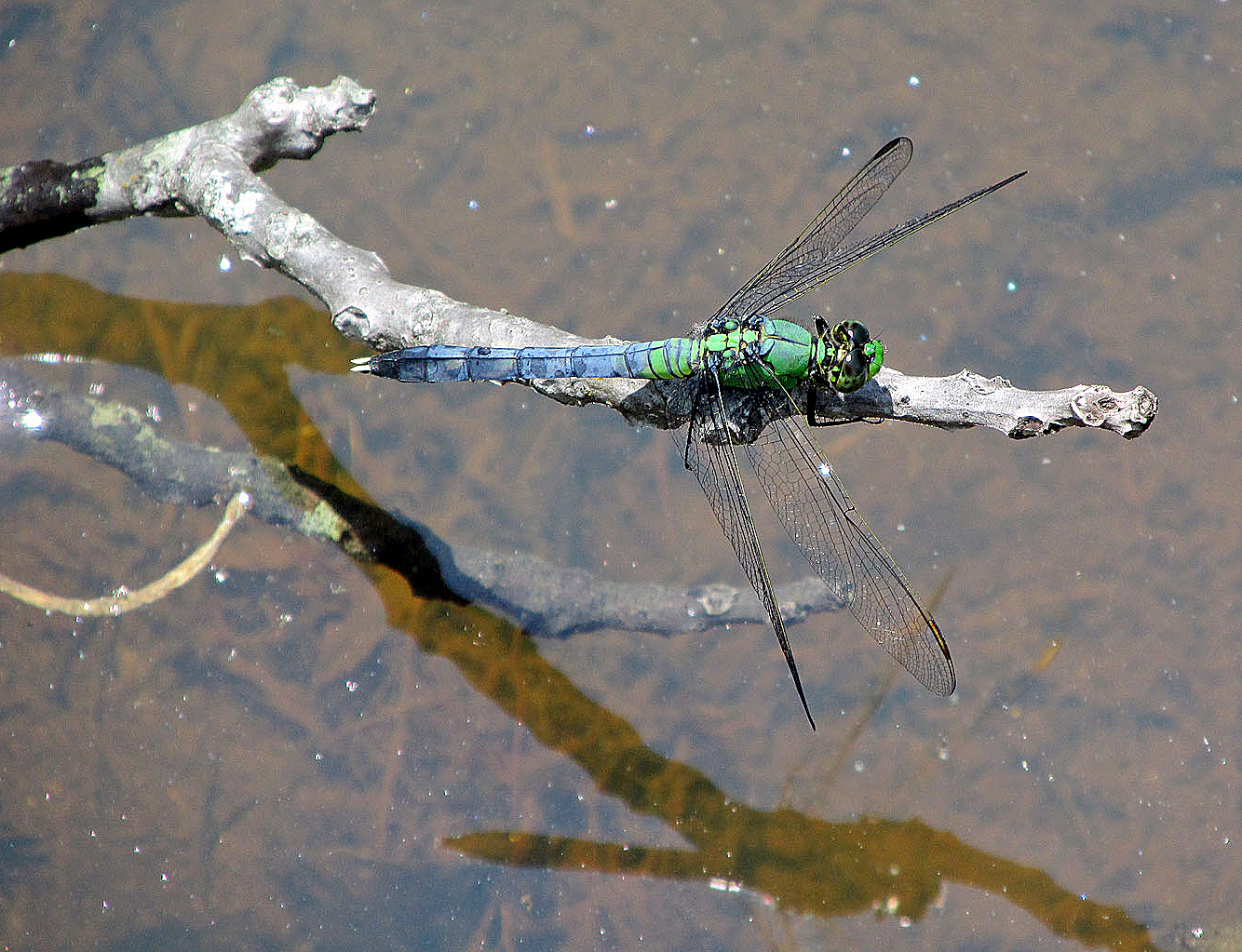
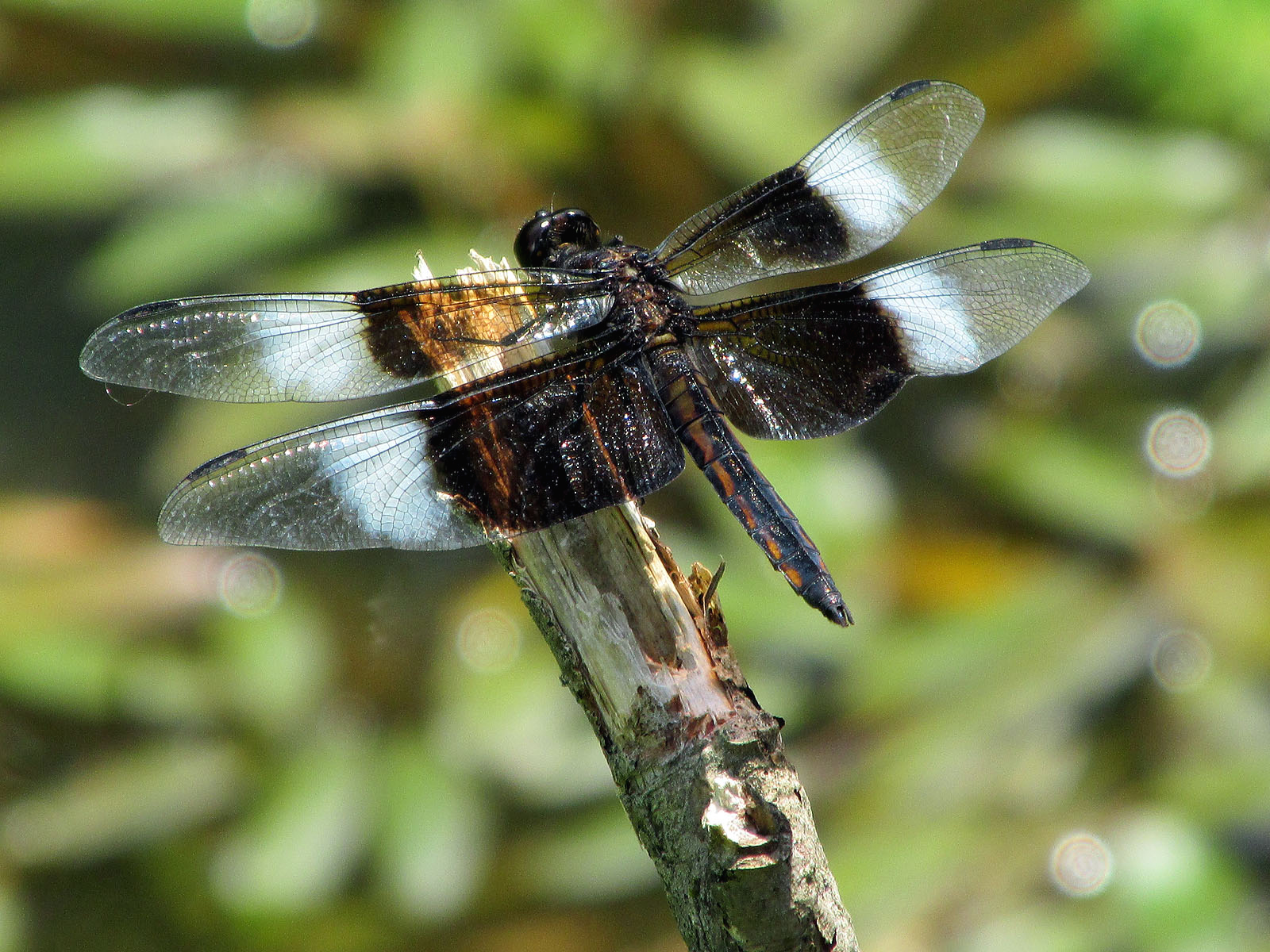
Along the edges of ponds, the final dragonflies of the season have begun to emerge. Autumn Meadowhawks and Blue-faced Meadowhawks have both made appearance at my fish pond along Simerly Creek Road.  Other dragonflies have been scarce, and the damselflies have almost disappeared. I am still seeing a few Eastern Pondhawks, Blue Dashers, Eastern Amberwings and even a Fawn Darner.

Photo by Bryan Stevens The aptly-named Autumn Meadowhawk is one of the last dragonflies to emerge each year.

Photo by Bryan Stevens
The aptly-named Autumn Meadowhawk is one of the last dragonflies to emerge each year.

During a visit to Erwin Fishery Park on Sept. 12, I was amazed to observe thousands of dragonflies — basically, a swarm of these incredible winged insects — hawking for smaller winged insects in the air above the now-closed swimming pool at the municipal park.

Most of the individuals in this incredible swarm looked like Green Darners, but I think a few other species had also joined the feeding frenzy. Green Darners, incidentally, are known for gathering in large flocks, just like birds, and staging their own migratory flights.

Photo by Bryan Stevens Katydids, some resembling nothing so much as a green leaf, are becoming more prominent as summer transitions into fall.

Photo by Bryan Stevens
Katydids, some resembling nothing so much as a green leaf, are becoming more prominent as summer transitions into fall.

Speaking of insects, I’ve also been hearing Katydids. A recent post of a Katydid photo on my Facebook page prompted responses that brought up the old superstition that the first frost will take place several weeks after the Katydids begin their nocturnal serenades.

I always look forward to September, but it always seems to be an extremely busy month for me. This year’s no exception, but I am determined to carve out some time to enjoy this month of transition.

Join me in paying closer attention to the world around you this month. There are new birds to see almost every day if you simply take the time to look. If the birds are absent, look with even more attention to detail and you’re sure to be rewarded with some other remarkable observations.

Photo by Bryan Stevens A male Hooded Warbler makes a quick journey through the back yard.

Photo by Bryan Stevens
A male Hooded Warbler makes a quick journey through the back yard.

Photo by Bryan Stevens

Photo by Bryan Stevens A newly-hatched Snapping Turtle will have a few weeks to grow before burrowing down to hibernate through the long, cold winter season.

Parade of fall warblers has begun

I love warblers!

Among my birding friends, it’s no secret the warblers are among my favorite birds. I impatiently await the start of fall migration each year knowing that it holds the potential of bringing about two dozen warbler species to my yard. The trickle of fall migrants has already started with the arrival of juvenile Chestnut-sided Warblers and American Redstarts to my yard on Aug. 19.

Photo by U.S Fish and Wildlife Service A Kentucky Warbler brings food to young in a nest.

Photo by U.S Fish and Wildlife Service
A Kentucky Warbler brings food to young in a nest.

The wood-warblers, the more clinical name for this group of birds, consist of 116 species exclusive to the New World. About half of the species collectively make their home in North America for at least a few months out of the year. The others range throughout the Caribbean, as well as Central and South America. Most of them are noted for leading frantic, fast-paced lives that are far from sedentary. For this reason, they can be extremely challenging to observe with a pair of binoculars.

Hooded_Warbler

Photo by U.S. Fish and Wildlife Service A female Hooded Warbler sits tight on her nest.

The Chestnut-sided Warbler and American Redstart nest at various locations in Southwest Virginia and Northeastern Tennessee, but they are not usually present during the summer months. I do host a few species of warblers that nest in the woodlands around my home. These include Hooded Warbler, Northern Parula, Black-throated Green Warbler, Black-and-white Warbler and Ovenbird.

OvenBird-Photo

Photo by U.S. Fish and Wildlife Service Although usually silent in the fall, Ovebirds have a distinctive, ringing song they sing constantly in the spring.

One of the last warblers to arrive at my home this spring was the enigmatic Ovenbird. With its loud, ringing song — “Teacher! Teacher! Teacher!” — it’s impossible not to notice the arrival of this warbler. So, even after the other summer warblers had already been present for a couple of weeks, I finally heard the song of an Ovenbird ringing from the woods.

Why do I describe this warbler as enigmatic? For starters, Ovenbirds do not easily permit even stealthy birders to glimpse them. I have gotten good looks at Ovenbirds throughout the years, but they are still difficult to observe. They are one of the warblers more easily heard than seen. When they are observed, it’s usually no more than a fleeting look before the bird dives back into heavy cover.

The Ovenbird is not one of the brightly colored warblers, such as Blackburnian Warbler or Yellow Warbler. The Ovenbird is a small brown bird with a white breast with dark streaking — an appearance that bears a superficial resemblance to the larger thrushes that share the same woodland habitat. The only hint of color is an orange crown bordered by dark stripes atop the bird’s head. Even this orange crown patch is not easily seen. When agitated, an Ovenbird may raise its head feathers, which makes this orange mark easier to detect. The Ovenbird also has a distinct white ring around its eyes. They also have pink legs and a pinkish bill.

The Ovenbird, unlike many warblers, is not named for its appearance. Instead, the bird’s name derives from the shape of the nest it builds. The nest is a domed structure placed on the ground, woven from vegetation and containing a side entrance. Early European settlers in North America thought the nest looked like a Dutch oven, hence the name “ovenbird” for the small warbler with the intricate nest.

Rather than hopping along the length of a branch or limb, an Ovenbird walks in a deliberate fashion. This bird feeds on insects, spiders and other small prey items foraged from the woodland floor. On rare occasions, a lingering Ovenbird shows up at feeders during the winter months.

Ovenbirds spend the summer nesting season in mature deciduous and mixed forests across Canada and the eastern United States. Ovenbirds migrate each fall to the southeastern United States, the West Indies, and from Mexico to northern South America for the winter season.

The two warblers most closely related to the ovenbird are the Louisiana Waterthrush and Northern Waterthrush. These atypical warblers share a preference for leading lives spent mostly near the ground adjacent to streams. The Louisiana Waterthrush seeks out the rushing water of our mountain streams during early spring while the Northern Waterthrush prefers quiet pools of water farther north during its nesting season. The Ovenbird, however, is not as closely associated with water.

*****

14349093215_520933ef20_b

Photo Courtesy of Jean Potter A Magnolia Warbler perched on an evergreen bough.

The last day of August provided fantastic lawn chair birding here at home. I saw a Scarlet Tanager, Red-eyed Vireo, Eastern Phoebe, Eastern Wood-Pewee, an Epidomax “empid” flycatcher species and a flock of at least 50 Common Nighthawks. I also added three fall warblers to my list: Yellow-throated Warbler, Chestnut-sided Warbler, Northern Parula and Magnolia Warbler. I also saw plenty of Ruby-throated Hummingbirds, Gray Catbirds, a Brown Thrasher, Cedar Waxwings, Downy Woodpecker and many of the regular feeder visitors.

The arrival of September brought even more warblers to my yard as they make brief visits during their fall migration. I had better luck with lawn chair birding while saying goodbye to August than I did welcoming September. On this first day of September that was also Labor Day, I saw a single Common Nighthawk, as opposed to last night’s flock of 50. I only saw one warbler, but it was a Chestnut-sided Warbler and different than the species I saw last night. Other birds that I observed including several Gray Catbirds and Blue-gray Gnatcatchers, Eastern Wood-Pewee, Brown Thrasher and family flocks of American Goldfinches and House Finches. Earlier that same day, I watched and listened as a Common Raven flew overhead. The Ruby-throated Hummingbirds are also still numerous.

NorthernParula

Photo by Bryan Stevens A migrating Northern Parula forages for insects in the branches of a Blue Spruce.

My lawn chair birding on Sept. 3 was brief but interesting. One new warbler, a male Canada Warbler, showed up, as well as two Northern Parulas that spent all their time chasing each other through the holly and the willow trees. I also got a fleeting glimpse of a Magnolia Warbler. In the sky overhead, a single Chimney Swift glided through the air with a trio of Common Nighthawks.

The cast of migrants changes almost daily. I enjoyed a good evening of lawn chair birding on Sept. 5, adding a few new warblers for the fall to my list. Only saw four species, but two of them — immature Black-and-White Warbler and Black-throated Green Warbler — were new for the fall. I also saw Chestnut-sided Warbler and Northern Parula. A sizable flock of at least 50 Common Nighthawks passed overhead. Other sightings included Eastern Phoebe, Brown Thrasher, Gray Catbirds, Wood Thrush, Pileated Woodpecker, Red-eyed Vireo and Ruby-throated Hummingbirds. All the resident feeder birds have enjoyed a good nesting seasons with numbers of Song Sparrows in the yard are showing an increase.

BlackThroated_Green_Warbler_Female

Photo by U.S. Fish and Wildlife Service A female Black-throated Green Warbler perches in a conifer.

I was surprised On Sept. 6 with an observation of a Cape May Warbler (a young male) feeding low in vegetation in the swampy area of the backyard. It might seem odd to find a Cape May feeding so low to the ground, but it was at the base of a large Norway Spruce. This was a new warbler for the fall migration season. That same day, I observed two Magnolia Warblers and a Northern Parula. In the evening, small flocks of Chimney Swifts and Common Nighthawks flew over my home.

So, the first week in September has seen fall migration off to a good start. I love to hear  what others are seeing as the fall season advances. Email me at ahoodedwarbler@aol.com or comment here at my blog.

13961818378_065f8f0125_o

Photo Courtesy of Jean Potter A female Black-and-white Warbler gathers nesting material.

Kingfishers are world-class anglers

1622507_10202822806683633_5738404313137626778_o

Photo by Bryan Stevens                                                                                                       A perched Belted Kingfisher rests between attempts to catch fish along the waterfront at Winged Deer Park in Johnson City.

Fishing is a favorite pastime for many people, who like nothing better than to spend a lazy summer afternoon trying their luck at their favorite fishing spot.

There’s also an angling counterpart among our feathered friends. The Belted Kingfisher’s nature as an angler rules out this bird visiting feeders in the backyard, but that doesn’t mean you’re unlikely to see this bird. With a little strategic effort, an observation of a Belted Kingfisher is fairly easy to obtain, especially during the summer months. If you live near a stream, pond, river or other body of water, you have probably been fortunate enough to observe a Belted Kingfisher as it completes its daily routine.

If you are a fishing enthusiast yourself, you’ve likely shared some favorite fishing holes with this bird. The Belted Kingfisher is patient in its pursuit of fish. The birds prefer to perch on an exposed branch or a wire that overlooks a body of water that offers ample fishing opportunities. The Belted Kingfisher, however, is capable of hovering in place in order to spot and then capture its prey in an impressive plunge and lunge into the water.

Most of my observations of hunting kingfishers have involved the birds in their ambush approach to fishing — perching and diving on the unsuspecting fish. I have on a few occasions, however, also observed kingfishers as they hover over the water in a quest for a meal.

The Belted Kingfisher, like most of its kin, looks to have a head and bill that are slightly too large for the rest of the body. It’s the long, heavy bill that the Belted Kingfisher uses to snatch fish from their watery homes.

A walnut tree with some dead branches overlooking my family’s fish pond is a favorite perching site for visiting Belted Kingfishers. A few Belted Kingfishers become regular visitors almost every spring and summer. In past years, I’ve been delighted by pairs of kingfishers that have brought as many as six of their offspring to hunt around the edges of the pond and creek near my home.

When a Belted Kingfisher does manage to capture a fish — not always a certainty, despite their great skill — the bird will usually fly to a perch where they will beat the fish unconscious before swallowing it. I remember one particular kingfisher that liked to catch fish in the creek and then fly to the corner of the metal garage roof where the bird proceeded to beat senseless the unlucky fish.

Worldwide, there are about 90 species of kingfishers that range in size from the 16-inch-long Laughing Kookaburra of Australia to the tiny African Dwarf Kingfisher, which at four inches in length is smaller than most sparrows. This family of birds is divided into three groupings, the river kingfishers, the tree kingfishers and the water kingfishers.

Despite the name “kingfisher,” not all kingfishers exist on a diet of fish. Some members of the kingfisher family instead prey on other quarry, such as snakes, lizards and insects.

Some interesting common names have been used to identify the world’s kingfishers, including Half-collared Kingfisher, Shining Blue Kingfisher, Blue-eared Kingfisher, Azure Kingfisher, Indigo-banded Kingfisher, Silvery Kingfisher, Malachite Kingfisher, White-bellied Kingfisher, Cerulean Kingfisher, Rufous-backed Kingfisher, Spangled Kookaburra, Rufous-bellied Kookaburra, Shovel-billed Kookaburra, Lilac Kingfisher, Brown-winged Kingfisher, Stork-billed Kingfisher, Great-billed Kingfisher, Striped Kingfisher, Lazuli Kingfisher, Ultramarine Kingfisher, Cinnamon-banded Kingfisher, Sacred Kingfisher, Mewing Kingfisher, Chattering Kingfisher, Glittering Kingfisher, Red-breasted Paradise Kingfisher, Pied Kingfisher and Green-and-rufous Kingfisher.

Kingfishers comprise a cosmopolitan family of birds with species present on every continent except Antarctica.

kingfisher

A depiction of Belted KingfisherS painted by John James Audubon.

The three North American kingfishers, however, are exclusively fish-eaters. The Belted Kingfisher, with a range that spans most of the United States, is the only kingfisher encountered by most Americans.

Two others, the Ringed Kingfisher and the Green Kingfisher, are found in Texas and occasionally in other locations near the Mexican border. The Ringed Kingfisher is similar in appearance to the Belted Kingfisher, but is somewhat larger with a rufous-colored belly. The little Green Kingfisher, not quite nine inches long, has the typical kingfisher appearance, but is green rather than blue on its upperparts.

With the Belted Kingfisher, only the female sports a ring of rufous coloration across her breast. She is an exception to the rule that most male birds are more vividly colored than their female companions.

In her book The Folklore of Birds, Laura C. Martin writes that in some accounts the kingfisher, not the dove, was the second bird Noah released from the ark after the Biblical flood. Instead of looking for land, the kingfisher flew too high and the sun scorched the bird’s feathers. After his setback with the raven and now the kingfisher, Noah made the kingfisher remain on the ark’s deck to catch its food from the water.

Halcyon days, a term meaning a period of peaceful quiet, is derived from Greek legend. According to the legend, the god Zeus restrained the storms during the period when the kingfishers nest. The scientific name for the Belted Kingfisher is Megaceryle alcyon, a variation on the term “halcyon.”

2782284667_afa8c0651e_o

Photo Courtesy of Jean Potter                                                                                                          Belted Kingfisher sits on a wire to scan for fish.

Belted Kingfishers nest by excavating a cavity in a dirt bank, usually near water. The tunnel slopes upward from the entrance, and may extend as far as eight feet into the bank.

Again in Martin’s book, there is an account of a Cherokee legend about how the kingfisher acquired its angling lifestyle. The poor bird wanted to be a waterbird, but lacked the equipment to make a living at fishing. The other animals convened a council and, in pity for the kingfisher’s plight, endowed the bird with its spear-like bill. Since that time, the bird has been known as “king of the fishers.”

The “king of the fishers” is indeed to be envied by human anglers. Although not successful in every attempt, the Belted Kingfisher is certainly exceptional in its pursuit of fish. According to John Eastman in his book, Birds of Lake, Pond and Marsh, the Belted Kingfisher typically captures about 10 fish per day.

If you want to observe this bird for yourself, stake out a pond or section of river. You’re not likely to have to wait for long before you are rewarded with an observation. In my experience, however, the Belted Kingfisher is somewhat shy and wary of humans, so observe from a respectful distance or you’re likely to scare off the bird, which will depart giving its rattling call that sounds so much like the sound of annoyance on its part.

Brown Thrasher’s nesting habits bring this golden-eyed bird into our yards

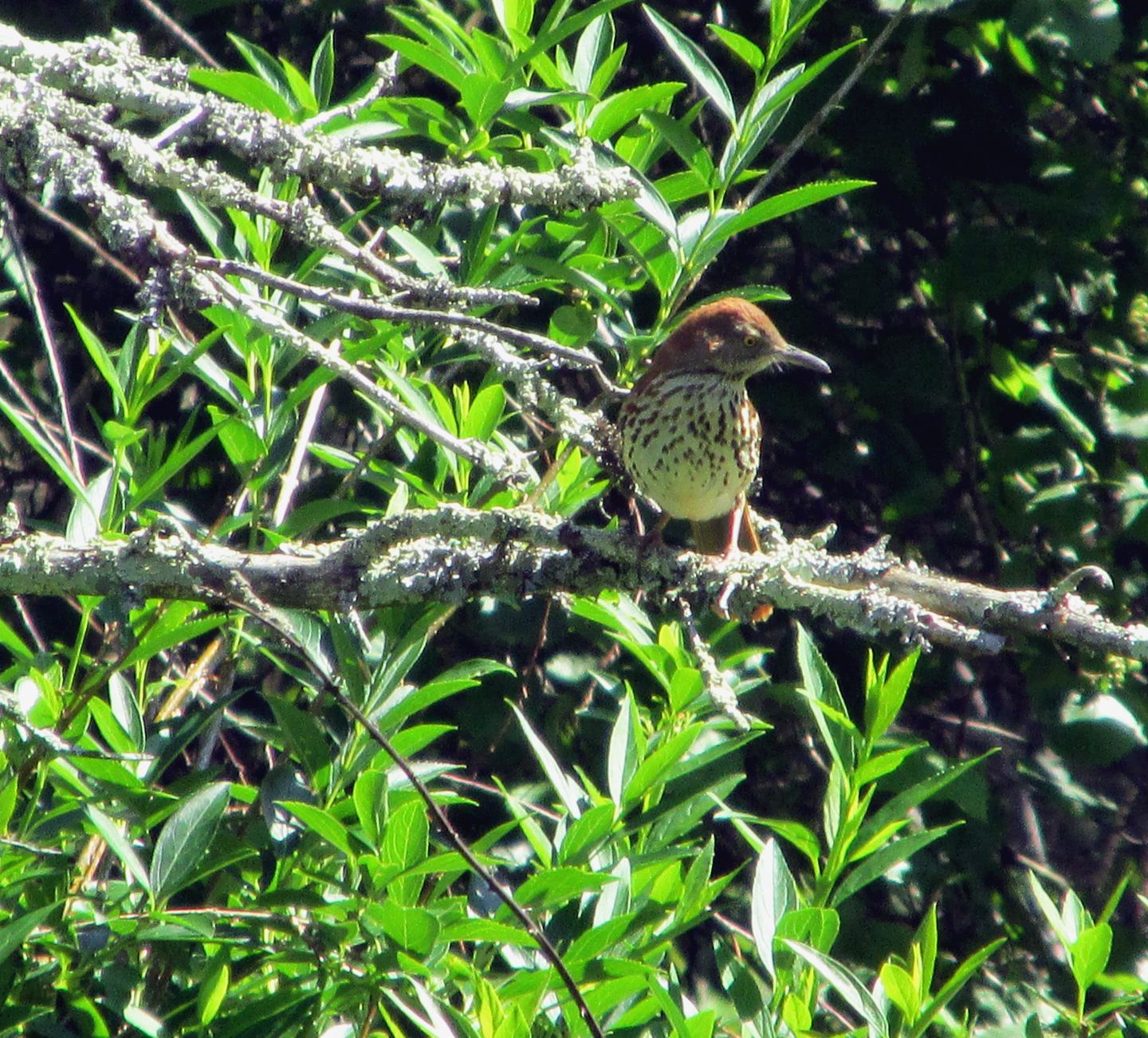
Photo by Bryan Stevens A fledgling Brown Thrasher perches on a ledge inside a garage.

Photo by Bryan Stevens
A fledgling Brown Thrasher perches on a ledge inside a garage.

It’s been a banner year for brown thrashers at my home. In recent weeks, these large songbirds have provided plenty of entertainment by bringing their young to the feeders. They especially like the suet feeder. The parent birds work to detach chunks of suet. Once they secure these morsels, the parents feed their hungry young.

Photo Courtesy of Jean Potter A Brown Thrasher scans the grass for insect prey.

Photo Courtesy of Jean Potter
A Brown Thrasher scans the grass for insect prey.

A few years ago, quite by accident, I came across a brown thrasher nest. I hadn’t gone looking for it. The nest, expertly woven into a thicket of honeysuckle vines, was tucked beneath a sheltering eave of an outdoor storage building. I don’t think anything but a fortunate accident could have ever revealed the nest. I still remember peeking into that tangle of vines and seeing a golden eye staring back. The bird didn’t look in the least pleased that I had accidentally stumbled across her nest.

The otherwise extroverted brown thrasher, which prefers to nest in difficult-to-access, tangled messes, found the cluster of vines a perfect location. I haven’t discovered any thrasher nests this year, but I’ve observed several fledglings when they began visiting the feeders with their parents.  For those not familiar with brown thrashers — relatives of the Northern mockingbird — they are known for their feisty and fearless protection of their nest and young.

Photo by Bryan Stevens Brown Thrashers prefer thickets and brushy areas that offer security for these somewhat shy birds.

Photo by Bryan Stevens
Brown Thrashers prefer thickets and brushy areas that offer security for these somewhat shy birds.

••The brown thrasher (Toxostoma rufum) belongs to the family of “mimic thrushes,” which provides a label for a group of songbirds capable of imitating the songs of other birds. Mimidae, the Latin root for “mimic,” provides the scientific name for the family, which includes mockingbirds and the New World catbirds, as well as thrashers. The Northern mockingbird is best known for the ability to mimic, but relatives like the gray catbird and brown thrasher are also talented mimics.

The thrasher is a fairly large songbird about 11.5 inches long with a wingspan of 13 inches. Much of the body length comes from the bird’s long tail feathers. A thrasher weighs, however, only about 2.5 ounces.

The brown thrasher is not a picky eater. It’s known to eat everything from berries and nuts to insects and small lizards. It’s also aggressive in defending its nest and young. John James Audubon, a French-American ornithologist, naturalist and painter, painted quite a dramatic scene of a group of brown thrashers valiantly defending a nest from an attacking snake. The painting is so detailed that you have to imagine Audubon based his work on a real-life experience. His work, originally painted in the early decades of the 1800s, still holds up today.

Early American naturalist and artist John James Audubon painted a dramatic scene of Brown Thrashers defending their nest from an attacking snake.

Early American naturalist and artist John James Audubon painted a dramatic scene of Brown Thrashers defending their nest from an attacking snake.

Incidentally, Audubon knew the brown thrasher as the “ferruginous thrush.” Another former common name for this species was “brown thrush.”

This brown thrasher breeds across the United States and Canada east of the Rocky Mountains. Thrashers withdraw from the northern part of their range in the winter months, spending the season in the southeastern United States.

They are familiar birds in southern gardens. In fact, the brown thrasher is the official state bird of Georgia and also provided the name for Atlanta’s National Hockey League team, the Atlanta Thrashers. The thrasher became Georgia’s state bird due to passage of a Joint Resolution of the Georgia General Assembly in 1970.

The brown thrasher is the only member of the thrasher clan in the eastern United States. In Texas and the western half of the country, however, there are several other species of thrasher, including sage thrasher, long-billed thrasher, Crissal thrasher, curve-billed thrasher, Bendire’s thrasher, California thrasher and Le Conte’s thrasher. Many of these thrashers also occur in Mexico.

These New World birds also occur in the Caribbean, including such species as White-breasted Thrasher, Pearly-eyed Thrasher and Scaly-breasted Thrasher.

Photo by Bryan Stevens   A pair of Brown Thrashers perch near a fence at Tipton-Haynes Historic Site in Johnson City.

Photo by Bryan Stevens
 A pair of Brown Thrashers perch near a fence at Tipton-Haynes Historic Site in Johnson City.

•••••

Rebecca Howe, who resides in Kent, Ohio, has sent me an email.

“I am blessed to have rose-breasted grosbeaks come to my house each spring,” she wrote. “I watch males arrive first and then females.”

She has recently been seeing young birds arriving at her feeding station.

“Now the birds seem to be leaving,” she noted. “Do they leave their breeding grounds around this time to move south for the winter?”

I thanked Rebecca for sharing about her rose-breasted grosbeak observations in a follow-up email and informed her that different birds depart at different times to go south for the winter. Some birds do not get into a rush to reach their destination, so the start of migration is more of a slow-paced, casual “wandering” that takes them to different locations in a more or less southern direction.

Brown Thrasher visits a suet feeder. The thrasher diet consists of everything from berries and seeds to insects and even small reptiles.

Photo by Bryan Stevens                                Brown Thrasher visits a suet feeder. The thrasher diet consists of everything from berries and seeds to insects and even small reptiles.

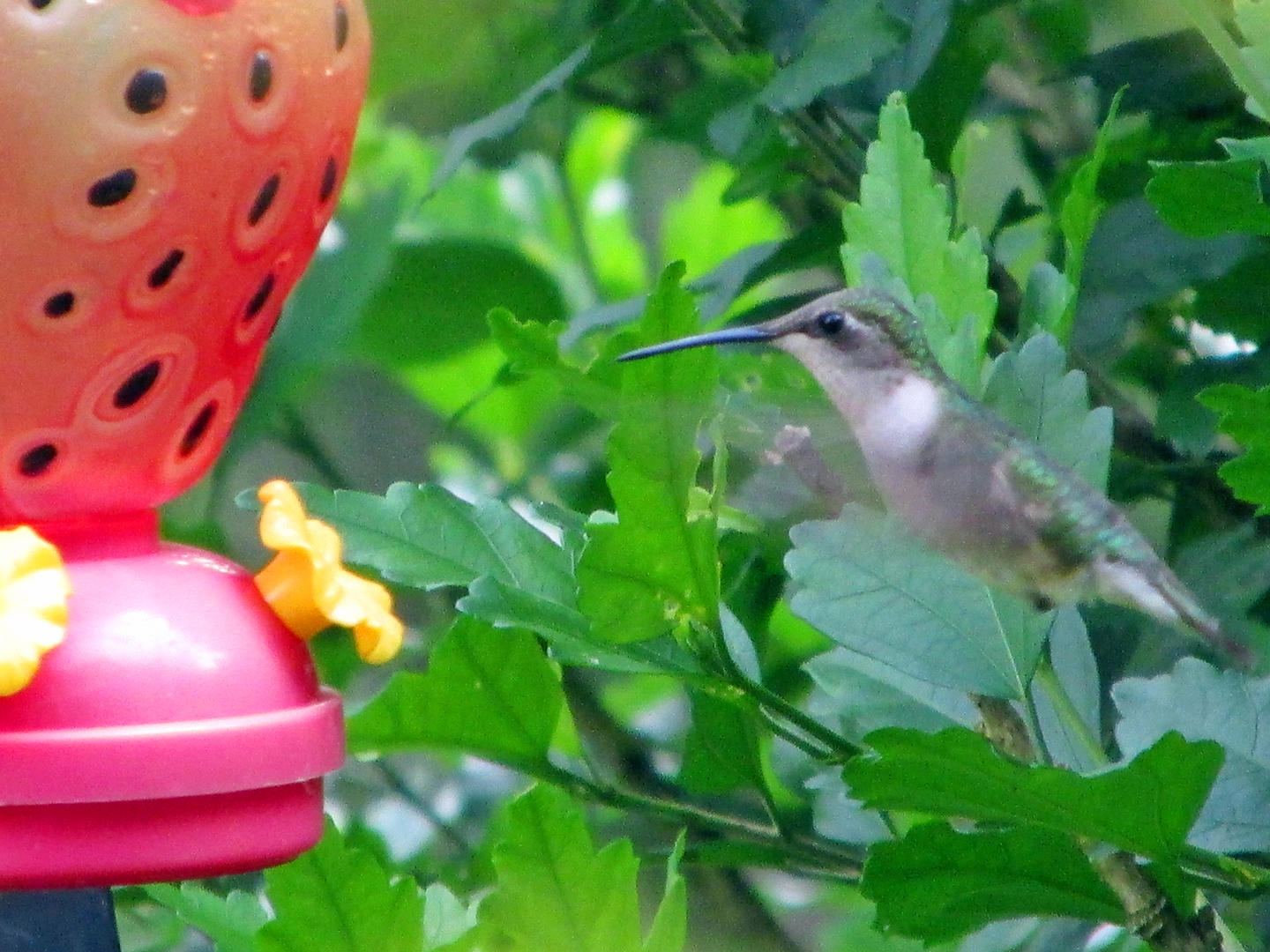
Closer to Southwest Virginia and Northeast Tennessee, birds like yellow warbler, Louisiana waterthrush and a few others are known to depart as early as July and August. Ruby-throated hummingbirds are another good example of slow migrants. Those that pushed to the northern limit of their range are probably already heading back. But they are very nomadic. Maybe they could even be described as “restless,” and it is this time of year when I start to get the highest numbers of these little birds.

••••••

I look forward to hearing from readers. Those who wish to ask a question, share an observation or make a comment may reach me at ahoodedwarbler@aol.com. Follow me on Facebook to see more bird and nature photos at https://www.facebook.com/ahoodedwarbler

Photo by Bryan Stevens A pair of Brown Thrashers forage for food on the ground below a feeder.
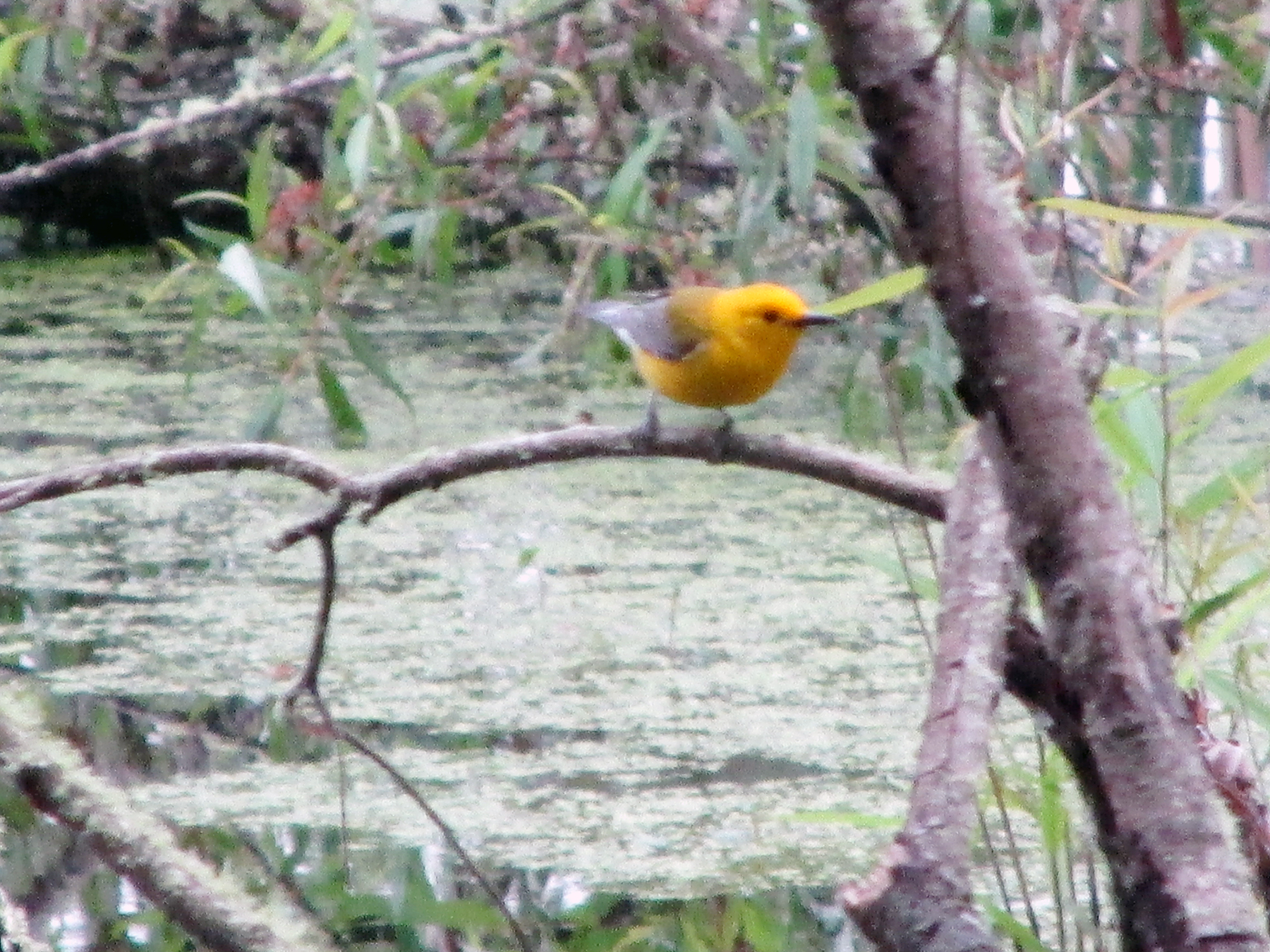
Photo by Bryan Stevens
A pair of Brown Thrashers forage for food on the ground below a feeder.
Annual Carter County Summer Bird Count tallies 116 species


Members of the Lee and Lois Herndon Chapter of Tennessee Ornithological Society, known less formally as the Elizabethton Bird Club, conducted the 21st annual Carter County Summer Bird Count on Saturday, June 7.

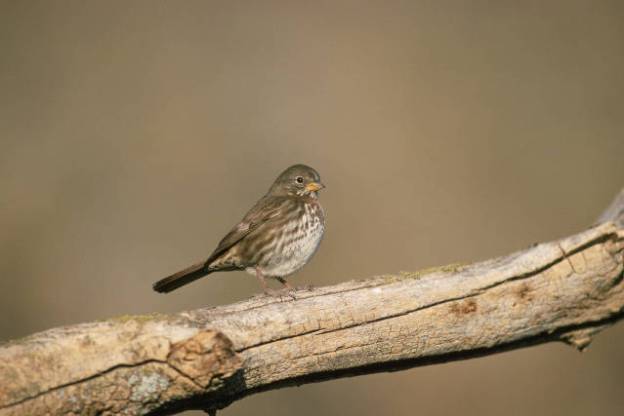
Photo by Bryan Stevens  A total of 231 Song Sparrows, such as the one pictured here, were found during the recent Summer Bird Count.

Photo by Bryan Stevens
A total of 231 Song Sparrows, such as the one pictured here, were found during the recent Summer Bird Count.

The 19 observers in six parties logged 58 party hours, plus 5.5 nocturnal party hours. The total of 116 species tallied was slightly above the average of 112. The range for this count has varied between 105 and 121 species.

 Observers included Jim Anderson, Rob Armistead, Kevin Brooks, J.G. and Deb Campbell, Harry Lee Farthing, Don Holt, Christy Kendall, Rick Knight, Roy Knispel, Joe McGuiness, Tom McNeil, Cathy Myers, Kathy Noblet, Chris Soto, Bryan Stevens, Kim Stroud, Mary Anna Wheat and John Whinery.

The species list follows:

Canada Goose, 379; Wood Duck, 11; Mallard, 74; Ruffed Grouse,  6; Wild Turkey,  9; Double-crested Cormorant, 1; Great Blue Heron, 25; and Yellow-crowned Night-Heron, 3.

Black Vulture, 4; Turkey Vulture,  60; Sharp-shinned Hawk,  2; Cooper’s Hawk,  1; Broad-winged Hawk, 4; Red-tailed Hawk, 4; and American Kestrel,  6.

Killdeer,  6; American Woodcock, 1; Rock Pigeon, 67; Mourning Dove, 111; and Yellow-billed Cuckoo, 1.

Eastern Screech-Owl, 3; Barred Owl, 3; Common Nighthawk, 1; Chuck-will’s-widow, 2; and Eastern Whip-poor-will, 13.

Chimney Swift,  96; Ruby-throated Hummingbird,  30; Belted Kingfisher,  7; Red-bellied Woodpecker, 15; Yellow-bellied Sapsucker, 1; Downy Woodpecker,  21; Hairy Woodpecker, 6; Northern Flicker, 22; and Pileated Woodpecker, 11.

Photo by Bryan Stevens The Ruby-throated Hummingbird was represented by a total of 30 individuals on the recent Summer Bird Count.

Photo by Bryan Stevens
The Ruby-throated Hummingbird was represented by a total of 30 individuals on the recent Summer Bird Count.

Eastern Wood-Pewee, 26; Acadian Flycatcher, 44; Alder Flycatcher, 4; Least Flycatcher, 9; Eastern Phoebe, 38; Great Crested Flycatcher, 4; and Eastern Kingbird, 17.

White-eyed Vireo, 10; Yellow-throated Vireo, 2; Blue-headed Vireo, 54; Red-eyed Vireo, 166; Blue Jay, 91; American Crow, 130; and Common Raven, 6.

Purple Martin, 21; Tree Swallow, 152; Northern Rough-winged Swallow, 36; Cliff Swallow, 295; and Barn Swallow, 159.

Carolina Chickadee, 71; Tufted Titmouse, 72; Red-breasted Nuthatch, 9; White-breasted Nuthatch, 15; Brown Creeper, 1; Carolina Wren, 86; House Wren, 54; and Winter Wren, 8.

Blue-gray Gnatcatcher, 41; Golden-crowned Kinglet, 10; Eastern Bluebird, 48; Veery, 31; Hermit Thrush, 2; Wood Thrush,  56; American Robin,  356; Gray Catbird,  44; N. Mockingbird,  59; Brown Thrasher, 16; European Starling,  607; and Cedar Waxwing,  94.

Ovenbird, 70; Worm-eating Warbler, 14; Louisiana Waterthrush, 4; Golden-winged Warbler, 3; Black-and-white Warbler,  38; Swainson’s Warbler, 3; Kentucky Warbler, 1; Common Yellowthroat,  27; Hooded Warbler, 88; American Redstart, 9; Northern Parula,  15; Magnolia Warbler, 2; Blackburnian Warbler,  14; Yellow Warbler, 5; Chestnut-sided Warbler, 27; Black-throated Blue Warbler,  35; Pine Warbler, 4; Yellow-rumped Warbler, 1; Yellow-throated Warbler, 13; Black-throated Green Warbler, 34; Canada Warbler, 24; and Yellow-breasted Chat, 10.

Eastern Towhee, 120; Chipping Sparrow, 100; Field Sparrow,  37; Vesper Sparrow,  1; Song Sparrow, 231; Dark-eyed Junco, 89; Scarlet Tanager, 27; Northern Cardinal,  157; Rose-breasted Grosbeak, 17; Blue Grosbeak, 2; and Indigo Bunting, 181.

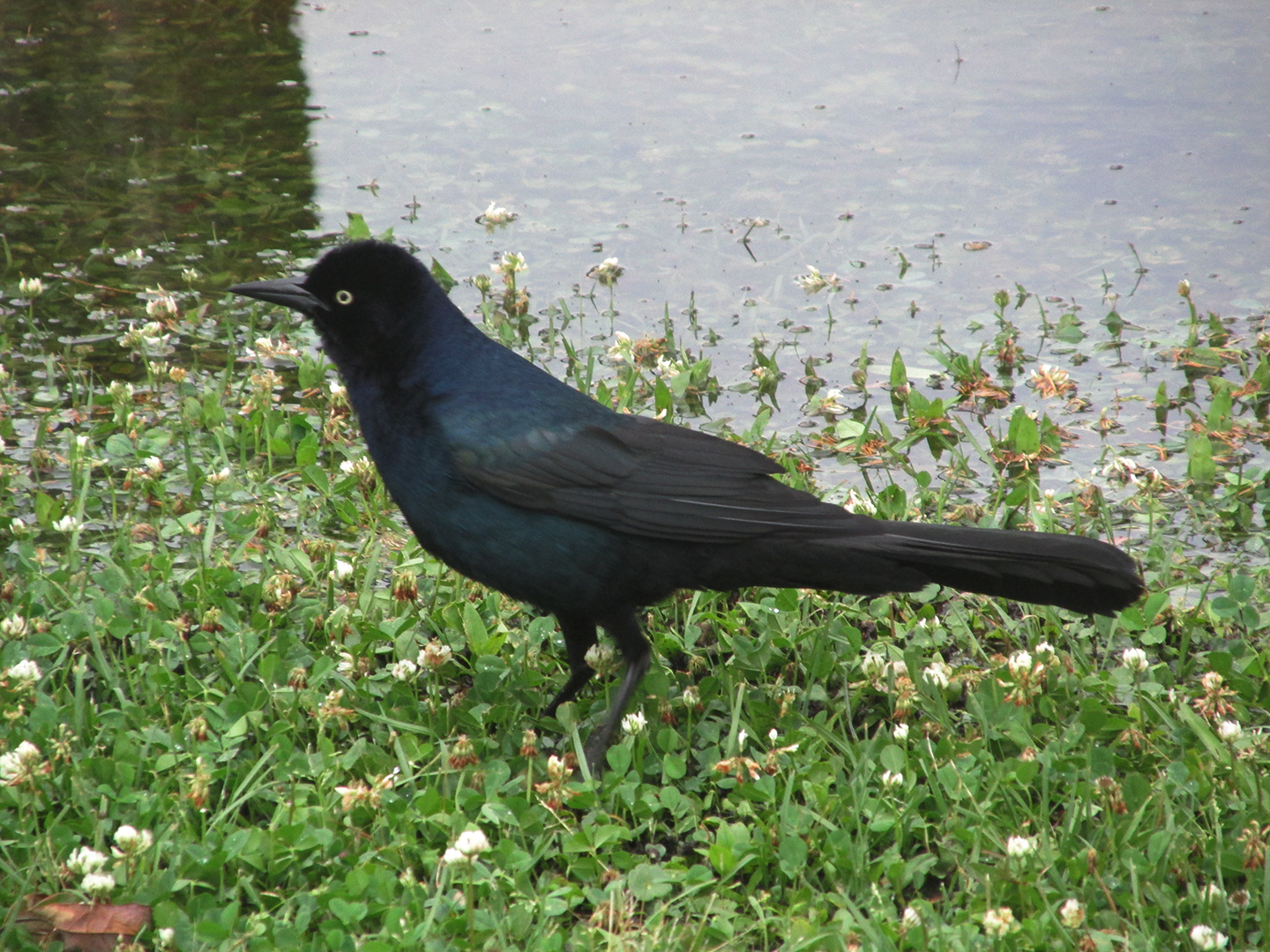
Red-winged Blackbird, 69; Eastern Meadowlark, 25; Common Grackle,  95; Brown-headed Cowbird, 39; Orchard Oriole, 7; Baltimore Oriole, 4; House Finch,  28; Red Crossbill, 1; American Goldfinch, 166; and House Sparrow, 128.

Photo by Bryan Stevens Although waterfowl can be difficult to find in Carter County during the summer months, a total of 11 Wood Ducks were tallied for the Summer Bird Count.

Photo by Bryan Stevens
Although waterfowl can be difficult to find in Carter County during the summer months, a total of 11 Wood Ducks were tallied for the Summer Bird Count.

All 116 species found on the count are known or suspected to nest in Carter County, except for the Double-crested Cormorant.

•••••

Hampton resident Barbara Lake emailed me to share some photos of a clutch of eggs in one of her bluebird boxes.

Photo Courtesy of Barbara Lake A clutch of five Eastern Bluebird eggs in a box at the home of Barbara and Jerry Lake in Hampton.

Photo Courtesy of Barbara Lake
A clutch of five Eastern Bluebird eggs in a box at the home of Barbara and Jerry Lake in Hampton.

She actually has two pairs of Eastern Bluebirds nesting in boxes at her home. She has named the bird Blossom and Max, as well as Aliy and Allen. The latter are named for Iditarod and Yukon Quest musher friends.

“I wrote to Aliy and told her I named a bluebird after her, and she is happy about it.  So now I have to keep her up to date about what’s going on.”

Some of Barbara’s bluebird boxes are equipped with television cameras, which allows her to monitor activity on a television screen in the comfort of her home.

•••••

Now that it is July, birding sometimes becomes more difficult because of the intense heat, high humidity and other factors. There are still interesting bird observations to make. Many birds are still taking care of young, either in or out of the nest. If you’d like to share an observation, make a comment or ask a question, email me at ahoodedwarbler@aol.com or post a comment here.


Region’s drab vireos more famous for persistent singing than their appearance

In some recent columns, I’ve focused on some of the summer songbirds — scarlet tanager, rose-breasted grosbeak – with flashy, bright plumages.  Not all our summer nesting birds boast such vivid coloration. In fact, one family of songbirds — the vireos — is known for its dull plumage.

Photo by Bryan Stevens      A blue-headed vireo sings from a woodland perch.

Photo by Bryan Stevens A blue-headed vireo sings from a woodland perch.

I’ve had some interesting encounters with vireos in the past few weeks. From early May through mid-June, a male red-eyed vireo sang daily from the woodland near my home. He would commence signing early in the morning and continue through late afternoon. I never saw him, which is not too surprising. Red-eyed vireos lead almost their entire lives in the forest canopy. If you do manage to observe one, you’ll see an olive green bird with white underpart. The red-eyed vireo, known scientifically as Vireo olivaceus, shows a narrow white eyebrow bordered above with black. It also has a grayish crown and the namesake red eye.
At a glance, the vireos would appear related to the wood warblers. Research into vireo DNA, however, has led many experts to contend that vireos are more closely related to crows and shrikes. Like the flycatcher, warbler and hummingbird families, the vireo family is exclusive to the New World. There are about 50 species of vireos. The majority reside in the tropics, but about a dozen species spend their nesting season within the United States.

JP-RedEyedVireo-Fledgling

Photo Courtesy of Jean Potter A young red-eyed vireo begs for food, which will bring a prompt response from a nearby parent.

In Southwest Virginia and Northeast Tennessee, vireos resident during the summer months include red-eyed, white-eyed, blue-headed, yellow-throated and warbling.  Most people are likely unaware of vireos. Although not uncommon, these birds are much more frequently heard than seen. They spend much of their time in the forest canopy or in dense brush. When singing, they can remain at a perch, unmoving, for long periods of time. 
On recent woodland walks I have heard the loud scolding calls of red-eyed vireos. This call, given apparently when the vireo is alarmed or irritated, is quite unlike the usual vocalizations produced by this bird. First and foremost, the call is louder than one would think could be produced by a bird that is only about six inches long.
During the summer season, the red-eyed vireo is also one of the most persistent of singing songbirds. Another of its common names is “Preacher Bird,” so called because of its tendency to unceasingly deliver it song. To give you an idea of just how persistently this bird sings, the red-eyed vireo holds the record for singing its song the most times in a single day. Some individuals have been recorded singing the series of emphatic syllables more than 20,000 times in a day. The song is not particularly musical, consisting of whistled phrases, each slightly different and punctuated with brief pauses. 

Photo Courtesy of Jean Potter A red-eyed vireo sits on its basket-shaped nest.

Photo Courtesy of Jean Potter
A red-eyed vireo sits on its basket-shaped nest.

The red-eyed vireo is still considered one of eastern North America’s most common summer breeding birds. At one time, this bird was probably the most common breeding bird in Eastern woodlands. It is still one of the most widespread, ranging from the Eastern United States into the Northwestern United States and across Canada. In fall, they withdraw to spend the winter in South America.
The term “vireo,” originating in Latin, can be translated into English as “green bird.” It’s an apt description, as many of these small birds are primarily dull green in coloration.
There is an endangered vireo, the black-capped vireo, a bird with a limited breeding range in Texas. Black-capped vireos numbers have dwindled to perilous levels due to the loss of low growing woody cover these birds need for breeding purposes. The cause of the loss of habitat varies, but includes the clearance of land for livestock as well as overgrazing by livestock and deer. In the past, fires regularly opened up such habitats. Due to modern fire control practices, such fires are no longer a natural occurrence. Since this species is already endangered, brown-headed cowbirds have also contributed to the problem since the cowbirds slip their own eggs into the nests of black-capped vireos.

Vireo_blackcapped_B07T

Photo by USFWS The black-capped vireo is the only member of the vireo family in the United States classified as endangered.

Two others, Bell’s vireo and gray vireo, are identified as species of concern on the Audubon Watchlist. This listing spotlights species that may bear intense scrutiny to make certain they don’t become endangered.
Other vireos that can be found in the United States, for at least part of the year, include Philadelphia vireo, plumbeous vireo and Cassin’s vireo. A specialty of Florida is the black-whiskered vireo. 
Many species of vireo are also found in the islands of the Caribbean, including Jamaican vireo, Cuban vireo and Puerto Rican vireo. Some of the more colorful common names for vireos include the yellow-green vireo, golden vireo and yellow-winged vireo. 
In Central and South America, the vireo family expands to include many birds with common names such as “Shrike-Vireo,” “Greenlet” and “Peppershrike.” Some of the varied species include the lemon-chested greenlet, green shrike-vireo and the black-bellied peppershrike.

Warbling_Vireo

Photo by Dave Menke/USFWS A warbling vireo is the most drab member of a family known for its drabness. The warbling vireo’s impressive song, however, reminds many listeners of the song of the gaudy painted bunting.

Known by the scientific name, Vireo gilvus, the warbling vireo is another member of this family of songbirds that can be found in the region. It is named for its distinctive, warbling song. Some experts have likened its song to that of the painted bunting. That must be about all the two birds have in common. In contrast with the gaudy painted bunting, the warbling vireo can quite honestly stake a claim as one of our most drab songbirds. Overall, this is a grayish little bird with a white eyeline that is paler than the rest of its plumage. Its legs are blue-gray in color and this species has a bill that is stout like other vireos and unlike the beaks of most warblers. It’s their plainness that is the most distinctive aspect of their appearance.
Many vireos construct deep cup- or basket-shaped nests, often in the higher branches of tall trees. Male and female share incubation duties and work together to feed their young. 
Most vireos feed on in­sects during their summer stay north of the border. However, during migration they often feed on berries and continue to do so on their wintering grounds. Experts have noted that the white-throated vireo is particularly fond of gumbo-limbo seeds. This tropical tree can be found from southern Florida and Mexico, as well as throughout the Caribbean and in South America in Brazil and Venezuela.

Photo by Jean Potter The Blue-headed Vireo prefers wooded habitats at higher elevations.

Photo by Jean Potter
The Blue-headed Vireo prefers wooded habitats at higher elevations.

At times, it’s important to use our ears, as well as our eyes, when trying to find birds. That’s particularly true of the vireos. The widespread family can be found in rural areas, as well as suburban settings. Tall stands of trees are one of the essential requirements. So, when you next hear some whistled phrases coming from the treetops, be sure to look up. You may get lucky.
To hear a singing red-eyed vireo, visit the link below to view a video of the bird on YouTube:

Rose-breasted Grosbeaks provide splash of springtime excitement


Other than Ruby-throated Hummingbirds, the one bird whose return in the spring is guaranteed to generate excitement is the Rose-breasted Grosbeak. Every spring, I get phone calls and emails from people wanting to share the thrill of seeing these vibrant birds in their back yards.

Photo by Bryan Stevens A Rose-breasted Grosbeak finds a meal of sunflower seeds at a feeder.

Photo by Bryan Stevens
A Rose-breasted Grosbeak finds a meal of sunflower seeds at a feeder.

The spring arrival of Rose-breasted Grosbeaks is a temporary visit. Finding the arrangements, which can consist of well-stocked feeders and perhaps a convenient water source, the migrating birds may linger for several days. These birds nest at higher elevations, however, and are usually impatient to continue the journey to where they will spend the summer months tending to their young.

This year, my first Rose-breasted Grosbeak arrived at my home on Simerly Creek Road in Hampton around 3:30 p.m. on Friday, April 25. I saw a glimpse of black and white with a hint of red that lifted my spirits instantly. I had been hoping for about a week that migrating grosbeaks would visit as they often do in the spring. The lone male settled onto a small hanging feeder and began enjoying an offering of black-oil sunflower seeds. He made repeated trips throughout the afternoon and evening, allowing me to take several photos through a window.

Some of my posted photos drew enthusiastic comments from my Facebook friends. Dani Sue Thompson shared that the beautiful Rose-breasted Grosbeak is one of her favorite birds. Her mother, the late Donna Adams, was a huge fan of the related Blue Grosbeak, which is a less common visitor to Northeast Tennessee than the related Rose-breasted Grosbeak. Donna and I share many a grosbeak story over the years.

Byron Tucker, a friend from Atlanta, notified me on Facebook the day before the Rose-breasted Grosbeak arrived at my home that he was hosting them in Georgia. From a single bird to a flock of three males and three females, these visitors were a first for Byron. He was excited to host these colorful birds for several days at his feeders.

Photo Courtesy of Byron Tucker A Rose-breasted Grosbeak joins a Red-bellied Woodpecker at a feeder in Atlanta.

Photo Courtesy of Byron Tucker
A Rose-breasted Grosbeak joins a Red-bellied Woodpecker at a feeder in Atlanta.

Single birds are occasionally the first to arrive, but Rose-breasted Grosbeaks do form flocks when migrating. Even if a scout shows up alone at your feeders, he will often soon be joined by other grosbeaks. My recent visit by a single male led to two and then three males visiting the feeders. Eventually a female Rose-breasted Grosbeak also made an appearance.

Plenty of Rose-breasted Grosbeaks pass through Northeast Tennessee, and a few even decide to make mountains like Unaka, Holston and Roan their home for the summer. However, these birds spread out widely across the eastern half of the North American continent, ranging from northeastern British Columbia to Quebec and Nova Scotia in Canada. They also range south from New Jersey to Georgia. The Rose-breasted Grosbeak also reaches Colorado, Oklahoma and Kansas.

For the most part, however, the Rose-breasted Grosbeak is replaced in the western United States by the closely related Black-headed Grosbeak.

As fall approaches, the Rose-breasted Grosbeak migrates south to a winter range that spans central Mexico, Central America and northern South America. As they depart, many of these migrating birds will make autumn visits to again partake of offerings of sunflower seeds at backyard feeders. So, if you don’t get to see these showy birds in the spring, you get another chance in September and October.

The male Rose-breasted Grosbeak gives this species it name. Males are the epitome of the birds that make their home for part of the year in the American tropics. The contrasting black and white plumage is emphasized by a triangular slash of rosy-red color on the breast. Put all those elements together and the male Rose-breasted Grosbeak is not a bird that would be mistaken for any other.

The female grosbeak, however, doesn’t quite stand out in the same way. She is much less colorful than the male. With her brown and white plumage, she is often mistaken for a large sparrow or finch.

Photo by Bryan Stevens A young male Rose-breasted Grosbeak visits a feeder in September of 2013. Young males resemble females but show a splash of orange on the breast that will be replaced the following spring by the familiar rosy-red patch.

Photo by Bryan Stevens
A young male Rose-breasted Grosbeak visits a feeder in September of 2013. Young males resemble females but show a splash of orange on the breast that will be replaced the following spring by the familiar rosy-red patch.

Both sexes have a massive bill, which they use to hull sunflower seeds at feeders or glean insects from leaves and branches. It’s the heavy, blunt bill for which the term “grosbeak” is derived. “Gros” is a German term for large or big, so grosbeak simply means a large-beaked bird. People who band birds to further the study of them will tell you that Rose-breasted Grosbeaks have a wicked bite and are capable of delivering quite a nip. In Northeast Tennessee, bird banders frequently encounter Rose-breasted Grosbeaks in their mist nets — and bear the scars to prove it.

With some birds, males play only a minor role in the nesting process. That’s not the case with the Rose-breasted Grosbeak male. The males help with nest-building chores and share responsibility with the female for incubating the eggs.

The female lays three to five eggs in a cup-shaped nest. It’s not easy to locate the nests since the birds usually place them in trees at least 20 feet above the ground. Within two weeks, the eggs have hatched and the parents are kept extremely busy finding enough food to satisfy the voracious nestlings. Well fed by both parents, the young grow quickly and usually are ready to leave the nest within 12 days. Often, when a first brood of young departs the nest, the male will care for the rowdy group of fledglings as the female starts a second nest to capitalize on the long days of summer.

Away from our feeders, Rose-breasted Grosbeaks feed on insects, seeds, fruit and even some leaf buds and flowers. I’ve seen these birds satisfying a sweet tooth — or should that be sweet beak? — by feeding on jewelweed flowers and apple blossoms. If sugar’s good for hummingbirds, I am sure it is a valuable energy source for Rose-breasted Grosbeaks, too.

The Rose-breasted Grosbeak is a cherished spring visitor that never fails to disappoint by bringing a hint of the tropics to the mountains of Northeast Tennessee. I’m hoping many readers are also enjoying their own opportunities for hosting this delightful songbird.

•••••

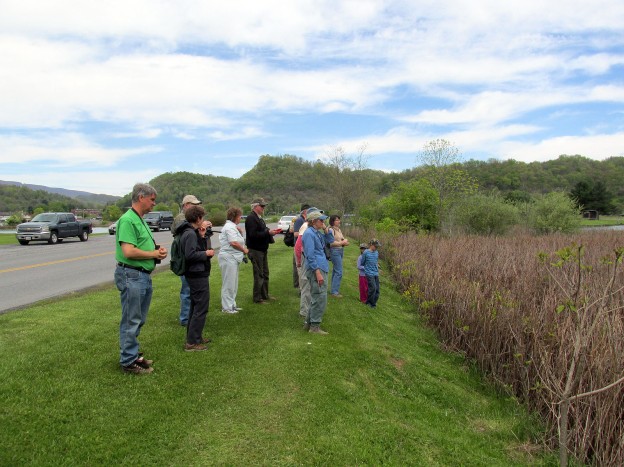
The bird walk at Tipton-Haynes Historic Site on Saturday, April 26, yielded a good range of birds, including American Robin, House Wren, Cardinal, Song Sparrow, Carolina Chickadee, American Goldfinch, Tufted Titmouse, Crow, Canada Goose, Chimney Swift, Brown Thrasher, Barn Swallow, Eastern Towhee, European Starling, Yellow-rumped Warbler, Chipping Sparrow, Mallard, Red-winged Blackbird, Red-bellied Woodpecker, Turkey Vulture, Black Vulture, Northern Flicker, Grackle, Gray Catbird, Blue Jay, Mourning Dove and Eastern Bluebird.

Photo by Bryan Stevens A pair of Brown Thrashers provided quite a show for attendees at a recent bird walk at Tipton-Haynes Historic Site.

Photo by Bryan Stevens
A pair of Brown Thrashers provided quite a show for attendees at a recent bird walk at Tipton-Haynes Historic Site.

Attending the walk were Heather Jones, Charles Moore, David Thometz and myself. We enjoyed perfect spring weather and also admired the many wildflowers in the gardens and woodlands at the Johnson City historic site.

Members of the Lee and Lois Herndon Chapter of the Tennessee Ornithological Society will also hold a bird walk at 8 a.m. on Saturday, May 10, at Sycamore Shoals State Historic Park in Elizabethton. This walk is held in honor of International Migratory Bird Day and should provide participants with an excellent opportunity for seeing some fine birds.

•••••

I enjoy hearing from readers. Share a sighting, ask a question or make a comment by emailing me at ahoodedwarbler@aol.com or posting to my Facebook page.

Photo by Bryan Stevens The Rose-breasted Grosbeak never fails to impress.

Photo by Bryan Stevens
The Rose-breasted Grosbeak never fails to impress.


Small goose’s March visit stirs birding excitement


If you’re wondering where March went, you’re not alone. As it turned out, weather-wise, this March has veered from one extreme to another. I have enjoyed the days of sunshine and short sleeves more than the days with snow or rain. Of course, even the rain has been welcome since it helped many of our early spring flowers unfurl their petals once the sun returned.

Birding has been productive this past month, and I have been pleased to see some of our usual summer birds returning for the year. My most exciting observation this past month, however, would have to be the Ross’s Goose found at the Great Lakes pond on the campus of Northeast State Community College in Elizabethton.

Photo by Bryan Stevens  A Ross's Goose, foreground, is shown with two Canada Geese. The photo makes plain the small size of the Ross's Goose.

Photo by Bryan Stevens
A Ross’s Goose, foreground, is shown with two Canada Geese. The photo makes plain the small size of the Ross’s Goose.

I saw the goose at the pond on March 11, but some fellow birders alerted me to the bird’s presence. The goose also lingered at the pond and around the nearby Watauga River for several days after I saw it.

The common name of this goose honors Bernard R. Ross, who was associated with the Hudson’s Bay Company in Canada’s Northwest Territories.

Here’s a quick history lesson. Hudson’s Bay Company is the oldest commercial corporation in North America. The company has been in continuous operation for more than 340 years, which ranks it as one of the oldest in the world. The company began as a fur-trading enterprise thanks to an English royal charter in back in 1670 during the reign of King Charles II. These days, Hudson’s Bay Company owns and operates retail stores throughout Canada and the United States.

In addition to his trade in furs, Ross collected specimens for the Smithsonian Institution in Washington, D.C. Ross is responsible for giving the goose that now bears his name one of its early common names – the Horned Wavy Goose of Hearne. I wonder why that never caught on?

He repeatedly insisted that this small goose was a species distinct from the related and larger Lesser Snow Goose and Greater Snow Goose. His vouching for this small white goose eventually convinced other experts that this bird was indeed its own species.

Ross was born in Ireland in 1827. He died in Toronto, Ontario, in 1874. He was described by other prominent early naturalists as “enthusiastic” and “a careful observer” in the employ of Hudson’s Bay Company. When John Cassin gave the Ross’s Goose its first scientific name of Anser rossii in 1861, he paid tribute to the Hudson’s Bay Company’s Ross.

Ornithologist John Cassin named the Ross's Goose in 1861 in honor of Bernard Ross, who helped convince scientists that this small goose of the Arctic tundra was a true species.

Ornithologist John Cassin named the Ross’s Goose in 1861 in honor of Bernard Ross, who helped convince scientists that this small goose of the Arctic tundra was a true species.

Cassin was a famous American ornithologist and curator at the Philadelphia Academy of Natural Sciences. I suppose the fact he died of poisoning due to his handling of bird skins preserved with arsenic must be considered rather gruesomely ironic. Despite a death that resulted indirectly from his enthusiasm for birds, Cassin has also been immortalized by having several species named in his honor. Cassin’s Finch, Cassin’s Kingbird, Cassin’s Auklet, Cassin’s Vireo and Cassin’s Sparrow all bear his name.

The Ross’s Goose has a “cuteness” factor working in its favor. For a goose, it is rather small. It could best be described as a Snow Goose in miniature. In fact, it isn’t much larger than such ducks as Mallards and is considered the smallest of North America’s geese.

The Ross’s Goose has also acquired some other common names, including “Galoot” and “Scabby-nosed Wavey.” This latter name was inspired by the bird’s bill, which is covered with rough bumps around the base. I have to admit that “Scabby-nosed Wavey” is a name likely to stick in the memory. Today, the Ross’s Goose’s scientific name is Chen rossii.

This bird’s other claim to fame is that it’s nesting territory wasn’t discovered by scientists until 1938, more than 70 years after this goose was first described by men such as Ross and Cassin. It turns out that the Ross’s Goose nests in the Arctic on tundra, marshes and ponds. Today, this breeding range is protected as  the Queen Maud Gulf Migratory Bird Sanctuary and is the summer home to most of the world population of this small goose. During the winter months, these geese favor shallow lakes, fresh-water marshes, flooded fields and other agricultural lands.

According to the Ducks Unlimited website, the California Central Valley is currently the main wintering area for the Ross’s Goose. Increasing numbers of these geese, however, now winter in Arkansas, Louisiana, New Mexico, Texas and the north-central highlands of Mexico.

Photo by Bryan Stevens The visiting Ross's Goose takes a swim on the large pond at Northeast State Community College in Elizabethton.

Photo by Bryan Stevens
The visiting Ross’s Goose takes a swim on the large pond at Northeast State Community College in Elizabethton.

Winter and migratory visits by these geese to Northeast Tennessee are still rather rare. According to the book “Birds of Northeast Tennessee” by Rick Knight, the Ross’s Goose made its first recorded appearance in the region in 1998. Over the next decade, only 11 observations were documented for this goose. Since 2008, a few more sightings have been added to this records, including the recent one at the Great Lakes pond. This body of water has become a magnet for other unusual waterfowl, including Greater White-fronted Goose, Snow Goose, Red-necked Grebe and Canvasback.

•••••

I finally saw some Purple Finches at my feeders at home on Simerly Creek Road in Hampton on March 29.

Purple_finch

Photo by U.S. Fish and Wildlife Service/Thomas G. Barnes A male Purple Finch, if observed carefully, can be reliably distinguished from the familiar House Finch.

Steve Ward from Atlanta, Ga., posted a question to my Facebook page after I posted some photographs of male Purple Finches. Steve wanted to know how to best distinguish Purple Finches from House Finches.

The Birds Unlimited Blog has a great entry, complete with illustrations, dealing with the confusion that can arise when trying to distinguish House Finch, Purple Finch and their western relative, Cassin’s Finch. Learn more by visiting http://blog.wbu.com/category/birds/house-finch/ 

I did offer Steve a few tips in a reply I posted on Facebook. I’ve never really had trouble identifying Purple Finches from House Finches. This is one of those easily confused bird combinations that I don’t get confused about.

There are some clues to look for if you get a visit by either of these species at your feeders. Purple Finches, in my opinion, have more distinctive facial patterns. The males also seem more infused with the wine-red or raspberry-purple coloration that give the species its common name. I think the Purple Finch also has a slightly heavier bill. It’s probably easier to tell them apart if you happen to have them visiting your feeders at the same time.

I think female Purple Finches are even easier to contrast from female House Finches. Most female Houses are extremely drab and lack the distinct facial pattern that is so evident in a female Purple.

•••••

By the way, I love that writing this blog allows me to interact with people here in Northeast Tennessee, as well as in such locations as in Georgia, South Carolina and even in other countries. I love hearing from readers. Just post comments on my blog at ourfinefeatheredfriends.wordpress.com. You can also reach me on Facebook or send email to ahoodedwarbler@aol.com. Please share the link to my blog with others who might be interested in the topic of birds, birding or nature in Northeast Tennessee.


What’s in a name? Long-tailed Ducks stage late winter invasion of Northeast Tennessee

Experts in ornithology are always changing the common and scientific names of many of our favorite birds. That’s why since I began birding I have had to adjust myself to accept the Eastern Towhee for the bird I first learned as a Rufous-sided Towhee – still a much more accurate and interesting name – and Blue-headed Vireo in place of Solitary Vireo. Blue-headed is more descriptive of the appearance of this bird, but as someone who can be a bit of a loner, I also appreciated the “solitary” moniker.

Name changes, however, rarely inspire the controversy that one did more than a decade ago when a duck formerly known as “Oldsquaw” had its name changed to “Long-tailed Duck.” In 2000, the American Ornithologists’ Union Committee on Classification and Nomenclature was petitioned to make the name change. Biologists with the U.S. Fish and Wildlife Service in Alaska requested that the English name, or common name, of Clangula hyemalis be changed from Oldsquaw to Long-tailed Duck, the name that had long been used for the species outside of North America. The biologists noted that the species was declining in numbers in Alaska and that their conservation management plans required the help and cooperation of Native Americans.  The biologists expressed concerns that the name Oldsquaw would offend the Native Americans they were trying to recruit to assist them with efforts to protect this particular duck.

Photo by Bryan Stevens Six Long-tailed Ducks photographed last month on Holston Lake.

Photo by Bryan Stevens
Six Long-tailed Ducks photographed last month on Holston Lake.

It wasn’t the first request to change the name, but it was the one that convinced the members of the committee to approve the petition. The members did state a reluctance to consider political correctness alone as a reason for changing long-standing English names of birds. In essence, the committee was willing in this particular instance to adopt an alternative name already in use in much of the world.

How did this duck ever get saddled with the name “oldsquaw” in the first place? The name was apparently inspired by the rolling three-noted call made by (here’s irony for you) the male ducks. In flocks, drake Long-tailed Ducks are very sociable and excitable. They like to “talk” with each other. Somewhere, back in the early days of ornithology in North America, someone apparently felt these vocal ducks reminded them of “old squaws” engaged in gossip. When I think about it, I can see why the name did have some heavy baggage regarding racism and sexism.

Photo by U.S. Fish & Wildlife Service  The Long-tailed Duck, pictured here, was once known as the "Oldsquaw."

Photo by U.S. Fish & Wildlife Service
The Long-tailed Duck, pictured here, was once known as the “Oldsquaw.”

Long-tailed Ducks range the far northern regions of North America, Europe and Asia. In North America, these ducks breed in the high Arctic regions of Alaska and Canada. They winter in the Great Lakes and along both coasts as far south as northern California and the Carolinas. It was the fact that the severe cold this winter has frozen solid the Great Lakes that pushed Long-tailed Ducks south in almost unprecedented numbers. I am thankful for this unanticipated consequence of the severe cold snaps in January and February. After all, it allowed me to finally get an excellent look at Long-tailed Ducks 14 years after I first added this species to my life list.

I have a few birds checked on my life list that I have technically observed in the field without enjoying particularly satisfying observations of the birds. Often, such unsatisfactory observations stem from either a fleeting glimpse of a bird or a look at one from a great distance. For instance, I observed Buff-breasted Sandpipers only one time several years ago during a visit to Rankin Bottoms at Douglas Lake. My look at the distant sandpipers through a spotting scope gave me only a blurry image of the birds on mud flats shimmering with waves of August heat. That observation didn’t exactly burn itself with great clarity into my memories. That happens, although thankfully not too often. I usually just patiently await a second sighting of these listed birds and hope that the next encounter will offer a more memorable experience.

That’s what happened a couple of weeks ago when I took my mother, Peggy, to Holston Lake. We visited a boat launch on Highway 421 to scan for some visiting Long-tailed Ducks. My first sighting of Long-tailed Ducks dates back to 2000, when I compiled an admirable list of 220 species of birds in a single year in Northeast Tennessee. I saw several Long-tailed Ducks from the overlook at Boone Dam while birding with the late Howard Langridge. Even peering at the birds through Howard’s powerful Questar spotting scope, it was difficult for me to detect anything significant about the birds. They were little white and black dots bobbing up and down on the choppy waters of the lake. A cold, howling wind and snow flurries also made conditions less than perfect for observing anything at a distance. If my memory can be trusted, those Long-tailed Ducks were one of the last birds we found in 2000. I think we saw them in late November of that year.

Photo by U.S. Fish & Wildlife Service A female Long-tailed Duck is shown on her nest on the Alaskan tundra.

Photo by U.S. Fish & Wildlife Service
A female Long-tailed Duck is shown on her nest on the Alaskan tundra.

Since that time, I have followed up on the occasional report of a Long-tailed Duck. These rare visitors pop up at some dependable locations, such as Middlebrook Lake in Bristol and Musick’s Campground on South Holston Lake. By the time I have received posts about such sightings, the duck has inevitably flown the coop by the time of my arrival.

The six Long-tailed Ducks at Holston Lake, however, didn’t conform to the usual pattern of a quick visit by a single duck. In fact, they lingered for several days before I even motivated myself to make the long drive from Hampton to Holston Lake to look for them. When my mom and I arrived at the boat launch, we were astounded by the sheer number of Ring-billed Gulls present. There were hundreds of these medium-sized gulls flying over the lake and floating on the water. In addition, we also quickly detected several dozen Buffleheads as we scanned for Long-tailed Ducks. After about 20 minutes of finding only gulls and Buffleheads, I began to feel my luck hadn’t changed at all when it came to Long-tailed Ducks. I began taking photos of some of the cooperative Ring-billed Gulls. Once I had some snapshots of the rollicking gulls, I scanned the lake one more time with my binoculars. While looking in an area I had already scanned, I spotted six ducks that didn’t look at all like Buffleheads. When I got a good look, I realized I had found my target birds. I rushed back to my car and removed my spotting scope from the trunk. It took a few minutes to get the tripod steady. As soon as I focused the scope, I found myself enjoying a fantastic look at two adult male Long-tailed Ducks and four females or perhaps immature specimens.

These six Long-tailed Ducks were part of a massive and unusual movement of this species into Tennessee lakes and reservoirs this winter. Throughout February, it seemed that these ducks were popping up everywhere throughout the Volunteer State. Count yourself fortunate any time you spot a Long-tailed Duck. Of all the diving ducks in North America, it spends more of its time diving beneath the surface of the water than any of its relatives. Experts have determined that this duck spends at least two-thirds of its time diving for food. So, perhaps all those fruitless searches can be explained quite simply. I arrived when the ducks were hungry and not present above the surface!

Early North American naturalist John James Audubon painted the Long-tailed Duck in various life stages, including ducklings.

Early North American naturalist John James Audubon painted the Long-tailed Duck in various life stages, including ducklings.

I read one account about this duck that suggests the term “Long-tailed Duck” is sexist on the account that only the males possess the namesake long tail feathers that provide the inspiration for the common name. I don’t completely buy that argument. Many birds with descriptive names only describe the male bird. Think of the Black-throated Blue Warbler or the Scarlet Tanager, to name a couple. Anyone seeing female Black-throated Blue Warblers or Scarlet Tanagers would have a difficult time trying to match the bird’s name with what they are seeing. A drab brownish warbler and a greenish tanager don’t look at all like their male counterparts.

•••••

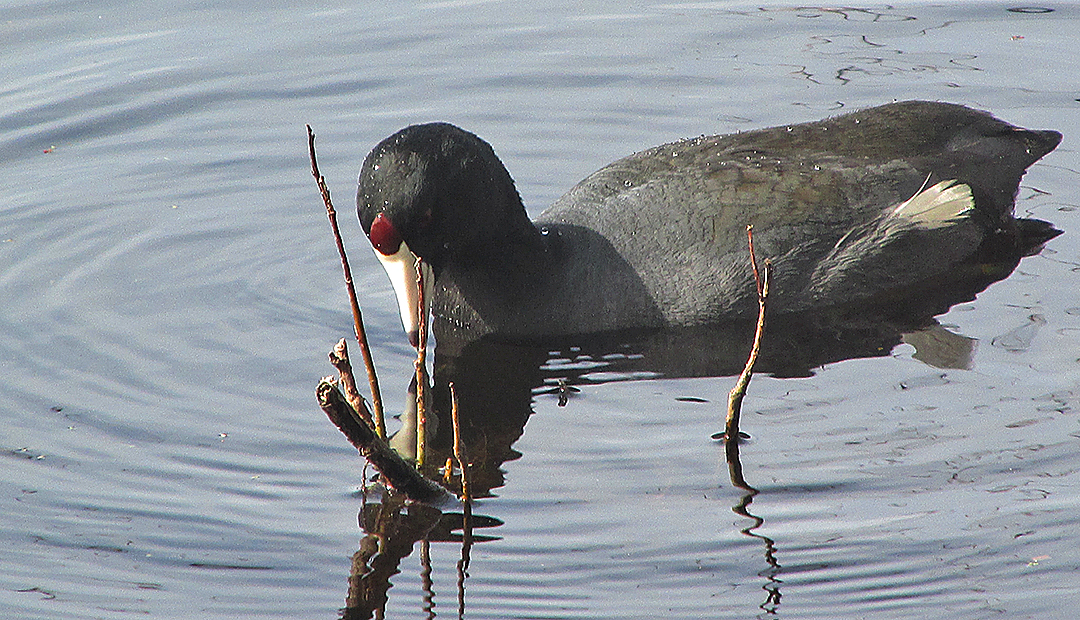
I spoke by phone this past week with Linda Powell, who lives on nearby Tiger Creek Road between Hampton and Roan Mountain. Linda called me to inform me that her neighbor found an unusual bird after it flew into a fence and was killed. She believed the bird might have been a duck, but she had never seen anything like it. As she described the bird to me, including its black coloration and large, green feet, I began to suspect that the unfortunate bird was probably an American Coot. She also noted that the bird’s bill was light in coloration, which was another indication of a coot. The habitat also seemed favorable for a migrating coot. Although there isn’t a pond in the pasture where the bird was found, there is a wet, marshy area that would probably have been sufficient to attract this bird. The coot was killed after it ran into a section of barbed wire fence. Unfortunately, it probably didn’t see the barbed wire until it was too late.

•••••

I made some first spring sightings of a couple of birds this past week. Three European Starlings made an appearance with a flock of American Robins on March 4. A few starlings are usually present from spring to early fall. At least they are never common and don’t extend their visit into the winter season. On March 3, when a light snow covered the ground at my home on Simerly Creek Road in Hampton, a female Red-winged Blackbird fed on the ground under my feeders. She was the first of her species to make an appearance this spring and is right on schedule.

•••••

Elizabethton resident Rita F. Schuettler‎ also spotted her first Red-winged Blackbird of spring coming to the feeders at 3:50 p.m. on Saturday, March 8. “I heard one last Saturday while working outside,” she added in her Facebook post announcing the sighting. “I heard this one also as I was reloading the feeders. After I was back in the house, he came in! Good to see him!”

•••••

I would love to hear from readers. Just post comments on my new blog at ourfinefeatheredfriends.wordpress.com. You can also reach me on Facebook or send email to ahoodedwarbler@aol.com. Please share the link to the blog with others who might be interested in the topic of birds and birding in Northeast Tennessee.

Increased global effort makes 2014 Great Backyard Bird Count a huge success

Image

Photo by Bryan Stevens
A pair of White-winged Scoters, back, swim on the Watauga River in Elizabethton with three Greater Scaups.

Last month’s Great Backyard Bird Count certainly merited description as a global affair. Checklists came in from more than 103 countries, including Australia, China, Argentina, Kazakhstan, Iceland, India, Kenya, as well as Canada, the United States and Mexico. Birders fanned out at hot spots around the world to count birds from Friday, Feb. 14 to Monday, Feb. 17.

Participants in the 2013 GBBC tallied more than 40 percent of the world’s bird species, with organizers setting a goal to take that figure to 50 percent this year.

A total of 644 species were found within the United States during the 2014 GBBC. California, Texas and Florida led the count with 364, 349 and 305 species found within those states, respectively.

In Tennessee, a total of 139 species were found during the GBBC. That’s a far cry from the 201 species located by sharp-eyed birders in Georgia, 200 species found in North Carolina, 184 species identified in both Alabama and Mississippi, as well as the 180 species counted in Virginia.

Arkansas eked past Tennessee with 141 species found, but Tennesseans did better than Missouri, where GBBC participants tallied 133 species, and Kentucky, where counters found 128 species.

A total of 2,357 checklists were completed by Tennessee GBBC participants, which provided some extensive coverage across the Volunteer State.

With 100 species, Hamilton County proved the most productive Tennessee county, followed closely by Shelby and Knox, with 98 and 97 species, respectively.

Closer to home, results were less dramatic but still important.

In Unicoi County, nine participants, including myself, found 39 species of birds during the four-day count period. In Carter County, 49 species of birds were found by 14 participants, including myself.

I mostly counted at home during this year’s GBBC, but I did make trips to the pond at Erwin Fishery Park and Roan Mountain State Park to expand my birding territory.

•••••

As checklists poured in from GBBC participants, a few trends became clear from the early stages of this year’s count. For instance, this year lacked any evidence of a “superflight” of irruptive finches.  Last year the GBBC documented such a phenomenon, which was driven by food shortages in Canada. Ten species of irruptive birds (mostly finches) staged a record invasion in areas where they don’t usually show up.

This year lacked huge numbers of White-winged Crossbills, Red Crossbills, Common and Hoary Redpolls, Pine and Evening grosbeaks, Pine Siskin, Purple Finch, Red-breasted Nuthatch and Bohemian Waxwing, birds that were more numerous farther south last year as well.

On the other hand, the 2014 GBBC has confirmed that this has been a great year for spotting Snowy Owls across the United States.

A massive irruption of Snowy Owls into the northeastern, mid-Atlantic and Great Lakes states had already been producing headlines for the past several months.

Halfway through the GBBC, with 327 checklists reporting a total of 476 Snowy Owls in 20 states and provinces of the United States and Canada, it was clear that many of the Snowy Owls had found their winter homes to their liking. Last year, 392 owls from eight provinces and 14 states were all that were counted during all four days of the 2013 GBBC.

As an illustration of how the owls have moved, in 2013 Canada had 46 percent of the Snowy Owl reports, but this year that number has dropped to 32 percent. Despite this year’s impressive numbers, these large, white owls can still be hard to find. Many GBBC participants succeeded by checking seashores and lakeshores, farm fields and even cities, where the owls often choose a prominent perch with a good view, such as a utility pole or even the roof of a city building.

In much of North America, people (and birds) have been shivering through bone-chilling blasts of arctic air also called the “polar vortex” phenomenon. The impact of this extended cold on birds has beens most apparent in areas such as the Great Lakes, which are almost completely frozen. Only Lake Ontario has any significant open water now and that has resulted in major movements of waterfowl such as ducks, geese and grebes. The GBBC is capturing these patterns well.

For example, the White-winged Scoter is not usually found inland in February, but has been widely reported from interior locations over the past few days as has the Long-tailed Duck. Both these species showed up in unusual numbers in Northeast Tennessee during late January and throughout February.

Image

Photo by Bryan Stevens
These two White-winged Scoters spent several days in late January and early February on the Watauga River near Meredith Cabins in Elizabethton.

A pair of White-winged Scoters spent several days on the Watauga River near Meredith Cabins in late January and early February. My mom and I managed to get good looks at the two ducks on Feb. 1. By climbing down a tangled bank, I also managed to get some decent photographs of them.

White-winged Scoters are large, solidly built ducks. Males can weigh three-and-a-half pounds while females can reach a weight of two-and-a-half pounds. Both sexes have the vivid white wing patch that gives the duck its common name.

This duck nests on freshwater lakes and wetlands in the northwestern interior of the United States and Canada.

Other scoters include Surf Scoter, Velvet Scoter, Black Scoter and Common Scoter. Surf and Black Scoters are also occasional visitors to Northeast Tennessee.

A total of 62 White-winged Scoters were found in Tennessee during this year’s GBBC. Three Surf Scoters were also found.

••••••

The scoters are classified with the diving ducks. To learn more about scoters and other diving ducks, here’s a helpful link to a PDF with detailed information about various species, including White-winged Scoter.

http://extension.umd.edu/sites/default/files/_docs/programs/riparianbuffers/FS611.pdf

••••••

According to an update regarding the GBBC posted at birdcount.org, one of the more exciting rare birds reported in this year’s GBBC was spotted across the pond. A Yellow-rumped Warbler has been visiting a feeder in, of all places, central England! This is the first New World warbler ever recorded for the GBBC from the Eastern Hemisphere.

Image

Photo by Bryan Stevens
This Yellow-rumped Warbler was photographed on Fripp Island, S.C., several years ago.

In northeast Tennessee, the Yellow-rumped Warbler, many years ago known as Myrtle’s Warbler, is a common winter bird. Indeed, it is the only warbler that typically attempts to spend the winter months in the eastern United States.

••••••

I would love to hear from readers. Just post comments on my new blog at ourfinefeatheredfriends.wordpress.com. You can also reach me on Facebook or send email to ahoodedwarbler@aol.com. Please share the link to the blog with others who might be interested in the topic of birds and birding in Northeast Tennessee.