Tag Archives: birds

Woodpecker still bears name of historic expedition’s charismatic leader

natdiglib_28237_extralarge

The Lewis’s woodpecker’s common and scientific names pay tribute to the famed explorer Meriwether Lewis, who with his partner, William Clark, explored the American West.

The 215th anniversary of the launch of the famous Lewis and Clark Expedition will be observed May 14. Also known as the Corps of Discovery Expedition, the enterprise became the first American expedition to cross the western portion of the United States and explore the recently acquired lands known collectively as the Louisiana Purchase. The Lewis and Clark expedition officially extended from May 14, 1804, to Sept. 23, 1806. As they drove deep into the American West, the members of the expedition saw wonders, including the feathered variety, never before beheld by people outside of various Native American tribes.

In authorizing the expedition, President Thomas Jefferson wanted to establish a reliable route for travel through the western half of the nation and to fend off any attempts by European nations to gain a foothold beyond the nation’s frontier. Jefferson also hoped Meriwether Lewis and William Clark would make some important discoveries about the nation’s native fauna and flora. Jefferson gave instructions for Lewis and Clark to collect bones they found during their journeys. He also asked them to keep alert for large animals that would be new to science. In particular, Jefferson hoped that the men he chose to head the expedition would help prove that the American mastodon still roamed the American West.

Mastodon bones had been found in the eastern half of the United States early in the nation’s history. Jefferson, accepting the widely held view of his time that God would not let animals go extinct, entertained the optimistic belief that large herbivores such as the bison of the American West roamed portions of the newly-acquired Louisiana Purchase along with American mastodons. The expedition failed to find great herds of American mastodons trumpeting their way across the vast prairies and grasslands of the Western United States. As any student of history knows, however, the expedition made many important biological discoveries ranging from unique animals as the pronghorn antelope and grizzly bear to various fish, reptiles and plants.
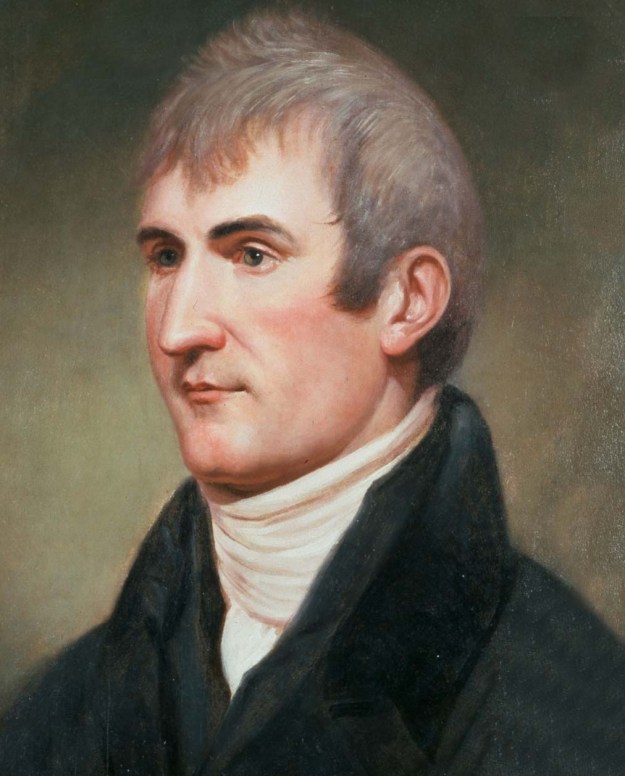
Meriwether_Lewis-Charles_Willson_Peale

Meriwether Lewis gave his name to the famous Lewis and Clark Expedition. as well as to the woodpecker named Lewis’s woodpecker.

The expedition also described nearly half a dozen species of birds that, at the time, had never been discovered and detailed by European Americans. These birds included the common poorwill and the greater sage-grouse. One of the birds — Lewis’s woodpecker — even memorializes the name of Meriwether Lewis and his important contributions to the success of the venture.

Lewis described the woodpecker that now bears his name as a bird “new to science” in one of his journal entries dated May 27, 1806. He made his observations of the bird while the expedition camped on the Clearwater River in what is now known as Kamiah, Idaho. He had mentioned the “black woodpecker” in earlier accounts in his journal, but during his time in the Idaho camp, he managed to shoot and preserve several of the birds. In his account, he described the bird’s behavior as similar to the red-headed woodpecker of the Atlantic states back in the eastern United States.

As it turns out, both Lewis’s woodpecker and the red-headed woodpecker belong to the Melanerpes genus of woodpeckers, which also includes about two dozen species ranging North and South America, as well as the islands of the Caribbean. The other members of the genus found in the United States include acorn woodpecker, gila woodpecker and red-bellied woodpecker. The term Melanerpes comes from ancient Greek words for black (melas) and creeper (herpes), which roughly translates as “black creeper.” Lewis’s woodpecker, one of the largest of its kind found in the United States, can reach a length of 10 to 11 inches. In 1811, the famous naturalist Alexander Wilson composed the first description of the bird for science and named it Melanerpes lewis after Meriwether Lewis. In addition, the bird’s common name has always identified it as Lewis’s woodpecker.
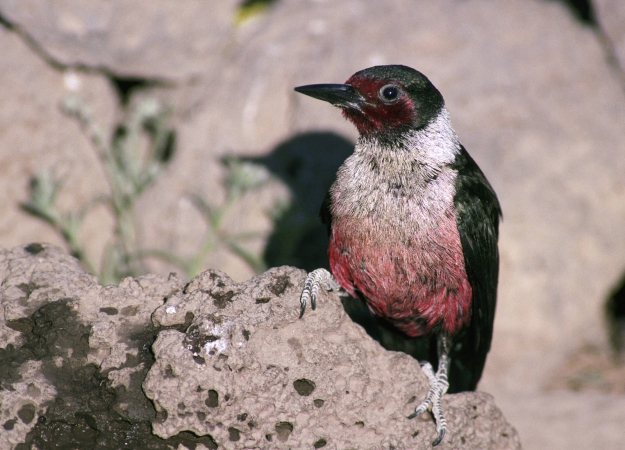
Lewis-Woodpecker

Photo by Dave Menke/U.S. Fish and Wildlife Service • Lewis’s woodpecker is found primarily in the west. It eats insects, mostly caught in the air, as well as fruits and nuts. The woodpecker also shells and stores acorns in the bark of trees.

These woodpeckers nest in open ponderosa pine forests and burned forests with a high density of standing dead trees. They also breed in woodlands near streams, oak woodlands, orchards, and pinyon-juniper woodlands. In appearance, Lewis’s woodpecker stands out from other American woodpeckers. Its unique appearance includes a pink belly, gray collar and dark green back, quite unlike any other member of its family. In behavior, it also differs from other woodpeckers. This woodpecker is fond of flycatching, perching on bare branches or poles and then making flight sallies to capture winged insect prey. It has also been described as flying more like a crow than a woodpecker.

We haven’t been good stewards of the woodpecker that the famous Expedition brought to our notice. According to the organization Partners in Flight, Lewis’s Woodpeckers are uncommon and declining. Their populations declined by 72 percent between 1970 and 2014. Lewis’s Woodpeckers are threatened by changing forest conditions as a result of fire suppression, grazing and logging. These factors often leave pines of a uniform age in the woodpecker’s favored habitat and fewer of the dead and decaying pines crucial for the bird’s nesting success. Humans could help Lewis’s woodpecker thrive by not removing dead or dying trees from western forests.

After the Lewis and Clark Expedition returned to the eastern United States and reported back to Jefferson, he was awarded with 1,600 acres of land. He meant to work on publishing the journals he kept during the Expedition, but kept finding himself distracted. In 1807, Jefferson appointed Lewis governor over the Louisiana Territory that Lewis and Clark had so famously explored. He governed the territory from the Missouri city of St. Louis, which became known as the “Gateway to the West” as more Americans expanded into the territory they had learned about thanks to the famous Expedition.
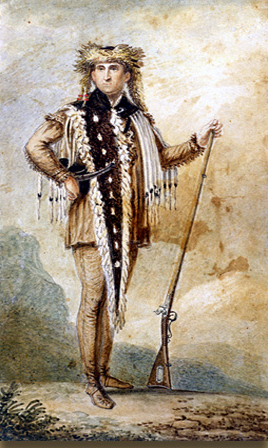
lewis_memin-tippet

Meriwether Lewis in a pose painted with him wearing garb he chose for the expedition.

Lewis spent two troubled years trying to administrate the new territory, but he became entangled in political squabbles and financial difficulties. Things got so difficult for him that Lewis decided he needed to travel to the nation’s capital in person to clear up the mess. On his way to Washington, D.C., he stopped at an inn along the Natchez Trace about seventy miles southwest of Nashville. He died of gunshot wounds on Oct. 11, 1809, and historians have debated ever since whether his death resulted from suicide or murder. Regardless of the nature of his demise, he earned a place in the history books. He’s also remembered every time a birder lays eyes on the woodpecker that bears his name. When the bird is researched in a field guide or on a web page, the more curious individuals are sure to dig a little deeper to learn who provided the Lewis in the woodpecker’s name. His name will continue to be recalled as long as this unusual western woodpecker continues to fly in its beloved pine forests.

I’ve never seen a Lewis’s woodpecker, although I have visited Utah twice to make the attempt. Lewis’s woodpecker is listed as an uncommon permanent resident on the state checklist, so perhaps I will need to be more diligent the next time I visit its home range. I see the red-bellied woodpecker, a smaller relative of Lewis’s woodpecker, on a regular basis. This common bird more closely resembles what most people expect a woodpecker to look like, and it will visit feeders for such fare as sunflower seeds, peanuts and suet.

A-Red-belliedTHREE

Photo by Bryan Stevens • The red-bellied woodpecker is a close relative to Lewis’s woodpecker.

In next week’s column, I’ll continue my anniversary tribute to the Lewis and Clark Expedition with a discussion of the bird that honors William Clark, the other partner in the famous westward expedition of discovery.

Readers continue to share hummingbird tales
Garry Cole sent me an email recently to share a hummingbird story.

“I have been following the progress of hummingbird sightings as the birds moved closer to East Tennessee,” Garry wrote. “I read with envy how neighbors all around me had seen these jewels, but none had visited my home here in Hickory Tree near Bluff City.”

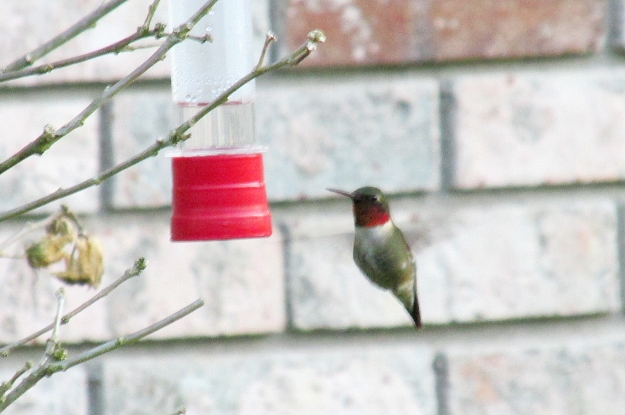
Then, on April 23, as Garry sat in the yard, a male ruby- throated hummingbird stopped and hovered less than a foot in front of his face.

“He looked me squarely in the eye as if to say, ‘Well, I’m here. When are you going to feed me?’”

Garry noted that the bird arrived at about 8:15 p.m. “I immediately went inside and prepared my feeder,” he said. “Now, I have at least four that visit my feeder every day. There may be more, but I have only seen four at one time.”

His hummingbirds drink about eight ounces of sugar mix every two or three days and seem to feed more frequently between 5 and 7 p.m.

Tom Brake shared via Facebook that hummingbirds have also returned to his home on Peaceful Valley Road in Abingdon, Virginia. In his posting to my Facebook page, he informed me that he had his first hummingbird sighting of spring on April 28.

Myra Harris message me on Facebook to let me know her mom, Mae Bell Byrd, who lives in Flag Pond in Unicoi County, Tennessee, saw her first hummingbird on April 12.

IMG_2786

Photo by Bryan Stevens • Welcoming back hummingbirds also involves making sure that they remain healthy and safe while spending the next six months in our yards and gardens.

April brings flurry of spring migrants to region

Louisiana Waterthrush

Photo by Adobe Stock • Subtle plumage differences, as well as habitat, behavior and seasonal presence, are factors in distinguishing the Louisiana waterthrush, pictured, from the closely related Northern waterthrush. The Louisiana waterthrush nests along fast-moving streams in the area while the Northern waterthrush does not breed in the region.

I’m always happy for the arrival of April because I know the month hails the arrival of some of my favorite birds. The roughly 50 species of New World warblers that occur in the Eastern United States have captivated me from the time I first picked up a pair of binoculars. The warblers offer color, energy, complex songs and much more for the bird enthusiast to enjoy.

The month started out with my first sighting of a purple finch for the year. The finch must have been a harbinger of birds to come because in quick succession I observed many early migrants, including brown thrasher, blue-headed vireo, blue-gray gnatcatcher and chipping sparrow, as well as several warblers.

PurpleFinches

Photo by Bryan Stevens • A study of the facial pattern of a female purple finch helps contrast her from similar female house finches. Again, the notched tail is also a good indication of the bird’s identity.

The first warbler to arrive in the woods around my home this year was a singing male black-throated green warbler. Three others — black-and-white warbler, yellow-throated warbler and Louisiana waterthrush — followed quickly after my sighting of the black-throated green warbler.

The Louisiana waterthrush stood out among these early observations. This warbler is a specialist of creeks and streams, and my sighting took place near a roaring creek swollen by a rainy spring. This water-loving warbler also has a loud, ringing song that can still be hard to hear because of the fact the bird is usually near the background noise of rushing water.

B&WWarbler

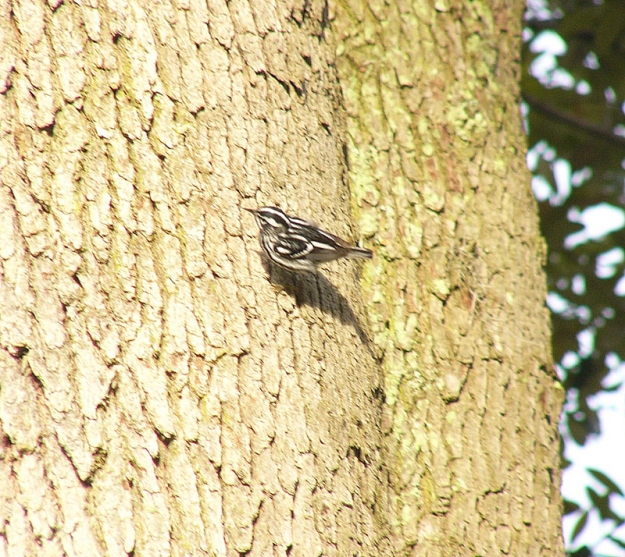
Photo by Bryan Stevens • A black-and-white warbler creeps over the bark of a pine in search of insect prey.


While many warblers have shown signs of decline in recent years, the Louisiana waterthrush appears to have bucked that trend. According to the website, “All About Birds,” Louisiana waterthrush populations were stable between 1966 and 2015, based on statistics from the North American Breeding Bird Survey. Partners in Flight, a network of organizations engaged in all aspects of avian conservation, estimates a global breeding population of 360,000, with almost all of those individuals spending at least part of the year in the United States. About a quarter of the population retreats into Mexico during the winter season. The rest winter in Florida and some of the Gulf Coast states, as well as the islands of the Caribbean.

While most songbirds are fortunate to survive two or three years in the wild, at least one Louisiana waterthrush lived to the age of at least 11 years and 11 months. The bird, a male, was seen in New Jersey in the wild and identified by a band on one of his legs. He had been banded in the same state, according to the website, “All About Birds.”

The waterthrushes are the only two species in the genus Parkesia, so named to honor American ornithologist Kenneth C. Parkes, who was for many years curator of birds at Carnegie Museum of Natural History. The common name of the Louisiana waterthrush is not a very apt one, as this bird does not have any special affinity for the state of Louisiana. Someone collected some of the early specimens of the Louisiana waterthrush in its namesake location, and the name has stuck through the years.

The only other warbler in the genus Parkesia is the Northern waterthrush which, unlike its relative, likes to live near quiet, sedate pools, ponds and bogs, not rushing streams.

Hummingbirds getting closer to region

Tommy and Virginia Curtis of Smithville, Tennessee, reported their first ruby-throated hummingbirds of the spring on the email group, “TN-Birds.” The hummingbird arrived on April 7.

“We had two male ruby-throated hummingbirds arrive late Sunday afternoon,” they wrote in their email. “That is a little later than the April 1 arrival times in the past.”

The two visitors had apparently agreed to co-exist.

“So far they are eating peacefully, and neither is attacking or dominating the one feeder,” the couple reported. “We keep wondering when the white-throated sparrows and dark-eyed juncos plan to leave, as we have had many of them all winter.”

white-throated-sparrow-942064_1920 (1)

Photo by Skeeze/Pixabay • A white-throated sparrow perches on a branch to sing its easily recognizable song. Many Americans translate the sparrow’s song as “Ol’ Sam Peabody, Peabody, Peabody.”

The couple also shared that they have been hosting a small flock of purple finches. “They normally don’t show up at our feeders unless there is snow on the ground, but we have enjoyed seeing them daily,” they wrote in their email.

Of course, the Curtises live in DeKalb County in Middle Tennessee. As of press time, I still haven’t received any reports of hummingbirds arriving in East Tennessee or Southwest Virginia. I’m confident these tiny winged gems will arrive soon. I hope to update on hummingbird arrivals in next week’s column.

Remember to share your hummingbird sighting by emailing me the date and time of the sighting to ahoodedwarbler@aol.com. I’m also on Facebook should anyone want to contact me through that social media platform.

RubyRed

Photo by Bryan Stevens • A male ruby-throated hummingbird perches near a feeder that he is ready to defend from all comers.


Feeding birds can draw some unwelcome guests

Squirrel-AttackPhoto by Dianna Lynne • Leaping onto a fully stocked feeder, an Eastern gray squirrel scatters seeds in all directions. The unconquerable squirrel is one of the most unwanted guests at many bird-feeding stations.


The winter bird-feeding season is coming to a close, but there’s no need to pull the welcome mat completely. Some of our summer visitors appreciate some supplemental food. Of course, there’s less need for our offerings during warm weather when insects and other food sources are readily available.

People in Great Britain spend 200 million pounds per year on wild bird food. In the United States, people are spending $4 billion each year on feed for the birds. Another $800 million in spending goes to feeders, bird baths and other accessories used to attract wild birds.

People have been feeding birds in the United States of America since before it was a nation. The father of our country, George Washington, fed wild birds at his home, Mount Vernon. The great writer and thinker Henry David Thoreau fed the birds and learned to identify many of the birds around Walden Pond in Massachusetts. Poet Emily Dickinson tossed crumbs to sparrows and then turned those special moments with her feathered friends into poetry.

Since the time of Washington, Thoreau and Dickinson, if not before, Americans have been supplying food, as well as shelter and water, to persuade birds to bring themselves closer. In return, we enjoy their color, their interesting behavior, their songs, and much more.

I continue feeding during the warmer months, although I do cut back on the quantity of my offerings. One of the best bonuses for engaging in year-round bird feeding is the chance to see parent birds bring their offspring to feeders to introduce them to human-offered fare. Be aware, however, that when you put out a table offering free food, you’re bound to attract some unexpected guests. Sometimes those unanticipated visitors can wreak havoc on the smooth management of a feeding station for your birds.

Here is my version of the Top 5 candidates for a “Not Welcome” list of the wildlife most people would prefer not to entertain at their feeders.

Hawks

The raptors are, of course, birds themselves. Therein rests the irony. Flocks of birds active around feeders are like ringing a dinner bell for some raptors, which have learned that songbirds in such situations on occasion make easy pickings.

It’s not any single raptor that can be identified as the most obvious threat to songbirds. Species such as American kestrel, sharp-shinned hawk, Cooper’s hawk, red-shouldered hawk, merlin, peregrine falcon and red-tailed hawk will prey on their fellow birds if given ample opportunity.

rthawk-one

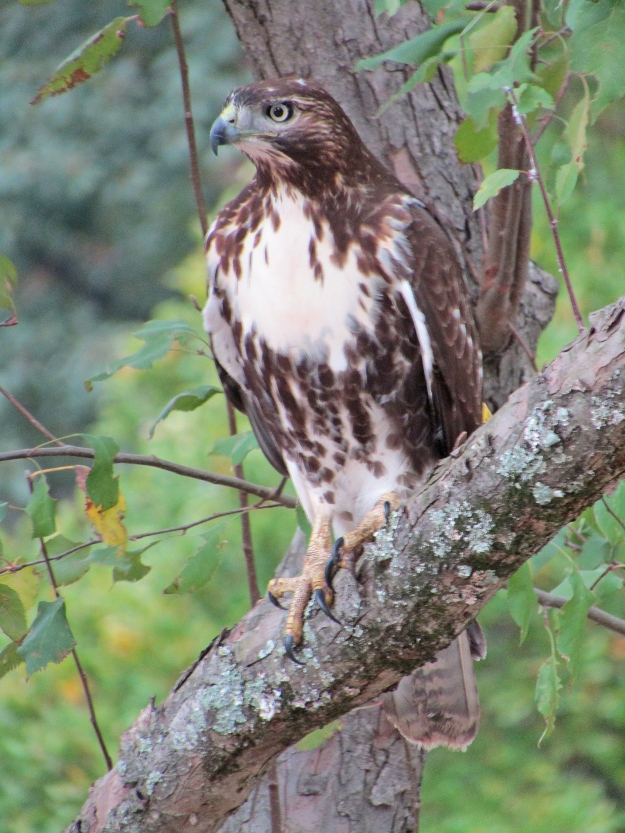
Photo by Bryan Stevens • Raptors, like this red-tailed hawk, can cause concern when they take up residence near a feeder in a yard or garden.

If a hawk does begin to show interest in your feeders, it may be necessary to curtail or even cease feeding songbirds until after the raptor loses interest and moves on to other hunting grounds.

I hesitate to even place raptors on this list because I believe that every bird is a wonderful creation. It’s best to remember that hawks view smaller birds flocking to a feeder in the same way those small songbirds view the abundance of seeds. For both hawks and songbirds, our offerings represent easy meals. It’s not easy, but the best choice is to co-exist — if not at peace, then at terms with nature’s reality.

Opossums

The Virginia opossum, also known as the North American opossum, or simply “possum,” is often overlooked because its raids on feeders take place after dark. Although the opossum has 50 teeth (that’s more than any other North American mammal has) in its jaws, it shares the night with other active omnivores, including bears and raccoons.

Regardless of its toothy grin, the possum is not adept as hulling sunflower seeds. The telltale sign that a possum is raiding your feeders involves the discovery of little piles of pulped sunflower seeds, hull and all, in your feeder or on the ground beneath it. The possum pulverizes the sunflower seed and evidently tries to extract what nutritional content it can. Of course, suet, nuts and other feeder fare are on the possum’s menu.

This particular possum is the only marsupial found north of Mexico. The continent of Australia is more famous for its marsupials, which include kangaroos, wallabies and wombats.

black brown and white animal

Photo by Pixabay on Pexels.com • Although the opossum has 50 teeth (that’s more than any other North American mammal has) in its jaws, it shares the night with other active omnivores, including bears and raccoons.

Raccoons

These masked, ring-tailed bandits are the bane of many a person who enjoys feeding birds. While they primarily restrict their raids to the hours between sunset and dawn, some emboldened raccoons will occasionally become brazen enough to stake a claim to feeders in broad daylight. A couple of years ago, a trio of young raccoons arrived early in the evening with plenty of daylight remaining to feed in the feeders while I watched from a nearby lawn chair with my binoculars.

Raccoons will also spirit away feeders. I’ve found hummingbird feeders, suet feeders and small plastic feeders carried a good distance into the woods before the thieving raccoon dropped them. The stolen items are usually damaged but, on occasion, I’ve recovered some of my items that were more or less no worse for the wear.

On one occasion, a crafty raccoon managed to remove a sunflower seed feeder from its branch on a tree outside one of my windows, I later found the portly critter reclining lazily on his back wedged between the trunk and a branch high on a nearby tree, holding the feeder in one arm and reaching into it with the other like a person eating popcorn.

Raccoons are highly intelligent and inquisitive, which only makes them more difficult to discourage from raiding feeders. They can be amusing and entertaining in their own right, but it’s best not to encourage their visits. If they prove too persistent, cease feeding birds until the raccoons have moved to a new location.

Raccoon-Contest

Photo by Bryan Stevens • Curious and intelligent, raccoons can think of many ways of ransacking a feeding station meant for birds.


Bears

A visit from a black bear is hard to miss. With their brute strength, bears are capable of mangling and destroying even the most sturdily constructed of bird feeders. While there are many other unwanted feeder guests, none can match the bear for its sheer capacity for destruction. Black bears can weigh between 200 to 600 pounds, so it’s not hard to imagine their potential for wreaking havoc.

Amanda Austwick lives in Flag Pond, Tennessee. She is a dedicated feeder of our feathered friends, which has led to repeated incidents with problem bears over the years. Amanda lives within the official boundaries of the Cherokee National Forest. Black bears have been thriving in the Cherokee National Forest, as well as throughout the southeastern United States.

When I first corresponded with Amanda several years ago, she was writing to me about a bear attack on her feeders. “One feeder was completely bent over on the ground,” she wrote. I also pointed out that the bear is actually just feeding on the seed. The damage to the feeder is a by-product caused by the fact bears probably don’t know their own strength.

I’ve not gone completely unscathed when it comes to bears and my feeders. Several years ago I owned a nice feeder with a metal meshwork used for holding shelled peanuts, which are loved by birds such as chickadees, titmice, nuthatches and woodpeckers. I woke one morning to find the feeder had been mangled into the equivalent shape of a pretzel.

Compared to the stories told by Amanda, as well as other people who have shared their own bear tales over the years, I got off lucky to only lose a single feeder to a bear. Brookie and Jean Potter, friends who live near Wilbur Lake in Carter County, Tennessee, have had to innovate to stay one step ahead of the bears living in proximity to them. Brookie managed to raise their feeders beyond a bear’s reach using a complicated system of poles and pulleys.

If such proactive measures are not something one wishes to do, there’s one simple step that can be taken. People can bring in their feeders at night to ensure there’s nothing left outdoors to attract the attention of a meandering bear. Bears are omnivores, eating a varied diet ranging from insects and fish to amphibians and bird eggs. When a bear finds a bird feeder, they’re happy to include sunflower seeds or other such fare in their diet. When such food is no longer available, they’re likely to move on.

Bear-FeederPole

Photo Courtesy of Amanda Austwick • This bear caused considerable damage to the Austwick feeders.

Squirrels

They may not match a black bear for sheer destructive capability, but I regard the Eastern gray squirrel as Public Enemy Number One when it comes to having peace and tranquility at a bird-feeding station. What justifies this ranking? It’s simple, really. I know of no sure-fire way to deny a hungry and determined squirrel access to any type of feeder. It’s possible to slow them down, but I think the best we can do is maintain an uneasy truce of co-existence with squirrels.

I wouldn’t begrudge the squirrels some bird seed if they didn’t show such ingratitude by gnawing on feeders. With their sharp incisors, squirrels can chew up and spit out plastic and even wood feeders. More expensive feeders made of ceramics, metal and glass are immune to the same type of squirrel vandalism.

Although I’ve not tried it, I’ve heard that sunflower seed laced with capsaicin will deter squirrels. This spicy substance is even used to deter such large mammals as elephants and grizzly bears. Capsaicin, which is derived from hot peppers, reacts entirely differently with birds. While many mammals will avoid food containing even minute amounts of capsaicin, birds will readily consume it. The difference seems to be that bird receptor cells are largely insensitive to capsaicin.

nature animal cute fur

Photo by Pixabay on Pexels.com • The gray squirrel is a cunning and often destructive guest at feeders intended for the benefit of birds.

••••••

To be sure, I could have added some other wildlife species to the list. White-tailed deer can graze on flowers planted for the benefit of hummingbirds. Deer have even been documented eating the eggs of songbirds, perhaps more for the calcium shell than any other reason. Chipmunks are almost as wily as squirrels, but they’re cuter and non-destructive. Insects, such as bees and hornets, can overwhelm sugar water feeders intended for hummingbirds.

Don’t even get me started on stray cats! A few years back, a study by researchers from the Smithsonian’s Migratory Bird Center and the U.S. Fish and Wildlife Center found that between 1.4 to 3.7 billion birds lose their lives to cats each year in the United States. In addition to birds, cats kill billions of small mammals — shrews, voles, mice, rabbits — every year. Most of the carnage is committed by feral or stray cats, not house cats. My own two cats are kept indoors to avoid contributing to the problem.

photography of brown chipmunk eating on top of rock

Photo by Adriaan Greyling on Pexels.com • A chipmunk accepts crumbs. The cute factor usually works in preventing this rodent from being considered a pest.

Smallest of the nuthatches finds a niche at woman’s feeders

natdiglib_6802_extralarge

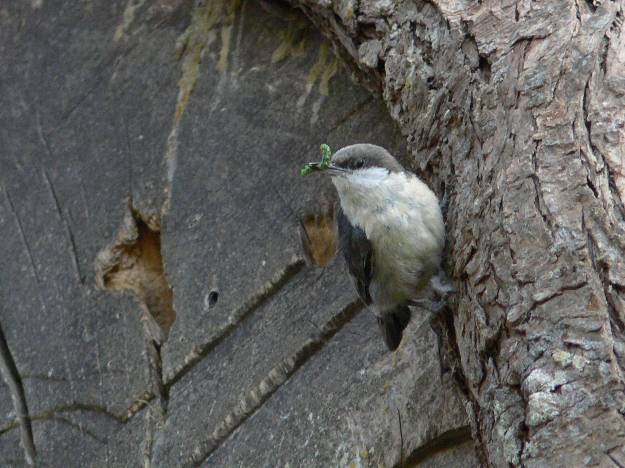
Photo by Lee Karmey/USFWS • A pygmy nuthatch captures a caterpillar.

Veronica Rausch contacted me by email to share a story of the nuthatches that frequent the feeders at her home in central Oregon.

“I have a small flock of pygmy nuthatches coming into the feeders next to my dining room window on a regular basis,” Veronica wrote, adding that the nuthatches began their visits about three weeks ago.

Veronica wrote that she lives in the pine forests of Central Oregon at an elevation of about 4,200 feet.

“The pygmy nuthatches are delightful little birds and share the feeders with the chickadees and juncos,” she wrote. “The bigger birds such as the Stellar’s jays and the woodpeckers will cause them to leave.”

Veronica has also enjoyed observing their unusual antics. “I saw one do a little dance on a branch by the suet feeder,” she described in her email. “Unfortunately, I wasn’t able to grab the camera fast enough! I hope they stick around.”

I replied to Veronica’s email, noting how I consider her fortunate to be hosting the smallest of North America’s nuthatches at her home. Admitting to some envy at her good fortune, I explained that I hope to some day add this species to my life list so I can check all of the continent’s nuthatches off my list of target birds.

Even by nuthatch standards, the pygmy nuthatch is a small bird. In appearance, this nuthatch shows buffy-white underparts contrasted with a brown head and a slate-gray back. They often breed in large extended family flocks, so the four individuals observed by Veronica might very well have been closely related to each other.

Nesting pygmy nuthatches are often assisted in their chores by “nest helpers,” which are close relatives that help the busy parents gather food and feed hungry young. These nest helpers also deliver food to females as they incubate eggs and will mount a spirited defense of a nest threatened by intruders. Their communal nature extends to nocturnal roosting when many individuals will huddle together to ensure their combined body heat helps them survive extremely cold nights.

So how small is the pygmy nuthatch? The adults are barely four inches long and weigh only a third of an ounce. A common fountain pen weighs more than this tiny nuthatch, which goes a long way towards explaining the bird’s scientific name, sitta pygmaea.

brown-headNuthatch

Photo by theSOARnet/Pixabay.com • The brown-headed nuthatch, the southeastern counterpart to the pygmy nuthatch that ranges throughout the Rocky Mountain states, is strongly associated with various types of pine trees.

Pygmy nuthatches are not at all likely to be found in the Mountain Empire or any adjacent areas, but there is another small nuthatch that is found in some extremely localized habitats in the region. The brown-headed nuthatch is a specialist of pine woodlands throughout the southeastern United States, favoring loblolly-shortleaf pines and longleaf-slash pines. This nuthatch requires standing dead trees for nesting and roosting. They forage for food, however, on live pines. The birds are more abundant in older pine stands.

I saw several brown-headed nuthatches during a recent stay on Fripp Island in South Carolina. I’ve also observed this small nuthatch during visits to Chattanooga, Tennessee, and Atlanta, Georgia, as well as various other locations in South Carolina. This nuthatch even occurs in the Mountain Empire region, most recently with four of these birds being found at Washington County Park on South Holston Lake near Bristol during the 2018 Christmas Bird Count conducted by the Bristol Bird Club.

These small birds will occasionally forage close to the ground, but they are often in the upper branches of pine trees. Their presence is often revealed by their call, which sounds amazingly like a squeeze toy. They produce their “squeaky toy” call persistently when agitated or curious. Brown-headed nuthatches often associate with mixed flocks in company with Carolina chickadees, tufted titmice, pine warblers and other small songbirds.

The power of flight gives most birds a perfectly valid reason to disregard the power of gravity. The family of tree-clinging birds known as nuthatches lives an even more topsy-turvy lifestyle than many other of their winged kin. Nuthatches prefer a headfirst stance, even “walking” upside down as they search for food in the nooks and crannies of tree trunks and branches.

The United States is home to four species of nuthatches: white-breasted, red-breasted, brown-headed and pygmy. White-breasted nuthatches are probably the most familiar nuthatch to backyard birders in this area.

WB-Nuthatch

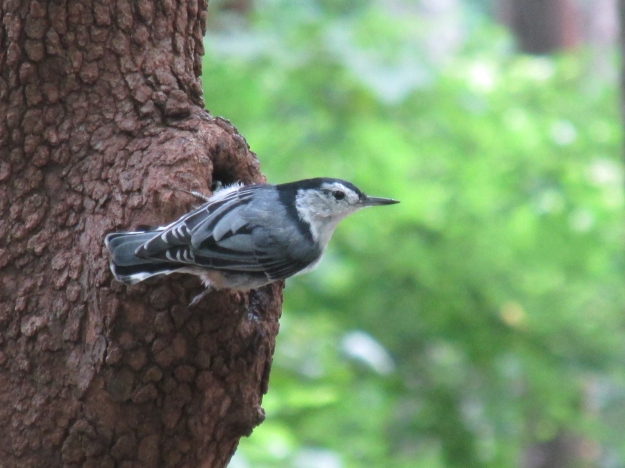
Photo by Bryan Stevens • A white-breasted nuthatch clings to the bark of a tree.

Because of their gravity-defying antics, the white-breasted nuthatch and other members of the family can provide hours of entertainment at our bird feeders. Individual white-breasted nuthatches will follow a single-minded path along the trunk of a tree or a branch on the way to a feeder. An individual nuthatch rarely varies from this path. It’s amusing to watch the jerky progress along the trunk as this bird prepares for a flight to a feeder holding sunflower seeds or a hanging wire basket of suet.

At my home, nuthatches typically remain aloof from the always-ongoing rivalry between the chickadees and titmice. The white-breasted nuthatch is also a no-nonsense visitor. Rarely distracted by disturbances among other birds, this nuthatch is content to grab a seed and go or hang on to the wire frame of a suet basket and peck off chunks of suet.

The more numerous titmice and chickadees give way when a white-breasted nuthatch claims a feeder. At times, however, among the frantic activity, a tufted titmouse or a Carolina chickadee will forget itself and fly to a position on a feeder already claimed by a nuthatch. If surprised enough to retreat to a nearby perch, the nuthatch will go through a rather comical little dance to express its displeasure. Wings spread out in a rigid pose, the bird will turn around in tight circles, showing definite resentment at being displaced by an offending chickadee or titmouse.

The stubby red-breasted nuthatch is another member of the family that occasionally finds its way to our yards. Smaller than the related white-breasted nuthatch and, as far as I can tell, complacent in the company of chickadees and titmice, the red-breasted nuthatch is always a welcome visitor. It has a tell-tale “yank yank” call that it produces when excited that sounds very much like little tin horns. The red-breasted nuthatch, perhaps because it spends so much of the year in more remote areas, can also be amazingly tame when it pays a winter visit.

Red-breastedNuthatch

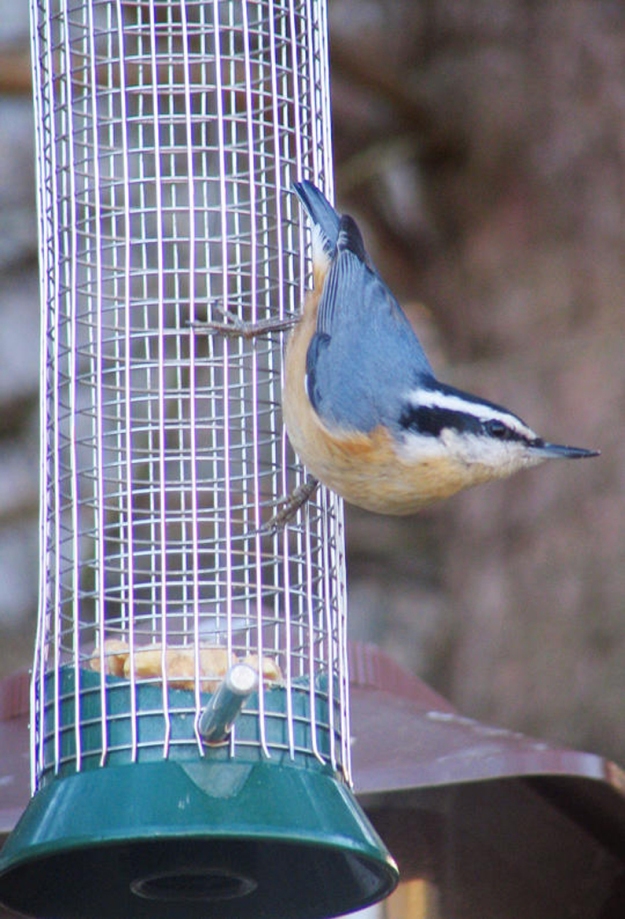
Photo by Bryan Stevens • A red-breasted nuthatch clings to the mesh of a feeding tube to get at the peanuts contained within.

Nuthatches can be attracted to feeders by offering peanuts, sunflower seeds and suet. They are also cavity-nesting birds, but are more reluctant about accepting a nesting box as a place to rear young. They will gladly accept an old woodpecker hole or other natural cavity in a tree.

I also want to complete my list of North American nuthatches by adding the fourth species — pygmy nuthatch — to my life list. I have made two trips to western North America, where this species ranges, but haven’t managed to find this bird. Both the pygmy and brown-headed are among the smallest members of the nuthatch family.

On the other end of the size scale is the appropriately named giant nuthatch, which reaches a length of almost eight inches. The giant nuthatch ranges through China, Thailand and Burma. This nuthatch is bigger than a downy woodpecker, one of our more common visitors at backyard feeders in our region.

Worldwide, there are about 25 species of nuthatches, some of which have surprisingly descriptive names for birds that spend most of their lives creeping in obscurity along the trunks and branches of trees. Some of the more creative common names for these little birds are inspired by locations around the globe, giving us species like Siberian nuthatch, Kashmir nuthatch, Burmese nuthatch, Bahama nuthatch, Algerian nuthatch, Indian nuthatch and Chinese nuthatch.

These birds are named “nuthatch” for the habit of some species to wedge a large seed in a crack and hack at it with their strong bills. I like to refer to them as “upside-down birds” because of their gravity-defying nature. It must give them an interesting perspective on the world around them.

Spring-Nuthatch

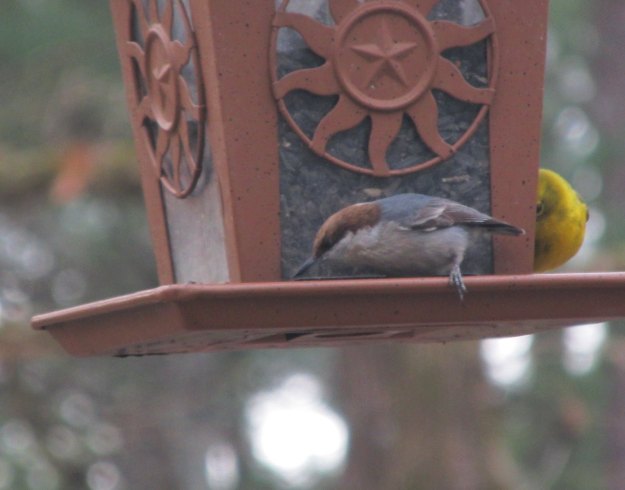
Photo by Bryan Stevens • In some areas, brown-headed nuthatches are feeder visitors. These small nuthatches are specialists that favor stands of loblolly pine.

High school senior looking out for interests of the region’s bluebirds

Bluebird-Pool

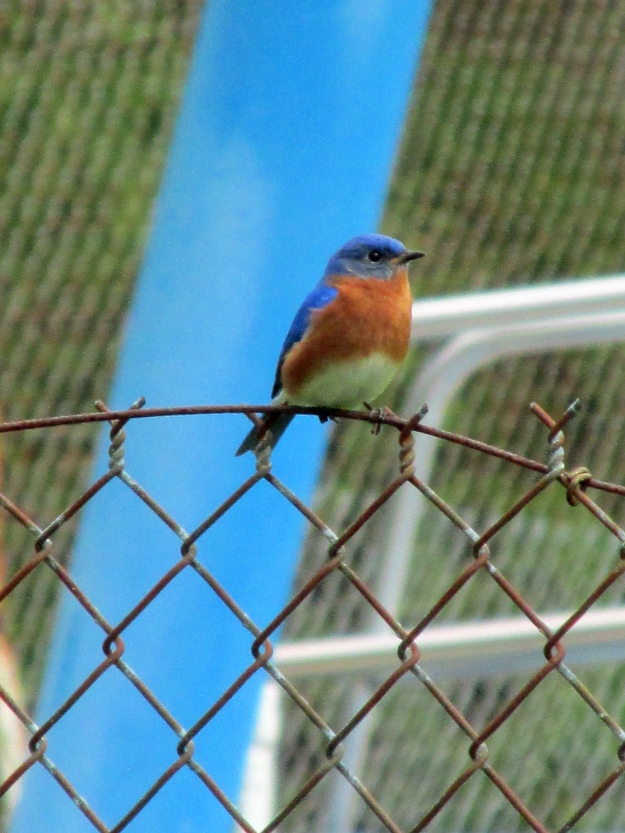
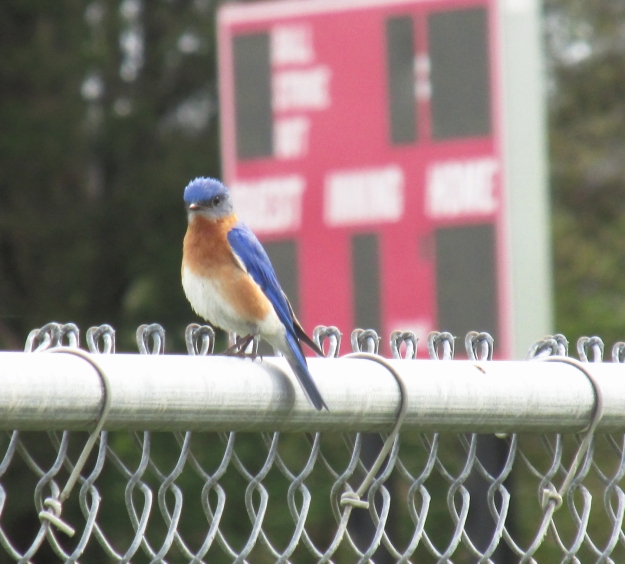
Photo by Bryan Stevens • A handsome male Eastern bluebird perches on a chain-link fence.

Observant people have probably noticed Eastern bluebirds already checking out possible nesting locations. These cavity-nesting birds begin scouting for possible nest sites in February and March. By April, female bluebirds may be incubating a clutch of eggs.

Although bluebirds will nest in natural cavities in trees, they respond readily to the availability of nesting boxes provided by human landlords. Many people are devoted to the cause of seeing that bluebirds — a favorite of many — continue to thrive in the face of certain challenges.

Bluebird-BeakFull

Photo by Adrianna Nelson • Bluebirds are skillful at foraging for insects.

Eighteen-year-old Adrianna Nelson is one such person. A senior at John S. Battle High School, Adrianna said she recently became involved with the Tennessee Bluebird Society as a way to become active with a conservation-related activity involving birds.

“I only recently got involved with TBS,” she said.

She began looking last summer for a way to contribute locally to the welfare of birds.

“I came across the TBS website,” she said. “They didn’t have a coordinator for Sullivan County, so I decided to fill the position.”

Nelson said she is interested in all birds but enjoys focusing on bluebirds and other cavity nesters to spread knowledge about their importance.

“TBS focuses on bluebirds,” she said.

Bluebird-FencePost

Photo by Bryan Stevens A male Eastern Bluebird inspects a nesting cavity in a wooden fence post. When such cavities are scarce, bluebirds readily build in nest boxes.

Bluebirds are like the “poster child” for the organization, Nelson noted, but she also pointed out that TBS also promotes the conservation of other native cavity nesters.

As county coordinator for TBS, her job primarily involves giving presentations to raise awareness about bluebirds and other cavity-nesting bird species.

“I have already presented to the Bristol Bird Club, and I plan to still give a few more presentations,” she said.

“I can also set up bluebird trails,” Nelson said. “I have not done any trails this year, but I have plans for next year. Part of my responsibilities is also to maintain trails and answer questions from the community.”


There are some good reasons for people to offer extra support to help bluebirds thrive.

“Eastern bluebirds are native cavity nesters,” Nelson said. “They are not strong enough to excavate their own cavities, so starlings and house sparrows can take over natural and man-made structures very quickly. It is important to promote the longevity of native species. Not only are they important, they are very beautiful.”

There are several things that people can do to make their yards and gardens more attractive to bluebirds.

“One of the most important is to make sure that there is proper habitat,” Nelson explained. “Bluebirds prefer open areas with some trees or other perches for spotting insects.”

Bluebird-withPineNeedles

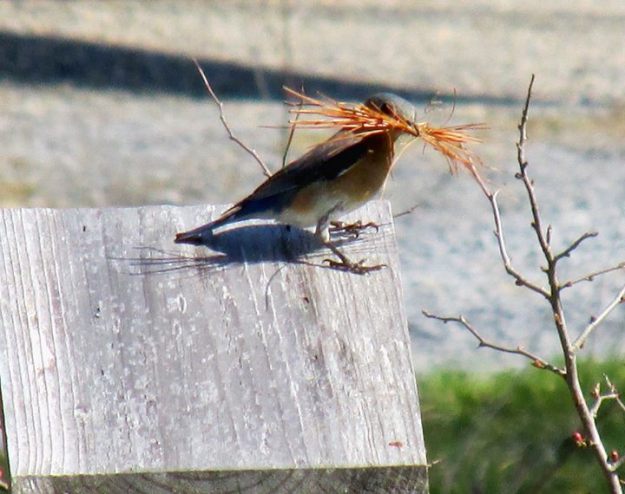
Photo by Bryan Stevens • A female Eastern Bluebird gathers pine needles to use as nesting material. Bluebirds are a cavity-nesting species that will use natural or manmade cavities.

For those interested in attracting nesters, Nelson said that picking the right nest box and proper placement is important.

She helps maintain nesting boxes along a bluebird trail at Steele Creek Park in Bristol.

IMG_4196

Photo by Adrianna Nelson • Eastern bluebirds are a beautiful bird to welcome into the backyard.

In addition, providing plenty of water helps. “Bluebirds also like meal worms, but plants such as dogwoods, sumac, pokeweed, viburnum, and others can provide food, especially in the winter,” Nelson said.

Keeping predators away is crucial. According to Nelson, this can be achieved with simple actions such as keeping cats indoors.

“There are more details about bluebirds, boxes, nesting, predators, habitat and more online on the North American Bluebird Society website,” Nelson added.

Nelson shared some fascinating facts about bluebirds.

“They can spot insects from over 50 yards away,” she said.

EasternBluebird_Score

Photo by Bryan Stevens • Eastern Bluebirds are year-round residents in Northeast Tennessee.

Bluebirds are bigger than small songbirds like chickadees, wrens and warblers, yet they weigh only about one ounce.

Bluebirds are truly “early birds,” according to Nelson. “Eggs usually hatch within the first two hours after dawn,” she said.

There are no local meetings of the Tennessee Bluebird Society, but an annual meeting for TBS is held in November. The meeting is open to the public.

TBS and North American Bluebird Society members get quarterly journals and newsletters. There is also information on the websites of the two organizations for anyone interested in bluebirds.md19917207443

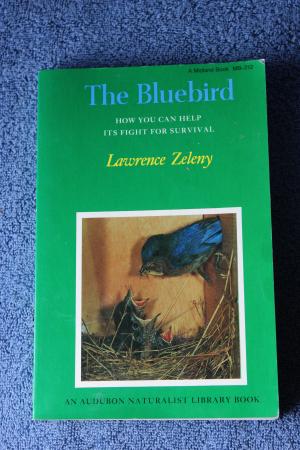
NABS was founded in 1978 by Dr. Lawrence Zeleny in order to promote the preservation of bluebirds, a cavity-nesting species in decline at that time. Zeleny, with the support of his wife, Olive, dedicated much of his life to providing nestboxes and managing bluebird trails. He promoted bluebird conservation through hundreds of talks and articles in many periodicals.

The Eastern bluebird has two close relatives — the Western bluebird and the mountain bluebird. These species belong to the genus, Sialia, which is counted among the world’s thrushes.The Western bluebird ranges throughout California, the southern Rocky Mountains, Arizona and New Mexico. The mountain bluebird is widespread in the western United States, as well. Two states — Idaho and Nevada — have bestowed official status on the mountain bluebird as their official state bird. The Eastern bluebird has also been honored with that designation by the states of Missouri and New York.

The Eastern bluebird suffered serious decline from 1940 into the 1960s, but it is now a common bird in the region. Rick Knight, author of The Birds of Northeast Tennessee, notes that nest boxes were instrumental in the recovery of the Eastern bluebird.

Nelson is continuing the work pioneered by others to conserve the Eastern bluebird. She lives in Bristol, Virginia, with her parents, Sandi and Shawn Nelson. She welcomes the public to contact her about bluebirds by emailing adriannan1@hotmail.com.

To learn more about the Tennessee Bluebird Society, visit http://www.tnbluebirdsociety.org. For more information on the North American Bluebird Society, visit wwwna.bluebirdsociety.org.

Bluebird-BabeInMimosa

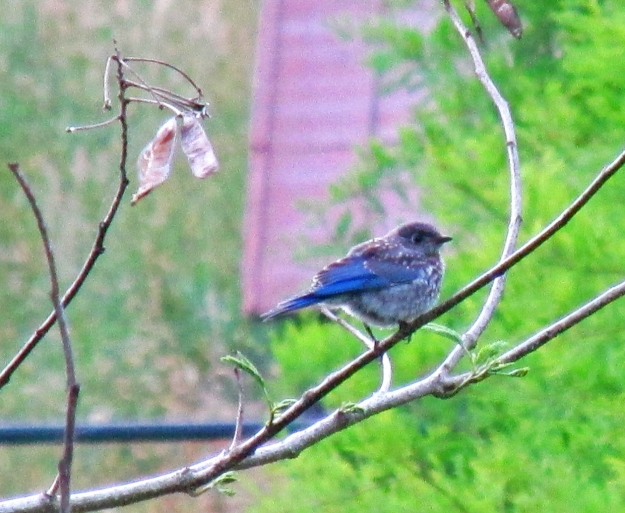
Photo by Bryan Stevens A young Eastern Bluebird slowly gains independence after leaving the nest.

Virginia woman hosting wintering ruby-throated hummingbird

female-Hummer

Photo by Mariedy/Pixabay.com • The ruby-throated hummingbird is the expected hummingbird in the eastern United States spring through fall. These birds are rare winter visitors, however, which makes the one living in a yard in Fall Church, Virginia.

I have been corresponding by email with Ellen Haberlein since around Thanksgiving of last year about a hummingbird that is wintering at her home in Fall Church, Virginia, which is located only a few miles from Washington, D.C.

The hummingbird’s presence has brightened the winter season for the Haberlein family since it showed up in late October of 2018.

Through the years, I have seen several of these seemingly out-of-place hummingbirds. Some of them remain at their host’s feeders for a brief stay of a few days or a couple of weeks, but some of these hummingbirds have extended their stay for several months, lingering throughout the winter months before eventually departing in February or March.

IMG_0471

Photo by Larry Golfer • This male ruby-throated hummingbird has resided at the home of Ellen Haberlein since around Thanksgiving of last year. Haberlein lives in Fall Church, Virginia, which is located only a few miles from Washington, D.C.

The big question is: are these hummingbirds truly lost and out of place? The answer, based on everything I have managed to learn, is that these hummingbirds are precisely where they want to be. For still unknown reasons, some of these western hummingbirds make a migration swing through the eastern United States.

Many of the visiting winter hummingbirds turn out to be rufous hummingbirds, which is a species native to the western United States. The bird visiting Ellen’s feeder, however, is a ruby-throated hummingbird. In the summer months, the ruby-throated is the expected species of hummingbird in the eastern United States. In the winter months — not so much. However, in some regions in Virginia, as well as along the Gulf Coast, a few ruby-throated hummingbirds are attempting to overwinter.

The rufous hummingbird has basically become an expected winter visitor with a few reports being received each winter. I have observed Rufous Hummingbirds in many different locations, including Bristol, Blountville, Flag Pond, Elizabethton and Hampton. I have also observed Allen’s hummingbirds in Mountain City and Johnson City. I know of records of these small birds from Erwin, Roan Mountain, Johnson City and many other locations throughout the region. Winter hummingbirds are a delightful surprise for their hosts, but their presence no longer shock long-time birders.

rufous-handy

Photo by Bryan Stevens • Rufous hummingbirds have been extensively documented as wintering throughout the southeastern United States. This male rufous hummingbird was documented in Hampton, Tennessee, a couple of years ago.

“Hosting a hummingbird in winter is a first for us, so we enjoy having him here,” Ellen wrote. “I feel that I am responsible to keep the little guy alive through the cold months.”

Doing so has meant staying atop some challenges.

“I monitor the feeder to make sure it doesn’t freeze,” Ellen wrote. “I have read the nectar doesn’t need to be replaced as often in winter, but I still change it every 2-3 days.”

She’s taking no chance with the health of her tiny visitor. “I think he needs to have fresh to stay in good health,” Ellen wrote. “I have two feeders, so when I remove one, I immediately replace it with another. That way his food source is not disrupted.”

Ellen noted that the hummingbird seems to be able to stand the cold nights. “I take in the feeder at night, and he looks for it just at dawn in the morning,” she wrote.

She contacted Bruce Peterjohn at the Patuxent Wildlife Research Center. Her visiting ruby-throated hummingbird is the first he has heard of in Virginia for the winter season this year, although Peterjohn informed Ellen that some ruby-throated hummingbirds usually overwinter close to the Chesapeake Bay in Virginia.

Bruce Peterjohn

Bruce Peterjohn

Peterjohn, the chief of the US Bird Banding Laboratory for USGS, is the person responsible for administering the national bird banding program and the data management system for bird banding and band encounter datasets. His personal banding activities are focused on banding hummingbirds in the mid-Atlantic region, especially hummingbirds that appear during late autumn and winter.

With the dawning of the new year, Ellen’s visiting hummingbird remained present. “I am happy to help this little bird get through the winter,” Ellen said.

I checked back with Ellen on Jan. 29 to see if the hummingbird remains in residence.

“He made it through the last storm with wind chills at zero or below,” she replied to my email. “Now we have more cold coming and I am hoping for the best.”

I imagine Ellen is a good host for many birds, not just the unseasonable hummingbird, that visit her yard and gardens.

In our correspondence, she shared some sightings of warblers, which is my favorite family of birds.

“By the way, I have not seen a hooded warbler,” Ellen wrote. “I see warblers pass through during spring, like Tennessee warblers and black-and-white warblers.”

I’m hopeful that she will spy a migrating hooded warbler, perhaps this spring. In the meantime, she’s hosting a wintering hummingbird. “I am happy to help this little bird get through the winter,” Ellen wrote.

hooded-warbler-at

Photo by Jean Potter • A male hooded warbler flits through the foliage of a rhododendron thicket.

HMSP plans Great Backyard Bird Count events

Hungry Mother State Park in Marion, Virginia, plans some bird walks on Saturday, Feb. 16, to coincide with the Great Backyard Bird Count.

The GBBC is a free, fun and easy event that engages bird watchers of all ages in counting birds to create a real-time snapshot of bird populations. Participants are asked to count birds for as little as 15 minutes (or as long as they wish) on one or more days of the four-day event and report their sightings online at birdcount.org. Anyone can take part in the Great Backyard Bird Count, from beginning bird watchers to experts, and you can participate from your backyard, or anywhere in the world.

Evening_Grosbeak_Ted_Schroeder_OR09

Photo by Ted Schroeder/Great Backyard Bird Count • Evening grosbeaks may be more common on this year’s GBBC, according to early reports on the movements of these large, colorful finches.

Each checklist submitted during the GBBC helps researchers at the Cornell Lab of Ornithology and the National Audubon Society learn more about how birds are doing, and how to protect them and the environment we share. Last year, more than 160,000 participants submitted their bird observations online, creating the largest instantaneous snapshot of global bird populations ever recorded.

To help participants become better citizen scientists, some field guides and binoculars will be provided during the activities at Hungry Mother State Park. Supplies of these items, however, are limited.

The walk will commence at 8 a.m. Either Master Naturalist Randy Smith or Hungry Mother volunteer Mike Evans will conduct the walk. Participants are also welcome to bird solo or with a few friends to cover more territory.

At 9 a.m., participants will return to parking lot five for “Breakfast in a Bag” with the Holston Rivers Master Naturalists. While enjoying breakfast, attendees will be invited to wander over to the park’s restaurant to check out various hands-on birding activities.

IMG_3196

Photo by Bryan Stevens • Hungry Mother State Park near Marion, Virginia, has long offered a variety of birding and nature activities and programs, such as the ones planned around the upcoming Great Backyard Bird Count scheduled for Feb. 15-18.

The special event will wrap up when Smith teaches participants a little more about backyard birding with an informative session at 10:30 a.m. at the restaurant.

All ages and skill levels are welcome. Attendees are encouraged to dress warmly as the event will be held rain or shine.

For more information, call HMSP at (276) 781-7400. The park is located at 2854 Park Blvd., Marion, Virginia. Details are also available by calling 1-800-933-7275 or visit http://www.virginiastateparks.gov.

The 21st annual GBBC will be held Friday, Feb.15, through Monday, Feb. 18. Please visit the official website at birdcount.org for more information.

GreatBlueHeron-Serene

Photo by Bryan Stevens • Participate in the Great Backyard Bird Count and help document populations of birds, including great blue herons.

Gift suggestions for the bird-lovers on your Christmas shopping list

Although some people like to get an early start on holiday shopping, I’m certain some, like myself, are still in the process of checking those lists. If you’re looking for some ideas for bird and nature enthusiasts on your list, I’ll make a few modest suggestions that could result in making the season merry and bright.

Photo-FieldGuides

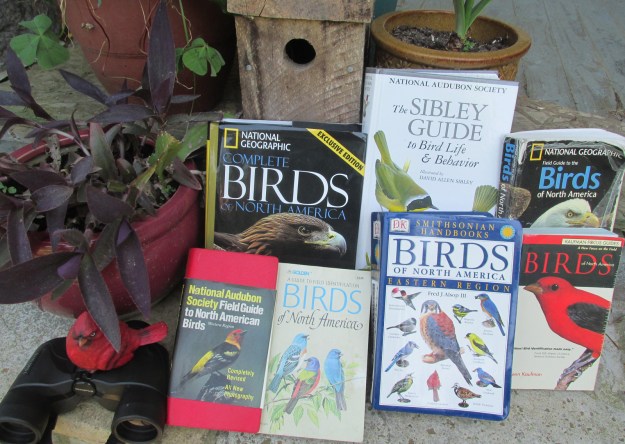
Photo by Bryan Stevens • Field guides are an essential tool for bird identification.

Field guides
If you’ve enjoyed watching the birds that congregate at your feeders or noticing the visitors to your yard and gardens, but you’ve also become curious about the identities of all your feathered visitors, it might be time for a helpful and informative field guide. I prefer field guides illustrated with paintings rather than photographs, but I have a varied collection of guides. I started a long time ago with the Golden Guide to Birds. It’s a classic and still a great guide to help interest children in the birds around them.
Some of the guides I recommend and use myself these days are National Geographic Field Guide to the Birds of North America, The Sibley Field Guide to Birds of Eastern North America, and Peterson Field Guide to Birds of Eastern and Central North America. Any of these field guides should be easily found online or in stores at a cost of under $20.
If you have already acquired a good basic field guide, perhaps you’re ready for more specialized field guides that focus on particular families of birds or on the behavior of backyard birds.
For the warblers, there are several field guides available, including the Stokes Field Guide to Warblers, A Field Guide to Warblers of North America (Peterson Field Guides), and the Warbler Guide.
For a handy guide to identify some of the birds seen on beach and coastal vacations, consider such titles as Stokes Beginner’s Guide to Shorebirds and Shorebirds: An Identification Guide to the Waders of the World, and National Audubon Society Pocket Guide to Familiar Birds of Sea and Shore.
For fans of hawks and allied raptors, several guides exist including A Field Guide to Hawks of North America (Peterson Field Guides), Birds of Prey: Hawks, Eagles, Falcons, and Vultures of North America, and Hawks from Every Angle: How to Identify Raptors In Flight.
In short, there’s a field guide for every family and grouping of birds. With expertly rendered illustrations or photographs, brief and concise text, and helpful range maps, nothing beats a good field guide forYea, improving one’s ability to identify birds. I recommend thumbing through the pages of a good guide over trying to randomly use Google to search online for a bird glimpsed for a brief time.

bird-Feeder

Photo by Pixabay.com • A well-stocked feeder is a first step toward attracting more birds to your yard.

Feeders
Bird feeders come in an astounding variety of shapes and sizes. Nothing will do more to bring birds into our daily lives than maintaining a well-stocked feeder. Be certain to include a bag of sunflower seeds so that your gift will allow the recipient to immediately begin to enjoy the parade of birds sure to flock to the feeder.

Bluebird-2

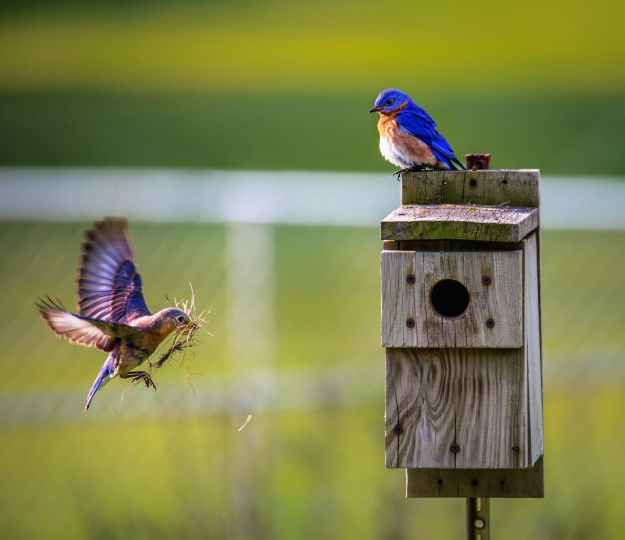
Photo by Bryan Stevens • Birds, like this Eastern bluebird, appreciate nest boxes.

Houses
It’s never too early to start thinking about spring and the return of many of our favorite birds. To bring more birds into our lives, it doesn’t hurt to encourage them by providing man-made nesting and roosting boxes. Many of our favorite birds — Eastern bluebird, tree swallow, tufted titmouse, white-breasted nuthatch — are cavity-nesting species but will just as readily raise their young in nesting boxes as in a hole in a tree. With boxes customized to their own particular needs, other birds such as Eastern screech-owl, wood duck and great crested flycatcher will also make use of bird boxes. Many gardening centers, produce stands, feed stores and other shopping outlets sell bird boxes of various designs, shapes and sizes. If you’re shopping for a bluebird box, be certain that the recipient’s yard is a spacious one. Bluebirds feel more comfortable in open surroundings. If the yard is more overgrown and woodsy, consider a box tailored more for a woodland bird like a chickadee or a nuthatch.

binoculars-2164526_1920

Photo by Pixabay.com • A good pair of binoculars will bring birds much closer.

Binoculars
Unless requested, don’t buy binoculars for an adult. Most birders would prefer to pick out their own pair to use to make up-close and personal bird observations. An inexpensive pair, however, could be perfect for fostering in a child an interest in birds and nature. If you have grandchildren, children, or even nephews and nieces, a beginner’s pair of binoculars could make a life-altering gift that lets the recipient view the world in a whole new light.

CalendarCover

Calendars
Birds have always been a popular photography subject for calendars. There’s an almost endless variety of bird calendars, but I’m partial to one produced by the Lee and Lois Herndon Chapter of Tennessee Ornithological Society, of which I am a member. This annual fundraising endeavor features some exceptional bird photography from club members. This year’s calendar features full-color photographs of some of the region’s most colorful and engaging birds. The club sells the calendars for $15 each. For an additional $2 shipping fee, calendars can be sent to any address in the United States. All proceeds are used to support birding opportunities and bird-related causes.
The calendar also features an informative calendar grid with highlights for major holidays as well as important bird-related dates. The calendar’s pages feature more than 80 full-color photographs of area birds, including common favorites and some not-so-common visitors. The front cover features a dazzling photograph of a male rose-breasted grosbeak. If you’re interested in obtaining a calendar, email ahoodedwarbler@aol.com or look up Elizabethton Bird Club on Facebook.


Hummingbird-Ornament

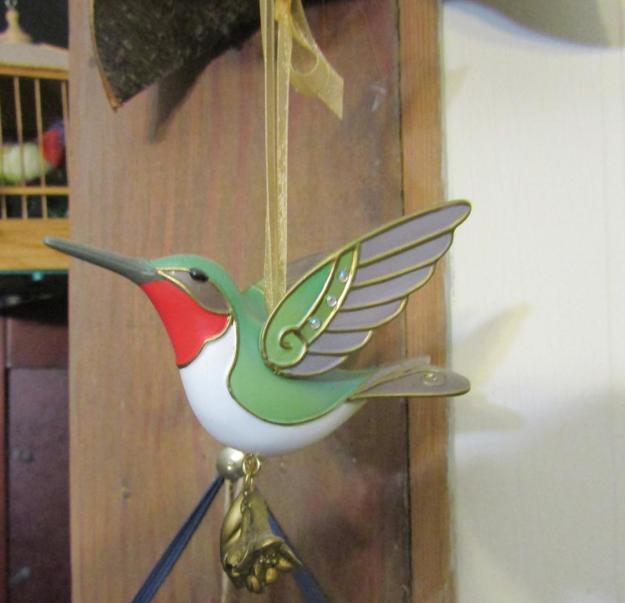
Photo by Bryan Stevens • A bird-related Christmas ornament makes a nice gift.

Ornaments

The branches of my Christmas tree are always weighted heavily with a variety of bird-related Christmas ornaments. Holiday tinsel and baubles make the season look a lot like Christmas if they feature some of our favorite birds such as cardinals, chickadees, hummingbirds, penguins, doves, geese, eagles or any of the other popular species of birds. Choose a fun and unique bird ornament for the enthusiast on your Christmas list.

animals avian beaks birdhouse

Photo by Kevin Blanzy on Pexels.com

Mother Nature’s whims can produce major impacts on birds

Sooty_tern_flying

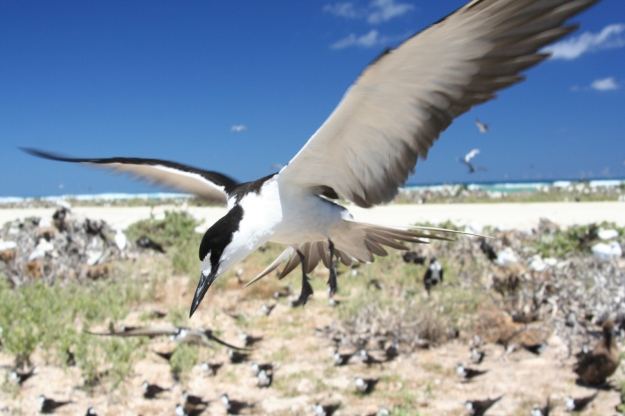
Photo by U.S. Fish and Wildlife Service/Duncan Wright The sooty tern, pictured, nests mainly in Hawaii, but some also nest on the islands of the Dry Tortugas, west of the Florida Keys. In 2004, Hurricane Frances blew one of these tropical birds to Holston Lake in Bristol. Severe storms also present devastating obstacles for other birds.

With Hurricane Florence dominating the headlines in recent weeks, it’s only natural to speculate on whether such storms can impact birds in a negative way.

According to a 2011 blog post made on the National Wildlife Federation website, hurricanes can be bad news for some birds. Naturally enough, sea birds and waterfowl are most exposed to the forces of a hurricane. Some birds will move inland to avoid the incoming storm. The birds that inhabit our yards and gardens will ride out the storm using special adaptations. Songbirds will automatically tighten their toes around their perches, riding out the winds of a hurricane by holding onto a branch with a death grip. It’s the same adaptation that lets them sleep on a branch without letting go and falling off during the night.

The blog points out that the news often covers the appearance of rare species after a major storm. Some of these birds transported to unusual locations are probably younger or weaker birds. Once transported far from their usual range by a hurricane, it can take weeks to return home — if they can find the right foods on their way back.

John-James-Audubon-Bachman_s-Swamp-Warbler.-1.-Male.-2.-Female.-Gordonia-pubescens.- (1)

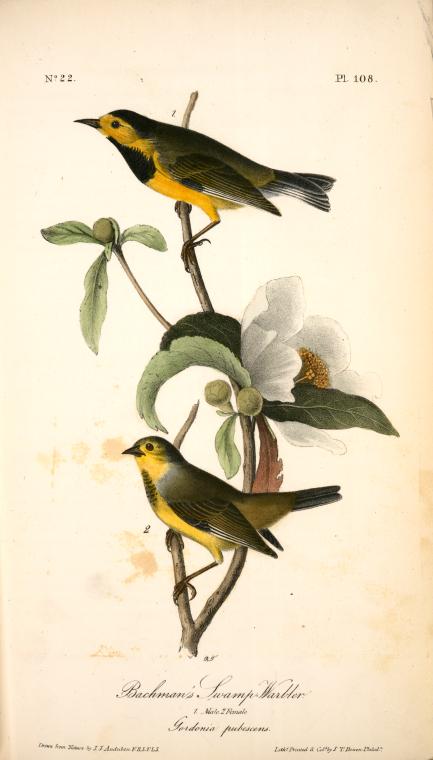
Early naturalist and accomplished artist John James Audubon painted Bachman’s warbler without ever seeing a living one. A friend sent him some skins of the warbler collected near Charleston, South Carolina. A hurricane may have contributed to the extinction of Bachman’s warbler.

In a worst case scenario, hurricanes may have dealt fatal blows to some bird species. For instance, a hurricane may have delivered the knock-out blow to a species of warbler that went extinct last century, according to the website, Field Guide to Extinct Birds. A hurricane that slammed into Cuba in the 1930s when most of the Bachman’s warbler population was wintering on the island might have wiped out enough of the population to make the survivors too rare and far-flung to find each other to breed. The warbler, sensitive to habitat destruction from logging and already in a steep decline, never seemed to recover. It was the ultimate example of keeping all of one’s eggs — or birds — in one unlucky basket.

Discovered in 1832 near Charleston, South Carolina, by the Reverend John Bachman, this warbler attracted little attention for the first half century after its discovery. Bachman sent some skins of the bird to his friend, the artist and early naturalist John James Audubon. Subsequently, Audubon painted this warbler by using those skins and Bachman’s description of the bird’s habits for inspiration. Ironically, considering he described the species for science, Audubon never actually laid eyes on an actual living Bachman’s warbler.

The last specimens of Bachman’s warbler were collected in Mississippi in the early 1940s. The last strongholds for breeding Bachman’s warblers in the United States were Fairfax County, Virginia, in the 1950s and South Carolina’s I’on Swamp in the early 1960s. The last photograph documenting a Bachman’s warbler was taken in 1954. in Charleston, South Carolina, bringing the story of this warbler full circle from its discovery in the same vicinity back in 1832. No Bachman’s warbler sightings have been confirmed since 1961, despite reports in the 1970s and 1980s, as well as reports made in the spring of 2000 and 2001 in the Congaree Swamp National Monument in Richland County, South Carolina. None of those sightings could be confirmed.

Like the ivory-billed woodpecker and Eskimo curlew, Bachman’s warbler is another bird likely to be labeled for the near future with the tag “likely extinct” associated with its name. Like the large woodpecker and the shorebird with a penchant for long-distance migration, the Bachman’s warbler went out with a whimper, not a bang, with most of its viable population snuffed out by an October hurricane just as the species returned to Cuba for the winter season.

Ruby-throat

Photo by Bryan Stevens • Ruby-throated Hummingbirds make a non-stop crossing of the Gulf of Mexico. A hurricane in the Gulf during migration could have serious consequences for this small bird.

More recently, experts worried Hurricane Irma might have delivered a knockout blow to the population of another tiny species of warbler. The Barbuda warblers on the tiny Caribbean island of Barbuda were feared exterminated in the wake of Irma. When the storm hit the island in September of 2017, its path affected more than 90 percent of the island and nearly wiped out the available habitat for the warbler, which already had a Near Threatened status. After the passage of the storm, participants in searches for the warbler turned up sightings of the bird. Nevertheless, the population status and ability to fully recover remains uncertain.

Science keeps adding to its knowledge of how birds are affected by hurricanes and other storms. A 2017 study showed possible consequences for a seabird known as the sooty tern in relation to hurricanes.

The study, published in the peer-reviewed open-access journal PeerJ, is the first to map the birds’ annual migratory path and demonstrate how its timing and trajectory place them in the direct path of hurricanes moving into the Caribbean after forming over the Atlantic.

Climate change threatens to bring about more frequent and powerful hurricanes, which could be bad news for the terns. Migration is a stressful undertaking for birds. If they encounter a strong storm in a weakened state, the results could be catastrophic. The study revealed a strong relationship between the numbers and locations of bird deaths and the numbers and locations of hurricanes. The study also showed that it isn’t just monster storms with the potential to cause devastation. Tropical Storm Delia, a small storm in the Gulf of Mexico in 1973, killed a lot of sooty terns. Essentially, the terns were in the wrong place at the wrong time.

Shorebirds

Photo by Bryan Stevens • A mixed flock of Short-billed and Long-billed Dowitchers and a Ruddy Turnstone at Huntington Beach State Park in South Carolina. Hurricanes can interrupt the migrations of even these long-distance migrants.

Of course, the sooty tern is not a rare bird. About 80,000 or more of these terns are estimated to breed in the Dry Tortugas each year. That’s the entire point, however; Bachman’s warbler was also once considered a common bird.

All of these examples point to the resilience of birds, but there’s also a lesson to learn. We should never take any of our feathered friends for granted. While the winds and rains from a hurricane can decimate human lives, wildlife is not immune. Sadly, birds can weather many a storm, but sometimes they get swamped.


Common nighthawk flocks form part of fall migration spectacle

Nighthawk

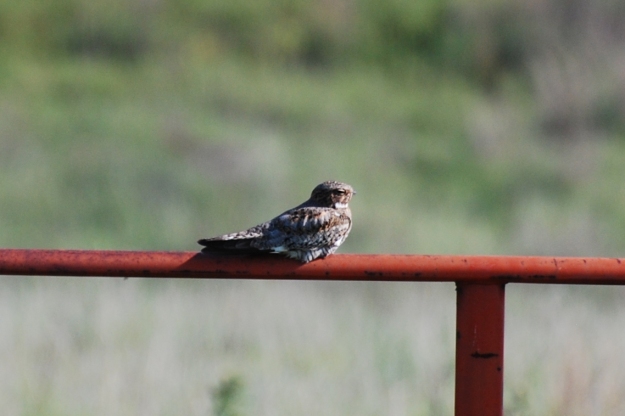
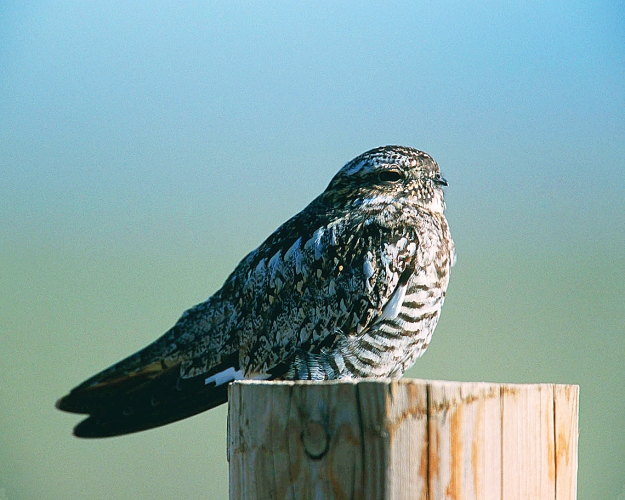
Photo by Jean Potter • A common nighthawk rests on a metal railing.

With September advancing on the calendar, I have been keeping an eye on the skies. For the most part, I focus on the upper branches of trees and feeders during the migration season, but I don’t forget the need to look skyward from time to time.

The reason? Well, that’s the best way to detect soaring raptors or flocks of migrating common nighthawks. The autumn sky is also a popular flyway for other birds, including chimney swifts and swallows.

So, what is a common nighthawk? First, this bird, despite what is implied by its name, is not a hawk. It’s also not strictly nocturnal. Particularly in the fall, nighthawks are active during daylight hours when engaged in catching winged insects. Outside of fall migration, these birds can often be observed over large parking lots or well-lit streets, snatching up insects swarming around the light poles.

The common nighthawk is one of three members of the nightjar family found in the region during the summer months. The other two nightjars are the whip-poor-will and chuck-will’s-widow, birds that produce their namesake vocalizations in the nocturnal hours. Both of these species migrate, but they don’t take the dramatic approach employed by nighthawks. Each fall, common nighthawks form large flocks, ranging in size from dozens to hundreds or even thousands of individuals, as they migrate south for the winter.

john_james_audubon_common_nighthawk_bird_print

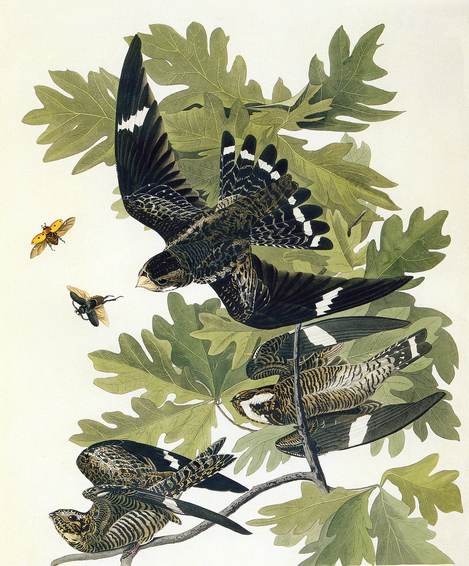
Early American naturalist and artist painted this dynamic scene of common nighthawks.

The whip-poor-will, after the common nighthawk, is the second most widespread member of its family to spend its breeding season in North America. The whip-poor-will ranges from southern Canada to the Gulf states. This bird also occurs in Arizona, New Mexico and southwestern Texas. The whip-poor-will favors habitat consisting of deciduous woodlands and the edges of forests.

All members of the nightjar family feed exclusively on insects that are caught on the wing. In this respect, the nightjars can be considered the nocturnal counterparts of the swallows. The nightjars have comparatively large, gaping mouths they use to scoop up flying insects. They also have large eyes, an adaptation to their nocturnal lifestyle.

Whip-poor-will numbers have been declining in the past few decades. These nocturnal birds frequent woodland edges, but they seem to be rather particular about such habitats. A forest that is too mature seems to hold little interest for them. Disturbed habitats, such as those created by logging, are acceptable to the birds once secondary growth begins. As this new growth matures, however, the whip-poor-will apparently abandons such territory. Because of these requirements, whip-poor-wills can be somewhat localized in their distribution and sometimes difficult to locate.

Nighthawk-PHOTO

Photo by U.S. Fish and Wildlife Service • A common nighthawk finds a perch for a brief rest.

When I was a kid, one of my favorite summer activities was sitting on the front porch of my grandparents’ home and listening to the whip-poor-wills call after dark. I remember how the plaintive call would be repeated for long intervals before a passing automobile’s headlights might frighten the bird into silence. Then, after a brief pause, the “whip-poor-will” calls would, tentatively at first, begin again and continue throughout the night.

Today, I’m living in my grandparents’ old home, and the whip-poor-wills no longer call. I heard a single individual that called for a single evening back in May of 1997, but that was apparently a migrating bird that did not remain in the surrounding woodlands. The only member of the nightjar family that I dependably encounter at home these days is the common nighthawk, and then only during that narrow window of late summer and early autumn.

Unlike whips and chucks, the common nighthawk isn’t active only after dark, which makes it much easier to observe these birds. They look somewhat like swifts and swallows but are much larger. They are brownish-gray birds with pointed wings and forked tails. They are easily identified by distinctive white patches on the underside of their wings.

The nightjar, or Caprimulgidae, family of birds is also sometimes known as “goatsuckers.” There are almost 80 species of nightjars in the world. Less than 10 occur in North America. The common nighthawk, whip-poor-will and the chuck-will’s widow are neotropical migrants. While they breed in a wide range of territory in North America, they spend their winters in Central and South America. Like all nightjars, nighthawks feed almost exclusively on insects, which they catch on the wing.

Many of the common nighthawk’s relatives have been given descriptive names, such as long-trained nightjar, collared nightjar, spot-tailed nightjar, red-necked nightjar, golden nightjar, fiery-necked nightjar, swamp nightjar, pennant-winged nightjar, lyre-tailed nightjar, little nightjar, sickle-winged nightjar, rufous-bellied nighthawk, short-tailed nighthawk, sand-coloured nighthawk and least nighthawk.

So, keep looking skyward. The next flock of migrating common nighthawks may fly over your home. These flocks are usually on the move throughout September although they begin to appear as early as late August. They can also appear almost magically, as if out of thin air. First, observers may see one of two birds, then several, followed quickly by dozens or sometimes hundreds as they wheel and cavort in the skies overhead with impressive grace and agility. I’ve seen flocks that would easily number more than 500 birds in locations throughout the region, although flocks often number only a couple of dozen birds. The two flocks I’ve observed so far this migration season numbered about thirty and fifty birds, respectively.

41004068_10215014667832542_3336138056443887616_o

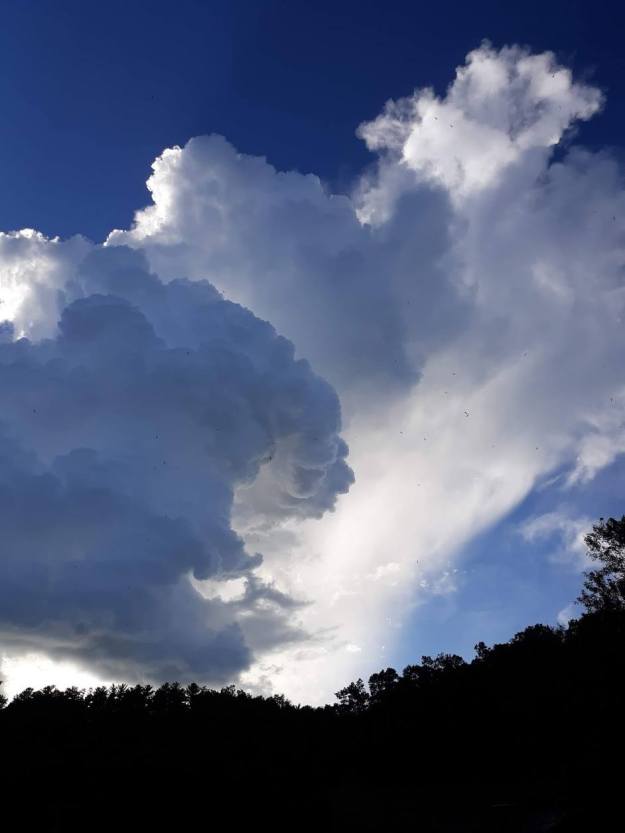
Photo by Bryan Stevens • Rising clouds provide a backdrop for a flock of migrating nighthawks.


Meadowlarks fond of grassland habitats

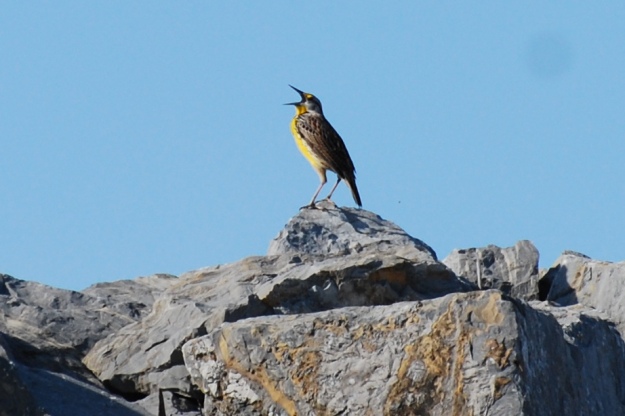
Jean-MeadowlarkPhoto by Jean Potter • A rocky outcrop provides a perch for this singing male Eastern meadowlark.
 

It’s always fun to add another notch to one’s list of birds. Whether you’re a casual lister or a devoted birder, a new species always offers a burst of excitement in the wake of a first-time observation.

Sharon Foster sent me an email recently to share her excitement about a sighting.

“I’m excited to say my daughter and I spotted a meadowlark up on Cross Mountain last week,” Sharon wrote in her email.

Sharon said she hadn’t been able to do a lot of bird watching other than in her yard and nearby places.

“I never thought I was going to see a meadowlark,” she noted. They are fantastic. We were thrilled. He was just sitting on the fence.’

She added that she didn’t have her good zoom camera with her, or else she could have taken a picture. She will still have her memory of her first sighting, and that’s what is important.

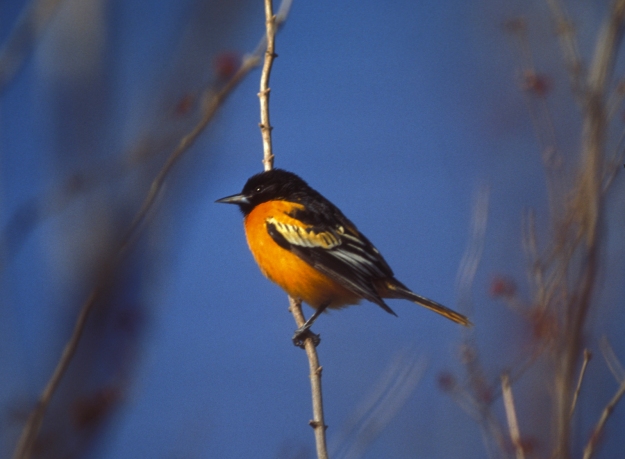
BaltimoreOriole-Two

Photo by USFWS • Baltimore orioles, like this male, are members of the blackbird family, making them relatives of species such as Eastern meadowlarks, brown-headed cowbirds, common grackles and red-winged blackbirds.

She also told me about a Baltimore oriole feeder she bought last fall late in the season.

“I read they usually come around early in spring,” Sharon wrote. She added that she spotted one in her yard by South Holston Lake several years ago.

Of course, when spring rolled around she nearly forgot about the feeder. “It was around mid-April when I thought about it and thought it was too late,” she wrote. “But I put it up anyway and lo and behold the next day there was an oriole in our pine tree.”

It was another memorable birding moment. “Talk about being excited,” Sharon wrote. “Wow! Birds can do that to you!”

WesternMeadowlark

Both the Baltimore oriole and the Eastern meadowlark belong to the family of birds known as icterids, or blackbirds, which also includes species like bobolink, brown-headed cowbird, common grackle and red-winged blackbird.

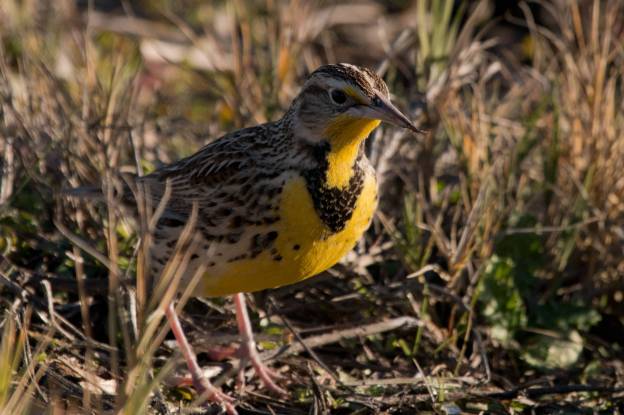
The Eastern meadowlark is a distinctive bird. It has brown plumage accented by black, with bright-yellow underparts and a bold black V across the chest. Though most of the tail is brown with blackish barring, the outer feathers are white and are a conspicuous trait to look for when the bird is in flight.

The Eastern meadowlark is considered a grassland bird and remains common in habitats such as prairies and other native grasslands. The meadowlark has proven adaptable as long as it can occupy unbroken grassland of about six acres or more. Pastures, fields and even airports have proven suitable habitats for meadowlarks. As suburban areas and subdivisions expand into rural areas, meadowlarks can hang on unless the grassland habitat becomes too segmented and broken into sections too small to be of value.

Meadowlark-USFWS

Photo by Peter Pearsall/USFWS • Eastern meadowlarks spend a lot of time on the ground while searching for insects.

Meadowlarks eat mostly insects, especially in summer. For the winter months, these birds will adapt their diet to include seeds, spilled corn and fruit. Meadowlarks, unlike other relatives among the Icterids, or blackbirds, do not typically visit feeders.

These birds construct nests close to the ground. Meadowlarks nesting in fields mown for hay face disaster if the grass is cut before their young have left the nest. The female meadowlark constructs the nest and lays two to seven eggs, which will require an incubation period of about two weeks. Even after hatching, the young are not capable of leaving the nest for another 10 to 12 days. Consequently, young meadowlarks are vulnerable for a month, not only to predators but to a farmer deciding to mow a hayfield.

While the Eastern meadowlark remains common, its numbers have suffered severe declines. such that they are considered to be a declining species. Populations fell more than 3 percent a year between 1966 and 2015, resulting in a cumulative decline of 89 percent, according to the North American Breeding Bird Survey. According to the website All About Birds, early mowing, overgrazing by livestock and pesticide use are all detrimental to meadowlark survival.

The highest population densities for the Eastern meadowlark are found in the Central Mixed Grass Prairie and the Eastern Tallgrass Prairie regions of the central United States. As the name suggests, the Eastern meadowlark has a counterpart in the western half of the United States. This is reflected in the fact that five central and western states — Kansas, Montana, Nebraska, North Dakota, Oregon and Wyoming — have made the Western meadowlark their official state bird. Ironically, the Eastern meadowlark has not been honored with that designation by any of the states it inhabits.

The difference in the two species rests not so much in their appearance as in their songs. The western meadowlark has distinctive vocalizations described as rather flute-like, which distinguish it from the closely related eastern meadowlark. Male Eastern meadowlarks seek out elevated perches to produce a musical, flute-like song in the spring. Utility wires, treetops and fence posts provide some of their favorite perches. Their singing is mostly used to define the borders of their grassland territory.

Finally getting your binoculars on a bird you’ve never seen is always an exciting moment. As we draw closer to the fall season, many different birds will migrate through the region. Fall migration is a great time to spend some time outdoors and try to see some birds that are new. Do some advance homework with a good field guide and study the birds that migrate through the region. Then, simply monitor your yard or a favorite park and wait to see some new species as they make migratory stops in the region.

eastern-meadowlark-john-james-audubon-

Early American naturalist and painter John James Audubon painting this scene depicting nesting meadowlarks.