Tag Archives: Tennessee

Winter season wouldn’t be complete without the splendor of cardinals

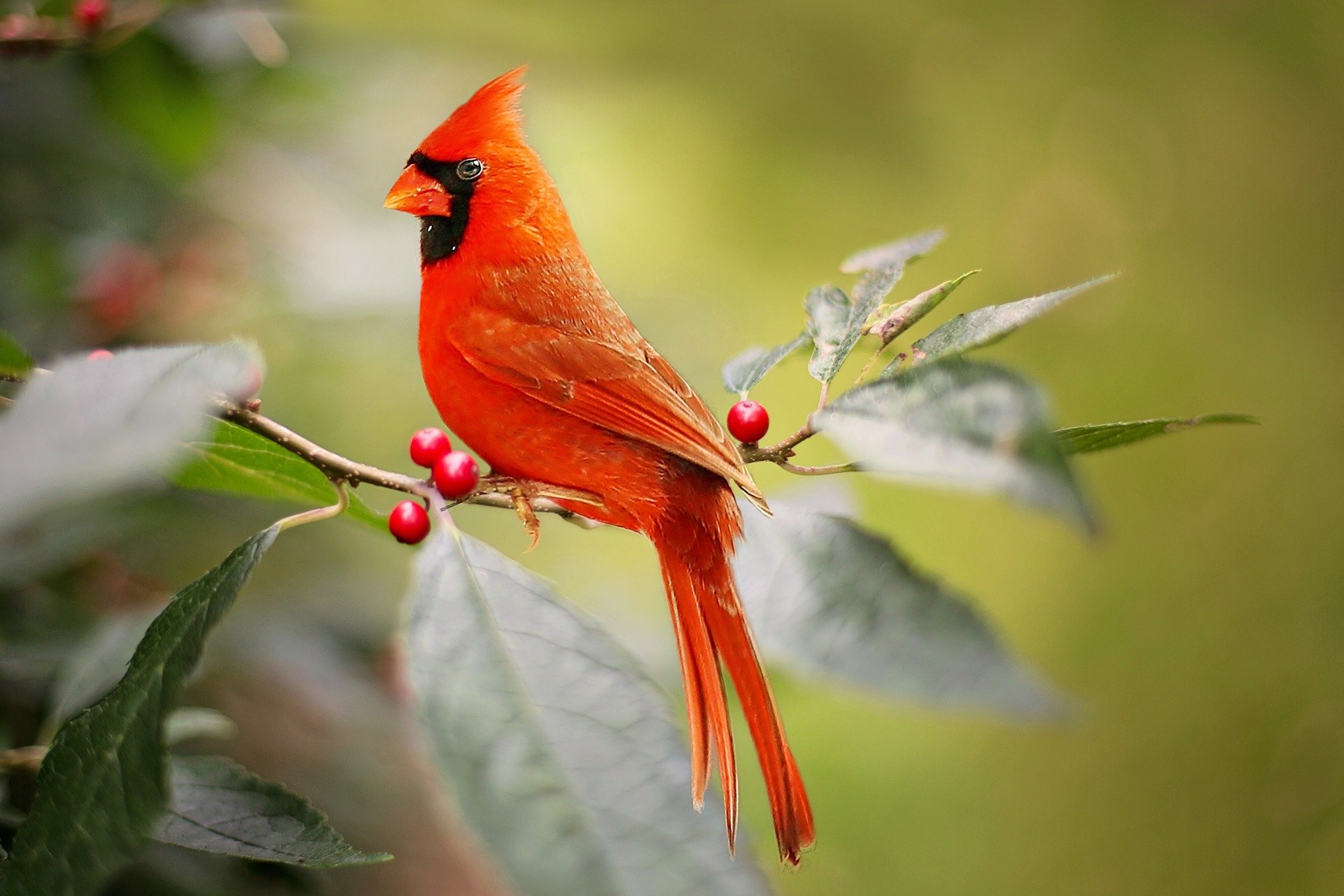
Photo by Jill Wellington/Pixabay.com • A male Northern cardinal grasps a branch of winter greenery.

I have enjoyed an opportunity to observe the many Northern cardinals visiting my feeders in recent weeks. The beauty of both male and female cardinals is undeniable, but it’s their behavior that’s worth a second look. Nervous, twitchy birds, they are always anxiously surveying their surroundings even as they linger on a feeder long enough to hull a sunflower kernel from its shell. It’s almost as if they know their bright plumage stands out in a drab winter landscape dominated by shades of gray.

The Northern cardinal, especially the brilliant red male, stands out against a winter backdrop of snow white, deep green or drab gray. Over the years, the cardinal has also become associated with the Christmas season. How many Christmas cards have you received this holiday season with a cardinal featured in the artwork? I’d wager that at least a few cards in any assortment of holiday greetings will feature the likeness of a Northern cardinal.

There’s some more evidence to put forward as testimony to the popularity of the Northern Cardinal. It’s the official state bird of seven states: North Carolina, West Virginia, Ohio, Illinois, Indiana, Kentucky and Virginia. Only the Northern mockingbird, which represents five states as official state bird, even comes close to the Northern cardinal in this respect.

The Northern cardinal belongs to a genus of birds known as Cardinalis in the family Cardinalidae. There are only two other species in this genus, and they range across North America and into northern South America.

The two relatives are the pyrrhuloxia, or Cardinalis sinuatus, of the southwestern United States, and the Vermilion cardinal, or phoeniceus, a bird found in Colombia and Venezuela. Two other South American birds — red-crested cardinal and yellow-billed cardinal — are more closely related to tanagers than to our familiar Northern cardinal. Both the Northern cardinal and red-crested cardinal have been introduced into the state of Hawaii, so two non-native birds from different parts of the globe are now resident in the Aloha State.

Photo by Jack Bulmer/Pixabay.com • A male cardinal grips a branch to make a quick survey of its surroundings.

The Northern cardinal is a native and abundant bird. Cardinals are a widespread species, ranging westward to the Dakotas and south to the Gulf Coast and Texas. The southeastern United States was once the stronghold of the cardinal population. In the past century, however, cardinals have expanded their range into New England and Canada.

The cardinal accepts a wide variety of food at feeders. Sunflower seed is probably their favorite, but they will also sample safflower seed, cracked corn, peanuts, millet, bakery scraps and even suet. While we may get the idea that cardinals feed largely on seed, that is a misconception based on our observation of the birds at our feeders. Cardinals away from our feeders eat insects and fruit, including the berries of mulberry, holly, pokeberry, elderberry, Russian olive, dogwood and sumac.

The cardinal uses its large beak to efficiently hull sunflower seeds or deal with other foods foraged in field and forest away from our feeders. The large, heavy beak hints at the cardinal’s kinship with birds such as tanagers and grosbeaks. In fact, some of America’s early naturalists referred to the bird as “cardinal grosbeak.” Other common names include the apt “redbird” moniker and “Virginia nightingale.”

Photo by Skeeze/Pixabay.com • A male Northern cardinal lands on a snowy perch. Cardinals are perfect symbols for the Christmas season with their bright red plumage.

Even once the holidays are past, there’s nothing like a glimpse of a Northern cardinal to add some cheer to a bleak winter day. People can also choose to further the cause of science by taking part in studies such as Project FeederWatch, a nationwide survey of bird populations focused on birds coming to feeders maintained by project participants.
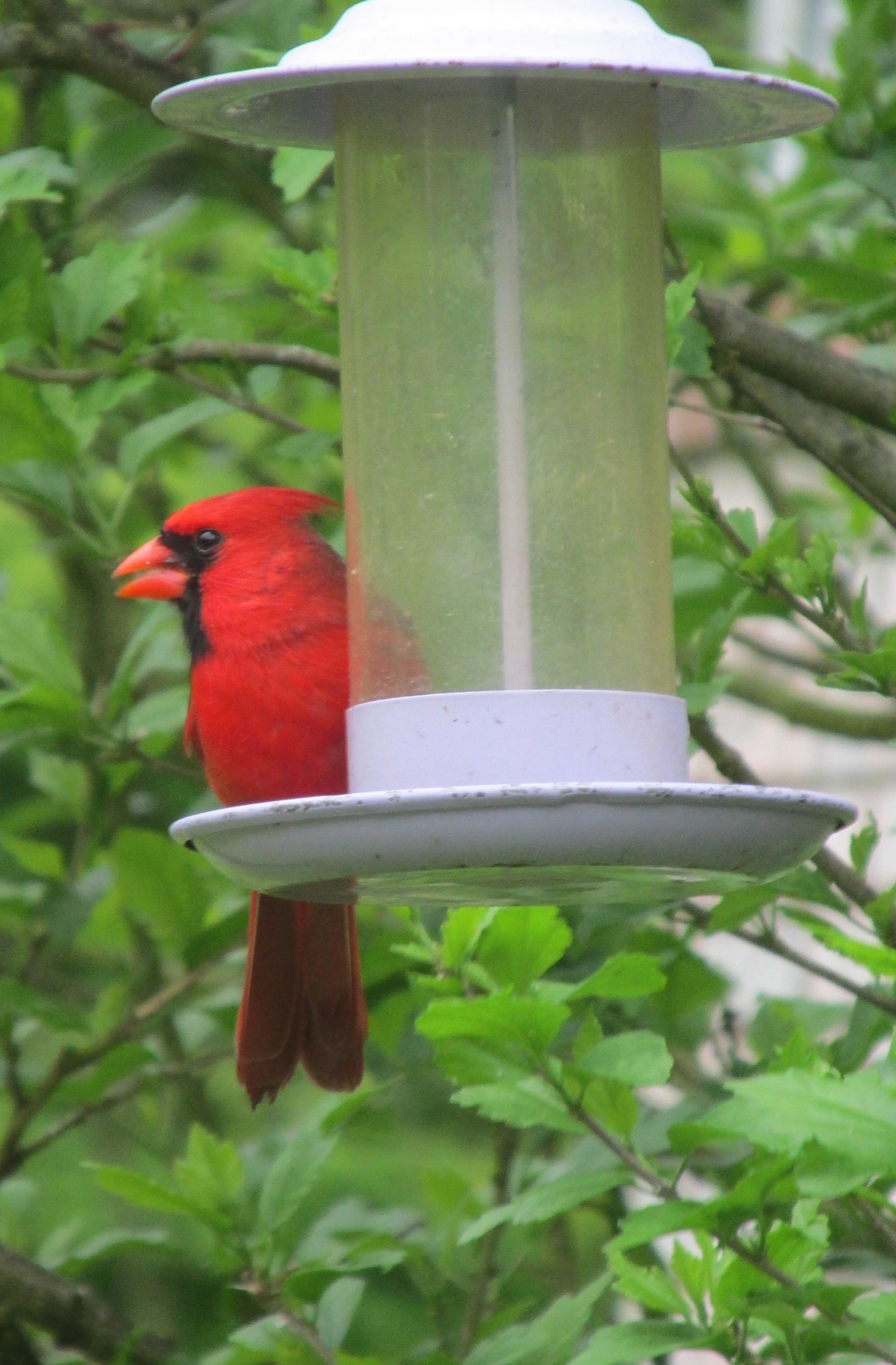
Photo by Bryan Stevens • A male Northern cardinal pays a visit to a feeder.

In the 2015-16 winter season, 1,373 individuals participated in Project FeederWatch in the southeastern United States. The most common birds reported by observers were Northern cardinal, Carolina chickadee, mourning dove, American goldfinch and tufted titmouse. Finishing out the Top 10 feeder birds in this section of the nation were Carolina wren, house finch, blue jay, red-bellied woodpecker and downy woodpecker. Almost 98 percent of participants reported Northern cardinals at their feeders, which means the cardinal has become an almost universal feeder visitor in the southeast.

It’s not surprising that such a popular bird has also become associated with many trappings of the Christmas season.

“You see cardinals on greeting cards, stationery, paper plates, paper napkins and tablecloths, doormats, light switch plates, candles, candle holders, coffee mugs, plates, glasses, Christmas tree ornaments and lights, bookmarks, mailboxes, Christmas jewelry,” writes June Osborne in her book The Cardinal. “And the list goes on. Cardinals have become an integral part of the way that many people celebrate the holiday season.”

I can be included among such people. My Christmas decorations include an assortment of cardinal figurines and ornaments. There are other birds — doves and penguins for example — associated with the holiday season, but for me the holidays magnify the importance of one of my favorite birds. The cardinal, in its festive red plumage, appears made to order for a symbol of the holiday season.
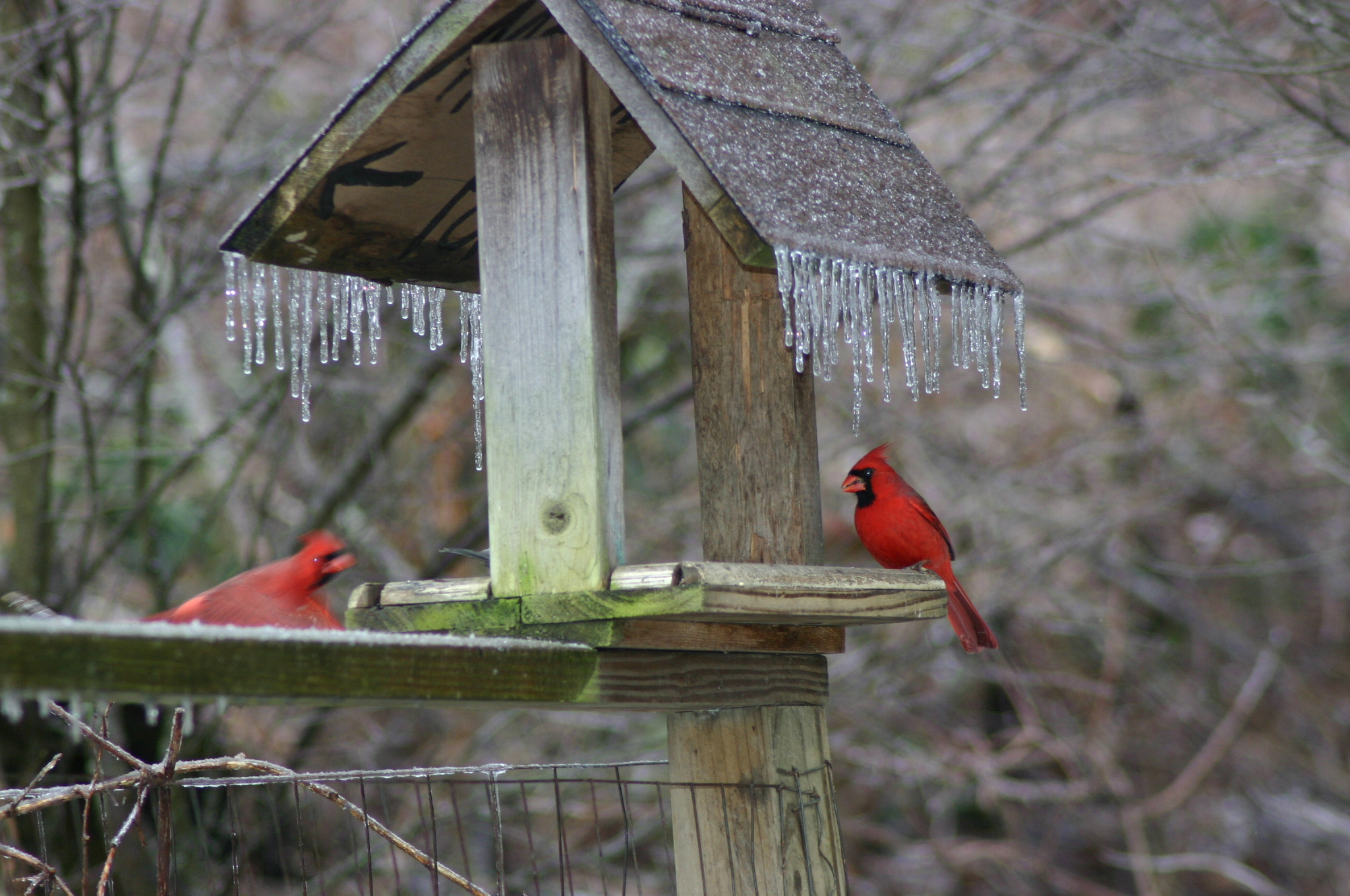
Photo by Bryan Stevens • Northern cardinal seems much less descriptive of this popular bird than such common names as Virginia nightingale and Kentucky redbird.

Here’s some additional cardinal trivia to increase your knowledge of this fascinating bird:

• Cardinals differ in appearance based on gender. The male boasts crimson plumage, a crest, a black face and orange bill. The female, although less colorful, is also crested. Female cardinals are soft brown in color, with varying degrees of a reddish tinge in their feathers, particularly in their wings.

• The cardinal’s preference for dense cover makes them likely neighbors for such birds as Carolina wrens, Eastern towhees and brown thrashers.

• The oldest recorded Northern Cardinal was a female, and she was 15 years, nine months old when she was found in Pennsylvania, according to the website, All About Birds.

• An uncommon genetic variation sometimes produces a cardinal with yellow or orange feathers instead of the typical red. The scientific name for the condition that produces yellow cardinals is known as xanthochroism. This condition also often occurs in house finches.

• Nests are built by the female cardinal, but her mate delivers food as she incubates her clutch of eggs, which usually numbers three or four.

Photo by Bryan Stevens • A female Northern Cardinal feeds during a snowstorm at a hanging tray filled with sunflower seeds.
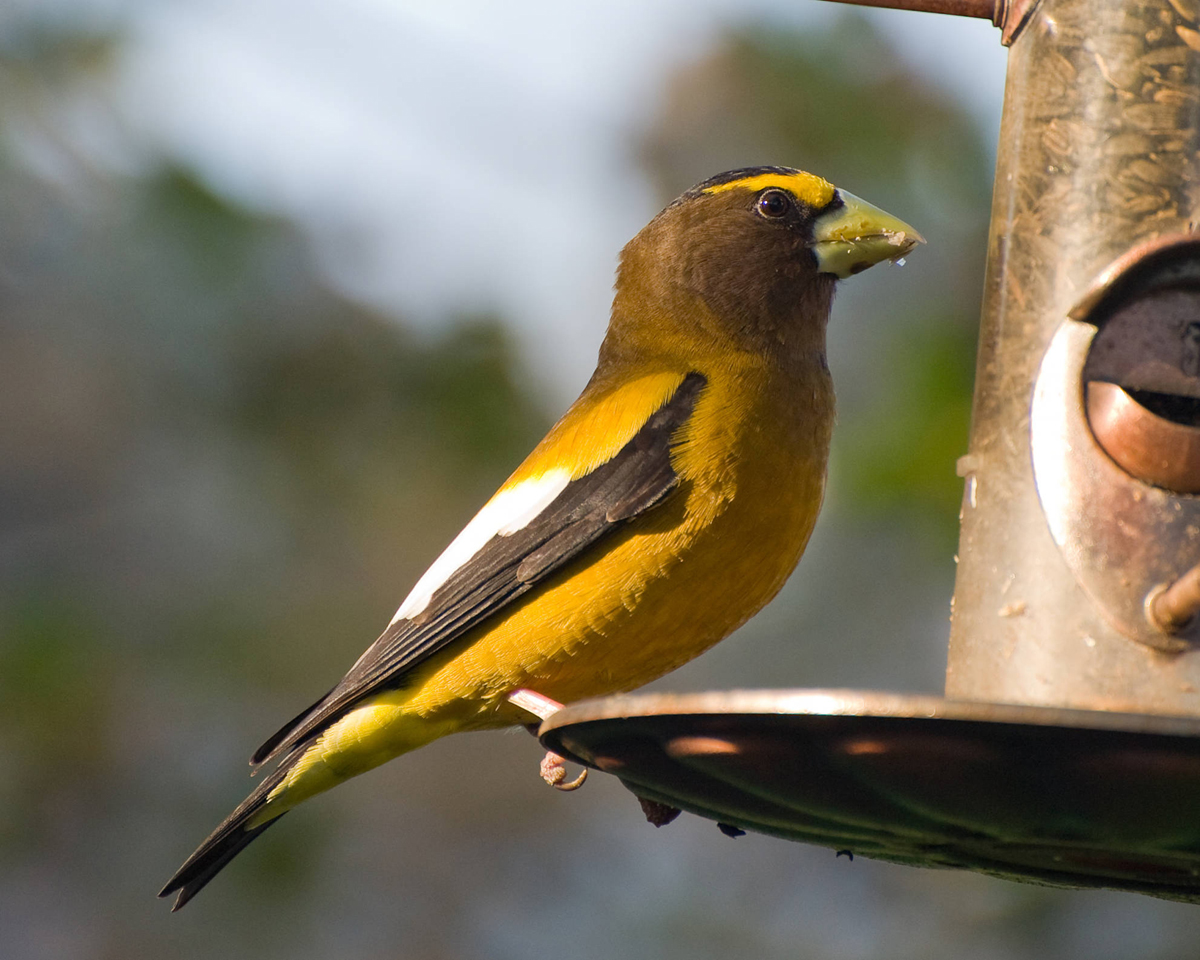
Evening grosbeaks staging comeback after 20-year absence

I’ve a feeling that when we look back on the year 2020, we’re not going to have an abundance of happy memories. Fortunately, I have birds and birding to keep me sane during a year of often dismal news. If nothing else, I will always remember 2020 as the year the evening grosbeaks returned to the region after a 20-year absence.

Evening grosbeaks are large, gregarious, noisy, showy members of the finch family, which includes several more commonplace feeder visitors as house finches, American goldfinches, pine siskins, and purple finches. During the 1980s and 1990s, flocks of dozens, sometimes hundreds, of these birds descended on feeders in the region. I knew a man in the Piney Grove community of Hampton, Tennessee, who converted the metal lids of trash cans into makeshift feeders arranged around his deck to accommodate a flock of more than 100 evening grosbeaks. 

Photo by George Gentry/U.S. Fish & Wildlife Service • A male evening grosbeak perches on the side of a sunflower-stocked feeder.

Then, like a switch being flipped, the great flocks of grosbeaks ceased winter visits to the region after 2000. Birders needed a few years to realize that this bird was no longer to be expected as a fixture of the season. Different theories, none ever confirmed, were put forward to explain the sudden absence.

As years went on, I always held out hope at the start of the winter season that this could be the year they returned, only to be perennially disappointed. Then, in 2020, a year when I could hardly be blamed for anticipating a positive happening, I began to hear reports.

Flocks of evening grosbeaks were spotted in Virginia, North Carolina, and even farther afield in different parts of the Volunteer State. I dared to hope they would make it back to Northeast Tennessee. I even dreamed this might be the year I’d get them back at my feeders. 

On Saturday, Nov. 14, Judi Sawyer in Roan Mountain, Tennessee, posted on her Facebook page that a single evening grosbeak had visited her feeders. “Unfortunately, it flew away when I reached for my camera,” Judi said.

Photo Courtesy of Barbara Lake • Two male evening grosbeaks claim a feeder as a female Northern cardinal waits patiently in the background.

On Friday, Nov. 27, I received an email from Barbara Lake in Hampton, Tennessee. “I’m pretty sure we have a flock of evening grosbeaks visiting us,” Barbara wrote in her email.  “They are definitely in the cardinal/grosbeak family.” 

Barbara added that she and her husband, Jerry, had never before seen evening grosbeaks at their home.  “The colors remind me of the American goldfinch, but they’re bigger with a cardinal-type beak.”

She gave such an apt description that I really didn’t need to confirm her observation, but she helpfully provided a photograph of a couple of the grosbeaks at her feeder. “Are they just passing through, like the rose-breasted grosbeaks do?” Barbara asked.

In answer to Barbara’s question, the intent of this influx of evening grosbeaks is still to be determined. The Lakes live atop a high hill that provides a great lookout over the surrounding terrain. “Your home on the hill is probably a beacon for migrating birds,” I informed Barbara in a reply to her email.

Photo by Jean Potter • A male evening grosbeak enjoys black oil sunflower seed from a hanging feeder.

Friends Brookie and Jean Potter announced the arrival of grosbeaks at their home near Wilbur Lake in Elizabethton, Tennessee, on Jean’s Facebook page on Dec. 3.  “Five Evening Grosbeaks paid us a surprise visit this morning,” Jean wrote on her post.  “We’re ecstatic! This is life bird No. 461 for us and we were able to host it in our backyard.”

Jean also noted that the winter of 2020-21 is turning out to be an irruption year for some species of birds more often associated with Canada and the northern parts of the United States. These irruptive migrations, she noted, are motivated by a scarce food supply for some northern birds, resulting in them coming south. 

The small flock visited for only the afternoon, but the next day  a single grosbeak returned and fed briefly at the feeders at the Potter home.

I’ve only been feeding birds since the winter of 1993, so I started in time to enjoy the evening grosbeak boom of the 1990s. Over the years, an incredible diversity of species have visited my feeders. This winter season has already seen a drive south by several so-called winter finches, including pine siskin, common redpoll, red crossbills, and purple finches. Although not a finch, red-breasted nuthatches have been prevalent at feeders throughout the region for the past couple of months.  Back in October, pine siskins and purple finches began to visit my feeders. Their visits have since diminished considerably. I had hoped the recent snowfall might motivate them to return, but it didn’t happen.

I’ve never seen a common redpoll, although I spent several hours 20 years ago staking out a yard in Shady Valley, Tennessee, in an unsuccessful bid to observe a redpoll that had been a reliable visitor at a feeder in that small community. I have seen red crossbills, but my observations of these birds have always taken place during the summer months near Carver’s Gap in Roan Mountain and the Unaka Mountain in Unicoi County.

Photo by Alain Audet/Pixabay.com • A male evening grosbeak grips a perch on a cold day.

So, as the weather turns cold each year, hope springs eternal that perhaps this will be the winter that will bring some of these northern finches to my feeders, or at least to a feeder in the general area.

Photo by George Gentry/U.S. F&WS • Male evening grosbeaks brings some vibrant color to any place they choose to visit.

I am still waiting for an evening grosbeak to return to my home. I am happy reminiscing about the flocks of dozens of individuals that gathered at my feeders in the ’90s.

The evening grosbeak belongs to the genus Coccothraustes in the finch family. There are only two other species in the genus: the hawfinch of Europe and temperate Asia and the hooded grosbeak of Central America.

One word of advice in case evening grosbeaks show up at your own feeders: These are some of the most fun visitors you will ever host, but they have huge appetites. Be prepared to earmark more of your budget for purchasing sunflower seed, which is a favorite food of these always-hungry birds.

Common grackles part of November’s changing bird lineup


Photo by Bernell MacDonald/Pixabay.com • Common grackles are quite accomplished at foraging for food in a variety of habitats.

November is a month of transition. The birds of summer have all “flown the coop,” returning to warmer climes to the south in Central and South America, as well as the Caribbean. Of course, even as hummingbirds, warblers, tanagers, vireos, and others have fled North America in advance of winter’s imminent arrival, other birds are arriving to take their place.

Many of the newcomers don’t offer the vibrant plumage of a scarlet tanager or a rose-breasted grosbeak, but they make up for the lack of striking feathers by remaining quite faithful to our feeders during the bleak, short days of winter. A hermit thrush and a dark-eyed junco represented some first-of-autumn arrivals when they showed up Nov. 6, followed the next day by a swamp sparrow. In addition to the sparrow, three ravenous common grackles descended on my suet feeders that same day.

For many bird enthusiasts, the “common” in this particular bird’s name is particularly apt. Tending to form large, noisy flocks, common grackles can easily wear out even the most generous welcome. Perhaps because I live at a mid-elevation area, common grackles are extremely infrequent visitors to my yard. I can be a little more welcoming to a bird that I know is not likely to linger.

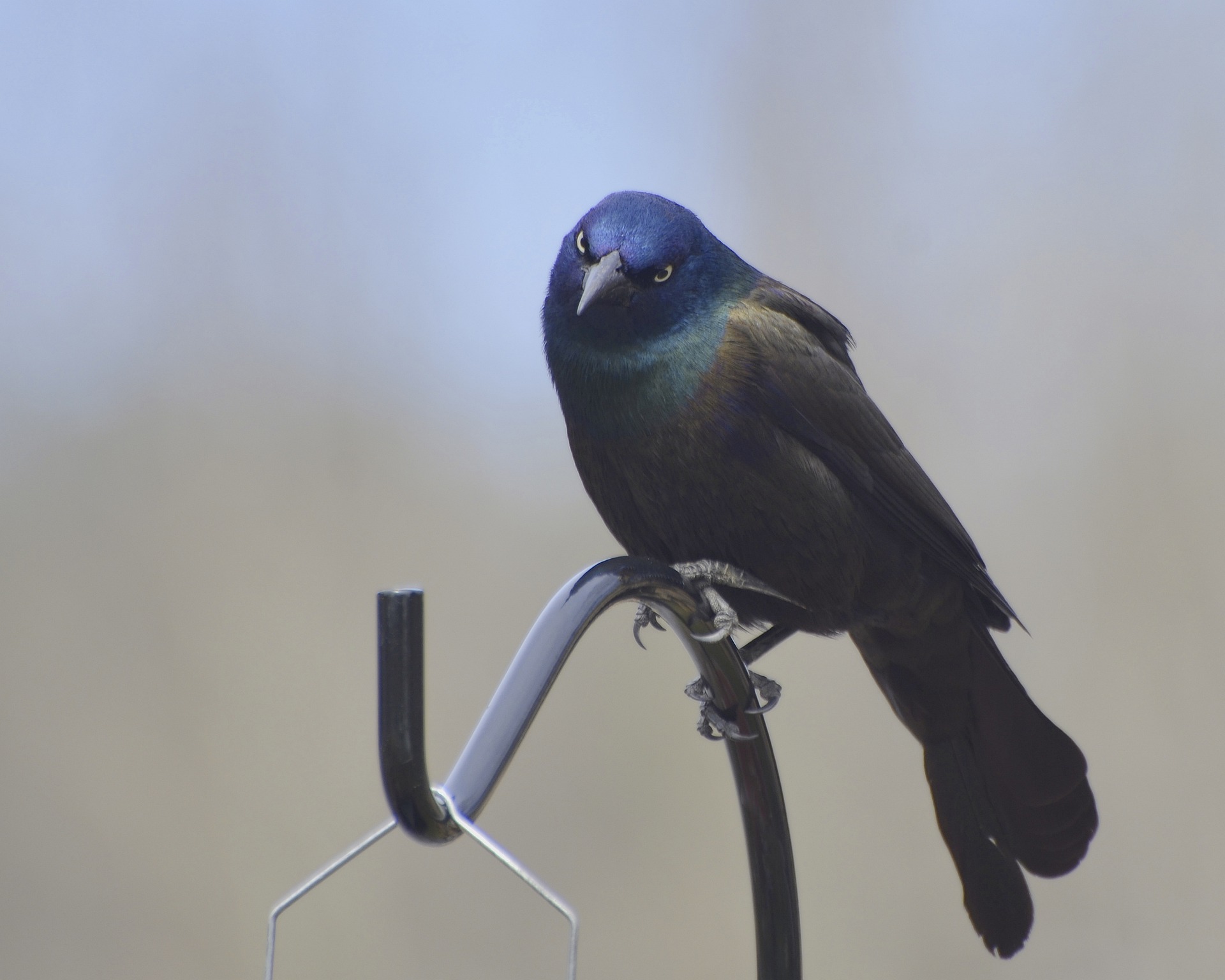
Photo by diapicard/Pixabay.com • A common grackle perches on a shepherd’s hook in a garden. These large birds, which are part of the blackbird family, form flocks and bring big appetites to feeders during migratory stops.

Nevertheless, that same evening these three grackles must have spread the word because a flock of about 30 of these birds arrived. If I needed a reminder, the flock provided a quick one. A handful of grackles isn’t too disruptive, but a large flock can quickly overwhelm and intimidate smaller feeder birds.

Even so, I remain inclusive in my embrace of all feathered friends. A much maligned bird if ever there was one, the common grackle is worth a second look. For those who are able to overlook the occasional bad habits of birds such as Northern mockingbirds, mourning doves, or even cantankerous ruby-throated hummingbirds, there may be hope for this large member of the diverse family of blackbirds, known by scientific types as a member of the family Icteridae. This grouping of New World species, also known as New World blackbirds, includes such members as orioles, meadowlarks, cowbirds, bobolinks, marshbirds, orependolas, caciques and, of course, blackbirds.

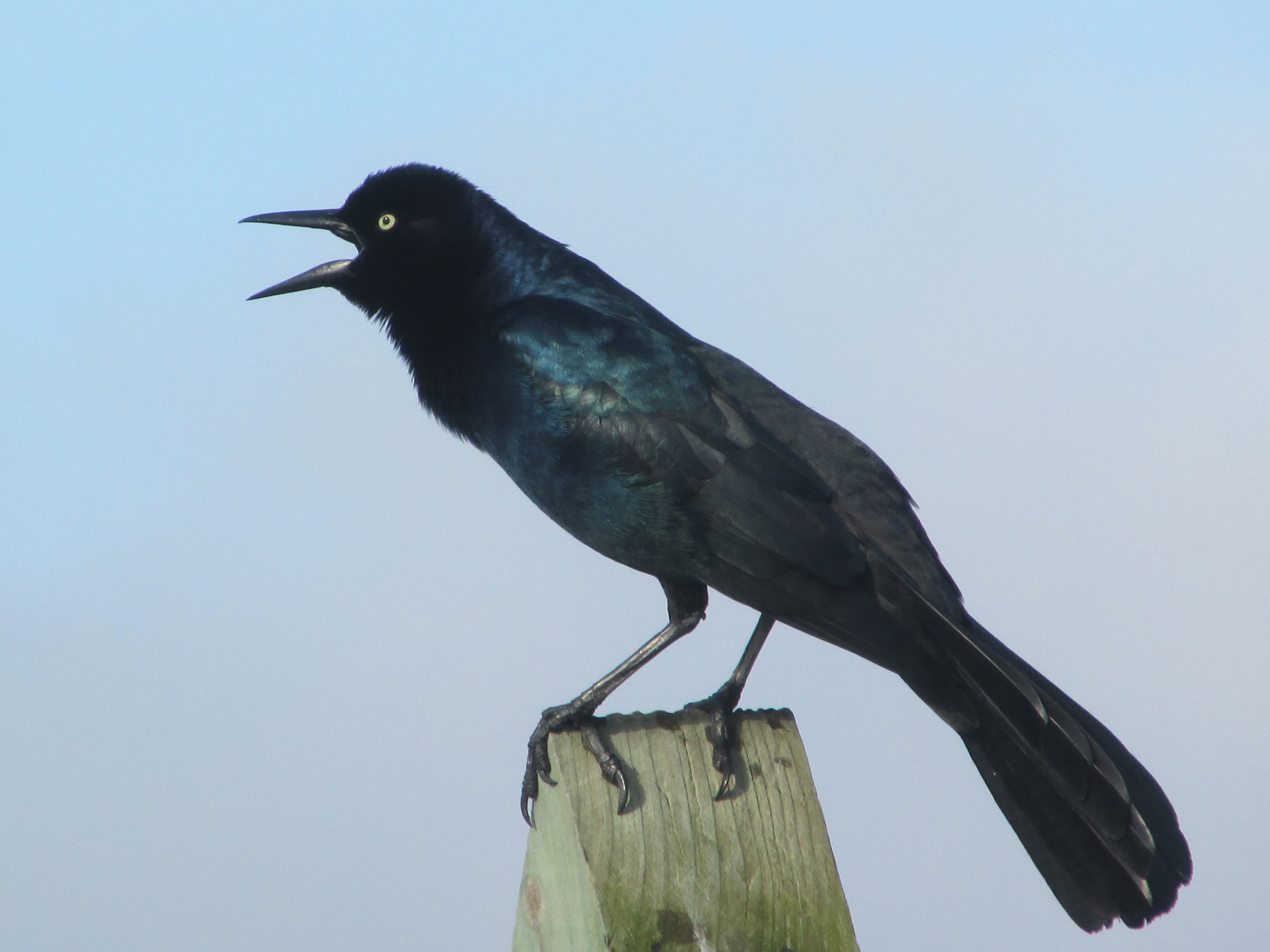
Photo by Bryan Stevens • A boat-tailed grackle sings, if the bird’s harsh, grating notes can be considered a song, from a perch in a wetland in South Carolina.

The common grackle is known by the scientific name Quiscalus quiscula. In the southeast, in particular along the coast and in wetland areas, a common and related species is the boat-tailed grackle. Other species of grackles found in the New World include the great-tailed grackle, Nicaraguan grackle, Great Antillean grackle and the Carib grackle. A little more distantly related are the South American species golden-tufted mountain grackle and the Colombian mountain grackle.

One species — the slender-billed grackle of Mexico — suffered extinction at the dawn of the 20th century. Reasons for this bird’s disappearance are not clearly understood, but habitat destruction of Mexican wetlands and hunting pressures have been theorized as causes. Like others of its kind, the slender-billed grackle may also have been persecuted as an agricultural pest.

Like many other birds dependent on wetlands, common grackles have experienced population declines in recent decades. Although it seems odd to refer to a bird with a population estimated at around 73 million individuals in North America as on the decline, common grackles have suffered an estimated population loss of about 60 percent from historic highs.

Male grackles stand out from other blackbirds due to their sheer size. Males can reach a length of 13 inches, although much of that can be measured in an exceptionally long tail. A grackle’s plumage has a black sheen that can shine with brilliant iridescence that tends to appear purple, green or blue when the sun shines just right on the feathers. Females tend to be smaller than males and are a muted black and brown. Both sexes have long, sturdy bills and yellow eyes.

Most rural residents don’t have to worry about common grackles overwhelming their feeders, but some people living in urban and suburban settings have found grackles to be difficult guests. The birds have bottomless appetites and are aggressive toward more desirable feeder birds. Fortunately, migrating flocks in the fall tend not to linger. After a brief visit, which can still deplete supplies of seed and suet cakes, the grackles continue migrating.

Grackles are usually one of the earliest birds to return each spring. In fact, it’s not at all unusual for these large birds to make their way back to the region as early as late February. I am usually glad to welcome them back since I know that their return is a strong indication that some more favored species are certain to follow in their wake and that winter’s grip is waning.

Are you seeing new arrivals in your yard or at your feeders? Let me know by emailing ahoodedwarbler@aol.com.

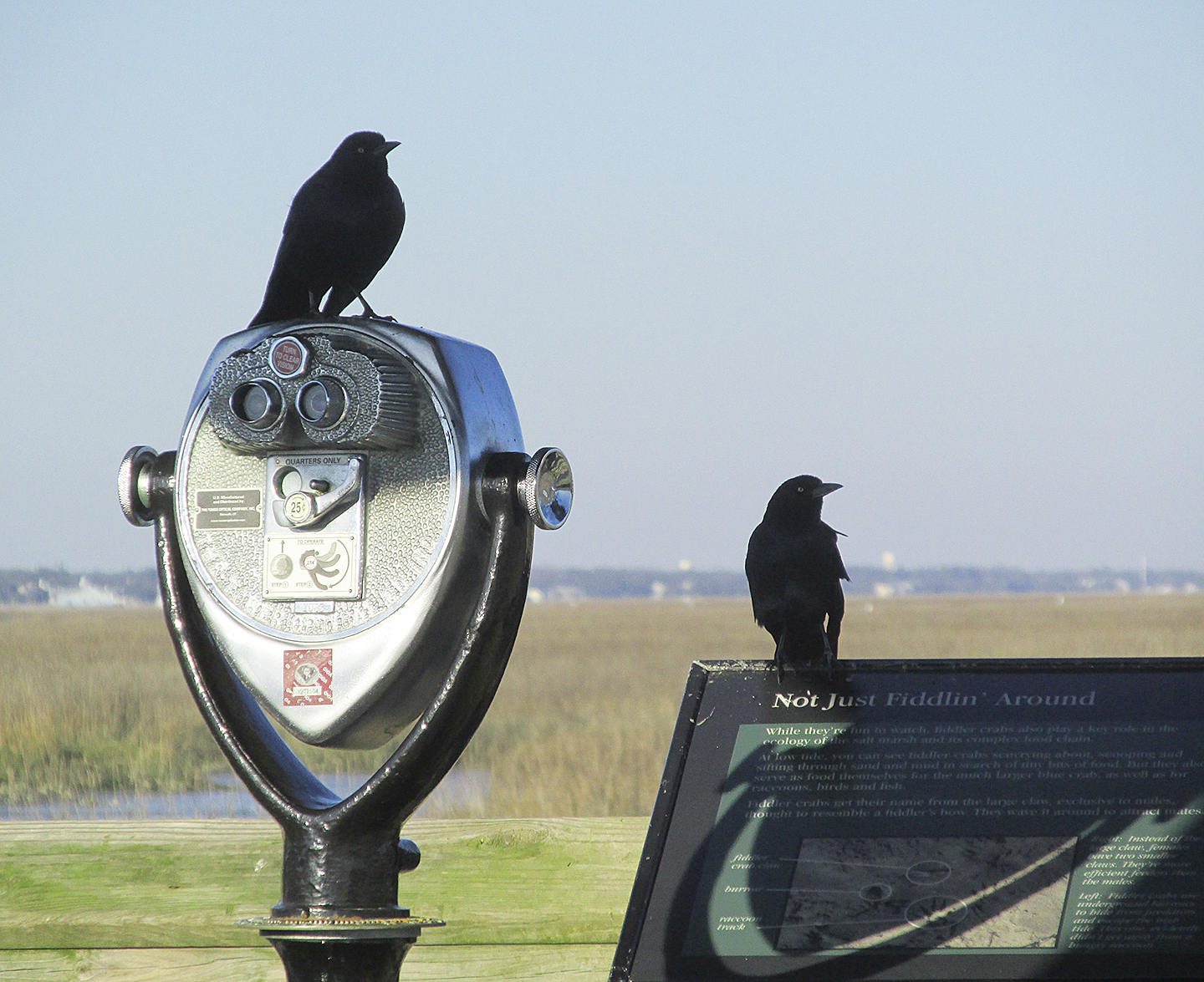
Photo by Bryan Stevens • Boat-tailed grackles perch on viewing equipment at an observation platform at Huntington Beach State Park in South Carolina.

Finches arrive ahead of winter in impressive numbers

I’d watched with some degree of envy after friends posted on social media about the arrival of purple finches and pine siskins earlier this fall. What was wrong with my yard?

Fortunately, I only needed to remain patient. People began reporting the arrival of these two species of winter finches at their feeders weeks ago all across Tennessee. The purple finches and pine siskins showed up, finally, at my home on Oct. 23.

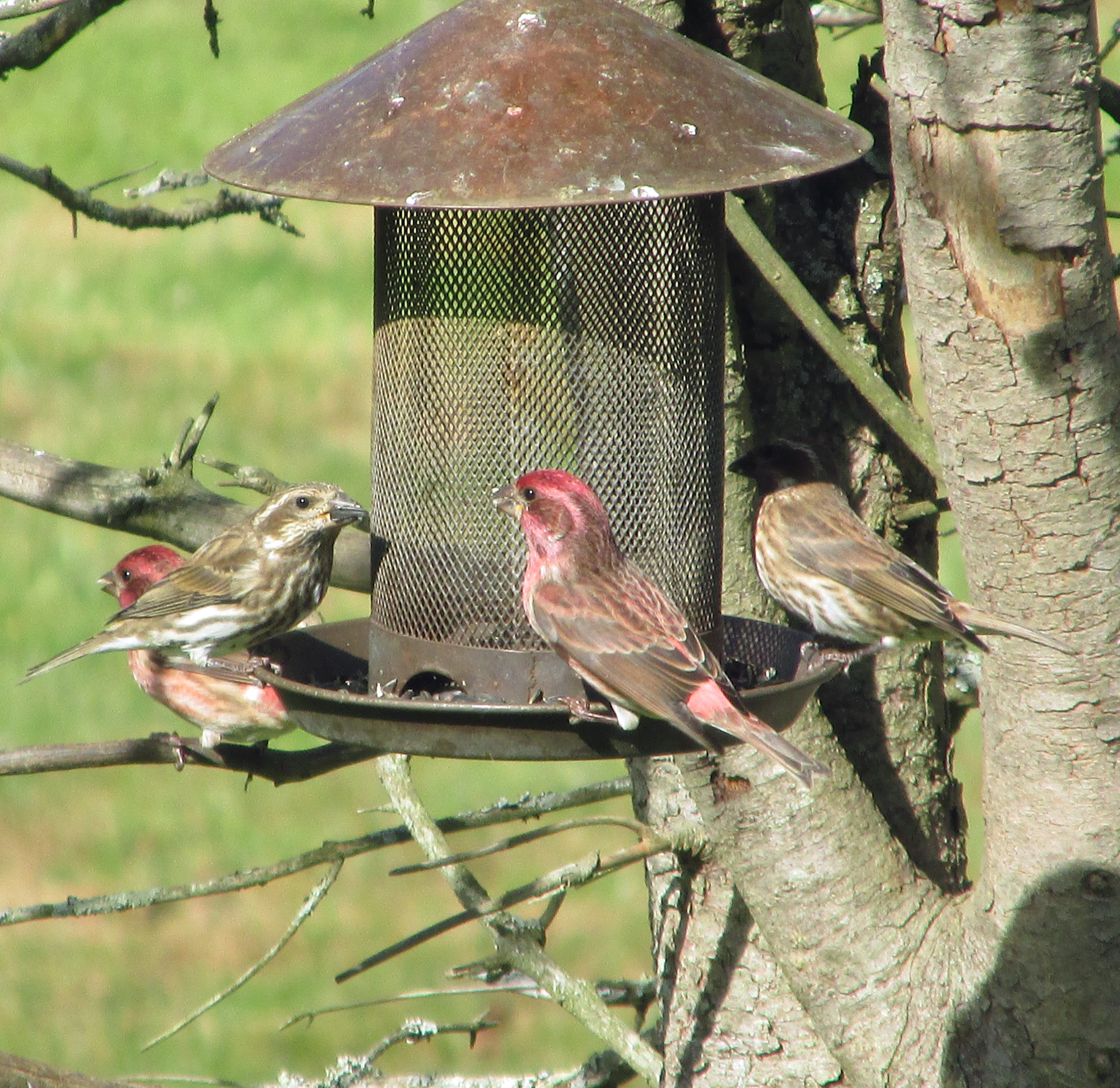
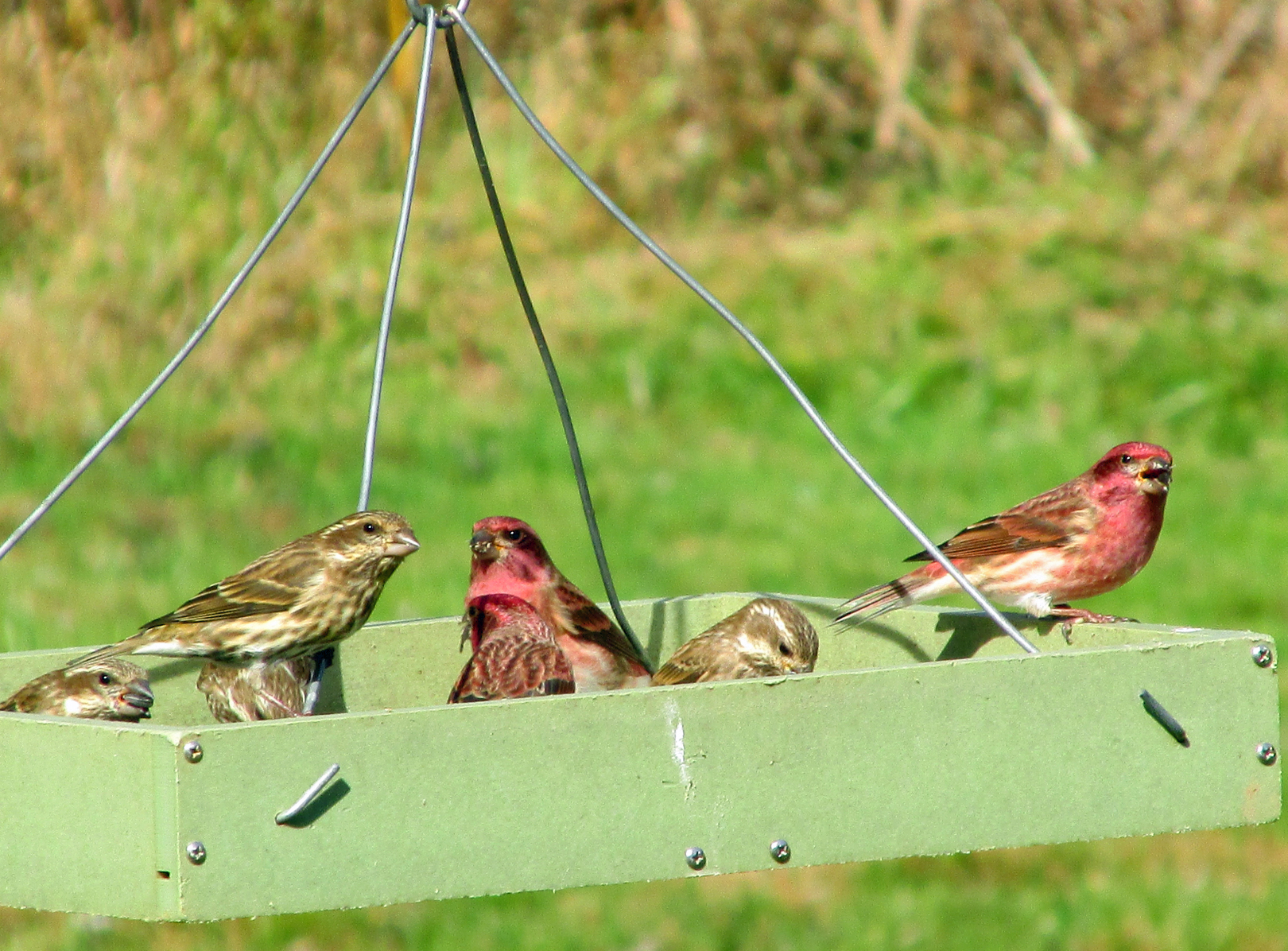
Photo by Bryan Stevens • Male and female purple finches share space at a feeder.

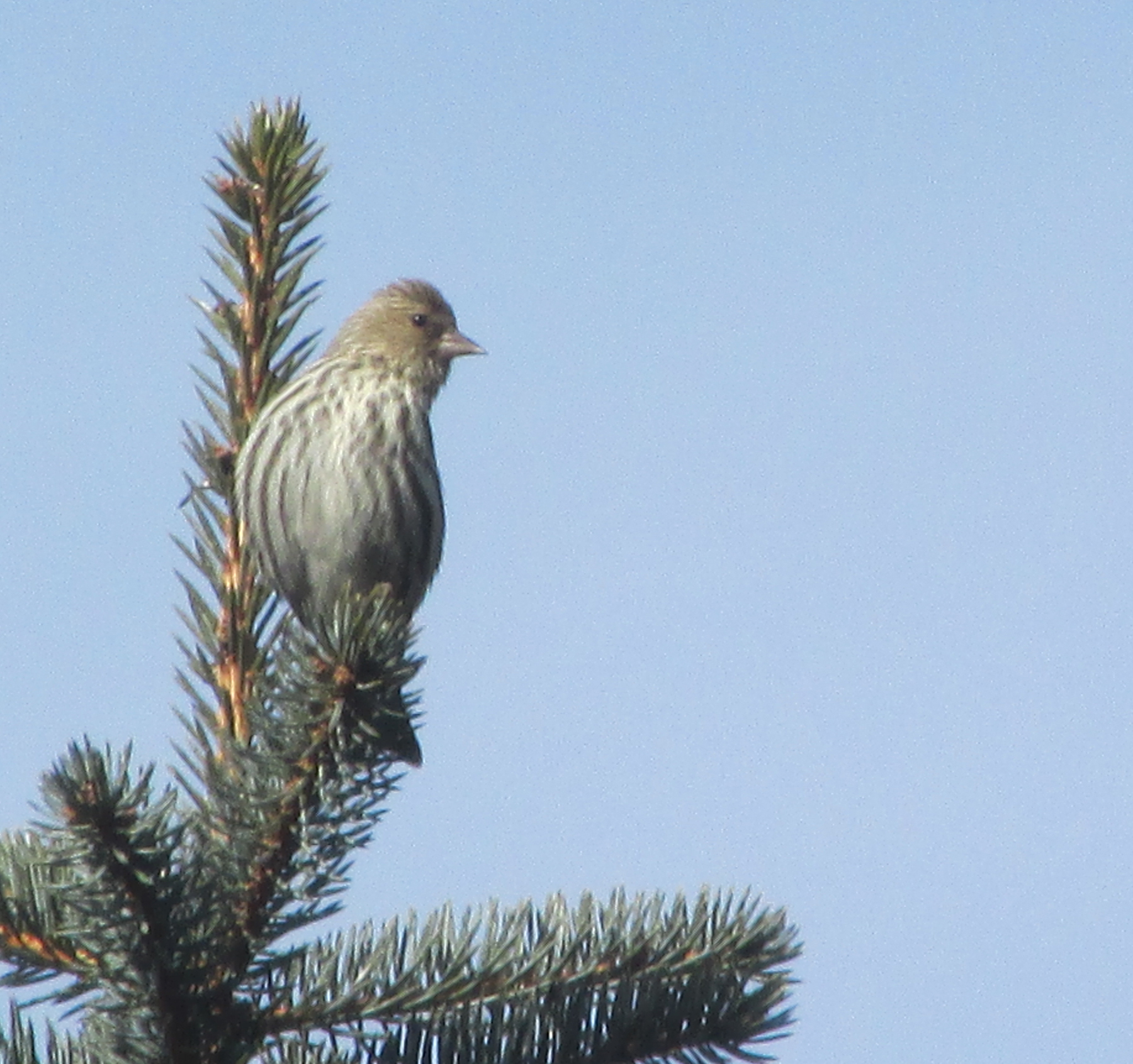
The pine siskin nests during the summer on the higher elevations of Roan Mountain. These small finches, which are related to the American goldfinch, are common winter feeder visitors some years and completely absent other years. This looks to be a year for siskin abundance. Andrew Del-Colle, Site Director and Editor for Audubon Magazine, posted a recent article about this autumn’s dramatic irruption of pine siskins.

Photo by Bryan Stevens • A pine siskin in a spruce at Carver’s Gap on Roan Mountain.

Project FeederWatch, which has monitored North American bird population trends for decades, defines the term irruption as a sudden change in the population density of an organism. In the case of birds, irruptions refer to the movement of northern-wintering species to the south in years of low food availability. Other species that often stage winter irruptions include evening grosbeaks, red-breasted nuthatches and common redpolls. There’s also some indication that some of these other birds may make their way south this winter.

“If you’ve never seen a pine siskin, this is your year,” Del-Colle wrote. “In the past month, the birds have invaded the United States in search of food, inundating backyard feeders across the country. Without question, it’s one of the biggest irruption years in recorded history for the finches.”

Photo by Bryan Stevens • Purple finches jostle for space in a feeder stocked with sunflower seeds.
The pine siskins at my home spend much of their time in weedy fields adjacent to my home and visit my feeders on a semi-regular basis. I suspect their feeder visitation will increase once some truly wintry weather arrives.

The purple finches that arrived on the same day do not rival the siskins in sheer numbers. Nevertheless, the purple finches have lingered, as well. The purple finch, which is a winter visitor to northeast Tennessee, southwest Virginia and western North Carolina, is apparently not as common as in the past. Experts have speculated that the decline in the numbers of purple finches each winter can be attributed, at least in part, to the closely related house finch. The house finch may simply be out-competing the purple finch for scarce natural resources.

Photo by Bryan Stevens • A male house finch perched on a cable. These finches are native to the western United States but became established in the eastern states thanks to the illicit pet trade.

The house finch is quite widespread across the United States. Originally, however, the house finch was a bird of the western part of the country, living in Mexico and the southwestern United States. About 1940, the house finch became established in the eastern United States. In violation of federal law, these small finches were being sold in New York City as pet birds described as “Hollywood Finches.” To avoid trouble with authorities, vendors and even some owners released their “Hollywood Finches” into the wild. Finding the area around New York City to their liking, house finches spread. Within a few decades, they were common birds throughout the eastern United States, including Tennessee, Virginia and North Carolina.

As the house finch claimed a new range, they inevitably encountered the related purple finch. During the winter, both finches are often present at feeders in the region. When both are available for observation, bird enthusiasts should take advantage of the opportunity to compare and contrast these birds. I have never had any difficulty distinguishing a purple finch from a house finch. The two species, at least in my eyes, are easily recognized. I can understand why some people might have trouble separating the two birds. The late Roger Tory Peterson once described the purple finch as a bird “dipped in raspberry juice.” Think about that imagery for a moment and you’ve got a good start to distinguishing a male purple finch from a male house finch. With some practice, observers will come to notice the subtle differences between a purple finch and a house finch.

These two finches belong to the genus Haemorhous, which can be roughly translated as “the color of blood.” The two species are also simply classified as American rosefinches. This grouping also includes a third species, Cassin’s finch, which occurs in the western United States. I have seen all three species, adding Cassin’s finch during a visit to Utah in 2006.

____________

Differentiating purple finches

from house finches can be a challenge

Let’s deal first with the males. Male purple finches are delicate pink-red (that raspberry coloration) on the head and breast, mixing with brown on the back and cloudy white on the belly. The red of a male purple finch is definitely a color I have not observed with many other birds. Even “red” birds such as male Northern cardinals and male scarlet tanagers do not show the same red color. Once you learn the way the red appears in the plumage of a male purple finch, you are on your way to telling this bird apart from its relative.

The red in the plumage of male house finches is surprisingly variable. In most cases, the heads, necks and shoulders of male birds are reddish and the red at times extends to the stomach and between the wings on the bird’s back. The intensity of the red changes with the seasons and is also derived from the berries and fruits in the bird’s diet. Pale yellow and bright orange are alternatives to the typical red plumage.

Look closely at the photograph of the purple finches accompanying this column. There’s a distinctive facial pattern evident on the birds. The strong facial markings include a whitish eye stripe and a dark line down the side of the throat. This pattern simply doesn’t exist with the male house finch. When I make a snap identification of these two birds, I always look for the facial pattern even before I study any other aspects of the appearance of the bird. In addition, purple finches have powerful, conical beaks and a tail that appears short and is clearly notched at the tip. Rounding out the description of a male house finch is the fact that they have a long, square-tipped brown tail and are brown or dull-brown across the back with some shading into gray on the wing feathers. The breast and stomach feathers may be streaked.

Females of both house finches and purple finches are dull brown birds that could easily be mistaken for sparrows. Again, the facial pattern is much more apparent on a female purple finch than on the related female house finch. In addition, I have always noticed that female purple finches are usually a darker shade of brown than the dull brown female house finches. Both male and female house finches are more slender than their more chunky-bodied counterparts.

______________

Although not closely related to our American birds, there is also a group known as rosefinches common to Europe and Asia. Some of these distant relatives include such descriptively named birds as scarlet finch, streaked rosefinch, red-mantled rosefinch, pink-browed rosefinch, long-tailed rosefinch, three-banded rosefinch and Himalayan beautiful rosefinch.

Purple finches occupy a variety of winter habitats, including fields, woodland edges, lawns and gardens. All it takes to lure these finches to feeders is a plentiful offering of sunflower seeds. If you are lucky enough to have both of these finches visiting your feeders, take time to study the differences. It takes some practice, but they can be distinguished quite confidently.
 

Nighthawks share the skies with many other migrants

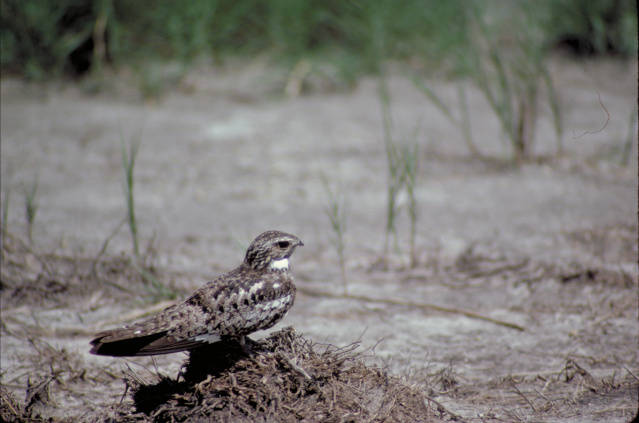
Photo by Dr. Thomas G. Barnes/ USFWS • A common nighthawk perches on a low clump of vegetation during a rest period. Nighthawks are known for migrating in large flocks.

Autumn’s a chance for me to indulge my passion for warblers, with a few dozen species of these songbirds passing through the region in the span of a few weeks. They’re not the only migrating birds worth watching, however, as a recent Facebook post reminded me.

John Whinery, a fellow birder who resides in Fall Branch, Tennessee, reported some interesting observations Sept. 6 on Facebook.

“Been watching several hundred common nighthawks the last few nights fly down the valley next to the farm,” John wrote in his post. He also reported that he saw a female Northern harrier fly by at eye level about 20 feet from him as he watched the migrating nighthawks. The Northern harrier, once known as the “marsh hawk,” is one of many raptors known to migrate. 

Like such birds as warblers, vireos, thrushes, tanagers, flycatchers and hummingbirds, the common nighthawk, is a neotropical migrant. In addition, the common nighthawk has one of the longest migration routes of any North American bird. Twice a year, these birds migrate for distances ranging from 1,600 to 4,200 miles. Nighthawks that spend the spring and summer in Canada travel to southern South America for the winter months. 

With September advancing on the calendar, I have been keeping an eye on the treetops for passing warblers, vireos and tanagers, but I also remember to direct my gaze to the skies. Forgetting to look skyward could result in missing the passage of such varied migrants as chimney swifts, broad-winged hawks and common nighthawks.

So, what is a common nighthawk? First, this bird, despite what is implied by its name, is not a hawk. It’s also not strictly nocturnal. Particularly in the fall, nighthawks are active during daylight hours when engaged in catching winged insects. Outside of fall migration, these birds can often be observed over large parking lots or well-lit streets, snatching up insects swarming around the light poles.

The common nighthawk is one of three members of the nightjar family found in the region during the summer months. The other two nightjars are the whip-poor-will and chuck-will’s-widow, birds that produce their namesake vocalizations in the nocturnal hours. Both of these species migrate, but they don’t take the dramatic approach employed by nighthawks. Each fall, common nighthawks form large flocks, ranging in size from dozens to hundreds or even thousands of individuals, as they migrate south for the winter.

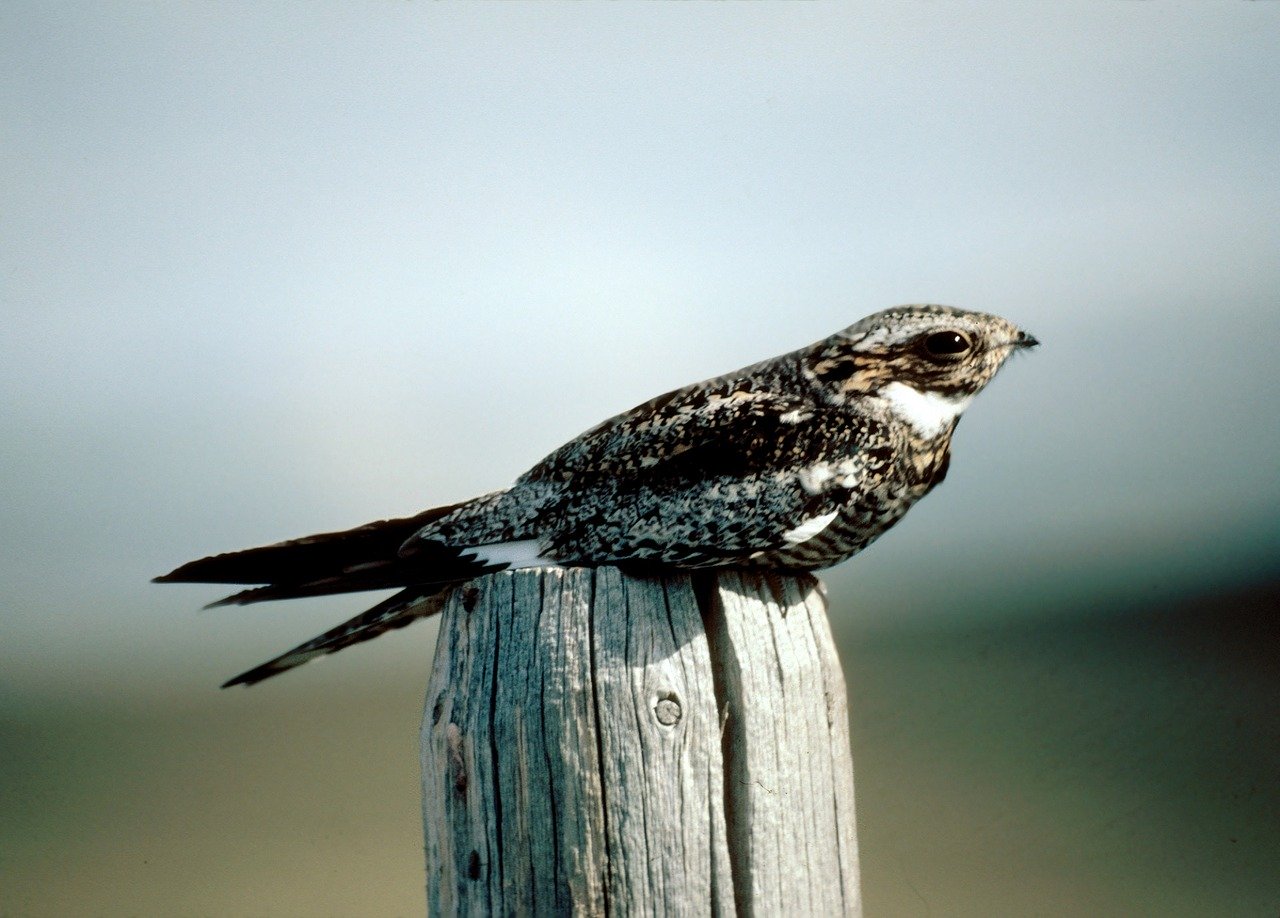
Photo by Skeeze/Pixabay.com • A common nighthawk chooses a perch atop a fence post for a survey of its surroundings.

Unlike whips and chucks, the common nighthawk isn’t active only after dark, which makes it much easier to observe these birds. They look somewhat like swifts and swallows but are much larger. They are brownish-gray birds with pointed wings and forked tails. They are easily identified by distinctive white patches on the underside of their wings.
The nightjar, or Caprimulgidae, family of birds is also sometimes known as “goatsuckers.” Apparently, in trying to explain the nocturnal tendencies of these birds, the Greeks came up with the imaginative but erroneous idea that birds like nighthawks liked to sneak into barns and have a meal of fresh goat’s milk. In reality, nighthawks feed almost exclusively on insects, including ants, wasps, beetles, caddisflies, moths, mayflies, flies, crickets, grasshoppers, and other insects. They capture much of their insect prey on the wing.

There are almost 80 species of nightjars in the world. Less than 10 occur in North America. Many of the common nighthawk’s relatives have been given descriptive names, such as long-trained nightjar, collared nightjar, spot-tailed nightjar, red-necked nightjar, golden nightjar, fiery-necked nightjar, swamp nightjar, pennant-winged nightjar, lyre-tailed nightjar, little nightjar, sickle-winged nightjar, rufous-bellied nighthawk, short-tailed nighthawk, sand-coloured nighthawk and least nighthawk.

So, keep looking skyward. The next flock of migrating common nighthawks may fly over your home. These flocks are usually on the move throughout September.  I’ve managed only three sightings of solitary nighthawks so far this migration season, which falls far short of the number John Whinery reported at his farm. 

I will keep watching the skies. Nighthawks can also appear almost magically, as if out of thin air. First, observers may see one of two birds, then several, followed quickly by dozens or sometimes hundreds as they wheel and cavort in the skies overhead with impressive grace and agility. I’ve seen flocks that would easily number more than 500 birds in locations throughout the region, although flocks often number only a couple of dozen birds. 

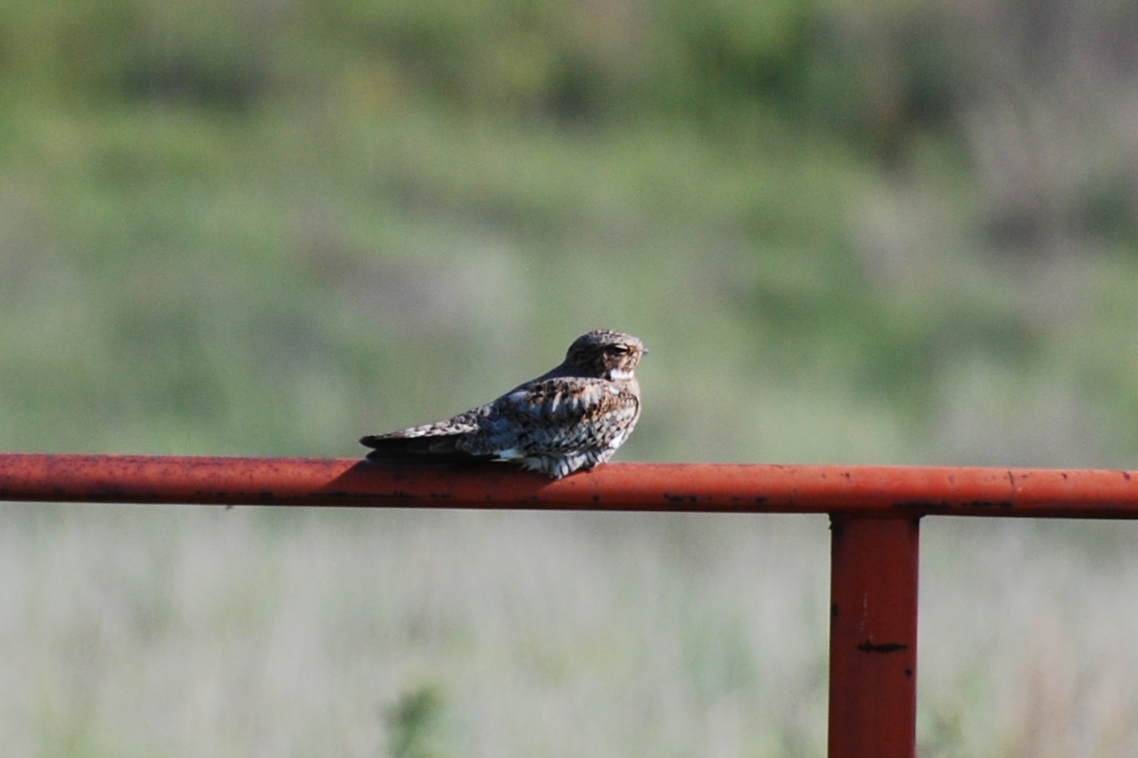
Photo by Jean Potter • A common nighthawk rests on a metal railing.

Warbler parade imminent as September advances

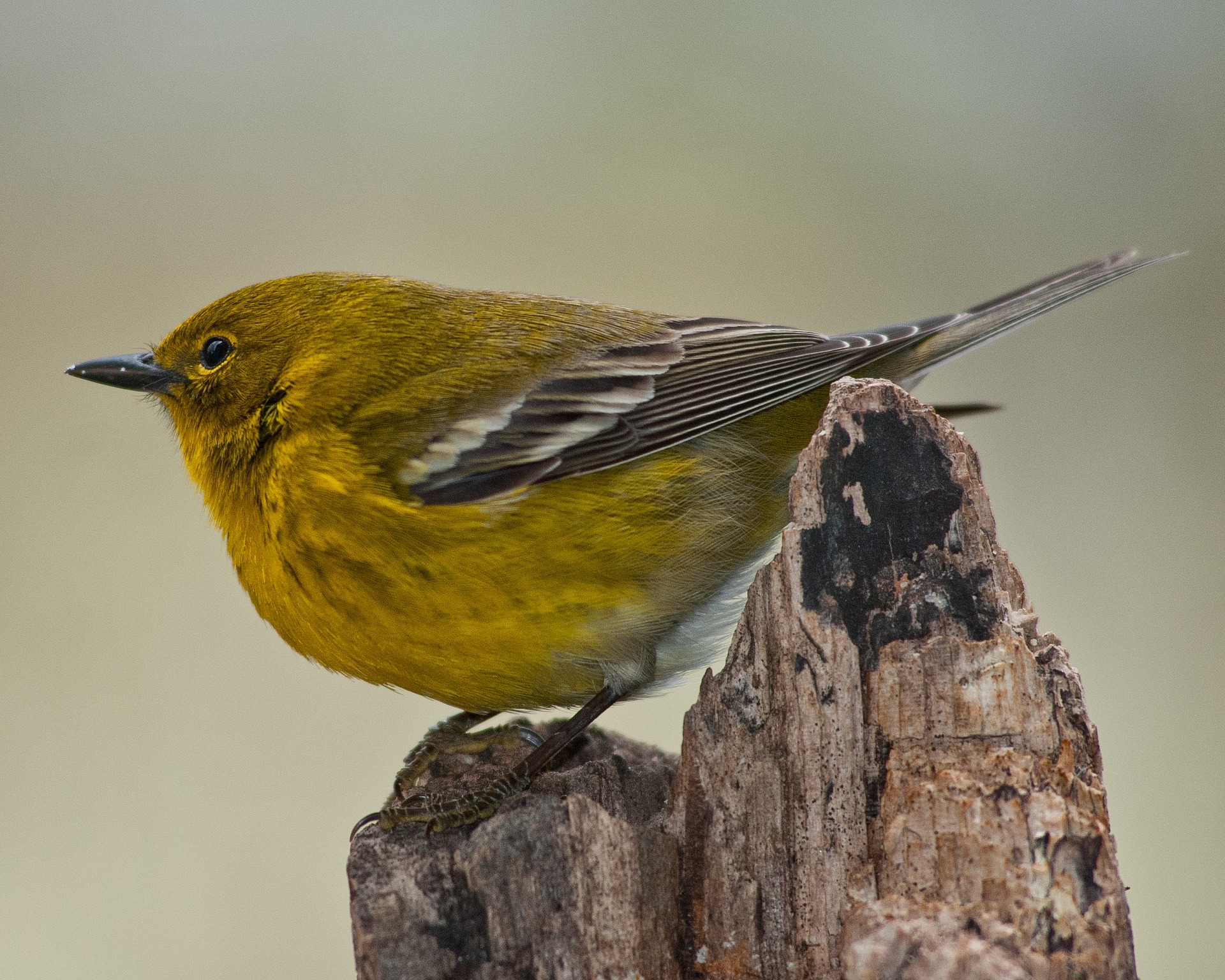
Photo by Mickey Estes/Pixabay.com • A pine warbler takes a brief rest on a perch during a break from foraging for insects.

I detected some signs of migration during a backyard lawn chair birding session on Thursday, Sept. 3. A croaking great blue heron circling the property, the shrill cries of cedar waxwings, scolding vireos, and the intermittent buzz of hummingbird wings all contributed to the background noise. 

The first warbler of the season, a quick blur of yellow and white, disappeared into the green and thus escaped identification. That’s the way of it: Sometimes, you identify the bird, but at other times it slips past without lingering enough for that moment of confidence. You have to love September, even if the birds are entirely ignorant of pages on a calendar. As summer wanes, the pace of migration has spiked. If that first warbler got away, I know others will follow behind it.

Some of them will have fanciful names like blue-winged warbler, black-throated blue warbler, Blackburnian warbler and American redstart. Each of the warblers exists as a sort of magnet to induce me to keep binoculars always close at hand.


The 50 or so species of warblers that make their home in the eastern parts of the United States and Canada during the spring and summer months are now winging their way south.  The blackpoll warbler, which holds the distinction for the longest migration of any species of New World warbler, will journey from the forests of Canada to spend the colder months in northern South America. Because of a peculiarity of this bird’s fall migratory habits, birders in Northeast Tennessee are far more likely to see this late-arriving warbler in May than in the autumn.

A few warblers — pine warbler, magnolia warbler and palm warbler — are named for trees for the simple reason that their European discoverers happened to first observe them in the branches of their namesake trees.

Photo by Bryan Stevens • A Palm Warbler forages along a chain-link fence.

For most of these warblers named to honor various trees,  their common names are, at best, a misnomer. Throughout most of its life, the palm warbler doesn’t even encounter palm trees. Johann Friedrich Gmelin, a German naturalist who lived from 1748 to 1804, saddled the palm warbler with its inappropriate name. Gmelin based his naming of the bird on the fact that a specimen had been collected on Hispaniola, an island in the Caribbean with an abundance of palm trees. Gmelin published several textbooks in the fields of chemistry, pharmaceutical science, mineralogy, and botany. He also had a hand in publishing a catalog of scientific names for various species, including some birds that had until that point never been given a species classification. Thanks to his efforts, the palm warbler has forever been linked with a type of tree that is, at best, entirely incidental to the bird’s life cycle.

The same is true for the Magnolia Warbler, which would have been more suitably named the spruce or fir Warbler, as the species is highly dependent on northern coniferous forests as nesting habitat. The pine warbler, at least, restores credibility to some of the early experts who have these tiny birds their common names. The pine warbler does indeed prefer stands of pine trees, showing particular favor for pitch pines.

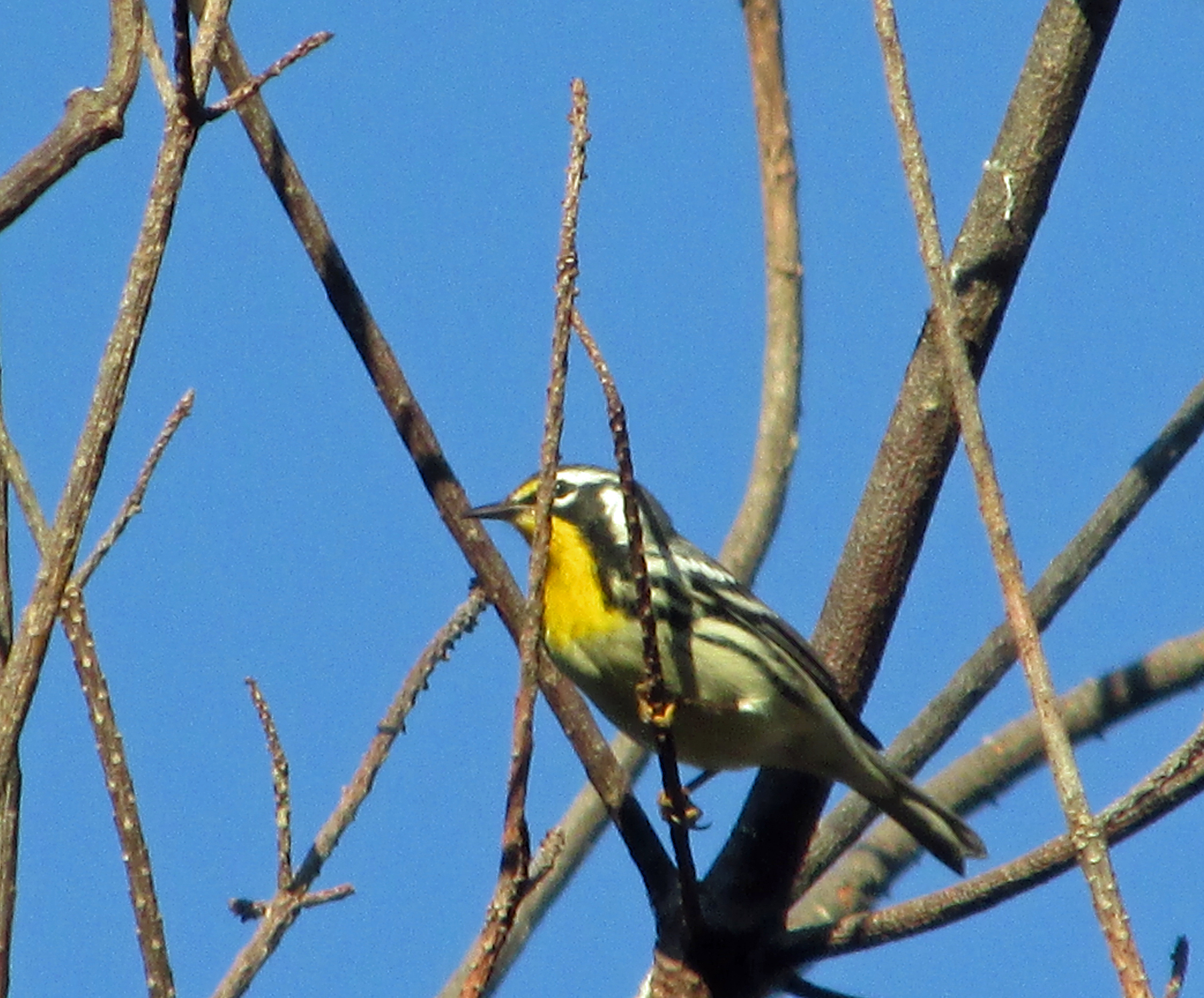
Photo by Bryan Stevens A Yellow-throated Warbler makes a migratory stop in my yard on the first day of September.

These three “tree warblers” are all fairly common fall migrants, making stops in gardens, backyards and woodland edges throughout Northeast Tennessee, southwest Virginia, and western North Carolina. They and their relatives will make the remaining weeks of September and early October an exciting time for warbler enthusiasts. 


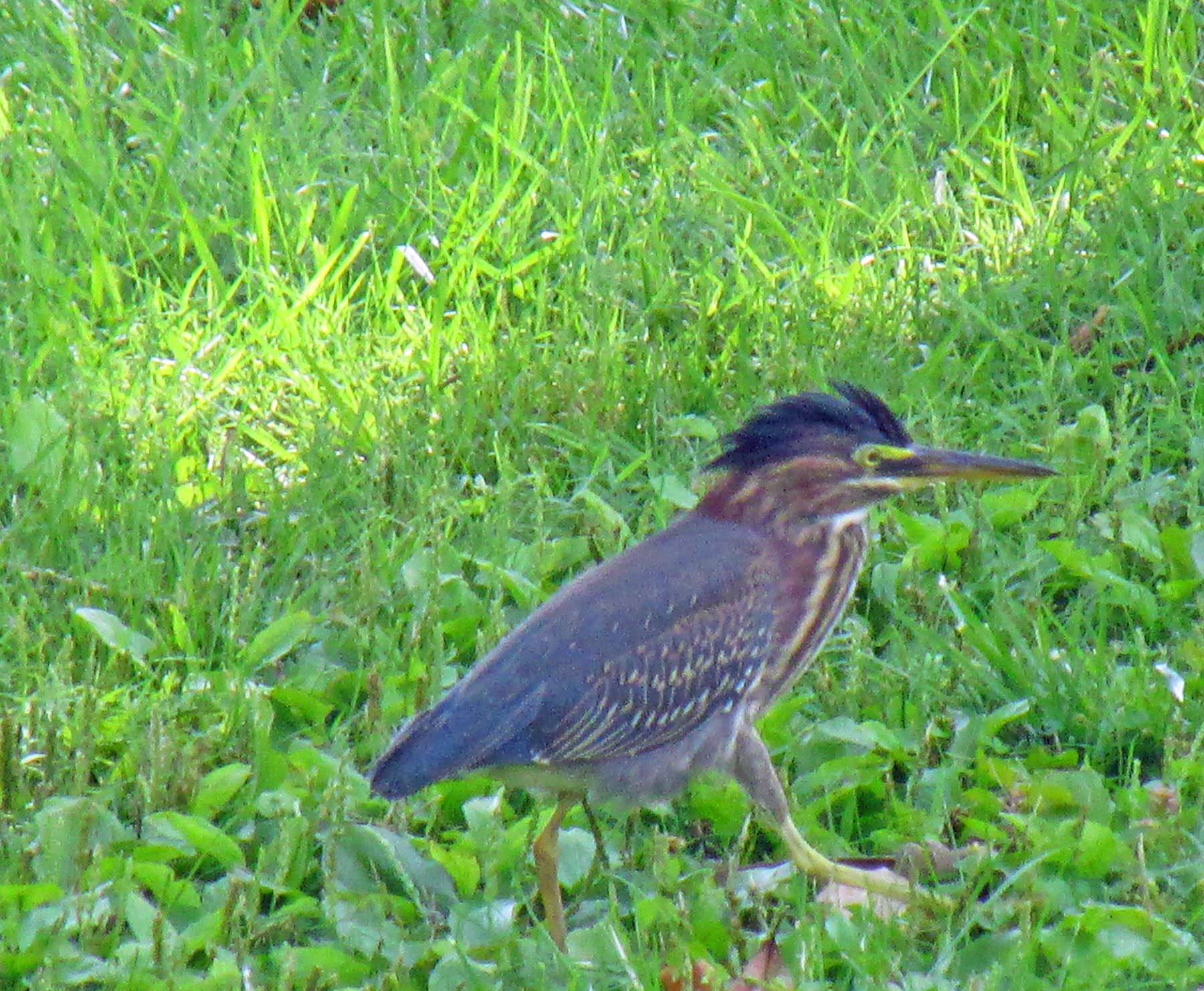
Green herons, one of the smaller wading birds, often overlooked as they lurk near water’s edge

Photo by Bryan Stevens • A Green Heron elevates a shaggy crest of feathers, a behavior often initiated when the bird feels alarmed.

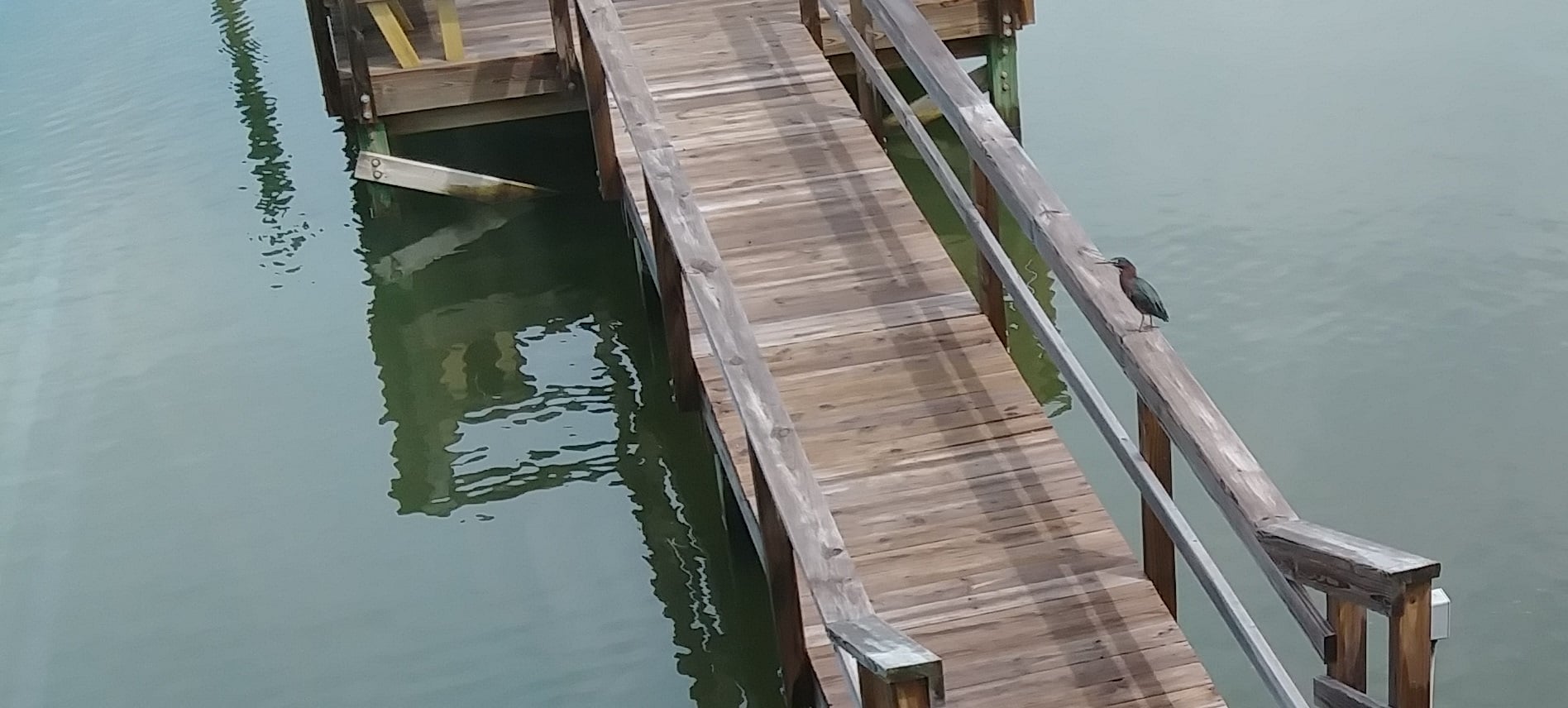
Byron Tucker and Ricky Dunklin, friends from Atlanta, contacted me on Facebook to ask if I could help identify a bird they had photographed during a trip to Sunset Beach in North Carolina in early August. When I saw the photographs I recognized that the visitor to a small dock at their vacation spot was a green heron.

Photo Contributed by Byron Tucker/Ricky Dunklin • A Green Heron visits a dock at Sunset Beach in North Carolina.

Green herons are not restricted to coastal areas, but it was still somewhat unexpected when I stepped onto my front porch on Aug. 19 and saw a green heron flying at treetop level. I suspect the bird had been perched in one of the tall trees on the ridge behind my house. The slamming of my front door probably spooked the bird into flight.

Green herons and other wading birds are usually quite abundant in wetlands across the country in late summer. The scientific name — Butorides virescens – of this bird comes from a mix of Middle English and Ancient Greek and roughly translates as “greenish bittern.”

Photo by Bryan Stevens • A Green Heron grasps a perch overlooking a small creek in Erwin, Tennessee.

There are only two other species in the genus Butorides — the lava heron, which occurs on some of the Galapagos Islands of Ecuador, and the striated heron, which is found in wetlands throughout the Old World tropics from West Africa to Japan and Australia. This heron, which is also known as the mangrove heron, also occurs in South America.

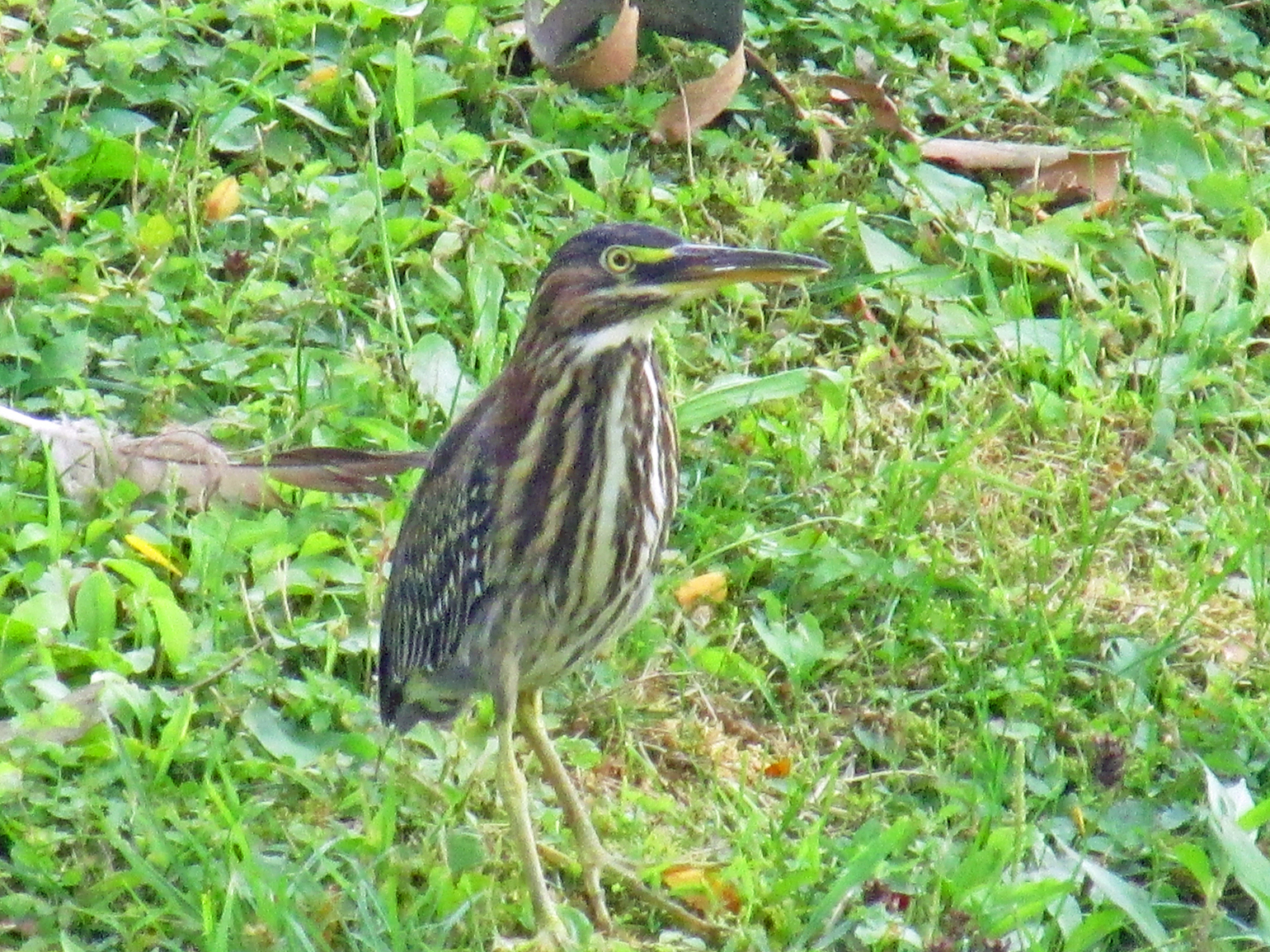
The green in the bird’s plumage appears as a dark green cap, as well as a greenish back and wings. Adult birds also have chestnut-colored neck feathers and a line of white feathers along the throat and belly. These herons often assume a hunched position, which can make them look smaller than they actually are.

It’s been a good summer for wading birds. In addition to the green heron, a great blue heron has been lurking in the creek in front of my home and at my fish pond. Much larger than the green heron, the great blue heron has not escaped the notice of a local flock of American crows. The crows harass the heron whenever the larger bird takes flight.

On the first day of August, I stopped with my mom at the pond at Erwin Fishery Park. We were treated with an observation of a great egret fishing along the edges of the pond. Egrets and herons are known for wandering outside their normal range in late summer after the nesting season has concluded.

Photo by Bryan Stevens • A young Green Heron rests at the edge of a pond.

Keep alert when walking along the trails in Erwin, Tennessee, and you may catch sight of one of these interesting herons or egrets, too. The edges of the fish pond at Erwin Fishery Park is also a reliable haunt for green herons. Farm ponds in the countryside around Jonesborough, Tennessee, as well as wetland habitat around the town’s Persimmon Ridge Park, are also good places to look for this small heron. The wetlands at Sugar Hollow Park in Bristol, Virginia, is another dependable location for seeing this small heron. Most green herons will depart in late September and early October. This small heron retreats from the United States during the winter season but will return next spring in April and May.

Photo by Bryan Stevens • Green herons are short, stocky herons that can assume some comical poses.

The green heron’s range during the nesting season includes Canada and much of the United States. Green herons will sometimes form loose nesting colonies, but at other times a pair will choose a secluded location as a nest site. The female will usually lay from three to five eggs. Snakes, raccoons and other birds such as crows and grackles are potential threats to eggs.

For the most part, the population migrates to Central and South America for the winter months. A few herons — great blue heron and black-crowned night heron — remain in the region throughout the year, even enduring the cold winter months in Northeast Tennessee, Southwest Virginia and Western North Carolina.

These herons are probably more common than we realize. They are skilled at blending with their surroundings, but sharp eyes can find these herons around almost any body of water, whether it is pond, marsh, river, creek or lake.

They usually depart the region in October, so the remaining days of August and September provide opportunities to observe both resident green herons and their migrating kin.

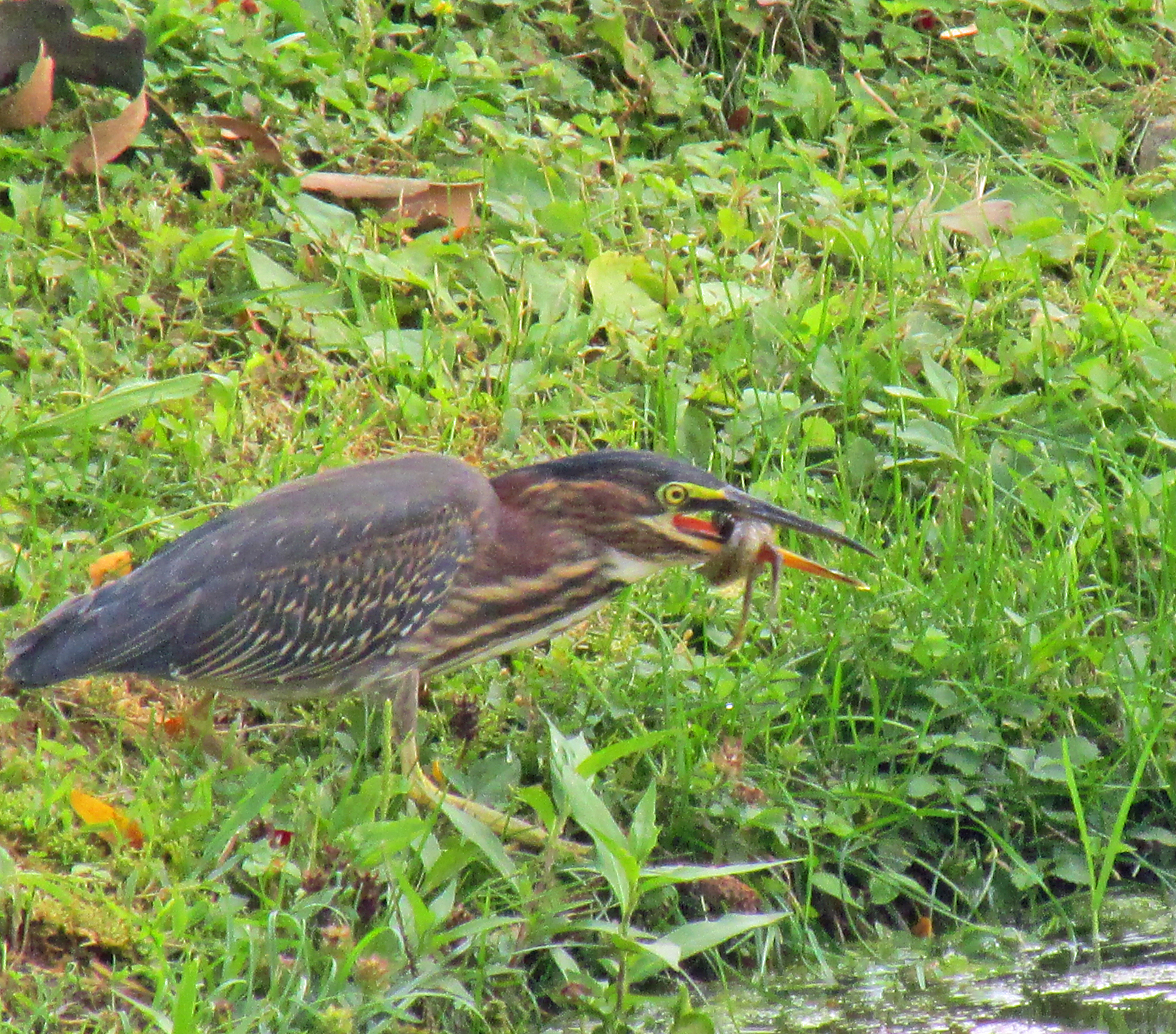
Photo by Bryan Stevens • A Green Heron finesses a captured tadpole in its bill.

Belted kingfisher and its kin successful at fishing, much more

Photo by Public Domain Photos/Pixabay.com • A female belted kingfisher returns to a perch after a successful catch.

A belted kingfisher has visited the fish pond quite frequently throughout this summer. The bird’s arrival is usually heralded by its hoarse, rattling call. The bird is rather shy, so any observation usually has to be done with some degree of stealth.

Belted kingfisher

I know fishing is a favorite pastime for many people. In these times of social distancing, there’s probably nothing better for some people to do than to spend a lazy summer afternoon baiting a hook and trying their luck at their favorite fishing spot. While doing so, they have probably encountered the angling counterpart among our feathered friends. The belted kingfisher’s nature as an angler rules out this bird visiting feeders in the backyard, but that doesn’t mean one is unlikely to see this bird. With a little strategic effort, a glimpse of a belted kingfisher is fairly easy to obtain, especially during the summer months. Any stream, pond, river or other body of water increases the chances of observing this fascinating bird.

The belted kingfisher prefers to perch on an exposed branch or a wire that overlooks a body of water that offers ample fishing opportunities. The belted kingfisher, however, is capable of hovering in place in order to spot and then capture its prey in an impressive plunge and lunge into the water.

Most of my observations of hunting kingfishers have involved the birds in their ambush approach to fishing — perching and diving on the unsuspecting fish. I have on a few occasions also observed kingfishers as they hover over the water in a quest for a meal.

The belted kingfisher, like most of its kin, looks to have a head and bill that are slightly too large for the rest of the body. It’s the long, heavy bill that the belted kingfisher uses to snatch fish from their watery homes.

The term “belted” refers to bands of feathers across the bird’s belly. Female belted kingfishers sport bands of rusty-red and blue feathers, while males are limited to a blue belt across the upper breast. Female belted kingfishers are an exception to the rule that most male birds are more vividly colored than their female companions.

A walnut tree with some dead branches overlooking my family’s fish pond is a favorite perching site for visiting belted kingfishers. A few become become regular visitors almost every spring and summer. In past years, I’ve been delighted by pairs of kingfishers that have brought as many as six of their offspring to hunt around the edges of the pond and creek near my home.

When a belted kingfisher does manage to capture a fish — not always a certainty, despite their great skill — the bird will usually fly to a perch where they will beat the fish unconscious before swallowing it. I remember one particular kingfisher that liked to catch fish in the creek and then fly to the corner of the metal garage roof where the bird proceeded to beat senseless the unlucky fish.

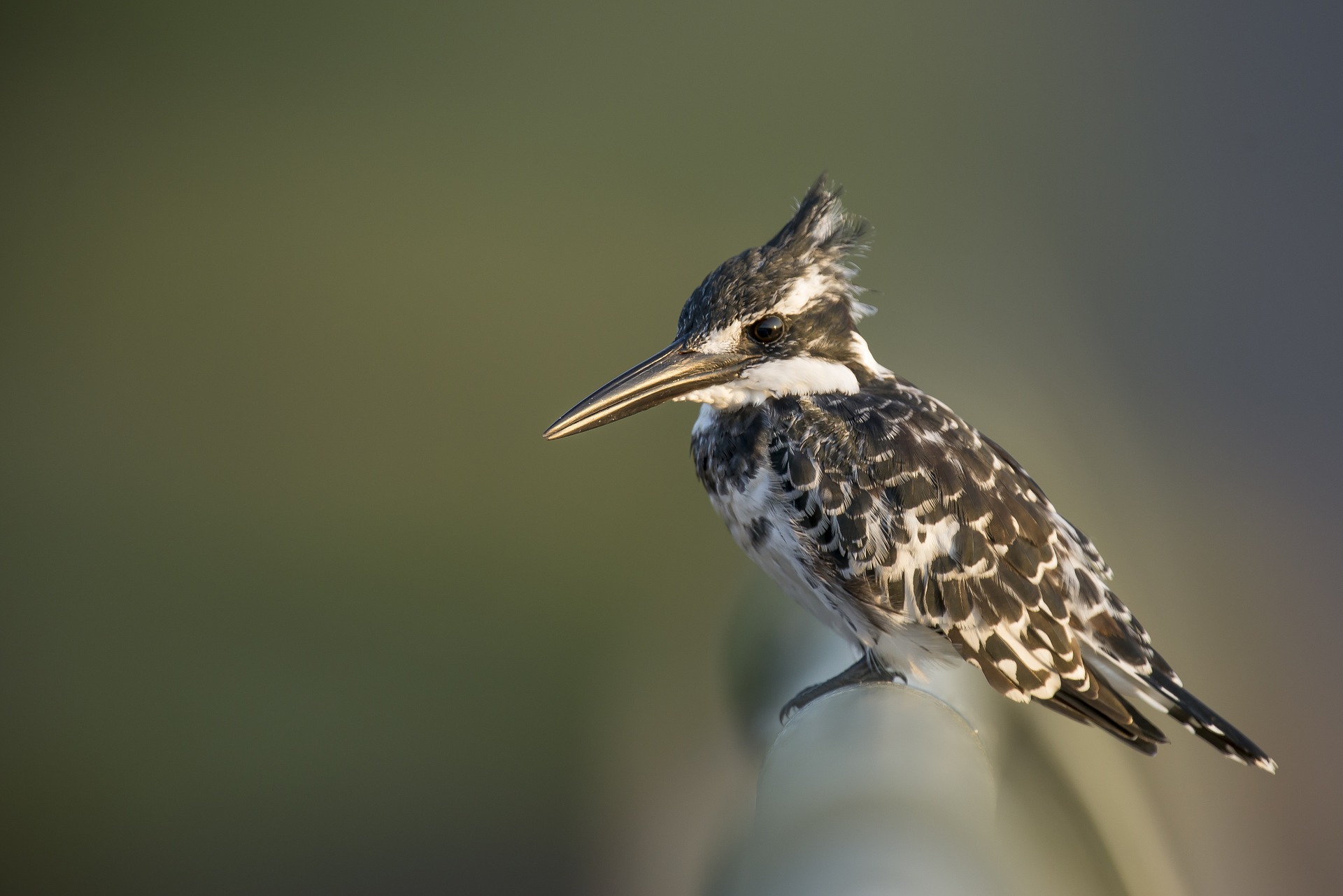
Photo by Pixabay.com • The pied kingfisher is a common member of the kingfisher family that ranges throughout Europe.

While the belted kingfisher is the only one of its kind in the eastern United States, the kingfishers are a large family of birds found around the globe. Worldwide, there are about 90 species of kingfishers that range in size from the 16-inch-long laughing kookaburra of Australia to the tiny African dwarf kingfisher, which at four inches in length is smaller than most sparrows. This family of birds is divided into three groupings: the river kingfishers, the tree kingfishers and the water kingfishers.

Despite the name “kingfisher,” not all kingfishers exist on a diet of fish. Some members of the kingfisher family instead prey on other quarry, such as snakes, lizards and insects.

Some of the varied names for members of this far-flung family of birds include moustached kingfisher, malachite kingfisher, shining-blue kingfisher, azure kingfisher, hook-billed kingfisher, little kingfisher, banded kingfisher, red-breasted paradise kingfisher, lilac kingfisher, glittering kingfisher, great-billed kingfisher, chocolate-backed kingfisher, ultramarine kingfisher, chattering kingfisher and yellow-billed kingfisher.

Photo by WelshPixie/Pixabay.com • The malachite kingfisher is a river kingfisher widely distributed in Africa south of the Sahara.

The family also consists of a group of related birds from Australia and New Guinea known as kookaburras, which includes blue-winged kookaburra, spangled kookaburra, rufous-bellied kookaburra, and the well-known laughing kookaburra. Hollywood often dubs the raucous calls of kookaburras into the background soundscapes of movies and shows with tropical themes.

Photo by Magee/Pixabay.com • The raucous calls of the kookaburra, an Australian kingfisher, are often incorporated into the background of jungle scenes in Hollywood movies.

There’s nothing quite so disappointing as coming home empty-handed after a day of fishing. Belted kingfishers rarely suffer that disappointment. Although not successful in every attempt, the belted kingfisher is certainly exceptional in its pursuit of fish. According to John Eastman in his book, “Birds of Lake, Pond and Marsh,” the belted kingfisher typically captures about 10 fish per day. That’s a feat that many human anglers might envy.


Many pint-sized birds pack plenty of pugnacious attitude

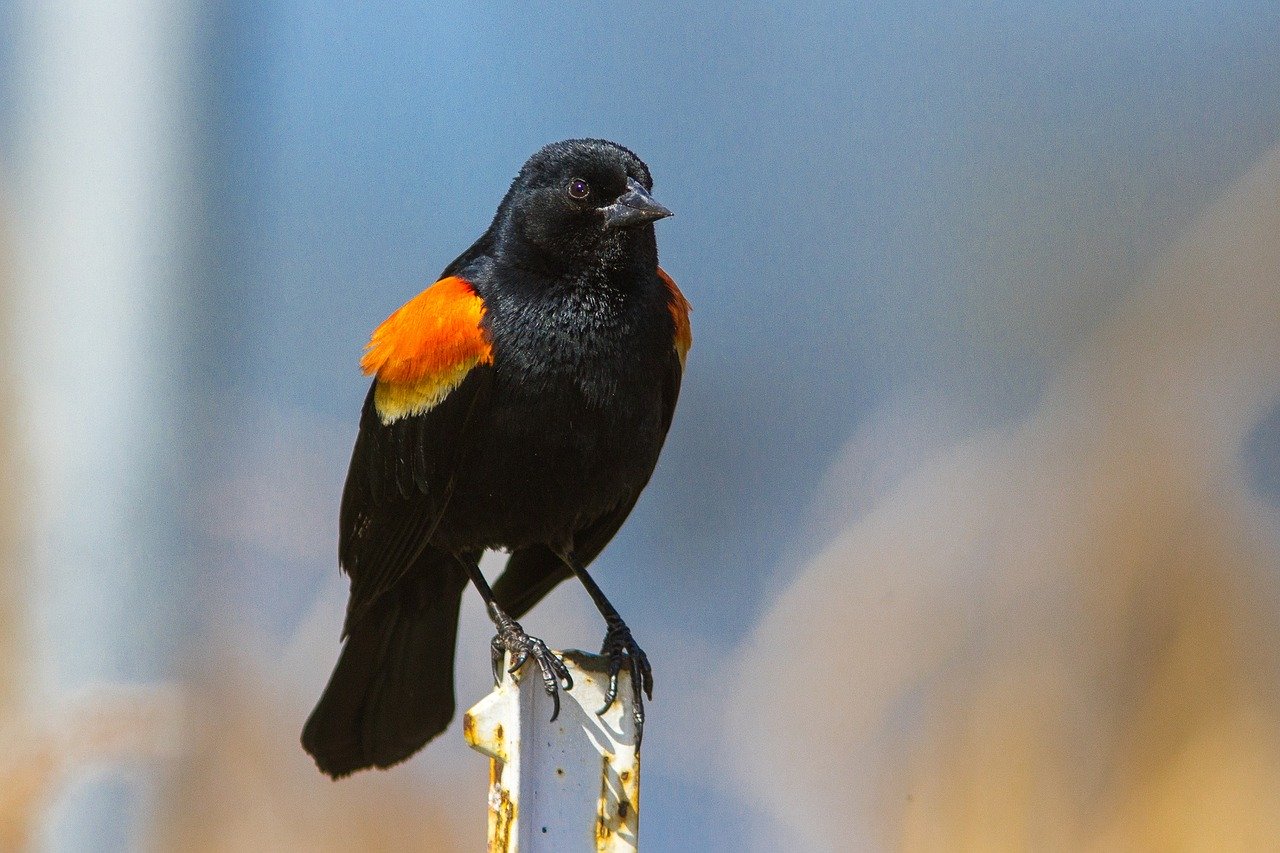
Photo by Skeeze/Pixabay.com • A male red-winged blackbird perches in an alert stance, ready to curb intrusions by other birds into his territory.

A trio of American crows (I’m not sure if a mere three individuals represent a murder of crows) flew past my porch on a recent morning. They were immediately bombarded by the resident male red-winged blackbird. The blackbird dove onto the back of the first crow, then doubled back and attacked the second crow. The third crow, perhaps seeing what happened to the others, perched and cawed for a couple of moments. Mistakenly thinking the coast now clear, the third crow set out to join its companions. The blackbird immediately attacked again, just as ferociously as in the previous two incidents.

Since arriving in April, the red-winged blackbirds have ruled the roost around the cattail-bordered fish pond. At the start of the nesting season, they even swooped at me when I got too close before we eventually settled into an uneasy truce. At home and at other locations, I have watched these blackbird attack everything from turkey vultures and great blue herons to white-tailed deer and cats.

Simply put, red-winged blackbird brook no interlopers. The observations of the blackbird with the crows got me to thinking of other birds known for their pugnacious natures. In no particular order, here are some bantam weight candidates for the title of “Most Pugnacious Bird.”

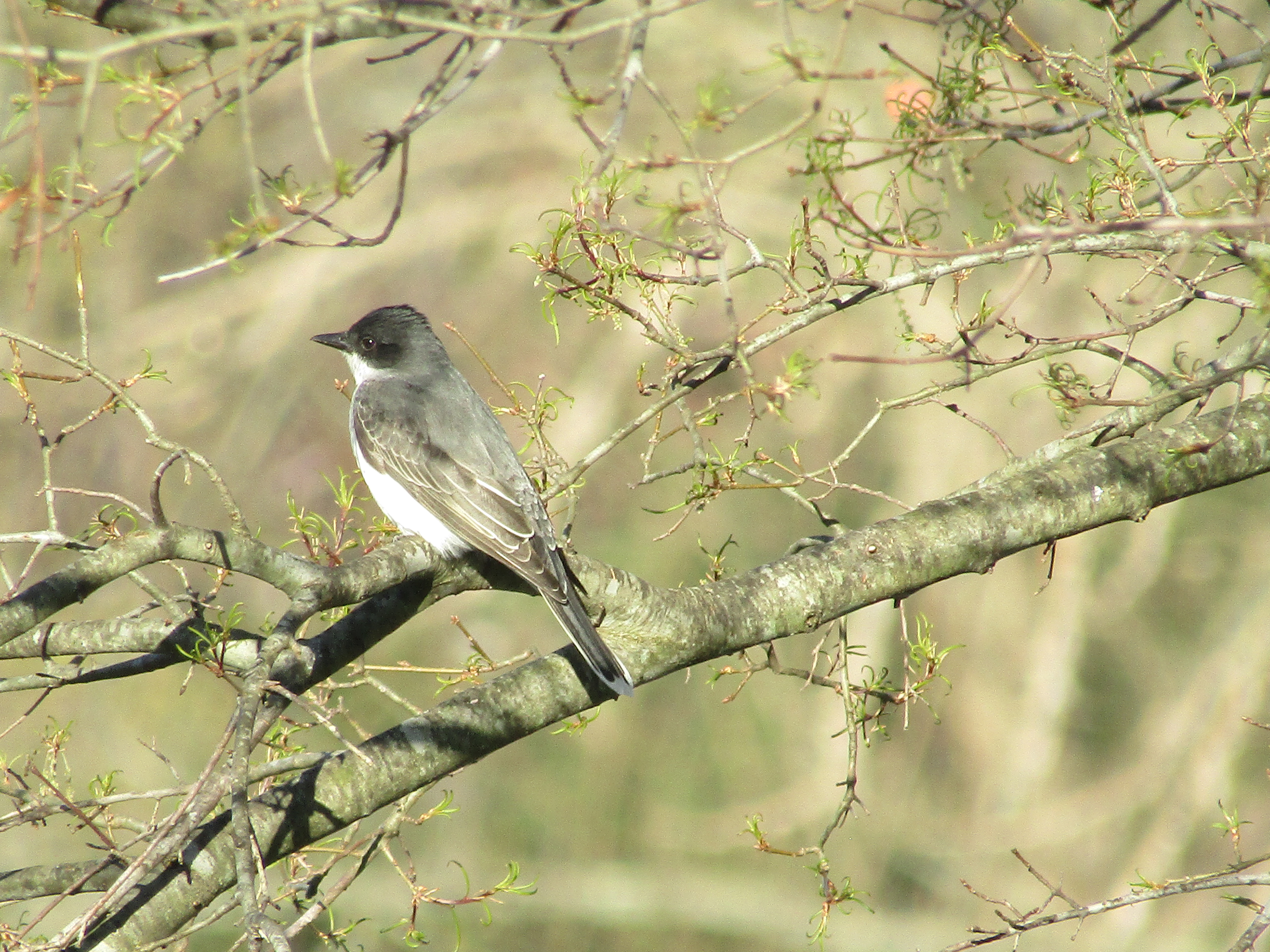
Photo by Bryan Stevens • The scientific name of the Eastern kingbird is Tyranus tyranus, a good indicator of this bird’s haughty attitude toward other birds.

Eastern kingbird

The Eastern kingbird, a member of a large family of birds known as “tyrant flycatchers,” is famous for displaying an outsized attitude toward larger birds. The scientific name for this bird is Tyrannus tyrannus, which succinctly summarizes the kingbird’s belligerent attitude toward other birds. Mated pairs of kingbirds work together to drive intruders out of their territory. Kingbirds will launch themselves into battle against much larger foes, including red-tailed hawks, American crows and blue jays. Crows and jays are well-known for robbing the nests of other birds, so the aggression of kingbirds for these corvids is quite justified.

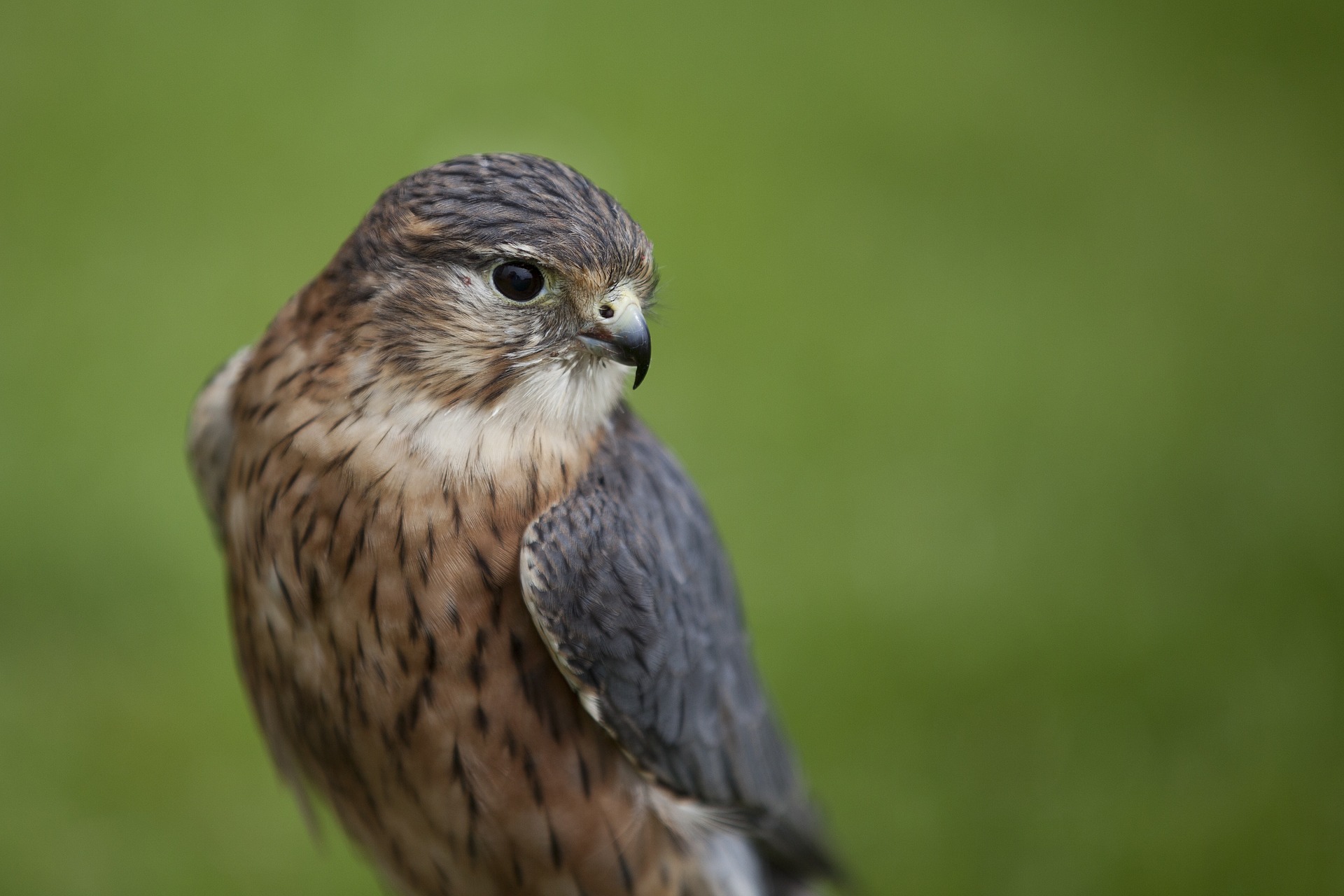
Photo by AdrianKirby/Pixabay.com • The merlin is a pint-sized falcon with plenty of feisty spirit. These raptors do not hesitate to duel with birds many times their size.

Merlin

Merlins have a reputation for being pint-sized punks among raptors. The merlin is a member of the falcon family, which also includes birds like the American kestrel and peregrine falcon. I once saw a merlin harassing a turkey vulture, diving on the much larger but less agile bird until the vulture finally veered in another direction. This observation reinforces the merlin’s reputation for aggressively meeting incursions into its territory by other raptors. The merlin has long been associated with the forests of North America and Eurasia, but in recent decades it has proven capable of adapting to life in urban landscapes.

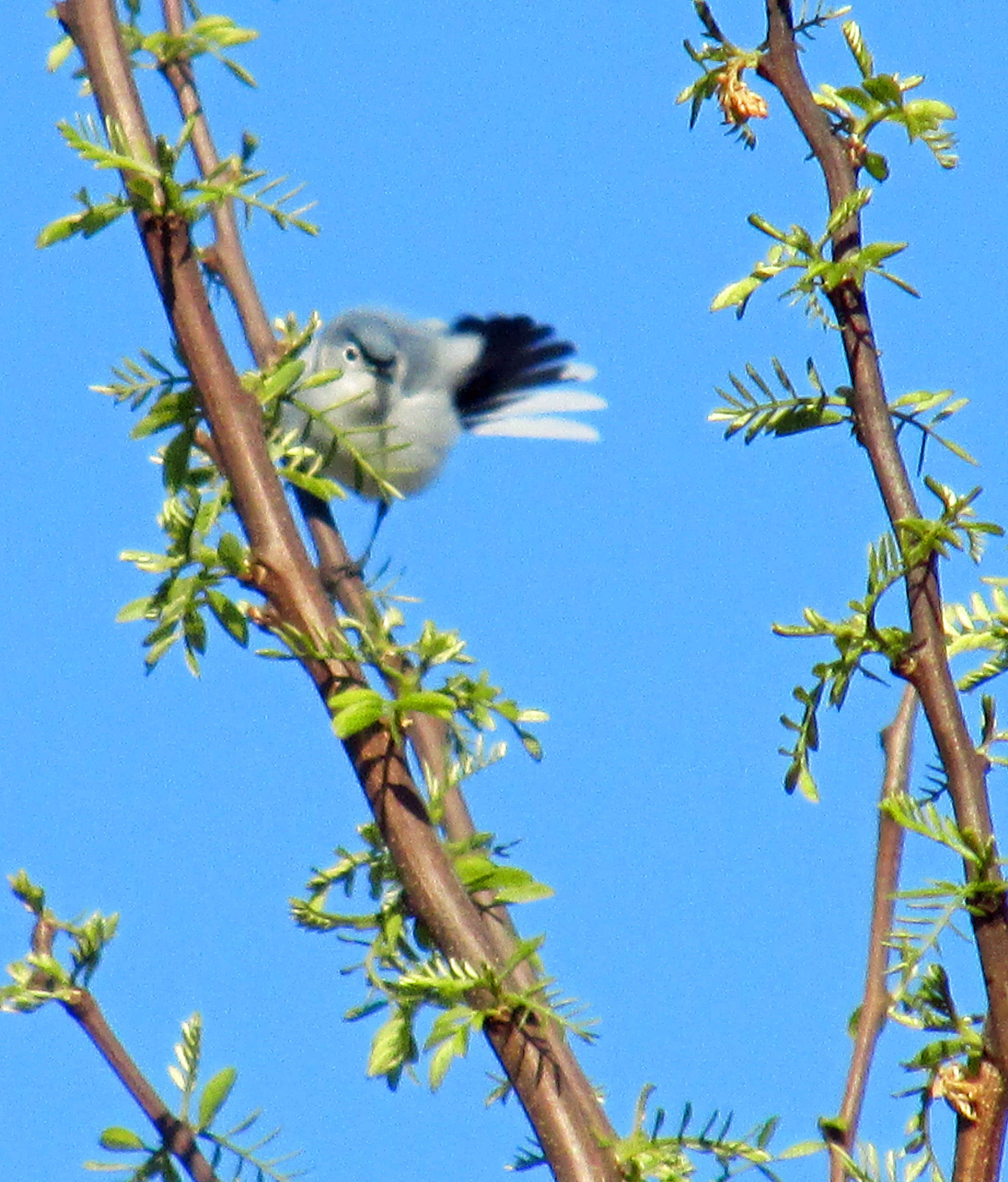
Photo by Bryan Stevens • Blue-gray gnatcatchers are noisy and, quite often, quarrelsome birds that don’t let their small size get in the way of attempting to intimidate other birds.

Blue-gray gnatcatcher

Blue-gray gnatcatchers are noisy, scolding songbirds at the best of times. They are also determined to protect their nesting territories at all costs and will attack much larger birds. They don’t hesitate to call for reinforcements when warranted. They will drum up a brigade of feisty, feathered fighters to repel intrusions by potential predators too large for a gnatcatcher and its mate to handle on their own. In North America, the gnatcatcher ranks in size with birds like kinglets and hummingbirds. Despite its diminutive status, the gnatcatcher acknowledges no superiors.

Photo by BlenderTimer/Pixabay.com • In a family of rather insufferable bullies, the rufous hummingbird stands out as particularly pugnacious.

Rufous hummingbird

In a family known for cantankerous behavior, one hummingbird stands out. In North America, the rufous hummingbird has a reputation for having a bad temper. These tiny birds with huge metabolisms must compete fiercely for resources, but they often appear go out of their way to attack other hummingbirds. The rufous hummingbird ranges along North America’s Pacific Coast and the Rockies as far north as Alaska and western Canada. A migration quirk occasionally brings these hummingbirds to Northeast Tennessee during fall and early winter.

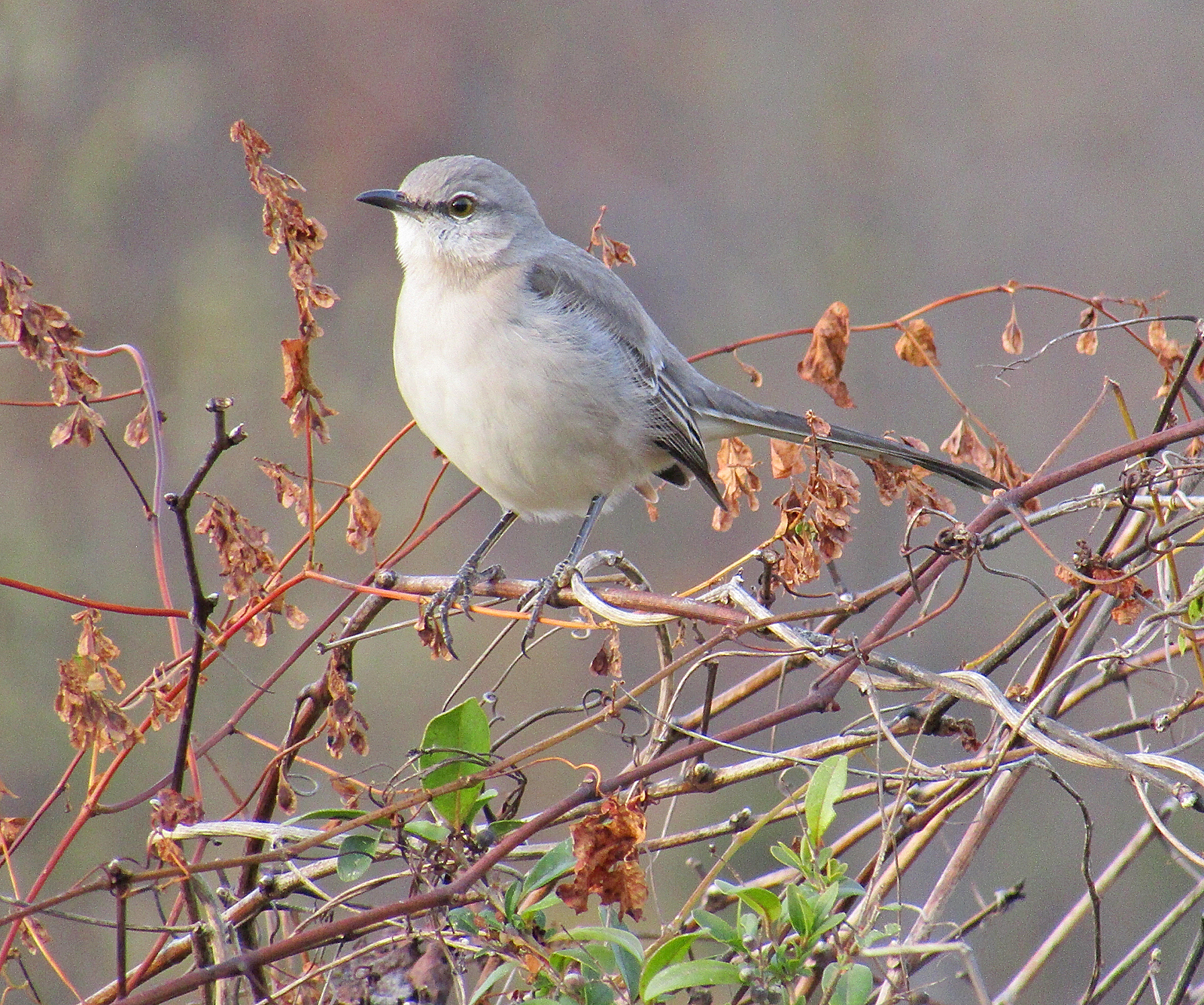
Photo by Bryan Stevens • The Northern mockingbird is zealous in defending its territory from other mockingbirds or any other intruders, including humans, cats, dogs, snakes and almost any other real or imagined threat.

Northern mockingbird

I’m not sure every person who has had a Northern mockingbird nest in their yard or garden would describe the experience as a pleasant one. It’s not without cause that the mockingbird is often described as ruthless, aggressive and pugnacious in defense of its nest and young. These birds don’t hesitate to attack humans or their pets, such as cats and dogs, if any wander too far into their territory. In fact, mockingbirds appear to take positive glee in forcing intruders to flee. Early American naturalist and artist John James Audubon captured a dramatic moment when he painted a pair of mockingbirds defending its nest from a rattlesnake. The painting is also an early example of the ties between humans and mockingbirds. The nest is located in a hanging basket of yellow flowers. Even during Audubon’s time, mockingbirds had quietly adjusted to human activity and had deigned to allow us into their daily lives. It’s just best not to step out of line. Mockingbirds have ways of dealing with pushy people.


Unicoi County’s Summer Bird Count finds 110 species

Photo by Bryan Stevens • A trio of Northern Rough-winged Swallows perch on a branch. A total of 39 of these swallows were found on the seventh annual Unicoi County Summer Bird Count.

For the past seven summers, the members of the Elizabethton Bird Club have conducted a Summer Bird Count for Unicoi County.

The seventh annual survey of Unicoi County’s bird life was made more memorable due to the fact it was conducted during a global pandemic with counters practicing social distancing protocols. The Unicoi County Summer Count was held on Saturday, June 6, with 26 observers in 10 parties. The weather was favorable with a temperature range between 62 and 82, mostly to partly cloudy skies, and little wind.

Photo by Bryan Stevens
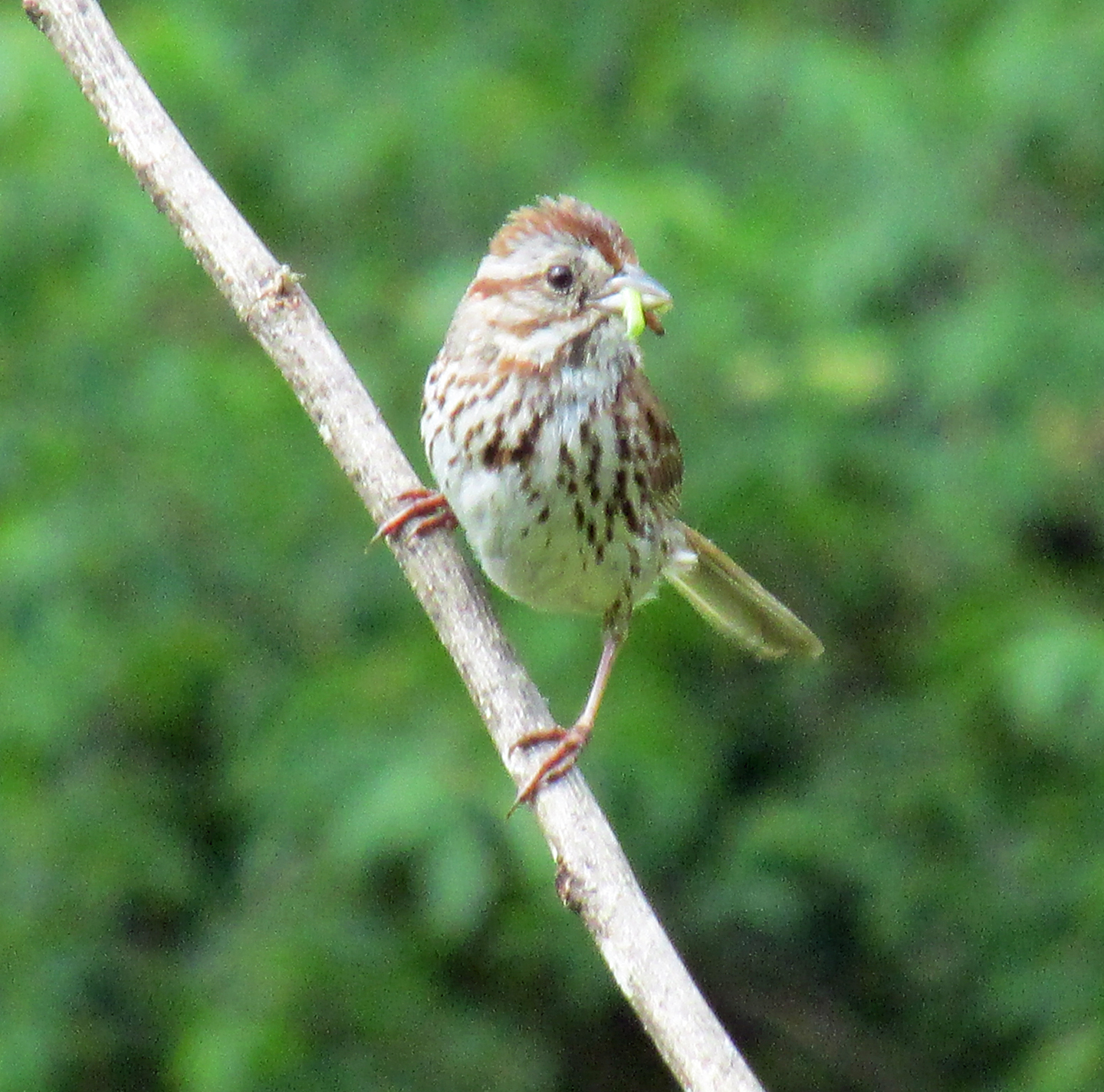
A Song Sparrow brings a beakful of caterpillars back to the nest to feed young.

 Counters tallied 110 species, which is near the six-year average of 109. Total species for this count has ranged from 104 to 112 species. Participants included Joe McGuiness, Vern Maddux, Kim Stroud, Dave Gardner, Don Holt, Dianne Draper, Debi and J.G. Campbell, Bryan Stevens, Brookie and Jean Potter, Eric Middlemas, Ken Rea, Roy Knispel, Jerry Bevins, Michele Sparks, Tammy Griffey, Jim Anderson, Pete Range, Harry Lee Farthing, Tom McNeil, Cathy McNeil, Fred Alsop, Catherine Cummins, Larry McDaniel and long-time count compiler Rick Knight. 

The bird found in most abundance was the European Starling with 536 individuals counted. Other common birds included Red-eyed Vireo (226) and Song Sparrow (245). A few birds went undetected, including Great Horned Owl.

This annual count covers territory such as Unaka Mountain, the Lamar Alexander Rocky Fork State Park, Limestone Cove, the Erwin Linear Trail, and much more. Unicoi County offers many natural treasures, not the least of which being the varied and interesting birds that reside within its borders.

 The List:

 Canada Goose, 54; Wood Duck, 23; Mallard, 42; Ruffed Grouse, 3; Wild Turkey, 5; Great Blue Heron, 5; and Green Heron, 4.

Black Vulture, 6; Turkey Vulture, 45; Sharp-shinned Hawk, 2; Cooper’s Hawk, 1; Broad-winged Hawk, 6; and Red-tailed Hawk, 9.

Photo by Skeeze/Pixabay.com • The Cooper’s hawk, like this individual, is a larger relative of the sharp-shinned hawk. It’s larger size allows this raptor to prey on larger birds, such as mourning doves.

Killdeer, 14; Rock Pigeon, 111; Mourning Dove, 152; Yellow-billed Cuckoo, 6; Eastern Screech-Owl, 3; Barred Owl, 1; Chuck-will’s-widow, 5; and Eastern Whip-poor-will, 9.

Chimney Swift, 45; Ruby-throated Hummingbird, 8; Belted Kingfisher, 2; Red-bellied Woodpecker, 33; Yellow-bellied Sapsucker, 1; Downy Woodpecker, 14; Hairy Woodpecker, 2; Northern Flicker, 13; and Pileated Woodpecker, 26.

American Kestrel,1; Eastern Wood-Pewee, 13; Acadian Flycatcher, 56; Least Flycatcher, 6; Eastern Phoebe, 81; Great Crested Flycatcher, 2; and Eastern Kingbird, 11.

White-eyed Vireo, 2; Yellow-throated Vireo, 1; Blue-headed Vireo, 35; Warbling Vireo, 3; Red-eyed Vireo, 226; Blue Jay, 108; American Crow, 122; and Common Raven, 8.

Northern Rough-winged Swallow, 39; Purple Martin, 30; Tree Swallow, 65; Barn Swallow, 79; and Cliff Swallow, 106.

Carolina Chickadee, 102; Tufted Titmouse; 100; Red-breasted Nuthatch, 3; White-breasted Nuthatch, 17; Brown Creeper, 4; House Wren, 54; Winter Wren, 1; Carolina Wren, 146; Blue-gray Gnatcatcher, 15; and Golden-crowned Kinglet, 12.

Photo by Bryan Stevens
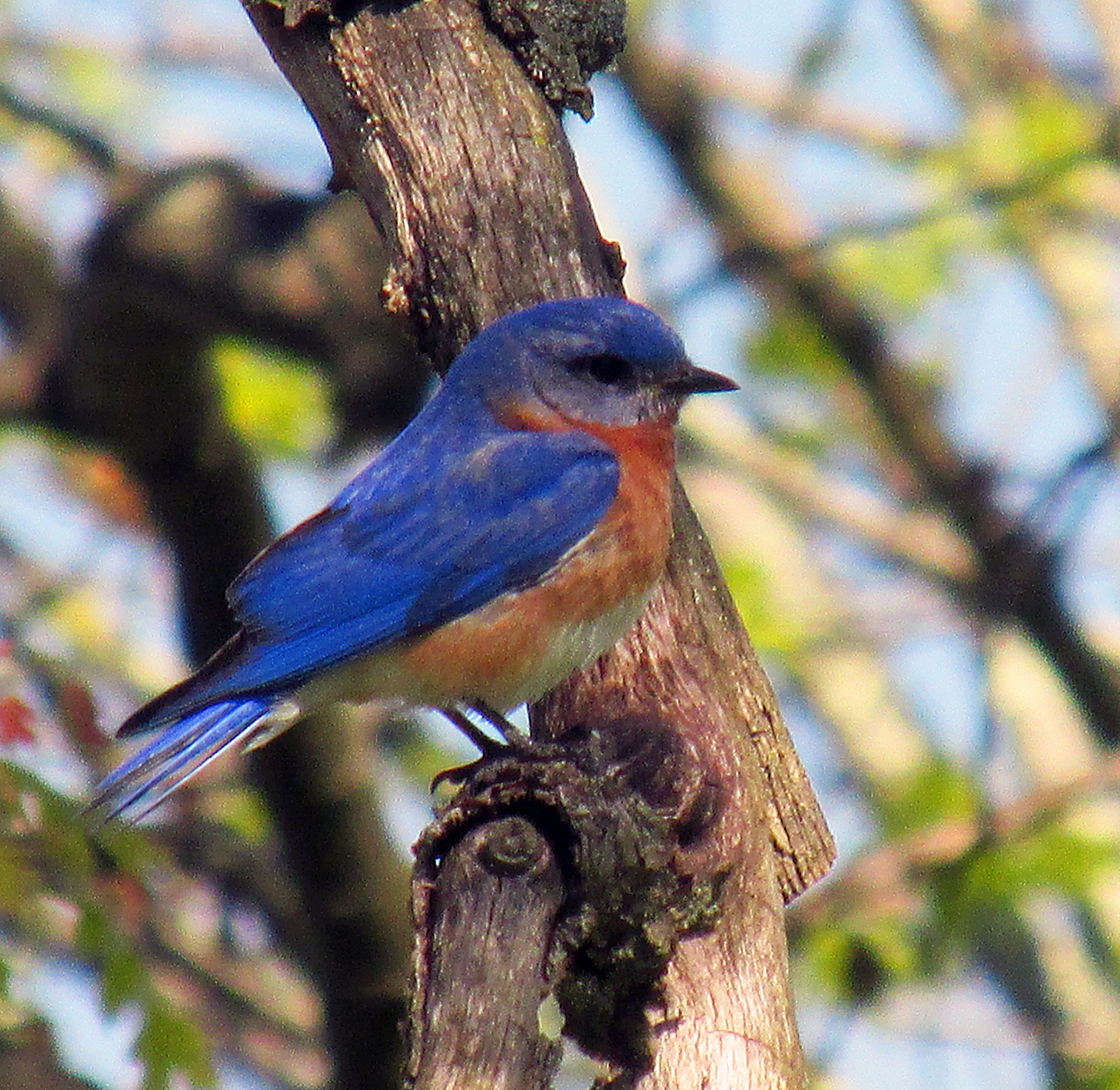
The male Eastern Bluebird is beloved by many bird enthusiasts.

Eastern Bluebird, 94; Veery, 15; Hermit Thrush, 3; Wood Thrush, 57; American Robin, 397; Gray Catbird, 27; Brown Thrasher, 24; Northern Mockingbird, 48; European Starling, 536; and Cedar Waxwing, 48.

Ovenbird, 63; Worm-eating Warbler, 40; Louisiana Waterthrush, 14; Black-and-white Warbler, 34; Swainson’s Warbler, 3; Common Yellowthroat, 3; Hooded Warbler, 64; American Redstart, 8; Northern Parula, 39; Magnolia Warbler, 1; Blackburnian Warbler, 3; Yellow Warbler, 9; Chestnut-sided Warbler, 32; Black-throated Blue Warbler, 29; Pine Warbler, 5; Yellow-throated Warbler, 30; Prairie Warbler, 4; Black-throated Green Warbler, 52; Canada Warbler, 6; and Yellow-breasted Chat, 2.

Eastern Towhee, 80; Chipping Sparrow, 68; Field Sparrow,  21; Song Sparrow, 245; Dark-eyed Junco,  33; Scarlet Tanager, 33; Northern Cardinal, 163; Rose-breasted Grosbeak, 6; Blue Grosbeak, 4; and Indigo Bunting, 131.

Red-winged Blackbird, 71; Eastern Meadowlark, 15; Common Grackle, 156; Brown-headed Cowbird, 23; Orchard Oriole, 6; Baltimore Oriole, 2; House Finch, 70; Red Crossbill, 1; American Goldfinch, 110; and House Sparrow,  33.

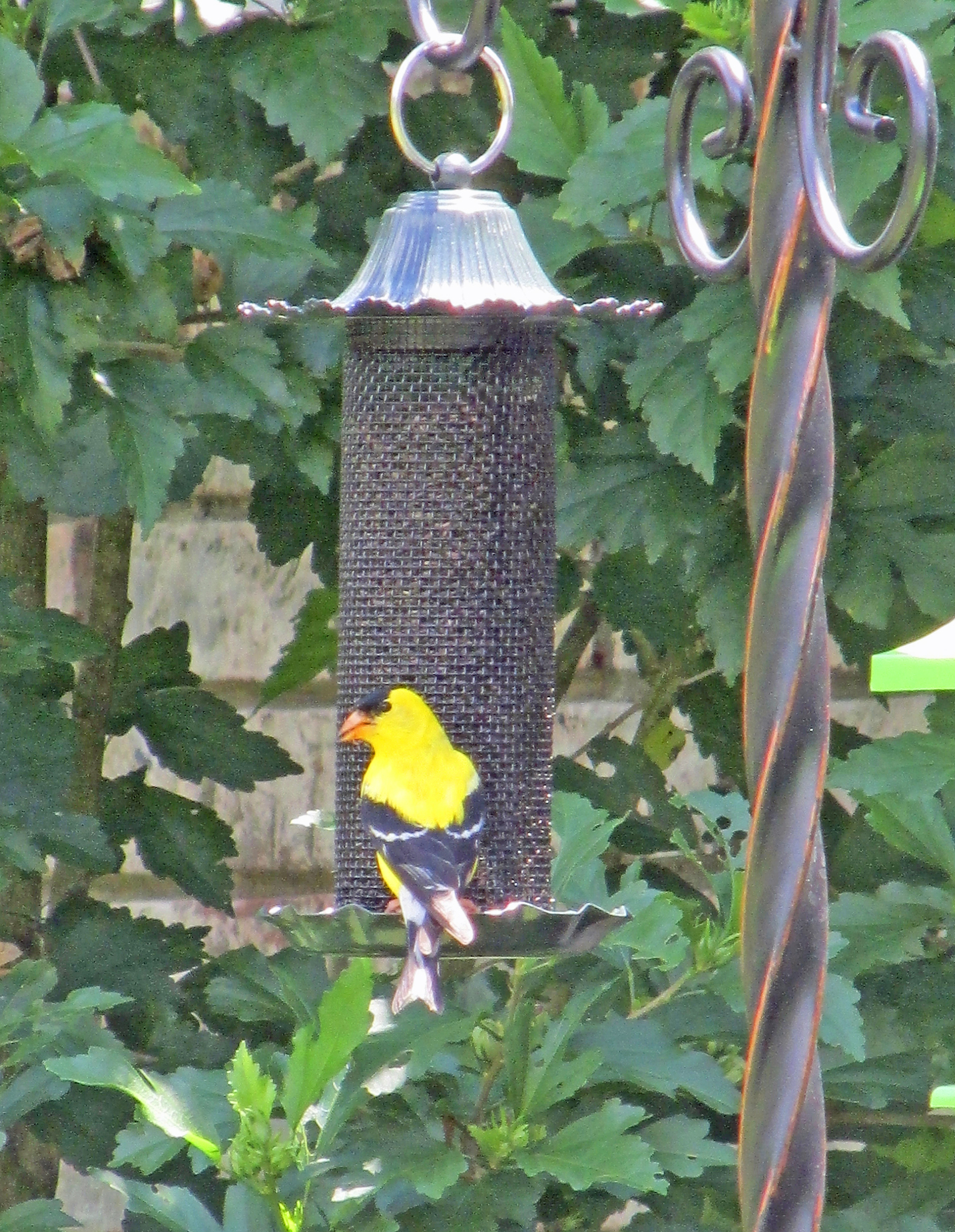
Photo by Bryan Stevens • An American goldfinch visits a feeder for a meal of thistle seeds.