Tag Archives: Virginia

Returning ruby-throats, like the rest of world’s hummingbirds, never fail to dazzle

Photo by Anne and Saturnino Miranda/Pixabay.com • The Cuban emerald is a species of hummingbird found in a wide range of semi-open habitats in Cuba, as well as the Isle of Pines and the western Bahamas. Numbering 330 species, the world’s hummingbirds dazzle humans with their incredibly diverse plumages.

Experts estimate that there are 330 species of hummingbirds, all of which are found in the New World. Consider that these dazzling little birds have been given vividly descriptive names, such as cinnamon-throated hermit, red-tailed comet, blue-chinned sapphire, lazuline sabrewing, sparkling violetear, fiery topaz, green-tailed goldenthroat, bronze-tailed plumeleteer,  amethyst-throated mountain-gem, peacock coquette, red-billed emerald, empress brilliant, purple-backed sunbeam, green-backed hillstar, orange-throated sunangel, black metaltail, marvelous spatuletail and blue-tufted starthroat.

The only reliable species to inhabit the eastern United States from spring to fall each year is the ruby-throated hummingbird, which is currently arriving at various points from Florida to Maine and westward to states like Illinois, Minnesota and Oklahoma.

Photo by Bryan Stevens • Numbers of Ruby-throated Hummingbird in the region tend to fluctuate each year, but people should see a spike in their numbers when the hummingbirds end summer nesting and start migrating south again this autumn.

One of my most memorable hummingbird sightings took place in January of 1999 during a cruise in the Bahamas. A stopover in Nassau and a visit to the Paradise Island Resort permitted me a fleeting glimpse of a Bahama woodstar, a small hummingbird with a superficial resemblance to the ruby-throated hummingbird. The real beauty from my visit to the Bahamas, however, took place on a private cay maintained by the Disney Cruise line. While many passengers enjoyed the sun and sand of the beach, I walked nature trails to find birds. 

Photo by Daniel Roberts/Pixabay.com • The calliope hummingbird is the smallest of its kind known to reside in North America.

I found Western spindalis, then known as stripe-headed tanager, as well as black-faced grassquits and bananaquits, and I got several close looks at male and female Cuban emeralds, a hummingbird found in a wide range of semi-open habitats in Cuba, the Isle of Pines and the western Bahamas. The male is almost entirely metallic or iridescent green and measures almost four inches long. The ones I encountered were also curious and quite tame, often flying within inches of my face. 

Other than the two hummingbirds I saw during that trip, my remaining hummingbird observations have been confined to the United States. That hasn’t prevented me from seeing such unexpected hummingbirds as green-breasted mango, calliope hummingbird, black-chinned hummingbird, rufous hummingbird, Allen’s hummingbird, and broad-tailed hummingbird. 

Photo by Anne and Saturnino Miranda/Pixabay.com • It’s not difficult at all to see how the male Cuban emerald in such vibrant green plumage acquired its common name.

If I ever win the lottery, I plan to see as many hummingbirds as I can. For now, I am happy to report that ruby-throated hummingbirds are returning to northeast Tennessee, southwest Virginia, and western North Carolina.

I received an email from Susie Parks, who lives in the North Cove section of McDowell County in North Carolina. “My daughter, Luanne Graham, and I sighted our first hummer on March 28,” Priscilla noted. 

“I read your column in the McDowell News,” she added. “I am 84 years old and have been a birder most of my life.” 

Susie added that she and her daughter are both retired teachers who live next to each other. “We put our feeders out earlier than usual because she had heard that the hummers might be arriving earlier this year,” Susie wrote.

Susie noted that the first hummingbird sighted at her own feeder arrived on the first day of April, a few days after the hummingbird that visited her daughter’s feeder. “I keep a journal and I always note the first sighting,” she added, “and this is the earliest hummer I have ever recorded.”

This sightings by Susie and Luanne are the earliest I’ve had reported to me this year. 

•••••

Facebook friend Jimmie Daniels in Newland, North Carolina, reported on her Facebook page that the first hummingbird of spring arrived at 6:24 p.m. on Wednesday, April 8.  “We just saw our first hummingbird and that always makes me happy,” she wrote. “If you have not put out feeders yet, it is a good time to do that.”

•••••

Bob Cheers of Bristol, Virginia, reported a ruby-throated female arrived at his home at 7:55 a.m. on Friday, April 10. He speculated that the hummingbird was possibly “the same gal that arrived last year on the same day but 10 hours later.” Bob added that hummingbirds are amazing and that it was almost inconceivable to him that it could be the same bird. Bob, who had read in previous columns that downy woodpeckers and Carolina chickadees occasionally take a sip of sugar water from hummingbird feeders, also asked if I had ever heard of a red-bellied woodpecker feeding regularly at a hummingbird feeder. I’ve not personally witnessed this, but perhaps some readers have seen red-bellied woodpeckers at sugar water feeders. Let me know!
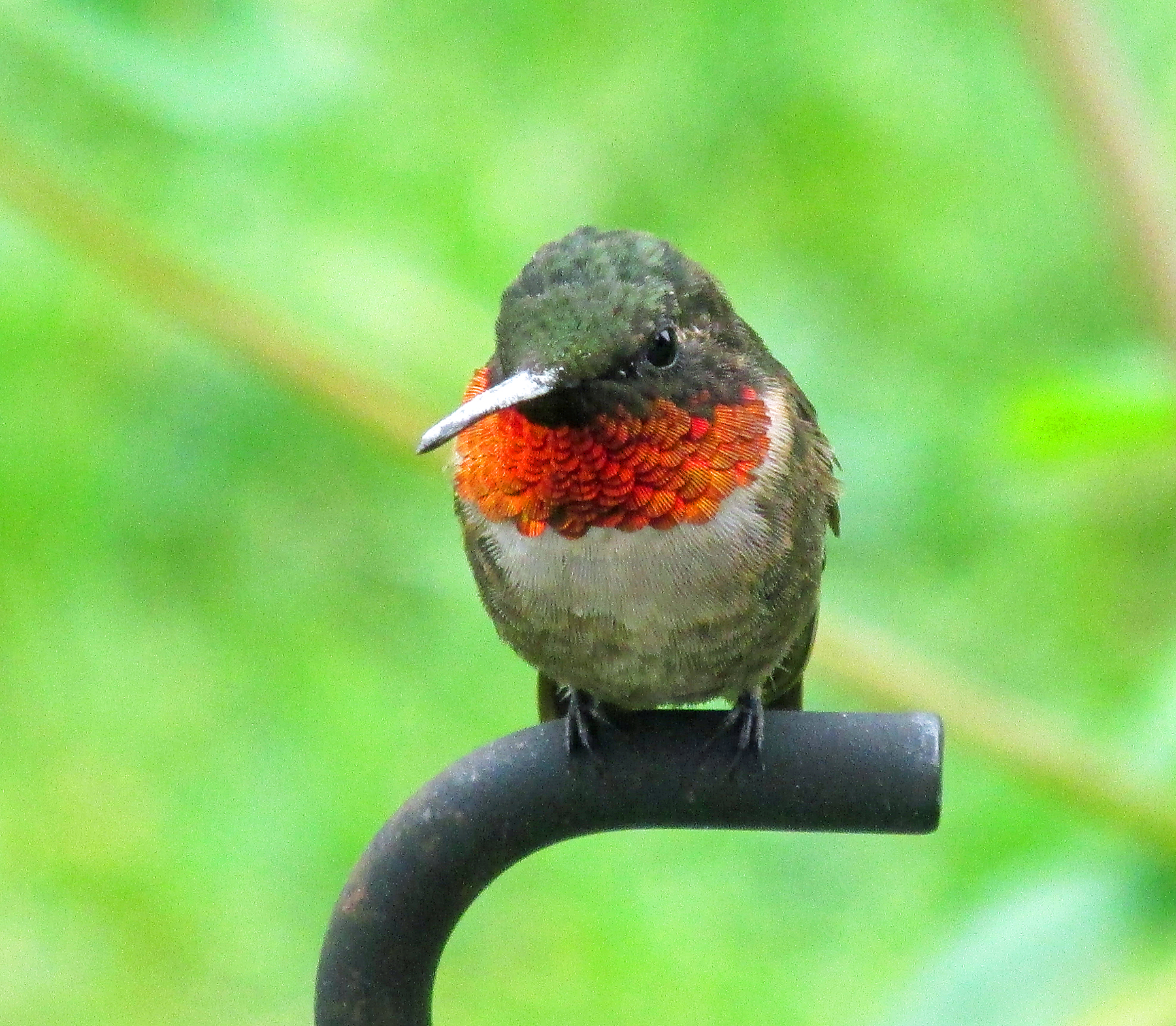
Photo by Bryan Stevens • Despite a perceived disadvantage of size, ruby-throated hummingbirds are quite capable of thriving in a giant world.

•••••

Brenda Hickman Dishner posted on my Facebook page that she spotted her first hummer of spring on Friday, April 10. “We live near Highway 421 and Houston Dam in Bristol, Tennessee,” she added.

•••••

Philip Laws, who lives in Limestone Cove in Unicoi County, reported to me on Facebook that he saw his first hummingbirds on April 10. “Hummers returned to Limestone Cove on Good Friday,” Philip noted.

•••••

Jeanne Siler Lilly reported her first spring hummingbird with a comment on my Facebook page. “I saw one at my feeder on April 10,” she wrote, adding that the bird visited a couple of times.

•••••

Mary Jones in Johnson City said her first hummingbird this year arrived on April 11. “I had one show up the Saturday before Easter and every day since,” she wrote in a Facebook comment. 

•••••

Dianna Lynne in Elizabethton saw her first hummingbird this spring on April 11. “They stopped in on Easter morning at the porch feeder here in Stoney Creek,” Dianne said in a comment on Facebook.

•••••

Erwin resident Amy Wallin Tipton saw her first ruby-throated hummingbird on Easter Sunday.  “I just wanted to let you know I just saw my first male ruby-throat of the season,” Amy wrote in a Facebook message. “It was at 11:55 a.m.”

•••••

Lia Pritchard saw her first hummer of the season on Easter Sunday at her home in Fall Branch, Tennessee. Her father, Glen Eller, shared the report of Lia’s sighting.

Photo by Bryan Stevens • Keep hummingbirds happy with a sugar water solution of four parts water to one part sugar.

•••••

Lynda Carter, who lives in Jonesborough, saw her first hummingbird at 8:45 a.m. on Monday, April 13, after a stormy night. “The bird may have blown in sideways from Arkansas last night,” Lynda joked in an email.

•••••

Richard Lewis in Bristol sent me a message on Facebook to announce the arrival of his first spring hummingbird. “I had my first ruby-throated hummingbird Monday, April 13, at 6 p.m. at my home in Bristol, Tennessee,” he wrote.

•••••

Joneen Sargent, who lives in Sullivan County west of Holston Lake off Highway 421, emailed me at 8:06 p.m. on Monday, April 13, to report her first spring hummingbird. “Just saw my first hummingbird of the season,” Joneen wrote. “Gives me hope.”

•••••

Jane Arnold emailed me to notify me of her mother’s hummingbird sighting. Her mother, Betty Poole, who lives in Abingdon, Virginia, saw her first hummingbird — a female — on Wednesday, April 15. Jane’s still awaiting her first spring hummer. 

•••••

Priscilla Gutierrez saw the first hummingbirds of spring the morning of Wednesday, April 15. “I put out a feeder and by 6 p.m. they were coming to [the] feeder,” Priscilla added in a comment on my Facebook page. 

•••••

Erwin resident April Kerns Fain posted on her Facebook page at 5:32 p.m. on Thursday, April 16, that she saw her first hummingbird. 

Erwin resident Pattie Rowland posted on my Facebook page that she saw her first ruby-throated hummingbird on Friday, April 17. “Just saw a hummer in Erwin,” Pattie wrote. 

•••••

Sharee Bowman reported her first hummingbird of spring in a Facebook message. “I saw my first hummingbird in Cedar Bluff, Virginia, on Friday, April 17,” she wrote. 

Photo by Bryan Stevens • A ruby-throated hummingbird lifts its wings to shake water droplets off its back.
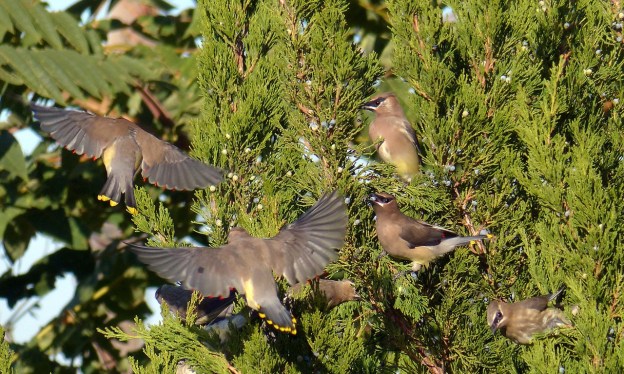
Wandering flocks of cedar waxwings surprise with their visits

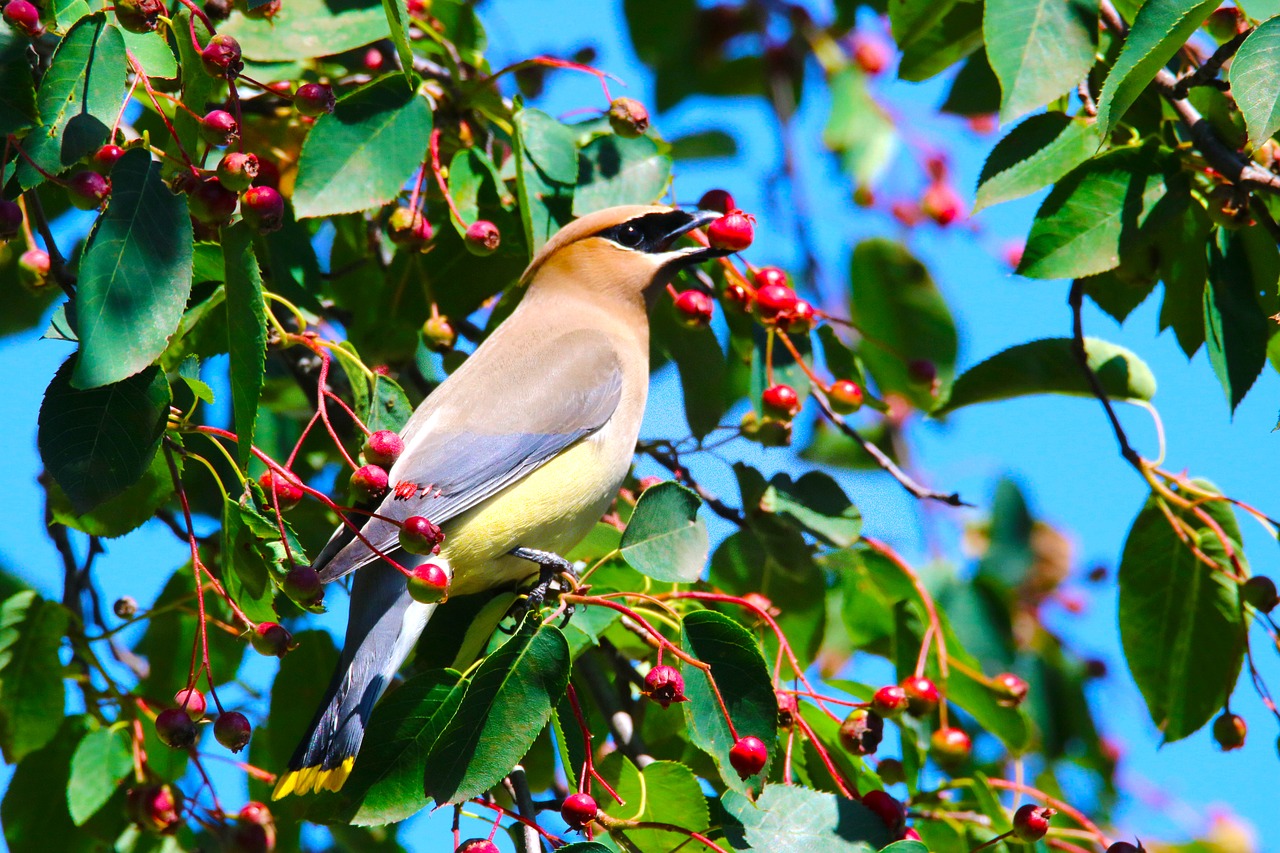
Photo by DivaDan/Pixabay.com • A cedar waxwing plucks a single berry from the laden branches of a fruit-bearing tree.

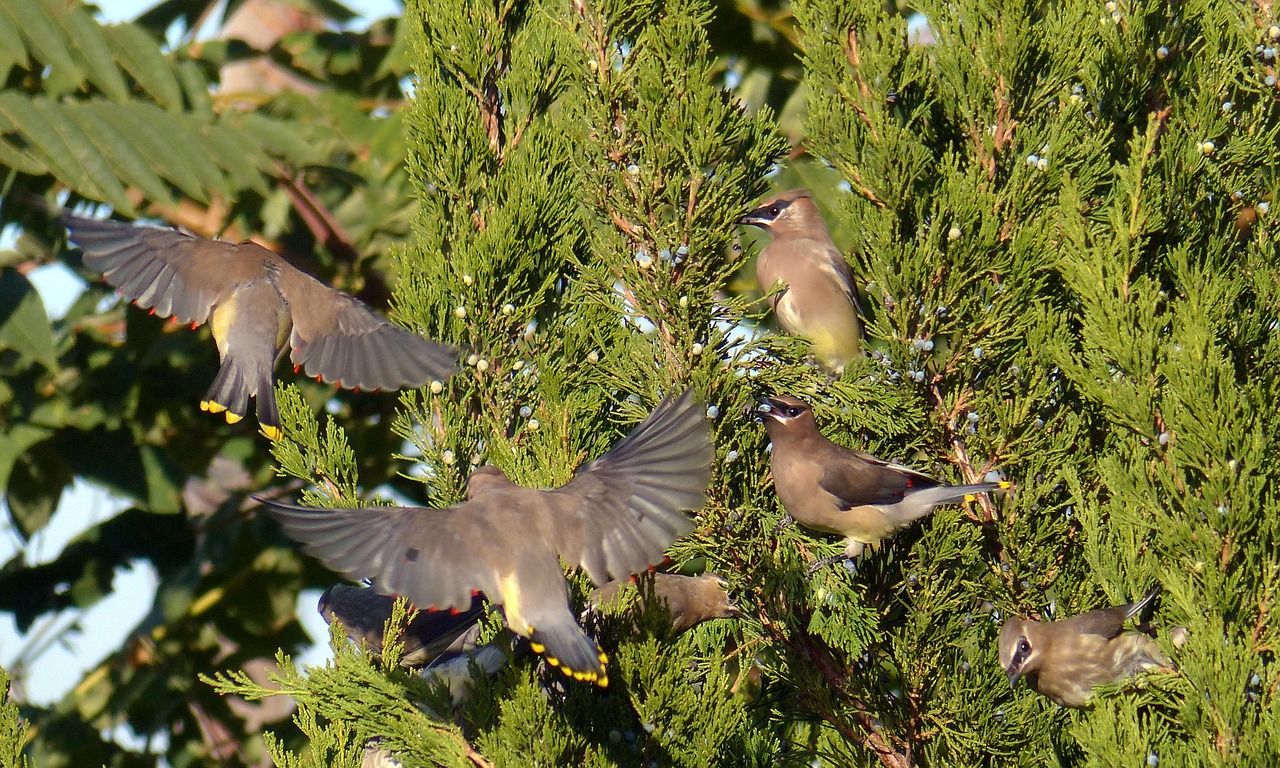
Early last month I received an email from Ernie Marburg about some visitors at his home in Abingdon, Virginia. “Just wanted to let you know that the Cedar Waxwings are in the neighborhood,” he wrote. “The flocks are looking for berries in the holly trees.” 

Waxwings have a brown and gray silky plumage, a black mask and a perky crest. Some of the wing feathers show red tips. The similarity of these wing tips to melted drops of wax gives these birds the common name of waxwing.

Photo by Bryan Stevens • The waxy tips to the wing feathers are evident in this photograph of a cedar waxwing.

The cedar waxwing has few relatives. Worldwide, there are only two other species: the Bohemian waxwing, of the northern forests of Eurasia and North America; and the Japanese waxwing, found in such northeast Asian countries as Japan, Korea and China.

Although it’s classified as a songbird, the cedar waxwing does’t truly produce a vocalization that anyone would contend qualifies as a song. They are, however, very vocal birds, producing shrill, high-pitched notes as they pass through the upper branches of tall trees.

As much as the waxwing has a fondness for fruit, it’s also a bird that would have made an excellent flycatcher. Flocks of these birds will often congregate in trees near the edge of a pond, garden or yard — anywhere winged insects might be found in good numbers — in order to hawk insects on the wing. A waxwing will sally forth from a branch, snatch its prey in mid-air, and return to its perch for a quick snack.
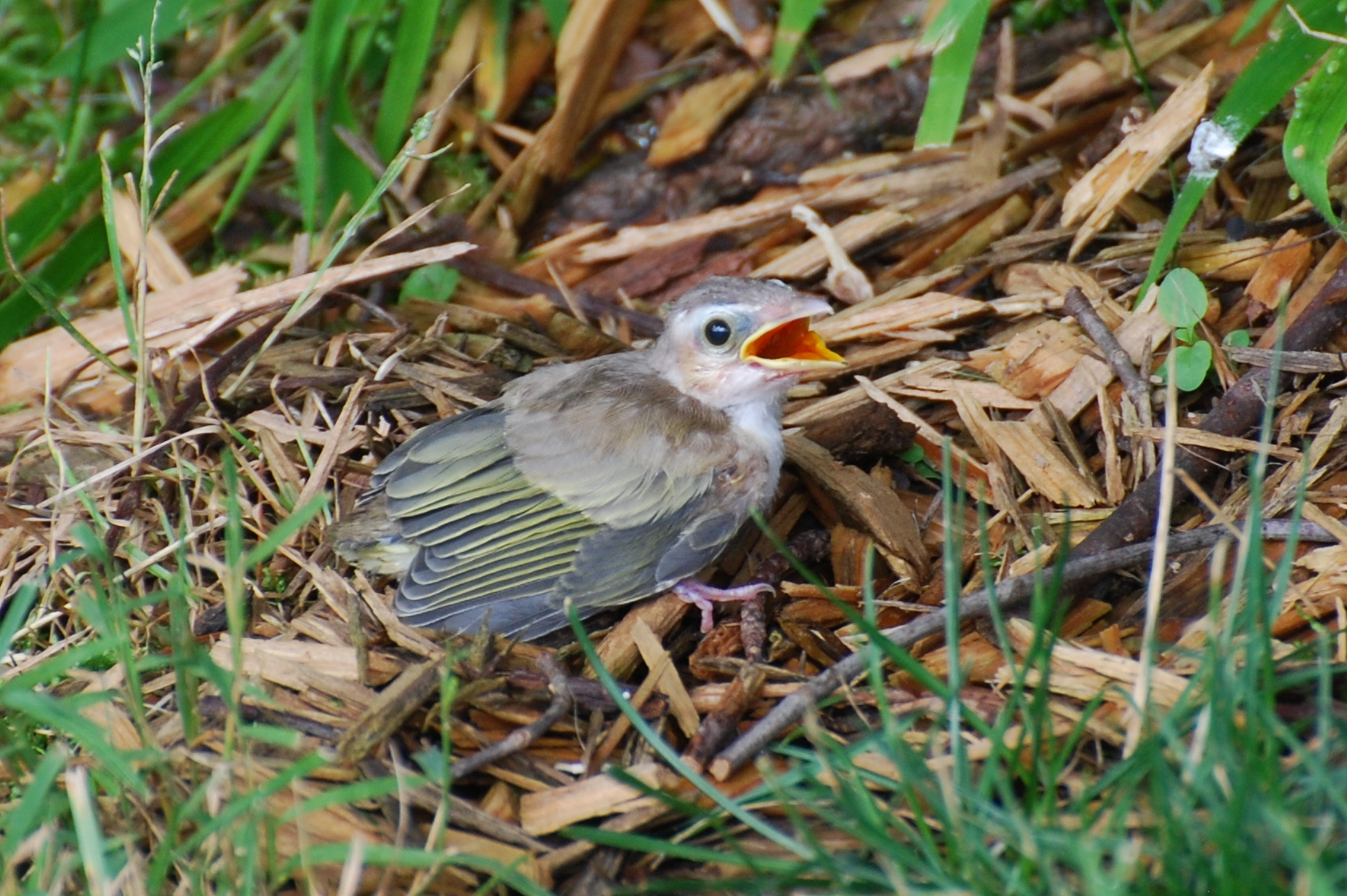
Photo by dmgreen44/Pixabay.com • A flock of cedar waxwings strip berries from the branches of a cedar tree.

Waxwings are rather nomadic, coming and going with a maddening unpredictability. Other birds are more dependable, arriving and departing at roughly the same time year after year. One such bird should soon make its triumphant and welcome return to yards and gardens throughout the region. According to the website Hummingbird Guide, ruby-throated hummingbirds usually return to Tennessee and Virginia the first week of April. These tiny flying jewels arrive earlier in North and South Carolina, typically arriving the third week of March in those states.

Early American naturalist and artist John James Audubon painted this pair of cedar waxwings.

The popularity of hummingbirds in general, and the ruby-throated hummingbird specifically, is simple to understand.

These tiny birds are perfectly willing to insert themselves into our lives, offering hours of fascinating entertainment as they visit our gardens, duel at our sugar water feeders and occasionally even nest in trees and shrubs in our yards.

I’m hoping to hear from readers about their first spring hummingbird observations. Email me at ahoodedwarbler@aol.com. Be sure to include the time and date of your sighting, as well as your locations. You can also find me through Facebook.

Photo by Bryan Stevens • A male ruby-throated hummingbird perches near a feeder that he is ready to defend from all comers.

Cardinals do their part to make the winter season brighter

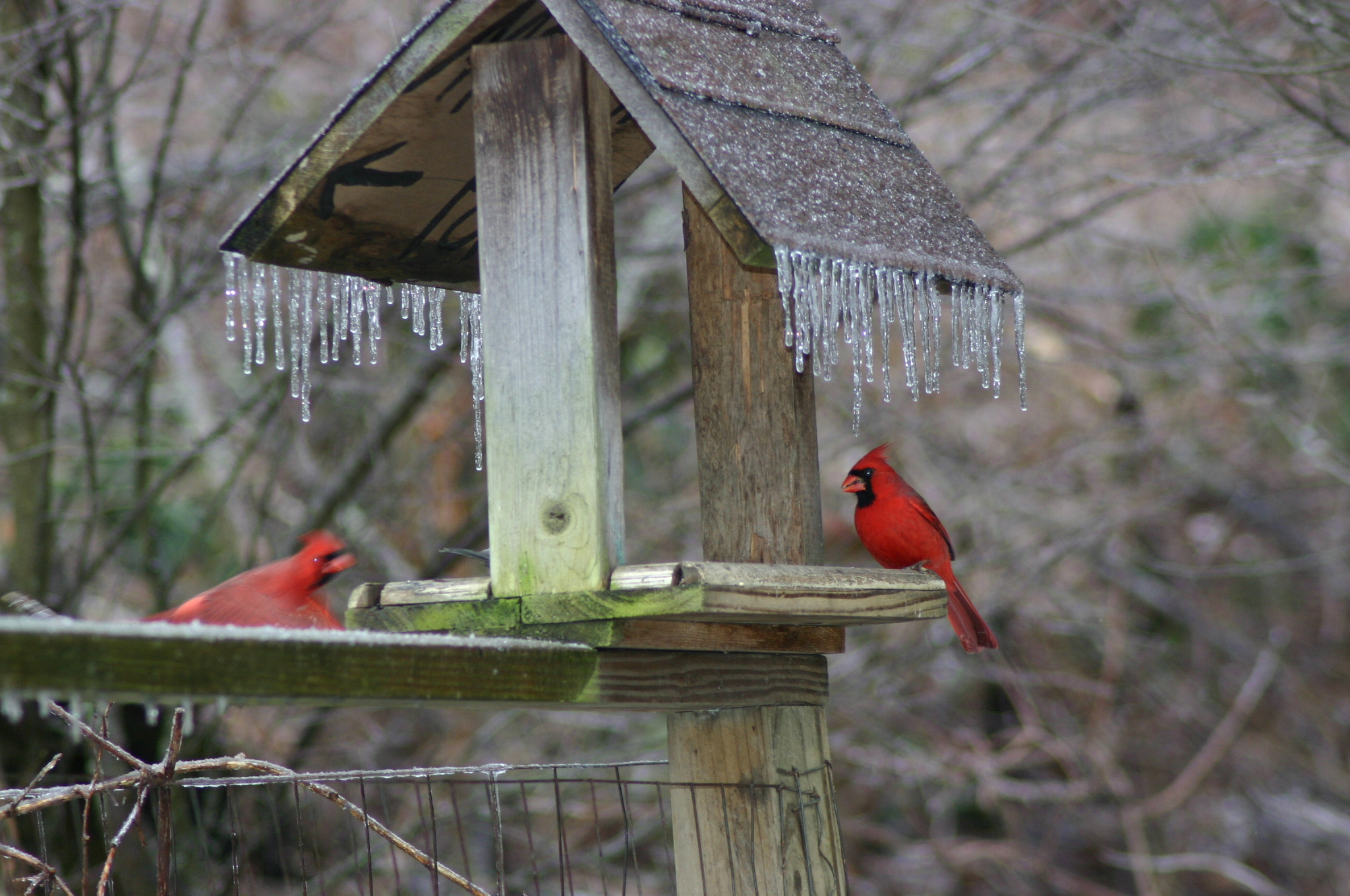
Photo by Skeeze/Pixabay.com • A male Northern cardinal lands on a snowy perch. Cardinals are perfect symbols for the Christmas season with their bright red plumage.

The shopping days before Christmas are getting fewer, so I hope everyone has had time to find gifts for everyone on their lists. My own sincere wish to readers is that everyone gets to enjoy a great holiday that just might also include watching some birds.

Often, when we think of the birds of the winter season, our thoughts focus on some of the less-than-colorful feeder visitors — the brown sparrows and wrens, the black and white chickadees, the drab American goldfinches that look so unlike their summer appearance.

There’s one bird, however, that makes an impression in any season. The Northern cardinal, especially the brilliant red male, stands out against a winter backdrop of snow white, deep green or drab gray.

Photo by Bryan Stevens • Northern cardinal seems much less descriptive of this popular bird than such common names as Virginia nightingale and Kentucky redbird.

Over the years, the Northern cardinal has also become associated with the Christmas season. How many Christmas cards have you received this holiday season with a cardinal featured in the artwork? I’d wager that at least a few cards in any assortment of holiday greetings will feature the likeness of a bright red cardinal.

Cardinals, also known by such common names as redbird and Virginia nightingale, are easily recognized backyard birds. I never tire of observing these colorful birds. Cardinals are easily lured to any backyard with plentiful cover to provide a sense of security and a generous buffet of sunflower seed.

Photo by Bryan Stevens • Even the female Northern cardinal offers a subtle beauty not quite as showy as the male.

Cardinals accept a wide variety of food at feeders. Sunflower seed is probably their favorite, but they will also sample cracked corn, peanuts, millet, bakery scraps and even suet. The cardinal is also one of only a few birds that I have noticed will consistently feed on safflower seed.

While we may get the idea that cardinals feed largely on seed, that is a misconception based on our observation of the birds at our feeders. When away from our feeders, cardinals feed on insects and fruit, including the berries of mulberry, holly, pokeberry, elderberry, Russian olive, dogwood and sumac.

There’s no difficulty in identifying a cardinal. The male boasts crimson plumage, a crest, a black face and orange bill. The female, although less colorful, is also crested. Female cardinals are soft brown in color, with varying degrees of a reddish tinge in their feathers, particularly in their wings. Immature cardinals resemble females except young cardinals have dark bills.

Cardinals are a widespread species, ranging westward to the Dakotas and south to the Gulf Coast and Texas. The southeastern United States was once the stronghold of the cardinal population. In the past century, however, cardinals have expanded their range into New England and Canada. These birds have even been introduced to Hawaii.

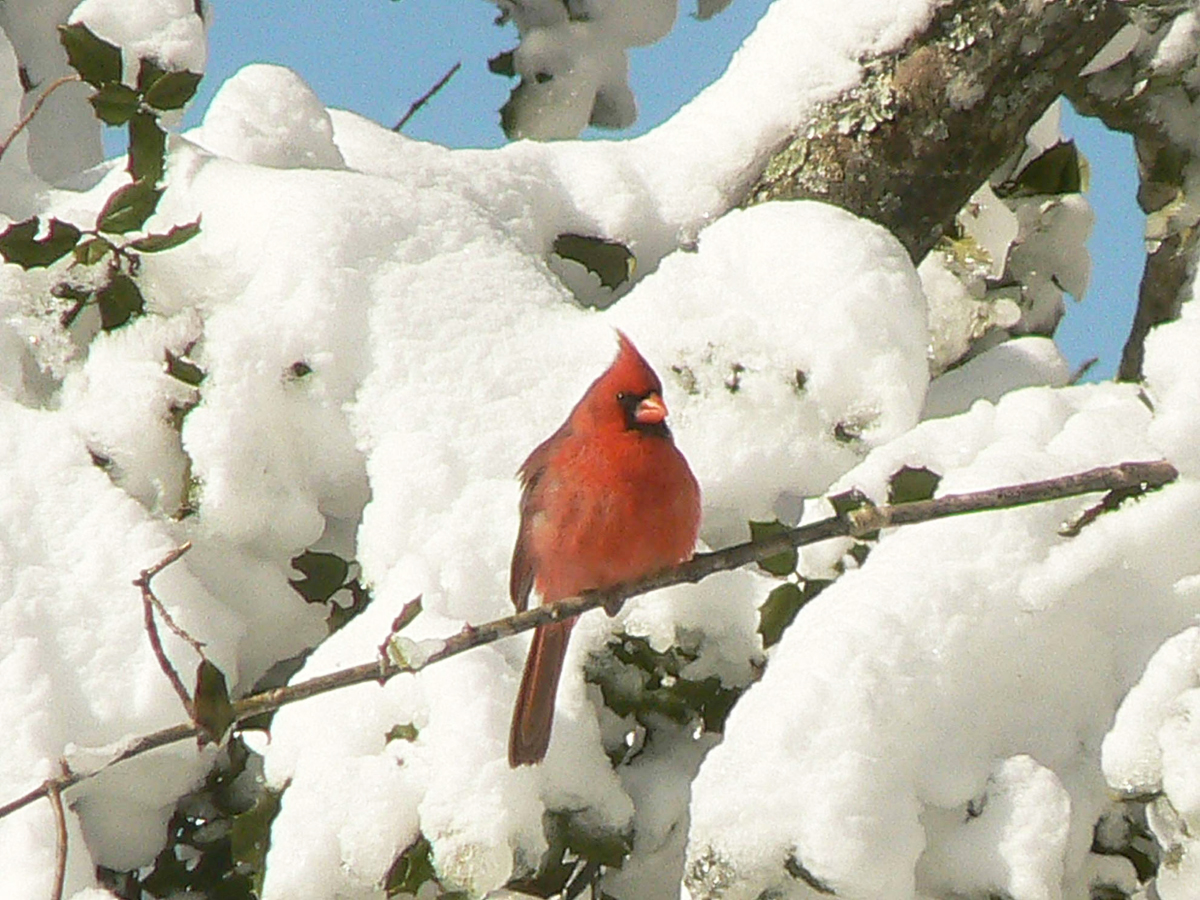
Photo by U.S. Fish and Wildlife Service • A male cardinal looks splendid against a snowy background.

At feeders, cardinals mingle with a variety of other birds. Their preference for dense, tangled habitat is one they share with such birds as brown thrashers, Eastern towhees, Carolina wrens and song sparrows. In general, however, cardinals directly associate only with their own kind. Cardinals will form loose flocks during the winter, but these flocks are never as cohesive as those of such flocking birds as American goldfinches. Cardinals are more often observed in pairs. For such a bright bird, the male cardinal can be surprisingly difficult to detect as he hides in thick brush that conceals his presence. Cardinals are nervous birds, however, and usually betray their presence with easily recognized chip notes.

It’s not surprising that such a popular bird has also become associated with many trappings of the Christmas season.

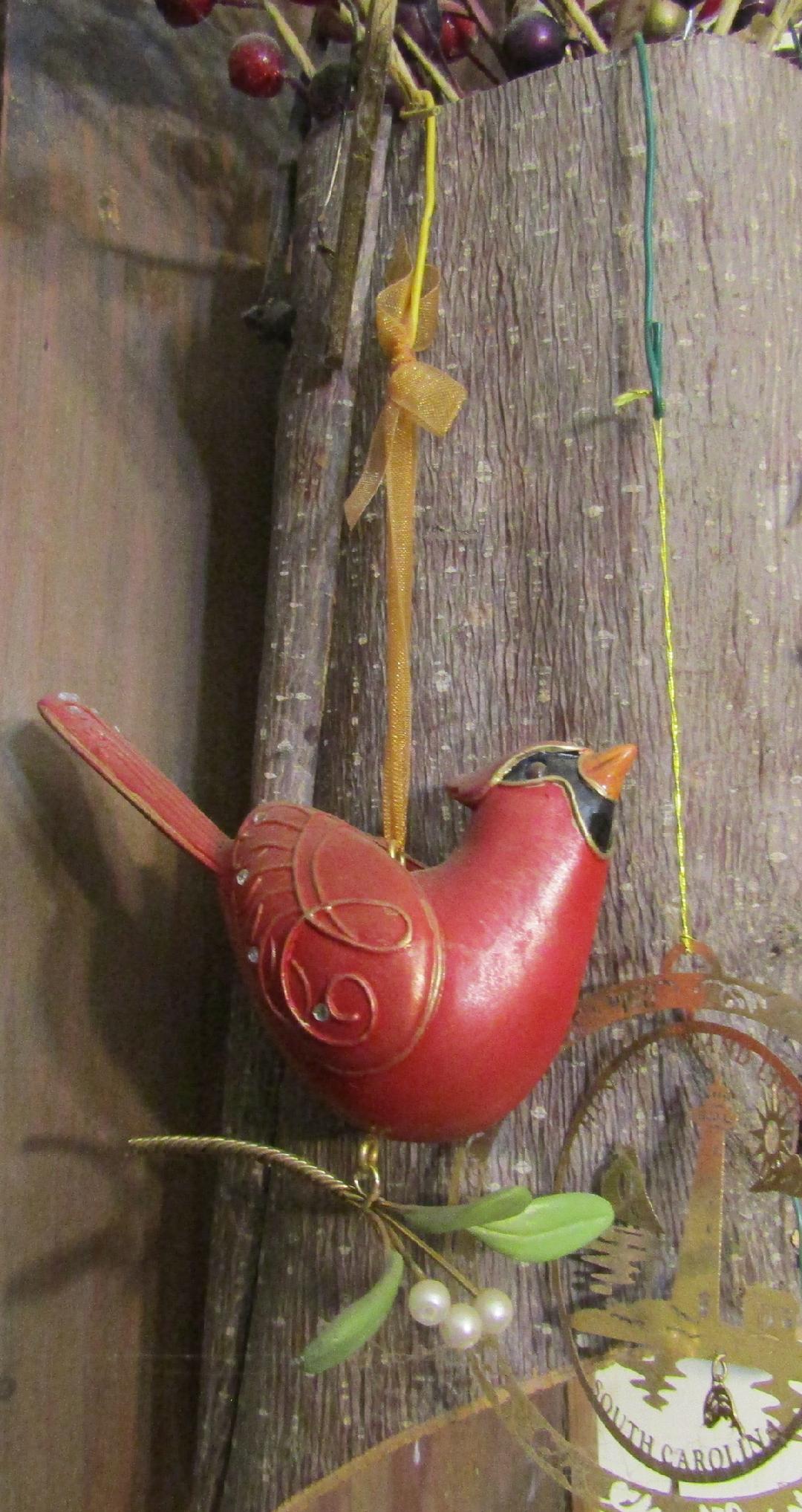
“You see cardinals on greeting cards, stationery, paper plates, paper napkins and tablecloths, doormats, light switch plates, candles, candle holders, coffee mugs, plates, glasses, Christmas tree ornaments and lights, bookmarks, mailboxes, Christmas jewelry,” writes June Osborne in her book The Cardinal. “And the list goes on. Cardinals have become an integral part of the way that many people celebrate the holiday season.”

Photo by Bryan Stevens • Northern cardinals are a favorite for makers of Christmas ornaments.

I can be included among such people. My Christmas decorations include an assortment of cardinal figurines and ornaments. There are other birds — doves and penguins for example — associated with the holiday season, but for me the holidays magnify the importance of one of my favorite birds. The cardinal, in its festive red plumage, appears made to order for a symbol of the holiday season.

There’s additional evidence to put forward as testimony to the popularity of the Northern cardinal. It’s the official state bird of seven states: Virginia, North Carolina, West Virginia, Ohio, Illinois, Indiana and Kentucky. Only the Northern mockingbird, which represents five states as official state bird, even comes close to the Northern cardinal in this respect.

Even once the holidays are past, there’s nothing like a glimpse of a Northern cardinal to add some cheer to a bleak winter day.

Some gifts ideas are truly ‘for the birds’

Photo by PilotBrent/Pixabay.com • A blue jay visits a feeder stocked with seed. A feeder provides a great method for drawing birds to our yards and gardens, which enhances observation of these feathered creatures.

With the days on the calendar counting down to Christmas, I thought this might be a good opportunity to make a list of gift suggestions for the birding enthusiasts on your shopping list. Keeping in mind that some budgets are a bit tight, I’ve kept these suggestions to gift ideas that can be purchased for about $20.

Bird feeders
One of the best ways to bring birds closer is to put up a feeder. For that reason, a Christmas present of a bird feeder will never be remiss. Whether shopping online or in garden centers or department stores, there’s no shortage of feeders for purchase. Bird feeding brings hours of entertainment to human hosts for only the cost of a sack of sunflower seed.
The most successful feeder that I’ve used in recent years is a type of hanging tray manufactured by such brands as Woodlink and PerkyPet and available on Amazon.com and other retail outlets for about $20. The one at my home is made from recycled plastic. Cardinals, sparrows, finches, and even the shy Eastern towhees love this open-air feeder. The mesh bottom of the feeder allows for good drainage.
There are so many designs, from extremely practical to awesomely whimsical, that choosing a feeder as a gift isn’t at all difficult. The birds and that friend on your list will thank you for the gift of a feeder. If you’re feeling in the giving spirit, throw in a bag of black oil sunflower seed to help get the recipient’s feeder off to a great start.

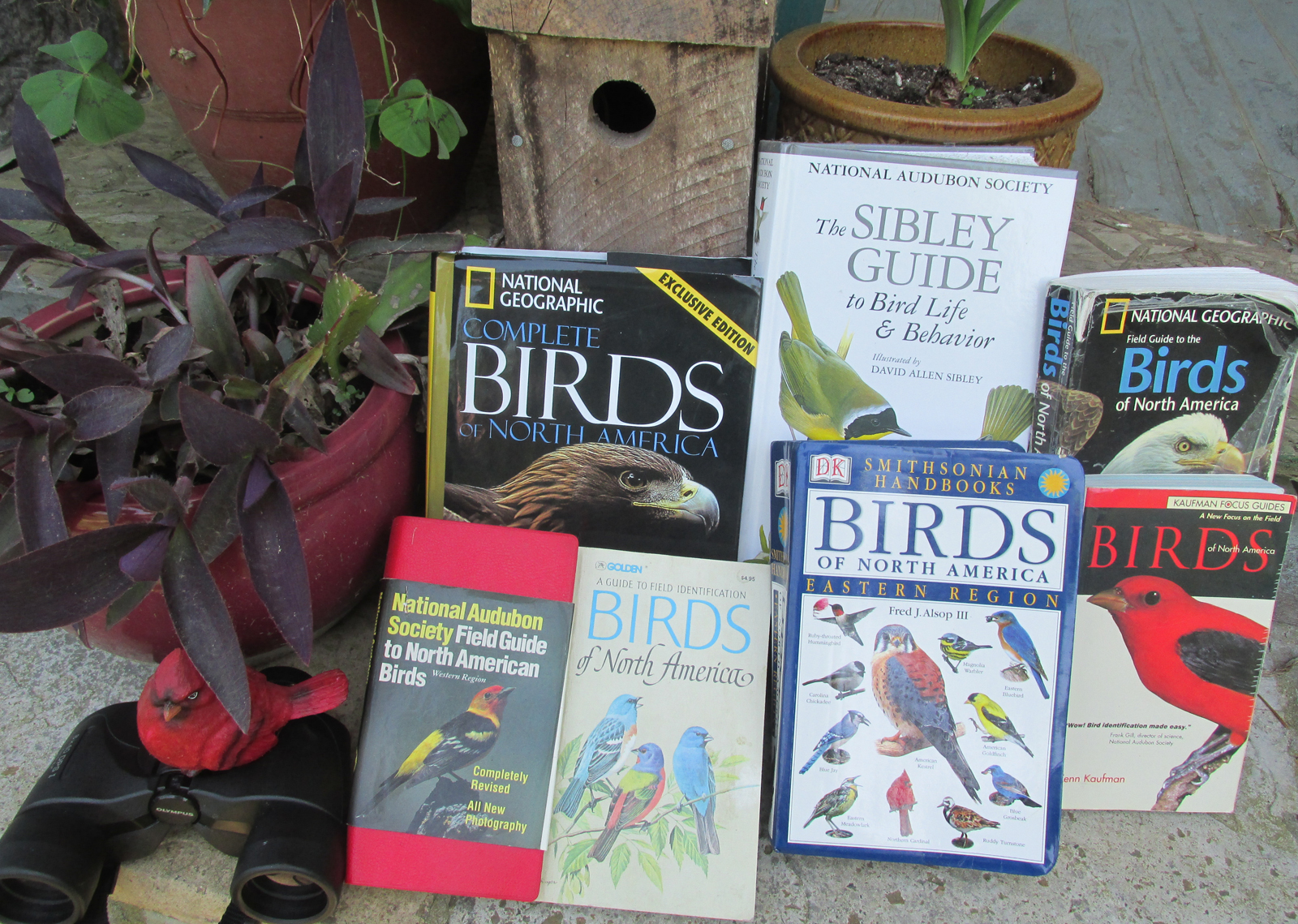
Photo by Bryan Stevens • Field guides are an essential tool for bird identification.

ID assistance
A field guide to birds is an indispensable tool for both the curious backyard birdwatcher and the more adventuresome birder expanding his or her viewing opportunities farther afield. Once you’ve taken the path to start identifying birds beyond your own yard and garden, a reliable field guide is indispensable.
I prefer field guides illustrated with paintings rather than photographs, but I have a varied collection of guides. I started a long time ago with the Golden Guide to Birds. It’s a classic and still a great guide to help interest children in the birds around them.
Some of the guides I recommend and use myself these days are National Geographic Field Guide to the Birds of North America, The Sibley Field Guide to Birds of Eastern North America, and Peterson Field Guide to Birds of Eastern and Central North America. Any of these field guides should be easily found online or in stores at a cost of around $20.

365 days of birds
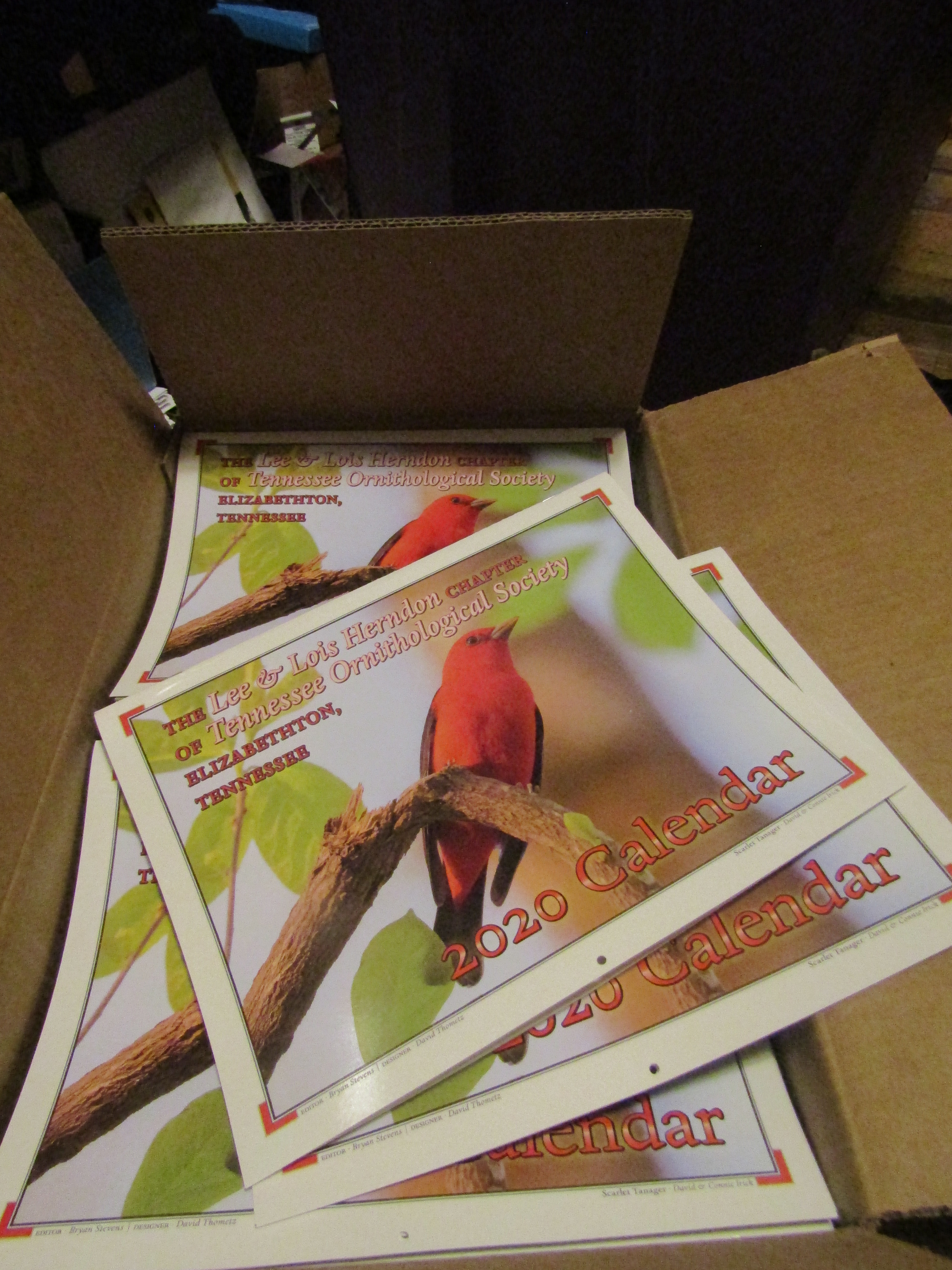
The Lee and Lois Herndon Chapter of Tennessee Ornithological Society (Elizabethton Bird Club) produces a calendar as part of a long-standing holiday fund-raising effort. The 2020 calendar features a stunning photograph of a male scarlet tanager. The inside pages feature dozens more full-color photographs and an informative and educational grid. These calendars sell for $15 plus $2 for shipping. All sales help the club fund birding programs, public park feeders, conservation efforts and other activities in upper Northeast Tennessee. To obtain a calendar, email me at ahoodedwarbler@aol.com.

Photo by Bryan Stevens • This year’s calendar produced by the Elizabethton Bird Club features a male scarlet tanager on the cover.

Flocking Together

Gift someone with a membership in a local birding organization. Bristol is home to the venerable Bristol Bird Club, which offers dual membership in the Virginia and Tennessee Ornithological Societies. The memberships of clubs are comprised of friendly, helpful individuals. Newcomers are taken under the wings and soon shown many helpful birding tips and introduced to some of the area’s birding hot spots. Single membership annual dues are $25 and family memberships are $32. To gain information about the BBC, email Treasurer Brenda Richards at richardsb16@gmail.com or write to her at: Brenda Richards, 160 Milden Hall Rd., Blountville, TN 37617.
In addition to the Bristol Bird Club, other clubs in the region include Birding Kingsport and the Elizabethton Bird Club. Other clubs in Southwest Virginia include the Buchanan County Bird Club and Russell County Bird Club. For more information on these clubs, visit https://www.facebook.com/groups/725795874231666.
Membership in any of these clubs will pay real dividends that help people make social contacts and enhance their birding skills with the help of experienced birders.
With this list of suggested gifts, happy shopping. I hope everyone’s seeing some good birds.

Photo by Bryan Stevens • A male wood duck swims with a pair of mallards.

Mysterious owl retains a low profile even during Halloween season

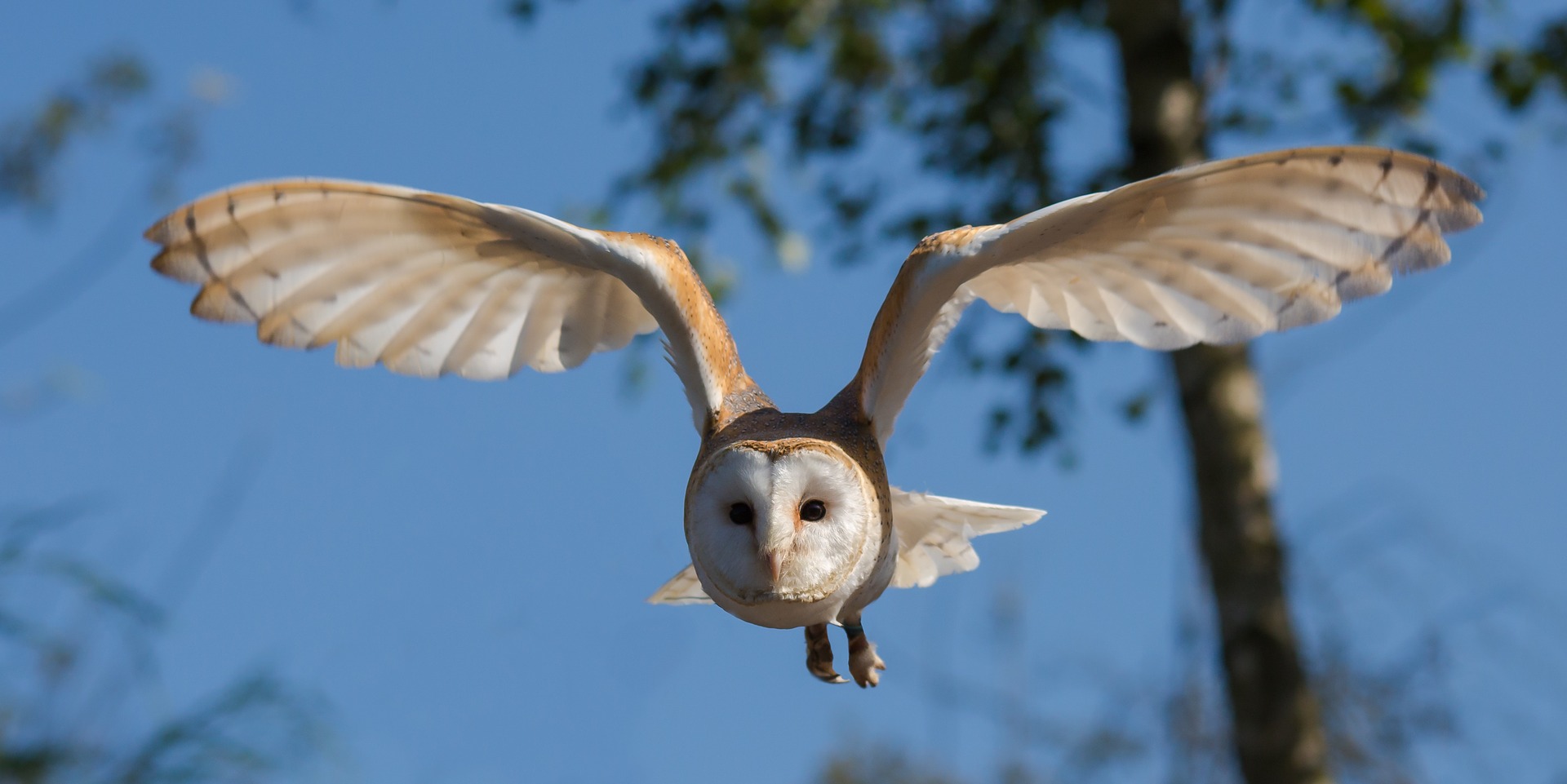
Photo by jeanvdmeulen/Pixabay.com • The barn owl’s heart-shaped face helps this bird, which is also known by such names as death owl, ghost owl, and hobgoblin owl, stand out from the other owls that share the domain of night.

With common names such as cave owl, death owl, ghost owl, night owl and hobgoblin owl, the nocturnal hunter more widely known as the barn owl provides a fitting focus for exploration as the calendar counts down toward Halloween.

Barn owls lurk in the shadows of night, but most people would never know it unless they happen to hear some of the spine-tingling vocalizations produced by this poorly known predatory bird. Shiver-inducing shrieks and screams quite capable of piercing the veil of darkness are often produced by the barn owl. This owl doesn’t utter loud hoots like the great horned owl. Instead, the call of the barn owl is not likely one to be soon forgotten because of its raspy, nails-on-the-chalkboard nature. A hearer could easily be misled into misinterpreting the shrill vocalizations as originating from something far more ghoulish.

According to the website for the Owl Research Institute in Charlo, Montana, barn owls are the most widely distributed owl in the world, and they may be one of the most common, as well. In Montana, where ORI is located, barn owls observations are rather sparse. ORI has documented 12 barn owl nests and made numerous observations in the last 12 years, according to its website. Likewise, the barn owl is not too often observed in Northeast Tennessee and Southwest Virginia.

Photo by dannymoore1973/Pixabay.com A barn owl’s wings and feathers provide almost silent flight for this efficient predatory bird.

The barn owl is often associated with rural, agricultural areas, which is one reason they can often be found in old barns, sheds and farm silos. However, the first barn owl I ever saw in the wild was living beneath the eaves of a building on the campus of Mountain Home Veterans Administration in Johnson City, Tennessee, within walking distance of commercial buildings and the campus of East Tennessee State University.

The barn owl has no close relatives among the other owls found in the region. The barn owl is in its own unique family known as Tytonidae. The family name comes from a Greek word, Tuto, which translates as “night owl.”

Photo by Bryan Stevens • An Eastern Screech Owl, pictured, is considered a member of the family called Strigidae, which consists of the owls described as “typical owls” by experts.

Other owls in our region — great horned owl, barred owl, Eastern screech-owl, short-eared owl— belong to a family called Strigidae, which are often described as “typical owls” by ornithologists and other experts.

The barn owl is one of nature’s most perfect predators. Among animals tested by scientists, the barn owl shows an almost uncanny ability to detect prey animals by sound alone. Prey, which is often small voles or other rodents, often doesn’t know of the danger until it’s too late. The structure of the barn owl’s wings and feathers is such that these predatory birds can fly through the darkness in almost perfect silence.

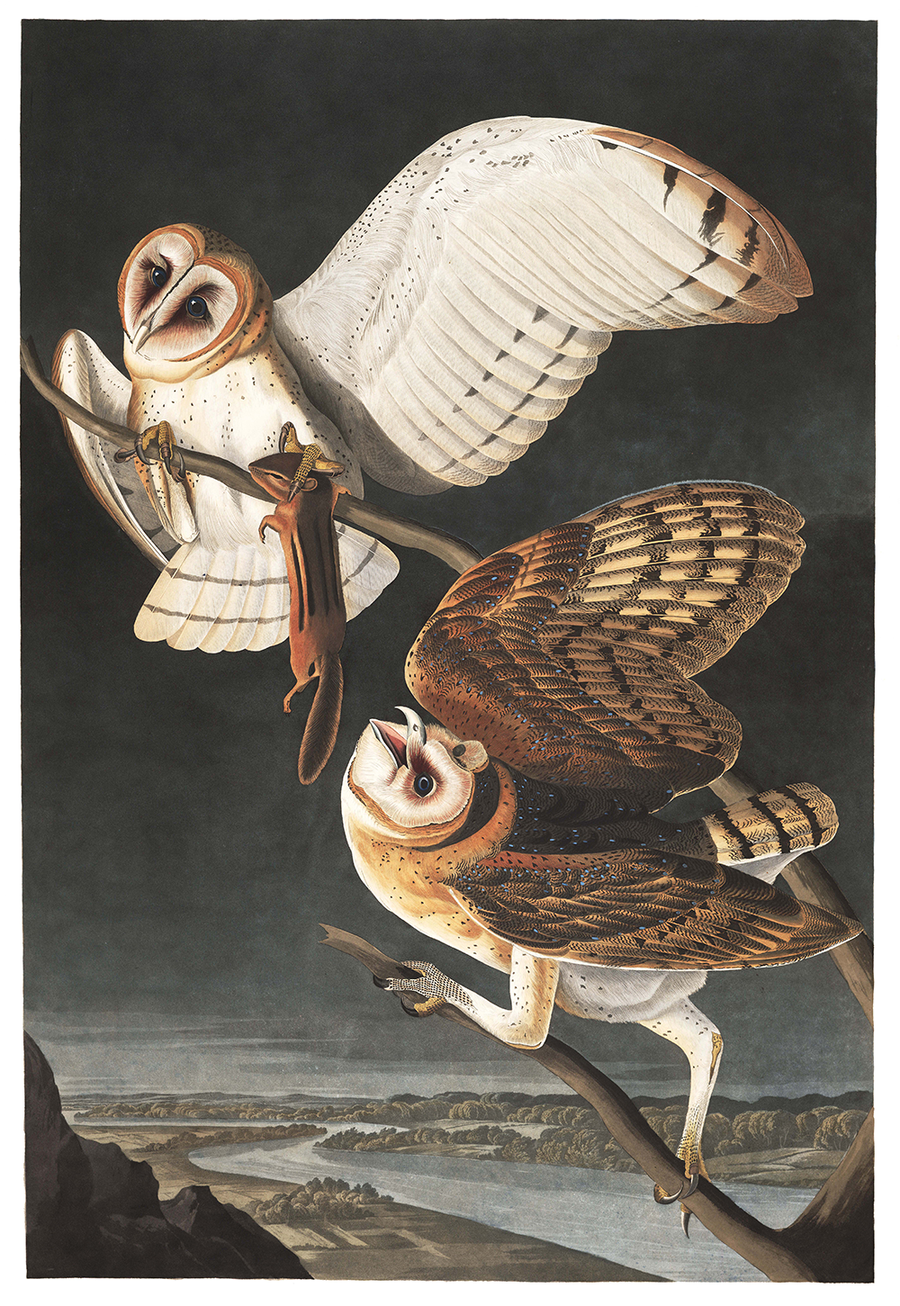
Early American painter John James Audubon captured this dynamic scene of barn owls with a capture chipmunk.

There’s a heavy cost that the owl must pay for these special adaptations. According to the Barn Owl Trust, an organization founded in 1988 in the United Kingdom to conserve one of the most beautiful birds on Earth, a barn owl’s specially adapted feathers are not particularly waterproof. In addition, barn owls are unable to store a lot of body fat. The Trust’s website notes that barn owls are unable to hunt in heavy rain and are particularly prone to starvation during prolonged periods of severe weather and/or prey shortage.

Much myth and legend have arisen around the world’s owls, including the barn owl. A native tribe in California known as the Newuks believed that warriors who proved courageous and virtuous became great horned owls after death. Men who practiced wicked ways, however, were thought to become barn owls.

This owl with the white heart-shaped face has long spooked humans. The bird’s head and upper body typically vary between pale brown and various shade of gray. Especially in flight, the barn owl can look rather pale.

The barn owl is the most widespread terrestrial bird species in the world, occurring on every continent except Antarctica. In addition to its various spooky common names, barn owls are also known by such descriptive monikers as monkey-faced owl, silver owl and golden owl. Some other common names include church owl and steeple owl. This owl acquired this name for its habit of utilizing steeples or bell towers in churches as roosting locations when barns or caves were lacking.

For a bird so closely associated with people and their dwellings and related structures, the barn owl remains an enigma to many. YouTube offers a variety of videos that showcase the creepy vocalizations of barn owls. Familiarize yourself with their calls, and you’ll be more likely to distinguish a barn owl calling after dark from the more sinister specters on the prowl this Halloween.

To learn more about barn owls or to make a contribution toward their conservation, visit www.barnowltrust.org.uk

Photo by mochawalk/Pixabay.com • A barn owl gives a penetrating stare to the camera.

‘Science’ article warns that people need to focus on the needs of disappearing birds

Photo by Pixabay.com • Birds are disappearing. Some populations have seen a dangerous decline. Loggerhead shrikes are declining across the continent, and the reasons are complicated but can ultimately be traced to human activity.

Imagine the sky growing dark and, looking up, you notice that the cause is not approaching storm clouds but a passage of birds — millions of individual birds, their wings darkening the skies as they pass overhead.

The early American naturalist and painter John James Audubon once described the passage of enormous flocks of passenger pigeons that blotted out the light “as by an eclipse” and described the noise of the multitude of wings “like thunder.” His observation of these flocks took place in 1813. A century later, the world’s last passenger pigeon, a species that had ranked as one of the continent’s most numerous birds, died in 1914 at the Cincinnati Zoo.

Photo by Bryan Stevens • Legislation like the Endangered Species Act can and does save birds like the Bald Eagle from possible extinction.

The passenger pigeon was the avian equivalent of the American bison, albeit with a more tragic outcome. Bison, also commonly called buffalo, still survive. As with the bison, we’ve had avian rescue success stories — whooping cranes, Kirtland’s warblers, bald eagles — with efforts to bring some birds back from the brink of extinction. At the same time, we’ve lost others, including the ivory-billed woodpecker, the eskimo curlew and Bachman’s warbler. Now a new study indicates that our birds may be under assault as never before.

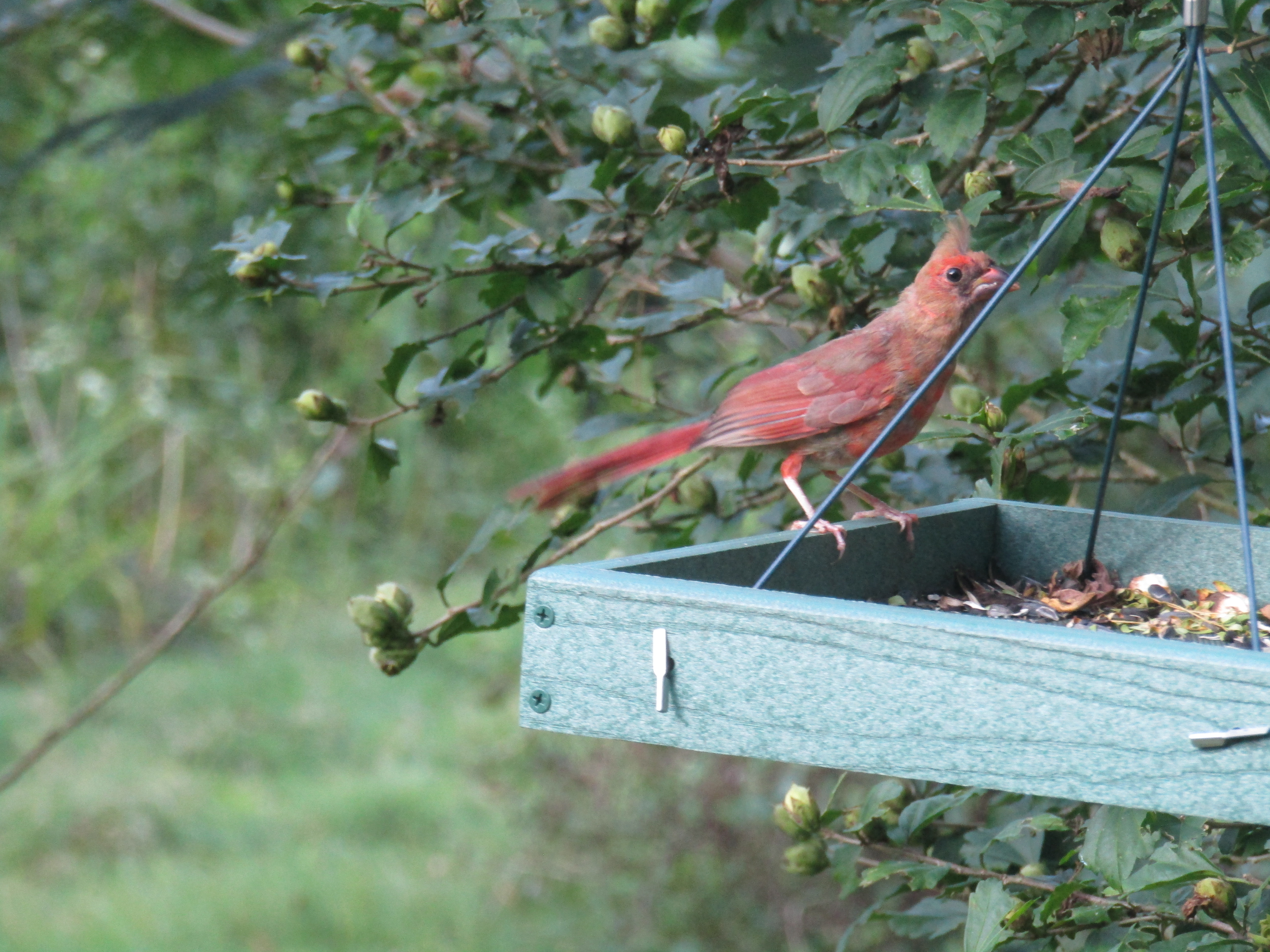
Photo by Bryan Stevens • A young Northern cardinal visits a feeder.

The journal Science dropped a bombshell article recently about declining bird numbers in North America. The article’s claim that nearly 3 billion — that’s billion with a “b” — fewer wild birds exist on the continent than in 1970 is a shocking figure, but the sad fact is that the article probably doesn’t come as a complete surprise to birders or even backyard bird enthusiasts. The evidence of our own eyes and ears confirms the details of the comprehensive study reported in the pages of Science. There are fewer birds, which has been becoming painfully clear over the past few decades.

I first got into birding in 1993. Now, 26 years later, I have noticed some of the declines in just the past quarter of a century. Every autumn, the variety and numbers of migrating warblers that visit my yard has gone down.

The new study in Science focuses on the drop in sheer numbers of birds. According to most experts, the bird population in the United States and Canada was probably around 10.1 billion individual birds nearly half a century ago. That number has fallen 29 percent to about 7.2 billion birds, an alarming loss of nearly 3 billion birds just in North America.

I have personally noticed signs of this dramatic loss. Let me share some personal anecdotes. These stories don’t serve as definitive proof, but they add to my unease about the state of our feathered friends.

For one thing, I no longer host large flocks of birds at my feeders during the winter. One would expect birds to mass in sizable flocks in the vicinity of feeders during a season when resources can be scarce. In the 1990s, I hosted flocks of pine siskins and evening grosbeaks that numbered in the hundreds and dozens, respectively. At times, large flocks of American goldfinches, purple finches and house finches flocked to my feeders, too. I haven’t seen an evening grosbeak since 2001. Pine siskins still visit, but I consider myself fortunate to host a flock that numbers a dozen or more.

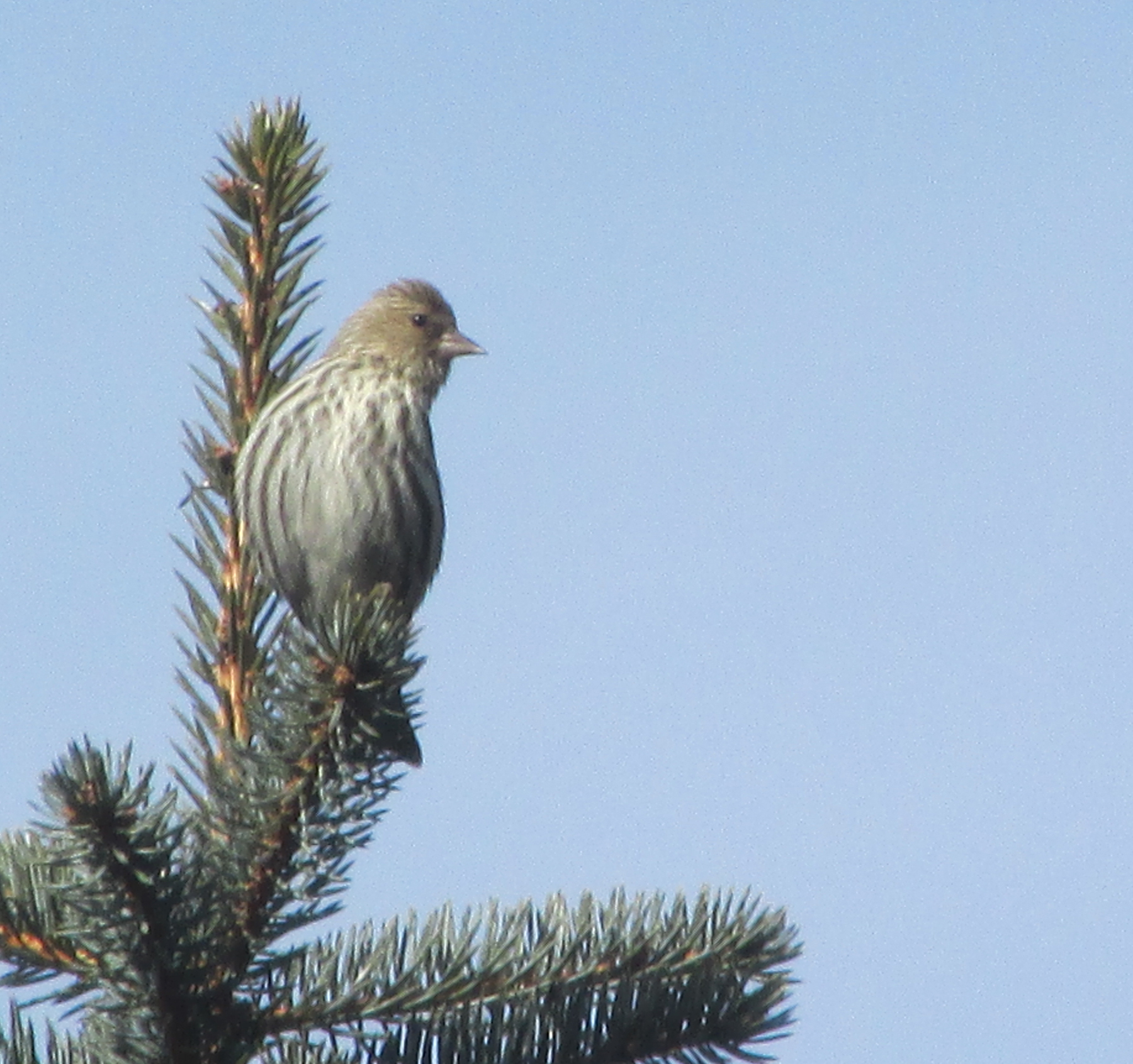
Photo by Bryan Stevens • A pine siskin in a spruce at Carver’s Gap on Roan Mountain.

The sights and sounds of summer have changed, too. Two of the most dependable summer songsters used to be Northern bobwhite by day and Eastern whip-poor-will after dark. I haven’t heard a whip-poor-will at home in more than 20 years. The last time I heard a Northern bobwhite was about a decade ago. I live in a rural area that used to be fairly agricultural. The disappearances of bobwhite quail and whip-poor-wills is reported throughout the ranges of these two species.

Of course, there are always exceptions. Some birds have grown even more common in recent decades. Regionally, look at birds like great blue herons, double-crested cormorants, and cliff swallows, which have also shown an increased presence.

What killed the passenger pigeon? People did. What’s caused the precipitous drop in bird numbers since the 1970s in North America? Once again, people must shoulder most of the blame. We have destroyed or altered habitats essential for birds to thrive. We’ve paid little attention to the signals from some of these kin of the proverbial “canary in the coal mine” that something’s wrong in nature.

Yet “hope is the thing with feathers,” as the poet Emily Dickinson phrased it, and the losses are a signal to pay attention, not to panic. Birds are amazingly resilient. Birds need only the same things as humans — food, shelter, water. Well, perhaps they need one more thing. Birds require a safe and welcoming space in which to unfurl their wings and fly.

The great flocks of passenger pigeons may be no more, but there’s no reason to think our remaining birds can’t continue to soar, so long as we provide them with their essential needs and offer them a degree of protection and compassion.

An artist sketched this scene of hunters firing on one of the last great flocks of passenger pigeons.

Birds are not the only fall migrants sharing the skies

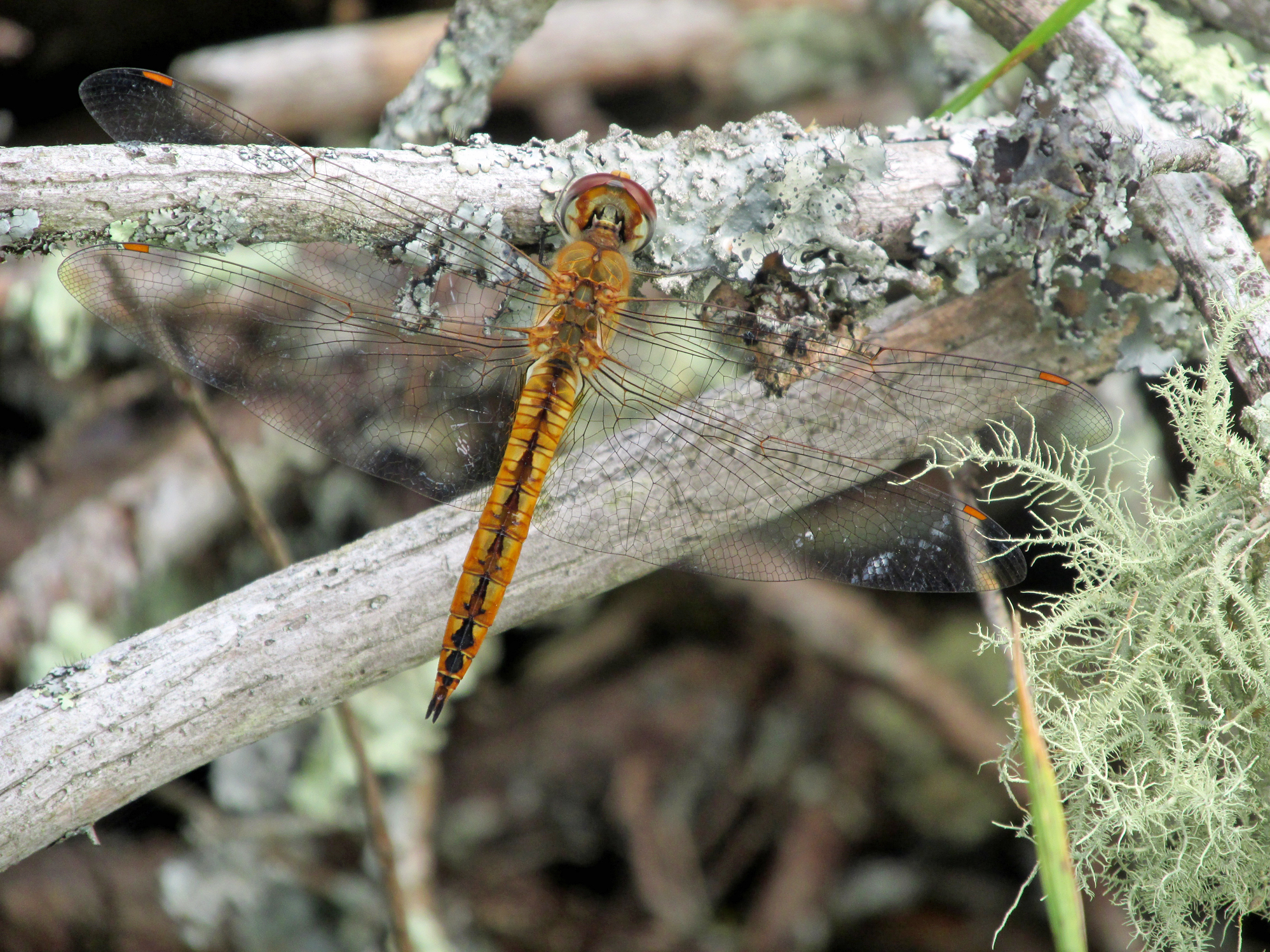
Photo by Bryan Stevens • Experts have documented long-distance migration flights by the Wandering Glider, a species of dragonfly.

Rhonda Eller of Chilhowie, Virginia, posted a question on my Facebook page about some dragonflies that appeared in her yard on Sept. 10.

“We have had a sudden breakout of dragonflies in our yard,” Rhonda explained. “We seldom see more than one or two at a time.”

Rhonda wondered if the dragonflies might have been drawn to her yard in pursuit of some sort of favorite insect prey. She also speculated that the recent dry conditions might have attracted the dragonflies.

I responded to her query by explaining that birds are not the only migrant in the skies at this time of year. Some dragonflies, just like birds, migrate. A species known as green darner is one that migrates. These darners are rather large, for a dragonfly, and travel in swarms. A couple of years ago I observed thousands of these dragonflies swarming over a municipal swimming pool and a nearby fish pond at a park in Erwin, Tennessee.

The WSLS Channel 10 television station out of Roanoke, Virginia, reported on swarms of dragonflies so large that they got picked up by local radar. Rhonda shared a link to the station’s story on my Facebook page.

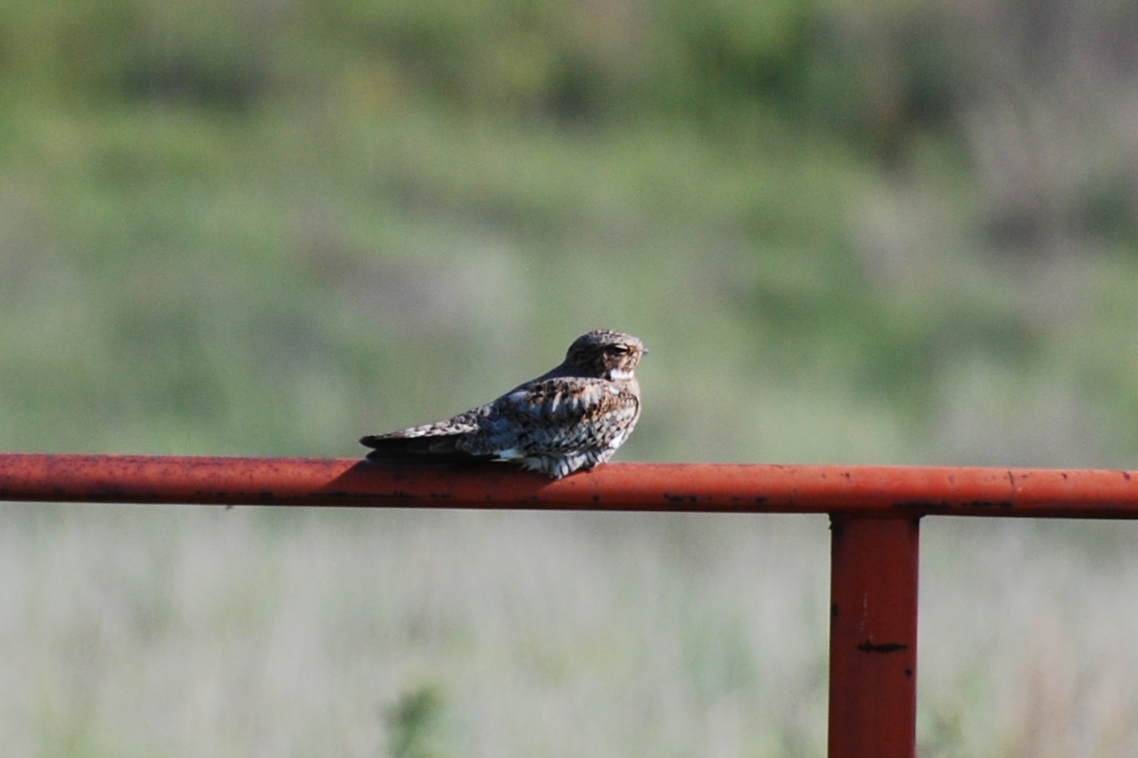
Photo by Jean Potter • A common nighthawk rests on a metal railing.

Of course, swarms of migrating insects are bound to get the attention of predatory birds. The same day that Rhonda experienced the influx of migrating dragonflies, I witnessed dozens of common nighthawks and chimney swifts swooping through the skies over my home. With a little more attention to detail, I also noticed the dragonflies sharing the skies with these birds.

I suspect that the nighthawks were feeding on the large darners while the swifts, which are much smaller birds, focused their foraging efforts on smaller winged insects. Tom McNeil, a neighbor and fellow member of the Elizabethton Bird Club, reported seeing nighthawks and swifts, too. Tom lives on the other side of a mountain ridge that separates our homes.

Tim Morris, a Facebook friend from Australia, noted in a comment on my post about the nighthawks that his country is home a bird known as the tawny frogmouth, a relative of the common nighthawk. Tim noted that frogmouths are big birds with camouflage markings that allow them to pretend to be dead tree boughs by day. “They feed not only on insects but mice and lizards, too,” he added.

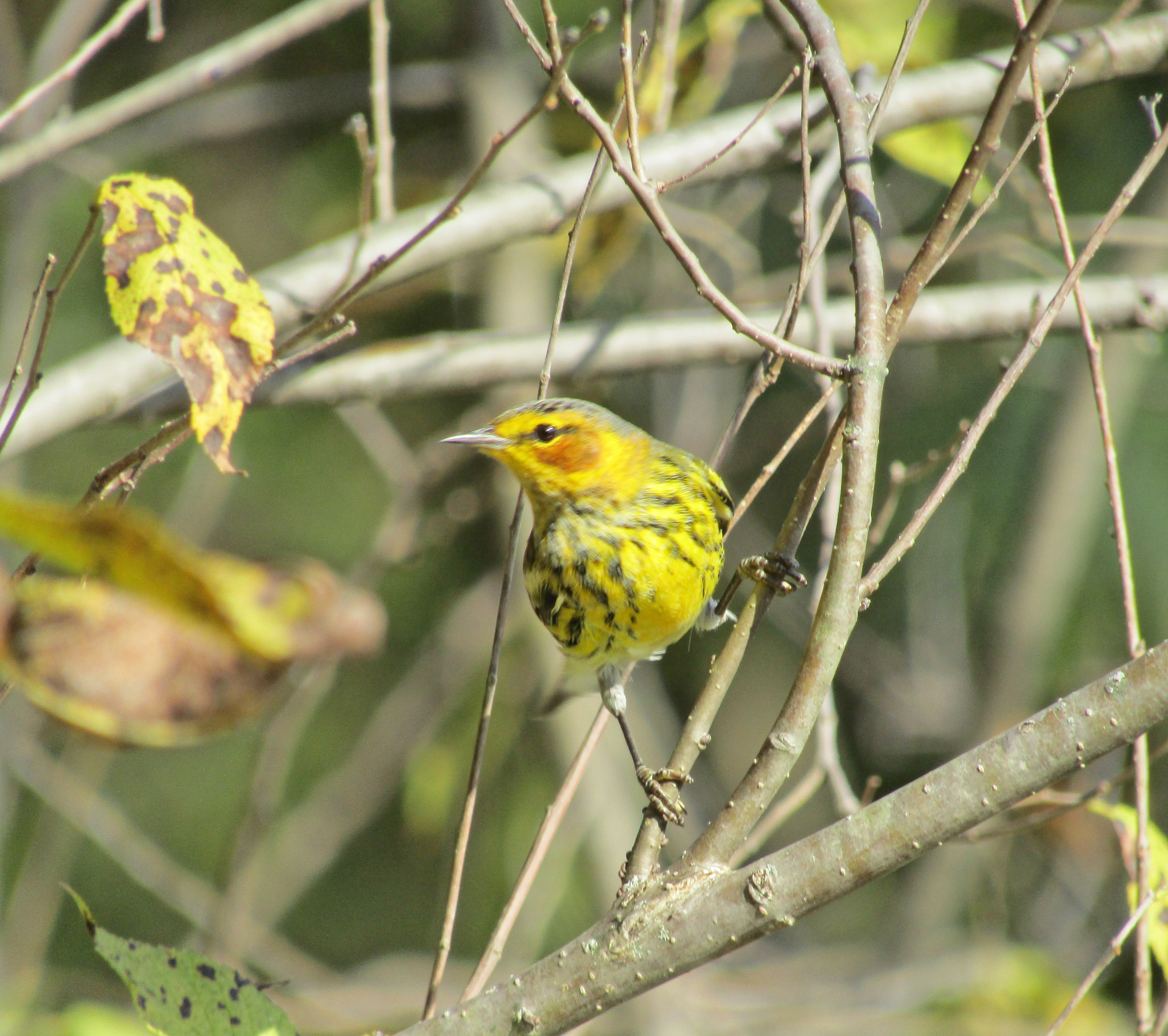
Evidence of fall migration continued the next day when I detected a small wave of warblers foraging in trees at the edge of my yard. I saw five different species — American redstart, worm-eating warbler, Cape May warbler, Blackburnian warbler and Tennessee warbler — in the space of half an hour. Of the warblers in the flock, the Blackburnian and Cape May are some of the more vibrant ones.

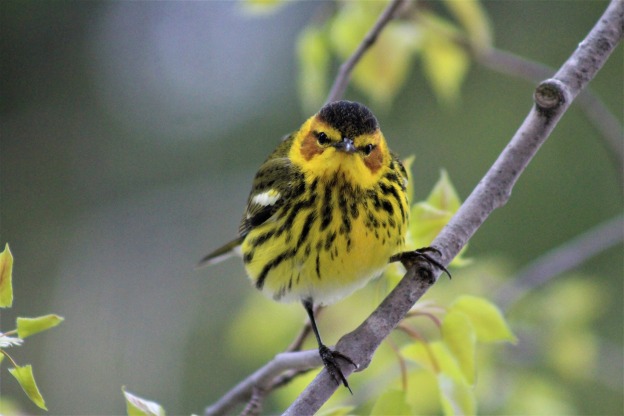
Photo by Bryan Stevens • While the Cape May warbler doesn’t breed locally, these warblers are fairly common spring and fall migrants in the region.

The Blackburnian warbler’s common name commemorates Anna Blackburne, an English naturalist who lived from 1726 to 1793. Her brother, Ashton, had immigrated to the United States, which made it possible for him to send his sister many specimens, especially birds. Their father, a salt merchant by trade, was also a well-respected amateur naturalist. In addition to the warbler that bears her name, Anna Blackburne also had a species of beetle named in her honor.

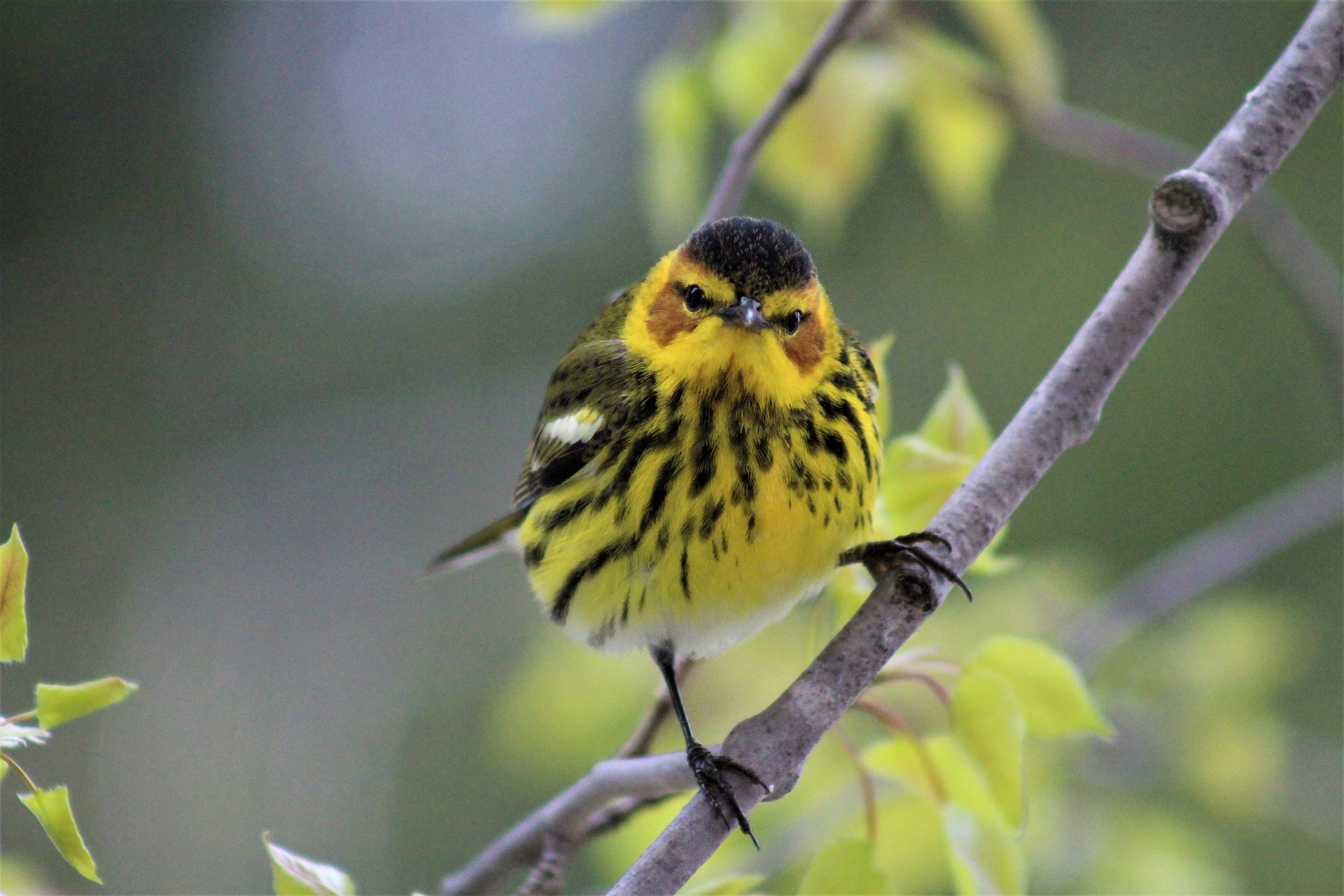
Both the Cape May and Tennessee warblers are named for the locations from which they were first collected. Neither of these small songbirds are closely affiliated with Cape May, New Jersey, or the Volunteer State. The Cape May warbler is also known as the “tiger warbler” for the dramatic black striping across its bright yellow breast. A green back and chestnut cheek patch make the Cape May warbler quite unlike any of its close kin. Even its scientific name — Setophaga tigrina — pays homage to the striped big cat. The term “setophaga” translates to “moth eater” and is a reference to this warbler’s intense fondness for the caterpillars known as spruce budworms that occasionally produce outbreaks in the northern spruce forests that serve as the nesting range for the Cape May warbler.


Photo by insitedesigns/Pixabay • A Cape May warbler peers from its perch on a tree branch.

According to the website, “All About Birds,” Cape May warblers have unusually shaped tongues that allow them to sip nectar from tropical flowers during the winter months spent in Central America and the Caribbean. Their unique tongues also make it possible for them to enjoy sips of sugar water from hummingbird feeders.

Whether its dragonflies, nighthawks, warblers or hummingbirds, plenty of birds and other flying creatures will be moving through the region for the next few weeks. Now’s the time to get outdoors and look for some of these migrants.

Photo by insitedesigns/Pixabay.com • The Cape May warbler migrates out of North America every fall to spend the winter in Central America and the Caribbean.

Think of the vireos as ‘Plain Janes’ of songbirds

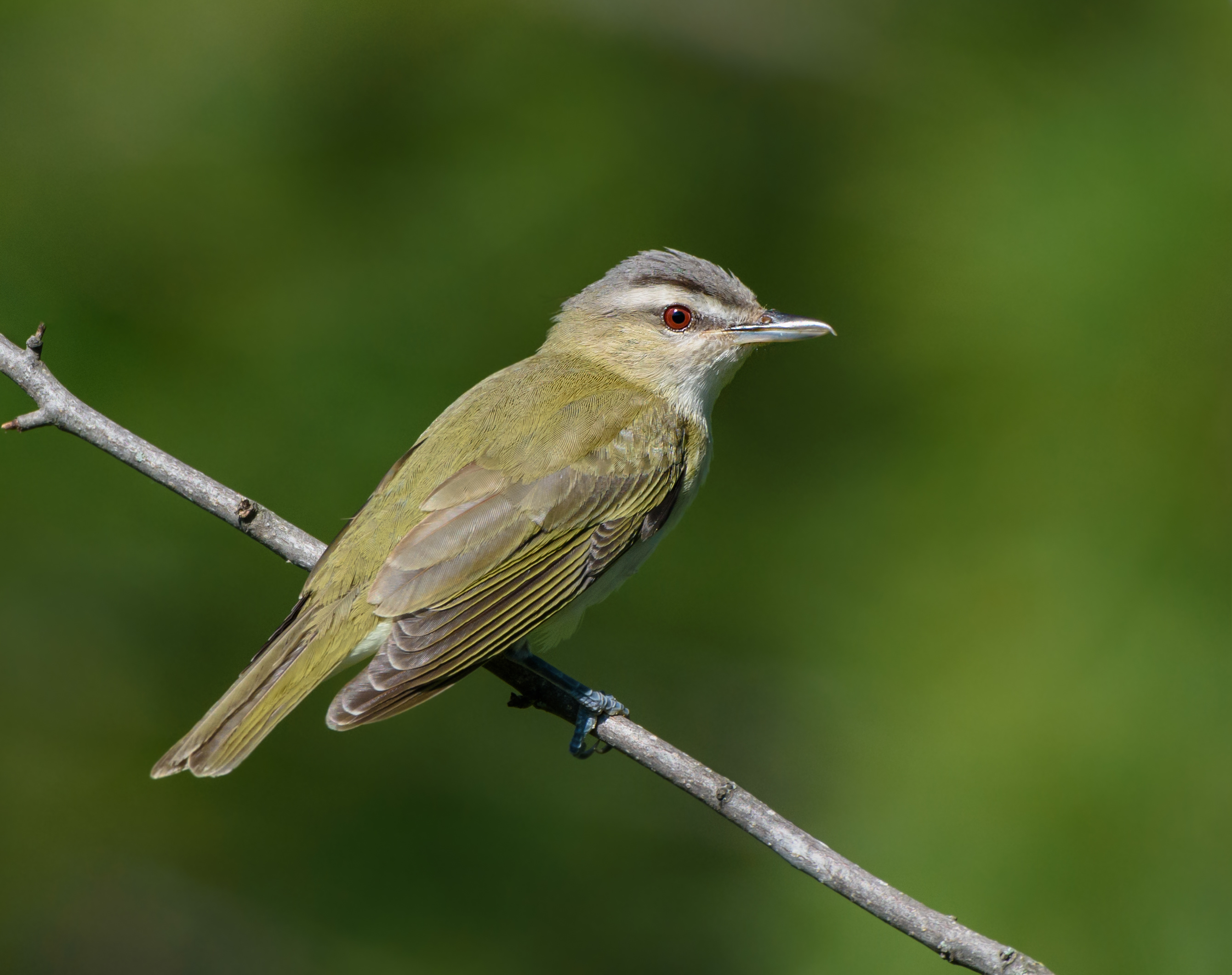
Photo by FotoRequest/Adobe Stock • A red-eyed vireo grasps a tree branch, a common pose for this bird that spends time concealed in the woodland canopy. The red eye can be difficult to detect unless lighting conditions are optimal for observers.

The start of migration appears to be more of a crawl than a sprint this fall, but I have picked up a few signs. For instance, I’ve been hearing the scolding sounds of red-eyed vireos from woodland edges for the past few weeks. A dedicated singer at most times, this vireo seems more likely to produce a harsh, scolding cry at this time of the year. Other hints of the steady advance of fall migration include flocks of common nighthawks and chimney swifts congregating in the skies over my home and the unmistakable croaking of common ravens from nearby ridges.

So far, I’ve seen only a few warblers, including black-throated blue warbler and hooded warbler. At a glance, vireos would appear related to the wood warblers. Research into DNA, however, has led many experts to contend that vireos are more closely related to crows and shrikes. Like the flycatcher and hummingbird families, the vireo family is exclusive to the New World. With a mere 50 species, vireos and their kin are vastly outnumbered by flycatchers and hummingbirds. The majority of vireos resides in the tropics, but about a dozen species nest in the United States.

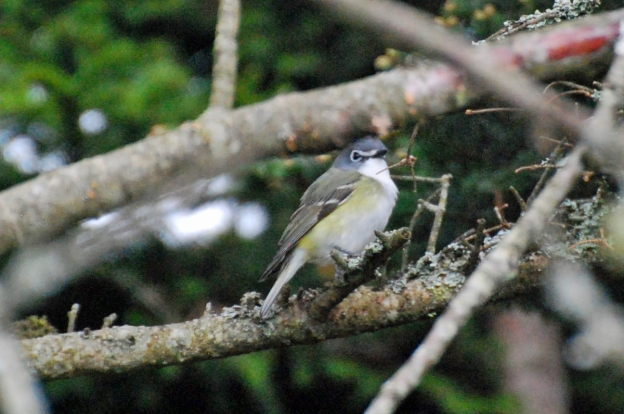
In East Tennessee Southwest Virginia and Western North Carolina, vireos resident during the summer months include red-eyed vireo, white-eyed vireo, blue-headed vireo, yellow-throated vireo and warbling vireo. Most people are likely unaware of vireos. Although not uncommon, these birds are more frequently heard than seen. They spend much of their time in the forest canopy or in dense brush. When singing, they can remain at a perch, unmoving, for long periods of time.

Photo by Jean Potter • A red-eyed vireo sits on its carefully woven nest among a canopy of leaves.

The loud scolding calls of red-eyed vireos often heard this time of year are given apparently when the vireo is alarmed or irritated. This scolding vocalization is quite unlike the usual ones produced by this bird. First and foremost, the call is louder than one would think could be produced by a bird that is only about six inches long. During the summer season, the red-eyed vireo is also one of the most persistent of singing songbirds. Another common name for the red-eyed vireo is “preacher bird,” so called because of its tendency to unceasingly deliver its song.
The red-eyed vireo is still considered one of eastern North America’s most common summer breeding birds. At one time, the red-eyed vireo was probably the most common breeding bird in eastern woodlands. That, sadly, is no longer the case. Red-eyed vireos are olive-green above and clean white below. These birds show a distinctive head pattern consisting of a gray crown and white eyebrow stripe bordered above and below by black lines. Adults also have the red eyes that give this particular vireo its common name. The term “vireo,” originating in Latin, can be translated into English as “green bird.” It’s an apt description, as many of these small birds are primarily dull green in coloration. Consider the vireos the “Plain Janes” of songbirds.

Photo by Jean Potter • A red-eyed vireo fledgling calls for a food delivery, which will arrive in the beak of one of the young bird’s parents.

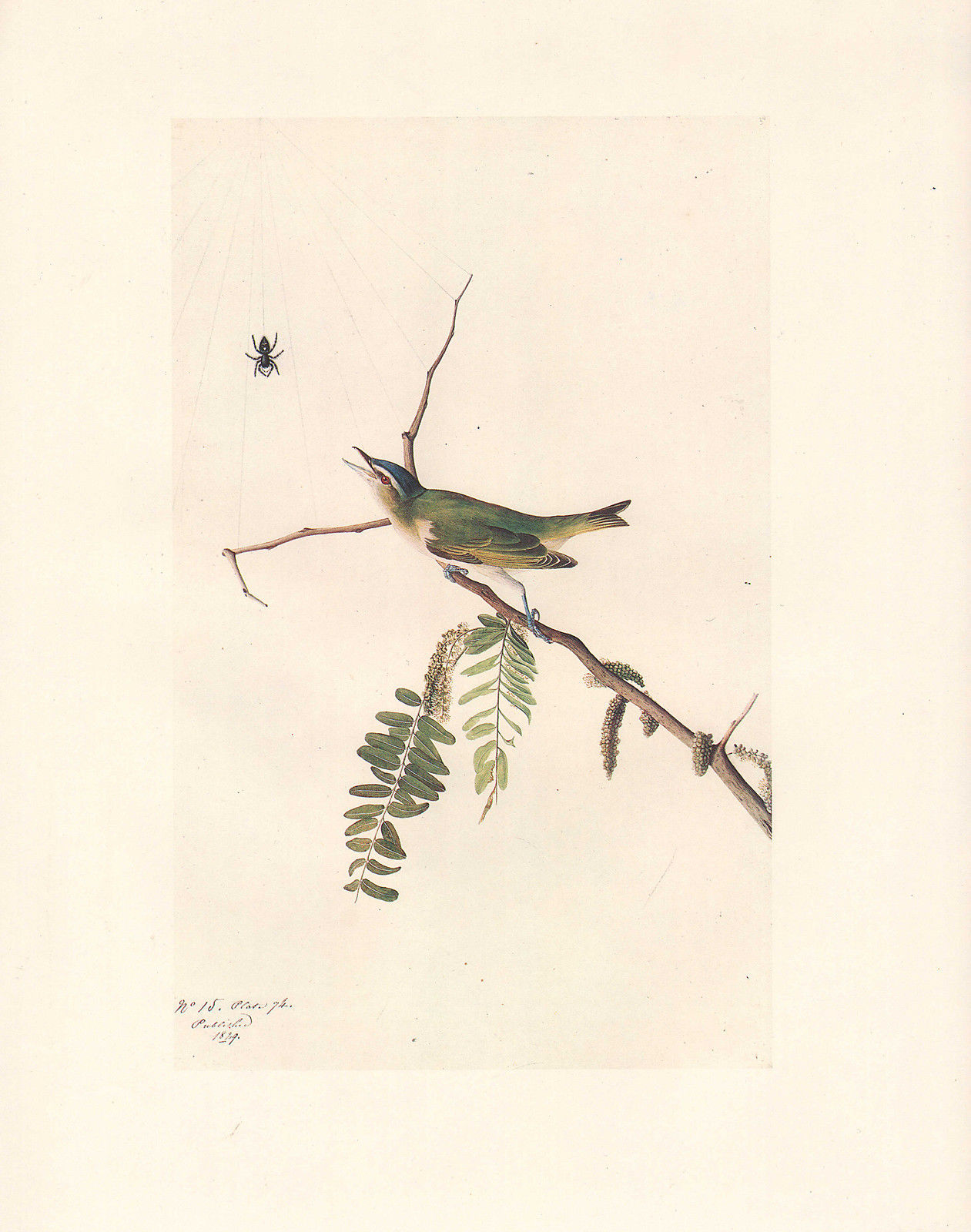
A red-eyed vireo painted by John James Audubon.

Other vireos that can be found in the United States, for at least part of the year, include Philadelphia vireo, plumbeous vireo and Cassin’s vireo. A specialty of Florida is the black-whiskered vireo, while the black-capped vireo is an endangered species found in Texas. Two others, Bell’s vireo and gray vireo, are identified as species of concern on the Audubon Watchlist.

Many species of vireo are also found in the islands of the Caribbean, including Jamaican vireo, Cuban vireo and Puerto Rican Vireo. The thick-billed vireo can be found in the Bahamas, which were recently pulverized by Hurricane Dorian. The thick-billed vireo is very similar to the white-eyed vireo, which is a summer resident in our region.

My only birding outside of the United States took place in the Bahamas 20 years ago. My highlights included two hummingbirds — Bahama woodstar and Cuban emerald — as well as bananaquits, black-faced grassquit, Western spindalis, Cuban pewee and other interesting species. I didn’t see a thick-billed vireo, but I did get my first-ever look at a Cape May warbler. I was visiting the Bahamas in January of 1999, which proved a fortunate time since many warblers migrate to these islands for the cold months. I’m hopeful that both people and birds on the islands Abaco and Grand Bahama and smaller islands most affected by the monster storm are able to recover soon.

Some of the more colorful common names for vireos include the dwarf vireo, golden vireo and yellow-winged vireo.  In Central and South America, the vireo family expands to include many birds with common names such as shrike-vireo, greenlet and peppershrike. Some of the varied species include lemon-chested greenlet, green shrike-vireo and the black-bellied peppershrike.

I still focus most of my birding efforts on warblers in the autumn, but vireos are always a pleasant diversion when the colorful warblers make themselves scarce.

Photo by Jean Potter • The blue-headed vireo prefers wooded habitats at higher elevations.

Unicoi County summer survey finds 107 bird species

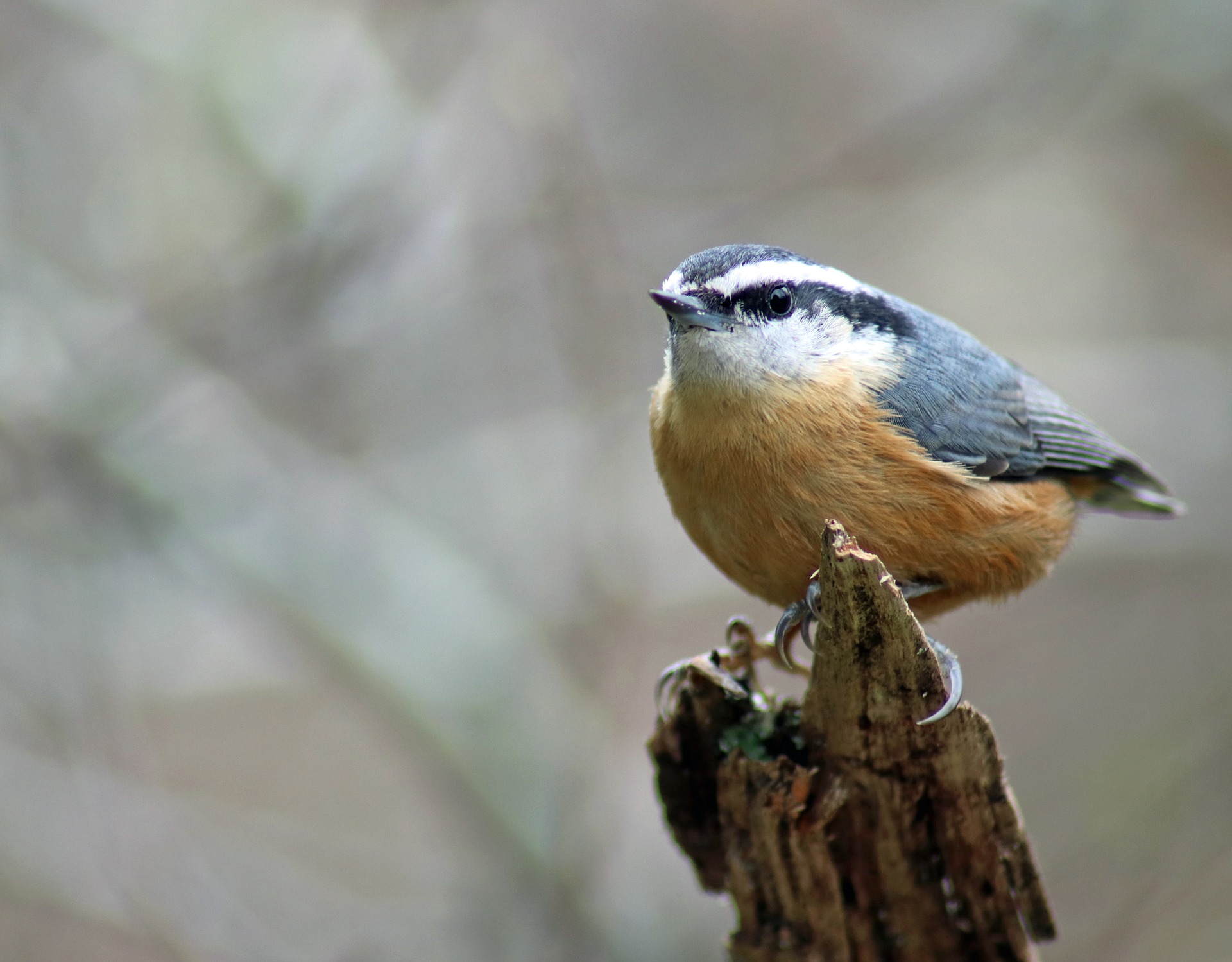
Photo by JudaM/Pixabay.com • Birds that nest at some high elevations, such as this red-breasted nuthatch, thrive at different locations in Unicoi County. A total of six red-breasted nuthatches were tallied on the recent Unicoi County Summer Bird Count.

The Elizabethton Bird Club holds two summer bird counts to supplement other population monitoring efforts on the birdlife of Tennessee. Six years ago, the club launched an annual survey of summer bird populations in Unicoi County.

The sixth annual Unicoi County Summer Count was held Saturday, June 15, with 16 observers in five parties. A total of 107 species was found, which is slightly below the average of 109 species. Unicoi County offers several high elevation species of birds not easily found in the region, according to compiler Rick Knight.

Knight noted that highlights for the count include sharp-shinned hawk, bald eagle, yellow-bellied sapsucker, least flycatcher, warbling vireo, common raven, red-breasted nuthatch, brown creeper, golden-crowned kinglet and hermit thrush. The count also found 18 species of warblers, including Swainson’s, Kentucky, magnolia and prairie.

Photo by Jean Potter • Golden-crowned kinglet is another high-elevation species found in Unicoi County during the summer.

The most common birds found in the count included American robin (241), European starling (224) indigo bunting (147) and song sparrow (146).

Some expected birds could not be found on the day of the count, including ruffed grouse, great horned owl, winter wren, Blackburnian warbler and pine warbler.

I counted with Dave and Connie Irick, Brookie and Jean Potter and Brenda Richards in the Limestone Cove community of Unicoi County. Some of our best birds included yellow-breasted chat, yellow-bellied sapsucker, rose-breasted grosbeak and Swainson’s warbler.

The total for this year’s Unicoi Bird Count follows:

Canada goose, 90; wood duck, 27; mallard, 33; wild turkey, 5; great blue heron, 2; and green heron, 3.

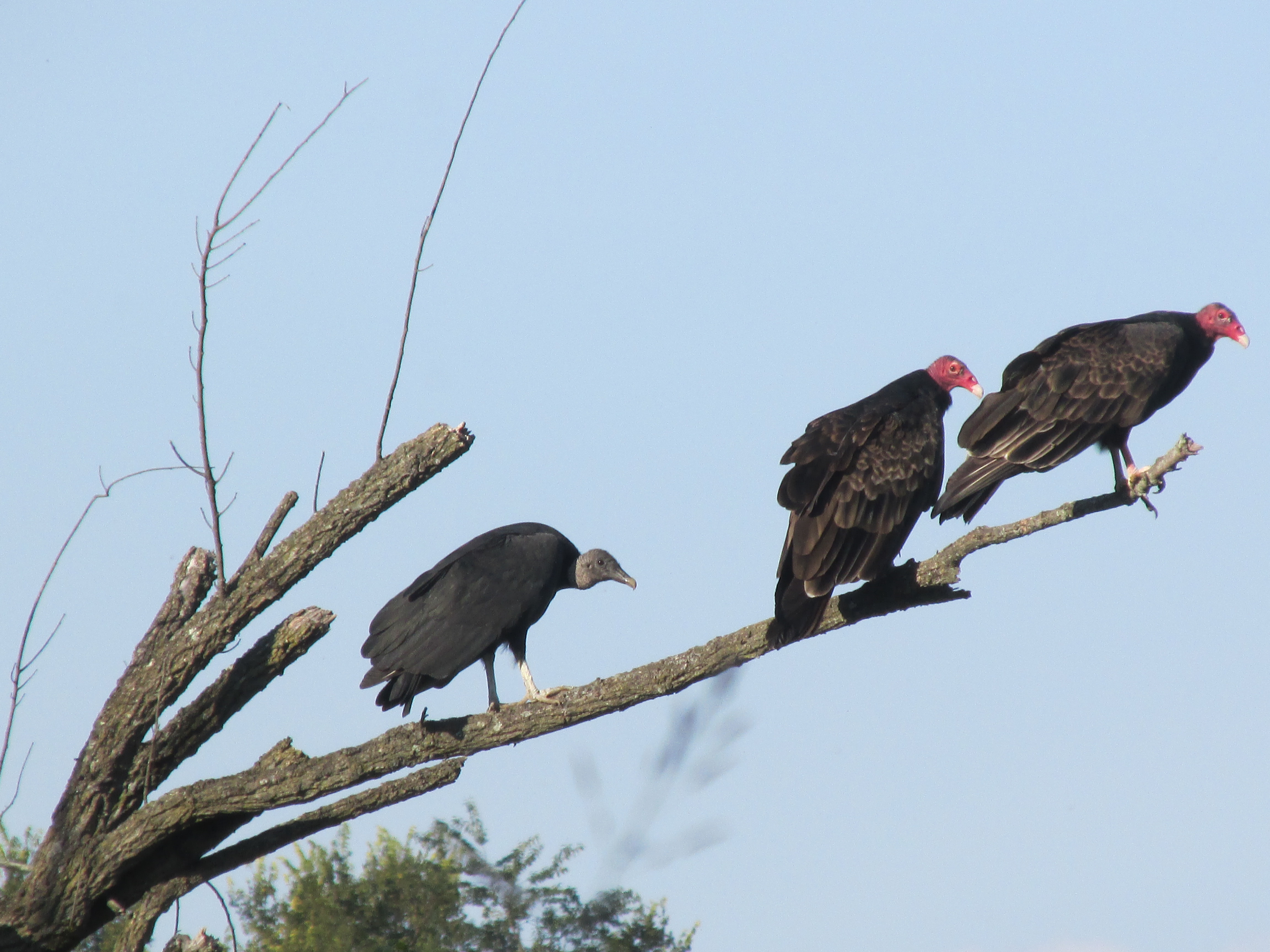
Photo by Bryan Stevens • Both black and turkey vultures were well represented on the Unicoi County Summer Bird Count.

Black vulture, 7; turkey vulture, 33; sharp-shinned hawk, 1; Cooper’s hawk, 1; bald eagle, 1; broad-winged hawk, 9; red-tailed hawk, 7; and American kestrel, 3.

Killdeer, 9; rock pigeon, 78; mourning dove, 70; yellow-billed cuckoo, 7; Eastern screech-owl, 1; and barred owl, 3.

Chuck-will’s widow, 3; Eastern whip-poor-will, 9; chimney swift, 37; ruby-throated hummingbird, 14; and belted kingfisher, 2.

Red-bellied woodpecker, 8; yellow-bellied sapsucker, 8; downy woodpecker, 17; hairy woodpecker, 1; Northern flicker, 8; and pileated woodpecker, 11.

Eastern wood-pewee, 4; Acadian flycatcher, 26; least flycatcher, 1; Eastern phoebe, 41; great crested flycatcher, 2; and Eastern kingbird, 8.

White-eyed vireo, 3; yellow-throated vireo, 1; blue-headed vireo, 23; warbling vireo, 2; and red-eyed vireo, 105.

Blue jay, 66; American crow, 84; common raven, 8; Northern rough-winged swallow, 53; purple martin, 40; tree swallow, 106; barn swallow, 152; and cliff swallow, 128.

Carolina chickadee, 69; tufted titmouse, 55; red-breasted nuthatch, 6; white-breasted nuthatch, 15; brown creeper, 3; house wren, 22; and Carolina wren, 60.

Blue-gray gnatcatcher, 20; golden-crowned kinglet, 4; Eastern bluebird, 62, veery, 11; hermit thrush, 3; wood thrush, 41; and American robin, 241.

Gray catbird, 25; brown thrasher, 11; Northern mockingbird, 27; European starling, 224; and cedar waxwing, 34.

Ovenbird, 36; worm-eating warbler, 17; Louisiana waterthrush, 10, black-and-white warbler, 15; Swainson’s warbler, 8; Kentucky warbler, 1; common yellowthroat, 10; hooded warbler, 75; American redstart, 2; Northern parula, 20; magnolia warbler, 1; yellow warbler, 6; chestnut-sided warbler, 9; black-throated blue warbler, 19; yellow-throated warbler, 15; prairie warbler, 1; black-throated green warbler, 17; Canada warbler, 8; and yellow-breasted chat, 2.

????????????????????????????????????

Eastern towhee, 46; chipping sparrow, 55; field sparrow, 7; song sparrow, 146; and dark-eyed junco, 17.

Scarlet tanager, 30; Northern cardinal, 64; rose-breasted grosbeak, 5; blue grosbeak, 3; and indigo bunting, 147.

Red-winged blackbird, 70; Eastern meadowlark, 9; common grackle, 71; brown-headed cowbird, 14; orchard oriole, 3; Baltimore oriole, 1; house finch, 19; American goldfinch, 92; and house sparrow, 18.

Unicoi County offers some great habitat for finding birds. In addition to the new state park, the county also offers Erwin Fishery Park and adjacent walking trails, as well as Unaka Mountain. The diversity of birds found on the summer count is a testament to the value of these habitats for birds and other wildlife.

Photo by Bryan Stevens • Green herons, such as this one, are found along the linear trail in Erwin during the summer months.


Indigo buntings common and colorful summer bird in region

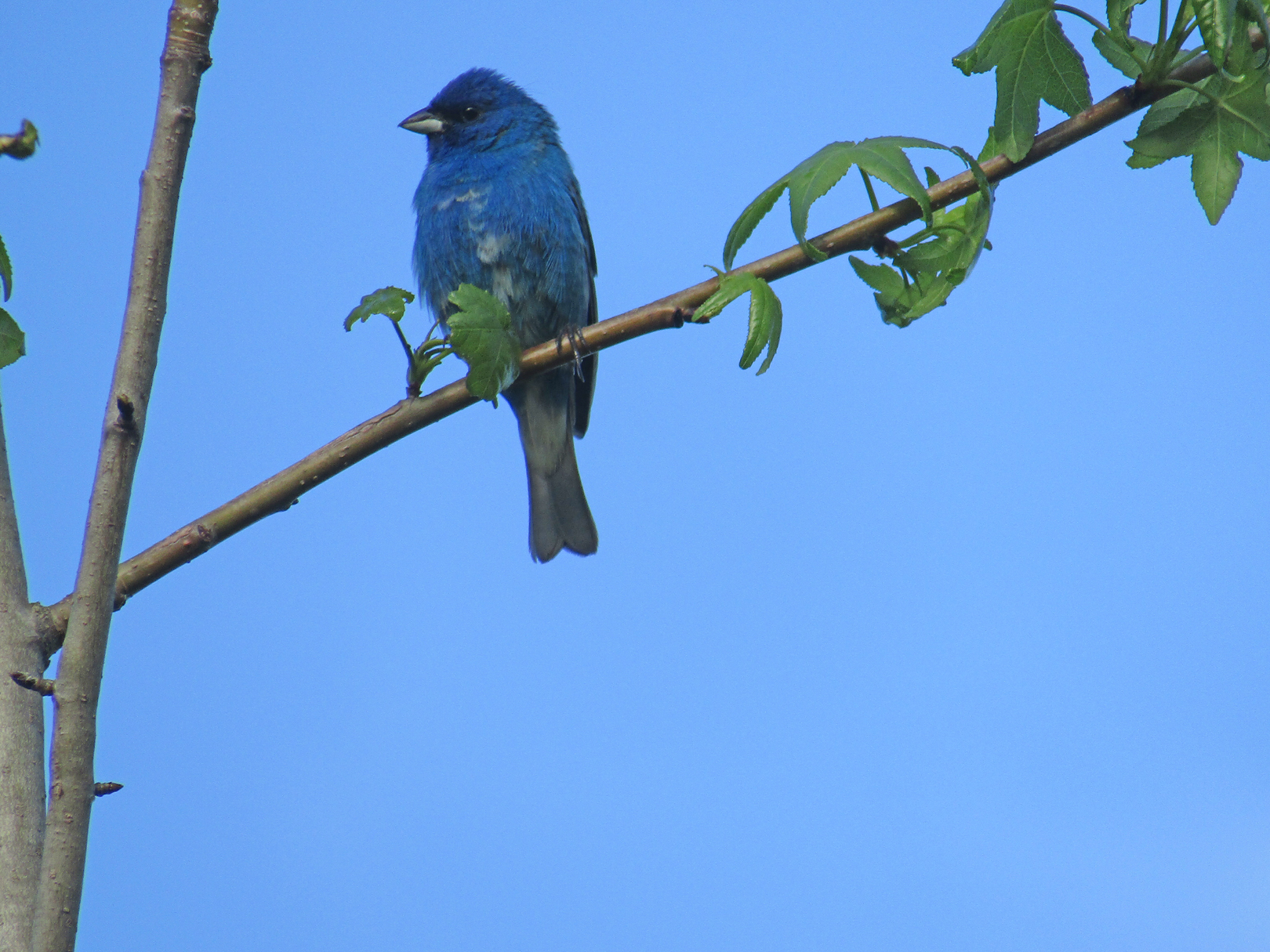
Photo by Bryan Stevens • The male indigo bunting’s one of the region’s more vibrantly colored birds of summer.

The recent five-county Spring Bird Count, conducted Saturday, May 4, by the Elizabethton Bird Club, found 145 species in the five Northeast Tennessee counties of Carter, Johnson, Sullivan, Unicoi and Washington. The count included such cities as Bristol, Johnson City, Jonesborough, Kingsport, Erwin, and Mountain City. A total of 57 participants in 11 parties counted during the annual survey of avian populations in the region. The long-running count is the only spring census of birds conducted in the area.

Not surprisingly, some of the most abundant birds included Canada goose, European starling, American crow, red-winged blackbird and common grackle. Some of the more common songbirds included red-eyed vireo, Northern cardinal, American robin, hooded warbler, American goldfinch and Indigo bunting.

The indigo bunting is one of the reasons spring is such a wonderful time of the year to watch the visitors to feeders. This small songbird likes to reside in the boundary region where forests and woodlands meet fields and pastures. Personally, the indigo bunting has always been a bird that is suggestive of the long, hot days of summer. One of my earliest and still quite vivid birding memories is a recollection of a shockingly blue bird atop a blue spruce tree in my yard. Several decades later, the tree is no longer standing, but these beautiful birds — I now know these summer visitors were indigo buntings — still return each year to my yard and gardens.

Photon by Bryan Stevens • Indigo Buntings will perch on wires and sing for hours even during hot summer days.

These birds usually arrive in the region in late April, and I’ve seen them linger until late October, although most indigo buntings have left the region by late September. Upon arrival, male indigo buntings become tenacious singers, repeating their jumbled notes even during the hottest hours of summer afternoons. The preference of this small songbird is to sing from the tops of tall trees, where they are often concealed by the green leaves. When I do get a glimpse of the obscured songster, often all I see is a dark shape silhouetted against the bright sky. Sometimes, if he plunges from the upper branches into the woodland understory, I get that telltale glimpse of blue feathers.

The indigo bunting is the only solid blue bird in the eastern United States, but it’s all an illusion — literally a trick of the light. The indigo bunting’s feathers are not really blue; the male’s brilliant azure plumage is caused by the process of diffraction of light around the structure of the bird’s feathers. This process scatters all but the blue light, and the resulting color shifts from black to blue to turquoise as the angle of reflected light changes. In bright light, it can even look unnaturally vivid blue. In poor light, however, an indigo bunting male can appear black. Fortunately, indigo buntings have both a characteristic body shape and song, so even if the birds are not seen at their best, they can still be recognized.
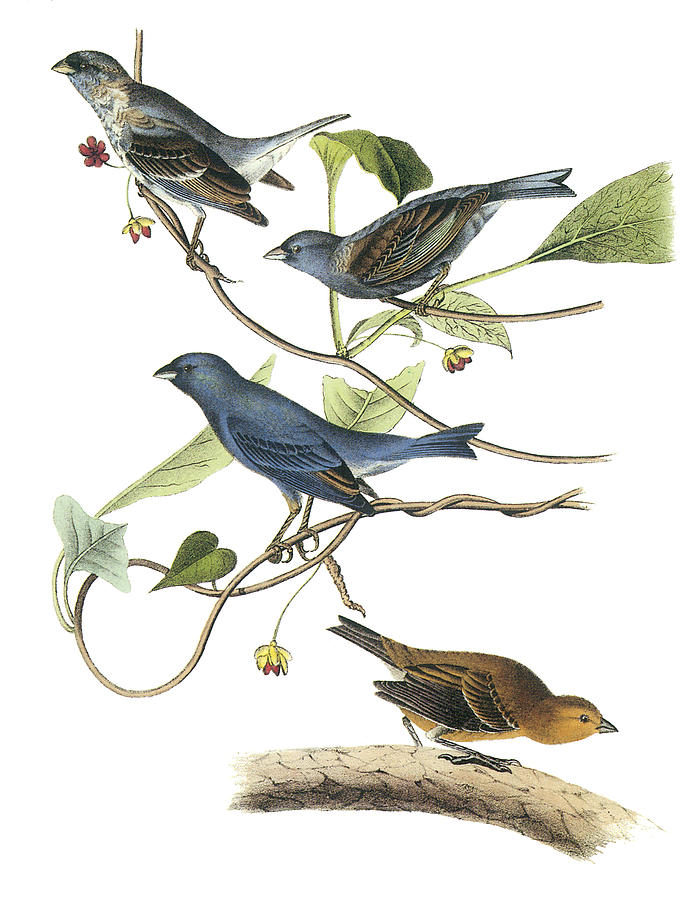
Early American naturalist and artist captured the differences in male, female and immature indigo buntings in this painting of the species.

Soon after returning to the eastern United States each spring, female buntings begin to gather materials to construct a well-crafted, cup-shaped nest. The male usually stays close to her, but he offers no assistance with nest building. She usually lays a clutch of three to four eggs, but she may nest another two times in a single season.

She will incubate the eggs for almost two weeks, but the young remain in the nest another two weeks after being hatched as featherless, blind and helpless young completely dependent on the care of attentive parents. The task of raising so many broods in the space of only a few months requires the participation of both the female and her mate, who must work hard to bring enough insects to the nest to keep the young fed.

Like many species of songbirds, the male is by far the most colorful. In this instance, the male is also responsible for the species’ name. Indigo is a blue dye that was once an important crop in the South. The drab female may boast some blue highlights in her plumage. Juvenile birds just out of the nest also resemble the female. Pay close attention to any indigo buntings you observe as summer progresses. Juvenile birds will look mostly brown with just a hint of blue in the wings and the tail. These will be the young buntings that were hatched this spring and early summer. They will often accompany their parents to feeders.

Indigo buntings are particularly fun birds to observe in late summer. Although some books indicate that males are not very active in rearing young, I have on numerous occasions witnessed male buntings feeding fledglings at feeders. Indigo bunting juveniles, like the young of many other birds, beg for tidbits from parents by “bowing,” spreading their wings and shivering. These actions usually prompt a parent to pop some morsel into an impatient youngster’s open bill. Indigo buntings are relatively easy to view. They frequent weedy fields and roadside brush. During the breeding season, males can also be seen singing from prominent perches. The song, a distinctive jumble of notes, can help observers find these dedicated singers.

The male indigo bunting is one of the most colorful birds to visit feeders in the region. This species is also extremely fond of millet seed. I like to have some feeders stocked with millet when the buntings begin to return each spring. They will also feed on thistle and sunflower seeds. Away from our feeders, they also devour plenty of seeds from various noxious weeds. Because of the indigo bunting’s appetite for the seeds of destructive weeds, it is considered a beneficial bird.

Photo by Bryan Stevens • Newly-returned neotropical migrants, such as this Indigo Bunting, increased the total number of species for the annual spring count.

One of the most attractive summer scenes is to observe American goldfinches and indigo buntings feeding together on the nodding heads of summer sunflowers. The goldfinch males, resplendent in their bright yellow and black plumage, compete with the blue indigo bunting males for the fresh sunflower seeds. When bright red male Northern cardinals join in, observers have a complete artists’s palette for summer viewing.

The indigo bunting will usually respond to human squeaks that imitate a bird’s call. When a flock or family group of buntings are disturbed by a human observer, they usually begin a chorus of alarmed “chipping.”

As I indicated earlier, indigo buntings remain in the region until late September. Although this bird typically winters in Mexico, Panama and the Caribbean, in recent decades some indigo buntings have only gone as far south as Florida to spend the winter. There in the Sunshine State, the indigo buntings may mingle with a close relative, the splendidly multi-colored painted bunting. I usually see these vibrant songbirds whenever I visit coastal South Carolina in spring or summer. Male painted buntings are probably one of the most colorful birds in the United States with hues of red, green, purple and blue in their feathers.

Photo by Bryan Stevens • A male painted bunting enjoys a bath in a fountain at Hunting Beach State Park in South Carolina.

Other North American buntings include the snow bunting, the lazuli bunting and the lark bunting, which is also the official state bird for Colorado. Some of the common but descriptive names for some of the world’s other buntings include rose-bellied bunting, orange-breasted bunting, cinereous bunting, white-capped bunting, lark-like bunting, ochre-rumped bunting, golden-breasted bunting, chestnut-bunting, red-headed bunting, yellow bunting, blue bunting, little bunting, brown-rumped bunting, meadow bunting, corn bunting and crested bunting.

Keep your feeders stocked with millet and sunflower seeds if you want to increase your chances of seeing indigo buntings, as well as other handsome summer songbirds such as American goldfinch, chipping sparrow and Eastern towhee.

Photo by Bryan Stevens • Although bright blue, a male indigo bunting will often blend with its surroundings.