Tag Archives: facebook

Birds are not the only fall migrants sharing the skies

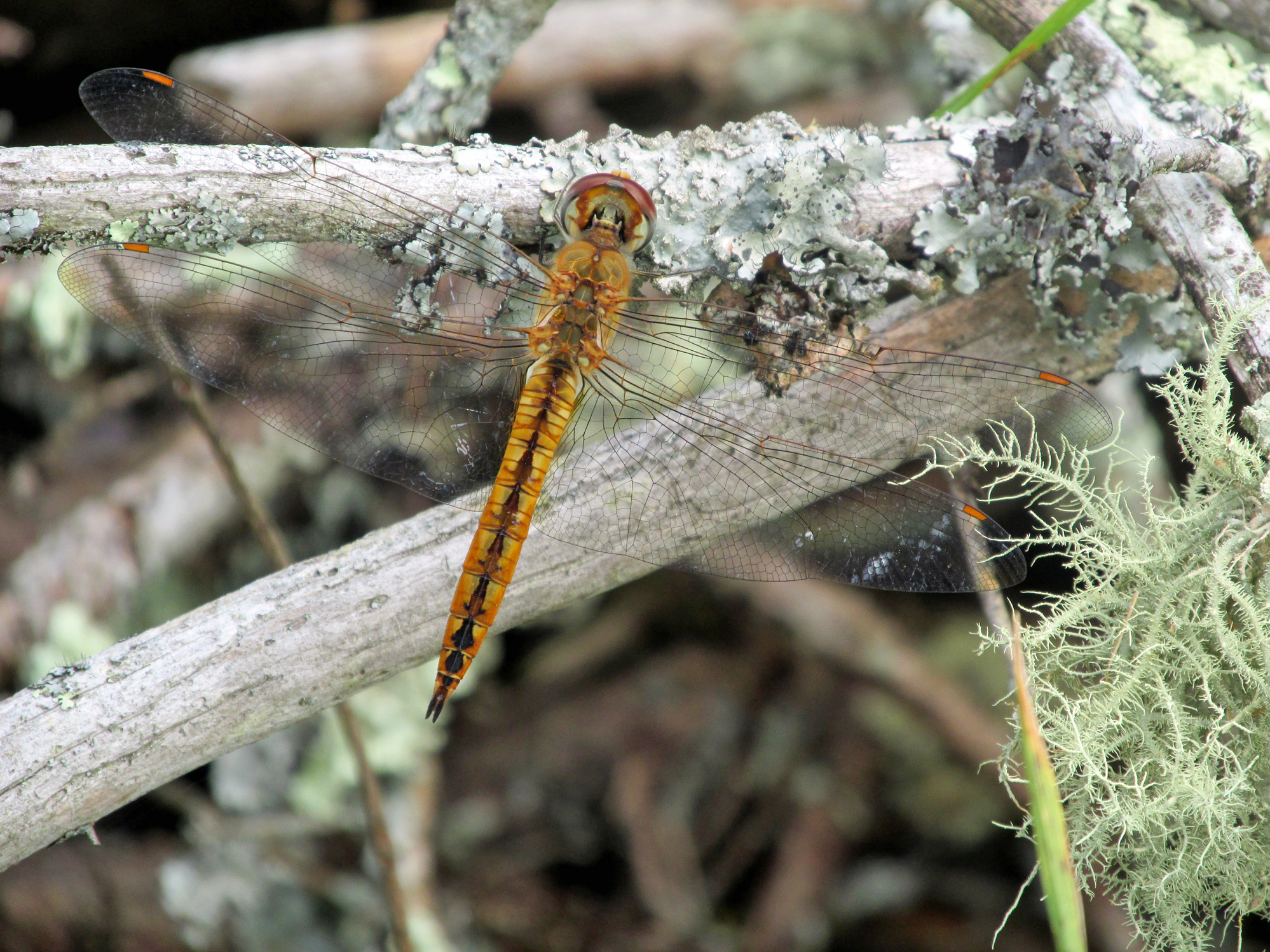
Photo by Bryan Stevens • Experts have documented long-distance migration flights by the Wandering Glider, a species of dragonfly.

Rhonda Eller of Chilhowie, Virginia, posted a question on my Facebook page about some dragonflies that appeared in her yard on Sept. 10.

“We have had a sudden breakout of dragonflies in our yard,” Rhonda explained. “We seldom see more than one or two at a time.”

Rhonda wondered if the dragonflies might have been drawn to her yard in pursuit of some sort of favorite insect prey. She also speculated that the recent dry conditions might have attracted the dragonflies.

I responded to her query by explaining that birds are not the only migrant in the skies at this time of year. Some dragonflies, just like birds, migrate. A species known as green darner is one that migrates. These darners are rather large, for a dragonfly, and travel in swarms. A couple of years ago I observed thousands of these dragonflies swarming over a municipal swimming pool and a nearby fish pond at a park in Erwin, Tennessee.

The WSLS Channel 10 television station out of Roanoke, Virginia, reported on swarms of dragonflies so large that they got picked up by local radar. Rhonda shared a link to the station’s story on my Facebook page.
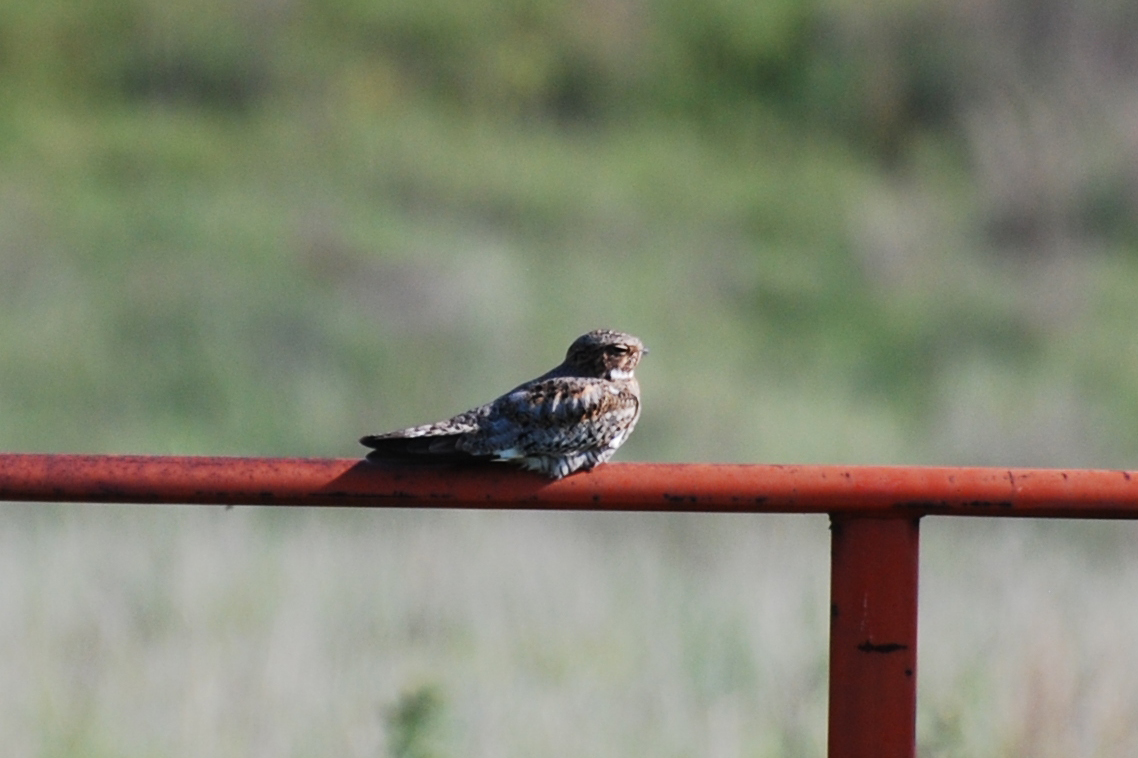
Photo by Jean Potter • A common nighthawk rests on a metal railing.

Of course, swarms of migrating insects are bound to get the attention of predatory birds. The same day that Rhonda experienced the influx of migrating dragonflies, I witnessed dozens of common nighthawks and chimney swifts swooping through the skies over my home. With a little more attention to detail, I also noticed the dragonflies sharing the skies with these birds.

I suspect that the nighthawks were feeding on the large darners while the swifts, which are much smaller birds, focused their foraging efforts on smaller winged insects. Tom McNeil, a neighbor and fellow member of the Elizabethton Bird Club, reported seeing nighthawks and swifts, too. Tom lives on the other side of a mountain ridge that separates our homes.

Tim Morris, a Facebook friend from Australia, noted in a comment on my post about the nighthawks that his country is home a bird known as the tawny frogmouth, a relative of the common nighthawk. Tim noted that frogmouths are big birds with camouflage markings that allow them to pretend to be dead tree boughs by day. “They feed not only on insects but mice and lizards, too,” he added.

Evidence of fall migration continued the next day when I detected a small wave of warblers foraging in trees at the edge of my yard. I saw five different species — American redstart, worm-eating warbler, Cape May warbler, Blackburnian warbler and Tennessee warbler — in the space of half an hour. Of the warblers in the flock, the Blackburnian and Cape May are some of the more vibrant ones.
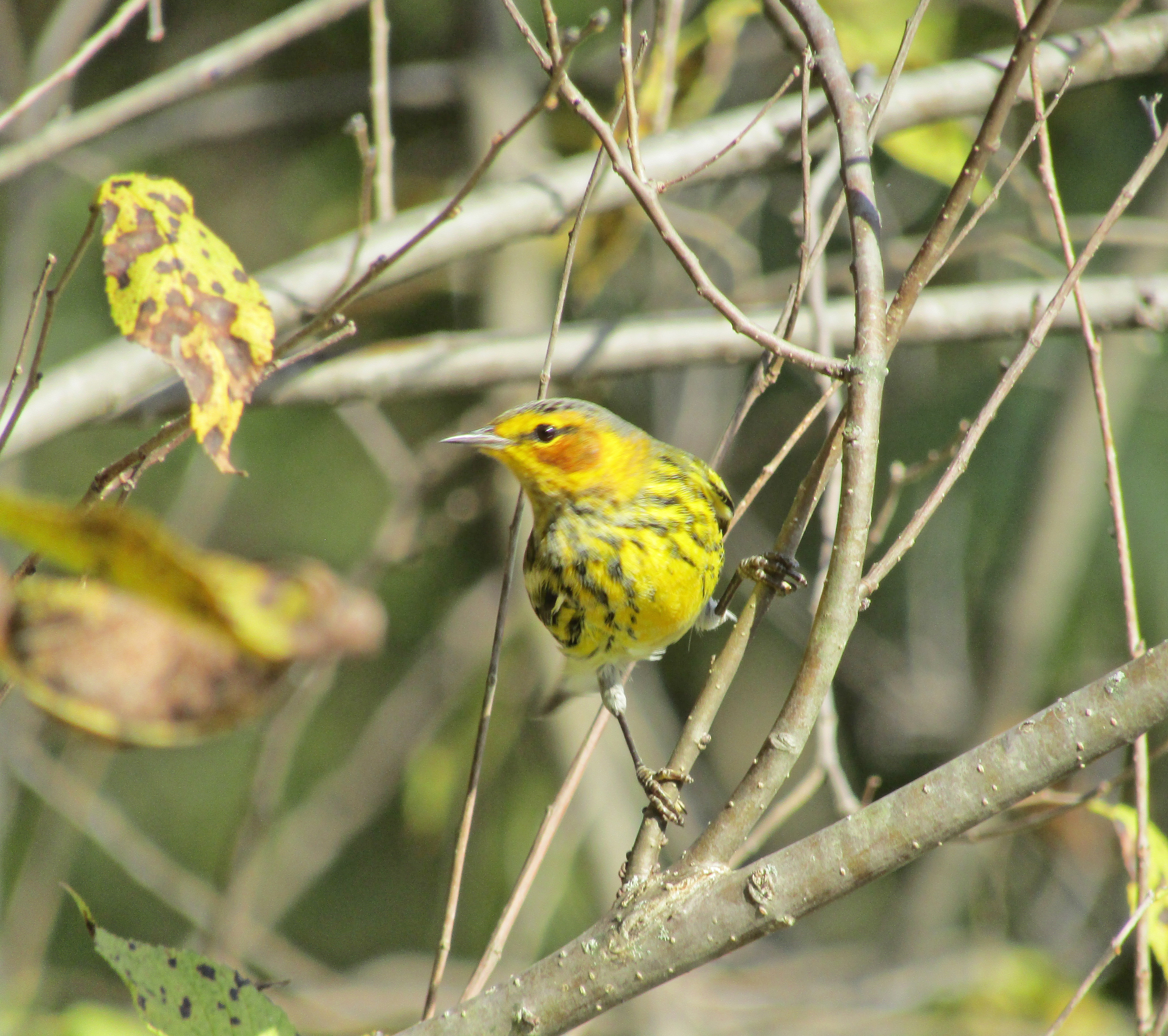
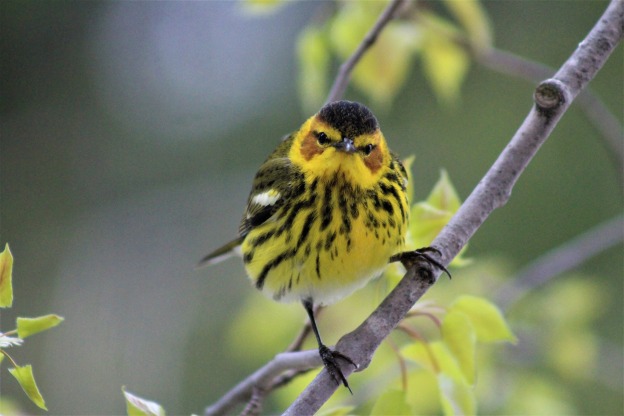
Photo by Bryan Stevens • While the Cape May warbler doesn’t breed locally, these warblers are fairly common spring and fall migrants in the region.

The Blackburnian warbler’s common name commemorates Anna Blackburne, an English naturalist who lived from 1726 to 1793. Her brother, Ashton, had immigrated to the United States, which made it possible for him to send his sister many specimens, especially birds. Their father, a salt merchant by trade, was also a well-respected amateur naturalist. In addition to the warbler that bears her name, Anna Blackburne also had a species of beetle named in her honor.

Both the Cape May and Tennessee warblers are named for the locations from which they were first collected. Neither of these small songbirds are closely affiliated with Cape May, New Jersey, or the Volunteer State. The Cape May warbler is also known as the “tiger warbler” for the dramatic black striping across its bright yellow breast. A green back and chestnut cheek patch make the Cape May warbler quite unlike any of its close kin. Even its scientific name — Setophaga tigrina — pays homage to the striped big cat. The term “setophaga” translates to “moth eater” and is a reference to this warbler’s intense fondness for the caterpillars known as spruce budworms that occasionally produce outbreaks in the northern spruce forests that serve as the nesting range for the Cape May warbler.
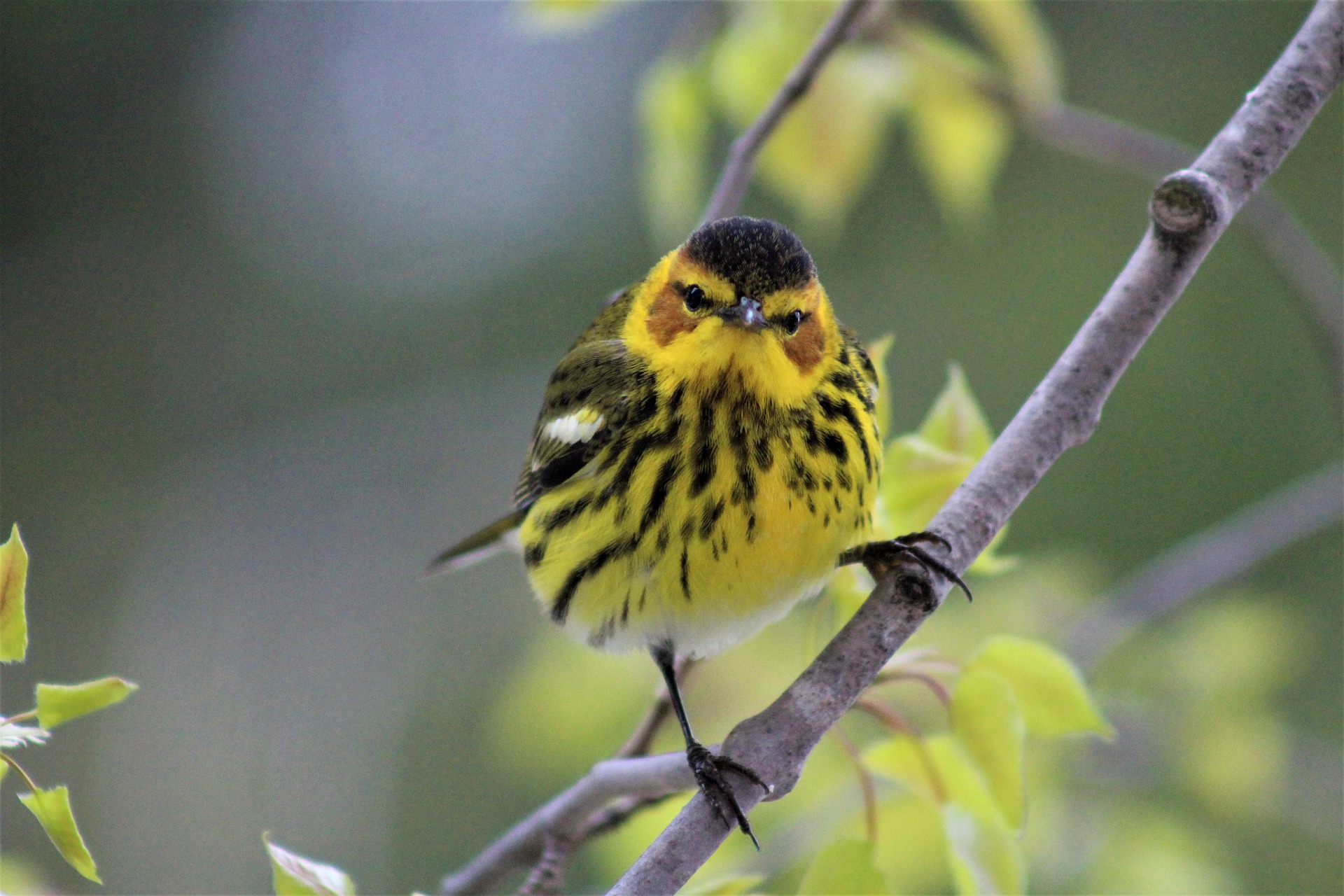
 

Photo by insitedesigns/Pixabay • A Cape May warbler peers from its perch on a tree branch.

According to the website, “All About Birds,” Cape May warblers have unusually shaped tongues that allow them to sip nectar from tropical flowers during the winter months spent in Central America and the Caribbean. Their unique tongues also make it possible for them to enjoy sips of sugar water from hummingbird feeders.

Whether its dragonflies, nighthawks, warblers or hummingbirds, plenty of birds and other flying creatures will be moving through the region for the next few weeks. Now’s the time to get outdoors and look for some of these migrants.

Photo by insitedesigns/Pixabay.com • The Cape May warbler migrates out of North America every fall to spend the winter in Central America and the Caribbean.
Think of the vireos as ‘Plain Janes’ of songbirds

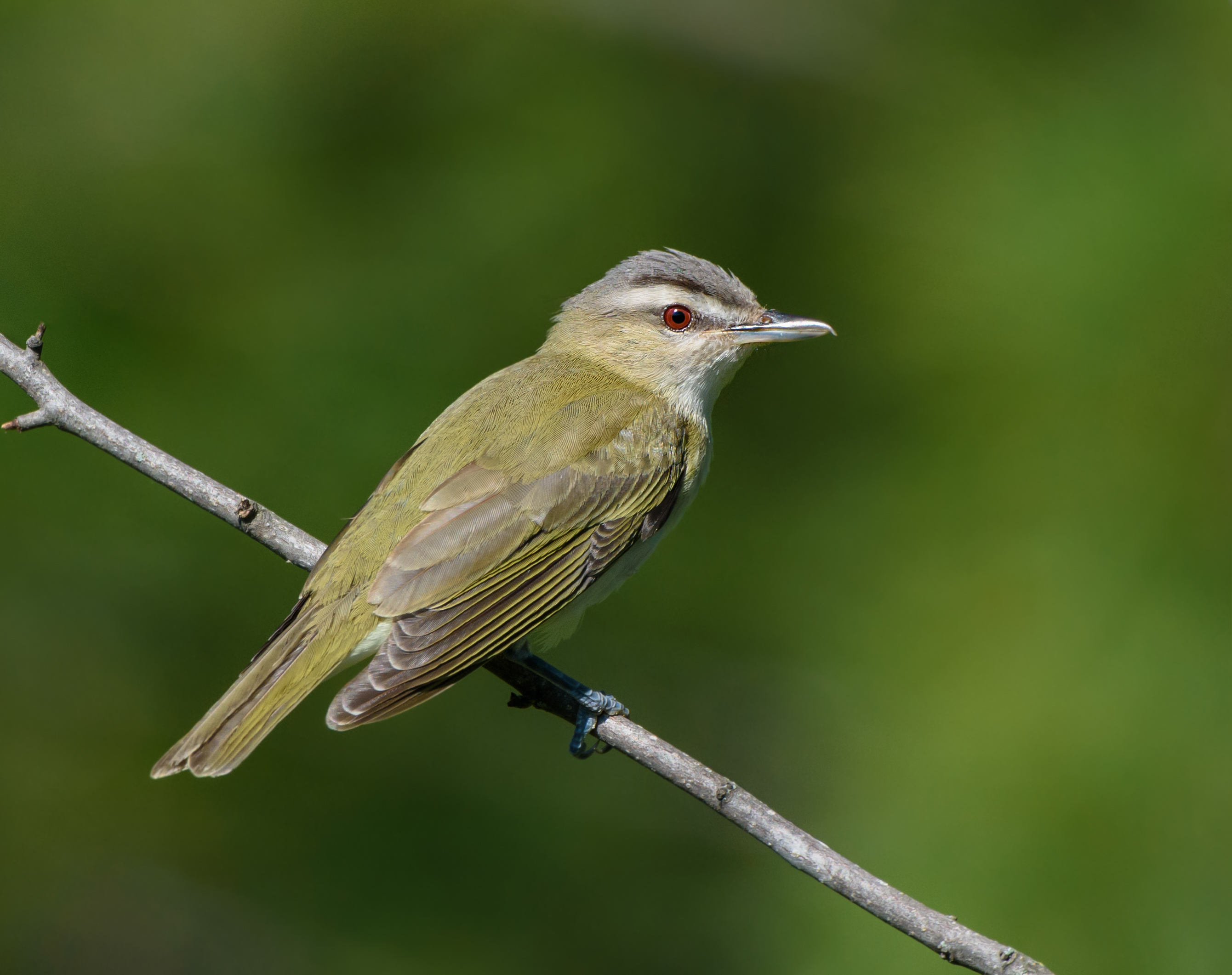
Photo by FotoRequest/Adobe Stock • A red-eyed vireo grasps a tree branch, a common pose for this bird that spends time concealed in the woodland canopy. The red eye can be difficult to detect unless lighting conditions are optimal for observers.

The start of migration appears to be more of a crawl than a sprint this fall, but I have picked up a few signs. For instance, I’ve been hearing the scolding sounds of red-eyed vireos from woodland edges for the past few weeks. A dedicated singer at most times, this vireo seems more likely to produce a harsh, scolding cry at this time of the year. Other hints of the steady advance of fall migration include flocks of common nighthawks and chimney swifts congregating in the skies over my home and the unmistakable croaking of common ravens from nearby ridges.

So far, I’ve seen only a few warblers, including black-throated blue warbler and hooded warbler. At a glance, vireos would appear related to the wood warblers. Research into DNA, however, has led many experts to contend that vireos are more closely related to crows and shrikes. Like the flycatcher and hummingbird families, the vireo family is exclusive to the New World. With a mere 50 species, vireos and their kin are vastly outnumbered by flycatchers and hummingbirds. The majority of vireos resides in the tropics, but about a dozen species nest in the United States.

In East Tennessee Southwest Virginia and Western North Carolina, vireos resident during the summer months include red-eyed vireo, white-eyed vireo, blue-headed vireo, yellow-throated vireo and warbling vireo. Most people are likely unaware of vireos. Although not uncommon, these birds are more frequently heard than seen. They spend much of their time in the forest canopy or in dense brush. When singing, they can remain at a perch, unmoving, for long periods of time.

Photo by Jean Potter • A red-eyed vireo sits on its carefully woven nest among a canopy of leaves.

The loud scolding calls of red-eyed vireos often heard this time of year are given apparently when the vireo is alarmed or irritated. This scolding vocalization is quite unlike the usual ones produced by this bird. First and foremost, the call is louder than one would think could be produced by a bird that is only about six inches long. During the summer season, the red-eyed vireo is also one of the most persistent of singing songbirds. Another common name for the red-eyed vireo is “preacher bird,” so called because of its tendency to unceasingly deliver its song.
The red-eyed vireo is still considered one of eastern North America’s most common summer breeding birds. At one time, the red-eyed vireo was probably the most common breeding bird in eastern woodlands. That, sadly, is no longer the case. Red-eyed vireos are olive-green above and clean white below. These birds show a distinctive head pattern consisting of a gray crown and white eyebrow stripe bordered above and below by black lines. Adults also have the red eyes that give this particular vireo its common name. The term “vireo,” originating in Latin, can be translated into English as “green bird.” It’s an apt description, as many of these small birds are primarily dull green in coloration. Consider the vireos the “Plain Janes” of songbirds.

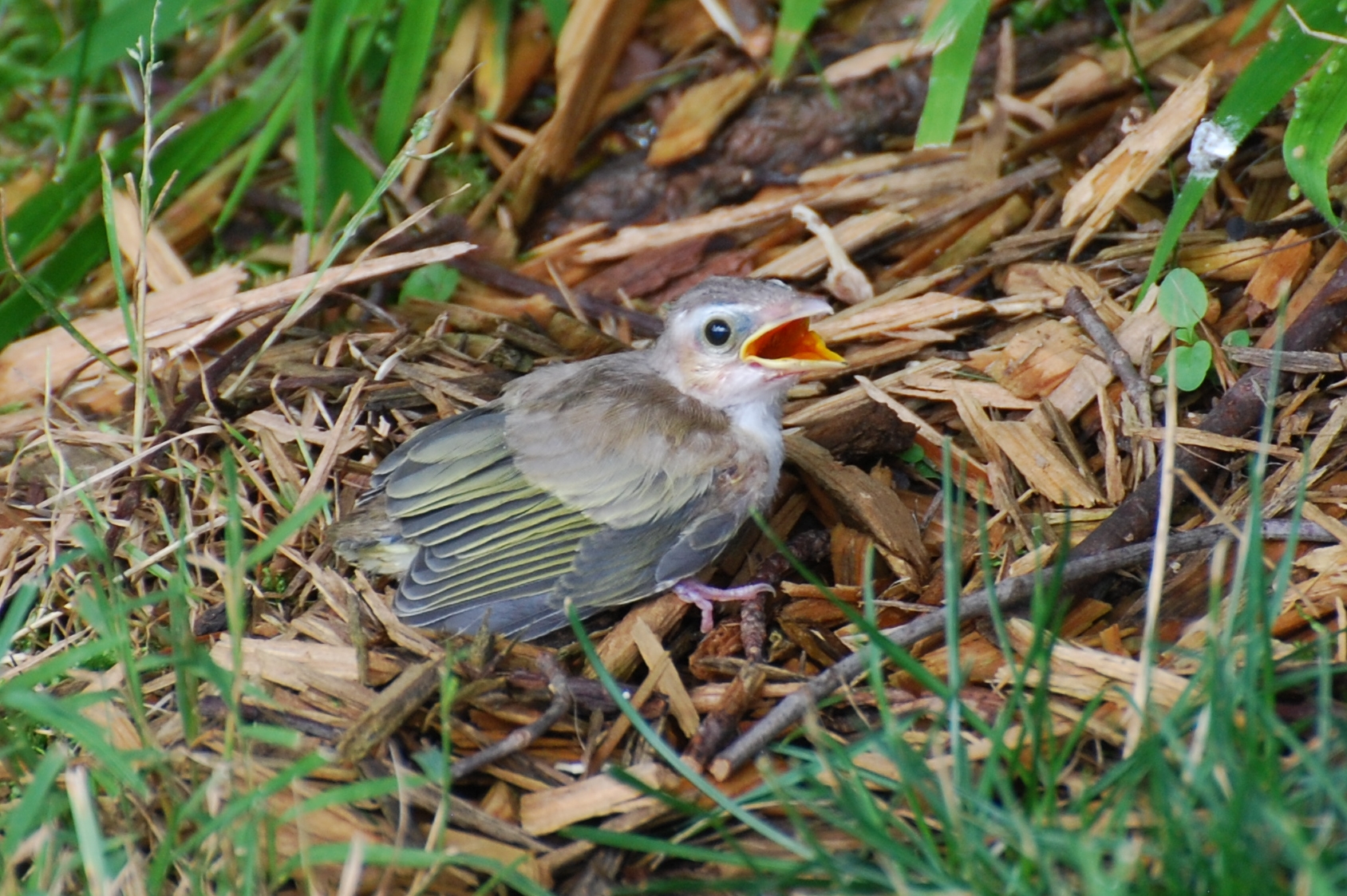
Photo by Jean Potter • A red-eyed vireo fledgling calls for a food delivery, which will arrive in the beak of one of the young bird’s parents.

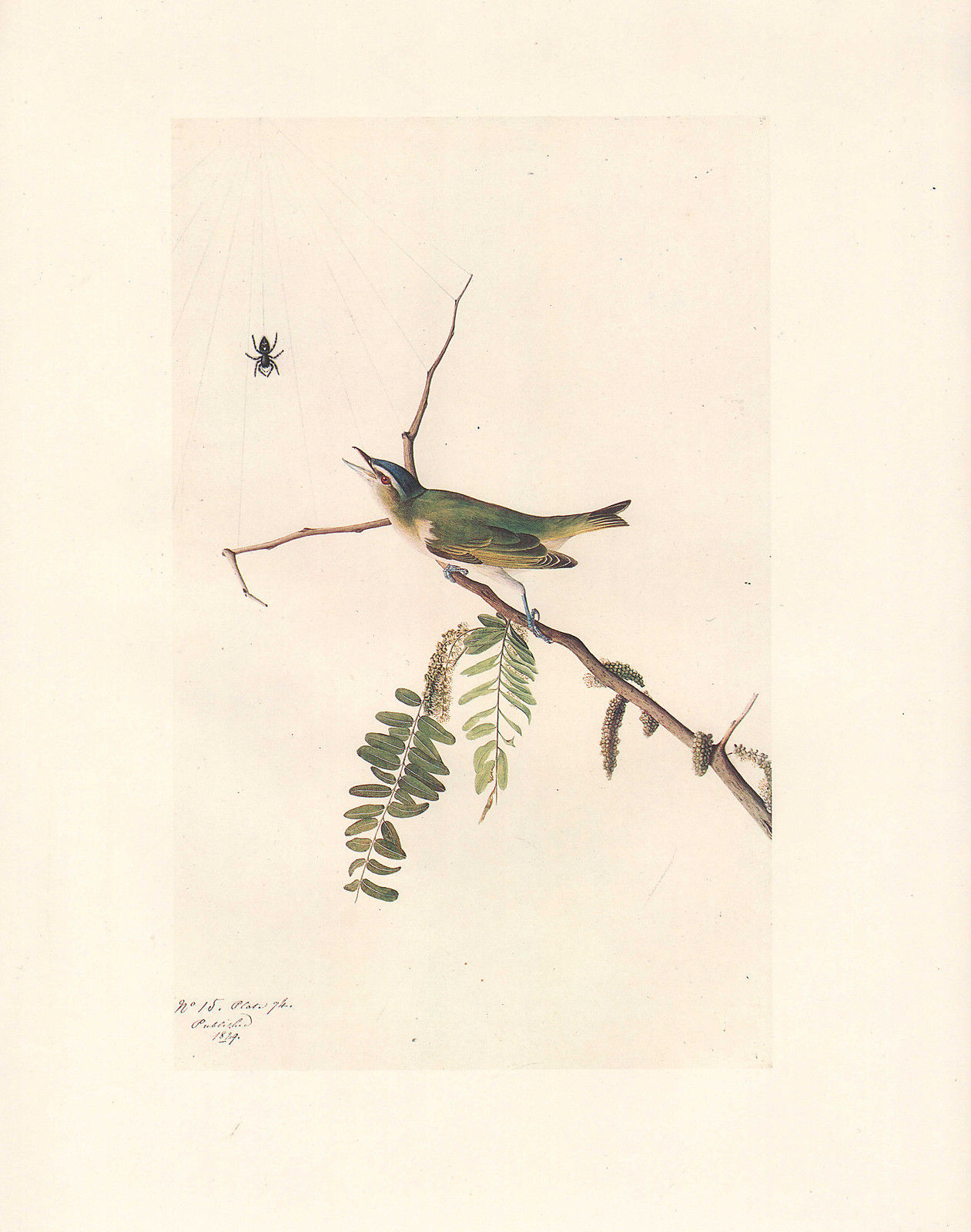
A red-eyed vireo painted by John James Audubon.

Other vireos that can be found in the United States, for at least part of the year, include Philadelphia vireo, plumbeous vireo and Cassin’s vireo. A specialty of Florida is the black-whiskered vireo, while the black-capped vireo is an endangered species found in Texas. Two others, Bell’s vireo and gray vireo, are identified as species of concern on the Audubon Watchlist.

Many species of vireo are also found in the islands of the Caribbean, including Jamaican vireo, Cuban vireo and Puerto Rican Vireo. The thick-billed vireo can be found in the Bahamas, which were recently pulverized by Hurricane Dorian. The thick-billed vireo is very similar to the white-eyed vireo, which is a summer resident in our region.

My only birding outside of the United States took place in the Bahamas 20 years ago. My highlights included two hummingbirds — Bahama woodstar and Cuban emerald — as well as bananaquits, black-faced grassquit, Western spindalis, Cuban pewee and other interesting species. I didn’t see a thick-billed vireo, but I did get my first-ever look at a Cape May warbler. I was visiting the Bahamas in January of 1999, which proved a fortunate time since many warblers migrate to these islands for the cold months. I’m hopeful that both people and birds on the islands Abaco and Grand Bahama and smaller islands most affected by the monster storm are able to recover soon.

Some of the more colorful common names for vireos include the dwarf vireo, golden vireo and yellow-winged vireo.  In Central and South America, the vireo family expands to include many birds with common names such as shrike-vireo, greenlet and peppershrike. Some of the varied species include lemon-chested greenlet, green shrike-vireo and the black-bellied peppershrike.

I still focus most of my birding efforts on warblers in the autumn, but vireos are always a pleasant diversion when the colorful warblers make themselves scarce.

Photo by Jean Potter • The blue-headed vireo prefers wooded habitats at higher elevations.

Pigeons belong to a remarkable and diverse family of birds


Photo by Karen McSharry • This rock pigeon made a recent visit to a home in Bristol, Virginia. Not native to North America, the pigeon has been here almost since the first Europeans arrived on the continent.

Karen McSharry, a resident of Bristol, Tennessee, emailed me recently with some photos asking for help in determining an identification of the bird depicted in her photos.

“This fellow made a sharp descent and landed on my deck with a thud,” Karen wrote. “He just stood there, seemed stunned and didn’t move or make a sound.”

After an hour or so, her husband picked the bird up and set him in the wooded area behind their house.

“He doesn’t seem to be there now, over a week later,” she added.

Karen said that at first glance pigeon came to mind as she tried to identify her visiting feathered friend. “But his head is bigger and black,” she wrote. “There didn’t seem to be any iridescence.”

Photo by Pixabay.com • The Nicobar pigeon (Caloenas nicobarica) is a striking wild pigeon in appearance that is found on small islands and in coastal regions from the Andaman and Nicobar Islands, India, east through the Malay Archipelago, to the Solomons and Palau.

I wrote back and told Karen to trust her instincts. The bird she photographed was indeed a pigeon, known more formally as rock pigeon.

Once also known as rock doves, this pigeon is not native to North America, but the species has been here almost from the time the first Europeans began to sail to the shores of what eventually became the United States and Canada. The rock pigeon is native to Europe, Africa and parts of Asia, but the species has long been domesticated. Pigeons display a lot of variety in their appearance. Through artificial selection, the rock pigeon has been bred into all sorts of other patterns and colors beyond the wild bird’s standard appearance.

I don’t usually get pigeons at my home, although I did once have a domesticated bird visit my feeders for a few days. This particular bird had a band on one leg. I found out later it was a “homing” pigeon, which are pigeons trained to carry messages. After they deliver their message, they return “home,” hence the term “homing pigeon.” But they are still basically just a domesticated variety of rock pigeon.

Gordon Randall Smith, a resident of Saltville, Virginia, might be one of the region’s foremost authorities on pigeons. Eighty-one years old, he has bred pigeons for the past 76 years. He’s also raised game chickens and described his place as once being “like a zoo.”

Photo by Pixabay.com • The Victoria crowned pigeon (Goura victoria) is a large, bluish-grey pigeon with elegant blue lace-like crests, maroon breast, and red irises. A wild bird, this pigeon shows that nature is just as inventive as humans at giving some birds unusual and outlandish appearances.

Gordon has understandable difficulty naming a favorite domestic pigeon strain. “With hundreds of breeds available, choice becomes overwhelming,” Gordon wrote. “Throughout years of close relationships and interested involvement, preferences creep in.”

After consideration, he identified the Bohemian fairy swallow as his favorite variety of pigeon, followed by Chinese owls, crested helmets and Budapest muffed stork tumblers, as well as Lahore and Indian ribbon tailed fantails.

An uncle, Landon Smith, introduced him to the love for the propagation of a variety of domestic pigeons. “I’ve been a fancier, breeder and vivid admirer of birds throughout my amazing and very fruitful life on this planet earth,” Gordon wrote in a letter.

“I was introduced to a covey of ringneck mourning doves and pigeons at uncle Landon Smith’s passing,” Gordon noted. He described his uncle as a very dedicated person who kept various birds, animals and even exotic creatures of nature.

I looked up some of these whimsical names online. Although the basic pigeon stock is apparent in their makeup, these fanciful breeds truly show how enthusiastically the rock pigeon has embraced domestication.

In the wild, rock pigeons display an affinity for nesting and roosting on cliffs and rock ledges, hence the bird’s common name. Feral pigeons in large cities like New York have merely substituted high rises and skysrcapers for craggy cliffs.

Pigeons and doves constitute the avian family Columbidae and the order Columbiformes, which includes about 42 genera and 310 species. North America is home to several native doves, including the mourning dove, Inca dove, common ground dove, ruddy ground dove and white-winged dove. The latter was made famous in a refrain in the song “Edge of Seventeen” by Stevie Nicks.

Other doves and pigeons found around the globe include such fancifully named birds as pink-necked green pigeon, lemon dove, silvery pigeon, black cuckoo-dove, pheasant pigeon, purple-tailed imperial pigeon, topknot pigeon, common emerald dove, blue-headed wood dove, ruddy quail-dove, red-billed pigeon and Victoria crown pigeon. The diversity of form and function among wild doves and pigeons rivals anything that has been produced in their domesticated kin.

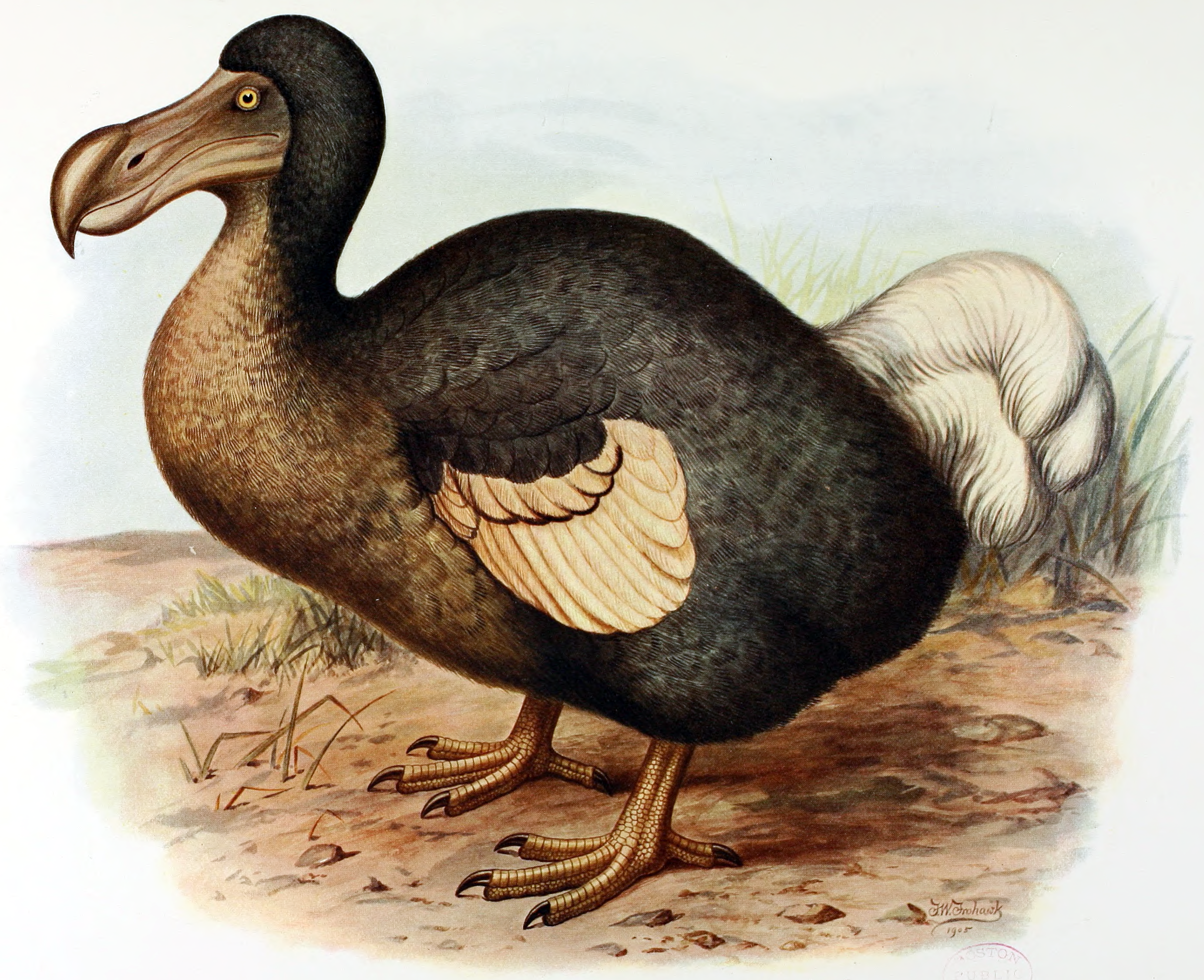
The now-extinct dodo was arguably the most famous member of the diverse family that includes pigeons and doves.

Cardinals don’t always look their best during late summer

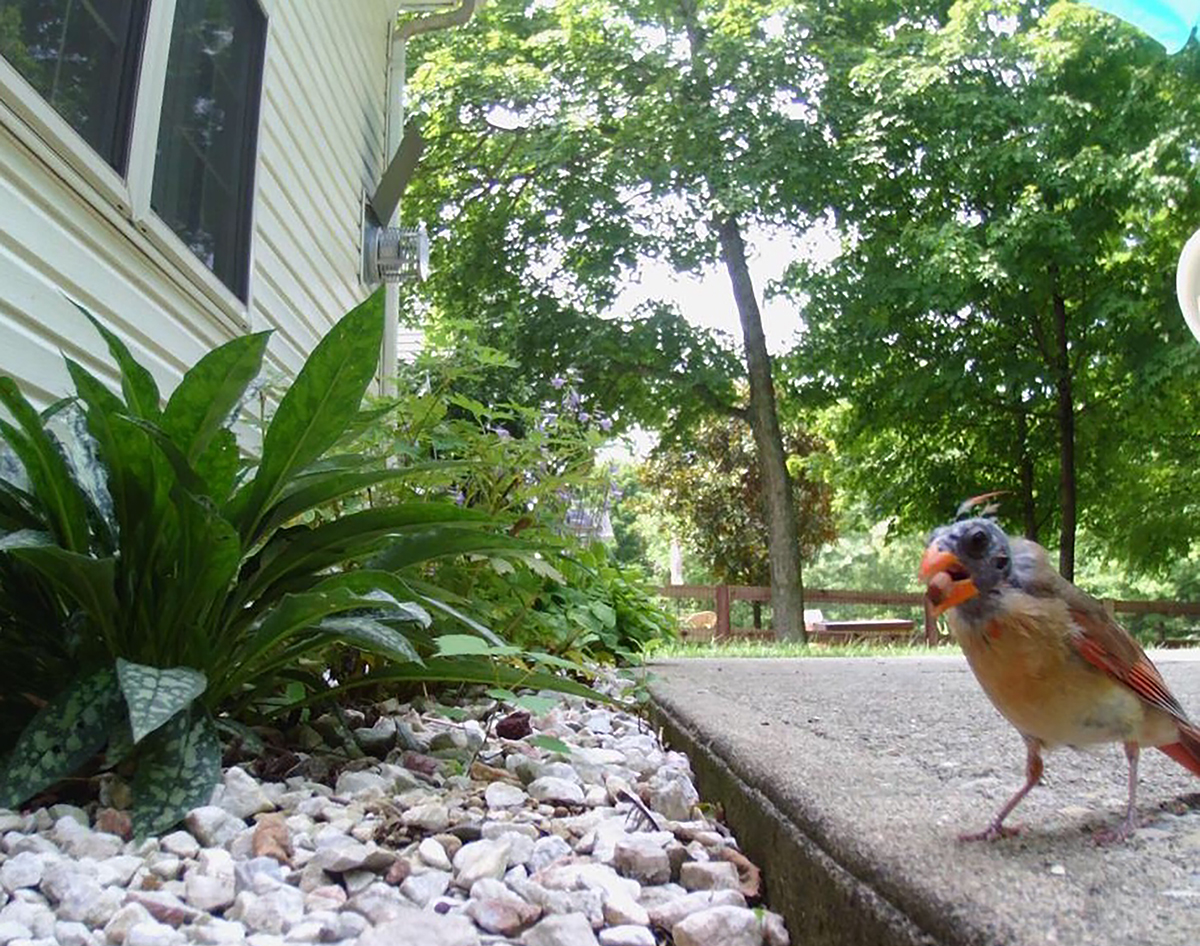
Photo Courtesy of Gina Fannin • This female Northern cardinal, with a head devoid of feathers, appeared at a home in Cincinnati, Ohio. Although these strange looking cardinals often surprise people, they are not all that uncommon in late summer.

Gina Fannin wrote about an unusual observation of a follicly challenged Northern cardinal at her home in Cincinnati, Ohio. The bird in question, a female cardinal, had lost most of the feathers on her head. Gina took a photo of the bird, which she sent with her email, in which she asked if I have ever encountered a cardinal with such a problem.

Gina said that she has seen male cardinals suffering from baldness, but never a female. “I’ve lived here 24 years, and this is the first time I’ve seen a bald female,” she wrote in her email.

I replied to Gina by informing her that I’ve heard of these strange instances for many years. Bald-headed cardinals seem to be a summer occurrence. I usually get some emails or calls this time of year about people surprised by visits from “weird bald-headed” cardinals. I first began to get calls and email from readers in the late 1990s about this unusual phenomenon that seems to usually afflict cardinals, although I have also seen blue jays suffering from this same ailment.

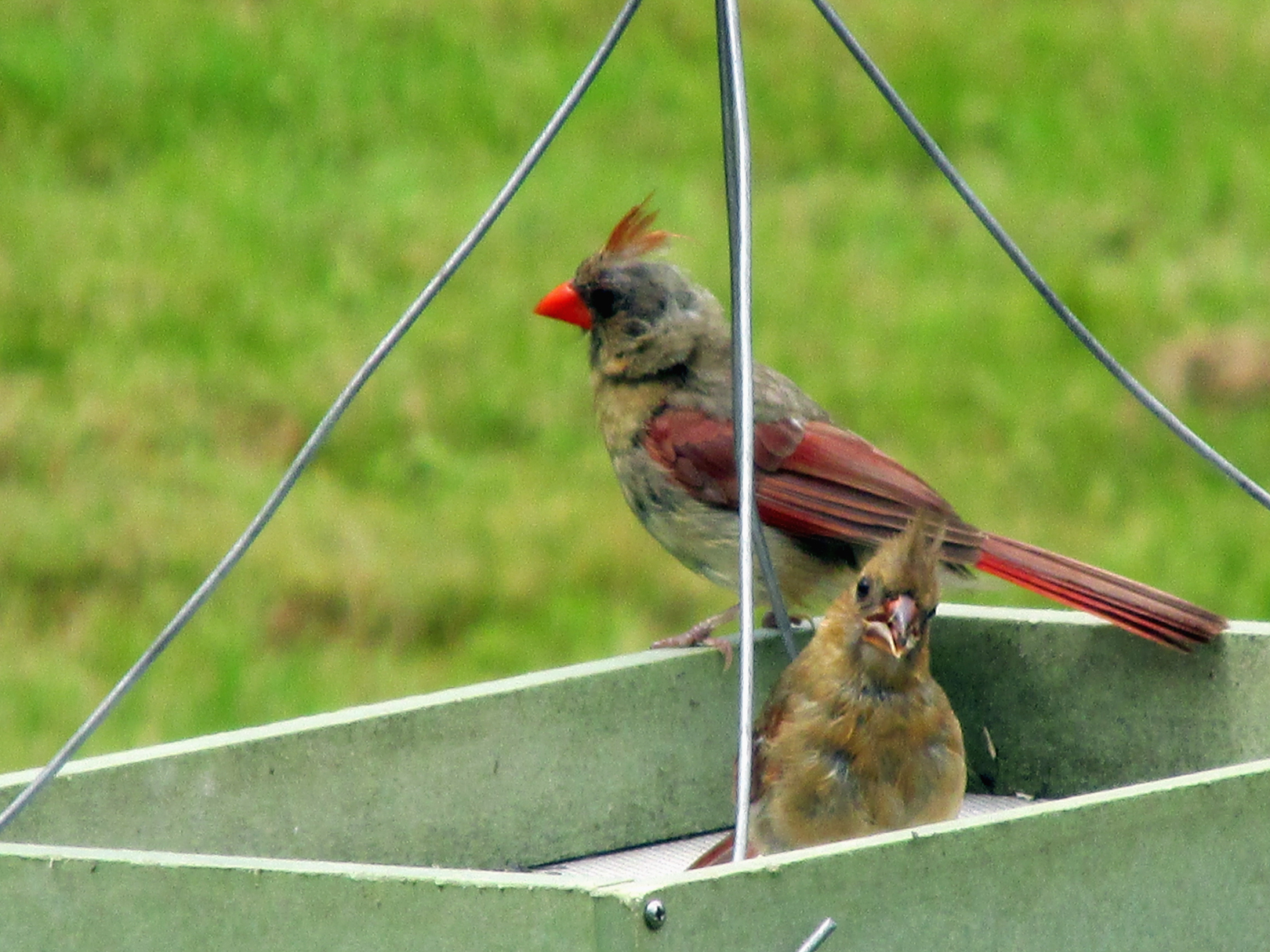
Photo by Bryan Stevens • This female Northern cardinal, shown with one of her offspring at a feeder in late summer, is exhibiting some problems with her feather molt.

I have studied the opinions of various bird experts, but there doesn’t seem to be consensus about the cause. Some believe the “baldness” is caused by an infestation of mites, which are small relatives of spiders and other arachnids. Others believe that the loss of feathers around the head is a part of a normal molting process. This theory is supported by the fact that cardinals do undergo molting in late summer, usually after the conclusion of the nesting season.

The process of molting removes old feathers, which simply drop from the body as new feathers emerge to take their place. For some reason, some cardinals and jays lose all their head feathers at one time before new feathers are ready to take their place. That’s why the condition is typically observed in the summer months. Both male and female cardinals can be afflicted with “bald” heads. It’s strange that the condition primarily affects these two birds, cardinals and jays, both of which have feather crests. On the other hand, cedar waxwings are also crested birds, but I have never observed or received a report on a “bald-headed” cedar waxwing.

Whatever the cause, a “bald-headed” cardinal is an ugly bird. Without feathers, a cardinal is transformed from a showy favorite among bird enthusiasts to a rather grotesque oddity that could aptly be described as resembling a scavenging vulture. Birds like vultures, however, have heads devoid of feathers for a very important reason: As scavengers, a feathered head would become quickly fouled as the bird reaches into the carcasses of dead animals to feed.

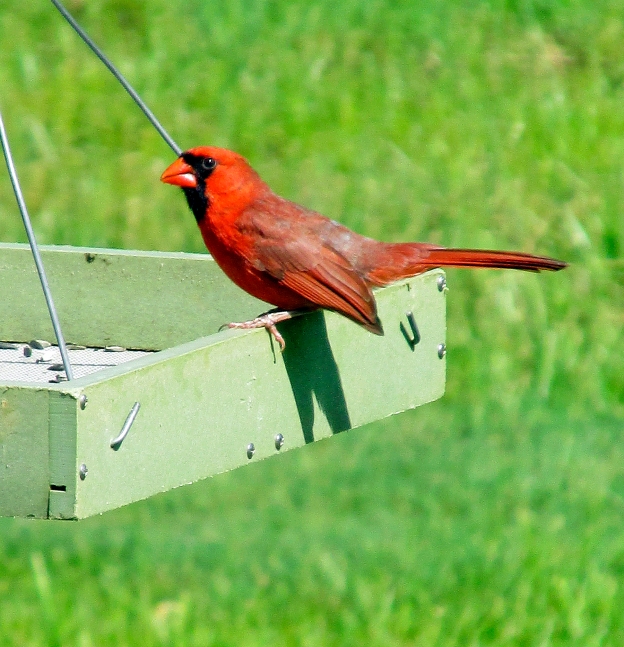
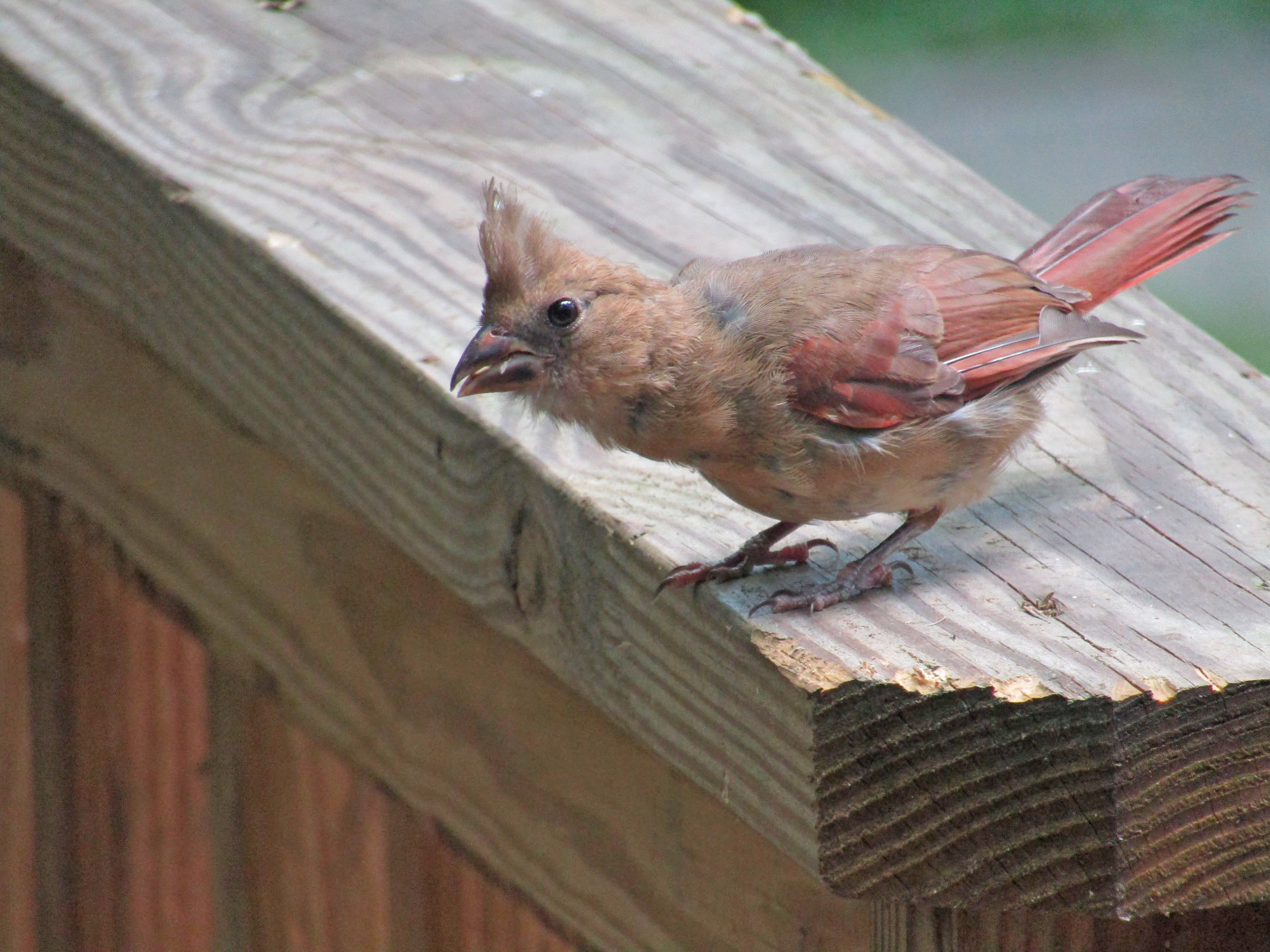
Photo by Bryan Stevens • This young Northern cardinal visits a feeder in the Atlanta suburbs.

The cardinals I have seen with “bald” heads have been visiting feeders stocked with sunflower seeds or perhaps a holder offering a suet cake. So, the absence of feathers is not a hygienic adaptation on the part of cardinals and jays similar to the hygienic necessity of bald heads among vultures. The good news is that the condition is temporary. The normal molt for a Northern cardinal takes two or three months. The feathers on the head do emerge eventually, which is probably very fortunate for the afflicted birds. Feathers serve as insulation during cold weather. A “bald-headed” cardinal would probably have difficulty surviving winter cold spells.

We’re all accustomed to seeing cardinals at our feeders, but people who feed birds would probably be surprised by how much food cardinals and other feeder visitors obtain away from our well-stocked offerings. During the summer months, cardinals eat a variety of wild seeds, fruit and insects. Some of the fruit consumed by cardinals include elderberry, dogwood, blackberry and wild grapes. Young cardinals still in the nest (and fledglings for some time after leaving the nest) are fed mostly insects, including crickets, spiders, moths and flies.

To make cardinals comfortable in every season, offer plenty of thick vegetation, such as a hedge or row of shrubs, and consider planting some of the fruit trees and shrubs that will help these beautiful birds supplement their diet.

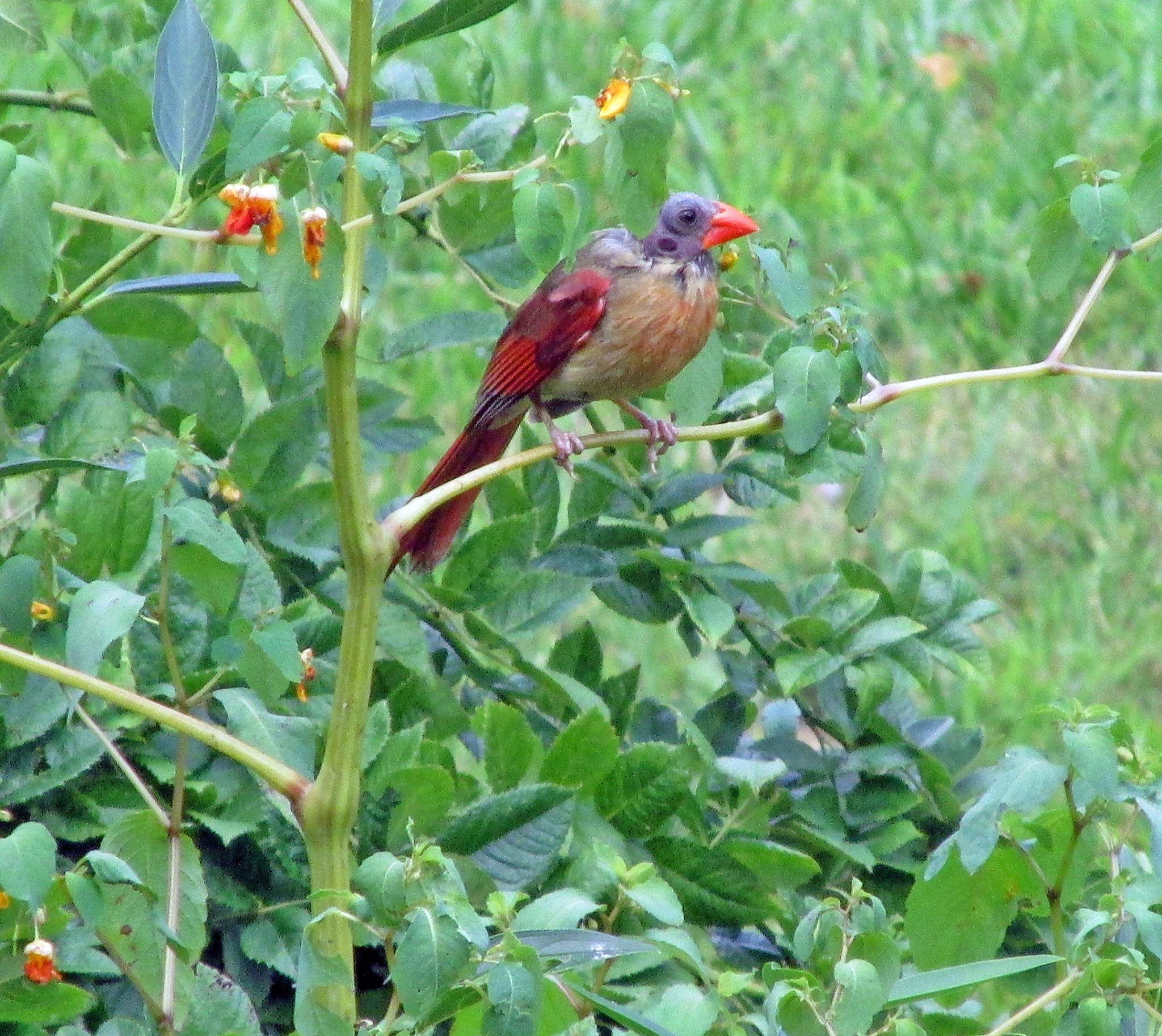
Photo by Bryan Stevens • A female Northern cardinal with most of her head featherless.

Sighting points out the weakness in relying on field guide range maps


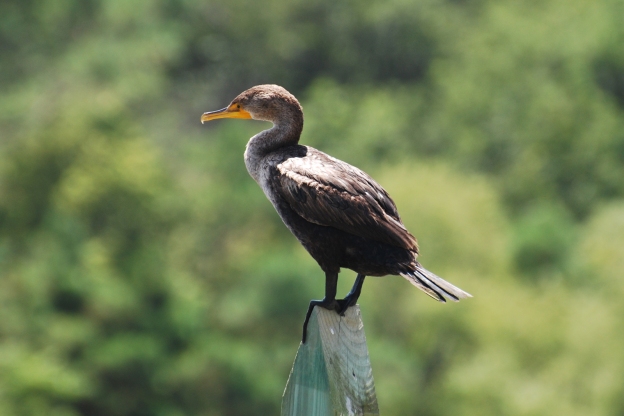
Photo by Rodney Krey/U.S. Fish & Wildlife Service • The double-crested cormorant is a water bird designed for preying on fish. The population of this cormorant has increased in recent years.


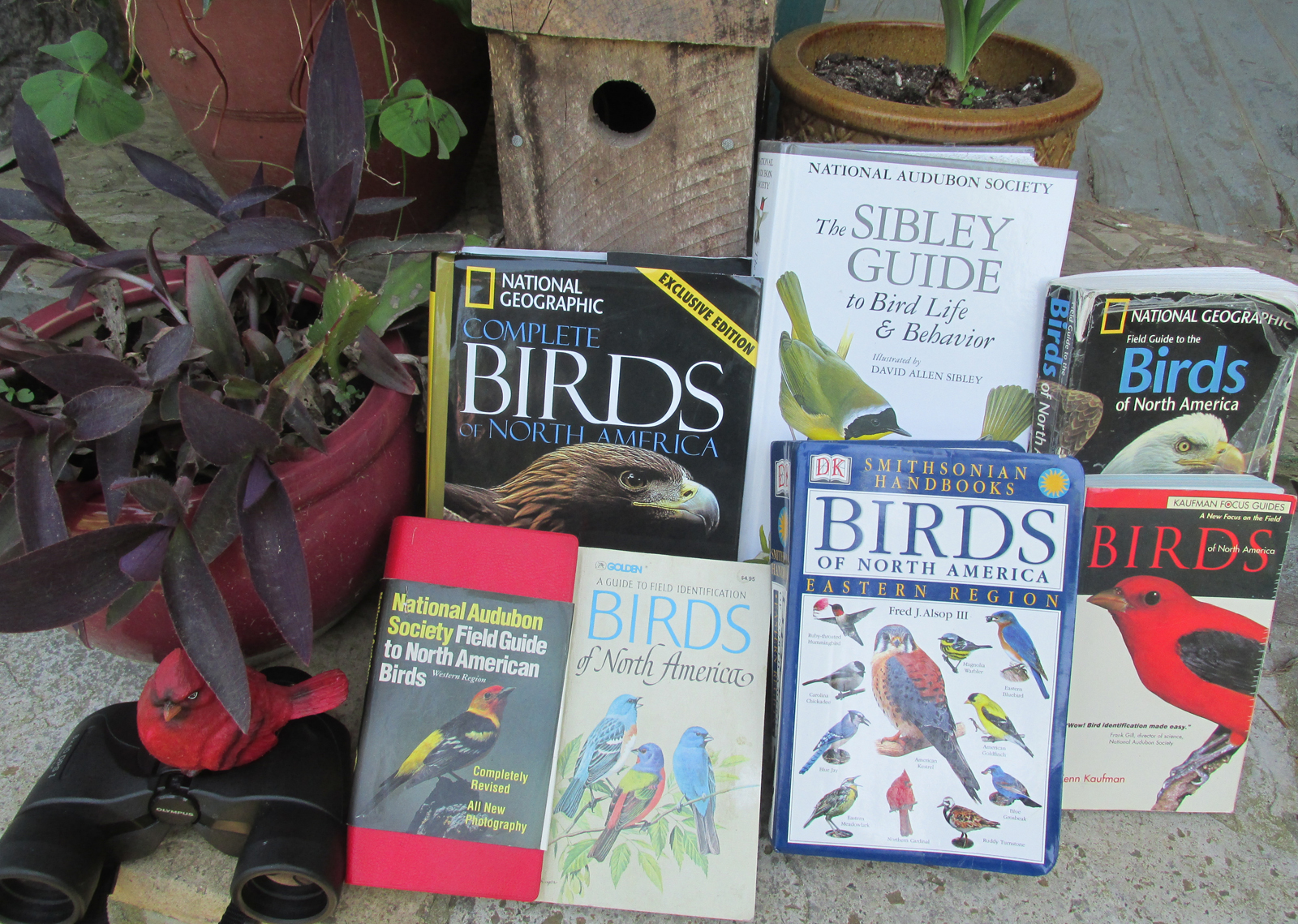
For those interested in learning to identify the birds they see during trips or that show up in their gardens or yards, a good field guide is an indispensable tool. But for whatever the reason, I’ve got to add a slight caveat to my recommendation to obtain a field guide for bird identification help: The range maps in many of our field guides are in need of a good update.

As a case in point, I recent received an email from reader Beth Webb, who had a question about an observation she made recently.

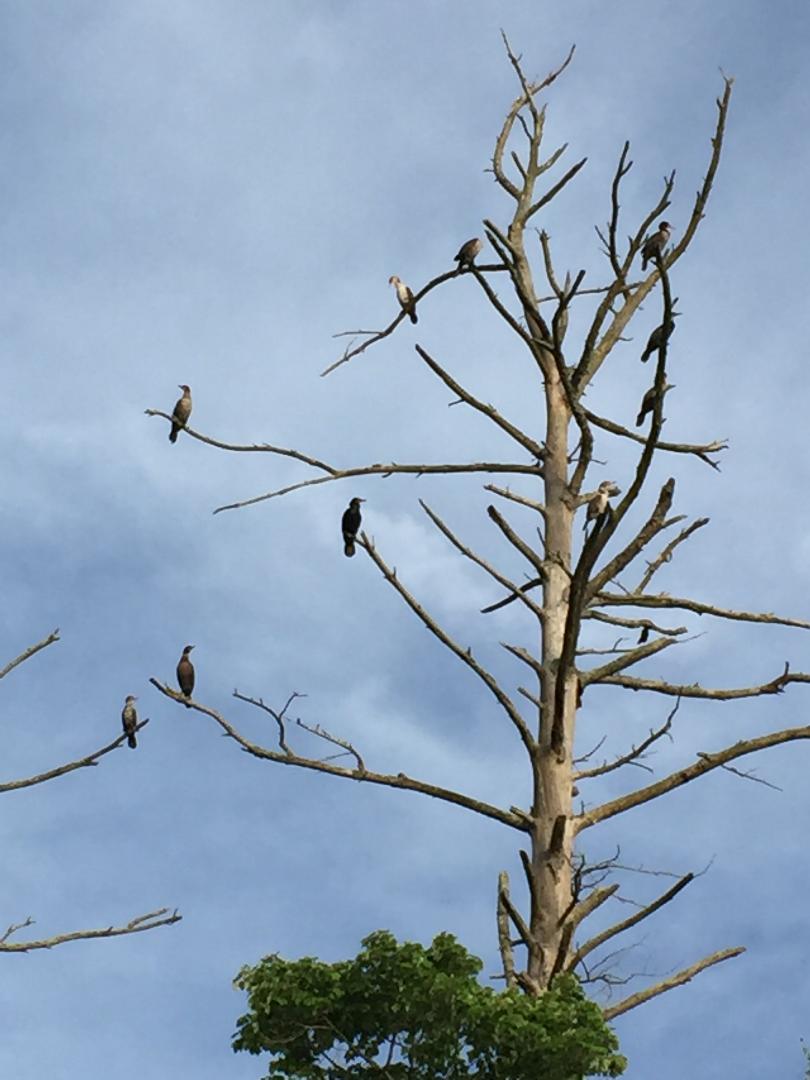
“While at South Holston Lake this weekend, I saw about 12 or 18 birds in a tree,” Beth wrote. “I could not identify them.”

She noted that her binoculars were not the best and the boat was rocking. Nevertheless, she had an idea on the identity of the perched birds.

“They had the silhouette of a cormorant,” Beth wrote. “My field guide is older and it does not place cormorants in this area, but I am wondering if they have been sighted here.”

Beth added that several years ago she saw a cormorant at South Holston Lake and was able to watch it dive in one spot and come up several seconds later in another.

Photo courtesy of Sandy Loving • This photo taken on June 14, 2019, probably shows some of the same cormorants that Beth Webb saw on South Holston Lake.

I emailed Beth back an answer to her query, telling her that double-crested cormorants have not always been a common bird in our region. For the past couple of decades, their numbers have been increasing nationwide, not just in our region.

The fact that she saw so many of them in a single tree makes me think she probably came close to a nesting rookery. Cormorants often nest near wading birds like great blue herons, which are also known to nest at South Holston Lake.

So, even with a rocking boat, Beth did a great job identifying the cormorants. Beth’s observation points out a weakness in some field guides. Birds are not static creatures. They have the power of flight and are constantly using that ability to expand into new places, Publishers of bird identification field guides are often challenged to keep pace.

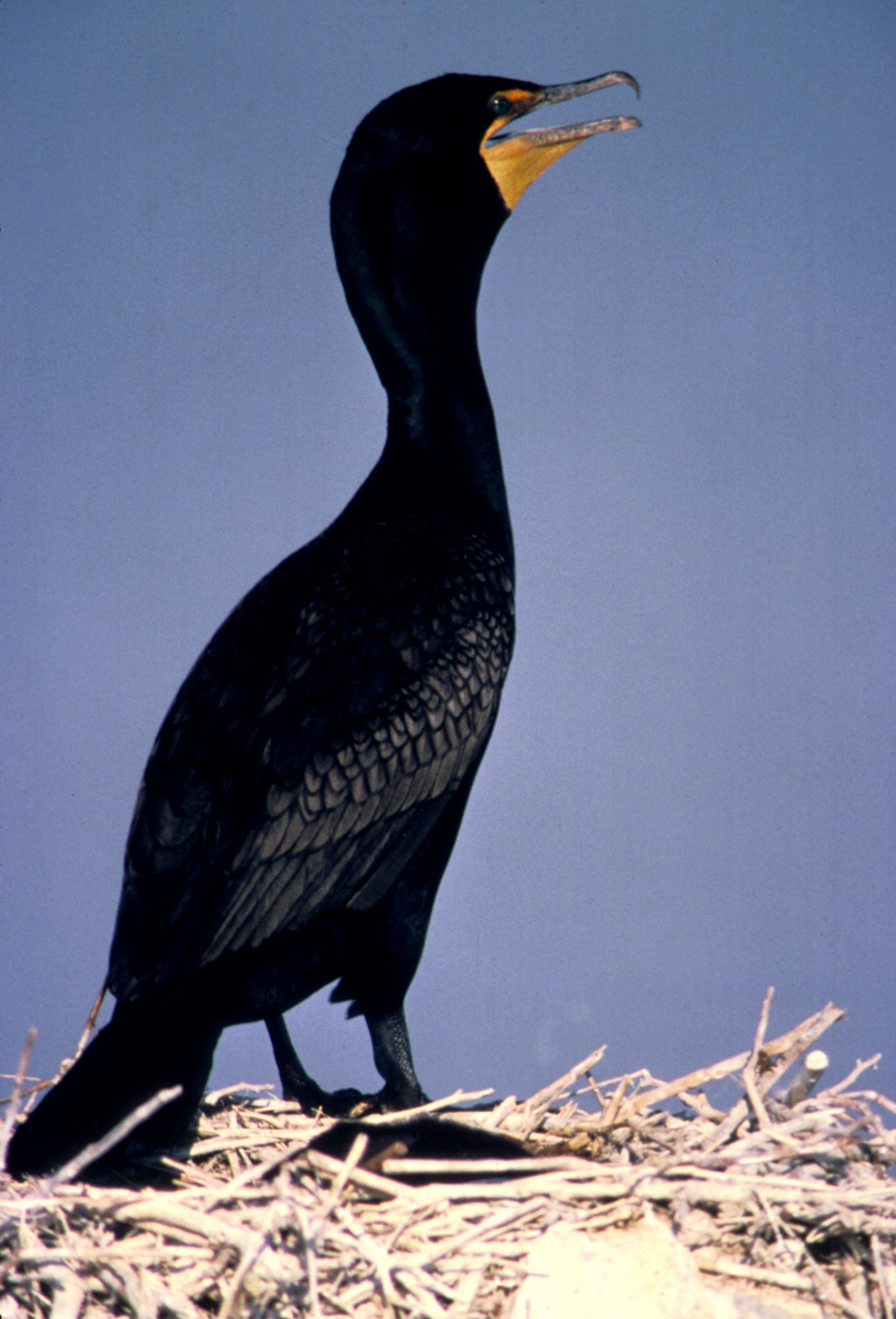
Photo by U.S. Fish & Wildlife Service • A double-crested cormorant dries its wings after a swim.

For instance, the region’s birders birding in the 1970s would have considered the now ubiquitous Canada goose a rare bird. Before the 1980s, the tree swallow hardly ever nested in the region. Another swallow – the cliff swallow – has abandoned the faces of cliffs to nest beneath concrete bridges and has gone from being a rare swallow in the region to one of the most common summer nesting birds in the entire region in just the last couple of decades. Species ranging from cattle egret to Eurasian collared dove may not appear on the range maps in your guide books, but they can be found in the region.

Most bird identification guides follow a simple format: illustrations (photographs or paintings) that are accompanied by brief, precise text and maps showing a particular bird’s expected range, sometimes delineated by season. Many birds may be absent in summer but present in winter, for instance, so a color-coded range map designating year-round, summer and winter residency is highly desirable.

Photo by Bryan Stevens • Field guides are an essential tool for bird identification, but features such as range maps can quickly go out of date.

A good field guide should also be small enough to be easily carried and consulted in the field. One that slides into a pocket is ideal. Many tech-savvy people are relying on their smart phones as an alternative to a field guide, but the printed page is hard to beat in remote areas where a phone experiences difficulty finding enough signal bars.

Hopefully future field guides will include updates to the range maps that show cormorants do indeed reach Northeast Tennessee and Southwest Virginia.

Two of the field guides that I recommend for beginning birders are the Golden Guide to Birds of North America by Chandler S. Robbins and the Peterson Field Guide to Birds of North America by Roger Tory Peterson.

The cormorants are certainly a bird worth knowing. The double-crested cormorant belongs to a family of 40 birds consisting of species referred to as both cormorants and shags. Some of the world’s other cormorants include the flightless cormorant, black-faced cormorant, white-breasted cormorant, crowned cormorant, little cormorant, pygmy cormorant and the imperial shag, which is also known as the blue-eyed shag.

Besides the double-crested cormorant, North America is home to five other species. The great cormorant lives along the shores of the Atlantic Ocean from Canada down to southern Florida. The pelagic cormorant and the Brandt’s cormorant can be seen along North America’s Pacific coastline. The red-faced cormorant lives in the southern regions of Alaska out into the Aleutian Islands. The most southern of these North American cormorants is the Neotropic cormorant, which is found along the southeast areas of Texas down into Mexico.

All cormorants primarily fish for their meals. They have strong legs to propel them though the water when they dive for fish. They also have a serrated bill with a hooked tip that is excellent for grasping slippery fish.

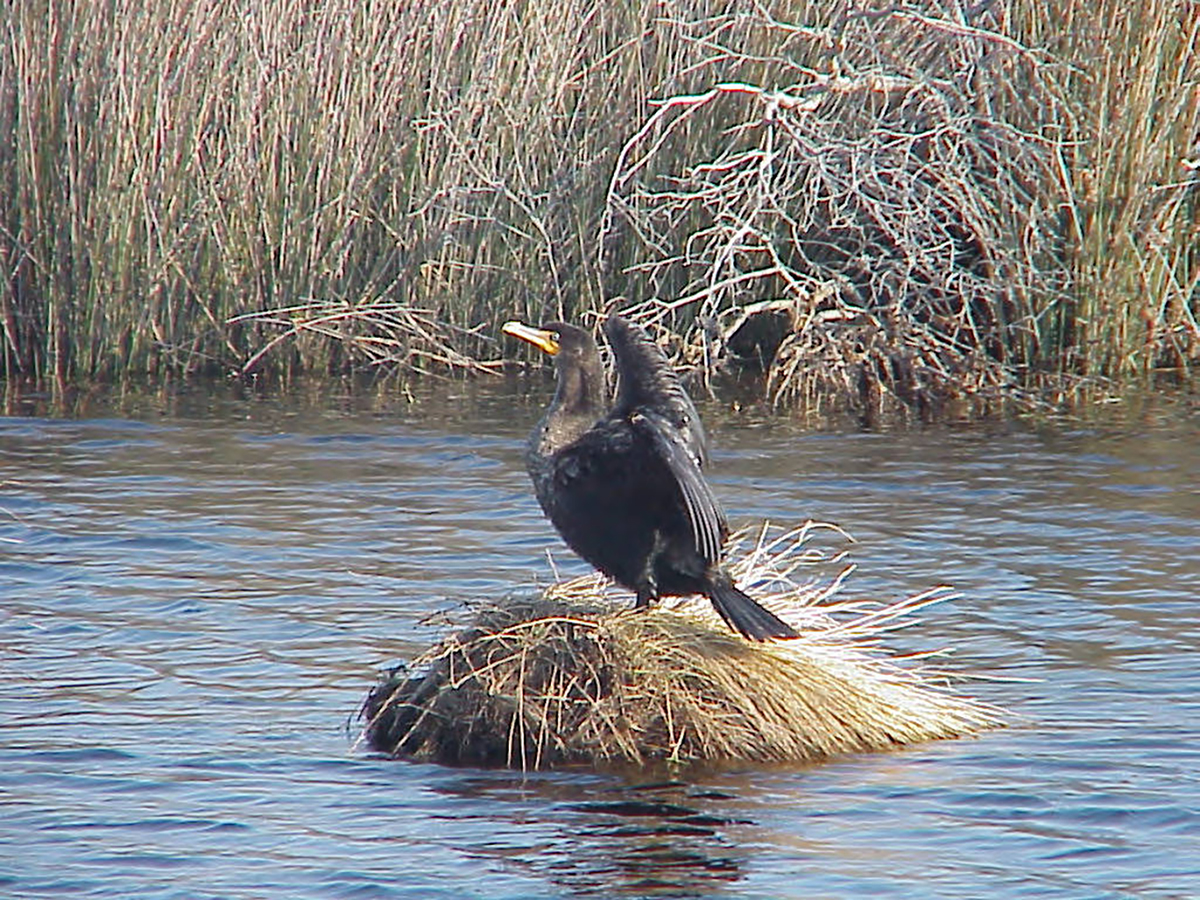
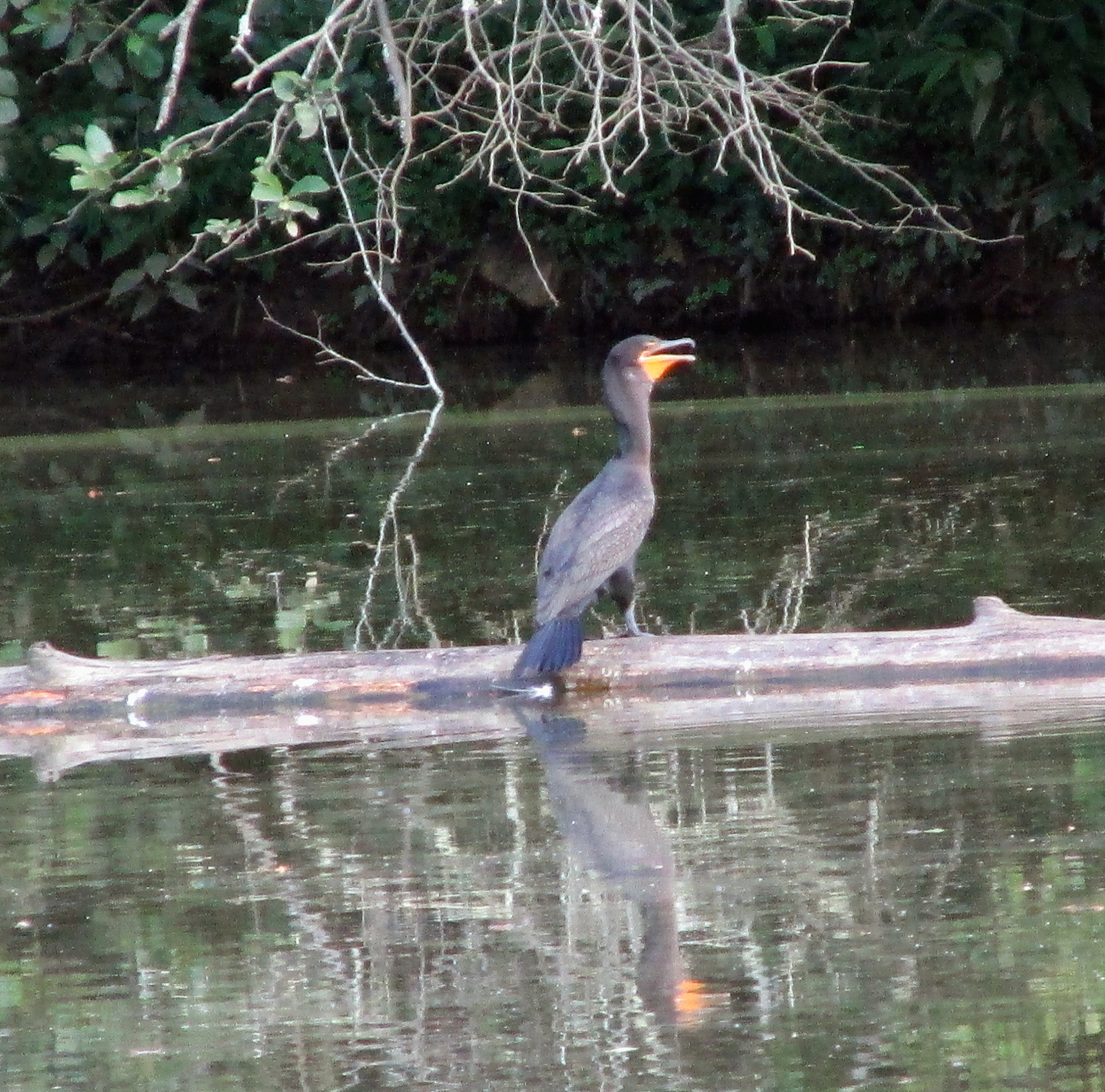
Photo by Bryan Stevens • A double-crested cormorant rests on a fallen log after a swim in a lake near Atlanta, Georgia.

On the recent Spring Bird Count for Northeast Tennessee conducted by the Lee and Lois Herndon Chapter of Tennessee Ornithological Society, a total of 82 double-crested cormorants were found on area waterways. Those birds provide a good indication that cormorants are now an established species in the region.

Now that hummingbirds are back, take some simple steps to keep them healthy

IMG_2786

Photo by Bryan Stevens • Welcoming back hummingbirds also involves making sure that they remain healthy and safe while spending the next six months in our yards and gardens.

Bristol residents Don and Donna Morrell saw their first hummingbird of spring at 10:19 a.m. on Monday, April 15. “My wife put the feeder up last week,” wrote Don in an email to me. “We live behind South Houston Dam.”

Gordon Aiton, who lives on Elm Street in Erwin, Tennessee, saw his first hummingbird of spring at 7:04 p.m. on Friday, April 19.

Phyllis Moore saw her first hummingbird — a male — at 7:50 p.m. on Friday, April 19, at her home in Bristol, Virginia.

Lynda Carter emailed me to report her first spring sighting of a male ruby-throated hummingbird at her feeder after lunch on Monday, April 15, and a second male appeared on Friday, April 19, a little after 1 p.m. Lynda said she lives at the end of Embreeville mountain in the Lamar community near Jonesborough, Tennessee.

Susan Okrasinski, a resident of Kingsport, Tennessee, saw her first hummingbird of spring on Easter Sunday, April 21.

“On my way into the kitchen I just saw (be still my heart) the first hummer of the season — whoo hoo!” Susan wrote in a post on her Facebook page. “It was a female, which is unusual as the males come up first and the females follow.  What a nice Easter surprise!”

Joanne Campbell, who lives at Middlebrook Lake in Bristol, Tennessee, posted on my Facebook page about her first spring hummer. “Had our first hummingbird sweep into our courtyard on Tuesday, April 23,” she wrote in her post.

Rubythroated_Hummingbird

Photo by U.S. Fish & Wildlife Service • A ruby-throated hummingbird seeks nectar from small blooms on a flower.

Every hummingbird’s arrival at our homes after an absence of nearly six months is nothing short of an epic achievement on the part of this tiny bird. According to the website, hummingbird.net, most ruby-throated hummingbirds make a daring journey across the Gulf of Mexico to return to their summer homes in the United States and Canada. They typically depart at dusk for their nonstop Gulf flight of up to 500 miles, which takes 18 to 22 hours, depending on the weather.

Now that we’ve welcomed them back into our yards and gardens after such a harrowing journey, it’s important as good hosts to make sure these tiny wonders are kept safe.

Some ways of ensuring that our hummingbird guests are kept healthy and secure are simply common sense. For instance, don’t use pesticides, herbicides or any other sort of toxin anywhere close to the vicinity of a sugar water feeder or a flower garden. Hummingbirds are such tiny creatures with such intense metabolisms that it only takes a minute amount of any harmful substance to sicken or kill one of these little flying gems.

Feeding hummingbirds is easy, but many people try to complicate the process. Only common, pure cane sugar, mixed to a ratio of four parts water to one part sugar, is a safe choice for these birds.

Hummingbird-Ornament

Photo by Bryan Stevens • Hummingbirds have even inspired ornaments and keepsakes in their image, a testament to their popularity and beloved status as yard and garden visitors.

For emphasis, I’ll repeat again that only common, pure cane sugar is safe for hummingbirds. There are no safe substitutes. Do not use organic, raw or brown sugar. Confectioner’s sugar, which contains an anti-caking substance (often corn starch, silicates or stearate salts), is also hazardous to hummingbirds.

There’s also a type of sugar known as turbinado sugar, which is named for the process of spinning the sugar in turbines to crystallize it. The crystals are rich in vitamins and mineral valuable for human health, but they are lethal for hummingbirds. Iron is one of the minerals contained in turbinado sugar. Hummingbird metabolism has a low tolerance for iron, which is present in the molasses added to brown sugar and in agave nectar. These are natural substances, but that doesn’t make them safe for hummingbirds.

The ratio of four parts water to one part sugar utilizing pure cane sugar most closely duplicates the nectar that hummingbirds obtain from some of their favorite flowers. Why try to mess with nature’s perfection?

I cannot imagine why anyone would supplement sugar water for hummingbirds with such human beverages as a sports drink or Kool-aid, but there have been reports of people doing so. Be aware that such additives will only risk the health of these tiny birds.

Hummer-Oct17

Photo by Bryan Stevens • Female ruby-throated hummingbirds must face many demands if they are to be successful at nesting and raising young, both tasks being done without assistance from male hummingbirds.

Honey is another substance, although perfectly natural in its origins, that should be avoided. Honey encourages the growth of fungus, which can quickly incapacitate or kill a hummingbird. A packet of artificial sweetener might taste great in your iced tea, but do not add such substances to the solution in your hummingbird feeder. These artificial sugar substitutes offer nothing of nutritional value for a bird with an extreme metabolism with excessive energy demands. In theory, a hummingbird mistakenly feeding on nothing but an artificial sweetener would soon starve to death.

It’s also important to change out your feeders and clean them as often as every one to three days. In extremely hot weather reaching more than 90 degrees, the sugar solution may need to be changed and the feeder cleaned on a daily basis. That’s not as difficult as it sounds. I prepare sugar water and store it in plastic juice containers. Refrigerated, the solution will last longer and can be doled out on a daily basis until a new supply is needed.

honey-2201210_1920

Photo by sapphir1/Pixabay.com • Although a natural substance, honey should not be fed to hummingbirds as it can promote a fungus harmful to hummingbirds.

Don’t use any type of soap or detergent to clean the feeders. The best advice I’ve read is to stick to hot water and vinegar, which will not leave behind a residue that could potentially harm the hummingbirds.

Do not put any sort of red dye or coloring into the sugar water, and do not purchase commercial solutions that incorporate red dyes. Some scientific studies suggest that red dye is a recipe for disaster with hummingbird. Such dyes are thought to lead to kidney failure and certain death for the hummingbird. There’s also plenty of evidence to suggest that banning red dye is an exaggeration of the peril. Taking that into consideration, I still err on the side of caution. Perhaps the red dye will eventually be proven harmless. Until that time, I prefer not to risk the health of my resident hummingbirds.

I’m often asked if the sugar water feeder itself should be red. There is ample evidence that hummingbirds are attracted to red. According to information from the National Audubon Society website, current thinking is that the red dye, as just mentioned, may not be good for them, nor is it necessary to attract hummingbirds. The color on a feeder is enough to attract them. Most feeders incorporate some red parts into their construction. People can mix their own nectar using 1/4 cup sugar to every 1 cup of water.

It’s a lot of work to attract hummingbirds and keep them safe and healthy. I’d like to think the rewards we get from these small birds make the effort worthwhile.

IMG_2859

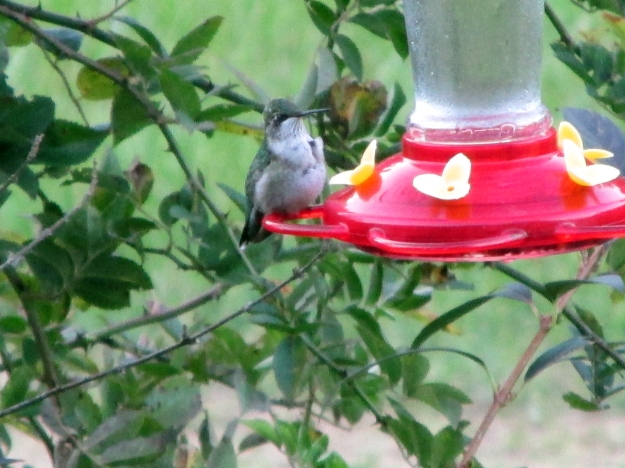
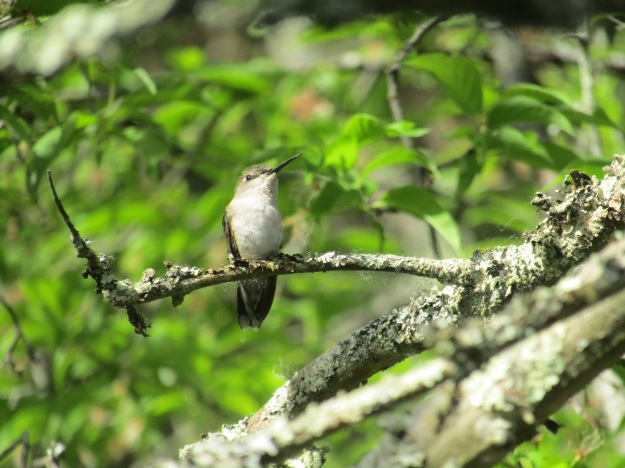
Photo by Bryan Stevens • A female ruby-throated hummingbird, lacking the bright throat patch of a male, surveys her surroundings from a low perch.


Prepare to welcome returning hummingbirds as migrating birds make their way back

Rubythroat-TheSoarNet

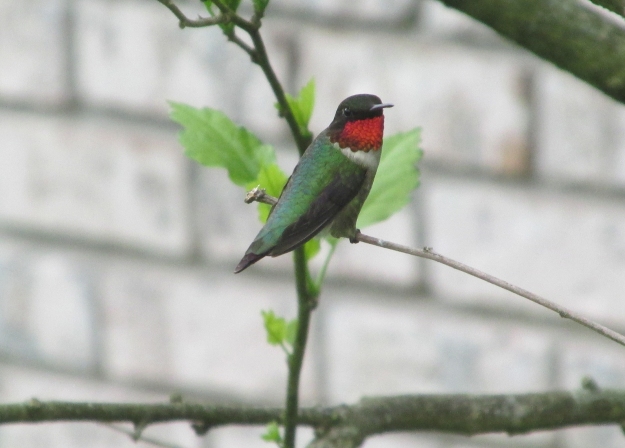
Photo by TheSOARnet / Pixabay.com • Male ruby-throated hummingbirds usually migrate ahead of females. These tiny birds must cross the Gulf of Mexico, without stopping, to reach their nesting grounds in the eastern United States. The journey across the Gulf can take them 18 to 22 hours, dependent on weather conditions.

As it has done for many years now, the website journeynorth.org is tracking the progress of ruby-throated hummingbirds as they return to the United States.

Most of the first sightings of hummingbirds made each spring are of male hummingbirds. The males arrive first so they can find and defend a choice territory for the purpose of attracting females. Indeed, there are many more sightings this week for male ruby-throated hummingbirds from Journey North citizen scientists who live along the Gulf Coast states.

Hummingbird-Ventral

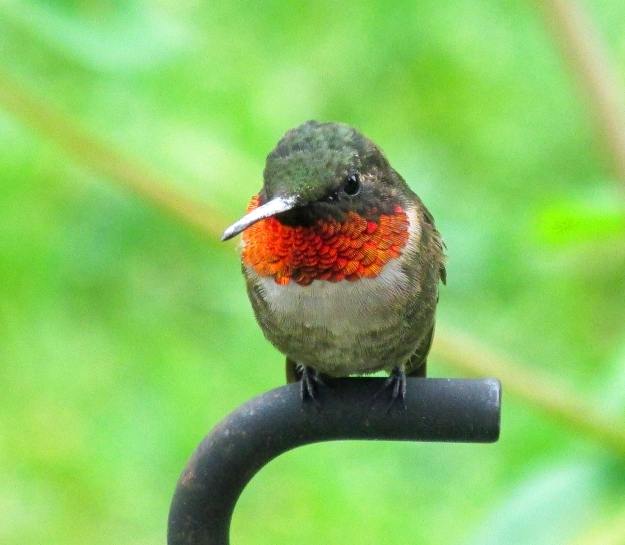
Photo by Bryan Stevens • A ruby-throated hummingbird perches at a feeder for a sip of sugar water.

On Facebook, I have been doing my own tracking based on posts from friends living farther south. For instance, Marcie McGehee Daniels in Summerville, South Carolina, made a Facebook post on March 22 to share news of her first-of-season ruby-throated hummingbird.

“He drank for a few seconds and then rested in the shade for about 10 minutes, worn out from his trip!” Marcie posted on her Facebook page. She also posted a fantastic photo of the intrepid migrant.

As demonstrated by Marcie’s post, the migration of ruby-throated hummingbirds is drawing closer to our region. They cross the Gulf of Mexico without stopping to reach the Gulf States. Once they make that difficult flight, they will spend some time recuperating before they spread out to make their way northward. Residents in Virginia, Tennessee and North Carolina should soon be making their first sightings of ruby-throated hummingbirds since these tiny flying gems departed last October.

Ruby-throated-WILLOWS

Photo by Bryan Stevens • Numbers of ruby-throated hummingbirds in the region tend to fluctuate each year, but people should see a spike in their numbers as the hummingbirds pass through the region this month as they migrate north for another nesting season.

On a recent visit to Fripp Island, South Carolina, I didn’t see any ruby-throated hummingbirds, but I did observe other birds that reminded me that many of my favorite birds should be returning to my home within the next few weeks. I enjoyed sightings of several species of warblers, as well as various shorebirds. Many warblers return to the region in April, and shorebirds may make migration stops at area lakes and rivers as they push rapidly toward breeding grounds in regions far to the north in Canada and Alaska.

Some of the first of the resident summer birds to return to the region each year includes species such as Louisiana waterthrush, brown thrasher, chipping sparrow, tree swallow and blue-gray gnatcatcher. Not too long after these “early birds” have returned, people can expect to start seeing the vanguard of the ruby-throated hummingbird spring migration as these tiny birds, which weigh no more than a nickel, return to their summer nesting grounds across the eastern United States and Canada.

Jean-Thrasher

Photo Courtesy of Jean Potter •  A brown thrasher scans the grass for insect prey.

As one might imagine, such tiny birds face a range of threats. In addition to offering sugar water feeders and planting gardens with nectar-bearing plants, there are other ways to help ruby-throated hummingbirds thrive.

The American Bird Conservancy recommends paying attention to our buying habits. In the winter months when they are far from their summer homes, ruby-throated hummingbirds are known to winter on shade coffee farms. Unlike today’s typical “sun” coffee farm, which razes all trees but the coffee itself, these traditional farms grow coffee in the shade of native trees. By doing so, they produce superior coffee and provide habitat for dozens of migratory songbirds, according to the ABC.

The importance of shade coffee for migratory birds was confirmed by naturalists Kenn and Kim Kaufman, who estimated that a single shade coffee farm in Nicaragua sheltered more than 1,200 migratory bird species—including the ruby-throated hummingbird—on just 90 acres. The ABC notes that buying bird-friendly coffee is an easy way people can help hummingbirds and many other migratory birds.

rufous-oct13

Photo by Bryan Stevens • A rufous hummingbird hovers nears a feeder.

While the eastern United States is home only to the ruby-throated hummingbird as a nesting hummingbird species, the western half of the United States and Canada can claim about a dozen nesting species, including rufous hummingbird, Allen’s hummingbird, Anna’s hummingbird, broad-tailed hummingbird, black-chinned hummingbird, calliope hummingbird, buff-bellied hummingbird, broad-billed hummingbird and violet-crowned hummingbird.

To track the progress of ruby-throated hummingbird migration for yourself, visit http://www.journeynorth.org to monitor their approach to our region. Ruby-throats typically arrive in our region in early April. The early date for a ruby-throated hummingbird arrival in 2018 took place on April 4. If you don’t have your feeders outdoors and waiting for them, it’s time to do so.

As always, I love to hear from readers about their first hummingbird sighting of the year. Jot down the time and date and contact me by email at ahoodedwarbler@aol.com. You can also report your sightings on Facebook at http://www.facebook.com/ahoodedwarbler. I can hardly wait for one of our favorite birds to get back. Let’s give them a hearty welcome.

Rubythroat

Photo by Bryan Stevens • Despite a perceived disadvantage of size, ruby-throated hummingbirds are quite capable of thriving in a giant world.

Gift suggestions for the bird-lovers on your Christmas shopping list

Although some people like to get an early start on holiday shopping, I’m certain some, like myself, are still in the process of checking those lists. If you’re looking for some ideas for bird and nature enthusiasts on your list, I’ll make a few modest suggestions that could result in making the season merry and bright.

Photo-FieldGuides

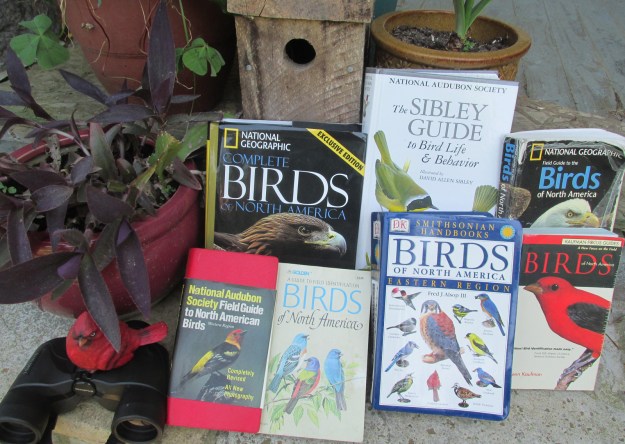
Photo by Bryan Stevens • Field guides are an essential tool for bird identification.

Field guides
If you’ve enjoyed watching the birds that congregate at your feeders or noticing the visitors to your yard and gardens, but you’ve also become curious about the identities of all your feathered visitors, it might be time for a helpful and informative field guide. I prefer field guides illustrated with paintings rather than photographs, but I have a varied collection of guides. I started a long time ago with the Golden Guide to Birds. It’s a classic and still a great guide to help interest children in the birds around them.
Some of the guides I recommend and use myself these days are National Geographic Field Guide to the Birds of North America, The Sibley Field Guide to Birds of Eastern North America, and Peterson Field Guide to Birds of Eastern and Central North America. Any of these field guides should be easily found online or in stores at a cost of under $20.
If you have already acquired a good basic field guide, perhaps you’re ready for more specialized field guides that focus on particular families of birds or on the behavior of backyard birds.
For the warblers, there are several field guides available, including the Stokes Field Guide to Warblers, A Field Guide to Warblers of North America (Peterson Field Guides), and the Warbler Guide.
For a handy guide to identify some of the birds seen on beach and coastal vacations, consider such titles as Stokes Beginner’s Guide to Shorebirds and Shorebirds: An Identification Guide to the Waders of the World, and National Audubon Society Pocket Guide to Familiar Birds of Sea and Shore.
For fans of hawks and allied raptors, several guides exist including A Field Guide to Hawks of North America (Peterson Field Guides), Birds of Prey: Hawks, Eagles, Falcons, and Vultures of North America, and Hawks from Every Angle: How to Identify Raptors In Flight.
In short, there’s a field guide for every family and grouping of birds. With expertly rendered illustrations or photographs, brief and concise text, and helpful range maps, nothing beats a good field guide forYea, improving one’s ability to identify birds. I recommend thumbing through the pages of a good guide over trying to randomly use Google to search online for a bird glimpsed for a brief time.

bird-Feeder

Photo by Pixabay.com • A well-stocked feeder is a first step toward attracting more birds to your yard.

Feeders
Bird feeders come in an astounding variety of shapes and sizes. Nothing will do more to bring birds into our daily lives than maintaining a well-stocked feeder. Be certain to include a bag of sunflower seeds so that your gift will allow the recipient to immediately begin to enjoy the parade of birds sure to flock to the feeder.

Bluebird-2

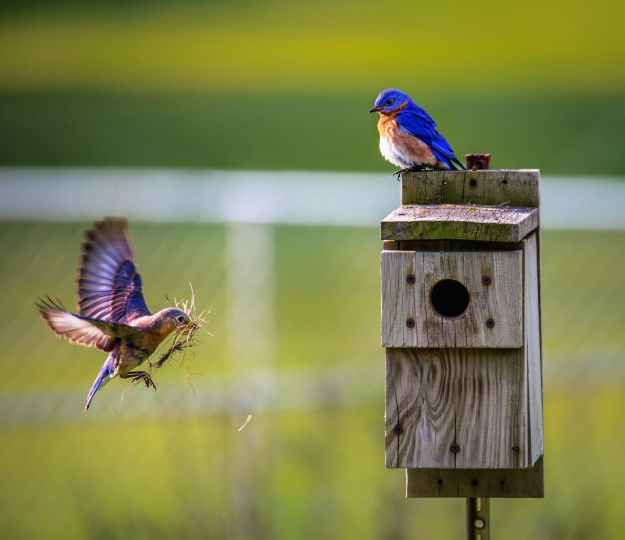
Photo by Bryan Stevens • Birds, like this Eastern bluebird, appreciate nest boxes.

Houses
It’s never too early to start thinking about spring and the return of many of our favorite birds. To bring more birds into our lives, it doesn’t hurt to encourage them by providing man-made nesting and roosting boxes. Many of our favorite birds — Eastern bluebird, tree swallow, tufted titmouse, white-breasted nuthatch — are cavity-nesting species but will just as readily raise their young in nesting boxes as in a hole in a tree. With boxes customized to their own particular needs, other birds such as Eastern screech-owl, wood duck and great crested flycatcher will also make use of bird boxes. Many gardening centers, produce stands, feed stores and other shopping outlets sell bird boxes of various designs, shapes and sizes. If you’re shopping for a bluebird box, be certain that the recipient’s yard is a spacious one. Bluebirds feel more comfortable in open surroundings. If the yard is more overgrown and woodsy, consider a box tailored more for a woodland bird like a chickadee or a nuthatch.

binoculars-2164526_1920

Photo by Pixabay.com • A good pair of binoculars will bring birds much closer.

Binoculars
Unless requested, don’t buy binoculars for an adult. Most birders would prefer to pick out their own pair to use to make up-close and personal bird observations. An inexpensive pair, however, could be perfect for fostering in a child an interest in birds and nature. If you have grandchildren, children, or even nephews and nieces, a beginner’s pair of binoculars could make a life-altering gift that lets the recipient view the world in a whole new light.

CalendarCover

Calendars
Birds have always been a popular photography subject for calendars. There’s an almost endless variety of bird calendars, but I’m partial to one produced by the Lee and Lois Herndon Chapter of Tennessee Ornithological Society, of which I am a member. This annual fundraising endeavor features some exceptional bird photography from club members. This year’s calendar features full-color photographs of some of the region’s most colorful and engaging birds. The club sells the calendars for $15 each. For an additional $2 shipping fee, calendars can be sent to any address in the United States. All proceeds are used to support birding opportunities and bird-related causes.
The calendar also features an informative calendar grid with highlights for major holidays as well as important bird-related dates. The calendar’s pages feature more than 80 full-color photographs of area birds, including common favorites and some not-so-common visitors. The front cover features a dazzling photograph of a male rose-breasted grosbeak. If you’re interested in obtaining a calendar, email ahoodedwarbler@aol.com or look up Elizabethton Bird Club on Facebook.


Hummingbird-Ornament

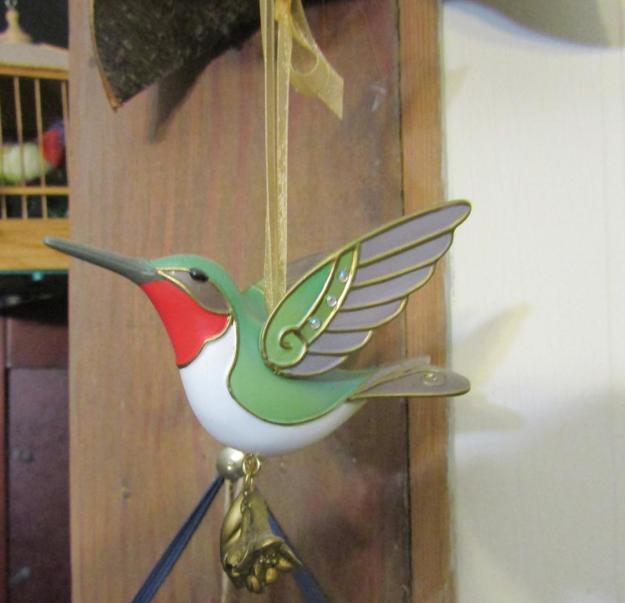
Photo by Bryan Stevens • A bird-related Christmas ornament makes a nice gift.

Ornaments

The branches of my Christmas tree are always weighted heavily with a variety of bird-related Christmas ornaments. Holiday tinsel and baubles make the season look a lot like Christmas if they feature some of our favorite birds such as cardinals, chickadees, hummingbirds, penguins, doves, geese, eagles or any of the other popular species of birds. Choose a fun and unique bird ornament for the enthusiast on your Christmas list.

animals avian beaks birdhouse

Photo by Kevin Blanzy on Pexels.com

Hawk spoils start of winter bird feeding season

According to a recent Census Report, Americans are feeding birds in epic numbers — 63 million people in this country make life less of a struggle for birds by filling bird feeders with sunflower seeds, peanuts and other goodies. In fact, watching and feeding birds ranks second only to gardening as one of America’s popular pastimes.

Unfortunately, bringing wild birds into our lives means we are occasional witnesses to the darker side of nature that dictates there’s a survival of the fittest competition taking place in our own backyards and gardens.

sharp-shinned-hawk-dbadry

Photo by Dbadry/Pixabay.com • A sharp-shinned hawk visits a bird bath during the Christmas season. These small hawks, designed to prey on songbirds, sometimes learn to stalk feeders, which creates distress for the human landlords.

Welcoming birds into our yards and lives means inviting all birds, include predatory raptors such as sharp-shinned hawk, merlin, Cooper’s hawk and American kestrel. It’s a problem Elizabeth Laing has had to cope with in recent weeks. We’ve commiserated over Facebook about her conflicted feelings about the predatory nature of the hawk that’s been stalking birds at her feeders.

Elizabeth sent me a message via Facebook on Nov. 21 about a situation unfolding at her home in Abingdon, Virginia.

“Please help me to know what to do,” she wrote as the start of her message. “Right now I an absolutely devastated and in tears. I have about eight feeders up year round. I feed a lot of small birds in my backyard and even crows in my front yard. I have at least 15 American goldfinches right now at several sunflower chip feeders.”

Elizabeth noted that for the past few days she had seen a small hawk in her backyard for the first time ever.

“I was worried and tried to scare it off,” she wrote. “I realize they have to eat, too, and are beautiful birds, but I don’t want them killing birds on my feeders.”

1-sharp-shinned-hawk-john-james-audubon

John James Audubon painted this pair of sharp-shinned hawk and shows the size difference between males and females. Many people are surprised to learn that female hawks are typically much larger than males, which is also true of the Cooper’s hawk.

Unfortunately, that’s what happened right as she watched through a window as a goldfinch feeding at her feeder.

“The hawk swooped in and grabbed him off the feeder,” she reported.In the wake of the hawk’s action, Elizabeth took some sensible steps, including immediately taking down her feeders.

Some of her birds, such as the tufted titmice, came back quickly and perched on the empty feeder poles. “I felt so bad,” she said. “I want to feed them, but I can’t stand the thought of them being snatched off my feeders.”

She concluded her message by asking my advice. I responded and told her that when hawks do make a habit of raiding feeders, it can be necessary to curtail feeding for a couple of weeks or longer. Most authorities on birding insist that the hawks will lose interest and move to more productive feeding grounds. Unfortunately, the raptor visiting Elizabeth’s yard proved persistent.

bird-2154147_1920

Photo by NatureLady/Pixabay.com Immature sharp-shinned hawk look different than adults, but once they learn to hunt, they are very efficient predators.


“I wanted to update you on my hawk problem,” Elizabeth wrote back in another message on Nov. 26. “I took all my feeders down, but not long enough. After five days, I put them back.

She had also invested in brand new, expensive caged feeders. She purchased the caged feeders thinking the goldfinches would be safe inside.

For flocking birds, like American goldfinches, the caged feeders offered security only to birds inside the caging. Those birds waiting outside of the caging for their own turns at the feeder remained vulnerable.

“I found feathers on the side of one cage this morning,” she wrote. “Then, as I was watching a bunch eat, that hawk swooped in and took another one off the side.”

The entire situation has made her discouraged and sad. “I hope this doesn’t mean I will have to stop feeding birds entirely. I actually have bags of seeds and peanuts (for the titmice) coming in the mail later this week,” she wrote.

In the wake of the latest attacks, she has taken down the feeders again. “I will leave them down for two weeks this time,” she wrote. “I know the hawk has to eat, too, and it’s a beautiful bird, but I can’t do this to my little goldfinches.”

I agreed that it would be senseless, as well as rather cruel, to provide food for songbirds while knowing a hawk is lurking in the vicinity.

FirstHawk

Photo by Bryan Stevens • A sharp-shinned hawk photographed after capturing and killing a Northern cardinal feeding on the ground beneath a feeder.


Elizabeth also asked if I have had birds killed at my feeders. Although it has been a thankfully rare occurrence, hawks have snatched birds visiting my feeders. I’ve not often witnessed the actual predation, often finding only a pile of feathers on the ground as evidence of the hawk’s success.

A few years ago, however, I witnessed a rather dramatic attack on New Year’s Day. As I watched a female Northern cardinal feeding on sunflower seeds spilled onto the ground by the birds visiting a hanging feeder, a sharp-shinned hawk suddenly slammed into the cardinal. In an instant, I saw my first and second bird species of the New Year. The cardinal, however, didn’t get to live and enjoy the unfolding year.

The website allaboutbirds.org described the sharp-shinned hawk as “a tiny hawk that appears in a blur of motion — and often disappears in a flurry of feathers.” It’s an apt description of this pint-sized predatory bird.

The website also notes that studies indicate that feeders don’t make it more likely that our favorite songbirds will be preyed upon by a sharp-shinned hawk or other raptor. Although feeders might temporarily attract a raptor, these birds will catch the majority of their prey elsewhere.

The sharp-shinned hawk belongs to a genus of raptors known as accipiters, which are slender raptors with rounded wings and long tails. They are highly maneuverable in flight. A characteristic of accipiters is long legs and sharp talons. In fact, the genus is named from the Latin word for hawk, “accipere,” which can be translated as, “to grasp.”

shikra-336751_1920

Photo by Sarangib/Pixabay.com • A shikra (Accipiter badius) is a small bird of prey in the family Accipitridae found widely distributed in Asia and Africa where it is also called the little banded goshawk.

Other members of the accipiters in North America include the Cooper’s hawk and Northern goshawk. Other accipiters around the world include such raptors as chestnut goshawk, red-chested goshawk, crested goshawk, little sparrowhawk, spot-tailed sparrowhawk, black sparrowhawk and red-thighed sparrowhawk.

Elizabeth sent me one other message, informing me that she had also advised her neighbor to take down his feeder, which he did. Shortly after he did so, Elizabeth saw the hawk attack a squirrel, which, thanks to Elizabeth rapping on a windowpane, apparently survived the attack.

coopers-hawk-570341_1920

Photo by Skeeze/Pixabay.com The Cooper’s hawk, like this individual, is a larger relative of the sharp-shinned hawk. It’s larger size allows this raptor to prey on larger birds, such as mourning doves.

In addition, if the hawk in her yard is attacking squirrels, her visitor is probably a Cooper’s hawk, a bird almost identical to a sharp-shinned hawk except for its larger size. I’m hopeful that an extended hiatus will convince the hawk to leave Elizabeth and her goldfinches in peace.

It’s still good to remember that hawks view smaller birds flocking to a feeder in the same way those small songbirds view the abundance of seeds. For both hawks and songbirds, our offerings represent easy meals. It’s not easy, but the best choice is to co-exist — if not at peace, then at terms with nature’s reality.

CalendarCover

Bird club selling calendars

The Lee & Lois Herndon Chapter of Tennessee Ornithological Society is selling its 2019 calendar for $15 each. All proceeds are used to support birding opportunities and bird-related causes in Northeast Tennessee. The calendar’s pages feature more than 80 full-color photographs of area birds, including common favorites and some not-so-common visitors. The front cover features a dazzling photograph of a gorgeous male rose-breasted grosbeak. If you’re interested in obtaining a calendar, contact ahoodedwarbler@aol.com by email or send a message via Facebook at http://www.facebook.com/ahoodedwarbler. Calendars can be mailed to any destination in the United States for an additional charge of $2 for shipping and postage.

Fall Bird Count finds 127 species

rthawk-one

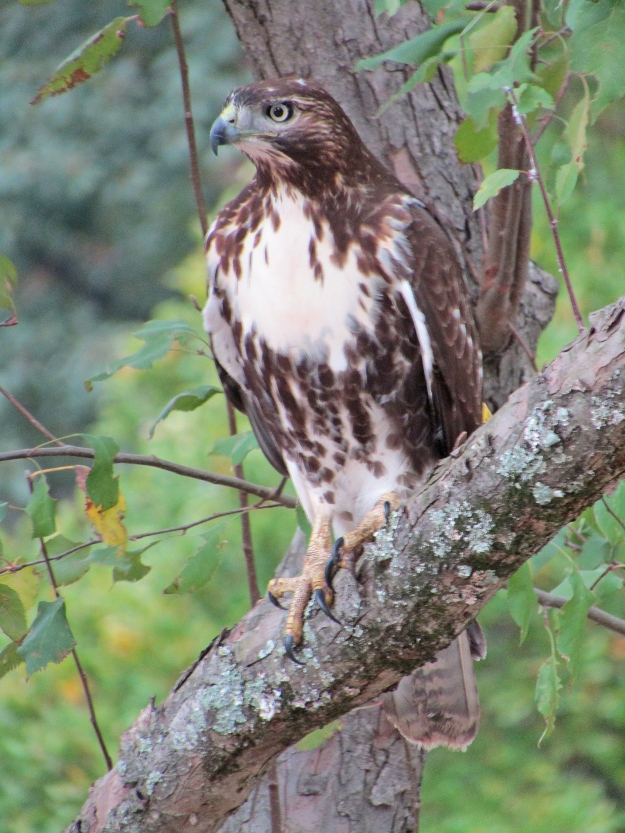
Photo by Bryan Stevens • Raptors, like this Red-tailed Hawk, proved plentiful on count day. Broad-winged Hawk, a relative of the Red-tailed Hawk, even set a new record for most individuals found.

The 49th consecutive Elizabethton Fall Count was held Saturday, Sept. 29, with 50 observers in 13 parties covering parts of five adjacent counties.

According to count compiler Rick Knight, a total of 127 species were tallied (plus Empidonax species), slightly higher than the average of the last 30 years, which was 125. The all-time high was 137 species in 1993.

Two very rare species were found: Purple Gallinule at Meadowview Golf Course in Kingsport and Black-legged Kittiwake on South Holston Lake. The kittiwake had been found Sept. 27 and lingered until count day.

Shorebird habitat was scarce due to high water levels at most sites, thus only one species was found (other than Killdeer).Broad-winged Hawks were numerous, part of a notable late flight likely due to unfavorable weather conditions preceeding the count.
Warblers were generally in low numbers, although 23 species were seen. No migrant sparrows had arrived yet. Blackbirds, too, were scarce. Some regular species were tallied in record high numbers, likely due to the above average number of field parties.

turkey_two

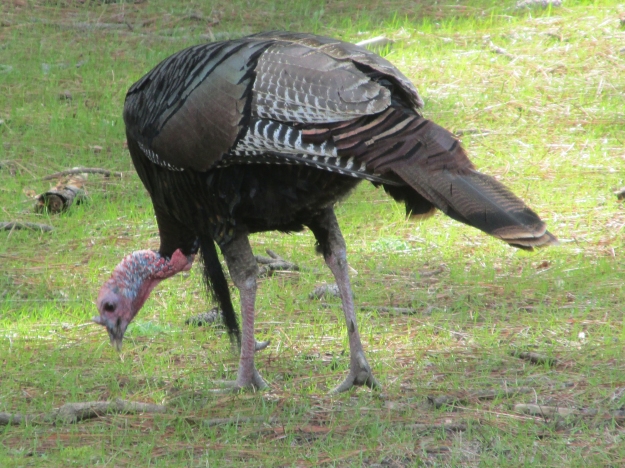
Photo by Bryan Stevens • Wild Turkeys and Ruffed Grouse were found on this year’s count, but participants failed to locate any Northern Bobwhites.

The list of species follows:

Canada Goose, 781; Wood Duck, 79; Mallard, 345; Blue-winged Teal, 110;  Com. Merganser, 2;  Ruffed Grouse, 2; and Wild Turkey, 56.

Pied-billed Grebe 32; Double-crested Cormorant, 78; Great Blue Heron, 49; Great Egret, 2; Green Heron, 2; and Black-crowned Night-Heron, 5.

Wild-NightHeron-Adult

Photo by Bryan Stevens • Several species of herons and egrets were located, including Black-crowned Night Heron.

Black Vulture 71; Turkey Vulture 203; and Osprey, 27. This represented a new record for the number of Osprey found on this count.

 
Bald Eagle 8; Northern Harrier, 1; Sharp-shinned Hawk, 3; Cooper’s Hawk, 9; Red-shouldered Hawk, 6; Broad-winged Hawk, 321; (most ever on this count) and Red-tailed Hawk, 19.

 
Virginia Rail 1; Purple Gallinule, 1; Killdeer, 43; Spotted Sandpiper, 1; Black-legged Kittiwake, 1; Caspian Tern, 1; and Common Tern, 2.


Rock Pigeon, 597; Eurasian Collared-Dove, 2; Mourning Dove, 330; Yellow-billed Cuckoo, 4; E. Screech-Owl, 24; Great Horned Owl, 10; Barred Owl, 5; Northern Saw-whet Owl, 1; and Common Nighthawk, 1.

 
Chimney Swift, 481; Ruby-throated Hummingbird, 31; Belted Kingfisher, 32; Red-headed Woodpecker, 5; Red-bellied Woodpecker, 92; Yellow-bellied Sapsucker, 5; Downy Woodpecker, 59; Hairy Woodpecker, 12; Northern Flicker, 67; Pileated Woodpecker, 54; American Kestrel, 13; and Merlin, 2. The figures for Red-bellied and Pileated Woodpeckers mark new high counts for these two species.

red-bellied-bryan

Photo by Bryan Stevens • A record number of Red-bellied Woodpeckers were found on this year’s Fall Bird Count.

Eastern Wood-Pewee 15; Empidonax species, 2; Eastern Phoebe, 79; Eastern Kingbird, 9; White-eyed Vireo, 1; Yellow-throated Vireo, 2; Blue-headed Vireo, 21; Philadelphia Vireo, 3; Red-eyed Vireo, 4; Blue Jay, 646; American Crow, 364; and Common Raven, 1.
Northern Rough-winged Swallow, 3; Tree Swallow, 465; Barn Swallow, 1; and Cliff Swallow, 3.

Carolina Chickadee, 177; Tufted Titmouse, 133; Red-breasted Nuthatch, 4; White-breasted Nuthatch, 71; Brown Creeper, 1; House Wren, 4; Winter Wren, 1; and Carolina Wren, 218. Both Tufted Titmouse and White-breasted Nuthatch were found in record numbers, as was the Carolina Wren, too

Golden-crowned Kinglet, 8, Eastern Bluebird, 187;  Gray-cheeked, Thrush 12; Swainson’s Thrush, 46;  Wood Thrush, 9; American Robin, 591; Gray Catbird, 64; Brown Thrasher, 23; and Northern Mockingbird, 111; European Starling 1,226;  and Cedar Waxwing, 294. The number of Gray Catbirds set a new record for the species.

Worm-eating Warbler 1; Northern Waterthrush, 1; Black-and-white Warbler, 7; Prothonotary Warbler, 1; Tennessee Warbler, 42; Orange-crowned Warbler, 2; Kentucky Warbler, 2; Common Yellowthroat, 9; Hooded Warbler, 7; American Redstart, 16; Cape May Warbler, 6; Northern Parula, 8; Magnolia Warbler, 18; Bay-breasted Warbler, 15; Blackburnian Warbler, 8; Yellow Warbler, 1; Chestnut-sided Warbler, 1; Black-throated Blue Warbler, 4; Palm Warbler, 63; Pine Warbler, 11; Yellow-throated Warbler, 1; Prairie Warbler, 1; and Black-throated Green Warbler, 7.

Fall-AmRedstart

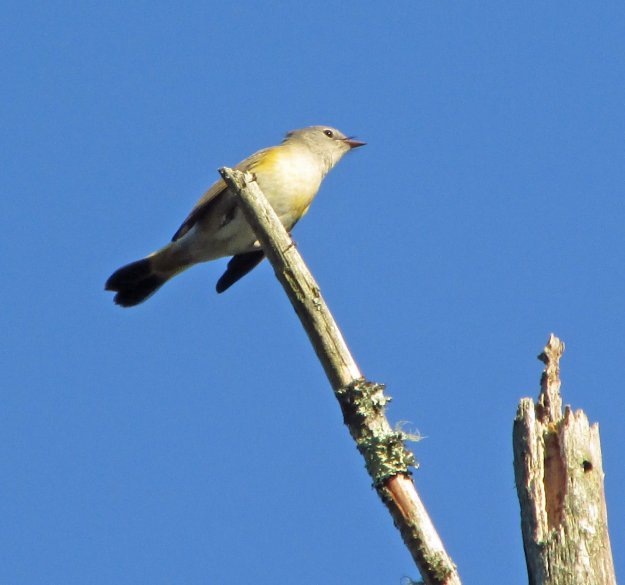
Photo by Bryan Stevens • Participants found a total of 23 different species of warblers, including American Redstarts.

Eastern Towhee, 66; Chipping Sparrow, 94; Field Sparrow, 16; Song Sparrow, 97; and Dark-eyed Junco, 42.

Summer Tanager 2; Scarlet Tanager, 11;  N. Cardinal, 149; Rose-breasted Grosbeak, 125; and Indigo Bunting, 14.

Bobolink, 2; Red-winged Blackbird, 132; Eastern Meadowlark, 7; Common Grackle, 8; Brown-headed Cowbird, 5; House Finch, 41; Pine Siskin, 11; American Goldfinch, 220; and House Sparrow, 69.

Goldfinch 5

Photo by Bryan Stevens • American Goldfinches were among the smaller songbirds found during the annual Fall Bird Count.